
Auburn City Zoning Code
ARTICLE IV
- DISTRICT REGULATIONS
DIVISION 8. - RESERVED[2]
Editor's note— Ord. No. 25-06212021, adopted July 19, 2021, repealed div. 8, §§ 60-333—60-335, which pertained to the multifamily urban district and derived from an Ord. adopted September 21, 2009; Ord. No. 05-04032017, adopted April 24, 2017; and Ord. No. 11-03012021, adopted March 15, 2021.
DIVISION 10. - RESERVED[3]
Editor's note— Ord. No. 20-05032021, adopted May 17, 2021, repealed div. 10, §§ 60-439—60-443, which pertained to the downtown enterprise zone and derived from an Ord. adopted September 21, 2009 and Ord. No. 05-04032017, adopted April 24, 2017.
DIVISION 14. - FORM BASED CODE[4]
Editor's note— Ord. No. 04-03072016, adopted May 16, 2016, repealed former Div. 14, §§ 60-546—60-549, in its entirety and enacted new provisions as herein set out. Former Div. 14 pertained to the central business district and derived from Ord. of 9-21-2009, §§ 3.69A—3.69D; Ord. of 2-16-2010.
Sec. 60-144.- Purpose.
The purposes of this district are to allow for conservation of natural resources and open space land, and to encourage agricultural, forestry, and certain types of recreational uses. It is declared to be in the public interest that these areas should be protected and conserved because of their natural, aesthetic and scenic value, the need to retain and preserve open space lands, their economic contribution to the city, and primarily because these areas are so remote from existing centers of development that any added uncontrolled growth could result in an economic burden on the city and its inhabitants. This section shall be construed so as to effectuate the purposes outline here and to prevent any attempt to establish uses which are inconsistent with these purposes or any attempt to evade the provisions of this division.
(Ord. of 9-21-2009, § 3.31A)
Sec. 60-145. - Use regulations.
(a)
Permitted uses. The following uses are permitted:
(1)
One-family detached dwellings, including manufactured housing subject to all the design standards, except the siting requirements of section 60-1010, as set forth in division 6 of article XII of this chapter, on parcels containing no less than ten acres, provided that the dwelling is accessory to farming or agricultural operations, recreational uses or natural resource uses and subject to all of the following restrictions:
a.
The footprint of residential development associated with the one-family detached dwelling shall comprise no more than 20 percent of the land coverage or two acres, whichever is less, of the lot upon which the dwelling is to be constructed. For purposes of this subsection, "residential development" shall include the following:
1.
Residential structures;
2.
Impervious and non-vegetated areas accessory to the residential use, such as driveways, parking areas, walkways and patios (areas created using waffle pavers and other semi-impervious surfaces shall be considered non-vegetated surfaces, even if the surface is covered by grass or other similar vegetation;
3.
Areas on, over or beneath the surface of the earth devoted to the transmission of water, electricity, telephone or gas to the residential use of pipes, poles, wires, lines, conduits, cables or other devices;
4.
Areas on, over or beneath the surface of the earth devoted to the disposal of waste or wastewater generated by the residential use, including, but not limited to, septic tanks, disposal fields, holding tanks, pretreatment filters, and piping;
5.
Structures accessory to the residential use; and
6.
Uses of the land accessory to the residential use, but not accessory to other allowed uses within the zone.
b.
New one-family detached dwellings shall:
1.
Not be built within the Lake Auburn Watershed Overlay District;
2.
Provide a farm, [agricultural], recreational or natural resource use business or land use plan that has been approved by the planning and permitted director or their designee. The planning and permitting director or their designee must make the following written findings prior to approval of the business plan or land use plan and prior to the issuance of a building permit:
(i)
The business or proposed land use is feasible, and, if implemented will constitute a bona fide farming, agricultural, recreational or natural resource use allowed under either subsection (a), permitted uses, or subsection (b), special exception uses, of this section.
(ii)
The parcel can reasonably accommodate an enterprise of the size and scope proposed. Parcel size or other lot limitations often restrict potential uses, and the plan must provide for utilization of the parcel's available potential for a farm, agricultural, recreational or natural resource use.
(iii)
The parcel lawfully existed as of October 1, 2017, or meets the dimensional standards of section 60-146, and otherwise meets the requirements of this chapter.
3.
Avoid being sited on soils of state significance or prime farmland as defined by the United States Department of Agriculture (USDA) unless it can be demonstrated to the code enforcement officer that non-prime farmland is not available within the building envelope, as determined pursuant to section 60-146 of this chapter, on the subject property;
4.
Avoid being sited on land determined to be essential habitat, as defined by the state department of inland fisheries and wildlife unless it can be demonstrated to the code enforcement officer that non-essential habitat is not available within the building envelope, as determined pursuant to section 60-146 of this chapter, on the subject property;
5.
Avoid being sited on wetlands;
6.
Avoid being sited on slopes greater than 25 percent; and
7.
Not be sited on any portion of a parcel that is classified as being:
(i)
Currently enrolled in the State of Maine Farmland Tax Program;
(ii)
Currently enrolled in the State of Maine Tree Growth Tax Law Program; or
(iii)
Currently enrolled in the State of Maine Open Space Tax Program.
c.
No certificate of occupancy shall be issued for any such residence until satisfactory evidence that the requirement of subsections (a)(1)a. and (a)(1)b.2. above has been met is presented to the municipal official charged with authority to issue the certificate of occupancy.
d.
In no case shall any residence constructed under the provisions of this section after the effective date of the amended ordinance from which this section is derived continue to be occupied as a residence if the lot upon which the residence is constructed fails to meet the requirements set forth in subsections (a)(1)a. and (a)(1)b.2. above.
(2)
Buildings, equipment and machinery accessory to the principal use including, but not limited to: barns silos, storage buildings and farm automobile garages.
(3)
Forest products raised for harvest, including, but not limited to, maple sugaring, firewood processing, Christmas tree cultivation, or mushroom cultivation.
(4)
Field crop farms.
(5)
Row crop farms.
(6)
Orchard farms.
(7)
Truck gardens.
(8)
Plant and tree nurseries.
(9)
Greenhouses.
(10)
Handling, storage or processing and sale of forestry products or agricultural products.
(11)
Livestock operations including poultry farms, cattle farms, dairy farms, stud farms, hog farms, sheep ranches, other animal farms, including farms for raising fur-bearing animals.
(12)
Wayside stands.
(13)
Two-family dwellings which are created from the conversion of a one-family dwelling structure which was constructed prior to 1900.
(14)
Adult use and medical marijuana cultivation, but not retail sales of any kind.
(15)
Marijuana manufacturing accessory to a licensed cultivation site.
(16)
Ground-mounted and dual-use solar energy generating systems less than one acre in total land area as defined in section 60-1501.
(17)
Natural resource uses.
(18)
Small-scale recreational uses of land designed or intended for public use.
(b)
Special exception uses. The following uses are permitted by special exception after approval by the planning board in accordance with the provisions of division 3 of article XVII of this chapter:
(1)
Sawmills and their customary accessory land uses and buildings incidental to the harvesting of forest products, subject to the following conditions:
a.
Sawmill and accessory activity shall not be detrimental to the neighborhood or the city by reason of special danger of fire or explosion, pollution of rivers or perennial streams or accumulation of refuse.
b.
Wood processing operation shall be located no closer than 75 feet from any river or perennial stream, 250 feet from any zoning district boundary or residential dwelling and shall be limited to four persons employed.
c.
Where natural vegetation is removed, it shall be replaced within six months with other vegetation which will be equally effective in retarding erosion and will preserve natural beauty.
(2)
Veterinary hospitals, where operated by licensed veterinarians, including offices and facilities for temporarily boarding animals.
(3)
Handling, storage and sale of agricultural services, equipment, and supplies accessory to the farming use.
(4)
Bona fide residences required for farm labor. Any residence constructed for farm labor shall not be converted to nonfarm residential use except by permission of the planning board based upon a finding that the abandonment or reduction in such use resulted from causes beyond the control of the applicant and not from any intention to circumvent the requirements of this division. The findings and the conditions upon which such altered use may be continued shall be made a part of the permanent records.
(5)
Non-small scale recreational uses of land intended or designed for public use subject to the following conditions:
a.
No such recreational use shall be expanded or extended so as to occupy additional land area greater than 20 percent of the original area or one acre, whichever is less; or by the construction of a structure or an addition to an existing structure by more than 900 square feet of additional floor space unless the owner or occupant first obtains approval of the planning board in the manner and upon the same terms as approvals of initial recreational uses.
b.
Any proposed new or expanded recreational use shall be completed on or before the estimated completion date except that the planning board may grant reasonable extension of time where good cause for the failure to complete is shown.
(6)
Any legally nonconforming summer camp or cottage may be rebuilt if destroyed by fire or other casualty, subject to the following conditions:
a.
Such reconstruction shall comply with all ordinances applicable to new construction. Such reconstruction need not, however, comply with zoning provisions which would otherwise be applicable except for the provisions of article XII of this chapter.
b.
In cases where no minimum setback is established by division 5 of article XII of this chapter an open yard space of at least ten feet between the building as reconstructed and each of the property lines shall be maintained.
(7)
Rifle, pistol, skeet or trap shooting ranges, public or private.
(8)
Cemeteries, subject to the following conditions:
a.
At least 20 acres in area.
b.
Not located in any environmental overlay district or over any known aquifer.
c.
At least ten acres if designated a conservation cemetery.
(9)
Municipal sanitary landfills, subject to the following conditions:
a.
Not located in any environmental overlay district or over any known aquifer.
b.
Provisions shall be made to avoid surface water and groundwater pollution.
c.
Provisions shall be made for frequent covering of deposited wastes with earth to counteract vermin, insects, odors, and windblown debris.
(10)
Radio, radar, television and radio telephone transmitting or broadcasting towers, but not studios or offices for such transmitting or broadcasting, provided that:
a.
Every such tower shall be installed in a location and manner that ensures its safe operation and the safety of the surrounding residents, building occupants, land uses and properties.
b.
In no case shall such tower be located less than one and one-half times its height from the nearest property line.
(11)
Wholesale nurseries, subject to the following conditions:
a.
At least one-half of the area of the lot (up to a maximum of three acres) is in active nursery production in a husband type manner.
b.
The plants and trees propagated, grown and nurtured in the nursery are used as the primary products by the owner/operator of the landscape service.
(12)
Processing and storage of compost and bulking agents from the municipal wastewater sewerage sludge facilities provided that:
a.
All compost and amendments are to be stored undercover or screened from the public way and abutting property as determined by the planning board.
b.
All federal, state and local ordinances and laws relating to the processing and storage of waste are complied with.
c.
An end-use plan must be filed as part of the planning board process.
(13)
Licensed hospice care facility provided that it shall be licensed by the state as a Medicare certificate hospice.
(14)
Slaughterhouse, stockyard, abattoir, dressing plant in compliance with state and federal regulations subject to the following conditions:
a.
The facility shall not be located within the Lake Auburn Watershed Overlay District, the watershed of Taylor Pond, the shoreland overlay district or the floodplain overlay district.
b.
The proposed use shall not occupy more than 10,000 square feet of building area.
c.
The number of employees shall be limited to not more than 15.
d.
Accessory retail sales shall be limited to 10 percent of building area or 1,000 square feet, whichever is smaller.
e.
Hours of operation shall limited to between 6:00 a.m. and 8:00 p.m.
(15)
Compost operations, excluding municipal and industrial waste, to process products such as manure, bedding, animal mortalities, waste feed, produce, forestry by-products, leaves and yard trimmings in compliance with state and federal regulations, subject to the following conditions:
a.
All compost sites shall be evaluated for suitability by a properly qualified professional, including benchmark water testing prior to approval.
b.
Provisions shall be made to avoid surface and groundwater pollution.
c.
Provisions shall be made to counteract vermin, insects and odors.
d.
Must comply with all applicable state department of environmental protection and state department of agriculture rules and regulations and best management practices.
e.
Shall not be located within the Lake Auburn Watershed Overlay District.
(16)
Adaptive reuse of structures of community significance.
(17)
Assembly, sale, research and development, distribution, instruction, training, demonstration or maintenance of recreational or agricultural equipment, including buildings as accessory structures used in the assembly, sale, distribution, instruction, training, demonstration, or maintenance of recreational or agricultural equipment, subject to the following conditions:
a.
The proposed use is accessory, complementary, or otherwise related to a recreational or agricultural use;
b.
The recreational or agricultural use has been in existence for at least five years prior to the date of the application for the special exception; and
c.
The recreational or agricultural use is located on the parcel for which the special exception is requested or is adjacent to the property for which the special exception is requested.
(18)
Reserved.
(19)
Ground-mounted and dual-use solar energy generating systems greater than one acre in total land area as defined in section 60-1501, subject to the following conditions:
a.
Must comply with the provisions of article XVIII under this chapter;
b.
Setbacks, including appurtenant structures and parking areas, shall be subject to the following yard requirements:
1.
Rear. There shall be behind every structure associated with a solar energy generating system a rear yard having a minimum depth of 25 feet.
2.
Side. There shall be a minimum distance of 15 feet between any structure associated with a solar energy generating system and the side property line.
3.
Front. There shall be in front of every structure associated with a solar energy generating system a front yard having a minimum depth of 25 feet or 25 percent of the average depth of the lot whichever is less.
c.
Lot coverage shall not exceed 30 percent, as defined under subsection 60-1506(a)(2).
d.
Total land area. Once one percent of the agriculture and resource protection district has been developed into solar energy generating systems, the planning board must find that any additional proposed solar energy generating systems will not materially alter the stability of the overall land use pattern of the agriculture and resource protection district. In making this determination, the planning board shall consider the overall effect of existing and potential solar energy generating systems and if it will be more difficult for existing farms in the area to continue operation due to diminished opportunities to expand, purchase or lease farmland, acquire water rights, or diminish the number of tracts or acreage in farm use in a manner that will destabilize the overall character of the surrounding area. The planning board shall request an assessment of the proposed project based on subsection 60-145(b)(19)d. by the agriculture committee and, if located in the resource protection district, the conservation commission and carefully consider their recommendations.
e.
All applications shall consider the location of existing grid infrastructure and plan to limit the need to extend the amenities for optimal efficiency.
f.
If a solar energy generating system is proposed on forestland in the agriculture and resource protection district, on a parcel adjacent to prime farmland or land currently used for farming, clearing of forestland or the use of prime farmland may be permitted under the following conditions:
1.
The presence of the solar energy generating system will not result in unnecessary soil erosion or loss that could limit agricultural productivity on the subject property or abutting properties.
2.
At the time of decommissioning of any solar energy generating system approved by the planning board, the current sitting planning board shall review the site and proposed decommissioning plan for the conversion of the parcel into prime farmland or forestland, as applicable under the current ordinance standards.
3.
A survey of critical wildlife habitat is provided at the time of application, if a project is located in an area determined to be essential habitat, as defined by the state department of inland fisheries and wildlife, an IF&W recommendation shall be secured before a planning board ruling.
4.
A vegetative cover plan is provided that demonstrates, where feasible, the replanting of forested areas disturbed during construction and preservation of prime soils throughout the life of the project.
g.
Prime soils. All solar energy generating systems proposed in the agriculture and resource protection district shall include a soil analysis. Such analysis shall demonstrate if the site proposed for development contains prime farmland as defined by the United States Department of Agriculture (USDA). Least productive agricultural soils shall be considered first for development unless it can be demonstrated to the planning board that:
1.
Non-prime farmland is not reasonably available on the subject property.
h.
All applications for solar energy generating systems in the agriculture and resource protection district shall be subject to the following provisions:
1.
Siting of the overall facility and individual panels shall keep with the existing contours of the land;
2.
Only pile driven, or ballast block footing shall be used so as to minimize the disturbance of soils during installation;
3.
To the extent possible, infrastructure shall not be located on steep slopes; and
4.
A plan for topsoil maintenance shall be provided at the time of application to the planning board.
i.
All operations and maintenance plans shall also include:
1.
A plan prioritizing the ability to co-mingle agricultural and energy generation land uses including but not limited to: apiaries, grazing or handpicked crops.
2.
A plan that provides habitat for native plants and animals and native pollinators.
(20)
Municipal or public utilities and communication facilities.
(21)
Municipal uses.
(Ord. of 9-21-2009, § 3.31B; Ord. No. 32-02072011-07, 2-7-2011; Ord. No. 06-08012011-07, 8-1-2011; Ord. No. 05-04032017, § 2, 4-24-2017; Ord. No. 06-06052017, 6-19-2017; Ord. No. 04-05202019, 6-3-2019; Ord. No. 17-11182019, 12-9-2019; Ord. No. 05-05182020, 6-1-2020; Ord. No. 11-03012021, §§ 5, 6, 3-15-2021; Ord. No. 02-02132023, 2-17-2023; Ord. No. 03-04182023, 5-1-2023; Ord. No. 10-06202023, 7-10-2023; Ord. No. 17-09052023, 9-18-2023)
Sec. 60-146. - Dimensional regulations.
All structures in this district, except as noted shall be subject to the following dimensional regulations:
(1)
Minimum lot area, width and depth. No lot shall be created after October 1, 2017 containing less than ten acres, exclusive of any bodies of water having a surface area of one-fourth of an acre or more and measuring less than 250 feet in width at the street frontage along a publicly accepted street, and 200 feet in depth. No building shall be erected on a lot containing less than ten acres, except as allowed in this section, exclusive of any bodies of water having a surface area of one-fourth of an acre or more, and measuring not less than 250 feet in width at the street frontage, and 200 feet in depth.
a.
A building may be erected on a lot containing not less than 50,000 square feet and possessing the required minimum frontage width provided it is contiguous with other lots or parcels of land in the same ownership containing an aggregate of not less than ten acres; notwithstanding the separation of the said other lots or parcels of land by a road, stream, private right-of-way or other natural boundary from the lot on which the building is to be constructed. This section shall not be construed to prevent the construction of nonresidential accessory farm buildings on any such lot.
b.
On legally existing nonconforming undersized lots, the keeping of horses, mules, cows, goats, sheep, hogs, and similar sized animals for domestic use of the residents of the lot is permitted provided that the land area required per animal unit conforms to the definition of farm, livestock contained in section 60-2.
c.
A dwelling may be constructed on lots lawfully existing as of October 1, 2017 and containing less than ten acres, only if approved pursuant to subsection 60-145(a)(1).
(2)
Density. The density of dwelling units shall not exceed an average of one dwelling per ten acres, unless approved pursuant to subsection (1)c. above.
(3)
Yard requirements.
a.
Rear. There shall be behind every building a rear yard having a minimum depth of 25 feet.
b.
Side. There shall be a minimum distance of 15 feet between any building and the side property line.
c.
Front. There shall be in front of every building a front yard having a minimum depth of 25 feet or 25 percent of the average depth of the lot, whichever is less, and having a maximum depth of 30 percent of the average depth of the lot.
(4)
Height. The height of all dwelling structures shall be limited to two and one-half stories or 35 feet in height. Accessory buildings and structures may have a maximum height of 65 feet from grade, provided that the front yard, rear yard and each of the side yards shall be increased by one foot for each foot in height in excess of 35 feet.
(5)
Off-street parking. Off-street parking spaces shall be provided in accordance with the requirements for specific uses as set forth in article V of this chapter.
(Ord. of 9-21-2009, § 3.31C; Ord. No. 18-11182019, 12-9-2019; Ord. No. 11-03012021, §§ 7, 8, 58, 3-15-2021; Ord. No. 10-06202023, 7-10-2023; Ord. No. 17-09052023, 9-18-2023)
Sec. 60-200.- Purpose.
The purpose of this zone is to maintain and promote the rural/agricultural character of the land within this zone. This zone is composed of those areas in the city whose predominant land use is rural, wooded and agricultural. The regulations for this zone are designed to protect and stabilize these predominant land uses which are the essential characteristics of these areas and to minimize conflicting land uses detrimental to agricultural enterprises. Since residences are only incidental to this zone's development, the densities which require improved roads and expanded municipal services, in excess of those required by the present agricultural-oriented uses, shall not be permitted.
(Ord. of 9-21-2009, § 3.32A)
Sec. 60-201. - Use regulations.
(a)
Permitted uses. The following uses are permitted:
(1)
All uses permitted in the Agriculture and Resource Protection District, except uses allowed by section 60-145(a)(8), (14) and (15).
(2)
One-family detached dwellings.
(3)
Two-family dwellings.
(4)
Lawn maintenance services.
(5)
Multi-family dwellings with up to four units if in the growth area delineated in the future land use map in the most recent comprehensive plan pursuant to 30-A MRSA §4364 and to sections 60-53 and 60-54 of this chapter. Subdivision law applies.
(b)
Special exception uses. The following uses are permitted by special exception after approval by the planning board in accordance with the provisions of division 3 of article XVI of this chapter:
(1)
All uses permitted by special exception in the Agriculture and Resource Protection (AR) District, (division 2 of article IV of this chapter), except uses allowed by section 60-172(b)(7), (14), and (15).
(2)
Bed and breakfast.
(3)
Adaptive reuse of structures of community significance.
(Ord. of 9-21-2009, § 3.32B; Ord. 33-02072011-08, 2-7-2011; Ord. No. 08-08012011-07b, 8-1-2011; Ord. No. 05-04032017, § 2, 4-24-2017; Ord. No. 11-08192019, 9-9-2019; Ord. No. 11-03012021, § 9, 3-15-2021; Ord. No. 27-06212021, 7-19-2021; Ord. No. 23-12022024, 1-6-2025)
Sec. 60-202. - Dimensional requirements.
All structures in this district except as noted shall be subject to the following dimensional regulations:
(1)
Minimum lot area, width and depth. No lot shall be created and/or no building shall be erected on a lot containing less than three acres and measuring less than 325 feet in width. No lot shall be less than 200 feet in depth. The keeping of horses, mules, cows, goats, sheep, hogs and similar size animals for domestic use of the residents of the lot is permitted provided that the land area required per animal unit forms to the definition of farm, livestock contained in section 60-2.
(2)
Density. The density of dwelling units shall not exceed an average of one dwelling per three acres.
(3)
Yard requirements.
a.
Rear. There shall be behind every building a rear yard having a minimum depth of 50 feet or 25 percent of the average depth of the lot, whichever is less.
b.
Side. There shall be a minimum distance of 15 feet between any building and the side property line plus the side yard setback shall be increased one foot for every five feet or part thereof increase in street frontage over 50 feet to a maximum of 25 feet for side yard setback.
c.
Front. There shall be in front of every building a front yard having a minimum depth of 50 feet or 25 percent of the average depth of the lot whichever is less, unless the lot is in the Lake Auburn Watershed Overlay District in which case the front yard shall have a minimum depth of 25 feet or 25 percent of the average depth of the lot whichever is less.
(4)
Height. The height of all dwelling structures shall be limited to 2½ stories or 35 feet in height. Accessory buildings and structures may have a maximum height of 65 feet from grade, provided that the front yard, rear yard, and each of the side yards shall be increased by one foot for each foot in height in excess of 35 feet.
(5)
Off-street parking. Off-street parking spaces shall be provided in accordance with the requirements for specific uses as set forth in article V of this chapter.
(Ord. of 9-21-2009, § 3.32C; Ord. No. 11-03012021, §§ 10, 11, 3-15-2021; Ord. No. 12-07012024, 7-15-2024)
Sec. 60-228.- Purpose.
This district is intended to provide for low density rural residential areas while protecting adjacent agriculture and resource protection districts, allowing a degree of residential development compatible with maintenance of environmental quality and preservation of the open character of the area.
(Ord. of 9-21-2009, § 3.41A)
Sec. 60-229. - Use regulations.
(a)
Permitted uses. The following uses are permitted:
(1)
All uses permitted in the Agriculture and Resource Protection District pursuant to section 60-145(a), except 60-145(a)(14) and (15).
(2)
One-family detached dwellings.
(3)
Two-family dwellings.
(4)
Attached single-family dwellings, provided that they are approved by the planning board as part of a planned residential unit development and subdivision, under the provisions of division 9 of article IV and division 4 of article XVI of this chapter.
(5)
Mobile home parks, subject to the requirements and conditions of section 60-669, mobile home park standards.
(6)
Licensed veterinarians provided that the lot is of at least three acres.
(7)
Wayside stands.
(8)
Accessory uses, buildings or structures.
(9)
Lawn maintenance services.
(10)
Municipal uses and buildings.
(11)
Multi-family dwellings with up to four units if in the growth area delineated in the future land use map in the most recent comprehensive plan pursuant to 30-A MRSA §4364 and to sections 60-53 and 60-54 of this chapter. Subdivision law applies.
(b)
Special exception uses. The following uses are permitted by special exception after approval by the planning board in accordance with the provisions of division 3 of article XVI of this chapter:
(1)
Radio, radar, television and radio-telephone transmitting or broadcasting towers, but not studios or offices for such transmitting or broadcasting, provided that:
a.
Every such tower shall be installed in a location and manner that ensures its safe operation and the safety of the surrounding residents, buildings occupants, land uses and properties.
b.
In no case shall such tower be located less than 1½ times its height from the nearest property line.
(2)
Care homes, lodginghouses and boardinghouses.
(3)
Recreational uses of land intended or designed for public use, subject to the following conditions:
a.
No such recreational use shall be expanded or extended so as to occupy additional land area greater than 20 percent of the original area or one acre, whichever is less; or by the construction of a structure or an addition to an existing structure by more than 900 square feet of additional floor space unless the owner or occupant first obtains approval of the planning board.
b.
Any proposed new or expanded recreational use shall be completed on or before the estimated completion date except that the planning board may grant reasonable extension of time where good cause for the failure to complete is shown.
(4)
Child day care centers, provided that:
a.
They are located on arterial and collector streets as defined in the Auburn Tomorrow Comprehensive Plan.
b.
They shall not be located closer than 1,000 feet from other established day care centers.
c.
These standards shall not apply to section 60-52.
(5)
Cemeteries, provided that:
a.
At least 20 acres in area.
b.
Not located in any environmental overlay district or over any known aquifer.
(6)
Community-based residential facilities, provided that:
a.
The minimum distance between any two such facilities shall be 1,500 feet.
b.
Any such facility shall house no more than eight persons.
(7)
Licensed kennels provided that there shall be available land area of at least three acres.
(8)
Training schools.
(9)
Handling, storage and sale of agricultural services, equipment, and supplies accessory to the farming use.
(10)
Adult day centers.
(11)
Landscape services.
(12)
Wholesale nurseries, subject to the following conditions:
a.
At least one-half of the area of the lot (up to a maximum of three acres) is in active nursery production in a husband type manner.
b.
The plants and trees propagated, grown and nurtured in the nursery are used as the primary products by the owner/operator of the landscape service.
(13)
Schools.
(14)
Churches or temples.
(15)
Libraries.
(16)
Museums.
(17)
Adaptive reuse of structures of community significance.
(18)
Public safety services.
a.
All projects shall provide a community impact and needs analysis with review and approval from city council or its designee.
(19)
Government services.
a.
All projects shall provide a community impact and needs analysis with review and approval from city council or its designee.
(20)
Government offices.
a.
All projects shall provide a community impact and needs analysis with review and approval from city council or its designee.
(21)
Municipal or public utilities and communication facilities.
(Ord. of 9-21-2009, § 3.41B; Ord. No. 05-04032017, § 2, 4-24-2017; Ord. No. 12-08192019, 9-9-2019; Ord. No. 11-03012021, § 12, 3-15-2021; Ord. No. 02-02132023, 2-17-2023; Ord. No. 23-12022024, 1-6-2025)
Sec. 60-230. - Dimensional regulations.
All structures in this district, except as noted, shall be subject to the following dimensional regulations:
(1)
Minimum lot area, width and depth. No lot shall be created and/or no building shall be erected on a lot containing less than 43,560 square feet and measuring less than 250 feet in width. No lot shall be less than 150 feet in depth. The keeping of horses, mules, cows, goats, sheep, hogs, and similar sized animals for domestic use of the residents of the lot is permitted, provided that the land area required per animal unit conforms to the definition of farm, livestock contained in section 60-2.
(2)
Density. The density of dwelling units shall not exceed an average of one dwelling per acre.
(3)
Yard requirements.
a.
Rear. There shall be behind every building a rear yard having a minimum depth of 25 feet or 25 percent of the average depth of lot, whichever is less.
b.
Side. There shall be a minimum distance of five feet between any building and the side property line plus the side yard setback shall be increased one foot for every five feet or part thereof increase in street frontage over 50 feet to a maximum of 15 feet for side yard setback.
c.
Front. There shall be in front of every building a front yard having a minimum depth of 25 feet or 25 percent of the average depth of the lot whichever is less.
(4)
Height. The height of all dwelling structures shall be limited to two and one-half stories or 35 feet in height. A public building, church or temple, and accessory buildings and structures may have a maximum height of 65 feet from grade, provided that the front yard, rear yard, and each of the side yards shall be increased by one foot for each foot in height in excess of 35 feet.
(5)
Off-street parking. Off-street parking spaces shall be provided in accordance with the requirements of specific uses as set forth in article V of this chapter.
(Ord. of 9-21-2009, § 3.41C; Ord. No. 11-03012021, §§ 13, 14, 3-15-2021)
Sec. 60-254.- Purpose.
This district is intended to provide for, protect and stabilize low density suburban residential areas and their adjunct public and institutional uses. It is designed to ensure an open character of development through its lot size requirements and through permitting of certain uses, rural in nature, that are compatible with residential uses.
(Ord. of 9-21-2009, § 3.42A)
Sec. 60-255. - Use regulations.
(a)
Permitted uses. The following uses are permitted:
(1)
One-family detached dwellings.
(2)
Two-family dwellings.
(3)
Attached single-family dwellings, provided that they are approved by the planning board as part of a planned residential unit development and subdivision, under the provisions of division 9 of article IV and division 4 of article XVI of this chapter.
(4)
Mobile home parks, subject to the requirements and conditions of section 60-669, mobile home park standards.
(5)
Farming of field crops, row crops, orchards or truck gardens.
(6)
Greenhouses.
(7)
Licensed veterinarians, provided that the lot containing same is of at least three acres.
(8)
Farm, livestock provided that the land area required per animal unit conforms to the definition of farm, livestock contained in section 60-2 and:
a.
A site plan be submitted to the municipal officer charged with enforcement that contains the information required by section 60-1301.
b.
Upon request, the municipal officer charged with enforcement may waive the necessity of providing any of the foregoing information which is not relevant to the proposed development.
c.
In judging whether or not a permit to operate an animal farm will be issued, the municipal officer charged with enforcement shall review and make a decision consistent with the finding requirements of section 60-1304.
(9)
Wayside stands.
(10)
Accessory uses, buildings or structures.
(11)
Lawn maintenance services.
(12)
Municipal uses and buildings.
(13)
Multi-family dwellings with up to four units if in the growth area delineated in the future land use map in the most recent comprehensive plan pursuant to 30-A MRSA §4364 and to sections 60-53 and 60-54 of this chapter. Subdivision law applies.
(b)
Special exception uses. The following uses are permitted by special exception after approval by the planning board in accordance with division 3 of article XVI of this chapter:
(1)
All uses permitted by special exception in the Rural Residence (RR) District, except those uses allowed by section 60-229(b)(3), (9), (11) and (12).
(2)
Professional offices may be created within existing single-family residences in existence at the time of adoption of this chapter, provided the following conditions are met:
a.
Such residences shall have frontage on a major arterial as defined in the city's comprehensive plan.
b.
Access to parking shall be located on the arterial frontage except for corner lots, in which case access may be located on the secondary roadway frontage.
c.
In addition to meeting the requirements of article V of this chapter, required parking shall be separated from all lot lines by a buffer of 30 feet in width. Such buffer shall be vegetated in a manner to fully screen parked vehicles from view at the lot lines. A driveway serving such a parking area must be separated from the side lot line by a sight impervious fence of six feet in height or a buffer of ten feet in width meeting the vegetation requirements of this subsection (b)(2)c.
d.
Signage shall be limited to a single nonilluminated sign with a maximum of 16 square feet of display per side.
(3)
Adaptive reuse of structures of community significance.
(4)
Public safety services.
a.
All projects shall provide a community impact and needs analysis with review and approval from city council or its designee.
(5)
Government services.
a.
All projects shall provide a community impact and needs analysis with review and approval from city council or its designee.
(6)
Government offices.
a.
All projects shall provide a community impact and needs analysis with review and approval from city council or its designee.
(7)
Municipal or public utilities and communication facilities.
(Ord. of 9-21-2009, § 3.42B; Ord. No. 05-04032017, § 2, 4-24-2017; Ord. No. 11-03012021, §§ 15—17, 3-15-2021; Ord. No. 02-02132023, 2-17-2023; Ord. No. 23-12022024, 1-6-2025)
Sec. 60-256. - Dimensional regulations.
All structures in this district, except as noted, shall be subject to the following dimensional regulations:
(1)
Minimum lot area, width and depth. No lot shall be created and/or no building shall be erected on a lot containing less than 21,780 square feet, and measuring less than 150 feet in width; and measuring less than 125 feet in depth.
(2)
Density. The density of dwelling units shall not exceed an average of two dwellings per acre.
(3)
Yard requirements.
a.
Rear. There shall be behind every building a rear yard having a minimum depth of 25 feet or 25 percent of the average depth of lot, whichever is less.
b.
Side. There shall be a minimum distance of five feet between any building and the side property line plus the side yard setback shall be increased one foot for every five feet or part thereof increase in street frontage over 50 feet to a maximum of 15 feet for side yard setback.
c.
Front. There shall be in front of every building a front yard having a minimum depth of 25 feet or 25 percent of the average depth of the lot whichever is less.
(4)
Height. The height of all structures shall be limited to 2½ stories or 35 feet in height with the following exceptions: A farm accessory building or structure, church or temple, or windmill may have a maximum height of 65 feet from grade, provided that the front yard, rear yard and each of the side yards shall be increased by one foot for each foot in height in excess of 35 feet.
(5)
Off-street parking. Off-street parking spaces shall be provided in accordance with the requirements for specific uses as set forth in article V of this chapter.
(Ord. of 9-21-2009, § 3.42C; Ord. No. 11-03012021, § 18, 3-15-2021)
Sec. 60-276.- Purpose.
This district is intended to provide for, protect and stabilize medium density urban residential areas of single- and two-family detached dwellings and their adjunct public and institutional uses. It is designed to ensure a family living environment in an urban setting through lot size requirements that provide adequate yard space for family outdoor activity and play space for children.
(Ord. of 9-21-2009, § 3.43A)
Sec. 60-277. - Use regulations.
(a)
Permitted uses. The following uses are permitted:
(1)
One-family detached dwellings.
(2)
Two-family dwellings.
(3)
Attached single-family dwellings, provided that they are approved by the planning board as part of a planned residential unit development and subdivision, under the provisions of division 9 of article IV and division 4 of article XVI of this chapter.
(4)
Accessory uses building or structures.
(5)
Farming of field crops, row crops, orchards or truck gardens.
(6)
Municipal uses and buildings.
(7)
Multi-family dwellings with up to four units if in the growth area delineated in the future land use map in the most recent comprehensive plan pursuant to 30-A MRSA §4364 and to sections 60-53 and 60-54 of this chapter. Subdivision law applies.
(b)
Special exception uses. All uses permitted by special exception in the Suburban Residence (SR) District (division 5 of article IV of this chapter), except radio, radar, television and radio-telephone transmitting towers are permitted in the Urban Residence (UR) District.
(1)
Adaptive reuse of structures of community significance.
(Ord. of 9-21-2009, § 3.43B; Ord. No. 05-04032017, § 2, 4-24-2017; Ord. No. 11-03012021, §§ 19, 20, 3-15-2021; Ord. No. 23-12022024, 1-6-2025)
Sec. 60-278. - Dimensional regulations.
All structures in this district, except as noted, shall be subject to the following dimensional regulations:
(1)
Minimum lot area, width and depth. No lot shall be created and/or no building shall be erected on a lot containing less than 10,000 square feet; and measuring less than 100 feet in width. No lot shall be less than 100 feet in depth. No two-family dwelling shall be erected on a lot containing less than 12,000 square feet.
(2)
Density. The density of single-family dwelling units shall not exceed four units per acre. The density of two-family dwelling units shall not exceed six units per acre.
(3)
Yard requirements.
a.
Rear. There shall be behind every building a rear yard having a minimum depth of 25 feet or 25 percent of the average depth of lot, whichever is less.
b.
Side. There shall be a minimum distance of five feet between any building and the side property line plus the side yard setback shall be increased one foot for every five feet or part thereof increase in street frontage over 50 feet to a maximum of 15 feet for side yard setback.
c.
Front. There shall be in front of every building a front yard having a minimum depth of 25 feet or 25 percent of the average depth of the lot, whichever is less.
(4)
Height. The height of all structures shall be limited to 2½ stories or 35 feet in height with the following exceptions: A farm accessory building or structure, church or temple, or windmill may have a maximum height of 65 feet from grade, provided that the front yard, rear yard and each of the side yards shall be increased by one foot for each foot in height in excess of 35 feet.
(5)
Off-street parking. Off-street parking spaces shall be provided in accordance with the requirements for specific uses as set forth in article V of this chapter.
(Ord. of 9-21-2009, § 3.43C; Ord. No. 11-03012021, § 21, 3-15-2021)
Sec. 60-305.- Purpose.
This district is intended to stabilize and protect medium to high density residential areas by providing for a varied denser urban pattern made suitable to the needs of the population by encouraging a range of dwelling types. This multifamily zone has a maximum density of 17 dwelling units per acre, yet retains the open character of residential areas by requiring 50 percent green space. It is intended that this district will provide the maximum possible freedom in the design of structures and their grouping and will encourage flexible and imaginative layouts and designs.
(Ord. of 9-21-2009, § 3.44A)
Sec. 60-306. - Use regulations.
(a)
Permitted uses. The following uses are permitted:
(1)
One-family detached dwellings.
(2)
Two-family dwellings.
(3)
Multi-family dwellings.
(4)
Attached single-family dwellings, provided that they are approved by the planning board as part of a planned residential unit development and subdivision, under the provisions of division 9 of article IV and division 4 of article XVI of this chapter.
(5)
Farming of field crops, row crops, orchards or truck gardens.
(6)
Shelter for abused persons.
(7)
Accessory uses, buildings or structures.
(8)
Newly constructed multifamily dwellings and existing structures expanded to contain three or more additional dwelling units within a five-year period, provided that they are approved by the planning board as a subdivision under division 4 of article XVI of this chapter.
(9)
Municipal uses and buildings.
(b)
Special exception uses. The following uses are permitted as special exceptions after approval by the planning board in accordance with division 3 of article XVI of this chapter:
(1)
All uses are permitted by special exception in the Urban Residence (UR) District (division 6 of article IV of this chapter).
(2)
Off-street parking lot, provided that:
a.
Such parking is limited to occupants of buildings located within 500 feet of such parking area whether or not within the same zone.
b.
Reasonable conditions imposed by the planning board regarding location, fencing, screening, drainage, ingress and egress, signs and lighting and total capacity of the parking area designed to protect the residential character of the neighborhood are met.
(3)
Professional offices.
a.
Shall be in buildings which are listed on the state resource list and/or federal historic register.
b.
All renovations to the building either internally and externally or both to accommodate the office use shall be accomplished in conformance with accepted historic preservation and rehabilitation guidelines.
c.
A single sign to identify the building and its uses, conforming to the requirements contained in article VI of this chapter. Signs shall not be lighted.
(4)
Adaptive reuse of structures of community significance.
(5)
Public safety services.
a.
All projects shall provide a community impact and needs analysis with review and approval from city council or its designee.
(6)
Government services.
a.
All projects shall provide a community impact and needs analysis with review and approval from city council or its designee.
(7)
Government offices.
a.
All projects shall provide a community impact and needs analysis with review and approval from city council or its designee.
(8)
Municipal or public utilities and communication facilities.
(Ord. of 9-21-2009, § 3.44B; Ord. No. 05-04032017, § 2, 4-24-2017; Ord. No. 11-03012021, §§ 22, 23, 3-15-2021; Ord. No. 02-02132023, 2-17-2023; Ord. No. 23-12022024, 1-6-2025)
Sec. 60-307. - Dimensional regulations.
All structures in this district, except as noted, shall be subject to the following dimensional regulations.
(1)
Minimum lot area, width and depth. For each lot, the minimum required lot area, width, and depth:
a.
One-family detached dwellings: 10,000 square feet minimum lot area, not less than 100 feet width, and 100 feet in depth.
b.
Two-family dwellings: 12,000 square feet minimum lot area, not less than 100 feet width, and 100 feet in depth.
c.
Multifamily dwellings: 10,000 square feet minimum lot area for the first dwelling unit and 2,000 square feet minimum lot area for each additional dwelling unit. No lot shall be less than 100 feet width and 100 feet in depth.
d.
For a lot containing a mixture of one family detached, and/or two family, and/or multifamily dwellings, the entire lot shall be subject to a minimum lot area requirement of 10,000 square feet for the first dwelling unit and an additional 2,000 square feet for each additional dwelling unit.
(2)
Density. A maximum density of 17 dwelling units per acre shall apply to any residential development with two or more dwelling units on a single lot, regardless of building configuration or housing type.
(3)
Yard requirements.
a.
Rear. There shall be behind every building a rear yard having a minimum depth of 25 feet or 25 percent of the average depth of lot, whichever is less.
b.
Side. There shall be a minimum distance of five feet between any building and the side property line plus the side yard setback shall be increased one foot for every five feet or part thereof increase in street frontage over 50 feet to a maximum of 15 feet for side yard setback.
c.
Front. There shall be in front of every building a front yard having a minimum depth of 25 feet or 25 percent of the average depth of the lot, whichever is less.
d.
Principal buildings. More than one principal building may be erected on a lot, provided that all the buildings meet all yard setback requirements and are separated by a distance equivalent to the height of the higher building or 30 feet, whichever is greater.
e.
Green space. Not less than 50 percent of the net acreage of each lot shall be devoted to green space. For the purposes of this section, green space shall include patios, whether paved or not, pedestrian walks, and landscaping within parking lots, but shall not include wetlands, buffer areas, off-street parking spaces, driveways, or common roads. Net acreage shall include all land contained within each lot except dedicated streets or street rights-of-way shown on the city's adopted master development plan or proposed to be included within a reasonable period of time.
(4)
Height. The height of all structures shall be limited to 2½ stories or 35 feet, except as follows:
a.
Multifamily buildings shall have a maximum height of 45 feet from grade.
b.
A church, temple or windmill may have a maximum height of 65 feet from grade, provided that the front yard, rear yard and each of the side yards shall be increased by one foot for each foot in height in excess of 35 feet.
(5)
Off-street parking. Off-street parking spaces shall be provided in accordance with the requirements for specific uses as set forth in article V of this chapter.
(Ord. of 9-21-2009, § 3.44C; Ord. No. 11-03012021, §§ 24, 59, 3-15-2021; Ord. No. 19-05032021, 5-17-2021; Ord. No. 03-07072025, 7-21-2025)
Sec. 60-470.- Purpose.
This district is intended to provide for the daily convenience shopping and business needs of nearby residents and contains those retail, service and office uses which serve primarily a neighborhood population. It is intended that this district be located on lots in areas zoned for residential use.
(Ord. of 9-21-2009, § 3.61A)
Sec. 60-471. - Use regulations.
(a)
Permitted uses. The following uses are permitted, provided that the business use be limited to the ground floor and/or basement and that the gross building area devoted to business use, excluding storage, does not exceed 3,000 square feet:
(1)
Residential dwellings at the same density as permitted in any abutting residential district.
(2)
Beauty parlors, barbershops and self-service laundries.
(3)
Public transportation passenger stations.
(4)
Grocery stores.
(5)
General commercial uses (retail, service and office uses), not necessarily associated with the surrounding neighborhood, may be authorized by the planning director upon written application adhering to the following procedure and criteria:
a.
The external activity levels and impacts are limited as to be compatible with and not adversely affect the character of the surrounding neighborhood.
b.
The proposed use will not create excessive noise, excessive traffic, nuisances (vibration, smoke, odor, appearance, etc.), fire hazard and other negative impacts of business activities being conducted in the residential neighborhood.
(b)
Special exception uses. The following uses are permitted as special exceptions after approval by the planning board in accordance with division 3 of article XVI of this chapter.
(1)
Automobile parking lots and garages, commercial and public, provided that they shall be at least ten feet from any lot in a residential district and that the setback area be landscaped.
(2)
Public utility uses, such as electric substations and office, excluding repair facilities and the storage of material and trucks.
(3)
Convenience stores, drug stores, variety stores and retail bakeries shops provided that goods baked on the premises shall be sold only on the premises.
(4)
Automobile filling stations.
(5)
Halls, private clubs and lodges.
(6)
Shoe repair shops, pickup laundries and dry cleaners.
(7)
Adaptive reuse of structures of community significance.
(Ord. of 9-21-2009, § 3.61B; Ord. No. 05-04032017, § 2, 4-24-2017)
Sec. 60-472. - Dimensional regulations.
All structures in this district, except as noted, shall be subject to the following dimensional regulations:
(1)
Minimum lot area, width and depth. No minimum shall be applied to buildings in this district.
(2)
Density. The maximum lot coverage by all building shall be 40 percent.
(3)
Yard requirements.
a.
Rear. There shall be behind every principal building a rear yard having a minimum depth of 35 feet or 25 percent of the average depth of the lot, whichever is less.
b.
Side. There shall be a distance of five feet between any principal building and the side property line, plus the side yard setback shall be increased one foot for every four feet or part thereof increase in street frontage over 49 feet to a maximum of 25 feet for side yard setback.
c.
Front. There shall be in front of every principal building a front yard having a minimum depth of 25 feet or 25 percent of the average depth of the lot, whichever is less.
d.
Open and unbuilt spaces. Any yard space or area required to be kept open and unbuilt on may be used, if otherwise lawful, for off-street automobile parking, except that a green strip not less than ten feet wide shall be maintained open and green, not built on, paved, or parked on, all or parked on, all along each property line that abuts land residentially.
(4)
Height. No permitted structure shall exceed two stories or 35 feet in height. A public building, church or temple, or accessory building or structure may have a maximum height of 65 feet from grade, provided that the front yard, rear yard and each of the side yards shall be increased by one foot for each foot in height in excess of 35 feet.
(5)
Off-street parking and loading. Provisions for off-street parking shall not be required in the NB district, except for dwellings and for any parking and loading area required as a condition of special exception approval.
(Ord. of 9-21-2009, § 3.61C)
Sec. 60-498.- Purpose.
This district is intended to include commercial uses serving both the city and the region, together with normal accessory uses compatible with a cohesive and attractive shopping and office area.
(Ord. of 9-21-2009, § 3.62A)
Sec. 60-499. - Use regulation.
(a)
Permitted uses. The following uses are permitted:
(1)
Residential dwelling uses permitted in the Multifamily Suburban District (MFS) (division 7 of article IV of this chapter).
(2)
Grocery stores and supermarkets.
(3)
Clothing stores.
(4)
Furniture stores.
(5)
Department stores.
(6)
Specialty shops.
(7)
Hotels and motels.
(8)
Funeral homes and mortuaries.
(9)
Child day care centers.
(10)
Medical and dental clinics.
(11)
Wholesale bakeries.
(12)
Retail laundries and dry cleaners, but not plants.
(13)
Banks, business and professional offices.
(14)
Public transportation passenger offices.
(15)
Governmental offices.
(16)
Municipal, civic or public service buildings and other utility facilities.
(17)
Warehouses, wholesale offices, salesrooms and showrooms.
(18)
Restaurants, bars, dining rooms or lunchrooms, but not to include drive-in and carry-out restaurants.
(19)
Halls, private clubs and lodges, bowling alleys, ice and roller skating rinks, indoor theaters and similar places of indoor amusement or recreation.
(20)
Animal hospitals and pet shops, but no kennels.
(21)
Business equipment repair and business services.
(22)
Radio and television studios.
(23)
Printing shops, but not publishing plants.
(24)
Retail, service, office and commercial uses similar to the foregoing.
(25)
Carwashes.
(26)
Accessory uses, building and structures.
(27)
Shelters for abused persons.
(28)
Greenhouses and lawn maintenance services.
(29)
Temporary outdoor places of amusement.
(30)
Churches and temples.
(31)
Adult use and medical marijuana stores subject to the requirements of chapter 14, article XVIII of the City of Auburn Ordinances.
(32)
Marijuana cultivation accessory to a licensed retail store on the same property.
(b)
Special exception uses. The following uses are permitted as special exceptions after approval by the planning board in accordance with division 3 of article XVI of this chapter:
(1)
Automobile filling stations.
(2)
Automobile repair and service stations.
(3)
Automobile and marine sales lots and sales and service agencies.
(4)
Automobile and marine paint and body repair shops.
(5)
Hospitals, care homes, boardinghouses and lodginghouses.
(6)
Research or philanthropic institutions.
(7)
Outdoor theaters.
(8)
Drive-in or carry-out restaurants.
(9)
Commercial parks.
(10)
Sales, rental and service agencies for mobile homes, farm equipment, trucks and trailers, and machine equipment.
(11)
Light industrial plants which will not create a nuisance by noise, vibration, smoke, odor or appearance.
(12)
Off-street parking as a commercial or municipal use provided that such parking is limited to occupants of buildings located within 500 feet of such parking area whether or not within the same district. The planning board may impose conditions regarding fencing and screening, drainage, ingress and egress, signs and lighting, and total capacity of the parking area as it deems necessary to protect the character of the neighborhood.
(13)
Trucking terminals and similar nonprocessing storage and distribution uses, except bulk storage of chemicals, petroleum products and other flammable, explosive or noxious materials.
(14)
Convenience stores.
(15)
Research, experimental and testing laboratories.
(16)
Landscape services.
(17)
Any new building of 5,000 square feet or more or any existing building which proposes a use permitted under subsection (a) of this section which will occupy an area of 5,000 square feet or more.
(18)
Automotive towing and storage.
(19)
Major retail development provided that it meets the conditions noted in section 60-45(g).
(20)
Outpatient addiction treatment clinics.
(21)
Adaptive reuse of structures of community significance.
(22)
Public safety services.
a.
All projects shall provide a community impact and needs analysis with review and approval from city council or its designee.
(23)
Government services.
a.
All projects shall provide a community impact and needs analysis with review and approval from city council or its designee.
(24)
Manufacture, compounding or assembling of articles using Maine derived forest products, agricultural products or other natural resource inputs.
a.
The property is located in the Maine Forest Bioproducts Advanced Manufacturing Tech Hub Overlay District.
(Ord. of 9-21-2009, § 3.62B; Ord. No. 11-11072016, 11-21-2016; Ord. No. 05-04032017, § 2, 4-24-2017; Ord. No. 05-05202019, 6-3-2019; Ord. No. 11-03012021, §§ 30, 31, 3-15-2021; Ord. No. 02-02132023, 2-17-2023; Ord. No. 09-05062024, 5-20-2024)
Sec. 60-500. - Dimensional regulations.
All structures in this district, except as noted, shall be subject to the following dimensional regulations:
(1)
Minimum lot width and depth. No building used for commercial or office uses shall be constructed on a lot having less than 10,000 square feet minimum lot area and measuring 100 feet in width. No lot shall be less than 100 feet in depth. Buildings used for residential uses shall have the same minimum lot area, width and depth as provided for buildings in the Multifamily Suburban District (MFS), section 60-307(1).
(2)
Density. Not more than 60 percent of the total lot area shall be covered by buildings used for commercial or office uses. The density of residential uses shall be the same as that required for buildings in the Multifamily Suburban District (MFS), section 60-30(2).
(3)
Yard requirements.
a.
Rear. There shall be behind every building a rear yard having a minimum depth of 35 feet or 35 percent of the average depth of the lot, whichever is less.
b.
Side. There shall be a distance of five feet between any side property line, plus the side yard setback shall be increased one foot for every two feet or part thereof increase in street frontage over 60 feet to a maximum of 25 feet for side yard setback.
c.
Front. There shall be in front of every building a front yard having a minimum depth of 25 feet or 25 percent of the average depth of the lot, whichever is less. No front yard need to be any deeper than the average depth off front yards on the lots next thereto on either side. A vacant lot or a lot occupied by a building with a front yard more than 25 feet shall be considered as having a front yard of 25 feet.
d.
Principal buildings. More than one principal building may be erected on a lot, provided that the building meet all yard setback requirements and are separated by a distance equivalent to the height of the higher building or 30 feet, whichever is greater.
e.
Railroad tracks. Where the principal use requires access to a railroad, the yard requirements are disregarded for the side of the building adjacent to the railroad trackage. The engineering requisites for a safe and properly designed siding and building setback acceptable to the railroad shall take precedence.
f.
Open and unbuilt spaces. Any yard, space or area required to be kept open and unbuilt on may be used, if otherwise lawful for outdoor storage and display of articles, supplies and materials. Such outdoor storage and display shall occupy no more than 20 percent of the lot with display areas not to exceed one-quarter of the total allowable area. Storage and display areas shall be clearly identified on the land in a fixed location. Storage areas shall be screened from the view of an abutting residential district or use and from the street by an evergreen tree line planted in staggered rows having the base of the trees not more than ten feet apart or by a solid fence not less than six feet in height.
(4)
Height. No permitted structure shall exceed four stories or 45 feet in height. Religious buildings, municipal buildings or buildings listed by the state historic preservations commission may have a steeple, cupola or tower to a maximum height of 90 feet, if said structure is limited to 15 percent of the footprint of the principal building. In the airport approach zone, Federal Aviation Administration regulations shall apply. Accessory structures, including windmills, that are necessary for the operation of an allowed principal use may exceed the above maximum height requirements, provided that the front yard, rear yard and each of the side yards shall be increased by one foot for each foot in height in excess of the yard required pursuant to this section. In the airport approach zone, Federal Aviation Administration regulations shall apply.
(5)
Off-street parking. Off-street parking and loading spaces shall be provided in accordance with the requirements for specific uses as set forth in article V of this chapter.
(Ord. of 9-21-2009, § 3.62C; Ord. of 3-22-2010; Ord. No. 11-03012021, §§ 32, 64, 3-15-2021; Ord. No. 06-06202023, 7-10-2023)
Sec. 60-524.- Purpose.
This district is intended to allow commercial development to locate along the Minot Avenue corridor which is most compatible with local scale business. The corridor is also an arterial which requires that good sound access management design is incorporated into the uses consistent with the access management ordinance.
(Ord. of 9-21-2009, § 3.63A)
Sec. 60-525. - Use regulation.
(a)
Permitted uses. The following uses are permitted:
(1)
Residential dwelling uses permitted in the Multifamily Suburban District (MFS) (division 7 of article IV of this chapter).
(2)
Grocery stores and supermarkets.
(3)
Clothing stores.
(4)
Furniture stores.
(5)
Department stores.
(6)
Specialty shops.
(7)
Hotels and motels.
(8)
Funeral homes and mortuaries.
(9)
Child day care centers.
(10)
Medical and dental clinics.
(11)
Retail bakeries.
(12)
Retail laundries and dry cleaners.
(13)
Banks, business and professional offices.
(14)
Public transportation passenger offices.
(15)
Governmental offices.
(16)
Municipal, civic or public service buildings and other utility facilities.
(17)
Restaurants, dining rooms or lunchrooms.
(18)
Bowling alleys, ice and roller skating rinks, indoor theaters and similar places of indoor amusement or recreation.
(19)
Animal hospitals and pet shops, but not kennels.
(20)
Business equipment repair and business services.
(21)
Radio and television studios.
(22)
Printing shops, but not publishing plants.
(23)
Carwashes.
(24)
Accessory uses, buildings and structures.
(25)
Greenhouses.
(26)
Seasonal outdoor places of amusement.
(27)
Churches and temples.
(28)
Shelters for abused persons.
(29)
Adult use and medical marijuana stores subject to the requirements of chapter 14, article XVIII of the City of Auburn Ordinances.
(30)
Marijuana cultivation accessory to a licensed retail store on the same property.
(31)
Automobile and marine sales lots and sales and service agencies, provided that the vehicle display spaces are limited to not more than 10 spaces per 1,000 square feet of gross building area permanently constructed on the site with maximum of 100 display spaces.
(b)
Special exception uses. The following uses are permitted as special exceptions after approval by the planning board in accordance with division 3 of article XVI of this chapter:
(1)
Commercial parks.
(2)
Automobile repair and service stations.
(3)
Hospitals, care homes, boardinghouses and lodginghouses.
(4)
Research or philanthropic institutions.
(5)
Outdoor theaters.
(6)
Drive-in or carry-out restaurants.
(7)
Sales, rental and service agencies for farm equipment, trucks and trailers, and construction equipment.
(8)
Light industrial plants which support a retail store selling goods made on the premises and will not create a nuisance by noise, vibration, smoke, odor or appearance.
(9)
Convenience stores.
(10)
Research, experimental and testing laboratories.
(11)
Landscape services and lawn maintenance services.
(12)
Halls, private clubs and lodges.
(13)
Outpatient addiction treatment clinics.
(14)
Any new building of 5,000 square feet or more or any existing building which proposes a use permitted under section 60-525(a) which will occupy an area of 5,000 square feet or more.
(15)
Adaptive reuse of structures of community significance.
(16)
Public safety services.
a.
All projects shall provide a community impact and needs analysis with review and approval from city council or its designee.
(17)
Government services.
a.
All projects shall provide a community impact and needs analysis with review and approval from city council or its designee.
(Ord. of 9-21-2009, § 3.63B; Ord. No. 11-11072016, 11-21-2016; Ord. No. 05-04032017, § 2, 4-24-2017; Ord. No. 06-05202019, 6-3-2019; Ord. No. 11-03012021, §§ 33, 34, 3-15-2021; Ord. No. 21-05032021, 5-17-2021; Ord. No. 26-06212021, 7-19-2021; Ord. No. 02-02132023, 2-17-2023)
Sec. 60-526. - Dimensional regulations.
All structures in this district, except as noted, shall be subject to the following dimensional regulations:
(1)
Minimum lot width and depth. No building used for commercial office uses shall be constructed on a lot having less than 10,000 square feet minimum lot area and measuring 100 feet in width. No lot shall be less than 100 feet in depth. Buildings used for residential uses shall have the same minimum lot area, width and depth as provided for buildings in the Multifamily Suburban (MFS) District, section 60-307(1).
(2)
Density. Not more than 60 percent of the total lot area shall be covered by buildings used for commercial or office uses. The density of residential uses shall be the same as that required for buildings in the Multifamily Suburban (MFS) District, section 60-307(2).
(3)
Yard requirements.
a.
Rear. There shall be behind every building a rear yard having a minimum depth of 35 feet or 35 percent of the average depth of the lot, whichever is less.
b.
Side. There shall be a distance of five feet between any building and the side property line, plus the side yard setback shall be increased one foot for every two feet or part thereof increase in street frontage over 60 feet to a maximum of 25 feet for side yard setback.
c.
Front. There shall be in front of every building a front yard having a minimum depth of 25 feet or 25 percent of the average depth of the lot, whichever is less.
d.
Principal buildings. More than one principal building may be erected on a lot, provided that the building meet all yard setback requirements and are separated by a distance equivalent to the height of the higher building or 30 feet, whichever is greater.
e.
Outdoor storage. Any yard, space or area required to be kept open and unbuilt on may be used, if otherwise lawful for outdoor storage and display of articles, supplies and materials, Such outdoor storage and display shall occupy no more than 20 percent of the lot with display areas not to exceed one-quarter of the total allowable area. Storage and display areas shall be clearly identified on the land in a fixed location. Storage areas shall be screened from the view of an abutting residential district or use and from the street by an evergreen tree line planted in staggered rows having the base of the trees not more than ten feet apart or by a solid fence not less than six feet in height.
(4)
Height. No permitted structure shall exceed four stories or 45 feet in height, except in the airport approach zone where Federal Aviation Administration regulations shall apply.
(5)
Off-street parking. Off-street parking and loading spaces shall be provided in accordance with the requirements for specific uses as set forth in article V of this chapter.
(Ord. of 9-21-2009, § 3.63C; Ord. No. 11-03012021, § 40, 3-15-2021; Ord. No. 07-06202023, 7-10-2023)
Sec. 60-577.- Purpose.
This district is intended to provide for those manufacturing, processing, transportation and storage uses which should be separated from other uses by reason of characteristics which may conflict with other uses. The exclusion of residential and commercial uses is intended to promote the economic welfare of the city by reserving especially suited areas for industry.
(Ord. of 9-21-2009, § 3.71A)
Sec. 60-578. - Use regulations.
(a)
Permitted uses. The following uses are permitted, provided that the use proposed will not be noxious, offensive or detrimental to the neighborhood or to the city by reason of danger of fire or explosion; pollution of waterways or groundwater; vibration; emission of corrosive, toxic or unhealthful fumes, gas, smoke, soot obnoxious dust, disagreeable odors, offensive noises or other objectionable characteristics:
(1)
Farming of field crops, row crops, orchards and truck gardens.
(2)
Plant and tree nurseries, wholesale nurseries, landscape services and greenhouses; on-premises sales permitted.
(3)
Farm dwellings on premises actively farmed.
(4)
Financial institutions.
(5)
Office buildings.
(6)
Post offices.
(7)
Telephone exchanges or telephone business offices.
(8)
Public transportation passenger stations.
(9)
Churches or temples.
(10)
Municipal uses buildings.
(11)
Airports.
(12)
Wholesale businesses, warehouses, trucking terminals and similar nonprocessing storage and distribution uses, except bulk storage of chemicals, petroleum products and other flammable, explosive or noxious material.
(13)
Manufacture, compounding, processing or packaging of foods and food products, except uses approved by resolution of the city council allowing review and recommendation of the planning board in the same manner as a special exception.
(14)
Manufacture, compounding or assembling of articles using the following prepared materials: bone or shell, cellophane, fur, glass, leather, plastics, precious or semi-precious metals or stones, rubber textiles or cloth products, tobacco, or wood, bark or wood products.
(15)
Manufacture of ceramic products, brick and cinder blocks.
(16)
Manufacture or assembling from prepared material of the following: musical instruments, clocks or watches, toys or novelties, electrical devices, light sheet metal products, office equipment.
(17)
Building material sales yard and contractor's equipment storage yard and plant.
(18)
Research, experimental or testing laboratories.
(19)
Lumber yard, including planning, milling and other processing.
(20)
Ice manufacturing and storage plant.
(21)
Beverage bottling plants.
(22)
Public utilities uses, such as electric substations, storage of material and trucks, repair facilities, offices and electric generating plants including ground-mounted and dual use solar energy generating systems less than one acre in total land area as defined in section 60-1501 in accordance with applicable FAA regulations if within the airport overlay zone.
(23)
Accessory uses and buildings, including but not limited to:
a.
Retail sales of products manufactured on premises.
b.
Dwellings used as living quarters for caretakers or watchmen and their families.
c.
Storage boxes or space trailers as defined in subsection 60-666(12) used for the storage of nonhazardous material by the commercial or industrial use which occupies the property.
(24)
Training schools.
(25)
Uses similar to those in this subsection (a) and not elsewhere named in the following subsections, provided that the use will not be noxious.
(26)
Any new or existing building proposed as a complex of three of more business and/or offices provided that they are approved by the planning board as a subdivision under division 4 of article XVI of this chapter.
(27)
Adult use and medical marijuana cultivation, manufacturing and testing facilities subject to the requirements of chapter 14, article XVIII of this Code.
(28)
Adult use and medical marijuana stores subject to the requirements of chapter 14, article XVIII of this Code, provided that the store is located on the same parcel of land as a marijuana cultivation facility or marijuana manufacturing facility.
(b)
Special exception uses. The following uses are permitted as special exceptions after approval by the planning board in accordance with division 3 of article XVI of this chapter; upon determination that such a use will not unduly disturb or harmfully influence other uses in the areas adjoining:
(1)
Uses similar to those found in subsection (a) of this section and not elsewhere named in the following subsection; that in the determination of the municipal officer charged with enforcement do not meet the requirements subsection (a) of this section.
(2)
Automobile filling stations.
(3)
Automobile and marine repair and service stations, automobile and marine paint and body repair shops.
(4)
Restaurants and diners, including drive-in and carry-out restaurants.
(5)
Retail food stores.
(6)
Microwave, radio, radar, television or radio-telephone transmitting or broadcasting towers, including studios or offices for such transmitting or broadcasting, provided that:
a.
Every such tower shall be installed in a location and manner that ensures its safe operation and the safety of surrounding residents, building occupants, land uses and properties.
b.
In no case shall such tower be located less than 1½ times its height from the nearest property line.
(7)
Motels and hotels.
(8)
Automobile scrap yards.
(9)
Off-street parking accessory, to a permitted use whether or not located on the same lot.
(10)
Outdoor advertising.
(11)
Junkyard.
(12)
Airplane manufacture or assembly.
(13)
Alcohol, methanol, or ethanol manufacture.
(14)
Automobile or automotive manufacture or assembly.
(15)
Brewery or distillery.
(16)
Manufacture, or bulk storage of chemicals, petroleum products and other flammable, explosive or noxious materials.
(17)
Machinery and machine tool manufacture.
(18)
Metal fabrication plant.
(19)
Municipal incinerator or sewage treatment plant.
(20)
Manufacture of cosmetics, toiletries and pharmaceuticals.
(21)
Asphalt batching plant.
(22)
Grain processing and storage.
(23)
Concrete or cement products manufacture.
(24)
Coal distillation and derivation of coal products.
(25)
Iron or steel foundry.
(26)
Meat products manufacture.
(27)
Packinghouse, including meat and poultry canning and curing, processing or freezing.
(28)
Plastic and pyroxylin manufacture.
(29)
Uses similar to the uses of this section and not elsewhere named in the following subsections.
(30)
Accessory uses building and structures, including but not limited to:
a.
Retail sales of products manufactured on the premises and products accessory to the industry.
b.
A single dwelling unit for security personnel. Such dwelling unit shall be located in the principal building.
(31)
Hospital.
(32)
Automobile and marine sales lots and agencies.
(33)
Child day care centers over 5,000 square feet (building area).
(34)
Outpatient addiction treatment clinics.
(35)
Any new building of 10,000 square feet or more or any existing building which proposes a use permitted under subsection (a) of this section which will occupy an area of 10,000 square feet or more.
(36)
Adaptive reuse of structures of community significance.
(37)
Ground-mounted and dual-use solar energy generating systems greater than one acre in total land area as defined in section 60-1501.
(38)
Public safety service or services.
a.
All projects shall provide a community impact and needs analysis with review and approval from city council or its designee.
(39)
Correctional institution.
a.
All projects shall provide a community impact and needs analysis with review and approval from city council or its designee.
(40)
Government services.
(41)
Government offices.
(42)
Municipal or public utilities and communication facilities.
(Ord. of 9-21-2009, § 3.71B; Ord. 11-09062011-02, 9-6-2011; Ord. No. 05-04032017, § 2, 4-24-2017; Ord. No. 08-05202019, 6-3-2019; Ord. No. 02-02242020, 3-2-2020; Ord. No. 11-03012021, § 35, 3-15-2021; Ord. No. 02-02132023, 2-17-2023)
Sec. 60-579. - Dimensional regulations.
All structures in this district, except as noted, shall be subject to the following dimensional regulations:
(1)
Minimum lot width and depth. Each lot shall have not less than 150 feet width. No lot shall be less than 250 feet in depth.
(2)
Density. Not more than 60 percent of the total lot area shall be covered by buildings.
(3)
Yard requirements.
a.
Rear. There shall be behind every building a rear yard having a minimum depth of 50 feet or 20 percent of the average depth of the lot, whichever is less.
b.
Side. There shall be a distance of five feet between any building and the side property line, plus the side yard setback shall be increased one foot for every three feet or part thereof increased in street frontage over 60 feet to a maximum of 35 feet for side yard setback.
c.
Front. There shall be in front of every building a front yard having a minimum depth of 35 feet or 15 percent of the average depth of the lot, whichever is less. No front yard need be any deeper than the average depth of front yards on the lots next thereto on either side. A vacant lot or a lot occupied by a building with a front yard more than 35 feet shall be considered as having a front yard of 35 feet.
d.
Principal buildings. More than one principal building may be erected on a lot provided that the building meet all yard setback requirements and are separated by a distance equivalent to the height of the higher building or 30 feet, whichever is greater.
e.
Railroad tracks. Where the principal use requires access to a railroad, the yard requirements are disregarded for the side of the building adjacent to the railroad trackage. The engineering requisites for a safe and properly designed siding and building setback acceptable to the railroad shall take precedence.
f.
Open and unbuilt spaces. Any yard, space or are required to be kept open and unbuilt on may be used, if otherwise lawful, for outdoor storage of articles, supplies and materials except that such storage shall be screened from the view of abutting residential property owners and/or street by a solid wall or evergreen hedge.
g.
Landscaping. Landscaping shall be provided and maintained as follows:
1.
Within a parking lot, landscaping shall be provided in an amount equal to ten percent of the area of the parking lot.
2.
The perimeter of a principal building, except for entrances and loading doors, shall be landscaped in an amount equal to 20 percent of the building footprint. Emphasis shall be given to the front and sides of the building.
3.
All lots which abut the side or rear lot line of a lot in a residential district or use shall be screened from said lot by an evergreen tree line planted in staggered rows having the base of the trees not more than ten feet apart. The minimum width of the screened buffer line shall be 30 feet.
4.
Side and rear lot lines between nonresidential uses shall be planted with evergreen trees in the same manner as subsection (3)g3 of this section, except that the width of the screened buffer line shall not be less than 15 feet.
5.
Landscaping is considered to be vegetative treatment with trees, shrubs, flowering plants and grass and/or bark mulch. Grass only is not deemed to satisfy this requirement. Evergreen trees shall be used as required in subsections (3)g3 and (3)g4 of this section Trees shall be a minimum of six feet at the time of planting. Where possible, existing trees shall be preserved, building shall be oriented with respect to natural landscape features, topography and natural drainage areas.
(4)
Height. Buildings shall not exceed 75 feet in height, except in the airport approach zone where Federal Aviation Administration height regulations shall apply.
(5)
Off-street parking. Off-street parking and loading spaces shall be provided in accordance with the requirements for specific uses as set forth in article V of this chapter.
(Ord. of 9-21-2009, § 3.71C; Ord. No. 11-03012021, § 36, 3-15-2021; Ord. No. 08-06202023, 7-10-2023)
Sec. 60-359. - Purpose.
The purpose of this section is to provide for a greater variety and choice of design for urban and suburban living, to gain efficiencies, to coordinate design development efforts, to conserve and make available open space, to utilize new technologies for land development and to offer a flexible alternative to conventional land control regulations. This section should not be used as a device for circumventing the city's development regulations and may be employed in instances where there is truly some benefit to be derived from its use for the community and for the developer. The type and amount of development permitted shall be based on the planning board's evaluation of the development proposal and the purposes standards and provisions set forth in this division.
(Ord. of 3-16-2009, § 3.51(A); Ord. of 9-21-2009, § 3.51A; Ord. No. 08-08072017, 9-11-2017)
Sec. 60-360. - Scope.
(a)
Application for a PUD-C Planned Unit Development, PUD-I Planned Unit Development or PUD-R Planned Unit Development may be made for land located where public sewer is presently available or will be made available by the developer prior to certificates of occupancy being issued. Application for a PUD-RR Planned Unit Development: Recreation/Residential may be made for land located where public sewer is presently available, will be made available by the developer prior to certificates of occupancy being issued or may utilize private wastewater disposal systems in compliance with state plumbing codes.
(b)
The dimensional requirements stated in individual zoning districts and signs as stated in article VI of this chapter may be increased or decreased by the planning board as they apply to planned unit developments, except the front yard setback from all public streets shall not be reduced. The dimensional requirements and provision of signs shall be controlled by the standards sets forth in section 60-359, purpose, and section 60-361, general standards.
(c)
Coordination with subdivision regulations.
(1)
If a plan review is required under division 4 of article XVI subdivision of this chapter, it shall be accomplished simultaneously with the review of the planned unit development plan under this division of this zoning chapter.
(2)
The final development plan shall be submitted in a form that is in accordance with the requirements of division 4 of article XVI subdivision of this chapter relative to final plans where applicable.
(3)
Requirements of this division of this zoning chapter and those of division 4 of article XVI of this chapter shall apply to all planned unit developments.
(Ord. of 3-16-2009, § 3.51(B); Ord. of 9-21-2009, § 3.51B; Ord. No. 08-08072017, 9-11-2017; Ord. No. 11-03012021, § 27, 3-15-2021)
Sec. 60-361. - General standards.
The following provisions apply to all planned unit development districts:
(1)
The dimensional requirements as stated in individual zoning districts shall apply within the PUD but may be increased or decreased due to individual site characteristics as determined by the planning board to promote the purposes set forth in section 60-359 of this chapter.
(2)
The planning board may increase or decrease the required number of off-street parking spaces as stated in article V of this chapter in consideration of the following factors:
a.
The probable number of cars owned by occupants of dwellings in the planned unit development;
b.
The parking needs of any nonresidential uses;
c.
Varying time periods of use, and whatever joint use of common parking areas is proposed.
(3)
Whenever the number of off-street parking spaces is reduced because of the nature of the occupancy, the city shall obtain assurance that the nature of the occupancy will not change.
(4)
A PUD involving residential uses shall reserve an amount of land equal to that required by section 60-1367 to be held as open space for the mutual use of the residents of the PUD or open to the public. Land reserved to satisfy the open space requirement shall be:
a.
Administered through a homeowner's association; or
b.
Dedicated to and accepted by the city for public use; or
c.
Land occupied by a major recreational use adjacent to a PUD-RR; or
d.
Managed by a non-profit organization or land trust deemed capable of management by the planning board; or
e.
A combination of a, b, c and/or d above.
(5)
All of the requirements of the City Code of Ordinances applicable to the zoning district not addressed in this division, shall apply.
(6)
Before granting approval of the final development plans, the planning board must find that said plan addresses each of the following criteria or that one or more of the criteria are not applicable to the proposed development and/or that a practical substitute to one or more of the criteria has been achieved::
a.
The proposed development has an appropriate relationship to the surrounding area;
b.
Circulation, in terms of internal street circulation system, is designed for the type of traffic generated, safety, separation from living areas, convenience, access and control of noise and exhaust. Proper circulation in parking areas is designed for safety, convenience, separation and screening;
c.
Adequate open space has been provided with consideration given to preservation of natural features including trees and drainage areas, topographic features, recreation and views.
d.
Privacy in terms of needs of individuals, families and neighbors;
e.
Pedestrian and bicycle traffic in terms of safety, separation, convenience and access points;
f.
Building types in terms of appropriateness to density, site relationship and bulk;
g.
Building design in terms of orientation, spacing, character, storage, signs and lighting;
h.
Landscaping of total site in terms of purpose such as screening, ornamental types used, and materials uses, if any;
i.
Preservation of historically or architecturally significant buildings or places, if any;
j.
There is public sewer available to the lot or will be made available by the developer prior to certificates of occupancy being issued, except as allowed by section 60-360(a) in the case of a PUD-RR.
k.
That the proposal meets the requirements of section 60-1335, special exception of this ordinance.
(Ord. of 3-16-2009, § 3.51(D); Ord. of 9-21-2009, § 3.51D; Ord. No. 08-08072017, 9-11-2017)
Sec. 60-381. - Definitions.
The following words, terms and phrases, when used in this subdivision, shall have the meanings ascribed to them in this section, except where the context clearly indicates a different meaning:
Planned includes plans, plats or any combination thereof.
(Ord. of 3-16-2009, § 3.51(C)(1); Ord. of 9-21-2009, § 3.51C)
Sec. 60-382. - PUDs established.
The following types of planned unit development may be established by special use approval in any existing zoning district as noted in this section. The options for use are as follows:
(1)
PUD-R Planned Unit Development: Residential in LDCR, RR, SR, UR, MFS, MFU, GB and CB.
(2)
PUD-RR Planned Unit Development: Recreation/Residential in AG/RP, LDCR, RR, SR, UR, and GB.
(3)
PUD-C Planned Unit Development: Commercial in GB and GBII.
(4)
PUD-I Planned Unit Development: Industrial in ID.
(Ord. of 3-16-2009, § 3.51(C)(1); Ord. of 9-21-2009, § 3.51C; Ord. No. 08-08072017, 9-11-2017; Ord. No. 11-03012021, § 28, 3-15-2021)
Sec. 60-383. - Zoning map indication.
The area included in each approved planned unit development shall be indicated on the zoning map as PUD-R or, PUD-RR or PUD-C or PUD-I.
(Ord. of 3-16-2009, § (3.51)(C); Ord. of 9-21-2009, § 3.51C; Ord. No. 08-08072017, 9-11-2017)
Sec. 60-384. - Permitting.
Phased planned unit developments shall be permitted where any type of PUD is otherwise allowed by this chapter with an additional review by the director of planning and permitting prior to recording at the Androscoggin County Registry of Deeds. It is the intent of this phasing to allow coordinated long term planning of a large scale development without the disincentives of taxation and financing for phases that will not be constructed in the short term. The final development plan shall be kept on file in the planning and permitting office and the developer shall meet the requirements of section 60-420(c) prior to declaration and recording of a phase. The developer shall declare and record the approved phase plan within 30 days after a written approval is issued by the director. The recorded plan shall contain a note referencing this chapter. This division may be applied to existing PUDs if said plan was approved by the planning board as a phased development.
(Ord. of 3-16-2009, § 3.51(C)(1); Ord. of 9-21-2009, § 3.51C; Ord. No. 08-08072017, 9-11-2017)
Sec. 60-385. - Planned Unit Development—Residential (PUD-R).
It is the intent of this section that any residential property which is under single ownership and contains three acres or more area may be developed as PUD-R Planned Unit Development: Residential. Within the PUD-R the following uses and densities may be permitted subject to the approval of the planning board.
(1)
Uses permitted by right or permitted by special exception in the residential districts noted in this section and the underlying zoning district.
(2)
Commercial uses may be permitted in the PUD-R district if the planned unit development contains 20 or more dwelling units. Such commercial uses shall be subject to the following requirements:
a.
Such uses including parking shall be included as an integral part of the PUD and shall not occupy more than five percent of the total area of the PUD. Commercial uses in any development shall not be open to use prior to issuance of the certificates of occupancy for 50 percent of the dwelling units.
b.
Except as stated in division 11 of article IV of this chapter all restrictions applicable to the NB district are applicable to the commercial center in the PUD-R district.
c.
Such establishments shall be located, designed and operated primarily to serve the needs of the persons within the planned development. These buildings shall be architecturally compatible with the dwellings they serve using similar materials, geometry, topographic relationships, color and lighting to minimize its effect on the environment of existing or future residential uses adjacent to them.
d.
Sign.
1.
Any part of the sign for a commercial use shall not project above the eaves or protrude from the face of the building more than 12 inches. A commercial use shall have not more than one sign for every street frontage. Any free standing signs may not exceed 20 feet in height and must have a minimum setback of 25 feet. Portable flashing and moving signs are not permitted. All emblems, shields or logos are considered part of the total allowable sign area.
2.
A residential subdivision may have one sign for each newly created entry to the subdivision, not to exceed 40 square feet in size.
(3)
The total number of dwelling units permitted in the PUD-R district shall be determined by dividing the total project acreage (not including public rights-of-way) by the area required per unit in the underlying zoning district or as approved by the planning board pursuant to the standards in the underlying zoning district.
(4)
If common open space remaining is offered to the city and is acceptable to the city, such dedication may be considered as partial or total fulfillment of park and open space dedication.
(5)
Upon review of a PUD-R proposal, the planning board may authorize up to a 20 percent increase in density over that otherwise allowed in the underlying district if the following criteria are met:
a.
Architecture. Utilization of existing topography, recognition of the character of the area reflected in materials and layout.
b.
Siting. Preservation of unique natural features, separation of pedestrian and vehicular circulation and integration of open space.
c.
Design. A unified cohesive development, focal points for orientation and interaction, variety of scale.
d.
Landscaping. The compatibility with natural landscape, the separation of individual units for privacy.
e.
Convenient. A convenient well-defined access.
f.
Compatibility. Compatibility with the adopted comprehensive plan and/or plans approved by city boards and departments for school service area and size of buildings, park system, police and fire protection standards and other facilities public or private.
(6)
All planned unit developments containing residential units shall comply with all city zoning and subdivision regulations.
(Ord. of 3-16-2009, § 3.51(C)(2); Ord. of 9-21-2009, § 3.51C; Ord. No. 08-08072017, 9-11-2017; Ord. No. 11-03012021, § 29, 3-15-2021)
Sec. 60-386. - Planned Unit Development—Recreation/Residential (PUD-RR).
The PUD-RR district is created to provide for the development of residential and commercial uses that are customary, complementary, and appropriate to major recreational uses on land located adjacent to them. Major recreation uses of land are designed for outdoor use of large land areas and have indoor facilities to accommodate groups of people. Major recreation uses may be open year round or may operate seasonally and their economic viability and continued operation are recognized as assets to Auburn. Flexibility for the siting of homes, condominiums, hotels or motels and accessory uses that are of a scale that is compatible with the surrounding area will help support the economics of a major recreation use.
Any major recreation use containing 100 acres or more area may be developed as a planned unit development: Recreation/Residential-PUD-RR. Within a PUD-RR the following uses and densities may be permitted subject to the approval of the planning board.
(1)
Uses permitted by right or permitted by special exception in the underlying zoning district.
(2)
Attached single-family dwellings with direct access to the outside at ground level may be permitted, provided that they are approved as part of a planned unit development and as a subdivision under section 60-359 and section 60-1359 of this chapter.
(3)
Hotels or motels adjacent to an existing major recreation use or a major recreation use if construction of the major recreational use is complete and open for use, provided that they are approved by the planning board as a site plan and as a special exception under section 60-1276 and section 60-1335 of this chapter. The size and scale of a hotel, motel, or accessory commercial uses shall be determined by the planning board at the time of PUD and/or special exception review. In making their determination, the planning board shall consider the appropriate relationship of the hotel, motel or accessory buildings and structures to the major recreation use and the surrounding neighborhood in terms of bulk, location or operation of proposed buildings and structures, traffic impact, access management, parking requirements, internal circulation, vehicular and pedestrian connections to adjacent property, external lighting, landscaping, signage using the standards of section 60-385(2)d. as a guide, provisions for water and public sewer, and the preservation of scenic and natural beauty to the extent possible.
(4)
Accessory commercial uses provided that they are approved as a site plan and as a special exception under section 60-1276 and section 60-1335. Building and structures shall be architecturally compatible using similar materials, topographic relationships, color and lighting, landscaping, and signage to minimize its effect on the environment of existing or future recreation and residential uses adjacent to it.
(5)
The total number of dwelling units permitted in the PUD-RR district shall be determined by dividing the total project acreage including the major recreational use (not including public rights-of-way) by the area required per unit in that zoning district or as approved by the planning board pursuant to section 60-361(4). For the purpose of determining the number of dwelling units permitted on parcels located within more than one zoning district, the higher density district standard may be applied to the entire parcel and adjacent major recreational use in the case of a PUD-RR Planned Unit Development.
(6)
The requirements of a planned unit development, section 60-361(4) and as a subdivision, section 60-1367 to provide recreation and/or open space may be satisfied by the principal recreation, entertainment, and social uses of the adjacent major recreation use.
(7)
Access to the property shall be located on an arterial or collector street to minimize congestion or unsafe conditions and unreasonable deterioration of the local road system. Access to individual house lots shall be from an internal street system to retain the character of the area.
(8)
The requirements of this chapter applicable to the underlying district or districts, not addressed in this section, shall apply.
(Ord. No. 08-08072017, 9-11-2017; Ord. No. 11-03012021, § 61, 3-15-2021)
Sec. 60-387. - Planned Unit Development—Commercial (PUD-C).
The PUD-C district is created to provide for the development of planned business and shopping centers and mixtures thereof. It is intended to promote the grouping of professional offices and retail commercial uses and to provide areas of sufficient size to establish harmonious relationships between structures, people and vehicles through the use of well planned parking access, pedestrian walkways, courtyards, walls and other open spaces. This district should offer a wide variety of goods and services. Any commercially zoned area three acres or more in size may be developed as a PUD-C district. Uses permitted in the underlying zoning districts are permitted in the PUD-C district.
(Ord. of 3-16-2009, § 3.51(C)(3); Ord. of 9-21-2009, § 3.51C; Ord. No. 08-08072017, 9-11-2017)
Sec. 60-388. - Planned Unit Development—Industrial (PUD-I).
The PUD-I district is created to provide for the development of planned industrial areas. It is intended to promote the grouping of industrial uses and to group these uses in such a manner that they provide well planned parking and access, landscaped open areas and harmonious relationships between structures. Any industrial area over five acres may be developed as a PUD-I district. Uses permitted in the underlying zoning district are permitted in the PUD-I district.
(Ord. of 3-16-2009, § 3.51(C)(4); Ord. of 9-21-2009, § 3.51C; Ord. No. 08-08072017, 9-11-2017)
Sec. 60-418. - Compliance.
All applicants for planned unit development shall comply with procedures set forth in this subdivision and in accordance with division 2 of article XVI of this chapter site plan review.
(Ord. of 3-16-2009, § 3.51(E)(intro. ¶); Ord. of 9-21-2009, § 3.51E)
Sec. 60-419. - Submission and review.
(a)
An applicant shall make application for the approval of the planned unit development to the planning department. The applicant shall present his completed application and fee, in the amount provided in the city fee schedule, along with the development plan outline as specified in this division.
(b)
The development plan outline shall include both the site plan map and a written statement of procedures. The plan shall indicate sufficient areas surrounding the proposed planned unit development to demonstrate the relationship of the planned unit development to adjoining existing and proposed uses.
(c)
The site plan must contain the following information:
(1)
All site plans shall conform to the provisions as contained in division 2 of article XVI of this chapter;
(2)
The type and character of proposed development to include general architectural design, types of building materials to be used and, when appropriate, the proposed number of dwelling units per acre;
(3)
The proposed location and size of public uses including schools, parks, playgrounds, swimming pools and other common open spaces.
(d)
The written statement to accompany the development plan outline map must contain the following information:
(1)
A brief description of unique project design needs that make the planned unit approach advantageous to the city and developer;
(2)
An anticipated schedule of development and a conceptual phase plan where the developer intends to phase the declaration of portions of the development;
(3)
Proposed agreements, provisions or covenants which govern the use, maintenance and continued protection of the PUD and any of its common areas.
(e)
The number of copies of the written statement must be consistent with the provisions of section 60-1300.
(f)
The applicant may be requested to submit any other information or exhibits deemed pertinent in evaluating the proposed planned unit development.
(Ord. of 3-16-2009, § 3.51(E)(1); Ord. of 9-21-2009, § 3.51E)
Sec. 60-420. - Final development plan.
(a)
The final development plan shall be submitted in accordance with section 60-419 of the municipal code relative to final plans.
(b)
The planning board shall approve the final development plan if it is in substantial compliance with the approved preliminary development plan. The final development plan shall be recorded as if it were a final subdivision plan except in the case of a phased development which shall follow the standards of subsection (c) of this section.
(c)
For phased developments the final development plan shall be kept on file in the planning and permitting office. The developer shall provide a phase plan and letter of intent to declare a phase for review and approval by the director of planning and permitting prior to recording at the registry of deeds. The director shall consider the following standards before approving a phased plan for recording:
(1)
The remaining undeveloped land/phases shall be considered as one lot for frontage purposes. The phase plan shall provide the required frontage for the remaining land/phases.
(2)
Common open space, roadway improvements and/or access to utilities may be completed without opening a phase provided that the director determines that the work is necessary or beneficial to an open phase of the development or to the city.
(3)
The phased plan must be determined by the director of planning and permitting to be consistent with and progress towards completion of the long term final development plan.
(d)
From time to time the planning board shall compare the actual development accomplished in the planned unit development with the approved development schedule. If the owner of property in the PUD has failed to meet the approved development schedule without cause, the planning board may initiate proceedings. The planning board, for good cause shown by the property owner, may extend the limits of the development schedule.
(e)
The planning board may require adequate assurance in a form consistent and acceptable to the planning board, that the common open space shown in the final development plan shall be provided and developed.
(f)
Final development plan contents:
(1)
The final development plan shall contain the information provided on the preliminary development plan and any additional information requested by the planning board and must be submitted within one year following the approval of the preliminary development plan unless written request is made for an extension of up to one year and approved by the planning board.
(2)
The final development plan, with supplemental information in report form, shall be prepared in conformity with the provisions of section 60-419.
(3)
Copies of any special agreements, conveyances, deed restrictions, or covenants, which will govern the use, maintenance and continued protection of the planned unit development and any of its common area must accompany the final development plan.
(4)
The applicant may submit any other information or exhibits he deems pertinent in evaluating his proposed planned unit development.
(g)
Control of planned unit development following completion.
(1)
The planning board shall review and take action on the competed final plan.
(2)
After final approval has been granted the use of the land and the construction, modification or alteration of any building or structure within the planned development shall be governed by the approved final development plan rather than by any other provisions of this zoning chapter.
(3)
After final approval, no changes may be made in the approved final development plan except upon application to the appropriate agency under the following procedures:
a.
Any minor extension, alteration, or modification of existing buildings or structures may be authorized by the planning board if they are consistent with the purposes and intent of the final plan. No change authorized by this division may decrease or increase the dimension of any building or structure by more than ten percent.
b.
Any uses not authorized by the approved final plan, but allowable in the PUD as a permitted principal, accessory, or special use under the provisions of the underlying zoning district in which the planned development is located may be authorized by the planning director and added to the final development plan provided that such an addition does not adversely impact the approved development plan.
c.
A building or structure that is totally or substantially destroyed may be reconstructed only in compliance with the final development plan or amendments thereof approved under subsection (g)(3)a and b of this section.
d.
Changes in use of common open spaces may be authorized by an amendment to the final development plan under subsection (g)(3)a and b of this section.
e.
All other changes in the final development plan must be made by the planning board under the procedures authorized by this chapter. No changes may be made in the final development plan unless found to be required for:
1.
Continued successful functioning of the planned unit development;
2.
By changes in conditions that have occurred since the final plan was approved; or
3.
By changes in the development of the community.
No changes in the final development plan which are approved under this division are to be considered as a waiver of the provisions limiting the land use, buildings, structures, and improvements within the area of the planned unit development, and all rights to enforce these provisions against any changes permitted in this division are expressly reserved.
(Ord. of 3-16-2009, § 3.51(E)(2); Ord. of 9-21-2009, § 3.51E; Ord. No. 08-08072017, 9-11-2017; Ord. No. 11-03012021, §§ 62, 63, 3-15-2021)
Sec. 60-546. - Purpose.
The purpose of the form based code is to:
(a)
Provide a building development pattern that is based upon the built environment's physical form and its relationship to the public realm and the private realm.
(b)
Allow for a diversity of uses appropriate and compatible to the designated district area.
(c)
Provide a more accelerated building design, review, approval and construction process.
(d)
Deliver a more predictable building development outcome that is consistent with the traditional pedestrian-oriented street-building development pattern.
(Ord. No. 04-03072016, 5-16-2016)
Sec. 60-547. - Transects.
Form based code uses transects as a way to describe the areas under the regulating plan. A transect is a system of ordering human habitats in a range from the most natural to the most urban. Auburn's transects are organized using five form based code districts, (Transect 4.1, Transect 4.2B, Transect 4.2, Transect 5.1, Transect 5.2 and Transect 6), which describe the physical character of a place at a certain scale, according to the density and intensity of land use and urbanism.
(Ord. No. 04-03072016, 5-16-2016; Ord. No. 20-09062022, § 1, 9-19-2022)
Sec. 60-548. - Traditional Main Street Neighborhood (T-4.1)
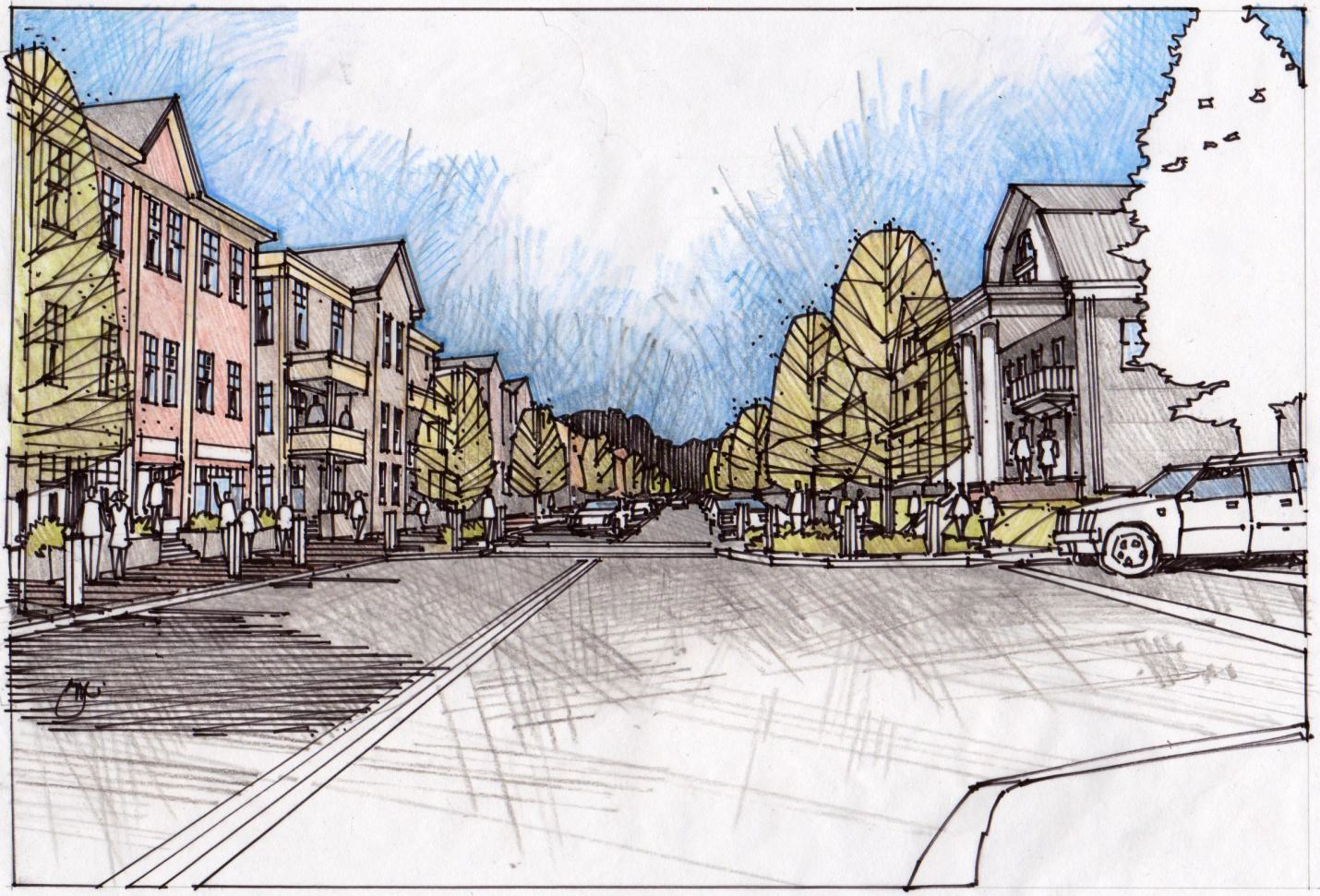
Illustrative View of T-4.1 (Main Street)
Intent and Purpose:
Traditional Main Street Neighborhood (T-4.1)
The Main Street Neighborhood district is designed to continue the existing pattern of large houses set along Main Street. This area is characterized by front porches, residential front yards and front doors facing the street. T- 4.1 promotes a lower-density and less concentrated pattern of buildings along the street, while maintaining a pleasing, connective and compact multi-modal environment.
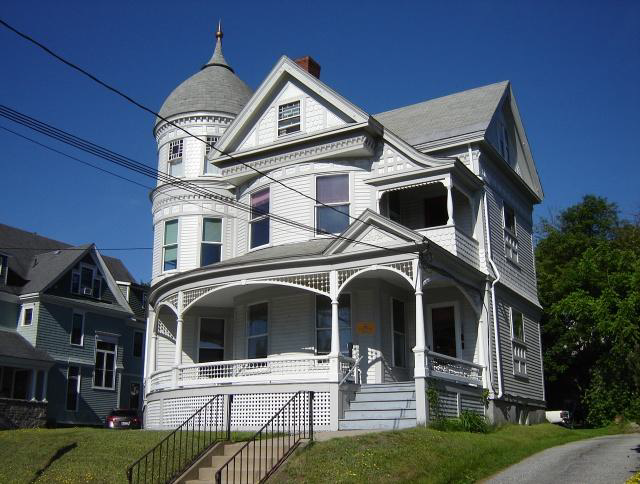
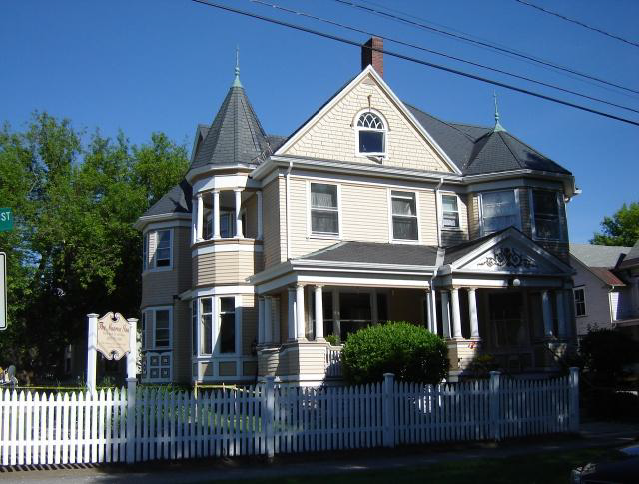
Characteristic Features
• Front lawns
• Front facade detailing
• Frontage fences
• Porches
• Bay windows
• Foundation planting and yard landscaping
• Street Trees
• Lower Density
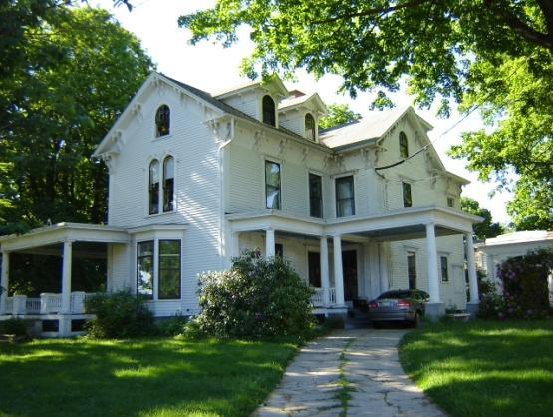
Examples of Main Street Neighborhood - T-4.1
(Ord. No. 04-03072016, 5-16-2016)
Sec. 60-548.1. - Building placement and configuration T-4.1.
Elevated Building Placement
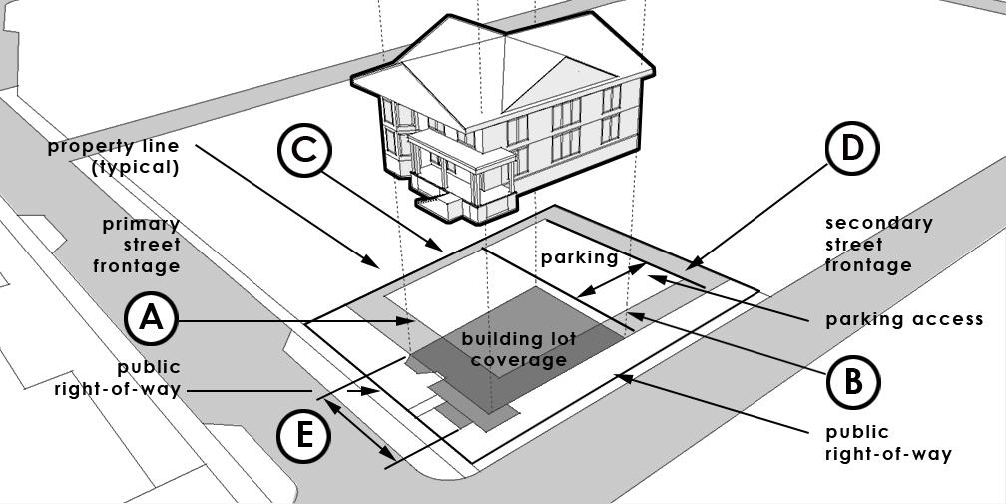
_____
Building Placement on Lot
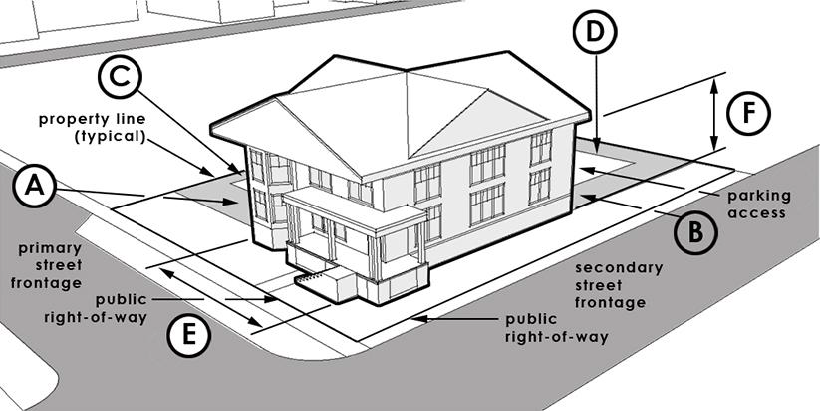
(Ord. No. 04-03072016, 5-16-2016)
Sec. 60-548.2. - Building frontages types T-4.1.
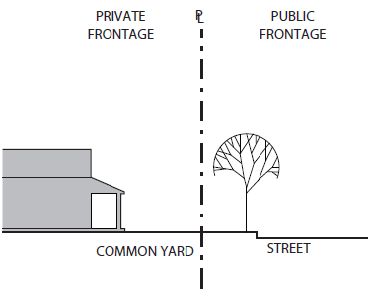
Common Yard
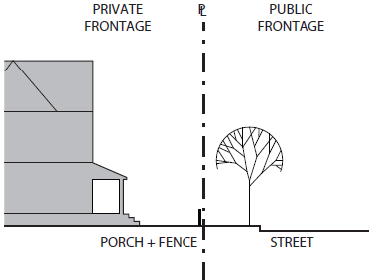
Porch Yard
(Ord. No. 04-03072016, 5-16-2016)
Sec. 60-548.3. - External elements T-4.1.
(Ord. No. 04-03072016, 5-16-2016; Ord. No. 11-03012021, § 65, 3-15-2021)
Sec. 60-548B. - Traditional Neighborhood T-4.2B.
Illustrative View of T-4.2B
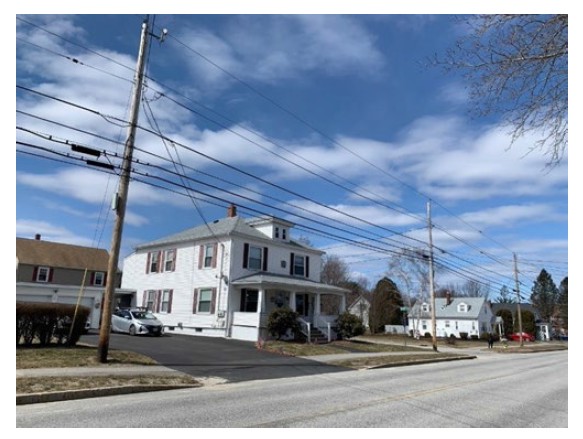
Intent and Purpose:
Traditional Neighborhood (T-4.2B)
The Traditional Neighborhood district is characterized by small to medium sized buildings with smaller front yards and stoops in a more compact urban environment, and includes and traditional neighborhood sized storefronts. The smaller minimum and maximum building setbacks form a moderately dense street-wall pattern, diverse architectural styles and pedestrian friendly streets and sidewalks.
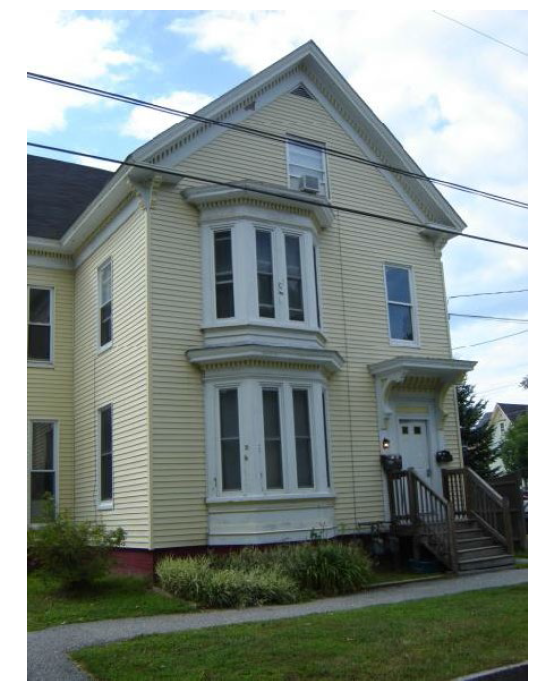
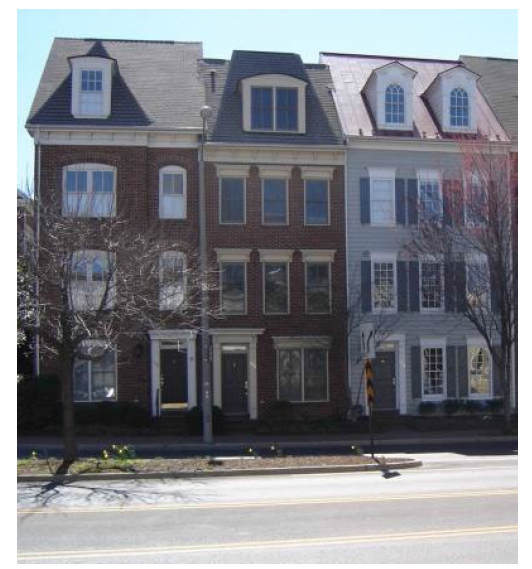
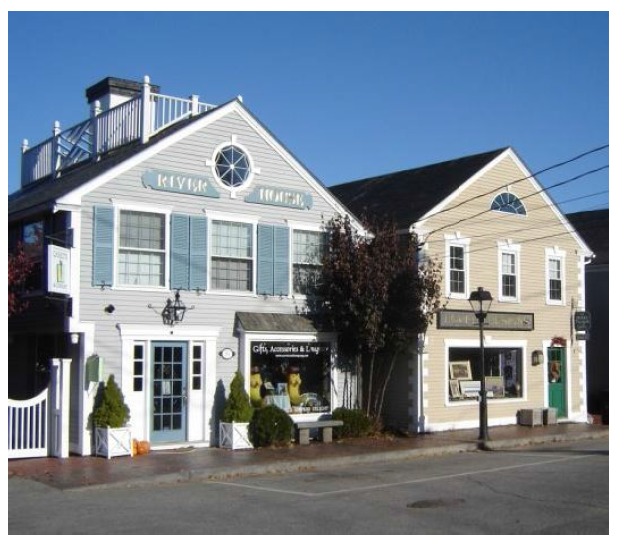
Characteristic Features
• More public and private realm interaction
• Front facade detailing
• Small front yards
• Bay windows
• Neighborhood scaled storefronts with large windows
• Frontage Fences
• Street Trees
• Moderate densities
(Ord. No. 20-09062022, § 2, 9-19-2022; Ord. No. 12-09052023, 9-18-2023)
Sec. 60-548B.1. - Building placement and configuration T-4.2B.
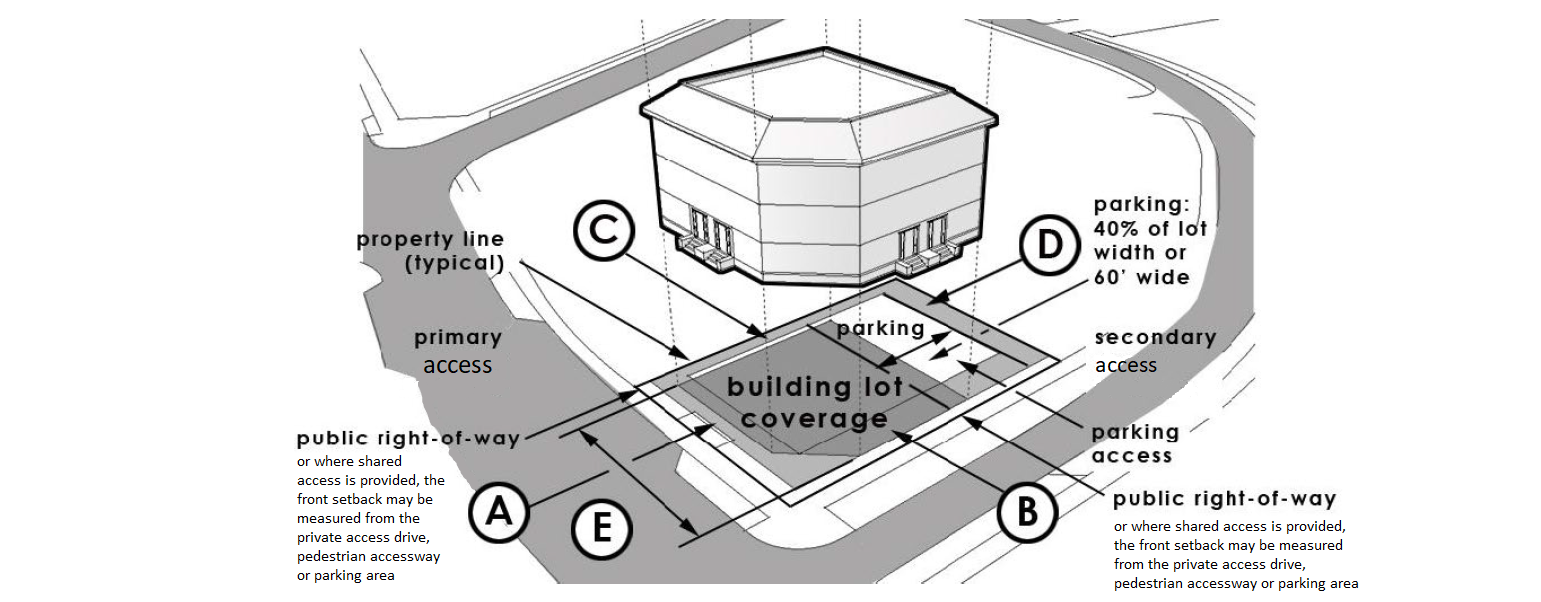
Elevated Building Placement
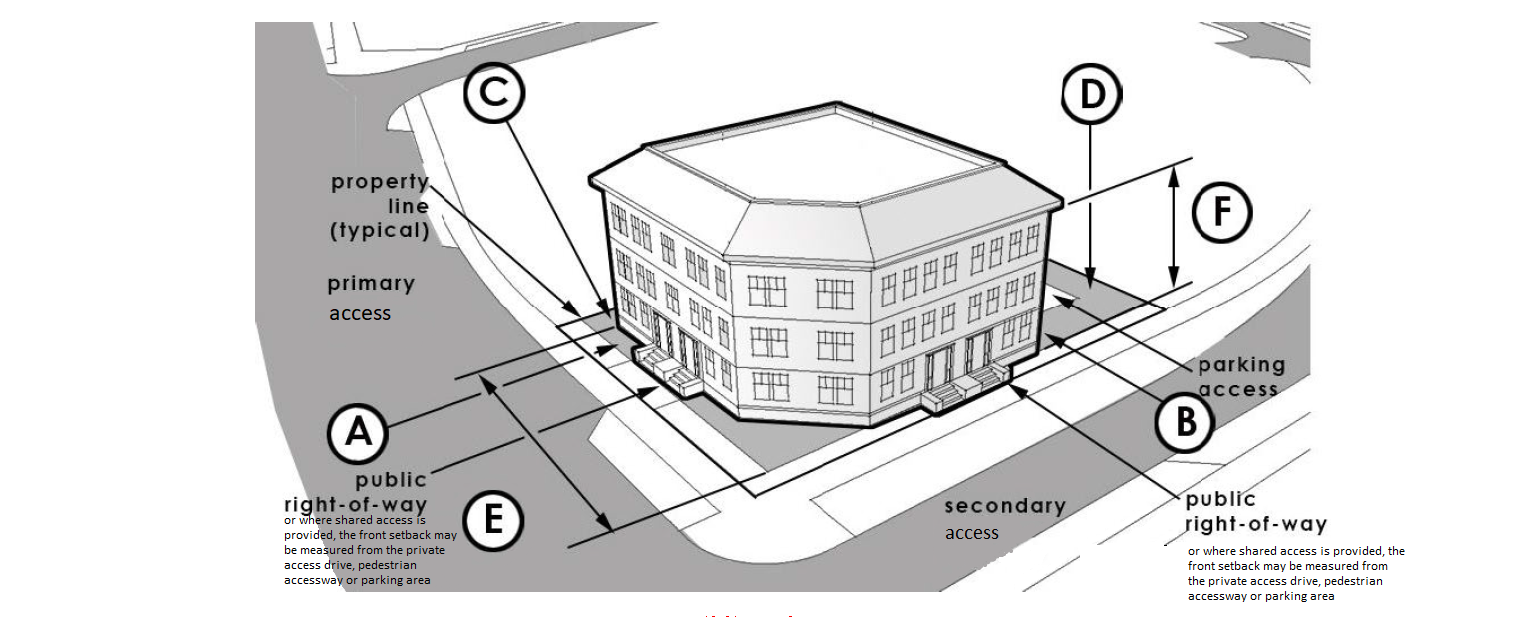
Building Placement on Lot
* Where adjacent buildings exceed the maximum setback, the maximum setback may be calculated by the average setback of principal structures on adjacent lots. For undeveloped adjacent lots, a setback of 25 feet shall be used for the calculation. Front setback, principal—where a private shared access drive is provided serving more than one structure (minimizing access points on any public road), the front setback may be measured from the private access drive, pedestrian accessway or parking area.
(Ord. No. 20-09062022, § 2, 9-19-2022; Ord. No. 12-09052023, 9-18-2023)
Sec. 60-548B.2. - Building frontages T-4.2B.
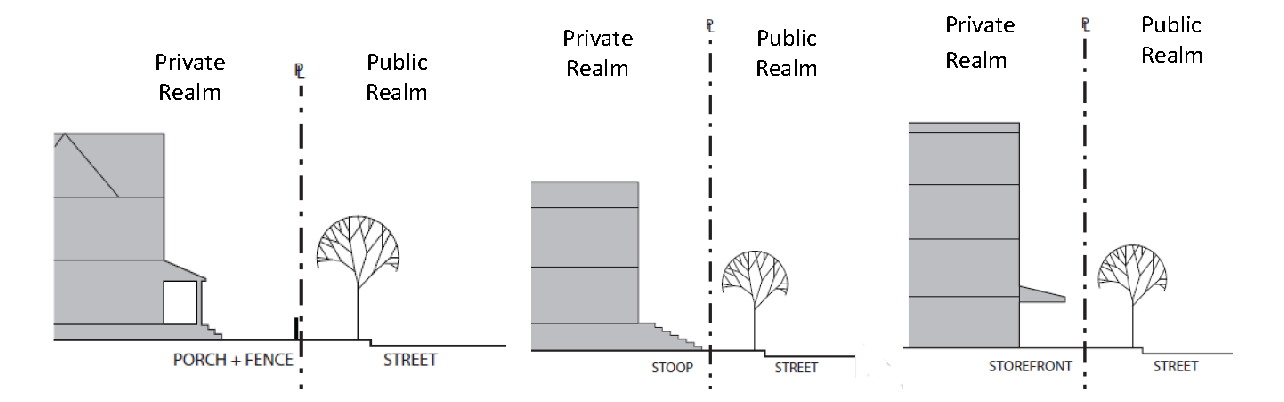
Common or Porch Yard Stoop Yard Frontage Storefront Type
(Ord. No. 20-09062022, § 2, 9-19-2022; Ord. No. 12-09052023, 9-18-2023)
Sec. 60-548B.3. - External elements T-4.2B.
(Ord. No. 20-09062022, § 2, 9-19-2022)
Sec. 60.549. - Traditional Downtown Neighborhood T-4.2.
Illustrative View of T-4.2 (Spring Street)
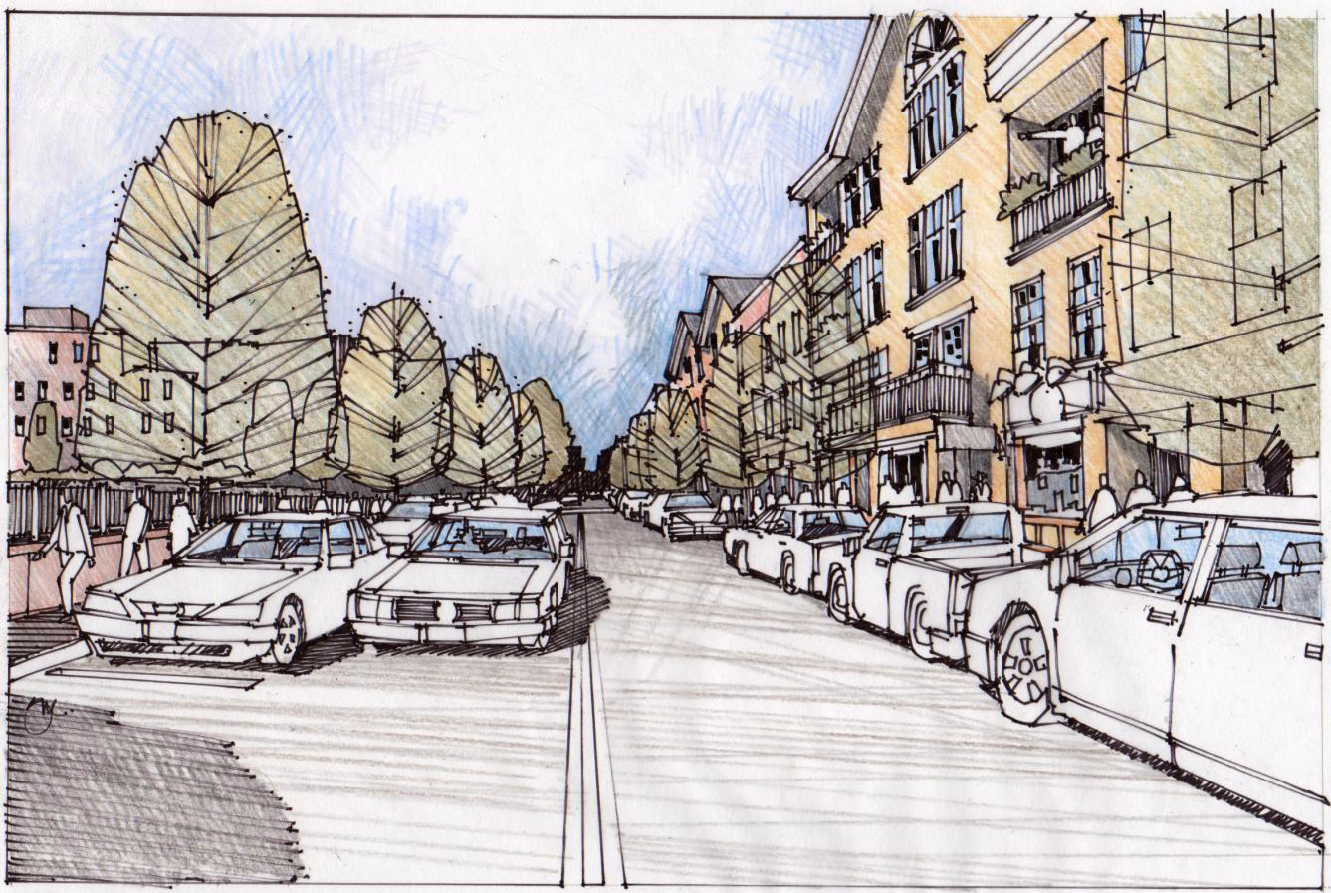
Intent and Purpose:
Traditional Downtown Neighborhood (T-4.2)
The Traditional Downtown Neighborhood district is characterized by a small to medium sized buildings with smaller front yards and stoops in a more compact urban environment, and includes and traditional neighborhood sized storefronts. The smaller minimum and maximum building set-backs form a moderately dense street-wall pattern, diverse architectural styles and pedestrian friendly streets and sidewalks.
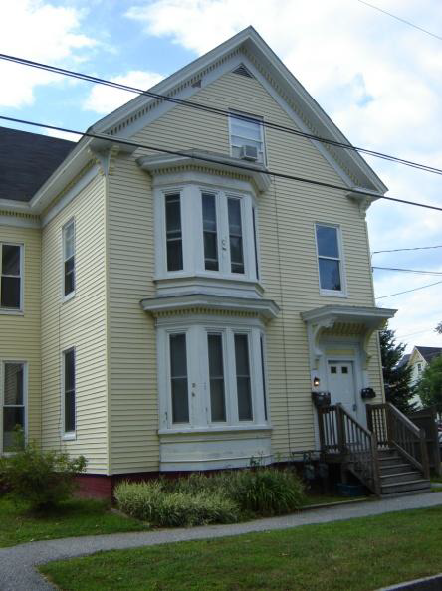
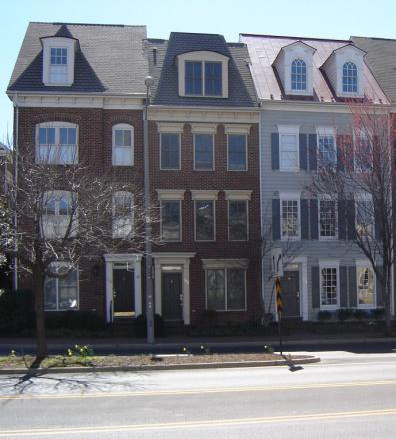
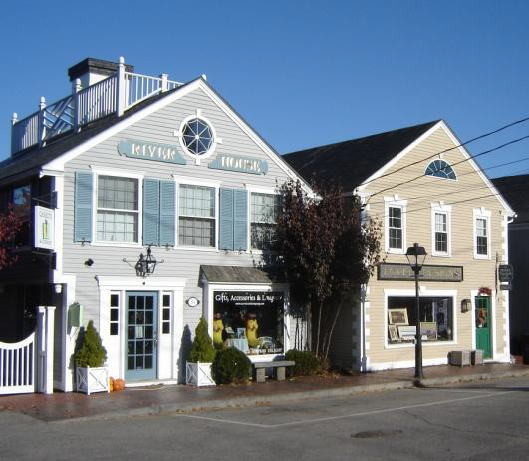
Characteristic Features
• More public and private realm interaction
• Front facade detailing
• Small front yards
• Bay windows
• Neighborhood scaled storefronts with large windows
• Frontage Fences
• Street Trees
• Moderate densities
(Ord. No. 04-03072016, 5-16-2016)
Sec. 60-549.1. - Building placement and configuration T-4.2.
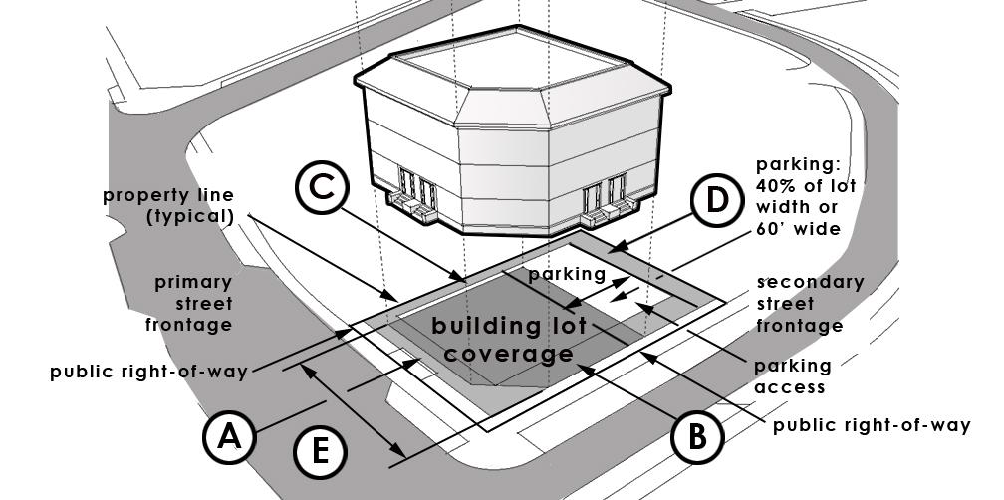
Elevated Building Placement
_____
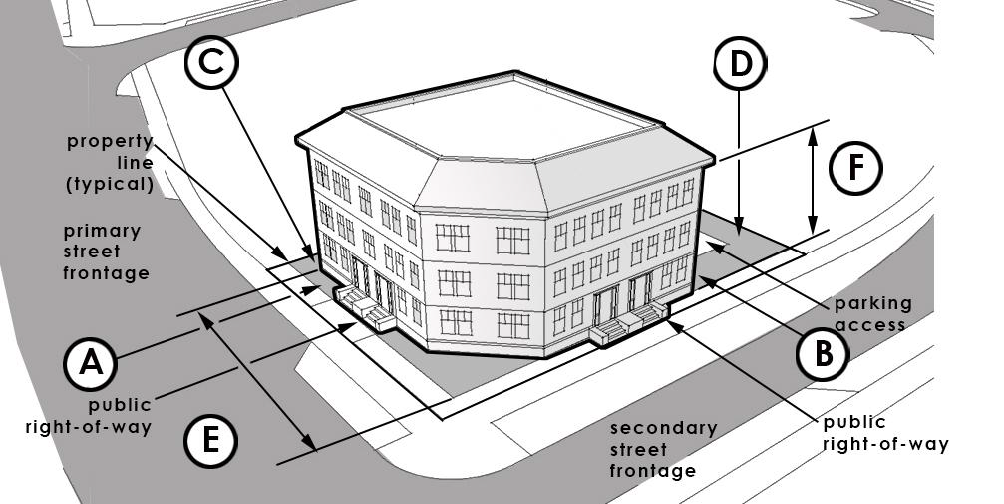
Building Placement on Lot
(Ord. No. 04-03072016, 5-16-2016)
Sec. 60.549.2. - Building frontages T-4.2.
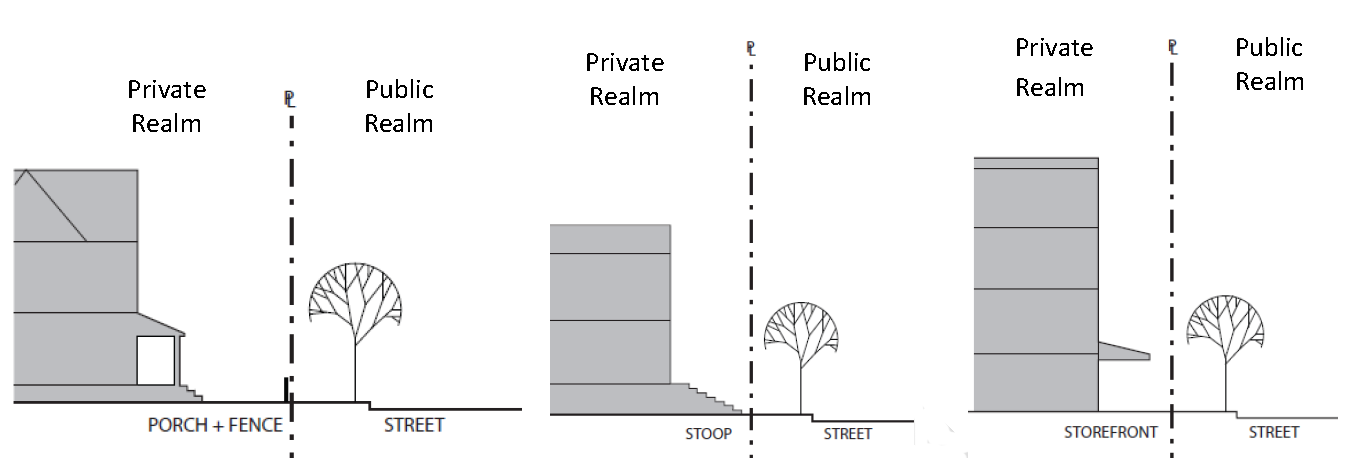
Common or Porch YardStoop Yard FrontageStorefront Type
(Ord. No. 04-03072016, 5-16-2016; Ord. No. 11-03012021, § 66, 3-15-2021)
Sec. 60-549.3. - External elements T-4.2.
(Ord. No. 04-03072016, 5-16-2016)
Sec. 60-550. - Downtown Traditional Center T-5.1.
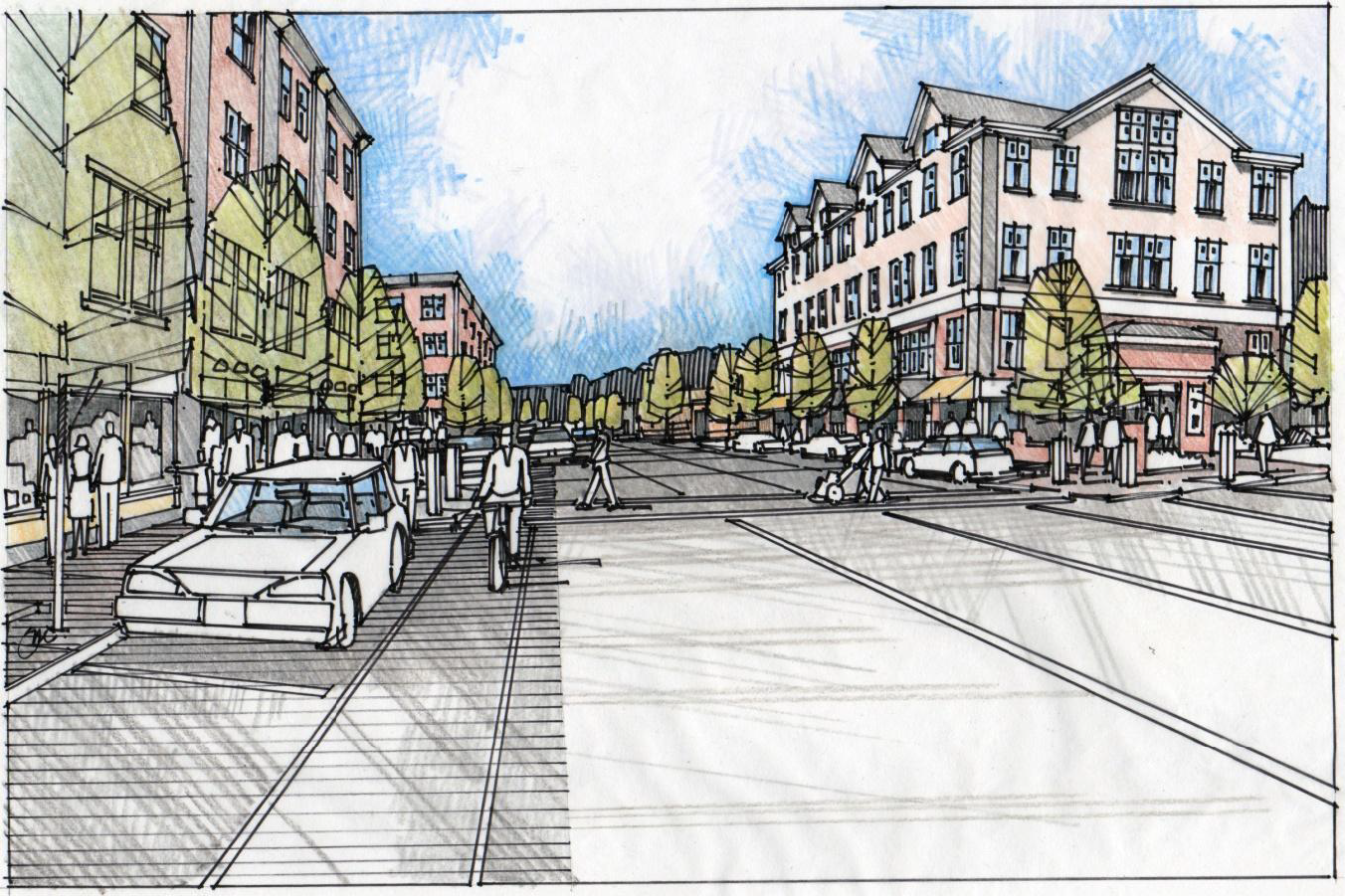
Illustrative View of T-5.1 (Future Great Falls Plaza)
Intent and Purpose:
Downtown Traditional Center (T-5.1)
The Downtown Traditional Center zone is characterized by medium to larger sized buildings in a compact urban environment that generates an active street life. There is interplay between the Public Realm of the busy street and sidewalk, and the Private Realm of the residential stoops, commercial storefronts and gallery building fronts. The increased building widths form a more solid and compact street wall pattern, generating an energized traditional downtown feel.
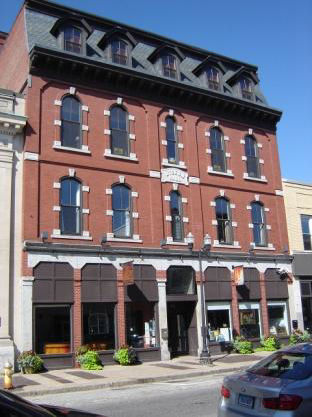
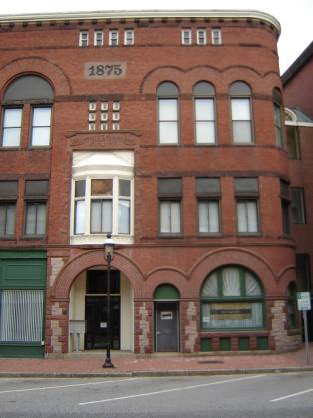
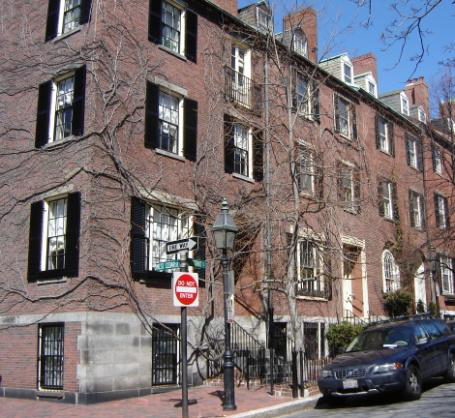
Key Features
• Vibrant and active interaction between public and private realms
• Larger buildings
• Front facade detailing
• Bay windows
• Balconies
• Street trees
• More urban density
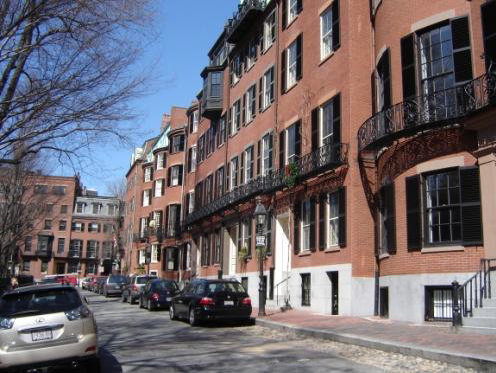
Examples of Downtown Traditional Center T-5.1
(Ord. No. 04-03072016, 5-16-2016)
Sec. 60-550.1. - Building placement and configuration T-5.1.
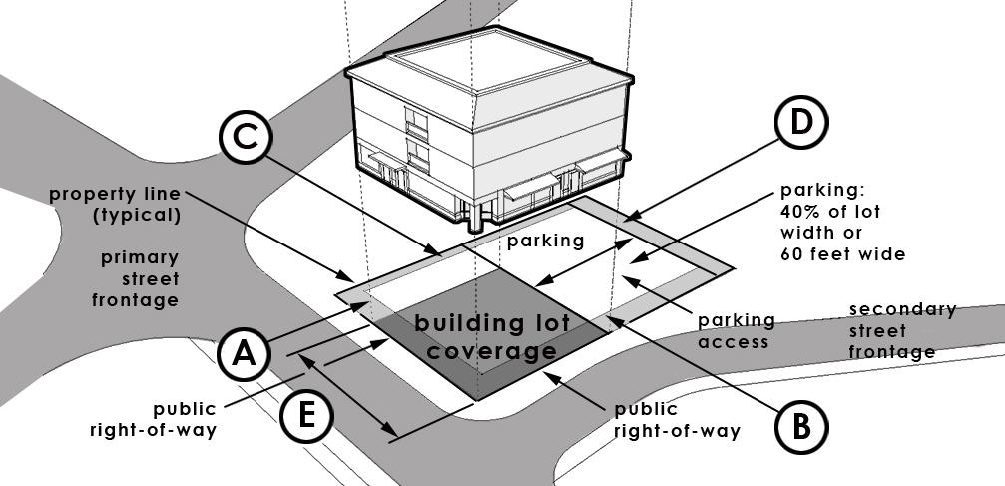
Elevated Building Placement
_____
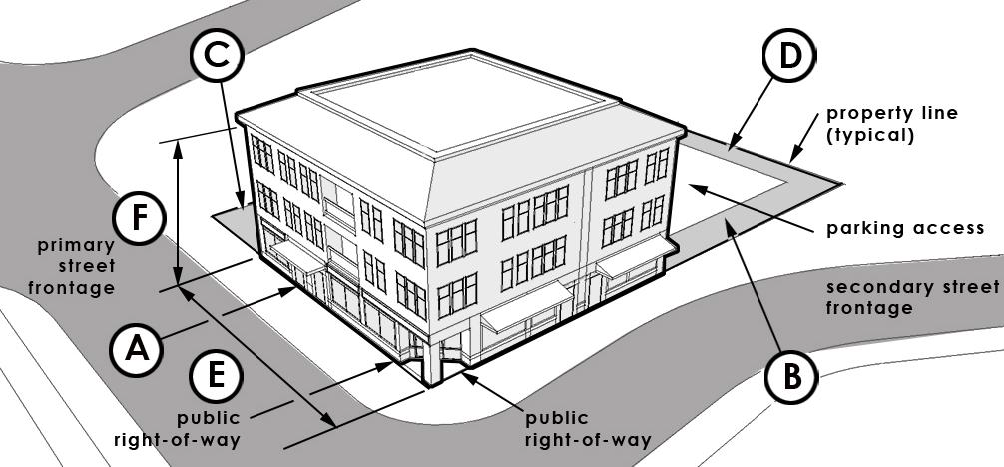
Building Placement on Lot
(Ord. No. 04-03072016, 5-16-2016)
Sec. 60-550.2. - Building frontages T-5.1.
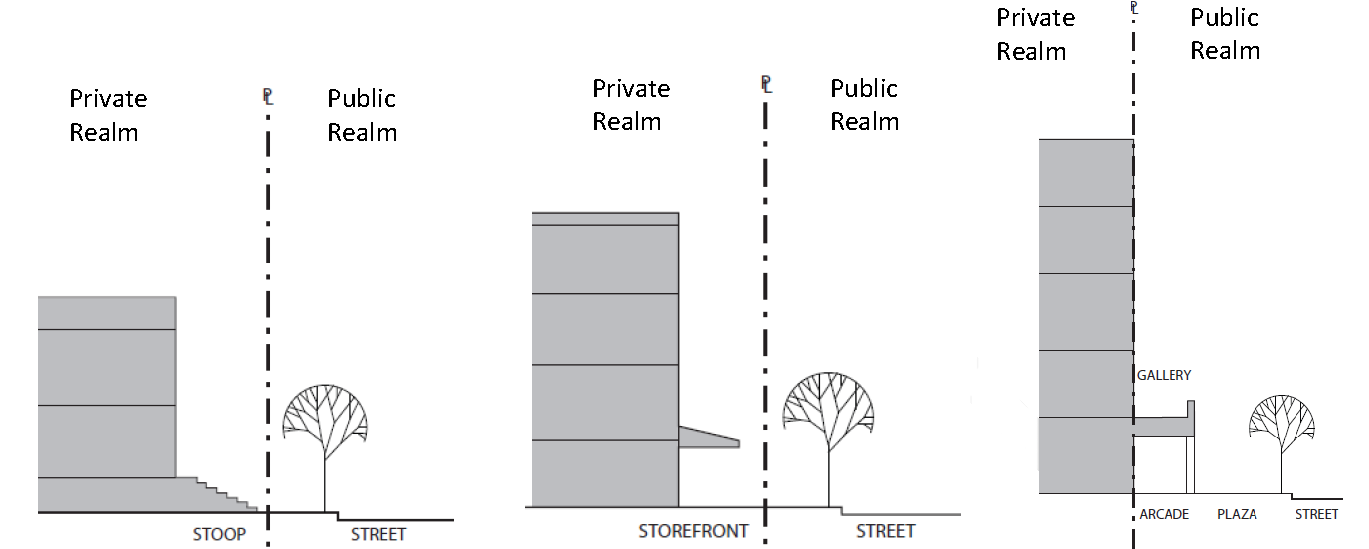
Stoop Frontage YardStorefront FrontageGallery Frontage
(Ord. No. 04-03072016, 5-16-2016)
Sec. 60-550.3. - External elements T-5.1.
(Ord. No. 04-03072016, 5-16-2016; Ord. No. 11-03012021, § 67, 3-15-2021)
Sec. 60-551. - Downtown City Center T-5.2.
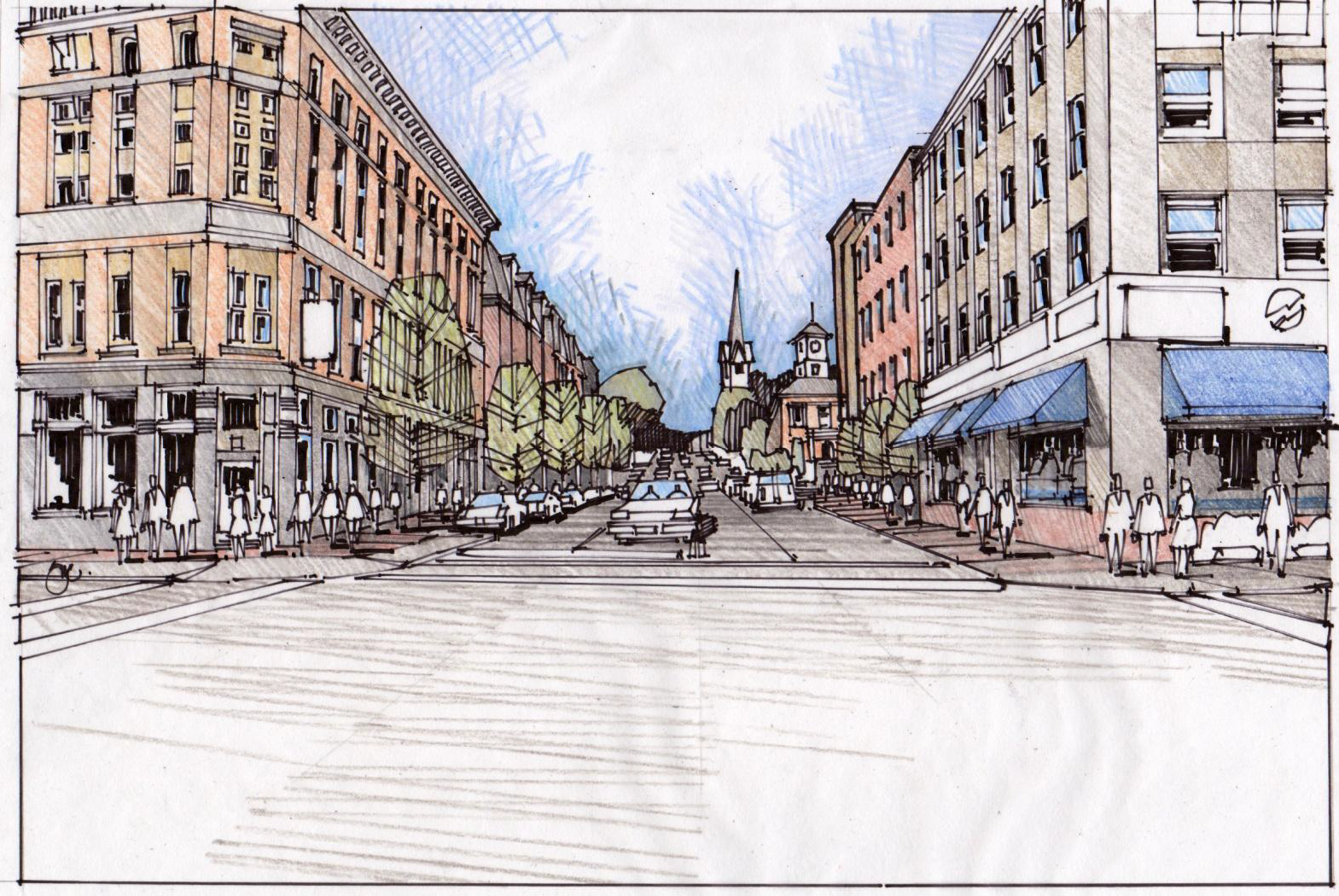
Illustrative View of T-5.2 (Court Street)
Intent and Purpose:
Downtown City Center (T-5.2)
The Downtown City Center district is characterized by medium to large sized buildings in a compact urban environment. This setting will generate social and cultural activity and events, economic stimulation and human interaction. The streets will be important transportation corridors with large sidewalks. The large residential and commercial building widths, frontages and building heights form a solid, compact street wall pattern. The Downtown Center will generate regional economic development activity along with energized social and lifestyle options.
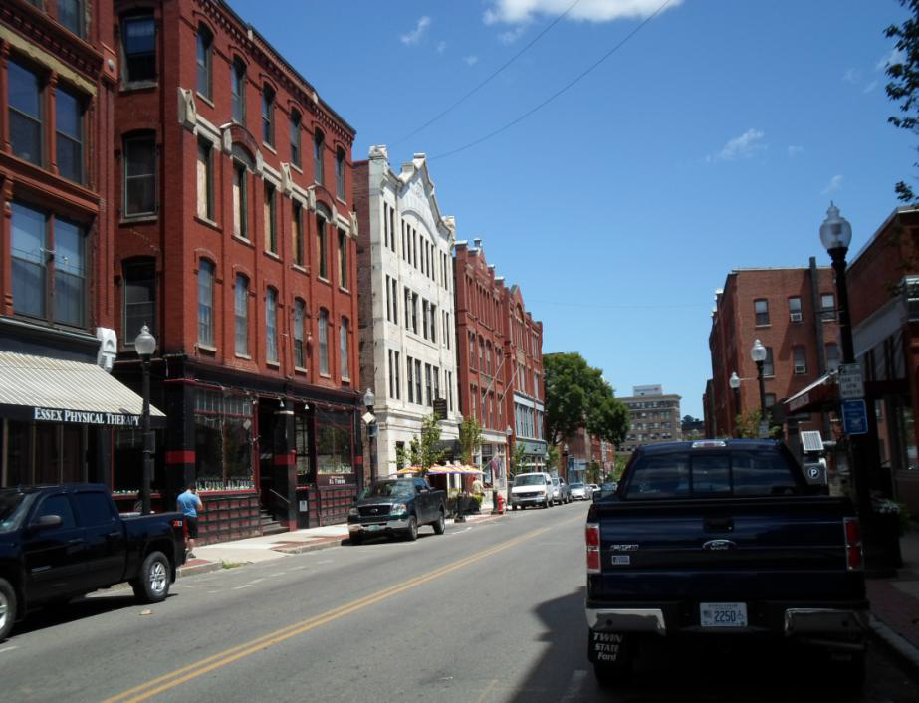
Key Features
• Vibrant street life
• Front facade detailing
• Articulated storefront entrance
• Awnings for storefronts
• Balconies
• Wide sidewalks
• Street Trees
• Compact Urban Environment
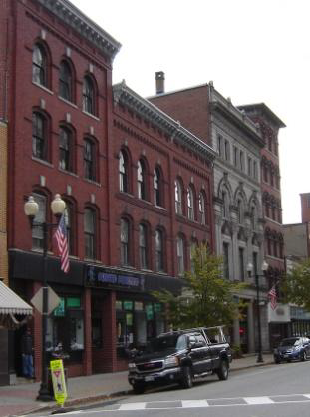
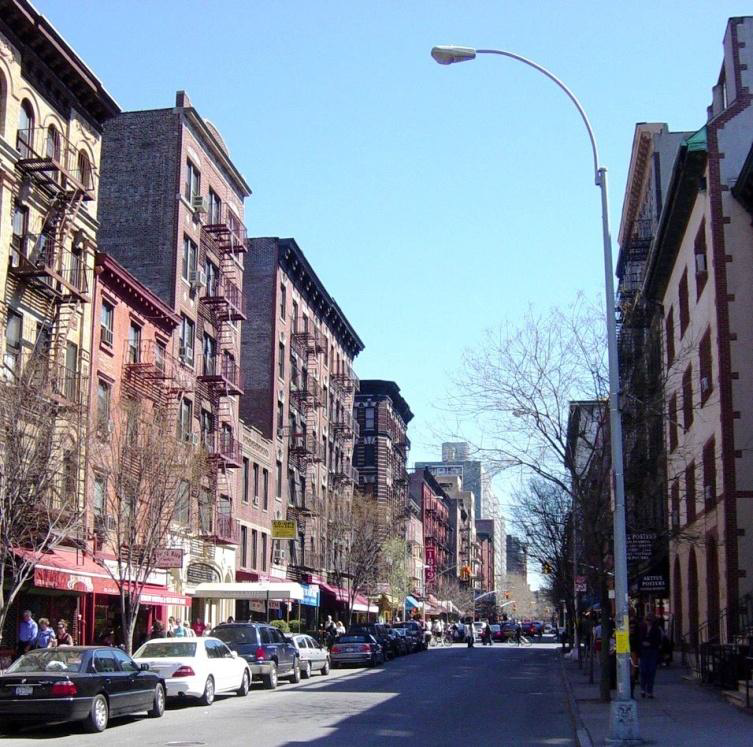
Examples of Downtown City Center - T-5.2
(Ord. No. 04-03072016, 5-16-2016)
Sec. 60-551.1. - Building placement and configuration T-5.2.
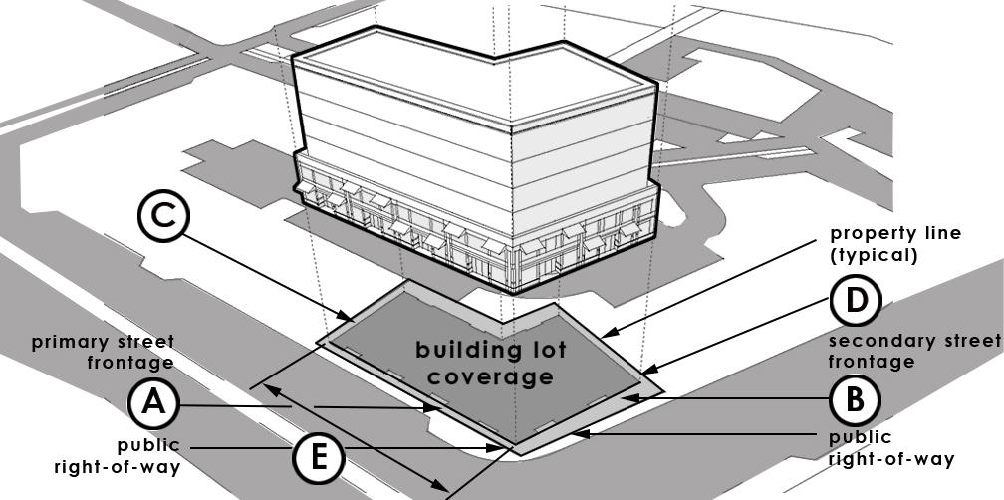
Elevated Building Placement
_____
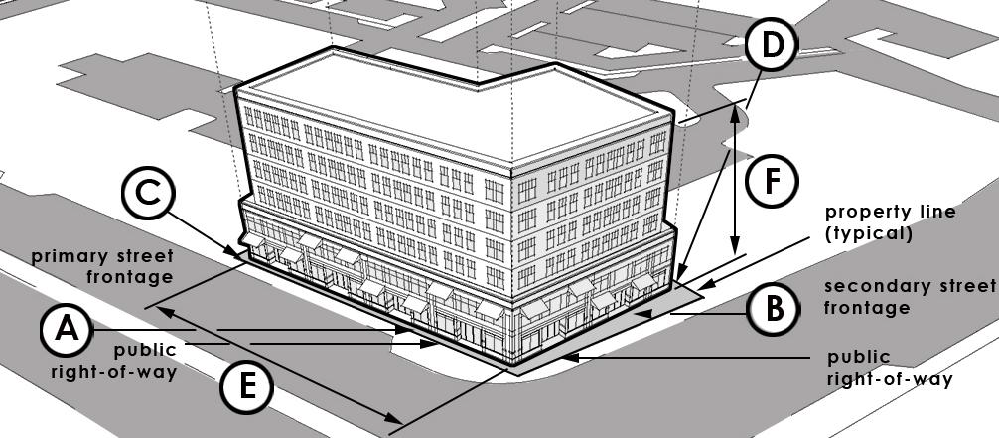
Building Placement on Lot
(Ord. No. 04-03072016, 5-16-2016)
Sec. 60-551.2. - Building frontages T-5.2.
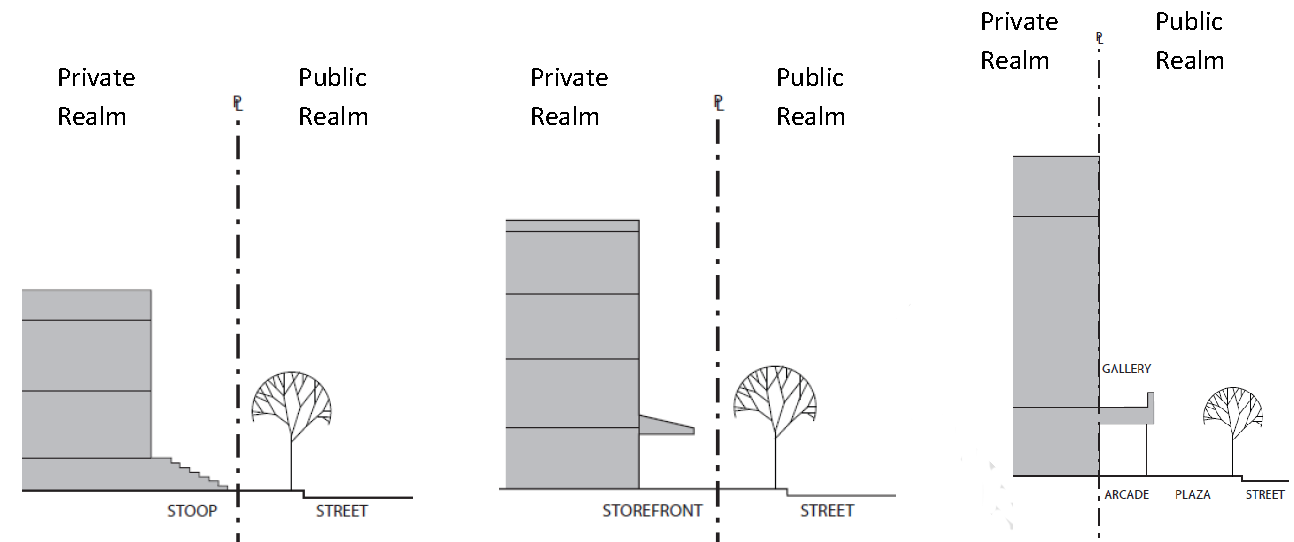
Stoop Frontage Yard Storefront Frontage Gallery Frontage
(Ord. No. 04-03072016, 5-16-2016; Ord. No. 11-03012021, § 68, 3-15-2021)
Sec. 60-551.3. - External elements T-5.2.
(Ord. No. 04-03072016, 5-16-2016)
Sec. 60-552. - Great Falls Metropolitan T-6.
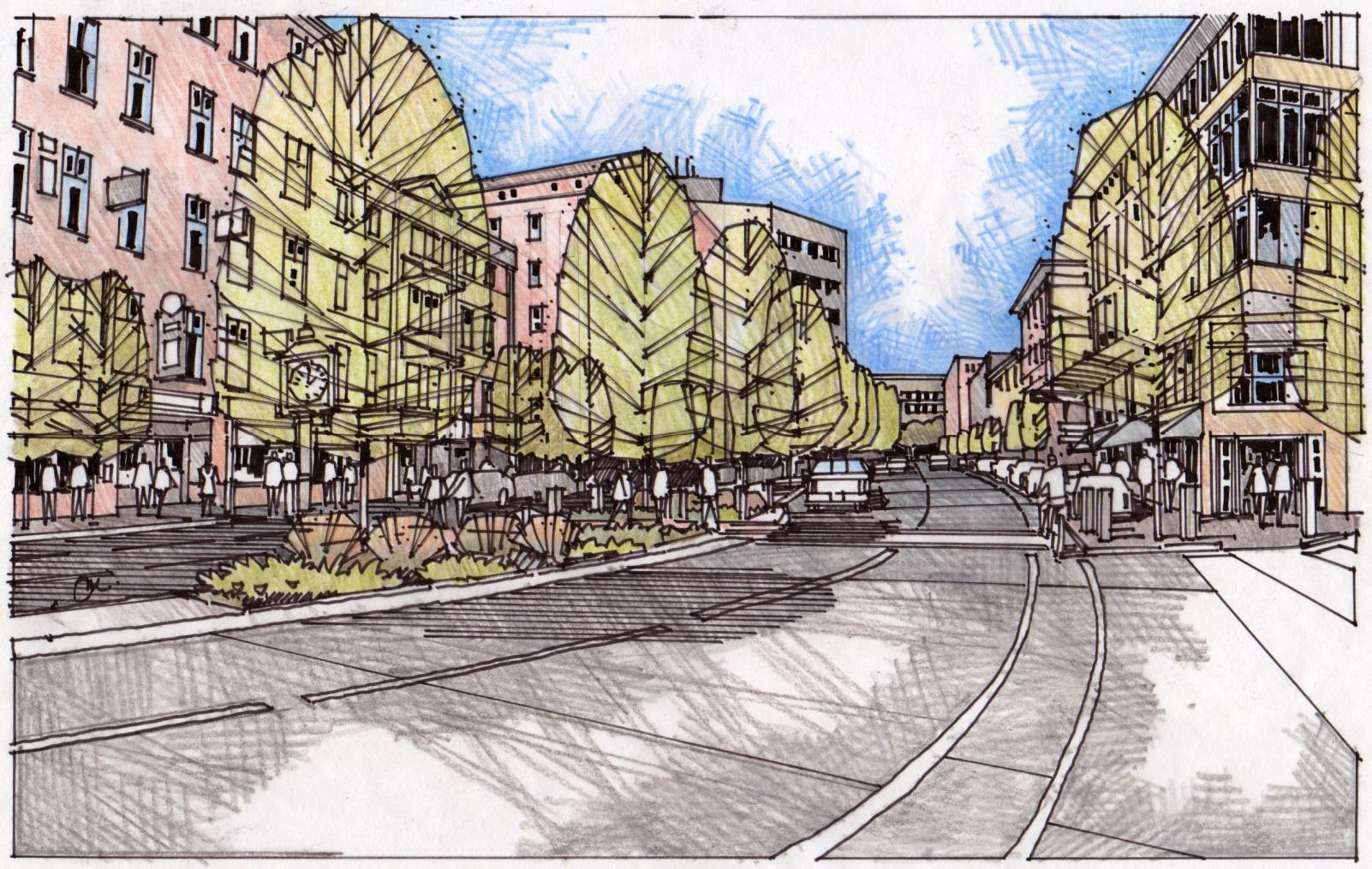
Illustrative View of T-6 (Turner Street)
Intent and Purpose:
Great Falls Metropolitan (T-6)
The Great Falls Metropolitan zone is characterized by large buildings up to 8 stories tall that will define the City of Auburn's emerging downtown. A new central square, "Great Falls Square" will provide a downtown focal point and center for professional enterprise and commerce. The Great Falls Metropolitan urban form will generate strong regional socio-economic gravitational pull, attract corporate investment and become a regional destination for visitors, events, entertainment, shopping and social gatherings.
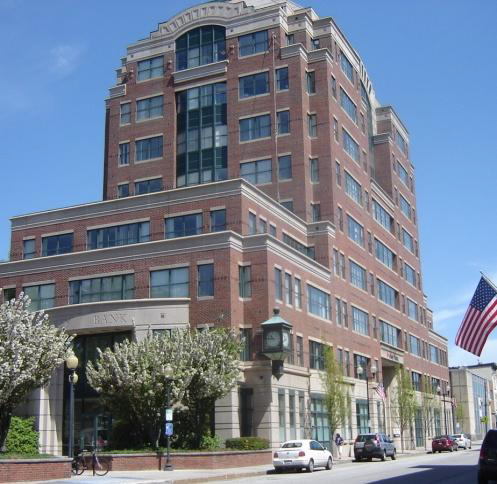
Key Features
• High energy downtown center
• Balconies
• Articulated storefront entrances
• Awnings for storefronts
• Wide sidewalks
• Street trees
• Streetscape elements (benches, planters)
• Transportation hub
• High density
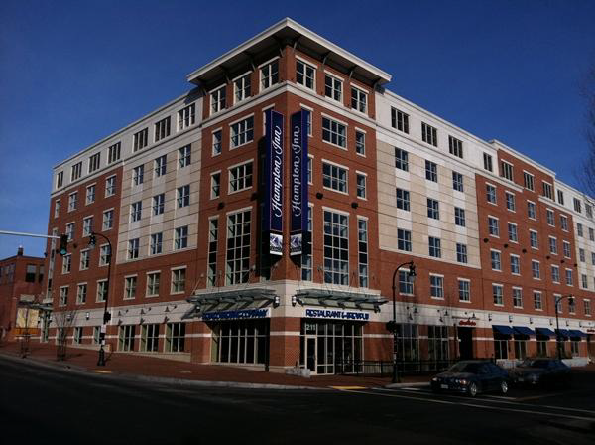
Examples of Great Falls Metropolitan T-6
(Ord. No. 04-03072016, 5-16-2016; Ord. No. 11-03012021, § 69, 3-15-2021)
Sec. 60-552.1. - Building placement and configuration T-6.
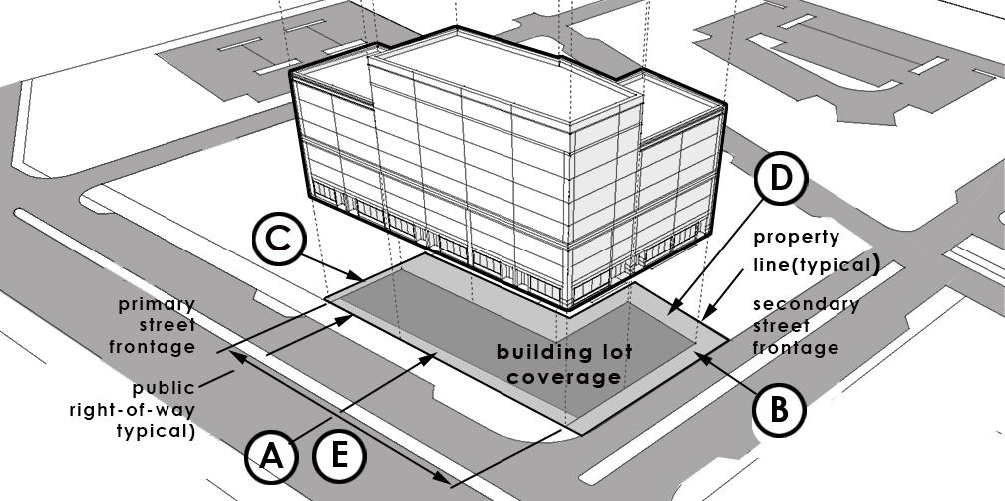
Elevated Building Placement
_____
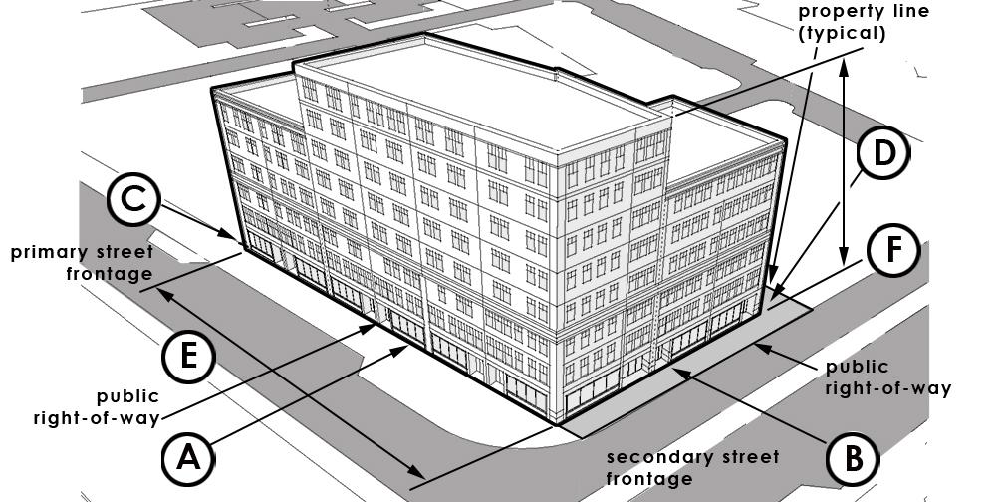
Building Placement on Lot
(Ord. No. 04-03072016, 5-16-2016)
Sec. 60-552.2. - Building frontages T-6.
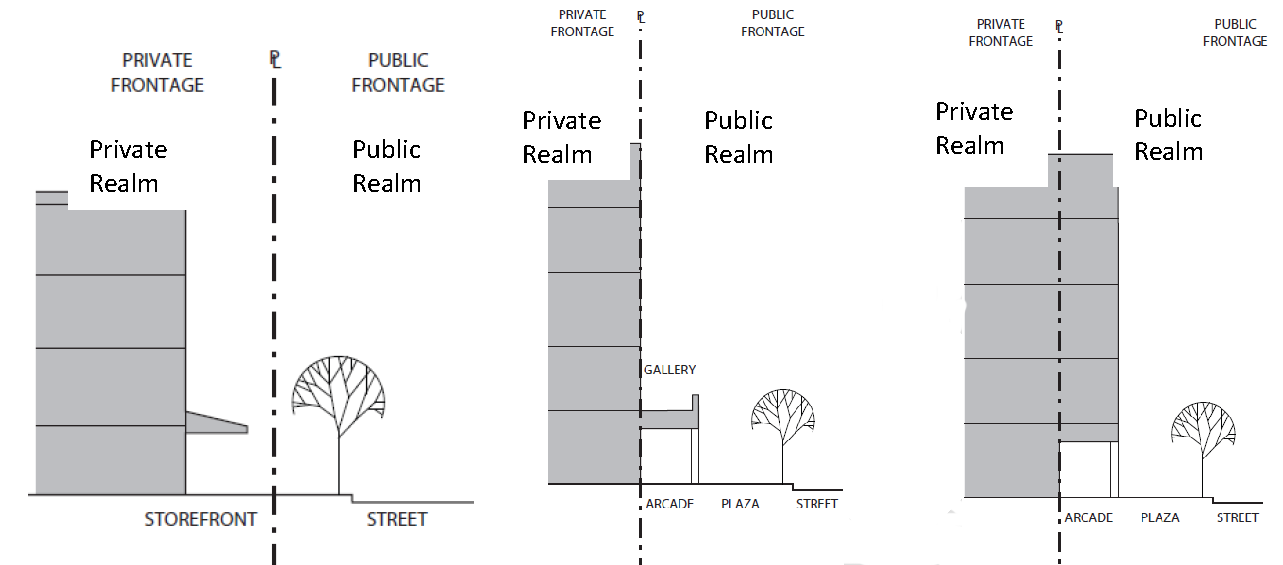
Storefront FrontageGallery Frontage Arcade Frontage
(Ord. No. 04-03072016, 5-16-2016; Ord. No. 11-03012021, § 70, 3-15-2021)
Sec. 60-552.3. - External elements T-6.
(Ord. No. 04-03072016, 5-16-2016)
Sec. 60-553. - Conservation/Open Space C/OS.
The conservation/open space district is reserved for natural resource and compatible open space uses such as agriculture and forestry, low-intensity recreation, facilities that provide water access and similar low impact uses. Uses that involve significant development or impervious surfaces should not be allowed in this district. Uses such as utility lines and roads may be located within the district if there is no practical alternative.
(Ord. No. 11-03012021, 3-15-2021; Ord. No. 30-06212021, 7-19-2021)
Sec. 60-554. - Form based code use and parking matrix.
Notes:
(1)
Uses not listed are considered prohibited unless deemed similar by the director of planning or by the planning board through a special exception approval.
(2)
* Parking requirements in T-4.1, T-4.2B, T-4.2, T-5.1, T-5.2 and T-6 may be provided by the municipality or private parking resources within 500 feet of the principal building, subject to planning board approval.
(3)
Where more than 50 percent of floor space is devoted to age restricted goods. This may include licensed adult use or medical marijuana stores.
(4)
Office, service and retail uses limited to 1,500 SF footprint and must include a residential unit; no drive through businesses allowed.
(5)
All projects shall provide a community impact and needs analysis with review and approval from city council or its designee.
(6)
For an affordable housing development, off-street parking requirements may not exceed two spaces for every three units.
(Ord. No. 04-03072016, 5-16-2016; Ord. No. 05-04032017, § 2, 4-24-2017; Ord. No. 07-05202019, 6-3-2019; Ord. No. 29-06212021, 7-19-2021; Ord. No. 20-09062022, § 3, 9-19-2022; Ord. No. 02-02132023, 2-17-2023; Ord. No. 23-12022024, 1-6-2025)
Sec. 60-555. - Form based code administration.
Form based code relation to zoning ordinance:
(1)
The form based code shall regulate areas designated as form based code districts.
(2)
All buildings and land uses located within a form based code district shall comply with section 60-33 et seq. (General Provisions) unless specifically stated otherwise in sections 60-546 to 60-558 of the form based code.
(3)
Site plan/special exception. Any project located within a form based code district that requires special exception or site plan review shall comply with section 60-45.
(Ord. No. 04-03072016, 5-16-2016)
Sec. 60-556. - Form based code plan types.
(a)
Administrative types.
(1)
By right. No permits are required for projects such as normal maintenance or for new structures under 200 square feet.
(2)
Minor administrative. Projects that require permits and comply with all form based code or zoning regulations, may be approved and permitted by the appropriate city departmental staff and will not require multiple departmental or planning board approval. These projects can be applied for at any time.
(3)
Major administrative. Projects that do not qualify as a Subdivision. Special exception or site plan review type plans and comply with all form based code or zoning regulations, but due to multiple issues, will require review by the multiple city departmental staff.
(b)
Discretionary type plans. The following plan types shall require review and action by the planning board.
(1)
Subdivisions of three or more lots over a five-year period or a project creating more than three dwelling units. (Subdivision Review).
(2)
Any project listed as special exception or "S" in section 60-554, Use and Parking Matrix Chart. (Special Exception and Site Plan Review).
(3)
Any project within the form based code district proposing a total of 12,000 square feet of new construction, all floors included. (Special Exception and Site Plan Review).
(4)
Any amendment to an existing discretionary plan that increases existing square footage more than 25 percent.
(5)
Any project located within the form based code district area that seeks a waiver from the adopted form based code regulating development standards shall submit a complete Special Exception and Site Plan Review application for Planning Board review and action.
(Ord. No. 04-03072016, 5-16-2016)
Sec. 60-557. - Applicability.
(a)
Any minor, major administrative type plan and/or discretionary plan, as defined in section 60-556, located within a form based code district, shall be required to submit a development review application prior to any issuance of building permits or development activity.
(b)
Any development activity on or within property located with the form based code district shall be reviewed for compliance with applicable form based code or zoning ordinance regulations.
(Ord. No. 04-03072016, 5-16-2016)
Sec. 60-558. - Form based code development application procedure.
(a)
Administrative type plan application process.
(1)
Applicant identifies the subject property's zoning/transect district and determines what plan type the project is.
(2)
Applicant reviews the project's compliance for form based code development standards, sections 60-548 through 60-552; including all sections on purpose, building placement and configuration, building frontages, external elements, lot layout, the Parking and Use Matrix Chart and administration; along with any other applicable zoning ordinance Regulations.
(3)
Pre-development consultation. All administrative type plan applicants are encouraged to contact the Auburn Planning Office for a pre-development consultation to confirm the property's form based code or zoning district and discuss the form based code requirements and related zoning and/or other regulatory items. Failure to consult with the planning office may result in the delay of acceptance, review and approval of the application.
(4)
Any minor or major administrative plan or discretionary plan applicant in a form based code district shall complete and submit a cover letter describing the project, a development review application, a form based code development checklist and the appropriate application fee and number of applications to the planning office.
(5)
All form based code applications will be reviewed by the planning staff for completeness and applicant will be notified within five working days if the plan is deemed complete and whether the plan is administrative or discretionary. The applicant is responsible for working with the planning staff to correct any deficiencies needed to be accepted for further review.
(6)
Type 2 and 3 administrative plans will be reviewed by the appropriate city departmental staff or other relevant agencies who will recommend approving, disapproving or postponing to allow for time to correct the application. The director of planning will notify the applicant of the decision in writing within 15 calendar days of its receipt of a completed application.
(7)
The director of planning shall have the authority to require an administrative plan to be considered by the planning board and notify the applicant the justifications for doing so.
(b)
Discretionary project application process.
(1)
Applicant identifies subject property's zoning/transect and determines what plan type the project is.
(2)
Applicant reviews the project's compliance for the applicable form based code development standards sections 60-548 through 60-552; including all sections on purpose, building placement and configuration, building frontages, external elements, lot layout, the Parking and Use Matrix Chart and administration; along with any other applicable zoning ordinance regulations.
(3)
Pre-development consultation. All potential development and project applicants are encouraged to contact the Auburn Planning Office for a pre-development consultation to confirm the form based code or zoning regulations and discuss the form based code requirements and related zoning and/or other regulatory items. Failure to consult with the planning office may result in the delay of acceptance, review and approval of the application.
(4)
Discretionary plan applicants will submit; a development review application, a form based code development checklist the appropriate application fee and number of applications to the planning office for review and consideration by the planning board according to their normal submission deadline and meeting schedule.
(5)
Applications not meeting all the requirements of the form based code may include waiver as per section 60-1312 or variance requests as part of their application.
(c)
Waiver requests.
(1)
Any waiver request of form based code standards and requirements must identify what is regulation is being requested for the waiver and include a narrative explaining how the waiver, if approved, will allow the project to meet the purpose of the form based code and the objective of section 60-1277, site plan review.
(d)
Planning board approval.
(1)
The planning board shall approve, approve with conditions, disapprove or postpone based on its review of the application meeting all existing requirements, conditions, criteria and provisions of special exception, site plan review. Subdivision law and any other relevant procedural requirement of Chapter 60, Zoning, as part of its consideration of a form based code application.
(2)
The planning board shall provide findings for approval or disapproval based on the application's meeting the purpose of the form based code.
(Ord. No. 04-03072016, 5-16-2016; Ord. No. 11-03012021, § 41, 3-15-2021)

