
Baldwin City Zoning Code
ARTICLE XI
DEVELOPMENT DESIGN AND IMPROVEMENT STANDARDS
Sec. 22-471. - Purpose.
The purpose of this article is to provide development design and improvement standards applicable to all development activity within the municipal limits of the Town of Baldwin.
(Ord. No. 2013-01, § 5(Attach., § 6.00.00), 7-9-13)
Sec. 22-472. - Responsibility for improvements.
All improvements required by this article shall be designed, installed, and paid for by the developer, owner, or successors in title.
(Ord. No. 2013-01, § 5(Attach., § 6.00.01), 7-9-13)
Sec. 22-473. - Principles of development design.
The provisions of this article are intended to ensure functional and attractive development. Development design shall first take into account the protection of natural resources as prescribed in article VII of this chapter. All development shall be designed to avoid unnecessary impervious surface cover; to provide adequate access to lots and sites; and to avoid adverse effects of shadow, glare, noise, odor, traffic, drainage, and utilities on surrounding properties.
(Ord. No. 2013-01, § 5(Attach., § 6.00.02), 7-9-13)
Sec. 22-491. - Requirements for low density residential.
(a)
No building or structure shall exceed two and one-half (2½) stories or thirty-five (35) feet in height, except as otherwise allowed in this Code.
(b)
Every lot or parcel of land shall have an area of not less than seven thousand (7,000) square feet and a frontage at the building line of at least seventy (70) feet.
(c)
The minimum required floor area for a one-story building shall be one thousand (1,000) square feet, exclusive of porches, attached garages, carports, and breezeways.
(d)
The minimum required first floor area for a two-story building shall be eight hundred (800) square feet with a total floor area of not less than one thousand two (1,200) square feet, exclusive of porches, attached garages, carports, and breezeways.
(Ord. No. 2013-01, § 5(Attach., § 6.01.01), 7-9-13)
Sec. 22-492. - Requirements for medium low density residential.
(a)
No building or structure shall exceed two and one-half (2½) stories or thirty-five (35) feet in height, except as provided for in this Code.
(b)
Every lot or parcel of land shall have an area of not less than six thousand (6,000) square feet and a frontage at the building line of at least sixty (60) feet.
(c)
The minimum required floor area for a one-story building shall be eight hundred fifty (850) square feet, exclusive of porches, attached garages, carports, and breezeways.
(d)
The minimum required first floor area for a two-story building shall be seven hundred (700) square feet with a total floor area of not less than one thousand (1,000) square feet, exclusive of porches, attached garages, carports, and breezeways.
(Ord. No. 2013-01, § 5(Attach., § 6.01.02), 7-9-13)
Sec. 22-493. - Requirements for medium density residential.
(a)
Every lot or parcel of land shall have an area of not less than six thousand (6,000) square feet and a frontage at the building line of at least sixty (60) feet.
(b)
The minimum required floor area for a one-story single family dwelling shall be eight hundred fifty (850) square feet, exclusive of porches, attached garages, carports, and breezeways.
(c)
The minimum required first floor area for a two-story single-family dwelling shall be seven hundred (700) square feet with a total floor area of not less than one thousand (1,000) square feet, exclusive of porches, attached garages, carports, and breezeways.
(d)
The required minimum floor area for a one-story two-family dwelling shall be one thousand two hundred (1,200) square feet, exclusive of porches, attached garages, carports, and breezeways.
(e)
The minimum required ground floor area for a two-story two-family dwelling shall be seven hundred fifty (750) square feet, with a total floor area of not less that one thousand two hundred (1,200) square feet, exclusive of porches, attached garages, carports, and breezeways.
(Ord. No. 2013-01, § 5(Attach., § 6.01.03, 7-9-13)
Sec. 22-494. - Requirements for residential development in the mixed use category.
(a)
Single family dwelling units.
(1)
No building or structure shall exceed two and one-half (2½) stories or thirty-five (35) feet in height, except as provided for in this Code.
(2)
Every lot or parcel of land shall have an area of not less than six thousand (6,000) square feet and a frontage at the building line of at least sixty (60) feet.
(3)
The minimum required floor area for a one-story building shall be eight hundred fifty (850) square feet, exclusive of porches, attached garages, carports, and breezeways.
(4)
The minimum required first floor area for a two-story building shall be seven hundred (700) square feet with a total floor area of not less than one thousand (1,000) square feet, exclusive of porches, attached garages, carports, and breezeways.
(b)
Multi-family dwelling units.
(1)
The required minimum floor area for a one-story two-family dwelling shall be one thousand two hundred (1,200) square feet, exclusive of porches, attached garages, carports, and breezeways.
(2)
The minimum required ground floor area for a two-story two-family dwelling shall be seven hundred fifty (750) square feet, with a total floor area of not less than one thousand two hundred (1,200) square feet, exclusive of porches, attached garages, carports, and breezeways.
(3)
The minimum required ground floor area for multi-family dwellings units of two (2) or more units shall be five hundred (500) square feet with a total floor area of not less than one thousand (1,000) square feet, exclusive of porches, attached garages, carports, and breezeways.
(c)
Mobile homes.
(1)
Every lot or parcel of land shall have an area of not less than six thousand (6,000) square feet and a frontage at the building line of at least sixty (60) feet.
(2)
The mobile home must be certified as a residential unit by the State of Florida and the U.S. Department of Housing and Urban Development.
(3)
The mobile home must be no more than five (5) years old.
(4)
Pictures of the mobile home must be submitted to the town for approval prior to placement on the property.
(Ord. No. 2013-01, § 5(Attach., § 6.01.04), 7-9-13)
Sec. 22-495. - Impervious surface coverage.
(a)
Generally. Impervious surface on a development site shall not exceed the ratios provided in the table in subsection (d) of this section.
(b)
Ratio calculation. The impervious surface ratio is calculated by dividing the total impervious surface by the gross site area.
(c)
Alternative paving materials. If porous paving materials are used in accordance with standards approved by the Town of Baldwin, then the area covered with porous paving materials shall not be counted as impervious surface.
(d)
Table of maximum impervious surface ratios.
The maximum impervious surface ratio is given for each district, regardless of the type of use proposed and allowable pursuant to article V of this chapter.
(Ord. No. 2013-01, § 5(Attach., § 6.01.05), 7-9-13)
Sec. 22-496. - Building setback requirements from lot and right-of-way lines.
(a)
No part of any building may be closer to any lot line or to the street right-of-way line than authorized in the table below.
(1) In low density residential category only.
(2) All other residential land use categories.
(b)
Corner lots. On corner lots, the required front yard must be provided adjacent to each street.
(c)
Projections. Every part of a required yard shall be open and unobstructed from its lowest point to the sky, except for sills, cornices, buttresses, ornamental features, and eaves that do not project into a required yard or setback more than twenty-four (24) inches. Outside stairways, balconies, and chimneys may project into required yards or setbacks up to three and one-half (3½) feet if they do not to obstruct light and ventilation for adjacent properties.
(d)
Exceptions to required minimum setbacks on side and rear yards. There are no minimum setbacks required for side and rear yards if one of the following requirements are met:
(1)
If the distance from the exterior wall to the property line is less than five (5) feet, the applicant must provide a recorded maintenance easement from adjacent property owners.
(2)
The structure may be built on the property line if the owner records an attachment easement in favor of the adjacent property.
(3)
Dwellings erected above stores or shops do not have side yard requirements.
(e)
Minimum setbacks between buildings twenty-five (25) feet high or less.
(1)
The minimum distance between adjacent buildings shall be ten (10) feet, except that no setback between buildings is required in the Commercial In-Town land use category.
(2)
Distance shall be measured at the narrowest space between structures, whether a main living unit, principal structure, an allowable attachment, or an accessory structure, and shall not include roof overhang or eaves.
(f)
Increased setbacks for buildings over twenty-five (25) feet high. When a building is over twenty-five (25) feet high, the minimum distance from an adjacent building, right-of-way, or property line must be increased by two (2) feet for each story above two (2).
(g)
Accessory building setbacks. Accessory building setbacks must comply with the front and side yard setbacks in subsection (a) of this section except as follows:
(1)
The setback for a pool shall be at least seven and one-half (7.5) feet measured from the water line.
(2)
The highest part of an accessory structure must not exceed the height of the primary structure.
(3)
Unless specified otherwise by a conditional use permit, the height of a permanent fence or wall shall not exceed eight (8) feet, except that fences fronting a street or road right-of-way must not exceed four (4) feet.
(5)
In residential districts, accessory structures shall not be located in any required front yard.
(6)
In residential districts, all accessory structures larger than three (3) feet high and five (5) feet by six (6) feet in their horizontal dimensions must be located at least seven (7) feet from any lot line and at least ten (10) feet from any primary structure or accessory structure. Accessory structures equal to or smaller than three (3) feet high and five (5) feet by six (6) feet in their horizontal dimensions may be placed anywhere in the rear or side yard setbacks.
(Ord. No. 2013-01, § 5(Attach., § 6.01.06), 7-9-13)
Subdivision II. - Proportionate Fair-Share Program for Transportation Facilities[4]
Editor's note— Formerly numbered as §§ 19-31—19-38.
Sec. 22-531. - Generally.
(a)
Applicability. Off-street parking facilities shall be provided for all development within the Town of Baldwin. The facilities shall be maintained as long as the use exists that the facilities were designed to serve. All off-street parking spaces shall be paved for all uses except for single family dwelling units.
(b)
Computation.
(1)
When determination of the number of off-street spaces required by this Code results in a fractional space, the fraction of one-half (½) or less may be disregarded, and a fraction in excess of one-half (½) shall be counted as one (1) parking space.
(2)
In churches and other places of assembly in which those in attendance occupy benches, pews, or other similar seating facilities, or that contain an open assembly area, the occupancy shall be based on the maximum occupancy rating given the building by the fire marshal.
(3)
Gross floor area is the sum of the gross horizontal area of all floors of a building, measured from the exterior faces of the exterior walls.
(Ord. No. 2013-01, § 5(Attach., § 6.03.01), 7-9-13)
Sec. 22-532. - Number of parking spaces required.
(a)
Requirements in matrix. The matrix below specifies the required minimum number of off-street automobile parking spaces:
TABLE 22-532
OFF-STREET PARKING REQUIREMENTS
(b)
Uses not specifically listed in matrix. The number of parking spaces required for uses not specifically listed in the matrix shall be determined by the community development board. The board shall consider requirements for similar uses and appropriate traffic engineering and planning data, and shall establish a minimum number of parking spaces based upon the principles of this code.
(c)
Treatment of mixed uses. Where a combination of uses is developed, parking shall be provided for each of the uses as prescribed by the matrix.
(d)
Reduction for mixed or joint use of parking spaces. The community development board may authorize a reduction in the total number of required off-street parking when the hours of need for maximum parking for mixed or joint uses do not normally overlap. Reduction of parking requirements because of mixed or joint use may be approved if the following conditions are met:
(1)
The developer submits sufficient data to demonstrate that hours of maximum demand for parking uses do not normally overlap.
(2)
If the proposed parking is to be shared by more than one property owner, the developer must submit a legal agreement approved by the Town of Baldwin attorney guaranteeing the joint use of the off-street parking spaces.
(Ord. No. 2013-01, § 5(Attach., § 6.03.02), 7-9-13)
Sec. 22-533. - Off-street loading.
Non-residential uses must provide at least one space for off-street loading for each twenty thousand (20,000) square feet of gross floor area or fraction thereof.
(Ord. No. 2013-01, § 5(Attach., § 6.03.04), 7-9-13)
Sec. 22-534. - Alteration of conforming development.
(a)
Decreased demand for parking or loading. The number of off-street parking or loading spaces may be reduced if a decrease in floor area, seating capacity, or other factor controlling the number of parking or loading spaces would permit the site to remain in conformity with this code after the reduction.
(b)
Increased demand for parking or loading. The number of off-street parking or loading spaces must be increased to meet the requirements of this code if an increase in floor area, seating capacity, or other factor controlling the number of parking or loading spaces required by this code causes the site not to conform to this code.
(Ord. No. 2013-01, § 5(Attach., § 6.03.05), 7-9-13)
Sec. 22-535. - Design standards for off-street parking and loading areas.
(a)
Location.
(1)
For non-residential uses, required off-street parking spaces may only be provided on a separate parcel if:
a.
Safe and convenient pedestrian access from the parking spaces to the use is provided;
b.
The use of off-site parking does not increase traffic congestion;
c.
The use of off-site parking does not impair any nearby land use or devalue it;
d.
The developer owns the off-site parking lot or supplies a written agreement, approved by the Town of Baldwin attorney, assuring the permanent availability of the off-site parking facilities.
(3)
All parking spaces required by this Code for residential uses should be located no further than the following distances from the units they serve:
Distances shall be measured from a dwelling unit's entry to the parking space. Where a stairway or elevator provides access to dwelling units, the stairway or elevator shall be considered to be the entrance to the dwelling unit. For purposes of measuring these distances, each required parking space shall be assigned to a specific unit on the development plan, whether or not the developer will actually assign spaces for the exclusive use of the specific unit.
(b)
Size.
(1)
Standard parking spaces shall be nine (9) feet and twenty (20) feet.
(2)
Parallel parking spaces shall be a minimum of eight (8) feet wide and twenty-two (22) feet long.
(3)
Off-street loading spaces must be large enough to accommodate the largest vehicles that regularly deliver inventory or supplies to the proposed use.
(4)
Smaller parking spaces may be approved if doing so advances environmental protection, tree protection, drainage, or historical preservation by reducing the size of a proposed parking lot.
(c)
Layout.
(1)
Pedestrian circulation facilities, roadways, driveways, and off-street parking and loading areas shall be designed to be safe and convenient, integrated into a development plan, and to protect pedestrians from traffic.
(2)
Landscaped, paved, and gradually inclined or flat pedestrian walks shall be provided along the primary paths from building entrances to streets, parking areas, and adjacent buildings. Pedestrian walks should be designed to discourage incursions into landscaped areas except at designated crossings.
(3)
Each off-street parking space shall open directly onto an aisle or driveway that, except for single-family and two-family residences, is not a public street.
(4)
Parking spaces may not block emergency vehicles access.
(5)
Special provisions for the commercial in-town land use category.
a.
For all properties located on U.S. 90 between Main Street and Center Street, all off-street parking shall be located behind or on the side of the principal structure.
b.
In addition to other buffering requirements, all loading areas must have a buffer between the residential property and the loading area sufficient to prevent unreasonable noise levels and visual blight from encroaching onto the residential property. Buffering can be achieved by distance, structures, vegetation, or combinations thereof.
c.
Dumpsters shall be enclosed with an opaque or solid fence or wall of sufficient height to provide a visual screen for the dumpster.
(6)
Special provisions for the mixed use future land use category.
a.
In addition to other buffering requirements, all loading areas must have a buffer between the residential property and the loading area sufficient to prevent unreasonable noise levels and visual blight from encroaching onto the residential property. Buffering can be achieved by distance, structures, vegetation, or combinations thereof
b.
Dumpsters shall be enclosed with an opaque or solid fence or wall of sufficient height to provide a visual screen for the dumpster.
(Ord. No. 2013-01, § 5(Attach., § 6.03.06), 7-9-13)
Sec. 22-551. - General requirements.
(a)
Generally. The following basic utilities are required for all developments subject to the criteria listed herein.
(b)
Electricity. Every principal use and every lot within a subdivision shall have available to it a source of electric power adequate to accommodate the reasonable needs of such use and every lot within such subdivision.
(c)
Water and sewer. Every principal use and every lot within a subdivision shall have a connection to the town's water and sewer system adequate to accommodate the reasonable needs of such use and every lot within such subdivision.
(d)
Illumination. All streets, bikeways, parking lots, and other outdoor common areas must have lighting sufficient to allow pedestrians to safely navigate the areas at night.
(e)
Fire hydrants. All developments served by a central water system shall include a system of fire hydrants consistent with the standards approved by the town council.
(Ord. No. 2013-01, § 5(Attach., § 6.04.00), 7-9-13)
Sec. 22-552. - Placement of utilities underground.
(a)
All electric, telephone, cable television, other communication lines, and gas distribution lines shall be placed underground within easements or dedicated public rights-of-way. Transformers or enclosures containing electrical equipment may be mounted on concrete pads above ground.
(b)
Lots abutting existing easements or public rights-of-way where overhead electric, telephone, or cable television distribution supply lines and service connections have previously been installed may be supplied with such services from the utilities' overhead facilities if the service connections to the site or lot are placed underground.
(c)
Any utility apparatus placed above ground must be screened by opaque fencing or vegetation.
(Ord. No. 2013-01, § 5(Attach., § 6.04.01), 7-9-13)
Sec. 22-553. - Utility easements.
When a developer installs water, sewer, electrical power, telephone, or cable television facilities and intends that such facilities shall be owned, operated, or maintained by a public utility or any entity other than the developer, the developer shall transfer to such utility or entity the necessary ownership or easement rights to enable the utility or entity to operate and maintain such facilities.
(Ord. No. 2013-01, § 5(Attach., § 6.04.02), 7-9-13)
Sec. 22-571. - Relationship to other stormwater management requirements.
In addition to meeting the requirements of this code, the design and performance of all stormwater management systems must comply with applicable federal and state laws and regulations.
(Ord. No. 2013-01, § 5(Attach., § 6.05.01), 7-9-13)
Sec. 22-572. - Exemptions.
The following development activities are exempt from these stormwater management requirements, except that steps to control erosion and sedimentation must be taken for all development.
(1)
The construction of a single family or duplex residential dwelling unit and accessory structures on a single parcel of land.
(2)
Any development within a subdivision if each of the following conditions has been met:
a.
Stormwater management provisions for the subdivision were previously approved and remain valid as part of a final plat or development plan; and
b.
The development is conducted in accordance with the stormwater management provisions submitted with the final plat or development plan.
(3)
Maintenance activity that does not change or affect the quality, rate, volume, or location of stormwater flows on the site or of stormwater runoff.
(4)
Action taken under emergency conditions to prevent imminent harm or danger to persons, or to protect property from imminent fire, violent storms, hurricanes or other hazards.
(Ord. No. 2013-01, § 5(Attach., § 6.05.02), 7-9-13)
Sec. 22-573. - Stormwater management requirements.
(a)
Performance standards. All development must be designed, constructed, and maintained so that the characteristics of stormwater runoff shall approximate the rate, volume, quality, and timing of stormwater runoff that occurred under the site's natural unimproved or existing state, except that the first half-inch of stormwater runoff shall be treated in an off-line retention system.
(b)
Design standards. The proposed stormwater management system shall conform to the following design standards:
(1)
To the maximum extent practicable, natural systems shall be used to accommodate stormwater.
(2)
The proposed stormwater management system shall be designed to accommodate the stormwater that originates within the development and stormwater that flows onto or across the development from adjacent lands.
(3)
The proposed stormwater management system shall be designed to function properly for at least twenty (20) years.
(4)
The design and construction of the proposed stormwater management system shall be certified as meeting the requirements of this code, and all state and federal laws and regulations by a professional engineer registered in the State of Florida.
(5)
Clearing vegetation and altering natural surface waters shall be minimized.
(6)
Natural surface waters shall not be used as sediment traps during or after development.
(7)
Water reuse and conservation shall, to the maximum extent practicable, be achieved by incorporating the stormwater management system into irrigation systems serving the development.
(8)
Vegetated buffers of sufficient width to prevent erosion shall be retained or created along the shores, banks, or edges of all natural or manmade surface waters.
(9)
All detention and retention basins, except natural water bodies used for this purpose, shall be accessible for maintenance from streets or public rights-of-way.
(Ord. No. 2013-01, § 5(Attach., § 6.05.03), 7-9-13)
Sec. 22-574. - Dedication or maintenance of stormwater management systems.
All stormwater management systems that are not dedicated to and accepted by the Town of Baldwin shall be operated and maintained by one of the following entities:
(1)
A governmental entity.
(2)
A public utility.
(3)
The property owner or developer if a bond or other assurance of continued financial capacity to operate and maintain the system is submitted.
(4)
Property owners associations if:
a.
The owner or developer submits documents constituting legal capacity and a binding legal obligation for the association to take responsibility for the operation and maintenance of the stormwater management facility that can be enforced against the association by the town; and
b.
The association has sufficient powers reflected in its organizational or operational documents to:
1.
Operate and maintain the stormwater management system as permitted by the town;
2.
Establish rules and regulations;
3.
Assess members;
4.
Contract for services;
5.
Exist perpetually, with the articles of incorporation providing that if the association is dissolved, the stormwater management system will be maintained by an entity that meets all requirements of this chapter; and
6.
Be required to accept responsibility for any subsequent phases of development that will use any part of the existing stormwater management structures or establish a separate entity for subsequent phases that meets all requirements of this chapter.
(Ord. No. 2013-01, § 5(Attach., § 6.05.04), 7-9-13)
Sec. 22-591. - Applicability.
These landscaping requirements apply to all new development, except for single family residential uses that do not require the approval of a development plan. Existing developments that are altered or enlarged must comply with these landscaping requirements.
(Ord. No. 2013-01, § 5(Attach., § 6.06.00), 7-9-13)
Sec. 22-592. - Required minimum landscaping.
All lots or parcels must contain at least one (1) hardwood shade or canopy tree for each fifty (50) feet of linear perimeter and fraction thereof and one (1) hardwood shade or canopy tree and one (1) understory tree for each six thousand (6,000) square feet or fraction thereof of combined parking lot, travel lane, and driveway area. Greenspace equaling ten (10) percent of the combined parking lot, travel lane, and driveway area must be provided and twenty-five (25) percent of the greenspace must be planted in shrubs.
(1)
Buffer zones.
a.
A buffer zone is a landscaped strip along that serves as a buffer between incompatible uses and land use districts, as an attractive boundary of the parcel or use, or as both a buffer and attractive boundary.
b.
Adjacent to public rights-of-way.
1.
Where paved ground surface areas are located adjacent to sidewalks, streets, or other public rights-of-way, landscaping shall be provided between the public right-of-way and the paved ground surface area.
2.
The landscaping shall include a landscaped yard at least five (5) feet in width containing an opaque screen of landscaping at least three (3) feet in height. The screen may be composed of a berm at least two (2) feet in height, or a screen of landscaping at least two and one-half (2½) feet in height at time of planting. If a berm is used, additional landscaping at least one (1) foot in height shall be planted. If a screen of living landscaping material is used, it shall attain opacity and a height of three (3) feet within twelve (12) months of planting under normal growing conditions.
3.
One (1) tree shall be planted for each seventy-five (75) linear feet of frontage on a public right-of-way. This planting counts towards the required minimum landscaping.
c.
Between non-residential and residential uses.
1.
Where non-residential land uses abut residential land uses a buffer must be installed consisting of a yard at least five (5) feet wide and opaque plantings six (6) feet high, up to two (2) feet of which may be a berm.
2.
The screen of landscaping must be at least thirty (30) inches high at time of planting and attain opacity within twelve (12) months under normal growing conditions.
3.
A minimum of one (1) tree shall be planted for each fifty (50) linear feet of common lot line or fraction thereof.
(2)
Street trees. The developer shall plant, within five (5) feet of the right-of-way of each street within a residential development, one (1) hardwood shade tree for every fifty (50) linear feet of right-of-way. Except where property on one (1) side of the right-of-way is not owned by the developer, the trees shall be planted alternately on either side of the street. All developments must record an easement approved by the town attorney authorizing the town to plant and maintain trees within five (5) feet of the right-of-way boundary.
(3)
Use of required areas. No accessory structures, garbage or trash collection points or receptacles, parking, or any other functional use contrary to the intent and purpose of this code shall be permitted in a required landscape area. This does not prohibit the combining of compatible functions such as landscaping and drainage facilities.
(Ord. No. 2013-01, § 5(Attach., § 6.06.01), 7-9-13)
Sec. 22-593. - Landscape design and materials.
(a)
Design principles. All landscaped areas required by this code should conform to the following general design principles:
(1)
Landscaping should integrate the proposed development into existing site features through consideration of existing topography, hydrology, soils and vegetation.
(2)
The functional elements of the development plan, particularly the drainage systems and internal circulation systems for vehicles and pedestrians, should be integrated into the landscaping plan.
(3)
Landscaping should be used to minimize potential erosion through the use of ground covers or any other type of landscape material that aids in soil stabilization.
(4)
Existing native vegetation should be preserved and used to meet landscaping requirements.
(5)
Landscaping should enhance the visual environment through the use of materials that achieve variety with respect to seasonal changes, species of living material selected, textures, colors and size at maturity.
(6)
Landscaping design should consider the aesthetic and functional aspects of vegetation, both when initially installed and when the vegetation has reached maturity. Newly installed plants should be placed at intervals appropriate to the size of the plant at maturity, and the design should use short-term and long-term elements to satisfy the general design principles of this section over time.
(7)
Landscaping should enhance public safety and minimize nuisances.
(8)
Landscaping should be used to provide windbreaks, channel wind, and increase ventilation.
(9)
Landscaping should maximize the shading of streets and vehicular use areas.
(10)
The selection and placement of landscaping materials should consider the effect on existing or future solar access, of enhancing the use of solar radiation, and of conserving the maximum amount of energy.
(11)
Landscaping should follow Florida-Friendly Landscaping principles.
(b)
Installation of plants.
(1)
All plants shall be healthy and free of diseases and pests.
(2)
Landscaping shall be protected from vehicular and pedestrian encroachment by means of raised planting surfaces, depressed walks, curbs, or edges.
(3)
The landscaping shall not interfere, at or before maturity, with power, cable television, or telephone lines, sewer or water pipes, or any other existing or proposed overhead or underground utility service.
(4)
The developer shall provide sufficient soil and water to sustain healthy growth of all plants.
(c)
Irrigation. All landscaped areas shall be provided with an appropriate irrigation system that conforms to the standards approved by the town. If a landscaped area contains primarily species native to the immediate region, or plants acceptable for xeric landscaping the town may waive the requirement for installation of an irrigation system. Consideration of a waiver of the irrigation requirement shall include, in addition to the area covered by native vegetation, such local conditions as sun or shade, use of fill soil, and depth to water table.
(d)
Non-living materials. Mulches shall be a minimum depth of two (2) inches, and plastic surface covers shall not be used.
(e)
Maintenance and replacement of plants.
(1)
All required plants shall be maintained in a healthy, pest-free condition.
(2)
Within six (6) months of a determination by the town that a plant is dead or severely damaged or diseased, the plant shall be replaced in accordance with the standards specified in this code.
(Ord. No. 2013-01, § 5(Attach., § 6.06.02), 7-9-13)
Sec. 22-611. - Commercial In-Town future land use district.
Development in the commercial in-town future land use district must comply with the following:
(a)
For all non-residential uses located on U.S. 90 between Main Street and Center Street, the parking shall be behind or to the sides of buildings to orient the structures to face U.S. 90.
(b)
In lieu of meeting off-street parking requirements, the developer may enter into an agreement with the Town of Baldwin to reduce the required off-street parking. The reduction of off-street parking may be approved if the developer agrees to improve the adjoining rights-of-way with landscaping and on-street parking or provides the town with funds to provide additional parking.
(c)
Commercial land uses facing residential land uses or residential future land use categories must appear residential in character with residential-looking elevations or facades.
(d)
Improvements to offsite parking spaces to develop on-street parking may be counted to meet the minimum paving requirements, minimum landscape area requirements, and pervious surface requirements.
(e)
The community development board shall review, subject to town council approval or rejection, all facades, elevations, and architectural finishes facing U.S. 90 for consistency with the character and appearance of surrounding properties.
(Ord. No. 2013-01, § 5(Attach., § 6.07.01), 7-9-13)
Sec. 22-612. - Mixed use future land use district.
Development in the mixed use future land use category shall:
(1)
Allow residential uses located above non-residential uses.
(2)
Locate building facades along street frontages.
(3)
Interconnect commercial and residential uses-with pedestrian access ways.
(4)
Appear residential in character with residential elevations or facades where commercial land uses face residential land uses.
(Ord. No. 2013-01, § 5(Attach., § 6.07.02), 7-9-13)
Sec. 22-511. - Purpose.
This division establishes minimum requirements applicable to the transportation systems of all developments, including public and private streets, bikeways, pedestrian ways, parking and loading areas, and access control to and from public streets. The standards in this section are intended to minimize the traffic impacts of development and to assure that all developments adequately and safely provide for the storage and movement of vehicles consistent with good engineering and development design practices.
(Ord. No. 2013-01, § 5(Attach., § 6.02.00), 7-9-13)
Sec. 22-512. - Streets.
(a)
Street classification system.
(1)
The following street hierarchy is established: direct access, special purpose, collector, and arterial. Street hierarchy classifications are defined by road function and average daily traffic ("ADT") calculated by trip generation rates prepared by the Institute of Transportation Engineers, unless otherwise defined in this Code. Local access and special purpose streets are treated as residential streets for trip generation rate and classification purposes. Trip generation rates from other sources may be considered for purposes of classifying a street within the hierarchy but do not have to be accepted by the town.
(2)
All streets in a development plan must be classified within the hierarchy and designed to function according to their classification.
(3)
When a proposed street continues an existing street or might continue outside proposed development in the future, the street's classification will be based upon the street in its entirety, both inside and outside of the development.
(b)
Local access streets. Frontage streets that provide direct access to abutting properties and are designed to carry no more traffic than is generated by the properties on the street itself. The design speed for direct access streets is twenty-five (25) miles per hour. Local access through streets shall have a maximum ADT of five hundred (500). Cul-de-sacs shall have a maximum ADT of two hundred (200). Loop streets shall have a maximum ADT of four hundred (400).
(c)
Collector roads. Collector roads provide access to non-residential uses and connect lower order streets to arterial streets. Collectors have a design speed of thirty (30) miles per hour and a maximum ADT of three thousand (3,000).
(d)
Arterial roads. Arterial roads provide links from communities to highways or access to regionally significant land uses and are designed for speeds up to forty-five (45) miles per hour.
(e)
Special purpose streets. Under special circumstances a new local street may be classified and designed as one of the following:
(1)
Alley. A street that provides a secondary means of access to lots and is not intended for general traffic circulation. The town may impose any speed limit within an alley and design standards up to residential standards.
(2)
Marginal access street. A street parallel and adjacent to a collector or higher level street that provides access to abutting properties and separation from through traffic. Residential design standards apply.
(3)
Divided streets. For the purpose of protecting environmental features or avoiding excessive grading, the town may require any street to be divided.
(g)
Street classification standards. Table 22-512 specifies the number of lanes, pavement, and right-of-way widths for local access, collector, and arterial streets. These requirements should be read in conjunction with the foregoing street type descriptions.
TABLE 22-512
(Ord. No. 2013-01, § 5(Attach., § 6.02.01), 7-9-13)
Sec. 22-513. - Rights-of-way.
(a)
Right-of-way widths. Right-of-way requirements for road construction shall be as specified in Table 22-512 of this Code. The right-of-way shall be measured from lot line to lot line.
(b)
Protection and use of rights-of-way.
(1)
No encroachment shall be permitted into existing rights-of-way, except for temporary uses authorized by the Baldwin Town Council.
(2)
Use of the right-of-way for public or private utilities including, but not limited to, sanitary sewer, potable water, telephone wires, cable television wires, gas lines, or electricity transmission if the town's placement and construction requirements are met.
(3)
Sidewalks and bikeways shall be placed within the right-of-way.
(c)
Vacation of rights-of-way. Applications to vacate a right-of-way may be approved by ordinance if all of the following requirements are met:
(1)
The requested vacation is consistent with the Transportation Circulation Element of the Baldwin Comprehensive Plan.
(2)
The right-of-way does not provide the sole access to any property.
(3)
The vacation would not jeopardize the current or future location of any utility.
(4)
The proposed vacation is not detrimental to the public interest and provides a positive benefit to the Town of Baldwin.
(Ord. No. 2013-01, § 5(Attach., § 6.02.02), 7-9-13)
Sec. 22-514. - Street design standards.
(a)
General design standards.
(1)
The street system of the proposed development shall conform to the natural topography of the site, preserve existing hydrological and vegetative patterns, and minimize erosion potential, runoff, and the need for site alteration.
(2)
Streets shall avoid environmentally sensitive areas.
(3)
The street layout in all new developments shall be coordinated with and connected to the street system of the surrounding area.
(4)
Streets in subdivisions shall be connected to rights-of-way in adjacent areas to allow for proper inter-neighborhood traffic flow. If adjacent lands are unplatted, stub outs in the new development shall be provided for future connection to the adjacent un-platted land.
(5)
Streets shall intersect as nearly as possible at right angles and in no case shall be less than seventy-five (75) degrees.
(6)
New intersections along one side on an existing street shall, where possible, coincide with existing intersections. Where an offset is necessary at an intersection, the distance between centerlines of the intersecting streets shall be no less than one hundred fifty (150) feet.
(7)
No two (2) streets may intersect with any other street on the same side at a distance of less than four hundred (400) feet measured from centerline to centerline of the intersecting streets or non-arterial streets and one thousand (1,000) feet for arterial streets.
(b)
Paving widths. Paving widths for each street classification shall be as provided in Table 22-512.
(c)
Curbing requirement.
(1)
Curbing is required in the following cases:
a.
Along designated parking lanes.
b.
Where the surface drainage plan includes curbing or curbing is needed to channel stormwater.
c.
Where lots averaging less than forty (40) feet in frontage access a street without on-street parking.
(2)
All curbing shall conform to construction standards approved by the town council.
(d)
Shoulders or drainage swales. Shoulders or drainage swales must be at least four (4) feet wide located within the right-of-way on both sides of a street. Shoulders shall consist of stabilized turf or other material approved by the town council. Shoulders are required as follows:
(1)
On residential access and residential collector streets only where necessary for stormwater management or road stabilization.
(2)
Where required by the Florida Department of Transportation.
(3)
On collector streets where curbing is not required.
(4)
On arterial streets where curbing is not required.
(e)
Acceleration, deceleration, and turning lanes.
(1)
Deceleration or turning lanes are required based on traffic design standards in the FDOT Manual.
(2)
Deceleration lanes shall be designed to the following standards:
a.
The lane width shall be the same as the required width of the roadway moving lanes.
b.
The minimum lane length shall be as follows:
(3)
Acceleration lanes shall be required as needed. The design shall be according to the recommendations of the town or FDOT.
(f)
Cul-de-sac turnarounds. An unobstructed twelve-foot wide moving lane with a minimum outside turning radius of thirty-eight (38) feet shall be provided at the terminus of every permanent cul-de-sac.
(g)
Stub streets.
(1)
Local access stub streets are allowed only for unbuilt phases in phased development that has received final site plan approval.
(2)
Collector and higher order stub streets may be required if the future extension of the street is deemed desirable.
(3)
Temporary turnarounds must be provided for all stub streets providing access to five (5) or more housing units. Where four (4) or fewer units are being served, a dead-end street sign shall be posted.
(h)
Clear visibility triangle.
(1)
A clear visibility triangle is a three-dimensional triangle of space that exists vertically between two (2) feet and ten (10) feet above the center point of an intersection and exists horizontally between three points located on the centerlines of the intersecting roads. One (1) point of the triangle forming the horizontal plane is the center point of the intersection. The other two (2) points are located at the distance from the center point of the intersection specified in the table in subsection (h)(2) of this section for the type of road the points are on. Nothing shall be placed or allowed to grow within the clear visibility triangle.
(2)
The distance between the center point of the intersection and the other two (2) points of the horizontal plane of the clear visibility triangle for each class of road is as follows:
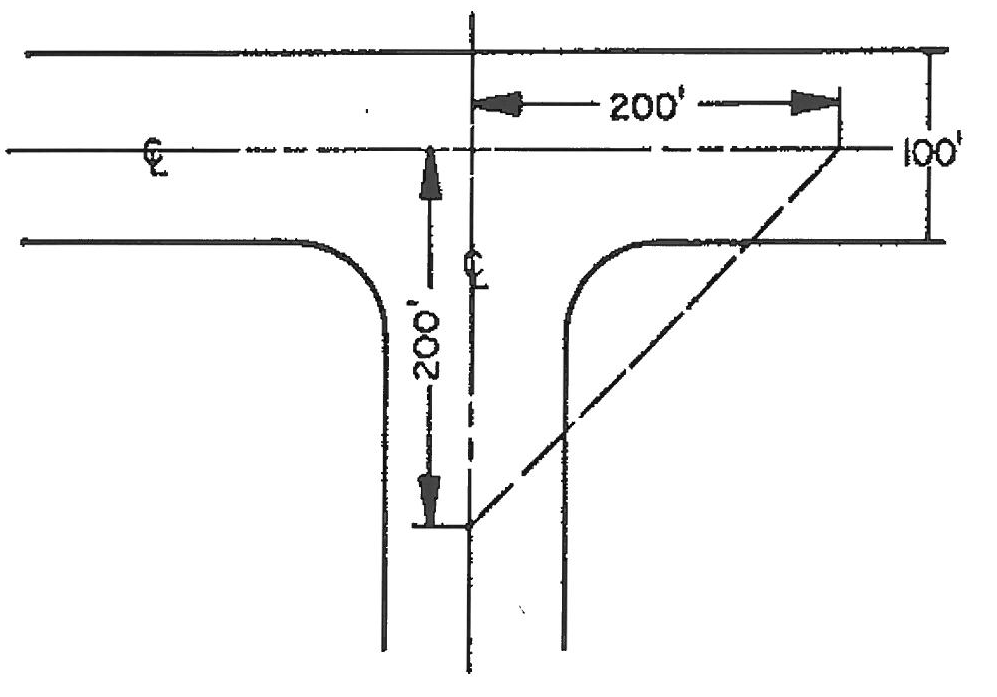
Figure 22-514 An Example of Clear Visibility Triangle
(Ord. No. 2013-01, § 5(Attach., § 6.02.03), 7-9-13)
Sec. 22-515. - Sidewalks and bikeways.
(a)
When required.
(1)
Projects abutting collector or arterial roads must provide sidewalks adjacent to the road.
(2)
Sidewalks must be provided on at least one side of all residential streets.
(3)
Where a proposed development includes improvements or new construction of collector roads, sidewalks and bikeways within the right-of-way must be included.
(4)
Residential projects in the immediate vicinity of commercial, office, service, or recreation land uses must provide pedestrian and bicycle access from the residential area.
(5)
The town may require pedestrian-ways or crosswalks at least ten (10) feet wide and a sidewalk meeting the requirements of this Code to be placed in the center of blocks more than eight hundred (800) feet long.
(b)
Design and construction standards. Design and construction of sidewalks, bikeways, or other paths shall conform to the standards approved by the town council.
(Ord. No. 2013-01, § 5(Attach., § 6.02.04), 7-9-13)
Sec. 22-516. - Vehicular access and circulation.
All development must meet the following standards for vehicular access and circulation:
(1)
Number of access points.
a.
All development must have access to a public right-of-way.
b.
No development may have more than one access onto an arterial road.
(2)
Separation of access points. Access points on arterial roads must be at least two hundred fifty (250) feet from another access point or an intersection. Access points on collector roads must be one hundred forty (140) feet from another access point or an intersection. Distances are measured from the centerline of the access to the centerline of the nearest access or intersection. Where natural features or spacing of existing driveways and roadways makes these requirements impractical, alternate designs may be considered.
(3)
Access to residential lots. Non-residential uses shall not be accessed through an area designed, approved, or developed for residential use.
(4)
Access to lots in the commercial in-town future land use category.
a.
No access shall be provided to any lot in the commercial in-town land use category from the rear of the property. All ingress and egress to the property shall be from U.S. 90 or other non-residential street frontage.
b.
A corner lot facing non-residential land uses may have a second point of ingress and egress. The location of the second point of ingress and egress shall be aligned with any existing driveways.
(Ord. No. 2013-01, § 5(Attach., § 6.02.05), 7-9-13)
Sec. 22-517. - Standards for drive-up facilities.
(a)
Generally.All facilities providing drive-up or drive-through service shall provide on-site stacking lanes according to the following standards.
(b)
Standards.
(1)
The facilities and stacking lanes shall be located and designed to minimize conflicts between other vehicular and pedestrian traffic.
(2)
A by-pass lane must be provided.
(3)
Stacking lanes must be at least one hundred twenty (120) feet long.
(4)
Alleys or driveways in residential areas shall not be used for circulation of traffic for drive-up facilities.
(5)
Where turns are required in the exit lane, the minimum distance from any drive-up station to the beginning point of the curve is thirty-four (34) feet. The minimum inside turning radius is twenty-five (25) feet.
(Ord. No. 2013-01, § 5(Attach., § 6.02.06), 7-9-13)
Sec. 22-521. - Purpose and intent.
The purpose of this subdivision is to establish a method whereby the impacts of development on transportation facilities can be mitigated by the cooperative efforts of the public and private sectors, to be known as the Proportionate Fair-Share Program.
(Ord. No. 2006-06, § 1.A, 2-13-07)
Sec. 22-522. - Applicability.
The proportionate fair-share program shall apply to all developments for which the applicant has been notified of a lack of capacity to satisfy transportation concurrency on a transportation facility, including transportation facilities maintained by the Florida Department of Transportation (FDOT), or another jurisdiction that are relied upon for concurrency determinations. The proportionate fair-share program does not apply to developments of regional impact (DRIs) using proportionate fair-share under section 163.3180(12), Florida Statutes, or to developments exempted from concurrency.
(Ord. No. 2006-06, § 1.B, 2-13-07)
Sec. 22-523. - General requirements.
(a)
An applicant may choose to satisfy the transportation concurrency requirements by making a proportionate fair-share contribution, pursuant to the following requirements:
(1)
The proposed development is consistent with the comprehensive plan and applicable land development regulations.
(2)
The five-year schedule of capital improvements adopted in the capital improvements element (CIE) includes a transportation improvement or transportation improvements that, upon completion, will provide the needed traffic capacity. The provisions of subsection (b) may apply if a project or projects needed to satisfy concurrency are not presently contained within the local government CIE.
(b)
The town may choose to allow an applicant to satisfy transportation concurrency through the proportionate fair-share program by contributing to an improvement that, upon completion, will provide the needed traffic capacity, but is not contained in the five-year schedule of capital improvements in the CIE, where the following apply:
(1)
The town adopts, by resolution or ordinance, a commitment to add the improvement to the five-year schedule of capital improvements in the CIE, no later than the next regularly scheduled update. To qualify for consideration under this section, the proposed improvement must be determined to be financially feasible pursuant to section 163.3180(16)(b)l, Florida Statutes, consistent with the comprehensive plan, and in compliance with the provisions of this article. Financial feasibility for this section means that additional contributions, payments or funding sources are reasonably anticipated during a period not to exceed ten (10) years to fully mitigate impacts on the transportation facilities.
(2)
If the funds allocated for the five-year schedule of capital improvements in the CIE are insufficient to fully fund construction of a transportation improvement required by the CMS, the town may still enter into a binding proportionate fair-share agreement with the applicant authorizing construction of that amount of development on which the proportionate fair-share is calculated if the proportionate fair-share amount in such agreement is sufficient to pay for one (1) or more improvements which will, in the opinion of the governmental entity or entities maintaining the transportation facilities, significantly benefit the impacted transportation system.
The improvement or improvements funded by the proportionate fair-share component must be adopted into the five-year capital improvements schedule of the comprehensive plan at the next annual capital improvements element update.
(c)
Any improvement project proposed to meet the developer's fair-share obligation must meet design standards of the town for locally maintained roadways and those of the FDOT for the state highway system.
(Ord. No. 2006-06, § 1.C, 2-13-07)
Sec. 22-524. - Intergovernmental coordination.
Pursuant to policies in the intergovernmental coordination element of the comprehensive plan and applicable policies in the regional policy plan adopted by the Northeast Florida Regional Council, the town shall coordinate with affected jurisdictions, including FDOT, regarding mitigation to impacted facilities not under the jurisdiction of the local government receiving the application for proportionate fair-share mitigation. An interlocal agreement may be established with other affected jurisdictions for this purpose.
(Ord. No. 2006-06, § 1.D, 2-13-07)
Sec. 22-525. - Application process.
(a)
Upon notification of a lack of capacity to satisfy transportation concurrency, the applicant shall also be notified in writing of the opportunity to satisfy transportation concurrency through the proportionate fair-share program.
(b)
Prior to submitting an application for a proportionate fair-share agreement, a pre-application meeting shall be held to discuss eligibility, application submittal requirements, potential mitigation options, and related issues. If the impacted facility is on the strategic intermodal system (SIS), then the FDOT will be notified and invited to participate in the pre-application meeting.
(c)
Eligible applicants shall submit an application to the city that includes an application fee of two hundred fifty dollars ($250.00) and the following:
(1)
Name, address and phone number of owner(s), developer and agent;
(2)
Property location, including parcel identification numbers;
(3)
Legal description and survey of property;
(4)
Project description, including type, intensity and amount of development;
(5)
Phasing schedule, if applicable;
(6)
Description of requested proportionate fair-share mitigation method(s); and
(7)
Copy of concurrency application.
(d)
The town shall review the application and certify that the application is sufficient. If an application is determined to be insufficient, incomplete or inconsistent with the general requirements of the proportionate fair-share program, then the applicant will be notified in writing of the reasons for such deficiencies. The applicant shall have thirty (30) days of receipt of the written notification to correct the deficiencies. The town may, in its discretion, grant an extension of time not to exceed sixty (60) days to cure such deficiencies, provided that the applicant has shown good cause for the extension and has taken reasonable steps to affect a cure. If the applicant does not provide the information within thirty (30) days or does not request an extension, the application shall be closed.
(e)
Pursuant to section 163.3180(16)(e), Florida Statutes, proposed proportionate fair-share mitigation for development impacts to facilities on the SIS requires the concurrency of the FDOT. The applicant shall submit evidence of an agreement between the applicant and the FDOT for inclusion in the proportionate fair-share agreement.
(f)
When an application is deemed sufficient, the applicant shall be advised in writing and a proposed proportionate fair-share obligation and binding agreement will be prepared by the town. The agreement shall be delivered to the appropriate parties for review, including a copy to the FDOT for any proposed proportionate fair-share mitigation on a SIS facility.
(g)
The town shall notify the applicant regarding the date of the town council meeting when the agreement will be considered for final approval. No proportionate fair-share agreement will be effective until approved by the town council.
Sec. 22-526. - Determining proportionate fair-share obligation.
(a)
Proportionate fair-share mitigation for concurrency impacts may include, private funds, contributions of land, and construction and contribution of facilities.
(b)
A development shall not be required to pay more than its proportionate fair-share. The fair market value of the proportionate fair-share mitigation for the impacted facilities shall not differ regardless of the method of mitigation.
(c)
The methodology used to calculate an applicant's proportionate fair-share obligation shall be as provided for in section 163.3180 (12), F.S., as follows:
(1)
The cumulative number of trips from the proposed development expected to reach roadways during peak hours from the complete build out of a project or phase being approved, divided by the change in the peak hour maximum service volume (MSV) of roadways resulting from construction of an improvement necessary to maintain the adopted LOS, multiplied by the construction cost, at the time of developer payment, of the improvement necessary to maintain the adopted LOS.
OR
(2)
Proportionate Fair-Share = Σ[[(Development Trips;sub .....sub;) / (SV Increase;sub
Where:
a.
Development Trips;sub .....sub; = Those trips from the development or phase of development under review that are assigned to roadway segment 'i' and have triggered a deficiency;
b.
SV Increase;sub .....sub; = Service volume increase provided by the eligible improvement to roadway segment "i" per section 22-525;
c.
Cost;sub .....sub; = Adjusted cost of the improvement to segment "i". Cost shall include all improvements and associated costs, such as design, right-of-way acquisition, planning, engineering, inspection, and physical development costs directly associated with construction at the anticipated cost in the year it will be incurred.
(d)
For the purposes of determining proportionate fair-share obligations, the town shall determine improvement costs based upon the actual cost of the improvement as obtained from the CIE, the MPO/TIP or the FDOT Work Program. Where such information is not available, improvement cost shall be determined using one of the following methods:
(1)
An analysis by the town of costs by cross section type that incorporates data from recent projects and is updated annually and approved by the town council; or
(2)
The most recent issue of FDOT Transportation Costs, as adjusted based upon the type of cross-section (urban or rural); locally available data from recent projects on acquisition, drainage and utility costs; and significant changes in the cost of materials due to unforeseeable events. Cost estimates for state road improvements not included in the adopted FDOT Work Program shall be determined using this method in coordination with the FDOT District.
(e)
If the town has accepted an improvement project proposed by the applicant, then the value of the improvement shall be determined using one of the methods provided in this section.
(f)
If the town has accepted right-of-way dedication for the proportionate fair-share payment, credit for the dedication of the non-site related right-of-way shall be valued on the date of the dedication at one hundred (100) percent of the most recent assessed value by the county property appraiser or, at the option of the applicant, by fair market value established by an independent appraisal conducted by an appraiser that is a member of Appraisal Institute (MAI), and approved by the town and at no expense to the town. The applicant shall supply a drawing and legal description of the land and a certificate of title or title search of the land to the town at no expense to the town. If the estimated value of the right-of-way dedication proposed by the applicant is less than the town estimated total proportionate fair-share obligation for that development, then the applicant must also pay the difference. Prior to purchase or acquisition of any real estate or acceptance of donations of real estate intended to be used for the proportionate fair-share, public or private partners should contact the FDOT for essential information about compliance with federal law and regulations.
(Ord. No. 2006-06, § 1.F, 2-13-07)
Sec. 22-527. - Proportionate fair-share agreements.
(a)
Upon execution of a proportionate fair-share agreement, the applicant shall receive a town letter or certificate of concurrency approval. Should the applicant fail to apply for a development permit within twelve (12) months of the execution of the agreement, then the agreement shall be considered null and void, and the applicant shall be required to reapply.
(b)
Payment of the proportionate fair-share contribution is due in full prior to issuance of the final development order or recording of the final plat and shall be non-refundable. If the payment is submitted more than twelve (12) months from the date of execution of the agreement, then the proportionate fair-share cost shall be recalculated at the time of payment based on the best estimate of the construction cost of the required improvement at the time of payment, and adjusted accordingly.
(c)
All developer improvements authorized under this ordinance must be completed prior to issuance of a development permit, or as otherwise established in a binding agreement that is accompanied by a security instrument that is sufficient to ensure the completion of all required improvements. It is the intent of this section that any required improvements be completed before issuance of building permits or certificates of occupancy.
(d)
Dedication of necessary right-of-way for facility improvements pursuant to a proportionate fair-share agreement must be completed prior to issuance of the final development order or recording of the final plat.
(e)
Any requested change to a development project subsequent to a development order may be subject to additional proportionate fair-share contributions to the extent the change would generate additional traffic that would require mitigation.
(f)
Applicants may submit a letter to withdraw from the proportionate fair-share agreement at any time prior to the execution of the agreement. The application fee and any associated advertising costs to the town will be non-refundable.
(Ord. No. 2006-06, § 1.G, 2-13-07)
Sec. 22-528. - Appropriation of fair-share revenues.
(a)
Proportionate fair-share revenues shall be placed in the appropriate project account for funding of scheduled improvements in the town CIE, or as otherwise established in the terms of the proportionate fair-share agreement. At the discretion of the town, proportionate fair-share revenues may be used for operational improvements prior to construction of the capacity project from which the proportionate fair-share revenues were derived. Proportionate fair-share revenues may also be used as the fifty-percent local match for funding under the FDOT Transportation Regional Incentive Program (TRIP).
(b)
In the event a scheduled facility improvement is removed from the CIE, then the revenues collected for its construction may be applied toward the construction of another improvement within that same corridor or sector that would mitigate the impacts of development.
(c)
Where an impacted regional facility has been designated as a regionally significant transportation facility in an adopted regional transportation plan as provided in Section 339.155, F.S., and the town may coordinate with other impacted jurisdictions and agencies to apply proportionate fair-share contributions and public contributions to seek funding for improving the impacted regional facility under the FDOT TRIP. Such coordination shall be ratified by the town through an interlocal agreement that establishes a procedure for earmarking of the developer contributions for this purpose.
(Ord. No. 2006-06, § 1.H, 2-13-07)

