
Bethel Heights City Zoning Code
ARTICLE 7
- OFF-STREET PARKING AND LOADING1
Editor's note— Ord. No. 4778, § 1, adopted March 25, 2014, repealed the former Article 7, §§ 1—12, and enacted a new Article 7 as set out herein. The former Article 7 pertained to similar subject matter and derived from Ord. No. 3307, adopted March 25, 2003; Ord. No. 3356, adopted July 8, 2003; Ord. No. 4002, adopted January 9, 2007; Ord. No. 4050, adopted April 24, 2007; Ord. No. 4097, adopted August 28, 2007 and Ord. No. 4301 adopted March 10, 2009.
Sec. 1. - Purpose and intent.
This article is designed to prevent or alleviate the congestion of the public streets and to promote the safety and welfare of the public. This article establishes herein minimum requirements for the off-street parking, loading and unloading of motor vehicles appropriate to each land use and its intensity in relation to other land uses.
(Ord. No. 4778, § 1, 3-25-14)
Sec. 2. - Applicability.
2.1
General conditions. The requirement to provide and maintain the required off-street parking space and loading areas shall be the responsibility of the operator and owner of the use and the operator and owner of the land on which off-street parking and loading areas is required to be provided.
2.2
Zoning districts. These requirements shall be provided in all zoning districts. Such parking and loading shall be provided off the street right-of-way for each use of land within the city and as demand is created for each use.
2.3
New construction, expansion, new use. With construction or expansion in capacity of a building, structure, or parking area or if another use is established on the lot, off street parking shall be provided in accordance with this article.
2.4
Existing spaces. Parking spaces used in connection with an existing or continuing use or building on the effective date of this ordinance, up to the number required by this ordinance shall be continued and may not be counted as serving a new structure or addition.
(Ord. No. 4778, § 1, 3-25-14)
Sec. 3. - Parking dimensions.
3.1
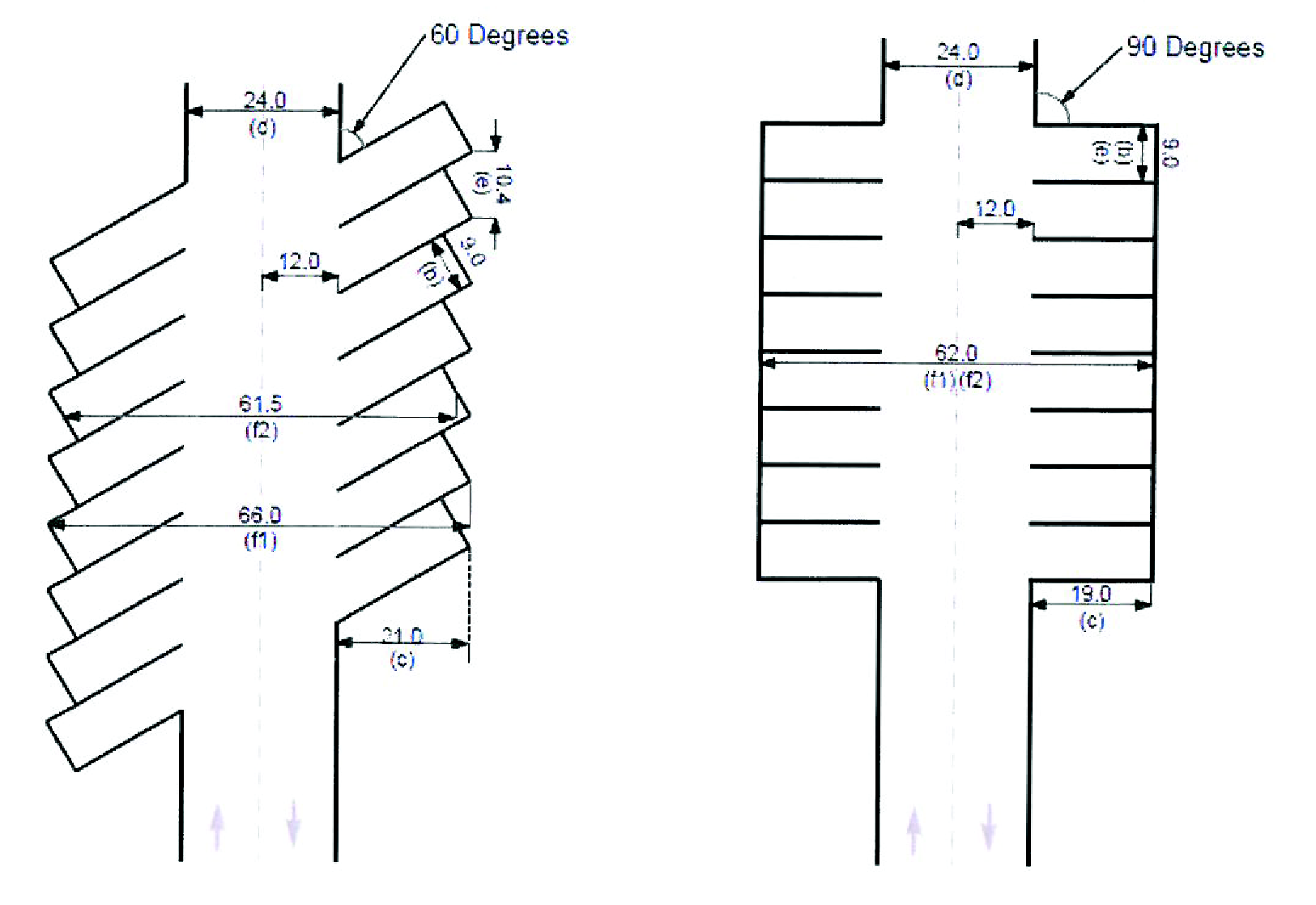
Standard 90° parking space. An off-street parking space shall consist of a nine (9) feet by nineteen (19) feet space located off the street right-of-way; adequate for parking an automobile with room for opening doors on both sides; together with properly related access to a public street or alley and maneuvering room.
3.2
Access drive width. If the off-street parking spaces do not abut on a street, alley or easement of access, there shall be provided an access drive of at least ten (10) feet in width in the case of a dwelling and at least fifteen (15) feet in width in all other cases leading from the street to the parking.
3.3
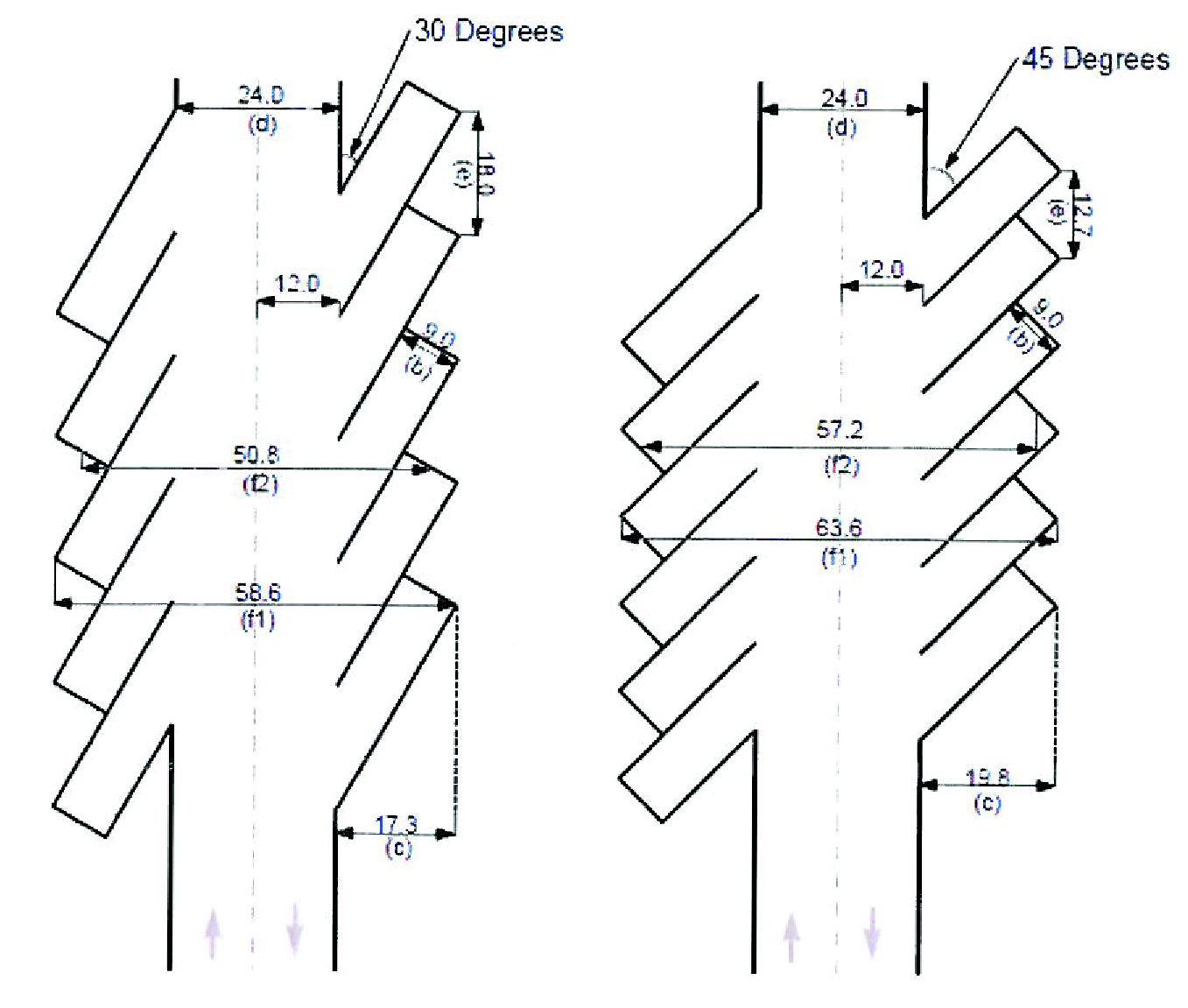
Angle parking spaces. Where different parking angles are utilized for off-street parking the following widths, depths and maneuvering areas shall be followed:
3.4
Compact parking spaces. Spaces for compact parking may be permitted for up to twenty (20) percent of total spaces in a parking lot which contains at least ten (10) parking spaces, which shall be clearly marked either on the pavement or by separate marker. The width and depth of each compact car space shall be eight (8) feet wide and sixteen (16) feet deep.
3.5
Minimum distance and setbacks. Except for permitted entrance and/or exit drives, every off-street parking area shall be set back from the street right-of-way line a minimum of five (5) feet.
(Ord. No. 4778, § 1, 3-25-14)
Sec. 4. - Location of off-street parking.
4.1
Maximum distance. All parking spaces provided pursuant to this article shall be on the same lot with the building or within three hundred (300) feet thereof the distance to any parking area as herein required shall be measured between the nearest point of the off-street parking facility and the nearest point of the building said parking area or facility is to serve.
4.2
Satellite lots. When detached parking facilities or satellite parking lots are provided, they shall be located on property which is zoned to allow the principal use which this parking will serve or they must be approved by the board of adjustment. Parcels of land used as access to or from parking and/or loading areas for any land use shall conform to this requirement.
4.3
Limitation of detached or satellite parking lots. Off-site parking shall not exceed twenty-five (25) percent of the total number of spaces required by this article and shall not require the crossing of a collector or arterial street. The board of adjustment may authorize variance from this limitation for cause, which shall be an identifiable hardship with the submission of a written agreement by all parties involved identifying the spaces assigned and verifying no conflict by current users and recognizing the impact on future usage of the site. All off-site parking shall be noted on the official zoning map so as to assure maintenance of the requirement.
4.4
Relationship to adjacent properties. No off-street parking area, exclusive of access drives, shall be located within three (3) feet of any other property.
(Ord. No. 4778, § 1, 3-25-14)
Sec. 5. - Ownership.
The ownership of land upon which off-street parking is provided shall be the same as the ownership of land on which the principal use is located except in the C-3 Downtown District or by formal written agreement for the use of excess off-street parking executed and filed for said purpose. A conditional use permit is required for the parking on lot(s) not of the same ownership to count toward fulfillment of the parking requirements.
(Ord. No. 4778, § 1, 3-25-14)
Sec. 6. - Accessibility.
6.1
ADA requirements. Accessibility for persons with disabilities in parking lots and building approaches shall be as required by the current ADA and as may from time to time be amended.
6.2
Accessible spaces required. The following table shall be used to determine the minimum number of accessible parking spaces to be provided for persons with disabilities.
(Ord. No. 4778, § 1, 3-25-14)
Sec. 7. - Number of off-street parking spaces required.
7.1
Floor and lot area defined. For the purposes of applying requirements for off-street parking, floor area shall be defined as net floor area with the outside dimensions of a building, excluding halls, lobbies, and stairways, etc. The definition shall not include floor space within the building reserved for parking or loading of vehicles, and basement space or separate space used only for building maintenance and utilities.
7.2
Uses not listed. For all uses not covered in the standards below, the planning commission shall make a determination of the parking demand to be created by the proposed use, and the amount of parking then determined shall be the off-street parking requirement for the permitted use.
7.3
C-3 Downtown District.
a.
New structures. New structures and additions shall meet the parking requirements based on the proposed use.
b.
Existing structures. The parking requirements of this section shall not apply to existing structures in the C-3 Downtown District.
c.
Razed structures. Parking requirements shall be calculated based on the square footage of the new structure minus the amount of the square footage of the building footprint of the original structure.
7.4
Standards. The number of off-street parking spaces required for each use as set forth below. Separate off-street parking space shall be provided for each use located on a lot but may be combined and used jointly provided the sum total of parking space requirements for all uses are provided.
7.5
Combined facilities. Off-street parking facilities required for two (2) or more uses located on the same building site may be combined and used jointly provided, however, that the total number of off-street parking spaces shall not be less than the sum of requirements for the various individual uses computed separately in accordance with the process set forth in this article. Those uses proposed for occupancy within an established development shall not occupy the site prior to the determination that the ordinance standard parking spaces available to the property for all uses meet the provisions of this section except that the number of spaces required for a previous legal use of any portion of the development shall be considered to be provided even if the spaces do not exist. Nonconforming parking rights may be carried forward to count as part of the parking requirement of a use replacing a previously established legal use.
(Ord. No. 4778, § 1, 3-25-14)
Sec. 8. - Parking area design and maintenance.
8.1
Access to parking spaces. Each required off-street parking space shall open directly to an aisle or driveway of such width and design as to provide safe and efficient means of vehicular access to the parking space.
8.2
Maneuvering areas. All parking areas except those serving one- and two-family dwellings on local streets shall be designed so that cars shall not be required to back into the street.
8.3
Surface and drainage. All off-street parking areas shall be surfaced as follows:
a.
Single-family and two-family dwelling shall provide a durable surface with suitable drainage.
b.
In all commercial, industrial, institutional and mixed use districts, all areas intended to be utilized for required parking spaces and associated driveways shall be paved with a durable surface including, but not limited to, hot asphalt, bituminous or concrete.
c.
Storage areas for heavy construction equipment that would damage the pavement may be exempt from the paving and surfacing requirement with an acceptable surface as follows:
i.
May be located on gravel surfacing using best management practices so long as all appropriate stormwater impacts are mitigated, and all applicable buffers are in place when abutting pubic or private rights-of-way and residential zones.
ii.
Graveled areas for heavy equipment are for said equipment only, and are not to be used for parking of commuter vehicles, commercial, vans, trucks, or other typical four-wheeled transportation vehicles that should be placed in surfaced parking lots.
iii.
Heavy equipment refers to heavy-duty vehicles, designed specifically for executing construction task, most frequently involving earthwork operations. They are known as, heavy machines, heavy trucks, construction equipment, engineering equipment, heavy vehicles, or heavy hydraulics.
iv.
Equipment yards and storage areas in industrial zoning districts may be permitted as gravel areas provided such areas are delineated and physically separated from general public parking areas.
v.
The equipment and storage areas shall conform to the city specifications for street sub-base and base course, per plans to be approved by the city engineer.
vi.
General public parking and access areas in all cases shall be paved in accordance with city specifications.
vii.
All vehicles must be operational and have a current registration/license.
viii.
No heavy mechanical work is allowed. Light maintenance such as fluid changes, with the use of proper best management practices, tire changes, and other minor repairs are permitted.
ix.
Inoperative vehicles are not permitted to be stored at the site.
x.
Access roads shall be sufficient to carry the equipment without sustaining undue damage to the roads and prevent the tracking of materials onto the public street.
xi.
Mud, run-off, erosion and drainage, shall be controlled at all times and contained on-site.
xii.
Dust shall be mitigated during dry conditions.
xiii.
Storage of oil, gas, or other fluids/materials associated with the maintenance of heavy equipment must comply with state law regulating the storage of hazardous materials.
xiv.
Storage of construction related material such as aggregate, sand, soil or debris is prohibited.
xv.
Best management practices shall be taken to prevent leaks and spills. Any leaks and spills shall be immediately addressed.
xvi.
Variances to these requirements require a restrictive covenant, enforceable by the city, to be recorded with the title of the property limiting the use of the property accordingly.
d.
Farm dwellings and farm operations' are exempt from the paving requirement.
e.
City parks shall be exempt from the parking requirement if approved by the city council.
f.
Heavy equipment storage in areas other than an industrial zoning district or a C-6 Large Product Retail Sales District area by variance granted by the planning commission as follows:
i.
The equipment and storage area may not exceed one-half (½) acre in size where all vehicles shall be stored.
ii.
The storage area shall be setback from property lines in accordance with the setbacks required for structures in the zoning district in which the storage area is located.
iii.
No more than the permitted number of pieces of heavy equipment may be stored at any one time.
iv.
Heavy equipment may be stored and removed on a daily basis, subject to the hours of operation of 6:00 a.m. to 6 p.m. Monday—Friday, and 8:00 a.m. to 6:00 p.m. Saturdays, Sundays and holidays.
v.
All vehicles shall be screened from direct view through vegetation, or approved fencing/walls or other approved means.
vi.
All vehicles must be operational and have a current registration/license.
vii.
No heavy mechanical work is allowed. Light maintenance such as fluid changes, with property best management practices, tire changes, and other minor repairs are permitted.
viii.
Inoperative vehicles are not permitted to be stored at the site.
ix.
Access roads shall be sufficient to carry the equipment without sustaining undue damage to the roads and prevent the tracking of materials onto the public street.
x.
Mud, run-off, erosion and drainage, shall be control at all times and contained on-site.
xi.
Dust shall be mitigated during dry conditions.
xii.
Storage of oil, gas, or other fluids/materials associated with the maintenance of heavy equipment must comply with state law regulating the storage of hazardous materials.
xiii.
Store of construction related material such as aggregate, sand, soil or debris is prohibited.
xiv.
Best management practices shall be taken to prevent leaks.
8.4
Gravel driveway and parking areas. The planning commission may authorize a portion of off-street parking spaces to be provided on pervious surfaces if the commission finds that such spaces will be used only intermittently, either for special events or for seasonal peak parking demands or overflows in patronage of the principal use or uses as follows:
a.
Seasonal peak parking:
i.
The planning commission must approve a number or percentage of required parking spaces that may be provided on pervious surfaces and time limitations.
ii.
The city engineer is authorized to determine acceptable pervious surfaces.
iii.
Parking spaces, aisles, etc. must be marked by flags, biodegradable dyes or paints, or some other method that does not kill grass or plants.
iv.
Pervious parking areas must be adequately drained.
b.
Special event parking:
i.
Can not be used for more than twenty (20) days in a calendar year.
ii.
Can not occur for more than ten (10) days in any thirty-day period.
iii.
Setback at least fifty (50) feet from any off-site residentially zoned lot or residential development area.
iv.
Occur on the same lot or lots approved for the principal use to which they are accessory.
c.
The number of days per year and the number of days within a thirty-day period that special event parking is permitted may be increased with board of adjustment approval as a special exception.
d.
All commercial and industrial gravel drives and parking area allowed shall be maintained to meet the following standards:
i.
The surface of the driveway or parking area shall consist of a uniform layer of gravel evenly distributed from edge to edge, and shall be free of bare spots and vegetation.
ii.
The depth of the gravel shall be a minimum of four (4) inches.
iii.
The material used for a gravel driveway or parking area shall be rock or crushed stone not more than one (1) inch in diameter and shall not contain dirt, stick, construction debris or other foreign material. Sand, rock powder or other similar material less the one-eighth (⅛) inch in diameter is not prohibited, but shall not be included in the measurement of minimum gravel depth.
(Ord. No. 4778, § 1, 3-25-14)
Sec. 9. - Off-street loading.
In addition to all other requirements, on the same premises with every building, structure or part thereof hereafter erected, established or enlarged and occupied for manufacturing, storage, warehouse, goods, display, department store, wholesale, market, hotel, laundry, dry cleaning or other uses involving the receipt of distribution by vehicles of materials or merchandise, there shall be provided and maintained adequate space for standing, loading and unloading in order to avoid undue interference with public use of the street or alley.
9.1
Size of off-street loading spaces. Such space, unless otherwise adequately provided for, shall include a twelve (12) foot by thirty (30) foot loading space and fourteen (14) foot height clearance. Where off-street loading space does not abut on a street, alley or easement of access there shall be provided an access drive of at least ten (10) feet in width leading from the street to the load area. Where the off-street loading spaces face a public street, the loading space shall be seventy (70) feet in length.
9.2
Location. Such loading spaces may occupy all or any part of a required setback, but such space may not be located closer than twenty-five (25) feet to any residential district unless wholly within a completely enclosed building or unless enclosed on all sides abutting the residential district by a wall or said fence at least eight (8) feet in height.
9.3
Number of loading spaces required. For every building or structure hereinafter constructed in any district for nonresidential purposes, or where material or merchandize is received or distributed by vehicles, an off-street loading space shall be provided and maintained on the same lot.
9.4
Substitution. Parking spaces may not be substituted for a loading space or a loading space substituted for a parking space.
9.5
Standards.
(Ord. No. 4778, § 1, 3-25-14)
Sec. 10. - Use of right-of-way.
No portion of any public street right-of-way shall be considered as fulfilling or partially fulfilling the off-street parking requirements of this article. No parking "bays" shall be allowed, except for residential service on residential streets. All commercial off-street parking areas and all residential off-street parking lots abutting streets shall be arranged so that ingress and egress is by forward motion of the vehicle. For the purpose of parking in the rear yard, any public dedicated alley may be used in computing the maneuvering area.
(Ord. No. 4778, § 1, 3-25-14)
Sec. 11. - Entrance/exit drives.
11.1
Slopes. For all subdivision plats approved after the adoption of this amendment; all vehicular entrance and/or exit drives for all residential uses shall not exceed a maximum slope of fifteen (15) percent within the required setback area as determined by the zoning ordinance. For all subdivision plats approved prior to the adoption of this amendment; all vehicular entrance and/or exit drives for all residential uses shall not exceed a maximum slope of twenty (20) percent within the required setback area as determined by the zoning ordinance. All vehicular entrance and/or exit drives for all residential and nonresidential uses along a street with minor collector or higher classification, as shown on the master street plan shall not exceed a maximum slope of ten (10) percent within the required setback area as determined by the zoning ordinance.
11.2
Standards.
a.
Minimum width of drive for two-way traffic: Twenty-four (24) feet.
b.
Minimum width of drive for one-way traffic: Fifteen (15) feet.
c.
Minimum width of drive through service lane: Nine (9) feet, with appropriate stacking lanes to avoid conflicts with internal traffic flow.
d.
Maximum width of drive: Forty (40) feet.
e.
Minimum radius to the face of the curb: Twenty-five (25) feet.
f.
Minimum distance between drives on adjoining properties: Fifty (50) feet.
g.
Minimum distance between drives on single tract: One hundred fifty (150) feet.
h.
Minimum distance of drive from the project curb line at the street intersection:
Local streets: Forty (40) feet;
Minor collector street: Sixty (60) feet;
Major collector street: Eighty (80) feet;
Arterial and Boulevard streets: One hundred twenty (120) feet.
(Ord. No. 4778, § 1, 3-25-14)
Sec. 12. - Lighting.
Adequate lighting shall be provided if the parking facilities are used at night. This lighting shall be installed and maintained in a manner not to shine, reflect or cause glare into abutting premises or roads and highways.
(Ord. No. 4778, § 1, 3-25-14)
Sec. 13 - Reduction of parking area.
No automobile off-street parking facility shall be reduced in area or encroached upon by buildings, vehicle storage or any other use where such reduction or encroachment will reduce the area below that required.
(Ord. No. 4778, § 1, 3-25-14)
Sec. 14. - Parking garages.
Parking garages may be provided for satisfying the off-street parking requirements so long as it otherwise meets the provisions of this article. Exterior design of the parking garage must be compatible with the design of the area in which it meets the requirements of this article.
(Ord. No. 4778, § 1, 3-25-14)

