
Burlington City Zoning Code
CHAPTER 170
30 - SUPPLEMENTARY REGULATIONS
170.30.101 - Purpose:
Within the established districts set forth by this regulation or amendments that may be adopted at a later date, exist lots, uses of land, uses of structures, and structures that were lawful at the time of adoption of these regulations, but are now prohibited, restricted, and regulated under the terms of these regulations and/or future amendments. It is the intent of this regulation to allow these nonconformities to continue until they are removed or fail to maintain their nonconforming status, but not to encourage their survival.
The objective of this regulation is to set the terms by which all nonconforming uses and lots will ultimately be brought into compliance with the terms of this title as it is adopted and amended. Such nonconformities have been found to be incompatible with permitted uses and structures within the zoning district in which they are found. However, single-family uses shall not, generally, be treated as nonconforming uses.
To avoid undue hardship, nothing in this regulation shall be deemed to require a change in plans, construction, or use of any building in which actual construction was lawfully begun prior to the effective date of adoption or amendment of these regulations. Actual construction is hereby defined as placing or fastening materials in a permanent position, or where excavation, demolition, or removal in preparation for building has occurred, provided that work is carried on in a diligent manner.
170.30.102 - Discontinuance:
Any nonconforming use of land or nonconforming use of structure that is idle, unoccupied, or vacant for one year or more is conclusively deemed discontinued, abandoned, and terminated, and shall lose its nonconforming rights. Any future uses shall be in compliance with the use regulations of the district in which it exists.
Any nonconforming use or structure that is removed, unlawfully constructed, altered, or operated at any time shall not be allowed to continue existence or use as a nonconforming use or structure. Any such nonconforming use that comes into compliance with the land use and/or zoning regulations of the zoning district in which it is located at any time shall not be allowed to be constructed, altered, or operated as a nonconforming use or structure in the future.
Nothing in this Chapter shall be interpreted as authorization for the continuance of the use of a structure or lot established unlawfully or in violation of the Zoning and Subdivision Regulations in effect prior to the effective date hereof.
All variances or appeals of this regulation shall be submitted to the Zoning Board of Adjustment.
170.30.103 - Single-family Uses:
Nonconforming single-family uses may be rebuilt or restored if destroyed or damaged to any extent. This only applies to residential structures primarily utilized for housing purposes, including any attached structures. Such repair, reconstruction, or structural alteration shall not increase or extend the degree of nonconformity. Detached structures shall not be allowed to rebuild, except in conformance with all requirements of this Title. Nonconforming structures shall not be repaired, reconstructed, or structural altered except in compliance with all other provisions of this Title.
170.30.104 - Nonconforming Lots of Record:
In any district in which single-family dwellings are permitted, a single-family dwelling and customary accessory buildings may be erected on any single legal lot of record at the effective date of adoption or amendment of this regulation not withstanding other provisions of this regulation. This regulation shall apply even though such lot fails to meet the requirements of area, width, or both, that are generally applicable in the district; provided that front yard dimensions and requirements other than those applying to area, width, or both of the lot shall conform to all other regulations for the district in which such lot is located.
170.30.105 - Nonconforming Uses of Land:
Where at the time of passage of these regulations a lawful use of land exists (preexisting), which would not be permitted by these regulations, the use may be continued as long as it remains lawful, provided:
1.
No such nonconforming use shall be enlarged or extended to occupy a greater area of land than was occupied at the effective date of adoption of these regulations unless herein provided.
2.
No such nonconforming use shall be moved in whole or in part to any other portion of the lot or parcel occupied by such use on the effective date of adoption or amendment of this section.
3.
No additional structures that do not conform to the requirements of this regulation shall be erected in connection with such nonconforming use of land unless herein provided.
170.30.106 - Nonconforming Uses of Structures:
If lawful use of a individual structure exists at the effective date of adoption or amendment of this regulation that would not be allowed in the district under the terms of this regulation, the lawful use may be continued so long as it remains otherwise lawful, subject to the following provisions:
1.
No existing structure devoted to a use not permitted by this regulation in the district in which it is located shall be enlarged, extended, constructed, reconstructed, moved, or structurally altered except in changing the use of the structure to a use permitted in the district in which it is located.
2.
Any nonconforming use may be extended throughout any part of a building, which was designed for such use at the time of adoption or amendment of this regulation, but no such use shall be extended to occupy any land outside such building.
3.
When any structure committed to a nonconforming use is superceded by a permitted use, it shall thereafter conform to the regulations for the district, and the nonconforming use may not thereafter be resumed.
170.30.107 - Nonconforming Structures:
Where a lawful structure exists at the effective date of adoption or amendment of these regulations that could not be built under the terms of these regulations by reasons of restrictions on area, height, yards, location on lot, or other requirements concerning structures, such structures may be continued so long as it remains otherwise lawful, provided:
1.
Where a structural projection of the principal building is located closer to the lot line than allowed by this regulation, the nonconforming side of the structure may be increased provided that the following requirements are met:
a.
The existing structural projection that is being added onto is no less than 10 feet from the front lot line, 4 feet from the side lot line, and 25 feet from the rear lot line.
b.
The addition shall not extend beyond the further most structural projection of the nonconforming side.
c.
The addition shall not exceed 250 square feet in size.
d.
The addition shall meet all other requirements of this Title.
2.
An addition to a principal structure that meets all setback, lot coverage, area, use, and all other applicable requirements of the district in which it is located and this Title may be greater than 250 square feet.
3.
A non-conforming accessory structure shall not be increased in size, except to bring the entire structure into conformance with all requirements of this Title.
4.
Should such nonconforming structure or nonconforming portion of the structure be destroyed or deteriorated by any means to an extent of more than sixty percent (60%) of its assessed value at time of destruction, such structure shall be allowed to be restored or reconstructed to its previous size, including area, height, and lot coverage; provided all other applicable building and zoning codes are met, including required setbacks, unless explicitly allowed elsewhere in this chapter. For the purpose of this regulation, the assessed value on record at the Des Moines County Assessors office shall be used as the assessed value of a structure at the time of destruction.
5.
A nonconforming structure that is used as a single-family use or that is an accessory structure to a single-family use that is destroyed or deteriorated shall be allowed to be restored or reconstructed to its previous size, including area, height, lot coverage, and setback, provided all other applicable building and zoning codes are met. Such a structure may also be repaired or structurally altered, provided such construction does not increase or extend the degree of nonconformity and does not increase or extend any other nonconforming situation on the property, subject to the following conditions as applicable.
a.
If such nonconforming structure, either primary or accessory, is closer than three (3) feet to the property line of an adjacent property, a maintenance easement agreement must be obtained from the adjacent property owner in order for such structure to be restored, reconstructed, structurally altered, or repaired (excluding repairs that amount to less than sixty percent (60%) of the assessed value of the structure), closer than three (3) feet to the property line.
b.
If such accessory structure is closer than three (3) feet to any property line, a conditional use permit must be obtained from the Zoning Board of Adjustment before construction may commence.
6.
A nonconforming structure that is used as a multi-family use or that is an accessory structure to a multi-family use that is destroyed or deteriorated and is a contributing structure in a locally designated historic district shall be allowed to be restored or reconstructed to its previous size, including area, height, lot coverage, and setback, provided all other applicable building and zoning codes are met. Such a structure may be repaired or structurally altered, provided such construction does not increase or extend the degree of nonconformity and does not increase or extend any other nonconforming situation on the property, subject to the following conditions as applicable.
a.
If such nonconforming structure, either primary or accessory, is closer than three (3) feet to the property line of an adjacent property, a maintenance easement agreement must be obtained from the adjacent property owner in order for such structure to be restored, reconstructed, structurally altered, or repaired (excluding repairs that amount to less than sixty percent (60%) of the assessed value of the structure), closer than three (3) feet to the property line.
b.
If such accessory structure is closer than three (3) feet to any property line, a conditional use permit must be obtained from the Zoning Board of Adjustment before construction may commence.
(Ord. No. 3416, § 1, 12-5-16)
Such reconstruction shall be commenced within one-year of the date of the destruction. An extension up to one-year may be granted by the Development Department upon valid request by the property owner.
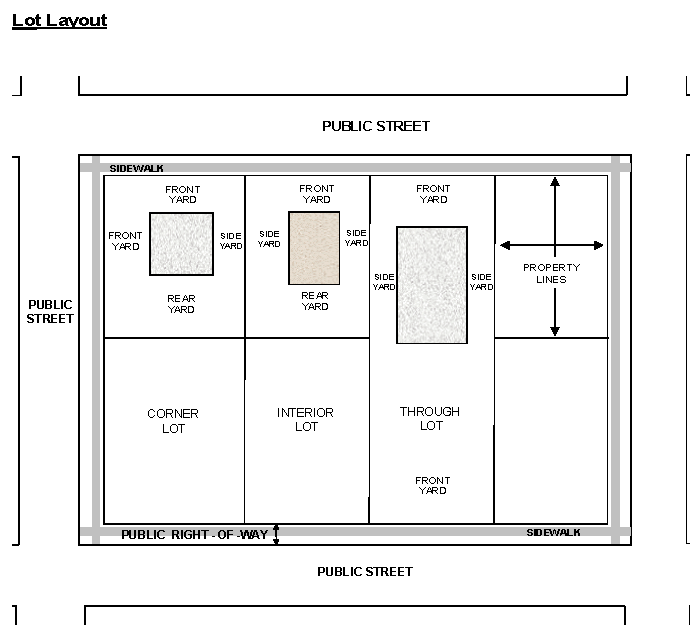
FOOTNOTES FOR TABLE 170.30.20
Purpose: These footnotes are intended to act as supplements and/or additional requirements to the height and area requirements stated in Section 170.30.20. Other modifications of height and area regulations may be set forth in this and other chapters of this Code.
a.
Building height levels for multi-family dwellings shall be adjusted as follows: For three-story buildings, each side yard shall not be less than ten feet. For buildings that are more than three-stories in height, the side yard requirement will be increased one (1) foot for each story above the third story.
b.
No side yard is required for nonresidential buildings, except when abutting a residential district there will be a side yard of not less than five (5) feet. Side yards for existing or proposed residential dwellings shall maintain the five-foot setback.
c.
No side yard is required for nonresidential buildings, except when abutting a residential district there will be a side yard of not less than fifteen (15) feet. Side yards for existing or proposed residential dwellings shall maintain the five-foot setback.
d.
No side yard is required for nonresidential buildings, except when abutting a residential district there will be a side yard of not less than forty (40) feet.
e.
No rear yard is required for nonresidential buildings, except when abutting a residential district there will be a rear yard of not less than fifteen (15) feet. Rear yards for existing or proposed residential dwellings shall maintain the twenty-five-foot setback.
f.
The required minimum lot area per unit is as follows:
1.
Two-bedroom and above: 2,500 square feet per unit.
2.
One-bedroom dwelling units: 1,750 square feet per unit.
3.
Dwelling units without a separate bedroom; efficiency apartments: 1,500 square feet per unit.
g.
See lot area requirements, Section 170.30.204.
h.
The minimum required lot width may be measured at the building setback line if said lot is located on the outer radius of a street such as a cul-de-sac. In no case shall the lot width measured at the right-of-way line of a cul-de-sac or curved street be less than forty (40) feet.
i.
Group Living Density Requirements
1.
Nursing and/or Assisted Living Facilities: Maximum density within an assisted group living use is as follows. For purposes of calculating maximum density, staff and live-in staff of a facility are not considered roomers.
i.
In the R-1, R-2, R-3, and R-4 zones: one roomer per seven hundred fifty (750) square feet of lot area.
2.
Transitional Living Facilities: The maximum density and maximum occupancy standards for a transitional group living use are as follows.
i.
In the R-1, R-2, R-3, and R-4 zones: one roomer per seven hundred fifty (750) square feet of lot area.
3.
Boarding, Rooming, or Lodging House: The maximum density and maximum occupancy standards for boarding, rooming, or lodging house uses are as follows. Both density and occupancy limitations apply in all cases.
i.
In the R-4 zone: One roomer per nine hundred (900) square feet of lot area.
ii.
Maximum Occupancy: One roomer per three hundred (300) square feet of floor area within the boarding, rooming or lodging house group living use.
4.
Dormitories, Fraternity House, or Sorority House: The maximum density and maximum occupancy standards for dormitories, fraternity house, or lodging house uses are as follows. Both density and occupancy limitations apply in all cases.
i.
In the R-4 zone: One roomer per nine hundred (900) square feet of lot area.
ii.
Maximum Occupancy: One roomer per three hundred (300) square feet of floor area within the fraternal group living use.
j.
Attached structures are individual units on separate lots that have a common wall with a separate unit. Attached common walls have no (0) setback, while non-attached walls have setbacks as required.
(Ord. No. 3391, § 3, 11-2-15; Ord. No. 3416, § 2, 12-5-16; Ord. No. 3489, § 1, 8-2-21; Ord. No. 3544, 2-18-25)
170.30.201 - Purpose:
In order to maintain the integrity of these regulations certain area exceptions have been allowed by the City of Burlington in order to maintain the health, safety and general welfare of the public.
170.30.202 - Accessory Structures:
The regulations set forth in this section apply to all accessory buildings unless noted otherwise below.
1.
No accessory building and/or structure may be erected in any required front yard.
2.
Any accessory structure erected, altered or constructed within ten (10) feet of the principal building and/or structure shall be considered part of and maintain the same setbacks as the principal building and/or structure. This distance is measured from the furthest architectural projection of each structure. These structures shall count towards the total number of allowed accessory structures in residential districts.
3.
Accessory structures shall be considered along with the principal structure in regards to lot coverage. The square footage of the principal structure combined with the square footage of the accessory structure(s) shall not exceed the maximum lot coverage allowed by the District regulations.
4.
In any R-1, R-2, or R-3 residential district, there may be a maximum of three (3) accessory structures allowed per lot as long as the maximum lot coverage is not exceeded. In R-4 residential districts, a lot shall be allowed three (3) accessory structures accessory, with a maximum number of accessory structures not [to] exceed the total number of constructed primary structures on such lot. Such accessory structures shall be incidental to the primary structures and shall not include a principal use.
5.
The total area of all accessory structures on a single residential lot or property shall not exceed a maximum of two thousand (2,000) square feet, except that lots in excess of two acres in size shall be allowed up to three thousand (3,000) square feet of accessory structures.
6.
Accessory structures shall not exceed twenty (20) feet in height measured from the average surrounding grade to the highest peak of the roof, in any residential district.
7.
Accessory structures that are erected, altered, or constructed further than ten (10) feet from the principal building and/or structure shall maintain a minimum setback of three (3) feet from any rear or side lot line, measured from the furthest architectural projection.
8.
Where a garage is facing and being entered from the alley, it must be located a minimum of five (5) feet from the alley line, measured from the furthest architectural projection
9.
No accessory structure shall be used or constructed upon a lot unless construction of the principal structure is scheduled to commence within three (3) months.
10.
No accessory structure shall be occupied for dwelling purposes.
11.
Gas pumps and associated canopies shall not be subject to the requirements in this section; however, in no case shall gas pumps, canopies and/or associated projections encroach into the clear zone and/or closer than five (5) feet to the property line.
12.
A temporary storage container shall only be allowed to be placed on a property for a period not to exceed sixty (60) days in any consecutive 12-month period, unless approved as part of an active construction project with a valid building permit or when associated with a permitted warehouse or transportation business.
(Ord. No. 3489, § 1, 8-2-21)
170.30.203 - Height Regulations:
The regulation set forth in this section apply to all buildings unless noted otherwise in these regulations.
1.
In any district, uses listed under schools, community facilities, and religious institutions may be erected to a height not to exceed eighty-five (85) feet, provided an additional one (1) foot of depth in the front and rear yards is allowed for every one (1) foot above the district height regulations in which it is located.
2.
The height regulations prescribed by these regulations shall not apply to grain elevators, church spires, belfries, monuments, tanks, water, fire, cooling, and ornamental towers and spires, chimneys, elevator bulkheads, smoke stacks, conveyors and flagpoles, however, this regulation shall not include cellular towers disguised to look like the uses listed above as they are not essential to the principal structure and are subject to Chapter 170.70.
170.30.204 - Area Exceptions and Modifications:
1.
Where a lot or tract is used for educational, commercial, industrial, or airport purposes, more than one principal building may be erected upon the lot or tract, provided that all other requirements of this Title are met.
2.
Only where a lot or tract is zoned for multi-family residential use (R-4) may more than one single-family, two-family, and/or multi-family principal building be erected upon such lot or tract; provided all other requirements of this Title are met.
3.
Every part of the required open space per lot (Lot area minus the maximum lot coverage by structures), including the required yard setbacks shall be open to the sky, unobstructed by a structure. This regulation does not include decks, sidewalks, driveways, parking lots, landscaping, uncovered porches, terraces and/or accessory structures that are not covered by a roof.
4.
Architectural projections may project into a required yard for the principal structure and will not be considered when determining the maximum lot coverage and building setback of the principal structure.
5.
Where required by law, open or lattice enclosed fire escapes may project no more than five (5) feet into a required yard and ordinary projections of chimneys and pilasters shall be permitted by the Development Department as long as they do not obstruct light and ventilation.
6.
Terraces, unenclosed porches, decks, and ornamental features that do not extend more than three (3) feet above the ground floor level, may project into a required yard provided that these structures do not extend closer than three (3) feet to a side property line, and project no further than ten (10) feet into the required front or rear yard. At no time shall such structure project closer than five (5) feet to a front property line. The required front yard is the district minimum depth or the established line, as allowed under Table 170.30.20 and Section 170.30.205.
7.
Ramps required for ADA accessibility into residential structures shall not project into the City right-of-way unless an encroachment agreement has been granted.
8.
No tent or similar structure shall be erected, used, or maintained for human residence, except such small tents that are used for temporary recreational purposes either as an accessory structure to a legal residential dwelling or as a Campground use in districts where it is allowed. Recreational tents used as an accessory structure to a legal residential use may be in place for no more than seven (7) consecutive days; this applies to tents used or designed for sleeping purposes. All tents as allowed shall be maintained in sound capacity.
(Ord. No. 3391, § 3, 11-2-15)
170.30.205 - Front Yards:
These front yard regulations are supplement to the required distances for each district and may be adjusted as follows:
1.
Where 40 percent or more of the frontage on one side of the street between two intersecting streets is developed with buildings that have not observed the front yard depth herein required, new structures shall not be erected closer to the street than the average front yard so established by the existing structures. The minimum front yard setback for any new structure shall be no less than ten (10) feet.
2.
At no time will these regulations require a front yard that is greater than what is required for each district.
3.
On corner lots, accessory structures may be allowed in the front yard that is parallel to the street upon which the lot has its greatest dimension, provided that the accessory use maintains the requirements of subsection 1, and no accessory structure shall be located less than ten (10) feet from any front yard property line.
4.
On corner lots, the front yard shall be observed on all of the yards having street frontage, provided that the front yard that is parallel to the street in which the lot has its greatest dimension may be allowed to decrease to a distance no less than ten (10) feet. If the lot dimensions both along street frontages are within ten (10) feet of each other, the front yard may be decreased to ten (10) feet on one of either side, but not both sides.
5.
Interior lots abutting two streets shall provide the required front yard on both streets.
6.
In any zoning district except the C-3 (Central Business District), no fence, structure, or non-vegetative object shall be maintained within the required clear zone. No vegetation within the clear zone shall exceed 2½ feet in height.
7.
Filling station pumps and pump islands may be located within a required yard provided that they are no less than fifty feet from any residential district, and no less than five (5) feet from the property line.
170.30.206 - Side Yards:
These side yard regulations are supplement to the required distances for each district and may be adjusted as follows:
1.
Commercial or industrial structures used in part for dwelling purposes and or abutting a residentially zoned area shall maintain a side yard of no less than five (5) feet, except when located in the C-3 Central Business District.
2.
Two-family and multiple family dwellings shall be considered as one principal structure on one lot for the purpose of the side yard requirements.
3.
When a lot of record exists, according to these regulations, that is less than fifty (50) feet of width, the side yard requirements may be reduced to a distance of no less than four (4) feet.
170.30.207 - Rear Yards:
These rear yard regulations are supplement to the required distances for each district and may be adjusted as follows:
1.
Where a lot abuts an alley, one-half of the alley may be used as part of the required rear yard for the twenty-five-foot rear yard setback. This requirement only applies to accessory structures that require location closer than ten (10) feet to the principal structure.
170.30.208 - Maximum Lot Coverage:
1.
The maximum lot coverage (as defined by these regulations) by structures in single-family residential zoning districts (R-1 and R-2), or by single-family residential structures in any other district, shall not exceed forty percent (40%) of the total lot area.
2.
The maximum lot coverage (as defined by these regulations) by structures in the two-family residential zoning districts (R-3), or by two-family residential structures in any other district, shall not exceed forty-five percent (45%) of the total lot area.
3.
The maximum lot coverage (as defined by these regulations) by structures in the multi-family residential zoning districts (R-4), or by multi-family residential structures in any other district, shall not exceed fifty percent (50%) of the total lot area.
4.
The C-3, Central Business District (Downtown Mixed Use) may cover one hundred percent (100%) of the total lot area, provided all other requirements of this Title are met.
5.
The maximum lot coverage (as defined by these regulations) by structures in commercial and industrial zoning districts (C-1, C-2, M-1 and M-2) shall not exceed fifty percent (50%) of the total lot area, provided that the maximum lot coverage may be increased by the Development Department for commercial and industrial zones when landscaping is provided by the landowner in sufficient quantity and as stated in Section 170.35 Landscape Regulations.
a.
In C-1, C-2, M-1, and M-2 zoning districts, an additional one percent (1%) of lot coverage may be allowed above fifty percent (50%) for each one hundred (100) square feet of additional landscaping that is provided in addition to that which is required in Chapter 170.35 Landscape Regulations. This total may increase to a maximum lot coverage of sixty percent (60%) in such zoning districts. All landscaping shall be in conformance with Chapter 170.35. All development shall meet all other requirements of this Title.
170.30.209 - Fence Requirements:
In order to maintain consistency in the application of this Code, the following provisions have been established to maintain safety standards for the general public.
1.
Maximum height of rear and side yard fence lines is six (6) feet, and no fence line that extends beyond the front building line shall be constructed above four (4) feet, except if setback the minimum distance as required by code in Table 170.30.20. The front building line shall include the front portion of the principal building, including allowed enclosed porches, but shall not include those features listed under 170.30.204, #6.
2.
Corner posts and support posts may extend no more than six (6) inches above the allowed height of a fence.
3.
No fence line shall be constructed in the front yard that is more than 75 percent solid or opaque. Clear vision must not be completely obstructed by such fence. It shall have a minimum height of thirty (30) inches and a maximum height of four (4) feet.
a.
Any fence shall be of sturdy construction, maintained in a structurally sound and in good condition. A wire fence (not including chain link) or snow fence shall not be allowed unless during active construction on site. Temporary fencing may be used for protection of trees or shrubs.
4.
Corner lots with two front yards shall be allowed to have a six (6) foot high fence located in the front yard. Such fence shall be set back a minimum of three (3) feet from the property line or adjacent sidewalk (if one exists); or in line with the home on the side with the longest street frontage and shall not extend beyond the front of the house on the shortest lot side. All other requirements of this section apply to such fence.
5.
All fences may be constructed up to, but not over the property or lot line. Except, at no time shall a fence be less than one foot inside a public sidewalk or property line adjacent to a public alley.
6.
In any Zoning District, no fence shall be constructed within the clear zone.
7.
Fences shall be constructed of quality material. Fences shall not be constructed of materials not originally intended to be used for residential fencing, including, but not limited to, livestock fencing, sheet, roll, or corrugated metal, and castoff or secondhand materials.
8.
Fences constructed solely to protect a garden shall be allowed to be constructed up to eight (8) feet in height and shall only be located in the rear yard. Such fence shall only be located entirely in the rear yard and shall be set back a minimum of five (5) feet from side and rear property lines. Such fenced area shall not exceed two thousand (2,000) square feet and shall only be constructed of (open/non-privacy) chain-link fencing.
9.
Fences constructed for protection on school grounds, parks, and playgrounds and for commercial or industrial properties located in M (Industrial) or C (Commercial) Districts may be constructed to a height of no more than eight (8) feet, excluding backstops or similar recreational uses as determined by the Development Department.
a.
Fences located in the side and rear yard areas of residential (R) zoning districts may be constructed to a height of no more than eight (8) feet if such fence is located adjacent to a commercial (C) or industrial (M) zoning district use. Such fence shall not extend beyond the front of a house and shall be a minimum of ten (10) feet back from the property line, whichever is greater.
10.
It is unlawful for any person to erect, construct and/or maintain any electrically charged fence within the City limits, except when used by an existing farm operation for the well-being of livestock (as defined by Chapter 65) and is located no closer than seventy-five (75) feet to the property line.
11.
It is unlawful for any person to erect, construct and/or maintain any fence containing barb wire in the City limits, except:
a.
Any lot, parcel and/or tract of land located in an "M-1" Light Industrial, "M-2" Heavy Industrial District and the "A-1" Airport District may be allowed to construct one foot of barbed wire fencing above the top line of an eight-foot chain link fence.
b.
Any fence meeting the criteria stated in subsection (a) of this section will have to maintain a twenty-foot wide landscaped buffer zone between such fence and any lot, tract and/or parcel of land zoned for commercial or residential uses.
12.
No fence shall be erected, constructed, and/or maintained without first submitting a fence permit along with a minor site plan to the Development Department for approval.
13.
Fences used solely for the purpose of housing animals (ex. dog kennels) shall be exempt from these regulations, provided the kennel is not located within any front yard and is less than one hundred fifty (150) square feet in size.
(Ord. No. 3489, § 1, 8-2-21; Ord. No. 3517, § 1(Exh. A), 4-17-23; Ord. No. 3544, 2-18-25)
170.30.210 - Pool Requirements:
In order to maintain consistency in the application of this Code and to prevent the presence of a public nuisance, the following provisions have been established, which maintain safety standards for the general public for the placement and requirements of outdoor pools.
1.
Pools must be located a minimum of five (5) feet from the principle building and three (3) feet from all other buildings and property lines (pool is measured from the edge of the waterline).
2.
No pool over six (6) feet in diameter shall be located in any required front yard. Corner lots may place a pool on the longest front side, provided it is located a minimum of ten (10) feet off of the property line.
3.
Outdoor swimming pools shall follow the barrier requirements of the adopted building code.
a.
Any fence that is required to be constructed (as per the adopted building code) shall follow the requirements of Section 170.30.209 Fence Requirements.
4.
Any existing pool that does not meet the requirements of this section shall be required come into compliance with this section, remove the pool, or drain the pool within 90 days of adoption of this Code section.
170.30.211 - Temporary Structure Requirements:
In order to maintain consistency in the application of this Code, the following provisions have been established to maintain safety standards for the general public:
1.
Temporary structures shall maintain a minimum setback of three (3) feet from any side or rear lot line and ten (10) feet from any front lot line, measured from the furthest architectural projection. Temporary structures may only be placed in a required front yard when part of an active construction site.
2.
Temporary structures used for construction, such as dumpsters, must submit a building permit if in use beyond thirty (30) days. At no time should a temporary structure be used longer than one hundred eighty (180) days, unless part of an active building permit or approved construction project.
3.
Dumpsters shall follow all applicable requirements of the City Code.
4.
Shipping containers are prohibited for use as temporary structures unless part of an active building permit or approved construction project.
5.
No temporary structure shall be used or occupied for dwelling purposes.
a.
Tents or similar structures shall follow all other applicable requirements of the Zoning Code, including Section 170.30.204.
6.
The following temporary structures shall not be regulated per the requirements above, but shall meet all other applicable City Code requirements:
a.
Small, prefabricated utility buildings when used for residential accessory purposes.
b.
Recreational structures when used for recreation in an appropriately designated area.
c.
Temporary structures when used in conjunction with official approved events. The structures are to be removed at the conclusion of the event.
(Ord. No. 3517, § 1(Exh. A), 4-17-23)
170.30.301 - Purpose:
These regulations are intended to allow qualified uses the opportunity to be placed in districts that otherwise prohibit these activities. These uses have special or unique characteristics, which require a careful review of their location, design, configuration and special impact to determine the desirability of permitting their establishment on any given site.
170.30.302 - General Regulations:
The regulations set forth in this chapter or set forth elsewhere in this Zoning Code, when referred to in this chapter, are the regulations for Special Use Permits in all districts. An affirmative vote of three (3) members of the Zoning Board of Adjustment is needed to grant a special use permit in the City of Burlington.
170.30.303 - Application Process:
Applications to permit new construction, alterations of extensions existing uses and uses authorized by this section will be accompanied by site plans and any additional information required by the Zoning Board and the Development Department.
The Development Department shall place the application on the docket agenda for a public hearing before the Zoning Board of Adjustment. All meetings of the Zoning Board of Adjustment shall conform to the procedures prescribed in Chapter 170.50 for hearings and amendments. No public hearing shall be set for the special use permit application prior to the submission of a nonrefundable fee set at reasonable rate by the City of Burlington.
170.30.304 - Findings:
In considering any application for a special use permit hereafter, the Zoning Board shall give consideration to the Comprehensive Plan, the health, safety, morals, comfort, and general welfare of the inhabitants of the community including, but not limited to, the following:
1.
Substantially increase traffic hazards or congestion.
2.
Substantially increase fire hazards.
3.
Adversely affect the character of the neighborhood.
4.
Overtax public utilities.
5.
Be in direct conflict with the comprehensive plan.
Should the Board's findings be negative to all subjects listed in this section, the permit may be granted; if affirmative to all subjects listed, then the permit shall be denied. The Board may impose such restrictions, terms, separation distances, time limitations, landscaping, and other appropriate safeguards to protect adjoining property as may be necessary.
If the proposed special use permit application will cause additional environmental problems to the City, then staff shall have the right to obtain a written opinion from the Board of Health. Should this opinion indicate that there is potential for environmental problems beyond reasonable limits, then the special use permit application shall be denied.
170.30.305 - Special Use Permits Required:
All special use permits that are allowed in each district are indicated in each of the district regulations under approval required. The following requirements are considered supplemental to the district requirements and must be adhered to prior to approval of the application by the Zoning Board of Adjustment. All distances of separation listed below shall not involve caretaker's quarters or applicants residing on the property. All special use permits are subject to any additional conditions that the Zoning Board of Adjustment feels necessary in order to protect surrounding areas.
1.
Medical Centers: Any use listed under Medical Centers shall not occupy more than 10 percent of the total lot area when placed in the R-1, R-2, or R-3 Districts.
2.
Cell towers, radio or television broadcasting towers, antennas, or similar use shall conform to Chapter 170.70 in addition to requirements set forth by the special use permit.
3.
Tea/coffee room establishments shall meet the following minimum standards:
a.
May be allowed in combination with a bed and breakfast establishment with approval of the Board.
b.
Hours shall be limited from 8:00 a.m. to 7:00 p.m., seven days a week.
c.
There shall be no alcoholic beverages served on premise, and meals will be limited to baked goods, soups, salads, sandwiches and casseroles.
d.
The maximum number of customers on premises is limited to twelve (12).
e.
Tea/coffee room special use permits are non-transferable to subsequent owners or to other properties.
f.
These establishments are subject to all applicable codes of the City and State and are required to show compliance with the Development Department prior to opening for business.
4.
[Reserved]
5.
Child/Day Care Facilities: Such facilities that are considered for a Special Use Permit in an Industrial Zoning District shall only be utilized and operated as an accessory use to permitted primary business.
(Ord. No. 3391, § 3, 11-2-15)
170.30.306 - Performance:
Requests for special use permits and renewals of such, if approved, shall be granted in five-year increments with a ten-year maximum approval, unless otherwise stated within this Code.
Special use permits granted for large-scale utility projects, including wind energy systems and solar energy systems, shall be grated for the useful life of the project, not to exceed twenty (20) years.
The Development Department can at any time throughout the life of a permit request that any special use permit be reviewed by the Zoning Board of Adjustment, due to a number of complaints and/or violations of these regulations. The Zoning Board may at that time vote to approve, place additional conditions upon, or revoke the special use permit.
(Ord. No. 3517, § 1(Exh. A), 4-17-23)
170.30.401 - Purpose:
This section is intended to protect residential areas from potential adverse impacts of activities defined as home occupations without eliminating certain businesses and occupations that may be compatible with residential areas. These regulations establish criteria to permit residents of the community a broad choice in the use of their homes as a place of livelihood in the production or supplementation of personal/family income. Home occupations apply only to the residents that are living in the home where the occupation is taking place.
170.30.402 - No Impact Home Based Business:
Home based businesses (home occupations) that meet the criteria to be defined as "No Impact" require no prior zoning approval or zoning permitting. Other applicable requirements and permits may apply. If the Development Department determines that a home occupation that was previously determined to be "No Impact" fails to meet the definition of "No Impact" at any time, the business will be re-evaluated to determine applicable permitting requirements.
A home-based business (home occupation) is classified as a No Impact Home Based Business if all of the following apply:
1.
The total number of on-site employees and clients does not exceed the occupancy limit for the residential property.
2.
The business activities are characterized by all of the following:
a.
The activities are limited to the sale of lawful goods and services.
b.
The activities do not generate on-street parking or a substantial increase in traffic through the residential area.
c.
The activities occur inside the residential dwelling or in the yard of the residential property.
d.
The activities are not visible from an adjacent property or street.
(Ord. No. 3517, § 1(Exh. A), 4-17-23)
170.30.403 - Permitted Home Occupations:
The following operations and/or uses are considered permitted in any district that allows household living, provided that they are registered with the Development Department:
1.
Home sewing or tailoring.
2.
Studios for painting, sculpting, ceramics or other similar arts.
3.
Writing or editing.
4.
Office activities (scheduling, telephone answering, etc.) requiring a limited number of trips to the home.
5.
Production of crafts such as handiwork, model-making, weaving, lapidary, and wood working for the purpose of selling a product off-premises.
6.
Tutoring to no more than four (4) students at any one time.
7.
Home-cooking, preserving and baking for the purpose of selling a product off-premises.
8.
Computer programming, repair, internet services and similar activities.
9.
Mail order business where products are shipped directly from an off-site supplier to the customer.
10.
Offices for architects, engineers, realtors, accountants, or similar occupations.
11.
In-home childcare (daycare), provided the following requirements are met:
a.
All childcare homes shall be registered with the Iowa Department of Human Services (DHS) and shall be in current, good standing.
b.
[Reserved.]
c.
Shall follow all other requirements of this chapter, applicable zoning codes, and applicable building codes.
d.
[Reserved.]
12.
Other uses and/or activities that are similar to the uses stated above as determined by the Development Department.
(Ord. No. 3517, § 1(Exh. A), 4-17-23)
170.30.404 - Special Home Occupations:
The following operations and/or uses are considered to have some impact on surrounding residential areas and therefore must obtain Zoning Board of Adjustment approval (Special Use Permit) before operation begins:
1.
Barber shops, beauty parlors and dog grooming.
2.
Small repair shops, including small appliances, mower repair, blade sharpening and similar uses.
3.
Catering Business, including baking or preparing of food or goods in-home and selling off-site or as pick-up or delivery only, through online or phone sales. No drop-in purchase of items allowed. Such occupation shall follow all other requirements for such use and receive all permits and approvals, including from the State and/or County Health Department, as applicable.
4.
Private construction contractors, provided there shall be no storage of machinery, construction equipment, and similar products except in an enclosed private garage.
5.
Bed and breakfast establishments.
6.
State licensed massage therapists having no age requirement for admittance.
7.
Repair or auto detailing of motor vehicles done at the residence, provided all vehicles shall be parked off-street, on a surface as required by Section 170.30.50 Parking Regulations and all work shall take place in an enclosed garage.
8.
Other uses and/or activities that are similar to the uses stated above as determined by the Development Department, however no use and/or activity listed as a prohibited home occupation shall be considered.
(Ord. No. 3489, § 1, 8-2-21; Ord. No. 3517, § 1(Exh. A), 4-17-23)
170.30.405 - Prohibited Home Occupations:
The following operations and/or uses are not considered compatible in a residential dwelling setting and shall not be allowed as a home occupation:
1.
Taxi-cab/limousine service.
2.
Animal hospitals.
3.
Dancing or exercise studios.
4.
Private clubs.
5.
Restaurants, excluding tea and coffee rooms.
6.
Stables and kennels.
7.
Retail in which items or goods are displayed from the home and/or customers or individuals go to the home to purchase such items or goods on a regular basis, whether this is seasonal or year-round.
8.
Appliance recycling, automobile scrapping or salvage operations in which items are stored outside at a residence or in a residential district.
9.
Other uses and/or activities that are similar to the uses stated above as determined by the Development Department.
(Ord. No. 3517, § 1(Exh. A), 4-17-23)
170.30.406 - Permit Review:
1.
Permitted home occupations: Site plan submittal of the business and residence for staff approval.
2.
Special home occupations: A Special Use Permit application with a site plan of the business and residence. The Zoning Board of Adjustment will make a determination based on the requirements of this regulation and all other regulations required for a special use permit.
(Ord. No. 3517, § 1(Exh. A), 4-17-23)
170.30.407 - Criteria for All Home Occupations:
The following regulations shall be used for both permitted and special home occupations
1.
The home occupation should not alter the normal residential characteristic of the premises, and in no way cause a nuisance to surrounding property.
2.
When located in the principal structure, the home occupations shall not occupy more than 25 percent of the floor area of the home.
3.
When located in an accessory structure, the home occupation shall not occupy more than six hundred (600) square feet.
4.
Each home occupation is allowed one wall mounted sign or one ground sign not to exceed four feet in height. In order to maintain the residential quality these signs shall not be lighted and should be made of nonreflective material. The maximum size for a sign shall not exceed four (4) square feet in area and four (4) feet in height.
5.
At no point through the life of the home occupation shall materials or machinery be stored outside the structure, and no repairs shall be made to equipment outside the principal or accessory structures. Automobiles that are owned and operated by the receiver of a home occupation may be parked outside, provided the vehicles and parking area meet all other requirements of this Chapter and City Code.
6.
Employment for home occupations shall be limited to family members residing in the principal structure.
a.
One additional employee that is not a family member residing in the principal structure may be allowed for home occupations.
b.
Home occupations that involve an exterior activity, where work done in conjunction with the home occupation does not take place within the confines of the structures on the premises or otherwise at the specified property, may employ an unlimited number of individuals. Such employees shall not gather, work, park, or otherwise associate at the actual residential home and/or property where the permit is issued.
7.
Special home occupations are limited to one operation per lot, and rental property must have landlord approval prior to operation.
8.
Special Use Permits that are granted for all home occupations shall only be valid for the owner (operator) and property stated on the resolution and are non-transferable to subsequent property owners (operators) and/or to other properties.
9.
Sale of goods which are incidental to an approved Permitted or Special Home Occupation is permitted.
10.
Each home occupation will have off-street parking sufficient for the residence itself. In addition to this one off-street parking spot for each customer expected at the time of maximum customer occupancy will be required up to a maximum of three (3) additional off-street parking spaces, unless otherwise specifically stated by the Zoning Board of Adjustment.
11.
Special Home Occupations, if approved by the Zoning Board of Adjustment, shall be granted one year approval upon initial application and may be considered for approval in five-year increments with a ten-year maximum approval for approval of a renewal.
(Ord. No. 3391, § 3, 11-2-15; Ord. No. 3489, § 1, 8-2-21; Ord. No. 3517, § 1(Exh. A), 4-17-23; Ord. No. 3544, 2-18-25)
170.30.408 - Existing Home Occupations:
1.
Existing home occupations as stated in Section 170.30.402 [170.30.403] and 170.30.403 [170.30.404] shall be required to register and/or obtain a special use permit within one year from adoption of this Zoning Code (2008) from the City.
2.
For the purpose of this section, existing home occupations are defined as home occupations in existence and conforming to all applicable regulations prior to the adoption of this zoning ordinance.
(Ord. No. 3517, § 1(Exh. A), 4-17-23)
170.30.409 - Garage Sales:
Garage sales are allowed in residential areas provided that they meet the following requirements (such uses are not required to register as a home occupation):
1.
No more than six (6) garage sales per calendar year for each property.
2.
Each individual garage sale shall not exceed four (4) consecutive days.
(Ord. No. 3517, § 1(Exh. A), 4-17-23)
170.30.410 - Violations:
Any violation of this section shall be grounds for a cease and desist order and are subject to [Section] 170.01.07, Violations.
(Ord. No. 3517, § 1(Exh. A), 4-17-23)
170.30.501 - Purpose:
The regulations set forth in this chapter provide for adequate and safe parking areas, establish minimum design criteria and hold a collective regard for the health, safety and general welfare of the public.
170.30.502 - General Regulations:
When a use is not specifically stated herein, it shall meet the requirements of a similar use listed as determined by the Development Department. Applicable parking lots shall meet the requirements of Chapter 170.35 Landscape Regulations. A site plan shall be required detailing the layout and dimensions of any parking lot containing or adding five (5) spaces or more along with approval of a zoning permit prior to starting construction.
(Ord. No. 3517, § 1(Exh. A), 4-17-23)
170.30.503 - Off-Street Parking Requirements:
In all districts, except the C-3 central business district, there shall be provisions determined at the time any building or structure is erected or structurally altered (except as otherwise provided in this chapter) or at the time a change in use for a property occurs for minimum off-street parking spaces, based on land or building use, in accordance with the following table:
(Ord. No. 3391, § 3, 11-2-15; Ord. No. 3517, § 1(Exh. A), 4-17-23)
170.30.504 - Computation:
In computing the number of such parking spaces required, the following rules shall govern:
1.
"Floor area" means the usable or net floor area of the specific use. For parking computation, floor area shall be the area used or intended for the sale of merchandise or services, or for use to serve patrons, clients, or customers, and not to include storage areas.
2.
Where fractional spaces result, the parking spaces required shall be construed to be the nearest whole number.
3.
Whenever a building or use existing prior to the effective date of this Zoning Code is enlarged to the extent of fifty percent or more in floor area or in the area used, the building or use shall then and thereafter comply with the parking requirements set forth in this chapter.
4.
Whenever a land or building use, existing prior to the effective date of this Zoning Code, is changed to a different land or building use, the building or use shall then and thereafter comply with the parking requirements set forth in this chapter.
5.
In the case of mixed or joint uses the total number of parking spaces required for each individual use may be reduced by the Development Department up to twenty-five percent (25%) based on the type of uses. Such reduction in parking shall increase the amount of landscaping required by 25 square feet for each one percent (1%) reduction in number of parking spaces required.
6.
Maximum capacity shall be determined by the total occupancy per the adopted building code.
(Ord. No. 3489, § 1, 8-2-21)
170.30.505 - Location:
All parking spaces required in this chapter shall be located on the same lot with the building or use served, except that where an increase in the number of spaces is required by a change or enlargement of use or where such spaces are provided collectively or used jointly by two or more buildings or establishments, the required spaces may be located and maintained not to exceed three hundred feet from an institutional or other nonresidential building served.
1.
Up to fifty percent of the parking spaces required for theaters, public auditoriums, bowling alleys, dancehalls, nightclubs or cafes, and up to one hundred percent of the parking spaces required for a church or school auditorium may be provided and used jointly by banks, offices, retail stores, repair shops, service establishments and similar uses not normally open, used or operated during the same hours; provided, however, that written agreement thereto is properly executed and filed as specified below.
2.
In any case where the required parking spaces are not located on the same lot with the building or use served, or where such spaces are collectively or jointly provided and used, a written agreement thereby assuring their retention for such purposes shall be properly drawn and executed by the parties concerned, approved and filed with City staff.
3.
Off-street parking space may be located within the required front yard of any C or M district, but shall not be permitted in any R district except upon a driveway providing access to a garage, carport or parking area for a dwelling or if the drive meets the requirements of section 170.30.509.
4.
Driveways, for the purpose of these regulations, shall be considered as service drives and shall follow all surfacing requirements from the public right-of-way line to the garage or parking area, in addition to those requirements set forth in Chapter 141.
5.
Parking spaces shall be designed such that vehicles do not encroach onto adjacent property or over public sidewalks.
(Ord. No. 3489, § 1, 8-2-21)
170.30.506 - Off-Street Loading Requirements:
The following requirements for off-street parking shall be provided at the time any building is erected or structurally altered, unless otherwise stated in this chapter.
No building or part thereof in the commercial or industrial districts which is used for any of the purposes specified above, shall hereafter be enlarged or extended unless off-street loading space is provided in accordance with this chapter.
170.30.507 - Off-Street Stacking Requirements:
The following requirements for off-street stacking shall be provided at the time any building is erected, structurally altered, or the use changes, unless otherwise stated in this chapter. Stacking spaces are required to prevent vehicles from extending into the public right-of-way or interfering with pedestrian circulation.
1.
Stacking spaces are required to be located entirely on the property for which they serve and shall not count as a required parking space.
2.
A stacking space shall be an area measuring eight (8) feet by eighteen (18) feet with direct forward access to a service window of a drive-through facility, service stall, pump, bay, or menu/order board.
170.30.508 - Parking and Roadway Surface and Width Requirements:
The following requirements for roadway, surfacing, parking areas, and travel way widths shall be provided at the time any building is erected or structurally altered, the property use is changed, or an existing unpaved area is to be used for the parking of vehicles or equipment, unless otherwise stated in this chapter.
1.
Service drives and parking lot travel ways shall be paved with a dust-free, all weather driving surface material that is hard and reasonably smooth, such as concrete, asphalt or brick. Single family uses may be allowed a gravel drive off of an unpaved alley directly from the alley to a detached garage, not to exceed the width of the garage and not to exceed 10-feet in length from the alley. Such garage shall be located entirely to the rear of the house. Any additional parking area shall be required to be paved, including to any attached garage.
2.
Parking areas in all districts shall be maintained in a sound capacity during periods of use, covered with a dust-free surface that is hard and reasonably smooth, such as concrete, asphalt or bricks, and clearly designated for parking use.
3.
Parking areas associated with public parks, schools, or major event entertainment purposes shall be allowed to remain natural grass and unpaved (gravel not allowed), provided such parking is seasonal or limited in timeframe. Parking on such surface shall not be daily or regular in use. Drives or primary travel ways may be required to be paved if the travel levels necessitate such paving.
4.
The entire portion of parked vehicles, including any associated equipment required to be licensed or tagged by the State of Iowa or Des Moines County, shall be located upon a required parking area. No vehicles shall be parked within any yard that is covered by grass, soil, or other natural vegetative materials, unless otherwise specified or allowed by code. Properties utilized for industrial uses and located in industrial districts shall be allowed the storage of trailers and/or production equipment (as allowed by code) on properly maintained gravel surface, provided the primary travel drives are paved and the area is located a minimum of twenty-five (25) feet off of the property lines. All parking and storage area must be served by a paved service drive. The portion adjacent to the public right-of-way and adjacent to separate properties shall be landscaped a minimum of five (5) feet in width along the length of the unpaved surface. Such unpaved surface shall be kept in smooth condition; free of dust, potholes and weeds. All other requirements of this Code shall be met, including any requirements for indoor storage of material and screening.
5.
A paving plan will be required for any property not meeting these specifications during any development application process.
6.
Parking areas and driveways shall be maintained appropriately, such that the paved surface shall remain in good repair. Parking areas and driveways shall be patched or resurfaced to eliminate potholes or breakup in the material and parking lot striping shall remain solid in color and shall be repainted as needed.
7.
Parking lots shall meet the minimum standards for travelways and parking areas, as follows:
a.
For angles other than those listed, travelway width and parking area depth requirements are calculated by interpolating between requirements for the nearest given angles.
b.
Parking depth is measured from the travelway to the parking bay edge and may be reduced by the amount of parking bay overlap resulting from a herringbone pattern.
8.
Parking Spaces
a.
Minimum size requirements shall be as follows:
Public Parking or garage parking: 8½ feet by 18 feet
Public Parallel Parking: 8 feet by 22 feet
Public Angle parking: 8½ feet by 18 feet
b.
Parking space size requirements may be adjusted by the Development Department for special parking needs such as buses, trucks, boat trailers, RV's, bicycles, motorcycles or similar uses.
9.
Service drives shall be a minimum of ten feet wide per travel lane with an additional width required if the drive functions as a travelway for adjacent parking.
(Ord. No. 3517, § 1(Exh. A), 4-17-230
170.30.509 - Front Yard Parking:
Parking may be allowed within a residential front yard if the proposed parking drive, existing lot and home meet specific criteria. Any front yard parking exception must meet the following requirements in order to be considered for approval by the Development Department.
1.
Parking in the front yard shall not be allowed unless the existing home orientation does not allow for off-street parking as required by this regulation. The homeowner or resident should not create the need for this front yard parking exception by the orientation or construction of a home or addition.
2.
A front yard drive shall provide a minimum of two (2) off-street parking spaces.
3.
The parking area shall be located between two (2) feet and four (4) feet from one side property line.
4.
The parking drive shall be a maximum of eighteen (18) feet wide.
5.
No parking shall occur past or over the middle line of the lot (measured between side property lines).
6.
No parking shall be allowed upon any public right-of-way, including existing sidewalks.
7.
No front yard parking shall be allowed if a home has direct access to an alley right-of-way that provides space for off-street parking or if a home is located upon an alley right-of-way that was previously vacated by petition of the current owner or any previous owners.
8.
No front yard parking shall be allowed in the established local, state, or federal historic preservation districts.
9.
Any front yard parking drive and surface must meet all other applicable requirements of the parking regulations.
170.30.510 - Residential Parking Lots:
Parking lots on land located within or directly adjacent to a residential zoning district shall follow the following standards:
1.
Incidental signs not to exceed two (2) square feet in area or five (5) feet in height shall be allowed on the parking lot.
2.
A minimum five-foot separation shall be required where parking lots adjoin other residential uses; this shall include any service drives and/or driveways.
3.
The parking area shall be suitably screened. Screening shall include landscaping, a berm, and/or fencing to minimize the appearance of the parking lot from adjacent residential properties.
4.
The parking area located within residential zoning districts shall be used for parking patrons' private vehicles only and no charge shall be established for parking on such premises.
5.
The parking area shall be paved, drained, properly lighted, and maintained free of debris.
170.30.60 - AIRPORT APPROACH REGULATIONS[1]
Editor's note— Ord. No. 3503, adopted October 3, 2022, amended Section 170.30.60 in its entirety to read as herein set out. Former Section 170.30.60 pertained to the same subject matter, consisted of §§ 170.30.601—170.30.613, and derived from the original codification.
170.30.601 - Short Title:
These regulations shall be known and may be cited as the Airport Approach Regulations.
(Ord. No. 3503, § 1, 10-3-22)
170.30.602 - Purpose and Intent:
The Airport Approach Regulations is established pursuant to the Authority conferred by Chapter 329 of the Code of Iowa. It is hereby found that an airport approach obstruction has the potential for endangering the lives and property of users of the Southeast Iowa Regional Airport (BRL) and property or occupants of land in its vicinity. An obstruction may affect existing and future instrument approach minimums of the Airport and an obstruction may reduce the size of the areas available for the landing, takeoff, and maneuvering of aircraft, thus tending to destroy or impair the utility of the Airport and the public investment therein. Accordingly, this Ordinance is established in order to:
1.
Prevent the establishment of hazards to air navigation and incompatible land uses in public airport approach areas and surrounding areas in the interest of public health, safety, and general welfare of the community.
2.
Minimize potential dangers from, and conflicts with, the use of aircraft at the Southeast Iowa Regional Airport, and
3.
Address Federal Aviation Regulation (FAR) Part 77 and all other applicable federal and state laws regulating hazards to air navigation.
It is further declared that the prevention of the creation or establishment of hazards to air navigation, the elimination, removal, alteration, or mitigation of hazards to air navigation, or marking and lighting of otherwise would-be hazards to airport navigation are public purposes for which a political subdivision may raise and expend public funds and acquire land or interests in land.
(Ord. No. 3503, § 1, 10-3-22)
170.30.603 - Definitions:
For the purpose of this chapter, unless otherwise expressly stated, the following terms shall have the meanings indicated in this section:
1.
Administrative Agency - The incorporated city or unincorporated county underlying the Airport Zones as defined in this Ordinance.
2.
Airport - The Southeast Iowa Regional Airport (BRL).
3.
Airport Elevation - Refers to the ground surface elevation of the runways at the Southeast Iowa Regional Airport (BRL) - six hundred ninety-eight feet (698') above mean sea level.
4.
Airport Hazard - Any structure or tree or use of land which would exceed the Federal obstruction standards as contained in 14 CFR FAR, Part 77, and which obstructs or is otherwise hazardous to the landing and take-off of any aircraft at the Airport, or hazardous to persons or property on the ground.
5.
Approach Area - Any area on the ground extending the length of the runways and the two-mile area measured from the centerline of the runways in all directions.
6.
Federal Aviation Administration (FAA) - An agency of the United States government that administers federal regulations that relate to the use and flight of aircraft, and related regulations.
7.
Hazard to Air Navigation - An object which, as a result of an aeronautical study, the FAA determines will have a substantial adverse effect upon the safe and efficient use of navigable airspace by aircraft, operation of air navigation facilities, or existing or potential airport capacity.
8.
Height - For the purpose of determining the height limits in all zones set forth in this Ordinance and shown on the Southeast Iowa Regional Airport Approach Zones Map, the datum shall be mean sea level elevation unless otherwise specified.
9.
Horizontal Surface Plane - The invisible surface plane located one hundred fifty (150) feet above the airport elevation.
10.
Landscaping - Any object of natural or artificial growth including, but not limited to trees, shrubs or similar objects.
11.
Nonconforming Use - Any structure, landscaping or use that does not conform to the regulations prescribed in this chapter or an amendment thereto.
12.
Non-Precision Instrument Runway - A runway having an existing instrument approach procedure providing course guidance without vertical path guidance utilizing VOR, NDB, LDA, GPS, or other authorized RNAV system, for which a straight-in non-precision instrument approach procedure has been approved or planned. This includes Runway 12 and Runway 30 at the time of this Ordinance's adoption.
13.
Notice to the FAA of Proposed Construction or Alteration - 14 CFR Part 77, Objects Affecting Navigable Airspace, requires persons proposing any construction or alteration described in 14 CFR Section 77.13(A) to give forty-five-day notice to the FAA of their intent. This includes:
a.
Any construction or alteration exceeding two hundred feet (200') above ground level;
b.
Any construction or alterations within twenty thousand feet (20,000') of a public use or military airport which exceeds a 100:1 surface from any point on the runway of each airport with at least one (1) runway more than three thousand two hundred feet (3,200');
c.
Any highway, railroad or other traverse way whose prescribed adjusted height would exceed the above noted standards; and
d.
When requested by the FAA, for reasons in addition to items 13(a—c) above.
14.
Obstruction - Any structure or tree, the height of which exceeds that which is allowed by this ordinance.
15.
Person - An individual, firm, partnership, corporation, stakeholder, company, association, joint stock association, government entity or similar representative; includes a trustee, a receiver, an assignee, or a similar representative of any of them.
16.
Precision Instrument Runway - A runway that utilizes an instrument approach procedure providing course and vertical path guidance conforming to Instrument Landing System (ILS) or Microwave Landing System (MLS), precision system performance standards, utilizing ILS, LAAS, WAAS, MLS, and other precision systems. It also means a runway for which a precision approach system is planned and is so indicated on an approved airport layout plan or any other planning documents. This includes Runway 36 at the time of this Ordinance's adoption.
17.
Runway - A defined area of an airport with the land surface prepared for landing and takeoff of aircraft along its length.
18.
Runway protection zone (RPZ) - An area off the runway end designed to enhance the protection of people and property on the ground.
19.
Structure - An object, including a mobile object, constructed or installed by man, including, but without limitation: buildings, towers, cranes, smokestacks, earth formation, and overhead transmission lines. Refers to anything constructed or erected, whether intended to be permanent or temporary, which requires location on the ground or attached to something having location on the ground, including signs and billboards.
20.
Visual Runway - A runway without an existing or planned straight-in instrument approach procedure. This includes Runway 18 at the time of this Ordinance's adoption.
(Ord. No. 3503, § 1, 10-3-22)
170.30.604 - Airport Approach Zones Established:
In order to carry out the provisions of this section, there are hereby created and established certain zones which are described herein and depicted on the Southeast Iowa Regional Airport Approach Zones Map, which is hereby made a part of this Ordinance. Any structure or tree located at or above more than one zone is considered to be only in the zone with the more restrictive height and use limitation. The various zones hereby established and defined are as follows:
1.
Approach Overlay Zone (AOZ) - The airspace above a sloping plane extending outward from each end of each runway, rising uniformly at a fixed ratio, and of a fixed size, through which aircraft commonly operate when arriving at, and departing from, the Airport. AO zones vary in size and slope based on the present or future use that can be expected for each runway. The AO Zones at the Airport are as follows:
a.
Runway 36 (AOZ36) - Beginning two hundred feet (200') beyond the paved portion at the end of the runway and centered on the extended centerline of the runway, the inner edge of the zone is one thousand feet (1,000') wide, expanding uniformly to an outer edge of sixteen thousand feet (16,000') wide. The altitude of the inner edge is the same as the altitude of the runway threshold at the centerline. For each fifty (50) feet of horizontal distance from the floor of the zone rises from the inner edge one (1) foot (50:1 slope) for a horizontal distance of ten thousand (10,000) feet, and for an additional forty thousand (40,000) horizontal feet, for each forty (40) feet of horizontal distance, rising at a rate of one foot (40:1).
b.
Runway 12 (AO12) - Beginning two hundred feet (200') beyond the paved portion at the end of the runway and centered on the extended centerline of the runway, the inner edge of the zone is five hundred feet (500') wide, expanding uniformly to an outer edge of three thousand five hundred feet wide (3,500'). The altitude of the inner edge is the same as the altitude of the runway threshold at the centerline. The floor of the zone rises from the inner edge one (1) foot for each thirty-four (34) feet of horizontal distance (34:1 slope) for a distance of ten thousand feet (10,000').
c.
Runway 30 (AO30) - Beginning two hundred feet (200') beyond the paved portion at the end of the runway and centered on the extended centerline of the runway, the inner edge of the zone is five hundred feet (500') wide, expanding uniformly to an outer edge of three thousand five hundred feet wide (3,500'). The altitude of the inner edge is the same as the altitude of the runway threshold at the centerline. The floor of the zone rises from the inner edge one (1) foot for each thirty-four (34) feet of horizontal distance (34:1 slope) for a distance of ten thousand feet (10,000').
d.
Runway 18 (AO18) - Beginning two hundred feet (200') beyond the paved portion at the end of the runway and centered on the extended centerline of the runway, the inner edge of the zone is five hundred feet (500') wide, expanding uniformly to an outer edge of 1,500 feet (1,500') wide. The altitude of the inner edge is the same as the altitude of the runway threshold at the centerline. For each twenty (20) feet of horizontal distance from the floor of the zone rises from the inner edge one (1) foot (20:1) for a horizontal distance of five thousand feet (5,000').
2.
Runway Protection Zone (RPZ) - An area of fixed size, underlying the innermost portion (closest to the runway end) of the Approach Overlay Zone for that runway, descending from the floor of the AO zone to the ground. The width and length of RPZ may vary, and may be different on each runway end. The RPZ for the airport are as follows:
a.
Runway 36 (RPZ36) - Underlying the innermost two thousand five hundred feet (2,500') of the AO zone at the southern end of the runway, the width of the RPZ is one thousand feet (1,000') at the inner edge and expands uniformly to a width of one thousand seven hundred fifty feet (1,750').
b.
Runway 12 (RPZ12) - Underlying the innermost one thousand feet (1,000') of the AO zone at the northwestern end of the runway, the width of the RPZ is five hundred feet (500') at the inner edge, expanding uniformly to a width of seven hundred feet (700').
c.
Runway 30 (RPZ30) - Underlying the innermost one thousand feet (1,000') of the AO zone at the southeastern end of the runway, the width of the RPZ is five hundred feet (500') at the inner edge, expanding uniformly to a width of seven hundred feet (700').
d.
Runway 18 (RPZ18) - Underlying the innermost one thousand seven hundred feet (1,700') of the AO zone at the northern end of the runway, the width of the RPZ is five hundred feet (500') at the inner edge and expands uniformly to a width of one thousand ten feet (1,010').
3.
Transitional Overlay Zone (TO) - The airspace above a sloping plane rising from the sides of each runway and from the sides of each AO zone at the rate of one (1) foot of elevation for each seven feet (7') horizontally (7:1 slope). The TO zones for the Airport are as follows:
a.
Runway 36 (TO36) - Along each side of the runway, beginning at a point five hundred feet (500') from the center line of the runway and at right angles to the runway center line, and from each side of the AO36 zone at the south end of the runway, at right angles to the extended runway center line. The TO zone is interrupted at the point where it intersects the HO zone and resumes at the outer edge of the CO zone, continuing out for a distance of five thousand feet (5,000') horizontally from the edge of the AO36 zone.
b.
Runway 12 (TO12) - Along each side of the runway, beginning at a point five hundred feet (500') from the center line of the runway and at right angles to the runway center line, and from each side of the AO12 zone at right angles to the extended runway center line. The TO zone ends at the point where it intersects the HO zone.
c.
Runway 30 (TO30) - Along each side of the runway, beginning at a point five hundred feet (500') from the center line of the runway and at right angles to the runway center line, and from each side of the AO30 zone at right angles to the extended runway center line. The TO zone ends at the point where it intersects the HO zone.
d.
Runway 18 (TO18) - Along each side of the runway, beginning at a point five hundred feet (500') from the center line of the runway and at right angles to the runway center line, and from each side of the AO18 zone at right angles to the extended runway center line. The TO zone ends at the point where it intersects the HO zone.
4.
Horizontal Overlay Zone (HO) - The airspace above the horizontal surface plane, the perimeter of which is established by swinging arcs of ten thousand feet (10,000') radii from the center of the inner edge of Airport Overlay zones AO36, AO12, AO30, and AO18, and connecting adjacent arcs by lines tangent to those arcs. The floor of the HO is one hundred fifty feet (150') above the airport elevation, or six hundred ninety-eight feet (698') above mean sea level.
5.
Conical Overlay Zone (CO) - The airspace above a sloped horizontal plane beginning at the periphery of the HO zone and rising one (1) foot in height for each twenty feet (20') horizontally (20:1) for a distance of four thousand (4,000) feet horizontally.
(Ord. No. 3503, § 1, 10-3-22)
170.30.605 - Airport Approach Zones Map:
There is hereby adopted and enacted the Southeast Iowa Regional Airport Approach Zones Map signed by the Mayor of the Burlington City Council and attested by the City Clerk, which map is on file in the Development Department of Burlington City Hall, and is hereby incorporated into and made a part of these regulations and that the boundaries of the various approach zones, based on the runway layout as of July 1, 2021, are herewith enacted and established as shown on said map subject to the provisions hereafter set out relating to subsequent boundary changes and amendments. The said map is intended as a method of setting forth the boundaries of the various airport approach zones as the same are now shown on said map. All modifications, references, markings and other information shown thereon are hereby enacted and established as a part of the official district map for the Southeast Iowa Regional Airport and are made a part of these regulations.
(Ord. No. 3503, § 1, 10-3-22)
170.30.606 - General Zone Regulations:
Except as otherwise provided herein, no person shall construct or alter any structure at or above the lowest extent of any Approach Overlay Zone, Runway Protection Zone, Transitional Overlay Zone, Horizontal Overlay Zone, or Conical Overlay Zone created herein without first having submitted a FAA Form 7460-1 (Notice of Proposed Construction or Alteration) or later editions of this form to the form to the FAA and obtained a permit from the Administrative Agency. No person shall be issued a permit from the Administrative Agency for any construction or alteration without a determination of finding from the FAA. Any conditions that the Federal Aviation Administration attached to the approval recommendation shall be adopted and administered by the Administrative Agency. A permit will not be issued if the FAA finding, or determination determines that the proposed construction or alteration:
a.
Would create a hazard to air navigation.
b.
Would establish a non-compatible use.
c.
Would endanger the general safety, health, and welfare of persons in the vicinity of the Airport or occupants of aircraft in flight.
d.
Would result in raising the minimum instrument flight altitude of any Federal Airway, approved off-airway route, or instrument approach procedure to the Airport.
Notwithstanding any other provision of this Ordinance, no person shall, in any zone created by this Ordinance, or upon any land or water underlying such zones:
a.
Establish any putrescible waste landfill, or open-air composting facility one (1) acre in size or larger.
b.
Create alter or maintain any structure or use that would create a bird strike hazard.
c.
Create, alter, or maintain any structure or use in such a manner as to create electrical or radio interference with aviation navigational signals or aircraft communications.
d.
Install, align, or use any lighting devices that make it difficult for pilots to distinguish between airport lights and others, create glare in the eyes of pilots, or otherwise impair visibility.
e.
Create, alter, or maintain any structure or use that would endanger or interfere with landing, takeoff, or maneuvering of aircraft.
f.
Plant, or allow the growth of, any tree, which, during the normal lifecycle of such tree, can be expected to grow into any zone created herein.
g.
Establish or maintain any private roadway in any location that would result in the penetration of any zone created herein.
(Ord. No. 3503, § 1, 10-3-22)
170.30.607 - Runway Protection Zone Use Limitations:
Runway Protection Zones are intended to provide a clear area that is free of above ground obstructions and structures. Compatible land uses within the RPZ are restricted to such land uses as agricultural and limited transportation facilities (public roads, parking, railroads). Land uses such as recreational amenities (golf courses, sports fields), fuel and hazard storage facilities (above and below ground), wastewater treatment facilities, above ground utility infrastructure, and similar uses that do not involve congregations of people or construction of buildings or other improvements that may be obstructions shall require consultation with the Southeast Iowa Regional Airport and the FAA's National Airport Planning and Environmental Division (APP-400). No person shall establish any noncompatible use in any RPZ including buildings and structures (including, but not limited to, residences, churches, schools, hospitals, office buildings, shopping centers, and other uses with similar concentrations of persons characterizing places of public assembly). If the Airport and/or FAA deems the proposed land use is a hazard to air navigation, no permit shall be considered.
(Ord. No. 3503, § 1, 10-3-22)
170.30.608 - Lighting and Markings:
Notwithstanding any other provision of this Ordinance, any person constructing or altering any structure located in any zone created by this Ordinance shall install all lighting or markings upon said structure as shall be recommended by the FAA as a part of its review of the applicant's Notice of Proposed Construction or Alteration. Such lighting or markings shall be made in a manner consistent with FAA Regulations and Advisories.
Any permit or variance granted under the provisions of the Ordinance may be so conditioned as to require the owner of the land, structure, or tree in question to install, operate and maintain, at the owner's expense, such markings and lights as the Airport or County deems necessary to indicate to operators of aircraft the presence of any obstruction.
Any permit or variance granted under the provisions of the Ordinance may be so conditioned so as to require the owner of the land, structure, or tree in question to permit the Airport, City, or County, at its own expense, to install, operate, and maintain such lighting and/or markings as the Airport, City, or County deems necessary to indicate to operators of aircraft the presence of an obstruction.
(Ord. No. 3503, § 1, 10-3-22)
170.30.609 - Existing and Future Uses:
1.
Existing Uses - No permit shall be granted that would allow the establishment or creation of an obstruction or permit a nonconforming use, structure, or tree to become a greater airport hazard than it was on the effective date of this Ordinance or any amendment thereto or than it is when the application for a permit is made.
2.
Future Uses - Except as specifically provided hereunder, no material change shall be made in the use of land, no structure shall be erected or otherwise established whether it is intended to be permanent or temporary, and no tree shall be planted in any zone hereby created unless a permit or variance therefore shall have been applied for and granted. Each application for a permit or variance shall indicate the purpose for which the permit or variance is desired, with sufficient particularity to permit or variance to be determined whether the resulting use, structure, or tree would conform to the regulations herein prescribed. If such determination is in the affirmative, the permit or variance shall be granted. No permit or variance for a use inconsistent with the provisions of this Ordinance shall be granted.
(Ord. No. 3503, § 1, 10-3-22)
170.30.610 - Nonconforming Uses and Structures:
The regulations prescribed shall not be construed to require the removal or alteration of any structure or landscaping not conforming to the regulations as of the effective date of this Ordinance or otherwise to interfere with the continuance of any nonconforming use. Nothing herein contained shall require any change in the construction, alteration, or intended use of any structure, in which the construction or alteration has begun prior to the effective date of this chapter.
1.
Marking and Lighting. Notwithstanding the preceding provision of this Section, the owner of any existing nonconforming structure or tree is hereby required to permit the installation, operation and maintenance thereon of such markers and lights as shall be deemed necessary through an FAA Airspace Analysis to indicate to the operators of aircraft in the vicinity of the airport the presence of such potential airport hazard.
2.
Alteration or Change of Nonconforming Use. No permit shall be granted that would allow a nonconforming use or structure to become a greater airport hazard than it was on the effective date of this Ordinance or any amendments thereto or than it is when the application for a permit is made.
3.
Nonconforming Uses Abandoned or Damaged. Whenever the Administrative Agency or its designee determines that a nonconforming structure is idle, unoccupied, vacant, or abandoned for one (1) year or damaged, by any means, to the extent of more than sixty percent (60%) of the assessed value at the time of destruction, no permit shall be granted that would allow the nonconforming use or structure to become a greater airport hazard than it was on the effective date of this Ordinance or any amendments thereto or than it is when the application for a permit is made.
(Ord. No. 3503, § 1, 10-3-22)
170.30.611 - Variances:
Any person desiring to erect or increase the height of any structure, or permit the growth of any tree, or use property, not in accordance with the regulations prescribed in this Ordinance, may apply for a variance from such regulations. The application for variance shall be accompanied by a determination from the FAA as to the effect of the proposal on the operation of air navigation facilities and the safe, efficient use of navigable airspace. Such variances shall be allowed where it is duly found that a literal application or enforcement of the regulations will result in unnecessary hardship and granted, will not be contrary to the public interest, will not create a hazard to air navigation, will do substantial justice, and will be in accordance with the spirit of this Ordinance. Additionally, no application for variance to the requirements of this Ordinance may be considered by the Airport Zoning Board of Adjustment unless a copy of the application has been furnished to the Southeast Iowa Regional Airport Authority for advice as to the aeronautical effects of the variance. If the Southeast Iowa Regional Airport Authority does not respond to the application within ninety (90) days after receipt, the Airport Zoning Board of Adjustment may act on its own to grant or deny said application.
In addition, all applications for height variance within the airport zones shall be accompanied by Federal Aviation Administration Form 7460-1 (Notice of Proposed Construction or Alteration), or later equivalent editions of this form, which has been completed by the applicant and processed by the FAA regional office or otherwise appropriate FAA office.
Any permit or variance granted may, if such action is deemed advisable to advance the purpose of this Ordinance and be reasonable in the circumstances, be so conditioned as to require the owner of the structure or tree in question to install, operate, and maintain, at the owner's expense, such markings and lights as may be necessary. If deemed proper by the Southeast Iowa Regional Airport Authority, this condition may be modified to require the owner to permit the Southeast Iowa Regional Airport Authority at its own expense, to install, operate, and maintain the necessary markings and lights.
(Ord. No. 3503, § 1, 10-3-22)
170.30.612 - Administrative Procedures:
It shall be the duty of the Administrative Agency or its designee to administer and enforce the regulations prescribed therein. Applications for permits and variances shall be made to the Administrative Agency or its designee upon a furnished form. Applications required by this Ordinance to be submitted to the Administrative Agency shall be promptly considered and granted or denied. Application for action by the Airport Zoning Commission and Airport Board of Adjustment shall be forthwith transmitted by the Administrative Agency as necessary.
(Ord. No. 3503, § 1, 10-3-22)
170.30.613 - Airport Zoning Commission:
Pursuant to the provisions of Section 329.9 of the Iowa Code, there shall be a Southeast Iowa Regional Airport Zoning Commission, consisting of seven (7) members, two (2) of whom shall be appointed by the City of Burlington, two (2) of whom shall be appointed by the City of West Burlington, two (2) of whom shall be appointed by the Board of Supervisors of Des Moines County, and one (1) additional member whom shall be selected by a majority vote of the City and County appointed members, and who shall serve as Chairperson of the commission. The terms of such members shall be as provided by Section 329.9 of the Iowa Code. The purpose of the Airport Zoning Commission is to recommend amendments to the current Airport Zoning Regulations, including the repeal thereof.
(Ord. No. 3503, § 1, 10-3-22)
170.30.614 - Airport Zoning Board of Adjustment:
Pursuant to the provisions of Section 329.12 of the Iowa Code, there shall be a Southeast Iowa Regional Airport Zoning Board of Adjustment, consisting of seven (7) members, two (2) of who shall be appointed by the City of Burlington, two (2) of whom shall be appointed by the City of West Burlington, two (2) of whom shall be appointed by the Board of Supervisors of Des Moines County, and one (1) additional member whom shall be selected by a majority vote of the City and County appointed members, and who shall serve as Chairperson of the said commission. The terms of such members shall be as provided by Section 329.9 of the Iowa Code. The Airport Zoning Board of Adjustment shall have the duties and powers established by the Iowa Code. The purpose of the Airport Zoning Board of Adjustment is to hear and decide appeals where it is alleged there is an error in any order, requirement, decision, or determination made by an administrative office in the enforcement of the regulations within, and to hear and decide requests for variance from the terms of the regulations (See Section 170.30.610).
(Ord. No. 3503, § 1, 10-3-22)
170.30.615 - Prohibited Acts:
Except as herein provided, it shall be unlawful for any person to construct or alter any structure, use any land, or grow any tree in violation of the provisions of this Ordinance.
(Ord. No. 3503, § 1, 10-3-22)
170.30.616 - Conflicting Regulations:
In the event of any conflict between regulations contained in this Ordinance and any other regulations applicable to the same area, whether the conflict be with respect to height of structures or trees, use of structures or land, or any other matter, the more stringent limitation or requirement shall prevail.
(Ord. No. 3503, § 1, 10-3-22)
170.30.617 - Equitable Remedies:
The municipality, as defined in Section 329.1 of the Iowa Code, owning or controlling the Airport may, pursuant to Section 329.5 of the Iowa Code, maintain an action in equity to restrain and abate as a nuisance the creation, establishment or maintenance of an airport hazard, in violation of any provision established by this Ordinance, on any property, whether within or without the territorial limits of said municipality.
(Ord. No. 3503, § 1, 10-3-22)
170.30.618 - Severability:
If any section, provision, or part of this Ordinance shall be adjudged to be invalid, such adjudication shall not affect the validity of this Ordinance as a whole, nor any section, provision or part thereof not adjudged invalid.
(Ord. No. 3503, § 1, 10-3-22)
170.30.619 - Penalties:
All regulations listed in this Airport Approach Regulations shall be enforced by the Development Department. All appeals shall be presented to the Airport Board of Adjustment, and any recourse thereof shall be made to the courts as provided by law and particularly by Chapter 329 of the Code of Iowa. Any person or corporation who shall violate any of the provisions of this Airport Approach Regulations or fail to comply therewith or with any of the conditions, agreements or requirements thereof, shall be deemed guilty of a municipal infraction as provided under Chapter 4 of the City's Code of Ordinances.
(Ord. No. 3503, § 1, 10-3-22)

