
Burrillville City Zoning Code
ARTICLE II
- ADMINISTRATION AND PROCEDURES
Sec. 30-31. - Zoning districts and zoning maps.
(a)
Districts generally.
(1)
For the purpose of this chapter, the town is divided into 11 zoning districts and four overlay districts designated as follows:
(2)
The farming districts, F-5 and F-2, are intended to preserve the town's rural heritage and landscape by providing large, broad lots on which the raising of animals and crops may be done with minimal impact on neighboring properties.
(3)
The suburban residential districts, R-40 and R-20, are intended to provide for modern residential development via both standard and cluster subdivision in areas not serviced by public water and sewers.
(4)
The village residential district is intended to provide a variety of residential types including single-family, two-family and multifamily development in a form and style in keeping with existing village architecture.
(5)
The single family residential district is intended to allow higher density single family residential development of pre-existing lots in areas where surrounding zoning is much less dense, and where public water and sewer are not available.
(6)
The village commercial district is intended to reinforce the existing mix or texture of the older mill villages in Burrillville. It is seen primarily as being made up of a variety of businesses, predominantly in the service sector, occupying small buildings or with small floor areas. Parking will generally be limited in accordance with regulations set forth under section 30-156, off-street parking and loading, subsections (a)(2) and (a)(3), as per the discretion of the site plan review process as directed by the planning board.
(7)
The general commercial district is envisioned as a broader mix of uses, though still heavy in services and still predominately in small buildings or occupying small spaces. In this district, there will be a heavier reliance on on-site parking; however, where general commercial districts coincide with existing village development, on-street parking will still be allowed for businesses in older buildings.
(8)
The limited industrial district is intended as a business incubator district with a variety of small light industrial uses. Traffic, both due to trucking and employees, is minor. It is expected that successful, growing businesses will outgrow this district and move to a general industrial location.
(9)
The general industrial district is intended to be a modern, light industrial area with well-landscaped buildings on relatively large lots. The amount of traffic generated, both by employees and from trucks servicing the industry, will be substantial.
(10)
For the purposes of consistency with the town's comprehensive plan, agricultural-residential districts are low density, suburban-residential districts are medium density and the village-residential district is high density.
(b)
Construction of this chapter. In the instance of uncertainty in the construction or application of any section of this chapter, the chapter shall be construed in a manner that will further the implementation of, and not be contrary to, the goals and policies and applicable elements of the comprehensive plan.
(c)
Custodian of zoning ordinance and map. The boundaries of the above districts are hereby established as shown on a map titled "Burrillville Zoning Map" as amended, filed at the office of the town clerk of the Town of Burrillville. Said map is hereby declared to be a part of this chapter.
The town clerk shall be the custodian of the zoning chapter and the zoning map(s). The planning department shall maintain and from time to time update, in conformance with approved amendments, the text and/or map(s) which comprise the zoning chapter.
Amendments which affect the zoning map shall be depicted on the official map within 90 days of enactment. The planning board shall review the zoning chapter and zoning map at intervals and, whenever changes are made to the town's comprehensive plan, they shall identify any necessary changes and forward them to the town council as provided under amendment procedures.
(d)
Lots divided by a zoning district boundary. Where a lot is divided by a zoning district boundary, the regulation for the zoning district for the use intended shall apply, except that no district shall, in effect, be extended more than 30 feet into an adjoining district, or beyond a lot line, whichever is less.
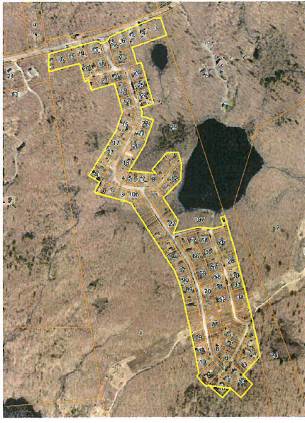
Parcel Numbers: 117-012, 117-013, 117-014, 117-015, 117-016, 117-017, 117-018, 117-019, 117-020, 117-021, 117-022, 117-023, 117-027, 117-028, 117-029, 118-003, 118-004, 118-005, 118-006, 118-007, 118-009, 118-010, 118-011, 118-012, 118-013, 118-014, 118-015, 118-016, 118-017, 118-018, 118-019, 118-020, 118-021, 118-022, 118-023, 118-024, 118-025, 118-026, 118-030, 118-031, 118-032, 118-033, 134-003, 134-004, 134-008, 134-009, 134-010, 135-003, 135-004, 135-005, 135-006, 135-007, 135-008, 135-010, 135-012, 135-013, 135-016, 135-018, 135-019, 135-020, 135-022, 135-023, 135-026, 135-027, 135-028, 135-029, 135-030, 135-031, 135-033, 135-039, 135-040, 135-041, 135-043, 135-053, 135-054, 135-056, 135-058, 135-059, 135-061, 135-063, 135-065, 135-066, 135-068, 135-069, 135-070, 135-072, 135-073, 135-078, 135-086, 135-087, 135-089, 135-090, 135-091, 135-092, 135-093, 135-094, 135-095, 135-096, 135-097, 135-098, 135-099, 135-100, 135-101, 135-102, 135-103, 135-104, 135-106, 152-001, 152-002, 152-003, 152-004, 152-006, 152-008, 152-009, 152-010, 152-012, 152-013, 152-014, 152-016, 152-017.
(Res. of 9-24-2003; Ord. of 9-14-2005(2); Ord. of 5-27-2009; Ord. of 2-26-2025(4))
Sec. 30-32. - Enforcement.
(a)
Zoning enforcement officer. The building official is hereby designated as the zoning enforcement officer. The zoning enforcement officer shall enforce the provisions of this chapter. In addition, all records of the zoning board of review shall be filed in the office of the zoning enforcement officer.
(b)
Zoning certificate.
(1)
No building, structure or sign shall hereafter be erected, enlarged, relocated or maintained and no nonstructural use shall be initiated until the zoning enforcement officer has certified, in writing, that the proposed use, structure or sign conforms to the provision of this chapter. The zoning enforcement officer may require that copies of plans, specifications and such other information including "as-built" plans, which he or she may deem necessary, be filed with the application for such certificate.
(2)
The zoning enforcement officer shall, upon written request, issue a zoning certificate, or deny such certificate, to the requesting party within 15 days of the written request.
(3)
No certificate may be issued by the zoning enforcement officer for any use not specifically permitted in this chapter except when the officer receives a statement, in writing, from the zoning board of review indicating the granting of an appeal, a special use permit or variance or a statement, in writing, from the town council specifying an amendment to this chapter.
(c)
Violation. Any person, group of persons, or corporation violating any provision of this chapter or any terms or conditions attached to the granting of a special use permit or variance shall be guilty of a violation of this chapter and may be fined not more than $500.00 for each offense. Each day of the existence of a violation shall constitute a separate offense. Immediately upon notification of any violation by the zoning enforcement officer, the town solicitor shall institute appropriate action to prevent, enjoin or remove such violation.
(d)
Written response required. In order to provide guidance or clarification, the zoning enforcement officer shall, upon written request, provide information to the requesting party in writing as to the determination of compliance with the zoning chapter by the official within 15 days of the written request. In the event that no written response is provided within that time, the requesting party shall have the right to appeal to the zoning board of review for the determination.
(Ord. of 5-27-2009)
State Law reference— Administration and enforcement of zoning ordinance, G.L 1956, § 45-24-31; violations and penalties, G.L. 1956, § 45-24-60.
Sec. 30-33. - Modifications.
(a)
Modifications allowed. This chapter does hereby provide for the issuance of modifications or adjustments from the literal dimensional requirements of the zoning chapter in the instance of the construction, alteration, or structural modification of a structure. The zoning enforcement officer is hereby authorized to grant modification permits.
(b)
Limitations. The grant of any modification permit shall be subject to the following limitations and procedural requirements:
(1)
The maximum percent allowed for a modification shall not exceed 15 percent, of any of the dimensional requirements specified in the zoning chapter.
(c)
Mandatory determinations. Within ten days of receipt of a request for a modification, the zoning enforcement officer shall make a decision as to the suitability of the requested modification based on the following determinations:
(1)
The modification requested is reasonably necessary for the full enjoyment of the permitted use;
(2)
If the modification is granted, neighboring property will neither be substantially injured nor its appropriate use substantially impaired;
(3)
The modification requested does not require a variance of a flood hazard requirement, unless the building is built in accordance with applicable regulations; and
(4)
The modification requested does not violate any rules or regulations with respect to freshwater or coastal wetlands.
(d)
Notification of abutters. Upon an affirmative determination, in the case of modification of five percent or less, the zoning enforcement officer shall have the authority to issue a permit approving the modification, without any public notice requirements. In the case of a modification of greater than five percent, the zoning enforcement officer shall notify, by first-class mail, all property owners abutting the property which is the subject of the modification request, and shall indicate the street address of the subject property in the notice, and shall publish in a newspaper of local circulation within the town that the modification will be granted unless written objection is received within 14 days of the public notice.
(e)
Objections. If written objection is received within 14 days, the request for a modification shall be scheduled for the next available hearing before the zoning board of review on application for a dimensional variance following the standard procedures for such variances, including notice requirements provided for under this chapter. If no written objections are received within 14 days, and the request complies with the four mandatory determinations above, the zoning enforcement officer shall grant the modification. The zoning enforcement officer may apply such special conditions to the permit as may, in the opinion of the officer, be required to conform to the intent and purposes of the zoning chapter. The zoning enforcement officer shall keep public records of all requests for modifications, and of findings, determinations, special conditions, and any objections received.
(f)
Costs. Costs of newspaper and mailing notices required under this subsection shall be borne by the applicant requesting the modification.
(Ord. of 5-27-2009; Ord. No. 12-13-2023(2))
State Law reference— Modifications, G.L. 1956, § 45-24-46.
Sec. 30-34. - Zoning board of review.
(a)
Creation. A zoning board of review, hereinafter called the board, is hereby created. The board shall have a membership, organization and powers as provided below.
(1)
Membership. The board shall be appointed by the town council and shall consist of five regular members and two alternate members. Each regular member shall be appointed for a term of five years. The alternate members shall be appointed for a term of one year. If a vacancy occurs in the board, the town council shall appoint a new member for the unexpired term. All members of the board shall be legal residents of the town and no member shall be an elected official or salaried employee of the town. The alternate members shall be designated as the first and second alternate members. These alternates shall sit and may actively participate in hearings. The first alternate shall vote if a member of the board is unable to serve at a hearing and the second shall vote if two members of the board are unable to serve at a hearing. A minimum of four members, which may include alternates, shall form a duly constituted quorum.
(2)
Establishment of rules. The board shall establish written rules of procedure, minimum submission requirements and designate the building inspection office as the address to which appeals and/or correspondence to the board shall be mailed. All records of the board shall be filed with the zoning enforcement officer in the building department.
(3)
Engaging services or experts. The board may designate a secretary and engage the services of a recorder and such other technical services or assistance it deems necessary to carry out its responsibilities subject to the provisions of the town charter and ordinances.
(4)
Organization. Once each year, the board shall organize by electing from its membership a chair, a vice-chair and a secretary. Meetings of the board shall be held at the call of the chairman and at such other times as the board may determine. The chair, or in his/her absence the vice-chair, may administer oaths and compel the attendance of witnesses and the submission of data by the issuance of subpoenas.
a.
All meetings of the board shall be open to the public;
b.
Four active members, which may include alternates, shall be necessary to conduct a hearing. As soon as a conflict occurs for a member, that member shall recuse himself or herself and shall not sit as an active member, nor take part in the conduct of the hearing. A maximum of five active members, which may include alternates, shall be entitled to vote on any issue;
c.
The concurring vote of a majority of members of the zoning board of review sitting at a hearing shall be necessary to reverse any order, requirement, decision, or determination of any administrative officer or agency from whom an appeal was taken;
d.
The concurring vote of a majority of members of the zoning board of review sitting at a hearing shall be required to decide in favor of an applicant on any matter within the discretion of the board upon which it is required to pass under this chapter, including variances and special use permits.
(b)
General powers. The board shall have all of the powers specified in G.L. 1956, § 45-24-57, as specified below:
(1)
To hear and decide appeals in a timely fashion where it is alleged there is error in any order, requirement, decision, or determination made by an administrative officer or agency in the enforcement or interpretation of this chapter, or of any ordinance adopted pursuant hereto;
(2)
To authorize, upon application, in specific cases of hardship, variances in the application of the terms of the zoning chapter, pursuant to subsection (d) of this section;
(3)
To authorize, upon application, in specific cases, special use permits, pursuant to subsection (e) of this section;
(4)
To refer matters to the planning board or commission, or to other boards or agencies of the town as the zoning board of review may deem appropriate, for findings and recommendations;
(5)
To provide for issuance of conditional zoning approvals where a proposed application would otherwise be approved except that one or more state or federal agency approvals which are necessary are pending. A conditional zoning approval shall be revoked in the instance where any necessary state or federal agency approvals are not received within a specified time period; and
(6)
To hear and decide appeals from a party aggrieved by a decision of an historic district commission, pursuant to G.L. 1956, § 45-24.1-7.1, and G.L. 1956, § 45-24.1-7.2;
(7)
To hear and decide appeals where the zoning board of review is appointed as the board of appeals for airport zoning regulations pursuant to G.L. 1956, § 1-3-19;
(8)
To hear and decide other matters, according to the terms of this chapter or other statutes, and upon which the board may be authorized to pass under this chapter or other statutes.
(c)
Appeals. An appeal to the zoning board of review from a decision of any other zoning enforcement agency or officer may be taken by an aggrieved party. The appeal shall be taken within a reasonable time of the date of the recording of the decision by the zoning enforcement officer or agency by filing with the officer or agency from whom the appeal is taken and with the zoning board of review a notice of appeal specifying the ground thereof. The officer or agency from whom the appeal is taken shall forthwith transmit to the zoning board of review all the papers constituting the record upon which the action appealed from was taken. Notice of the appeal shall also be transmitted to the planning board or commission.
(d)
Variances.
(1)
An application for relief from the literal requirements of this zoning chapter, because of hardship, may be made by any person, group, agency, or corporation by filing with the zoning enforcement officer. Such application must describe the relief request and be supported by such data and evidence as may be required by the zoning board of review or by the terms of this chapter. The zoning enforcement officer shall immediately transmit each such application received to the zoning board of review and shall transmit a copy of each application to the planning board.
(2)
The zoning board of review, immediately upon receipt of an application for a variance in the application of the literal terms of the zoning chapter, may request that the planning board and/or staff submit an advisory report or supplemental data. If so requested the planning board and/or staff shall report its findings and recommendations, including a statement on the general consistency of the application with the goals and purposes of the comprehensive plan of the town, in writing to said zoning board of review within 30 days of receipt of the application from that board.
(3)
The zoning board shall hold a public hearing on any application for variance in an expeditious manner, after receipt, in proper form, of an application, and shall give public notice thereof at least 14 days prior to the date of the hearing in a newspaper of local circulation. Notice of hearing shall be sent by first class mail to the applicant, and to at least all those who would require notice under G.L. 1956, § 45-24-53, or subsection 30-35(c) of this chapter. The notice shall also include the street address of the subject property and utility pole numbers of poles along the property. In addition, a sign shall be posted on the subject property stating that an application has been made for a variance. Said sign shall be 24 inches on a side and shall contain the word "variance" in letters two inches tall. The posting shall be for information purposes only and shall not constitute required notice of a public hearing. At least 14 days prior to the hearing, the same notice shall be posted in the town clerk's office and one other municipal building in the town and the town shall make the notice accessible on the home page of its website. For any notice sent by first-class mail, the sender of the notice shall submit a notarized affidavit to attest to such mailing. The cost of newspaper and mailing notification shall be borne by the applicant.
(4)
In granting a variance, the zoning board of review shall require that evidence to the satisfaction of the following standards be entered into the record of the proceedings:
a.
That the hardship from which the applicant seeks relief is due to the unique characteristics of the subject land or structure and not to the general characteristics of the surrounding area, and is not due to a physical or economic disability of the applicant;
b.
That the hardship is not the result of any prior action of the applicant or owner; and
c.
That the granting of the requested variance will not alter the general character of the surrounding area or impair the intent or purpose of the zoning chapter or the comprehensive plan upon which this chapter is based.
d.
The zoning board of review shall, in addition to the above standards, require that evidence be entered into the record of the proceedings showing that:
1.
In granting a use variance, the subject land or structure cannot yield any beneficial use if it is required to conform to the provisions of the zoning chapter. Any nonconforming use of neighboring land or structures in the same district and permitted use of lands or structures in an adjacent district shall not be considered in granting a use variance; and
2.
In granting a dimensional variance, that the hardship that was suffered by the owner of the subject property if the dimensional variance is not granted shall amount to more than a mere inconvenience meaning that relief sought is minimal to a reasonable enjoyment of the permitted use to which the property is proposed to be devoted. The fact that a use may be more profitable or that a structure may be more valuable after the relief is granted shall not be grounds for relief. The zoning board may grant dimensional variances where the use is permitted by special use permit.
e.
The zoning board shall set down a record of findings of fact and shall make its decision in writing. No decision shall be final until it is filed in the zoning enforcement office. All decisions shall be recorded in the land evidence records of the town.
f.
A variance from the provisions of this chapter shall expire 12 months from the date of approval by the board, unless the applicant who has been granted relief obtains a building permit and is actively engaged in the project's construction, or in case of "use variance" has actually put the subject property to said use.
(e)
Special use permit. The zoning board of review may only issue special use permits subject to the following terms and conditions.
(1)
An application for a special use permit may be made by filing an application with the zoning enforcement officer for those uses specified in section 30-71 of this chapter as requiring such special use permit. Said application will contain a description of the property involved, the applicant's interest in the property and such other information as required under the specific section describing the special use (see article VI).
The zoning board shall evaluate the request in accordance with criteria and general standards set forth herein for a special use permit in addition to any other criteria and standards enumerated in this chapter which may be applicable to the relief being sought, and in accordance with the intent and purposes of the town's comprehensive plan and this chapter. They may require any special conditions, as described below, which they deem in the interests of the town and its citizens.
(2)
The zoning board shall hold a public hearing on any application for a special use permit, after receipt, in proper form, of an application and shall give public notice thereof at least 14 days prior to the date of hearing in a newspaper of local circulation in Burrillville. Notice of hearing shall be sent first class mail to the applicant and to all of those who would be required [to be sent] notice under G.L. 1956, § 45-24-53, or subsection 30-35(c) of this chapter. The notice shall also include the street address of the subject property and utility pole numbers of poles along the property. In addition, a sign shall be posted on the subject property stating that an application has been made for a special use permit. Said sign shall be 24 inches on a side and shall contain the word "special use permit" in letters two inches tall. The posting shall be for information purposes only and shall not constitute required notice of a public hearing. At least 14 days prior to the hearing, the same notice shall be posted in the town clerk's office and one other municipal building in the town and the town shall make the notice accessible on the home page of its website. For any notice sent by first-class mail, the sender of the notice shall submit a notarized affidavit to attest to such mailing. The cost of the newspaper and mailing notification shall be borne by the applicant.
(3)
The zoning board shall set down a record of findings of fact and shall make its decision in writing. No decision shall be final until it is filed in the zoning enforcement office. All decisions shall be recorded in the land evidence records of the town.
(4)
A use requiring a special use permit under the applicable provisions of this chapter may be permitted by the zoning board of review following a public hearing only if, in the opinion of the board, such proposed use and its location on the site meets each of the following requirements, in addition to any other applicable requirements, criteria and/or standards enumerated in this chapter which may be applicable to the relief being sought. The granting of the special use permit will not alter the general character of the surrounding area or impair the intent or purposes of this chapter or the comprehensive plan of the town. In so doing, the board shall consider, where applicable, the following:
a.
Ingress and egress to property and proposed structures thereon with particular reference to automotive and pedestrian safety and convenience, traffic flow and control, and access in case of fire or catastrophe.
b.
Off-street parking and loading areas where required.
c.
Required yard setbacks and other open spaces.
d.
Utilities with reference to location, availability, and compatibility.
e.
Screening and buffering with reference to type, dimensions, and character.
f.
Signs, if any, and proposed exterior lighting with reference to glare and traffic safety.
g.
General compatibility, the pertinent traffic, economic, noise, glare or odor effects of the special use permit on adjoining properties and properties generally in the district.
h.
Protection of sensitive features.
i.
The use will not result in or create conditions that will exceed any applicable performance standards in this ordinance.
When a use is permitted by special use permit, the zoning board may grant dimensional relief in conjunction with said special use permit if the special use could not exist without the dimensional variance. The zoning board of review shall consider the special use permit and the dimensional variance together to determine if granting the special use is appropriate based on each respective special use criterion and the dimensional variance evidentiary standards.
(5)
Any proposed land use that is not specifically listed in section 30-71 may be presented by the applicant to the zoning board of review for an evaluation and determination of whether the proposed use is of a similar type, character, and intensity as a listed use requiring a special use permit. Upon such determination, the proposed use may be considered to be a use requiring a special use permit.
(f)
Special conditions. In granting a variance, a special use permit or in making any determination upon which it is required to pass after a public hearing under a zoning ordinance, the zoning board of review or other zoning enforcement agency may apply such special conditions that may, in the opinion of the board or agency, be required to promote the intent and purposes of the comprehensive plan and the zoning chapter of the town. Failure to abide by any special conditions attached to a grant shall constitute a zoning violation. Those special conditions shall be based on competent credible evidence on the record, be incorporated into the decision, and may include, but are not limited to, provisions for:
(1)
Minimizing adverse impact of the development upon other land, including the type, intensity, design, and performance of activities;
(2)
Controlling the sequence of development, including when it must be commenced and completed;
(3)
Controlling the duration of use or development and the time within which any temporary structure must be removed;
(4)
Assuring satisfactory installation and maintenance of required public improvements;
(5)
Designating the exact location and nature of development; and
(6)
Establishing detailed records by submission of drawings, maps, plats, or specifications.
(g)
Procedures for appeals, special use permits or variances.
(1)
An application for an appeal, a special use permit or variance shall be filed directly with the zoning officer specifying the grounds for the application.
(2)
In filing for an appeal, variance or special use permit, the applicant shall file all plans, documents and specifications necessary to support the request in a format as may be required by the board's rules.
(3)
In addition, the applicant shall accompany the request with a plan showing property owners along with a list thereof, including names and addresses of all parties requiring notice pursuant to G.L. 1956, § 45-24-41, or G.L. 1956, § 45-24-42, and subsection 30-35(a)(4) of this chapter.
(4)
A filing fee, payable to the town, shall be submitted with and be a part of the application from which a recorder (device or person) shall be hired.
(5)
The applicant for appeal, variance or special use permit shall pay the cost of all legal advertising and mailing associated with the said action in excess of the fee prior to the hearing and made payable to the town.
(6)
The board shall hear an appeal or an application for a special use permit or variance within 65 days of the date of the filing of the application or appeal.
a.
It shall publish notice of the hearing at least two weeks prior to the date of such hearing in a newspaper of general circulation in the town, and shall give notice to the planning board.
b.
In addition, notice shall be sent by first class mail to the applicant and to all persons owning real property described in subsection (3) above.
(7)
The board shall render a decision on the application within 15 days of said hearing. Any party may appear at the hearing in person, by agent, or by attorney.
(8)
An aggrieved party may appeal a decision of the zoning board of review to the superior court for Providence County by filing a complaint setting forth the reasons of appeal within 20 days after the decision has been recorded and posted in the office of town clerk. The decision shall be posted in a location visible to the public in the town hall for a period of 20 days following the recording of the decision.
(9)
No variance, special use permit or appeal shall become effective until it is recorded in the land evidence office of the town hall.
(10)
Any person or persons jointly or severally aggrieved by any decision of the board, or any officer, department, board or bureau of the town, may appeal to the superior court, setting forth that such decision is illegal in whole or in part, specifying the grounds of the illegality. Such petition shall be presented to the court within 20 days after the filing of the decision in the office of the board.
(Ord. of 4-12-2000; Ord. of 4-26-2000; Ord. of 5-28-2003(1); Ord. of 5-27-2009; Ord. of 03-22-2023 (2); Ord. No. 12-13-2023(2); Ord. of 2-26-2025(2))
State Law reference— Zoning board of review, G.L. 1956, § 45-24-56.
Sec. 30-35. - Amendments.
(a)
Application for amendment. This zoning chapter may be amended by application to the town council, filed at the office of the town clerk, by any person desiring such amendment.
(1)
Such application shall include the specific language to be added, deleted or modified or, in the case of a zoning district change, shall include a map detailing the area subject to the requested amendment.
Such application shall be accompanied by a filing fee, payable to the town, from which a recorder (device or person) shall be hired. The applicant shall pay the cost of all legal advertising and mailing associated with the action in excess of the fee prior to the hearing. No public hearing shall be held and no action shall be taken on a request for amendment until all fees and costs have been paid.
(2)
The town clerk, upon filing of an application for an adoption, an amendment, or repeal of a zoning ordinance or zoning map or maps, shall immediately upon receipt of the proposal refer the proposal to the town council and to the planning board for study and recommendation. The planning board shall, in turn, notify and seek the advice of the town planning department, and shall report to the town council within 45 days after receipt of the proposal, giving its findings and recommendations as prescribed below. Where a proposal for adoption, amendment, or repeal of a zoning ordinance or zoning map is made by the town planning board, the requirements for study by the board may be waived, provided that the proposal by the planning board includes its findings and recommendations.
(3)
The town council shall hold a public hearing within 65 days of receipt of a proposal, giving proper notice as prescribed below, at which hearing opportunity shall be given to all persons interested to be heard upon the matter of the proposed ordinance.
(4)
Town council shall give notice of the public hearing by publication of notice in a newspaper of local circulation within the town at least once each week for three successive weeks prior to the date of the hearing, which may include the week in which the hearing is to be held. Written notice shall be mailed to the associate director of the division of planning of the Rhode Island Department of Administration, and, where applicable, to the parties specified in subsections (b)—(e) of this section, at least two weeks prior to the hearing.
a.
At least 14 days prior to the hearing, the same notice shall be posted in the town clerk's office and one other municipal building in the town and the town shall make the notice accessible on the home page of its website. The notice shall:
1.
Specify the place of the hearing and the date and time of its commencement;
2.
Indicate that adoption, amendment, or repeal of a zoning ordinance is under consideration;
3.
Contain a statement of the proposed amendments to the ordinance that may be printed once in its entirety, or summarize and describe the matter under consideration;
4.
Advise those interested where and when a copy of the matter under consideration may be obtained or examined and copied; and
5.
State that the proposals shown thereon may be altered or amended prior to the close of the public hearing without further advertising, as a result of further study or because of the views expressed at the public hearing. Any alteration or amendment must be presented for comment in the course of the hearing.
b.
Where a proposed general amendment to an existing zoning ordinance includes changes in an existing zoning map, public notice shall be given as required by subsection (a) of this section.
c.
Where a proposed amendment to an existing ordinance includes a specific change in a zoning district map, but does not affect districts generally, public notice shall be given as required by subsection (a) of this section, with the additional requirements that:
1.
Notice shall include a map showing the existing and proposed boundaries, zoning district boundaries, and existing streets and roads and their names, and city and town boundaries where appropriate; and
2.
Written notice of the date, time, and place of the public hearing and the nature and purpose thereof shall be sent to all owners of real property whose property is located in or within not less than 200 feet of the perimeter of the area proposed for change, whether within the town or within an adjacent town. The notice shall be sent by first-class mail to the last known address of the owners, as shown on the current real estate tax assessment records of the town in which the property is located; provided, for any notice sent by first-class mail, the sender of the notice shall submit a notarized affidavit to attest to such mailing. The cost of newspaper and mailing notifications shall be borne by the applicant.
d.
Notice of a public hearing shall be sent by first-class mail to the town council of any town to which one or more of the following pertain:
1.
Which is located in or within not less than 200 feet of the boundary of the area proposed for change; or
2.
Where there is a public or quasi-public water source, or private water source that is used or is suitable for use as a public water source, within 2,000 feet of any real property that is the subject of a proposed zoning change, regardless of municipal boundaries.
e.
Notice of a public hearing shall be sent to the governing body of any state or municipal water department or agency, special water district, or private water company that has riparian rights to a surface water resource and/or surface watershed that is used or is suitable for use as a public water source and that is within 2,000 feet of any real property which is the subject of a proposed zoning change, provided, however, that the governing body of any state or municipal water department or agency, special water district, or private water company has filed with the building official in the city or town a map survey, which shall be kept as a public record, showing areas of surface water resources and/or watersheds and parcels of land within 2,000 feet thereof.
f.
No defect in the form of any notice under this section shall render any ordinance or amendment invalid, unless the defect is found to be intentional or misleading.
(5)
The town council shall render a decision on any proposal within 45 days after the date of completion of the public hearing. The provisions of this section pertaining to deadlines shall not be construed to apply to any extension consented to by an applicant.
(b)
Review by planning board or commission. Among its findings and recommendations to the town council with respect to a proposal for adoption, amendment, or repeal of a zoning ordinance or zoning map, the planning board or commission shall:
(1)
Include a statement on the general consistency of the proposal with the comprehensive plan of the town, including the goals and policies statement, the implementation program, and all other applicable elements of the comprehensive plan; and
(2)
Include a demonstration of recognition and consideration of each of the applicable purposes of zoning, as presented in G.L. 1956, § 45-24-30.
(c)
Notice and hearing requirements. No zoning ordinance shall be adopted, repealed, or amended until after a public hearing has been held upon the question before the town council.
(1)
The town council shall first give notice of the public hearing by publication of notice in a newspaper of general circulation within the town at least once each week for three successive weeks prior to the date of the hearing, which may include the week in which the hearing is to be held, at which hearing opportunity shall be given to all persons interested to be heard upon the matter of the proposed ordinance. Written notice shall be mailed to the associate director of the division of planning of the Rhode Island Department of Administration, and, where applicable, to the parties specified in subsections (2)—(5) of this subsection, at least two weeks prior to the hearing. At least 14 days prior to the hearing, the same notice shall be posted in the town clerk's office and one other municipal building in the town and the town shall make the notice accessible on the home page of its website. The notice shall:
a.
Specify the place of the hearing and the date and time of its commencement;
b.
Indicate that adoption, amendment, or repeal of a zoning ordinance is under consideration;
c.
Contain a statement of the proposed amendments to the chapter that may be printed once in its entirety, or summarize and describe the matter under consideration;
d.
Advise those interested where and when a copy of the matter under consideration may be obtained or examined and copied; and
e.
State that the proposals shown thereon may be altered or amended prior to the close of the public hearing without further advertising, as a result of further study or because of the views expressed at the public hearing. Any alteration or amendment must be presented for comment in the course of the hearing.
(2)
Where a proposed general amendment to an existing zoning ordinance includes changes in an existing zoning map, public notice shall be given as required by subsection (1) above of this subsection.
(3)
Where a proposed amendment to an existing zoning ordinance includes changes in an existing zoning map, but does not affect districts generally, public notice shall be given as required by subsection (1) above of this subsection, with the additional requirements that:
a.
Notice shall include a map showing the existing and proposed boundaries, zoning district boundaries, and existing streets and roads and their names, and town boundaries where appropriate; and
b.
Written notice of the date, time, and place of the public hearing and the nature and purpose thereof shall be sent to all owners of real property whose property is located in, or within not less than 200 feet of the perimeter of, the area proposed for change, whether within the town or within an adjacent town. The notice shall be sent by first-class mail to the last known address of the owners, as shown on the current real estate tax assessment records of the town in which the property is located; provided, for any notice sent by first-class mail, the sender of the notice shall submit a notarized affidavit to attest to such mailing. The cost of newspaper and mailing notification shall be borne by the applicant.
(4)
Notice of a public hearing shall be sent by first-class mail to the town council of any town to which one or more of the following pertain:
a.
Which is located in or within not less than 200 feet of the boundary of the area proposed for change; and
b.
Where there is a public or quasi-public water source, or private water source that is used or is suitable for use as a public water source, within 2,000 feet of any real property that is the subject of a proposed zoning change, regardless of municipal boundaries.
(5)
Notice of a public hearing shall be sent to the governing body of any state or municipal water department or agency, special water district, or private water company that has riparian rights to a surface water resource and/or surface watershed that is used or is suitable for use as a public water source and that is within 2,000 feet of any real property which is the subject of a proposed zoning change, provided, however, that the governing body of any state or municipal water department or agency, special water district, or private water company has filed with the building official in the town a map survey, which shall be kept as a public record, showing areas of surface water resources and/or watersheds and parcels of land within 2,000 feet thereof.
(6)
No defect in the form of any notice under this section shall render any ordinance or amendment invalid, unless the defect is found to be intentional or misleading.
(7)
Costs of newspaper and mailing notices required under this section shall be borne by the applicant.
(8)
In granting a zoning ordinance amendment, notwithstanding the provisions of G.L. 1956, § 45-24-37, the town council may limit the change to one of the permitted uses in the zone to which the subject land is rezoned, and impose such limitations, conditions, and restrictions, including, without limitation:
a.
Requiring the petitioner to obtain a permit or approval from any and all state or local governmental agencies or instrumentalities having jurisdiction over the land and use which are the subject of the zoning change;
b.
Those relating to the effectiveness or continued effectiveness of the zoning change; and/or
c.
Those relating to the use of the land; as it deems necessary.
(9)
The town planner shall cause the limitations and conditions so imposed to be clearly noted on the zoning map and recorded in the land evidence records, provided, however, in the case of a conditional zone change, the limitations, restrictions, and conditions shall not be noted on the zoning map until the zone change has become effective. If the permitted use for which the land has been rezoned is abandoned or if the land is not used for the requested purpose for a period of two years or more after the zone change becomes effective, the town council may, after a public hearing as hereinbefore set forth, change the land to its original zoning use before the petition was filed.
(10)
If any limitation, condition, or restriction in an ordinance is held to be invalid by a court in any action, that holding shall not cause the remainder of the ordinance to be invalid.
(d)
Hearings on specific zoning ordinances. The same procedures shall apply relative to the notice of public hearings.
(1)
In addition thereto, all owners of any real property within 200 feet of the perimeter which is the subject matter of the proposed zoning amendment, enactment or repeal shall be notified by first-class mail at least seven days before the date of said hearing.
(2)
Where the boundary line of an adjacent town falls within the aforementioned 200 feet, or where there is an actual or potential public or quasi-public water source within 1,000 feet, the town council of said adjacent town shall be entitled to such notice and shall be a party in interest.
(3)
The town council may limit such specific change to one permitted use and impose such limitations and conditions upon the use of the land as it deems necessary. Such limitations and conditions are to be clearly noted on the zoning map. If the permitted use has been abandoned or the land not used for that purpose for a period of two years or more, the town council may, after another public hearing, return the land to its previous zoning classification.
(e)
Review by planning board. At least once every two years, the planning board shall review this chapter and make a written report to the town council, recommending any amendments deemed appropriate in the light of current development trends and needs.
(Ord. of 5-27-2009; Ord. No. 12-13-2023(2))
State Law reference— Procedure for amending the zoning ordinance, G.L. 1956, § 45-24-51; notice and hearing requirements, G.L. 1956, § 45-24-53.
Sec. 30-36. - Compliance with title 2, chapter 23.1 of the Rhode Island General Laws entitled "Agriculture and Forestry."
(a)
Notification to farmers. The town planner is hereby designated as the official responsible for providing notification to farmers pursuant to the provisions of chapter 23.1 of Title 2 of the Rhode Island General Laws entitled, "Agriculture and Forestry."
(b)
Eligible farmers. Eligible farmers shall be those placed on a list established by the director of the department of environmental management pursuant to G.L. § 2-23.1-3
(c)
Matters subject to notice. Matters subject to notification shall include the following actions to:
(1)
Change the zoning and/or permitted uses of land subject to farming;
(2)
Designate or amend the designation of land used for farming in comprehensive plans or land use ordinances;
(3)
Change the manner of taxation of real and personal property used for farming;
(4)
Establish or amend programs for the transfer of development rights affecting farming and hours of operation of machinery and equipment used in farming;
(5)
Regulate water uses for farming purposes;
(6)
Control noise and hours of operation of machinery and equipment used in farming.
(d)
Time of notification. Not later than seven business days after a matter subject to notification as provided for herein is formally proposed for study or consideration by a public body in which the matter originates written notification of the matter shall be mailed to farmers listed on the director's list.
(e)
Contents of notification. The written notification shall, as a minimum, state the matter subject to notification, the public body of the town which will be studying or considering the matter and provide the name of the town official, whom the farmers may contract to request additional information about the matter or to request a work session as provided herein.
(f)
Work session request. Any farmer who receives a notification as provided herein may request in writing, within ten business days after such notification, a work session to review the impact of the matter subject to notification on farming. The request shall be made to the official designated on the notification to receive such a request. Within 20 business days after the receipt of such a request, said official shall notify in writing all farmers on the notification list of such request, providing the location, time and date of a work session on the matter. The work session shall not be sooner than seven business days after the date of notice of the said work session. The work shall be to review and consider the effects of the matter, subject to notification on farming. The work session shall be prior to any final action on the matter subject to notification by the public body and the findings and conclusions of the work session shall be reported to the public body. Work sessions shall be governed by the Open Meetings Act. For any matter subject to notification not more than one work session shall be required to comply with the provisions of this ordinance.
(g)
Emergency actions unimpaired. The provisions of this section shall not be deemed to impair, limit or restrict the power of the public body of the town to take emergency actions of a temporary duration that are necessary to protect health, safety or welfare.
(h)
Validity of actions. Except in instances of knowing and willful noncompliance with the provisions of this section, a failure to comply strictly with any of the requirements of this section shall not be deemed to affect or impair the validity of any action otherwise taken.
(Ord. of 5-24-2006)

