
College Park City Zoning Code
ARTICLE 3
- ZONING DISTRICT INTENTS, USES, AND STANDARDS
3.1 - Prohibited Uses for All Zoning Districts.
The purpose of this section is to identify those land uses that are prohibited throughout the city limits within all zoning districts for ease of reference and clarity.
1.
Accessory Dwellings;
2.
Limited Lodging Establishments;
3.
Vacation Rental Establishments;
4.
Check Cashing, Outlets, Cash Advance Outlets, and Title Loan Establishments;
5.
Hookah Lounges;
6.
Pawnshops;
7.
Teen Clubs;
8.
Hair Braiding establishments not included as part of a properly permitted and licensed Hair Salon or Barber Shop;
9.
Nightclubs;
10.
Tattoo Artistry and/or Parlors;
11.
Small Box Discount Stores; and
12.
Tire and Rim Shops.
(Ord. No. 2018-13, § 1, 12-3-18; Ord. No. 2019-15, § 2, 9-3-19; Ord. No. 2021-02, § 3, 3-15-21)
3.2 - Principle Use of Lots.
There shall only be one (1) permitted principle use for every lot within the City of College Park, subject to the following:
1.
The provisions shall not apply to any zoning district which specifically permits mixed-uses within a lot either vertically or horizontally.
2.
This provision shall not apply to lots with non-residential zoning classifications unless a residential use or dwelling unit, whether permitted as a nonconforming legal use or otherwise permitted under this ordinance, is maintained on such lot.
3.
No lot may be subdivided to comply with this Article if it shall create a non-residential zoned lot that:
a.
Is surrounded by one (1) or more residentially zoned lot;
b.
Is not adjacent to any other non-residentially zoned lot; and/or
c.
Will not maintain a zoning classification that is consistent with the city's Comprehensive Land Use Plan.
3.3 - District Intent, Permitted Uses and Conditional Uses.
District Intent: The "R-1" District provide for the development of single-family detached homes on individual lots in a suburban character. The provisions that regulate this land use district provides for the development of low to medium density residential neighborhoods.
The City of College Park should strive to promote an average net density of 2.0 to 2.5 dwelling units per acre community-wide in the "R-1" district.
Permitted Uses:
Residential Uses:
• Dwelling, single-family
• Home occupation (type I)
Institutional/Public Uses:
• Nature preserve/passive recreation trail
• Parks and playgrounds
• Police, fire, rescue
• Public/government buildings and offices
• Public structures and uses in accord with the intent of this district
Communication/Utilities:
• Public wellfield/pump house
• Water tower
• Utility substation
Accessory Uses:
• Carports and garages
• Parking of one (1) unoccupied travel trailer, motor coach, or pleasure boat owned or used by the property owner on which it is located. Recreational vehicle or boat shall be screened from street frontage, and shall be parked on approved impervious surface.
• Private recreation areas owned, operated, and maintained exclusively for residents of subdivisions, multiple family, or manufactured housing developments
• Storage and utility buildings
Conditional Uses:
Agricultural Uses:
• Sale of produce
• Farm stands
• Community gardens
• Kennels, on parcels of land greater than three (3) acres; provided, that any structure shall be at least one hundred (100) feet from any property line
• Riding academies and stables on parcels of land greater than three (3) acres; provided, that any structure shall be at least one hundred (100) feet from any property line
Residential uses:
• Bed and breakfast
• Personal care home (Family Personal Care)
• Group home and halfway home
• Home occupation (type II)
Institutional/Public Uses:
• Educational institutions/schools (P-12)
• Places of Worship, Theaters, and Amphitheaters
• Publicly owned parks and recreation areas
3.4 - District Standards.
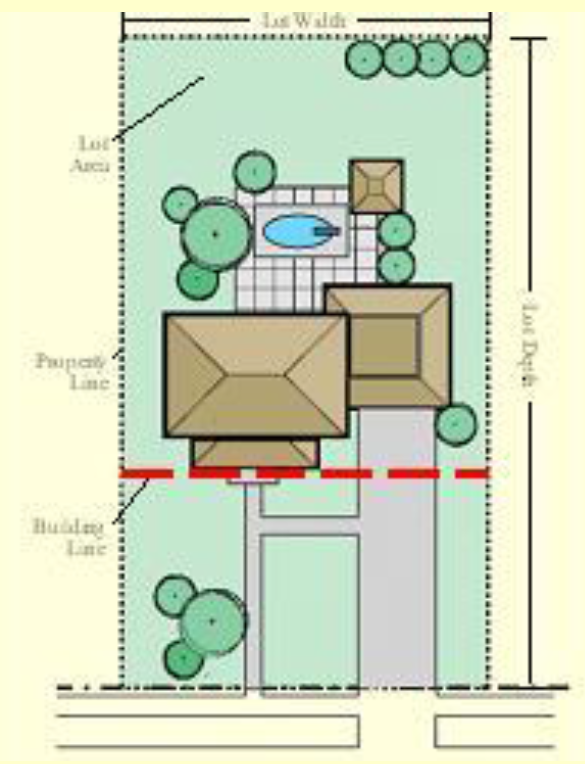 | 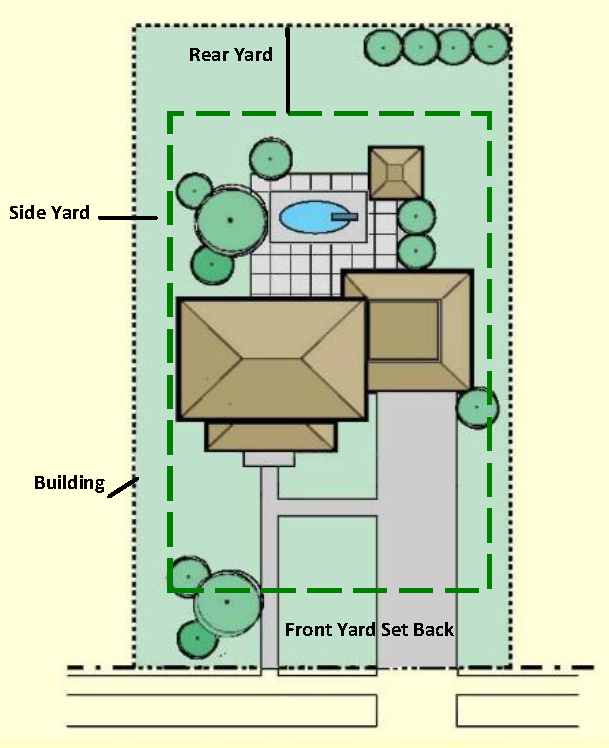 | 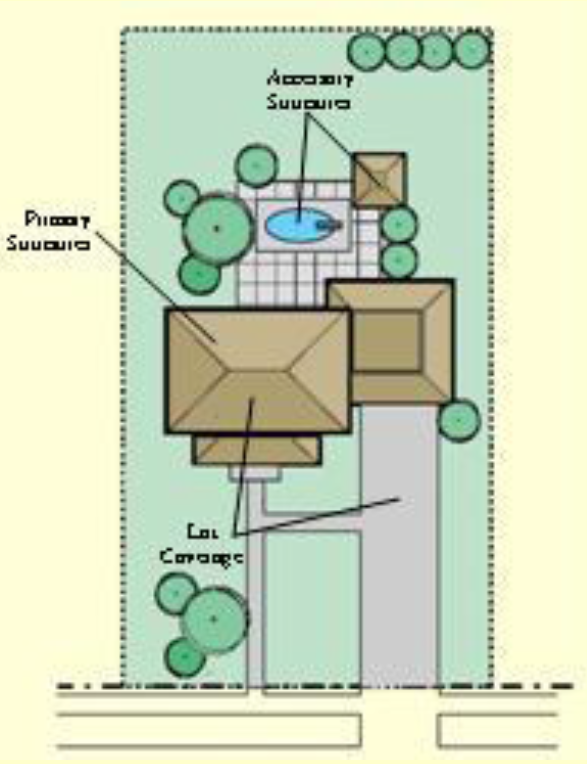 |
| Minimum Lot Area: | Minimum Front Yard Setback: | Minimum Living Area: |
| • 20,000 square feet | • 60 feet | • 2,000 square feet of heated area for total house |
| Minimum Lot Width: | Minimum Side Yard Setback: | • 1,200 square feet of heated area for first floor |
| • 90 feet | • 15 feet each side | |
| Minimum Lot Depth: | Minimum Rear Yard Setback: | • 800 square feet (accessory use dwelling) |
| • 180 feet | • 40 feet | |
| Minimum Lot Frontage: | Maximum Lot Coverage: | Maximum Living Area: |
| • 100% of the lot width on a public street with access from said public street | • Square footage of all primary and accessory structures, and impervious surface cannot exceed 35% of the Lot Area | • 4,000 square feet of heated area |
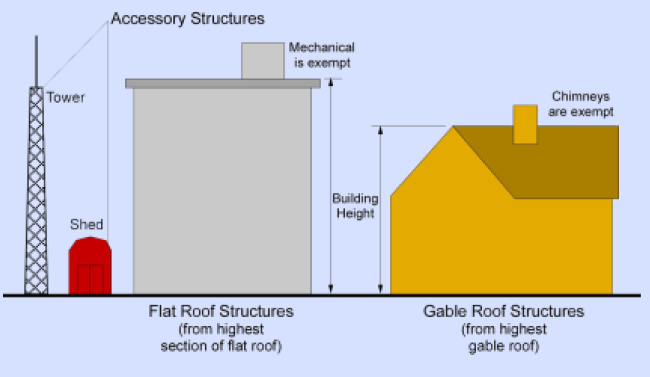 | Additional Development Standards That Apply: | |
| Lot/Yard Standards (LY) | Architectural & Appearance Standards (AA) | |
| Height Standards (HT) | Agricultural Use Standards (AU) | |
| Dry Well Standards (DR) | Places of Worship (PW) | |
| Accessory Use/Structure Standards (AS) | Performance Standards (PS) | |
| Home Occupation Standards (HO) | Public Improvement Standards (PI) | |
| Maximum Structure Height: | Personal Care Homes (PCH) | Parking Standards (PK) |
| • 35 feet for the Primary Structure | Bed and Breakfast Standards (BB) | Fences and Walls Standards (FN) |
| • 25 feet for Accessory Structures | Outdoor Lighting Standards (OL) | |
3.5 - District Intent, Permitted Uses and Conditional Uses.
District Intent: The "R-2" District is intended to provide for the development of single-family detached homes on moderate-sized lots which are served by public water and sewer systems. The provisions that regulate this land use district provides for the development of residential neighborhoods in a medium-density urban development environment. This district should be protected from conflicting land uses. The City of College Park should strive to promote an average net density of 2.5 to 3.5 dwelling units per acre community-wide in the "R-2" district.
Permitted Uses:
Residential Uses:
• Dwelling, single-family
• Home occupation (type I)
Institutional/Public Uses:
• Nature preserve/passive recreation trail
• Parks and playgrounds
• Police, fire, rescue
• Public/government buildings and offices
• Public structures and uses in accord with the intent of this district
Communication/Utilities:
• Public wellfield/pump house
• Water tower
• Utility substation
Accessory Uses:
• Carports and garages
• Parking of one (1) unoccupied travel trailer, motor coach, or pleasure boat owned or used by the property owner on which it is located. Recreational vehicle or boat shall be screened from street frontage, and shall be parked on approved impervious surface.
• Private recreation areas owned, operated, and maintained exclusively for residents of subdivisions, multiple family, or manufactured housing developments
• Storage and utility buildings
Conditional Uses:
Residential Uses:
• Home occupation (type II)
Institutional/Public Uses:
• Educational institutions/schools (P-12)
• Publicly owned parks and recreation areas
3.6 - District Standards.
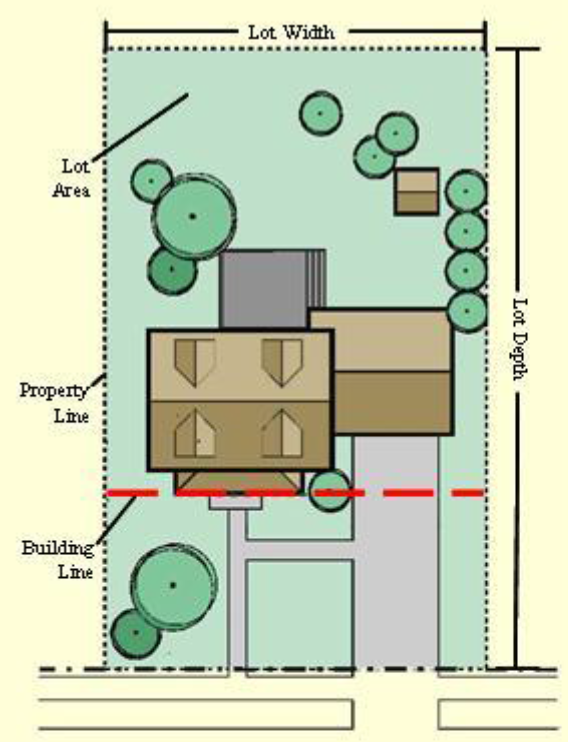 | 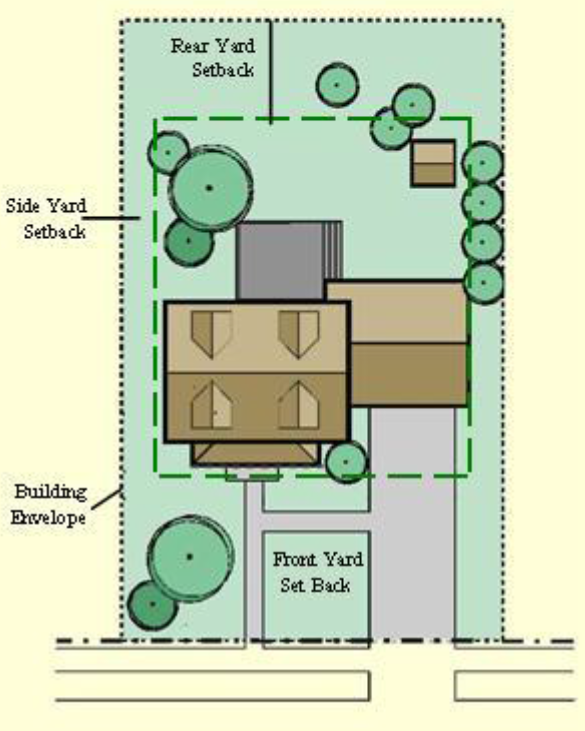 | 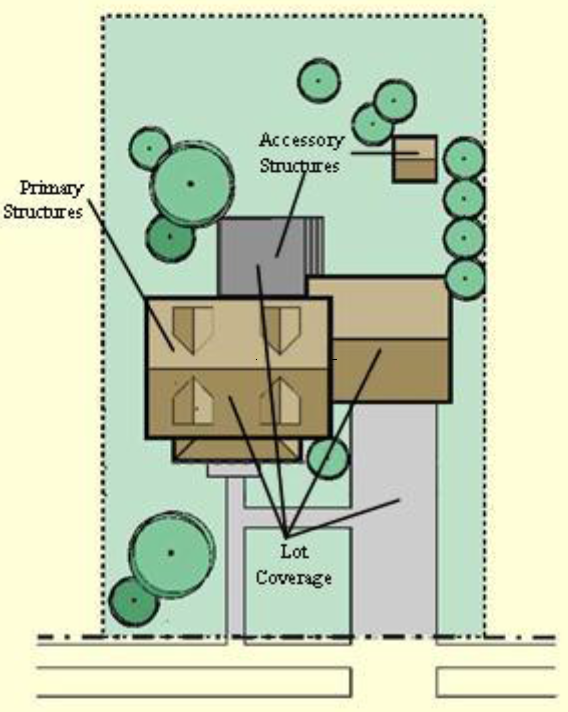 |
| Minimum Lot Area: | Minimum Front Yard Setback: | Minimum living Area: |
| • 10,000 square feet | • 40 feet | • 1,800 square feet of heated area for total house |
| Minimum Lot Width: | Minimum Side Yard Setback: | • 1,080 square feet of heated area on first story |
| • 75 feet | • 12 feet each side | |
| Minimum Lot Depth: | Minimum Rear Yard Setback: | • 800 square feet (accessory use dwelling) |
| • 125 feet | • 35 feet | |
| Minimum Lot Frontage: | Maximum Lot Coverage: | Maximum Living Area: |
| • 100% of the lot width on a public street with access from said public street | • Square footage of all primary and accessory structures, and impervious surface cannot exceed 35% of the Lot Area. | • 3,600 square feet of heated area |
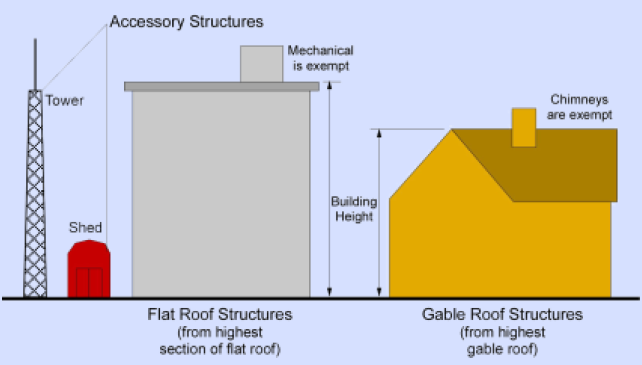 | Additional Development Standards That Apply: | |
| Lot/Yard Standards (LY) | Architectural & Appearance Standards (AA) | |
| Height Standards (HT) | Performance Standards (PS) | |
| Dry Well Standards (DR) | Public Improvement Standards (PI) | |
| Accessory Use/Structure Standards (AS) | Parking Standards (PK) | |
| Home Occupation Standards (HO) | Fences and Walls Standards (FN) | |
| Maximum Structure Height: | Outdoor Lighting Standards (OL) | |
| • 35 feet for the Primary Structure | ||
| • 25 feet for Accessory Structures | ||
3.7 - District Intent, Permitted Uses and Conditional Uses.
District Intent: The "R-3 District is intended to provide the development of single-family dwellings served by public water and sewer systems. The provisions that regulate this land use district provides for the development of residential neighborhoods in a medium-density urban environment.
This district should be protected from conflicting land uses. The City of College Park should strive to promote an average net density of 4.0 to 5.5 dwelling units per acre community-wide in the "R-3" district.
Permitted Uses:
Residential Uses:
• Dwelling, single-family
• Home occupation (type I)
Institutional/Public Uses:
• Nature preserve/passive recreation trail
• Parks and playgrounds
• Police, fire, rescue
• Public/government buildings and offices
• Public structures and uses in accord with the intent of this district
Communication/Utilities:
• Public wellfield/pump house
• Water tower
• Utility substation
Accessory Uses:
• Carports and garages
• Parking of one (1) unoccupied travel trailer, motor coach, or pleasure boat owned or used by the property owner on which it is located. Recreational vehicle or boat shall be screened from street frontage, and shall be parked on approved impervious surface.
• Private recreation areas owned, operated, and maintained exclusively for residents of subdivisions, multiple family, or manufactured housing developments
• Storage and utility buildings
Conditional Uses:
Residential Uses:
• Home occupation (type II)
3.8 - District Standards.
 |  |  |
| Minimum Lot Area: | Minimum Front Yard Setback: | Minimum living Area: |
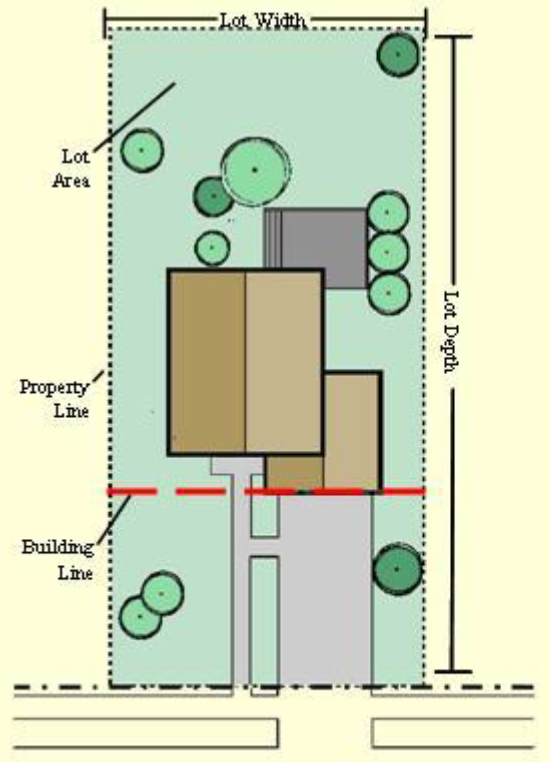
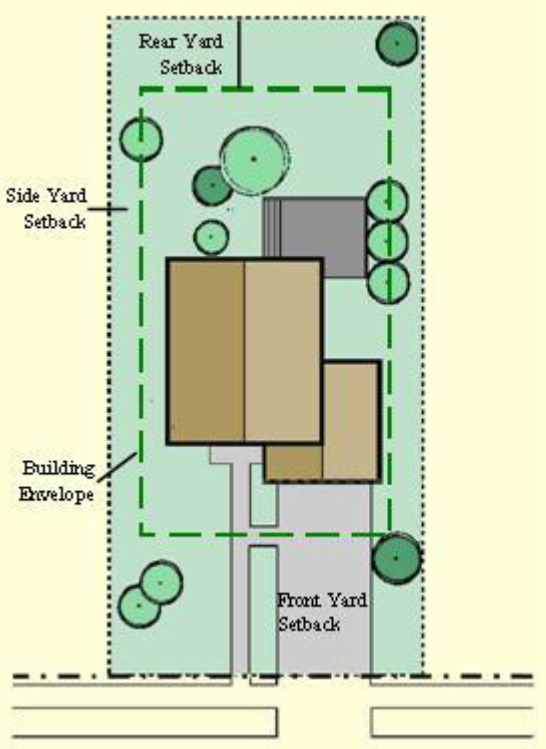
| • 8,000 square feet | • 35 feet | • 1,600 square feet of heated area for total house |
| Minimum Lot Width: | Minimum Side Yard Setback: | • 960 square feet of heated area on first story |
| • 50 feet | • 8 feet each side | |
| Minimum Lot Depth: | Minimum Rear Yard Setback: | • 800 square feet (accessory use dwelling) |
| • 100 feet | • 25 feet | |
| Minimum Lot Frontage: | Maximum Lot Coverage: | Maximum Living Area: |
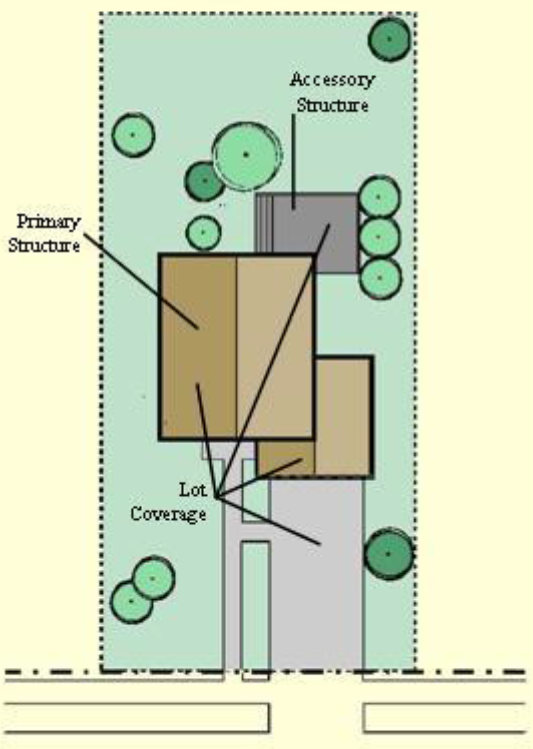
| • 100% of the lot width on a public street with access from said public street | • Square footage of all primary and accessory structures, and impervious surface cannot exceed 35% of the Lot Area. | • 3,200 square feet of heated area |
 | Additional Development Standards That Apply: | |
| Lot/Yard Standards (LY) | Architectural & Appearance Standards (AA) | |
| Height Standards (HT) | Performance Standards (PS) | |
| Dry Well Standards (DR) | Public Improvement Standards (PI) | |
| Accessory Use/Structure Standards (AS) | Parking Standards (PK) | |
| Home Occupation Standards (HO) | Fences and Walls Standards (FN) | |
| Maximum Structure Height: | Group Homes, Homeless Shelter, and Halfway House (GH) | Outdoor Lighting Standards (OL) |
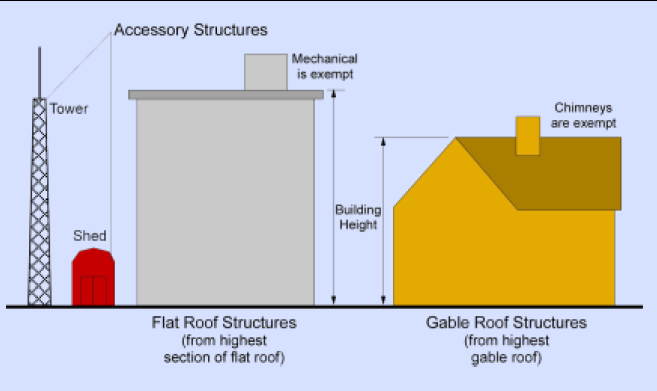
| • 35 feet for the Primary Structure | ||
| • 25 feet for Accessory Structures | ||
3.9 - District Intent, Permitted Uses and Conditional Uses.
District Intent: The "RM" District is intended to provide the development of multiple-family dwellings served by public water and sewer systems and located on through streets classified as major collector streets or higher. The provisions that regulate this land use district provides for the development of residential neighborhoods in a medium-density urban environment.
This district should be protected from conflicting land uses. The City of College Park should strive to promote an average net density of 8.0 to 14.0 dwelling units per acre community-wide in the "RM" district.
Permitted Uses:
Residential Uses:
• Dwelling, multiple family dwellings
• Row homes, townhomes, or condominiums
• Personal care home
• Group home and halfway home
• Home occupation (type I)
Institutional/Public Uses:
• Nature preserve/passive recreation trail
• Parks and playgrounds
• Police, fire, rescue
• Public/government buildings and offices
• Public structures and uses in accord with the intent of this district
Communication/Utilities:
• Public wellfield/pump house
• Water tower
• Utility substation
Accessory Uses:
• Carports and garages
Conditional Uses:
Residential Uses:
• Assisted living/retirement facility/nursing home
• Home occupation (type II)
3.10 - District Standards.
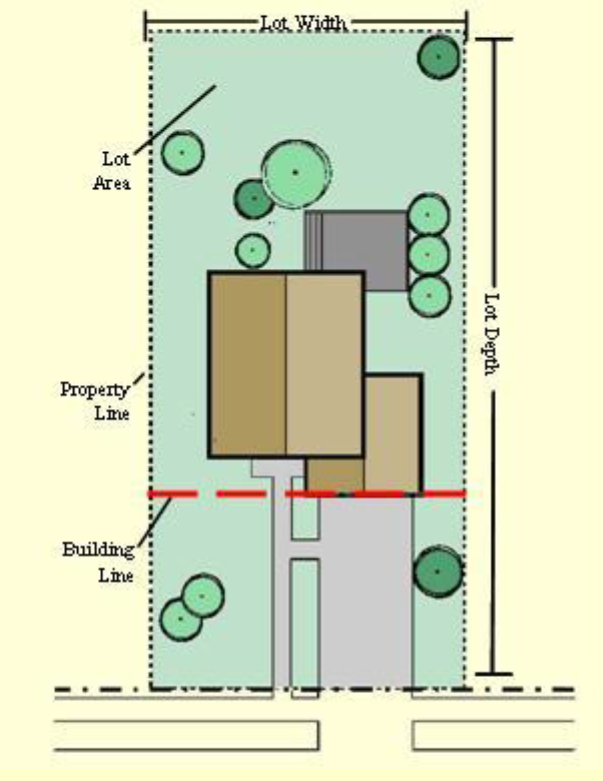 |  |  |
| Minimum Lot Area: | Minimum Front Yard Setback: | Minimum living Area: |
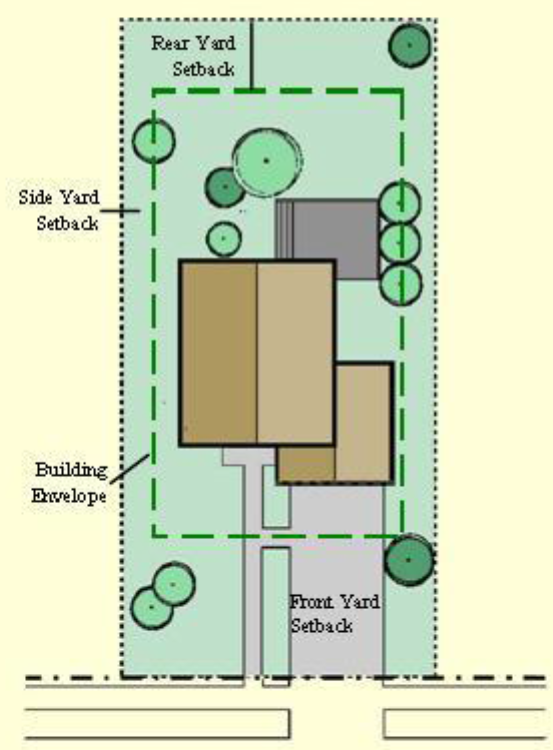
| • 12,500 square feet, with 3,600 square feet per dwelling unit | • 15 feet | • 750 square feet for one-bedroom unit |
| Minimum Lot Width: | Minimum Side Yard Setback: | • 1,000 square feet for two-bedroom unit |
| • 100 feet | • 20 feet each side of singular structures | • 1,250 square feet for three or more bedrooms |
| Minimum Lot Frontage: | Minimum Rear Yard Setback: | Required Open Space: |
| • 100% of the lot width on a public street with access from said public street | • 30 feet | • 5% of the total gross acreage and must include an amenity package such as, playground, recreation fields, tennis courts, pool, gazebo, or other passive recreation options |
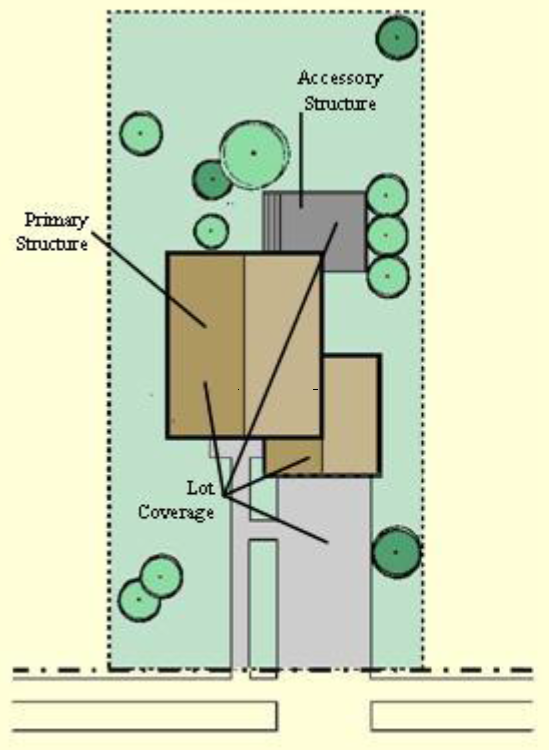
| Maximum Lot Coverage: | ||
| • Square footage of all primary and accessory structures and impervious surface cannot exceed 35% of the Lot Area. | ||
 | Additional Development Standards That Apply: | |
| Lot/Yard Standards (LY) | Architectural & Appearance Standards (AA) | |
| Height Standards (HT) | Performance Standards (PS) | |
| Accessory Use/Structure Standards (AS) | Public Improvement Standards (PI) | |
| Home Occupation Standards (HO) | Parking Standards (PK) | |
| Personal Care Home (PC) | Fences and Walls Standards (FN) | |
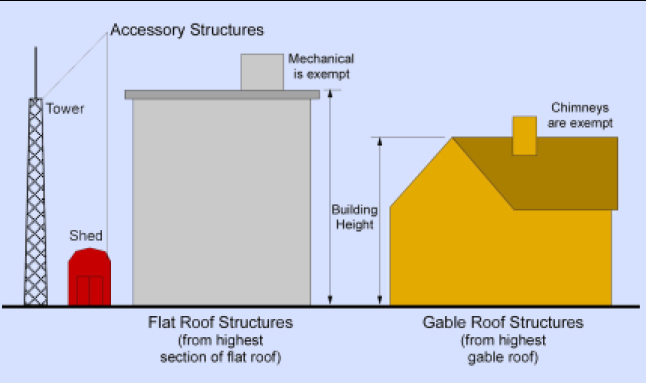
| Maximum Structure Height: | Group Homes, Homeless Shelter, and Halfway House (GH) | Outdoor Lighting Standards (OL) |
| • 40 feet or 3 stories for the Primary Structure when abutting residential district or use not divided by a roadway | ||
| • 75 feet for the Primary Structure when abutting non-residential district | ||
| • 25 feet for Accessory Structures | ||
3.11 - District Intent, Permitted Uses and Conditional Uses.
District Intent: The DC district is intended to provide a land use category for the central business retail and historic district. Land uses should be primarily commercial and tourism orientated; however, mixed use is encouraged.
The City of College Park's Planning and Zoning Commission should remain consistent with the Comprehensive Plan and Future Land Use, and use this district to promote shopping, dining, and entertainment options within a walkable streetscape for residents and tourists alike.
Permitted Uses:
Residential Uses (2ndfloor and above only):
• Residential, single-family
• Residential, two-family
• Residential, multi-family
Institutional/Public Uses:
• Tourism and welcome centers
• Parks, playgrounds, and seating and reflection areas
• Public structures, including artwork and uses in accord with the intent of this district
Business Uses:
• Art galleries and museums
• Professional offices
• Personal service establishments
• Banking and financial offices
• Group instruction for personal wellness
• Nutritional and pre-packaged snack shops
• Coffee and desert shops
• Florists
• Book and media stores
• Drug stores
• Gift and collectible shops
• General retail and merchandise sales
• Clothing and accessory retail sales
• Bakeries, coffee, and snack shops
• Restaurants and catering establishments
• Specialty beer and wine sales
• Graphic design and art galleries
• Antique sales
• Brewpub
• Craft beer and wine market
• Farm winery
• Microbrewery
• Microdistillery
Prohibited Uses:
• Pawn shops and second hand stores
• Check cashing and title loan offices
• Bail bonding establishments
• Motor vehicle sales, repair, or storage
• Adult entertainment establishments
• Tattoo and piercing establishments
• Palm reading and astrologers
• Billiards and dart parlors
• Drive through restaurants, with the exception of those restaurants utilizing at least fifty (50) percent of its space as a full service restaurant
• Modeling agencies
• Staffing agencies
• Boarding or rooming houses
• Massage parlors
• Hypnotists
• Video gaming and arcade parlors
• Flea markets and second hand resale stores and dealers
• Transportation terminals
• Unmanned Aircraft System Dispatch and Delivery Center
• Vape Shops
(Ord. No. 2022-03, § 2, 1-4-22; Ord. No. 2024-13, § 2(Exh. A), 9-16-24)
3.12 - District Standards.
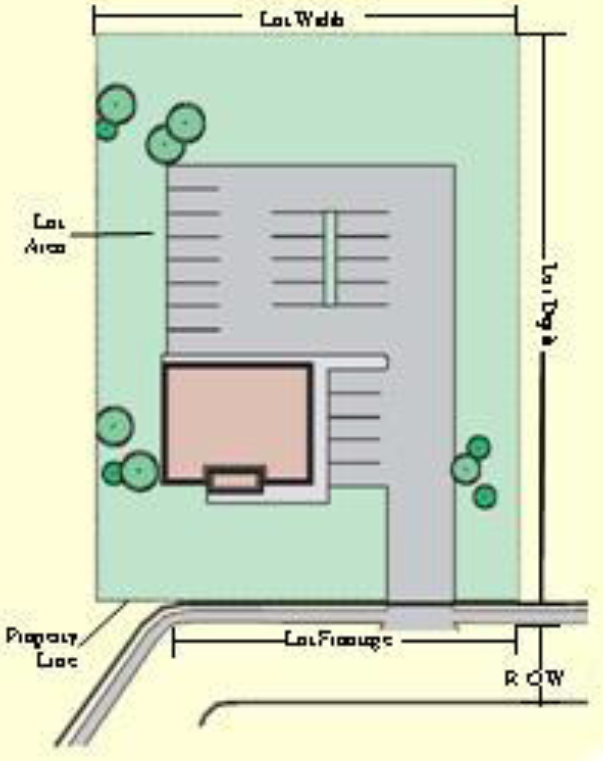 |  | 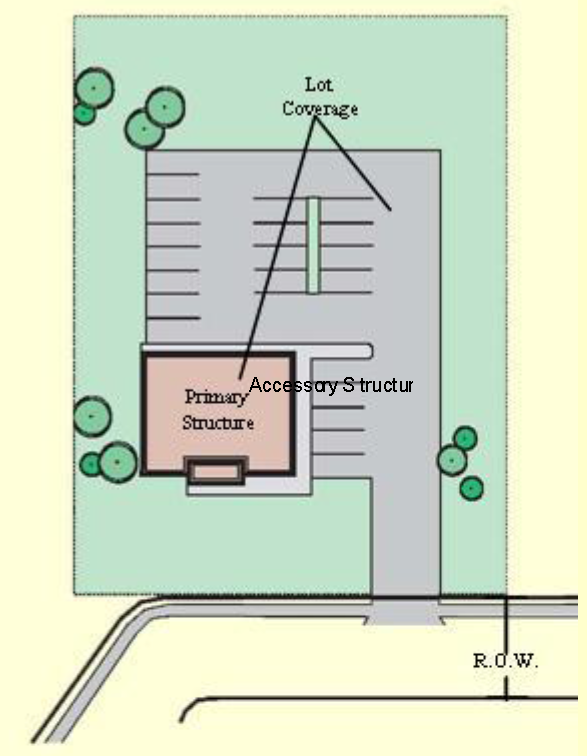 |
| Minimum Lot Area: | Sewer and Water: | Maximum Primary Structures/Lot: |
| • 10,000 square feet | • Requires connection to public water and sewer | • 1 |
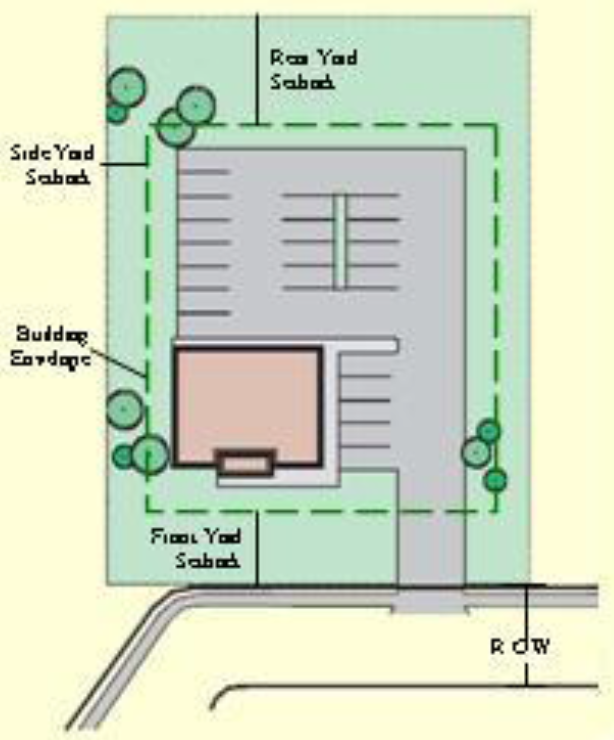
| Maximum Lot Area: | Minimum Front Yard Setback: | Maximum Accessory Structures: |
| • None | • 10 feet when adjacent to an Arterial | • 1 |
| Minimum Lot Width: | • 10 feet when adjacent to a Collector | Maximum Lot Coverage: |
| • 50 feet | • 10 feet when adjacent to a Local Road | • None |
| Maximum Lot Depth: | Minimum Side Yard Setback: | |
| • None | • 0 feet | |
| Minimum Lot Frontage: | Minimum Rear Yard Setback: | |
| • 100% of the lot width on a public street with pedestrian access from said public street | • 10 feet | |
 | Additional Development Standards That Apply: | |
| Lot/Yard Standards (LY) | ||
| Height Standards (HT) | ||
| Accessory Use/Structure Standards (AS) | ||
| Performance Standards (PS) | ||
| Public Improvement Standards (PI) | ||
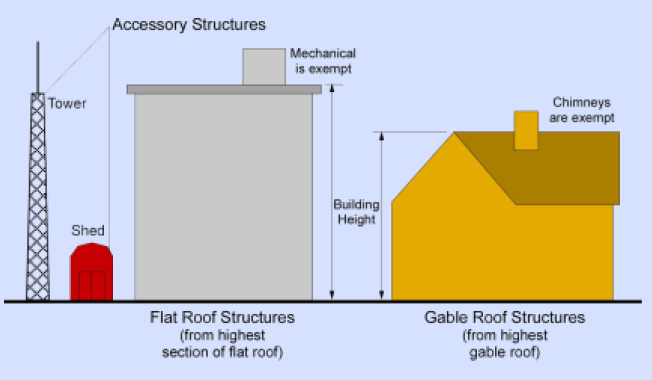
| Maximum Structure Height: | Parking Standards (PK) | |
| • 35 feet for the Primary Structure | Fences and Walls Standards (FN) | |
| • 25 feet for Accessory Structures | Outdoor Lighting Standards (OL) | |
3.13 - District Design Standards.
A.
Setbacks. Setbacks shall be as follows:
1.
The maximum front setback shall be twenty (20) feet. Buildings shall only be set back away from the public right-of-way to accommodate architectural details, outdoor dining, street furniture or other pedestrian amenities.
2.
No side yard shall be required.
3.
No rear yard shall be required unless a property abuts residentially zoned property, then a minimum rear yard of twenty-five (25) feet is required.
B.
Parking Standards. Parking shall be designed as follows:
1.
On-street parking shall be utilized wherever possible.
2.
Insofar as possible, parking lots shall be located to the rear or side of buildings. Preferably, parking should be located on the interior of parcels and/or blocks in a courtyard configuration, bounded by structures, landscaping or a combination of both. Parking shall not be placed between the front of the building and the street. Off-street parking shall not be located on corner lots.
3.
Shared parking as well as consolidated driveways and curb cuts are strongly encouraged as a method of preserving continuity of street edges.
4.
Parking lots shall be directly connected to a sidewalk leading to the main entrances of all buildings on site.
C.
Materials. Such parking shall be provided in a parking garage or properly graded surface parking facility with the parking spaces comprised of asphalt, concrete, porous pavements or other material approved by staff as consistent with the intent of the Downtown Design Overlay District and underlying zoning district. Parking areas shall ensure smooth and even pathways to prevent falls and eliminate barriers for walking or wheelchair access.
D.
Screening. Screening shall be as follows:
1.
Parking areas that are adjacent to a public street shall be screened from the public right-of-way with a minimum screen height of three (3) feet above the finished grade of the parking area. The screen may be achieved through utilizing berms, hedges, vegetative buffers, low walls or decorative fences. Chain link fences are prohibited.
2.
Parking garages that are adjacent to a public street shall compliment nearby buildings by utilizing similar façade materials. Architectural design and landscape screening shall be used to ensure that the structure compliments nearby buildings. Monolithic blank walls and continuous strip windows over thirty (30) feet are prohibited. Fenestration patterns closely resembling inhabited buildings; use of devices such as louvers, screens, recesses, projections and other façade treatments; and enhanced landscaping with plants that are at least four (4) feet in height when planted may be used to improve the appearance of the parking structure.
3.
Parking garage height shall not exceed thirty-five (35) feet or the height of the surrounding tree canopy. Whenever feasible, parking structures shall be built into the topography of the site.
E.
Landscaping on Off-Street Parking Lots. Off-street parking lots shall be landscaped as follows:
1.
Off-street parking lots shall be designed to maximize coverage by shade trees. Shade trees in parking lots shall be a minimum of three and one-half-inch caliper.
2.
Off-street parking areas shall provide landscape islands and perimeter landscape strips that provide a cumulative total of at least one shade tree per twelve (12) parking spaces. Each shade tree shall be planted in a planting area at least eight (8) feet wide.
3.
There shall be a minimum curb radius of three (3) feet required on all the corners of all landscape islands and medians to allow for free movement of motor vehicles around planting materials. All islands and medians shall be constructed with raised curbs.
4.
All landscaped islands within parking lots shall be one hundred (100) percent landscaped with deciduous trees (minimum three and one-half (3½) inches caliper size), evergreen shrubs (not to exceed three (3) feet in height at maturity), ground cover (which does not require mowing) and/or flowers in mulched beds.
a.
There shall be a minimum eight (8) feet wide (back of curb to back of curb) curbed landscaped island at the end of every row of parking, equal in length to the adjoining parking spaces. A parking island must be located no farther apart than every twelfth (12 th ) parking space; creating parking bays of no greater than eleven (11) parking spaces in a row. Each island or strip shall contain a minimum of two hundred (200) square feet.
b.
Shade trees shall be planted at a minimum of three (3) feet from any curb, so as to prevent injury to trees by vehicle bumpers. The remaining area of the landscaping strip shall be sodded or planted with groundcover species.
c.
The planting area for a tree shall consist of permeable and well-drained soils with suitable ground cover.
d.
Dead trees and shrubs shall be replaced by the property owner within one (1) month, with three (3) months of waiting time allowed for avoiding planting in peak heat of summer.
e.
Landscape strips at the perimeter of off-street parking lots shall be a minimum width of six (6) feet and shall provide for safe and convenient crossings by vehicles and pedestrians.
f.
Pedestrian pathways in parking lots and pedestrian ways that cross vehicular aisles in parking lots shall be appropriately demarcated with paint or use of pavers.
g.
Parking space dimensions shall be in accordance with the standards set forth in these Ordinances.
F.
Landscaping in On-Street Parking Areas. On-street parking landscaping shall be as follows:
1.
Landscaped bulb-outs and islands shall be built in conjunction with angled or parallel on-street parking so as to foster a more pedestrian-friendly environment in downtown commercial areas. Bulb-outs can improve the visibility between pedestrians and drivers, as well as provide a safe space for pedestrians.
2.
Additionally, bulb-outs shall be used at mid-block crosswalks to facilitate pedestrian movement to parking facilities or businesses. These bulb-outs shall take on a similar design to those used at intersections.
3.
Landscape islands, which provide a place of refuge for pedestrians as they cross intersections, shall be used where deemed necessary by the Engineering Director.
G.
Loading Areas. Loading areas shall be screened from the public right-of-way. Businesses that require service bays shall implement a lot design that reduces unsightly working facilities.
H.
Utility/Mechanical. All mechanical and utility equipment, whether located on the roof, ground or side of building shall be screened from view.
1.
The method of screening shall be architecturally integrated with the structure in terms of materials, color, shape and size.
2.
The design of the screening shall be done in concert with and as a part of the design of the building, rather than as an afterthought.
3.
New development shall bury utilities when possible to avoid a visually cluttered streetscape and to promote a more aesthetically pleasing environment. Utilities placed underground shall be done so in a way that does not preclude future infill or redevelopment from occurring.
I.
Mechanical/Utility/Refrigeration Equipment. Mechanical or utility equipment including utility meters shall be screened from public view. This also applies to outdoor HVAC equipment and outdoor refrigeration units.
1.
The method of screening shall be architecturally integrated with the structure in terms of materials, color, shape and size in such a manner that the equipment is not visible from street level.
2.
Equipment shall be screened with solid building elements (e.g. parapet wall) instead of after-the-fact add-on screening (e.g. wood or metal slats).
3.
Air conditioning units placed in individual windows and window transom areas are prohibited. The front façade of a building shall not be disrupted by the addition of mechanical systems such as air conditioning units.
J.
Waste/Refuse. Refuse containers or dumpsters shall be located in the rear or side yard of a property and shall be screened from view of the public right-of-way.
1.
Screening shall occur by placement of a brick or stacked stone masonry wall with solid gates that reflects the architecture of the proposed development.
2.
The enclosure shall have a minimum height of eight (8) feet, or two (2) feet taller than the highest point of the waste/grease container, compactor or dumpster, whichever is greater.
3.
Gates shall allow access to refuse containers while denying open views of the contents within.
4.
The use of chain link fencing is not acceptable as concealment of mechanical units or waste/grease containers.
5.
No dumpster or refuse container shall be located within fifty (50) feet of a single family residentially zoned property.
6.
The sharing of waste facilities between lessees of commercial developments is strongly encouraged.
7.
All refuse materials shall be contained within the refuse area.
K.
Garbage Containers. Containers shall be as follows:
1.
Garbage cans shall be neatly contained in sheds or in separate screened enclosures.
2.
Garbage storage shall be shielded from public view and shall be within the building property line.
3.
Trash shall be placed at the street edge but shall not be placed in the street so as to obstruct the sidewalk or any area of public vehicular or pedestrian travel.
3.14 - Architectural Design Standards.
Design emphasis is placed on building massing and scale. Massing will be reviewed in the context of building height, number of stories, roof configuration and building groupings. Scale of buildings shall be appropriate to the site in question as it relates to street frontage and pedestrians. New construction shall respect the traditional style of Downtown College Park and shall be in visual harmony with surrounding structures.
A.
Building Height, Width, Mass and Scale. Building heights and widths shall relate to the existing fabric of downtown and surrounding neighborhoods.
1.
Widths of buildings are encouraged to consist of three (3) to four (4) bays (window and door divisions), or approximately fifty (50) to sixty (60) feet.
2.
New buildings that are wider than existing structures shall incorporate a number of smaller bays into the primary façade, to maintain a cohesive scale.
3.
Buildings in excess of three (3) stories or thirty-five (35) feet in height may be appropriate within two thousand (2,000) feet of the College Park MARTA station, subject to a conditional height permit.
4.
Building heights of larger projects shall provide variety. A larger (taller) development shall step down in height to a maximum of thirty-five (35) feet when adjacent to a street with shorter structures on the opposite side or when adjacent to smaller, surrounding structures.
5.
Large lots are encouraged to be developed with several buildings, rather than a single structure in order to help reduce the perceived size of the project.
B.
Orientation. All front façades of the principal building shall face and be parallel to a public street.
1.
Primary pedestrian entrances shall be oriented to the street and shall be clearly visible.
2.
For buildings with commercial and retail uses, all customer entrances shall remain unlocked during business hours.
C.
Building Façade. A variety of sizes is appropriate among primary façades in new developments.
1.
Variations in facade treatment shall be continued through the structure, including its roof line and front and rear facades to reduce the perceived size of the building.
2.
A monotonous appearance of a large building or single façade shall be minimized through the use of architectural elements within the façade which include masonry piers, stepping of the building height and width, different colors or textures, and the variation of windows and awnings.
3.
Building design shall create positive open space in these variations such that they will enhance the streetscape.
4.
Blank lengths of wall exceeding thirty (30) linear feet are prohibited on all building façades.
D.
New Construction. New buildings shall incorporate recessed entryways into the design of the building to prevent impeding pedestrian traffic along the sidewalk while a door is opened to enter a commercial building.
1.
The entryway shall be set back from the edge of the sidewalk four (4) to eight (8) feet and may make use of display cases and window panes to integrate this feature into the design of the building.
2.
Buildings located on corner lots shall incorporate design features to provide architectural interest for side walls that are not considered part of the primary façade.
3.
There shall be no exposed plain concrete block for visible portions of all façades.
4.
Tilt up or precast concrete shall be textured with brick, aggregates, form liners, or similar methods to give visual interest to larger expanses of wall.
5.
Landscaping elements shall also be added to break up larger expanses of wall.
6.
Where retail or service-oriented offices front on a public right-of-way, a minimum of seventy-five (75) percent of the affected building façade shall consist of transparent surfaces, such as windows or doorways, to promote visual interest.
7.
Where general office uses front public rights-of-way, a minimum of fifty (50) percent of the affected building façade shall consist of transparent or translucent surfaces.
E.
Roofs. Roofs shall be designed as follows:
1.
The form and pitch of the roof of new construction and additions to existing buildings shall be proportionate to surrounding structures.
2.
During roof repair and replacement, new materials shall match existing materials in scale and texture.
3.
Parapets shall be embellished with detailing and stepped or sloped to achieve a visually interesting yet harmonious sequence along the building façade.
4.
Flat roofs shall be defined with a discernible cornice line. Variations in roof type, height, and or distinct, separate roof segments should be considered as a means of creating greater visual interest, identifying changes in use and areas of ownership, or reducing monotony.
5.
Pitched roofs such as gable, hip, shed or mansard roofs shall be clad with highly durable materials such as standing seam metal, slate, ceramic or fireproof composite tiles. Use of asphalt shingles is discouraged.
6.
Rooflines shall reflect interior and exterior patterns of use or ownership.
7.
Roof ornamentation shall carefully consider sight lines and not allow any views of unsightly surfaces.
F.
Windows and Doors. Architectural design of the structure shall determine the window and door styles selected for a project.
1.
Windows and doors shall follow appropriate rhythm and scale for building massing and frontage, including a pedestrian friendly focus.
2.
The arrangement, size and style of windows and doors shall be proportionate in scale to surrounding structures.
3.
Entrance doors for retail and commercial buildings shall be of glass or contain significant glass to allow visibility into businesses.
4.
Entries shall be recessed to allow the door to swing out without obstructing pedestrian flow.
5.
Where appropriate as determined by the City Planner, sliding/folding doors that allow the activity of the business to open adjacent to and onto the public sidewalk shall be installed.
6.
Replacement windows shall conform as follows:
a.
Windows shall match the original materials or replicate the same appearance.
b.
Windows shall require no major alterations of the openings.
c.
Windows shall match the pane divisions of the original windows.
7.
Bay windows on the front of buildings shall not encroach on the public right-of-way.
8.
Storm windows and doors shall have minimal impact on building façades. Owners shall consider proper weather-stripping and repairs first as an alternative to the installation of storm doors and windows.
a.
New storm windows and doors shall match the color of the existing sash wherever possible.
b.
Clear panes are recommended for storm doors which permit the original door to be fully visible.
G.
Awnings. Awnings, canopies, and other accessory shade structures that do not restrict pedestrian or vehicular movement may encroach over the right-of-way.
1.
Permitted Elements:
a.
Awnings shall be made of opaque materials; the traditional use of cloth or canvas awnings is encouraged.
b.
Awnings shall be of a solid through color, i.e., the underside of the awning is the same color as the exposed face.
c.
Awnings shall be a color compatible with the building facade.
d.
The scale of the awning, i.e., height, length, depth and overall bulk shall be compatible with the building storefront.
e.
Awnings may be operable so that they can be retracted and lowered to permit the desired level of sunlight throughout the day/season.
2.
Appropriate Awning Forms:
a.
Where the facade of a commercial building is divided into distinct structural bays (sections defined by vertical architectural elements, such as masonry piers), awnings shall be placed within the vertical elements rather than overlapping them. The awning design shall respond to the scale, proportion and rhythm created by these structural bay elements and nestle into the space created by the structural bay, but need not be identical.
b.
Awning shape shall relate to the window or door opening. Barrel-shaped awnings shall be used to complement arched windows while square awnings shall be used on rectangular windows.
c.
Awnings over sidewalks shall overhang the sidewalk a maximum of five (5) feet and shall provide a minimum vertical clearance of eight (8) feet for pedestrians.
3.
Prohibited Elements:
a.
Awnings shall not be made of shiny, high-gloss, or translucent materials.
b.
The use of vinyl or plastic as awning material is prohibited.
c.
Awnings shall not cover distinctive architectural features of the building face, nor shall installation of the awning damage the structure.
d.
Internal illumination of awnings is prohibited.
H.
Rear Entrances. Rear façades shall be designed as an integral part of the overall building with similar materials and detail treatments as the rest of the building. If parking is placed to the rear of a building, the building's rear façade shall be welcoming in appearance. Awnings, landscaping and small wall signs identifying businesses are encouraged. Furthermore, any rear entrance shall provide adequate lighting and be designed to maximize safety.
1.
If no rear building entrance is provided, a signed and lighted walkway to the front or side building entrance shall be provided and adhere to requirements for lighting as addressed in Article 7, Lighting Standards.
2.
Selective use of tree planting, potted plants and other landscaping shall be used to improve the aesthetics of a rear facade.
3.
A rear customer entry door design shall be compatible with the front door. Special security glass (i.e. wire imbedded) is allowed.
I.
Franchise Architecture. Franchise development is a necessary and vital component to the growth of a community. It remains important to assure that the focus of such development reflects the character of the city, and not merely the tenant. The City of College Park prizes its downtown, and encourages reflecting its architecture within this district.
1.
Appropriate attributes:
a.
To lend the appearance of multi-tenant occupancy, facades of multi-tenant buildings shall be varied in depth or parapet height.
b.
Within planned shopping centers, distinct architectural entry identity for individual tenants' entrances shall be provided for suites exceeding ten thousand (10,000) square feet of leasable area.
c.
Walls visible from roadways or parking areas shall incorporate changes in building material/color or varying edifice detail such as trellises, false windows or recessed panels reminiscent of window, door or colonnade openings, landscaping or storefront every one hundred and fifty (150) linear feet.
d.
All projects shall adhere to lighting and landscaping guidelines as dictated through Article 7, Lighting, and Article 9, Tree Protection, respectively.
2.
Prohibited elements:
a.
Building elements shall not function as signage. The appearance of "franchise architecture", where the building functions as signage is discouraged. Incorporation of franchise or business design elements unique or symbolic of particular business shall be unobtrusive and secondary to the overall architectural design.
b.
Parking shall not isolate the building from the sidewalk or connecting walkways.
c.
Service windows and stacking lanes.
3.15 - Landscaping, Lighting and Streetscape Design.
A.
Landscaping. Landscaping shall be designed as follows:
1.
Size and spacing of landscaping elements shall be consistent with pedestrian-scale development, relate to identifiable streetscapes, and ease the transition between all structures and the pedestrian.
2.
Plant materials and containers shall not encroach upon the minimum five (5) feet pedestrian clear zone that must be maintained on the sidewalk.
3.
The use of window boxes, planters, hanging flower baskets, vines and other seasonal landscaping is encouraged. Window boxes, hanging baskets and planters shall be used around entries, while vines should be used to cover blank walls or other surfaces. All hanging baskets shall provide at least eight (8) feet of vertical clearance for pedestrians.
4.
Landscaping shall be designed to coordinate with building height; designers shall use foresight to identify how plants will look at maturity.
5.
Landscaping shall not only apply to the fronts of buildings, but to the sides and rear as well. Buildings with rear entries or rear parking shall strive to make the entrances as neat and well maintained as the front entrance.
6.
Landscape shading shall minimize large areas of un-shaded pavement. Pavement materials must be chosen for minimal reflected light and glare. The use of pervious materials is strongly encouraged to reduce surface water flows and non-point source water pollution. Sidewalks and pathways shall be designed with concrete and decorative pavers around the border and must be approved by the Engineering Director.
7.
Plant materials along streets and highways shall be selected and placed to avoid blocking sight lines at intersections and curb cuts. Plantings along utility rights-of-way shall not disrupt service or access to overhead or underground equipment and lines.
B.
Transitional Buffers. Transitional buffers are intended to be used in a manner that allows for compatible residential and commercial growth in Downtown College Park. Transitional landscape buffers between commercial and single-family residential houses can help to mitigate the impact of new development and work to retain the downtown character. Maintenance of these buffers shall be the responsibility of the respective property owners.
1.
Transitional yards between commercial lots and residential areas shall have landscape buffers no less than fifteen (15) feet wide.
2.
Transitional buffers shall have permanent opaque walls or evergreen screening with a minimum height of six (6) feet. Plantings shall be placed close together so as to provide a thick buffer between lots.
3.
Transitional buffers shall be designed in a manner that does not adversely impact pedestrian accessibility.
C.
Streetscape. Property owners in Downtown College Park may install pedestrian benches, tables, trash receptacles, and bicycle racks on private property or by way of a permit from the city if the land belongs to the city. All fixtures shall be in accordance with these standards. The designs for these items are specified below. All developments outside of the downtown area are encouraged to use these standards for guidance to provide a consistent look throughout the city.
1.
Sidewalk Bench Description:
a.
Solid steel bar and wood construction.
b.
Six-foot length with two-inch steel legs and arm rests, with center arm rest.
c.
Color: Black.
2.
Trash Receptacle Description:
a.
Steel rib welded construction.
b.
Sizes available in twenty-four- or thirty-six-gallon capacities.
c.
Color: Black.
3.
Pedestrian Scale Street Light Description:
a.
GranVille prismatic glass acorn luminaire
b.
North Yorkshire cast aluminum fluted pole.
c.
Cast iron base with steel shaft.
4.
Bicycle Rack Description:
a.
Steel tubular and rib welded construction.
b.
Should enable the frame and one (1) or both wheels to be secured.
c.
Color: Black.
5.
Table Description:
a.
Metal is recommended; plastic, vinyl or similar material is prohibited.
b.
Color: Black exterior or a stained wood finish.
6.
Bollard Description:
a.
Concrete or metal.
b.
Color: Black exterior.
7.
Traffic Signal Mast Arm Description:
a.
Ornamental base and pole top, fluted shaft and curved arm.
b.
Galvanized powder coat finish.
c.
Color: Black.
8.
Planter Description:
a.
Concrete is recommended; plastic, vinyl or similar material is prohibited.
b.
Color: Black exterior.
9.
Specialty Unit Pavers Description:
a.
Architectural interlocking paving stone.
b.
Manufactured concrete paver types A and B.
c.
Color: Stock colors and custom color available.
3.16 - Sidewalks.
A comprehensive sidewalk network for commercial corridors allows for increased pedestrian mobility, promotes non-motorized methods of transportation and allows for attractive areas for public gathering and outdoor dining. Sidewalks shall be wide enough to accommodate through pedestrian traffic as well as amenities such as street furniture, pedestrian-scaled lighting, trees and landscaping.
1.
Sidewalks shall be in compliance with ADA standards for Accessible Design.
2.
Sidewalks shall be located along both sides of all public streets.
3.
All sidewalks shall be accessible with ramps and other safety features, such as traffic strips for sensory canes.
4.
All grade changes along sidewalks shall be clearly marked.
5.
Sidewalks composed of concrete with decorative pavers along the border shall be used on all streets in the downtown commercial area. Concrete sidewalks are appropriate for residential areas.
6.
Sidewalks accompanying new construction shall have a minimum width of eight (8) feet where possible.
7.
Sidewalks accompanying new construction shall include a three-foot minimum "furniture and planting zone."
a.
Furniture and planting zones may be used as stormwater filtration.
8.
Pedestrian street lights shall be placed a maximum of sixty (60) feet on center and spaced at equal distances within the furniture and planting zone. The type of pedestrian-scale street light shall abide by the standards set forth in section 3.15, Streetscape Elements of this document.
9.
Pedestrian street lights and street tress contained within the furniture and planting zone shall be placed on an alternating pattern so that an equal distance between them is maintained.
10.
Benches and other resting areas shall be appropriately spaced to accommodate the needs of older users.
11.
A minimum of five (5) feet of clear pedestrian access shall be maintained on all sidewalks.
12.
Commercial area sidewalks shall be tapered into adjacent residential areas.
13.
Including space for window shopping and outdoor cafes is encouraged.
14.
Sidewalks are highly encouraged to incorporate the use of porous pavements or pavers that permit the infiltration of storm water wherever feasible.
All sidewalks along state routes shall be designed in accordance with Georgia Department of Transportation specifications.
3.17 - Street Trees.
Street trees shall be required as follows:
1.
Street trees shall be planted in conjunction with each new development project.
2.
Trees shall be spaced a minimum of twenty-five (25) feet on center, depending on species, to provide a more-or-less continuous canopy along the sidewalk.
3.
Required street trees shall be shade trees. However, other types may be used if approved by the City Planner.
4.
A minimum planting area or grating of at least three (3) by three (3) feet shall accompany all street trees.
Tree maintenance, pruning and dead tree replacement schedule and responsibilities shall be designated in consultation with the city.
3.18 - Outdoor Dining.
Outdoor seating for restaurants in and outside of the downtown area is an attractive feature and is highly encouraged. It maintains the historic feel of the area by bringing restaurant patrons into the public realm while dining. However, standards must be in place to ensure this practice does not infringe on the rights of others.
1.
Restaurants may place one (1) row of tables outside their place of business unless the building setback permits a greater number of rows. These tables shall be placed adjacent to the front wall of the building, fronting the public right-of-way.
2.
Tables shall not extend beyond the front property line of the restaurant or encroach upon the front building line of adjacent businesses.
3.
Tables may extend into the public right-of-way upon approval by the City Planner and the acquisition of a permit issued by the city.
4.
Dining tables shall not be wider than five (5) feet in diameter.
5.
Access to public stairways shall not be blocked. Tables and chairs shall not interfere with any utilities or other facilities such as telephone poles, fire hydrants, signs, mailboxes, and benches located on the sidewalk or in the public right-of-way.
6.
Tables and chairs shall not impinge on any required clear distances for maneuvering around entrances or exits. The outdoor dining area shall be accessible to disabled patrons and employees.
7.
A minimum of five (5) feet of clear pedestrian access shall be maintained on all sidewalks.
8.
Umbrellas shall be of quality construction and must be designed to be secure during windy conditions. No portion of the umbrella shall be lower than seven (7) feet above the sidewalk.
3.19 - Street Design.
Streets should be designed, constructed, operated and maintained so that pedestrians, bicyclists, transit riders, motorists and people of all ages and abilities can travel safely and independently.
1.
Streets and sidewalks shall be in compliance with ADA standards for Accessible Design.
2.
Construct continuous pedestrian facilities along all major streets and highways; these shall be direct and interconnect with all other modes of transportation.
3.
Provide safe, secure and convenient facilities for pedestrians into and within commercial development.
4.
Pedestrian crossings shall be adequately marked and signed according to the GDOT Pedestrian and Streetscape Guide.
5.
Relate sidewalk design to the function and the anticipated amount of pedestrian traffic.
6.
All ramps and curb cuts throughout the pedestrian system shall be constructed according to ADA guidelines.
7.
Provide continuous, clearly marked bicycle lanes in accordance with GDOT's Pedestrian and Streetscape Guide wherever possible, especially in congested areas.
8.
Design bikeways and multi-modal facilities to meet a wide range of user needs. Design bikeway and walkway capacity to accommodate the anticipated use.
9.
Provide adequate signage of bikeways and paths.
10.
Provide bicycle parking in commercial and recreational areas.
11.
Incorporate Federal Highway Administration (FHWA) design guidelines for older drivers and pedestrians.
3.20 - Lighting.
Good outdoor lighting serves a number of uses by increasing safety and enhancing the city's nighttime character. However, improperly designed and/or installed lighting can create problems of excessive glare, light trespass, decreased safety and higher energy use. These standards are established to define appropriate lighting characteristics.
A.
General Lighting Guidelines.
1.
Lighting shall be designed to control glare, minimize light trespass onto adjacent properties, minimize direct upward light emission, promote effective security, and avoid interference with safe operation of motor vehicles. The minimum intensity needed for the intended purpose shall be used. This paragraph is not intended to preclude the use of decorative lantern fixtures with visible lamps.
2.
All parking areas, walkways, vehicle entrances and service/loading areas shall provide area lighting sufficient to achieve a minimum of 2.4 foot candles of light as measured at grade or ground level.
3.
Lighting fixtures in parking areas shall be located to assure adequate light levels without displacing planned trees. Light fixture placement shall be shown on landscape plans.
4.
Lighting fixture height, style, design and illumination levels shall be compatible with the building design and height and shall consider safety, function and aesthetics. Lighting fixtures installed along sidewalks shall be pedestrian scale and shall not exceed fourteen (14) feet.
5.
Lighting may be used to illuminate buildings, landscaped medians/islands and grounds for safety purposes and to enhance appearance. The visual effects of such lighting shall be subtle.
6.
Lighting attached to building exteriors or mounted on the ground to reflect upon building exteriors shall be consistent with the architectural style of the building.
7.
Lighting of logos should be compatible with the primary building and respect adjacent buildings. Bright and intense lighting is strongly discouraged.
8.
Blinking, moving or changing intensity of illumination signs are prohibited.
9.
Security lighting shall be shielded and shall focus on the side or rear entry door.
10.
Specialty lighting on outdoor patios, terraces, walkways, and trees helps create a festive atmosphere and encourages nighttime use by pedestrians.
11.
Some alleys and pedestrian ways may also employ a custom decorative lighting system which spans the breadth of the alley. With owner permission, this fixture type could be used in narrow locations where adequate wall support is available.
3.21 - Color.
The overall exterior color scheme shall be selected to be harmonious with the neighborhood and blend with the natural surroundings of the site. Consideration shall be given to the compatibility of colors with those existing in the vicinity. The size of the structure and the amount of shading it will receive are also a factor in selection of colors.
A.
Color Hue. Any accent colors shall be of analogous tints, shades or tones. Accent colors may only be approved for very limited use where appropriate to highlight a feature of the design or provide visual interest. The number of such colors shall be limited to no more than two (2) and must be compatible within the overall color scheme.
3.22 - Public Art.
Public art is a valuable design element found in many small towns and can include depictions of local scenery in the form of paintings, murals and mosaics. Artistic expressions on the sides of buildings and on façades can add value, but the designs shall be balanced and appropriate. No explicit commercial message is permitted in murals or other forms of public art. Other public art may consist of statues, pottery, planters and water features such as fountains. All public art on or adjacent to commercial buildings shall be approved by the Mayor and Council.
3.23 - District Intent, Permitted Uses and Conditional Uses.
District Intent: The "DO" District is intended to provide a land use category for offices, banks, retail establishments, and personal business services which can serve as a transitional area between residential, office parks, and the downtown commercial district. Building design, pedestrian access, and shopability should mirror the downtown commercial areas within the City of College Park.
The City of College Park's Planning and Zoning Commission should follow the Comprehensive Plan and Future Land Use Map, and strive to use this district selectively, in areas where the infrastructure exists and office and commercial uses are appropriate to service the areas near the downtown commercial district.
Permitted Uses:
Office/Institutional Uses:
• Banks and credit unions
• Dental offices and clinics
• Hospitals
• Medical offices, clinics and physical therapy facility
• Professional and business offices
• Colleges, universities, and vocational technical schools
Public Uses:
• Public/Government buildings and offices
• Police, Fire, Rescue
• Parks
• Public structures and uses in accord with the intent of this district
Business Uses:
• Restaurants
• Retail establishments
• Florist shops
• Pharmacy
Prohibited Uses:
• Pawn shops and second hand stores
• Check cashing and title loan offices
• Bail bonding establishments
• Motor vehicle sales, repair, or storage
• Adult entertainment establishments
• Tattoo and piercing establishments
• Palm reading and astrologers
• Billiards and dart parlors
• Drive through restaurants, with the exception of those establishments utilizing at least fifty (50) percent of its space as a full service restaurant.
• Modelling agencies
• Staffing agencies
• Boarding or rooming houses
• Massage parlors
• Hypnotists or therapist's offices
• Video gaming and arcade parlors
• Flea markets and second hand resale stores and dealers
• Transportation terminals
• Unmanned Aircraft System Dispatch and Delivery Center
• Vape Shops
(Ord. No. 2024-13, § 3(Exh. B), 9-16-24)
3.24 - District Standards.
 |  |  |
| Minimum Lot Area: | Minimum Front Yard Setback: | Maximum Primary Structures/Lot: |
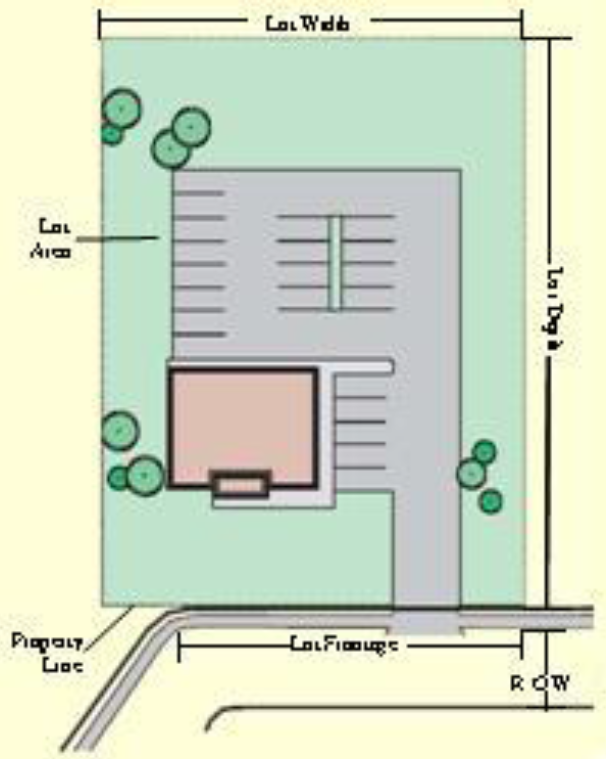
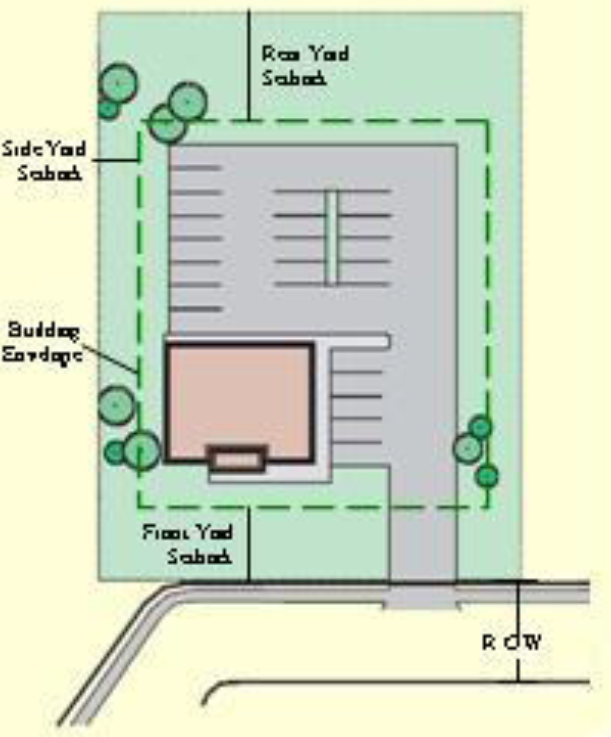
| • 10,000 square feet | • 0 feet when adjacent to an Arterial Rd | • 3 |
| Minimum Lot Width: | • 0 feet when adjacent to a Collector Rd | Maximum Accessory Structures: |
| • 50 feet | • 0 feet when adjacent to a Local Road | • 1 |
| Maximum Lot Depth: | • 0 feet when adjacent to a Private Road | Maximum Lot Coverage: |
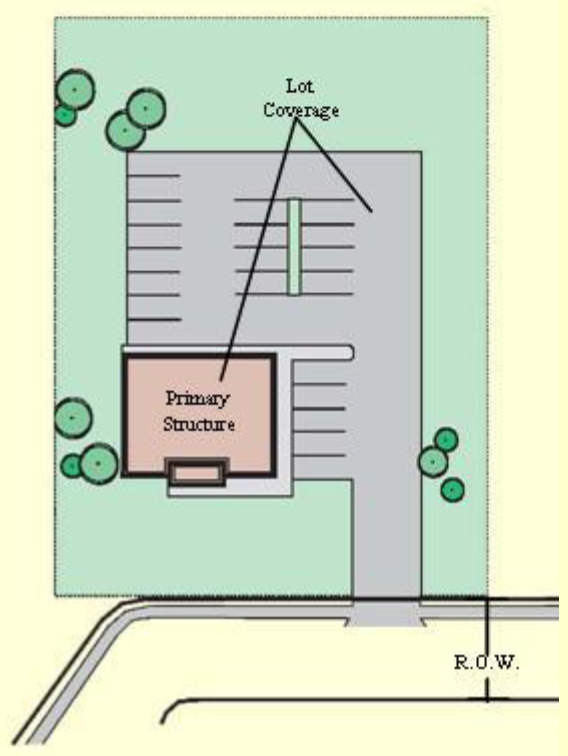
| • None | Minimum Side Yard Setback: | • All primary and accessory structures, and impervious surface shall not exceed 70% of the lot area. |
| Minimum Lot Frontage: | • 0 feet | |
| • 50 feet on a public and/or private street with access from said public and/or private street | Minimum Rear Yard Setback: | |
| • 0 feet | ||
| Sewer and Water: | Minimum Curb Cut Distance: | |
| • Requires connection to public water and sewer | • 100 feet | |
 | Additional Development Standards That Apply: | |
| Lot/Yard Standards (LY) | ||
| Height Standards (HT) | ||
| Accessory Use/Structure Standards (AS) | ||
| Performance Standards (PS) | ||
| Public Improvement Standards (PI) | ||
| Maximum Structure Height: | Parking Standards (PK) | |
| • 35 feet for the Primary Structure | Fences and Walls Standards (FN) | |
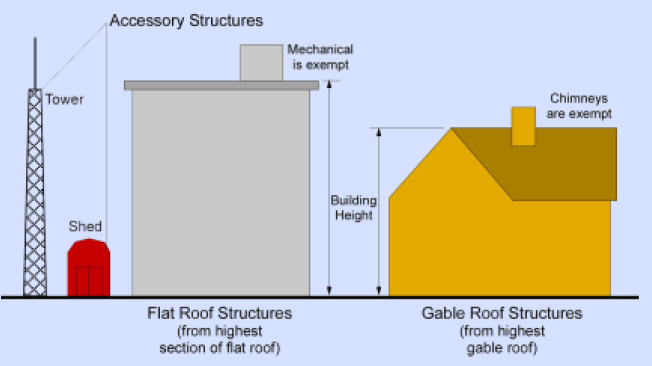
| • 25 feet for Accessory Structures | Outdoor Lighting Standards (OL) | |
3.25 - District Design Standards.
This section shall apply to all Downtown Office developments to ensure safe and efficient vehicle and pedestrian circulation, and protect the general welfare of the community by ensuring that such facilities are consistent in design with, and complimentary to, adjacent land uses and the physical characteristics of the City of College Park.
A.
Building Orientation: All primary structures shall face the front of the lot on which they are located. No loading docks, overhead service doors, or trash collection bins may be placed on or adjacent to any facade which faces a public street.
B.
Building Materials: The primary building material for all facades facing public streets shall be brick, natural or cut stone, pre-cast concrete, on-site tilt up concrete panels, or any material with a stucco type finish or a masonry material.
C.
Front Entrance: All customer entrances located along the front facade, shall feature a combination of two (2) or more of the following features:
1.
Canopies and porticos.
2.
Overhangs.
3.
Recesses or projections.
4.
Arcades.
5.
Raised, corniced parapets.
6.
Peaked roof forms.
7.
Arches.
8.
Display windows.
9.
Architectural details, such as tile work and moldings which are incorporated into the building structure and design.
D.
Roofs: Sloped roofs shall either be of standing seam metal or dimensional shingles.
E.
Landscaping: Landscaping screening shall be provided around the perimeter of all parking areas which include fifteen (15) or more parking spaces.
1.
The screening shall be located within five (5) feet of the edge of the parking area and shall provide screening at least four (4) feet in height for at least seventy-five (75) percent of the perimeter of the parking area.
F.
Lighting: Lighting on each lot shall be designed to reduce light pollution while providing the minimum light necessary for security and safe pedestrian and vehicle traffic movements.
1.
Light poles in vehicle use areas shall not exceed twenty (20) feet in height. All lighting shall be Metal Halide or LED and have ninety-degree cut-off luminaires (shielded downlighting).
2.
Lights illuminating structures and sidewalks shall be Metal Halide and have ninety-degree cut-off luminaries (shielded downlighting).
3.
Spot lights and those which face upwards to illuminate building facades are prohibited.
G.
Entrance Drives: Entrance drives accessing lots from an arterial or collector road may be located no closer than two hundred (200) feet from any other drive on either side of the public road, or five hundred (500) feet from any intersection of two public road rights-of-way. Interior driveways passing through front yards parallel to public roads shall be designed and constructed to stub into adjacent properties and included in cross access easements.
H.
Shared Parking: Parking areas restricted to patrons of the business located on each specific lot shall be prohibited. Nothing in this section shall be interpreted as restricting the designation of employee, delivery, pick-up, or handicap parking areas.
I.
Parking Location: No more than fifteen (15) percent of the parking spaces provided on each lot may be placed between the front facade of the primary structure and the abutting public street.
J.
Pedestrian Walkways: Pedestrian walkways shall be provided across the frontage of all lots, connecting the lot, the primary structure, and parking areas to each other and with adjacent properties. Sidewalks shall also be provided along the full length of all facades which include a customer entrance and/or are adjacent to a parking area.
1.
Walkways shall be concrete and shall be a minimum of ten (10) feet in width.
2.
Walkways parallel to parking lots and interior drives shall be separated from such areas by a curbed landscaped area measuring a minimum of five (5) feet in width.
3.
Walkways through vehicle use areas shall be of a paving material different from that of the vehicle use area.
4.
Walkways along the facades of the primary structure shall be separated from the building by a landscape area which is a minimum of five (5) feet in width
K.
Outdoor Storage, Mechanical Equipment, and Waste Containers: Outdoor storage of unfinished products or supplies shall be prohibited. All outdoor storage of finished products and materials for sale, all trash and recycling containers and materials, and all mechanical equipment shall be concealed.
1.
Stored materials, seasonal and other outdoor sales areas, mechanical equipment, and waste containers located on the ground shall be screened from view.
a.
The enclosure must be located in the rear yard.
b.
The enclosure shall not exceed eight (8) feet in height.
c.
No stored products or waste containers or materials may exceed the height of the enclosure.
d.
An opaque wooden gate, painted consistent with the main color of the primary structure on the lot shall be provided at all access points to the enclosed area.
2.
Mechanical equipment located on the roof shall be screened by a parapet or other building feature.
3.
All truck docks shall be located on the rear of the building and shall be screened from view from all public areas, including parking lots and adjacent public streets. The screening enclosure shall consist of a fence or wall constructed of like material as the exterior of the primary structure on the lot.
3.26 - District Intent, Permitted Uses and Conditional Uses.
District Intent: The "OP" District is intended to provide a land use category for offices, banks, and personal business services which can serve as a transitional area between residential and commercial districts. The provisions that regulate this land use district promote appropriate office and institutional uses that are clearly non-conflicting with residential areas within the City of College Park.
The City of College Park's Planning and Zoning Commission should follow the Comprehensive Plan and Future Land Use Map, and strive to use this district selectively, in areas where small-scale institutional and commercial uses are appropriate to service neighborhoods and the general welfare of the Community.
Permitted Uses:
Office/Institutional Uses:
• Financial institutions
• Dental offices and clinics
• Hospitals
• Medical offices, clinics and physical therapy facility
• Professional and business offices
• Colleges, universities, and vocational technical schools
• Private clubs, fraternal organizations, and lodge halls
• Museums and art galleries
Public Uses:
• Public/Government buildings and offices
• Police, Fire, Rescue
• Parks
• Public structures and uses in accord with the intent of this district
Business Uses:
• Cafeterias, delicatessen, snack shops, and dine-in restaurants
• Retail establishments occupying no more than fifty (50) percent of any building
• Brewpub
• Craft beer and wine market
Conditional Uses:
• Child and adult day care centers
• Educational facilities/school (P-12)
• Places of worship and other religious facilities
• Microbrewery
• Microdistillery
Communication/Utilities:
• Utility substation
• Water tower
• Public utility buildings, including telephone exchange buildings, transformer stations, substations, and gas regulator stations, but not including storage yards
Prohibited Uses:
• Vape Shops
(Ord. No. 2022-03, § 3, 1-4-22; Ord. No. 2024-13, § 4(Exh. C), 9-16-24)
3.27 - District Standards.
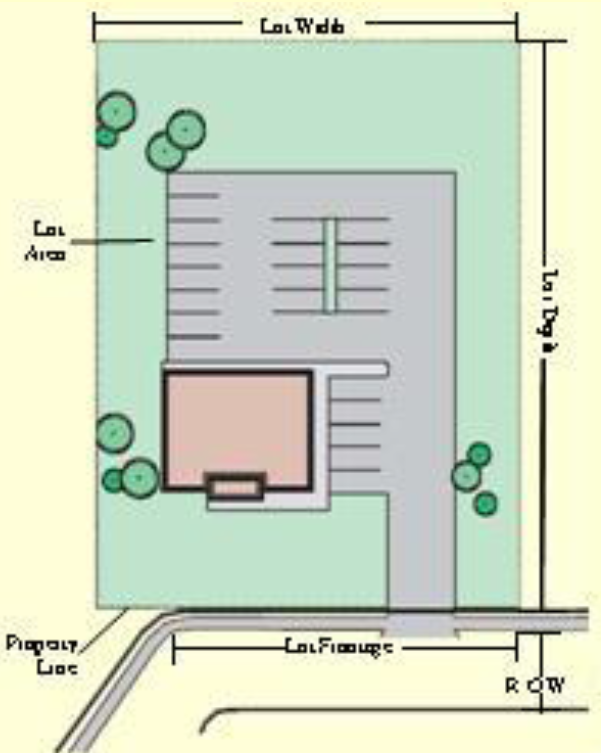 | 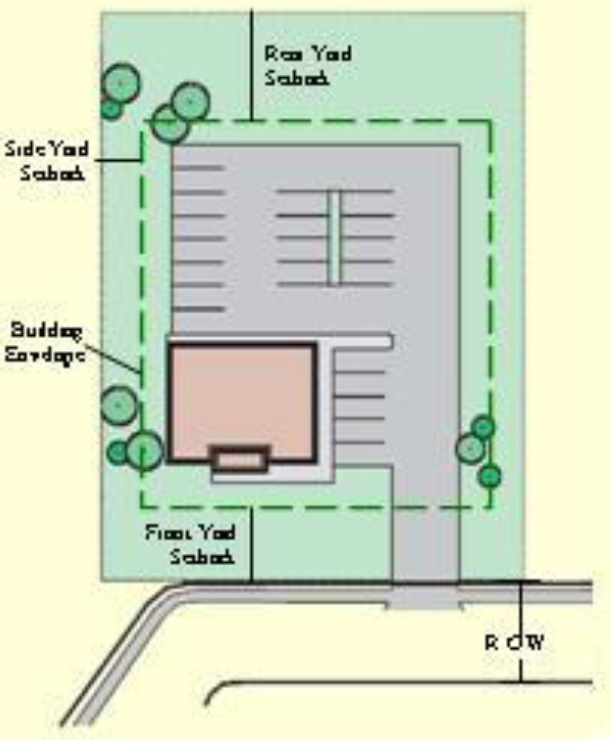 | 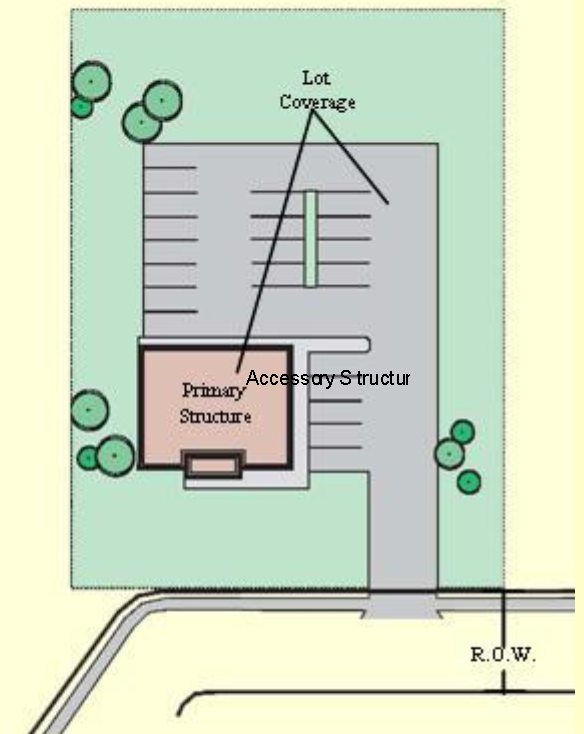 |
| Minimum Lot Area: | Minimum Front Yard Setback: | Maximum Primary Structures/Lot: |
| • 10,000 square feet | • 0 feet when adjacent to an Arterial Rd | • 3 |
| Minimum Lot Width: | • 0 feet when adjacent to a Collector Rd | Maximum Accessory Structures: |
| • 50 feet | • 0 feet when adjacent to a Local Road | • 1 |
| Maximum Lot Depth: | • 0 feet when adjacent to a Private Road | Maximum Lot Coverage: |
| • None | Minimum Side Yard Setback: | • All primary and accessory structures, and impervious surface shall not exceed 70% of the lot area. |
| Minimum Lot Frontage: | • 5 feet; 10 feet when adjacent to Residential | |
| • 50 feet on a public and/or private street with access from said public and/or private street | Minimum Rear Yard Setback: | |
| • 10 feet; 20 feet when adjacent to residential | ||
| Sewer and Water: | Minimum Curb Cut Distance: | |
| • Requires connection to public water and sewer | • 100 feet | |
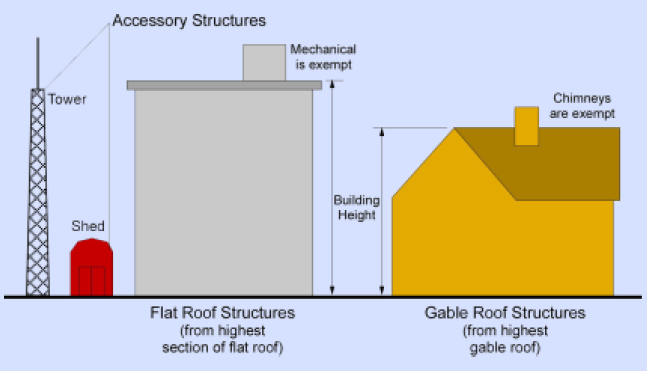 | Additional Development Standards That Apply: | |
| Lot/Yard Standards (LY) | ||
| Height Standards (HT) | ||
| Accessory Use/Structure Standards (AS) | ||
| Performance Standards (PS) | ||
| Public Improvement Standards (PI) | ||
| Maximum Structure Height: | Parking Standards (PK) | |
| • 35 feet for the Primary Structure | Fences and Walls Standards (FN) | |
| • 25 feet for Accessory Structures | Outdoor Lighting Standards (OL) | |
3.28 - District Design Standards.
This section shall apply to all Office Professional developments to ensure safe and efficient vehicle and pedestrian circulation, and protect the general welfare of the community by ensuring that such facilities are consistent in design with, and complimentary to, adjacent land uses and the physical characteristics of the City of College Park.
A.
Building Orientation: All primary structures shall face the front of the lot on which they are located. No loading docks, overhead service doors, or trash collection bins may be placed on or adjacent to any facade which faces a public street.
B.
Building Materials: The primary building material for all facades facing public streets shall be brick, natural or cut stone, pre-cast concrete, on-site tilt up concrete panels, or any material with a stucco type finish or a masonry material.
C.
Roofs: Sloped roofs shall either be of standing seam metal or dimensional shingles.
D.
Fencing: Chain link fencing shall not be visible from the public street.
E.
Landscaping: Landscaping screening shall be provided around the perimeter of all parking areas which include fifteen (15) or more parking spaces.
1.
The screening shall be located within five (5) feet of the edge of the parking area and shall provide screening at least four (4) feet in height for at least seventy-five (75) percent of the perimeter of the parking area.
2.
Screening shall consist of either a row of evergreen shrubs or a combination of mounding, ground covers and shrubs.
a.
If only shrubs are used, they shall measure a minimum of twenty-four (24) inches in height from ground level at the time of planting and be placed five (5) feet on center.
b.
If landscape mounding is also used, it shall undulate between the heights of two (2) and four (4) feet from ground level. Shrubs shall be planted on the mound at a ratio of one (1) shrub for every fifteen (15) horizontal feet of mounding. The shrubs shall measure a minimum of eighteen (18) inches in height from ground level at the time of planting and may be placed in an irregular, natural pattern.
F.
Lighting: Lighting on each lot shall be designed to reduce light pollution while providing the minimum light necessary for security and safe pedestrian and vehicle traffic movements.
1.
Light poles in vehicle use areas shall not exceed twenty (20) feet in height. All lighting shall be Metal Halide or LED and have ninety-degree cut-off luminaires (shielded downlighting).
2.
Lights illuminating structures and sidewalks shall be Metal Halide and have ninety-degree cut-off luminaries (shielded downlighting).
3.
Spot lights and those which face upwards to illuminate building facades are prohibited.
G.
Entrance Drives: Entrance drives accessing lots from an arterial or collector road may be located no closer than two hundred (200) feet from any other drive on either side of the public road, or five hundred (500) feet from any intersection of two (2) public road rights-of-way. Interior driveways passing through front yards parallel to public roads shall be designed and constructed to stub into adjacent properties and included in cross access easements.
H.
Shared Parking: Parking areas restricted to patrons of the business located on each specific lot shall be prohibited. Nothing in this section shall be interpreted as restricting the designation of employee, delivery, pick-up, or handicap parking areas.
I.
Parking Location: No more than thirty (30) percent of the parking spaces provided on each lot may be placed between the front facade of the primary structure and the abutting public street.
J.
Pedestrian Walkways: Pedestrian walkways shall be provided across the frontage of all lots, connecting the lot, the primary structure, and parking areas to each other and with adjacent properties. Sidewalks shall also be provided along the full length of all facades which include a customer entrance and/or are adjacent to a parking area.
1.
Walkways shall be concrete and shall be a minimum of ten (10) feet in width.
2.
Walkways parallel to parking lots and interior drives shall be separated from such areas by a curbed landscaped area measuring a minimum of five (5) feet in width.
3.
Walkways through vehicle use areas shall be of a paving material different from that of the vehicle use area.
4.
Walkways along the facades of the primary structure shall be separated from the building by a landscape area which is a minimum of five (5) feet in width
K.
Outdoor Storage, Truck Dock, Mechanical Equipment, and Waste Containers: Outdoor storage of unfinished products or supplies shall be prohibited. All outdoor storage of finished products and materials for sale, all trash and recycling containers and materials, all truck docks, and all mechanical equipment shall be concealed.
1.
Stored materials, seasonal and other outdoor sales areas, mechanical equipment, and waste containers located on the ground shall be screened from view.
a.
The enclosure shall not exceed eight (8) feet in height.
b.
No stored products or waste containers or materials may exceed the height of the enclosure.
c.
An opaque wooden gate, painted consistent with the main color of the primary structure on the lot shall be provided at all access points to the enclosed area.
2.
Mechanical equipment located on the roof shall be screened by a parapet or other building feature.
3.
No area for the storage of waste materials shall be located within twenty (20) feet of any public street right-of-way, public sidewalk, or internal pedestrian way.
4.
All truck docks shall be screened from view from all public areas, including parking lots and adjacent public streets. The screening enclosure shall consist of a fence or wall constructed of like material as the exterior of the primary structure on the lot.
3.29 - District Intent, Permitted Uses and Conditional Uses.
District Intent: The "BP" District is intended to provide a land use category for multiple use business community where office, research, sales, service, and distribution needs can be met. These business services serve as a transitional area between residential and commercial districts.
The City of College Park's Planning and Zoning Commission should follow the Comprehensive Plan and Future Land Use Map, and strive to use this district in areas where transportation networks and land are easily accessible to workers, customers, and large vehicle drivers alike. This district should promote commercial and light industrial businesses' that do not focus on manufacturing or large distribution operations.
Permitted Uses:
Business Uses:
• Professional offices including but not limited to financial, architecture, engineering, real estate, travel, insurance, media, photography, manufacturing, etc.
• Medical professional offices, including medical, dental, imaging, physical therapy, chiropractic and massage therapy, etc.
• Financial institutions
• General retail and merchandise
• Personal services
• Restaurants (no drive through)
• Colleges, universities, and vocational technical schools and training facilities
• Studio and filming establishments
• Computer and technology services
• Online retailers
• Brewpub
• Craft beer and wine market
Conditional Uses:
Communication/Utilities:
• Distribution and warehousing
• Utility substation
• Microbrewery
• Microdistillery
• Vape Shops
(Ord. No. 2022-03, § 4, 1-4-22; Ord. No. 2024-13, § 5(Exh. D), 9-16-24)
3.30 - District Standards.
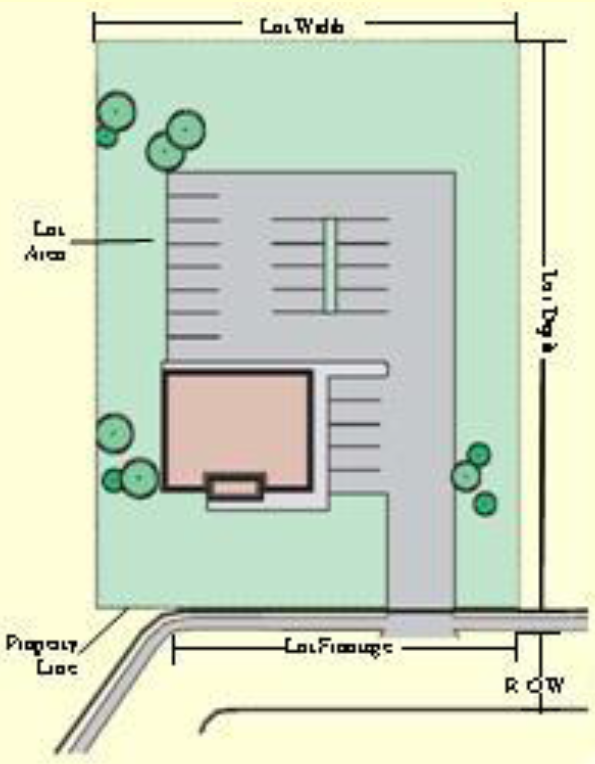 |  |  |
| Minimum Lot Area: | Minimum Front Yard Setback: | Maximum Primary Structures/Lot: |
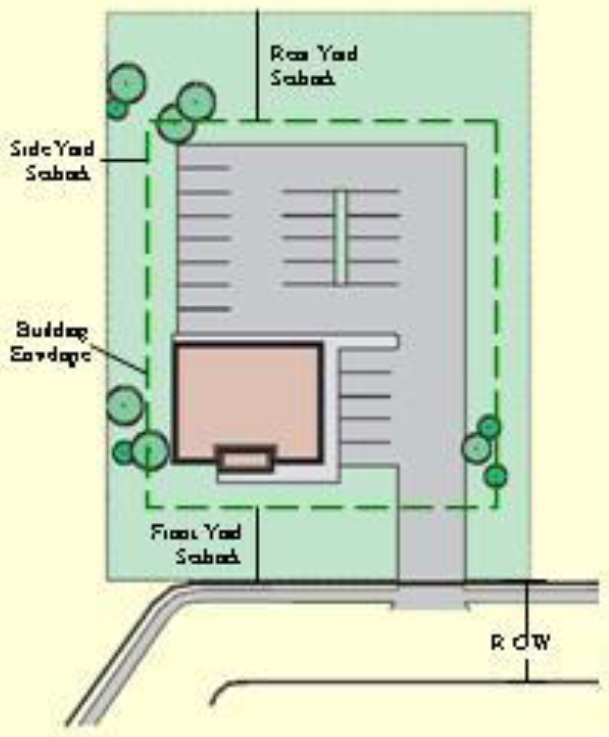
| • 10,000 square feet | • 50 feet when adjacent to an Arterial Rd | • 3 |
| Minimum Lot Width: | • 50 feet when adjacent to a Collector Rd | Maximum Accessory Structures: |
| • 100 feet | • 50 feet when adjacent to a Local Road | • 1 |
| Maximum Lot Depth: | • 50 feet when adjacent to a Private Road | Maximum Lot Coverage: |
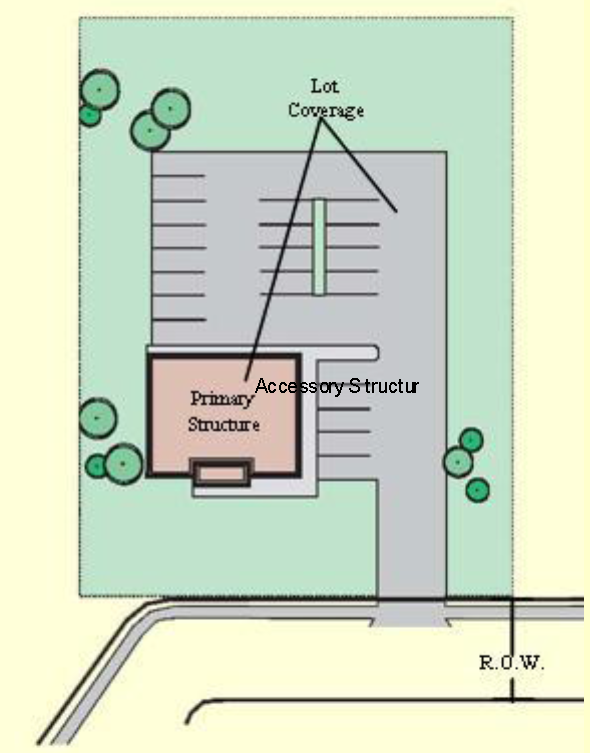
| • 2.5 times the lot width | Minimum Side Yard Setback: | • All primary and accessory structures, and impervious surfaces shall not exceed 50% of the lot area. |
| Minimum Lot Frontage: | • 20 feet | |
| • 100 feet on a public and/or private street with access from said public and/or private street | Minimum Rear Yard Setback: | |
| Sewer and Water: | • 30 feet | |
| • Requires connection to public water and sewer | ||
 | Additional Development Standards That Apply: | |
| Lot/Yard Standards (LY) | ||
| Height Standards (HT) | ||
| Accessory Use/Structure Standards (AS) | ||
| Performance Standards (PS) | ||
| Public Improvement Standards (PI) | ||
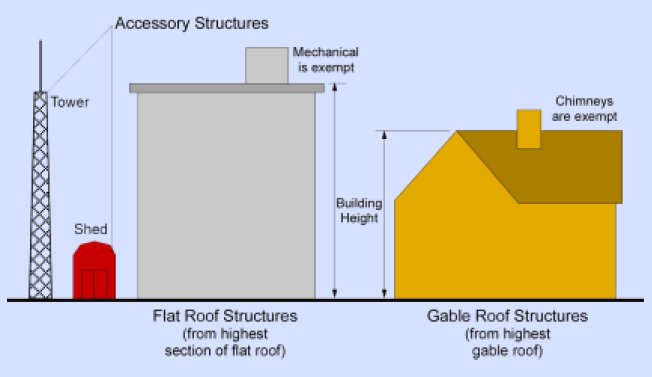
| Maximum Structure Height: | Parking Standards (PK) | |
| • 35 feet for the Primary Structure | Fences and Walls Standards (FN) | |
| • 25 feet for Accessory Structures | Outdoor Lighting Standards (OL) | |
3.31 - District Design Standards.
This section shall apply to all Business Park District developments to ensure safe and efficient vehicle and pedestrian circulation, and protect the general welfare of the community by ensuring that such facilities are consistent in design with, and complimentary to, adjacent land uses and the physical characteristics of the City of College Park.
A.
Building Orientation: All primary structures shall face the front of the lot on which they are located. No loading docks, overhead service doors, or trash collection bins may be placed on or adjacent to any facade which faces a public street.
B.
Building Materials: Building materials for all exterior facades shall consist of brick, stone, stucco, wood siding, fiber cement siding, and/or similar material. In addition, a minimum of forty (40) percent of each facade of any primary structure shall be constructed of brick, stone or stucco.
C.
Roofs: Sloped roofs shall either be of standing seam metal or dimensional shingles.
D.
Fencing: Chain link fencing shall not be visible from the public street.
E.
Landscaping: Landscaping screening shall be provided around the perimeter of all parking areas which include ten (10) or more parking spaces.
1.
The screening shall be located within five (5) feet of the edge of the parking area and shall provide screening at least four (4) feet in height for at least seventy-five (75) percent of the perimeter of the parking area.
2.
Screening shall consist of either a row of evergreen shrubs or a combination of mounding, ground covers and shrubs.
a.
If only shrubs are used, they shall measure a minimum of twenty-four (24) inches in height from ground level at the time of planting and be placed five (5) feet on center.
b.
If landscape mounding is also used, it shall undulate between the heights of two (2) and four (4) feet from ground level. Shrubs shall be planted on the mound at a ratio of one shrub for every fifteen (15) horizontal feet of mounding. The shrubs shall measure a minimum of eighteen (18) inches in height from ground level at the time of planting and may be placed in an irregular, natural pattern.
F.
Lighting: Lighting on each lot shall be designed to reduce light pollution while providing the minimum light necessary for security and safe pedestrian and vehicle traffic movements.
1.
Light poles in vehicle use areas shall not exceed twenty (20) feet in height. All lighting shall be Metal Halide or LED and have ninety-degree cut-off luminaires (shielded downlighting).
2.
Lights illuminating structures and sidewalks shall be Metal Halide and have ninety-degree cut-off luminaries (shielded downlighting).
3.
Spot lights and those which face upwards to illuminate building facades are prohibited.
G.
Entrance Drives: Entrance drives accessing lots from an arterial or collector road may be located no closer than two hundred (200) feet from any other drive on either side of the public road, or five hundred (500) feet from any intersection of two public road rights-of-way. Interior driveways passing through front yards parallel to public roads shall be designed and constructed to stub into adjacent properties and included in cross access easements.
H.
Shared Parking: Parking areas restricted to patrons of the business located on each specific lot shall be prohibited. Nothing in this section shall be interpreted as restricting the designation of employee, delivery, pick-up, or handicap parking areas.
I.
Pedestrian Walkways: Pedestrian walkways shall be provided across the frontage of all lots, connecting the lot, the primary structure, and parking areas to each other and with adjacent properties. Sidewalks shall also be provided along the full length of all facades which include a customer entrance and/or are adjacent to a parking area.
1.
Walkways shall be concrete and shall be a minimum of six (6) feet in width.
2.
Walkways parallel to parking lots and interior drives shall be separated from such areas by a curbed landscaped area measuring a minimum of five (5) feet in width.
3.
Walkways through vehicle use areas shall be of a paving material different from that of the vehicle use area.
4.
Walkways along the facades of the primary structure shall be separated from the building by a landscape area which is a minimum of five (5) feet in width
J.
Outdoor Storage, Truck Dock, Mechanical Equipment, and Waste Containers: Outdoor storage of unfinished products or supplies shall be prohibited. All outdoor storage of finished products and materials for sale, all trash and recycling containers and materials, all truck docks, and all mechanical equipment shall be concealed.
1.
Stored materials, seasonal and other outdoor sales areas, mechanical equipment, and waste containers located on the ground shall be screened from view.
a.
The enclosure shall not exceed eight (8) feet in height.
b.
No stored products or waste containers or materials may exceed the height of the enclosure.
c.
An opaque wooden gate, painted consistent with the main color of the primary structure on the lot shall be provided at all access points to the enclosed area.
2.
Mechanical equipment located on the roof shall be screened by a parapet or other building feature.
3.
No area for the storage of waste materials shall be located within twenty (20) feet of any public street right-of-way, public sidewalk, or internal pedestrian way.
4.
All truck docks shall be screened from view from all public areas, including parking lots and adjacent public streets. The screening enclosure shall consist of a fence or wall constructed of like material as the exterior of the primary structure on the lot.
3.32 - District Intent, Permitted Uses and Conditional Uses.
District Intent: The "C1" District is intended to provide a land use category for small-scale commercial uses that provide products and services to neighborhoods. The provisions that regulate this land use district should promote appropriate commercial uses that are clearly non-conflicting with residential areas of the City of College Park.
The City of College Park's Planning and Zoning Commission should follow the Comprehensive Plan and Future Land Use Map, and strive to use this district selectively, in areas where small-scale commercial centers are appropriate to service neighborhoods. The Planning and Zoning Commission should also strive to exclude businesses from the "C1" district that have an adverse effect on existing or future adjacent neighborhoods.
Permitted Uses:
Institutional/Public Uses:
• Police, fire, or rescue station
• Government office/facility
• Nature preserves
• Passive recreation trail
• Parks and playgrounds
• Public structures and uses in accord with the intent of this district
Business Uses:
• Personal service uses
• Automobile brokers
• Professional offices
• Retail uses (small scale)
• Beauty parlors and barber shops
• Banks and credit unions
• Building and loan associations
• Coin laundry and dry cleaning
• Drive-through restaurants that utilize at least fifty (50) percent of their space as a full-service restaurant.
• Drugstores
• Fruit markets
• Florists
• Bakeries
• Hardware stores
• Meat markets
• Restaurants
• Snack shops, bakeries, and coffee shops
• Brewpub
• Craft beer and wine market
• Microbrewery
• Microdistillery
Conditional Uses:
Institutional/Public Uses:
• Places of worship
• Educational facilities/school (P-12)
• Child and adult day care centers
• Group home, homeless shelter, and halfway home
Business Uses:
• Convenience stores
Prohibited Uses:
• Vape Shops
(Ord. No. 2019-14, § 1(Exh. A), 8-5-19; Ord. No. 2022-03, § 5, 1-4-22Ord. No. 2022-03, § 3, 1-4-22; Ord. No. 2024-13, § 4(Exh. E), 9-16-24)
3.33 - District Standards.
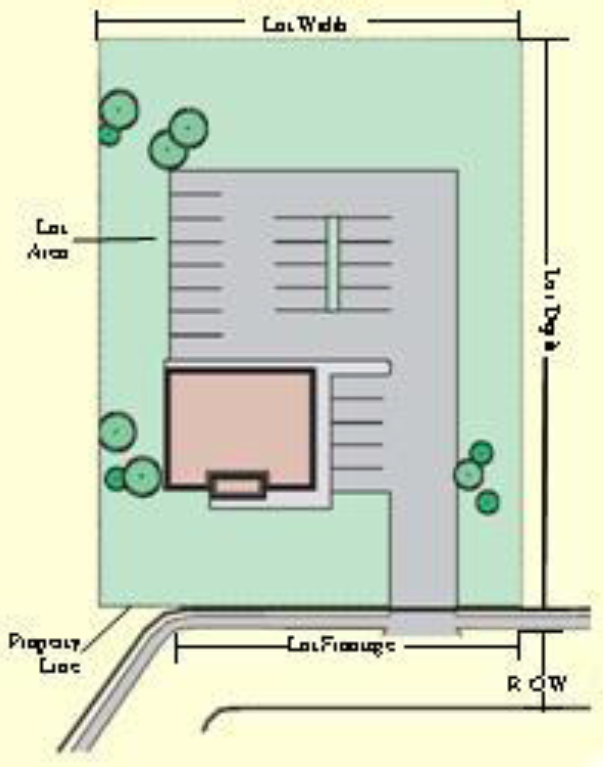 | 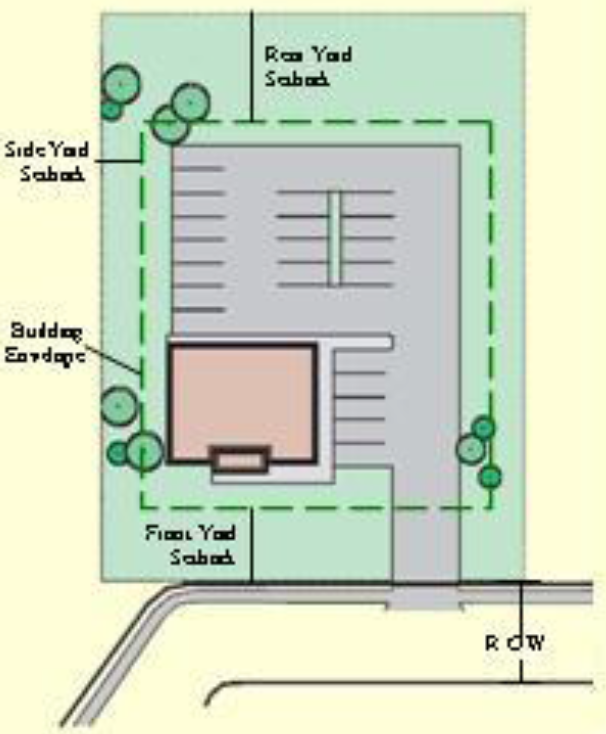 | 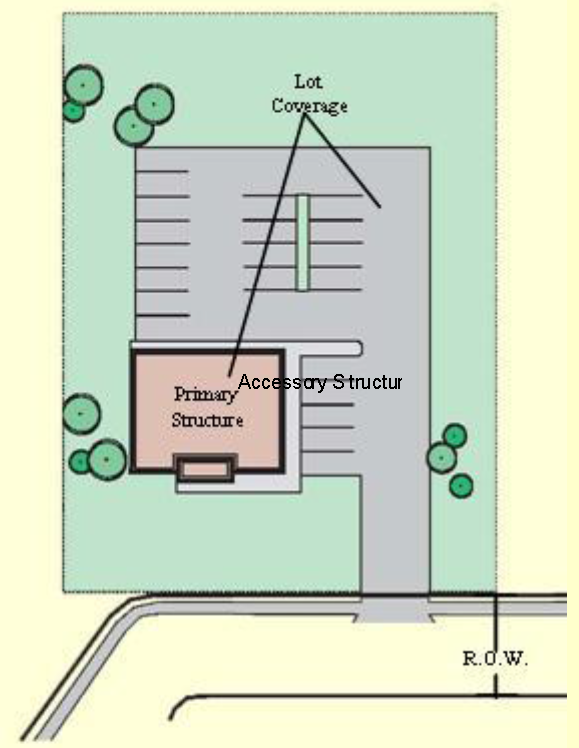 |
| Minimum Lot Area: | Sewer and Water: | Maximum Primary Structures/Lot: |
| • 5,000 square feet | • Requires connection to public water and sewer | • 1 |
| Maximum Lot Area: | Minimum Front Yard Setback: | Maximum Accessory Structures: |
| • 2 acres | • 40 feet when adjacent to an Arterial | • 1 |
| Minimum Lot Width: | • 35 feet when adjacent to a Collector | Maximum Lot Coverage: |
| • 100 feet | • 20 feet when adjacent to a Local Road | • All primary and accessory structures, and impervious surface shall not exceed 70% of the lot area. |
| Maximum Lot Depth: | Minimum Side Yard Setback: | |
| • 2.5 times the lot width | • 15 feet; 30 feet when adjacent to Residential | |
| Minimum Lot Frontage: | Minimum Rear Yard Setback: | |
| • 100% of the lot width on a public street with access from said public street | • 15 feet; 30 feet when adjacent to Residential | |
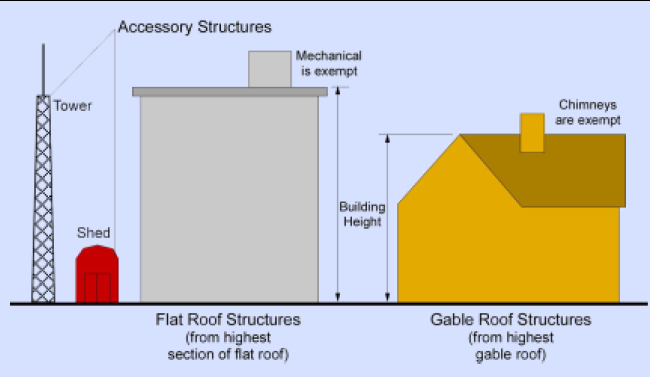 | Additional Development Standards That Apply: | |
| Lot/Yard Standards (LY) | ||
| Height Standards (HT) | ||
| Accessory Use/Structure Standards (AS) | ||
| Performance Standards (PS) | ||
| Public Improvement Standards (PI) | ||
| Maximum Structure Height: | Parking Standards (PK) | |
| • 35 feet for the Primary Structure | Fences and Walls Standards (FN) | |
| • 25 feet for Accessory Structures | Outdoor Lighting Standards (OL) | |
3.34 - District Design Standards.
This section shall apply to the Neighborhood Business District developments to ensure safe and efficient vehicle and pedestrian circulation, and protect the general welfare of the community by ensuring that such facilities are consistent in design with, and complimentary to, adjacent land uses and the physical characteristics of the City of College Park.
A.
Building Orientation: All primary structures shall face the front of the lot on which they are located. No loading docks, overhead service doors, or trash collection bins may be placed on or adjacent to any facade which faces a public street.
B.
Building Materials: The primary building material for all facades facing public streets shall be brick, natural or cut stone, pre-cast concrete, on-site tilt up concrete panels, or any material with a stucco type finish or a masonry material.
C.
Roofs: Sloped roofs shall either be of standing seam metal or dimensional shingles.
D.
Landscaping: Landscaping screening shall be provided around the perimeter of all parking areas which include fifteen (15) or more parking spaces.
1.
The screening shall be located within five (5) feet of the edge of the parking area and shall provide screening at least four (4) feet in height for at least seventy-five (75) percent of the perimeter of the parking area.
2.
Screening shall consist of either a row of evergreen shrubs or a combination of mounding, ground covers and shrubs.
a.
If only shrubs are used, they shall measure a minimum of twenty-four (24) inches in height from ground level at the time of planting and be placed five (5) feet on center.
b.
If landscape mounding is also used, it shall undulate between the heights of two (2) and four (4) feet from ground level. Shrubs shall be planted on the mound at a ratio of one shrub for every fifteen (15) horizontal feet of mounding. The shrubs shall measure a minimum of eighteen (18) inches in height from ground level at the time of planting and may be placed in an irregular, natural pattern.
E.
Lighting: Lighting on each lot shall be designed to reduce light pollution while providing the minimum light necessary for security and safe pedestrian and vehicle traffic movements.
1.
Light poles in vehicle use areas shall not exceed twenty (20) feet in height. All lighting shall be Metal Halide or LED and have ninety-degree cut-off luminaires (shielded downlighting).
2.
Lights illuminating structures and sidewalks shall be Metal Halide and have ninety-degree cut-off luminaries (shielded downlighting).
3.
Spot lights and those which face upwards to illuminate building facades are prohibited.
F.
Entrance Drives: Entrance drives accessing lots from an arterial or collector road may be located no closer than two hundred (200) feet from any other drive on either side of the public road, or five hundred (500) feet from any intersection of two public road rights-of-way. Interior driveways passing through front yards parallel to public roads shall be designed and constructed to stub into adjacent properties and included in cross access easements.
G.
Pedestrian Walkways: Pedestrian walkways shall be provided across the frontage of all lots, connecting the lot, the primary structure, and parking areas to each other and with adjacent properties. Sidewalks shall also be provided along the full length of all facades which include a customer entrance and/or are adjacent to a parking area.
1.
Walkways shall be concrete and shall be a minimum of six (6) feet in width.
2.
Walkways parallel to parking lots and interior drives shall be separated from such areas by a curbed landscaped area measuring a minimum of five (5) feet in width.
3.
Walkways through vehicle use areas shall be of a paving material different from that of the vehicle use area.
4.
Walkways along the facades of the primary structure shall be separated from the building by a landscape area which is a minimum of five (5) feet in width.
H.
Outdoor Storage, Truck Dock, Mechanical Equipment, and Waste Containers: Outdoor storage of unfinished products or supplies shall be prohibited. All outdoor storage of finished products and materials for sale, all trash and recycling containers and materials, all truck docks, and all mechanical equipment shall be concealed.
1.
Stored materials, seasonal and other outdoor sales areas, mechanical equipment, and waste containers located on the ground shall be screened from view.
a.
The enclosure shall not exceed eight (8) feet in height.
b.
No stored products or waste containers or materials may exceed the height of the enclosure.
c.
An opaque wooden gate, painted consistent with the main color of the primary structure on the lot shall be provided at all access points to the enclosed area.
2.
Mechanical equipment located on the roof shall be screened by a parapet or other building feature.
3.
No area for the storage of waste materials shall be located within twenty (20) feet of any public street right-of-way, public sidewalk, or internal pedestrian way.
4.
All truck docks shall be screened from view from all public areas, including parking lots and adjacent public streets. The screening enclosure shall consist of a fence or wall constructed of like material as the exterior of the primary structure on the lot.
I.
Transitional Buffers: Transitional buffers are intended to be used in a manner that allows for compatible residential and commercial growth in Downtown College Park. Transitional landscape buffers between commercial and single-family residential houses can help to mitigate the impact of new development and work to retain the downtown character. Maintenance of these buffers shall be the responsibility of the respective property owners.
1.
Transitional yards between commercial lots and residential areas shall have landscape buffers no less than fifteen (15) feet wide.
2.
Transitional buffers shall have permanent opaque walls or evergreen screening with a minimum height of six (6) feet. Plantings shall be placed close together so as to provide a thick buffer between lots.
3.
Transitional buffers shall be designed in a manner that does not adversely impact pedestrian accessibility.
3.35 - District Intent, Permitted Uses and Conditional Uses.
District Intent: The "C2" District is intended to provide a land use category for commercial uses that are appropriate for locations along the corridor. The provisions that regulate this land use district should make the district compatible with the convention center area, and the downtown business district. This district should be used along major thoroughfares, highways, and at interchanges.
The City of College Park's Planning and Zoning Commission should follow the Comprehensive Plan and Future Land Use Map, and strive to provide for highway oriented business and services while minimizing light pollution, large parking lots along the major roadways, hazardous traffic patterns, traffic conflicts, and excessive use of signs in the "C2" District.
Permitted Uses:
Institutional/Public Uses:
• All those permitted in C1
Communication/Utilities:
• Utility substation
• Wireless telecommunications facility/tower
• Water tower
Business Uses:
• All those permitted in C1
• Corporate office uses
• Clinics, dentist, doctor, physical therapy, and urgent care offices
• Retail uses (large scale)
• New automobile and small vehicle sales and display
• Used vehicle and small vehicle sales and display
• Automobile repair and servicing when located in new or used dealership
• Automobile minor repair
• Automobile brokers
• Automobile wash and detail
• Bowling alley, skating rink, arcade, or similar recreational establishments entirely enclosed within a building
• Auction and antique sales (no outside storage or display)
• Building material sales (no outside storage)
• Ice storage and vending
• Sales room or shop of a builder, contractor, and artisan providing no equipment/display is stored outdoors
• Hotels
• Veterinary clinic, and boarding
• Brewpub
• Craft beer and wine market
• Microbrewery
• Microdistillery
• Food truck park
• Movie theaters
• Concert halls
• Private/commercial vocational schools
• Clubs/lodges
• Music/Recording studios
• Martial arts/dance studios
• Restaurants, including drive through
• Physical activity centers
• Funeral and mortuary establishments
• Recreational vehicle parks in accordance with the minimum requirements of supplementary district regulations
• Funeral, mortuary, and cremation establishments
Conditional Uses:
Business Uses:
• Second hand retail
• Peddler and temporary vendor
• Places of worship, theaters, and amphitheaters
• Seasonal sales
• Drive-in business including drive-in outdoor theaters and amphitheaters
• Crematoriums when located within funeral or mortuary establishment
• Group home, homeless shelter, and halfway home
• Unmanned Aircraft System Dispatch and Delivery Center
• Convenience stores
• Automobile gas/diesel stations with or without convenience stores
• Vape Shops
(Ord. No. 2019-14, § 1(Exh. A), 8-5-19; Ord. No. 2022-03, § 6, 1-4-22; Ord. No. 2022-05, § 2, 1-18-22; Ord. No. 2024-13, § 7(Exh. F), 9-16-24)
3.36 - District Standards.
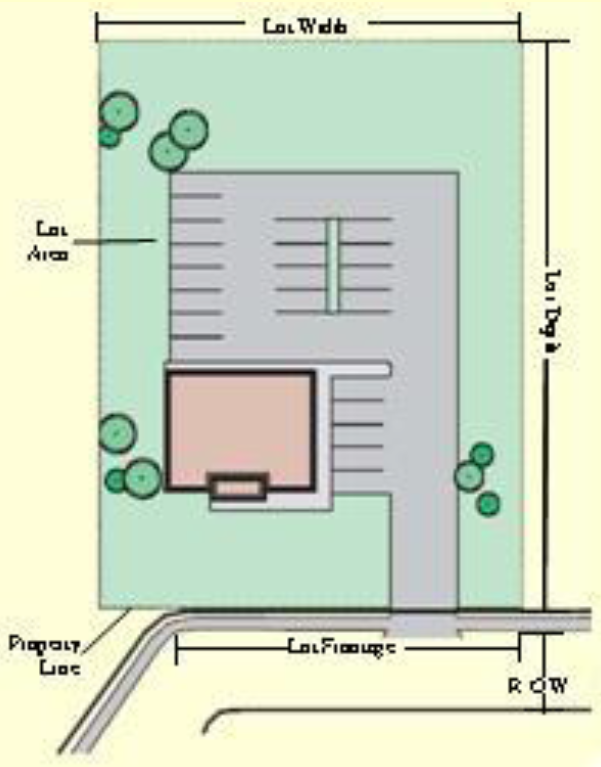 | 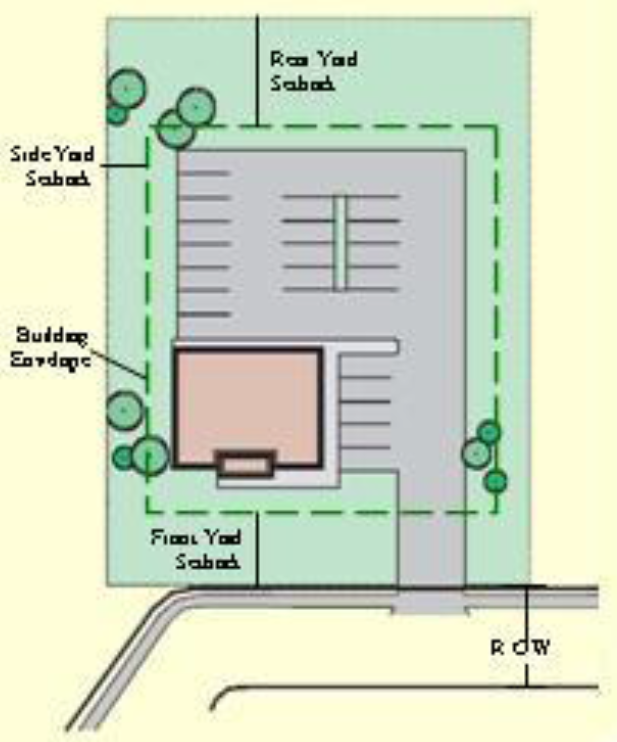 | 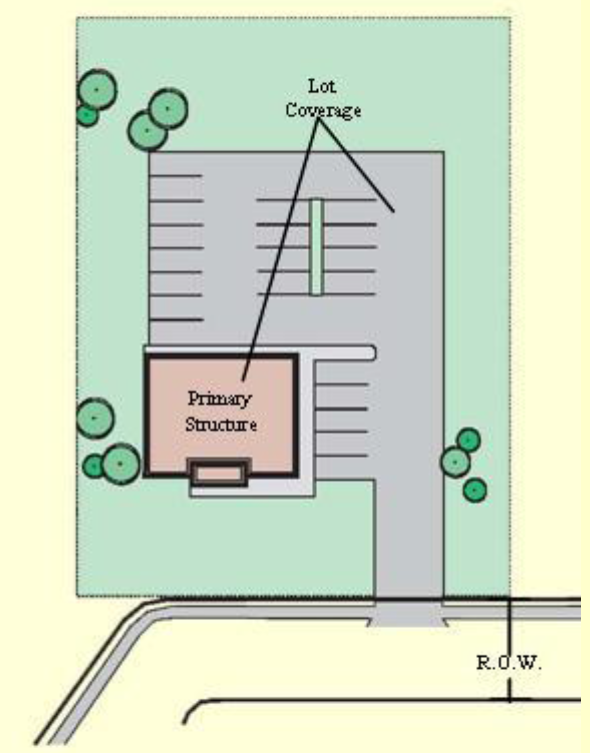 |
| Minimum Lot Area: | Sewer and Water: | Maximum Accessory Structures: |
| • 20,000 square feet | • Requires connection to public water and sewer | • 2 |
| Minimum Lot Width: | Minimum Front Yard Setback: | Maximum Lot Coverage: |
| • 100 feet | • 40 feet when adjacent to an Arterial | • All primary and accessory structures, and impervious surface cannot exceed 50% of the lot area. |
| Maximum Lot Depth: | • 35 feet when adjacent to a Collector | |
| • 3.5 times the lot width | • 25 feet when adjacent to a Local Road | |
| Minimum Lot Frontage: | Minimum Side Yard Setback: | |
| • 100 feet on a public street with access from said public street | • 15 feet | |
| • 0 feet where no point of access or window | ||
| Minimum Rear Yard Setback: | ||
| • 20 feet | ||
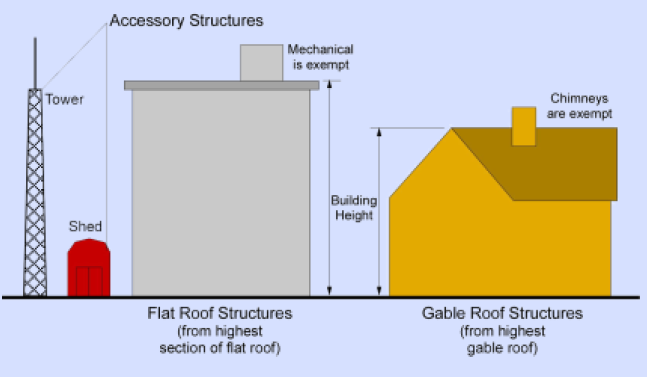 | Additional Development Standards That Apply: | |
| Lot/Yard Standards (LY) | ||
| Height Standards (HT) | ||
| Accessory Use/Structure Standards (AS) | ||
| Performance Standards (PS) | ||
| Public Improvement Standards (PI) | ||
| Maximum Structure Height: | Parking Standards (PK) | |
| • 35 feet for the Primary Structure | Fences and Walls Standards (FN) | |
| • 25 feet for Accessory Structures | Outdoor Lighting Standards (OL) | |
3.37 - District Design Standards.
This section shall apply to all Community Business District developments to ensure safe and efficient vehicle and pedestrian circulation, and protect the general welfare of the community by ensuring that such facilities are consistent in design with, and complimentary to, adjacent land uses and the physical characteristics of the City of College Park.
A.
Building Orientation: All primary structures shall face the front of the lot on which they are located. No loading docks, overhead service doors, or trash collection bins may be placed on or adjacent to any facade which faces a public street.
B.
Building Materials: Building materials for all exterior facades shall consist of brick, stone, stucco, wood siding, fiber cement siding, and/or similar material. In addition, a minimum of forty (40) percent of each facade of any primary structure shall be constructed of brick, stone or stucco.
C.
Roofs: Sloped roofs shall either be of standing seam metal or dimensional shingles.
D.
Fencing: Chain link fencing shall not be visible from the public street.
E.
Landscaping: Landscaping screening shall be provided around the perimeter of all parking areas which include fifteen (15) or more parking spaces.
1.
The screening shall be located within five (5) feet of the edge of the parking area and shall provide screening at least four (4) feet in height for at least seventy-five (75) percent of the perimeter of the parking area.
2.
Screening shall consist of either a row of evergreen shrubs or a combination of mounding, ground covers and shrubs.
a.
If only shrubs are used, they shall measure a minimum of twenty-four (24) inches in height from ground level at the time of planting and be placed five (5) feet on center.
b.
If landscape mounding is also used, it shall undulate between the heights of two (2) and four (4) feet from ground level. Shrubs shall be planted on the mound at a ratio of one (1) shrub for every fifteen (15) horizontal feet of mounding. The shrubs shall measure a minimum of eighteen (18) inches in height from ground level at the time of planting and may be placed in an irregular, natural pattern.
F.
Lighting: Lighting on each lot shall be designed to reduce light pollution while providing the minimum light necessary for security and safe pedestrian and vehicle traffic movements.
1.
Light poles in vehicle use areas shall not exceed twenty (20) feet in height. All lighting shall be Metal Halide or LED and have ninety-degree cut-off luminaires (shielded downlighting).
2.
Lights illuminating structures and sidewalks shall be Metal Halide and have ninety-degree cut-off luminaries (shielded downlighting).
3.
Spot lights and those which face upwards to illuminate building facades are prohibited.
G.
Entrance Drives: Entrance drives accessing lots from an arterial or collector road may be located no closer than two hundred (200) feet from any other drive on either side of the public road, or five hundred (500) feet from any intersection of two (2) public road rights-of-way. Interior driveways passing through front yards parallel to public roads shall be designed and constructed to stub into adjacent properties and included in cross access easements.
H.
Shared Parking: Parking areas restricted to patrons of the business located on each specific lot shall be prohibited. Nothing in this section shall be interpreted as restricting the designation of employee, delivery, pick-up, or handicap parking areas.
I.
Pedestrian Walkways: Pedestrian walkways shall be provided across the frontage of all lots, connecting the lot, the primary structure, and parking areas to each other and with adjacent properties. Sidewalks shall also be provided along the full length of all facades which include a customer entrance and/or are adjacent to a parking area.
1.
Walkways shall be concrete and shall be a minimum of six (6) feet in width.
2.
Walkways parallel to parking lots and interior drives shall be separated from such areas by a curbed landscaped area measuring a minimum of five (5) feet in width.
3.
Walkways through vehicle use areas shall be of a paving material different from that of the vehicle use area.
4.
Walkways along the facades of the primary structure shall be separated from the building by a landscape area which is a minimum of five (5) feet in width
J.
Outdoor Storage, Truck Dock, Mechanical Equipment, and Waste Containers: Outdoor storage of unfinished products or supplies shall be prohibited. All outdoor storage of finished products and materials for sale, all trash and recycling containers and materials, all truck docks, and all mechanical equipment shall be concealed.
1.
Stored materials, seasonal and other outdoor sales areas, mechanical equipment, and waste containers located on the ground shall be screened from view.
a.
The enclosure shall not exceed eight (8) feet in height.
b.
No stored products or waste containers or materials may exceed the height of the enclosure.
c.
An opaque wooden gate, painted consistent with the main color of the primary structure on the lot shall be provided at all access points to the enclosed area.
2.
Mechanical equipment located on the roof shall be screened by a parapet or other building feature.
3.
No area for the storage of waste materials shall be located within twenty (20) feet of any public street right-of-way, public sidewalk, or internal pedestrian way.
4.
All truck docks shall be screened from view from all public areas, including parking lots and adjacent public streets. The screening enclosure shall consist of a fence or wall constructed of like material as the exterior of the primary structure on the lot.
3.38 - District Intent, Permitted Uses and Conditional Uses.
District Intent: The "HC" District is intended to provide a land use category for commercial uses that are appropriate for locations near the Airport and Convention Center area. This district should promote mixed use, commuter travel, walkability, tourism, and recreational uses.
The City of College Park's Planning and Zoning Commission should follow the Comprehensive Plan and Future Land Use Map, and strive to provide for hospitality and tourism oriented business and services while promoting walkability and transit orientated options. Access roads should be designed to allow for accessibility of motor coaches and shuttles while providing a safe and comfortable environment for pedestrians.
Permitted Uses:
Business Uses:
• Banquet halls
• Convention centers and meeting rooms
• Corporate office uses
• Health, fitness, or group instruction establishments
• Retail uses
• Restaurants, bakeries, coffee shops
• Restaurants having live entertainment
• Zip lining, rock climbing, golfing, or similar recreational activities when developed as an entertainment destination
• Bowling alley, arcade, or similar recreational establishments entirely enclosed within a building
• Mail and packaging establishments
• Package stores
• Rental vehicle establishments
• Parking lots, garages, and decks
• Concert venues
Retail uses shall be developed as part of an indoor/outdoor complex, which cater to Airport and local travelers. These uses may include, but may not be limited to:
• Restaurants and sports bars
• Retail
• Professional office
• Florist shops
• Pharmacy
• Brewpub
• Craft beer and wine market
Business Uses:
Hotel uses shall be developed as an indoor complex, which cater to business and local travelers. These facilities may include, but not limited to:
• Cafeterias, snack shops, coffee shops, and dine-in restaurants
• Health and fitness facilities
• Florist shops
• Gift and souvenir shops
• Retail establishments
• Pools and saunas
• Salons and massage establishments
• Stages and night clubs
• Meeting rooms
• Laundering facilities
• Pharmacy
• Parking lots, decks, and garages
• Brewpub
• Craft beer and wine market
Prohibited Uses:
• Vape Shops
(Ord. No. 2022-03, § 7, 1-4-22; Ord. No. 2024-13, § 8(Exh. G), 9-16-24)
3.39 - District Standards.
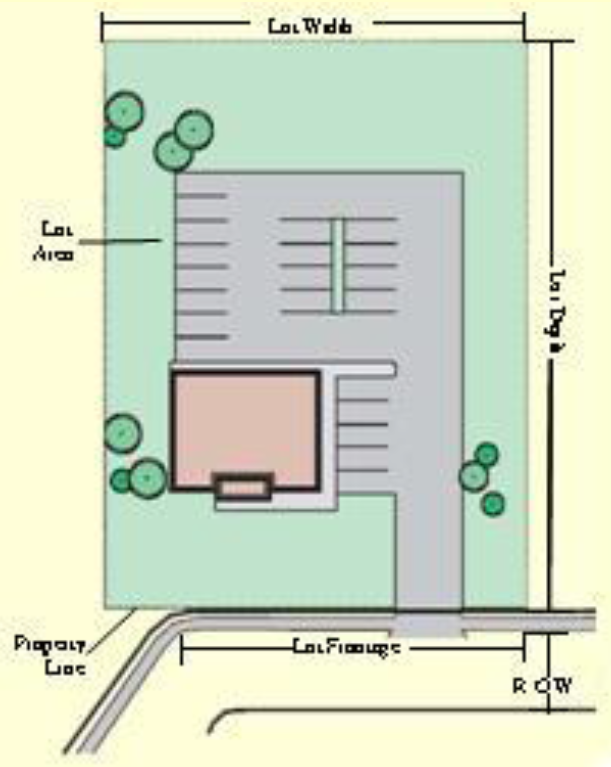 | 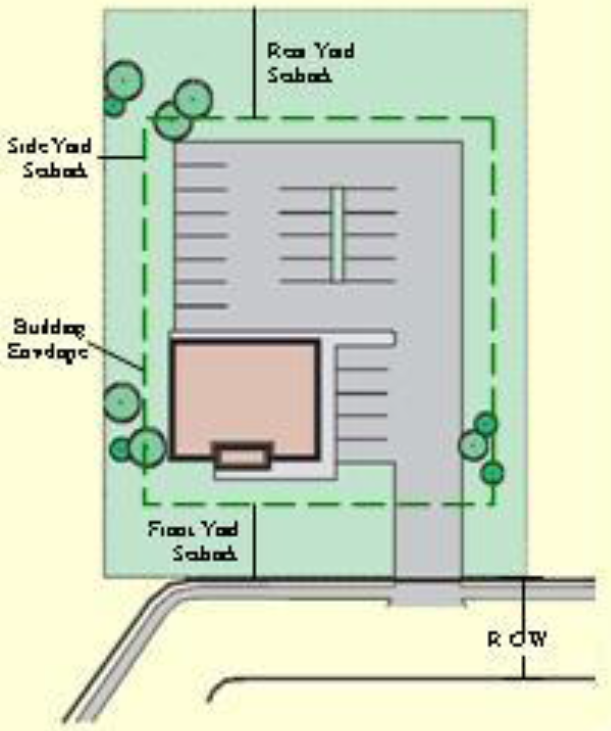 | 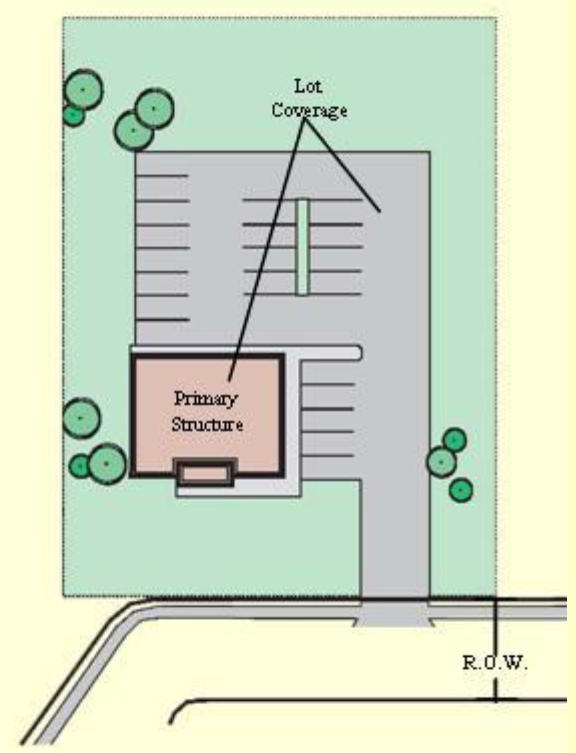 |
| Minimum Lot Area: | Minimum Front Yard Setback: | Maximum Lot Coverage: |
| • 1 acre | • 50 feet when adjacent to an Arterial | • All primary and accessory structures, and impervious surface shall not exceed 85% of the lot area. |
| Minimum Lot width: | • 40 feet when adjacent to a Collector | Minimum Building Size: |
| • None | • 25 feet when adjacent to a Local Road | • 50,000 square feet on ground floor |
| Maximum Lot Depth: | Minimum Side Yard Setback: | Minimum Open Space: |
| • None | • 50 feet | • 15 percent |
| Minimum Lot Frontage: | Minimum Distance Between Buildings: | |
| • None | • 20 feet | |
| Sewer and Water: | Minimum Rear Yard Setback: | |
| • Requires connection to public water and sewer | • 25 feet | |
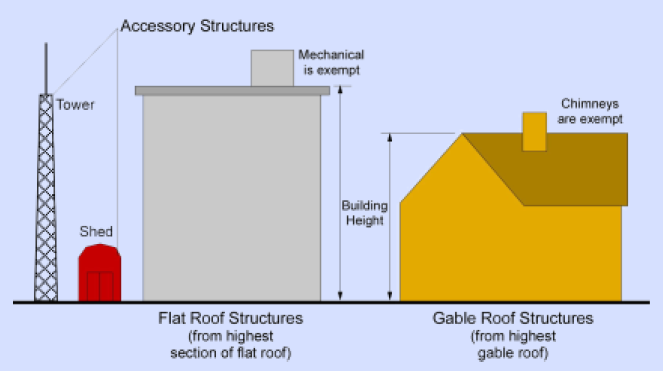 | Additional Development Standards That Apply: | |
| Lot/Yard Standards (LY) | ||
| Height Standards (HT) | ||
| Accessory Use/Structure Standards (AS) | ||
| Performance Standards (PS) | ||
| Public Improvement Standards (PI) | ||
| Maximum Structure Height: | Parking Standards (PK) | |
| • 35 feet for the Primary Structure | Fences and Walls Standards (FN) | |
| • 25 feet for Accessory Structures | Outdoor Lighting Standards (OL) | |
3.40 - District Design Standards.
This section shall apply to the Hospitality District developments to ensure safe and efficient vehicle and pedestrian circulation, and protect the general welfare of the community by ensuring that such facilities are consistent in design with, and complimentary to, adjacent land uses and the physical characteristics of the City of College Park.
A.
Required Amenities: All hotels are required to provide at a minimum:
1.
A restaurant, seating at least sixty (60) people, which serves at least three (3) meals per day and is separated from the lobby or main area of such building by permanent walls. Such restaurant may be housed in a separate structure, provided such structure is an integral part of the hotel development, is located on the same lot as the hotel, and is dedicated to the use of the hotel. No such free standing restaurant may be utilized by more than one (1) hotel to meet the requirements of this section.
2.
No less than two hundred (200) guest rooms.
3.
A swimming pool and exercise room.
4.
Meeting rooms.
A special exception to the requirements detailed above may only be granted by the Mayor and Council and only when the proposed development provides a level of service and amenities that are commonly associated with a 3-star rated hotel.
B.
Minimum Façade Height: A minimum facade height of eighteen (18) feet shall be maintained on arterial and collector roadways.
C.
Street Orientation: Principal building entrances shall be oriented to public streets wherever possible. When approved by the Planning Commission, a principal building entrance may be oriented to a side yard provided said entrance is not more than one hundred (100) feet from the right-of-way of an adjacent street and directly connected to the adjacent street frontage by a continuous sidewalk not less than ten (10) feet in width.
D.
Building Materials: Buildings materials for all exterior wall facades shall be constructed of brick, stone, textured concrete masonry units, stucco, or glass. All other material shall be approved by the Planning Commission.
E.
Customer Entrances: All customer entrances located along the front facade, shall feature a combination of three (3) or more of the following features:
1.
Canopies and porticos.
2.
Overhangs.
3.
Recesses or projections.
4.
Arcades.
5.
Raised, corniced parapets.
6.
Peaked roof forms.
7.
Arches.
8.
Display windows.
9.
All other architectural details, such as tile work and moldings which are incorporated into the building structure and design shall be approved by the Planning and Zoning Commission.
E.
Accessory Structures: Building materials, architectural features and colors of exterior finishes of accessory structures shall be consistent with the principal structure.
F.
Massing and Modulation: The massing of building facades oriented to public streets shall incorporate either modulation, defined here as a wave in the exterior wall, with horizontal breaks at least every one hundred (100) feet. Front facade design shall provide varying wall offsets and other architectural features to create horizontal (wall) and vertical building articulation.
1.
Roof features: Rooflines shall incorporate roof features (extensions, and/or projections such as a gable, parapet, dormers or others) that achieve visual interest through variation of the roofline. These features shall conform to the following specifications:
a.
Roof features shall not exceed the average height of the supporting walls.
b.
The average height of parapets shall not exceed fifteen (15) percent of the height of the supporting wall. Parapets shall feature three-dimensional cornice treatments.
c.
Cornices shall have perceptible projection or overhanging eaves that extend past the supporting walls.
d.
The roof pitch of sloped roofs shall be a minimum of 4:12 (vertical to horizontal).
G.
Roof Top Equipment: All rooftop equipment shall be screened from public view by parapets, dormers or other screens.
H.
Fencing: Chain link fencing shall not be visible from any public street.
I.
Parking Standards: No more than twenty-five (25) percent of the required number of parking shall be located in the front yard.
J.
Shared Parking: The following standards shall apply for shared parking:
1.
The Planning Commission may approve a reduction of up to twenty-five (25) percent in the number of parking spaces required for a specific use where inter-parcel access is provided and a shared parking analysis, which is approved by the City Planner, demonstrates that adequate parking will be provided.
2.
Per the table below, a shared parking calculation projection shall be provided that demonstrates that each use will have adequate parking provisions at all times. The process for determining the minimum parking requirements for a mixed use development or for contiguous properties containing multiple uses is:
a.
Determine the minimum number of parking spaces required for each use category from Article 7, Parking Standards (PK) of this zoning ordinance.
b.
Multiply each parking requirement by the corresponding percentage for each of the time periods shown on the table below.
c.
Total the number of parking spaces for each of the time periods (add together the numbers in each column).
d.
The largest column total is the minimum shared parking requirement for the development or collectively for the contiguous properties.
e.
In no case shall parking spaces that are farther than one thousand (1,000) feet from a building entrance be allowed to satisfy off street parking requirements for a use or be counted towards shared parking requirements.
Shared Parking Space Requirements
K.
Sidewalk: All sidewalks and pathway shall be a minimum of ten (10) feet in width. Sidewalk and pathways may curve or meander around utility connections, driveway entrances, steep slopes, or other special areas providing difficult transitions.
L.
Screening: Where a parking lot is adjacent to a street or public right-of-way, the parking lot shall be screened from the right-of-way by a minimum landscape strip of ten (10) feet wide having a variety of hardy shrubbery, flowering plants, and flowering/shade trees, as approved by the City Planner, or his/her designee.
M.
Lighting: Lighting on each lot shall be designed to reduce light pollution while providing the minimum light necessary for security and safe pedestrian and vehicle traffic movements.
1.
All light poles and fixtures must be decorative by design.
2.
Light poles in vehicle use areas shall not exceed forty (40) feet in height. All lighting shall be Metal Halide or LED and have ninety-degree cut-off luminaires (shielded downlighting).
3.
Lights illuminating structures and sidewalks shall be Metal Halide and have ninety-degree cut-off luminaries (shielded downlighting).
4.
Spot lights and those which face upwards to illuminate building facades are prohibited.
N.
Bicycle parking: All uses that are required to provide off-street parking spaces for motorized vehicles shall also provide bicycle parking space. Uses that require up to twenty-five (25) off-street parking spaces for motorized vehicles shall provide at least one (1) bicycle space, plus a minimum of one more bicycle space for each additional one hundred (100) parking spaces required for motorized vehicles.
O.
Loading Standards: Off-street loading shall be required as provided below:
1.
Buildings with more than five thousand (5,000) square feet of commercial, retail, services or professional offices shall provide a minimum of one (1) off-street loading space.
2.
Buildings with more than twenty-five thousand (25,000) square feet of commercial, retail, services or professional offices shall provide a minimum of one (1) off-street loading space for each twenty-five thousand (25,000) gross square feet or fraction thereof.
3.
Off-street loading shall be limited to the area between the rear of the principal structure and the rear lot setback line, or between the side of the principal building and the side lot setback line.
3.41 - District Intent, Permitted Uses and Conditional Uses.
District Intent: The "M1" District is intended to provide a land use category for assembly, warehousing, and other light industrial operations. The provisions that regulate this land use district should make the district compatible with the "C2," "BP" districts and Airport areas. This district should be used in combination with the C2 district in areas with convenient access to major transportation routes.
The City of College Park's Planning and Zoning Commission should follow the Comprehensive Plan and Future Land Use Map, and strive to provide for light industrial operations while minimizing light pollution, large parking lots along the major roadways, hazardous traffic patterns, and traffic conflicts in the "M-1" district.
Permitted Uses:
Industrial Uses:
• Offices and administrative facilities
• Clinics, cafeterias, employee credit unions, and recreational facilities for employees
• Education and training facilities
• Automobile and truck service station
• Body, repair, and machine shops for automotive vehicles and equipment
• Automobile brokers
• Vehicle rental and storage
• Vehicle and/or large auction houses
• Dry cleaning and laundering facilities
• Cold storage, ice plants, and freezer lockers
• Wholesale business, warehouse, trucking terminal and similar non-processing storage and distribution uses
• Manufacturing, compounding, or processing of food and food products, cosmetics, toiletries and pharmaceuticals, except meat products, vinegar, yeast, and other rendering or refining of fats and oil
• Manipulation, assembling or packaging of meat products (excludes rendering or other slaughterhouse related operations)
• Manufacturing, compounding or assembling of cell phones, paper, fur, glass, leather, plastics or semi-precious metals or stones, rubber, textiles or cloth products, tobacco, or wood products
• Manufacture of ceramic products, excluding, building materials, using previously pulverized clay and kilns fired by electricity or gas
• Repair and manufacturing of musical instruments, clocks or watches, toys or novelties, electrical appliances, electronic devices, light sheet metal products, etc.
• Printing, publishing, and reproduction establishments
• Boat, boat trailer, and marine accessory sales and rental
• Truck, cargo trailers, camping trailer, sales and rental
• Construction equipment, farm machinery sales and rental
• Movie industry stages and filming warehouses
• Research, experimental, or testing laboratories
• Building and construction materials sales yard
• Research, experimental, or testing laboratories
• Tire recapping and retreading shops
• Towing dispatch and vehicle storage yard
• Public utilities such as electric substations, storage of materials and trucks, repair facilities, offices and electric generating plants
• Crematoriums
• Mini-warehouses
• Unmanned Aircraft System Dispatch and Delivery Center
• Brewpub
• Craft beer and wine market
• Microbrewery
• Microdistillery
• Food truck park
Conditional Uses:
• Scrap yards and automobile wrecking yards
• Any other use not specifically described as permitted
(Ord. No. 2019-19, § 1, 10-21-19; Ord. No. 2022-03, § 8, 1-4-22; Ord. No. 2022-05, § 3, 1-18-22)
3.42 - District Standards.
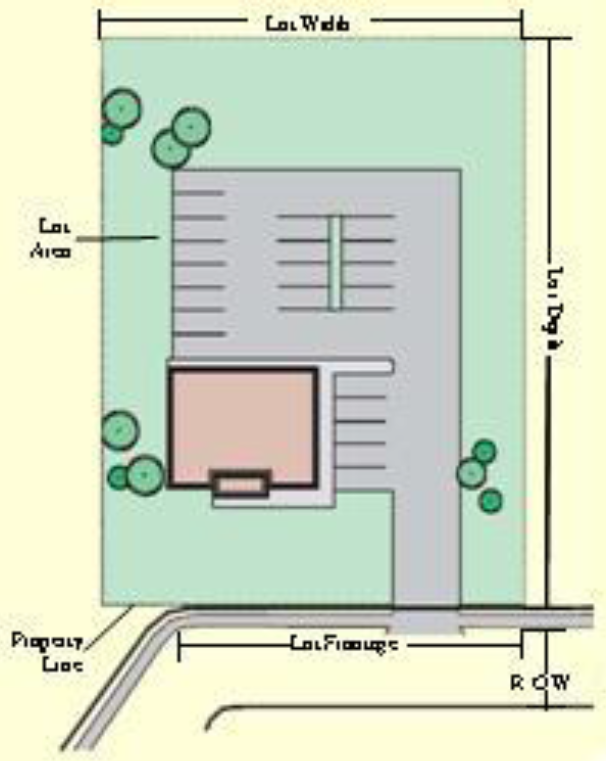 | 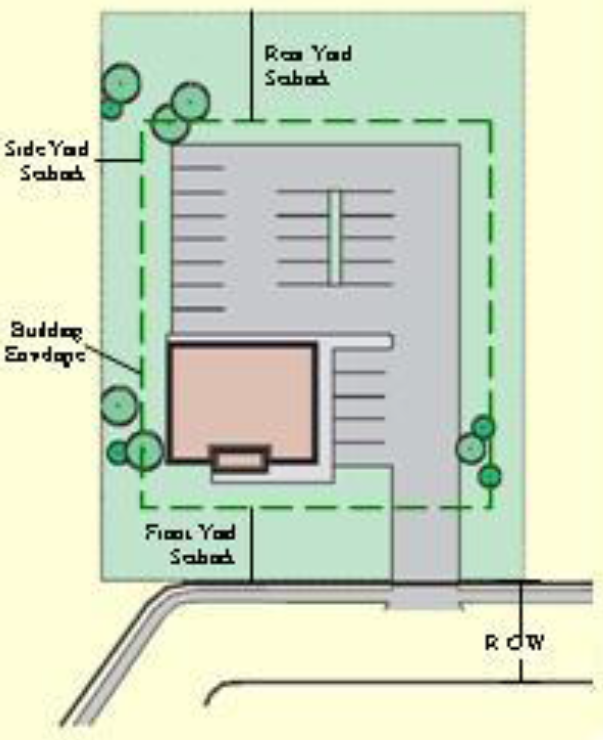 | 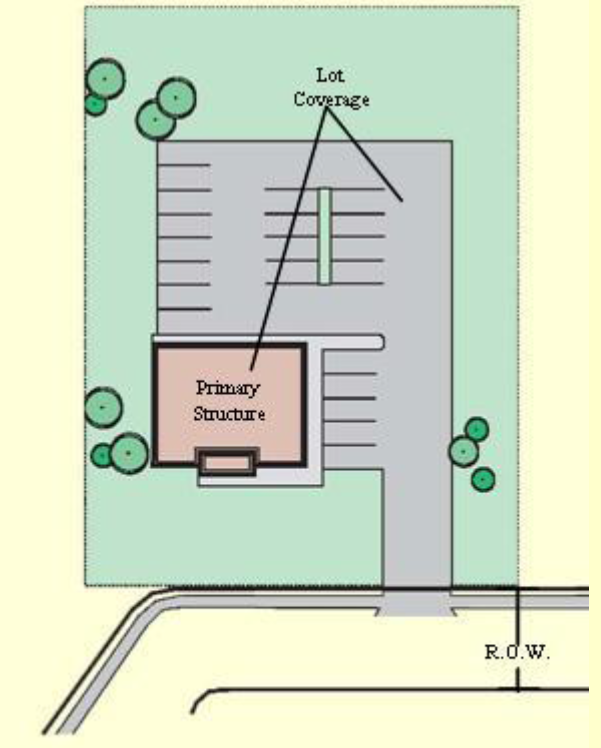 |
| Minimum Lot Area: | Minimum Front Yard Setback: | Maximum Primary Structures/Lot: |
| • 25,000 square feet | • 50 feet when adjacent to an Arterial | • None |
| Minimum Lot Width: | • 40 feet when adjacent to a Collector | Maximum Accessory Structures/Lot: |
| • 150 feet | • 35 feet when adjacent to a Local Road | • 3 |
| Maximum Lot Depth: | Minimum Side Yard Setback: | |
| • None | • 25 feet | |
| Minimum Lot Frontage: | Minimum Rear Yard Setback: | |
| • 100 feet on a public street with access from said public street | • 25 feet | |
| Sewer and Water: | Maximum Lot Coverage: | |
| • Requires connection to public water and sewer | • All primary and accessory structures, and impervious surface cannot exceed 70% of the lot area. | |
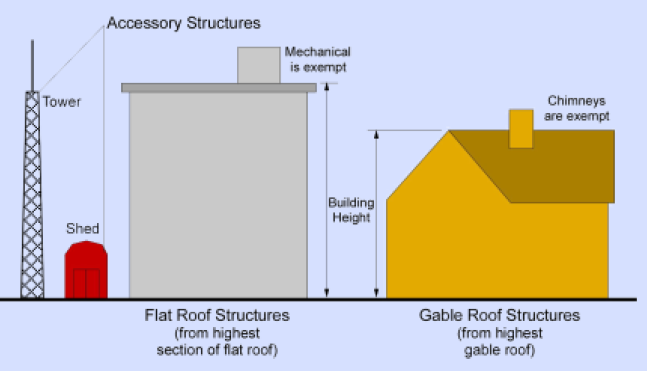 | Additional Development Standards That Apply: | |
| Lot/Yard Standards (LY) | ||
| Height Standards (HT) | ||
| Accessory Use/Structure Standards (AS) | ||
| Performance Standards (PS) | ||
| Public Improvement Standards (PI) | ||
| Maximum Structure Height: | Parking Standards (PK) | |
| • 35 feet for the Primary Structure | Fences and Walls Standards (FN) | |
| • 25 feet for Accessory Structures | Outdoor Lighting Standards (OL) | |
3.43 - District Design Standards.
This section shall apply to all Light Industrial facilities to ensure safe and efficient vehicle and pedestrian circulation, and protect the general welfare of the community by ensuring that such facilities are consistent in design with, and complimentary to, adjacent land uses and the physical characteristics of the City of College Park.
A.
Prohibited Uses: The following uses are prohibited:
1.
Blast furnace.
2.
Boiler works.
3.
Bone distillation.
4.
Dwelling.
5.
Fat rendering.
6.
Incinerator.
7.
Manufacturing of:
a.
Acetylene gas.
b.
Acid.
c.
Ammonia.
d.
Asphalt.
e.
Bleaching powder.
f.
Brick.
g.
Chlorine gas.
h.
Cement.
i.
Coal tar.
j.
Explosives.
k.
Fertilizer.
l.
Glue.
m.
Gypsum board.
n.
Linoleum.
o.
Oil.
p.
Oilcloth.
q.
Mineral dye.
r.
Paint.
s.
Paper.
t.
Paper pulp.
u.
Patent leather.
v.
Petroleum products.
w.
Plaster of Paris.
x.
Pottery.
y.
Shellac.
z.
Terra cotta.
aa.
Tile.
bb.
Turpentine.
cc.
Varnish.
dd.
Yeast.
8.
Mineral extraction.
9.
Ore reduction.
10.
Rolling mill.
11.
Slaughter house.
12.
Smelting.
13.
Stockyard
14.
Storage of:
a.
Explosives.
b.
Animal hides.
c.
Tanning.
d.
Tar distillation.
15.
Truck stop.
16.
Truck terminal.
17.
Landfill, solid waste disposal.
18.
Processing or storage of radioactive materials.
B.
Building Orientation: All primary structures shall face the front of the lot on which they are located.
C.
Building Materials: The primary building material for all facades facing public streets shall be brick, natural or cut stone, pre-cast concrete, on-site tilt up concrete panels, metal panels with a baked-on enamel or acrylic finish (which must be expected to retain its appearance without substantial maintenance for a period of ten (10) years), or any material with a stucco type finish or a masonry material.
D.
Roofs: Sloped roofs shall either be of standing seam metal or dimensional shingles.
E.
Docks and Doors: Loading docks and overhead doors may not exceed fifty (50) percent of the façade which faces a public street.
F.
Truck and Tractor Parking Location: No more than fifty (50) percent of any truck/tractor parking may be located within the front yard or any side yard having road frontage.
G.
Outdoor Storage, Truck Dock, Mechanical Equipment, and Waste Containers: Outdoor storage of unfinished products or supplies shall only be located within the side or rear yard. All outdoor storage of finished products and materials for sale, all trash and recycling containers and materials, and all mechanical equipment shall be concealed.
1.
Stored materials, seasonal and other outdoor sales areas, mechanical equipment, and waste containers located on the ground shall be screened from view.
a.
The enclosure shall not exceed eight (8) feet in height.
b.
No stored products or waste containers or materials may exceed the height of the enclosure.
c.
An opaque wooden gate, painted consistent with the main color of the primary structure on the lot shall be provided at all access points to the enclosed area.
2.
Mechanical equipment located on the roof shall be screened by a parapet or other building feature.
3.
No area for the storage of waste materials shall be located within twenty (20) feet of any public street right-of-way, public sidewalk, or internal pedestrian way.
H.
Landscaping: Landscaping screening shall be provided around the perimeter of all parking and loading areas which include fifteen (15) or more parking spaces.
1.
The screening shall be located within five (5) feet of the edge of the parking area and shall provide screening at least four (4) feet in height for at least seventy-five (75) percent of the perimeter of the parking area.
2.
Screening shall consist of either a row of evergreen shrubs or a combination of mounding, ground covers and shrubs.
a.
If only shrubs are used, they shall measure a minimum of twenty-four (24) inches in height from ground level at the time of planting and be placed five (5) feet on center.
b.
If landscape mounding is also used, it shall undulate between the heights of two (2) and four (4) feet from ground level. Shrubs shall be planted on the mound at a ratio of one (1) shrub for every fifteen (15) horizontal feet of mounding. The shrubs shall measure a minimum of eighteen (18) inches in height from ground level at the time of planting and may be placed in an irregular, natural pattern.
I.
Lighting: Lighting on each lot shall be designed to reduce light pollution while providing the minimum light necessary for security and safe pedestrian and vehicle traffic movements.
1.
Light poles in vehicle use areas shall not exceed twenty (20) feet in height. All lighting shall be Metal Halide or LED and have ninety-degree cut-off luminaires (shielded downlighting).
2.
Lights illuminating structures and sidewalks shall be Metal Halide and have ninety-degree cut-off luminaries (shielded downlighting).
3.
Spot lights and those which face upwards to illuminate building facades are prohibited.
J.
Entrance Drives: Entrance drives accessing lots from an arterial or collector road may be located no closer than two hundred (200) feet from any other drive on either side of the public road, or five hundred (500) feet from any intersection of two (2) public road rights-of-way. Interior driveways passing through front yards parallel to public roads shall be designed and constructed to stub into adjacent properties and included in cross access easements.
K.
Pedestrian Walkways: Pedestrian walkways shall be provided across the frontage of all lots, connecting the lot, the primary structure, and parking areas to each other and with adjacent properties. Sidewalks shall also be provided along the full length of all facades which include a customer entrance and/or are adjacent to a parking area.
1.
Walkways shall be concrete and shall be a minimum of ten (10) feet in width.
2.
Walkways parallel to parking lots and interior drives shall be separated from such areas by a curbed landscaped area measuring a minimum of five (5) feet in width.
3.
Walkways through vehicle use areas shall be of a paving material different from that of the vehicle use area.
4.
Walkways along the facades of the primary structure shall be separated from the building by a landscape area which is a minimum of five (5) feet in width.
3.44 - District Intent, Permitted Uses and Conditional Uses.
District Intent: The "M2" District is intended to provide a land use category for a variety of industrial operations. The provisions that regulate this land use district should make the district compatible with the "BP" and "M1" districts, the Airport, and other environmentally sensitive areas. This district should be used in combination with the "M1" district in areas with convenient access to major transportation routes.
The City of College Park's Planning and Zoning Commission should follow the Comprehensive Plan and Future Land Use Map, and strive to provide for industrial operations while minimizing light pollution, large parking lots along major roadways, hazardous traffic patterns, and traffic conflicts in the "M2" district.
Permitted Uses:
Industrial Uses:
• Any use permitted in the M-1 light industrial district
• Mineral extraction and processing
• Rock, sand, or gravel distribution and storage
• Brick, tile, and/or terra cotta manufacturing
• Agriculture crop processing and storage (of materials produced off-site)
• Chemical storage or manufacturing
• Asphalt manufacture and batching plants
• Machine and machine tool manufacture
• Consumer fireworks retail sales facility, as designated upon the map
Conditional Uses:
Industrial Uses:
• Truck terminals
• Recycling operations
• Incinerators
• Slaughterhouse
• Airports, heliports, and related landing areas
• Junk/salvage yard (including sanitary landfill, refuse dump, and scrap metal yard)
• Any other use not specifically described as permitted
3.45 - District Standards.
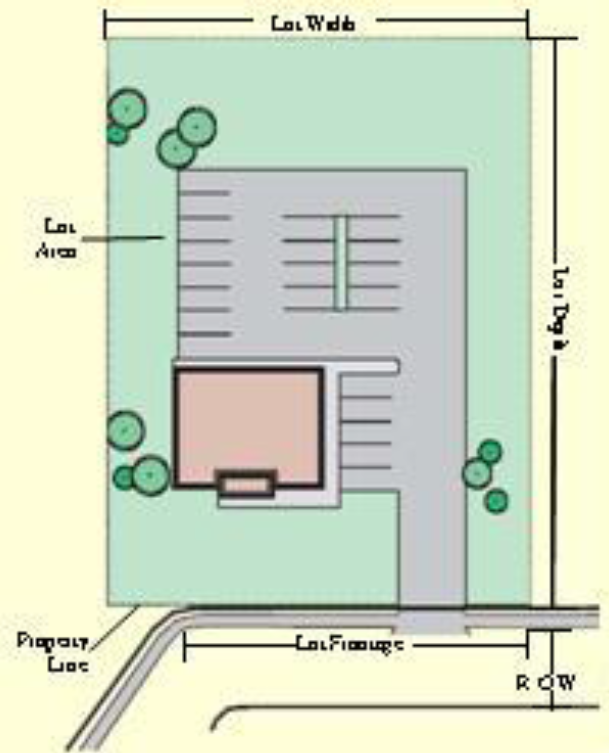 | 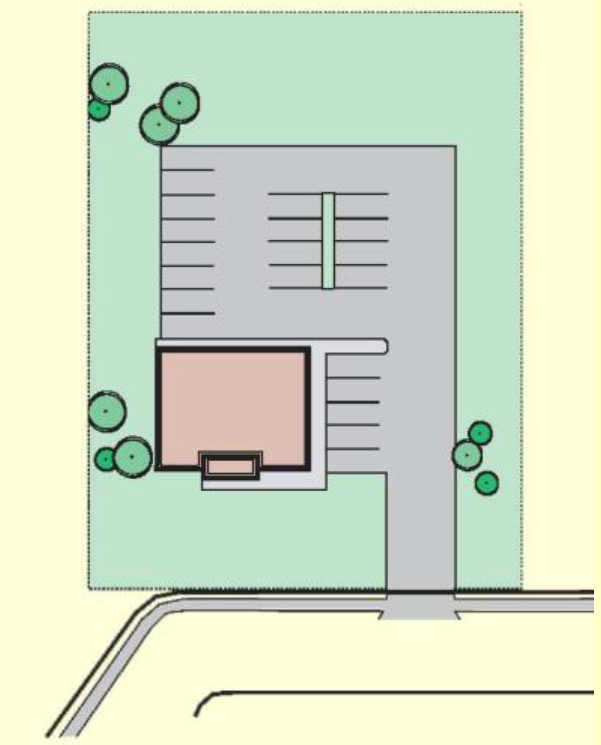 | 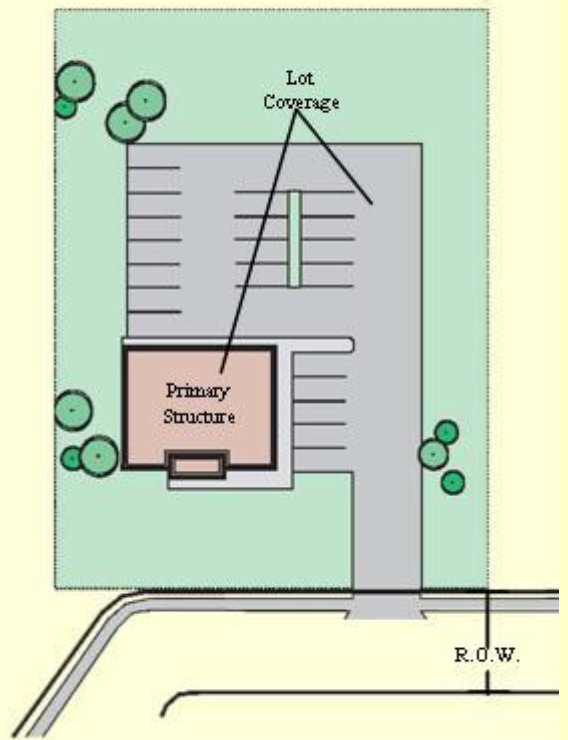 |
| Minimum Lot Area: | Minimum Front Yard Setback: | Maximum Primary Structures/Lot: |
| • 2 acres | • 50 feet when adjacent to an Arterial | • None |
| Minimum Lot Width: | • 40 feet when adjacent to a Collector | Maximum Accessory Structures/Lot: |
| • 250 feet | • 35 feet when adjacent to a Local Road | • 3 |
| Maximum Lot Depth: | Minimum Side Yard Setback: | |
| • None | • 40 feet | |
| Minimum Lot Frontage: | Minimum Rear Yard Setback: | |
| • 100 feet on a public street with access from said public street | • 40 feet | |
| Sewer and Water: | Maximum Lot Coverage: | |
| • Requires connection to public water and sewer | • All primary and accessory structures, and impervious surface shall not exceed 70% of the lot area. | |
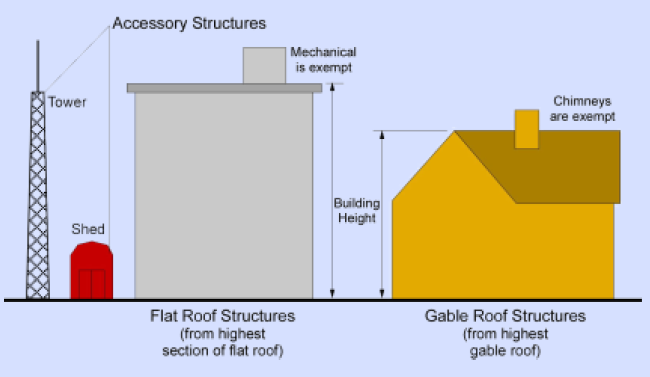 | Additional Development Standards That Apply: | |
| Lot/Yard Standards (LY) | ||
| Height Standards (HT) | ||
| Accessory Use/Structure Standards (AS) | ||
| Performance Standards (PS) | ||
| Public Improvement Standards (PI) | ||
| Maximum Structure Height: | Parking Standards (PK) | |
| • 35 feet for the Primary Structure | Fences and Walls Standards (FN) | |
| • 25 feet for Accessory Structures | Outdoor Lighting Standards (OL) | |
3.46 - District Design Standards.
This section shall apply to all Heavy Industrial facilities to ensure safe and efficient vehicle and pedestrian circulation, and protect the general welfare of the community by ensuring that such facilities are consistent in design with, and complimentary to, adjacent land uses and the physical characteristics of the City of College Park.
A.
Building Orientation: All primary structures shall face the front of the lot on which they are located.
B.
Building Materials: The primary building material for all facades facing public streets shall be brick, natural or cut stone, pre-cast concrete, on-site tilt up concrete panels, metal panels with a baked-on enamel or acrylic finish (which must be expected to retain its appearance without substantial maintenance for a period of ten (10) years), or any material with a stucco type finish or a masonry material.
C.
Roofs: Sloped roofs shall either be of standing seam metal or dimensional shingles.
D.
Docks and Doors: Loading docks and overhead doors may not exceed fifty (50) percent of the façade which faces a public street.
E.
Truck and Tractor Parking Location: No more than fifty (50) percent of any truck/tractor parking may be located within the front yard or any side yard having road frontage.
F.
Outdoor Storage, Truck Dock, Mechanical Equipment, and Waste Containers: Outdoor storage of unfinished products or supplies shall only be located within the side or rear yard. All outdoor storage of finished products and materials for sale, all trash and recycling containers and materials, and all mechanical equipment shall be concealed.
1.
Stored materials, seasonal and other outdoor sales areas, mechanical equipment, and waste containers located on the ground shall be screened from view.
a.
The enclosure shall not exceed eight (8) feet in height.
b.
No stored products or waste containers or materials may exceed the height of the enclosure.
c.
An opaque wooden gate, painted consistent with the main color of the primary structure on the lot shall be provided at all access points to the enclosed area.
2.
Mechanical equipment located on the roof shall be screened by a parapet or other building feature.
3.
No area for the storage of waste materials shall be located within twenty (20) feet of any public street right-of-way, public sidewalk, or internal pedestrian way.
G.
Landscaping: Landscaping screening shall be provided around the perimeter of all parking and loading areas which include fifteen (15) or more parking spaces.
1.
The screening shall be located within five (5) feet of the edge of the parking area and shall provide screening at least four (4) feet in height for at least seventy-five (75) percent of the perimeter of the parking area.
2.
Screening shall consist of either a row of evergreen shrubs or a combination of mounding, ground covers and shrubs.
a.
If only shrubs are used, they shall measure a minimum of twenty-four (24) inches in height from ground level at the time of planting and be placed five (5) feet on center.
b.
If landscape mounding is also used, it shall undulate between the heights of two (2) and four (4) feet from ground level. Shrubs shall be planted on the mound at a ratio of one shrub for every fifteen (15) horizontal feet of mounding. The shrubs shall measure a minimum of eighteen (18) inches in height from ground level at the time of planting and may be placed in an irregular, natural pattern.
H.
Lighting: Lighting on each lot shall be designed to reduce light pollution while providing the minimum light necessary for security and safe pedestrian and vehicle traffic movements.
1.
Light poles in vehicle use areas shall not exceed twenty (20) feet in height. All lighting shall be Metal Halide or LED and have ninety-degree cut-off luminaires (shielded downlighting).
2.
Lights illuminating structures and sidewalks shall be Metal Halide and have ninety-degree cut-off luminaries (shielded downlighting).
3.
Spot lights and those which face upwards to illuminate building facades are prohibited.
I.
Entrance Drives: Entrance drives accessing lots from an arterial or collector road may be located no closer than two hundred (200) feet from any other drive on either side of the public road, or five hundred (500) feet from any intersection of two (2) public road rights-of-way. Interior driveways passing through front yards parallel to public roads shall be designed and constructed to stub into adjacent properties and included in cross access easements.
J.
Pedestrian Walkways: Pedestrian walkways shall be provided across the frontage of all lots, connecting the lot, the primary structure, and parking areas to each other and with adjacent properties. Sidewalks shall also be provided along the full length of all facades which include a customer entrance and/or are adjacent to a parking area.
1.
Walkways shall be concrete and shall be a minimum of ten (10) feet in width.
2.
Walkways parallel to parking lots and interior drives shall be separated from such areas by a curbed landscaped area measuring a minimum of five (5) feet in width.
3.
Walkways through vehicle use areas shall be of a paving material different from that of the vehicle use area.
4.
Walkways along the facades of the primary structure shall be separated from the building by a landscape area which is a minimum of five (5) feet in width.
3.47 - District Intent, Permitted Uses and Conditional Uses.
District Intent: The "TR" District is intended to provide a land use category for a variety of automobile and transportation orientated businesses.
Permitted Uses:
Commercial/Industrial Uses:
• Airport parking and shuttle service
• Car rental agencies
• Airport related employee parking
• Airport related retail in terminals
• Railroad uses
• Transit system parking lots and decks
• Vehicle cleaning and minor maintenance when associated with one (1) of the facilities noted above
3.48 - District Standards.
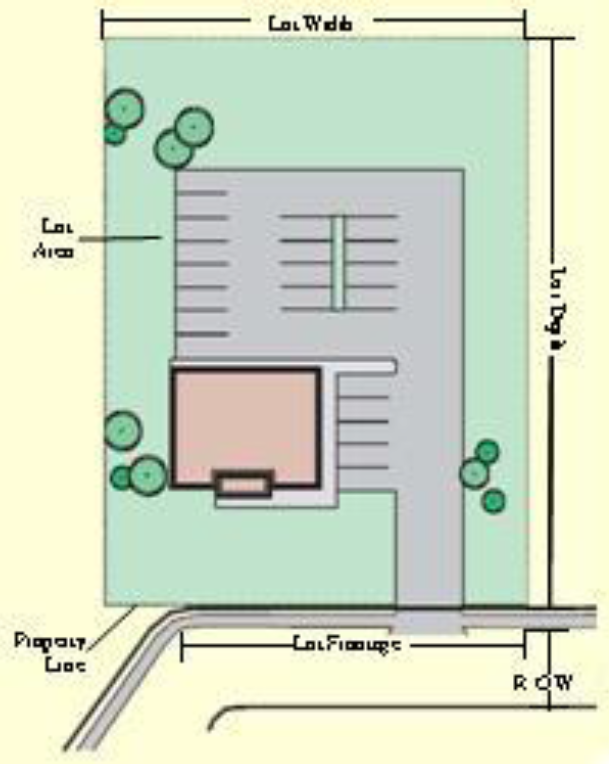 | 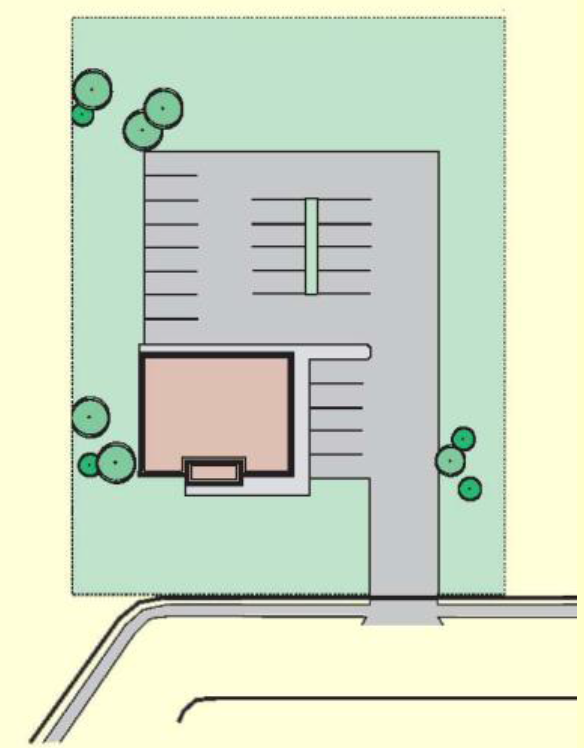 | 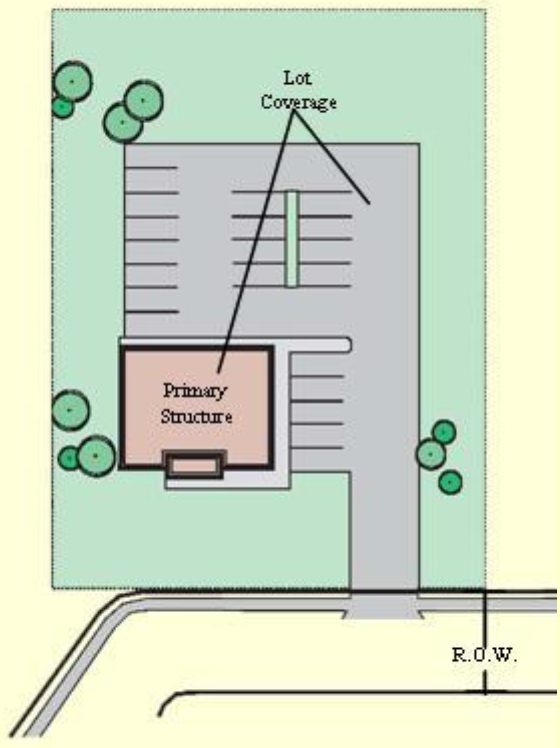 |
| Minimum Lot Area: | Minimum Front Yard Setback: | Maximum Primary Structures/Lot: |
| • 2 acres | • 50 feet | • None |
| Minimum Lot Width: | Minimum Side Yard Setback: | Maximum Accessory Structures/Lot: |
| • 250 feet | • 40 feet | • 3 |
| Maximum Lot Depth: | Minimum Rear Yard Setback: | |
| • None | • 40 feet | |
| Minimum Lot Frontage: | Maximum Lot Coverage: | |
| • 100 feet on a public street with access from said public street | • All primary and accessory structures, and impervious surface cannot exceed 70% of the lot area. | |
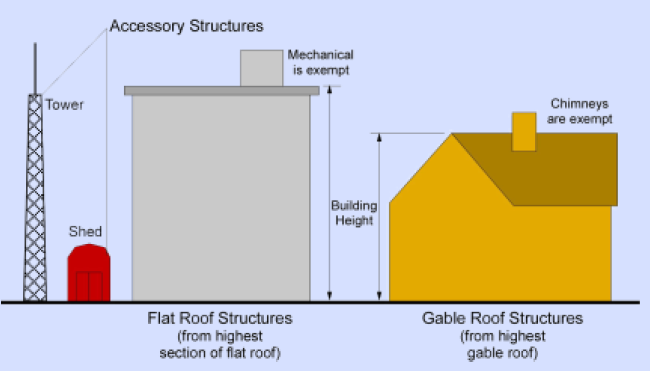 | Additional Development Standards That Apply: | |
| Lot/Yard Standards (LY) | ||
| Height Standards (HT) | ||
| Accessory Use/Structure Standards (AS) | ||
| Performance Standards (PS) | ||
| Public Improvement Standards (PI) | ||
| Maximum Structure Height: | Parking Standards (PK) | |
| • 35 feet for the Primary Structure | Fences and Walls Standards (FN) | |
| • 25 feet for Accessory Structures | Outdoor Lighting Standards (OL) | |
3.49 - District Design Standards.
This section shall apply to all Transportation Districts, as the potential for negative visual impact on adjoining uses by Transportation District uses is substantial. Therefore, buffers are required for the protection of adjoining land uses.
A.
A natural or man-made planted buffer shall be maintained along the property boundary of any "TR" District use which abuts a non-"TR" District use according to the following schedule:
1.
Residential districts: A buffer having a minimum horizontal dimension of forty (40) feet shall be provided, provided that should the applicant wish to establish a bermed buffer, such buffer may be reduced to thirty (30) feet for a berm six (6) feet high and thirty (30) feet in depth.
2.
Business park, office park and commercial uses: A buffer having a minimum horizontal dimension of thirty (30) feet shall be provided, provided that if the owner prefers, a six (6) feet high bermed buffer of twenty (20) feet in depth is allowable.
B.
Buffers shall be permanently maintained as indicated on the approved site plan, subject to inspection by the building inspector, and consistent with any other property improvement. The dimension of the buffer shall not be in addition to any other landscaping requirements of this Article.
C.
As the purpose of the buffer is to visually screen and distance the uses of the "TR" District from adjoining uses, one-half (½) of all plant materials shall consist of one (1) or more species that retain foliage throughout the year. Provision of opaque fencing, though desirable, shall not decrease the horizontal dimension of the required buffer.
D.
Within the Transportation District, those uses identified as permitted uses may utilize the buffer requirement in computing the overall percentage of landscaping required by Article 9 of this ordinance. Internal landscaping of the area reserved for parking and paved for that purpose is not required, provided that no decrease in the overall percentage of landscaping on the lot shall be made.
3.50 - District Intent, Permitted Uses and Conditional Uses.
District Intent: The TOD district is intended to provide a land use category for the part of downtown within close proximity to the MARTA station. Uses shall be vertically integrated in order to lessen automobile dependency, foster a sense of community, and to maximize the use of available land. Land uses shall be a blend of residential and non-residential uses. When residential uses are mixed with non-residential uses, the residential uses shall not be located in the first floor.
The City of College Park's Planning and Zoning Commission should remain consistent with the Comprehensive Plan and Future Land Use, and use this district to promote shopping, dining, and entertainment options within a walkable streetscape for residents and tourists alike.
Permitted Uses:
Residential Uses (2ndfloor and above only):
• Residential, single-family
• Residential, two-family
• Residential, multi-family
Institutional/Public Uses:
• Tourism & welcome centers
• Parks, playgrounds, seating & reflection areas
• Public structures, including artwork & uses in accordance with the intent of this district
Business Uses:
• Antique sales
• Art galleries, museums & theatres
• Bakeries, coffee, & snack shops
• Banking & financial offices
• Bed & Breakfast
• Book & media stores
• Clothing & accessory retail sales
• Drug stores
• Florists
• Group instruction for personal wellness
• Gift and collectible shops
• General retail & merchandise sales
• Home Occupations I & II
• Personal service establishments
• Professional offices & studios
• Restaurants & catering establishments
• Specialty beer & wine sales
• Brewpub
• Craft beer and wine market
• Microbrewery
• Microdistillery
Prohibited Uses:
• Adult entertainment establishments
• Bail bonding establishments
• Billiards parlors
• Boarding or rooming houses
• Check cashing and title loan offices
• Drive through windows, restaurants or otherwise
• Flea markets and thrift stores
• Hypnotists
• Hookah lounges
• Pawn shops
• Palm reading and astrologers
• Massage parlors
• Modeling agencies
• Motor vehicle sales, repair, or storage
• Staffing agencies
• Tattoo and piercing establishments
• Unmanned Aircraft System Dispatch and Delivery Center
• Vape Shops
(Ord. No. 2022-03, § 9, 1-4-22; Ord. No. 2024-13, § 9(Exh. H), 9-16-24)
3.51 - District Standards.
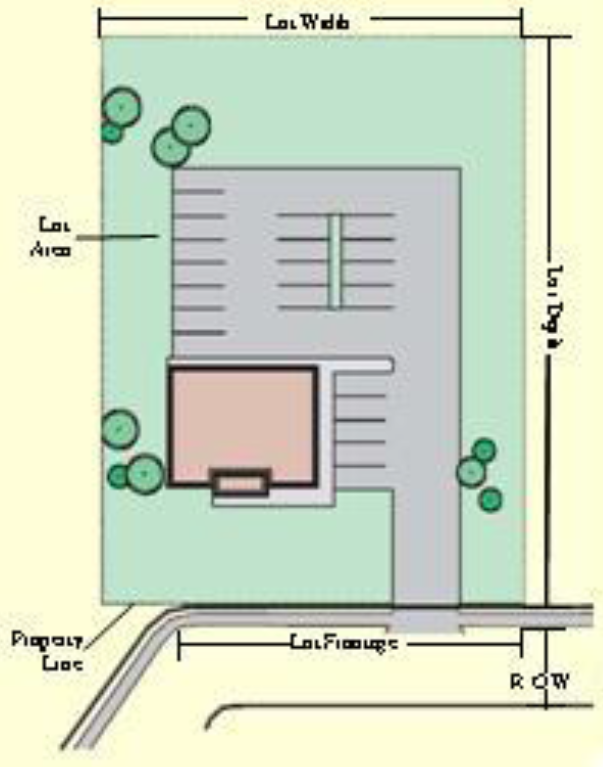 | 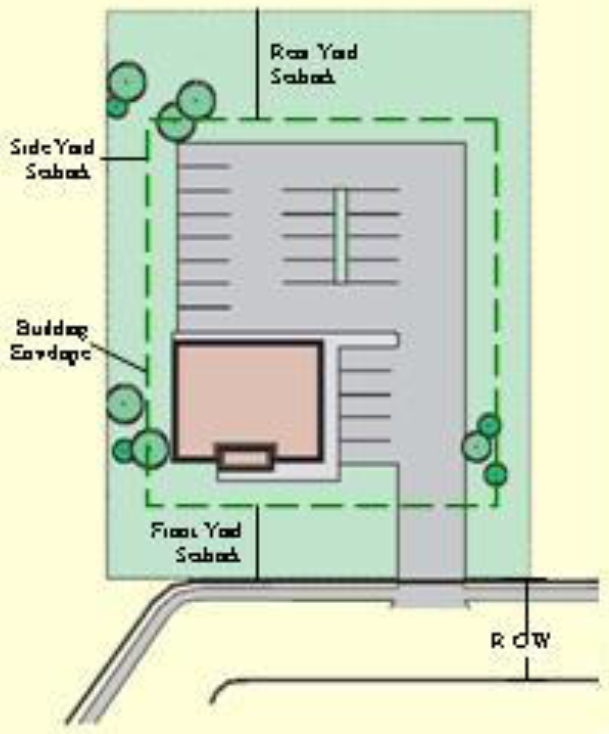 | 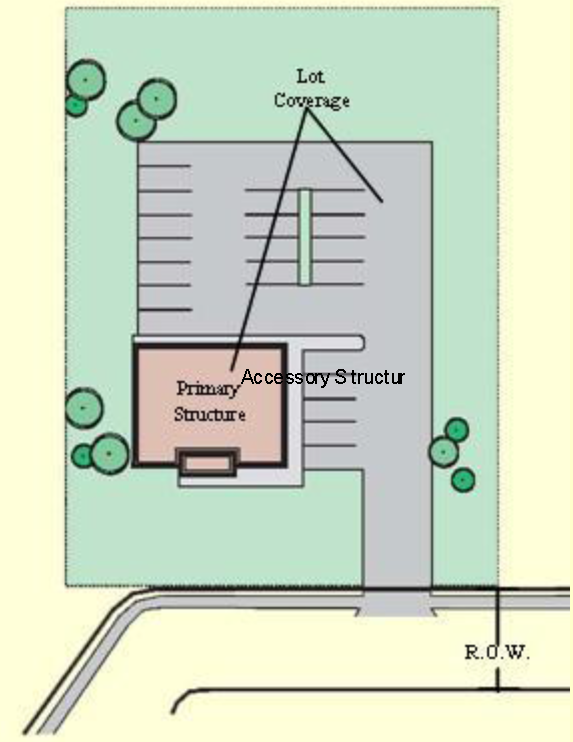 |
| Minimum Lot Area: | Sewer and Water: | Maximum Accessory Structures: |
| • 10,000 square feet | • Requires connection to public water and sewer | • 1 |
| Maximum Lot Area: | Minimum Front Yard Setback: | Maximum Lot Coverage: |
| • None | • 15 feet | • 85% |
| Minimum Lot Width: | Minimum Side Yard Setback: | |
| • 50 feet | • 5 feet for unattached structures | |
| Maximum Lot Depth: | Minimum Rear Yard Setback: | |
| • None | • 25 feet | |
| Minimum Lot Frontage: | ||
| • 100% of the lot width on a public street with pedestrian access from said public street | ||
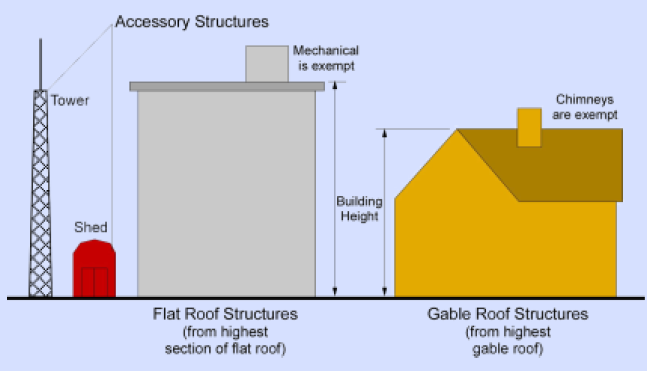 | Additional Development Standards That Apply: | |
| Lot/Yard Standards (LY) | ||
| Height Standards (HT) | ||
| Accessory Use/Structure Standards (AS) | ||
| Performance Standards (PS) | ||
| Public Improvement Standards (PI) | ||
| Maximum Structure Height: | Parking Standards (PK) | |
| • 35 feet for the Primary Structure | Fences and Walls Standards (FN) | |
| • 25 feet for Accessory Structures | Outdoor Lighting Standards (OL) | |
| Note: On street parking counts toward required amount. | ||
3.52 - District Design Standards.
A.
Setbacks. Setbacks shall be as follows:
1.
The minimum front setback shall be fifteen (15) feet, unless an historic established front setback exists that is less than fifteen (15) feet.
2.
The maximum front setback shall be twenty (20) feet, unless the building, or portion thereof is placed behind a pocket park, open space, outdoor dining, or an element of public art.
3.
Properties with multiple street frontages may use the front yard setbacks requirements on each street frontage.
4.
A five-foot side yard setback is required, except in instances where buildings abut one another.
5.
A minimum rear yard of twenty-five (25) feet is required.
B.
Parking Standards. Parking shall be designed as follows:
1.
Parking requirements for sites within walking distance of a heavy rail, light rail, and bus transit station can be reduced by twenty-five (25) percent.
2.
For uses that are ancillary to a larger business, no additional parking will be required (such as a snack shop in an office building).
3.
Shared parking among buildings with different peak periods is encouraged.
4.
For shared parking arrangements, a formal shared parking agreement shall be recorded with the City of College Park.
5.
On-street parking shall be utilized wherever possible. On-street parking directly in front of a building counts towards parking requirements.
6.
Insofar as possible, parking lots shall be located to the rear or side of buildings. Preferably, parking should be located on the interior of parcels and/or blocks in a courtyard configuration, bounded by structures, landscaping or a combination of both. Parking shall not be placed between the front of the building and the street. Off-street parking shall not be located on corner lots.
7.
Shared parking as well as consolidated driveways and curb cuts are strongly encouraged as a method of preserving continuity of street edges.
8.
Parking lots shall be directly connected to a sidewalk leading to the main entrances of all buildings on site.
9.
Parking lot entrances and exits shall be placed away from primary pedestrian routes.
10.
Parking structures:
a.
Where practicable, the ground floor façade of any parking structure abutting a street or walkway shall be wrapped with retail or office uses. Where appropriate, liner buildings shielding the garage from public view should be considered.
b.
Facades shall be designed and architecturally detailed to be compatible and complementary to other uses within the district.
c.
When fronting a street, windows or other openings shall be provided.
11.
Bicycle parking:
a.
Bicycle parking should be as conveniently located as the most convenient automobile spaces (other than those spaces for persons with disabilities).
b.
Bicycle parking should be an integral part of the overall site layout and designed to minimize visual clutter.
c.
Bicycle parking should be provided in a well-lighted area.
d.
Ideally, bicycle parking spaces outside of a building should be located within a one hundred-foot diameter of the primary building entrance.
e.
Bicycle parking areas should, preferably, afford a four-foot wide access aisle to ensure safe access to spaces.
f.
Bicycle parking should be located so as to protect bicycles from automobile damage.
g.
All bicycle racks and lockers should be securely anchored to the ground or building structure.
C.
Materials. Such parking shall be provided in a parking garage or properly graded surface parking facility with the parking spaces comprised of asphalt, concrete, porous pavements or other material approved by staff. Parking areas shall ensure smooth and even pathways to prevent falls and eliminate barriers for walking or wheelchair access.
D.
Screening. Screening shall be as follows:
1.
Parking areas that are adjacent to a public street shall be screened from the public right-of-way with a minimum screen height of three (3) feet above the finished grade of the parking area. The screen may be achieved through utilizing berms, hedges, vegetative buffers, low walls or decorative fences. Chain link fences are prohibited.
2.
Parking garages that are adjacent to a public street shall compliment nearby buildings by utilizing similar façade materials. Architectural design and landscape screening shall be used to ensure that the structure compliments nearby buildings. Monolithic blank walls and continuous strip windows over thirty (30) feet are prohibited. Fenestration patterns closely resembling inhabited buildings; use of devices such as louvers, screens, recesses, projections and other façade treatments; and enhanced landscaping with plants that are at least four (4) feet in height when planted may be used to improve the appearance of the parking structure.
3.
Parking garage height shall not exceed thirty-five (35) feet or the height of the surrounding tree canopy. Whenever feasible, parking structures shall be built into the topography of the site.
E.
Landscaping on Off-Street Parking Lots. Off-street parking lots shall be landscaped as follows:
1.
Off-street parking lots shall be designed to maximize coverage by shade trees. Shade trees in parking lots shall be a minimum of three and one-half-inch caliper.
2.
Off-street parking areas shall provide landscape islands and perimeter landscape strips that provide a cumulative total of at least one shade tree per twelve (12) parking spaces. Each shade tree shall be planted in a planting area at least eight (8) feet wide.
3.
There shall be a minimum curb radius of three (3) feet required on all the corners of all landscape islands and medians to allow for free movement of motor vehicles around planting materials. All islands and medians shall be constructed with raised curbs.
4.
All landscaped islands within parking lots shall be one hundred (100) percent landscaped with deciduous trees (minimum three and one-half-inch caliper size), evergreen shrubs (not to exceed three (3) feet in height at maturity), ground cover (which does not require mowing) and/or flowers in mulched beds.
a.
There shall be a minimum eight (8) feet wide (back of curb to back of curb) curbed landscaped island at the end of every row of parking, equal in length to the adjoining parking spaces. A parking island must be located no farther apart than every twelfth (12 th ) parking space; creating parking bays of no greater than eleven (11) parking spaces in a row. Each island or strip shall contain a minimum of two hundred (200) square feet.
b.
Shade trees shall be planted at a minimum of three (3) feet from any curb, so as to prevent injury to trees by vehicle bumpers. The remaining area of the landscaping strip shall be sodded or planted with groundcover species.
c.
The planting area for a tree shall consist of permeable and well-drained soils with suitable ground cover.
d.
Dead trees and shrubs shall be replaced by the property owner within one (1) month, with three (3) months of waiting time allowed for avoiding planting in peak heat of summer.
e.
Landscape strips at the perimeter of off-street parking lots shall be a minimum width of six (6) feet and shall provide for safe and convenient crossings by vehicles and pedestrians.
f.
Pedestrian pathways in parking lots and pedestrian ways that cross vehicular aisles in parking lots shall be appropriately demarcated with paint or use of pavers.
g.
Parking space dimensions shall be in accordance with the standards set forth in these Ordinances.
F.
Landscaping in On-Street Parking Areas. On-street parking landscaping shall be as follows:
1.
Landscaped bulb-outs and islands shall be built in conjunction with angled or parallel on-street parking so as to foster a more pedestrian-friendly environment in downtown commercial areas. Bulb-outs can improve the visibility between pedestrians and drivers, as well as provide a safe space for pedestrians.
2.
Additionally, bulb-outs shall be used at mid-block crosswalks to facilitate pedestrian movement to parking facilities or businesses. These bulb-outs shall take on a similar design to those used at intersections.
3.
Landscape islands, which provide a place of refuge for pedestrians as they cross intersections, shall be used where deemed necessary by the Engineering Director.
G.
Loading Areas. Loading areas shall be screened from the public right-of-way. Businesses that require service bays shall implement a lot design that reduces unsightly working facilities.
H.
Utility/Mechanical. All mechanical and utility equipment, whether located on the roof, ground or side of building shall be screened from view.
1.
The method of screening shall be architecturally integrated with the structure in terms of materials, color, shape and size.
2.
The design of the screening shall be done in concert with and as a part of the design of the building, rather than as an afterthought.
3.
New development shall bury utilities when possible to avoid a visually cluttered streetscape and to promote a more aesthetically pleasing environment. Utilities placed underground shall be done so in a way that does not preclude future infill or redevelopment from occurring.
I.
Mechanical/Utility/Refrigeration Equipment. Mechanical or utility equipment including utility meters shall be screened from public view. This also applies to outdoor HVAC equipment and outdoor refrigeration units.
1.
The method of screening shall be architecturally integrated with the structure in terms of materials, color, shape and size in such a manner that the equipment is not visible from street level.
2.
Equipment shall be screened with solid building elements (e.g. parapet wall) instead of after-the-fact add-on screening (e.g. wood or metal slats).
3.
Air conditioning units placed in individual windows and window transom areas are prohibited. The front façade of a building shall not be disrupted by the addition of mechanical systems such as air conditioning units.
J.
Waste/Refuse. Refuse containers or dumpsters shall be located in the rear or side yard of a property and shall be screened from view of the public right-of-way.
1.
Screening shall occur by placement of a brick or stacked stone masonry wall with solid gates that reflects the architecture of the proposed development.
2.
The enclosure shall have a minimum height of eight (8) feet, or two (2) feet taller than the highest point of the waste/grease container, compactor or dumpster, whichever is greater.
3.
Gates shall allow access to refuse containers while denying open views of the contents within.
4.
The use of chain link fencing is not acceptable as concealment of mechanical units or waste/grease containers.
5.
No dumpster or refuse container shall be located within fifty (50) feet of a single family residentially zoned property.
6.
The sharing of waste facilities between lessees of commercial developments is strongly encouraged.
7.
All refuse materials shall be contained within the refuse area.
K.
Garbage Containers. Containers shall be as follows:
1.
Garbage cans shall be neatly contained in sheds or in separate screened enclosures.
2.
Garbage storage shall be shielded from public view and shall be within the building property line.
3.
Trash shall be placed at the street edge but shall not be placed in the street so as to obstruct the sidewalk or any area of public vehicular or pedestrian travel.
3.53 - Architectural Design Standards.
Design emphasis is placed on building massing and scale. Massing will be reviewed in the context of building height, number of stories, roof configuration and building groupings. Scale of buildings shall be appropriate to the site in question as it relates to street frontage and pedestrians. New construction shall respect the traditional style of Downtown College Park and shall be in visual harmony with surrounding structures. When abutting established residential areas, as well as other buildings, structures and objects eligible for inclusion in the National Register of Historic Places: New construction, additions, and renovations shall respect and maintain the character and sense of place that defines the neighborhood.
A.
Building Height, Width, Mass and Scale. Building heights and widths shall relate to the existing fabric of downtown and surrounding neighborhoods.
1.
Widths of buildings are encouraged to consist of three (3) to seven (7) bays (window and door divisions).
2.
New buildings that are wider than existing structures shall incorporate a number of smaller bays into the primary façade, to maintain a cohesive scale.
3.
Buildings in excess of three (3) stories or thirty-five (35) feet in height may be appropriate within two thousand (2,000) feet of the College Park MARTA station, subject to a conditional height permit.
4.
Building heights of larger projects shall provide variety. A larger (taller) development shall step down in height to a maximum of thirty-five (35) feet when adjacent to a street with shorter structures on the opposite side or when adjacent to smaller, surrounding structures.
5.
Large lots are encouraged to be developed with several buildings, rather than a single structure in order to help reduce the perceived size of the project.
B.
Orientation. All front façades of the principal building shall face and be parallel to a public street.
1.
Primary building entrances on all buildings should face on a public street, walkway, or plaza, or linked to that street by a clearly defined and visible walkway or courtyard.
2.
Additional secondary entrances should be oriented to a secondary street or parking area.
3.
Residential entries should be separate and distinct from commercial entrances.
4.
Entrances should be clearly identifiable and open directly onto a public sidewalk or plaza.
5.
Primary entrances should be oriented towards transit.
6.
The main entrance of a corner building should be placed on a diagonal and oriented to the intersection.
7.
Non-residential building entries should be designed with one (1) or more of the following:
a.
Canopy, portico, overhang, arcade or arch above the entrance.
b.
Recesses or projections in the building facade surrounding the entrance.
c.
Display windows surrounding the entrance.
d.
Architectural detailing such as brickwork or ornamental moldings.
e.
Planting areas, pots or window boxes for seasonal landscaping.
f.
Use of porches, steps, overhangs, hooded front doors or similar architectural elements to define the primary entrances to all residences.
C.
Building Façade. A variety of sizes is appropriate among primary façades in new developments.
1.
Variations in facade treatment shall be continued through the structure, including its roof line and front and rear facades to reduce the perceived size of the building.
2.
A monotonous appearance of a large building or single façade shall be minimized through the use of architectural elements within the façade which include masonry piers, stepping of the building height and width, different colors or textures, and the variation of windows and awnings.
3.
Building design shall create positive open space in these variations such that they will enhance the streetscape.
4.
Blank lengths of wall exceeding fifteen (15) linear feet are prohibited on all building façades.
5.
Buildings should have a well-defined front façade with primary entrances facing the street.
6.
Buildings should be aligned so that the dominant lines of their facades parallel the line of the street, creating a well-defined street edge with variation rather than monolithic design.
7.
New building facades should have a pedestrian scale aesthetic. This can be accomplished by establishing rhythmic patterns and architectural elements such as windows, columns, rooflines, signage, building materials and colors.
8.
The primary façade(s) (portion viewable by the public from streets and parking lots) of buildings should be articulated into smaller increments through the following or similar techniques:
a.
Stepping back or extending upper floors,
b.
Dividing facades into multiple storefronts with separate display windows and entrances,
c.
Providing awnings, canopies, window bays, balconies or similar ornamental features, and
d.
Varying rooflines to reinforce the articulation of the primary façade.
D.
Buildings are viewed from a variety of vantage points. Consequently the placement of doors, windows, balconies, changes in materials, or roof height, etc. should be designed to provide an attractive and harmonious design on all sides.
E.
Rear facades should be designed as an integral part of the overall building with similar materials and detail treatments.
F.
In general, buildings over two (2) stories should have well-defined horizontal architectural elements such as building base, middle and roofline.
G.
The base, or ground floor, should appear visually distinct from the upper stories, through the use of a change in building materials, window shape or size, an intermediate cornice line, an awning, arcade or portico, or similar techniques.
H.
Portions of upper stories (above the typical design character of the community) should be stepped back from the line of the front façade to minimize the impacts of taller structures. Outdoor terraces, rooftop patios, etc., should be elements occupying the space created by such step-back.
I.
Architectural details such as ornamental cornices, arched windows and warm-toned bands of contrasting materials/color are encouraged in new construction. The contemporary adaptation of historic and vernacular residential, institutional and commercial styles found elsewhere in the municipality is encouraged.
J.
New Construction. New buildings shall incorporate recessed entryways into the design of the building to prevent impeding pedestrian traffic along the sidewalk while a door is opened to enter a commercial building.
1.
The entryway shall be set back from the edge of the sidewalk four (4) to eight (8) feet and may make use of display cases and window panes to integrate this feature into the design of the building.
2.
Buildings located on corner lots shall incorporate design features to provide architectural interest for side walls that are not considered part of the primary façade.
3.
There shall be no exposed plain concrete block for visible portions of all façades.
4.
Tilt up or precast concrete shall be textured with brick, aggregates, form liners, or similar methods to give visual interest to larger expanses of wall.
5.
Landscaping elements shall also be added to break up larger expanses of wall.
6.
Where retail or service-oriented offices front on a public right-of-way, a minimum of seventy-five (75) percent of the affected building façade shall consist of transparent surfaces, such as windows or doorways, to promote visual interest.
7.
Where general office uses front public rights-of-way, a minimum of fifty (50) percent of the affected building façade shall consist of transparent or translucent surfaces.
K.
Roofs. Roofs shall be designed as follows:
1.
The form and pitch of the roof of new construction and additions to existing buildings shall be proportionate to surrounding structures.
2.
During roof repair and replacement, new materials shall match existing materials in scale and texture.
3.
Parapets shall be embellished with detailing and stepped or sloped to achieve a visually interesting yet harmonious sequence along the building façade.
4.
Flat roofs shall be defined with a discernible cornice line. Variations in roof type, height, and or distinct, separate roof segments should be considered as a means of creating greater visual interest, identifying changes in use and areas of ownership, or reducing monotony.
5.
Pitched roofs such as gable, hip, shed or mansard roofs shall be clad with highly durable materials such as standing seam metal, slate, ceramic or fireproof composite tiles. Use of asphalt shingles is discouraged.
6.
Rooflines shall reflect interior and exterior patterns of use or ownership.
7.
Roof ornamentation shall carefully consider sight lines and not allow any views of unsightly surfaces.
L.
Windows and Doors. Architectural design of the structure shall determine the window and door styles selected for a project.
1.
Windows and doors shall follow appropriate rhythm and scale for building massing and frontage, including a pedestrian friendly focus.
2.
The arrangement, size and style of windows and doors shall be proportionate in scale to surrounding structures.
3.
Entrance doors for retail and commercial buildings shall be of glass or contain significant glass to allow visibility into businesses.
4.
Entries shall be recessed to allow the door to swing out without obstructing pedestrian flow.
5.
Where appropriate as determined by the City Planner, sliding/folding doors that allow the activity of the business to open adjacent to and onto the public sidewalk shall be installed.
6.
Replacement windows shall conform as follows:
a.
Windows shall match the original materials or replicate the same appearance.
b.
Windows shall require no major alterations of the openings.
c.
Windows shall match the pane divisions of the original windows.
7.
Bay windows on the front of buildings shall not encroach on the public right-of-way.
8.
Storm windows and doors shall have minimal impact on building façades. Owners shall consider proper weather-stripping and repairs first as an alternative to the installation of storm doors and windows.
a.
New storm windows and doors shall match the color of the existing sash wherever possible.
b.
Clear panes are recommended for storm doors which permit the original door to be fully visible.
M.
Awnings. Awnings, canopies, and other accessory shade structures that do not restrict pedestrian or vehicular movement may encroach over the right-of-way.
1.
Permitted Elements:
a.
Awnings can be made of opaque materials or clear materials (glass);
b.
Permitted materials: cloth or canvas; metal; and glass. Plastic and fiberglass is not allowed.
c.
Awnings shall be architecturally compatible with the building facade.
d.
The scale of the awning, i.e., height, length, depth and overall bulk shall be compatible with the building storefront.
e.
Awnings may be operable so that they can be retracted and lowered to permit the desired level of sunlight throughout the day/season.
2.
Appropriate Awning Forms:
a.
Where the facade of a commercial building is divided into distinct structural bays (sections defined by vertical architectural elements, such as masonry piers), awnings shall be placed within the vertical elements rather than overlapping them. The awning design shall respond to the scale, proportion and rhythm created by these structural bay elements and nestle into the space created by the structural bay, but need not be identical.
b.
Awning shape shall relate to the window or door opening. Barrel-shaped awnings shall be used to complement arched windows while square awnings shall be used on rectangular windows.
c.
Awnings over sidewalks shall overhang the sidewalk a maximum of five (5) feet and shall provide a minimum vertical clearance of eight (8) feet for pedestrians.
3.
Prohibited Elements:
a.
Awnings shall not be made of shiny, high-gloss, or translucent materials.
b.
The use of vinyl or plastic as awning material is prohibited.
c.
Awnings shall not cover distinctive architectural features of the building face, nor shall installation of the awning damage the structure.
d.
Internal illumination of awnings is prohibited.
N.
Rear Entrances. Rear façades shall be designed as an integral part of the overall building with similar materials and detail treatments as the rest of the building. If parking is placed to the rear of a building, the building's rear façade shall be welcoming in appearance. Awnings, landscaping and small wall signs identifying businesses are encouraged. Furthermore, any rear entrance shall provide adequate lighting and be designed to maximize safety.
1.
If no rear building entrance is provided, a signed and lighted walkway to the front or side building entrance shall be provided and adhere to requirements for lighting as addressed in Article 6.36, Outdoor Lighting Standards.
2.
Selective use of tree planting, potted plants and other landscaping shall be used to improve the aesthetics of a rear facade.
3.
A rear customer entry door design shall be compatible with the front door. Special security glass (i.e. wire imbedded) is allowed.
O.
Franchise Architecture. Franchise development is a necessary and vital component to the growth of a community. It remains important to assure that the focus of such development reflects the character of the city, and not merely the tenant. The City of College Park prizes its downtown, and encourages reflecting its architecture within this district.
1.
Appropriate attributes:
a.
To lend the appearance of multi-tenant occupancy, facades of multi-tenant buildings shall be varied in depth or parapet height.
b.
Within multi-tenant occupancy structures, distinct architectural entry identity for individual tenants' entrances shall be provided for suites exceeding five thousand (5,000) square feet of leasable area.
c.
Walls visible from roadways or parking areas shall incorporate changes in building material/color or varying edifice detail such as trellises, false windows or recessed panels reminiscent of window, door or colonnade openings, landscaping or storefront every one hundred and fifty (150) linear feet.
2.
Prohibited elements:
a.
Building elements shall not function as signage. The appearance of "franchise architecture", where the building functions as signage is discouraged. Incorporation of franchise or business design elements unique or symbolic of particular business shall be unobtrusive and secondary to the overall architectural design.
b.
Parking shall not isolate the building from the sidewalk or connecting walkways.
c.
Service windows and stacking lanes.
3.54 - Open Space and the Public Realm.
A.
Design Principles.
1.
All new open space should be designed to easily integrate into the public pedestrian circulation system.
2.
New open space in the transit station area should contribute to the public's safety and provide direct pedestrian access to transit whenever possible.
3.
Open space should be easily accessible to pedestrians. Fences, gates, and signs that create obstacles for pedestrians should be avoided.
4.
Bollards, trees, and other street furniture should be used to protect pedestrians and buildings.
5.
Comfortable and attractive street furniture that is accessible to the physically disabled should be provided in public spaces for public enjoyment and comfort. Street furniture should not be in the main pedestrian walkway.
6.
Public art or amenities (such as sculpture, fountains, murals, artist-designed street furnishings, etc.) should be integrated into all new development regardless if the development is publicly or privately funded.
B.
Landscaping. Landscaping shall be designed as follows:
1.
Size and spacing of landscaping elements shall be consistent with pedestrian-scale development, relate to identifiable streetscapes, and ease the transition between all structures and the pedestrian.
2.
Plant materials and containers shall not encroach upon the minimum five (5) feet pedestrian clear zone that must be maintained on the sidewalk.
3.
The use of window boxes, planters, hanging flower baskets, vines and other seasonal landscaping is encouraged. Window boxes, hanging baskets and planters shall be used around entries, while vines should be used to cover blank walls or other surfaces. All hanging baskets shall provide at least eight (8) feet of vertical clearance for pedestrians.
4.
Landscaping shall be designed to coordinate with building height; designers shall use foresight to identify how plants will look at maturity.
5.
Landscaping shall not only apply to the fronts of buildings, but to the sides and rear as well. Buildings with rear entries or rear parking shall strive to make the entrances as neat and well maintained as the front entrance.
6.
Landscape shading shall minimize large areas of un-shaded pavement. Pavement materials must be chosen for minimal reflected light and glare. The use of pervious materials is strongly encouraged to reduce surface water flows and non-point source water pollution. Sidewalks and pathways shall be designed with concrete and decorative pavers around the border and must be approved by the Engineering Director.
7.
Plant materials along streets and highways shall be selected and placed to avoid blocking sight lines at intersections and curb cuts. Plantings along utility rights-of-way shall not disrupt service or access to overhead or underground equipment and lines.
C.
Transitional Buffers. Transitional buffers are intended to be used in a manner that allows for compatible residential and commercial growth in Downtown College Park. Transitional landscape buffers between TOD development and single-family residential houses can help to mitigate the impact of new development and work to retain the downtown character. Maintenance of these buffers shall be the responsibility of the respective property owners.
1.
Transitional yards between commercial lots and residential areas shall have landscape buffers no less than fifteen (15) feet wide.
2.
Transitional buffers shall have permanent opaque walls or evergreen screening with a minimum height of six (6) feet. Plantings shall be placed close together so as to provide a thick buffer between lots.
3.
Transitional buffers shall be designed in a manner that does not adversely impact pedestrian accessibility.
D.
Streetscape. Property owners in Downtown College Park may install pedestrian benches, tables, trash receptacles, and bicycle racks on private property or by way of a permit from the city if the land belongs to the city. All fixtures shall be in accordance with these standards. The designs for these items are specified below. All developments outside of the downtown area are encouraged to use these standards for guidance to provide a consistent look throughout the city.
1.
Sidewalk Bench Description:
a.
Solid steel bar and wood construction.
b.
Six-foot length with two-inch steel legs and arm rests, with center arm rest.
c.
Color: Black.
2.
Trash Receptacle Description:
a.
Steel rib welded construction.
b.
Sizes available in twenty-four- or thirty-six-gallon capacities.
c.
Color: Black.
3.
Pedestrian Scale Street Light Description:
a.
GranVille prismatic glass acorn luminaire.
b.
North Yorkshire cast aluminum fluted pole.
c.
Cast iron base with steel shaft.
4.
Bicycle Rack Description:
a.
Steel tubular and rib welded construction.
b.
Should enable the frame and one (1) or both wheels to be secured.
c.
Color: Black.
5.
Table Description:
a.
Metal is recommended; plastic, vinyl or similar material is prohibited.
b.
Color: Black exterior or a stained wood finish.
6.
Bollard Description:
a.
Concrete or metal.
b.
Color: Black exterior.
7.
Traffic Signal Mast Arm Description:
a.
Ornamental base and pole top, fluted shaft and curved arm.
b.
Galvanized powder coat finish.
c.
Color: Black.
8.
Planter Description:
a.
Concrete is recommended; plastic, vinyl or similar material is prohibited.
b.
Color: Black exterior.
9.
Specialty Unit Pavers Description:
a.
Architectural interlocking paving stone.
b.
Manufactured concrete paver types A and B.
c.
Color: Stock colors and custom color available.
3.55 - Sidewalks.
A comprehensive sidewalk network for transit oriented areas allows for increased pedestrian mobility, promotes non-motorized methods of transportation and allows for attractive areas for public gathering and outdoor dining. Sidewalks shall be wide enough to accommodate through pedestrian traffic as well as amenities such as street furniture, pedestrian-scaled lighting, trees and landscaping.
1.
Sidewalks connecting the transit facility to key destinations shall be direct, visually unobstructed, pleasing, and provide a safe experience for pedestrians.
2.
Driveway curb cuts should be kept to a minimum on primary pedestrian routes. Instead, create access through shared alleyways wherever feasible.
3.
Where sidewalks interface with driveways, the sidewalk should remain level as it continues across the driveway. Special material differentiating the sidewalk from the driveway is encouraged to ensure motorists understand they are crossing a pedestrian right-of-way.
4.
Sidewalks shall be in compliance with ADA standards for Accessible Design.
5.
Sidewalks shall be located along both sides of all public streets.
6.
All sidewalks shall be accessible with ramps and other safety features, such as traffic strips for sensory canes.
7.
All grade changes along sidewalks shall be clearly marked.
8.
Sidewalks composed of concrete with decorative pavers along the border shall be used on all streets in the downtown commercial area. Concrete sidewalks are appropriate for residential areas.
9.
Sidewalks accompanying new construction shall have a minimum width of eight (8) feet where possible.
10.
Sidewalks accompanying new construction shall include a three-foot minimum "furniture and planting zone" between the back of curb and sidewalk.
a.
Furniture and planting zones may be used as stormwater filtration.
11.
Pedestrian street lights and street tress contained within the furniture and planting zone shall be placed on an alternating pattern so that an equal distance between them is maintained.
12.
Benches and other resting areas shall be appropriately spaced to accommodate the needs of older users.
13.
A minimum of five (5) feet of clear pedestrian access shall be maintained on all sidewalks.
14.
Commercial area sidewalks shall be tapered into adjacent residential areas.
15.
Including space for window shopping and outdoor cafes is encouraged.
16.
Sidewalks are highly encouraged to incorporate the use of porous pavements or pavers that permit the infiltration of storm water wherever feasible.
All sidewalks along state routes shall be designed in accordance with Georgia Department of Transportation specifications.
3.56 - Street Trees.
Street trees shall be required as follows:
1.
Street trees shall be planted in conjunction with each new development project.
2.
Trees shall be spaced a minimum of twenty-five (25) feet on center, depending on species, to provide a more-or-less continuous canopy along the sidewalk.
3.
Required street trees shall be shade trees. However, other types may be used if approved by the City Planner.
4.
A minimum planting area or grating of at least three (3) by three (3) feet shall accompany all street trees.
Tree maintenance, pruning and dead tree replacement schedule and responsibilities shall be designated in consultation with the city.
3.57 - Outdoor Dining.
Outdoor seating for restaurants in and outside of the downtown area is an attractive feature and is highly encouraged. It maintains the historic feel of the area by bringing restaurant patrons into the public realm while dining. However, standards must be in place to ensure this practice does not infringe on the rights of others.
1.
Restaurants may place one (1) row of tables outside their place of business unless the building setback permits a greater number of rows. These tables shall be placed adjacent to the front wall of the building, fronting the public right-of-way.
2.
Tables shall not extend beyond the front property line of the restaurant or encroach upon the front building line of adjacent businesses.
3.
Tables may extend into the public right-of-way upon approval by the City Planner and the acquisition of a permit issued by the city.
4.
Dining tables shall not be wider than five (5) feet in diameter.
5.
Access to public stairways shall not be blocked. Tables and chairs shall not interfere with any utilities or other facilities such as telephone poles, fire hydrants, signs, mailboxes, and benches located on the sidewalk or in the public right-of-way.
6.
Tables and chairs shall not impinge on any required clear distances for maneuvering around entrances or exits. The outdoor dining area shall be accessible to disabled patrons and employees.
7.
A minimum of five (5) feet of clear pedestrian access shall be maintained on all sidewalks.
8.
Umbrellas shall be of quality construction and must be designed to be secure during windy conditions. No portion of the umbrella shall be lower than seven (7) feet above the sidewalk.
3.58 - Street Design.
Streets should be designed, constructed, operated and maintained so that pedestrians, bicyclists, transit riders, motorists and people of all ages and abilities can travel safely and independently.
1.
Streets and sidewalks shall be in compliance with ADA standards for Accessible Design.
2.
Construct continuous pedestrian facilities along all major streets and highways; these shall be direct and interconnect with all other modes of transportation.
3.
Provide safe, secure and convenient facilities for pedestrians into and within commercial development.
4.
Pedestrian crossings shall be adequately marked and signed according to the GDOT Pedestrian and Streetscape Guide.
5.
Relate sidewalk design to the function and the anticipated amount of pedestrian traffic.
6.
All ramps and curb cuts throughout the pedestrian system shall be constructed according to ADA guidelines.
7.
Provide continuous, clearly marked bicycle lanes in accordance with GDOT's Pedestrian and Streetscape Guide wherever possible, especially in congested areas.
8.
Design bikeways and multi-modal facilities to meet a wide range of user needs. Design bikeway and walkway capacity to accommodate the anticipated use.
9.
Provide adequate signage of bikeways and paths.
10.
Provide bicycle parking in commercial and recreational areas.
11.
Incorporate Federal Highway Administration (FHWA) design guidelines for older drivers and pedestrians.
3.59 - Lighting.
Good outdoor lighting serves a number of uses by increasing safety and enhancing the city's nighttime character. However, improperly designed and/or installed lighting can create problems of excessive glare, light trespass, decreased safety and higher energy use. These standards are established to define appropriate lighting characteristics.
A.
General Lighting Guidelines.
1.
Lighting shall be designed to control glare, minimize light trespass onto adjacent properties, minimize direct upward light emission, promote effective security, and avoid interference with safe operation of motor vehicles. The minimum intensity needed for the intended purpose shall be used. This paragraph is not intended to preclude the use of decorative lantern fixtures with visible lamps.
2.
All parking areas, walkways, vehicle entrances and service/loading areas shall provide area lighting sufficient to achieve a minimum of 2.4 foot candles of light as measured at grade or ground level.
3.
Lighting fixtures in parking areas shall be located to assure adequate light levels without displacing planned trees. Light fixture placement shall be shown on landscape plans.
4.
Lighting fixture height, style, design and illumination levels shall be compatible with the building design and height and shall consider safety, function and aesthetics. Lighting fixtures installed along sidewalks shall be pedestrian scale and shall not exceed fourteen (14) feet.
5.
Lighting may be used to illuminate buildings, landscaped medians/islands and grounds for safety purposes and to enhance appearance. The visual effects of such lighting shall be subtle.
6.
Lighting attached to building exteriors or mounted on the ground to reflect upon building exteriors shall be consistent with the architectural style of the building.
7.
Lighting of logos should be compatible with the primary building and respect adjacent buildings. Bright and intense lighting is strongly discouraged.
8.
Blinking, moving or changing intensity of illumination signs are prohibited.
9.
Security lighting shall be shielded and shall focus on the side or rear entry door.
10.
Specialty lighting on outdoor patios, terraces, walkways, and trees helps create a festive atmosphere and encourages nighttime use by pedestrians.
11.
Some alleys and pedestrian ways may also employ a custom decorative lighting system which spans the breadth of the alley. With owner permission, this fixture type could be used in narrow locations where adequate wall support is available.
3.60 - Scope; Purpose.
A.
Scope. The regulations set forth in this article, or set forth elsewhere in this ordinance when referring to this article, are the regulations of the "T" Transportation Overlay District.
B.
Purpose.
1.
The purpose of the Transportation Overlay District is to provide for the regulation of vehicle parking facilities which either serve as the primary use of a parcel of property or are unrelated to the primary use of such property. These facilities include, but are not limited to, airport parking and shuttle services, car rental agencies and offsite airport related employee parking. College Park's proximity to the airport, as well as access provided by the transportation system, make it a prime location for development of such enterprises. In addition, displacement of past uses of properties adjoining Atlanta Hartsfield Jackson International Airport have created large tracts of vacant land near the airport suitable to meet this market demand.
2.
Proliferation of such facilities in an uncontrolled and unplanned manner is not in the best interest of the City of College Park. Such facilities involve vast areas of pavement characterized by three unique features, i.e., a visual "sea of cars", significant stormwater runoff and introduction of significant vehicle traffic. Improper location of such facilities results in negative impact on traffic patterns as well as a strong negative visual impact on surrounding development. Establishment of a Transportation Overlay District which will accommodate such facilities in a concentrated, accessible location is preferred in order to ameliorate the negative effects of such uses. Accordingly, this "single purpose" district is established to concentrate such facilities in specific locations, to buffer such facilities by perimeter landscaping, thereby minimizing the visual impact on the traveling public and surrounding development. Concentration of such facilities further allows economies in the provision of common stormwater detention facilities which might otherwise be constructed on individual sites.
3.
This district is intended as an overlay district allowing establishment of vehicle parking facilities within the configuration of the allowable T-District boundaries in BP, OP, C-2, C-3, HC; M-1 and M-2 Districts. Uses otherwise authorized as permitted uses in the underlying district continue as permitted uses.
(Ord. No. 2019-03, § 1, 3-18-19)
3.61 - Definitions.
For purposes of this article, the following terms shall have the meanings respectively ascribed to them:
1.
Airport parking and shuttle services mean those parking facilities designed primarily to serve Atlanta Hartsfield Jackson International Airport. Such facilities allow parking for a fee on an hourly, daily, weekly or other periodic basis and may provide shuttle services between the parking facility and the airport terminal or other airport use. Commercial parking lots which primarily serve the airport and its related activities but which do not provide shuttle services are nonetheless included in this definition.
2.
Car rental agencies mean those businesses which have as their primary purpose, or as a significant purpose, the furnishing of motor vehicles for hire on a periodic basis and which store vehicles pending their rental so that such vehicles may be available for rental or lease.
3.
Airport related employee parking means parking, whether privately owned or governmentally owned, reserved for employees of Atlanta Hartsfield Jackson International Airport or employees working for any person, firm or corporal provides airport related services associated with the airport.
4.
Vehicle parking facilities means surface lots or parking decks dedicated for the parking of vehicles either as a primary use of a parcel of property or as a secondary use of property unrelated to the property's primary use.
(Ord. No. 2019-03, § 1, 3-18-19)
3.62 - Use Regulations.
The following uses are permitted in the Transportation Overlay District:
1.
Airport parking and shuttle services;
2.
Car rental agencies;
3.
Airport related employee parking;
4.
Transit system or other public parking lots and parking garages;
5.
Vehicle cleaning and minor maintenance facilities associated with a car rental agency, via contractual agreement or actual ownership;
6.
Accessory buildings; and
7.
Reserved.
(Ord. No. 2019-03, § 1, 3-18-19)
3.63 - Parking and Loading Regulations.
In addition to the parking spaces made available to the public or other persons designated to use such parking facilities, the following parking and loading requirements shall be established for the underlying business:
1.
Employee parking: A minimum of one (1) space per employee on the shift of greatest employment.
2.
Loading space: A minimum of one (1) loading space in conformity with article III of this appendix.
(Ord. No. 2019-03, § 1, 3-18-19)
3.64 - Height Limits.
No building or parking deck shall exceed thirty-five (35) feet in height.
(Ord. No. 2019-03, § 1, 3-18-19)
3.65 - Area Regulations.
A.
Front yards. There shall be a front yard having a depth of not less than forty (40) feet.
B.
Side yards. There shall be a side yard having a depth of not less than twenty (20) feet; provided that where such use adjoins the outer perimeter of the "T" District, such side yard may not be less than thirty (30) feet.
C.
Rear yards. There shall be a rear yard having a depth of not less than twenty (20) feet; provided that where the use adjoins the outer perimeter of the Transportation District such rear yard shall be a minimum of thirty (30) feet.
D.
Within the Transportation District no parking, whether on surface lots or in parking decks, shall be permitted in any of the required yard setbacks.
(Ord. No. 2019-03, § 1, 3-18-19)
3.66 - Buffers.
A.
The potential for negative visual impact on adjoining uses by Transportation District uses is substantial. Therefore, buffers are required for the protection of adjoining land uses.
B.
A natural or man-made planted buffer shall be maintained along the property boundary of any "T" District use which abuts a non-"T" District use according to the following schedule:
1.
Residential districts: A buffer having a minimum horizontal dimension of forty (40) feet shall be provided, provided that should the applicant wish to establish a bermed buffer, such buffer may be reduced to thirty (30) feet for a berm six (6) feet high and thirty (30) feet in depth.
2.
Business park, office park and commercial uses: A buffer having a minimum horizontal dimension of thirty (30) feet shall be provided, provided that if the owner prefers, a six (6) feet high bermed buffer of twenty (20) feet in depth is allowable.
C.
Buffers shall be permanently maintained as indicated on the approved site plan, subject to inspection by the building inspector, and consistent with any other property improvement. The dimension of the buffer shall not be in addition to any other landscaping requirements of this article.
D.
As the purpose of the buffer is to visually screen and distance the uses of the "T" District from adjoining uses one-half (½) of all plant materials shall consist of one (1) or more species that retain foliage throughout the year. Provision of opaque fencing, though desirable, shall not decrease the horizontal dimension of the required buffer.
E.
Within the Transportation District, those uses identified as permitted uses may utilize the buffer requirement in computing the overall percentage of landscaping required by Article XI-C of this appendix. Internal landscaping of the area reserved for parking and paved for that purpose is not required, provided that no decrease in the overall percentage of landscaping on the lot shall be made.
(Ord. No. 2019-03, § 1, 3-18-19)
3.67 - Parking Area Layout, Construction and Maintenance, and Landscape Requirements.
All provisions of Article VIII of this Ordinance shall apply to the Transportation District, provided that internal landscaping may be eliminated for the permitted uses in the Transportation District so long as the overall percentage of landscaping required is not diminished for the lot.
(Ord. No. 2019-03, § 1, 3-18-19)
3.68 - Buses and Large Commercial Vehicles.
Where ten (10) per cent or more of the available parking space is to be utilized by buses, vans, or other vehicles of a gross weight of excess of three thousand five hundred (3,500) pounds, additional screening shall be provided sufficient to screen the parking of such oversized vehicles from all adjacent uses.
(Ord. No. 2019-03, § 1, 3-18-19)
3.69 - Installation of Parking Decks.
Where an owner within the "T" District seeks to construct a parking deck, such deck shall be constructed in accordance with all building codes and fire safety codes in effect within the City of College Park.
(Ord. No. 2019-03, § 1, 3-18-19)
3.70 - Site Plan Review.
A site plan shall be submitted to the building inspector for all development under this Article. Such site plan shall show the parking layout meeting the requirements of "parking space" of Article III of this appendix and the design requirements of Article XI-C of this appendix for access driveways and turnaround. Additionally, the site plan shall show the proposed landscaping and the hydrology elements necessary to meet the city's Soil Erosion and Sedimentation Control Ordinance. The site plan shall be accompanied by a traffic study.
(Ord. No. 2019-03, § 1, 3-18-19)
3.71 - Non-Conforming Lots.
Vehicle parking facilities, as defined by this Article, in existence in the city at the time of enactment of this Ordinance which are permitted uses under the "T" District but which are not located within such district shall be nonconforming uses and subject to Article XVIII of this Appendix. No expansion of a nonconforming parking facility may be made which extends its perimeter boundaries on the ground; i.e., where existing boundaries of a parking facility touch the proposed expansion on two (2) or more sides of a lot, the additional lot may be included within the parking facility. Upward expansion by installation of parking decks in permitted for nonconforming uses under this section.
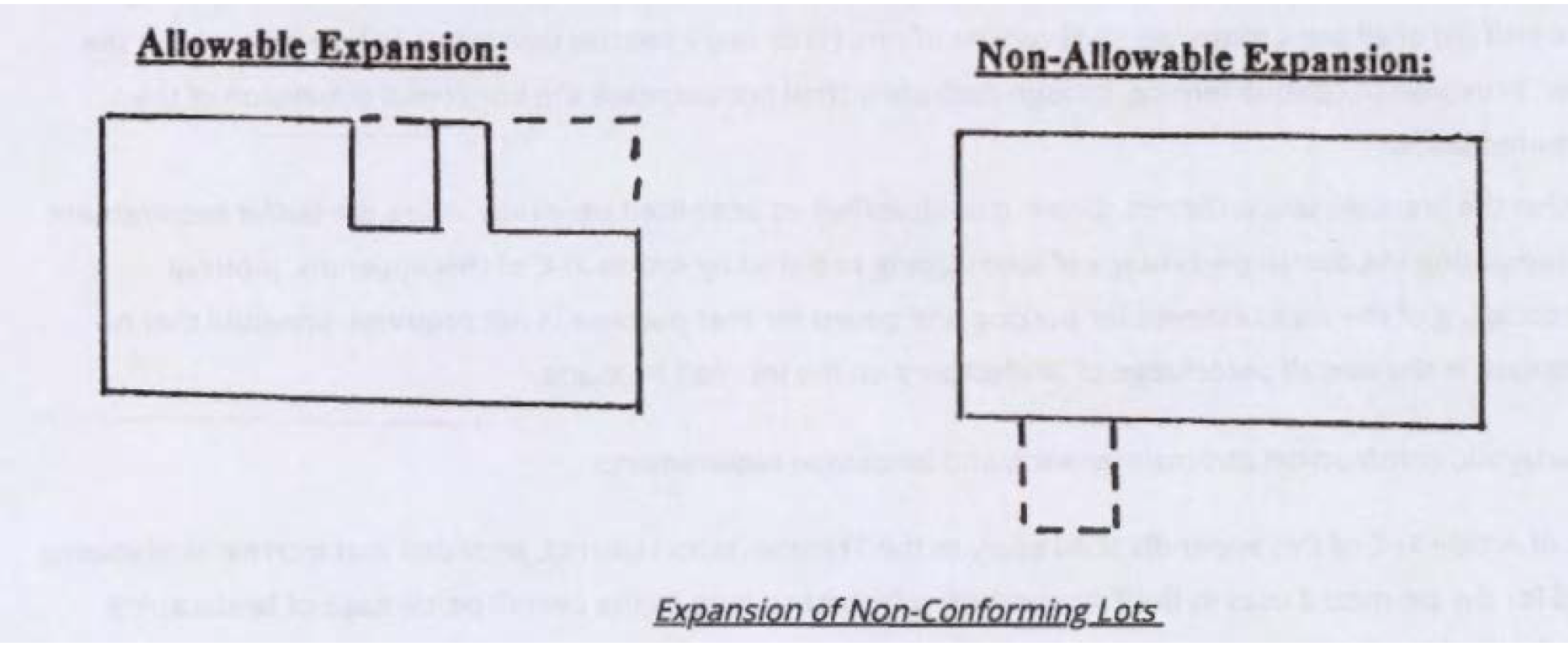
(Ord. No. 2019-03, § 1, 3-18-19)

