
Dearing City Zoning Code
ARTICLE XI
- SOLAR LAND USE
Sec. 44-231. - Administration.
(a)
Rules of construction. Standard rules related to the structure and use of these regulations include, but are not limited to, the following:
(1)
The interpretation and application of the provisions of this article shall be held to serve as the minimum requirements necessary to promote the health, safety, and general welfare of the citizens of unincorporated McDuffie County.
(2)
Where there is a conflict between any of the provisions of this article, the more restrictive provision shall prevail unless the specific language of the regulations requires a different interpretation.
(3)
Where an amendment to the provisions of this article has been adopted by the Board of Commissioners of McDuffie County and the adopted amendment conflicts with a preexisting provision found in this article, the provision which is more restrictive shall prevail.
(4)
Purpose statements are not regulatory standards but rather descriptions of intent that guide the application, interpretation, and administration of this article.
(5)
Figures, graphics, and illustrations, and supporting captions related to such items, are not regulatory standards, but are included to assist in the interpretation of the provisions of this article. Where there is an inconsistency between a figure, graphic, and illustration, and supporting captions related to such items, and the written text of a provision herein, the written text shall control unless the specific language of the regulations requires a different interpretation.
(Ord. of 8-18-15(1), Art. 1)
Sec. 44-232. - Definitions and interpretations.
(a)
Terms and definitions—solar land uses. For purposes of this article, certain terms and words related to solar land uses, and associated legal, scientific, technical, and general terms, are hereby defined, and shall have those meanings ascribed to them as provided herein. All other words and phrases shall assume their common, ordinary meaning, unless the context clearly requires otherwise, or a specific definition has been ascribed to them as provided within a separate section of this article.
(b)
Categories of solar land uses. The terms and definitions provided in this subsection refer to the types of principal and accessory solar land uses that are regulated by the provisions of this article. For purposes of categorizing and defining solar land uses, the terms herein may be considered "umbrella" in nature, meaning that they encompass a wide variety of utility scale solar collection, conversion and transmission systems for off-site power consumption as well as small-scale individual systems intended for on-site power consumption for uses such as a residence or business. Some of the terms provided in this section are augmented by supporting figures and/or representative illustrations.
(1)
Solar energy system: A system capable of collecting and converting solar radiant energy (through direct, diffuse, and/or reflective collection) into heat, mechanical, or electrical energy and transfers the produced electricity in to a separate apparatus to store or to a point of use which include, but are not limited to, water heaters, interior space heaters or coolers, or electrical energy generation. Solar energy systems primarily consist of solar collection devices and mechanical equipment related to solar energy (transformers, inverters, etc.).
(2)
Solar energy system, principal (PSES): A solar energy system which is the principal or primary use on a single lot or parcel which is used to collect and convert solar energy into usable electricity using on-site equipment for the primary purpose of transmitting electricity off-site to be used by an electric utility. There systems include all uses defined by the North American Industry Classification System (NAICS) under Code 221114 which includes solar farms. (See figures B.1 and B.2).
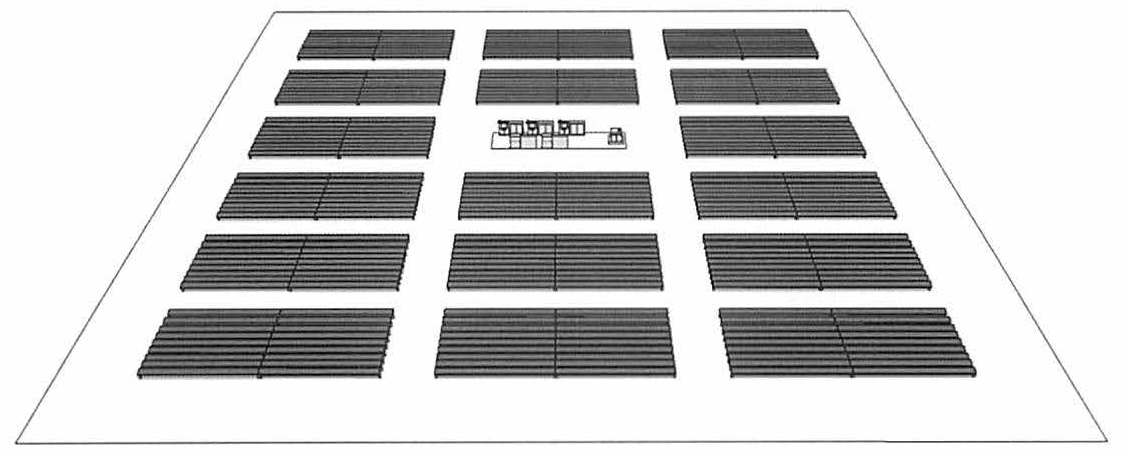
Figure B.1: A principal solar energy system may occupy an entire lot.
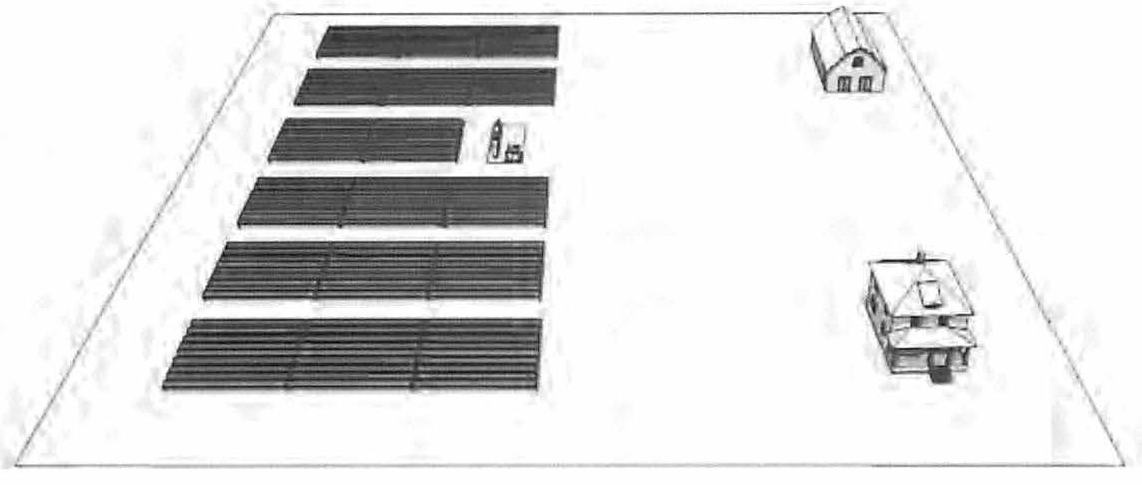
Figure B-2: A property owner may choose to subdivide their property and place a solar
farm on one of the newly created lots thus creating a principal use for that lot.
(3)
Solar energy system, accessory (ASES): A solar energy system that is an accessory use to the principal use of a property, meaning it is incidental to the principal use and is subordinate in area or purpose. Accessory systems may be roof-mounted, ground-mounted or parking-mounted. (See figures C.1 and C.2).
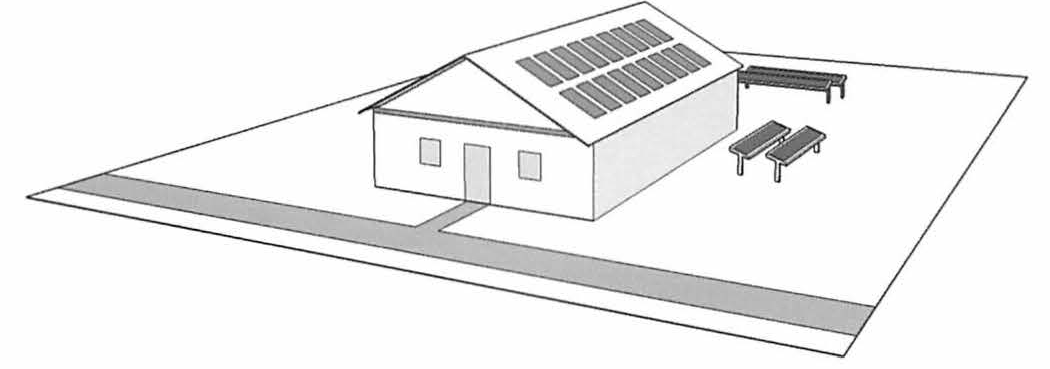
Figure C.1: Accessory solar energy systems may include building-mounted and/or ground-mounted
systems, as shown in this illustration. They may be allowed in front, side or rear
yards, although some restrictions may apply.
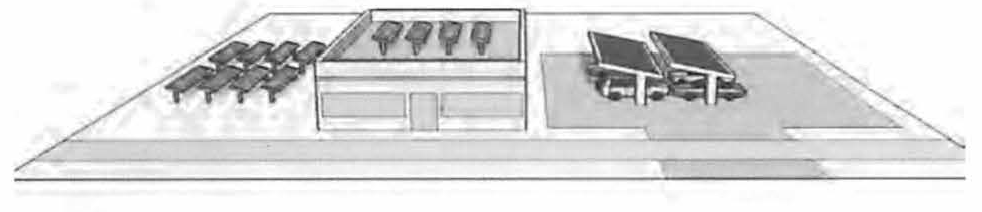
Figure C.2: Accessory solar energy systems can also include parking-mounted systems,
as illustrated above. An accessory system can include any combination of building-mounted,
ground-mounted or parking-mounted systems, subject to additional conditions.
(c)
Methods of collection. Solar collection systems come in a variety of configurations, utilize variable technologies and materials, and incorporate interrelated structures and components, in order to actively collect, convert, and transmit solar radiant energy in a safe and efficient manner. The terms and definitions provided in this subsection represent some, but not all, of the solar collection structures and components related to the solar land uses regulated by the provisions of this article:
(1)
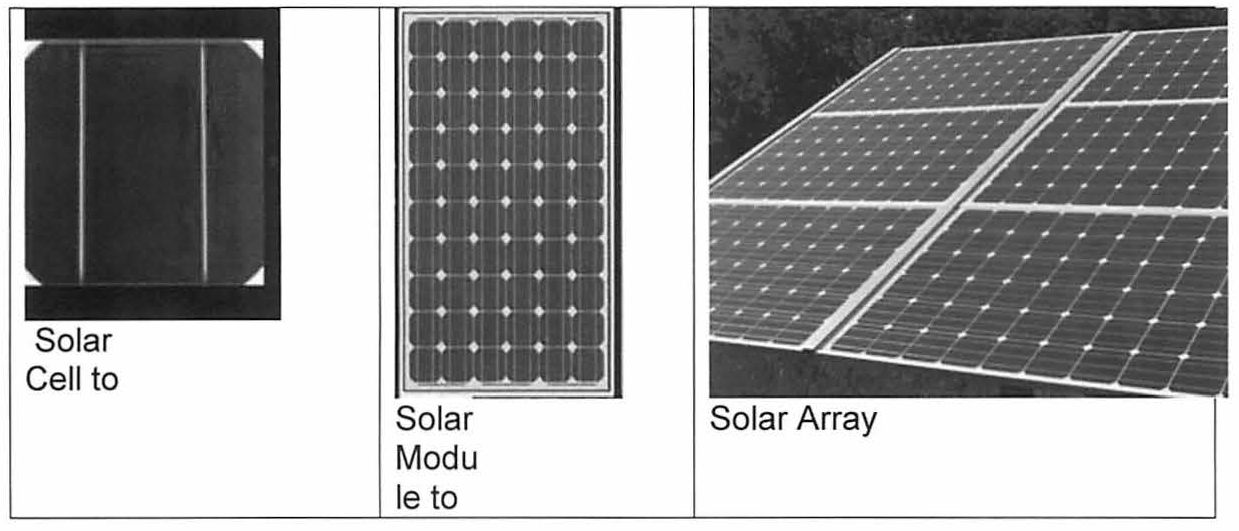
Solar photovoltaic (PV) systems: A solar collection system which produces electricity by the use of photovoltaic cells which generate electricity when exposed to sunlight. A PV system may be roof-mounted or ground-mounted. Photovoltaic systems are generally comprised of the following components:
(2)
Solar thermal systems: A solar collection system which produces electricity by the use of photovoltaic cells which generate electricity when exposed to sunlight. A PV system may be roof-mounted or ground-mounted. Photovoltaic systems are generally composed of the following components:
a.
Flat plate collection: System which collects solar radiation to heat a liquid which in turn will be used to heat water or enclosed areas. This system generally contains a plate (panel) over tubes housed in a shell.
b.
Evacuated tube collection: System generally composed of hollow tubes which contains a liquid used for the purpose of heating large volumes of water or heat water to a high temperature.
(3)
Concentrated solar systems: A solar collection system that uses mirrors or lenses to concentrate sunlight and create temperatures high enough to heat water or fluids to drive steam turbines that in turn create electricity.
a.
Parabolic trough: Curved mirrors are used to focus the sun's radiant energy onto a receiver tube that runs down the center of a trough. High temperature transfer fluid passes through a heat exchanger to heat water.
b.
Compact linear Fresnel reflector: Similar to the parabolic trough, with the exception of long parallel rows of mirrors being used as a lower-cost option.
c.
Power tower: Structure where mirrors are used to focus the radiant energy of the sun on a receiver at the top of a tower to heat transfer fluid to produce steam.
(d)
Solar energy system structures and components. The terms provided in this subsection include legal, scientific, technical, and other general terms that are referenced in the provisions of this article, for which the inclusion of a related definition may assist in the application, interpretation, and administration of the provisions of this section.
(1)
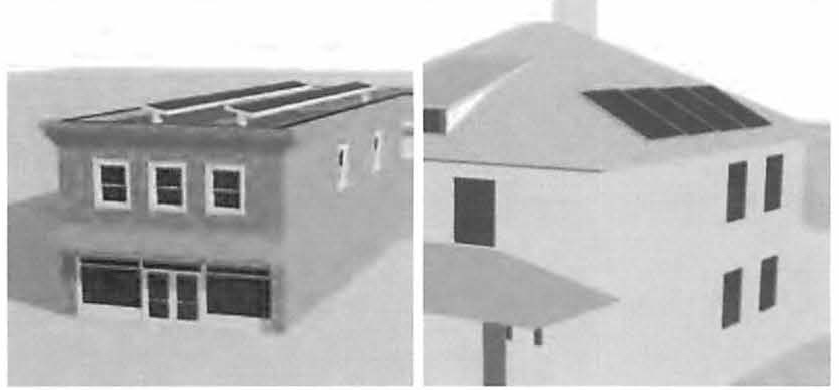
Building-mounted solar energy system: A solar energy system in which solar panels are mounted on top of a roof or on the side of a building. (See Figures 2.4 A1 and A2). Building-mounted systems may be flush-mounted or non-flush-mounted.
Figures 2.4.A1 and 2.4.A2 (Building-mounted examples)
(2)
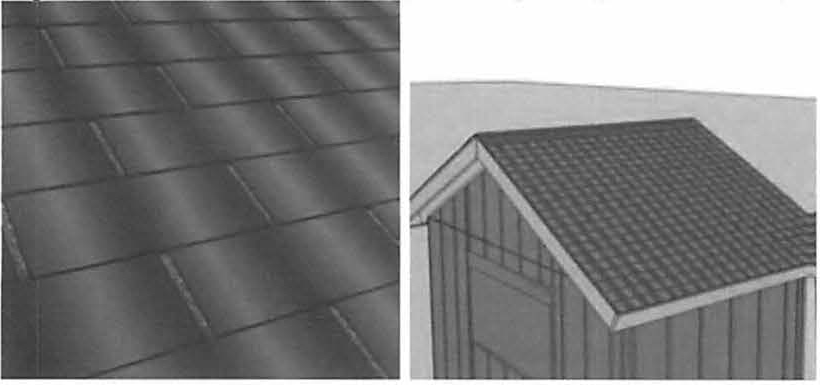
Building-integrated solar energy system: A type of building-mounted system that is an integral part of a building rather than a separate device, replacing a typical component of a building. Examples include, but are not limited to, solar energy systems that are contained within roofing materials, windows, skylights and awnings. (See figures 2.4 B1 and B2.)
Figures 2.4.B1 and 2.4.B2 (Building-integrated examples)
(3)
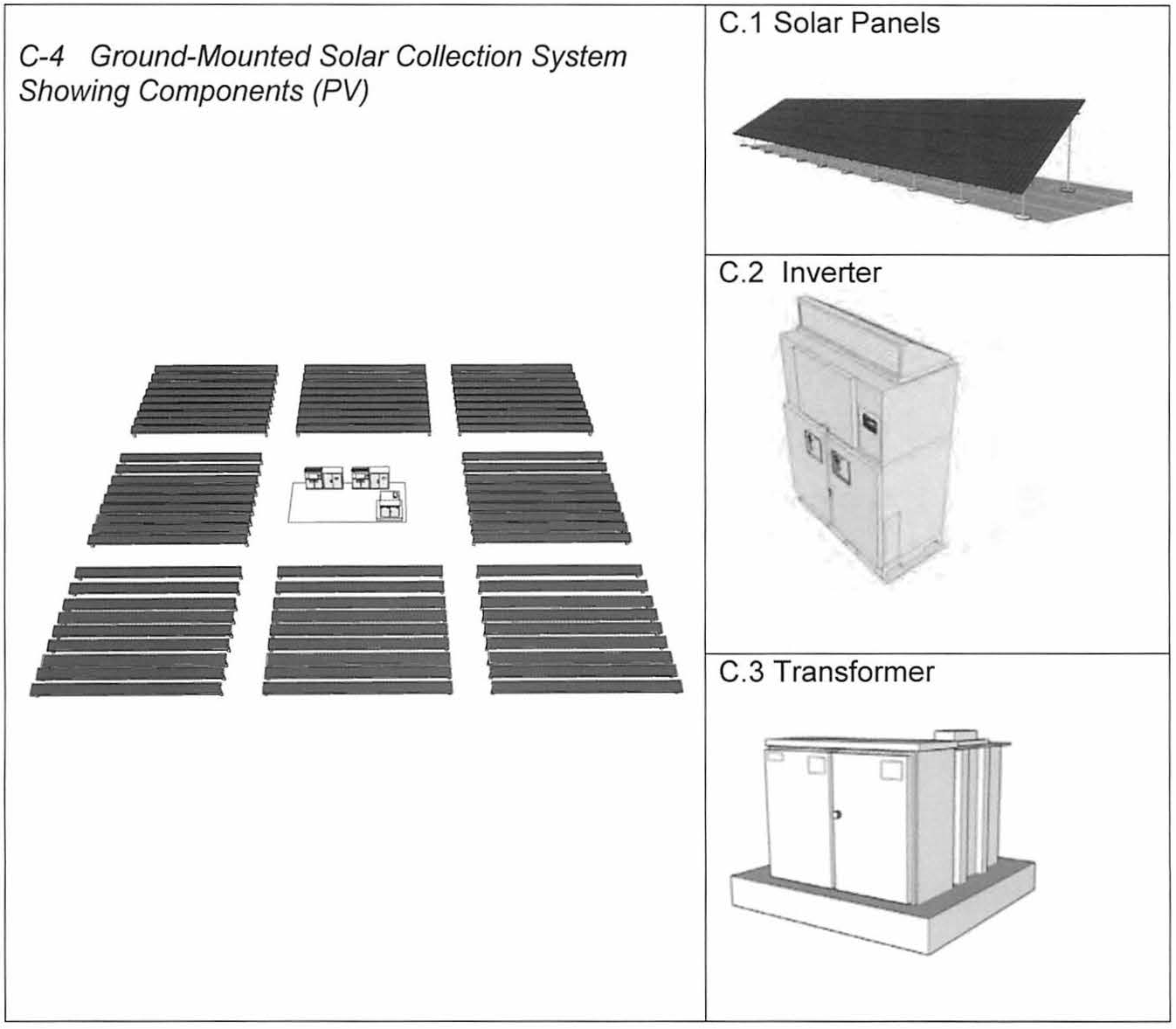
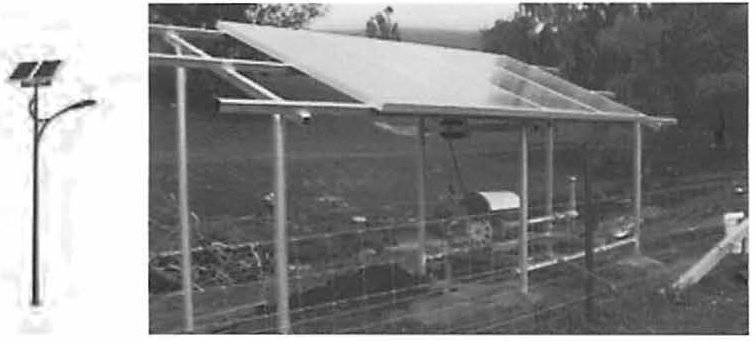
Ground-mounted solar collection system: A solar energy system that is directly installed in the ground and is not attached or affixed to an existing structure. This can include pole-mounted systems that allow for the tracking of the sun.
Figures 2.4.C1, 2.4.C2, 2.4.C3 and 2.4.C4 (Ground-Mounted Solar Collection System
examples)
(4)
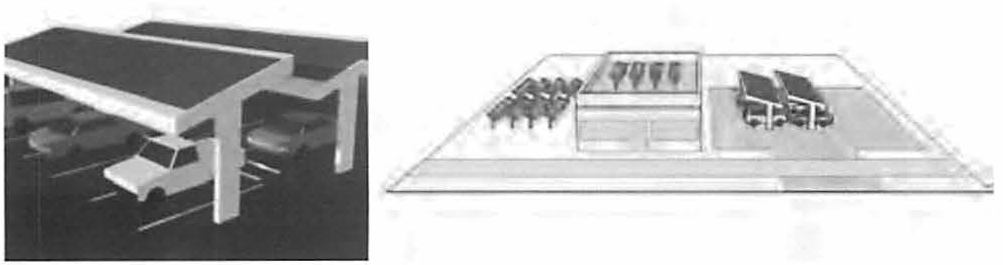
Parking-mounted solar collection system: A solar energy system that is installed above a paved surface vehicle parking area. Parking-mounted systems may cover any amount of parking spaces on a parcel but may not be installed in such a way that prevents the use of more than ten percent of existing spaces. (See figures 2.4.D1 and D2). A system mounted on top of a parking garage would be considered a building-mounted system. Such systems cannot impact the minimum number of parking spaces or the dimensions of parking spaces as required by McDuffie County Land Development Ordinance.
Figures 2.4.D1 and 2.4.D2 (Parking-mounted examples)
(5)
Solar panel: For the purpose of this article, a solar panel may refer to a solar module or surface component of a flat plate collector. Solar panels are meant to absorb, not reflect, sunlight.
(6)
Power inverter: A device that inverts the direct current (DC) electricity produced by a solar PV system into usable alternating current (AC).
(7)
Mechanical equipment related to solar energy systems: All items not listed in these definitions that are directly related to a construction and operation of a solar energy system including, but not limited to on-site transmission lines, pumps, batteries, inverters, mounting brackets, framing, foundations or other structures, etc.
(8)
Off-grid solar photovoltaic system with battery back-up: Solar PV electricity system designed to operate independently from a local utility grid and provide electricity to a building, boat, recreational vehicle, sign, remote pump, gates, etc. These systems usually require a battery bank to store electricity generated by solar for use at night or a rainy day.
Figures 2.4.D1 and 2.4.D2 (Parking-mounted examples)
(e)
Other terms related to solar land uses. The terms provided in this subsection include legal, scientific, technical, and other general terms that are referenced in the provisions of this article, for which the inclusion of a related definition may assist in the application, interpretation, and administration of the provisions of this section.
(1)
Solar energy easement: Easement that limits the height or location, or both, of structures or vegetation, or both, for the purpose of providing access to sunlight.
(2)
Solar glare: The effect produced by light reflecting from a solar panel with an intensity sufficient to cause annoyance, discomfort, or loss in visual performance and visibility.
(3)
Solar collector coverage: A solar energy system that is an integral part of a building rather than a separate device, replacing a typical component of a building. Examples include, but are not limited to, solar energy systems that are contained within roofing materials, windows, skylights and awnings.
(4)
Kilowatt (kW): A measure of the use of electrical power equal to 1,000 watts.
(5)
Kilowatt-hour (kWh): A unit of energy equivalent to one kilowatt (1 kW) of power expended for one hour.
(6)
Megawatt (MW): A measure of the use of electrical power equal to 1,000 kilowatts.
(7)
Megawatt-hour (MWh): A unit of energy equivalent to one megawatt (1 MW) of power expended for one hour.
(8)
Roof pitch: The final exterior slope of a building roof calculated by the rise over the run, typically, but not exclusively, expressed in twelfths such as 3/12, 9/12, 12/12.
(9)
Flush-mounted: A type of building-mounted system in which there is no space between the solar panels or collectors and the structure of the building.
(10)
Solar farm: Solar farm is a term used to describe large-scale solar energy systems. These facilities are typically larger tracts of land containing hundreds of arrays of photovoltaic panels covering the majority of a parcel. A solar farm development is associated with a principal solar energy systems.
(11)
Solar garden: Solar garden is a term used to describe a small-scale solar energy system that is sometimes operated under the form of a cooperative. These facilities generally contain a smaller amount of arrays for the purpose of sharing the benefit of energy production. A solar garden development is usually associated with accessory solar energy systems.
(12)
Mobile home park solar energy system: A solar energy system installed in a mobile home park is defined as a principal solar energy system (PSES) and shall follow all application procedures for a principal solar energy system (PSES).
(Ord. of 8-18-15(1), Art. 2)
Sec. 44-233. - Solar energy systems—Regulations.
(a)
Applicability. All solar energy systems are subject to supplemental and use-specific regulations. Principal solar energy systems and accessory solar energy systems referenced as a special use require legislative approval as provided by this article and are subject to all conditions listed in applicable sections of this section and may be subject to additional conditions of the legislative body. Accessory solar energy systems referenced as administrative permit uses may be approved by the zoning administrator subject to the adherence to the conditions listed in the applicable sections of this section.
(1)
Land uses listed in table 3.1 shall be permitted with conditions or permitted as a special use in each applicable zoning district. Uses shall not be permitted, buildings and structures associated with such use shall not be erected, structurally altered or enlarged on property, unless said use is permitted within the applicable zoning district as listed in table 3.1 and in accordance with one of the following designations:
"P" (Permitted use) - Indicates that the use is permitted in the zoning district.
"AP" (Administrative permit) - Indicates the use is permitted in the zoning district subject to administrative review and use-specific requirements contained in section 44-235.
"S" (Special use) - Indicates that the use may be permitted by the governing body subject to use-specific requirements contained in section 44-234 and procedural requirements listed in the city/town/county ordinance.
(2)
Any listed use that does not have a letter P, AP, or S listed in a particular zoning district is prohibited in that zoning district.
(3)
The size of any solar system within this jurisdiction shall be determined based first upon the square footage of all equipment and, if necessary, second upon electrical capacity of the system.
Table 3.1: Solar Energy System—Application Review Process
S - Not permitted by right but are subject to approval by a locally appointed and elected body.
AP - Permitted by right but are subject to additional land-use specific provisions (administrative process).
P - Permitted by right and are processed through building permit procedures.
(Ord. of 8-18-15(1), Art. 3)
Sec. 44-234. - Regulations for specific land uses or supplemental use requirements—Principal solar energy systems.
(a)
Dimensional requirements.
(1)
Minimum lot sizes. The minimum lot size needed to place a principal solar energy system is listed in table 4.1 (below):
(2)
Setbacks. Principal solar energy systems shall have a minimum setback of 20 feet in addition to existing setback established in the zoning district. This applies to edge of any solar collectors or mechanical equipment related to solar energy systems. Power inverters, transformers, and other related equipment connected with the inversion of power shall have a setback of 50 feet in addition to existing setback established in the zoning district.
The ideal location for power inverters, transformers and related equipment should be located in the center of the principal solar energy system development. Deviations from this ideal must be requested in the development request.
(3)
Height of principal solar energy system collector. Height of ground-mounted or parking-mounted solar collectors and mounts shall not exceed 20 feet in height when oriented to maximum tilt for principal solar energy system collectors.
(4)
Maximum lot size. A principal solar energy system shall not be located on lots greater than 25 acres in area.
(5)
Contiguous parcels. A principal solar energy system shall be located only upon a contiguous platted parcel.
(b)
Relationship to other land uses.
(1)
Airports. Any solar energy system proposed within a 20,000-foot radius of an airport runway shall present evidence that they have gone through a review process with the Federal Aviation Administration (FAA). This review from the FAA shall indicate that the proposed solar energy system shall not interfere with normal operation of aircraft in an area. This review must be presented and evaluated by staff prior to any development beginning.
(2)
Historic districts. No principal solar energy system shall be located in a designated National Register Historic District. Districts in existence at the time of the adoption of this article are the Boneville District, the Thomas Carr District, the Hayes Line District and the Wrightsboro District. When additional designations are made by the United States Department of the Interior, this location restriction shall apply upon any subsequent location request.
(3)
Historic structures. All historic structures as recorded by the Historic Preservation Division of the Georgia Department of Natural Resources located within 1,000 feet of a proposed development must be listed and located in a development application.
(4)
Environmentally sensitive areas. Principal solar energy systems proposed for development in an environmentally sensitive area must provide an environmental impact statement for evaluation prior to approval.
(5)
Residential land uses. Principal solar energy systems may be allowed in areas in residential zoning districts (or areas in which the primary land use is residential) as long as the minimum lot size is met (table 4.1) and setbacks are met (subsection 44-234(a)(2)).
(c)
Buffering and screening.
(1)
Fencing. A security fence at a minimum height of eight feet with a gate and locking mechanism shall enclose the perimeter of the principal solar energy system to deny access to any individuals not authorized to be on the property and for public safety.
(2)
Buffering and screening. After a review of a proposed solar energy system by the zoning administrator or legislative body, either entity may require a buffer or screening for the proposed solar facility. If it is determined that either a buffer or screening is necessary, one or a combination of the following options may be implemented:
a.
On-site mature vegetation exist at a minimum height of ten feet and depth of the building setback for the zoning district plus 20 feet between the security fence and adjacent properties and right-of-way; or
b.
A single row of evergreens in combination with mature vegetation installed at a height of five feet achieving opaqueness and a minimum height of ten feet in five years; or
c.
A double row of offset evergreens absent mature vegetation, installed at a height of five feet achieving opaqueness and a minimum height of ten feet in five years; or
d.
A berm combined with evergreens vegetation installed at a height of five feet achieving opaqueness and a minimum height of ten feet in five years.
(d)
Signage.
(1)
Allowed signage. The manufacture's and/or installer's identification and appropriate warning signs shall be posted in a clear and visible manner at the site. This sign must follow the provision of the sign ordinance for the area in which it is located. A warning sign concerning voltage must be placed on the main gate and include the name and contact phone number for the solar energy system operator in case of emergency.
(2)
Advertisements. No business signs, billboards, or any other advertising shall be installed on any mechanical equipment or solar panels nor placed on the property on which the solar energy system is the principal use.
(e)
Construction and operation.
(1)
Transmission lines. All power transmission lines located within the principal solar energy system on a single lot shall be placed underground to the extent possible.
(2)
Glint and glare. All solar panels or arrays used for the principal solar energy system shall be located to avoid glint and glare onto upon [sic] adjacent properties and adjacent roadways in a manner that shall not create a safety hazard.
(3)
Noise. Noise levels of all mechanical equipment related to principal solar energy systems should not exceed 65 decibels (dB) at the property line on which the PSES is located.
(4)
Decommissioning. Applicants proposing a principal solar energy system shall include in its application to develop a principal solar energy system contingency plans for decommissioning the system that shall include plans for disassembly of the system and its removal.
(f)
Application required for principal solar energy systems. Principal solar energy systems may be permitted within the boundaries of McDuffie County as a special use. This requires the potential developer of this facility to go through established procedural processes within the article and provide a submittal package as established in subsection 44-234(g). No land disturbance permit may be issued for or principal solar energy system to begin development without approval from the Board of Commissioners of McDuffie County.
(g)
Processing applications for principal solar energy systems. A principal solar energy solar system may only be approved as a special use on a lot. A special use application must be submitted as set forth in the article and shall also be subject to and processed in accordance with this section of the article. A special use is not a use by right, and may be subject to approval, approval with conditions, or denial by action of the Board of Commissioners of McDuffie County acting upon a recommendation of the McDuffie County Planning Commission. A submittal package is required for proposed principal solar energy systems which shall include the following:
(1)
Application. A special use application shall be submitted by anyone wishing to place a principal solar energy system within the municipal/county boundaries.
(2)
Recorded plat or boundary survey.
(3)
Site plan. The scaled site plan must show property boundaries, location and size (area) of solar collectors and mechanical equipment related to solar, fencing, and if applicable the location of natural buffering and screening features located on the property.
(4)
A description of solar collectors and mechanical equipment related to solar including:
a.
UL certification for equipment on site,
b.
Written documentation stating that the facility is in compliance with all applicable federal and state regulations.
(5)
Other information may be required by the development code administrator.
(Ord. of 8-18-15(1), Art. 4)
Sec. 44-235. - Regulations for specific land uses and supplemental use requirements—Accessory solar energy systems.
(a)
Applicability. This section applies to all accessory solar energy systems except for ground-mounted systems with coverage of greater than 50 percent of the footprint of the principal structure on lot which are treated as principal solar energy systems.
(1)
Solar energy systems constructed prior to the effective date of this article shall not be required to meet the requirements of this section.
(2)
Any upgrade, modification, or structural change that materially alters the size or placement of an existing solar energy system shall comply with the provisions of this article.
Notation: Even if they are deemed accessory to the principal use of a property, ground-mounted systems covering an area equivalent to more than 50 percent of the footprint of the primary structure on the property are regulated as principal solar energy systems, with requirements set out in section 44-234.
(b)
General requirements. The installation and construction of an accessory solar energy system shall be subject to the following development and design standards:
(1)
An accessory solar energy system is permitted in all zoning districts as an accessory to a principal use.
(2)
A solar energy system connected to the utility grid shall provide written authorization from the local utility company acknowledging and approving such connection.
(3)
An accessory solar energy system may be roof-mounted, ground-mounted, parking-mounted, or any combination of the three, provided the system(s) meet the supplemental requirements pertaining to accessory solar energy systems.
(c)
Dimensional requirements.
(1)
Minimum lot sizes. There is no minimum lot size requirement for an accessory solar energy system.
(2)
Setbacks.
a.
Ground-mounted systems may be located within required building setbacks.
b.
The minimum solar energy system setback distance from the property lines shall be equivalent to the accessory building setback requirement of the underlying zoning district.
c.
With respect to building-mounted systems, only building-integrated and/or flush-mounted solar energy systems may be installed on street-facing building elevations.
d.
In residential zoning districts, a ground-mounted system, parking-mounted system, or system attached to an accessory building shall not be located within a required street setback or street/front yard. This restriction shall also apply to the side yard in any residential district. The side yard shall be determined during the administrative permit application process.
(3)
Height.
a.
A building-mounted system may be mounted on a principal building or accessory building. A building-mounted system, whether mounted on the principal building or accessory building, may not extend more than ten feet above the highest point of the roofline of a flat roof and not above the roofline of any other roof, such as, but not limited to, gable, gambrel or hip roofs.
b.
A building-mounted system may not extend more than ten feet beyond the maximum principal building height or accessory building height specified for the building type in the underlying zoning district. In no instance shall any part of the solar energy system extend beyond the edge of the roof.
c.
Ground-mounted and parking-mounted systems shall not exceed the maximum building height for accessory buildings. If no height limit is specified for accessory buildings, ground-mounted or parking-mounted systems may not exceed 20 feet in height.
(d)
Parcel or building coverage.
(1)
Building-mounted systems may cover any amount of a roof but may not extend beyond the roofline.
(2)
Accessory ground-mounted systems may cover an area no larger than 50 percent of the footprint of the principal structure on the parcel. Any larger and the system is treated as a principal solar energy system.
(3)
Parking-mounted systems shall only cover paved surfaces intended for parking. Nonresidential driveways may not be covered by parking-mounted systems.
(4)
Only building integrated systems shall be installed on residential-type roofs visible from public rights-of-way.
(e)
Screening. All mechanical equipment associated with and necessary for the operation of the solar energy system shall comply with the following:
(1)
Mechanical equipment for nonresidential systems shall be screened from any adjacent property that is residentially zoned or used for residential purposes. The screen shall consist of shrubbery, trees, or other noninvasive plant species which provide a visual screen. In lieu of a planting screen, a decorative fence may be used.
(2)
Mechanical equipment shall comply with the setbacks specified for accessory structures in the underlying zoning district.
(f)
Historic districts. Accessory solar energy systems on buildings or properties within federal, state, or local designated historic districts or on locally designated historic buildings will require a certificate of appropriateness unless the installation is not visible from the street. For the purpose of accessory solar energy systems, the certificate of appropriateness shall be issued by the McDuffie County Planning Commission.
(g)
Other considerations.
(1)
Accessory solar energy systems must comply with all applicable building and electrical code requirements as adopted by the Georgia Department of Community Affairs.
(2)
Owners of accessory solar energy systems are solely responsible for negotiating with other property owners for any desired solar easements to protect access to sunlight. Any such easements must be recorded with the McDuffie County Clerk of Superior Court.
(3)
Solar panels shall be placed such that concentrated solar radiation or glare shall not be directed onto nearby properties or roadways.
(4)
Solar panels shall not be placed in the vicinity of any airport in a manner that would interfere with airport flight patterns. Acknowledgment from the Federal Aviation Administration will be necessary.
(5)
All power transmission lines from a ground-mounted solar energy system to any building or other structure shall be located underground unless precluded by building codes adopted by the Georgia Department of Community Affairs.
(6)
A solar energy system shall not be used to display advertising, including signage, streamers, pennants, spinners, reflectors, ribbons, tinsel, balloons, flags, banners or similar materials. The manufacturers and equipment information, warning, or indication of ownership shall be allowed on any equipment of the solar energy system provided they comply with the prevailing sign regulations.
(7)
The design of the solar energy system shall conform to applicable industry standards. The local utility provider shall be contacted to determine grid interconnection and net metering policies.
(h)
Approvals and permits.
(1)
All accessory solar energy systems other than building-mounted (flush-mounted) systems and building-integrated systems shall require administrative plan approval resulting in a building permit.
(2)
All accessory solar energy systems other than building-mounted (flush-mounted) systems and building-integrated systems shall require a building permit.
(3)
Systems that do not meet the conditions in this section will require a variance.
(4)
A solar energy system shall not be constructed until a building permit has been issued following a zoning review.
(i)
Plan applications.
(1)
Plan applications for accessory solar energy systems shall be accompanied by to-scale horizontal and vertical (elevation) drawings. The drawings must show the location of the system on the building or on the property for a ground-mounted system, including the property lines.
(2)
For all building-mounted (nonflush-mounted) systems, the elevation must show the highest finished slope of the solar collector and the slope of the finished roof surface on which it is mounted.
(j)
Administrative variance. This code encourages the installation of productive solar energy systems and recognizes that a balance must be achieved between character and aesthetic considerations and the reasonable desire of building owners to harvest their renewable energy resources. Where the standards in this article cannot be met without diminishing, as defined below, the minimum reasonable performance of the solar energy system, an administrative variance may be sought from the zoning official. An administrative variance shall be granted if the administrative variance standards are met.
(1)
Minimum performance design standards. The following design considerations are needed for the efficient operation of a solar energy system:
a.
Fixed-mount active solar energy systems. Solar energy systems must be mounted to face with 45 degrees of south (180 degrees azimuth).
b.
Solar electric (photovoltaic) systems. Solar electric (photovoltaic) systems must have a pitch that is within 20 degrees of latitude, a pitch of between 20 and 65 degrees.
c.
Solar hot water systems. Solar collectors need to be mounted at a pitch between 40 and 60 degrees.
(2)
Standards for an administrative variance. A variance shall be granted by the zoning official if the applicant demonstrates that the following safety, performance and aesthetic conditions are met:
a.
Aesthetic conditions. The solar energy system must be designed to blend into the architecture of the building or be screened from routine view from public rights-of-way other than alleys to the maximum extent possible while still allowing the system to be mounted for efficient performance.
b.
Safety conditions. All applicable health and safety standards are met.
(Ord. of 8-18-15(1), Art. 5)

