
Debary City Zoning Code
ARTICLE III
- ZONING
DIVISION 2. - SCOPE[1]
Editor's note— These regulations shall apply uniformly to all premises.
Sec. 3-41. - Interpretation of classification boundaries.
The following rules of interpretation shall be used to locate the classification boundaries shown on the official zoning map:
(1)
Boundaries following streets. Boundaries following, or approximately following, the centerlines of streets shall be construed to follow those centerlines. If a street is vacated, the classification boundary shall be construed to remain in its location, except when ownership of the vacated street is divided other than at the center, in which case, the boundary shall be construed to move with the ownership.
(2)
Boundaries following lot lines. Boundaries following, or approximately following, lot lines shall be construed to follow those lot lines.
(3)
Boundaries following county and City limits. Boundaries following, or approximately following, county and City limits shall be construed to follow those county and City limits.
(4)
Boundaries following railroad lines. Boundaries following, or approximately following, railroad lines shall be construed to follow the centerline of the railroad right-of-way. If a railroad right-of-way is vacated, the classification boundary shall be construed to remain in its location; except when ownership of the vacated railroad right-of-way is divided other than at the center, in which case, the boundary shall be construed to move with the ownership.
(5)
Boundaries following water bodies. Boundaries following, or approximately following, the shorelines of water bodies shall be construed to follow and move with those shorelines. Boundaries following, or approximately following, the centerlines of streams, rivers, canals, lakes or other bodies of water shall be construed to follow and move with those centerlines.
(6)
Boundaries entering any body of water. Boundaries entering any body of water, but not continuing to intersect with other zoning boundaries, shall be construed to extend in the same direction in which they entered the body of water, until they intersect with other zoning boundaries.
(7)
Reduction of unincorporated area by municipal annexation. If City limits change through annexation, classification boundaries shall be construed to move with the City limits.
(8)
Increase of unincorporated area by municipal deannexation. If City limits change through deannexation, no different use may be made of the property deannexed until an appropriate zoning classification for it has been assigned in the manner prescribed by law.
(9)
Boundaries parallel to or extensions of above features. Boundaries apparently parallel to or extensions of the features indicated in subsections (1)—(8) of this section shall be construed to be parallel to or extensions of those features, as the case may be.
(10)
Other cases.
a.
Boundaries splitting existing lots in subdivisions and any other boundaries not determined by the above rules shall be determined by reference to the expressed distances on or the scale of the official zoning map. In instances where boundaries, other than Resource Corridor boundaries, split existing lots, parcels or other tracts of land, the minimum yard and other requirements of the respective zoning classifications shall be measured from the classification boundary. If the existing lot will not accommodate any of the uses permitted in the multiple classification indicated thereon, a rezoning to an appropriate classification shall be required.
b.
In instances where Resource Corridor boundaries split lots, parcels or other tracts of land, and when that area of the lot classified as Resource Corridor has less than 25 acres of area, principal and accessory structures shall be located on the area not classified as Resource Corridor utilizing the minimum yard requirements of the zoning classification of the area not classified as Resource Corridor as measured from the property line. In instances where the structure cannot be located in the area not classified as Resource Corridor, the structure may be located in the area classified as Resource Corridor utilizing the minimum yard requirements of the Resource Corridor classification as measured from the property line.
(11)
Administrative adjustment of zoning classification boundaries. Where the boundary of a land use designation accorded an individual parcel or lot by the Future Land Use Map of the Comprehensive Plan has been administratively adjusted in a manner which is consistent with the provisions of said plan, the corresponding zoning classification boundary shall not be realigned, nor shall it be interpreted as having been realigned, concurrent with the adjusted boundary of the land use designation except as provided for herein. Proposed realignment of any zoning classification boundaries so as to correspond to the revised boundary of a land use designation shall be processed in the manner required unless the realignment of said zoning classifications is necessitated by the adjustment of the boundaries of the environmental systems corridor land use designation; provided, however, that the revised boundary of the land use designation does not adjoin land owned by a person other than the owner of the property for which the administrative adjustment of the land use designation boundary has been requested.
(Ord. No. 01-99, § 1(301.2(400.00)), 11-3-1999)
Sec. 3-61. - Zoning affects all premises.
No premises shall hereafter be used or occupied and no principal building, accessory structure or sign shall be hereafter erected, constructed, moved or altered except in conformity with these regulations.
(Ord. No. 01-99, § 1(301.2(500.00)), 11-3-1999)
Sec. 3-62. - Interpretation of uses and structures permitted.
If a use or structure is not expressly permitted in any classification, the City Manager shall not permit such use or structure in the classification unless it is substantially similar to a use or structure otherwise permitted in the classification.
(Ord. No. 01-99, § 1(301.2(501.00)), 11-3-1999)
Sec. 3-63. - Yard, lot coverage, floor area, and building height requirements.
Every principal or accessory structure to be erected upon a lot shall meet all yard, lot coverage, floor area and building height requirements of its classification unless otherwise expressly permitted by this Code.
(Ord. No. 01-99, § 1(301.2(502.00)), 11-3-1999)
Sec. 3-64. - Multiple use of required space prohibited.
No part of a yard, or other required open space, or of the off-street parking or loading spaces for one structure, shall be included as part of a yard, open space or off-street parking or loading space requirements for any other structure.
(Ord. No. 01-99, § 1(301.2(503.00)), 11-3-1999)
Sec. 3-65, 3-66. - Reserved.
Editor's note— Ord. No. 02-12, § 2(exh. A) repealed former §§ 3-65, 3-66, in their entirety which respectively pertained to prohibition on the reduction of lot area and width and the reduction of yards below certain requirements. Both former sections derived from Ord. No. 01-99, § 1, adopted Nov. 3, 1999.
Sec. 3-67. - Cardrooms prohibited.
(a)
Cardroom. For the purposes of this section, cardroom shall mean and refer to a facility, as further defined and regulated by F.S. § 849.086, where authorized games are played for money or anything of value and to which the public is invited to participate in such games and charged a fee for participation by the operator of such facility.
(b)
Prohibition. Cardrooms are prohibited and are deemed an illegal use under this chapter, and a cardroom shall neither be located nor otherwise operated anywhere within the jurisdictional boundaries of the city.
(c)
Majority vote of disapproval. For the purposes of state licensing requirements under F.S. § 849.086, this section shall be interpreted and understood as a standing majority vote of the City Council disapproving the establishment and operation of a cardroom within the city.
(d)
Enforcement. Operation of a cardroom in contravention of this section shall be subject to enforcement as set forth in section 1-14 of this Code.
(Ord. No. 03-10, § I, 3-3-2010)
Sec. 3-81. - Established.
The following classifications and their included regulations are established:
(Ord. No. 01-99, § 1(301.3), 11-3-1999)
Sec. 3-82. - C Conservation Classification.
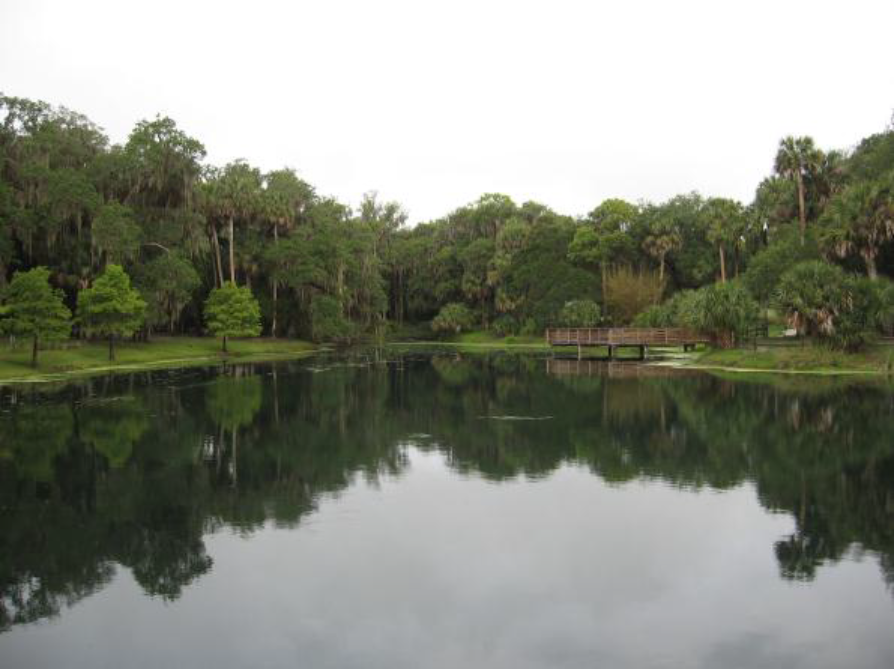
(a)
Purpose and intent. It is intended that the C Conservation Classification be applied to certain lands which are either owned or controlled by a governmental agency, but it may be applied to privately owned lands upon request of the owner. It is the purpose of this classification to protect and preserve:
(1)
Historic or archaeologic sites;
(2)
Fishing, wildlife, or forest management areas;
(3)
The natural environment of other selected public lands such as well fields; and
(4)
Any other unusual or unique feature or areas such as governmentally designated canoe trails, wild or scenic watercourses.
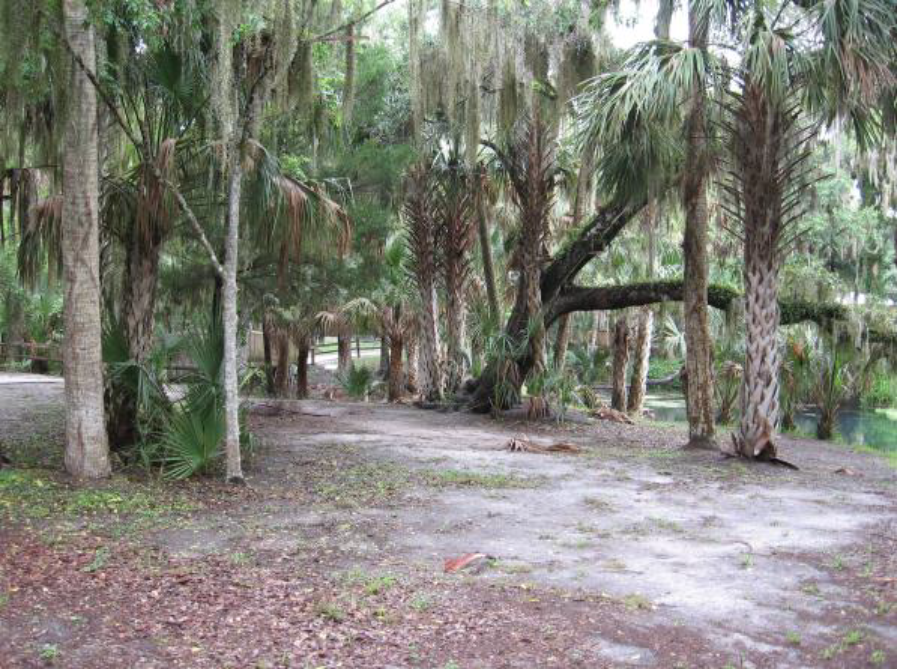
(b)
Permitted principal uses and structures. In the C Conservation Classification, no premises shall be used except for the following uses and their customary accessory uses or structures:
Aquatic preserves (state or federally designated).
Essential utility services.
Fishing, hunting, forest and wildlife management areas.
Historical or archeological sites.
Public uses.
Public utility uses and structures.
Publicly and privately owned passive parks and recreational areas.
Publicly owned or regulated water supply wells.
(c)
Permitted special exceptions. Additional regulations/requirements governing permitted special exceptions are located in section 3-134.
Communication towers exceeding 70 feet in height above ground level.
Exempt excavation.
(d)
Dimensional requirements. None.
(Ord. No. 01-99, § 1(301.3), 11-3-1999; Ord. No. 02-12, § 2(Exh. A), 9-5-2012)
Sec. 3-83. - P Public Use Classification.
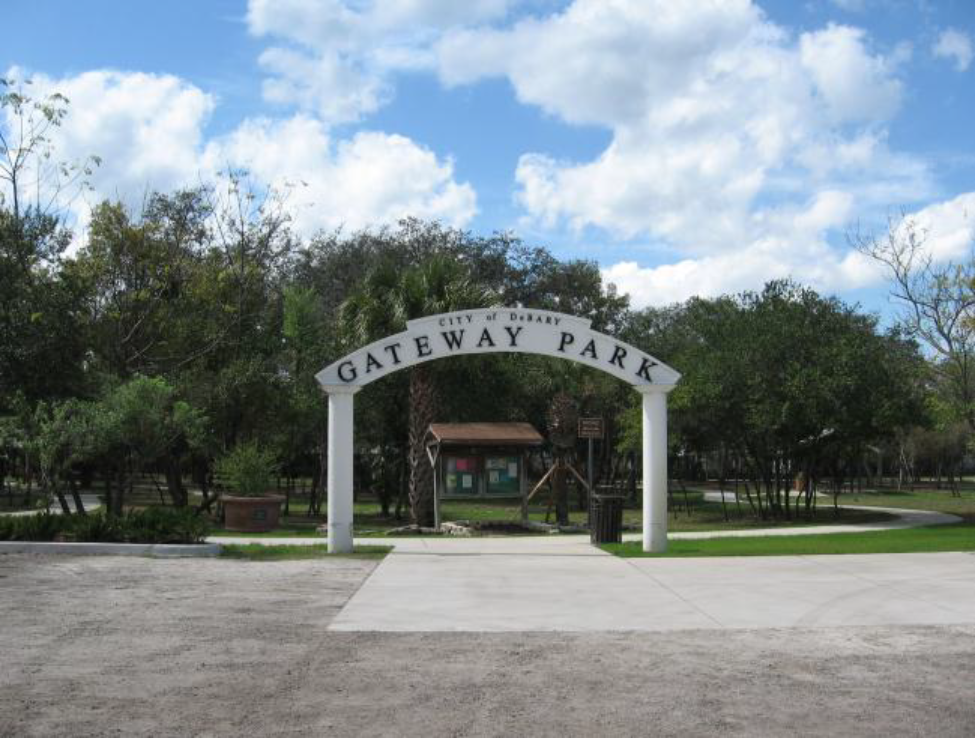
(a)
Purpose and intent. The purpose and intent of the P Public Use Classification is to provide for development of governmentally owned or used lands in a manner which is consistent with the Comprehensive Plan. This classification is a specialized one, designed to be applied to areas that are not intended for public use special exceptions.
(b)
Permitted principal uses and structures. In the P Public Use Classification, no premises shall be used except for the following uses and their customary uses and structures:
Communication towers not exceeding 70 feet in height above ground level.
Essential utility services.
Farmer's Market.
Government buildings.
Mobile food dispensing vehicles.
Museums.
Public uses.
Public utility uses and structures.
Plant facilities for essential utility services.
Potable water treatment plant.
Public parks and recreational areas.
Public schools.
Publicly owned or regulated water supply wells.
Wastewater treatment plants.
(c)
Permitted special exceptions. Additional regulations/requirements governing permitted special exceptions are located in section 3-134.
Communication towers exceeding 70 feet in height above ground level.
Exempt excavations.
(d)
Dimensional requirements.
(1)
Minimum lot size:
Area: five acres.
Width: No minimum.
(2)
Minimum yard size: All buildings shall be set back at least 50 feet from perimeter property lines; all other structures, except off-street parking areas, shall be set back at least 25 feet from perimeter zoning classification boundary lines.
(3)
Maximum building height: 45 feet.
(4)
Maximum lot coverage: None.
(5)
Landscape buffer requirements: At least a 20-foot-wide landscape buffer shall be maintained around the perimeter of the property.
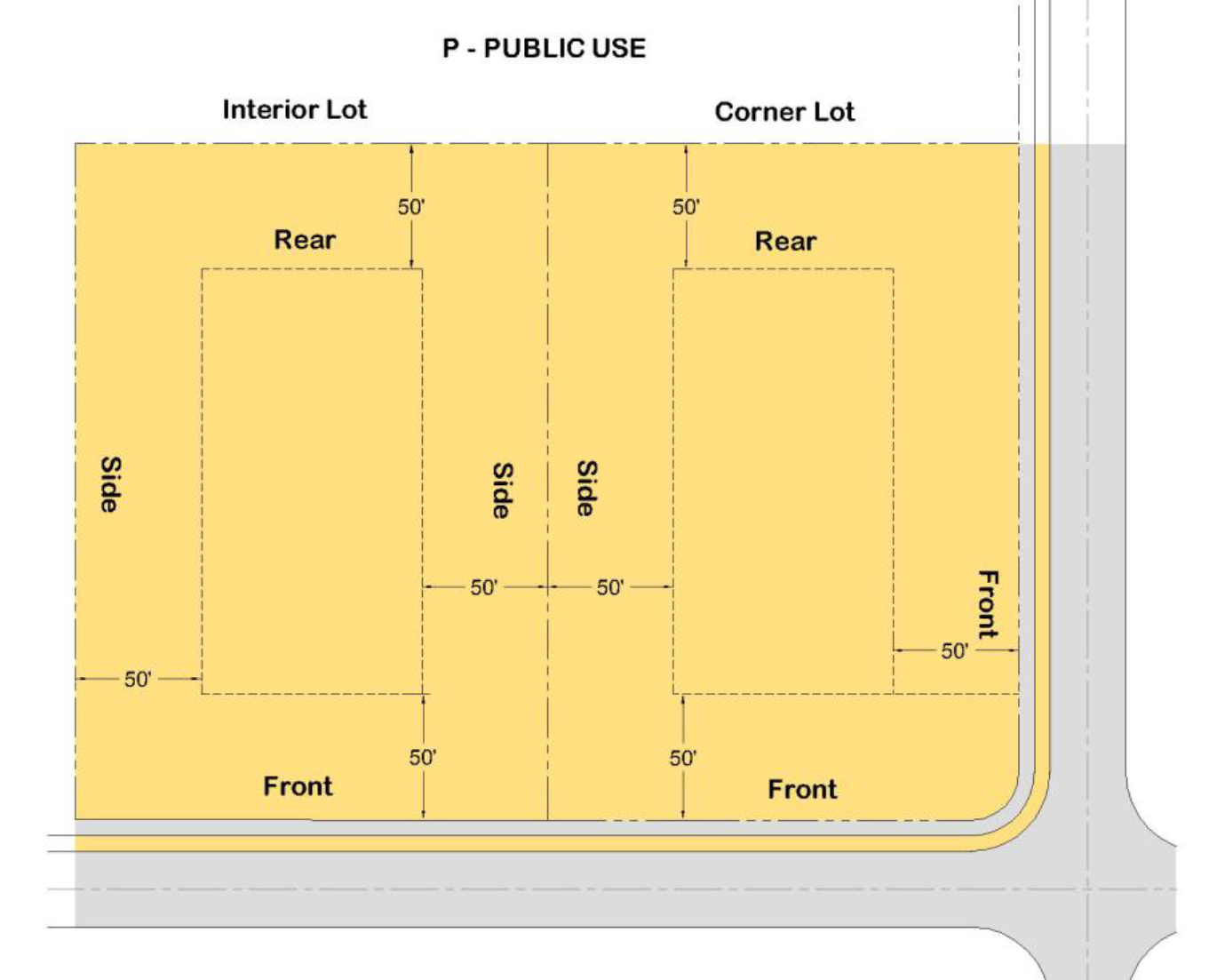
(Ord. No. 01-99, § 1(301.3), 11-3-1999; Ord. No. 02-12, § 2(Exh. A), 9-5-2012; Ord. No. 06-2023, § 5, 7-5-2023)
Sec. 3-84. - RC Resource Corridor Classification.
(a)
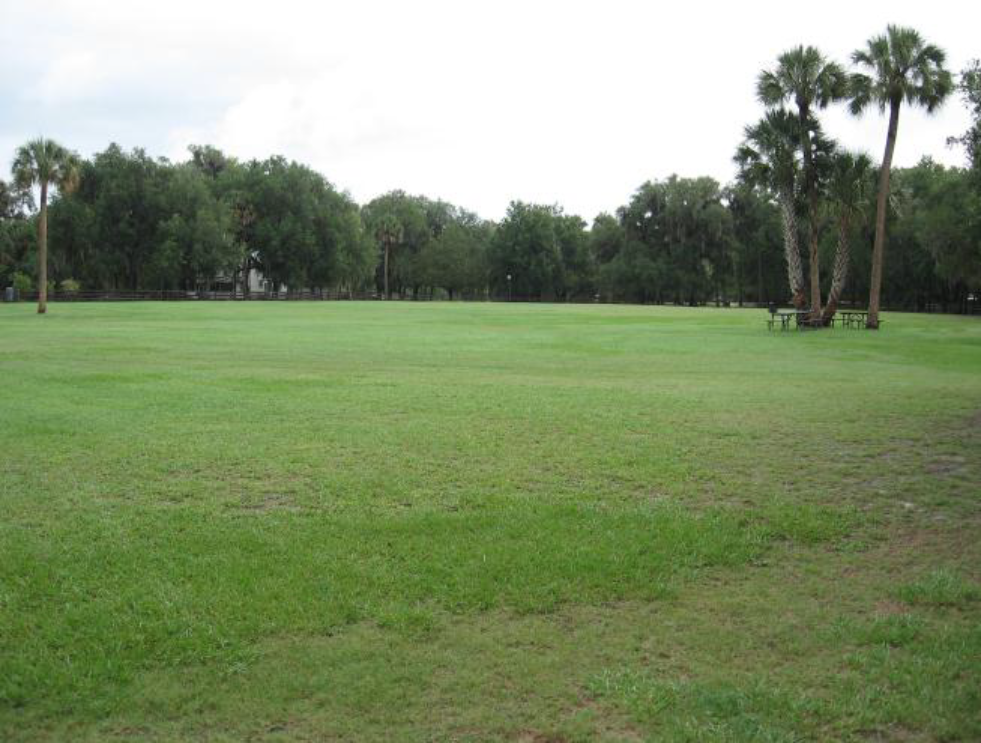
Purpose and intent. The purpose and intent of the RC Resource Corridor Classification is to provide protected, natural corridors consisting of environmentally sensitive and ecologically significant lands which connect to other protected areas such as parks and water bodies. The corridor shall provide a contiguous hydroecological pathway, where the wetlands and uplands are integrated and conducive to the maintenance and perpetuation of the system.
(b)
Permitted principal uses and structures. In the RC Resource Corridor Classification, no premises shall be used except for the following uses and their customary accessory uses or structures:
Apiaries; provided, however, that the RC classified area does not comprise part of a lot classified for residential, commercial, or industrial use.
Aquatic preserves (state or federal designated).
Aviaries; provided, however, that the RC classified area does not comprise part of a lot classified for residential, commercial, or industrial use.
Boat docks not exceeding 500 square feet.
Fishing, hunting and wildlife management areas.
Historical or archeological sites.
Single-family standard or manufactured dwelling.
Public passive parks.
"A" Class home occupations.
(c)
Permitted special exceptions. Additional regulations/requirements governing permitted special exceptions are located in section 3-134:
Communication towers exceeding 70 feet in height above ground level.
Public uses not specifically allowed as a permitted use.
(d)
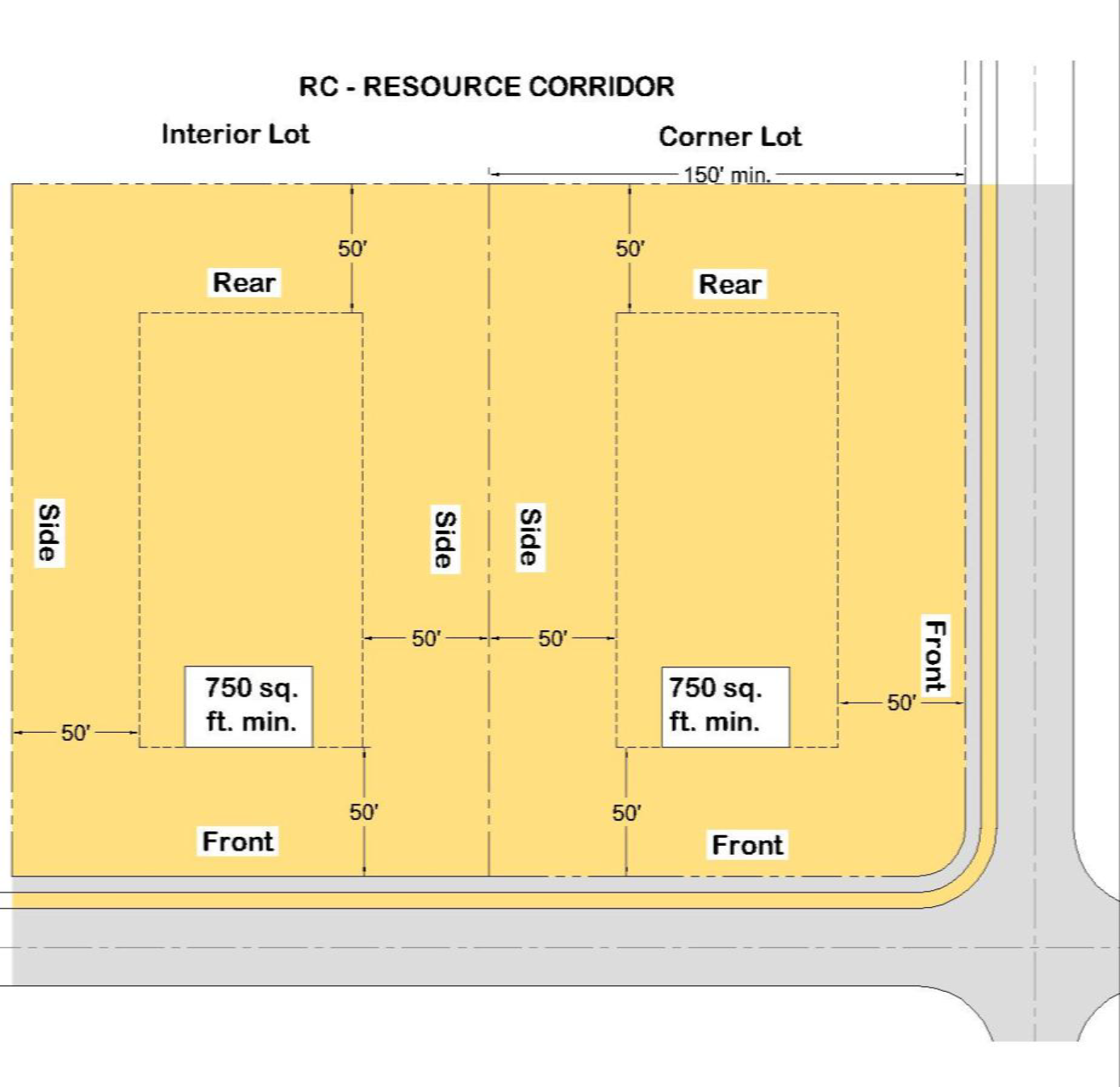
Dimensional requirements for lots, parcels and tracts of land zoned in its entirety as Resource Corridor.
(1)
Minimum lot sizes:
Area: 25 acres.
Width: 150 feet.
(2)
Minimum yard size:
Front yard: 50 feet.
Rear yard: 50 feet.
Side yard: 50 feet.
Waterfront yard: 75 feet.
(3)
Maximum building height: 45 feet.
(4)
Maximum lot clearance and coverage: Lot clearance can not exceed 20 percent. The total cleared lot area covered with principal and accessory buildings shall not exceed ten percent.
(5)
Minimum floor area: 750 square feet.
(e)
Dimensional requirements for lots, parcels or other tracts of land which are zoned a mixture of RC and another zone classification. In instances where Resource Corridor boundaries split existing lots parcels or tracts of land, the subject property may be subdivided into lots meeting the minimum lot area and width requirements of the zoning classification of the property not classified as Resource Corridor; providing that Resource Corridor classified lands are not counted as meeting part of the minimum lot area or lot width requirements of the other zone classification. In such instances, there shall be no minimum area or width requirements for the portion of the lot classified as RC. Development of lots classified as a mixture of RC and another zone classification shall be subject to the provisions of section 3-41(10).
(1)
Minimum lot size:
Area: No minimum for the portion of the lot classified as RC; providing that the minimum area requirement for the portion of the lot classified other than RC is met.
Width: No minimum for the portion of the lot classified as RC; providing that the minimum with requirement for the portion of the lot classified other than RC is met.
(2)
Minimum yard sizes: As provided for under section 3-41(10).
(3)
Maximum building height: 45 feet.
(4)
Maximum lot coverage: Lot clearance on the portion of the lot classified as RC cannot exceed 20 percent, and no more than ten percent of the portion of the lot classified as RC may be covered with principal and accessory buildings. The portion of the lot classified other than RC shall be subject to the maximum lot coverage requirements of that zone classification.
(5)
Minimum floor area: As required for the portion of the lot not classified as RC.
(Ord. No. 01-99, § 1(301.3), 11-3-1999; Ord. No. 02-12, § 2(Exh. A), 9-5-2012)
Sec. 3-86. - A-2 Rural Agriculture Classification.
(a)
Purpose and intent.
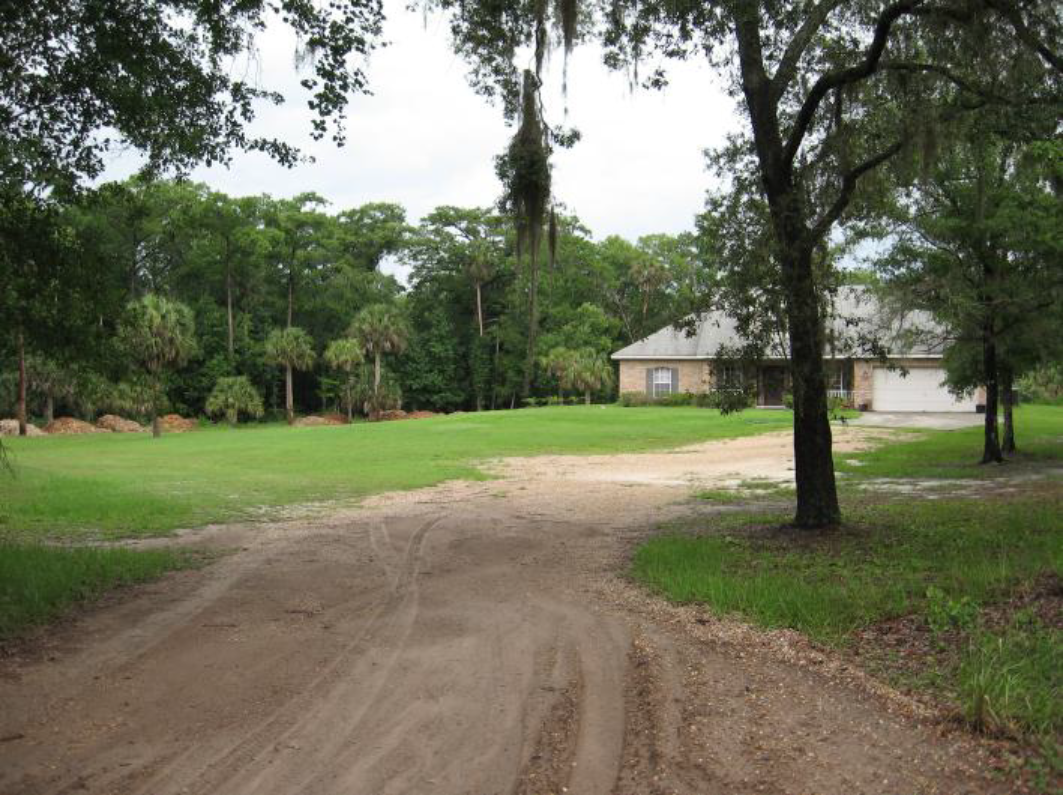
(1)
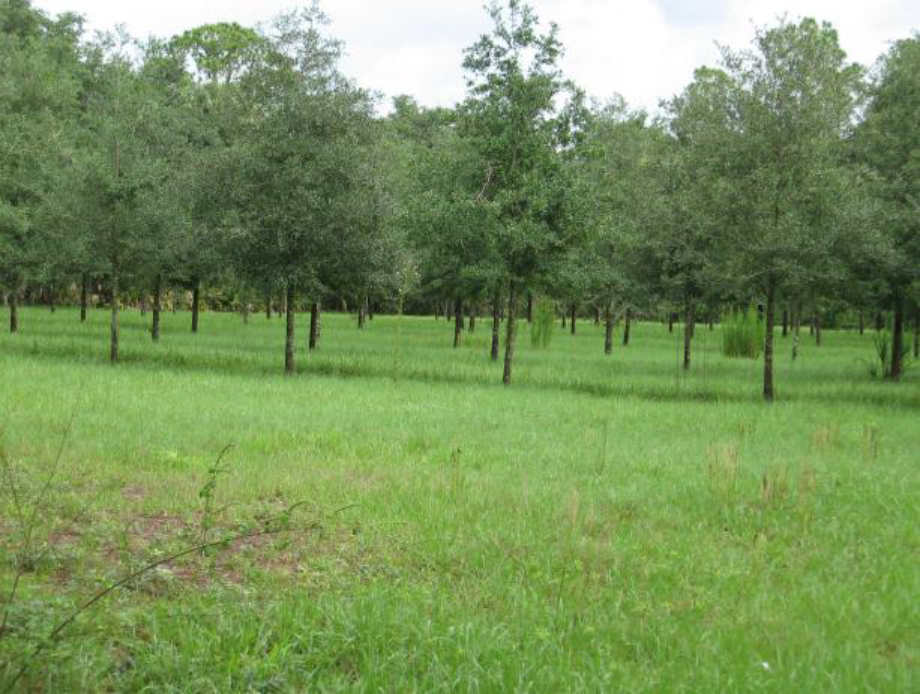
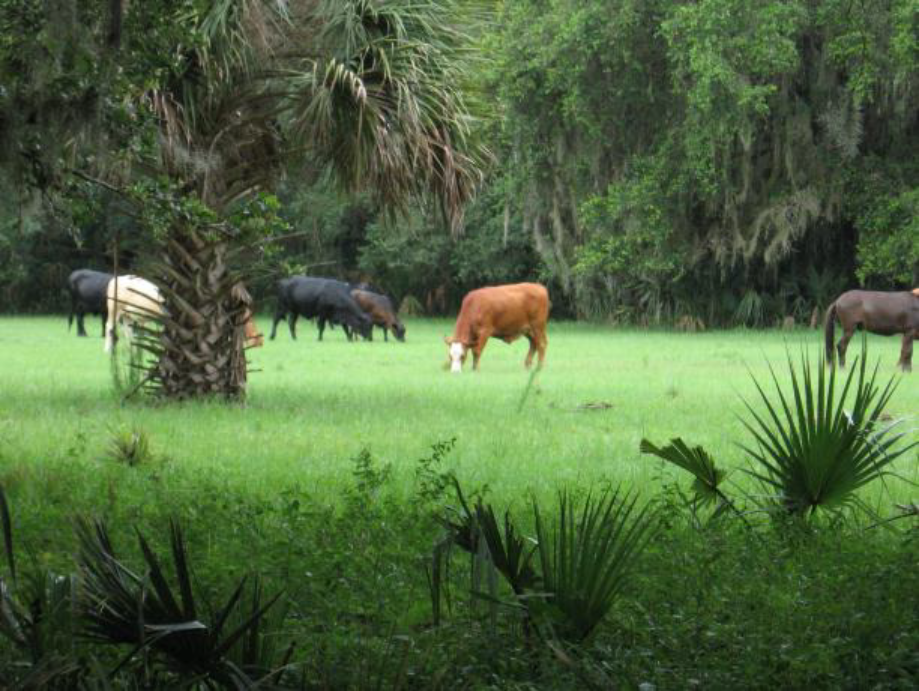
The purpose and intent of the A-2 Rural Agriculture Classification is to preserve and protect rural areas of the City that have some agricultural value, but which are also suitable for rural estate living.
(2)
In order to ensure the longterm vitality of agricultural uses and natural resources, all agricultural uses are encouraged to utilize the Natural Resource Conservation Service (formerly the Soil Conservation Service) best management techniques and other agricultural best management practices.
(b)
Permitted principal uses and structures. In the A-2 Rural Agriculture Classification, no premises shall be used except for the following uses and their customary accessory uses or structures:
Except for those permitted special exceptions listed hereunder, all agricultural pursuits, including the processing, packaging, storage and sale of agriculture products which are raised on the premises.
Apiaries.
Aquaculture operations in which there are no associated excavations.
Aviaries.
Boat docks not exceeding 500 square feet.
Communication towers not exceeding 70 feet in height above ground level.
Essential utility services.
Family in-home day care as defined by law.
Feed stores.
Fire stations.
Hobby breeder.
Houses of worship.
Parks and recreation areas accessory to residential developments.
Single-family standard or manufactured dwelling.
Keeping of pets as an accessory use to residential dwelling.
"A" Class home occupations.
Publicly owned parks and recreational areas.
Public uses not specifically allowed as a permitted use.
(c)
Permitted special exceptions. Additional regulations/requirements governing permitted special exceptions are located in section 3-134.
Exempt excavations.
Bed and breakfast homestay (refer to section 3-134(16)).
Cemeteries (refer to section 3-134(3)).
Communication towers exceeding 70 feet in height above ground level.
Fish, hunting or nonprofit organization camps.
Garage apartments.
Home occupations, Class B (refer to section 3-127).
Kennels.
Mobile home dwelling as a temporary residence while building a standard or manufactured dwelling (maximum duration of 540 days).
Processing, packaging, storage, retail or wholesale sales of agricultural products not raised on the premises.
Recreational areas (refer to section 3-134(2)).
Riding stables.
Public schools.
(d)
Dimensional requirements.
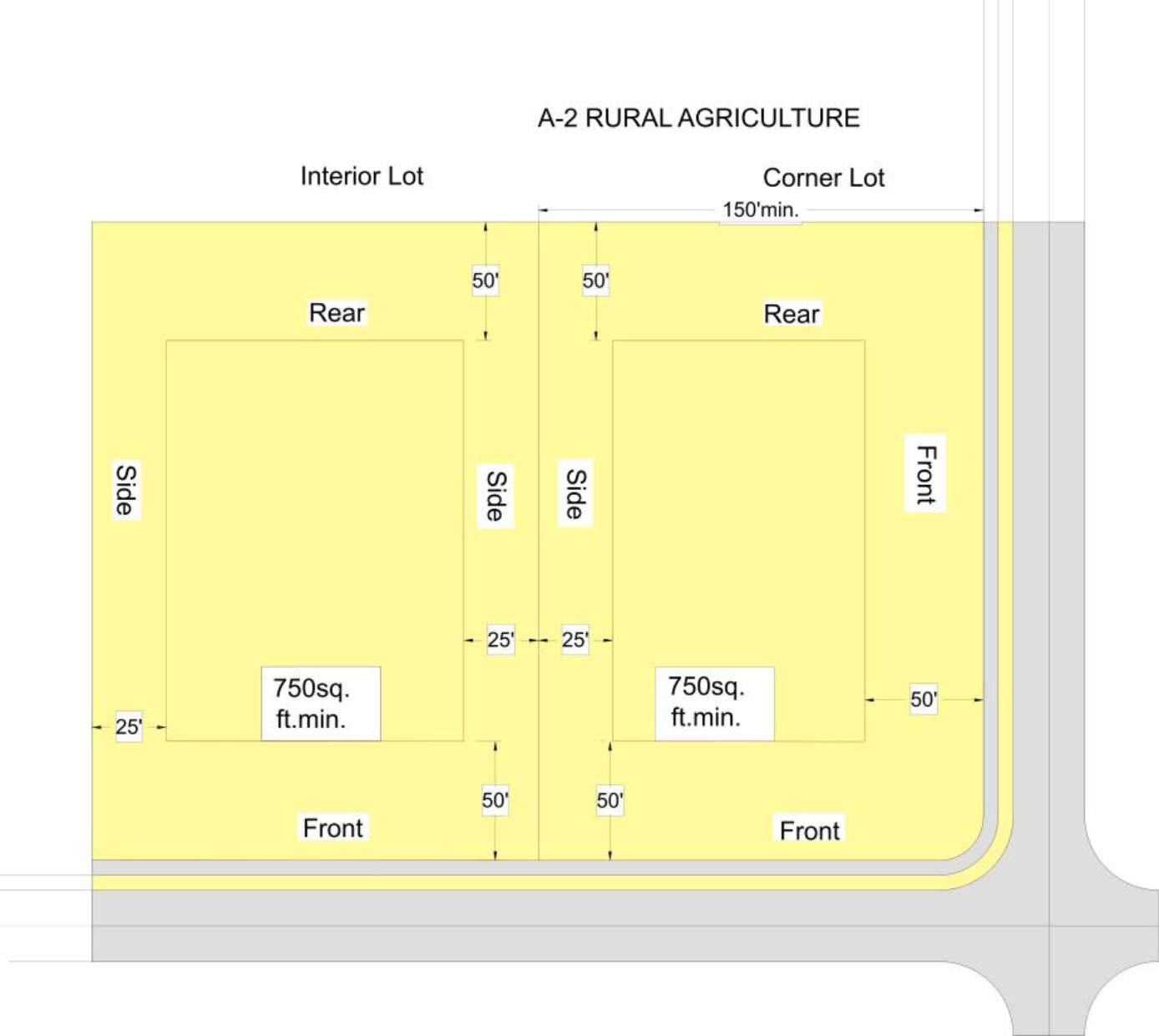
(1)
Minimum lot size:
Area: five acres.
Width: 150 feet.
(2)
Minimum yard size:
Front yard: 50 feet.
Rear yard: 50 feet.
Side yard: 25 feet
Waterfront yard: 50 feet.
(3)
Maximum building height: 45 feet.
(4)
Maximum lot coverage: The total lot area covered with principal and accessory buildings shall not exceed 35 percent.
(5)
Minimum floor area: 750 square feet.
(e)
Skirting requirement for mobile home dwelling. The area between the ground and floor of the mobile home dwelling shall be enclosed with skirting.
(Ord. No. 01-99, § 1(301.3), 11-3-1999; Ord. No. 02-12, § 2(Exh. A), 9-5-2012; Ord. No. 02-13, § 2(Exh. A), 6-5-2013; Ord. No. 07-13, § 2(Exh. A), 8-7-2013)
Sec. 3-87. - A-3 Transitional Agriculture Classification.
(a)
Purpose and intent.
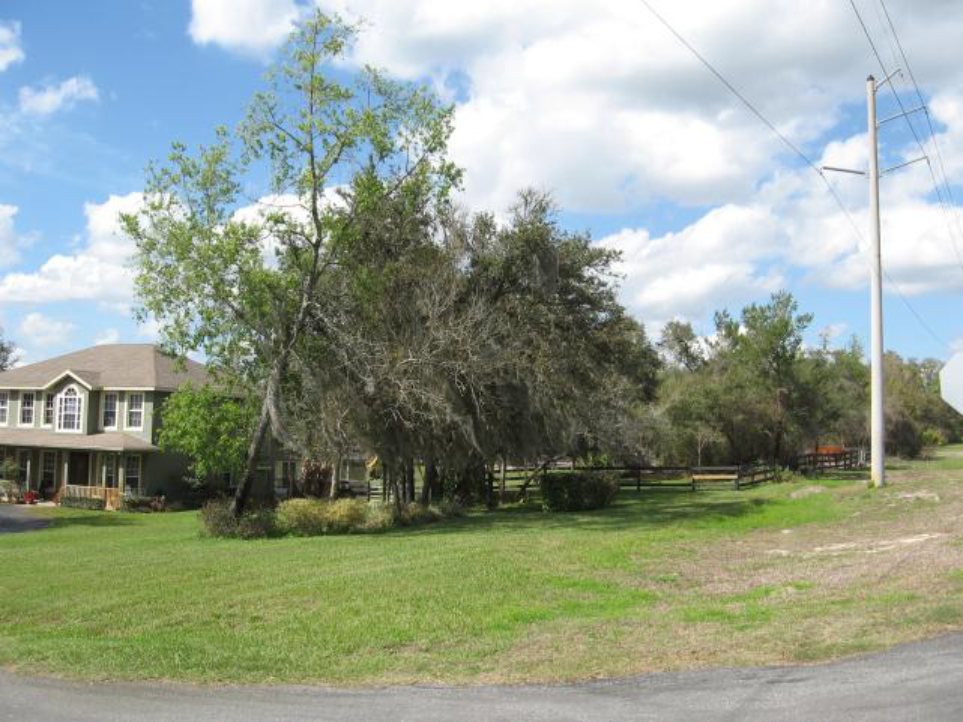
(1)
The purpose and intent of the A-3 Transitional Agriculture Classification is to preserve and protect small farms for personal and limited agricultural production or to provide a transitional agricultural zone between more intensive agricultural use areas and residential areas.
(2)
In order to ensure the long term vitality of agricultural uses and natural resources, all agricultural uses are encouraged to utilize the Natural Resource Conservation Service (formerly the Soil Conservation Service) best management techniques and other agricultural best management practices.
(b)
Permitted principal uses and structures. In the A-3 Transitional Agriculture Classification, no premises shall be used except for the following uses and their customary accessory uses or structures:
Agricultural uses. Except for those permitted special exception uses listed hereunder the processing, packaging, storage and sale of agriculture products which are raised on the premises is permitted. The sale of agricultural products is not be permitted within established rural residential communities.
Apiaries.
Aquaculture operations in which there are no associated excavations.
Aviaries.
Communication towers not exceeding 70 feet in height above ground level.
Essential utility services.
Family in-home day care as defined by law.
Fire stations.
Hobby breeder.
Home occupations, Class A.
Houses of worship.
Keeping of pets as an accessory use to residential dwelling.
Parks and recreation areas accessory to residential developments.
Publicly owned parks and recreational areas.
Publicly owned or regulated water supply wells.
Single-family standard or manufactured dwelling.
(c)
Permitted special exceptions. Additional regulations/requirements governing permitted special exceptions are located in section 3-134.
Aquaculture operations in which there are nonexempt excavations.
Assisted living facility (refer to section 3-134(10)).
Bed and breakfast homestay (refer to section 3-134(16)).
Cemeteries (refer to section 3-134(3)).
Public uses not specifically allowed as a permitted use.
Exempt excavations.
Communication towers exceeding 70 feet in height above ground level.
Excavations only for stormwater retention ponds for which a permit is required by this Code.
Garage apartments.
Group home (refer to section 3-134(10)).
Home occupations, Class B (refer to section 3-127).
Kennels.
Public schools.
Processing, packaging, storage, retail or wholesale sales of agricultural products not raised on the premises.
Public uses not listed as a permitted principal use.
Public utility uses and structures (refer to section 3-134(1)).
Recreational areas (refer to section 3-134(2)).
Riding stables.
Single-family mobile home dwelling with a minimum floor area of 480 square feet as a temporary residence while building a standard or manufactured dwelling (maximum duration of 540 days).
Single-family standard or manufactured dwelling.
(d)
Dimensional requirements.
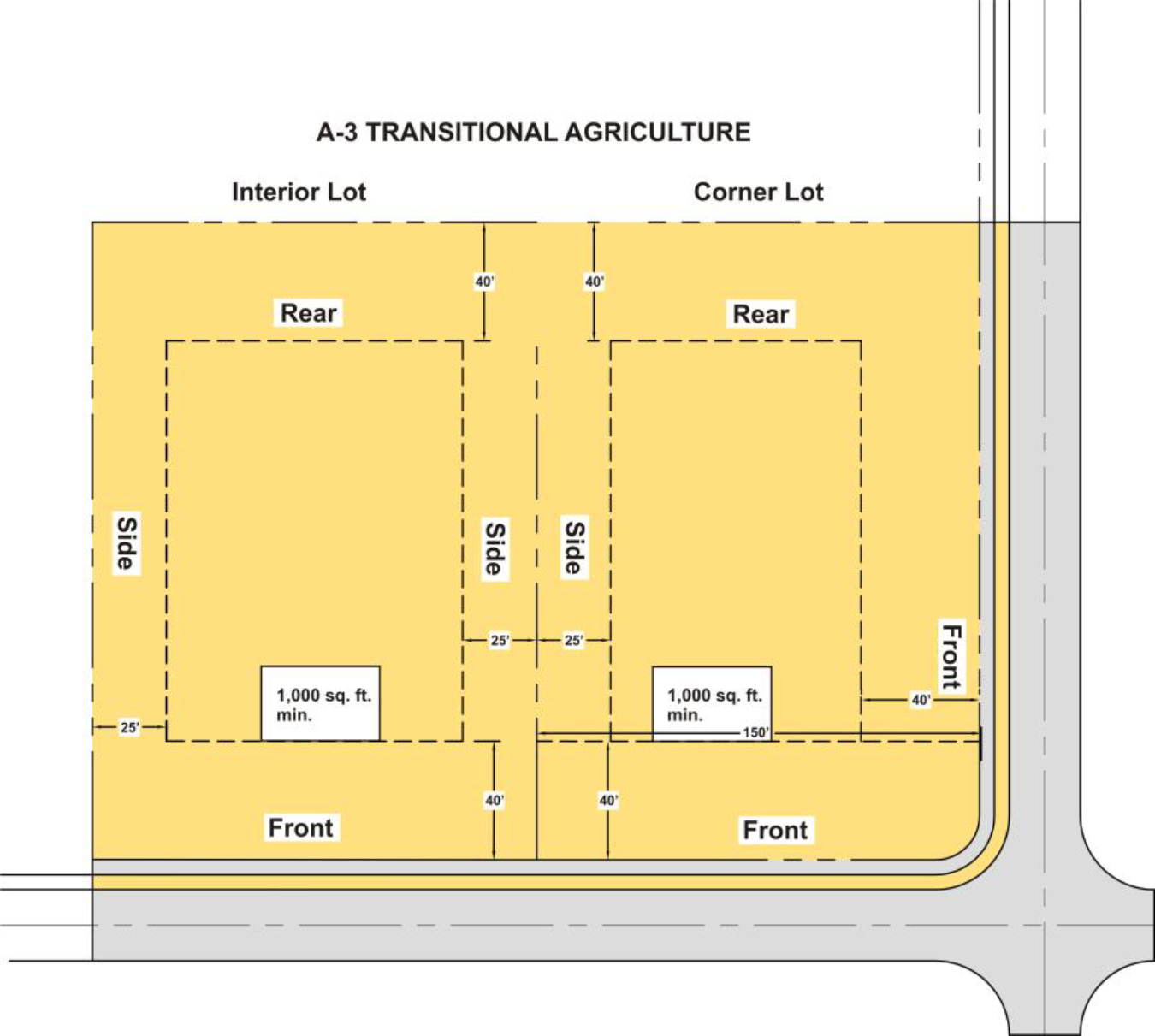
(1)
Minimum lot size:
Area: one acre.
Width: 150 feet.
(2)
Minimum yard size:
Front yard: 40 feet.
Rear yard: 40 feet.
Side yard: 25 feet.
Waterfront yard: 40 feet.
(3)
Maximum building height: 45 feet.
(4)
Maximum lot coverage: The total lot area covered with principal and accessory buildings shall not exceed 35 percent.
(5)
Minimum floor area: 1,000 square feet.
(e)
Skirting requirement for mobile home dwelling. The area between the ground and floor of the mobile home dwelling shall be enclosed with skirting.
(Ord. No. 01-99, § 1(301.3), 11-3-1999; Ord. No. 02-12, § 2(Exh. A), 9-5-2012; Ord. No. 02-13, § 2(Exh. A), 6-5-2013; Ord. No. 07-13, § 2(Exh. A), 8-7-2013)
Sec. 3-88. - RR Rural Residential Classification.
(a)
Purpose and intent. The purpose and intent of the RR Rural Residential Classification is to provide for development in a manner which is consistent with the Comprehensive Plan.
(b)
Permitted principal uses and structures. In the RR Rural Residential Classification, no premises shall be used except for the following uses and their customary accessory uses or structures:
Communication towers not exceeding 70 feet in height above ground level.
Essential utility services.
Excavations only for stormwater retention ponds for which a permit is required by this Code.
Family in-home day care as defined by law.
Hobby breeder.
Home occupations, Class A (refer to section 3-127).
Keeping of backyard chickens and ducks for personal use (not for resale or the commercial sale of eggs) that is accessory to a single-family residential dwelling and in compliance with supplemental restrictions set forth in this Code.
Keeping of horses and ponies as an accessory use to residential dwelling.
Keeping of pets as an accessory use to residential dwelling.
Parks and recreation areas accessory to residential developments.
Publicly owned parks and recreational areas.
Single-family standard dwelling.
(c)
Permitted special exceptions. Additional regulations/requirements governing permitted special exceptions are located in section 3-134.
Communication towers exceeding 70 feet in height above ground level.
Garage apartments.
Group home (refer to section 3-134(10)).
Home occupations, Class B (refer to section 3-127).
Houses of worship (refer to section 3-134(3)).
Kennels.
Recreational areas (refer to section 3-134(2)).
Public uses not specifically allowed as a permitted use.
(d)
Dimensional requirements.
(1)
Minimum lot size:
Area: one acre.
Width: 100 feet.
(2)
Minimum yard size:
Front yard: 40 feet.
Rear yard: 40 feet.
Side yard: 15 feet.
Waterfront yard: 40 feet.
(3)
Maximum building height: 35 feet.
(4)
Maximum lot coverage: The total lot area covered with principal and accessory buildings shall not exceed 30 percent.
(5)
Minimum floor area: 1,000 square feet.
(Ord. No. 01-99, § 1(301.3), 11-3-1999; Ord. No. 02-12, § 2(Exh. A), 9-5-2012; Ord. No. 02-13, § 2(Exh. A), 6-5-2013; Ord. No. 07-13, § 2(Exh. A), 8-7-2013; Ord. No. 11-2022, § 2, 9-21-2022)
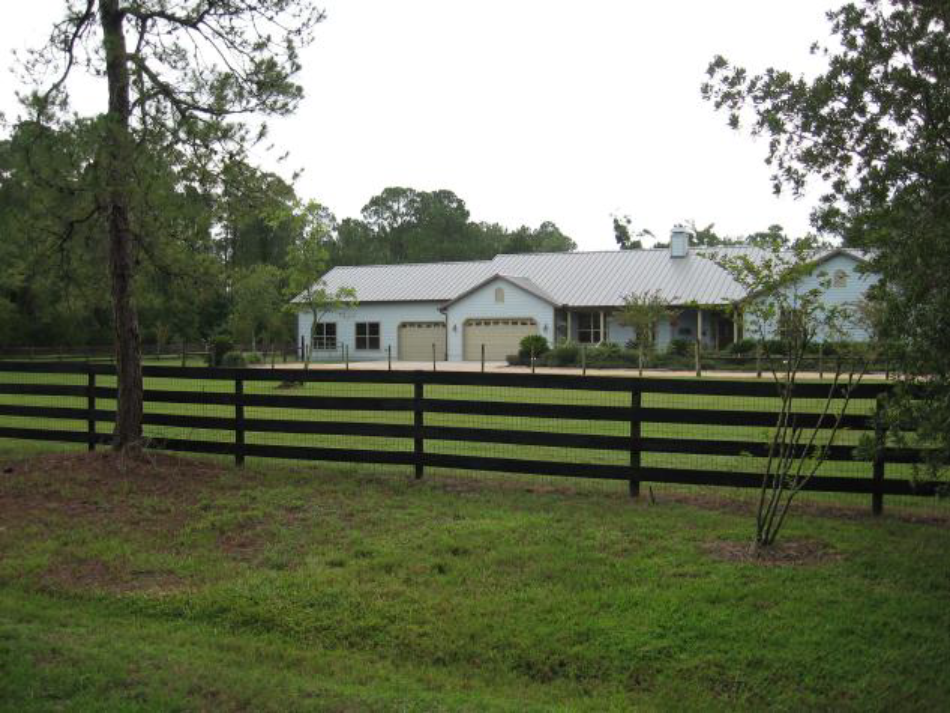
Sec. 3-89. - RA Rural Estate Classification.
(a)
Purpose and intent. The purpose and intent of the RA Rural Estate Classification is to provide for low density development.
(b)
Permitted principal uses and structures. In the RA Rural Estate Classification, no premises shall be used except for the following uses and their customary accessory uses or structures:
Communication towers not exceeding 70 feet in height above ground level.
Essential utility services.
Excavations only for stormwater retention ponds for which a permit is required by this Code.
Family in-home day care as defined by law.
Home occupations, Class A (refer to section 3-127).
Keeping of backyard chickens and ducks for personal use (not for commercial sale or resale of eggs, feathers, or manure) that is accessory to a single-family residential dwelling and in compliance with supplemental restrictions set forth in this Code.
Keeping of horses and ponies as an accessory use to residential dwelling.
Keeping of pets as an accessory use to residential dwelling.
Parks and recreation areas accessory to residential developments.
Publicly owned parks and recreational areas.
Single-family standard dwelling.
(c)
Permitted special exceptions. Additional regulations/requirements governing permitted special exceptions are located in section 3-134.
Communication towers exceeding 70 feet in height above ground level.
Garage apartments.
Home occupations, Class B (refer to section 3-127).
Houses of worship (refer to section 3-134(3)).
Public uses not specifically allowed as a permitted use.
Recreational areas (refer to section 3-134(2)).
(d)
Dimensional requirements.
(1)
Minimum lot size:
Area: 2½ acres.
Width: 150 feet.
(2)
Minimum yard size:
Front yard: 45 feet.
Rear yard: 45 feet.
Side yard: 25 feet.
Waterfront yard: 45 feet.
(3)
Maximum building height: 35 feet.
(4)
Maximum lot coverage: The total lot area covered with principal and accessory buildings shall not exceed 35 percent.
(5)
Minimum floor area: 1,000 square feet.
(Ord. No. 01-99, § 1(301.3), 11-3-1999; Ord. No. 02-12, § 2(Exh. A), 9-5-2012; Ord. No. 02-13, § 2(Exh. A), 6-5-2013; Ord. No. 07-13, § 2(Exh. A), 8-7-2013; Ord. No. 11-2022, § 3, 9-21-2022)
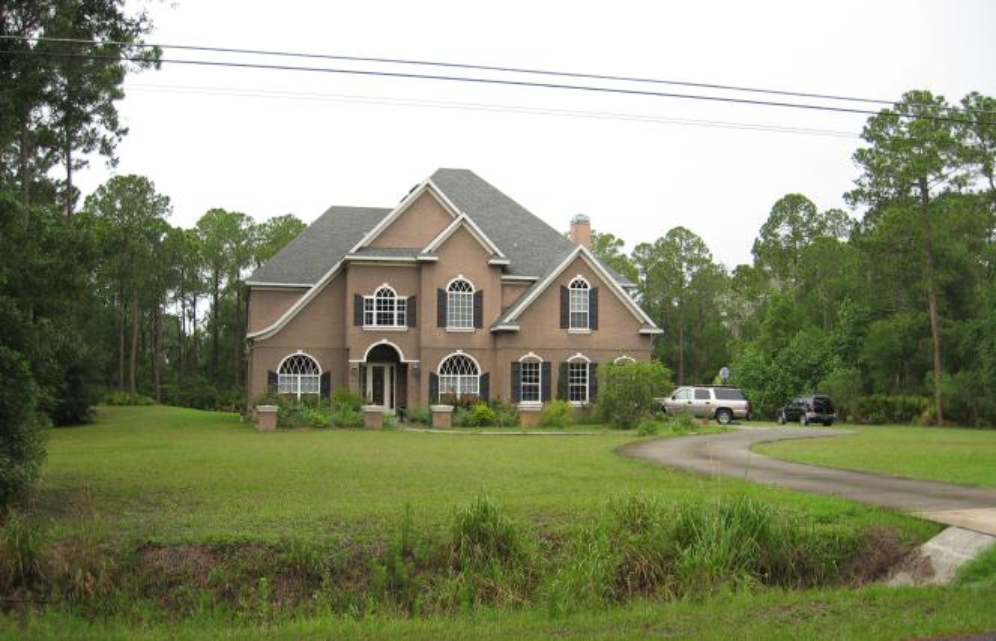
Sec. 3-90. - R-1 Urban Single-Family Residential Classification.
(a)
Purpose and intent. The purpose and intent of the R-1 Urban Single-Family Residential Classification is to provide low-density residential developments, preserving the character of existing or proposed residential neighborhoods.
(b)
Permitted principal uses and structures. In the R-1 Urban Single-Family Classification, no premises shall be used except for the following uses and their customary accessory uses or structures:
Communication towers not exceeding 70 feet in height above ground level.
Community residential homes (refer to section 133(3)).
Essential utility services.
Excavations only for stormwater retention ponds for which a permit is required by this Code.
Family in-home day care as defined by law.
Home occupations, Class A (refer to section 3-127).
Keeping of pets as an accessory use to residential dwelling.
Parks and recreation areas accessory to residential developments.
Publicly owned parks and recreational areas.
Single-family standard dwelling and manufactured modular dwelling.
(c)
Permitted special exceptions. Additional regulations/requirements governing permitted special exceptions are located in section 3-134.
Bed and breakfast homestay (refer to section 3-134(16)).
Garage apartments.
Houses of worship (refer to section 3-134(3)).
Recreational areas (refer to section 3-134(2)).
Public uses not specifically allowed as a permitted use.
(d)
Dimensional requirements.
(1)
Minimum lot size:
Area: 20,000 square feet.
Width: 100 feet.
(2)
Minimum yard size:
Front yard: 30 feet.
Rear yard: 20 feet.
Side yard: 20 feet combined, minimum of eight feet on any one side.
Waterfront yard: 25 feet.
(3)
Maximum building height: 35 feet.
(4)
Maximum lot coverage: The total lot area covered with principal and accessory buildings shall not exceed 35 percent.
(5)
Minimum floor area: 1,500 square feet.
(Ord. No. 01-99, § 1(301.3), 11-3-1999; Ord. No. 02-12, § 2(Exh. A), 9-5-2012; Ord. No. 07-13, § 2(Exh. A), 8-7-2013)
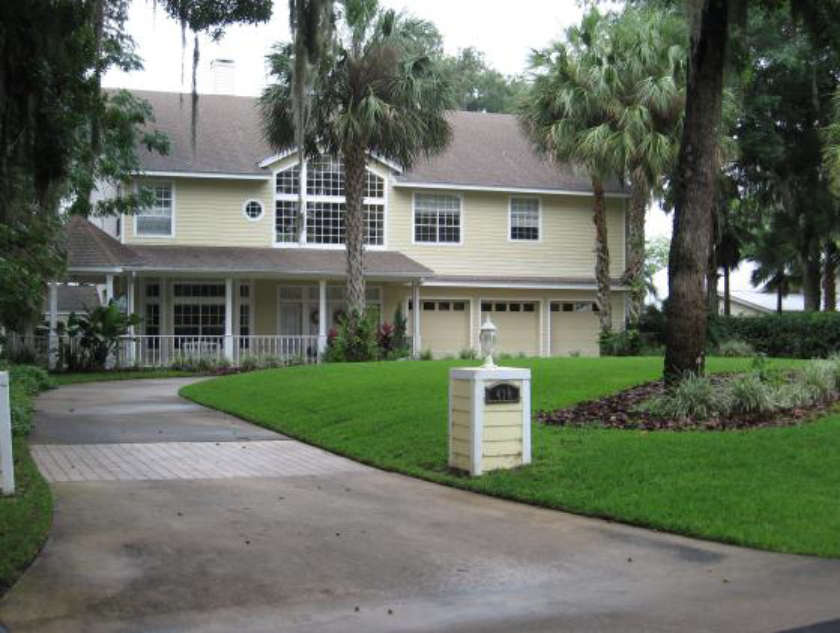
Sec. 3-91. - R-3 Urban Single-Family Residential Classification.
(a)
Purpose and intent. The purpose and intent of the R-3 Urban Single-Family Residential Classification is to provide medium-low-density residential developments, preserving the character of existing or proposed residential neighborhoods.
(b)
Permitted principal uses and structures. In the R-3 Urban Single-Family Residential Classification, no premises shall be used except for the following uses and their customary accessory uses or structures:
Cluster and zero lot line subdivisions (refer to section 3-137).
Communication towers not exceeding 70 feet in height above ground level.
Community residential homes (refer to section 3-133(3)).
Essential utility services.
Family in-home day care as defined by law.
Home occupations, Class A (refer to section 3-127).
Houses of worship.
Parks and recreational areas accessory to residential developments.
Public schools.
Publicly owned parks and recreational areas.
Publicly owned or regulated water supply wells.
Single-family standard dwelling and modular dwelling.
Keeping of pets as an accessory use to residential dwelling.
Publicly owned parks and recreational areas.
(c)
Permitted special exceptions. Additional regulations/requirements governing permitted special exceptions are located in section 3-134.
Communication towers exceeding 70 feet in height above ground level.
Excavations only for stormwater retention ponds for which a permit is required by this Code.
Garage apartments.
Houses of worship (refer to section 3-134(3)).
Public uses not specifically allowed as a permitted use.
Public utility uses and structures (refer to section 3-134(1)).
Recreational areas (refer to section 3-134(2)).
(d)
Dimensional requirements.
(1)
Minimum lot size:
Area: 10,000 square feet.
Width: 85 feet.
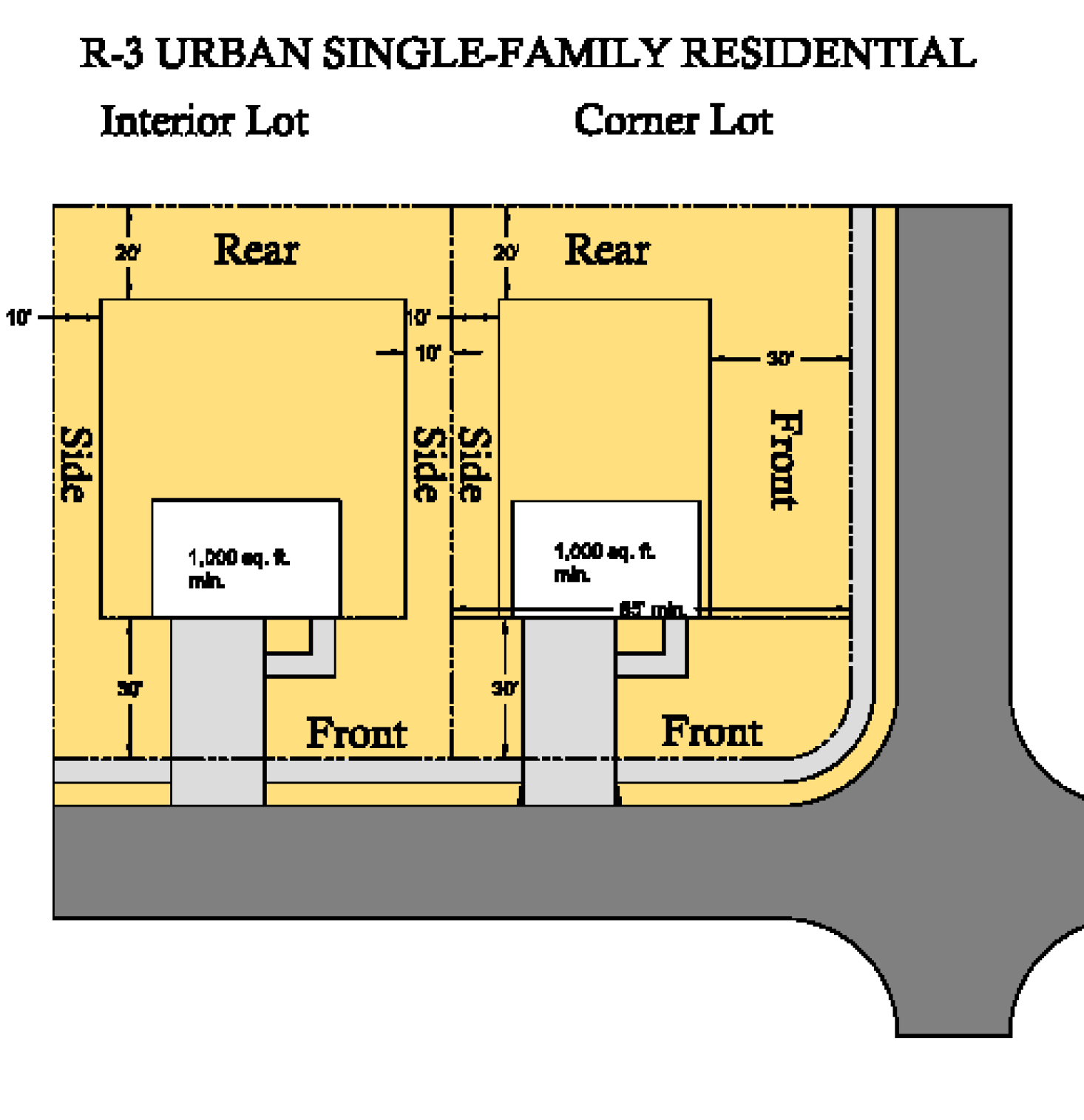
(2)
Minimum yard size:
Front yard: 30 feet.
Rear yard: 20 feet.
Side yard: 20 feet combined, minimum of eight feet on any one side.
Waterfront yard: 25 feet.
(3)
Maximum building height: 35 feet.
(4)
Maximum lot coverage: The total lot area covered with principal and accessory buildings shall not exceed 35 percent.
(5)
Minimum floor area: 1,000 square feet.
(Ord. No. 01-99, § 1(301.3), 11-3-1999; Ord. No. 02-12, § 2(Exh. A), 9-5-2012; Ord. No. 07-13, § 2(Exh. A), 8-7-2013)
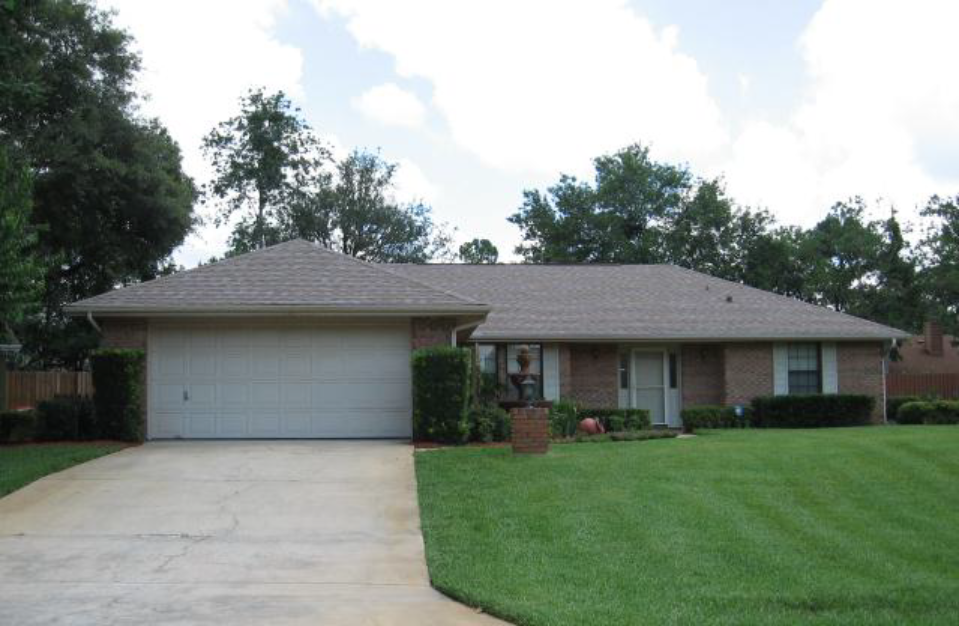
Sec. 3-92. - R-4 Urban Single-Family Residential Classification.
(a)
Purpose and intent. The purpose and intent of the R-4 Urban Single-Family Residential Classification is to provide low-density residential developments, preserving the character of existing or proposed residential neighborhoods.
(b)
Permitted principal uses and structures. In the R-4 Urban Single-Family Residential Classification, no premises shall be used except for the following uses and their customary accessory uses or structures:
Cluster and zero lot line subdivisions (refer to section 3-137).
Communication towers not exceeding 70 feet in height above ground level.
Community residential homes (refer to section 133(3)).
Essential utility services.
Excavations only for stormwater retention ponds for which a permit is required by this Code.
Family in-home day care as defined by law.
Home occupations, Class A (refer to section 3-127).
Parks and recreational areas accessory to residential developments.
Publicly owned parks and recreational areas.
Single-family standard dwelling.
Keeping of pets as an accessory use to residential dwelling.
(c)
Permitted special exceptions. Additional regulations/requirements governing permitted special exceptions are located in section 3-134.
Bed and breakfast home stay.
Communication towers exceeding 70 feet in height above ground level.
Day care centers.
Excavations only for stormwater retention ponds for which a permit is required.
Garage apartments.
Houses of worship (refer to section 3-134(3)).
Off-street parking areas.
Public uses.
Public uses not specifically allowed as a permitted use.
Public utility uses and structures.
Recreational areas (refer to section 3-134(2)).
Schools, parochial or private.
(d)
Dimensional requirements.
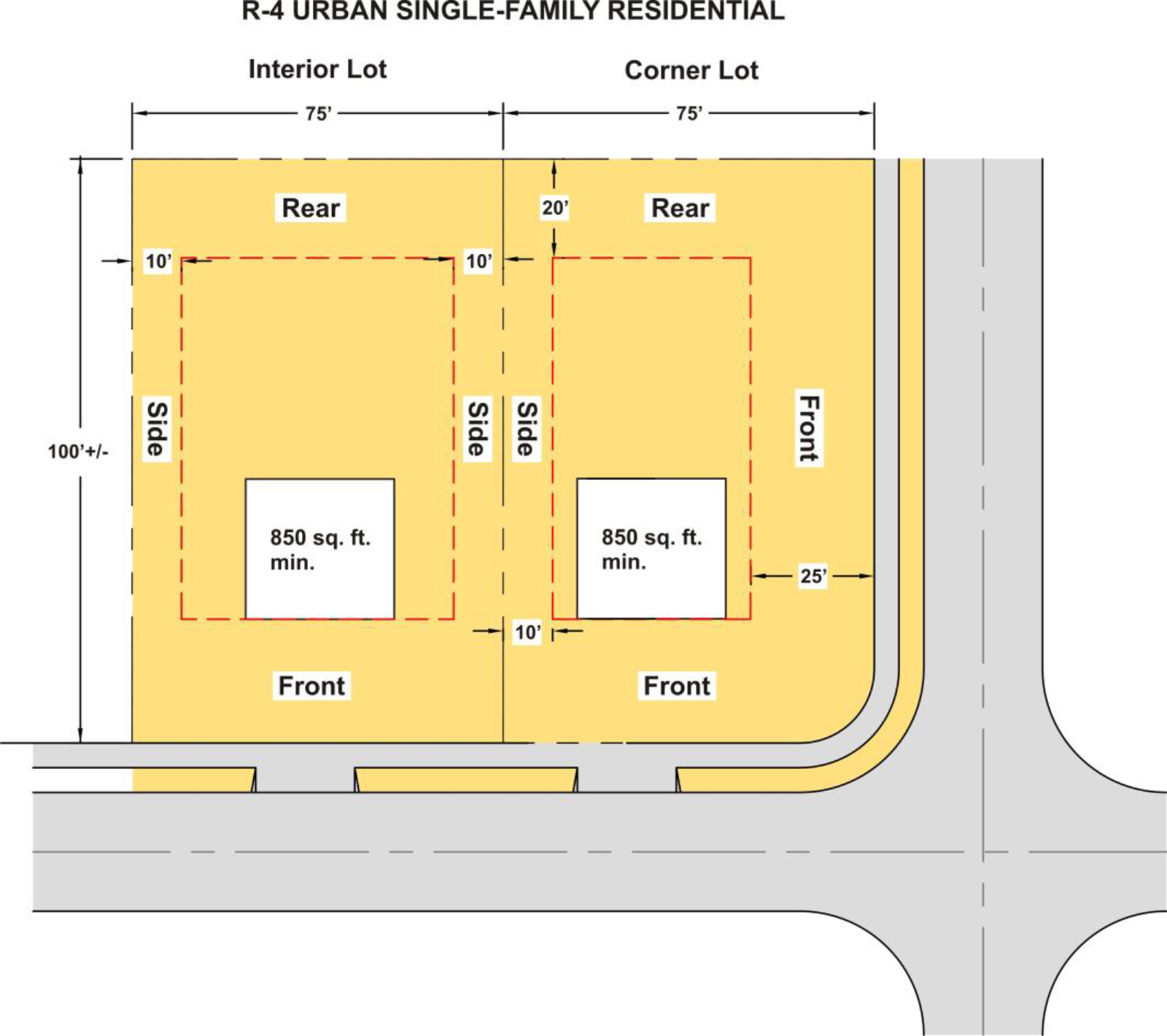
(1)
Minimum lot size:
Area: 7,500 square feet.
Width: 75 feet.
(2)
Minimum yard size:
Front yard: 25 feet.
Rear yard: 20 feet.
Side yard: 20 feet combined, minimum of eight feet on any one side.
Waterfront yard: 25 feet.
(3)
Maximum building height: 35 feet.
(4)
Maximum lot coverage: The total lot area covered with principal and accessory buildings shall not exceed 35 percent.
(5)
Minimum floor area: 850 square feet.
(Ord. No. 01-99, § 1(301.3), 11-3-1999; Ord. No. 10-08, § 2, 9-17-2008; Ord. No. 02-12, § 2(Exh. A), 9-5-2012)
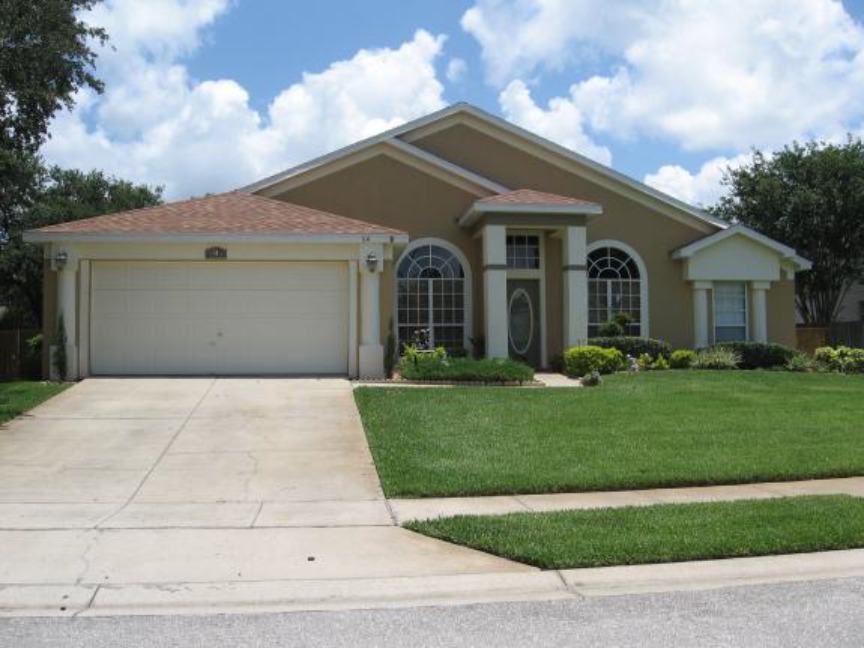
Sec. 3-93. - R-5 Urban Single-Family Residential Classification.
(a)
Purpose and intent. The purpose and intent of the R-5 Urban Single-Family Residential Classification is to provide for low-medium and medium-density residential development and preserve the character of existing small lot residential subdivisions.
(b)
Permitted principal uses and structures. In the R-5 Urban Single-Family Residential Classification, no premises shall be used except for the following uses and their customary accessory uses or structures:
Community residential homes (refer to section 133(3)).
Cluster and zero lot line subdivisions (refer to section 3-137).
Essential utility services.
Excavations only for stormwater retention ponds for which a permit is required by this Code.
Family in-home day care as defined by law.
Home occupations, Class A (refer to section 3-127).
Parks and recreational areas accessory to residential developments.
Public uses not specifically allowed as a permitted use.
Publicly owned parks and recreational areas.
Single-family standard dwelling.
Keeping of pets as an accessory use to residential dwelling.
(c)
Permitted special exceptions. Additional regulations/requirements governing permitted special exceptions are located in section 3-134.
Garage apartments.
Public uses not listed as a permitted principal use.
Public uses not specifically allowed as a permitted use.
Public utility uses and structures (refer to section 3-134(1)).
Recreational areas (refer to section 3-134(2)).
(d)
Dimensional requirements.
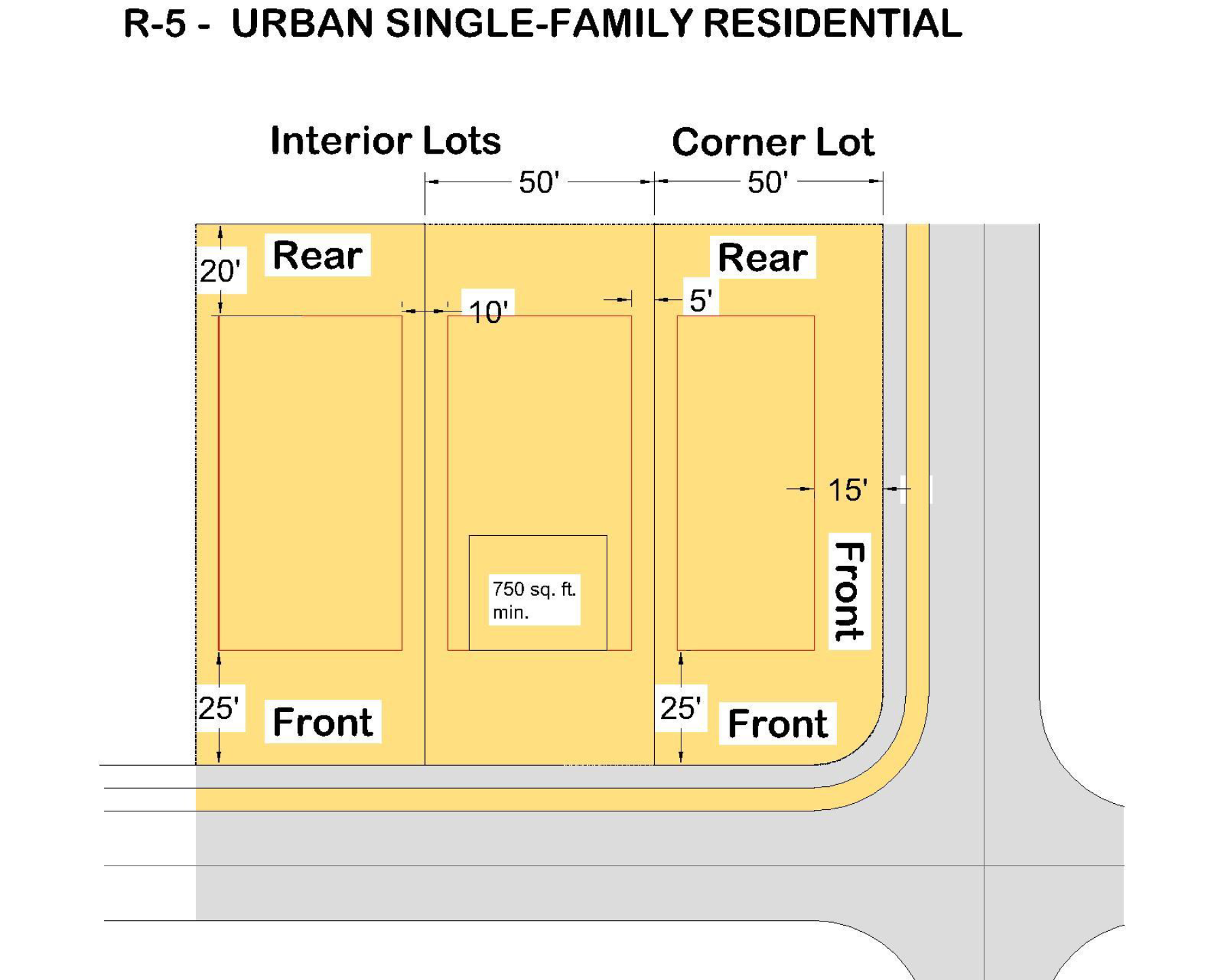
(1)
Minimum lot size:
Area: 5,000 square feet.
Width: 50 feet.
(2)
Minimum yard size:
Front yard: 25 feet, except on a corner lot, one front yard may be reduced to 15 feet.
Rear yard: 20 feet.
Side yard: five feet.
Waterfront yard: 25 feet.
(3)
Maximum building height: 35 feet.
(4)
Maximum lot coverage: The total lot area covered with principal and accessory buildings shall not exceed 35 percent.
(5)
Minimum floor area: 750 square feet.
(Ord. No. 01-99, § 1(301.3), 11-3-1999; Ord. No. 02-12, § 2(Exh. A), 9-5-2012; Ord. No. 07-13, § 2(Exh. A), 8-7-2013)
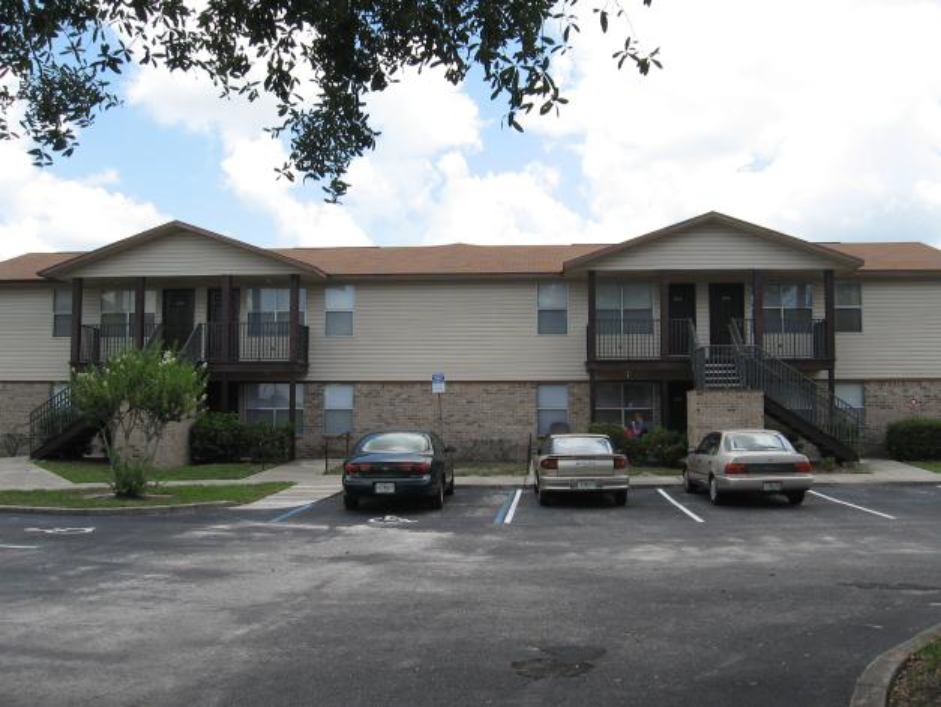
Sec. 3-94. - R-6 Urban Two-Family Residential Classification.
(a)
Purpose and intent. The purpose and intent of the R-6 Urban Two-Family Residential Classification is to provide for a mixture of one- and two-unit dwellings where that mixture of land use exists or is proposed.
(b)
Permitted principal uses and structures. In the R-6 Urban Two-Family Residential Classification, no premises shall be used except for the following uses and their customary accessory uses or structures:
Cluster and zero lot line subdivisions (refer to section 3-137).
Communication towers not exceeding 70 feet in height above ground level.
Community residential homes (refer to section 133(3)).
Essential utility services.
Excavations only for stormwater retention ponds for which a permit is required by this Code.
Family in-home day care as defined by law.
Home occupations, Class A (refer to section 3-127).
Parks and recreational areas accessory to residential developments.
Publicly owned parks and recreational areas.
Single-family dwellings.
Two-family dwellings.
Keeping of pets as an accessory use to residential dwelling.
(c)
Permitted special exceptions. Additional regulations/requirements governing permitted special exceptions are located in section 3-134.
Public uses not specifically allowed as a permitted use.
Maximum building height: 35 feet.
Minimum building separation requirements: 50 feet between fronts or rears of buildings and 25 feet between any other combination of building arrangements.
Minimum lot and yard size for townhouses:
Minimum lot size per dwelling:
Area: 2,000 square feet.
Width: 20 feet.
Minimum yard size per dwelling:
Front yard: ten feet.
Rear yard: ten feet.
Side yard:
Abutting any lot: No minimum.
Abutting any street: ten feet.
Waterfront yard: 20 percent of lot depth but not less than 20 feet.
Minimum building setback requirements from streets, drives and off-street parking areas: No building shall be located closer than ten feet from any interior street, drive or off-street parking area.
Maximum building length and width: No building shall exceed 200 feet in length or width.
Project perimeter setback: No structure shall be located within 45 feet of the project's perimeter.
Off-street parking and loading space meeting the requirements of section 3-129 shall be constructed.
A landscaped buffer area meeting the requirements of article I of chapter 5 shall be constructed.
Final site plan approval meeting the requirements of division 3, article II of chapter 4 is required.
Public uses not listed as a permitted principal use.
Public utility uses and structures (refer to section 3-134(1)).
Recreational areas (refer to section 3-134(2)).
(d)
Dimensional requirements.
(1)
Single-family dwellings:
a.
Minimum lot size:
Area: 7,500 square feet.
Width: 75 feet.
b.
Minimum yard size:
Front yard: 25 feet.
Rear yard: 20 feet.
Side yard: 20 feet combined, minimum of eight feet on any one side.
Waterfront yard: 25 feet.
c.
Maximum building height: 35 feet.
d.
Maximum lot coverage: The total lot area covered with principal and accessory buildings shall not exceed 35 percent.
e.
Minimum floor area: 600 square feet.
(2)
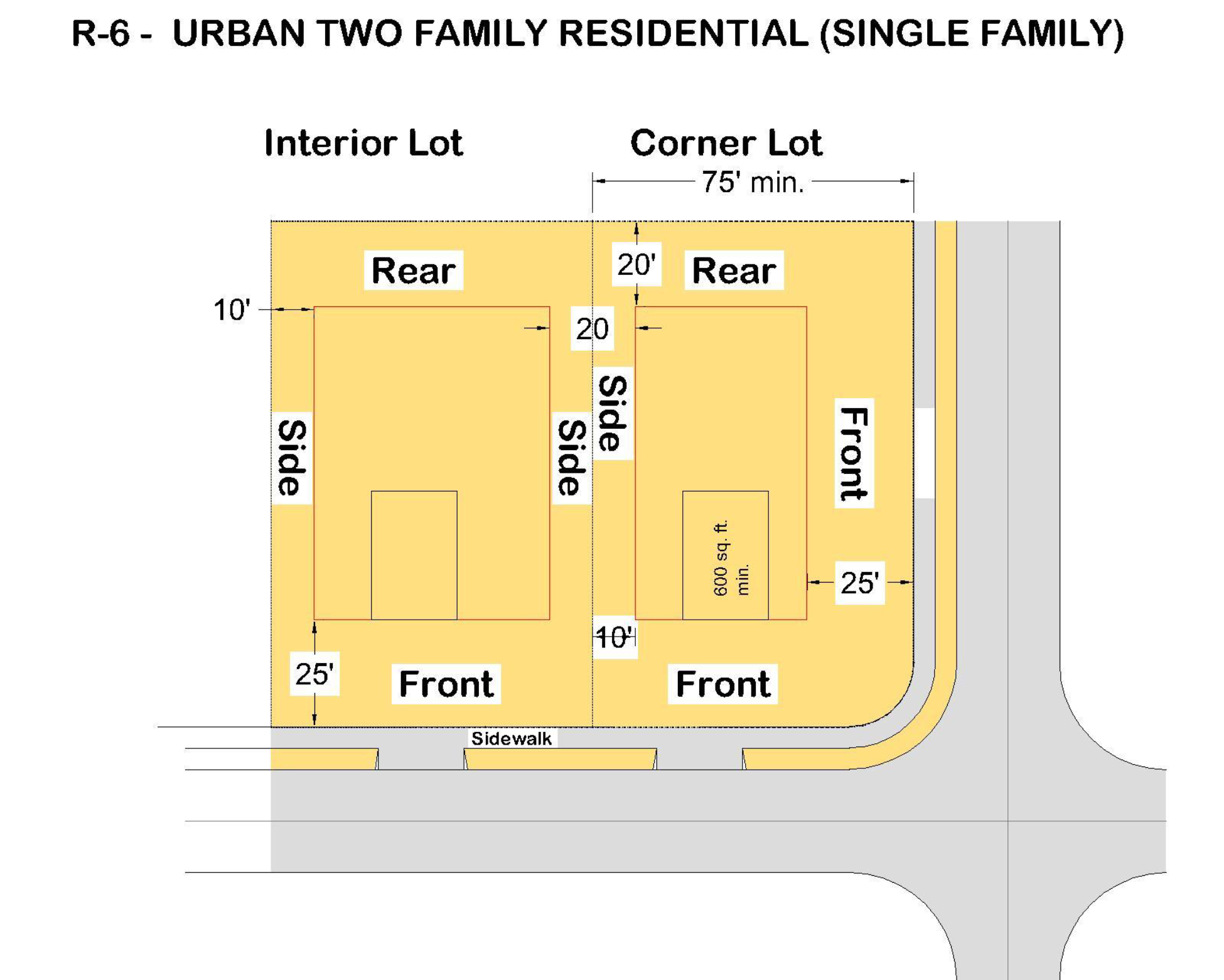
Two-family dwellings:
a.
Minimum lot size:
Area: 11,000 square feet.
Width: 75 feet.
If the two-family dwelling and lot is divided into separate ownership for each unit, then a minimum lot area of 5,500 square feet for each unit and 11,000 square feet for both units combined shall be required, and also a minimum lot width of 37½ feet for each unit and 75 feet for both units combined shall be required.
b.
Minimum yard size:
Front yard: 25 feet.
Rear yard: 20 feet.
Side yard: ten feet.
Waterfront yard: 25 feet.
c.
Maximum building height: 35 feet.
d.
Maximum lot coverage: The total lot area covered with principal and accessory buildings shall not exceed 35 percent.
e.
Minimum floor area: 600 square feet.
(Ord. No. 01-99, § 1(301.3), 11-3-1999; Ord. No. 02-12, § 2(Exh. A), 9-5-2012)
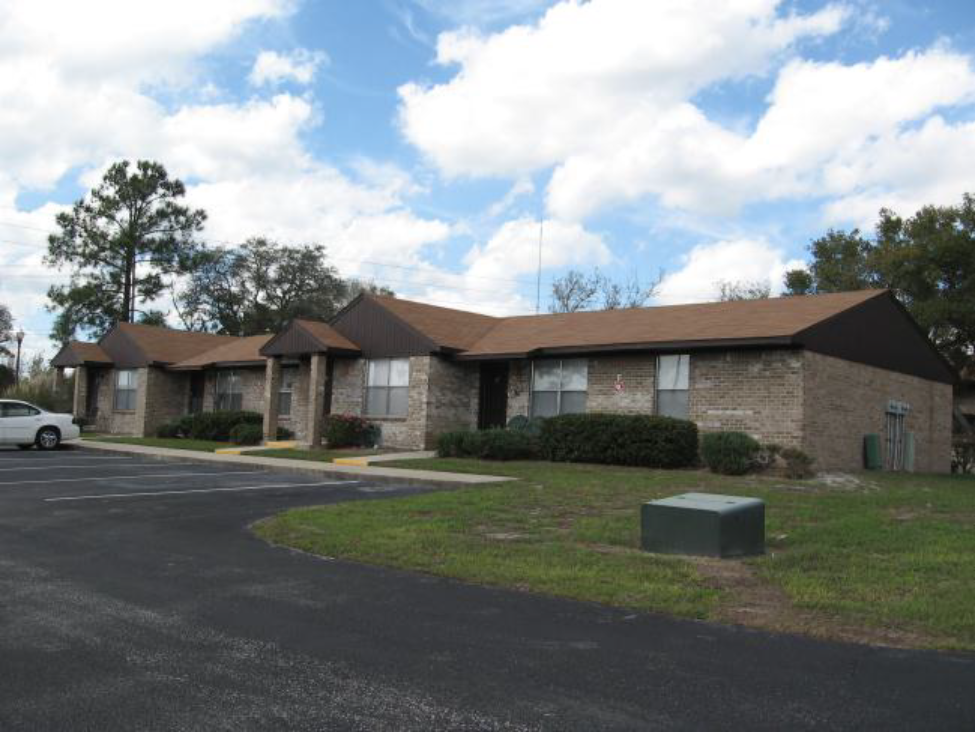
Sec. 3-95. - R-7 Urban Multifamily Residential Classification.
(a)
Purpose and intent. The purpose and intent of the R-7 Urban Multifamily Residential Classification is to provide for multifamily residential living where medium-density residential developments exist or are proposed.
(b)
Permitted principal uses and structures. In the R-7 Urban Multifamily Residential Classification, no premises shall be used except for the following uses and their customary accessory uses or structures:
Community residential home (refer to section 3-133(3)).
Essential utility services.
Excavations only for stormwater retention ponds for which a permit is required by this Code.
Family in-home day care as defined by law.
Home occupations, Class A (refer to section 3-127).
Parks and recreation areas accessory to residential developments.
Publicly owned parks and recreational areas.
Townhouses.
Keeping of pets as an accessory use to residential dwelling.
(c)
Permitted special exceptions. Additional regulations/requirements governing permitted special exceptions are located in section 3-134.
Group home (refer to section 3-134(10)).
Nursing homes approved and licensed by the appropriate state agency (refer to section 3-134(10)).
Public uses not listed as a permitted principal use.
Public utility uses and structures (refer to section 3-134(1)).
Recreational areas (refer to section 3-134(2)).
Public uses not specifically allowed as a permitted use.
(d)
Dimensional requirements.
(1)
Townhouses:
a.
Minimum project size: one acre.
b.
Maximum density: eight dwellings per net acre of land.
c.
Minimum lot size per dwelling:
Area: 2,000 square feet.
Width: 20 feet.
d.
Minimum yard size per dwelling:
Front yard: ten feet.
Rear yard: ten feet.
Side yard: No minimum.
Waterfront yard: 25 feet.
e.
Minimum floor area: 575 square feet.
f.
Maximum building height: 35 feet.
g.
Maximum building length and width: No building shall exceed 200 feet in length or width.
h.
Minimum building separation requirements: 50 feet between fronts or rears of principal buildings and 25 feet between any other combination of principal building arrangements.
i.
Project perimeter setback: No structure shall be located within 45 feet of the project's perimeter.
(2)
Multifamily dwellings:
a.
Minimum project size: one acre.
b.
Maximum density: eight dwellings per net acre of land.
c.
Minimum floor area:
Studio or efficiency: 480 square feet.
One bedroom: 575 square feet.
Each additional bedroom: 150 square feet.
d.
Minimum building separation requirements:
50 feet between fronts or rears of buildings, and
25 feet between any other combination of building arrangements.
e.
Minimum building setback from streets and drives: No building shall be located closer than ten feet from any interior street, drive or off-street parking area.
f.
Maximum building height: 35 feet.
g.
Maximum building length and width: No building shall exceed 200 feet in length or width.
h.
Project perimeter setback: No structure shall be located within 45 feet of the project's perimeter.
(e)
Landscape buffer requirements. A landscaped buffer area meeting the requirements of article I of chapter 5 shall be constructed.
(f)
Final site plan requirements. Final site plan approval meeting the requirements of division 3, article II of chapter 4 is required.
(Ord. No. 01-99, § 1(301.3), 11-3-1999; Ord. No. 02-04, § 1, 5-5-2004; Ord. No. 02-12, § 2(Exh. A), 9-5-2012)
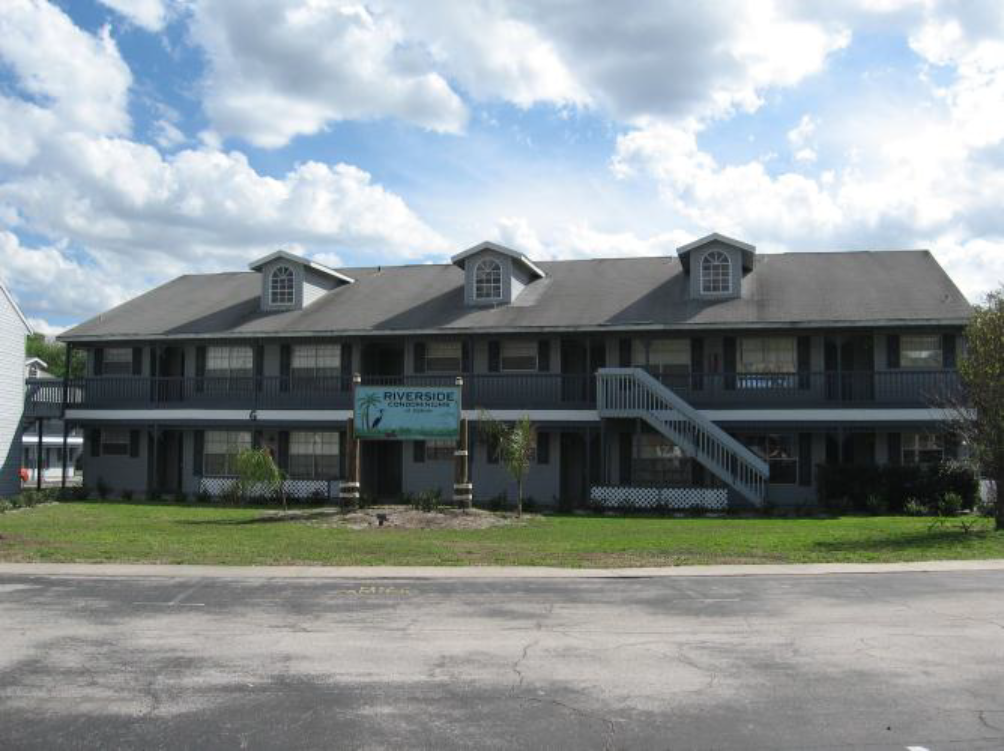
Sec. 3-96. - R-8 Urban Multifamily Residential Classification.
(a)
Purpose and intent: The purpose and intent of the R-8 Urban Multifamily Residential Classification is to provide for multifamily residential projects in urban areas of the City.
(b)
Permitted principal uses and structures. In the R-8 Urban Multifamily Residential Classification, no premises shall be used except for the following uses and their customary accessory uses or structures:
Community residential home (refer to section 3-133(3)).
Essential utility services.
Excavations only for stormwater retention ponds for which a permit is required by this Code.
Family in-home day care as defined by law.
Home occupations, Class A (refer to section 3-127).
Multifamily residences and modular dwellings.
Keeping of pets as an accessory use to residential dwelling.
Parks and recreation areas accessory to residential developments.
Publicly owned parks and recreational areas.
(c)
Permitted special exceptions. Additional regulations/requirements governing permitted special exceptions are located in section 3-134.
Group home (refer to section 3-134(10)).
Public uses not listed as a permitted principal use.
Public utility uses and structures (refer to section 3-134(1)).
Recreational areas (refer to section 3-134(2)).
Public uses not specifically allowed as a permitted use.
(d)
Dimensional requirements.
(1)
Minimum lot size:
Area: 10,000 square feet.
Width: 100 feet.
(2)
Maximum density: eight dwellings per net acre of land.
(3)
Minimum yard size:
Front yard: 25 feet, except on a corner lot, one front yard may be reduced to 20 feet.
Side yard: 12 feet.
Rear yard: 25 feet.
(Buildings over 25 feet in height shall provide additional interior side yards and rear yards at a ratio of one foot of yard for every foot of building height over 25 feet.)
Waterfront yard:
On river, canal or lake: 25 feet.
(4)
Minimum floor area:
Studio or efficiency: 480 square feet.
One bedroom: 575 square feet.
Each additional bedroom: 150 square feet.
(5)
Maximum building length and width: No building shall exceed 200 feet in length or width.
(6)
Minimum building separation requirements: 50 feet between fronts or rears of principal buildings, and 25 feet between any other combination of principal building arrangements.
(7)
Minimum building setback from streets and drives: No principal building shall be located closer than ten feet from any interior street, drive or off-street parking area; however, this requirement shall not apply to an off-street parking area which is under a principal building. (On lots with a width or depth of less than 135 feet, the minimum principal building setback from interior streets, drives and parking areas shall be five feet.)
(8)
Maximum building height: 35 feet.
(e)
Final site plan requirements. Final site plan approval meeting the requirements of division 3, article II of chapter 4 is required.
(Ord. No. 01-99, § 1(301.3), 11-3-1999; Ord. No. 02-04, § 1, 5-5-2004; Ord. No. 02-12, § 2(Exh. A), 9-5-2012)
Sec. 3-97. - MH-1 Mobile Home Park Classification.
(a)
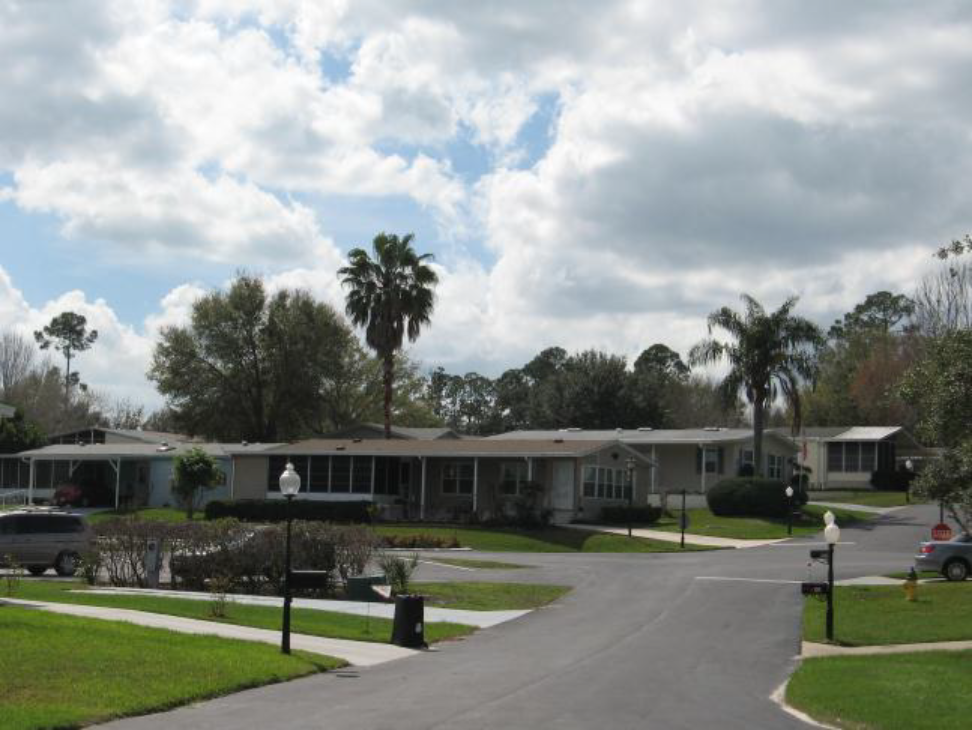
Purpose and intent. The purpose and intent of the MH-1 Mobile Home Park Classification is to provide areas for the use and development of mobile home parks.
(b)
Permitted principal uses and structures. In the MH-1 Mobile Home Park Classification, no premises shall be used except for the following uses and their customary accessory uses or structures:
Communication towers not exceeding 70 feet in height above ground level.
Essential utility services.
Excavations only for stormwater retention ponds for which a permit is required by this Code.
Family in-home day care as defined by law.
Home occupations, Class A (refer to section 3-127).
Mobile home parks meeting the requirements of section 3-128 and accessory laundry buildings, swimming pools and recreational facilities.
Keeping of pets as an accessory use to residential dwelling.
Publicly owned parks and recreational areas.
(c)
Permitted special exceptions. Additional regulations/requirements governing permitted special exceptions are located in section 3-134.
Mobile home sales accessory to a mobile home park (refer to section 3-134).
Public uses not listed as a permitted principal use.
Public utility uses and structures (refer to section 3-134(1)).
Public uses not specifically allowed as a permitted use.
(d)
Dimensional requirements for mobile home park.
(1)
Minimum project size: ten acres.
(2)
Maximum spaces per net acre of land: seven.
(3)
Minimum mobile home space size:
Space area: 5,000 square feet.
Space width: 50 feet.
Space depth: 50 feet.
(4)
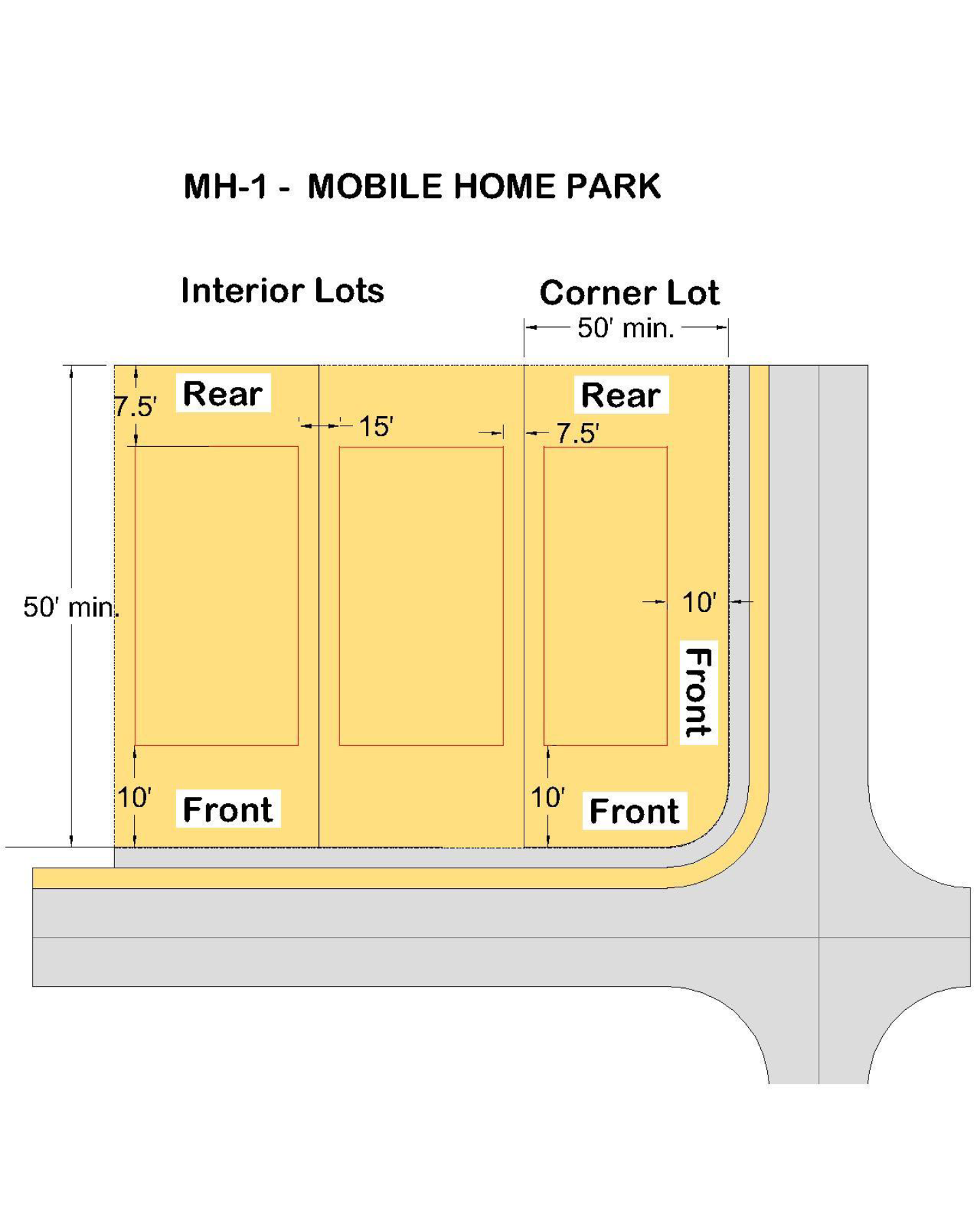
Minimum yard size:
Front yard: ten feet.
Rear yard: 7½ feet.
Side yard:
Abutting any space: 7½ feet.
Waterfront yard: 25 feet.
(5)
Minimum floor area: 480 square feet.
(e)
Final site plan requirements. Final site plan approval meeting the requirements of division 3, article II of chapter 4 is required.
(f)
Landscape buffer requirements. A landscaped buffer area meeting the requirements of article I of chapter 5 shall be constructed.
(g)
Skirting requirement. The area between the ground and floor level of the mobile home dwelling shall be enclosed with block or decorative skirting.
(Ord. No. 01-99, § 1(301.3), 11-3-1999; Ord. No. 02-12, § 2(Exh. A), 9-5-2012)
Sec. 3-99. - MH-5 Urban Mobile Home Classification.
(a)
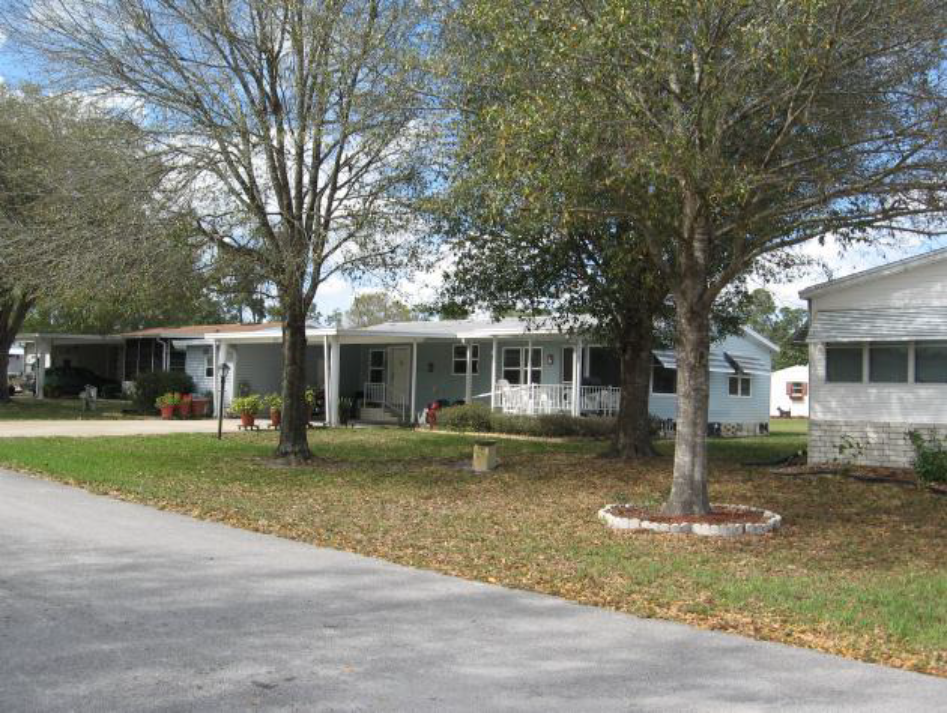
Purpose and intent. The purpose and intent of the MH-5 Urban Mobile Home Subdivision Classification is to provide medium-density areas for mobile home subdivisions.
(b)
Permitted principal uses and structures. In the MH-5 Urban Mobile Home Subdivision Classification, no premises shall be used except for the following uses and their customary accessory uses or structures:
Communication towers not exceeding 70 feet in height above ground level.
Essential utility services.
Excavations only for stormwater retention ponds for which a permit is required by this Code.
Family in-home day care as defined by law.
Home occupations, Class A (refer to section 3-127).
Mobile home dwelling.
Keeping of pets as an accessory use to residential dwelling.
Parks and recreation areas accessory to the development.
Publicly owned parks and recreational areas.
(c)
Permitted special exceptions. Additional regulations/requirements governing permitted special exceptions are located in section 3-134.
Public uses not listed as a permitted principal use.
Public utility uses and structures (refer to section 3-134(1)).
Recreational areas (refer to section 3-134(2)).
Public uses not specifically allowed as a permitted use.
(d)
Dimensional requirements.
(1)
Minimum lot size:
Area: 5,000 square feet.
Width: 50 feet.
(2)
Minimum yard requirements:
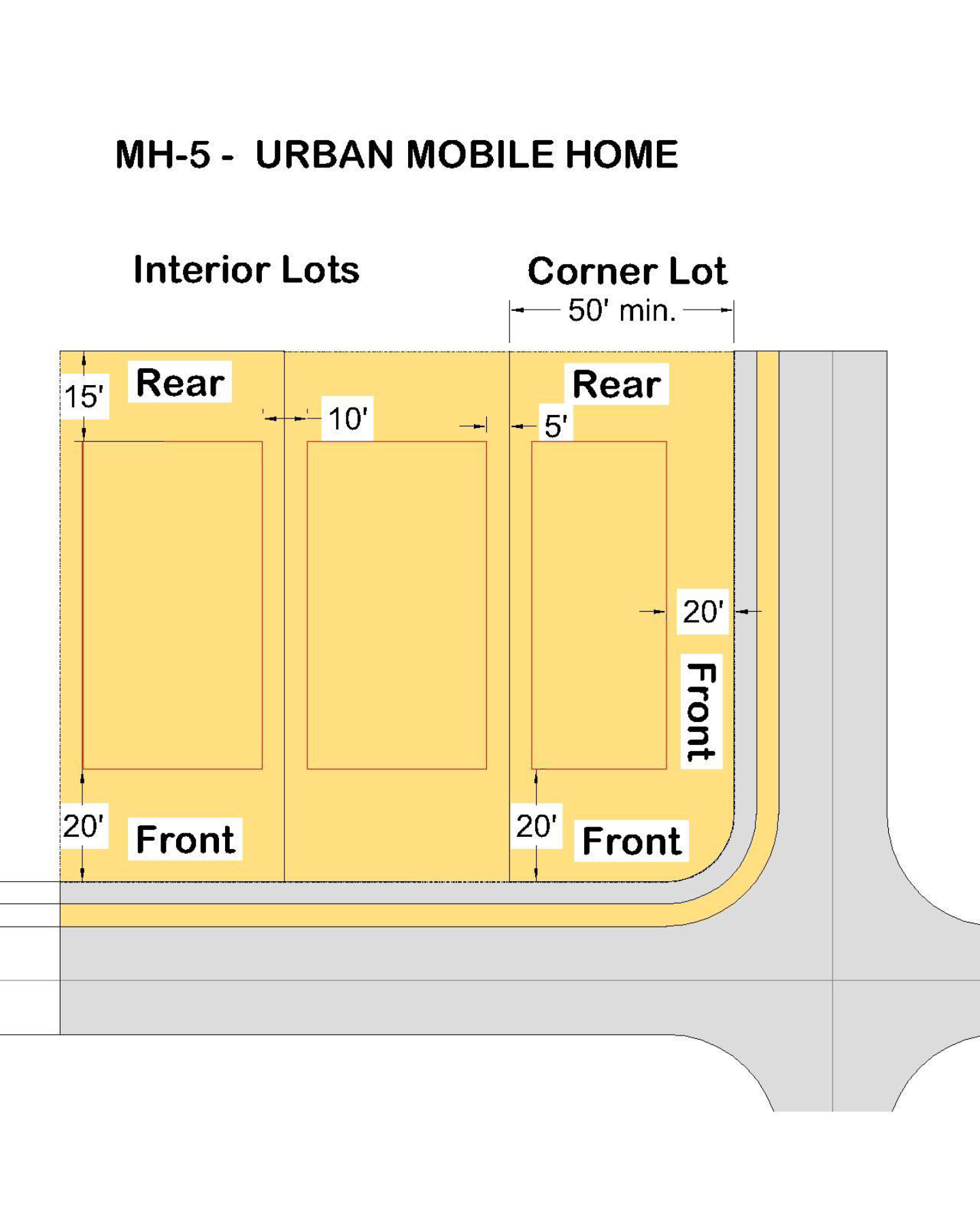
Front yard: 20 feet.
Rear yard: 15 feet.
Side yard: five feet.
Waterfront yard: 25 feet.
(3)
Maximum height: 35 feet.
(4)
Maximum lot coverage: The total lot area covered with principal and accessory buildings shall not exceed 35 percent.
(5)
Minimum floor area: 720 square feet.
(e)
Skirting requirements. The area between the ground and floor levels of the mobile home dwelling shall be enclosed with block or decorative skirting.
(Ord. No. 01-99, § 1(301.3), 11-3-1999; Ord. No. 02-12, § 2(Exh. A), 9-5-2012)
Sec. 3-100. - B-2 Neighborhood Commercial Classification.
(a)
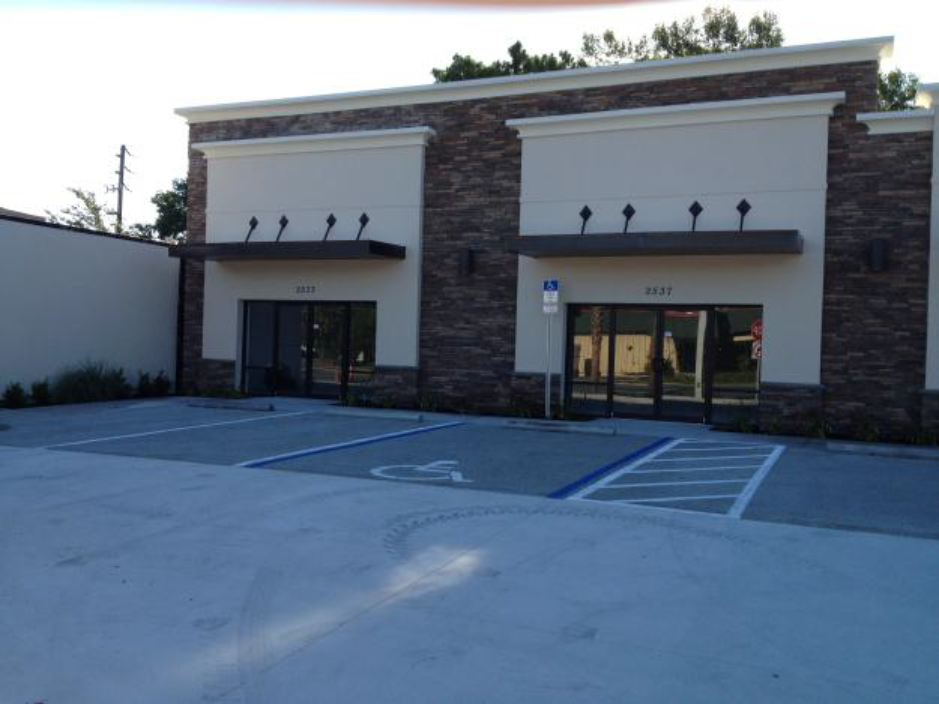
Purpose and intent. The purpose and intent of the B-2 Neighborhood Commercial Classification is to provide a limited commercial convenience facility, servicing nearby residential neighborhoods, planned and developed as an integral unit. No single permitted use listed hereunder shall exceed 5,000 square feet of building area.
(b)
Permitted principal uses and structures. In the B-2 Neighborhood Commercial Classification, no premises shall be used except for the following uses and their customary accessory uses or structures unless a use is found to be substantially similar in nature by the City Manager. Reference Article II, Overlay Districts, for any additional applicable regulations.
Bakeries, retail (including preparation of products for sale on the premises).
Barbershops, beauty shops, shoe repair shops.
Book and stationery stores.
Communication towers not exceeding 70 feet in height above ground level.
Confectioners, and ice cream shops, retail (including preparation of products for sale on the premises).
Convenience stores with or without fuel dispensers (excluding the sale of distilled spirits with a higher alcoholic content than malt beverages or fermented wines). No more than eight vehicular service positions per fuel dispenser island. Maximum of four fuel dispenser islands.
Essential utility services.
Excavations only for stormwater retention ponds for which a permit is required by this Code.
Fire stations.
Florist and gift shops.
General offices.
Hardware stores.
Jewelry stores.
Laundry and dry cleaning pickup stations.
Libraries.
Mobile food dispensing vehicles.
Outdoor display of retail merchandise (refer to section 3-133(10)).
Pharmacies.
Public schools.
Photographic studios.
Physical fitness studios (gym).
Publicly owned parks and recreational areas.
Publicly owned or regulated water supply wells.
Restaurants, Type B, when accessory and subordinate to the convenience store use excludes a single-use freestanding restaurant).
(c)
Permitted special exceptions. Additional regulations/requirements governing permitted special exceptions are located in section 3-134.
Convenience stores with more than eight vehicular service positions per fuel dispenser island.
Day care center (refer to section 3-134(5)).
Financial institutions.
Houses of worship (refer to section 3-134(3)).
Only one single-family dwelling unit for the owner or manager of an existing permitted principal use.
Public uses not listed as a permitted principal use.
Public utility uses and structures (refer to section 3-134(1)).
Public uses not specifically allowed as a permitted use.
(d)
Dimensional requirements.
(1)
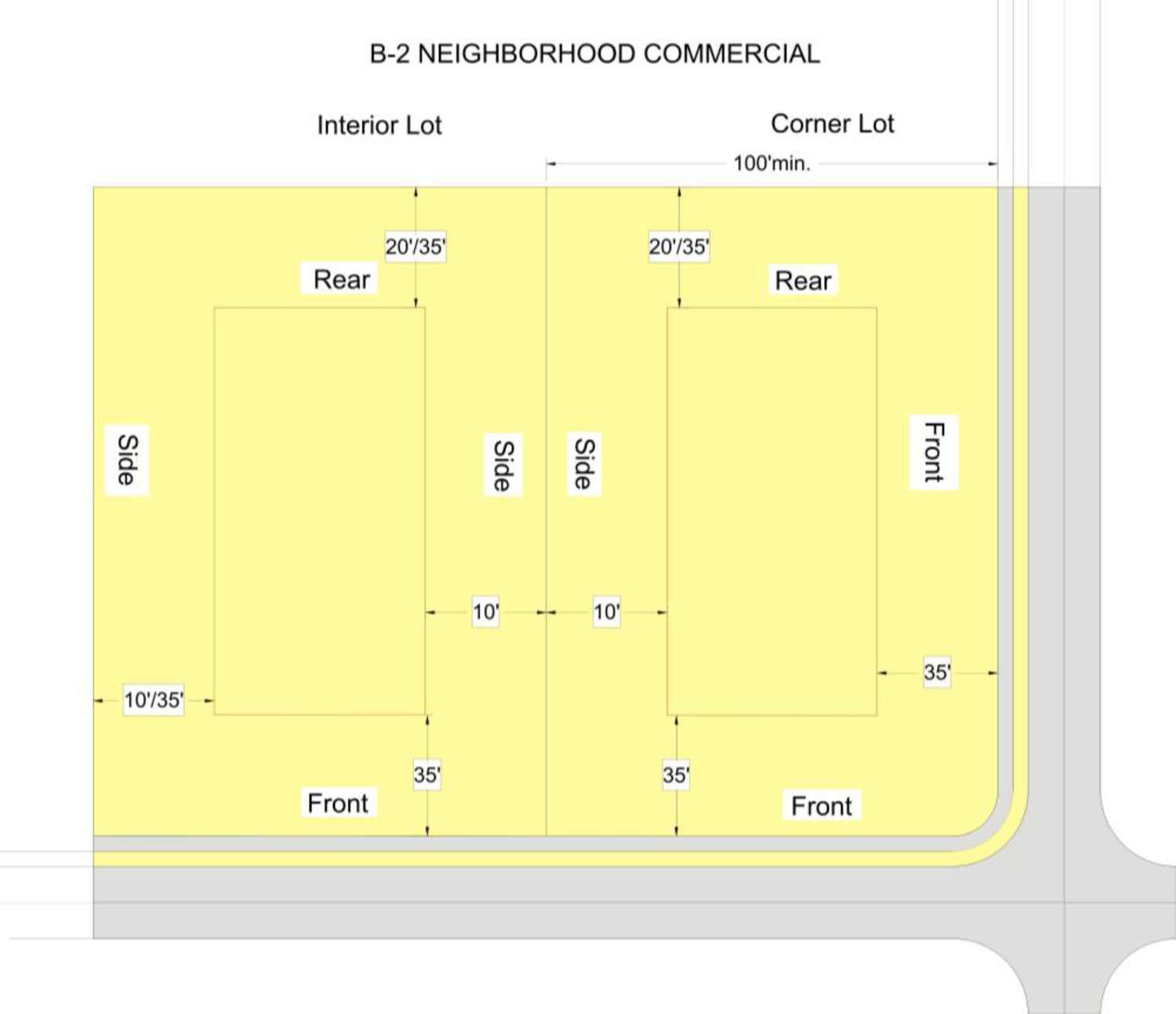
Minimum project size:
Area: 20,000 square feet.
Width: 100 feet.
(2)
Minimum yard size:
Front yard: 35 feet.
Rear yard: 20 feet unless abutting a residential or mobile home zoned property, then 35 feet.
Side yard: ten feet unless abutting a residential or mobile home zoned property, then 35 feet.
Waterfront yard: 25 feet.
(3)
Maximum building height: 35 feet.
(4)
Maximum lot coverage. The total lot area covered with principal and accessory buildings shall not exceed 35 percent.
(5)
Lighting requirements: Light shield to deflect light from adjoining properties to prevent spillover light.
(e)
Final site plan requirements. Final site plan approval meeting the requirements of division 3, article II of chapter 4 is required.
(Ord. No. 01-99, § 1(301.3), 11-3-1999; Ord. No. 02-12, § 2(Exh. A), 9-5-2012; Ord. No. 06-2023, § 5, 7-5-2023)
Sec. 3-101. - B-3 Shopping Center Classification.
(a)
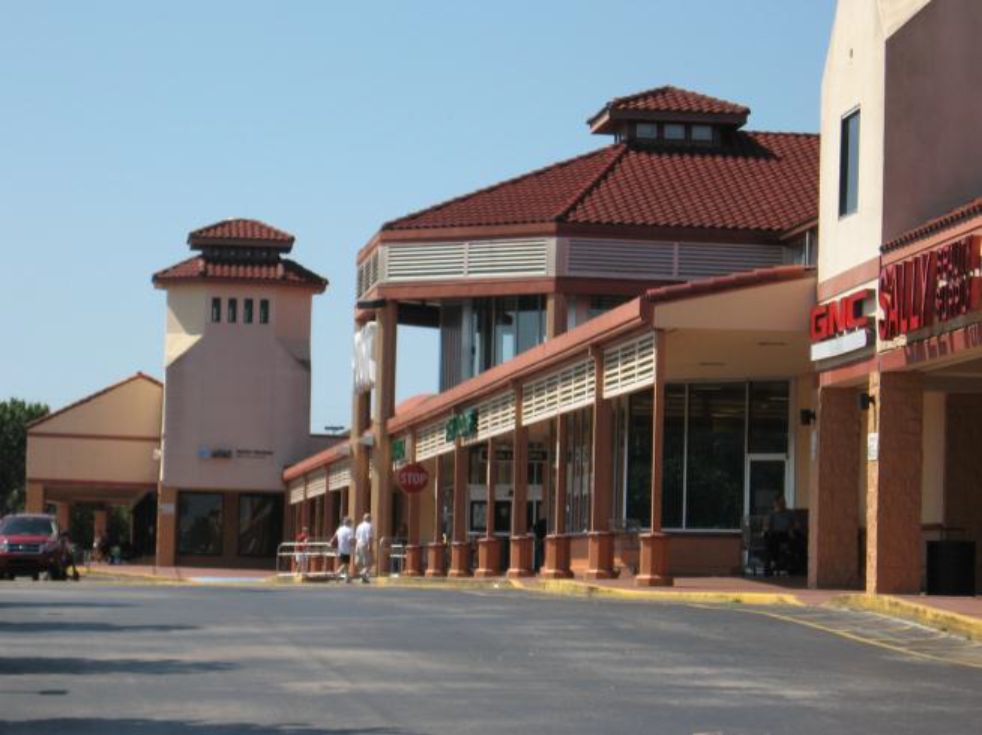
Purpose and intent. The purpose and intent of the B-3 Shopping Center Classification is to provide shopping centers where compatible business establishments will be planned, organized and grouped in a unified arrangement. Such centers should be designed of sufficient dimension to satisfy all off-street parking needs, and be located along major arterial streets, where the traffic generated can be accommodated in a manner consistent with the public health, welfare and safety.
(b)
Permitted principal uses and structures.In the B-3 Shopping Center Classification, no premises shall be used except for the following uses and their customary accessory uses or structures unless a use is found to be substantially similar in nature by the City Manager. Also, reference Article II, Overlay Districts, for any additional applicable regulations.
Any use listed as a permitted use in the B-2 Classification unless use is listed as a special exception use in this classification.
Art, dance, modeling and music schools.
Artist studios.
Auction parlors.
Banks.
Bars and liquor stores.
Beauty shops, barbershops.
Bowling alleys.
Cafeterias.
Communication towers not exceeding 70 feet in height above ground level.
Employment agencies.
Essential utility services.
Excavations only for stormwater retention ponds for which a permit is required by this Code.
Exercise and health spas.
Financial institutions.
Laundry and dry cleaning establishments.
Locksmiths.
Mobile food dispensing vehicles.
Outdoor display of retail merchandise (refer to section 3-133(10)).
Pet stores.
Printing and publishing establishments.
Publicly owned parks and recreational areas.
Restaurants, Types A and B.
Restaurants with outside service of alcoholic beverages. The restaurant must operate under a 4COPSRX license or shall meet similar limitations. Outside service and consumption of alcohol shall be limited to the same hours of operation as interior service and consumption. The establishment's license from Division of Alcoholic Beverages and Tobacco and Bureau of Licensing must include the outside area as part of the licensed premises.
Retail sales and services, excluding sales or rental of automobiles, motorcycles, trucks, motor homes, or travel trailers, automobile driving schools, boat or mobile home sales and services.
Tailor shops.
Theaters.
Travel agencies.
(c)
Permitted special exceptions. Additional regulations/requirements governing permitted special exceptions are located in section 3-134.
Bars with outside service and consumption of alcoholic beverages (refer to section 3-134(9)).
Communication towers exceeding 70 feet in height above ground level.
Day care centers (refer to section 3-134(5)).
Fireworks sales.
Public utility uses and structures (refer to section 3-134(1)).
Public uses not specifically allowed as a permitted use.
Restaurants and bars with outside entertainment (refer to section 3-134(18)).
(d)
Dimensional requirements.
(1)
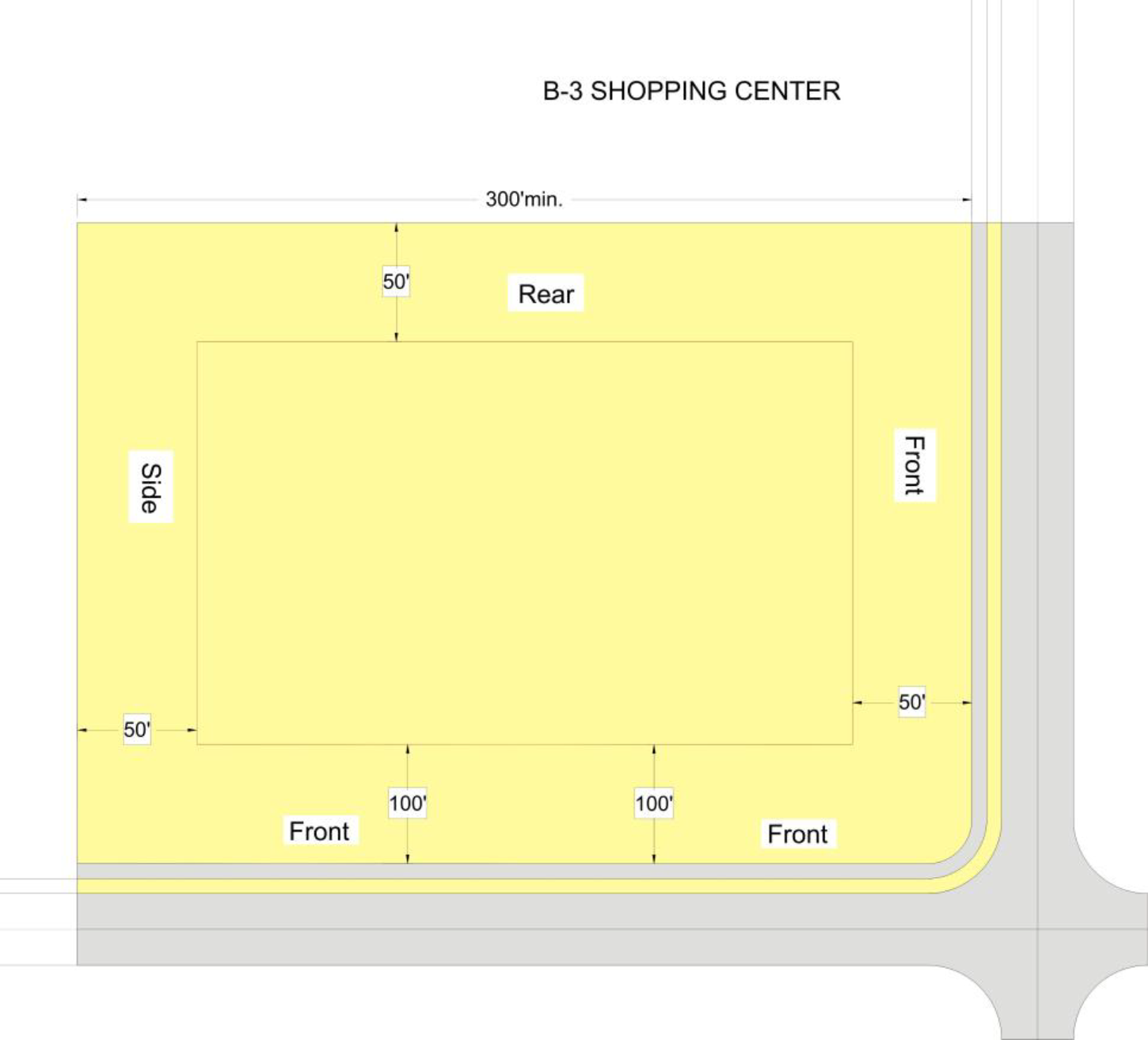
Minimum project size:
Area: ten acres.
Width: 300 feet.
(2)
Minimum lot size for out-parcels within a project:
Area: One acre.
Width: 100 feet.
(3)
Minimum yard size for project, excluding out-parcels:
Front yard: 100 feet.
Rear yard: 50 feet.
Side yard: 50 feet.
Waterfront yard: 50 feet.
(The minimum required side or rear yards shall be 100 feet where they abut a residential or mobile home zoned property.)
(4)
Minimum yard size for out-parcels within a project:
Front yard: 35 feet.
Side and rear yard:
ten feet, if abutting the B-3 classified project;
50 feet if abutting nonresidentially classified land outside the B-3 project; and
100 feet if abutting residential or mobile home zoned property.
Waterfront yard: 50 feet.
(5)
Maximum building height: 40 feet.
(e)
Final site plan requirements. Final site plan approval meeting the requirements of division 3, article II of chapter 4 is required. Out parcels limited to internal/roadway access only.
(Ord. No. 01-99, § 1(301.3), 11-3-1999; Ord. No. 22-02, 12-11-2002; Ord. No. 02-04, § 2, 5-5-2004; Ord. No. 02-12, § 2(Exh. A), 9-5-2012; Ord. No. 06-14, § 2(Exh. A), 9-3-2014; Ord. No. 06-2023, § 5, 7-5-2023)
Sec. 3-102. - B-4 General Commercial Classification.
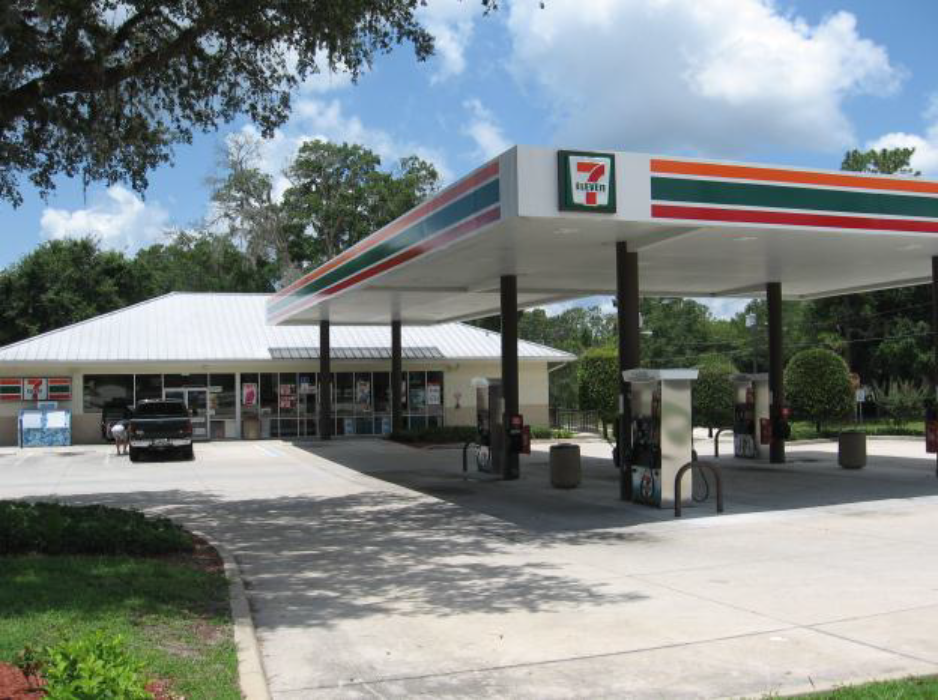
(a)
Purpose and intent. The purpose and intent of the B-4 General Commercial Classification is to encourage the development of intensive commercial areas providing a wide range of goods and services, and located adjoining at least one major collector or arterial road. The B-4 classification is intended to be applied to existing or developing strip retail areas which, because of the nature of existing development, are not appropriate for inclusion in the B-3 Shopping Center Classification.
(b)
Permitted principal uses and structures. In the B-4 General Commercial Classification, no premises shall be used except for the following uses and their customary accessory uses or structures unless a use is found to be substantially similar in nature by the City Manager. Also, reference Article II, Overlay Districts, for any additional applicable regulations.
Any use listed as a permitted use in the B-3 Classification unless the use is listed as a special exception use in this classification.
Art, dance, modeling and music schools.
Auction parlors.
Automobile driving schools.
Automobile service station, Type A.
Barbershops and beauty shops.
Bars and liquor stores.
Bowling alleys.
Catering services.
Communication towers not exceeding 70 feet in height above ground level.
Convenience store with or without gas sales.
Day care centers (refer to section 3-133(9)).
Drug and sundry stores.
Dental laboratories.
Employment agencies.
Essential utility services.
Excavations only for stormwater retention ponds for which a permit is required by this Code.
Financial institutions.
Funeral homes with crematory as an accessory use.
Game rooms or arcades for pool, billiards, pinball machines, jukeboxes or other coin-operated amusements.
General offices, medical and professional.
Government owned public safety facilities.
Hardware stores.
Hobby and craft stores.
Laundry and dry cleaning establishments.
Luggage shop.
Mobile food dispensing vehicles.
Outdoor display of retail merchandise (refer to section 3-133(10)).
Pest exterminators.
Pet grooming.
Private clubs and lodges.
Publicly owned parks and recreational areas.
Restaurants with outside service of alcoholic beverages. The restaurant must operate under a 4COPSRX license or shall meet similar limitations. Outside service and consumption of alcohol shall be limited to the same hours of operation as interior service and consumption. The establishment's license from Division of Alcoholic Beverages and Tobacco and Bureau of Licensing must include the outside area as part of the licensed premises.
Restaurants, Types A and B.
Retail paints and wallpaper stores.
Retail plant nursery.
Retail sales and services.
Tailors.
Theaters.
Travel agencies.
Veterinary clinics.
(c)
Permitted special exceptions. Additional regulations/requirements governing permitted special exceptions are located in section 3-134.
Assisted living facilities (ALF) approved by the appropriate state agency (refer to section 3-134(10).
Bars with outside service and consumption of alcoholic beverages (refer to section 3-134(9)).
Bus stations.
Car washes.
Communication towers exceeding 70 feet in height above ground level.
Fireworks sales.
Group homes (refer to section 3-134(10)).
Hotel/motel.
Houses of worship (refer to section 3-134(3)).
Miniwarehouses (refer to section 3-134(4)).
Nightclubs.
Nursing homes approved by the appropriate state agency (refer to section 3-134(10)).
Professional or trade schools related to permitted uses.
Public uses not listed as a permitted principal use.
Public utility uses and structures (refer to section 3-134(1)).
Restaurants and bars with outside entertainment (refer to section 3-134(18)).
Schools, parochial or private.
Self-storage facilities and Miniwarehouses (refer to section 3-134(4)).
Public uses not specifically allowed as a permitted use.
(d)
Dimensional requirements.
(1)
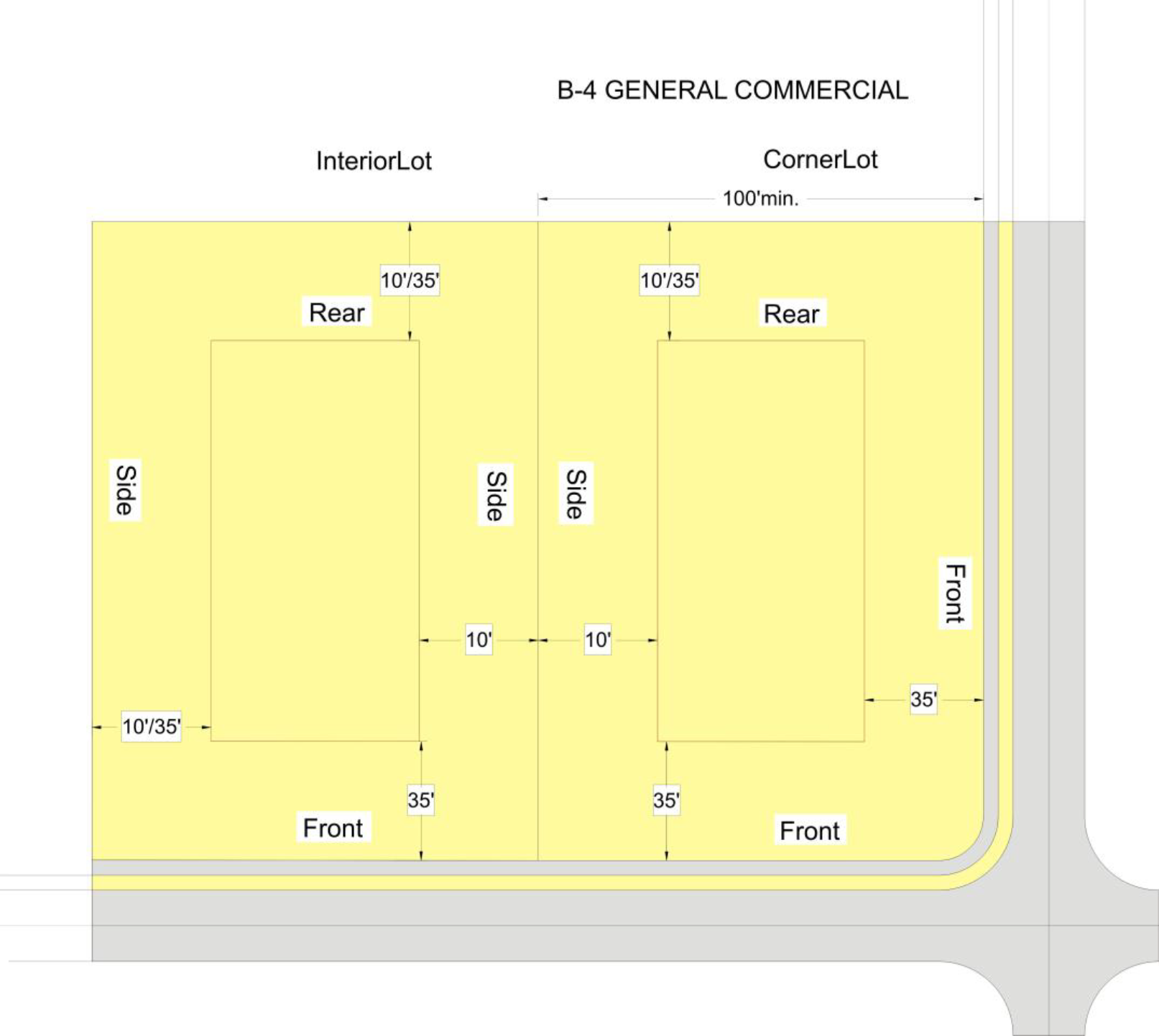
Minimum lot size:
Area: One acre.
Width: 100 feet.
(2)
Minimum yard size:
Front yard: 35 feet.
Side and rear yard: ten feet unless abutting any residential or mobile home zoned property, then 35 feet.
Waterfront yard: 25 feet.
(3)
Maximum building height: 40 feet.
(4)
Maximum lot coverage: The total lot area covered with principal and accessory buildings shall not exceed 35 percent.
(e)
Final site plan requirements. Final site plan approval meeting the requirements of division 3, article II of chapter 4 is required.
(Ord. No. 01-99, § 1(301.3), 11-3-1999; Ord. No. 22-02, 12-11-2002; Ord. No. 02-04, § 2, 5-5-2004; Ord. No. 02-12, § 2(Exh. A), 9-5-2012; Ord. No. 06-14, § 2(Exh. A), 9-3-2014; Ord. No. 02-2022, § 4, 2-16-2022; Ord. No. 04-2023, § 2, 5-17-2023; Ord. No. 06-2023, § 5, 7-5-2023)
Sec. 3-103. - B-5 Heavy Commercial Classification.
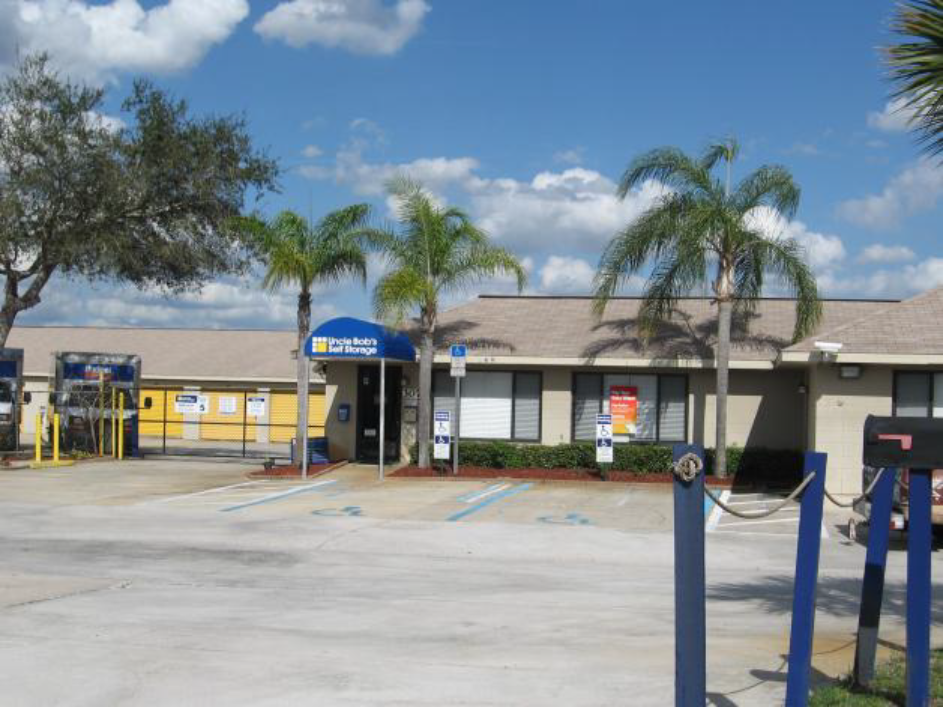
(a)
Purpose and intent. The purpose and intent of the B-5 Heavy Commercial Classification is to provide areas for commercial uses and structures that are not generally compatible with B-4 uses and structures.
(b)
Permitted principal uses and structures. In the B-5 Heavy Commercial Classification, no premises shall be used except for the following uses and their customary accessory uses or structures unless a use is found to be substantially similar in nature by the City Manager. Also, reference Article II, Overlay Districts, for any additional applicable regulations.
Any of those uses permitted in the B-4 Classification unless the use is listed as a special exception use in this classification.
Automobile, bicycle, boat, mobile home, motorcycle, recreational vehicle, trailer, truck sales, rental, storage (not including salvage or junkyards), or service establishments.
Assisted living facilities (ALF) approved by the appropriate state agency.
Automobile body shops.
Automobile driving schools.
Automobile service stations, Types A and B.
Bars and liquor stores.
Bowling alleys.
Building material sales and storage.
Cabinetry and woodworking shops.
Car washes.
Catering services.
Communication towers not exceeding 70 feet in height above ground level.
Contractor's shop, storage and equipment yard.
Dental laboratories.
Employment agencies.
Essential utility services.
Excavations only for stormwater retention ponds for which a permit is required by this Code.
Funeral homes.
Game rooms or arcades for pool, billiards, pinball machines, jukeboxes or other coin-operated amusements.
Laundry and dry cleaning off-site establishments.
Marine engine repair and service.
Miniwarehouses which meet the requirements of section 3-134(4).
Mobile food dispensing vehicles.
Nursing homes.
Outdoor display of retail merchandise (refer to section 3-133(10)).
Paint and body shops.
Pawnshops.
Pest exterminators.
Printing and engraving, including photostating and publishing.
Private clubs.
Publicly owned parks and recreational areas.
Radio and television broadcasting stations.
Restaurants with outside service and consumption of alcoholic beverages. The restaurant must operate under a 4COPSRX license or shall meet similar limitations. Outside service and consumption of alcohol shall be limited to the same hours of operation as interior service and consumption. The establishment's license from Division of Alcoholic Beverages and Tobacco and Bureau of Licensing must include the outside area as part of the licensed premises.
Restaurants, Types A and B.
Retail sales and services.
Rug cleaning establishments.
Self-storage facilities and Miniwarehouses.
Small engine repair shops.
Tailors.
Veterinary clinics.
Welding and soldering shops.
Wholesale-retail nursery.
(c)
Permitted special exceptions. Additional regulations/requirements governing permitted special exceptions are located in section 3-134.
Bars with outside service and consumption of alcoholic beverages (refer to section 3-134(9)).
Bus garages and repair shops.
Bus stations.
Communication towers exceeding 70 feet in height above ground level.
Day care center (refer to section 3-134(5)).
Fireworks sales.
Hospitals.
Houses of worship (refer to section 3-134(3)).
Moving and storage companies.
Nightclubs.
Professional or trade schools related to permitted uses.
Public uses not specifically allowed as a permitted use.
Restaurants and bars with outside entertainment (refer to 3-134(18)).
Schools, parochial or private and public.
Tattoo and body piercing parlors.
Warehouses.
(d)
Dimensional requirements.
(1)
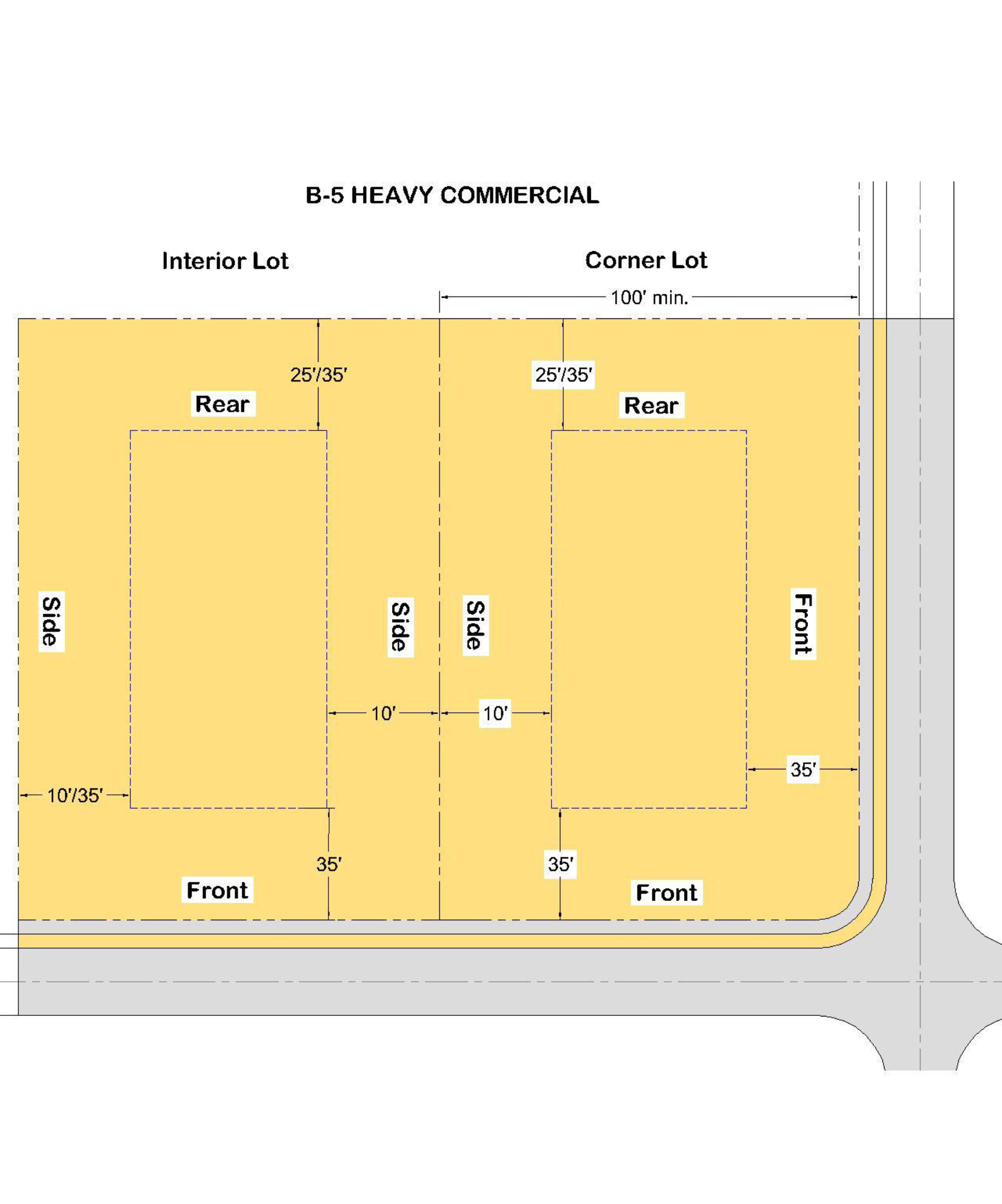
Minimum lot size:
Area: One acre.
Width: 100 feet.
(2)
Minimum yard size:
Front yard: 35 feet.
Rear yard: 25 feet unless abutting any residential or mobile home zoned property, then 35 feet.
Side yard: ten feet unless abutting any residential or mobile home zoned property, then 35 feet.
Waterfront yard: 25 feet.
(3)
Maximum building height: 40 feet.
(4)
Maximum lot coverage: The total lot area covered with principal and accessory buildings shall not exceed 35 percent.
(e)
Final site plan requirements. Final site plan approval meeting the requirements of division 3, article II of chapter 4 is required.
(Ord. No. 01-99, § 1(301.3), 11-3-1999; Ord. No. 22-02, 12-11-2002; Ord. No. 02-04, § 2, 5-5-2004; Ord. No. 02-12, § 2(Exh. A), 9-5-2012; Ord. No. 06-14, § 2(Exh. A), 9-3-2014; Ord. No. 02-2022, § 4, 2-16-2022; Ord. No. 04-2023, § 2, 5-17-2023; Ord. No. 06-2023, § 5, 7-5-2023)
Sec. 3-104. - B-6 Highway Interchange Commercial Classification.
(a)
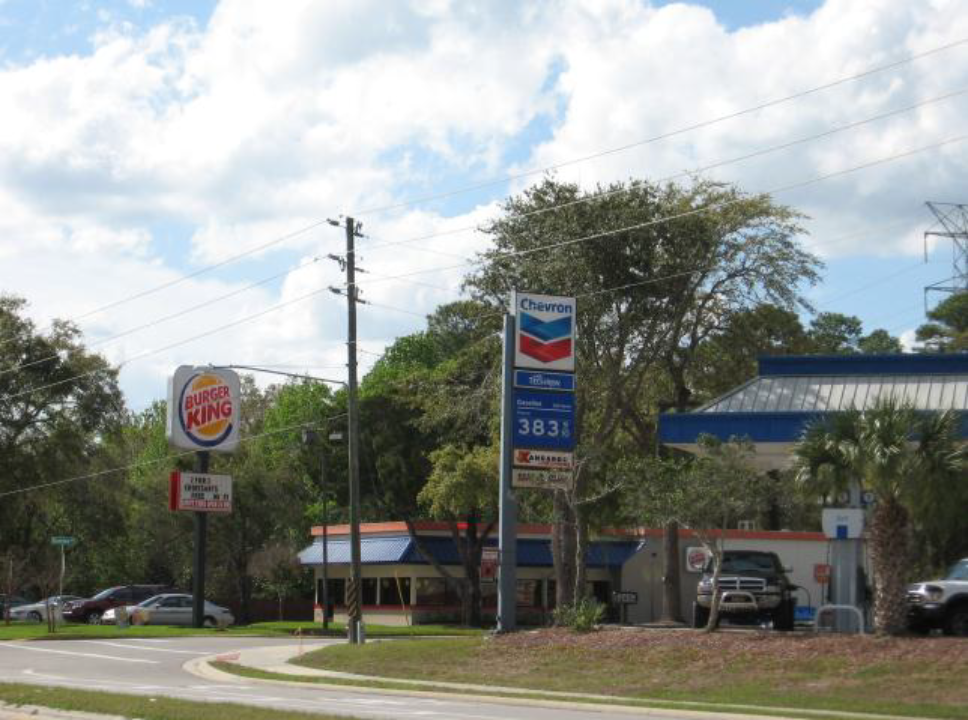
Purpose and intent. The purpose and intent of the B-6 Highway Interchange Commercial Classification is to provide a specialized classification for hotels, motels and tourist-related retail facilities near major highway interchanges.
(b)
Permitted principal uses and structures. In the B-6 Highway Interchange Commercial Classification, no premises shall be used except for the following uses and their customary accessory uses or structures unless a use is found to be substantially similar in nature by the City Manager:
Automobile rental agencies.
Automotive service stations, Types A and B.
Bars as accessory uses to hotels and restaurants.
Barbershops and beauty shops.
Car washes.
Communication towers not exceeding 70 feet in height above ground level.
Convenience stores, with or without fuel dispensers.
Excavations only for stormwater retention ponds for which a permit is required by this Code.
Hotels/motels.
Laundry and dry cleaning off-site establishments.
Mobile food dispensing vehicles.
Publicly owned parks and recreational areas.
Restaurants, Types A and B.
Retail sales and service.
Tire sales.
(c)
Permitted special exceptions. Additional regulations/ requirements governing permitted special exceptions are located in section 3-134.
Fireworks sales.
Houses of worship (refer to section 3-134(3)).
Nightclubs.
Pole/pylon signs within 1,000 linear feet of Interstate 4 (I-4) (refer to section 3-134(12)).
Professional or trade schools related to permitted uses.
Public uses not listed as a permitted principal use.
Public utility uses and structures (refer to section 3-134(1)).
Public uses not specifically allowed as a permitted use.
Schools, parochial, private or public.
(d)
Dimensional requirements.
(1)
Minimum lot size:
Area: 20,000 square feet.
Width: 100 feet.
(2)
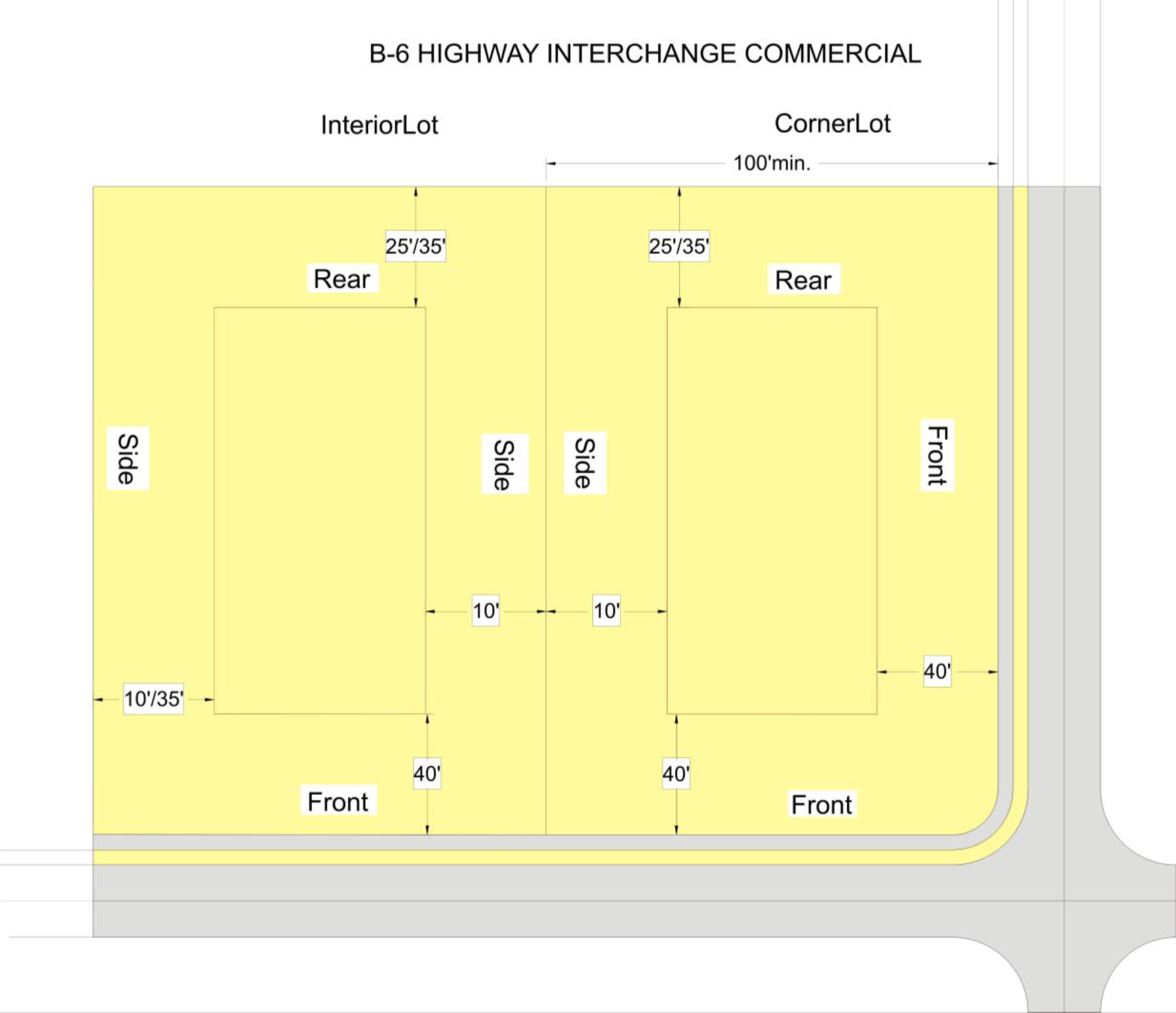
Minimum yard size:
Front yard: 40 feet.
Rear yard: 25 feet unless abutting any residential or mobile home zoned property, then 35 feet.
Side yard: ten feet unless abutting any residential or mobile home zoned property, then 35 feet.
Waterfront yard: 25 feet.
(3)
Maximum building height: 40 feet.
(4)
Maximum lot coverage: The total lot area covered with principal and accessory buildings shall not exceed 35 percent.
(e)
Final site plan requirements. Final site plan approval meeting the requirements of division 3, article II of chapter 4 is required.
(Ord. No. 01-99, § 1(301.3), 11-3-1999; Ord. No. 22-02, 12-11-2002; Ord. No. 02-04, § 2, 5-5-2004; Ord. No. 02-12, § 2(Exh. A), 9-5-2012; Ord. No. 06-2023, § 5, 7-5-2023)
Sec. 3-105. - B-7 Commercial Marina Classification.
(a)
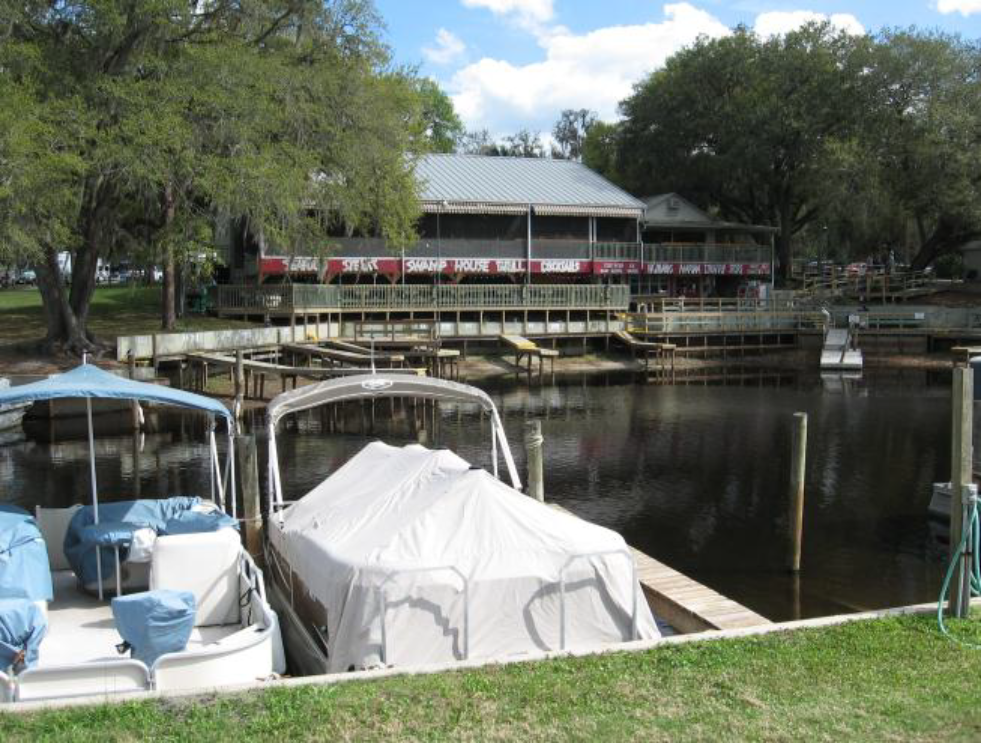
Purpose and intent. The purpose and intent of the B-7 Commercial Marina Classification is to provide appropriate locations for pleasure or commercial boats and other water-oriented facilities. Its application is primarily intended along the St. Johns River and other water bodies or watercourses.
(b)
Permitted principal uses and structures. In the B-7 Commercial Marina Classification, no premises shall be used except for the following uses and their customary accessory uses or structures unless a use is found to be substantially similar in nature by the City Manager. Also, reference Article II, Overlay Districts, for any additional applicable regulations.
Bait and tackle sales.
Bars (ancillary to principal water-dependent use).
Boat and marine engine sales, service and rentals.
Boat docks and moorings.
Boat fuel sales.
Boat storage.
Commercial fishing, pleasure or excursion boat dockage.
Convenience stores, with or without fuel dispensers. No more than eight vehicular service positions per fuel dispenser island. Maximum of four fuel dispenser islands.
Excavations only for stormwater retention ponds for which a permit is required by this Code.
Fishing docks, wharves and piers.
Laundry and dry cleaning pickup stations.
Laundry and dry cleaning, self-service establishments.
Marinas (refer to section 3-133(8) for additional regulations).
Marine-oriented research facilities.
Publicly owned parks and recreational areas.
Restaurants, Types A and B.
Retail sales or rental of boating, fishing, diving, water skiing, and bathing supplies, equipment and accessories.
(c)
Permitted special exceptions. Additional regulations/requirements governing permitted special exceptions are located in section 3-134.
Convenience stores, with more than eight vehicular service positions per fuel dispenser island.
Financial institutions.
Hotels/motels (ancillary to principal water-dependent use).
Mobile recreational vehicle and shelter parks (refer to section 3-128).
Nightclubs (ancillary to principal water-dependent use).
Public uses not specifically allowed as a permitted use.
(d)
Dimensional requirements.
(1)
Minimum lot size:
Area: One acre.
Width: 100 feet.
(2)
Minimum yard size:
Front yard: 35 feet.
Rear yard: ten feet unless abutting any residential, agricultural or mobile home zoned property, then 35 feet.
Side yard: ten feet unless abutting any residential, agricultural or mobile home zoned property, then 35 feet.
Waterfront yard: 25 feet.
(3)
Maximum building height: 40 feet.
(4)
Maximum lot coverage: 35 percent.
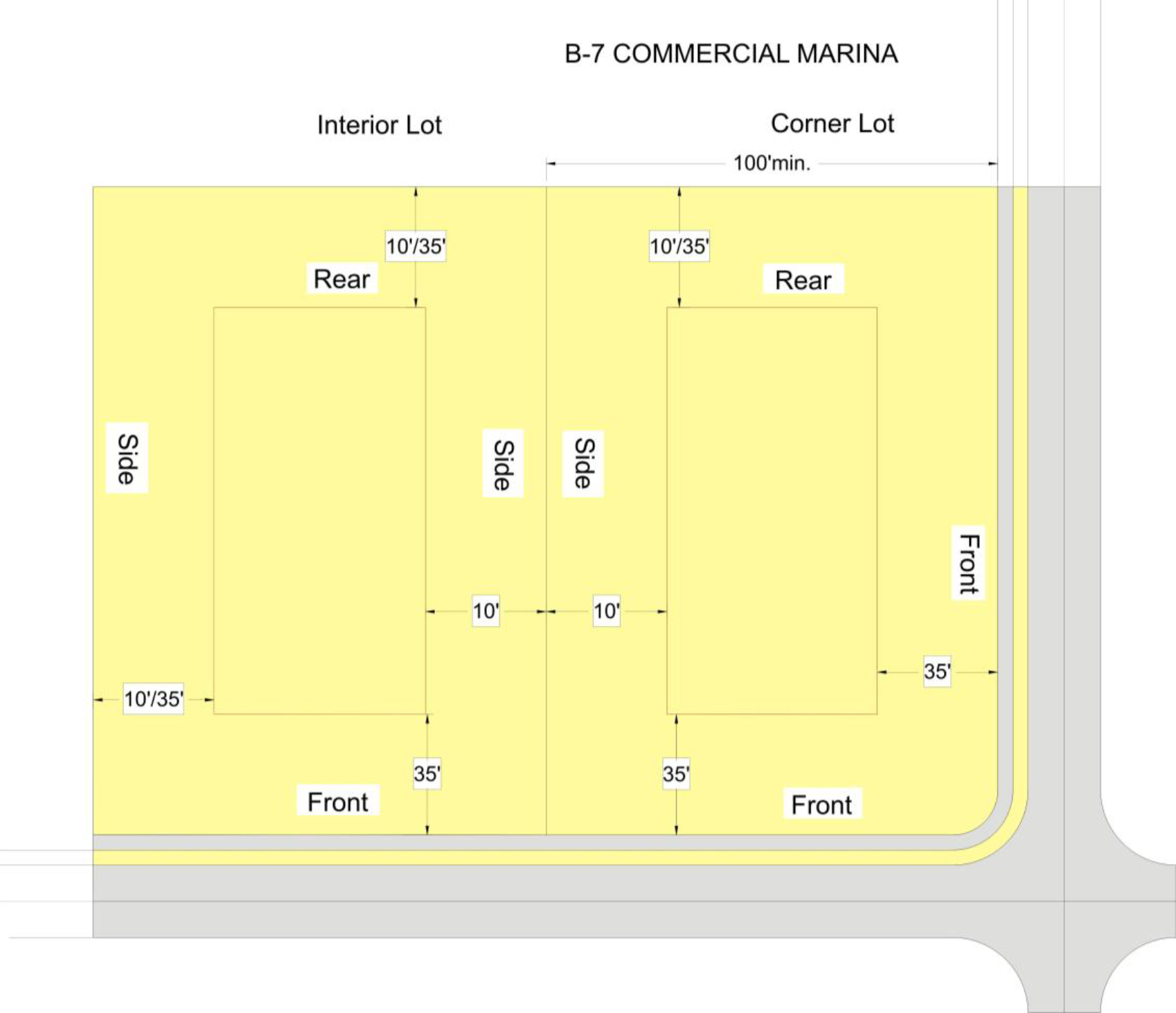
(e)
Final site plan requirements. Final site plan approval meeting the requirements of division 3, article II of chapter 4 is required.
(Ord. No. 01-99, § 1(301.3), 11-3-1999; Ord. No. 02-04, § 2, 5-5-2004; Ord. No. 02-12, § 2(Exh. A), 9-5-2012)
Sec. 3-106. - B-9 General Office Classification.
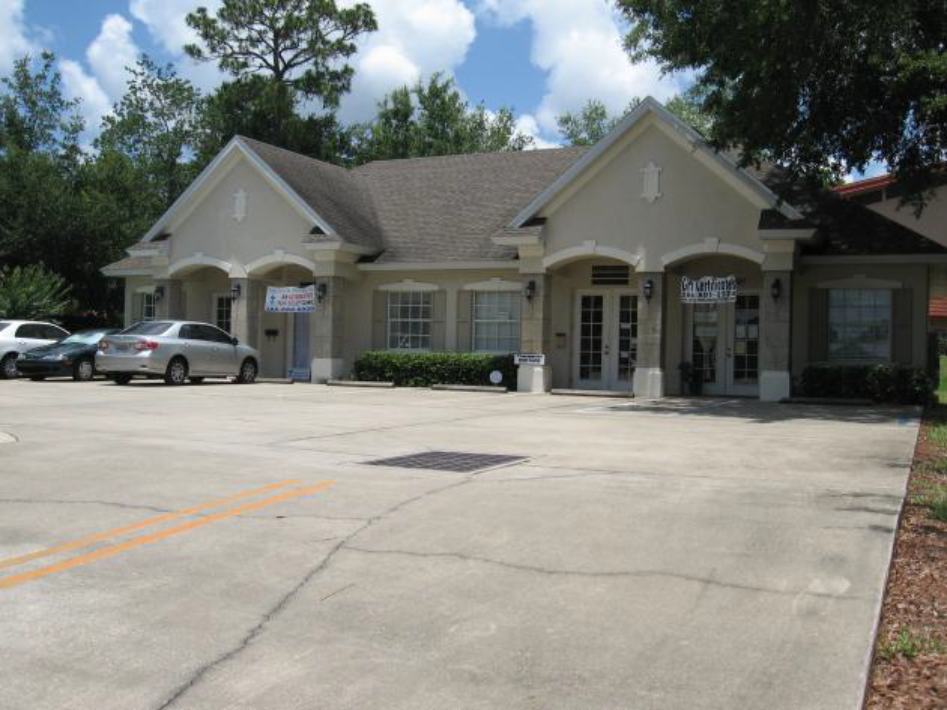
(a)
Purpose and intent. The purpose and intent of the B-9 classification is to provide areas for general office use. It is intended that this classification apply to suitable properties which are situated in urban areas to provide a transitional area between residential development and more intensive land uses.
(b)
Permitted principal uses and structures. In the B-9 General Office classification, no premises shall be used except for the following uses and their customary accessory uses or structures unless a use is found to be substantially similar in nature by the City Manager. Also, reference Article II, Overlay Districts, for any additional applicable regulations.
Communication towers not exceeding 70 feet in height above ground level.
Exempt excavations requiring a permit as required by this Code.
Financial institutions.
Mobile food dispensing vehicles.
Professional, Medical and General offices.
Publicly owned parks and recreational areas.
(c)
Permitted special exceptions. Additional regulations/requirements governing permitted special exceptions are located in section 3-134.
Day care center.
Public uses not specifically allowed as a permitted use.
(d)
Dimensional requirements.
(1)
Minimum project size:
Area: one acre.
Width: 100 feet.
(2)
Minimum yard size:
Front yard: 35 feet.
Rear yard: 20 feet, unless abutting a residential or mobile home zoned property, then 35 feet.
Side yard: ten feet, unless abutting a residential or mobile home zoned property, then 35 feet.
Waterfront yard: 25 feet.
(3)
Maximum building height: 35 feet.
(4)
Maximum lot coverage: The total lot area covered with principal and accessory buildings shall not exceed 35 percent.
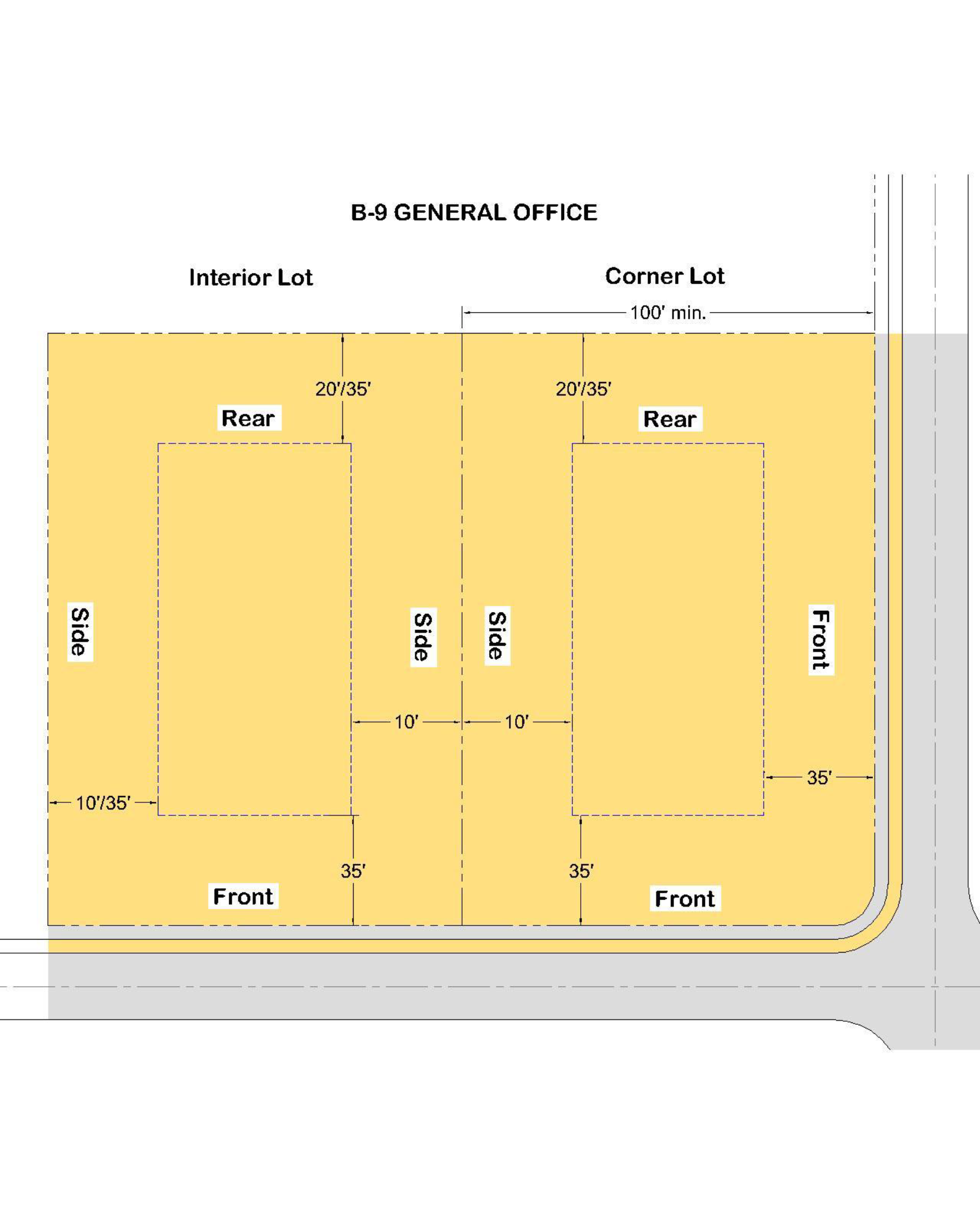
(e)
Final site plan requirements. A final site plan meeting the requirements of division 3, article II of chapter 4 is required.
(Ord. No. 01-99, § 1(301.3), 11-3-1999; Ord. No. 02-12, § 2(Exh. A), 9-5-2012; Ord. No. 06-2023, § 5, 7-5-2023)
Sec. 3-107. - I-1 Light Industrial Classification.
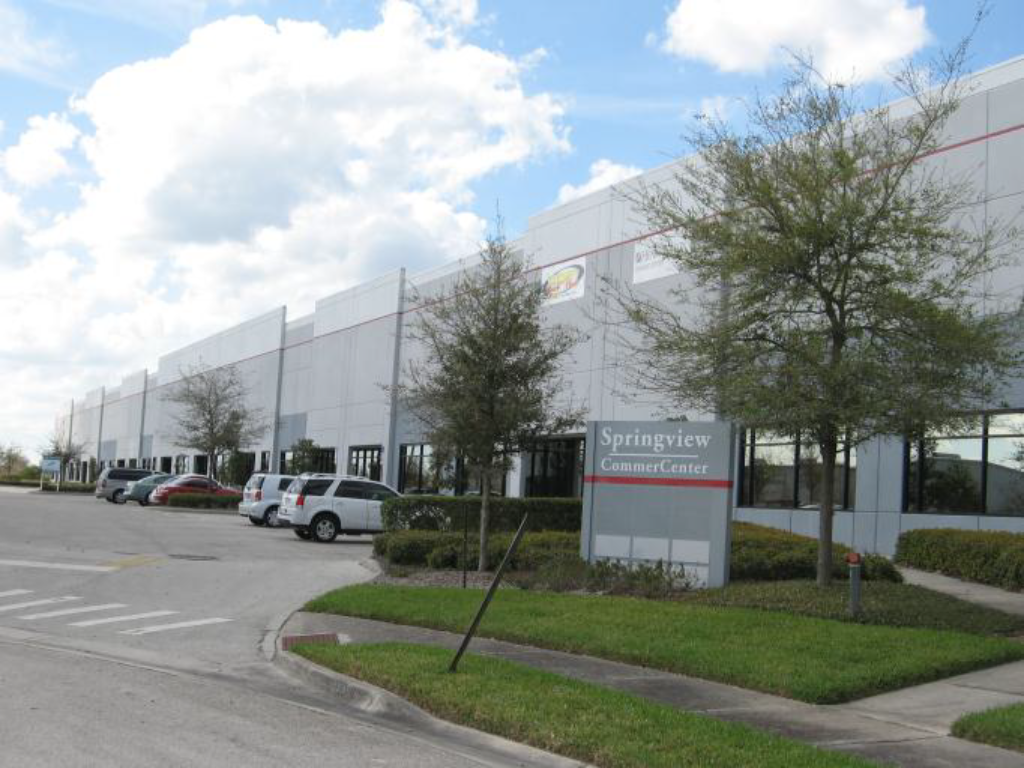
(a)
Purpose and intent. The purpose and intent of the I-1 Light Industrial Classification is to provide sufficient space in appropriate locations for industrial operations engaged in the fabricating, repair or storage of manufactured goods of such a nature that objectionable by-products of the activity (such as odors, smoke, dust, refuse, electro-magnetic interference, noise in excess of that customary to loading, unloading and handling of goods and materials) are not nuisances beyond the lot on which the facility is located.
(b)
Permitted principal uses and structures. In the I-1 Light Industrial Classification, no premises shall be used except for the following industrial uses and their customary accessory uses or structures unless a use is found to be substantially similar in nature by the City Manager. Permitted and special exception uses must also be consistent with the uses permitted by the property's future land use designation on the City's adopted Future Land Use Map. Also, reference Article, II Overlay Districts, for any additional applicable regulations.
Any of those uses permitted in the B-5 Classification unless the use is listed as a special exception use in this classification.
Adult bookstores (refer to section 3-133(1)).
Adult theaters (refer to section 3-133(1)).
Automobile, truck, truck-trailer, motorcycle, mobile home, manufactured dwelling, recreational vehicle and bicycle manufacturers.
Automobile service station, Types A and B.
Automotive, boat, motorcycle, mobile homes and recreational vehicles sales.
Bakeries.
Blood banks and laboratories that offer cash or any other form of compensation for blood or plasma.
Bottling and distribution plants.
Building materials storage and sales.
Bus garages and repair shops.
Communication towers not exceeding 70 feet in height above ground level.
Cold storage and frozen food lockers.
Contractor's shop, storage and equipment yard.
Convenience stores, with or without gasoline pumps.
Display and sale (retail or wholesale) of products or parts manufactured or assembled on the premises.
Employment agencies offering day labor services and where workers congregate at the business location to receive daily assignments.
Essential utility services.
Establishments offering on-site internet or computer access, or phone card sales, the primary activity or business of which is the sale of internet, computer or phone access or time for compensation or value whether for profit or not.
Feed and seed processing and storage.
Industrial vocational training school.
Laundries and linen services.
Machinery and machine shops.
Mobile food dispensing vehicles with standard permitted uses.
Moving and storage companies.
Pain management clinics registered with the Florida Department of Health.
Pawn shops.
Pest exterminators.
Plumbing supply.
Printing, publishing and engraving.
Publicly owned parks and recreational areas.
Radiator repair, cleaning and flushing establishments.
Restaurants, Types A and B, when contained within the principal industrial structure.
Self-storage facilities and Miniwarehouses.
Sign and paint shop.
Tattoo and body piercing parlors.
Testing of materials, equipment and products.
Truck, automobile, boat, mobile recreational vehicle and shelter, motorcycle and trailer storage.
Warehouses.
Welding or soldering shops.
Wholesale houses and distributors.
Wholesale meat and produce distribution with meat cutting but no butchering.
Exempt excavations for stormwater ponds as required by this Code.
Manufacturing.
(c)
Permitted special exceptions. Additional regulations/requirements governing permitted special exceptions are located in section 3-134.
Animal hospitals, veterinary clinics.
Communication towers exceeding 70 feet in height above ground level.
Professional and trade schools related to permitted uses.
Public uses not specifically allowed as a permitted use.
(d)
Dimensional requirements.
(1)
Minimum lot size:
Area: One acre.
Width: 100 feet.
(2)
Minimum yard size:
Front yard: 30 feet.
Side yard: ten feet. Abutting any residential or mobile home zoned property: 35 feet.
Rear yard: 20 feet. Abutting any residential or mobile home zoned property: 35 feet.
For buildings over 35 feet in height, the side and rear yards shall be increased by one foot of yard for each foot of building height over 35 feet.
Waterfront yard: 25 feet. For buildings over 35 feet in height, the waterfront yard shall be increased one foot for each foot of height over 35 feet.
(3)
Maximum building height: 45 feet; abutting a residential classification, 35 feet.
(4)
Maximum lot coverage: 35 percent.
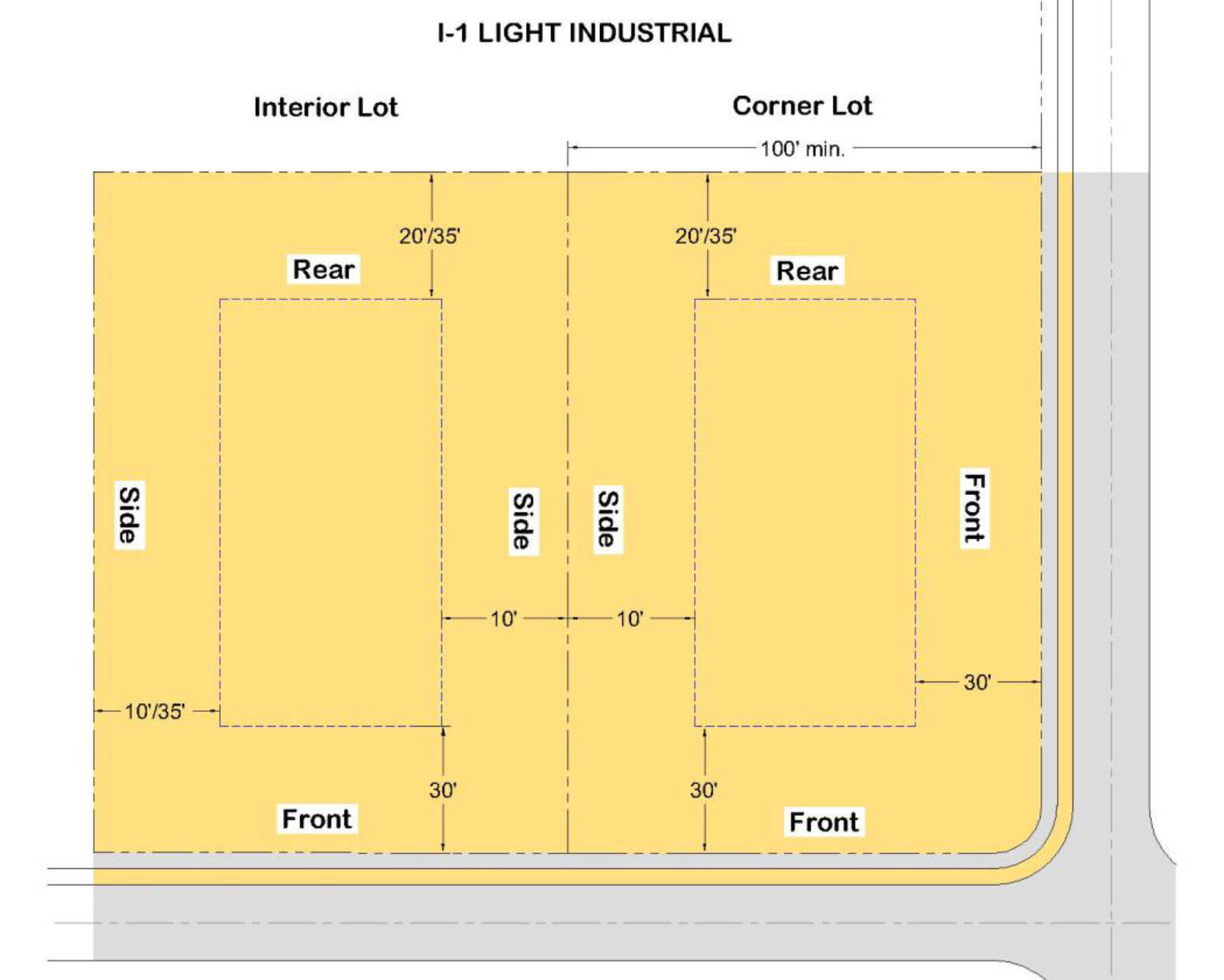
(e)
Final site plan requirements. Final site plan approval meeting the requirements of division 3, article II of chapter 4 is required.
(Ord. No. 01-99, § 1(301.3), 11-3-1999; Ord. No. 05-10, § 2, 6-16-2010; Ord. No. 02-12, § 2(Exh. A), 9-5-2012; Ord. No. 02-2022, § 4, 2-16-2022; Ord. No. 04-2023, § 2, 5-17-2023; Ord. No. 06-2023, § 5, 7-5-2023)
Sec. 3-108. - PUD Planned Unit Development.
(a)
Purpose and intent.
(1)
The purpose and intent of the PUD Planned Unit Development classification is to provide for integrated developments, which are consistent with the Comprehensive Plan, so as to promote a mixture of land use types and economical and orderly development consisting of a single or of a mixture of compatible land uses. Further, it is intended that a proposed development be sensitive to existing adjacent and future land uses as depicted by the Future Land Use Map of the Comprehensive Plan, the natural environment and the impact upon supporting public infrastructure through such mechanisms as, but not limited to, the establishment of appropriate buffer areas between land uses, limitations upon the types of permissible uses and structures which are to be permitted in the development.
(2)
The PUD Planned Unit Development classification has been divided into four sub-classifications. These sub-classifications are Residential, Business, Industrial and Mixed Use.
(3)
The procedure for review and approval of a planned development shall be as set forth in this section. Subsequent to approval, major modifications shall be reviewed as for a new development plan and/or development agreement.
(b)
Regulations. The following regulations apply to all Planned Unit Developments (PUD) unless the specific type (i.e., RPUD, MPUD, BPUD, or IPUD) is otherwise referenced.
(1)
Unified ownership. All land within the PUD shall be under the ownership of one person, either by deed, agreement for deed or contract for purchase or lease. PUD applicants shall present either an opinion of title by an attorney licensed in the state or a certification by an abstractor or a title company, authorized to do business in the state, that, at the time of initial application, unified ownership of the entire area within the proposed PUD is in the applicant, or contract seller. Unified ownership shall thereafter be maintained until after the recording of the master development plan or final plat.
(2)
Commercial uses in an MPUD. Commercial areas should normally be located in an area accessible only from streets within the MPUD. When commercial uses or structures are approved as part of an MPUD, the commercial operation shall not begin until certificates of occupancy have been issued for all dwelling units in the total project, unless otherwise provided in the development agreement.
(3)
Utility distribution lines. All utility distribution lines within the PUD shall be located underground; however, those appurtenances requiring aboveground installations may be exempted by the City Council.
(4)
Open space requirements. Twenty percent of an RPUD project or the residential portion of an MPUD containing residential uses shall be common open space. Common open space shall meet the following standards:
a.
It shall be dedicated by plat, deed or other suitable instrument to and usable by all residents of the RPUD/MPUD. Useable space may be in the form of active or passive recreational areas with residents having physical access to the space. Passive facilities such as picnic tables and nature trails shall be placed in a manner that functions with the site's natural amenities or recreational needs of future residents. Examples of active recreational useable space are playgrounds, free play areas, golf courses, nature trails, swimming pools, and tennis courts.
b.
To further the City's efforts of tree protection, 15 percent of the site shall be preserved in a natural state (passive recreational uses may be permitted).
c.
Common open or public space should have the following qualities: accessibility, visibility, security, and interconnection (either physical or visual).
d.
Its location, shape, size and character shall be illustrated on the master development plan.
e.
Provisions for maintenance of the common open space may be provided in the development agreement.
(5)
Procedure for rezoning to PUD.
a.
Preapplication stage. A preapplication meeting is required before a PUD rezoning application can be accepted. After the preapplication meeting, a sketch plan may be submitted for review and comment prior to filing the application for rezoning.
1.
Preapplication meeting. The preapplication meeting is intended to provide an opportunity for an informational exchange between the applicant and the administrative staff. No fee shall be charged. The applicant need not submit any plans or other information; however, the more information, such as sketch plans, proposed land uses, site information, adjacent land uses, and proposed density, that the applicant does submit, the more complete the responsive comment can be. As a minimum, the applicant will be advised of the usual procedures and requirements. Forms, application materials, guidelines, checklists, and copies of the Comprehensive Plan, and of the zoning and subdivision regulations, will be made available at a reasonable cost.
2.
Sketch plan. After the preapplication meeting, a sketch plan may be submitted to the City Planner. If submitted, written comments on the sketch plan shall be made by the City Planner and any interested departments within 30 days, including TRS. The City Planner shall coordinate this review. If submitted, a sketch plan shall indicate general land use categories and the approximate height, location, architectural character and density of dwellings, and other structures. The sketch plan shall also show the tentative major street layout, approximate street widths, sites of schools, open space areas and parks, existing structures, waterways, wooded areas, wetlands, floodplain areas (if applicable), total acreage and existing zoning. Finally, it shall include a vicinity map, and any other information deemed appropriate by the applicant. Written comments on the sketch plan are informational only and are subject to change after a more detailed review of the rezoning application.
b.
RPUD application stage. An application for rezoning to RPUD, together with a master development plan (MDP) and such application fees as are set at the preapplication meeting, shall be submitted to the City Manager or his/her designee. If a rezoning applicant desires concurrent review under chapter 4 of this Code, he shall so state at the time of application, and shall submit any additional information required by those regulations. The master development plan shall consist of a preliminary plan and a written development agreement. Those documents shall include the following information:
1.
Preliminary plan exhibits. The preliminary plan shall consist of the following:
i.
Name of project and name, address, telephone number of the developer and the professional project engineers, architects and planners.
ii.
The date the plan was drawn, its scale, and a north arrow.
iii.
Names and location of adjoining streets and names of abutting property owners.
iv.
Legal description of property, boundary survey and the location of all existing streets, buildings, railroads, bulkhead lines, easements, and other important features in or adjoining the property.
v.
The general topography and physical conditions of the site, including natural areas of vegetation and type, general soil types, wetland areas, 100-year floodplain areas, watercourses, water bodies, and natural drainage patterns.
vi.
Conceptual configuration of proposed streets, which depict access into and traffic flow within the development, with particular reference to the separation of vehicular traffic from pedestrian or other types of traffic.
vii.
General feasibility plans for potable water, sewage disposal, and stormwater drainage.
viii.
Approximate location and area encompassed for each proposed land use within the development.
ix.
Approximate location and size of common open space.
x.
Such additional material, maps, studies, or reports subsequently deemed necessary by any reviewing department or agency.
2.
Written development agreement. In addition to a preliminary plan, a written development agreement shall be prepared, following a general format supplied by the LDM at the preapplication meeting. The development agreement, along with the preliminary plan, shall govern the development of the PUD and shall regulate the future use of the land. The development agreement shall include any statements or information requested by any reviewing department or agency at the preapplication meeting, such as:
i.
Evidence of unified ownership and control.
ii.
Statement agreeing to:
A.
Proceed with the proposed development according to all regulations;
B.
Provide appropriate performance and maintenance guarantees;
C.
Follow all other provisions of this Code to the extent not expressly inconsistent with the written development agreement, and bind the applicant's successors in title to his commitments.
iii.
The acreage and percentage of the total land area devoted to each of the proposed land uses.
iv.
Maximum density for each type of dwelling.
v.
Maximum building heights.
vi.
Minimum building spacing and floor areas.
vii.
Lot sizes, yard areas and buffer areas, including perimeter buffers.
viii.
Statement regarding the disposition of sewage and stormwater, and arrangements for potable water.
ix.
When the PUD is planned for phase development, a schedule of the phases.
x.
The proposed language of any covenants, easements or other restrictions.
xi.
Maximum number of dwelling units by type.
xii.
Any additional information or statements subsequently deemed necessary by any reviewing department or agency.
xiii.
Conditions that all provisions of the development agreement shall expire 720 days following execution of the development agreement by the City, if a subsequent development order has not been secured in writing by the applicant. Upon expiration of the agreement the zoning designation will revert to its previous designation and the PUD entitlements become null and void.
c.
BPUD, IPUD or MPUD application stage. An application for rezoning to BPUD, IPUD or MPUD, together with a master development plan (MDP) and such application fees as are set at the preapplication meeting, shall be submitted to the City Manager or his/her designee. If an applicant for rezoning desires concurrent review under chapter 4 of this Code, he shall so state at the time of application and shall submit any additional information required by those regulations. The master development plan shall consist of a preliminary plan and a written development agreement. Those documents shall include the following information:
1.
Preliminary plan exhibits. The preliminary plan shall be drawn to an appropriate engineer's scale to include the location and boundary of the site referenced by the legal description and boundary survey; the date the plan was drawn, its scale, and a north arrow; and the name, address and telephone number of the developer and his professional project engineers, architects and planners. In addition, the preliminary plan shall include all of the following, if applicable. The PUD establishes the zoning/permitted use of property; items i, vi, viii, x below if not known or applicable at the time of the zoning request will be provided on the overall development plan or final site plan as appropriate.
i.
The approximate size and location of all proposed buildings and other structures, if known, and the specified use of buildings and structures may be indicated, if known.
ii.
Generalized off-street parking area and loading plans, including circulation plans for vehicular movement.
iii.
Driveway and access controls, including number and approximate location of driveways.
iv.
Approximate location, size and description of open spaces, landscaped areas, or buffers.
v.
Approximate location and size of all easements, rights-of-way, or drainage facilities and structures.
vi.
Approximate boundary lines and dimensions of parcels proposed to be subdivided, if applicable.
vii.
The general topography and physical conditions of the site, including features such as water bodies, wooded areas, wetland areas, vegetation types, soils, 100-year floodplain areas, and steep grades or depressions on the site.
viii.
General location of signs, if known.
ix.
Any other conditions of development, specifications, limitations, constraints, standards or proposed physical features not specifically included in subsections i. through x. of this subsection (b)(5)c.1.
x.
Approximate location of dumpsters, solid waste receptacle enclosures, etc., if known.
2.
Written development agreement. In addition to a preliminary plan, a written development agreement shall be prepared, following a general format supplied by the City Manager at the preapplication meeting. The development agreement, along with the preliminary plan, shall govern the development of the BPUD, MPUD or IPUD and shall regulate the future use of the land. The development agreement shall include the following information:
i.
Evidence of unified ownership and/or control.
ii.
Statement agreeing to:
A.
Proceed with the proposed development according to all regulations;
B.
Provide appropriate performance and maintenance guarantees;
C.
Following all other provisions of this Code to the extent not expressly inconsistent with the written development agreement, and bind the applicant's successors in title to his commitments.
iii.
A listing of the land uses agreed upon in each component of the BPUD, MPUD or IPUD.
iv.
Maximum building heights.
v.
Minimum building spacing and floor areas.
vi.
Lot sizes, if known, yard areas, and buffer areas, including perimeter buffers.
vii.
Statement regarding ingress/egress controls to the site.
viii.
Statement regarding any road improvements to be made and the thresholds for the traffic impact analysis.
ix.
Statement regarding the disposition of sewage and stormwater, and arrangements for potable water.
x.
When the BPUD, MPUD or IPUD is planned for phase development, a schedule of the phases.
xi.
The proposed language of any covenants, easements or other restrictions.
xii.
Maximum amount of square footage by use.
xiii.
Any additional information or statements subsequently deemed necessary by any reviewing department or agency.
xiv.
Condition that all provisions of the development agreement shall expire 720 days following execution of the development agreement by the City, if a subsequent development order has not been secured in writing by the applicant. Upon expiration of the agreement the zoning designation will revert to its previous designation and the PUD entitlements become null and void.
(6)
Post-approval stage.
a.
Recording MDP. After City Council approval of the rezoning application to PUD, the preliminary plan, and the written development agreement, both signed by the Mayor, and attested by the City Manager, shall be recorded in the public records of the county at the expense of the applicant.
b.
Final site plan approval. After the MDP is recorded, a final site plan shall be prepared and submitted in the manner required by this Code. If the PUD includes a subdivision required to comply with this Code, preliminary and final plats of the subdivision portion may be submitted in lieu of the final site plan, for review and approval as governed under this Code.
c.
Construction. During construction, the City Manager shall enforce compliance with the approved final site plan or the final plat.
(7)
Residential Planned Unit Developments (RPUDs), Business Planned Unit Developments (BPUDs), and Industrial Planned Unit Developments (IPUDs). Residential Planned Unit Developments (RPUDs), Business Planned Unit Developments (BPUDs), and Industrial Planned Unit Developments (IPUDs) which were in existence prior to October 27, 1990, shall continue in the manner approved by the county council. To the extent of any specific amendment to these aforesaid PUDs, said amendment must comply with the requirements of this chapter. Terms previously used in said PUDs may continue to be employed.
(c)
Permitted principal uses and structures. The permitted principal uses and structures shall be those agreed upon by the City Council and are dependent upon which sub-classification is requested.
(1)
A Residential Planned Unit Development shall be indicated by an R. The permitted uses within a RPUD may be those found in any of the residential zoning classifications of this chapter, provided that said uses are listed in the development agreement and have been approved by the City Council.
(2)
A Business Planned Unit Development shall be indicated by a B. The permitted uses within a BPUD may be those found in any of the business zoning classifications of this chapter, provided that said uses are listed in the development agreement and have been approved by the City Council.
(3)
An Industrial Planned Unit Development shall be indicated by an I. The permitted uses within an IPUD may be those found in the industrial zoning classifications of this chapter, provided that said uses are listed in the development agreement and have been approved by the City Council.
(4)
A Mixed Use Planned Unit Development shall be indicated by an M. The permitted uses within an MPUD must consist of a combination of uses allowed from at least two of the above three PUD subclassifications as approved by the City Council.
(5)
Other uses and structures of a similar nature to those listed, after determination by the City Council at the time of master development plan approval that such uses and structures are compatible with the PUD development and the surrounding area.
(6)
The procedure for review and approval of a planned development shall be as set forth in this section and sections 3-109—3-132. Subsequent to approval, major modifications shall be reviewed as for a new development plan and/or development agreement.
(d)
Dimensional requirements.
(1)
Minimum parcel size:
Area:
Residential only: five acres.
Business only: one acre.
All others: one acre.
(2)
Minimum lot area and yard requirements. Minimum lot sizes, width, and yard areas shall be described in the development agreement. In determining yard sizes, the City Council shall consider whether or not the proposed PUD will have adverse effects upon adjoining properties. Factors which may be considered in determining yard sizes include, but are not limited to, existing and future land uses, lot size, and buffer requirements.
(3)
Density. The total number of dwelling units per acre of land shall be calculated and described in the development agreement.
(e)
Landscape buffer requirements. A landscape buffer area meeting the requirements of chapter 5, articles I and V shall be constructed unless otherwise negotiated and approved by City Council as part of the master development plan and written development agreement.
(f)
Off-street parking and loading requirements.
(1)
Off-street parking and loading areas meeting the requirements of section 3-129 shall be constructed.
(2)
The City Council may modify the off-street parking requirements for the number of the individual spaces provided that such action has been substantiated by a study prepared by a professional traffic engineer.
(3)
Any modifications to said requirements which may be granted by the City Council shall be described in the development agreement.
(g)
Transportation impact analysis report.
(1)
Purpose. The transportation impact analysis report is designed to identify the transportation impacts and problems which are likely to be generated by a proposed use because of size, density, traffic generation rates, or location. The report will also identify all improvements required to ensure safe ingress and egress from a proposed development, maintenance of adequate street capacity, and elimination of hazardous conditions and improvements necessary for immediately surrounding roadways and intersections as a result of the property development.
(2)
Thresholds for traffic impact analysis report. A transportation impact analysis report shall be required, unless waived by the City Traffic Engineer, for any use which, according to the Institute of Transportation Engineers Trip Generation Manual, latest edition, rates published by the Florida Department of Transportation or rates documented by study and agreed to prior to use by the City Traffic Engineer, will generate in excess of 1,000 trips per day.
(h)
Effect of approval; minor modifications.
(1)
After approval of a Planned Unit Development and its corresponding development agreement and master development plan, the city may issue development permits which are consistent with the approved Planned Unit Development until its expiration specified in the development agreement. The City Council may grant extensions to a Planned Unit Development and its corresponding development agreement and master development plan.
(2)
Subsequent to the approval of the planned unit development, the City Council may approve minor modifications of the Planned Unit Development. Minor modifications are those for which:
a.
The proposed site alterations must not increase the building size more than ten percent of the gross floor area of all buildings within the development.
b.
The proposed site alteration must not adversely affect traffic circulation on- or off-site.
c.
The proposed site alterations must not have a significant impact upon the utility system.
d.
The proposed site alterations must comply with all codes, rules, and regulations of the city, county, state and federal governments, and must not require variances.
e.
The proposed modification must not increase the maximum density of development.
f.
The proposed modification does not change permitted uses or special exception uses.
(3)
Requests for modifications to a planned unit development which meet the standards of subsection (h)(2) may be adopted by resolution of the City Council after one public hearing and notice as provided in accordance with subsection 1-10(c). After City Council approval of a minor amendment, the adopted resolution along with its corresponding revisions to the development agreement and master development plan shall be recorded in the public records of Volusia County, Florida, at the expense of the applicant.
(4)
Requests for modifications which do not meet the standards in subsection (h)(2) shall be reviewed and processed in the manner provided for new planned unit development applications.
(Ord. No. 01-99, §§ 1(204), 1(205), 1(301), 1(301.3), 2(813.00)), 11-3-1999; Ord. No. 05-09, § II, 5-6-2009; Ord. No. 02-12, § 2(Exh. A), 9-5-2012)
Sec. 3-121. - Purpose; access control.
The purpose of this division is to promote the safety of vehicular traffic and pedestrians and to minimize traffic congestion and conflict. Access to any project or development shall comply with the requirements of division 4, article II of chapter 4.
(Ord. No. 01-99, § 1(301.2(800.00)), 11-3-1999)
Sec. 3-122. - Exceptions to minimum yard or lot coverage requirements.
Every part of every yard shall be open and unobstructed from the ground up, except as follows:
(1)
In the RR, RA, R-1 through R-8, MH-1, MH-5, and RPUD classifications, except for the provisions of chapter 5, article 3, accessory structures shall not be located in front yards. However, accessory structures may be located in rear or side yards not less than five feet from the lot lines except for atypical lots and except where an accessory structure is 600 square feet or greater, in which case, an increased building setback of 15 feet is required from the side and rear property lines. However, garage apartments shall not be located in any required yard. On atypical lots, accessory structures may be located not less than five feet from the side lot line provided such structures, except for swimming pools, are not located in the side yard area between the rear lot line and the rearmost point of the principal structure. Accessory structures and swimming pools shall be located at least five feet from any side or rear lot line, but not in platted easements.
(2)
In the RR, RA, R-1 through R-6, MH-1, MH-5, and RPUD classifications, on double-frontage lots or corner lots, accessory structures shall not be located in any yard abutting a street but may be located not less than five feet from any adjacent lot line. However, where an accessory structure is 600 square feet or greater an increased building setback of 15 feet is required from the side and rear property lines.
(3)
In all zoning classifications, fences, walls and hedges may be located in yards to the extent permitted by chapter 5, articles I and III. However, on any corner lot, no structure or shrubbery shall cause any obstruction to vision of motorists in accordance with the provisions for obstructions to vision in division 4, article II of chapter 4.
(4)
In all zoning classifications, off-street parking lots may be in yards to the extent permitted by sections 3-129 and 3-130, but not within buffers.
(5)
In all zoning classifications, boathouses and boat docks may be located in waterfront yards but shall not be permitted within 15 feet of any side lot line, or its extension into the water.
(6)
Moveable awnings may project into any yard for either 3½ feet or half of the yard, whichever is less.
(7)
Chimneys, fireplaces, pilasters, roof overhangs, unenclosed balconies and unenclosed stairways may project into any yard for 3½ feet or half of the yard, whichever is less.
(8)
Those exceptions permitted in section 3-133(2) pertaining to automobile service stations.
(9)
In all residential classifications, where a lot is situated between two lots, each having a principal building which projects beyond the minimum front yard requirements for its classification, its minimum front yard requirement shall be the average of the distance between the front lines and the fronts of the principal buildings on the adjacent properties.
(10)
If, because of prior zoning regulations, or because of a unified plan of development, or for any other reason, a majority of the houses already constructed in a particular residential neighborhood observe a setback greater than that which is required by these regulations, the average setback actually observed shall apply to all new construction in that neighborhood, anything in these regulations to the contrary notwithstanding.
(Ord. No. 01-99, § 1(301.2(801.00)), 11-3-1999; Ord. No. 06-14, § 2(Exh. A), 9-3-2014)
Sec. 3-123. - Boat docks and boathouses.
The following regulations shall apply in all residential zoning classifications:
(1)
No boathouse extending into any waterway shall have more than 500 square feet area. The highest point of such structure shall not exceed 15 feet above the ordinary high-water mark in nontidal areas.
(2)
No more than one boathouse may be erected on an individual waterfront lot.
(3)
Boathouses shall not be used for dwelling purposes or contain any sleeping or living quarters.
(Ord. No. 01-99, § 1(301.2(802.00)), 11-3-1999)
Sec. 3-124. - Construction in platted easements.
Principal and accessory structures, other than boat docks, boathouses and walkways, shall not be erected in platted easements.
(Ord. No. 01-99, § 1(301.2(803.00)), 11-3-1999)
Sec. 3-125. - Erection of more than one principal structure on a lot.
In the RC, A-2, and A-3 classifications, more than one principal structure may be erected on a lot, but only one principal standard or manufactured single-family or mobile home dwelling may be erected. In R-7, R-8 and MH-1 classifications, more than one principal structure may be erected on a lot. In commercial, industrial, conservation and public use classifications, more than one principal structure may be erected on a lot, provided that the requirements of this Code shall be met for each principal structure as though it were on an individual lot, except hotels and multifamily structures. In all other classifications, only one principal structure may be erected on a lot.
(Ord. No. 01-99, § 1(301.2(804.00)), 11-3-1999)
Sec. 3-126. - Exceptions to height regulations.
Spires, belfries, cupolas, clerestory windows, antennas, water tanks, ventilators, solar panels, windmills, chimneys, or other similar accessory structures customarily required to extend above the roof level may extend for an additional 25 feet above the maximum building height prescribed for the classification in which they are located.
(Ord. No. 01-99, § 1(301.2(805.00)), 11-3-1999)
Sec. 3-127. - Home occupations.
The following regulations shall apply to home occupations:
(1)
Home occupations shall be categorized as follows:
a.
Class A. Class A home occupation shall be limited to office use or arts and handicrafts only on the premises of the home occupation where there are no supplier or client business visits to the premises permitted. The only supplies and equipment accessory to the home occupation that are permitted on the premises are those common to a small business office. No stock-in-trade or commodities shall be delivered or sold upon the premises. No business activities, other than office use by the occupants of the premises, shall take place on the premises. The home occupation shall not adversely affect nearby dwellings or properties through noise, vibrations, odors, fumes, fire hazards, light glare, electrical or radio wave interference, or the like. Class A home occupations shall be allowed as permitted uses in all resource corridor, residential, mobile home and agricultural classifications.
b.
Class B. Home occupations not included in Class A. Class B home occupations shall be allowed in agricultural classifications, when approved as a special exception. Some examples of Class B home occupations are beauty shops and barbershops, music lessons, art, handicraft, ceramics classes, lawn mower repair services and dog grooming.
(2)
Only persons who reside in the dwelling unit shall be employed or act as an independent contractor in said dwelling unit permitted as a Class A home occupation. Other employees or independent contractors of the Class A home occupation may be permitted; provided that said persons do not assemble upon the premises for any purpose relating to the business. For Class B home occupations, the City Council may allow, as a condition of the requisite special exception, one or more employees or independent contractors who are not residents of the dwelling unit.
(3)
The home occupation shall be clearly incidental and subordinate to the residential use and shall under no circumstances change the residential character of the dwelling.
(4)
The floor area devoted to the home occupation shall not exceed 25 percent of the floor area of the dwelling. For Class B home occupations, not more than 500 square feet in an attached or detached garage of a dwelling, or not more than 500 square feet in any accessory building in an agricultural classification, may be used for a home occupation in lieu of floor space within the dwelling.
(5)
There shall be no change in the outside appearance of the premises. No on-premises signs identifying the home occupation are permitted in conjunction with a Class A home occupation. Class B home occupations may have one nonilluminated on-premises sign, not to exceed 1½ square feet in area. Any sign shall be mounted flat against the wall of the building.
(6)
All office equipment used in the home occupation on the premises shall be inside the dwelling or in enclosed structures and within the space limitations in subsection (4) of this section. No products shall be displayed on the premises.
(7)
No equipment shall be used in the home occupation which creates fire hazards, electrical interference, noise, vibration, glare, fumes or odors detectable to the normal senses off the premises. In the case of electrical interference, no equipment or process shall be used which creates visual or audible interference in any radio or television receivers off the premises, or causes fluctuations in line voltage off the premises.
(8)
No vehicular traffic shall be generated by the home occupation in greater volumes than would normally be generated by the dwelling unit. Notwithstanding the provisions of section 3-130(a), no more than one vehicle associated with the home occupation may be kept on the premises. Any need for parking generated by the conduct of the home occupation shall be met off the street and on the premises, but other than in the front yard.
(9)
The home occupation shall not adversely affect the habitability or value of the surrounding properties nor alter the essentially residential character of the neighborhood.
(10)
Any violation of these regulations may result in the revocation of any home occupation permit, in addition to any other remedy for such violation provided in this Code or by law.
(11)
The issuance of a permit to engage in a home occupation in accordance with this Code shall not be deemed to be a change of zoning nor an official expression of opinion as to the proper zoning for the particular property.
(Ord. No. 01-99, § 1(301.2(807.00)), 11-3-1999)
Sec. 3-128. - Mobile home and mobile recreational vehicle park requirements.
(a)
General requirements. The following regulations apply to both mobile home and mobile recreational vehicle parks:
(1)
Recreation area. There shall be at least one active recreational area. It shall constitute at least five percent of the total land area of the project. The recreation area shall be easily accessible to all residents of the project. Any recreational building shall be constructed in accordance with the applicable provisions of the Guidelines for Hurricane Evacuation Shelter Selection ARC (American Red Cross) 4496, July 1992, as amended.
(2)
Internal streets width. Required paving for two-way streets with no parking on street: 20 feet. An additional ten feet of right-of-way shall be provided if parking on one side of the street is permitted only. An additional 20 feet of right-of-way shall be provided if parking on both sides of the street is permitted.
a.
The additional right-of-way for parking purposes as herein provided is required to be paved.
b.
Streets shall be constructed of materials which meet the specifications of this Code.
(3)
Project entrances and exits. Entrances and exits shall be limited in number and, when combined, shall be separated with a landscaped median strip not less than five feet wide. There shall be no direct vehicle access from any space to any exterior street.
(4)
Water supply, sewage disposal and garbage and refuse handling. All mobile home and recreational vehicle parks shall comply with this Code regarding water supply and sewage disposal and the applicable provisions of the Florida Administrative Code regarding garbage and refuse handling.
(5)
Landscape buffer requirements. Landscaped buffer areas meeting the requirements of articles I and V of chapter 5 shall be constructed.
(6)
Project perimeter setback. No structure shall be located within 30 feet of the project's perimeter.
(7)
Final site plan development order required. A final site plan development order for new parks and expansion of existing parks, meeting the requirements of division 3, article II of chapter 4, shall have been issued prior to commencement of construction. Prior to issuance of any building permit for any sale of the mobile homes in the park, construction of the required improvements shall have been completed in accordance with division 5, article II of chapter 4.
(b)
Additional requirements for recreational vehicle parks.
(1)
Minimum project size: ten acres.
(2)
Maximum recreational vehicle spaces at eight dwelling units per acre.
(3)
Minimum recreational vehicle space size:
Space area: 1,500 square feet.
Space width: 30 feet.
(4)
Project perimeter setback: No recreational vehicle space, campsite or structure shall be located within 30 feet of the project perimeter.
(5)
Maximum building height: 35 feet.
(6)
Site-built cabins: one unit per 20 recreational vehicle or campsite spaces. In addition, the following requirements shall apply: Said cabins shall contain no plumbing, cooking or sanitary facilities, and contain a maximum of 220 square feet.
(7)
Park trailers are permitted and must comply with F.S. § 320.8325.
(8)
Park models.
(c)
Existing mobile home parks; compliance. Any subsequent construction or alteration that extends an existing mobile home park shall comply with the provisions of these regulations, including those provisions requiring a permit. No changes shall be made to the existing design of spaces or streets which increase their nonconformity. Subsequent changes to the basic design of existing spaces or streets which do not increase their nonconformity shall be permitted.
(Ord. No. 01-99, § 1(301.2(809.00)), 11-3-1999)
Sec. 3-129. - Off-street parking and loading.
Where required by this Code, every use or structure shall have an adequate number of off-street parking and loading spaces for the use of occupants, employees, visitors, customers, patrons or suppliers. Except as noted in this section, division 4, article II of chapter 4 shall apply to the design and construction of all required off-street parking and loading areas.
(1)
Surfacing, lighting and access. Except in the C, RC, A-2 and A-3, and P classifications, any required off-street parking drives, parking spaces and loading areas shall be surfaced with brick, asphalt, bituminous concrete and maintained in a smooth, well-graded condition. If lighted, no artificial lighting shall be directed upon adjacent property. All areas shall be designed for the safety and convenient access of pedestrians and vehicles.
(2)
Location. If the required off-street parking spaces cannot reasonably be provided on the same lot on which the principal building or use is located, such required off-street parking spaces may be located on another lot, owned or leased by the owner of the lot on which the principal structure or use is located, provided that such spaces are located within 200 feet of the premises to be served, and are located only in one or more of the following classifications: B-2, B-4, B-5, B-6, B-9, and I-1.
a.
Where opportunities exist for shared parking between generators having non-concurrent parking demand time frames, off-street parking spaces may be located within 400 feet of the premises to be served. Directional signage and parking signs shall be provided to assist patrons.
(3)
Plan requirement. An off-street parking or loading space plan shall be submitted as follows:
a.
For single-family and duplex uses, off-street parking plans shall be shown on the plot plans submitted with an application for a building permit. The plot plan shall accurately illustrate the number and location of parking spaces and driveways.
b.
For all other uses, an off-street parking and loading space plan meeting the requirements of chapter 4, division 4, section 4-90 shall be submitted and approved during the site plan review process of this Code.
(4)
Design and location requirements for off-street parking areas. Off-street parking areas shall be designed and located to meet the following requirements:
a.
For single-family and duplex uses, each off-street parking space shall be located on the premises which it serves; have minimum dimensions of ten feet in width by 19 feet in depth; not be located in any front yard except on a driveway but may be located within any garage or carport on the premises; and/or may be located within any side or rear yard but not closer than five feet to any side or rear lot line, but not in any platted easements. Each such space must be accessible from a paved driveway connected to the street providing primary access to the premises.
b.
For all other uses, off-site parking and loading areas shall be designed and located according to the requirements of this chapter and the applicable provisions of chapter 4.
_____
(5)
Off-street parking spaces. The number of off-street parking spaces shall be determined from the following table. Numbers for any use not specifically mentioned shall be the same as for the use most similar to the one sought. Fractional spaces shall be rounded up to the closest whole number. In houses of worship or other places of assembly where occupants sit on seats without dividing arms, each 18 linear inches of such seat shall be counted as one seat.
The minimum and maximum number of parking spaces required for any use not specifically mentioned, shall be determined by the Planning Administrator or his or her designee based upon data from the Transportation Engineers Parking Generation Manual, from publications and data from the American Planning Association or the Urban Land Institute, from studies using ITE recommended methodology and other professionally acceptable sources.
*GFA—Gross floor area.
(6)
Required off-street loading. Off-street loading areas are required in order to provide adequate space for the loading and unloading of goods, without interfering with the public use of streets, or off-street parking spaces. Off-street parking spaces may not be used to meet off-street loading requirements.
(7)
Off-street loading space dimensional requirements. The dimensions, design, and location of all off-street loading spaces shall meet the requirements of division 4, article II of chapter 4.
(8)
Minimum off-street loading spaces. The minimum number of off-street loading spaces shall be determined from the following table:
_____
(9)
Minimum requirements for off-street handicapped parking. Except for standard and manufactured single-family dwellings, mobile homes, and two-family standard or manufactured dwellings, where off-street parking spaces are required by this Code, the number to be reserved for the handicapped shall be determined from the following table:
(10)
Bicycle parking. Each of the following uses shall be required to provide parking spaces for bicycles: parks/recreation areas, convenience stores, restaurants (Types A and B), game rooms, pharmacies, shopping centers (regional, community and neighborhood), and any employment facility (i.e., office, industrial) with at least 50 employees. The minimum number of bicycle spaces to be provided shall be determined from the following table:
All bicycle parking shall be located so as to not conflict with automobile or pedestrian traffic flow.
(11)
Mass transit requirements. Community and regional shopping centers shall be designed to accommodate buses for convenient and safe boarding and unloading of passengers as well as maintaining a safe traffic pattern. Shopping centers of greater than 100,000 square feet of gross leasable floor area shall provide a passenger shelter or covered benches.
(Ord. No. 01-99, § 1(301.2(810.00)), 11-3-1999; Ord. No. 02-12, § 2(Exh. A), 9-5-2012; Ord. No. 04-2023, § 3, 5-17-2023)
Sec. 3-130. - Parking and storage of vehicles, shelters or watercraft.
(a)
Large vehicles.
(1)
No truck tractor, semitrailer, commercial bus, cutaway van, (except for those allowed in section 3-130(b)(6)), chassis-cab truck, or any other truck with a gross vehicle weight greater than 10,500 pounds (as determined by the greater of the vehicle registration or the manufacturer's specification) shall be parked, except while being actively loaded or unloaded for legitimate commercial purpose, in the RR, R-1 through R-8, MH-1, MH-2, MH-5, and the residential use areas of PUD classifications.
(2)
The parking of truck tractors and/or semitrailers is prohibited in the B-2, B-3, B-4, B-6, B-7, B-9 and BPUDs and commercial use areas of RPUDs classifications unless said vehicles are accessory to or associated with the business on the premises.
(b)
Mobile recreational shelters and vehicles. Mobile recreational shelters and vehicles, utility trailers, watercraft, and other trailers are permitted as an accessory use in all zoning classifications provided:
(1)
They shall have a current license tag or validation sticker.
(2)
The ground beneath shall be kept free from debris, including excessive weed growth.
(3)
They shall not be parked or stored within a street or public right-of-way.
(4)
All wastewater line caps shall be secured at all times in a manner to preclude any leakage from such vehicles, shelters, or watercraft onto a lot or street.
(5)
They shall not be connected to water, sewer, or electric lines or be used for residential purpose, except in a recreational vehicle park.
(6)
Park trailers shall only be parked in a recreational vehicle park.
(c)
Mobile recreational shelters or vehicles in residential. Except as otherwise provided herein, mobile recreational shelters and vehicles, utility trailers, watercraft and other trailers are permitted as an accessory use in the RR, R-1 through R-6, MH-5, and the single- and two-family residential areas of the PUD classification provided that, in addition to the requirements of section 3-130(b), the following additional conditions are also met:
(1)
They shall be parked or stored in full compliance with all requirements for accessory structures, except that pickup covers when appropriately mounted on a vehicle shall not be restricted to the parking requirements of this section.
(2)
Mobile recreational shelters or vehicles and watercraft may also be temporarily parked on the driveway in the front yard of the principal structure for trip preparations, loading, unloading, and cleanup, for a maximum of 36 hours per week.
(3)
Mobile recreational vehicles and cutaway vans may be parked on the driveway in the front yard of the principal structure when the occupant of the principal structure has a disability which may require facilities in the recreational vehicle or cutaway van, and if the occupant has received a handicapped parking decal from the state for the vehicle.
(d)
Designated recreational parking. Mobile recreational shelters and vehicles, utility trailers, watercraft and other trailers are permitted to be parked or stored in the MH-1, R-7, R-8 and the multifamily areas of the PUD classifications; provided that, in addition to the provisions of section 3-130(b), they are located within areas designated for said use as depicted by the final site development plan (except that pickup covers when appropriately mounted on a vehicle shall not be restricted to the parking requirements of this section).
(e)
Residential parking. In the RR, R-1 through the R-6, MH-5, and the single- and two-family residential use areas of PUD classifications, motor vehicles, mobile recreational shelters or vehicles, trailers, and watercraft shall not be parked anywhere within that portion of the lot lying across the full width of the lot between the front lot line and the principal structure, except on driveways.
(Ord. No. 01-99, § 1(301.2(811.00)), 11-3-1999)
Sec. 3-131. - Environmental standards.
These environmental standards shall apply in all classifications:
(1)
Air pollution. There shall be no emission of fumes, odors, vapors, gases, chemicals, smoke, dust, dirt, fly ash, or any particulate matter in violation of applicable state standards.
(2)
Water pollution and sewage control. There shall be no discharge of liquid or solid wastes into any public or private sewage disposal system, or into or on the ground, or into any stream, waterway, water body or drainage canal, nor any accumulation of any liquid or solid wastes, in violation of the applicable provisions of the Comprehensive Plan, chapter 4 of this Code, or applicable state standards.
(Ord. No. 01-99, § 1(301.2(812.00)), 11-3-1999)
Sec. 3-132. - Portable shelters.
(a)
Portable shelters shall be permitted to be assembled and emplaced upon properties within the city without the need for application or receipt of a use or development permit, provided that the following conditions are met:
(1)
Portable shelters may be assembled and emplaced by lot owners only upon those properties authorized for single-family residential uses and utilized for single-family residential purposes.
(2)
Portable shelters shall be treated under the Code as accessory structures to the extent that such treatment does not conflict with treatment under this section and must adhere to all applicable setback, yard, lot coverage, floor area and building height requirements.
(3)
Under no circumstances shall a portable shelter exceed a total coverage area of 500 square feet or be grafted, connected or otherwise physically linked to a residence, fence, shed, carport, or other structure.
(4)
Any portable shelter that is emplaced upon a property for a period of 180 days or more must be securely anchored to the ground in a manner so as to maintain the emplacement of its frame during adverse weather conditions, including severe thunderstorms and hurricanes. Such anchoring shall not be construed to alter the portability of a portable shelter pursuant to subsection 3-132(8) or otherwise change such device's definition within the Code.
(5)
Portable shelters may be emplaced in the side yard or rear yard of a property; however, in no event shall a portable shelter be emplaced in the front yard of a property.
(6)
Portable shelters emplaced upon a property shall be maintained in sound and serviceable condition. Portable shelters with bent, broken, cracked, crooked or otherwise compromised frames or wholly or partially detached, torn, tattered, or threadbare tarpaulins must be repaired, replaced or removed. Tarpaulins shall be of a uniform color and texture and, if patched, must be patched in such a manner so as to preserve the uniform appearance of the tarpaulin.
(7)
Portable shelters authorized pursuant to this section shall not be utilized for human habitation or occupation, regardless of whether such habitation or occupation is temporary or permanent.
(8)
Portable shelters must be portable in that they must be of relatively uncomplicated construction and capable of being easily disassembled, moved, and reassembled within a period of one hour or less.
(9)
At no time shall more than one portable shelter be emplaced on a single property pursuant to this section.
(b)
Property owners who have one or more portable shelters or similar devices emplaced upon their property or properties at the time this section takes effect shall have 180 days from the effective date of this section to:
(1)
Bring such devices into compliance with this section;
(2)
Remove and properly dispose of such devices;
(3)
Replace such devices with substitute devices that are compliant with this section; or
(4)
Have such device permitted and placed pursuant to applicable law.
(Ord. No. 06-08, § II, 5-7-2008)
Sec. 3-133. - Additional regulations for certain permitted principal uses.
The following additional regulations shall apply to specific permitted principal uses in all classifications where so permitted:
(1)
Adult entertainment establishments.
a.
Prohibited locations.
1.
Zoning. Notwithstanding any other provision of this article or any provision of the City's planning, land development and zoning regulations, no person shall propose, cause or permit the operation of, or enlargement of, an adult entertainment establishment which, while in operation of, or enlargement of, an adult entertainment establishment unless the establishment would or will be located in an industrial zoned district where adult entertainment establishments are an expressly permitted use.
2.
Distance minimums. In addition to the zoning requirements set forth in subsection (1)a of this section, an adult entertainment establishment shall not be allowed to open, operate or be enlarged within any of the following distances:
(i)
No adult entertainment establishment shall be located within 400 feet of any area of the county or the City classified as C, P, RC, A-2, A-3, RA, RR, R-1 through R-8, MH-1 through MH-5 or PUD, unless the adult entertainment establishment is a part of the PUD.
(ii)
No adult entertainment establishment shall be located within 1,000 feet of any preexisting adult entertainment establishment.
(iii)
No adult entertainment establishment shall be located within 400 feet of any religious institution, educational institution, public park or recreational facility or educational institution bus stop.
3.
Enlargement. In this subsection, the term "enlargement" includes, but is not limited to, increasing the floor size of the establishment by more than ten percent.
4.
Supplemental to alcoholic beverage regulations. The zoning and distance requirements of subsections (1)a.1, 2 of this section are independent of and do not supersede the distance requirements for alcoholic beverage establishments which may be contained in other laws, rules, ordinances or regulations.
b.
Measurement of distance. The distance from the proposed or existing adult entertainment establishment mentioned herein to any area of the county or the City classified in subsection (1)a.2 of this section or to any preexisting adult entertainment establishment or to any religious institutional, educational institution, public park or recreational facility or educational institution bus stop shall be measured by drawing a straight line between the closest property lines of the proposed or existing adult entertainment establishment and the other zoning categories or uses identified in subsection (1) of this section.
c.
Nonconforming uses. When a nonconforming use of an adult entertainment establishment has been discontinued for 90 consecutive days or more, the nonconforming use shall be deemed abandoned and the future use of the premises or site shall revert to only those uses permitted on the site on which the establishment is located.
d.
Variances. The City Manager or his designee is authorized to recommend a variance from the distance and zoning requirements of this article, pursuant to the procedures and criteria set forth for other variance requests as set forth in this Code and the City Council is authorized to make a determination on the City Manager or his designee's recommendation pursuant to this Code.
(2)
Automobile service stations. The following regulations shall apply to automobile service stations, Types A, B and C.
a.
Location of principal and accessory structures. No accessory structures shall be erected closer than ten feet to a street or within the landscape buffer area, whichever is wider. If accessory structures are erected within any front yard, they shall be removed before the property is converted to a use other than an automobile service station.
b.
Points of access. The number of points of access for one automobile service station shall be governed by chapter 4 of this Code.
c.
Landscape buffer requirements. Where lots to be used for service stations abut any property zoned for residential use, a landscaped buffer area meeting the requirements of article I of chapter 5 shall be constructed.
d.
Permanent storage of materials, merchandise and equipment. All materials, merchandise and equipment, other than motor vehicle fuels, shall be stored within the principal building.
e.
Trash facilities. Adequate, enclosed trash storage facilities shall be provided on the site.
f.
Parking of vehicles or vehicles offered for sale or rent at Types A and B stations only.
1.
Wreckers, service or customer vehicles, or vehicles offered for sale or rent, may be parked on the premises but shall be parked in a manner that will not create a traffic hazard or interfere with any vehicular maneuvering area necessary for gasoline pump areas, service bays, or with any required off-street parking spaces. No more than two motor vehicles may be offered for sale on the premises at any one time unless otherwise authorized by the provisions of this Code, and in conformity with all applicable state regulations.
2.
A truck or trailer rental service, established primarily for the transporting of household goods, shall be permitted, subject to the following:
i.
The required minimum lot area shall be increased by 480 square feet for the parking of each rental truck proposed, and 50 square feet for each rental trailer proposed.
ii.
On corner lots, no vehicles offered for sale or rent shall be parked within a yard abutting a street.
(3)
Community residential homes.
a.
Dwellings of six or fewer residents which otherwise meet the definition of a community residential home are permitted principal uses and structures in all single-family and multiple-family zoning classifications and residential areas of PUD; provided that such homes comply with all appropriate requirements of this Code and are not located within a radius of 1,000 feet of another existing such home with six or fewer residents. The sponsoring agency or the state department of children and family services (CFS) shall notify, in writing, the City Manager at the time of occupancy that the home is licensed by the CFS.
b.
When a premises that is classified as R-7, R-8, or is within a multiple-family residential use area of a PUD has been selected by a sponsoring agency as a site for a community residential home of seven to 14 residents, then said agency shall provide notice to the City consistent with the requirements of F.S. ch. 419.
(4)
Package sewage treatment plants and/or package water treatment plants.
a.
Package sewage treatment plants may be permitted provided that they are consistent with the Comprehensive Plan and meet all applicable state requirements and the following additional requirements:
1.
Package sewage treatment plant structures shall not be located closer than 50 feet to adjoining lot lines.
2.
Evaporation/percolation ponds shall not be located within 100 feet of adjoining lot lines, streets rights-of-way, the mean high-water mark of water bodies, or bulkhead lines.
3.
Subsurface drainfields shall not be located within 50 feet of bulkhead lines or the mean high-water mark of the water bodies.
4.
When spray irrigation fields are used, the minimum distance between said fields and adjoining lot lines, street rights-of-way, the mean high-water mark of water bodies, or bulkhead lines shall be determined on a case-by-case basis after due consideration of prevailing wind direction, average wind velocity, or other conditions that might carry sprayed effluent onto adjoining premises.
5.
The package plant structures shall, in the absence of an appropriate natural vegetation screen, be visually screened from adjoining properties or street rights-of-way with an appropriate fence, decorative masonry wall, or plant materials.
6.
Plants shall be designed to be transformed into a pump station when public central wastewater facilities are constructed to serve the area; provided that said availability is to be not more than ten years distant from the issuance of the development order/permit, except as provided for in subsection (4)a.7 of this section.
7.
Notwithstanding the provisions of subsection (4)a.6 of this section, a package plant intended to correct any existing problem of public health, safety or welfare, may be permitted.
b.
Package water treatment plants may be permitted providing they are consistent with the Comprehensive Plan and meet all applicable state requirements and the following additional requirements:
1.
Package water treatment plant structures shall not be located less than 50 feet from adjoining lot lines.
2.
Package water treatment plant structures shall, in the absence of an appropriate natural vegetation screen, be visually screened from adjoining properties or street rights-of-way with an appropriate fence, decorative masonry wall or plant material.
(5)
Publicly owned parks and recreation areas. Location of principal and accessory structures. No buildings, bleachers, dugouts, restrooms, concession stands, off-street parking areas or other structures shall be located less than 20 feet from any property line. Edges of playing fields and courts shall be located no closer than 20 feet from any property line.
(6)
Publicly owned or regulated water supply wells. All publicly owned or regulated water supply wells must be permitted by the Saint Johns River Water Management District, and meet the requirements of this Code.
(7)
Outside sales. Retail sales from other than a store, shop, or similar building may only be permitted when located on the same lot as an existing retail business that is operating from an approved building; provided that the outside sales are subordinate and accessory to the existing business, it is conducted only by the owner or lessee of the premises, it is limited to the goods and services normally offered by the owner or lessee, it is consistent with the zoning for that parcel, it does not hinder required access to the premises, and it does not reduce the parking spaces to less than the required minimum. Outside sales on public rights-of-way, landscape buffers and vacant lots are prohibited. Firework sales are not permitted in the Village Center Overlay Classification.
(8)
Marinas. The following standards shall apply to marinas:
a.
Contain sufficient uplands to accommodate support facilities such as adequate parking, dry storage, work areas, stormwater management facilities, and other nonwater dependent uses.
b.
Facilities shall be designed to maximize or improve water circulation patterns and shall not adversely affect existing circulation patterns.
c.
Any buffer zones established by FDEP's Shellfish Environmental Assessment Section shall be maintained and where necessary, enhanced or expanded.
d.
Prior to the operation of any new marina fueling facility or expansion of an existing facility, a fuel management/spill contingency plan shall be approved by the applicable governing authority. The plan shall describe methods to be used in dispensing fuel and all the procedures, methods, and materials to be used in the event of a spill.
e.
In the event new boat slips are constructed, sewer pump-out service and facilities shall be available and accessible.
(9)
Day care centers. Day care centers are permitted provided that they are designed and constructed according to the applicable state standards and the following.
a.
Off-street parking meeting the requirements of section 3-129 is provided.
b.
Owner/operator possesses a valid license to operate a child care facility from the Florida Department of Children and Families.
(10)
Outdoor display of retail merchandise. All businesses which engage in outdoor display of merchandise shall comply with the following.
a.
Outdoor display shall only include incidental outdoor display items, consisting of a small sample of merchandise or decorative items, placed outdoor adjacent to the responsible business, which represent or complement the goods and services sold or provided by the responsible business. Vendors operating independently from the indoor business shall not be permitted.
b.
Display items shall only be placed outdoors during the time the responsible business is open to the public and shall be removed prior to the close of business each day.
c.
Display items shall at all times be maintained in a safe, sound, and visually attractive condition. The business owner shall be responsible for continuously supervising the safe, sound, and visually attractive condition as well as the appropriate placement of the display items.
d.
Display items shall only be located adjacent to the building of the responsible business no further than ten feet from the building walls of the business. Merchandise cannot be affixed to buildings or hung on fences, utility poles or vehicles. No tents or canopies can be placed over the display area.
e.
One item per every five linear feet of store frontage shall be permitted to be displayed and the total display area shall not exceed 100 square feet.
f.
Display items shall not extend into the safe line-of-sight at intersections, as determined by the City Engineer.
g.
Display items shall not encroach into landscape areas.
h.
The display items shall not obstruct any entries, exits, permitted signs, mailboxes, utilities, public seating, public safety measures, or interfere with ADA compliance or pedestrian or vehicular traffic.
i.
Temporary signs cannot be added to the display area.
j.
The merchandise cannot be displayed on mannequins, body forms, or similar devices.
k.
City staff shall have the authority to request that item(s) be removed from public or private property if it is felt the item(s) constitute a potentially hazardous distraction to vehicular or pedestrian traffic; constitute a potential health or safety hazard; are not appropriately maintained or located; are excessive in size or quantity; or compromise the public peace, morals or welfare. If City staff request item(s) be removed, the business owner shall cause the item(s) to be removed immediately.
l.
Business owners shall indicate on their City Business Tax Receipt (BTR) application whether they intend to engage in outdoor display of retail merchandise.
(Ord. No. 01-99, § 1(301.2(814.00)), 11-3-1999; Ord. No. 22-02, § 3, 12-11-2002; Ord. No. 02-12, § 2(Exh. A), 9-5-2012)
Sec. 3-134. - Special exceptions.
The following uses or structures are permitted as special exceptions only when listed as permitted special exceptions in Chapter 3, Article II, Overlay Districts, and Chapter 3, Article III, Division 3, Zoning Classifications:
(1)
Public utility uses and structures.
a.
Unless waived by the City Council, a landscape buffer meeting the requirements of article I of chapter 5 is required.
b.
A final site plan meeting the requirements of division 3, article II of chapter 4 is required.
c.
Package sewage treatment plants may be permitted; provided that they are consistent with the Comprehensive Plan and meet all applicable state requirements and the following additional requirements:
1.
Package sewage treatment plant structures shall not be located closer than 50 feet to adjoining lot lines.
2.
Evaporation/percolation ponds shall not be located within 100 feet of adjoining lot lines, streets rights-of-way, the mean high-water mark or water bodies, or bulkhead lines.
3.
Subsurface drainfields shall not be located within 50 feet of bulkhead lines or the mean high-water mark of the water bodies.
4.
When spray irrigation fields are used, the minimum distance between said fields and adjoining lot lines, street rights-of-way, the mean high-water mark of water bodies, or bulkhead lines shall be determined on a case-by-case basis after due consideration of prevailing wind direction, average wind velocity, or other conditions that might carry sprayed effluent onto adjoining premises.
5.
The package plant structures shall, in the absence of an appropriate natural vegetation screen, be visually screened from adjoining properties or street rights-of-way with an appropriate fence, decorative masonry wall, or plant materials.
6.
Plants shall be designed to be transformed into a pump station when public central wastewater facilities are constructed to serve the area, provided that said availability is to be not more than ten years distant from the issuance of the development order/permit, except as provided for in subsection (1)c.7 of this section.
7.
Notwithstanding the provisions of subsection (1)c.6 of this section, a package plant intended to correct any existing problem of public health, safety or welfare may be permitted.
d.
Package water treatment plants may be permitted providing they are consistent with the Comprehensive Plan and meet all applicable state requirements and the following additional requirements:
1.
Package water treatment plant structures shall not be located less than 50 feet from adjoining lot lines.
2.
Package water treatment plant structures shall, in the absence of an appropriate natural vegetation screen, be visually screened from adjoining properties or street rights-of-way with an appropriate fence, decorative masonry wall or plant material.
(2)
Golf courses, country clubs, swim clubs, tennis clubs. Golf courses, country clubs, swim clubs, tennis clubs and similar uses are permitted, provided:
a.
The total lot area covered with principal and accessory buildings shall not exceed 15 percent.
b.
No dwelling units shall be provided on the premises except for living quarters for a resident manager, watchman or caretaker. Those living quarters, if any, shall be constructed as part of the principal building.
c.
No principal or accessory building, swimming pool or tennis court shall be located less than 50 feet from any lot line.
d.
No outdoor loudspeaker or call system shall be audible on adjoining property.
e.
All artificial lights shall be directed away from adjoining properties.
f.
Unless waived by the City Council, off-street parking areas meeting the requirements of section 3-129.
(3)
Houses of worship, cemeteries, parochial or private schools. Houses of worship, cemeteries and parochial or private schools are permitted, provided:
a.
No principal or accessory building shall be located less than 50 feet from any property line in agricultural and residential zoning districts. Principal and accessory buildings for parochial and private schools shall also be located at least 50 feet from any property line in all applicable zoning districts.
b.
Unless waived by the City Council, off-street parking areas meeting the requirements of section 3-129.
c.
Cemeteries shall comply with F.S. ch. 497, including the minimum acreage requirements and any other applicable governmental regulations.
(4)
Self-storage facilities and Miniwarehouses. Self-storage facilities and miniwarehouses shall be designed and operated according to the following standards:
a.
No garage sales shall be conducted on the premises. No servicing or repair of motor vehicles, watercraft, trailers, lawn mowers and other similar equipment shall be conducted on the premises.
b.
There shall be a minimum of 30 feet between self-storage facilities and miniwarehouse buildings for driveway, parking and fire lane purposes.
c.
When located within a commercial zoning classification, PUD, RPUD, BPUD, or MPUD, the use shall be designed pursuant to section 5-128, when applicable.
(5)
Day care centers. Day care centers shall be designed and constructed according to the applicable state standards and the following:
a.
The intensity of the facility (e.g., number of users—children or adults) shall be compatible with the density and character of the surrounding residential area.
b.
In addition to the required numbers of parking spaces, day care centers must also provide dropoff and pickup spaces, separate from parking spaces at a rate of one space per 25 users.
(6)
Hours of operation. The hours of operation shall be from 6:00 a.m. to 8:00 p.m.
(7)
Permanent and temporary asphalt and cement batching plants. Permanent and temporary asphalt and cement batching plants shall be permitted, provided the following conditions are met:
a.
Each application shall be accompanied by a sketch plan at a scale of not less than one inch equals 100 feet, showing the location of the facilities with the proper legal description and such other information as may be necessary to explain the proposed site and facilities operation.
b.
The applicant shall submit a written report outlining the reasons for placing the batching facilities in the particular location and stating the duration of time for which the applicant intends to operate said batching facilities. Permission to locate and operate temporary batching facilities shall be granted for a period not to exceed 180 days. An additional extension of time not to exceed 180 days may be granted upon expiration of the time period initially granted if exceptional circumstances warrant it.
c.
All batching facilities shall be located no closer than 150 feet to the nearest public road, and shall be located no closer than 100 feet to any perimeter property lines, and shall be located no closer than 300 feet to any existing residential dwelling.
d.
All permitted materials shall be maintained in a neat and orderly manner and shall be covered and/or wet down regularly so as to prevent debris from leaving the area of the site.
e.
Routes of supply vehicles or material handling vehicles shall be arranged so as to minimize nuisances or hazards to existing residential neighborhoods or commercial businesses.
f.
The City Council may limit the time of day during which the batching plant may be operated and may make such further conditions as would protect the public health, safety, morals and welfare.
g.
If the plant is temporary, the City Council shall require a performance bond or surety bond conditional upon the removal of the facilities and restoration of the site to an acceptable condition at the time specified by the City Council.
(8)
Junkyards.
a.
No principal or accessory building shall be located less than 50 feet from any property line of the premises.
b.
No junk shall be maintained less than 50 feet from any property line.
c.
A solid fence or wall at least six feet in height shall completely surround the area of the premises used for placing or storing any of the junk.
d.
Unless waived by the City Council, off-street parking areas meeting the requirements of section 3-129 and landscape buffer areas meeting the requirements of articles I and V of chapter 5 shall be constructed.
e.
All liquid pollutants, including but not limited to petroleum derivatives, shall be contained in such a manner as to prevent said liquids/wastes from reaching the ground and any watercourse or water body.
(9)
Bars with outside service and consumption of alcoholic beverages subject to the following.
a.
Sufficiency of setbacks, screens, buffers and general amenities to preserve internal and external harmony and compatibility with uses inside and outside the proposed development and to control adverse effects of noise, lights, and other nuisances.
b.
Sufficiency of delineation of outdoor portions of licensed premises from public rights-of-way, sidewalks and other public areas, including without limitation, use of fencing, screens or buffers.
c.
The proposed use is compatible with the surrounding uses and outside services shall not negatively impact adjacent residential uses.
d.
The designated space shall meet fire code and American Disability Act (ADA) requirements.
e.
Area shall have direct access to the building containing the restaurant or to a sidewalk network and be placed in a visible location that is convenient for use by the general public.
f.
The establishment shall carry liquor liability insurance at its own expense and liability.
g.
There shall be adequate parking for the outside seating area.
h.
License from Division of Alcoholic Beverages and Tobacco and Bureau of Licensing shall include outside service area.
i.
A building permit shall be required for any exterior modifications to accommodate outside seating.
(10)
Assisted living facilities, group homes (seven or more residents) and nursing homes.
a.
The scale of the facility (e.g., number of residents) shall be compatible with the density and character of the surrounding residential area.
b.
No principal or accessory building shall be located less than 45 feet from any property line.
(11)
Private clubs. Private clubs are permitted provided:
a.
The total lot area covered with principal and accessory buildings shall not exceed 15 percent.
b.
No principal or accessory building, swimming pool or tennis court shall be located less than 50 feet from any lot line.
c.
No outdoor loudspeaker or call system shall be audible on adjoining property.
d.
All artificial lights shall be directed away from adjoining properties.
e.
Unless waived by the City Council, off-street parking areas meeting the requirements of section 3-129 and landscaped buffer areas meeting the requirements of article I of chapter 5 shall be constructed.
(12)
Interstate commercial pole/pylon signs. A pole/pylon signs are permitted in the B-6 (Interstate Commercial) Zoning District on Dirksen Drive provided that it does not exceed 30 feet above ground level in height and has a maximum of one and one-half square feet of copy area for every linear foot of lot frontage or 150 square feet, whichever is less.
(13)
Excavations.
a.
A special exception is not required for the following activities:
1.
Installation of utilities, provided a valid underground utility permit or right-of-way utilization permit has been issued.
2.
Grading and filling in conjunction with commercial, industrial or residential construction, provided a development order or permit has been obtained.
3.
Foundations and building pads for any building or structure, provided that a valid building permit has been issued by the growth management department.
4.
Minor landscaping projects, provided they do not encroach in floodprone areas as depicted on the flood insurance rate maps, promulgated by the Federal Emergency Management Agency, or change the natural drainage pattern of the ground surface at the property line.
5.
Swimming pool construction, provided a building permit has been issued for construction of the pool.
6.
For excavations relating to the accessory use of land and designed to be filled upon completion of excavation, such as septic tanks, graves, etc.
7.
Borrow pits designated or controlled by any federal or state agency or local government; or any federal or state agency or local government created by law to provide for mosquito control or drainage, or any drainage district created pursuant to Laws of Fla. ch. 298.
8.
Where not otherwise governed by zoning requirements, any leveling of land within the confines of a single tract of land where the plans for such leveling are authorized by the Land Development Code. If such plans are disapproved by the Land Development Code, the applicant may, upon application, appeal such decision directly to the City Council.
9.
Excavations of leveling for private drives to provide ingress or egress authorized by the Land Development Code.
10.
Notwithstanding the provisions of subsection (13)7 of this section to the contrary, excavated material from a tailwater recovery system or farm pond may be transferred from one parcel of land to a noncontiguous parcel when such system is designed to meet the standards and specifications of the United States Department of Agricultural Soil Conservation Service, or designed by a professional engineer licensed to practice in the state. Said tailwater recovery system is defined as a facility to collect, store and transport irrigation tailwater in a farm irrigation distribution system. In order to qualify for said exemption, the design for said system shall be approved by the St. Johns River Water Management District or U.S.D.A. Soil Conservation Service and submitted for authorization by the enforcement official. Each tailwater recovery system must be completed within 180 days of receiving approval.
11.
All projects funded by the county department of public works and the state department of transportation. These projects would include but not be limited to borrow pits, road-building activities and installation of utilities.
12.
Farm ponds. Accessory ponds established in conjunction with an agricultural use and which are three-fourths of an acre or less ins size. The boundaries of excavation are to be wholly within one owner's property. Off-site drainage is not to be affected. Farm ponds are to be constructed to the standards and specifications promulgated by the U.S. Department of Agriculture, Soil Conservation Service, and shall be approved by that agency. The landowner shall forward to the growth management department a copy of the approved plans prior to construction of the pond. Each pond must be completed within 180 days of receiving soil conservation service approval. Farm ponds shall be permitted at a rate of not more than one pond per ten acres of land.
b.
The following requirements and conditions must be met for any nonexempt excavation. A nonexempt excavation requires a special exception to this Code and issuance of a permit in accordance with the final site plan procedures of division 3, article II of chapter 4, Land Development Code.
1.
Each application for a special exception shall be accompanied by plans, drawings and information prepared by a state registered engineer depicting, at a minimum:
i.
Existing and proposed topography at one-foot contour interval. Such topography shall extend a minimum 150 feet beyond the top of the bank of excavations.
ii.
Proposed side slopes and depths which meet these minimums: All sides of the excavated area shall, at a minimum, comply with the following:
A.
One foot vertical for each six feet horizontal to a depth of ten feet below the dry season water table elevation, unless waived by the commission.
B.
For depths greater than ten feet below the dry season water table elevation, the slope may be one foot vertical for each one foot horizontal. Notwithstanding section 4-186 of this Code, any excavation in excess of the aforementioned slope shall be enclosed by a six-foot high chain link fence approved by the development engineering division which shall include a gate that shall be closed and locked at all times during which the excavation pit is not in use. Said fencing shall be completely installed prior to initiation of the excavating activity and shall remain in place, unless determined otherwise by the development engineering division, until the excavation is satisfactorily reclaimed.
iii.
Wet and dry season water elevations and the existing surface drainage pattern.
iv.
Notwithstanding any other minimum yard sizes required by this Code, the top of the bank of an excavation shall be set back the following minimum distance:
A.
One-hundred and fifty feet from the right-of-way of any public street, road or highway.
B.
One-hundred and fifty feet from abutting residential or mobile home classified property.
C.
One-hundred and fifty feet from any other abutting property.
D.
One-hundred and fifty feet from any natural or manmade surface water body, watercourse or wetland.
v.
Perimeter landscape buffers shall be established prior to initiation of the excavating activity and shall meet the requirements of section 5-4, "Provision of bufferyards and screening."
vi.
The area and amount of material to be excavated in cubic yards. A discussion of the proposed method of excavation shall be provided.
vii.
The proposed method of dewatering.
viii.
The time, duration, phasing and proposed work schedule of the total project.
ix.
A detailed reclamation plan, drawn to an acceptable scale, and program to be performed upon completion of the project. As a minimum, the plan of reclamation shall include:
A.
Time, duration, phasing and proposed work schedule of the reclamation.
B.
Depiction of finished, stabilized, side slopes, including methods and plant materials proposed for use. For a wet excavation, a littoral zone is required to be established around the resultant water body. The specifications of said zone shall be determined in conjunction with the City's environmental management department. The establishment, to the fullest extent practical, of sinuous shorelines is required.
C.
Landscape plan for the portion of the property disturbed by excavation and associated activities, including an inventory of plant/tree species to be used.
D.
The resultant artificial water body shall comply with the standards established by the St. Johns River Water Management District and other appropriate agencies. Said water bodies may be required to be stocked with fish. Ambient water quality testing may also be required.
The reclamation plan must be approved by the Development Review Committee.
x.
A hydrogeologic report, prepared by a qualified engineer of hydrologist, of the proposed excavation site. Such a report shall, at a minimum, provide:
A.
A detailed description of subsurface conditions.
B.
A groundwater contour map.
C.
A map depicting the thickness and depths of material to be excavated.
D.
A discussion of the environmental impacts of the proposed excavation, including but not limited to the impact of the proposed excavation upon existing area wells.
E.
A recommendation of the necessity to install monitoring wells.
xi.
The proposed location of access points to the site and proposed haul routes for disposal of excavated material. Vehicular access to and from excavations shall be designated by the Council at the time of approval of the special exception.
xii.
Proposed plans for fencing and signs.
xiii.
A statement from the applicant identifying all other federal, state and local permits required, if any.
2.
The bottom of any reclaimed excavation should be graded to allow all water to drain to a sump area not less than 15 feet by 15 feet (225 square feet). The bottom of the excavation shall be graded in a fashion which will not cause water to accumulate in stagnant pools. The bottom of excavations shall be uniformly graded to prevent anoxic sinks.
3.
Whenever the City determines that the use of any right-of-way designated by the applicant for ingress and egress to and from the excavation site will be subject to excessive deterioration resulting in the breakdown of the subsurface and base of such right-of-way, the applicant may be required to agree to provide the City with funds in the amount necessary to mitigate the adverse impact upon the right-of-way which is caused by the excavation operation and to ensure that said roadway is maintained in a satisfactory condition. In furtherance of this agreement, the excavator may be required by the City Council to post an acceptable performance bond, irrevocable letter of credit, or funds in escrow in the amount up to 100 percent of the estimated reconditioning costs, as estimated by the City Engineer.
4.
All excavations, as applicable, shall be reclaimed in accordance with the rules of the state department of environmental protection, division of resource management, found in the Florida Administrative Code. The requirements of this Code shall not relieve a person from complying with the above said state rules, as applicable. Should the requirements of this Code conflict with said state rules, the stricter reclamation and restoration requirements shall govern.
5.
All reclamation activities shall be initiated at the earliest possible date. Reclamation of the site concurrent with excavation activities is encouraged provided that the reclamation activities will not interfere with the excavating activity or if the excavating activity will damage the reclaimed areas.
6.
All temporary structures shall be removed from the premises upon completion of the excavation activity unless said structures are of sound construction and are compatible with the reclamation goals. Said structures shall be accurately depicted upon the approved reclamation plan.
7.
Whenever it is determined that reclamation of the excavation pit is required at the termination of the project in order to prevent soil erosion, adverse effects on maintained rights-of-way or natural drainage pattern, to protect the natural environment surrounding the excavation pit or to protect the character and value of surrounding property, the commission may require an acceptable performance bond, funds in escrow, or irrevocable letter of credit in the amount of 110 percent of the estimated cost of reclamation. Said cost shall be derived using the proposed plan of reclamation. Said bond or letter of credit shall be conditioned that the excavation and reclamation shall be in accordance with the approved plan.
8.
No person may engage in the business of being an excavator until such person has secured an occupational license in accordance with the county occupational license requirements.
9.
No excavator may excavate a parcel of land until he obtains an excavation permit issued by the growth management department in accordance with the terms of this Code prior to any excavation being made on the property to be excavated.
10.
The excavation shall not be used for the disposal of material generated off-site without prior approval from the environmental management department and the state department of environmental protection and without obtaining all appropriate federal, state and local permits.
11.
The excavation shall comply with the tree protection requirements specified by article IV of chapter 5, Land Development Code, and with the requirements of the City noise ordinance.
12.
If upon the conclusion of public hearings the special exception is approved, final site plan approval, as specified by division 3, article II of chapter 4, Land Development Code, is required.
13.
Off-site discharge is prohibited.
c.
Any excavator shall be responsible for notifying the City and the Florida Department of State, Bureau of Historical Resources when human remains and/or artifactual materials are discovered. The City reserves the right to monitor the excavation activity and to prohibit such activity if artifactual materials and/or human remains are encountered.
d.
All excavations shall use the most current best management practices (BMPs) so as to control erosion and limit the amount of sediment reaching surface waters. The City reserves the right to monitor the excavation activity and prohibit said activity if it is determined that said activity is responsible for off-premises erosion.
(14)
Landfills, construction and demolition debris disposal facility, materials recovery facility, recovered materials facility or off-site disposal of land clearing debris facility.
a.
No special exception for the deposition of material is required by this Code for the following activities; provided that the activity does not violate any federal or state laws, rules, regulations or orders:
1.
Normal farming operations/agricultural use.
2.
Grading, filling and moving of earth in conjunction with commercial, industrial or subdivision construction, provided a development order or permit has been obtained.
3.
Foundations and building pads for any building or structure; provided that a valid building permit has been issued by the growth management department.
4.
Minor landscaping projects provided they do not encroach in flood-prone areas as depicted on the flood insurance rate maps, promulgated by the Federal Emergency Management Agency, or change the natural drainage pattern of the ground surface at the property line.
5.
Exemptions contained in Rule 62-701.320(2), F.A.C.
b.
The following requirements and conditions shall be met for landfills or other facilities as provided herein, subject to state department of environmental protection permit approval:
1.
Each application for a special exception shall be accompanied by plans, drawings, and information prepared by a state registered engineer depicting, at a minimum:
i.
Existing and proposed topography at one-foot contour intervals. Such topography shall extend a minimum of 150 feet beyond the toe of slope of the landfill or facility.
ii.
Wet and dry season water elevations and the existing surface drainage pattern.
iii.
Notwithstanding any other minimum yard size requirements of this ordinance, the sides of a landfill or facility shall be set back the following minimum distances:
A.
One-hundred and twenty-five feet from the right-of-way of any public street, road, or highway.
B.
One-hundred and twenty-five feet from abutting residential or mobile home classified property.
C.
One-hundred and twenty-five feet from any other abutting property.
D.
One-hundred and twenty-five feet from any natural surface water body, watercourse, or wetlands.
iv.
Perimeter landscape buffers shall be established prior to initiation of the activity and shall meet the requirements of section 5-4, "Provision of bufferyards and screening."
v.
A description of the area and volume of material to be filled.
vi.
A description of the time, duration, planning and proposed work schedule of the project.
vii.
A detailed reclamation plan, and program to be performed upon completion of the project. As a minimum, the plan of reclamation shall include:
A.
Time, duration, phasing and proposed work schedule.
B.
Depiction of finished, stabilized sides.
C.
Landscape plan for portion of property disturbed by landfill and associated activities, including an inventory of plant/tree species.
The reclamation plan must be approved by the Development Review Committee.
viii.
The proposed location of access roads to the sites and proposed haul routes for material to be deposited. Vehicular access to and from the landfill or facility shall be designated by the City Council at the time of approval of the special exception.
ix.
Proposed plans for fencing and signs. All proposed signs shall be consistent with section 5-31. Notwithstanding the provision of section 4-186, the landfill or facility shall be fenced in a manner approved by the City Engineer.
x.
A report prepared by a qualified engineer of the proposed landfill or facility site. Such a report shall at a minimum provide a detailed discussion of the environmental impacts of the proposed landfill or facility and a recommendation of the necessity to install monitoring wells.
xi.
Evidence that the applicant has contacted the state department of environmental protection, by certified mail with a copy of the return receipt to the growth management services group, and all other appropriate state and substate agencies, for the requisite permit. Such a landfill or other facility, as a condition of approval of the special exception, shall obtain a permit from the state department of environmental protection.
2.
Whenever the City Manager determines that the use of any right-of-way designated by the applicant for ingress and egress to and from the site will be subject to excessive deterioration resulting in the breakdown of the subsurface and base of such right-of-way, the applicant may be required to agree to provide the City with funds in the amount necessary to mitigate the adverse impact upon the right-of-way which is caused by the operation and to ensure that said roadway is maintained in a satisfactory condition. In furtherance of this agreement, the operator may be required by the City Council to post an acceptable performance bond, irrevocable letter of credit, or funds in escrow, in the amount up to 110 percent of the estimated reconditioning costs, as estimated by the City Engineer.
3.
If upon completion of the public hearings the special exception is approved, final site plan approval, as specified by division 3, article II of chapter 4, Land Development Code, is required.
4.
The City Council as a condition of the approved special exception may further limit the types of materials that may be deposited in a landfill or facility.
5.
Notwithstanding anything to the contrary within this Code, no landfill or facility shall exceed 25 feet in height above existing grade.
(15)
Drive-through restaurants shall be permitted provided that:
a.
The use will not substantially increase traffic on streets in a residential zone.
b.
The site will be adequate in size and shape to accommodate said use and to accommodate all yards, walls, parking, landscaping and other required improvements.
c.
Any outdoor facility including menu boards, speakers etc., shall be a minimum of 80 feet from the property line of a residential use.
d.
Restaurants shall maintain drive-thru lanes that are a minimum of 180 feet in length to provide on-site storage for a minimum of ten vehicles.
e.
Each drive-thru lane shall be a minimum of 12 feet in width. The lane shall be independent of any on-site parking, parking maneuvering areas, public streets, alleys or traffic ways.
f.
Drive-thru windows shall not be on the front building elevation directly facing a street frontage.
g.
Drive-thru lanes shall be designed in such a way as to be screened from view of the street through, elevation differences, landscaping, canopies, walls, and other architectural features to reduce the visual presence of drive-thru operations.
h.
Where a drive-thru abuts a residential use, drive-thru service shall be prohibited between the hours of 12:00 a.m. and 5:00 a.m. on weekdays and from 1:00 a.m. to 6:00 a.m. on Saturdays and Sundays.
(16)
Bed and breakfast homestay.
a.
Maximum number of guest rooms for bed and breakfast use in the home: Five.
b.
Owner must reside in the building.
c.
Separate cooking facilities are not permitted in the guest rooms.
d.
Each guest room shall have private toilet and shower facilities, except where the building is listed on the National Register of Historic Places, in which case a minimum of one bathroom shall be provided exclusively for use by the guests.
e.
Minimum bedroom area shall be 150 square feet.
(17)
Hazardous waste transporter facility. A hazardous waste transporter facility permit may be permitted, provided that the use complies with the standards and regulations adopted by the state.
(18)
Restaurants and bars with outside entertainment subject to the following.
a.
There shall be a designated area that has direct access to the building containing the restaurant or bar and be placed in a visible location that is convenient for use by the general public.
b.
The proposed use is compatible with the surrounding uses and outside entertainment shall not negatively impact adjacent residential uses.
c.
Outside entertainment shall conclude at 11:00 p.m. or normal closing time of the restaurant or bar, whichever is earlier.
d.
The City Council may impose conditions limiting the number of days or times per week for outside entertainment if deemed necessary to ensure compatibility and consistency with code.
e.
Sufficiency of setbacks, screens, buffers and general amenities to preserve compatibility with adjacent uses and to control adverse effects of noise, lights, and other nuisances.
(19)
Cluster subdivisions. Cluster subdivisions may be permitted provided that the use complies with the criteria specified in section 3-137.
(20)
Communication towers. The following provisions shall govern the issuance of permitted special exceptions relating to communication towers:
a.
Granting special exception; conditions. In granting a special exception, the City Council may impose conditions, including such conditions as are necessary to minimize any adverse effect of the proposed communication tower on adjoining properties.
b.
Certification. Any information of an engineering nature that the applicant submits, whether civil, mechanical, or electrical, shall be certified by a professional engineer licensed in the state.
c.
Information required.
1.
To ensure that communication towers are located and buffered for compatibility with the surrounding land use, each applicant requesting a special exception pursuant to this Code shall submit a scaled site plan (not more than one inch equals 100 feet) and a scaled elevation view and other supporting drawings, calculations, and other documentation, signed and sealed by appropriate licensed professionals, showing the location and dimensions of all improvements, including information concerning topography; site specific radio frequency coverage information; communication tower height requirements; color; setbacks; location of equipment structures/cabinets; separation distance from other communication towers and specified dwellings; drives; parking; fencing; landscaping; adjacent uses; location, type and intensity of lighting, and any FAA reports.
2.
In addition, the applicant shall identify all public and/or private airports and helipads within four miles from the proposed communication tower. Said four statute miles shall be measured in a straight line from the proposed location of the tower to the nearest point of the airport runway or helipad. Further, the applicant shall send a notice of the time, day, place and purpose of the public hearing of the City Council at least ten days prior to the date of such public hearing to the last known address of the owner, operator or licensee of said airport by reference to the latest ad valorem tax record. The owner, operator or licensee of said airport or helipad, or his duly authorized agent, shall acknowledge receipt of the notice on a form provided by the City Manager.
3.
The applicant shall supply such other information deemed appropriate by the City Manager to be necessary to assess compliance with this chapter.
d.
Factors considered in the granting of special exceptions. The City Council shall consider the following factors in determining whether to issue a special exception, although the City Council may waive or reduce the burden of one or more of these criteria as to the applicant if the City Council concludes that the goals of this Code are better served thereby:
1.
Height of the proposed communication tower;
2.
Proximity of the communication tower to residential structures;
3.
Nature of uses on adjacent and nearby properties;
4.
Surrounding topography;
5.
Surrounding tree coverage and foliage;
6.
Design of the communication tower, with particular reference to design characteristics that have the effect of reducing or eliminating visual obtrusiveness;
7.
Proposed ingress and egress;
8.
Safety aspects relating to the proposed communication tower; and
9.
Availability of suitable existing communication towers and other structures. No new communication tower shall be permitted unless the applicant demonstrates to the reasonable satisfaction of the City Council that no existing communication tower or structure can accommodate the applicant's proposed tower. Evidence submitted to the City to demonstrate that no existing communication tower or structure can accommodate the applicant's proposed antenna shall be for any of the reasons provided as follows:
i.
No existing communication towers or structures are located within the geographic area required to meet applicant's engineering requirements;
ii.
Existing communication towers or structures are not of sufficient height to meet the applicant's engineering requirements;
iii.
Existing communication towers or structures do not have sufficient structural strength to support applicant's proposed antenna and related equipment;
iv.
The applicant's proposed antenna would cause electromagnetic interference with the antenna on the existing communication towers or structures, or the antenna on the existing communication towers or structures would cause interference with the applicant's proposed antenna; or
v.
The applicant demonstrates that there are other limiting factors, including adverse economic reasons, that render existing communication towers and structures unsuitable.
e.
Setbacks and separation. The following setbacks and separation requirements shall apply to all communication towers and antennas for which a special exception is required:
1.
Communication towers must be set back a distance equal to one-half of the height of the communication tower from the property line.
2.
Communication tower anchors and guyed supports must meet the zoning classification minimum yard size requirements.
_____
3.
Except for alternative support structures, communication towers, whether lattice, guyed or monopole, shall be separated as follows:
TOWER TO TOWER SEPARATION REQUIREMENTS
TOWER TYPES
Proposed tower type:
(1)
Lattice.
a.
Lattice .....5,000
b.
Guyed .....3,000
c.
Monopole exceeding 170 feet in height above ground level .....1,500
d.
Monopole exceeding 100 feet in height above ground level, but not exceeding 170 feet in height above ground level .....1,200
e.
Monopole exceeding 70 feet in height above ground level, but not exceeding 100 feet in height above ground level (feet) .....750
f.
Camouflaged .....0
(2)
Guyed. .....
a.
Lattice .....3,000
b.
Guyed .....3,000
c.
Monopole exceeding 170 feet in height above ground level .....1,500
d.
Monopole exceeding 100 feet in height above ground level, but not exceeding 170 feet in height above ground level .....1,200
e.
Monopole exceeding 70 feet in height above ground level, but not exceeding 100 feet in height above ground level (feet) .....750
f.
Camouflaged .....0
(3)
Monopole exceeding 170 feet above ground level. .....
a.
Lattice .....1,500
b.
Guyed .....1,500
c.
Monopole exceeding 170 feet in height above ground level .....1,500
d.
Monopole exceeding 100 feet in height above ground level, but not exceeding 170 feet in height above ground level .....1,200
e.
Monopole exceeding 70 feet in height above ground level, but not exceeding 100 feet in height above ground level (feet) .....750
f.
Camouflaged .....0
(4)
Monopole exceeding 100 feet above ground level, but not exceeding 170 feet in height above ground level. .....
a.
Lattice .....1,200
b.
Guyed .....1,200
c.
Monopole exceeding 170 feet in height above ground level .....1,200
d.
Monopole exceeding 100 feet in height above ground level, but not exceeding 170 feet in height above ground level .....1,200
e.
Monopole exceeding 70 feet in height above ground level, but not exceeding 100 feet in height above ground level (feet) .....750
f.
Camouflaged .....0
(5)
Monopole exceeding 70 feet above ground level, but not exceeding 100 feet in height above ground level. .....
a.
Lattice—10 times proposed tower height. .....
b.
Guyed—10 times proposed tower height. .....
c.
Monopole exceeding 170 feet in height above ground level—10 times proposed tower height. .....
d.
Monopole exceeding 100 feet in height above ground level, but not exceeding 170 feet in height above ground level—10 times proposed tower height. .....
e.
Monopole exceeding 70 feet in height above ground level, but not exceeding 100 feet in height above ground level (feet) .....750
f.
Camouflaged .....0
_____
4.
Communication tower separation shall be measured from the perimeter of the base or slab of the communication tower to the closest point of the off-site existing communication tower base or slab.
5.
In addition, said towers shall be separated from a single-family, two-family, multifamily, or mobile home dwelling by a distance of at least 1,000 feet. However, this separation requirement may be waived by the City Council, but in no case shall said separation distance be less than 500 feet.
f.
Design and lighting standards.
1.
Communication towers shall either maintain a galvanized steel finish or, subject to any applicable standards of the FAA, be painted a neutral color, so as to reduce visual obtrusiveness.
2.
At a communication tower site, the design of the buildings and related structures shall, to the extent possible, use materials, colors, textures, screening, and landscaping that will blend the tower facilities to the natural setting and built environment.
3.
If an antenna is installed on a structure other than a communication tower, the antenna and supporting electrical and mechanical equipment must be of a neutral color that is identical to, or closely compatible with, the color of the supporting structure so as to make the antenna and related equipment as visually unobtrusive as possible.
4.
Communication towers shall not be artificially lighted, unless required or recommended by the City Manager, FAA, or FDOT. If this lighting is so required or recommended, the City Manager may review the available lighting alternatives permitted by the FAA or FDOT and approve the alternative that balances the need for safety and causes the least disturbance to the surrounding views.
g.
Security fencing. Communication towers shall be enclosed by security fencing not less than six feet in height and shall also be equipped with an appropriate anti-climbing device; provided, however, that the City Manager may waive such requirements, as it deems appropriate. Access to the communication tower shall be through a locked gate.
h.
Landscaping.
1.
The visual impacts of a communication tower upon nearby viewers shall be mitigated through landscaping or other screening materials at the base of the communication tower and accessory structures. Landscaping shall be installed on the outside of a fence and shall include a landscape buffer of 15 feet. Further, existing vegetation shall be preserved and may be used as a substitute for or in supplement towards meeting landscaping requirements.
2.
A row of trees a minimum of six feet tall and 1½ inches in caliper (diameter at breast height) and a maximum spacing of 20 feet apart shall be planted around the perimeter of the fence.
3.
A continuous hedge at least 24 inches high at planting capable of growing to at least 36 inches in height within 540 days shall be planted in front of the tree line referenced in subsection (20)h.2 of this section. Hedge material shall be no less than three feet on center.
4.
All landscaping shall be drought resistant or irrigated and properly maintained to ensure good health and viability.
5.
The City Council may at their discretion, based on good cause shown, waive these landscaping requirements.
i.
Camouflaged towers. The applicant may use a camouflage agent in order to achieve compatibility with the surrounding area in an aesthetic manner. Camouflaging shall be determined on a case by case basis. Any proposed camouflaging shall be submitted in conjunction with the special exception application. It shall include the following documentation:
1.
Colorized pictorial representation, artist's rendering, or the like;
2.
Design specifications as follows: total height, diameter, and colorations;
3.
A corresponding statement accompanying the graphic representation explaining the following:
i.
What is the nature and character of the area within which the camouflaged tower is proposed, with respect to: land use, surrounding environment, a general statement of building heights and designs in the area, and building/environment density;
ii.
How the proposed camouflaged agent will blend in and harmonize with the nature and character of the area.
(Ord. No. 02-12, § 2(Exh. A), 9-5-2012; Ord. No. 06-14, § 2(Exh. A), 9-3-2014; Ord. No. 04-2023, § 3, 5-17-2023)
Sec. 3-135. - Waterfront yards.
Such a yard shall be measured from the ordinary high-water mark on nontidal waters whenever the ordinary high-water mark falls within the lot lines. For the purposes of determining the maximum lot coverage and density for lots with waterfront yards, the ordinary high-water mark shall be substituted for lot lines wherever said lines fall within the lot lines; provided, however, on lots with seawalls, the yard shall be measured from the seawall or top of revetment.
Sec. 3-136. - Temporary uses and structures.
(a)
Dwelling unit, model. Any new dwelling unit may be used as a model dwelling unit provided:
(1)
It shall have received an approved final inspection pursuant to the building permit which was issued for it.
(2)
There may be displayed per unit used as a model not more than one identification sign not exceeding 16 square feet in size facing any public right-of-way. Additionally, there may be displayed per unit used as a model not more than one flag not larger than 16 square feet in size.
(3)
The model dwelling unit shall not be used as a residence or for a storage area for building materials or equipment.
(4)
Any off-street parking areas temporarily provided in addition to those required by section 3-129(5) are exempt from any of the other provisions of section 3-129.
(5)
All models must be removed at the point in time when 90 percent of the lots have been sold.
(b)
Mobile offices. Mobile offices or mobile units designed as offices shall be permitted for only the initial builder/developer as temporary on-site contractor construction offices, on-site sales offices or as on-site security offices, providing:
(1)
Such mobile offices may only be used in conjunction with the development of approved subdivisions, mobile home parks, mobile recreational vehicle shelter parks, or in conjunction with the construction of commercial, multifamily or industrial buildings.
(2)
A mobile office may be used in conjunction with the rental or sale of mobile homes from licensed mobile home sales lots.
(3)
Such mobile office shall not be used as a residence. The use shall be limited to on-site construction, sales or security purposes in connection with the project on which the structure is located.
(4)
The person responsible for the development on which the mobile office is to be located shall obtain the proper permits from all applicable governmental agencies, including but not limited to electrical, plumbing and building permits.
(5)
Permits for mobile offices shall be issued as follows:
a.
For the construction of approved subdivisions, only after preliminary plat approval.
b.
For the development of mobile home parks, and mobile recreation vehicle shelter parks, only at the same time or after any applicable building permits for the installation of improvements are issued.
c.
For commercial, industrial or multifamily projects, only after final site plan approval.
d.
For the sale or rental of mobile homes, only at the same time or after the occupational license has been issued.
(6)
Permits for mobile offices shall expire and such mobile offices shall be removed as follows:
a.
For the development of approved subdivisions, after 80 percent of the lots have been sold.
b.
For the development of mobile home parks, and mobile recreation vehicle shelter parks, immediately after the park is abandoned.
c.
For commercial, industrial or multifamily projects, immediately after the certificate of occupancy is issued.
d.
For the rental or sale of mobile homes from mobile home sales lots, immediately after the rental or sales lot is abandoned.
(Ord. No. 01-99, §§ 1(301.2(819.00)), 1(401(618)), 11-3-1999)
Sec. 3-137. - Clustering of dwelling units and zero lot line residential subdivisions.
(a)
Purpose and intent. A development design technique that permits a reduction in lot area by concentrating buildings in a specific area to allow the remaining land to be used for recreation, open space, or preservation of environmentally sensitive areas. This technique allows for a reduction in lot area, provided there is no increase in the number of lots that are permitted under a conventional subdivision.
(b)
Applicability. The following regulations shall apply to cluster and zero lot line subdivisions:
(1)
The subdivision must be platted for this type of development, in accordance with this Code.
(2)
Minimum lot size: 5,000 square feet.
(3)
Minimum lot width: 45 feet.
(4)
All lot area reduction amounts shall be combined to set aside an equivalent land area for common open space or for preserving environmentally sensitive areas that are not jurisdictional wetland under county, state or federal regulations. The set-aside area cannot be used for stormwater retention or detention.
(5)
The minimum setbacks for the principal structure shall be:
a.
Front yard: 25 feet, except on a corner lot, one front yard may be reduced to 15 feet.
b.
Rear yard: 20 feet.
c.
Waterfront yard: 25 feet.
d.
Side yard: Five feet for nonzero-lot-line lots, zero feet on one side and 15 feet on the other side yard for zero-lot-line lots.
e.
Where a dwelling unit is located on a lot line, a legal provision acceptable to the City Council shall be made for permanent access to maintain the exterior portion of the dwelling unit wall along the zero lot line. Doors or other access openings are prohibited on the zero lot line side of the dwelling unit.
f.
Maximum lot coverage: The total lot area covered with principal and accessory buildings shall not exceed 45 percent.
(6)
Accessory structures shall be located behind the frontmost part of the principal structure and shall have the following side and rear setbacks:
a.
Rear yard: Five feet.
b.
Waterfront yard: 25 feet.
c.
Street side yard: 15 feet.
d.
Side yard: Five feet.
(7)
The maximum permissible density of the cluster subdivision shall be consistent with that permitted by the corresponding future land use designation accorded the property by the Future Land Use Element of the Comprehensive Plan.
(8)
All other requirements of the applicable zoning classification shall be met.
(9)
All cluster and/or zero lot line subdivisions shall adhere to all applicable requirements of this Code.
(Ord. No. 01-99, § 1(301.2(828.00)), 11-3-1999; Ord. No. 09-18, § 2(Exh. A), 9-5-2018)
Sec. 3-138. - Accessory structures.
Accessory buildings and structures are permitted ancillary to a principal structure subject to the following standards:
(1)
Accessory buildings and structures associated with a non-residential use shall meet all setback requirements for the principal building on the lot and shall not interfere with required landscaping.
(2)
Setbacks for residential accessory buildings and structures shall be in accordance with section 3-122 Exceptions to minimum yard or lot coverage requirements.
(3)
Garage apartments shall meet all setback requirements for the principal building on the lot.
(4)
No accessory structure shall exceed a height of 20 feet.
(5)
The number of accessory structures per lot and the maximum floor area for an accessory building shall be based on the size of the lot. The number and size of accessory structures is also controlled by the lot coverage maximum of the applicable zoning district. The total number of accessory structures per lot as provided below is not inclusive of swimming pools, swimming pool enclosures, fences or well houses. This provision is not applicable to agricultural zoned properties.
One-half acre or less: Limited to two accessory structures. Cumulative area of accessory structures cannot exceed 50 percent of the square footage of the principal structure and cannot exceed the maximum allowable lot coverage percentage.
Greater than one-half acre to one acre: Limited to three accessory structures. Cumulative area of accessory structures cannot exceed 50 percent of the square footage of the principal structure and cannot exceed the maximum allowable lot coverage percentage.
Greater than one acre to 2.5 acres: Limited to four accessory structures. Cumulative area of accessory structures cannot exceed 55 percent of the square footage of the principal structure and cannot exceed the maximum allowable lot coverage percentage.
Greater than 2.5 acres to 3.5 acres: No limit on number of structures but cumulative area of accessory structures cannot exceed 65 percent of the principal structure, and cannot exceed the maximum allowable lot coverage.
Greater than 3.5 acres: No limit on number of structures but cumulative area of accessory structures cannot exceed 85 percent of the principal structure, and cannot exceed the maximum allowable lot coverage.
(6)
Maximum lot coverage with principal and accessory structures shall not exceed that of the applicable zoning district requirements.
(7)
Separation of accessory structures from principal structures shall be as required by the building code.
(8)
Accessory uses in residential districts shall not include the conduct of any business, trade or industry.
(9)
Clothing donation drop boxes may be permitted in commercial and industrial zoning districts as accessory structures subject to the following additional provisions.
a.
A building permit is required to place a clothing donation drop box on a property.
b.
Clothing donation drop boxes are not permitted as the sole use on a lot.
c.
Setbacks for clothing donation drop boxes shall meet all setback requirements for the principal building on the lot.
d.
Clothing donation drop boxes may not be located in any required buffer yard, landscaped open space including parking lot landscaping, required parking spaces, in the public right of way or in any location that could impede vehicular or pedestrian circulation, vision or access within a site.
e.
Clothing donation drop boxes shall not exceed 8.5 ft. in height.
f.
Clothing donation drop boxes must be structurally sound, clean and well-maintained. They should be emptied regularly to prevent overflow of materials onto surrounding areas. It is the property owner's responsibility for ensuring the upkeep of these boxes.
g.
If a clothing donation drop box is located under a building awning or canopy it and the principal structure may be subject to additional fire protection requirements.
(Ord. No. 07-13, § 2(Exh. A), 8-7-2013; Ord. No. 06-14, § 2(Exh. A), 9-3-2014; Ord. No. 11-2021, § 2, 9-1-2021)
Sec. 3-139. - Backyard chickens.
When backyard chickens are permitted by the underlying zoning district, the keeping of chickens is subject to the following supplemental restrictions:
(a)
Neither chickens nor ducks will be permitted to roam free outside of the boundaries of the property owned or occupied by the owner of the chickens or ducks.
(b)
Chickens and ducks must be kept in a safe, sanitary environment, free from predators and rodents.
(c)
Chickens and ducks must not create excessive noise, odor, or other nuisance impacts to neighboring properties.
(d)
Geese, turkeys, peafowl, pigeons, or any other poultry or fowl are not allowed.
(e)
The commercial sale of chickens, ducks, eggs, feathers, or manure, or the breeding of chickens and ducks is prohibited. Regardless of the foregoing, the small-scale sale of eggs and/or fowl that does not generate more than $600.00 in revenue per year is excepted from this restriction.
(f)
The owner of the chickens and ducks must occupy a single-family residential dwelling on the property for which the chickens are kept.
(g)
Structures and other enclosures for keeping chickens or ducks must receive a permit and meet the Florida Building Code and zoning code requirements, if applicable.
(h)
Structures and other enclosures for the keeping of chickens and ducks must be sized to proved a minimum of three square feet per animal.
(i)
The total size of accessory structures or coops used to house backyard chickens may not exceed 120 feet per parcel.
(Ord. No. 11-2022, § 5, 9-21-2022)
Sec. 3-140 - Mobile food dispensing vehicles.
(a)
Purpose and intent. This section establishes zoning and siting regulations pertaining to the operation of mobile food dispensing vehicles.
(b)
Locations, permitted and prohibited.
(1)
Permitted locations. Mobile food dispensing vehicles are not permitted on any real property unless such is located in one of the following zoning classifications:
i.
P as a permitted use.
ii.
B-2 as a permitted use.
iii.
B-3 as a permitted use.
iv.
B-4 as a permitted use.
v.
B-5 as a permitted use.
vi.
B-6 as a permitted use.
vii.
B-9 as a permitted use.
viii.
I-1 as a permitted use.
ix.
R-1 through R-8 with a Special Event permit.
x.
Active PUDs, RPUDs, BPUDs, IPUDs, and MPUDs when temporarily allowed pursuant to a Special Event permit.
xi.
Sites, regardless of zoning classification, located in the Transit Oriented Development (TOD) overlay district as when temporarily allowed pursuant to a Special Event permit.
(2)
Prohibited locations. Mobile food dispensing vehicles, regardless of zoning classification, may not be located on any properties or locations on a property that contain one or more of the following conditions, unless specially allowed pursuant to a Special Event permit.
i.
Unimproved properties.
ii.
Properties that do not contain an active commercial or industrial principal use.
iii.
Locations on a property that are within one hundred (100) feet of a structure for residential use or that contains an active residential use.
iv.
Locations on a property that are within three hundred (300) feet of the building frontage of any licensed restaurant located in a principal structure during the hours said restaurant is open for business.
(c)
Setbacks and Standards for mobile food dispensing vehicles.
(1)
Maximum vehicle size: A mobile food dispensing vehicle may not exceed a size of 9 feet in width and 20 feet in length. If the mobile food dispensing vehicle is a trailer, the trailer must be unhitched from the motorized vehicle and stabilized prior to operating the mobile food dispensing vehicle, and the trailer alone will be measured for the purposes of meeting the size limitation set forth herein. Tent structures are not permitted to be utilized in connection with the operation of a mobile food dispensing vehicle.
(2)
Clearance. Mobile food dispensing vehicles must maintain minimum clearances as set forth below:
i.
Setbacks established for the zoning classification of the parcel upon which the mobile food dispensing vehicle is located.
ii.
Buildings: A setback of ten (10) feet must be maintained from all buildings on the property.
iii.
A setback of ten (10) feet must be maintained from all parking spaces and access ramps established for the disabled, including the ingress and egress routes for such ramps and spaces.
iv.
Loading zones: A setback of ten (10) feet from all loading zones must be maintained.
v.
Driveway aprons: A setback of ten (10) feet from all driveway aprons must be maintained.
vi.
Drive aisles: A setback of ten (10) feet from all drive aisles must be maintained.
vii.
Fire lanes: A setback of fifteen (15) feet from all fire lanes must be maintained.
viii.
Fire control devices: A setback of fifteen (15) feet from all fire control devices, including hydrants and emergency hose stations must be maintained.
ix.
Public rights-of-way: A setback of five (5) feet from all public rights-of-way must be maintained.
x.
Combustible material: All mobile food dispensing vehicles must be located a minimum of twenty-five (25) feet from any combustible materials.
(d)
Exceptions.
(1)
To the extent that a conflict exists between the terms of a Special Event permit and the requirements of this Code, the terms of the Special Event permit will govern and control to the extent any such conflict exists. The terms of the Special Event permit may differ from subsections (d), (e), and (f) of this section.
(2)
Mobile food dispensing vehicles are exempt from this Code when operated in conjunction with a private catering event conducted on a residentially zoned property.
(3)
Mobile food dispensing vehicles operated pursuant to an existing contract with the owner or lessee of a commercial or industrial zoned property are exempt from this Code. For the purposes of this paragraph, a contract is existing if it is a valid and binding contract that is in effect at the time this ordinance is enacted. Any contracts drafted after the effective date of this ordinance, which deviate from this ordinance, must receive approval from the City Council to be valid.
(Ord. No. 06-2023, § 6, 7-5-2023)

