
Derby City Zoning Code
APPENDIX C
- DESIGN CRITERIA
The following policy statements and design criteria shall be employed in the development of all multi-family residential and non-residential uses, except for industrial or manufacturing uses located in the "M-1" zoning district. As part of the Site Plan review process, building elevations, site layout plans, material lists or descriptions, and other documentation shall be included with the site plan submittal which provides sufficient detail by which the Planning Commission can determine that the intent of these requirements is being satisfied.
While it is not the intent of the City to restrict design freedom unduly when reviewing project architecture in connection with a site and building plan, it is in the best interest of the City to promote high standards of architecture design and compatibility with surrounding structures and neighborhoods. In that regard, the following policy statements and design criteria shall be used as guidelines in the preparation of required site and building plans.
1.
APPLICABILITY: These requirements shall apply to all new multi-family, commercial, office and institutional uses and, if located in other than the "M-1" industrial district, any such allowed manufacturing form of use. These requirements shall also apply to any major renovation, restoration, modification, addition or retrofit of a structure or site that exceeds fifty percent (50%) of the current appraised value of any structure or site as established by Sedgwick County. Such costs shall be aggregated over a five-year period to determine if such development is subject to these requirements. Such costs shall not, however, include routine maintenance and repair of a structure of other feature on the surrounding site, such as roof replacement or general repairs to a parking area or other site feature. In no case are redevelopments within the "M-1" Industrial District to be made subject to these requirements.
2.
POLICY STATEMENT/PRINCIPALS: To implement and define criteria for the purpose set forth in this Chapter, the following principals are established:
a)
No building shall be permitted; the design or exterior appearance of which is of unorthodox or abnormal character in relation to its surroundings as to be unsightly or offensive to generally accepted taste and community standards.
b)
No building shall be permitted, the design or exterior appearance of which is so identical with those adjoining as to create excessive monotony or drabness.
c)
No building shall be permitted where any exposed façade is constructed or faced with a finished material which is aesthetically incompatible with the other facades and which presents an unattractive appearance to the public and to surrounding properties.
d)
No building or sign shall be permitted to be sited on the property in a manner which would unnecessarily destroy or substantially damage the natural beauty of the area, particularly insofar as it would adversely affect values incident to ownership of land in that area, or which would unnecessarily have an adverse effect on the aesthetics and general enjoyment of existing structures on adjoining properties.
e)
Accessory structures shall be of a similar architectural design and material as the primary building on the property.
f)
In addition to design issues involving buildings, accessory structures, signage and other such structural features, site plans should also incorporate in the design, features that address criteria involving pedestrian access and circulation, parking lot layout, open space and amenities and the preservation of natural features such as vegetation, topography, streams and other natural drainage ways. Attention to criteria such as above shall especially be provided for developments involving large tracts (5 or more acres), multiple buildings/uses and/or originally platted under a unified ownership.
3.
DESIGN CRITERIA FOR BUILDINGS AND RELATED STRUCTURES:
a)
All buildings shall be finished on all sides with permanent finished materials of consistent quality. Major exterior surfaces of all primary structures shall be face brick, architectural concrete, glass, stucco, synthetic stucco, decorative block, or stone. Architectural metal panels, pre-cast panels and concrete block may be acceptable if incorporated in a building design that is compatible with other development throughout the district. The determination if architectural metal panels, pre-cast panels and concrete block are acceptable is in the sole discretion of the Planning Commission. When permitted, architectural metal panels shall be flush panels and not ribbed panels (example below), except that ribbed panels may be permitted as an accent material. A wall surface may use wood, vinyl, or metal, as accent material, provided they are appropriately integrated into the overall building design (see item "1" below). The use of residential-style exterior materials like lap siding is discouraged for non-residential structures.
Flush Panel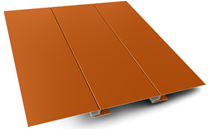
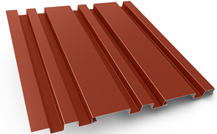
Ribbed Panel
b)
All rooftop or ground mounted mechanical equipment, satellite dish antennas, and exterior trash storage areas shall be screened with materials compatible with the principal structure. The use of wood fencing or gates as a screening material is discouraged. Wood may be permitted for gates if the gate is constructed with a metal frame and the wood is painted to coordinate with the principal structure.
c)
Underground utilities shall be provided for all new and substantially renovated structures.
d)
Design building entrances as prominent and easily identifiable. Create transition
between the exterior and interior. Provide building entries with adequate lighting.
For restaurants or other uses with drive-thru facilities, entrances and exits shall
be designed, located or otherwise positioned so as to eliminate or at least minimize
possible safety conflicts between persons using such entrances (exits) and vehicular
traffic. Exits (entrances) for example shall not be located or positioned in such
a manner that patrons could walk directly into a drive-thru lane or other parking
lot aisle or such that a patron or driver of a vehicle had an obstructed or insufficient
view so as to impair the patron's ability to safely enter or exit the facility. (See
also 5 i).
e)
Elements of architecture including window and door placement to be designed to add variety and interest to the project.
f)
Design all buildings in group commercial, office, and industrial/manufacturing uses (located outside of the M-1 district) developments, including service station, convenience stores, chain restaurants, car dealerships, and auto maintenance facilities, in a complementary architectural style, and incorporate similar materials and colors throughout the development. This requirement or criteria is not, however, intended to preclude the use of unique designs, mixed forms of development or other development concepts that while a-typical to these criteria can still be demonstrated to achieve the intent of these requirements.
g)
Architecturally integrate canopies for gas station, car washes, or similar uses with the building they serve in terms of material, color, texture, roof style and proportional relationship.
h)
Incorporate elements into the design of large structures which provide a transition to the human scale, particularly at the ground. Such elements may be provided through, but not limited to, covered walkways, building arcades and trellises.
i)
Provide architectural interest and style by varying horizontal and vertical elements of exterior walls in height and projection. Such interest and style may be provided through, but not limited to, the imaginative treatment of windows, doors, eaves, roof lines, parapets, wainscots, columns, and beams.
j)
Incorporate building trim, accents, color, materials and style into primary design themes to promote architectural visual interest.
k)
The design of the project shall be expressed on all exterior elevations of the building. The Planning Commission may waive this requirement if in their opinion the project backs up to a similar project, such as where there is an alley between or other condition to the rear of the project would reasonably preclude the need for a building elevation to be to adhere to this requirement.
l)
Design details of all building elevations to continue the character or theme of the project.
m)
Screen non-building elements such as but not limited to, vending machines, and ice lockers from street and parking lot view.
n)
Design patio enclosures visible from the street similar to the architectural character of the project.
o)
Integrate design and placement of building entry and exposed stairs with the design of the project through the use of similar building material, detail, shapes and colors.
p)
Use roofline variations to provide architectural style or character for buildings that are limited in wall configuration due to functional constraints.
q)
Design vertical scale of a project to be proportional to adjacent land uses.
4.
DESIGN CRITERIA FOR SIGNS:
a)
The use of monument or ground signs is encouraged with pole or free-standing signs (examples below) being intended only in those situations where such a sign can, due to site condition, traffic concerns or other acceptable situation, be determined to be a more acceptable sign than the above noted types. The request for a pole, pylon or freestanding sign is subject to approval by the Board of Zoning Appeals as an exception.

Monument/Ground Sign
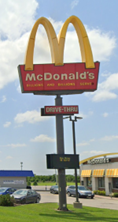
Pole/Free-Standing Sign
b)
Provide monument, tenant directory or ground sign structures with a base of metal, concrete, or masonry construction. Use sign cabinets and sign faces mounted atop a base bordered by the architectural features, materials, and embellishment of the entire sign.
c)
Use exterior materials, finishes, and colors in harmony with, or an upgrade to, those of the buildings or structures on site.
d)
Reflect distinctive elements of the general architectural style or design theme of the development in the sign structure.
e)
Use embellishment to incorporate the primary design elements or unique architectural features of the buildings or structures.
5.
DESIGN CRITERIA FOR OTHER SITE PLAN ELEMENTS:
a)
Respect the existing topography and landscaping: Maintain the unique and identifiable topography and/or landscaping of a site. Respond to the unique terrain by blending with the natural shapes and texture of the land while minimizing disturbance to the natural environment.
b)
Art in Private Development: Encourage the creation of more attractive, unique and aesthetically pleasing public spaces. Artwork may be integrated into public and private development projects where appropriate.
c)
Trash and Refuse Collection Areas: Areas which generate noise and odors are to be located where they will not disturb the occupants within the project or adjacent uses.
1)
Minimum requirements for screening of trash and refuse areas are specified in Section 304.
d)
Outside Storage: Outside storage areas are to be screened from street view and adjacent properties as specified in Section 304.
e)
Outdoor lighting: Lighting is to provide security and visual interest. Lighting is to be placed and shielded to limit glare and to limit the emission of light beyond the development. Parking lot light shall be low level in nature with pole heights not to exceed a maximum of 25 feet, unless taller lights match the character of the area and result in a significant reduction in the number of light fixtures.
f)
Noise Impact: Include in site design provisions for limiting noise from one development interfering with the use of adjacent properties. The occupants of a development are to be protected from noise from both outside and within the site through screening, setbacks and building materials. Locate noise generating equipment to minimize impact on adjacent residential and pedestrian uses.
g)
Pedestrian Circulation/Waiting: Provide a network of convenient and safe pedestrian paths to connect areas within the project to adjacent properties and public right-of-way. Provide directness, continuity, street crossings, visual interest, shade, site furnishings, and safely for pedestrians within and entering the project. Provide a pedestrian pathway network linking the project together and provide a continuous pathway to surrounding developments with at least one (1) pedestrian walkway connection to all adjacent streets.
1)
For parking lots over 40,000 square feet in size, a minimum eight-foot-wide pedestrian walkway that is separated from the parking lot by raised curbs and landscaping and that has limited crossings of vehicular aisles shall connect the building entrance with the sidewalk on adjacent streets. An additional separated pedestrian walkway shall be provided for each additional 40,000 square feet of parking area.
2)
For sites developed with or planned for multiple buildings, a system of pedestrian walkways shall connect the entrances of the multiple buildings. For developments containing a building over 50,000 square feet in size, the pedestrian walkways connecting building entrances shall be a minimum of eight feet wide.
3)
Private streets within a Reserve and circulation aisles connecting multiple parking areas of a multi-building development shall have a minimum five-foot-wide sidewalk on both sides that is separated by raised curbs and landscaping.
h)
In addition to required landscaping, consider landscaping to compliment the architecture, to minimize the impact of incompatible land uses, and to establish a transition between adjacent developments. Plant materials can absorb sound, filter air, curtail erosion, provide shade and maintain privacy.
1)
Provide landscaping to break up bland walls, shade pedestrians, accent entries and soften the connection of paving for vehicles to buildings.
2)
Design retention/detention basins as an integral part of the landscape theme and shall be designed to be safe and inviting and shall include amenities such as landscaping, lighting, benches, trash cans, bicycle parking, plazas, fountains, sculptures, gazebos, shelters, or other amenities. Basins shall not appear to be a ditch or pit. Such landscaping should help soften the visual appearance of the basin and integrate it into the landscape for the overall area (examples below).
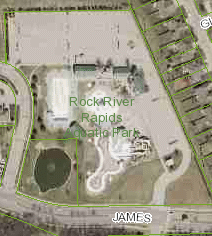
Encouraged
Discouraged
3)
Provide a variety of tree species at the interior and perimeter of projects.
4)
Landscaping variety, innovative design, transition between plant material and ground cover, dispersal and grouping of plant material, and other recognized landscape architecture practices is encouraged.
5)
Developments should provide additional buffering to address compatibly issues.
6)
Design foundation base to incorporate such elements as seat walls, decorative pavement, water features and decorative bollards. Where landscaping is included, design planters to accommodate mature height and width of landscaping.
7)
Design for public access to adjacent streets, bus loading areas, and pedestrian areas as required by ADA.
i)
In addition to the action noted in 3 e. above, concerning the provision of safe entrances and exits, certain design features shall be employed that aid that goal. The use of railing, other such barriers, landscaping, the alignment of sidewalk, etc. shall be used to prevent direct access into a traffic lane. Traffic lanes and drive-thru lanes shall be designed so as to direct vehicles away from exits/entrances. Signage, ground graphics, defined pedestrian crosswalks, etc. shall also be used to clearly identify paths connecting parking areas and facility exits and entrances.
j)
For non-residential developments in excess of 20 acres in size, an open space of at least 15,000 square feet shall be provided. The open space shall be connected by designated pedestrian routes to all lots within the development and to all streets abutting the development. The open space shall be designed to be safe and inviting and include landscaping, lighting, benches, trash cans, bicycle parking, and at least one feature such as a plaza, fountain, sculpture, gazebo, shelter, or other amenity.
6.
DESIGN CRITERIA FOR MULTI-FAMILY DEVELOPMENT
a)
When adjacent to single-family and two-family uses, the design of multi-family structures shall have similar roof pitch and architectural features as the adjacent single-family and two-family uses. Architectural features include design elements such as front porches, cornice lines, horizontal lines of windows, shutters, dormers, and chimneys to create a consistent neighborhood character.
b)
The development of large "complexes" or segregated areas of a single-type of multi-family housing product is discouraged.
c)
An internal vehicular circulation system reflective of a residential street system, as opposed to looped drive systems through parking lots, is encouraged.
d)
Buildings should be sited with front entrances and porches oriented toward streets, drives, and plazas, rather than clustered around parking lots. Parking lots should be located behind buildings or screened from view from internal streets.
e)
Walkways shall be provided that connect all buildings with parking areas, play areas, clubhouses, and sidewalks along adjoining streets, as well as neighboring stores, offices, and transportation.
f)
Centrally located plazas, clubhouses, pools, and recreational facilities shall be provided.
g)
Side and rear building elevations, garages, carports, and all accessory structures shall have the same level of design, aesthetic quality, and architectural detailing as the primary façade of structures.
h)
Porches, varied rooflines, and varied façade depths shall be used to create visual interest in the structures.
i)
Windows and projecting wall surfaces shall break up larger wall surfaces, establish visual interest and provide visibility of the street and other public spaces encouraging social interaction.
j)
Protective entry courts, common vestibules, covered breezeways, or enclosed stair halls are encouraged to reduce the number of visible doors, unless designed in a townhouse street-oriented manner.
k)
Garages shall be designed to be integrated with the building design and shall be sited so as to avoid long monotonous rows of garage doors and building walls. Garages shall be oriented so they do not visually dominate the building façade or the streetscape.
(Ord. No. 2593, §§ 1.29—1.34, 5-13-25)

