
Douglas City Zoning Code
ARTICLE II
DEFINITIONS
Sec. 111-39.- Rules of interpretation.
The director of community development or his designee shall be responsible for the interpretation of the requirements, standards, definitions, or any other provisions of this chapter, unless that authority is provided to another administrative official within a specific chapter.
(Code 1993, pt. III, ch. 2, § 1)
Sec. 111-40. - Interpretations.
In the interpretation and application of this chapter, all provisions shall be considered minimum requirements. Where the literal interpretation is clear, it shall be construed literally. Where the chapter, section or subsection has a statement of purpose and intent, such purpose and intent shall be considered in making the interpretation.
(Code 1993, pt. III, ch. 2, § 2)
Sec. 111-41. - Use of words and phrases.
(a)
The term "person" is intended to include any individual, partnership, firm, association, joint venture, public or private corporation, trust, estate, commission, board, public or private institution, utility, cooperative, state agency, municipality or other subdivision of the state, any interstate body or any other legal entity.
(b)
Words used in the singular include the plural and words used in the plural included the singular.
(c)
Words used in the present tense include the future tense.
(d)
Words used in the masculine gender include the feminine and are intended to be gender neutral.
(e)
The terms "shall" and "must" are always mandatory and not discretionary, while the term "may" is permissive.
(f)
The term "and" indicates that all of the conditions, requirements, and factors so connected must be met or fulfilled, while the term "or" indicates that at least one condition, requirement or factor so connected must be met.
(g)
The term "such as" is intended to introduce one or more examples in illustration of a requirement or point, and is intended to mean "including, but not limited to, the following."
(h)
The term "day" shall mean a calendar day unless otherwise specified.
(i)
Where a term is defined in this article, it shall be construed to have that meaning and application throughout this chapter.
(j)
Where a term is defined in any article other than this article, it is the intent that such definition only applies within the article it appears.
(k)
Except as specifically defined herein, all words used in this chapter shall have their customary dictionary definitions.
(l)
Unless indicated otherwise, reference to zoning districts refer to the most recent copy of the "Zoning Map, City of Douglas, Georgia."
(m)
General definitions. The following words, terms and phrases, when used in this chapter, shall have the meanings ascribed to them in this subsection, except where the context clearly indicates a different meaning:
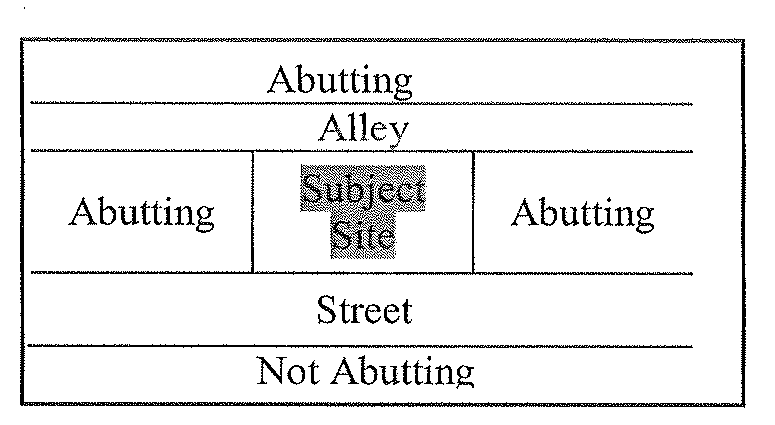
Abutting/contiguous means having property lines in common, or having property separated by only an alley. Separation by a street right-of-way is not considered abutting.
Accelerated erosion means erosion caused by development activities that exceed the natural processes by which the surface of the land is worn away by the action of water, wind, or chemical action.
Acceleration/deceleration lane means paved exits and entrances off a major road onto private property for the purpose of enabling the free and safe flow of traffic.
Access means a paved or unpaved area intended to provide ingress or egress of vehicular or pedestrian traffic from a public or private right-of-way or easement.
Accessory means a use or detached structure that:
(1)
Is located on the same lot as the principal structure or use;
(2)
Is subordinate to an existing principal building or principal use;
(3)
Is subordinate in area, extent and purpose to the principal structure or use; and
(4)
Contributes to the comfort, convenience or necessity of the occupant, business, or industry in the principal structure or use.
Addition means any walled or roofed expansion to the perimeter of a building in which the addition is connected by a common load-bearing wall other than a fire wall. Any walled and roofed addition that is connected by a fire wall or is separated by an independent perimeter load-bearing wall shall be considered new construction.
Adult establishment/entertainment means any commercial establishment that has as its primary purpose or business the rent, sale or presentation of any adult materials. Such establishments include, but are not limited to, escort services, adult arcades, adult bookstores, adult dancing, adult massage parlors, adult motels/hotels, adult motion picture booths, adult motion picture theaters or drive-ins, or adult theatres.
Adult material means any one or more of the following: books, magazines, periodicals or other printed matter, or photographs, films, motion pictures, DVDs, videocassettes or video reproductions, slides or other visual representations that have as their primary or dominant theme the depicting or describing of specified sexual activities or specified anatomical areas; or instruments, devices or paraphernalia which are designed for use in connection with specified sexual activities.
Adverse impact means a condition that creates, imposes, aggravates, or leads to inadequate, impractical, unsafe, or unhealthy conditions on a site proposed for development or off-site.
Agriculture means raising, harvesting or storing of products of the field or orchard; feeding, breeding or managing livestock or poultry; producing or storing feed for use in the production of livestock or poultry; growing plants, sod, and trees for sale; the production of horticultural, dairy, poultry, eggs, and apiarian products.
Alley means a right-of-way privately- or publicly-owned, primarily for secondary access to the back or sides of property.
Alteration means any change in the supporting members of a building or structure such as bearing walls, columns, and girders, except such emergency change as may be required for safety purposes; any addition to a building; any change in use; or any movement of a building from one location to another. Manmade trees, clock towers, bell steeples, light poles and similar alternative design mounting structures that camouflage or conceal the presence of antennas or towers and are compatible with the scale and character of the surrounding natural setting and/or structures will constitute an alteration.
Antenna means a transmitting and/or receiving device mounted on a tower, building or structure and used in telecommunications personal wireless services that radiates or captures electromagnetic waves, digital signal, analog signals, and radio frequencies, directional antennas such as panel and microwave dish antennas, and omni-directional antennas such as whips, but excluding radar antennas, amateur radio antennas, and satellite earth stations.
Apartment means a room or suite of rooms, with bathroom and culinary accommodations, used or designed for use as a residence, located in a building containing three or more independent, separated rooms or suites.
Appeal means a request for a review of an administrative official's interpretation of any provision of this chapter, or a request for a review of an action taken by an administrative official in the application or enforcement of this chapter.
Applicant means a person or entity making an application for a permit as provided for under this chapter, including a stormwater management permit. The applicant may be the owner, developer, project manager or contractor.
As-built plans means amended plans specifying the location, dimensions, elevations, capacities and operational capabilities of facilities and structures, including storm drainage facilities and structures, as they have been constructed.
Awning/canopy means any roof or other form that shelters from sunshine, rain, snow, or other forms of precipitation, open on at least one side. A canopy may be attached to a permanent building or it may be an independent structure permitted in accordance with the International Building Code.
Block means a parcel of land entirely surrounded by public highways or streets, other than alleys.
Board of appeals means the city zoning board of appeals.
Buffer means a strip of land located between a side or rear property line and a building, structure, or use, intended to separate and obstruct the view of the site on which the buffer is located from an abutting property. A buffer is usually intended to provide screening, as defined and as may be required by this chapter.
Buildable area means the area of a lot remaining after the minimum front, side and rear yard setback requirements of the zoning district have been met.
Building means a temporary or permanent building or structure having a roof supported by columns or walls and intended for the shelter, housing or enclosure of any individual, animal, process, equipment, goods, or materials of any kind and occupying more than 100 square feet of area. A modular home shall be considered a building for the purposes of this chapter. A mobile or manufactured home shall not be considered a building for the purposes of this chapter.
Building height means the vertical distance measured to the highest point of the building roof from the average finished grade across those sides of a building that face a street.
Building permit means any permit for the erection, placement, or construction of any building, structure or related building system or building system component, or manufactured home, or portion thereof.
Building, principle, means the building in which is conducted the principal use of the parcel on which it is located. Parcels with multiple principal uses may have multiple principal buildings. However, storage buildings, garages, and other clearly accessory uses shall not be considered principal buildings.
Building setback line means a line beyond which no foundation wall or part of the structure of any building shall project, with the exception of roof overhang up to 24 inches and the subsurface projection of footings; provided, however, that such overhang and footings do not encroach upon the adjacent property, right-of-way, or an easement.
Certificate of completion means a written release from the department that an uninhabited structure or system is complete and is released for use. These would include signs, fences, walls, and accessory buildings.
Certificate of occupancy means a written release from the department certifying that all requirements for development or redevelopment of a property or structure have been met and authorizing occupancy of buildings and structures for residential or commercial purposes. For one- or two-family dwellings, the approval of all final inspections may serve as the certificate of occupancy.
Channel means a natural or artificial watercourse with a definite bed and banks that conducts continuously or periodically flowing water.
City engineer means the director of public works, or the city's official responsible for implementing and enforcing the applicable engineering requirements of the city, or his designee.
City manager means the city manager of the City of Douglas, Georgia, or his designee.
Clearing means the removal of trees, other vegetation and/or above ground improvements, including, but not limited to, buildings and structures, walls, fences, steps, walks, curbs, gutters, concrete slabs, pavements (including bases for pavements) and surfacing.
Club, private, means a noncommercial establishment organized for a common purpose to pursue common goals, interests, or activities and usually characterized by certain membership qualifications, payment of fees and dues, regular meetings and a constitution or bylaws.
Commercial use means a use that is carried on for profit by the owner, lessee, or licensee.
Community development director means the director of community development, or the city's official responsible for implementing and enforcing the applicable zoning and planning requirements of the city, or his designee.
Comprehensive plan means the county and city joint comprehensive plan adopted September 2007, or any updates thereafter.
Concentrated animal feed lot operations (CAFO). Factory farms are also known as concentrated animal feeding operations (CAFOs), confined animal feeding operations, or intensive livestock operations (ILOs). The term "confined animal feeding operation" means a lot or facility, together with any associated treatment works, where both of the following conditions are met:
(1)
First, animals have been, are, or will be stabled or confined and fed or maintained for a total of 45 days or more in any 12-month period; and
(2)
Secondly, crops, vegetation, forage growth, or post-harvest residues are not sustained over any portion of the operation lot or facility.
The definition is used as part of waste management and environmental protection laws to deal with the concentrated pollution from large quantities of animal waste. CAFOs and factory farms can be mostly indoor or mostly outdoor operations. The confinement at high stocking density aspect refers to lack of natural vegetation that the animals can eat and that can naturally process the resulting animal waste. High stocking density destroys the vegetation and produces unacceptable pollution from the animal waste in runoff and groundwater unless it is handled appropriately, so laws have been enacted to deal with that; thus the legal definition for the term CAFO.
Concept plan means the conceptual site plan submitted with an application for development under this chapter, which requires the applicant to show the intended development and its conceptual design. Approval of the application request does not constitute approval of the concept plan; said plan must be adjusted according to the requirements listed for submittal of civil plans and reviewed by the appropriate departments for permitting.
Conditional use means a use that is generally compatible with the use characteristics of a zoning district, but that requires individual review of its location, design, and potential effect on nearby properties to determine the appropriateness of the use on any particular site in the zoning district.
Construction (erect, build, locate, relocate) means the building, erection, location, relocation or substantial improvement to any structure or the clearing, filling or excavation of any land. The term "construction" shall also mean any alterations in the size or use of any existing structure or the appearance of any land. When appropriate to the context, the term "construction" refers to the act of construction or the result of construction.
Continuing care retirement community (CCRC) means a large scale facility which has a primary purpose of providing housing and continuing care for older people, and which consists of independent living units, assisted living facilities, skilled care nursing facilities and related accessory uses, all as defined by this chapter and as regulated by the state department of community health or other appropriate state agency. The term "continuing care" means the provision of lodging, nursing, medical or other health related services at the same or another location to an individual pursuant to an agreement effective for the life of the individual or for a period greater than one year, including mutually terminable contracts, and in consideration of the payment of an entrance fee with or without other periodic charges to an individual.
Assisted living facility (AFL) means a facility located within a CCRC that provides a residential living environment, assisted by congregate meals, housekeeping, and personal services for older persons, who have temporary or periodic difficulties with one or more essential activities of daily living, but do not require services in or of a state department of community health licensed long-term care facility or nursing facility. An ALF shall include dwelling units, dining rooms, bathing areas, common areas, offices and other spaces necessary to provide the above services, and shall be operated by a legal entity holding a license issued by the state department of community health or other appropriate state agency permitting the operation of an ALF at the location of the facility.
Independent living unit means a dwelling unit within a CCRC containing living areas, kitchen area and bathrooms, including multifamily dwellings, single-family detached or attached dwellings, which house one or more older persons in a manner in which they may live independently while receiving one or more meals per day in a congregate care setting.
Skilled care nursing facility means a facility which provides board, shelter and 24-hour skilled nursing and medical care to chronic or convalescent patients. A skilled care nursing facility shall include nursing beds and/or individual rooms, dining rooms, bathing areas, common areas, offices, clinics, therapy areas, medical facilities and other space necessary to provide the above services and shall be operated by a legal entity holding a license issued by the state department of community health, or other appropriate state agency, permitting the operation of a nursing facility at the location of the facility.
Cul-de-sac (see Street, dead-end) means a local street or road with one outlet and having an appropriate terminal for safe and convenient reversal of traffic movement.
Curb cut means the opening along the curb line or edge of pavement of a public street at which point a driveway begins for vehicular ingress and egress from a property.
Cut (excavation) means a portion of land surface or area from which earth has been removed or will be removed by excavations; the depth of which is below the original ground surface.
Day care center (adult) means an establishment, licensed by the state department of human services, operated by any person, with or without compensation, for providing for the care, supervision, and oversight during daytime hours only of six or fewer adults who are elderly, physically ill or infirm, physically handicapped, or mentally handicapped.
Day care center (child) means an establishment, licensed by the state department of human services, operated by a person, society, agency, corporation or institution, or any group, wherein are received, with or without pay, seven or more children under 18 years of age for group care, for less than 24 hours per day, without transfer of custody.
Day care facility means any place operated by any person with our without compensation, licensed by the state department of human services, providing for the care, supervision, and protection of three but no more than six children who are under the age of 18 years for less than 24 hours per day, without transfer of custody. For the purpose of counting the number of children within the day care facility, all children who are related by blood, marriage, adoption or guardianship to the persons operating the facility shall be included.
Day-night average sound level (Ldn) means the average sound level over a 24-hour period.
Dedication means the deliberate appropriation of property by its owner for general public use.
Demolition means the removal of any above ground improvements, including, but not limited to, buildings and structures, walls, fences, steps, walks, curbs, gutters, concrete slabs, pavements (including bases for pavements) and surfacing.
Density means the total number of square feet of a building or buildings, or the number of lots or dwelling units per acre of land.
Density, gross, means the total number of square feet of a building or buildings, or the number of lots or dwelling units per acre of land divided by the total acres of a parcel or tract of land.
Density, net, means the total number of square feet of a building or buildings, or the number of lots or dwelling units per acre of land divided by the number of acres of a parcel or tract of land less the area for streets, rights-of-way, common open space, floodplain, wetland, and surface water.
Design review board means the city design review board as it pertains to the review of design guidelines only as prescribed in specific zoning districts.
Detention means the temporary storage of storm runoff in a stormwater management practice with the goals of controlling peak discharge rates and providing gravity settling of pollutants.
Detention facility means a detention basin or alternative structure designed for the purpose of temporary storage of stream flow or surface runoff and gradual release of stored water at controlled rates.
Developer means any person, individual, firm, partnership, association, corporation, estate, trust, or any other group or combination acting as a unit undertaking any land development activities as defined in this chapter, including, but not limited to, the subdivision of land, the construction of buildings and/or other land disturbance activities.
Development means any manmade change to improved or unimproved real estate, including, but not limited to, buildings or other structures, mining, dredging, filling, grading, paving, excavating, drilling operations, or permanent storage of materials; any activity which alters the elevation of the land, removes or destroys plant life, or causes structures of any kind to be erected or removed other than for agricultural purposes.
Development activities. See Land disturbance activities.
Development permit means an official authorization issued by the director in accordance with this chapter to proceed with land disturbance, construction and grading, as set forth in this chapter.
Development plans means the detailed and professional plans showing the layout and design, site work and construction activities proposed for a project (other than architectural/engineering building plans), including, but not limited to, site plans, grading plans, erosion and sediment control plans, tree protection plans, landscape plans, street plans and profiles, water supply plans, sanitary and storm sewer plans and profiles, and other site improvement plans. Such plans shall also include other appropriate sections, details, notes, schedules, legends and diagrams.
Drainage easement means the legal right granted by a landowner to a grantee allowing the use of private land for stormwater management purposes.
Drainage improvements means those facilities and structures intended to control and direct the passage of stormwaters and other surface water flows from and across property, including, but not limited to, modified natural drainageways, modified creeks, streams, channels, swales, ditches flumes, culverts, cross drains and other piping, catch basins, area drains, drop inlets, junction boxes, headwalls, flared end sections, detention ponds and basins, riprap, drainageway lining systems, and energy dissipation devices.
Driveway means any public or private ingress or egress allowing access between a public street and abutting property.
Driveway, joint access, means a driveway that provides vehicular access to two or more abutting properties from a public street.
Dwelling means any building or structure, or portion thereof, which is arranged, designed or used for residential occupancy on a permanent or long-term basis, not including transient use such as hotels and motels, and which comply with the provisions of this chapter and the International Building Code.
Dwelling, accessory, means a secondary dwelling established in conjunction with, and clearly subordinate to, a primary dwelling unit on the same lot, whether a part of the same structure as the primary dwelling unit or in a detached structure.
Dwelling, duplex, means a building containing two dwelling units, designed to be occupied by no more than two families living independently from each other, each as a separate housekeeping unit.
Dwelling, live-work, means an owner-occupied dwelling unit in which a significant portion of the ground floor space includes a nonresidential use which is operated by the property owners. Such dwellings shall not include home occupations.
Dwelling, multifamily, means a building containing three or more dwelling units, designed to be occupied by three or more families living independently of each other, each as a separate housekeeping unit (i.e., apartments or condominiums).
Dwelling, single-family attached (zero lot line), means a building subdivided by a joint property line and wall which separates the structure into two or more dwelling units, each occupying its own lot. An attached single-family structure must meet all front, rear and side yard setback requirements in the zoning district in which it is located, except for the joint property line and wall. Each unit must be separately metered for all utilities and the joint property wall must be fire-rated and extend from the foundation to the roof decking of the structure.
Dwelling, single-family detached, means an individual, detached dwelling unit that is designed to be occupied by no more than one family, living as a separate household unit, excluding mobile homes and double-wide mobile homes.
Dwelling, townhouse, means two or more attached single-family dwellings which:
(1)
May or may not have a common roof;
(2)
Shall not have a common exterior wall; and
(3)
Are separated from each other by fire-resistant walls extending at least from the lowest floor level to the roof.
Dwelling unit means a self-sufficient dwelling that is designed for or used as a residence by a single housekeeping unit with cooking, sleeping and sanitary facilities provided within the dwelling unit. The term "dwelling unit" does not include rooms in a hotel, motel, boardinghouse, bed and breakfast, or extended stay hotel.
Easement means a right given by an owner of land to another person or entity for specific limited uses of that land.
Access easement means an easement created for the purpose of providing vehicular or pedestrian access across or to a property.
Drainage easement means a legal right granted by a landowner to a grantee allowing the use of private land for stormwater management purposes.
Utility easement means a grant by a property owner for the use of real property for the specified purpose of constructing and maintaining utilities, including, but not limited to, sanitary sewers, water mains, electric lines, telephone lines, cable lines, storm sewer or storm drainageways and gas lines.
Engineer means a professional civil engineer who is registered in the state, and who has extensive education or experience regarding structural/mechanical design.
Erosion and sediment pollution control plan means a plan and actions that are designed to minimize the accelerated erosion and sediment runoff at a site during construction activities.
Exterior architectural features means the architectural style, general design, and general arrangement of the exterior of a building or other structure, including, but not limited to, the kind of texture of the building material and the type and style of all windows, doors, signs, and other appertainments, architectural fixtures, features, details, or elements relative to the foregoing.
FAA means the Federal Aviation Administration.
Facade means the exterior of a building facing the principal street entrance, and extending the entire width of the building elevation.
Family means a group of individuals related by blood, marriage, adoption, or guardianship, or not more than three persons not so related, living together in a dwelling unit as a single housekeeping unit based on an intentionally structured relationship providing organization and stability.
FCC means the Federal Communication Commission.
Fill means a portion of land surface to which soil or other solid material has been added and where the depth is above the original ground surface or excavation grade.
Flea market means a temporary market held in an open area or structure where groups of individual sellers offer goods for sale to the public.
Flood insurance rate map (FIRM) means an official map of the community, issued by the Federal Insurance Administration, delineating the areas of special flood hazard and/or risk premium zones applicable to the community.
Floodplain means any land area susceptible to flooding.
Floor means the lower horizontal finished surface of each story in a building that is intended to support the contents of the building and its occupants.
Floor area means the sum of all square feet of each floor of a building, measured from the interior faces of the exterior walls. The following areas are excluded from the measurement of the floor area: unfinished attics and basements, attached garages or spaces used for off-street parking or loading, breezeways, and enclosed or unenclosed decks and porches.
Gasoline station with convenience store means a gasoline station that includes a retail store that sells a limited line of groceries and household items.
Grade, finished, means the elevation of the average finished surface level of the ground adjacent to the exterior walls of a building or structure.
Grade, natural, means the elevation of the ground surfaces in its natural conditions, prior to any manmade alteration resulting in an increase or decrease in elevation relative to mean sea level (MSL).
Grading means altering the shape or topography of ground surfaces to a pre-determined condition; this includes stripping, grubbing, cutting, filling, stockpiling and shaping, or any combination thereof, and shall include the land in its cut or filled condition.
Group care home means a facility or dwelling unit licensed by the state department of human services housing persons unrelated by blood, adoption or marriage and operating as a single housekeeping unit under a common housekeeping management plan based on an internally structured relationship providing organization.
Grubbing means the removal of vegetation from land by means of digging, raking, dragging or otherwise disturbing the roots of vegetation and the soil in which such roots are located.
Guest house or guest quarters means an attached or detached accessory building that provides living quarters for guests that does not include a full kitchen facility.
Halfway house/homeless shelter/drug treatment facility means a licensed, temporary, residential living arrangement for persons leaving an institutional setting or initially placed in lieu of more restrictive custodial confinement, wherein supervision, rehabilitation, and counseling are provided from licensed support staff who are present whenever residents are present, in order to mainstream residents back into society, enabling them to live independently.
Hardship means a condition of significant practical difficulty in using a lot because of the physical problems relating solely to the size, shape or topography of the lot in question, which are not economic difficulties, and which are not self-imposed.
Height, when referring to a communications tower or other communications structure, means the distance measured from ground level to the highest point on the tower or other structure, even if said highest point is an antenna.
Historic resource or historic property means a building, site, district, object, or structure evaluated as historically significant by the city. These are usually, but not necessarily, 50 years of age or older.
Home occupation means a business, profession, occupation, or trade conducted within a residential building for gain or support by a resident of the dwelling that is incidental and secondary to the residential use of the building and does not change the essential residential character of the use.
Hydrologic soil group (HSG) means a natural resource conservation service classification system in which soils are categorized into four runoff potential groups. The groups range from soils with high permeability and little runoff production to D soils which have low permeability rates and produce much more runoff.
Impervious means a material that water cannot pass through or be absorbed by.
Impervious area means the number of square feet of hard-surfaced areas which either prevent or retard the entry of water into the soil, as is entered under natural conditions as undeveloped property, and/or cause water to run off the surface in greater quantities or at an increased rate of flow from that present under natural conditions as undeveloped property.
Impervious cover or surface means those surfaces that cannot effectively infiltrate rainfall, such as building roof tops, pavement, sidewalks, driveways, etc.
Industrialized building means any structure that is either wholly or in substantial part made, fabricated, formed or assembled in one or more factory-built sections or panels in manufacturing facilities for assembly and installation on a building site. An industrialized building is manufactured in such a manner that all parts or processes cannot be inspected at the installation site without disassembly, damage or destruction thereof, and which, when completed, meets or exceeds the requirements of any and all development standards for conventionally constructed site-built structures as specified by the department of community affairs and current code requirements. Any industrialized home must be designed to be permanently connected to a site-built foundation.
Industrialized home means any residential structure that is either wholly or in substantial part made, fabricated, formed or assembled in one or more factory-built sections or panels in manufacturing facilities for assembly and installation on a building site. An industrialized building is manufactured in such a manner that all parts or processes cannot be inspected at the installation site without disassembly, damage or destruction thereof, and which, when completed, meets or exceeds the requirements of and all development standards for conventionally constructed site-built structures as specified by the department of community affairs and current code requirements. Any industrialized home must be designed to be permanently connected to a site-built foundation.
Infiltration means the process of percolating stormwater into the subsoil.
Infiltration facility means any structure or device designed to infiltrate retained water to the subsurface. Infiltration facilities may be above grade or below grade.
Junk means any scrap, waste, reclaimable material, debris, whether or not stored, for sale or in the process of being dismantled, destroyed, processed, salvaged, stored, baled, disposed, or other used or disposition.
Junked vehicle means any wrecked or non-operable dismantled or abandoned automobile, truck, boat, motorcycle, or similar device.
Junkyard means any parcel and/or building which is wholly or partly utilized for the parking, storage or dissembling of junked vehicles, wrecked or inoperable automobiles, trucks or other vehicles; storing, bailing or otherwise dealing in bones, animal hides, scrap iron and other metals, used paper, used cloth, used plumbing fixtures, old household appliances, scrap tires and used building materials. These uses shall be considered junkyards, salvage operations or recyclable material wholesalers.
Jurisdictional wetland means an area that is inundated or saturated by surface water or groundwater at a frequency and duration sufficient to support a prevalence of vegetation typically adapted for life in saturated soul conditions, commonly known as hydrophytic vegetation.
Land disturbance activity means any activity which changes the volume or peak flow discharge rate of rainfall runoff from the land surface. This may include the grading, digging, cutting, scraping, or excavating of soil, placement of fill materials, paving, construction, substantial removal of vegetation, or any activity which bares soil or rock or involves the diversion or piping of any natural or manmade watercourse.
Landowner means the legal or beneficial owner of land, including those holding the right to purchase or lease the land, or any other person holding proprietary rights in the land.
Loading space means a space within the principal building or on the same lot, providing for the standing, loading or unloading of trucks and other carriers.
Lot (plot, parcel) means a parcel of land occupied or intended for occupancy by a use that includes or will include at least one structure together with any accessory structure, yard, open space, buffer area, or parking spaces as required by this chapter.
Lot area means the total area within the boundaries of a lot.
Lot, conforming, means a lot that meets all the requirements of this chapter.
Lot, corner, means a lot located at the junction of two or more public rights-of-way.
Lot coverage means the percentage of total area of a lot that is occupied by buildings.
Lot, double frontage, means a lot other than a corner lot that abuts two streets.
Lot, flag, means a lot not meeting minimum road frontage requirements and where access to the lot from a public road is achieved by a narrow strip of land (flag pole).
Lot line means the boundary of a lot.
Lot of record means any contiguous parcel of land designed as a separate and distinct parcel of land on a legally recorded, approved subdivision plat or in a legally recorded deed as filed in the official records of the clerk of the county superior court prior to the date of the adoption of the ordinance from which this chapter is derived.
Lot split means the platting of real property into no more than two parcels, lots, tracts, tiers, blocks, sites, units, or any other division of land.
Lot width means the width of a lot at the required front setback line measured parallel to the street right-of-way.
Maintenance agreement means a legally recorded document that acts as a property deed restriction, and which provides for long-term maintenance of stormwater management practices.
Manufactured home means a dwelling fabricated in an off-site facility for installation or assembly at the building site, bearing a label certifying that it is constructed in compliance with the Federal Manufactured Home and Standards Act, 42 USC 5401—5445, and meeting each of the following standards:
(1)
The term "manufactured home" includes a structure, transportable in one or more sections;
(2)
Which, in the traveling mode, is eight body feet or more in width or 40 body feet or more in length or, when erected on site, is 320 or more square feet in floor area;
(3)
Which is built on a permanent chassis and designed to be used as a dwelling with or without a permanent foundation when connected to the required utilities and includes the plumbing, heating, air conditioning, and electrical systems contained therein; and
(4)
Which is manufactured after June 15, 1976.
Manufactured home park means a parcel of land (or contiguous parcels) divided into two or more manufactured home lots for rent or sale.
Mean sea level means the average height of the sea for all stages of the tide. For purposes of this chapter, the term "mean sea level" is synonymous with the National Geodetic Vertical Datum (NGVD).
Mini-warehouse means a building or group of buildings that contain individual, compartmentalized stalls or lockers used for storage, including accessory office, but not including retail sale on the premises, commercial repair or other services, manufacturing, outside storage, or any other commercial use.
Mobile home means a dwelling manufactured prior to June 15, 1976, transportable in one or more sections, which, in the traveling mode, is eight feet or more in width or 40 feet or more in length, or, when erected on site, is 320 or more in square feet floor area, and which is built on a permanent chassis and designed to be used as a dwelling with or without a permanent foundation when connected to the required utilities and includes the plumbing, heating, air conditioning, and electrical systems contained therein.
Modular home. See Industrialized home.
Mixed use means a single building containing more than one type of land use or a single development of more than one building and use, where the different types of land uses are in close proximity, planned as a unified whole, and functionally integrated.
Native vegetation means any indigenous tree, plant or shrub adapted to soil and climatic conditions on site.
Nonconforming lot of record means a lot of record on the effective date of the ordinance from which this chapter is derived that does not comply with the current requirements of this chapter, but was lawfully established and authorized by the city.
Nonconforming structure means any lawfully existing structure or building on the effective date of the ordinance from which this chapter is derived that does not comply with all of the provisions of this chapter.
Nonconforming use means any use lawfully being made of any land, building, or structure on the effective date of the ordinance from which this chapter is derived that does not comply with the provisions of this chapter.
Nonpoint source pollution means pollution from any sources other than from any discernible, confined and discrete conveyances, and shall include, but not be limited to, pollutants from agricultural, silvicultural mining, construction, subsurface disposal and urban runoff sources.
Nonresidential property means any property developed for commercial, industrial, governmental or institutional use, including churches, hospitals, and other such institutions, but excluding undeveloped property and property used exclusively for agricultural purposes.
Obstruction of flow means any development that blocks the conveyance of floodwaters such that the development alone, or together with any future development, will cause an increase in the base flood elevation.
Off-site facility means a stormwater management measure located outside the subject property boundary described in the permit application for land development activity.
On-site facility means a stormwater management measure located within the subject property boundary described in the permit application for land development activity.
Operator. See Developer.
Open space means any lot area not used for or occupied by a driveway, off-street parking or loading space, refuse storage, or structure.
Outdoor storage means the keeping in an outdoor area, if not fully screened from public view, of any goods, material, merchandise, or vehicles in the same place for more than seven consecutive days, whether for storage, display, processing or sale.
Overlay zone means a defined geographic area that encompasses one or more underlying zoning districts and that imposes additional requirements above those required by the underlying zoning district. An overlay zone can have the same boundaries as the existing zoning districts or contain only parts of one or more such districts.
Parcel of land means any plot, lot or acreage shown as a unit on the latest county tax assessment records.
Parking space means an area designed for the temporary storage of a motor vehicle.
Paving means an area covered by asphalt, concrete, brick or pavers meeting the specifications of the city. Pervious paving materials are subject to approval by the city manager.
Permit means the authorization necessary to conduct a land-disturbing activity, land development activity, building construction, or other activity regulated by the city that requires an official authorization as provided in this chapter.
Personal care home means buildings in which is provided for the housing, meals, and 24-hour continuous watchful oversight for one or more ambulatory adults and which is licensed as a personal care home by the state department of human resources, including:
Personal care home, congregate, means a personal care home which offers care to 16 or more persons.
Personal care home, family, means a personal care home which offers care to at least four, but no more than six persons.
Personal care home, group, means a personal care home which offers care to at least seven, but no more than 15 persons.
Pet means a domestic animal, not including bees, livestock or poultry, which is cared for by members of a household for companionship.
Planning commission means the city-county planning commission, as established by the city and county governments.
Plat means a map, plan or other graphic layout of a lot, lot tract, parcel or subdivision indicating the location and boundaries of one or more properties along with improvements subject to this chapter.
Plat, final, means a finished drawing or map of a subdivision or development site plan, meeting all of the requirements of this chapter and approved by the city and fully certified for recording.
Plat, preliminary, means a tentative plan of a proposed subdivision or development meeting the specified requirements of this chapter and showing the layout in sufficient detail to allow an evaluation of the proposed project.
Portable on demand storage units (PODS) means portable sheds (hereinafter referred to as "PODS") that are loaded with materials and placed on a residential or commercial property for the purpose of storing materials.
Property line means the legal boundary that separates a lot or parcel of land from other lots or parcels or rights-of-way as recorded by a graphic description on a subdivision plat of record or a survey.
Public hearing means an official session of any elected or appointed board advertised according to law.
Public improvements means any improvement, facility, or service together with its associated public site or right-of-way. Public improvements differ from lot improvements because public improvements are constructed either on public property, or on the portion of a site undergoing development that is to be dedicated for public ownership and maintenance. Common examples of public improvements include, but are not limited to, streets, sidewalks, curbs, traffic control devices, street lights, and utilities.
Public uses means buildings, structures and uses of land by a unit of government, including, but not restricted to, government administration, water treatment facilities, streets, libraries, public schools, parks, playgrounds, recreation centers and fire stations.
Recharge means the replenishment of underground water reserves.
Recreational vehicle means a camper, trailer, motor home or similar vehicle that is:
(1)
Built on a single chassis;
(2)
Designed to be self-propelled or towable by a noncommercial vehicle; and
(3)
Designed primarily for use as temporary living quarters for recreational, camping, travel or seasonal use.
Recreational vehicle park means any area that is occupied or intended for occupancy by transients using recreational vehicles, mobile trailers or tents as temporary living quarters for recreation, education or vacation purposes and is open to the public.
Recyclable material wholesaler. See Junkyard.
Redevelopment means a land development project on a previously developed site. The term "redevelopment" excludes ordinary maintenance activities, remodeling of existing buildings, resurfacing of paved areas, and exterior changes or improvements which do not materially increase or concentrate stormwater runoff or cause additional nonpoint source pollution.
Religious facility means a building in which persons regularly assemble for religious worship, and that is maintained and controlled by a religious body organized to sustain public worship.
Reserve strip means a strip or parcel of land along, around, or between properties, the sole purpose of which is to restrict access.
Right-of-way (public) means a strip of land dedicated, designated, reserved or deeded to the city, county or state, on which facilities such as roads, railroads, canals, utilities, and other similar uses exist or may be constructed.
Right-of-way line means the dividing line between a lot, tract or parcel of land and a contiguous right-of-way.
Right-of-way width means the distance between property lines measured at right angles to the centerline of the street.
Road frontage means the length of the lot line of any one lot or parcel along a street on which it borders, including proposed streets within a subdivision of land approved by the city.
Salvage operation. See Junkyard.
Sanitary sewer means a pipe or conduit that carries wastewater.
Setback means the shortest distance between the right-of-way of a street or an adjacent lot line and the nearest part of a building as prescribed in this chapter for specific districts. Primary and accessory buildings may not be placed within a required setback.
Sewer, public, means a common sewer controlled by a government agency or public utility. A pipe or conduit that carries wastewater or stormwater.
Sidewalk means that portion of the right-of-way which is parallel to the street or road, which is intended for pedestrian traffic.
Sign.
Abandoned sign. A sign, including a sign structure, is abandoned if it is located on a parcel that was previously occupied, but the use has been discontinued or all buildings on the parcel containing the sign have been vacated for a period of more than six months and no building permit or occupational permit has been issued for the parcel during that six-month period.
Animated sign means a sign that depicts action or motion or that changes color; an animated sign differs from a flashing sign in that it uses movement to create a special effect or scene.
Awning/canopy sign means any sign that is suspended from, attached to, or forming a part of any canopy or awning, whether or not that canopy or awning is part of a permanent building or structure.
Banner sign means any sign having characters, letters, illustrations, or ornamentations applied to cloth, paper, balloons, or fabric of any kind. The foundation of such signs shall consist only of cloth, paper, balloons, plastic or fabric.
Construction sign means any sign that is placed at a construction site that has received development plan approval.
Copy means the text or graphics on a sign surface, either in permanent or removable form.
Copy area means the area in square feet of the smallest geometric figure that describes the total area enclosed by the actual copy of a sign. For wall or canopy signs, the copy area limits refer to the message, not to the illuminated background.
Dilapidated sign means any sign that is structurally unsound or potentially dangerous or any sign face that is illegible due to damage or lack of maintenance that is not prepared to meet city codes within 30 days after written notification by the community development department to the property owner or sign owner.
Directional sign means a sign which is intended only to provide directions for vehicular or pedestrian traffic. Other than a business logo, such signs shall contain no wording which does not provide directions.
Double-faced sign (back to back sign) means a sign with two faces which are parallel, or in the case of a V-shaped sign has an interior angle of less than 60 degrees.
Entrance sign means a type of ground sign placed at the vehicular entrance or exit of an office park, institutional use, industrial park, residential development, shopping center or platted subdivision development where it accesses an external public roadway and is located within the platted portion of the development.
Face means the portion of a sign on which the copy, message, or other visual image to be communicated is placed or is intended or designed to be placed.
Flashing sign means any sign utilizing a continually or intermittent or sequentially flashing light source.
Freestanding sign means a sign not attached to any building or structure and is entirely supported by structures that are permanently placed on or in the ground.
Ground sign means any sign that is permanently affixed to the ground, both flush to the ground or on poles and not attached to an adjoining building. Ground signs include pole signs, monument signs, freestanding signs and detached signs.
Illuminated sign means any sign designed to emit artificial light or designed to reflect light from one or more sources of artificial light.
Message sign means an electronically changeable sign upon which graphic displays, symbols, or words can be varied upon the faces of the sign to display time, temperature, public service, or other general information.
Off-premise/billboard sign means a sign that advertises a use, establishment, product or service sold, produced, manufactured, or furnished at a place other than on the real property on which said sign is located. Billboard signs are signs 300 square feet or larger in area.
Political sign means a temporary sign advertising a candidate for public office, a political party, or a measure or issue scheduled for an election or referendum.
Portable sign means any sign supported by its own frame or trailer, with or without wheels, which is designed to be transported from one place to another. The term "portable sign" does not include typical sandwich or A-frame signs.
Project marketing sign means a temporary sign indicating that real property which is located within the common development site on which such sign is placed, is available for rent, sale, or lease.
Real estate sign means a temporary sign indicating that the lot on which the sign is located, or any building or structure located thereon, is for sale, rent, or lease.
Roof sign means any sign erected over or on the roof of a building.
Snipe sign means a sign of any material whatsoever that is attached in any way to a utility pole, tree, fence, rock, or any other similar object located on public or private property.
Special event sign means a sign that calls attention to a civic event or meeting, or other similar activity of a temporary nature.
Temporary sign means a sign that advertises for a limited period of time political candidates, parties, or issues; a building under construction; real estate for sale, rent, or lease; business grand openings; or other special events.
Wall sign means a sign erected parallel and attached to the outside wall facade of any building or fence, including flat, painted, individual letter, or cabinet signs, no more than 12 inches beyond the wall.
Window sign means any sign, excluding identification and incidental signs, placed inside or upon a window, and intended to be seen from the outside. The term "window sign" does not include merchandise included inside the window.
Sight distance triangle means the area of property in the quadrant of an intersection located within a triangle formed by a diagonal line that connects two points at a certain distance away from the intersection of the right-of-way lines of two intersecting streets or the intersection of a street and a driveway. The dimensions of the triangle shall be determined using the Geometric Design of Highways and Streets published by the American Association of State Highway and Transportation Officials.
Special events means events of a temporary nature, including outdoor meetings, auctions, bake sales, car washes, yard sales from other than residential properties, carnivals, special outdoor entertainment and similar activities which are not part of the property's normal use and which are not otherwise permitted on the site. Outdoor displays or sales accessory to an established retail use are not considered special events.
Stop-work order means an order issued which requires that all construction activity on a site be stopped.
Stormwater management means the use of structural or nonstructural practices that are designed to reduce stormwater runoff pollutant loads, discharge volumes, and/or peak flow discharge rates.
Stormwater retrofit means a stormwater management practice designed for an existing development site that previously had either no stormwater management practice in place or a practice inadequate to meet the stormwater management requirements of the site.
Stormwater runoff means the flow on the surface of the ground, resulting from precipitation, which reaches a drainage system.
Stormwater treatment practices (STPs) means measures, either structural or nonstructural, that are determined to be the most effective, practical means of preventing or reducing point source or nonpoint source pollution inputs to stormwater runoff and water bodies.
Street or road.
(1)
The term "street" or "road" includes streets, roads, sidewalks, alleys, highways and other ways open to travel by the public, including the roadbed, right-of-way, and all culverts, drains, sluices, ditches, water storage areas, waterways, embankments, slopes, retaining walls, bridges, tunnels, and viaducts necessary for the maintenance of travel. The term "street" or "road" does not include any private street or way that is not constructed in conformance with the provision of this chapter.
(2)
Street or road classifications.
Arterial (major/minor) means a road providing service that is relatively continuous and of a relatively high traffic volume, long average trip length, and a high operating speed. In addition, every United States numbered highway is an arterial road.
Connector/collector means a road providing service that is of relatively moderate traffic volume, moderate trip length and moderate operating speed. Such a road/street also collects and distributes traffic between local streets and arterial streets.
Local road means a road providing service which is of low average traffic volume, short trip length or minimal through traffic and high access for abutting property.
Street, controlled access, means the right-of-way of a public street, road or highway where curb cuts are prohibited or limited because of potential interference with safe and efficient movement of vehicles.
Street, dead-end (cul-de-sac), means a local street or road with one outlet and having an appropriate terminal for safe and convenient reversal of traffic movement in compliance with Fire Marshal Safety Regulations.
Street frontage means the width in linear feet of a lot or parcel where it abuts the right-of-way of any public street.
Street grade means the percent change in vertical elevation of the street centerline measured along the finished surface of the street.
Street, half, means a street or road adjacent to a subdivision tract boundary where only half the required right-of-way and road improvements are provided within the proposed subdivision and the responsibility for the other half is undecided or is left to the adjacent property owner.
Street jog is where two streets or two portions of a single street are separated by a relatively short distance, usually at their intersection with another street.
Street light means a pole or pedestal-mounted luminary, ten to 12 feet in height, with a metal halide or other full spectrum bulb.
Street, private, means any privately-owned and -maintained right-of-way set aside to provide vehicular access, including safety and emergency equipment, which is not dedicated to the city and which is not maintained by the city.
Street, public, means a right-of-way dedicated to or owned by a public government agency for the purpose of providing principal access to abutting property.
Street shoulder means that portion of the street or road from the outer edge of the paved surface or back of curb to the inside edge of the ditch or gutter or original ground surface.
Street, substandard, means a street which does not meet the specifications of this chapter.
Structure means anything constructed or installed, the use of which requires location on a parcel of land. The term "structure" does not include a movable structure, even when it is located on land that can be used for housing, business, commercial, agricultural, or office purposes. The term "structure" also includes fences, billboards, swimming pools, and signs. Structures shall meet International Building Code requirements and be permanently affixed.
Structure, pre-constructed. See Modular home and Industrialized building.
Subdivision means the platting of real property into three or more parcels, lots, tracts, tiers, blocks, sites, units, or any other division of land.
Substantial damage means damage of any origin sustained by a structure whereby the cost of restoring the structure to its before damaged condition would equal or exceed 50 percent of the market value of the structure before the damage occurred.
Substantial renovation means renovation to a structure whereby the cost of renovating the structure would equal or exceed 50 percent of the market value of the structure before the renovation.
Survey, as-built, means drawings specifying the dimensions, location, capacities and operational capabilities of structures and facilities as they have been constructed.
Surveyor means a professional surveyor who is registered in the state.
Temporary use/building means land uses/buildings established for a limited duration with the intent to discontinue/remove such use within a designated time period.
Tower means any structure that is designed and constructed primarily for the purpose of supporting one or more antennas, including self-supporting lattice towers, guy towers, or monopole towers. The term "tower" includes, but is not limited to, radio and television transmission towers, microwave towers, common-carrier towers, communication towers, and alternative tower structures.
Utility means public or private water, stormwater, or sewer piping systems, water or sewer pumping stations, electric power lines, fuel pipelines, telephone lines, roads, driveways, bridges, river/lake access facilities, stormwater system, railroads, similar services and all equipment and structures necessary to provide such services for utilities licensed or authorized to serve the city.
Variance means a grant of relief from the dimensional requirements of this chapter which permits construction in a manner otherwise prohibited by this chapter where specific enforcement would result in unnecessary hardship. See article XII of this chapter.
Vista termination means a lot, building or monument site generally located at an intersection, or an end, of streets or active pedestrian ways, which is prominently visible from one or more streets, or ways, approaching said site.
Watercourse means a permanent or intermittent stream or other body of water, either natural or manmade, which gathers or carries surface water.
Yard means an open space at grade between a building and the property lines of the lot on which the building is located. A yard is unoccupied and unobstructed from the ground upward, except as otherwise provided in this chapter.
Yard, front, means a yard extending the full width of a lot, bounded by the side lot lines, front property line and the front of the principal building or any projections thereof. In all cases, the main building and any projections thereof must be behind the line of minimum lot width.
Yard, rear, means a yard extending the full width of the rear of a lot between the side lot lines and the rear property lines and being the minimum required distance between the rear property line and the rear of the principal building or any projections thereof. On all lots the rear yard shall be the opposite end of the lot from the front yard.
Yard, required, means a yard situated between a lot line and the setback line established by the zoning district for the principal building or structure.
Yard, side, means a yard between the principal building and the side line of the lot, extending from the required front yard to the required rear yard, and being the minimum required distance between a side property line and the side of the principal building or any projections thereof.
Zoning district means one or more sections of the city as set forth in this chapter and delineated and designated on the zoning maps, within which the zoning regulations are uniform.
Zoning map. (Map, zoning map of City of Douglas, GA).
(Code 1993, pt. III, ch. 2, § 3; Ord. No. 05082017(3), 5-8-2017)

