
Great Bend City Zoning Code
CHAPTER 17
22. - SOLAR ENERGY CONVERSION SYSTEMS
Sec. 17.22.010. - Purpose and general provisions.
(a)
Statement of purpose. It is the purpose of this chapter to provide a regulatory scheme for the construction and operation of solar energy conversion systems (SECS) in Great Bend, create a process to permit the development of a SECS project subject to reasonable restrictions, and identify significant environmental, social, and economic impacts related to the SECS project. This chapter applies to and addresses all types of solar energy conversion systems. It is the intent of these regulations to address major issues associated with the SECS project. Issues that are not listed and that are deemed significant during review will be addressed with the review and conditions of each individual conditional use permit (CUP).
(b)
Findings. Great Bend notes that the science of determining the impact of SECS is in a developmental stage. Consequently, Great Bend reserves the right to reconsider the boundaries of the no build zone and additional standards and procedures in the future and will formally conduct such review by the Great Bend Planning Commission as deemed necessary.
(Ord. No. 4451, § 1, 1-6-2025)
Sec. 17.22.020. - Definitions.
The following definitions shall be used in the interpretation of this chapter:
Agrivoltaic. A solar energy conversion system that includes the dual use of the land; combining agriculture and a solar energy conversion system. The most common types of agrivoltaic facilities include the growing of crops, providing for pollinators, and grazing of animals. These agricultural activities occur underneath and surrounding the panels or modules.
Battery energy storage system (BESS). One or more battery cells for storing electrical energy including battery management system regulators, equipment and secondary containment measured to the perimeter fence.
Battery management system. An electronic regulator that manages a battery energy storage system by monitoring individual battery module voltages and temperatures, container temperature and humidity, off-gassing of combustible gas, fire, ground fault and DC surge, door access and capable of shutting down the system before operating outside safe parameters.
Concentrating solar thermal devices. Also known as concentrated solar power; these devices use mirrors or lenses to reflect and concentrate sunlight onto a receiver. The energy from the concentrated sunlight heats the receiver to a higher temperature. This heat is then used to spin a turbine or power an engine to generate electricity.
Ecological Review/Environmental Impact Assessment. An evaluation of the environmental consequences of a plan, policy, program, or projects.
Extraordinary events. Any of the following would be considered an "extraordinary event": Large-scale or system wide damage to solar panels, solar modules or solar arrays and facilities due to wind, storm, hail, fire, flood, earthquake, or other natural disaster, explosion, grievous injury to any citizen or employee, or similar event.
Feeder line. Any power line that carries electrical power from one or more SECS or individual transformers associated with individual SECS to the point of interconnection with the electric power grid. In the case of interconnection with the high voltage transmission system, the point of interconnection shall be the substation serving the SECS.
Grading. The act of excavation or filling or a combination of both or any leveling to a smooth horizontal or sloping surface on a property, but not including normal cultivation associated with an agricultural operation.
Net metering. A system in which solar panels or other renewable energy generators are connected to a public-utility power grid and surplus power is transferred onto the grid, allowing customers to offset the cost of power drawn from the utility.
No build zone. The area where commercial scale and large-scale noncommercial SECS are not permitted.
Owner/operator. The party or entity responsible for the construction, operation, maintenance, and decommissioning of the solar energy conversion system.
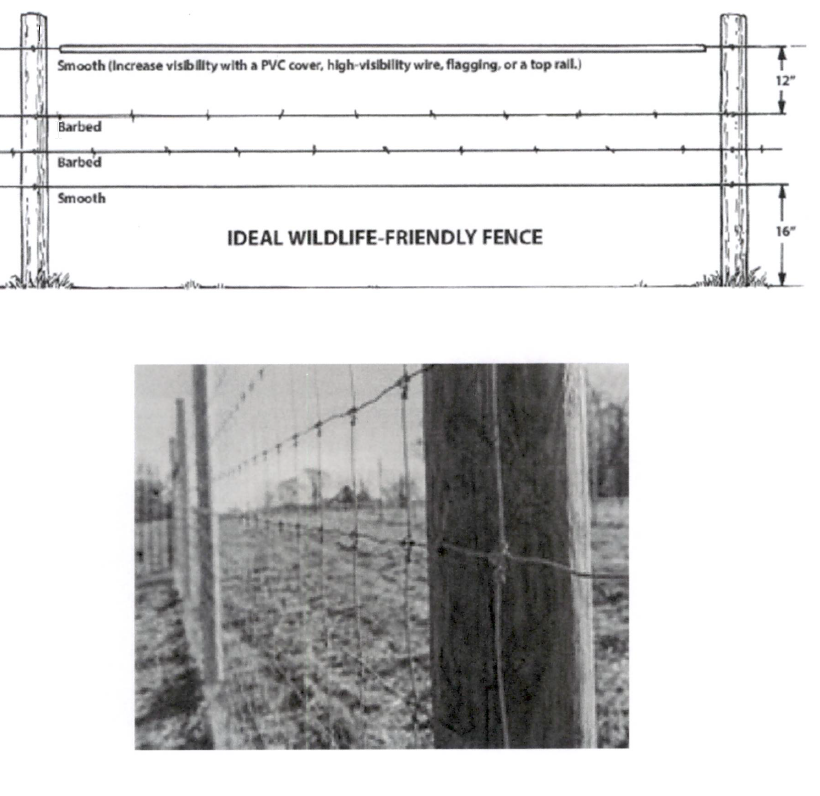
Permeable fencing. Fencing that allows wildlife to pass through. Examples include typical barbwire fencing, wire fencing with larger holes than traditional chain link fence or woven wire, or wildlife corridors for larger wildlife.
Photovoltaic solar panel. Materials and devices, including photovoltaic panels, which absorb sunlight and convert it directly into electricity.
Private airstrip. A location that is registered with the Kansas Department of Transportation and Federal Aviation Administration, appears on aeronautical charts and has a landing surface(s) which is/are maintained and capable of providing a safe landing for aircraft.
Project area. The total impacted area of land in acres used for converting sunlight into electricity including the necessary equipment for generating electricity, which shall include solar panel photovoltaics, inverters, substation parking lots, support structures (which may include buildings), electrical substations and battery energy storage systems, accessory or appurtenant structures and equipment, wildlife corridors, and other components of the solar energy conversion system.
Project extent. The entire area including property and setback lines, lease lines, streets, roads, easements, landscaping, wildlife corridors, right-of-way corridors and utility easements; includes the project area.
Property line. The boundary line of the area over which the entity applying for a SECS permit has legal control for the purposes of installation of a SECS. This control may be attained through fee title ownership, easement, or other appropriate contractual relationship between the project developer and landowner.
Solar array. A collection of multiple photovoltaic solar panels wired together into a circuit.
Solar energy conversion system (SECS). A machine or device that converts sunlight into heat (passive solar) or into electricity, whether by photovoltaics, or other conversion technology.
(a)
Solar energy conversion system (SECS), commercial scale. An electrical generating system that converts sunlight into electricity, whether by photovoltaics, or other conversion technology, for the primary purpose of wholesale sales, resale, or off-site use. This term includes all appurtenant facilities such as roads, substations, and operation or maintenance buildings. The system is connected to transmission, collector, feeder lines, and/or battery storage, and is intended for use in a larger electrical network exclusive of individual use; commonly referred to as "solar farms" or "solar systems."
(b)
Solar energy conversion system (SECS), large-scale noncommercial. An electrical generating system that converts sunlight into electricity, whether by photovoltaics, or other conversion technology with a total capacity that exceeds 100 kW. the electricity created is for consumption of members in the group or business and not for transfer or sale to a third party. This use is typically created for business use, although it can be created by a group of people that join to cooperatively create and use solar energy. Minor structures other than energy conversion equipment may be included in this use.
(c)
Solar energy conversion system (SECS), small-scale noncommercial. An electrical generating system that converts sunlight into electricity, whether by photovoltaics, or other conversion technology, which is used for personal use or is accessory to other uses, and with a total capacity of 100 kW or less, and electricity created is not for sale or transfer and does not exceed the maximum usage of the on-site needs.
Solar energy conversion system (SECS), decommissioning and reclamation plan. A plan to disconnect, remove, and properly dispose of equipment, systems, or devices of a (SECS) and battery energy storage systems and reclaim the site.
Solar module. A structure comprising of multiple solar panels.
Solar panel. A device that converts sunlight into electricity by using photovoltaic cells.
Structure. Something that is constructed.
Wildlife. Living things and especially mammals, birds, and fishes, vertebrates, reptiles, and amphibians that are neither human nor domesticated.
Wildlife corridor. A vegetated route or other connection which allows movement of wildlife between areas of habitat. A wildlife corridor may be a naturally occurring area such as a stream corridor or constructed break in contiguously fenced areas other than the roads. A wildlife corridor allows animals to travel through an area that may be fragmented with solar energy conversion systems or other features, rather than using the nearby roadways.
(Ord. No. 4451, § 1, 1-6-2025)
Sec. 17.22.030. - Commercial and large-scale non-commercial secs.
(a)
Purpose of regulation. It is the purpose of this chapter to provide details related to any application for a commercial-scale SECS or large-scale noncommercial SECS project, create a process to consider issuing a permit for the development of these projects, and identify significant environmental, social, and economic impacts related to the SECS project.
(b)
Intent of regulations. It is the intent of these regulations to address major issues associated with the project; however, issues that are not listed and that are deemed significant during review will be addressed with the review and conditions of each individual CUP.
(1)
These regulations specify the plans, information surveys, and studies that must be submitted as part of the CUP application.
(2)
Appropriate locational criteria for citing a commercial or large-scale noncommercial SECS are provided.
(3)
Standards are provided to:
a.
Ensure the land remains viable for its original use following decommissioning;
b.
Minimize the impact of the system on nearby properties;
c.
Minimize negative environmental impacts;
d.
Ensure reclamation of the site; and
e.
Provide appropriate decommissioning and disposal measures.
(c)
Review considerations. As part of the CUP process set forth in the Great Bend Zoning Regulations, Kansas Department of Wildlife and Parks and The Nature Conservancy will be provided a copy of each permit application for a commercial or large-scale non-commercial SECS and given the opportunity to comment.
(d)
Applicability. These standards and regulations apply to commercial and large-scale non-commercial SECS proposed in the unincorporated land outside of but within three miles of the corporate limits of Great Bend.
(Ord. No. 4451, § 1, 1-6-2025)
Sec. 17.22.040. - Conditions required for approval.
The following conditions shall be evaluated with the review of any application:
(1)
The owner/operator shall demonstrate their ability to strictly conform to all applicable performance standards detailed in these regulations as well as applicable local, state, and federal laws or regulations.
(2)
Key issues to be considered with the review of the application include, but are not limited to:
a.
Visual impact;
b.
Impact on wildlife habitat/native flora and fauna;
c.
Impact on cultural, historical, or archeological features;
d.
Impact on critical wildlife habitats, current state-listed threatened and endangered species, and species in need of conservation as defined by Kansas Department of Wildlife and Parks;
e.
Impact on environmentally sensitive lands;
f.
Impact on water quality and soil erosion;
g.
Impact on infrastructure, including roads and bridges for construction access;
h.
Current condition of roads and bridges and a plan to repair any damage incurred during construction;
i.
Aviation/Federal Aviation Administration (FAA) impacts;
j.
Cumulative impacts;
l.
Company experience, reputation, and financial ability;
m.
Decommissioning, removal, reclamation, and disposal plans;
n.
Bond agreement or other means of ensuring reclamation, disposal, and decommissioning performance;
o.
Specific requirements for building and construction;
p.
Emergency services and training requirements;
q.
Degree to which agricultural uses and wildlife habitat are accommodated with the system layout and design;
r.
Results of a KDWP Ecological Review;
s.
Results of the National Environmental Policy Act Review (NEPA) on all commercial and large-scale non-commercial SECS applications;
t.
Should a project area be under federal or state historic designation, results of a review of the project area by the Kansas State Historic Preservation Office, including an archeological survey by a professional archeologist meeting the minimum professional qualifications set forth by that office if requested by the Kansas State Historic Preservation Office. The survey of the project area must be completed prior to beginning construction and shall be funded by the owner/operator;
u.
Impact on the Wetlands And Wildlife National Scenic Byway should the three-mile jurisdiction limits grow to that area.
(Ord. No. 4451, § 1, 1-6-2025)
Sec. 17.22.050. - Standards.
The following standards apply to all large-scale non-commercial and commercial-scale SECS, except where specifically noted:
(1)
Concentrating solar thermal devices. SECS shall not utilize concentrating solar thermal devices.
(2)
Solar panels/modules. Selected solar panels/arrays for the project shall be of silicon semi-conductors or approved equal and non-toxic to the environment.
(3)
Height. Solar panels shall not exceed 15 feet in height, measured when oriented at maximum tilt, with the following exceptions:
a.
Said height restrictions shall not apply to appurtenant enclosed structures. Structures shall comply with the height limit for the zoning district.
b.
The Great Bend City Council may approve a modification to allow panels of greater height, if found to be necessary to accommodate slopes without grading or to accommodate agrivoltaic uses provided the height of the solar panels do not negatively impact nearby land uses or the character of the area.
(4)
Location. The system shall be located to:
a.
Accommodate the future growth of Great Bend and the area within the three-mile zoning jurisdiction limits;
b.
Utilize existing terrain, vegetation, and structures to screen the project from off-site view to the extent possible. If this is not possible, additional screening may be required;
c.
Avoid steep slopes of 15 percent or greater;
d.
Minimize impact to all environmentally sensitive lands in Great Bend as well as the Cheyenne Bottoms Basin. The largest interior marsh in the United States, Cheyenne Bottoms is one of the most important shorebird migration stopover points in the western hemisphere. It shall be noted that the exact area designated for protection shall be determined with the review of each CUP application. Refer to the additional no build zone on the three-mile zoning jurisdiction map;
e.
Avoid sites with prehistoric cultural resources or historic cultural resources as determined by the Kansas State Historic Preservation Office; and
f.
Minimize impact on the Wetlands And Wildlife National Scenic Byway should the three-mile limits grow to that area.
(5)
Glare. All solar panels must be constructed to minimize glare or reflection onto adjacent properties and adjacent roadways and must not interfere with wildlife, traffic, including air traffic, or create a safety hazard as per any local, state and federal laws and regulations. Examples of measures that can be utilized to limit glare, include, but are not limited to:
a.
Textured glass;
b.
Anti-reflective coatings;
c.
Screening;
d.
Distance; or
e.
Positioning units in a manner that reduces glare.
(6)
Vegetation. Land around and under solar panels/arrays and in designated buffer areas shall be managed to prevent erosion and runoff as approved by the USDA NRCS.
(7)
Soils. All grading and construction activities shall minimize the displacement of topsoil.
(8)
Setbacks.
a.
All structures shall be in compliance with the setbacks required for that zoning district or as otherwise set forth in this chapter.
b.
All CSECS shall be setback from the property lines and public right-of-way at least 50 feet. Participating landowners may waive boundary line setbacks if their property lines are adjoining.
c.
The solar panels/array and appurtenant structures shall be located a minimum of 1,000 feet from the property line of a tract with a residence located on the tract, unless a lesser setback is agreed to by the owner of the property and approved by the Great Bend City Council.
d.
For battery energy storage systems (BESS), all BESS shall be set back at least 1,000 feet from any residential structure unless a lesser setback is agreed upon by the Great Bend Planning Commission and Great Bend City Council based on the results of the hazard mitigation analysis (HMA) but in no case less than 100 feet from a building, lot lines or public ways.
e.
For other public structures such as schools, churches, community facilities, etc., all CSEC solar panels/modules shall be set back at least 300 feet as measured from the nearest portion of any existing public structure at the time of application.
f.
For cemeteries, all CSECS shall be set back at least 200 feet as measured from the nearest portion of any existing cemetery at the time of application.
g.
For private airstrips, all CSECS shall be set back at least 500 feet as measured from the nearest point on either side of centerline of any existing private airstrip and at least one thousand feet 1,000 feet as measured from the nearest point on either end of the runway or property line (whichever is less) of any existing private air strip at the time of application.
h.
Buffering or screening landscaping, fencing, agricultural uses and access drives may be within the setbacks listed above.
i.
No portion of a SECS may encroach upon the public right-of- way except for distribution or transmission lines (overhead or underground) provided all applicable approvals from the authority having jurisdiction over that portion of the right-of-way have been obtained.
j.
Additional setbacks may be required to mitigate site specific issues or to provide for frontage roads, cross-access easements, commercial corridors or other means of egress/ingress.
(9)
Fencing/screening.
a.
Properties containing large-scale non-commercial or commercial scale SECS shall be enclosed by six-foot chain-link perimeter fencing to restrict unauthorized access.
b.
Wildlife friendly fencing, such as a barb-wire fence with smooth wires for the top and bottom strings, or woven wire or other permeable fencing, as illustrated in this section, shall be used where possible.
c.
Where wildlife friendly fencing is not utilized, additional wildlife corridors, including escape corridors, may be required in areas prone to grassfires or flooding.
d.
As required by local, state, and federal regulations, critical electrical and communications equipment, may be fenced with chain-link fence topped with barbed wire when such measures are deemed necessary to ensure public safety and provide additional security for the equipment.
e.
Specific standards for battery energy storage system fencing are provided in the following section.
f.
Wildlife corridors shall be provided as determined necessary by wildlife biologists with the Kansas Department of Wildlife and Parks, or other specialists designated by the county to accommodate wildlife in the area.
(10)
Battery energy storage system (BESS). Documentation shall be provided that shows all battery energy storage systems shall comply with the requirements of the National Fire Protection Association (NFPA) 855 and all other local, state, and federal regulations including the most recent standards from International Code Conference (ICC) as adopted by the City of Great Bend. The following standards shall also apply:
a.
Battery energy storage systems, including all mechanical equipment, shall be enclosed by seven-foot chain-link or six-foot chain-link with one-foot of three strand barbwire with a locked gate to prevent unauthorized access and metal fencing being grounded and bonded per NEC requirements as adopted by the City of Great Bend.
b.
A hazard mitigation analysis (HMA) shall be provided including a plume analysis/study to evaluate the consequences of failure.
c.
The area within ten feet on each side of a battery energy storage system shall be cleared of combustible vegetation and surfaced with gravel or other non-combustible surfacing.
d.
Documentation must be provided that signage for the battery energy storage system follows ANSI Z535 and shall include the following information: The type of technology associated with the battery energy storage system, any associated special hazards, the type of suppression system installed in the area of the battery energy storage system, and 24-hour emergency contact information.
e.
As required by the National Electric Code (NEC) as adopted by the City of Great Bend, disconnect and other emergency management information shall be clearly displayed on a light reflective surface. A clearly visible warning sign concerning voltage shall be placed at the base of all pad-mounted transformers and substations.
f.
Battery storage shall not be located within 1,000 feet of a residential structure unless a lesser setback is agreed upon by the Great Bend Planning Commission and Great Bend City Council based on the results of the hazard mitigation analysis (HMA).
g.
To establish a baseline, a Phase I Environmental Site Assessment be conducted looking for evidence of hazardous substance contamination shall be conducted within the area of the BESS site before the placement of BESS with results provided to the Great Bend Zoning Administrator and tests shall be conducted every five years thereafter or following an extraordinary event.
(11)
Signage.
a.
Perimeter fencing shall incorporate appropriate safety signage at a minimum spacing of every 500 feet unless otherwise required by applicable laws or safety codes.
b.
Signage, including addresses for each fenced area, shall be provided as required by Barton County Communications.
(12)
Lighting. Where required by applicable codes and standards, lighting shall meet the following requirements:
a.
Security or safety lighting relating to the SECS, battery energy storage system and appurtenant structures shall be limited to the minimum necessary to mitigate visual impacts.
b.
No exterior lighting shall be installed that exceeds 15 feet in height unless proven necessary by the applicant and approved as part of the conditional use permit.
c.
No light source shall be directed off-site. All external lighting shall be shielded and downcast such that light does not encroach upon adjacent properties or the night sky.
d.
If LED lights are used, the color temperature shall be no more than 3000K (Kelvin).
(13)
Noise.
a.
The operational noise generated from the solar installation equipment including inverters, battery energy storage systems, components and associated ancillary equipment shall not exceed a noise level of 60 dBA as measured at the property line or 1,000 feet of the property line of an existing residence.
b.
Applicants shall submit equipment and component manufacturer noise ratings at the time of application to demonstrate compliance with the maximum permitted noise level.
c.
Transformers, inverters or other sound or vibration generating equipment must be placed so that low level recurring ambient noise does not exceed the permitted limit. Noise levels can be minimized with the type of equipment or the placement of equipment interior to the site, shielded by proposed solar panels and/or by specifically placed noise and vibration deadening fencing, landscaping, or other efforts.
(14)
Electrical interconnections. All electrical interconnection and collection lines within the project area site shall be located underground, with the following exceptions:
a.
When site conditions require, a modification may be granted by the Great Bend Planning Commission/City Council in instances where shallow bedrock, water courses or other protected environmentally sensitive lands make underground connections detrimental.
b.
Generation tie-lines from the project substation to a utility substation may be above ground and approved by the utility company.
c.
Off-site above ground utility or power lines may only be used for generation tie-lines from the project substation to a utility substation and must be located in public rights-of-way, easements, or other legally dedicated tracts of land.
(15)
Maintenance. All structures shall be maintained and kept in good condition by the owner/operator.
a.
Maintenance shall include, but not be limited to, overgrown vegetation in and around facilities, painting, structural repairs, replacement of damaged or worn parts or cables and integrity of security measures/fencing.
b.
Site access shall be maintained to a level acceptable to local emergency personnel. The owner/operator shall be solely responsible for maintaining the project area, all appurtenant structures, and the installation and maintenance of any access road(s), unless accepted as public rights-of-way.
(16)
Affidavit. Upon issuance of a permit for a conditional use by the Great Bend City Council, the applicant shall file an affidavit with the Barton County Register of Deeds on all the properties within the conditional land use permit, which includes a copy of the CUP and all setback and buffer waivers. Filing fees will be covered by the applicant.
(17)
Liability insurance.
a.
Applicants shall provide general liability insurance, showing general liability insurance coverage for the lifespan of the project encompassing installation and operation through decommissioning. Evidence shall be provided annually in the form of a certificate of insurance.
b.
Applicants shall provide a certificate of general liability insurance for personal injury and property damage in the amount of not less than two million dollars per occurrence or as determined by the size of the project and approved by the Great Bend Planning Commission/City Council. Applicants shall name the City of Great Bend as an additional insured on said insurance. The certificate shall state the dates of coverage, and an updated certificate shall be always provided showing coverage is in effect. In the event no such certificate is provided, it shall be treated as an involuntary decommissioning event if no cure is made within 30 days of notification to applicant.
(18)
Decommissioning bond. The applicant agrees to, or to cause one of its affiliates to, pay the premiums for and to post any collateral required by the surety for the decommissioning bonds for the cost of returning the premises to their pre-project condition. The amount of the decommissioning bond shall be determined by a professional engineering firm proposed by the applicant, cost to be paid by the applicant and approved by Great Bend to perform such service.
a.
Prior to permit approval, the applicant and Great Bend shall execute a decommissioning agreement pertaining to the project. The executed decommissioning agreement shall be recorded at the office of the Great Bend Register of Deeds. The decommissioning agreement shall include but not be limited to topics such as:
b.
Removal of the solar panels and other above ground and below ground components;
c.
Removal of any concrete base down to a minimum of four feet below ground surface;
d.
Removal of access roads, unless the landowner, township, or county burdened by such roads requests otherwise;
e.
Re-seeding and restoration of disturbed areas;
f.
The timeline for removal;
g.
Removal of all electrical equipment down to a minimum of four feet below ground surface;
h.
A definition of the circumstances in which involuntary decommissioning would be required, such as:
i.
Project owner provides notice of intent to decommissioning;
j.
Commercial operation has not commenced within 12 months of completion of construction;
k.
The project ceases to operate or is abandoned for more than 180 consecutive days as determined by the Great Bend Zoning Administrator;
l.
An initial and updated estimate by a 3rd party engineer of the total cost of decommissioning;
m.
Surety bond, or other financial guarantee accepted by the Great Bend City Council for the purpose of paying for decommissioning costs in the event applicant fails to decommission voluntarily. The decommissioning financial guarantee shall be irrevocable and provide for the cost of decommissioning throughout the term of the project;
n.
Upon default of bond, notification shall be given to the City of Great Bend.
(19)
Airspace overlay or airstrip. If a system is proposed to be placed within an airspace overlay (ASO) district or within five miles of any airstrip, the applicant shall provide acknowledgement of location approval or acceptance from the Federal Aviation Administration with the CUP Application and complete the Notice of Proposed Construction or Alteration Form 7460-1.
(20)
Other standards and codes. All SECS shall follow all applicable local, state, and federal regulatory standards.
(21)
Modifications.
a.
Upon a written request by the applicant, the Great Bend Planning Commission may consider a modification from the standards if said modification is found to be necessary and is consistent with the purpose and intent of these regulations. The Great Bend Planning Commission shall make recommendations to the Great Bend City Council on requested modifications in conjunction with their recommendation on the conditional land use permit. The Great Bend City Council shall make the final determination on all modification requests.
b.
Items that are available for modification are the size of the project area, height of the solar panels, amount of grading possible, and the location (above or below ground) of electrical interconnections and distribution lines, changes to the procedure for testing soil and water, and any other revision deemed appropriate to implement this code.
(22)
Building permits and plan review. The applicant shall contract with a special inspector and/or plan reviewer, approved by the Great Bend Zoning Administrator, for construction plan review and all required construction inspections, at the owner/operator's expense.
(23)
Time frame. The CUP shall be approved for the lifespan of the SECS and shall be subject to floodplain compliance and building permits.
(24)
Transfer of owner/operator.
a.
If the owner/operator listed on the approved CUP plans to sell or otherwise transfer their responsibilities to an entity not listed on the CUP, the listed owner/operator shall notify the Great Bend Zoning Administrator of this proposed transfer. Furthermore, the new owner/operator shall notify the Great Bend City Council and the Great Bend Zoning Administrator in writing, acknowledging their acceptance of responsibility and intent to comply with all conditions listed in the approved CUP.
b.
In the event the operator of the project is a different entity than the owner of the project, all obligations of the operator described herein shall simultaneously be obligations of the owner.
(25)
Extraordinary event.
a.
Within seven days of an extraordinary event, the owner/operator shall provide written notice of the event to the Great Bend Zoning Administrator, noting the cause and the degree of damage associated with the event.
b.
Within 45 days of the event, the owner/operator shall provide the Great Bend Zoning Administrator with a mitigation plan noting the steps they will take to mitigate any negative impacts. Additional mitigation steps may be required by the Great Bend Zoning Administrator.
c.
In the event of an extraordinary event, that requires an evacuation or shelter in place, any costs/expenses incurred by the city and/or the affected property owners, because of the evacuation or shelter in place shall be paid by the developer of the project.
(26)
Reviews. The SECS shall be reviewed for compliance with the standards of the CUP at the time of application, one year after approval and every five years thereafter through the life of the CUP. These reviews shall be conducted by a third-party firm, selected and financed by the owner/operator and approved by the Great Bend Zoning Administrator. The compliance report shall be submitted to the Great Bend Zoning Administrator.
(Ord. No. 4451, § 1, 1-6-2025)
Sec. 17.22.060. - Approvals required for revisions.
(a)
Conditional use permit. Any proposed expansion of the SECS will require approval of a new CUP. This would include an increase in the project area or the area for accessory equipment.
(b)
Site plan. Minor modifications to the site plan may be approved by the Great Bend Zoning Administrator. A minor modification includes changes which do not increase the project area or the area for accessary equipment.
(Ord. No. 4451, § 1, 1-6-2025)
Sec. 17.22.070. - Application and required documents.
(a)
Existing conditions. A physical land survey and digital site plan of existing conditions on all properties included in the project area showing the following (digital site plan must be formatted to toggle each layer off and on):
(1)
Existing property lines and property lines of the project area;
(2)
All recorded leases, and easements included in the project area, with type and recording information, and the location and width of all public road rights-of- way;
(3)
Existing points of ingress and egress to the project area;
(4)
Location and size of any known wells (oil, water, geothermal, etc.);
(5)
Existing buildings and any paved or gravel surfaces, with dimensions;
(6)
Contour lines showing the existing topography of the project area at one-foot intervals. The source of the topography must be stated. If the project area contains any Federal Emergency Management Agency (FEMA) mapped floodplain, the topography must be tied to the flood insurance rate map (FIRM) datum;
(7)
Boundaries and designations of any special flood hazard areas identified on the FIRM of Great Bend, Kansas;
(8)
Existing vegetation (list type and percentage of coverage, i.e., pasture, grassland, farmland, wooded areas, etc.);
(9)
Existing waterways, rivers, wetlands, channels, ditches or streams, existing ponds and lakes, and existing culverts;
(10)
Presence of any critical habitat for threatened or endangered species as determined by Kansas Department of Wildlife and Parks; and
(11)
The location of any underground pipelines and all utility easements including, but not limited to, railroad and drainage easements.
(b)
Proposed conditions. A physical land survey and digital site plan of proposed conditions showing the following:
(1)
Number, location and spacing of solar panels and all appurtenant structures. Panel type, fixed or tracking, to be listed on the plan;
(2)
Name and address of owner/operator;
(3)
Property lines;
(4)
Distance from property lines to equipment;
(5)
Map of residential uses and structures showing setbacks have been achieved as required by applicable setbacks of the SECS boundary;
(6)
Location and width of access drives;
(7)
Stamped engineered plans and specifications from an engineer licensed in Kansas;
(8)
Planned location of underground and overhead electric lines connecting the SECS to any building, substation, or other electric load;
(9)
Proposed phasing schedule;
(10)
New electrical equipment other than at an existing building or substation that is the connection point for the SECS;
(11)
Planned wildlife corridors;
(12)
Floodplain development if project will be within a flood zone;
(13)
Environmentally sensitive lands to be protected;
(14)
Clearly delineated limits of proposed land disturbance or vegetation removal for all phases of construction and operation;
(15)
Location and height of any proposed lighting;
(16)
Locations with descriptions and sizes of planned temporary construction laydown yards;
(17)
Wiring diagram for the project area;
(18)
Approximate limits of disturbance for all temporary and permanent project components associated with the project area; and
(19)
Utility easements including, but not limited to, easements for transmission and interconnection.
(c)
Additional materials. The following shall be submitted with the application:
(1)
Public outreach required for SECS. Information regarding public outreach, such as how the applicant informed nearby property owners and interested stakeholders in the community, what meetings were held, and/or what information was provided;
(2)
Manufacturer's specification and recommended installation methods for all major equipment, including solar panels, mounting systems and foundations for poles or racks;
(3)
Assessment of construction impacts such as, but not limited to, noise, vibration, lights, waste management, water supply, etc. and mitigation measures. Mitigation measures could include, but are not limited to limited construction hours, reduced scope of work at one time, alternate construction methods, etc.;
(4)
A preliminary equipment specification sheet that documents the proposed battery energy storage system components, inverters, and associated electrical equipment being installed including UL 9540 and 9540A testing results for battery energy storage system technology.
(5)
A grading/vegetation removal plan which includes all proposed changes to the topography and vegetation on the site (clearing, grading, topographic changes, tree removal, etc.;
(6)
A stormwater management plan with supporting calculations, documenting how increased runoff will be conveyed throughout the project area. The calculations must include the design of open channels and culverts on the project area. Based on recommendations from the Barton County Engineer, storage, and controlled release at points of discharge from the project area may be required. If required, the stormwater management plan must be implemented on the final site plan prior to approval;
a.
Preliminary stormwater management plans may be provided with the original application, as required by the Barton County Engineer. Engineered or detailed plans must be submitted for the Barton County Engineer/City of Great Bend review and evaluation prior to the Great Bend City Council's final action on the CUP application.
b.
Staff may require more detailed information when needed to make informed decisions on the use.
c.
Changes required by the stormwater plan, such as detention, shall be shown on the final plans for the Great Bend City Council's consideration.
(7)
A copy of any interconnection facilities studies;
(8)
A copy of the interconnection agreement with the electric utility shall be provided;
(9)
A copy of the KDHE approved stormwater pollution prevention plan (SWPPP) for the site;
(10)
An operation and maintenance plan which includes measures for maintaining access drives to provide access for emergency vehicles including but not limited to turn radii into facilities as well as general procedures for operation and maintenance of the installation;
(11)
Traffic and road maintenance plan. A traffic and haul route plan based on the recommendations of the Barton County Engineer and Great Bend Township Boards affected by the proposed project. The plan shall include, but is not limited to:
a.
General project schedule.
b.
A traffic study estimating the volume and type of traffic generated by the project, both during construction and during normal operations. The study must identify proposed haul routes for construction traffic, trucks, and oversize or overweight loads.
c.
Based on the traffic study and the Barton County Engineer's recommendations, the following items shall be required:
1.
Notes on the plan designating haul routes from the project area to a city street, county road or paved county or state highway;
2.
Road maintenance agreement to be executed with Barton County or Great Bend Township(s), addressing compensation for road maintenance or dust control on public roadways; and
3.
Public improvement agreements to be executed with Great Bend or Barton County or Great Bend Township(s), addressing compensation for necessary road, bridge, or culvert improvements on public roadways.
(12)
Vegetation management plan. A vegetation management plan is needed, detailing all proposed changes to the vegetation of the project area and outlining all proposed uses, current or future.
a.
The plan shall show where existing vegetation is to be removed and detail any new vegetation that will be placed and the location(s).
b.
The plan shall include the installation, establishment and maintenance of buffering or screening landscaping as required.
c.
The plan shall include the installation, establishment and maintenance of ground cover and other vegetation to minimize erosion, maintain soil health and accommodate the proposed use.
(13)
Emergency services, fire, and safety plan. A plan including all means of managing an extraordinary event at the SECS project area shall include, but will not be limited to, the following:
a.
The project summary, electronic schematics, site plans, and emergency ingress/egress plans, with the location of the access drives and the width and load rating of the access drives.
b.
Turn radii into facilities for emergency vehicles;
c.
Emergency contact information, which shall also be posted on the project area.
d.
Description of how the fire safety system and its associated controls will function and be maintained in proper working order.
e.
Fire protection and suppression systems for buildings that store batteries, hazardous materials, or compressed gases.
f.
Site control measures during and after any emergency. All means of managing an emergency including location of disconnects and shutting down the SECS shall be noted and clearly marked.
g.
Procedures for inspection and testing according to currently adopted NFPA standards of associated alarms, interlocks, and controls shall be noted on the plan.
h.
Material Safety Data Sheet (MSDS) unless the SECS meets the reporting thresholds of Emergency Planning And Community Right To Know (EPCRA) Act in which case the applicant shall provide and submit a Tier II report if required by the EPA. The EPA requires Tier II reports for facilities that store hazardous chemicals above certain threshold quantities.
i.
Electrical shock hazards and possible contact with hazardous substances or toxic fumes shall be identified.
j.
The owner/operator shall update the emergency services and fire safety plan annually in collaboration with Barton County Emergency Management and provide new copies to the SECS owner/operator, the Great Bend Fire Department, emergency response agencies, Barton County Emergency Management, and the Great Bend Zoning Administrator.
k.
Any specialty response equipment required to adequately manage extraordinary events will be provided, updated, and/or replaced by the owner/operator, as needed and at the owner/operator's expense.
l.
Annual emergency and extraordinary event response training will be provided for all emergency response stakeholders on the plan, project area, equipment, and processes required to assure their safety and effective management during an event.
m.
In the event of an extraordinary event, that requires an evacuation or shelter in place, any costs/expenses incurred by the city and/or the affected property owners, as a result of the evacuation or shelter in place shall be paid by the developer of the project.
n.
A hazard mitigation analysis and emergency response plan shall be provided to the Great Bend Zoning Administrator per NFPA 855. The hazard mitigation analysis shall include a plume study or plume analysis.
(14)
Solar glare hazard analysis. The applicant shall provide a solar glare hazard analysis utilizing the latest version of the solar glare hazard analysis tool (SGHAT), or its equivalent.
(15)
Abandonment, decommissioning, and reclamation plan. A decommissioning and reclamation plan shall be required to ensure that SECS components are safely removed after their useful life. Decommissioning of solar panels must occur if they do not produce electricity, have no demonstrated plan to restore to operating condition, and before the end of the lifespan of the CUP.
a.
To verify production level, a report of power generated by the SECS shall be submitted to the Great Bend Zoning Administrator annually.
b.
The Great Bend Zoning Administrator shall issue a notice of abandonment to the owner/operator of the SECS. The owner/operator shall have the right to respond to the notice of abandonment within 30 days from the Notice receipt date. The Great Bend Zoning Administrator may withdraw the notice of abandonment and notify the owner/operator that the notice has been withdrawn if the owner/operator provides sufficient information to demonstrate that the SECS has not been abandoned, which may include documentation or certification by the owner/operator of the local electric utility, or that the owner/operator is actively pursuing a plan, including specified steps and a proposed schedule acceptable to the Great Bend Zoning Administrator, to bring the SECS back into service.
c.
The decommissioning and reclamation plan shall include provisions for removal of all structures, foundations, underground wiring and all materials foreign to the project area prior to installation.
d.
All cables buried 36 inches or less underground must be removed. Cables that are deeper than 36 inches may remain if the following requirements are met: a map of the buried lines is provided to One Call and an affidavit is attached to the deed of the property to note that buried cables, deeper than 36 inches, are present on the property.
e.
The decommissioning and reclamation plan must ensure the project area will be reclaimed to a useful, nonhazardous condition without delay including regrading with a minimum of ground disturbance, seeding of the land after the removal of equipment, and revegetation of reclaimed soil areas with crops or native seed mixes, excluding any invasive species.
f.
The decommissioning and reclamation plan must include a description of how any changes to the surrounding areas and any other part of the SECS adjacent to the battery energy storage system, such as, but not limited to, structural elements, means of egress, and required fire detection suppression systems, will be protected during decommissioning and confirmed as being acceptable after the SECS is removed.
g.
All solar panels/modules shall be recycled through an approved recycling program and shall not be disposed of at the Barton County Landfill.
h.
Concrete and other materials used in the construction and operation of the SECS must be removed. If discarded in Great Bend, it must be discarded in a manner that complies with the Barton County Solid Waste Management Plan. Disposal of all solid and hazardous waste must be in accordance with local, state, and federal waste disposal regulations.
i.
For any part of the project on leased property, the decommissioning and reclamation plan may incorporate agreements with the landowner regarding leaving access roads, fences, gates, or repurposed buildings in place or regarding restoration of agricultural lands. Any use of remaining structures must be in conformance with the Great Bend Zoning Regulations in effect at that time.
j.
If the Great Bend Zoning Administrator has issued a notice of abandonment, the permit holder will have one year to complete decommissioning of the SECS installation and reclamation of the project area. Decommissioning and reclamation shall be completed in accordance with the approved decommissioning and reclamation plan. The owner/operator shall notify the Great Bend Zoning Administrator when decommissioning and reclamation is complete.
k.
The decommissioning and reclamation plan shall include estimated decommissioning costs in current dollars and the method for ensuring that amount will be available for decommissioning and reclamation. The applicant shall provide the basis for estimates of net costs for decommissioning the project area (decommissioning costs less salvage value). The cost basis shall include a mechanism for calculating adjusted costs over the life of the SECS.
(16)
Bond requirements. The applicant shall post a bond with the City of Great Bend Clerk, establish an escrow account, or provide such other financial security deemed acceptable by the City of Great Bend, in an amount equal to the estimated decommissioning costs, to ensure proper decommission and reclamation of the site.
a.
The applicant agrees to, or to cause one of its affiliates to, pay the premiums for, and to post any collateral required by the surety for, the decommissioning bond for the cost of returning the premises to its pre-project condition. The amount of the decommissioning bond shall be determined by a professional engineering firm proposed by the applicant and approved by Great Bend to perform such a service.
b.
The bond, or other financial security, shall be posted prior to the commencement of the use.
c.
The bond, or other financial security, shall include a mechanism for adjustment over the life of the project.
1.
The bond, or other financial security, shall be adjusted for inflation annually.
2.
The SECS owner/operator shall engage a qualified individual to recalculate the estimated cost of decommissioning at an interval of every five years and every year for the final five years of the CUP. If the recalculated estimated cost of decommissioning exceeds the previous estimated cost of decommissioning, then the owner/operator shall adjust their financial security to meet the new cost estimate. If the recalculated estimated cost of decommissioning is less than the previous estimated cost of decommissioning, then the Great Bend Commission may approve reducing the amount of the security to the recalculated estimate of decommissioning cost.
d.
In the event the owner/operator is in non-compliance or default due to nonpayment. The City of Great Bend shall have the right to call said bond, or other financial security and use it for decommissioning purposes. Should there be any remaining balance, the City of Great Bend shall have the right to withhold payment of any refund until the decommissioning process is completed to the City of Great Bend's satisfaction.
(Ord. No. 4451, § 1, 1-6-2025)
Sec. 17.22.080. - Zoning map.
SECS shall have special permitting requirements in the City of Great Bend's three-mile zoning jurisdiction limits with reference to the Cheyenne Bottoms Basin. Refer to the following for all proposed commercial and large-scale non-commercial SECS applications:
No build zone: From the intersection of NW 10 Avenue and NW 30 Road, then east to the intersection of NE 30 Avenue and NE 30 Road, then north to the half section of section 11 along NE 30 Avenue, then west along the half section of Section 11 to NE 20 Avenue, then north to the intersection of NE 20 Avenue and NE 40 Road, then west to the intersection of NW 10 Avenue and NE 40 Road, then south to the point of origin. The no build zone shall include all land within the described boundaries that are within the three-mile jurisdiction of Great Bend.
(Ord. No. 4451, § 1, 1-6-2025)

