
Hialeah City Zoning Code
ARTICLE V
- ZONING DISTRICT REGULATIONS
DIVISION 2. - A AGRICULTURAL DISTRICT[7]
Cross reference— Animals, ch. 10; district regulations for signs, § 74-211 et seq.
DIVISION 7. - R-4 TOWNHOUSES[8]
Editor's note— Ord. No. 2004-80, § 1, adopted November 9, 2004, amended division 7 in its entirety to read as herein set out. Former division 7, §§ 98-686—98-695, pertained to similar provisions, and derived from Code 1960, § 32-16.1(a)—(j); Ord. No. 1671, §§ 2—18, 4-14-1964; Ord. No. 1701, § 1, 8-11-1964; Ord. No. 2255, § 1, 6-10-1969; Ord No. 2517, § 1, 12-14-1971; Ord. No. 2614, § 1, 7-25-1972; Ord. No. 2624, § 4, 8-8-1972; Ord. No. 2638, § 1, 9-26-1972; Ord. No. 93-79, § 1, 9-14-1993; Ord. No. 93-81, § 1, 9-14-1993; Ord. No. 94-32, § 7, 4-12-1994; Ord. No. 95-21, § 4, 3-14-1995.
DIVISION 8. - REC RECREATIONAL DISTRICT[9]
Cross reference— Parks and recreation, ch. 62.
DIVISION 9. - RO RESIDENTIAL OFFICE DISTRICT[10]
Cross reference— Businesses, ch. 18.
DIVISION 11. - CR COMMERCIAL-RESIDENTIAL DISTRICT[11]
Cross reference— Businesses, ch. 18.
DIVISION 12. - B-1 HIGHLY RESTRICTED RETAIL DISTRICT[12]
Editor's note— Section 1 of Ord. No. 2001-84, adopted October 23, 2001, enacted new §§ 98-926 and 98-927, renumbering existing §§ 98-927—98-932 as §§ 98-928—98-933. Section 9 of same ordinance repealed in its entirety former § 98-926, uses permitted. Said section pertained to uses permitted in the B-1 highly restricted retail district, and derived from Code 1960, § 32-17(a) and the following:
Cross reference— Businesses, ch. 18.
DIVISION 13. - CBD CENTRAL BUSINESS DISTRICT[13]
Cross reference— Businesses, ch. 18.
DIVISION 14. - OPS OFFICE AND PROFESSIONAL SERVICES DISTRICT[14]
Cross reference— Businesses, ch. 18; OPS office and professional services district signs, § 74-213.
DIVISION 15. - C-1 RESTRICTED RETAIL COMMERCIAL DISTRICT[15]
Editor's note— Section 2 of Ord. No. 2001-84, adopted October 23, 2001, enacted new §§ 98-1066 and 98-1067, renumbering existing §§ 98-1067—98-1072 as §§ 98-1068—98-1073. Section 9 of same ordinance repealed in its entirety former § 98-1066, uses permitted. Said section pertained to uses permitted in the C-1 restricted retail commercial district, and derived from Code 1960, § 32-18(a) and the following:
Cross reference— Businesses, ch. 18.
DIVISION 16. - C-2 LIBERAL RETAIL COMMERCIAL DISTRICT[16]
Editor's note— Section 3 of Ord. No. 2001-84, adopted October 23, 2001, enacted new § 98-1111. Section 9 of same ordinance repealed in its entirety former § 98-1111, uses permitted. Said section pertained to uses permitted in the C-2 liberal retail commercial district, and derived from Code 1960, § 32-19(a) and the following:
Cross reference— Businesses, ch. 18.
DIVISION 17. - C-3 EXTENDED LIBERAL COMMERCIAL DISTRICT[17]
Editor's note— Section 4 of Ord. No. 2001-84, adopted October 23, 2001, enacted new § 98-1156. Section 9 of same ordinance repealed in its entirety former § 98-1156, uses permitted. Said section pertained to uses permitted in the C-3 extended liberal commercial district, and derived from Code 1960, § 32-19.1(a) and the following:
Cross reference— Businesses, ch. 18.
DIVISION 18. - C-4 COMMERCIAL DISTRICT[18]
Cross reference— Businesses, ch. 18.
DIVISION 19. - M INDUSTRIAL PARK DISTRICT[19]
Cross reference— Businesses, ch. 18.
DIVISION 20. - ASD AUTOMOTIVE SALES DISTRICT[20]
Cross reference— Businesses, ch. 18.
DIVISION 22. - M-1 INDUSTRIAL DISTRICT[21]
Editor's note— Section 5 of Ord. No. 2001-84, adopted October 23, 2001, enacted new § 98-1371. Section 9 of same ordinance repealed in its entirety former § 98-1371, uses permitted. Said section pertained to uses permitted in the M-1 industrial district, and derived from Code 1960, § 32-20(a) and the following:
Cross reference— Businesses, ch. 18.
DIVISION 23. - M-2 INDUSTRIAL DISTRICT[22]
Editor's note— Section 6 of Ord. No. 2001-84, adopted October 23, 2001, enacted new § 98-1411. Section 9 of same ordinance repealed in its entirety former § 98-1411, uses permitted. Said section pertained to uses permitted in the M-2 industrial district, and derived from Code 1960, § 32-21(a) and § 5 of Ord. No. 83-159, adopted December 13, 1983.
Cross reference— Businesses, ch. 18.
DIVISION 24. - M-3 INDUSTRIAL DISTRICT[23]
Editor's note— Section 7 of Ord. No. 2001-84, adopted October 23, 2001, enacted new § 98-1451. Section 9 of same ordinance repealed in its entirety former § 98-1451, uses permitted. Said section pertained to uses permitted in the M-3 industrial district, and derived from Code 1960, § 32-22(a) and the following:
Cross reference— Businesses, ch. 18.
DIVISION 25. - K KENNEL DISTRICT[24]
Cross reference— Animals, ch. 10; businesses, ch. 18.
Sec. 98-411.- Classification of districts.
In order to classify, regulate and restrict the uses of land and buildings, to regulate and restrict the height and bulk of buildings, to regulate the area of yards and other open spaces about buildings, and to regulate the intensity of land use, the city is divided into classes or districts to be known as follows:
(Ord. No. 771, § 4, 1-26-1954; Ord. No. 778, § X, 5-25-1954; Code 1960, § 32-11(a); Ord. No. 1474, § 2, 5-22-1962; Ord. No. 1671, § 1, 4-14-1964; Ord. No. 1737, § 1, 11-24-1964; Ord. No. 2066, § 1, 2-27-1968; Ord. No. 2351, §§ 1, 2, 6-23-1970; Ord. No. 2736, § 1, 5-22-1973; Ord. No. 2976, § 1, 3-25-1975; Ord. No. 2980, § 1, 4-8-1975; Ord. No. 78-98, § 2, 10-10-1978; Ord. No. 85-54, § 1, 5-14-1985; Ord. No. 91-18, § 1, 2-12-1991; Ord. No. 91-89, § 2, 8-13-1991; Ord. No. 96-57, § 1, 6-25-1996; Ord. No. 2009-24, § 4, 4-14-2009; Ord. No. 2012-50, § 1, 9-11-2012)
Sec. 98-412. - Zoning map.
(a)
The districts listed in section 98-411 and the boundaries thereof are shown upon the official zoning map of the city, which is adopted and made a part of this chapter. Such map and all notations, references and other information shown thereon shall be as much a part of this chapter as if such information set forth on such map were all fully described and set out in this chapter.
(b)
In the creation of the respective districts, the city council has given due and careful consideration to the peculiar suitability of each and every such district for the particular regulations applied thereto and the necessary proper and comprehensive groupings and arrangement of the various uses and densities of population in accordance with a well-considered plan for the development of the city.
(c)
This chapter does not rezone any land, but the zoning classification of all land in the city as it exists at the time of the adoption of the ordinance from which this chapter derives is ratified and confirmed.
(d)
The boundaries of the districts shown upon the map adopted by this chapter or amendments thereto are adopted and approved and the regulations of this chapter governing the use of land and buildings, the height of buildings, building site areas, the sizes of yards about buildings and other matters as set forth in this chapter are established and declared to be in effect upon all the land included within the boundaries of each and every district shown upon such map.
(e)
Where uncertainty exists as to boundaries of any district shown on such map, the following rules shall apply:
(1)
Where such district boundaries are indicated as approximately following street lines, alley lines or lot lines, such lines shall be construed to be such boundaries.
(2)
In unsubdivided property or where a district boundary divides a lot, the location of such boundary, unless the boundary is indicated by dimensions, shall be determined by use of the scale appearing on the map.
(3)
If any further uncertainty exists, the city council shall interpret the intent of the map as to location of such boundaries.
(4)
Where any public street, alley or other public way is officially vacated or abandoned, the regulations applicable to each parcel of abutting property shall apply to that portion of such street, alley or other public way added thereto by virtue of each vacation or abandonment.
(Ord. No. 771, § 4, 1-26-1954; Ord. No. 778, § X, 5-25-1954; Code 1960, § 32-11(b); Ord. No. 1474, § 2, 5-22-1962; Ord. No. 1671, § 1, 4-14-1964; Ord. No. 1737, § 1, 11-24-1964; Ord. No. 2066, § 1, 2-27-1968; Ord. No. 2351, §§ 1, 2, 6-23-1970; Ord. No. 2736, § 1, 5-22-1973; Ord. No. 2976, § 1, 3-25-1975; Ord. No. 2980, § 1, 4-8-1975; Ord. No. 78-98, § 2, 10-10-1978; Ord. No. 85-54, § 1, 5-14-1985; Ord. No. 91-18, § 1, 2-12-1991; Ord. No. 91-89, § 2, 8-13-1991; Ord. No. 96-57, § 1, 6-25-1996)
Sec. 98-413. - Restrictions in general.
Except as provided in this chapter:
(1)
No building shall be erected, reconstructed or structurally altered nor shall any building or land be used which does not comply with all the district regulations established by this chapter for the district in which the building or land is located.
(2)
No building shall be erected, reconstructed, or structurally altered to exceed the height or bulk limits established for the district in which such building is located.
(3)
The minimum yards and other open spaces, including the intensity of use sections contained in this chapter for each and every building existing at the time of the adoption of the ordinance from which this chapter derives or for any building erected or structurally altered shall not be encroached upon or considered as yard or open space requirements or intensity of use requirements for any other building.
(4)
Every building erected in an R-1 district shall be located on one or more lots, and in no case shall there be more than one main building and the customary accessory buildings on one lot.
(5)
The uses of all buildings and property publicly owned and engaged in the performance of a public function may be permitted in any district, provided that such use is not obnoxious or detrimental to the health or welfare of the city.
(6)
No explosive paints or any explosive combustible matter shall be stored in any area, unless prior to the storage thereof the fire chief shall issue a permit authorizing the storage thereof after his inspection and approval of the premises therefor.
(7)
Nothing shall be allowable on premises that shall in any way be offensive or noxious because of the emission of odors, gases, dirt, smoke, vibration or noise, nor shall anything be constructed or maintained, including private incinerators, that would in any way constitute an eyesore or nuisance to adjacent property owners, residents or to the community.
(Ord. No. 771, § 5, 1-26-1954; Code 1960, § 32-12; Ord. No. 1404, § 1, 10-10-1961)
Sec. 98-414. - Zoning designation of annexed properties.
The city will assign zoning designations to annexed properties that correspond to existing city zoning designations. The city hereby eliminates the zoning designations of R-3-4 (multiple family) and R-3-5 (multiple family) in any annexed area that the city has acquired jurisdiction after the effective date of this section.
(Ord. No. 771, § 16, 1-26-1954; Code 1960, § 32-23.1; Ord. No. 1324, § 2, 12-2-1960; Ord. No. 2004-12, § 1, 2-24-2004)
Sec. 98-415. - Certificate of re-occupancy.
(a)
It shall be unlawful for any person to buy, sell, convey or transfer title to any single-family, duplex or townhouse dwelling without first obtaining a re-occupancy certificate issued by the building official, code compliance director or designee. The certificate of re-occupancy, if issued, shall state that the city has inspected the dwelling and determined that the dwelling complies with the residential occupancy regulations of the zoning district on the property wherein the dwelling unit is located. In A, R-1, R-Z and R-4 zoning districts, a certificate of re-occupancy shall not be issued for the presence or existence of more than one dwelling or residence. In R-2 zoning districts, a certificate of re-occupancy will not be issued for the presence or existence of three or more dwellings or residences. In R-3, R-3-1, R-3-2, R-3-3, R-3-4, R-3-5 and R-3-D zoning districts, a certificate of re-occupancy of a townhouse shall not be issued for the presence or existence of more than one dwelling or residence. In R-3, R-3-1, R-3-2, R-3-3, R-3-4, R-3-5 and R-3-D zoning districts, a certificate of re-occupancy of a duplex will not be issued for the presence or existence of three or more dwellings or residences. The provisions of this section shall not apply to the sale, conveyance or transfer of title of a new dwelling or residence that has never been occupied and that represents the first transaction since the issuance of the original certificate of occupancy.
(b)
It shall be unlawful for any person to sell, convey or transfer title to any single-family, duplex or townhouse dwelling unit owned by such person without first disclosing by written notice to the buyer, grantee or transferee the fact that a certificate of re-occupancy is required by this section. It is required that a seller, grantor or transferor deliver to the buyer, grantee or transferee a properly signed and approved city certificate of re-occupancy prior to the sale, conveyance or transfer of title to property zoned A, R-1, R-2, R-Z and R-4; and to property zoned R-3, R-3-1, R-3-2, R-3-3, R-3-4, R-3-5 and R-3-D, if the dwelling unit is a townhouse or duplex.
(c)
A seller, property owner or designated agent shall request a certificate of re-occupancy by submitting a completed application together with payment of an inspection fee. Upon payment of a $100.00 inspection fee, a city inspector shall inspect the dwelling within 30 days and, if such dwelling is found to be in compliance with the residential occupancy regulations of the applicable zoning district, the city will issue a certificate of re-occupancy. Upon payment of a $300.00 inspection fee, a city inspector shall inspect the dwelling on an expedited basis within ten days and, if such dwelling is found to be in compliance with the residential occupancy regulations of the applicable zoning district, the city will issue a certificate of re-occupancy. A $75.00 fee shall be paid for each re-inspection performed by the city. The re-occupancy certificate shall be effective for six months and may be extended only one time for an additional six months upon payment of a $100.00 fee. Upon a real estate closing or title transfer the certificate of re-occupancy shall be recorded in the Miami-Dade County public records with the deed or other conveyance of title.
(d)
If a dwelling violates the residential occupancy regulations of the applicable zoning district, the city shall identify the violations of such regulations. Until there is compliance or correction of the violation of the residential occupancy regulations confirmed upon re-inspection, the certificate of re-occupancy will be withheld.
(e)
Under circumstances where remedial action may reasonably extend beyond the date of the sale, conveyance or transfer to complete, the city shall issue conditional certificates of re-occupancy with a compliance date set forth in the certificate. If the proposed remedial action includes correction of violations that immediately threaten the life or safety of the residents as listed in the certificate, the city shall identify such violations on the conditional certificate of occupancy. Upon compliance, the city shall issue a re-occupancy certificate. If a property is sold, conveyed or transferred in a subsequent transaction and the remedial action required in the conditional certificate of re-occupancy issued pursuant to this paragraph has not been completed within the compliance date and no re-occupancy certificate has been issued prior to the subsequent sale, conveyance or transfer, the inspection fee shall be $300.00. A city inspector shall inspect the dwelling within 30 days. A city inspector shall inspect the dwelling on an expedited basis within ten days upon payment of an additional $100.00 fee.
(f)
Information gained or conditions observed in the course of any inspection conducted pursuant to the authority of this article, shall not be utilized by the code inspectors as the basis for issuing new citations or notices of violation other than violations of the residential occupancy regulations permitted by the applicable zoning district. This shall not preclude other enforcement actions brought upon the basis of information gained or violations observed by other lawful means.
(g)
The certificate of re-occupancy does not constitute any representation or warranty as to the condition or any aspect of such condition of the dwelling or other structures on the premises for which the certificate is issued. The inspection made in connection with a certificate of re-occupancy is neither a structural, electrical, plumbing nor mechanical inspection and does not represent that the premises conform to the provisions of the Code, including the building and technical codes adopted by the city. Interested persons are advised and encouraged to obtain an inspection of the premises in order to determine the condition thereof.
(h)
Lien letters issued by the city clerk's office and estoppel letters issued by the water and sewers department shall provide a notice that a certificate of re-occupancy is required for real estate transactions involving the sale, conveyance or transfer of title of a single-family, duplex or townhouse dwelling.
(i)
A certificate of re-occupancy shall be required in connection with all applicable real estate closings and other applicable transactions that occur on or after May 1, 2002.
(Ord. No. 02-10, § 1, 2-15-2002; Ord. No. 2015-18, § 1, 4-28-2015)
Sec. 98-416. - Tenant certificates.
(a)
Purpose and title. This section shall be known hereafter as the Elderly Homeowners Relief Act. The Elderly Homeowners Relief Act authorizes, upon issuance of a tenant certificate, the establishment of one rental occupancy within a detached single-family residence or garage or accessory building of a single-family home, where the owner or co-owner is at least 55 years old and the property owner currently resides and uses the property as homestead. The primary purpose of the Elderly Homeowners Relief Act is to allow one rental occupancy on homestead residences owned or co-owned by a senior citizen within the habitable space of a detached single family residence, a garage or an accessory building in order to generate income that will help senior citizens preserve the ownership of their homestead.
(b)
Precedence over other land use and zoning regulations. Notwithstanding any other Code provisions to the contrary, a rental occupancy under the Elderly Homeowners Relief Act shall be allow within a detached single-family residence, garage and or an accessory building, constructed or legalized by a finalized building permit, in R-1 one family residential zoning districts subject to the regulations contained in this section and pursuant to a tenant certificate. To the extent that any conflict may arise between the criteria of this district and the criteria of the R-1 zoning district, the provisions of the Elderly Homeowners Relief Act shall prevail.
(c)
Development standards.
(1)
Size. A rental occupancy shall not exceed 500 square feet in gross floor area. A rental occupancy shall only contain one bedroom or sleeping quarters for no more than two people.
(2)
Location. A rental occupancy shall only be allowed within the habitable space of the existing residence or addition of the residence, constructed pursuant to a finalized building permit; or garage or accessory building constructed pursuant to a finalized building permit.
(3)
Minimum frontage. A rental occupancy shall be located only on properties that have a minimum frontage of 50 feet.
(d)
Limitations on permitted use.
(1)
Use limitation. One rental occupancy shall be allowed one lot or parcel of land zoned R-1 one family residential district or more than one lot, if joined by a unity of title or developed as a single family residence. The property owner must also live in the main residence on the property as the property owner's homestead. The property owner shall not rent out the main residence and live in the garage or accessory building. A declaration of restrictive covenants approved by the city setting forth this tenancy requirement and compliance with the section signed by the property owner shall be submitted to the city.
(2)
Living quarters. The rental occupancy issued pursuant to a tenant certificate may include a microwave, hot plate, stove, refrigerator, air conditioning unit and floor and wall cabinets.
(3)
Parking. Tenants of the rental occupancy shall be allowed to park no more than two motor vehicles on the property.
(e)
Application for a tenant certificate. Property owner shall complete an application for tenant certificate and pay an application fee of $75.00 and provide a site sketch prepared by a licensed general contractor, engineer, architect or architect intern. The property owner shall provide proof of homestead exemption and a signed declaration of restrictive covenants.
(f)
Renewal. On October 1, 2012, the rental occupancy shall be renewed for a fee of $100.00 for one year. On October 1, 2013 and each year thereafter, the rental occupancy shall be renewed for a fee of $200.00.
(g)
Cancellation upon sale or transfer. If the property is sold or transferred, then the tenant certificate is automatically cancelled. The new property owner shall apply for the tenant certificate as if it is an initial application for the rental occupancy.
(Ord. No. 2011-58, § 1, 9-13-2011)
Sec. 98-451.- Uses.
(a)
In the A agricultural district, the following uses shall be permitted:
(1)
One-family residences.
(2)
Accessory buildings and uses incidental to each single-family residence when placed on the same lot or parcel of land and not used or operated commercially or for industry.
(3)
Agricultural uses, such as farms, nurseries, greenhouses, fishing worm raising, tropical fish, orchards, aviaries; or raising of field crops, tree crops, berry or bush crops; vegetable or flower gardening on a commercial scale; dairies; and cattle and poultry raising.
(4)
Schools, churches, playgrounds, drive-in theaters, country clubs and trailer parks; provided, however, that no plans for trailer parks shall be approved unless there is a minimum area of not less than ten acres, but no plans shall be approved until approved by the state health department.
(5)
A temporary roadside stand, for the sale of perishables grown on such property, which stand must maintain a setback of 25 feet from the property line.
(b)
Areas zoned for agricultural uses shall be used only for those purposes enumerated in this section and for similar uses. This zone shall not be regarded as available for all uses permitted in areas zoned for other purposes.
(Ord. No. 771, § 6, 1-26-1954; Ord. No. 788, § XII, 5-25-1954; Code 1960, § 32-13(a); Ord. No. 1313, § 1, 9-27-1960; Ord. No. 94-114, § 3, 12-13-1994)
Sec. 98-452. - Building height limit.
The maximum building height in the A agricultural district shall be 2½ stories or 35 feet, excepting church spires, towers, steeples and similar appurtenances which exceed 35 feet in height.
(Ord. No. 771, § 6, 1-26-1954; Ord. No. 788, § XII, 5-25-1954; Code 1960, § 32-13(b); Ord. No. 1313, § 1, 9-27-1960; Ord. No. 94-114, § 3, 12-13-1994)
Sec. 98-453. - Building site area required.
The minimum building site area in the A agricultural district shall be one recorded lot or parcel of land not less than 6,000 square feet in area for each one-family residence and containing a minimum 60-foot frontage.
(Ord. No. 771, § 6, 1-26-1954; Ord. No. 788, § XII, 5-25-1954; Code 1960, § 32-13(c); Ord. No. 1313, § 1, 9-27-1960; Ord. No. 94-114, § 3, 12-13-1994)
Sec. 98-454. - Front yard required.
The front yard required in the A agricultural district shall be the same as in the R-1 residential district.
(Ord. No. 771, § 6, 1-26-1954; Ord. No. 788, § XII, 5-25-1954; Code 1960, § 32-13(d); Ord. No. 1313, § 1, 9-27-1960; Ord. No. 94-114, § 3, 12-13-1994)
Sec. 98-455. - Side yard required.
The side yard required in the A agricultural district shall be the same as in the R-1 residential district.
(Ord. No. 771, § 6, 1-26-1954; Ord. No. 788, § XII, 5-25-1954; Code 1960, § 32-13(e); Ord. No. 1313, § 1, 9-27-1960; Ord. No. 94-114, § 3, 12-13-1994)
Sec. 98-456. - Rear yard required.
The rear yard required in the A agricultural district shall be the same as in the R-1 residential district.
(Ord. No. 771, § 6, 1-26-1954; Ord. No. 788, § XII, 5-25-1954; Code 1960, § 32-13(f); Ord. No. 1313, § 1, 9-27-1960; Ord. No. 94-114, § 3, 12-13-1994)
Sec. 98-457. - Floor area required.
The floor area required in the A agricultural district shall be the same as in the R-1 residential district.
(Ord. No. 771, § 6, 1-26-1954; Ord. No. 788, § XII, 5-25-1954; Code 1960, § 32-13(g); Ord. No. 1313, § 1, 9-27-1960; Ord. No. 94-114, § 3, 12-13-1994)
Sec. 98-496.- Primary use.
(a)
In general. In the R-1 one-family district, no building or land shall be used and no building shall be erected, constructed, reconstructed or structurally altered which is designed, arranged, or intended to be used or occupied for any purpose, unless otherwise provided for, excepting for every use as a one-family residence, including every customary or accessory use, not inconsistent therewith. The presence or appearance of a second or additional one-family residence as indicated by the installation and/or use of additional fixtures or appliances or as indicated by the inaccessibility of habitable rooms to each other shall constitute a rebuttable presumption that this section has been violated. Existing guesthouses, formerly referred to as "servants' quarters", properly permitted, are allowed to continue as a legal nonconforming use.
(b)
Exception.
(1)
Applicability. A second living quarters may be allowed only if the residence is located in an R-1 (one-family district) and if all of the habitable rooms are accessible to each other, but only for one additional family unit for immediate family members of the property owner comprising of one grandparent or set of grandparents; one parent or one set of parents; one child and/or the child's spouse and/or dependent children; one grandchild and/or the grandchild's spouse and/or dependent children. Moreover, the property owner must reside on the premises as the property owner's homestead and has claimed, or is eligible to claim, the property as homestead exemption from real estate taxes as reflected in the county tax rolls.
(2)
Application. The property owner shall apply to the planning division to obtain permission for second living quarters. The property owner shall complete an application, together with a $200.00 inspection fee, with a copy of a current homestead exemption receipt, floor plan of the layout of the interior of the residence and a site plan sketch of the property including the location where personal motor vehicles will be parked on the paved areas within the property, and sufficient documentary proof, such as a passport or birth certificate, to demonstrate the required family relationship between the property owner and the occupants of the second living quarters. If the property owner does not possess a current homestead exemption receipt, the city shall confirm the status of the homestead exemption from a review of the county tax rolls. If the city approves the second living quarters, then the city shall charge a waste collection fee of 1½ times the single household residential rate.
(3)
Renewal. Each year after the city approves the second living quarters, on or before the anniversary date of the first approval, the property owner shall renew the approved second living quarters for an additional year, upon reinspection of the premises and payment of a $100.00 reinspection fee.
(4)
Limitations.
a.
The second family living quarters may include a stove, microwave, hot plate, refrigerator, air conditioning unit and floor and wall cabinets.
b.
Building permits will be required for an additional bathroom, plumbing pipes, valves, electrical alterations and exterior doors.
c.
Utility rooms and wet bars cannot be used as bathrooms or second kitchens.
d.
All residents must park personal motor vehicles on paved areas within the physical boundaries of the property or if approved by the city, on paved swale areas.
e.
Accessory buildings and detached structures, unless a guesthouse properly permitted at the time of construction for use as a guesthouse, may not be used for additional living quarters.
f.
When the property is sold and the transaction requires a certificate of re-occupancy, then the second living quarters with the additional fixtures and appliances and second kitchen facilities must be removed.
(Ord. No. 771, § 7, 1-26-1954; Ord. No. 788, § XIII, 5-25-1954; Code 1960, § 32-14(a); Ord. No. 1592, § 1, 7-9-1963; Ord. No. 1787, § 1, 7-13-1965; Ord. No. 3084, § 2, 7-13-1976; Ord. No. 3127, § 2, 9-28-1976; Ord. No. 78-32, § 1, 3-28-1978; Ord. No. 78-36, § 2, 3-28-1978; Ord. No. 81-158, § 1, 12-8-1981; Ord. No. 83-51, § 1, 5-10-1983; Ord. No. 84-168, § 1, 11-29-1984; Ord. No. 94-32, § 4, 4-12-1994; Ord. No. 2003-12, § 1, 2-11-2003; Ord. No. 2015-17, § 1, 4-28-2015)
Sec. 98-497. - Additional uses.
The following additional uses shall be permitted in the R-1 one-family district, subject to setback, yard, height and other restrictions as set out in this division or as specifically set out for each use:
(1)
One single-family residence.
(2)
Accessory buildings and uses incidental to each single-family residence when placed on the same lot or parcel of land and not used or operated commercially or for industry.
(3)
Public schools owned by federal, state, county or city governments and church schools; provided, however, that this subsection shall not be construed to permit the construction or operation of church buildings or other places of worship.
(4)
Playgrounds, parks or reservations owned and operated by the city.
(5)
Flower and vegetable gardens and groves, provided no signs, displays or stands are used in conjunction therewith and they not operated commercially.
(6)
Buildings used exclusively and owned by the federal, state, county or city government for public purposes.
(7)
State-licensed or state-registered family day care homes as defined by F.S. § 402.302(7).
(8)
One pigeon loft shall be permitted in detached single-family homes on lots of no less than 50 feet wide by 100 feet in depth to accommodate no more than a total of 20 domestic pigeons, including pigeon cocks, pigeon hens, and pigeon hatchlings or offspring. To the extent that a townhouse is situated in a R-1 district, the loft may be permitted on lots of no less than 135 feet in depth to accommodate no more than a total of ten domestic pigeons, including pigeon cocks, pigeon hens, and pigeon hatchlings or offspring. This use shall be permitted, subject to the same restrictions herein, for townhouses situated in the R-4 Townhouses zoning district.
(Ord. No. 771, § 7, 1-26-1954; Ord. No. 788, § XIII, 5-25-1954; Code 1960, § 32-14(b); Ord. No. 1592, § 1, 7-9-1963; Ord. No. 1787, § 1, 7-13-1965; Ord. No. 3084, § 2, 7-13-1976; Ord. No. 3127, § 2, 9-28-1976; Ord. No. 78-32, § 1, 3-28-1978; Ord. No. 78-36, § 2, 3-28-1978; Ord. No. 81-158, § 1, 12-8-1981; Ord. No. 83-51, § 1, 5-10-1983; Ord. No. 84-168, § 1, 11-29-1984; Ord. No. 94-32, § 4, 4-12-1994; Ord. No. 2005-24, § 2, 2-22-2005; Ord. No. 2012-36, § 1, 6-26-2012)
Sec. 98-498. - Building height limit.
The maximum building height in the R-1 one-family district shall be 2½ stories or 35 feet.
(Ord. No. 771, § 7, 1-26-1954; Ord. No. 788, § XIII, 5-25-1954; Code 1960, § 32-14(c); Ord. No. 1592, § 1, 7-9-1963; Ord. No. 1787, § 1, 7-13-1965; Ord. No. 3084, § 2, 7-13-1976; Ord. No. 3127, § 2, 9-28-1976; Ord. No. 78-32, § 1, 3-28-1978; Ord. No. 78-36, § 2, 3-28-1978; Ord. No. 81-158, § 1, 12-8-1981; Ord. No. 83-51, § 1, 5-10-1983; Ord. No. 84-168, § 1, 11-29-1984; Ord. No. 94-32, § 4, 4-12-1994)
Sec. 98-499. - Building site area required.
The minimum building site in the R-1 one-family district shall be one lot or parcel of land containing at least 7,500 square feet of area for each one-family residence. Such parcels or lots shall have an average width of at least 75 feet and shall also have a minimum average depth of 100 feet. Where a lot or parcel of land does not meet the requirements of this section and was a legally divided parcel of land at the time of passage of such requirements, said lot or parcel may be occupied by a one-family residence; provided, however, that the minimum front, rear and side yard requirements as set out in this division are complied with and the conditions of section 98-348 are met.
(Ord. No. 771, § 7, 1-26-1954; Ord. No. 788, § XIII, 5-25-1954; Code 1960, § 32-14(d); Ord. No. 1592, § 1, 7-9-1963; Ord. No. 1787, § 1, 7-13-1965; Ord. No. 3084, § 2, 7-13-1976; Ord. No. 3127, § 2, 9-28-1976; Ord. No. 78-32, § 1, 3-28-1978; Ord. No. 78-36, § 2, 3-28-1978; Ord. No. 81-158, § 1, 12-8-1981; Ord. No. 83-51, § 1, 5-10-1983; Ord. No. 84-168, § 1, 11-29-1984; Ord. No. 94-32, § 4, 4-12-1994)
Sec. 98-500. - Front yard required.
In the R-1 one-family district, there shall be a front yard depth not less than 20 feet in distance from the front lot line. A porte cochere may encroach with the front setback up to a maximum of 15 feet, provided, however, that the roof of the porte cochere is integrated architecturally and structurally with the roof of the residential building and that the driveway is improved with pavers, stamped concrete or other city-approved materials that differ from plain asphalt.
(Ord. No. 771, § 7, 1-26-1954; Ord. No. 788, § XIII, 5-25-1954; Code 1960, § 32-14(e); Ord. No. 1592, § 1, 7-9-1963; Ord. No. 1787, § 1, 7-13-1965; Ord. No. 3084, § 2, 7-13-1976; Ord. No. 3127, § 2, 9-28-1976; Ord. No. 78-32, § 1, 3-28-1978; Ord. No. 78-36, § 2, 3-28-1978; Ord. No. 81-158, § 1, 12-8-1981; Ord. No. 83-51, § 1, 5-10-1983; Ord. No. 84-168, § 1, 11-29-1984; Ord. No. 94-32, § 4, 4-12-1994; Ord. No. 2006-72, § 1, 10-24-2006)
Sec. 98-501. - Side yards required.
In the R-1 one-family district, there shall be side yards, the width of each to be not less than ten percent of the average width of the lot, but in no case shall each such side yard be less than five feet one inch or more than 7½ feet in width. For a corner lot, the side yard parallel abutting the street shall be not less than 15 feet.
(Ord. No. 771, § 7, 1-26-1954; Ord. No. 788, § XIII, 5-25-1954; Code 1960, § 32-14(f); Ord. No. 1592, § 1, 7-9-1963; Ord. No. 1787, § 1, 7-13-1965; Ord. No. 3084, § 2, 7-13-1976; Ord. No. 3127, § 2, 9-28-1976; Ord. No. 78-32, § 1, 3-28-1978; Ord. No. 78-36, § 2, 3-28-1978; Ord. No. 81-158, § 1, 12-8-1981; Ord. No. 83-51, § 1, 5-10-1983; Ord. No. 84-168, § 1, 11-29-1984; Ord. No. 94-32, § 4, 4-12-1994)
Sec. 98-502. - Rear yard required.
In the R-1 one-family district, every principal residential building shall provide a rear yard of a minimum depth of 20 feet to a rear lot line and 10 feet to the front of an accessory building, and every accessory building shall provide a rear yard with a minimum depth of seven and one-half feet. Utility or storage sheds shall not be considered as accessory buildings; the perimeter setbacks and other requirements provided in section 98-1670 shall apply.
(Ord. No. 771, § 7, 1-26-1954; Ord. No. 788, § XIII, 5-25-1954; Code 1960, § 32-14(g); Ord. No. 1592, § 1, 7-9-1963; Ord. No. 1787, § 1, 7-13-1965; Ord. No. 3084, § 2, 7-13-1976; Ord. No. 3127, § 2, 9-28-1976; Ord. No. 78-32, § 1, 3-28-1978; Ord. No. 78-36, § 2, 3-28-1978; Ord. No. 81-158, § 1, 12-8-1981; Ord. No. 83-51, § 1, 5-10-1983; Ord. No. 84-168, § 1, 11-29-1984; Ord. No. 94-32, § 4, 4-12-1994; Ord. No. 2019-046, § 1, 6-11-2019)
Sec. 98-503. - Floor area required.
In the R-1 one-family district, the minimum ground floor area of single-family residences exclusive of porte cocheres, attached garages and porches shall be 1,000 square feet.
(Ord. No. 771, § 7, 1-26-1954; Ord. No. 788, § XIII, 5-25-1954; Code 1960, § 32-14(h); Ord. No. 1592, § 1, 7-9-1963; Ord. No. 1787, § 1, 7-13-1965; Ord. No. 3084, § 2, 7-13-1976; Ord. No. 3127, § 2, 9-28-1976; Ord. No. 78-32, § 1, 3-28-1978; Ord. No. 78-36, § 2, 3-28-1978; Ord. No. 81-158, § 1, 12-8-1981; Ord. No. 83-51, § 1, 5-10-1983; Ord. No. 84-168, § 1, 11-29-1984; Ord. No. 94-32, § 4, 4-12-1994)
Sec. 98-504. - Type of construction.
Any structure erected in an R-1 one-family district shall conform to the requirements of the South Florida Building Code.
(Ord. No. 771, § 7, 1-26-1954; Ord. No. 788, § XIII, 5-25-1954; Code 1960, § 32-14(i); Ord. No. 1592, § 1, 7-9-1963; Ord. No. 1787, § 1, 7-13-1965; Ord. No. 3084, § 2, 7-13-1976; Ord. No. 3127, § 2, 9-28-1976; Ord. No. 78-32, § 1, 3-28-1978; Ord. No. 78-36, § 2, 3-28-1978; Ord. No. 81-158, § 1, 12-8-1981; Ord. No. 83-51, § 1, 5-10-1983; Ord. No. 84-168, § 1, 11-29-1984; Ord. No. 94-32, § 4, 4-12-1994; Ord. No. 99-71, § 2(32-14), 5-25-1999)
Sec. 98-505. - Corner lots.
(a)
For the purpose of interpreting this division, it shall be assumed that the long dimension of a residential lot may be recognized as the front.
(b)
A residential building may be constructed on a corner lot facing the long dimension of the lot if the setbacks remain the same as if the structure had faced the short dimension of the lot.
(c)
A residential building on a square lot may front either direction if the setbacks remain the same as if the building faced the direction which would ordinarily be considered as the front of the lot.
(Ord. No. 771, § 7, 1-26-1954; Ord. No. 788, § XIII, 5-25-1954; Code 1960, § 32-14(j); Ord. No. 1592, § 1, 7-9-1963; Ord. No. 1787, § 1, 7-13-1965; Ord. No. 3084, § 2, 7-13-1976; Ord. No. 3127, § 2, 9-28-1976; Ord. No. 78-32, § 1, 3-28-1978; Ord. No. 78-36, § 2, 3-28-1978; Ord. No. 81-158, § 1, 12-8-1981; Ord. No. 83-51, § 1, 5-10-1983; Ord. No. 84-168, § 1, 11-29-1984; Ord. No. 94-32, § 4, 4-12-1994)
Sec. 98-506. - Mango Hill; waiver of plat.
(a)
If a proposed or existing improvement to a residence extends beyond the building envelope in the subdivision known as Mango Hill, encompassing property located between West 8 Avenue and West 12 Avenue, from West 37 Street to West 44 Place, Hialeah, Florida, according to the plat thereof, as recorded in plat book 105, page 30, of the public records of Miami-Dade County, Florida, the property owner may apply for a waiver of plat, provided that the improvement, if approved, satisfies all other requirements as specified in the Mango Hill plat. The property owner must provide written consent from the homeowner's association according to its bylaws, rules or regulations for the improvements.
(b)
A property owner may apply for a waiver of plat, provided that the improvements are located in the rear yard enclosed by a fence, but outside three feet from the location of the rear fence or outside two feet from the location of the side fence, for only the following structures or improvements:
(1)
Open-air terraces.
(2)
Open-sided, roof-covered terraces.
(3)
Open-sided aluminum terraces.
(4)
Prefabricated utility sheds constructed of material identified in section 98-1670(a) but not exceeding 72 square feet in total area and not exceeding seven feet in height. Prefabricated utility sheds may not be designed to resemble a barn or installed with a pitched roof that resembles a barn.
(c)
A property owner may not apply for a waiver of plat to construct or legalize an addition to the existing residence, an accessory building or any terrace that is enclosed by walls.
(d)
A certificate of unit verification must be obtained if the zoning designation of the property requires a certificate of reoccupancy prior to the issuance of the waiver of plat. The certificate of unit verification, if issued, shall state that the city has inspected the dwelling and determined that the dwelling complies with the residential occupancy regulations of the zoning district on the property wherein the dwelling unit is located. If the city grants a waiver of plat, a certified copy of the approved waiver shall be recorded in the county public records, with a notation on the plat retained by the city.
(Ord. No. 2009-55, § 1, 8-25-2009)
Sec. 98-541.- Primary use.
In the R-2 one- and two-family residential district, no building or land shall be used and no building shall be erected, constructed, reconstructed or structurally altered which is designed, arranged or intended to be used or occupied for any purpose, unless otherwise provided for, excepting for one or more of the following uses: every use as a one- and two-family residence, including every customary or accessory use, not inconsistent therewith.
(Ord. No. 771, § 8, 1-26-1954; Code 1960, § 32-15(a); Ord. No. 1842, § 1, 2-22-1966; Ord. No. 2347, § 1, 6-9-1970; Ord. No. 2624, § 2, 8-8-1972; Ord. No. 3084, § 3, 7-13-1976; Ord. No. 3127, § 2, 9-28-1976; Ord. No. 81-159, § 1, 12-8-1981; Ord. No. 94-32, § 5, 4-12-1994)
Sec. 98-542. - Additional uses.
The following additional uses shall be permitted in the R-2 one- and two-family residential district, subject to setback, yard, height and other restrictions as set out in this division:
(1)
Any use permitted in the R-1 district.
(2)
Two-family residences, commonly known as duplexes.
(3)
A one-family garage apartment on the rear portion of a lot where there is a single-family residence on the front portion of such lot.
(4)
Houses of worship, provided that the minimum parking requirements for houses of worship are satisfied according to a site plan approved by the city.
(Ord. No. 771, § 8, 1-26-1954; Code 1960, § 32-15(b); Ord. No. 1842, § 1, 2-22-1966; Ord. No. 2347, § 1, 6-9-1970; Ord. No. 2624, § 2, 8-8-1972; Ord. No. 3084, § 3, 7-13-1976; Ord. No. 3127, § 2, 9-28-1976; Ord. No. 81-159, § 1, 12-8-1981; Ord. No. 94-32, § 5, 4-12-1994; Ord. No. 99-71, § 2(32-15), 5-25-1999)
Sec. 98-543. - Building height limit.
The maximum building height in the R-2 one- and two-family residential district shall be 2½ stories or 35 feet.
(Ord. No. 771, § 8, 1-26-1954; Code 1960, § 32-15(c); Ord. No. 1842, § 1, 2-22-1966; Ord. No. 2347, § 1, 6-9-1970; Ord. No. 2624, § 2, 8-8-1972; Ord. No. 3084, § 3, 7-13-1976; Ord. No. 3127, § 2, 9-28-1976; Ord. No. 81-159, § 1, 12-8-1981; Ord. No. 94-32, § 5, 4-12-1994)
Sec. 98-544. - Building site area required.
The minimum building site in the R-2 one- and two-family residential district shall be one lot or parcel of land containing at least 7,500 square feet of area for each one-family or two-family residence. Such parcels or lots shall have an average width of at least 75 feet and shall also have a minimum average depth of 100 feet. Where a lot or parcel of land does not meet the requirements of this section and was a legally divided parcel of land at the time of passage of such requirements and contained at least 6,480 square feet, such lot or parcel may be occupied by either a one-family residence or a two-family residence, but if such legally divided parcel of land contains less than 6,480 square feet it may be occupied only by a single-family residence; provided, however, that in either case the minimum front, rear, and side yard requirements as set out in this division are complied with and the conditions of section 98-348 are met.
(Ord. No. 771, § 8, 1-26-1954; Code 1960, § 32-15(d); Ord. No. 1842, § 1, 2-22-1966; Ord. No. 2347, § 1, 6-9-1970; Ord. No. 2624, § 2, 8-8-1972; Ord. No. 3084, § 3, 7-13-1976; Ord. No. 3127, § 2, 9-28-1976; Ord. No. 81-159, § 1, 12-8-1981; Ord. No. 94-32, § 5, 4-12-1994)
Sec. 98-545. - Front yard required.
In the R-2 one- and two-family residential district, there shall be a front yard depth not less than 25 feet in distance from the front line unless the front or street building line is already established in the block at a lesser distance by two or more residences already built; if so, the minimum front yard requirements will be 20 feet distance from the front line.
(Ord. No. 771, § 8, 1-26-1954; Code 1960, § 32-15(e); Ord. No. 1842, § 1, 2-22-1966; Ord. No. 2347, § 1, 6-9-1970; Ord. No. 2624, § 2, 8-8-1972; Ord. No. 3084, § 3, 7-13-1976; Ord. No. 3127, § 2, 9-28-1976; Ord. No. 81-159, § 1, 12-8-1981; Ord. No. 94-32, § 5, 4-12-1994)
Sec. 98-546. - Side yard required.
In the R-2 one- and two-family residential district, there shall be side yards, the width of each to be not less than ten percent of the average width of the lot, but in no case shall each such side yard be less than 7½ feet in width. However, for additions to the principal buildings existing on the property as of February 26, 1974, the width of any such side yard shall be not less than ten percent of the average width of the lot, but in no case shall any such side yard be less than five feet in width. For a corner lot, the side yard parallel to the abutting street shall be not less than 15 feet.
(Ord. No. 771, § 8, 1-26-1954; Code 1960, § 32-15(f); Ord. No. 1842, § 1, 2-22-1966; Ord. No. 2347, § 1, 6-9-1970; Ord. No. 2624, § 2, 8-8-1972; Ord. No. 3084, § 3, 7-13-1976; Ord. No. 3127, § 2, 9-28-1976; Ord. No. 81-159, § 1, 12-8-1981; Ord. No. 94-32, § 5, 4-12-1994)
Sec. 98-547. - Rear yard required.
(a)
In the R-2 one- and two-family residential district, every principal residential building shall provide a rear yard of a minimum depth of 25 feet to a rear lot line or front of an accessory building, and every accessory building shall provide a rear yard with a minimum depth of 7½ feet. Utility sheds shall not be considered accessory buildings, and accordingly the provisions of section 98-1670 shall apply.
(b)
The rear setback in the Plat of Lake Laurence North, as recorded in Plat Book 72, page 49, of the Public Records of Miami-Dade County, shall be established from the baseline as shown on such plat.
(Ord. No. 771, § 8, 1-26-1954; Code 1960, § 32-15(g); Ord. No. 1842, § 1, 2-22-1966; Ord. No. 2347, § 1, 6-9-1970; Ord. No. 2624, § 2, 8-8-1972; Ord. No. 3084, § 3, 7-13-1976; Ord. No. 3127, § 2, 9-28-1976; Ord. No. 81-159, § 1, 12-8-1981; Ord. No. 94-32, § 5, 4-12-1994)
Sec. 98-548. - Floor area required.
In the R-2 one- and two-family residential district, the total minimum floor area of two-family residences shall be 1,500 square feet, with the minimum ground floor area of two-family residences to be 1,000 square feet, and the total living area of one unit to be not greater than 60 percent of the total living area of the two-family residence. The minimum ground floor area for a one-family residence shall be 1,000 square feet. All of the minimum floor areas shall be exclusive of porte cocheres, attached garages, and porches.
(Ord. No. 771, § 8, 1-26-1954; Code 1960, § 32-15(h); Ord. No. 1842, § 1, 2-22-1966; Ord. No. 2347, § 1, 6-9-1970; Ord. No. 2624, § 2, 8-8-1972; Ord. No. 3084, § 3, 7-13-1976; Ord. No. 3127, § 2, 9-28-1976; Ord. No. 81-159, § 1, 12-8-1981; Ord. No. 94-32, § 5, 4-12-1994)
Sec. 98-549. - Type of construction.
Any structure erected in an R-2 one- and two-family residential district shall conform to the requirements of the South Florida Building Code.
(Ord. No. 771, § 8, 1-26-1954; Code 1960, § 32-15(j); Ord. No. 1842, § 1, 2-22-1966; Ord. No. 2347, § 1, 6-9-1970; Ord. No. 2624, § 2, 8-8-1972; Ord. No. 3084, § 3, 7-13-1976; Ord. No. 3127, § 2, 9-28-1976; Ord. No. 81-159, § 1, 12-8-1981; Ord. No. 94-32, § 5, 4-12-1994; Ord. No. 99-71, § 2(32-15), 5-25-1999)
Sec. 98-586.- Primary use.
In the R-3 multiple-family district, no building or land shall be used and no building shall be erected, constructed, reconstructed or structurally altered which is designed, arranged or intended to be used or occupied for any purpose, unless otherwise provided for, excepting for one or more of the following uses: every use as multiple-family residences and apartments, including every customary or accessory use not inconsistent therewith, including private and storage garages not involving the conduct of a business.
(Ord. No. 771, § 9, 1-26-1954; Ord. No. 788, § XIV, 5-25-1954; Code 1960, § 32-16(a); Ord. No. 2200, § 1, 1-14-1969; Ord. No. 2221, § 1, 2-25-1969; Ord. No. 2242, § 1, 4-22-1969; Ord. No. 2261, § 1, 6-24-1969; Ord. No. 2624, § 3, 8-8-1972; Ord. No. 93-79, § 1, 9-14-1993; Ord. No. 93-80, § 1, 9-14-1993; Ord. No. 94-32, § 6, 4-12-1994; Ord. No. 95-62, § 1, 8-22-1995)
Sec. 98-587. - Additional uses.
In the R-3 multiple-family district, the following additional uses shall be permitted, subject to setback, yard, height and other restrictions as set out in this division:
(1)
Any use permitted in the R-2 district.
(2)
Accessory buildings and uses customarily incident to any of the following uses, including private and storage garages when located on the same lot and not involving the conduct of a business.
(3)
Child nurseries.
(4)
Churches, schools or other places of worship, Sunday school buildings, and private schools. The parking areas shall be the same as required in R-2 districts for the same uses.
(5)
Guesthouses.
(6)
Hospitals and clinics, except animal hospitals and clinics.
(7)
Hotels, roominghouses, lodginghouses and motels.
(8)
Multiple-family residences, as apartments.
(Ord. No. 771, § 9, 1-26-1954; Ord. No. 788, § XIV, 5-25-1954; Code 1960, § 32-16(b); Ord. No. 2200, § 1, 1-14-1969; Ord. No. 2221, § 1, 2-25-1969; Ord. No. 2242, § 1, 4-22-1969; Ord. No. 2261, § 1, 6-24-1969; Ord. No. 2624, § 3, 8-8-1972; Ord. No. 93-79, § 1, 9-14-1993; Ord. No. 93-80, § 1, 9-14-1993; Ord. No. 94-32, § 6, 4-12-1994; Ord. No. 95-62, § 1, 8-22-1995; Ord. No. 99-71, § 2(32-16), 5-25-1999)
Sec. 98-588. - Building site area required.
In the R-3 multiple-family district, the required building site area shall be as follows:
(1)
For single-family use, the same as in the R-1 district.
(2)
For two-family use, the same as in the R-2 district.
(3)
For multiple-family use, 500 square feet of land area per family, except buildings two stories or more in height and except that this limitation shall not apply to hotel units, motel units, roominghouses and lodginghouses primarily used by transients.
(Ord. No. 771, § 9, 1-26-1954; Ord. No. 788, § XIV, 5-25-1954; Code 1960, § 32-16(c); Ord. No. 2200, § 1, 1-14-1969; Ord. No. 2221, § 1, 2-25-1969; Ord. No. 2242, § 1, 4-22-1969; Ord. No. 2261, § 1, 6-24-1969; Ord. No. 2624, § 3, 8-8-1972; Ord. No. 93-79, § 1, 9-14-1993; Ord. No. 93-80, § 1, 9-14-1993; Ord. No. 94-32, § 6, 4-12-1994; Ord. No. 95-62, § 1, 8-22-1995)
Sec. 98-589. - Front yard required.
In the R-3 multiple-family district, there shall be a 25-foot front yard required, unless a lesser distance is established by the existence of two or more structures, at a lesser distance, but in no case shall the front yard be less than 15 feet.
(Ord. No. 771, § 9, 1-26-1954; Ord. No. 788, § XIV, 5-25-1954; Code 1960, § 32-16(d); Ord. No. 2200, § 1, 1-14-1969; Ord. No. 2221, § 1, 2-25-1969; Ord. No. 2242, § 1, 4-22-1969; Ord. No. 2261, § 1, 6-24-1969; Ord. No. 2624, § 3, 8-8-1972; Ord. No. 93-79, § 1, 9-14-1993; Ord. No. 93-80, § 1, 9-14-1993; Ord. No. 94-32, § 6, 4-12-1994; Ord. No. 95-62, § 1, 8-22-1995)
Sec. 98-590. - Side yard required.
In the R-3 multiple-family district, there shall be side yards, and the width of each shall not be less than ten feet. For a corner lot, the side yard parallel abutting the street shall be not less than 15 feet.
(Ord. No. 771, § 9, 1-26-1954; Ord. No. 788, § XIV, 5-25-1954; Code 1960, § 32-16(e); Ord. No. 2200, § 1, 1-14-1969; Ord. No. 2221, § 1, 2-25-1969; Ord. No. 2242, § 1, 4-22-1969; Ord. No. 2261, § 1, 6-24-1969; Ord. No. 2624, § 3, 8-8-1972; Ord. No. 93-79, § 1, 9-14-1993; Ord. No. 93-80, § 1, 9-14-1993; Ord. No. 94-32, § 6, 4-12-1994; Ord. No. 95-62, § 1, 8-22-1995)
Sec. 98-591. - Rear yard required.
In the R-3 multiple-family district, there shall be a 20-foot rear yard setback.
(Ord. No. 771, § 9, 1-26-1954; Ord. No. 788, § XIV, 5-25-1954; Code 1960, § 32-16(f); Ord. No. 2200, § 1, 1-14-1969; Ord. No. 2221, § 1, 2-25-1969; Ord. No. 2242, § 1, 4-22-1969; Ord. No. 2261, § 1, 6-24-1969; Ord. No. 2624, § 3, 8-8-1972; Ord. No. 93-79, § 1, 9-14-1993; Ord. No. 93-80, § 1, 9-14-1993; Ord. No. 94-32, § 6, 4-12-1994; Ord. No. 95-62, § 1, 8-22-1995)
Sec. 98-592. - Floor area required.
In the R-3 multiple-family district, single-family use shall be the same as required for the floor area in an R-1 district. Any other residential use shall be 50 percent more than R-1 use.
(Ord. No. 771, § 9, 1-26-1954; Ord. No. 788, § XIV, 5-25-1954; Code 1960, § 32-16(g); Ord. No. 2200, § 1, 1-14-1969; Ord. No. 2221, § 1, 2-25-1969; Ord. No. 2242, § 1, 4-22-1969; Ord. No. 2261, § 1, 6-24-1969; Ord. No. 2624, § 3, 8-8-1972; Ord. No. 93-79, § 1, 9-14-1993; Ord. No. 93-80, § 1, 9-14-1993; Ord. No. 94-32, § 6, 4-12-1994; Ord. No. 95-62, § 1, 8-22-1995)
Sec. 98-593. - Utility sheds.
In the R-3 multiple-family district, utility sheds shall be permitted in rear yards of lots where residences are situated, subject to section 98-1670.
(Ord. No. 771, § 9, 1-26-1954; Ord. No. 788, § XIV, 5-25-1954; Code 1960, § 32-16(h); Ord. No. 2200, § 1, 1-14-1969; Ord. No. 2221, § 1, 2-25-1969; Ord. No. 2242, § 1, 4-22-1969; Ord. No. 2261, § 1, 6-24-1969; Ord. No. 2624, § 3, 8-8-1972; Ord. No. 93-79, § 1, 9-14-1993; Ord. No. 93-80, § 1, 9-14-1993; Ord. No. 94-32, § 6, 4-12-1994; Ord. No. 95-62, § 1, 8-22-1995)
Sec. 98-594. - Type of construction.
(a)
Any structure erected in an R-3 multiple-family district shall conform to the general type of construction and characteristics of that neighborhood.
(b)
No building shall be erected of other than masonry construction in any R-3 district.
(Ord. No. 771, § 9, 1-26-1954; Ord. No. 788, § XIV, 5-25-1954; Code 1960, § 32-16(i); Ord. No. 2200, § 1, 1-14-1969; Ord. No. 2221, § 1, 2-25-1969; Ord. No. 2242, § 1, 4-22-1969; Ord. No. 2261, § 1, 6-24-1969; Ord. No. 2624, § 3, 8-8-1972; Ord. No. 93-79, § 1, 9-14-1993; Ord. No. 93-80, § 1, 9-14-1993; Ord. No. 94-32, § 6, 4-12-1994; Ord. No. 95-62, § 1, 8-22-1995)
Sec. 98-595. - Height limitations of rezoned property; additional classifications of district.
(a)
All property rezoned to an R-3 multiple-family district shall bear a numerical suffix so as to provide the following classifications:
(1)
R-3-1 shall limit height of construction to not more than one story.
(2)
R-3-2 shall limit height of construction to not more than two stories.
(3)
R-3-3 shall limit height of construction to not more than three stories.
(4)
R-3-4 shall limit height of construction to not more than four stories.
(5)
R-3-5 shall provide for unlimited height of construction.
(b)
Any one floor used for parking, under the terms of this section, would not be counted as a usable living floor space or story in limiting the height of construction.
(Ord. No. 771, § 9, 1-26-1954; Ord. No. 788, § XIV, 5-25-1954; Code 1960, § 32-16(j); Ord. No. 2200, § 1, 1-14-1969; Ord. No. 2221, § 1, 2-25-1969; Ord. No. 2242, § 1, 4-22-1969; Ord. No. 2261, § 1, 6-24-1969; Ord. No. 2624, § 3, 8-8-1972; Ord. No. 93-79, § 1, 9-14-1993; Ord. No. 93-80, § 1, 9-14-1993; Ord. No. 94-32, § 6, 4-12-1994; Ord. No. 95-62, § 1, 8-22-1995)
Sec. 98-596. - Detached dwelling units.
(a)
In R-3 multiple-family districts, all detached dwelling units are required to be built on platted lots.
(b)
In R-3 multiple-family districts and R-4 uses in R-3 classifications, the city shall require all detached dwelling units to have a minimum ten-foot distance separation between dwelling units.
(Ord. No. 771, § 9, 1-26-1954; Ord. No. 788, § XIV, 5-25-1954; Code 1960, § 32-16(k), (k.1); Ord. No. 2200, § 1, 1-14-1969; Ord. No. 2221, § 1, 2-25-1969; Ord. No. 2242, § 1, 4-22-1969; Ord. No. 2261, § 1, 6-24-1969; Ord. No. 2624, § 3, 8-8-1972; Ord. No. 93-79, § 1, 9-14-1993; Ord. No. 93-80, § 1, 9-14-1993; Ord. No. 94-32, § 6, 4-12-1994; Ord. No. 95-62, § 1, 8-22-1995)
Sec. 98-597. - Temporary roof-covered terraces.
In the R-3 multiple-family district, open, unenclosed (insect screening permitted), roof-covered terraces constructed of aluminum or canvas only as approved by Miami-Dade County Products Control, in accordance with the South Florida Building Code, as amended, shall be allowed on the ground or first floor of residential units only if permitted by the bylaws, rules or regulations of the condominium association or homeowners' association and subject to the requirements that temporary roof-covered terraces shall:
(1)
Be permitted only in the rear or back yard of a dwelling unit;
(2)
Be located not less than four feet from the property line of the development or not less than four feet from a point which is 50 percent of the distance to the nearest building facing the rear or back yard;
(3)
Be permitted within 50 percent of the standard R-3 setbacks for residential units where the back yards abut the front exterior property lines of a development;
(4)
Not exceed 500 square feet in area;
(5)
Not be permitted within utility easements; and
(6)
Not be considered in the calculation of requirements for lot coverage.
(Ord. No. 771, § 9, 1-26-1954; Ord. No. 788, § XIV, 5-25-1954; Code 1960, § 32-16(l); Ord. No. 2200, § 1, 1-14-1969; Ord. No. 2221, § 1, 2-25-1969; Ord. No. 2242, § 1, 4-22-1969; Ord. No. 2261, § 1, 6-24-1969; Ord. No. 2624, § 3, 8-8-1972; Ord. No. 93-79, § 1, 9-14-1993; Ord. No. 93-80, § 1, 9-14-1993; Ord. No. 94-32, § 6, 4-12-1994; Ord. No. 95-62, § 1, 8-22-1995; Ord. No. 99-71, § 2(32-16), 5-25-1999)
Sec. 98-636.- Purpose.
The intent of this district designation is to allow residential and commercial-residential development in the Hialeah downtown urban center district. The residential development may be provided as the sole use of the property or as a component of a mixed-use development. Building heights are required to be two stories to three stories, and density limits may not exceed 32 units per net acre, unless approved for development up to 40 units per net acre according to the provisions of the HDUC district.
(Code 1960, § 32-16.01(a); Ord. No. 85-54, § 1(C), 5-14-1985; Ord. No. 94-114, § 3, 12-13-1994; Ord. No. 97-2, § 2, 1-28-1997; Ord. No. 2000-4, § 1(32-16.01(a)), 2-8-2000; Ord. No. 2000-52, § 1, 6-13-2000)
Sec. 98-637. - Uses permitted and regulations.
No building or land shall be used and no building shall be hereafter erected, constructed, reconstructed or structurally altered which is designated, arranged or intended to be used or occupied for any purpose, unless it provides residential uses or one or more of the principal uses according to the following requirements:
(1)
Principal uses and structures:
a.
Any use permitted in the R-2 (one and two family residential) district.
b.
Multiple-family dwellings.
c.
Child care centers. Such establishments shall not exceed 5,000 square feet in total area.
d.
Churches or other places of worship and schools for religious instruction and education. Site plan approval is required.
e.
Public and private schools with elementary, middle school and high schools located at major roadways or minor roadways. Site plan approval is required for private schools.
f.
Structures and uses relating to operation of public utilities serving the immediate surrounding area. Approval of site plans from the planning and development department required.
(2)
Accessory uses and structures:
a.
Accessory buildings and uses customarily incidental to any of the principal uses and structures when located on the same lot.
(3)
Building uses:
a.
Each residential unit shall have a minimum of 750 square feet.
(Code 1960, § 32-16.01(b); Ord. No. 85-54, § 1(C), 5-14-1985; Ord. No. 94-114, § 3, 12-13-1994; Ord. No. 97-2, § 2, 1-28-1997; Ord. No. 2000-4, § 1(32-16.01(b)), 2-8-2000; Ord. No. 2000-52, § 1, 6-13-2000)
Sec. 98-638. - Limitation on uses.
In the R-3-D multifamily district, any outside storage and service areas shall be properly screened from view from any public right-of-way.
(Code 1960, § 32-16.01(c); Ord. No. 85-54, § 1(C), 5-14-1985; Ord. No. 94-114, § 3, 12-13-1994; Ord. No. 97-2, § 2, 1-28-1997; Ord. No. 2000-4, § 1(32-16.01(c)), 2-8-2000)
Sec. 98-639. - Minimum lot requirements; limits.
Minimum lot requirements shall be as follows:
(1)
Residential use. The lot area shall be a maximum of 13,500 square feet in total area.
(2)
Density limitations. The maximum density in this district shall be 32 units per net acre; however, up to 40 units per net acre may be permitted according to the provisions of the HDUC district.
(Code 1960, § 32-16.01(d); Ord. No. 85-54, § 1(C), 5-14-1985; Ord. No. 94-114, § 3, 12-13-1994; Ord. No. 97-2, § 2, 1-28-1997; Ord. No. 2000-4, § 1(32-16.01(d)), 2-8-2000; Ord. No. 2000-52, § 1, 6-13-2000)
Sec. 98-640. - Maximum height.
The maximum height shall be three stories or 35 feet to the cornice line or top of parapet.
(Code 1960, § 32-16.01(f); Ord. No. 85-54, § 1(C), 5-14-1985; Ord. No. 94-114, § 3, 12-13-1994; Ord. No. 97-2, § 2, 1-28-1997; Ord. No. 2000-4, § 1(32-16.01(f)), 2-8-2000; Ord. No. 2000-52, § 1, 6-13-2000)
Sec. 98-641. - Yards.
(a)
Front yard required. Residential structures shall have a required front yard of ten feet. A porch may encroach within the front setback up to eight feet.
(b)
Interior side yard required. There shall be a required side setback of five feet.
(c)
Corner lot side yard required. There shall be side yard of ten feet when a side lot line abuts a street.
(d)
Rear yard required. There shall be a required yard of ten feet required at the rear of the property.
(e)
Maximum combined rear, front and side setbacks: 30 feet.
(f)
Landscaping within setbacks. The required setback area shall be treated with landscaping or hedges not to exceed four feet in height. Such landscaping or hedges shall be properly maintained to provide a neat and orderly appearance.
(g)
No parking in front setbacks is allowed. Entry driveways will be permitted in front and street side setbacks. There shall be a maximum of one curb cut every 80 linear feet of frontage. Curb cuts shall not exceed 20 feet in width. Parking stalls and parking lanes shall cover no more than 55 percent of the total lot size. The minimum parking setback shall be 75 feet if the property is for commercial development and 55 feet if the property is for residential development.
(h)
Building frontage: A minimum building frontage of 40 percent and a maximum frontage of 75 percent are required along the lot front. Buildings or portions of buildings not placed along the required frontage line shall have a minimum 40-foot front setback.
(i)
Walls: Those areas along the side setback and the street side setback not covered by buildings shall be enclosed with a four to six-foot concrete block wall.
(Code 1960, § 30-16.01(g); Ord. No. 85-54, § 1(C), 5-14-1985; Ord. No. 94-114, § 3, 12-13-1994; Ord. No. 97-2, § 2, 1-28-1997; Ord. No. 2000-4, § 1(32-16.01(g)), 2-8-2000; Ord. No. 2000-52, § 1, 6-13-2000)
Sec. 98-642. - Open space requirements.
Open space requirements shall be as follows:
(1)
Lot coverage. The lot coverage permitted shall not exceed 45 percent.
(2)
Residential open space.
a.
At least 15 percent of the site shall be used as pedestrian open space. This space is defined as that part of total open space that includes interior plazas, courtyards, landscaped areas, lawns, outdoor recreation areas, walkways, paved terraces and sitting areas. Such space shall be at ground level. Pedestrian open space shall be appropriately improved and located for visitors and occupants with due consideration to aesthetics, convenience and safety.
b.
Residential open space shall be defined as outside area, excluding service areas and parking, which is utilized for recreation or outdoor living.
(Code 1960, § 32-16.01(h); Ord. No. 85-54, § 1(C), 5-14-1985; Ord. No. 94-114, § 3, 12-13-1994; Ord. No. 97-2, § 2, 1-28-1997; Ord. No. 2000-4, § 1(32-16.01(h)), 2-8-2000; Ord. No. 2000-52, § 1, 6-13-2000)
Sec. 98-643. - Minimum off-street parking requirements.
The off-street paved parking required by this section shall be provided and maintained as follows:
(1)
For residential use: See parking regulations provided in section 98-2187.
(2)
For nonresidential use: Same as CR commercial-residential district. See parking regulations provided in section 98-2186 et seq.
(Code 1960, § 32-16.01(i); Ord. No. 85-54, § 1(C), 5-14-1985; Ord. No. 94-114, § 3, 12-13-1994; Ord. No. 97-2, § 2, 1-28-1997; Ord. No. 2000-4, § 1(32-16.01(i)), 2-8-2000)
Sec. 98-644. - Landscaping.
Landscaping shall be the same as CR commercial-residential district or as provided in the city landscaping plan for the HDUC district, if applicable.
(Code 1960, § 32-16.01(j); Ord. No. 85-54, § 1(C), 5-14-1985; Ord. No. 94-114, § 3, 12-13-1994; Ord. No. 97-2, § 2, 1-28-1997; Ord. No. 2000-4, § 1(32-16.01(i)), 2-8-2000)
Sec. 98-645. - Limitation on signs.
For limitation on signs, see: Sign regulations.
(Code 1960, § 32-16.01(j); Ord. No. 85-54, § 1(C), 5-14-1985; Ord. No. 94-114, § 3, 12-13-1994; Ord. No. 97-2, § 2, 1-28-1997; Ord. No. 2000-4, § 1(32-16.01(j)), 2-8-2000)
Sec. 98-646. - Types of construction.
All buildings in this district shall be constructed of materials according to the South Florida Building Code.
(Code 1960, § 32-16.01(l); Ord. No. 85-54, § 1(C), 5-14-1985; Ord. No. 94-114, § 3, 12-13-1994; Ord. No. 97-2, § 2, 1-28-1997; Ord. No. 2000-4, § 1(32-16.01(k)), 2-8-2000)
Sec. 98-685.- Definition.
A townhouse shall mean a one-family attached dwelling unit of a group of three or more such units separated by a common party fire wall; provided, however, that up to ten percent of the total number of units on any individual site plan may be developed in two-unit groupings. The common party wall shall extend to the roof line or above the roof of unit that it serves and shall have no openings therein. A detached townhouse may be permitted if each townhouse is situated on an individual platted lot and that there is a minimum of distance separation between buildings of 20 feet.
(Ord. No. 2004-80, § 1, 11-9-2004)
Sec. 98-686. - Minimum square footage and lot size.
The minimum square footage of each townhouse is not to be less than 800 square feet, including the first and second floors. The minimum lot size for each townhouse is 1,875 square feet. The minimum lot depth is 75 feet.
(Ord. No. 2004-80, § 1, 11-9-2004)
Sec. 98-687. - Street frontages; elevations, facades.
All townhouse building sites will be a minimum of 25 feet and each unit a minimum of 25 feet frontage. The minimum street frontage for any R-4 zoned subdivision shall not be less than 200 lineal feet. For every 125 feet or less, allowance should be made for a right-of-way for vehicular access; or a pedestrian path having a minimum of ten feet for pedestrian ingress and egress. Projects with 50 or fewer units shall have a minimum of three different elevations. Projects with more than 50 units shall have a minimum of five different elevations. No individual townhouse facade shall be repeated, or have the same height, more than twice on each townhouse grouping. Each townhouse shall be designed with the front facade and main pedestrian entrance fronting the principal street. Blank walls that extend for distances without windows or architectural features are discouraged.
(Ord. No. 2004-80, § 1, 11-9-2004)
Sec. 98-688. - Building height.
The maximum building height shall be 25 feet.
(Ord. No. 2004-80, § 1, 11-9-2004)
Sec. 98-689. - Setback requirements.
The minimum front setback shall be five feet on corner lots; and ten feet in the interior of the block. The rear setback shall be a minimum of 20 feet. A side setback shall not be required, except for the corner lot that shall require a setback of at least five feet. The distance separation between buildings shall be a minimum of 20 feet.
(Ord. No. 2004-80, § 1, 11-9-2004)
Sec. 98-690. - Lot coverage.
The maximum lot coverage for each individual lot is 50 percent.
(Ord. No. 2004-80, § 1, 11-9-2004)
Sec. 98-691. - Exterior alterations and garages.
For townhouses, no exterior alterations may be made on the front and sides of units. Garages shall not be converted into dwelling units, offices or other business or residential uses.
(Ord. No. 2004-80, § 1, 11-9-2004)
Sec. 98-692. - Locations and building sites.
Townhouses shall be constructed in only R-4 and R-3, R-3-M and R-3-MM zoning districts. Townhouses shall be constructed upon an individual platted lot. The roof eaves of a townhouse may overhang into a common area if approved by the city based on a determination that the roof or drainage system is designed so that the runoff of water from the roof does not adversely affect the common area.
(Ord. No. 2004-80, § 1, 11-9-2004)
Sec. 98-693. - Utilities and services.
Each townhouse unit shall be served by separate utilities and shall have separate trash and garbage collections. Trash containers shall be screened, hidden from street view and so designed as to be conveniently accessible to users and collectors. All utilities shall be installed underground.
(Ord. No. 2004-80, § 1, 11-9-2004)
Sec. 98-694. - Open space requirements.
Each townhouse shall contain at least 400 square feet of open space, exclusive of parking areas and driveways. Open space is not limited to pervious area, but may include a patio, an open-sided terrace, a screen enclosure, swimming pool and an open-roofed area. Common open space area for townhouse development may include pedestrian path, a square, green or plaza. A townhouse development in excess of eight units shall provide a minimum common open space area of 12 percent of the gross average acreage of the property. Fifty percent of the open space shall be landscaped and maintained with grass, trees or shrubbery.
(Ord. No. 2004-80, § 1, 11-9-2004)
Sec. 98-695. - Encroachments.
Front porches may encroach a maximum of eight feet into the front setback. Balconies, open trellises and loggias may encroach a maximum of four feet into the front setback. Stoops may encroach a maximum of five feet into the front setback. When an unenclosed front porch on the first floor, or a balcony on the second floor, encroaches into the front setback, such encroachment will not be included in the computation of lot coverage.
(Ord. No. 2004-80, § 1, 11-9-2004)
Sec. 98-696. - Utility sheds.
For R-4 townhouses, utility sheds shall be permitted in rear yards subject to section 98-1670.
(Ord. No. 2004-80, § 1, 11-9-2004)
Sec. 98-697. - Townhouse development.
The maximum width of right-of-ways within a townhouse development shall be 60 feet. Sidewalks shall have a minimum width of five feet and be required on both sides of all interior rights-of-way. The width of a street cross-section, which may extend to 60 feet, shall not be greater than twice the height of the townhouse units that front the street. Notwithstanding Code provisions to the contrary, townhouse developments shall comply with city landscaping requirements and may allow for appropriately landscaped group parking areas, of a minimum size of ten parking spaces, within 150 feet from the door of the unit.
(Ord. No. 2004-80, § 1, 11-9-2004)
Sec. 98-698. - Site plan review.
Site plan review is required prior to the issuance of a building permit. The width of streets, a street cross-section, the dimension of sidewalks, front setbacks, common open spaces, open space areas for individual lots, landscaping and dimensions of porches and stoops shall be provided in the site plan for city review and approval.
(Ord. No. 2004-80, § 1, 11-9-2004)
Sec. 98-699. - Maintenance agreement.
The property owner or homeowner's association, if applicable, shall be responsible for common areas, including open space areas, parking areas, fences and common walls according to the site plan and landscaping plans approved by the city.
(Ord. No. 2004-80, § 1, 11-9-2004)
Sec. 98-731.- Purpose.
The REC recreational district is intended for outdoor sports and recreational activities in which participants may be actively or passively engaged. The activities for which the REC district is provided are normally and primarily conducted in the open air while related accessory uses may be in the open air or in a building or structure. The functional characteristics of an REC district may require its location within or in close relationship to residential areas, public recreational areas or scenic areas. Because of the nature of uses involved and the variety of arrangement of uses and facilities on the site plan of development, broad general regulations for plot size, yards, setbacks and height must be adequate for any location at which an REC district may be established.
(Code 1960, § 32-16.2(a); Ord. No. 2976, § 1, 3-25-1975)
Sec. 98-732. - Uses permitted.
(a)
In the REC recreational district, no building or structure or part thereof shall be erected, altered or used, or land or water used, in whole or in part, for other than one or more of the following specified uses, subject to the procedure specified in section 98-734:
(1)
Country club.
(2)
Golf course.
(3)
Shuffleboard court.
(4)
Swimming pool.
(5)
Tennis courts.
(6)
Neighborhood or community club operated by a nonprofit or public corporation.
(7)
Public parks and open spaces.
(8)
Any recreational use similar to the uses in this subsection.
(b)
The operation of any recreation area shall, regardless of anything else in this chapter, be subject to the reasonable control and direction of the city and the city council, as regulatory authorities.
(Code 1960, § 32-16.2(b); Ord. No. 2976, § 1, 3-25-1975)
Sec. 98-733. - Uses prohibited.
The permissible uses enumerated in section 98-732 shall not be construed to include, either as a principal or accessory use, any of the following, which are listed for emphasis:
(1)
Any business or commercial use not permitted as a principal use.
(2)
Any industrial or manufacturing use.
(3)
A drive-in theater, drive-in restaurant or drive-in refreshment stand.
(4)
Any use similar to such uses.
(Code 1960, § 32-16.2(c); Ord. No. 2976, § 1, 3-25-1975)
Sec. 98-734. - Site development plan.
The site development plan for a plot in an REC recreational district shall provide for such an arrangement and location of uses and facilities on the plot as to give maximum possible separation from and protection to contiguous and nearby residential property. Where the nature of the activities or facilities on the plot present any potential hazard or detriment to contiguous residential properties from noise, glare, odors, smoke, vibration, flying objects or traffic, protection to such contiguous residential properties shall be provided in the form of open space, fences, walls, hedges, enclosures and/or by such other means as may be appropriate and effective to prevent or minimize such hazards.
(Code 1960, § 32-16.2(d); Ord. No. 2976, § 1, 3-25-1975)
Sec. 98-735. - Landscaping.
(a)
In the REC recreational district, all required yards and open spaces adjacent to streets and contiguous to residential property shall be planted and properly maintained with suitable planting in the form of grass, shrubs, hedges and trees to present an attractive appearance appropriate to the neighborhood.
(b)
Any site upon which a golf course is developed shall be landscaped and maintained in a neat and clean, live, healthy and growing condition, properly watered and trimmed, free of any structure, refuse or debris for a distance of not less than 100 feet from any abutting property zoned for residential use.
(Code 1960, § 32-16.2(e); Ord. No. 2976, § 1, 3-25-1975)
Sec. 98-736. - Height.
In the REC recreational district, no building or structure or part thereof shall be erected or altered to a height exceeding 40 feet.
(Code 1960, § 32-16.2(f); Ord. No. 2976, § 1, 3-25-1975)
Sec. 98-737. - Plot size.
In the REC recreational district, every plot shall be not less than 100 feet in width and 10,000 square feet in area.
(Code 1960, § 32-16.2(g); Ord. No. 2976, § 1, 3-25-1975)
Sec. 98-738. - Yards and other spaces.
In the REC recreational district, yards and other spaces shall be provided as follows:
(1)
No parking area shall be located within ten feet of any residentially zoned property.
(2)
No structure, except fences or walls as provided in section 98-739, shall be located within 20 feet of any residentially zoned property nor within 25 feet of any street line.
(3)
No building or roofed portion of any structure shall be located within 25 feet of any plot line.
(4)
No required open space, yard or setback area shall be used or developed for any purpose other than by landscaping and by the minimum amount of walkways and/or driveways reasonable necessary to serve the permitted REC uses.
(Code 1960, § 32-16.2(h); Ord. No. 2976, § 1, 3-25-1975)
Sec. 98-739. - Fences.
(a)
In the REC recreational district, no fence or wall shall be erected within 25 feet of any street line.
(b)
No fence or wall situated within ten feet of any residentially zoned property shall exceed five feet in height or be placed or maintained within ten feet of any residentially zoned property.
(Code 1960, § 32-16.2(i); Ord. No. 2976, § 1, 3-25-1975)
Sec. 98-776.- Purpose of district.
The RO residential office district is intended to buffer residential districts or areas from major roadways or more intensive commercial uses. This district will accommodate limited professional services and offices within a building that may also be used as a residence.
(Code 1960, § 32-16.3(a); Ord. No. 78-98, § 3, 10-10-1978; Ord. No. 79-144, §§ 1, 2, 10-9-1979; Ord. No. 91-36, § 1, 4-9-1991; Ord. No. 91-88, § 1, 8-13-1991; Ord. No. 91-120, § 1, 11-26-1991; Ord. No. 94-114, § 3, 12-13-1994; Ord. No. 95-21, § 4, 3-14-1995; Ord. No. 99-11, § 1(32-16.3(a)), 1-28-1999)
Sec. 98-777. - Uses permitted.
In the RO residential office district, no building or land shall be used and no building shall be erected, constructed, reconstructed, or structurally altered which is designed, arranged or intended to be used or occupied for any purpose, unless its use complies with this division. The following principal uses and structures shall be permitted within the district:
(1)
Professional services. Offices for physicians, osteopaths, attorneys, chiropractors, nurses, medical practitioners, veterinarians, acupuncturists, dentists, orthodontists, periodontists, psychiatrists, psychologists, social workers, therapists, optometrists, ophthalmologists, accountants, architects, engineers, land surveyors, financial consultants, counselors or other such similar professions.
(2)
Professional offices. Advertising agencies; administrative offices; real estate offices; secretarial and court reporting services; computer programming, data processing and computer-related (excluding sales) services; appraisers; paralegals; translation services; commercial art and graphic design; credit reporting; tax return preparation services; insurance; securities brokers; securities underwriters; securities brokerage firms; mortgage companies; title abstract companies; real estate investment companies; real estate development companies; and other such business services that operate in an office environment only. All business conducted on the premises shall neither allow manufacturing nor repair or storage of equipment or commercial vehicles.
(Code 1960, § 32-16.3(b); Ord. No. 78-98, § 3, 10-10-1978; Ord. No. 79-144, §§ 1, 2, 10-9-1979; Ord. No. 91-36, § 1, 4-9-1991; Ord. No. 91-88, § 1, 8-13-1991; Ord. No. 91-120, § 1, 11-26-1991; Ord. No. 94-114, § 3, 12-13-1994; Ord. No. 95-21, § 4, 3-14-1995; Ord. No. 99-11, § 1(32-16.3(b)), 1-28-1999)
Sec. 98-778. - Limitation on uses.
In the RO residential office district, limitation on uses shall be as follows:
(1)
Medical clinics and dental clinics are prohibited.
(2)
No more than two occupational licenses shall be issued for each address; provided, however, if an individual professional or practitioner holds more than two state licenses that require separate occupational licenses, the individual must present a copy of the state licenses to the licensing division prior to obtaining city occupational licenses.
(Ord. No. 99-11, § 1(32-16.3(c)), 1-28-1999)
Sec. 98-779. - Minimum lot area.
In the RO residential office district, the minimum lot area shall be 7,500 square feet with an average minimum depth of 100 feet and an average minimum width of 75 feet.
(Code 1960, § 32-16.3(d); Ord. No. 78-98, § 3, 10-10-1978; Ord. No. 79-144, §§ 1, 2, 10-9-1979; Ord. No. 91-36, § 1, 4-9-1991; Ord. No. 91-88, § 1, 8-13-1991; Ord. No. 91-120, § 1, 11-26-1991; Ord. No. 94-114, § 3, 12-13-1994; Ord. No. 95-21, § 4, 3-14-1995; Ord. No. 99-11, § 1(32-16.3(d)), 1-28-1999)
Sec. 98-780. - Building height and floor area.
In the RO residential office district, the maximum building height shall be two stories or 35 feet in height from ground level. The minimum floor area of the building shall be 1,000 square feet.
(Code 1960, § 32-16.3(c); Ord. No. 78-98, § 3, 10-10-1978; Ord. No. 79-144, §§ 1, 2, 10-9-1979; Ord. No. 91-36, § 1, 4-9-1991; Ord. No. 91-88, § 1, 8-13-91; Ord. No. 91-120, § 1, 11-26-1991; Ord. No. 94-114, § 3, 12-13-1994; Ord. No. 95-21, § 4, 3-14-1995; Ord. No. 99-11, § 1(32-16.3(e)), 1-28-1999)
Sec. 98-781. - Setbacks.
In the RO residential office district, all structures or buildings shall have the following setbacks:
(1)
Front setback. There shall be a minimum front setback of 15 feet from the property line.
(2)
Rear setback. There shall be a minimum rear setback of 45 feet from the property line.
(3)
Side (interior) setback. There shall be a minimum interior side setback of five feet from the property line.
(4)
Side (corner) setback. There shall be a minimum corner side setback of ten feet from the property line.
(5)
Pervious area. The property shall have a minimum of 20 percent of the lot area as pervious or green area.
(Code 1960, § 32-16.3(d); Ord. No. 78-98, § 3, 10-10-1978; Ord. No. 79-144, §§ 1, 2, 10-9-1979; Ord. No. 91-36, § 1, 4-9-1991; Ord. No. 91-88, § 1, 8-13-1991; Ord. No. 91-120, § 1, 11-26-1991; Ord. No. 94-114, § 3, 12-13-1994; Ord. No. 95-21, § 4, 3-14-1995; Ord. No. 99-11, § 1(32-16.3(f)), 1-28-1999)
Sec. 98-782. - Parking.
In the RO residential office district, the minimum parking requirements shall be the same as commercial districts. All parking shall be located in the rear of the property. Parking located in the front of the property shall only be provided by the grant of a variance permit.
(Code 1960, § 32-16.3(g); Ord. No. 78-98, § 3, 10-10-1978; Ord. No. 79-144, §§ 1, 2, 10-9-1979; Ord. No. 91-36, § 1, 4-9-1991; Ord. No. 91-88, § 1, 8-13-1991; Ord. No. 91-120, § 1, 11-26-1991; Ord. No. 94-114, § 3, 12-13-1994; Ord. No. 95-21, § 4, 3-14-1995; Ord. No. 99-11, § 1(32-16.3(g)), 1-28-1999)
Sec. 98-783. - Signs.
In the RO residential office district, sign requirements shall be as provided in chapter 74.
(Code 1960, § 32-16.3(h); Ord. No. 78-98, § 3, 10-10-1978; Ord. No. 79-144, §§ 1, 2, 10-9-1979; Ord. No. 91-36, § 1, 4-9-1991; Ord. No. 91-88, § 1, 8-13-1991; Ord. No. 91-120, § 1, 11-26-1991; Ord. No. 94-114, § 3, 12-13-1994; Ord. No. 95-21, § 4, 3-14-1995; Ord. No. 99-11, § 1(32-16.3(h)), 1-28-1999)
Cross reference— RO residential-office district signs, § 74-211.
Sec. 98-784. - Site plan required.
A site plan providing all information specified in section 98-320 and a rendering of the front facade with elevations shall accompany applications for amending the future land use map to RO residential office classification. The same or substantially similar site plan must be submitted with the rezoning application to residential office designation. The site plan must be approved and incorporated by reference in the ordinance rezoning the property. All uses permitted within this district shall comply with the approved site plan.
(Code 1960, § 32-16.3(e); Ord. No. 78-98, § 3, 10-10-1978; Ord. No. 79-144, §§ 1, 2, 10-9-1979; Ord. No. 91-36, § 1, 4-9-1991; Ord. No. 91-88, § 1, 8-13-1991; Ord. No. 91-120, § 1, 11-26-1991; Ord. No. 94-114, § 3, 12-13-1994; Ord. No. 95-21, § 4, 3-14-1995; Ord. No. 99-11, § 1(32-16.3(i)), 1-28-1999)
Sec. 98-785. - Improvement plan.
In the RO residential office district, the property owner must submit a plan for improvement of the property to be approved by the growth management advisory committee (GMAC). The growth management advisory committee may designate an architect or other qualified professional to review the plan for its architectural character, compatibility with the surrounding area and consistency with the purpose of this district. The site plan may be used as an improvement plan. A building permit must be issued for the development of the property conforming to the improvement plan within one year from the effective date of the rezoning ordinance approving the site plan. Failure of the property owner to obtain a building permit within one year from the effective date of the rezoning ordinance approving the site plan or failure to complete construction with 18 months of the effective date of site plan approval shall cause the city to repeal and rescind the ordinance granting site plan approval and rezoning based on the abandonment of the residential office use. If there is competent substantial evidence that the building permit was not obtained within one year from the effective date of rezoning or that construction was not completed within 18 months of site plan approval, then such failure shall constitute an abandonment of the residential office use. No waivers, variances or extensions of time shall be granted for obtaining a building permit or completing construction as provided herein.
(Ord. No. 99-11, § 1(32-16.3(j)), 1-28-1999; Ord. No. 2003-03, § 1, 1-28-2003)
Sec. 98-786. - Architectural character.
In the RO residential office district, the facade and architectural character of the building may be single-family construction. If the facade or building is not of a residential character, the facade or building must be consistent with the purpose of this district, must be compatible with the surrounding area and must comply with other criteria established by the growth management advisory committee.
(Code 1960, § 32-16.3(i); Ord. No. 78-98, § 3, 10-10-1978; Ord. No. 79-144, §§ 1, 2, 10-9-1979; Ord. No. 91-36, § 1, 4-9-1991; Ord. No. 91-88, § 1, 8-13-1991; Ord. No. 91-120, § 1, 11-26-1991; Ord. No. 94-114, § 3, 12-13-1994; Ord. No. 95-21, § 4, 3-14-1995; Ord. No. 99-11, § 1(32-16.3(k)), 1-28-1999)
Sec. 98-787. - Landscaping.
All developed lots within the RO residential office district shall comply with city landscaping requirements, including irrigation.
(Code 1960, § 32-16.3(f); Ord. No. 78-98, § 3, 10-10-1978; Ord. No. 79-144, §§ 1, 2, 10-9-1979; Ord. No. 91-36, § 1, 4-9-1991; Ord. No. 91-88, § 1, 8-13-1991; Ord. No. 91-120, § 1, 11-26-1991; Ord. No. 94-114, § 3, 12-13-1994; Ord. No. 95-21, § 4, 3-14-1995; Ord. No. 99-11, § 1(32-16.3(l)), 1-28-1999)
Sec. 98-826.- Uses permitted.
In the R-Z residential zero lot line district, uses permitted shall be as follows:
(1)
Detached one-family dwellings on individually platted lots shall be permitted in all residentially designated land use areas found on the adopted future land use plan map.
(2)
To plat property for zero lot line use, a minimum two-acre tract of land is required.
(3)
The R-Z zoning district shall be the most intensive use permitted in single-family land use areas.
(Code 1960, § 32-8.1(a); Ord. No. 86-70, § 1, 5-27-1986; Ord. No. 88-69, § 1, 6-14-1988; Ord. No. 90-58, § 1, 6-26-1990; Ord. No. 91-89, §§ 1, 2, 8-13-1991)
Sec. 98-827. - Minimum lot size.
In the R-Z residential zero lot line district, the minimum net lot size shall be 3,400 square feet with a minimum width of 40 feet and depth of 85 feet.
(Code 1960, § 32-8.1(b); Ord. No. 86-70, § 1, 5-27-1986; Ord. No. 88-69, § 1, 6-14-1988; Ord. No. 90-58, § 1, 6-26-1990; Ord. No. 91-89, §§ 1, 2, 8-13-1991)
Sec. 98-828. - Dwelling unit setback.
In the R-Z residential zero lot line district, dwelling unit setbacks shall be as follows:
(1)
Dwelling unit side yard. The dwelling unit shall be placed on one interior side property line with a zero setback, and the dwelling unit setback on the other interior side property line shall be a minimum of ten feet, one inch. It is provided, however, that units are not required to be placed on the zero lot line property line when such unit falls at the end of a sequential row of units and where such unit cannot be placed on a separate zero lot line without attaching the unit to an adjacent unit.
(2)
Front setback. All dwelling structures shall be set back a minimum of 21 feet from the property line.
(3)
Rear setback. There shall be a minimum rear setback of 15 feet from the property line.
(4)
Side street setback. The dwelling setback shall be a minimum of ten feet from the side street property line.
(5)
Perimeter setback. A setback of five feet for drainage purposes shall be maintained along the perimeter of the lot.
a.
A patio, a pool, a wood deck, garden features, and a temporary kit-type prefabricated storage shed (sheds not to exceed ten feet wide by ten feet long by eight feet high) shall be permitted outside the building envelope, noted in the plat, up to the five-foot perimeter area provided, except that pools and sheds are permitted in the rear yard only.
b.
A roof-covered patio may be permitted provided it is added to the rear of an existing structure and such covered patio maintains the integrity of the side building envelope line and the five-foot rear perimeter setback. Roof-covered patios shall be permitted within the five-foot side perimeter setback on the zero lot line side only. Other than insect screening material, no side or rear wall or enclosure will be permitted on roofed patios.
c.
The sheds mentioned in this subsection will be permitted within the five-foot rear perimeter setback on the zero lot line side only. In transitional lots where the dwelling unit is not located on the zero lot line, the sheds shall be permitted within the five-foot rear and side perimeter setback that corresponds to the zero lot lines of the majority of the lots in the block.
d.
For the purpose of calculation of maximum lot coverage, the accessory uses shall not be considered.
(Code 1960, § 32-8.1(c); Ord. No. 86-70, § 1, 5-27-1986; Ord. No. 88-69, § 1, 6-14-1988; Ord. No. 90-58, § 1, 6-26-1990; Ord. No. 91-89, §§ 1, 2, 8-13-1991)
Sec. 98-829. - Street frontage.
In the R-Z residential zero lot line district, each lot shall have a clear, direct frontage on public streets with a minimum street frontage at the front property line of 22 feet.
(Code 1960, § 32-8.1(d); Ord. No. 86-70, § 1, 5-27-1986; Ord. No. 88-69, § 1, 6-14-1988; Ord. No. 90-58, § 1, 6-26-1990; Ord. No. 91-89, §§ 1, 2, 8-13-1991)
Sec. 98-830. - Maximum lot coverage.
In the R-Z residential zero lot line district, the total lot coverage permitted for all buildings on each lot shall not exceed 43 percent of the lot area. However, lot coverage can be increased to 45 percent where utility rooms are provided.
(Code 1960, § 32-8.1(e); Ord. No. 86-70, § 1, 5-27-1986; Ord. No. 88-69, § 1, 6-14-1988; Ord. No. 90-58, § 1, 6-26-1990; Ord. No. 91-89, §§ 1, 2, 8-13-1991)
Sec. 98-831. - Platting requirements.
In the R-Z residential zero lot line district, each dwelling shall be located on its own individually platted lot. If areas for common use of occupants of the development are shown on the plat, satisfactory arrangements shall be made for the maintenance of the common open space. The plat shall indicate the building envelope for each lot and the easements appurtenant thereto. If a proposed or existing addition to a residence extends beyond the limits of the building envelope, a property owner may apply for a waiver of plat, provided that the building, if approved, satisfies all other requirements of the R-Z residential zero lot line district, by administrative variance or in the manner of a zoning variance. If the proposed or existing building requires a variance of no more than 25 percent of the minimum front and rear setbacks, and if the proposed or existing building requires a variance of the maximum lot coverage requirement that does not exceed 50 percent of the total lot area, a property owner may apply for a waiver of plat in the manner of a zoning variance. If the city grants a waiver of plat, a certified copy of the administrative variance or resolution approving the final decision or waiver shall be recorded in the county public records, with a notation on the plat retained by the city.
(Code 1960, § 32-8.1(f); Ord. No. 86-70, § 1, 5-27-1986; Ord. No. 88-69, § 1, 6-14-1988; Ord. No. 90-58, § 1, 6-26-1990; Ord. No. 91-89, §§ 1, 2, 8-13-1991; Ord. No. 2004-51, § 1, 9-14-2004)
Sec. 98-832. - Building height.
In the R-Z residential zero lot line district, the maximum building height shall not exceed two stories and/or 35 feet in height.
(Code 1960, § 32-8.1(g); Ord. No. 86-70, § 1, 5-27-1986; Ord. No. 88-69, § 1, 6-14-1988; Ord. No. 90-58, § 1, 6-26-1990; Ord. No. 91-89, §§ 1, 2, 8-13-1991)
Sec. 98-833. - Openings in walls.
In the R-Z residential zero lot line district, on the zero lot line side, the wall of the dwelling located on the lot line shall have no windows, doors, air conditioner units, or any other type of openings. It is provided, however, that certain windows shall be permitted on the zero lot line side, provided such windows are placed at a minimum height of five feet above the finished floor level of any floor adjacent to the wall below the window.
(Code 1960, § 32-8.1(h); Ord. No. 86-70, § 1, 5-27-1986; Ord. No. 88-69, § 1, 6-14-1988; Ord. No. 90-58, § 1, 6-26-1990; Ord. No. 91-89, §§ 1, 2, 8-13-1991)
Sec. 98-834. - Parking.
In the R-Z residential zero lot line district, a minimum of two off-street parking spaces shall be provided on each platted lot. Garages shall not be credited toward the parking requirements.
(Code 1960, § 32-8.1(i); Ord. No. 86-70, § 1, 5-27-1986; Ord. No. 88-69, § 1, 6-14-1988; Ord. No. 90-58, § 1, 6-26-1990; Ord. No. 91-89, §§ 1, 2, 8-13-1991)
Sec. 98-835. - Trees.
In the R-Z residential zero lot line district, trees shall be provided on the basis of three trees for each platted lot. In addition, street shade trees shall be provided along each side of the roadway at a minimum spacing of 40 feet on center.
(Code 1960, § 32-8.1(j); Ord. No. 86-70, § 1, 5-27-1986; Ord. No. 88-69, § 1, 6-14-1988; Ord. No. 90-58, § 1, 6-26-1990; Ord. No. 91-89, §§ 1, 2, 8-13-1991)
Sec. 98-836. - Maintenance and drainage easements.
In the R-Z residential zero lot line district, a perpetual four-foot wall maintenance easement shall be provided on the lot adjacent to the zero lot line property line, which, with the exception of walls and/or fences, shall be kept clear of structures. This easement shall be shown on the plat and incorporated into each deed transferring title to the property. The wall shall be maintained in its original color and treatment unless otherwise agreed to in writing by the two affected property owners. The plat shall further provide that roof overhangs may penetrate the easement of the adjacent lot a maximum of 16 inches, but the roof shall be so designed that water runoff from the dwelling placed on the lot line is limited to the easement area.
(Code 1960, § 32-8.1(k); Ord. No. 86-70, § 1, 5-27-1986; Ord. No. 88-69, § 1, 6-14-1988; Ord. No. 90-58, § 1, 6-26-1990; Ord. No. 91-89, §§ 1, 2, 8-13-1991)
Sec. 98-837. - Built-in utility room.
In the R-Z residential zero lot line district, a minimum eight-foot by ten-foot utility room is encouraged to be provided as part of the dwelling unit's floor plan. The built-in utility room should have an exterior door, together with an interior door connected to the rest of the residence.
(Code 1960, § 32-8.1(l); Ord. No. 86-70, § 1, 5-27-1986; Ord. No. 88-69, § 1, 6-14-1988; Ord. No. 90-58, § 1, 6-26-1990; Ord. No. 91-89, §§ 1, 2, 8-13-1991)
Sec. 98-838. - Tentative plat.
In the R-Z residential zero lot line district, paving, drainage, water, sewer and lighting plans shall be submitted together with the tentative plat so the streets division and the water and sewers department will evaluate the proposed improvements for compliance with their requirements such as the following:
(1)
Drainage calculation.
(2)
Percolation test.
(3)
Location of existing utilities.
(4)
Grades.
(Code 1960, § 32-8.1(m); Ord. No. 86-70, § 1, 5-27-1986; Ord. No. 88-69, § 1, 6-14-1988; Ord. No. 90-58, § 1, 6-26-1990; Ord. No. 91-89, §§ 1, 2, 8-13-1991)
Sec. 98-839. - Site plan review.
In the R-Z residential zero lot line district, a site plan of the entire development, prepared by a design professional following the requirements of division 2 of article III of this chapter shall be submitted as part of the rezoning application. The purpose of the site plan review is to encourage logic, imagination, innovation and variety in the site design and to ensure the congruity of the proposed development and its compatibility with the surrounding area. Incompatibility of the zero lot line development with the surrounding area, regardless of the development meeting the rest of the requirements of this division, will be deemed to be sufficient cause to deny the rezoning application.
(Code 1960, § 32-8.1(n); Ord. No. 86-70, § 1, 5-27-1986; Ord. No. 88-69, § 1, 6-14-1988; Ord. No. 90-58, § 1, 6-26-1990; Ord. No. 91-89, §§ 1, 2, 8-13-1991)
Sec. 98-876.- Purpose.
The intent of this district designation is to encourage mixed commercial-residential development in the Hialeah downtown urban center (HDUC) district; to provide increased support for commercial activities; and to provide a buffer for the R-3-D residential neighborhoods from the major and minor roadways. This district is intended to act as a buffer zone between higher CBD development and the lower density residential districts.
(Code 1960, § 32-16.4(a); Ord. No. 85-54, § 1(B), 5-14-1985; Ord. No. 94-114, § 3, 12-13-1994; Ord. No. 95-21, § 3, 3-14-1995; Ord. No. 95-114, § 2, 12-12-1995; Ord. No. 97-2, §§ 4, 5, 1-28-1997; Ord. No. 2000-5, § 1(32-16.4), 2-22-2000; Ord. No. 2000-51, § 1, 6-13-2000)
Sec. 98-877. - Uses permitted and regulations.
No building or land shall be used and no building shall be hereinafter erected, constructed, reconstructed or structurally altered that is designated, arranged or intended to be used or occupied for any purpose, unless it provides residential uses and one or more of the principal uses according to the following requirements:
(a)
Principal uses and structures:
(1)
One- and two-family dwellings, and multiple-family dwellings.
(2)
Hotels, motels and residential apartment hotels but excluding roominghouses.
(3)
Child care centers.
(4)
Places of worship.
(5)
Publicly-owned and/or operated neighborhood centers, auditoriums, libraries, museums, art galleries and similar uses; recreation buildings and facilities, parks and play grounds.
(6)
Retail establishments: Food stores, supermarkets, grocery stores, bakeries; cigar sales and hand manufacturing stores in connection with retail sales; flower shops; leather goods; shoes; luggage; antique stores; art stores; gift shops; jewelry stores; china; ceramics; book stores (except adult book, adult video stores and other adult entertainment) and newsstands; music stores; drugstores; general home furniture and appliance stores for television, radio and other electronic equipment; computer sales and service; lock and key shops; office furniture and supplies; floor covering; sporting goods; bicycles; paint and wallpaper; photographic studios and camera sales, equipment and film; music tapes, CD, DVD and record sales; video stores; optical stores; and hardware stores. Repair and incidental assembly are permitted as accessory uses, but not as principal uses.
(7)
Package liquor stores (without drive-in facilities) subject to minimum floor area of 3,500 square feet for a free-standing building in a building that does not contain residential uses and in a location where minimum parking requirements must be satisfied onsite.
(8)
Service establishments including barber and beauty shops, dressmaking, tailoring, shoe repair, interior decorator, photocopying, blueprinting, publishing, photographic or engraving establishments, self-service laundries, laundromats and dry cleaning establishments where the dry cleaning is performed off-premises or where hazardous materials and flammable solvents are not stored or used on premises.
(9)
Restaurants and cafes; supper clubs and nightclubs, including live entertainment shall be permitted only by grant of a special use permit (except for adult entertainment that is prohibited). Outdoor dining or seating for restaurants and cafes may be permitted only until 11:00 p.m. Outdoor dining and seating will not be allowed for supper clubs and nightclubs.
(10)
Offices for business and professional purposes; and post offices.
(11)
Publicly-owned or operated parks or recreational/cultural facilities.
(12)
Public or private schools, vocational schools providing training and skills in a site that is compatible to the surrounding area; karate studios, dance, aerobics, and health/exercise studios.
(13)
Medical and dental offices, and clinics.
(14)
Bus terminals and depots for city circulator system.
(15)
Structures and other uses other than those listed above required for performances of a governmental function.
(16)
Banquet halls, cultural facilities, museums and community-service and social organizations.
(17)
Self-storage facilities provided that all facades facing streets have architectural features that are pedestrian friendly and all parking and loading areas are screened from street view.
(18)
Pet shops.
(19)
Second-hand dealers and pawn shops subject to a 2,500-foot radius of separation from any other second-hand dealer or pawnshop. No variance of the distance separation shall be granted for new business locations established after March 1, 2010. Jewelry stores conducting second-hand goods transactions shall be subject to the limitations provided in section 98-1111(21) a.1., a.2., a.3. and a.4. No variances to the limitations on secondhand transactions by jewelry stores shall be granted.
(b)
Building uses:
(1)
Residential and nonresidential uses shall be permitted on the ground level of any structure within this district.
(2)
Residential uses only shall be permitted above the ground level.
(3)
Each residential unit shall have a minimum of 750 square feet.
(Code 1960, § 32-16.4(b); Ord. No. 85-54, § 1(B), 5-14-1985; Ord. No. 94-114, § 3, 12-13-1994; Ord. No. 95-21, § 3, 3-14-1995; Ord. No. 95-114, § 2, 12-12-1995; Ord. No. 97-2, §§ 4, 5, 1-28-1997; Ord. No. 99-71, § 2(32-16.4), 5-25-1999; Ord. No. 2000-5, § 1(32-16.4), 2-22-2000; Ord. No. 2000-51, § 1, 6-13-2000; Ord. No. 2005-10, § 1, 1-25-2005; Ord. No. 2006-38, § 1, 8-8-2006; Ord. No. 2015-46, § 1, 9-8-2015; Ord. No. 2016-86, § 1, 12-13-2016)
Sec. 98-878. - Limitation on uses.
In the CR commercial-residential district, all display, sales and service activities of permitted uses shall be contained within completely enclosed buildings, except that in open space or partially open space within the property line there may be cafes and outdoor dining areas; souvenirs; exhibits and sale of arts and crafts; sale and display of flowers, vegetables, produce, citrus or other unpackaged foods. No secondhand or used merchandise shall be offered for sale, displayed or stored, except in antique shops.
(Code 1960, § 32-16.4(c); Ord. No. 85-54, § 1(B), 5-14-1985; Ord. No. 94-114, § 3, 12-13-1994; Ord. No. 95-21, § 3, 3-14-1995; Ord. No. 95-114, § 2, 12-12-1995; Ord. No. 97-2, §§ 4, 5, 1-28-1997; Ord. No. 2000-5, § 1(32-16.4), 2-22-2000)
Sec. 98-879. - Minimum lot requirements.
(a)
Residential, nonresidential and mixed uses. Lots shall not exceed 150 feet in width or one-quarter acre in total area, whichever is greater; lots shall be of sufficient width and area to conform to other requirements and limitations of these and other lawful regulations.
(b)
Lot coverage. The maximum lot coverage shall be 45 percent of the lot size.
(Code 1960, § 32-16.4(d); Ord. No. 85-54, § 1(B), 5-14-1985; Ord. No. 94-114, § 3, 12-13-1994; Ord. No. 95-21, § 3, 3-14-1995; Ord. No. 95-114, § 2, 12-12-1995; Ord. No. 97-2, §§ 4, 5, 1-28-1997; Ord. No. 2000-5, § 1(32-16.4), 2-22-2000; Ord. No. 2000-51, § 1, 6-13-2000)
Sec. 98-880. - Maximum height.
In the CR commercial-residential district maximum height shall be four stories or 45 feet to the cornice line or top of parapet.
(Code 1960, § 32-16.4(f); Ord. No. 85-54, § 1(B), 5-14-1985; Ord. No. 94-114, § 3, 12-13-1994; Ord. No. 95-21, § 3, 3-14-1995; Ord. No. 95-114, § 2, 12-12-1995; Ord. No. 97-2, §§ 4, 5, 1-28-1997; Ord. No. 2000-5, § 1(32-16.4), 2-22-2000; Ord. No. 2000-51, § 1, 6-13-2000)
Sec. 98-881. - Yards and minimum spacing between buildings.
In the CR commercial-residential district, yards and minimum spacing between buildings shall be as follows:
(1)
Residential, nonresidential and mixed use.
a.
Front and street side setbacks: Required front and street side setbacks are five feet. Balconies may encroach a maximum of five feet onto the front and street side setbacks. Roofs may encroach a maximum of five feet onto the front and street side setbacks.
1.
The required setback area shall be treated as wider open paved areas or with landscaping or hedges not to exceed four feet so as to present a neat and orderly appearance.
2.
No parking in front setbacks is allowed. Entry driveways will be permitted in front and street side setbacks. There shall be a maximum of one curb cut for every 120 linear feet of frontage. Curb cuts shall not exceed 20 feet in width. Parking stalls and parking lanes shall cover no more than 55 percent of the total lot area. The minimum parking setback shall be 65 feet.
3.
Building frontage: A maximum building frontage of 50 percent is required along the lot front. Buildings or portions of buildings not placed along the required frontage line shall have a minimum 45-foot front setback.
4.
Walls: Those areas along the side setback and the street side setback not covered by buildings shall be enclosed with a four to six-foot concrete block wall.
b.
Rear or interior side setbacks: No rear or interior side setback shall be required. Where a lot in a CR (commercial-residential) district abuts or is adjacent to a lot in an R (residential) district, a setback of at least ten feet of landscaping, shall be provided on the side abutting or adjacent to the residential district.
(Code 1960, § 32-16.4(g); Ord. No. 85-54, § 1(B), 5-14-1985; Ord. No. 94-114, § 3, 12-13-1994; Ord. No. 95-21, § 3, 3-14-1995; Ord. No. 95-114, § 2, 12-12-1995; Ord. No. 97-2, §§ 4, 5, 1-28-1997; Ord. No. 2000-5, § 1(32-16.4), 2-22-2000)
Sec. 98-882. - Open space requirement.
In the CR commercial-residential district, open space requirement shall be as follows:
(1)
For residential use. Same as in the R-3-D district.
(2)
Nonresidential use.
a.
At least 20 percent of the site shall be used as open space. This space is defined strictly as the total horizontal area of uncovered open space. Open space also includes covered balconies, covered portions of roof area, space under buildings supported by columns, post or cantilevers and/or parking. At least 15 percent of the open space shall be landscaped according to the city landscaping plan. No less than 50 percent of open space shall be permeable.
b.
At least 15 percent of the site shall be used as pedestrian open space. This space is defined as that part of total open space, which includes interior plazas, courtyards, landscaped areas, lawns, outdoor recreation areas, walkways, paved terraces and sitting areas. Pedestrian open space shall be appropriately improved and located for visitors and occupants with due consideration to aesthetics, convenience and safety.
(Code 1960, § 32-16.4(h); Ord. No. 85-54, § 1(B), 5-14-1985; Ord. No. 94-114, § 3, 12-13-1994; Ord. No. 95-21, § 3, 3-14-1995; Ord. No. 95-114, § 2, 12-12-1995; Ord. No. 97-2, §§ 4, 5, 1-28-1997; Ord. No. 2000-5, § 1(32-16.4), 2-22-2000; Ord. No. 2000-51, § 1, 6-13-2000)
Sec. 98-883. - Minimum off-street parking requirements.
In the CR commercial-residential district, minimum off-street parking requirements shall be as follows:
(1)
For residential use. See parking regulations.
(2)
Nonresidential use. See parking regulations provided in section 98-2189.
(Code 1960, § 32-16.4(i); Ord. No. 85-54, § 1(B), 5-14-1985; Ord. No. 94-114, § 3, 12-13-1994; Ord. No. 95-21, § 3, 3-14-1995; Ord. No. 95-114, § 2, 12-12-1995; Ord. No. 97-2, §§ 4, 5, 1-28-1997; Ord. No. 2000-5, § 1(32-16.4), 2-22-2000; Ord. No. 2000-51, § 1, 6-13-2000)
Sec. 98-884. - Landscaping.
For landscaping in the CR commercial-residential district, see the city landscaping plan.
(Code 1960, § 32-16.4(j); Ord. No. 85-54, § 1(B), 5-14-1985; Ord. No. 94-114, § 3, 12-13-1994; Ord. No. 95-21, § 3, 3-14-1995; Ord. No. 95-114, § 2, 12-12-1995; Ord. No. 97-2, §§ 4, 5, 1-28-1997; Ord. No. 2000-5, § 1(32-16.4), 2-22-2000)
Sec. 98-885. - Limitations on signs.
For limitations on signs in the CR commercial-residential district, see sign regulations.
(Code 1960, § 32-16.4(k); Ord. No. 85-54, § 1(B), 5-14-1985; Ord. No. 94-114, § 3, 12-13-1994; Ord. No. 95-21, § 3, 3-14-1995; Ord. No. 95-114, § 2, 12-12-1995; Ord. No. 97-2, §§ 4, 5, 1-28-1997; Ord. No. 2000-5, § 1(32-16.4), 2-22-2000)
Sec. 98-886. - Type of construction.
All buildings in the CR commercial-residential district shall be constructed of materials according to the South Florida Building Code.
(Code 1960, § 32-16.4(l); Ord. No. 85-54, § 1(B), 5-14-1985; Ord. No. 94-114, § 3, 12-13-1994; Ord. No. 95-21, § 3, 3-14-1995; Ord. No. 95-114, § 2, 12-12-1995; Ord. No. 97-2, §§ 4, 5, 1-28-1997; Ord. No. 99-71, § 2(32-16.4), 5-25-1999; Ord. No. 2000-5, § 1(32-16.4), 2-22-2000)
Sec. 98-887. - Properties fronting Hialeah Drive.
Properties fronting Hialeah Drive shall comply with the setback, floor area, building site, landscaping, open space and permeability requirements of the C-1 (restricted retail commercial) zoning district.
(Ord. No. 2000-51, § 1, 6-13-2000)
Sec. 98-888.- Purpose.
The regulations set forth in this division relate to properties zoned CR commercial-residential district that are physically located outside the geographic boundaries of the HDUC Hialeah downtown urban center district.
(Ord. No. 2003-34, § 1, 4-22-2003)
Sec. 98-889. - Definitions.
The following words, terms and phrases, when used in this division, shall have the meanings ascribed to them in this division, except where the context clearly indicates a different meaning.
Build-to-line means a line parallel to the block face, along which a building shall be constructed.
Frontage means the property line or lines of a lot that coincide with a right-of-way or public open space.
Streetwall means the vertical surface of building or structure that faces a right-of-way or public open space.
(Ord. No. 2003-34, § 1, 4-22-2003)
Sec. 98-890. - Uses permitted and regulations.
Same as CR commercial-residential district regulations as provided in the HDUC Hialeah downtown urban center district.
(Ord. No. 2003-34, § 1, 4-22-2003)
Sec. 98-891. - Prohibited uses and limitations.
In this district, all display, sales and service activities of permitted uses shall be contained within completely enclosed buildings, except that in open space or partially open space within the property line there may be cafes and outdoor dining areas. Antique shops or jewelry stores selling second-hand goods shall be subject to the limitations provided in section 98-1111(21)a.1., a.2., a.3. and a.4. No variances to the limitations for sale of secondhand jewelry items shall be granted.
(Ord. No. 2003-34, § 1, 4-22-2003; Ord. No. 2006-84, § 1, 11-28-2006; Ord. No. 2016-87, § 1, 12-13-2016)
Sec. 98-892. - Minimum lot requirements.
Same as CR commercial-residential district regulations as provided in the HDUC Hialeah downtown urban center district.
(Ord. No. 2003-34, § 1, 4-22-2003)
Sec. 98-893. - Maximum height.
Same as CR commercial-residential district regulations as provided in the HDUC Hialeah downtown urban center district.
(Ord. No. 2003-34, § 1, 4-22-2003)
Sec. 98-894. - Yards and minimum spacing between buildings.
Yards and minimum spacing between buildings for residential, nonresidential and mixed uses shall be as follows:
(1)
Front and street side setbacks, build-to-line: Required front and street side setbacks are five feet. The build-to-line shall extend five feet from the property line for development on vacant or undeveloped properties or on properties that are planned for redevelopment by demolition of existing structures or buildings. The build-to-line requirement, where practicable, shall extend to redeveloped properties if the redevelopment involves a change of use or increased square footage in excess of ten percent. Balconies may encroach a maximum of five feet onto the front and street side setbacks. Roofs may encroach a maximum of five feet onto the front and street side setbacks.
a.
The required setback area shall be treated as wider open paved areas. Hedges and fences shall be prohibited in the front and street side setback areas if the ground floor contains commercial uses. If the ground floor is residential, then setback areas shall be landscaped.
b.
No parking in front setbacks is allowed. Entry driveways will be permitted in front and street side setbacks. There shall be a maximum of one curb cut for every 120 linear feet of frontage. Curb cuts shall not exceed 20 feet in width. Parking stalls and parking lanes shall cover no more than 55 percent of the total lot area. The minimum parking setback shall be 65 feet.
c.
Walls: Those areas along the property line not covered by a building shall be enclosed with a wall, garden, fence or hedge subject to the following requirements:
1.
Street walls, garden walls, fences and hedges may be situated outside the setback area not to exceed four feet in height facing a right-of-way with commercial frontage and six feet in height along a residential street and side property lines. Facing right-of-way, street walls, garden walls, fences and hedges shall be a minimum of 50 percent transparent. The average separation distance between pillars and posts located along a property line shall not exceed ten feet. Street walls shall have an architectural expression consistent and harmonious with that of habitable space.
(2)
Minimum frontage: Same as CR commercial-residential district regulations as provided in the HDUC Hialeah downtown urban center district.
(3)
Building fronts:
a.
Storefronts. Storefronts shall be provided on the first floor, directly accessible to the public space, and provide a transparent clear glazed area of not less than 70 percent of its facade area. Security enclosures, if any, shall consist of a mesh covering that pedestrians can view the interior without difficulty and shall only be used for after hours security.
b.
Residential fronts. Streetwall surfaces for the first three stories shall consist of a minimum of 30 percent glazed area. Glazing shall be clear or lightly tinted. Security screens shall consist of a minimum of 50 percent transparency. Wood louvers may be utilized.
c.
Street side fronts. Architectural expression shall be consistent and harmonious with habitable space.
(4)
Interior side and rear lot line setbacks: Same as CR commercial-residential district regulations as provided in the HDUC Hialeah downtown urban center district.
(Ord. No. 2003-34, § 1, 4-22-2003)
Sec. 98-895. - Open space requirements.
Same as CR commercial-residential district regulations as provided in the HDUC Hialeah downtown urban center district.
(Ord. No. 2003-34, § 1, 4-22-2003)
Sec. 98-896. - Minimum off-street parking requirements.
Same as CR commercial-residential district regulations as provided in the HDUC Hialeah downtown urban center district.
(Ord. No. 2003-34, § 1, 4-22-2003)
Sec. 98-897. - Landscaping.
Same as CR commercial-residential district regulations as provided in the HDUC Hialeah downtown urban center district.
(Ord. No. 2003-34, § 1, 4-22-2003)
Sec. 98-898. - Limitation on signs.
Same as CR commercial-residential district regulations as provided in the HDUC Hialeah downtown urban center district.
(Ord. No. 2003-34, § 1, 4-22-2003)
Sec. 98-899. - Type of construction.
All buildings in this district shall be constructed of materials according to the Florida Building Code and the South Florida Building Code, if adopted by the city and if applicable.
(Ord. No. 2003-34, § 1, 4-22-2003)
Sec. 98-926.- Permitted uses.
In the B-1 highly restricted retail district, the permitted uses for land, buildings and other improvements are subject to the general conditions requiring that all storage of materials and products and all operations of work of every character are carried on entirely within the enclosing walls and under the roof of a building and the following:
(1)
All OPS office and professional services district uses.
(2)
Retail trade and services. Establishments providing services or engaged in selling small quantities of merchandise, generally without transformation, to the general public and sometimes rendering after-sales services incidental to the sale of merchandise, such as installation and repair. Examples of establishments engaged in the retail of products and services include, but are not limited to, the following: artwork and art supplies stores; camera and photographic supplies stores; clothing and clothing accessories stores; computer stores; convenience stores; department stores; electronics and appliances stores; food and beverage stores; furniture and home furnishings stores; gift, novelty and souvenir stores; gourmet, specialty foods and baked goods stores with baking on the premises for onsite retail sales only and with a maximum floor area of 3,000 square feet; neighborhood grocery stores with a maximum floor area of 3,000 square feet; hardware stores; health and personal care stores and services; jewelry, luggage and leather goods stores; locksmith and home security equipment stores; sporting goods, hobby, book and music stores; school and office supplies and stationery stores; shoe and shoe repair stores and tobacco stores. The floor area limitations of gourmet, specialty foods and baked goods stores and neighborhood grocery stores apply only to this zoning district.
(3)
Consumer goods (rental). Establishments engaged in renting personal and household-type goods and often operate from retail or storefront facilities. Examples of establishments engaged in consumer goods rental include, but are not limited to, the following: consumer electronics and appliances rental stores; formal wear and costume rental stores; furniture rental stores; personal home health equipment rental stores (excluding commercial medical equipment and supplies); sporting goods rental stores and video tape and disc rental stores.
(4)
Beer, wine and liquor stores. Establishments engaged in selling packaged alcoholic beverages such as ale, beer, wine and liquor with no consumption on the premises and subject to the distance separation requirements as provided in section 6-66 of this Code.
(5)
Finance and insurance. Establishments engaged in financial transactions involving the creation, liquidation or change in ownership of financial assets and/or in facilitating financial transactions. Examples of establishments engaged in finance and insurance include, but are not limited to, the following: commercial banks; consumer lenders; credit unions; insurance carriers; investment banks and securities brokers and savings institutions.
(6)
Full-service restaurants. Establishments engaged in providing food services where customers order and are served while seated and pay after eating. Minimum floor area in this zoning district shall be 850 square feet. No beer, wine or alcoholic beverages shall be offered for sale, sold, delivered, served or consumed on premises.
(7)
Limited-service restaurants. Establishments engaged in providing food services where customers select items and pay before eating. Examples of limited-service restaurants include, but are not limited to, the following: delicatessens; ice cream parlors; pizza parlors, coffee shops and pizza delivery shops; fast-food restaurants serving items such as, but not limited to, fried chicken, tacos and hamburgers; and takeout eating places. Limited-service restaurants shall not sell, offer for sale, deliver, serve or permit to be consumed on the premises any alcoholic beverages, wine and/or beer. Outdoor dining may be permitted based on submission of an approved site plan. Sufficient and adequate parking, traffic flow and circulation patterns shall be given great weight in the determination of whether or not a site plan is approved.
(8)
Medical and dental clinics and offices.
(9)
Individual and family services. Establishments engaged in nonresidential individual and family social assistance services for youth and adults.
(10)
Child day care and nonresidential adult care facilities. The permitted use shall be based on submission of an approved site plan. Sufficient and adequate parking, traffic flow and circulation patterns shall be given great weight in the determination of whether or not a site plan is approved.
(11)
Arts, fitness, sports and recreational instruction. Establishments engaged in offering instruction in the arts, dance, exercise, athletic and recreational activities. Examples of establishments engaged in arts, exercise, sports and recreational instruction include, but are not limited to, after-school or other programs offering coaching, lessons or training in art, aerobics, cooking, crafts, dance, drama, exercise, fitness, music and martial arts. This does not include fitness centers.
(12)
Places of worship. Places of worship are permitted provided that minimum parking requirements for places of worship are satisfied. The permitted use shall be based on submission of an approved site plan. Sufficient and adequate parking, traffic flow and circulation patterns shall be given great weight in the determination of whether or not a site plan is approved. All ancillary uses, such as day care facilities and schools, must satisfy zoning regulations for such uses. The minimum number of parking spaces may be satisfied by the general requirements for commercial uses if the auditorium or sanctuary is used at a time outside the regular hours of operation of the property. Places of worship are also subject to the conditional use permit requirements in section 98-181 of this Code.
(13)
Public and private schools, excluding vocational and technical schools, post-secondary educational facilities, colleges or universities. The permitted use shall be based on submission of an approved site plan. Sufficient and adequate parking, traffic flow and circulation patterns shall be given great weight in the determination of whether or not a site plan is approved.
(14)
Self-service laundries, laundromats.
(15)
Travel agencies. Establishments engaged in selling travel, tour and accommodation tickets and services to the general public and commercial clients.
(16)
Bus terminals and depots for city circulator system.
(17)
The city may use the North American Industry Classification System (NAICS) as a primary reference for interpreting the nature of the foregoing uses or similar permitted uses.
(Ord. No. 2001-84, § 1, 10-23-2001)
Sec. 98-927. - Prohibited uses.
The following uses are prohibited:
(1)
Residential uses, except as otherwise permitted in this section.
(2)
Banquet halls, cultural facilities, lodge halls, museums and community-service and social organizations.
(3)
Flower, fruit, plant and tree nurseries and garden centers.
(4)
Home center stores. Establishments engaged in selling lumber; plumbing, electrical and/or hardware materials or supplies; lawn and garden materials or supplies; trees, plants, flowers and/or seeds; and other home repair and improvement materials and supplies similar in character.
(5)
Hospitals.
(6)
Hotels, roominghouses, lodginghouses and motels.
(7)
Secondhand (merchandise) dealers or sale or pawn of secondhand goods.
(8)
Dry cleaning establishments but only where the dry cleaning is performed on the premises or where hazardous materials and flammable solvents are stored or used on the premises.
(9)
Manual and mechanical carwashes.
(Ord. No. 2001-84, § 1, 10-23-2001)
Sec. 98-928. - Building site area required.
In the B-1 highly restricted retail district, there are no minimum building site area requirements, except that no building shall contain less than 1,500 square feet outside dimensions.
(Ord. No. 788, § XV, 5-25-1954; Code 1960, § 32-17(b); Ord. No. 1467, § 1, 4-24-1962; Ord. No. 2624, § 5, 8-8-1972; Ord. No. 78-112, § 1, 11-14-1978; Ord. No. 80-32, § 1, 2-26-1980; Ord. No. 77-33, § 1, 3-8-1977; Ord. No. 93-09, § 1, 1-26-1993; Ord. No. 96-24, § 1, 3-26-1996; Ord. No. 97-73, § 1, 10-14-1997; Ord. No. 2001-84, § 1, 10-23-2001)
Sec. 98-929. - Front yard required.
In the B-1 highly restricted retail district, the front yard shall be 20 feet.
(Ord. No. 788, § XV, 5-25-1954; Code 1960, § 32-17(c); Ord. No. 1467, § 1, 4-24-1962; Ord. No. 2624, § 5, 8-8-1972; Ord. No. 78-112, § 1, 11-14-1978; Ord. No. 80-32, § 1, 2-26-1980; Ord. No. 77-33, § 1, 3-8-1977; Ord. No. 93-09, § 1, 1-26-1993; Ord. No. 96-24, § 1, 3-26-1996; Ord. No. 97-73, § 1, 10-14-1997; Ord. No. 2001-84, § 1, 10-23-2001)
Sec. 98-930. - Rear yard required.
In the B-1 highly restricted retail district, the rear yard shall not be less than 15 feet.
(Ord. No. 788, § XV, 5-25-1954; Code 1960, § 32-17(d); Ord. No. 1467, § 1, 4-24-1962; Ord. No. 2624, § 5, 8-8-1972; Ord. No. 78-112, § 1, 11-14-1978; Ord. No. 80-32, § 1, 2-26-1980; Ord. No. 77-33, § 1, 3-8-1977; Ord. No. 93-09, § 1, 1-26-1993; Ord. No. 96-24, § 1, 3-26-1996; Ord. No. 97-73, § 1, 10-14-1997; Ord. No. 2001-84, § 1, 10-23-2001)
Sec. 98-931. - Type of construction.
In the B-1 highly restricted retail district, all buildings shall be constructed of materials according to the South Florida Building Code.
(Ord. No. 788, § XV, 5-25-1954; Code 1960, § 32-17(e); Ord. No. 1467, § 1, 4-24-1962; Ord. No. 2624, § 5, 8-8-1972; Ord. No. 78-112, § 1, 11-14-1978; Ord. No. 80-32, § 1, 2-26-1980; Ord. No. 77-33, § 1, 3-8-1977; Ord. No. 93-09, § 1, 1-26-1993; Ord. No. 96-24, § 1, 3-26-1996; Ord. No. 97-73, § 1, 10-14-1997; Ord. No. 99-71, § 2(32-17), 5-25-1999; Ord. No. 2001-84, § 1, 10-23-2001)
Sec. 98-932. - Maximum height.
(a)
In general. In the B-1 highly restricted retail district, the maximum height shall be two stories or 30 feet to the cornice line or top of parapet, except that if a building frontage faces a frontage road, then the maximum height shall be four stories or 50 feet to the cornice line or top of parapet.
(b)
Height bonus. The maximum height of a building may be increased one or two stories, each story not exceeding ten feet in height, if the distance between the property and a residential-zoned property is greater than 300 linear feet, if the property with a minimum frontage of 100 feet is located on West 49 Street, from West 4 Avenue to and including West 18 Avenue or on West 48 Street, from West 4 Avenue to West 8 Avenue and West 10 Avenue to and including West 18 Avenue, and if eight of the ten listed criteria are satisfied:
(1)
Stepbacks on the facades of the building base, middle and/or top facade in order to reduce the building mass.
(2)
Coordinated exterior architectural relief elements shall be provided on all sides of building. Unless required as a fire wall, no blank walls will be permitted.
(3)
Main pedestrian entrances shall be oriented towards adjoining streets.
(4)
Pedestrian pathways and sidewalks shall be provided from all pedestrian access points and shall connect to one another to form a continuous pedestrian network from buildings, parking facilities and parking garage entrances. Such pathways shall be distinguished and separated, whenever possible, from vehicular traffic.
(5)
Parking facilities shall be located in the rear of the property.
(6)
Parking garages shall include exterior architectural treatments compatible with buildings or structures that occupy the same structure.
(7)
Surface parking lots shall be paved with pavers with enhanced landscaping.
(8)
Pavers, stamped concrete or similar treatment on driveway entrances and expanded sidewalks.
(9)
Use of natural materials incorporated into the base of the building and on exterior building surfaces.
(10)
On street frontage, where an adjoining pedestrian sidewalk is located, use of public art, expanded sidewalks, colonnades, water features and planters at street level. Retail display areas within the building are encouraged.
(c)
[Mezzanine floor.] Each mezzanine floor, to the extent permitted, shall be counted individually as a story.
(Ord. No. 2005-27, § 1, 3-22-2005)
Sec. 98-971.- Purpose.
The CBD district is intended to apply to the HDUC district. The intent of this district designation is to encourage the development of commercial, financial services, office and residential development. It is intended for mixed-use development of office, governmental, residential, and supportive retail sales and services to implement the goals and objectives of the HDUC district.
(Code 1960, § 32-17.1(a); Ord. No. 85-54, § 1(A), 5-14-1985; Ord. No. 94-114, § 3, 12-13-1994; Ord. No. 95-114, § 1, 12-12-1995; Ord. No. 97-2, § 3, 1-28-1997; Ord. No. 2000-13, § 1(32-17.1(a)), 2-22-2000)
Sec. 98-972. - Uses permitted and regulations.
In the CBD central business district, no building or land shall be used and no building shall be hereafter erected, constructed, reconstructed or structurally altered which is designed, arranged or intended to be used or occupied for any purpose, unless it provides residential uses or one or more of the principal uses according to the following requirements:
(1)
The following principal uses and structures shall be permitted in this district:
a.
All CR uses.
b.
Auction galleries.
c.
Broadcasting stations for radio and television.
d.
Structures and other uses other than those listed above required for the performance of a governmental function.
(2)
Accessory buildings and uses customarily incidental to any of the principal uses and structures.
(3)
Building uses:
a.
Nonresidential uses shall be permitted on the ground level of any structure within the district.
b.
Nonresidential and/or residential uses may be permitted from the second floor through the fourth floor of any structure in this district.
c.
Only residential uses shall be permitted above the fourth floor of any structure within this district.
d.
Hotel use shall be permitted on all floors.
e.
Each residential unit shall have a minimum of 750 square feet.
(Code 1960, § 32-17.1(b); Ord. No. 85-54, § 1(A), 5-14-1985; Ord. No. 94-114, § 3, 12-13-1994; Ord. No. 95-114, § 1, 12-12-1995; Ord. No. 97-2, § 3, 1-28-1997; Ord. No. 2000-13, § 1(32-17.1(b)), 2-22-2000; Ord. No. 2000-49, § 1, 6-13-2000)
Sec. 98-973. - Prohibited uses and limitations.
In the CBD central business district, limitation on uses shall be as follows:
(1)
The following uses shall not be permitted in the CBD central business district:
a.
Mechanical or manual car washes, automobile service stations, automotive uses that are first permitted in C-3 zoning districts and automotive uses that are first permitted in M-1 zoning districts.
b.
Sale and rental of automobiles, trucks, trailers, mobile homes or recreational vehicles.
c.
Medical clinics and veterinary offices.
(2)
Commercial parking lots and garages shall require conditional use permits. Commercial parking lots and parking garages shall not be located in the first 20 feet of the front of any building structure or street side of a lot at ground level. Commercial parking lots and parking garages above ground level may be located to the setback lines.
(3)
All display, sales and service activities of permitted uses shall be contained within completely enclosed buildings, except that in open space or partially open space there may be cafes and outdoor dining areas; souvenirs, exhibits and sales of arts and crafts, sale and display of flowers. Antique shops or jewelry stores selling secondhand goods shall be subject to the limitations provided in section 98-1111(21)a.1., a.2., a.3. and a.4. No variances to the limitations for sale of secondhand jewelry items shall be granted.
(Code 1960, § 32-17.1(c); Ord. No. 85-54, § 1(A), 5-14-1985; Ord. No. 94-114, § 3, 12-13-1994; Ord. No. 95-114, § 1, 12-12-1995; Ord. No. 97-2, § 3, 1-28-1997; Ord. No. 2000-13, § 1(32-17.1(c)), 2-22-2000; Ord. No. 2000-49, § 1, 6-13-2000; Ord. No. 2017-001, § 1, 1-10-2017)
Sec. 98-974. - Minimum lot requirements.
There shall be the following requirements:
(1)
Lots shall not exceed 300 feet in width but lots shall have sufficient width and area to conform to other requirements and limitations of these and other lawful regulations.
(Code 1960, § 32-17.1(d); Ord. No. 85-54, § 1(A), 5-14-1985; Ord. No. 94-114, § 3, 12-13-1994; Ord. No. 95-114, § 1, 12-12-1995; Ord. No. 97-2, § 3, 1-28-1997; Ord. No. 2000-13, § 1(32-17.1(d)), 2-22-2000; Ord. No. 2000-49, § 1, 6-13-2000)
Sec. 98-975. - Maximum height.
The maximum height shall be eight stories or 90 feet to the cornice line or top of parapet. There shall be an expression line at 35 feet from the crown of the road. Such a continuous cornice line (expression line) shall be shown along 100 percent of the building frontage.
(Code 1960, § 32-17.1(f); Ord. No. 85-54, § 1(A), 5-14-1985; Ord. No. 94-114, § 3, 12-13-1994; Ord. No. 95-114, § 1, 12-12-1995; Ord. No. 97-2, § 3, 1-28-1997; Ord. No. 2000-13, § 1(32-17.1(e)), 2-22-2000; Ord. No. 2000-49, § 1, 6-13-2000)
Sec. 98-976. - Yards and minimum spacing between buildings.
In the CBD central business district, yards and minimum spacing between buildings shall be as follows:
(1)
Front and side street setbacks: There shall be no front and side street setbacks at ground level. A front and side street setback of 12 feet shall be provided at 35 feet in height and higher. Roofs may encroach a maximum of five feet into the front and side street setbacks.
(2)
Interior side and rear lot line setbacks:
a.
There shall be no required setback for nonresidential uses or mixed uses. However, if any open space is provided along an interior side or rear lot line, the setback shall be at least ten feet in width for that portion of the open space.
b.
For residential buildings or residential portions of buildings, any point on a wall containing windows shall be set back from interior side or rear lot lines a minimum of ten feet one inch. For residential building walls containing no windows, there shall be no setback.
(3)
Minimum spacing between buildings.
a.
For residential structures or residential portions of buildings, any point on a wall containing windows shall be setback from any other building wall a minimum of ten feet one inch.
b.
For nonresidential buildings and for residential building walls containing no windows, there shall be no minimum spacing requirements.
c.
Paseos or landscaped pedestrian walkways within the space between buildings are encouraged.
(4)
Building frontage: A building frontage of 100 percent is required along the lot front. Carmenes, patios and urban plazas may be constructed within the lots. Covered walkways may interconnect carmenes, patios and urban plazas with other pedestrian spaces.
(Code 1960, § 32-17.1(g); Ord. No. 85-54, § 1(A), 5-14-1985; Ord. No. 94-114, § 3, 12-13-1994; Ord. No. 95-114, § 1, 12-12-1995; Ord. No. 97-2, § 3, 1-28-1997; Ord. No. 2000-13, § 1(32-17.1(f)), 2-22-2000; Ord. No. 2000-49, § 1, 6-13-2000)
Sec. 98-977. - Pedestrian open space.
(1)
Upper deck terraces shall be located at least 35 feet in height and shall be accessible to the public at all times during business hours of the commercial establishment. Upper deck terraces shall have a minimum of 12 feet in depth. Terraces shall also provide amenities for the users.
(2)
Temporary shelters, kiosks, bulletin boards, exhibits and display facilities for service of food and drink may be permitted in appropriate locations in pedestrian open space. Temporary special events require special permits.
(Code 1960, § 32-17.1(h); Ord. No. 85-54, § 1(A), 5-14-1985; Ord. No. 94-114, § 3, 12-13-1994; Ord. No. 95-114, § 1, 12-12-1995; Ord. No. 97-2, § 3, 1-28-1997; Ord. No. 2000-13, § 1(32-17.1(g)), 2-22-2000; Ord. No. 2000-49, § 1, 6-13-2000)
Sec. 98-978. - Residential open space.
Residential open space shall be defined as outdoor areas, excluding parking and other service areas. Required residential open space may be in the form of balconies, plazas, terraces, paseos, carmenes and/or courtyards, on parking decks; and may be either common or private space dedicated to the exclusive use of residents and guests or the public.
(Code 1960, § 32-17.1(i); Ord. No. 85-54, § 1(A), 5-14-1985; Ord. No. 94-114, § 3, 12-13-1994; Ord. No. 95-114, § 1, 12-12-1995; Ord. No. 97-2, § 3, 1-28-1997; Ord. No. 2000-13, § 1(32-17.1(h)), 2-22-2000; Ord. No. 2000-49, § 1, 6-13-2000)
Sec. 98-979. - Retail uses and theaters.
In the CBD central business district, retail uses and theaters shall meet the following requirements:
(1)
Retail uses. Street side ground floor space, even if located within a parking structure, shall be occupied by retail uses oriented to pedestrians. Retail frontage shall be level with and directly accessible from public street sidewalks. Retail frontage shall have a maximum of 80 percent of the ground floor facade area devoted to transparent window openings.
(2)
Theaters. A community theater is defined as an enclosed space suitable to promote public cultural arts performances and films; permanent, available and managed. Performance art theaters shall provide adequate ancillary space and support facilities including dressing rooms, storage areas, office space, stage lighting and acoustical controls as necessary.
(Code 1960, § 32-17.1(j); Ord. No. 85-54, § 1(A), 5-14-1985; Ord. No. 94-114, § 3, 12-13-1994; Ord. No. 95-114, § 1, 12-12-1995; Ord. No. 97-2, § 3, 1-28-1997; Ord. No. 2000-13, § 1(32-17.1(i)), 2-22-2000; Ord. No. 2000-49, § 1, 6-13-2000)
Sec. 98-980. - Minimum off-street parking.
For the minimum off-street parking in the CBD central business district see parking regulations provided in division 10 of article VI of this chapter.
(Code 1960, § 32-17.1(k); Ord. No. 85-54, § 1(A), 5-14-1985; Ord. No. 94-114, § 3, 12-13-1994; Ord. No. 95-114, § 1, 12-12-1995; Ord. No. 97-2, § 3, 1-28-1997; Ord. No. 2000-13, § 1(32-17.1(j)), 2-22-2000)
Sec. 98-981. - Landscaping.
Landscaping in the CBD central business district shall be the same as CR commercial-residential district or as provided in the city landscaping plan for the HDUC district, if applicable.
(Code 1960, § 32-17.1(l); Ord. No. 85-54, § 1(A), 5-14-1985; Ord. No. 94-114, § 3, 12-13-1994; Ord. No. 95-114, § 1, 12-12-1995; Ord. No. 97-2, § 3, 1-28-1997; Ord. No. 2000-13, § 1(32-17.1(k)), 2-22-2000)
Sec. 98-982. - Limitation on signs.
In the CBD central business district limitation on signs shall be as provided in chapter 74. See sign regulations.
(Code 1960, § 32-17.1(m); Ord. No. 85-54, § 1(A), 5-14-1985; Ord. No. 94-114, § 3, 12-13-1994; Ord. No. 95-114, § 1, 12-12-1995; Ord. No. 97-2, § 3, 1-28-1997; Ord. No. 2000-13, § 1(32-17.1), 2-22-2000)
Sec. 98-983. - Type of construction.
All buildings in the CBD central business district shall be constructed of materials according to the South Florida Building Code.
(Code 1960, § 32-17.1(n); Ord. No. 85-54, § 1(A), 5-14-1985; Ord. No. 94-114, § 3, 12-13-1994; Ord. No. 95-114, § 1, 12-12-1995; Ord. No. 97-2, § 3, 1-28-1997; Ord. No. 2000-13, § 1(32-17.1(l)), 2-22-2000)
Sec. 98-984. - Properties fronting Hialeah Drive.
Properties fronting Hialeah Drive shall comply with the setback, floor area, building site, landscaping, open space and permeability requirements of the C-1 (restricted retail commercial) zoning district.
(Ord. No. 2000-49, § 1, 6-13-2000)
Sec. 98-985.- Purpose.
The regulations set forth in this division relate to properties zoned CBD central business district that are physically located outside the geographic boundaries of the HDUC Hialeah downtown urban center district.
(Ord. No. 2003-35, § 1, 4-22-2003)
Sec. 98-986. - Uses permitted and regulations.
Same as CBD central business district regulations as provided in the HDUC Hialeah downtown urban center district.
(Ord. No. 2003-35, § 1, 4-22-2003)
Sec. 98-987. - Prohibited uses and limitations.
Same as CBD central business district regulations as provided in the HDUC Hialeah downtown urban center district.
(Ord. No. 2003-35, § 1, 4-22-2003)
Sec. 98-988. - Minimum lot requirements.
Same as CBD central business district regulations as provided in the HDUC Hialeah downtown urban center district.
(Ord. No. 2003-35, § 1, 4-22-2003)
Sec. 98-989. - Maximum height.
The maximum height shall be eight stories or 90 feet to the cornice line or top of parapet. Such a continuous cornice line (expression line) shall be shown along 100 percent of the building frontage.
(Ord. No. 2003-35, § 1, 4-22-2003)
Sec. 98-990. - Yards and minimum spacing between buildings.
Minimum spacing between buildings shall be as follows:
(1)
Front and side street setbacks: A front and side street setback of five feet shall be provided at ground level. A front and side street setback of 12 feet shall be provided at 35 feet in height and higher. Roofs may encroach a maximum of five feet into the front and side street setbacks. In order to achieve a goal of setback continuity, the city encourages property owners to provide setbacks consistent with abutting properties.
(2)
Interior side and rear lot line setbacks: Same as CBD central business district regulations as provided in the HDUC Hialeah downtown urban center district.
(3)
Minimum spacing between buildings: Same as CBD central business district regulations as provided in the HDUC Hialeah downtown urban center district.
(4)
Minimum frontage: Same as CBD central business district regulations as provided in the HDUC Hialeah downtown urban center district.
(Ord. No. 2003-35, § 1, 4-22-2003)
Sec. 98-991. - Pedestrian open space.
Same as CBD central business district regulations as provided in the HDUC Hialeah downtown urban center district.
(Ord. No. 2003-35, § 1, 4-22-2003)
Sec. 98-992. - Residential open space.
Same as CBD central business district regulations as provided in the HDUC Hialeah downtown urban center district.
(Ord. No. 2003-35, § 1, 4-22-2003)
Sec. 98-993. - Retail uses and theaters.
Same as CBD central business district regulations as provided in the HDUC Hialeah downtown urban center district.
(Ord. No. 2003-35, § 1, 4-22-2003)
Sec. 98-994. - Minimum off-street parking.
Same as CBD central business district regulations as provided in the HDUC Hialeah downtown urban center district.
(Ord. No. 2003-35, § 1, 4-22-2003)
Sec. 98-995. - Landscaping.
Landscaping in the CBD central business district shall be the same as CR commercial-residential district or as provided in the city landscaping plan for the HDUC district, if applicable.
(Ord. No. 2003-35, § 1, 4-22-2003)
Sec. 98-996. - Limitation on signs.
Same as CBD central business district regulations as provided in the HDUC Hialeah downtown urban center district.
(Ord. No. 2003-35, § 1, 4-22-2003)
Sec. 98-997. - Type of construction.
All buildings in this district shall be constructed of materials according to the Florida Building Code and the South Florida Building Code, if adopted by the city and if applicable.
(Ord. No. 2003-35, § 1, 4-22-2003)
Sec. 98-1021.- Purpose.
The purpose of the OPS office and professional services district shall be to provide development and use of property for professional offices and services only. The primary use of the property must be for administrative, clerical or office use. This district is intended to provide an office environment near or adjacent to residential areas that will not produce overflow parking generated from retail customers and/or employee parking. This district corresponds to and is compatible with a land use classification designated "commercial" or offices and professional services.
(Code 1960, § 32-17.2(a); Ord. No. 95-91, § 1, 10-10-1995)
Sec. 98-1022. - Uses permitted and regulations.
In the OPS office and professional services district, no building or land shall be used and no building shall be erected, constructed, reconstructed, or structurally altered which is designed, arranged or intended to be used or occupied for any purpose, unless it is in accordance with the requirements provided in this division. The following principal uses and structures shall be permitted within the district:
(1)
Professional services. Offices for physicians, attorneys, chiropractors, nurses, medical practitioners, acupuncturists, dentists, orthodontists, psychiatrists, psychologists, social workers, therapists, optometrists, accountants, architects, engineers, land surveyors, financial consultants, counselors and other such similar professions.
(2)
Professional offices. Advertising agencies, real estate offices, secretarial and court reporting services, employment agencies, computer programming, data processing and computer-related (excluding sales) services, appraisers, paralegals, translation services, commercial art and graphic design, credit reporting, tax return preparation services, travel agencies, insurance, securities brokers, securities underwriters, securities brokerage firms, mortgage companies, title abstract companies, real estate investment companies, real estate development companies, and other such similar business services that operate in an office environment only and conduct business with no manufacturing on the premises and no repair or storage of equipment on the premises.
(Code 1960, § 32-17.2(b); Ord. No. 95-91, § 1, 10-10-1995)
Sec. 98-1023. - Limitation on uses.
In the OPS office and professional services district, limitations on uses shall be as follows:
(1)
The following uses are prohibited in this district:
a.
Medical clinics and veterinary offices.
b.
All other uses permitted in the B-1 district.
c.
Residential uses.
(2)
All activities must be conducted within completely enclosed buildings and offices.
(Code 1960, § 32-17.2(c); Ord. No. 95-91, § 1, 10-10-1995)
Sec. 98-1024. - Minimum lot area.
In the OPS office and professional services district, the minimum lot area is 4,500 square feet with an average minimum depth of 100 feet and an average minimum width of 45 feet.
(Code 1960, § 32-17.2(d); Ord. No. 95-91, § 1, 10-10-1995)
Sec. 98-1025. - Building height.
In the OPS office and professional services district, the maximum building height shall be two stories and 35 feet in height from ground level.
(Code 1960, § 32-17.2(e); Ord. No. 95-91, § 1, 10-10-1995)
Sec. 98-1026. - Setbacks.
In the OPS office and professional services district, all structures or buildings shall have the following setbacks:
(1)
Front setback. There shall be a minimum front setback of 20 feet from the property line.
(2)
Rear setback. There shall be a minimum rear setback of 15 feet from the property line.
(3)
Side (interior) setback. There shall be a minimum interior side setback of five feet one inch from the property line.
(4)
Side (corner) setback. There shall be a minimum corner side setback of ten feet from the property line.
(5)
Pervious area. The property shall have a minimum of 30 percent of the lot area as pervious or green area.
(Code 1960, § 32-17.2(f); Ord. No. 95-91, § 1, 10-10-1995)
Sec. 98-1027. - Parking.
In the OPS office and professional services district, the minimum parking requirements shall be the same as for commercial districts.
(Code 1960, § 32-17.2(g); Ord. No. 95-91, § 1, 10-10-1995)
Sec. 98-1066.- Permitted uses.
In the C-1 restricted retail commercial district, the permitted uses for land, buildings and other improvements are subject to the general conditions requiring that all storage of materials and products and all operations of work of every character are carried on entirely within the enclosing walls and under the roof of a building and the following:
(1)
All B-1 highly restricted retail district uses.
(2)
Antique stores.
(3)
Awards and trophies stores.
(4)
Automotive new parts and equipment or accessory stores (salesroom only).
(5)
Automotive tires (new). Sales, service or installation, but no recapping shall be allowed on the premises; provided, however, discarded, abandoned or used tires, in connection with automotive tire sales, installation and ancillary services, shall be stored only within the enclosed walls and shall be promptly disposed of and removed according to city, county, state and/or federal law or guidelines.
(6)
Coin-operated or self-service laundries. Establishments engaged in operating facilities with coin-operated or similar self-service laundry equipment for customer use on the premises. This does not include dry cleaning services or facilities.
(7)
Copy services or quick printing. Establishments engaged in photocopying documents, short-run printing, receiving documents in electronic format and directly duplicating, formatting, colorizing and otherwise modifying the original document to improve presentation with fast turnaround times.
(8)
Full-service restaurants. Establishments engaged in providing food services where customers order and are served while seated and pay after eating.
(9)
Grocery stores and supermarkets.
(10)
Motion picture theaters. Establishments engaged in exhibiting motion pictures or videos. This does not include theaters showing adult films.
(11)
Vocational and technical schools. Establishments engaged in offering vocational and technical training in a variety of subjects and trades often leading to job-specific certification. Examples of vocational and technical schools include, but are not limited to, the following: apprenticeship training programs; business and secretarial schools; computer training schools; cosmetology and barber schools; electronic equipment repair training and bartending schools. The permitted use shall be based on submission of an approved site plan. Sufficient and adequate parking, traffic flow and circulation patterns shall be given great weight in the determination of whether or not a site plan is approved.
(12)
Veterinary clinics.
(13)
The city may use the North American Industry Classification System (NAICS) as a primary reference for interpreting the nature of the foregoing uses or similar permitted uses.
(Ord. No. 2001-84, § 2, 10-23-2001; Ord. No. 2019-042, § 1, 5-28-2019)
Sec. 98-1067. - Prohibited uses.
The following uses are prohibited:
(1)
Residential uses.
(2)
Dry cleaning.
(3)
Flower, fruit, plant and tree nurseries and garden centers.
(4)
Home center stores. Establishments engaged in selling lumber; plumbing, electrical and/or hardware materials or supplies; lawn and garden materials or supplies; trees, plants, flowers and/or seeds; and other home repair and improvement materials and supplies similar in character.
(5)
Manual carwashes. Establishments engaged in manually cleaning, washing, and/or waxing personal automotive vehicles.
(6)
Mechanical car washes. Establishments engaged in, either freestanding or ancillary in use, mechanically cleaning, washing, and/or waxing vehicles, such as automobiles, minivans, SUVs and pickup and sport utility trucks.
(7)
Secondhand (merchandise) dealers or sale or pawn of secondhand goods.
(Ord. No. 2001-84, § 2, 10-23-2001; Ord. No. 2019-042, § 1, 5-28-2019)
Sec. 98-1068. - Building site area required.
In the C-1 restricted retail commercial district, there are no minimum building site area requirements, except that in no case shall a multiple-family dwelling be erected on a site which provides an area less per family than is required under the minimum area provisions stipulated for the R-3 district.
(Ord. No. 771, § 10, 1-26-1954; Code 1960, § 32-18(b); Ord. No. 788, §§ XVIII—XX, 5-25-1954; Ord. No. 1073, § 1, 9-24-1957; Ord. No. 1467, §§ 2, 3, 4-24-1962; Ord. No. 1540, § 1, 1-22-1963; Ord. No. 1731, § 1, 10-13-1964; Ord. No. 1838, § 1, 2-8-1966; Ord. No. 2768, § 1, 7-10-1973; Ord. No. 2902, § 1, 9-10-1974; Ord. No. 79-80, § 1, 5-22-1979; Ord. No. 95-113, § 1, 12-12-1995; Ord. No. 2001-84, § 2, 10-23-2001)
Sec. 98-1069. - Front yard required.
(a)
In the C-1 restricted retail commercial district, setbacks on all retail commercial property shall be 20 feet unless a setback is already established by two or more buildings in the block, except property zoned for B-1 purposes. If two or more buildings shall have previously been erected in the block and shall not be set back the same distance from the front of front lot lines, the setback shall be 20 feet unless an exception shall be approved by the planning and zoning board.
(b)
When there are R-3 uses, the front yard requirements shall be the same as required under that particular use district.
(Ord. No. 771, § 10, 1-26-1954; Code 1960, § 32-18(c); Ord. No. 788, §§ XVIII—XX, 5-25-1954; Ord. No. 1073, § 1, 9-24-1957; Ord. No. 1467, §§ 2, 3, 4-24-1962; Ord. No. 1540, § 1, 1-22-1963; Ord. No. 1731, § 1, 10-13-1964; Ord. No. 1838, § 1, 2-8-1966; Ord. No. 2768, § 1, 7-10-1973; Ord. No. 2902, § 1, 9-10-1974; Ord. No. 79-80, § 1, 5-22-1979; Ord. No. 95-113, § 1, 12-12-1995; Ord. No. 2001-84, § 2, 10-23-2001)
Sec. 98-1070. - Side yard required.
In the C-1 restricted retail commercial district, no side yard shall be required, except as a use of an R-3 district, where side yard requirements shall be the same as required under the use district.
(Ord. No. 771, § 10, 1-26-1954; Code 1960, § 32-18(d); Ord. No. 788, §§ XVIII—XX, 5-25-1954; Ord. No. 1073, § 1, 9-24-1957; Ord. No. 1467, §§ 2, 3, 4-24-1962; Ord. No. 1540, § 1, 1-22-1963; Ord. No. 1731, § 1, 10-13-1964; Ord. No. 1838, § 1, 2-8-1966; Ord. No. 2768, § 1, 7-10-1973; Ord. No. 2902, § 1, 9-10-1974; Ord. No. 79-80, § 1, 5-22-1979; Ord. No. 95-113, § 1, 12-12-1995; Ord. No. 2001-84, § 2, 10-23-2001)
Sec. 98-1071. - Rear yard required.
In the C-1 restricted retail commercial district, there shall be a rear yard of not less than 15 feet in depth, except as a use of an R-3 district where rear yard requirements shall be the same as required under that use district.
(Ord. No. 771, § 10, 1-26-1954; Code 1960, § 32-18(e); Ord. No. 788, §§ XVIII—XX, 5-25-1954; Ord. No. 1073, § 1, 9-24-1957; Ord. No. 1467, §§ 2, 3, 4-24-1962; Ord. No. 1540, § 1, 1-22-1963; Ord. No. 1731, § 1, 10-13-1964; Ord. No. 1838, § 1, 2-8-1966; Ord. No. 2768, § 1, 7-10-1973; Ord. No. 2902, § 1, 9-10-1974; Ord. No. 79-80, § 1, 5-22-1979; Ord. No. 95-113, § 1, 12-12-1995; Ord. No. 2001-84, § 2, 10-23-2001)
Sec. 98-1072. - Floor area required.
In the C-1 restricted retail commercial district, there shall be a minimum of 1,000 square feet of floor area for retail commercial use. If an R-3 use, the floor area shall be the same as required under that particular use district.
(Ord. No. 771, § 10, 1-26-1954; Code 1960, § 32-18(f); Ord. No. 788, §§ XVIII—XX, 5-25-1954; Ord. No. 1073, § 1, 9-24-1957; Ord. No. 1467, §§ 2, 3, 4-24-1962; Ord. No. 1540, § 1, 1-22-1963; Ord. No. 1731, § 1, 10-13-1964; Ord. No. 1838, § 1, 2-8-1966; Ord. No. 2768, § 1, 7-10-1973; Ord. No. 2902, § 1, 9-10-1974; Ord. No. 79-80, § 1, 5-22-1979; Ord. No. 95-113, § 1, 12-12-1995; Ord. No. 2001-84, § 2, 10-23-2001)
Sec. 98-1073. - Type of construction.
In the C-1 restricted retail commercial district, all buildings shall be constructed of materials according to the South Florida Building Code.
(Ord. No. 771, § 10, 1-26-1954; Code 1960, § 32-18(g); Ord. No. 788, §§ XVIII—XX, 5-25-1954; Ord. No. 1073, § 1, 9-24-1957; Ord. No. 1467, §§ 2, 3, 4-24-1962; Ord. No. 1540, § 1, 1-22-1963; Ord. No. 1731, § 1, 10-13-1964; Ord. No. 1838, § 1, 2-8-1966; Ord. No. 2768, § 1, 7-10-1973; Ord. No. 2902, § 1, 9-10-1974; Ord. No. 79-80, § 1, 5-22-1979; Ord. No. 95-113, § 1, 12-12-1995; Ord. No. 99-71, § 2 (32-18), 5-25-1999; Ord. No. 2001-84, § 2, 10-23-2001)
Sec. 98-1074. - Maximum height.
(a)
In general. In the C-1 restricted retail commercial district, the maximum height shall be three stories or 40 feet to the cornice line or top of parapet except that if a building frontage faces a frontage road, then the maximum height shall be six stories or 70 feet to the cornice line or top of parapet.
(b)
Height bonuses. See requirements of section 98-932(b) hereof.
(c)
[Mezzanine floor.] Each mezzanine floor, to the extent permitted, shall be counted individually as a single story.
(Ord. No. 2005-27, § 2, 3-22-2005)
Sec. 98-1111.- Permitted uses.
In the C-2 liberal retail commercial district, the permitted uses for land, buildings and other improvements are subject to the general conditions requiring that all storage of materials and products and all operations of work of every character are carried on entirely within the enclosing walls and under the roof of a building and the following:
(1)
All C-1 restricted retail commercial district uses, except for smoke shops.
(2)
Air conditioning retail stores. Establishments engaged in selling new air conditioners and air conditioner supplies and equipment. This does not include air conditioning repair on the premises.
(3)
Ambulance services. Establishments engaged in providing transportation of patients by ground or air, along with medical care.
(4)
Amusement centers. Amusement centers are subject to the limitations of section 18-63 of this Code. The permitted use shall be based on submission of an approved site plan. Sufficient and adequate parking, traffic flow and circulation patterns shall be given great weight in the determination of whether or not a site plan is approved.
(5)
Auction houses for general merchandise.
(6)
Banquet halls, cultural facilities, lodge halls, museums and community-service and social organizations. The permitted use shall be based on submission of an approved site plan. Sufficient and adequate parking, traffic flow and circulation patterns shall be given great weight in the determination of whether or not a site plan is approved.
(7)
Bicycle shops. Establishments primarily engaged in selling new bicycles with activities such as repair services, selling replacement parts and rental of bicycles and mopeds.
(8)
Billiard or pool parlors and bowling centers.
(9)
Carpet cleaning and repair. Establishments engaged in cleaning used rugs and carpets.
(10)
Commercial parking lots and garages. Establishments engaged in providing parking space for motor vehicles, usually on an hourly, daily or monthly basis and/or valet parking services. Garages are subject to the conditional use permit requirements in section 98-181 of this Code.
(11)
Dry cleaning services. Establishments engaged in providing dry cleaning services on the premises.
(12)
Funeral homes, funeral viewing services and cemeteries are subject to the conditional use permit requirements in section 98-181 of this Code. Crematories are prohibited.
(13)
Home and garden equipment/lawnmower repair and maintenance. Establishments engaged in selling new home and garden equipment, such as lawnmowers, fences, handheld power tools, edgers, and trimmers, with activities such as repair services, selling replacement parts and rental of equipment.
(14)
Home center stores. Establishments engaged in selling lumber; plumbing, electrical and/or hardware materials or supplies; lawn and garden materials or supplies; trees, plants, flowers and/or seeds and other home repair and improvement materials and supplies.
(15)
Hospitals. Hospitals are subject to the conditional use permit requirements in section 98-181 of this Code.
(16)
Hotels and motels. Establishments engaged in providing short-term lodging, which may offer food and beverage services, recreational services, conference rooms and convention services, laundry services, parking and other services. Hotels are subject to the conditional use permit requirements in section 98-181 of this Code.
(17)
Mechanical carwashes. Mechanical carwashes are subject to the restrictions in section 98-1898 of this Code.
(18)
Paint and wallpaper stores. Establishments engaged in selling paint, wallpaper and related supplies.
(19)
Pet and pet supplies stores. Establishments engaged in the sale of pets, pet foods and pet supplies. Boarding of animals is permitted.
(20)
Reupholstery and furniture repair. Establishments engaged in reupholstering furniture, refinishing furniture, repairing furniture and/or repairing and restoring furniture.
(21)
Secondhand (merchandise) dealers and precious metals dealers—Distance separation requirements. Where either a secondhand (merchandise) dealer, as defined in article VIII of chapter 18, or precious metals dealer, as defined in article VII of chapter 18, is a permitted use, it shall not be located within a 2,500-foot radius of any other secondhand (merchandise) dealer or precious metals dealer use. No variances of the distance separation requirements shall be granted for new business locations established after March 1, 2010.
a.
Exception. The 2,000-foot radius distance separation requirement shall not apply to a precious metals dealer and secondhand dealer if conducting an existing licensed jewelry business as follows:
1.
Licensed jewelry business shall be the primary business, constituting, at a minimum, no less than 75 percent of the annual gross sales of the business. The city may request financial records to verify compliance with this requirement. Failure to provide such financial records will be grounds for revocation or suspension of occupational license.
2.
Licensed activities involving secondhand goods limited to the trade, purchase or sale of jewelry items only and in particular, limited to point-of-sale jewelry transactions of secondhand items or to credit transactions towards the purchase of jewelry. This activity shall not constitute more than 25 percent of annual gross sales of the business and shall be considered secondary to the existing jewelry business at the same location.
3.
Operate business with no outdoor advertising or no exterior signs, or an interior sign otherwise visible from the street or other outside area that advertises or refers to pawning or lending money through the use of signs or symbols associating with pawn or money lending or that use the words "pawn", "empeno", "cash for your jewels", "dinero por sus joyas", "prestamos sobre sus joyas" or other words or phrases that would convey a similar meaning. The business operator shall not utilize any artifice or scheme to circumvent the intent of this section.
4.
The property owner and business owner, if applicable, signs a declaration of restrictive covenants incorporating these restrictions in the county public records in a form acceptable to the city.
5.
The business operator shall not advertise the availability of services involving trading, purchasing or selling of secondhand jewelry in a manner that would:
i.
Lead a reasonable person to believe the operator is solely or primarily engaged in the provision of these services; or
ii.
Appeal or attract members of the public to seek the services of the business operator solely for these purposes.
(22)
Self-storage facilities. Establishments containing separate, secured, air-conditioned self-storage areas used for the temporary storage of the following:
a.
Household items and personal effects, excluding motor vehicles, recreational vehicles, boats, trailers, aircraft and other similar items.
b.
Business files and records consisting of paper or computer-generated documents, office desks, chairs and related professional office furniture; excluding inventory of any nature.
c.
Limitations.
1.
Setbacks. Same as C-1 setbacks, except that the side setback shall be at least 15 feet if the property abuts or is adjacent to property zoned residential.
2.
Landscaping. In addition to an enclosed wall, a suitable landscape buffer must separate the self-storage facility and an abutting or adjacent property that is zoned residential.
(23)
Automotive glass/window tinting and replacement.
(24)
Automotive alarm systems, security systems, stereos, radios and similar equipment and devices; sales, installation and repair.
(25)
Automotive diagnostic testing services, without repair.
(26)
Automotive emissions testing services.
(27)
Automotive batteries; sales and installation.
(28)
Automotive mufflers; sales and installation.
(29)
Automotive oil change and lubrication shops and services.
(30)
Automotive tires (new and used). Sales, installation and ancillary services; provided, however, discarded, abandoned or used tires, not for resale in connection with automotive tire sales, installation and ancillary services, shall be stored only within enclosed walls and shall be promptly disposed of and removed according to city, county, state and/or federal law or guidelines.
(31)
Retail sales (new) of parts and equipment for boats, marine needs and supplies.
(32)
Universities, colleges and other post-secondary educational institutions.
(33)
Pain management clinics as defined by F.S. § 458.3265 or § 459.0137, as amended from time to time, and required to be registered with the State of Florida Department of Health, which shall be prohibited in all other zoning districts and subject to the following distance requirements:
(i)
No pain management clinic shall be permitted to locate within a radius of 1,500 feet of another pain management clinic or within a radius of 1,500 feet of an existing pharmacy, or business that operates a pharmacy within the same business location including, but not limited to, drugstores, grocery stores, supermarkets, and superstores, as measured by linear feet from the main entrance of one business to the main entrance of the other business.
(ii)
No pain management clinic shall be permitted to located within the same establishment, shopping center including any outparcel, or within the same parcel or tract of land of any other pain management clinic or pharmacy.
(ii)
To the extent that pharmacies are permitted to locate in this zoning district, no new pharmacy shall be permitted to locate in the same establishment, shopping center including any outparcel, or within the same parcel or tract of land, as an existing pain management clinic.
(34)
Automobile rental satellite facilities. Satellite facilities which rent automobiles without storage, maintenance, repair, polishing or car washing on site. This use is intended to be a service counter ancillary to a principal car rental facility where a large number of vehicles is stored and maintained and is subject to the following requirements:
(i)
Location within an enclosed bay of a shopping plaza with minimum lot area of five acres, in compliance with current parking requirements and where no parking variances were granted by the city.
(ii)
Maximum bar area of 1,500 square feet.
(iii)
Maximum of three employees.
(iv)
A maximum of three rental automobiles may be parked in three designated parking stalls for pick-up or drop-off by customers. No additional rental automobiles may be parked in non-designated parking stalls within the shopping center or on on-street parking spaces.
(v)
Rental of motorcycles, motor trucks, low speed vehicles and slingshot vehicles as principal or ancillary use is prohibited.
(vi)
No variances shall be granted to allow increase on the number of rental automobiles to be parked at the location.
(35)
The city may use the North American Industry Classification System (NAICS) as a primary reference for interpreting the nature of the foregoing uses or similar permitted uses.
(36)
Smoke shops. Where a smoke shop, as defined in article V of chapter 18, is a permitted use, it shall not be located within a 1,000-foot radius of any other smoke shop, public and private primary or secondary schools, daycare, or public park. Conversely, a public or private primary or secondary school, or daycare shall not be located within a 1,000-foot radius of a smoke shop. Schools or daycares required to obtain a conditional use permit pursuant to section 8-181, which are presently located within 1,000 feet of a smoke shop and operating without the required conditional use permit, shall have 24 months from the effective date of this ordinance to obtain a conditional use permit.
(Ord. No. 2001-84, § 3, 10-23-2001; Ord. No. 02-11, § 1, 2-12-2002; Ord. No. 2008-44, § 1, 5-27-2008; Ord. No. 2010-10, § 2, 2-9-2010; Ord. No. 2012-38, § 1, 6-26-2012; Ord. No. 2022-033, § 2, 4-26-2022; Ord. No. 2022-072, § 1, 9-27-2022)
Sec. 98-1112. - Uses prohibited.
In the C-2 liberal retail commercial district, any type of residential construction or residential use is prohibited. Swap shops, trading posts, swap meets, bazaars, flea markets, and any other marketing center as defined in division 26 of this article, whether permanently established or of a temporary nature, are prohibited.
(Ord. No. 771, § 11, 1-26-1954; Ord. No. 788, § XXI, 5-25-1954; Code 1960, § 32-19(a.1); Ord. No. 1474, § 1, 5-22-1962; Ord. No. 1731, §§ 2, 3, 10-13-1964; Ord. No. 2121, § 1, 5-28-1986; Ord. No. 2768, § 2, 7-10-1973; Ord. No. 89-17, § 1, 2-28-1989; Ord. No. 89-82, § 1, 8-22-1989; Ord. No. 90-45, § 1, 5-22-1990; Ord. No. 92-39, § 1, 4-28-1992; Ord. No. 94-19, §§ 2, 3, 3-8-1994; Ord. No. 95-15, § 1, 2-28-1995; Ord. No. 95-51, § 1, 8-8-1995; Ord. No. 2022-045, § 1, 5-24-2022)
Sec. 98-1113. - Type of construction.
In the C-2 liberal retail commercial district, all buildings shall be constructed of materials according to the South Florida Building Code.
(Ord. No. 771, § 11, 1-26-1954; Ord. No. 788, § XXI, 5-25-1954; Code 1960, § 32-19(b); Ord. No. 1474, § 1, 5-22-1962; Ord. No. 1731, §§ 2, 3, 10-13-1964; Ord. No. 2121, § 1, 5-28-1986; Ord. No. 2768, § 2, 7-10-1973; Ord. No. 89-17, § 1, 2-28-1989; Ord. No. 89-82, § 1, 8-22-1989; Ord. No. 90-45, § 1, 5-22-1990; Ord. No. 92-39, § 1, 4-28-1992; Ord. No. 94-19, §§ 2, 3, 3-8-1994; Ord. No. 95-15, § 1, 2-28-1995; Ord. No. 95-51, § 1, 8-8-1995; Ord. No. 99-71, § 2(32-19), 5-25-1999)
Sec. 98-1114. - Building site area required.
In the C-2 liberal retail commercial district, the building site area shall be the same as in the C-1 district.
(Ord. No. 771, § 11, 1-26-1954; Ord. No. 788, § XXI, 5-25-1954; Code 1960, § 32-19(c); Ord. No. 1474, § 1, 5-22-1962; Ord. No. 1731, §§ 2, 3, 10-13-1964; Ord. No. 2121, § 1, 5-28-1986; Ord. No. 2768, § 2, 7-10-1973; Ord. No. 89-17, § 1, 2-28-1989; Ord. No. 89-82, § 1, 8-22-1989; Ord. No. 90-45, § 1, 5-22-1990; Ord. No. 92-39, § 1, 4-28-1992; Ord. No. 94-19, §§ 2, 3, 3-8-1994; Ord. No. 95-15, § 1, 2-28-1995; Ord. No. 95-51, § 1, 8-8-1995)
Sec. 98-1115. - Front yard required.
In the C-2 liberal retail commercial district, the front yard shall be the same as in the C-1 district.
(Ord. No. 771, § 11, 1-26-1954; Ord. No. 788, § XXI, 5-25-1954; Code 1960, § 32-19(d); Ord. No. 1474, § 1, 5-22-1962; Ord. No. 1731, §§ 2, 3, 10-13-1964; Ord. No. 2121, § 1, 5-28-1986; Ord. No. 2768, § 2, 7-10-1973; Ord. No. 89-17, § 1, 2-28-1989; Ord. No. 89-82, § 1, 8-22-1989; Ord. No. 90-45, § 1, 5-22-1990; Ord. No. 92-39, § 1, 4-28-1992; Ord. No. 94-19, §§ 2, 3, 3-8-1994; Ord. No. 95-15, § 1, 2-28-1995; Ord. No. 95-51, § 1, 8-8-1995)
Sec. 98-1116. - Side yard required.
In the C-2 liberal retail commercial district, the side yard shall be the same as in the C-1 district.
(Ord. No. 771, § 11, 1-26-1954; Ord. No. 788, § XXI, 5-25-1954; Code 1960, § 32-19(e); Ord. No. 1474, § 1, 5-22-1962; Ord. No. 1731, §§ 2, 3, 10-13-1964; Ord. No. 2121, § 1, 5-28-1986; Ord. No. 2768, § 2, 7-10-1973; Ord. No. 89-17, § 1, 2-28-1989; Ord. No. 89-82, § 1, 8-22-1989; Ord. No. 90-45, § 1, 5-22-1990; Ord. No. 92-39, § 1, 4-28-1992; Ord. No. 94-19, §§ 2, 3, 3-8-1994; Ord. No. 95-15, § 1, 2-28-1995; Ord. No. 95-51, § 1, 8-8-1995)
Sec. 98-1117. - Rear yard required.
In the C-2 liberal retail commercial district, the rear yard shall be the same as in the C-1 district.
(Ord. No. 771, § 11, 1-26-1954; Ord. No. 788, § XXI, 5-25-1954; Code 1960, § 32-19(f); Ord. No. 1474, § 1, 5-22-1962; Ord. No. 1731, §§ 2, 3, 10-13-1964; Ord. No. 2121, § 1, 5-28-1986; Ord. No. 2768, § 2, 7-10-1973; Ord. No. 89-17, § 1, 2-28-1989; Ord. No. 89-82, § 1, 8-22-1989; Ord. No. 90-45, § 1, 5-22-1990; Ord. No. 92-39, § 1, 4-28-1992; Ord. No. 94-19, §§ 2, 3, 3-8-1994; Ord. No. 95-15, § 1, 2-28-1995; Ord. No. 95-51, § 1, 8-8-1995)
Sec. 98-1118. - Floor area required.
In the C-2 liberal retail commercial district, the floor area shall be the same as in the C-1 district.
(Ord. No. 771, § 11, 1-26-1954; Ord. No. 788, § XXI, 5-25-1954; Code 1960, § 32-19(g); Ord. No. 1474, § 1, 5-22-1962; Ord. No. 1731, §§ 2, 3, 10-13-1964; Ord. No. 2121, § 1, 5-28-1986; Ord. No. 2768, § 2, 7-10-1973; Ord. No. 89-17, § 1, 2-28-1989; Ord. No. 89-82, § 1, 8-22-1989; Ord. No. 90-45, § 1, 5-22-1990; Ord. No. 92-39, § 1, 4-28-1992; Ord. No. 94-19, §§ 2, 3, 3-8-1994; Ord. No. 95-15, § 1, 2-28-1995; Ord. No. 95-51, § 1, 8-8-1995)
Sec. 98-1119. - Maximum height.
In the C-2 liberal retail commercial district, the maximum height shall be the same as in the C-1 district.
(Ord. No. 2005-27, § 3, 3-22-2005)
Sec. 98-1156.- Permitted uses.
(a)
In the C-3 extended liberal commercial district, the permitted uses for land, buildings and other improvements are subject to the general conditions requiring that all storage of materials and products and all operations of work of every character are carried on entirely within the enclosing walls and under the roof of a building and the following:
(1)
Uses permitted in the B-1, C-1 and C-2 districts, except for residential districts.
(2)
Automotive sales and rental subject to compliance with the ASD automotive sales district.
(3)
Automobile service stations.
(4)
Automotive mechanical work of a type generally performed at an automotive service station, including air conditioning repair and installation, fuel system (carburetor) repair and installation and electrical system (generator) repair and installation, but excluding rebuilding automotive components which require disassembly, assembly or replacement of the power train (transmission) system, cooling system and engines.
(5)
Bars.
(6)
Motorcycle sales and service shops subject to compliance with the ASD automotive sales district.
(7)
Motor truck, SUVs and pickup and sport utility truck sales and rentals and service subject to compliance with the ASD automotive sales district, excluding trucks whose use requires the procurement of a chauffeur's license. All such vehicles shall be parked, stored or placed in an enclosed fenced or walled area; and such fence shall be kept locked or wall secured at all times, and each piece of equipment shall be kept locked or secured at all times. City approval required based on submission of site plan.
(8)
Mechanical carwashes. Mechanical carwashes are subject to the restrictions provided in section 98-1898 of this Code.
(9)
Nightclubs.
(10)
Self-service gasoline facilities added to an existing convenience foodstore or minimarket.
(11)
Self-service gasoline facilities in conjunction with a convenience foodstore or minimarket.
(Ord. No. 2001-84, § 4, 10-23-2001)
Sec. 98-1157. - Type of construction.
In the C-3 extended liberal commercial district, all buildings shall be constructed of materials according to the South Florida Building Code.
(Code 1960, § 32-19.1(b); Ord. No. 1474, § 2, 5-22-1962; Ord. No. 2260, § 1, 6-24-1969; Ord. No. 2299, § 1, 1-27-1970; Ord. No. 2399, § 1, 2-9-1971; Ord. No. 95-15, § 2, 2-28-1995; Ord. No. 99-71, § 2(32-19.1), 5-25-1999)
Sec. 98-1158. - Building site area required.
In the C-3 extended liberal commercial district, building site area shall be the same as in the C-1 district.
(Code 1960, § 32-19.1(c); Ord. No. 1474, § 2, 5-22-1962; Ord. No. 2260, § 1, 6-24-1969; Ord. No. 2299, § 1, 1-27-1970; Ord. No. 2399, § 1, 2-9-1971; Ord. No. 95-15, § 2, 2-28-1995)
Sec. 98-1159. - Front yard required.
In the C-3 extended liberal commercial district, the front yard shall be the same as in the C-1 district.
(Code 1960, § 32-19.1(d); Ord. No. 1474, § 2, 5-22-1962; Ord. No. 2260, § 1, 6-24-1969; Ord. No. 2299, § 1, 1-27-1970; Ord. No. 2399, § 1, 2-9-1971; Ord. No. 95-15, § 2, 2-28-1995)
Sec. 98-1160. - Side yard required.
In the C-3 extended liberal commercial district, the side yard shall be the same as in the C-1 district.
(Code 1960, § 32-19.1(e); Ord. No. 1474, § 2, 5-22-1962; Ord. No. 2260, § 1, 6-24-1969; Ord. No. 2299, § 1, 1-27-1970; Ord. No. 2399, § 1, 2-9-1971; Ord. No. 95-15, § 2, 2-28-1995)
Sec. 98-1161. - Rear yard required.
In the C-3 extended liberal commercial district, the rear yard shall be the same as in the C-1 district.
(Code 1960, § 32-19.1(f); Ord. No. 1474, § 2, 5-22-1962; Ord. No. 2260, § 1, 6-24-1969; Ord. No. 2299, § 1, 1-27-1970; Ord. No. 2399, § 1, 2-9-1971; Ord. No. 95-15, § 2, 2-28-1995)
Sec. 98-1162. - Floor area required.
In the C-3 extended liberal commercial district, floor area shall be the same as in the C-1 district.
(Code 1960, § 32-19.1(g); Ord. No. 1474, § 2, 5-22-1962; Ord. No. 2260, § 1, 6-24-1969; Ord. No. 2299, § 1, 1-27-1970; Ord. No. 2399, § 1, 2-9-1971; Ord. No. 95-15, § 2, 2-28-1995)
Sec. 98-1163. - Maximum height.
In the C-3 liberal retail commercial district, the maximum height shall be the same as in the C-1 district.
(Ord. No. 2005-27, § 4, 3-22-2005)
Sec. 98-1201.- Uses permitted.
In the C-4 commercial district, uses permitted shall be as follows:
(1)
Automobile service stations with ancillary automotive services that would be allowed in C-2 zoning districts and within the permitted uses described in subsection 98-1156(4) within C-3 zoning districts.
(2)
Self-service gasoline facilities in conjunction with a convenience food store or minimarket.
(3)
Self-service gasoline facilities added to an existing convenience store or minimarket.
(4)
Carwash facilities.
(Code 1960, § 32-19-1A(a); Ord. No. 96-28, § 1, 4-9-1996)
Sec. 98-1202. - Limitations.
Total square footage of convenience stores within the C-4 commercial district shall be limited to 850 square feet. Square footage in excess of 850 square feet must be approved by the city council by grant of special exception by determination of whether the proposed increase of square footage would not adversely affect the public interest.
(Code 1960, § 32-19-1A(b); Ord. No. 96-28, § 1, 4-9-1996)
Sec. 98-1203. - Prohibited uses.
Except as enumerated in this division, no other uses are permitted within the C-4 commercial district.
(Code 1960, § 32-19-1A(c); Ord. No. 96-28, § 1, 4-9-1996)
Sec. 98-1241.- Uses permitted.
In the M industrial park district, no building or land shall be used and no building shall be erected, constructed, reconstructed or structurally altered which is designed, arranged or intended to be used or occupied for any purpose, unless otherwise provided for, excepting for one or more of the following uses, and provided, further, that all storage of materials and products and all operations of work of every character are carried on entirely within the enclosing walls and under the roof of a building; all bulk storage of petroleum products and other inflammable liquids must be underground:
(1)
The manufacturing operations listed in this section that do not produce offensive noise, odor, glare, vibration, smoke, dust, gas, radiation, radioactivity, electrical radiation or wastes.
(2)
Industries similar in nature to those mentioned in this section and which are not prohibited by this chapter and which do not produce offensive odors, fumes, gases, dust, smoke, vibration or noise.
(3)
Machine shops.
(4)
Electronic manufacturing.
(5)
Storage and handling of heavy equipment.
(6)
Warehouses for storage, freight or wholesale distribution and related retail outlets.
(7)
Use of magnesium or the manufacturing thereof, or magnesium alloys or related uses.
(8)
Metal products fabrication.
(9)
Restaurants with a minimum seating capacity of 100 persons, but drive-in restaurants shall not be permitted.
(10)
Bakeries.
(11)
New automotive sales and service agencies.
(12)
Industrial medical clinics.
(13)
Laboratories.
(Code 1960, § 32-19.2(a); Ord. No. 1737, § 1, 11-24-1964; Ord. No. 2624, § 6, 8-8-1972; Ord. No. 2709, § 1, 2-27-1973; Ord. No. 83-159, § 1, 12-13-1983; Ord. No. 94-114, § 3, 12-13-1994)
Sec. 98-1242. - Building site area.
In the M industrial park district, the minimum building site shall contain not less than 30,000 square feet of land area. Any building constructed thereon shall not cover more than 50 percent of the land area, and the minimum building shall be not less than 15,000 square feet. No area of less than ten acres may be designated as an industrial park area for subdivision purposes. The minimum lot width shall not be less than 175 feet.
(Code 1960, § 32-19.2(b); Ord. No. 1737, § 1, 11-24-1964; Ord. No. 2624, § 6, 8-8-1972; Ord. No. 2709, § 1, 2-27-1973; Ord. No. 83-159, § 1, 12-13-1983; Ord. No. 94-114, § 3, 12-13-1994)
Sec. 98-1243. - Minimum width of building.
In the M industrial park district, the minimum width of a building across the front shall not be less than 100 feet.
(Code 1960, § 32-19.2(c); Ord. No. 1737, § 1, 11-24-1964; Ord. No. 2624, § 6, 8-8-1972; Ord. No. 2709, § 1, 2-27-1973; Ord. No. 83-159, § 1, 12-13-1983; Ord. No. 94-114, § 3, 12-13-1994)
Sec. 98-1244. - Landscape requirements.
In the M industrial park district, in order to maintain a park-like appearance and meet the egress requirements of the South Florida Building Code, it shall be required that landscaped areas to the front and both sides adjacent to the building be installed and maintained together with an adequate watering system and that a nonlandscaped rear setback area be provided. The landscaped area for the front shall be a minimum depth of 25 feet and extending the width of the building, and the landscaped area for the sides shall be a minimum width of 20 feet abutting each side of the building, extending to the rear of the building at least 50 percent of the length. The remaining side yard area from the landscaped area to the rear of the building, as well as the rear yard area, shall be a minimum of two feet seven inches to five feet one inch in width as shall be further set forth elsewhere in this chapter.
(Code 1960, § 32-19.2(d); Ord. No. 1737, § 1, 11-24-1964; Ord. No. 2624, § 6, 8-8-1972; Ord. No. 2709, § 1, 2-27-1973; Ord. No. 83-159, § 1, 12-13-1983; Ord. No. 94-114, § 3, 12-13-1994)
Sec. 98-1245. - Parking requirements.
In the M industrial park district, all loading or parking of trucks shall be at the rear or rear half of the sides of the building. Where passenger vehicle parking spaces are provided in front of the building, such spaces shall not use more than 50 percent of the frontage width or shall not be arranged to block view of the landscaping areas.
(Code 1960, § 32-19.2(e); Ord. No. 1737, § 1, 11-24-1964; Ord. No. 2624, § 6, 8-8-1972; Ord. No. 2709, § 1, 2-27-1973; Ord. No. 83-159, § 1, 12-13-1983; Ord. No. 94-114, § 3, 12-13-1994)
Sec. 98-1246. - Walls and fences.
In the M industrial park district, walls and fences shall not be placed to obstruct the view of landscaped areas, and walls and fences shall be attractively designed and landscaped and maintained to relieve the monotony that such walls by nature tend to introduce. Where walls are of concrete construction they shall be stuccoed and painted, and all walls are to be a minimum of five feet high.
(Code 1960, § 32-19.2(f); Ord. No. 1737, § 1, 11-24-1964; Ord. No. 2624, § 6, 8-8-1972; Ord. No. 2709, § 1, 2-27-1973; Ord. No. 83-159, § 1, 12-13-1983; Ord. No. 94-114, § 3, 12-13-1994)
Sec. 98-1247. - Multiple uses of building.
In the M industrial park district, no subdivision of buildings shall be permitted unless each subdivided portion has a minimum of a 50-foot frontage allocated to it and the portion shall have the front and one side attractively landscaped. No building shall contain more than two tenants.
(Code 1960, § 32-19.2(g); Ord. No. 1737, § 1, 11-24-1964; Ord. No. 2624, § 6, 8-8-1972; Ord. No. 2709, § 1, 2-27-1973; Ord. No. 83-159, § 1, 12-13-1983; Ord. No. 94-114, § 3, 12-13-1994)
Sec. 98-1248. - Discontinuance of parking, landscaping.
In the M industrial park district, discontinuance of parking, landscaping or failure to maintain a building and/or landscaping and/or walls in a first class condition as to paint, as well as structure, shall require the building official to condemn the use until the defect, appearance or discontinuance has been restored.
(Code 1960, § 32-19.2(h); Ord. No. 1737, § 1, 11-24-1964; Ord. No. 2624, § 6, 8-8-1972; Ord. No. 2709, § 1, 2-27-1973; Ord. No. 83-159, § 1, 12-13-1983; Ord. No. 94-114, § 3, 12-13-1994)
Sec. 98-1249. - Signs and lighting.
In the M industrial park district, signs and lighting shall be as provided in chapter 74.
(Code 1960, § 32-19.2(i); Ord. No. 1737, § 1, 11-24-1964; Ord. No. 2624, § 6, 8-8-1972; Ord. No. 2709, § 1, 2-27-1973; Ord. No. 83-159, § 1, 12-13-1983; Ord. No. 94-114, § 3, 12-13-1994)
Sec. 98-1250. - Type of construction.
In the M industrial park district, all buildings shall be constructed of materials according to the South Florida Building Code.
(Code 1960, § 32-19.2(j); Ord. No. 1737, § 1, 11-24-1964; Ord. No. 2624, § 6, 8-8-1972; Ord. No. 2709, § 1, 2-27-1973; Ord. No. 83-159, § 1, 12-13-1983; Ord. No. 94-114, § 3, 12-13-1994; Ord. No. 99-71, § 2(32-19.2), 5-25-1999)
Sec. 98-1251. - Apartments or residences.
In the M industrial park district, apartments or residences shall not be permitted, except one apartment or one residence may be permitted for the owner, operator or caretaker or watchman, only, and not for rental use. For a detached residence, the front setback shall be a minimum of 25 feet from the industrial building. The rear setback shall be a minimum of 25 feet from the property line. The side setbacks shall not be less than the side setbacks of the industrial building.
(Code 1960, § 32-19.2(k); Ord. No. 1737, § 1, 11-24-1964; Ord. No. 2624, § 6, 8-8-1972; Ord. No. 2709, § 1, 2-27-1973; Ord. No. 83-159, § 1, 12-13-1983; Ord. No. 94-114, § 3, 12-13-1994)
Sec. 98-1252. - Certificate of occupancy.
In the M industrial park district, no certificate of occupancy shall be issued until the landscaping requirements are fully completed.
(Code 1960, § 32-19.2(l); Ord. No. 1737, § 1, 11-24-1964; Ord. No. 2624, § 6, 8-8-1972; Ord. No. 2709, § 1, 2-27-1973; Ord. No. 83-159, § 1, 12-13-1983; Ord. No. 94-114, § 3, 12-13-1994; Ord. No. 99-71, § 2(32-19.2), 5-25-1999)
Sec. 98-1291.- Uses permitted.
In the ASD automotive sales district, uses permitted shall be as follows:
(1)
Automotive sales and rental.
(2)
Motorcycle sales and rental.
(3)
Motor truck sales and rental.
(Code 1960, § 32-19.5(a); Ord. No. 98-70, § 1, 6-9-1998)
Sec. 98-1292. - Geographic area.
The boundaries of the ASD automotive sales district comprise six areas as follows:
(1)
Area 1. All properties abutting the north side of West Okeechobee Road, between West 16th Avenue and West 20th Avenue (frontage road).
(2)
Area 2. All properties abutting the north side and south side east of East 9th Street, between East 4th Avenue and East 6th Avenue; and all properties abutting the north side and south side of East 9th Street, between East 10th Avenue and East 12th Avenue (NW 37th Avenue).
(3)
Area 3. All properties abutting the north side of East 49th Street, between East 8th Avenue and East 10th Avenue; and all properties abutting the north side of East 49th Street, extending north to the north side of East 52nd Street, between East 10th Avenue and the territorial limits of the city, east of East 11th Avenue.
(4)
Area 4. All properties abutting the south side of 49th Street, between East 8th Avenue and East 10th Avenue, and all properties from the north side of East 43rd Street, extending north to the south side of East 49th Street, between East 10th Avenue and the territorial limits of the city, east of East 11th Avenue.
(5)
Area 5. All properties directly abutting the north side and south side of 49th Street, between West 12th Avenue and the powerline easement that is located parallel and east of West 16th Avenue and properties abutting West 50th Place, between West 12th Avenue and West 12th Court.
(6)
Area 6. All properties within the boundaries of West 84th Street (I-75) and West 80th Street, between West 22nd Avenue and West 26th Avenue.
(Code 1960, § 32-19.5(b); Ord. No. 98-70, § 1, 6-9-1998; Ord. No. 2001-68, § 1, 9-11-2001)
Sec. 98-1293. - Limitations.
All sales and rental of automobiles, motorcycles and motor trucks shall be located within the ASD automotive sales district, subject to the following limitations:
(1)
The minimum lot size shall be 8,500 square feet.
(2)
The minimum frontage shall be 85 feet.
(3)
The minimum building size shall be 1,000 square feet in total area.
(4)
The minimum setback to any building or display area from residential zoned properties or uses shall be ten feet. Every permitted automotive use within this district shall be enclosed by a six-foot-high masonry wall where such use is adjacent or abutting a residential property or use.
(5)
No more than 40 percent of the lot, if one acre or less in size, shall be used for outdoor display of automobiles, trucks or motorcycles (referred to as the "display area"), and no more than ten percent of the display area shall be used to display automobiles, trucks or motorcycles under a roof within a building. If the size of the lot is more than one acre, no more than 60 percent of the lot shall be used for outdoor display of automobiles, trucks or motorcycles, and no more than ten percent of the display area shall be used to display automobiles, trucks or motorcycles under a roof within a building.
(6)
Landscaping shall conform to the requirements of the Miami-Dade County Landscape Manual for off-street parking and other vehicular use areas.
(7)
No vehicular or automotive repairs of any nature shall be permitted on the premises.
(8)
Permitted within C-2 liberal retail commercial, C-3 extended liberal commercial and M-1 industrial zoning districts only, subject to compliance with all regulations and restrictions of the respective zoning districts, except as provided in this division.
(9)
Prior to issuing a city occupational license, the planning division shall review and approve the site plan.
(10)
No variances shall be granted to allow sales and rental of automobiles, motorcycles and motor trucks outside the boundaries of the ASD automotive sales district.
(Code 1960, § 32-19.5(c); Ord. No. 98-70, § 1, 6-9-1998; Ord. No. 2001-68, § 1, 9-11-2001)
Sec. 98-1294. - Exceptions.
Automobile rental satellite facilities may be allowed outside the ASD district subject to the regulations set forth in section 98-1111(34).
(Ord. No. 2022-033, § 1, 4-26-2022)
Sec. 98-1331.- Purpose.
The GUD governmental use district is intended to be applied to those lands where national, state or local governmental activities are conducted and where a government holds title or possesses a longterm lease to such lands. It is also intended that the development of uses in this district is as compatible as possible with surrounding uses and zoning district classifications. It is not the intent to classify all lands owned or leased by the government into this district, but only those lands particularly and peculiarly related to the public welfare.
(Code 1960, § 32-19.6(a); Ord. No. 85-54, § 1(D), 5-14-1985)
Sec. 98-1332. - Uses permitted and regulations.
In the GUD governmental use district, no building or land shall be used and no building shall be erected, constructed, reconstructed or structurally altered which is designed, arranged or intended to be used or occupied for any purpose, unless it is in accordance with the following:
(1)
Principal uses and structures permitted shall be as follows:
a.
Governmental administrative and judicial buildings.
b.
Government maintenance facilities.
c.
Government-owned utility facilities.
d.
Libraries, fire stations, hospitals, public schools and other similar governmental facilities, or any lawful governmental activity.
Uses enumerated in subsections (1)b, (1)c and (1)d of this section shall require approval of the department of planning and development and a public hearing prior to approval of the use.
(2)
Accessory uses and structures shall be permitted which are customarily incidental and subordinate to permitted or permissible uses.
(Code 1960, § 32-19.6(b); Ord. No. 85-54, § 1(D), 5-14-1985)
Sec. 98-1333. - Suitability of facility.
In the GUD governmental use district, before any approval to a project, the department of planning and development shall make a finding that the particular government facility is generally in character within the surrounding area, and that the requirements for minimum lots, floor area limitations, floor area ratio, maximum height, yards, open spaces minimum off-street parking, landscaping limitation on signs, and type of construction are in keeping with the zoning district and the development requirements in the adjacent neighborhood.
(Code 1960, § 32-19.6(c); Ord. No. 85-54, § 1(D), 5-14-1985)
Sec. 98-1371.- Permitted uses.
(a)
In the M-1 Industrial district, the permitted uses for land, buildings and other improvements are subject to the general conditions requiring that all storage of materials and products and all operations of work of every character are carried on entirely within the enclosing walls and under the roof of a building and/or enclosed by a masonry wall with a minimum height of eight feet when the work is of a nature to be performed outside of a building. General conditions of the M-1 industrial district also require that where there is storage of materials or products outside the building and where the property abuts or is adjacent to property zoned commercial or industrial, the materials or products may be enclosed by a wall, fencing or other suitable material which effectively obscures the public view from the outside, reduces noise and conforms to the aesthetics of the surrounding area. The permitted uses of the M-1 industrial district are the following:
(1)
Any uses permitted in a C-2 liberal retail commercial district, except that restaurants shall not sell, offer for sale, deliver, serve or permit to be consumed on the premises any alcoholic beverages, wine and/or beer, except if developed as a mixed-use property in accordance to NBD regulations provided for in division 33, NBD neighborhood business district, chapter 98, article V of the Code of Ordinances. Outdoor dining for limited service restaurants first allowed in B-1 districts having a minimum floor area under roof of 850 square feet and full-service restaurants having a minimum floor area under roof of 850 square feet may be allowed based on submission of a site plan approved by the city. Sufficient and adequate parking, traffic flow and circulation patterns shall be given great weight in the determination of whether or not a site plan is approved. Hours of operation for outdoor dining shall not be later than 10:00 p.m. nightly.
(2)
Any uses permitted in a C-3 extended liberal commercial district, except bars and drinking places, as defined in this Code. Nightclubs, banquet halls, lounges, cabarets, discotheques and other similar establishments, as defined in this Code, shall be permitted with a minimum distance separation of 500 feet from residential zoning districts or residential uses and distance separations provided by state law. The permitted use shall be based on submission of an approved site plan. Sufficient and adequate parking, traffic flow and circulation patterns shall be given great weight in the determination of whether or not a site plan is approved. Nightclubs, lounges, cabarets, discotheques, and other similar establishments shall not sell, offer for sale, deliver, serve or permit to be consumed on the premises alcoholic beverages, wine and/or beer. No variances shall be granted from the requirements of this subsection.
(3)
Light manufacturing that does not produce offensive odors, fumes, gases, dust, smoke, vibration or noise.
(4)
Caterers. Establishments engaged in providing event-based food services and generally have equipment and vehicles to transport meals and snacks to events and/or prepare food at an off-premises site.
(5)
Commercial bakeries.
(6)
Food preparation and processing.
(7)
Printing shops. Establishments engaged in printing on apparel and textile products, paper, metal, glass, plastics and other materials, except fabric. Printing processes include, but are no limited to, digital, flexographic, gravure, letterpress, lithographic and screen. These establishments may also provide postprinting services such as bending, cutting, laminating and mailing.
(8)
Radio and television towers and transmitters, if approved by the Federal Communications Commission.
(9)
Railroad and passenger stations.
(10)
Refrigerated warehousing and storage. Establishments engaged in operating refrigerated warehousing and storage facilities and include blast freezing, tempering and modified atmosphere storage services.
(11)
Self-storage facilities.
(12)
Transfer companies.
(13)
Automotive body and top work and painting (paint and body shops).
(14)
Automotive upholstering and installation of seat covers.
(15)
Automotive mechanical work generally performed in a repair shop, including rebuilding automotive components which require disassembly, assembly or replacement of automotive parts, such as the power train (transmission) systems, cooling systems and engines.
(16)
Facilities for construction, maintenance, service, repair, supply or storage of vessels, including shops for marine woodworking and fiberglass, electrical communication and instrument installation and repair, welding, sailmaking, engine and motor repair and maintenance and refurbishing interiors.
(17)
The city may use the North American Industry Classification System (NAICS) as a primary reference for interpreting the nature of the foregoing uses or similar permitted uses.
(18)
Automobile, motorcycle and truck storage. If the storage facility or location is outside the geographic limits of the ASD automotive sales district, the property owner, business owner or operator cannot avoid the prohibition against conducting automobile, motorcycle and truck sales and/or rentals by selling or leasing the stored inventory of automobiles, motorcycles or trucks via the internet, telephone, mail or other means of communication whether it occurs on the premises or from a different location.
(19)
All automotive uses on property zoned industrial shall be equal to or exceed 3,000 square feet of floor area.
(b)
No residential uses except quarters for security personnel approved by the city.
(Ord. No. 2001-84, § 5, 10-23-2001; Ord. No. 2008-39, § 1, 5-13-2008; Ord. No. 2008-85, § 1, 10-14-2008; Ord. No. 2022-063, § 1, 8-9-2022)
Sec. 98-1372. - Building site area.
In the M-1 industrial district, there shall be no minimum front yard requirement. There shall be required a minimum side yard and rear yard setback of from two feet seven inches to five feet one inch as set forth elsewhere in this chapter. Ample and adequate space and highway facilities shall be left adjacent to each industrial plant or other development to permit ready and easy access of firefighting apparatus in case of fire, and adequate space shall be provided for necessary parking facilities.
(Ord. No. 771, § 12, 1-26-1954; Ord. No. 788, § XXII, 5-25-1954; Code 1960, § 32-20(b); Ord. No. 1254, § 1, 2-23-1960; Ord. No. 2624, § 7, 8-8-1972; Ord. No. 3012, § 2, 7-22-1975; Ord. No. 82-85, § 1, 6-22-1982; Ord. No. 83-159, § 2, 12-13-1983; Ord. No. 89-114, § 1, 10-10-1989; Ord. No. 91-20, § 1, 2-26-1991; Ord. No. 95-15, § 3, 2-28-1995; Ord. No. 95-51, § 2, 8-8-1995; Ord. No. 96-24, § 2, 3-26-1996; Ord. No. 96-110, § 1, 11-26-1996; Ord. No. 97-73, § 2, 10-14-1997)
Sec. 98-1373. - Minimum square footage of building.
In the M-1 industrial district, there shall be a minimum square footage of 1,000 square feet of total floor area for any building, including indoor bathroom facilities, located within the property.
(Ord. No. 2013-08, § 1, 2-12-2013)
Sec. 98-1374. - Type of construction.
In the M-1 industrial district, all buildings shall be constructed of materials according to the South Florida Building Code.
(Ord. No. 771, § 12, 1-26-1954; Ord. No. 788, § XXII, 5-25-1954; Code 1960, § 32-20(c); Ord. No. 1254, § 1, 2-23-1960; Ord. No. 2624, § 7, 8-8-1972; Ord. No. 3012, § 2, 7-22-1975; Ord. No. 82-85, § 1, 6-22-1982; Ord. No. 83-159, § 2, 12-13-1983; Ord. No. 89-114, § 1, 10-10-1989; Ord. No. 91-20, § 1, 2-26-1991; Ord. No. 95-15, § 3, 2-28-1995; Ord. No. 95-51, § 2, 8-8-1995; Ord. No. 96-24, § 2, 3-26-1996; Ord. No. 96-110, § 1, 11-26-1996; Ord. No. 97-73, § 2, 10-14-1997; Ord. No. 99-71, § 2(32-20), 5-25-1999)
Note— Formerly, § 98-1373.
Sec. 98-1375. - Maximum height.
(a)
In general. In the M-1 industrial district, the maximum height shall be two stories or 35 feet to the cornice line or top of parapet except that if a building frontage faces a frontage road, then the maximum height shall be six stories or 95 feet to the cornice line or top of parapet.
(b)
Height bonus. The maximum height of a building may be increased one or two stories, each story not exceeding 15 feet in height, if the distance between the property and a residential-zoned property is greater than 300 linear feet, if the property with a minimum frontage of 100 feet is located on West 49 Street, from West 4 Avenue to and including West 18 Avenue or West 48 Street, from West 4 Avenue to West 8 Avenue and from West 10 Avenue to and including West 18 Avenue, and if eight of the ten listed criteria are satisfied:
(1)
Stepbacks on the facades of the building base, middle and/or top facade in order to reduce the building mass.
(2)
Coordinated exterior architectural relief elements shall be provided on all sides of building. Unless required as a fire wall, no blank walls will be permitted.
(3)
Main pedestrian entrances shall be oriented towards adjoining streets.
(4)
Pedestrian pathways and sidewalks shall be provided from all pedestrian access points and shall connect to one another to form a continuous pedestrian network from buildings, parking facilities and parking garage entrances. Such pathways shall be distinguished and separated, whenever possible, from vehicular traffic.
(5)
Parking facilities shall be located in the rear of the property.
(6)
Parking garages shall include exterior architectural treatments compatible with buildings or structures that occupy the same structure.
(7)
Surface parking lots shall be paved with pavers with enhanced landscaping.
(8)
Pavers, stamped concrete or similar treatment on driveway entrances and expanded sidewalks.
(9)
Use of natural materials incorporated into the base of the building and on exterior building surfaces.
(10)
On street frontage, where an adjoining pedestrian sidewalk is located, use of public art, expanded sidewalks, colonnades, water features and planters at street level. Retail display areas within the building are encouraged.
(c)
[Mezzanine floor.] Each mezzanine floor, to the extent permitted, shall be counted individually as a single story.
(Ord. No. 2005-27, § 5, 3-22-2005)
Note— Formerly, § 98-1374.
Sec. 98-1411.- Permitted uses.
(a)
In the M-2 industrial district, the permitted uses for land, buildings and other improvements are subject to the general conditions requiring that all storage of materials and products and all operations of work of every character are carried on entirely within the enclosing walls and under the roof of a building and/or enclosed by a masonry wall with a minimum height of eight feet when the work is of a nature to be performed outside of a building. General conditions of the M-2 industrial district also require that where there is storage of materials or products outside the building and where the property abuts or is adjacent to property zoned commercial or industrial, the materials or products may be enclosed by a wall, fencing or other suitable material which effectively obscures the public view from the outside, reduces noise and conforms to the aesthetics of the surrounding area. The permitted uses of the M-2 industrial district are the following:
(1)
All uses permitted in the M-1 industrial district.
(2)
Automotive tire recapping and retreading.
(3)
Automotive towing and/or storage services related thereto.
(4)
Limited concrete manufacturing. Concrete, clay or ceramic products, hand manufacture involving limited quantities where all such manufacturing and equipment is within an enclosed building; however, outside storage and drying areas shall be surrounded by a fence, wall or other suitable material as provided in subsection (a) hereof. No tints or dyes, unless approved by the county Department of Environmental Resources Management (DERM), hazardous materials or liquid or waste generation is allowed.
(5)
Machine shops. Establishments engaged in manufacturing machine parts on a job or order basis.
(6)
Warehouses and storage for heavy equipment, industrial equipment, lumber and building material and freight or wholesale distribution.
(7)
Welding repair services.
(8)
Industries similar in nature to those mentioned in this subsection and not prohibited by this chapter and which do not produce offensive odors, fumes, gases, dust, smoke, vibration or noise.
(b)
No residential uses except quarters for security personnel approved by the city.
(Ord. No. 2001-84, § 6, 10-23-2001)
Sec. 98-1412. - Building site area.
In the M-2 industrial district, there shall be no minimum front yard area requirement. There shall be a minimum side yard and rear yard setback of from two feet seven inches to five feet one inch as set forth elsewhere in this chapter.
(Ord. No. 771, § 13, 1-26-1954; Ord. No. 788, § XXIII, 5-25-1954; Ord. No. 1191, § 1, 4-14-1959; Code 1960, § 32-21(b); Ord. No. 1253, § 1, 2-23-1960; Ord. No. 2624, § 8, 8-8-1972; Ord. No. 2709, § 1, 2-27-1973; Ord. No. 83-159, § 3, 12-13-1983; Ord. No. 93-08, § 1, 1-26-1993)
Sec. 98-1413. - Type of construction.
In the M-2 industrial district, all buildings shall be constructed of materials according to the South Florida Building Code.
(Ord. No. 771, § 13, 1-26-1954; Ord. No. 788, § XXIII, 5-25-1954; Ord. No. 1191, § 1, 4-14-1959; Code 1960, § 32-21(c); Ord. No. 1253, § 1, 2-23-1960; Ord. No. 2624, § 8, 8-8-1972; Ord. No. 2709, § 1, 2-27-1973; Ord. No. 83-159, § 3, 12-13-1983; Ord. No. 93-08, § 1, 1-26-1993; Ord. No. 99-71, § 2(32-21), 5-25-1999)
Sec. 98-1414. - Maximum height.
In the M-2 industrial district, the maximum height shall be the same as in the M-1 industrial district.
(Ord. No. 2005-27, § 6, 3-22-2005)
Sec. 98-1451.- Permitted uses; exceptions.
(a)
In the M-3 industrial district, the permitted uses for land, buildings and other improvements are subject to the general conditions requiring that all storage of materials and products and all operations of work of every character are carried on entirely within the enclosing walls and under the roof of a building and/or enclosed by a masonry wall with a minimum height of eight feet when the work is of a nature to be performed outside of a building. The permitted uses of the M-3 industrial district are as follows:
(1)
All uses permitted in the M-2 industrial district.
(2)
Recycling, collection and processing facilities.
a.
The following words, terms and phrases, when used in this subsection, shall have the meanings ascribed to them in this subsection, except where the context clearly indicates a different meaning:
1.
Recycling means the collection and processing of reusable material, including, but not limited to, metals, glass, plastic and paper, which are intended for reuse, remanufacture or reconstruction for the purpose of using the altered form.
2.
Processing means the preparation of material for efficient shipment or to an end-user's specifications by such means as baling, compacting, flattening, crushing, mechanical sorting, shredding or cleaning.
b.
All materials shall be stored within an enclosed structure.
c.
The materials are not displayed for sale outside the structure regardless of the particular regulations of the zoning district.
d.
Recyclable materials do not include refuse, bulk trash or hazardous materials.
e.
Typical uses include newsprint, office and computer paper and cardboard salvage; recyclable processing facilities (aluminum, ferrous or steel cans, glass or plastic containers; and construction and demolition debris processing facilities or systems as described in the provisions for city occupational license nos. 4953B and 4953C. This use does not include the collection and sale of used clothing.
f.
Notwithstanding the above and except for a construction and demolition debris processing facility or system, a solid waste processing facility, compost facility, solid waste transfer station, or waste separation facility is prohibited.
(b)
No residential uses except quarters for security personnel approved by the city.
(Ord. No. 2001-84, § 7, 10-23-2001; Ord. No. 2003-25, § 1, 3-31-2003)
Sec. 98-1452. - Recycling; construction and demolition debris processing facilities or systems; special use permit.
No recycling or construction and demolition debris processing facility or system shall be established in the city unless and until the city approves such use by granting a special use permit. A property owner must apply for a special use permit by submitting a zoning application with the planning division accompanied by payment of a $1,000.00 application fee. The application shall include, in addition to all other requirements of a special use permit, a site plan and approval of the proposed operation from the county department of environmental resources management and all other applicable county, state or federal regulatory agencies. The site plan must demonstrate and depict the manner in which the proposed operation will effectively obscure the public view from the outside; eliminate offensive odors, fumes, gases, dust, smoke, vibration or noise; and retain water onsite and provide sufficient drainage to prevent flooding.
(Ord. No. 2003-25, § 1, 3-31-2003)
Sec. 98-1453. - Yards.
In the M-3 industrial district, there shall be no minimum area or front yard requirements. There shall be a minimum side yard and rear yard requirement of from two feet seven inches to five feet one inch as set forth elsewhere in this chapter.
(Ord. No. 771, § 14, 1-26-1954; Ord. No. 788, §§ XIV, XV, 5-25-1954; Ord. No. 1188, § 2, 3-24-1959; Code 1960, § 32-22(a); Ord. No. 2624, § 9, 8-8-1972; Ord. No. 2709, § 1, 2-27-1973; Ord. No. 3012, § 1, 7-22-1975; Ord. No. 83-159, § 4, 12-13-1983; Ord. No. 2003-25, § 1, 3-31-2003)
Sec. 98-1454. - Type of construction.
In the M-3 industrial district, all buildings shall be constructed of materials according to the Florida Building Code, or if applicable, the South Florida Building Code, as adopted by the city.
(Ord. No. 771, § 14, 1-26-1954; Ord. No. 788, §§ XIV, XV, 5-25-1954; Ord. No. 1188, § 2, 3-24-1959; Code 1960, § 32-22(a); Ord. No. 2624, § 9, 8-8-1972; Ord. No. 2709, § 1, 2-27-1973; Ord. No. 3012, § 1, 7-22-1975; Ord. No. 83-159, § 4, 12-13-1983; Ord. No. 2003-25, § 1, 3-31-2003)
Sec. 98-1455. - Maximum height.
In the M-3 industrial district, the maximum height shall be same as in the M-1 industrial district.
(Ord. No. 2005-27, § 7, 3-22-2005)
Sec. 98-1491.- Area boundaries.
(a)
The area known as the K kennel district is the area bounded by West 2nd Avenue on the east, West 3rd Avenue on the west, West 23rd Street on the south, and West 29th Street on the north, less the lots fronting on West 29th Street.
(b)
This area is designated the only area in the city which will permit the raising, maintaining, breeding and keeping of racing or commercial dogs of any kind.
(Ord. No. 771, § 15, 1-26-1954; Code 1960, § 32-23; Ord. No. 2117, § 1, 5-28-1968)
Sec. 98-1492. - Front yard required.
In the K kennel district, there shall be a 20-foot front yard required, unless a lesser distance is established by the existence of two or more structures, at the lesser distance, but in no case shall the front yard be less than 15 feet.
(Ord. No. 771, § 15, 1-26-1954; Code 1960, § 32-23(a); Ord. No. 2117, § 1, 5-28-1968)
Sec. 98-1493. - Side yard required.
In the K kennel district, there shall be side yards, the width of each to be not less than ten percent of the average width of the lot, but in no case shall any such side yard be less than five feet in width. For a corner lot, the side yard parallel abutting the street shall be not less than 15 feet.
(Ord. No. 771, § 15, 1-26-1954; Code 1960, § 32-23(b); Ord. No. 2117, § 1, 5-28-1968)
Sec. 98-1494. - Rear yard required.
In the K kennel district, there shall be a rear yard of not less than 15 feet.
(Ord. No. 771, § 15, 1-26-1954; Code 1960, § 32-23(c); Ord. No. 2117, § 1, 5-28-1968)
Sec. 98-1495. - Floor area required.
In the K kennel district, there shall be a minimum of 800 square feet for each residential unit.
(Ord. No. 771, § 15, 1-26-1954; Code 1960, § 32-23(d); Ord. No. 2117, § 1, 5-28-1968)
Sec. 98-1496. - Accessory residence.
In the K kennel district, an accessory building for carekeepers, R-1 single-family residence, shall be permitted and allowed.
(Ord. No. 771, § 15, 1-26-1954; Code 1960, § 32-23; Ord. No. 2117, § 1, 5-28-1968)
Sec. 98-1536.- Purpose.
The purpose of the TOD transit oriented development district is to provide regulations to promote compact, pedestrian friendly, mixed-use development with appropriate urban design and architectural guidelines within walking distance of high capacity rapid transit stations. These regulations are intended to enhance livability and mobility by increasing residential options, enhancing the street experience for all modes of transportation, creating public open spaces and promoting the establishment of businesses oriented to commuters and residents. The criteria and incentives provided herein only apply to properties located within a half-mile of Tri-Rail stations in the city that have transit oriented development district land use designation and transit oriented development district zoning classification. To improve connectivity and promote redevelopment, the half mile distance may be extended by the city council up to a mile exclusively along activity arterial corridors.
(Ord. No. 2016-64, § 1, 10-25-2016; Ord. No. 2024-041, § 1, 5-14-2024)
Sec. 98-1537. - Precedence over other land uses and zoning regulations.
To the extent that any conflict or difference may arise between the criteria of this district and the criteria of the C-1, C-2 and C-3 commercial zoning districts, the M-1 industrial zoning district, and multiple family residential zoning districts, the requirements of the TOD transit oriented development district shall prevail. The TOD transit oriented development district regulations take precedence only if the property owner develops the property according to the expanded uses that are available in the TOD transit oriented development district. This section does not prevent a property owner from developing its property according to the current zoning regulations of the underlying zoning district designation for the property if no expanded uses or allowances are proposed.
(Ord. No. 2016-64, § 1, 10-25-2016)
Sec. 98-1538. - Goals and objectives.
The overall goal and objective of the TOD transit oriented development district is to foster quality developments that would make the areas around mass transit stations more vibrant and sustainable places for people to live, work, play and commute while ensuring that users have attractive, comfortable, safe and direct access to the mass transit stations. The transit stations shall be the prominent feature of the district surrounded by active public spaces and shall serve as the catalyst for major redevelopment. Specific goals and objectives include, but are not limited to, the following:
(a)
Implement complete streets by establishing setback requirements that would allow for right-of-way re-configurations that include wider sidewalks, landscape buffers, bike lanes and parallel parking in addition to vehicular traffic lanes.
(b)
Promote compact vertical and horizontal mix of uses including residential and compatible commercial uses embedded in the district.
(c)
Encourage a variety of housing types and sizes and increase density to incentivize development.
(d)
Reduce parking requirements and encourage shared parking, riding and driving alternatives to diminish car dependency while promoting pedestrian connections and sustainable vehicular usage.
(Ord. No. 2016-64, § 1, 10-25-2016)
Sec. 98-1539. - Definitions.
The following words, terms and phrases, when used in this division, shall have the meanings ascribed to them in this section, except where the context clearly indicates a different meaning:
Active use means an enclosed building use designed for human occupation with a direct view to adjacent streets or public open space.
Active use ground floor means an active use that attracts pedestrian activity; provides access to the general public with frequent doors and windows; and conceals uses designed for parking and other non-active uses if present. Ground floor active uses generally include, but are not limited to, retail, commercial services, restaurants, coffee shops, libraries, institution, educational and cultural facilities, residential, and entrance lobbies.
Activity arterial corridor describes an arterial road that carries traffic flows between important centers of activity, that concentrates similar uses along the corridor, and that would benefit from the incorporation of diverse complementary uses.
Auto and vehicle boutique means a compact establishment that sells new automobiles or motor cycles from within an enclosed building that does not involve outdoor display or storage or service stations.
Build-to-line means an alignment established at a certain distance from the base building line to a line along which a building shall be constructed.
Co-retail space means an eclectic mix of retail spaces coming together in a communal environment that fosters creativity and commerce.
Co-working space means an office community that provides creative office space for a variety of users.
Complete streets mean streets designed and operated to enable safe access for all users, including pedestrians, bicyclists, motorists and transit riders of all ages and abilities.
Gastro-pub means a bar that sells quality food to complement alcoholic beverages.
Live/work unit means a structure or space that combines a retail, office, light industrial, or service oriented use with a residential living space for the owner. A live/work unit shall be in compliance with minimum housing standards and applicable building and life-safety regulations. Living space cannot be occupied or rented separately from the workspace.
Manufacturing—Enabled retail means a partially repurposed industrial structure that incorporates a retail (outlet) component on the ground floor of the building consistent with the light industrial use in the remainder of the building. Manufacturing—Enabled retail is limited to the first story of a principal building and has a maximum area of 20,000 square feet per establishment.
Mixed-use building describes a building with more than one use and must include a combination of residential, retail, office and/or live-work use. Specifically excluded from the definition of mixed-use building is a building of only residential and/or live work uses.
Streetscape means the entire system of the streets, sidewalks, landscaping, street furniture and open spaces that combine to form the street's character.
(Ord. No. 2016-64, § 1, 10-25-2016; Ord. No. 2024-041, § 1, 5-14-2024)
Sec. 98-1540. - Geographic area.
The TOD transit oriented development district includes two subdistricts: the Hialeah Transfer Station Subdistrict and the Hialeah Market Station Subdistrict.
(Ord. No. 2016-64, § 1, 10-25-2016)
Sec. 98-1541. - Hialeah Transfer Station Subdistrict.
The Hialeah Transfer Station Subdistrict is comprised of properties located in the proximity of the Hialeah Tri-Rail/Metrorail Transfer Station generally located on the east side of East 11 th Avenue between East 25 th Street and East 27 th Street, having the north side of East 33 rd Street as its northern boundary, the north side of East 17 th Street as its southern boundary, the east side East 8 th Avenue as its western boundary and the west side of NW 37 th Street as its eastern boundary and extends West along E 25th Street from East 8th Avenue to East 4th Avenue. The Hialeah Transfer Station Subdistrict regulations only apply to the properties identified for redevelopment in the Hialeah Transfer Station Master Plan whose land use classification has been amended to transit oriented development district and consistently re-zoned.
(Ord. No. 2016-64, § 1, 10-25-2016; Ord. No. 2019-028, § 1, 3-26-2019; Ord. No. 2024-041, § 1, 5-14-2024)
Sec. 98-1542. - Hialeah Transfer Station Subdistrict implementation concepts.
The implementation concepts of the Hialeah Transfer Station Subdistrict shall be as follows:
(a)
Transformation. Elicit the transformation of an industrial district into a diverse, mixed-use, residential neighborhood supported by an existing station with regional and inner city rails.
(b)
Activation. Activation of the subdistrict by increasing residential options, promoting mixed uses, creating new open spaces, balancing density and height, preserving the industrial character and promoting a 24-hour environment where people live, work and play.
(c)
Uses. Uses in the subdistrict shall be oriented to the revitalization of the area, help the transition from industrial uses to alternative commercial and residential uses, provide services to residents and commuters, enliven the district and contribute to making the area a regional destination.
(d)
Development bonuses. A program of bonus development rights including waiver of certain parking requirements in exchange for developer's contributions to specified programs that provide benefits to the public within the Hialeah Transfer Station shall be established.
(e)
Improvement program. A subdistrict improvement program shall be established for the purpose of funding the planning and implementation of the district's design guidelines, review standards, enforcement and activation of the district.
(f)
Adoption by reference. The city hereby adopts by reference the Hialeah Transfer Station report and recommendations including the regulating plan and streets masterplan as amended from time to time.
(Ord. No. 2016-64, § 1, 10-25-2016)
Sec. 98-1543. - Permitted uses.
(a)
The following uses shall be permitted in the Hialeah Transfer Station Subdistrict for the adaptive reuse of industrial buildings, subject to applicable zoning regulations:
(1)
Co-retail space, shall include apparel, eyewear, bookstore including stationery video and records, arts and crafts, jewelry excluding pawn, car and motorcycle boutique, furniture boutique, gastronomy-including specialty food retail, bakery, café, ice cream store and restaurant. Outdoor retail sales and display and outdoor dining including food carts and trucks are allowed subject to the approval of an administrative use permit.
(2)
Manufacturing enabled-retail, shall include apparel boutique, eyewear boutique, stationery store, arts and crafts store, furniture boutique, gastronomy-including specialty food retail, bakery, café, ice cream store, restaurant and brewery. Outdoor retail sales and display and outdoor dining including food carts and trucks are allowed subject to the approval of an administrative use permit.
(3)
Live/Work units are allowed subject to the approval of a conditional use permit.
(b)
The following uses shall be permitted in the Hialeah Transfer Station Subdistrict for new buildings, subject to applicable zoning regulations:
(1)
Permitted retail businesses, shall include apparel, auto, bicycle and vehicle boutique, bakery, eyewear boutique, café, cigar store, gastro-pub, grocery store, restaurant.
(2)
Permitted service businesses, shall include car share, bike share, bank, barber shop, beauty salon, dry cleaning reception, gym, offices, for business and professional services (not allowed on ground floor).
(3)
Mixed commercial and residential uses, shall include permitted retail trade, permitted service businesses, and live/work units.
(4)
Parking structures, including first floor commercial space.
(5)
Parks and recreational/cultural facilities.
(c)
Other uses, not explicitly included in this section 98-1543, may be allowed subject to the approval of a conditional use permit.
(Ord. No. 2016-64, § 1, 10-25-2016)
Sec. 98-1544. - Development standards.
(a)
Rezoning. The rezoning to this classification shall include the review of the conceptual building design by a design review committee that shall approve the proposal prior to the rezoning hearing scheduling.
(b)
Building disposition.
(1)
Lot coverage. Maximum lot coverage for low-rise buildings is 60 percent. Lot coverage for mid-rise or high-rise buildings shall not exceed 80 percent of net lot area. Additional lot coverage for mid-rise and high-rise buildings may be obtained up to 90 percent subject to the flexible lot coverage program by waiver.
(2)
Flexible Lot Coverage Program.
i.
A development project may provide a roof terrace in an amount equivalent to four times the gross lot area obtained from increased lot coverage or 20 percent of the building roof surface area, whichever amount is greater.
ii.
Open space may be provided off site, at an amount equal to the square footage from increased lot coverage. The open space may be provided as a developed public open space.
(3)
Setbacks. Front setbacks for buildings are based on their location in the district and shall follow the requirements of the street masterplan as follows:
i.
East 11 th Avenue: 0 feet built to line.
ii.
East 25 th Street: 20 feet built to line.
iii.
East 23 rd Street through East 33 rd Street except East 25 th Street: 17 feet built to line.
iv.
There is no required side and rear setback.
(c)
Building configuration.
(1)
Ground floor requirement. The first floor of all buildings fronting East 25 th Street and East 11 th Avenue, shall have a minimum ground floor height of 15 feet and a maximum height of 20 feet.
(2)
Building height. Building height shall be measured in stories. The minimum and maximum height of a building is determined through the masterplan designation of the site as high-rise, medium rise or low rise. High rise minimum height is two stories and high rise maximum height is six stories; medium rise minimum height is two stories and medium rise maximum height is four stories; low rise minimum height is one story and low rise maximum height is three stories. Additional stories may be obtained subject to bonus height program.
(3)
Step-backs. Buildings fronting East 11 th Avenue have a step-back requirement of ten feet for all construction above the ground floor.
(d)
Bonus height program. Bonus height rights of up to two stories for medium rise and high rise buildings may be obtained in exchange for the developer's contributions for specified purposes as identified in the masterplan and that provide benefits to the public within the Hialeah Transfer Station Subdistrict. The proposed exchange shall be reviewed by the design review committee that shall approve the proposal prior to the rezoning hearing scheduling.
(e)
Public parks, open space and civic space or civic support space dedication and/or development. A development project within the Hialeah Transfer Station Subdistrict boundaries may provide any of the following or combination hereof:
(1)
On-site: Public open space in addition to the required open space may be provided on-site in a location that is meaningful to the district configuration. The open space may include but not be limited to a courtyard, plaza, widened sidewalk or pedestrian passage.
(2)
Off-site: Dedication of land within the Hialeah Transfer Station Subdistrict.
(3)
Complete redevelopment of a public space such as an abandoned or dead end right-of-way or vacant land developed into a public open space, civic space or civic support space.
(4)
Incorporation of significant art work incorporated into the building in a fashion that visually benefits the district's attractiveness.
(f)
Building function and density.
(1)
Building function. All high-rise and mid-rise buildings in the Hialeah Transfer Station Subdistrict shall have active fronts towards all frontages facing a street and include functions such as entrance lobbies and clear storefronts for at least 80 percent of the façade. When the configuration and function of the property makes this requisite partially unfeasible, artistic treatment of the façade may partially substitute the requirement subject to approval of the design review committee.
(2)
Density. Low-rise building minimum density is 25 units per gross acre and maximum density is 36 units per gross acre. Mid-rise and high-rise building minimum density is 25 units per gross acre and maximum density is 125 units per gross acre.
(3)
When property within the TOD District area containing ten or more contiguous acres is under the ownership or control of a single entity, the allowable density within the project may be allocated to individual building sites unconstrained by the density for any individual site so long as the density distribution does not result in development that exceeds development parameters allowed under the land development regulations. Such density allocation shall be approved by the city council at the time of rezoning of the property or through a variance application.
(Ord. No. 2016-64, § 1, 10-25-2016)
Sec. 98-1545. - Parking standards.
The parking standards in this subsection shall only be available for a period of five years. Prior to the end of the five years the planning and zoning official shall review the parking standards based on a district-wide parking and transportation study.
(a)
Residential units requirement.
(1)
Dwelling unit up to one bedroom:
i.
A minimum of one parking space per unit shall be provided on-site or off-site within a parking structure or provide payment — in-lieu of one space per unit of required parking into the Parking Improvement Trust Fund.
ii.
Limited to a maximum of 70 percent of the units within a development.
(2)
Dwelling unit with more than one bedroom: A minimum of one and one-half parking space per unit shall be provided on-site or off-site within a parking structure; or provide one space per unit on-site or off-site within a parking structure and provide payment-in-lieu of remaining one-half space per unit of required parking into the parking improvement trust fund.
(3)
Work-live parking requirements.
i.
A minimum of one parking space per unit shall be provided on-site or off-site within a parking structure.
ii.
A minimum of one additional parking space for every ten work-live units shall be provided on-site or off-site within a parking structure.
(b)
Commercial parking requirements.
(1)
Minimum of three parking spaces for each 1,000 square feet of commercial use shall be provided on-site or off-site within a parking structure.
(2)
Provide two parking spaces for each 1,000 square feet of commercial use on-site or off-site within a parking structure and provide payment in-lieu of remaining required one space into the parking improvement trust fund.
(c)
Parking provided off-site. Parking requirements may be satisfied off-site within a parking structure that shall be located within 1,000 feet of the proposed development site. Applicants requesting parking off-site within a parking structure shall provide a parking covenant.
(d)
Payment in lieu. Payment in lieu shall be deposited into the parking improvement trust fund.
(Ord. No. 2016-64, § 1, 10-25-2016)
Sec. 98-1546. - Parking improvement trust fund.
A parking improvement trust fund shall be established for the purpose of subsidizing the acquisition, construction and operation of parking facilities, marketing transit and parking facilities, funding right-of-way improvements related to parking and transit, and associated administrative expenses that would allow the mitigation of the reduced of parking requirements.
(a)
Parking improvement trust fund. The parking improvement trust fund shall be maintained and administered by the streets department. Funds shall be deposited into the parking improvement trust fund, and subsequently used to facilitate parking purposes within the area including, but not limited to, public off-street parking, infrastructure improvements and maintenance and marketing to serve the Hialeah Transfer Station Subdistrict through means that may include but are not limited to the following activities:
(1)
Acquire fee simple or other interest in land, and other real property for parking purposes;
(2)
Construct, maintain, operate, lease, manage, or otherwise provide off-street parking for public use;
(3)
Provide public information to enhance parking utilization including publicity campaigns, graphic and signage, and other informational devices;
(4)
Coordinate plans for parking facility improvements or expansion in conjunction with public transportation plans and operations in the vicinity, particularly, but not limited to the joint facilities that might be operated with Tri-Rail, Metrorail and any feeder services;
(5)
Provide accessibility to off-street parking facilities by suitable means such as public shuttle, tram or trolley service or related physical improvements such as bus shelters and right-of-way modifications;
(6)
Improve the first and last mile connectivity by expanding city bus routes, building bike lanes and incorporating landscaping and other features into the rights-of-way to provide adequate buffers that improve safety for all means of transportation in consistency with the city's complete streets policy, as adopted;
(7)
Perform such other related activities as may be appropriate to carry out the intent of this article, but not limited to, infrastructure improvements in the public right-of-way, contributing to maintenance of the public sidewalks within the district as well as marketing.
(b)
Schedule of fees and charges. The schedule of fees and charges to be assessed and paid into the trust is as follows:
(1)
The fee in lieu of providing the required number of off-street parking spaces shall be calculated by adding the land cost of 315 square feet of land in the TOD transit oriented development district, which is the average area of a single parking space including access lane, and the average cost of construction of a single surface parking space. The resulting number shall be the fee in lieu per each parking space waiver and fraction thereof. The payment in lieu shall be made at the time of application for a certificate of waiver.
(Ord. No. 2016-64, § 1, 10-25-2016)
Sec. 98-1547. - Loading standards.
(a)
Office/Commercial and Residential Loading.
(1)
On-street loading areas intended to service commercial and residential uses along the Hialeah Transfer Station Subdistrict shall be permitted within specifically designated zones. Loading within such designated zones shall not exceed 20 minutes.
(2)
Off-street office/commercial and residential loading space shall be required for projects with an area greater than 50,000 square feet.
(Ord. No. 2016-64, § 1, 10-25-2016)
Sec. 98-1548. - Architectural standards.
To achieve a transit-oriented district and its character, architectural elements as provided in this section shall be required. New development within the district shall, to the greatest extent practicable, utilize the following architectural elements illustrated herein:
(a)
Materials. For small scale retail building facades and large, uninterrupted volumes of retail in the district, at least three different materials shall be used in each building elevation in addition to some surface relief. Creative and innovative high quality building materials are encouraged. This includes metals, perforated materials, glass, and architectural concrete. Reflective glass as a complete surface is discouraged. Faux treatments in lieu of the intended material are discouraged.
(b)
Fenestration. Street level building facades shall be pierced by single and double height windows or general access entrance or doorways to encourage browsing and window shopping. For the first ten feet of height above the public sidewalk elevation, the exterior building wall shall contain windows and/or doorways of transparent glass covering at least 50 percent of the linear frontage of the building (to be measured at least thirty inches above the sidewalk). Additionally, the base of all transparent openings shall be no more than 30 inches above the sidewalk. The individual panes may be composed of smaller vertical elements. To reduce visual barriers between interior and exterior spaces street level windows shall be transparent with no reflectivity. Similarly, storefront and display windows shall not be filled in or blocked in any way. Street level restaurants are encouraged to use operable windows and doors which can allow them to open out onto the sidewalks in good weather.
(c)
Scaling elements. Large, blank surfaces and non-modular panels, such as concrete panels and stucco, are discouraged unless they have a compelling design purpose. This is especially true at the ground floor level which requires additional detail and visual amenities. Repeating elements, such as pilasters, vertical reveals, and other three dimensional details shall be strongest at the street level. They may include repetition of storefront details or consistent sign design. For large commercial buildings in the district, at least one architectural element shall be repeated to minimize the facade's scale. This could be a material module change, a change in facade plane of at least 6", use of an architectural ornament, recessed glazing, vertical banding, and/or groupings of windows. Avoid repetitive scaling elements that are monotonous and oppressive. For example, grids of repeated windows are discouraged. Facades on primary pedestrian streets shall be divided into three horizontal segments: a base, middle and top. When required setbacks do not differentiate these segments, architectural elements shall be used such as horizontal elements on the ground floor.
(d)
Building continuity. All sides of a structure shall be continuous in design. No side shall be unimproved. Therefore, all architectural details, such as roof lines and parapets shall continue around all sides of a structure. Similarly, false architectural features and structures are discouraged unless they are integral to the building's design. On facades enclosing non-active uses, architectural treatment shall be provided.
(e)
Planar breaks. For building frontages greater than 150 feet, no façade shall exceed 60 percent of the building frontage without providing a planar break or multiple planar breaks a minimum of three feet in depth. The cumulative horizontal length of all planar breaks shall be greater than or equal to 20 percent of the building frontage.
(f)
Shadows. Changes in plane around windows and entrances are encouraged to highlight building openings and access points for pedestrians.
(g)
Awnings or canopies. Awnings or canopies shall be used to enhance building facades and storefronts with color and dimension and to provide shade for browsing and cafe seating. Different awnings shall be used for various storefronts to avoid a homogeneous appearance including free or fixed valances, open or closed sided, and open-sided with a valance drop. Creative uses of materials are encouraged. Awnings shall be generally consistent in height and depth to create consistent shade coverage.
(h)
Entrances. Entries shall be articulated with different building materials, changes in building massing, or changes in the roof line that break the facade's regulated surface. This creates a facade hierarchy that articulates entrances. Similarly, entrances shall be setback from the primary building frontage at least six inches. Enhanced lighting and signage shall also be incorporated in entry designs. Corner entrances shall be designed to address street corners. This may include additional building mass, distinctive architectural elements, different building materials, changes in building planes, and changes in building shape. Large banks of glass doors at main entrances shall be used to interrupt blank expanses of building facades.
(i)
Storefronts. Storefront windows shall be at least ten feet high and shall be similar in proportion to display windows. Window sills shall be close to the building base, proportional to pedestrians. The storefront frame shall be setback from the building facade between six inches and 12 inches to create depth and shadow. Entrances shall be recessed in storefronts or highlighted within the storefront. Window displays shall be simple and focused and shall not obstruct views into the store.
(j)
Shutters. Impact glass in lieu of hurricane shutters is recommended for ground floor uses. If shutters are used, they should be concealed from public view. Opaque security shutters will not be permitted in this district. Rather, transparent, security grills shall be utilized to maintain transparency when stores are closed. This will enable window shopping and activate the street during non-business hours.
(k)
Architectural lighting. Light buildings at night to create shadows and depth and highlight important architectural elements and building materials such as colored glass and perforated metal. Whenever possible, light second story windows to imply human presence and counter the appearance of desertion. Use decorative lighting to illuminate signs and up lighting to illuminate landscaping. Glare shields should be used to reduce light spillover into pedestrian and vehicular areas. Use sconces and other architectural lighting to illuminate building entrances with warm light.
(l)
Storefront lighting. Illuminate signs, entrances, window displays and interiors at varying levels of brightness.
(m)
Building tops. Residential towers shall have distinctive building tops or finials whenever possible.
(n)
Parking garage roof. Uncovered parking garage roofs shall be concealed with creative, colored surfaces and landscaping.
(o)
Roof tops. All roof top equipment must be concealed. Green roofs or roof tops planted with heat tolerant, low maintenance cultivated plant life are strongly encouraged. Recreational uses are encouraged on roof tops.
(p)
Surface parking lots. Surface parking lots shall be paved with brick pavers or stamped asphalt. Use of plain asphalt is limited to parking areas that are not readily visible from street view. Vehicular approaches should be paved with stamped asphalt or concrete, brick pavers or similar material in a color different from gray or black.
(q)
Integration of signage, lighting and artwork. Signs, graphics and lighting for the building should be conceived as an integral part of the architectural design of the building.
(r)
Screening of mechanical units and service areas. All mechanical units shall be screened from public view, preferably with cohesive design elements such as roof forms that complement with overall design. When roof decks with mechanical units are visible from adjacent developments, such roof decks should be screened and painted to match the finish of the roof material. Service areas shall be substantially screened from view from the street. Chain link or wood fences and/or gates are prohibited. Commercial loading areas, recycling areas, and trash and garbage containers shall be located away from residential units.
(s)
Underground utilities. All new and existing utilities including, but not limited to utilities required for electric power, distribution, telephone, communication, street lighting and television service shall be installed underground, including existing utilities on the rights-of-way adjacent to the development.
(Ord. No. 2016-64, § 1, 10-25-2016)
Sec. 98-1549. - Streetscape and landscape standards.
Within six months of the adoption of this ordinance the city shall adopt streetscape and landscape design standards to help unify the image of the Hialeah Transfer Station Subdistrict. The guidelines shall address the coordination of elements of paving, street trees, lighting, street furniture and other related features, and address design and construction of streetscape improvements within public right-of-way and in adjacent public and private outdoor spaces.
(Ord. No. 2016-64, § 1, 10-25-2016)
Sec. 98-1550. - Hialeah Market Station Subdistrict.
The Hialeah Market Station Subdistrict is comprised of properties located in the proximity of the Hialeah Market Station generally located on the east side of SE 10 th Court between SE 14 th Street and SE 11 th Street, having the south side of SE 5 th Street as its northern boundary, the north side of the SR112 ramp as its southern boundary, the east side of SE 9 th Court as its western boundary and NW 37 th Avenue as its eastern boundary. The Hialeah Market Station Subdistrict regulations only apply to the properties identified for redevelopment in the Hialeah Market Station Master Plan whose land use classification has been amended to transit oriented development district and consistently re-zoned.
(Ord. No. 2016-64, § 1, 10-25-2016; Ord. No. 2018-118, § 1, 10-23-2018)
Sec. 98-1551. - Hialeah Market Station Subdistrict implementation concepts.
The implementation concepts of the Hialeah Market Station Subdistrict shall be as follows:
(a)
Transformation. Elicit the transformation of an industrial district into a diverse, mixed-use, residential neighborhood supported by an existing station with regional and inner city rails.
(b)
Improvement. The existing Market Station, adjacent historical building and market building shall be improved and completed with adequate public open spaces and streetscape to reinforce the station as a gateway to transit accessible by all means of transportation.
(c)
Connectivity. Extend the street grid by creating a greenway along the west side of the CSX railroad tracks to accommodate pedestrians, bikes and vehicles to ease the first and last mile connectivity north of the station.
(d)
Activation. Activation of the subdistrict by increasing residential options, promoting mixed uses, creating new open spaces, balancing density and height, preserving the industrial character and promoting a 24-hour environment where people live, work and play.
(e)
Scale. Scale the district to accommodate residential and mixed residential/commercial buildings in a pedestrian friendly proportion.
(f)
Uses. Uses in the Subdistrict shall be oriented to the revitalization of the area, help the transition from industrial uses to alternative commercial and residential uses, provide services to residents and commuters, enliven the district and contribute to making the area a regional destination.
(g)
Development bonuses. A program of bonus development rights including waiver of certain parking requirements in exchange for developer's contributions to specified programs that provide benefits to the public within the Hialeah Market Station shall be established.
(h)
Improvement program. A subdistrict improvement program shall be established for the purpose of funding the planning and implementation of the district's design guidelines, review standards, enforcement and activation of the district.
(i)
Adoption by reference. The city hereby adopts by reference the Hialeah Market Station report and recommendations including the regulating plan and streets masterplan as amended from time to time.
(Ord. No. 2016-64, § 1, 10-25-2016)
Sec. 98-1552. - Permitted uses.
In the Hialeah Market Station Subdistrict, the permitted uses shall be the same as in the Hialeah Transfer Station Subdistrict.
(Ord. No. 2016-64, § 1, 10-25-2016)
Sec. 98-1553. - Development standards.
(a)
Rezoning. The rezoning to this classification shall include the review of the conceptual building design by a design review committee that shall approve the proposal prior to the rezoning hearing scheduling.
(b)
Streets network continuity. Redevelopment of properties within large blocks shall be broken into smaller blocks with dimension no larger than 600 feet by 300 feet separated by new streets connected to the existing street grid.
(c)
Greenway. Proposed developments fronting the CSX railroad tracks north of SE 10 th Street shall accommodate the greenway pursuant to section 98-1551(c).
(d)
Building disposition.
(1)
Lot coverage. Maximum lot coverage for low-rise buildings is 60%. Lot coverage for mid-rise or high-rise buildings shall not exceed 80% of net lot area. Additional lot coverage for mid-rise and high-rise buildings may be obtained up to 90 percent subject to the flexible lot coverage program by waiver.
(2)
Flexible lot coverage program.
i.
A development project may provide a roof terrace in an amount equivalent to four times the gross lot area obtained from increased lot coverage or 20 percent of the building roof surface area, whichever amount is greater.
ii.
Open space may be provided off site, at an amount equal to the square footage from increased lot coverage. The open space may be provided as a developed public open space. Building frontages adjacent to open spaces shall reinforce the pedestrian character and activity of the street.
iii.
The open space requirement for proposed individual developments that stem from a large property subdivided to comply with the block size requirement may be consolidated into one centralized open space for the entire district.
(3)
Setbacks. Front setbacks for buildings are based on their location in the district and shall follow the requirements of the street masterplan as follows:
i.
SE 8 th Street and SE 10 th Avenue: 20 feet built to line.
ii.
SE 12 th Street: 35 feet built to line and 20 feet in accordance to the Market Station masterplan.
iii.
SE 9 th CT and SE 10 th CT: Ten feet built to line.
iv.
SE 11 th CT north of SE 10 th Street: 100 feet built to line.
v.
In order to provide greater integration of public and private improvements and infrastructure, enable connectivity, and encourage a variety of uses and streetscape design, the single or multiple owner(s) of abutting properties in excess of ten acres of land may submit a unified master plan that varies from the required built to lines and setback requirements for a recommendation for approval by the development review committee before the planning and zoning and city council rezoning hearings.
(e)
Building configuration.
(1)
Ground floor requirement. The first floor of all buildings fronting SE 12 th Street, SE 10 th Court and SE 11 th Street shall have a minimum ground floor height of 15 feet and a maximum height of 20 feet. Same requirement applies to all new mixed use buildings that include commercial or live/work ground floors.
(2)
Building height. Building height shall be measured in stories. The minimum and maximum height of a building is determined through the masterplan designation of the site as high-rise, medium rise or low rise. High rise minimum height is four stories and high rise maximum height is nine stories; medium rise minimum height is three stories and medium rise maximum height is five stories; low rise minim height is two stories and low rise maximum height is four stories. Additional stories may be obtained subject to bonus height program.
(3)
Step-backs. Buildings fronting SE 10th Avenue have a step-back requirement of ten feet for all construction above the sixth floor.
(f)
Bonus height program. Bonus height rights of up to three stories for medium rise and high rise buildings and six stories for high rise buildings fronting the CSX Railroad right-of-way to SE 9 th Terrace SE 11 th Court north of SE 10 th Street may be obtained in exchange for the developer's contributions for specified purposes as identified in the masterplan and that provide benefits to the public within the Hialeah Market Station Subdistrict. The proposed exchange shall be reviewed by the Design Review committee that shall approve the proposal prior to the rezoning hearing scheduling.
(g)
Public parks, open space and civic space or civic support space dedication and/or development. A development project within the Hialeah Market Station Subdistrict boundaries may provide any of the following or combination hereof:
(1)
On-site: Public open space in addition to the required open space may be provided on-site in a location that is meaningful to the district configuration. The open space may include but not be limited to a courtyard, greenway, plaza, widened sidewalk or pedestrian passage.
(2)
Off-site: Dedication of land within the Hialeah Market Station Subdistrict.
(3)
Complete redevelopment of a public space such as an abandoned or dead end right-of-way or vacant land developed into a public open space, civic space or civic support space.
(4)
Incorporation of significant art work incorporated into the building in a fashion that visually benefits the district's attractiveness.
(h)
Building function and density.
(1)
Building function. All high-rise and mid-rise buildings in the Hialeah Market Station Subdistrict shall have active fronts towards all frontages facing a street and include functions such as entrance lobbies and clear storefronts for at least 80 percent of the façade. When the configuration and function of the property makes this requisite partially unfeasible, artistic treatment of the façade may partially substitute the requirement subject to approval of the design review committee.
(2)
Density. Low-rise building minimum density is 25 units per gross acre and maximum density is 36 units per gross acre. Mid-rise and high-rise building minimum density is 25 units per gross acre and maximum density is 125 units per gross acre.
(3)
When property within the TOD district area containing ten or more contiguous acres is under the ownership or control of a single entity, the allowable density within the project may be allocated to individual building sites unconstrained by the density for any individual site so long as the density distribution does not result in development that exceeds development parameters allowed under the land development regulations. Such density allocation shall be approved by the city council at the time of rezoning of the property or through a variance application.
(Ord. No. 2016-64, § 1, 10-25-2016)
Sec. 98-1554. - Parking standards.
In the Hialeah Market Station Subdistrict, the parking standards shall be the same as in the Hialeah Transfer Station Subdistrict.
(Ord. No. 2016-64, § 1, 10-25-2016)
Sec. 98-1555. - Parking improvement trust fund.
In the Hialeah Market Station Subdistrict, the parking improvement trust fund requirements and regulations shall be the same as in the Hialeah Transfer Station Subdistrict.
(Ord. No. 2016-64, § 1, 10-25-2016)
Sec. 98-1556. - Loading standards.
In the Hialeah Market Station Subdistrict, the loading standards shall be the same as in the Hialeah Transfer Station Subdistrict.
(Ord. No. 2016-64, § 1, 10-25-2016)
Sec. 98-1557. - Architectural standards.
In the Hialeah Market Station Subdistrict, the architectural standards shall be the same as in the Hialeah Transfer Station Subdistrict.
(Ord. No. 2016-64, § 1, 10-25-2016)
Sec. 98-1558. - Streetscape and landscape standards.
Within six months of the adoption of this division the city shall adopt streetscape and landscape design standards to help unify the image of the Hialeah Market Station Subdistrict. The guidelines shall address the coordination of elements of paving, street trees, lighting, street furniture and other related features, and address design and construction of streetscape improvements within public right-of-way and in adjacent public and private outdoor spaces.
(Ord. No. 2016-64, § 1, 10-25-2016)
Sec. 98-1559. - Design review committee.
The purpose of the transit oriented development design review committee (TOD-DRC) is to provide an in depth review of the proposed projects in the TOD district to ensure that the proposed applications are consistent with the goals and objectives and architectural, streetscape and landscape standards of the TOD district regulations.
(a)
Membership. The TOD-DRC shall be composed of three members: the planning and zoning official, the streets department director and the parks and recreation department director.
(b)
General powers, functions and duties. The TOD-DRC shall review the proposed development for consistency with the purpose, goals, objectives and requirements of the TOD district and all other duties as provided for by the district regulations. In order to carry out its duties, the TOD-DRC may engage the services of consultants or professionals in the fields of urban planning, design, architecture or related fields to enable them to adequately and thoroughly review, evaluate and make recommendations on any application before the TOD-DRC. A finding of consistency by the TOD-DRC is required prior to a hearing on a petition for rezoning by the planning and zoning board.
(c)
Plan consistency. After a finding of consistency as provided in subsection (b), the application shall be scheduled for a rezoning hearing pursuant to all procedural requirements provided in this chapter. If the TOD-DRC finds the proposed development inconsistent with the TOD district requirements, it shall issue a written recommendation as to how the proposed plan may be amended. The developer shall resubmit the proposal in compliance with the TOD-DRC recommendations to the TOD-DRC.
(d)
Pre-application conference required. The applicant shall meet with the staff of the planning and zoning division prior to submitting the application, to discuss basic site plan procedures and requirements, and to consider the elements of the site in question and the proposed development.
(e)
Submittal requirement. The developer shall submit the following to the planning and zoning division for the TOD-DRC review unless modified or waived by the planning and zoning official:
(1)
Ten copies of the proposed site plan and floor plans.
(2)
Ten copies of a survey dimensioned and drawn to the same scale as the proposed site plan.
(3)
Ten copies of the appropriate details to each specific parcel. Included but not limited to facades, proposed open public spaces and road cross-sections.
(4)
Any other information reasonably required by the planning and zoning official or the TOD-DRC.
(Ord. No. 2016-68, § 1, 11-8-2016)
Sec. 98-1560. - Review of regulations.
(1)
Amendments. An evaluation of the TOD land use designation, transit oriented development district zoning classification regulations, and other amendments as may be necessary, may be considered, to determine if the TOD regulations shall be extended, amended or repealed. Absent any action by the city council, all the regulations in division 26 entitled "TOD Transit Oriented Development District" in chapter 98 of the Code of Ordinances of the City of Hialeah shall remain in effect. TOD land use designation, transit oriented development district zoning classification regulations are hereby retroactively reinstated to December 31, 2019. Any approvals, applications, lawful development permits, site plan approvals, concurrency reviews in progress, or as may be established pursuant to legal principles of vested rights and equitable estoppel, shall proceed pursuant to the transit oriented development district regulations in effect at the time, pursuant to the time frames provided for in subsection (2).
(2)
Expiration of approvals. Upon the approval of a rezoning, subsequent development site plan, concurrency review, and building permits shall expire, if the time requirements below are not met:
(a)
A complete application for site plan review has not been submitted within 12 months following the date of approval of the rezoning.
(b)
A complete application for a building permit for each principal use shown on the approved final site plan has not been submitted within 18 months following the date of approval of the final site plan; and
(c)
A building permit for each such principal use for each phase of development has not issued within 24 months following the date of approval of the final site plan.
(3)
Extension on approvals. Notwithstanding paragraphs (1) and (2), a six-month extension of time before final site plan expiration may be granted by the City Council provided all applicable building, zoning and engineering regulations remain the same and good cause for the delay has been shown by the applicant. Good cause may include, but shall not be limited to, delay caused by governmental action or inaction or other factors totally beyond the control of the applicant. An extension shall only be granted where an applicant has requested an extension in writing during the effective period of any development permit.
(Ord. No. 2017-042, § 1, 8-8-2017; Ord. No. 2021-042, § 1, 4-27-2021)
Editor's note— Ord. No. 2017-042, § 1, adopted August 8, 2017, set out provisions intended for use as 98-1559. For purposes of clarity, and at the editor's discretion, these provisions have been included as § 98-1560.
Sec. 98-1561. - Factory Town Entertainment Subdistrict Pilot Program.
(a)
Intent. In order to encourage the adaptive reuse of large industrial properties containing a minimum of four acres of land with existing warehouse structures located within the Factory Town Entertainment Subdistrict with a mix of uses and functions, the following pilot program is instituted for an additional period of six months and will automatically terminate on the 180th day following the date this section is approved by the city council, then signed by the mayor, unless otherwise extended by the city council.
(b)
Timely application and expiration of approvals. Properties that submit an application for a conditional use permit as provided for in this ordinance, and obtain approval of the conditional use permit by the city council pursuant to this pilot program on or before the expiration of this ordinance may proceed and continue to develop the property, including all development phases approved thereunder, pursuant to the regulations set forth in this ordinance and subject to subsection (c).
(c)
Expiration of approvals. Upon the approval of a rezoning, subsequent development site plan, concurrency review, and building permits shall expire if the time requirements below are not met:
(1)
A complete application for site plan review for all phases of development has not been submitted within 12 months following the date of approval of a rezoning;
(2)
A complete application for a building permit for one of the approved phases of development as reflected on the approved site plan has not been submitted within 18 months following the date of approval of the site plan;
(3)
A complete application for a building permit for one of the next phases of development as reflected on the approved site plan has not been submitted within 24 months following the issuance of the certificate of completion for the prior phase of development; and
(4)
A complete application for a building permit for one of the next phases of development as reflected on the approved site plan has not been submitted within 36 months following the issuance of the certificate of completion for the prior phase of development.
(5)
Notwithstanding paragraphs (1), (2), (3) and (4) a six-month extension of time may be granted by the city council provided all applicable building, zoning and engineering regulations remain the same and good cause for the delay has been shown by the applicant. Good cause may include, but shall not be limited to, delay caused by governmental action or inaction or other factors beyond the control of the applicant, such as declared state of emergencies, or hurricanes. An extension shall only be granted where an applicant has requested an extension in writing prior to the expiration of any of the time requirements in paragraphs (1), (2), (3) and (4) above.
(d)
Geographic area. The Factory Town Entertainment Subdistrict is comprised of properties located on the east side of the CSX railroad tracks, having the south side of NW 49th Street as its northern boundary, the north side of SE 8th Street (NW 46th Street) as its southern boundary, and the west side of NW 37th Avenue as its eastern boundary.
(e)
Permitted uses. The permitted uses for new or existing buildings in the Factory Town Entertainment Subdistrict shall include those uses permitted in the Hialeah Market Station Subdistrict, office uses, and the conditional uses enumerated in section 98-1561(f). All development orders for multifamily residential uses within the Factory Town Entertainment Subdistrict shall contain a condition requiring development order applicants, successors or assigns to provide a notice to buyers, lessees and renters of multifamily residential units informing them that the subject property is located near entertainment uses that could create light and noise. Each multifamily residential unit may have a minimum size of 275 square feet and each lodging unit may have a minimum size of 200 square feet, and shall have at least one kitchen, bathroom and shower room.
(f)
Conditional use permit required for entertainment uses. Distilleries, entertainment establishments, festivals, live music venues, nightclubs, banquet halls, dance halls, bars, lodging, hotel uses, special events, exhibits, and similar outdoor uses, such as retail, dining (including food trucks and food carts), including other entertainment, music and art festivals shall be permitted subject to the approval of a conditional use permit as provided for in this subsection. Special events within the Factory Town Entertainment Subdistrict shall be governed by this ordinance. There shall be no limit on the number of special events permitted within a calendar year, subject to the approval process herein.
(1)
Alcoholic beverages. Establishments that sell or serve alcoholic beverages and provide for entertainment that are compatible with other land uses permitted in the geographic area but, because of the unique characteristics or potential impacts on the surrounding neighborhood and the city as a whole, shall require individual review as to their location, design, configuration, and operation of the establishment at the particular location proposed, as well as the imposition of conditions or limitations on the use in order to ensure that it is compatible with the surrounding neighborhoods and appropriate at the particular location.
(2)
Application requirements. No use designated as a conditional use shall be established until after such use has received approval under the provisions of this section. The conditional use permit will follow the subject properties, regardless of ownership. The applicant requesting a conditional use permit must have a legal interest in the property or obtain permission from the property owner as evidenced by a properly executed affidavit. An application for conditional use permit approval shall be filed with the planning and zoning division. The application shall provide sufficient information to establish the proposed use meets the requirements of this ordinance, advances the established intent of the Factory Town Entertainment Subdistrict, and meets all other applicable land development regulations. The application shall also include:
a.
The scale and intensity of the proposed conditional use including:
1.
A site plan providing the floor area layout, the square feet of enclosed building for each specific use;
2.
A written and graphic summary of any proposed use, which may include a summary or description or illustration of the configuration, design, and/or operational plan addressing hours of operation, number of employees, menu items, and other operational and/or design characteristics pertinent to the application;
3.
Off-street parking needs and traffic circulation patterns to minimize congestion; and
4.
Proximity of the proposed establishment to residential uses.
b.
On or off-site improvements, if any, to include the following:
1.
Roadway or signalization improvements, or other similar improvements, including enhancements to stress the connectivity with the Tri-Rail Market Station;
2.
Public facility improvements required to ensure compliance with the city's concurrency management system;
3.
Open areas and detailed use of such areas;
4.
A plan for screening and buffers to minimize visual impacts of light and glare unto adjacent properties, and to mitigate amplified sound, that is, any sound projected or transmitted by artificial means, including, but not limited to, loudspeakers, amplifiers, megaphones or any similar device that is louder than conversational talk, and the associated impacts of both light and sound cumulatively of the proposed use on adjacent properties, including the use of building orientation, setbacks, landscape and other design criteria. Where light and/or amplified sound are to be provided, the locations and orientations of any lighting devices, megaphones, loud speakers or other devices shall be provided, and the measures to be implemented to minimize and mitigate light, glare, and noise impacts to contiguous properties. Plans shall include the number of any performers or other persons that transmit amplified sound, along with a light and noise attenuation plan; Establishments and special events shall be governed by this ordinance and the terms of the approved light and noise attenuation plan, which shall control in the event of a conflict with the restrictions set forth in section 58-47(a) of the Hialeah Code of Ordinances.
5.
Mitigation techniques to abate smoke, odor, noise, amplified sound and lighting impacts;
6.
A parking plan which fully describes where and how parking is to be provided and utilized, including facilities to accommodate a waiting area, and designated drop off and pick up areas for shared car ride services;
7.
Medical services and facilities available and locations of such facilities including provisions for first aid and emergency medical services (to include details as approved by the fire department);
8.
A plan for the security (to include details approved by police and fire) to be provided, to include the number of persons proposed or required to monitor or facilitate uses to include spectator or participant control;
9.
A sanitation plan, which addresses on-site facilities and off-premises issues resulting from the operation of the establishment;
10.
An application fee of $5,000.00;
11.
A written summary and renderings of any proposed use;
12.
Ownership affidavit or owner's sworn consent, if applicable; and
13.
An indoor/outdoor crowd control plan addressing how people waiting to gain entry into the establishment, on the premises, and in existing the event will be organized.
(g)
General standards of review. All proposed conditional uses shall meet each of the following standards:
(1)
The proposed use shall be consistent with the Comprehensive Plan;
(2)
Utilities, roadway capacity, drainage, and other necessary public facilities, including police, fire and emergency services, shall exist at the city's adopted levels of service;
(3)
The measures to be undertaken to provide ingress and egress to the proposed use in a manner that minimizes traffic congestion in the public streets;
(4)
The design of the proposed use shall minimize adverse effects, including amplified sound and visual impacts, of the proposed use on adjacent properties through the use of building orientation, setbacks, buffers, landscaping and other design criteria; and
(5)
Factory Town Entertainment Subdistrict applicants shall provide a declaration attesting to the potential presence of legally permitted entertainment uses within a 1,000-foot radius as measured from the nearest point of the applicant's property.
(h)
Review by city council. The city council may attach such conditions to ensure and prevent or minimize adverse effects on other properties in the neighborhood. A declaration of restrictive covenants providing such conditions and limitations of use shall be recorded in the public records of the county. The city council may also require formal approval of a conceptual site plan with all proposed phases of development prior to the issuance of building permits for any phases thereunder.
(i)
Expiration of conditional use approval. Unless otherwise provided in the approval, the approval of a conditional use application shall be void if the recipient does not obtain a building permit for any phase of the proposed development as provided in section 98-1561(c).
(j)
Limited exception from distance separation requirements. There shall be no limit on the number of state alcoholic beverage licenses permitted within the Factory Town Entertainment Subdistrict. Establishments selling, offering for sale, delivering, serving or permitting the consumption of any alcoholic beverage within the Factory Town Entertainment Subdistrict are exempt from the distance requirements set forth in sections 6-66(a), but not the distance requirements from schools provided therein. This limited exception shall not apply to liquor stores. Liquor stores shall remain subject to all the provisions of section 6-66(a), excluding the distance including restrictions on distance separation and hours of operation. The limited exception from distance separation requirements herein shall apply only to those uses located within the properties that have obtained a conditional use approval under this section.
(k)
Notwithstanding any provision to the contrary, establishments selling, offering for sale, delivering, serving or permitting the consumption of any alcoholic beverages in the Factory Town Entertainment Subdistrict shall be permitted to sell, offer for sale, deliver, serve or permit to be consumed on the premises alcoholic beverages on a 24-hour basis, seven days a week, including holidays.
(l)
Restaurants and other food beverage establishments serving alcohol within the Factory Town Entertainment Subdistrict shall comply with applicable state licensing requirements for such uses.
(m)
Master sign plan. Notwithstanding anything to the contrary, signage for projects within the Factory Town Entertainment District may exceed the sign size, number, height, type and location restrictions set forth in chapter 74, subject to approval of a master sign plan by the city council via the conditional use process in section 98-1561(f). LED signs within the Factory Town Entertainment District shall comply with the illumination standards set forth in the City Code. The master sign plan shall address, to the extent applicable, the following: (1) proposed locations; (2) materials; (3) type of illumination; (4) size; (5) height; (6) quantity; (7) uniform standards for non-business signage, including directional, informational, and kiosk signs.
(Ord. No. 2019-029, § 1, 3-26-2019; Ord. No. 2020-008, § 1, 2-11-2020)
Sec. 98-1571.- Purpose.
The HDUC district is intended to provide consistent zoning regulations that will redefine the historic center of the city in order to create a cosmopolitan, urban district that will provide a physical place where daily life activities such as shopping, trading, working, governing, the arts and entertainment and dwelling will interact and complement each other into a cohesive whole pattern and network. The zoning district will provide goals and objectives to provide guidance for present and future development with the view toward creating a downtown neighborhood that will be a symbol of the community and a reflection of the city's values and aspirations. The intention of this section is to develop the Hialeah downtown urban center district ("district") as defined, recognizable area that is community-oriented, surrounded by natural settings and functional buildings where people can reside, work and entertain.
(Ord. No. 99-118, § 1(32-38(a)), 12-14-1999)
Sec. 98-1572. - Geographic area.
The Hialeah downtown urban center district shall have the territorial boundaries having the following description: Starting from a point in the centerline of West 2nd Avenue at a point corresponding to the depth of the lot fronting along the north side of West 9th Street; thence, east to a point 100 feet east of the East 4th Avenue right-of-way line; thence, south along a line 100 feet east of the right-of-way line to a point 100 feet south of Hialeah Drive; thence, west along the depth of the lots fronting Hialeah Drive; thence, south along the rear of the lots fronting along the east side of Lindsay Court; thence, southeasterly to the centerline of Olive Drive; thence, south to the centerline of Okeechobee Road; thence, northwesterly to the centerline of West 2nd Avenue; thence, north along the centerline of West 2nd Avenue.
(Ord. No. 99-118, § 1(32-38(b)), 12-14-1999)
Sec. 98-1573. - Definitions.
The following words, terms and phrases, when used in this division, shall have the meanings ascribed to them in this section, except where the context clearly indicates a different meaning:
Block means a combination of building lots, the perimeter of which abuts a public right-of-way or public space.
Block face means the right-of-way line that delineates a block edge.
Building height means a limit to the vertical extent of a building measured in feet above grade. Building height shall be measured in feet from the average elevation of the enfronting curb to the eave line.
Carmenes means secluded inner gardens or courtyards with private-public features such as fountains, benches and ornamental architecture.
Civic uses means premises used primarily for public education, cultural performances, gatherings and displays administered by not-for-profit cultural, educational, governmental and religious organizations.
Colonnade means a roofed structure, extending over the sidewalk, open to the street except for supporting columns or piers.
Courtyard garden means a grade level garden enclosed on at least three sides, at least two sides by building walls and on its remaining sides by fences or garden walls, with a minimum 30 percent of its area landscaped. The street opening to the courtyard garden shall not exceed the width of the street or square that it fronts.
Curb radius means the curved edge of street paving at an intersection, measured to the inside travel edge of the travel lane.
Easement means an area of private property legally dedicated for public use.
Frontage means the property line or lines of a lot that coincide with a right-of-way or other public space.
Paseo means an easement that allows public pedestrian access traversing private property from one public right-of-way to another.
Public open space means an open space that is accessible to the public all or some of the time, including, public rights-of-way, parks, plazas, squares, canal-walks, alleys, colonnades, carmenes, courtyard gardens, paseos and other easements.
Square means a public space surrounded on four sides by streets or other vehicular passage. Every corner of a square shall have a street intersection.
Street means a thoroughfare for the movement of pedestrians and vehicles, which may be public open space or private property allowing public passage.
Streetwall means the vertical surface of a building or structure that faces public space.
Traffic calming device means a structure or device that is intended to slow the speed of the traffic on a roadway. It is usually constructed at an intersection. Examples of traffic calming devices are traffic circles and roundabouts. Traffic calming devices may include a change of pavement height, texture and materials to identify an area where speed is to be reduced.
(Ord. No. 99-118, § 1(32-38(c)), 12-14-1999; Ord. No. 2000-50, § 1, 6-13-2000)
Cross reference— Definitions generally, § 1-2.
Sec. 98-1574. - Goals and objectives.
The overall goal and objective of the district is to provide regulation and development guidelines to contribute to the long-term sustainability and quality of life for the community. Specific goals and objectives include, but are not limited to, the following:
(1)
Promote pedestrian-friendly rights-of-way.
(2)
Protect public open spaces.
(3)
Promote mixed-income housing strategies.
(4)
Foster historic preservation.
(5)
Improve code compliance and enforcement.
(6)
Encourage meaningful development boundaries.
(7)
Promote local public transportation.
(8)
Pursue public education on redevelopment.
(Ord. No. 99-118, § 1(32-38(d)), 12-14-1999)
Sec. 98-1575. - Implementation concepts.
The concepts of the district shall be as follows:
(1)
Make pedestrians a high priority. Enhance the open network of smaller blocks and provide increased access through new sidewalks, paseos and public alleys. Provide a tree canopy planted along sidewalks or medians to create shade from the sun and more attractive streets or sidewalks.
(2)
Slow down vehicular traffic. Reduce lanes or lane widths, expand the median and add on-street parking and trees as traffic calming devices. Use swale areas facing streets and sidewalks for trees and shrubs and encourage property owners to enhance landscaping. Provide parking in the rear areas, hidden from the front view. Reconstruct curbs with smaller radii at intersections. Encourage property owners to provide cross access between their parking lots and that of their neighbors.
(3)
Improve pedestrian corridors. Improve commercial facades to increase pedestrian comfort and safety through enhanced lighting and landscaping. Improve the network of secondary pedestrian corridors in order to extend existing patterns of pedestrian travel. Create a sense of enclosure and urban character through street facade.
(4)
Aggregate open space for squares, plazas, passive parks and other public open spaces. Promote activity and natural surveillance by providing plazas and squares, open to the public and level with the grade of the sidewalk. Create a legible network of open spaces by waiving minimum open space requirements on specific lots or parcels in exchange for a credit to develop larger open public spaces.
(5)
Extend transit, at a variety of scales and modes of travel. Implement a circulator system, such as a local bus system, to be used for local service and to connect to the regional system. Increase transit ridership to facilitate growth and mobility without unmanageable traffic congestion.
(6)
Attack visual blight. Promote infill development along the edges of blocks to define street space. Inventory vacant or underutilized lots and provide incentives for development. Utilize code enforcement procedures to compel compliance from property owners who have neglected the appearance of their property. Enforce building codes to ensure applicable minimum standards for older buildings.
(7)
Provide for water retention areas to improve drainage and flooding protection in low-lying areas. Promote the procurement of vacant or underutilized land that may be reservoirs for additional storage and storm water retention within the district. Provide for a hydric park network to reduce flooding and restore the community's connection to water resources.
(8)
Promote civic uses. Encourage public access and participation by providing cultural performances, gatherings and displays for education and enlightenment.
(Ord. No. 99-118, § 1(32-38(e)), 12-14-1999)
Sec. 98-1576. - Precedence over other zoning and land use regulations.
In addition to the criteria provided in central business district (CBD) land use classification and the central business district (CBD), commercial-residential (CR), recreational (REC), multifamily (R-3-D) and governmental use (GUD) zoning districts, the requirements provided in this division must also be followed. To the extent that any conflict may arise between the criteria of this district and the criteria of the CBD land use classification and the CBD, CR, REC, R-3-D and GUD zoning districts, the requirements of the HDUC overlay zoning district shall prevail.
(Ord. No. 99-118, § 1(32-38(f)), 12-14-1999)
Sec. 98-1577. - Road classifications in the HDUC district.
To further define the functions of the roads and streets within the district, roads are classified as follows:
(1)
Major roadways shall mean those roads that are designed for the efficient movement of people and vehicles to and through the district. The roads enable traffic to easily traverse the area as well as provide access to other areas within and outside the City of Hialeah. Okeechobee Road (State Road 25 or U.S. 27), East 4 Avenue, East-West 9 Street and Hialeah Drive are classified as major roadways within this district.
(2)
Minor roadways shall mean those roads that are designed for ease of access for the movement of people and vehicles through the district. Minor roadways generally provide short distance access to individual properties within the district and to adjoining areas. Palm Avenue, from 9 Street to Okeechobee Road; East 1 Avenue, from East 9 Street to Okeechobee Road; East 5 Street, from East 4 Avenue to Palm Avenue, and West 5 Street, from Palm Avenue to Okeechobee Road.
(3)
Local streets mean those roads in the district that provide access to individual properties that are not designated major or minor roadways.
(Ord. No. 2000-50, § 1, 6-13-2000)
Sec. 98-1578. - Zoning regulations.
(a)
Residential densities in downtown multifamily R-3-D and CR zoning districts shall not exceed 32 units per net acre, unless the property owner provides public open space as provided in incentives (2) below, but in no event shall the units per net acre exceed 40 units. Residential densities in the CBD and GUD zoning districts shall not exceed 40 units.
(b)
Landscaping for all property zoned residential or that includes residential uses within the zoning district shall conform to an urban design plan that will be adopted by the city within eight months of the effective date hereof.
(c)
The dimensions of squares, plazas, paseos and other open public spaces shall conform to an urban design plan that will be adopted by the city within four months of the effective date of the ordinance from which this section is derived.
(d)
The facade and architecture requirements shall conform to an urban design plan that will be adopted by the city within four months of the effective date of the ordinance from which this section is derived. The goal of the architectural parameters is to promote creative architectural solutions within an ensemble of basic urban forms that will ensure harmony and continuity without mandating a particular style. Building design shall promote pedestrian safety, comfort and interest for adjoining public spaces. Building design shall promote energy conservation by including self-shading, natural lighting, natural ventilation, outdoor circulation and reduced dependence on artificial lighting and air conditioning.
(e)
Streetwalls shall have pedestrian entrances at maximum intervals of 150 feet. The principal pedestrian entrance of all buildings shall be from the street, courtyard garden or from a paseo.
(f)
Streetwalls, landscape buffers or a building shall be constructed to screen parking from view.
(Ord. No. 99-118, § 1(32-38(h)), 12-14-1999; Ord. No. 2000-50, § 1, 6-13-2000)
Sec. 98-1579. - Incentives.
Incentives to encourage land development to achieve goals and objectives within the district are as follows:
(1)
Land dedication for sidewalks outside of public right-of-way, passive parks, paseos, public use and open spaces, a natural drainage parkway or land for additional storage and stormwater retention in lieu of payment of a monetary park, recreation and open space fee as provided by section 98-2526.
(2)
Increased density for residential or mixed use development for additional units per net acre up to a maximum of 32 units per net acre as provided in the multifamily R-3-D zoning district and commercial-residential (CR) zoning districts. Additional units per net acre will be permitted in exchange for land located within the HDUC district, or a monetary contribution equal to the fair market value of the land not to exceed 40 percent of the total donation, donated to the city as a passive park, paseo, public and/or open space or a natural drainage parkway as follows: 1,500 square feet for each of the first two additional units, 1,000 square feet for each of the third, fourth and fifth additional units, and 850 square feet for each additional unit after the fifth additional unit. If land located anywhere within the HDUC district is donated to the city, then the city shall waive the city park, recreation and open space impact fee for each additional unit.
(3)
Financial assistance from the City of Hialeah Community Block Grant Program to eligible properties for renovation of commercial properties fronting major and minor roadways within the district.
(4)
Provide a perpetual easement to the city on private property for construction of an architectural feature at or near the boundaries of the district as a credit toward satisfaction of minimum open space requirements.
(5)
Provide a perpetual easement to the city on private property for sidewalks, paths and paseos or natural drainage parkways as a credit toward satisfaction of minimum landscaping and open space requirements.
(6)
Contests and prizes offered by a not-for-profit organization or public-private partnership to promote good urban design and innovation for the enhancement and sustainability of the district.
(7)
Five thousand dollars to be paid to the city for each parking space below the minimum parking requirements for on-site parking, but in no event shall the deficiency in on-site parking exceed 30 percent of the minimum parking requirements. These funds shall be placed in a designated account and accumulated by the city to finance a parking system within the HDUC district that will include a parking garage within a 1,500-foot radius of boundary lines of the property where city hall is located, excluding the fire administration building. Affordable housing properties developed and owned by the city are exempt from the provisions in this paragraph.
(8)
The grant of incentives identified in subparagraphs (1), (4), (5) and (7) above, shall require approval of the city council by ordinance.
(Ord. No. 99-118, § 1(32-38(i)), 12-14-1999; Ord. No. 2000-50, § 1, 6-13-2000)
Sec. 98-1590.- Purpose.
The extended Hialeah Downtown Urban Center District is intended to extend the benefits of the downtown urban center while, at the same time, promote mixed uses in traditional commercial areas and implement new urbanism principles.
(Ord. No. 2004-02, § 1, 1-27-2004)
Sec. 98-1591. - Geographic area.
The EHDUC district shall have the territorial boundaries having the following description: Sharing the northern boundary of the HDUC district as its southern boundary, starting from a point in the centerline of West 2nd Avenue at a point corresponding to the depth of the lots fronting along the north side of West 9th Street; thence, east to a point 100 feet east of the East 4th Avenue right-of-way line; thence, north along a line 100 feet east of the East 4th Avenue right-of-way line; thence, north along a line 100 feet east of the right-of-way line north to the centerline of East 21 Street; thence west, along the centerline of East 21 Street and West 21 Street to the centerline of West 2nd Avenue; thence, south to the point of beginning.
(Ord. No. 2004-02, § 1, 1-27-2004)
Sec. 98-1592. - Goals and objectives.
The overall goal and objective of this district is to provide regulation and development guidelines to contribute to the long-term sustainability and quality of life for the community. Specific goals and objectives include, but are not limited to, the following:
(1)
Promote pedestrian-friendly rights-of-way;
(2)
Promote mixed-income housing strategies;
(3)
Encourage meaningful development boundaries; and
(4)
Pursue public education on redevelopment.
(Ord. No. 2004-02, § 1, 1-27-2004)
Sec. 98-1593. - Implementation concepts.
In addition to the concepts identified in the HDUC district, this district shall also promote mixed-use development, where appropriate. Mixed-use development will reduce reliance on the automobile, support public transit use, improve land use transitions, create more pedestrian-friendly activity centers, provide public amenities and business opportunities and promote functional design and accessibility.
(Ord. No. 2004-02, § 1, 1-27-2004)
Sec. 98-1594. - Precedence over other land use and zoning regulations.
To the extent that any conflict may arise between the criteria of this district and the criteria of the B-1, C-1, C-2 and C-3 commercial zoning districts, the requirements of the EHDUC overlay zoning district shall prevail.
(Ord. No. 2004-02, § 1, 1-27-2004)
Sec. 98-1595. - Zoning regulations.
(a)
All B-1, C-1, C-2 and C-3 commercial zoning districts within the EHDUC overlay district shall be governed by the zoning regulations and the residential density limitations of the CR commercial-residential district outside the HDUC district. If a property is zoned C-4 commercial, then such property shall conform to the regulations of the C-4 commercial zoning district. All other zoning districts shall conform to the regulations of the respective zoning designations.
(b)
Utilities shall run underground, wherever practicable, but if it is not economically feasible, projections of utilities that run aboveground shall be encouraged to be located in or along rights-of-way of minor roadways rather than major roadways.
(c)
Development guidelines shall conform to an urban design plan that will be adopted by the city in conjunction with the adoption of the EHDUC district regulations.
(d)
The commercial facade design guidelines adopted by the city for the Palm Avenue Corridor shall apply to East 4th Avenue and 21st Street within the territorial boundaries of the EHDUC district and also apply to 9th Street within the HDUC district.
(Ord. No. 2004-02, § 1, 1-27-2004)
Sec. 98-1596.- Geographic area.
The city hereby designates the geographic territory annexed to the city in 2004, having a northern boundary of NW 170 Street, a southern boundary of NW 138 Street, a western boundary of NW 107 Avenue and an eastern boundary of the eastern edge of the I-75 highway, as Hialeah Heights. On the southern boundary of NW 138 Street, there shall be a limited number and location of intersections and access points from NW 138 Street and in particular, intersections and access points extending northward on NW 107 Avenue, NW 102 Avenue and NW 97 Avenue. It is recognized that the regulations of this division do not apply to any territory outside the Urban Development Boundary currently found in the County's Comprehensive Development Master Plan and the 2015 Land Use Plan Map for Miami-Dade County unless the Urban Development Boundary is amended.
(Ord. No. 2005-11, § 1, 1-25-2005; Ord. No. 2006-49, § 1, 9-12-2006)
Sec. 98-1597. - Site development.
(a)
Irrigation shall be provided for every landscaped area for residential, industrial and commercial development. No variances shall be allowed for this requirement.
(b)
Pavers, stamped concrete or stamped asphalt or other similar materials shall be used for off-street parking areas located within 60 feet from the property line that abuts a street. Plain asphalt is prohibited.
(c)
Continuous onsite pedestrian walkways, no less than five feet in width, shall connect the public sidewalk to the main entrances of all buildings. All such onsite, internal pedestrian walkways shall be distinguished from driveways or other road surfaces by use of a different type or color of surface materials.
(Ord. No. 2006-29, § 1, 5-23-2006)
Sec. 98-1598. - Elevations.
(a)
Architectural details and materials should be consistent through a building, from facade elevations, visible from the street, to the remainder of the building. All openings shall be designed with trim, sills and lintels.
(b)
Placement of doors and windows shall be balanced and aligned horizontally and vertically.
(c)
Freestanding canvas-roofed carports and aluminum-roofed carports attached to a building are likewise prohibited.
(d)
The size, height, materials and colors of awnings utilized on a building shall be consistent. Awnings covering upper story windows shall conform to the dimensions of individual windows and be proportional and complementary to the first floor awnings.
(e)
The city shall consider and approve, if acceptable, color of buildings during site plan review. The city encourages a diverse palette of compatible colors.
(Ord. No. 2006-29, § 1, 5-23-2006)
Sec. 98-1599. - Fences.
Front yard fences shall complement adjacent existing developments. Chain-link, stockades, board-on-board and similar fence styles are prohibited in front yard areas. Side yard fences shall consist of the same style and height as a front fence and/or rear fence on the property.
(Ord. No. 2006-29, § 1, 5-23-2006)
Sec. 98-1600. - Utilities and accessories.
All utilities shall run underground, except fire hydrants. Utilities and other accessories, including, but not limited to, air conditioning compressors, communication junctions, dumpsters and garbage and waste containers, shall be screened from public view by fence enclosures and walls. Areas for garbage and waste collection or compaction, truck loading or similar uses shall not be visible from the public right-of-way or from abutting or adjacent properties. Electric transformers shall be screened according to the Florida Power & Light standards. Fence enclosures and walls shall conform to the predominant materials and colors of the buildings that utilize, or have access to, such facilities. Chain-link is prohibited. Likewise, mechanical roof equipment, excluding vents and stairwells, shall be hidden from public view with architecturally compatible walls or screens.
(Ord. No. 2006-29, § 1, 5-23-2006)
Sec. 98-1601. - MH industrial district.
(a)
Permitted uses. In MH industrial district, the permitted uses for land, buildings and other improvements are subject to the general conditions requiring that all storage of materials and products and all operations of work of every character are carried on entirely within the enclosing walls and under the roof of a building and/or enclosed by a decorative masonry wall when the work is of a nature to be performed outside of a building. The permitted uses of the MH industrial district are the following:
(1)
All uses permitted in M-1 and M-2 zoning districts, excluding uses permitted in subsection 98-1371(13) through (16) within the M-1-district, subsection 98-1156(a)(2) through (a)(11) within the C-3 extended liberal commercial district, and excluding uses permitted in subsection 98-1111(23) through (30), automotive uses within the C-2 liberal commercial district as follows:
a.
Automotive body and top work and painting (paint and body shops).
b.
Automotive upholstering and installation of seat covers.
c.
Automotive mechanical work generally performed in a repair shop, including rebuilding automotive components which require disassembly, assembly or replacement of automotive parts, such as the power train (transmission) systems, cooling systems and engines.
d.
Facilities for construction, maintenance, service, repair, supply or storage of vessels, including shops for marine woodworking and fiberglass, electrical communication and instrument installation and repair, welding, sailmaking, engine and motor repair and maintenance and refurbishing interiors.
e.
Automotive sales and rental subject to compliance with the ASD automotive sales district.
f.
Automobile service stations.
g.
Automobile mechanical work of a type generally performed at an automotive service station, including air conditioning repair and installation, fuel system (carburetor) repair and installation and electrical system (generator) repair and installation, but excluding rebuilding automotive components which require disassembly, assembly or replacement of the power train (transmission) system, cooling system and engines.
h.
Bars.
i.
Motorcycle sales and service shops subject to compliance with the ASD automotive sales district.
j.
Motor truck, SUVs and pickup and sport utility truck sales and rentals and service subject to compliance with the ASD automotive sales district, excluding trucks whose use requires the procurement of a chauffeur's license. All such vehicles shall be parked, stored or placed in an enclosed fenced or walled area; and such fence shall be kept locked or wall secured at all times, and each piece of equipment shall be kept locked or secured at all times. City approval required based on submission of site plan.
k.
Mechanical carwashes.
l.
Nightclubs.
m.
Self-service gasoline facilities added to an existing convenience food store or minimarket.
n.
Self-service gasoline facilities in conjunction with a with a convenience food store or minimarket.
o.
Automotive glass/window tinting and replacement.
p.
Automotive alarm systems, security systems, stereos, radios and similar equipment and devices; sales, installation and repair.
q.
Automotive diagnostic testing services, without repair.
r.
Automotive emissions testing services.
s.
Automotive batteries; sales and installation.
t.
Automotive mufflers; sales and installation.
u.
Automotive oil change and lubrication shops and services.
v.
Automotive tires (new and used). Sales, installation and ancillary services; provided, however, discarded, abandoned or used tires, not for resale in connection with automotive tire sales, installation and ancillary services, shall be stored only within enclosed walls and shall be promptly disposed of and removed according to city, county, state and/or federal law or guidelines.
(b)
Minimum frontage and lot size and maximum block size. There shall be a minimum lot size of 7,500 square feet in total area, with a minimum frontage or width of 75 feet. The maximum block size, separated by abutting rights-of-way, shall not exceed 330 feet in width and 660 feet in length.
(c)
Floor area required. There shall be a minimum floor area of 1,000 square feet for industrial uses.
(d)
Building height limitations. The maximum building height shall not exceed 45 feet or four stories. Building height shall be measured from the crown of the road to the top of the parapet.
(e)
Maximum lot coverage. There shall be maximum lot coverage of no more than 50 percent.
(f)
Minimum setbacks and distance separations.
(1)
Front yard required. The front yard setback shall be at least eight feet from the property line.
(2)
Rear yard setback. The rear yard setback shall be at least 20 feet.
(3)
Street side setback. The street side setback shall be at least eight feet.
(4)
Interior setback. The interior side setback shall be at least eight feet for building walls containing doors and windows and at least five feet for building walls without doors or windows.
(5)
Off-street parking setbacks. Parking areas shall not be located within 20 feet from the front property line. Parking areas shall not be located within eight feet from the street side property line. The required interior and rear setback that abuts such parking areas shall be three feet from the interior or rear property line respectively.
(6)
Distance separation. The distance separation between buildings shall be at least 20 feet.
(g)
Elevations. The primary public entry to the building should front a right-of-way and that architecture should emphasize the front entrance. The building facades that front a right-of-way shall provide direct pedestrian access to the right-of-way. The city encourages facade design that will not produce a large expanse of blank or undifferentiated walls.
(h)
Landscape buffer required. There shall be a landscape buffer of at least eight feet in width on all sides fronting a right-of-way and at least 21 feet in width along the entire property is abutting a water body. Where the landscape buffer surrounds a wall, or a city-approved combination of a wall and fence, the required width of the landscape buffer shall be apportioned between the interior side and the exterior side of the wall, or the wall-and-fence combination.
(i)
Walls. A decorative masonry wall shall be setback at least three feet from the property line and surrounded on both sides by the required landscape buffer. The wall shall have a minimum height of not less than six feet and a maximum height of not greater than eight feet. The city may approve a combination of a wall and fence, depending on the intensity and nature of the use of the property. The city encourages wall design that will not produce a large expanse of blank or undifferentiated walls.
(j)
Streets and sidewalks. Streets, sidewalks and pedestrian pathways shall be dedicated to the city.
(k)
Common open space areas. Plazas, plazoletas and squares shall be incorporated in an approved site plan.
(l)
Water bodies and landscape buffers.
(1)
Water bodies maintenance. The property owner is responsible for the maintenance of water bodies, and shall provide a declaration of restrictive covenants detailing the specific maintenance duties and responsibilities for the water bodies, such declaration shall be in form and content acceptable to the city and recorded in the county public records.
(2)
Landscape buffer maintenance. The property owner is responsible for the maintenance of the required landscape buffer adjacent to a water body or right-of-way, and shall provide a declaration of restrictive covenants detailing the specific maintenance duties and responsibilities for the landscape buffer, such declaration shall be in form and content acceptable to the city and recorded in the county public records.
(3)
Required embankment. There shall be a required perimeter embankment to water bodies with a slope that complies with the South Florida Water Management District requirements.
(m)
Commercial uses. Commercial uses shall be situated fronting a right-of-way. All commercial uses shall provide at least a floor area of 750 square feet configured as a retail shop front with a minimum width of 18 feet, and shall further provide direct pedestrian access from the street sidewalk and from parking areas.
(1)
Shop front facades shall be at least 30 percent transparent. When located at a street intersection, the corner location shall provide at least 30 percent on each street frontage.
(Ord. No. 2005-11, § 1, 1-25-2005; Ord. No. 2021-053, § 1, 5-25-2021)
Sec. 98-1602. - Definitions.
The following words, terms and phrases, when used in this division, shall have the meanings ascribed to them in this section, except where the context clearly indicates a different meaning:
Belt means the landscape planted around the perimeter of an open space in order to provide special definition or identity. An example is a belt of trees surrounding a park within an urban setting.
Boulevard means a right-of-way of at least four lanes that is geared for non-local traffic, with a landscaped medium. A boulevard should be buffered by planters and wide sidewalks. A boulevard provides frontage primarily for multi-family residential townhouses, regional parks, civic buildings and town centers.
Canal means a man-made linear waterway.
Canal drive means a right-of-way along a boundary between a natural condition (canal) and an urban area. A canal drive separates the urban area of sidewalks and buildings from the canal or natural setting.
Center street means a local, two-lane slow movement right-of-way suitable for a neighborhood center. A center street provides frontage for townhouses and limited commercial uses. A center street should provide wide sidewalks and parallel parking on one side, with trees or colonnades.
Connector avenue means a limited distance, two-lane slow movement right-of-way connecting civic locations within an urban area. Connector streets provide frontage for townhouses and single family residences. A connector avenue is finite and its axis is terminated at both ends.
Close means a small green area surrounded by a driveway that provides vehicular access to several buildings, which is similar in function to a cul-de-sac. The width of a close must satisfy minimum turning radius requirements.
Edge street means a local, four-lane right-of-way that delineates neighborhoods. An edge street contains parallel parking on both sides of the street and sidewalks. An edge street provides frontage for multi-family residential development and townhouses.
Entrance street means a local, four-lane right-of-way that connects the boulevard with the neighborhood center. The entrance street provides frontage for townhouses and single-family residences.
Green means a confined landscaped public space circumscribed by building facades comprising of a grassy area and trees that require limited maintenance and care.
Greenway means a bicycle trail or pedestrian walkway that may follow the course of a river or canal or create pathway from residential development to an urban park.
Local road means a local, two-lane slow movement right-of-way that provides frontage for single-family residences.
Pedestrian path means a pedestrian pathway between buildings and that also may connection rear parking areas with street frontages.
Plaza means a public space lying at the intersection of rights-of-way combining trees and a parking area consisting of durable pavement.
Plazoleta means an open public or semi-public space circumscribed by building frontages occupying a corner lot. A plazoleta should be typically located at the intersection of two streets. The minimum depth of a plazoleta should be one-half the height of the building located on the longest side. Plazoletas should consist of a minimum paved surface area of 75 percent.
Quadrangle means a private open space surrounded by multiple buildings with a minor opening or access to a street.
Square means a four-sided public space, seldom larger than a block, at the intersection of important streets consisting of paved walks, lawns, trees and civic buildings.
Ward means an area that represents one-quarter of a neighborhood not exceeding 40 acres. A ward may contain buildings of various sizes and should have a plazoleta, green or playground area at its approximate geographic center.
Ward road means a local, two-way slow movement right-of-way with parallel parking on both sides and continuous green areas. A ward road provides frontage for townhouses and single-family residences.
Yard means a private area that abuts or surrounds a building.
(Ord. No. 2005-21, § 1, 2-22-2005)
Sec. 98-1603. - Precedence over other zoning and land use regulations.
To the extent that there is any conflict, inconsistency or difference between other zoning and land use regulations, the regulations of this division shall prevail.
(Ord. No. 2005-21, § 1, 2-22-2005)
Sec. 98-1604. - RH-1 one family district.
(a)
Permitted uses. The following uses shall be permitted in the RH-1 one family district, subject to setback, yard, height, density, lot size, lot coverage and other applicable zoning regulations:
(1)
One family residence. No building or land and no building shall be erected, constructed, reconstructed or structurally altered unless it is designed, arranged, or intended to be used or occupied as a one family residence. Each dwelling unit shall be constructed on an individual platted lot. A guesthouse will not be allowed in the RH-1 one family district. No accessory building or detached structure shall be used as living quarters. Moreover, an application for a second living quarters under the exception provided in subsection 98-496(b) hereof will neither be allowed nor accepted. The presence or appearance of a second or additional one-family residence as indicated by the installation and/or additional fixtures or appliances or as indicated by the inaccessibility of habitable rooms to each other shall constitute a rebuttable presumption that this subsection has been violated.
(2)
Public schools owned by federal, state, county or city governments, charter schools and private religious schools; provided however, that this subsection shall not be construed to allow the construction or operation of church buildings or other places of worship.
(3)
Parks or playgrounds owned and operated by the city.
(4)
Buildings used exclusively and owned by the federal, state, county or city government for public purposes.
(b)
Building height limit. Building height shall be measured from the crown of the road to the cornice line or the top of the parapet. The maximum building height shall not exceed 25 feet or two stories.
(c)
Lot sizes. The minimum lot depth shall be 75 feet; the required lot frontages or widths shall be 40 feet, 50 feet or 75 feet. The minimum lot size shall be 3,000 square feet. No more than two consecutive lots shall have the same lot width.
(d)
Floor area required. The minimum floor area shall be 850 square feet.
(e)
Minimum setbacks.
(1)
Front yard required. All dwelling units shall have a minimum setback 20 feet from the property line and ten feet from the property line for corner lots.
(2)
Minimum street side yard is ten feet.
(3)
Minimum interior side yard is five feet.
(4)
Rear yard required. All dwelling units shall be setback a minimum of 20 feet from the property line.
(5)
Utility or storage sheds shall not be considered accessory buildings and accordingly, the perimeter setbacks and other requirements provided in section 98-1670 shall apply.
(f)
Type of construction. Any structure erected in this district shall comply with the requirements of the Florida Building Code, as amended, and the Hialeah Code.
(g)
Accessory buildings or structures. A pool, spa or open-sided gazebo only is allowed as an accessory building or structure and shall comply with the following minimum setback requirements:
(1)
Front setback—35 feet.
(2)
Rear setback—Five feet.
(3)
Street side setback—Ten feet.
(4)
Interior side setback—Five feet.
(5)
Minimum distance separation between the residence and a pool or spa is five feet.
(6)
Minimum distance separation between the residence and a gazebo is ten feet.
(h)
Density.
(1)
The maximum density shall be one dwelling unit for each individually platted lot.
(2)
For property or properties developed as one site or as phased development titled under the same property owner that is less than or equal to ten acres in total area, the permitted density is from five to seven units for each net acre for such property zoned RH-1. The one-site development or phased development must be secured by a unity-of-title document recorded in the county public records in a form acceptable to the city, wherein the property owner shall offer and agree to develop the property according to a site plan accepted and approved by the city.
(i)
Maximum lot coverage. The maximum lot coverage is 50 percent.
(j)
Minimum building frontage.
(1)
70 percent for lots having a frontage of 50 feet or less.
(2)
80 percent for lots having a frontage greater than 50 feet.
(k)
Elevations. To provide character and diversity, distinctly different front elevations shall be provided within a residential neighborhood. No more than two consecutive buildings shall be the same or have the same building height.
(l)
Front porches. Front porches shall be covered and open on three sides, except for structural columns or low walls or railings not exceeding 40 inches in height from the porch floor. The porch openings may be covered but only with transparent screening.
(m)
Balconies. Balconies shall be open on three sides, except for structural columns or low walls or railings not exceeding 40 inches in height from the balcony floor.
(n)
Encroachments. Front porches, if any, may encroach a maximum of eight feet into the front setback. Balconies, open trellises and loggias may encroach a maximum of four feet into the front setback. Stoops may encroach no more than five feet into the front setback.
(o)
Garages, porte cocheres and carports. The frontage of attached garages, porte cocheres and carports shall not exceed 40 percent of the front elevation of the residence. The garage and carport shall be setback at least 40 feet from the front property line and shall be recessed or setback a minimum of ten feet from the building frontage of the residence. Carports and porte-cocheres shall not be placed parallel to the front facade of any building. A front porch or other projections shall not be used to measure the building frontage of the residence.
(Ord. No. 2005-21, § 1, 2-22-2005)
Sec. 98-1605. - Residential development district.
(a)
Purpose. The purpose of the residential development district is to provide for a mixed low density and medium density residence uses for property or properties developed as one site or as phased development titled under the same property owner that is greater than ten acres. Such development shall follow the guidelines of the Hialeah Heights Urban Design Plan adopted by the city.
(b)
Density.
(1)
Mixed low and medium density residential development shall consist of single family residences or townhouses and multiple family development, excluding duplexes, according to the following percentages:
a.
For development that is 11 acres to 49 acres in total area, minimum 30 percent RH-1 zoned property, minimum 20 percent and maximum 30 percent R-4 zoned townhouses and maximum 30 percent R-3-M multiple family district (eight to 14 units per net acre) zoned property.
b.
For development that is 50 acres or more, minimum 25 percent RH-1 zoned property, minimum 20 percent and maximum 30 percent R-4 zoned townhouses, maximum 20 percent R-3-M multiple family zoned property and maximum ten percent R-3-MM multiple family district (15 to 24 units per net acre) zoned property. Restricted commercial uses as specified in subsection 98-1601(g)(2) herein may be allowed.
(2)
Average gross density. The average maximum gross density of a mixed low and medium density residential development is seven units for each gross acre.
(3)
Density incentives. If the approved site plan for a mixed low and medium density residential development complies with all zoning regulations, landscaping regulations and the urban design plan, then the property owner may exercise an option to develop the property or properties with an average maximum gross density of eight units for each gross acre. If the development requires a variance of the zoning regulations, landscaping regulations or urban design plan, then the property owner will be limited to developing the property to an average maximum gross density of seven units for each gross acre.
(4)
Water body credits. The calculation of the average gross density is dependent on the percentage of water bodies within such development. The following chart allows for full credit of the total property area if the water bodies within the property amount to less than ten percent of the total property area, and a sliding scale where the property owner will receive a declining percentage of the total property area for calculating average gross density as the percentage of water bodies within the property increase.
The property owner has the option to increase the percentage of the total property area for calculating average gross density by filling in a portion of the water bodies accordingly if the site approved site plan complies with all zoning regulations, landscaping regulations and the urban design plan.
(c)
Elevations. Developments with 50 or fewer units shall have a minimum of three different elevations. Developments with more than 50 units shall have a minimum of five different elevations.
(d)
Streets and sidewalks. Edge roads, entrance roads, connector roads, center streets, ward street, local streets, canal streets, sidewalks and pedestrian pathways shall be dedicated to and accepted by the city.
(e)
Common open space areas. Canals, close, green, greenways, plazas, plazoletas, quadrangles, playgrounds and/or squares shall be incorporated in an approved site plan.
(f)
Water bodies and common open space area maintenance.
(1)
Water bodies maintenance. The property owner is responsible for the maintenance of water bodies, and shall provide a declaration of restrictive covenants detailing the specific maintenance duties and responsibilities for the water bodies, such declaration shall be in form and content acceptable to the city and recorded in the county public records.
(2)
Open space area maintenance. The property owner is responsible for the maintenance of open spaces, and shall provide a declaration of restrictive covenants detailing the specific maintenance duties and responsibilities for the water bodies, such declaration shall be in form and content acceptable to the city and recorded in the county public records.
(g)
Commercial uses. Commercial uses may be situated fronting a center street or around a village green, square or plaza incorporated within the residential development provided that residential uses enclosed such use. Such commercial uses shall be configured as retail shop fronts and are subject to floor area limitation of no more than 800 square feet for each location and no more than two businesses at each center, village green, square or plaza.
(1)
Shopfront facades shall be at least 80 percent transparent. When located at a street intersection, the corner location shall provide at least 80 percent transparency on each street frontage.
(2)
Permitted uses shall be limited to a coffee shop, confectionery, ice cream store, floral shop, newsstand, bakery, grocery and post office.
(Ord. No. 2005-21, § 1, 2-22-2005; Ord. No. 2006-18, § 1, 3-28-2006)
Sec. 98-1606. - RH-3-M multiple family district.
(a)
Purpose. The intent of this zoning designation is to allow medium density residential development (eight to 14 units per net acre) within a mixed low and medium density residential development.
(b)
Development limitations. For development that is 11 acres to 49 acres in total area, a maximum of 30 percent will be allowed for RH-3-M multiple family residential development. For development that is 50 acres or more, a maximum of 20 percent is allowed for RH-3-M multiple family residential development.
(c)
Permitted uses. The following uses shall be permitted in the RH-3-M multiple family district, subject to setback, yard, height, density, lot size, lot coverage and other applicable zoning regulations:
(1)
Multiple family dwellings. No building or land and no building shall be erected, constructed, reconstructed or structurally altered unless it is designed, arranged, or intended to be used or occupied as a multiple family residence.
(2)
Parks or playgrounds owned and operated by the city.
(3)
Buildings used exclusively and owned by the federal, state, county or city government for public purposes.
(4)
Single-family residences, subject to the permitted use restrictions of the RH-1 zoning district.
(5)
Restricted commercial uses as specified in subsection 98-1601(g)(2) provided that the commercial portion of the building is situated fronting a center street.
(d)
Building height limit. Building height shall be measured from the crown of the road to the cornice line or the top of the parapet. The maximum building heights shall be 35 feet or three stories, or 25 feet or two stories, depending on the building.
(d)
Lot sizes. The minimum lot depth shall be 75 feet; the required lot frontages or widths shall be 75 feet or 100 feet. The minimum lot size shall be 5,625 square feet. No more than two consecutive lots shall have the same lot width.
(e)
Floor area required. The minimum floor area shall be 850 square feet and no more than 50 percent of the residential units within the same building can be constructed with the minimum floor area of 850 square feet. If 50 percent of the residential units in the same building comprise of the minimum floor area of 850 square feet, then the remaining units within the same building shall have a minimum floor area of 1,200 square feet.
(f)
Minimum setbacks.
(1)
Front yard required. All dwelling units shall have a minimum setback ten feet from the property line and five feet from the property line for corner lots.
(2)
Minimum street side yard setback is five feet.
(3)
Interior side yard setback is not required for residential buildings without windows on the facade facing the interior side yard. If a residential building contains windows on the facade facing the interior side yard, the minimum setback is ten feet.
(4)
Rear yard required. All dwelling units shall be setback a minimum of ten feet from the property line.
(5)
No parking is allowed within the front yard or street side setbacks. Parking should be provided in rear parking courts or parking garages in compliance with city design guidelines.
(6)
Utility or storage sheds shall not be considered accessory buildings and accordingly, the perimeter setbacks and other requirements provided in section 98-1670 shall apply.
(g)
Type of construction. Any structure erected in this district shall comply with the requirements of the Florida Building Code, as amended, and the Hialeah Code.
(h)
Accessory buildings or structures. A pool, spa or open-sided gazebo only is allowed as an accessory building or structure and shall comply with the following minimum setback requirements:
(1)
Front setback—35 feet.
(2)
Rear setback—Five feet.
(3)
Street side setback—Ten feet.
(4)
Interior side setback—Five feet.
(5)
Minimum distance separation between the residence and a pool or spa is five feet.
(6)
Minimum distance separation between the residence and a gazebo is ten feet.
(i)
Density. The maximum density range is eight to 14 units per net acre.
(j)
Maximum lot coverage. The maximum lot coverage is 50 percent.
(k)
Pedestrian open space. At least 15 percent of the site shall be used as pedestrian open space. This space shall be included as part of the total open space and shall constitute walkways, courtyards, interior plazas and other areas that will be used by residents and visitors with due consideration for aesthetics, convenience and safety.
(l)
Minimum building frontage.
(1)
70 percent for lots having a frontage of 50 feet or less.
(2)
80 percent for lots having a frontage greater than 50 feet.
(m)
Elevations. To provide character and diversity, distinctly different front elevations shall be provided within a multiple family residential neighborhood. No individual building facade shall be repeated or have the same height more than twice on each multiple family residential development. Each building shall be designed with the front facade and main pedestrian entrance fronting the principal street. Blank walls that extend for distances without windows or architectural features are discouraged.
(n)
Encroachments. Front porches, if any, may encroach a maximum of eight feet into the front setback. Balconies, open trellises and loggias may encroach a maximum of four feet into the front setback. Stoops may encroach no more than five feet into the front setback.
(o)
Streets and sidewalks. Boulevards, edge roads, sidewalks and pedestrian pathways shall be dedicated to and accepted by the city.
(p)
Common open spaces. Greenways, greenbelts, greens, squares or plazoletas shall be incorporated in an approved site plan.
(q)
Water bodies and common space maintenance. Water bodies and common spaces shall be maintained according to the residential development district regulations.
(Ord. No. 2005-22, § 1, 2-22-2005)
Sec. 98-1607. - RH-3-MM multiple family district.
(a)
Purpose. The intent of this zoning designation is to allow medium density residential development (15 to 24 units per net acre) within a mixed low and medium density residential development.
(b)
Development limitations. For development that is 50 acres or more, a maximum of ten percent is allowed for RH-3-MM multiple family residential development.
(c)
Permitted uses. Same as in the RH-3-M district.
(d)
Building height limit. Same as in the RH-3-M district.
(e)
Lot sizes. The minimum lot depth shall be 100 feet; the required lot frontage or width shall be 100 feet. The minimum lot size shall be 10,000 square feet.
(f)
Floor area required. The minimum floor area shall be 1,000 square feet and no more than 50 percent of the residential units within the same building can be constructed with the minimum floor area of 1,000 square feet. If 50 percent of the residential units in the same building comprise of the minimum floor area of 1,000 square feet, then the remaining units within the same building shall have a minimum floor area of 1,500 square feet.
(g)
Minimum setbacks.
(1)
Front yard required. Same as the RH-3-M district.
(2)
Minimum street side yard setback is the same as the RH-3-M district.
(3)
Interior side yard setback regulations are the same as the RH-3-M district.
(4)
Rear yard required. Same as the RH-3-M district.
(5)
No parking is allowed within the front yard or street side setbacks. Parking should be provided in rear parking courts or parking garages in compliance with city design guidelines.
(6)
Utility or storage sheds shall not be considered accessory buildings and accordingly, the perimeter setbacks and other requirements provided in section 98-1670 shall apply.
(h)
Type of construction. Any structure erected in this district shall comply with the requirements of the Florida Building Code, as amended, and the Hialeah Code.
(i)
Accessory buildings or structures. A pool, spa or open-sided gazebo only is allowed as an accessory building or structure and shall comply with the following minimum setback requirements:
(1)
Front setback—Same as the RH-3-M district.
(2)
Rear setback—Same as the RH-3-M district.
(3)
Street side setback—Same as the RH-3-M district.
(4)
Interior side setback—Same as the RH-3-M district.
(5)
Minimum distance separation between the residence and a pool or spa is five feet.
(6)
Minimum distance separation between the residence and a gazebo is ten feet.
(j)
Density. The maximum density range is 15 to 24 units per net acre.
(k)
Maximum lot coverage. The maximum lot coverage is 50 percent.
(l)
Pedestrian open space. At least 15 percent of the site shall be used as pedestrian open space. This space shall be included as part of the total open space and shall constitute walkways, courtyards, interior plazas and other areas that will be used by residents and visitors with due consideration for aesthetics, convenience and safety.
(m)
Minimum building frontage.
(1)
70 percent for lots having a frontage of 50 feet or less.
(2)
80 percent for lots having a frontage greater than 50 feet.
(n)
Elevations. To provide character and diversity, distinctly different front elevations shall be provided within a multiple family residential neighborhood. No individual building facade shall be repeated or have the same height more than twice on each multiple family residential development. Each building shall be designed with the front facade and main pedestrian entrance fronting the principal street. Blank walls that extend for distances without windows or architectural features are discouraged.
(o)
Encroachments. Front porches, if any, may encroach a maximum of eight feet into the front setback. Balconies, open trellises and loggias may encroach a maximum of four feet into the front setback. Stoops may encroach no more than five feet into the front setback.
(p)
Streets and sidewalks. Boulevards, edge roads, sidewalks and pedestrian pathways shall be dedicated to and accepted by the city.
(q)
Common open spaces. Greenways, greenbelts, greens, squares or plazoletas shall be incorporated in an approved site plan.
(r)
Water bodies and common space maintenance. Water bodies and common spaces shall be maintained according to the residential development district regulations.
(Ord. No. 2005-23, § 1, 2-22-2005)
Sec. 98-1607.1. - BDH business development district.
(a)
Geographic area. The city hereby designates the geographic area comprised of all land located in an area bounded on the west by NW 107 Avenue, on the north by NW 170 Street, on the east by NW 97 Avenue and on the south by NW 154 Street, as the BDH business development district.
(b)
Site development plan approval. Prior to development, parcels under common ownership or title within the district shall be master planned. The master plan shall be reviewed and approved as a site plan and a copy of it shall be included in every submittal for each phase of development. The district shall include different thoroughfare types as described in subsection (d) and accommodate the different uses to the thoroughfare classification. It is encouraged that a master plan include a pattern book that provides design guidelines and illustrates the urban design and appearance of the development.
(c)
Development standards.
(1)
Integration of signage, lighting and street furniture. Signs, graphics, lighting and street furniture for building and principal structures shall be conceived as an integral part of the architectural design of the building or principal structures. A pattern book of proposed signs consistent with the BDH sign regulations, including location and dimensions, shall be submitted at each phase of development.
(2)
Fences and gates. Chain link, slatted and wood fences and gates are prohibited when facing streets. Exception: Temporary perimeter fencing on phased developments, fencing and gates incorporated as a portion of the screening for utility and mechanical structure, lift stations or interior security fencing in internal parking areas.
(3)
Loading and service areas. Loading areas, recycling areas, service areas and trash and garbage containers shall be located in the interior of blocks and screened to minimize negative visual impacts. Trash containers and dumpsters shall neither be allowed to front the street or be at close proximity to the street. Trash containers and dumpsters shall not be permitted in front setback areas.
(4)
Pedestrian interest and use. On commercial buildings fronting boulevards, entrance roads, commercial connector roads and park drives, building architecture, exterior finish materials and textures, architectural elements and ornamentation shall be selected to enhance pedestrian-friendly design and functionality at street level. Architectural elements at street level shall have dimensions, windows, openings, doors and design variations to create interest for the pedestrian. Blank walls at the street level and above the ground floor of buildings are not permitted.
(5)
Surface parking. On commercial buildings fronting boulevards, entrance roads, commercial connector roads and park drives, surface parking lots shall be located in the interior, except when the nature of a particular commercial use renders exterior surface parking more suitable.
(6)
Screening of mechanical units and service areas. All mechanical units and installations of any type shall be screened from public view, with cohesive design elements that complement building design. Mechanical equipment installed on roofs shall be screened from view by parapets or other architectural elements. When roof decks with mechanical units are visible from adjacent developments, such roof decks should be screened and painted to match the finish of the roof material.
(7)
Underground utilities. All new utilities including, but not limited to, utilities required for electric power, distribution, telephone, communication, street lighting and television service shall be installed underground except when environmental or landfill site conditions prevent or impair such installation. Where feasible, existing overhead utilities shall be replaced with underground utilities. The existing overhead electrical transmission lines that front NW 97 Avenue may remain.
(8)
Maintenance covenant. The property owner shall be responsible for the maintenance of the site and shall provide a declaration of restrictive covenants detailing the specific maintenance duties, including, but not limited to the general design and sign criteria. Such declaration shall be in a form and content acceptable to the city and recorded in the county public records.
(d)
Thoroughfares.
(1)
Definition. Thoroughfares are ways for use by vehicular and pedestrian traffic and to provide access to lots and open spaces and consist of vehicular lanes and the area between the curb of the vehicular lanes and the frontage line.
(2)
Layout. The proposed master plan shall include a network of thoroughfares including entrance roads, access roads, boulevards, connector roads, edge roads a park drive and a center. All thoroughfares shall terminate at other thoroughfares, forming a network. Dead-end systems of culs-de-sac, collectors and arterials are discouraged. Exception: Thoroughfares that terminate at facilities which, for purposes of their size or the nature of their use (such as major institutions) require limited public access or heightened security.
(3)
Thoroughfare classification and compatible frontage regulations. The type of uses permitted within the district correspond and are dependent on the thoroughfare classification that such permitted uses front. A thoroughfare classification map shall illustrate the general location of access roads, boulevards, commercial connector roads, industrial service connector roads, edge roads, entrance roads and park drives as follows:
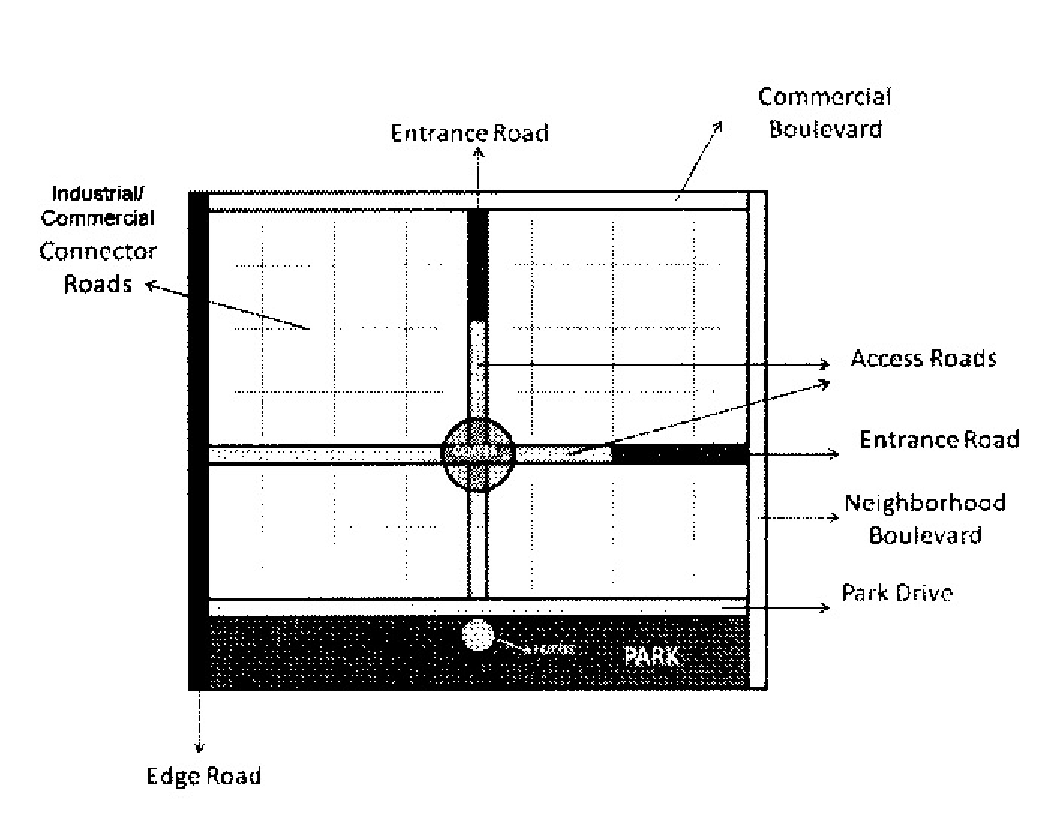
a.
Access road means a local right-of-way that connects a boulevard with the interior of the district, having a minimum width of 70 feet. Access roads provide frontage for industrial buildings, slip lanes intended to accommodate noncommercial vehicles and pedestrian access to the industrial buildings. Entrance roads are considered to be the longer of either the first 400 feet of an access road or the portion of the frontage of an access road that is dedicated to the office or commercial uses as shown on the master plan for the development. The intersection of two access roads is considered a center.
b.
Boulevard means a right-of-way of at least four lanes that is geared for non-local traffic and includes a landscaped median. A boulevard should be buffered by wide sidewalks of no less than eight feet and a green landscaped area of no less than five feet directly adjacent to the street. When land elevation or the proximity to limited access rights-of-way makes this impracticable, sidewalks may be located outside the right-of-way but remain open to public use. A boulevard provides frontage primarily for commercial buildings, regional parks, civic buildings and town centers.
c.
Commercial connector road means a limited distance, two-lane slow movement right-of-way connecting locations within a commercial area. Commercial connector roads abutting commercial uses provide frontage for offices and compatible commercial buildings in the form of arcades, shop fronts and slip lanes.
d.
Industrial service connector road means a limited distance, two-lane slow movement right-of-way connecting locations within an industrial area. Industrial service connector roads abutting industrial and service uses provide frontage for open parking lots, truck courts, unmasked parking decks, drive-throughs and hermetic building fronts, when these are necessary.
e.
Edge road means a right-of-way that delineates jurisdictions. An edge road provides frontage for open parking lots, unmasked parking decks, drive-throughs and hermetic building fronts, when these are necessary. A boulevard shall not be considered as an edge road.
f.
Entrance road means the longer of either the first 400 feet of an access road or the portion of the frontage of an access road that is dedicated to office or commercial uses as shown on the master plan for the development. The entrance road provides frontage for offices and compatible commercial buildings in the form of arcades, shop fronts and slip lanes. Trucks with more than two axles are prohibited from parking on entrance roads.
g.
Park drive means a thoroughfare along the boundary between an urbanized and a natural condition, usually along a public park or waterfront. One side of a drive has the urban character of a street with sidewalks and buildings, while the other has the qualities of a parkway with naturalistic planting and rural detailing. The park drive shall be designed, operated and regulated in such a manner that commercial vehicles (trucks with more than two axles) shall be discouraged and prohibited from circulating on park drives. Edge roads shall not be considered as park drives.
(e)
Permitted uses. In BDH business development district, the permitted uses for land, buildings and other improvements are subject to the general conditions requiring that all storage of materials and products and all operations of work of every character are carried on entirely within the enclosing walls and under the roof of a building and/or enclosed by a decorative masonry wall when the work is of a nature to be performed outside of a building. The permitted uses of the BDH business development district are as follows:
(1)
All uses permitted in M-1 industrial district and section 94-1411(6) permitted in the M-2 industrial district, excluding uses permitted in subsection 98-1111(21) within the C-2 liberal retail commercial district and uses permitted in subsection 98-1156(5) [through] (9) within the C-3 extended liberal commercial district except when they are included within an entertainment complex or within hotel and restaurant developments. Automotive uses including uses described in subsection 98-1111(23) through (31) within the C-2 liberal retail commercial district and sales, rental and storage of automobiles, motor trucks and motorcycles are subject to the provisions of the Hialeah Heights Automotive District.
(f)
Minimum frontage.
(1)
Building frontage required. For the purpose of this section all sides of a building that abut a thoroughfare are to be considered fronts. The frontage requirement is related to the thoroughfare that the property fronts as follows: Access roads, boulevards, commercial connectors, entrance roads and park drives shall provide a minimum building frontage of 65 percent.
(g)
Floor area required. There shall be a minimum floor area of 1,000 square feet for any occupied building. The floor with the greatest floor area shall be utilized for determining minimum floor area.
(h)
Building height limitations. Building height shall be measured from the crown of the adjacent road to the cornice line or the top of the parapet. The maximum building height shall be 75 feet. Uses that require a conditional use permit as per section 98-181 of this Code may be granted increased building height when the impact of the proposed use is considered.
(i)
Maximum lot coverage. There shall be maximum lot coverage of 50 percent of the net lot area. Parking garages are not counted as lot coverage for the purpose of this provision.
(j)
Minimum setbacks.
(1)
Front setback required. For the purpose of this section all sides of a building that abut a thoroughfare are to be considered fronts. The front setback requirement is related to the thoroughfare that the property fronts as follows:
a.
Access roads serving industrial uses, commercial connectors and park drives. The minimum front setback required is seven feet and the maximum is 52 feet from the property line; or greater than 52 feet to exclusively address physical or environmental conditions. The front setback shall be improved with a minimum seven-foot landscape buffer and/or a public walkway to widen the sidewalk.
b.
Boulevard and entrance roads. For commercial uses, there is a required build-to-line front setback of seven feet or greater to address physical or environmental conditions. The front setback area may be improved with a seven-foot landscape buffer or a public walkway to widen the sidewalk.
c.
Industrial connector and edge roads. The minimum front setback required is seven feet. In the cases where impracticable, a slip lane could be allowed provided that it includes a walkway adjacent to the building, a row of perpendicular parking spaces and driveway and a seven-foot landscape buffer immediately adjacent to the property line. Continuous on-site pedestrian walkways no less than five feet in width shall be provided in order to connect the public sidewalk to the main entrance of the buildings fronting these thoroughfares.
(2)
Rear setback required. The minimum rear setback required is ten feet.
(3)
Interior setback. There is a required 0-foot setback or if a setback is utilized, there is minimum setback required of ten feet.
(k)
Elevations.
(1)
The primary public entry to a building shall front a right-of-way and the architecture shall emphasize the front entrance. The building facades that front a right-of-way shall provide direct pedestrian access to the right-of-way. The city encourages facade design that will not produce a large expanse of blank or undifferentiated walls.
(2)
Architectural details and materials should be consistent throughout a building, from facade elevations, visible from the street, to the remainder of the building.
(3)
Placement of doors and windows shall be balanced and aligned horizontally and vertically.
(4)
Freestanding canvas-roofed carports and aluminum-roofed carports attached to a building are prohibited unless they are part of an approved development pattern book or design guidelines.
(5)
The size, height, materials and colors of awnings utilized on a building shall be consistent. Awnings covering upper story windows shall conform to the dimensions of individual windows and be proportional and complementary to the first floor awnings.
(6)
The city shall consider and approve, if acceptable, color of buildings during site plan review. The city encourages a diverse palette of compatible colors
(l)
Fences. Fences shall complement adjacent existing developments. Chain-link, stockades, board-on-board, dura-fence and similar fence styles are prohibited when facing streets. Side yard fences adjacent to thoroughfares shall consist of the same style and height as front fences. Exception: Temporary perimeter fencing on phased developments, fencing and gates incorporated as a portion of the screening for utility and mechanical structures, lift stations or interior security fencing in internal parking areas.
(m)
Landscape buffer. There shall be a landscape buffer of at least seven feet in width on all sides fronting a right-of-way and at least 21 feet in width along the entire property if abutting a water body. Landscape buffers fronting a right-of-way may be replaced with wider walkways incorporated as part of the public sidewalk. Where the landscape buffer surrounds a wall or a city-approved combination of a wall and fence, the required width of the landscape buffer shall be located on the exterior side of the wall, or the wall-and-fence combination.
(n)
Streets, sidewalks and pedestrian walkways. Streets and sidewalks shall be dedicated to the city except for sidewalks intended to widen the size of a standard sidewalk. Such dedication shall be either in fee simple by way of deed, easement, license or other instrument acceptable to the city. Continuous on-site pedestrian walkways of no less than five feet in width shall connect the public sidewalk to the main entrance of all buildings. All such on-site, internal pedestrian walkways shall be distinguished from driveways or other road surfaces by use of a different type or color of surface materials except striping over the asphalt.
(o)
Common open space areas. Plazas, plazoletas and/or squares are encouraged to be incorporated in the master plan.
(p)
Miscellaneous definitions. The following words, terms and phrases, when used in this section, shall have the meanings ascribed to them, except where the context clearly indicates a different meaning:
Brownfield development means a site that has been used as a landfill, vacated and available for development or urbanization.
Center means the intersection of two access roads and shall be identified with a landmark, art work is preferred.
Commercial building means a building used for commercial uses, including hotels, but excluding warehouse, industrial, civic and residential uses.
Focus means a focal point defined by a building or architectural feature that has the purpose of providing a termination vista at the end or deflection of an entrance road.
Frontage means the privately held layer between the façade of a building and the lot line. The combination of the private frontage, the public streetscape and the type of thoroughfare defines the character of the public realm.
Green means a confined landscaped public space circumscribed by building façades comprising of a grassy area and trees that require limited maintenance and care.
Greenway means a bicycle trail or pedestrian walkway that may follow the course of a river or canal or create pathway from residential development to an urban park.
Pedestrian path means a pedestrian pathway between buildings and that also may connect rear parking areas with street frontages.
Park means a large open area available for recreation usually located at a district edge fronted by buildings and with pedestrian connection with adjacent residential neighborhoods.
Square means a four-sided public space, seldom larger than a block, at the intersection of important streets consisting of paved walks, lawns, trees and civic buildings.
Yard means a private area that abuts or surrounds a building.
(Ord. No. 2011-48, § 1, 7-26-2011)
Sec. 98-1607.2. - Hialeah Heights CDH Commercial Development District.
(a)
Geographic area. The city hereby designates the geographic area comprised of all land located in an area bounded on the west by NW 107th Avenue, on the north by NW 142nd Street, on the east by NW 97th Avenue and on the south by NW 138th Street, as the Hialeah Heights CDH Commercial Development District.
(b)
Purpose. The purpose of the Hialeah Heights CDH Commercial Development District is to provide regulations to promote a commercial district conceived as a designed environment where generic big-boxes, boutique retail, restaurants, entertainment complexes, convenience services, outparcels offices and multifamily residential developments are configured not only to accommodate vehicular circulation but also to provide an enhanced pedestrian experience.
(c)
The overall goal and objective of the district regulations is to organize the area with an underlying pattern that absorbs new growth over time and evolves as and into a Town Center or mixed use district. CDH regulations only apply to properties with mixed use land use classification.
(d)
Site development. The city hereby adopts by reference the Hialeah Heights Commercial Development District Masterplan report and recommendations, as amended from time to time.
(1)
Specific site development layout shall include, but is not limited to the following:
a.
Organized parking within blocks connected by a network of streets with room for infrastructure to allow for future infill development;
b.
Pedestrian-friendly loop of continuous shaded sidewalks to connect the different retail clusters;
c.
Retail activity on the site oriented to face sidewalks to include parallel parking along streets in front of retail activity;
d.
Connected parking lots of adjoining out parcel businesses.
(e)
Development standards.
(1)
Signs, graphics, lighting and street furniture shall be conceived as an integral part of the architectural design of the entire development including infrastructure, such as driveways and walkways, detached buildings or principal structures. Standards shall be established and incorporated into a pattern book that shall be approved during the site plan review phase.
(2)
Fences and gates. Chain-link, stockades, board-on-board, dura-fence and similar fence styles are prohibited.
(3)
Loading and service areas. Loading areas, recycling areas, service areas and trash and garbage containers shall be located in the interior of blocks and screened to minimize negative visual impacts. Trash containers and dumpsters shall neither be allowed to front the street or be at close proximity to the street. Trash containers and dumpsters shall not be permitted in front setback areas.
(4)
Development access. The main entrances to the development shall be defined by free-standing gateways or by buildings erected closer to the sidewalks on both sides of the right-of-way.
(5)
Pedestrian access required. A continuous network of sidewalk with a minimum width of eight feet along the building frontages and connecting the different commercial clusters and residential uses shall be provided. These sidewalks shall be flanked by parallel or angle parking, buffered with a landscaped strip along the side adjacent to the parking and shaded by means of canopy trees or loggias. Curb cuts shall be minimized to encourage pedestrian connectivity. Commercial buildings fronting NW 97th Avenue shall contain an active retail frontage and direct pedestrian access from NW 9th Avenue.
(6)
Surface parking. Surface parking shall be arranged in blocks connected by a network of driveways to facilitate future infill development as conceptually configured in the adopted masterplan.
(7)
Screening of mechanical units and service areas. All mechanical units and installations of any type shall be screened from public view, with cohesive design elements that complement building design. Mechanical equipment installed on roofs shall be screened from view by parapets or other architectural elements. When roof decks with mechanical units are visible from adjacent developments, such roof decks should be screened and painted to match the finish of the roof material.
(8)
Stormwater retention area. Stormwater retention areas shall be designed to create a feature within the development rather than a residual area. Examples of features are landscaped dry ponds utilized as termination vistas, dry ponds improved with wood trails, and ponds surrounded by walking paths.
(9)
Underground utilities. All new utilities including, but not limited to, utilities required for electric power distribution, telephone, communication, street lighting and television service shall be installed underground except when environmental or landfill site conditions prevent or impair such installation. Existing overhead utilities shall be replaced with underground utilities. The existing overhead electrical transmission lines that front NW 97 Avenue may remain in place.
(10)
Maintenance covenant. The property owner shall be responsible for the maintenance of the development and shall provide a declaration of restrictive covenants detailing the specific maintenance duties, including, but not limited to the general design and sign criteria. Such declaration shall be in a form and content acceptable to the city and recorded in the county public records.
(f)
Permitted uses. The permitted uses for land, buildings and other improvements are subject to the general conditions requiring that all storage of materials and products and all operations of work of every character are carried on entirely within the enclosing walls and under the roof of a building and/or enclosed by a decorative masonry wall when the work is of a nature to be performed outside of a building. The permitted uses of the district are as follows:
(1)
All uses within the B-1 highly restricted retail district excluding uses permitted in subsections 98-926(9) and (12).
(2)
All uses in the C-1 restricted retail commercial district excluding uses permitted in subsections 98-1066(10).
(3)
All uses in the C-2 liberal retail commercial district excluding uses permitted in subsections 98-1111(2), (3), (5), (9), (12), (13), (20), (23) through (30) and (33).
(4)
All uses in the C-3 extended liberal retail commercial district excluding uses permitted in subsections 98-1156(2), (4), (6) and (7).
(5)
Hypermarkets, supermarkets and home center stores.
(6)
Car and motorcycle boutiques.
(7)
Multifamily residential developed in accordance with RH-CD regulations.
(g)
Frontage. For the purpose of this section all sides of a building that abut a driveway or thoroughfare are to be considered fronts. Although there is no minimum building frontage requirement, continuous frontages are encouraged for the purpose of adding pedestrian interest to the continuous sidewalk requirement as set forth in section 98-1607.2(e)(5).
(h)
Building height limitations. Building height shall be measured from the crown of the adjacent road to the cornice line or the top of the parapet. The maximum building height shall be 75 feet.
(i)
Setbacks. Minimum front and side setbacks fronting a public right-of-way is ten feet.
(j)
Elevations.
(1)
The primary public entry to a building shall front a right-of-way and/or driveway and the architecture shall emphasize the front entrance. The building facades that front a right-of-way and/or driveway shall provide direct pedestrian access to the right-of-way. The city encourages facade design that will not produce a large expanse of blank or undifferentiated walls.
(2)
Architectural details and materials should be consistent throughout a building, from facade elevations, visible from the street, to the remainder of the building.
(3)
Placement of doors and windows shall be balanced and aligned horizontally and vertically.
(4)
Freestanding canvas-roofed carports and aluminum-roofed carports attached to a building are prohibited unless they are part of an approved development pattern book or design guidelines.
(5)
The size, height, materials and colors of awnings utilized on a building shall be consistent. Awnings covering upper story windows shall conform to the dimensions of individual windows and be proportional and complementary to the first floor awnings.
(6)
The city shall consider and approve, if acceptable, color of buildings during site plan review. The city encourages a diverse palette of compatible colors.
(k)
Landscape buffer requirement. All fronts abutting a public right-of-way shall be improved with a landscape buffer of no less than 10 feet.
(l)
Common open space areas. Plazas, plazoletas, loggias and/or squares are encouraged to be incorporated in the site plan.
(Ord. No. 2016-72, § 1, 11-22-2016; Ord. No. 2018-144, § 1, 12-11-2018)
Sec. 98-1607.3. - RH-CD Mixed Use Multiple Family District.
(a)
Purpose. The intent of this zoning designation is to allow high density residential developments (up to 32 units per acre) within horizontal mixed use developments in the Hialeah Heights Commercial Development District and on properties located within a quarter mile of the Hialeah Heights Commercial Development District. The purpose of this type of mixed use is to promote the integration of uses in order to reduce vehicular trips, share parking and promote pedestrian activity.
(b)
Site development. Residential developments shall be designed to create a walkable neighborhood served by a network of pedestrian paths and a central green to accommodate recreational activities.
(c)
Connectivity of residential and commercial components. Commercial and residential components shall have a centrally located and clear point of connection in order to make the mix of uses efficient. The residential portion of the development shall be directly connected to the commercial portion through a public space such as a plaza or loggia including walkways, landscaping, lighting and street furniture. When the connection space is adjacent to commercial or service loading areas, the service area shall be completely fenced and screened.
(d)
Compatibility of dissimilar uses. To avoid impacts between the residential and commercial components of a horizontal mixed use development, dissimilar uses shall be separated with a concrete wall of no less than eight feet high with an adjacent landscape buffer of no less than 20 feet planted with canopy trees and profuse landscaping to create a continuous visual and sound barrier.
(e)
Permitted uses. Multifamily rental dwellings and ancillary amenities such as club houses, playgrounds, gyms, sports facilities or community swimming pools. Multifamily dwellings shall be subject to a declaration of restrictions.
(f)
Development standards.
(1)
Development access. Vehicular access to residential clusters shall have a controlled access gate to clearly segregate parking of the residential units from the commercial development general parking.
(2)
Screening of mechanical units. All mechanical units and installations of any type shall be screened from public view, with cohesive elements that complement the building design. Mechanical equipment installed on roofs shall be screened from view by parapets or other architectural elements. When roof decks with mechanical units are visible from adjacent developments, mechanical units shall be screened and painted to match the finish of the roof material.
(3)
Stormwater retention area. Stormwater retention areas shall be designed to create a feature within the development rather than a residual area. Examples of features are landscaped dry ponds utilized as termination vistas, dry ponds improved with wood trails and ponds surrounded by walking paths.
(4)
Underground utilities. All new utilities including, but not limited to, utilities required for electric power distribution, telephone, communication, street lighting and television service shall be installed underground except when environmental or landfill site conditions prevent or impair such installation. Existing overhead utilities shall be replaced with underground utilities. The existing overhead electrical transmission lines that front NW 97 Avenue may remain in place.
(5)
Residential developments within a quarter mile of the Hialeah Heights Commercial Development District are subject to the approval of a conditional use permit. The purpose of the conditional use permit is to evaluate the traffic impacts of the proposed development, the vehicular and pedestrian connectivity to the commercial portion of the mixed use district and the compatibility with dissimilar uses.
(g)
Elevations.
(1)
The primary public entry to a building shall be though a lobby and the architecture shall emphasize the front entrance. Facade design that will not produce a large expanse of blank or undifferentiated walls is required.
(2)
Architectural details and materials shall be consistent throughout a building on all facade elevations visible from the streets or internal driveways.
(3)
Placement of doors and windows shall be balanced and aligned horizontally and vertically.
(4)
Freestanding canvas-roofed carports and aluminum-roofed carports or terraces attached to a building are prohibited.
(5)
Awnings covering upper story windows are prohibited.
(6)
The city shall consider and approve, if acceptable, color of buildings during site plan review. The city encourages a diverse palette of compatible colors.
(h)
Building height. Building height shall be measured from the crown of the road to the cornice line or top of the parapet. The maximum building height shall be five stories.
(i)
Floor area. Ninety percent of the units shall have a minimum floor area of 700 square feet and ten percent of the units may have a minimum floor area of 500 square feet.
(j)
Building setbacks.
(1)
Twenty feet minimum setback along public edges and interior edges is required.
(k)
Landscape buffers.
(1)
Public edges. Frontage along streets or driveways intended for vehicular and pedestrian circulation are required to have a minimum landscape buffer of seven feet.
(2)
Interior edges. Interior edges adjacent to commercial uses are required to have a minimum landscape buffer of 20 feet as provided in section (b) above.
(l)
On site minimum parking requirements. The required parking ratio is notably inferior to general city standards because after-hours shared use of commercial parking within the mixed use development is expected. Accordingly, a parking agreement for the commercial portion of the mixed use development recorded in the public records shall be submitted prior to site plan approval. The parking requirement in this section does not include handicap stalls. Handicap stalls shall be provided as required by accessibility codes and will not be counted toward the minimum parking requirement.
No variance shall be allowed for the following:
(1)
One bedroom units: One and one-half parking spaces for each unit.
(2)
Two-bedroom and three-bedroom units: Two parking spaces for each unit.
(3)
Guest parking spaces: One parking space every five units is required for guests.
(m)
On site minimum parking requirements for properties within a quarter mile radius of the Hialeah Heights Commercial Development District. No variance shall be allowed for the following:
(1)
One bedroom units: Two parking spaces for each unit.
(2)
Two-bedroom and three-bedroom units: Two parking spaces for each unit.
(3)
Guest parking spaces: One parking space every four units is required for guests.
(4)
Handicap stalls shall be provided as required by accessibility codes and will not be counted toward the minimum parking requirement.
(Ord. No. 2018-145, § 1, 12-11-2018; Ord. No. 2019-008, § 1, 2-12-2019; Ord. No. 2020-058, § 1, 10-13-2020)
Sec. 98-1608. - Covenant community.
All residential development shall be maintained, improved or changed according to the procedures and requirements set forth in a declaration of restrictive covenants covering the premises of a residential development district, acceptable to the city, that shall have same legal effect as residential development district regulations. The declaration of restrictive covenants shall constitute covenants running with the land and be recorded in county public records. The declaration of restrictive covenants shall be signed by the developer of the residential development district and architectural control committee prior to the sale of the first residential unit and shall be incorporated by reference in the deed of the property conveyed by the developer to the first buyer.
(Ord. No. 2006-17, § 1, 3-28-2006)
Sec. 98-1609. - Architectural control committee.
The architectural control committee shall consist of a minimum of three members and a maximum of five members, who have been assigned the continuing rights and duties by the developer to oversee and undertake the application and enforcement of the declaration of restrictive covenants and to review and consider any and all proposed changes to the structure, appearance or specifications of any residential building or lot that do not modify the approved site plan and do not vary from the Hialeah Heights Master Plan for Residential Development. The number and appointment of members to the architectural control committee and the terms of service shall be provided in the declaration of restrictive covenants; provided that the majority of members are residential unit owners within the affected residential development after the developer sells a majority of the residential units within the residential development. In addition to enforcement powers of the architectural control committee, the city may also enforce the provisions of the declaration of restrictive covenants by citation, notice of violation, injunction or other legal or administrative remedies.
(Ord. No. 2006-17, § 1, 3-28-2006)
Sec. 98-1609.1. - Redevelopment of landfill sites.
On properties under a closure plan approved by county department of environmental resources (DERM), on properties that have finalized such closure plan or on properties that will be required to enter into a closure plan with DERM prior to redevelopment, the city will allow the elevation and slope of the land that was formerly used as a landfill for which buildings and structures shall be constructed to be limited as follows:
(a)
The elevation of land less than or equal to 20 acres shall not exceed 14 feet from the crown of the road that is either adjacent to, abutting, or in the closest proximity to, the land. The measurement includes the additional layer of clean fill that is required to be placed on top of property that was used as a landfill. If there is a corner lot or property where a property abuts two right-of-ways where the crown of the road of each right-of-way is measured at different heights, the crown of the abutting right-of-way that is higher shall apply for the entire property.
(b)
The elevation of land that is greater than 20 acres developed as one site or as phased development titled under the same property owner or affiliated company shall conform to the following topography:
* As measured from the crown of the road that is either adjacent to, abutting, or in the closest proximity to, the land. The measurement includes the additional layer of clean fill that is required to be placed on top of the property that was used as a landfill. If there is a corner lot or property where a property abuts two right-of-ways where the crown of the road of each right-of-way is measured at different heights, the crown of the abutting right-of-way that is higher shall apply for the entire property.
(c)
Slope—The slope of the property shall be no greater than the angle of 10 degrees.
For land greater than 20 acres developed as one site or as phased development titled under the same property owner or affiliated company, the slope of the land may exceed an angle greater than 10 degrees but no greater than 20 degrees only to allow adjustments for stormwater retention and landscape berms and swales; provided, however, that the slope of all vehicular rights-of-way and pedestrian pathways not exceed the angle of 10 degrees at all locations. In addition, ancillary retaining walls may be constructed to accommodate the difference between maximum elevations if such walls include stairs or a ramp and otherwise are integrated into the surrounding buildings or structures.
(d)
Properties fronting the western edge of NW 97 Avenue (West 36 Avenue)—The first 1,320 feet adjacent to the property line shall have the lowest land elevation of the property. If the first 1,320 feet adjacent to the property line contains an upwards slope, the slope should be gradual and subtle; without creating hills and valleys, except to provide a landscape berm or enclosure of a production water well that may be located at or near the right-of-way.
(e)
The land elevations on the property shall be designed to promote pedestrian access and the connectivity of the street network.
(f)
Prior to the issuance of the building permit, the applicant shall obtain city approval of a land elevation plan that complies with the requirements of this section.
(Ord. No. 2008-01, § 1, 1-8-2008)
Editor's note— Ord. No. 2008-01, § 1, adopted January 8, 2008, set out provisions intended for use as 98-1610. For purposes of clarity, and at the editor's discretion, these provisions have been included as 98-1609.1.
Sec. 98-1610.- Purpose.
The purpose of the commercial residential mixed use district is to provide a harmonious and coordinated mixture of commercial and residential development and redevelopment within the city. Mixed use development should emphasize pedestrian use and accessibility through landscaping and new urban design principles and function.
(Ord. No. 2005-59, § 1, 6-28-2005)
Sec. 98-1611. - Geographic area.
The CRMU district shall comprise the area having West 49 Street as its northern boundary; having West 12 Avenue as its eastern boundary; having West 20 Avenue as its western boundary, and having West 46 Street, as its southern boundary from West 12 Avenue to West 18 Avenue, and having West 44 Place as its southern boundary from West 18 Avenue to West 20 Avenue.
(Ord. No. 2005-59, § 1, 6-28-2005)
Sec. 98-1612. - Precedence over other land use and zoning regulations.
To the extent that any conflict may arise between the criteria of this district and the criteria of the C-1, C-2 and C-3 commercial zoning districts, residential land use classifications and multiple family residential zoning districts, the requirements of the CMRU overlay zoning district shall prevail.
(Ord. No. 2005-59, § 1, 6-28-2005)
Sec. 98-1613. - Limitations on use.
A mixed use development or redevelopment shall be located on a parcel of land that is a minimum of one-half acre in size and that the mixed uses shall comprise not more than 65 percent of the gross floor area, but not less than 40 percent of the gross floor area, for residential use and not more than 60 percent of the gross floor area, but not less than 35 percent of the gross floor area, for commercial uses. However, commercial uses that are prohibited are as follows:
(a)
All uses that are first permitted in the C-3 zoning district, which are identified in paragraphs 98-1156(a)(2) through (6) hereof.
(b)
Mechanical and manual carwashes.
(c)
Automotive uses first permitted in the C-1 zoning district, which are identified in subsections 98-1066(4) and (5).
(d)
Automotive and marine uses first permitted in the C-2 zoning district, which are identified in subsections 98-1111(23) through (31).
(e)
Adult entertainment activities and businesses.
(f)
Funeral homes, funeral viewing services and cemeteries.
(g)
Hospitals and residential care and treatment facilities.
(h)
Hotels and motels.
(i)
Amusement centers.
(j)
Banquet halls, billiard or pool parlors and bowling centers.
(k)
Medical, dental and veterinary clinics.
(l)
Beer, wine and liquor stores.
(m)
Places of worship.
(n)
Nightclubs, lounges, cabarets, discotheques and other similar establishments.
(o)
Industrial uses.
(p)
Any other activity or use that is incompatible with residential uses and/or that if allowed, would have an adverse or negative effect on the health, safety and welfare of the residents such as the use, collection or disposal of hazardous materials, products, processes or waste, or activities that create excessive dust, glare, heat, noise, noxious gasses, odor, smoke, traffic, vibration or other such impacts.
(Ord. No. 2005-59, § 1, 6-28-2005)
Sec. 98-1614. - Additional zoning regulations.
(a)
Density. The density limits for residential uses shall not exceed 32 units per net acre.
(b)
Mixed use development. Residential units may be located on any floor, provided that the first 50 feet of the ground floor are measured perpendicular to each building face adjacent to an existing or proposed street frontage shall be reserved for commercial uses. The reserved area for commercial uses does not apply to entryways, access corridors or stairs. Commercial uses may only be located on the ground or first floor and second floor, provided that a differentiated and hierarchical access to the residential units is provided.
(c)
Height. Maximum height shall be six stories and 75 feet. Buildings in excess of two stories shall provide stepbacks in the facades of the building base, middle and/or top facade in order to reduce the building mass. Each mezzanine floor, to the extent permitted, shall be counted individually as a story.
(d)
Setback requirements. The minimum setback requirements shall be the same as the minimum setbacks established by the underlying zoning district except that:
(1)
All property lines abutting residential property shall provide a minimum setback of 15 feet. No adjustments of this requirements shall be granted.
(2)
Setback adjustments or reductions of other setback requirements may be granted if the property provides one-half of the area that is subject to the setback adjustment, with a minimum of 500 square feet, to be utilized on the property as publicly accessible street level open space and landscaped area such as a courtyard, plaza, arcade or loggia, pedestrian paseo, or outdoor seating for a restaurant. Landscape improvements and pedestrian amenities are encouraged.
(e)
Building frontage. Any building that fronts an existing or proposed street shall provide building frontage of 100 percent. Carports or other covered entryways shall be included in the calculation of building frontage.
(f)
Lot coverage. There is no maximum percentage of lot coverage.
(g)
[Parking garages.] Parking garages shall contain at least one additional permitted uses on the street level floor of the parking garage building or, alternatively, the parking garage may be wrapped by a linear building that includes exterior architectural treatments compatible with buildings or structures that occupy the same property.
(h)
[Open space.] For each residential unit, a minimum of 80 square feet of open space shall be provided. Open space can consist of a covered or open patio, terrace, deck or enclosed yard. Open space may be calculated by adding separate open space areas, each having a minimum of 40 square feet, to satisfy the open space requirement for a development.
(i)
[Exterior architectural relief elements.] Coordinated exterior architectural relief elements shall be provided on all sides of building. Unless required as a fire wall, no blank walls will be permitted.
(j)
[Pedestrian entrances.] Main pedestrian entrances shall be oriented towards adjoining, existing or new streets.
(k)
[Pedestrian pathways and sidewalks.] Pedestrian pathways and sidewalks shall be provided from all pedestrian access points and shall connect to one another to form a continuous pedestrian network from buildings, parking facilities and parking garage entrances. Such pathways shall be distinguished and separated, whenever possible, from vehicular traffic.
(l)
[Parking lot surfaces.] Surface parking lots shall be paved with pavers with enhanced landscaping.
(m)
[Street frontage.] On street frontage, where an adjoining pedestrian sidewalk is located, use of public art, expanded sidewalks, colonnades, water features and planters shall be included at street level. Retail display areas within the building are encouraged.
(n)
[Natural materials.] Use of natural materials incorporated into the base of the building and on exterior surfaces.
(o)
[Commercial loading areas.] Commercial loading areas, recycling areas, and trash and garbage containers shall be located away from the residential units, substantially screened from view from the street.
(Ord. No. 2005-59, § 1, 6-28-2005)
Sec. 98-1615. - Design and development standards.
Development guidelines shall conform to an urban design plan that will be adopted by the city in conjunction with the adoption of the CRMU district regulations.
(Ord. No. 2005-59, § 1, 6-28-2005)
Sec. 98-1616.- Limitation on uses.
The use of the property in the P parking district shall be limited to a required off-street parking area or overflow parking according to the provisions of section 98-2191, excluding industrial uses, except that property zoned P parking district is not required to have the same land use classification as the property which it serves. Commercial parking lots and garages as defined by section 98-1111(10) are prohibited in the P parking district.
(Ord. No. 2006-25, § 1, 4-25-2006)
Sec. 98-1617. - Paving, drainage, landscaping and site plan approvals.
Prior to rezoning property to the P parking district, the city shall approve a paving and drainage plan and landscaping plan in connection with site plan approval. The site plan shall provide the dimensions and layout and traffic circulation of all parking areas, including entrances and exits, signage, landscaping and fencing or walls. In approving a site plan, the city shall consider appropriate setbacks and landscape buffer and/or fencing or wall to minimize any adverse impacts, compatibility with surrounding uses and traffic circulation pattern. The property owner shall complete construction according to the site plan, paving and drainage plan and landscaping plan within 12 months of the effective date that the property was rezoned to P parking district. No waivers, variances or extensions of time shall be granted for completing construction as provided herein.
(Ord. No. 2006-25, § 1, 4-25-2006)
Sec. 98-1618. - Declaration of use and unity of title.
Prior to rezoning property to the P parking district, the property owner of property sought to be rezoned to P parking district shall sign a unity of title in a form acceptable to the city that indicates ownership of both the property sought to be rezoned and the property where the commercial use, educational use, house of worship or apartment building is located for which the off-site parking serves as required or overflow parking. Additionally, the property owner shall sign a declaration of use in a form acceptable to the city that the property will only be used for off-site required or overflow parking and if the property owner violates this use restriction, then the property owner consents to the repeal and rescission of the ordinance rezoning the property to P parking district. The unity of title and the declaration of use shall be filed in the county public records.
(Ord. No. 2006-25, § 1, 4-25-2006)
Sec. 98-1619.- Purpose and intent.
The purpose of the development standards is to provide guidelines governing the site, site design, building mass, parking, circulation and signage for all non-Metorail development at the Okeechobee Station Rapid Transit Zone Site ("site") with the intent of fulfilling the goals, objectives and policies of the county comprehensive development plan urban center provisions and the city's applicable comprehensive plan and regulations. Unless specified to the contrary, these regulations supersede all conflicting requirements in chapter 33 and chapter 18A of the Code of Miami-Dade County.
(Ord. No. 2006-76, § 1, 11-14-2006)
Sec. 98-1620. - Boundaries.
These master plan development standards shall apply to the development in the site as generally described as irregularly-shaped parcels identified as Parcel 1 and Parcel 2, comprising of square footage and boundaries depicted on a map on file with the office of the city clerk.
(Ord. No. 2006-76, § 1, 11-14-2006)
Sec. 98-1621. - Definitions.
The terms used in this division shall take their commonly accepted meaning unless otherwise defined in chapter 33, chapter 33C or chapter 28 of the Code of Miami-Dade County, or already defined herein. Terms requiring interpretation specific to this section are as follows:
Arcade or colonnade means a roofed structure over the sidewalk, open to the street except for supporting columns and piers. An arcade or colonnade's depth shall be measured from the face of the column to the face of the building and shall have a minimum depth of ten feet or such greater distance as may be required by the state department of transportation along Okeechobee road.
Block means a combination of building lots, the perimeter of which abuts streets.
Build-to-line means a line parallel to the block face, along which a building shall be constructed.
Building height means a limit to the vertical extent of a building measured in stories above grade, not including chimneys, antennas, elevator shafts, mechanical rooms or other non-habitable areas.
Floor area ratio (f.a.r.) means the floor area of the building or buildings, excluding parking structures divided by the lot area of the development site.
Habitable space means building space whose use involves human presence with direct views of the enfronting street or open space, excluding parking garages, self-service storage facilities, warehouses and display windows separated from retail activity.
Housing for the elderly is defined in the United States Fair Housing Act as housing where at least one member of the household is at least 55 years of age or older.
Metrorail development consists of the transit station, the fixed guideway, a parking garage containing 1,090 parking spaces with a structural connection to the transit station, and such transit-related structures as may be added in the future.
Open space means an outdoor at grade space that may be designated on a site plan as accessible to the public, including parks, plazas, squares, colonnades, greens, promenades, pedestrian paths and/or associated ornamental or shaded landscaped areas, and accessory buildings relative to active or passive recreational uses. A maximum of 20 percent of the area of parking lot buffers abutting public streets may count as open space.
Plaza means an open space with a majority of paved surface. Plazas are fronted with buildings that continue the adjacent street frontage requirements and uses. A minimum of 50 percent and a maximum of 75 percent of the plaza's area, exclusive of dedicated rights-of-way, shall be hard surfaced.
Square means an outdoor open space that shall be flanked by streets or drives on at least three sides and shall not be hard-surfaced for more than 50 percent of the areas, exclusive of dedicated rights-of-way.
Story means a floor area level within a building as described in these development regulations. Each story shall have a maximum height of 16 feet, as measured from floor to ceiling, except that a single story may have a maximum height of 30 feet, provided no mezzanine area exceeds ten percent of the floor area of that story. Any height above 16 feet shall count as an additional story.
(Ord. No. 2006-76, § 1, 11-14-2006)
Sec. 98-1622. - Development regulations.
The following regulations or parameters shall apply to all non-metrorail development with the Site; provided, however, that such uses are compatible with transit uses and operations as determined by the Miami-Dade Transit Agency.
(a)
Permitted uses. At total build-out, a minimum of two of the following uses shall be included in the development of the Site:
(1)
Business and civic uses allowed in the county BU-1, BU-IA and BU-2 zoning districts. Commercial retail space shall consist of a minimum of 1,000 square feet. Drive-thru services are permitted and shall be concealed from the adjoining street network.
(2)
Multiple family residential uses including housing for the elderly.
(b)
Accessory uses.
(1)
Outside food sales and services including, but not limited to outdoor dining, cart vendors and merchandise displays.
(2)
The provisions of section 33-150(A) and (B) of the Code of Miami-Dade County regarding alcoholic beverages shall not apply.
(c)
Setbacks. The setbacks for all development shall be as follows:
(1)
Build-to-line from streets: No setback when colonnade is provided; ten feet when colonnade is not provided, unless a greater amount is required by the state department of transportation along Okeechobee road. The build-to-line setback shall be hard surfaced (except as to provide landscape and street tree buffer areas) and finished to match the adjoining sidewalk when a colonnade is not provided.
(2)
No setback for interior and rear sides or as determined to be appropriate to the area and adjoining land uses, not to exceed six feet.
(d)
Floor Area Ratio (f.a.r). The floor area ration shall be a minimum of 1.5.
(e)
Density. The maximum density shall be 30 units for each gross acre of the Site.
(f)
Building height. The maximum building height shall be nine stories.
(g)
Building frontage. A minimum of 80 percent of the building shall be constructed at the build-to-line abutting each public street.
(h)
Parking. Minimum parking requirements for the non-metrorail development at the site shall be as follows:
(1)
Residential - Two parking spaces for each dwelling unit and 0.75 parking spaces for each dwelling unit for housing for the elderly.
(2)
Commercial uses - One parking space for each 200 square feet of gross floor area.
(3)
Hotel - One parking space for every two guest rooms.
(4)
Ancillary uses incidental to a primary use of a building, such as management/leasing/maintenance offices or recreational uses not open to the general public will not require additional required parking spaces.
(5)
If developed in phases, required parking may be provided within 600 feet of the development phase on any portion of the Site.
(6)
Parking spaces shall be screened at all street frontages by a minimum setback of 20 feet of habitable space or screened from view from the street or from any public open space by decorative materials consistent and harmonious with that of the habitable space.
(7)
Surface parking shall be located 20 feet from all property lines abutting streets, provided, however, that ten feet shall be allowed if parking is screened from view by walls, landscaping or openings designed to complement the building's facade and allows for pedestrian access to the development.
(i)
Encroachments. Awnings, balconies, roof eaves, signs, porches, stoops and ramps may encroach into setbacks but shall not encroach into public rights-of-way. Encroachments shall not be higher than the building or pedestal, whichever is lower. Cantilevers and moldings shall not exceed three feet in extension beyond the vertical wall surface, unless visibly supported by brackets or other supports.
(j)
Building facades and security fences.
(1)
Building streetwall surfaces enclosing habitable space shall be a minimum of 30 percent glazed fenestration. Mirror-type glass shall not be allowed. All glazing shall be of a type that permits view of human activities and spaces within. The first floor streetwall shall be a minimum 30 percent glazed. Glazing shall be clear or very lightly tinted for the first five stories, except where used for screening garages where it may be translucent.
(2)
Perimeter security screens and gates shall be a minimum 50 percent transparent. Chain link fences shall be prohibited.
(k)
Open space. A minimum of 15 percent of the lot area shall be reserved for open space.
(l)
Reserved.
(m)
Landscape. Landscape shall be provided according to chapter 18A (Landscape Code) of Miami-Dade County with the following exceptions:
(1)
Street trees shall be placed along all streets at an average spacing of 25 feet on center with a minimum four-inch diameter at breast height at planting but shall not interfere with the safe site distance triangle area.
(2)
Street trees shall not be required when colonnades are being provided along the street.
(3)
Tree requirements for non-metrorail development shall be 16 trees for each net acre.
Individual development phases shall comply with the landscape requirements provided in this subsection.
(n)
Pedestrian passage. A pedestrian passage is required every 400 linear feet of street frontage to allow public access through the site. The passage shall be unobstructed and shall be a minimum of six feet.
(o)
Signage. Signage shall comply as follows:
Four types of signs are allowed: Temporary signs, special event signs, point of sale signs and directional signs. Outdoor advertising signs, automatic electric changing signs and entrance features are not permitted, and shall not be the subject of a public hearing or variance. No signs shall obstruct sight visibility triangles at street intersections.
(1)
Temporary signs.
a.
Real estate for sale, lease or rent.
1.
Size: Maximum size is 150 square inches.
2.
Number: One sign for each street frontage.
3.
Setback and spacing: The outer edge of real estate signs shall be no closer than five feet to an official right-of-way line unless attached to an existing building; 15 feet to an interior side property line; or such signs shall be centered on a lot between interior side property lines.
4.
Illumination: Section 33-96 (Illumination) of the Miami-Dade County Code shall apply, except that revolving, rotating or otherwise moving signs shall be prohibited.
5.
Height: Maximum height to top of sign shall be six feet above grade for detached signs. For attached signs, minimum height shall be five feet above grade.
6.
Special conditions: No permit shall be required for signs that are no larger than 150 square inches and that are not electrically illuminated. Real estate signs shall only be permitted on premises advertised for lease or sale. Upon sale or lease, the sign shall be immediately removed.
b.
Construction signs.
1.
Size: 32 square feet is the maximum size for a detached sign. When construction signs are painted on an approved construction shed or trailer, there is no size limitation.
2.
Number: One sign for each street frontage.
3.
Setback and spacing: The outer edge of the sign shall be no closer than zero feet from official right-of-way, and a minimum of five feet from property under different ownership.
4.
Illumination: Section 33-96 (Illumination) of the Miami-Dade County Code shall apply, except that revolving, rotating and otherwise moving signs shall be prohibited.
5.
Maximum height: Maximum height to top of sign shall be six feet above grade for detached signs.
6.
Special conditions: No permit shall be required for signs that are no larger than 32 square feet and that are not electrically illuminated. Construction signs shall only be permitted on premises visibly under construction. Upon or sale, the sign shall be immediately removed.
(2)
Special event signs.
a.
Size: 32 square feet is the maximum size for a detached sign.
b.
Number: One sign for each street frontage.
c.
Setback and spacing: The outer edge of the sign shall be no closer than zero feet from official right-of-way, and a minimum of five feet from property under different ownership.
d.
Maximum height: Maximum height above grade to top of sign shall be six feet for detached signs, except for suspended fabric signs.
e.
Special conditions: Back-lit awnings and balloon signs are not allowed. Special event signs require permits and shall be removed within five days after the special event or last election that a candidate or issue is on the ballot. Promoters, sponsors and candidates shall be responsible for compliance with the provisions of this section and shall remove signs promoting or endorsing their respective special events or candidacies when such signs are displayed or used in violation of this section. Additionally, any private owner who fails to remove an unlawful special events sign from his or her property shall be deemed in violation of this section.
f.
No sign shall exhibit thereon any lewd or lascivious matter.
(3)
Permanent point of sale signs.
a.
Permanent point of sale signs. Detached, flat, awning, projecting, monument signs are allowed.
1.
Size: Maximum size is six square feet, except as specified for residential uses. Cantilever projecting signs shall be mounted perpendicular to buildings.
2.
Number: One wall sign for each tenant for each street frontage.
3.
Setback and spacing: The outer edge of the sign shall be no closer than zero feet from right-of-way, and a minimum of five feet from interior side property.
4.
Illumination: Section 33-96 (Illumination) of the Miami-Dade County Code shall apply, except that revolving, rotating and otherwise moving signs shall be prohibited.
5.
Maximum height: A maximum height of three feet above grade to top of sign for detached signs; nine feet minimum from bottom of sign to grade for awning and projecting signs; no limits for flat attached signs, or signs painted on the facade of a building.
6.
Special conditions: No permit required for awnings following these regulations. Letters attached or painted to fabric shall be limited to the identification of the occupant and/or use of the property. Back-lit awnings and balloon signs are not allowed. Decorative neon may be used only inside windows. Building name and quotations carved in stone or stucco relief may occupy up to ten percent of facade.
7.
No sign shall exhibit thereon any lewd or lascivious matter.
b.
For residential uses only, no more than three detached signs, with one sign no larger than 24 square feet in size and two additional signs no larger than 18 square feet each in size, identifying the name of the development shall be permitted for the site.
(4)
Directional signs. Additional directional signage to provide clear directional information to users of the Okeechobee Metrorail Station and to residents and visitors to the development shall be permitted. Directional signs shall be reviewed pursuant to site plan review standards and criteria, but shall not be placed in the public right-of-way or within any safe sight distance triangle area. Traffic directional signs shall be reviewed by the Miami-Dade County Public Works Department.
(5)
Sign maintenance. In addition to the general maintenance requirements for this subsection, the owner and/or tenant of the sign shall be responsible for maintaining the landscaping and the signs concerned in good condition and appearance and the site free from trash or debris. Failure to do so shall constitute cause for cancellation of the permit and removal of the sign. If the owner and/or tenant fails to correct within ten days after written notice of noncompliance.
(6)
Removal of dilapidated signs. The city may cause to be removed any sign that shows neglect or becomes dilapidated or where the area around such sign is not maintained as provided herein after due notice has been given. The owner and/or tenant of the sign and/or the property owner shall be financially responsible for the removal of the sign.
(Ord. No. 2006-76, § 1, 11-14-2006)
Sec. 98-1623. - Site plan review standards and criteria.
The purpose of site plan review is to encourage logic, imagination and variety in the design process in an attempt to ensure congruity of the proposed development and its compatibility with the surrounding area. The following site plan review standards shall be utilized as a guide by the Miami-Dade Rapid Transit Development Impact Committee, the Miami-Dade Department of Planning and Zoning and by the Board of County Commissioners in the consideration for site plan review for all rapid transit zone stations. All development in the rapid transit zone shall be designed to contribute to the creation of a high-quality pedestrian environment within the zone and along its perimeter and provide direct logistical connections between the transit station and the adjacent neighborhood.
(a)
Design considerations shall include the placement, orientation and scale of buildings and building elements particularly at street level, sidewalks and connections, and provisions of weather protection, landscape and lighting.
(b)
All buildings shall have their main entrance opening to a street or meaningful open space, such as squares, parks, greens, plazas and promenades. For non-residential development, there shall be pedestrian entrances at maximum intervals of 75 feet along the street.
(c)
All developments shall have sidewalks or pedestrian paths having a minimum width of six feet providing pedestrian linkages between the transit station and anticipated designations in the Okeechobee Rapid Transit Zone and the adjacent neighborhoods.
(d)
To the extent practicable, buildings and their pedestrian accommodations, landscapes and parking facilities shall be oriented and arranged respective of the street and contribute to spatial enclosure of street space in and around the subzone, blocks and pedestrian pathways with the site in order to produce coherent, direct connections within the site and to the adjacent streets, sidewalks and paths.
(e)
Building architecture, exterior finish materials and textures, architectural elements and ornamentation shall be selected to enhance pedestrian friendly design and functionality at street level.
(f)
Open spaces and landscaping should be incorporated into the design of all development projects to allow sufficient light and air to penetrate the project, to direct wind movements, to shade and cool, to visually enhance architectural features and relate the structure design to the site, and to functionally enhance the projects; outdoor graphics and exterior art displays and water features should be encouraged to be designed as an integral part of the open space and landscaped areas.
(g)
All development projects should be designed so as to reduce energy consumption. Energy conservation methods may include, but not limited to, the natural ventilation of structures, the location of structures in relation to prevailing breezes and sun angles, and the provision of landscaping for shade and transpiration.
(h)
Public open spaces in the form of squares, plazas, greens and other public open spaces shall be connected to the station and the proposed development in order to provide easy access. A sprinkler system shall be installed in all of the proposed landscaped areas to maintain such areas in good, healthy condition.
(i)
Service areas shall be located and screened to minimize negative visual impacts from the street.
(j)
Mechanical equipment installed on roofs shall be screened from view by parapets or other architectural elements.
(k)
Trees shall be used as a design element to provide visual identity to the property and reinforce the street edge. Tree grates or other approved devices shall be provided around all trees in hard surface areas to ensure adequate water and air penetration.
(l)
All utilities on-site shall be buried underground.
(m)
Adequate circulation throughout the development project shall be provided to accommodate emergency vehicles.
(n)
Street furniture such as garbage containers, trash containers and benches shall be permanently secured to the sidewalk. Street furniture shall not obstruct sight visibility triangles at street intersections.
(o)
Dumpsters shall not be visible from the public street.
(p)
Architectural elements at street level shall have dimensions, abundant windows, openings, doors and design variations to create interest for the pedestrian. Blank walls at street level and above the ground floor of buildings are not permitted.
(q)
Parking garages shall have all architectural expressions facing public open spaces consistent and harmonious with that of the building's architecture.
(Ord. No. 2006-76, § 1, 11-14-2006)
Sec. 98-1624. - Site review procedure and exhibits.
A development proposal shall be submitted and reviewed as provided in section 33-304, Code of Miami-Dade County, and herein.
(a)
Pre-application conference. Prior to filing an application for site plan approval, the prospective applicant shall schedule a pre-application conference with the Miami-Dade County Department of Planning and Zoning for preliminary review of a conceptual plan development. The department of planning and zoning shall notify the Miami-Dade Transit Agency and other Miami-Dade County and municipal agencies as appropriate for the site, and Miami-Dade County and the city building and zoning divisions, and the streets, water and sewer and fire departments, which shall be requested to provide current information about any government-planned street improvements, and any street section standards that would be applicable, in adjoining the proposed development site. The applicant shall bring to the conference a schematic development plan illustrating the fundamentals of the proposed site design and architecture, addressing locations of existing and planned property lines, property ownership, public right-of-way, streets, transit platform, buildings and open spaces, and other essential elements of the proposed development with sufficient information to demonstrate an understanding of the intent, standards and criteria established in this section.
(b)
Application exhibits. The exhibits listed below shall be submitted with the formal application for the site plan review. The Miami-Dade County Department of Planning and Zoning shall review the application including these exhibits for completeness as required to determine compliance with all requirements of this subsection. The director of the department of planning and zoning shall have the right to waive any of the items required because of the nature of timing of the development or because the information cannot be furnished at the time of this review, provided the Director determines that the information is not necessary for a determination of compliance with the requirements of this subsection. The site plan shall be at a scale of not less than one inch equals 60 feet containing the following exhibits and information:
1.
Location and dimensions of existing and planned streets and curb lines.
2.
Location of lot lines and setbacks.
3.
Location, shape, size and height, as applicable, of existing and proposed buildings, open spaces, fencing, walls, projections, signage and landscaping.
4.
Location of on-street and off-street parking, loading facilities and waste collection areas.
5.
Phase lines, if applicable.
6.
Landscape plans including specification of plant material, location and size.
7.
Floor plans and elevations of all structures, including total gross square foot area of each floor and all dimensions relating to the requirements of this subsection.
8.
Figures indicating gross and net acreage, and area to be dedicated for public right-of-way.
9.
Square footage of each land use and total footage for the development.
10.
Total number of dwelling units and hotel guest rooms, if applicable.
11.
Amount of building coverage at ground level in square feet and percentage of net lot area.
12.
Amount of open space required and provided, in square feet and percentage of net lot area.
13.
Number of parking spaces required and provided.
(Ord. No. 2006-76, § 1, 11-14-2006)
Sec. 98-1625. - Conflicts with other chapters and regulations.
This section shall govern in the event of conflicts with other zoning, subdivision or landscape regulations of the Miami-Dade County Code, or with the Miami-Dade County Public Works Department Manual, or with city zoning and land use regulations.
(Ord. No. 2006-76, § 1, 11-14-2006)
Sec. 98-1626. - Phasing and unified development.
Development may occur in phases in substantial compliance with the site plans approved by the county commission. Plans for individual phases must provide the required off-street parking, open space and, in the first phase of the development, retail space, with an area of no less than 1,000 square feet, excluding outdoor dining areas, but need not provide the minimum floor area ratio until all phases have been developed. All property owners and/or lessees shall provide a cross-access easement and other agreements, as may be required by Miami-Dade County pursuant to sections 33-31 and 33-257 of the Miami-Dade County Code, to insure that the property is developed and maintained with a unified development theme and that access for vehicular and pedestrian traffic and access by public safety vehicles and personnel is maintained at all times.
(Ord. No. 2006-76, § 1, 11-14-2006)
Sec. 98-1627.- Purpose.
The purpose of the NBD neighborhood business district is to provide mixed residential, retail, office and/or service-oriented uses that promote and encourage pedestrian access and regular use. The intent of the regulation is to promote consolidation of smaller parcels and to encourage redevelopment of sites with outdated and substandard commercial and multifamily buildings. The criteria and incentives provided herein do not apply to single-use building except as specified in sections 98-1628 and 98-1630(9), but such criteria and incentives may apply to mixed use buildings following the guidelines provided in the NBD design plan that satisfy each of the following requirements:
(1)
The property is located within an activity node within the NBD overlay district;
(2)
The property has a land use classification of commercial, industrial, medium density residential, high density residential or central business district (CBD); major institutions and
(3)
A vertical mix of uses.
(Ord. No. 2007-011, § 1, 2-13-2007; Ord. No. 2008-38, § 1, 5-13-2008; Ord. No. 2014-09, § 1, 2-11-2014; Ord. No. 2016-03, § 1, 1-26-2016; Ord. No. 2025-004, § 1, 1-28-2025)
Sec. 98-1628. - Definitions.
The following words, terms and phrases, when used in this division, shall have the meanings described to them in this section, except where the context clearly indicates a different meaning:
Activity node area describes an area located at the intersection of section lines or major thoroughfares, with high vehicular traffic or in the vicinity of public transit routes or corridors.
Design review committee is a committee of three members of city staff that has the purpose of providing an in-depth design review of proposed projects. The members of the committee shall include a planner, landscape architect, and street department engineer. In case of discrepancy, the city through cost recovery may engage an independent professional advisor as needed.
Mixed-use building describes a building containing a mix of residential, commercial and/or office uses. Residential uses are only allowed as part of a mixed use of residential uses or retail commercial, office or service-oriented uses.
Mixed-use building alternative allows the replacement of first floor commercial uses with active uses such as gyms lounges and large entrance lobbies provided that such uses are provided along street frontages with the goal activating the street level.
Multimodal improvement means a combination of two or more roadway, transit or bicycle/pedestrian improvements.
Neighborhood street means a local, slow movement right-of-way that predominately consists of frontage for single-family residences.
NBD design guidelines is a guiding document prepared and updated from time to time by the planning and zoning division to illustrate the minimum graphic presentation requirements and architecture/streetscape/landscaping design concepts that would satisfy the NBD design development standards and account as incentive points for increased height and density.
Overlay district describes a geographic area or district that provide common zoning regulations under a unified purpose that supersede or supplement existing zoning regulations. The overlay district often provides zoning incentives and waivers to encourage responsible and compatible development in areas targeted for redevelopment. The overlay is a general layer that only applies to properties that do not have low density residential designation.
Work/live unit means a structure or space that combines a commercial activity with a residential living space for the owner of the commercial business, where the resident owner is responsible for the commercial activity performed, and where the commercial activity conducted on the premises takes place subject to a valid business tax receipt associated with the premises.
(Ord. No. 2007-011, § 1, 2-13-2007; Ord. No. 2016-03, § 1, 1-26-2016; Ord. No. 2025-004, § 1, 1-28-2025)
Sec. 98-1629. - Geographic area and exclusion.
The NBD overlay district shall comprise of eight geographic areas:
Area 1 comprises of properties fronting Palm Avenue, having the south side of 55 Street as its northern boundary and having the Florida East Coast Railroad tracks located on 21 Street as its southern boundary.
Area 2 comprises of properties fronting East 4 Avenue, having 49 Street as its northern boundary and having the Florida East Coast Railroad tracks located on 21 Street as its southern boundary.
Area 3 comprises an area having SE 8 Street as its northern boundary, East Okeechobee Road and S.R. 112 as its southern boundary, SE 11 Avenue as its eastern boundary and East 4 Avenue as its western boundary.
Area 4 comprises of properties located on the east and west side of West 16 Avenue, having West 37 Street as its northern boundary, West Okeechobee Road as its southern boundary, and West 15 Avenue as its eastern boundary.
Area 5 comprises of properties on the north and south sides of East 9 Street, between East 4 Avenue and East 8 Avenue.
Area 6 comprises of properties along W Okeechobee Road, having Hialeah Drive as its southern boundary and SR 826 as its northern boundary.
Area 7 comprises of properties on the western side of the city's eastern limits between NW 55th Street and NW 52nd Street and continues onto properties facing the north and south of Hialeah Drive having a western boundary of East 9th Avenue.
Area 8 comprises of an area having as its northern boundary E 17th Street and E 9th Street as its southern boundary, E 12th Avenue as its eastern boundary, and E 10th Avenue as its western boundary. Properties facing north and south of E 17th Street and E 9th Street within the described east/west boundaries shall be considered part of Area 8.
The NBD overlay district shall not include the area known as the Hialeah Racetrack, which comprises of a parcel of land bounded by East 21 Street to the south, East 32 Street to the north, Palm Avenue to the west and East 4 Avenue to the east.
(Ord. No. 2007-011, § 1, 2-13-2007; Ord. No. 2025-004, § 1, 1-28-2025)
Sec. 98-1630. - Precedence over other land use and zoning regulations.
To the extent that any conflict or difference may arise between the criteria of this district and the criteria of the C-1, C-2 and C-3 commercial zoning districts, CR, CBD mixed use districts, multiple family residential zoning districts and any overlay zoning district of a lesser maximum density or lesser intensity, the requirements of the NBD overlay zoning district shall prevail. The NBD zoning district regulations take precedence only if the property owner develops the property according to the expanded uses that are available in the NBD district. This section does not affect a property owner from developing its property according to the current zoning regulations of the zoning district designation for the property.
(Ord. No. 2007-011, § 1, 2-13-2007; Ord. No. 08-38, § 1, 5-13-2008; Ord. No. 2014-09, § 1, 2-11-2014)
Sec. 98-1630.1. - Permitted uses, limitations and prohibited commercial uses.
No building or land shall be used and no building shall be hereinafter erected, constructed, reconstructed or structurally altered that is designed, arranged or intended to be used or occupied for any purpose, unless it provides residential use and one or more of the principal commercial uses as follows:
(a)
Principal uses and structures:
(1)
Multiple family dwellings.
(2)
Hotels and residential/apartment hotels but excluding rooming houses and motels.
(3)
Small child care centers located as defined in section 98-1630.1(a)(5)
(4)
Public-owned and/or operated neighborhood centers, auditoriums, libraries, museums, art galleries and similar uses; recreation buildings and facilities, parks and playgrounds.
(5)
Retail establishments and service establishments: Establishments that provide goods and services geared toward individual consumers. These uses shall front the street and provide storefronts with clear glass that allows clear view from the street. This group shall include active use businesses such as: restaurants, cafes, bakeries, jewelry except pawn shops, bookstores (except adult books and other adult entertainment}, grocery stores, pharmacies, beauty/cosmetics stores, furniture and decor showrooms, art galleries showrooms, dry-cleaning drop-off: barber shops, beauty salons, nail salons, gyms and similar compatible uses as determined by the design review committee. Medical offices, child care centers and adult daycares are allowed uses only within interior settings, not facing the street.
(6)
Restaurants and cafes. Outdoor dining or seating for restaurants and cafes may be permitted only until 11:00 p.m.
(7)
Office for business and professional purposes are only allowed within interior settings, not facing street.
(8)
Publicly owned or operated parks or recreational/cultural facilities.
(9}
Karate studios, dance, aerobics and health/exercise studios.
(10)
Medical and dental offices are only allowed within interior settings, not facing the street.
(11)
Structures and other uses required for governmental operations.
(12)
Banquet halls, cultural facilities and museums.
(13)
Civic and social organizations.
(14)
Work/live units.
(b)
Prohibited commercial uses:
(1)
All uses that are first permitted in the C-3 zoning district, which are identified in paragraphs 98-1156(a)(2) through (6) hereof.
(2)
Mechanical and manual carwashes.
(3)
Automotive uses first permitted in the C-1 zoning district, which are identified in subsections 98-1066(4) and (5).
(4)
Automotive and marine uses first permitted in the C-2 zoning district, which are identified in subsections 98-1111(23) through (31).
(5)
Adult entertainment activities and businesses.
(6)
Funeral homes, funeral viewing services and cemeteries and all related activities.
(7)
Hospitals and residential care and treatment facilities.
(8)
Residential care and treatment facilities, except when ancillary to senior housing developments.
(9)
Motels.
(10)
Billiard or pool parlors.
(11)
Nightclubs, lounges, cabarets, discotheques and other similar establishments.
(12)
Industrial uses.
(13)
Pawn shops.
(14)
Smoke shops and vape shops.
(15)
Private schools and vocational schools.
(16)
Any other activity or use that is incompatible with residential uses and/or that if allowed, would have an adverse or negative effect on the health, safety and welfare of the residents such as the use, collection or disposal of hazardous materials, products, processes or waste, or activities that create excessive dust, glare, heat, noise, noxious gasses, odor, smoke, traffic, vibration or other such impacts.
(Ord. No. 2007-011, § 1, 2-13-2007; Ord. No. 2016-03, § 1, 1-26-2016; Ord. No. 2025-004, § 1, 1-28-2025)
Sec. 98-1630.2. - Building uses.
Retail and service uses shall be allowed only on the ground level of any building in mixed-use buildings, except as provided in section 98-1630.1(10). Office uses shall be allowed on all levels. Residential uses shall be allowed above the ground level only. Each residential unit shall have minimum of 700 square feet, except that 25 percent of residential units may have a minimum of 500 feet for studios or one bedroom units. Mix-affordable housing is exempt from the minimum area requirement.
(Ord. No. 2007-011, § 1, 2-13-2007; Ord. No. 2016-03, § 1, 1-26-2016; Ord. No. 2018-148, § 1, 12-11-2018; Ord. No. 2025-004, § 1, 1-28-2025)
Sec. 98-1630.3. - Development standards.
(a)
Residential density. Maximum density without incentives is 32 units per net acre. Increased residential density in mixed use developments up to a maximum of 70 units per net acre shall be based on density incentives as provided herein. Variances to obtain density and height incentives waivers for insufficient incentive points shall be prohibited.
(b)
Height. Building height is determined by equal proportion between the building height and the width of the street surface, including dedicated swale areas and sidewalks. The maximum height, without height incentives, is 55 feet and five stories. The minimum height of a story or floor is 12 feet for nonresidential spaces as measured from the finished floor to the finished ceiling. The minimum height of a story or floor is nine feet for residential spaces as measured from the finished floor to the finished ceiling. Increased building height up to a maximum of 95 feet and nine stories shall be based on height incentives, and design review committee site plan review of the physical site and its relation to surrounding properties. Each mezzanine floor, to the extent permitted, shall be counted individually as a story. The maximum height of a building is 55 feet, except for the first horizontal 50 feet of a lot abutting a single-family residential district or area where the maximum height of the base shall be 25 feet and two stories.
(c)
Building articulation and façade composition. Buildings shall be designed to add visual interest to the facades facing the city's streets where the building articulation provides for stepping and recessing external walls in plan and section with the objective of reducing large expanses of blank walls. The general approach to articulation is to express the building as a series of smaller components that step back and forward to create variation supported by facade compositions that incorporate a range of architectural features and design approaches. The NBD design guidelines provided by the city shall be used as a guide to clarify and exemplify the articulation and facade composition concepts.
(d)
Building design. Building articulation supported by façade compositions shall incorporate architectural features and design approaches such as: changes in colors or materials to express noticeable steps in the facade; ornamental elements attached to and that project from the main wall of the buildings; expression of functional elements of a building recessed as part of an overall articulation strategy; recessed, semi-recessed or projected entrances, balconies, windows, etc. The NBD design guidelines provided by the city shall be used as a guide to clarify and exemplify the building design minimum requirements.
(e)
Setback requirements. The minimum setbacks shall be as follows:
(1)
Front setback and street side setback. A minimum setback of ten feet, built-to-line is required in all fronts facing a right-of-way. The setback area at street level shall be treated in harmony with the sidewalk.
(2)
Interior side setback and interior rear setback. There is no minimum side setback requirement, except that all property lines abutting low density and medium density residential districts shall provide a minimum setback of 15 feet when abutting properties developed as multifamily and 20 feet when abutting properties developed as low density residential.
(3)
Parking garages. Parking garages shall not front or face neighborhood streets or minor arterials unless screened with residential, office or retail uses having a minimum depth of 40 feet from the property line fronting the street. Parking garages fronting major arterials or thoroughfares shall contain a facade with a ratio of 70 percent as solid and 30 percent as void and provide applied architectural expression.
(4)
Surface parking. To the extent that is it is reasonably practical, no surface parking or loading areas shall be allowed on either a front setback or a side setback. Where surface parking is unavoidable, as in the example of retrofitting an existing site, the parking pavement shall be improved with stamped asphalt, brick pavers or similar distinct pavement and be screened from street view by a berm or decorative fence or lush landscaping buffer. Commercial vehicles are restricted to the rear of the property unless for temporary drop-off and pick-up activity only.
(f)
Parking requirements. For parking requirements, see parking requirements provided in section 98-2189(22). Since parking requirements are minimal, proposals to reduce parking by means of a variance shall be substantially justified with a parking demand study and analysis prepared by a registered traffic engineer and reviewed by the city through cost recovery, together with a mitigation proposal. Mitigation proposals might include a monetary contribution or right-of-way improvements to be determined by the streets and transit departments based on site specific conditions. A parking management plan shall not be considered as a parking reduction mitigation. For projects proffering affordable housing units, a parking reduction may apply as set forth in the mix-affordable housing section of the Code.
(Ord. No. 2007-011, § 1, 2-13-2007; Ord. No. 2014-09, § 1, 2-11-2014; Ord. No. 2025-004, § 1, 1-28-2025)
Sec. 98-1630.4. - Density and height incentives.
(a)
Elements and assigned points. The following elements have been assigned incentive points based on the importance of the element, each incentive shall not be used multiple times in a single project, with the most points given to the highest priority element and the least number of points given to the lowest priority element:
(1)
3.0 points—Redevelopment of a corner site in an activity node area in the NOB overlay district in compliance with all the design and incentive criteria with no variances needed.
(2)
2.0 points—Implement transportation and multimodal improvements reflected in the adopted 2024 Miami-Dade Vision Zero Action Top Safety Projects or improvements deemed necessary by the design review committee and approved by the city council, as applicable in the area where the development is located. Examples of these elements include but are not limited to: contribution equal to 30 percent cost of one-vehicle on demand transportation (Freebee) for a minimum of two years, land dedication for public projects, assistance with funding of a planned city project listed on a city adopted plan or other improvements particular to the site that entail a public benefit.
(3)
2.0 points—Provide a one-time monetary contribution to the city's housing trust fund of no less than $40,000.00.
(4)
1.0 points—Provide a one-time monetary contribution to the Friends of the Hialine of no less than $20,000.00.
(5)
1.0 point—Parking facilities located at the rear of the building out of street view.
(6)
1.0 point—Mixed-use building with the ground level floor providing 100 percent pedestrian-oriented retail uses, including entrance lobby area. Pedestrian-oriented retail and active service uses include outdoor seating areas and commercial uses with attractive merchandise window displays and non-repetitive storefronts.
(7)
1.0 point—Low-rise developments with surface parking including the following improvements: private balconies or terraces on at least 50 percent of the units or common roof-top terraces and landscape buffer and a six feet high fence and gate following the design standards guidelines, enclosing the whole length of the surface parking area adjacent to the rights-of way.
(8)
1.0 point—Significant amenities such as swimming pools, fitness centers, recreation rooms and/or playgrounds.
(9)
0.5 point—-Improved entrance and lobby areas of at least 500 square feet of area for dwelling units in the upper floors, including high-quality materials such as granite, marble or natural stone.
(10)
0.5 point—-For permanent artwork display at street level and/or visible from the street including, but not limited to, sculptures, murals, building accents and artistically designed sidewalks.
(11)
0.5 point—Parking garage wrapped by linear building on the lower floors.
(12)
0.5 point—-Public open spaces such as colonnades, terraces, or plazas of no less than 1,000 square feet enhanced with outdoor furniture, including, but not limited to, benches, lighting, lighting fixtures and trash and garbage containers. These spaces shall meet the minimum standards described in the NBD design guidelines.
(b)
Calculation of total elements or points that correspond to allowable increase in density and height expressed in number of floors. The total number of assigned points of the density and height incentives, as identified and shown in the site plan, when added together, shall correspond to the allowable increased density, up to 70 residential units per net acre, that exceed the maximum base density of 32 residential units permitted without density incentives. Height incentives and increased stories, up to a maximum of 95 feet and nine stories, that exceed that maximum base height of 55 feet and five stories permitted without height incentives are subject to review of the physical site and its relation to the surrounding properties. Decimals shall be rounded to the nearest tenth. Buildings situated in Area 2 shall not exceed the maximum height and density limitations of 65 feet and six stories and 60 units per acre to ensure compatibility with existing physical conditions of the corridor. Decimals shall be rounded to the nearest tenth.
(Ord. No. 2007-011, § 1, 2-13-2007; Ord. No. 2014-09, § 1, 2-11-2014; Ord. No. 2025-004, § 1, 1-28-2025)
Sec. 98-1630.5. - Building design concept requirements.
(a)
Architectural expression. Each development plan shall be an original, unique design featuring the location and enhancing the status of the site. The NBD design guidelines provided by the city shall be used as a guide to the minimum design requirements.
(b)
Integration with existing developments. Each infill development plan shall be harmonious and compatible with existing adjacent development. The plan shall provide written analysis and a detail urban graphic design to support this requirement.
(c)
Building character and mass. Building articulation supported by façade compositions shall incorporate architectural features and design approaches. The building shall provide and accentuate pedestrian entrances.
(d)
Windows. The building shall provide recessed windows, inset from the face of the building, to create visual relief and shadow lines. Clear glass is required for all retail storefronts and the use of smoked, reflective or black glass is prohibited. Use of reflective glazing on windows shall be limited to third story or higher stories.
(e)
Exterior colors, materials and details.
(1)
Surface parking lots shall be paved with brick pavers or stamped asphalt. Use of plain asphalt is limited to parking areas that are not readily visible from street view. Vehicular approaches should be paved with stamped asphalt or concrete, brick pavers or similar material in a color different from gray or black.
(2)
The color palette should integrate the classic base colors including, but not limited to, earth tones such as gray, tan, ochre, beige and terracotta. Roses, pinks, plums, blues and violet shades of color should be generally avoided.
(3)
Vibrant accents may be used in limited quantities at appropriate locations. Accents should comprise of high quality materials.
(4)
Large expanse of flat exterior cement plaster walls fronting rights-of-way are discouraged. Where large amount of mass or wall area are required, such expanse should be interrupted by changes in plane, reveals or decorative details.
(5)
High quality materials such as granite, marble or natural stone are encouraged for architectural details and accents wherever appropriate. A more generous use of high quality materials and architectural details are required for lobbies, public entrances and the ground floor fronting streets.
(6)
Roof tiles should be of high quality. Different shades and finishes of tiles that promote variety and individuality to buildings within an overall compatible palette of materials are required.
(f)
Integration of signage, lighting and artwork. Signs, graphics and lighting for the building should be conceived as an integral part of the architectural design of the building.
(g)
Screening of mechanical units and service areas. All mechanical units shall be screened from public view, preferably with cohesive design elements such as roof forms that complement with overall design. When roof decks with mechanical units are visible from adjacent developments, such roof decks should be screened and painted to match the finish of the roof material. Service areas shall be substantially screened from view from the street. Chain link fences, fences and/or gates are prohibited. Commercial loading areas, recycling areas, and trash and garbage containers shall be located away from residential units.
(h)
Underground utilities. All new and existing utilities including, but not limited to, utilities required for electric power, distribution, telephone, communication, street lighting and television service shall be installed underground, including existing utilities on the rights-of-way adjacent to the development, where feasible.
(Ord. No. 2007-011, § 1, 2-13-2007; Ord. No. 2014-09, § 1, 2-11-2014; Ord. No. 2025-004, § 1, 1-28-2025)
Sec. 98-1630.6. - Design and development standards.
Development guidelines shall conform to the NBD design guidelines hereby adopted by reference.
(Ord. No. 2007-011, § 1, 2-13-2007; Ord. No. 2025-004, § 1, 1-28-2025)
Sec. 98-1630.7. - Limited expansion of NBD overlay district regulations subject to special use permit.
NBD overlay district regulations may extend, subject to a grant of a special use permit by ordinance, to properties that are activity node areas or abut a frontage road along expressways and highways in the city (Palmetto Expressways, State Road 112, and 1-75), having a land use classification of industrial, commercial, medium density residential, high density residential or major institutions situated on a corner or corridor with a minimum site area of 20,000 square feet and with a minimum street frontage of 200 feet facing at least one right-of-way. The limited expansion of the NBD overlay district regulations shall not apply to any activity node areas within the Hialeah Racetrack as described hereinabove.
(Ord. No. 2007-011, § 1, 2-13-2007; Ord. No. 2008-38, § 1, 5-13-2008; Ord. No. 2016-03, § 1, 1-26-2016; Ord. No. 2025-004, § 1, 1-28-2025)
Sec. 98-1630.8. - Site plan review, permitting and construction schedule.
(a)
Expiration of approvals. Upon the approval of a rezoning, subsequent development site plan, concurrency review, and building permits shall expire, if the time requirements below are not met:
(1)
A complete application for site plan review has not been submitted within 12 months following the date of approval of the granted land entitlements.
(2)
A complete application for a building permit for each principal use shown on the approved final site plan has not been submitted within 18 months following the date of approval of the final site plan; and
(3)
A building permit for each such principal use for each phase of development has not issued within 24 months following the date of approval of the final site plan.
(b)
Extension on approvals. Notwithstanding subsection (a), a six-month extension of time before final site plan expiration may be granted administratively by the planning and zoning director after evaluation of the factors delaying the project. An additional six-month extension of time from the administrative extension may be granted by the city council provided all applicable building, zoning and engineering regulations remain the same and good cause for the delay has been shown by the applicant. Good cause may include, but shall not be limited to, delay caused by governmental action or inaction or other factors totally beyond the control of the applicant. An extension shall only be granted where an applicant has requested an extension in writing during the effective period of any development permit.
(Ord. No. 2007-011, § 1, 2-13-2007; Ord. No. 2025-004, § 1, 1-28-2025)
Sec. 98-1630.10.- Purpose.
The Hialeah Park District is intended to provide regulations for the use and development of properties within the geographic area that coincide with the land use classification of commercial-recreation in a manner consistent with the preservation of the historic character and uses of Hialeah Racetrack and the municipal vision to develop the geographic area into a cohesive, interrelated mixed-use development with residential uses, educational uses, commercial and town center uses, entertainment uses, and parking facilities. The intent of the HPD district is to foster improved site and architectural design that promotes safe and active pedestrian use and access, enhances the public entertainment venues and regionally-oriented businesses and activities, and encourages a mix of urban neighborhood uses. The HPD district also intends to restrict or prohibit uses and development patterns that conflict, impair or impede the stated purposes herein.
(Ord. No. 2009-98, § 1, 12-8-2009; Ord. No. 2021-080, § 1, 9-14-2021)
Sec. 98-1630.11. - Geographic area.
The Hialeah Park District shall comprise the area having East 32 Street as its northern boundary; having East 4 Avenue as its eastern boundary; having East 21 Street as its southern boundary; and having Palm Avenue as its western boundary. More specifically, the geographic boundary of Hialeah Park District - Phase I is depicted in figure 34-1 below:
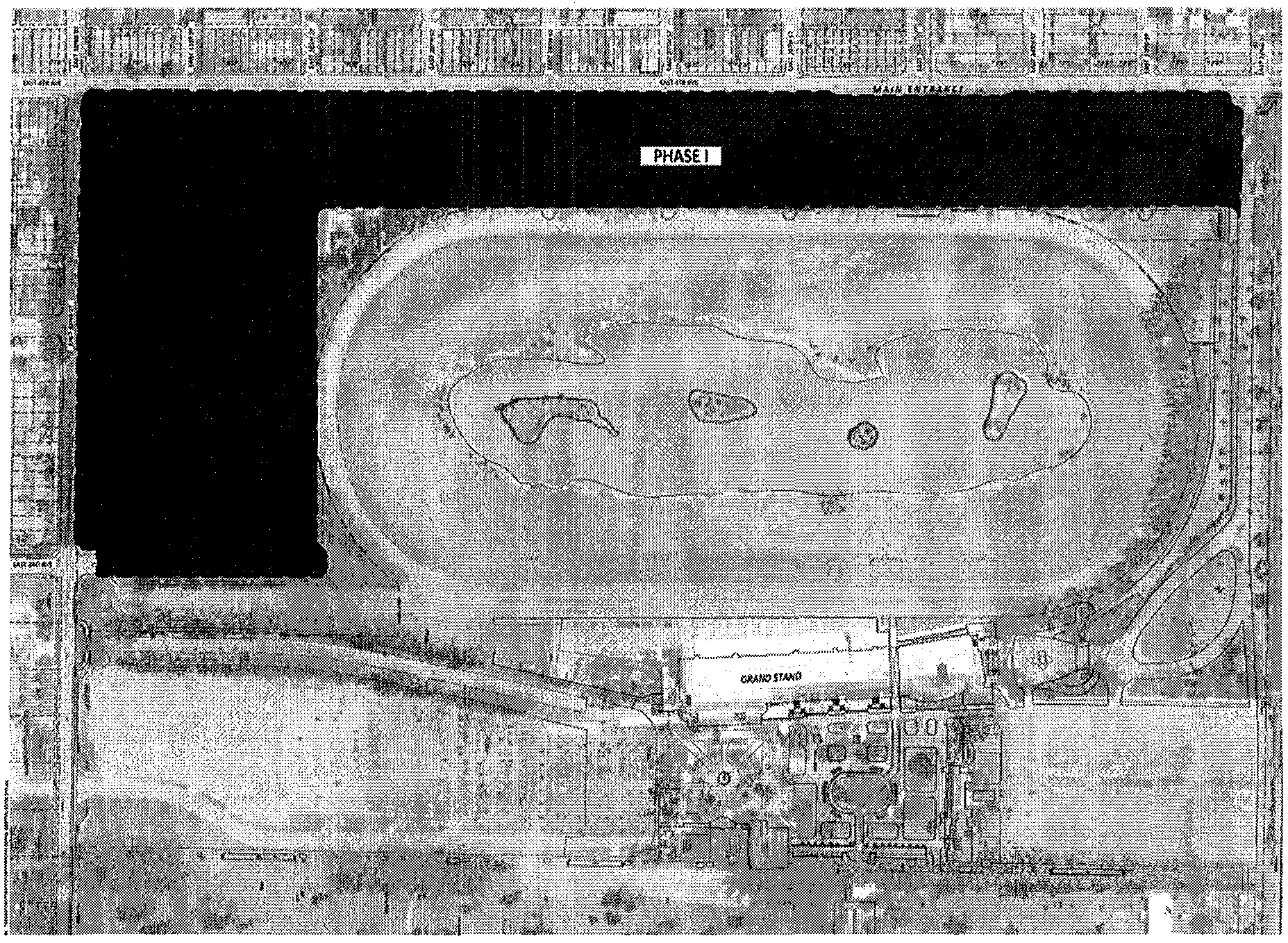
Figure 34-1 Hialeah Park District - Phase I
(Ord. No. 2009-98, § 1, 12-8-2009; Ord. No. 2021-080, § 1, 9-14-2021)
Sec. 98-1630.12. - Precedence over other land use and zoning regulations.
To the extent that any conflict or difference may arise between the criteria or regulations of this district and the criteria or regulations of the C-2 liberal retail commercial zoning district, the requirements of the HPD overlay zoning district shall prevail.
(Ord. No. 2009-98, § 1, 12-8-2009)
Sec. 98-1630.13. - Permitted uses, limitations and prohibitions.
(a)
The permitted uses of the HPD district for land, buildings, structures and other improvements are the following:
(1)
State-licensed horseracing, including but not limited to, thoroughbred and quarter horse racing, licensed gaming, pari-mutuel wagering, card room activities and such uses allowed by F.S. chs. 849, 550 and 551, as amended from time to time.
(2)
Professional services and professional offices allowed in the OPS office and professional services district.
(3)
Permitted uses identified in B-1 highly restricted retail district for retail trade and services, consumer goods (rental), finance and insurance, full-service restaurants including the sale of beer, wine or alcoholic beverages, limited-service restaurants, medical and dental clinics and offices, individual and family services, arts, fitness sports and recreational instruction, public schools, charter schools, and private schools, colleges or universities but not vocational and technical schools.
(4)
Single-family residences, townhouses, and multiple-family dwellings.
(5)
Age-restricted communities and senior independent living facilities, which shall be permitted via a Conditional Use Permit. Senior independent living shall be defined as age-restricted residential dwelling units, which primarily focus on the social needs of residents, and where residents do not require assistance with daily living needs. Senior independent living provides residents with a safe living environment, and these facilities do not fall under the state regulatory purview of assisted living facilities and residential care and treatment facilities.
(6)
Parking garages and facilities.
(7)
Hotels and normal and customary ancillary uses thereto.
(8)
Banquet halls, and nightclubs and bars only in connection with the operation of the hotel, gaming and entertainment complexes comprising the racetrack and card rooms.
(9)
Cultural facilities, museums, outdoor entertainment venues and freestanding convention and exhibition facilities.
(10)
Fitness centers.
(11)
Movie theaters, bowling alleys, roller rinks and ice-skating rinks.
(12)
Department stores, grocery stores and supermarkets.
(13)
Equestrian hospital for the care and medical treatment of horses that race, train or exercise at the racetrack.
(14)
An instructional or educational facility for the care and medical treatment of horses.
(b)
The following uses are prohibited:
(1)
Flower, fruit, plant and tree nurseries and garden centers, except as operated in conjunction with home improvement stores; provided, however, the square footage represents no more than 15 percent of the total square footage of floor space under roof.
(2)
Hospitals, assisted living facilities and residential care and treatment facilities.
(3)
Rooming houses, lodging houses and motels.
(4)
Secondhand (merchandise) dealers or sale or pawn of secondhand goods.
(5)
Dry cleaning establishments where the dry cleaning is performed on the premises or where hazardous materials and flammable solvents are stored or used on the premises.
(6)
Manual and mechanical carwashes except that the hotel may provide concierge services that include a manual carwash inside a garage facility for hotel guests and the racetrack may provide a manual carwash for its patrons subject to site plan review and approval.
(7)
Industrial uses.
(8)
Automotive uses first permitted in the C-1 restricted retail commercial district identified in paragraphs 98-1066(4) and (5).
(9)
Automotive and marine uses first permitted in the C-2 liberal retail commercial district identified in paragraphs 98-1111(23) through (31).
(10)
Funeral homes, funeral viewing services, cemeteries and all related activities.
(11)
Commercial uses first permitted in the C-3 extended liberal commercial district identified in paragraphs 98-1156(2), (3), (4), (6), (7), (8), and (10).
(12)
Other commercial uses first permitted in the C-2 liberal retail commercial district identified in paragraphs 98-1111(3), (9), (13), (19), (20) and (22).
(13)
Other commercial uses first permitted in the C-1 restricted retail commercial district identified in paragraphs 98-1066(6), and (13).
(Ord. No. 2009-98, § 1, 12-8-2009; Ord. No. 2013-38, § 1, 6-25-2013; Ord. No. 2021-080, § 1, 9-14-2021)
Sec. 98-1630.14. - Development standards.
(a)
Urban design development concept. Interior development within the HPD district should be integrated with the historic structures that are the focus and central core of the HPD district and should interconnect along the entire site with an internal main street. The internal main street shall provide ample sidewalks, green corridors, consistent retail frontage, eating areas, kiosks, civic art and other elements that enhance and promote pedestrian activity. This internal main street shall include vehicular and pedestrian traffic, accommodate parallel parking where appropriate and extend to the edges of the HPD district to provide a defined entrance. Big scale commercial buildings and structures shall be located towards the edges of the HPD district and provide store front facade if located on the internal main street.
(b)
Preservation of existing vistas. New development or redevelopment shall be designed in a manner to frame and enhance the scenic opportunities presented by the topography of the HPD district throughout the site, including, but not limited to, the terminated vista at the intersection of East 25 Street, the tree alignment on the west side of the Hialeah Racetrack, north of the grandstand, and the main entrance on East 4 Avenue at the southern portion of the HPD district.
(c)
Parking garages. Parking garages, when facing public open spaces, shall provide a screen or decorative structure stretching along the frontage line, or co-extensive with the facade. Parking garages shall be consistent and harmonious with that of the building's architecture.
(d)
Surface parking. Surface parking lots shall be located in the interior of blocks or squares. No surface parking shall be allowed to front the internal main street.
(e)
Drive-through facilities. Drive-through facilities shall not front the interior main street.
(f)
Pedestrian interest and use. Building architecture, exterior finish materials and textures, architectural elements and ornamentation shall be selected to enhance pedestrian friendly design and functionality at street level. Architectural elements at street level shall have dimensions, abundant windows, openings, doors and design variations to create interest for the pedestrian. Blank walls at the street level and above the ground floor of buildings are not permitted.
(g)
Natural materials. High quality materials such as granite, marble or natural stone are encouraged for architectural details and accents wherever appropriate. A more generous use of high quality materials and architectural details are required for lobbies, public entrances and the ground floor fronting streets.
(h)
Integration of signage, lighting and artwork. Signs, graphics and lighting for building and principal structures shall be conceived as an integral part of the architectural design of the building or principal structures. A pattern book of proposed signs consistent with the HPD sign regulations, including location and dimensions, shall be submitted at the time of site plan approval.
(i)
Fences and gates. Chain link, slatted and wood fences and gates are prohibited.
(j)
Commercial loading and service areas. Commercial loading areas, recycling areas, service areas, and trash and garbage containers shall be located in the interior of blocks or squares and screened to minimize negative visual impacts. Trash containers and dumpsters shall neither be allowed to front street or be visible from the street. Trash containers and dumpsters shall not be permitted in front setback areas.
(k)
Screening of mechanical units and service areas. All mechanical units and installations of any type shall be screened from public view, with cohesive design elements that complement building design. Mechanical equipment installed on roofs shall be screened from view by parapets or other architectural elements. When roof decks with mechanical units are visible from adjacent developments, such roof decks should be screened and painted to match the finish of the roof material.
(l)
Underground utilities. All new utilities including, but not limited to, utilities required for electric power, distribution, telephone, communication, street lighting and television service shall be in installed underground. Where feasible, existing overhead utilities shall be replaced with underground utilities.
(m)
Maintenance covenant. The property owner shall be responsible for the maintenance of the site and shall provide a declaration of restrictive covenants detailing the specific maintenance duties, including, but not limited to, the preservation of the historic character of the site and adherence to general design and sign criteria. Such declaration shall be in a form and content acceptable to the city and recorded in the county public records.
(Ord. No. 2009-98, § 1, 12-8-2009)
Sec. 98-1630.15. - Site development plan approval.
Prior to the issuance of a construction building permit or significant change to the site, the city shall approve a conceptual master plan, including stages of a phased development, if applicable. The conceptual master plan shall include the location of the various proposed uses, frontage delineation, proposed heights, public open spaces, the type and trajectory of the street network. The proposed conceptual master plan shall conform to the recommendations of an historic preservation report approved by the city. If undertaken as a phased development, a pattern book that provides specific development standards and illustrates the design and appearance shall be provided to the city for each respective phase.
In connection with subsequent deviations from respective phase pattern books, and pursuant to sections 98-258—98-261, the administrative variance committee shall have the authority to review requested variations for undeveloped and developed phases not exceeding 20 percent of the Hialeah Park District ordinance requirements for minimum setbacks; minimum landscaping; maximum size and number of signs; location, type and features of signs; minimum and maximum floor area; maximum lot coverage; maximum height, length and width of buildings; and minimum spacing requirements between principal and accessory buildings without review by the planning and zoning board.
(Ord. No. 2009-98, § 1, 12-8-2009; Ord. No. 2021-080, § 1, 9-14-2021)
Sec. 98-1630.15.1. - Hialeah Park District—Phase I Development Standards.
The purpose of Hialeah Park District - Phase I is to provide residential and educational uses that promote and encourage pedestrian access throughout the Hialeah Park District, and the surrounding community. Development of Hialeah Park District - Phase I is intended to be phased, and Notwithstanding anything to the contrary set forth in 98-1630.14, shall be subject to the following development standards:
(a)
Setbacks.
Residential yards
(1)
East 4 Avenue Setback. Residential structures shall have a required front yard of eight feet built to line.
(2)
Interior side yard required for East 25 Street, East 22 Street, and East 30 Street. There shall be a required side setback of seven and one-half feet.
(3)
Trackside Boulevard Setback required. There shall be a required yard of seven and one-half feet from Trackside Boulevard.
(4)
Distance between multiple-family residential buildings. No multiple-family residential building shall be erected or placed upon any distance less than ten feet from any other multiple-family residential building.
(5)
Porch and Balcony Encroachments. In order to enhance aesthetic design, porches and balconies may encroach a maximum of up to three and one-half feet.
School yards
(1)
Front yard required (East 32 Street and East 4 Avenue). School structures shall have a required front yard of ten feet built to line.
(2)
Side yard required (Continuation of East 30 Street down to the connection at East 2 Avenue). There shall be a required side setback of five feet.
(3)
Rear Yard required (East 2 Avenue). There shall be a required yard of seven and one-half feet at the rear of the property.
(b)
Residential density. Maximum residential density in Hialeah Park District - Phase I shall be 32 units per net acre.
(c)
Height. The maximum height in Hialeah Park District - Phase I shall be 55 feet and five stories.
(d)
Lot coverage. The lot coverage permitted in Hialeah Park District - Phase I shall not exceed 45 percent.
(e)
Pervious area. Developments within Hialeah Park District - Phase I shall have a minimum of 20 percent of the lot area as pervious or green area.
(f)
Minimum off-street parking requirements.
Residential. One parking spaces for one bedroom, 1.75 parking spaces for two bedroom, and 0.5 parking spaces for each additional bedroom. An additional one-quarter (0.25) parking space for each dwelling unit shall be provided for guest parking. The guest parking requirement may be satisfied, in whole or in part, by the operation of valet parking services for residential guests, approved by the city.
School use. Public and charter schools shall follow the state requirements for educational facilities (SREF) parking requirements. Private schools shall provide parking in accordance with the requirements set forth in section 98-2189 of this Code.
(g)
Hialeah Park District - Phase I Pattern Book. The pattern book as prepared By Civica Architecture and Albert O. Gonzalez Architect, P.A., and dated July 2021, shall be reviewed and approved by the city council. The intent of the pattern book is to provide general design and architectural guidelines aimed to protect and enhance the Hialeah Park's identity. The pattern book may include general design concepts such as history and character, massing and composition, windows and doors, porches, materials, colors and possibilities, but shall be specific to Phase I of development. Reference to existing historic elements of Hialeah Park may be included as references, but references to other unrelated developments shall be avoided. The Pattern Book shall include a detailed masterplan, elevations and details of the perimeter wall facing East 4 Avenue, elevations and details of all facades facing the ROWs including materials, textures, color palettes, railing design and other necessary architectural details, landscape and site design elements, ROW cross sections, signs, outdoor furniture, etc.
(Ord. No. 2021-80, § 1, 9-14-2021)
Editor's note— Ord. No. 2021-80, § 1, adopted September 14, 2021, set out provisions intended for use as § 98-1630.16. Inasmuch as there were already provisions so designated, said section has been codified herein as § 98-1630.15.1 at the discretion of the editor.
Sec. 98-1630.16.- Purpose.
The artist live/work overlay district is intended to provide a joint work and living space within existing industrial buildings for individuals and family units engaged in the art trade. The purpose of these regulations is not only to perpetuate the industrial character of the district but introduce, at the same time, the art trade and artist studio development through regulations promoting artistic activity. This district is intended to enhance the cultural and economic life of the city and to that end, the residential component of the live/work unit shall not be the primary or dominant use of the industrial building or site.
(Ord. No. 2013-87, § 1, 12-10-2013)
Sec. 98-1630.17. - Definitions.
The following words, terms and phrases, when used in this division, shall have the meanings ascribed to them in this section, except where the context clearly indicates a different meaning:
Art gallery means a space for display or sale of works of art.
Art trade means the creation, manufacture or assemblage of visual art, including two-dimensional or three-dimensional works of fine art or craft, or other fine art objects created, manufactured or assembled for the purpose of sale, display, commission, consignment or trade by artists or artisans; or classes held for art or crafts instruction.
Artist live/work unit means a structure or space that combines an art trade activity with a residential living space for the owner of the art trade activity, where the resident artist or craftsperson is responsible for the art trade performed and where the art trade conducted on the premises takes space subject to a valid business tax receipt associated with the premises.
Artist studio means the establishment in which fine art or crafts are made or manufactured by visual artists or craftspeople. An artist studio is characterized by artists engaged in an occupation, vocation or trade requiring special dexterity and artistic skill in the production of a unique object of art or craft. The studio must be open to the public either by appointment, event or regular hours. Examples of individuals who may establish an artist studio are woodworkers, potter/ceramists, stained-glass makers, glass blowers, textile artists and weavers, jewelry makers, painters, fine arts printmakers, metal workers, sculptors, photographers and film makers. Excluded from this definition are vocational schools and degree-granting art schools and training facilities.
(Ord. No. 2013-87, § 1, 12-10-2013; Ord. No. 2021-075, § 1, 8-24-2021)
Sec. 98-1630.18. - Geographic area.
The ALWOD district shall comprise of an area having East 9 Street as its southern boundary, East 17 Street as its northern boundary, East 10 Avenue as its western boundary and the railroad tracks as its eastern boundary.
(Ord. No. 2013-87, § 1, 12-10-2013)
Sec. 98-1630.19. - Development standards.
(a)
Floor area requirements. The residential component of a live/work unit shall not exceed 1,500 square feet in total area.
(b)
Integration of living and working space. A live/work unit shall function as primary work space with an ancillary residential accommodation in compliance with minimum housing standards and applicable building and life-safety regulations. Living space cannot be occupied or rented separately from the work space. The living space must have access to the work space. Such live/work space shall not conflict with or inhibit surrounding industrial uses that are allowed in the underlying zoning district.
(Ord. No. 2013-87, § 1, 12-10-2013)
Sec. 98-1630.20. - Operating requirements.
(a)
Occupancy. Any art trade or artist studio conducted from the live/work unit shall be operated by the occupant of the residential unit and not by a third party.
(b)
Rental restrictions. The live/work unit, or portion thereof, shall not be rented as a residential space to any person not also renting a work space on the premises.
(c)
Conversion to residential use prohibited. A live/work unit shall not be converted to an entirely residential use.
(Ord. No. 2013-87, § 1, 12-10-2013)
Sec. 98-1630.21. - Artist studio and art gallery regulations.
(a)
Compliance with minimum parking requirements of the underlying zoning district.
(b)
Art instruction is allowed only as a secondary or ancillary use. The number of students for art instruction for each class shall be limited to the number of available parking spaces.
(c)
Exhibits that are aimed to attract a large number of visitors are encouraged as a district-wide special event, subject to a special event permit issued by the city clerk.
(d)
If the facility abuts or is contiguous to a residential district, the artist shall reduce noise or avoid odors or activity that is offensive to the residential neighbors. In such cases, outdoor work is prohibited.
(e)
All outdoor signs or murals require building permits administrative zoning approval subject to review and report by a design review committee.
(f)
Outdoor work, where allowed, is limited to the production of special or oversized objects and shall be produced or manufactured behind an obscured fence or wall.
(g)
Open areas shall not be used for storage of any materials or work.
(Ord. No. 2013-87, § 1, 12-10-2013; Ord. No. 2021-075, § 1, 8-24-2021)
Sec. 98-1630.22. - Alcoholic beverage regulations.
(a)
Limited exception from distance separation requirements. Except for distance requirements from schools and provided that all other provisions of chapter 6, alcoholic beverages, are complied with, establishments selling, offering for sale, delivering, serving or permitting the consumption of any alcoholic beverage within the Artist Live/Work Overlay District, as the district is delimited by section 98-1630.18, are exempt from all other distance requirements set forth in section 6-66(a). This limited exception shall not apply to liquor stores. Liquor stores shall remain subject to all the provisions of section 6-66(a), including restrictions on distance separation and hours of operation.
(b)
Hours of operation. Notwithstanding any provision to the contrary, establishments selling, offering for sale, delivering, serving or permitting the consumption of any alcoholic beverage in the artist live/work overlay district shall sell, or offer for sale. deliver, serve or permit to be consumed on the premises any alcoholic beverage between the hours of 8:00 a.m. and 3:00 a.m. on any day of the week.
(1)
Nightclubs, discotheques, lounges and bars shall not open during regular school hours.
(c)
All other provisions of Chapter 6, Alcoholic Beverages shall apply to establishments selling, offering for sale. delivering, serving or permitting the consumption of any alcoholic beverage in the Artist Live/Work Overlay District.
(d)
Restaurants licensed by the state to sell retail alcoholic beverages under the license category 1-COP or 2-COP shall have [to] provide either (i) a minimum total service area of 850 square feet or (ii) a combination of a full-service operating kitchen area of 500 square feet and a total service area of 700 square feet. Dimensions which do not meet either of these minimums must be approved by a variance. The minimum service area shall be comprised of the floor area occupied by patron seating at tables and chairs and shall not include any space at counters, bars or lounges.
(e)
Conditional use permit required.
(1)
All establishments selling, offering for sale, delivering, serving or permitting the consumption of any alcoholic beverage in the artist live/work overlay district are subject to a conditional use permit as provided for in this section (e) in addition to complying with the general requirements of conditional use permits pursuant to section 98-181.
(2)
Purpose for conditional use permit, generally. Establishments selling or serving alcoholic beverages are compatible with other land uses permitted in the zoning and overlay districts but, because of the unique characteristics or potential impacts on the surrounding neighborhood and the city as a whole, these establishments require individual review as to their location, design, configuration, and/or operation of the establishment at the particular location proposed, as well as the imposition of conditions or limitations on the use in order to ensure that it is compatible with the surrounding neighborhoods and appropriate at the particular location.
(3)
Application requirements. No use designated as a conditional use shall be established until after such use has received approval under the provisions of this section. The conditional use permit will follow the subject property, regardless of ownership, or will be limited to a specific number of years and conditions of use. The applicant requesting a CUP conditional use permit must have a legal interest in the property or obtain permission from the property owner as evidenced by a properly executed affidavit. An application for conditional use permit approval shall be filed with the planning and zoning department. The application shall provide sufficient information to establish the proposed use meets the requirements of this section 98-1630.22. advances the established purposes of ALWOD, and meets all other applicable land development regulations. The application shall also include:
a.
The scale and intensity of the proposed conditional use including:
1.
A site plan providing the floor area layout, the square feet of enclosed building for each specific use;
2.
A written and graphic summary of the proposed use which may include a summary or description or illustration of the configuration, design, and/or operational plan addressing hours of operation, number of employees, menu items, and other operational and/or design characteristics pertinent to the application;
3.
Off-street parking needs and traffic circulation patterns to minimize congestion.
4.
Proximity of the proposed establishment to residential uses.
b.
On- or off-site improvements, if any, to include the following:
1.
Roadway or signalization improvements, or other similar improvements;
2.
Public facility improvements required to ensure compliance with the city's concurrency management system;
3.
Open areas and detailed use of such areas;
4.
Screening and buffers to minimize visual impacts of the proposed use on adjacent property, including the use of building orientation, setbacks. landscape and other design criteria;
5.
A parking plan which fully describes where and how parking is to be provided and utilized.
6.
Mitigation techniques to abate smoke, odor, noise, and other noxious impacts. If the proposed establishment is within 200 feet of residential uses, a noise attenuation plan.
7.
A sanitation plan, which addresses on-site facilities and off-premises issues resulting from the operation of the establishment.
c.
An application fee.
d.
A written summary and renderings of the proposed project.
e.
Ownership affidavit or owner's sworn consent, if applicable.
f.
For establishments proposing occupancy levels of more than 300 persons, an indoor/outdoor crowd control plan addressing how people waiting to gain entry into the establishment or already on the premises, will be controlled.
(4)
General standards of review. All proposed conditional uses shall meet each of the following standards:
a.
The proposed use shall be consistent with the Comprehensive Plan;
b.
The establishment, maintenance or operation of the proposed use shall not be detrimental to or endanger the public health, safety, or general welfare;
c.
The proposed use shall be consistent with the community character of the immediate neighborhood of the proposed use;
d.
Utilities, roadway capacity, drainage, and other necessary public facilities, including police, fire and emergency services, shall exist at the city's adopted levels of service.
e.
Adequate measures exist or shall be taken to provide ingress and egress to the proposed use in a manner that minimizes traffic congestion in the public streets;
f.
The establishment of the conditional use shall not impede the development of surrounding properties for uses permitted in the zoning district; and
g.
The design of the proposed use shall minimize adverse effects, including visual impacts, of the proposed use on adjacent property through the use of building orientation. setbacks, buffers, landscaping and other design criteria.
(5)
Review by city council. The city council may attach such conditions to the approval as it deems necessary to ensure the proposed use conforms to the standards set forth in the general standards of review and to prevent or minimize adverse effects on other property in the neighborhood. A declaration of restrictive covenants providing such conditions and limitations of use shall be recorded in the public records of the county, after the effective date of the ordinance from which this section is derived. The city council may also require formal approval of a final site plan prior to the issuance of building permits.
(6)
Expiration of conditional use approval. Unless otherwise provided in the approval, the approval of a conditional use application shall be void if the recipient does not obtain a building permit for the proposed development within 12 months after the date of the approved ordinance. An applicant who has obtained a conditional use approval may request a one-time extension of this time period by filing an application prior to the expiration of the first approval term for an additional six months.
(Ord. No. 2016-04, § 1, 1-26-2016)
Sec. 98-1631.- Incentives for mixed-affordable housing units.
(Ord. No. 2025-045, § 1, 5-13-2025)
Sec. 98-1631.1. - Purpose.
The purpose of the incentives for mixed-affordable housing units is to alleviate the housing affordability crisis present at the time of the adoption of this Code section and to promote the redevelopment of underutilized properties with the goal of increasing the inventory of mixed-affordable housing units in the city. These incentives shall only be available for a period of five years from the adoption of this division and may be reevaluated by the city council prior to the expiration of the five-year period in 2030. These incentives are available for projects seeking to increase density beyond the ("NBD") overlay density limits; therefore, incentives are cumulative. Adaptive affordable housing projects include units that were or will be built in excess of the density limitations of the subject property, such as lounges, offices, garages, or other spaces converted into living units. These adaptive affordable units are to be considered in a case-by-case basis. Provided that the adapted units are offered at an AMI of 50 percent or less.
(Ord. No. 2025-045, § 1, 5-13-2025)
Sec. 98-1631.2. - Definitions.
The following words, terms and phrases, when used in this division, shall have the meanings ascribed to them in this section, except where the context clearly indicates a different meaning:
Adaptive affordable housing units are areas within existing developments that are repurposing or reusing existing space to create new affordable housing residential units.
Affordable housing units are units within a mixed-affordable housing development offered for rent following the rental limit cost established by the Florida Housing Finance Corporation in relation to the occupant income eligibility in terms of area median income ("AMI"), as may be amended.
Area median income (AMD) means the area median income for the Miami-Dade County metropolitan statistical area (MSA) which is adjusted for the household size as calculated and published annually by the United States Department of Housing and Urban Development, applicable to Miami-Dade County, as may be amended.
Mixed-affordable housing developments are developments that include market rate and affordable rate units at a minimum percentage ranging from 50 percent to 100 percent AMI applicable to Miami-Dade County, as may be amended.
(Ord. No. 2025-045, § 1, 5-13-2025)
Sec. 98-1631.3. - Requirements.
(a)
All the units above 70 units/acre obtained through the mixed-affordable or adaptive affordable housing units' incentives shall be affordable at the levels provided in subsection 98-1631.4(b).
(b)
The affordable housing units shall be provided following the Miami-Dade County Area Median Income ("AMI") which is calculated and published annually, as may be amended, and in accordance with subsection 98-1631.4(b).
(c)
The affordable housing units obtained through the incentives provided herein shall be kept as affordable for a period of 20 years after the issuance of a certificate of occupancy. This will require an execution of a land use restrictive agreement (LURA) in a form acceptable to the city which must be executed and recorded prior to the issuance of any city incentives under this section.
(d)
An annual report shall be filed and submitted to the housing and community services department by the building owner on or before March 30 of each year to document the occupancy and rental income of the proffered affordable housing units.
(e)
Failure to comply with the annual report will result in the imposition of a fine equivalent to the annual payment in lieu for each affordable unit as established in subsection 98-1632(6)a.2. If no fine payment is received within a reasonable time, which shall not be later than 90 days from when due, the city shall proceed with a lien against such property to the same extent and character as code enforcement liens, and with the same penalties and with the same rights of imposition, collections, foreclosure, sale and forfeiture as outlined for code enforcement liens.
(Ord. No. 2025-045, § 1, 5-13-2025)
Sec. 98-1631.4. - Incentives.
(a)
Expansion and flexibility of requirements set forth in subsections 98-1627(2) and (3):
(1)
The property has a land use classification of commercial, industrial, medium density residential, high density residential, central business district ("CBD") or major institutions.
(2)
The property has received or is in the process of receiving a special use permit to expand the ("NBD") regulations to achieve up to 70 dwelling units per acre or the property is located within a designated ("NBD") area.
(3)
A vertical mix of uses is not required, as required for an NBD project, however, all other NBD point incentives are required to be provided.
(b)
Density increases by percentage of affordable housing units to be provided:
(1)
Increase of ten or fewer units/acre = 50 percent of increased units shall be provided at the affordable rate of 60 percent AMI or less, the remaining 50 percent of increased units may be provided at a higher AMI.
(2)
Increase of 20 or fewer units/acre = 50 percent of increased units shall be provided at the affordable rate of 60 percent AMI or less, the remaining 50 percent of increased units may be provided at a higher AMI.
(3)
Increase of 30 or fewer units/acre = 50 percent of increased units shall be provided at the affordable rate of 60 percent AMI or less, the remaining 50 percent of increased units may be provided at a higher AMI.
(c)
Mixed-affordable units at the 60 percent AMI or lower, shall be identified and labeled accordingly within the approved site plans.
(d)
Properties receiving the mixed-affordable density incentives shall enter into a land use restrictive agreement (LURA) in a form acceptable to the city to define all stipulations regarding the mixed-affordable units.
(e)
Parking requirement flexibility program for affordable housing units within mixed-affordable housing projects:
(1)
Mixed-affordable housing parking reduction. All affordable units obtained through the mixed-affordable or adapting housing incentives may benefit from the off-street parking requirement reduction according to the following table:
(2)
Mixed-affordable housing shared off-street parking program. The maximum shared parking allowed for a mixed-affordable housing development project is up to 50 percent of the required parking count. All of the uses involved shall be reflected within table 1 however, the residential component of the shared parking shall not be used for the purpose of leasing parking spaces to fulfill required parking in any district.
a.
Applications for shared parking shall be signed by the owner or owners of the property or properties involved. Any shared parking agreement shall be accepted in the form of a recorded covenant running with the land, in favor of the city, in a form acceptable to the city, and signed by the owner or owners of the property or properties involved. The covenant shall also establish the limitations of the operating hours for all of the uses involved, the total number of parking spaces available and committed, and the beneficiary(ies) of the commitment(s). The planning director shall be notified by certified mail at least six months prior to any termination. Such covenant shall be recorded by the owner(s) at no cost to the city, upon approval by the city attorney's office, subsequent to the issuance of the special exception but before the issuance of the certificate of use.
b.
Shared parking for developments whose parking demands occur at different times may be permitted by certification of the planning and zoning director, in accordance with the following:
(Ord. No. 2025-045, § 1, 5-13-2025)
Sec. 98-1632. - Affordable housing trust fund.
An affordable housing trust fund shall be established for the purpose of providing rental subsidies (or similar programs authorized by the city administration in conformity with this section) for city residents. If a city resident preference is disallowed by law or a funding source, it will in such instance, not be applied. Affordable housing assistance is needed in the City of Hialeah such as, rental subsidies, and similar programs assisting city residents who are rent burdened., etc., as determined by the city administration within the parameters and scope of this program.
(1)
To be eligible for consideration in the program an applicant should be a city resident (preference will be given to city residents unless disallowed by law), must be rent burdened, which for purposes of this section means spending in excess of 30 percent of annual household income on rent. Additionally, any applicant must be under 100 percent ("AMI") applicable to Miami-Dade County, as it may be amended.
(2)
The trust fund is hereby established into which funds shall be deposited pursuant to this article.
(3)
Upon receipt of funds as described herein, will be deposited funds into the trust fund account.
(4)
The rental subsidy shall not exceed a cumulative period of three years, and may be for a lesser period as determined by the director of the housing and community services department.
(5)
The trust fund, and the programs established in connection therewith, shall be managed, administered, and maintained by the department of housing and community services ("department").
a.
Due to the cost it requires to manage the trust fund, the department will utilize ten percent of the trust fund for administrative costs. Administrative staff may assist with, as applicable: eligibility for the rent subsidy, document preparation, determining eligibility and affordability, loan monitoring, and servicing, marketing and providing education to developers and beneficiaries of the trust funds. The administrative staff will work closely with eligible residents, local banking institutions, as well as for-profit and not-for-profit developers in the implementation of the trust fund requirements.
(6)
Payment in lieu.
a.
Alternatively, required mixed-affordable housing units may be converted into market-rate units through payment in lieu into the affordable housing trust fund to cover the cost of subsidizing housing assistance programs. Those converted affordable units shall prioritize the accommodation of city residents subsidized through the housing assistance trust fund. The proffered mixed-affordable housing units may be converted into market-rate units through the payment fee per unit at the below rate:
1.
One-time payment option of $30,000.00 per affordable unit increased to be paid at or before site plan approval.
2.
If the required contributions under this section are not made, this will result in the denial of the site plan. The contribution under this section, when applicable, is a condition precedent to the approval of any site plan.
(Ord. No. 2025-045, § 1, 5-13-2025)

