
Homestead City Zoning Code
ARTICLE IV
- SUPPLEMENTAL DISTRICT REGULATIONS
DIVISION 2. - OFF-STREET PARKING[24]
Note— For the parking requirements in this division that apply to properties zoned B-1A, B-1 and B-2, when such properties abut Krome Avenue, the user is directed to §§ 30-244, 30-259 and 30-278 for those specific provisions.
Cross reference— Off-street authority, § 2-156 et seq.
DIVISION 5. - FENCE RESTRICTIONS[25]
Cross reference— Fences, § 6-196 et seq.
DIVISION 8. - SPECIAL EXCEPTIONS[26]
Cross reference— Certificate of compliance required for persons engaged in selling, buying, trading or storing old or junk objects, § 19-53.
DIVISION 9. - MIXED USE AND NON-RESIDENTIAL DEVELOPMENT STANDARDS[27]
Editor's note— Ord. No. 2019-12-14, § 2, adopted December 19, 2019, amended division 9 in its entirety to read as herein set out. Former division 9, §§ 30-537—30-545.9, pertained to commercial development standards, and derived from Ord. No. 2006-08-34, adopted August 7, 2006.
Sec. 30-397.- Permitted use and dimensional standards tables.
The following "permitted use" and "dimensional standards" tables provide a summary of the zoning district use and property development regulations of the city. The tables are provided for guidance only, and in the event of conflict between the tables and the text of this chapter, the text shall prevail.
*Abbreviations indicate the Downtown Mixed Use (DMU), Neighborhood Mixed Use (NMU), Traditional Single Family Neighborhood (TSFN), and Traditional Multifamily Neighborhood (TMFN) sub-areas of the Southwest Planned Urban Neighborhood District.
Dimensional Standards
Homestead, Florida
Zoning Code
Standards depicted in table provide general guidance only. See District Regulations (Zoning Code), Chapter 30, Article III for additional information. In cases of conflict between table and Code provisions, Code provisions of Article III shall prevail.
a.
25 ft. rear yard setback for principal structure; 10 ft. rear yard setback for accessory
structures; 10 ft. spacing between principal and accessory structures; and 6 ft. rear
yard setback for screened patios.
b.
Based on average width of lot/tract.
c.
Unless two or more existing residential uses on block have different setbacks in which
case 20 ft. shall be minimum and established setbacks shall be the maximum.
d.
25 ft. rear yard setback for principal structure; 5 ft. rear yard setback for accessory
structures; 10 ft. spacing between principal and accessory structures; and 6 ft. rear
yard setback for screened patios.
e.
Minimum is 5 ft.; Maximum is 7.5 ft.
f.
5 Acre minimum site area for townhouse development; minimum lot size is 1,800 square
feet with a minimum average lot size for entire townhouse development of 2,000 square
feet per unit (site plan, plat approval and public hearing required).
g.
25 ft. minimum unit width plus any required setback for end structures.
h.
5 acre minimum site area for cluster housing development with minimum 3,000 square
feet of site area per unit (site plan, plat approval and public hearing required).
i.
Total combined setback/minimum setback on either side.
j.
Minimum site area of 13,000 square feet per multi-family (apartment) development (max. density = 15 units per acre); single-family and two-family development
subject to R-1 and R-2 district standards, respectively.
k.
5 ft. additional setback required for every story above second floor.
l.
Minimum site area of 10,000 square feet per hotel/motel development (max. density = 15 rooms per acre); single-family, two-family and multi-family
(apartment) development subject to R-1, R-2 or R-3 district standards, respectively.
m.
Unless existing uses on block have different setbacks in which case 15 ft. shall be
minimum.
n.
Single-family, two-family and multi-family (apartment) development subject to R-1,
R-2 or R-3 district (lot size and setback) standards, respectively.
o.
10 ft. minimum side yard requirement when adjacent to A-1, A-2, R-1, R-2, RTH, RCH,
R-3 or R-4 districts.
p.
Unless located in the downtown Core or Fringe area, in which case no side setbacks
shall be required.
q.
Several exceptions apply (see Sec. 30-392 (1), (2) and (3)).
r.
200 ft. minimum street frontage required.
s.
Requirement for lots of one-acre or more/requirement for smaller lots. Additional
accessory structure setbacks apply (see Sec. 30-394(b)).
(Ord. No. 90-11-86, Pt. 3, 12-3-90; Ord. No. 99-05-25, § 3, 5-17-99; Ord. No. 99-05-26, § 2, 5-17-99; Ord. No. 00-05-15, § 3, 6-5-00; Ord. No. 2008-09-28, § 8, 9-15-08; Ord. No. 2009-03-09, § 13, 3-16-09; Ord. No. 2015-06-05, § 7, 6-17-15)
Sec. 30-398. - Unified residential minimum unit size requirements.
The following minimum unit size requirements shall apply. In the event that a prior city approval sets forth a greater minimum unit size, such unit size requirement shall apply.
(a)
Requirements for the R-1, R-2, R-3 R-4, R-CH, R-TH, TND, NMU, and PUD zoning districts.
(1)
Single family house. A single family house with two (2) or fewer bedrooms shall contain a minimum of one thousand two hundred (1,200) square feet under air as defined in section 30-1. An additional one hundred fifty (150) square feet shall be provided for each additional bedroom.
(2)
Townhouse/clusterhouse. A townhouse or clusterhouse with two (2) or fewer bedrooms shall contain a minimum of one thousand, one hundred (1,100) square feet under air as the term is defined in section 30-1 of the Code. An additional one hundred fifty (150) square feet shall be provided for each additional bedroom.
(3)
Apartment/condominium unit. An apartment or condominium with two (2) or fewer bedrooms shall contain a minimum of one thousand (1,000) square feet under air as defined in section 30-1. An additional one hundred fifty (150) square feet shall be provided for each additional bedroom.
(4)
Mixed use requirements. Any type of residential unit with two (2) or fewer bedrooms, located within a mixed use development, shall contain a minimum of one thousand (1,000) square feet under air as defined in section 30-1. An additional one hundred fifty (150) square feet shall be provided for each additional bedroom.
(5)
Direct school mitigation development bonus. Any applicant who enters into an agreement with the Miami-Dade County School Board and the city, resulting in one hundred (100) percent of county school impact fees being directly utilized for the mitigation of residential development impacts on public schools serving the city, shall be entitled to a reduction in the minimum residential unit size requirements as follows:
For each residential unit of whatever type, the minimum square footage for additional bedrooms shall be reduced from one hundred fifty (150) square feet to one hundred (100) square feet. This reduction shall only apply to the greater of the total of five (5) residential units or five (5) percent of the number of residential units proposed. In the event that a project contains a mixture of unit types (e.g. single family and town houses), the development bonus may solely be applied to one product type.
(b)
Requirements for the business mixed use (BMU) zoning district. Minimum unit sizes for efficiency units shall contain a minimum of seven hundred (700) square feet under air as described in section 30-1. Minimum unit sizes for one-bedroom units shall contain a minimum of eight hundred fifty (850) square feet under air as described in section 30-1. Minimum unit sizes for two-bedroom units shall contain a minimum of one thousand (one thousand (1,000) square feet under air as described in section 30-1. An additional one hundred fifty (150) square feet shall be provided for each additional bedroom. Within the BMU zoning district, up to ten (10) percent of the residential units may contain a minimum of seven hundred (700) square feet, up to thirty (30) percent of the residential units may contain a minimum of eight hundred fifty (850) square feet, and at least seventy (70) percent of the residential units shall contain a minimum of one thousand (1,000) square feet.
(Ord. No. 2003-06-24, § 14, 6-23-03; Ord. No. 2007-05-18, § 2, 5-21-07)
Sec. 30-401. - Plans and specifications.
(a)
Plans and specifications of sufficient clarity to show that any proposed structure if erected will not be detrimental to the welfare of the district must be submitted before a permit will be issued.
(b)
Plans and specifications of all structures exceeding the sum as established by the South Florida Building Code shall be prepared by and bear the seal of an architect or professional engineer duly registered in the state.
(Ord. No 73-10-46, § III(13), 12-18-73)
Sec. 30-402. - Additional height and area regulations.
The following requirements or regulations qualify or supplement as the case may be, the district regulations or requirements appearing elsewhere in this chapter.
(1)
Side yard requirements for dwellings shall be waived where dwellings are erected above stores or shops.
(2)
Every part of a required yard or court shall be open from its lowest point to the sky unobstructed, except for the ordinary projections of sills, belt courses, cornices, buttresses, ornamental features and eaves. None of the above projections shall project into a minimum court more than twenty-four (24) inches nor into a minimum side yard more than twenty-four (24) inches.
(3)
Within the Northwest Neighborhood Overlay District, any building containing nonresidential principal uses situated on a lot adjacent to an R-1 district shall be subject to the following restriction: that portion of the building, if any, within fifty (50) feet of the R-1 district, as measured on the ground between the R-1 district boundary and the base of the building, shall not exceed three stories in height.
(Ord. No. 73-10-46, § XXIII, 12-18-73; Ord. No. 2007-12-43, § 6, 12-3-07)
Sec. 30-403. - General building restrictions and usage.
(a)
Except as hereinafter provided no building shall be erected, reconstructed or structurally altered, nor shall any building or land be used which does not comply with all the district regulations established by this chapter for the district in which the building or land is located.
(b)
No building shall be erected, reconstructed or structurally altered to exceed the height or bulk limits established for the district in which such building is located.
(c)
The minimum yards and other open spaces, including the intensity of use provisions contained in this chapter for each and every building existing at the time of the passage of the ordinance from which this chapter was derived, or for any building hereafter erected, or structurally altered, shall not be encroached upon or considered as yard or open space requirements or intensity of use requirements for any other building.
(d)
The uses of all buildings and property publicly owned and engaged in the performance of a public function may be permitted in any district provided however that such use is not obnoxious or detrimental to the health or welfare of the city.
(e)
No explosives or combustible matter shall be stored in any area, unless prior to the storage thereof the fire chief for the city shall issue a permit authorizing the storage after his inspection and approval of the premises therefor.
(f)
Nothing shall be allowable on premises that shall in any way be offensive or noxious by reason of the emission of odors, gases, dirt, smoke, vibration or noise, nor shall anything be constructed or maintained that would in any way constitute an eyesore or nuisance to adjacent property owners, residents or to the community.
(g)
No owner of any building or other structure located within the City of Homestead and designed so as to require a protective coating or paint, is to allow any such building or structure to be in a state of disrepair whereby the paint or other protective coating becomes cracked, peeled, weather beaten to the extent that its protective purpose is no longer served, or marred by graffiti or other acts or vandalism. It will be the responsibility of all owners of such buildings or structures to take immediate action to correct the discrepancy to return the building to a state of repair that creates a neat and orderly appearance by painting it or putting a new coat of the applicable protectant on the structure.
(Ord. No 73-10-46, § V(1)—(3), (5)—(7), 12-18-73; Ord. No. 90-01-02, § 1, 2-5-90)
Sec. 30-404. - Side setbacks.
In any B-1 or B-2 zone abutting A-1, A-2, R-1, R-2, R-TH, R-CH, R-3 or R-4 zones, the side setbacks shall be a minimum of ten (10) feet and the rear shall be a minimum of twenty (20) feet.
(Ord. No. 73-10-46, § III(17), 12-18-73)
Sec. 30-405. - Corner lot setbacks in usage.
(a)
In all R usages on corner lots the front line setback of twenty-five (25) feet must be maintained, but a fifteen-foot sideline setback will be permitted on the street sideline, provided the building faces the same way as all other buildings in the block. If the building faces the long dimension of the lot, or where corner lot buildings face a different thoroughfare than other buildings in the block, the twenty-five-foot setback must be maintained from both thoroughfares.
(b)
On all R usages, front entrances shall face either or both of the intersecting streets.
(c)
No secondary building shall be closer to the front or side of lot abutting street or other public way than the main building.
(Ord No. 73-10-46, § III(4), 12-18-73)
Sec. 30-405.1. - Front setbacks on double frontage (through) lots.
The minimum required front yard setback on double frontage ("through") lots shall apply to both the front and rear of the lot.
(Ord. No. 90-11-86, Pt. 3, 12-3-90)
Sec. 30-406. - Reserved.
Editor's note— Ord. No. 2004-10-41, § 15, adopted Oct. 18, 2004, deleted § 30-406 in its entirety. Former § 30-406 pertained to roof construction and derived from Ord. No. 73-10-46, § III(5), adopted Dec. 18, 1973.
Sec. 30-407. - Construction sheds.
(a)
A well-built, frame, temporary shed is permitted as part of a builder's or contractor's equipment to be used as a storeroom, tool shed, job office and other similar purposes. Such shed, together with all construction materials shall be located within the property lines of the building or structure under construction.
(b)
At the completion of the building or structure, the shed shall immediately be dismantled or removed from the building site.
(c)
No certificate of occupancy shall be issued for the premises until all temporary sheds and all loose building, electrical, plumbing and building materials have been removed from the premises, and landscaping requirements have been satisfied.
(Ord. No. 73-10-46, § III(6), 12-18-73)
Sec. 30-408. - Reserved.
Editor's note— Ord. No. 2013-03-09, § 3, adopted March 20, 2013, repealed § 30-408 in its entirety. Former § 30-408 pertained to fences or walls and was derived from Ord. No. 73-10-46, § III(8), adopted December 18, 1973 and Ord. No. 84-11-89, §§ 301, 302, adopted November 19, 1984.
Sec. 30-409. - Grades.
All future buildings shall be built according to grades established by the city.
(Ord. No. 73-10-46, § III(9), 12-18-73)
Sec. 30-410. - Junk.
(a)
No junkyard or yards for storage of junked, demolished or dismantled automobiles shall be established in the city until a permit shall be approved by the city council pursuant to a public hearing.
(b)
Application for such permit shall be submitted to the development services department with a plan showing the manner in which it is proposed to screen such yard from the public rights-of-way. No such yard shall be located in any area zoned for business or residential purposes.
(Ord. No. 73-10-46, § III(10), 12-18-73; Ord. No. 2022-04-08, § 2, 4-27-22)
Sec. 30-411. - Land survey.
(a)
A land survey prepared by a registered engineer or land surveyor of the state must be attached to each set of prints for a building permit for any new construction and with any addition which will increase the ground area occupied by any building. All such surveys shall show the center line of streets and on corner lots, it shall show the center line of both streets.
(b)
When applying for construction of an addition, the survey must show location of existing building and all general conditions at that time, if deemed necessary by the building and zoning director. Where existing survey markers are evident and satisfactory to the building department, no survey shall be required.
(Ord. No. 73-10-46, § III(11), 12-18-73)
Sec. 30-412. - Removal of soil.
No person shall remove or cause to be removed any land contained within the limits of the city, which will lower the uniform grade of the parcel or contiguous parcels that are in common ownership or are approved under a single development order, unless granted a special exception permit by the city council. This section excludes typical development grade changes such as swales, landscaping berms, roadways and swimming pools or drainage/retention areas. Any necessary approvals from other government agencies with jurisdiction must also be obtained for removal of soil.
(Ord. No. 73-10-46, § III(14), 12-18-73; Ord. No. 2004-10-41, § 15, 10-18-04)
Sec. 30-413. - Right-of-way dedications.
No permit shall be issued for the construction of any building unless dedications for right-of-ways to the city or to an entity provided for in chapter 25, article V are on record to assure proper ingress and egress to and from the property.
(Ord. No. 73-10-46, § III(15), 12-18-73; Ord. No. 2004-02-09, § 11, 3-15-04)
Sec. 30-414. - Landscaping requirements.
Landscaping requirements will be that which is set forth in section 29-51 et seq. and certain other applicable sections of chapter 29 for all commercial property. The requirements for other than commercial will be set forth in section 29-16 et seq. as stated therein.
Additionally, within the Northwest Neighborhood Overlay District, any non-residential use adjacent to a property in the R-1 district shall be required to install a landscape buffer sufficient to screen any non-residential structures from view of the property in the R-1 district.
(Ord. No. 73-10-46, § III(16), 2-18-73; Ord. No. 2007-12-43, § 7, 12-3-07)
Sec. 30-415. - Uncompleted buildings.
Any building not completed in substantial compliance with plans and specifications upon which the building permit was issued shall not be permitted to be maintained on any land in the City of Homestead for more than ninety (90) days after the commencement of erection of such new building, except upon special permit, approved by the city council, and only for such period as the city council may prescribe.
(Ord. No. 73-10-46, § II(18), 12-18-73; Ord. No. 2022-04-08, § 2, 4-27-22)
Sec. 30-416. - Accessory buildings.
In all districts no garage or tent shall be erected or used for residential purposes concurrently with or subsequent to the construction of the main building.
(Ord. No. 73-10-46, § III(1), 12-18-73)
Sec. 30-417. - Apartment houses, hotels, motels and restaurants.
All plans and specifications for apartment houses, hotels, motels, and restaurants shall be submitted to the state hotel and restaurant agency and approval obtained from them before being presented for a building permit and building and zoning department approval.
(Ord. No. 73-10-46, § III(2), 12-18-73)
Sec. 30-418. - Drive-in restaurants.
Drive-in restaurants, drive-in barbecue stands or like establishments shall provide an eight-inch curbing at least five (5) feet from any and all sides of any building where it is possible for any vehicular traffic to park. Such curbing shall be sufficiently anchored to withstand heavy use.
Sec. 30-419. - Sidewalk café and open-air café.
A sidewalk café or open-air café shall be a permitted ancillary use operated in conjunction with a restaurant in the B-1 and B-2 zoning districts subject to the following restrictions and conditions:
(1)
Ancillary open air café dining operated on private property in conjunction with a restaurant located on private property.
a.
Each application for such use shall be made to the department of development services for administrative review and approval.
b.
Architectural plans, including a site plan, which shall have been approved by the architectural review board, shall be submitted with the application. Such plans shall show the floor plan, elevation of any structures, setbacks, type of paving, proposed landscaping, location of refuse containers, all proposed signs and lighting, layout of all tables, chairs, benches and other furniture and pedestrian ingress and egress. Plans shall also be submitted showing the street elevation of building on adjacent properties.
c.
The operation of such open air café dining shall not be conducted in such a way as to become a public nuisance and that the operation of such business shall not interfere with the circulation of pedestrian or vehicular traffic on the adjoining streets, alleys or sidewalks.
d.
The service of patrons of the open-air café dining shall be at tables only and no counter service, self-service or pass through windows shall be permitted.
e.
The open air café dining shall not occupy an area of more than thirty (30) percent of the total area of the primary restaurant operation.
f.
The open air café dining shall be unenclosed and shall be open except that it may be covered with a canvas cover or structural canopy of a building's arcade, loggia or overhang.
g.
All kitchen equipment used to service the open air café dining shall be located within the kitchen of the primary restaurant.
h.
The open air café dining shall be kept in a neat and orderly appearance and shall be kept free from refuse and debris.
i.
In approving ancillary open air café dining, the department of development services may prescribe appropriate conditions and safeguards in conformity with the provisions of this Code. Violations of such conditions and safeguards, when made a part of the terms under which the open air café dining and/or restaurant is approved, shall be deemed grounds for revocation of the development order and/or any permit authorizing ancillary open air café dining and punishable as a violation of the City Code.
j.
Any administrative decision may be appealed to the city council in accordance with the requirements of the City Code.
(2)
Ancillary sidewalk café dining operated on a public sidewalk or portion of the public right-of-way in the Krome Avenue corridor, within the city's arts, entertainment and antiques district in conjunction with a restaurant located on private property.
a.
All requirements apply as established in subsection (1), above, except where specifically required otherwise in this subsection.
b.
A permit issued for sidewalk café dining located on public property shall be issued for a period of one (1) year, renewable annually by the department of development services. Such permit shall not be transferable in any manner.
c.
The sidewalk café dining permit may be revoked by the department of development services upon a finding that one (1) or more conditions of this section have been violated, or the sidewalk café dining is being operated in a manner which constitutes a nuisance, that unduly impedes or restricts the movement of pedestrians or in any way constitutes a liability.
d.
There shall be an annual permit fee of two hundred fifty dollars ($250.00). Such permit shall not be transferable in any manner.
e.
Sidewalk café dining areas shall be restricted to the length of the sidewalk or public right-of-way immediately fronting the restaurant. The utilization of space extending not more than twenty-five (25) linear feet on either side beyond the subject property frontage may be authorized subject to annual written consent provided by tenants in front of whose businesses the outdoor dining service would occur.
f.
There shall be maintained a minimum of five (5) feet clear distance or fifty (50) percent of public sidewalk width, whichever is greater, free of all obstructions, in order to allow adequate pedestrian movement. The minimum distance shall be measured from the portion of the open air dining area nearest either the curb-line or the nearest obstruction.
g.
No awning, canopy or coverage of any kind, except individual table umbrellas, shall be allowed over any portion of the sidewalk café dining area located on public property.
h.
No perimeter structures such as fences, railings, planters or other such barriers shall surround the sidewalk café dining area which would restrict the free and unobstructed pedestrian flow or discouraging the free use of the tables or chairs by the general public.
i.
No signage shall be permitted on the public portion of the property, other than allowed by the sign ordinance of the city.
j.
All sidewalk café dining areas shall be at the same elevation as the adjoining sidewalk or public right-of-way.
k.
Under no circumstance shall any sidewalk café dining area interfere with the free and unobstructed public access to any bus stop, crosswalks, public seating areas, street intersections, alley, service easements, handicap facilities or access to adjacent commercial establishments.
l.
The restaurant owner/operator shall be responsible for maintaining the sidewalk café dining area in a clean and safe condition. All trash and litter shall be removed daily.
m.
The hours of operation shall coincide with that of the primary restaurant. Tables, chairs and all other furniture used in the operation of a sidewalk café dining area shall not be anchored or restrained in any visible manner as with a chain, rope or wire.
n.
Sidewalk café dining may be suspended by the city manager or his/her designee for community or special events, utility, sidewalk or road repairs, or emergency situations or violations of provisions contained in this section. The length of the suspension shall be for a duration as determined necessary by the city manager or his/her designee. Removal of all street furniture and related obstructions shall be the responsibility of the restaurant owner/operator.
o.
Prior to the issuance of a sidewalk café permit, the applicant shall furnish the director of development services with a signed statement from an officer of the restaurant that the permittee shall hold-harmless the city, its officials and employees and shall indemnify the city, its officers and employees for any claims for damages to property or injury to persons which may be occasioned by any activity carried on under the terms of the permit. Proof of workers' compensation coverage shall also be provided.
p.
The applicant shall furnish and maintain such public liability, food products liability, and property damage insurance coverage from all claims and damage to property or bodily injury, including death which may arise from operations under the permit or in connection therewith. Such coverage shall be provided by an insurance company admitted by the state and having an A-6 rating or better and shall provide coverage of not less than one million dollars ($1,000,000.00) for bodily injury, and property damage respectively per occurrence. Such insurance shall be without prejudice to coverage otherwise existing therein and shall name as additional insured the city, its officers and employees, and shall further provide that the policy shall not terminate or be canceled prior to the completion of the permit period without thirty (30) days' written notice to the city's risk manager, and the director of public works of the city.
(Ord. No. 97-11-50, § 2, 12-1-97; Ord. No. 2019-09-13, § 3, 9-25-19)
Sec. 30-431.- Required.
(a)
There shall be permanently maintained off-street parking for vehicles in connection with any building or premises used or designed to be used for the purposes set forth in this division.
(b)
For the purposes of this chapter, it is determined that one (1) automobile parking space shall be a minimum of nine (9) by nineteen (19) feet usable for parking of an automobile and that there shall be adequate interior driveways, exclusive of ingress and egress driveways, to connect such parking place with a public street or alley.
(Code 1975, § 30-1; Ord. No. 2006-04-12, § 2, 4-3-06)
Sec. 30-432. - Intent.
It is the intent to require off-street parking facilities to be installed in such a manner so as to eliminate all possible hazards to the public utilizing public streets and to eliminate damage to property, both public and private that could arise as a result of the installation of any off-street parking facilities within the city.
(Ord. No. 74-11-63, § 1, 12-23-74)
Sec. 30-433. - Off-street parking area requirements in all districts.
(a)
All parking spaces shall be clearly striped and shall incorporate appropriate wheelstops. The following parking standards shall apply to uses within the city.
(b)
The off-street parking requirements shall be in accordance with the following standards:
(1)
A-1 one family (one-acre estate) district shall have one (1) paved parking space.
(2)
A-2 one family (one-half-acre estate) district shall have one (1) paved parking space.
(3)
R-1 one family district shall have one (1) paved parking space.
(4)
R-2 district shall have two (2) paved parking spaces per unit.
(5)
R-TH district shall have two (2) paved parking spaces per unit.
(6)
R-CH district shall have two (2) paved parking spaces per unit.
(7)
R-3 district shall have two (2) paved parking spaces per unit.
(8)
R-4 hotel and motel district:
a.
Hotels shall have one (1) paved parking space for each of the first twenty (20) rooms and one (1) additional space for each four (4) additional rooms.
b.
Motels shall have one (1) paved parking space for each room.
c.
All others shall have one (1) paved parking space for each three hundred (300) square feet of floor area.
(c)
The following standards shall apply:
(1)
Commercial shall have one (1) paved parking space for each three hundred (300) square feet of floor area in excess of twenty-foot rear loading zone.
(2)
Restaurants and cafeterias shall have one (1) paved parking space for each four (4) seats.
(3)
Drive-in restaurants and barbecue stands shall have a minimum of twenty (20) paved parking spaces.
(4)
Places of public assembly, recreation establishments and schools.
a.
Places of public assembly, recreation establishments and schools with fixed seats: One (1) parking space for every four (4) fixed seats or one (1) parking space for each two hundred (200) square feet of gross floor area, whichever results in the greater amount of required spaces.
b.
Places of public assembly, recreation establishments and schools without fixed seats: One (1) parking space for each two hundred (200) square feet of gross floor area.
c.
Places of public assembly, recreation establishments and schools which include accessory uses: If a permitted accessory use is included, the use shall provide the cumulative number of parking spaces required for the principal use and all permitted accessory uses.
(5)
Office (including, without limitation, professional and medical office) buildings shall have one (1) paved parking space for each three hundred (300) square feet of floor area.
(6)
Warehouse parking shall be the same as the industrial requirement.
(7)
In self-service storage facilities, off-street parking shall be provided on the following basis: One (1) parking space per five thousand (5,000) square feet of building area for the first twenty thousand (20,000) square feet of building; one (1) parking space per ten thousand (10,000) square feet (or fraction thereof) of building area thereafter; and one (1) parking space for the manager's apartment, where provided. One (1) parking space per four hundred (400) square feet of gross office area (or fraction thereof) shall also be provided. In the application of these regulations, a minimum number of five (5) off-street parking spaces shall be provided for any self-service storage facility regardless of size. The above referenced off-street parking standards shall only be applicable to self-service storage facility uses permitted within the Villages of Homestead (VOH) Development of Regional Impact (DRI) pursuant to the approved VOH DRI Master Development Plan.
(d)
The minimum standard for parking requirements in the business uses is three (3) paved parking spaces per store, regardless of the three hundred (300) square feet requirement as set forth above.
(e)
The standards in all I uses shall be one (1) paved parking space for each one thousand (1,000) square feet of floor space or three (3) employees, which ever is greater, plus a paved loading zone.
(f)
No heavy equipment or any commercial vehicles with a carrying capacity in excess of one (1) ton will be permitted to park in any district zoned A-1, A-2, R-1, R-2, R-TH, R-CH, R-3, or R-MH for more than one (1) hour, except for loading and unloading. Vehicles and equipment covered under this section include all vehicles whose primary purpose is commercial in nature and cannot, without the removal of certain equipment or parts, be converted for personal or family use. These vehicles include but are not limited to earth moving equipment, semi-tractors and trailers, farm equipment (excluding pickup trucks allowed above), flatbed trucks, dump trucks, concrete trucks, step vans, panel trucks (not vans), tow trucks, buses (in excess of eleven (11) passenger capacity) and utility trucks (collectively "commercial vehicles"). Provided, however, parking in rear yard may be permitted if the rear yard is adequately fenced or hedged so as to reasonably prevent viewing by adjoining neighbors.
(1)
No more than one (1) such commercial vehicle, as defined above, shall be parked within the rear yard on any parcel within the city.
(2)
No major repairs or overhaul work on such commercial vehicles shall be made or performed on the lot, (or any other work performed thereon which would constitute a nuisance under existing ordinances).
(3)
No one (1) lot shall provide storage for both a commercial vehicle and boat or a commercial vehicle and RV.
(g)
Boat storage. Boats of less than thirty (30) feet in length, not more than one hundred and two (102) inches in width and thirteen (13) feet six (6) inches in height above grade, may be stored or temporarily parked on lots containing a single-family residence subject to the following conditions:
(1)
Lots with less than one-half (0.5) acre of lot area shall be permitted to store up to one (1) boat. The location for such boat storage shall be in the rear yard or side yard to the rear of a line established by the front building line furthest from the street and set back to at least the rear building line wherever possible, but in no event in front of such front building line. Such boat storage shall be setback from side property lines at least a distance equivalent to the required side setback for the principal building and shall be set back from the rear property line at least ten (10) feet. The boat shall be effectively screened from the view of adjacent lots and rights-of-way. Screening shall be accomplished through the installation of fences and/or walls in combination with dense plantings of shrubs and hedges that provide a complete visual barrier. Chain link fencing is prohibited. Operable gate(s) shall be opaque and shall conceal the boat from adjacent rights-of-way and neighboring properties.
(2)
Lots containing a minimum of one-half (0.5) acre of lot area shall be permitted to store up to two (2) boats. Lots containing a minimum of five (5) acres of lot area shall be permitted to store up to three (3) boats. The location for such boat storage shall be in the rear yard or side yard to the rear of a line established by the front building line furthest from the street and set back to at least the rear building line wherever possible, but in no event in front of such front building line. Such boat storage shall be setback from side property lines at least a distance equivalent to the required side setback for the principal building and shall be set back from the rear property line at least ten (10) feet. Where two (2) or more boats are located on a site, the boat storage area shall meet the rear and side setback requirements for the principal structure and be effectively screened from the view of adjacent lots and rights-of-way. Screening shall be accomplished through the installation of fences and/or walls in combination with dense plantings of shrubs and hedges that provide a complete visual barrier. Chain link fencing is prohibited. Operable gate(s) shall be opaque and shall conceal the boat(s) from adjacent rights-of-way and neighboring properties.
(3)
Up to two (2) personal watercrafts not exceeding five (5) feet in width by twelve (12) feet in length may be stored or parked in lieu of a boat authorized by this section. Such watercraft shall be visually buffered in accordance with section 30-433(g)(2) or (3), as applicable.
(4)
Boats and place of storage or temporary parking shall be kept in a clean, neat and presentable condition.
(5)
No major repairs or overhaul work shall be made or performed on the premises.
(6)
The boats shall not be used for living or sleeping quarters, and shall be placed on and secured to a transporting trailer.
(7)
The temporary parking of a boat in front of the front building line or in front of the side street building line for no more than two (2) hours in any 24-hour period, while the boat is hitched to an operable motor vehicle with a valid permanent license tag, for the purposes of loading and unloading equipment and supplies shall be permitted, but under no circumstances shall a boat be parked in the public right-of-way, including the swale area of a right-of-way.
(8)
Commercial boat parking shall be prohibited. All boats stored on the property must be registered to the property owner or authorized residential tenant.
(9)
Boat(s) must be parked on a permitted impervious parking pad (paved/concreted surface).
(10)
No one (1) lot shall provide storage for both a boat and RV or a boat and commercial vehicle.
(h)
Recreational and camping equipment. Notwithstanding any other provisions to the contrary in this division, a RV defined as a recreational vehicle-type unit primarily designed as temporary living quarters for recreational, camping or travel use, which either has its own motive power or is mounted on or is drawn by another vehicle may be parked on lots containing a single-family residence. A travel trailer and camping trailer as statutorily defined in F.S. § 320.01 is a permissible form of RV. Such vehicles or equipment defined as RVs shall not be utilized as primary living quarters, and are subject to the following conditions:
(1)
No more than one (1) such RV, as defined above, shall be parked on any parcel containing a residential structure within the city.
(2)
RV shall be effectively screened from the view of adjacent lots and rights-of-way. Screening shall be accomplished through the installation of fences and/or walls in combination with dense plantings of shrubs and hedges that provide a complete visual barrier. Chain link fencing is prohibited. Operable gate(s) shall be opaque and shall conceal the RV from adjacent rights-of-way and neighboring properties.
(3)
When parked on the lot, RV storage shall be provided within a code compliant and permitted fence that allows for ingress and egress.
(4)
Such parking shall be limited to such RV owned or leased by the occupant-owner or occupant-lessee of the lot concerned, or owned or leased by a bona fide City of Homestead house guest of the occupant-owner or occupant-lessee of the lot concerned, with the parking of such RV by guest not to exceed fourteen (14) days.
(5)
The location for such parked RV shall be in the rear yard or side yard to the rear of a line established by the front building line furthest from the street and set back to at least the rear building line wherever possible, but in no event in front of such front building line. Such RV shall be setback from side property lines at least a distance equivalent to the required side setback for the principal building and shall be set back from the rear property line at least ten (10) feet.
(6)
Such RV and the area of parking shall be maintained in a clean, neat and presentable manner and the RV shall be in a usable condition at all times.
(7)
Such RV shall, at all times, have attached a current vehicle registration license plate.
(8)
No major repairs or overhaul work on such RV shall be made or performed on the lot, (or any other work performed thereon which would constitute a nuisance under existing ordinances).
(9)
When parked on the lot, such RV shall not be used for living or sleeping quarters, or for housekeeping or storage purposes and shall not have attached thereto any service connections lines, except as may periodically be required to maintain the RV and appliances. Notwithstanding the foregoing, the RV may be used for living or sleeping quarters, or for housekeeping or storage purposes in instances where such owner obtains an active building permit for purposes of renovating home after a fire, hurricane, or other natural disaster. Occupancy of the RV in cases of such emergencies shall not exceed six (6) months.
(10)
Such RV shall not exceed the maximum length, width, height and weight permitted under applicable provisions of the motor vehicle laws of the State of Florida; provided, however, the maximum length shall not exceed thirty (30) feet and the maximum height shall not exceed ten (10) feet.
(11)
RV must be parked on a permitted impervious parking pad (paved/concreted surface).
(12)
No one (1) lot shall provide storage for both a RV and boat or a RV and commercial vehicle.
(13)
Such RV shall be so secured so that it will not be a hazard or menace during high winds or hurricane.
(14)
A seller (dealer or individual) located within the city offering for sale such new or used RV, must furnish and attach to such RV a true copy of this subsection.
(i)
Expansion of RV while parked prohibited; presumption of violation.
(1)
A recreational vehicle (RV), as defined in this section, when parked or stored on a residential lot, shall not have any slide-outs, pop-outs, awnings, or other expandable components extended.
(2)
The extension of any such feature shall create a rebuttable presumption that the RV is being used as a dwelling unit or for purposes not permitted under this Code.
(3)
Upon a finding of such condition, a citation or notice of violation may be issued without the need for direct evidence of habitation or occupancy.
(4)
The property owner or occupant may rebut the presumption by demonstrating, through clear and convincing evidence, that the RV is not being used in violation of the provisions of this Code.
(5)
Each day that the RV remains expanded shall constitute a separate and distinct violation.
(Code 1975, § 30-2; Ord. No. 73-10-46, § III(12), 12-18-73; Ord. No. 74-05-26, § 1, 7-1-74; Ord. No. 74-11-64, § 1, 12-23-74; Ord. No. 87-06-44, § 1, 7-6-87; Ord. No. 89-02-15, §§ 1, 2, 4-3-89; Ord. No. 2004-02-09, § 12, 3-15-04; Ord. No. 2006-04-12, § 3, 4-3-06; Ord. No. 2007-03-12, § 2, 4-16-07; Ord. No. 2013-03-08, § 5, 3-20-13; Ord. No. 2023-07-18, § 2, 7-26-23; Ord. No. 2024-04-07, § 3, 4-17-24; Ord. No. 2025-06-20, § 3, 6-18-25)
Cross reference— Off-street parking requirements in the R-2 district, § 30-127(9); off-street parking requirements in the R-TH district, § 30-159; off-street parking requirements in the R-CH district, § 30-190; off-street parking requirements in the R-3 district, § 30-215.
Sec. 30-434. - Parking in right-of-way allowed for certain multi-family dwellings.
(a)
The owners of multiple living dwellings including apartment houses, clusterhouses and condominiums shall be allowed to permit the parking of their tenants on the city-owned right-of-way in the front of the owner's property. The owner must pave city-owned right-of-way and provide adequate drainage for the right-of-way between the sidewalk and the street, or within the confines of the right-of-way if there is no sidewalk, to the satisfaction of the building and zoning department. The owner shall line this newly paved area for the creation of parking spaces.
(b)
The allowance of parking on the city-owned right-of-ways shall only be granted to and shall only apply to those multiple living dwellings upon which building permits were issued prior to the passage of Ordinance No. 69-06-14. This ordinance increased the parking requirements for living units in multiple dwellings from one (1) to one and one-half (1½) spaces per living unit.
(Ord. No. 74-02-8, § 1, 3-4-74)
Sec. 30-435. - Plan required.
The applicant for a building permit requiring parking off the public rights-of-way shall submit a plat plan clearly showing the location, size, drainage facilities, elevations, driveways and any other information relating to the off-street parking facility as required by the building department prior to the issuance of the building permit.
(Ord. No. 74-11-63, § 1, 12-23-74)
Sec. 30-436. - Application for building or use permits.
Applications for building or use permits for classifications set forth in this division shall indicate the area to be used for parking by furnishing a plat or sketch. A permit shall be issued stating that such area shall be so reserved and developed. Such area reserved for parking will be marked on the zoning maps, and no permits for the use of such area shall be issued. Area reserved for parking in connection with any use shall be under the same ownership as that of the use itself.
(Code 1975, § 30-3)
Sec. 30-437. - Combination uses.
In the event of the combination of two (2) or more of the uses indicated in this division, the parking space required for each of such uses shall be provided.
(Code 1975, § 30-4)
Sec. 30-438. - Improvement prerequisite to occupancy permit.
The area reserved for off-street parking shall be gravelled or hard-surfaced before the occupancy permit shall be issued.
(Code 1975, § 30-5)
Sec. 30-439. - Credit for and use of area between building line and right-of-way line.
Where the building to be constructed is a four-unit apartment building or less in size, credit for the requirements herein of off-street parking shall be given for that area lying between the building line and the official right-of-way and may be used for off-street parking if there is a sufficient depth to permit the parking of cars and shall conform with this division. Where the building to be constructed is greater in size than a four-unit apartment house, parking areas in residential zones shall not be located between the building line and the highway right-of-way. In business and industrial zones, credit will be given for that area lying between the building and the official right-of-way and may be used for temporary off the right-of-way parking, if it is of sufficient depth to permit the parking of cars.
(Code 1975, § 30-6)
Sec. 30-440. - Area to be located on same or contiguous lot; applicability to changes in or new uses.
The off-street parking area provided for in this division shall be located on the same plot, parcel or premises as the use to be served or on a contiguous parcel of land, and the schedules set out in this chapter shall apply to any changes of uses as well as the establishment of new uses.
(Code 1975, § 30-7)
Sec, 30-441. - Area not to be used as commercial parking lot.
No parking area designated in connection with any of the uses set forth in this chapter shall be operated as a commercial parking lot.
(Code 1975, § 30-8)
Sec. 30-442. - Standards generally.
All off-street parking in all zoning districts within the city shall meet the following specifications:
(1)
Be physically separated from public streets by the hedge or planting of trees or shrubbery, or parking barrier that would permit ingress or egress to the off-street parking facility only at designated locations, and all such facilities shall be maintained in a state of good repair by the owner and/or occupant of the property involved.
(2)
No driveway shall be constructed within twenty-five (25) feet of any intersecting street or alley right-of-way in any residential zoned area, and shall not be constructed within fifty (50) feet of any intersecting street or alley right-of-way line in any commercial or industrial zoned area in the city, unless due to the lot size it would not leave accessway to the lot. In such a situation the setback may be reduced to a minimum of thirty (30) feet and the size and number of such accessway as specified by chapter 29 of this Code.
(3)
All driveways connecting off-street parking facilities with a public street shall be constructed as follows:
a.
Single lane driveway:
1.
Width at right-of-way line of street, including radius, shall be a minimum of fourteen (14) feet;
2.
Width at property line shall be a minimum of ten (10) feet.
b.
Double lane driveway:
1.
Width at right-of-way line of street, including radius, shall be a minimum of twenty-four (24) feet;
2.
Width at property line shall be a minimum of eighteen (18) feet.
(4)
In residentially zoned properties R-1 and R-2, all driveways shall be constructed with a minimum of four-inch lime rock base, tack coated and one-inch bituminous asphaltic concrete or four-inch reinforced concrete and shall connect to the paved right-of-way of the street. In all other zoning classifications within the city, all driveways shall be constructed with six-inch lime rock base with tack coat and one-inch bituminous concrete or six-inch reinforced concrete, and shall connect to the paved right-of-way of the street.
(5)
All sidewalks over which vehicles of any kind shall pass shall be constructed of a minimum of six-inch reinforced concrete at a minimum of five (5) feet in width.
(6)
All driveways shall be constructed in such a manner and with such grade so as to eliminate any interference with the flow of storm water across its width and in such manner as to prevent the dragging of any portion of the vehicle utilizing the driveway.
(Ord. No. 74-11-63, § 1, 12-23-74)
Sec. 30-443. - Standards for off-street parking lots and facilities.
(a)
All off-street parking lots and/or facilities shall be paved and clearly marked to accommodate the vehicles utilizing it.
(b)
All paving in all zones with the exception of R-1 and R-2 shall consist of six-inch lime rock base tackcoat and one-inch bituminous concrete or six-inch reinforced concrete.
(c)
All off-street parking facilities shall be provided with storm water drainage facilities in sufficient quantity so as to prevent the flow of storm water from the property served onto adjoining property either private or public.
(d)
The drainage shall meet the requirements of "Metropolitan Dade County, Standard Details of the Public Works Department, Third Printing, August 1967" and any amendments and/or additions thereto.
(e)
If it shall be determined by the city after occupancy that as a result of the occupancy, storm water is accumulating on public property, the owner of such property responsible for the accumulation of storm water on public streets shall be responsible for the installation of storm drainage facilities within the public rights-of-way in such manner and to such degree as to eliminate the accumulation of storm water in the public rights-of-way. The degree and quantity of such construction shall be determined by the aforesaid "Public Works Manual" and/or the "South Florida Building Code."
(f)
No heavy equipment or any commercial vehicles with a carrying capacity in excess of one (1) ton will be permitted to park in any district zoned A-1, A-2, R-1, R-2, R-TH, R-CH, R-3, or R-MH for more than one (1) hour, except for loading and unloading. Vehicles and equipment covered under this section include all vehicles whose primary purpose is commercial in nature and cannot, without the removal of certain equipment or parts, be converted for personal or family use. These vehicles include but are not limited to earth moving equipment, semi-tractors and trailers, farm equipment (excluding pickup trucks allowed above), flatbed trucks, dump trucks, concrete trucks, step vans, panel trucks (not vans), tow trucks, buses (in excess of eleven (11) passenger capacity) and utility trucks (collectively "commercial vehicles"). Provided, however, parking in rear yard may be permitted if the rear yard is adequately fenced or hedged so as to reasonably prevent viewing by adjoining neighbors.
(1)
No more than one (1) such commercial vehicle, as defined above, shall be parked within the rear yard on any parcel within the city.
(2)
No major repairs or overhaul work on such commercial vehicles shall be made or performed on the lot, (or any other work performed thereon which would constitute a nuisance under existing ordinances).
(3)
No one (1) lot shall provide storage for both a commercial vehicle and boat or a commercial vehicle and RV.
(g)
Boat storage. Boats of less than thirty (30) feet in length, not more than one hundred and two (102) inches in width and thirteen (13) feet six (6) inches in height above grade, may be stored or temporarily parked on lots containing a single-family residence subject to the following conditions:
(1)
Lots with less than one-half (0.5) acre of lot area shall be permitted to store up to one (1) boat. The location for such boat storage shall be in the rear yard or side yard to the rear of a line established by the front building line furthest from the street and set back to at least the rear building line wherever possible, but in no event in front of such front building line. Such boat storage shall be setback from side property lines at least a distance equivalent to the required side setback for the principal building and shall be set back from the rear property line at least ten (10) feet. The boat shall be effectively screened from the view of adjacent lots and rights-of-way. Screening shall be accomplished through the installation of fences and/or walls in combination with dense plantings of shrubs and hedges that provide a complete visual barrier. Chain link fencing is prohibited. Operable gate(s) shall be opaque and shall conceal the boat from adjacent rights-of-way and neighboring properties.
(2)
Lots containing a minimum of one-half (0.5) acre of lot area shall be permitted to store up to two (2) boats. Lots containing a minimum of five (5) acres of lot area shall be permitted to store up to three (3) boats. The location for such boat storage shall be in the rear yard or side yard to the rear of a line established by the front building line furthest from the street and set back to at least the rear building line wherever possible, but in no event in front of such front building line. Such boat storage shall be setback from side property lines at least a distance equivalent to the required side setback for the principal building and shall be set back from the rear property line at least ten (10) feet. Where two (2) or more boats are located on a site, the boat storage area shall meet the rear and side setback requirements for the principal structure and be effectively screened from the view of adjacent lots and rights-of-way. Screening shall be accomplished through the installation of fences and/or walls in combination with dense plantings of shrubs and hedges that provide a complete visual barrier. Chain link fencing is prohibited. Operable gate(s) shall be opaque and shall conceal the boat(s) from adjacent rights-of-way and neighboring properties.
(3)
Up to two (2) personal watercrafts not exceeding five (5) feet in width by twelve (12) feet in length may be stored or parked in lieu of a boat authorized by this section. Such watercraft shall be visually buffered in accordance with section 30-433(g)(2) or (3), as applicable.
(4)
Boats and place of storage or temporary parking shall be kept in a clean, neat and presentable condition.
(5)
No major repairs or overhaul work shall be made or performed on the premises.
(6)
The boats shall not be used for living or sleeping quarters, and shall be placed on and secured to a transporting trailer.
(7)
The temporary parking of a boat in front of the front building line or in front of the side street building line for no more than two (2) hours in any 24-hour period, while the boat is hitched to an operable motor vehicle with a valid permanent license tag, for the purposes of loading and unloading equipment and supplies shall be permitted, but under no circumstances shall a boat be parked in the public right-of-way, including the swale area of a right-of-way.
(8)
Commercial boat parking shall be prohibited. All boats stored on the property must be registered to the property owner or authorized residential tenant.
(9)
Boat(s) must be parked on a permitted impervious parking pad (paved/concreted surface).
(10)
No one (1) lot shall provide storage for both a boat and RV or a boat and commercial vehicle.
(h)
Recreational and camping equipment. Notwithstanding any other provisions to the contrary in this division, a RV defined as a recreational vehicle-type unit primarily designed as temporary living quarters for recreational, camping or travel use, which either has its own motive power or is mounted on or is drawn by another vehicle may be parked on lots containing a single-family residence. A travel trailer and camping trailer as statutorily defined in F.S. § 320.01 is a permissible form of RV. Such vehicles or equipment defined as RVs shall not be utilized as primary living quarters, and are subject to the following conditions:
(1)
No more than one (1) such RV, as defined above, shall be parked on any parcel containing a residential structure within the city.
(2)
RV shall be effectively screened from the view of adjacent lots and rights-of-way. Screening shall be accomplished through the installation of fences and/or walls in combination with dense plantings of shrubs and hedges that provide a complete visual barrier. Chain link fencing is prohibited. Operable gate(s) shall be opaque and shall conceal the RV from adjacent rights-of-way and neighboring properties.
(3)
When parked on the lot, RV storage shall be provided within a code compliant and permitted fence that allows for ingress and egress.
(4)
Such parking shall be limited to such RV owned or leased by the occupant-owner or occupant-lessee of the lot concerned, or owned or leased by a bona fide City of Homestead house guest of the occupant-owner or occupant-lessee of the lot concerned, with the parking of such RV by guest not to exceed fourteen (14) days.
(5)
The location for such parked RV shall be in the rear yard or side yard to the rear of a line established by the front building line furthest from the street and set back to at least the rear building line wherever possible, but in no event in front of such front building line. Such RV shall be setback from side property lines at least a distance equivalent to the required side setback for the principal building and shall be set back from the rear property line at least ten (10) feet.
(6)
Such RV and the area of parking shall be maintained in a clean, neat and presentable manner and the RV shall be in a usable condition at all times.
(7)
Such RV shall, at all times, have attached a current vehicle registration license plate.
(8)
No major repairs or overhaul work on such RV shall be made or performed on the lot, (or any other work performed thereon which would constitute a nuisance under existing ordinances).
(9)
When parked on the lot, such RV shall not be used for living or sleeping quarters, or for housekeeping or storage purposes and shall not have attached thereto any service connections lines, except as may periodically be required to maintain the RV and appliances. Notwithstanding the foregoing, the RV may be used for living or sleeping quarters, or for housekeeping or storage purposes in instances where such owner obtains an active building permit for purposes of renovating home after a fire, hurricane, or other natural disaster. Occupancy of the RV in cases of such emergencies shall not exceed six (6) months.
(10)
Such RV shall not exceed the maximum length, width, height and weight permitted under applicable provisions of the motor vehicle laws of the State of Florida; provided, however, the maximum length shall not exceed thirty (30) feet and the maximum height shall not exceed ten (10) feet.
(11)
RV must be parked on a permitted impervious parking pad (paved/concreted surface).
(12)
No one (1) lot shall provide storage for both a RV and boat or a RV and commercial vehicle.
(13)
Such RV shall be so secured so that it will not be a hazard or menace during high winds or hurricane.
(14)
A seller (dealer or individual) located within the city offering for sale such new or used RV, must furnish and attach to such RV a true copy of this subsection.
(Code 1975, § 30-2; Ord. No. 73-10-46, § III(12), 12-18-73; Ord. No. 74-05-26, § 1, 7-1-74; Ord. No. 74-11-64, § 1, 12-23-74; Ord. No. 87-06-44, § 1, 7-6-87; Ord. No. 89-02-15, §§ 1, 2, 4-3-89; Ord. No. 2004-02-09, § 12, 3-15-04; Ord. No. 2006-04-12, § 3, 4-3-06; Ord. No. 2007-03-12, § 2, 4-16-07; Ord. No. 2013-03-08, § 5, 3-20-13; Ord. No. 2023-07-18, § 2, 7-26-23)
Sec. 30-444. - Accessibility of individual off-street parking spaces.
All indivdual off-street parking spaces shall be accessible to the user thereof without the necessity for the movement of adjacent vehicles prior to entering or upon leaving the off-street parking space.
(Ord. No. 74-11-63, § 1, 12-23-74)
Sec. 30-445. - Width of driveways beyond the front building line.
(a)
Where ingress and egress to the off-street parking facility is gained by travel beyond the front yard setback, there shall be eighteen (18) feet width, except for R-1 and R-2 zonings.
(b)
Where ingress to and egress from the off-street parking facility is gained by "one-way" separate driveways, the driveways shall be a "single lane driveway," the minimum width of which shall be ten (10) feet.
(Ord. No. 74-11-63, § 1, 12-23-74)
Sec. 30-446. - Disabled persons parking spaces.
Accessible parking spaces shall be provided in accordance with chapter 11 of the Florida Building Code as may be amended.
(Ord. No. 75-10-54, §§ 1, 2, 10-21-75; Ord. No. 2016-07-10, § 2, 7-27-16)
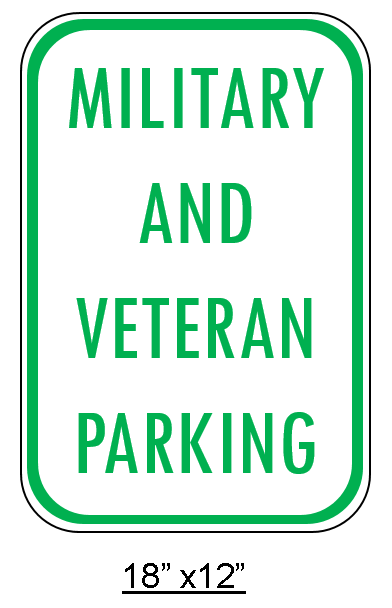
Sec. 30-447. - Military and veteran persons parking spaces.
Applicants seeking development approvals are strongly encouraged to specifically designate parking spaces for military and veteran persons, for all uses other than single-family, duplex, townhouse or multifamily; provided, however, industrial zoned properties are exempt from this section. Applicants are requested to adhere to the following ratio for the designation of military and veteran persons parking spaces:
(1)
Quantity of specially designated parking spaces.
(2)
Location of parking spaces. Such spaces should be located as closely as possible to parking spaces designated for the physically handicapped and/or disabled persons; provided however, parking spaces designated for the physically handicapped and/or disabled persons should take precedence. Where no parking spaces designated for the physically handicapped and/or disabled persons have been provided, parking spaces for military and veteran persons should be located on the shortest accessible route of travel from adjacent parking to an accessible entrance.
(3)
Signage and markings. All parking spaces for military and veteran persons should be prominently outlined with green paint and posted with an approved permanent above-ground sign which conforms to the figure below entitled "Military and Veteran Parking Sign" hereby incorporated in this section. The bottom of the sign should be a minimum five (5) feet above grade when attached to a building, or seven (7) feet above grade for a detached sign.
(Ord. No. 2017-11-12, § 2, 11-28-17)
Sec. 30-456.- Reserved.
Editor's note— Ord. No. 2004-10-40, § 2, adopted Oct. 18, 2004, deleted § 30-456 in its entirety. Former § 30-456 pertained to definitions and derived from Ord. No. 79-01-1, § 4, adopted Jan. 15, 1979.
Sec. 30-457. - Maximum density established.
(a)
The maximum density of residential development in the city shall be as follows:
(1)
The busway corridor and areas designated in the comprehensive plan as downtown mixed use (DMU): up to fifteen (15) dwelling units per acre.
(2)
Areas outside of those listed in (1) which are designated in the comprehensive plan as professional mixed use (PMU): up to ten (10) dwelling units per acre.
(3)
Zoning districts which implement the medium density residential (MRU) future land use category of the comprehensive plan, including, but not limited to the duplex district (R-2), townhouse district (R-TH), multiple apartment district (R-3), cluster house district (R-CH), and residential traditional neighborhood district (R-TND): up to eight (8) dwelling units per acre; except government property district (GP), west of U.S. 1: up to thirty (30) dwelling units per net acre. A bonus density of up to ten (10) dwelling units per acre may be available subject to demonstration of compliance with the performance criteria established in section 30-461 of this division.
(4)
Zoning district which implement the neighborhood mixed use (NMU) future land use category of the comprehensive plan, including, but not limited to the neighborhood mixed use (NMU) zoning district: up to eighteen (18) dwelling units per net acre. A bonus density within the Midtown Homestead - Hospital Corridor (MHHC) zoning subarea of the NMU zoning district: up to twenty-four (24) dwelling units per net acre may be available subject to demonstration of design excellence and/or functionality criteria established in section 30-396.547(h) of the Code.
(5)
The maximum density for affordable housing residential use in the SWPUN district civic/government subarea shall be twenty-five (25) units per net acre, provided that all residential units shall be reserved, dedicated and restricted exclusively for use as affordable housing for a minimum period of fifteen (15) years.
(6)
All other residentially designated areas of the city, not listed in subsections (1), (2), (3), or (5) above: up to six (6) dwelling units per net acre.
(b)
Upon an applicant's request, the city council may adopt area plans that propose greater densities for defined areas of the city located west of the Florida Turnpike. Such areas may encompass more than one (1) parcel, and shall include at least twenty-five (25) acres. The area plan shall be reviewed and recommended by the local planning agency and adopted by ordinance by the city council. The resulting density shall be demonstrated to be compatible with the urban form and character of surrounding properties and uses. Area plans shall not exceed the allowable density requirements set forth within the city's comprehensive plan, unless the comprehensive plan is amended to authorize such additional density. If an area plan is adopted, section 30-457 shall not apply.
(c)
Residential density shall be calculated and measured on a net acreage basis. Net acreage does not include land covered by canals, drainage-ways, wetlands, waterbodies, public parks and trails, including land dedicated to the public for park purposes, public open space, including land dedicated to the public for open space purposes, road rights-of-way, including required dedications for public rights-of-way, and other undevelopable areas identified and /or protected pursuant to federal, state or county law, as may be amended in the future. However, density shall be measured on a gross basis including dedicated rights-of-way, for those lots platted or developed prior to 1970, located on a block in which at least half of the lots were developed prior to April 1, 2001.
(d)
When the density restrictions are applied to residential construction within a planned unit development (PUD), the entire acreage of property shown on the master development plan of the PUD may be used for computation rather than the acreage of the site plan being considered for residential development with the PUD.
(e)
No greater density shall be permitted or authorized in excess of that specified above, notwithstanding any zoning classification or comprehensive plan land use designation applicable to the property.
(Ord. No. 79-01-1, § 1, 1-15-79; Ord. No. 94-02-20, § 1, 4-14-94; Ord. No. 2004-10-40, § 2, 10-18-04; Ord. No. 2009-07-19, § 2, 7-20-09; Ord. No. 2018-01-02, § 2, 1-17-18; Ord. No. 2022-04-08, § 2, 4-27-22; Ord. No. 2022-04-10, § 2, 4-27-22; Ord. No. 2023-09-21, § 2, 9-20-23; Ord. No. 2024-06-17, § 2, 6-26-24)
Cross reference— Density in fringe area, § 30-70(b).
Sec. 30-458. - Applicability to properties zoned for less than the maximum density.
The maximum density set forth in section 30-457 shall not be construed to increase allowable density when the density allowable under applicable zoning regulations or comprehensive plan land use designations is less than the maximum permissible set forth in section 30-457.
(Ord. No. 79-01-1, § 3, 1-15-79; Ord. No. 2004-10-40, § 2, 10-18-04)
Sec. 30-459. - Vested rights.
(a)
Nothing in this division shall be construed or applied to abrogate the vested rights of any person to develop property up to a maximum density of fifteen (15) residential units per acre where the following can be demonstrated:
(1)
That prior to the effective date of this division, or any amendment to this division, the property was zoned with a zoning classification which permitted up to the density requested;
(2)
That a validly issued, current and effective building permit was obtained prior to the effective date of this division, or any amendment to this division, which approved residential development on the property;
(3)
That prior to the effective date of this division, or any amendment to this division, an applicant has submitted a site plan or preliminary/tentative plat for review;
(4)
That the person has in good faith acted and relied to his or her detriment upon the matters referred to in subparagraph (2) or (3) above.
(b)
Any person claiming a vested right under this section shall file a written request for a vested rights determination with the city manager. The request shall be accompanied by a fee of five hundred fifty dollars ($550.00) and contain (i) a sworn detailed statement as to the basis upon which the vested right is asserted; (ii) all documentary evidence supporting the claim; and (iii) a copy of a current survey of the property showing all improvements.
(c)
Within forty-five (45) days from receipt of a complete request, the city manager or his designee shall determine whether the person has demonstrated compliance with subsection (a). Notice of that determination shall be provided to the person filing the request.
(d)
The vested rights determination made under subsection (c) above may be appealed to the city council within twenty (20) days of the date of such decision by filing a notice of appeal with the city clerk, together with a fee in the amount of five hundred fifty dollars ($550.00). The city council shall hold a de novo hearing to consider whether vested rights have been demonstrated. Appeals from decisions of the city council under this section shall be in accordance with the Florida Rules of Appellate Procedure.
(Ord. No. 94-02-20, § 3, 4-4-94; Ord. No. 2004-10-40, § 2, 10-18-04)
Editor's note— Ord. No. 94-02-20 § 2, adopted Apr. 4, 1994, repealed former § 30-459, relative to areas of specific densities. Provisions of former § 30-459 were derived from Ord. No. 79-01-01, §§ 5 and 5.1, adopted Jan. 15, 1979 and Ord. No. 89-06-41, § 1, adopted July 7, 1986. Ord. No. 94-02-20, § 3, adopted Apr. 4, 1994, did not specifically amend this code; hence, inclusion of § 3 as new § 30-459 was at the discretion of the editor.
Cross reference— R-3 multiple apartment district, § 30-206 et seq.
Sec. 30-460. - Certain uses exempted.
Hotels, motels, bed and breakfast establishments, community residential homes and rooming houses are exempted from the application of this division.
(Ord. No. 79-01-1, § 2, 1-15-79; Ord. No. 2004-10-40, § 2, 10-18-04; Ord. No. 2009-03-09, § 14, 3-16-09)
Sec. 30-461. - Density bonus for properties within the duplex district (R-2), townhouse district (R-TH), multiple apartment district (R-3), clusterhouse district (R-CH), and residential traditional neighborhood district (R-TND).
Within the zoning districts which implement the medium density residential (MRU) future land use category of the comprehensive plan, including but not limited to the duplex district (R-2), townhouse district (R-TH), multiple apartment district (R-3), clusterhouse district (R-CH), and residential traditional neighborhood district (R-TND), a bonus density increase to allow density of up to ten (10) dwelling units per acre may be available subject to compliance with the following performance criteria:
(1)
Environmental building and design performance standard. An increase of density of one (1) dwelling unit per acre may be reserved for developments that demonstrate Florida Green Building Coalition (FGBC) certification and/or Leadership in Environmental Design (LEED) certification at a minimum rating level of silver. The applicant shall comply with the following requirements:
a.
To qualify for the density bonus, the applicant shall include with its application for site plan approval a letter of intent that communicates the applicant's commitment to achieve Florida Green Building Coalition (FGBC) certification and/or Leadership in Environmental Design (LEED) certification at a minimum rating level of silver. An applicant desiring to obtain this density bonus shall participate in a pre-application meeting with the director of development services, and shall include the following documentation with the site plan submittal:
1.
Site and engineering plans for the development submitted by a professional accredited by the Florida Green Building Coalition (FGBC) and/or a professional holding Leadership in Environmental Design (LEED) certification;
2.
Completed checklist and/or points list for the applicable certification program;
3.
Documentation verifying that the project is registered with the Florida Green Building Coalition (FGBC) and/or Leadership in Environmental Design (LEED);
4.
A written narrative describing how the project will achieve the desired certification level.
b.
Prior to issuance of the final certificate of occupancy for the development, the applicant shall submit documentation that demonstrates achievement of Florida Green Building Coalition (FGBC) certification and/or Leadership in Environmental Design (LEED) certification at a minimum rating level of silver.
(2)
Open space preservation performance standard. An increase of density of one (1) dwelling unit per acre may be reserved for developments that meet one or more of the following performance standards. The required dedication to support a density bonus as provided herein shall be in addition to the applicable minimum open space requirements of this chapter.
a.
Preservation of open space within the development site to the city as park area. An applicant may achieve bonus density of up to one (1) additional dwelling unit per acre through preservation of open space for public recreational use in perpetuity. Open space provided to achieve a density bonus shall:
1.
Comprise no less than twenty (20) percent of the gross acreage of the development site;
2.
Be designed to offer passive and active recreation to the public, including pedestrian and/or bicycle amenities, and be accessible to the public through pedestrian and bicycle ways; and
3.
Be preserved and maintained by the applicant, and its successors and assigns, in perpetuity.
b.
Native landscape buffer. Preservation of an unelevated buffer of at least one hundred (100) feet in width and landscaped with Florida native vegetation approved by the director of development services. The buffer shall be located adjacent to the linear frontage of an abutting public right-of-way.
c.
Prior to final site plan approval of the project, the applicant shall provide for the preservation and maintenance of the open space and/or native landscape buffer provided in accordance with this section, through an irrevocable conservation easement in a form approved by the city attorney.
(Ord. No. 2009-07-19, § 2, 7-20-09)
Sec. 30-471.- Definitions.
The following words, terms and phrases, when used in this division, shall have the meanings ascribed to them in this section, except where the context clearly indicates a different meaning:
Community residential home, type 1 means a dwelling unit licensed to serve clients of the State of Florida Department of Elderly Affairs, Agency for Persons with Disabilities, Department of Juvenile Justice, or Department of Children and Family Services or a dwelling unit licensed by the Agency for Health Care Administration which provides a living environment for no more than six (6) individuals who operate as the functional equivalent of a family, including such supervision and care as may be necessary to meet the physical, emotional and social needs of residents. Residents may include frail elders (as defined in Sec. 429.65, Fla. Stat.), children who are found to be dependent or in need of services (as defined in Sec. 39.01(14), Sec. 984.03(9) or (12), or Sec. 985.03, Fla. Stat.), physically disabled or handicapped persons (as defined in Sec. 760.22(7)(a), Fla. Stat.), developmentally disabled persons (as defined in Sec. 393.063, Fla. Stat.), or nondangerous, mentally ill persons (as defined by Sec. 394.455(18), Fla. Stat.).
Community residential home, type 2 means a dwelling unit licensed to service clients of the State of Florida Department of Elderly Affairs, Agency for Persons with Disabilities, Department of Juvenile Justice, or Department of Children and Family Services or a dwelling unit licensed by the Agency for Health Care Administration which provides a living environment for seven (7) to fourteen (14) individuals who operate the functional equivalent of a family, including such supervision and care as may be necessary to meet the physical, emotional and social needs of residents. Residents may include frail elders (as defined in Sec. 429.65, Fla. Stat.), children who are found to be dependent or in need of services (as defined in Sec. 39.01(14), Sec. 984.03(9) or (12), or Sec. 985.03, Fla. Stat.), physically disabled or handicapped persons (as defined in Sec. 760.22(7)(a), Fla. Stat.), developmentally disabled persons (as defined in Sec. 393.063, Fla. Stat.), or nondangerous, mentally ill persons (as defined by Sec. 394.455(18), Fla. Stat.).
Assisted living facility means:
(a)
Any housing facility, including but not limited to adult congregate living facilities, nursing homes, community residential homes, community care facilities, and convalescent homes, licensed by the State of Florida Department of Elderly Affairs, Agency for Persons with Disabilities, Department of Juvenile Justice, or Department of Children and Family Services or a dwelling unit licensed by the Agency for Health Care Administration for more than fourteen(14) individuals who require treatment, care, rehabilitation or education. This includes individuals who are frail elders (as defined in Sec. 429.65, Fla. Stat.), children who are found to be dependent or in need of services (as defined in Sec. 39.01(14), Sec. 984.03(9) or (12), or Sec. 985.03, Fla. Stat.), physically disabled or handicapped persons (as defined in Sec. 760.22(7)(a), Fla. Stat.), developmentally disabled persons (as defined in Sec. 393.063, Fla. Stat.), or nondangerously mentally ill persons (as defined by Sec. 394.455(18), Fla. Stat.);
(b)
Government subsidized housing facilities entirely devoted to health care of frail elders (as defined in Sec. 429.65, Fla. Stat.), children who are found to be dependent or in need of services (as defined in Sec. 39.01(14), Sec. 984.03(9) or (12), or Sec. 985.03, Fla. Stat.), physically disabled or handicapped persons (as defined in Sec. 760.22(7)(a), Fla. Stat.), developmentally disabled persons (as defined in Sec. 393.063, Fla. Stat.), or nondangerous mentally ill persons (as defined by Sec. 394-455(18), Fla. Stat.); and
(c)
Any housing facility which provides a life care environment. A life care environment shall include, but is not limited to creation of a life estate in the facility itself and provision of off-site or on-site medical care.
Housing development designed to serve primarily elderly residents means all projects designed to meet the criteria required by the federal government for consideration for any type of mortgage or housing assistance payment for elderly and handicapped persons as defined in the most recent federal regulations for housing assistance.
Low income families and individuals means any family or individual earning less than eighty (80) percent of the median income based on family size according to the most recently adopted Dade County Housing Assistance Plan.
(Ord. No. 82-02-17, § 4, 3-1-82; Ord. No. 90-11-86, Pt. 3, 12-3-90; Ord. No. 2009-03-09, § 15, 3-16-09)
Cross reference— Definitions and rules of construction generally, § 1-2.
Sec. 30-472. - Housing for the elderly.
Housing developments, whether new construction or conversion of existing buildings containing thirty (30) or more units and designed to serve primarily elderly residents, shall be located so as to meet the following criteria:
(1)
Regular public bus service shall be within one-quarter mile of the development. If sidewalks are not available, connecting the development to the bus service route, it shall be the responsibility of the project developer to provide sidewalks in accordance with city standards.
(2)
A neighborhood park, as designed in the Homestead Comprehensive Plan shall be within one-quarter mile of the facility. The park shall not be separated from the housing development by a major highway containing more than four (4) lanes of traffic unless a signalized intersection is available along the shortest walking distance from the development to the park.
(Ord. No. 82-02-17, § 1, 3-1-82)
Sec. 30-473. - Housing for low income and public assistance recipients.
Housing developments, whether new construction or conversion of existing buildings, containing thirty (30) or more units and intended for occupancy by low income families or individuals and for which some form of federal, state or local public mortgage or rent assistance is being sought, shall be located so as to meet the following criteria:
(1)
Regular public bus service shall be within one-half mile of the development;
(2)
A neighborhood park, as designated in the Homestead Comprehensive Plan shall be within one-half mile of the proposed development. The park shall not be separated from the housing development by a major highway containing more than four (4) lanes of traffic unless a signalized intersection is available along the shortest walking distance from the development to the park.
(Ord. No. 82-02-17, § 2, 3-1-82)
Sec. 30-474. - Source of financing development.
All persons requesting building permits for more than thirty (30) units of multiple family housing and all persons requesting rezoning for any zoning category which permits multiple family apartments, shall indicate in writing the proposed source and method for financing the development.
(Ord. No. 82-02-17, § 5, 3-1-82)
Sec. 30-475. - Community residential homes and assisted living facilities.
(a)
Purpose and intent. The purpose and intent of this section is to protect the public health, safety and welfare by:
(1)
Establishing minimum standards for the occupancy, physical development, redevelopment, location, and future conversion of community residential homes and assisted living facilities (CRHs and ALFs) within Homestead;
(2)
Coordinating city regulations with those of the State of Florida and Miami-Dade County;
(3)
Ensuring an adequate quality of life for residents of community residential homes and assisted living facilities by providing for a balanced mix of residential, social, health and leisure services within such facilities;
(4)
Encouraging the development of community residential homes and assisted facilities within planned developments; and
(5)
Establishing standards for the appropriate placement of community residential homes and assisted living facilities within the planning framework established by the Homestead Comprehensive Plan.
(b)
Applicability. The requirements of this section shall apply to all community residential homes and assisted living facilities within Homestead.
(c)
Maximum occupancy. The following maximum occupancy standards shall apply to community residential homes living facilities.
(1)
The maximum occupancy of a community residential home, type 1 shall be six (6) persons excluding staff.
(2)
The maximum occupancy of a community residential home, type 2 shall be fourteen (14) persons, excluding staff.
(d)
Number of residents to be specified. The total number of residents proposed, including resident staff, shall be specified on development applications.
(e)
Supplemental property development regulations.
(1)
Location, concentration and neighborhood compatibility. No approval for a community residential home or assisted living facility shall be granted unless it satisfies the following criteria for location, concentration and neighborhood compatibility.
a.
Location of community residential home, type 1. A community residential home, type 1 may be allowed in districts permitting single-family residential dwellings, provided that such homes shall not be located within a radius of one thousand (1,000) feet of another existing community residential home with six (6) or fewer residents.
b.
Location of community residential home, type 2, and assisted living facility. A community residential home, type 2 may be permitted in all multiple family zoning districts as a permitted use, provided that such homes are not located within a radius of twelve hundred (1,200) feet of another community residential home, and provided that it is not located within a radius of five hundred (500) feet from a zoning district that allows single-family dwelling units as permitted uses.
c.
Location of assisted living facility. An assisted living facility with less than fifteen (15) residents shall comply with the community residential home regulations established for types 1 and 2 above. An assisted living facility with fifteen (15) or more residents shall be permitted only after a public hearing before the city council and the approval of a special exception pursuant to section 30-55 and section 30-531.
[d.]
Each community residential home, type 2, and assisted living facility shall be located within five (5) road miles of a full-service professional fire rescue station, as determined by the Miami-Dade County Fire-Rescue Department. An assisted living facility shall have access to a paved collector or arterial street.
(Ord. No. 90-11-86, Pt. 3, 12-3-90; Ord. No. 2009-03-09, § 16, 3-16-09; Ord. No. 2022-04-08, § 2, 4-27-22)
Sec. 30-476. - Reserved.
Editor's note— Ord. No. 2013-01-02, § 3, adopted January 16, 2013, repealed § 30-476 in its entirety. Former § 30-476 pertained to reasonable accommodation procedures and was derived from Ord. No. 2009-03-09, § 17, adopted March 16, 2009.
Sec. 30-486.- Residential and mixed-use zones.
(a)
No fence located in any residentially zoned area of the city shall exceed a height of six (6) feet when erected behind the established building line of the property upon which it is located.
(b)
No fence or wall located in any residentially zoned area of the city shall exceed a height of four (4) feet when erected in the front setback area. Corner lots whose rear lot line abuts the side lot line of an adjoining lot shall be restricted to a fence or wall height not greater than four (4) feet in residentially zoned areas of the city for a distance equal to the required front setback line of said adjoining lot.
(c)
Barbed wire atop any fence within any residential or mixed-use zoned areas of the city is hereby prohibited.
(d)
Wood and chain-link fencing within any residential or mixed-use zoned areas of the city is hereby prohibited. Notwithstanding this prohibition, wood fencing may be permitted within any residential or mixed-use zoned areas in the city, where such property is located within a development which is governed by an active homeowners association (HOA) or condominium association formed in accordance with F.S. chs. 720 and 718 respectively.
(e)
Mesh or similar type screening shall be prohibited on existing chain-link fencing located on properties within any residential or mixed-use zoned areas in the city, which is deemed to be a legal nonconforming structure pursuant to this chapter, and shall be removed by December 31, 2025. Mesh or similar type screening on chain-link fencing may only be replaced with such screening consisting of composite woven slats or inserts.
(Code 1975, § 16A-7; Ord. No. 84-11-89, § 301, 11-19-85; Ord. No. 87-03-20, § 1, 3-15-87; Ord. No. 2025-05-14, § 2, 5-28-25)
Sec. 30-487. - Commercial zones.
(a)
No fence or wall in any commercially zoned area of the city shall exceed a height of eight (8) feet when erected behind the established building line of the property upon which it is located.
(b)
No fence or wall located in a B-1A, B-1 or B-2 zoned area shall exceed a height of four (4) feet in the front and side street setback area between the building setback line and property line.
(c)
Outdoor storage areas in the B-3 district shall be effectively screened from the view of adjacent lots and rights-of-way. Screening shall be accomplished through the installation of opaque fences or walls or dense plantings of shrubs or hedges that provide a complete visual barrier. No fence, wall or hedge shall exceed a height of eight (8) feet when erected or installed between an established street line and the property on which it is located. Fences or walls used to satisfy these visual barrier requirements shall be constructed of wood or masonry. The use of other than wood, masonry or living natural plant materials to satisfy the screening requirements of this section shall require review and approval by the city council.
(d)
Barbed wire atop any fence located in a commercially zoned area is prohibited unless it can be demonstrated that the barbed wire is essential for the protection of the property upon which it is located.
(Code 1975, § 16A-8; Ord. No. 84-11-89, § 302, 11-19-85; Ord. No. 90-11-86, Pt. 3, 12-3-90; Ord. No. 2013-03-09, § 4, 3-20-13; Ord. No. 2022-04-08, § 2, 4-27-22)
Sec. 30-488. - Industrial zones.
(a)
Fencing. No fence located in any industrially zoned area of the city shall exceed a height of eight (8) feet exclusive of barbed wire on top of the fence. Protective barbed wire shall not exceed four (4) strands. The fence may be made of materials including concrete block, stucco, metal sheathed with an aesthetic finish, PVC or other synthetics.
(b)
Enclosures for outside storage or operations. Storage and operations in the I districts are required to be enclosed by a masonry wall or located within a building, pursuant to sections 30-306(b), 30-321(b); and 30-336(b). However, alternative screening may be provided, if it provides the same amount of visual and auditory buffering that would be provided by an eight (8) foot masonry wall, if shown and approved on the site plan. The alternative screening shall be evaluated for compatibility with and impact on surrounding properties and for design, as those terms are defined by section 30-45(d)(1) and (5), as part of the site plan review. Such site plan review, when applied to existing development seeking alternative screening, shall not trigger urban design guideline review or school impact review. In addition, such alternative screening shall be landscaped in a manner consistent with chapter 29 of the Code. Alternative screening shall not be permitted for junkyards, auto storage/repo yards, concrete manufacturing, and aggregate storage bin uses.
(Code 1975, § 16A-9; Ord. No. 84-11-89, § 303, 11-19-85; Ord. No. 2004-02-09, § 13, 3-15-04)
Sec. 30-489. - Other fence restrictions.
(a)
Razor wire, glass, nails and other passive weapons that would be dangerous to life or limb, excluding barbed wire, shall not be allowed on the top or side of fences, either in residential, commercial or industrial zones.
(b)
An application for a site plan for development including the types of fencing prohibited in this section may be filed by a government entity, pursuant to section 30-47.
(c)
The use of prohibited fencing shall be evaluated as part of the site plan review for compatibility with and impact on surrounding properties and for design, as those terms are defined by section 30-45(d)(1) and (5). Such site plan review, when applied to existing development seeking prohibited fencing, shall not trigger urban design guideline review or school impact review.
(d)
Barbed wire fence shall be prohibited in the following zoning districts: A-1, A-2, R-1, R-2, R-TH, R-CH, R-3, R-4, RMH, R-TND, P, PUN and PUD zone. Barbed wire may be approved atop fences in commercial and industrial zoning districts pursuant to the requirements provided within sections 30-487(d) and 30-488(a). Notwithstanding the above, no barbed wire fence shall be erected, placed or remain along or adjacent to any public street, alley or other public place.
(e)
No electric fences shall be permitted within the city.
(f)
No fence or wall in any district shall be erected along a lot line of an adjoining lot of a residential classification at a greater height than six (6) feet.
(g)
Hedges, fences or shrubbery may be erected on or across any public or utility easement, but will be maintained at the risk of the property owner which could be damaged by city utility crews in the performance of their duties.
(Ord. No. 84-11-89, § 304, 11-19-85; Ord. No. 86-07-49, § 1(304), 8-7-86; Ord. No. 2004-02-09, § 13, 3-15-04; Ord. No. 2013-03-09, § 4, 3-20-13)
Sec. 30-501.- Safety barrier required.
(a)
No swimming pool final inspection and approval shall be given by the inspection department, unless there has been erected a safety barrier as hereinafter provided.
(b)
The safety barrier shall take the form of a screened-in patio, a wooden fence, a wire fence, a concrete block wall, or other materials so as to enable the owner to blend the same with the style of architecture planned or in existence on the property.
(c)
The minimum height of the safety barrier shall be not less than four (4) feet. The safety barrier shall be erected either around the swimming pool or around the premises on which the swimming pool is erected; in either event, it shall enclose the area entirely, prohibiting unrestrained admittance to the enclosed area.
(d)
Gates shall be of the spring lock type, so that they shall automatically be in a closed position at all times. Gates shall also be equipped with a safe lock and shall be locked when the swimming pool is not in use.
(e)
Before any work is commenced, permits shall be secured for all swimming pools, and for the safety barriers. Plans shall contain all details to show compliance with the terms and conditions of these regulations. No swimming pool permit shall be issued unless simultaneously therewith a permit is secured for the erection of the safety barrier; if the premises are already enclosed, as hereinbefore provided, permit for the safety barrier shall not be required, if, upon inspection of the premises, the existing barrier is proven to be satisfactory.
(f)
In the wooden type fence, the boards, pickets, louvers, or other such members, shall be spaced, constructed, and erected, so as to make the fence nonclimbable and impenetrable. Walls, whether of the rock or block type, shall be so erected to make them nonclimbable. Wire fences shall be two-inch chain link or diamond weave nonclimbable type, or of an approved equal, with top rail. They shall be of a heavy galvanized material.
(g)
It shall be within the discretion of the building and zoning director to refuse approval of any barrier, which, in his opinion does not furnish the safety requirements of this section, i.e., that it is high enough and so constructed to keep children of preschool age from getting over or through it.
(Ord. No. 73-10-46, § XXIV, 12-18-73)
Sec. 30-511.- Definitions.
The following words, terms and phrases, when used in this division, shall have the meanings ascribed to them in this section, except where the context clearly indicates a different meaning:
Manmade lake includes any excavation open to the natural water table having at least two (2) major dimensions in excess of fifty (50) feet and a depth in excess of twenty-four (24) inches at any point at the seasonal low water level. Such term shall not include any canals, watercourses, swales, or like bodies designed and used solely for the conductance of flowing water or in which the volume of water is controlled or determined by sluice gates, flood gates, or similar device or by natural flow of tides.
Seasonal low water level means the foreseeable seasonally cyclically recurring minimum level of water present in any manmade lake.
Seasonal low water meander line shall mean the boundary line formed by the contact of the water's edge and the lake shore at seasonal low water.
Seasonal high water meander line shall be construed in accordance with the above, except that the referent water level shall be the foreseeable seasonally and cyclically recurring maximum level of water present in any manmade lake.
Maximum gradient is the relation, be it expressed in percentage or proportion, between the abscissa and the ordinate of any lake shore or lake bottom slope representing the maximum permissible steepness or incline of any such slope.
Terraced means land contoured in a step style arrangement where the portions of such contours comprising the horizontal plateaus have a gradient within seven and one-half (7½) percent of the horizontal and the portions comprising the vertical drops have a positive gradient within thirty (30) percent of the vertical.
Setback is the distance from the seasonal high water line to the nearest exterior wall of any structure.
Marina facility includes any structure used solely for the purpose of providing goods and services to recreational users of recreation areas of manmade lakes including any docks, piers, boat ramps, or like structures. This provision shall not be construed to authorize retail service or repair of any mechanical, electrical, architectural or other equipment or portion of any boat lift, hoist, or similar device; nor shall this provision authorize the sale of fuel, oil, or other lubricant or fluid for use in operation or maintenance of any mechanical system of any boat or vessel.
(Ord. No. 82-08-50, § 1, 8-16-82)
Cross reference— Definitions and rules of construction generally, § 1-2.
Sec. 30-512. - Sloping and terracing.
(a)
Sloping requirements for manmade lake bottoms shall be as follows:
(1)
In areas where relatively intensive common or public access to the lake for aquatic recreational purposes is encouraged, permitted or suffered by the owner of such common or public areas, the lake bottom shall be sloped such that a maximum gradient of seven (7) feet on the abscissa per foot on the ordinate (approximately fourteen and twenty-eight hundredths (14.28) percent grade) is maintained at all points between the seasonal low water meander line and a meander line at a water depth at least five (5) feet below the elevation of the seasonal low water level, of to the maximum depth when the maximum depth is less than five (5) feet.
(2)
All other such lake bottoms shall be sloped so that a maximum gradient of four (4) feet on the abscissa per foot on the ordinate (twenty-five (25) percent grade) is maintained at all points at a water depth at least five (5) feet below the elevation of the seasonal low water level or to the maximum water depth when the maximum depth is less than five (5) feet.
(b)
The shores of any manmade lake appurtenant to which any structure is to be built or onto which public or common access is encouraged, permitted, or suffered by the owner, shall be either sloped or terraced as follows:
(1)
Sloped such that a maximum gradient of four (4) feet on the abscissa per foot on the ordinate (twenty-five (25) percent grade) is maintained between the mean high water meander line and road flood criteria elevation.
(2)
Terraced such that each of the horizontal plateaus has a width of at least four (4) feet and vertical drops none of which exceeds ten (10) inches, with such terracing to be maintained between the mean high water meander line and road flood criteria elevation.
(3)
In the run of any upland slope or terrace contemplated in (1) or (2) above, there shall be permitted a wall not more than three (3) feet in height to be erected at any point between the mean low water and mean high water meander lines. Such wall shall have a flat upper surface no lower in height than the point of intersection of the slope of a grade or the plateau portion of the terrace adjoining such wall. In any parcel of land which may be legally separately fenced, and in which the height of the wall is not less than eighteen (18) inches at any point, there shall be provided steps designed and maintained to allow access between the upland and waterward sides of the wall. Such wall shall be certified by an engineer as capable of withstanding normal loads from the soil it retains, including the load of completely saturated soil. Adjoining the wall on its waterward side shall be an expanse of ground at least four (4) feet in width having a gradient within seven and one-half (7.5) percent of horizontal.
(c)
If any structure other than a marina facility is to be erected appurtenant to a manmade lake, it shall be set back at least five (5) feet from the seasonal high water meander line. Marina facilities may be constructed which meet the other requirements of the building and zoning ordinances, but shall be exempt from setback requirements.
(Ord. No. 82-08-50, § 2, 8-16-82)
Sec. 30-513. - Fencing requirements.
(a)
In the case of manmade lakes in no portion of which is recreational use encouraged, permitted, or suffered by the owner(s), compliance with the sloping requirements above is not required where there is erected around the lake a fence or wall not less than five (5) feet high.
(b)
Such fence or wall shall be constructed so as to make it impractical for a human being to pass through it or to scale. Gates shall be kept locked. Barbed wire shall be permitted to assure difficulty in scaling.
(Ord. No. 82-08-50, § 3, 8-16-82)
Sec. 30-514. - Applicability.
(a)
The lake bottom sloping and fencing requirements hereof shall be applicable to all manmade lakes in which dredge, dragline, or similar soil removal activities shall cease for a period of sixty (60) days, including lakes where such operations have ceased prior to the ordinance from which this division was derived taking effect.
(b)
Subsection (a) above shall not apply to manmade lakes which have been incorporated or included in any application or project previously permitted in which application or project engineering data have been submitted with respect to sloping and as to which construction has commenced prior to the effective date of the ordinance from which this division was derived.
(Ord. No. 82-01-05, §§ 1—4, 1-18-82; Ord. No. 82-08-50, § 4, 8-10-82)
Sec. 30-515. - Lake maintenance easement.
(a)
A minimum twenty-foot lake maintenance easement shall be established for all newly created manmade lakes. Such easement shall be measured from the top of the lake bank to the rear property line of a lot or parcel.
(b)
No structures, including but not limited to fences, boat docks, and fishing piers shall be permitted within the maintenance easement unless approved by the director of development services department.
(Ord. No. 2004-10-41, § 16, 10-18-04)
Editor's note— Ord. No. 2004-10-41, § 16, adopted Oct. 18, 2004, supplied provisions to be set out as § 30-530.1. In order to preserve the style of the Code, and provide ease in future supplementation, these provisions have been renumbered as § 30-515 to read as set out herein.
Sec. 30-531.- Established.
(a)
The following uses are designated as special exceptions throughout this city and shall require an application and a public hearing before the city council and the granting of a special exception by the city council prior to the business being allowed to open and a local business tax receipt being issued:
_____
_____
(b)
Such uses as set forth in (a) above shall require an application and a public hearing before the city council and the issuance of a special exception by ordinance by the city council prior to being issued a local business tax receipt by the city.
(Ord. No. 81-11-65, §§ 1—5, 11-2-81; Ord. No. 82-08-56, §§ 1, 2, 9-7-82; Ord. No. 83-11-76, § 1, 11-21-83; Ord. No. 84-09-64, § 1, 9-17-84; Ord. No. 84-11-94, § 2, 1-7-85; Ord. No. 89-10-87, § 3, 11-6-89; Ord. No. 90-11-86, Pt. 3, 12-3-90; Ord. No. 99-05-26, § 3, 5-17-99; Ord. No. 2003-06-23, § 27, 6-23-03; Ord. No. 2006-02-03, § 2, 2-6-06; Ord. No. 2006-06-29, § 3, 7-17-06; Ord. No. 2007-08-26, § 17, 8-6-07; Ord. No. 2008-09-28, § 9, 9-15-08; Ord. No. 2009-03-09, § 18, 3-16-09; Ord. No. 2010-06-17, § 2, 6-21-10; Ord. No. 2012-05-10, § 6, 5-16-12; Ord. No. 2012-09-19, § 3, 9-19-12; Ord. No. 2013-12-25, § 4, 12-18-13; Ord. No. 2014-02-01, § 3, 2-19-14; Ord. No. 2014-04-04, § 4, 5-21-14; Ord. No. 2014-09-15, § 3, 9-23-14; Ord. No. 2015-06-05, § 2, 6-17-15; Ord. No. 2022-04-08, § 2, 4-27-22; Ord. No. 2025-05-12, § 2, 5-28-25)
Sec. 30-532. - Interim agricultural uses.
It is the intent of this section to permit certain interim agricultural uses on a temporary basis which retain the land in its open, undeveloped character. The following minimum standards and criteria shall apply to all properties seeking a special exception permit to allow the establishment of an interim agricultural use:
(1)
All parcels shall be a minimum of five (5) acres in size.
(2)
The interim agricultural use may be granted for a period of five (5) years. The city council may extend the interim agricultural use by granting up to one (1) twenty-four-month extension to the initial time frame. The decision on whether to extend the interim agricultural use shall be based on the same criteria as the decision to grant it.
(3)
Any established interim agricultural use which in any way attracts or invites access and use of the general public, or the use of such premises for any commercial activity other than that expressly permitted within the special exception permit, is strictly prohibited.
(4)
All interim agricultural uses shall be properly screened and buffered.
(5)
Any interim agricultural uses involving livestock is strictly prohibited.
(6)
The storage and handling of hazardous materials is strictly prohibited.
(7)
All parcels shall be properly maintained with no code enforcement proceedings pending.
(8)
All parcels shall be free and clear from all liens related to any code enforcement violations or proceedings.
(9)
In addition to addressing the review criteria of section 30-45 of the code regarding special exceptions, the city council may place conditions on the approval of a special exception granting interim agricultural use to ensure general compatibility with adjacent properties and other properties in the area, as well as any other conditions the city council my deem as necessary.
In order to properly address and insure that all fiscal, compatibility and environmental impacts to the city and neighboring properties are minimized to the greatest extent feasible, a general impact agreement shall be required between the city and any property owner seeking a special exception permit to allow interim agricultural uses. A general impact agreement may address any applicable mitigation terms and conditions related to the proposed interim agricultural use. The general impact agreement shall be in a form approved by the city attorney and executed by the property owner prior to the granting of a special exception.
Approval of a special exception permit shall be deemed to authorize only the particular site configuration, layout and level of impacts that were approved, unless the special exception permit is amended, rescinded or revoked. Receipt of a special exception permit shall not insure that the approved development will receive subsequent approval for other applications for development permits, unless the relevant and applicable portions of this chapter are met.
The special exception permit may be rescinded or revoked by the city council at any time, upon notice and hearing for violation of any ordinance of the city or law of Miami-Dade County or the State of Florida pertaining to the property, or for any other good and sufficient reason.
Prior to submitting an application for a special exception permit, a pre-application meeting shall be held to discuss eligibility, application submittal requirements, a general impact agreement, potential mitigation options, and related issues.
(Ord. No. 2010-06-17, § 3, 6-21-10)
Sec. 30-533. - Definitions relative to sexually oriented businesses.
(1)
Adult arcade means any place to which the public is permitted or invited wherein coin-operated or slug-operated or electronically, electrically, or mechanically controlled still or motion picture machines, projectors, or other image-producing devices are maintained to show images to five (5) or fewer persons per machine at any one time, and where the images so displayed are distinguished or characterized by the depicting or describing of "specified sexual activities" or "specified anatomical areas."
(2)
Adult bookstore or adult video store means a commercial establishment which as its principal business purpose offers for sale or rental for any form of consideration any one or more of the following:
(a)
Books, magazines, periodicals or other printed matter, or photographs, films, motion pictures, video cassettes or video reproductions, slides, or other visual representations which depict or describe "specified sexual activities" or "specified anatomical areas;" or
(b)
Instruments, devices, or paraphernalia which are designed for use in connection with "specified sexual activities."
(3)
Adult cabaret means nightclub, bar, restaurant, or similar commercial establishment which regularly features:
(a)
Persons who appear in a state of nudity; or
(b)
Live performances which are characterized by the exposure of "specified anatomical areas" or by "specified sexual activities;" or
(c)
Films, notion pictures, video cassettes, slides, or other photographic reproductions which are characterized by the depiction or description of "specified sexual activities" or " specified anatomical areas."
(4)
Adult motel means a hotel, motel or similar commercial establishment which:
(a)
Offers accommodations to the public for any form of consideration; provides patrons with closed-circuit television transmissions, films, motion pictures, video cassettes, slides, or other photographic reproductions which are characterized by the depiction or description of "specified sexual activities" or specified anatomical areas;" and has a sign visible from the public right-of-way which advertises the availability of this adult type of photographic reproductions; or
(b)
Offers a sleeping room for rent for a period of time that is less than ten (10) hours; or
(c)
Allows a tenant or occupant of a sleeping room to subrent the room for a period of time that is less than ten (10) hours.
(5)
Adult motion picture theater means a commercial establishment where, for any form of consideration, films, motion pictures, video cassettes, slides, or similar photographic reproductions are regularly shown which are characterized by the depiction or description of "specified sexual activities" or "specified anatomical areas."
(6)
Adult theater means a theater, concert hall, auditorium, or similar commercial establishment which regularly features persons who appear in a state of nudity or live performances which are characterized by the exposure of "specified anatomical areas" or by "specified sexual activities."
(7)
Escort means a person who, for consideration, agrees or offers to act as a companion, guide, or date of another person, or who agrees or offers to privately model lingerie or to privately perform a striptease for another person.
(8)
Escort agency means a person or business association who furnishes, offers to furnish, or advertises to furnish escorts as one of its primary business purposes, for a fee, tip, or other consideration.
(9)
Nude model studio means any place where a person who appears in a state of nudity or displays "specified anatomical areas" is provided to be observed, sketched, drawn, painted, sculptured, photographed, or similarly depicted by other persons who pay money or any form of consideration.
(10)
Nudity or a state of nudity means:
(a)
The appearance of a human bare buttock, anus, male genitals, female genitals, or areola of the female breast; or
(b)
A state of dress which fails to opaquely cover a human buttock, anus, male genitals, female genitals, or areola of the female breast.
(11)
Residential district means a single family, duplex, townhouse, multiple family or mobile home zoning district as defined in the Zoning Code of the City of Homestead.
(12)
Residential use means a single family, duplex, multiple family, or "mobile home park, mobile home subdivision, and campground" use as defined in the Zoning Code of the City of Homestead.
(13)
Sexual encounter center means a business or commercial enterprise that, as one of its primary business purposes, offers for any form of consideration:
(a)
Physical contact in the form of wrestling or tumbling between persons of the opposite sex; or
(b)
Activities between male and female persons and/or persons of the same sex when one or more of the persons is in a state of nudity or semi-nude.
(14)
Sexually oriented business means an adult arcade, adult bookstore or adult video store, adult cabaret, adult motel, adult motion picture theater, adult theater, escort agency, nude model studio, or sexual encounter center.
(15)
Specified anatomical areas means human genitals in a state of sexual arousal.
(16)
Specified sexual activities means and includes any of the following:
(a)
The fondling or other erotic touching of human genitals, pubic region, buttocks, anus, or female breasts;
(b)
Sex acts, normal or perverted, actual or simulated, including intercourse, oral copulation, or sodomy;
(c)
Masturbation, actual or simulated; or
(d)
Excretory functions as part of or in connection with any of the activities set forth in (a) through (c) above.
(Ord. No. 89-10-87, § 4, 11-6-89)
Sec. 30-534. - Local business tax receipts for sexually oriented businesses.
(a)
All licenses receipts for sexually oriented businesses shall be issued in a manner consistent with the issuance of any other licenses receipts for special use permits and for unusual uses within the City of Homestead and shall be subject to the same investigative procedures as any other request for an unusual use or special use permit within the City of Homestead and shall be handled by the licensing department of the City of Homestead with the assistance of the police department of the City of Homestead when requested.
(b)
The expiration date of such licenses receipts for sexually oriented businesses shall be on an annual basis as are other licenses receipts issued by the City of Homestead and shall be subject to the same review requirements by the city council of the City of Homestead as are all other special use permits and unusual use licenses receipts. The review by the City of Homestead can, after proper notice and hearing, include suspension and/or revocation of said license receipt.
(Ord. No. 89-10-87, § 4, 11-6-89; Ord. No. 2007-08-26, § 18, 8-6-07)
Sec. 30-535. - Locations of sexually oriented businesses.
(a)
No sexually oriented business may be allowed to begin or to continue operation, and the operation of same shall be a violation of the Codes and Ordinances of the City of Homestead, if said sexually oriented business is within one thousand (1,000) feet of:
(1)
A church or library;
(2)
A public or private elementary or secondary school;
(3)
A boundary of a residential district as defined in this chapter;
(4)
A public park adjacent to a residential district as defined in this chapter;
(5)
Another previously established sexually oriented business as defined within this chapter or within five hundred (500) feet of the property line of an isolated lot devoted to a residential use as defined in this chapter.
(Ord. No. 89-10-87, § 5, 11-6-89; Ord. No. 2018-01-03, § 2, 1-17-18)
Sec. 30-536. - Additional regulations for sexually oriented businesses.
(1)
Additional regulations for escort agencies.
(a)
An escort agency shall not employ any person under the age eighteen (18) years.
(b)
A person commits an offense if he/she acts as an escort or agrees to act as an escort for any person under the age of eighteen (18) years.
(2)
Additional regulations for nude model studios.
(a)
A nude model studio shall not employ any person under the age of eighteen (18) years.
(b)
A person under the age of eighteen (18) years commits an offense if he/she appears in a state of nudity in or on the premises of a nude model studio. It is a defense to prosecution under this subsection if the person under eighteen (18) years was in a restroom not open to public view or persons of the opposite sex.
(c)
A person commits an offense if he/she appears in a state of nudity or knowingly allows another to appear in a state of nudity in an area of a nude model studio premises which can be viewed from the public right-of-way.
(d)
A nude model studio shall not place or permit a bed, sofa, or mattress in any room on the premises, except that a sofa may be placed in a reception room open to the public.
(3)
Additional regulations for adult theaters and adult motion picture theaters.
(a)
A person commits an offense if he/she knowingly allows a person under the age of eighteen years to appear in a state of nudity in or on the premises of an adult theater or adult motion theater.
(b)
A person under the age of eighteen (18) years commits an offense if he/she knowingly appears in a state of nudity in or on the premises of an adult theater or adult motion picture theater.
(c)
It is a defense to prosecution under subsections (3)(a) and (b) of this section if the person under eighteen (18) years was in restroom not open to public view or persons of opposite sex.
(4)
Additional regulations for adult motels.
(a)
Evidence that a sleeping room in a hotel, motel, or similar commercial establishment has been rented and vacated two (2) or more times in a period of time that is less than ten (10) hours creates a rebuttable presumption that the establishment is an adult motel as that term is defined in this chapter.
(b)
A person commits an offense if, as the person in control of sleeping room in a hotel, motel, or similar commercial establishment that does not have a sexually oriented business license, he/she rents or subrents a sleeping room to a person and, within ten (10) hours from the time the room is rented, he/she rents or subrents the same sleeping room again.
(c)
For purposes of subsection (4)(b) of this section, the terms "rent" or "subrent" mean the act of permitting a room to be occupied for any form of consideration.
(Ord. No. 89-10-87, § 5, 11-6-89)
Sec. 30-536.1. - Junk yard.
The following minimum standards and criteria shall apply to all properties seeking a special exception permit to allow the establishment of a junk yard:
(1)
All operations and storage of materials and products associated with the operation shall be screened from the view of adjacent lots and rights-of-way. Screening shall be accomplished through the installation of a masonry wall with a minimum of eight (8) feet to provide a complete visual barrier.
(Ord. No. 2012-05-10, § 7, 5-16-12)
Editor's note— Ord. No. 2012-05-10, § 7, adopted May 16, 2012, supplied provisions to be added to this Code as §§ 30-537 and 30-538. In order to maintain the established numbering system of this Code, at the discretion of the editor, said provisions have been redesignated as §§ 30-536.1 and 30-536.2 to read as set out herein.
Sec. 30-536.2. - Recycling and transfer facility.
The following minimum standards and criteria shall apply to all properties seeking a special exception permit to allow the establishment of a recycling and transfer facility:
(1)
All operations and storage of materials and products associated with the operation shall be screened from the view of adjacent lots and rights-of-way. Screening shall be accomplished through the installation of a masonry wall with a minimum of eight (8) feet to provide a complete visual barrier.
(Ord. No. 2012-05-10, § 7, 5-16-12)
Editor's note— See editor's note following § 30-536.1.
Sec. 30-536.3. - Athletic field.
The following minimum standards and criteria shall apply to all properties seeking a special exception permit to allow the establishment of an athletic field:
(1)
Permanent restroom facilities shall be provided on-site.
(2)
Field lighting shall not be permitted.
(3)
If natural turf is utilized the field shall be sodded and an irrigation system installed, in accordance with section 29-6(2).
(Ord. No. 2013-12-25, § 4, 12-18-13)
Sec. 30-536.4. - Commercial retail uses.
Notwithstanding the Restricted Retail Commercial (B-1) and Retail Commercial (B-2) zoning district general prohibition on the storage of materials and products and all operations of work of every character conducted entirely within the enclosing walls and under roof of a building, the following minimum standards and criteria shall apply to all properties seeking a special exception permit to allow a commercial retail use:
(1)
Outdoor storage may be permitted only if enclosed by a masonry wall with a minimum height of eight (8) feet.
(2)
Any commercial retail use shall comply with the commercial development standards and criteria established pursuant to division 9 of this article. In such cases where the commercial retail use is located outside the boundaries of a commercial development overlay district established pursuant to section 30-538 of this article, the general district regulations provided within section 30-541 and the architectural regulations provided within section 30-542 shall apply as the minimum development standards.
(Ord. No. 2014-04-04, § 4, 5-21-14)
Sec. 30-537.- Purpose and intent.
The purpose and intent of the mixed use and non-residential standards is to supplement existing development criteria with specific criteria that apply to the design of mixed use and non-residential buildings and projects. The mixed use and non-residential development standards also encourage and provide enhanced property development within the city.
For the purposes of this division mixed use and non-residential development shall not include agricultural uses or development.
These standards and guidelines incorporate a basic level of architectural design with site design features that incorporate safe and convenient vehicular use areas and pedestrian ways; and streetscape features that intend to result in a comprehensive plan for building design; and site development consistent with the goals, policies and objectives of the city comprehensive plan.
Objectives to be attained through the mixed use and non-residential zoning districts are as follows:
(1)
Protection of adjacent residential land uses;
(2)
Enhancement of the mixed use and non-residential status within the city limits;
(3)
Reduction of visual distraction through uniform design criteria within the different mixed use and non-residential zoning districts;
(4)
Enhancement of physical appearance through increased landscaping within the mixed use and non-residential zoning districts;
(5)
Implementation of city history through street furniture and streetscape;
(6)
Increase pedestrian-oriented facilities in both private and public structures;
(7)
Implementation of sign regulations within the mixed use and non-residential zoning districts;
(8)
Establish development incentives to accomplish these objectives; and
(9)
Achieve aesthetic compatibility throughout the established mixed use and non-residential zoning districts.
(Ord. No. 2019-12-14, § 2, 12-19-19)
Sec. 30-538. - General district regulations.
The following requirements shall apply throughout the mixed use and non-residential zoning districts:
(1)
Underground utilities. In the mixed use and non-residential zoning districts, all utilities including telephone, television cable, and electrical systems shall be installed underground unless otherwise approved by the director of utilities and director of development services. Primary facilities providing service to or passing through the site may be exempted from this requirement. Large transformers shall be placed on the ground and contained within pad mounts, enclosures or vaults. The developer or private utility shall provide adequate landscaping with shrubs and plants to screen all utility facilities permitted above ground, except for city electrical substations.
(2)
Screening requirements. All mechanical equipment including but not limited to heating, ventilating, air conditioning machinery, accessory communications equipment, public utility service fixtures, and elevator facilities shall be screened from the public view. All solid waste disposal facilities, such as dumpsters and similar facilities, shall be screened on all four (4) sides from the public view. The front of a solid waste disposal facility shall be gated and shall consist of durable materials consistent with the overall design of the principal structure. All storage areas shall be screened from the public view and from adjacent residential zoning districts. Loading areas or docks, trash compaction, truck parking, recycling, rooftop equipment and other service functions shall be fully screened and out of view from adjacent properties and from the roadway. All screening shall be provided with a combination of landscape and building materials consistent with the architectural design of the principal structure. Screening shall extend at least one (1) foot above the object to be screened, but fencing shall not exceed eight (8) feet in height.
(3)
Pedestrian entrances. Major public entrances shall only be located along the following roads: Campbell Drive, Krome Avenue, Flagler Avenue, South Dixie Highway, SW 14th Avenue, Mowry Drive, Kingman Road, and NW 15th Street. Pedestrian entrances shall be consistent with the design and intended use of the mixed use or non-residential structure and shall be included with site plan submittal. A clearly designated pedestrian walkway shall be provided from public sidewalks to public entrances or walkways. Pedestrian walkways shall provide intermittent shaded areas when a walkway exceeds one hundred (100) linear feet in length at a ratio of one hundred (100) square feet of shaded area per every one hundred (100) linear feet of walkway.
(4)
Pedestrian cross-access. Pedestrian circulation shall be provided between or adjacent to mixed use or non-residential developments through the use of designated pedestrian walkways and similar pedestrian-oriented facilities. Designated pedestrian walkways allowing access to a mixed use or non-residential site for residents of adjacent residential developments shall be provided. Pedestrian features shall be consistent with the overall design of the project.
(5)
Vehicular cross-access. Where feasible, vehicular cross-access shall be provided between abutting or adjacent mixed use and non-residential developments. Developments that provide cross-access may use shared parking agreements in order to satisfy a portion of the parking requirements. All shared parking shall be approved by the director of development services and supported with engineering calculations and any other applicable data and analysis that may be required for approval. Required handicapped parking shall not be included within the calculations for shared parking agreements. Each proposed development shall provide independent handicapped parking and shall comply with the American with Disabilities Act of 1990.
(6)
Parking structures. All parking structures shall be constructed in the same manner and utilize similar architectural design elements and materials as the principal mixed use or non-residential unit it is intended to serve, and shall comply with crime prevention through environmental design (CPTED) guidelines. Parking structures shall utilize exterior planter boxes at intermediate floors and provide dense landscaping at the base of the structure.
(7)
Parking lots. A minimum of one (1) decorative paved connector shall run from the parking lot to the building it is intended to serve.
(8)
Parking dimensions. Each required parking stall shall be designed to the following minimum specifications:
a.
Minimum width of nine (9) feet;
b.
Minimum length of nineteen (19) feet;
c.
Minimum aisle width of twenty-four (24) feet for ninety (90) degree parking;
d.
Minimum aisle of eleven (11) feet for forty-five (45) and sixty (60) degree parking for one-way aisles and twenty-two (22) feet for two-way aisles.
(9)
If a parking area is shared by two (2) or more mixed use or non-residential structures, each building shall provide equally convenient pedestrian and vehicular connectivity to such area.
(10)
Parking lots shall be screened from the public right-of-way with a combination of landscape and streetscape features such as gazebos, transit stops, and architectural elements consistent with the design of the mixed use or non-residential structure. The minimum height for screening features other than fences shall be five (5) feet.
(11)
Parking aisles. Parking aisles shall not exceed two hundred (200) feet without a break in circulation. Parking aisles shall provide a continuous planter strip, or planter islands located so as to best relieve the expanse of paving but in no event farther apart than every ten (10) parking spaces and at the terminus of all rows of parking. Landscape features may replace planter islands as long as they are consistent with the design of the property and located every ten (10) parking spaces.
(12)
The minimum size of a planter island must be five (5) feet wide by three quarters (¾) the length of the parking space. In addition to the trees required for the perimeter of the parking area, planter islands must contain a minimum of one (1) tree per eighty (80) square feet of landscaped area, exclusive of parking lot buffers.
(13)
A parking plan shall be provided with all applications for mixed use and non-residential development that clearly and accurately designates the location of parking spaces, landscape areas, and planter islands, access aisles and driveways, and the relationship of the parking to the uses or structures that the spaces are intended to serve.
(14)
Access to mixed use and non-residential developments shall comply with access management and engineering standards of the City's Code of Ordinances, Miami-Dade County, and the Florida Department of Transportation. Driveway access points and internal circulation shall be located as far away as possible from residential properties, schools, parks, and other sensitive uses.
(15)
Landscaped areas shall be protected from vehicular encroachment unless the landscaped area is planned and/or designed for use as overload parking. Car stops shall be placed at least three (3) feet from the edge of landscaped areas and located so as to prevent damage to any trees, fences, shrubs, or other landscaping. If a wheel stop or curb is used, the paved area between the curb/wheel stop and the end of the parking space may be omitted, provided that it is landscaped.
(16)
Landscaping of public areas, such as dedicated public rights-of-way, swales, drainage easements and other rights-of-way as approved within the development as a condition of an individual developer's approval shall be maintained by the owner.
(17)
All parking lots and vehicular use areas, with the exception of joint access driveways, shall be screened from all abutting properties and/or rights-of-way with a wall, fence, continuous hedge, or other durable landscape barrier.
(18)
All mixed use and non-residential development shall be designed to provide safe, convenient, and efficient lighting for pedestrians and vehicles. Lighting shall be designed in a consistent and coordinated manner for the entire site. The lighting and lighting fixtures shall be integrated and designed in order to enhance the visual impact of the project on the community and designed to prevent direct glare, light spillage, and hazardous interference with automotive and pedestrian traffic on adjacent streets and all adjacent properties.
(19)
Lighting shall be used to accent key architectural elements and to emphasize landscape features. Light fixtures shall be used as an integral element that compliments the design of the project. All free standing lighting (except those fixtures on the buildings) must comply with the city's lighting ordinance (section 32-21). All tall light fixture assemblies shall be a minimum thirty-one (31) feet high (grade to top of pole). All short lighting fixtures shall not exceed eighteen (18) feet high (grade to top of globe). The director of development services shall review the exterior lighting plans submitted by the applicant to determine conformance with the city's lighting standards.
(20)
Linkages through the use of walkways and driveways between two (2) or more adjacent parking lots shall be provided.
(21)
Windows. Display windows with associated architectural trim features are required along the façade of buildings. Display windows add vitality to pedestrian areas and the streetscape. Display windows shall not become a surface for advertising. The windows shall cover at least fifty (50) percent of the length of the wall. In lieu of actual windows, the design may incorporate niches and alcoves with significant architectural delineation and definition in order to suggest window and entrance features. At least sixty (60) percent of the ground level street-fronting façade shall be transparent (windows and doors). On small scale buildings, large expanses of glass should be broken into smaller window panes.
(22)
Building features. Buildings shall be required to provide and include a minimum of five (5) of the following building features:
Parapets with arched, gabled, stepped or decorative features and cornice treatments over the primary customer entrance area that is integrated with the building's style and massing.
Canopies or porticos integrated with the building's massing, styling, details and materials.
Peaked roof forms that offer a variety of peak heights.
Overhanging eaves that extend a minimum of three (3) feet beyond the supporting walls.
Arcades a minimum of six (6) feet in depth.
Arches or arched forms.
Ornamental details that are integrated into the building structure.
Clock, bell tower or other approved vertical feature.
Sculptured artwork but not corporate logos or advertising.
Any other treatment that meets the intent of the design standards and approved by the development services director or designee.
(23)
Building façade treatment. Buildings with a gross floor area of twenty thousand (20,000) square feet or more shall be required to incorporate at least four (4) of the following building façade treatments:
Expression of a vertical architectural treatment with a minimum width of twelve (12) inches.
Building step-backs, offsets or projections involving a minimum of three (3) feet in depth.
Color change.
Texture and/or material change.
Architectural banding.
Pattern change.
Any other building façade treatment that satisfies the purpose and intent of the design standards set forth in this article and approved by the development services director or designee.
At least one (1) building façade treatment shall be required to repeat horizontally and all such design elements shall be required to repeat at intervals of no more than thirty (30) feet, either horizontally or vertically. Buildings with a gross floor area of less than twenty thousand (20,000) square feet shall be required to incorporate at least three (3) of the building façade treatments provided for in this section as referenced above. At least one (1) of the building façade treatments shall be required to repeat horizontally or vertically and all such design elements shall be required to repeat at intervals of no more than twenty-five (25) feet, either horizontally or vertically.
(24)
Stormwater and detention basins shall not be located on-site unless designed as an attractive landscape element.
(25)
A minimum forty (40) foot stacking distance shall be required between the edge of the travel lane and the first parking space. Additional stacking distance shall be required when the driveway is used for access to drive-through lanes or loading dock areas used by large vehicles.
(26)
The area between buildings shall be designed with the pedestrian in mind. Landscaping and pedestrian scaled elements such as awnings or trellises shall be integrated into the elevation and the passageway should be safely lit.
(27)
Colored, textured, and permeable paving treatments at entry drives shall be required. Textured pavers shall be provided for all pedestrian areas and at crosswalks within the project as opposed to a painted stripe designation, provided it does not conflict with ADA access requirements.
(28)
All developments shall provide easily identifiable pedestrian access to building entrances and key areas within the site from the street, sidewalk, parking areas, and transit stops. Pedestrian walkways shall be safe, visually attractive, and well defined by landscaping and lighting. In parking areas with six (6) or more banks of parking stalls, pedestrian paths shall be provided within landscape islands to connect parking areas and building entries. Trellises and other pedestrian-scale amenities are encouraged in and along pedestrian paths. Sidewalks at building entries shall be a minimum width of eleven (11) feet where located adjacent to head-in parking to allow for car bumper overhang and shall be a minimum width of nine (9) feet where located adjacent to a landscaping buffer or drive aisle.
(29)
Backlit awnings or canopies are prohibited. This includes backlit awnings or canopies on service stations, convenience stores or other establishments. Furthermore, pre-wiring of awnings or canopies for back-lighting is prohibited. Ancillary structures, like car washes, cashier booths and canopies over gas pumps shall incorporate the same architectural detailing, design elements, materials, colors and roof design as the principal structure, including a comparable peaked-roof pitch and parapet or cornice treatments. Ancillary structures shall not become a surface for advertising.
(30)
Developments with multiple tenants shall provide common outdoor plaza areas. These areas shall be sheltered as much as possible from the noise and traffic of adjacent streets and other incompatible uses. Outdoor furniture and fixtures shall be compatible with the project architecture and shall be carefully considered as integral elements of the project. Outdoor furniture shall be included in and shown on all development and/or project site plans. All areas located between buildings shall be definable and purposely designed shapes, not simply left-over spaces between buildings.
(Ord. No. 2019-12-14, § 2, 12-19-19)
Sec. 30-539. - Architectural regulations.
It is the intent of the city that all mixed use, commercial, and industrial development within the city limits is required to contribute to a harmonious architectural environment. In order to achieve this, all mixed use, commercial, and industrial development located within the mixed use and non-residential zoning districts shall comply with the following requirements:
(1)
All mixed use, commercial, and industrial development is encouraged to use the fundamental concepts that are found within the urban design guidelines. All mixed use, commercial, and industrial development located adjacent to existing residential developments shall be designed, in a manner consistent with and compatible to such development in order to mitigate any negative impacts.
(2)
All mixed use, commercial, and industrial development shall be designed to maintain and enhance the attractiveness of the streetscape and the existing architectural design and elements found within the city. The use of corporate "chain" architecture is strongly discouraged. Corporate tenants shall design buildings to fit the scale and character of the city.
(3)
Colors shall be used for external treatment of buildings pursuant to chapter 32 of the City Code, except as otherwise provided by section 32-6 of the Code of Ordinances.
(4)
Building envelope, bulk, and setback provisions within the mixed use, commercial, and industrial zoning districts shall conform to the respective zoning district.
(5)
Scale. New structures shall relate harmoniously to the form and scale of architecture in the vicinity. Buildings taller than three (3) stories shall be evaluated on a case-by-case basis as to their compatibility.
(6)
Storefronts. This guideline applies to the following commercial districts: Campbell Drive Corridor, SW 14th Street/NW 8th Street, NW 15th Street, Flagler Avenue Corridor, South Dixie Highway, Pioneer Commerce Park, the Park of Commerce Corridor, and Campbell Drive East. All mixed use, commercial, and industrial development shall be constructed in a manner that complements surrounding developments through the use of appropriate architectural design elements and materials.
(7)
Reflective or mirrored glass shall not be permitted.
(8)
Building design shall be stylistically consistent and compatible with surrounding buildings through use of complementary scale, materials, colors and/or architectural details. Building materials shall have the appearance of substance and permanency; lightweight metal, or other temporary appearing structures shall be discouraged.
(9)
Three hundred sixty (360) degree architecture. There should be no blank walls on any side of any building within a project. Architectural details and materials on lower walls that relate to human scale, such as arches, trellises, or awnings, should be utilized. Architectural elements, such as overhangs, trellises, projections, awnings, insets, material, texture, and color, shall be used to create shadow patterns that contribute to a building's character. Buildings shall be designed so that structures do not "turn their backs" to the street. Three hundred sixty-degree architecture is required for buildings.
(Ord. No. 2019-12-14, § 2, 12-19-19)
Sec. 30-540. - Service stations, auto repair, and car washes.
The following regulations are applicable in the designated mixed use and non-residential zoning districts where service stations and car washes are permitted in the respective zoning district:
(1)
Service stations shall adhere to the same guidelines as other mixed use and non-residential establishments as set forth in this chapter.
(2)
Driveway cuts shall be limited to two (2) per site, and their location shall be shown on the site plan. The design of access points and distances between existing driveways and adjacent intersections shall comply with access management and engineering standards of the City's Code of Ordinances, Miami-Dade County, and the Florida Department of Transportation, and shall be approved by the director of development services.
(3)
Service bays and car wash bays shall not face residential properties or the public street. The visibility of service bays and car wash openings from the public right-of-way shall be minimized through the provision of buffering and screening.
(4)
The retail market/office building segment of the facility should be oriented so as to front on the adjacent public right-of-way. Pump canopies and building structures shall incorporate similar, compatible construction materials and architectural finishes.
(5)
Service stations should only have those signs necessary to identify themselves to the motorist and gasoline price signs required by law. Multiple signs facing the same directions or visible to the same street frontage shall not be permitted. Permitted accessory use signs, such as "food mart" or "car wash" may be permitted. Point-of-sale advertising signs for specific products shall require a permit from the development services department and shall comply with all regulations stipulated in the Code of Ordinances.
(6)
All development within this section shall provide landscape islands, buffers, and appropriate screening.
(7)
All surface parking areas and driveways within the site shall contain continuous concrete curbing, as well as adequate landscaping. Surface areas within the site which are not used for the parking or vehicular drive areas within the site which are not utilized for parking or vehicular drive areas shall be landscaped. A screened parking area shall be provided for all vehicles pending service.
(8)
Vehicle drop-off and pick-up areas shall be provided to prevent vehicle overflow to adjacent streets, in addition to the parking area required under the Code. These areas shall be a minimum of ten (10) percent of the building area.
(9)
The interior of work bays shall not be visible from a public street or any adjacent residential building or designated open space.
(Ord. No. 2019-12-14, § 2, 12-19-19)
Sec. 30-541. - Drive-through businesses.
The following regulations are applicable in the designated mixed use and non-residential zoning districts within the city, where drive-through businesses are permitted in the underlying zoning district:
(1)
The main building shall be the prominent visual element along street frontages, not parking lots or drive-through lanes.
(2)
Drive-through aisles shall be located towards the rear of the building, away from the street frontage, and properly screened from adjacent parking areas through the use of landscaping features. A drive-through aisle shall not be used for general circulation within the site.
(3)
Drive-through aisles should provide adequate on-site queuing distance to accommodate a minimum of five (5) cars (one hundred ten (110) feet) before the first stopping point, unless otherwise indicated by the city's development services director. A queuing analysis may be required as part of the traffic study including but not limited to required queuing distances. No portion of the queuing aisle shall serve as a parking aisle. A queuing analysis shall be required by the director of development services and the applicant shall be required to provide a market analysis to support proposed queue lengths.
(4)
Drive-through lanes shall not exit directly onto the site's main entrance or public right-of-way. Drive-through aisles shall provide at a minimum twenty-five-foot interior radius for any curve.
(5)
All drive-through lanes shall be screened through the use of landscaping features.
(6)
All drive-through windows and lanes located between the right-of-way and the associated building shall incorporate a minimum eight (8) foot wide landscape buffer extending the entire length of the drive-through queuing or stacking area. A permanent porte-cochere structure shall be constructed over the drive-through, service and any other associated customer service windows. The porte-cochere(s) shall extend the width of the drive and be a minimum of twenty (20) feet in length. The porte-cochere(s) shall be structurally and architecturally-integrated into the building and provide architectural detailing and roof treatments that are consistent with the facade and roof design of the building. The porte-cochere may encroach into the required side yard setback.
(Ord. No. 2019-12-14, § 2, 12-19-19)
Sec. 30-542. - Reserved.
Editor's note— Ord. No. 2024-04-07, § 3, adopted April 17, 24, repealed § 30-542, which pertained to self-service storage facilities and derived from Ord. No. 2019-12-14, § 2, adopted Dec. 19, 2019.
Sec. 30-543. - Established.
The commercial development overlay districts shall consist of the following areas within the city as indicated in the official boundary map, which is on file and available for inspection at the office of the planning and zoning department:
(1)
Campbell Drive Corridor;
(2)
SW 14th Avenue/NW 8th Street;
(3)
Flagler Avenue Corridor;
(4)
South Dixie Highway;
(5)
Pioneer Commerce Park;
(6)
Campbell Drive East Corridor;
(7)
NW 15th Street/Krome Avenue North Limit Corridor;
(8)
Park of Commerce Corridor;
(9)
Southwest Neighborhood Master Plan Area.
(Ord. No. 2019-12-14, § 2, 12-19-19)
Sec. 30-543.1. - Effect of the existing comprehensive land use plan and official zoning map designations.
(a)
The establishment of the commercial development overlay districts is considered consistent with the city's comprehensive plan.
(b)
Unless otherwise provided in this section or in an adopted neighborhood plan, all provisions of applicable underlying zoning district designations (B-1A, B-1, B-2, B-3, I-1, I-2, I-3, R-4) affecting individual properties shall control permitted uses and development.
(c)
The provisions of this article shall apply to the following:
(1)
All new applications or developments seeking site plan approval.
(2)
All existing properties or developments seeking modification, renovation or redevelopment that is equal to or exceeds fifty (50) percent of the assessed building(s) value.
(Ord. No. 2019-12-14, § 2, 12-19-19)
Sec. 30-543.2. - Permitted uses.
Uses permitted by right, permitted by special exception, or prohibited in the commercial development overlay districts shall be governed by the underlying zoning district.
(Ord. No. 2019-12-14, § 2, 12-19-19)
Sec. 30-543.3. - Campbell Drive Corridor.
The following principles are intended to establish a meaningful guide for quality architectural development and redevelopment along the Campbell Drive Corridor within the city:
(1)
All parking areas shall be designed to the following standards:
a.
All parking areas shall be screened from the public right-of-way with a combination of buildings, landscape, and streetscape elements.
b.
All parking areas shall be designed to provide safe, convenient and efficient access for pedestrians, bicyclists and vehicles.
c.
All parking shall be designed in a consistent and coordinated manner throughout the development site.
d.
All parking areas shall be integrated and designed to enhance the visual appearance of the community.
e.
Any commercial development of over fifty thousand (50,000) square feet shall provide parking areas that minimize adverse visual impacts of expansive parking lots by incorporating landscaping features approved by the director of development services, and segmenting the parking area into small components.
(2)
Franchise design shall be customized to reinforce the overall intent of the district. Designs shall complement the character of surrounding development, as well as adjacent building designs, materials, and colors.
(3)
Pedestrian connections from buildings to sidewalks shall be provided. Pedestrian pathways and crosswalks shall be clearly defined.
(4)
Transit features. All commercial developments which contain more than two hundred (200) parking spaces shall provide a transit feature in a location where proximate to a transit stop on Campbell Drive. Such transit feature shall be located at a transit stop and shall include the following: benches or other seating facilities approved by the director of development services, trash receptacles, lighting, and a covered structure for the transit stop. The developer shall provide appropriate bus bays along Campbell Drive and a sign providing bus route schedules. All materials and design shall be approved by the director of development services or the city's urban designer and shall be located on the site plan. Each transit stop shall be constructed concurrently with or prior to completion of the development.
(5)
Pedestrian and bicycle features. All commercial developments which contain over twenty thousand (20,000) square feet shall provide bicycle and pedestrian amenities in the form of permanently installed gazebos, arbors, benches, fountains, water fountains, bike racks, and other similar amenities. The type of amenity shall be determined by the square footage of the gross floor area of a development as indicated in the table below. Additionally, the city's urban designer is authorized to mandate the provision of one (1) or more bicycle or pedestrian amenities based upon his or her consideration of the location, size, and configuration of the site with regard to surrounding properties along Campbell Drive. The location of bicycle and pedestrian amenities shall be indicated on the site plan. The design of the amenities shall be of durable, long-lasting materials, consistent with the design of the principal structures on-site or a thematic design approved by the director of development services or the city's urban designer. Benches shall be no less than six (6) feet in length and located adjacent to either shade trees or gazebos or similar structures designed to provide shade. Each bike rack must store no less than six (6) bicycles.
(6)
Within all commercial developments which provide shopping carts for use by patrons, one (1) parking space per twenty-five (25) spaces shall be dedicated for the storage of shopping carts. The shopping cart storage area shall include durable fence materials in order to contain carts within the designated storage space.
(7)
For properties with existing or proposed retail storefronts, the following shall apply:
a.
All storefronts contained within a development shall have a consistent sign program, including type, size and location throughout the development, in accordance with subsection 30-543(11) of the Code of Ordinances.
b.
Storefront design, relief features and decorative treatments should complement adjacent storefronts and relate to the detailing of the entire building or block.
(Ord. No. 2019-12-14, § 2, 12-19-19)
Sec. 30-543.4. - SW 14th Avenue—NW 8th Street.
The following principles are intended to establish a meaningful guide for quality architectural development and redevelopment along SW 14th Avenue between Mowry Drive and NW 8th Street, and NW 8th Street between NW 14th Avenue and NW 6th Avenue within the city:
(1)
Residential uses shall be buffered from industrial and commercial development through the use of intensified landscaping features approved by the director of development services, increased setbacks, and appropriate building orientation.
(2)
Linkages through the use of walkways, common landscape areas, and building orientation, between compatible industrial uses, shall be provided.
(3)
The placement and design of structures shall foster pedestrian access and circulation patterns from the street and the development. Pedestrian amenities shall be provided to the greatest extent possible.
(4)
Defined pedestrian access shall be provided between transit stops and building entrances, such as a walkway from the main entrance to the transit stop or any other means approved by the city's urban designer and director of development services.
(5)
Warehouse buildings shall be designed and oriented to locate the shorter width of the building such that it fronts on the public right-of-way.
(6)
Entry areas to industrial developments and warehouses shall be enhanced by landscaping, and shall incorporate low profile monument signage that clearly indicates the occupant(s) of the building. Decorative paving should be incorporated into parking lot design and driveway entries.
(7)
The office portion of warehouse uses shall be located in the portion of buildings with frontage on the public right-of-way. In order to avoid a box-like appearance, portions of warehouse buildings visible from public right-of-way shall contain architectural detailing, including, but not limited to, glazing, fenestration elements, and varied setbacks.
(8)
Walls or fences topped with barbed wire, razor wire, or similar materials shall not be permitted.
(9)
Long expanses of fence or wall surfaces shall be offset and architecturally designed. Landscape elements approved by the director of development services shall be provided at fifty-foot minimum intervals along any continuous wall or fence visible from the public right-of-way.
(Ord. No. 2019-12-14, § 2, 12-19-19)
Sec. 30-543.5. - Flagler Avenue Corridor.
The following principles are intended to establish a meaningful guide for quality architectural development and redevelopment along Flagler Avenue within the city:
(1)
Pedestrian amenities shall be provided to the greatest extent possible and shall be compatible in design and scale with the amenities provided within the CRA district.
(2)
Whenever possible, new construction shall be built at or near the minimum front setback as set forth in the underlying zoning district. All on-site required and overflow parking shall be located to the rear or sides of the site.
(3)
Decorative paving shall be incorporated into parking lot design, driveway entries, pedestrian walkways and crosswalks. Paving materials should complement the architectural design, and utilize materials such as stamped concrete, stone, brick, exposed aggregate, and colored concrete.
(4)
New infill development shall be consistent with the surrounding areas. Commercial development shall recognize the scale and character of adjacent structures or developments, including continuation of existing facade treatment or expression lines, and the use of similar finish materials.
(5)
Entry areas to industrial developments and warehouses shall be enhanced by landscaping, and shall incorporate low profile monument signage that clearly indicates the occupant(s) of the building. Decorative paving should be incorporated into parking lot design and driveway entries.
(6)
The office portion of warehouse uses shall be located in the portion of buildings with frontage on the public right-of-way. In order to avoid a box-like appearance, portions of warehouse buildings visible from a right-of-way shall contain architectural detailing, including, but not limited to, glazing, fenestration elements, multiple storefront facades, and varied setbacks.
(7)
Long expanses of fence or wall surfaces shall be offset and architecturally designed. Landscape elements approved by the director of development services shall be provided at fifty-foot minimum intervals along any continuous wall or fence visible from the public right-of-way.
(Ord. No. 2019-12-14, § 2, 12-19-19)
Sec. 30-543.6. - South Dixie Highway.
The following principles are intended to establish a meaningful guide for quality architectural development and redevelopment along South Dixie Highway within the city:
(1)
All commercial development within the South Dixie Highway overlay district shall be oriented, designed, and constructed towards the street. Such design shall include pedestrian-scaled buildings through the use of building massing, varied roofscapes, ornamentation and color. Development is encouraged to link landscaped exterior spaces (courtyards, loggias, arcades and plazas) to buildings and structures.
(2)
Each parcel proposed for development shall provide and maintain the following open space percentages:
(3)
a.
Five (5) percent, if the building is less than thirty-five (35) feet in height;
b.
Fifteen (15) percent, for each foot of height above thirty-five (35) feet, up to seventy (70) feet.
Additionally, no structures or buildings other than landscape features, fountains, benches, arcades, and objects of art approved by the city's urban designer shall be located within the open space area.
(4)
Franchise design shall be customized to reinforce the overall intent of the district. Designs shall be consistent with surrounding development, building designs, materials and colors.
(5)
Portions of buildings visible from a right-of-way shall contain architectural detailing, including, but not limited to, glazing, fenestration elements, and varied setbacks in order to break up the continuous wall-like appearance of buildings parallel to South Dixie Highway.
(6)
For properties with existing or proposed retail storefronts, the following shall apply:
a.
All storefronts contained within a development shall have a consistent sign program, including type, size and location throughout the development, in accordance with subsection 30-543(11) of the Code of Ordinances.
b.
Permitted signage for all storefronts shall be consistent and uniform.
c.
Storefront design, relief features and decorative treatments should complement adjacent storefronts and relate to the detailing of the entire building or block.
(7)
All parking areas shall be designed to the following standards:
a.
All parking areas shall be screened from the public right-of-way with a combination of buildings, landscape, and streetscape elements.
b.
All parking areas shall be designed to provide safe, convenient and efficient access for pedestrians, bicyclists and vehicles.
c.
All parking shall be designed in a consistent and coordinated manner throughout the development site.
d.
All parking areas shall be integrated and designed to enhance the visual appearance of the community.
e.
Any commercial development of over fifty thousand (50,000) square feet shall provide parking areas that minimize adverse visual impacts of expansive parking lots by incorporating landscaping features approved by the director of development services, and segmenting the parking area into small components.
(8)
Angled parking spaces with the same degree of parking shall be located throughout the site to provide efficient and safe traffic and pedestrian circulation. A mixture of one-way and two-way parking aisles or differing degrees of parking within any parking area is prohibited except as follows:
a.
A single bay of parking may be provided along the perimeter of the site, and may include a mixture of parking aisles and degrees in order to maximize the number of spaces provided.
b.
A mixture of parking aisles and degrees may be permitted if individual parking areas are physically separated from one another by a continuous landscape buffer, a minimum five (5) feet in width with limited access.
(9)
One hundred (100) percent of overflow parking and not less than twenty (20) percent of required off-street parking shall be located between the primary facade of the main structure of the development and the rear of the property.
(10)
On corner lots no more than eighty (80) percent of the off-street parking for all commercial developments shall be located between any primary facade of the building or project and the abutting street. No single side of a commercial or non-residential development shall contain more than sixty-five (65) percent of the required parking.
(11)
Within all commercial developments which provide shopping carts for use by patrons, one (1) parking space per twenty-five (25) spaces shall be dedicated for the storage of shopping carts. The shopping cart storage area shall include durable fence materials in order to contain carts within the designated storage space.
(12)
The developer shall provide benches or other seating facilities approved by the director of development services, trash receptacles, maps of the transit system and bus routes visible to employees and residents, and appropriate lighting. All materials and amenities shall be approved by the director of development services and shall be located on the site plan. Transit improvements shall be in place or programmed prior to obtaining a certificate of occupancy from the city.
(13)
Pedestrian and bicycle features. All commercial developments which contain over twenty thousand (20,000) square feet shall provide bicycle and pedestrian amenities in the form of permanently installed gazebos, arbors, benches, fountains, water fountains, bike racks, and other similar amenities. The type of amenity shall be determined by the square footage of the gross floor area of a development as indicated in the table below. Additionally, the city's urban designer is authorized to mandate the provision of one (1) or more bicycle or pedestrian amenities based upon his or her consideration of the location, size, and configuration of the site with regard to surrounding properties along Campbell Drive. The location of bicycle and pedestrian amenities shall be indicated on the site plan. The design of the amenities shall be of durable, long-lasting materials, consistent with the design of the principal structures on-site or a thematic design approved by the director of development services or the city's urban designer. Benches shall be no less than six (6) feet in length and located adjacent to either shade trees or gazebos or similar structures designed to provide shade. Each bike rack must store no less than six (6) bicycles.
(Ord. No. 2019-12-14, § 2, 12-19-19)
Sec. 30-543.7. - Pioneer Commerce Park.
The following principles are intended to establish a meaningful guide for quality architectural development and redevelopment within the Pioneer Commerce Park area within the city:
(1)
Pedestrian amenities shall be provided to the greatest extent possible and shall be compatible in design and scale with the amenities provided within the CRA district.
(2)
Whenever possible, new construction shall be built at or near the minimum front setback as set forth in the underlying zoning district. All on-site required and overflow parking shall be located to the rear or sides of the site.
(3)
Decorative paving shall be incorporated into parking lot design, driveway entries, pedestrian walkways and crosswalks. Paving materials should complement the architectural design, and utilize materials such as stamped concrete, stone, brick, exposed aggregate, and colored concrete.
(4)
New infill development shall be consistent with the surrounding areas. Commercial development shall recognize the scale and character of adjacent structures or developments, including continuation of existing facade treatment or expression lines, and the use of similar finish materials.
(5)
Entry areas to industrial developments and warehouses shall be enhanced by landscaping, and shall incorporate low profile monument signage that clearly indicates the occupant(s) of the building. Decorative paving should be incorporated into parking lot design and driveway entries.
(6)
The office portion of warehouse uses shall be located in the portion of buildings with frontage on the public right-of-way. In order to avoid a box-like appearance, portions of warehouse buildings visible from a right-of-way shall contain architectural detailing, including, but not limited to, glazing, fenestration elements, multiple storefront facades, and varied setbacks.
(7)
Long expanses of fence or wall surfaces shall be offset and architecturally designed. Landscape elements approved by the director of development services shall be provided at fifty-foot minimum intervals along any continuous wall or fence visible from the public right-of-way.
(Ord. No. 2019-12-14, § 2, 12-19-19)
Sec. 30-543.8. - Campbell Drive—East Corridor.
The following are intended to establish a meaningful guide for quality architectural development along Campbell Drive between SW 162nd Avenue and SW 137th Avenue within the city:
(1)
All commercial development within the Campbell Drive—East Corridor overlay district shall be oriented, designed, and constructed towards the street. Such design shall include pedestrian-scaled buildings through the use of building massing, varied roofscapes, ornamentation and color. Development is encouraged to link landscaped exterior spaces (courtyards, loggias, arcades, and plazas) to buildings and structures.
(2)
All commercial development shall recognize the scale and character of adjacent structures or developments, including continuation of existing facade treatment or expression lines, and the use of similar finish materials.
(3)
All parking areas shall be designed to the following standards:
a.
All parking areas shall be screened from the public right-of-way with a combination of buildings, landscape, and streetscape elements.
b.
All parking areas shall be designed to provide safe, convenient and efficient access for pedestrians, bicyclists and vehicles.
c.
All parking shall be designed in a consistent and coordinated manner throughout the development site.
d.
All parking areas shall be integrated and designed to enhance the visual appearance of the community.
e.
Any commercial development of over fifty thousand (50,000) square feet shall provide parking areas that minimize adverse visual impacts of expansive parking lots by incorporating intensified landscaping and segmenting the parking area into small components.
(4)
Angled parking spaces with the same degree of parking shall be located throughout the site to provide efficient and safe traffic and pedestrian circulation. A mixture of one-way and two-way parking aisles or differing degrees of parking within any parking area is prohibited except as follows:
a.
A single bay of parking provided along the perimeter of the site may vary in angle in order to maximize the number of spaces provided.
b.
A mixture of parking aisles and degrees may be permitted if individual parking areas are physically separated from one another by a continuous landscape buffer, which shall be a minimum of five (5) feet in width.
(5)
One hundred (100) percent of overflow parking and not less than twenty (20) percent of required off-street parking shall be located between the primary facade of the main structure of the development and the rear of the property.
(6)
On corner lots no more than eighty (80) percent of the off-street parking for all commercial developments shall be located between any primary facade of the building or project and the abutting street. No single side of a commercial or non-residential development shall contain more than sixty-five (65) percent of the required parking.
(7)
Within all commercial developments which provide shopping carts for use by patrons, one parking space per twenty-five (25) spaces shall be dedicated for the storage of shopping carts. The shopping cart storage area shall include durable fence materials in order to contain carts within the designated storage space.
(8)
Transit features. All commercial developments which contain more than two hundred (200) parking spaces shall provide a transit feature in a location where proximate to a transit stop on Campbell Drive. Such transit feature shall be located at a transit stop and shall include the following: benches or other seating facilities approved by the director of development services, trash receptacles, lighting, and a covered structure for the transit stop. The developer shall provide appropriate bus bays along Campbell Drive and a sign providing bus route schedules. All materials and design shall be approved by the director of development services or city's urban designer and shall be located on the site plan. Each transit stop shall be constructed concurrently with or prior to completion of the development.
(9)
Pedestrian and bicycle features. All commercial developments which contain over twenty thousand (20,000) square feet shall provide bicycle and pedestrian amenities in the form of permanently installed gazebos, arbors, benches, fountains, water fountains, bike racks, and other similar amenities. The type of amenity shall be determined by the square footage of the gross floor area of a development as indicated in the table below. Additionally, the city's urban designer is authorized to mandate the provision of one (1) or more bicycle or pedestrian amenities based upon his or her consideration of the location, size, and configuration of the site with regard to surrounding properties along Campbell Drive. The location of bicycle and pedestrian amenities shall be indicated on the site plan. The design of the amenities shall be of durable, long-lasting materials, consistent with the design of the principal structures on-site or a thematic design approved by the director of development services or the city's urban designer. Benches shall be no less than six (6) feet in length and located adjacent to either shade trees or gazebos or similar structures designed to provide shade. Each bike rack must store no less than six (6) bicycles.
(Ord. No. 2019-12-14, § 2, 12-19-19)
Sec. 30-543.9. - Krome Avenue—North Limit/NW 15th Street.
The following principles are intended to establish a meaningful guide for architectural development and redevelopment along Krome Avenue to the north limit within the city to NW 15th Street:
(1)
All commercial development shall recognize the scale and character of adjacent structures or developments, including continuation of existing facade treatment or expression lines, and the use of similar finish materials.
(2)
All surface parking areas shall be located to the rear or side of the main structure on the site.
(3)
All ground floor offices shall contain glazed doors or windows when oriented toward a public right-of-way.
(4)
Commercial buildings shall include a primary pedestrian entry with frontage on the street. The primary pedestrian entry for such building shall be designated on the site plan and on the building elevations.
(Ord. No. 2019-12-14, § 2, 12-19-19)
Sec. 30-543.10. - Park of Commerce Corridor.
The following principles are intended to establish a meaningful guide for quality architectural development and redevelopment within the Park of Commerce Corridor within the city:
(1)
All commercial development within the Park of Commerce Corridor overlay district shall be oriented, designed, and constructed towards the street. Such design shall include pedestrian-scaled buildings through the use of building massing, varied roofscapes, ornamentation and color. Development is encouraged to link landscaped exterior spaces (courtyards, loggias, arcades, and plazas) to buildings and structures.
(2)
All commercial development shall recognize the scale and character of adjacent structures or developments, including continuation of existing facade treatment or expression lines, and the use of similar finish materials.
(3)
Each parcel proposed for development shall provide and maintain the following open space percentages:
a.
Five (5) percent, if the building is less than thirty five (35) feet in height;
b.
Fifteen (15) percent, for each foot of height above thirty-five (35) feet, up to seventy (70) feet.
Additionally, no structures or buildings other than landscape features, fountains, benches, arcades, and objects of art approved by the city's urban designer shall be located within the open space area.
(4)
All parking areas shall be designed to the following standards:
a.
All parking areas shall be screened from the public right-of-way with a combination of buildings, landscape, and streetscape elements.
b.
All parking areas shall be designed to provide safe, convenient and efficient access for pedestrians, bicyclists and vehicles.
c.
All parking shall be designed in a consistent and coordinated manner throughout the development site.
d.
All parking areas shall be integrated and designed to enhance the visual appearance of the community.
e.
Any commercial development of over fifty thousand (50,000) square feet shall provide parking areas that minimize adverse visual impacts of expansive parking lots by incorporating intensified landscaping and segmenting the parking area into small components.
(5)
Angled parking spaces with the same degree of parking shall be located throughout the site to provide efficient and safe traffic and pedestrian circulation. A mixture of one-way and two-way parking aisles or differing degrees of parking within any parking area is prohibited except as follows:
a.
A single bay of parking provided along the perimeter of the site may vary in angle in order to maximize the number of spaces provided.
b.
A mixture of parking aisles and degrees may be permitted if individual parking areas are physically separated from one another by a continuous landscape buffer, which shall be a minimum of five (5) feet in width.
(6)
One hundred (100) percent of overflow parking and not less than twenty (20) percent of required off-street parking shall be located between the primary facade of the main structure of the development and the rear of the property.
(7)
On corner lots no more than eighty (80) percent of the off-street parking for all commercial developments shall be located between any primary facade of the building or project and the abutting street. No single side of a commercial or non-residential development shall contain more than sixty-five (65) percent of the required parking.
(8)
Within all commercial developments which provide shopping carts for use by patrons, one (1) parking space per twenty-five (25) spaces shall be dedicated for the storage of shopping carts. The shopping cart storage area shall include durable fence materials in order to contain carts within the designated storage space.
(9)
Transit features. All commercial developments which contain more than two hundred (200) parking spaces shall provide a transit feature in a location where proximate to a transit stop on Campbell Drive. Such transit feature shall be located at a transit stop and shall include the following: benches or other seating facilities approved by the director of development services, trash receptacles, lighting, and a covered structure for the transit stop. The developer shall provide appropriate bus bays along Campbell Drive and a sign providing bus route schedules. All materials and design shall be approved by the director of development services or city's urban designer and shall be located on the site plan. Each transit stop shall be constructed concurrently with or prior to completion of the development.
(10)
Pedestrian and bicycle features. All commercial developments which contain over twenty thousand (20,000) square feet shall provide bicycle and pedestrian amenities in the form of permanently installed gazebos, arbors, benches, fountains, water fountains, bike racks, and other similar amenities. The type of amenity shall be determined by the square footage of the gross floor area of a development as indicated in the table below. Additionally, the city's urban designer is authorized to mandate the provision of one (1) or more bicycle or pedestrian amenities based upon his or her consideration of the location, size, and configuration of the site with regard to surrounding properties along Campbell Drive. The location of bicycle and pedestrian amenities shall be indicated on the site plan. The design of the amenities shall be of durable, long-lasting materials, consistent with the design of the principal structures on-site or a thematic design approved by the director of development services or the city's urban designer. Benches shall be no less than six (6) feet in length and located adjacent to either shade trees or gazebos or similar structures designed to provide shade. Each bike rack must store no less than six (6) bicycles.
(Ord. No. 2019-12-14, § 2, 12-19-19)
Sec. 30-544.- Purpose and intent.
The purpose and intent of the multi-family and mixed-use residential standards is to supplement existing development criteria with specific criteria that apply to the design of multi-family and mixed-use residential buildings and projects. The multi-family and mixed-use residential development standards also encourage and provide enhanced property development within the city.
These standards and guidelines incorporate a basic level of architectural design with site design features that incorporate safe and convenient vehicular use areas and pedestrian ways; and streetscape features that intend to result in a comprehensive plan for building design; and site development consistent with the goals, policies and objectives of the city comprehensive plan.
(Ord. No. 2023-06-16, § 2, 6-21-23)
Sec. 30-545. - General district regulations.
The following requirements shall apply throughout the commercial and industrial zoning districts:
(1)
Multi-family and mixed-use residential uses shall be permitted if at least forty (40) percent of the residential units in the proposed multi-family rental development are, for a period of at least thirty (30) years, affordable as defined in F.S. § 420.0004, as may be amended. Mixed-use residential shall mean a residential use combined with a permitted B-1A or B-1 use, as set forth in this division, with at least sixty-five (65) percent of the total square footage used for residential purposes.
(2)
Maximum lot coverage. Total lot coverage by buildings, parking, driveways, sidewalks, swimming pools and all other impervious surfaces shall not exceed ninety (90) percent of the total lot area.
(3)
Minimum building site area. The minimum building site area shall be one (1) lot or parcel of land thirteen thousand (13,000) square feet in land area for each multiple family structure. Such parcels of land or lots shall have an average width of at least one hundred (100) feet.
(4)
Minimum setbacks.
a.
Front yard requirements. There shall be a twenty-five (25) foot front yard required, but in no case shall the front yard be less than fifteen (15) feet.
b.
Side yard requirements. There shall be side yards totaling twenty (20) feet in width, but in no case shall the side yard be less than five (5) feet.
c.
Rear yard requirements. Every principal residential building shall provide a rear yard of a minimum depth of twenty-five (25) feet to the rear lot line. Where a secondary building is located in a rear yard, there shall be a distance of ten (10) to twenty-five (25) feet from the rear of the principal building to the front of the secondary building, and a minimum of five (5) feet from the rear of the secondary building to the rear lot line.
d.
Additional setback requirements. All front yard, rear yard and side yard setback requirements shall be increased by five (5) feet for each and every story above two (2) stories high.
(5)
Design standards.
a.
Site plans shall include an entrance feature, which may include a square or some other significant space fitted with trees, fountains, special paving, public art or some other focal point. The entrance feature shall connect seamlessly with the adjoining public realm amenities, which include, but are not limited to sidewalks, light poles, equipment, trash containers, landscaping, and other similar amenities to provide visual enclosure, human scale and uninterrupted pedestrian movement along the sidewalk.
b.
Street and garden walls (or equivalent landscaped buffers), as determined by the director of the department of development services, shall be provided and constructed of masonry or solid concrete block and stucco (CBS) steel-reinforced wall. The wall shall be designed to be compatible with similar structures in the proposed development and the surrounding area. Street walls shall be set back a minimum of three (3) feet from the required minimum yards setbacks to allow room for landscape hedging on the exterior side of the wall. Street and garden walls may incorporate the following design features.
1.
Vertical columns or structural elements such as pilasters which break the vertical or horizontal plane of the adjoining wall surface;
2.
Changes in wall materials or textures such as banding or reveals providing a minimum of two (2) materials or textures for the exterior surface of the wall;
3.
Stone or stucco cap moldings and column caps;
4.
Street and garden walls may incorporate transparency, by using aluminum, wrought iron, or galvanized steel picket fencing. If this option is chosen, then a minimum of fifty (50) percent of the wall surface shall be transparent, and the transparency shall be located between three (3) and six (6) feet above grade for at least eighty (80) percent of the length. Pillars and posts shall be placed no more than ten (10) feet apart, on average.
Chain link fences are not permitted, except for temporary construction fences. All such walls shall be installed by the developer or landowner prior to the issuance of the first certificate of occupancy. Walls shall be attractively and neatly maintained.
c.
Common areas shall not be enclosed or encroached upon with a fence, patio or a screen structure for the use of the residents of an individual dwelling unit.
d.
Decorative pavers shall be required for project entryways and the intersections of internal circulation drives.
e.
Multi-family and mixed-use residential developments shall be designed and constructed vertically having its primary and/or principal use(s) located within a single building containing two (2) or more stories having a minimum height of thirty-five (35) feet. A mixed-use residential building located within the B-1A zoning district shall only permit B-1A uses, as set forth in Section 30-241 of the Code, to be located on the ground floor. A mixed-use residential building located within the B-1, B-2, B-3, I-1, I-2 or I-3 zoning districts shall only permit B-1 commercial retail uses, as set forth in section 30-256 of the Code, excluding drive-in uses or facilities, to be located on the ground floor.
f.
All architectural expression of parking garages (if provided) that faces public open space shall be consistent and harmonious with the proposed development and surrounding area. Ramping shall be internalized wherever possible, and exposed ramps are prohibited.
g.
Rooftop screening: All rooftop mechanical equipment including, but not limited to heating, ventilating, air conditioning machinery, accessory communications equipment, public utility service fixtures, and elevator facilities shall be screened from the public view by a parapet wall or similar solid barrier as approved by the director of development services.
h.
Multi-family and mixed-use residential developments shall comply with the adopted Miami-Dade County Urban Design Manual set forth in section 32-9 of the Code and the mixed-use and non-residential development standards set forth in division 9 of this article.
(6)
Recreational Amenities. Multi-family and mixed-use residential developments shall be required to provide recreational amenities including each of the following: common area and or facilities for gatherings, games and other recreation; exercise rooms; saunas; tennis courts; and swimming pool(s) and Jacuzzi pool(s) with a pool cabana. The minimum size of such facilities shall be as follows:
a.
Common area and or facilities, exercise rooms and saunas in combination: Four thousand (4,000) square feet or fourteen (14) square feet per dwelling unit, whichever is greater;
b.
Combination swimming pool and Jacuzzi pool, with a cabana: A cabana shall be a minimum of four hundred (400) square feet and contain two (2) changing rooms with bathroom facilities and a water fountain. A combination swimming pool and Jacuzzi pool shall be a minimum of two thousand (2,000) square feet or six and four-tenths (6.4) square feet per dwelling unit, whichever is greater.
c.
Tennis courts: One (1) tennis court or one (1) tennis court per every two hundred fifty (250) dwelling units or fraction thereof, whichever is greater.
(7)
Minimum dwelling unit size. Multi-family and mixed-use residential developments shall comply with the following minimum residential unit size requirements: minimum unit sizes for one-bedroom units shall contain a minimum of eight hundred fifty (850) square feet under air; and minimum unit sizes for two-bedroom units shall contain a minimum of one thousand (1,000) square feet under air. An additional one hundred fifty (150) square feet under air shall be provided for each additional bedroom. Up to thirty (30) percent of the residential units may contain a minimum of eight hundred fifty (850) square feet, and at least seventy (70) percent of the residential units shall contain a minimum of one thousand (1,000) square feet.
(8)
Private balconies or patios. All units shall have private balconies or patios. The minimum usable area of each balcony or patio used to meet this requirement shall be eighty (80) square feet. All balconies shall be constructed to provide a minimum depth of four (4) feet.
(9)
Storage. A minimum of twenty (20) square feet of storage area shall be provided on site for each residential unit.
(10)
Laundry. A full size washer and dryer shall be provided within each residential unit.
(11)
Landscaping. Landscaping shall be as required in the applicable provisions of chapter 29 of the Code.
(12)
Sidewalks. Sidewalks shall be as required in section 24-41 et seq. of the Code.
(13)
Signs. Signs shall be as provided in section 23-41 et seq. of the Code.
(14)
Parking. A minimum of two (2) off-street parking spaces shall be provided for each dwelling unit and one (1) off-street parking space for every three hundred (300) square feet of non-residential use. A minimum of one (1) off-street guest parking space shall be provided for every five (5) dwelling units.
Such parking spaces may be provided for by either an attached garage or a commonly owned and maintained covered off-street parking structure. Such parking structure shall be constructed in the same manner and utilize similar architectural design elements and materials as the dwelling unit it is intended to serve, and shall comply with crime prevention through environmental design (CPTED) design guidelines. No parking space shall be more than fifty (50) feet by the most direct pedestrian route from the door of the multi-family or mixed-use residential building it is intended to serve. A decorative paved connector shall run from the parking structure to the multi-family or mixed-use residential building it is intended to serve. No parking shall be permitted in the required front yard setback.
(15)
Reserved.
(Ord. No. 2023-06-16, § 2, 6-21-23)

