
Idaho Springs City Zoning Code
ARTICLE VI
Site and Design Standards
Sec. 21-125. - Scope; duty to provide.
(A)
The regulations herein set forth shall apply and govern in all zoning districts.
(B)
No land shall be used or occupied, no structures shall be designed, erected or altered and no use shall be operated unless the off-street parking and loading spaces herein are provided in at least the amount and maintained in the manner set forth.
(1)
All new parking lots, parking lot restriping or addition of new parking spaces for commercial, industrial, public or multifamily uses shall require a parking plan to be reviewed by the City for compliance with this Section and the City of Idaho Springs Standards and Specifications for Design and Construction.
(C)
The duty to provide and maintain off-street parking space shall be the joint and several responsibility of the operator and the owner of the land on which the use is located and for which off-street parking is to be provided and maintained.
(D)
For land, structures or uses by right actually used, occupied or operated on November 12, 2018, the number of existing off-street parking spaces shall not be reduced below the minimum number of spaces required under this Article. If such land area, structure or use by right is enlarged, expanded or changed, there shall be provided the following amounts of off-street parking and loading:
(1)
If such land area, structure or use by right is enlarged or expanded, there shall be provided for the increment only at least the amount or number of off-street parking and loading spaces that would be required hereunder if the increment were a separate land area, structure or use by right established or placed into operation after the effective date of this Code; or
(2)
If such land area, structure or use by right is changed from one (1) use by right to any other use by right allowed under this Chapter which requires more off-street parking and loading spaces than the previous use by right, there shall be provided no additional off-street parking and loading spaces if the new use by right requirement does not exceed the previous use by right requirement by more than twenty-five (25) percent; however, additional off-street parking and loading spaces shall be provided for any new use by right if this Article requires such spaces in excess of one hundred twenty-five (125) percent of the overall requirement for the previous use by right.
(E)
The duty to provide off-street parking spaces may be fulfilled in certain locations by the fee-in-lieu program set forth in Section 21-134.
(Ord. No. 19, §2(Exh. A), 2019; Ord. No. 2, §1, 2023)
Sec. 21-126. - Location; parking and loading.
(A)
Off-street parking.
(1)
Where possible, off-street parking spaces shall be located on the same property as the use required to provide such space, but space may be composed of one (1) or several parcels.
(a)
In multi-family developments, parking shall be within two hundred (200) feet of the principal use.
(b)
In commercial or industrial developments, the parking area shall be within six hundred feet (600') of the principal building or use, provided (in either case) the zoning for the parking area is the same as the principal use or a more intensive classification.
(c)
All parking areas shall be owned by the owner of the principal use for which parking spaces are being provided or said owners shall have a long-term lease on the land so that all required parking will be provided for any particular development.
(2)
Separate off-street parking spaces shall be provided for each use, or the space required to be provided by two (2) or more uses located on the same lot may be combined and used jointly; provided, however, that where off-street parking space is combined and used jointly by two (2) or more uses having different standards for determining the amount of required space, the space shall be adequate in area to provide the sum total of the off-street parking space requirements of all such uses separately, or as indicated in the Shared Parking Reduction Table.
(3)
All parking areas shall be surfaced with asphalt, or concrete.
(4)
Parking areas shall be designed to manage stormwater drainage that will result from increase runoff from the site, designed to prevent non-point source pollution.
(5)
Where a surface parking area of five (5) spaces or more is situated such that less than one half (1/2) the perimeter of the total area abuts a required yard that can be used for snow storage, then the total size of the parking area shall be increased by five (5%) percent.
(6)
All parking areas shall be designed to allow snow removal from parking areas without trespass upon or interference with adjacent property owners. The open space shall comply with the Landscape Design Standards.
(7)
All parking areas shall be properly maintained and be completely free of snow so as to not reduce the required number of parking spaces.
(Ord. No. 19, §2(Exh. A), 2019)
Sec. 21-127. - Parking space required.
(A)
Each use permitted shall provide the minimum number of automobile parking spaces indicated in the Parking Requirement by Use table below. If a proposed use is not listed in the table, the City Administrator shall calculate the required number of parking spaces by applying the requirement for the use listed which is most similar to the proposed use, or shall require the applicant to submit to a parking study.
(A)
Each use permitted shall provide the minimum number of automobile parking spaces indicated in the Parking Requirement by Use table below. If a proposed use is not listed in the table, the City Administrator shall calculate the required number of parking spaces by applying the requirement for the use listed which is most similar to the proposed use, or shall require the applicant to submit to a parking study.
(1)
The parking requirements for Accessory Dwelling Units, as identified in the Parking Requirement by Use table below, shall only apply if the parcel on which the accessory dwelling unit is located:
(i)
Does not have an existing off-street parking space;
(ii)
Is in a zoning district that requires one (1) or more parking spaces for the primary dwelling unit; and
(iii)
Is located on a block where on-street parking is prohibited.
(B)
Parking study. Parking ratios that deviate from the provisions of the parking requirements table may be approved by the decision making body indicated in Table 20-82-1 if the applicant submits a parking study that demonstrates the parking as proposed is the minimum required without creating additional parking deficiency on neighboring properties, adjacent public right-of-ways or parking facilities.
(Ord. No. 19, §2(Exh. A), 2019; Ord. No. 13, §3, 2024; Ord. No. 11, §5, 2025)
Sec. 21-128. - Mixed-use development.
The total requirement for off-street parking facilities in a mixed-use development shall be reduced to reflect the reduced automobile use associated with mixed-use developments. To calculate the maximum reduction for shared parking, add the parking requirements for each use category, then divide the sum by the factor indicated in the table below. If more than two (2) uses share a parking lot or structure, this adjustment is made for the two (2) uses with the largest off-street parking requirements, and any parking requirements for additional uses shown in the table shall be added to that adjusted requirement without further adjustment.
(Ord. No. 19, §2(Exh. A), 2019)
Sec. 21-130. - Off-street loading.
At least the following amount of off-street loading space shall be provided, plus an area or means adequate for maneuvering, ingress and egress. Off-street loading space shall be located on the same lot as the structure for which provided. All loading spaces must be snow-plowed and permanently maintained.
(Ord. No. 19, §2(Exh. A), 2019)
Sec. 21-131. - Parking dimensions; layout.
(A)
The minimum size of a required standard parking space shall be a width of eight and one-half (8.5) feet and a length of eighteen (18) feet. Each parking space required by Section 21-127 of this Code shall be a standard parking space unless otherwise expressly approved as a part of a development application pursuant to this Chapter 21.
(B)
The size of a loading berth shall be ten (10) feet wide, thirty-five (35) feet long and fourteen (14) feet high.
(C)
The minimum size of a compact parking space shall be a width of seven and one-half (7.5) feet and a length of sixteen (16) feet.
(D)
The minimum length of parallel parking spaces shall be twenty-two (22) feet for a standard space and forty-four (44) feet for an oversized space.
(Ord. No. 19, §2(Exh. A), 2019; Ord. No. 3, §1, 2026)
Sec. 21-132. - Improvements; maintenance.
(A)
Improvements to parking and loading spaces.
(1)
Entrances and exits shall be so located as to minimize traffic congestion.
(2)
Barriers shall be provided such that occupants of adjacent structures are not unreasonably disturbed by the movement of vehicles. No part of parked vehicles will extend beyond a parking area. Lighting facilities will be arranged so as to not disturb adjacent residential property or traffic.
(3)
Maintenance. All off-street parking and loading spaces, aisles and driveways shall be so graded as to dispose of all surface water, other dust free surface, and maintained in good condition, free of weeds, dust, trash and debris.
(Ord. No. 19, §2(Exh. A), 2019)
Sec. 21-133. - Restrictions.
(A)
In R-E, R-1, R-2 and R-3 Districts only: Vehicles up to three-fourths-ton manufacturer's rated capacity and not more than one (1) commercial vehicle shall be parked on the lot or on the street for each dwelling unit. The lot shall not be used for the commercial sale, repair, dismantling or servicing of any vehicles, equipment, materials or supplies. Front setback space shall not be used for the parking of a motor or other wheeled vehicle except in the case of single-family and two-family dwellings, where parking on the driveway located between the street and the dwelling unit shall be allowed. Automobile trailers and travel trailer units shall be parked or stored only on the rear one-half (½) of the lot; provided, however, that the rear one-half (½) of the lot is located so as to comply with front and side setback requirements for structures and is screened from the street and adjacent properties by a fence as high as the maximum fence height permitted in the district.
(B)
In all districts, it is unlawful for any occupied travel trailer to remain upon any lot, place or parcel of land except in a travel trailer park; except, however, that not more than one (1) occupied travel trailer may be kept on a single parcel of privately owned property with the consent of the owner of the property for a single period of time not to exceed six (6) consecutive months in any calendar year, only by permit from the City. Application for said permit must be made on forms provided by the City within seven (7) days of arrival.
(Ord. No. 19, §2(Exh. A), 2019)
Sec. 21-134. - Voluntary parking fee-in-lieu program.
(A)
Purpose. In lieu of the provision of creating physical parking spaces as required by Section 21-127, an eligible applicant may request a substituted cash fee in lieu of provision of all or a portion of the otherwise required parking spaces. The amount of the parking improvement fee set forth in this section is designed and intended to reasonably relate to the needs created or contributed to by development within and immediately adjacent to the Idaho Springs Historic District that does not provide off-street parking space as part of such development.
(B)
Applicability/Program Eligibility. The fee in lieu option may be requested only for properties located within the City's parking fee-in-lieu program boundary, generally defined by Water St. to the south, Colorado Blvd. to the north, 13 th Ave. to the west, and Riverside Dr. to the east (Figure 21-134.1).
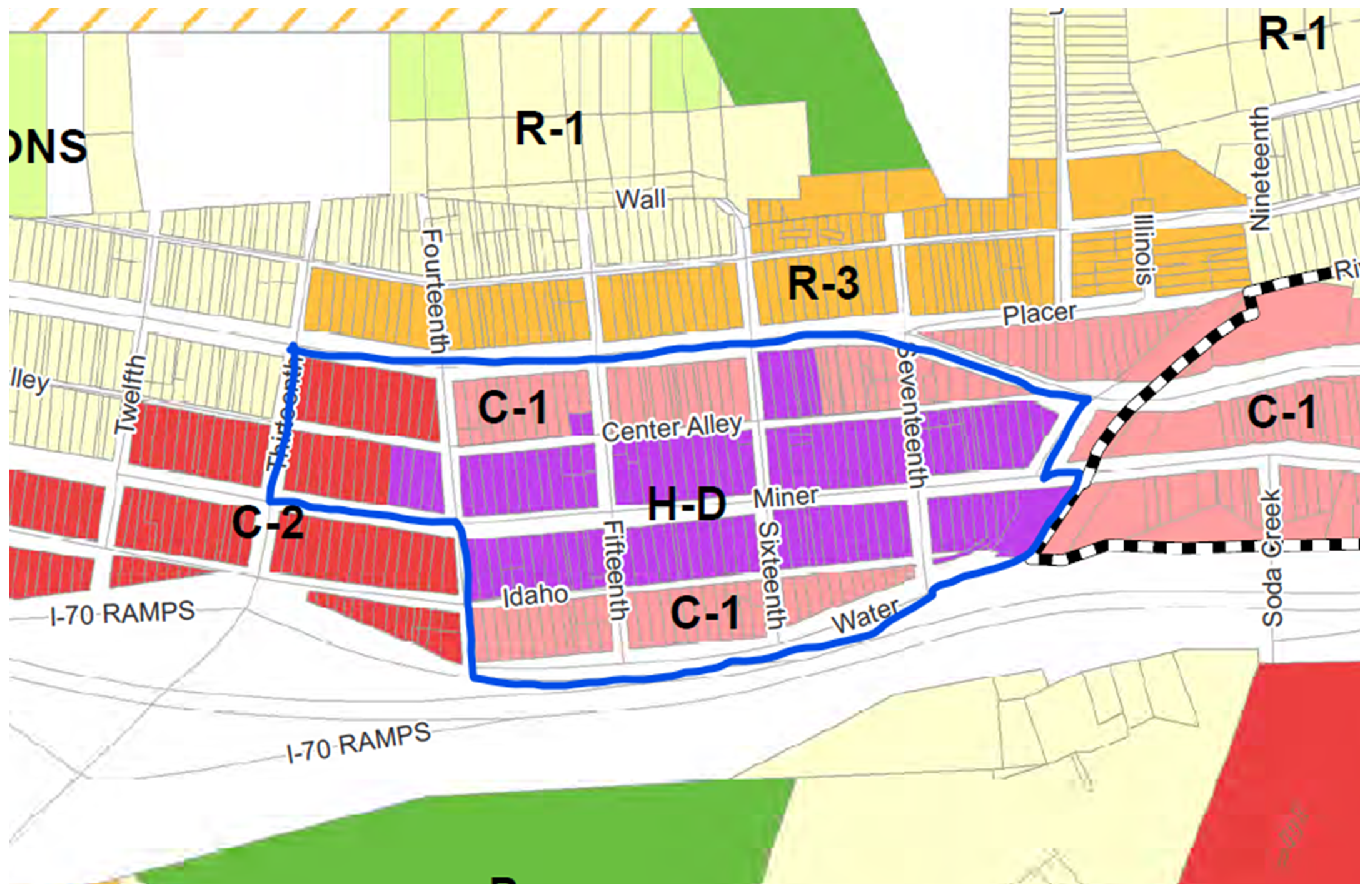
Figure 21-134.1 Fee-in-Lieu Program Boundary
(C)
Fee Amount; Non-Refundable. The amount of the non-refundable parking fee in-lieu shall be $20,000 per space for Restaurant/Retail development; $10,000 per space for Office/Personal Service Development; and $2,500 per space for Residential Development. The fee shall be prorated for fractional parking space requirements. The fee shall be adjusted from time to time by the City Council by resolution and shall be included on the City's annual fee schedule. In no circumstance shall paid fees be refunded.
(D)
Request Initiated. A fee in lieu of parking shall be initiated only by a written application from the property owner on a form provided by the City. If the proposed development that necessitates parking is not proposed by the property owner, the property owner's written consent to the application must be provided.
(E)
Review and Decision. The Planning Commission shall review and render decision on applications filed pursuant to this Section. The Commission shall apply the following criteria to such applications and shall approve an application upon a finding that a majority of these criteria are met:
(1)
Whether the applicant demonstrates that all required parking cannot be reasonably located on-site due to site-specific physical constraints or site design requirements;
(2)
Whether the historic significance of existing buildings or other site features would be adversely affected to meet the parking requirement on site;
(3)
Whether the property is located in close proximity to permanent public parking or public transportation routes;
(4)
Whether the characteristics of the proposed land use reduce the need for on-site parking; and
(5)
Whether the public health, safety or welfare would be adversely affected by locating the required parking on the property.
(F)
Payment Agreement. An approved applicant must enter into a payment agreement with the City which shall be recorded prior to the issuance of a building permit.
(G)
Optional Payment Plan. The City Administrator is granted the authority to grant a request for a payment plan, in the Administrator's sole discretion, which may include annual installments, including interest, over a multiyear period not to exceed ten (10) years and which may include provisions for termination of the Certificate of Occupancy for the affected land use if timely payments are not made and such other remedies deemed adequate by the City to address nonpayment.
(H)
Use of Funds. All funds collected pursuant to this section shall be paid into the Idaho Springs Parking Enterprise Fund and used for purposes to which that fund is restricted.
(Ord. No. 2, §2, 2023)
Sec. 21-200. - Applicability.
All development applications for multi-family housing, commercial, retail or industrial developments that are subject to final development plan review and approval, and all projects subject to filing an application under the provisions of Chapter 25 of this Code, Areas & Activities of State Interest (1041 Regulations), shall comply with the applicable principles and standards contained in this Chapter.
(Ord. No. 19, §2(Exh. A), 2019)
Sec. 21-201. - Application of building and site design standards.
(A)
The decision making body as indicated in Article IV of this Chapter will evaluate each proposal based on these standards and the context within which each project is located. The standards are intended to be specific enough to guide development, but not so specific as to preclude creative design solutions. Applicants must conform to the design standards in this Chapter unless it can be demonstrated that an alternative meets one (1) or more of the following conditions:
(1)
The alternative better achieves the stated intent;
(2)
The intent cannot be achieved by application of the standard in this circumstance;
(3)
The effect of other standards will be improved by not applying a particular standard; or
(4)
Strict application or unique site features make the standard impractical.
(Ord. No. 19, §2(Exh. A), 2019)
Sec. 21-202. - Design policies, general.
(A)
The general policies listed below are intended to guide the development of multi-family, commercial and industrial projects.
(1)
Sustainable building and development. The City supports sustainable design and energy conservation practices in site planning and building projects in the community. The City supports the implementation of the Leadership in Energy and Environmental Design (LEED) Green Building Rating System, implementation of the National Energy Code and the LEED for Neighborhood Development (LEED-ND) program. The City encourages sustainable green building and development practices and site and building performance standards in five (5) areas:
(a)
Sustainable site development.
(b)
Water savings.
(c)
Energy efficiency.
(d)
Materials selection.
(e)
Indoor environmental quality.
(2)
Waivers to these design requirements by the decision making body may be requested. Granting of any waivers to these portions of the Code will be based on proof of excellence in sustainable site design and energy conservation practices.
(Ord. No. 19, §2(Exh. A), 2019)
Sec. 21-205. - Design setting.
(A)
Design within the historic setting of the City. The City of Idaho Springs' Comprehensive Plan: Envision Idaho Springs 2017 describes individual Character Areas and the general nature of these areas. Developments shall be designed to be compatible with the Comprehensive Plan recommendations to fit into the setting of the City and protect scenic view corridors, historic districts and historic landscapes. The following are specific requirements for several distinct areas:
(1)
East End. Between the Exit 241/I-70 interchange and about 17th Avenue lies the area commonly referred to as the "East End." This area consists largely of highway service commercial developments, including food and beverage, retail, service and lodging establishments. This area developed along what had previously been the U.S. 6 & 40 corridor which was the main east-west corridor through Colorado until the construction of Interstate 70. Colorado Boulevard in this area was completely reconstructed in 2017-1018. Much of the nonresidential development in the East End is a remnant of highway-style development built between the 1930s and the 1950s. Projects in this area are encouraged to build upon themes found in early highway roadside-era projects, including building elements based upon "roadside" or "googie" architectural motifs and signage that includes limited neon and movement elements. Appropriate architecture in this area also includes mining or industrial-era elements. The City supports redevelopment efforts across the East End that will create a vibrant, modern business district.
(a)
On property in the East End with double frontages between Miner Street and Colorado Boulevard, and Colorado Boulevard and Clear Creek, the City will support proposals that relate to Miner Street, Colorado Boulevard frontages and Clear Creek itself. Neither Miner Street nor Clear Creek should be considered the "back door" or rear yard of projects. Pedestrian access easements in the East End along existing roadways and the Creek are strongly recommended in any property development.
(b)
Additional design requirements in this area exist in Chapter 25, the East End Overlay District.
(2)
Commercial Downtown. Beginning at 17th Avenue and extending west to 13th Avenue, the Idaho Springs Historic Commercial District is the centerpiece of the community. Chapter 22: Historic Preservation applies to this area and other locally designated or listed on the State Register of Historic Properties or National Register of Historic Places. New developments within a two-block radius of the outside boundary of the District should build upon and support the architectural features of the District itself. Use of Historic District building materials, architectural styles and designs based upon historic City sites are strongly encouraged.
(3)
West End. Beginning at about 12th Avenue, the West End features commercial properties in the form of motels, bed and breakfast operations and some service/light industrial businesses. New proposals in this area are encouraged to develop at a generally smaller scale in order to better match the existing residential character of this area of the community.
(4)
Community Gateways. Gateway entrances to the City include lands at and near Interstate 70 interchanges, including Exit 243, Hidden Valley; Exit 241, East End; Exit 240, Historic Downtown; and Exit 239, West End. New projects within the immediate vicinity (three hundred [300] feet of the edge of Colorado Department of Transportation right-of-way at the interchange) of these Community Gateways shall develop elements of signage, landscaping and site design to create and support a sense of entry to the City. Design work at gateways to the City should reflect the historic mining heritage of the community.
(Ord. No. 19, §2(Exh. A), 2019)
Sec. 21-210. - Fences; walls; retaining walls.
(A)
Fences, walls and retaining walls not exceeding forty-eight (48) inches in height may be erected on any part of the lot including within the front setback and, on any other part of the lot, may be erected to a height not to exceed seven (7) feet; provided, however, that:
(1)
Retaining walls abutting public rights-of-way or other lot lines may be built to any height, provided that the vision of a motor vehicle operator is not impaired; and
(2)
Schools, public parks and playgrounds may erect open-mesh fences to any height on the lot.
(3)
The height of walls, fences and retaining walls shall be determined by measurement from the ground level at the lowest grade level on either side of such. When used in any combination, the total height shall not exceed the maximum allowable height.
(4)
No fence of barbed wire construction shall be allowed, except in the I-1 zone.
(B)
Additional construction requirements for fencing and walls are as indicated in the Idaho Springs Standards and Specifications for Design and Construction.
(Ord. No. 19, §2(Exh. A), 2019; Ord. No. 12, § 1, 1-8-2024)
Sec. 21-220. - Multifamily and commercial architecture.
(A)
Multi-Family Residential Architecture.
(1)
Intent. The City encourages the development of multi-family residential units that will reflect the historic character of development in the City, create viable residential neighborhoods and bring creative and sustainable developments to the community.
(2)
Massing. All buildings shall be designed to provide complex massing configurations through the use of varied building forms, orientations, rooflines, facades and other design details.
(a)
Plain, monolithic structures with long, monotonous, unbroken wall and roof plane surfaces of fifty (50) feet or more shall be prohibited.
(b)
Facades of single-family attached townhomes shall be articulated to differentiate individual units.
(3)
Requirement for four-sided design. Architectural features and treatments shall not be restricted to a single facade. All sides of a building open to view by the public, whether viewed from public or private property, shall display a similar level of quality and architectural interest.
(4)
Maximum building length.
(a)
The maximum length of any multi-family residential building shall not exceed one hundred fifty (150) feet.
(b)
No more than six (6) townhome units may be attached in a single row or building cluster.
(c)
Exterior wall materials. For multi-family and townhome buildings, the total exterior wall area of each building elevation shall employ distinctive materials, colors and/or design features.
(1)
Distinctive materials may include full-width brick or stone, wood, stucco or cement lap siding.
(2)
Distinctive design features include: dormers, bay, sidelight or transom windows; functional or simulated chimneys and a covered front porch.
(5)
Roofs.
(a)
Roof materials. All sloped roof areas shall be clad with either high-profile composition shingles, such as slate, tile or dimensional asphalt shingles, concrete or clay tiles or seamed architectural metal.
(b)
Roof shapes.
a.
All one-story, multi-family buildings shall have a pitched roof with a minimum slope of at least 6:12.
b.
When sloping roofs are the predominant roof type, each building shall have at least three (3) distinct roof ridgelines.
c.
When flat roofs are the predominant roof type, parapet walls shall vary in height and/or shape at least once in every fifty (50) feet of building wall length.
(6)
Architectural elements.
(a)
All multi-family buildings shall employ at least two (2) of the following design items applied consistently along each facade:
(1)
Overhangs.
(2)
Recesses.
(3)
Projections.
(4)
Shadow lines.
(5)
Reveals.
(b)
Windows. All elevations shall contain windows.
(c)
HVAC and utilities. All exposed HVAC units and utility boxes must be designed to blend in with the building and/or landscaping.
(d)
Stairways. Stairways serving as a primary point of entry/exit in multi-family buildings shall not be located outside of the building footprint unless it is designed to serve as an architectural feature.
(e)
Primary entrances. Primary entrances to apartment buildings should be identifiable by an architectural treatment such as a covered portico.
(7)
Garages and carports.
(1)
Detached garages and carports shall be compatible with the principal building architecture, incorporating similar forms, scale, materials, colors and details.
(2)
Carports shall be limited to six (6) spaces per structure.
(3)
No more than six (6) garage doors may appear on any multi-family building elevation containing front doors, and the plane of each garage door shall be offset at least two (2) feet from the plane of the garage door adjacent to it.
(4)
Detached garages and carports shall have pitched roofs with a minimum slope of 4:12.
(8)
Orientation. On a lot with multiple buildings, those located on the interior of the site shall relate to one another both functionally and visually. A building complex shall be organized around features such as courtyards, greens or quadrangles which encourage pedestrian activity and incidental social interaction. Smaller, individualized groupings of buildings are encouraged. Buildings shall be located to allow for adequate fire and emergency access. (Ord. 3 §1, 2009)
(9)
Loading and trash facilities. All trash facilities and loading and parking areas shall be screened from public view by landscaping, building elements or approved fencing to the greatest extent possible.
(B)
Commercial and Industrial Architecture. The City establishes the following minimum architectural standards in order to support existing commercial and industrial development in the community and develop new commercial and industrial projects/districts that enhance the appearance and business setting in the City.
(1)
Building orientation. Where possible, buildings shall be located to front on and relate primarily to streets. Building setbacks from local and collector streets should be minimized in order to establish a visually continuous, pedestrian-oriented street front. In the case of large buildings for employment, storage or auto-related uses, greater setbacks may be needed. If a minimized setback is not maintained, the larger setback area shall have landscaping, low walls or fencing, a tree canopy and/or other site improvements along the sidewalk designed for pedestrian interest, scale and comfort.
(a)
Structures shall be sited to avoid a wall effect along public rights-of-way and along adjacent property lines. This can be achieved by varying the building setbacks and clustering buildings.
(b)
Where multiple buildings are proposed on a development parcel, buildings shall be oriented to allow views into the project and shall preserve high-quality views through the project.
(c)
Parking requirements shall be provided to the extent possible at the rear or sides of the building.
(2)
Building form. The design of all buildings shall employ textured surfaces, projections, recesses, shadow lines, color, window patterns, overhangs, reveals, changes in parapet heights and similar architectural features to avoid monolithic shapes and surfaces and to emphasize building entries. Buildings shall not contain unbroken flat walls of thirty (30) feet or greater in length.
(a)
Buildings having single walls exceeding thirty (30) feet in length shall incorporate two (2) or more of the following for every thirty (30) feet or portion thereof:
(1)
Pilasters;
(2)
Projections, recesses and reveals;
(3)
Windows and fenestration;
(4)
Arcades and pergolas;
(5)
Towers;
(6)
Gable projections;
(7)
Horizontal/vertical breaks; or
(8)
Other similar techniques.
(b)
Office and entry spaces shall be distinguished from the building mass.
(c)
Windows shall be vertically proportioned wherever possible.
(d)
Large, square, box-like structures are prohibited. Architectural elements with smaller forms stepping outwards and down are permissible.
(e)
Requirement for four-sided design. A building's special architectural features and treatments shall not be restricted to a single facade. All sides of a building open to view by the public, whether viewed from public or private property, shall display a similar level of quality and architectural interest.
(f)
Thematic architectural styles. Prototypical or franchise architectural designs may be required to be modified to meet these design standards. Changes to prototypical franchise styles to meet these standards may include, but not be limited to, modifications to roofs and roof elements, windows, doors, building mass, materials, colors, placement of architectural features, etc. Franchise architectural styles found to meet these standards will not require any modification.
(3)
Exterior building materials and colors. Intense, bright or fluorescent colors shall not be used as the predominant color on any wall or roof of any primary or accessory structure.
(4)
Blank walls and wall articulation.
(a)
Walls shall not have an uninterrupted length exceeding thirty (30) feet.
(b)
Entries. Transparent entries and storefront style windows are mandatory in commercial projects.
(c)
Blank side and/or rear elevations visible to the general public are not allowed unless the City determines there are adequate building or landscape features to conceal the view of the blank wall.
(1)
Continuous cornice lines or eaves are encouraged between adjacent buildings.
(2)
Buildings with flat roofs shall provide a parapet with an articulated cornice.
(3)
Facade treatment. The architectural treatment of the front facade shall be continued, in its major features, around all visibly exposed sides of a building. A building's special architectural features and treatments shall not be restricted to a single facade. All sides of a building open to view by the public, whether viewed from public or private property, shall display a similar level of quality and architectural interest.
(5)
Screening. All air-conditioning units, HVAC systems, exhaust pipes or stacks, elevator housing and satellite dishes, other telecommunications receiving devices and any other apparatus placed on the roof of a building shall be thoroughly screened from view from the public right-of-way and from adjacent properties by using walls, fencing, roof elements and landscaping.
(a)
Rooftop mechanical units. Rooftop mechanical units and other miscellaneous rooftop equipment shall be substantially screened from view from public rights-of-way and other public places. Screening materials shall be of the same or comparable material, texture and color as the materials used on the building. Roof-mounted equipment screening shall be constructed as an encompassing monolithic unit, rather than as several individual screens.
(b)
Loading and trash facilities. All trash facilities and loading and parking areas shall be screened from public view by landscaping, building elements or approved fencing to the greatest extent possible.
(6)
Walkways. Walkways must be located and aligned to directly and continuously connect areas or points of pedestrian origin and destination and not be located and aligned solely based on the outline of a parking lot configuration that does not provide such direct pedestrian access.
(7)
Vacant storefronts. Ground level storefront windows within the historic district which are vacant for more than thirty (30) consecutive days shall address the public realm. Methods include displays of art, floral arrangements, historical items or window coverings consisting of appropriate patterns, illustrations or murals. Deviations or exceptions to this requirement may be approved by the City Administrator. Any signage display located within such a window shall conform to all requirements of the Code.
(8)
Awnings. Fixed or retractable awnings are permitted. Canvas is the preferred material, although other water- proofed fabrics may be used. Awnings or canopies which provide a generally consistent cover along the pedestrian walk are encouraged. Translucent awnings made of plastic, Teflon or similar materials are not permitted.
(Ord. No. 19, §2(Exh. A), 2019)
Sec. 21-230. - Intent.
To promote quality landscape design suitable for the City's historic landscape, climate, mountain setting and character.
(Ord. No. 19, §2(Exh. A), 2019)
Sec. 21-231. - Landscape standards.
All development applications subject to this Chapter shall be accompanied by an appropriate landscape plan completed by a professional landscape architect or equivalent. Landscape plans must address the standards listed below:
(A)
Landscape materials shall be selected, sited, and planted to produce a hardy and drought resistant landscaped area. Selection shall include consideration of soil type and depth, the amount of maintenance required, spacing, exposure to sun and wind, elevation, the slope and contours of the site, and compatibility with existing native vegetation preserved on the site, and on adjacent sites.
(B)
Landscaping should be designed to incorporate water conserving materials and techniques through the application of xeriscape landscaping principles. Xeriscape landscaping principles include all of the following:
(1)
Grouping plants with similar water and sunlight requirements together.
(2)
Limiting the application of turf to appropriate high-use areas with high visibility and functional needs.
(3)
Use of low-water demanding plants and turf where suitable.
(4)
If irrigation systems are necessary, use of automatic irrigation systems, designed and operated to conserve water.
(5)
Incorporation of soil amendments, where appropriate.
(6)
Use of mulches.
(7)
Planting appropriate materials suited to the soil and climate.
(C)
Site landscape design. Landscape improvements shall be an integral part of the overall site design for each property and:
(1)
Configured to maximize connections within the site to natural areas and to landscaped areas in adjacent developments.
(2)
Enhance natural features, creeks and streams, drainage ways and environmental resources.
(3)
Designed for mature landscapes that will provide appropriate visibility for cars and pedestrians.
(4)
Preserve and frame views.
(5)
All landscapes shall maximize the use of native species. Where native material is not appropriate for the intended use or appearance, plant species that are regionally adapted and noninvasive may be used.
(6)
Landscapes shall consist of a variety of species to enhance biodiversity.
(D)
New buildings and paved areas.
(1)
Anchor structures in the landscape through the use of trees, shrubs and groundcover. The size and intensity of plantings shall be appropriate to the size and context of the improvements.
(2)
Integrate adjacent land uses of different intensities through a combination of berming, plantings and fencing. Use opaque screening only when necessary to mitigate the impact of noise, light, unattractive aesthetics and traffic. A fence shall not be the only screening material used.
(3)
Use landscaping to provide a transition from developed, managed landscape to more natural vegetation.
(E)
Plant materials.
(1)
Plants shall be healthy, well-branched, vigorous stock with a growth habit normal to the species and variety and free of diseases, insects and injuries. A variety of plant species shall be installed to help prevent the spread of disease.
(2)
All plants shall conform to standards for measurements, grading, branching, quality, ball and burlapping, as stated in the current edition of the American Standard for Nursery Stock, American Association of Nurserymen, Inc., (AAN-ASNS) and the Colorado Nursery Act of 1965 (CNA).
(3)
The minimum planting sizes on all required landscaping shall be two-inch caliper deciduous trees, one- and-one-half-inch caliper ornamental trees, six-foot tall evergreen trees and five-gallon shrubs.
(F)
Street trees. Street trees shall be calculated to be placed at intervals of no greater than forty (40) feet along new and existing streets bordering the project. The placement of street trees may be combined into groupings as necessary to accommodate drive entrances, utility services and other elements particular to the site.
(G)
Irrigation. All required landscaping shall be irrigated as required for plant establishment and maintenance. Irrigation shall be appropriate to the type and scope of the improvements and, at City direction, may include installation of a permanent irrigation system. All automatic irrigation systems must be installed with moisture sensors.
(H)
Maintenance. In order to provide for the ongoing health and appearance of landscape improvements, all landscaping shall be maintained and replaced by the landowner or occupant as necessary.
(Ord. No. 19, §2(Exh. A), 2019)

