
Jackson City Zoning Code
ARTICLE I
- IN GENERAL2
Editor's note— Section 1 of Ord. No. 13-73, adopted Nov. 18, 2013, amended art. I in its entirety, in effect repealing §§ 65-1—65-29 and enacting similar new provisions in lieu thereof as §§ 65-1—65-31. See the Code Comparative Table for a complete derivation.
Sec. 65-1. - Short title.
This chapter shall be known and may be cited and referred to as the "Zoning Ordinance of the City of Jackson, Missouri."
(Ord. No. 13-73, § 1, 11-18-13)
Sec. 65-2. - Definitions.
For the purpose of this chapter, certain terms and words are hereby defined. Words used in the present tense shall include the future; the singular number shall include the plural and the plural the singular; the word "building" shall include the word "structure"; and the word "shall" is mandatory and not directory.
Accessory building. A subordinate building which is incidental to the principal building or use and which is located on the same lot with such principal building or use.
Administrator. The City Administrator of Jackson, Missouri.
Agricultural (farm) use. An area which is used for the growing of typical farm products, such as vegetables, fruit, trees, and grain, and their storage on the area, as well as for the raising thereon of the usual farm poultry and farm animals, such as horses, cattle, sheep, and swine. The term "farming" includes the operating of such an area for one (1) or more of the above uses, including dairy farms, with the necessary accessory uses for treating or storing the produce; provided, however, that the operation of such accessory uses shall be secondary to that of the normal farming activities and that such land shall consist of at least ten (10) acres in one (1) parcel under common ownership or operation; and provided, further, that farming does not include the feeding of collected garbage or offal to swine or other animals.
Alley. A permanent public service way dedicated for or in public use, other than a street, place, road, crosswalk, or easement, and designed to provide a secondary means of access for and not intended for general traffic circulation.
Apartment/apartment house. See definition of "dwelling, multiple."
Automotive repair shop. Any person or other entity that is principally engaged in repairing damaged motor vehicles or fixing mechanical/electrical parts on an automobile.
Auto salvage yard. A yard, lot, or place covered or uncovered, outdoors or in an enclosed building where motor vehicles are disassembled, dismantled, junked, wrecked, or inoperable. Excluding public and private garages.
Basement. That portion of a building which is partly or completely below grade (see "story above grade").
Basement home. A dwelling in which all four (4) exterior walls are at least one-half (½) of their height below grade.
Bed and breakfast. A dwelling containing less than six (6) guest rooms that are intended to be used or occupied, or are occupied for sleeping purposes by occasional guests for compensation, whether paid directly or indirectly, in which meals are made available family style and which dwelling is or has been used as a permanent family residence by its owner.
Boarding, lodging, or rooming house. A building or place where rooming and lodging, with or without meals, are provided (or which is equipped to regularly provide such services) by prearrangement for definite periods and for compensation for more than five (5) persons, but not more than twenty (20) persons. A boarding, lodging, or rooming house is distinguished from a hotel which is open to transients and has accommodations for six (6) or more persons.
Building. Any structure having a roof supported by columns or walls built for the support or enclosure of persons, animals, or tangible property of any kind but not including any vehicle, mobile home (with or without wheels), travel trailer, or any moveable device such as furniture, machinery, or equipment. When any portion of a building is completely separated from any other portion thereof by a division wall construed in accordance with the Building Code of the City of Jackson, then each such portion shall be deemed to be a separate building.
Building and planning superintendent. The Building and Planning Superintendent of Jackson, Missouri.
Building area. The area included within surrounding exterior walls, exclusive of vent shafts and courts. Areas of the building not provided with surrounding walls shall be included in the building area if included within the horizontal projection of the roof or floor above.
Building, height of. The vertical distance from the grade to the highest point of the coping of a flat roof, or to the deck line of a mansard roof, or to the mean height level between eaves and the ridge for gable, hip, and gambrel roofs.
Building width. The width of the lot left to be built upon after the side yards are provided.
Child or daycare center. Any place, home, or institution which receives five (5) or more children under the age of seventeen (17) years and not of common parentage for care apart from their natural parents, legal guardians, or custodians when received for regular periods of time for compensation; provided, however, this definition shall not include public and private schools, organized, operated, or approved under the laws of this state; custody of children fixed by a court of competent jurisdiction; children related by blood or marriage within the third degree of the custodial person; or to churches or other religious or public institutions while their parents or legal guardians are attending services, meetings or classes, or are engaged in church activities.
Church. A permanent building primarily and regularly used as a place of religious worship.
City clerk. The City Clerk of Jackson, Missouri.
Clinic, medical, or dental. An establishment where patients, who are not lodged overnight, are admitted for examination and treatment by a group of physicians or dentists practicing medicine or dentistry together.
Club. Any place, location, building, or portion thereof, or premises owned or operated by a corporation, association, person, or persons for a social, educational, or recreational purpose whose access is limited to registered members and their guests, but is not necessarily for profit or to render a service which is customarily carried on as a business.
Commercial use. Generally, any business of a commercial nature that has as its primary function the direct sale of goods or services to the general public.
Commission. The Planning and Zoning Commission of Jackson, Missouri.
Comprehensive facility. A comprehensive marijuana cultivation facility, comprehensive marijuana dispensary facility, or a comprehensive marijuana-infused products manufacturing facility.
Comprehensive marijuana cultivation facility. A facility licensed by the State of Missouri to acquire, cultivate, process, package, store on site or off site, transport to or from, and sell marijuana, marijuana seeds, marijuana vegetative cuttings (also known as clones) to a medical facility, comprehensive facility, or marijuana testing facility. A comprehensive marijuana cultivation facility need not segregate or account for its marijuana products as either non-medical marijuana or medical marijuana. A comprehensive marijuana cultivation facility's authority to process marijuana shall include the creation of pre-rolls, but shall not include the manufacture of marijuana-infused products.
Comprehensive marijuana dispensary facility. A facility licensed by the State of Missouri to acquire, process, package, store on site or off site, sell, transport to or from, and deliver marijuana, marijuana seeds, marijuana vegetative cuttings (also known as clones), marijuana-infused products and drug paraphernalia used to administer marijuana as provided for in this chapter to a qualifying patient or primary caregiver, as those terms are defined in this chapter, or to a consumer, anywhere on the licensed property or to any address as directed by the patient, primary caregiver, or consumer and consistent with the limitations of this chapter and as otherwise allowed by law, to a comprehensive facility, a marijuana testing facility, or a medical facility. Comprehensive dispensary facilities may receive transaction orders at the dispensary directly from the consumer in person, by phone, or via the internet, including from a third party. A comprehensive marijuana dispensary facility need not segregate or account for its marijuana products as either non-medical marijuana or medical marijuana but shall collect all appropriate tangible personal property sales tax for each sale, as provided for in general or local law. A comprehensive marijuana dispensary facility's authority to process marijuana shall include the creation of pre-rolls.
Comprehensive marijuana-infused products manufacturing facility. A comprehensive marijuana-infused products manufacturing facility means a facility licensed by the State of Missouri to acquire, process, package, store, manufacture, transport to or from a medical facility, comprehensive facility, or marijuana testing facility, and sell marijuana-infused products, pre-rolls, and infused pre-rolls to a marijuana dispensary facility, a marijuana testing facility, or another marijuana-infused products manufacturing facility. A comprehensive marijuana-infused manufacturing facility need not segregate or account for its marijuana products as either non-medical marijuana or medical marijuana.
Comprehensive plan. An official document adopted by the City of Jackson setting forth a plan for the physical development of the community, including studies of land use, streets, traffic volume and flow, schools, parks, and other public buildings.
Condominium. A dwelling structure intended to be occupied by a number of single families and within which each single-family dwelling unit is sold to its occupants as an individually subdivided parcel of the entire structure.
Consumer. Consumer means a person who is at least twenty-one (21) years of age.
Daycare. Daycare means a child-care facility, as defined by section 210.201, RSMo, or successor provisions, that is licensed by the State of Missouri
Daycare or childcare center. Any place, home, or institution which receives five (5) or more children under the age of seventeen (17) years and not of common parentage for care apart from their natural parents, legal guardians, or custodians when received for regular periods of time for compensation; provided, however, this definition shall not include public and private schools, organized, operated, or approved under the laws of this state; custody of children fixed by a court of competent jurisdiction; children related by blood or marriage within the third degree of the custodial person; or to churches or other religious or public institutions while their parents or legal guardians are attending services, meetings or classes, or are engaged in church activities.
Daycare or childcare center, state licensed. Any place, home, or institution which is licensed by the State of Missouri as a family child care home, group child care home, or child care facility, as defined by section 210.201, RSMo, or successor provisions.
Development complex. A group of related buildings or adjacent lots designed to share a primary access to a public right-of-way.
Director. The Public Works Director of the City of Jackson, Missouri.
District. A section or sections of the City of Jackson within which the zoning regulations are uniform.
District, overlay. A zoning district that provides general and specific regulations and development criteria in addition to the provisions of the underlying zoning district in which the property is located, typically to facilitate qualities of enhancement, historical preservation, environmental protection, or other specified purpose.
District, underlying/base. A zoning district that provides general provisions for allowable land use within a specified area or areas of the City of Jackson.
Drive-in restaurant or cafe. A restaurant, café, or similar establishment where the facilities or services are designed to permit food or beverages to be consumed on the premises, either inside or outside of the buildings or in automobiles parked on the premises, or to be purchased and picked up by automobiles.
Driveway. A minor private way used by vehicles and pedestrians for common access to a single lot or facility.
Dwelling. Any building or portion thereof which is designed and used exclusively for residential purposes.
Dwelling, attached single-family. One (1) of two (2) or more attached residential dwellings each designed exclusively for occupancy by one (1) family and located on an individual lot of record to be conveyed as part of the property that each unit occupies. Each unit shall contain separate ground floor front entrance to the outdoors, no unit shall be located over another unit or portion of another unit, and each unit shall be separated from any other unit by one (1) or more common fire-resistant walls.
Dwelling, detached single-family. A building designed for or occupied exclusively by one (1) family and entirely surrounded by a yard or other separation from buildings or adjacent lots.
Dwelling, multiple or apartment. A building or portion thereof designed for or occupied by three (3) or more families living independently of each other, exclusive of attached single-family dwellings, townhouses, patio houses, or condominiums on individually subdivided lots of records.
Dwelling, two-family. A building designed for or occupied by two (2) families living independently of each other, including a duplex, an attached single family dwelling of no more than two (2) units.
Dwelling unit. One (1) or more rooms in a dwelling designed for or intended to be occupied as independent and separate living quarters by a single family as defined herein, including permanent provisions for living, sleeping, eating, cooking, and sanitation.
Earth contact homes. A dwelling in which one (1) or more sides are at least one-half (½) of their height below grade and one (1) or more sides above grade.
Entity. Entity means a natural person, corporation, professional corporation, nonprofit corporation, cooperative corporation, unincorporated association, business trust, limited liability company, general or limited partnership, limited liability partnership, joint venture, or any other legal entity.
Family. One (1) or more persons related by blood, marriage, or adoption occupying a dwelling unit as an individual housekeeping organization and not more than two (2) other persons not related by blood, marriage, or adoption; or a group of not more than three (3) persons (excluding servants) not related by blood, marriage or adoption and living together as a single housekeeping organization in a dwelling unit.
Filling station. Any building or premises used for the sale at retail of motor vehicle fuels, oil, or accessories or for servicing or lubricating motor vehicles or installing or repairing parts and accessories, but not including the repairing or replacement of motors, bodies, or fenders of motor vehicles, or painting motor vehicles, and excluding public garages.
Fire resistant wall. Any wall meeting the fire separation rating defined by the Building Code of the City of Jackson as appropriate to the use of the building.
Floor area. The total number of square feet of floor space within the exterior walls of a building, not including space in the basements, porches, carports, or garages. However, if the basement is used for business or commercial purposes, it shall be counted as floor area in computing off-street parking requirements.
Flowering plant. Flowering plant means a marijuana plant from the time exhibits the first signs of sexual maturity through harvest.
Food truck. A mobile vehicle or trailer, whether attached or not attached to a vehicle, from which prepared food is sold directly to customers.
Frontage. All the property on one (1) side of a street between two (2) intersecting streets (crossing or terminating), measured along the line of the street, or if the street is dead-ended then all the property abutting on one (1) side between an intersecting street and the dead end of the street, but not including property more than four hundred (400) feet distant on either side of a proposed building or structure.
Frontage, Building. The horizontal distance measured along a building wall that is generally parallel, facing, or oriented toward a street.
Garage, commercial or public. A building or structure for the storage or parking of motor-driven vehicles and in which provisions may be made for fueling or normal servicing of such vehicles. The term servicing shall not include an automotive repair shop nor the rebuilding, dismantling, or storage of wrecked or junked vehicles.
Garage, private. A detached accessory building, or portion of the main building, housing the automobiles of the occupants of the premises; provided that no business, occupation, or service is conducted for profit therein nor space there for more than one (1) automobile is leased to a nonresident of the premises. Private garages, as defined in this chapter, shall not include portable buildings with garage doors.
Garage, storage or parking. A building or portion thereof designed or used exclusively for term storage by prearrangement of motor-driven vehicles, as distinguished from daily storage furnished to transients, but no motor-driven vehicles may be equipped, repaired, hired, or sold.
Grade plane. A reference plane representing the average of finished ground level adjoining the building at all exterior walls. Where the finished ground level slopes away from the exterior walls, the reference plane shall be established by the lowest points within the area between the building and the lot line or, where the lot line is more than six (6) feet from the building, between the building and a point six (6) feet from the building.
Home occupation. Any occupation or activity which is clearly incidental and secondary to the use of the premises for dwelling purposes and which is carried on wholly within the main building or an existing accessory building by an immediate member of the family residing on the premises; provided that:
(1)
No person not a resident of the premises is employed, engaged, or present on the premises in relation to the business.
(2)
No substantial stock in trade is kept or sold upon the premises.
(3)
No equipment shall be used which creates offensive noise, vibration, sound, smoke, dust, odors, heat, glare, x-ray, or electrical disturbance to radio or television instruments.
(4)
No generation of substantial volumes of vehicular or pedestrian traffic or substantial parking demand shall be created.
(5)
No advertising sign is displayed, other than a nameplate not exceeding one and one-half (1½) square foot in area, and there is no other exterior indication that the building is being used for any purpose other than a dwelling.
(6)
No signed or marked vehicle showing a business name or logo shall be parked on or adjacent to the premises except when used as the primary means of personal transportation to the residence by a person residing at the residence.
(7)
No business trailer shall be parked on or adjacent to the premises except when in actual use for the residence, but in no event shall it be kept overnight.
Hotel. Any building or portion thereof that contains six (6) or more guest rooms that are intended to be used or occupied, or are occupied for sleeping purposes, by guests for compensation, whether it is paid directly or indirectly, and in which ingress and egress to and from all rooms is made through an inside lobby or office supervised by a person in charge.
Industrial park. An industrial park is a tract of land, the control and administration of which are vested in a single body, suitable for industrial use because of location, topography, proper zoning, availability of utilities, and accessibility to transportation. The use permitted may be regulated by protective minimum restrictions (covenants) including the size of the site, parking and loading regulations, and building setback lines from front, side, and rear yards that may be more restrictive than this chapter.
Industry or industrial. The terms "industry" and "industrial," as used in this chapter, are restricted to establishments primarily involved in product manufacturing and processing, heavy equipment uses, and warehousing. It does not include retail and wholesale trades, agricultural uses, institutional uses, and other businesses that are primarily commercial in nature.
Infused pre-roll. Infused pre-roll means a consumable or smokable marijuana product, generally consisting of (1) a wrap or paper, (2) dried flower, buds, and/or plant material, and (3) a concentrate, oil, or other type of marijuana extract, either within or on the surface of the product. Infused pre-rolls may not include a filter or crutch at the base of the product.
Institution. A building occupied by a nonprofit corporation or a nonprofit establishment for public use.
Internal roadway/internal roadway system. A privately owned and maintained street or series of connecting streets designed to facilitate traffic flow within a development complex where limited access to public rights-of-way has been provided.
Landscaped/landscaping. An area consisting of lawns, ponds, lakes, water fountains, trees, flowers, shrubs, ornamental grasses, vegetative groundcovers, or other ornamental features cultivated and maintained for the beautification of an area.
Landscaped buffer/green space buffer. An area consisting of lawn and/or landscaping, but not including street or roadway pavement, buildings, mechanical equipment, signage, parking areas, roadways, storage, loading, or service areas, or accessory structures other than fences.
Loading space. An off-street space or berth on the same lot with a building, or within a building, for the temporary parking of a commercial vehicle while loading or unloading merchandise or materials, and which abuts upon a street, alley, or other appropriate means of access.
Long-term storage use. A use for storage exceeding six (6) consecutive months.
Lot. A parcel of land occupied or intended for occupancy by a use permitted in this chapter, including one (1) main building, together with any accessory buildings, open spaces, and parking spaces required by this chapter and having its principal frontage upon a street or upon an officially approved place.
Lot, corner. A lot abutting upon two (2) or more streets at their intersection or upon a right-angle or near right-angle curve.
Lot, coverage. That percentage of a lot which, when viewed from above, would be covered by a structure or structures, or any part thereof, excluding roof eaves.
Lot, depth of. The mean (average) horizontal distance between the front and the rear lot lines.
Lot, double frontage. A lot having frontage on two (2) nonintersecting streets, as distinguished from a corner lot.
Lot line, front. In the case of an interior lot, the front lot line is the line separating the lot from a street or place; and in the case of a corner lot, the front lot line is the line that the main structure primarily faces.
Lot width. The dimension (width) of a lot, measured between side lot lines on the required building setback line for the district in which the lot is located.
Lot of record. A lot which is part of a subdivision, the map or plat of which has been recorded in the Office of the County Recorder of Cape Girardeau County, Missouri; or a lot or parcel of land, the deed of which had been recorded in the Office of the County Recorder of Cape Girardeau County, Missouri, prior to the adoption of this chapter.
Manufactured home/mobile home.
(1)
Manufactured home/mobile home means a factory-built structure or structures which, in traveling mode, is eight (8) body feet or more in width or forty (40) body feet or more in length, or, when erected on site, contains three hundred twenty (320) or more square feet, equipped with the necessary service connections and made so as to be readily movable as a unit or units on its or their own running gear and designed to be used as a dwelling unit or units with or without a permanent foundation. The phrase "without a permanent foundation" indicates that the support system is constructed with the intent that the manufactured home placed thereon may be moved from time to time at the convenience of the owner.
(2)
Manufactured homes/mobile homes are those factory-built structures manufactured under the authority of the Federal Manufactured Home Construction and Safety Standards Act, effective June 15, 1976, and must carry a seal of approval of the U.S. Department of Housing and Urban Development (HUD) as required by the Missouri Public Service Commission.
(3)
The term "manufactured home" shall also include units defined as above if such units are in two (2) or more separately towable components designed to be joined into one (1) integral unit capable of being again separated into the components capable of repeated towing and includes two (2) or more manufactured home units joined into a single residential unit which are kept on separate chassis for repeated towing.
Manufactured business unit/mobile business unit.
(1)
Manufactured business unit/mobile business unit means a factory-built structure or structures which, in the traveling mode, is eight (8) body feet or more in width or forty (40) body feet or more in length, or, when erected on site, contains three hundred twenty (320) or more square feet, equipped with the necessary service connections and made as to be readily movable as a unit or units on its or their own running gear and designed to be used for commercial, educational, or industrial purposes with or without a permanent foundation. The phrase "without a permanent foundation" indicates that the support system is constructed with the intent that the manufactured unit placed thereon may be moved from time to time at the convenience of the owner.
(2)
Manufactured business/mobile business units are those factory-built structures manufactured under the authority of the Federal Manufactured Home Construction and Safety Standards Act, effective June 15, 1976, and must carry a seal of approval of the U.S. Department of Housing and Urban Development (HUD) as required by the Missouri Public Service Commission.
(3)
The term "manufactured business unit" shall also include units defined as above if such units are in two (2) or more separately towable components designed to be joined into one (1) integral unit capable of being again separated into the components capable of repeated towing and includes two (2) or more manufactured units joined into a single business unit which is kept on separate chassis for repeated towing.
Manufacturer. An establishment whose primary function is the mechanical or chemical transformation or processing of materials or substances into new products, including the assembly of component parts and the blending of materials.
Marijuana or marihuana. Marijuana or marihuana means Cannabis indica, Cannabis sativa, and Cannabis ruderalis, hybrids of such species, and any other strains commonly understood within the scientific community to constitute marijuana, as well as resin extracted from the plant and marijuana-infused products. Marijuana or marihuana does not include industrial hemp containing a crop wide average tetrahydrocannabinol concentration that does not exceed three-tenths of one (0.3) percent on a dry weight basis as defined by Missouri statute, or commodities or products manufactured from industrial hemp.
Marijuana accessories. Any equipment, product, material, or combination of equipment, products, or materials, which is specifically designed for use in planting, propagating, cultivating, growing, harvesting, manufacturing, compounding, converting, producing, processing, preparing, testing, analyzing, packaging, repackaging, storing, containing, ingesting, inhaling, or otherwise introducing marijuana into the human body.
Marijuana consumption lounge. Any place, location, building, or portion thereof, or premises owned or operated by a corporation, association, person, or persons for a social, educational, or recreational purpose whose access is limited to registered members and their guests which is not necessarily for profit or to render a service which is customarily carried on as a business.
Marijuana facility. A comprehensive or medical marijuana cultivation facility, comprehensive or medical marijuana dispensary facility, comprehensive or medical marijuana testing facility, comprehensive or medical marijuana-infused products manufacturing facility, comprehensive or medical storage or transportation facility, microbusiness wholesale facility, microbusiness dispensary facility, or any other type of marijuana-related facility or business licensed or certified by the State of Missouri.
Marijuana-infused products. Marijuana-infused products means products that are infused, dipped, coated, sprayed, or mixed with marijuana or an extract thereof and are intended for use or consumption other than by smoking, including, but not limited to, edible products, ointments, tinctures, and concentrates, products that are able to be vaporized or smoked, edible products, ingestible products, topical products, suppositories, and infused pre-rolls.
Marijuana microbusiness facility. Marijuana microbusiness facility means a facility licensed by the State of Missouri as a microbusiness dispensary facility or microbusiness wholesale facility, as defined by the State of Missouri.
Marijuana testing facility. A marijuana testing facility means a facility certified by the State of Missouri to acquire, test, certify, and transport marijuana, including those originally certified as a medical marijuana testing facility.
Marijuana transport or storage facility. A marijuana transport or storage facility means a facility certified by the State of Missouri to transport or store marijuana or marijuana-infused products.
Medical marijuana cultivation facility. Medical marijuana cultivation facility means a facility licensed by the State of Missouri to acquire, cultivate, process, package, store on site or off site, transport to or from, and sell marijuana, marijuana seeds, marijuana vegetative cuttings (also known as clones), to a medical marijuana dispensary facility, to a medical marijuana testing facility, medical marijuana cultivation facility, or to a medical marijuana-infused products manufacturing facility. A medical marijuana cultivation facility's authority to process marijuana shall include the production and sale of pre-rolls but shall not include the manufacture of marijuana-infused products.
Medical marijuana dispensary facility. Medical marijuana dispensary facility means a facility licensed by the State of Missouri to acquire, process, package, store on site or off site, sell, transport to or from, and deliver marijuana, marijuana seeds, marijuana vegetative cuttings (also known as clones), marijuana-infused products, and drug paraphernalia used to administer marijuana as provided for in this chapter to a qualifying patient, a primary caregiver anywhere on the licensed property or to any address as directed by the patient or primary caregiver, so long as the address is a location allowing for the legal possession of marijuana, another medical marijuana dispensary facility, a medical marijuana testing facility, or to a medical marijuana-infused products manufacturing facility. Dispensary facilities may receive transaction orders at the dispensary in person, by phone, or via the internet, including from a third party. A medical marijuana dispensary facility's authority to process marijuana shall include the production and sale of pre-rolls, but shall not include the manufacture of marijuana-infused products.
Medical marijuana facility. Medical facility means any medical marijuana cultivation facility, medical marijuana dispensary facility, or medical marijuana-infused products manufacturing facility, as defined in this section.
Medical marijuana-infused products manufacturing facility. Medical marijuana-infused products manufacturing facility means a facility licensed by the State of Missouri to acquire, process, package, store on-site or off-site, manufacture, transport to or from, and sell marijuana-infused products to a medical marijuana dispensary facility, to a medical marijuana testing facility, a medical marijuana cultivation facility, or to another medical marijuana-infused products manufacturing facility.
Medical marijuana testing facility. Medical marijuana testing facility means a facility certified by the State of Missouri to acquire, test, certify, and transport marijuana, including those originally licensed as a medical marijuana testing facility.
Medical use. Medical use means the production, possession, delivery, distribution, transportation, or administration of marijuana or a marijuana-infused product, or drug paraphernalia used to administer marijuana or a marijuana-infused product, for the benefit of a qualifying patient to mitigate the symptoms or effects of the patient's qualifying medical condition.
Mezzanine. An intermediate level or levels between the floor and ceiling of any story with an aggregate floor area of not more than one-third (⅓) of the area of the room in which the level or levels are located.
Microbusiness dispensary facility. Microbusiness dispensary facility means a facility licensed by the State of Missouri to acquire, process, package, store on site or off site, sell, transport to or from, and deliver marijuana, marijuana seeds, marijuana vegetative cuttings (also known as clones), marijuana-infused products and drug paraphernalia used to administer marijuana to a consumer, qualifying patient, as that term is defined in this chapter, or primary caregiver, as that term is defined in this chapter, anywhere on the licensed property or to any address as directed by the consumer, qualifying patient, or primary caregiver and consistent with the limitations of this chapter and by law, a microbusiness wholesale facility or a marijuana testing facility. Microbusiness dispensary facility's authority to process marijuana shall include the creation of pre-rolls.
Microbusiness wholesale facility. A microbusiness wholesale facility means a facility licensed by the State of Missouri to acquire, cultivate, process, package, store on site or off site, manufacture, transport to or from, deliver, and sell marijuana, marijuana seeds, marijuana vegetative cuttings (also known as clones), and marijuana infused products to a microbusiness dispensary facility, other microbusiness wholesale facility, or marijuana testing facility. A microbusiness wholesale facility may cultivate up to two hundred fifty (250) flowering marijuana plants at any given time. A microbusiness wholesale facility's authority to process marijuana shall include the creation of pre-rolls and infused pre-rolls.
Mobile home lot. The designated area of a parcel of land for the placement of a single mobile home and the exclusive use of its occupants.
Mobile home park. A parcel of land which has been developed for the placement of more than one (1) mobile home.
Mobile home stand. That part of an individual lot which has been reserved for the placement of one (1) mobile home unit.
Modular home unit.
(1)
Modular home unit means a transportable building to be used by itself or to be incorporated with similar units at a point-of-use into a modular structure to be used for residential, commercial, educational, or industrial purposes. This definition shall not apply to structures under six hundred fifty (650) square feet used temporarily and exclusively for construction site office purposes.
(2)
These units shall be exempt from local building codes only if the unit bears a seal from the Missouri Public Service Commission certifying that it meets construction standards set out by the International Code Council (ICC), the Building Officials and Code Administrators International, Inc. (BOCA), the International Conference of Building Officials (ICBO), or other national building code recognized by the Missouri Public Service Commission. If this seal is not present, the unit must comply with local building codes.
Motel, motor court, motor lodge, or tourist court. Any building or group of buildings containing guest rooms or dwelling units, all of which have a separate entrance, with garage or parking space conveniently located on the lot and designed, used, or intended wholly or in part for the accommodation of transients in vehicle.
Nonconforming use. Any building or land lawfully occupied by a use at the time of passage of this chapter, or any amendment thereto, which does not conform after the passage of this chapter, or amendment thereto, with the use regulations of the district in which it is situated.
Non-occupancy use. A use that does not involve occupancy by humans or animals for purposes including habitation, work, sleep, recreation, leisure, and other activities beyond storage of items.
Nurse practitioner. An individual who is licensed and in good standing as an advanced practice registered nurse, or successor designation, under Missouri law.
Nursery school. A school operated by a person or organization which is conducted primarily for the education of preschool-age children.
Nursing, rest, or convalescent home. A home for aged or infirm, in which three (3) or more persons, not of the immediate family, are received, kept, or provided with food and shelter or care, whether for compensation or not; but not including hospitals, clinics, or similar institutions devoted primarily to the diagnosis, treatment, or care of the sick or injured. The definition of "nursing home" shall include any adult boarding facility, intermediate care facility, residential care facility, or skilled nursing facility, as defined in RSMo Ch. 198.
Office. A place where business or service for others is transacted, and not a place where tangible property or goods, wares, or merchandise are commonly created, exchanged, or sold.
Park management. The person who has charge, care of, or control of the mobile home park.
Park street. A private way which affords principal means of access to individual mobile home lots or auxiliary buildings.
Parking area. An open, unoccupied space used or required for use exclusively for the parking of vehicles, and in which no gasoline or vehicular accessories may be sold nor other business conducted nor fees charged.
Parking lot. An open, paved area used exclusively for the temporary storage of motor vehicles and within which fees may be charged; but no vehicles may be equipped, repaired, rented, or sold and no motor fuels or oils may be sold.
Parking space, off-street. An area, enclosed or unenclosed, sufficient in size to store one (1) automobile, together with a driveway connecting the parking space with a street, road, or alley and permitting the ingress and egress of an automobile.
Physician. An individual who is licensed and in good standing to practice medicine or osteopathy under Missouri law.
Physician or nurse practitioner certification. A document, whether handwritten, electronic, or in another commonly used format, signed by a physician, or a nurse practitioner and stating that, in the physician's or nurse practitioner's professional opinion, the patient suffers from a qualifying medical condition as defined by the State of Missouri.
Place. Any open, unoccupied, officially dedicated space, other than a street or alley, permanently reserved as the principal means of access to abutting property.
Plat. A map, plan, or layout of a city, township, section, or subdivision indicating the location and boundaries of individual properties.
Porch. A covered entrance to a building, usually with a separate roof, that may or may not be enclosed, or a roofed, open gallery attached to the exterior of a building.
Portable storage building or shed. A detached accessory building, constructed with or without an integral floor, designed to be capable of relocation by lifting or by disassembly.
Pre-roll. A consumable or smokable marijuana product, generally consisting of: (1) a wrap or paper and (2) dried flower, buds, and/or plant material. Pre-rolls may or may not include a filter or crutch at the base of the product.
Premises. A lot, together with all buildings and structures thereon.
Primary caregiver. An individual twenty-one (21) years of age or older who has significant responsibility for managing the well-being of a qualifying patient and who is designated as such on the primary caregiver's application for an identification card under the requirements of the State of Missouri.
Privacy fence. A privacy fence is a sight-obscuring fence that blocks the area enclosed by the fence to conceal from view the activities conducted behind it that will visually isolate, conceal, and seclude objects, things, places, or people.
Public building or facility. A building or facility owned or operated by a general unit for a local, state, or federal government; or a public building or facility under the laws of the State of Missouri; or a building or facility operated or used by a nonprofit organization and open to general use by the public.
Qualifying patient. An individual diagnosed with at least one (1) qualifying medical condition under the requirements of the State of Missouri.
RV park. An area designed to provide spaces where one (1) or more recreational vehicles can be temporarily parked for travel, recreation, or vacation purposes.
Recreational vehicle. A vehicular, portable structure built on a chassis or designed to be carried by any type of vehicle (whether located on or off such vehicle), traditionally used as a temporary dwelling for travel, recreational, or vacation purposes.
Self-service storage facility. A building or structure used for renting or leasing individual storage spaces in which the occupants themselves customarily store and remove their own personal property on a self-service basis.
Shipping container. An intermodal freight container or other large container, in whole or in part, designed and manufactured for the reusable storage and transport of materials and products across different modes of transportation - from ship to rail to truck - without unloading and reloading its cargo. The term shipping container shall also include the box portion, whether on or off the axles, of a truck designed for hauling freight.
Shopping center or mall. A group of architecturally unified commercial establishments in one (1) or more buildings, built on a site which is planned, developed, owned, and managed as an operating unit related in its location, size, and type of shops to the trade area that the unit serves. The unit provides on-site parking in definite relationship to the types and total size of the stores; and a mall includes a roofed-over common pedestrian way.
Short-term storage use. A use for storage for a period of time less than six (6) consecutive months.
Sign. An outdoor panel, structure, illustration, or device designed to carry or display information for the purpose of making anything known, including any portion of a wall, fence, or other structure on which information may be painted or attached. Signs shall include wooden, metal, vinyl, or other type frames in which banners or other flexible advertising materials are placed. Signs shall be categorized as follows:
(1)
Banner. A fabric, cloth, vinyl, or other flexible panel designed for temporary use typically attached to or suspended from independent supports.
(2)
Billboard. Any sign exceeding one hundred (100) square feet in sign face area. Signs meeting the definition of combination signs shall not be considered billboards.
(3)
Combination sign. A series of multiple sign faces upon a single support or set of supports which provides individual sign face area for more than one (1) business or use.
(4)
Portable advertising sign. A device or structure on legs, wheels, or similar supports designed for ease of relocation.
(5)
Poster/placard. A paper, cardboard, fabric, vinyl, plastic, metal, or other rigid panel typically attached to a permanent structure or attached to a movable support.
Sign face. A sign face shall include the area of the sign cabinet or other display area including border and trim, or the area of an individual channel letter, and shall exclude the sign base, supports, or other structural members.
Story. That portion of a building included between the upper surface of a floor and the upper surface of the floor or roof next above (also see "mezzanine").
Story above grade. Any story having its finished floor surface entirely above grade except that a basement shall be considered as a story above grade where the finished surface of the floor above the basement is:
(1)
More than six (6) feet above grade plane;
(2)
More than six (6) feet above the finished ground level for more than fifty (50) percent of the total building perimeter; or
(3)
More than twelve (12) feet above the finished ground level at any point.
Story, half. A space under a sloping roof which has the line of intersection of roof decking and wall face not more than three (3) feet above the top floor level and in which space, not more than sixty (60) percent of the floor area, is finished off for use. A half-story may be used for occupancy only in conjunction with and by the occupancy of the floor immediately below.
Street. A public right-of-way or thoroughfare which affords the principal means of access to abutting property.
Street line. A dividing line between a lot, tract, or parcel of land and a contiguous street.
Structure. Anything constructed or erected, the use of which requires more or less permanent location on the ground or attached to something having a permanent location on the ground and including, but not limited to, the following: buildings, signs, billboards, fences, pergolas, projecting roofs, satellite television antennas/dishes, freestanding solar collectors, or equipment, swimming pools, portable sheds, and portable carports.
Structural alteration. Any changes in the supporting members of a building, such as bearing or non-bearing walls, or partitions, columns, beams, or girders, or any substantial change in the roof or in the exterior walls, excepting such repair or replacement as may be required for the safety of the building, but not including openings in bearing walls as permitted by existing ordinances.
Thoroughfare, major. A street that is designated as a collector or arterial street in the major street plan or is constructed in accordance with the collector or arterial street design standards set out in the subdivision regulations of this Code.
Tiny house, permanent. A dwelling that is six hundred (600) square feet or less in floor area, excluding lofts, and is constructed on-site without a chassis and is permanently anchored to a foundation or concrete slab.
Tiny house, portable. A dwelling that is six hundred (600) square feet or less in floor area, excluding lofts, and is constructed on a chassis or skids, regardless of added porches, stairways, decks, or other additions.
Tourist or trailer camp. An area where one (1) or more tents, auto trailers, or recreational vehicles can be or are intended to be parked, designed, or intended to be used as temporary living facilities of one (1) or more families and intended primarily for vehicle transients.
Tow company. Any person or entity that operates a wrecker or towing service to tow, remove, or temporarily store inoperable vehicles.
Uncovered. Not covered with a roof.
Unenclosed. Not shut in or closed in with surrounding exterior walls. A covered or roofed area supported by columns and not having surrounding exterior walls of any material, including screens and lattice, shall be considered unenclosed. Exterior walls shall not be defined to include railings or banisters.
Use. The purpose for which land or a building is arranged, designed, or intended, or for which either land or a building is or may be occupied or maintained.
Vestibule or lobby. A passage, hall, or room between the outer door and the interior of a building.
Yard. An open space on the same lot with a building unoccupied and unobstructed by any portion of the structure from the ground upward, except as otherwise provided in this chapter. In measuring required yard widths and depths, the minimum horizontal distance between the lot line and the main building shall be used.
Yard, front. A yard extending across the front of a lot and being the minimum horizontal distance between the front lot line and the main building, or any projections thereof, other than the projections of uncovered steps.
Yard, rear. A yard extending across the rear of a lot and being the required minimum horizontal distance between the rear lot line and the rear of the main building, or any projection thereof, other than the projections of uncovered steps. On all lots, the rear yard shall be at the opposite end of the lot from the front yard.
Yard, side. A yard between the main building and the side line of the lot and extending from the required front yard to the required rear yard and being the minimum horizontal distance between the side lot line and the side of the main buildings or any projections thereto.
(Ord. No. 13-73, § 1, 11-18-13; Ord. No. 18-19, § 1, 4-2-18; Ord. No. 19-50, § 1, 7-15-19; Ord. No. 23-23, § 1, 3-20-23; Ord. No. 23-23, § 2, 3-20-23; Ord. No. 23-62, § 1, 8-7-23; Ord. No. 23-88, § 1, 11-6-23; Ord. No. 24-05, § 1, 1-16-24)
Sec. 65-3. - District boundaries and general regulations.
(1)
In order to classify, regulate, and restrict the locations of trades industries and residences, and the location of buildings designed for specific uses; to regulate and limit the height and use of buildings hereafter erected or structurally altered; to regulate and limit the intensity of use and lot areas; and to regulate and determine the areas of yards, courts, and other open spaces surrounding such buildings; the City of Jackson is hereby divided into districts of which there shall be fifteen (15) in number known as:
A-1 Agricultural district
R-1 Single-family residential district
R-2 Single-family residential district
R-3 One- and two-family residential district
R-4 General residential district
MH-1 Mobile home park district
O-1 Professional office district
C-1 Local commercial district
C-2 General commercial district
C-3 Central business district
C-4 Planned commercial district
CO-1 Enhanced commercial overlay district
I-1 Light industrial district
I-2 Heavy industrial district
I-3 Planned industrial park district
(2)
Any R-3 general residential district existing prior to March 1, 2004, shall hereafter be referred to as an R-4 General residential district. Any R-4 One- and two-family district existing prior to March 1, 2004, shall hereafter be referred to as an R-3 One- and two-family district. The zoning district map for the City of Jackson or any other official document of the city is hereby changed by this section.
(3)
The boundaries of these districts are shown upon the zoning district map for the City of Jackson, Missouri, which accompanies and is made a part of this chapter. Said map and all the information shown thereon shall have the same force and effect as if all were fully set forth and described herein. The original of the zoning district map is properly attested and is on file with the City Clerk of the City of Jackson, Missouri.
(4)
All parcels or portions of parcels that may hereafter be annexed to the City of Jackson will have zoning determined pursuant to the procedures set forth in section 58-12 of the Code of Ordinance.
(5)
Whenever any street or other public way is vacated by official action of the City of Jackson, the zoning district adjoining each side of such street or public way shall be automatically extended to the center of such vacation and all area included in the vacation shall then and henceforth be subject to all appropriate regulations of the extended districts.
(6)
Where uncertainty exists with respect to the boundaries of the various districts shown on the zoning district map, the following rules shall apply:
a.
Where a boundary line is given a position within a creek, stream, or water course, it shall be deemed to be in the center of the creek, stream, or water course; and if the actual location of such creek, stream, or water course varies slightly from the location as shown on the zoning district map, then the actual location shall control.
b.
Where a boundary line is shown as being located a specific distance from a street line or other physical feature, this distance shall control.
c.
Where the district boundaries are not otherwise indicated, and where the property has been, or may hereafter be, divided into blocks and lots, such boundaries shall be construed to be the lot lines; and where the districts are bounded approximately by lot lines, said lot lines shall be construed to be the boundary of such districts, unless said boundaries are otherwise indicated on the map.
d.
In un-subdivided property, unless otherwise indicated, the district boundary line shall be determined by the use of the scale shown on the zoning district map.
e.
The street and alley rights-of-way shall not be classified in any zoning district of the city. In all cases, such zoning district boundaries shall be construed to be the street right-of-way lines.
(7)
Except as hereinafter provided:
a.
No building or structure shall be erected, converted, enlarged, reconstructed, moved, or structurally altered, nor shall any building or land be used, except for the purpose permitted in the district in which the buildings or land is located.
b.
No building or structure shall be erected, converted, enlarged, reconstructed, moved, or structurally altered, except in conformity with the height, yard, area, parking, and other regulations prescribed herein for the district in which the building is located.
c.
The minimum yards, parking spaces, and other open spaces, including lot areas per family required by this chapter, shall be provided for each and every building or structure hereafter erected; and such minimum yards, parking spaces, open space, and lot areas for each and every building or structure, whether existing at the time of passage of this chapter, hereafter erected shall not be encroached upon or be considered as a yard or open space requirement for any other building or structure.
d.
Every building hereafter erected and structurally altered shall be located on a lot as herein defined, and in no case shall there be more than one (1) main building on one (1) lot unless otherwise provided in this chapter.
e.
No building or other structure (excluding fences) hereafter constructed shall encroach upon a public easement.
(8)
No industrial district shall be established adjacent to any R-1 or R-2 zone unless a permanently landscaped area is established at a minimum width of fifty (50) feet for the full distance between any new industrial zone and any adjacent residential zone and no industrial district shall be established adjacent to any R-3 or R-4 zone unless a permanently landscaped area is established at a minimum width of fifty (50) feet for the full distance between any new industrial zone and any adjacent residential zone. Such buffer shall include trees, shrubs, and a privacy fence or wall a minimum of six (6) feet in height the full length of the buffer, except where such buffer includes a front yard setback.
(Ord. No. 13-73, § 1, 11-18-13; Ord. No. 24-94, § 1, 10-21-24)
Sec. 65-4. - A-1 Agricultural district regulations.
The regulations set forth in this section, or set forth elsewhere in this chapter when referred to in this section, are the regulations of the A-1 Agricultural district. The purpose of the A-1 Agricultural district is to preserve, in agricultural uses, lands suited to future urban development pending proper timing and economical provision of public utilities and community facilities to ensure compact and orderly land use development. This district is intended for land of five (5) acres or more. The subdivision of land for the purpose of converting agricultural or other undeveloped land to residential or other use is not permitted in the A-1 district.
(1)
Use regulations.
a.
Pastureland.
b.
Agricultural crops including field crops, berry and bush crops, vine crops, and truck gardening, including indoor or outdoor medical marijuana cultivation facilities, comprehensive marijuana cultivation facilities, and microbusiness wholesale facilities in compliance with section 65-32.
c.
Orchards.
d.
Flower gardens and nurseries.
e.
Keeping or raising of large or small animals or poultry, including structures for storage and processing and accessory structures where animals are sheltered, shall be one hundred (100) feet from the property line. Commercial slaughtering, feed lots, and stock yards are not allowed.
f.
Storage of grain, hay, or other crop products, including unprocessed marijuana in compliance with section 65-32.
g.
Aviaries and apiaries.
h.
Single-family detached dwellings, not to exceed four (4) dwellings per lot.
i.
Police and fire stations.
j.
Bed and breakfast dwellings.
k.
Golf courses, not to include separate miniature golf courses, driving ranges, and other similar activities operated as a business.
l.
Nurseries and greenhouses, for growing or propagation of plants, turf, trees, and shrubs, including medical marijuana cultivation facilities, comprehensive marijuana cultivation facilities, and microbusiness wholesale facilities in compliance with section 65-32.
m.
Greenhouse, market, or other roadside stand for sale of farm products that are produced on the premises.
n.
Farmer's markets.
o.
Veterinarian facilities, provided that all buildings, structure, pens, or open kennels shall be located at least one hundred (100) feet from any lot line.
p.
Riding stables.
q.
Arenas and fairgrounds, excluding sports arenas.
r.
Wineries.
s.
Public parks, playgrounds, and recreational uses.
t.
Agricultural accessory structures.
u.
Residential accessory structures including private garages, carports, sheds, pools, fences, and other accessory structures.
v.
Home occupations listed below which also meet the home occupation definition in section 65-2.
1.
Art studio.
2.
Babysitting, limited to no more than four (4) children under the age of seventeen (17) at one (1) time.
3.
Eldercare limited to no more than four (4) adults under care at one (1) time.
4.
Dressmaking or tailoring.
5.
Home crafts, provided that no machinery or equipment is used other than that customarily used for household purposes.
6.
Teaching, including music instruction, limited to not more than two (2) pupils at one (1) time.
7.
Any occupation carried on by telephone, computer, or Internet.
8.
Supporting office operations for a business conducted at other locations besides the home.
When home occupations are not within the above listed uses, a special use permit shall be required.
w.
Dog kennels, commercial or noncommercial; provided any commercial open pens, runs, cages, or kennels shall be located at least one hundred (100) feet from any lot line.
x.
Wind energy conversion systems, with a special use permit only.
y.
Commercial grain elevators, grain mills, or other commercial grain or crop processing operations, with a special use permit only.
z.
Churches and similar places of worship, including religious Sunday school buildings; provided that such buildings shall be on a lot having an area of not less than five (5) acres and width at the front lot line of not less than one hundred fifty (150) feet.
aa.
Cemeteries, including mausoleums, with a special use permit only, provided that mausoleums shall be distanced at least one hundred (100) feet from every street line and adjoining lot lines, and provided further that any new cemetery shall contain an area of ten (10) acres or more.
bb.
Shipping containers and buildings constructed of whole or parts of shipping containers, used for non-occupancy long-term storage use, with a special use permit only.
cc.
Shipping containers, used for non-occupancy short-term storage use, and only in compliance with section 65-20 (accessory structures).
(2)
Parking regulations. Off-street parking shall be provided in accordance with the requirements for specific uses set forth in section 65-22.
(3)
Height, area, and lot size regulations. In addition to the specific requirements for the A-1 Agricultural district, all height, area, and lot size regulations and exceptions set forth in section 65-19, as they apply to uses in the A-1 Agricultural district, shall be observed.
a.
Height. The maximum height of buildings permitted shall be as follows:
1.
Detached single-family dwellings and all buildings other than commercial grain elevators, churches, and similar places of worship: thirty-five (35) feet and not over two and one-half (2½) stories above grade.
2.
Churches and similar places of worship and commercial grain elevators: seventy-five (75) feet for towers, grain elevators, or church steeples and not more than forty-five (45) feet for principal building.
b.
Area. No building or structure shall be erected or enlarged unless the following yards are provided and maintained in connection with such building, structure, or enlargement.
1.
Front yard. On each lot upon which a residential dwelling is constructed there shall be a front yard for the residential structure of not less than thirty (30) feet. Buildings for shelter or confinement of farm or kennel animals shall have a front yard of not less than one hundred (100) feet. All other buildings, including agricultural accessory buildings, shall have a front yard of not less than fifty (50) feet. Nonagricultural accessory buildings shall meet the front setback requirements of section 65-20.
2.
Side yard. On each lot upon which a residential dwelling is constructed there shall be a side yard on each side of not less than fifteen (15) feet. On corner lots upon which a residential dwelling is constructed, the side yard adjacent to the side street shall be not less than thirty (30) feet. On lots upon which a nonresidential building or its accessory structures is constructed, there shall be a side yard of not less than thirty (30) feet on each side of the main structure. Buildings for the shelter or confinement of farm or kennel animals shall have a minimum side yard of one hundred (100) feet. All other buildings, including agricultural accessory buildings, shall have a minimum side yard of fifty (50) feet. Nonagricultural accessory buildings shall meet the front setback requirements of section 65-20. On corner lots upon which a nonresidential building is constructed, the side yard adjacent to the side street shall be not less than fifty (50) feet.
3.
Rear yard. Every lot or parcel of land upon which a residential dwelling is constructed shall have a rear yard of not less than thirty (30) feet, or twenty (20) percent of the depth of the lot, whichever is greater, but it need not exceed fifty (50) feet. On lots upon which a church or similar place of worship, school, municipal facility, or other similar building is constructed, there shall be a rear yard of not less than thirty (30) feet. Buildings for the shelter or confinement of farm or kennel animals shall have a minimum rear yard of one hundred (100) feet. All other buildings, including agricultural accessory buildings, shall have a minimum rear yard of fifty (50) feet. Nonagricultural accessory buildings shall meet the rear setback requirements of section 65-20.
c.
Lot size. The minimum lot size permitted shall be as follows:
1.
Detached single-family dwellings shall be on a lot having an area of not less than five (5) acres and a width at the front lot line of not less than two hundred (200) feet. No more than four (4) detached single family dwellings shall be allowed per lot at a maximum cumulative density of one (1) dwelling per two (2) acres.
2.
Churches and similar places of worship and government or municipal buildings including police and fire stations shall be on a lot having an area of not less than two (2) acres and width at the front lot line of not less than one hundred fifty (150) feet.
3.
All other buildings shall be on a lot having an area of not less than ten (10) acres and a width at the front lot line of not less than two hundred (200) feet.
d.
Percentage of lot coverage.
1.
All buildings and structures, including accessory buildings, for uses listed in this district shall not cumulatively cover more than ten (10) percent of the area of the lot.
(Ord. No. 13-73, § 1, 11-18-13; Ord. No. 18-19, § 2, 4-2-18; Ord. No. 19-50, § 2, 7-15-19; Ord. No. 23-23, § 3, 3-20-23)
Sec. 65-5. - R-1 Single-family residential district regulations.
The regulations set forth in this section, or set forth elsewhere in this chapter when referred to in this section, are the regulations of the R-1 Single-family residential district. The purpose of the R-1 Single-family residential district is to provide for detached, single-family residential development, excluding two-family and multi-family housing, with provisions for adequate light, air, and open space.
(1)
Use regulations. A building or premises shall be used only for the following purposes:
a.
Detached single-family dwellings.
b.
Home occupations listed below which also meet the home occupation definition in section 65-2:
1.
Art studio.
2.
Babysitting limited to no more than four (4) children under the age of seventeen (17) at one (1) time.
3.
Eldercare limited to no more than four (4) adults under care at one (1) time.
4.
Dressmaking or tailoring.
5.
Home crafts, provided that no machinery or equipment is used other than that customarily used for household purposes.
6.
Teaching, including music instruction, limited to not more than two (2) pupils at one (1) time.
7.
Telephone, computer, or Internet occupations which comply with the definition of a home occupation.
8.
Supporting office operations for a business conducted at other locations when the office operations comply with the definition of a home occupation.
9.
Other home occupations which comply with the general requirements for a home occupation but are not within the listed allowable home occupations with a special use permit only.
c.
Publicly owned or operated parks, playgrounds, community buildings, museums, libraries, or art galleries, similar uses of an institutional nature and municipal facilities, including police and fire stations; provided that such buildings shall be on a lot having an area of not less than one (1) acre and width at the front lot line of not less than one hundred fifty (150) feet.
d.
Golf courses (except miniature golf courses and driving ranges operated for commercial purposes) with a special use permit only.
e.
Public schools or private schools having a curriculum similar to that ordinarily given in a public school, including religious instruction in parochial schools; provided that such buildings shall be on a lot having an area of not less than one (1) acre and width at the front lot line of not less than one hundred fifty (150) feet.
f.
Churches and similar places of worship, including religious Sunday school buildings; provided that such buildings shall be on a lot having an area of not less than one (1) acre and width at the front lot line of not less than one hundred fifty (150) feet.
g.
Agricultural uses including only gardening, flower gardening, non-commercial greenhouses, and the raising and housing of farm animals in accordance with chapter 7, excluding marijuana cultivation facilities.
h.
Child or daycare center, or nursery school, with a special use permit only.
i.
Cemeteries, including mausoleums, with a special use permit only, provided that mausoleums shall be distanced at least one hundred (100) feet from every street line and adjoining lot lines, and provided, further, that any new cemetery shall contain an area of ten (10) acres or more.
j.
Accessory buildings and accessory uses, subject to the restrictions in section 65-20, customarily incidental to the above uses and not involving the conduct of a business other than a home occupation in compliance with this chapter, including one (1) detached private garage or carport.
k.
Temporary buildings for uses incidental to construction work, which building shall be removed upon occupancy of the completed structure or completion or abandonment of the construction work, whichever occurs first.
l.
Signs in accordance with section 65-21.
m.
Shipping containers, used for non-occupancy short-term storage use, and only in compliance with section 65-20 (accessory structures).
(2)
Parking regulations. Off-street parking shall be provided in accordance with the requirements for specific uses set forth in Section 65-22.
(3)
Height, area, and lot size regulations. In addition to the specific requirements for the R-1 Single-family residential district, all height, area, and lot size regulations and exceptions set forth in section 65-19 as they apply to uses in the R-1 Single-family residential district shall be observed.
a.
Height. The maximum height of buildings permitted shall be as follows:
1.
Detached single-family dwellings and all buildings other than churches and similar places of worship: thirty-five (35) feet and not over two and one-half (2½) stories above grade.
2.
Churches and similar places of worship: seventy-five (75) feet for towers or steeples and not more than forty-five (45) feet for principal building.
b.
Area. No building or structure shall be erected or enlarged unless the following yards are provided and maintained in connection with such building, structure, or enlargement:
1.
Front yard. On each lot upon which a building is constructed, there shall be a front yard of not less than thirty (30) feet and not more than forty (40) feet, except when a building line is established by subdivision plat the front yard shall be not less than the setback established on the plat and not more than ten (10) feet greater than the setback established on the plat.
2.
Side yard. On each lot upon which a residential dwelling is constructed, there shall be a side yard on each side of not less than fifteen (15) feet. All buildings other than residential buildings and residential accessory buildings shall have a side yard of thirty (30) feet.
3.
Rear yard. Every lot or parcel of land upon which a building is constructed shall have a rear yard of not less than thirty (30) feet, or twenty (20) percent of the depth of the lot, whichever is greater, but it need not exceed fifty (50) feet.
c.
Lot size. The minimum lot size permitted shall be as follows:
1.
Detached single-family dwellings shall be on a lot having an area of not less than twelve thousand (12,000) square feet and a width at the front lot line of not less than one hundred (100) feet.
2.
Churches and similar places of worship, community buildings, museums, libraries, art galleries, schools, and other similar buildings, and municipal buildings including police and fire stations, shall be on a lot having an area of not less than one (1) acre and width at the front lot line of not less than one hundred fifty (150) feet.
d.
Percentage of lot coverage. All buildings, including accessory buildings, shall not cover more than thirty (30) percent of the area of the lot.
(Ord. No. 13-73, § 1, 11-18-13; Ord. No. 18-19, § 3, 4-2-18; Ord. No. 23-23, § 4, 3-20-23)
Sec. 65-6. - R-2 Single-family residential district regulations.
The regulations set forth in this section, or set forth elsewhere in this chapter when referred to in this section, are the regulations of the R-2 Single-family residential district. The purpose of the R-2 Single-family residential district is to provide for compact, detached single-family residential development, excluding two-family and multifamily housing, with provisions for adequate light, air, and open space.
(1)
Use regulations. A building or premises shall be used only for the following purposes:
a.
Detached single-family dwellings.
b.
Bed and breakfast dwellings, with a special use permit only.
c.
Home occupations listed below which also meet the home occupation definition in section 65-2:
1.
Art studio.
2.
Babysitting limited to no more than four (4) children under the age of seventeen (17) at one (1) time.
3.
Eldercare limited to no more than four (4) adults under care at one (1) time.
4.
Dressmaking or tailoring.
5.
Home crafts, provided that no machinery or equipment is used other than that customarily used for household purposes.
6.
Teaching, including music instruction, limited to not more than two (2) pupils at one (1) time.
7.
Telephone, computer, or Internet occupations which comply with the definition of a home occupation.
8.
Supporting office operations for a business conducted at other locations when the office operations comply with the definition of a home occupation.
9.
Other home occupations which comply with the general requirements for a home occupation but are not within the listed allowable home occupations with a special use permit only.
d.
Publicly owned or operated parks, playgrounds, community buildings, museums, libraries, or art galleries, similar uses of an institutional nature and municipal facilities, including police and fire stations; provided that such buildings shall be on a lot having an area of not less than two (2) acres and width at the front lot line of not less than one hundred fifty (150) feet.
e.
Golf courses (except miniature golf courses and driving ranges operated for commercial purposes) with a special use permit only.
f.
Public schools or private schools having a curriculum similar to that ordinarily given in a public school, including religious instruction in parochial schools; provided that such buildings shall be on a lot having an area of not less than one (1) acre and width at the front lot line of not less than one hundred fifty (150) feet.
g.
Churches and similar places of worship, including religious Sunday school buildings; provided that such buildings shall be on a lot having an area of not less than one (1) acre and width at the front lot line of not less than one hundred fifty (150) feet.
h.
Agricultural uses including only gardening, flower gardening, non-commercial greenhouses, and the raising and housing of farm animals in accordance with chapter 7, excluding marijuana cultivation facilities.
i.
Child or daycare center, or nursery school, with a special use permit only.
j.
Cemeteries, including mausoleums, with a special use permit only, provided that mausoleums shall be distanced at least one hundred (100) feet from every street line and adjoining lot lines, and provided, further, that any new cemetery shall contain an area of ten (10) acres or more.
k.
Accessory buildings and accessory uses, subject to the restrictions in section 65-20, customarily incidental to the above uses and not involving the conduct of a business other than a home occupation in compliance with this chapter, including one (1) detached private garage or carport.
l.
Temporary buildings for uses incidental to construction work, which building shall be removed upon occupancy of the completed structure or completion or abandonment of the construction work, whichever occurs first.
m.
Signs in accordance with section 65-21.
n.
Shipping containers, used for non-occupancy short-term storage use, and only in compliance with section 65-20 (accessory structures).
(2)
Parking regulations. Off-street parking space shall be provided in accordance with the requirements for specific uses set forth in section 65-22.
(3)
Height, area, and lot size regulations. In addition to the specific requirements for the R-2 Single-family residential district, all height, area, and lot size regulations and exceptions set forth in section 65-19, as they apply to uses in the R-2 Single-family residential district, shall be observed.
a.
Height. The maximum height of buildings permitted shall be as follows:
1.
Single-family and all buildings other than churches and similar places of worship: thirty-five (35) feet and not over two and one-half (2½) stories above grade.
2.
Churches and similar places of worship: seventy-five (75) feet for towers and steeples and not more than forty-five (45) feet for the principal building.
b.
Area. No building or structure shall be erected or enlarged unless the following yards are provided and maintained in connection with such building, structure, or enlargement:
1.
Front yard. On each lot upon which a building is constructed there shall be a front yard of not less than thirty (30) feet and not more than forty (40) feet, except when a building line is established by subdivision plat the front yard shall be not less than the setback established on the plat and not more than ten (10) feet greater than that setback.
2.
Side yard. On each lot upon which a dwelling is constructed there shall be a side yard on each side of not less than eight (8) feet. All buildings other than residential buildings and residential accessory buildings shall have a side yard of fifteen (15) feet.
3.
Rear yard. Every lot or parcel of land upon which a building is constructed shall have a rear yard of not less than twenty-five (25) feet.
c.
Lot size. The minimum lot size permitted shall be as follows:
1.
Detached single-family dwellings shall be on a lot having an area of not less than eight thousand (8,000) square feet and a width at the front lot line of not less than seventy-five (75) feet.
2.
Churches and similar places of worship, community buildings, museums, libraries, art galleries, schools, and other similar buildings, and municipal buildings including police and fire stations, shall be on a lot having an area of not less than one (1) acre and width at the front lot line of not less than one hundred (100) feet.
d.
Percentage of lot coverage. All buildings, including accessory buildings, shall not cover more than thirty (30) percent of the area of the lot.
(Ord. No. 13-73, § 1, 11-18-13; Ord. No. 18-19, § 4, 4-2-18; Ord. No. 23-23, § 5, 3-20-23)
Sec. 65-7. - R-3 One- and two-family residential district regulations.
The regulations set forth in this section, or set forth elsewhere in this chapter when referred to in this section, are the regulations of the R-3 One- and two-family residential district. The purpose of the R-3 One- and two-family residential district is to provide for semi-compact residential development, excluding multifamily housing, with provisions for adequate light, air, and open space.
(1)
Use regulations. A building or premises shall be used only for the following purposes:
a.
Detached single-family dwellings.
b.
Attached single-family dwellings.
c.
Two-family dwellings.
d.
Bed and breakfast dwellings.
e.
Home occupations listed below which also meet the home occupation definition in section 65-2:
1.
Art studio.
2.
Babysitting limited to no more than four (4) children under the age of seventeen (17) at one (1) time.
3.
Eldercare limited to no more than four (4) adults under care at one (1) time.
4.
Dressmaking or tailoring.
5.
Home crafts, provided that no machinery or equipment is used other than that customarily used for household purposes.
6.
Teaching, including music instruction, limited to not more than two (2) pupils at one (1) time.
7.
Telephone, computer, or Internet occupations which comply with the definition of a home occupation.
8.
Supporting office operations for a business conducted at other locations when the office operations comply with the definition of a home occupation.
9.
Other home occupations which comply with the general requirements for a home occupation but are not within the listed allowable home occupations, with a special use permit only.
f.
Publicly owned or operated parks, playgrounds, community buildings, museums, libraries, or art galleries, similar uses of an institutional nature and municipal facilities, including police and fire stations; provided that such buildings shall be on a lot having an area of not less than one (1) acre and width at the front lot line of not less than one hundred (100) feet.
g.
Golf courses (except miniature golf courses and driving ranges operated for commercial purposes).
h.
Public schools or private schools having a curriculum similar to that ordinarily given in a public school, including religious instruction in parochial schools; provided that such buildings shall be on a lot having an area of not less than one (1) acre and width at the front lot line of not less than one hundred (100) feet.
i.
Churches and similar places of worship, including religious Sunday school buildings; provided that such buildings shall be on a lot having an area of not less than one (1) acre and width at the front lot line of not less than one hundred (100) feet.
j.
Agricultural uses including only gardening, flower gardening, non-commercial greenhouses, and the raising and housing of farm animals in accordance with chapter 7, excluding marijuana cultivation facilities.
k.
Child or daycare center, or nursery school, with a special use permit only.
l.
Fraternal organizations and other private clubs, excepting those whose chief activity is a service customarily carried on by a business, and excluding marijuana consumption lounges and marijuana clubs.
m.
Cemeteries, including mausoleums, with a special use permit only, provided that mausoleums shall be distanced at least one hundred (100) feet from every street line and adjoining lot lines, and provided, further, that any new cemetery shall contain an area of ten (10) acres or more.
n.
Accessory buildings and accessory uses, subject to the restrictions in section 65-20, customarily incidental to the above uses and not involving the conduct of a business other than a home occupation in compliance with this chapter.
o.
Temporary buildings for uses incidental to construction work, which building shall be removed upon occupancy of the completed structure or completion or abandonment of the construction work, whichever occurs first.
p.
Signs in accordance with section 65-21.
q.
Shipping containers, used for non-occupancy short-term storage use, and only in compliance with section 65-20 (accessory structures).
(2)
Parking regulations. Off-street parking shall be provided in accordance with the requirements for specific uses set forth in section 65-22.
(3)
Height, area and lot size requirements. In addition to the specific requirements for the R-3 One- and two-family residential district, all height, area, and lot size regulations and exceptions set forth in section 65-19, as they apply to uses in the R-3 One- and two-family residential district, shall be observed.
a.
Height. The maximum height of buildings permitted shall be as follows:
1.
Detached single-family dwellings, attached single-family dwellings, and two-family dwellings: thirty-five (35) feet and not over two and one-half (2½) stories above grade.
2.
Churches and similar places of worship: seventy-five (75) feet for towers or steeples and not more than forty-five (45) feet for principal building.
b.
Area. No building or structure shall be erected or enlarged, unless the following yards are provided and maintained in connection with such building, structure, or enlargement:
1.
Front yard. On each lot upon which a building is constructed there shall be a front yard of not less than thirty (30) feet and not more than forty (40) feet, except when a building line is established by subdivision plat the front yard shall be not less than the setback established on the plat and not more than ten (10) feet greater than that setback.
2.
Side yard. Each lot upon which a building is constructed shall have a side yard on each side of not less than eight (8) feet. All buildings other than residential buildings and residential accessory buildings shall have a side yard of fifteen (15) feet.
3.
Rear yard. Each lot upon which a building is constructed shall have a rear yard of not less than twenty-five (25) feet.
c.
Lot size. The minimum lot size permitted shall be as follows:
1.
Detached single-family dwellings shall be on a lot having an area of not less than eight thousand (8,000) square feet and a width at the front lot line of not less than seventy-five (75) feet.
2.
Attached single-family dwellings shall be on a lot having an area of not less than five thousand (5,000) square feet and a width at the front lot line of not less than forty (40) feet, except that interior units attached on two (2) or more sides shall have a minimum lot area of not less than two thousand (2,000) square feet and a width at the front lot line of not less than eighteen (18) feet.
3.
Two-family dwellings shall be on a lot having an area of not less than ten thousand (10,000) square feet and a width at the front lot line of not less than seventy-five (75) feet.
4.
All other uses shall be on a lot having an area of not less than fifteen thousand (15,000) square feet and a width at the front lot line of not less than seventy-five (75) feet.
d.
Percentage of lot coverage. All buildings, including accessory buildings, shall not cover more than forty (40) percent of the area of the lot.
(Ord. No. 13-73, § 1, 11-18-13; Ord. No. 18-19, § 5, 4-2-18; Ord. No. 23-23, § 6, 3-20-23)
Sec. 65-8. - R-4 General residential district regulations.
The regulations set forth in this section, or set forth elsewhere in this chapter when referred to in this section, are the regulations of the R-4 General residential district. The purpose of the R-4 General residential district is to provide for compact residential development, including multifamily housing, with provisions for adequate light, air, and open space.
(1)
Use regulations. A building or premises shall be used only for the following purposes:
a.
Detached single-family dwellings.
b.
Attached single-family dwellings.
c.
Two-family dwellings.
d.
Bed and breakfast dwellings.
e.
Condominiums, subject to site plan review under section 65-26 and compliance with chapter 57.
f.
Multiple-family dwellings.
g.
Tiny house, permanent, when part of a community unit plan, with a special use permit only.
h.
Nursing, rest, or convalescent homes and assisted living facilities.
i.
Home occupations listed below which also meet the home occupation definition in section 65-2:
1.
Art studio.
2.
Babysitting limited to no more than four (4) children under the age of seventeen (17) at one (1) time.
3.
Eldercare limited to no more than four (4) adults under care at one (1) time.
4.
Dressmaking or tailoring.
5.
Home crafts, provided that no machinery or equipment is used other than that customarily used for household purposes.
6.
Teaching, including music instruction, limited to not more than two (2) pupils at one (1) time.
7.
Telephone, computer, or Internet occupations which comply with the definition of a home occupation.
8.
Supporting office operations for a business conducted at other locations when the office operations comply with the definition of a home occupation.
9.
Other home occupations which comply with the general requirements for a home occupation but are not within the listed allowable home occupations, with a special use permit only.
j.
Publicly owned or operated parks, playgrounds, community buildings, museums, libraries, or art galleries, similar uses of an institutional nature and municipal facilities, including police and fire stations; provided that such buildings shall be on a lot having an area of not less than one (1) acre and width at the front lot line of not less than one hundred (100) feet.
k.
Golf courses (except miniature golf courses and driving ranges operated for commercial purposes).
l.
Public schools or private schools having a curriculum similar to that ordinarily given in a public school, including religious instruction in parochial schools; provided that such buildings shall be on a lot having an area of not less than one (1) acre and width at the front lot line of not less than one hundred (100) feet.
m.
Churches and similar places of worship, including religious Sunday school buildings; provided that such buildings shall be on a lot having an area of not less than one (1) acre and width at the front lot line of not less than one hundred (100) feet.
n.
Agricultural uses including only gardening, flower gardening, non-commercial greenhouses, and the raising and housing of farm animals in accordance with chapter 7, excluding marijuana cultivation facilities.
o.
Child or daycare center, or nursery school, with a special use permit only.
p.
Fraternal organizations and other private clubs, excepting those whose chief activity is a service customarily carried on by a business, and excluding marijuana consumption lounges and marijuana clubs.
q.
Cemeteries and mausoleums, with a special use permit only.
r.
Gymnasiums and multipurpose recreational facilities typically associated and appurtenant to public or private schools and churches or similar places of worship.
s.
Accessory buildings and accessory uses, subject to the restrictions in section 65-20, customarily incidental to the above uses and not involving the conduct of a business other than a home occupation in compliance with this chapter,
t.
Temporary buildings for uses incidental to construction work, which building shall be removed upon occupancy of the completed structure or completion or abandonment of the construction work, whichever occurs first.
u.
Signs in accordance with section 65-21.
v.
Shipping containers, used for non-occupancy short-term storage use, and only in compliance with section 65-20 (accessory structures).
(2)
Parking regulations. Off-street parking shall be provided in accordance with the requirements for specific uses set forth in section 65-22.
(3)
Height, area, and lot size requirements. In addition to the specific requirements for the R-4 General residential district, all height, area, and lot size regulations and exceptions set forth in section 65-19, as they apply to uses in the R-4 General residential district, shall be observed.
a.
Height. The maximum height of buildings permitted shall be as follows:
1.
Detached single-family dwellings, attached single-family dwellings, and two-family dwellings: thirty-five (35) feet and not over two and one-half (2½) stories above grade.
2.
All other buildings: forty-five (45) feet and not over three (3) stories, except that towers or steeples on churches or similar places of worship may not exceed seventy-five (75) feet.
b.
Area. No building or structure shall be erected or enlarged, unless the following yards are provided and maintained in connection with such building, structure, or enlargement:
1.
Front yard. On each lot upon which a building is constructed there shall be a front yard of not less than thirty (30) feet and not more than forty (40) feet, except when a building line is established by subdivision plat the front yard shall be not less than the setback established on the plat and not more than ten (10) feet greater than that setback.
2.
Side yard. Each lot upon which a building is constructed shall have a side yard on each side of not less than eight (8) feet, except that any building of three (3) stories or more shall have a side yard on each side of not less than ten (10) feet.
3.
Rear yard. Each lot upon which a building is constructed shall have a rear yard of not less than twenty-five (25) feet.
c.
Lot size. The minimum lot size permitted shall be as follows:
1.
Detached single-family dwellings shall be on a lot having an area of not less than eight thousand (8,000) square feet and a width at the front lot line of not less than seventy-five (75) feet.
2.
Attached single-family dwellings shall be on a lot having an area of not less than five thousand (5,000) square feet and a width at the front lot line of not less than forty (40) feet, except that interior units attached on two (2) or more sides shall have a minimum lot area of not less than two thousand (2,000) square feet and a width at the front lot line of not less than eighteen (18) feet.
3.
Two-family dwellings shall be on a lot having an area of not less than ten thousand (10,000) square feet and a width at the front lot line of not less than seventy-five (75) feet.
4.
Multiple-family dwellings shall be on a lot having an area of not less than twelve thousand five hundred (12,500) square feet, with minimum lot area per unit of two thousand five hundred (2,500) square feet for each first floor unit and one thousand seven hundred fifty (1,750) square feet for each unit above the first floor and a width at the front lot line of not less than seventy-five (75) feet.
5.
All other uses shall be on a lot having an area of not less than fifteen thousand (15,000) square feet and a width at the front lot line of not less than seventy-five (75) feet.
d.
Percentage of lot coverage. All buildings, including accessory buildings, shall not cover more than forty (40) percent of the area of the lot.
(Ord. No. 13-73, § 1, 11-18-13; Ord. No. 18-19, § 6, 4-2-18; Ord. No. 23-23, § 7, 3-20-23; Ord. No. 23-62, § 2, 8-7-23)
Sec. 65-9. - MH-1 Mobile home park district regulations.
The regulations set forth in this section, or set forth elsewhere in this chapter, are the regulations of the MH-1 mobile home park district. The purpose of the MH-1 mobile home park district is to provide suitable locations for the placement of mobile homes, with safeguards for the health and safety of mobile home residents. References to lot sizes, setbacks, and lot coverage shall be interpreted to mean the area designated for each mobile home stand within the mobile home park.
(1)
Use regulations. A building or premises shall be used only for the following purposes:
a.
Mobile home parks conforming to the provisions of Article II.
b.
Manufactured/mobile homes.
c.
Tiny house, portable.
d.
Home occupations listed below which also meet the home occupation definition in section 65-2:
1.
Art studio.
2.
Babysitting limited to no more than four (4) children under the age of seventeen (17) at one (1) time.
3.
Eldercare limited to no more than four (4) adults under care at one (1) time.
4.
Dressmaking or tailoring.
5.
Home crafts, provided that no machinery or equipment is used other than that customarily used for household purposes.
6.
Teaching, including music instruction, limited to not more than two (2) pupils at one (1) time.
7.
Telephone, computer, or Internet occupations which comply with the definition of a home occupation.
8.
Supporting office operations for a business conducted at other locations when the office operations comply with the definition of a home occupation.
9.
Other home occupations which comply with the general requirements for a home occupation but are not within the listed allowable home occupations with a special use permit only.
e.
Accessory buildings and accessory uses customarily incidental to the above uses and not involving the conduct of a business other than a home occupation complying with this chapter, including one (1) private garage or carport per mobile home stand.
f.
Shipping containers for non-occupancy short-term storage use are prohibited in this district.
g.
Shipping containers and buildings constructed of whole or parts of shipping containers, used for non-occupancy long-term storage use, with a special use permit only.
(2)
Park size. All mobile home parks shall contain no less than five (5) acres, with lots designated for individual mobile home stands in accordance with the requirements of this section.
(3)
Parking regulations. Off-street parking space will be provided in accordance with the requirements for single-family dwellings set forth in section 65-22 as modified by the provisions of this section.
(4)
Height, area, and lot size requirements. All height, area, and lot size regulations and exceptions shall be as specified in article II, section 65-63 (mobile home parks).
(Ord. No. 13-73, § 1, 11-18-13; Ord. No. 18-19, § 7, 4-2-18; Ord. No. 23-62, § 3, 8-7-23)
Sec. 65-10. - O-1 Professional office district regulations.
The regulations set forth in this section, or set forth elsewhere in this chapter when referred to in this section, are the regulations of the O-1 professional office district. The purpose of the O-1 professional office district is to provide adequate space in appropriate locations suitable for accommodating medical, dental, and similar services, as well as professional offices. Bulk limitations are designed to provide maximum compatibility with less intensive land use in adjacent residential districts and with more intensive land use in adjacent commercial districts. The O-1 professional office district is to act in the capacity of a transitional and supporting zone.
(1)
Use regulations. A building or premises shall be used only for the following purposes:
a.
Detached single-family dwellings.
b.
Attached single-family dwellings.
c.
Two-family dwellings.
d.
Bed and breakfast dwellings.
e.
Home occupations listed below which also meet the home occupation definition in section 65-2:
1.
Art studio.
2.
Babysitting limited to no more than four (4) children under the age of seventeen (17) at one (1) time.
3.
Eldercare limited to no more than four (4) adults under care at one (1) time.
4.
Dressmaking or tailoring.
5.
Home crafts, provided that no machinery or equipment is used other than that customarily used for household purposes.
6.
Teaching, including music instruction, limited to not more than two (2) pupils at one (1) time.
7.
Telephone, computer, or Internet occupations which comply with the definition of a home occupation.
8.
Supporting office operations for a business conducted at other locations when the office operations comply with the definition of a home occupation.
9.
Other home occupations which comply with the general requirements for a home occupation but are not within the listed allowable home occupations with a special use permit only.
f.
Condominiums, subject to site plan review under section 65-26 and compliance with chapter 57.
g.
Multiple-family dwellings.
h.
Tiny house, permanent, when part of a community unit plan, with a special use permit only.
i.
Nursing, rest or convalescent homes and assisted living facilities.
j.
Publicly owned or operated parks, playgrounds, community buildings, museums, libraries, or art galleries, similar uses of an institutional nature and municipal facilities, including police and fire stations; provided that such buildings shall be on a lot having an area of not less than one (1) acre and width at the front lot line of not less than one hundred (100) feet.
k.
Golf courses (except miniature golf courses and driving ranges operated for commercial purposes).
l.
Public schools or private schools having a curriculum similar to that ordinarily given in a public school, including religious instruction in parochial schools; provided that such buildings shall be on a lot having an area of not less than one (1) acre and width at the front lot line of not less than one hundred (100) feet.
m.
Churches and similar places of worship, including religious Sunday school buildings; provided that such buildings shall be on a lot having an area of not less than one (1) acre and width at the front lot line of not less than one hundred (100) feet.
n.
Agricultural uses including only gardening, flower gardening, non-commercial greenhouses, and the raising and housing of farm animals in accordance with chapter 7, excluding marijuana cultivation facilities.
o.
Child or daycare center, or nursery school.
p.
Fraternal organizations and other private clubs, excepting those whose chief activity is a service customarily carried on by a business, and excluding marijuana consumption lounges and marijuana clubs.
q.
Cemeteries and mausoleums with a special use permit only.
r.
Gymnasiums and multipurpose recreational facilities typically associated and appurtenant to public or private schools and churches or similar places of worship.
s.
Temporary buildings for uses incidental to construction work, which building shall be removed upon occupancy of the completed structure or completion or abandonment of the construction work, whichever occurs first.
t.
Signs in accordance with section 65-21.
u.
Professional services and offices; including medical, dental, and other health-related services; legal, engineering, surveying, architectural, research, accounting, and planning services, including medical marijuana dispensaries in compliance with section 65-32, but excluding animal hospitals and animal clinics.
v.
Finance, insurance, and real estate services and offices, including banking and saving and loan institutions, credit services, security and commodity brokers and dealers, insurance carriers, agents, brokers and services, real estate and real estate related activities, and holding and investment services, but excluding payday loan, car title loan, and other short-term loan establishments.
w.
Government services and offices; including executive, legislative, and judicial functions; protective functions; post offices, excluding prisons and military bases.
x.
Educational services and offices; including public schools, or private schools having a curriculum similar to that ordinarily given in a public school, including religious instruction in parochial schools, but excluding driving education schools.
y.
Restaurants, cafeterias, gift shops, magazine stands, drugstores, medical prescriptions centers, and medical marijuana dispensaries in compliance with section 65-32, will be permitted, provided they are operated as an accessory use to and located within a permitted use of the O-1 professional office district and further provided that any advertising of such sales shall be confined to the interior of the building and shall not be visible from the outside of such building.
z.
Any other type of business, institutional, governmental, professional, or medical use not specifically permitted herein, when authorized by the board of aldermen after receipt of review and recommendations from the planning and zoning commission, and only when such use is consistent with the intent and purpose of the O-1 professional office district regulations.
aa.
Accessory buildings and accessory uses customarily incidental to the above uses, subject to the restrictions in section 65-20.
bb.
Shipping containers, used for non-occupancy short-term storage use, and only in compliance with section 65-20 (accessory structures).
cc.
Shipping containers, used for non-occupancy long-term storage use, with a special use permit only.
dd.
Shipping containers, used as a temporary jobsite construction storage/office, and only during the length of the construction project.
(2)
Access, parking, and loading regulations. Off-street parking and loading shall be provided in accordance with the requirements for specific uses set forth in section 65-22, except as provided herein. All off-street parking spaces shall be set back a minimum of ten (10) feet from the street right-of-way. Access requirements shall be the same as those for the C-2 General commercial district, except as provided below:
a.
All off-street parking required for buildings constructed in the O-1 Professional office district shall be located in the side and/or rear yards of said lot.
(3)
Height, area, and lot size regulations. In addition to the specific requirements for the O-1 professional office district, all height, area, and lot size regulations and exceptions set forth in section 65-19, as they apply to use in the O-1 professional office district, shall be observed.
a.
Height. The maximum height of buildings permitted shall be as follows:
1.
Detached single-family dwellings, attached single-family dwellings, and two-family dwellings: thirty-five (35) feet and not over two and one-half (2½) stories above grade.
2.
All other buildings: forty-five (45) feet and not over three (3) stories, except that towers or steeples on churches or similar places of worship may not exceed seventy-five (75) feet.
b.
Area. No building or structures shall be erected or enlarged, unless the following yards are provided and maintained in connection with such building, structure, or enlargement:
1.
Front yard. On each lot upon which a building is constructed there shall be a front yard of not less than thirty (30) feet and not more than forty (40) feet, except when a building line is established by subdivision plat the front yard shall be not less than the setback established on the plat and not more than ten (10) feet greater than that setback.
2.
Side yard. Each lot upon which a building is constructed shall have a side yard of not less than eight (8) feet, except that any building of three (3) stories shall have a side yard on each side of not less than ten (10) feet.
3.
Rear yard. Each lot upon which a building is constructed shall have a rear yard of not less than twenty-five (25) feet.
c.
Lot size. The minimum lot size permitted shall be as follows:
1.
Detached single-family dwellings shall be on a lot having an area of not less than eight thousand (8,000) square feet and a width at the front lot line of not less than seventy-five (75) feet.
2.
Attached single-family dwellings shall be on a lot having an area of not less than five thousand (5,000) square feet and a width at the front lot line of not less than forty (40) feet, except that interior units attached on two (2) or more sides shall have a minimum lot area of not less than two thousand (2,000) square feet and a width at the front lot line of not less than eighteen (18) feet.
3.
Two-family dwellings shall be on a lot having an area of not less than ten thousand (10,000) square feet and a width at the front lot line of not less than seventy-five (75) feet.
4.
Multiple-family dwellings shall be on a lot having an area of not less than twelve thousand five hundred (12,500) square feet with a minimum lot area per unit of two thousand five hundred (2,500) square feet for each first floor unit and one thousand seven hundred fifty (1,750) square feet for each unit above the first floor and a width at the front lot line of not less than seventy-five (75) feet.
5.
All other uses shall be on a lot having an area of not less than fifteen thousand (15,000) square feet and a width at the front lot line of not less than seventy-five (75) feet.
d.
Percentage of lot coverage. All buildings, including accessory buildings, shall not cover more than forty (40) percent of the area of the lot.
(Ord. No. 13-73, § 1, 11-18-13; Ord. No. 16-41, § 2, 5-2-16; Ord. No. 18-19, § 8, 4-2-18; Ord. No. 23-23, § 8, 3-20-23; Ord. No. 23-62, § 4, 8-7-23)
Sec. 65-11. - C-1 Local commercial district regulations.
The regulations set forth in this section, or set forth elsewhere in this chapter when referred to in this section, are the regulations of the C-1 Local commercial district. The purpose of the C-1 Local commercial district is to provide for retail trade and personal services to meet the regular needs and for the convenience of residents of adjacent residential areas. C-1 Local commercial districts are intended to be a closely associated and integral element of local neighborhoods.
(1)
Use regulations. A building or premises shall be used only for the following purposes:
a.
Detached single-family dwellings.
b.
Attached single-family dwellings.
c.
Two-family dwellings.
d.
Bed and breakfast dwellings.
e.
Condominiums, subject to site plan review under section 65-26 and compliance with chapter 57.
f.
Multiple-family dwellings.
g.
Tiny house, permanent, when part of community unit plan, with a special use permit only.
h.
Nursing, rest, or convalescent homes and assisted living facilities.
i.
Accessory residential uses, when the owner or operator of a commercial use has a dwelling unit contiguous to, or a part of, a business establishment.
j.
Home occupations which are permitted uses in the C-1 Local commercial district and which comply with chapters 11 and 23 (building and fire codes). The restrictions of the home occupation definition do not apply in commercial districts.
k.
Publicly owned or operated parks, playgrounds, community buildings, museums, libraries, or art galleries; similar uses of an institutional nature.
l.
Municipal facilities, including police and fire stations.
m.
Golf courses, miniature golf courses, and driving ranges.
n.
Public schools or private schools having a curriculum similar to that ordinarily given in a public school, including religious instruction in parochial schools.
o.
Churches and similar places of worship, including religious Sunday school buildings.
p.
Agricultural uses including only gardening, flower gardening, commercial or noncommercial greenhouses, plant shelters, nurseries, roadside stands or markets, the raising and housing of farm animals in accordance with chapter 7, indoor medical marijuana cultivation facilities, comprehensive marijuana cultivation facilities, and microbusiness wholesale facilities in compliance with section 65-32.
q.
Child or daycare center, or nursery school.
r.
Fraternal organizations and other private clubs, excluding adult entertainment, but including marijuana consumption lounges and marijuana clubs in compliance with section 65-32, with a special use permit only.
s.
Cemeteries and mausoleums with a special use permit only.
t.
Gymnasiums and multipurpose recreational facilities.
u.
Professional services and offices; including medical, dental, and other health-related services; legal, engineering, surveying, architectural, research, accounting, and planning services, excluding animal hospitals and animal clinics.
v.
Finance, insurance, and real estate services and offices, including banking and savings and loan institutions, credit services, security and commodity brokers and dealers, insurance carriers, agents, brokers and services, real estate and real estate related activities, and holding and investment services, but excluding pawn shops, payday loan, car title loan, and similar short-term loan establishments.
w.
Government services and offices; including executive, legislative, and judicial functions; protective functions; post offices, excluding prisons and military bases.
x.
Educational services and offices; including public schools, or private schools having a curriculum similar to that ordinarily given in a public school, including religious instruction in parochial schools, but excluding driving education schools.
y.
Retail food stores, including grocery stores, meat markets and delicatessens, ice-cream or candy stores, and bakeries with baking and processing for retail trade on the premises only.
z.
Drugstores and medical prescriptions centers, including medical marijuana dispensaries, comprehensive marijuana dispensaries, and microbusiness marijuana dispensaries in compliance with section 65-32.
aa.
Restaurants, cafes, and lunchrooms, excluding drive-through facilities.
bb.
Barbershops and beauty parlors, salons, and spas.
cc.
Self-service laundries and dry-cleaning outlets.
dd.
Branch facilities of banks and savings and loan institutions.
ee.
Custom dressmaking and tailoring shops.
ff.
Hardware or household appliance sales and repair, shoe sales or repair shops, bicycle sales and repair shops.
gg.
Sporting goods stores, exclusive of firearm sales.
hh.
Art, book, photo supply, school supply, and stationery stores, excluding adult book stores.
ii.
Art or photographic studios, excluding tattoo studios.
jj.
Florist, gift or card shops, and greenhouses.
kk.
Apparel and clothing accessories stores and sporting goods stores.
ll.
Signs in accordance with section 65-21.
mm.
Hospitals of an educational, charitable or philanthropic nature.
nn.
Mobile office/mobile office unit, or portable building for non-accessory use with a special use permit only.
oo.
Child or daycare center or nursery school.
pp.
Gymnasiums and multipurpose recreational facilities.
qq.
Accessory buildings and accessory uses, subject to the restrictions in section 65-20, customarily incidental to the above uses.
rr.
Temporary buildings for uses incidental to construction work, which building shall be removed upon occupancy of the completed structure or completion or abandonment of the construction work, whichever occurs first.
ss.
Dumpsters and other waste receptacles only when screened from public view by walls or a privacy fence.
tt.
Any other type of business, institutional, governmental, professional, or medical use, retail store or service use not specifically permitted herein when authorized by the board of aldermen after receipt of review and recommendations from the planning and zoning commission, and only when such use is consistent with the intent and purpose of the C-1 Local commercial district regulations.
uu.
Shipping containers, used for non-occupancy short-term storage use, and only in compliance with section 65-20 (accessory structures).
vv.
Shipping containers, used as a temporary jobsite construction storage/office, and only during the length of the construction project.
(2)
Access, parking, and loading regulations. Off-street parking and loading shall be provided in accordance with the requirements for specific uses set forth in section 65-22. All off-street parking spaces and parking lots shall be set back a minimum of ten (10) feet from the street right-of-way. The setback area shall consist of a landscaped buffer.
a.
Where access to a multiple-family or commercial use or structure will require a driveway and off-street parking, only three (3) points of ingress or egress, with each drive located at least thirty (30) feet from any intersecting street corner, shall be permitted. However, no more than two (2) access drives shall be permitted on any one (1) street side of the lot. Additional points of access may be granted with a special use permit. All multiple-family and commercial driveways for ingress and egress shall be a minimum of twelve (12) feet and a maximum of thirty-six (36) feet in total width, exclusive of curb returns. Two (2) or more property owners having an approved legal agreement describing their joint right to property access may jointly share a driveway or access road.
b.
Off-street parking and loading spaces shall be provided in accordance with the requirements for specific uses set forth in section 65-22.
(3)
Height, area, and lot size regulations. In addition to the specific requirements for the C-1 Local commercial district, all height, area, and lot size regulations and exceptions set forth in section 65-19, as they apply to use in the C-1 Local commercial district, shall be observed.
a.
Height. The maximum height of buildings permitted shall be as follows:
1.
All buildings other than churches and similar places of worship: thirty-five (35) feet and not over two and one-half (2½) stories. Building exceeding this height shall require a special use permit.
2.
Churches and similar places of worship: seventy-five (75) feet for towers or steeples and not more than forty-five (45) feet for the principal building.
b.
Area. No building or structures shall be erected or enlarged unless the following yards are provided and maintained in connection with such building, structure, or enlargement:
1.
Front yard. Each lot upon which a building is constructed shall have a front yard of not less than thirty (30) feet.
2.
Side yard. On each lot upon which a dwelling is constructed, there shall be a side yard on each side of not less than eight (8) feet. On lots upon which a nonresidential building is constructed, there are no side yard requirements, except that a side yard of eight (8) feet shall be provided if and where such lot abuts a residential district.
3.
Rear yard. Every lot or parcel of land upon which a building is constructed shall have a rear yard of not less than twenty-five (25) feet.
c.
Lot size. The minimum lot size permitted shall be as follows:
1.
Detached single-family dwellings shall be on a lot having an area of not less than eight thousand (8,000) square feet and a width at the front lot line of not less than seventy-five (75) feet.
2.
Two-family dwellings shall be on a lot having an area of not less than ten thousand (10,000) square feet and a width at the front lot line of not less than seventy-five (75) feet.
3.
Multiple-family dwellings shall be on a lot having an area of not less than twelve thousand five hundred (12,500) square feet, with minimum lot area per unit of two thousand five hundred (2,500) square feet for each first floor unit and one thousand seven hundred fifty (1,750) square feet for each unit above the first floor and a width at the front lot line of not less than seventy-five (75) feet.
4.
All other uses shall be on a lot having an area of not less than five thousand (5,000) square feet and a width at the front lot line of not less than fifty (50) feet.
d.
Percentage of lot coverage. All noncommercial buildings, including accessory buildings, shall not cover more than forty (40) percent of the area of the lot. There are no lot coverage requirements for commercial structures.
(Ord. No. 13-73, § 1, 11-18-13; Ord. No. 18-19, § 9, 4-2-18; Ord. No. 19-50, § 3, 7-15-19; Ord. No. 23-23, § 9, 3-20-23; Ord. No. 23-62, § 5, 8-7-23)
Sec. 65-12. - C-2 General commercial district regulations.
The regulations set forth in this section, or set forth elsewhere in this chapter when referred to in this section, are the regulations of the C-2 General commercial district. The purpose of the C-2 General commercial district is to provide areas for general commerce and services typically associated with major thoroughfares.
(1)
Use regulations. A building or premises shall be used only for the following purposes:
a.
Detached single-family dwellings.
b.
Attached single-family dwellings.
c.
Two-family dwellings.
d.
Bed and breakfast dwellings.
e.
Condominiums, subject to site plan review under section 65-26 and compliance with chapter 57.
f.
Multiple-family dwellings.
g.
Tiny house, permanent or portable, when part of a community unit plan, with a special use permit only.
h.
Nursing, rest, or convalescent homes and assisted living facilities.
i.
Accessory residential uses, when the owner or operator of a commercial use has a dwelling unit contiguous to, or a part of, a business establishment.
j.
Home occupations which are permitted uses in the C-2 General commercial district and which comply with chapters 11 and 23 (building and fire codes). The restrictions of the home occupation definition do not apply in commercial districts.
k.
Publicly owned or operated parks, playgrounds, community buildings, museums, libraries, or art galleries; similar uses of an institutional nature.
l.
Municipal facilities, including police and fire stations.
m.
Golf courses, miniature golf courses, and driving ranges.
n.
Public schools or private schools having a curriculum similar to that ordinarily given in a public school, including religious instruction in parochial schools.
o.
Churches and similar places of worship, including religious Sunday school buildings.
p.
Agricultural uses including only gardening, flower gardening, commercial or noncommercial greenhouses, plant shelters, nurseries, roadside stands or markets, and the raising and housing of farm animals in accordance with chapter 7, indoor medical marijuana cultivation facilities, indoor comprehensive marijuana cultivation facilities, and indoor microbusiness wholesale facilities in compliance with section 65-32.
q.
Child or daycare center or nursery school.
r.
Fraternal organizations and other private clubs, excluding adult entertainment.
s.
Cemeteries and mausoleums with a special use permit only.
t.
Gymnasiums and multipurpose recreational facilities.
u.
Professional services and offices; including medical, dental, and other health-related services; legal, engineering, surveying, architectural, research, accounting, and planning services, excluding animal hospitals and animal clinics.
v.
Finance, insurance, and real estate services and offices, including banking and savings and loan institutions, credit services, security and commodity brokers and dealers, insurance carriers, agents, brokers and services, real estate and real estate related activities, and holding and investment services.
w.
Government services and offices; including executive, legislative, and judicial functions; protective functions; post offices, excluding prisons and military bases.
x.
Educational services and offices; including public schools, or private schools having a curriculum similar to that ordinarily given in a public school, including religious instruction in parochial schools, but excluding driving education schools.
y.
Retail food stores, including grocery stores, meat markets and delicatessens, ice-cream or candy stores, and bakeries with baking and processing for retail trade on the premises only.
z.
Drugstores and medical prescriptions centers, including medical marijuana dispensaries, comprehensive marijuana dispensaries, and microbusiness medical marijuana dispensaries in compliance with section 65-32.
aa.
Restaurants, cafes, and lunchrooms and temporarily parked mobile food stand, truck, or cart.
bb.
Barbershops and beauty parlors, salons, and spas.
cc.
Laundries and dry-cleaning outlets.
dd.
Banks and savings and loan institutions.
ee.
Custom dressmaking and tailoring shops.
ff.
Hardware or household appliance sales and repair, shoe sales or repair shops.
gg.
Bicycle sales and repair shops.
hh.
Sports and sporting goods stores, including gun sales or repair.
ii.
Arenas and stadiums.
jj.
Art, book, photo supply, school supply, and stationery stores, excluding adult book stores.
kk.
Artist or photographic studios.
ll.
Tattoo studios.
mm.
Florist, gift or card shops, and greenhouses.
nn.
Apparel and clothing accessories stores and sporting goods stores.
oo.
Airports, heliports, private air strips and helipads with a special use permit only.
pp.
Temporary buildings for uses incidental to construction work, which building shall be removed upon occupancy of the completed structure or completion or abandonment of the construction work, whichever occurs first.
qq.
Signs in accordance with section 65-21.
rr.
Accessory buildings and accessory uses customarily incidental to the above uses, subject to the restrictions in section 65-20.
ss.
Hospitals.
tt.
Mobile office/mobile office unit, or portable building for non-accessory use, with a special use permit only.
uu.
Riding stables with a special use permit only.
vv.
Dumpsters and other bulk waste receptacles only when screened from public view by walls or a privacy fence.
ww.
The following uses when located fifty (50) feet or less from any residential district (as measured to the property lines) and separated from an adjacent residential district by a privacy fence:
1.
Drive-in restaurant.
2.
Bowling alley, billiard parlor, dance hall, or skating rink.
3.
Establishment for the sale of beer or alcoholic beverages.
4.
Pet grooming, boarding, and kennels.
5.
Automobile service and filling station, provided that storage tanks are underground.
6.
Banks and other financial institutions, including drive-in facilities.
7.
Business or commercial school and dancing or music academy.
8.
Furniture and home furnishing store.
9.
Department or variety store and jewelry or watch repair store.
10.
Hotel or motel.
11.
Theater or cinema.
12.
Newspaper office or printing shop.
13.
Frozen food locker or milk distributing station.
14.
Veterinarian or animal hospital.
15.
Funeral homes or mortuaries.
16.
Farm machinery and equipment sales and repair, feed and seed stores.
17.
Radio or television broadcasting station or studio.
18.
Commercial communications tower with a special use permit only.
19.
Display room for merchandise to be sold at wholesale where merchandise is stored elsewhere.
20.
Bus terminal or taxi station.
21.
Automobile, boat, or trailer display and sales offices, including used car sales or storage lot.
22.
Commercial garage, automobile repair or body shop, or automobile car wash.
23.
Motorcycle repair, sales, and rental.
24.
Building material or lumberyards, wholly within enclosed structures and with no millwork done out-of-doors.
25.
Wholesale or distributing establishment or warehouse or wholesale market, including marijuana storage facilities and marijuana transportation facilities in compliance with section 65-32.
26.
Self-service storage facilities.
27.
Dyeing and cleaning establishment or laundry.
28.
Painting, plumbing, or tinsmithing shop.
29.
Tire sales and service, including vulcanizing.
30.
Upholstering shop, not involving furniture manufacturing.
31.
Mobile office/mobile office unit, or recreational vehicle park, with a special use permit only, in accordance with the regulations of section 65-24.
32.
Water slides and water parks.
33.
Pawn shops with a special use permit only.
34.
Temporary storage containers when located in the side or rear yard only.
35.
Towing company with all storage indoors or enclosed within a privacy fence and a special use permit only.
36.
Marijuana dispensaries in compliance with section 65-32.
xx.
Any other type of business, institutional, governmental, professional, or medical use, retail store or service use not specifically permitted herein, when authorized by the board of aldermen after receipt of review and recommendations from the planning and zoning commission, and only when such use is consistent with the intent and purpose of the C-2 General commercial district regulations.
yy.
Shipping containers, used for non-occupancy short-term storage use, and only in compliance with section 65-20 (accessory structures).
zz.
Shipping containers, used for non-occupancy long-term storage use, with a special use permit only.
aaa.
Shipping containers, used as a temporary jobsite construction storage/office, and only during the length of the construction project.
(2)
Access, parking, and loading regulations. Off-street parking and loading shall be provided in accordance with the requirements for specific uses set forth in section 65-22. All off-street parking spaces and parking lots shall be set back a minimum of ten (10) feet from the street right-of-way. The setback area shall consist of a landscaped buffer.
a.
Where access to a multiple-family or commercial use or structure will require a driveway and off-street parking, only three (3) points of ingress or egress, with each drive located at least thirty (30) feet from any intersecting street corner, shall be permitted. However, no more than two (2) access drives shall be permitted on any one (1) street side of the lot. Additional points of access may be granted with a special use permit. All multiple-family and commercial driveways for ingress and egress shall be a minimum of twelve (12) feet and a maximum of thirty-six (36) feet in total width, exclusive of curb returns. Two (2) or more property owners having an approved legal agreement describing their joint right to property access may jointly share a driveway.
b.
Off-street parking and loading spaces shall be provided in accordance with the requirements for specific uses set forth in section 65-22. All off-street parking spaces shall be set back a minimum of ten (10) feet from the street right-of-way.
(3)
Height, area, and lot size regulations. In addition to the specific requirements for the C-2 General commercial district, all height, area, and lot size regulations and exceptions set forth in section 65-19, as they apply to uses in the C-2 General commercial district, shall be observed.
a.
Height. The maximum height of buildings permitted shall be as follows:
1.
All buildings: fifty (50) feet and not over five (5) stories. Buildings exceeding this limitation shall require a special use permit.
2.
Towers and steeples of churches and similar places of worship: seventy-five (75) feet.
b.
Area. No building or structure shall be erected or enlarged, unless the following yards are provided and maintained in connection with such building, structure, or enlargement:
1.
Front yard. Each lot upon which a building is constructed shall have a front yard of not less than thirty (30) feet.
2.
Side yard. On lots upon which a nonresidential building is constructed, there are no side yard requirements except that a side yard of eight (8) feet shall be provided where such lot abuts a residential district. On each lot upon which a dwelling is constructed, there shall be a side yard on each side of not less than eight (8) feet. Buildings in excess of forty-five (45) feet in height shall have the side yard setbacks increased by one (1) foot for every one (1) foot of height that the building is increased over forty-five (45) feet.
3.
Rear yard. Each lot upon which a building is constructed shall have a rear yard of not less than twenty-five (25) feet.
c.
Lot size. The minimum lot size permitted shall be as follows:
1.
All single-family, two-family, and multiple-family dwellings shall comply with the minimum lot size and front lot line width requirements of the R-4 General residential district.
2.
All other buildings shall be on a lot having an area of not less than five thousand (5,000) square feet and a width at the front lot line of not less than fifty (50) feet.
d.
Percentage of lot coverage. All residential buildings, including accessory buildings, shall not cover more than forty (40) percent of the area of the lot. There are no lot coverage requirements for nonresidential buildings and structures.
(Ord. No. 13-73, § 1, 11-18-13; Ord. No. 18-19, § 10, 4-2-18; Ord. No. 19-50, § 4, 7-15-19; Ord. No. 23-23, § 10, 3-20-23; Ord. No. 23-62, § 6, 8-7-23; Ord. No. 24-05, § 2, 1-16-24)
Sec. 65-13. - C-3 Central business district regulations.
The regulations set forth in this section, or set forth elsewhere in this chapter when referred to in this section, are the regulations of the C-3 Central business district. The purpose of the C-3 Central business district is to provide for compact commercial development in the core area of the city and to maximize the utilization of this area by minimizing lot restrictions and height requirements.
(1)
Use regulations. A building or premises shall be used only for the following purposes:
a.
Detached single-family dwellings.
b.
Attached single-family dwellings.
c.
Two-family dwellings.
d.
Bed and breakfast dwellings.
e.
Condominiums, subject to site plan review under section 65-26 and compliance with chapter 57.
f.
Multiple-family dwellings.
g.
Rooming, boarding, or lodging houses.
h.
Nursing, rest, or convalescent homes and assisted living facilities.
i.
Accessory residential uses, when the owner or operator of a commercial use has a dwelling unit contiguous to, or a part of, a business establishment.
j.
Home occupations which are permitted uses in the C-2 General commercial district and which comply with chapters 11 and 23 (building and fire codes). The restrictions of the home occupation definition do not apply in commercial districts.
k.
Publicly owned or operated parks, playgrounds, community buildings, museums, libraries, or art galleries; similar uses of an institutional nature.
l.
Municipal facilities, including police and fire stations.
m.
Public schools or private schools having a curriculum similar to that ordinarily given in a public school, including religious instruction in parochial schools.
n.
Churches and similar places of worship, including religious Sunday school buildings.
o.
Agricultural uses including only gardening, flower gardening, commercial or noncommercial greenhouses, plant shelters, nurseries, roadside stands or markets, and the raising and housing of farm animals in accordance with chapter 7, excluding marijuana cultivation facilities.
p.
Child or daycare center or nursery school.
q.
Fraternal organizations and other private clubs, excluding adult entertainment.
r.
Cemeteries and mausoleums with a special use permit only.
s.
Gymnasiums and multipurpose recreational facilities.
t.
Professional services and offices; including medical, dental, and other health-related services; legal, engineering, surveying, architectural, research, accounting, and planning services, excluding animal hospitals and animal clinics.
u.
Finance, insurance, and real estate services and offices, including banking and savings and loan institutions, credit services, security and commodity brokers and dealers, insurance carriers, agents, brokers and services, real estate and real estate related activities, and holding and investment services, but excluding pawn shops, payday loan, car title loan, and similar short-term loan establishments.
v.
Government services and offices; including executive, legislative, and judicial functions; protective functions; post offices, excluding prisons and military bases.
w.
Educational services and offices; including public schools, or private schools having a curriculum similar to that ordinarily given in a public school, including religious instruction in parochial schools, but excluding driving education schools.
x.
Retail food stores, including grocery stores, meat markets and delicatessens, ice-cream or candy stores, and bakeries with baking and processing for retail trade on the premises only.
y.
Drugstores and medical prescriptions centers, including marijuana dispensaries in compliance with section 65-32.
z.
Restaurants, cafes, and lunchrooms, excluding drive-through facilities.
aa.
Barbershops and beauty parlors, salons, and spas.
bb.
Self-service laundries and dry-cleaning outlets.
cc.
Banks and savings and loan institutions.
dd.
Custom dressmaking and tailoring shops.
ee.
Hardware or household appliance sales and repair, shoe sales or repair shops.
ff.
Bicycle sales and repair shops.
gg.
Sports and sporting goods stores and gun sales and repair with a special use permit only.
hh.
Art, book, photo supply, school supply, and stationery stores, excluding adult book stores.
ii.
Artist or photographic studios, excluding tattoo studios.
jj.
Florist, gift or card shops, and greenhouses.
kk.
Apparel and clothing accessories stores.
ll.
Automobile service and gasoline filling stations.
mm.
Temporary buildings for uses incidental to construction work, which building shall be removed upon occupancy of the completed structure or completion or abandonment of the construction work, whichever occurs first.
nn.
Signs in accordance with section 65-21.
oo.
Hospitals of an educational, charitable, or philanthropic nature.
pp.
Mobile office/mobile office unit, or portable building as a non-accessory, with a special use permit only.
qq.
Temporarily parked mobile food stand, truck, or cart.
rr.
The following uses when located fifty (50) feet or less from any residential district (as measured to the property lines) and separated from an adjacent residential district by a privacy fence:
1.
Drive-in restaurant.
2.
Bowling alley, billiard parlor, dance hall, or skating rink.
3.
Establishment for the sale of beer or alcoholic beverages.
4.
Pet grooming, boarding, and kennels.
5.
Banks and other financial institutions, including drive-in facilities.
6.
Business or commercial school and dancing or music academy.
7.
Furniture and home furnishing store.
8.
Department or variety store and jewelry or watch repair store.
9.
Dressmaking, tailoring, shoe repairing, repair of household appliances, and dry cleaning and pressing.
10.
Hotel or motel.
11.
Theater or cinema.
12.
Newspaper office or printing shop.
13.
Frozen food locker.
14.
Veterinarian or animal hospital.
15.
Funeral homes or mortuaries.
16.
Feed and seed stores.
17.
Radio or television broadcasting station or studio.
18.
Display room for merchandise to be sold at wholesale where merchandise is stored elsewhere.
19.
Automobile parking lots and automobile or trailer display and sales offices, including used car sales or storage lot.
20.
Commercial garage, automobile repair, or body shop.
21.
Bicycle and motorcycle repair, sales, and rental.
22.
Self-service storage facilities with a special use permit only.
23.
Tire sales and service, including vulcanizing.
24.
Upholstering shop not involving furniture manufacturing.
25.
Wholesale or distributing establishment or warehouse or wholesale market, excluding marijuana storage facility and marijuana transportation facility.
26.
Printing, publishing, or engraving.
27.
Experimental, film, or testing laboratory, excluding marijuana testing facility.
28.
Dry-cleaning and pressing establishments, but only if nonflammable solvents, approved by the fire department, are used.
29.
Theaters and assembly halls, indoor.
30.
Accessory buildings and accessory uses, subject to the restrictions in section 65-20, customarily incidental to the above uses.
31.
Marijuana dispensaries in compliance with section 65-32.
32.
Any other retail or service use of similar character which is not specifically permitted herein, with a special use permit only and only when such use is consistent with the intent and purpose of the C-3 Central business district regulations.
ss.
Shipping containers, used for non-occupancy short-term storage use, and only in compliance with section 65-20 (accessory structures).
tt.
Shipping containers and buildings constructed of whole or parts of shipping containers for non-occupancy long-term storage use are prohibited in this district.
uu.
Shipping container used as a temporary jobsite construction storage/office, and only during the length of the construction project.
(2)
Access, parking and loading regulations.
a.
Off-street parking and loading shall be provided in accordance with the requirements for specific uses set forth in section 65-22. In addition, the specific requirements for off-street parking set forth in the C-3 Central business district shall be observed.
b.
All internal islands in parking lots shall be landscaped.
(3)
Height, area, and lot size regulations. In addition to the specific requirements for the C-3 Central business district, all height, area, and lot size regulations and exceptions set forth in section 65-19, as they apply to uses in the C-3 Central business district, shall be observed.
a.
Height. The maximum height of buildings permitted shall be as follows:
1.
The maxium height of the building permitted shall be forty-five (45) feet and not over three (3) stories. Buildings exceeding this height shall require a special use permit.
2.
Churches and similar places of worship: seventy-five (75) feet for towers or steeples.
b.
Area. No building or structure shall be erected or enlarged, unless the following yards are provided and maintained in connection with such building, structure, or enlargement:
1.
Front yard. On each lot upon which a single-family or two-family dwelling is constructed, there shall be a minimum front yard of not less than thirty (30) feet. On lots upon which a multiple-family dwelling or nonresidential building is constructed, there are no front yard requirements.
2.
Side yard. On each lot upon which a single-family or two-family dwelling is constructed, there shall be a side yard on each side of not less than eight (8) feet and shall be provided where such lot abuts a residential district. There are no side yards required for multiple-family dwellings or nonresidential buildings, except that a side yard of eight (8) feet must be provided where either type of building lot abuts a residential district.
3.
Rear yard. On each lot upon which a single-family or two-family dwelling is constructed, there shall be a rear yard of not less than twenty-five (25) feet. On lots upon which a multiple-family dwelling or nonresidential building is constructed, there are no rear yard requirements, except that a rear yard of not less than twenty-five (25) feet shall be provided where such rear yard abuts a residential district.
c.
Lot size. The minimum lot size permitted shall be as follows:
1.
All single-family and two-family dwellings shall comply with the minimum lot size and front lot line width requirements of the R-4 General residential district.
2.
There are no minimum lot size or front lot line width requirements for multiple-family dwellings and nonresidential buildings.
d.
Percentage of lot coverage. All single-family and two-family dwellings, including accessory buildings, shall not cover more than forty (40) percent of the area of the lot. There are no lot coverage requirements for multiple-family dwellings or nonresidential buildings.
(Ord. No. 13-73, § 1, 11-18-13; Ord. No. 18-19, § 11, 4-2-18; Ord. No. 19-50, § 5, 7-15-19; Ord. No. 23-23, § 11, 3-20-23)
Sec. 65-14. - C-4 Planned commercial district regulations.
The regulations set forth in this section, or set forth elsewhere in this chapter when referred to in this section, are the regulations of the C-4 Planned commercial district. The purpose of the C-4 Planned commercial district is to provide for modern retail shopping facilities of integrated design in appropriate locations to serve residential neighborhoods.
(1)
C-4 Planned commercial districts shall be laid out and developed according to an approved plan, as provided below, so as to accomplish the intended purpose.
(2)
The owner or owners of any tract of land may submit to the board of alderman a plan for the use and development of all or part of such tract for the purpose of and meeting the requirements set forth in this section, either as a separate proposal or as a part of a community unit plan, as provided for in section 65-25. The plan shall be referred to the planning and zoning commission for study and report. The planning and zoning commission shall then submit its report and recommendations to the board of aldermen for its consideration and action. The planning and zoning commission's recommendations shall be accompanied by a report stating the reasons for such recommendations of the C-4 Planned commercial district set forth in this section. If no report is transmitted by the planning and zoning commission within ninety (90) days of notification, the board of aldermen may take action without further awaiting such report, subject to the provisions for public hearings required for all ordinance amendments.
(3)
In order that the purpose of this district may be realized, the land and buildings and appurtenant facilities shall be in single ownership, or under the management or supervision of central authority, or otherwise subject to such supervisory lease or ownership control as may be necessary to carry out the provisions of this section.
(4)
Within the C-4 Planned commercial district, a building or premises may be used only for the retail sale of merchandise, services, recreation, except outdoor theaters and similar uses, parking areas, and other facilities ordinarily accepted as shopping center uses. Any included residential uses shall be located above retail space. The shopping center shall be designed as a whole, unified, single project in compliance with the following requirements and, if built in stages, each stage shall conform with the approved plan:
a.
The aggregate gross area of all buildings shall not exceed twenty-five (25) percent of the entire lot area of the project, and all buildings shall be set back at least thirty (30) feet from all lines of streets adjoining the shopping center site.
b.
Off-street parking spaces shall be provided in the ratio of not less than six (6) parking spaces for every one thousand (1,000) square feet of floor area in buildings in the project.
c.
All roads, parking and loading areas, and walks shall be paved with hard surface material meeting applicable specifications of the city.
d.
Any part of the project area not used for buildings or other structures or for parking, loading or access ways shall be landscaped with grass, trees, shrubs, or pedestrian walks.
e.
No building shall exceed three (3) stories or forty-five (45) feet in height.
f.
Reasonable additional requirements as to landscaping, lighting, signs, or other advertising devices, screening, access ways, and building setbacks and height limitations may be imposed by the board of aldermen for the protection of adjoining residential property.
(5)
If required by the board of aldermen, the applicant shall file a surety bond to ensure the construction of the shopping center within the period specified by the board of aldermen, such period not to exceed three (3) years. No such bond shall be accepted unless it is enforceable by or payable to the city in a sum at least equal to the estimated cost of constructing the shopping center and in a form with surety and conditions approved by the city attorney. In the event the planned commercial district is not constructed, it shall revert to the same zoning classification existing prior to the change to the C-4 Planned commercial district; and the district regulations in force prior to the establishment of the commercial district shall thereupon be in full force and effect.
(Ord. No. 13-73, § 1, 11-18-13)
Sec. 65-15. - CO-1 Enhanced commercial overlay district regulations.
The regulations set forth in this section, or set forth elsewhere in this chapter when referred to in this section, are the regulations of the CO-1 Enhanced commercial overlay district. The purpose of the CO-1 Enhanced commercial overlay district is to promote the development of aesthetically appealing areas dedicated to commercial development. These regulations are not intended to discourage development, but to provide a consistently enhanced area of development for the protection of property owners and for the benefit of the city as a whole.
This district overlays the base zoning district and does not change the requirements contained within the regulations of that district except as specified in this section. Where a conflict exists between the underlying zoning district and the overlay district, the provisions of this district shall control.
(1)
Use regulations. A building or premises shall be used only for the following purposes:
a.
Any use allowed in the underlying zoning district, excluding the following:
1.
Detached single-family dwellings.
2.
Attached single-family dwellings.
3.
Two-family dwellings.
4.
Condominiums, subject to site plan review under section 65-26 and compliance with chapter 57.
5.
Residential uses, except condominiums and apartments located above street-grade commercial use(s) or developed in conjunction with street grade commercial uses.
6.
Mobile homes.
7.
Recreational vehicles parks.
8.
Family violence shelters, family crisis shelters, or missions.
9.
Riding stables, including hobby stables.
10.
Itinerant outdoor sales of retail merchandise.
11.
Adult entertainment centers, adult-only stores.
12.
Amusement parks.
13.
Carnivals.
14.
Drive-in theaters.
15.
Pawn shops.
16.
Salvage and surplus merchandise.
17.
Tattoo studios.
18.
Airports.
19.
Animal or poultry slaughter, stockyards, rendering, confined feeding operations.
20.
Automobile dismantlers and recyclers.
21.
Paper mills.
22.
Petroleum and coal products refining.
23.
Scrap metal processors, distribution, or storage.
24.
Saw mills.
25.
Garbage or refuse collection, processing, treatment, or storage facilities.
26.
Landfills.
27.
Railroad switching yards or terminals.
28.
Taxi or bus terminals.
29.
Mining operations or quarries.
30.
Feed and seed mills.
31.
Central mixing plant for concrete, mortar, plaster, or paving materials.
32.
Grain processing or milling.
33.
Acid manufacture.
34.
Manufacture of cement, lime, gypsum, or plaster.
35.
Distillation of bones and glue manufacture.
36.
Explosives manufacture or storage.
37.
Fat rendering, fertilizer manufacture, or tanners.
38.
Reduction, dumping or storage of garbage, offal, or dead animals.
39.
Refining or smelting of metal ores.
40.
Stockyards or the slaughter of animals.
41.
Junk storage and salvage (metal, paper, rags, waste, or glass) storage, treatment, or baling.
42.
Motor vehicle wrecking, salvage, storage, and sale.
43.
Any similar use that would be hazardous to the public health, safety, or welfare.
b.
In addition to special use permit requirements in the underlying districts, the following uses shall also require a special use permit:
1.
Cemeteries and mausoleums.
2.
Manufacture of clay, stone, or glass products.
3.
Manufacture or assembly of bolts, nuts, screws, electrical appliances, tools, dies, machinery and hardware projects, sheet metal products, and vitreous enameled metal products.
4.
Manufacture of boxes, crates, furniture, baskets, veneer, and other wood products of a similar nature.
5.
Manufacture of rugs, mattresses, pillows, quilts, millinery, hosiery, clothing and fabrics, and printing and finishing of textiles and fibers into fabric goods.
6.
Public work buildings, public utility service yards, or electrical stations.
7.
Medical and comprehensive marijuana cultivation facilities and marijuana microbusiness wholesale facilities in compliance with Section 65-32.
8.
Medical and comprehensive marijuana manufacturing facilities in compliance with Section 65-32.
9.
Any other industrial use of a similar character which is not specifically permitted herein, only when such use is consistent with the intent and purpose of the I-2 Heavy industrial district and the CO-1 Enhanced commercial overlay district.
c.
Residential dwelling units shall be allowed above a commercial use.
(2)
Access, parking, and loading regulations.
a.
Parking and loading regulations shall be the same as required in the underlying zoning district except where otherwise specified in this section.
b.
Driveway accesses from public arterial and collector streets shall be limited to one (1) access point every two hundred (200) feet. Driveway accesses shall be a minimum of thirty (30) feet from any public street intersection and/or private roadway intersection.
c.
Shared parking between developments shall be encouraged. Private easements shall be established for cross access and ingress/egress.
d.
Driveway access to public streets shall not be permitted for parking or loading areas that require backing maneuvers in the public right-of-way or blockage of the right-of-way.
e.
No parking or loading zones shall be allowed on public rights-of-way.
f.
All parking lots within this district shall be hard-surfaced with asphalt, concrete, or impervious or pervious pavers.
g.
Exterior design of parking structures shall be architecturally harmonious with the associated development.
h.
Buildings within development complexes are encouraged to be sited on internal roadway systems rather than on shared parking lots to facilitate logical traffic flow patterns.
i.
Rights-of-way and internal roadways shall be separated from parking lots using landscaped areas, raised walls, or other visual dividers.
j.
Backfill material for landscaped parking lot islands shall be free of asphaltic materials or construction debris and/or other debris.
(3)
Height, area, and lot size regulations.
a.
Height. Maximum building height shall be the same as specified in the underlying district.
b.
Area. Area requirements shall be the same as specified in the underlying district.
c.
Lot size. Lot size requirements shall be the same as specified in the underlying district.
d.
Percentage of lot coverage. Lot coverage requirements shall be the same as specified in the underlying district, except where coverage is additionally limited herein by landscaping requirements.
(4)
Building/accessory structure requirements.
a.
All buildings shall be of brick, stone, pre-cast architectural concrete, split-face concrete block, stucco or synthetic stucco (E.I.F.S.), glazed curtain walls, durable composite or wood siding, or equivalent permanently durable finish material, extending the full height of the building on each facade facing a public street. Vinyl siding shall not be allowed. Metal siding shall be allowed only on gables or as accents on all facades facing public streets. Metal siding shall be allowed on full walls on facades not facing a public street.
b.
No building shall be oriented with its rear facing East Main Street if the lot on which the building is located has frontage on East Main Street.
c.
Exterior finishes and trims of accessory structures and enclosures shall be of architecturally harmonious materials as those of the primary structure(s).
d.
All exterior mechanical and electrical equipment, including rooftop equipment, shall be completely screened from visibility from adjacent rights-of-way, publicly accessed portions of internal roadways and pedestrian ways, and from surrounding properties in a manner integral to the architecture of the building. The height of screening shall be at least equal to the height of the equipment to be screened. Where necessary exterior equipment shall be depressed below surrounding grade to limit the overall height to a maximum of eight (8) feet above surrounding grade. Rooftop equipment shall be designed or located so as to be low-profile and completely screened as specified above.
e.
No portable storage containers, shipping containers, or truck trailers used as storage facilities shall be permitted within any front or side yard setback in this district or within any area visible from East Main Street.
f.
Exterior storage of materials of eight (8) feet in height or more must be visually screened from adjacent rights-of-way by walls constructed of similar materials to those of the building or by sight-obstructive fencing a minimum of eight (8) feet in height.
(5)
Landscaping requirements.
a.
Landscaped buffers.
1.
Each development shall include a landscaped green space buffer a minimum of ten (10) feet in depth at each front lot line. Each buffer shall extend the entire length of the lot, exclusive of driveway entrances. Such buffer shall be required along all public streets within a development complex.
2.
Each development abutting an existing residential use or residential district shall have a minimum twenty-five (25) foot landscaped buffer from the property line(s) abutting such residential use or district.
3.
Each development abutting the boundary of property (properties) containing the Old McKendree Chapel and McKendree Cemetery shall have a minimum twenty-five (25) foot landscaped buffer from the property line(s) abutting these properties.
4.
Trees and vegetation installed within landscaped buffers adjacent to public rights-of-way shall meet the height and location restrictions of chapter 63.
5.
No parking, storage facilities or areas, maintenance structures, places of business, accessory structures, temporary structures, or pavement other than pedestrian walkways shall be placed within these buffers.
6.
Parking lot islands within this district shall be landscaped, except portions of islands used as a pedestrian walkway from a parking area to a building, structure, trail, or connecting walkway.
7.
Stormwater detention basins, where required, and open swales shall be incorporated as aesthetically pleasing features of the design. Dry detention basins shall be landscaped and incorporated into the design in such a way as to minimize their depth and visibility.
8.
Interior landscaping shall be provided in addition to the ten-foot buffer along streets and roadways. Each development shall include interior landscaped area(s) totaling a minimum of ten (10) percent of the total lot size. Landscaped parking lot islands and portions of wet basins or landscaped dry basins located on the lot may be included as part of the minimum landscaping requirement. Interior landscaping shall include shade trees.
9.
Long-term viability of landscape, ease of upkeep, disease resistance, and drought tolerance should be included in the selection criteria for landscaping materials.
10.
Large spaces with uninterrupted areas of gravel, pine straw, mulch, or bare soil are prohibited. Such areas shall be landscaped with turf, seed, sod, or groundcover.
11.
It is encouraged to preserve existing, mature tree cover whenever possible.
12.
All landscaping shall be completed within sixty (60) days after completion of building construction, provided, however, if weather conditions do not at such time permit, such landscaping shall be completed as soon thereafter as weather permits.
(6)
Screening.
a.
All dumpsters and bulk waste receptacles shall be visually screened from rights-of-way, internal roadways, and pedestrian ways by solid walls a minimum of six (6) feet in height, constructed to match the building facades in materials and color. Dumpsters and other bulk waste facilities shall not be located within a front setback.
b.
Service areas, loading docks, and storage areas shall be incorporated into the building design and oriented so that they are visually screened from adjacent rights-of-way and publicly accessed portions of internal roadway systems in a manner integral to the architecture of the building.
c.
Chain link fencing shall be prohibited in any required front yard.
d.
No woven wire or barbed wire fencing shall be allowed in this district except on land used for agricultural purposes when such fencing is used for the keeping of livestock on the property. Electric fencing shall be prohibited.
e.
Development within this district shall be visually screened along any property boundaries adjacent to residential uses, residential districts, Old McKendree Chapel property, or Old McKendree Cemetery property by a privacy fence a minimum of six (6) feet in height which shall be constructed with the finished face of the fence toward the residential property or Old McKendree property. Visual screening consisting of a privacy fence a minimum of six (6) feet in height or a densely-planted evergreen buffer a minimum of eight (8) feet in height will be required along property boundaries adjacent to public rights-of-way when residential uses or residential districts abut the opposite side of the street. Such visual screening shall be terminated and maintained thirty (30) feet from any street intersection or driveway entrance.
f.
No screening will be required within a thirty-foot front setback serving the front face of the building.
(7)
Utility services.
a.
Poles for parking lot lighting or other private lighting shall be of an aesthetically pleasing style. No wooden light poles shall be permitted in these locations. Poles used for public utilities may be exempt from this requirement when approved by the director.
b.
No lighting fixtures shall have blinking, flashing, or fluttering lights or other illuminating devices which have changing light intensity or brightness, nor shall any beacon light be permitted, except those required for fire alarm and/or emergency systems.
c.
Color corrected lighting, mercury vapor, metal halide, or incandescent lighting shall be permitted. Low-pressure sodium lighting is prohibited.
d.
Fixtures used for architectural lighting, such as facade, feature, and landscape lighting, shall be aimed or directed to preclude light projection beyond immediate objects intended to be illuminated.
e.
All electric services less than twelve thousand four hundred seventy (12,470) volts shall be buried from the transmission source to the facility being served.
f.
Site lighting should create safe lighting conditions for visibility, accent important elements of the landscape, create clear visual nighttime order to the site, and distinguish between various site uses such as roads, parking, walkways, recreation spaces, etc.
(8)
Pedestrian circulation.
a.
To encourage pedestrian circulation, all development within this district shall include recreation trails and/or sidewalks, including, at a minimum, sidewalks along both sides of all public rights-of-way and along at least one (1) side of publicly accessed portions of internal roadway systems.
b.
Sidewalks and recreation trails shall be developed to connect with adjacent properties and developments in order to promote and reinforce pedestrian connectivity. Sidewalks shall connect building entries within and between developments where possible.
c.
Sidewalks shall have a minimum unobstructed width of four (4) feet and shall be constructed to the city's standards for sidewalk construction.
d.
All sidewalks shall meet ADA accessibility standards for disabled users.
e.
Pedestrian seating shall be included along pedestrian ways and shall be designed to harmonize with the overall character of the development.
(9)
Existing buildings/modifications.
a.
If an existing building, structure, or development is expanded by fifty (50) percent or more in size or total assessed value of the existing building, the building or development shall be brought into compliance with this section, including all landscaping requirements.
b.
Any addition in size to an existing building shall comply with the requirements of this section.
c.
If the number of existing parking spaces for an existing building, structure, or development is expanded by fifty (50) percent or more, then the entire parking lot shall comply with the requirements of this section.
d.
Any addition to the size of an existing parking lot or increase in the number of parking spaces shall comply with the requirements of this section.
e.
If a new and separate building, structure, or development is constructed on the same lot of record as an existing building, structure, or development, only the new building, structure, or development must meet the requirements of this section. However, if the new building, structure, or development is connected physically to the existing building or structure so as to make it appear the existing and new building or structure are part of the same business or establishment, this exception shall not apply.
(10)
Maintenance.
a.
During construction, construction sites shall be kept free of accumulations of debris, rubbish, and scrap materials. All construction trailers, vehicles, temporary structures, and other construction equipment shall be kept in a neat and orderly manner.
b.
The property owner shall promptly replace all dying landscaping materials within the growing season in which they are determined to be dying and shall maintain all buildings, fences, signs, lighting, and other appurtenances in a well-kept manner and in proper working condition.
c.
Once approved, buildings and structure finishes, landscaping design, green space area, parking requirements, material and merchandise storage, enclosures, screenings, signage, and other requirements of this section shall not be altered in a manner that does not conform with the requirements of this section.
d.
In the event any building or structure is destroyed by casualty or otherwise, the owner shall promptly clear all debris resulting therefrom and rebuild or repair the damaged structures and appurtenances or shall clear and seed or landscape the site with permanent vegetation until such time as the site is redeveloped for use.
(11)
Plans.
a.
In addition to plans required by other sections of this code for building or infrastructure construction purposes, the following plans shall be submitted for review and approval prior to beginning of any site grading, development, or construction:
1.
A comprehensive site plan showing all existing and proposed buildings, walkways, parking areas, service areas, entrance drives, and signage. Dimensions and other related site development information and calculations should also be included.
2.
A complete landscaping plan shall be submitted for review and approval as part of the construction plans. Such plans shall include information regarding type and location of all sodding, seeding, trees, hedges and shrubs, and information regarding other customary landscape treatment for the entire site, including fences, walls, and screening. Locations of vegetation and/or trees to be preserved shall be indicated. Calculations of landscaped areas in relation to site size shall also be included. Preliminary site grading may be performed prior to submission of the landscaping plan. All preliminary site clearing and grading shall comply with chapter 21 (environment) of the City Code and all other regulations of the city.
(Ord. No. 13-73, § 1, 11-18-13; Ord. No. 23-23, § 12, 3-20-23)
Sec. 65-16. - I-1 Light industrial district regulations.
The regulations set forth in this section, or set forth elsewhere in this chapter when referred to in this section, are the regulations of the I-1 Light industrial district. The purpose of the I-1 Light industrial district is to provide areas for light industrial uses that create a minimum amount of nuisance outside the plant, are conducted entirely within enclosed buildings, use the open area around such buildings only for limited storage of raw materials or manufactured products, and provide for enclosed loading and unloading berths when feasible.
(1)
Use regulations. All uses permitted herein shall not be obnoxious or offensive by reason of the emission of smoke, dust, fumes, gas, odors, noise, or vibrations beyond the confines of the premises. A building or premises shall be used only for the following purposes:
a.
Publicly owned or operated parks, playgrounds, community buildings, museums, libraries, or art galleries; similar uses of an institutional nature.
b.
Municipal facilities, including police and fire stations.
c.
Golf courses, miniature golf courses, and driving ranges.
d.
Public schools or private schools having a curriculum similar to that ordinarily given in a public school, including religious instruction in parochial schools.
e.
Churches and similar places of worship, including religious Sunday school buildings.
f.
Child or daycare center or nursery school.
g.
Fraternal organizations and other private clubs, including adult entertainment.
h.
Cemeteries and mausoleums with a special use permit only.
i.
Gymnasiums and multipurpose recreational facilities.
j.
Professional services and offices; including medical, dental, and other health-related services; legal, engineering, surveying, architectural, research, accounting, and planning services, excluding animal hospitals and animal clinics.
k.
Finance, insurance, and real estate services and offices, including banking and savings and loan institutions, credit services, security and commodity brokers and dealers, insurance carriers, agents, brokers and services, real estate and real estate related activities, and holding and investment services.
l.
Government services and offices; including executive, legislative, and judicial functions; protective functions; post offices, excluding prisons and military bases.
m.
Educational services and offices; including public schools, or private schools having a curriculum similar to that ordinarily given in a public school, including religious instruction in parochial schools, but excluding driving education schools.
n.
Retail food stores, including grocery stores, meat markets and delicatessens, ice-cream or candy stores, and bakeries with baking and processing for retail trade on the premises only.
o.
Drugstores and medical prescription centers, including marijuana dispensaries in compliance with section 65-32
p.
Restaurants, cafes, and lunchrooms, including drive-through facilities.
q.
Barbershops and beauty parlors.
r.
Self-service laundries and dry-cleaning outlets.
s.
Branch facilities of banks and savings and loan institutions.
t.
Custom dressmaking and tailoring shops.
u.
Hardware or household appliance sales and repair, shoe sales or repair shops, bicycle sales and repair shops.
v.
Art, book, photo supply, school supply, and stationery stores.
w.
Artists or photographic studios.
x.
Florist, gift or card shops, and greenhouses.
y.
Apparel and clothing accessories stores.
z.
Sporting goods stores.
aa.
Automobile service and gasoline filling stations.
bb.
Any other type of retail store, business use, or service use not specifically permitted herein, with a special use permit only, and only when such use is consistent with the intent and purpose of the I-1 Light industrial district regulations.
cc.
Accessory buildings and accessory uses, subject to the restrictions in section 65-20 customarily incidental to the above uses.
dd.
Temporary buildings for uses incidental to construction work, which building shall be removed upon occupancy of the completed structure or completion or abandonment of the construction work, whichever occurs first.
ee.
Signs in accordance with section 65-21.
ff.
Hospitals.
gg.
Mobile office/mobile office unit with a special use permit only.
hh.
Riding stables.
ii.
Greenhouse, plant shelter, or nursery, excluding marijuana cultivation facility.
jj.
The following uses when located not less than fifty (50) feet from any residential district (as measured to the property line):
1.
Drive-in restaurant.
2.
Bowling alley, billiard parlor, dance hall, or skating rink.
3.
Establishment for the sale of beer or alcoholic beverages.
4.
Pet grooming, boarding, and kennels.
5.
Automobile service and filling station, provided that storage tanks are underground.
6.
Banks and other financial institutions, including drive-in facilities.
7.
Business or commercial school and dancing or music academy.
8.
Furniture and home furnishing store.
9.
Department or variety store and jewelry or watch repair store.
10.
Dressmaking, tailoring, shoe repairing, repair of household appliances, and dry cleaning and pressing.
11.
Hotel or motel.
12.
Theater or cinema.
13.
Newspaper office or printing shop.
14.
Frozen food locker or milk distributing station.
15.
Veterinarian or animal hospital.
16.
Funeral homes or mortuaries.
17.
Farm machinery and equipment sales and repair, feed and seed stores.
18.
Radio or television broadcasting station or studio.
19.
Display room for merchandise to be sold at wholesale where merchandise is stored elsewhere.
20.
Bus terminal or taxi station.
21.
Automobile parking lots and automobile or trailer display and sales offices, including used car sales or storage lot.
22.
Commercial garage, automobile repair or body shop, or automobile car wash.
23.
Bicycle and motorcycle repair, sales, and rental.
24.
Building material or lumberyards, wholly within enclosed structures and with no millwork done out-of-doors.
25.
Self-service storage facilities.
26.
Dyeing and cleaning establishment or laundry.
27.
Painting, plumbing, or tinsmithing shop.
28.
Tire sales and service, including vulcanizing.
29.
Upholstering shop not involving furniture manufacturing.
30.
Mobile office/mobile office unit, mobile home for emergency use, or recreational vehicle park, with a special use permit only, in accordance with the regulations of section 65-24.
31.
Water slides and water parks.
32.
Accessory structures in accordance with section 65-20.
33.
Signs in accordance with section 65-21.
34.
Warehouse, wholesale merchandise, or distributing establishment, including marijuana transportation and storage facility in compliance with section 65-32.
35.
Printing, publishing, or engraving.
36.
Experimental, film, or testing laboratory, including marijuana testing facility in compliance with section 65-32.
37.
Bakery, creamery, or dairy operation.
38.
Bottling works or ice plant.
39.
Bus, truck, or freight terminal, commercial garage or repair shop.
40.
Dry-cleaning and pressing establishments, but only if nonflammable solvents, approved by the fire department, are used.
41.
Theaters and assembly halls, indoor.
42.
Assembly and manufacture from prefabricated parts of household appliances, electronic and similar products, or the processing or assembling of parts for the production of finished small machinery or equipment.
43.
The manufacture, compounding, processing, packaging, or storage of such goods, materials, and products as the following:
i.
Food products, including beverage blending or bottling, bakery products, candy manufacture, ice and dairy products, fruit and vegetable processing and canning, packing and processing of meat and poultry products, but not distilling of beverages or slaughtering of poultry or animals.
ii.
Articles made from previously prepared materials, such as bone, canvas, cellophane, cloth, cork, feathers, felt, fiber, fur, glass, hair, horn, leather, paper, plastics, precious or semiprecious metals or stone, shells, textiles, wax, wire, yarns, and the like.
iii.
Musical instruments, toys, novelties, rubber or metal stamps, and other small, molded products.
iv.
Medical marijuana cultivation facility, medical marijuana-infused products manufacturing facility, or medical marijuana testing facility.
v.
Marijuana-infused products manufacturing facility in compliance with section 65-32.
44.
Fabrication and repair of electric or neon signs or other commercial advertising structures, light sheet metal products, and the like.
45.
Medical and dental equipment, drafting, optical and musical instruments, watches, clocks, toys, games, and electrical or electronic apparatus.
46.
Clothing, shoes, or other wearing apparel.
47.
Warehouse, wholesale merchandise, or distributing establishment.
48.
Freighting, transportation facility, including marijuana storage and transportation facility in compliance with section 65-32.
49.
Building material, contractor's equipment storage or lumberyard, but not including mixing plants for concrete, cement, or paving materials.
50.
Research, design and development firms, experimental or testing laboratory, including marijuana testing facility in compliance with Section 65-32.
51.
Sheet metal, plumbing, welding, or machine shops.
52.
Cabinet making establishments and carpenter shops which use no motors larger than ten (10) horsepower.
53.
Farm machinery and equipment sales, storage and repair.
54.
Newspaper, magazine, or similar printing or publishing plant.
55.
Petroleum product storage, with a special use permit only, and only after the location and treatment of the premises have been approved by the city fire chief.
56.
Marijuana consumption lounges and marijuana clubs in compliance with Section 65-32 with a special use permit only.
57.
Any other light industrial use of a similar character which is not specifically permitted herein, with a special use permit only, and only when such use is consistent with the intent and purpose of the I-1 Light industrial district.
58.
Towing company with all storage indoors or enclosed within a privacy fence that is ten (10) feet tall.
59.
Auto salvage yard with a special use permit only.
60.
Any other light industrial use of a similar character which is not specifically permitted herein, with a special use permit only, and only when such use is consistent with the intent and purpose of the I-1 Light industrial district.
kk.
Shipping containers, used for non-occupancy short-term storage use, and only in compliance with section 65-20 (accessory structures).
ll.
Shipping containers and buildings constructed of whole or parts of shipping containers for non-occupancy long-term storage.
mm.
Shipping container used as a temporary jobsite construction storage/office, and only during the length of the construction project.
(2)
Storage of products, materials, and equipment. The storage of products, materials, or equipment incidental to the above uses shall be permitted under the following conditions:
a.
Areas for open storage outside the confines of a building or similar structure shall not constitute more than ten (10) percent of the area of the lot. All products, materials, and equipment used in connection with the use shall be enclosed within a building or enclosed by a structural screen, fence, wall, or planting sufficient to screen the storage area from view from the adjoining or adjacent properties.
(3)
Access, parking, and loading regulations.
a.
Where access to a use or structure permitted herein will require a driveway or off-street parking, only one (1) point of ingress or egress located at least thirty (30) feet from any intersecting street corner shall be permitted. All driveways for ingress and egress shall be a minimum of twelve (12) feet and a maximum of thirty-six (36) feet in width, exclusive of curb returns. Two (2) or more property owners having an approved legal agreement describing their joint right to property access may jointly share a driveway.
b.
Off-street parking and loading spaces shall be provided in accordance with the requirements for specific uses set forth in section 65-22. All off-street parking spaces shall be set back a minimum of ten (10) feet from the street right-of-way.
(4)
Height, area, and lot size requirements. In addition to the specific requirements for the I-1 Light industrial district, all height, area, and lot size regulations and exceptions set forth in section 65-19, as they apply to uses in the I-1 Light industrial district, shall be observed.
a.
Height. The maximum height of buildings permitted shall be forty-five (45) feet and not over three (3) stories.
b.
Area. No building or structure shall be erected or enlarged, unless the following yards are provided and maintained in connection with such building, structure, or enlargement:
1.
Front yard. Each lot upon which a building is constructed shall have a front yard of not less than thirty (30) feet.
2.
Side yard. No side yards are required for uses allowed in the I-1 Light industrial district, except that a side yard of ten (10) feet shall be provided where such use abuts a residential district.
3.
Rear yard. Each lot upon which a building is constructed shall have a rear yard of not less than twenty-five (25) feet.
c.
Lot size. There are no minimum lot size or front lot line width requirements for uses allowed in the I-1 Light industrial district.
d.
Percentage of lot coverage. There are no lot coverage requirements for uses allowed in the I-1 Light industrial district other than those specified in this section.
(5)
Buffer areas. Where industrial uses abut a residential district, an adequate buffer or screen shall be provided to visually screen the industrial use from the residential area. The buffer shall consist of a planting screen of suitable shrubbery maintained at a minimum height of eight (8) feet and being a minimum of eight (8) feet wide or privacy-type fencing a minimum of eight (8) feet in height.
(Ord. No. 13-73, § 1, 11-18-13; Ord. No. 18-19, § 12, 4-2-18; Ord. No. 19-50, §§ 6, 7, 7-15-19; Ord. No. 23-23, § 13, 3-20-23; Ord. No. 24-05, § 3, 1-16-24)
Sec. 65-17. - I-2 Heavy industrial district regulations.
The regulations set forth in this section, or set forth elsewhere in this chapter when referred to in this section, are the regulations of the I-2 Heavy industrial district.
(1)
Use regulations. All uses permitted herein shall not be obnoxious or offensive by reason of the emission of smoke, dust, fumes, gas, odors, noise, or vibrations beyond the confines of the premises. A building or premises shall be used only for the following purposes:
a.
Publicly owned or operated parks, playgrounds, community buildings, museums, libraries, or art galleries; similar uses of an institutional nature.
b.
Municipal facilities, including police and fire stations.
c.
Golf courses, miniature golf courses, and driving ranges.
d.
Public schools or private schools having a curriculum similar to that ordinarily given in a public school, including religious instruction in parochial schools.
e.
Churches and similar places of worship, including religious Sunday school buildings.
f.
Child or daycare center or nursery school.
g.
Fraternal organizations and other private clubs, including adult entertainment.
h.
Cemeteries and mausoleums with a special use permit only.
i.
Gymnasiums and multipurpose recreational facilities.
j.
Professional services and offices; including medical, dental, and other health-related services; legal, engineering, surveying, architectural, research, accounting, and planning services, excluding animal hospitals and animal clinics.
k.
Finance, insurance and real estate services and offices, including banking and savings and loan institutions, credit services, security and commodity brokers and dealers, insurance carriers, agents, brokers and services, real estate and real estate related activities, and holding and investment services.
l.
Government services and offices; including executive, legislative, and judicial functions; protective functions; post offices, excluding prisons and military bases.
m.
Educational services and offices; including public schools, or private schools having a curriculum similar to that ordinarily given in a public school, including religious instruction in parochial schools, but excluding driving education schools.
n.
Retail food stores, including grocery stores, meat markets and delicatessens, ice-cream or candy stores, and bakeries with baking and processing for retail trade on the premises only.
o.
Drugstores and medical prescriptions centers, including medical marijuana dispensary facility.
p.
Restaurants, cafes, and lunchrooms, excluding drive-through facilities.
q.
Barbershops and beauty parlors.
r.
Self-service laundries and dry-cleaning outlets.
s.
Branch facilities of banks and savings and loan institutions.
t.
Custom dressmaking and tailoring shops.
u.
Hardware or household appliance sales and repair, shoe sales or repair shops, bicycle sales and repair shops.
v.
Art, book, photo supply, school supply, and stationery stores. Artists or photographic studios.
w.
Florist, gift or card shops, and greenhouses.
x.
Apparel and clothing accessories stores.
y.
Sporting goods stores.
z.
Automobile service and gasoline filling stations.
aa.
Accessory buildings and accessory uses, subject to the restrictions in section 65-20, customarily incidental to the above uses.
bb.
Temporary buildings for uses incidental to construction work, which building shall be removed upon occupancy of the completed structure or completion or abandonment of the construction work, whichever occurs first.
cc.
Signs in accordance with section 65-21.
dd.
Hospitals.
ee.
Mobile office/mobile office unit, mobile home for emergency use, with a special use permit only.
ff.
Riding stables.
gg.
Greenhouse, plant shelter, or nursery, excluding marijuana cultivation facility.
hh.
The following uses when located not less than fifty (50) feet from any residential district (as measured to the property line) and separated by a privacy fence:
1.
Drive-in restaurant.
2.
Bowling alley, billiard parlor, dance hall, or skating rink.
3.
Establishment for the sale of beer or alcoholic beverages.
4.
Pet grooming, boarding, and kennels.
5.
Automobile service and filling station, provided that storage tanks are underground.
6.
Banks and other financial institutions, including drive-in facilities.
7.
Business or commercial school and dancing or music academy.
8.
Furniture and home furnishing store.
9.
Department or variety store and jewelry or watch repair store.
10.
Dressmaking, tailoring, shoe repairing, repair of household appliances, and dry cleaning and pressing.
11.
Hotel or motel.
12.
Theater or cinema.
13.
Newspaper office or printing shop.
14.
Frozen food locker or milk distributing station.
15.
Veterinarian or animal hospital.
16.
Funeral homes or mortuaries.
17.
Farm machinery and equipment sales and repair, feed and seed stores.
18.
Radio or television broadcasting station or studio.
19.
Display room for merchandise to be sold at wholesale where merchandise is stored elsewhere.
20.
Bus terminal or taxi station.
21.
Automobile parking lots and automobile or trailer display and sales offices, including used car sales or storage lot.
22.
Commercial garage, automobile repair or body shop, or automobile car wash.
23.
Bicycle and motorcycle repair, sales, and rental.
24.
Building material or lumberyards, wholly within enclosed structures and with no millwork done out-of-doors.
25.
Wholesale or distributing establishment or warehouse or wholesale market, including marijuana transportation and storage facility in compliance with section 65-32.
26.
Self-service storage facilities.
27.
Dyeing and cleaning establishment or laundry.
28.
Painting, plumbing, or tinsmithing shop.
29.
Tire sales and service, including vulcanizing.
30.
Upholstering shop not involving furniture manufacturing.
31.
Mobile office/mobile office unit, mobile home for emergency use, or recreational vehicle park, with a special use permit only, in accordance with the regulations of section 65-24.
32.
Water slides and water parks.
33.
(Refer to accessory structure and signs).
34.
Printing, publishing, or engraving.
35.
Bakery, creamery, or dairy operation.
36.
Bottling works or ice plant.
37.
Bus, truck, or freight terminal, commercial garage or repair shop.
38.
Dry-cleaning and pressing establishments, but only if nonflammable solvents, approved by the fire department, are used.
39.
Theaters and assembly halls, indoor.
40.
Assembly and manufacture from prefabricated parts of household appliances, electronic and similar products, or the processing or assembling of parts for the production of finished small machinery or equipment.
41.
The manufacture, compounding, processing, packaging, or storage of such goods, materials, and products as the following:
i.
Food products, including beverage blending or bottling, bakery products, candy manufacture, ice and dairy products, fruit and vegetable processing and canning, packing and processing of meat and poultry products, but not distilling of beverages or slaughtering of poultry or animals.
ii.
Articles made from previously prepared materials, such as bone, canvas, cellophane, cloth, cork, feathers, felt, fiber, fur, glass, hair, horn, leather, paper, plastics, precious or semiprecious metals or stone, shells, textiles, wax, wire, yarns, and the like.
iii.
Musical instruments, toys, novelties, rubber or metal stamps, and other small, molded products.
iv.
Fabrication and repair of electric or neon signs or other commercial advertising structures, light sheet metal products, and the like.
v.
Medical and dental equipment, drafting, optical and musical instruments, watches, clocks, toys, games, and electrical or electronic apparatus.
vi.
Clothing, shoes, or other wearing apparel.
vii.
Medical marijuana cultivation facility, medical marijuana-infused products manufacturing facility, or medical marijuana testing facility.
viii.
Marijuana-infused products manufacturing facility in compliance with section 65-32.
42.
Freighting, transportation storage, and trucking yard or terminal, including marijuana storage and transportation facility in compliance with section 65-32.
43.
Building material, contractor's equipment storage or lumberyard, but not including mixing plants for concrete, cement, or paving materials.
44.
Research, design and development firms, experimental, film, or testing laboratory, including marijuana testing facility in compliance with section 65-32.
45.
Sheet metal, plumbing, welding, or machine shops.
46.
Cabinet making establishments and carpenter shops which use no motors larger than ten (10) horsepower.
47.
Farm machinery and equipment sales, storage, and repair.
48.
Feed and seed mills.
49.
Newspaper, magazine, or similar printing or publishing plant.
50.
Petroleum product storage, with a special use permit only, and only after the location and treatment of the premises have been approved by the city fire chief.
51.
Public works buildings, public utility service yards, or electrical stations.
52.
Manufacture of clay, stone, and glass products.
53.
Manufacture or assembly of bolts, nuts, screws, electrical appliances, tools, dies, machinery, and hardware products, sheet metal products and vitreous enameled metal products.
54.
Manufacture of boxes, crates, furniture, baskets, veneer, and other wood products of a similar nature.
55.
Manufacture of rugs, mattresses, pillows, quilts, millinery, hosiery, clothing and fabrics, and printing and finishing of textiles and fibers into fabric goods.
56.
Central mixing plant for concrete, mortar, plaster, or paving materials.
57.
Grain processing or milling.
58.
Office and office buildings incidental to a use allowed in the I-2 district and located within the same district.
59.
Farming and farming associated agricultural uses, including marijuana cultivation facility in compliance with section 65-32.
60.
Public work buildings, public utility service yards, or electrical stations.
61.
Any other business, commercial, or industrial use of a similar character which is not specifically permitted herein, with a special use permit only, and only when such use is consistent with the intent and purpose of the I-2 Heavy industrial district.
62.
The following uses, with a special use permit only. In authorizing any of the uses in this subsection, there may be imposed such reasonable requirements as to landscaping, screening, and other features of the development as are deemed necessary to protect adjacent property and prevent objectionable or hazardous conditions:
i.
Acid manufacture.
ii.
Manufacture of cement, lime, gypsum, or plaster.
iii.
Distillation of bones and glue manufacture.
iv.
Explosives manufacture or storage.
v.
Fat rendering, fertilizer manufacture, or tannery.
vi.
Reduction, dumping or storage of garbage, offal, or dead animals.
vii.
Refining or storage of petroleum or petroleum products.
viii.
Refining or smelting of metal ores.
ix.
Stockyards or the slaughter of animals.
x.
Junk storage and salvage (metal, paper, rags, waste, or glass) storage, treatment, or baling.
xi.
Motor vehicle wrecking, salvage, storage, and sale.
xii.
Mining and quarrying.
xiii.
Pulp or paper mill.
xiv.
Any similar use that would be hazardous to the public health, safety, or welfare.
63.
Towing company with all storage indoors or enclosed within a privacy fence that is ten (10) feet tall.
64.
Auto salvage yard with a special use permit only.
65.
Any other business, commercial, or industrial use of a similar character which is not specifically permitted herein, with a special use permit only, and only when such use is consistent with the intent and purpose of the I-2 Heavy industrial district.
ii.
Shipping containers, used for non-occupancy short-term storage use, and only in compliance with section 65-20 (accessory structures).
jj.
Shipping containers and buildings constructed of whole or parts of shipping containers for non-occupancy long-term storage.
kk.
Shipping container used as a temporary jobsite construction storage/office, and only during the length of the construction project.
ll.
Marijuana consumption lounges and marijuana clubs, in compliance with section 65-32 with a special use permit only.
(2)
Storage of products, materials, and equipment. The storage of products, materials, or equipment incidental to the above uses shall be permitted under the following conditions:
a.
Areas for open storage outside the confines of a building or similar structure shall not constitute more than ten (10) percent of the area of the lot. All products, materials, and equipment used in connection with the use shall be enclosed within a building or enclosed by a structural screen, fence, wall, or planting sufficient to screen the storage area from view from the adjoining or adjacent properties.
b.
All uses permitted herein shall not be noxious or offensive by reason of the emission of smoke, dust, fumes, gas, odors, noise, or vibrations beyond the confines of the premises.
c.
When a use permitted herein adjoins or is adjacent to a residential or commercial district, all products, materials, and equipment used in connection with the use shall be enclosed within a building or enclosed by a structural screen, fence, wall, or planting sufficient to screen the storage area from view from the adjoining district. Exceptions from these requirements may be granted under the procedures in section 65-24.
(3)
Access, parking, and loading regulations.
a.
Where access to a use or structure permitted herein will require a driveway or off-street parking, only two (2) points of ingress or egress located at least thirty (30) feet from any intersecting street corner shall be permitted. All driveways for ingress and egress shall be a minimum of twelve (12) feet and a maximum of thirty-six (36) feet in width, exclusive of curb returns. Two (2) or more property owners having an approved legal agreement describing their joint right to property access may jointly share a driveway or access road.
b.
Off-street parking and loading spaces shall be provided in accordance with the requirements for specific uses set forth in section 65-22. All off-street parking lots and spaces shall be set back a minimum of ten (10) feet from the street right-of-way.
(4)
Height, area, and lot size regulations. In addition to the specific requirements for the I-2 Heavy industrial district, all height, area, and lot size regulations and exceptions set forth in section 65-19, as they apply to uses in the I-2 Heavy industrial district, shall be observed.
a.
Height. The maximum height of buildings permitted shall be forty-five (45) feet and not over three (3) stories.
b.
Area. No building or structure shall be erected or enlarged, unless the following yards are provided and maintained in connection with such building, structure, or enlargement:
1.
Front yard. No front yards are required for uses allowed in the I-2 Heavy industrial district.
2.
Side yard. No side yards are required for uses allowed in the I-2 Heavy industrial district, except that a side yard of twenty (20) feet shall be provided where such use abuts a residential district.
3.
Rear yard. No rear yards are required for uses allowed in the I-2 Heavy industrial district, except for each lot upon which a building is constructed shall have a rear yard of not less than twenty-five (25) feet where such use abuts a residential district.
c.
Lot size. There are no minimum lot size or front lot line width requirements for uses allowed in the I-2 Heavy industrial district.
d.
Percentage of lot coverage. There are no lot coverage requirements for uses allowed in the I-2 Heavy industrial district.
(5)
Buffer areas. Where industrial uses abut a residential district, an adequate buffer or screen shall be provided to visually screen the industrial use from the residential area. The buffer shall consist of a planting screen of suitable shrubbery maintained at a minimum height of eight (8) feet and being a minimum of eight (8) feet wide or suitable fencing a minimum of eight (8) feet in height.
(Ord. No. 13-73, § 1, 11-18-13; Ord. No. 18-19, § 13, 4-2-18; Ord. No. 19-50, §§ 8, 9, 7-15-19; Ord. No. 23-23, § 14, 3-20-23; Ord. No. 24-05, § 4, 1-16-24)
Sec. 65-18. - I-3 Planned industrial park district regulations.
The regulations set forth in this section, or set forth elsewhere in this chapter when referred to in this section, are the regulations of the I-3 Planned industrial park district. The purpose of the I-3 Planned industrial park district is to provide for modern industrial warehouse/office complexes of integrated design with attractive landscaping in suitable locations with access to arterial thoroughness.
(1)
Use regulations. A building or premises shall be used only for the following purposes.
a.
Any nonresidential use allowed in the C-1, C-2 and C-3 districts and I-1 and I-2 industrial districts, to include any restrictions imposed upon such use in said district unless otherwise excluded in this section, subject to the following conditions:
1.
No building, structure, or other improvements shall be erected, placed, or altered on any building site until the building or other improvement plans, specifications, and plot plans, including landscaping plans, showing the location of such building improvements on the particular building site have been submitted to and approved by the board of aldermen after receipt of review and recommendation from the planning and zoning commission.
2.
Consideration shall be given to conformity and harmony of external design with existing structures in the I-3 Planned industrial park district and to the location of the improvements on the building site, giving due regard to the anticipated use thereof, as the same may affect adjoining structures, uses, and operations and as to the location of the improvements with respect to the topography, grade, and finished ground elevation.
3.
In the event that the board of aldermen fails to approve or disapprove, in writing, the required design, location, and improvement plans within sixty (60) days after such plans and specifications have been submitted to the board of aldermen, the provisions of this section shall be deemed to have been fully complied with.
b.
Wholesale merchandising.
c.
Dwelling for a resident watchman or caretaker employed on the premises.
d.
Warehouse storage or distributing facility, including wholesale storage.
e.
Public works buildings, public utility service yards, or electrical stations.
f.
Office buildings.
(2)
Sight obstruction. No sign, fence, wall, hedge, or shrub planting which will obstruct sight lines along roadways within a planned industrial park district shall be placed or permitted to remain on any corner lot within the triangular area formed by the street right-of-way lines and a line connecting them at points twenty-five (25) feet from the point of intersection of the extended right-of-way lines. These restrictions shall also apply to all driveways, side and rear entrances, and alleys.
(3)
Handling and storage of waste and refuse. No waste material or refuse shall be placed upon or permitted to remain on any part of the property outside the buildings constructed thereon. Any owner of property within a planned industrial district shall comply with this section within fifteen (15) days of receiving written notice from the building and planning superintendent to comply. In the event of noncompliance within the fifteen (15) day period, the city shall have the right to enter onto the property of the owner in question and remove such waste or refuse and charge the cost of such removal to the property owner. If such charge is not paid within ten (10) days after receipt of notification of the charge thereof, it shall become a lien on the property in question as provided elsewhere hereunder.
(4)
Location of electrical lines. Electric utility poles, lines, and support systems shall be placed on the rear one-third (⅓) of each lot and positioned in such a manner as to enhance the attractiveness of the area. Any exceptions to this provision must have prior written approval of the board of aldermen, following review and recommendation by the planning and zoning commission.
(5)
Modification of city property. No alterations or modifications of streets, curbs, gutters, storm drainage, or other city property located in a planned industrial park district shall be undertaken without prior written approval of the city administrator. Portions of the city property altered or modified pursuant to such approval shall be restored as nearly as possible to its original condition, subject to permits, inspection, and approval by the city.
(6)
Storage of products, materials, and supplies. No products, materials, or supplies shall be stored or permitted to remain on any part of the property outside of the buildings constructed thereon, unless such materials are stored behind a building or on the rear one-third (⅓) of the lot and screened from view from the adjoining property. Bulk storage of all liquids, including gasoline or petroleum products, may be placed outside of buildings in rear or side yards if completely screened from view and installed and maintained in conformance with all applicable local, state, and federal safety standards. Exceptions to these storage and screening requirements must be approved in writing by the board of aldermen, following review and recommendation by the planning and zoning commission.
(7)
Access, parking, and loading regulations. Off-street parking and loading spaces shall be provided in accordance with the requirements for specific use set forth in section 65-22. In addition, the following provisions shall apply in the I-3 Planned industrial park district:
a.
Access. Access requirements shall be the same as those for the I-2 Heavy industrial district.
b.
Parking. Employee, customer, owner, or tenant parking shall not be permitted on public streets, and all such parking facilities shall be provided in off-street areas. All off-street parking spaces shall be set back a minimum of ten (10) feet from the street right-of-way, and all parking areas and associated drives shall be paved with a sealed-surface pavement and properly maintained. Off-street parking areas shall provide one (1) parking space for every two (2) employees on the maximum working shift, plus one (1) space to accommodate each truck or other vehicle used in connection therewith.
c.
Loading. No loading docks or truck entrance doors shall be constructed or located fronting on any street, unless otherwise approved in writing by the board of aldermen, following review and recommendation by the planning and zoning commission.
(8)
Height, area, and lot size regulations. In addition to the specific requirements for the I-3 Planned industrial park district, all height, area, and lot size regulations set forth in section 65-19, as they apply to uses in the I-3 Planned industrial park district, shall be observed.
a.
Height. The maximum height of buildings permitted shall be forty-five (45) feet and not over three (3) stories.
b.
Area. No building or structure shall be erected or enlarged, unless the following yards are provided and maintained in connection with such building, structure, or enlargement:
1.
Front yard. Each lot upon which a building is constructed shall have a front yard of not less than thirty (30) feet. Such yard shall also be provided on any side facing an intersecting street.
2.
Side yard. On each lot upon which a building is constructed, there shall be a side yard on each side of not less than twenty (20) feet.
3.
Rear yard. Each lot upon which a building is constructed shall have a rear yard of not less than twenty-five (25) feet.
4.
Fences and walls. No fence or wall shall be permitted to extend beyond the yard lines established above, except by written approval by the board of aldermen, following review and recommendation by the planning and zoning commission.
c.
Lot size. There are no minimum lot size or front lot line width requirements for uses allowed in the I-3 Planned industrial park district.
d.
Percentage of lot coverage. There are no lot coverage requirements for uses allowed in the I-3 Planned industrial park district.
(Ord. No. 13-73, § 1, 11-18-13)
Sec. 65-19. - Height and area exceptions and modifications.
(1)
General area exceptions and modifications.
a.
Minimum lot area and lot width requirements shall not apply to lots of record as of the effective date of this chapter.
b.
No basement shall be occupied for residential purposes until the remainder of the building has been substantially completed.
c.
Where a lot or tract is used for farming or for a commercial or industrial purpose, more than one (1) main building may be located upon the lot or tract, but only when such buildings conform to all open space requirements around the lot for the district in which the lot or tract is located.
d.
In the event that a lot is to be occupied by a group of two (2) or more related buildings to be used for multiple-dwelling, institutional, motel, or hotel purposes, there may be more than one (1) main building on the lot; provided, however, that the open spaces between buildings that are parallel, or within forty-five (45) degrees of being parallel, shall have a minimum dimension of twenty (20) feet for one (1) story buildings, thirty (30) feet for two (2) story buildings, and forty (40) feet for three (3) or four (4) story buildings.
e.
Where an open space is more than fifty (50) percent surrounded by a building, the minimum width of the open space shall be at least twenty (20) feet for one (1) story buildings, thirty (30) feet for two (2) story buildings, and forty (40) feet for three (3) or more storied buildings.
f.
Every part of a required yard shall be open to the sky, unobstructed by any structure, except for the projections of sills, belt courses, cornices and ornaments, and features which are not to exceed twelve (12) inches. The twelve (12) inch limitation shall apply to commercial and industrial property only.
(2)
Front yard exceptions and modifications.
a.
Where lots have double frontage, the required front yard shall be provided on both streets.
b.
An open, unenclosed porch, balcony, or paved terrace may project into a front yard for a distance not exceeding ten (10) feet. An enclosed vestibule containing not more than forty (40) square feet may project into a front yard for a distance not to exceed four (4) feet.
c.
On lots or tracts over two (2) acres, no maximum front yard depth shall apply, provided that the required rear yard depth is maintained.
d.
The front yards heretofore established shall be adjusted in the following cases:
1.
Where the front building line is established by subdivision plat with a front yard greater than thirty (30) feet, the front setback line established by the plat shall apply.
2.
Where forty (40) percent or more of the frontage on the same side of a street between two (2) intersecting streets is developed, or may hereafter be developed, with two (2) or more buildings that have [with a variation of five (5) feet or less] a front yard greater in depth than herein required, new buildings shall not be erected closer to the street than the front yard so established by the existing building nearest the street line.
3.
Where forty (40) percent or more of the frontage on the same side of a street between two (2) intersecting streets is developed, or may hereafter be developed, with two (2) or more buildings that have a front yard of less depth than herein required then:
i.
Where a building is to be erected on a parcel of land that is within one hundred (100) feet of existing buildings on both sides, the minimum front yard shall be a line drawn between the two (2) closest front corners of the adjacent buildings on each side; or
ii.
Where a building is to be erected on a parcel of land that is within one hundred (100) feet of an existing building on one (1) side only, such building may be erected as close to the street as the existing adjacent building.
(3)
Side yard exceptions and modifications.
a.
The required side yard on the street side of a corner lot shall be the same as the required front yard on such street, except that the building width shall not be reduced to less than thirty-two (32) feet; and no accessory building, including fences, other than those specifically permitted in front and side yards, shall project beyond the main structure in the required front and side yards adjacent to both streets.
b.
For the purposes of the side yard regulations, a two-family dwelling or a multiple-family dwelling shall be considered as one (1) building occupying one (1) lot unless the building is an attached single-family dwelling.
c.
No side yards are required for dwelling units erected above commercial or industrial structures that do not require side yard setbacks.
d.
Whenever a lot of record as of the effective date of this chapter has a width less than that required for the district in which it is located, the side yards may be reduced to a width of not less than ten (10) percent of the width of the lot, but in no instance shall it be less than five (5) feet.
e.
Open or lattice-enclosed fire escape, required by law, projecting into a side yard may not exceed five (5) feet and the ordinary projection on chimneys and pilasters shall be permitted by the building inspector when placed so as not to obstruct light and ventilation.
(4)
Rear yard exceptions and modifications.
a.
Open-lattice, enclosed fire escapes, fireproof outside stairways and balconies opening upon fire towers, and the ordinary projections of chimneys and flues into a rear yard for a distance of not more than five (5) feet may be permitted when placed so as not to obstruct light and ventilation.
b.
An open, unenclosed porch, deck, balcony, or paved terrace may project into a rear yard setback for a distance not exceeding ten (10) feet.
(5)
Height exceptions and modifications.
a.
Public, semipublic, or public service buildings, hospitals, institutions, churches, or schools, when permitted in a district, may be erected to a height not exceeding sixty (60) feet, if the building is set back from each yard line at least one (1) foot for every two (2) feet of additional building height above the height limit otherwise provided in the district in which the building is located.
b.
Chimneys, cooling towers, elevator bulkheads, fire towers, monuments, stacks, stage towers or scenery lofts, tanks, water towers, ornamental towers, spires, wireless towers, grain elevators, or necessary mechanical appurtenances are exempt from the height regulations contained herein, but shall be set back from all public streets a minimum distance equal to their height.
(Ord. No. 13-73, § 1, 11-18-13)
Sec. 65-20. - Accessory building, use, and structure regulations.
The regulations hereinafter set forth in this section qualify or supplement, as the case may be, the district regulations appearing elsewhere in this chapter.
(1)
No accessory buildings shall be constructed upon a lot until the construction of the main building has been actually commenced; and no accessory building shall be used for dwelling purposes, other than by domestic servants employed entirely on the premises.
(2)
Accessory buildings or structures shall not occupy more than thirty (30) percent of a required rear yard, shall not be nearer than five (5) feet to any side or rear lot line, and shall not be located over any public easement or right-of-way.
a.
Detached garages and carports may be installed in a required rear or side yard, provided that the garage or carport does not extend closer to an adjacent front or side street than the main structure on the lot, exclusive of unenclosed porches which project into a required front yard. If a garage or carport is located closer than ten (10) feet to the main building, the garage or carport shall be regarded as part of the main building for the purposes of determining side and rear yards. When a garage is entered from an alley, it shall not be located closer than ten (10) feet to the alley line.
b.
Private swimming pools may be located appurtenant to residential dwellings or mobile homes on the same lot, provided said swimming pool is constructed or installed in a required rear yard. Swimming pools shall not occupy more than thirty (30) percent of a rear yard and shall not be nearer than five (5) feet to any side or rear lot line, and the swimming pool or the property on which it is located must be fenced in accordance with current city building codes and with section 65-19 to prevent access by small children. Swimming pools must also meet all applicable health and sanitary requirements.
c.
In-ground swimming pools may be located in a rear or side yard, provided that no portion of the pool or pool equipment extends closer to an adjacent front or side street than the main structure facing that street, exclusive of unenclosed porches which project into a required front yard.
(3)
Retaining walls. Retaining walls may not be constructed over or across any street right-of-way or public easement and shall not constitute a traffic hazard as determined by the building and planning superintendent.
(4)
Dumpsters. Dumpsters shall be screened from view from public streets by a privacy-type fence.
(5)
On lots with front and rear street frontage, accessory structures shall not extend closer to the rear street than thirty (30) feet from the street right-of-way. On double frontage lots, accessory structures shall not be placed closer to the rear street than the setback requirement for main commercial or residential structures as determined by the district in which they are located.
(6)
Fences.
a.
Fences located in agricultural zones.
1.
Agricultural property boundary fences shall not exceed eight (8) feet in height, to include any barbed wire used at top of fences.
2.
Agricultural fences may be of any type allowed in residential, commercial, or industrial district, barbed wire, or strand wire, including electric fencing standardly used for livestock containment.
3.
Fences of barbed wire and electric fences shall be located inside property boundaries a minimum of two (2) feet and shall be inside a property boundary fence to deter contact from surrounding properties, except when barbed wire is located at the top of a fence that is six (6) feet in height.
4.
Electric fences shall only be allowed for purposes of containing livestock.
5.
Fences of strand wire shall be of a minimum of three (3) strands of wire, located at evenly spaced heights and shall not form a trip hazard or garroting hazard.
b.
Fences located in residential and mobile home districts.
1.
Residential property boundary and privacy fences or walled enclosures in side and rear yards shall not exceed eight (8) feet in height.
2.
On corner lots where fences are to be located in the required front yards abutting both streets, said fences shall not exceed four (4) feet in height. Additionally on corner lots, no fences over four (4) feet in height shall project beyond the main structure face, exclusive of unenclosed porches which project into the required front yard. On double frontage lots, fences over four (4) feet in height shall not be placed closer to the rear street than the setback requirement for main structures as determined by the district in which they are located.
3.
Fences may be constructed to the property lines, except, however, that no fence or walled enclosure greater than four (4) feet in height nor any fence or enclosure which causes sight obstruction to traffic shall be constructed within the sight triangle formed from the corner of a right-of-way intersection in each direction for a distance of thirty (30) feet from intersecting edges of pavement as projected to a point of meeting. No fence shall be constructed upon or over the public right-of-way or alleyway.
4.
Fences may be constructed over easements under the condition that the city and other utilities have the right to remove the fence to perform any necessary work within the easement and shall not be required to reinstall or restore the fence. Access by utility providers may be required as needed to perform maintenance activities.
5.
Residential fences or walled enclosures located within a required front yard shall not exceed four (4) feet in height. Front yard fences must be a typical decorative split rail, wrought iron, or picket fence. At least fifty (50) percent of the surface of the fence shall be open. No front yard fence shall be constructed in whole or in part of chain link, woven wire, barbed wire, wire fabric, snow, concrete, tin, cloth, canvas, chicken coop wire, bamboo, or other similar fencing material.
6.
Fences enclosing swimming pools shall be a minimum of four (4) feet in height and shall meet the requirements set forth in the current city building code.
7.
Temporary construction fences and fences required for protection around excavations shall comply with all city ordinances.
c.
Fences located in office, commercial, or industrial zones.
1.
Security fences in commercial and industrial districts may be constructed up to ten (10) feet in height to include any barbed wire used to top the fence. The fence shall be so constructed so that the finished side is facing the residential properties and/or public street.
2.
Fences may be constructed to the property lines, except, however, no fence or walled enclosure greater than ten (10) feet in height shall be constructed within the sight triangle formed from the corner of a right-of-way intersection in each direction for a distance of thirty (30) feet from intersecting street lines. No fence shall be constructed on the public right-of-way.
3.
Fences may be constructed over easements under the condition that the city and other utilities have the right to remove the fence to perform any necessary work within the easement and shall not be required to reinstall or restore the fence. Access by utility providers may be required as needed to perform maintenance activities.
4.
Temporary construction fences and fences required for protection around excavations shall comply with all city ordinances.
d.
Exceptions.
1.
Fences surrounding tennis courts or athletic fields shall be open wire mesh fences and shall not exceed twelve (12) feet in height with exit gates at necessary intervals as determined by the building and planning superintendent.
2.
Fences enclosing an institution, public playground, elementary, junior high or high school, or college or university site shall not exceed ten (10) feet in height with exit gates at intervals as determined by the building and planning superintendent.
3.
Boundary fences enclosing residential properties of five (5) or more acres may be up to eight (8) feet in height when constructed solely of decorative type fence materials allowed for front yard fences, or of stone, decorative block, or brick. Gates in such fences or enclosures shall be at least fifty (50) percent open and shall also be of a decorative style.
e.
Design and maintenance.
1.
All fences shall be maintained in their original upright condition by the owner of the property upon which the fence is located. Any fence not properly maintained shall be considered a public nuisance and enforcement under current ordinance may result.
2.
Fences designed for painting or similar surface finishes shall be maintained and preserved in their original condition as designed.
3.
Missing boards, pickets, or posts shall be replaced in a timely manner with material of the same type and quality.
4.
Fences shall have adequate footings, foundations, or post depth and size as required by the current city building code.
5.
All fences shall be constructed with the finished side facing outward from the property or with both sides finished. The post and support beams shall not be on the outside.
6.
Wood fences shall be constructed of material which is naturally resistant to insects and decay or has been treated to resist insects and decay underground.
7.
All fences shall be constructed of a consistent material such as chain link, wood, concrete, brick, stone, wrought iron, vinyl, or other like material.
8.
All fences enclosing property (front, side, and rear yard) shall have a minimum of one (1) access gate at least forty-eight (48) inches in width with the gate opening inward towards the property.
f.
Prohibited fences. The following fences are prohibited:
1.
Sharp-pointed fences.
2.
No fence shall be constructed solely of a single wire or of two (2) wires between posts or supports.
3.
No fence shall be constructed in whole or in part of barbed wire, except for agricultural uses and for top wire or wires on a security fence in commercial and industrial districts at least ten (10) feet in height.
4.
No more than two (2) different types of fencing material are permitted.
5.
No person shall erect or maintain any division fence or screen, in whole or in part of cloth, canvas, tin, chicken coop wire, bamboo, or other like material.
6.
No person shall permit any fence erected or maintained on premises owned, occupied, or leased by him to be used for advertising purposes.
7.
No person shall connect any type of electrical current to an existing or newly constructed fence, except as allowed in agricultural zoning districts.
8.
No fence shall be maintained with protruding nails, boards, wires, or similar materials.
g.
Screening/buffer areas.
1.
Adequate screening/buffer areas between industrial and residential areas shall be provided in accordance with the zoning district regulations as set forth herein.
(7)
Satellite television dishes. Satellite television dishes exceeding twenty-four (24) inches in diameter or five (5) square feet in total area may be constructed or installed in a required rear yard only, provided they be installed and anchored in conformance with the requirements of the city building code and may not be connected to serve any adjoining property or structure. The dish must also meet all applicable public utility requirements regarding distances between the dish and public utility lines. Satellite dishes not exceeding either twenty-four (24) inches in diameter or five (5) square feet in total dish face area may be constructed or installed in a required side or rear yard or on a building located on the property.
(8)
Portable or movable storage buildings or sheds, play houses, residential greenhouses, or plant shelters. Portable or movable storage buildings or sheds, play houses, residential greenhouses, or plant shelters may be installed in a rear yard only and not nearer than five (5) feet to any side or rear lot line and shall besubject to all lot coverage requirements for the use and zoning district in which they are located.
(9)
Solar access availability. Under RSMo 442.012, the right to utilize solar energy is defined as a property right that can be acquired through negotiation with adjacent property owners but cannot be acquired through eminent domain. Any easements obtained for the purpose of construction, reconstruction, remodeling, or acquisition of a solar energy device shall only be created in writing and shall be subject to the same conveyancing and instrument recording requirements as other easements. Any instrument creating a solar easement shall include, but not be limited to, the vertical and horizontal angles, expressed in degrees, at which the solar easement extends over the real property subject to the solar easement granted or will be terminated. Easements for solar light shall be considered negative easements. A certified copy of any solar easement negotiated and properly recorded in the City of Jackson shall be filed with the building and planning superintendent and the Cape Girardeau County Recorder of Deeds.
(10)
Shipping containers. Shipping containers, in whole or in part, as permitted in the zoning district in which the shipping container is to be located, and only when in compliance with the following:
a.
Shipping containers for use as permanent storage structures or parts of permanent storage structures shall comply with the setback and lot coverage regulations for accessory structures for the district in which they are located and shall be in compliance with the building code of the city.
b.
Shipping containers for short-term or long-term storage shall be painted a uniform color and be free of graffiti, peeling paint, or other defacements.
c.
Shipping containers for short-term or long-term storage may contain up to two (2) attached signs not exceeding fifty (50) square feet each, advertising only the name and/or logo and phone number of the owner. Such signs shall be painted on the container or mounted flat against the face of the container and shall not extend above the top of the container.
d.
Shipping containers for short-term storage use shall be located in a driveway or other location approved by the building department and shall not be located within a thirty (30) foot sight distance triangle of any street intersection or neighboring driveway intersection. Shipping containers for short-term storage shall not be located in a public street.
e.
Short-term use of shipping containers may be granted one (1) extension up to a period of six (6) additional months upon written application from the property owner showing just cause why an extension should be granted and upon approval of the building and planning manager.
(11)
Personal cultivation of marijuana. The personal cultivation of marijuana shall be a permitted accessory use in all zoning districts, when in compliance with state law.
(Ord. No. 13-73, § 1, 11-18-13; Ord. No. 18-19, § 14, 4-2-18; Ord. No. 23-23, § 15, 3-20-23)
Sec. 65-21. - Sign uses and regulations.
The regulations set forth in this section, or set forth elsewhere in this chapter when referred to in this section, are the regulations relating to signs and billboards. The purpose of the sign and billboard regulations is to provide for advertisement of businesses and services in an orderly manner without creating unnecessary sign clutter. In addition to other provisions of this chapter, all signs must also meet all applicable provisions of the city building code and all applicable regulations of the Missouri Department of Transportation.
(1)
Signs shall contain only the name of the business establishment, the principal business conducted on the premises, or commodities, services, or products sold or offered on the premises that the sign occupies.
(2)
Attached or painted signs are permitted on any building or structure in any office, commercial, or industrial district. Attached or painted signs shall be subject to all provisions of this section. The maximum size of the signs shall not exceed three (3) square feet per one (1) linear foot of the total building frontage occupied by the applicant. The maximum area may then be divided into any number of signs, each of which may be displayed on any side of the building. Signs shall not project more than twelve (12) inches from the building, if mounted parallel to the wall, or four (4) feet, if mounted perpendicular to the wall, and shall not project above the principal roof of a building; except that a sign may be attached flat against or painted on a parapet wall extending not more than three (3) feet above such roof line. Attached signs in excess of these requirements shall require a special use permit.
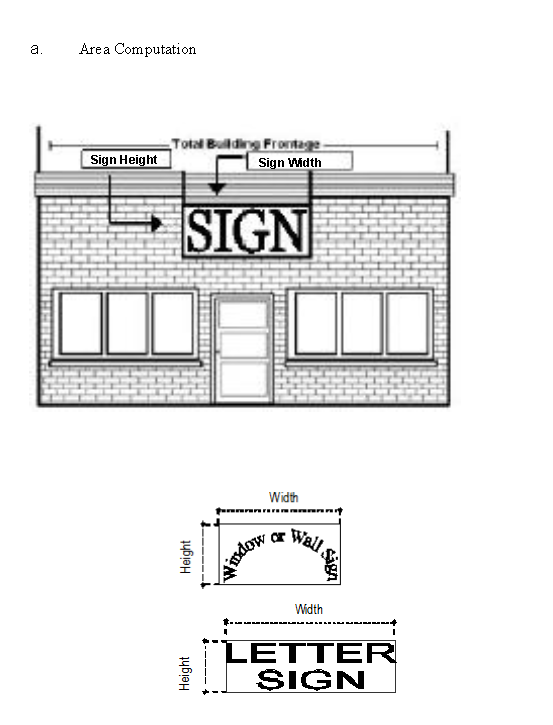
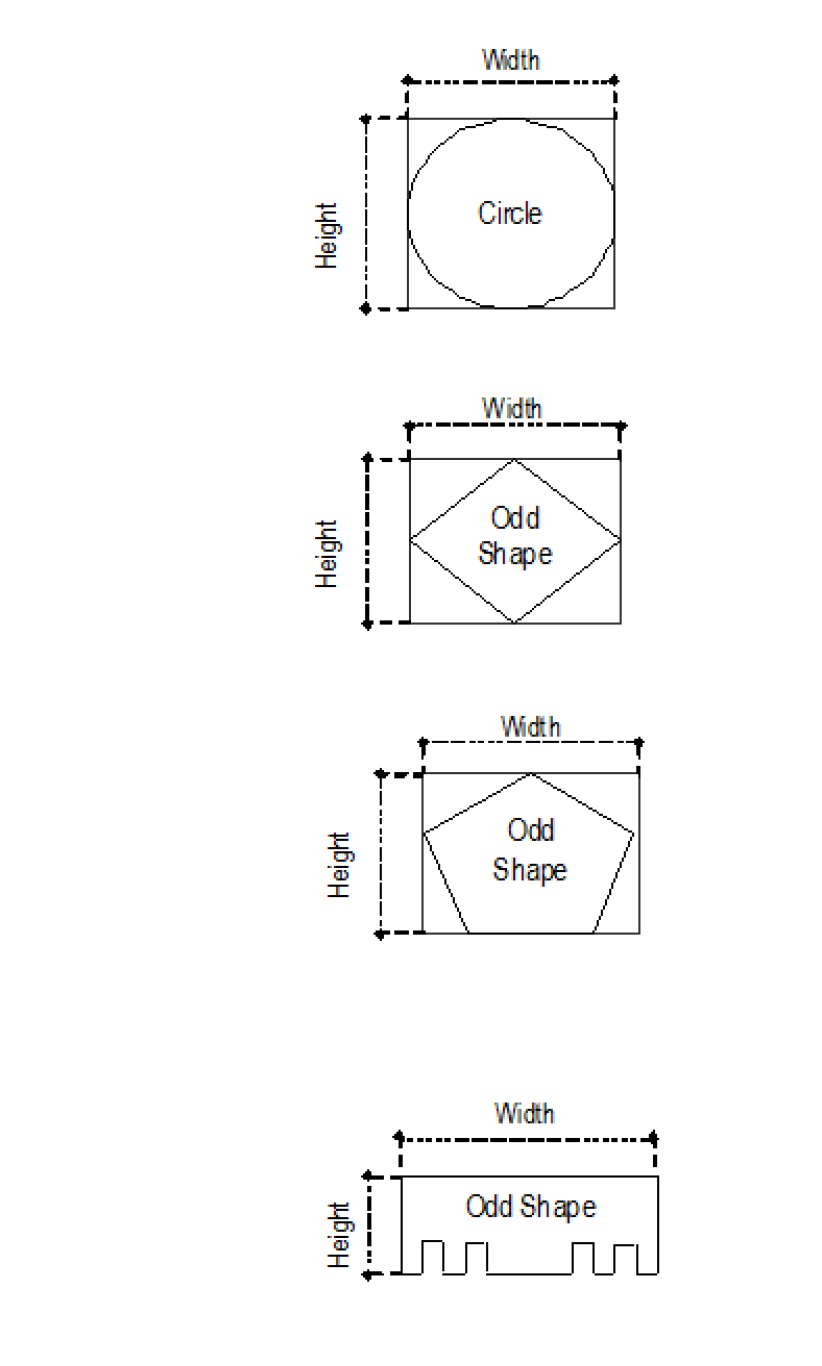
(3)
Any detached sign with the base of the sign face less than ten (10) feet above any adjacent street grade shall be located at least ten (10) feet from the pavement edge or curb line of the adjacent street or streets.
(4)
Sign face area for double-faced signs with sign faces parallel and back to back shall be measured as the sign face area of one (1) face of the sign.
(5)
In the event that two (2) or more business units occupy one (1) lot in an office, commercial, or industrial district, a combination sign may be permitted. Combination signs or structures shall contain no more than two hundred (200) square feet in sign face area. However, each individual sign located on a combination sign may not contain more than one hundred (100) square feet in sign face area for each individual business unit. Combination signs which exceed these requirements shall require a special use permit.
(6)
More than one (1) sign for a single business on common supports shall, in the aggregate, be considered as one (1) sign, except that one (1) accessory message board not exceeding thirty-two (32) square feet may be installed on the same supports as the sign(s) and not included in the aggregate sign size.
(7)
Only three (3) detached, free-standing ground signs, including banners but excluding billboards, shall be permitted on any lot or tract, exclusive of any attached on-premise signs, in conformance with provisions of the zoning district in which the lot or tract is located.
(8)
When any sign is illuminated, the light or lights shall be shaded or concealed so that they will not interfere with the vision of motor vehicle operators or shine directly on residential property in any residential district.
(9)
When within the above requirements, the following signs shall be allowed in the districts designated:
a.
Home occupations in residential districts: One (1) sign, not exceeding one and one-half (1.5) square feet, containing only the name of the business.
b.
Nameplates for multifamily dwelling buildings, rooming, boarding or lodging houses, and bed and breakfast dwellings in residential districts shall not exceed five (5) square feet and shall be lighted only with indirect, non-intermittent light.
c.
Complexes consisting of more than one (1) residential building in a residential or commercial district: One (1) sign, not exceeding thirty-two (32) square feet in sign face area, containing only the name of the complex. Such sign may also include contact information for the managing person or entity.
d.
MH-1 Mobile home park district: One (1) sign, not exceeding thirty-two (32) square feet in sign face area, containing only the name of the mobile home park. Such sign may also include contact information for the managing person or entity.
e.
O-1 Professional office district and C-1 Local commercial district: Detached free-standing ground signs or structures containing not more than sixty (60) square feet in sign face area and not more than fifteen (15) feet in height; provided that any such sign shall not be located within fifty (50) feet of any residential district and not more than two (2) such signs shall be permitted on any lot or tract.
f.
C-2 General commercial district: Detached, free-standing ground signs containing not more than one hundred (100) square feet in sign face and not more than thirty-five (35) feet in height; provided that any such sign shall not be located within fifty (50) feet of any residential district and not more than three (3) such signs shall be permitted on any lot or tract.
g.
C-3 Central business district: Detached free-standing ground signs or structures containing not more than sixty (60) square feet in sign face area and not more than fifteen (15) feet in height; provided that any such sign shall not be located within fifty (50) feet of any residential district and not more than one (1) such sign shall be permitted on any lot or tract.
h.
C-4 Planned commercial district: Plans for all signs must be submitted to the building and planning superintendent prior to issuance of a permit for their installation. All signs will be judged on the purpose and blending with the overall landscaping plan of the planned commercial district. Signs shall be limited to one (1) sign on each street or road frontage per commercial district. Signs shall contain only the name of business establishments located within the commercial district.
i.
CO-1 Enhanced commercial overlay: Except when altered or varied by this section, the signage requirements of the underlying district and of section 65-19 shall apply.
1.
Attached signs shall be in accordance with the underlying district and with section 65-19 with the following exception: Neon signs shall not be displayed on the exterior of buildings nor in exterior windows within this district.
2.
Banners, posters, placards, and portable advertising signs shall not be allowed in this district on either a temporary or permanent basis, including temporary directional and informational signs of a public nature. This shall include banners displayed on the exterior of buildings and/or in an exterior window. The exception is that decorative banners installed by the city on utility pole brackets shall be allowed.
3.
Signs that revolve, move laterally or transversely, or have flashing or blinking lights shall not be permitted in this district. Electronic message boards shall not be programmed to flash, blink, or scroll rapidly.
4.
Accessory letter boards and message boards shall be permitted in this district when installed on the same supports as a permitted detached free-standing ground sign.
5.
Combination signs containing off-site advertising shall be allowed at a common entrance to a private internal roadway from a public street for a series of businesses utilizing the private entrance as their primary access. Advertising space per business on a combination sign within this district shall be limited to fifteen (15) square feet per side of the sign. Off-site combination signs within this district shall be limited to a total area of one hundred (100) square feet per side and a total height of twelve (12) feet. Advertising on off-site combination signs shall be limited to the business name, logo, and/or directional arrow. Off-site combination signs shall be limited to one (1) sign per public street abutting the properties and shall be located at the common access point.
6.
Directional signs shall be allowed on private internal roadways within commercial development complexes, provided that no individual business' advertising space on a directional sign exceeds five (5) square feet and the total sign face area does not exceed thirty-two (32) square feet. All off-site advertising shall be limited to the business name, logo, and/or directional arrow.
7.
On-site and off-site billboards shall not be permitted in this district.
j.
I-1 Light industrial and I-2 Heavy industrial: Detached, free-standing ground signs or structures containing not more than one hundred (100) square feet in sign face area and not more than forty-five (45) feet in height; provided that any such sign shall not be located within fifty (50) feet of any residential district and not more than two (2) such signs shall be permitted on any lot or tract.
k.
I-3 Planned industrial park district: Plans for all signs must be submitted to the building and planning superintendent prior to the issuance of a permit for their installation. All signs will be judged on the purpose and their blending with the overall landscaping plan of the planned industrial park. Signs shall be limited to one (1) sign on each street or road frontage per industrial park. Signs shall contain only the name of business establishments located within the industrial park.
l.
Gasoline filling and service stations may have one (1) double-faced, freestanding sign not over twelve (12) inches in thickness and sixty (60) square feet in area on which shall be advertised only the trade name and price of the product offered for sale. The area of a double-faced sign shall be considered as the area of one (1) face of the sign.
m.
Signs, not exceeding seven (7) square feet in area, appertaining to the lease, hire, or sale of a building or premises, in a residential district, which boards or signs shall be removed as soon as the premises are leased, hired, or sold, or temporary signs pertaining to the sale of products grown on the premises.
n.
Signs appertaining to the lease, hire, or sale of a building or premises, not exceeding thirty-two (32) square feet in area, in an agricultural, office, commercial, or industrial district, which signs shall be removed as soon as the premises are leased, hired, or sold.
o.
Signs pertaining to the sale of products grown on the premises and not exceeding thirty-two (32) square feet in area in an A-1 Agricultural district.
p.
Temporary political campaign signs located in any residential district, not exceeding seven (7) square feet in sign face area. Such signs may be installed or maintained for no more than one hundred eighty (180) days prior to the election to which they pertain and which shall be removed within ten (10) days after the election to which they pertain.
q.
Church and school bulletin boards or identification signs for permitted public and semipublic uses may not exceed thirty-two (32) square feet in sign face area. No more than one (1) sign of the above character shall be permitted for each street upon which the tract has frontage.
r.
Temporary directional and informational signs of a public nature and not more than two hundred (200) square feet in sign face area may be permitted adjacent to arterial streets. Signs of a public nature shall be defined as pertaining to an event or occasion which is generally public in nature and calls attention to an event or occasion which is community-oriented (school or church functions, civic organization events, etc.).
s.
Temporary on-premises subdivision advertising signs, displaying the lot layout and other information relating only to the announcement of a proposed development, provided such signs are not more than fifty (50) square feet in sign face area, may be permitted in any subdivision under construction. However, any such sign must be located within the subdivision it advertises and shall be not less than ten (10) feet from any street line. No more than two (2) such signs of the above character shall be permitted within the proposed development and no more than one (1) sign of the above character per street entrance shall be permitted. Additionally, no such sign may exceed six (6) feet above the street grade or natural ground level, whichever is highest, and shall not be internally illuminated. Any such sign shall be removed within two (2) years of their installation, except with a written extension from the building and planning superintendent or when all of the lots within the subdivision are leased or sold, whichever comes first.
t.
Permanent on-premises subdivision signs, displaying only the name of said subdivision, provided such signs are not more than fifty (50) square feet in sign face area, may be permitted in any subdivision. However, any such signs shall be located within the subdivision advertised and not constructed upon or over any rights-of-way, easements, or other public places. No more than two (2) such signs of the above character shall be permitted within the development. No such sign may exceed six (6) feet above the street grade or natural ground level, whichever is highest. Additionally, these signs shall be ornamental in nature and shall be landscaped to provide an overall aesthetic appearance reflective of the type of subdivision advertised and not internally illuminated. Prior to their installation, the design and construction of these signs shall be reviewed and permitted by the building and planning superintendent. In no case shall the city be responsible for the preservation and maintenance of any permanent on-premises subdivision signs.
u.
Permanent subdivision signs in commercial or industrial park subdivisions displaying only the name of the subdivision and the name and location of each business or industry located within the park. Such sign shall be no more than fifty (50) square feet in sign face area, shall be located within the subdivision it advertises, and shall be not less than ten (10) feet from any street line. No more than two (2) such signs of the above character shall be permitted within the subdivision and no more than one (1) sign of the above character per subdivision entrance shall be permitted. Additionally, no such sign may exceed fifteen (15) feet above the street grade or natural ground level, whichever is highest.
v.
A temporary sign in an office, commercial, or industrial district relating to the announcement of a proposed building, commercial or industrial business, commercial park, or industrial park, not exceeding thirty-two (32) square feet, may be located on the lot or tract where the proposed building, subdivision, commercial or industrial business, commercial park or industrial park will be located for a period of not more than one (1) year, unless an extension is authorized in writing by the building and planning superintendent.
w.
Portable advertising signs, whether illuminated or not, may be located in any commercial or industrial district, provided that such sign shall be located at least ten (10) feet from the pavement edge or curb line of the adjacent street or streets and entirely within the property boundaries. All electrical installations for portable signs shall meet the applicable requirements of the city building codes. For the purpose of this chapter, a portable advertising sign shall be considered as a detached, freestanding ground sign and may be allowed under the following conditions:
1.
Portable advertising signs shall be used for temporary purposes only and shall be placed only after a temporary sign permit has been issued. Temporary sign permits shall be issued for a maximum period of six (6) months. No more than one (1) temporary sign permit may be issued for any address unless a change of occupancy use or change of business name occurs at that location.
2.
Only one (1) portable advertising sign may be placed for any address and only when an existing detached, freestanding sign is not available for that address. Advertising space on an existing combination sign intended for use by that address is considered an existing detached freestanding sign.
(10)
Advertising banners, posters, and placards. Advertising banners, posters, and placards shall not require a temporary sign permit. No more than two (2) banners, posters, or placards may be placed on freestanding posts or supports of existing freestanding signs on any lot at any one (1) time. Banners, posters, and placards installed on the exterior of a building shall be considered as attached signs and shall meet all requirements for attached signs.
(11)
The following signs and advertising devices are prohibited:
a.
Signs that revolve, move laterally or transversely, or have flashing lights. This shall not be construed to include stationery signs with movable electronic letters or graphics used as an auxiliary sign on the same support as a detached free-standing ground sign. Movable electronic letters or graphics shall not be programmed to flash, blink, or scroll rapidly.
b.
Signs erected on or over any public right-of-way or easement.
c.
Any sign erected so as to prevent free ingress to or egress from any door, window, or other exit way required by the city building code.
d.
Any sign erected in any location where, by reason of its location, it will obstruct the view of any authorized traffic sign, signal, or other traffic control device; nor may any sign imitate any official traffic sign.
e.
Any sign erected in a location where it will obstruct vision of the public right-of-way to a vehicle operator during ingress to, egress from, or travel on the public right-of-way.
f.
Any sign attached to any public utility pole, tree, fire hydrant, curb, sidewalk, or other surface located on public property.
g.
Any sign which constitutes a pedestrian or traffic hazard, as determined by the building and planning superintendent.
h.
Billboards and signs that are not maintained in good repair shall be subject to removal. The building and planning superintendent shall give written notice to the owner, and the owner shall have thirty (30) days to commence the needed repairs with completion within ninety (90) days. If such evidence of repairs is not produced, the building and planning superintendent shall order the billboard or sign to be removed.
(12)
The following signs and advertising devices are exempt from the provisions of this chapter, provided that portable advertising signs are not utilized for these purposes:
a.
Any sign erected and maintained pursuant to and in the discharge of governmental function or required by law, ordinance, or a governmental regulation, except as otherwise designated in this chapter.
b.
One (1) sign displaying the street number and/or name of the occupant of the premises not exceeding one (1) square foot in area.
c.
Signs being manufactured, transported and/or stored; provided that such signs are not used for advertising in any manner at the place or places of manufacture or storage.
d.
Commemorative plaques of a historical nature.
e.
Temporary signs, decorations, or displays celebrating the occasion of traditionally accepted patriotic, religious, or local holidays or events. Additionally, temporary off-premise advertising signs or displays for the sale of goods relative to patriotic, religious, or local holidays or events (Christmas trees, fireworks, etc.) which are erected or maintained for no more than thirty (30) days prior to the event to which they pertain and which are removed within ten (10) days after the event to which they pertain shall be exempt.
f.
Signs located within malls, courts, arcade porches, patios, and similar areas where such signs are not visible from any point on the boundary of the premises.
g.
Signs on licensed commercial vehicles, including trailers; provided that such vehicles are not utilized as parked or stationary outdoor display signs.
h.
Temporary political campaign signs, including their support structures, which are installed or maintained for no more than one hundred eighty (180) days prior to the election to which they pertain and which are removed within ten (10) days after the election to which they pertain.
i.
Temporary signs advertising yard sales, garage sales, open houses, or personal or real property auctions for no more than two (2) days. Any such sign shall be removed on the day such sale, auction, or open house ends.
j.
Any other auxiliary signs, such as directional or informational signs related to the business (exit and entrance, menu boards, gasoline price signs, letter boards, or electronic message centers, etc.) of less than thirty-two (32) square feet in area. Letter boards, electronic message boards, and gasoline price signs as allowed by this section shall be permanently affixed to the supports of a permanent free-standing ground sign, shall be auxiliary to the sign upon which it is supported, and shall not include banners, posters, or placards of a temporary nature.
k.
Portable A-frame signs, in an office, commercial, or industrial district provided that:
1.
Such signs are limited to eight (8) square feet per sign face with not more than two (2) sign faces.
2.
The overall size of the sign shall not exceed thirty (30) inches in width or forty-eight (48) inches in height.
3.
Such signs may not be internally illuminated.
4.
Such signs may be placed only on or adjacent to a sidewalk in front of the place of business it advertises and must allow a minimum thirty-six (36) inch wide space on the sidewalk for pedestrians to pass.
5.
Such signs shall be removed from the sidewalk and placed inside the business at the close of each business day and/or whenever the business ceases to be open.
(13)
Billboards. On-premise and off-premise billboards shall be permitted in accordance with the following provisions and other applicable provisions of this chapter. For the purposes of this section, off-premise signs of less than one hundred (100) square feet in sign face area shall be considered as billboards:
a.
Off-premise signs and billboards are defined as those that advertise or direct attention to a business, product, commodity, service, entertainment, or the like not located, sold, or offered on the premises on which the sign is located.
b.
Billboards shall be permitted only on lots or tracts adjoining the following streets or segments of street in C-2, C-4, I-1, I-2, or I-3 zoning districts and only when their advertisement is directed toward the following streets or segments of streets:
1.
Interstate 55.
c.
Billboards may not be erected within one hundred (100) feet of any residential district unless a special use permit is obtained therefor.
d.
Billboards may not be erected within thirty (30) feet of any adjacent street pavement edge or curb line.
e.
No billboard shall be placed within one thousand four hundred (1,400) feet of another billboard on the same side of the street nor within one hundred (100) feet of another billboard on the opposite side of the street as measured along the centerline of the street.
f.
The maximum area of a billboard sign face and display area shall not exceed three hundred (300) square feet with a maximum length of thirty (30) feet.
g.
Billboards with a maximum sign face area of up to four hundred (400) square feet and a maximum length of forty (40) feet shall be permitted in any C-2, C-4, I-1, I-2, or I-3 zoning district when the sign is adjacent to and within one hundred (100) feet of Interstate 55; provided that a special use permit therefor is granted and all other applicable restrictions of this section, including spacing, are met.
h.
Billboards shall have a minimum clearance of twenty (20) feet from the grade of the adjacent street to the bottom of the sign face and a maximum of fifty (50) feet from the grade of the adjacent street to the top of the sign face.
i.
Billboards with two (2) back-to-back sign faces, either parallel or forming a "V" when viewed from above and with an interior angle of not more than sixty (60) degrees shall be considered as one (1) billboard; and each sign face may have the maximum square footage allowed for one (1) billboard.
j.
Billboards must be constructed of steel frame with a concrete base with no more than two (2) steel vertical supports.
k.
Billboards that require more than sixty-five (65) percent repair or replacement shall be reconstructed to meet all requirements of section 65-21.
(14)
Off-premises signs. Signs directing the public to locations of businesses or facilities which are not located on arterial or collector streets shall be allowed adjacent to arterial and collector streets as identified on the major street plan, only in commercial or industrial districts, at the intersection with the public streets leading to the business or facility. All off-premises directional signs shall be subject to the following limitations:
a.
The sign area shall not exceed six (6) square feet in area.
b.
The sign shall not exceed ten (10) feet in height above the ground surface and shall not obstruct the sight of traffic.
c.
The sign shall contain no more than the name of the facility, address, distance, logo, and/or directional arrow and shall not contain changeable letters or graphics.
d.
A sign must be located completely on private property and not less than ten (10) feet from the pavement edge of a street.
e.
The business or facility advertised must be located within the corporate limits of the City of Jackson and shall be allowed no more than two (2) such signs.
f.
No sign may be located within fifty (50) feet of another sign except when mounted on a common post. Multiple signs mounted on a common post shall, collectively, not exceed the maximum sign size or height.
g.
Signs which are no longer applicable because of name changes, relocations, going out of business, or other reasons shall be removed immediately.
h.
The square foot area of an off-premises directional sign shall not be counted toward the total allowable signage for the lot on which it is located but the sign shall be counted toward the total allowable number of signs per lot.
i.
Off-premises signs shall not be allowed for home occupations.
j.
Temporary real estate "for sale" or "for rent" signs shall be allowed subject to the same provisions of other off-site directional signs with the exception that temporary real estate signs shall be allowed in all zoning districts. Such signs shall be removed not later than ten (10) days after the execution of a lease or closing of a sale.
(Ord. No. 13-73, § 1, 11-18-13; Ord. No. 15-82, § 4, 10-5-15; Ord. No. 17-40, § 2, 8-7-17; Ord. No. 23-88, § 2, 11-6-23)
Sec. 65-22. - Off-street parking and loading regulations.
The regulations hereinafter set forth in this section are in addition to, qualify, or supplement, as the case may be, the district regulations appearing elsewhere in this chapter.
(1)
Generally. Except as otherwise provided in this chapter, off-street parking and loading spaces shall be provided at the time any building or structure is erected or structurally altered, and all required parking spaces shall be located on the same lot on which the building or use served is located.
(2)
Procedures and standards. Prior to the issuance of any building permit, the building and planning superintendent shall ensure that the provisions of this section have been met:
a.
Plans. All applications for a building permit for a new or enlarged [fifty (50) percent or more in floor area] building, structure, or use, or for a variance involving the construction or enlargement of any building, structure, or use, shall include plans for at least the minimum number of parking and loading spaces as herein required and the means of access to the spaces.
b.
Size. A required off-street parking space shall contain an area of not less than one hundred forty-four (144) square feet and be not less than eight (8) feet wide by eighteen (18) feet long, measured perpendicularly to the sides of the parking space, exclusive of access drives or circulation aisles. Aisles between opposed vehicular parking spaces shall be not less than ten (10) feet in width when serving automobiles parked at a forty-five (45) degree angle in one (1) direction nor less than twenty (20) feet in width when serving automobiles parked perpendicularly. An off-street loading space (exclusive of adequate access drives and maneuvering space) shall have minimum dimensions of twelve (12) feet by thirty-five (35) feet and an overhead clearance of not less than fourteen (14) feet in height above grade.
c.
Access.
1.
Parking facilities shall be designed with the appropriate means of vehicular access to a street or alley in such a manner as to least interfere with the movement of traffic. No driveway width for single- or two-family dwellings shall exceed thirty-six (36) feet in width.
2.
Where access to a single-family residential use or structure, including attached single-family dwellings, will require a driveway, only one (1) point of ingress or egress located at least thirty (30) feet from any intersecting street corner shall be permitted. If a circular driveway is constructed, no more than two (2) points of ingress or egress, with each drive located at least thirty (30) feet from any intersecting street corner, shall be permitted, with a maximum width for each driveway to be specified by this section. Additional points of access driveways associated with single-family residential uses may be allowed only with the written authority of the building and planning superintendent.
3.
Where access to a two-family residential use or structure will require a driveway(s), no more than two (2) points of ingress or egress located at least thirty (30) feet from any intersecting street corner shall be permitted, with a maximum width for each driveway to be specified by this section. Additional points of access for accessory buildings or structures typically associated with two-family residential uses may be allowed only with the granting of a variance.
4.
Where access to a multiple-family or commercial use or structure will require a driveway and off-street parking, no more than three (3) points of ingress or egress, with each drive located at least thirty (30) feet from any intersecting street corner, shall be permitted. However, no more than two (2) access drives shall be permitted on any one (1) street side of the lot or tract. Additional points of access may be granted with a variance. All multiple-family and commercial driveways for ingress and egress shall be a minimum of twelve (12) feet and a maximum of thirty-six (36) feet in width, exclusive of curb returns. Two (2) or more property owners having an approved legal agreement describing their joint right to property access may jointly share a driveway or access road.
d.
Required setbacks.
1.
For single- or two-family residential dwellings, no parking space or portion thereof established on the same lot with the dwelling shall be located within a required front yard, other than in a driveway leading to a required off-street parking space, or in a circular driveway. Additionally, one (1) additional parking space may be established immediately adjacent, parallel to, and on the outer side of an existing driveway. However, in no case shall an adjacent parking space be established directly in front of the single- or two-family dwelling. On corner lots, no parking space shall be permitted in the required side yard adjacent to the street.
2.
Operable and licensed motor vehicles owned by the property owner may be parked for sale in a required front yard of any private property utilized for residential purposes provided, however, that only one (1) such vehicle may be parked on the property at one (1) time, and no vehicle shall constitute a pedestrian or traffic hazard as determined by the building and planning superintendent. Operable and licensed motor vehicles may be parked for sale in a required front yard of any private property utilized for commercial purposes provided, however, that the owner has received a city license to conduct said business, and that any vehicles shall be parked on a weed-free surface made of gravel, crushed stone, asphalt, or Portland Cement Concrete.
e.
Surfacing. All open off-street parking or loading areas shall be improved, at a minimum, with compacted rock not less than four (4) inches thick. All paved parking spaces for commercial and industrial uses shall be properly marked with durable paint in strips at a minimum of four (4) inches wide and extending the length of the parking space.
f.
Lighting. Any lighting used to illuminate an off-street parking or loading area shall be arranged so as to reflect the light away from all adjoining properties to the extent possible. No flashing lights or lights simulating movement shall be permitted. All parking lot lighting shall be top-shielded, downward directed, and shall be sized to illuminate only the parking area.
g.
Storm water drainage. Adequate storm water drainage facilities shall be installed to ensure that storm water does not flow onto abutting property or abutting sidewalks in such a way or quantity that pedestrians using the sidewalks would be detrimentally affected or inconvenienced. All storm water drainage and erosion control shall also be in compliance with the regulations set forth in chapter 57 (subdivisions).
(3)
Determination of number of spaces required. In computing the number of parking and loading spaces required, the following rules shall govern:
a.
"Floor area" shall mean the floor space within the inside line of walls and includes the total of all floors of a building. It does not include porches, garages, space in a basement or cellar, when such basement space is used for storage, or incidental uses, such as rest rooms, kitchens, and bar areas.
b.
Where fractional space results, the parking spaces required shall be construed to be the nearest whole number.
c.
The parking and loading spaces required for a use not specifically listed herein shall be the same as required for a use of similar nature as determined by the building and planning superintendent.
d.
Accessory off-street parking and loading spaces in existence on the effective date of this chapter may not be reduced below the number required herein for such equivalent new construction, in which event said spaces shall not be reduced below the number required herein for such equivalent new construction.
e.
Whenever a building or use, constructed or established after the effective date of this chapter, is changed or enlarged in floor area, number of employees, number of dwelling units, seating capacity, or otherwise to create a need for an increase of ten (10) percent or more in the number of existing parking spaces, such spaces shall be provided on the basis of the enlargement or change. Whenever a building or use, existing prior to the effective date of this chapter, is enlarged to the extent of fifty (50) percent or more in floor area or in the area used, said building or use shall then and thereafter comply with the parking requirements set forth herein.
f.
In the case of mixed or joint uses, the parking spaces required shall equal the sum of the requirements of the various uses computed separately.
(4)
Schedule of minimum parking spaces required.
a.
Residential.
1.
One- and two-family dwellings and attached single-family dwellings: one (1) parking space for each dwelling unit.
2.
Multiple-family dwellings: one and one-half (1½) parking spaces for the first bedroom and one-half (½) space for each additional bedroom in that unit.
3.
Boarding, lodging or rooming house: one (1) parking space for each dwelling unit for permanent residence, plus one (1) parking space for every two (2) sleeping rooms.
b.
Commercial, industrial, and institutional.
1.
Auto sales or garage: one (1) parking space for every one thousand (1,000) square feet of floor area in the building, or one (1) parking space for each employee, plus four (4) parking spaces for each maintenance stall, whichever is greater.
2.
Bank or savings and loan institution: one (1) parking space for every two hundred (200) square feet of floor area.
3.
Bowling alley, recreation center, skating rink, and other similar recreation and amusement facilities: one (1) parking space for every five (5) customers, computed on the basis of maximum servicing capacity at any one (1) time, plus one (1) additional space for every two (2) persons regularly employed on the premises.
4.
Business, professional, or public office building: three (3) parking spaces for the first one thousand (1,000) square feet of floor area, plus one (1) parking space for every additional four hundred (400) square feet of floor area over one thousand (1,000).
5.
Church or similar place of worship: one (1) parking space for every four (4) seats in the main auditorium [every thirty (30) inches of pew or bench is considered one (1) seat].
6.
Clothing store or shoe repair or service shop: four (4) parking spaces for the first one thousand (1,000) square feet of floor area, plus one (1) parking space for every additional five hundred (500) square feet of floor area.
7.
Clubhouses and permanent meeting places of veterans, business, civic, fraternal, labor, or similar organization: one (1) parking space for every fifty (50) square feet of aggregate floor area in the auditorium, assembly hall, and dining room of such building, plus one (1) additional space for every two (2) persons regularly employed on the premises.
8.
Community center, library, museum, or art gallery: ten (10) parking spaces for the first two thousand (2,000) square feet of floor area, plus one (1) parking space for every additional three hundred (300) square feet of floor area.
9.
Dance hall, assembly, or exhibition hall without fixed seats: one (1) parking space for every one hundred (100) square feet of floor area use therefor.
10.
Department or variety store: Parking or storage for all vehicles used directly in the conduct of business, plus four (4) parking spaces for the first one thousand (1,000) square feet of floor area and one (1) parking space for every additional five hundred (500) square feet of floor area.
11.
Funeral home, mortuary, or undertaking establishment: Parking or storage space for all vehicles used directly in the conduct of the business, plus one (1) parking space for every two (2) persons regularly employed on the premises and one (1) space for every four (4) seats in the auditorium or chapel of such establishment.
12.
Furniture, appliance or hardware store: Parking or storage space for all vehicles used directly in the conduct of the business, plus three (3) parking spaces for the first one thousand (1,000) square feet of floor area and one (1) parking space for each additional one thousand (1,000) square feet of floor area.
13.
Golf course: Parking or storage for all vehicles directly used in the operation of the course, plus seventy (70) parking spaces for every nine (9) holes and one (1) parking space for each person employed on the premises.
14.
Grocery store: Parking or storage space for all vehicles used directly in the conduct of the business and four (4) parking spaces for the first one thousand (1,000) square feet of floor area plus one (1) parking space for every additional five hundred (500) square feet of floor area.
15.
Convenience store: Parking or storage space for all vehicles used directly in the conduct of the business and four (4) parking spaces for the first one thousand (1,000) square feet of floor area plus one (1) parking space for every additional one thousand (1,000) square feet of floor area.
16.
Home occupation: three (3) parking spaces, which number may include the required spaces for the residential dwelling and available driveway space.
17.
Hospital: one (1) parking space for each employee and staff person on the premises, based on the maximum employment on the largest shift, and one (1) parking space for every four (4) beds for patients.
18.
Hotel or motel: one (1) parking space for every two (2) persons regularly employed on the premises, and one (1) parking space for each rental unit, plus one (1) parking space for every two hundred (200) square feet of floor area for any commercial uses contained within the hotel or motel.
19.
Industrial or manufacturing plants and facilities: Parking or storage spaces for all vehicles used directly in the conduct of the industrial operation, plus one (1) parking space for every two (2) employees on the premises based on the maximum employment on the largest shift.
20.
Machinery or equipment sales or service: Parking or storage space for all vehicles used directly in the operation of the business, plus two (2) parking spaces for the first one thousand (1,000) square feet of floor area.
21.
Medical or dental clinic: one (1) parking space for each doctor practicing in the building and one (1) parking space for every two (2) persons regularly employed in the building, plus four (4) parking spaces for every one thousand (1,000) square feet of floor area, or four (4) parking spaces for each examination room, whichever is greater.
22.
Nursery school: two (2) parking spaces, plus one (1) additional space for every five hundred (500) square feet of floor area.
23.
Nursing, rest, or convalescent home: one (1) parking space for every two (2) beds occupied at a maximum capacity, plus one (1) parking space for every two (2) regular employees on the premises.
24.
Outdoor retail or wholesale business: Parking or storage for all vehicles used directly in the conduct of the business, plus two (2) parking spaces for each person employed on the premises, based on maximum seasonal employment, and such additional spaces as may be required by the planning and zoning commission, based on the nature of the business and other relevant factors.
25.
Repair shop, plumbing shop, electrical shop, or other similar service establishment: Parking or storage spaces for all vehicles used directly in the operation of the business plus two (2) parking spaces for each person regularly employed on the premises.
26.
Research or testing laboratory, creamery, bottling plant, or similar establishment: Parking or storage spaces for all vehicles used directly in the conduct of the business plus one (1) parking space for every two (2) employees on the premises, based on the maximum employment on the largest shift.
27.
Restaurant, bar, nightclub, café, or other similar eating, drinking, or amusement establishment: one (1) parking space for every employee on the premises, based on the maximum employment on the largest shift, and one (1) parking space for every two (2) seats.
28.
Retail business or personal service establishment not specifically listed herein: two (2) parking spaces for each business unit plus one (1) parking space for every one hundred fifty (150) square feet of floor area.
29.
Self-service laundry: one (1) parking space for every two (2) washing machines.
30.
Service or gasoline filling station: Parking or storage space for all vehicles used directly in the conduct of the business, plus one (1) parking space for each gas pump or battery of gas pumps, three (3) parking spaces for each grease rack or similar service bay, and one (1) parking space for every two (2) employees, based on the maximum employment of the largest shift.
31.
School (elementary or junior high school): one (1) parking space for each staff member and person regularly employed on the premises plus two (2) parking spaces for each classroom.
32.
School (high school, college, or technical school): one (1) parking space for each staff member and person regularly employed on the premises plus five (5) parking spaces for each classroom.
33.
Theater, auditorium, stadium, gymnasium, sports arena, or similar place of public assembly: one (1) parking space for every five (5) seats or seating spaces available at maximum capacity [where bench seating is used, every thirty (30) inches of bench space is considered one (1) seat].
34.
Warehouse, freight or trucking terminal: Parking or storage space for all vehicles used directly in the conduct of the business plus one (1) parking space for every two (2) employees on the premises, based on the maximum employment on the largest shift.
35.
Wholesale establishment: Parking or storage space for all vehicles used directly in the conduct of the business plus one (1) parking space for every two (2) employees on the premises, based on the maximum employment of the largest shift.
c.
Exceptions.
1.
All parking spaces required herein shall be located on the same lot or parcel of land as the main building or use being served, except that the required parking may be provided on a separate lot or parcel of land not over three hundred (300) feet from the main building or use, if the parking facilities are located in the same zoning district as the principal permitted use of in a less restricted zoning district.
2.
Where an increase in the number of parking spaces is required by a change or enlargement in an existing use, or where the required spaces are provided collectively or used jointly by two (2) or more buildings or establishments, the required spaces may be located and maintained on a separate lot or parcel of land not over three hundred (300) feet from the existing use or any of the establishments jointly or collectively using the parking facilities; provided that the parking facilities are located in the same zoning district or a less restricted zoning district as the uses served and the provision below is met.
i.
Up to fifty (50) percent of the parking spaces required for theaters, public auditoriums, bowling alleys, dance halls, nightclubs, or cafes, and up to one hundred (100) percent of the parking spaces required for a church or school auditorium, may be provided and used jointly by banks, offices, retail stores, repair shops, service establishments, and similar uses not normally open, used, or operated during the same hours as those listed herein; provided, however, that a written agreement thereto is properly executed and filed as specified below.
3.
In any case where the required parking spaces are not located on the same lot with the building or use served, or where such spaces are collectively or jointly provided and used, a written agreement thereby assuring their retention for such purposes shall be properly drawn and executed by the parties concerned, approved as to form and execution by the city attorney, and shall be filed with the application for a building permit.
4.
The off-street parking regulations shall not apply to businesses and residences located within the area bounded by Washington Street to the north, Missouri Street to the west, West Adams Street to the South, and Hope Street to the east where existing on-street public parking and shared or public parking lots are available.
5.
Nonresidential parking in residential districts. Accessory off-street parking facilities serving nonresidential uses of property may be permitted in any residential district when located not more than three hundred (300) feet from the boundary of any commercial or industrial district and when authorized by the board of aldermen after review and study by the planning and zoning commission. The provision of nonresidential parking in residential districts shall be subject to the special use regulations of this chapter (see section 65-22) and to the following requirements:
i.
Ingress and egress to such parking lot shall be from a street directly serving the commercial, business, or industrial districts in which the uses intended to be served are located.
ii.
The parking lot shall be used solely for the parking of passenger automobiles.
iii.
No commercial repair service or work of any kind shall be conducted on the parking lot, nor shall any sale or display for sale of vehicles be conducted thereon.
iv.
No sign of any kind, other than signs designating entrances, exits, and conditions or use shall be maintained on the parking lot.
v.
The parking lot may be open from 7:00 a.m. to 9:00 p.m. and shall be closed at all other times; provided, however, that when supervised by one (1) or more full-time attendants, the parking lot may be kept open until 12:00 midnight. Parking lot lights shall be turned off when the lot closes.
vi.
Each entrance to and exit from the parking lot shall be at least twenty (20) feet distant from any adjacent property located in any residential district, except where ingress to the parking lot is provided from a public alley or public way separating the residential areas from the proposed parking lot.
vii.
The parking area shall be set back in conformity with the established or required yards for residential uses; and, where a parking area adjoins a dwelling use, it shall have a minimum side yard of ten (10) feet.
viii.
The parking area shall be suitably screened or fenced, paved and drained, lighted, and maintained free of debris.
ix.
In addition to the foregoing requirements, such parking lots shall conform to any further requirements and conditions as may be prescribed by the board of aldermen for the protection of properties adjacent to and in the vicinity of the proposed parking lot.
d.
Off-street loading requirements. Every building or part thereof erected or occupied for retail business, service, manufacturing, storage, warehousing, hotel, mortuary, or any other use similarly involving the receipt or distribution by vehicles of materials or merchandise shall provide and maintain on the same premises off-street loading space in accordance with the following requirements. Such space shall be in addition to and not considered as meeting a part of the requirements for off-street parking. Each required loading space shall have minimum dimensions of twelve (12) feet by thirty-five (35) feet and a vertical clearance of at least fourteen (14) feet:
1.
Retail business, service establishments, and similar uses:
i.
In C-1 and C-2 commercial districts: one (1) off-street loading space for every ten thousand (10,000) square feet, or fraction thereof, of gross floor area.
ii.
In C-3 business and C-4 commercial districts: one (1) off-street loading space for every fifteen thousand (15,000) square feet, or fraction thereof, of gross floor area.
2.
Industrial, manufacturing, or similar use: one (1) off-street loading space for every fifteen thousand (15,000) square feet, or fraction thereof, of gross floor area.
3.
Warehouse or wholesale storage facility: one (1) off-street loading space for every seven thousand five hundred (7,500) square feet, or fraction thereof, of gross floor area.
4.
Freight terminal or trucking terminal: one (1) off-street loading space for every five thousand (5,000) square feet, or fraction thereof, of gross floor area.
(Ord. No. 13-73, § 1, 11-18-13)
Sec. 65-23. - Nonconforming uses.
(1)
The lawful use of a building existing at the time of the adoption of this chapter may be continued even though such use does not conform with the provisions hereof.
(2)
If no structural alterations are made, a nonconforming use of a building may be changed to another nonconforming use of the same or more restricted classifications. Whenever a nonconforming use of a building has been changed to a more restricted use or to a conforming use, such use shall not thereafter be changed to a less restricted use.
(3)
Whenever the use of a building becomes nonconforming through a change in the zoning ordinance or district boundaries, such use may be continued; and, if no structural alterations are made, it may be changed to another nonconforming use of the same or a more restricted classification.
(4)
When a building, the use of which does not conform to the provisions of this chapter, is damaged by fire, explosion, any act of God, or the public enemy, to the extent of more than sixty-five (65) percent of its fair market value, it may be restored only on the issuance of a variance by the zoning board of adjustment. However, no variance shall be required for a building used exclusively as a dwelling that was constructed before August 8, 2023; that is six hundred (600) square feet or less in floor area, excluding lofts; and is damaged more than sixty-five (65) percent of its fair market value.
(5)
In the event that a nonconforming use of any building or premises is discontinued, or its normal operation is stopped, for a period of two (2) years, the use of the same shall thereafter conform to the use regulations in the district in which it is located.
(6)
A nonconforming use occupying only a portion of a building may be extended throughout the building if the same has been lawfully acquired and actually devoted to such use previous to the adoption of this chapter or to any affecting amendments thereof.
(7)
Existing buildings occupied by a nonconforming use may be extended or enlarged or structurally altered or reconstructed by, not to exceed, a fifty (50) percent increase in the cubical volume of the building as of the effective date of this chapter or the effective date of any subsequent amendments or changes as a result of which a building becomes nonconforming; provided that all height and area regulations are observed in any such extension or enlargement or alteration.
(8)
The actual ground space occupied by a nonconforming use with which no building is associated may be expanded by up to fifty (50) percent if a special use permit therefor is granted in accordance with section 65-24; provided that both the existing area occupied by the use and expanded area requested are described by a survey, a metes and bound description, or a plat sufficient to accurately describe the boundaries of the existing use and proposed expansion.
(9)
The actual ground space occupied by a nonconforming use that has an associated building may also be expanded by up to fifty (50) percent, in accordance with the provisions of subsection 65-23(8) above, either separately or in conjunction with an enlargement of the nonconforming building in accordance with the provisions of subsection 65-23(7) above.
(Ord. No. 13-73, § 1, 11-18-13; Ord. No. 23-69, § 1, 8-21-23)
Sec. 65-24. - Special use regulations.
Subject to the provisions of this section, the Board of Aldermen of the City of Jackson may, after a public hearing before the board of aldermen, and after study and report by the city planning and zoning commission, authorize the special uses enumerated in this section in any district as herein qualified from which such uses are otherwise prohibited based on whether such buildings or use will:
(1)
Substantially increase traffic hazards or congestion.
(2)
Adversely affect the character of the neighborhood.
(3)
Substantially increase fire hazards.
(4)
Adversely affect the general welfare of the community.
(5)
Overtax public utilities.
(6)
Be in conflict with the city's comprehensive plan.
If the board's findings should be negative to the above, then the application may be granted; if affirmative as to any subject, then such permit shall be denied. In the granting of a special use permit, the board of aldermen may impose, and the planning and zoning commission may recommend, in writing, appropriate conditions and safeguards as may be deemed necessary to ensure compliance with the requirements of this zoning ordinance and to protect adjacent property and conserve property values.
Applications for special use permits shall be made and processed in the same manner as provided for zoning amendments in section 65-29.
The following special uses are authorized, providing they comply with all the regulations set forth in this chapter for the district in which such use is located.
a.
Any uses for which special use permits are required by other sections of this chapter.
b.
Proprietary uses associated with churches and similar places of worship.
c.
Certain home occupations under special conditions in an R-1, R-2, R-3, or R-4 district.
d.
Fraternal organizations and private clubs in an R-1 and R-2 district.
e.
Cemeteries and mausoleums in any residential or commercial district.
f.
Bed and breakfast dwellings in an R-2 or R-3 district.
g.
Petroleum product storage in an I-1 district, excluding gasoline storage tanks at retail gasoline stations.
h.
Certain heavy industrial uses in an I-2 or I-3 district.
i.
Mobile homes/manufactured homes/mobile office.
1.
Mobile home—Emergency use. A single mobile home may be located on any lot or tract in any commercial or industrial district for emergency residential purposes and temporary residential use by applicant upon issuance of a special use permit for a period not to exceed twelve (12) months. The holder of a special use permit hereunder may submit an application for no more than one (1) extension hereunder. The original special use permit and extension thereof shall in no event exceed a twenty-four (24) month period.
2.
Mobile office/mobile office unit. A single mobile office unit may be located on any lot or tract in any commercial or industrial district for use as an office unit only and not for residential uses, upon the grant of a special use permit, subject to the following conditions:
i.
The term shall not exceed two (2) years on the initial permit. Subsequent permits may be obtained for periods not to exceed twelve (12) months.
ii.
The lot or tract upon which the mobile office is to be located shall contain no less than ten thousand (10,000) square feet.
iii.
The mobile office so utilized shall not be converted to real property under Missouri Statutes unless same is in full and complete compliance with all city codes including, but not limited to, zoning and building codes.
iv.
Any other condition that the board of aldermen, in its sole discretion, believes necessary to provide sufficient compatibility with the spirit and intent of the code.
j.
Commercial, recreational, or amusement development for temporary or seasonal periods only.
k.
Commercial radio or television tower or broadcasting station, provided the following special conditions are met:
1.
If the proposed tower is located within one (1) mile of an existing tower(s), evidence must be submitted demonstrating why the existing tower(s) is not suitable or available for co-use.
2.
The tower is designed to accommodate the co-use of at least two (2) other providers and made available to other providers for co-use for reasonable terms. A notarized statement shall be provided as to the ability of the tower for co-use.
3.
The design of the tower and accessory structures shall maximize the use of building materials, colors, textures, screening, and landscaping that effectively blend the facilities within the surrounding natural setting and environment.
4.
The tower shall be set back from the right-of-way line of any public street up to a distance equal to the height of the tower.
5.
Towers or antennas located on structures shall not extend more than thirty (30) feet above the highest point of the structure.
6.
The tower and antennas shall meet all federal regulations, including but not limited to, Federal Communications Commission (FCC) emission standards and Federal Aviation Administration (FAA) lighting requirements.
7.
Any tower that is no longer in use for a telecommunications purpose shall be removed at the owner's expense. The owner of the tower shall provide the city with a copy of the notice to the FCC of intent to cease operations. All obsolete and abandoned towers and accessory facilities shall be removed within six (6) months of cessation of use. In the case of multiple operators sharing use of a single tower, this provision shall not become effective until all users cease operations. The applicant shall submit an executed agreement to ensure compliance with this requirement. If the owner fails to remove an obsolete tower, the city may cause the tower to be removed and issue a special assessment tax bill for the cost of said removal, which shall be a lien against the real property affected.
l.
Buildings in excess of the height and story requirements set forth in section 65-19.
m.
Parking lots on land in residential districts, within three hundred (300) feet from the boundary of any commercial or industrial district, provided the following standards are met:
1.
Ingress and egress to such lot shall be from a street directly serving the commercial, business, or industrial district.
2.
No business involving the repair or service of vehicles, or sale, or display thereof shall be conducted from or upon such parking areas.
3.
No structures shall be erected on the parking area except as provided for under item m.7 hereof.
4.
No sign shall be erected on the parking area except as approved by the board of aldermen.
5.
Parking areas shall be used for the parking of patrons using private passenger vehicles only and no charge shall be made for parking within such premises.
6.
The parking shall be set back in conformity with the established or required yards for residential uses; and, where a parking area adjoins a dwelling use, it shall have a minimum side yard of ten (10) feet.
7.
The parking area shall be suitably screened or fenced, paved and drained, lighted and maintained free of debris.
n.
Airports, heliports, private air strips and helipads.
(Ord. No. 13-73, § 1, 11-18-13)
Sec. 65-25. - Community unit plan.
The owner of any tract of land may request a special use permit for the use of any development of such tract for residential or for residential in combination with shopping center uses as set forth in the regulations for planned commercial districts in section 65-14. The proposed development plan shall be referred to the planning and zoning commission and shall include specific evidence and facts relating the conditions and approval enumerated in this section.
(1)
Approval by the board of aldermen shall be coordinated upon specific findings that the proposed community unit plan meets the following conditions:
a.
That the proposed development of any C-4 Planned commercial district included as a part of the plan complies with the regulations for those districts as set forth in section 65-14.
b.
That the buildings located in the area, other than those within a C-4 district, shall be used only for single-family dwellings, two-family dwellings, multifamily dwellings, and the usual accessory uses, such as private parking or parking garages and storage space, or for community activities, including churches and schools.
c.
That the average lot area per family contained in the site, exclusive of any area within a C-4 district or occupied by streets, will not be less than the lot area per family required in the district in which the development is located.
d.
That the area is adaptable to complete community development, being bounded by major thoroughfares, streets, railroads, or other external barriers, and insofar as possible without a major thoroughfare extending through the project or any other physical feature which would tend to impair the neighborhood or community cohesiveness.
e.
That the plan will provide for the convenience and safety of vehicular and pedestrian movement within the site and in relation to adjacent areas.
f.
That no more than twenty-five (25) percent of the gross area of the project will be devoted to a C-4 district, and that no more than fifty (50) percent of the gross area of the project located within the R-1 or R-2 district will be devoted to multiple-family dwellings.
g.
That sufficient area is reserved for recreational and education facilities to meet the needs of the anticipated population or as designated by the city's comprehensive plan.
h.
That property adjacent to the area included in the plan will not be adversely affected; to this end the board of aldermen may require, in the absence of any appropriate physical barrier, that uses of least intensity or a buffer of open space or screening will be arranged along the borders of the project.
i.
That the plan is consistent with the intent and purpose of this chapter to promote public health, safety, morals, and general welfare.
(2)
If the board of aldermen approves the plan, building permits may be issued, even though the use of the land and the location and height of the buildings to be erected in the area and the yards and open space contemplated by the plan do not conform in all respects to the district regulations of the district in which it is located.
(3)
An application for a special use permit under this section may be made and processed contemporaneously with a proposed amendment of the zoning district or districts in which such site lies.
(4)
A special use permit shall automatically expire upon the failure to develop the use of the land for which the special use permit has been issued if the use is not substantially developed within two (2) years after the permit has been issued.
(Ord. No. 13-73, § 1, 11-18-13)
Sec. 65-26. - Site plan review.
(1)
The purpose of a site plan review is to ensure that the design and layout of certain developments permitted will constitute suitable development and will not result in a detriment to the neighborhood or the environment. All proposals for condominiums are subject to the provisions of this section, and no condominiums shall be erected or externally enlarged except in conformity with a site plan bearing an endorsement of approval from the board of aldermen.
(2)
All applications for site plan review shall be made and processed in the same manner as provided for zoning amendments in section 65-29. An applicant for site plan review shall file a copy of an application form and a site plan with the board of aldermen. Unless this requirement is waived by the building and planning superintendent, the site plan shall be prepared by a registered professional engineer or architect. The site plan shall include and be accompanied by the following items and information.
a.
The site plan shall show all existing and proposed buildings, existing and proposed contour elevations, structures, parking spaces, driveway openings, driveways, service areas, facilities for sewage, refuse and other waste disposal and for surface water drainage, and landscape features, such as fences, walls, planting areas, walks, and lighting both existing and proposed. The site plan shall also show the relation of the above features to adjacent ways and properties. The site plan shall also show all contiguous land owned by the applicant or by the owner of the property which is the subject of the application.
b.
The applicant shall submit such material as may be required regarding design features to integrate as the proposed development into the existing landscape, to enhance aesthetic assets, and to screen objectionable features from neighbors.
c.
The applicant shall submit such material as may be required regarding the projected traffic flow patterns into and upon the side for both vehicles and pedestrians and an estimate of the projected number of motor vehicle trips to and from the site for an average day.
(Ord. No. 13-73, § 1, 11-18-13)
Sec. 65-27. - Enforcement.
(1)
It shall be the duty of the person designated by the mayor as building and planning superintendent to administer and enforce the regulations contained herein.
(2)
It shall be unlawful to commence or proceed with the erection, construction, reconstruction, conversion, alteration, enlargement, extension, raising, or moving of any building or structure, or of any portion thereof, without first having applied in writing to the building and planning superintendent for a building permit to do so and until a building permit has been granted therefor.
(Ord. No. 13-73, § 1, 11-18-13)
Sec. 65-28. - Zoning board of adjustment.
(a)
A zoning board of adjustment is hereby created. The word 'board' when used in this section shall be construed to mean the zoning board of adjustment. The board shall consist of five (5) members, who shall be resident property owners, appointed by the mayor and approved by the board of aldermen, each to be appointed for a term of five (5) years; with the exception that when the board shall first be created one (1) member shall be appointed for a term of five (5) years, one (1) for a term of four (4) years, one (1) for a term of three (3) years, one (1) for a term of two (2) years, and one (1) for a term of one (1) year. Three (3) alternate members may be appointed to serve in the absence or disqualification of the regular members. Alternate members shall be appointed for a term of three (3) years, with the exception that when the alternate terms are first created the longest serving alternate shall be appointed for a term of one (1) year, the second longest serving shall be appointed for a term of two (2) years, and the third longest serving shall be appointed for a term of three (3) years. All members and alternates shall be removable for cause by the mayor and board of aldermen upon written charges and after a public hearing. Vacancies shall be filled for the unexpired term only of any member whose term becomes vacant. The board shall elect its own chairman and vice chairman who shall serve for one (1) year.
(b)
The zoning board of adjustment shall adopt rules for the conduct of its business, establish a quorum and procedures, and keep a public record of all findings, decisions, and minutes of its meetings. Meetings of the board shall be held at the call of the chairman and at such other times as the board my determine, and all meetings shall be open to the public.
(c)
An appeal may be taken to the zoning board of adjustment by any person, group or organization, public or private, affected by a decision of the building and planning superintendent. Such appeal shall be taken within such time as prescribed by the board by general rule by filing with the building and planning superintendent a notice of appeal specifying the grounds thereof. A fee of fifty dollars ($50.00) shall accompany all notices of appeals. The building and planning superintendent shall forthwith transmit to the board all papers constituting the record upon which the action appealed from was taken.
(d)
An appeal stays all proceedings in furtherance of the action appealed from unless the building and planning superintendent certifies to the zoning board of adjustment, after the notice of appeal shall have been filed with said building and planning superintendent, that, by reason of facts stated in the certificate, a stay would, in the building and planning superintendent's opinion, cause imminent peril to life or property. In such case, proceedings shall not be stayed otherwise than by a restraining order which may be granted by the zoning board of adjustment or by a court of record on application or notice to the building and planning superintendent and on due cause shown.
(e)
The zoning board of adjustment shall have the following powers:
(1)
To hear and decide appeals where it is alleged that there is an error in any order, requirement, decisions, or determination made by the building and planning superintendent in the enforcement of this chapter, and may affirm or reverse, in whole or part, said decision of the building and planning superintendent.
(2)
To hear and decide all matters referred to it or upon which it is required to pass under the provisions of this chapter.
(3)
To hear requests for variances from the literal provisions of the zoning ordinance that would cause undue hardship due to circumstances unique to the individual property under consideration and grant such variances only when it is demonstrated that such action will be in keeping with the spirit and intent of the provisions of the zoning ordinance. The zoning board of adjustment shall not permit, as a variance, any use in a district that is not permitted under this chapter. The zoning board of adjustment may impose conditions in the granting of a variance to ensure compliance and to protect adjacent property.
(4)
To hold public hearings on and decide the following exceptions to or variations of this chapter:
a.
To permit the extension of a district where the boundary line thereof divides a lot held in a single ownership at the time of the adoption of this chapter.
b.
Interpret the provisions of this chapter in such a way as to carry out the intent and purpose of the plan, as shown upon the zoning district map, where the street layout on the ground varies from the street layout as shown on this map.
c.
Permit reconstruction of a nonconforming building otherwise prohibited by section 65-23.
d.
Vary the yard regulations where there is an exceptional or unusual physical condition of a lot not generally prevalent in the neighborhood, which condition, when related to the yard regulations of this chapter, would prevent a reasonable or sensible arrangement of buildings on the lot.
e.
Vary the parking regulations by not more than fifty (50) percent where it is conclusively shown that adequate off-street parking to serve a particular use has been provided by or is controlled by the municipality.
(5)
In exercising the above-mentioned powers, the zoning board of adjustment may reverse or affirm wholly or partly, or may modify, the order, requirement, decision, or determination appealed from and may make such order, requirement, decision, or determination as ought to be made and to that end shall have all the powers of the building and planning superintendent. In considering all appeals to the provisions of this chapter, the board shall, before making any finding in a specific case, first determine that the proposed change will not constitute a change in the zoning district map and will not impair an adequate supply of light and air to adjacent property; or increase congestion in public streets; or increase the danger of fire; or materially diminish or impair established property values within the surrounding area; or in any other respect impair the public health, safety, comfort, morals, and welfare of the City of Jackson. Every change granted or denied by the board shall be accompanied by a written finding of fact, specifying the reason for granting or denying the variation. The decision of the board shall be made a part of any building permit in which the variation is allowed. The concurring vote of four (4) members of the board shall be necessary to reverse any order, requirement, decision, or determination of the building and planning superintendent or to decide in favor of the applicant on any matter upon which it is required to pass under this chapter or to effect any variation in this chapter.
(6)
A hearing requesting an appeal or variance shall be a public hearing at which parties in interest and citizens shall have an opportunity to be heard. At least fifteen (15) days' notice of the time and place of such hearing shall be published in an official paper of general circulation in the city. Written notice of the public hearing shall be provided to all property owners and residents within one hundred eighty-five (185) feet of the subject property exclusive of streets and alleys.
(7)
Any person or persons jointly or severally aggrieved by any decision of the zoning board of adjustment, or any officer, department, board, or bureau of the municipality, may present to the Circuit Clerk of Cape Girardeau County a petition, duly verified, setting forth that such decision is illegal, in whole or in part, specifying the grounds of the illegality. Such petition shall be presented to the court within thirty (30) days after the filing of the decision in the office of the zoning board of adjustment. Upon presentation of such petition, the court may allow a writ of certiorari directed to the zoning board of adjustment to review such decision of the board and shall prescribe therein the time within which a return thereto must be made and served upon the relator's attorney which shall not be less than ten (10) days and may be extended by the court. The allowance of the writ shall not stay proceedings upon the decision appealed from, but the court may, on application, on notice to the board and on due cause shown grant a restraining order. The zoning board of adjustment shall not be required to return the original papers acted upon by it, but it shall be sufficient to return certified or sworn copies thereof, or of such portions thereof as may be called for by such writ. The return shall concisely set forth such other facts as may be pertinent and materials to show the grounds of the decision appealed from and shall be verified. If, upon the hearing, it shall appear to the court that testimony is necessary for the proper disposition of the matter, it may take additional evidence, or appoint a referee to take such evidence as it may direct, and report the same to the court with the findings of fact and conclusions of law which shall constitute a part of the proceedings upon which a determination of the court shall be made. The court may reverse or affirm, wholly or partly, or may modify the decision brought up for review. Costs shall not be allowed against the board unless it shall appear to the court that it acted with gross negligence or in bad faith or with malice in making the decision appealed from.
(Ord. No. 21-25, § 1, 5-17-21; Ord. No. 23-58, § 1, 7-17-23)
Sec. 65-29. - Amendments.
(1)
There shall be two (2) types of amendments to the zoning code, namely:
a.
Rezoning amendments. Amendments, supplements, changes, or modifications to a specific property, tract, or area of land. Rezoning amendments shall include special use permits.
b.
Text amendments. Amendments, supplements, changes, or modifications to the zoning regulations or restrictions established in this chapter of the Code of Ordinances of the City of Jackson.
(2)
The board of aldermen may, by ordinance on its own motion or application, amend, supplement, change, modify, or repeal the boundaries or zoning designation of any specific property, tract, or area of land herein established (hereafter referred to as a 'rezoning amendment') or the zoning regulations or restrictions of zoning districts herein established (hereafter referred to as a 'text amendment'), under the procedures herein provided and following referral thereof to the planning and zoning commission in accordance with this section.
(3)
Applications for amendments to the zoning code shall be filed in writing with the city clerk who shall place the application before the board of aldermen after determining that it is in proper form as provided herein. A copy of the application shall remain on file with the city clerk for public inspection until final action thereon.
(4)
The board of aldermen or the city planning and zoning commission may provide forms for applications and may require applicants to provide plats and other documents or other information it may determine to be of value in acting upon the application. The board of aldermen and planning and zoning commission may request the opinions and recommendations of other city boards and officers upon applications.
(5)
Upon receipt of an application in proper form, the board of aldermen shall refer it to the planning and zoning commission. The board of aldermen may, by resolution, delegate the duty of such receipt and referral to the city administrator or similar official. The planning and zoning commission shall return the application to the board of aldermen with its recommendations relating thereto and showing the number of votes for and against its action and may include a summary of the reasons expressed for and in opposition thereto. The board of aldermen may set a date by which the recommendation shall be returned, no less than twenty (20) days from the date of such setting, and the board of aldermen may proceed without receipt of such recommendations in the absence of receipt by such date.
(6)
The board of aldermen may reject an application without referring it to the planning and zoning commission and without publishing a notice of hearing if the application is made within two (2) years of the board's rejection of a previous application seeking a rezoning amendment for the same or a larger or smaller included tract.
(7)
If the planning and zoning commission recommends approval of an application in whole or in part, the board of aldermen shall set a public hearing as provided in this section. If the planning and zoning commission recommends rejection of an application in full, the board of aldermen may set a public hearing, as provided in this section, upon its own motion; or the board of aldermen may, by motion, file such recommendation of rejection; and the application shall thereupon be deemed rejected, unless, within ten (10) days from such filing, the applicant files a written request with the city clerk for a public hearing under this section or makes an oral request therefor at a regular or special meeting of the board of aldermen, whereupon if the board of aldermen fails to approve an application in whole or in part within thirty-five (35) days after the public hearing, such application shall be deemed to have been rejected in full unless the board of aldermen shall have expressly extended such time period prior to the expiration thereof.
(8)
No rezoning amendment or text amendment shall become effective until after the board of aldermen has held a public hearing in relation thereto at which parties in interest and citizens shall have an opportunity to be heard. At least fifteen (15) days' notice of the time and place of such hearing shall be published in a newspaper of general circulation in the city and, in the case of a rezoning amendment, written notice to all property owners and residents within one hundred eighty-five (185) feet of the proposed rezoning, exclusive of streets and alleys. For a text amendment no notice shall be mailed. The board of aldermen may provide for the posting of notices of the hearing on the tract of a rezoning and for other means of notifying the public or interested persons of the proceedings.
(9)
In case of an adverse report by the planning and zoning commission, or if a protest against such proposed rezoning amendment shall be presented in writing to the city clerk, duly signed and acknowledged by the owners of thirty (30) percent or more, either of the areas of land (exclusive of streets and alleys) included within such proposed rezoning, or within an area determined by lines drawn parallel to and one hundred eighty-five (185) feet distant from the boundaries of the district proposed to be rezoned, such rezoning amendment shall not become effective except by the favorable vote of two-thirds (⅔) of all the members of the board of aldermen. So long as the protest is duly signed and acknowledged as set forth herein in such manner as to allow the city clerk to verify said signatures, then said protest signatures shall not be required to be notarized.
(10)
In its action upon an application for a rezoning amendment, the board of aldermen may grant a special use permit under section 65-24 rather than the requested change in zoning district boundaries or may grant a change to a zoning district which is intermediate in restrictiveness between the existing zoning district and the requested zoning district. However, no special use permit or change in zoning district of this nature shall be granted until the parties in interest have been notified by either public notice or certified mail that such permit or change is contemplated.
(11)
Opinions and comments at the public hearing shall be submitted in person at the date and time prescribed for the public hearing. It is provided, however, that in the event a resident of the city or other interested party is unable to attend the public hearing, then said person's opinions and comments may be submitted in writing provided that the writing is signed and states the person's address and provided further that the writing is delivered to the city clerk prior to the commencement of the public hearing. Writings shall be submitted by standard U.S. mail delivery, private parcel delivery, hand delivery, telefacsimile transmission, or electronic transmission. Unsigned communications will not be accepted. If written opinions and comments are properly submitted as set forth herein, said communications will be made a part of the record of the public hearing.
(Ord. No. 13-73, § 1, 11-18-13; Ord. No. 19-08, § 1, 1-7-19)
Sec. 65-30. - Fees and cost.
(a)
Rezoning. Any person who shall petition the city planning and zoning commission to change this chapter, and particularly the rezoning of any property within the city limits of the City of Jackson, shall first deposit with the city clerk the sum of two hundred dollars ($200.00), which sum shall be used by the city to pay for the publication of legal notices required by this chapter, construction and placement of a temporary sign or signs on the property involved giving notice of said request, and to reimburse the city for any other expenses which may be incurred by the city or planning and zoning commission. No rezoning fee shall be required for applications submitted in conjunction with a corresponding annexation request for the same property provided the rezoning application is submitted prior to completion of the annexation process. No rezoning fee shall be required for applications initiated by the City of Jackson as directed by an approved motion by the board of aldermen.
(b)
Special use permit. Any person who shall petition the planning and zoning commission for a special use permit shall first deposit with the city clerk the sum of two hundred dollars ($200.00), which sum shall be used by the city to pay for the aforesaid costs.
(c)
Zoning board of adjustment. Any person who shall petition the zoning board of adjustment for any variance, exception, or appeal of a decision of the building inspector shall first deposit with the city clerk the sum of fifty dollars ($50.00), which sum shall be used to pay for the publication of legal notices required by this chapter and to reimburse the city for any other expenses which may be incurred by the city or board of adjustment.
(d)
Fees. No rezoning, special use permit or variance, exception or challenge to a decision of the building and planning superintendent shall be issued, or an ordinance changing the existing zoning shall not be passed, until such time as the aforesaid fees have been paid to the city clerk.
(Ord. No. 13-73, § 1, 11-18-13; Ord. No. 21-24, § 1, 5-17-21)
Sec. 65-31. - Violation and penalty.
The owner or agent of a building or premises in or upon which a violation of any provision of this chapter has been committed or shall exist; or the lessee or tenant of an entire building or entire premises in or upon which a violation has been committed or shall exist; or the agent, architect, building contractor, or any other person who commits, takes part, or assists in any violation, or who maintains a building or premises in or upon which such violation shall exist; shall be guilty of a misdemeanor, punishable by a fine of not less than fifty dollars ($50.00) and not more than five hundred dollars ($500.00) for each and every day that such violation continues, but if the offense is willful, on conviction thereof, the punishment shall be a fine of not less than one hundred dollars ($100.00) nor more than five hundred dollars ($500.00) for each and every day that such violation shall continue, or by imprisonment for ten (10) days for each and every day such violation shall continue, or by both such fine and imprisonment, in the discretion of the court. Any person having been served with an order to remove any violation failing to comply with an order within ten (10) days after notice, or continuing to violate any provision of the regulations made under authority of this chapter in the respect named in such order, shall be subject to a penalty in accordance with section 1-20 of this Code.
(Ord. No. 13-73, § 1, 11-18-13)
Sec. 65-32. - Medical marijuana.
(1)
No new marijuana cultivation facility, marijuana dispensary facility, marijuana-infused products manufacturing facility, marijuana testing facility, marijuana transportation/storage facility, marijuana consumption lounge or marijuana club may not be located within five hundred (500) feet of a previously existing church, public or private school, or state-licensed daycare measured by the following methods:
a.
In the case of a freestanding facility, the distance between the facility and the school, daycare, or church shall be measured from the external wall of the facility structure closest in proximity to the school, daycare, or church to the closest point of the property line of the school, daycare, or church.
b.
In the case of a school, daycare, or church that is part of a larger structure such as an office building or strip mall, the distance shall be measured to the entrance or exit of the school, daycare, or church closest in proximity to the facility.
c.
In the case of a facility that is part of a larger structure, such as an office building or strip mall, the distance between the facility and the school, daycare, or church shall be measured from the property line of the school, daycare, or church to the facility's entrance or exit closest in proximity to the school, daycare, or church.
d.
All measurements shall be made along the shortest path between the demarcation points that can be lawfully travelled on foot.
(2)
The personal cultivation of marijuana shall be a permitted in all zoning districts in accordance with Missouri state law.
(Ord. No. 19-50, § 10, 7-15-19; Ord. No. 23-23, § 15, 3-20-23)

