
Lawndale City Zoning Code
ARTICLE XV
SCREENING AND TREES
Sec. 12-301.- The need for screening requirements.
The board of commissioners finds that:
(1)
Screening between two (2) lots lessens the transmission from one lot to another of noise, dust, and glare.
(2)
Screening can lessen the visual pollution that may otherwise occur where there are a variety of uses. Even minimal screening can provide an impression of separation of spaces, and more extensive screening can shield entirely one (1) use from the visual assault of an adjacent use.
(3)
Screening can establish a greater sense of privacy from visual or physical intrusion, the degree of privacy varying with the intensity of the screening.
(4)
The provisions of this part are necessary to safeguard the public health, safety and welfare.
Sec. 12-302. - General screening standard.
Prior to the issuance of a certificate of occupancy, every development in the zoning districts indicated below shall install between it and the adjacent existing uses, the appropriate screening as described in section 12-305.
(1)
Industrial district: Whenever a lot in an industrial district abuts the following districts, with no intervening street, the indicated screen shall be required.
All residential districts—Type A, opaque screen.
Business district—Type B, semi-opaque screen.
(2)
Business district: Whenever a lot in a business district abuts upon any residential district, with no intervening street or highway, a Type B semi-opaque screen shall be required.
(3)
Manufactured homes and parks. Whenever a lot in a residential manufactured homes and parks district abuts a developed single family residential lot, with no intervening street, a Type C, broken screen shall be required.
(4)
Corridor overlay districts: When a lot in this zoning district is developed for a business use and abuts a residential use, with no intervening public street or highway, a Type B semi-opaque screen shall be required.
(Amd. of 12-17-02; Amd. of 11-20-07)
Sec. 12-303. - Retention and protection of large trees.
(a)
The board of commissioners encourages the retention and protection of existing large trees to the maximum extent possible, consistent with the development process.
(b)
The plantings, fences, walls, or berms that constitute a required screen shall be properly maintained. Any vegetation that dies shall be replaced.
(Amd. of 11-20-07; Amd. of 4-1-08, § 40)
Sec. 12-304. - Flexibility in administration required.
The administrator may permit deviations from the presumptive requirements of section 12-302 and may either require more intensive or allow less intensive screening whenever it finds such deviations are more likely to satisfy the standard set forth in this section without imposing unnecessary costs on the developer. Although these standards are considered minimum, the owner or developer may install additional screening if desired.
(Amd. of 11-20-07)
Sec. 12-305. - Description of screens.
The following three (3) basic types of screens are hereby established and are used as the basis for the screening standards set forth in section 12-302:
(1)
Opaque screen, Type A: A screen that is opaque in all seasons from the ground to a height of at least six (6) feet, with intermittent visual obstructions from the opaque portion to a height of at least twenty (20) feet. An opaque screen is intended to exclude all visual contact between uses and to create a strong impression of separation. The opaque screen may be composed of a landscaped earth berm, planted vegetation, or existing vegetation. Planted trees shall be an evergreen species, at least six (6) feet in height at planting and have branches to the ground. The opaque portion of the screen must be opaque in all seasons of the year. Cypress and Holly trees are examples of species that can achieve this standard.
Suggested planting pattern that will achieve this standard is illustrated below:
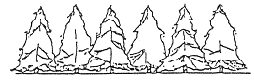 |
EVERGREEN TREE
20 feet mature height Staggered planting Branches to ground |
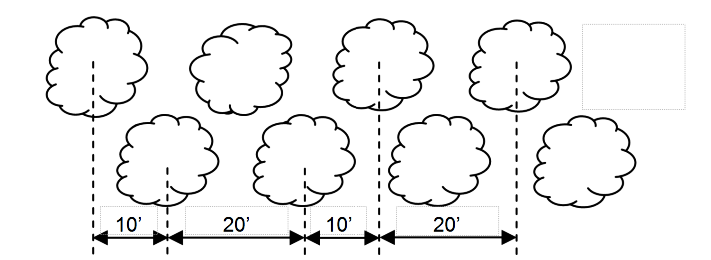 |
PLANTING LAYOUT
Staggered rows 10 feet on center Branches to ground |
(2)
Semi-opaque screen, Type B: A screen that is opaque from the ground to a height of three (3) feet, with intermittent visual obstruction from above the opaque portion to a height of at least twenty (20) feet at maturity. This screen is intended to partially block visual contact between uses and to create a strong impression of the separation of spaces. The semi-opaque screen may be composed of a wall, fence, landscaped earth berm, planted vegetation, or existing vegetation. Planted trees shall be at least three (3) feet in height at planting. Suggested planting patterns which will achieve this standard are illustrated below:
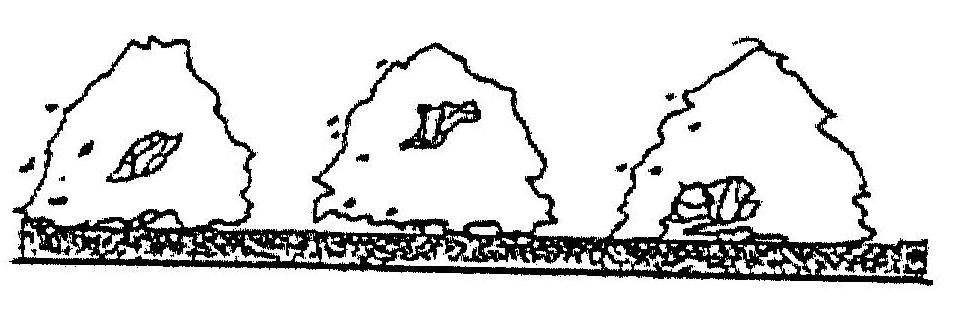 |
SMALL TREES
30 feet on center 20 feet mature height WALL OR FENCE 3 feet in height |
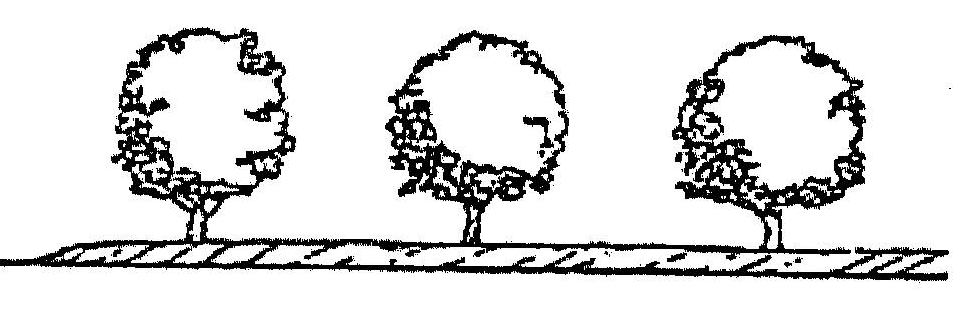 |
SMALL TREES
20—30 feet on center 20 feet mature height BERM 3 feet high & seeded |
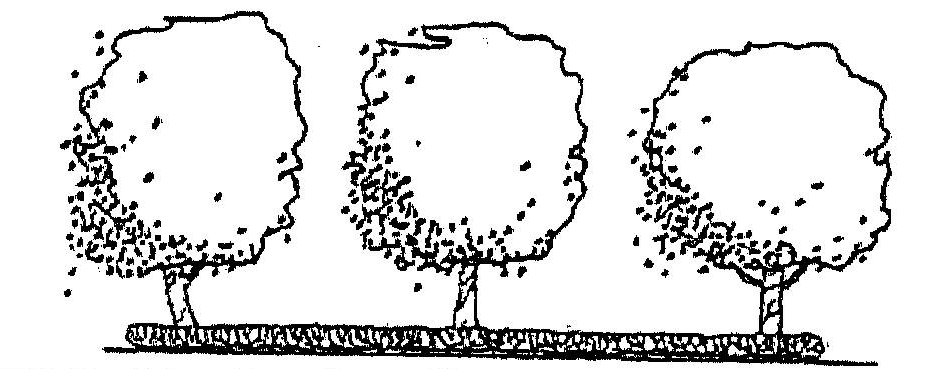 |
LARGE TREES
40 feet on center HEDGE SHRUBBERY 3 feet on center 3 feet mature height |
(3)
Broken screen, Type C: A screen composed of intermittent visual obstructions from the ground to a height of at least twenty (20) feet. The broken screen is intended to create the impression of a separation of spaces without necessarily eliminating visual contact between the spaces. It may be composed of a wall, fence, landscaped earth berm, planted vegetation, or existing vegetation. Planted trees shall be at least three (3) feet in height at planting. Suggested planting patterns which will achieve this standard are illustrated below:
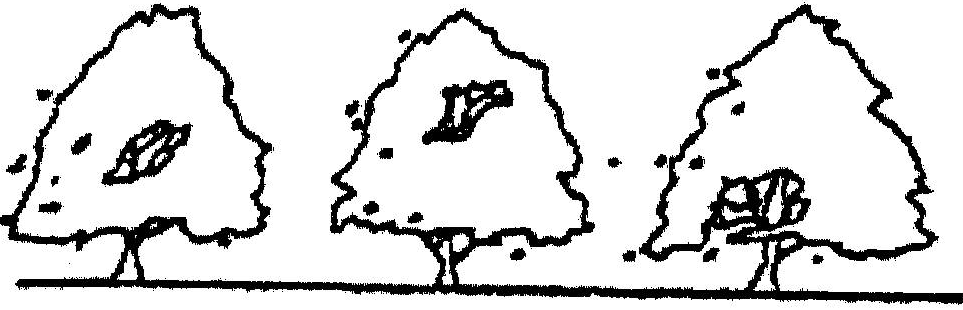 |
SMALL TREES
30 feet on center 20 feet mature height |
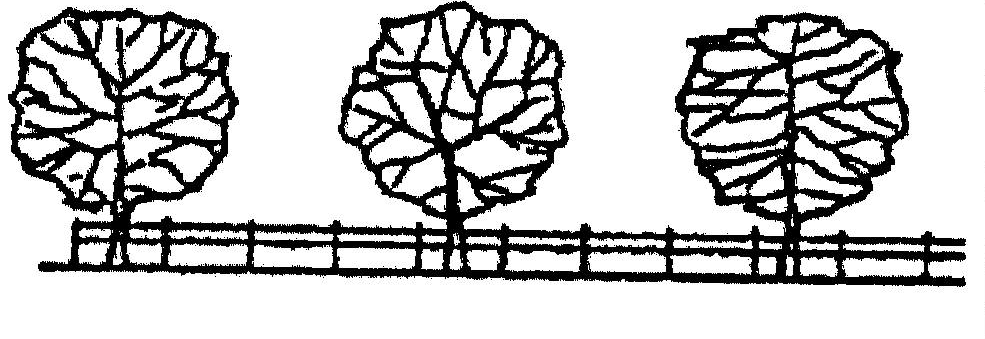 |
SMALL TREES
30 feet on center 20 feet mature height SPLIT RAIL FENCE 3 feet high |
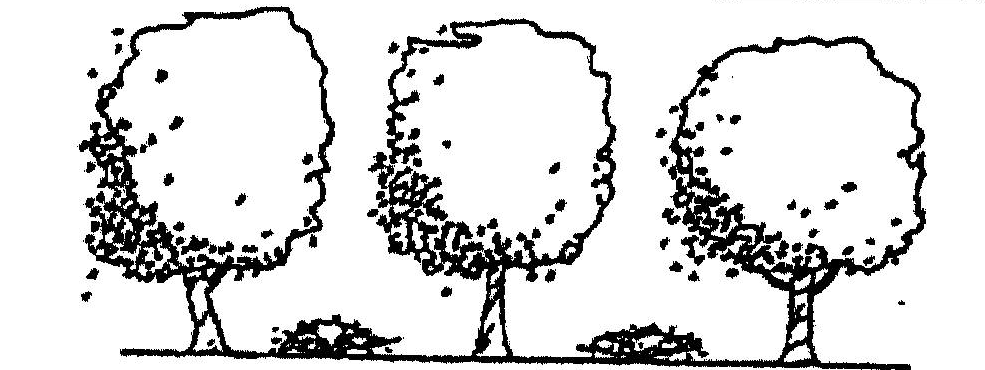 |
LARGE TREES
40 feet on center 20 feet mature height ASSORTED SHRUBS 10 feet on center 3 feet mature height |
(Amd. of 11-20-07; Amd. of 4-1-08, § 41; Ord. of 4-5-16(2))

