
Lone Tree City Zoning Code
ARTICLE XXXVI
Definitions
Abutting means having a common border with, or separate from such a common border by, a right-of-way, alley or easement.
Accessible parking means parking spaces provided for the disabled according to the requirements of the Americans with Disabilities Act (ADA) and any appliacble state or local laws, as may be adopted.
Accessory equipment means any equipment serving or being used in conjunction with a WCF, including, but not limited to, utility or transmission equipment, power supplies, generators, batteries, cables, equipment buildings, cabinets and storage sheds, shelters or other structures.
Accessory building means a subordinate structure detached from but located on the same lot as the principal structure, the use of which is incidental and accessory to that of the principal structure.
Accessory use means a use naturally and normally incidental to, subordinate to and devoted exclusively to the principal use.
Addition means any increase to the gross floor area of a structure.
Adjacent means having a common border with, or separated by common areas, open space, roadways or alleys.
Administrative Amendment Certificate means a written certificate documenting the official decision of the Community Development Department or Community Development Department on a proposed amendment to a previously approved plan.
Alteration see Modification.
Alternative tower structure means man-made trees, clock towers, bell steeples, light poles, traffic signals, buildings, and similar alternative design mounting structures that are compatible with the natural setting and/or surrounding structures, and camouflage or conceals the presence of antennas or towers so as to make them architecturally compatible with the surrounding area pursuant to this Division. This term also includes any antenna or antenna array attached to an alternative tower structure. A stand-alone monopole (including a replacement pole) in the public right-of-way that accommodates small cell wireless facilities is considered an alternative tower structure to the extent it meets the camouflage and concealment standards of this Division.
Antenna means any device used to transmit and/or receive radio or electromagnetic waves such as, but not limited to panel antennas, reflecting discs, microwave dishes, whip antennas, directional and non-directional antennas consisting of one (1) or more elements, multiple antenna configurations, or other similar devices and configurations, and exterior apparatus designed for telephone, radio, or television communications through the sending and/or receiving of wireless communications signals.
a.
Directional (or panel or rectangular) antenna means a flat surface antenna used to archive transmission or reception from a specific direction.
b.
Omnidirectional (or whip) antenna means a thin, self-supporting rod antenna that beams and receives a signal in all directions.
c.
Parabolic (or dish) antenna means a round, often concave, antenna no greater than twenty-four (24) inches in diameter used primarily for point-to-point transmission of radio signals.
Antenna array means groups of antennas designed to send and receive wireless transmissions.
Appeal means a review of a decision, determination, order, or act of an administrative or appointed body pursuant to the terms of this Chapter.
Applicant means the person or persons making an application to the City for approval of development, as addressed in this Chapter.
Assisted living and congregate care means independent living developments that provide centralized amenities such as dining, housekeeping, transportation and organized social/recreational activities. Limited medical services (such as nursing and dental) may or may not be provided. The resident may contract additional medical services or personal assistance.
Awning means an architectural projection or shelter projecting from and supported wholly by the exterior wall of a building and composed of a covering of rigid or nonrigid materials and/or fabric on a supporting framework that may be either permanent or retractable.
Banner sign means a copy or graphics displayed on a flexible form made of fabric, plastic, nylon or other nonrigid material.
Base station means a structure or equipment at a fixed location that enables FCC-licensed or authorized wireless communications between user equipment and a communications network. The definition of base station does not include or encompass a tower as defined herein or any equipment associated with a tower. Base station includes without limitation:
(1)
Equipment associated with wireless communications services such as private broadcast, and public safety services, as well as unlicensed wireless services and fixed wireless services such as microwave backhaul that, at the time the relevant application is filed with the Town under this Chapter and has been reviewed and approved under the applicable zoning or siting process, or under another state or local regulatory review process, even if the structure was not built for the sole or primary purpose of providing such support; and
(2)
Radio transceivers, antennas, coaxial or fiber-optic cable, regular and backup power supplied, and comparable equipment, regardless of technological configuration (including Distributed Antenna Systems ("DAS") and small-cell networks) that, at the time the relevant application is filed with the City, has been reviewed and approved under the applicable zoning or siting process, or under another state or local regulatory review process, even if the structure was not built for the sole or primary purpose of providing such support.
The definition of base station does not include any structure that, at the time the relevant application is filed with the City, does not support or house equipment described in paragraphs (1) and (2) above.
Berm means a mound of earth used in landscaping for screening, definition of space, noise attenuation or decoration.
Billboard. See off-premises sign. Any other outdoor advertising prohibited by the provisions of C.R.S. § 43-1-401, et seq. shall also be considered billboards.
Board of Adjustment and Appeals means the persons appointed by the City Council and acting pursuant to the provisions of the Charter.
Boarding/rooming house means an establishment in which sleeping accommodations are provided to a person for a period of thirty (30) consecutive days or longer by the head of household in a residential dwelling to unrelated persons where excess automobiles may result (see household and excess automobiles). As used in this definition, "head of household" means a person who resides at the establishment while such establishment is being used as the rooming and boarding house. The term does not include short-term rentals as defined in Article VI of Chapter 6 of the Lone Tree Municipal Code.
Borrow site means a site used for the extraction of earthen materials such as sand, gravel, rock and dirt, where the material is removed from the legally described site and characterized by a short-term operation and a limited quantity of earthen material.
Buffer area means an area of land established to separate and protect one (1) type of land use from another, and to screen uses from objectionable noise, smoke or visual impact or to provide for future public improvements or additional open space.
Building means any permanent structure, or portion thereof, built for the shelter or enclosure of human beings, animals or property of any kind and excluding signs or fences.
Building Department means the City's designated Building Department as set forth by resolution or other City Council action and authorized to perform all building code administration and inspection services as directed by this Chapter and other City regulations.
Building envelope means the portion of a lot within applicable setback requirements where building construction will be permitted, or other activities if so limited or described on the plat.
Building height. To measure building height, refer to the City Building Code as amended and adopted by the City Council.
Spire height calculation (see diagram):
Spire Height Calculation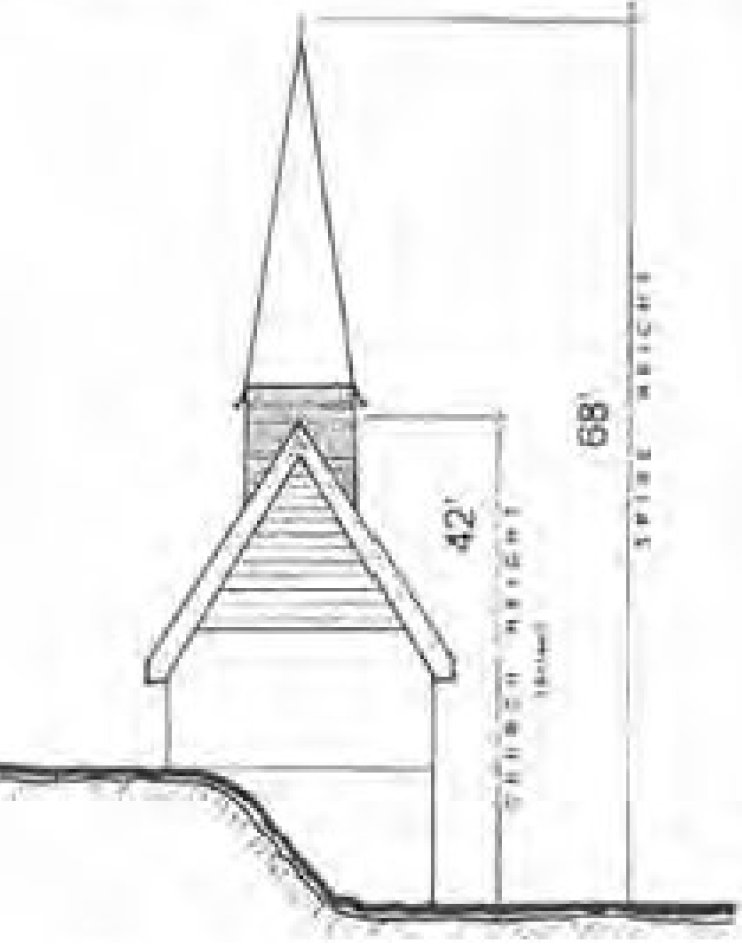
Burn probability risk level (risk level or risk area) means the annual probability of any location burning due to wildfire.
Cabinet sign means a sign structure consisting of the frame and face(s), not including the internal components, embellishments or support structure.
Camouflage, concealment, or camouflage design techniques means a wireless communication facility is camouflaged or utilizes camouflage design techniques when any measures are used in the design and siting of wireless communication facilities with the intent to minimize or eliminate the visual impact of such facilities to surrounding uses. A WCF site utilizes camouflage design techniques when it (i) is integrated in an outdoor fixture such as a flagpole, or (ii) uses a design which mimics and is consistent with the nearby natural, or architectural features (such as an artificial tree) or is incorporated into (including, without limitation, being attached to the exterior of such facilities and painted to match it) or replaces existing permitted facilities (including without limitation, freestanding signs or freestanding light standards) so that the presence of the WCF is not readily apparent.
Canopy means a multi-sided overhead structure or architectural projection supported by attachments to a building (attached) or supported by columns but not enclosed by walls (freestanding).
Carrier means a company that provides wireless communication services.
Cellular communication means a type of personal communication service consisting of low-power mobile radio communication that occurs through a network of radio wave transmitting devices.
Central sanitation means a centralized wastewater collection and treatment facility approved by Tri-County Health Department and the Colorado Department of Public Health and Environment, including at a minimum secondary wastewater treatment, subject to any waste discharge permits required by the State.
Central water means a centralized water distribution facility which may be made up of one (1) or more wells or other sources of water.
Changeable copy sign means a sign where letters, characters or graphics change manually through placement of letters or symbols on a panel mounted in or on a track system.
Channel means a natural or artificial watercourse of perceptible extent, with definite bed and banks to confine and conduct continuously or periodically flowing water.
Channel flow is that water which is flowing within the limits of the defined channel.
Church means a building where people regularly assemble for worship, together with its accessory buildings and uses, maintained and controlled by an organization to sustain public worship.
City means the City of Lone Tree, Colorado.
City Engineer means the City's designated Director of Public Works or their designee, to perform the engineering functions for the City as set forth in this Chapter.
Clinic, dental or medical means a facility licensed and used for the provision of medical, dental, surgical or mental health care of the sick or injured, excluding inpatient and overnight accommodations.
Club (country club) means individuals gathered for social, educational or recreational purposes, including buildings or facilities owned or operated by such organization.
Cluster means a development pattern characterized by the compact arrangement of land uses within a project boundary or planning area, designed to create common open space or to preserve environmentally or visually sensitive areas.
Collocation, with respect to eligible facilities requests, means the mounting or installation of transmission equipment on an eligible support structure for the purpose of transmitting and/or receiving radio frequency signals for communications purposes. For all other purposes, collocation means the mounting or installation of broadband service equipment on a tower, building, or structure with existing broadband service equipment for the purpose of transmitting or receiving radio frequency signals for communications purposes.
Combustible material means solid natural or synthetic materials that can be ignited and support combustion; materials include, but are not limited to, wood and lumber, paper and cardboard, fabric and fibers, and plastic and composite materials.
Community Development Department means the City department responsible for all matters regarding land use planning, zoning and subdivision, and includes the administration of building regulations and zoning enforcement, as set forth in this Chapter.
Community Development Director unless otherwise specified, means the City's Director of the Community Development Department, or their designee; the Director is responsible for all matters regarding land use planning, zoning and subdivision, and includes the administration of building regulations and zoning enforcement, as set forth in this Chapter.
Community garden means a piece of land gardened collectively by a group of people for the purpose of providing access to fresh produce and plants.
Comprehensive Plan means a long-range guiding document adopted by resolution by the Lone Tree City Council, in adherence with C.R.S. 31-23-206, which provides the land use planning policy framework for the City of Lone Tree, promotes the community's vision, goals, objectives, and policies, and establishes a process for orderly growth and development. The effective Comprehensive Plan is the most recent version adopted by resolution by the Lone Tree City Council.
Condominium means a legal form of ownership whereby an owner gains title to an interior air space dwelling unit, together with interest in the common areas and facilities appurtenant to such units.
Congregate care see Assisted Living.
Convenience store means a small retail or service commercial use, which provides limited food products, household items or other goods or services commonly associated with the same, which do not typically offer comparison shopping opportunities.
Copy means those letters, numerals, figures, symbols, logos and graphic elements comprising the content or message of a sign, excluding numerals identifying a street address only.
Council means the City Council, the governing body of the City.
Day-Glo means a trade name for certain inks or lacquers that become fluorescent when activated by the ultraviolet rays of sunlight or special illumination.
Days unless otherwise specified, means calendar days.
Day care center/preschool means a commercial facility where care and training is provided for children or adults for periods of less than twenty-four (24) consecutive hours.
Family childcare home has the same meaning as set forth in C.R.S. § 26-6-102(13), as further defined and regulated in the Code of Colorado Regulations. Density means the number of units per area of measure. For example, the number of dwelling units per acre.
Density, gross means the total number of units divided by the total land area within the boundary of the project, including publicly dedicated streets, open space or other public facilities.
Density, net means the number of units divided by the total land area within the boundary of the project, excluding publicly dedicated streets, open space or other public facilities.
Dental clinic see clinic.
Department means the City's Community Development Department responsible for processing and administering all matters regarding land use zoning and subdivision for the City.
Design Guidelines and Standards means a set of guidelines and standards defining parameters to be followed in site and/or building design and development, landscaping, and additional design areas, as may be determined by City Council. The effective Design Guidelines and Standards may be provided in one (1) document, or numerous documents, as may be adopted and amended by ordinance or resolution of the Lone Tree City Council.
Designated elevation means the elevation above sea level determined at each airport in accordance with the approved airport guidelines.
Development means any change to improved or unimproved real estate, including but not limited to buildings, structures, mining, dredging, filling, grading, paving, excavation or drilling operations or any alteration to land, buildings or structures which falls under the purview of this Chapter.
Development plan means a specific set of regulations establishing lot size, land use, density, lot coverage, open space or other standards and a map depicting land uses within a Planned Development District approved by the City Council and recorded in the County Clerk and Recorder's office. The current and future owners and their successors and assigns are required to develop their property in accordance with this plan.
Direct illumination see exterior illuminated sign.
Director see Community Development Director.
Double-sided sign means a sign with two (2) parallel faces.
Driveway means a private vehicular access abutting a street, for the exclusive use of the owners and occupants of the lot, lots or project and their invitees, not considered to be a street.
Dwelling means a building or portion thereof used exclusively for residential occupancy, including single-family, two-family and multi-family dwellings, but not including mobile homes, hotels, motels, motor homes or tents. Manufactured homes certified pursuant to the "National Manufactured Housing Construction and Safety Standards Act of 1974," 42 U.S.C. § 5401, et seq., as amended, and complying with the definition found at Section 30-28-115(3)(a), C.R.S., shall be deemed a dwelling unit.
Dwelling, multi-family means a dwelling situated on one (1) lot and arranged, designed or intended for occupancy by two (2) or more families living independently of each other, including condominiums and duplexes, but excluding hotels and motels.
Dwelling, single-family means a dwelling situated on one (1) lot and arranged, designed or intended for occupancy by not more than one (1) family in compliance with the City Building Code. The dwelling must function as a continuous enclosure without any impassable separation such as a wall or floor. Dwelling spaces joined by a garage or breezeway are considered to be separate dwellings.
Dwelling, single-family, attached means a dwelling with primary ground floor access to the outside, which is attached to another unit by a party wall without openings, and is situated on one (1) lot. The term is intended primarily for such dwelling types as townhouses, cluster units and patio homes.
Dwelling unit see residential dwelling unit.
Easement means an acquired right of use, interest or privilege in land owned by another.
Electronic message sign means a sign where letters, characters or graphics are activated and displayed electronically allowing variable message or display and programming capability.
Eligible facilities request means any request for modification of an existing tower or base station that does not substantially change the physical dimensions of such tower or base station involving: (i) collocation of new transmission equipment, (ii) removal of transmission equipment, or (iii) replacement of transmission equipment.
Eligible support structure means any tower or base station as defined in this Section, provided that it is existing at the time the relevant application is filed with the City under this Chapter.
Engineer means the City's designated Director of Public Works, or their designee, as set forth by resolution or other City Council action, to perform the engineering functions for the City as set forth in this Chapter.
Engineering Division means the City's designated Engineering Division as set forth by resolution or other City Council action to perform the engineering functions for the City as set forth in this Chapter.
Entertainment event means a public presentation that provides amusement for or holds the attention of those in attendance, including a festival, carnival, revival or other similar activity, normally held on an annual or occasional basis.
Equipment, small means vehicles/ equipment not exceeding the following gross vehicle weights: motorized - eighteen thousand (18,000) lbs.; nonmotorized - six thousand (6,000) lbs.
Excess automobile means any vehicle or vehicles owned or operated by members of a household that cannot be accommodated on the dwelling unit's driveway or parked in a common lot.
Existing tower means a constructed tower or base station that was reviewed, approved, and lawfully constructed in accordance with all requirements of applicable law as of the time it was built. For example, a tower that exists as a legal, non-conforming use and was lawfully constructed is existing for purposes of this definition.
Exterior illuminated sign means a sign that is illuminated by a light source that is directed towards and shines on the face of a sign; also called direct illumination.
Façade means the entire area of a building face or side extending from the roof or parapet to the ground and from one corner of the building to another.
Facilities means systems or structures designed to collect, treat or distribute potable water, and includes water wells, treatment plants, storage facilities and transmission and distribution mains.
Family means two (2) or more persons related by blood, adoption or marriage, including foster children.
Fence, solid means any structure used as a barrier, boundary or means of concealing the interior portion of a lot.
Field Change Order means a requested minor change to a landscape plan that was originally approved as a component of a Site Improvement Plan.
Financial security or security means an amount of money determined and held by the City for the purpose of assuring timely completion of public improvements and site work, including but not limited to landscaping, and of other purposes determined by the City. Financial security may be issued in the form of an irrevocable standby letter of credit or cashier's check and released to the issuer upon satisfactory completion of work as determined by the City.
Fire Code Official means the Fire Marshal of the South Metro Fire Rescue Fire Protection District, or his or her designee.
Fire protection facilities means fire stations and major pieces of fire-fighting apparatus, including but not limited to pumpers, quick response vehicles, hook and ladder trucks and similar equipment owned and operated by City fire districts.
Flag means any fabric or similar material which is attached or otherwise suspended by one edge to a pole or rope.
Floor area means the total floor area of all floors in the principal structure, excluding atriums, rest rooms, mechanical areas, stairwells and elevator shafts.
Floor area, gross means the sum of the horizontal area, measured in square feet, of all floors of a building measured from the exterior face of the wall, including stairwells or elevator shafts, and excluding unfinished basements or attics, garage space or unenclosed porches.
Floor area, net means the sum of the horizontal floor area, measured in square feet, of all floors of a building, measured from the interior face of the exterior wall, excluding therefrom stairwells, elevator shafts, covered malls, covered walkways, roof patio areas, covered entries, covered utility rooms and storage areas.
Floor Area Ratio (F.A.R.) is determined by dividing the gross floor area of all buildings on a lot by the total area of that lot.
Foot-candle means a unit of measurement referring to illumination incident to a single point. One foot-candle is equal to one lumen uniformly distributed over an area of one square foot.
Freestanding sign means a sign principally supported by a structure affixed to the ground or supported by one (1) or more columns, poles or braces placed in or upon the ground and not supported by a building.
Frontage means the length of a parcel/lot abutting a right-of-way.
Garage, private means a building or portion thereof in which only private or pleasure-type motor vehicles used by the owner or resident tenants of the land are stored or kept.
Garage, public means a building or portion thereof, other than a private garage, used for the parking of automobiles.
Grade means the elevation of the finished surface of the ground.
Greenhouse means a structure used for the propagation, cultivation or growing of nursery stock, such as flowers, bulbs, plants, trees, shrubs or vines.
Gross leasable area means the total horizontal floor area, measured in square feet, of all floors of a principal structure, excluding atriums, stairwells, elevator shafts, covered malls, covered walkways, common hallways, roof patio area, covered entries, covered parking, covered driveways, covered loading areas, common rest rooms, utility rooms and storage areas. The terms lease area and usable floor area, as used in this Chapter, shall be identical to gross leasable area.
Group home, including a for-profit or nonprofit group home, an owner-occupied group home and a state-licensed group home, means a structure which provides residential, non-institutional housing for a group of up to eight unrelated individuals or related and unrelated individuals, as further defined in Section 31-23-303, C.R.S., subject to all applicable state and City licensing.
Guest house means a dwelling attached or unattached to the principal dwelling, used to house guests of the occupants of the principal dwelling, and which shall not be rented or leased, or held in ownership by other than the owner of the principal dwelling.
Hardscape means any non-living materials or structural site improvements, that may include, buildings, paving, walkways, walls, fences, arbors, patios, site furnishings, decorative rock, stones, and similar materials.
Hazardous material means a chemical or substance that is classified as a physical hazard material or a health hazard material, whether the chemical or substance is in a usable or waste condition.
Heliport means any area used by helicopters for commercial or business purposes, including landing and take-off, passenger and cargo loading, maintenance and fueling facilities.
High occupancy structure means any structure designed to accommodate an assembly of four hundred ninety-nine (499) occupants or more, as confirmed via the structure's certificate of occupancy.
Home occupation is defined as a business, profession, occupation or trade conducted entirely within a residential building, which use is accessory, incidental and secondary to the use of the building for dwelling purposes and does not change the essential residential character or appearance of such building.
Homeowners' association means an association of homeowners within a residential area created to govern the area, with powers including, but not limited to, the setting and collection of expense assessments from the members of the association, the control and maintenance of common areas and the enforcement of protective covenants.
Hospital means an institution providing health services primarily for human inpatient medical or surgical care for the sick or injured and including related facilities such as laboratories, outpatient departments, training facilities, central services facilities and staff offices that are an integral part of the facilities.
Hotel means any building arranged, designed or intended as a temporary lodging place for human beings, with or without meals, in which there are six (6) or more guest rooms or suites.
Household means an individual, two (2) or more persons related by blood, adoption, foster children or marriage and the number of unrelated persons living in said dwelling unit that is equal to or less than the number of cars that can be parked off-street on the dwelling unit's driveway or allocated parking in a common lot, and not result in excess automobiles as determined by the Director. This definition is a criteria for determining the status of a boarding or rooming house.
Impervious Surface means any material which prevents, impedes, or slows infiltration or absorption of storm water directly into the ground at the rate of absorption of vegetation-bearing soils, including building, asphalt, concrete, gravel, and other surfaces.
Improvement means the construction or installation of required infrastructure, utility services, lighting, landscaping or other appurtenances intended to serve and/or support a Site Improvement Plan or development project. Improvements may be public in nature (e.g. installation of a turn lane in an existing right-of-way) or private (e.g. installation of landscaping adjacent to a public right-of-way).
Incidental signs means a sign of a permanent nature that has a purpose secondary to the use on the property and not intended to attract attention beyond the perimeter of the site.
Industrial park means a tract of land with two (2) or more separate industrial buildings or related uses planned, designed, constructed or managed on an integrated and coordinated basis with special attention to on-site traffic patterns, parking, utilities, building design and orientation, and open space.
Inoperable vehicle means any vehicle that is unlicensed or mechanically unable to travel on the street in accordance with state law.
Island see Parking Island.
Isoline Map means a map presenting numerical data cartographically to assist readers in identifying geographical patterns and relationships. Isolines are lines drawn on maps connecting data points of the same value; when shaded they are known as isopleth maps.
Junkyard means a building, structure or parcel of land, or portion thereof, used for the collecting, storage or sale of wastepaper, rags, scrap metal or discarded material; or for the collecting, dismantling, storage, salvaging or demolition of vehicles, machinery or other materials.
Kennel means any structure or area used to house dogs, cats or other household pets or used for grooming, breeding, training or selling of animals. Limited health-care facilities may be accessory to this use.
KV means kilovolt.
Ladder fuels means combustible materials (both live and dead) that provide a path for a surface fire to climb up into the crowns (tops) of shrubs or trees. Standing dead trees with many limbs near the ground are an example of ladder fuels.
Landscape means improvement to an area of land by the planting of a combination of trees, shrubs and groundcover.
Large Wind Turbines means wind turbines generating greater than 100 kilowatts.
Lawn sign means a temporary sign that is erected by means of inserting one (1) or more stakes into the ground.
Legal description means a written metes and bounds description of the boundary of a parcel of real property by a Professional Land Surveyor (PLS), for the purpose of perpetuating location and title. The description must recite all ties and monuments, recorded or physical, which will determine the correct position of the boundary, all references to adjoining lands by name and record, and a full dimensional recital of the boundary courses in succession which shall be mathematically correct. The description must be accompanied by an exhibit or map showing all pertinent information as described in the narrative. Legal description also includes a designated lot on a recorded plat.
Licensed Landscape Architect means a person who is currently licensed by the State of Colorado to practice the profession of landscape architecture.
Licensed Professional Engineer means a person who is currently licensed by the State of Colorado to practice the profession of engineering.
Lot means a parcel of land designated as a lot on a recorded plat, or a parcel of land that has been recorded by a deed in the County Clerk and Recorder's office, provided that such lot was created in compliance with state land use laws and City subdivision and zoning regulations in effect at the time the lot/parcel was created. Also referred to as a lot of record. (A tax parcel is not necessarily a lot of record.)
a.
Lot, corner means a lot abutting two (2) or more adjacent streets which have an angle of intersection of not more than one hundred thirty-five (135) degrees.
b.
Lot, double frontage means a lot abutting two (2) streets as distinguished from a corner lot.
c.
Lot, flag means a lot having access or an easement to a public or private street by a narrow, private right-of-way.
d.
Lot, interior means a lot other than a corner lot.
Lot, area of means the area of a lot exclusive of streets, City-dedicated land or open space.
Lot, buildable means a lot of record that complies with all the requirements of the zoning district within which it is located, or a nonconforming lot, provided that such lot was created in compliance with state land use laws and the City's subdivision and zoning regulations in effect at the time the lot was created. (A tax parcel may or may not be a buildable lot.)
Lot line, front means the lot line separating the lot from a street. On a corner lot or double frontage lot, each lot line separating the lot from a street is considered a front lot line. Where a lot is not abutting a street, other than by its driveway, that lot line which faces the principal entrance of the main building is the front lot line.
Lot line, rear means the lot line opposite and most distant from the front lot line; however, for corner lots the rear lot line may be any lot line not abutting a street. For triangular, pie-shaped or irregularly shaped lots, the rear lot line shall be deemed to be a line within the lot having a length of ten (10) feet, parallel to and most distant from the front lot line for the purpose of determining required setbacks.
Lot line, side means any property boundary line which is neither a front lot line nor a rear lot line.
Lot, nonconforming means a lot that has less than the required minimum area or width as established by the zone in which it is located.
Manufactured housing means a factory-built, single-family structure that is manufactured and certified under the authority of 42 U.S.C. § 5401, the National Manufactured Home Construction and Safety Standards Act, and complies with the definition found at Section 30-27-115(3)(a), C.R.S. A manufactured house is different from a mobile home.
Master phasing plan means the master plan for a multi-phase Site Improvement Plan (SIP) that is included with the SIP application. The master phasing plan identifies the general type, design and timing of proposed public improvements, infrastructure, site and amenity development, and building construction.
Metes and bounds means a method of describing or locating real property; metes are measures of length and bounds are boundaries; this description starts with a well-marked point of beginning and follows the boundaries of the land until it returns once more to the point of beginning.
Microwave dish means a device for receiving or transmitting radio frequency/ electromagnetic waves.
Mineral extraction means exploration for and/or the withdrawal and refinement of materials, including but not limited to, minerals (either solid, liquid or gas which are usable in their natural form or converted to a usable form when extracted from the earth), sand, gravel, quarry aggregate, oil, natural gas, coal, dimension or landscape stone, peat and metals. Mining does not include surface or groundwater found in the City.
Mining see mineral extraction.
Mini-storage see mini-warehouse.
Mini-Warehouse means a building or group of buildings consisting of individual, self-contained units leased to individuals, organizations, or businesses for self-service storage of personal property.
Mixed-Use means a building or groups of buildings designed to encourage a diversity of compatible land uses, which include a mixture of two or more of the following uses: residential, office, retail, recreational, institutional, educational, or other uses determined to be compatible with uses in the mixed-use area.
Modification (or alteration) means the act or process which changes one or more of the exterior architectural features of a structure or exterior features of a site.
Modular home means a prefabricated living unit, designed to become a permanent building, which meets the building standards of the City Building Code.
Monopole means a single, freestanding pole-type structure supporting one (1) or more antennas.
Nonconforming building means a building that does not meet the bulk requirements of the zoning district in which it is located, but which complied with applicable regulations at the time the building was constructed.
Nonconforming sign means a sign, which on the effective date of the ordinance codified in this Article, was lawfully maintained and had been lawfully erected in accordance with the provisions of any prior applicable sign regulation but which does not conform to the limitations established by this Article, as amended.
Nonconforming use means a use of land or of a building that does not comply with the use regulations for its zoning district, but which complied with applicable regulations at the time the use was established.
Nursing home means an establishment, other than a hospital, licensed by the State, that operates and maintains continuous day and night facilities providing room and board, personal service and professional nursing care.
Office, professional means a place of business for predominantly administrative, professional or clerical operations, i.e., accountant; architect; attorney; bookkeeper; broker; doctor; dentist; chiropractor; psychologist; drafter; bank; savings and loan; insurance company; credit union; credit-reporting agency; developer; contractor; engineer; surveyor; planner; insurance agency; interior design; landscape architect; pharmacy; notary; stenographer or clerical services.
Office showroom means a land use or structure which combines at least two (2) of the following: (1) office; (2) display and showroom; (3) wholesale; (4) retail sales; (5) services generally oriented to the needs of the business community; and (6) storage functions where the storage function is accessory to the primary operation.
Office/showroom facilities are typically designed for multiple-tenant occupancy where each tenant has only light trucking and loading requirements which are usually confined to normal business hours of 7:00 a.m. to 6:00 p.m.
Official Publication means the newspaper in which legal notices and required publications shall be made..
Off-premises sign means a sign directing attention to a specific establishment, service, product, activity, or event that that is not conducted at the property upon which the sign is located.
Off-street Loading/Delivery Space means an off-street space on the same lot with a building or group of buildings for temporary parking of a commercial vehicle while loading and unloading merchandise, materials, or other deliveries.
Open space means public or private land and aquatic areas that are regulated or managed to protect the natural environment and significant cultural resources; provide recreation and agricultural opportunities; shape the pattern of urban development or any combination thereof, including yards and common areas and including a limited number of buildings and accessory uses compatible with intended use. Open space shall be deemed not to include driveways, parking lots or other surfaces designed or intended for vehicular travel.
Outdoor Storage means the storage of any material for a period greater than 24 hours, including items for sale, lease, processing, construction and repair (including vehicles) not in an enclosed building.
Overnight storage of vehicles means the storage of any delivery, catering or fleet vehicle. Overnight storage of vehicles excludes the personal vehicle of the resident who lives on the site upon which the vehicle is parked overnight.
Parcel means all contiguous land held under one (1) deed irrespective of the method of legal description used.
Park means any public or private land available for recreational, educational, cultural or scenic purposes.
Parking Island means a landscaped area within the interior of a surface parking lot or the center of a roundabout which is completely surrounded by other hardscape surfaces and is typically intended to break up large areas of impervious surfaces.
Parking, off-street/lot means an area other than a street or alley that is permanently reserved and maintained for the parking of motor vehicles on a temporary basis (daily or overnight.)
Photometric Plan means a diagram drawn to scale depicting the location of all light poles and building mounted light fixtures (existing and proposed) in a specific area and a numerical grid of the predicted maintained lighting levels that the fixtures will produce. All values shall be at grade unless otherwise stipulated.
Planned Development means a zoning district for an area of land controlled by one (1) or more landowners which is developed under a single development guide for mixed use.
Planning area means an area of land within a planned development defined by acreage, use, density, etc., and whose boundaries are defined by the alignment of arterials or collectors or as depicted by the development guide.
Planning Commission means the persons appointed by the City Council and acting pursuant to the provisions of the Charter and the Code.
Plant nursery means an area of land used to raise trees, shrubs, vines or other plants, for transplanting or sale.
Plat means a map and supporting materials of certain described land prepared in accordance with Chapter 17 of this Code as an instrument for recording real estate interests with the County Clerk and Recorder.
Portable outdoor fireplace means a portable, outdoor, solid-fuel-burning, liquid-fuel-burning, or gas-fuel-burning fireplace that may be constructed of steel, concrete, clay, or other noncombustible material. A portable outdoor fireplace may be open in design, or may be equipped with a small hearth opening and a short chimney or chimney opening in the top.
Portable sign means a sign that is designed to be moved easily, such as an easel or A-framed sign, is not permanently affixed to the ground, does not penetrate the ground, and is not permanently affixed to a structure or a building.
Principal building means a building in which the primary use of the lot/parcel on which the building is located is conducted.
Principal use means the primary use of land or structures on a site, as distinguished from an accessory use.
Projecting sign means a building-mounted sign with the faces of the sign projecting from and perpendicular to the building fascia.
Promotion means any event or activity that promotes, advertises or markets goods or services through the use of public displays of advertising materials in the form of banners, pennants, sales events, tents, window displays or any other advertising which exceeds approved permanent signage for the entity.
Public improvement means the construction or installation of required infrastructure, utility services, lighting, landscaping or other appurtenances intended to serve and/or support a Site Improvement Plan or development project and intended to be owned and/or maintained by a public or quasi-public entity.
Public schools means elementary schools, middle schools, high schools and charter schools, capital equipment provided therein and the land needed for public schools which are owned and operated by a public school district or pursuant to charter.
Public Works Director means the director of the City's Public Works Department.
Push-through means a letter or logo that is cut out of a backing material as thick as or thicker than the sign face material, and then mounted on the inside of the sign face so that the backing material's thickness extends flush with or through and beyond the front plane of the sign face.
Pylon sign means a freestanding sign with a visible support structure, which may or may not be enclosed by a pole cover.
Raceway means an electrical enclosure that may also serve as a mounting device for a wall sign.
Recreation facility, community means an indoor/outdoor area or other facility used for social or recreational purposes, generally open to the public, including active play fields, swimming pools, tennis or basketball courts, play apparatus or picnic areas and generally serving residents within a five- to seven-mile radius.
Recreation facility, indoor means an establishment completely enclosed by a structure, providing recreational facilities such as a bowling alley, gymnasium, roller skating or ice-skating rink, billiards, pool, theater, swimming pool or related amusements. Such facilities shall not include adult entertainment establishments.
Recreation facility, neighborhood means an indoor/outdoor area or other facility used for social or recreational purposes, generally open to the public, including active play fields, swimming pools, tennis or basketball courts, play apparatus or picnic areas and generally serving residents within a two-mile radius.
Recreation facility, outdoor means an area used primarily for outdoor recreational activity, such as a swimming pool, tennis court, golf course and associated uses, including hotel, restaurant and retail; basketball court, soccer field, baseball diamond, park, playground or other similar uses not specifically addressed. Such facilities may include structures for rest rooms, locker rooms and maintenance equipment storage.
Recreational fire means an outdoor fire burning material other than rubbish where the fuel being burned is not contained in an incinerator, outdoor fireplace, portable outdoor fireplace, barbeque grill, or barbeque pit and has a total fuel area of three (3) feet (914 mm) or less in diameter and two (2) feet (610 mm) or less in height for pleasure, religious, ceremonial, cooking, warmth, or similar purposes.
Recreational vehicle means a motor home, travel or camping trailer, van or truck camper with or without self-motive power, boat, jet ski, motorcycle or all-terrain vehicle.
Recreational vehicle storage yard means an area of land and associated structures arranged, designed or intended to accommodate the temporary parking or storage of unoccupied recreational vehicles.
Residence, caretaker means a dwelling or mobile home designed or intended for occupancy by a person owning, employed in or dealing with and responsible for the security and maintenance of the land on which it is situated. A caretaker's residence shall meet the principal use setbacks.
Residential dwelling unit means a building, structure or portion thereof that is occupied by a household.
Residential rezoning means a rezoning from a zoning district that does not permit residential uses to a zoning district that permits residential uses, unless within a Planned Development maintaining the dwelling unit cap, or a rezoning from a zoning district that permits residential uses to a zoning district that permits an increased number of dwelling units.
Retail/service business means a commercial use characterized by the selling of tangible goods and merchandise or services and intangibles directly to the consumer.
Retaining Wall means any fence or wall built or designed to retain or restrain lateral forces of soil or other materials, said materials being similar in height to the height of the wall.
Retirement home means one (1) or more buildings containing dwellings where the occupancy is restricted to persons at least fifty-five (55) years of age, or couples where either spouse is at least fifty-five (55) years old. This may contain special support services, i.e., convalescent or nursing facilities, and central dining facilities.
Rezoning means a change in a zoning district or an initial zoning. A rezoning also entails a revision to the City Zoning Map.
Right-of-way means land acquired by reservation, dedication, prescription or condemnation and intended to be occupied by a road, trail, water line, sanitary sewer or other public use.
Risk area or risk level see burn probability risk level.
Satellite dish means a device incorporating a solid, open, mesh or bar configured surface used to transmit or receive radio or electromagnetic waves (including microwave dishes).
Screening means a method of visually shielding or obscuring an abutting or nearby use or structure from another by fencing, walls, berms, densely planted vegetation, or any combination of those features or materials.
Security see financial security.
Senior adult housing, (attached) means housing consisting of retirement communities, age-restricted housing and active adult communities. These developments may include limited social or recreational services; however, they generally lack centralized dining and on-site medical facilities. Residents in these communities live independently, are typically active (requiring little to no medical supervision) and may or may not be retired.
Setback means the required minimum horizontal distance between the location of structures or uses and the related front, side or rear lot line measured perpendicularly to such lot line.
a.
Front setback means a setback extending across the full width of the lot measured perpendicularly to the front lot line.
b.
Rear setback means a setback extending across the full width of the lot measured perpendicularly to the rear lot line.
c.
Side setback means a setback extending the full length of the side lot line measured perpendicularly to the side lot line. The side setback typically overlaps with the front or rear setback.
d.
Street setback means a setback extending across the full width of the lot measured perpendicularly to the front lot line.
Sexually oriented business shall be as defined in Chapter 6, Article IV of this Code.
Shopping center means a grouping of retail business or service uses on a single site with common parking facilities and open space.
Sight Triangle means an area of land at the intersection of streets, a street and an alley, or a street and a driveway, within which nothing may be erected, planted, placed, or allowed to grow in a manner which will obstruct the vision of motorists entering or leaving the intersection.
Sign means any device visible from a public place that displays messages by means of graphic presentation of alphabetic or pictorial symbols or representations.
Sign display means the combination of characters, lettering, illustrations, ornamentation or other figures, together with any other material, design or color intended to differentiate such elements from the background to which they are placed.
SIP see Site Improvement Plan
SIPIA see Site Improvement Plan Improvements Agreement
Site means a contiguous area of land, including a lot or lots or a portion thereof, upon which a project is developed or proposed for development.
Site improvement means the construction or installation of improvements required by a Site Improvement Plan (SIP); such improvements may include, but are not limited to, structures, infrastructure, landscaping, furnishings, lighting and/or signage.
Site Improvement Plan (SIP) means the plans and supplemental materials, including but not limited to, a grading and drainage plan, a landscape plan and other detailed information, drawn and submitted in accordance with this Chapter.
Site Improvement Plan improvements means the improvements specified in a Site Improvement Plan Improvements Agreement (SIPIA).
Site Improvement Plan Improvements Agreement (SIPIA) means an agreement executed between a developer and the City which describes the type, location, and extent of any necessary site improvements that are required to be constructed as part of the development of an approved Site Improvement Plan.
Small cell wireless facility means a wireless communication facility where each antenna is located inside an enclosure of no more than three (3) cubic feet in volume, or, in the case of an antenna that has exposed elements, the antenna and all of its exposed elements that could fit within an imaginary enclosure of no more than three (3) cubic feet; and primary equipment enclosures are not larger than seventeen (17) cubic feet in volume. The following associated equipment may be located outside of the primary equipment enclosure and, if so located, is not included in the calculation of equipment volume: electric meter, concealment, telecommunications demarcation box, ground-based enclosure, back-up power systems, grounding equipment, power transfer switch and cut-off switch. All associated equipment, even if located outside of the primary equipment enclosure, shall be included within the definition of small cell wireless facility. Small cell wireless facility includes alternate tower structures, monopoles and pole-mounted small cell facilities to which small cell wireless facilities are attached.
Small Wind Turbines means wind turbines generating less than or equal to 100 kilowatts.
Snow Storage Area means an area of a development site reserved for the storage of snow as it is collected or removed from off-street parking and circulation areas.
Solar Panels means panels generating solar electric or solar thermal energy.
Special Flood Hazard Area (SFHA) means the land in the floodplain within a community subject to a one-percent or greater chance of flooding in any given year (i.e., the 100-year floodplain).
Stealth design means a wireless communication facility or element thereof, that is disguised, camouflaged, hidden or incorporated into an existing or proposed structure or placed within an existing or proposed structure so as to minimize or eliminate its visibility.
Storage Area, Commercial see Warehouse/distribution Facility.
Storage Facility see Warehouse/distribution Facility.
Street means land intended primarily for vehicular traffic and providing the principal means of access to property, including a road, lane, drive, avenue, highway, boulevard or any other thoroughfare other than a driveway.
a.
Arterial, regional/major means a street or highway significant to the region, serving the major centers of activity, which carries the major portion of the trips entering and leaving an urban area, as well as the majority of through-traffic movements desiring to bypass towns or neighborhoods.
b.
Collector means a street which distributes trips from the arterial to the ultimate destination. The collector system provides both land access service and local traffic movement within residential neighborhoods, commercial areas and industrial areas.
c.
Local means a street which provides direct access to abutting land and access to the arterial and collector road network. Service to through-traffic movement usually is deliberately discouraged.
Street, private means a privately owned access way generally not constructed to City specifications and not maintained by the City.
Street, public means all public property reserved or dedicated for vehicular traffic constructed in compliance with the City's duly adopted Roadway Design and Construction Standards and the Storm Drainage Design and Technical Criteria manual.
Streetscape means the combination and interaction of all of the elements that compose the pedestrian environment including but not limited to paving, sidewalks, tree lawns, street trees, tree grates, landscape cut-outs in the paving, landscaping, street and pedestrian lighting, benches and other seating, planters, pots, trash receptacles, bike racks, newspaper corrals, kiosks, bollards, bus shelters, shading devices, wayfinding and identity signs, regulatory signs and public art
Structure means anything constructed or erected in, under, over or upon the land, or attached to something in, under, over or upon the land, but excluding off-street parking areas, fences and walls, and electrical distribution, natural gas or water and sewer lines.
a.
Permanent means that which is built in such a manner that it would reasonably be expected to last and remain useful for more than five (5) years.
b.
Temporary means a structure that is not a permanent structure, or one that is constructed for a special purpose in contemplation of removal upon accomplishment of such purpose. Temporary shall mean a period of six (6) months.
Substantial change means a modification that substantially changes the physical dimensions of an eligible support structure if, after the modification, the structure meets any of the following criteria: (i) it increases the height of the structure by more than ten (10) percent or more than ten (10) feet, whichever is greater; (ii) it involves adding an appurtenance to the body of the structure that would protrude from the edge of the structure by more than six (6) feet; (iii) it involves installation of any new equipment cabinets on the ground if there are no pre-existing ground cabinets associated with the structure, or else involves installation of ground cabinets that are more than ten (10) percent larger in height or overall volume than any other ground cabinets associated with the structure; (iv) it entails any excavation or deployment outside the current site; (v) it would undermine the concealment elements of the eligible support structure; or (vi) it does not comply with conditions associated with the siting approval of the construction or modification of the eligible support structure equipment, unless the non-compliance is due to an increase in height, increase in width, addition of cabinets, or new excavation that would not exceed the thresholds identified in paragraphs (i), (ii), and (iii) of this definition. For purposes of determining whether a substantial change exists, changes in height are measured from the original support structure in cases where deployments are or will be separated horizontally, such as on traffic signals; in other circumstances, changes in height are measured from the dimensions of the tower or base station, inclusive of originally approved appurtenances and any modifications that were approved prior to February 22, 2012.
Support structure means a structure designed to support small cell wireless facilities including without limitation monopoles, alternative tower structures, replacement poles, and other freestanding self-supporting pole structures.
Temporary sign means a sign displaying any messages of a transitory or temporary nature. Portable signs, including banners, are considered temporary signs.
Temporary Special Event Sign means signage that may exceed allowable permanent signage for an entity, provided that the signage is associated with an approved Temporary Use Permit. Display time is limited to the duration of the special event. The language on these signs need not be tied to the event.
Temporary use means a use that is authorized by this Code to be conducted for a limited period of time. Temporary uses are characterized by such activities as farmers markets, festivals, fairs, Christmas tree sales lots, grand openings, anniversary celebrations and other similar uses.
Title Commitment or Report means a document issued by a title company identifying ownership of a specific parcel and encumbrances, easements and other matters affecting the subject parcel.
Tower means any structure built for the sole or primary purpose of supporting one (1) or more any FCC-licensed or authorized antennas and their associated facilities, including structures that are constructed for wireless communications services including without limitation private, broadcast, and public safety services, as well as unlicensed wireless services and fixed wireless services such as microwave backhaul, and the associated site. The term includes self-supporting lattice towers, guy towers or monopole towers, radio and television transmission towers, microwave towers, common carrier towers, cellular telephone towers, alternative tower structures and the like.
Townhome means an individual dwelling unit situated on one (1) lot but attached to one (1) or more similar dwelling units by a common wall or party wall. Where such a unit is attached to another, the property line shall be the center of the common wall or party wall. The owner of a townhome unit may have an individual interest in common areas and elements appurtenant to such units.
Tract means a platter parcel that is not intended for development of occupied buildings.
Transmission equipment means equipment that facilitates transmission for any FCC licensed or authorized wireless communication service, including without limitation radio transceivers, antennas, coaxial or fiber-optic cable, and regular and backup power supply. The term includes equipment associated with wireless communications services including, but not limited to, private, broadcast, and public safety services, as well as unlicensed wireless services and fixed wireless services such as microwave backhaul.
Urban means a class of community character that relates to the most densely developed areas, (e.g., downtown) where there is higher intensity development, including higher floor area ratios and building height to street width ratios. Urban areas are most readily identified as those with smaller, narrower lots with minimal or no setbacks, urban, pedestrian-friendly streetscapes, and where the auto is parked either on the street, in the rear yard, or in structured parking.
Utility, major facility means any line transmitting electrical energy of 115 kV and above, power plants, electric substations, pipelines and storage areas of utilities providing natural gas or petroleum derivatives and appurtenant facilities.
a.
Appurtenance means a use naturally and normally incidental and subordinate to and devoted to the public utility facility, or a subordinate structure detached from but located on the same lot as the public utility facility, the use of which is incidental to and customarily found in connection with a major public utility facility.
b.
Substation means any facility designed to provide switching, voltage, transformation or voltage control required for the transmission of electricity at 115 kV or greater. A substation is considered a major utility facility.
c.
Transmission lines means any electric transmission lines and appurtenant facilities which emanate from a power plant or a substation and terminate at a substation and which are designed to be capable of the transmission of electricity at greater than 115 kV.
Utility, public means every firm, partnership, association, cooperative, company, corporation and governmental agency, and the directors, trustees or receivers thereof, whether elected or appointed, which is engaged in providing to the public for domestic, mechanical or public uses, railroad, airline, bus, electric, rural electric, telephone, telegraph, communications, gas, gas pipeline, carrier, water, sewerage, pipeline, street transportation, sleeping car, express or private car line facilities and services and which is subject to the jurisdiction, control and regulation of the Colorado Public Utilities Commission and to provisions of the state statutes.
Utility, service facility means any electric distribution line, natural gas distribution pipeline, telegraph and telephone line, neighborhood substation, gas regulator station, gas meter station, wireless communication facility, or other facility intended to collect, treat, store or distribute water or sewer.
a.
Electric distribution line means structures and appurtenant facilities used for the distribution of electric energy in voltages less than 115 kV.
b.
Gas distribution line means mains, services, equipment and appurtenant facilities which carry or control the supply of gas from the point of local supply to, and including, the sales meters.
c.
Neighborhood substation means any facility used for the purpose of reducing voltages to levels of 115 kV or less for distribution to individual users.
d.
Wireless communication facility means any unstaffed facility for the transmission or reception of voice, data and paging signals consisting of one (1) or more of the following elements: antennas, support towers and accessory equipment shelters.
Utility trailers means vehicles designed to pull behind motorized vehicles for the purpose of hauling cargo and includes, but is not limited to, boat and horse trailers and trailers for towing recreational vehicles, including jet skis, all-terrain vehicles (ATVs) and snowmobiles.
Variance means a grant of relief from certain provisions of this Chapter, as provided by Article XXVI of this Chapter.
Vehicle queuing or vehicle stacking means the space required to accommodate vehicles as they queue (or "stack up") in a line while waiting to access or utilize a service (e.g. fast food restaurant service window).
Veterinary clinic/hospital means a structure where animals are brought for medical or surgical treatment and may be held during the time of treatment and recuperation.
Walkout level means the level of a building that gains access at grade to the property and precludes in such definition subterranean or basement levels with walkup stairwells to grade.
Wall sign means a sign that is in any manner affixed to any exterior wall of a building or structure, excluding banners.
Warehouse means a building or portion thereof for storing goods, wares and merchandise for the owner or for others.
Warehouse/distribution facility means a land use or structure in which the primary function is the storage of goods and wares and the transport of the same by heavy truck, rail or other means. Such facilities are typically intended for large users or operations, and include frequent trucking and loading activities outside of normal business hours of 7:00 a.m. to 6:00 p.m.
Warehousing, mini-storage units see mini-warehouse.
Water and sewer facilities, public means facilities of a municipal, public utility, nonprofit corporation, sanitation or water or other special district that are constructed, operated or maintained to provide water or sewer service.
Watercourse means a channel, natural depression, slough, artificial channel, gulch, arroyo, stream, creek, pond, reservoir or lake in which storm runoff and floodwater flows either regularly or intermittently, including major drainage ways for carrying urban storm runoff.
Wildfire means an uncontrolled fire spreading through vegetative fuels, exposing and possibly consuming structures.
Wildfire mitigation plan means a plan prepared in response to a wildfire risk assessment. Wildfire mitigation plans apply to specific developments and/or planning areas and identify measures designed to minimize the destructive effects a wildfire may have on a property or neighborhood/planning area. Measures may include, but are not limited to, modifications to and/or maintenance of the Wildland Urban Interface (WUI) surrounding a property or neighborhood/planning area; modifications to landscaping, site amenities and/or the location and/or construction of structures to improve fire-resistance; and/or use restrictions.
Wildfire Mitigation Specialist means a person certified or trained in wildfire mitigation measures, planning and preparedness strategies, and wildland fire science, or a person demonstrating competence and relevant experience or training in wildfire mitigation measures.
Wildfire risk assessment (risk assessment) means an appraisal of land and/or property which assesses the likelihood of burning (burn probability) and the distribution of wildfire intensity in the event a burn occurs. Such an appraisal includes an assessment of the impacts of fuel (to include vegetation and existing structures/development), historic weather conditions and climactic patterns, and topography on burn probability and wildfire distribution; assessments also analyze the consequences to human life, health, property and the environment in the event a burn occurs.
Wildland Urban Interface area (WUI) means that geographical area where structures and other human development meets or intermingles with wildland or vegetative fuels.
Window sign means a sign that is applied or attached to the interior or exterior surface of a window or window frame.
Wireless communications facility or WCF means a facility used to provide personal wireless services as defined at 47 U.S.C. Section 332 (c)(7)(C); or wireless information services provided to the public or to such classes of users as to be effectively available directly to the public via licensed or unlicensed frequencies; or wireless utility monitoring and control services. A WCF does not include a facility entirely enclosed within a permitted building where the installation does not require a modification of the exterior of the building; nor does it include a device attached to a building, used for serving that building only and that is otherwise permitted under other provisions of the Code. A WCF includes an antenna or antennas, including without limitation direction, omni-directional and parabolic antennas, support equipment, alternative tower structures, and towers. It does not include the support structure to which the WCF or its components are attached if the use of such structures for WCFs is not the primary use. The term does not include mobile transmitting devices used by wireless service subscribers, such as vehicle or hand held radios/telephones and their associated transmitting antennas, nor does it include other facilities specifically excluded from the coverage of this Division.
Zero lot line means the location of a structure on a lot in such a manner that one (1) or more of the structure's sides rests directly on a lot line with no easement or setback requirement, including two (2) adjoining structures on separate lots sharing a common wall.
(Ord. 22-02 Art. 4; Ord. 23-04, Art. 4; Ord. 23-06, Art. 4; Ord. 25-05 Art. 5(C))

