
Marion City Zoning Code
CHAPTER 6
DEVELOPMENT STANDARDS
Sec. 6-1.1. Generally.
A. Purpose. In order to assure proper and uniform development of public and private property in the City of Marion, to relieve traffic congestion, and to minimize any detrimental effects of off-street parking areas on adjacent properties, the procedures and standards set forth herein shall apply. Off-street automobile storage or parking space shall be provided on every lot on which any of the following uses are hereafter established. The number of parking spaces provided shall be at least as great as the number specified below for the various uses.
B. Permit.
1. Permit required. All permanent off-street parking shall require a permit from the planning and development director prior to the creation, alteration, enlargement, establishment or change of use of a structure or outdoor use of land occurs, and prior to any development, redevelopment, reconfiguration, or expansion of a new or existing parking area not part of a larger building or use activity.
2. Permit not required. Regular maintenance and restriping that does not change the number or configuration of parking spaces or increase the parking area shall not require a permit.
3. Application for permit. An application for permit shall be submitted, reviewed and approved by the planning and development director prior to any activity required under the permit and shall contain adequate information to determine compliance with this division and all other applicable sections of the City Code.
4. Off-street parking plan. An off-street parking plan shall be submitted with a permit application pursuant to Sec. 3-4.3 and shall show the design and dimensions for the off-street parking area that conform to the standards in this division and all other applicable sections of the City Code.
5. General requirements.
a. Parking space requirements for uses not specifically listed herein shall be determined by the planning and development director based upon the requirements for comparable uses and upon the particular characteristics of the use.
b. Fractional space requirements shall be rounded to the nearest whole number.
c. For properties containing more than one (1) use, the number of required parking spaces is the cumulative number of spaces for all uses with the exception of approved shared parking.
d. All required off-street parking spaces shall be located on the same lot as the principal structure or use or on a contiguous lot which has the same zoning classification and is under the same ownership. The planning and development director may authorize an alternative satellite parking location provided that the required parking spaces are located within five hundred (500) feet of the building entrance of the principal structure or use, are located in a zoning district that permits the principal use and provided that ownership arrangements are made so as to assure the permanent availability of such spaces to the satisfaction of the planning and development director.
e. Required off-street parking spaces may be provided cooperatively for two (2) or more uses, subject to arrangements that will assure the permanent availability of such spaces to the satisfaction of the planning and development director. The number of such combined parking spaces shall equal the sum of the parking spaces required for the separate uses. However, the planning and development director may reduce the total number of parking spaces required if it is determined that some or all of the spaces may serve two (2) or more uses by reason of the daily hours of operation or seasonal activity of such uses.
f. No open area in an off-street parking area shall be encroached upon by buildings, storage, or any other uses; nor shall the number of parking spaces be reduced except after the submission of proof to the planning and development director that, by reason of reduction in floor area, seating capacity, number of employees, or change in other factors controlling the regulation of the number of off-street parking spaces, the proposed reduction is reasonable and consistent with the intent of this chapter.
g. No parking space shall be utilized for storage, repair work, or other similar activity.
h. Off-street parking shall not be required within the C-1 central business district; however, all off-street parking provided within the C-1 central business district shall comply with this division and all other applicable sections of the City Code.
(Ord. No. O-21-06-15-5, §1, 6-15-21)
Sec. 6-1.2. Schedule of required parking spaces.
Automobile repair shop – Two (2) spaces for each gas pump plus two (2) spaces for each grease rack or working bay or one (1) space for each two hundred (200) square feet of gross floor space, whichever number produces the largest number of parking spaces, plus one (1) space for each employee at maximum employment on any one (1) shift.
Automobile sales, outdoor equipment and machinery sales, and commercial nurseries – One (1) space for each two hundred (200) square feet of gross floor area, plus one (1) space for each employee or sales person, plus one (1) space for each vehicle stored on site.
Rooming and boarding houses – One (1) space for each accommodation; plus one (1) space for each two (2) employees.
Motels, hotels, inns, and tourist courts – One (1) space for each accommodation; plus one (1) space for each two (2) employees.
Bowling alleys – Two (2) spaces for each alley, plus one (1) space for each two (2) employees.
Funeral homes (mortuary) –One (1) space for each four (4) seats in the chapel or parlor.
Places of public assembly with fixed seats – One (1) space for each two hundred (200) square feet of gross floor space directed to patron use.
Residential dwellings – Two (2) spaces for each dwelling unit, including mobile homes.
Schools, kindergartens, elementary and junior high, public or private – One (1) space for each classroom and administrative offices.
Schools, high, public and private – One (1) space for each staff member and employee plus one (1) space for each ten (10) students. Spaces should be calculated for the maximum staff and students for which the building is designed.
Churches and other religious institutions – One (1) space for each four (4) seats in the principal assembly room.
Colleges – One (1) space for each four (4) students, plus one (1) space for each faculty and staff member.
Libraries, museums, art galleries, and public buildings – One (1) space for each two hundred (200) square feet of gross floor space.
Professional and business offices – One (1) space for each two hundred (200) square feet of gross floor space.
Wholesale and industrial uses – One (1) space for each two (2) employees at maximum employment on a single shift, plus one (1) space for each company vehicle operating from the premises.
Bank and other financial institutions – One (1) space for each two hundred (200) square feet of gross floor space, plus one (1) space for each two (2) employees.
Retail stores and shops of all kinds including barber, shoe repair and similar service outlets which are not included in an approved planned unit development – One (1) space for each two hundred (200) square feet of gross floor space, plus one (1) space for each two (2) employees.
Restaurants (café) – One (1) space for each three (3) seating accommodations, plus one (1) space for each two (2) employees on shifts of greatest employment.
Gasoline service or filling stations – Two (2) spaces for each gas pump plus two (2) spaces for each grease rack or other working bay.
Hospitals – One (1) space per bed intended for patients (except bassinets) plus one (1) space for each medical staff member, plus one (1) space for each two (2) employees on shift of greatest employment.
Law enforcement facilities – One (1) space per two (2) cells, plus one (1) space for each staff member on the shift of greater employment.
Auditoriums, assembly halls, gymnasiums, community centers, and senior centers – One (1) space for every three (3) fixed seats and one (1) space for every three (3) movable seats in the largest assembly room.
Recreational center swimming pools – One (1) space for each one hundred (100) square feet of water and deck area.
Bed and breakfast homes – One (1) space for each accommodation (rented bedroom) plus two (2) spaces for the owner/manager.
Planned unit development consisting of retail and service outlets – Four (4) parking spaces for every one thousand (1,000) square feet of gross floor space. The board of adjustment may approve up to twenty (20) percent reduction of the required parking upon finding that the reduced number of parking spaces will be sufficient to satisfy the demand for parking expected for the use, considering the nature of the use and characteristics of the property. The board of adjustment may approve parking spaces for use of an outdoor display area provided that such area is indicated on the site plan and approved by the board of adjustment.
Senior housing – One (1) space for each dwelling unit.
(Ord. No. O-21-06-15-5, §1, 6-15-21)
Sec. 6-1.3. Design of nonresidential and multifamily residential parking areas.
A. General parking area design standards. The following minimum design standards shall apply to all nonresidential and multifamily residential parking areas. Additional design standards are recommended but not required for properties and uses with fourteen (14) spaces or less.
1. All off-street parking areas and parking spaces shall be designed in a manner which does not require vehicles to back out onto a public street, sidewalk or over a landscape bufferyard.
2. Wheel stops are required if the space abuts a wall, fence, landscaped area, pedestrian walkway, building, or is located perpendicular to another parking space, and shall have a minimum three-foot clearance from the back of the wheel stop to such abutment. Wheel stops or curbs shall be a minimum of six (6) inches in height and shall be anchored to the ground, and may be concrete, rot-resistant heavy timber or other effective materials.
3. All handicap accessible parking spaces shall be designed and constructed in accordance with the North Carolina Building Code.
4. All off-street parking areas shall comply with the provisions of article three of this chapter.
B. Additional parking area design standards. All nonresidential and multifamily residential uses requiring fifteen (15) or more parking spaces shall conform to the following design standards:
1. Parking areas must be graded for proper drainage to ensure surface water is diverted to a storm drain or other on-site catch basin to keep parking area, public streets and adjacent property free of accumulated water.
2. All required parking areas and driveways shall be surfaced with a minimum thickness of two (2) inches of asphalt, concrete, other all-weather hard surface, over a minimum thickness of four (4) inches of an aggregate base material. All parking areas shall be designed to facilitate proper drainage and shall not drain over any public street, public right-of-way, or onto adjacent property.
3. Parking spaces shall be clearly marked with paint striping a minimum of four (4) inches in width. All parking areas shall be maintained in good condition and clear of obstructions at all times.
4. Directional entrances, exits, and aisles shall be signed and marked on the pavement to adequately guide vehicular and pedestrian circulation on-site.
5. Parking areas may be designed to connect with parking areas on adjacent lots, where appropriate and approved by the adjacent property owner to eliminate the need to use the abutting roads for cross movement of vehicles.
6. All parking areas shall include facilities that ensure safe pedestrian circulation on-site and between parking areas, dedicated rights-of-way, and adjacent properties where appropriate. Bikeway facilities are recommended but optional. If a bikeway system is included it shall comply with the following requirements as part of the site design:
a. An internal pedestrian walkway or bikeway system shall functionally connect front doors, storefronts or primary building entries with planned or existing public sidewalks on each public street;
b. An internal pedestrian walkway or bikeway system shall provide a direct connection to any planned or existing public greenway system or park facility;
c. An internal pedestrian walkway or bikeway system shall provide a direct and functional connection from the front doors, storefronts or primary building entry to any on-site off-street parking area;
d. An internal pedestrian walkway or bikeway system shall provide for identifiable pedestrian crossing treatments along functional pedestrian routes wherever an internal pedestrian walkway or bikeway system crosses an interior access drive or interior access driveway; and
e. Parking areas with twenty (20) or more parking spaces may substitute a bicycle rack that provides space for five (5) bicycles at a ratio of one (1) bicycle rack for each twenty (20) parking spaces. One (1) parking space may be subtracted for each five-space bicycle rack.
C. Parking space design standards. All parking spaces shall comply with the parking dimension standards set forth below:
Table 6-1.3: Minimum Parking Space Dimensional Requirements
Angle of Off-Street Parking Space | |||||
0° | 30° | 45° | 60° | 90° | |
Minimum width of parking space | 9 feet | 9 feet | 9 feet | 9 feet | 9 feet |
Minimum length of parking space | 22 feet | 18 feet | 18 feet | 18 feet | 18 feet |
Minimum aisle width single row parking | 12 feet | 12 feet | 14 feet | 19 feet | 20 feet |
Minimum aisle width double row parking | 22 feet | 22 feet | 22 feet | 24 feet | 25 feet |


(Ord. No. O-21-06-15-5, §1, 6-15-21)
Sec. 6-1.5. Clear visibility triangle.
A. Corner lot. On a corner lot, with the exception of lots located within the C-1 central business district, in any residential district, no obstruction to vision more than two and one-half (2) feet in height measured from the center line of the street shall be placed or maintained within the triangular area formed by the intersection street right-of-way lines and a straight line connection points on said street right-of-way lines each of which is thirty-five (35) feet distance from the point of intersection.

B. Driveway access. The same criteria as used on corner lots in this section shall apply to driveway access except that such standards shall apply to driveways in all districts that do not have a controlled stop, and the triangular area formed by the intersection street right-of-way lines and straight line connection points on said street right-of-way lines each shall be twenty-five (25) feet distance from the point of intersection.

(Ord. No. O-21-06-15-5, §1, 6-15-21)
Sec. 6-1.6. Driveway and internal traffic lane standards.
A. Driveway standards.
1. Driveway permit. All driveways shall conform to the standards required in chapter 15, streets, of the City Code. Exceptions may only be granted in writing by the public works director prior to the issuance of a permit.
2. Abandoned driveways. As a condition of issuance of any permit, all abandoned and nonconforming driveways and driveway aprons on the same property shall be removed, landscaped and the curb, gutter and sidewalk shall be properly restored.
B. Internal traffic lane standards.
1. Traffic lanes shall be designed so that each lane is no less than a minimum of twelve (12) feet in width and no greater than a maximum of eighteen (18) feet in width.
2. Traffic lanes shall be clearly marked with directional painting and/or traffic control signage and shall not provide direct access from individual parking spaces or parking aisles.
C. Drive-through stacking lane. Access and stacking for a drive-through lane shall be located away from a public street, private driveway, internal traffic lane, and parking aisle so that queued vehicles do not block traffic along a public road, driveway access, or the internal movement of other vehicles on-site. The total length of an on-site stacking lane shall be a minimum of two hundred (200) linear feet.
(Ord. No. O-21-06-15-5, §1, 6-15-21)
Sec. 6-1.7. Parking area maintenance.
It shall be the duty of the property owner to maintain and repair the parking area and related improvements in accordance with the above standards. If the city council finds that a parking area is in need of maintenance or repair, to ensure public safety and welfare, the council may direct the property owner to repair the parking area, or direct the city to repair the parking area thirty (30) days after written notice to the property owner. Such repair or maintenance costs shall be applied as a lien against the property.
(Ord. No. O-21-06-15-5, §1, 6-15-21)
Sec. 6-1.8. Sidewalks.
A. Purpose and intent. The purpose of these standards is to ensure greater pedestrian safety and ease of access for pedestrians in the City in accordance with the City's adopted policy guidance. More specifically the intent of these standards is to:
1. Establish Locations. Establish the locations where new sidewalks are required to be installed as part of development;
2. Promote Walking. Promote expanded opportunities for recreational walking and running;
3. Meet Daily Needs. Help ensure City residents can meet their daily needs without use of an automobile;
4. Allow Access. Allow easier access to shopping and commercial areas;
5. Clarify Timing. Clarify the timing of sidewalk installation; and
6. Fee In-Lieu. Establish provisions for the payment of a fee in-lieu of sidewalk installation when sidewalk installation would conflict with other infrastructure improvements.
B. Applicability. The provisions of this section shall apply to the following, unless exempted in accordance with subsection C.
1. Subdivisions. Subdivisions, including group developments of ten or more individual lots.
2. New Buildings or Uses. New non-residential development and multi-family development where principal buildings or new open uses of land are subject to a site plan.
3. Expansions. Individual or collective expansions of existing principal buildings, open uses of land, or off-street parking that are subject to a site plan and that exceed 50 percent.
C. Exemptions. Sidewalks shall not be required in the following instances:
1. Residential Areas. Along existing local residential streets where the TRC determines the following conditions exist:
a. The proposed development is within an area consisting predominately of single-family detached residential development, where no sidewalks are present and have not been otherwise required; and
b. The character and size of the proposed development will not result in substantial additional pedestrian facility needs; and
c. There are no new pedestrian facilities planned that would provide a pedestrian connection to the proposed development.
2. Subdivisions and Group Developments. Along an existing local street abutting a proposed development where the TRC determines the following conditions exist:
a. No new pedestrian facilities are planned along the existing street; and
b. The abutting street does not have a sidewalk and has minimal potential for additional development along it such that the need for pedestrian facilities is greatly reduced; or
c. Sidewalk construction is deemed substantially challenged or unreasonable due to existing topography or other physical constraints.
3. Industrial Areas. Sidewalks are not required along new and existing local and collector streets within industrial areas where all of the following conditions exist:
a. The proposed development is within an area consisting mostly of industrial uses where the majority of developed parcels do not have sidewalks;
b. The character, size, and density of the developments are such that pedestrian demand is expected to be limited; and
c. No transit service or greenway route exists or is planned in that location as indicated in the comprehensive land use plan or supplemental transportation or greenway plan adopted by city council.
4. Cul-De-Sac and Dead End Streets. Along cul-de-sac streets and permanent dead-end streets of 800 feet or less in length, except when they contain cluster mailbox units.
5. Controlled Access Roads. Along streets that are designated North Carolina Department of Transportation controlled access facilities.
D. Cluster Mailbox Units. Sidewalk access must be provided to all areas that contain cluster mailbox units.
E. Configuration. The configuration of the sidewalk is subject to the approval of TRC.
F. Timing of Installation. The site plan or subdivision preliminary plan shall address the phasing and timing criteria for the installation of required sidewalks, including a maximum timeframe for completion.
G. Payment in-Lieu of Required Installation.
l. Payment of fees shall be in an amount equal to 100 percent of the actual installation and construction cost of completing the infrastructure improvements, as estimated by a professional engineer licensed by the State of North Carolina and approved by the Public Works Director.
2. All fees collected by the City pursuant to this section shall be deposited in a fund and used only for the installation of the required infrastructure improvements on the site or in the general vicinity of the site for the infrastructure for which the fee is collected.
3. Use of submitted funds to construct the required infrastructure improvements shall be coordinated with the appropriate phase of any conflicting roadway or utility project.
(Ord. No. O-21-06-15-5, §1, 6-15-21)
Sec. 6-2.1. Permits required; application.
A. It shall be unlawful for any person to erect, construct, enlarge, attach, post, paint, move, replace, or in any other manner display any sign without first obtaining a sign permit from the Planning and development director, except otherwise prohibited, exempted, or not requiring a permit under this chapter. Additional permits may be necessary pursuant to the regulations in the state building code or other sections of the UDO.
B. 1. All permanent signs. A sign permit shall not be issued until a complete application for each separate sign and support structure has been submitted to and approved by the planning and development director.
2. Permanent off-premises signs. The sign structure must be completely installed within one hundred eighty (180) days from the date of permit issuance. During the 180-day period, the new sign structure shall be considered in existence for the purpose of spacing of adjacent signs as set out in the appropriate rules and regulations of this chapter. The off-premises sign owner shall pay an annual renewal fee for each off-premises sign. Off-premises initial and annual renewal fees shall be required to be paid by the owners of the off-premises sign structures for each permit requested in order to defray the cost of the administrative and inspection expenses incurred by the City of Marion in administering the permit procedures. Such fee schedules shall be determined by the city council.
3. Alteration of sign face. Resurfacing of a sign, if in conformance with the applicable provisions of this chapter, shall be considered maintenance or repair and shall not require a permit.
(Ord. No. O-21-06-15-5, §1, 6-15-21)
Sec. 6-2.2. Compliance required.
Any sign, which becomes a legal nonconforming sign as herein defined may continue to exist provided that no nonconforming sign shall be:
A. Changed or replaced with another nonconforming sign, except that the sign face may be changed on an existing sign structure so long as it is not enlarged or expanded.
B. Relocated, except in conformance with the requirements of this chapter.
C. Re-established after damage or destruction in excess of fifty (50) percent of the value at the time of the damage or destruction.
D. Modified in any way which increases the sign's degree of nonconformity.
E. Re-established after the sign structure has been removed.
(Ord. No. O-21-06-15-5, §1, 6-15-21)
Sec. 6-2.3. Message type.
A. Noncommercial message. Any sign display or device allowed under this chapter may contain, in lieu of any other copy, any otherwise lawful noncommercial message.
B. Commercial message. Any sign wording, logo, or other representation that directly or indirectly, names, advertises, or calls attention to a business, product, service, or other commercial activity.
(Ord. No. O-21-06-15-5, §1, 6-15-21)
Sec. 6-2.4. Measurement of sign face.
A. The area of a sign face shall be deemed to be the entire area within the smallest square or rectangle that will encompass the outer limits of the text, representation, emblem, logo, symbol, or other display on the sign. The area shall include any material or color forming an integral part of the background of the display or used to differentiate the sign from the structure against which it is placed. See Figure 6-2.4.


B. The structural members not bearing informational or representational matter shall not be included in computation of area of a sign face.
C. A sign may include double-sided display so long as both sides are of the same size and location on the sign structure, otherwise it shall be deemed two separate signs.
(Ord. No. O-21-06-15-5, §1, 6-15-21)
Sec. 6-2.5. Measurement of sign height.
The height of a sign shall be measured from the highest point of a sign or its support, whichever is greater, to the base of the sign at the highest adjacent grade. See Figure 6-2.5.

(Ord. No. O-21-06-15-5, §1, 6-15-21)
Sec. 6-2.6. Location.
A. All permitted signs, with the exception of public signs, shall be located outside of a public right-of-way and outside of the clear-site triangle.
B. Such signs shall be no closer than twenty (20) feet from the edge of the traveled way where the right- of- way is unknown or does not exist.
C. The following signs are permitted by zoning district provided such signs are in conformance with all applicable provisions in this chapter. All other signs are prohibited pursuant to Sec. 6-2.11:
TABLE 6-2.6: DISTRICT SIGN PROVISIONS
District Sign Provisions | District Types: R-1 Single Family Residential R-2 General Residential B-1 Neighborhood Business C-1 Central Business | M-1 Industrial DO Downtown Overlay C-2 General Business O-I Office Institutional | ||||
Sign Type | R-1 & R-2 | C-1 &C-2 | M-1 | O-I | B1 & DO | Description |
District Sign Provisions | District Types: R-1 Single Family Residential R-2 General Residential B-1 Neighborhood Business C-1 Central Business | M-1 Industrial DO Downtown Overlay C-2 General Business O-I Office Institutional | ||||
Sign Type | R-1 & R-2 | C-1 &C-2 | M-1 | O-I | B1 & DO | Description |
Arm sign | P | P | P | P | P | Sec. 6-2.10.A.3. |
Banner (temporary) | E(1) | E | E | E | E | Sec. 6-2.9.P.1 |
Building marker | E | E | E | E | E | Sec. 6-2.9.B. |
Building-mounted banner (permanent) | P(1) | P | P | P | P | Sec. 6-2.10.B.3. |
Canopy awning | P(1) | P | P | P | P | Sec. 6-2.10.B.2. |
Changeable copy sign | P(1) | P | P | P | P | Sec. 6-2.10.A.4. |
Construction sign | E | E | E | E | E | Sec. 6-2.9.C. |
Digital petroleum price signs | N | P | P | N | N | Sec. 6-2.10.C.8.b |
Digital time, date, temperature (TDT) sign | N | P | P | P | P | Sec. 6-2.10.C.8.a |
Directional sign (on-premise) | N | E | E | E | N | Sec. 6-2.9.D. |
Drive-thru menu sign | N | P(3) | N | N | N | Sec. 6-2.10.A.5. |
Electronic message sign (on-premise) | P(4) | P(3) | N | P | N | Sec. 6-2.10.C. |
Flag | E | E | E | E | E | Sec. 6-2.9.F. |
Government sign | E | E | E | E | E | Sec. 6-2.9.G. |
Holiday decoration | E | E | E | E | E | Sec. 6-2.9.H. |
Home occupation sign | P | P | N | N | P | Sec. 6-2.10.A.3 - B.1, or - B.5 |
Incidental sign | E | E | E | E | E | Sec. 6-2.9.I. |
Legal or warning sign | E | E | E | E | E | Sec. 6-2.9.J. |
Multi-tenant/mixed-use monument sign | P(1) | P | P | P | N | Sec. 6-2.10.A.2. |
Occupant/street number sign | E | E | E | E | E | Sec. 6-2.9.K. |
Pedestrian canopy sign | P(1) | P | P | P | P | Sec. 6-2.10.B.4. |
Pole-mounted sign | N | P | P | P | P | Sec. 6-2.10.A.6. |
Portable political campaign sign | E | E | E | E | E | Sec. 6-2.9.L. |
Public art/murals | E | E | E | E | E | Sec. 6-2.9.M. |
Off-premises advertising | N | P | P | P | P | Sec. 6-2.10.D. |
Off-premises directional | P(1) | P | P | P | P | Sec. 6-2.10.D.2 |
Real estate sign | E | E | E | E | E | Sec. 6-2.9.N. |
Single tenant monuments | P(1)(2)(5) | P | P | P | P | Sec. 6-2.10.A.1. |
Special event sign | E | E | E | E | E | Sec. 6-2.9.P.1. |
Stadium/recreational sign | E(2) | N | E | E | N | Sec. 6-2.9.O. |
Sidewalk "A-frame" sign | N | N | N | N | E | Sec. 6-2.9.A. |
Vending/automatic teller, gas pump signs | E(1) | E | E | E | E | Sec. 6-2.9.Q. |
Wall-mounted sign | P(1) | P | P | P | P | Sec. 6-2.10.B.5. |
Wall-mounted projecting arm sign | P(1) | P | P | P | P | Sec. 6-2.10.B.1. |
Window sign/display | E(1) | E | E | E | E | Sec. 6-2.9.R. |
Yard sale sign | E | E | E | E | E | Sec. 6-2.9.P.2. |
E = Permit Not Required P = Permit Required N = Not Permitted S = Special Exception | (1) Approved businesses (excluding home occupations). (2) R-2 only (3) C-2 only (4) Non-commercial non-residential (5) Multi-family residential six units or more only | |||||
(Ord. No. O-22-01-04-1, § 7, 1-4-22)
Sec. 6-2.7. Illumination.
Any sign illuminated by a direct or indirect source of light including but not limited to neon, fluorescent, incandescent, light-emitting diode (LED), or other similar lighting or light-producing element shall adhere to the following provisions in addition to all other applicable regulations.
A. All illuminated signs.
1. Signs may be illuminated by a direct or indirect source of light, provided the indirect light source is shaded, shielded or directed so that no direct rays or glare emanating from the light source are visible from any public right-of-way or abutting property.
2. Unless otherwise stated in this chapter, the average level of illumination on the vertical surface of any direct or indirect illuminated sign shall not exceed three (3) foot-candles, unless permitted ground-mounted or bottom-mounted lighting fixture is used, in which case the average level of illumination on the vertical surface of the sign shall not exceed two (2) foot- candles. A foot candle is defined as a unit of illuminance or light falling onto a surface. One foot candle is equal to one lumen per square foot. A lumen is the basic measure of the quantity of light emitted by a source.
3. No sign shall have flashing, scrolling, intermittent, fluttering, or animated illumination which has changing light intensity, brightness or color, or simulates movement unless otherwise expressly permitted with this chapter.
4. No illuminated sign shall be permitted within one hundred (100) feet of property in any residential district unless the illumination of such sign is so designed that it does not shine or reflect light onto such property. Any illuminated sign that is permitted in a residential district shall not reflect light or shine onto any property in the residential district except the property on which the sign is located.
5. Illuminated signs shall be shielded so as to prevent beams or rays of light from being directed at any portion of a public right-of-way or adjacent property. Illumination intensity or brilliance shall not cause glare or impair the vision of motorists, and shall not interfere with any driver's operation of a motor vehicle.
6. Any outdoor open-faced sign where the source of illumination is uncovered or exposed, such as but not limited to, neon tubing, LED lighting, or other exposed illumination source is prohibited unless otherwise expressly permitted in this chapter. See Figure 6-2.7(A).


7. All lighting shall meet all applicable state electrical codes.
B. Direct illumination signs. For the purposes of this chapter, a sign illuminated from an internal light source so that light shines through a translucent surface or where the silhouette of alphabetic or numeric characters, symbols, or logos are illuminated as a result of the light source illuminating the background shall be considered a direct illumination sign. See Figure 6-2.7(B).

1. Channel letter type signs may use neon tubing as an internal illumination source, provided that the light source is shielded by translucent face or that a silhouette type sign is used where the light source illuminates the sign background and the letters or symbols are opaque.
2. With the exception of backlit signs, it is recommended that direct illumination signs consist of light colored letters or symbols on a dark background to improve visibility.
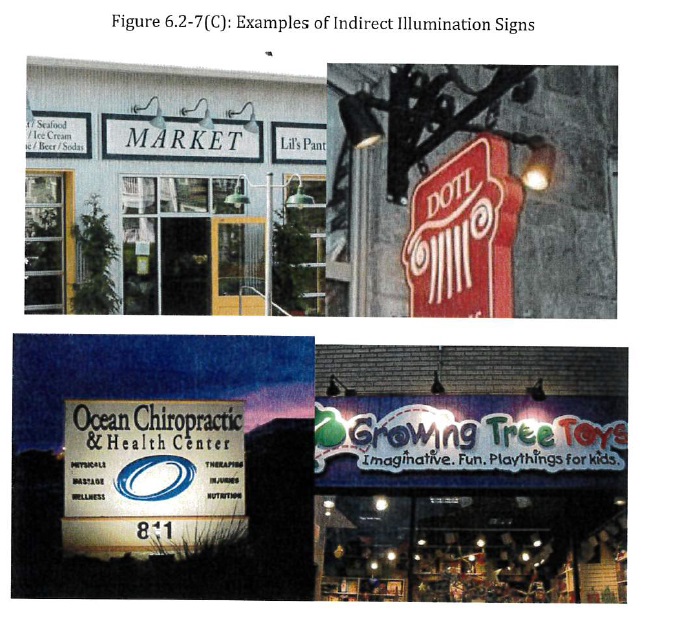
C. Indirect illumination signs. For the purpose of this chapter, a sign illuminated primarily by light being directed toward, across, or from behind and not from within the sign structure is considered an indirect illumination sign. See Figure 6-2.7(C).
D. Electronic message center (EMC) signs. An electronic message center (EMC) sign is an electronically activated changeable copy sign that can be programmed manually or by computer to display message content during a fixed duration of time. See Figure 6-2.7(D).

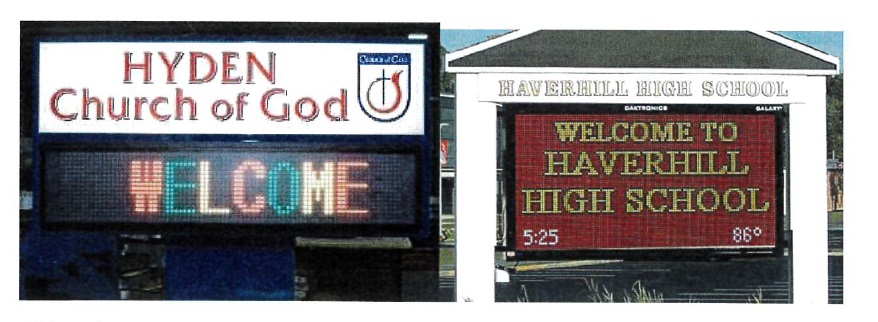
Where electronic message center signs are permitted they must conform to the following regulations:
1. No sign shall be brighter than is necessary for clear and adequate visibility and shall not exceed a maximum of 7,500 cd/ m2 during daylight hours or greater than 750 cd/ m2 between dusk and dawn so as not to cause glare or impair the vision of motorists, and shall not interfere with any driver's operation of a motor vehicle.
2. Such sign shall come equipped and be controlled by either a combination of a photosensor and a time switch, astronomical time switch, or other manufacturer installed dimming technology that automatically adjusts the brightness in direct correlation with ambient light conditions.
(Ord. No. O-21-06-15-5, §1, 6-15-21)
Sec. 6-2.8. Historic signs.
A sign designated as a historic resource by the Historic Resources Commission shall be exempt from the requirements of this Chapter as to height, illumination, location, and sign area and may be maintained as legally conforming signs subject to the following conditions.
A. All parts of the exempted historic sign including neon tubes, incandescent lights and shields, and sign faces shall be maintained in a functioning condition as historically intended for the sign to the greatest degree possible.
B. The wording or image of a historic sign may be altered only if the alterations do not substantially change the historic dimensions, height, scale, style, or type of materials of the historic sign.
C. Failure to maintain a historic sign as required above shall be grounds for disallowing an exemption from the requirements of this Chapter. The sign shall thereafter be brought into compliance with the requirements of this Chapter subject to a determination by the Planning Director.
D. Full reconstruction of a historic sign shall require approval of the Historic Preservation Commission or, in the CBD zoning district, the Design Commission of the Marion Business Association.
(Ord. No. O-21-06-15-5, §1, 6-15-21)
Sec. 6-2.9. Signs not requiring a permit.
A permit is not required for the following signs, provided they are not prohibited as defined in Sec. 6-2.11, and provided they comply with all provisions set forth in this chapter. Signs permissible in this section shall not be considered in determining the total sign area for a property. However, if a sign exceeds the size or in any other way does not comply with these limitations, it shall be considered as a prohibited sign and/or shall be subject to all other provisions in this chapter.
A. A-frame signs. A-frame signs are defined as signs with two sides angled vertically that advertise a special sale, event, or feature that are removed at the close of business each day. This sign type includes changeable grease boards, black boards, and white boards.
1. When located in the Downtown Overlay (DO) District the placement of such sign shall be within three (3) feet of the building except that such signs may be placed no less than two and one-half (2 ½) feet from the edge of curb where it abuts on-street parking. A minimum five (5) foot wide unobstructed pathway shall be maintained to provide free and clear pedestrian accessibility. In all other business districts, such signs shall be located on private property and not within the public right-of-way, and shall not obstruct the view of motorists, cyclists, or pedestrians.
2. Such signs shall be designed to be visible to and orient pedestrian traffic, and not intended for viewing by motorists.
3. No more than one (1) per business when fronting a sidewalk and no more than one (1) per property when fronting a public street.
4. Shall be removed and placed indoors when business is closed.
5. Such signs shall be constructed in an "A-Frame" design and shall be no greater than three (3) feet wide and six (6) feet in height.
6. Such signs shall be constructed of durable materials to withstand normal weather conditions. Unfinished and/or untreated plywood or other material unsuitable for outdoor conditions shall be prohibited. Spray- painted messages shall be prohibited.
7. Such signs located in the Downtown Overlay (DO) District and having unique artistic qualities that enhance the appearance of downtown but do not meet the requirements of this section may be approved upon favorable recommendation by the Marion Business Association.

B. Building marker signs. A sign cut or etched into the masonry, or constructed of bronze or similar material on a building.

C. Construction signs.
1. Construction signs shall be allowed provided such signs do not exceed one (1) sign per street frontage with a maximum of two (2) signs per construction site.
2. Non-residential and multi-family construction signs shall not exceed thirty-two (32) square feet in area and residential construction signs shall not exceed four (4) square feet in an area.
3. Such signs shall not exceed eight (8) feet in height.
4. Signs shall not be erected prior to the issuance of a building permit and shall be removed within seven (7) days after the issuance of a certificate of occupancy.

D. Directional Signs.
1. Directional signs must be located on-premises to which directions are indicated.
2. Directional signs may not exceed four (4) square feet per face.
3. Such signs may contain no copy other than directional information.
4. No more than two (2) signs per entrance or exit shall be permitted.
5. A sign larger than four (4) square feet or illuminated shall require a sign permit and shall be installed in conformance to the state building code.
6. In addition to such signs, one (1) parking lot informational sign not exceeding nine (9) square feet shall be permitted identifying the conditions of use.

E. Feather banner. Feather banner is a sign on flexible material that blows in the wind like a flag and resembles the outline of a feather and advertises a business, special sale, event or feature.
1. One per property is permitted.
2. Must be removed daily at the close of business.
3. Must be placed on private property outside of the street right-of-way.
4. Shall not interfere with pedestrian or vehicular circulation or sight lines.


F. Flags. Flags or insignia of any nation, state, county or municipality, any religious, civic or fraternal organization, or any educational or cultural facility provided that the height of the flagpole does not exceed the maximum building height and includes no more than three (3) individual poles installed less than one hundred linear feet apart.

G. Government signs.
1. Signs posted by various local, state, and federal agencies in the performance of their duties such as regulatory signs, welcome signs and traffic signs.
2. Signs installed under governmental authority which note the donation of buildings, structures or streetscape materials.
3. Any other sign required by local, state, or federal law, statute or ordinance.

H. Holiday decorations (temporary). Temporary decorations or displays are permitted when such are clearly incidental to and are customarily and commonly associated with any national, local or religious holiday or celebration provided that such signs do not create a public safety hazard or a distraction to motorists.

I. Incidental signs.
1. On-premise sign that are intended to provide information of a general directive or are informational in nature, which bears no advertising matter, and does not exceed two (2) square feet of sign copy area.
2. Such signs shall be attached flush to a building, which may include windows and doors.
3. Such signs shall not scroll, flash, simulate movement, or create a distraction to motorists, and shall meet all requirements for illumination, except that indoor neon signs meeting the provisions for incidental signs are permitted.
4. Indoor electronic message center signs visible from a public right-of-way or adjacent property are prohibited except those that conform to the provisions for incidental signs and the requirements of Sec. 6-2.10 of this article.

J. Legal or warning signs.
1. Signs erected to warn of danger or hazardous conditions such as signs erected by public utility companies or construction companies.
2. Signs required for or specifically authorized for a public purpose by any law, statute or ordinance.
3. Signs that display information pertinent to the safety or legal responsibilities of the general public with regard to a particular piece of property shall be located on the premises to which the information pertains. No advertising may be affixed to such sign.

K. Occupant/street number signs. Such signs shall be affixed to structures, mailboxes, and driveway entrances which serve to identify the address of the structure or occupant. All such signs shall be placed in such a manner as to be visible from the street.

L. Portable political campaign signs.
1. Political signs shall not be illuminated.
2. Such signs shall be no greater than 864 square inches on NC Department of Transportation rights- of-way, and in all other locations such signs shall not exceed thirty-two (32) square feet in non-residential zoning districts, and four (4) square feet in residential zoning districts. Freestanding signs exceeding this size shall be required to obtain a permit and must comply with regulations for permanent freestanding signs within the district they are located.
3. No sign shall be higher than 42 inches (four feet) above the edge of the adjacent roadway as measured from the edge of pavement.
4. Such signs shall not be located within landscaped beds and shall not be attached to trees or utility poles or on city-owned property, and shall not be located in a manner that blocks site visibility at street intersections, obscure motorist visibility, or obstruct another sign.
5. Political signs may be displayed sixty (60) days prior to an election and removed no later than seven (7) days after the election. In the event of a runoff election, political signs for the candidates involved may remain until seven (7) days after the runoff election. Signs not removed after seven (7) days shall be removed by the City and shall be held for ten (10) days before being discarded.


M. Public art/murals. Any work of art intended for the pleasure and enjoyment of the public and approved by resolution by the City Council, and/or recommended by either McDowell Arts Council or the Marion Business Association.

N. Real estate signs.
1. Such signs shall not be illuminated.
2. Such signs shall be no greater than four (4) square feet in area and four (4) feet in height (if freestanding) when located on residential property.
3. Such signs shall be no greater than thirty-two (32) square feet in area and eight (8) feet in height (if freestanding) for non-residential property.
4. Real estate signs, including "sold" signs, shall be removed within thirty (30) days of closing of the sale, rental, or lease of the property.

O. Stadium and recreational signs. Signs located within a stadium intended to be read only by the persons seated within the stadium, and not visible from any public right-of-way outside the stadium.

P. Temporary signs. A sign that is used in connection with a circumstance, situation or event that is designated, intended, or expected to take place or to be completed within a reasonably short or definite period of time. Such signs shall be permitted provided the following:
1. Special event signs. Signs may be erected by a public agency, school, non-profit, civic or other persons(s) approved by the city to hold a special non-commercial event; or business grand opening, special sale, or business closing.
a. Such on-premises signs shall not exceed thirty-two (32) square feet.
b. Signs larger than four (4) square feet shall be attached flush to a building, structure, or fence, and shall not be attached directly to the ground, to a pole, or between two (2) or more poles or similar support structures.
c. On-premises signs may be erected no greater than thirty (30) days prior to the event and off-premise non-commercial signs may be erected no greater than seven (7) days prior to the event; all signs shall be removed no later than one (1) business day following the event.
d. Signs shall not be illuminated.
e. Signs shall be located on private property.
f. Off-premise signs shall be limited to no more than one (1) temporary event sign per property at any one time except that one (1) additional sign shall be allowed for each additional street frontage.
g. Off-premises signs shall contain no commercial messages.

2. Yard sale signs.
a. Such signs may be located on-premises only and shall not be located within a public right-of-way nor placed on a tree, street sign or utility pole.
b. Such signs shall not be illuminated.
c. Yard sale signs are limited to four (4) square feet in area and four (4) feet in height.

Q. Vending machine/automatic teller and gasoline pump signs. Signs attached to and made an integral part of a vending machine, automatic teller machine, or gasoline pump if advertising or giving information about the products or services dispensed or vended by that machine.

R. Window signs and displays.
1. Window displays. Merchandise, pictures, or models of product or services that are incorporated as an integral part of a window display.

2. Window and vehicle signs.
a. Signs which are posted, painted, placed, or affixed to the interior or exterior of a window.
b. Signs affixed flush to an operational motor vehicle indicating the name of a business, when the vehicle is not intended to be used for display of signs.

(Ord. No. O-21-06-15-5, §1, 6-15-21)
Sec. 6-2.10. Signs requiring a permit.
The following signs are allowed subject to the issuance of a permit.
A. Freestanding signs.
1. Single tenant monuments.
a. Single tenant monument signs are permitted in all commercial districts and multi-unit residential community developments with greater than six (6) units.
b. All ground mounted signs shall be located a minimum of five (5) feet behind the public right-of-way to avoid obstructing visibility.
c. Such signs shall not be located ten (10) feet of a side property line, twenty (20) feet from any public right-of-way intersection, or within a required clear-sight triangle.
d. Such signs shall have a solid architectural base that supports the sign and is comprised of masonry materials.
e. Sign display areas shall not exceed sixty (60) percent of the overall monument. The overall monument including bases and structural elements shall not exceed eighty-four (84) square feet and an overall height of seven (7) feet. Except that a monument sign established on a slope will be calculated from the base at highest adjacent grade. See Figure 6-2.10(A) for calculating measurement of a monument sign. See Figure 6-2.10(B) for examples of a monument sign.


2. Multi-tenant and mixed use signs.
a. Multi-tenant and mixed-use signs shall be allowed for multi-tenant commercial, mixed- use, and planned unit developments only. Individual tenant ground mounted signs are not permitted under this set of criteria.
b. Maximum sign area allowed is one hundred (100) square feet plus eight additional feet per storefront or office. Including all structural elements, the maximum height of the sign shall not exceed twenty (20) feet. Overall monument (armatures, monument, bases, brick or stone structural elements, etc.) including maximum sign area should not exceed two hundred (200) square feet.
c. One multi-tenant sign per primary street frontage shall be permitted. Additional monuments on secondary road entrances shall not exceed one hundred (100) square feet in total area, including all structural elements.


3. Arm signs.
a. Arm signs shall not exceed eight (8) square feet, and no greater than six (6) feet in height from adjacent grade; with the exception of home occupation signs which shall not exceed two (2) square feet in size, and no greater than four (4) feet in height from adjacent grade.
b. Bottom of sign panels shall maintain a minimum three (3) feet clearance from grade.
c. All arm signs shall be located a minimum of five (5) feet behind the public right-of-way.
d. A ten (10) foot side-yard setback shall be required if the property abuts a residential district.

4. Changeable copy signs. A sign capable of having changeable copy, excluding electronic message center signs, for the purpose of advertising a schedule of events, rules and regulations, or similar messages.
a. Such sign shall not exceed thirty-two (32) square feet, and shall include the name of the on-premises advertiser or co-located with a sign indicating the advertiser's name.
b. Such signs may be double-sided if it is manufactured in one (1) enclosed sign cabinet or by means of installation that gives the appearance of being one (1) sign.
c. Such signs shall be located a minimum of five (5) feet behind the public right-of-way. At intersections, no sign shall be located within the clear-sight triangle.
d. Such sign shall not be located closer than ten (10) feet to any adjacent lot line. A twenty (20) foot side-yard setback shall be required if the side yard abuts a residential district.

5. Drive-thru menu boards.
a. Such signs shall not exceed sixty (60) square feet and shall conform to the architectural standards and colors of the building.
b. No more than one (1) menu board is permitted per drive-thru entrance.

6. Pole-mounted signs.
a. Pole-mounted signs shall not exceed one hundred (100) square feet in sign area, and shall not exceed a maximum height of thirty (30) feet within the C-2 General Business District and M-1 Industrial District. Within all other non-residential districts, pole-mounted signs shall not exceed 50 square feet in sign area, and twenty (20) feet in height.
b. There shall be no more than two (2) pole mounted signs permitted per property, except that one additional sign may be permitted at the entrance of each additional road frontage.
c. Such signs, including any structural and/or design elements, shall not encroach into the public right-of-way.
d. A pole-mounted sign within the C-2 District may exceed the height and size requirements provided the following conditions are met:
i. The property is no less than two (2) acres in size.
ii. The sign is within a 1,000-foot radius of the centerline of the I-40 interchange.
iii. The scale of the sign is in proportion with the building or site to which it pertains and does not overshadow the building or surrounding area.
iv. The sign is consistent with building design and surrounding structures, and is appropriate to the type of use to which it pertains. Design elements, such as the size, shape, materials, color, lettering style, and arrangement of the sign shall present a professional quality appearance.
v. Special circumstances exist that require deviation from the standard requirements.
vi. The sign area does not exceed 300 square feet in size and is no greater than 50 feet in height above the street grade of the adjacent interstate.
vii. Such sign is expressly used for the advertising of interstate dependent businesses (e.g. restaurants, lodging, and/or gas stations).
viii. The sign shall not be located within four hundred (400) feet of another sign that is greater than thirty (30) feet in height.
ix. The sign application is approved by the board of adjustment.

B. Building mounted signs.
l. Projecting arm signs.
a. A projecting arm sign shall maintain a clearance of eight (8) feet from the bottom of the sign above the finished grade of the sidewalk, with the exception of home occupation signs which shall not exceed two (2) square feet in size.
b. One projecting arm sign per primary business entrance.
c. Such signs shall not project more than four (4) feet from the wall and shall not exceed ten (10) square feet in sign area.
d. Such signs should reflect the proportional and dimensional relationships of the structure.
e. The projecting sign shall not be mounted above the floor of the second story, parapet wall or eave line of the building.

2. Canopy awning signs.
a. All awnings should be made of a flame-resistant woven fabric (suggested weight of 9.25 oz. per square yard).
b. Pitch may vary, but shall be limited to a minimum of 35 degrees and a maximum of 55 degrees.
c. The bottom valance length shall not exceed ten (10) inches, and shall not be less than nine (9) feet above the finished grade of the sidewalk.
d. All custom screen print shall be professionally designed and applied to the awning.
e. Structural tubing should be steel or aluminum frame only.
f. Any variations to the standard awning specifications shall be approved by the Planning and development director upon favorable recommendation by the Marion Business Association.
g. With the exception of pedestrian signs, no other sign temporary or permanent shall be attached to a canopy awning or support structure.


3. Building-mounted banner signs.
a. One (1) permanently affixed flag or banner shall be permitted for every five (5) feet of linear building frontage, with no more than five (5) total per building.
b. Such signs shall be attached perpendicular to the building and secured using industry standard mounting hardware.
c. No individual building mounted banner shall exceed eight (8) feet in height or three (3) feet in width.
d. Such sign shall be located above the first floor level of the building frontage with the lowest mounting armature no less than twelve (12) feet above grade.
e. No banner or mounting armature shall be attached to any other existing sign, awning, or other structural apparatus.

4. Pedestrian canopy signs.
a. Pedestrian canopy signs shall be centered under a canopy or covered walkway, and the bottom of such signs being no less than eight (8) feet above the pedestrian walkway.
b. Such signs shall not exceed three square feet in size.
c. No more than one (1) sign per storefront shall be permitted.

5. Wall-mounted signs.
a. Such signs shall not have a maximum size limit, with the exception of home occupation signs which shall not exceed two (2) square feet in size.
b. No wall sign shall project more than eighteen (18) inches from the building wall. Further, no wall sign or its supporting structures shall cover any part of a window, nor shall it extend beyond above the highest point of the building wall, roof line, parapet, or mansard roof.
c. No wall sign shall be attached to any cupola, tower, chimney, or other architectural structure that is above the roofline.
d. A transition line should separate the signage from the façade below.
e. Wall signs should reflect the proportional and dimensional relationships of the structure.
f. No wall sign within the C-1 Central Business District shall be internally illuminated.
g. A wall sign shall not be mounted above the first floor elevation unless such sign is incorporated into a building sign band. Signs placed within a sign band above the first floor elevation shall be limited to the name of the building.

C. Electronic message signs. Electronic message signs are permitted as a component of otherwise permitted signage subject to the following standards.
1. No sign shall be placed within three hundred (300) feet of a residential district or one hundred (100) feet of a residential property, except signs that can be automatically programmed to be turned off between the hours of 10:00 p.m. and 6:00 a.m. or have received special use approval by the City of Marion Board of Adjustment.
2. The message and/or graphic image must be complete during the duration of the display, without continuation in content to the next image, message, and/or to any other sign. Transitions from one (1) static message and/or image to the next shall appear instantaneous without the appearance of movement of any kind, and take no longer than two (2) seconds to complete.
3. With the exception of regulatory warning signs, all moving text, graphics, lights creating the appearance of animation, flashing, scrolling, fading, streaming video, and other forms of motion are prohibited.
4. The message display shall remain static for a minimum of eight (8) seconds before transitioning to another static image.
5. With the exception of time, date, temperature, and petroleum price signs, all other electronic message center (EMC) signs larger than twenty-four (24) square feet but no greater than one hundred (100) square feet shall be approved as a special use by the Board of Adjustment. Double-sided display shall not be calculated individually if the sign is manufactured in one (1) enclosed sign cabinet or by means of installation gives the appearance of being one (1) sign.
6. Each static message display shall be limited to one (1) monochrome color displayed on a solid black background at any one (1) given time, and have pixel line spacing no greater than twenty (20) mm in width. Full color display is permitted provided such signs have pixel line spacing of ten (10) mm or less [Ord. No. 0-14-11-18-4] and shall have an optimal viewing distance (OVD) a minimum of three (3) times the pixel pitch to the public right of way. The OVD shall be calculated using the formula: pixel pitch value multiplied by three (3) = setback in linear feet.
7. There shall be no more than one (1) electronic message sign per property, which shall be wall-mounted, co-located with a larger existing pole-mounted sign and affixed no greater than ten (10) feet from adjacent grade, or as an individual monument sign.
8. Limited exceptions. Such signs which are illuminated or which use electronic lighting to display messages shall be subject to the restrictions and limitation applicable to illumination in this chapter.
a. Time, date, and temperature (TOT) signs. Time, date, and temperature digital display areas shall not exceed thirty-two (32) square feet per face, and shall not be included in the allowable sign area; provided that it is co-located on an existing ground-mounted sign and all other requirements for electronic message signs are met.
b. Petroleum digital price signs.
i. The total digital display area on one sign shall not exceed thirty-two (32) square feet, and illuminated numerals shall not exceed twelve (12) inches in height.
ii. Such signs may contain single-faced or double-faced display areas.
iii. Such signs shall be co-located on an approved ground-mounted or pole-mounted sign.
iv. The digital display area shall not be calculated as part of the total allowable display area for an approved sign.
c. Non-commercial message signs.
i. The total digital display area on such sign shall not exceed twelve (12) square feet, shall be installed consistent with the requirements of the chapter for single-tenant monument signs, and shall not be calculated as part of the total allowable display area for an approved sign.
ii. No sign shall be placed within three hundred (300) feet of a residential district or one hundred (100) feet of a residential property, except signs that can be automatically programmed to be turned off between the hours of 10:00 p.m. and 6:00 a.m.
D. Off-premise advertising signs. Any sign identifying, advertising, or directing the public to a product, service, business or activity sold, located or conducted primarily elsewhere than on the premises is permitted in accordance with the following regulations with exception of off-premise electronic message signs which are prohibited:
1. All off-premises signs.
a. Each structure shall have no more than one (1) sign, and such sign may have double- sided display face.
b. No off-premise outdoor advertising sign in any location shall be more than eight hundred (800) feet from a business, commercial or industrial enterprise located on the same side of the street, road or highway as the sign.
c. No off-premise advertising sign shall be attached to or painted on any building or structure.
d. Notwithstanding all other applicable regulations, such signs set forth in subsection 2 below may be constructed within one thousand (1,000) feet of any dwelling unit; or such signs set forth in subsection 3 or 4 below may be constructed within five hundred (500) feet of any dwelling unit provided that the owner of any dwelling unit located within such distance executes a statement granting express permission for the placement permitted under this section. Such statement shall refer to the book and page number on which the deed for the owner's property is recorded in the McDowell County Registry and said statement shall be properly notarized. A copy of said statement shall be submitted with application to the planning and development director.
e. Off-premise advertising signs shall only be illuminated by an indirect source of light and shall be subject to the restrictions and limitation applicable to illumination in this chapter. Electronic Message Center signs and all other signs designed to emit light from within the sign face is prohibited, with the exception of government- controlled information and directional signs.
2. Directional signs. Directional signs shall conform to the standards and provisions of this chapter, except subsection (d.) above. Directional signs shall:
a. Contain only the name and logo of a business located in the city limits, with an arrow or other mark to indicate the direction of the business location and the distance to the business from the sign.
b. Such signs shall not exceed four (4) square feet in area per sign face, and may be double- sided.
c. Directional signs shall not be located in the right-of-way and shall have written notarized permission from the property owner in which the sign is located.
d. There shall be no more than one directional sign per street, and no more than two directional signs providing direction to one site.
e. An off-premises sign directing or assisting the flow of pedestrian or vehicular traffic associated with an approved temporary use or civic event shall be considered temporary and shall comply with subsection 6-2.9.P of this article.
3. Off-premises advertising signs (highway). In addition to subsection 1. above, off-premise advertising signs located where designed to be visible from any U.S. or N.C. highway shall be permitted if in accordance with the following:
a. Such sign shall not exceed three hundred (300) square feet per sign face, and not exceed thirty (30) feet in height above adjacent roadway grade.
b. Shall be no less than twenty (20) feet from the edge of right-of-way or no less than thirty
(30) feet from the edge of the traveled way where the right-of-way is unknown.
c. Such signs shall be no less than one thousand five hundred (1,500) linear feet (measuring along both sides of the highway) from any other off-premise advertising sign; no less than five hundred (500) feet from any intersection of the centerlines of any street; no less than five hundred (500) feet from any at-grade railroad crossing or any bridge; and no less than one thousand (1,000) feet from any dwelling unit, church or place of worship, cemetery, school, playground or park located within six hundred sixty (660) feet of the right-of-way.
4. Off-premises advertising signs (commercial corridor). In addition to Subsection a. above, off- premises advertising signs located where designed to be visible from any other road or street shall be permitted if in accordance with the following:
a. Such sign shall not exceed one hundred (100) square feet per sign face, and shall not exceed thirty (30) feet above adjacent roadway grade.
b. Shall be no closer to the right-of-way than ten (10) feet from the right-of-way, or no closer than twenty (20) feet from the edge of the traveled way where the right-of-way is unknown or does not exist.
c. Such signs shall be at least one thousand (1,000) linear feet (measuring along both sides of the highway) from any other off-premises advertising sign; at least three hundred (300) feet away from any intersection of the centerlines of any streets; at least three hundred (300) feet from any at-grade railroad crossing or any bridge, and at least five hundred (500) feet from any dwelling unit, church or place of worship, cemetery, school, playground or park located within six hundred sixty (660) feet of the right-of-way.
(Ord. No. 22-01-04-1, § 8, 1-4-22; Ord. No. O-23-07-18-4, § 8, 7-18-23)
Sec. 6-2.11. Prohibited signs.
In order to maintain the character and the aesthetic quality within the City of Marion, the following signs are prohibited:
A. Signs which contain words or graphics which are obscene, as that term is defined in G.S. Chapter 15.
B. No sign shall be erected or maintained where by reason of its position, wording, illumination, size, shape, or color it may obstruct, impair, obscure, interfere with the view of, or be confused with, any authorized traffic control sign, signal, or device.
C. Any sign which obstructs ingress or egress, is located within a clear-sight triangle, creates an unsafe distraction for motorist, or obstructs the view of motorist entering a public road or highway.
D. Signs, whether temporary or permanent, within any street or highway right-of-way, with the exception of governmental signage.
E. Signs attached, maintained, painted, or drawn on utility poles, towers, telephone poles, trees, bridges and overpasses, rocks or other natural features, benches, or other signs.
F. No signs located in a manner which are designated to be visible from any road, street or highway, or portion thereof, which is designated a scenic corridor by the city council shall be permitted.
G. Vehicles used for the sole purpose of displaying signs, and/or any sign designed to be placed and/or transported on wheels.
H. Signs located on or attached to the roof of a structure, except as expressly permitted herein.
I. Spectacular signs, flashing arrow signs, or any sign advertising copy with changeable letters to display a message or advertise, except as expressly permitted herein.
J. Signs including but not limited to billboards, "snipe" or "bandit" signs, or those that include people wearing costumes and/or holding temporary signs, except as expressly permitted herein.
K. Abandoned signs, dilapidated signs, or signs that advertise an activity or business no longer conducted on the property on which the sign is located.
L. Signs that incorporate flashing, blinking, strobe lights or signs with moving parts or parts which simulate movement.
M. Inflatable signs, aerial signs, or balloons (excluding standard latex party balloons) that direct attention to a business, product, service, or other commercial activity conducted, sold, or offered on a permanent or temporary basis.
N. Permanent or temporary signs placed on property without permission from its property owner or agent.
O. Any sign or form of lettering attached to, rather than printed on, an awning.
P. Any printed and/or translucent canvas awnings with internal illumination.
Q. Any sign attached to gas pumps or gas pump islands that can be read from off the property.
R. Portable signs or any other sign having the potential to be relocated, and which is not permanently installed or permanently anchored to either the ground, pole, canopy, or other structure except as expressly permitted herein.
S. All other signs that do not conform to the provisions of this chapter.
(Ord. No. O-21-06-15-5, §1, 6-15-21)
Sec. 6-2.12. Sign maintenance.
A. All signs, supports, braces, poles, wires and other appurtenances of signs or sign structures shall be kept in good repair, maintained in safe condition, and shall conform to the standards in this chapter. Maintenance carried out in accordance with this section shall not require a sign permit, provided the sign is not enlarged, moved or altered in any manner which would create or increase a nonconforming condition.
B. A sign shall be in a state of disrepair when more than twenty (20) percent of its total surface area is absent, covered with disfigured, cracked, ripped, peeling paint or poker paper, or any combination of these conditions. Any sign in a state of disrepair shall be considered in violation of this chapter.
C. No sign shall be allowed to stand with bent or broken sign facing, broken supports, loose appendages or struts which cause the sign to stand more than fifteen (15) degrees from the perpendicular.
D. No sign or sign structure shall be allowed to have weeds, vines or other vegetation growing on it and obscuring it from the street or highway from which it is intended to be viewed.
E. No illuminated sign shall be allowed to stand with only partial illumination.
F. Any sign that violates the maintenance provisions listed above shall be in violation of this chapter and shall be repaired or removed as required by the applicable sections of this chapter.
G. No person may, for the purpose of increasing or enhancing the visibility of any sign, damage, trim, destroy or remove any trees, shrubs or other vegetation located within a public right-of-way of any road or highway, except where a legal permit for such has been obtained from the City of Marion and/or the North Carolina Department of Transportation.
(Ord. No. O-21-06-15-5, §1, 6-15-21)
Sec. 6-2.13. Revocation of permit.
Any valid permit issued for a lawful sign structure shall be revoked by the planning and development director for any one (1) of the following reasons:
A. Mistake of material facts by the issuing authority for which, had the correct facts been known, the sign permit in question would not have been issued.
B. Misrepresentation of material facts by the applicant on the application for permit for the sign.
C. Failure to pay annual renewal fees.
D. Failure to construct the sign structure within one hundred eighty (180) days from the date of issuance of the permit.
E. Any alteration of a sign structure for which a permit has previously been issued which would cause that sign structure to fail to comply with the provisions of this chapter and the rules and regulations promulgated by the city council pursuant thereto.
F. Any violation of subsection 6-2.16 of this article.
G. Unlawful destruction of trees or shrubs or other growth located on the right-of-way in order to increase or enhance the visibility of a sign structure.
H. Abandonment or discontinuance of a sign.
I. Failure to maintain a sign such that it remains blank for a period of twelve (12) consecutive months.
J. Failure to maintain a sign such that it reaches a state of dilapidation or disrepair as determined by the planning and development director.
K. Making repairs to a nonconforming sign which exceed fifty (50) percent of the initial cost of the sign. Total repairs within any twenty-four (24) consecutive months may not exceed fifty (50) percent of the value of the sign. To avoid liability under this clause, the advertiser should contact the planning and development director prior to making any repairs to discuss the scope of the proposed improvements. The scope of the improvements is limited to the following: repairing the sign or the sign structure, replacing broken glass or other work to keep the sign safe and in good repair.
(Ord. No. O-21-06-15-5, §1, 6-15-21)
Sec. 6-2.14. Reconstruction of damaged signs or sign structures.
A. Any conforming sign or sign structure which has been damaged may be repaired and used as before, provided all repairs are initiated within thirty (30) days and completed within sixty (60) days of such damage. However, if the sign should be declared unsafe by the planning and development director, the owner of the sign or the owner of the record of the real property whereon the sign is located, shall immediately correct all unsafe conditions in a manner satisfactory to the planning and development director.
B. As a courtesy to the sign owner, if the planning and development director discovers that a sign has been damaged or is in an unsafe condition, the planning and development director will promptly notify the owner of the sign or the owner of record of the real property whereon the sign is located of such damage or unsafe condition. The affirmative duty and liability shall, however, at all times remain with the owner of each sign to keep each sign in a safe and undamaged condition in keeping with the terms of this chapter.
(Ord. No. O-21-06-15-5, §1, 6-15-21)
Sec. 6-2.15. Value of signs.
The value of a sign shall be the value for tax purposes of any sign so listed. If the tax value is not available, the value shall mean the original cost of the sign. In the absence of information as to the original cost submitted by the sign owner, the planning and development director shall estimate the original cost based upon the best information reasonably available.
(Ord. No. O-21-06-15-5, §1, 6-15-21)
Sec. 6-2.16. Administration, enforcement, appeals.
The planning and development director shall have the following authority:
A. To issue a violation notice for any violation of the chapter. A violation notice shall be delivered by certified mail, return receipt requested, or by such other method as allowed by law, to the owner of the sign in violation of the ordinance. Whenever the owner of the sign cannot be located and notified, said notice shall be delivered to the owner of record of the real property whereon the sign is located. The time period provided herein shall commence upon receipt of such violation notice. The violation notice shall identify the sign and shall describe the nature of the violation, refer to the section of the ordinance violated, specify in detail what action must be taken to correct the violation, and specify a reasonable time limit of up to thirty (30) days within which the violation must be corrected.
B. To issue a remove order for any sign or sign structure not corrected within the time allotted under the violation notice, or for a prohibited sign under the violation notice, or for a prohibited sign as established by this chapter. A remove order shall be delivered to the sign owner or to the owner of record of real property whereon the sign is located in the same manner as set out for a violation notice and shall not be effective until received. The recipient of the remove order shall be allowed thirty (30) days after the receipt of the remove order within which to remove the subject sign at his expense. The remove order shall identify the sign and reasons for the issuance of the remove order and shall refer to the section of the ordinance violated.
C. To remove or cause to be removed any sign or sign structure not removed in accordance with a remove order after thirty (30) days from receipt of such order, and to assess the receipt of such order with the cost of such removal.
D. To issue citations for any violation of this chapter in accordance with section 1-10 Code Enforcement of the Marion city code of ordinances.
E. To issue an unsafe sign notice should the planning and development director find that any sign has become insecure in imminent danger of falling or otherwise unsafe. An unsafe sign notice shall be delivered to the sign owner or to the owner of the record of the real property whereon the sign is located in the same manner as set out for a violation notice except that the recipient of the notice shall forthwith in the case of immediate danger, and in any case within ten (10) days of receipt, secure the sign in a manner to be approved by the planning and development director in conformance with the provisions of this chapter or remove such sign. If the notice is not complied with in ten (10) days, the planning and development director shall remove such sign at the expense of the recipient of the notice.
(Ord. No. O-21-06-15-5, §1, 6-15-21)
Sec. 6-2.17. Amortization of certain signs.
A. Spectacular signs shall become nonconforming in all districts within one (1) year after the date of adoption of this chapter, at which time annual permits will expire and shall not be renewed. After the one-year amortization period, all spectacular signs in the city limits shall be considered in violation of this section and shall be removed.
B. Portable signs, as defined in Sec. 6-2.11.S shall become nonconforming in all districts, unless otherwise specified, as of the date of adoption of this section and shall be removed within six (6) months after the date of adoption.
C. Electronic message signs in which illumination level and duration of display message exceed the standards set forth in this chapter shall become nonconforming in all districts and shall come into conformance within (1) year after adoption of this chapter, at which time the sign shall be brought into compliance. Existing electronic signs that do not have the functional capability to be programmed to control illumination level and duration of display may remain so long as they do not create a public safety hazard.
(Ord. No. O-21-06-15-5, §1, 6-15-21)
Sec. 6-3.1. General provisions.
A. Purpose and intent. The purpose of this section is to encourage landscaping throughout the City of Marion, hence protecting and enhancing public and private investments, economic and tourism opportunities, while providing multiple environmental benefits. The landscaping and buffering standards for new development, as defined in paragraph (C) set forth below, require landscaping along public rights-of-way, in parking lots, between residential districts and commercial or industrial districts and require screening of certain trash containers, in order to:
1. Improve the visual quality of the city and minimize potential negative impacts of developments such as noise, dust, glare of lights, parking lots, traffic, heat, overcrowding, and odor.
2. Provide environmental benefits such as climate modification, decreased energy consumption, reduced impervious surface area and storm water runoff, decreased erosion, improved water and air quality and protection of wildlife habitat.
3. Safeguard public and private property values and to protect public and private investment.
B. Definitions. The following words or terms have the meaning as herein defined:
Critical root zone. A circular area surrounding a tree, of which the center is the center of the tree trunk and the radius is the distance from the outside of the trunk to any point twelve (12) times the diameter at breast height (DBH), which points constitute the circumference of the critical root zone.
Diameter at breast height (DBH). The total cross-sectional diameter of the trunk(s) of a tree measured four and one-half (4.5) feet from the ground at the center of the tree.
Evergreen. A tree, shrub, or plant having foliage that persists and remains green throughout the year.
Groundcover. A prostrate plant growing less than two (2) feet in height at maturity that is grown for ornamental purposes. Groundcovers are used as an alternative to grasses. On slopes, groundcovers control erosion while eliminating the maintenance of mowing on hillsides. Many groundcovers survive in poor soils, shade and other adverse conditions.
Planting area. The area prepared for the purpose of accommodating the planting of trees, shrubs, and groundcovers.
Residential buffer yard. A row of trees or shrubs reaching a height of at least eight (8) feet in height so that property is screened visually from neighboring residential uses. Buffer strips shall be an evergreen species, or combination of evergreen species dense enough to provide visual screening from the ground level to the mature height of at least eight (8) feet.
Shrub. A woody plant, usually multi-stemmed or well branched from the base, the branches being retained to the ground. When used for buffer plantings, shrubs must also reach a mature height between four (4) and fifteen (15) feet.
Street buffer. A planting area or strip of land, extending inward from the curb, edge of street, or property line that runs parallel to a public street, and is designed to provide continuity of vegetation along the right-of-way and to soften the impact of development by providing a pleasing view from the road and a more comfortable pedestrian environment, while decreasing noise, dust, litter, glare of lights, and stormwater runoff from impervious surfaces.
Tree, large. A large tree growing to over forty (40) feet in height at maturity, usually deciduous, that is planted to provide a canopy cover for shade.
Tree, small. A small to medium ornamental tree, growing fifteen (15) feet to forty (40) feet in height at maturity, that is planted for aesthetic purposes such as colorful flowers, interesting bark, or fall foliage.
C. Landscape plan required. A landscape plan is required for:
1. Any new development in the B-1, C-1, C-2, M-1, or OI districts.
2. Any new development in the R-1 or R-2 district with the exception of single-family or multifamily developments with less than eight (8) units.
3. Renovations in the B-1, C-1, C-2, M-1 or OI districts with a total cost exceeding fifty (50) percent of the assessed value of the building, according to McDowell County tax records, within a twenty-four-month time period.
4. Expansions exceeding fifty (50) percent of the pre-expansion floor area or paved surface in the B- 1, C-1, C-2, M-1, or OI districts within a twenty-four-month time period.
5. Existing unpaved parking lots which are paved over or existing paved lots which are demolished and repaved.
D. Contents of landscape plan and approval process.
1. Applicants are advised to meet with the planning and development director prior to submitting a plan in order to discuss applicable landscape requirements, other ordinance requirements, and coordination with utility plans.
2. Whenever an application for a zoning permit and/or a building permit is submitted to the planning and development services department, a landscape plan shall be submitted if required by Sec. 3-4.7. Such plan shall be in sufficient detail to enable the planning and development director to determine whether or not such plan, when fully implemented, will comply with these landscaping requirements. The planning and development director shall review the plan and assure compliance with these requirements, and approve or deny the zoning permit accordingly.
3. A landscape plan shall be drawn to scale and shall contain the location of the streets, street rights- of-way, all existing and proposed structures, utilities, dumpster (trash container), street yards, planting areas, screening, vehicular parking areas with individual parking spaces identified, as well as location of existing and proposed plants and associated characteristics. Plants shall be identified on plan by species (common or scientific name,) size and age. Proposed date of planting shall also be noted on plan. The dimensions of the required street yard and planting areas shall be identified. The landscape plan may be incorporated into the site plan as outlined in Sec. 3-4.3.
4. Certificate of occupancy. The landscape shall be completely installed as indicated on the approved plan prior to the issuance of a certificate of compliance/ occupancy. A conditional certificate of occupancy may be issued by the building inspector for the temporary use and occupancy of a building, structure or land for a maximum period of one hundred eighty (180) days from the date of the issuance of such certificate whenever the landscaping requirements of the UDO are not complied with on time. If the landscaping indicated on approved plans is not completely installed within one hundred eighty (180) days, the conditional certificate of occupancy shall expire and further use of the property shall constitute an illegal use and occupancy of said property.
(Ord. No. O-21-06-15-5, §1, 6-15-21)
Sec. 6-3.2. General requirements and conditions.
A. Alternate methods of compliance. The landscape requirements herein are intended to be minimum standards for quality development and environmental protection and are not intended to be arbitrary or inhibit creative solutions. An alternative compliance proposal may be used if it is equal or better than normal compliance in its ability to fulfill the intent of this article and exhibits superior design quality. The planning board shall determine whether alternate method of compliance is equal or better than normal compliance and that the intent of this chapter has been fulfilled.
B. Safety considerations. Landscaping shall not obstruct the view of motorists using any street, private drive, parking aisle or other approaches to street intersections so as to constitute a condition endangering the public safety upon any such street, driveway, parking aisle or street intersection.
C. Trees may be planted on the public right-of-way of any public street provided they have been approved by the North Carolina Department of Transportation and the City of Marion, and they do not hinder the repair or construction of public utilities.
D. All required tree planting and landscaped areas shall be maintained at all times in good, stable and healthy condition.
E. Large trees shall not be planted within fifteen (15) feet overhead electrical power lines or other overhead utilities.
F. Planting material greater than two and one-half (2½) feet in height shall not be planted within the clear visibility triangle without approval from the planning and development director pursuant to section 6-1.5 of the UDO.
G. Adequate wheel stops or curbs shall be installed for the protection of required trees and plantings that are adjacent to vehicular parking, display area, or driveway. Wheel stops or curbs shall be a minimum of six (6) inches in height and shall be anchored to the ground, and may be concrete, rot-resistant heavy timber or other effective materials.
H. In most cases, the applicant shall avoid removing existing vegetation and shall incorporate such vegetation as much as possible in proposed plan.
(Ord. No. O-21-06-15-5, §1, 6-15-21)
Sec. 6-3.3. Specific landscaping requirements.
A. Street buffer yard. All land uses to which these landscaping requirements apply with the exception of properties in the C-1, central business district, shall provide a street buffer yard along the property.
1. The minimum size requirement for a buffer yard is based on the following table:
Table: 6-3.3(A) Street Buffer Yard Requirement.
Street Type | Right-of-Way Width (Feet) | Buffer Yard Width (Feet) |
Two-Lane | 20 to 50 | 10 |
Two-Lane/Four-Lane | 51 or greater | 20 |
2. Reduced buffer yard on corner lot. Land uses located on a corner lot contiguous to two (2) public streets may reduce one (1) required buffer yard width by fifty (50) percent provided that the following conditions are met:
a. All vegetation required prior to the reduction shall be installed within the buffer yard.
b. The reduced buffer yard shall be located on the property deemed to be the side yard or portion of the property adjoining the lesser of the right-of-way widths.
3. Impervious surfaces, such as driveways, within a street buffer yard shall not exceed twenty-five (25) percent of the required street buffer yard, except that not more than two (2) twenty-five-foot driveways may be permitted for any lot having a street frontage of less than two hundred (200) feet in length.
4. The amount of plant material required in a bufferyard area is measured per every one hundred (100) linear feet and is based on the following table. Calculations shall be rounded to the nearest whole number.
Table: 6-3.3(B) Required Plant Material
Bufferyard Type | Large Tree | Small Tree1 | Shrub |
10-foot wide | 1 | 2 | 10 |
20-foot wide | 2 | 3 | 14 |
1 Two (2) small trees may be substituted for one (1) large tree. | |||
5. Minimum planting sizes required at installation are as follows:
a. Groundcover: Two-inch pot.
b. Shrubs: Eighteen (18) inches in height, or three-gallon pot.
c. Small trees: Five (5) feet in height, one-inch caliper, or seven-gallon pot.
d. Large trees: Eight (8) feet in height, two-inch caliper, or ten-gallon pot.
6. Minimum tree placement requirements are as follows:
a. Large trees. All trees reaching a mature height of thirty-five (35) feet or more should be planted a minimum of:
i. Four (4) feet from the back of the curb, edge of street pavement, driveway, or sidewalk.
ii. Ten (10) feet from all buildings.
iii. Fifteen (15) feet from street lights, utility poles, and above ground utility wires.
iv. Ten (10) feet from all underground utilities.
b. Small trees. All trees reaching a mature height of less than thirty-five (35) feet should be placed a minimum of:
i. Three (3) feet from the back of the curb, edge of street pavement, driveway, or sidewalk.
ii. Five (5) feet from all buildings.
iii. Ten (10) feet from street lights, utility poles, and above ground utility wires.
iv. Five (5) feet from all underground utilities, utility vaults, ground level utility structures.
7. Parking, merchandise display, off-street loading, and dumpsters are prohibited in the buffer yard.
8. Signs are permitted in accordance with the UDO.
9. Provided the required buffer yard width and landscaping is maintained, a buffer yard may contain pedestrian and bicycle paths, or other similar design elements.
B. Vehicular parking areas and display areas.
1. All new parking lots with fifteen (15) or more spaces or parking lots expanded to add fifteen (15) or more spaces shall be required to obtain a zoning permit and to comply with this section of the landscape ordinance.
2. If an existing parking lot is expanded or improved to add fifteen (15) or more parking spaces, it shall comply with the parking lot requirements of the landscape ordinance within the expanded or improved portion.
3. In new or expanded parking lots with fifteen (15) or more parking spaces; trees shall be planted at a rate of one (1) large tree or two (2) small trees for every fifteen (15) parking spaces.
4. Required trees shall be located within or adjacent to parking lots as tree islands, medians, at the end of parking bays, traffic delineators, or between rows or parking spaces in a manner such that no parking space is located more than sixty (60) feet from the trunk of a large tree. A minimum planting area of one hundred fifty (150) square feet of soil surface area shall be required per large tree with a minimum planting area width of nine (9) feet.
C. Buffers and screening. Any use required to submit a landscape plan as outlined in this article abutting a residentially zoned district or residential use within a residentially zoned district must provide a buffer yard of ten (10) feet in width between the proposed development and the existing residential district or use. Such buffer yard area shall consist of a dense and solid row of evergreen trees or shrubs at least eight (8) feet in height at maturity.
D. Trash container (i.e., dumpsters) screens and/or buffers.
1. It is the intent of this section to provide for a visual screen and/ or buffers between trash container and dumpster location and all street rights-of-way and adjoining properties.
2. Trash containers and dumpsters shall not be located in the front yard of any property and shall be screened from view on all sides, except for one (1) opening not greater than ten (10) feet in width to allow for service access. If access is difficult, the public works director and the planning and development director shall determine the acceptable location of the dumpster. Screening may consist of evergreen vegetation growing to over ten (10) feet at maturity or a solid wood fence. Existing vegetation may be used as an alternative method of compliance as set forth in subsection C. of this section.
(Ord. No. O-21-06-15-5, §1, 6-15-21)
Sec. 6-3.4. Tree protection.
A. Protective fencing. Vegetation that is to be protected on land being developed, as indicated on the approved landscape plan, shall be protected by temporary fencing or other equally effective measures during construction activity. All land disturbing activity, storage of equipment, building material, or other debris shall be kept within the area of development activity and outside of the protective fencing.
B. Treatment of trees. No nails, ropes, cables, signs, fencing, streamers, banners or other material shall be attached to any part of any tree.
C. Public land.
1. It shall be unlawful to:
a. Plant, prune, remove, or apply chemicals that are harmful to or disturb any tree or the soil within the critical root zone of any tree; or
b. Clear vegetation, begin any excavation, remove soil or place fill on any public land or easement owned and maintained by the City of Marion.
D. Prohibited trees. It shall be unlawful to plant any invasive exotic plant material or tree within the City of Marion.
E. Abuse and mutilation of trees. It shall be a violation of this division to damage, destroy, or mutilate any tree or shrub in a public right-of-way or any public place.
F. Public hazards. It shall be the duty of the property owner where a public hazard exists to abate the hazard by removing or trimming the growth. If the owner of property, after being notified of the existence of a public hazard on their property, fails to abate the hazard within thirty (30) days, the City of Marion shall have the hazard abated and assess the exact cost to the owner as provided by law in the case of special assessments or liens.
G. Removal of trees.
1. Trees and shrubs shall not be removed from public property or public right-of-way or easement without approval from the City of Marion Tree Board.
2. The city retains the right to remove any tree on any public street right-of-way or easement owned or maintained by the city which is necessary to permit the proper maintenance or improvement of the public street or abate a public hazard.
(Ord. No. O-21-06-15-5, §1, 6-15-21)
Sec. 6-3.5. Penalties.
A. Any person(s) constituting a violation of this article resulting in the loss or destruction of a tree located on public property shall be subject to a civil penalty equivalent to one and one-half (1) times the monetary value of the tree(s) removed or destroyed plus the cost to replace the destroyed trees with new tree(s) with a total diameter at breast height (DBH) equal to that of the destroyed tree(s).
B. Unless otherwise specified, the City of Marion shall enforce the provisions of this chapter in accordance with procedures, penalties, and remedies described in section 1-10, code enforcement, of the Marion City Code.
(Ord. No. O-21-06-15-5, §1, 6-15-21)
Sec. 6-4.1. General.
A. Purpose. Outdoor lighting standards are established in order to permit reasonable uses of outdoor lighting for night-time safety, utility, security, productivity, enjoyment and commerce. These standards will minimize light pollution, light trespass and glare and will work to promote energy efficient lighting practices and systems.
B. Applicability.
1. Outdoor lighting standards shall apply to all new uses including commercial, industrial, public and residential, all new dusk-to-dawn utility/security lights, parking and vehicular display areas, and pedestrian areas.
2. The installation of site lighting, replacement of site lighting and changes to existing light fixture wattage, type of fixture, mounting or fixture location shall be made in strict compliance with this chapter.
3. To the extent regulated by this section, all existing outdoor lights or lighting systems, installed prior to the adoption of the UDO, shall be treated as nonconforming uses pursuant to chapter one, article two nonconformities.
4. Routine maintenance, including changing the lamp, ballast, starter, photo control, fixture housing, lens or other required components, is permitted for all existing fixtures.
C. Exemptions. The following are not regulated by the lighting standards set forth in this section:
1. Lighting for single-family residential use, with the exception of dusk-to-dawn utility/security lights which shall be regulated pursuant to Sec. 6-4.3(D).
2. Lighting required by federal, state, or local laws or regulations;
3. Seasonal displays using multiple low-wattage bulbs;
4. Lighting used during an emergency or by emergency services personnel or at their direction;
5. Temporary lighting which does not utilize the lighting types described in Sec. 6-4.3.
6. Temporary lighting used for public purposes including but not limited to highway construction and public utility repairs.
D. Prohibitions. The following lighting types are specifically prohibited:
1. Search lights, laser source lights, or any other similar high intensity lights or narrow-beam fixtures except for those permitted in advance as required in Sec. 6-4.2(B) to be used on a temporary basis;
2. Lighting that is oriented upward, except as otherwise provided for in this section; or
3. Lighting that could be confused for a traffic control device.
(Ord. No. O-21-06-15-5, §1, 6-15-21)
Sec. 6-4.2. Administration and enforcement.
A. Permit required. A zoning compliance permit is required for all work involving outdoor lighting. Documentation must be submitted that states the proposed site lighting complies with the provisions of this chapter. As a minimum, the documentation submitted must contain the following:
1. Location and mounted height of all exterior lighting proposed.
2. A point-by-point foot-candle array in a printout format indicating the location and aiming of illuminating devices. The printout shall indicate compliance with the lighting specifications.
3. Description of the illuminating devices, fixtures, lamps, supports, reflectors, poles, raised foundations and other devices including but not limited to manufacturers or electric utility catalog specification sheets and/or drawings, and photometric report indicating fixture classification (cutoff fixture, full cutoff fixture, etc.).
4. The Planning and Development Director may waive any or all of the above permit requirements, provided the applicant can otherwise sufficiently demonstrate compliance with this chapter.
B. Permit for temporary lighting required. Applicants who wish to utilize lighting on a temporary basis must submit a written request to the Planning Director. The Planning and Development Director shall have thirty (30) calendar days to approve or deny the permit application. The application shall include:
1. The purpose of the lighting;
2. The hours of lighting operation;
3. Where applicable, a plan showing the extent and intensity of light trespass upon adjacent properties;
4. Signed certification that in no case shall such lighting be directed at roadways where such lighting could pose a public safety threat to vehicular traffic; and
5. An application fee for the zoning certificate of compliance.
6. A permit for temporary lighting, in the form of a zoning certificate of compliance, shall be issued for an operation period not to exceed seven (7) consecutive days. Temporary lighting shall be event-specific, and in no case shall temporary lighting be permitted on a single property, in one or in multiple locations, on more than four (4) separate occasions per calendar year.
C. Light measurement technique.
1. Light levels are specified, calculated and measured in foot-candles.
2. Measurements are to be made at ground level, with the light-registering portion of the meter held parallel to the ground pointing up.
(Ord. No. O-21-06-15-5, §1, 6-15-21)
Sec. 6-4.3. Design standards.
A. Intensity.
1. The maximum light level of any light fixture shall not exceed 0.5 foot-candles measured at the property line of any Residential District and 3.0 foot-candles measured at the public right-of-way.
2. Lighting must not be oriented so as to direct glare or excessive illumination onto adjacent properties, streets, or sidewalks.
3. The maximum color temperature rating for LED lights shall be 4,300 degrees Kelvin.
B. Light fixture type. All light fixtures to be installed on a permanent basis shall consist of full cutoff and cutoff fixtures, unless otherwise stipulated by this chapter. Full cutoff fixtures shall be utilized where the light fixture has more than a 1,250 lumen output, unless as otherwise stipulated by this section. Lighting fixtures to be utilized on a temporary basis and as permitted through Sec. 6-4.2(8) shall be exempt from this requirement.
C. Accent and facade lighting.
1. Lighting fixtures shall be selected, located, aimed, and shielded so that direct illumination is focused exclusively on the building facade, plantings or other intended site features and away from adjoining properties and the street right-of-way.
2. All wall pack fixtures must be full cutoff fixtures.
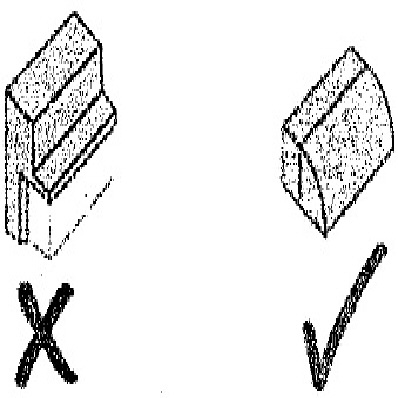
3. Only lighting used to accent architectural features, landscaping or art may be directed upward, provided that the fixture is located, aimed, or shielded to minimize light spill into the night sky.
4. The Planning and Development Director may waive this requirement in cases where it is impractical.
D. Dusk-to-dawn utility/security lights.
1. Light fixture must either be aimed down at least 45 degrees from vertical or the front of the fixture must be shielded so that no portion of the light bulb extends below the bottom edge of the shield.
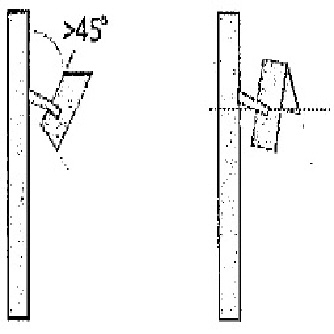
2. Any light fixture located within 50 feet of a public right-of-way, with a side-to-side horizontal aiming tolerance not to exceed 15 degrees.

Overhead View
3. All light fixtures emitting 1,000 or more lumens must be aimed at least 60 degrees down from the horizontal or shielded so that the main beam is not visible from adjacent properties or the street right-of-way.
E. Outdoor display, parking, and pedestrian areas.
1. Light fixtures within outdoor display and parking areas shall not exceed a height of 30 feet from adjacent grade.
2. Light fixtures within pedestrian areas or within 50 feet of a residential district shall not exceed a height of 15 feet from adjacent grade.
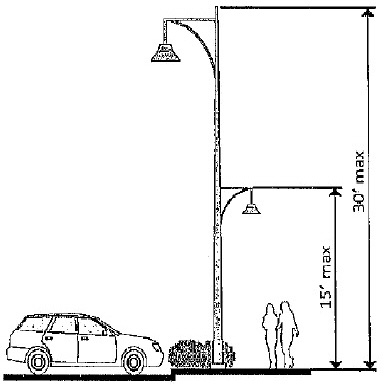
3. Light fixtnres in outdoor display and parking area must be full cut-off. In other areas, light fixtures with more than 2,000 lumens must be full cutoff unless they meet the following:
a. Non-cutoff fixtures can be used when the maximum initial lumens generated by each fixture does not exceed 9,500 lumens;
b. If the unshielded fixture has a metal halide, fluorescent, induction, white high pressure sodium and color-corrected high pressure sodium lamp, the outer lamp envelope must be coated with an internal white frosting to diffuse light;
c. All metal halide fixtures equipped with a medium base socket must use either an internal refractive lens or a wide-body refractive globe; or
d. All non-cutoff fixture open-bottom lights must be equipped with full cut-off fixture shields.
F. Recreational Fields and Outdoor Performance Areas.
1. The mounting height of lighting fixtures shall not exceed 80 feet from adjacent grade unless approved as a special use permit in accordance with Sec. 3-7.1.
2. AH fixtures must be equipped with a glare control package, including louvers, shields or similar devices. The fixtures must be aimed so that their beams are directed and fall within the primary playing or performance area.
3. No illumination, when measured from the property line, shall exceed 0.4 foot-candle of lighting.
4. Lights within 100 feet of a residential district shall not be illuminated between the hours of 11:00 p.m. and 6:00 a.m.
5. In all other districts, the hours of operation for the lighting system shall not exceed one (1) hour after the end of the game or event.
G. Signs. Lighting fixtures illuminating signs must meet the standards of Sec. 6-2.7.
H. Vehicular canopies. Lighting under vehicular canopies shall be less than 30 foot-candles and be designed to prevent glare off-site. Acceptable lighting designs include the following:
1. Recessed fixture incorporating a lens cover that is either recessed or flush with the bottom surface of the canopy;
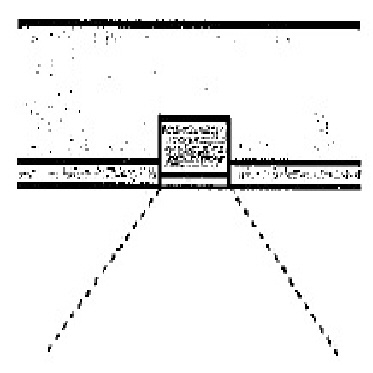
2. Light fixture incorporating shields or is shielded by the edge of the canopy itself, so that light is restrained to 5 degrees or more below the horizontal plane;

3. Surface mounted fixture incorporating a flat glass that provides a cutoff design or shielded light distribution;
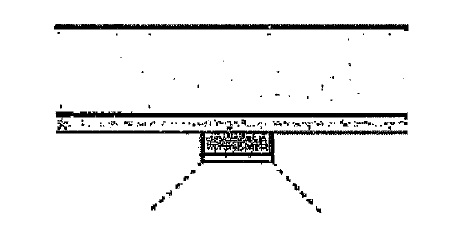
4. Surface mounted fixture measuring no more than 2 feet by 2 feet, with a lens cover that contains at least 2% white fill diffusion material; or
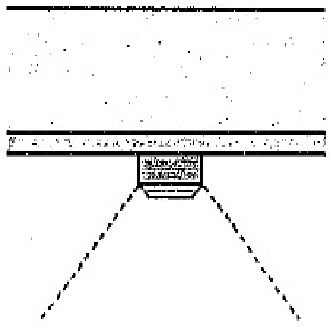
5. Indirect lighting where light beamed upward and then reflected down from the underside of the canopy, provided the fixture is shielded so that direct illumination is focused exclusively on the underside of the canopy.
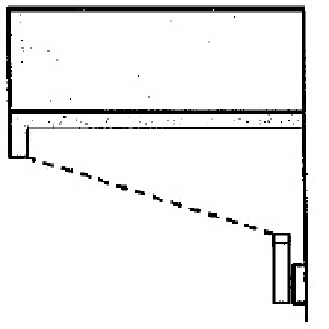
(Ord. No. O-21-06-15-5, §1, 6-15-21)
Sec. 6-5.1. Swimming pools.
All swimming pools both public and private shall be completely enclosed by a solid wall or chain link fence at least six (6) feet in height. Swimming pools shall be located only in rear or side yards and shall be at least ten (10) feet from the property line.
(Ord. No. O-21-06-15-5, §1, 6-15-21)
Sec. 6-5.2. Fences and walls.
In any district the following regulations shall apply for any wall or fence (either natural or manmade):
A. Fences and walls may be permitted in a rear yard adjacent to the lot line provided such fences and walls do not exceed eight (8) feet in height.
B. Fences and walls may be permitted in a side and/or front yard adjacent to the lot line provided such fences and walls do not exceed six (6) feet in height.
C. On a corner lot, no fence or wall located along a property line shall exceed six (6) feet in height if it is located adjacent to a front or side lot line of any adjoining property.
D. Fences and walls used to enclose the areas listed in (1), below, or located in the districts listed in (2) through (4), below, shall not exceed twelve (12) twelve feet in height and may be located adjacent to a property line. However, no such fence or wall shall exceed the height limits as set forth in (A) and (B) of this section when located in a side yard or if adjacent to a street right-of-way line unless such fence or wall is set back at least ten (10) feet from the lot line or the street right-of-way line:
1. Recreational areas such as swimming pools, basketball courts, handball courts, and tennis courts.
2. C-2 general business district.
3. M-1 industrial district.
4. O-I office and institutional district.
E. Retaining walls built specifically to keep a bank of earth from sliding or water from flooding shall be permitted anywhere on the property as needed provided it meets the requirements of the North Carolina Building Code.
F. No fence, wall or other obstruction shall be placed so as to obstruct vision to a public street from any public or private drive.
G. No fence or wall shall be permitted within a publicly dedicated street right-of-way.
H. All fence and wall heights shall be measured from ground level at base of fence or wall.
I. All fences shall be constructed with the finished surface facing the exterior of the property with support posts placed to the inside, except in cases where the fence posts are an integral part of the fence design.
J. Any fence constructed, maintained, or operated with barbed wire, razor wire, electric fencing or other similar material with the ability to cause harm is prohibited, except within the industrial zoning district. Where permitted, such material shall be located no less than six (6) feet from the ground and shall be angled away from any immediately adjacent sidewalk, public street, or residential zoning district and shall be located entirely inside the property.
(Ord. No. O-21-06-15-5, §1, 6-15-21)
Sec. 6-6.1. Automobile repair shops, automobile sales, tire sales and services, towing business or combination thereof.
The following regulations shall apply to all automobile repair shops, automobile sales, tire sales and services, towing and wrecking service businesses or combination thereof:
A. Open storage of junked or inoperable motor vehicles, auto parts or similar materials shall not be permitted. Tires may be temporarily stored for no longer than thirty (30) days in the side or rear yard and shall be neatly stacked at all times in an organized manner using the lacing techniques. Up to sixty (60) tires may be stored in the front yard provided the tires are also neatly stacked using the lacing technique. Tires in the front yard in excess of sixty (60) shall be enclosed in approved screening.
B. Junked or inoperable motor vehicles, auto parts or similar materials may be stored within an enclosed structure which visually conceals such objects or stored on a site that is the subject of an approved screening plan, as defined herein and approved by the planning and development director.
C. In order to maintain safety for pedestrian and vehicle traffic, vehicles associated with automobile repair shops, automobile sales, tire sales and services, towing and wrecking service businesses may not be parked, displayed, stored or repaired within four (4) feet of the curb or the edge of the road if no curb exists.
D. Junked or inoperable motor vehicles shall not be stored in the customer or employee parking spaces required per the off-street parking requirements set out in division (2).
E. All service, sales, storage or similar activities shall be conducted entirely on the premises.
F. All major repair work, if any, shall be conducted within a building capable of being completely closed.
G. Certain businesses claiming to be auto repair shops, automobile sales, tire sales and services or towing and wrecking service businesses that do not meet the definitions in Sec. 10-1.1 may be deemed gasoline service or filling stations and, therefore, subject to the regulations governing gasoline service or filling stations.
H. Certain businesses claiming to be automobile repair shops, automobile sales, tire sales and services, and towing and wrecking service businesses that do not meet the definitions in Sec. 10-1.1 shall be deemed junk yards and, therefore, subject to the regulations governing junk yards.
I. The provisions contained in chapter 9, article III of the Marion code of ordinances concerning abandoned, nuisance or junked motor vehicles continues to apply. Automobile repair shops and automobile sales businesses, tire sales and services and towing and wrecking service businesses must obtain a permit from the zoning office.
J. All automobile repair shops and automobile sales businesses, tire sales and services and towing and wrecking service businesses within the city limits of Marion not in compliance with this section within six (6) months after the adoption of the ordinance adopting or amending this section, shall be in violation.
(Ord. No. O-21-06-15-5, §1, 6-15-21)
Sec. 6-6.2. Gasoline service or filling stations.
A. General purpose and intent. The purpose of this section is to support and complement the various land uses allowed in the City of Marion by regulating the installation and placement of signs. These regulations are adopted under the zoning authority of the City to achieve the following:
1. To encourage the effective use of signs as a means of communication while preserving the rights of free speech under the First Amendment to the United States Constitution.
2. To preserve the scenic and aesthetic features that serve to unify the City of Marion and convey a message of quality in order to protect and promote the development of the tourist industry and provide for the protection of the quality of life for residents and visitors.
3. To insure the safety of the local and visiting motorist on the public roads by reducing the detracting influence of uncontrolled advertising signage.
4. To provide reasonable regulations while safeguarding the interest of local businesses.
5. To insure light, air, and open space is maintained, to reduce hazard at intersections, and to protect property values of the entire community.
B. The following development standards shall apply to all gasoline service or filling stations:
1. All buildings shall be located at least forty (40) feet from any street or road right-of-way.
2. Gasoline pumps and other appliances shall be located at least fifteen (15) feet from any street right-of-way.
3. All service, storage or similar activities shall be conducted entirely on the premises.
4. All major repair work, if any, shall be conducted within a building capable of being completely enclosed.
5. Open storage of wrecked or junked motor vehicles, discarded tires, auto parts or similar materials shall not be permitted.
6. Wrecked or junked motor vehicles, discarded tires, auto parts or similar materials may be stored within an enclosed structure which visually conceals such objects.
7. In order to maintain safety for pedestrian and vehicle traffic, vehicles associated with automobile repair shops, automobile sales, tire sales and services, towing and wrecking service businesses may not be parked, displayed, stored or repaired within four (4) feet of the curb or the edge of the road if no curb exists.
8. On-site traffic areas shall be provided and arranged in such a manner as to provide easily identifiable ingress and egress, adequate customer and employee parking, access for emergency vehicles, and adequate turnarounds such that backward movement onto the public roadways is avoided.
9. Inoperable motor vehicles shall not be stored in the customer or employee parking spaces required per the off-street parking requirements set out in section 6-1.1.
10. The provisions contained in chapter 9, article III, concerning abandoned, nuisance or junked motor vehicles continues to apply.
11. Gasoline service or filling stations must obtain a permit from the zoning office.
(Ord. No. O-21-06-15-5, §1, 6-15-21)
Sec. 6-7.1. Purpose.
The purpose of this section is to regulate and guide the establishment of campgrounds in order to promote the public health, safety, and general welfare of the citizens of Marion, North Carolina. This section is designated to accomplish the following specific objectives:
A. To further the orderly layout of travel trailer parks and campgrounds;
B. To secure safety from fire, panic, and other dangers;
C. To provide adequate light and air; and
D. To ensure that facilities for transportation, parking, water, sewage, and recreation are provided for campground visitors.
(Ord. No. O-21-06-15-5, §1, 6-15-21)
Sec. 6-7.2. Permit required.
No person, firm or corporation shall construct a new travel trailer park or campground or alter or expand an existing travel trailer park or campground unless such person, firm or corporation holds a valid zoning permit. Such permit shall be issued by the planning and development director after special use approval of the board of adjustment.
A. Fees. Fees for construction permits shall be one hundred dollars ($100.00) for each permit plus ten dollars ($10.00) for each campsite proposed.
B. Application. All applications shall be submitted in compliance with Sec. 3-7.1 special use.
C. Development time frame. When a campground is to be developed in phases, an application may be submitted for the entire development and a zoning certificate of compliance may be made for each phase of development. If the construction of the campground has not begun within twelve (12) months from the issue date of the zoning permit or within twelve (12) months after each subsequent certificate of compliance, the board of adjustment may grant an extension of the special use approval if the applicant appears before the board and shows cause.
When a campground is developed in phases, the location and description of each phase must be included in the application for special use to be considered for approval.
(Ord. No. O-21-06-15-5, §1, 6-15-21)
Sec. 6-7.3. General requirements.
All campgrounds shall have a gross land area of ten (10) acres or greater and contain a minimum of fifteen (15) camper spaces.
A. A minimum of ten (10) percent of the total land area shall be devoted to accessible common open space for recreational use. These areas shall be separate from camper spaces, and shall be grouped and suitable for active and passive recreation and shall be reasonably located for safe and convenient access to campground residents.
B. No more than one (1) travel-trailer may be parked on any one (1) space. Campers shall not be permitted on parcels, lots, or other areas not approved through these regulations.
C. Pursuant to the N.C. State Building Code, each campground shall have at least one (1) service building to provide necessary sanitation and laundry tray. This structure may also contain a retail sales counter and/or coin-operated machine for the campground residents use, provided there is no exterior advertising. Vending machines also may be permitted in a sheltered area. All service buildings shall be provided and maintained in a clean and sanitary condition and kept in good repair at all times. They shall be safely and adequately lighted. Facilities shall be ADA accessible and conveniently located. All buildings and structures shall be constructed in accordance with the N.C. State Building Code, and all applicable requirements of the Marion City Code.
D. No swimming pool or bathing area shall be installed, altered, improved, or used without compliance with applicable McDowell County Health Department regulations and approvals.
E. The campground owner/operator is responsible for providing a central location for refuse collection and shall adequately screen and buffer such location from campground residents and campsites. Storage, collection and disposal of refuse shall be managed as not to create health hazards, rodent harborage, insect-breeding areas, accident, fire hazards, or air pollution. The location of on-site refuse facilities and collection schedule shall be approved by the Marion Public Works Solid Waste Department prior to zoning approval.
F. It shall be unlawful to park or store a manufactured home in a campground. However, one (1) manufactured home or other permanent residence may be allowed within the campground to be used by persons responsible for the operation and/or maintenance of the campground.
G. All campgrounds must comply with zoning regulations for signs within the zoning district they are located.
H. All camping units must be placed individually on approved camper spaces where all design standards and utilities have been completed and a certificate of compliance has been issued.
I. Junked, wrecked or inoperable vehicles and/or travel-trailers are prohibited in campgrounds.
(Ord. No. O-21-06-15-5, §1, 6-15-21)
Sec. 6-7.4. Design standards.
A. Off-street parking.
1. One (1) off-street parking space shall be provided and maintained for each camper space. Required parking spaces may be included within the minimum required space area for each camper space.
2. One (1) additional off-street parking space shall be provided for every two hundred (200) square feet of office space and one (1) space for each campground employee.
B. Ingress and egress. No camper space within the campground shall directly access a public road. Access to all campers and accessory structures within the campground shall be made using internal streets.
C. Internal streets.
1. One-way or two-way streets shall be used throughout the campground. One-way streets shall have a minimum width of sixteen (16) feet. Two-way streets shall have a minimum width of eighteen (18) feet. Such streets shall be well maintained and clearly identified. All streets within the campground shall be privately owned and maintained. Each camper space shall abut an internal street within the campground.
2. All internal streets that dead-end shall provide a permanent forty-foot-wide radius turnaround to accommodate travel trailers and emergency response vehicles.
3. Maintenance of all internal streets and drainage facilities shall be the responsibility of the owner and/or operator of the campground. Such streets shall be maintained in a manner to be free from pot holes, breaks in the pavement, rough surfaces, ponding of water and associated problems that would impede or cause hazards to motor vehicles.
4. Campgrounds shall not be located on through lots unless the campground is designed in a manner which does not encourage motorists from using the campground as a means of traveling from one (1) public street to another. Campgrounds requiring only one (1) entrance and exit area shall provide at least one (1) permanent turnaround within the campground.
D. Travel trailer campground space standards. The following minimum space requirements take into account the need for adequate space to prevent overcrowding, prevent fire hazards, and to provide sufficient light and air.
1. No space shall have direct vehicular access to a public road.
2. Each space shall be a minimum of one hundred (100) feet from the centerline of any public road.
3. Each space shall be a minimum of one thousand two hundred fifty (1,250) square feet and a minimum of twenty-five (25) feet in width.
4. Each space shall be identified by a permanent number that is displayed on each space. Each number shall be placed on concrete, wood, metal, or any permanent post and conspicuously located on the space.
E. Utility requirements. Each space shall have access to public water and sewer with quick disconnect. Adequate and safe sewage disposal facilities shall be provided in all campgrounds. A public sewage disposal system and sewage treatment plant complying with the requirements of the North Carolina Department of Environment, Health, and Natural Resources shall be provided in every campground. Individual septic tank systems are not permissible. Sewage dumping stations shall be approved by the Marion Public Works Department. Each campground shall provide a minimum of one (1) sewage dumping station for each one hundred (100) camper spaces which are not equipped with individual sewer and water connections. Each campground shall also provide a sewer outlet to accommodate any dependent campers for emptying containers of human waste. No method of sewage disposal shall be installed, altered, or used without the approval of the Marion Public Works Department.
F. Buffering. A minimum ten-foot wide vegetated buffer strip shall be installed and maintained around the perimeter of the campground property boundary. This strip shall be free of all encroachment by buildings, parking/camper areas or impervious coverage.
(Ord. No. O-21-06-15-5, §1, 6-15-21)
Sec. 6-7.5. Registration of occupants.
A. Every campground owner or operator shall maintain an accurate register containing a record of all occupants and owners of campers in the campground. The register shall be available for inspection at all times by authorized city officials. The register shall contain the following information:
1. Name and address of the occupants of each space.
2. Camper space number.
3. Date when occupancy within the campground begins and the date when occupancy within the campground ceases.
B. No camper space shall be used as a permanent place of residence. Any action toward removal of wheels of a camper except for temporary purposes or repair or any action that attempts to permanently affix a travel trailer to a camper space is hereby prohibited.
C. No travel trailer or occupant of a travel trailer shall be permitted within a campground for longer than one hundred eighty (180) consecutive days within a twelve-month period.
D. All travel trailers or other similar vehicles or devices shall be fully licensed and ready for highway use.
(Ord. No. O-21-06-15-5, §1, 6-15-21)
Sec. 6-7.6. Inspection.
The City of Marion Code Enforcement Officer or other authorized public official is hereby authorized and directed to make such inspections as are necessary to determine satisfactory compliance with this section. In connecting to city water and sewer, it shall be the duty of campground owners or operators to give free access to such premises at reasonable times for inspections.
The person to whom a permit for a campground is issued shall operate the campground in compliance with this section and shall provide adequate supervision to maintain the campground, its facilities and equipment in good repair and in a clean and sanitary condition. Failure to comply with this section may result in revocation of the zoning permit by the planning and development services director.
(Ord. No. O-21-06-15-5, §1, 6-15-21)
Sec. 6-7.7. Planned unit development.
A. Purpose. The purpose of this section is to encourage and provide for flexibility and innovation in the design and location of structures and land development, to provide for the most efficient use of land resources, and to provide an opportunity to develop land areas in a manner different from the standard arrangement of one (1) principal building on one (1) lot. It is further intended that a planned unit development will be in harmony with the character of the district in which it is located.
B. Planned unit development defined. See Sec. 10-1.1.
C. Land development standards. The following land development standards shall apply for all planned unit developments. These planned unit developments may be located only in certain specified districts as special uses, subject to a finding by the board of adjustment that the following conditions exist:
1. Ownership control. The land in a planned unit development shall be under single ownership or management by the applicant before final approval and/or construction, or proper assurances (legal title or execution of a binding sale agreement) shall be provided that the development can be successfully completed by the applicant.
2. Density requirements. There are no density requirements for nonresidential uses as long as the proposed project does not violate the intent of the district in which it is located. The proposed residential density of the planned unit development shall conform to that permitted in the district in which the development is located as indicated in article VI, applications of regulations. If the planned unit development lies in more than one (1) district, the number of allowable dwelling units must be separately calculated for each portion of the planned unit development that is in a separate district, and must then be combined to determine the number of dwelling units allowable in the entire planned unit development.
3. Frontage requirement. Planned unit developments shall have access to a highway or road suitable for the scale and density of development being proposed.
4. Minimum requirements.
a. Required distance between buildings. The minimum distance between buildings shall be twenty (20) feet or as otherwise specified by the board to ensure adequate air, light, privacy, and space for emergency vehicles.
b. Every dwelling unit shall have access to a public or private street, walkway or other area dedicated to common use, and there shall be provision for adequate vehicular circulation to all development properties, in order to ensure acceptable levels of access for emergency vehicles.
c. Privacy. Each development shall provide reasonable visual and acoustical privacy for all dwelling units. Fences, insulation, walks, barriers, and landscaping shall be used, as appropriate, for the protection and aesthetic enhancement of property and the privacy of its occupants and adjacent properties for screening of objectionable views or uses, and for reduction of noise. Multi-level buildings shall be located in such a way as to dissipate any adverse impact on adjoining low rise buildings and shall not invade the privacy of the occupants of such low rise buildings.
5. Perimeter requirements. Structures located on the perimeter of the development must be set back from property lines and right-of-way of abutting streets in accordance with the provisions of the zoning ordinance controlling the district within which the property is situated.
6. Plans and accompanying documentation to ensure that the water and sewer systems proposed for the planned unit development have been approved by the appropriate local and state agencies shall be submitted as part of the application.
7. Preliminary plans shall include parking provisions for all proposed uses within the planned unit development in accordance with off-street parking standards in chapter six, article one. When more than one use is located in the planned unit development, the minimum required parking shall be the sum of the required parking for each use within the development.
8. Any pedestrian and bicycle path circulation system and its related walkways shall be designed to minimize conflicts between vehicle and pedestrian traffic.
9. Layout of parking areas, service areas, entrances, exits, yards, courts and landscaping, and control of signs, lighting, noise or other potentially adverse influences shall be such as to protect the character within the zoning district and desirable character in any adjoining district.
10. Conveyance and maintenance of open space, recreational areas and communally owned facilities shall be in accordance with the Unit Ownership Act (Chapter 47-A of the North Carolina General Statutes) and/or any other appropriate mechanisms acceptable to the board.
(Ord. No. O-21-06-15-5, §1, 6-15-21)
Sec. 6-8.1. Purpose.
The City Council finds that the construction of telecommunications towers may cause unusual problems and hazards to the residents and visitors of the city. The purpose of this article is to regulate the construction of telecommunications towers to avoid potential damage to adjacent properties from tower failure and falling ice, to maximize the use of existing and new towers in order to reduce the number of towers needed, to minimize potential hazards to low flying law enforcement and medical helicopters, to restrict towers that adversely detract from the natural beauty of the mountains and the city by discouraging visual eyesores and to minimize the negative economic impact on tourism.
(Ord. No. O-23-07-18-4, § 9, 7-18-23)
Sec. 6-8.2. Definition of terms.
Adjacent valley floor. The adjacent valley floor is the valley (refer to the N.C. Ridge Law) nearest by air distance to the major mountain ridge or peak.
Antenna. A conductor by which electromagnetic waves are transmitted or received.
Balloon test. A test conducted by allowing a large colored balloon to rise to the same height as the proposed tower. The balloon is viewed from different locations and distances to mark the range of visibility to surrounding properties and any adjacent viewsheds.
Construction. Any new construction, reconstruction, alteration or expansion requiring a building permit in accordance to the N.C. Building Code.
Crest. The uppermost line of a mountain or chain of mountains from which the land falls away on at least two (2) sides to a lower elevation or elevations.
Existing vegetative canopy. The existing vegetative plants, trees or shrubs at the site specific location of the proposed communication tower site, that will provide natural camouflage, concealment, or otherwise hide the communication tower after its construction. This vegetative canopy will also be used to determine the allowable height of the proposed communication tower.
Fall area. A circle whose center is the base of a telecommunications tower and whose radius is equal to the tower's height.
Person. Any individual, partnership, firm, association, joint venture, public or private institution, utility, cooperative, interstate body, the State of North Carolina, and its agencies and political subdivision, or other legal entity.
Protected mountain ridges. All mountain ridges in the city whose elevation is one thousand two hundred fifty (1,250) feet or more and whose elevation is three hundred (300) or more feet above the elevation of an adjacent valley floor. The mountain ridge identified as Grant Mountain on the USGS 7.5 minute East Marion, N.C. topographic map is exempt from this definition and shall not be considered a protected mountain ridge.
Resident. Any person residing, doing business or maintaining an office within the city.
Ridge. The elongated crest or series of crests at the apex or uppermost point of intersection between two (2) opposite slopes or sides of a mountain, and includes all land within one hundred (100) feet below the elevation of any portion of such line or surface along the crest.
Structure. Anything constructed or erected, including but not limited to buildings, that requires location on the land or attachment to something having permanent location on the land.
Telecommunications tower (hereinafter known as "tower"). Any tower or structure erected for the purpose of supporting one (1) or more antennas designed to transmit or receive signals (e.g., telephonic, radio, television or microwave).
Tower height. The vertical distance measured from ground to the upper most point of the telecommunications tower and any antenna affixed thereto.
Viewshed. An unobstructed sight of, or the range of one's sight while traveling, visiting, driving or otherwise using the natural or manmade resources of the Robert C. Hunter Expressway, a designated scenic corridor. For the purpose of the UDO, the viewshed distance is one (1) air mile from the outermost boundary of the city adjoining the Robert C. Hunter Expressway.
(Ord. No. O-23-07-18-4, § 9, 7-18-23)
Sec. 6-8.3. Permits required.
It shall be unlawful for any person, corporation, partnership or other entity to erect any communication tower without first obtaining a permit from the Planning and Development Director or his/her designee. A permit shall be required for the erection of a replacement tower or the modification of an existing tower. Existing towers owned by governmental agencies and designed for non-commercial emergency communications may be replaced with a tower equal in height to the replaced tower. AM and FM radio towers and towers operated by a federally-licensed amateur radio station operator shall be excluded from this section and shall not require a permit prior to construction.
(Ord. No. O-23-07-18-4, § 9, 7-18-23)
Sec. 6-8.4. Application submission and review process.
A. A completed tower permit application and five (5) copies of all supporting documentation identified in Sec. 6-8.5 shall be submitted to the Planning and Development Director or his/her designee thirty (30) working days prior to a regularly scheduled Board of Adjustment meeting.
B. The Planning and Development Director or his/her designee shall review the completed tower permit application for compliance with Sec. 6-8.5. Any application not containing all information required in Sec. 6-8.5 shall be returned to the applicant for correction and resubmission. If the Planning and Development Director or his/her designee deems it necessary, he may retain, at a reasonable expense to the permit applicant, one (1) or more professional engineers to assist him in reviewing any technical requirements.
C. The Planning and Development Director or his/her designee shall recommend to the Board of Adjustment either approval, approval with conditions or disapproval. In making his/her recommendation, the Planning and Development director or his/her designee may include any appropriate conditions he deems should be placed on issuing the permit as identified in Sec. 6-8.6.
D. The Board of Adjustment shall consider the tower permit application at their next regularly scheduled meeting after receiving recommendation from the Planning and Development Director or his/her designee.
E. The Board of Adjustment shall take formal action to approve, approve with conditions or disapprove the tower permit application within sixty (60) working days. If the action is to disapprove the tower permit application, the reasons for such action shall be stated in the minutes and specific reference shall be made to the requirements not met. If the Board of Adjustment fails to act within the specified time period, the application shall be considered approved or disapproved as recommended by the Planning and Development Director or his/her designee.
(Ord. No. O-23-07-18-4, § 9, 7-18-23)
Sec. 6-8.5. Requirements for site development and preliminary tower design plans.
The site development plan and preliminary design plan shall contain the following information and be part of the tower permit application:
A. The site development plan shall be prepared by a N.C. registered civil engineer and contain the following:
1. The tower applicant's name and property owner's name and their addresses, scale, north arrow, vicinity map, tax parcel identification number, and the tower's latitude and longitude coordinates.
2. The name, address, signature and seal of the engineer preparing the site development plan.
3. The surveyed boundary lines of the parcel(s) that will contain the proposed tower and its fall area.
4. The name, addresses and tax parcel identification numbers of all owners of property abutting the subject property
5. All identifiable structures located on the parcel, all private and public roads, highways, and underground and overhead utilities.
6. All existing towers on the property or any towers whose fall area encroaches onto the property.
7. The proposed tower's location, the proposed fall area and the location of all support structures and guy line anchors.
8. The ground elevation of the proposed tower's base, all proposed support structures, property corners, and a permanent site bench mark. All elevations shall be determined using the National Geodetic Vertical Datum of 1929.
9. The height of the existing vegetative canopy surrounding the proposed tower.
B. The preliminary tower design plan shall be prepared by a N.C. registered civil engineer and contain the following:
1. The tower permit applicant's name and address, scale, north arrow, vicinity map and tax parcel identification number.
2. The name, address, signature and seal of the engineer preparing the preliminary tower design plan.
3. A plan showing the base of the tower and the foundations for all guy line anchors and support structures, all proposed buildings and any other proposed improvements including access roads and utility connections within and to the proposed site.
4. A tower elevation showing the proposed lighting, tower color and all proposed antennas.
5. An elevation of each proposed set of guy line anchors.
6. The proposed tower design loads.
C. A map or description showing the service area(s) for the proposed tower's antenna(s).
D. The applicant shall provide written statements from the Federal Aviation Administration (FAA) and the Federal Communications Commission (FCC) showing that the proposed tower complies with all permit regulations administered by that agency or evidence that the proposed tower is exempt from those regulations.
E. The applicant shall identify all other possible alternatives considered within the service area for the proposed tower's antenna(s) and explain why the proposed tower is necessary and why existing towers and structures (e.g., Duke Energy transmission towers) cannot accommodate the proposed antenna(s).
F. The applicant shall identify any variance(s) to the ordinance, the reason(s) for seeking the variance(s) and any measures that are proposed to mitigate possible adverse effects of the proposed variance(s).
G. The applicant may be required to conduct a balloon test at the request of the Board of Adjustment.
(Ord. No. O-23-07-18-4, § 9, 7-18-23)
Sec. 6-8.6. Tower approval standards.
A. Any proposed tower shall provide a needed service or benefit to the residents of the city that cannot otherwise be met.
B. Wireless telecommunications towers (including cellular towers, digital towers and PCS towers), are permitted uses by right in all M-1 industrial zoning districts pursuant to the regulations set forth in this section. Telecommunications towers require the issuance of a special use permit in all other zoning districts pursuant to the regulations set forth in this section.
C. Towers shall be sited to contain all ice-fall or debris from tower failure onsite. The applicant must present to the Board of Adjustment proof of either fee simple ownership, a recorded leasehold interest, or an easement from the record property owner of all property within a radius of one (1) times the height of the tower.
D. Lighting on towers shall not be permitted except as required by federal and state regulations.
E. The base of the tower shall be surrounded by a fence or wall at least eight (8) feet in height unless the tower is constructed entirely on a building over eight (8) feet in height.
F. The tower shall be engineered and constructed to accommodate at least one (1) additional antenna that is at least as large as the largest proposed antenna.
G. Tower permit approval is conditional subject to the owner(s) agreeing to allow future colocation of other antenna(s) on the tower to be permitted as well as on any other tower in co-location county in the possession of the owner(s).
H. No tower shall exceed one hundred fifty (150) feet in height.
I. Colors of towers shall be determined by each site specific location. Any permitted tower shall be of a color which will best accomplish its concealment, usually light gray, except when otherwise required by applicable federal or state regulations.
J. Any tower not in use for one (1) continuous year shall be removed within one hundred twenty (120) days after the tower owner and the current property owner have received written notice by the Planning and Development Director or his/her designee or the City Attorney.
K. Any communication tower proposing to locate within the viewshed of any protected mountain ridge or protected mountain peak within the city shall have a height no greater than twenty (20) feet over the existing vegetative canopy located on that site specific location. If no vegetation exists on the proposed location, then the maximum communication tower height in that site specific location shall be thirty-five (35) feet. If possible, extraordinary measures shall be taken to ensure total and complete concealment of the communications tower (see Sec. 6-8.2, definition of "existing vegetative canopy").
L. Reasonable access to the permitted communications tower site location shall be required. The Planning and Development Director or his/her designee shall reserve the right to inspect the site to ensure compliance with the UDO.
M. A sign identifying the owner(s) and operator(s) of the tower and an emergency telephone number shall be placed in a clearly visible location on the premises of the tower.
N. The telecommunication tower must be consistent with the public health and public safety and shall promote the general welfare of the city.
0. An applicant must collocate unless there is substantial evidence that collocation is either infeasible or impossible.
P. No wireless communication tower, antenna, their accessory structures or the required fall zone shall be located in a historic district or on a historic site, or within one thousand (1,000) feet of such locations, which meets federal, state, or local requirements for historic designation.
(Ord. No. O-23-07-18-4, § 9, 7-18-23)
Gross Floor Area (sq. ft.)
(Ord. No. O-21-06-15-5, §1, 6-15-21)

