
New Baltimore City Zoning Code
ARTICLE VI
COMMERCIAL DISTRICTS3
Cross reference— Businesses, ch. 12.
Sec. 60-121.- Business transitional, BT.
(a)
General intent.
(1)
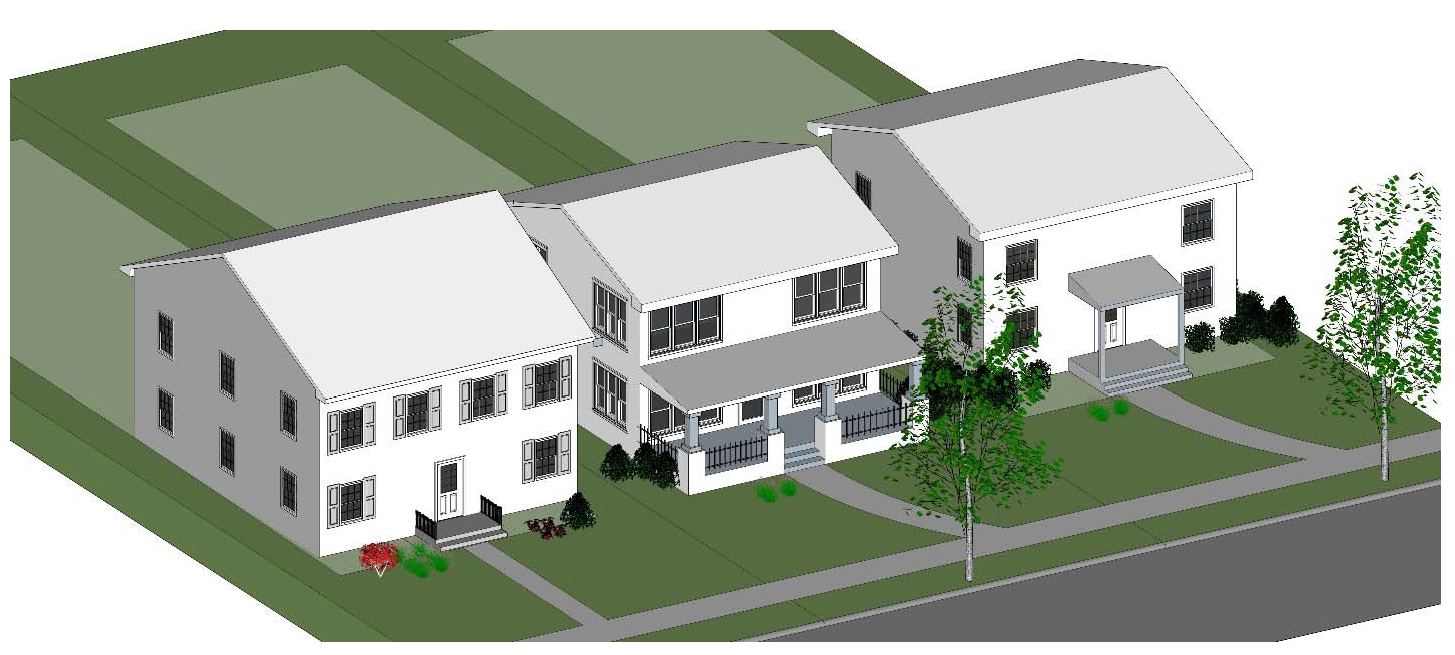
General character. The business transitional district (BT) is intended to permit the use and development of residential, office, and commercial uses within the same district in such a manner that it respects and protects existing residential uses and in-town residential character of the district. Multi-family, office, and/or commercial development would be permitted only where no substantial adverse impacts upon existing residential uses would be incurred and when sufficient buffering, screening and parking are provided. This is a pedestrian-oriented district and non-motorized connections to adjacent neighborhoods and the CB district are found throughout the district.
(2)
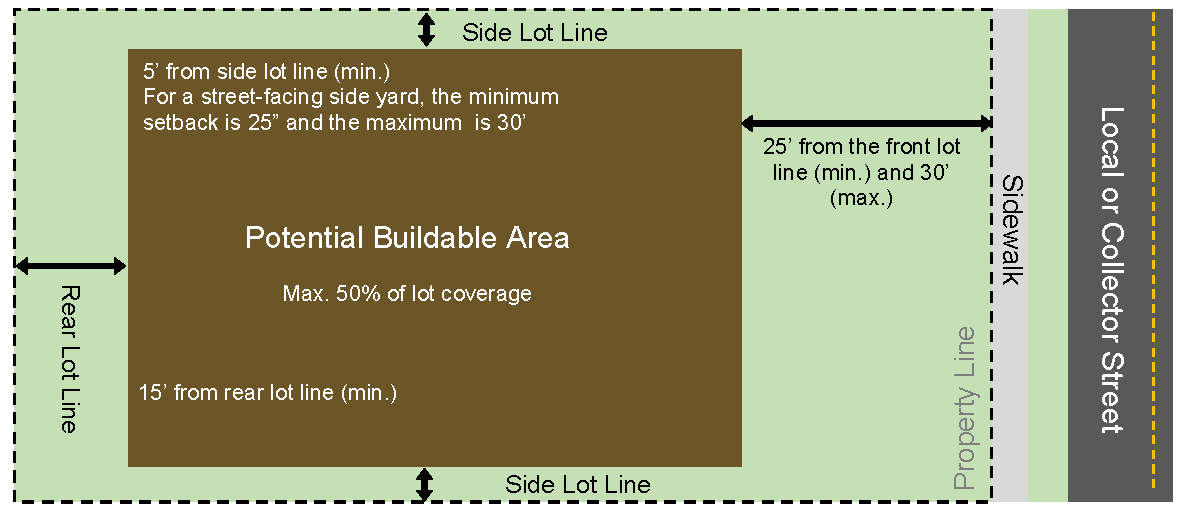
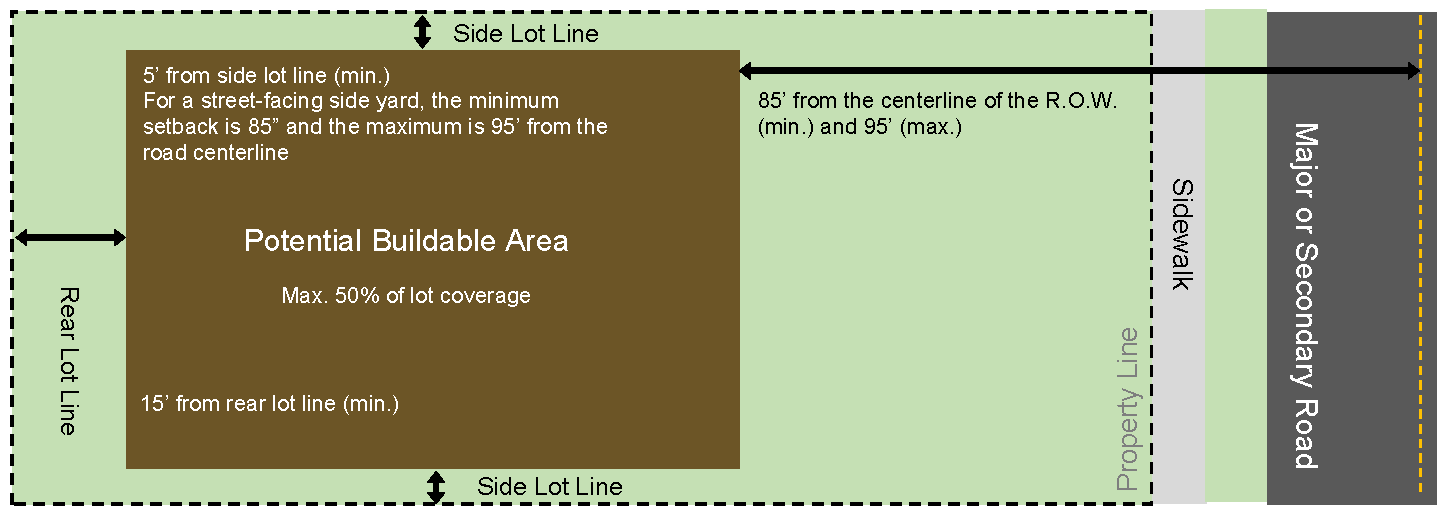
Building types and dimensions. Buildings are one to two stories, and they are residential in character. New non-residential structures may reflect the core elements of buildings in the adjacent CB district. Setbacks for rear and interior side yards are measured from the lot line, while front yards and street-facing side yard setbacks are measured from the centerline of the street right-of-way or the lot line, depending upon the road frontage. Building coverage on the lot is moderate and less intense than the CB district.
(3)
Street, alley, and block patterns. Blocks are framed by a street grid. Alleys provide access to rear parking areas and rubbish collection, if available.
(4)
Parking and mobility. Parking is provided at grade on the street and in the rear or side of lots, if provided. Pedestrian-oriented amenities are provided to encourage strolling through the district.
(b)
Permitted uses.
(1)
Single-family dwellings and accessory uses that existed as of September 25, 1989.
(2)
Common open space, including pedestrian plazas, parks, and courts.
(3)
Business and professional offices.
(4)
A change of use to a special land use identified in subsection (c), may be considered a permitted use by the planning commission if the following conditions are present:
a.
There is no substantial change in use or class of use.
b.
The new use does not require additional parking spaces.
c.
There is no outdoor storage required.
d.
The previous use or the use to be discontinued had been approved as a special land use.
(c)
Special land uses. The following buildings, structures and uses may be permitted by the city council, after a recommendation by the planning commission and subject to the special land use requirements (article X) and the following specific section for each use:
(1)
Retail facilities including, but not limited to, antiques, jewelry, book and stationery, gifts and novelties, music stores, camera and photography, art galleries, and florists.
(2)
Selected services, such as beauty or barber shops, shoe repair shops, laundry, or tourist facilities.
(3)
Boarding, convalescent or rest homes (section 60-213).
(4)
Churches and other places of worship (section 60-215).
(5)
Community service clubs and lodges (section 60-216).
(6)
Group day care (seven to 12 children or adults (section 60-223)).
(7)
Multi-family or two-family uses, subject to the requirements of the RM-2 district.
(8)
Museums and libraries.
(9)
Home occupations (section 60-224).
(10)
Housing for the elderly and senior citizen housing.
(11)
Eating establishments, provided that seating capacity is limited to 20 patrons and no alcohol is served.
(12)
Uses of a similar and no more objectionable character and impact as the above uses. Also permitted are customer accessory uses to the above provided there shall be no drive-through or other auto-oriented uses in this district.
(d)
Area, height, and placement requirements.
Figure 60-121(d) Setbacks, Building Placement, and Lot Coverage
(e)
Building and frontage typologies. Principal structures in the BT district shall conform to the typologies identified as follows:
(1)
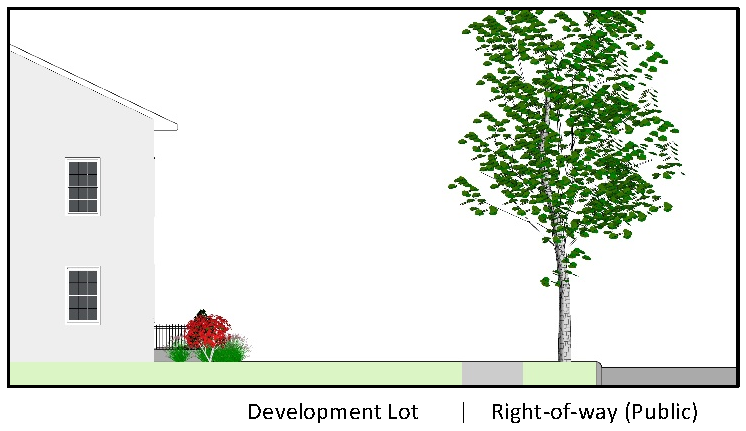
Stoop with setback. This building type is intended to permit limited non-residential uses while preserving a residential-style setting adjacent to the CB district. Buildings are close to the frontage line and raised at entry. This frontage includes an exterior step and landing that may be covered. The illustration below is intended to reflect required general building elements including a stoop, vertically-proportioned windows, pedestrian connection to public sidewalk, and pitched roof. The illustration is not intended to reflect an architectural style.
Figure 60-121 (e)(1)a. Stoop with Setback
Axonometric View
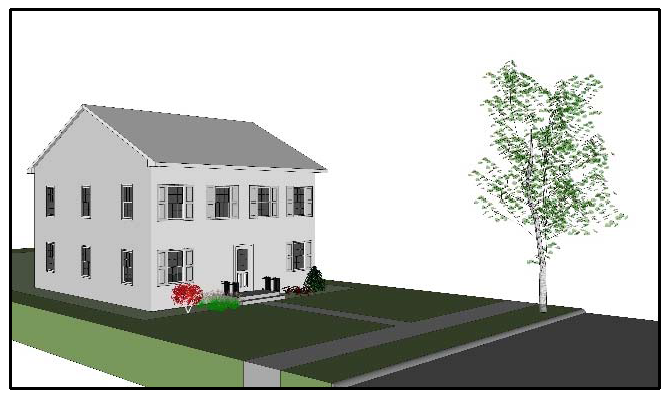
Figure 60-121 (e)(1)b. Stoop with Setback
Section View
(2)
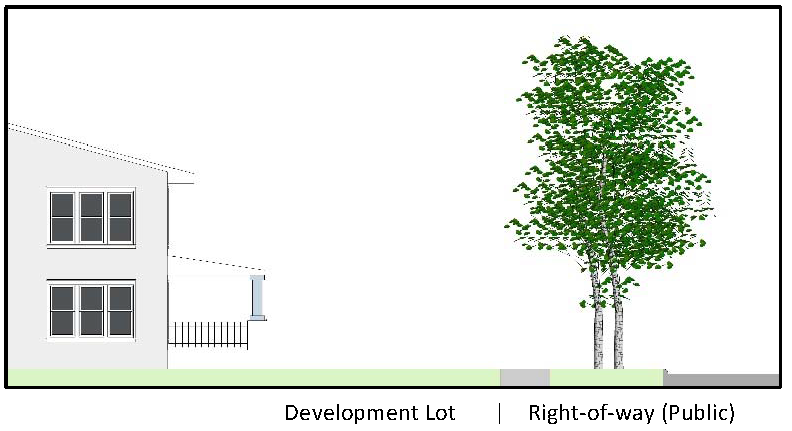
Porch. This building type is intended to maintain a residential-style quality and character of the neighborhood. Porches extend the façade of a building while maintaining a setback from the street. Fences at the property line may be used to better define the private space of a yard. The illustration below is intended to reflect required general building elements including a porch, vertically-proportioned windows, pedestrian connection to public sidewalk, and pitched roof. The illustration is not intended to reflect an architectural style.
Figure 60-121(e)(2)a. Porch axonometric view
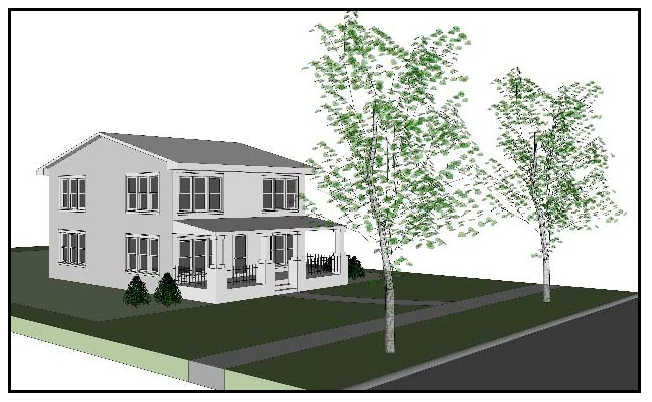
Figure 60-121 (e) (2) b. Porch section view
(3)
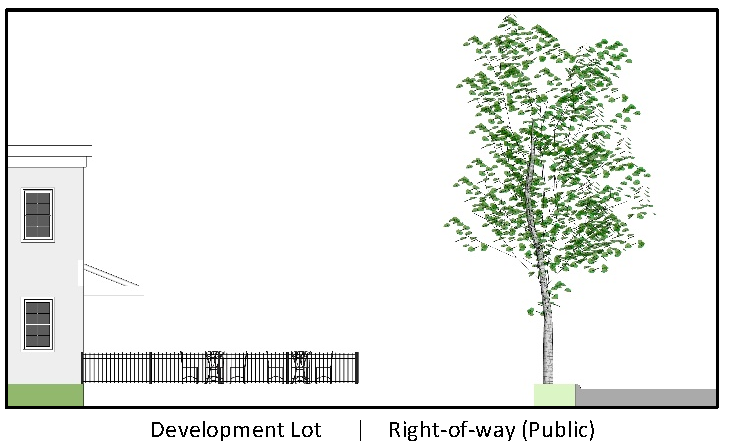
Shopfront. This frontage type is intended to encourage ground floor commercial uses in multistory buildings that would support the transitional nature between the downtown and residential character of the business transition district. Buildings feature ample windows for displays and open views into indoor activity. Second floor windows are vertically proportioned. Primary entrances are prominent and street-facing. Awnings are encouraged to shielding visitors from the elements and minimize the impact of direct sunlight near the storefront. This building type is most appropriate along Alfred Street, Main Street, and on corner lots. Other locations will be reviewed by the planning commission on a case-by-case basis.
Figure 60-121(e)(3)a. Shopfront Axonometric View
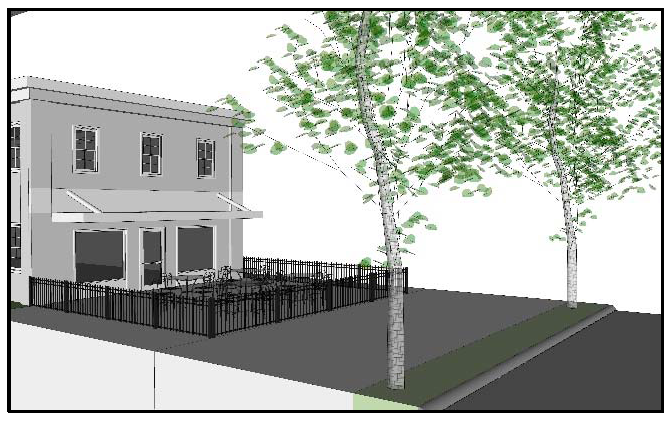
Figure 60-121(e)(3)b. Shopfront Section View
(4)
Rowhouse. This frontage type is intended to encourage dense, attached residential uses in a style that is compatible with single-family homes. These units would support the transitional nature between the downtown and residential character of the business transition district. Buildings would be two-story with a raised first floor with the option of basement entry from the front or rear.
Figure 60-121(e)(4)a. Rowhouse Axonometric View
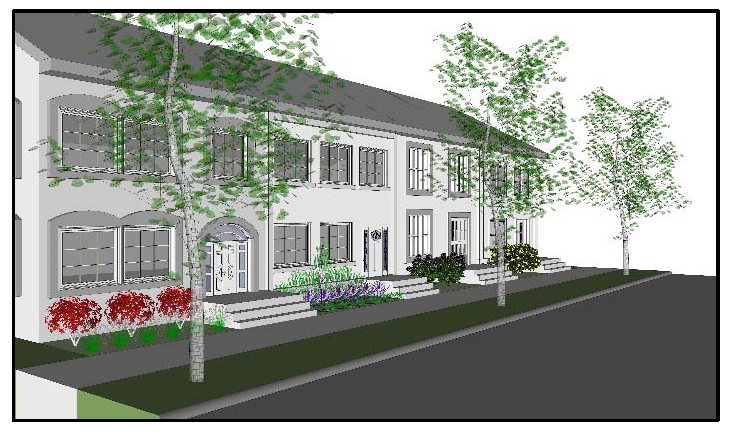
Figure 60-121(e)(4)b. Rowhouse Section View
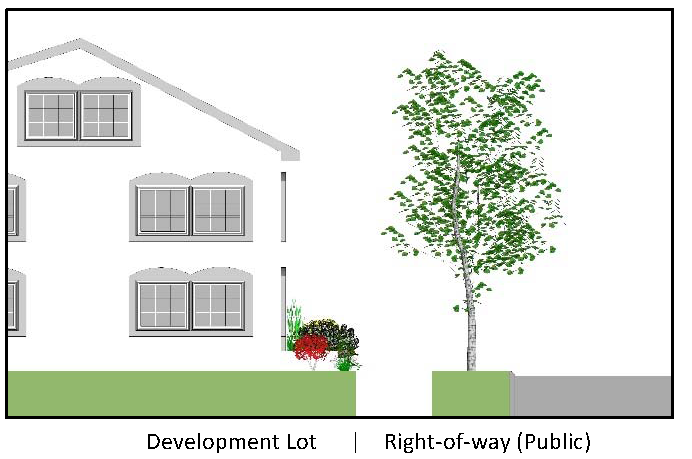
Homes would be attached to one another, extending either partially or fully along a block. Clusters are limited to a maximum of four units, with a minimum ten-foot separation between clusters. Architectural variation between neighboring buildings can enhance the character of new developments. The illustration shown reflects how this building type could be sited along Alfred Street or Main Street. Along other streets in the district, a greater street-facing setback is required.
(5)
Historic district. Applicants shall refer to the City of New Baltimore Historic District Design Guidelines and requirements of the historic district commission when modifying or constructing a structure within the historic district.
(6)
Other typologies. It is recognized that places of worship, civic uses, and other permitted or special approval uses in the district have different typologies than the typologies illustrated above. The unique characteristics of the uses and structures in relation to existing similar uses and similar structures in the district will be considered when reviewing plans for new or expanded structures. If a new or modified structure is in keeping with the established historical and neighborhood character found in similar structures in the district, the city may approve alternative typologies for new or expanded structures that reinforce the existing historic character as well as the pattern established by similar uses and similar structures in the district. All the setback, height, area, and other dimensional requirements in section 60-121(e) apply and will not be modified except by a variance granted by the zoning board of appeals.
(f)
Additional requirements for the BT District.
(1)
Major screening requirements between the CB and BT district and a residential use will be waived if the properties are separated by a public right-of-way or alley.
(2)
Parking lot screening abutting public roads. All off-street parking areas with more than ten parking spaces and visible from a public road shall be screened with a two and one-half-foot high clay brick wall, with a suitable stone cap, along the lot line facing the adjacent street. This wall may be set back up to 20 feet from the lot line if the space between the lot line and the wall is design, constructed and maintained as a park, plaza or outdoor dining area.
(3)
All signs are subject to section 42-68, design standards in the business transitional district and section 42-179, design standards in the historic district.
(4)
Uses shall not have a drive-through or drive-in operation.
(5)
Uses shall not have indoor or outdoor vehicle sales, repair or servicing.
(Ord. No. 158, § 6.00, 9-22-2008; Ord. No. 216, § 1, 2-26-2018; Ord. No. 248, § 5, 1-24-2022)
Sec. 60-122. - Local commercial, LC.
(a)
General intent. The local commercial district is intended to permit retail business and service uses which are needed to serve the nearby residential areas. In order to promote such business development so far as is possible and appropriate in each area, uses are prohibited which would create hazards, offensive and loud noises, vibration, smoke, glare, heavy truck traffic, or late hours of operation.
(b)
Permitted uses.
(1)
Retail businesses which supply commodities on the premises, such as, but not limited to, groceries, takeout stores, dairy products, notions or hardware.
(2)
Personal service establishments which perform services on the premises such as, but not limited to, repair shops (watches, radio, television, shoe, etc.), tailor shops, beauty shops or barber shops, and self-service laundries.
(3)
Dry cleaning establishments (pick-up stations only) dealing directly with the consumer.
(4)
Professional and medical offices.
(5)
Public utility buildings, service buildings, telephone exchange buildings, electric transformer stations and substations, and gas regulator stations, but not including storage yards.
(c)
Special land uses. The following buildings, structures and uses may be permitted by the city council, after a recommendation by the planning commission and subject to the special land use requirements (article X) and the following specific section for each use:
(1)
Churches (section 60-215).
(2)
Community service clubs and lodges (section 60-216).
(3)
Funeral homes and mortuaries (812210) (section 60-221).
(4)
Group day-care (seven—12 children or adults) (section 60-223).
(5)
Hospitals (section 60-242).
(6)
Nursery schools and day-care centers (section 60-229).
(7)
Outdoor sales for a period exceeding 30 days.
(d)
Area, height and placement regulations.
* Front and street-side building setbacks shall be measured from the centerline of each road right-of-way (R.O.W.) in accordance with the city's master plan as follows:
(Ord. No. 158, § 6.01, 9-22-2008; Ord. No. 213, § 1, 8-14-2017; Ord. No. 248, § 6, 1-24-2022)
Sec. 60-123. - Central business district, CB.
(a)
General intent.
(1)
General character. The central business district is proposed in the city's master plan as being the core center for retail purchases and dining in New Baltimore. The development of the downtown area should be promoted as a pedestrian-oriented retail center which establishes an identity for the city, and that can attract people to the community. The downtown area, with its renovation of older buildings and preservation of the historical character, can provide for typical retail services, in addition to specialty retail, restaurants, cafés, and similar businesses that will encourage residents, as well as tourists and visitors, to use the downtown area.
In the central business district, maintaining traffic and pedestrian safety are predominant and compelling government interests, with emphasis on the safety of pedestrians. The central business district has the heaviest concentration of pedestrian activity in the city, and this pedestrian activity is a key factor in the economic success of the district. Pedestrian traffic leads to retail sales and it serves office, entertainment, government, and residential uses in the district and surrounding areas. It also reduces vehicular trips because motorists can park once and then use the pedestrian network rather than a vehicle to make multiple stops. The regulations contained herein that impact the placement of structures, the appearance and function of street-facing facades, and other related elements of district character are intended to foster the continued pedestrian-oriented and historic downtown character of New Baltimore.
(2)
Building types and dimensions. Buildings are typically two stories, and third stories are permitted. Setbacks for front, side, and rear yards are measured from the lot line. Side yards are optional, and the connection of buildings to form a continuous street wall is encouraged. Building coverage on a lot is high, and many buildings have rear entryways in addition to front entryways.
(3)
Street, alley, and block patterns. Blocks are framed by a street grid. Alleys provide access to rear parking areas and rubbish collection.
(4)
Parking and mobility. Parking is provided at grade on the street and in rear or side parking lots, if provided. Bicycle parking is encouraged in this district. The district is oriented toward pedestrian activity.
(b)
Permitted uses.
(1)
Retail sales including, but not limited to, specialized food stores, bakeries, department stores, general merchandise stores, pet shops, apparel and accessory stores, drug stores, video rental, and bookstores.
(2)
Personal service establishments which perform services on the premises, such as, but not limited to, repair shops (watches, television, shoe, jewelry and the like), tailor shops, beauty parlors, barber shops, and self-service laundries.
(3)
Artist studios and galleries.
(4)
Common open space, including pedestrian plazas, parks, and courts.
(5)
Eating and drinking establishments, provided a restaurant shall not include a drive-thru or in-the-vehicle services.
(6)
Hotels.
(7)
Physical fitness facilities such as health clubs.
(8)
Professional or business offices located on the second floor or higher.
(9)
Banks and similar financial institutions.
(10)
Residential uses on second floor or higher meeting the following requirements:
a.
Each dwelling unit must contain the minimum number of square feet set forth below based on the number of bedrooms in the unit:
1.
One bedroom: 700 square feet.
2.
Two bedrooms: 900 square feet.
3.
Three bedrooms: 1,100 square feet.
4.
More than three bedrooms: 1,100 square feet plus an additional 200 square feet for each bedroom over three.
b.
Each dwelling unit must contain its own separate bath and kitchen facilities. No shared facilities are permitted.
c.
Detached single-family housing and two-family housing shall not be permitted in the CB district.
d.
Dwelling units shall not be located above any establishment engaged in food preparation of any kind involving heating, baking and/or cooking on the premises unless both of the following fire safety measures are in place:
1.
The establishment is protected by a sprinkler fire suppression system; and
2.
The dwelling units and all common aisles, corridors, etc. adjacent to the dwelling units are equipped with hard wired smoke alarms. Battery operated alarms are not permitted.
e.
Applicable restrictions under the city fire code and/or fire prevention code shall not be subject to waiver or variance of any kind.
(11)
Uses of a similar and no more objectionable character and impact as the above uses. Also permitted are customer accessory uses to the above provided there shall be no drive-through or other auto-oriented uses in this district.
(c)
Special land uses. The following buildings, structures and uses may be permitted by the city council, after a recommendation by the planning commission and subject to the special land use requirements (article X) and the following specific section for each use.
(1)
Churches and other places of worship (section 60-215).
(2)
Outdoor sales for a period exceeding 30 days. Outdoor sales for a period of 30 days or less is an accessory use subject to the provisions of section 60-56.
(3)
Outdoor cafés, on-site (section 60-230).
(4)
Professional or business offices located on the first floor.
(5)
Drive-thru facilities are subject to the following:
a.
A drive-thru facility shall be subject to special land use, however, it shall not enter or exit directly onto Washington Street.
b.
Drive-thru and drive-in facilities for restaurants shall not be permitted in the CB district.
(6)
Libraries or museums.
(7)
Government offices and assembly halls.
(8)
Theaters, auditoriums, concert halls and similar places of assembly.
(9)
Uses of a similar and no more objectionable character as the above uses, as determined by city council following a recommendation by the planning commission.
(d)
Area and placement requirements.
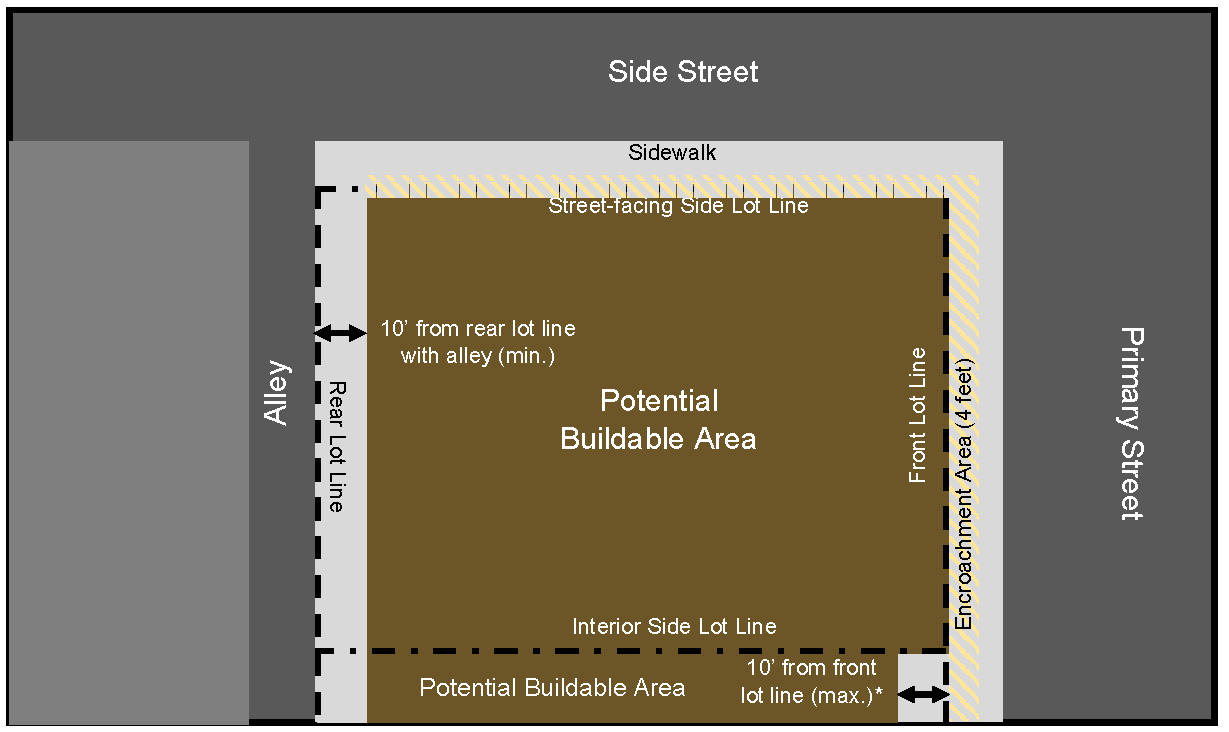
Figure 60-123(d) Setbacks, Facade Abutting Street, and Encroachments
(e)
Height and floor area requirements.
Figure 60-123(e) Height Requirements
(f)
Primary and side streets. A primary street is the street upon which the front lot line abuts.
For corner lots, a side lot line abutting a street shall be considered a build-to line. Also, Washington Street shall always be designated as a Primary Street in the CB District, and any property abutting Washington Street shall designate Washington Street frontage as a front lot line and shall have a building entrance facing the front lot line or facing a forecourt abutting the front lot line.
(g)
Front and exterior side yard setbacks. Whenever a structure is setback from a front or street-facing side lot line, the setback area shall be either paved with concrete, brick pavers or similar material customarily found in the district. Landscaped areas and furnishings (benches, trash receptacles, and similar equipment) designed and constructed in a manner consistent with the district, with a focus on pedestrian flow and creating places of pedestrian interest, may also be provided.
(h)
Parking lot screening abutting public roads. All off-street parking areas with more than ten parking spaces that are visible from a public road shall be screened with a two and one-half-foot high clay brick wall, with a suitable stone cap, along the lot line facing the adjacent street. This wall may be set back up to 20 feet from the lot line if the space between the lot line and the wall is design, constructed and maintained as a park, plaza or outdoor dining area.
(i)
Historic district. Applicants shall refer to the City of New Baltimore Historic District Design Guidelines and requirements of the historic district commission when modifying or constructing a structure within the historic district.
(j)
Typologies. Structures in the CB district shall conform to one of the typologies identified as follows: Shopfront, arcade or forecourt (see figures below). These typologies are intended to reflect the building and site development elements described below and are not intended to reflect specific architectural style(s). For certain unique building types, such as places of worship and government buildings, the city may approve alternative typologies for new or expanded structures that reinforce the existing historic character as well as the pattern established by similar uses and similar structures in the district. All the setback, height, area, and other dimensional requirements in section 60-121(e) apply and will not be modified except by a variance granted by the zoning board of appeals.
Building and Frontage Typologies
(1)
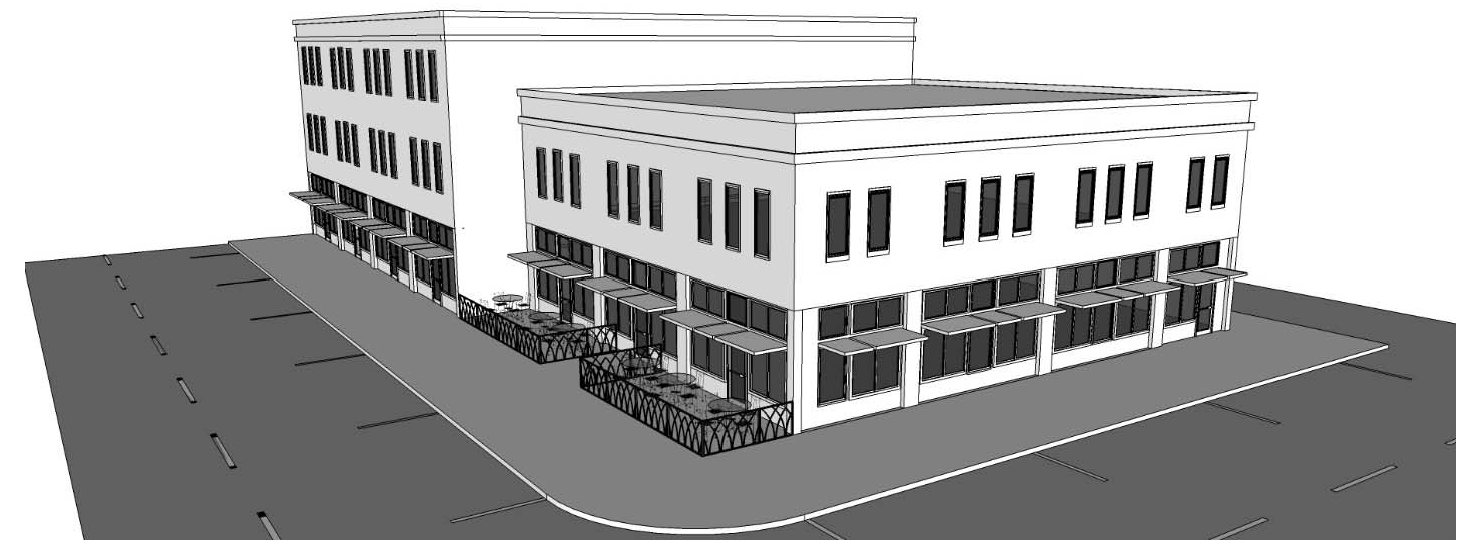
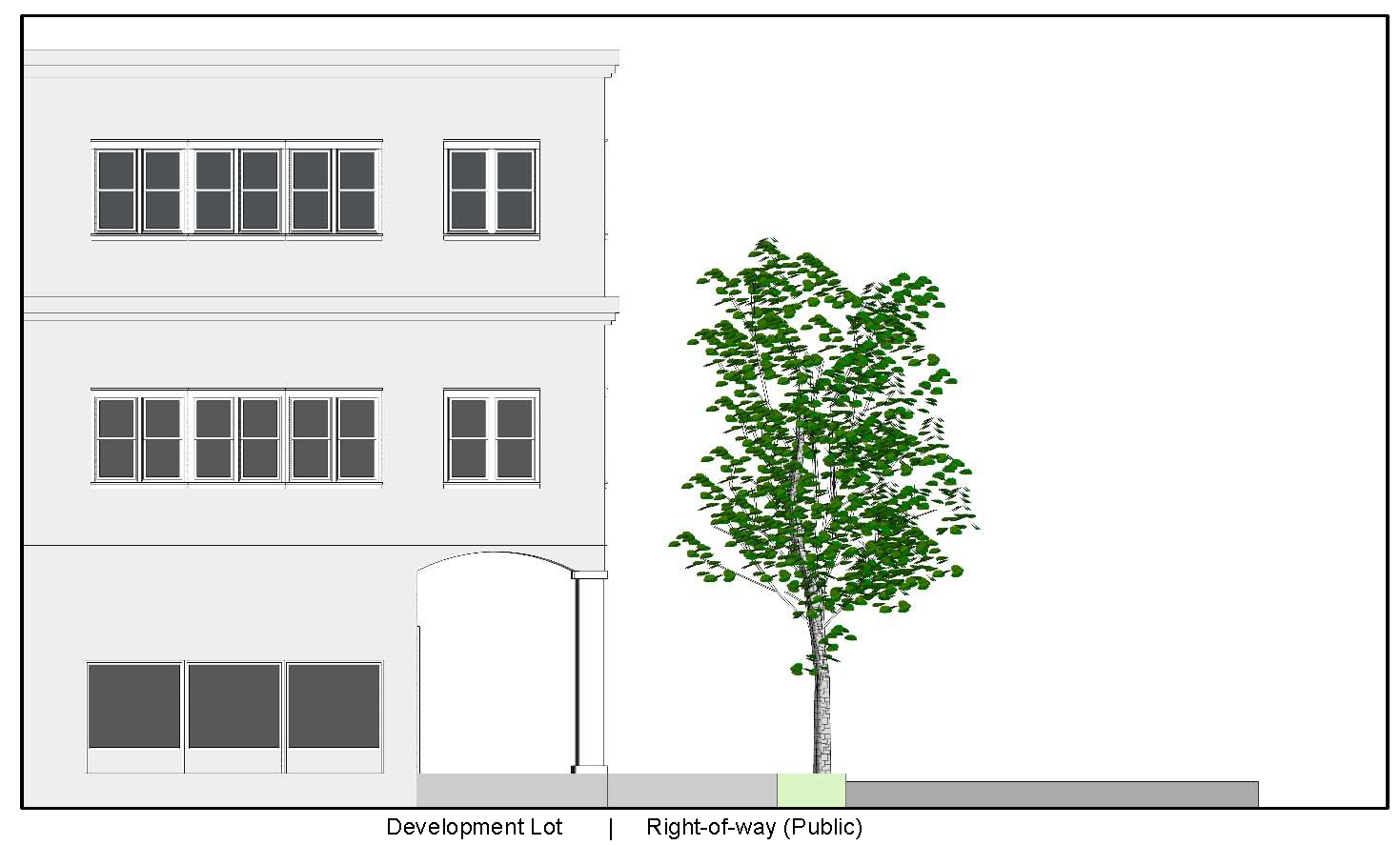
Shopfront. This frontage type is intended to encourage ground floor commercial uses in multiple story buildings that are typical in downtown New Baltimore. Buildings feature ample windows for displays and open views to indoor activity on the ground floor. Primary entrances are prominent and street-facing, and they are either recessed at the doorway up to five feet or placed at the build-to line. Awnings are encouraged to shield pedestrians from the elements and minimize the impact of direct sunlight near storefronts.
Figure 60-123(j)(1)(a) below: Shopfront axonometric view illustrating pedestrian-oriented storefront that encourages walking throughout the CB district. The storefront glazing, which allows views inside the building, is a critical element that encourages pedestrians to stroll the district.
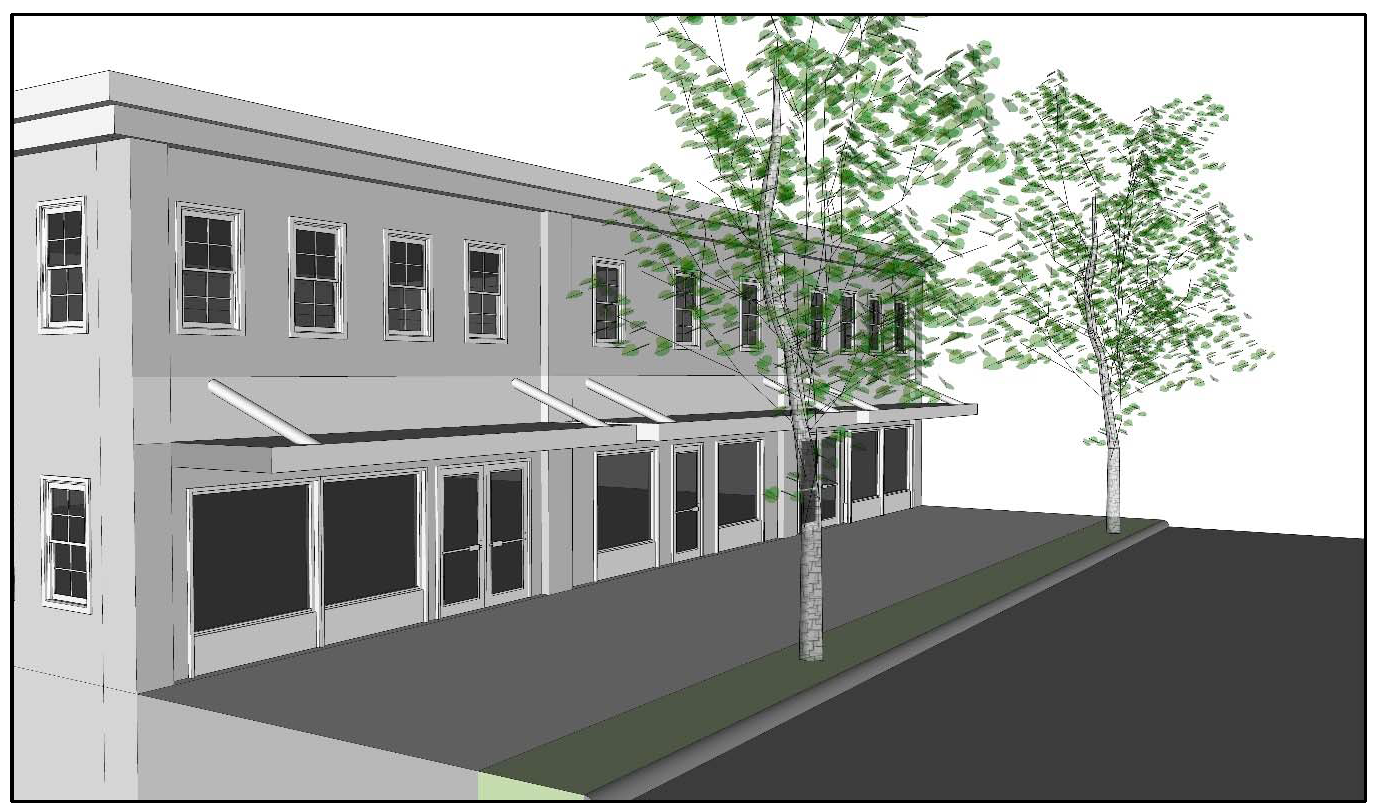
Figure 60-123(j)(1)(b) below: Section view of shopfront illustrating relationship of storefront to pedestrian walkway. Street trees and awnings provide protection from the elements and reduce the impact of high temperatures during warm weather months.
(2)
Arcade. With this frontage type, the upper floors of the façade project to the lot line, while the ground floor façade is recessed from the lot line. The maximum recess of the ground floor from the lot line shall be ten feet. Arcades are ideal for retail use and outdoor dining.
Figure 60-123(j)(2)(a) below: Arcade axonometric view shows how the building design creates a recessed ground floor shopfront area. The upper floors project over the pedestrian walkway to the front lot (build-to) line.
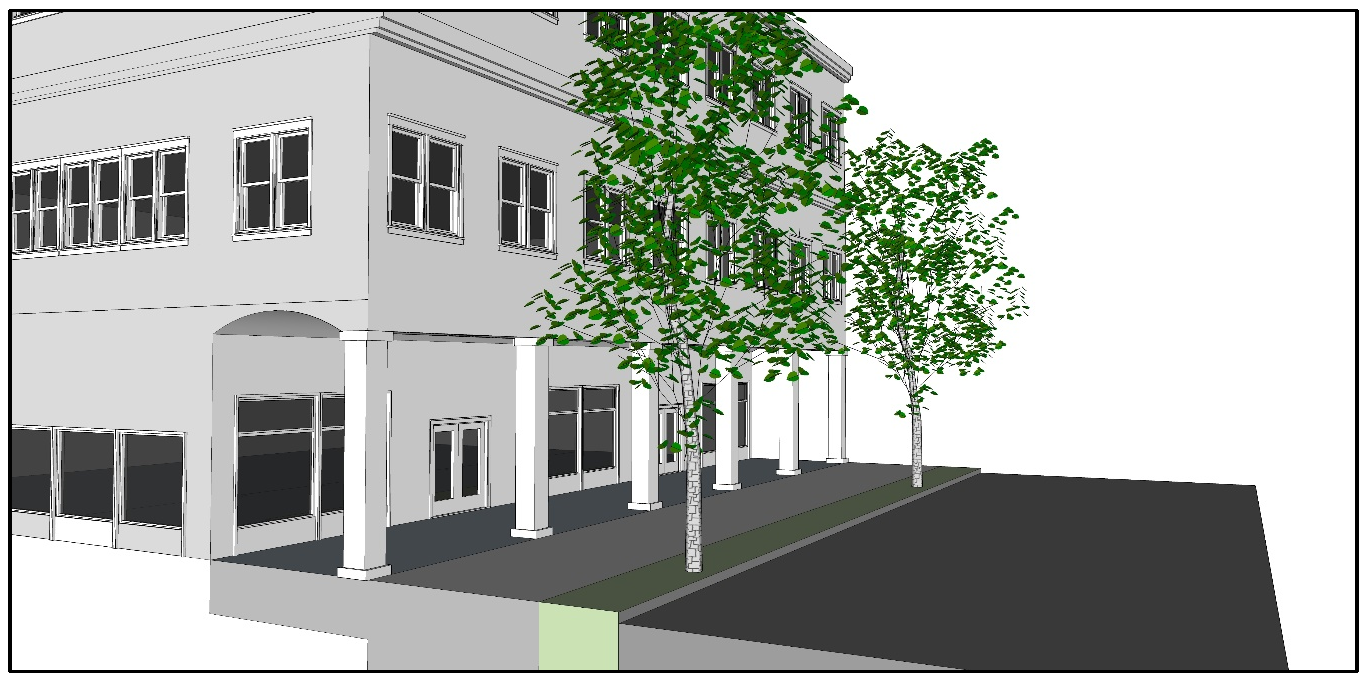
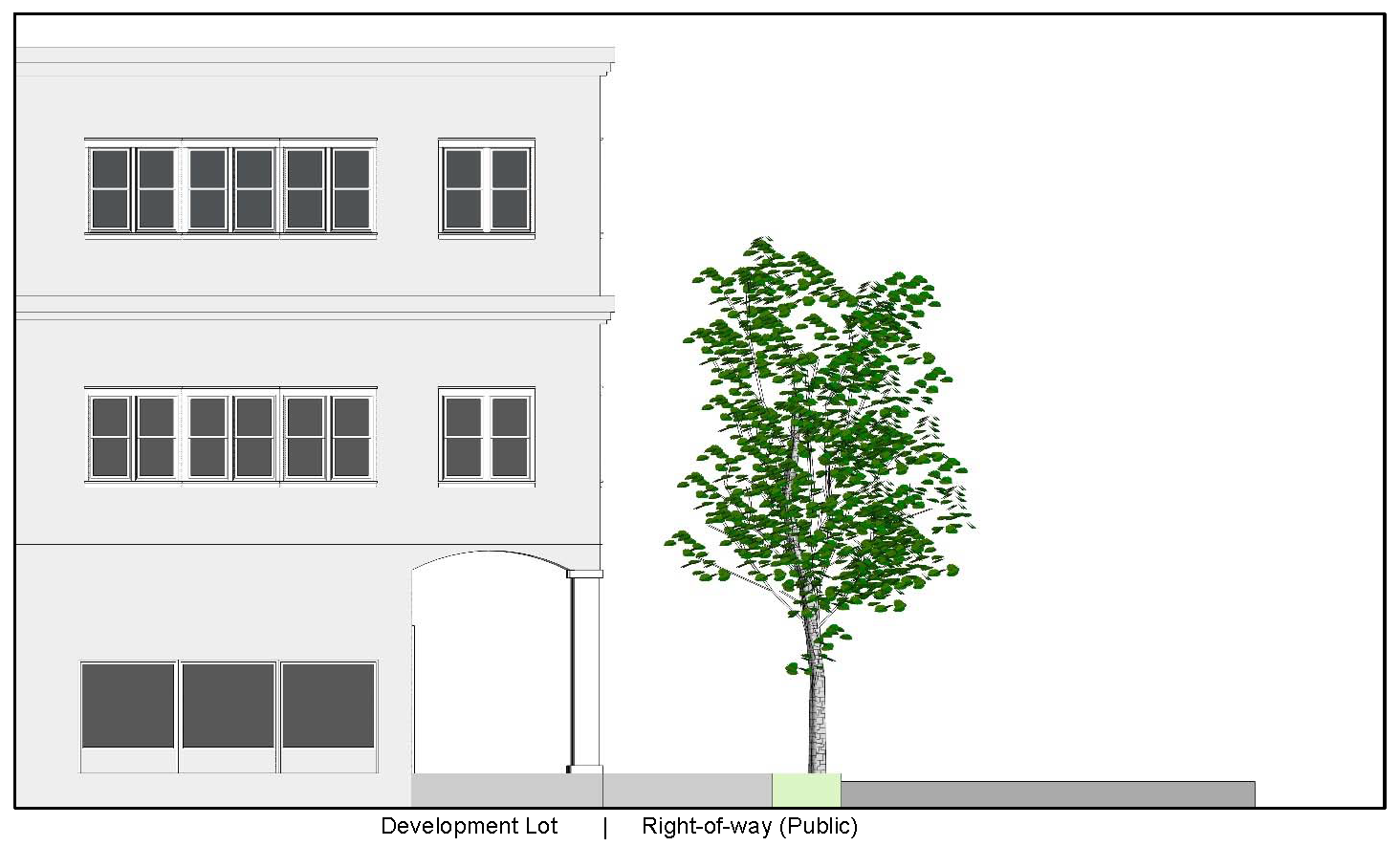
Figure 60-123 (j)(2)(b) below: Arcade section view shows the recessed pedestrian walkway and the upper floor area above. The entire structure is on private property, and the columns and upper floors extend to the front lot (build to) line.
(3)
Forecourt. Forecourts are an additional design element incorporated into a shopfront or arcade frontage. The main façade of the building is at or near the build-to line, while a maximum of 50 percent of building frontage is set back up to 40 feet from the build-to line, creating a small court space. The space could be used as an entry court or shared garden space for apartment buildings, as an additional restaurant seating area within retail and retail service use areas, as a small park or plaza, or similar use.
Figure 60-123(j)(3)(a) below: Forecourt axonometric view shows how the building design creates a recessed ground floor courtyard area. The courtyard is typically a combination of hardscape and landscape area. Examples of uses include outdoor dining and pedestrian plaza areas.
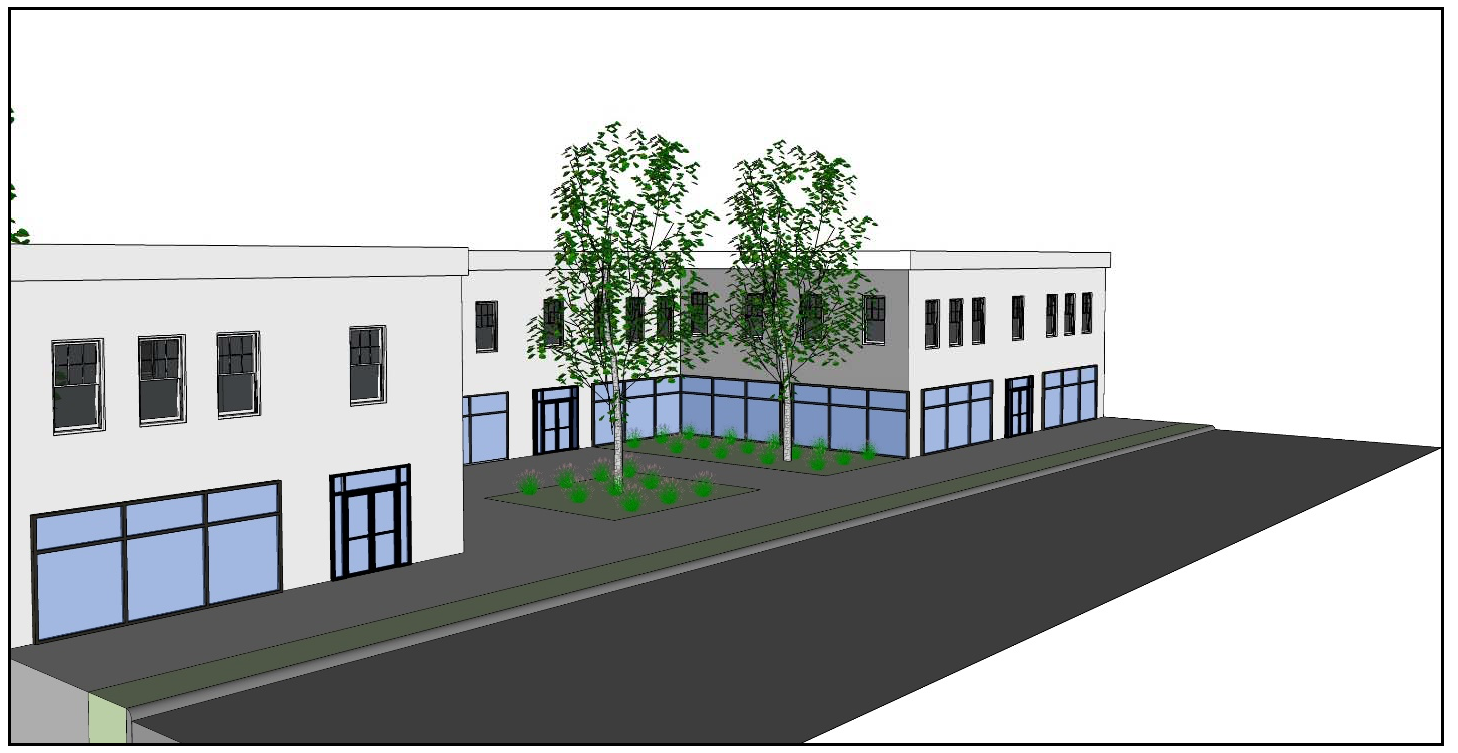
Figure 60-123(j)(3)(b) below: Forecourt section view shows the relationship of the development lot to the right-of-way. The courtyard area is not visible from this angle, as it is behind the portion of the building placed at the build-to line.
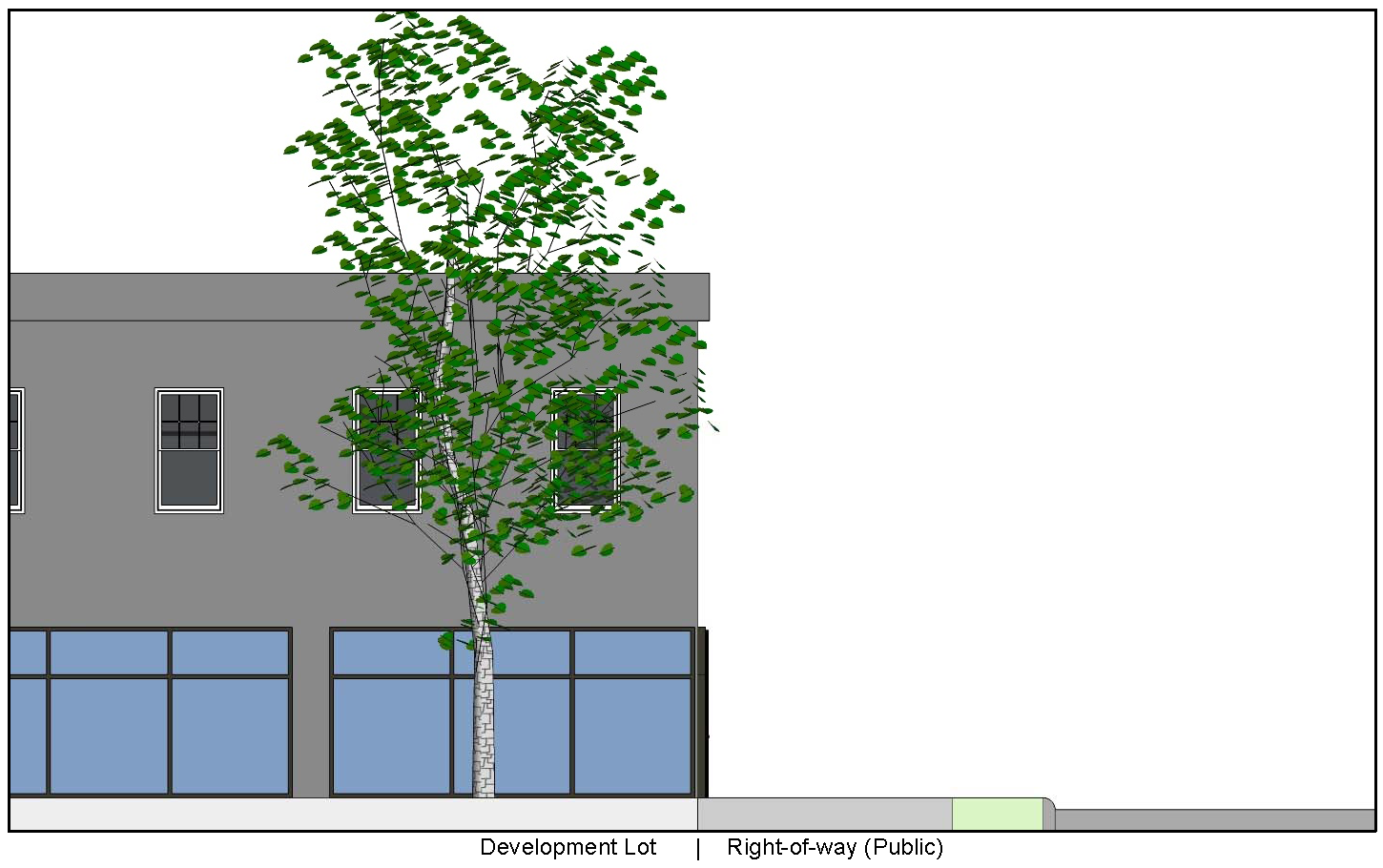
Forecourts may be placed at any location along the frontage provided that the forecourt is enclosed on three sides by building walls. The forecourt area shall have a mix of paved areas (brick, stone or concrete pavers or concrete), landscaped areas (planted with a mix of flowers, plants, shrubs, and trees), and street furniture (such as chairs, tables, benches, and similar features). Lawn areas are not appropriate for courtyards and may only be used as a minor accent to an otherwise landscaped area. Outdoor dining is encouraged.
(k)
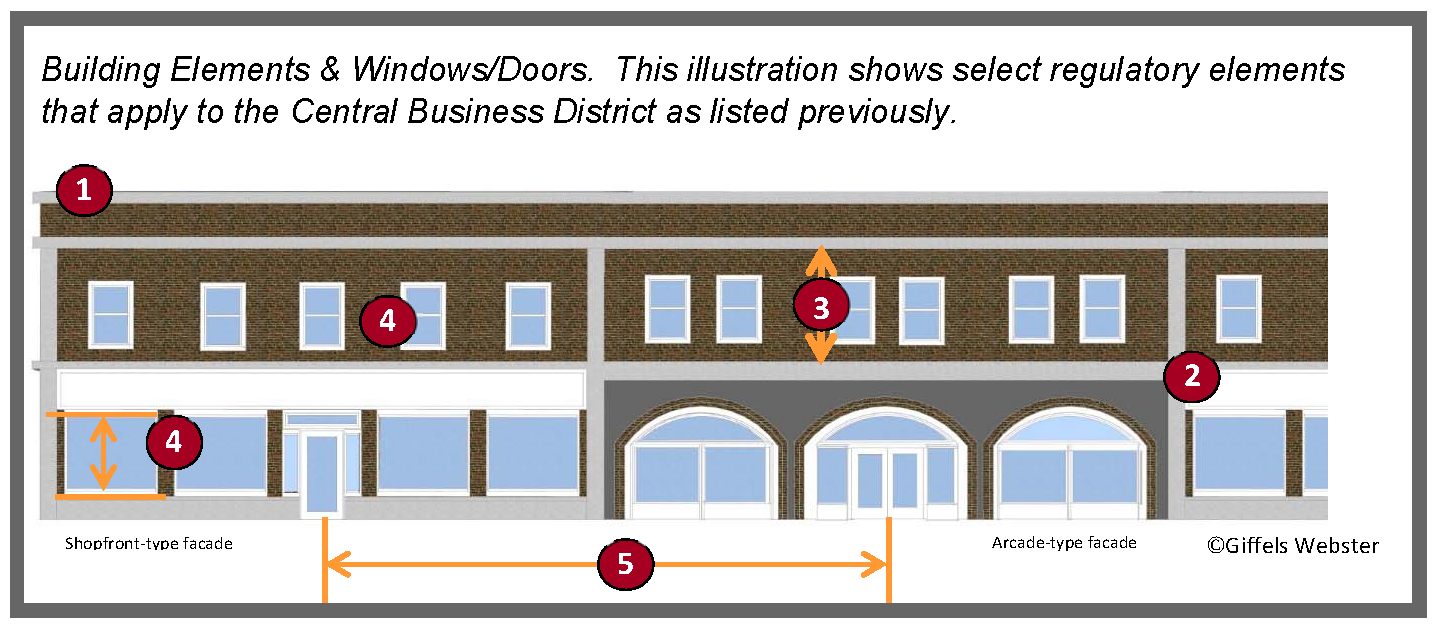
Additional requirements for CB district (see illustration below).
(1)
Buildings must include a top or cap element, such as a parapet, cornice or similar feature.
(2)
The edge of each distinguishable storefront shall be defined by a vertical design element.
(3)
Horizontal expression lines shall define stories of the building.
(4)
Ground-floor facades in the CB district shall have a minimum of 60% glazing between two and eight feet above grade. Upper floors are required to maintain 30% glazing on their street-facing facades. Window glazing shall be clear with a visible light transmittance of not less than 65 percent (0.65) on ground floors, and 45 percent (0.45) on upper floors, per glass manufacturer specifications.
(5)
A minimum of one pedestrian entrance per building is required. For buildings with more than 149 feet of building frontage on the same street, provide one additional pedestrian entrance for each 75 feet of building frontage over the first 75 feet.
(6)
See section 60-42 for additional appearance requirements.
(7)
Vacant storefronts in the CB district shall not be boarded up, covered with paper or otherwise appear derelict or abandoned. Temporary displays of art, merchandise from other downtown businesses or similar displays shall be permitted. Temporary decorative covering of windows shall be permitted only during periods of active store renovations.
(8)
Driveways shall be prohibited on Washington Street between Green Street and Front Street. See section 60-55 for additional requirements. The intent is for vehicular access for: 1) emergency vehicles, 2) service deliveries, and 3) private parking lots, when provided, to occur primarily from drives in the rear yard or from the alley network behind buildings.
(9)
Major screening requirements between the CB and BT district and a residential use shall be waived if the properties are separated by a public right-of-way or alley.
(10)
Landscaping requirements of section 60-183(d) and (e) shall not apply to the CB district.
(11)
All signs shall follow section 42-179, design standards in the historic district.
Figure 60-123(k)(11) Building Elements and Windows/Doors
(Ord. No. 158, § 6.02, 9-22-2008; Ord. No. 170, § 2, 12-13-2010; Ord. No. 216, § 2, 2-26-2018)
Sec. 60-124. - General commercial district, GC.
(a)
General intent. The GC general commercial district, as established in this article, is intended to permit a wider range of business and entertainment activities than those permitted in the local commercial business district. This GC district is designed to provide sites for more diversified business types and are often located so as to serve passerby, highway-oriented traffic. These uses would generate larger volumes of vehicular traffic, would need more off-street parking and loading, and would require more planning to integrate such districts with adjacent residential areas. This district would also provide suitable locations for those commercial activities which function relatively independent of pedestrian traffic and proximity of other firms. These activities typically direct auto traffic access and visibility from the road.
(b)
Permitted uses.
(1)
Any retail business or service establishment permitted as a principal use in the LC local commercial or CB central business districts.
(2)
Building material and supply dealers (NAICS 444) except for lumber retail yards (NAICS 444190), with all activities being indoor. The outdoor display, storage, or sale of goods shall be considered a special land use.
(3)
Business schools, colleges or private schools.
(4)
Commercial banking and credit unions, excluding drive-thru facilities.
(5)
Veterinarian clinics.
(6)
Eating and drinking establishments, excluding drive-thru facilities.
(7)
Food and beverage stores (NAICS 445).
(8)
Funeral homes and mortuary establishments.
(9)
Hotels and motels (except bed and breakfast, casino hotels, tourist cabins and recreational vehicle campgrounds).
(10)
Home furniture, furnishings and equipment.
(11)
Indoor recreation establishments, such as a bowling alley, billiard hall, gymnasium, indoor archery range, indoor tennis court, indoor skating rink, or similar establishments.
(12)
Professional and medical offices.
(13)
Nursery schools and day care centers.
(14)
Theaters, assembly halls, or similar places of assembly, when conducted completely within enclosed buildings.
(15)
Payday lending and check cashing establishments subject to the following:
a.
Such businesses shall be permitted to operate only between the hours of 8:00 a.m. and 8:00 p.m.
b.
As defined herein, check cashing, payday lending, or similar establishments shall not be located within one-half mile (2,630 feet) of another check cashing, payday lending or similar type establishment.
(c)
Special land uses. The following buildings, structures and uses may be permitted by the city council, after a recommendation by the planning commission and subject to the special land use requirements (article X) and the following specific section for each use.
(1)
Automobile repair and service centers (section 60-212).
(2)
Churches (section 60-215).
(3)
Community service clubs, lodges, halls, catering establishments, and banquet halls (section 60-216).
(4)
Drive-thru facilities (section 60-219).
(5)
Full and self service car washes (section 60-220).
(6)
Gasoline service stations (section 60-222).
(7)
Hospitals (section 60-242).
(8)
Large scale recreation (section 60-228).
(9)
Open air business uses, including the retail sales of plant materials, lawn furniture, playground equipment, and garden or building supplies (section 60-231).
(10)
Outdoor sales for a period exceeding 30 days.
(11)
Outdoor sales lots for the sale of automobiles (NAICS 4411) (section 60-232).
(12)
Outdoor sales lots for the sale of new or secondhand recreational vehicles and boats (NAICS 4412) (section 10-22).
(13)
Outdoor sales lots for the sale of manufactured homes (section 60-234).
(14)
Public utilities (section 60-236).
(15)
Raising of fur bearing animals including kennels (section 60-237).
(16)
Tattoo parlor.
(17)
Used goods sales.
(18)
Buy/sell precious metals establishment (section 60-241).
(d)
Area, height and placement requirements. The following area, height, density, bulk, and placement requirements shall apply to all uses and structures:
* Front and street-side building setbacks shall be measured from the centerline of each road right-of-way (R.O.W.) in accordance with the city's master plan as follows:
(Ord. No. 158, § 6.03, 9-22-2008; Ord. No. 169, §§ 2, 3, 6-28-2010; Ord. No. 213, § 2, 8-14-2017; Ord. No. 248, § 7, 1-24-2022)

