
Novato City Zoning Code
ARTICLE 3
- SITE PLANNING AND GENERAL DEVELOPMENT STANDARDS
19.20.010 - Purpose of Division.
This Division expands upon the standards of Article 2 (Zoning Districts, Allowable Land Uses, and Zone-Specific Standards) by addressing the details of site planning and project design. These standards are intended to ensure that all development:
A.
Produces an environment of stable and desirable character;
B.
Is compatible with existing and future development; and
C.
Protects the use and enjoyment of neighboring properties, consistent with the General Plan.
(Ord. No. 1576, § 2 (Exh. A, amd.), 10-23-2012)
19.20.020 - Applicability.
The provisions of this Division apply to all proposed development and new land uses, as follows:
A.
The standards of this Article (Article 3) shall be applied in combination with the standards for each zoning district in Article 2 (Zoning Districts, Allowable Land Uses, and Zone-Specific Standards). If there is a conflict between the standards of Article 2 and Article 3, the standards of Article 3 shall override, except where otherwise specified in Article 2.
B.
All new or modified structures and uses shall comply with all applicable provisions of this Division, except as specified in Division 19.52 (Nonconforming Uses, Structures, and Parcels).
C.
In cases where a proposed development site is subject to an approved Master Plan and/or Precise Development Plan, the standards of the approved plan shall override the standards of this Article.
(Ord. No. 1576, § 2 (Exh. A, amd.), 10-23-2012)
19.20.030 - Access.
Access shall be provided in compliance with this Section, and as required by the development standards in Municipal Code Chapter 5.
A.
Access to Streets. Every structure shall be constructed upon, or moved to, a legally recorded parcel with a permanent means of legal access to a public street.
B.
General Access Requirement. All structures shall be properly located to ensure safe and convenient access for servicing, fire protection, and required parking.
C.
Parking Access. Parking spaces and lots shall be provided access in compliance with Division 19.30 (Parking and Loading).
(Ord. No. 1576, § 2 (Exh. A, amd.), 10-23-2012)
19.20.040 - Fences, Walls, and Hedges.
A.
Applicability.
1.
All Fences, Walls, and Hedges. The provisions of this Division apply to all fences, walls, and hedges, unless otherwise stated.
2.
Fences and Walls in the Flood Hazard (F3) Overlay District. All fences and walls in the F3 overlay district shall require a Building Permit, and shall comply with all requirements of the F3 overlay district in addition to the requirements of this Section.
3.
Exemptions. These regulations do not apply to fences or walls required by regulations of a State or Federal agency, or by the City for reasons of public safety, or to retaining walls which are regulated by Section 19.20.100 (Setback Requirements and Exceptions).
B.
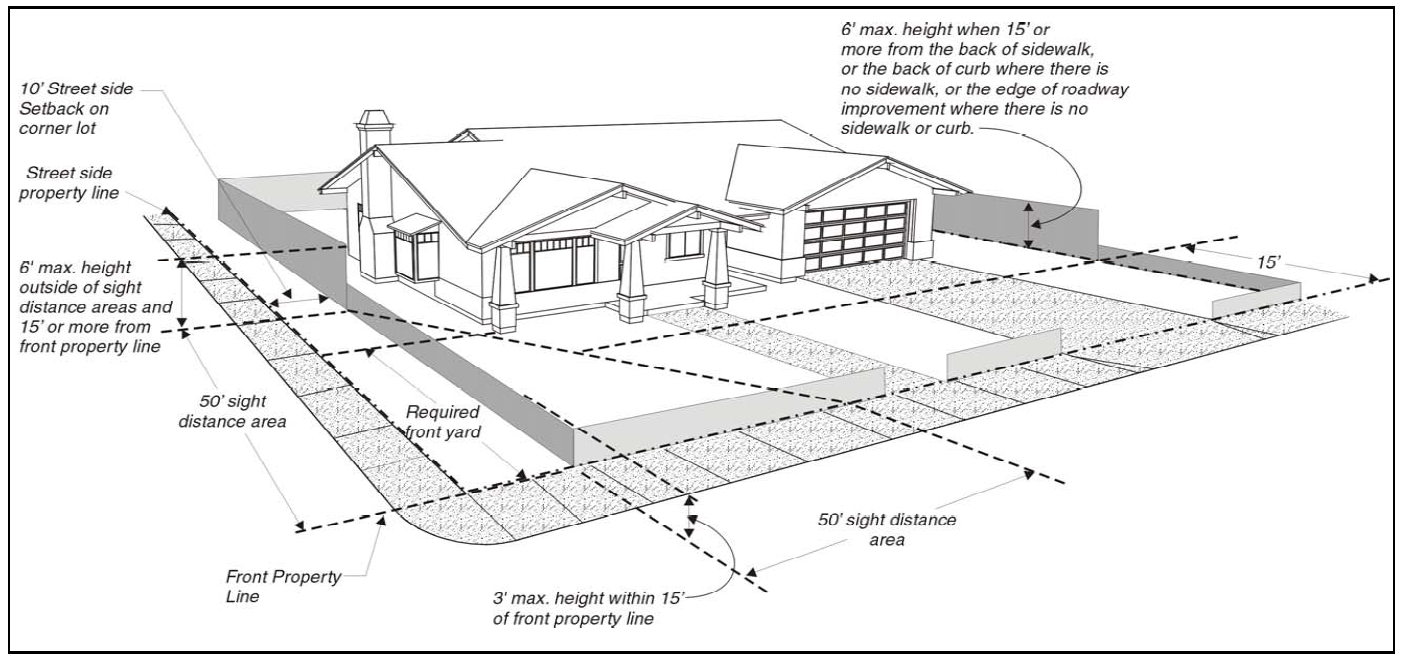
Height Limitations. Fences, walls, and hedges shall comply with the height limitations shown in Table 3-1. See also Figure 3-2. (See 19.20.040.D.1 below).
TABLE 3-1
MAXIMUM HEIGHT OF FENCES, WALLS, AND HEDGES
Notes:
(1)
Additional height may be authorized through Design Review approval (Section 19.42.030).
(2)
Fences and walls may be allowed up to 8 feet in height within 3 feet of side or rear property line when the portions of the fence above six feet are of an open design (e.g., lattice, wrought iron or grille work that will allow visibility through 50% of the material).
(3)
Solid fences and walls set back greater than 3 feet from side or rear property line may be allowed up to 8 feet in height.
C.
Measurement of Fence and Wall Height.
1.
Fence height shall be measured as the vertical distance between the finished grade at the base of the fence and the top edge of the fence material.
2.
The height of fencing atop a wall shall be measured from the base of the wall.
3.
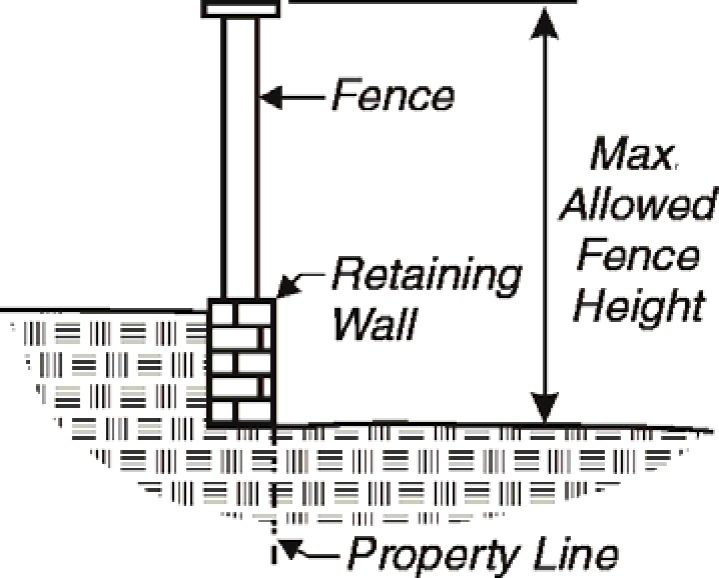
In cases where finished grade differs from one side of the fence to the other (as on a slope or retaining wall), the height shall be measured from the side with the lowest natural grade. See Figure 3-1. Where fences are arranged or terraced on a slope with a minimum of 2 feet (measured horizontally) between each fence or each fence and retaining wall, to allow for landscaping, each fence height shall be measured in accordance with C.1 above.
D.
Specific Fencing and Wall Requirements.
1.
Fences Abutting Right-of-Way.
a.
Fences in rear or side yard areas that abut a public right-of-way and exceed 3 feet in height shall provide a minimum setback of 10 feet from the edge of right-of-way, except where a minimum 10-foot landscape parkway is provided within the right-of-way.
b.
Perimeter fences and walls with a height greater than six feet and greater than 50 feet in length, adjoining a public right-of-way, shall require Design Review in accordance with Section 19.42.030.
2.
Fencing Between Different Land Uses. Fencing between different land uses shall be provided in compliance with Section 19.20.090 (Screening).
3.
Swimming Pools, Spas, and Similar Features. Swimming pools/spas and other similar water features shall be fenced in compliance with Section 4-3 of the Municipal Code.
4.
Outdoor Equipment, Storage, and Work Areas. Screening of outdoor uses and equipment shall be provided in compliance with Section 19.20.090 (Screening).
5.
Temporary Fencing. Temporary fencing may be necessary to protect archaeological or historic resources, trees, or other similar sensitive features during site preparation and construction. This fencing shall be approved by the Director.
(Ord. No. 1576, § 2 (Exh. A, amd.), 10-23-2012)
19.20.050 - Grading.
This Section establishes land Use Permit and application requirements for grading (e.g., filling, excavating, leveling, or stockpiling of earth, rock, sand, gravel, or similar materials).
A.
Use Permit Required. Use Permit approval (see Section 19.42.050), in addition to a required grading permit, shall be required before any grading or stockpiling of materials is commenced on any site, except that a Use Permit shall not be required if one or more of the following conditions apply:
1.
Grading involves the movement of less than 200 cubic yards of materials, is not related to previous grading on the property, regardless of previous amounts, does not involve hauling, either to or from the site, and is not in the F-3 Overlay District;
2.
A grading plan has been reviewed and approved by the appropriate City officials as an element of an approved Building Permit;
3.
A grading plan has been reviewed and approved by the appropriate City officials as an element of an approved land Use Permit/entitlement or Tentative Map;
4.
The Director determines that the grading is minor and will clearly cause no adverse environmental impacts;
5.
No wetland is affected; or
6.
The grading operation is necessary to protect the public health, safety, and welfare in the event of emergency or disaster. In permitting a grading operation to proceed under this exception, the City Manager, or his/her designee, may impose and require compliance with those conditions which are reasonable under the circumstances.
B.
Application Requirements. A Use Permit application for grading shall include all information required by Section 19.40.040 (Application Preparation and Filing), and any additional information and materials required by the City Engineer and described in the Department handout approved by the Director. Applicants may also be required to submit information prepared by, or approved by a licensed civil engineer or geologist.
(Ord. No. 1576, § 2 (Exh. A, amd.), 10-23-2012)
19.20.070 - Height Limits and Exceptions.
A.
Maximum Height of Structures. Except where a Master Plan or Precise Development Plan establishes a specific height limit, the height of structures shall not exceed the more restrictive of the following, as applicable:
1.
The height limit established by the applicable zoning district in Article 2 (Zoning Districts, Allowable Land Uses, and Zone-Specific Standards);
2.
The height restrictions provided for structures on sloping sites by Division 19.26 (Hillside and Ridgeline Protection); and
3.
The height limits established for fences and walls by Section 19.20.040 (Fences, Walls, and Hedges).
B.
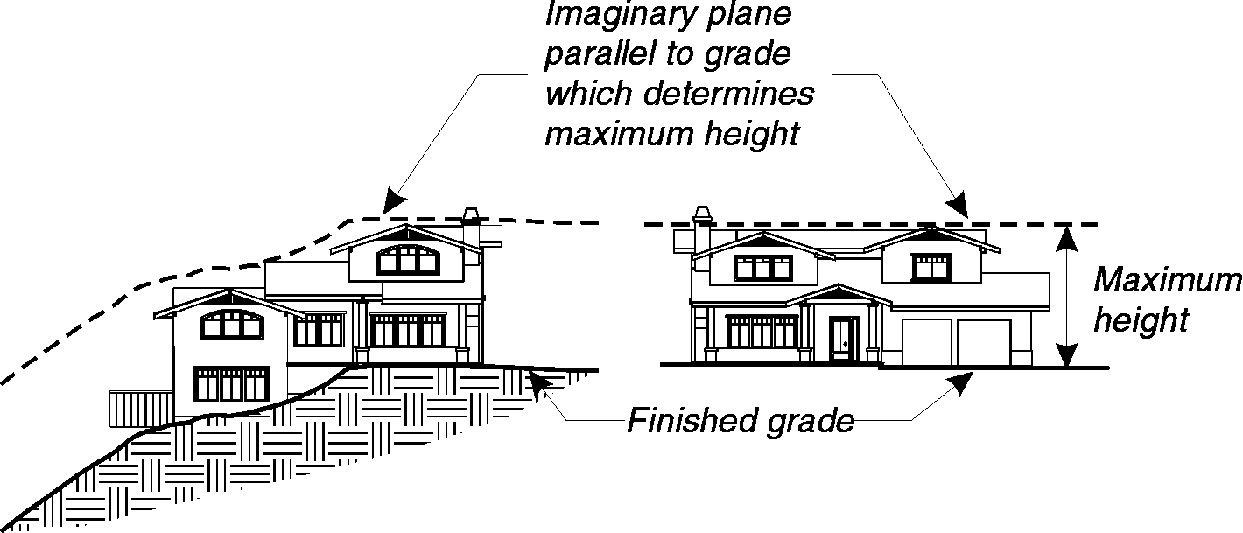
Height Measurement. The maximum allowable height shall be measured as the vertical distance from finished grade at the base of the structure to an imaginary plane located the allowed number of feet above and parallel to the finished grade at any point. See Figure 3-3. Finish grade shall be established in a manner consistent with parcels in the vicinity as determined by the Director, and shall not be artificially raised to gain additional building height.
C.
Exceptions to Height Limits. The following structures and structural features may exceed the height limits of this Zoning Ordinance as noted:
1.
Chimneys, cupolas, decorative or false gables, monuments, spires, theater scenery lofts, vents, mechanical equipment screening (not exceeding 10 percent of roof area) and similar structures, may exceed the height limit of the applicable zoning district by a maximum of 8 feet, except where a greater height is authorized in compliance with following Subsection C.2 through Design Review approval.
2.
The height limits of Article 2 may be increased by a maximum of 20 percent through Design Review approval in accordance with Section 19.42.030 (except for the Downtown Core).
3.
Within the Downtown Core Business or Retail Districts, the height limit may be increased by 30 percent up to a maximum height of 45 feet for the habitable floor area (excluding the roof) through Design Review approval, where one of the following criteria is met:
a.
Housing is incorporated in a mixed-use project.
b.
Existing or adjacent building exceeds the height limit.
c.
Unique nature of a proposed use requires a higher height limit.
d.
Proposed building or addition provides exceptional architectural design quality through articulation in the building facade, roof and window design, or other architectural treatment, (i.e., public outdoor spaces and extensive landscaping).
4.
Telecommunications facilities, including antennas, poles, towers, and necessary mechanical appurtenances, may be authorized to exceed the height limit established for the applicable zoning district, in compliance with Division 19.38 (Wireless Communication Facilities).
D.
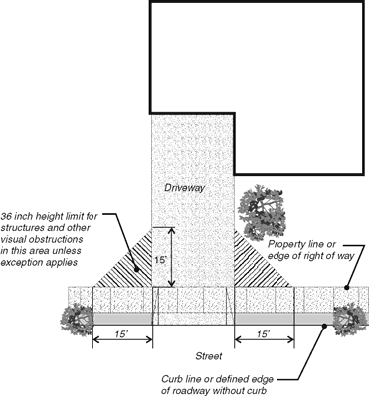
Sight Visibility Area Required. On properties within or adjacent to residentially zoned districts, property improvements, including structures, landscaping, materials, vehicles or any type of screening shall be designed, placed or maintained to provide a sight visibility area for all types of traffic, including but not limited to vehicles, pedestrians and bicycles. Structures, landscaping, materials, vehicles or any type of screening shall not be located in a manner which adversely affects the required sight visibility area for any public roadway, private roadway, alley, driveway, or pedestrian or vehicular access point. Landscaping in all zoning districts shall also comply with the requirements of Municipal Code Section 17-3.8 (Trees and Shrubs - Obstructing Visibility).
1.
Measurement of Sight Visibility Area. A sight visibility area is measured as follows, and may include private property and/or public right-of-way.
a.
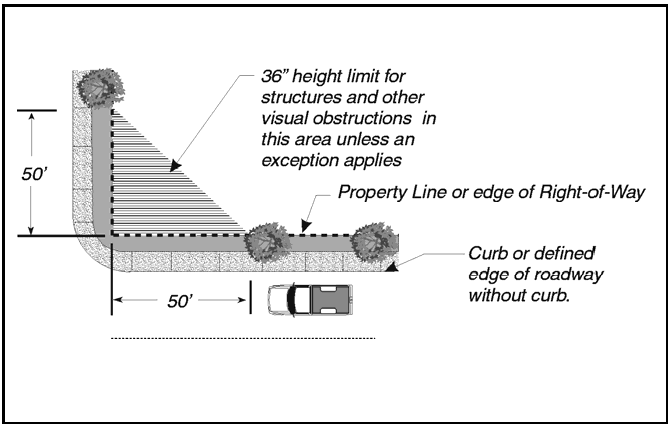
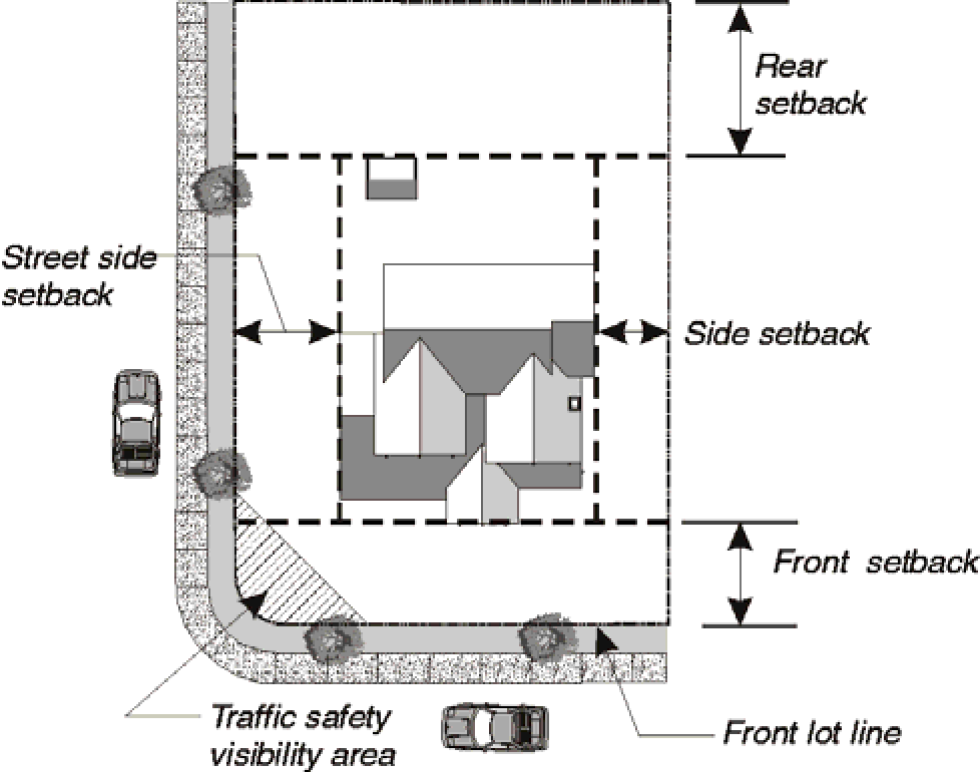
Corner Lots. The sight visibility area shall be defined as a triangle formed by measuring 50 feet from the extension of the front and side property lines and connecting the lines across the property. See Figure 3-4A.
b.
At Alleys, Driveways, and Other Vehicular or Pedestrian Access Points. The sight visibility area shall be defined as the triangle(s) formed by measuring 15 feet extending outward from both sides of the edge of the driveway, path or easement along the street property line and extending 15 feet from the property line along each side of the alley, driveway or path and connecting the lines across the property. See Figure 3-4B.
c.
Additional Driveway Visibility Requirements. Driveways and adjacent yard areas shall be designed, constructed and maintained to provide a sight visibility area so that the driver of a passenger vehicle backing out of any driveway has an unobstructed view of the first 100 feet along the nearest traffic lane from either direction and has not encroached on any sidewalk, pedestrian path, equestrian path, bike path or street pavement.
2.
Additional Area. A sight visibility area larger than that specified by subsection D1 may be required where determined by the Director to be necessary because of topography, roadway geometrics or traffic characteristics.
3.
Height Limit. No structure, landscaping, materials or other screening or visual obstruction shall exceed a height of 36 inches within the sight visibility areas defined above, except for:
a.
Trees with their lower branches trimmed up to provide a minimum clearance of eight feet above grade; or
b.
Structures, landscaping or other materials approved by the Director based on a determination that the specific geometrics or traffic characteristics of the intersection will accommodate the structure without compromising pedestrian or traffic safety.
(Ord. No. 1576, § 2 (Exh. A, amd.), 10-23-2012)
19.20.080 - Scenic Resources Protection.
A.
Purpose. This Section provides standards to implement the scenic resource protection policies of the General Plan (EN 27 and EN 27.1).
B.
Applicability. These requirements apply to all development proposed on sites designated by the Scenic Resources Map in the General Plan. Design Review (Section 19.42.030) shall be required for all projects within these areas. Scenic resource protection requirements for other areas are provided by Section 19.16.030 (Baylands Overlay District), and Division 19.26 (Hillside and Ridgeline Protection).
C.
Application Content. Development permit applications shall include the following information in addition to that required by Section 19.40.040 (Application Preparation and Filing):
1.
Graphic Visual Impact Analysis. Cross-sectional and elevational drawings analyzing the impacts of the proposed project on scenic views.
2.
Visual Simulations. Visual simulations of the proposed project illustrating how proposed structures will appear within the existing landscape after construction. The simulations shall be accurately prepared using computerized photo montage techniques, and/or story poles placed on the site at the locations of proposed building corners. Simulations shall be prepared showing the proposed project from at least the following vantage points, and any additional vantage points required by the Director:
a.
From all streets fronting the site;
b.
From adjacent neighborhoods, parks, and trails from which the proposed structures may be visible; and
c.
From any location adjacent to Highway 101 from which the proposed structures may be visible.
D.
Development Standards. Proposed development and new land uses shall comply with Section 19.16.030 (Baylands Overlay District), and Division 19.26 (Hillside and Ridgeline Protection) where applicable, and the following requirements:
1.
Protection of Existing Views. Development and new land uses, or changes to existing structures or land uses shall not result in a change in the elevation of the land, or the construction of any improvement that would significantly or materially alter, or impair major views, vistas, viewsheds of major landforms from public roads, or public vantage points as described above.
2.
Side Yard View Corridors. Where side yards provide a public view from the street to the river or bay, or a view to hills or valleys, the side yards should be maintained as open visual access corridors. These areas shall be open to the sky and free from all visual obstructions including trees and shrubs (except for a gate or fence constructed of open materials that still allow the view) from the front property line to the rear property line. Existing structures are exempt from this requirement.
3.
Screening. All industrial facilities, and public and private utilities shall be screened from the view of any public roadway to the maximum extent feasible. See also the screening requirements of Section 19.20.090 (Screening).
4.
Existing Topography. Proposed development, including roads, shall minimize the alteration of the natural topography and scenic values of the area.
5.
Hillside and Ridgeline Backdrops. The size, location, and massing of structures shall not significantly obscure views from Highway 101 and other public roads of the scenic backdrop provided by the hillsides.
6.
Landscaping. Landscaping shall be designed to enhance existing scenic views.
(Ord. No. 1576, § 2 (Exh. A, amd.), 10-23-2012)
19.20.090 - Screening.
This Section establishes standards for the screening and separation of adjoining residential and nonresidential land uses, equipment and outdoor storage areas, and surface parking areas.
A.
Screening Between Different Land Uses. A non-residential land use proposed on a site adjacent to a residential zoning district use shall provide screening at the parcel boundary as follows:
1.
The screen shall consist of plant materials and a solid, decorative wall of masonry or similar durable material, a minimum of six feet in height.
2.
The maximum height of the wall shall comply with the provisions of Section 19.20.040 (Fences, Walls, and Hedges).
3.
The wall shall be architecturally treated on both sides, subject to the approval of the Director.
4.
The Director may waive or approve a substitute for this requirement if the Director first determines that:
a.
The intent of this Section can be successfully met by means of alternative screening methods; or
b.
Physical constraints on the site make the construction of the required screening infeasible; or
c.
The physical characteristics of the site or adjoining parcels make the required screening unnecessary.
B.
Mechanical Equipment, Loading Docks, and Refuse Facilities.
1.
Roof or ground mounted mechanical equipment (e.g., air conditioning, heating, ventilation ducts, and exhaust, etc.), loading docks, refuse storage areas, and utility services (electrical transformers, gas meters, etc.) shall be screened from public view from adjoining public streets and rights-of-way and adjoining area(s) zoned for residential uses.
2.
The method of screening shall be architecturally compatible with other on-site development in terms of colors, materials, and architectural style.
3.
Landscaping shall be installed adjacent to screen walls, at the discretion of the Director.
C.
Outdoor Storage and Work Yards. Land uses with outdoor storage of materials, recycling facility-processing centers, waste resource and waste recycling operations, and similar uses shall comply with the following:
1.
Outside storage and work areas shall be screened with a solid sight-obscuring decorative masonry wall, a minimum of six feet and a maximum of eight feet in height. The wall shall include sight-obscuring gates. Walls and gates shall be continuously maintained in good repair; and
2.
Site operations in conjunction with outdoor uses, including the loading and unloading of equipment and materials, shall be screened to minimize the visibility of operations.
D.
Outdoor Building Materials and Garden Supply Areas. Outdoor building materials and garden supply areas shall be screened with fencing, landscaping, meshing, walls, or similar material to minimize visibility of the storage area.
(Ord. No. 1576, § 2 (Exh. A, amd.), 10-23-2012)
19.20.100 - Setback Requirements and Exceptions.
This Section provides standards for the use and minimum size of required setbacks. These standards are intended to provide open areas around structures for: visibility and traffic safety; access to and around structures; access to natural light, ventilation and direct sunlight; separation of incompatible land uses; and space for privacy, landscaping, and recreation.
A.
Setback Requirements.
1.
All structures shall comply with the setback requirements of the applicable zoning district established by Article 2 (Zoning Districts, Allowable Land Uses, and Zone-Specific Standards), and with any special setbacks established for specific uses by this Zoning Ordinance, except as otherwise provided by this Section.
2.
No portion of a structure, including eaves or roof overhangs, shall extend beyond a property line; or into an access easement or street right-of-way.
3.
Each required setback shall be open and unobstructed from the ground upward, except as provided in this Section.
B.
Exception from Setback Requirements. The minimum setback requirements of this Zoning Ordinance apply to all uses except the following:
1.
Fences or walls in compliance with Section 19.20.040 (Fences, Walls, and Hedges);
2.
Decks, earthworks, free-standing solar devices, pavement, steps, terraces, and other site design elements which are placed directly upon the finish grade and do not exceed a height of 18 inches above the surrounding finish grade at any point; and
3.
Pools, hot tubs, spas and less than 18 inches in height above finished grade, except as required by the Building Code. Any decking exceeding 18 inches above surrounding grade must comply with the standards contained in Section 19.34.032D4.
C.
Measurement of Setbacks. Setbacks shall be measured from the exterior wall of structures, as follows: See Figure 3-5.
1.
Front Yard Setbacks. The front yard setback shall be measured at right angles from the nearest point on the front property line of the parcel to the nearest portion of the structure, except as provided in following Subsections C.1.a through C.1.c. Whenever a future right-of-way line is officially established for a street, required setbacks shall be measured from the established lines.
a.
Averaging. The required front yard setback may be calculated based on an averaging of adjoining parcels only under the following circumstances:
(1)
On a site situated between two parcels developed with buildings, the minimum front yard setback shall be the average depth of the front yards on the two developed parcels.
(2)
Where a site is not situated between two developed parcels, and where parcels comprising 40 percent of the block frontage are developed with buildings, the minimum front yard setback shall be the average of the existing front yard depths on the block.
(3)
In computing the average front yard depth, a depth no greater than 10 feet more than the minimum required front yard setback shall be used in lieu of any greater existing front yard depth.
(4)
When an interior parcel in a residential zoning district adjoins a parcel on the same street frontage in another zoning district, the required front setback on the interior parcel may be reduced by the Director to not less than the average of the required depth and the width or depth of the setback required on the parcel in the other zoning district.
b.
Corner Parcels. The measurement shall be taken from the nearest line of the structure to the nearest point of the property line adjoining the street which is opposite the rear yard.
c.
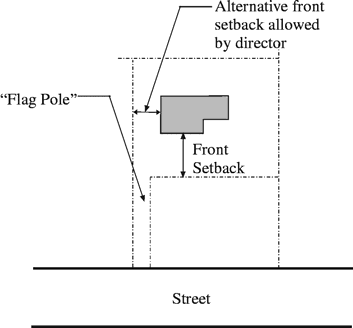
Flag Lots. As determined by the Director based on the orientation of buildings on adjacent parcels, either:
(1)
The measurement shall be taken from the nearest point of the wall of the main structure facing the street to the point where the access strip meets the bulk of the parcel; establishing a building line parallel to the lot line nearest to the public street or right-of-way (see Figure 3-6); or
(2)
From the lot line that forms the outermost extension of the flag.
2.
Side Yard and Street Side Yard Setbacks. Side yard and street side yard setbacks shall be measured at right angles from the nearest point on the side property line of the parcel to the nearest portion of the structure; establishing a setback line parallel to the side property line, which extends between the front and rear yards.
3.
Rear Yard Setbacks.
a.
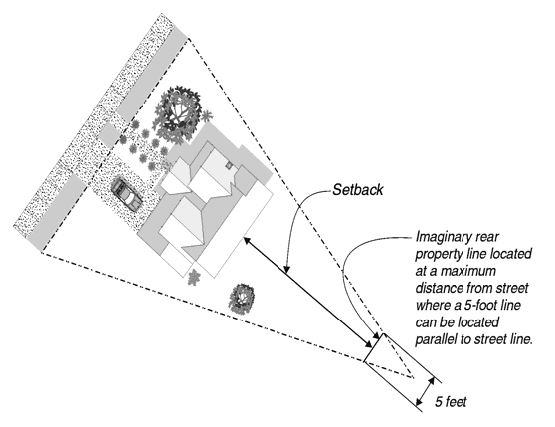
The rear yard setback shall be measured at right angles from the nearest point on the rear property line of the parcel to the nearest portion of the structure, establishing a setback line parallel to the rear property line, except as provided in following Subsection C.3.b.
b.
Where the side lot lines converge to a point, a line five feet long within the parcel, parallel to and at a maximum distance from the front lot line, shall be deemed to be the rear lot line for the purpose of determining the depth of the required rear yard setback. See Figure 3-7.
4.
Double-Frontage Lots. The location of the front and rear yard setbacks on double-frontage lots shall be determined by the Director based on the placement of existing buildings on adjacent lots.
D.
Allowed projections into setbacks. Attached architectural features may extend beyond the wall of the structure and into the front, side, and rear setbacks, in compliance with Table 3-2 below.
TABLE 3-2
ALLOWED PROJECTIONS INTO SETBACKS
Notes:
(1)
Feature may project no closer than 36 inches to any side or rear property line.
(2)
Decks less than 18 inches above finished grade are exempt in compliance with Section 19.20.100.B.2.
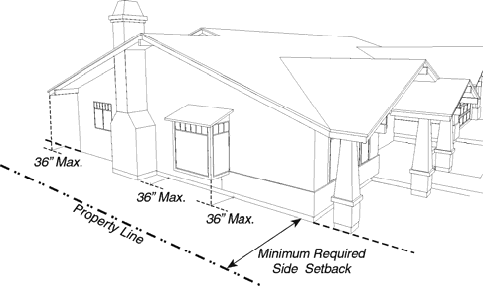
E.
Limitations on the Use of Setbacks. Required setback areas shall only be used in compliance with the following requirements, and as provided by Section 19.34.130 (Outdoor Dining Display and Sales):
1.
Structures. Required setback areas shall not be occupied by permanent structures other than:
a.
The fences and walls permitted by Section 19.20.040 (Fences, Walls, and Hedges);
b.
The projections into setbacks allowed by Subsection D. (Allowed Projections into Setbacks); and
c.
Accessory uses and structures permitted by Section 19.34.032.
2.
Storage. No required setback shall be used for the storage of inoperable vehicles, scrap, junk, building materials, or similar material.
3.
Parking. Required residential parking shall not be located within a front (or side on a streetside corner lot) setback area. Required parking for an accessory dwelling unit is addressed in Section 19.34.030 (Accessory Dwelling Units). Non-required residential parking (e.g., guests parking on a driveway) is allowable within required setback areas only on paved driveways, and within paved side yards, in compliance with Section 19.30.070 (Parking Design Standards), and Section 19.34.170 (Vehicle Parking in Residential Zones).
4.
Pavement. Within a residential zoning district, pavement within a front yard setback shall be limited to no more than 50 percent of the area of the required setback, unless a greater percentage of paved area is approved through Design Review.
(Ord. No. 1576, § 2 (Exh. A, amd.), 10-23-2012; Ord. No. 1637, § 3(Exh. A), 2-27-2018; Ord. No. 1676, Exh. A, 3-8-2022)
19.20.110 - Solar Access and Solar Equipment.
All projects requiring discretionary approval shall be reviewed for potential energy conservation measures. Passive heating and cooling opportunities should be incorporated into single-family residential subdivisions and multi-family residential projects whenever possible.
A.
Energy Conservation and Solar Orientation. Consideration of the following passive solar energy techniques is strongly encouraged:
1.
Street Orientation. Streets that run generally east and west are encouraged because they increase the likelihood and desirability of houses sited with solar access to the south. South-wall glass is important to providing maximum passive solar heating. Where streets do run primarily north and south, passive solar access can still be provided by creative parcel configuration, orientation of units on the parcels and/or increased side yard areas.
2.
Setbacks. Placing the house near the north boundary of the parcel provides maximum southern exposure and open space to protect solar access controlled by the owner of the house rather than by an adjacent neighbor.
3.
Siting. In general, houses should be sited so that south-facing glass is maximized, and east- and west-facing glass is minimized. Dwelling units that are attached in preferred east-west directions should not be staggered so as to block the south-facing glass collector surfaces of other units in the attached group. Also, individual and attached units should be separated from north to south so that no unit blocks the solar access of another.
4.
Compact Design. Minimize heat loss by reducing the area of exterior wall and roof surfaces. Use a compact design, (i.e., a two-story house) rather than have the same amount of floor space spread out on a single story.
B.
Pools and Spas. Pool or spa facilities owned and maintained by a homeowner's association or multi-family rental complex should be equipped with a solar cover and solar water heating system.
C.
Obstruction of Solar Access. Structures (building, wall, fence, etc.) should not be constructed or vegetation placed or allowed to grow, so as to obstruct solar access on an adjoining parcel.
(Ord. No. 1576, § 2 (Exh. A, amd.), 10-23-2012)
19.20.120 - Solid Waste and Recyclable Materials Storage.
This Section provides standards for solid waste and recyclable material storage areas in compliance with the California Solid Waste Reuse and Recycling Access Act (Public Resources Code Sections 42900 et seq.).
A.
Applicability. These requirements apply to new multi-family residential, and non-residential projects, and additions to existing non-residential projects.
B.
Required Storage for Multi-Family Projects. Multi-family residential projects, with five or more units shall provide solid waste and recyclable material storage areas as follows:
1.
Individual Unit Storage Requirements. Each dwelling shall be designed to provide an indoor area for the indoor storage of solid waste and recyclable material prior to its placement in a common storage area. A minimum of three cubic feet shall be provided for the storage of solid waste and a minimum of three cubic feet shall be provided for recyclable material; and
2.
Common Storage Requirements. Multi-family residential projects shall provide solid waste and recyclable material storage areas in compliance with Table 3-3. The storage areas may be located indoors or outdoors as long as they are readily accessible to all residents. These requirements apply to each individual structure.
Table 3-3
Multi-Family Solid Waste Storage Requirements
C.
Required Storage for Non-residential Structures and Uses. Non-residential structures and uses within all zoning districts shall provide solid waste and recyclable material storage areas in compliance with Table 3-4. These requirements apply to each individual structure, and shall apply to both new structures, and additions to existing structures which increase floor area by 30 percent or more within any 12-month period.
Table 3-4
Non-Residential Solid Waste Storage Requirements
D.
Location Requirements. Solid waste and recyclable materials storage areas shall be located as follows:
1.
Solid waste and recyclable materials storage shall be located adjacent to or combined with one another as practically feasible. They may only be located inside a specially-designated structure, on the outside of a structure within an approved fence or wall enclosure, a designated interior court or yard area with appropriate access, or in rear yards and interior side yards. Exterior storage areas shall not be located in a required front yard, street side yard, parking area, landscaped or open space areas or any areas required by the Municipal Code to be maintained as unencumbered;
2.
The storage area(s) shall be accessible to residents and employees. Storage areas within multi-family residential projects shall be located within 100 feet of an access doorway to each dwelling unit which they are intended to serve.
E.
Access. Driveways or aisles shall provide unobstructed access for collection vehicles and personnel and provide at least the minimum clearance required by the collection methods and vehicles used by the designated collector.
F.
Design and Construction. The design and construction of the storage areas shall:
1.
Be properly secured to prevent access by unauthorized persons, while allowing authorized persons access for collection and disposal of materials;
2.
Provide a concrete pad within the fenced or walled areas and a concrete apron which facilitates the handling of the individual bins or containers;
3.
Protect the areas and the individual bins or containers from adverse environmental conditions; and
4.
Be appropriately located and screened from view on at least three sides. The method of screening shall be architecturally compatible with the surrounding structures.
5.
If wood fencing is utilized, it should be knot free, durable material of at least 1-inch thickness.
(Ord. No. 1576, § 2 (Exh. A, amd.), 10-23-2012)
19.21.010 - Purpose of Division.
This Division sets forth requirements for art to enrich the lives of residents and visitors, create a unique sense of place and enhance the attractiveness and quality of life within the community. Art helps make our City more livable and more visually stimulating. The experience of art makes the public areas of buildings and their grounds more welcoming, and it creates a deeper interaction with the places we visit and in which we work and live.
To achieve these goals, art should be integrated into project planning at the earliest possible stage. If providing art is required instead of paying an in-lieu fee, an artist should become a member of the project's design team early in the design process.
(Ord. No. 1576, § 2 (Exh. A, amd.), 10-23-2012)
19.21.020 - Definitions.
As Used in this Division:
A.
"Art" shall mean, but is not limited to, all paintings, murals, inscriptions, stained glass, fiber work, statues, reliefs, or other sculpture, monuments, fountains, arches, or other structure intended for ornament, commemoration, or display. Carvings, frescoes, mosaics, mobiles, photographs, drawings, collages, prints and work in clay, fiber, wood, metal, glass, plastics and other materials are also included. Landscape items including the artistic placement of natural materials or other functional art objects may be included. Works of art may be portable as well as permanent.
B.
"Construction Cost" shall be determined by the Chief Building Official in accordance with the most recent building valuation data published by the International Code Council for use as provided in Section 223 of the California Building Code.
C.
"Construction" or "Alteration" shall mean the construction of a new residential dwelling unit(s) or the construction of a new nonresidential structure(s) or the rehabilitation, renovation, remodeling or improvement resulting in an increase of the gross square footage of an existing non-residential building.
D.
"Art Project" shall mean the development, acquisition, and installation of the art required by this Division.
E.
"Residential Development" shall mean all residential development of five (5) or more units.
F.
"Nonresidential" shall mean every land use other than a residential development, including a mixed-use project with residential units.
(Ord. No. 1576, § 2 (Exh. A, amd.), 10-23-2012)
19.21.030 - Applicability.
This division shall apply to all new residential developments of five or more units and construction or alteration of nonresidential structures. This division shall not apply to accessory dwelling units and renovations, remodels or additions to existing residences, the residential portion of a mixed use project when four (4) or fewer units are proposed, or affordable housing components of residential and mixed-use projects.
(Ord. No. 1576, § 2 (Exh. A, amd.), 10-23-2012)
19.21.040 - Non-Residential Requirements.
Construction or alteration of a nonresidential building shall require that an Art Project be installed and maintained as part of the project. The Art Project shall have a value of not less than one-third of one percent of the construction cost of the completed development project.
(Ord. No. 1576, § 2 (Exh. A, amd.), 10-23-2012)
19.21.050 - Residential Requirements.
Construction of a residential development shall require that an Art Project be installed and maintained as part of the project. The Art Project shall have a value of not less than one-third of one percent of the construction cost of the completed development project.
(Ord. No. 1576, § 2 (Exh. A, amd.), 10-23-2012)
19.21.060 - General Requirements.
A.
Design Review. An Art Project proposed to satisfy the requirements of this Division shall be subject to Design Review for approval of the scale and location of the proposed Art.
B.
Recreation, Cultural and Community Services Advisory Commission. Art proposed to satisfy the requirements of this Division which is to be located on public property shall be referred to the City's Recreation, Cultural & Community Services Advisory Commission for consideration as to context, scale, artistic quality, media, permanence, durability, and for public safety. The Commission shall provide a recommendation to the Review Authority who will take final action on the Art Project.
C.
Design Review Commission. Art proposed to satisfy the requirements of this Division which is to be located on private property shall be reviewed by the City's Design Review Commission in conjunction with the Design Review of the structure or site where the Art is proposed to be located. The Design Review Commission shall provide a recommendation to the Review Authority, and shall consider the context, scale, artistic quality, media, permanence, durability, and for public safety and relationship to the building or site where the Art is proposed to be located. The Design Review Commission may request review and recommendation from the Recreation, Cultural & Community Services Advisory Commission where warranted.
D.
Location. Art shall be displayed in a manner that will enhance its enjoyment by the general public. Art may be located (1) in areas on the site of the building or addition clearly visible from the public street or sidewalk, or (2) on the site of the approved open space feature of the project, or (3) on adjacent public property upon the approval of any relevant public agency, (4) in a publicly accessible lobby area of an office building or hotel, (5) public park, (6) entry to residential development, (7) common area of a residential development, (8) or as otherwise determined appropriate by the Design Review Authority.
E.
Timing of Installation. Art shall be installed prior to the issuance of the first certificate of occupancy provided for any building in non-residential development or residence in a residential development. However, if the Community Development Director concludes that it is not feasible to install the works of art within the time allotted and adequate assurance (which the Director may require to be in the form of a letter of credit or bond) is provided that the works will be installed in a timely manner, the Community Development Director may extend the time for installation for a period of not more than 12 months.
(Ord. No. 1576, § 2 (Exh. A, amd.), 10-23-2012)
19.21.070 - In-Lieu Fees.
A.
The Director of Parks, Recreation and Community Services (DPRCS) may allow payment of an in-lieu fee for all or a portion of the art requirement if the DPRCS finds that the location, siting or scale makes the provision of art inappropriate or infeasible, or whether for other reasons, the DPRCS agrees with the developer's request not to integrate an art element into the project. The in-lieu fee shall be calculated in the following manner:
1.
Nonresidential Development. A fee equal to one-half of one percent of the construction cost, or the difference between the cost of the art installed and one-half of one percent of the development's construction cost. The fee shall be paid prior to the issuance of a building permit for a nonresidential development.
2.
Residential Development. A fee equal to one-third of one percent of the construction cost, or the difference between the cost of art installed and one-third of one percent of the construction cost. The fee shall be paid prior to the issuance of the first certificate of occupancy in a residential development.
3.
In-lieu Fees Shall be Placed in an Art Fund to be Administered by the City. In-lieu fees collected by the City shall be used for City-owned art or City-sponsored exhibitions. The fund shall be used exclusively to (1) provide sites for works of art, (2) acquire and install works of art, (3) maintain works of art, or (4) support the exhibition of art which is publicly accessible.
(Ord. No. 1576, § 2 (Exh. A, amd.), 10-23-2012)
19.21.080 - Maintenance and Removal, and Replacement of Works of Art.
The owner of the real property on which art is located shall maintain the art installed pursuant to this Division. No work of art may be removed unless a replacement work of art is approved pursuant to the procedures in Section 19.21. Artwork that has been damaged, destroyed, or stolen shall be replaced by the owner in compliance with this Division.
(Ord. No. 1576, § 2 (Exh. A, amd.), 10-23-2012)
19.22.010 - Purpose of Division.
This Division provides performance standards that are designed to minimize various potential operational impacts of development and new land uses within the City, and promote compatibility with adjoining areas and land uses.
(Ord. No. 1576, § 2 (Exh. A, amd.), 10-23-2012)
19.22.020 - Applicability.
The provisions of this Division apply to all new and existing land uses, including permanent and temporary uses, in all zoning districts unless an exemption is specifically provided. Existing uses on the effective date of this Division shall not be altered or modified thereafter to conflict with these standards.
(Ord. No. 1576, § 2 (Exh. A, amd.), 10-23-2012)
19.22.030 - Electrical Interference.
Uses, activities, and processes shall not be operated to produce electric and/or magnetic fields that adversely affect the public health, safety, and general welfare of the community, including interference with normal radio, telephone, or television reception from off the premises where the activity is conducted.
(Ord. No. 1576, § 2 (Exh. A, amd.), 10-23-2012)
19.22.040 - Electrical and Mechanical Equipment.
Electrical and mechanical equipment (e.g., air conditioners, antennas, filters, heating and ventilation equipment, pumps, transformers, etc.) shall not be located and operated to disturb adjoining uses or activities. Electrical and mechanical equipment located within 15 feet of a side property line in a residential zoning district shall be sound attenuated to the maximum noise levels described in Table 3-5 in a manner acceptable to the Director.
(Ord. No. 1576, § 2 (Exh. A, amd.), 10-23-2012)
19.22.050 - Explosive or Fire Hazard.
Uses, activities, and processes shall comply with the minimum requirements of the Uniform Fire Code as adopted by the City, and California Code of Regulations Title 19.
(Ord. No. 1576, § 2 (Exh. A, amd.), 10-23-2012)
19.22.060 - Light and Glare.
Light or glare from interior or exterior lighting, mechanical or chemical processes, or from reflective materials used or stored on a site, shall be shielded or modified to prevent emission of light or glare beyond the property line. The placement of exterior lights shall eliminate spillover illumination or glare onto adjoining properties to the maximum extent feasible, and not interfere with the normal operation or enjoyment of adjoining properties. All non-essential internal and exterior lighting including lighted signs shall be turned off after 11:00 p.m. (except for uses with extended hours).
(Ord. No. 1576, § 2 (Exh. A, amd.), 10-23-2012)
19.22.070 - Noise and Construction Hours.
A.
Applicability. Uses, activities, and processes shall not generate or emit any noise or sound in excess of the levels provided in Table 3-5 beyond the property line of the parcel on which they are located, except as provided in Subsection B.
B.
Exceptions. The following are exempt from the allowable noise level requirements of Table 3-5 as noted:
1.
Aerial warning devices that are required by law to protect the health, safety, and welfare of the community;
2.
Emergency vehicle responses and all necessary equipment utilized in responses to a declared state of emergency;
3.
Airport, and railroad operations;
4.
Authorized construction activities, including warming-up or servicing of equipment, and any preparation for construction between 7 a.m. and 6 p.m. on weekdays, and between 10 a.m. and 5 p.m. on Saturdays. No construction is allowed on Sundays or official federal national holidays, except as otherwise authorized herein by the Community Development Director.
5.
Authorized grading activities and equipment operations between 7 a.m. to 6 p.m. weekdays only, when City inspectors are available.
6.
Routine maintenance activities.
7.
Other construction activities as authorized in writing by the Community Development Director.
C.
Noise Measurement. Exterior noise levels shall be measured at the property line of the noise source. Noise measurement shall be made with a sound level meter using the "A" weighted scale at slow meter response. Fast meter response shall be used only for an impulsive noise.
Table 3-5
Allowable Exterior Noise Levels
Notes:
(1)
Each of the noise limits specified in Table 3-5 shall be reduced by 5 dBA for impulse or simple tone noises. If the ambient noise exceeds the resulting standard, the ambient shall be the standard.
(2)
Maximum noise levels shall not be exceeded for an aggregate period of more than three minutes within a one-hour time period or by more than 20 dBA at any time.
(3)
Residential standards apply to sensitive receptors such as schools, hospitals, libraries, group care facilities, and convalescent homes. These uses may require special mitigation.
(4)
Commercial standards apply to Mixed Use Districts.
D.
Authorized construction activity and uses established through the discretionary land use permit process may be subject to specific noise conditions of approval and/or mitigation measures that are more restrictive.
(Ord. No. 1576, § 2 (Exh. A, amd.), 10-23-2012)
19.22.080 - Odor.
Noxious, odorous emissions of a type or quantity that would be detrimental to, or endanger the public health, safety, or general welfare of the community, are declared to be public nuisance and unlawful, and shall be modified to prevent the release of further emissions.
(Ord. No. 1576, § 2 (Exh. A, amd.), 10-23-2012)
19.22.090 - Vibration.
Uses, activities, and processes shall not generate ground vibration that is perceptible without instruments by the average person at any point along or beyond the property line of the parcel containing the activities. Vibrations from temporary construction, demolition, and vehicles that enter and leave the subject parcel (e.g., construction equipment, trains, trucks, etc.) are exempt.
(Ord. No. 1576, § 2 (Exh. A, amd.), 10-23-2012)
19.23.010 - Purpose of Division.
A.
It is the intent of this Division to prevent community wide adverse economic impacts, increased crime, decreased property values, and the deterioration of neighborhoods which can be brought about by the concentration of Adult-Oriented Businesses in close proximity to each other or proximity to other incompatible uses such as schools for minors, religious facilities, and residentially zoned districts or uses. The Council finds that it has been demonstrated in various communities that the concentration of Adult-Oriented Businesses causes an increase in the number of transients in the area, and an increase in crime, and in addition to the effects described above can cause other businesses and residents to move elsewhere. It is, therefore, the purpose of this Article to establish reasonable and uniform regulations to prevent the concentration of Adult-Oriented Businesses or their close proximity to incompatible uses, while permitting the location of Adult-Oriented Businesses in certain areas.
B.
It is the purpose of this Division to regulate Adult-Oriented Businesses in order to promote the health, safety, morals, and general welfare of the citizens of the City. The provisions of this Division have neither the purpose nor effect of imposing a limitation or restriction on the content of any communicative materials, including adult-oriented materials. Similarly, it is not the intent nor effect of this Division to restrict or deny access by adults to adult-oriented materials protected by the First Amendment, or to deny access by the distributors and exhibitors of adult-oriented entertainment to their intended market. Neither is it the intent nor effect of this Division to condone or legitimize the distribution of obscene material.
(Ord. No. 1576, § 2 (Exh. A, amd.), 10-23-2012)
19.23.020 - Applicability.
A.
Regulatory Permit Required. It shall be unlawful for any person to engage in, conduct or carry on, or to permit to be engaged in, conducted or carried on, in or upon any premises in the City, the operation of an Adult-Oriented Business unless the person first obtains and continues to maintain in full force and effect an Adult-Oriented Business Regulatory Permit from the City in compliance with this Division. The fact that an applicant possesses other types of state or City permits or licenses does not exempt the applicant from the requirement of obtaining an Adult-Oriented Business Regulatory Permit for each site/location.
B.
Performer Permit Required. It shall be unlawful for any persons to engage in or participate in any live performance depicting specified anatomical areas or involving specified sexual activities in an Adult-Oriented Business unless the person first obtains and continues in full force and effect an Adult-Oriented Business Performer Permit from the City in compliance with this Division.
C.
Employment Without Permits Prohibited. It shall be unlawful for any owner, operator, manager, or permittee in charge of or in control of an Adult-Oriented Business which provides live entertainment depicting specified anatomical areas or involving specified sexual activities to allow any person to perform who is not in possession of a valid, unrevoked Adult-Oriented Business Performer Permit.
D.
Time Limit for Application Filing. All persons who possess an outstanding business license heretofore issued for the operation of an Adult-Oriented Business and all persons required by this Division to obtain an Adult-Oriented Business Performer Permit, shall apply for the permit within 90 days of the effective date of this Division. Failure to do so and continued operation of an Adult-Oriented Business, or the continued performances depicting specified anatomical areas or specified sexual activities in an Adult-Oriented Business after 90 days shall constitute a violation of this Division.
(Ord. No. 1576, § 2 (Exh. A, amd.), 10-23-2012)
19.23.030 - Location Requirements.
An Adult-Oriented Business establishment shall be located only in a zoning district where allowed by Article 2 (Zoning Districts, Allowable Land Uses, and Zone-Specific Standards), and only on a site that also complies with the requirements of this Section.
A.
Separation from Incompatible Uses. An Adult-Oriented Business establishment shall not be located within:
1.
Three hundred feet from any other Adult-Oriented Business establishment;
2.
Five hundred feet from any religious facility;
3.
Five hundred feet from any school or other land use accommodating or oriented to youth/minors as determined by the Zoning Administrator (for example, video game arcades, skating rinks, pizza parlors, etc.);
4.
Five hundred feet from any public park; or
5.
Three hundred feet from any residential zoning district or conforming residential use (i.e., mixed use project).
B.
Measurement of Distance Between Uses. The required separation distance between an Adult-Oriented Business establishment and any of the uses or areas listed in Subsection A. shall be measured in a straight line, from the closest points on the property lines of each site.
(Ord. No. 1576, § 2 (Exh. A, amd.), 10-23-2012)
19.23.040 - Business Permit Filing and Processing.
Every person who proposes to maintain, operate or conduct an Adult-Oriented Business in the City shall file an application with the Police Chief upon a form provided by the City and shall pay a filing fee, as established by resolution adopted by the Council from time-to-time, which shall not be refundable.
A.
Application Content. Adult-Oriented Business Regulatory Permits are nontransferable, except in accordance with Subsection F. below. Therefore, all applications shall include the following information:
1.
Applicant Name and Signature.
a.
If the applicant is an individual, the individual shall state his or her legal name, including any aliases, address, and submit satisfactory written proof that he or she is at least 18 years of age.
b.
If the applicant is a partnership, the partners shall state the partnership's complete name, address, the names of all partners, whether the partnership is general or limited, and attach a copy of the partnership agreement, if any.
c.
If the applicant is a corporation, the corporation shall provide its complete name, the date of its incorporation, evidence that the corporation is in good standing under the laws of California, the names and capacity of all officers and directors, the name of the registered corporate agent and the address of the registered office for service of process.
d.
If the applicant is an individual, he or she shall sign the application. If the applicant is other than an individual, an officer of the business entity or an individual with a 10 percent or greater interest in the business entity shall sign the application.
e.
If the applicant intends to operate the Adult-Oriented Business under a name other than that of the applicant, the applicant shall file the fictitious name of the Adult-Oriented Business and show proof of registration of the fictitious name.
2.
Description of Business. A description of the type of Adult-Oriented Business for which the Permit is requested and the proposed address where the Adult Oriented Business will operate, plus the names and addresses of the owners and lessors of the Adult-Oriented Business site.
3.
Mailing Address. The address to which notice of action on the application is to be mailed.
4.
Employees, Contractors, and Performers. The names of all employees, independent contractors, and other persons who will perform at the adult-oriented business, who are required by Section 19.23.020 (Applicability) to obtain an adult-oriented business performer permit (for ongoing reporting requirements see Section 19.23.050 (Performer Permit Filing and Processing).
5.
Floor Plan. A sketch or diagram showing the interior configuration of the premises, including a statement of the total floor area occupied by the adult-oriented business. The sketch or diagram need not be professionally prepared, but shall be drawn to a designated scale or drawn with marked dimensions of the interior of the premises to an accuracy of plus or minus six inches.
6.
Documentation of Separation from Incompatible Uses. A certificate and straight-line drawing prepared within 30 days prior to application depicting the building and the portion thereof to be occupied by the Adult-Oriented Business, and
a.
The property line of any other adult-oriented business within 500 feet of the primary entrance of the Adult-Oriented Business for which a Permit is requested; and
b.
The property lines of any religious facility, school, park, residential zone or use within 700 feet of the primary entrance of the adult-oriented business.
7.
Parking Diagram. A diagram of the off-street parking areas and premises entries of the Adult-Oriented Business showing the location of the lighting system required by Section 19.23.080 (Adult Business Development and Performance Standards).
B.
Initial Application Review. If the Police Chief determines that the applicant has completed the application improperly, the Police Chief shall promptly notify the applicant of such fact and, on request of the applicant, grant the applicant an extension of time of 10 days or less to complete the application properly. In addition, the applicant may request an extension, not to exceed 10 days, of the time for the Police Chief to act on the application. The time period for granting or denying a Permit shall be stayed during the period in which the applicant is granted an extension of time.
C.
Investigation and Action on Complete Application. Upon receipt of a completed application and payment of the application and Permit fees, the Police Chief shall immediately stamp the application as received and promptly investigate the information contained in the application to determine whether the applicant shall be issued an Adult-Oriented Business Regulatory Permit.
1.
Within 30 days of receipt of the completed application, the Police Chief shall complete the investigation, grant or deny the application in accordance with the provisions of this Section, and so notify the applicant as follows:
a.
The Police Chief shall write or stamp "Granted" or "Denied" on the application and date and sign the notation.
b.
If the application is denied, the Police Chief shall attach to the application a statement of the reasons for denial.
c.
If the application is granted, the Police Chief shall attach to the application an Adult-Oriented Business Regulatory Permit.
d.
The application as granted or denied and the Permit, if any, shall be placed in the United States mail, first class postage prepaid, addressed to the applicant at the address stated in the application.
2.
The Police Chief shall grant the application and issue the Adult Oriented Business Regulatory Permit upon findings that the proposed business meets the locational criteria of Section 19.23.030; and that the applicant has met all of the development and performance standards and requirements of Section 19.23.080, unless the application is denied for one or more of the reasons set forth in Subsection D. The Permittee shall post the Permit conspicuously in the Adult-Oriented Business premises.
3.
If the Police Chief grants the application or neither grants nor denies the application within 30 days after it is stamped as received (except as provided in Subsection B.), the applicant may begin operating the Adult-Oriented Business for which the Permit was sought, subject to strict compliance with the development and performance standards and requirements of Section 19.23.080, and any additional permit as may be required by Article 2.
4.
Other permits required. Any other permits required pursuant to Article 2 or 4 herein (e.g., Use Permit, Design Review, etc.) shall be granted or denied by the Review Authority within 90 days from the date of certification of an Environmental Impact Report or within 60 days from adoption of a Negative Declaration or within 30 days if the project is determined exempt from California Environmental Quality Act.
D.
Permit Denial. The Police Chief shall deny the application for any of the following reasons:
1.
The building, structure, equipment, or location used by the business for which an Adult-Oriented Business Regulatory Permit is required do not comply with the requirements and standards of the health, zoning, fire and safety laws of the City and the State of California, or with the locational or development and performance standards and requirements of these regulations.
2.
The applicant, his or her employee, agent, partner, director, officer, shareholder or manager has knowingly made any false, misleading or fraudulent statement of material fact in the application for an Adult Business Regulatory Permit.
3.
An applicant is under 18 years of age.
4.
The required application fee has not been paid.
5.
The Adult-Oriented Business does not comply with the locational standards in Section 19.23.030.
E.
Expiration of Permit. Each Adult-Oriented Business Regulatory Permit shall expire one year from the date of issuance, and may be renewed only by filing with the Police Chief a written request for renewal, accompanied by the Annual Permit Fee and a copy of the Permit to be renewed. The request for renewal shall be made at least 30 days before the expiration date of the Permit. When made less than 30 days before the expiration date, the expiration of the Permit will not be stayed. Applications for renewal shall be acted on as provided herein for action upon applications for Permits.
F.
Transfer of Permit. A permittee shall not operate an Adult-Oriented Business under the authority of an Adult-Oriented Business Regulatory Permit at any place other than the address of the Adult-Oriented Business stated in the application for the Permit.
1.
A permittee shall not transfer ownership or control of an Adult-Oriented Business or transfer an Adult-Oriented Business Regulatory Permit to another person unless and until the transferee obtains an amendment to the Permit from the Police Chief stating that the transferee is now the permittee. An amendment may be obtained only if the transferee files an application with the Police Chief in accordance with this Section, accompanies the application with a transfer fee in an amount set by resolution of the City Council, and the Police Chief determines in accordance with this Section that the transferee would be entitled to the issuance of an original Permit.
2.
No Permit may be transferred when the Police Chief has notified the permittee that the Permit has been or may be suspended or revoked.
3.
Any attempt to transfer a permit either directly or indirectly in violation of this section is hereby declared void, and the Permit shall be deemed revoked.
(Ord. No. 1576, § 2 (Exh. A, amd.), 10-23-2012)
19.23.050 - Performer Permit Filing and Processing.
A.
Applicability. No person shall engage in or participate in any live performance depicting specified anatomical areas or involving specified sexual activities in an Adult-Oriented Business, without a valid Adult-Oriented Business Performer Permit issued by the City. All persons who have been issued an Adult-Oriented Business Regulatory Permit shall promptly supplement the information provided as part of the application for the Permit required by Section 19.23.040.A, with the names of all Performers required to obtain an Adult-Oriented Business Performer Permit, within 30 days of any change in the information originally submitted. Failure to submit the changes shall be grounds for suspension of the Adult-Oriented Business Regulatory Permit.
B.
Application Content. The application for a Permit shall be made on a form provided by the Police Chief. An original and two copies of the completed and sworn permit application shall be filed with the Police Chief. The completed application shall contain the following information and be accompanied by the following documents:
1.
The applicant's legal name and any other names (including "stage names" and aliases) used by the applicant;
2.
Age, date and place of birth;
3.
Height, weight, hair and eye color;
4.
Present residence address and telephone number;
5.
Whether the applicant has ever been convicted of:
a.
Any of the offenses set forth in Sections 315, 316, 266a, 266b, 266c, 266e, 266g, 266h, 266i, 647(a), 647(b) and 647(d) of the California Penal Code as those sections now exist or may hereafter be amended or renumbered; or
b.
The equivalent of the aforesaid offenses outside the State of California.
6.
Whether the person is or has ever been licensed or registered as a prostitute, or otherwise authorized by the laws of any other jurisdiction to engage in prostitution in such other jurisdiction. If any person mentioned in this subsection has ever been licensed or registered as a prostitute, or otherwise authorized by the laws of any other state to engage in prostitution, a statement shall be submitted giving the place of the registration, licensing or legal authorization, and the inclusive dates during which the person was so licensed, registered, or authorized to engage in prostitution.
7.
State driver's license or identification number;
8.
Satisfactory written proof that the applicant is at least 18 years of age;
9.
The applicant's fingerprints on a form provided by the Police Department, and a color photograph clearly showing the applicant's face. Any fees for the photographs and fingerprints shall be paid by the applicant;
10.
If the application is made for the purpose of renewing a Permit, the applicant shall attach a copy of the Permit to be renewed.
The completed application shall be accompanied by a non-refundable application fee. The amount of the fee shall be set by resolution of the Council.
C.
Initial Application Review. Upon receipt of an application and payment of the application fees, the Police Chief shall immediately stamp the application as received and promptly investigate the application. If the Police Chief determines that the applicant has completed the application improperly, the Police Chief shall promptly notify the applicant of the fact and grant the applicant an extension of time of not more than 10 days to complete the application properly. In addition, the applicant may request an extension, not to exceed 10 days, of the time for the Police Chief to act on the application. The time period for granting or denying a Permit shall be stayed during the period in which the applicant is granted an extension of time.
D.
Investigation and Action on Application.
1.
Within 30 days after receipt of the properly completed application, the Police Chief shall grant or deny the application and so notify the applicant as follows:
a.
The Police Chief shall write or stamp "Granted" or "Denied" on the application and date and sign such notation.
b.
If the application is denied, the Police Chief shall attach to the application a statement of the reasons for denial.
c.
If the application is granted, the Police Chief shall attach to the application an Adult-Oriented Business Performer Permit.
d.
The application as granted or denied and the Permit, if any, shall be placed in the United States mail, first class postage prepaid, addressed to the applicant at the residence address stated in the application.
2.
The Police Chief shall grant the application and issue the Permit unless the application is denied for one or more of the reasons set forth in Subsection E.
3.
If the Police Chief grants the application or if the Police Chief neither grants nor denies the application within 30 days after it is stamped as received (except as provided in Subsection C., the applicant may begin performing in the capacity for which the Permit was sought.
E.
Permit Denial. The Police Chief shall deny the application for any of the following reasons:
1.
The applicant has knowingly made any false, misleading, or fraudulent statement of a material fact in the application for a Permit or in any report or document required to be filed with the application;
2.
The applicant is under 18 years of age;
3.
The Adult-Oriented Business Performer Permit is to be used for performing in a business prohibited by State or City law;
4.
The applicant has been registered in any state as a prostitute; or
5.
The applicant has been convicted of any of the offenses enumerated in Subsection B.5, or convicted of an offense outside the State of California that would have constituted any of the described offenses if committed within the State of California. A Permit may be issued to any person convicted of the described crimes if the conviction occurred more than five years prior to the date of the application.
F.
Expiration. Each Adult-Oriented Business Performer Permit shall expire one year from the date of issuance and may be renewed only by filing with the Police Chief a written request for renewal, accompanied by the application fee and a copy of the Permit to be renewed. The request for renewal shall be made at least 30 days before the expiration date of the Permit. When made less than 30 days before the expiration date, the expiration of the Permit will not be stayed. Applications for renewal shall be acted on as provided herein for applications for Permits.
(Ord. No. 1576, § 2 (Exh. A, amd.), 10-23-2012)
19.23.060 - Suspension or Revocation of Permits.
An Adult-Oriented Business Regulatory Permit or Adult-Oriented Business Performer Permit may be suspended or revoked in accordance with the procedures and standards of this Section.
A.
Notice to Permittee. On determining that grounds for Permit revocation exist, the Police chief shall furnish written notice of the proposed suspension or revocation to the Permittee. Such notice shall set forth the time and place of a hearing, and the ground or grounds upon which the hearing is based, the pertinent Code sections, and a brief statement of the factual matters in support thereof. The notice shall be mailed, postage prepaid, addressed to the last known address of the Permittee, or shall be delivered to the Permittee personally, at least 10 days prior to the hearing date.
B.
Hearings. Hearings shall be conducted in accordance with procedures established by the Police Chief, but at a minimum shall include the following:
1.
The right for all parties involved to offer testimonial, documentary, and tangible evidence bearing on the issues;
2.
All parties may be represented by counsel; and
3.
All parties shall have the right to confront and cross-examine witnesses.
Any relevant evidence may be admitted that is the sort of evidence upon which reasonable persons are accustomed to rely in the conduct of serious affairs. Any hearing under this Section may be continued for a reasonable time for the convenience of a party or a witness. The Police Chief's decision may be appealed in accordance with Section 19.23.070.
C.
Basis for Action. A Permittee may be subject to suspension or revocation of his Permit, or be subject to other appropriate disciplinary action, for any of the following causes arising from the acts or omissions of the Permittee, or an employee, agent, partner, director, stockholder, or manager of an Adult-Oriented Business:
1.
The Permittee has knowingly made any false, misleading or fraudulent statement of material facts in the application for a Permit, or in any report or record required to be filed with the City.
2.
The Permittee, employee, agent, partner, director, stockholder, or manager of an Adult-Oriented Business has knowingly allowed or permitted, and has failed to make a reasonable effort to prevent the occurrence of any of the following on the premises of the Adult-Oriented Business, or in the case of an Adult-Oriented Business Performer, the permittee has engaged in one of the activities described below while on the premises of an Adult-Oriented Business:
a.
Any act of unlawful sexual intercourse, sodomy, oral copulation, or masturbation.
b.
Use of the establishment as a place where unlawful solicitations for sexual intercourse, sodomy, oral copulation, or masturbation openly occur.
c.
Any conduct constituting a criminal offense which requires registration under California Penal Code Section 290.
d.
The occurrence of acts of lewdness, assignation, or prostitution, including any conduct constituting violations of California Penal Code Sections 315, 316, or 318, or Subdivision b. of Section 647.
e.
Any act constituting a violation of provisions in the California Penal Code relating to obscene matter or distribution of harmful matter to minors, including but not limited to Sections 311 through 313.4.
f.
Any conduct prohibited by this Division.
3.
Failure to abide by an disciplinary action previously imposed by an appropriate City official.
D.
Action Following Hearing. After holding the hearing in accordance with the provisions of this Section, if the Police Chief finds and determines that there are grounds for disciplinary action, based upon the severity of the violation, the Police Chief shall impose one of the following:
1.
A warning;
2.
Suspension of the Permit for a specified period not to exceed six months; or
3.
Revocation of the Permit.
(Ord. No. 1576, § 2 (Exh. A, amd.), 10-23-2012)
19.23.070 - Appeals and Judicial Review.
After denial of an application for an Adult-Oriented Business Regulatory Permit or an Adult-Oriented Business Performer Permit, or after denial of renewal of a Permit, or suspension or revocation of a Permit, the applicant or person to whom the Permit was granted may appeal the administrative action to the Council in compliance with Division 19.54. The Council shall act to grant or deny the appeal within sixty (60) days of receipt of request for review. The judicial review of any permit issued or denied in compliance with this Division shall be subject to expedited judicial review in accordance with the time limits set forth in Code of Civil Procedure Sections 1094.8 et seq.
(Ord. No. 1576, § 2 (Exh. A, amd.), 10-23-2012)
19.23.080 - Adult Business Development and Performance Standards.
The following requirements of this Section shall be deemed conditions of Adult-Oriented Business Regulatory Permit approvals, and failure to comply with every requirement shall be grounds for revocation of the Permit issued in compliance with these regulations:
A.
Fire Regulations. Maximum occupancy load, fire exits, aisles and fire equipment shall be regulated, designed and provided in accordance with the regulations and standards of the Novato Fire Protection District.
B.
Hours of Operation. Except for those businesses also regulated by the California Department of Alcoholic Beverage Control, an Adult-Oriented Business shall be open for business only between the hours of 8:00 a.m. and midnight on any particular day.
C.
Interior Lighting. All areas of the Adult-Oriented Business shall be illuminated at a minimum of the following foot-candles, minimally maintained and evenly distributed at ground level:
D.
Management Supervision. All indoor areas of the Adult-Oriented Business within which patrons are permitted, except restrooms, shall be open to view by the management at all times.
E.
Noise Mitigation. The premises within which the Adult-Oriented Business is located shall provide sufficient sound-absorbing insulation so that noise generated inside said premises shall not be audible anywhere on any adjacent property or public right-of-way, or within any other building or other separate unit within the same building.
F.
Parking Area Lighting. All off-street parking area and premise entries of the sexually-oriented business shall be illuminated from dusk to closing hours of operation with a lighting system which provides an average maintained horizontal illumination of one foot candle of light on the parking surface and/or walkways. The required lighting level is established in order to provide sufficient illumination of the parking areas and walkways serving the sexually-oriented business for the personal safety of patrons and employees and to reduce the incidence of vandalism and criminal conduct. The lighting shall be shown on the required sketch or diagram of the premises.
G.
Posting of Entrance. The building entrance to an Adult-Oriented Business shall be clearly and legibly posted with a notice indicating that persons under 18 years of age are precluded from entering the premises. Said notice shall be constructed and posted to the satisfaction of the Police Chief or designee. No person under the age of 18 years shall be permitted within the premises at any time.
H.
Restroom Facilities. The Adult-Oriented Business shall provide and maintain separate restroom facilities for male patrons and employees, and female patrons and employees. Male patrons and employees shall be prohibited from using restrooms for females, and female patrons and employees shall be prohibited from using restrooms for males, except to carry out duties of repair, maintenance and cleaning of the rest room facilities. The rest rooms shall be free from any Adult Material. Rest rooms shall not contain television monitors or other motion picture or video projection, recording or reproduction equipment. The foregoing provisions of this paragraph shall not apply to an Adult-Oriented Business which deals exclusively with sale or rental of Adult Material which is not used or consumed on the premises, such as an Adult Bookstore or Adult Video Store, and which does not provide rest room facilities to its patrons or the general public.
I.
Security Guards. Adult-Oriented Businesses shall employ security guards in order to maintain the public peace and safety, based upon the following standards:
1.
Adult-Oriented Businesses featuring live entertainment shall provide at least one security guard at all times while the business is open. If the occupancy limit of the premises is greater than 35 persons, an additional security guard shall be on duty.
2.
Security guards for other Adult-Oriented Businesses may be required if it is determined by the Police Chief that their presence is necessary in order to prevent any of the conduct listed in Section 19.23.050.B.5 from occurring on the premises.
3.
Security guards shall be charged with preventing violations of law and enforcing compliance by patrons of the requirements of these regulations. Security guards shall be uniformed in such a manner so as to be readily identifiable as a security guard by the public and shall be duly licensed as a security guard as required by applicable provisions of state law. No security guard required pursuant to this subsection shall act as a door person, ticket seller, ticket taker, admittance person, or sole occupant of the manager's station while acting as a security guard.
J.
Visibility of Activities. No Adult-Oriented Business shall be operated in any manner that permits the observation of any material or activities depicting, describing or relating to "specified Sexual Activities" or "specified Anatomical Areas" from any public way or from any location outside the building or area of such establishment. This provision shall apply to any display, decoration, sign, show window or other opening. No exterior door or window on the premises shall be propped or kept open at any time while the business is open, and any exterior windows shall be covered with opaque covering at all times.
K.
Adult Arcade Standards. Any adult-oriented business which is also an "adult arcade" shall comply with the following additional provisions:
1.
The interior of the premises shall be configured in such a manner that there is an unobstructed view from a manager's station of every area of the premises to which any patron is permitted access for any purpose, excluding restrooms. Restrooms may not contain video reproduction equipment. If the premises has two or more manager's stations designated, then the interior of the premises shall be configured in such a manner that there is an unobstructed view of each area of the premises to which any patron is permitted access for any purpose from at least one of the manager's stations. The view required in this subsection shall be direct line of sight from the manager's station.
2.
The view area for management supervision specified in Subsection K.1 shall remain unobstructed by any doors, walls, merchandise, display racks, or other materials at all times. No patron is permitted access to any area of the premises which has been designated as an area in which patrons will not be permitted.
3.
No viewing room may be occupied by more than one person at any one time.
4.
The walls or partitions between viewing rooms or booths shall be maintained in good repair at all times, with no holes between any two such rooms such as would allow viewing from one booth into another or such as to allow physical contact of any kind between the occupants of any two such booths or rooms.
5.
Customers, patrons or visitors shall not be allowed to stand idly by in the vicinity of any such video booths, or to remain in the common area of such business, other than the restrooms, who are not actively engaged in shopping for or reviewing the products available on display for purchaser viewing. Signs prohibiting loitering shall be posted in prominent places in and near the video booths.
6.
The floors, seats, walls and other interior portions of all video booths shall be maintained clean and free from waste and bodily secretions. The presence of human excrement, urine, semen or saliva in any booth shall be evidence of improper maintenance and inadequate sanitary controls; repeated instances of such conditions may justify suspension or revocation of the owner and operator's license to conduct the adult-oriented establishment.
L.
Additional Requirements for Businesses with Live Performances. The following additional requirements shall pertain to Adult-oriented Businesses providing live entertainment depicting Specified Anatomical Areas or involving Specified Sexual Activities, except for businesses regulated by the Alcoholic Beverage Control Commission:
1.
No person shall perform live entertainment for patrons of an Adult-Oriented Business except upon a stage at least 18 inches above the level of the floor, which is separated by a distance of at least 10 feet from the nearest area occupied by patrons, and no patron shall be permitted within 10 feet of the stage while the stage is occupied by an entertainer. "Entertainer" shall mean any person who is an employee or independent contractor of the Adult-Oriented Business, or any person who, with or without any compensation or other form of consideration, performs live entertainment for patrons of an Adult-Oriented Business.
2.
The Adult-Oriented Business shall provide separate dressing room facilities for entertainers which are exclusively dedicated to the entertainers' use.
3.
The Adult-Oriented Business shall provide an entrance/exit for entertainers which is separate from the entrance/exit used by patrons.
4.
The Adult-Oriented Business shall provide access for entertainers between the stage and the dressing rooms which is completely separated from the patrons. If such separate access is not physically feasible, the Adult-Oriented Business shall provide a minimum three foot wide walk aisle for entertainers between the dressing room area and the stage, with a railing, fence or other barrier separating the patrons and the entertainers capable of (and which actually results in) preventing any physical contact between patrons and entertainers.
5.
No entertainer, either before, during or after performances, shall have physical contact with any patron and no patron shall have physical contact with any entertainer either before, during or after performances by such entertainer. This subsection shall only apply to physical contact on the premises of the Adult-Oriented Business.
6.
Fixed rail(s) at least 30 inches in height shall be maintained establishing the separations between entertainers and patrons required by this subsection.
7.
No patron shall directly pay or give any gratuity to any entertainer and no entertainer shall solicit any pay or gratuity from any patron.
8.
No owner or other person with managerial control over an Adult-Oriented Business shall permit any person on the premises of the Adult-Oriented Business to engage in a live showing of the human male or female genitals, pubic area or buttocks with less than a fully opaque coverage, and/or the female breast with less than a fully opaque coverage over any part of the nipple or areola and/or covered male genitals in a discernibly turgid state. This provision may not be complied with by applying an opaque covering simulating the appearance of the specified anatomical part required to be covered.
(Ord. No. 1576, § 2 (Exh. A, amd.), 10-23-2012)
19.23.090 - Registration of Employees.
Every permittee of an Adult-Oriented Business which provides live entertainment depicting specified anatomical areas or involving specified sexual activities shall maintain a register of all persons so performing on the premises and their permit numbers. The register shall be available for inspection during regular business hours by any police officer or health officer of the City.
(Ord. No. 1576, § 2 (Exh. A, amd.), 10-23-2012)
19.23.100 - Display of Permit and Identification Cards.
A.
Every Adult-Oriented Business shall display at all times during business hours the permit issued pursuant to the provisions of this Division for such Adult-Oriented Business in a conspicuous place so that the same may be readily seen by all persons entering the Adult-Oriented Business.
B.
The Police Chief shall provide each Adult-Oriented Business Performer required to have a Permit in compliance with this Division with an identification card containing the name, address, photograph and permit number of the performer.
C.
An Adult-Oriented Business Performer shall have their identification card available for inspection at all times during which the performer is on the premises of the Adult-Oriented Business.
(Ord. No. 1576, § 2 (Exh. A, amd.), 10-23-2012)
19.23.110 - Employment of and Services to Persons Under 18 Prohibited.
It shall be unlawful for any permittee, operator, or other person in charge of any Adult-Oriented Business to:
A.
Employ, or provide any service for which it requires a permit, to any person who is not at least 18 years of age; or
B.
Permit to enter, or remain within the Adult-Oriented Business, any person who is not at least 18 years of age.
(Ord. No. 1576, § 2 (Exh. A, amd.), 10-23-2012)
19.23.120 - Inspection.
An applicant or Permittee shall permit representatives of the Novato Police Department, Marin County Health Department, Novato Fire Protection District, Novato Community Development Department, or other City departments or agencies to inspect the premises of an Adult Oriented Business for the purpose of insuring compliance with the law and the development and performance standards applicable to Adult-Oriented Businesses, at any time it is occupied or opened for business. A person who operates an Adult-Oriented Business or his or her agent or employee is in violation of the provisions of this section if he/she refuses to permit such lawful inspection of the premises at any time it is occupied or open for business.
(Ord. No. 1576, § 2 (Exh. A, amd.), 10-23-2012)
19.23.130 - Nonconforming Uses.
A.
Amortization Requirements. Any use of real property existing on the effective date of this Division, that does not conform to the provisions of this Division, but which was constructed, operated, and maintained in compliance with all previous regulations, shall be regarded as a nonconforming use which may be continued for 12 months after the effective date of this ordinance. On or before that date, all the nonconforming uses shall be terminated unless an extension of time has been approved by the hearing officer in accordance with the provisions of Subsection B.
1.
Abandonment. Notwithstanding the above, any discontinuance or abandonment of the use of any lot or structure as an Adult-Oriented Business shall result in a loss of legal nonconforming status of the use.
2.
Amortization—Annexed property. Any Adult-Oriented Business that was a legal use at the time of the annexation of the property and which is located in the City, but which does not conform to the provisions of Section 19.23.030 shall be terminated within one year of the date of annexation unless an extension of time has been approved by the hearing officer in accordance with the provisions of Subsection B.
B.
Extensions of Time. The owner or operator of a nonconforming use as described in Subsection A. may apply under the provisions of this Section to the City Manager for an extension of time within which to terminate the nonconforming use.
1.
Time and Manner of Application. An application for an extension of time within which to terminate a use made nonconforming by the provisions of Section 19.23.030 may be filed by the owner of the real property upon which such use is operated, or by the operator of the use. The application shall be filed with the City Manager at least 90 days but no more than 180 days prior to the time established in Subsection A. for termination of the use.
2.
Content of Application, Fees. The application shall state the grounds for requesting an extension of time. The filing fee for such application shall be the same as that for a variance as is set forth in the schedule of fees established by resolution from time to time by the City Council.
3.
Hearing Procedure. The City Manager shall appoint a hearing officer to hear the application. The hearing officer shall set the matter for hearing within 45 days of receipt of the application. All parties involved shall have the right to offer testimonial, documentary and tangible evidence bearing on the issues; may be represented by counsel; and shall have the right to confront and cross-examine witnesses. Any relevant evidence may be admitted that is the sort of evidence upon which reasonable persons are accustomed to rely in the conduct of serious affairs. Any hearing under this section may be continued for a reasonable time for the convenience of a party or a witness. The decision of the hearing officer shall be final and subject to judicial review pursuant to Code of Civil Procedure section l094.6.
4.
Approval of Extension, Findings. An extension under the provisions of this section shall be for a reasonable period of time commensurate with the investment involved, and shall be approved only if the hearing officer makes all of the following findings or such other findings as are required by law:
a.
The applicant has made a substantial investment (including but not limited to lease obligations) in the property or structure on or in which the nonconforming use is conducted; the property or structure cannot be readily converted to another use; and the investment was made prior to the effective date of this Division.
b.
The applicant will be unable to recoup said investment as of the date established for termination of the use; and
c.
The applicant has made good faith efforts to recoup the investment and to relocate the use to a location in conformance with Section 19.23.030.
(Ord. No. 1576, § 2 (Exh. A, amd.), 10-23-2012)
19.24.010 - Purpose and Findings.
A.
Purpose. The purpose of this Division (19.24) is to enhance the public welfare and ensure that further housing developments contribute to the attainment of the city's housing goals by increasing the production of units affordable by households of moderate, low and very low income, and additionally stimulating funds or development of moderate, low and very low income housing.
B.
Findings. The council finds that the citizens of the city are experiencing a housing shortage for moderate, low and very low income households. A goal of the city is to achieve a balanced community with housing available for households of a range of income levels. Increasingly, persons with moderate, low and very low incomes who work and/or live within the city are unable to locate housing at prices they can afford and are increasingly excluded from living in the city. Federal and state housing subsidy programs are not sufficient by themselves to satisfy the housing needs of moderate, low and very low income households. The city finds that the high cost of newly constructed housing does not, to any appreciable extent, provide housing affordable by moderate, low and very low income households while at the same time generates increased demand for lower wage service jobs to maintain public and/or common infrastructure, and that continued new development which does not include lower cost housing will serve to further aggravate the current housing shortage by reducing the supply of developable land. The city further finds that the housing shortage for persons of moderate, low and very low incomes is detrimental to the public health, safety and welfare, and further that it is a public policy of the state of California as mandated by the requirements for a housing element of the General Plan, to make available an adequate supply of housing for persons of all economic segments of the community.
(Ord. No. 1576, § 2 (Exh. A, amd.), 10-23-2012)
19.24.020 - Affordable Units or Fee Required.
A.
Requirement. All residential projects of seven (7) or more residential units shall be designed and constructed to include the number of affordable units required by Section 19.24.030 unless the City Council has approved an in-lieu fee pursuant to Section 19.24.040. Residential projects of six (6) or fewer units shall be designed and constructed to include the number of affordable units required by Section 19.24.030 or provide in-lieu fees pursuant to Section 19.24.040. No application for a rezoning, tentative map, master plan precise development plan, use permit, design review or building permit for a residential project shall be approved without compliance with this section 19.24.
B.
Exemptions. This Section 19.24 shall not apply to:
1.
The reconstruction of any dwelling units that were destroyed by fire, flood, earthquake or other act of nature.
2.
Accessory Dwelling Units subject to Section 19.34.030 (Accessory Dwelling Units) and Junior Accessory Dwelling Units subject to Section 19.34.031 (Junior Accessory Dwelling Units) of Division 19.34.
3.
Housing constructed or rehabilitated within a redevelopment project area if the Redevelopment Agency of the City of Novato imposes its own affordability requirements for housing constructed or rehabilitated within the project area pursuant to Section 33413 of the Health and Safety Code.
4.
Projects consisting, in whole or in part, of new or rehabilitated dwelling units developed by the City of Novato's Redevelopment Agency.
5.
Residential Care Facilities for the Elderly in compliance with Section 19.34.160 of Division 19.34.
6.
A land use application that has been accepted by the department as complete prior to October 9, 2007 shall be processed in accordance with the affordable housing requirements in effect when the application was determined complete.
7.
Single or two unit projects with residences of 3000 sq. ft. or less.
(Ord. No. 1576, § 2 (Exh. A, amd.), 10-23-2012; Ord. No. 1676, Exh. A, 3-8-2022; Ord. No. 1718, § 3(Exh. A), 9-10-2024)
19.24.030 - Number of Affordable Units.
A.
Base Requirement. The number of affordable units required in a residential project are as follows:
* See Fractional Units, Section 19.24.030(B)
1.
Rental Projects. A rental project shall include fifty percent (50%) of the required number of affordable units for rent to households earning not more than Low Income at monthly rents not to exceed 1/12 of 30% of the maximum annual income for households earning 60% of area Median Income, less a monthly utility allowance, and 50% of the dwelling units for rent to households earning not more than Very Low Income at monthly rents not to exceed 1/12 of 30% of the maximum annual income for households earning 50% of area Median Income less a monthly utility allowance.
2.
Ownership Projects. An ownership project shall include fifty percent (50%) of the required number of affordable units for sale to households earning nor more than Moderate Income at a price as set forth in subsection 2.a 1, below and fifty percent (50%) of the required number of affordable units for sale to households earning not more than Low Income at a price as set forth in subsection 2.a.2, below.
a.
Affordable Sales Price Calculation.
(1)
Moderate Income Units. In order to qualify as an affordable unit for sale to a Moderate Income Household, average monthly housing payments after factoring in a maximum ten percent down-payment, including interest, principal, mortgage insurance, property taxes, homeowners insurance, property maintenance and repairs, a reasonable allowance for utilities, and homeowner association dues, if any, shall not exceed one-twelfth ( 1/12 ) of thirty-five percent (35%) of the maximum annual household income for households earning not more than 90% of area Median Income, adjusted for assumed household size. The Application material required by Section 19.24.090 shall include documentation which demonstrates, to the satisfaction of the Community Development Director, that average monthly housing payments shall not exceed the standards specified herein.
(2)
Low Income Units. In order to qualify as an low income affordable unit for sale to a Low Income Household, average monthly housing payments after factoring in a maximum ten percent down-payment, including interest, principal, mortgage insurance, property taxes, homeowners insurance, property maintenance and repairs, a reasonable allowance for utilities, and homeowner association dues, if any, one-twelfth ( 1/12 ) of thirty percent (30) of the maximum annual household income for households earning not more than 65% of area median income, adjusted for assumed household size. The Application material required by Section 19.24.090 shall include documentation which demonstrates, to the satisfaction of the Community Development Director, that average monthly housing payments shall not exceed the standards specified herein.
(3)
Land Subdivisions and Parcel Maps. Residential lots created from a subdivision or parcel map application for rental projects and/or ownership projects shall, through conditions of approval, incorporate the requirements of this Division.
B.
Fractional Units. When the application of the percentages specified above results in a number that includes a fraction, the fraction shall be rounded up to the next whole number if the fraction is 0.70 or more. If the result includes a fraction below 0.70, the developer shall have the option of rounding up to the next whole number and providing the affordable unit on-site, or paying an in lieu fee instead of providing an additional affordable unit. The in lieu fee shall be calculated in accordance with Section 19.24.040.
C.
Replacement Units. If a proposed residential project would result in the elimination of existing deed restricted affordable dwelling units, the affordable dwelling units must be replaced on a one-for-one basis with equally affordable or more affordable deed restricted units.
(Ord. No. 1576, § 2 (Exh. A, amd.), 10-23-2012)
19.24.040 - In-Lieu Fees.
A.
As provided in Section 19.24.020A, an in-lieu fee may be paid instead of providing affordable units in a residential project of six (6) or fewer units. As provided in Section 19.24.030B, if the number of affordable units results in a fractional unit below 0.70 an in-lieu fee may be paid instead of providing an affordable unit. In-lieu fees shall be paid prior to issuance of the building permit(s) for the project. The in-lieu fees shall be paid into a separate city fund earmarked for the advancement and development of very-low, low, and moderate income housing. The City Council shall, from time to time, adopt a resolution setting forth the amount of the fees.
B.
A developer proposing to construct a residential project may apply for payment of a fee in lieu of providing some or all of the affordable units required by Section 19.24.030. Application for payment of a fee in lieu of providing some or all of the affordable units required by Section 19.24.030 shall be made in the form of a written request at the time the developer submits the application for the residential project. Final decision of whether to approve the payment of an in-lieu fee shall be at the discretion of the City Council. The decision of whether or not to authorize the payment of an in-lieu fee shall be based on factors including but not limited to, location, development density, accessibility to public transportation, environmental conditions, and whether the payment of fees would better serve city housing goals, obligations and the production of affordable housing. If an in-lieu fee is approved, the fee shall be determined and paid as provided in Section 19.24.040A.
(Ord. No. 1576, § 2 (Exh. A, amd.), 10-23-2012)
19.24.050 - Alternatives.
A.
The developer may request an alternate means of compliance with this Article other than the provision of the affordable units required by Section 19.24.030 or the payment of in-lieu fees provided for by Section 19.24.040 as part of the application required by Section 19.24.100 in accordance with the following provisions:
1.
Off-Site Construction of Affordable Units. Affordable units may be constructed on a site or sites not contiguous to the residential project at the discretion of the City Council with review authority over the residential project upon a finding that off-site construction equally or better serves city interests because of factors involving the residential project including, but not limited to, overall project size, density, character and location, accessibility to public transportation, and proximity to retail and service establishments. The approval of off-site construction of affordable units shall be subject to Section 19.24.070D, and such terms and conditions as may be imposed by the applicable city body with review authority.
2.
Land Dedication. In lieu of building affordable units, the developer may apply for authorization to dedicate to land within the city provided that the land is suitable for the construction of at least the required number of affordable units pursuant to Section 19.24.030 and is as least equal in value to the cost of providing the affordable units as part of the residential project. The value of a proposed land dedication as compared to the cost of providing the affordable units within the project shall be determined by an appraiser and/or financial analyst appointed by the city and paid for by the developer.
The decision of whether to approve a land dedication in lieu of the building of affordable units shall be based on the factors included in Section 19.24.050(A)(1) above. Alternatively, a land dedication may be authorized based on a finding that the dedication of land in this instance would better serve the best interests of the city in terms of city housing goals, obligations, and the production of affordable housing. The approval of a land dedication shall be at the discretion of the Planning Commission or the City Council, which ever serves as the final review authority over the residential project, and shall be dedicated prior to or concurrent with the residential project's final map or parcel map recordation or issuance of the first building permit, whichever comes first. The approval of a land dedication shall also be subject to such terms and conditions as may be imposed by the city body with review authority.
(Ord. No. 1576, § 2 (Exh. A, amd.), 10-23-2012)
19.24.060 - Credit for Additional Affordable Units.
A.
If the developer completes construction on site of a greater number of affordable units in the project than required by this Article, the additional units may be credited toward meeting the requirements of this Article for a future project. The Developer may use the credits in a future project or transfer the credits in writing to another developer. Credits will only be counted toward required affordable units with the same bedroom count, the same tenure (rental or ownership), and equivalent affordability targets. The credits must be used within 10 years of issuance. Projects which have obtained a density bonus pursuant to Section 19.24.100 or which receive a government subsidy in any form, financial or other, for purposes of construction shall not be eligible for credits.
(Ord. No. 1576, § 2 (Exh. A, amd.), 10-23-2012)
19.24.070 - Affordable Unit Standards.
A.
Mix, Size and Number of Bedrooms.
1.
Affordable units in an ownership project shall be proportional in unit mix including but not limited to the number of bedrooms and unit size as the market rate units. The affordable ownership units need not exceed 1,400 square feet and three bedrooms when included in a development of market rate units for ownership that exceed 1,400 square feet and three bedrooms.
2.
Affordable units in rental projects shall be proportional in unit mix including but not limited to the number of bedrooms and unit size as the market rate units. The affordable rental units need not exceed 900 square feet and two bedrooms when included in a development of market rate rental units that exceed 900 square feet and two bedrooms.
B.
Location and Design. Affordable units shall be dispersed throughout a residential project to the extent feasible and be comparable in construction quality and exterior design to the market rate units.
C.
Equal Access. The affordable units shall have equal access to all on-site amenities available to market rate units.
D.
Timing of Construction. All affordable units must be constructed and occupied prior to or concurrently with the construction and occupancy of market rate units unless an alternative construction timing schedule has been approved by the city body with review authority.
E.
Duration of Affordability Requirement. Affordable units shall be legally restricted to occupancy by households of the income levels for which the units were designated, for a minimum period of 99 years from the date of first occupancy for rental units, and 99 years from the date of first sale for owner-occupied units, unless the requirements of a California law require a shorter period of duration.
(Ord. No. 1576, § 2 (Exh. A, amd.), 10-23-2012)
19.24.080 - Eligibility for Occupancy of Affordable Units.
A.
General Eligibility. No household may occupy an affordable unit unless the city or its designee has approved the household's eligibility, or has failed to make a determination of eligibility within the time or other limits provided by the affordable rental housing agreement or affordable ownership and resale restrictions provided for in this Article. If the city or its designee maintains a list or identifies eligible households, initial and subsequent occupants shall be selected first from the list of identified households, in compliance with any rules approved by the city.
B.
Occupancy as Principal Residence. A household who occupies a rental affordable unit or who purchases an affordable unit in an ownership project shall, at all times during that household's occupancy, occupy the unit as a principal residence.
(Ord. No. 1576, § 2 (Exh. A, amd.), 10-23-2012)
19.24.090 - Housing Agreements for Affordable Units.
A.
Developer Housing Agreement. Each developer, as a condition of approval for a residential project, shall be required to execute an Inclusionary Housing Agreement in a form provided by the city. The contents of the agreement may vary depending on the manner in which the provisions of this Article are satisfied for a particular residential project. However, each Inclusionary Housing Agreement shall include the following:
1.
A description of the residential project, including whether the affordable units will be rented or owner-occupied;
2.
The number, size and location of the affordable units;
3.
Provisions and/or documents for resale restrictions, deeds of trust, right of first refusal or rental restrictions;
4.
Provisions for monitoring the ongoing affordability of the affordable units, and the process for qualifying prospective resident households for income eligibility;
5.
Any additional obligations relevant to the compliance with this Article; and
6.
Provision for the city to recoup costs for implementation and monitoring of the agreement(s).
B.
Recording of Agreement. Each Inclusionary Housing Agreement shall be recorded against owner-occupied affordable units and the residential projects containing rental affordable units. Additional rental or resale restrictions, deeds of trust, rights of first refusal and/or other documents acceptable to the city shall also be recorded against owner-occupied affordable units. In cases where the requirements of this Article are satisfied through the development of off-site affordable units, the Inclusionary Housing Agreement shall simultaneously be recorded against the property where the off-site units are to be developed.
C.
Time of Recordation. For residential projects for which a parcel or tentative map has been approved, the Inclusionary Housing Agreement shall be recorded concurrent with the recording of the final map for the residential project. For residential projects not subject to parcel or tentative maps, the Inclusionary Housing Agreement shall be recorded prior to the issuance of a building permit.
D.
Purchasers of Affordable Units. Each purchaser of an affordable unit in an ownership project, whether that purchaser bought the affordable unit from the developer or from a previous owner of the affordable unit, shall be required to execute an agreement in a form provided by the city which contains resale restrictions including, but not limited to, restrictions on who may purchase the affordable unit and restrictions on the maximum sales price permitted on resale. The resale restrictions may also allow the city a right of first refusal to purchase the affordable unit at the maximum price which could be charged to a purchaser household at the time the owner proposes sale. This agreement shall be recorded against the affordable unit as part of the closing documents for the sales transaction.
(Ord. No. 1576, § 2 (Exh. A, amd.), 10-23-2012)
19.24.100 - Affordable Housing Plan Application.
A.
Applications. Applications for residential projects subject to this Article shall include an Affordable Housing Plan. The Affordable Housing Plan shall include the following information in addition to information otherwise required under this Code. The city may require additional information deemed necessary to clarify that the proposed Residential Project and Affordable Housing Plan are consistent with the requirements of this Article.
Required Affordable Housing Plan Information:
1.
The location, structure, proposed occupancy (rental or ownership) and size of the proposed market rate and affordable units;
2.
The calculations used to determine the number of required affordable units;
3.
A floor plan or site plan depicting the location of the affordable units;
4.
The income level targets for each affordable unit;
5.
For phased developments, a phasing plan;
6.
A marketing plan stating how qualified households will be reviewed and selected to either purchase or rent affordable units; and
7.
Any other information requested by the Community Development Director to assist in the evaluation of the plan for compliance with the standards of this Article.
(Ord. No. 1576, § 2 (Exh. A, amd.), 10-23-2012)
19.24.110 - Adjustments, Waivers.
A.
Waiver. Notwithstanding any other provision in this Article, the requirements of this Article shall be waived, adjusted or reduced if the developer demonstrates that there is no reasonable relationship between the impact of a proposed residential project and the requirements of this Article, or that applying the requirements of this Article would take property in violation of the United States or California Constitutions. To receive an adjustment or waiver, the developer must include all relevant information in support of a waiver or adjustment at the time the developer submits the application for the residential project. The developer shall also present all arguments in support of a waiver or modification before the city body with review authority over the residential project.
(Ord. No. 1576, § 2 (Exh. A, amd.), 10-23-2012)
19.25.010 - Purpose.
The purpose of this Division is to provide for density bonuses and incentives to developers who comply with California Government Code Sections 65915 through 65918 (State Density Bonus Law) and to provide a local density bonus for the production of senior citizen housing.
(Ord. No. 1587, § 6(Exh. F), 12-3-2013)
19.25.020 - Definitions.
Unless otherwise specified in this Division, the definitions found in State Density Bonus Law shall apply to the terms contained herein.
(Ord. No. 1587, § 6(Exh. F), 12-3-2013)
19.25.030 - Applicability.
This Division shall apply to all zoning districts that permit housing at a prescribed density by the General Plan Land Use Designation and/or zoning district. Where the density allowed under the zoning district is inconsistent with the density allowed under the General Plan Land Use Designation, the Land Use Designation density shall prevail.
(Ord. No. 1587, § 6(Exh. F), 12-3-2013)
19.25.040 - State Density Bonus and Incentives.
A developer of a housing development in the city may be permitted a density bonus and incentives in accordance with the provisions of California Government Code Sections 65915 through 65918 (State Density Bonus Law).
(Ord. No. 1587, § 6(Exh. F), 12-3-2013)
19.25.050 - Local Senior Density Bonus.
A.
The City shall grant a local Senior Density Bonus to 30 dwelling units per acre when an applicant for a Senior Citizen housing development, as defined in California Civil Code Section 51.3, seeks such Bonus and agrees to construct a housing development located in and compliant with the Affordable Housing Opportunity Overlay District pursuant to 19.16.070. The rounding method applicable to the local Senior Density Bonus shall be as set forth in Section 19.02.020(c)(1).
B.
If a developer of senior citizen housing pursuant to 19.25.050 (A) also seeks a state density bonus and any incentives pursuant to 19.25.040, the additional (bonus) units and any incentives allowed shall be calculated on the applicable base density as set forth in Section 19.16.070(F)(1). The rounding method for fractional units allowed pursuant to the State Density Bonus shall be as specified in State Density Bonus Law. See Table 1 for an example of the calculation for projects employing a maximum local senior density bonus and a State Density Bonus.
Table 1. Example Calculation for Local Senior Housing Density Bonus on parcels assigned AHO:
* Local senior bonus increases maximum allowable base density to 30 du/acre.
**However, the State Density Bonus for senior housing is calculated on the "Base" project density, not including the local senior bonus.
(Ord. No. 1587, § 6(Exh. F), 12-3-2013)
19.25.060 - Application Requirements and Review.
A.
An application for a state density bonus, senior density bonus, incentive or concession, waiver or modification of a development standard, or a revised parking standard in accordance with section 19.25.040, shall be submitted with the first application for approval of a housing development and shall be processed concurrently with all other applications required for the housing development. The application shall be submitted on a form prescribed by the city and shall include, at a minimum, the following information:
1.
A site plan showing the total number and location of all proposed housing units and the number and location of proposed housing units which qualify the housing development for density bonus housing units.
2.
The manner in which the applicant shall satisfy the affordability requirements for the housing units which qualify the housing development for density bonus units.
3.
A description of any requested incentives and concessions, waivers or modification of development standards, or modified parking standards. For all incentives and concessions, except mixed use development, the application shall include evidence deemed sufficient by the city that the requested incentives and concessions result in identifiable, financially sufficient, and actual cost reductions. For waivers or modifications of development standards, the application shall include evidence deemed sufficient by the city that the waiver or modification is necessary to make the housing units economically feasible and that the development standard from which a waiver or modification is requested will have the effect of precluding the construction of the housing development at the densities to which the applicant is entitled pursuant to this article and with the concessions and incentives permitted by this article.
4.
If a density bonus is requested for a land donation, the application shall show the location of the land to be dedicated and provide evidence that each of the conditions pursuant to Government Code Section 65915 (g)(2)(A through H) are met.
5.
If a density bonus or incentive or concession is requested for a child care facility pursuant to Government Code Section 65915 (h), the application shall show the location and square footage of the child care facility and provide evidence that the community lacks adequate child care facilities.
B.
Review and Consideration. An application for a density bonus, incentive or concession, waiver or modification of a development standard, or revised parking standard shall be considered and acted upon by the city body with review authority for the housing development.
C.
Approval. Before approving an application for a density bonus, incentive or concession, or waiver or modification of a development standard, the approval body shall make the following findings:
1.
If the density bonus is based all or in part on a donation of land, the conditions of Government Code Section 65915 (g)(2)(A through H) are met.
2.
If the density bonus, incentive or concession is based all or in part on the inclusion of a child care facility, that the conditions included in Government Code Section 65915 (h)(2)(A) and (B) are met.
3.
If the incentive or concession includes mixed use development, the finding included in Government Code Section 65915 (k)(2) are met.
4.
If a waiver or modification of a development standard is requested, the developer has demonstrated, for each requested waiver or modification, that the waiver or modification is necessary to make the housing units economically feasible and that the development standards from which a waiver or modification is requested will have the effect of precluding the construction of a housing development at the densities to which the applicant is entitled pursuant to this Division or with the concessions and incentives permitted by this Division.
D.
The approval body may deny a concession or incentive if it makes a written finding based upon substantial evidence of either of the following:
1.
The concession or incentive is not required to provide for affordable rents or affordable housing costs as required by this article.
2.
The concession or incentive would have a specific adverse impact upon public health or safety or the physical environment or on any real property listed in the California Register of Historical Resources, and there is no feasible method to satisfactorily mitigate or avoid the specific adverse impact without rendering the development unaffordable to lower, very low or moderate income households. For purposes of this subsection, "specific adverse impact" means a significant, quantifiable, direct and unavoidable impact, based on objective, identified, written public health or safety standards, policies, or conditions as they existed on the date that the application was deemed complete.
E.
The approval body may deny a waiver or modification of a development standard only if it makes a written finding based upon substantial evidence of either of the following:
1.
The waiver or modification would have a specific adverse impact upon health, safety or the physical environment and there is no feasible method to satisfactorily mitigate or avoid the specific adverse impact without rendering the housing development unaffordable to lower, very low or moderate income households. For purposes of this subsection, "specific adverse impact" means a significant, quantifiable, direct and unavoidable impact, based on objective, identified, written public health or safety standards, policies, or conditions as they existed on the date that the application was deemed complete.
2.
The waiver or modification would have an adverse impact on any real property listed in the California Register of Historical Resources.
F.
If a density bonus or concession or incentive is based on the provision of child care facilities, the approval body may deny the density bonus or concession or incentive if it finds, based on substantial evidence, that the City already has adequate child care facilities.
(Ord. No. 1587, § 6(Exh. F), 12-3-2013)
19.25.070 - Density Bonus Housing Agreement.
A.
Density Bonus Housing Agreement. An applicant requesting a density bonus shall agree to enter into an affordable housing agreement ("agreement") with the city in the city's standard form of agreement. Execution of the agreement shall be made a condition of approval for any discretionary planning permit for housing developments pursuant to this article and shall be recorded as a restriction on any parcels on which the housing units which qualify the housing development for a density bonus will be constructed.
B.
Recording of Agreement. The agreement shall be recorded prior to the final or parcel map approval, or, where the housing development does not include a map, prior to the issuance of a building permit.
C.
Contents of the Agreement. Each agreement shall include, but not be limited to, the following:
1.
A description of the residential development, including whether the housing units which qualify the housing development for a density bonus will be rented or owner-occupied;
2.
The number, size and location of the housing units which qualify the housing development for a density bonus;
3.
Provisions and/or documents for resale restrictions, deeds of trust, right of first refusal or rental restrictions;
4.
Provisions for monitoring the ongoing affordability of the housing units which qualify the housing development for a density bonus, and the process for qualifying prospective resident households for income eligibility; and
5.
Any additional obligations relevant to the compliance with this Division.
D.
Owner-Occupied Agreements. The purchaser of each owner-occupied housing unit which qualified the housing development for a density bonus shall execute the City's standard form agreement, to be recorded against the parcel, and which includes such provisions as the city may require to ensure continued compliance with this Division.
E.
Agreements for Child Care Facilities and Land Donations. Density bonus housing agreements for child care facilities and land dedications shall ensure continued compliance with all conditions included in Government Code Section 65915 (h)(2)(A) and (B) and Government Code Section 65915 (g)(2)(A through H), respectively.
(Ord. No. 1587, § 6(Exh. F), 12-3-2013)
19.26.010 - Purpose of Division.
The standards of this Division are intended to:
A.
Protect the City's scenic resources and distinctive environmental setting by preserving ridgelines and scenic vistas in their natural state, limiting development in hillside areas and encouraging retention of natural topographic features and vegetation;
B.
Reduce the potential for hazards and environmental degradation related to slope failure, increased erosion, sedimentation, storm water run-off, fire hazards, loss of vegetation, excessive grading, visual intrusion of structures, and potential for traffic hazards;
C.
Provide for compatibility of land uses, maintain privacy for property owners where feasible and preserve public views of hillsides, ridgelines, and natural vegetation;
D.
Provide for safe, convenient and structurally sound development in hillside areas and minimize risk from natural disasters;
E.
Minimize grading and encourage grading practices and design techniques that are appropriate in hillside areas;
F.
Provide for proper maintenance and fire management and minimize public expense for long-term maintenance of slope areas and public improvements in hillside areas.
(Ord. No. 1576, § 2 (Exh. A, amd.), 10-23-2012)
19.26.020 - Applicability.
The standards in this Division apply to subdivisions, uses, new structures, additions to existing structures including accessory structures and to all other development on parcels with an average slope of 10 percent or greater. See also Section 19.20.080 (Scenic Resource Protection), and General Plan Exhibit EN - Map 3 in Chapter IV: Environment.
(Ord. No. 1576, § 2 (Exh. A, amd.), 10-23-2012)
19.26.030 - Permit Process and Application Requirements.
Design Review approval shall be required for all development subject to the provisions of this Division, except for new accessory structures, additions to existing residential structures which are less than ten percent of the square footage of the structure to be expanded, retaining walls or other improvements that are determined by the director to be visually insignificant. See also Section 19.42.030 (Design Review). The Design Review application and review process for all hillside development shall include the following procedures and application submittal requirements:
A.
As part of the design review process, a Design Review Commission workshop shall be held as described by the procedure in Section 19.42.030 (D)(1) for all hillside development projects. However, applications for individual Single-family homes, minor additions and accessory structures may be exempted from the workshop requirement as determined by the director.
B.
When a hillside development project requires multiple land use permit and/or subdivision applications, all such applications shall be filed, processed, reviewed and considered for action concurrently.
C.
All Design Review applications for hillside development shall be accompanied by information and materials required by Section 19.40.040 (Application Preparation and Filing), and all additional materials required by the application contents handout provided by the department for hillside development as updated.
D.
A constraint analysis shall be prepared and submitted with a Design Review application for undeveloped hillside sites in compliance with Section 19.40.040 B (Constraints Analysis). The extent of information included in the constraint analysis shall be based on and limited to the known constraints of the site. For example, the constraint analysis need not include special studies and surveys assessing riparian conditions, if such conditions are clearly not present on the site. Regardless, the analysis shall be accompanied by a geotechnical report, which identifies and proposes mitigation measures for any soils or geological conditions that may affect site stability or structural integrity.
E.
Three-dimensional building elevations and scaled cross-sections shall be prepared and submitted to demonstrate building planes, heights and massing.
F.
A photo montage, computer-generated visual simulations and/or a site model may be required when the director determines that such information is necessary to demonstrate topographic relationships, building mass and scale, site grading, visual impacts or project relationship with the adjacent neighborhood.
G.
The installation of story poles is required to demonstrate the location, footprint, massing and height of proposed hillside buildings. The installation of stakes and flags may also be required to demonstrate the location of proposed access roads, driveways and retaining walls. Story poles shall be erected in accordance with the City of Novato Placement of Story Poles Policy and Procedures, which are available at the Community Development Department.
(Ord. No. 1576, § 2 (Exh. A, amd.), 10-23-2012)
19.26.040 - Hillside Development Design Criteria.
Hillside development shall comply with the following design criteria, as deemed applicable by the review authority:
A.
Terrain Alteration. The project should be designed to fit the terrain rather than altering the terrain to fit the project. Development patterns that require excessive cuts or fill, form visually protruding horizontal bands or steeply cut slopes for roads or lots shall be avoided.
B.
Structure Siting and Design. Site design shall utilize varying setbacks, structure heights, split-level foundations, and low retaining walls and terraces to blend structures into the terrain. Front building setbacks shall be varied and staggered consistent with natural hillside character.
C.
Location of Structures. Structures should be located in the most accessible, least visually prominent, and most geologically stable portion or portions of the site. When feasible, place structures so that they will be screened by existing vegetation, rock outcroppings, or depressions in topography. Buildings and improvements should be located to save trees and minimize visual impacts. Additional native plant materials should be added to augment the screening qualities of existing vegetation, where appropriate.
D.
Retaining Walls. Tall and/or long retaining walls shall be avoided. Retaining walls shall be divided into terraces to reduce the individual heights of walls where practicable, with landscaping to screen them from view. Generally, no retaining wall should be higher than 8 feet. See Figure 3-10.
E.
Exterior Lighting. Hillside development shall not create an array of bright lights. Lighting shall be properly designed to eliminate direct and off-site glare and the spill of light to surrounding areas. Site and building designs shall incorporate low-intensity exterior lighting. The use of low ground-level fixtures is encouraged, as opposed to the use of fewer, but taller fixtures.
F.
Colors and Materials. A harmonious mixture of materials, and colors, should be used to blend structures and site improvements with the natural hillside as follows:
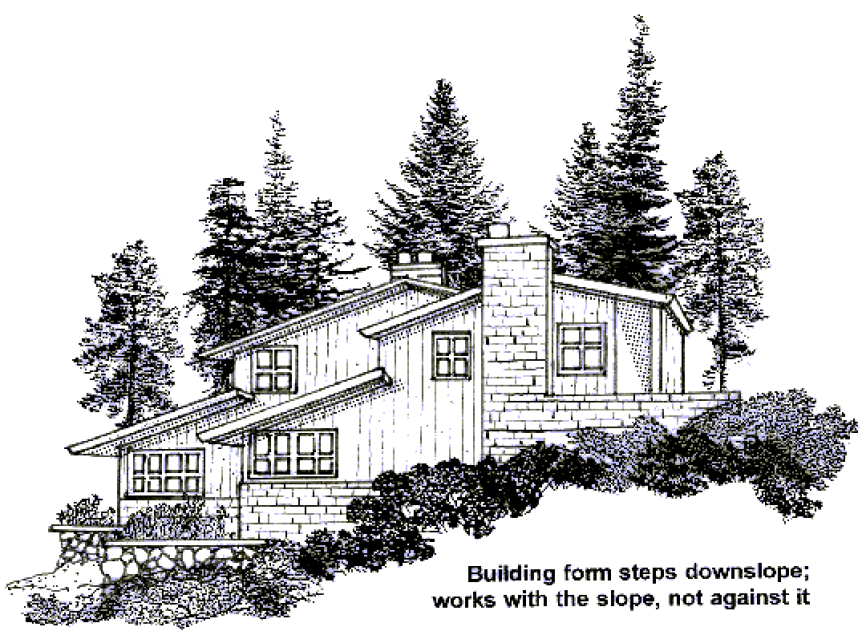
1.
Colors that emulate native vegetation and soils shall be used for exterior elevations and roofs. Darker, flat tones, such as, browns, black, greens and terra cotta shall be used for exterior siding and roofs in high-visibility areas. Light or bright colors shall be avoided; and
2.
Surface materials and roofs should include a mix of rough textures to blend with the coarseness of landscaping and natural vegetation in hillside areas. Materials including but not limited to stucco, wood, brick, and coarse block are appropriate materials to use.
G.
Architectural Design. Structures shall be designed as follows:
1.
Buildings and improvements shall be scaled to complement the hillsides and to avoid excessively massive forms that dominate views of the hills.
2.
Residential development on infill hillside lots shall be of a scale that is compatible with the existing adjacent neighborhood, and shall be designed to locate windows, balconies, and outdoor living areas with consideration for the privacy of adjacent dwellings and yards, to the maximum extent feasible.
3.
Building facades shall have varying vertical planes and overhangs shall be used as a means to create changing shadow lines to reduce the visual mass of forms. Building architectural elevations shall be stepped to follow the natural contour of the slope and to minimize building heights. See Section 19.26.050.J for building step back requirements.
4.
Wall surfaces visible from off-site on properties located within an area of Scenic Resource, Section 19.20.080, as designated by the General Plan, shall be minimized in scale through such design features as: the use of single story elements, setbacks, roof pitches, and landscaping.
5.
Roof pitches shall generally be designed to follow the angle of the site slope; but variation may be provided to avoid a monotonous appearance. See Figure 3-9.
6.
Structures with visible structural underpinnings that extend more than six feet above grade shall be avoided. Integrate structural underpinnings for decks, additions or foundation structures that exceed six feet in height into the design aesthetic of the building.
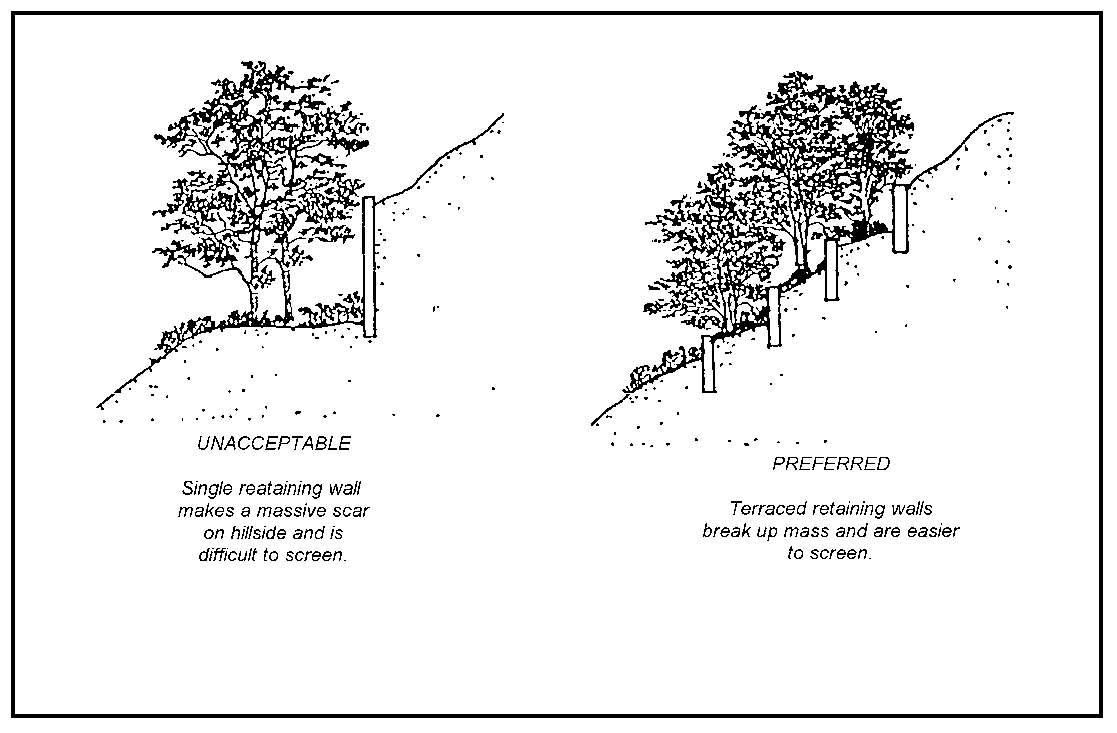
(Ord. No. 1576, § 2 (Exh. A, amd.), 10-23-2012)
19.26.050 - Hillside Project Development Standards.
A.
Residential Density. When creating new residential lots or when a single family property is being developed with more than one dwelling unit, residential densities shall be reduced in compliance with Table 3-6. No development potential shall be allowed for areas with average slopes of greater than 25 percent. Each site to be developed shall be mapped to depict the average slope areas, based on the ranges in Table 3-6. The average slope shall be calculated using the contour measurement method as defined in Article 6 (Definitions - Average Slope) of this chapter. The maximum residential density allowed under the General Plan land use designation is then multiplied by the reduction factor defined for each slope area to determine the maximum allowable density for each area. The maximum number of units allowed is then determined by calculating, the combined sum of the area of each slope category, which have been multiplied by the corresponding reduction factor. Resulting fractional unit numbers shall be rounded down to the nearest whole number. Areas with different General Plan designations or zoning districts must be analyzed as separate site areas to determine the total allowable units. (This section does not apply to the development of one single family dwelling unit or an accessory dwelling unit on an existing, legal lot.)
Table 3-6
Allowable Residential Density
and Building Intensity Floor Area Ratio (FAR) Based on Site Slope
B.
Clustered Residential Development. Clustered residential development is required, where appropriate and to the extent feasible, as a means of preserving the natural appearance of hillside areas. Under this concept, dwelling units would be grouped in the more level portions of the site, while steeper areas would be preserved in a natural state.
C.
[Non-Residential Development.] For purposes of this chapter, non-residential development shall include development consisting of residential and non-residential uses where the gross square footage area of the non-residential development exceeds that of the residential development.
D.
Non-Residential Building Intensity. The maximum floor area of nonresidential development shall be reduced for slope areas in compliance with Table 3-6. A building intensity reduction factor of 0.8 shall be applied to that portion of a site with an average slope of 10 to 20 percent. No development potential shall be allowed for slopes greater than 20 percent.
E.
Subfloor Parking for Non-Residential Buildings. The maximum allowable floor area of non-residential development may be increased up to a maximum of 20 percent when at least 25 percent of the required parking spaces are provided below grade, or subfloor and/or incorporated into the design of the building. The 20 percent increase in allowable floor area shall be applied to the total floor area calculated after the maximum allowable floor area ratios for the applicable zoning district and building intensity reduction factors in Subsection D of this section are applied to the site areas. In no case shall a project that receives a bonus, exceed the FAR otherwise permitted pursuant to the General Plan Land Use designation.
F.
Street and Driveway Layout. Streets and driveways shall follow the natural contours of the terrain to reduce grading, where feasible. The following street and driveway designs may be considered subject to the approval of the City Engineer and the Novato Fire Protection District:
1.
Cul-de-sacs, split roads and loop roads, where appropriate to fit the natural topography.
2.
Narrower street sections similar to those defined in the Novato Municipal Code Chapter V (Development Standards) Rural Street Standards, where appropriate to minimize grading, tree removal and visual impacts.
G.
Lot Configuration. The creation of new lots or the relocation of lot lines shall comply with the following standards:
1.
Lots shall not be created which are impractical for improvement, due to steepness of terrain, geologic hazards, or location of watercourses or drainage.
2.
Lot layout shall be designed to avoid grading or building within 25-vertical feet of the top 5-foot contour of a ridgeline or knoll.
3.
Lots shall not be created with building envelopes which would allow structures to project within 25-feet of the top 5-foot contour of a ridgeline or knoll.
4.
Lots shall not be created where the average slope within the building envelopes would exceed 25 percent for residential sites and 20 percent for non-residential sites.
5.
Lot configurations shall be designed to minimize grading and preserve topographic and geologic features.
6.
Lot configurations shall take into account natural landforms and vegetation to the greatest extent possible.
7.
Lots shall be designed to avoid lot-to-lot drainage. Individual lots shall include the top of slope areas to the extent practicable to help reduce lot-to-lot drainage and facilitate any future slope maintenance.
H.
Placement of Structures. Structures shall not be placed on average slopes exceeding 25 percent for residential development and 20 percent for non-residential development, to the extent feasible. Encroachment of building envelopes on slopes exceeding these percentages may be permitted by the review authority only where any of the following findings can be made:
1.
It is substantially unfeasible to locate the proposed building inside the maximum percent slope area; or
2.
Where such location would have a substantially more adverse effect on the environment; or
3.
Where such location is deemed appropriate to facilitate clustered development; or
4.
Measures are included that provide adequate mitigation of environmental impacts such as visual, biological and geotechnical impacts.
I.
Single-Family Residential Building Size Limits. A limitation on home size is required in hillside areas to ensure that the home is compatible with the hillside conditions and the scale of development in the community. Residential building sizes for new homes and additions to existing homes shall be limited by floor area ratio, utilizing a sliding-scale that is based on the average slope of the lot and the lot size. As the average slope of a lot increases by one percent, the allowable floor area ratio is decreased by one percent. The floor area ratio limits are presented in Tables 3-6.1 and 3-6.2. This resulting allowable floor area ratio represents a maximum limit subject to the following conditions and allowances:
1.
The maximum residential building size shall be limited to 4,000 square feet, regardless of the maximum permitted floor area ratio.
2.
A minimum single family residential building size of 2,000 square feet may be permitted, if deemed appropriate by the Review Authority.
3.
The allowable floor area ratio does not include a 500 square foot allowance for garage and accessory structures. The combined square footage of the garage and/or accessory structures area proposed in excess of 500 square feet shall be counted against the maximum allowed floor area ratio.
4.
The square footage of an accessory dwelling unit shall be counted against the maximum floor area ratio applicable to the primary residence and any accessory structures.
5.
The floor area ratio limits presented in Table 3-6.1 apply to existing lots (existing prior to the enactment of this ordinance) with average slopes in excess of 25 percent. New residential lots created after the enactment of this ordinance (Ordinance No. 1480, enacted 1/13/04) are not permitted in areas where the average slope is in excess of 25 percent.
6.
The Review Authority may consider a single family residential building size in excess of the limit established by Tables 3-6.1 and 3-6.2 if any of the following apply:
a.
The subject property contains unique conditions, which permit the building to be secluded and have minimal visibility (upon completion) from off-site public or private property.
b.
It is determined that the proposed design of the residential building is exemplary or unique in innovative architectural design.
Table 3-6.1
Single-Family Residential Building Size Limits for Existing Lots Recorded on or Prior
to Enactment of
Ordinance No. 1480, Dated 1/13/04
Table 3-6.2
Single-Family Residential Building Size Limits for New Lots
Recorded After Enactment of Ordinance No. 1480, Dated 1/13/04
J.
Siting and Height Limitations. Structures that are placed adjacent to ridgelines or knolls shall comply with the following provisions in addition to those required by Article 2 (Zoning Districts, Allowable Land Uses, and Zone-Specific Standards), and Section 19.20.070 (Height Limits and Exceptions):
1.
Siting Restrictions. Structures shall not be placed so that they are silhouetted against the sky when viewed from a public street, except where the review authority determines that the only feasible building site on an existing lot cannot comply with this standard. See Figure 3-11.
2.
Placement Below Ridgeline Required. Structures shall be located so that a vertical separation of at least 25 feet is provided between the top of the structure and the top five-foot contour of the ridge or knoll to maintain the natural appearance of the ridge. See Figure 3-12. Where the review authority determines that a parcel contains no feasible building site other than where a structure will extend above the ridgeline, proposed structures shall not exceed a height of 16 feet above the highest point on the ridgeline or hilltop within 100 feet of the proposed structure.
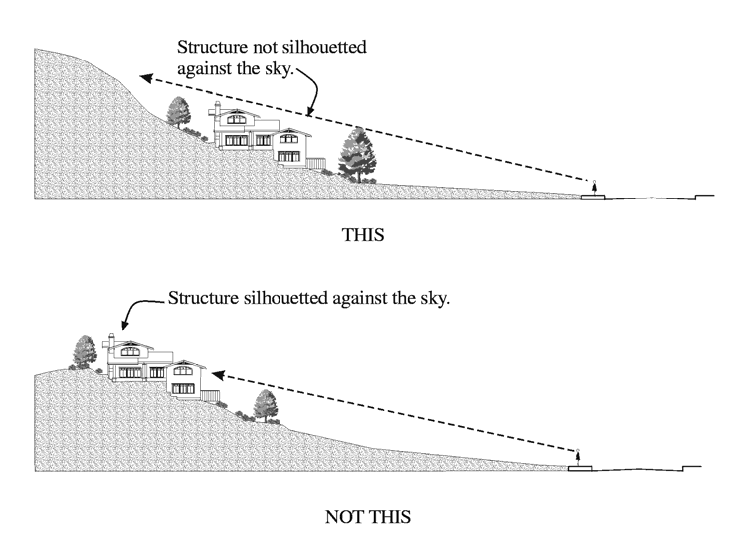
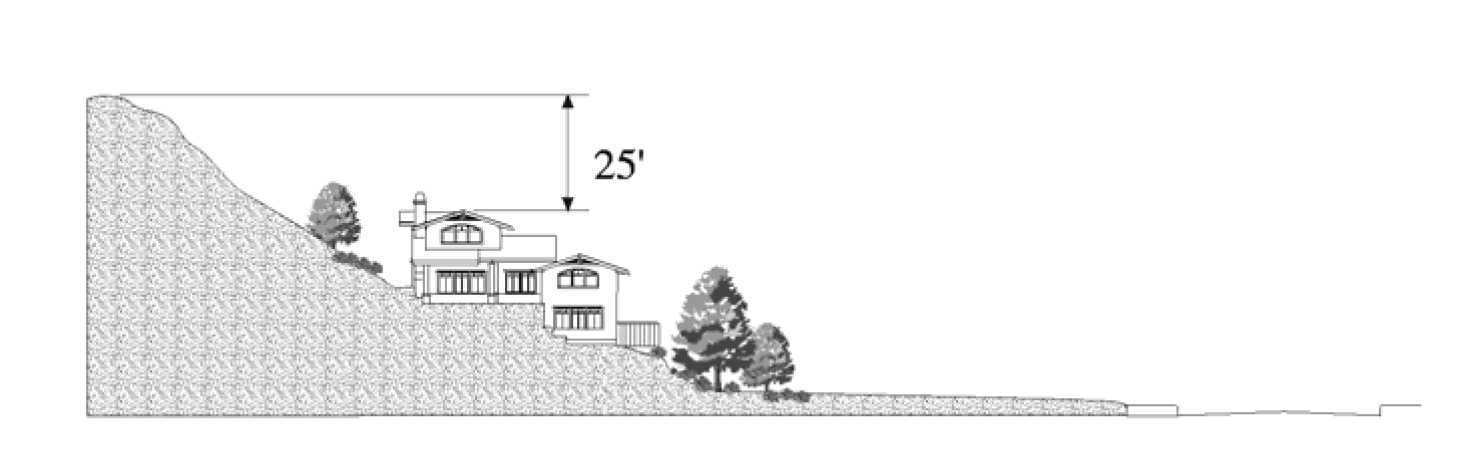
3.
Height Measurement. The maximum allowable building height shall be measured in compliance with Section 19.20.070 (Height Limits and Exceptions), with the exception that either the existing pre-developed grade, or the finished grade, whichever has the lower elevation, shall be utilized.
4.
Building Height Limit. The maximum allowable building height shall be 25 feet for residential buildings and 35 feet for non-residential buildings. For residential buildings, the following additional height limits which are intended to reduce building mass are required:
a.
The height of a residential building measured from the lowest grade along any perimeter building elevation to the peak of the highest roof element shall not exceed 35 feet. See Figure 3-12.1.
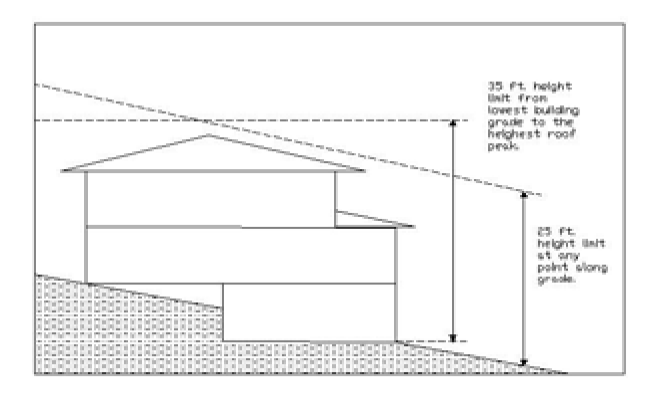
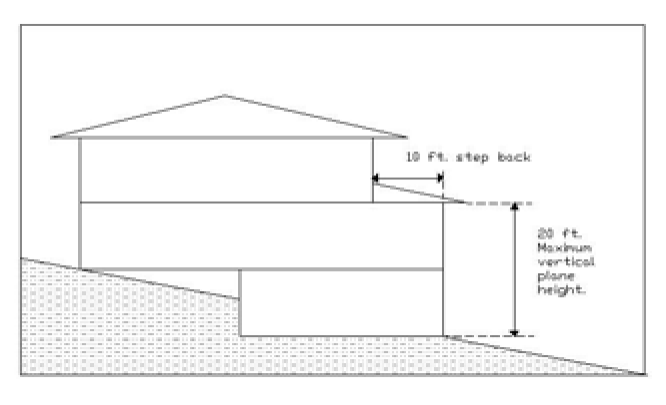
b.
Building step backs shall be required along the down slope elevation to reduce bulk and mass, and to avoid tall walls in one vertical plane. The height of the tallest vertical plane along down slope building elevations shall not exceed 20 feet measured from grade. Walls extending above this 20-foot limit, shall be stepped back a minimum of 10 feet. See Figure 3-12.2.
5.
Height of Lowest Floor—Cripple Wall Height Limit. The vertical distance between either the natural or finished grade, whichever is lower, and the lowest finished floor elevation of a structure shall not exceed 10 feet.
K.
Setbacks Between Structures and Toes/Tops of Slopes. On adjacent lots having a difference in vertical elevation of three feet or more, the required side yard shall be measured from the nearest toe or top of slope to the structure, whichever is closer.
L.
Fire Safety. Projects shall comply with the fire safety requirements of Chapter V, (Development Standards), Section 5-21 (Fire Safety) of this code.
M.
Grading. Grading plans shall be prepared in compliance with Chapter V (Development Standards), Section 5-23 (Grading) of this code.
(Ord. No. 1576, § 2 (Exh. A, amd.), 10-23-2012; Ord. No. 1676, Exh. A, 3-8-2022)
19.26.060 - Supplemental Design Review Findings Required for Hillside Development.
Design Review for hillside development may be approved by the review authority only when the required findings have been made. Design Review for hillside development shall be subject to the findings required under Section 19.42.030.F (Design Review) of this code, and the following supplemental hillside development findings:
A.
The design, scale, massing, height and siting of development is compatible with the character and scale of the surrounding, developed neighborhood.
B.
The design and site layout of the hillside project is respective of and protects the natural environment to the maximum extent feasible.
C.
Site grading has been designed to be as minimal as possible to achieve sensitive hillside design, minimize tree removal, and provide safe site access and required parking.
D.
The hillside project is designed and sited to screen development, to the extent feasible, through clustering and/or avoiding of highly visible hillsides, ridgelines, and knolls.
(Ord. No. 1576, § 2 (Exh. A, amd.), 10-23-2012)
19.27.010 - Purpose.
The purpose of this Division is to specify objective architecture standards for residential and residential mixed-use development projects to achieve the following:
A.
Promote high-quality architectural design to strengthen the aesthetic character and ambiance of Novato;
B.
Ensure the orderly and harmonious appearance of new residential and residential mixed-use development within the community;
C.
Ensure the architectural design of new residential and residential mixed-use development is authentic to the specific architectural style being expressed;
D.
Provide clear and effective architectural standards to assist project developers and architects in designing new residential and residential mixed-use developments; and
E.
Streamline the review of proposed residential development and residential mixed-use development projects as required by State law.
(Ord. No. 1705, § 4(Exh. A), 10-10-2023)
19.27.020 - Applicability.
This Division shall apply to all proposed residential and residential mixed-use development projects that, pursuant to State law, are subject to regulation by objective design standards only.
(Ord. No. 1705, § 4(Exh. A), 10-10-2023)
19.27.030 - Implementation of Architecture Standards.
A.
Residential and residential mixed-use buildings shall be designed in compliance with the architecture standards of this Division.
B.
Detached single-family, two-family dwellings, and multifamily residential developments shall be designed in the Contemporary, Craftsman, Mediterranean, Tudor, and/or Victorian architectural styles subject to the requirements of this Division.
C.
Residential mixed-use developments shall be designed in the Contemporary, Craftsman, Main Street Classical, Mediterranean, Tudor, or Victorian architectural styles subject to the requirements of this Division.
D.
Architectural Variation.
1.
Detached Single-Family Dwellings. Any of the architectural styles allowed for detached single-family residences, as listed in Subsection 19.27.030 B., shall be used or mixed in a detached single-family residential development subject to the following:
a.
A detached single-family residential development comprised of two dwellings shall be designed to provide a different architecture style for each building or provide a minimum of two different façade designs based on a single architectural style using different combinations of the architectural elements allowed for that style to differentiate each building.
b.
A detached single-family residential development comprised of three or more dwellings shall be designed with a mix of architectural styles or provide a minimum of three different facade designs for each architectural style proposed to repeat in the development by using differing combinations of the architectural elements allowed for that style to differentiate each building. Dwelling units of the same architectural style or facade design shall not be placed on:
i.
Adjoining parcels sharing a common side property line; or
ii.
Parcels within 60-feet across from one another, measured from the mid-point of the front yard property line of a given parcel to the mid-point of the front yard property line of any other parcel.
2.
Two-Family Dwellings. Any of the architectural styles allowed for two-family dwellings, as listed in Subsection 19.27.030 B., shall be used or mixed in a two-family dwelling development subject to the following:
a.
A two-family dwelling development project consisting of a single building shall be designed in one of the allowed architectural styles.
b.
A two-family dwelling development project of two buildings shall be designed so that each two-dwelling building has a differing architectural style or provides a minimum of two different facade designs based on a single architectural style using different combinations of the architectural elements allowed for that style to differentiate each building.
c.
A two-family dwelling development project of three or more buildings shall be designed with a mix of architectural styles or provide a minimum of three different façade designs for each architectural style proposed to repeat in the development using different combinations of the architectural elements allowed for that style to differentiate each building. Dwellings of the same architectural style or facade design shall not be placed on:
i.
Adjoining parcels sharing a common side property line; or
ii.
Parcels within 60-feet across from one another, measured from the mid-point of the front yard property line of a given parcel to the mid-point of the front yard property line of any other parcel.
3.
Multi-Family Dwellings. Multi-family dwelling residential developments shall be designed in one of the allowed architectural styles listed in Subsection 19.27.030 B.
4.
Residential Mixed-Use Developments. Residential mixed-use developments shall be designed in one of the allowed architectural styles listed in Subsection 19.27.030 C.
E.
Ground Floor Residential Entryways—Residential Mixed-Use Developments. Upper floor multi-family dwellings in a residential mixed-use development shall be accessed by a ground level, common entry along the primary building street frontage or secondary building street frontage for buildings with multiple street frontages. Residential entries shall be distinguished from commercial storefronts pursuant to the following standards:
1.
Minimum entryway height of 12-feet measured from the landing in front of the entry door to the underside of the ceiling or any projecting element (e.g., awning) defining the entryway, whichever is lower.
2.
Minimum entryway width of eight-feet measured from the building walls or pilaster on either side of the entry, whichever is closer.
3.
Entryways shall be inset from the primary building facade by a minimum depth of three-feet, measured from the face of the façade to the entry door.
4.
Entryways shall be distinguished from commercial storefronts by varying the pattern or orientation of the finish materials selected for a given storefront(s) or through the application of wall cladding matching the cladding applied elsewhere on the building.
F.
Storefronts—Residential Mixed-Use Developments. Ground-level storefronts shall be distinguished from the upper floors of a building by:
1.
Incorporating a horizontal plane break through molding, tablature, cornice, or a string/belt course of a minimum of six-inches in depth between the first floor and second floor; and/or
2.
Applying a wall cladding at the first floor that is different from the cladding applied to the upper floor(s). A change in wall cladding shall occur at a horizontal massing transition point or trim element dividing the first floor from the second floor of a building.
G.
Architectural Detail—Detached Single-Family and Two-Family Dwellings. Detached single-family and two-family dwellings shall be designed to:
1.
Apply the wall, base, roof, eave, rake, parapet, window, and dormer standards applicable to the selected architectural style(s) to all facades of a dwelling;
2.
Provide a porch at the primary entry to a dwelling. A primary entry is a doorway accessed by a walkway connecting through a front yard area to a public or private sidewalk or street. A developer may choose to provide an additional porch(es) on another façade(s) of a dwelling. All porches shall comply with the porch standards applicable to the selected architectural style(s); and
3.
Provide, at a minimum, one balcony or bay window on the front facade and each side and/or rear façade(s) of a dwelling on a parcel with side and/or rear property lines adjoining a private or public street. A developer may choose to provide an additional balcony(ies) and/or bay window(s) on other facades. All balconies and bay windows shall comply with the standards applicable to balconies and bay windows for the selected architectural style(s).
H.
Architectural Detail—Multi-Family Dwellings and Residential Mixed-Use Developments. The architectural elements required for a selected architectural style shall be applied to all sides of a multi-family or residential mixed-use building, including front, street side, interior side, and rear facades.
I.
Substitution of Architecture and Adjustment of Standards. A developer may voluntarily agree in writing to substitute a different architectural style(s) and/or seek an adjustment of the architectural standards of this Division. The agreement shall: (1) be on a form provided by the City, (2) specify the standard(s) to be substituted or adjusted, and (3) require Design Review pursuant to the procedures of Section 19.42.030. By entering into such an agreement, a developer thereby forfeits any right to streamlined review, ministerial action, and/or any limitations on the application of subjective standards that may otherwise apply to a given project under State law.
J.
Architectural Standards Guide. The following graphic provides a guide to using the architectural standards of this Division.
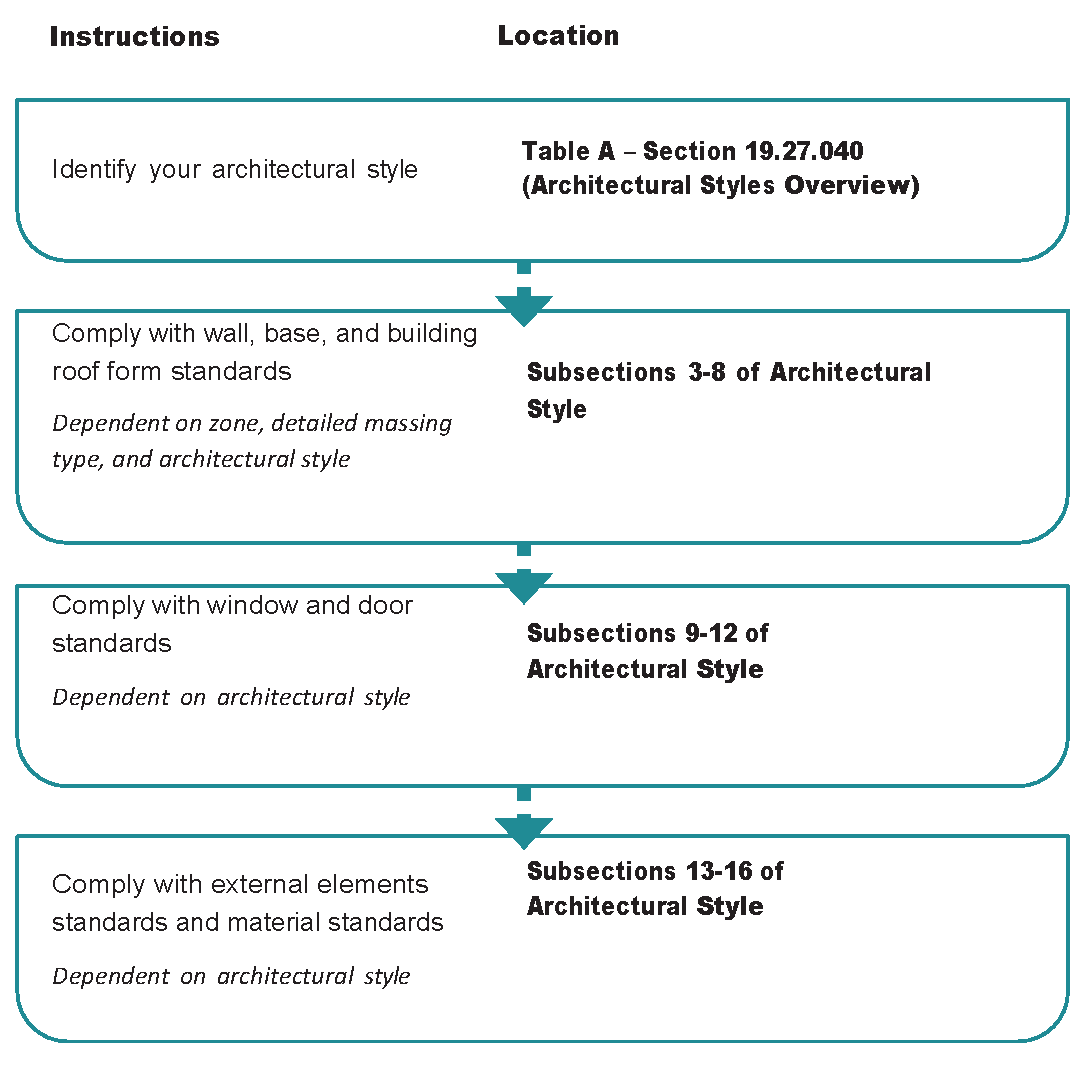
(Ord. No. 1705, § 4(Exh. A), 10-10-2023)
19.27.040 - Architectural Styles Overview.
Table A (Architectural Styles Overview) provides an overview of allowed architectural styles.
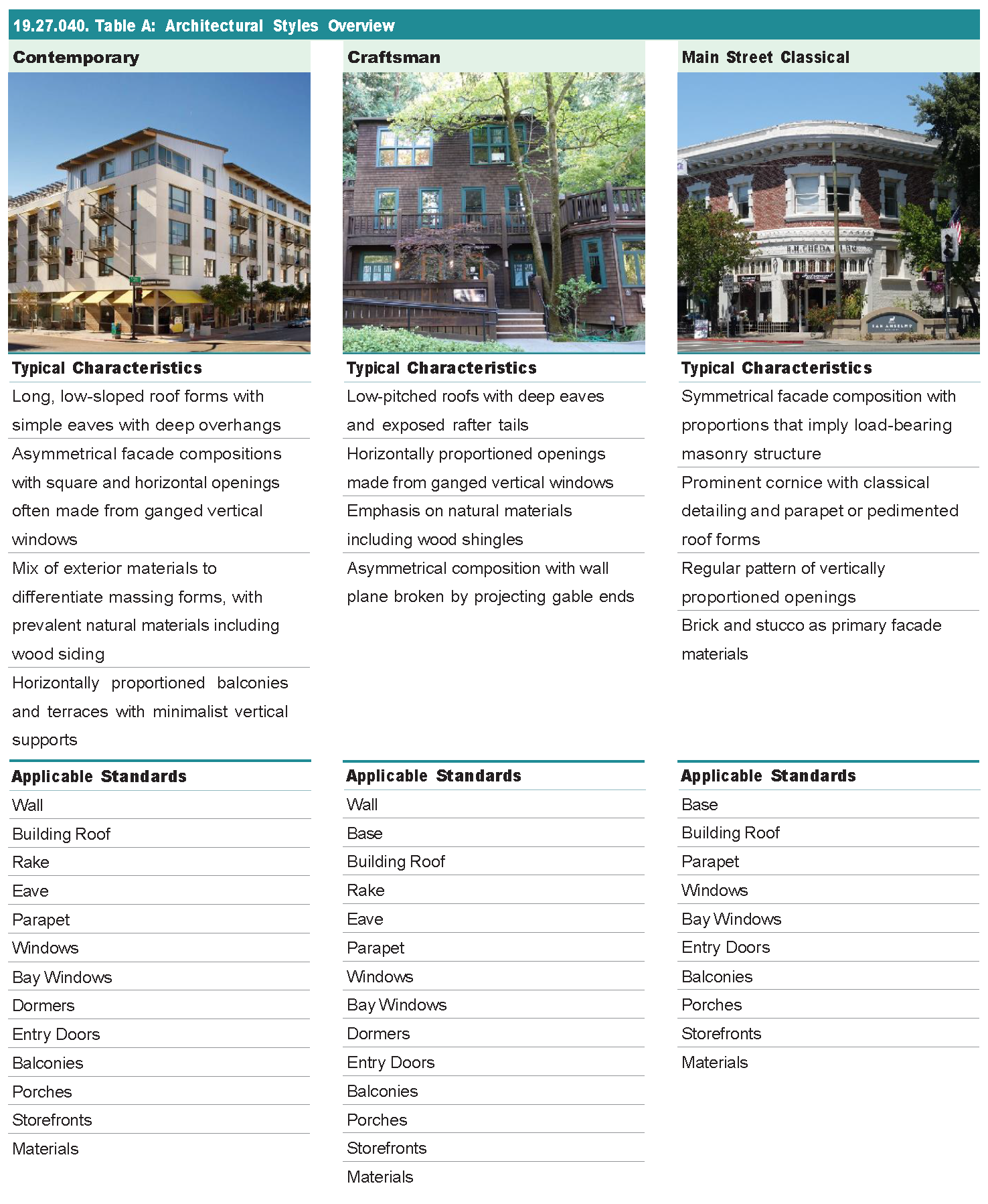
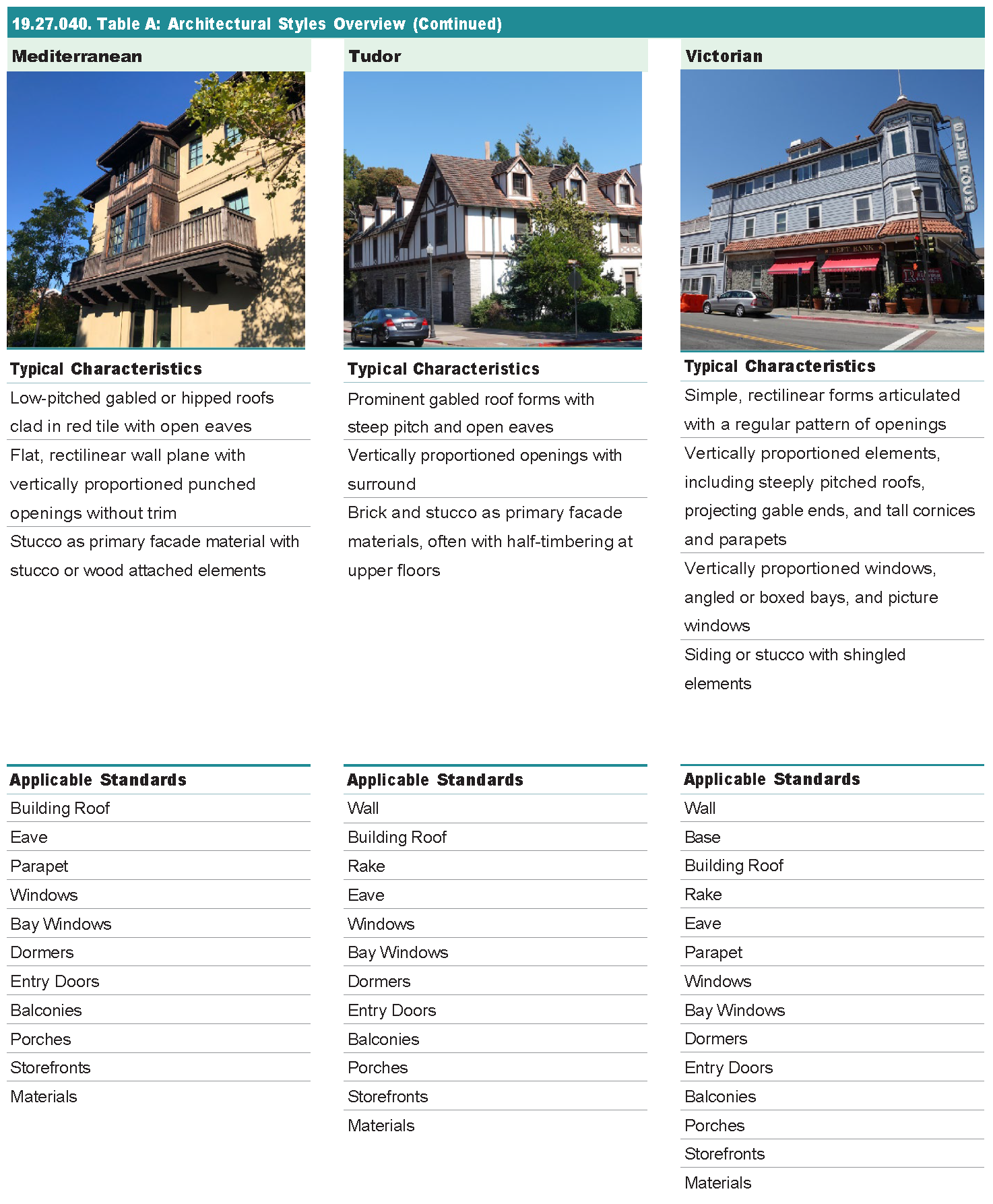
(Ord. No. 1705, § 4(Exh. A), 10-10-2023)
19.27.050 - Contemporary Standards.
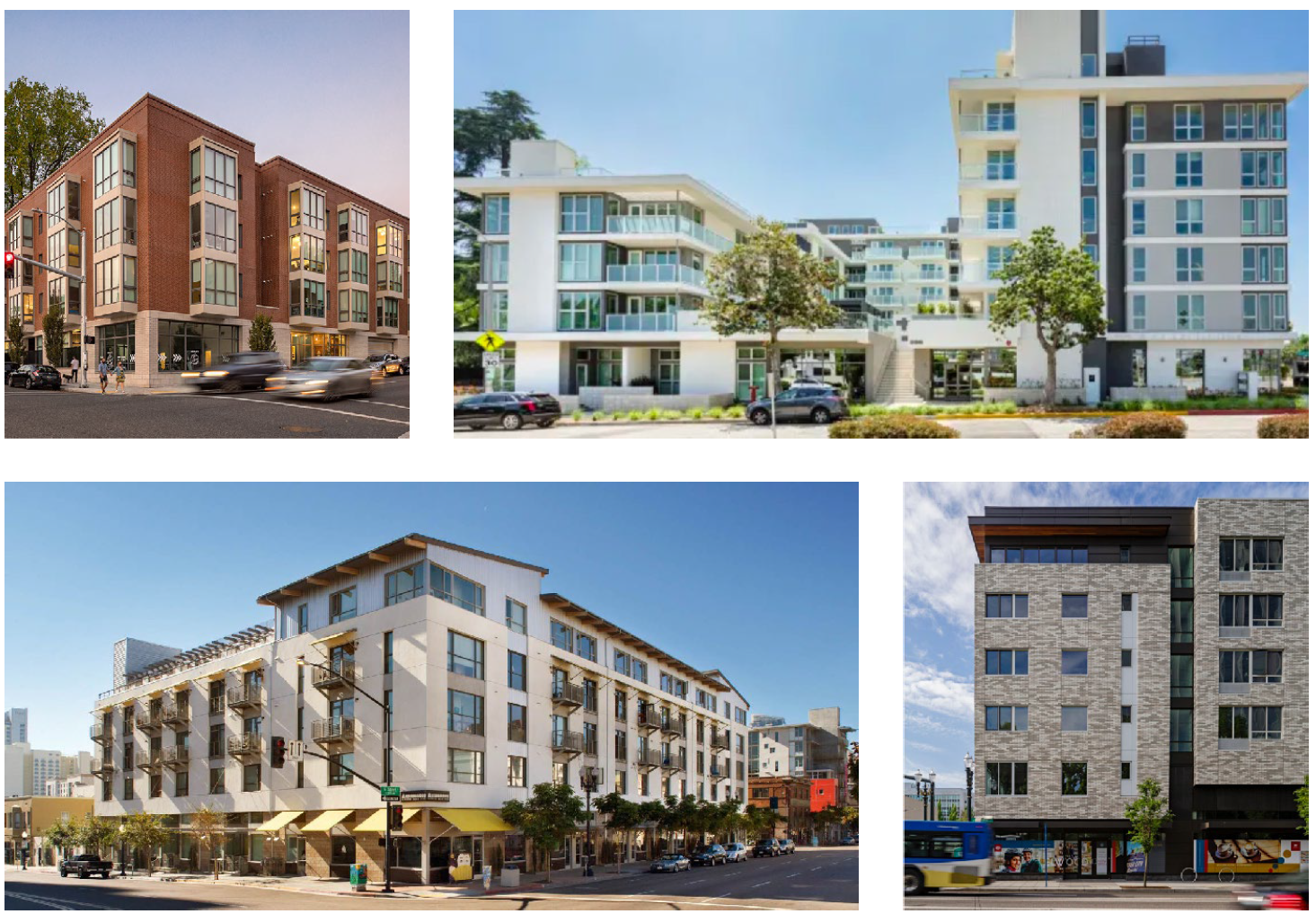
General note: The images above and the descriptions in Subsections 1 and 2 below are intended to provide a brief overview of the architectural style and are descriptive, not regulatory.
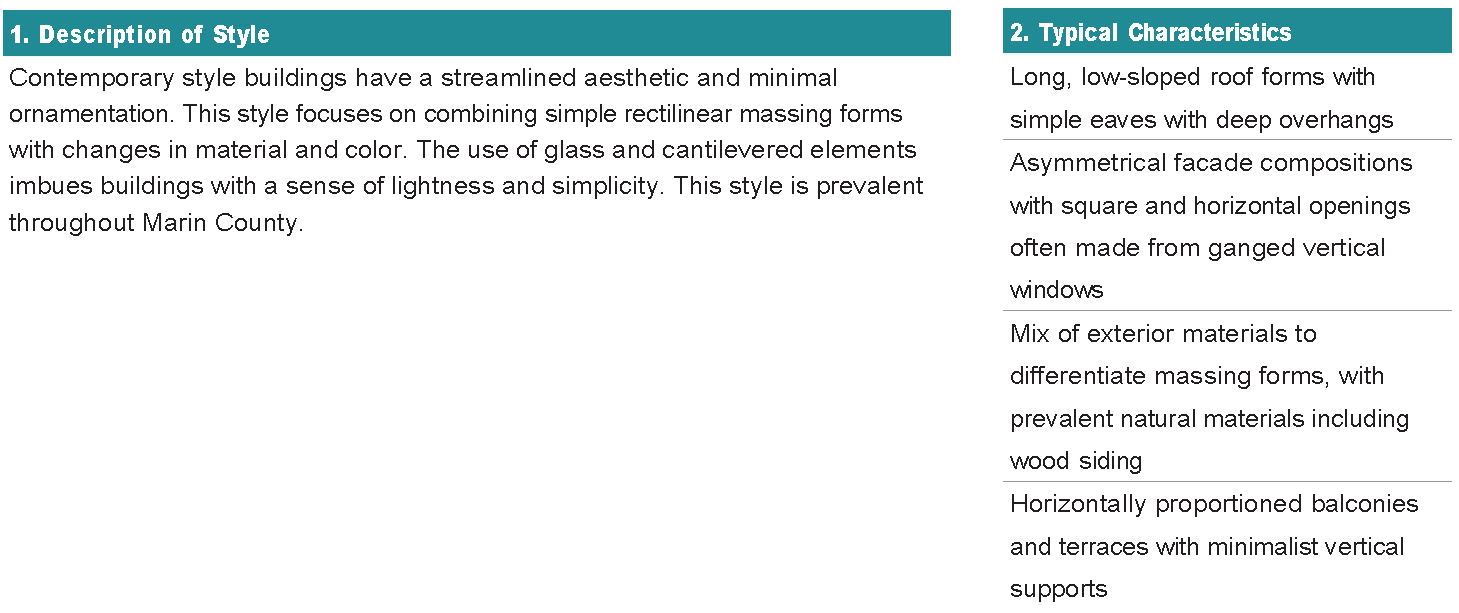
Contemporary Style Standards
Single-Family and Multifamily Buildings
Note: The image below is intended to provide a reference for architectural elements and is illustrative, not regulatory. It is not an exhaustive list of applicable standards.
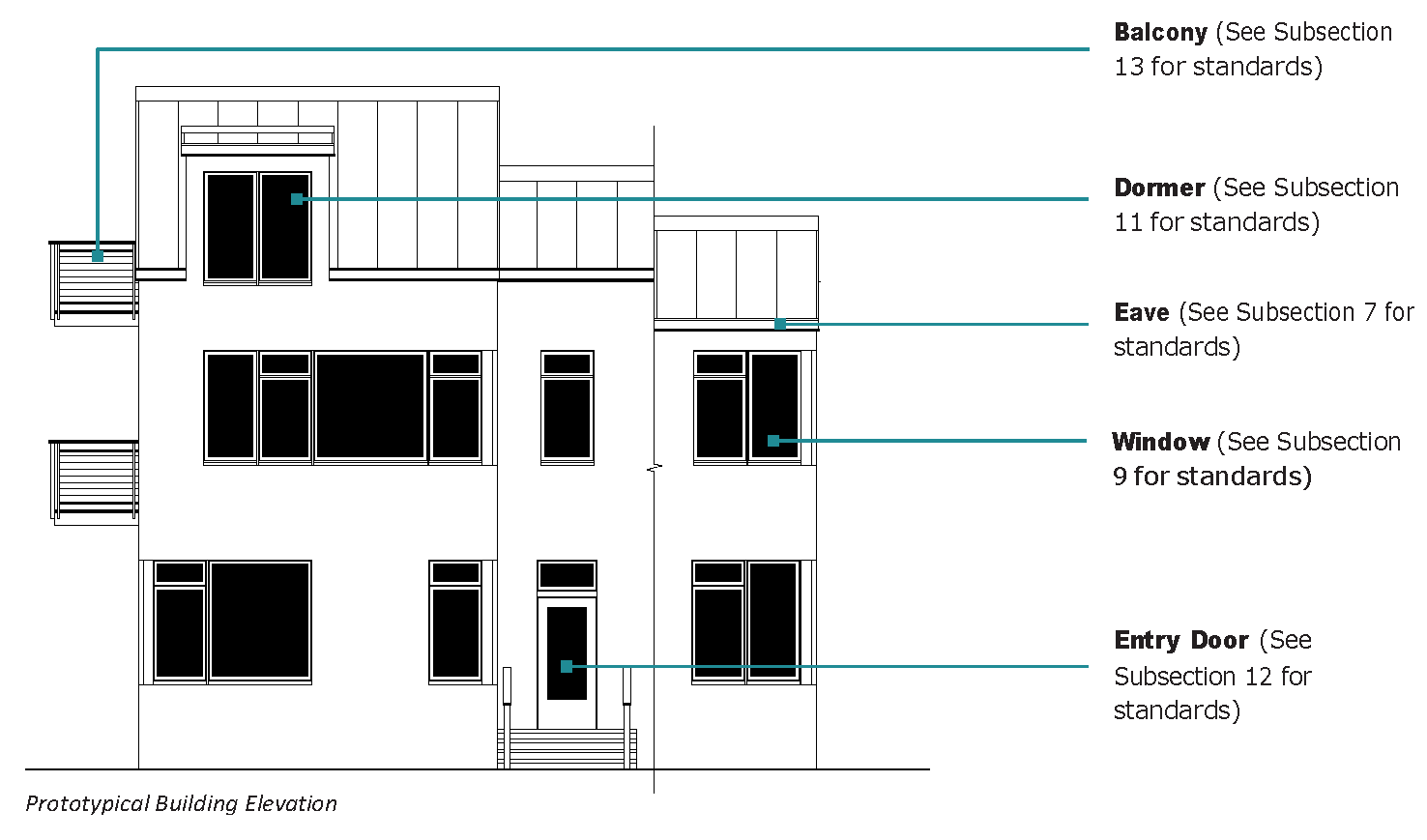
Contemporary Style Standards — Mixed-Use Buildings
Note: The image below is intended to provide a reference for architectural elements and is illustrative, not regulatory. It is not an exhaustive list of applicable standards.
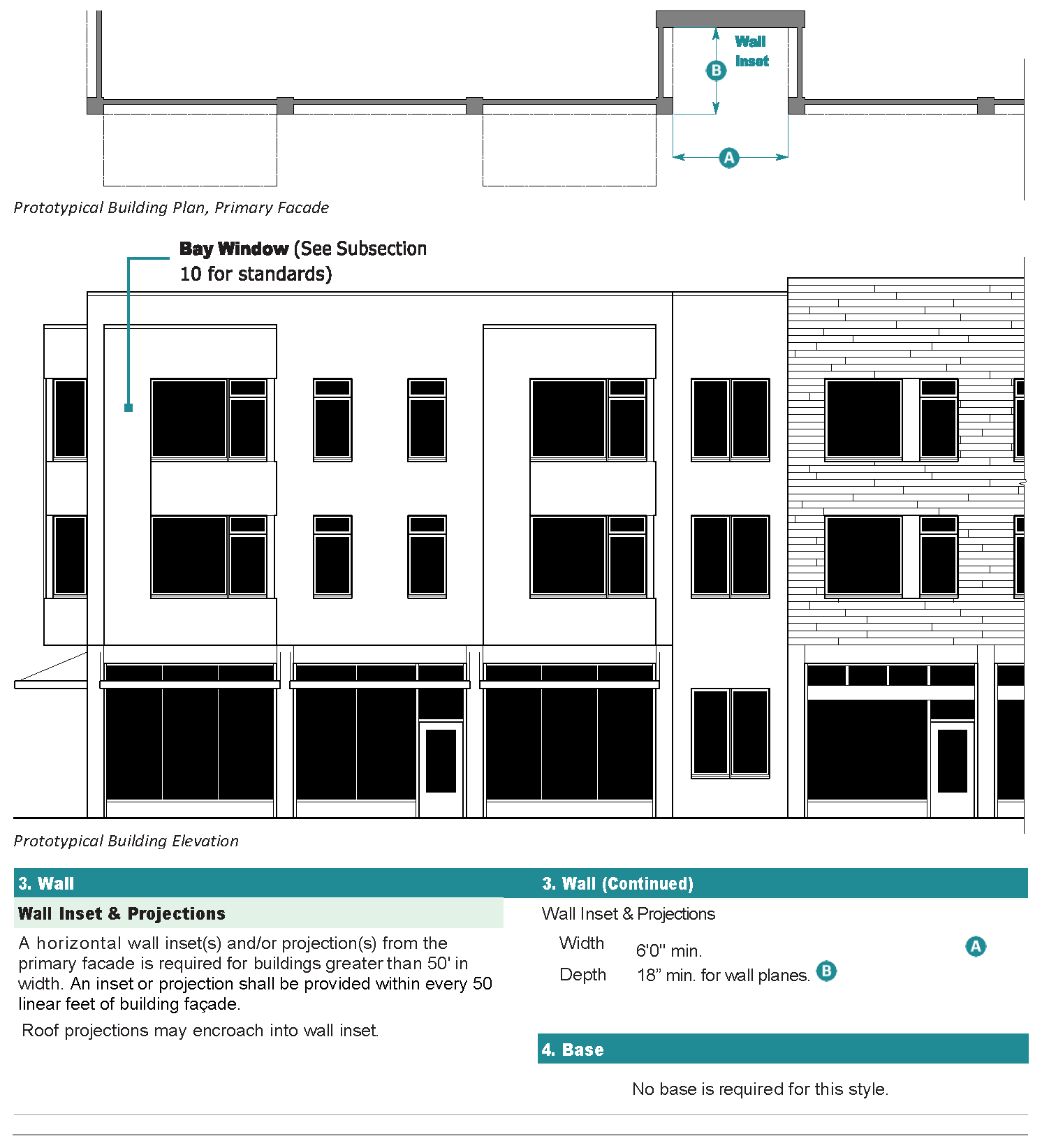
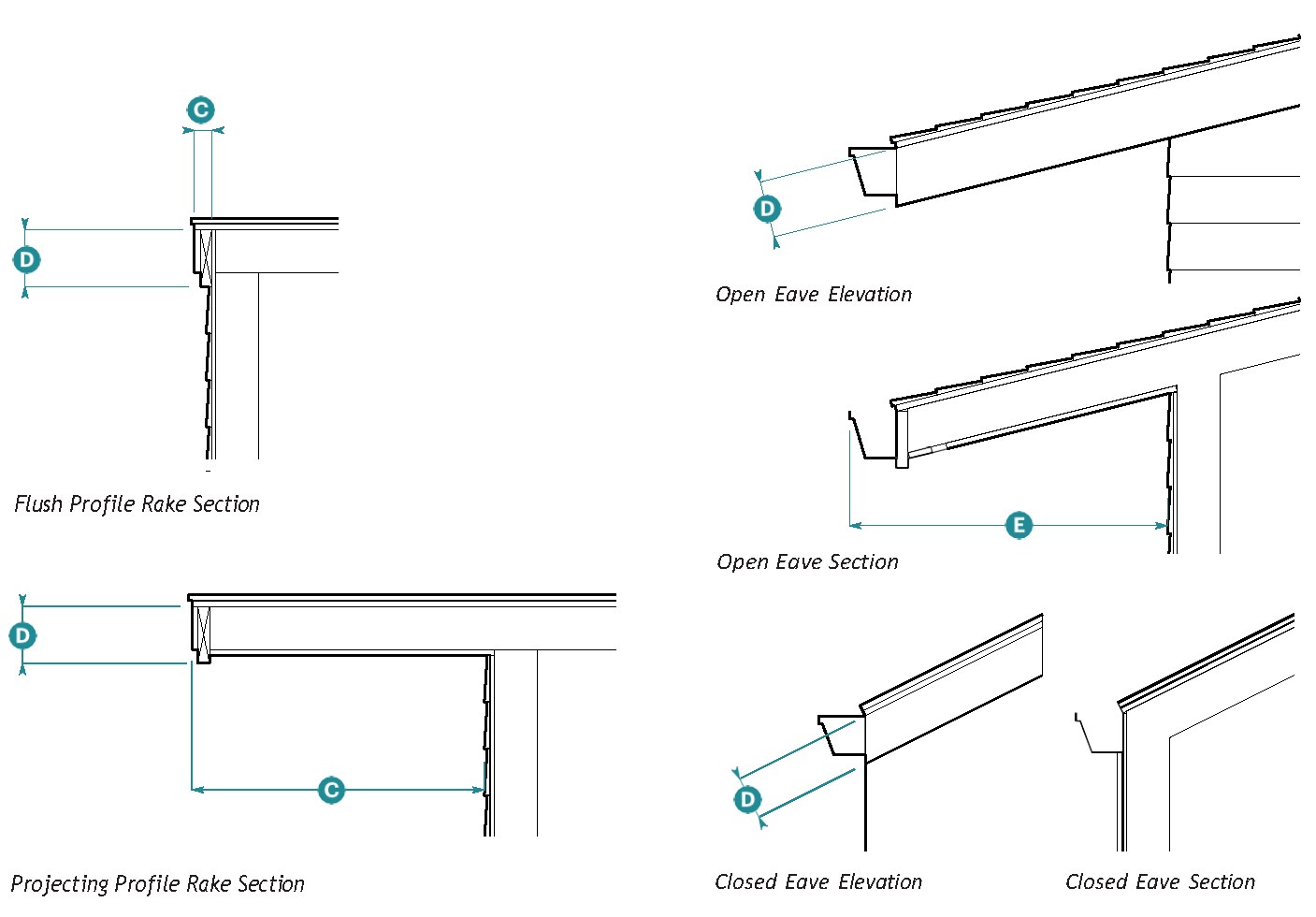
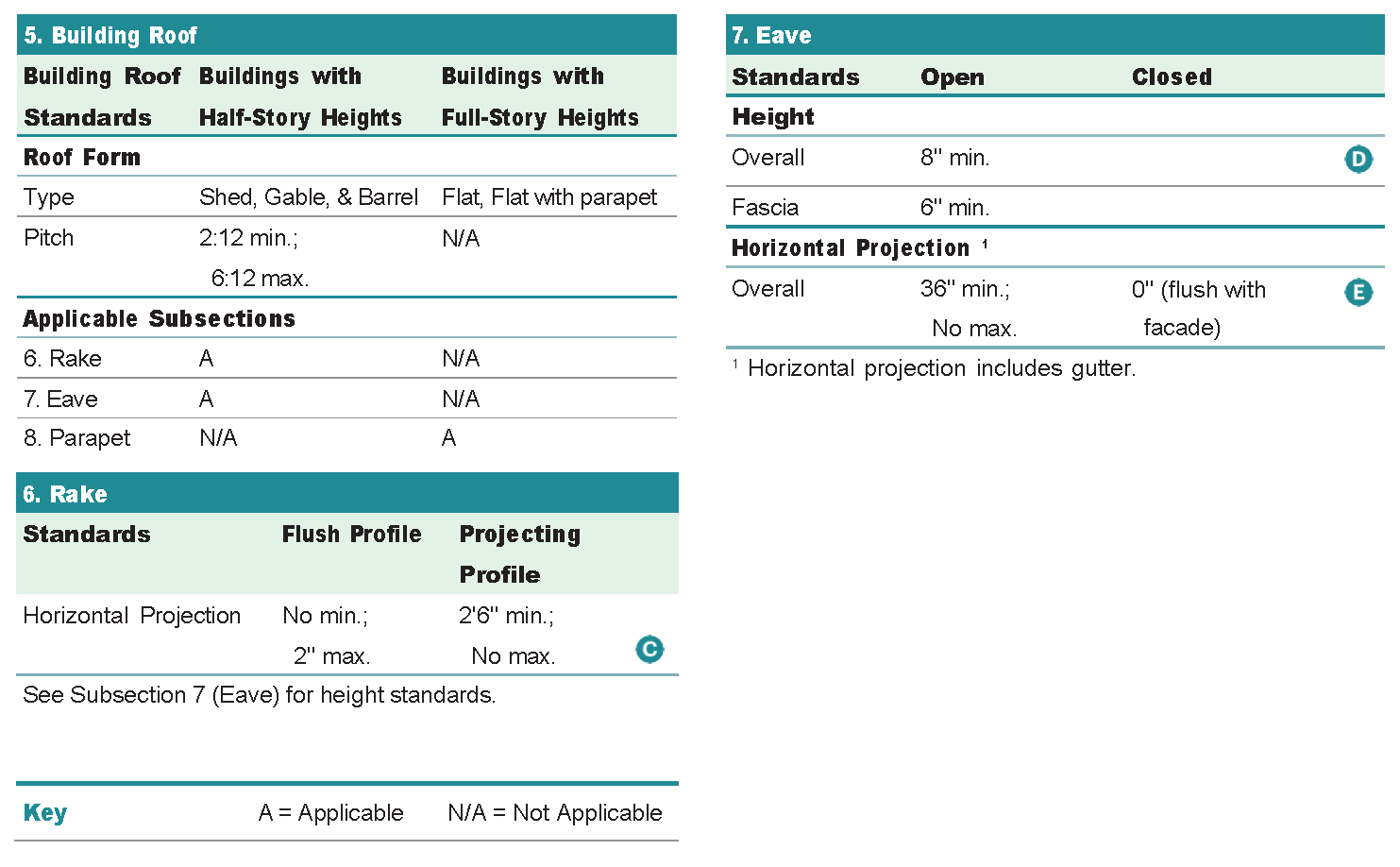
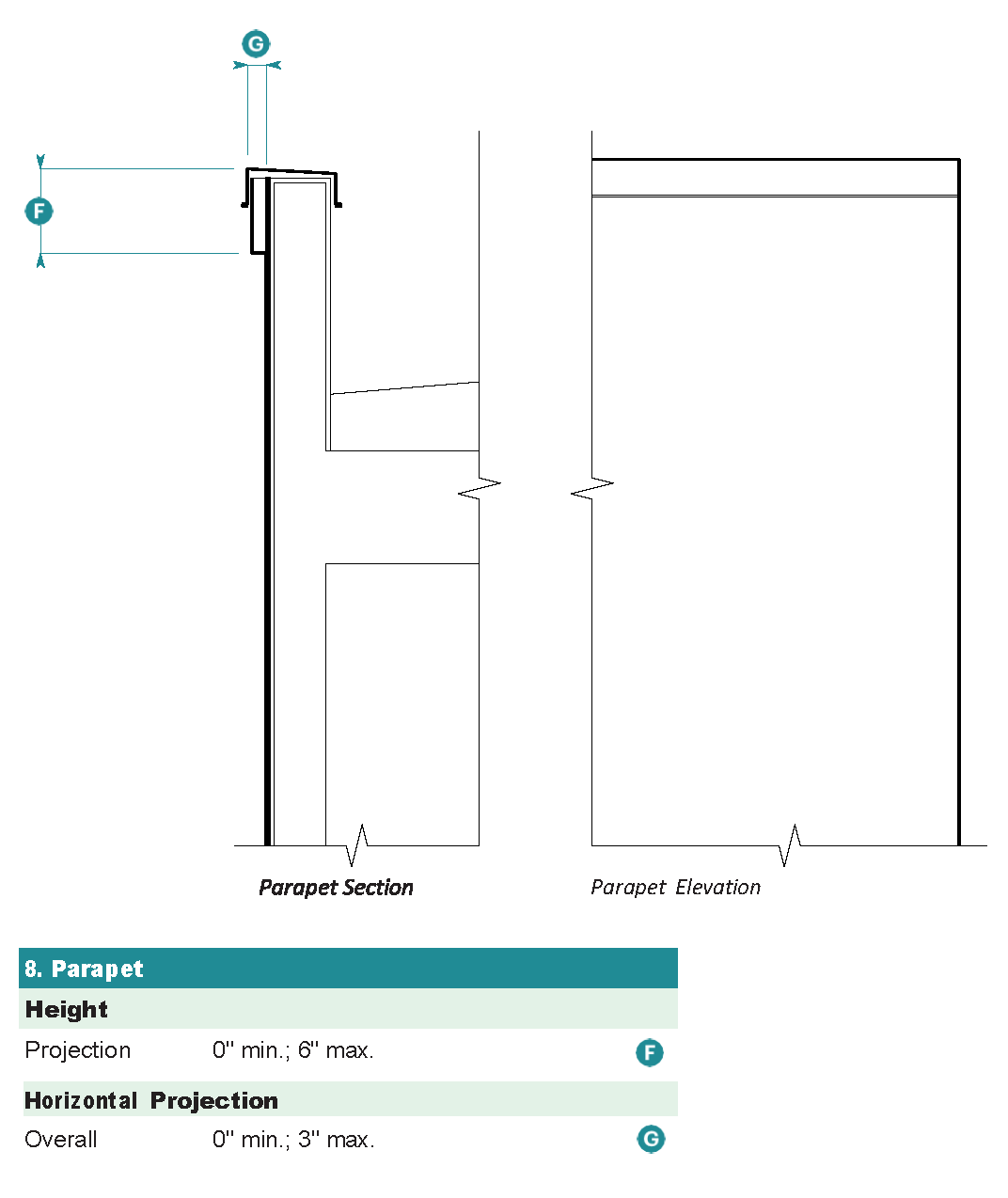
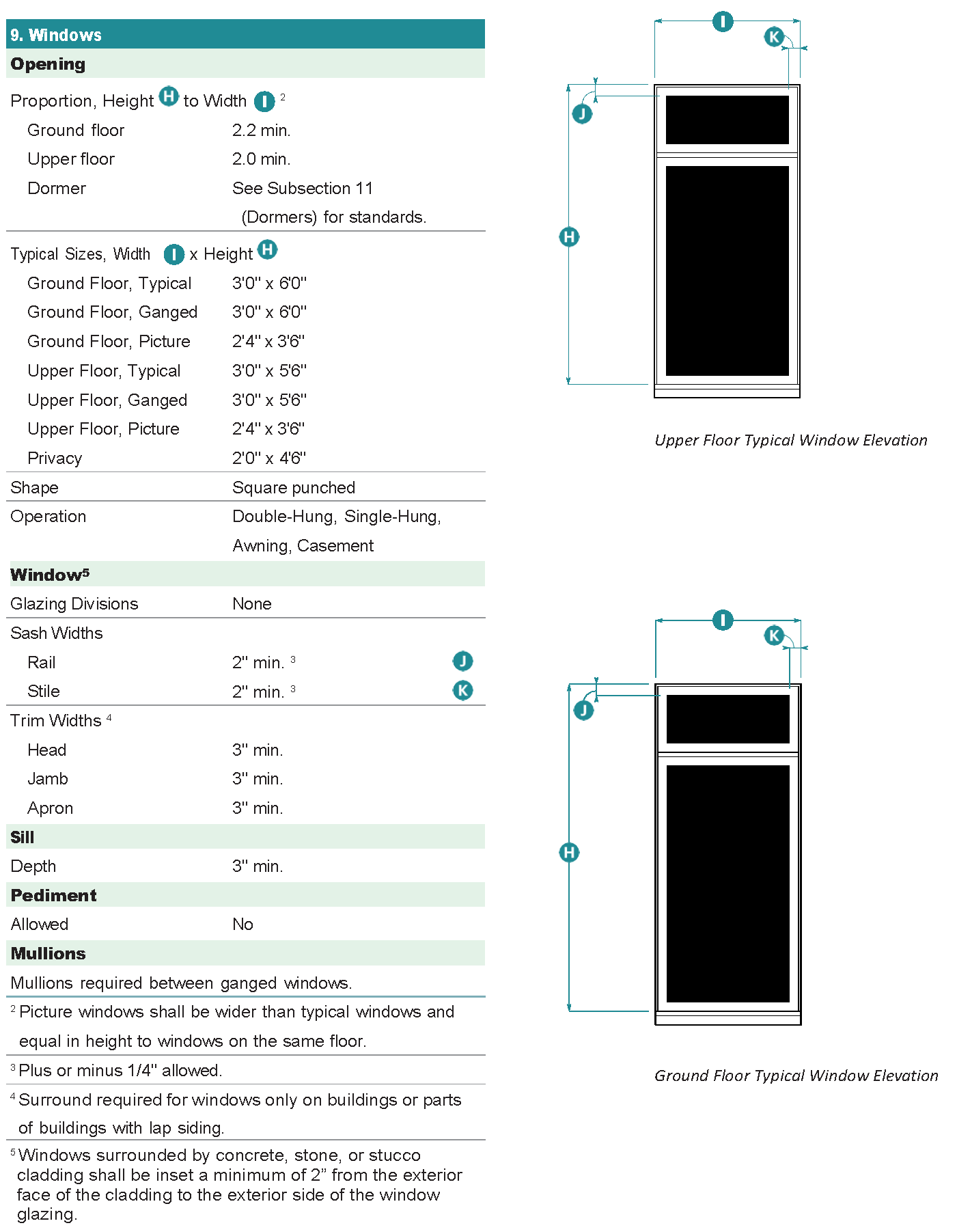
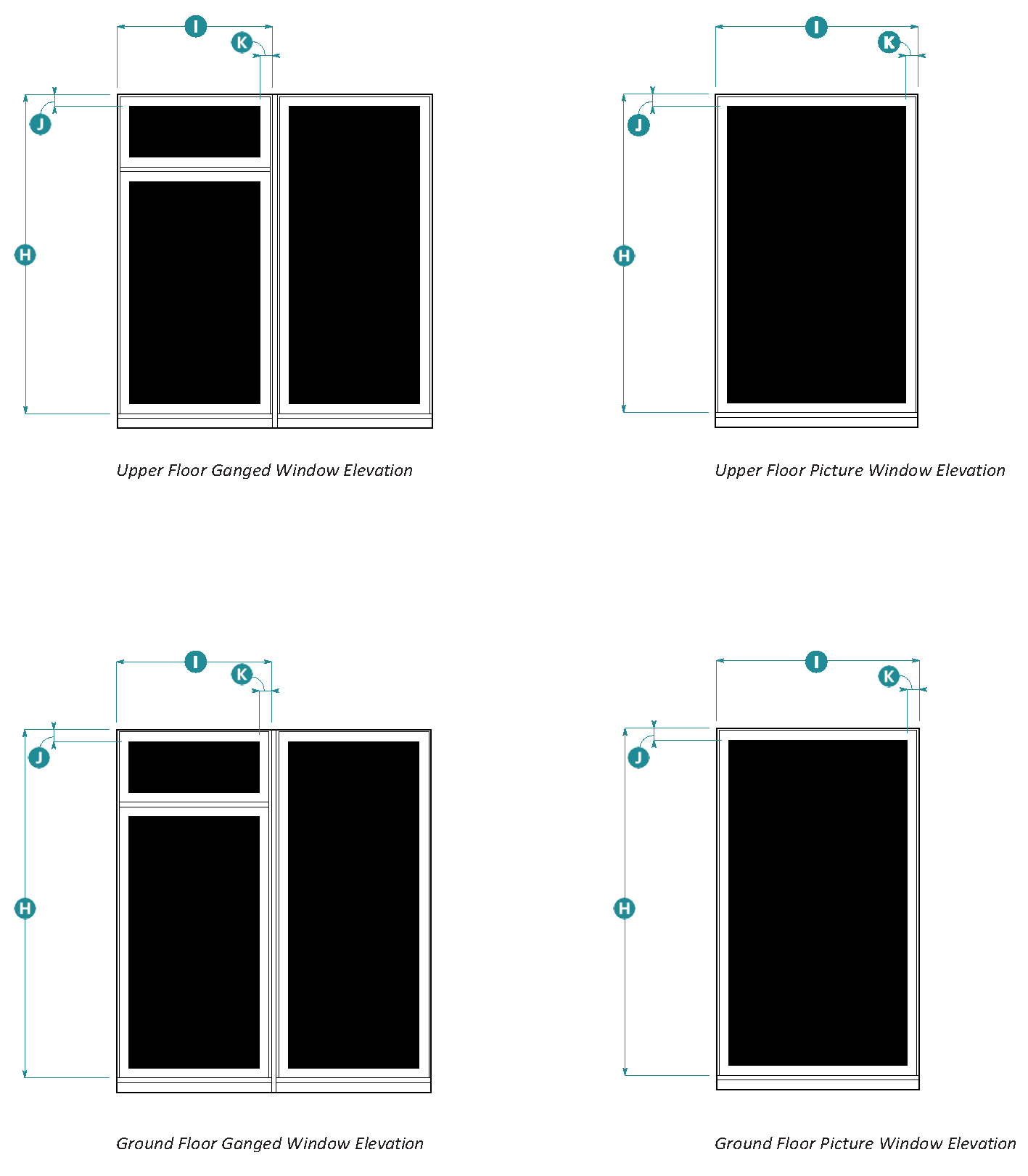
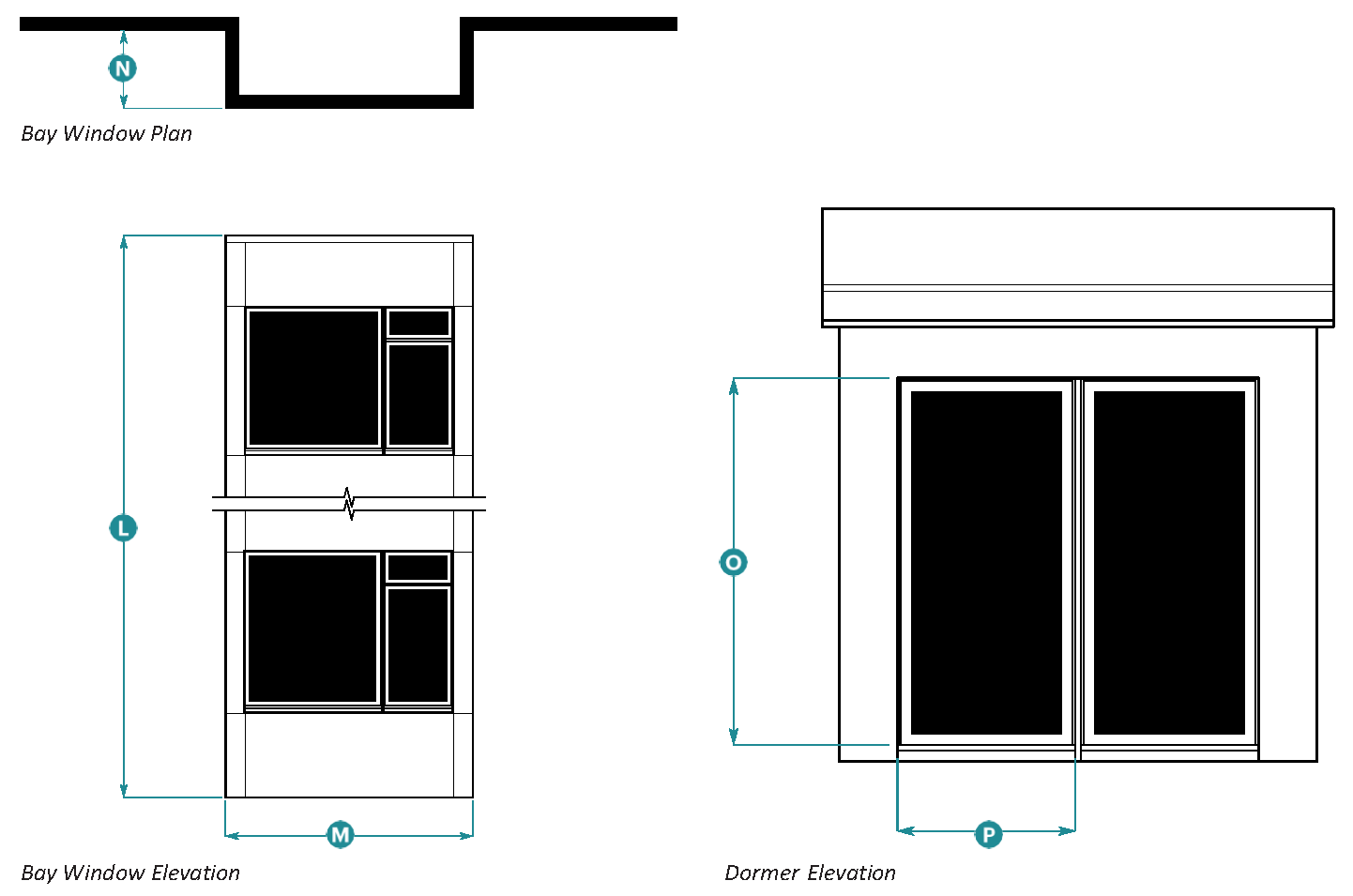
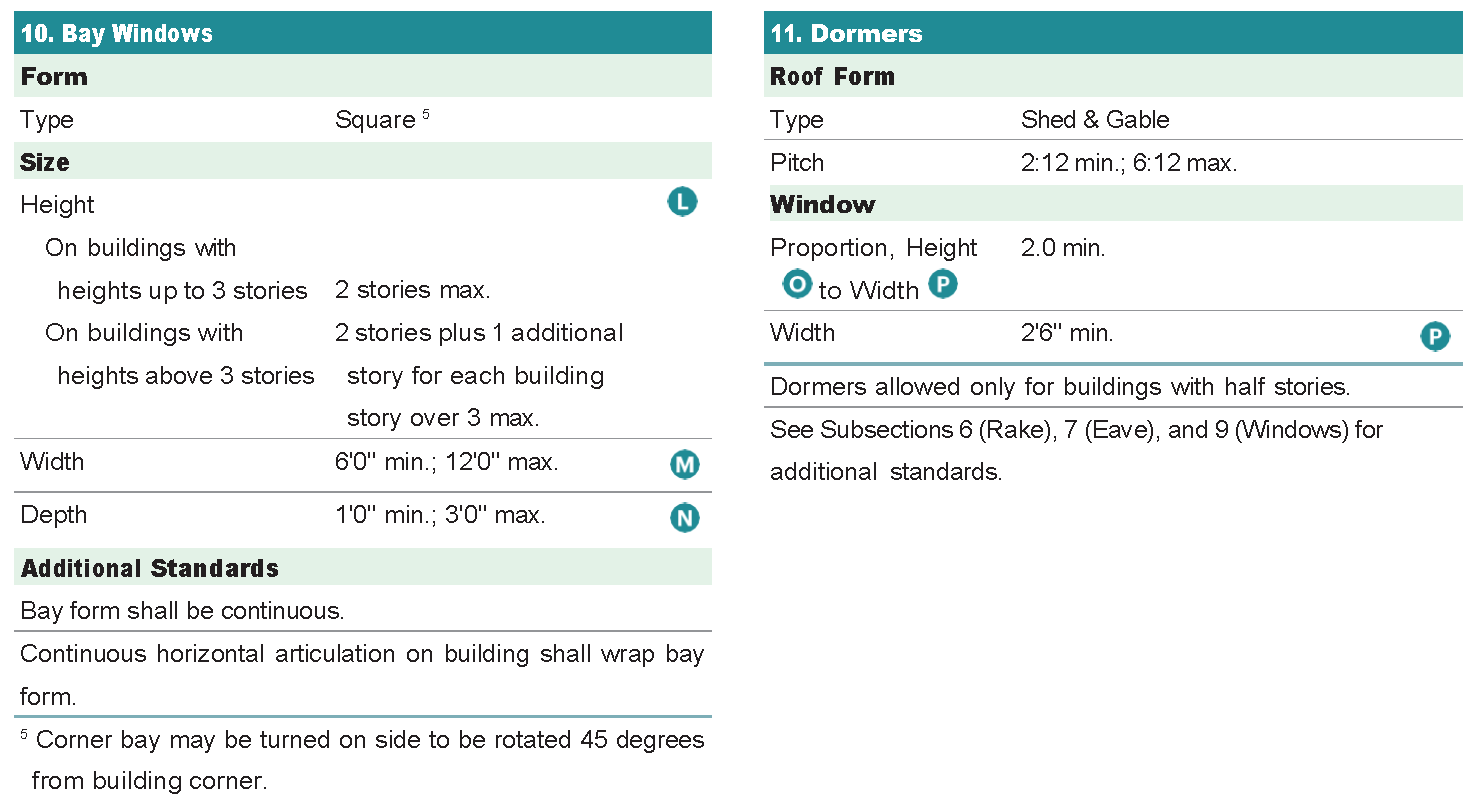
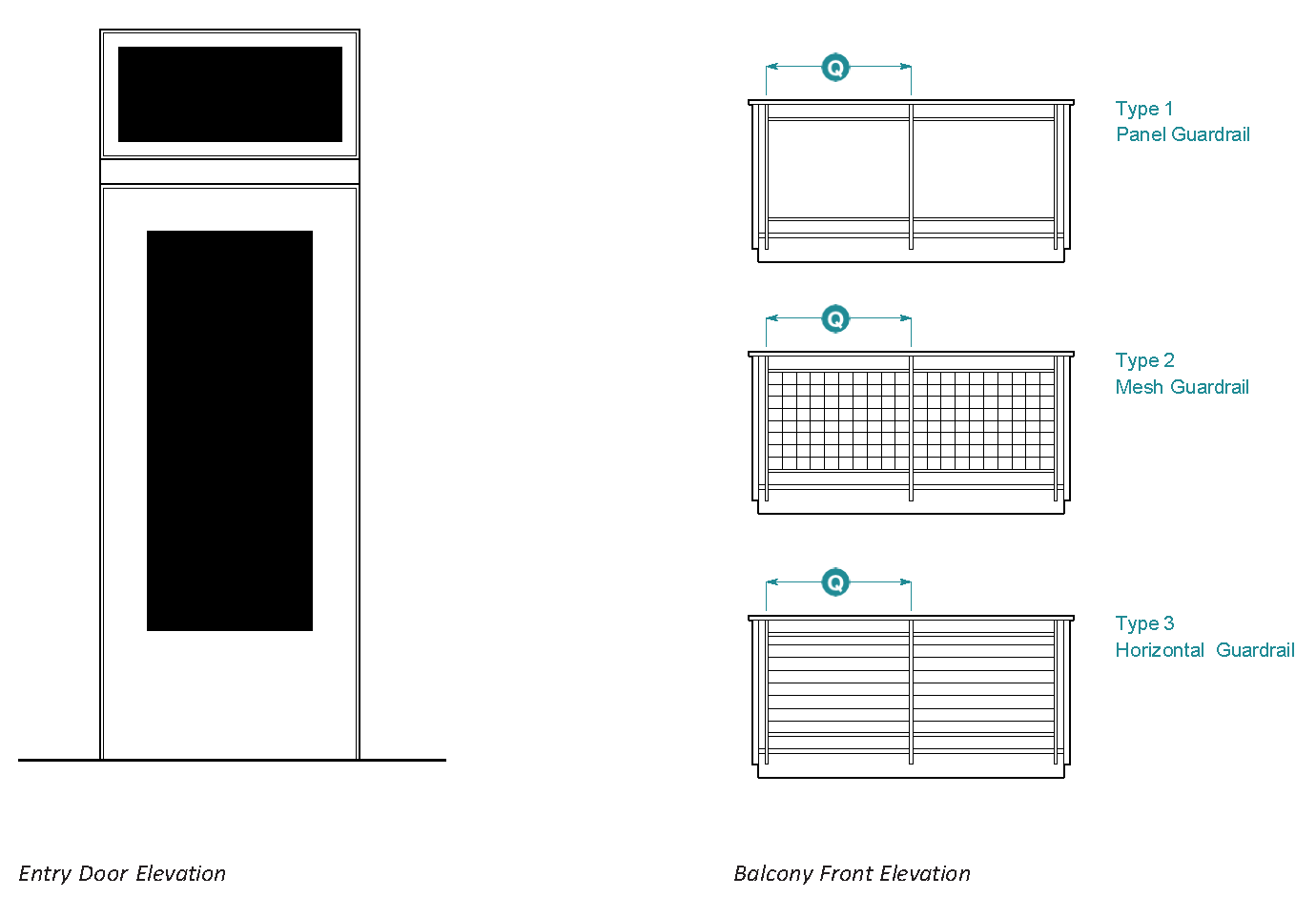
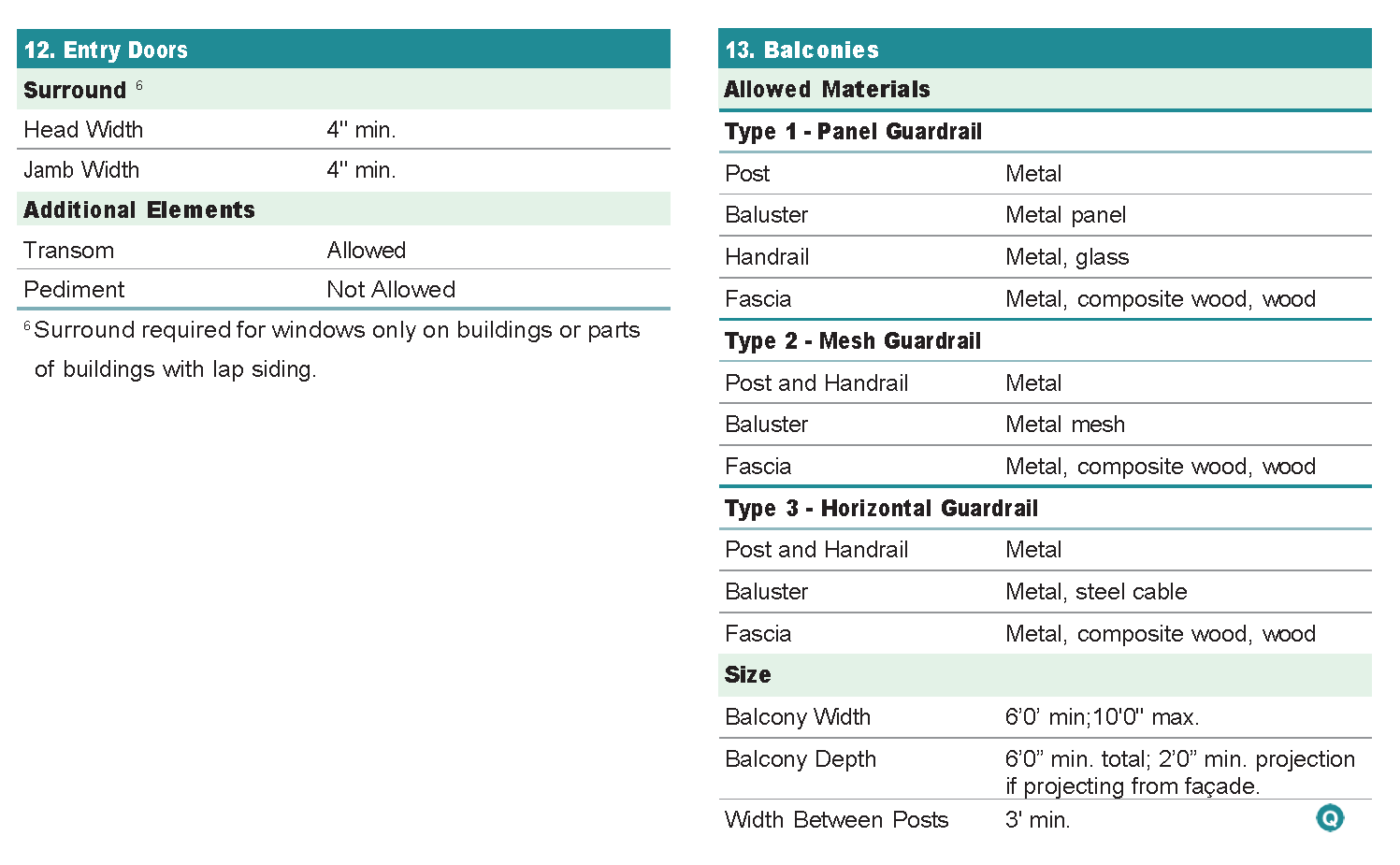
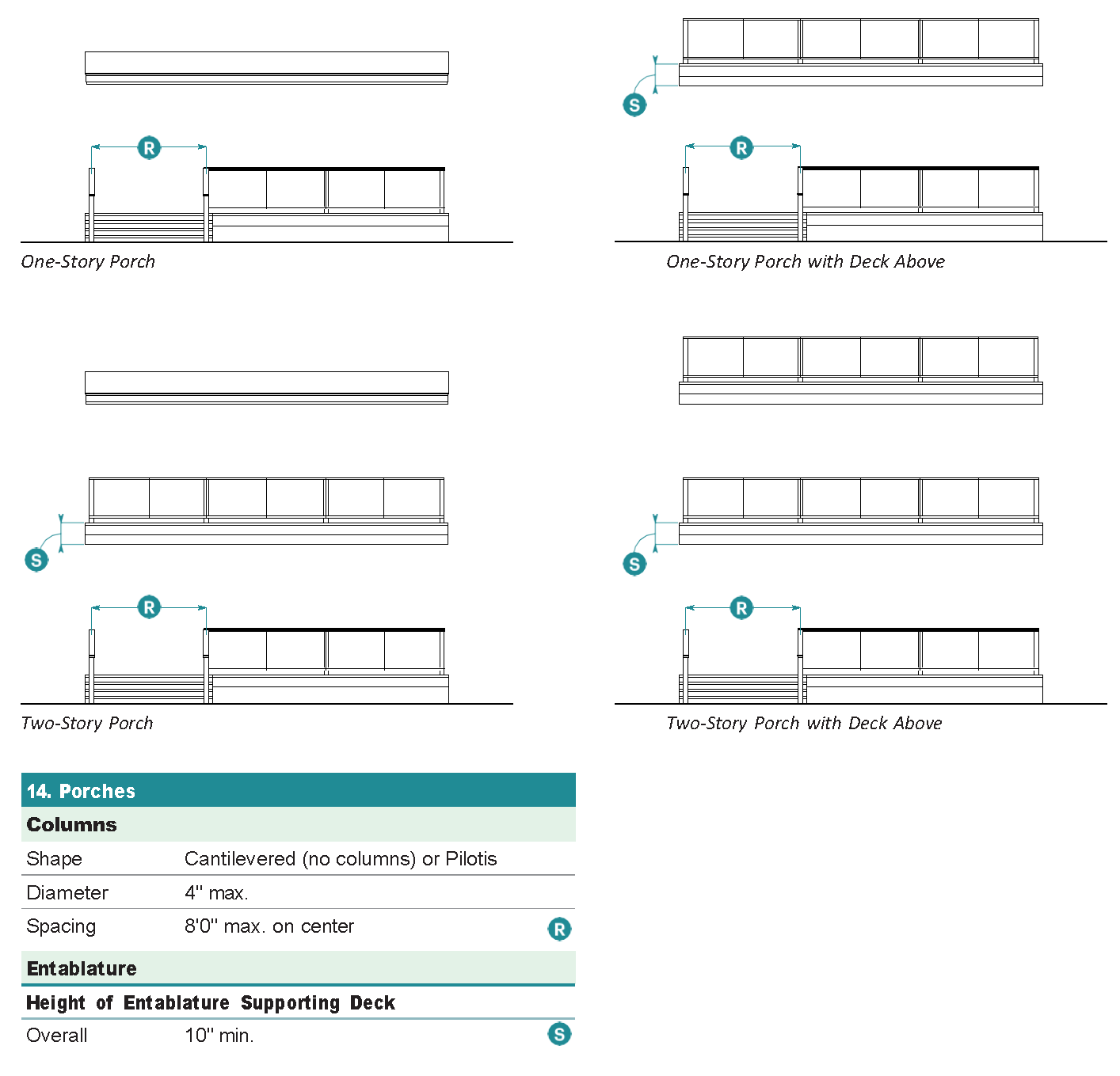
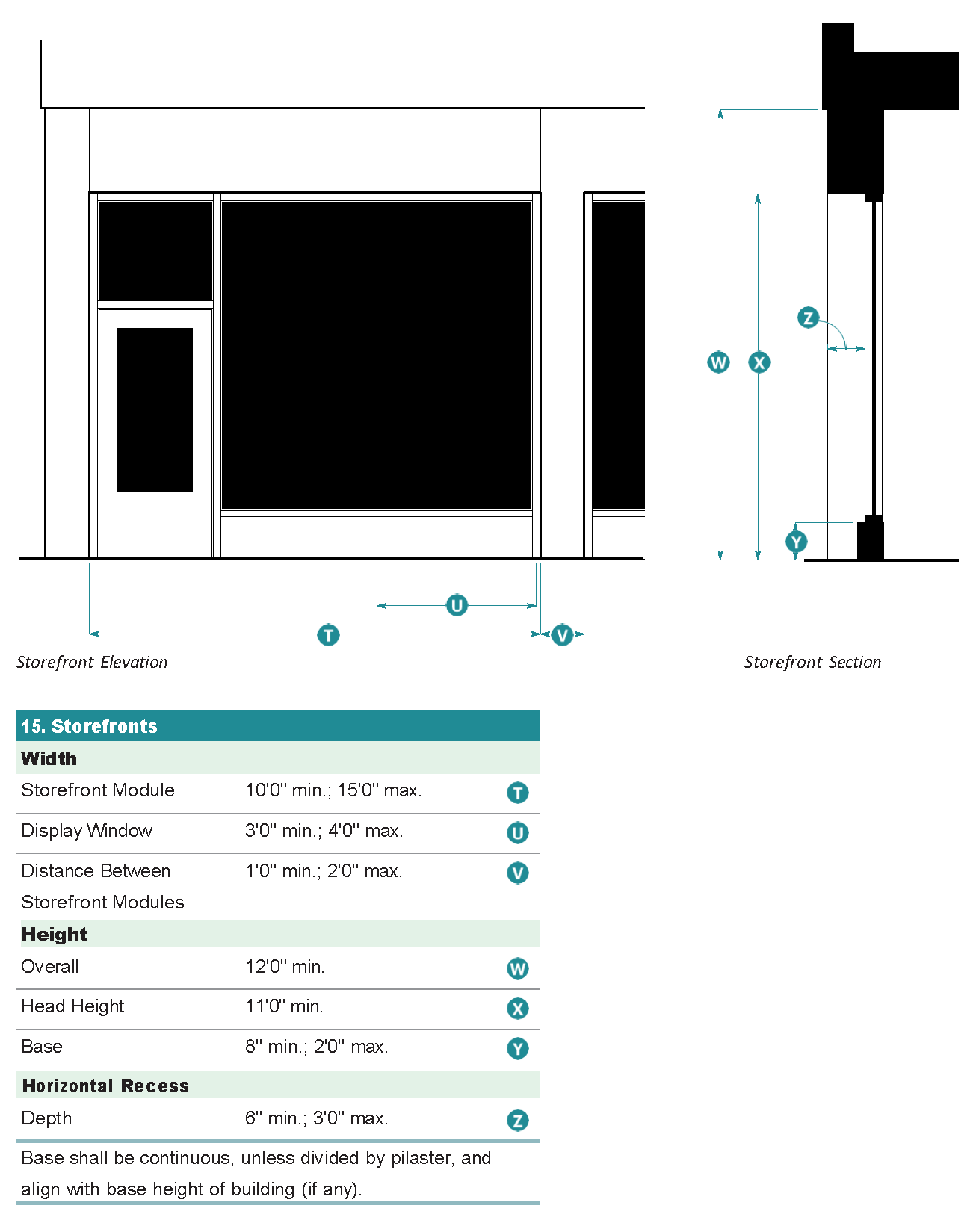
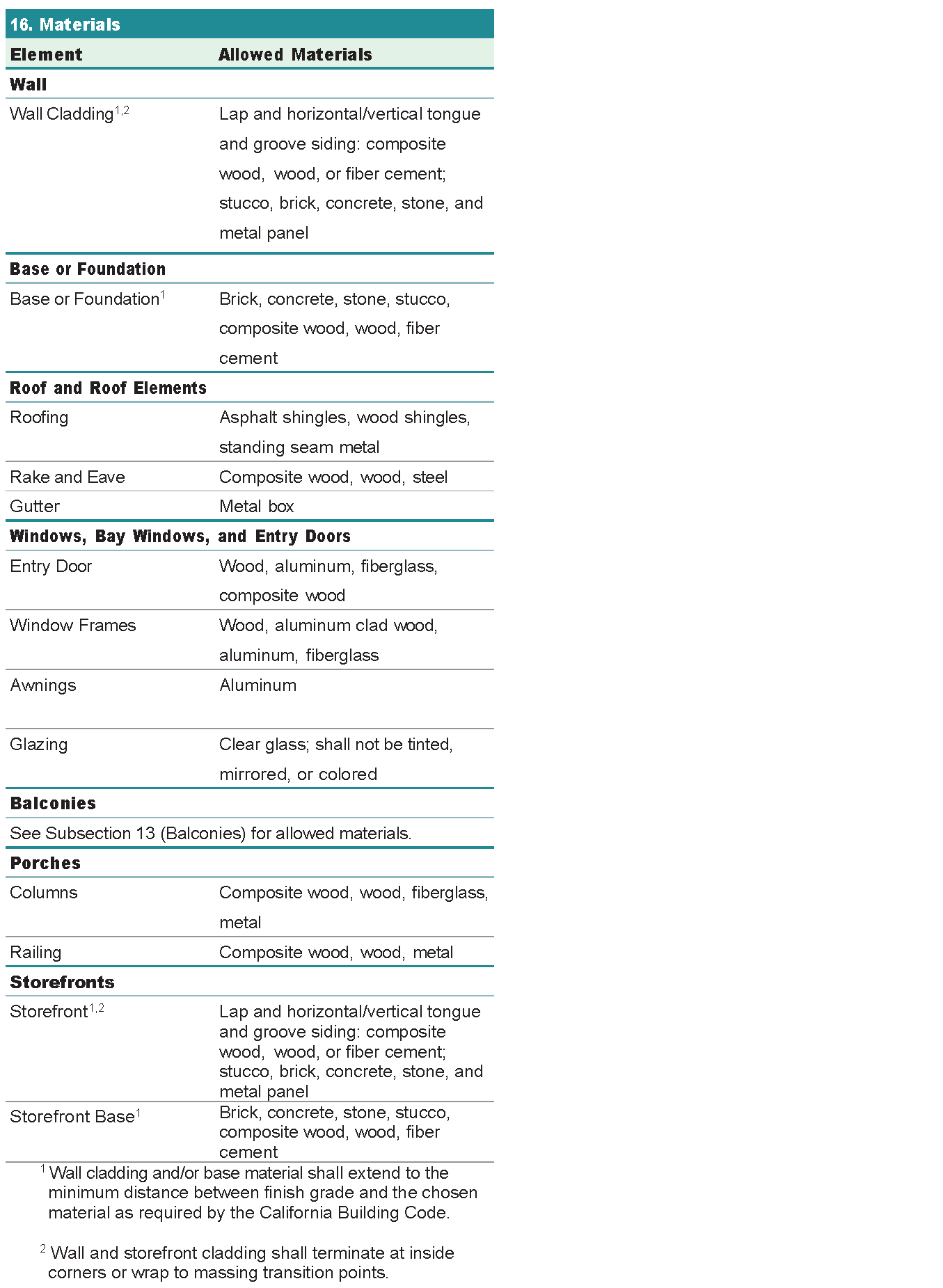
(Ord. No. 1705, § 4(Exh. A), 10-10-2023)
19.27.060 - Craftsman Standards.
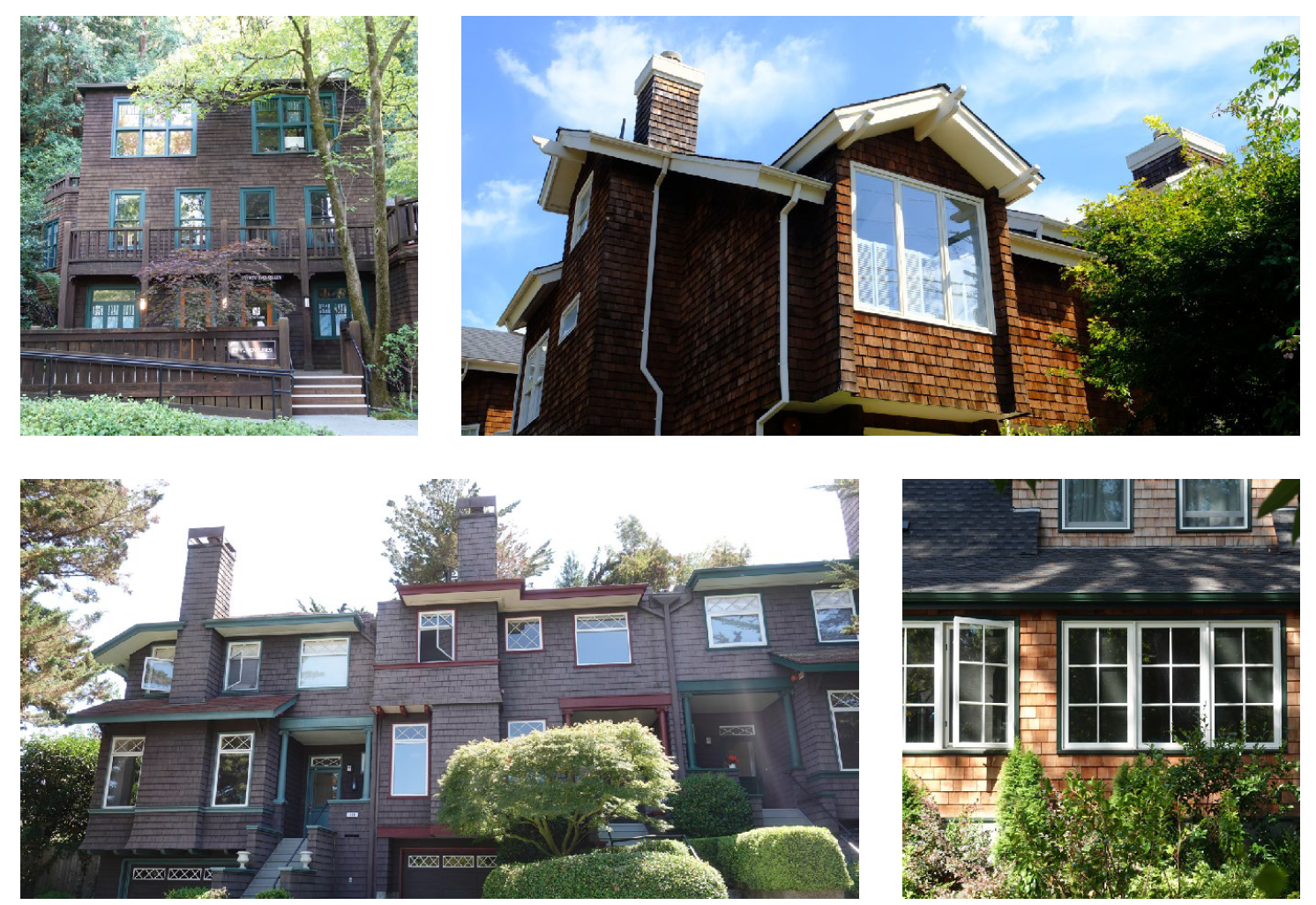
General note: The images above and the descriptions in Subsections 1 and 2 below are intended to provide a brief overview of the architectural style and are descriptive, not regulatory.
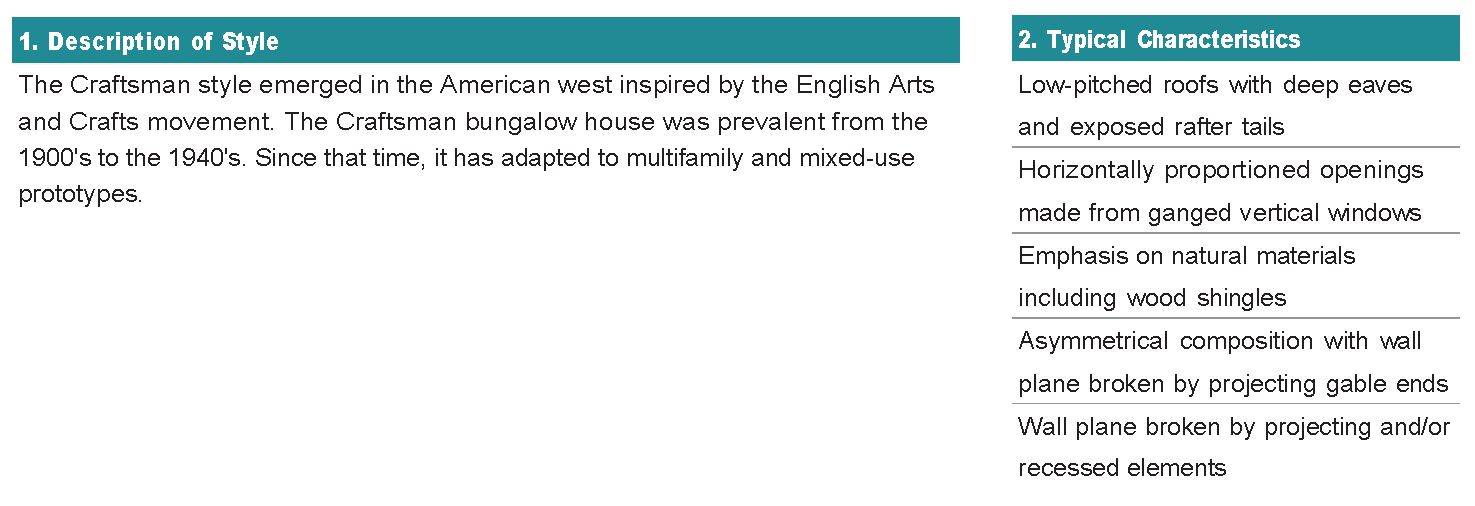
Craftsman Style Standards
Single-Family and Multifamily Buildings
Note: The image below is intended to provide a reference for architectural elements and is illustrative, not regulatory. It is not an exhaustive list of applicable standards.
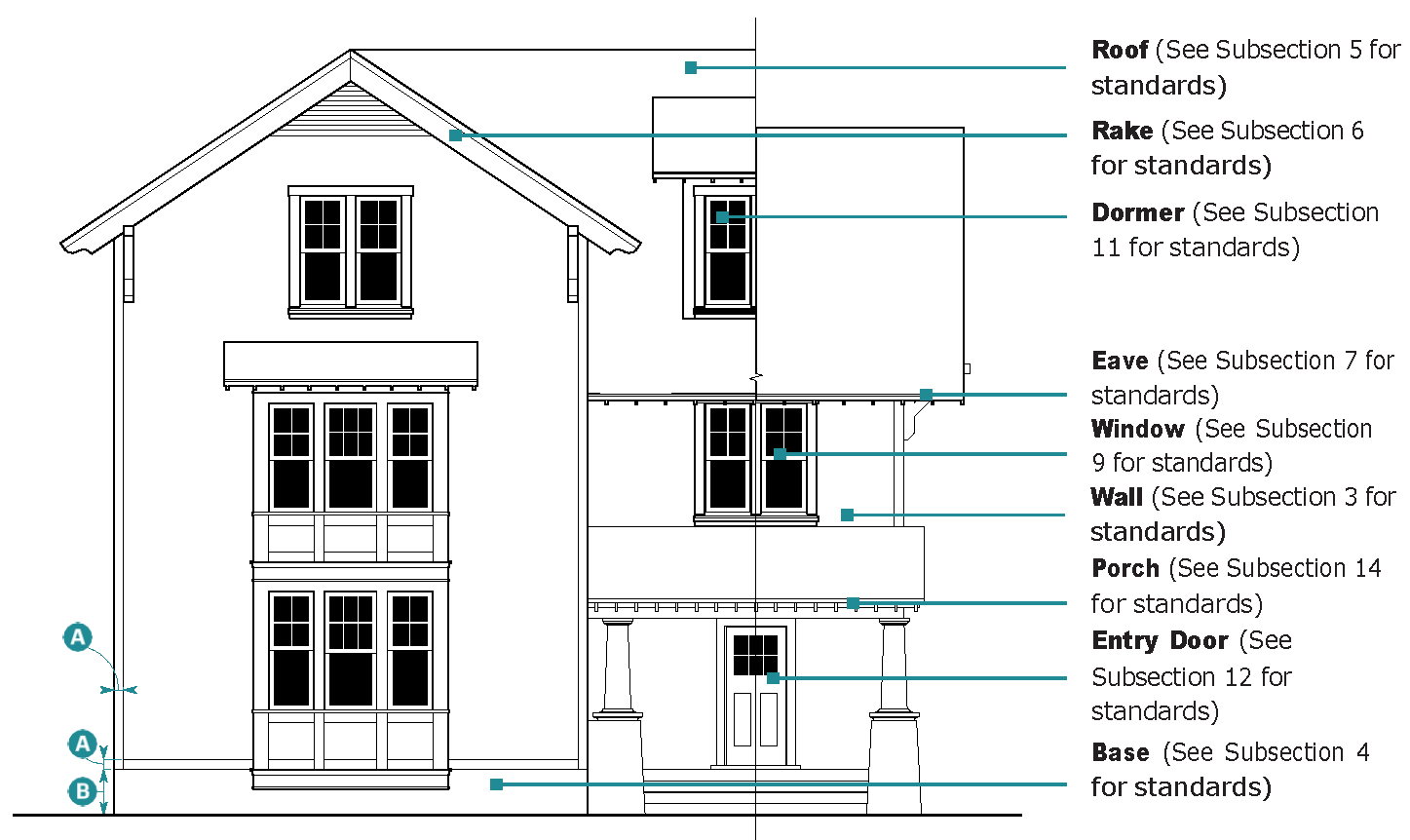
Prototypical Building Elevation
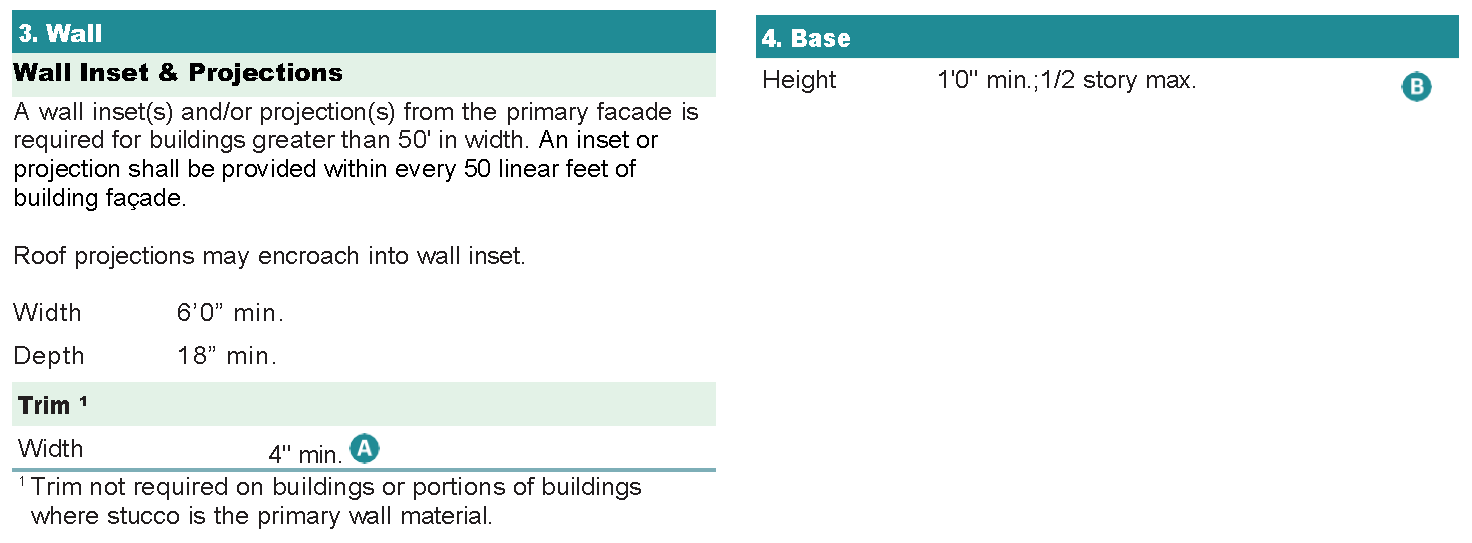
Craftsman Style Standards — Mixed-Use Buildings
Note: The image below is intended to provide a reference for architectural elements and is illustrative, not regulatory. It is not an exhaustive list of applicable standards.
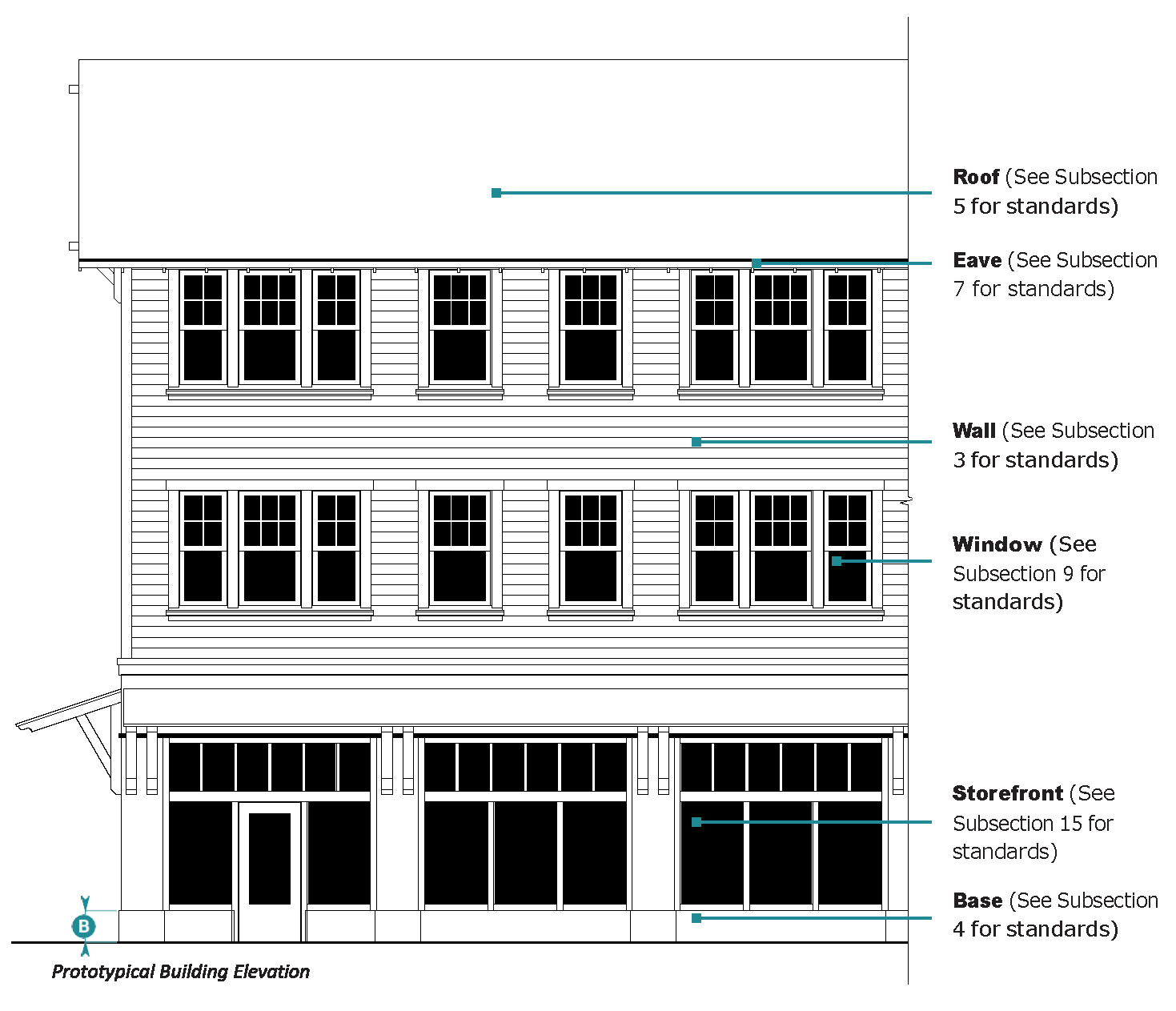
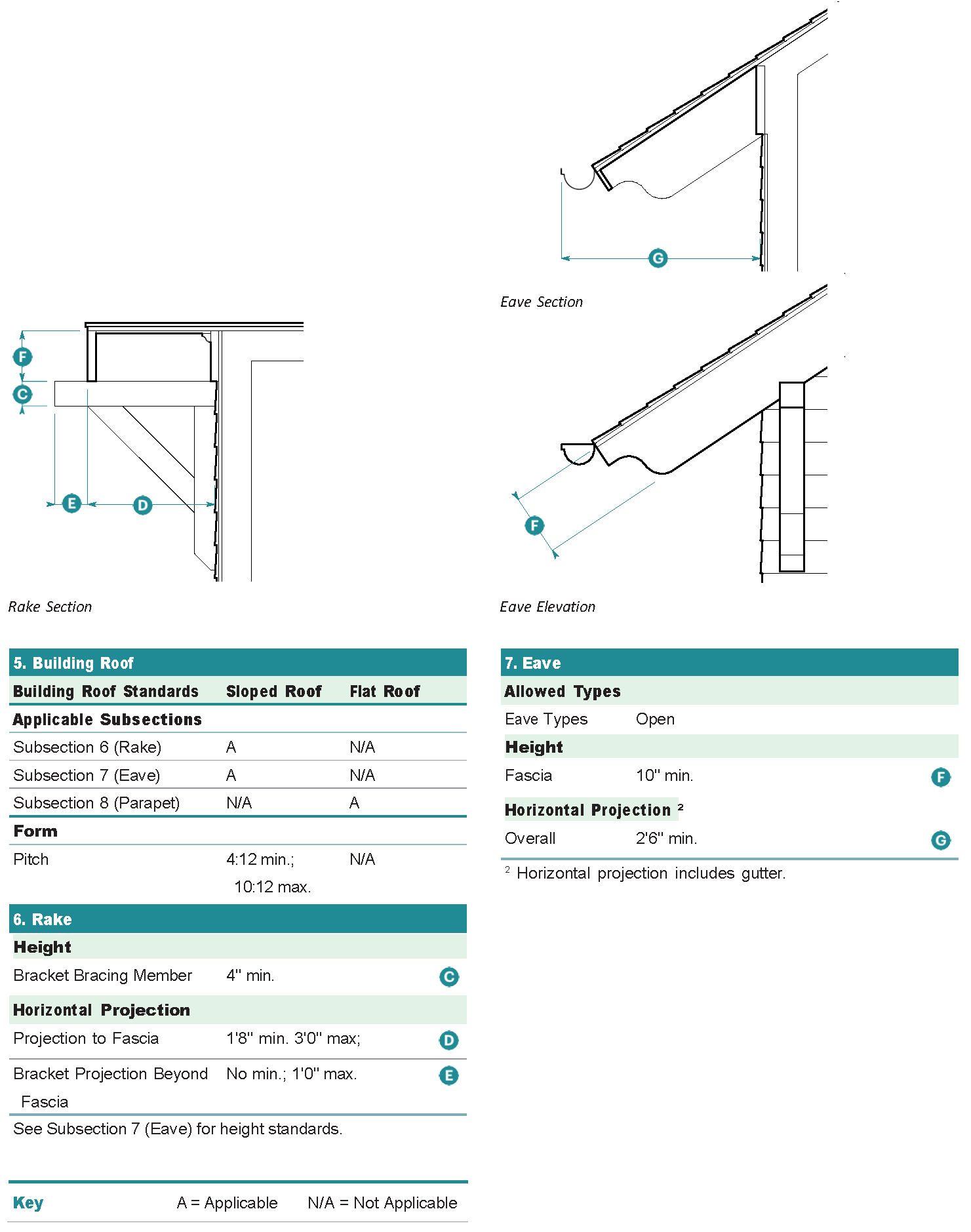
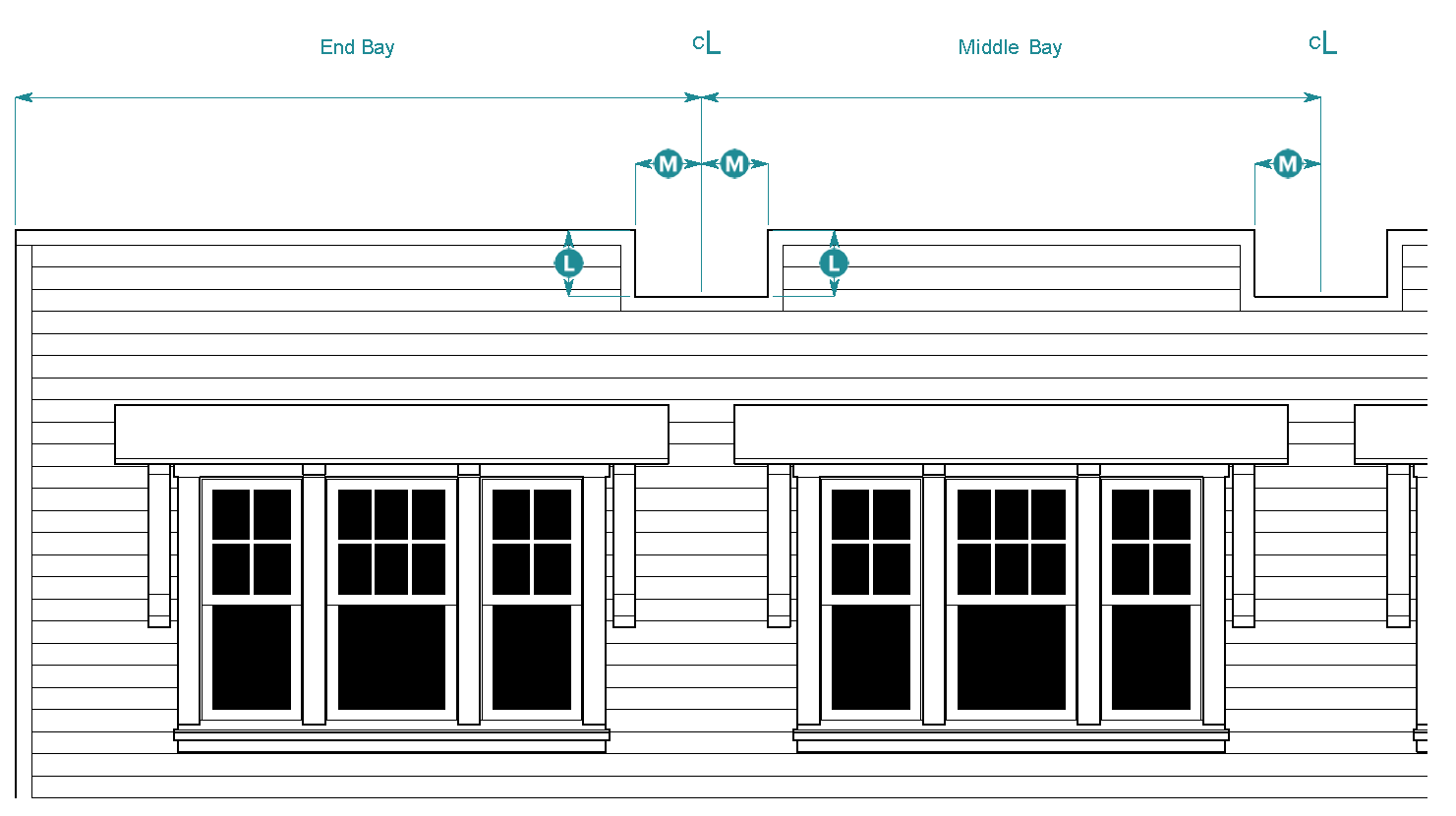
Parapet Elevation
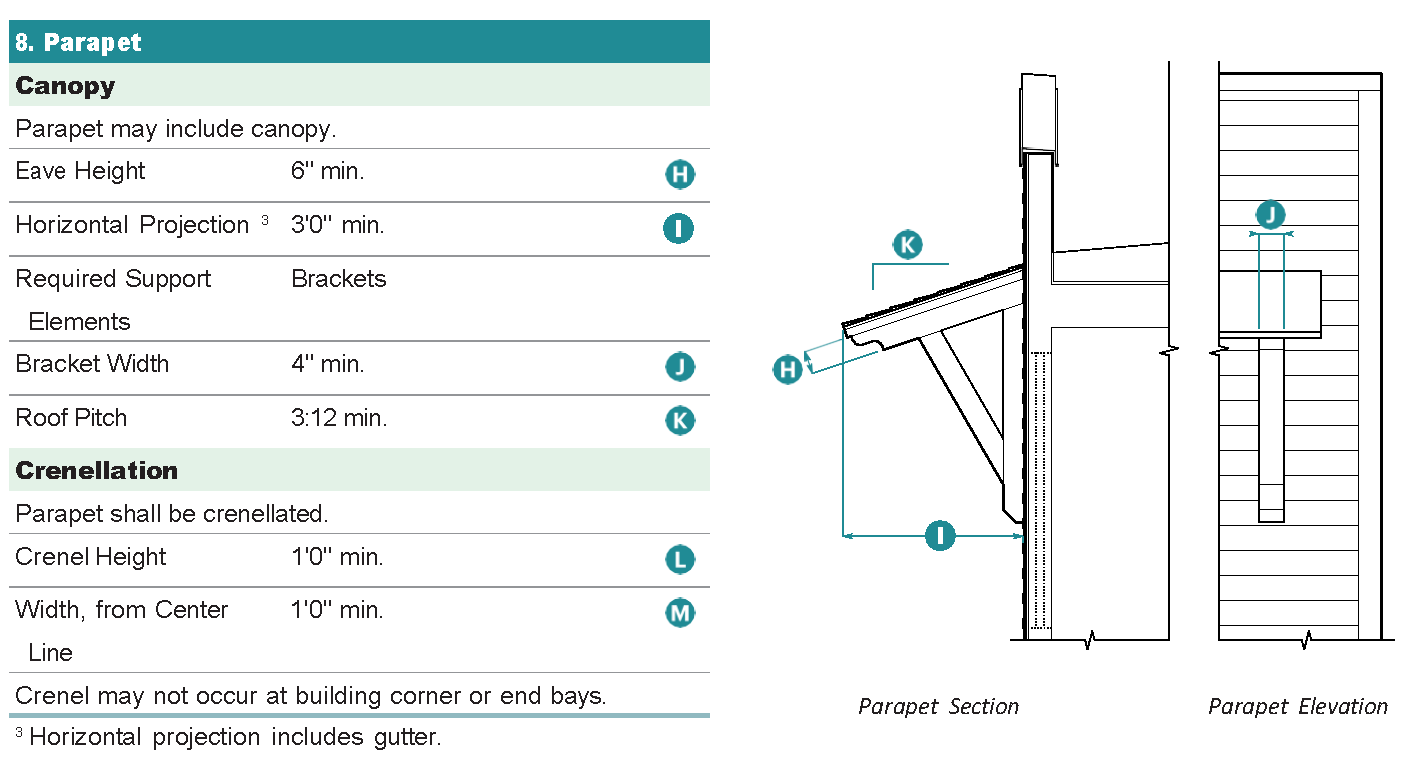
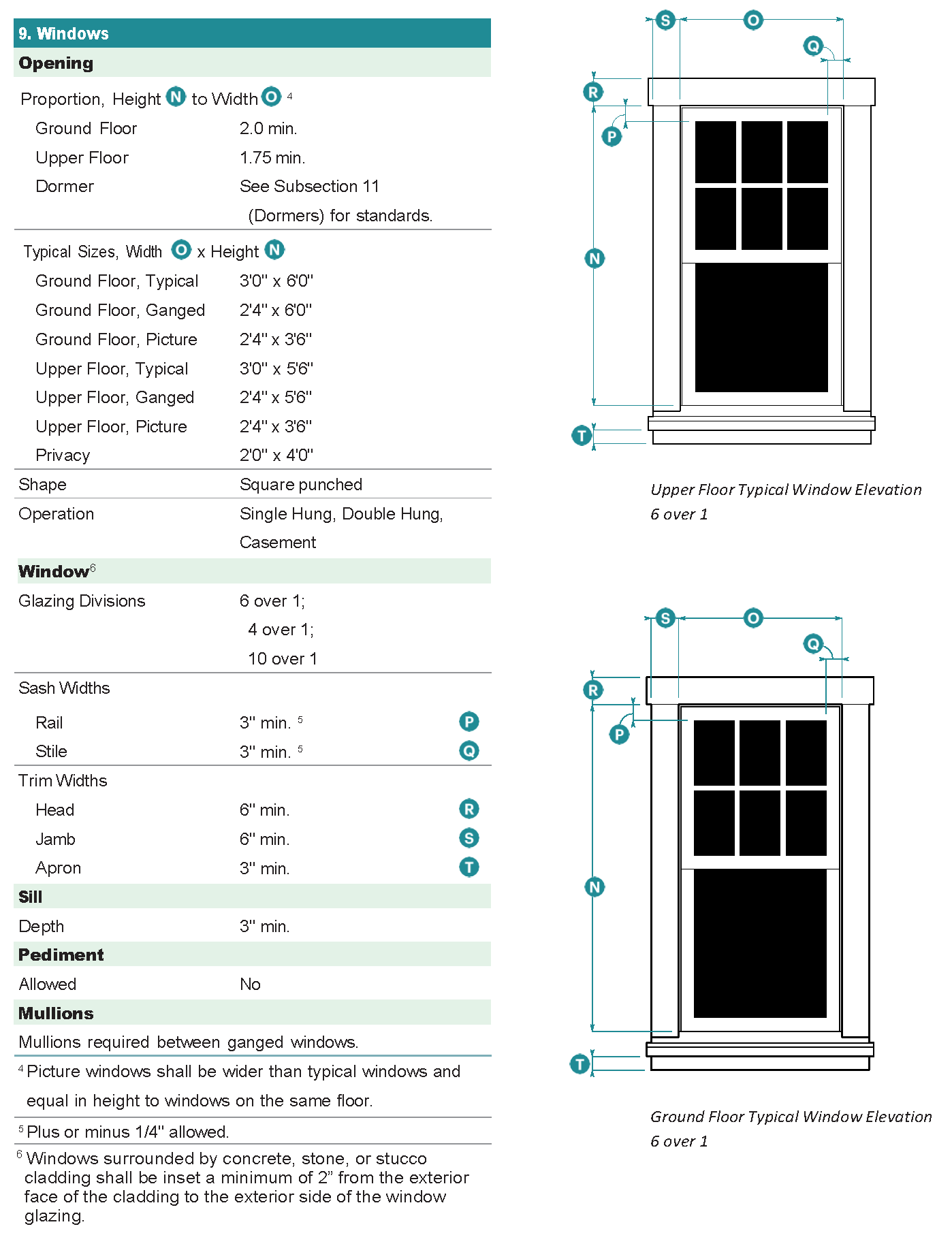
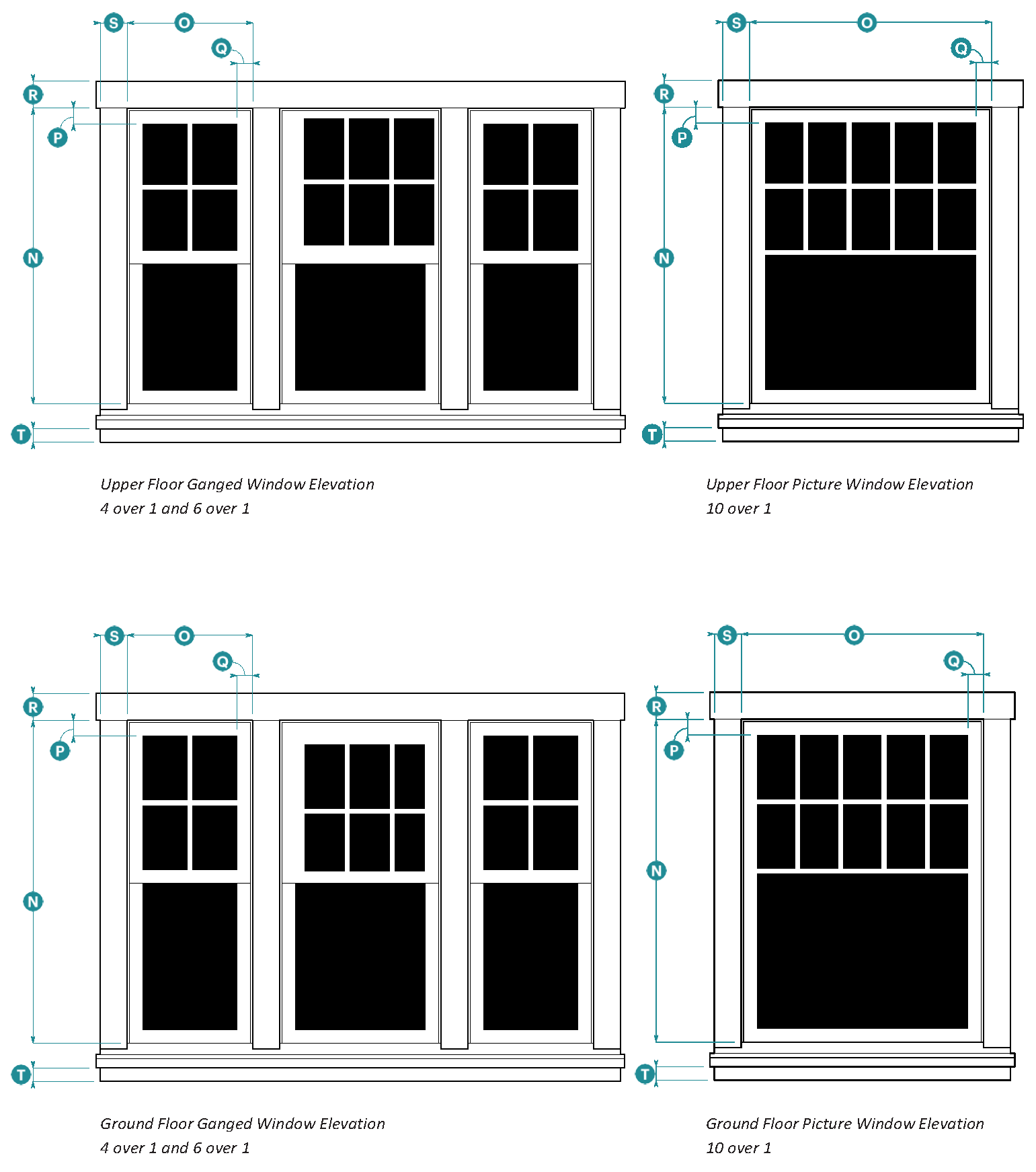
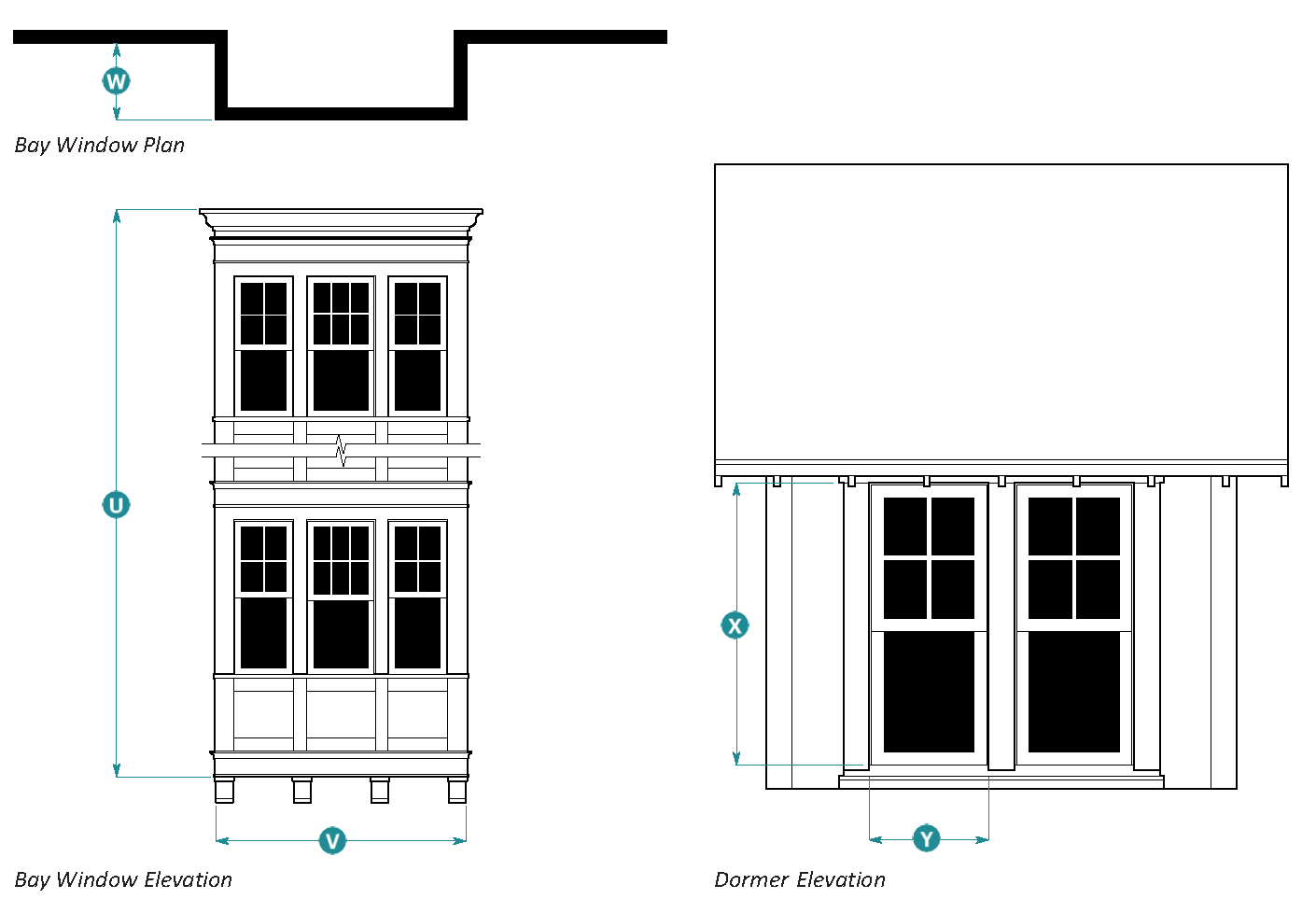
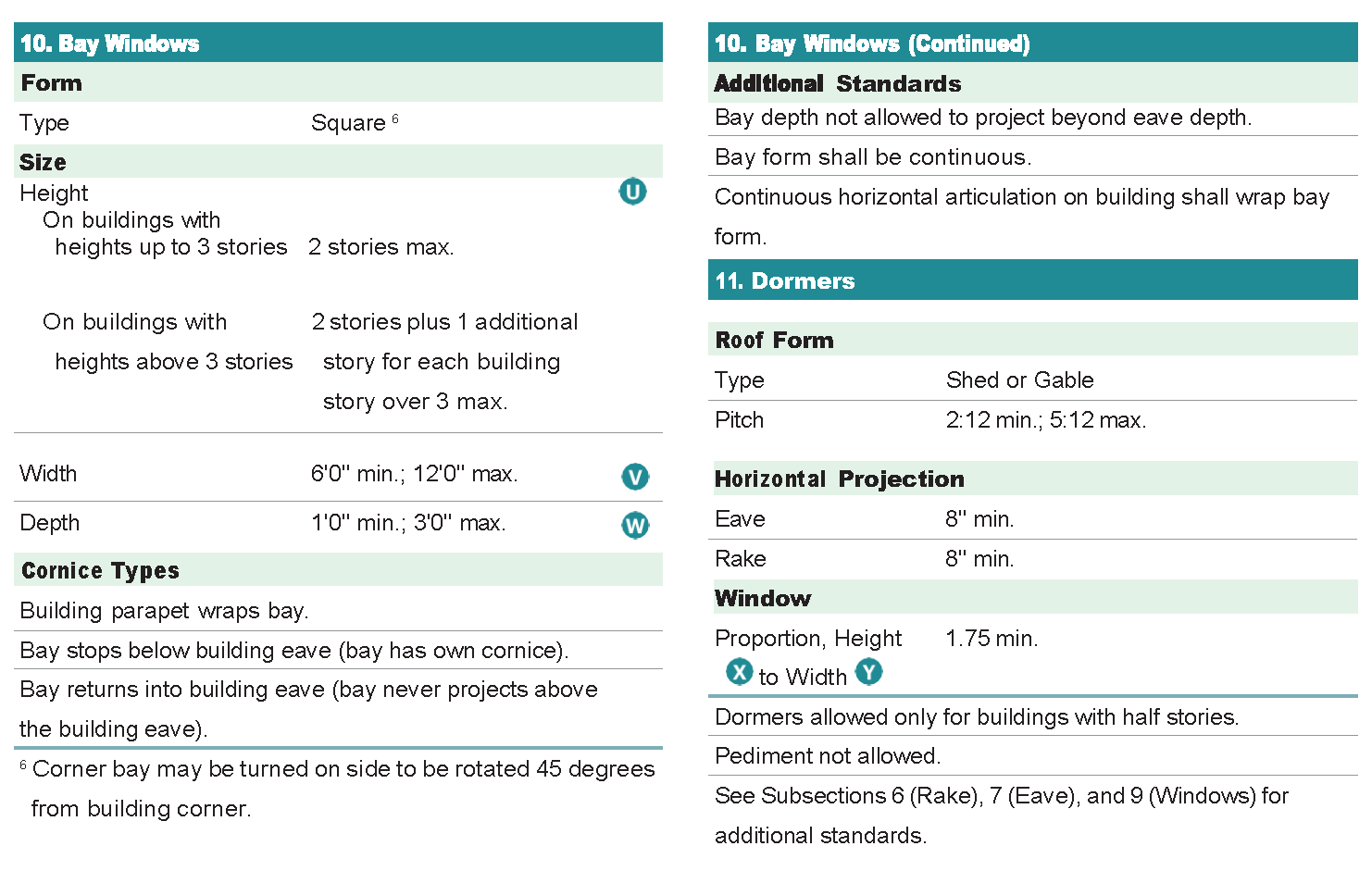
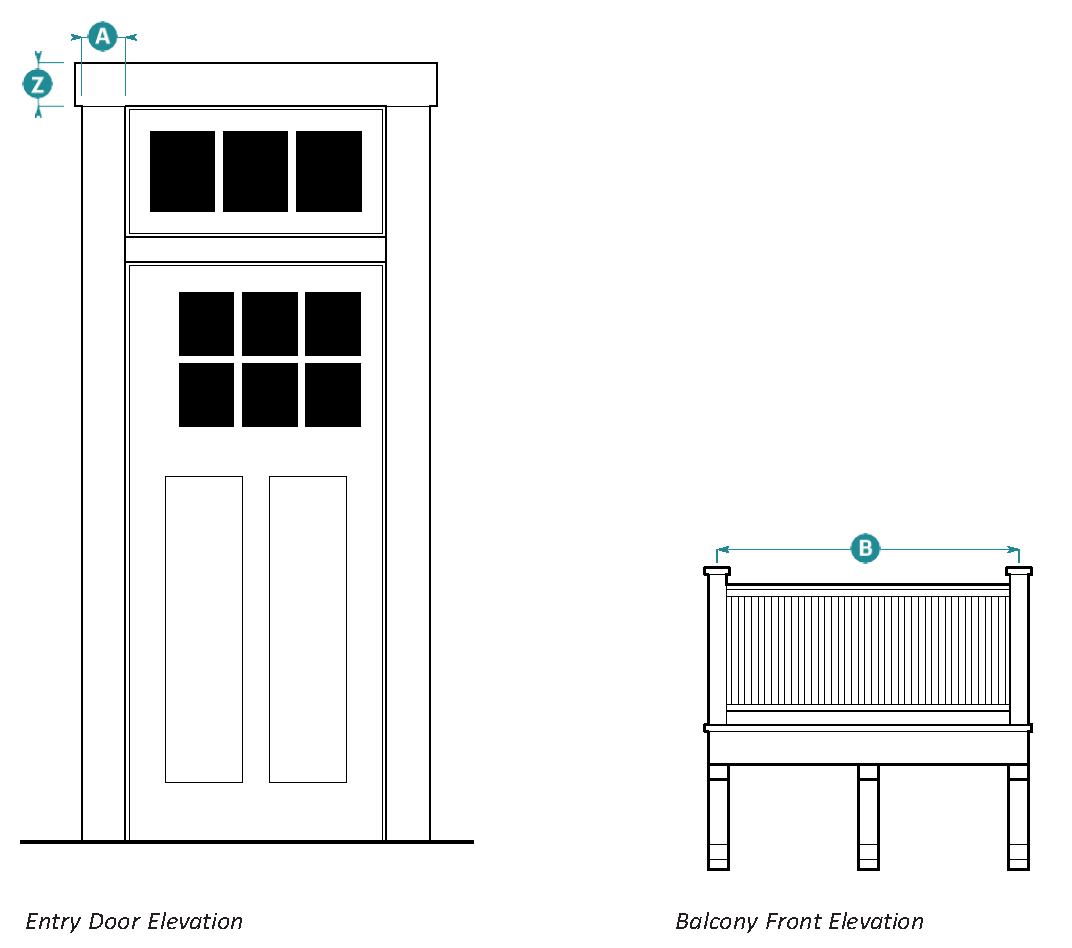
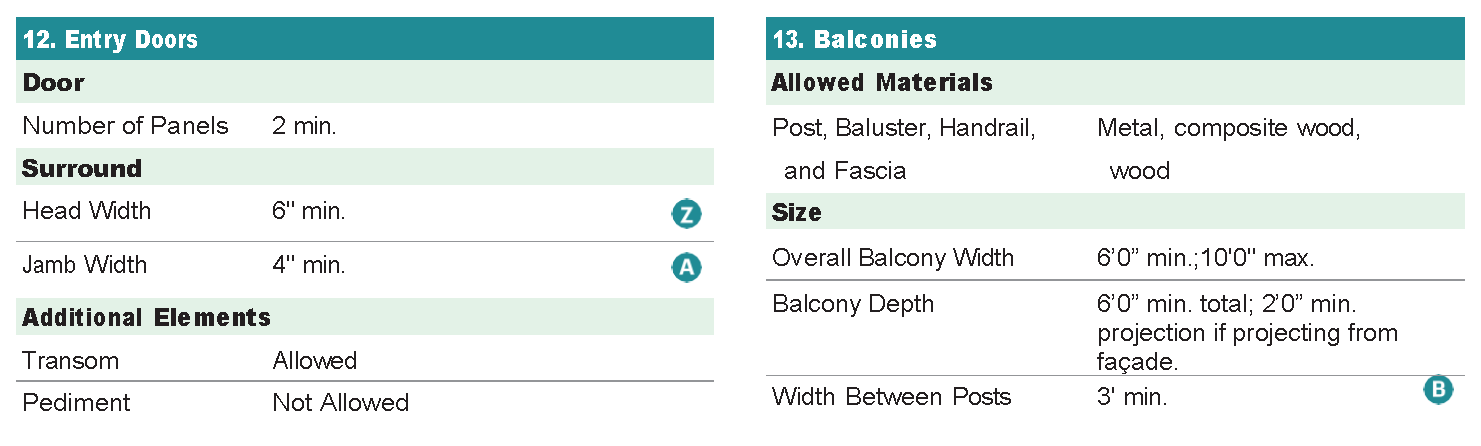
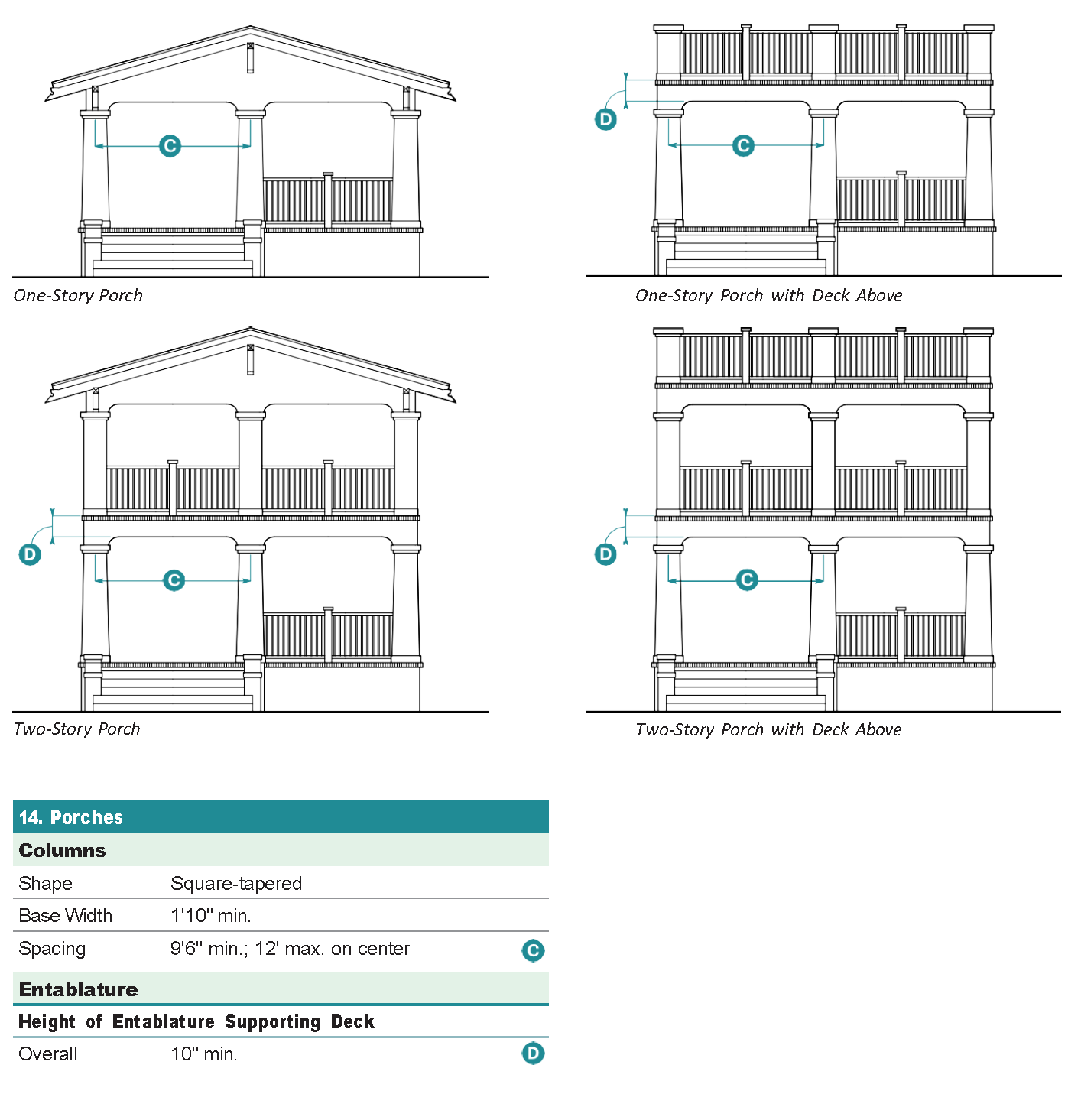
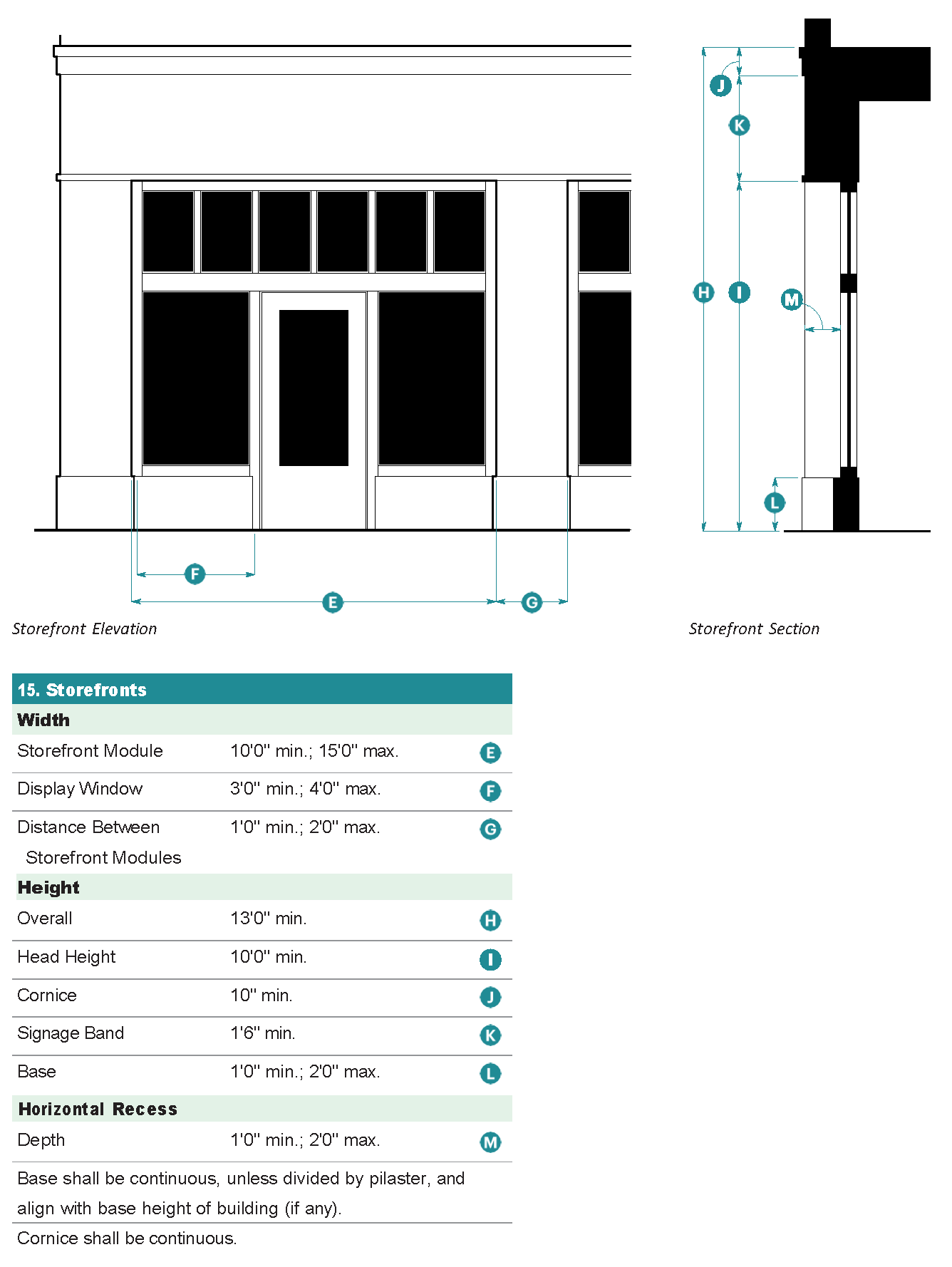
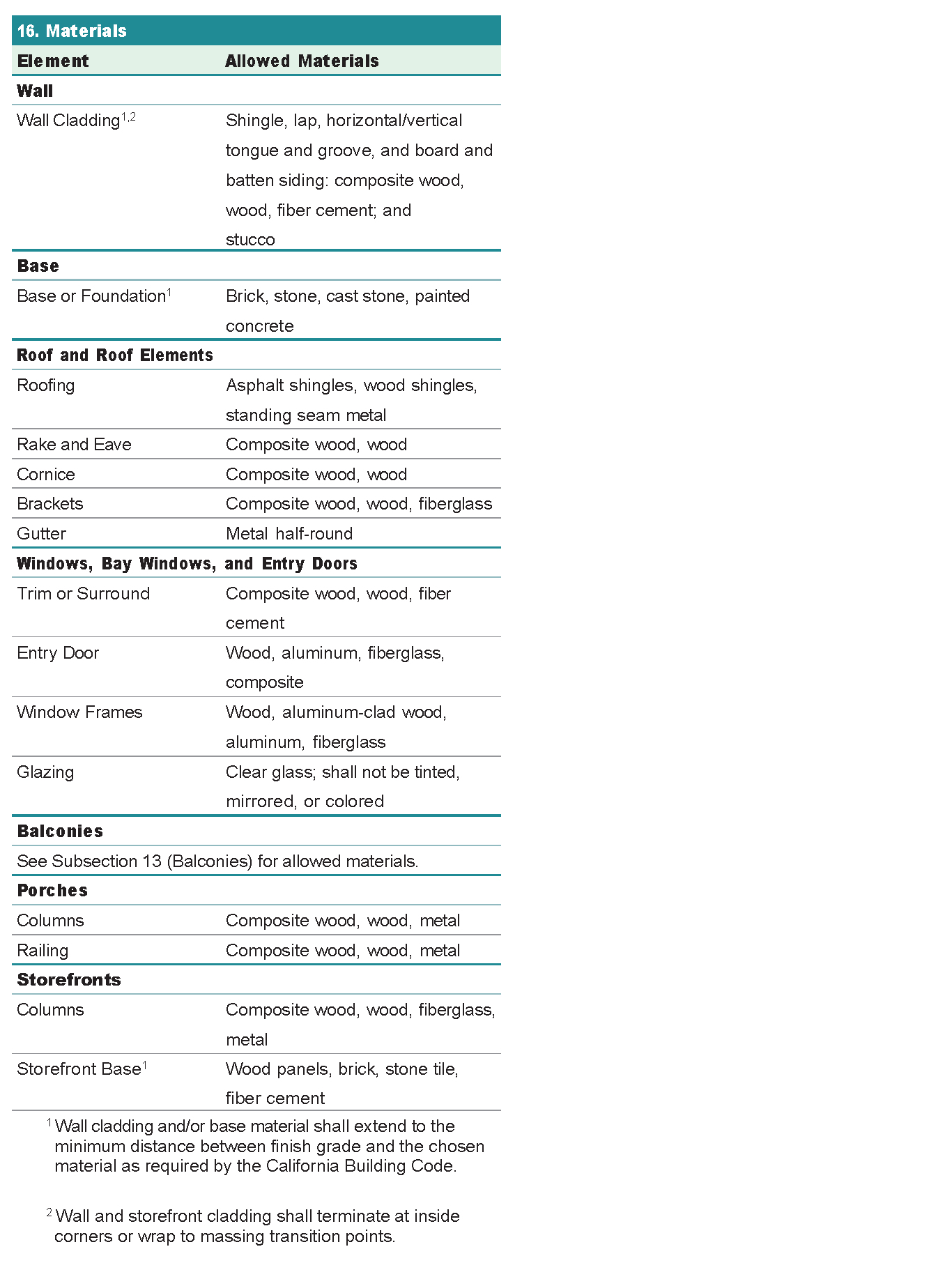
(Ord. No. 1705, § 4(Exh. A), 10-10-2023)
19.27.070 - Main Street Classical Standards.
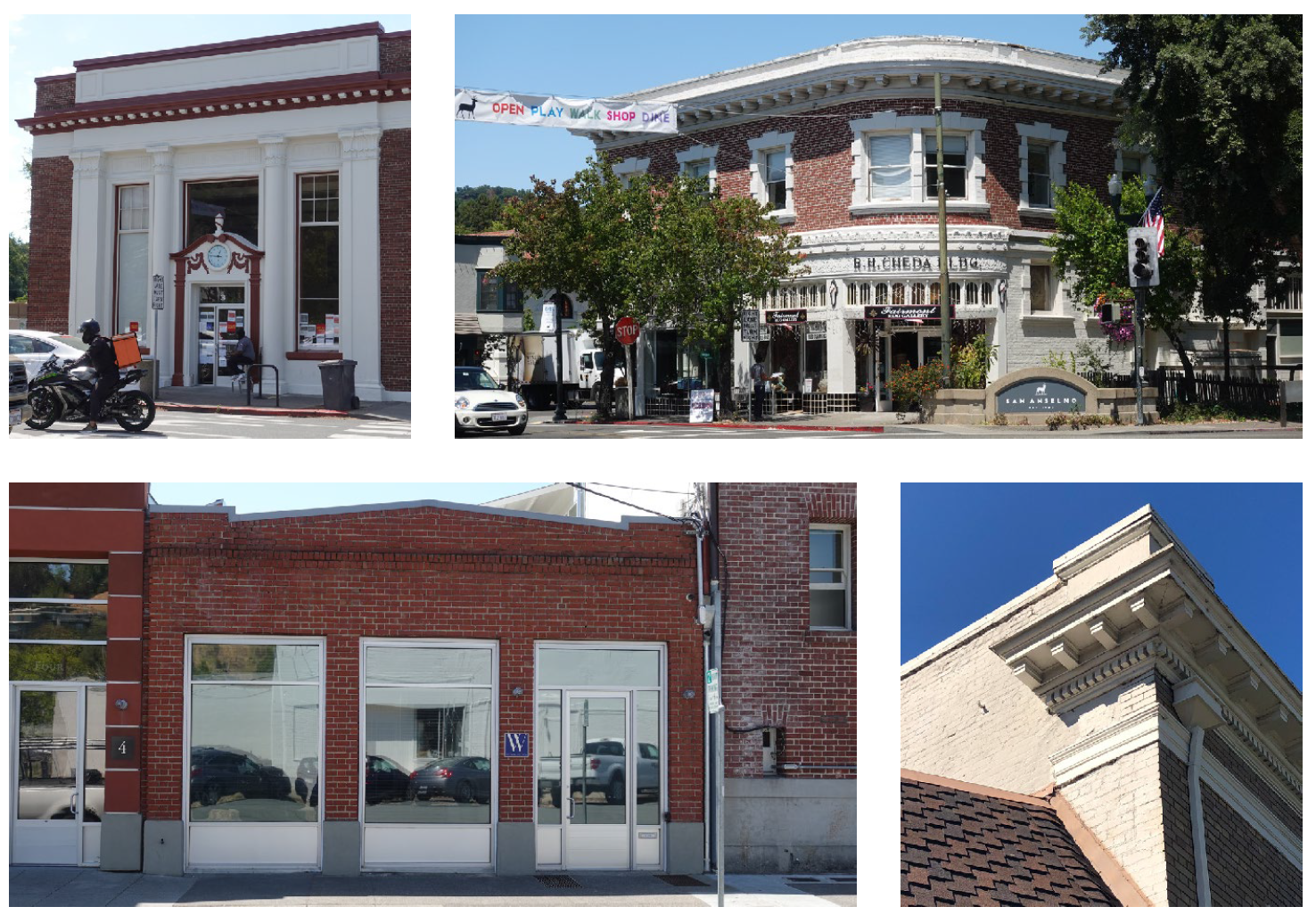
General note: The images above and the descriptions in Subsections 1 and 2 below are intended to provide a brief overview of the architectural style and are descriptive, not regulatory.
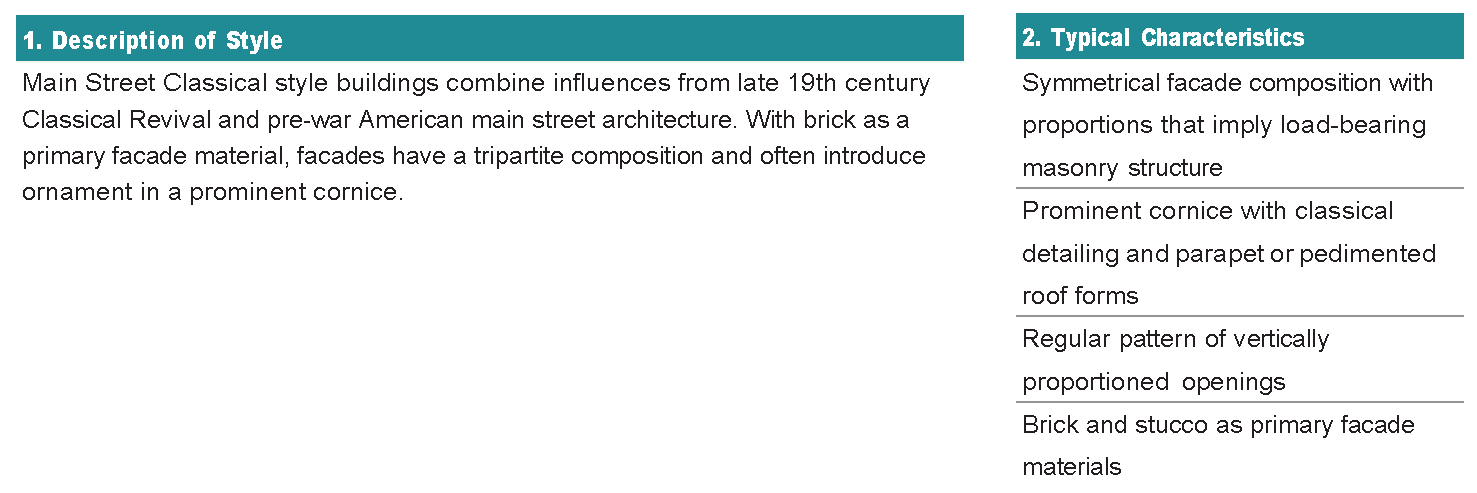
Main Street Classical Style Standards — Mixed-Use Buildings
Note: The image below is intended to provide a reference for architectural elements and is illustrative, not regulatory. It is not an exhaustive list of applicable standards.
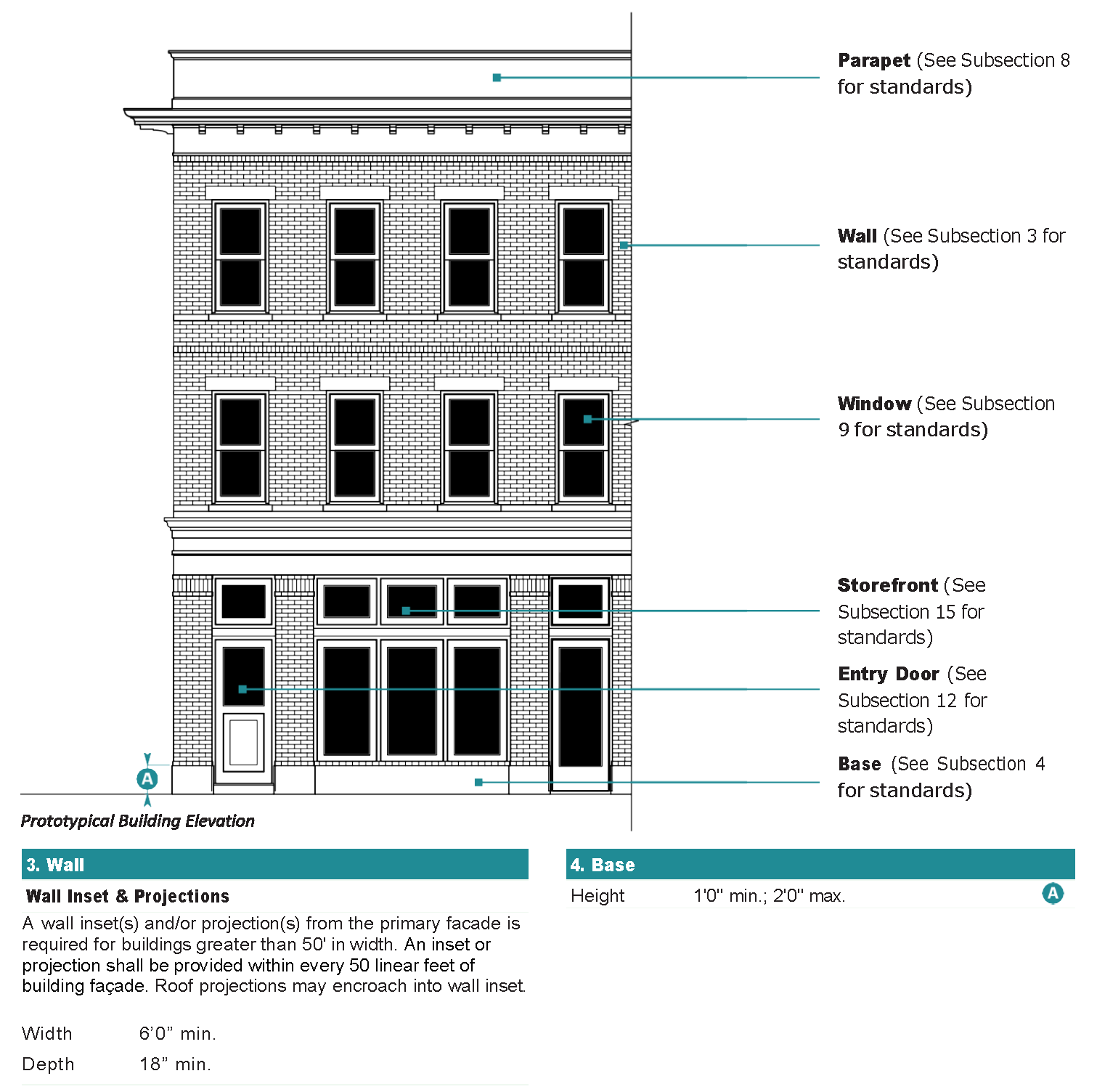
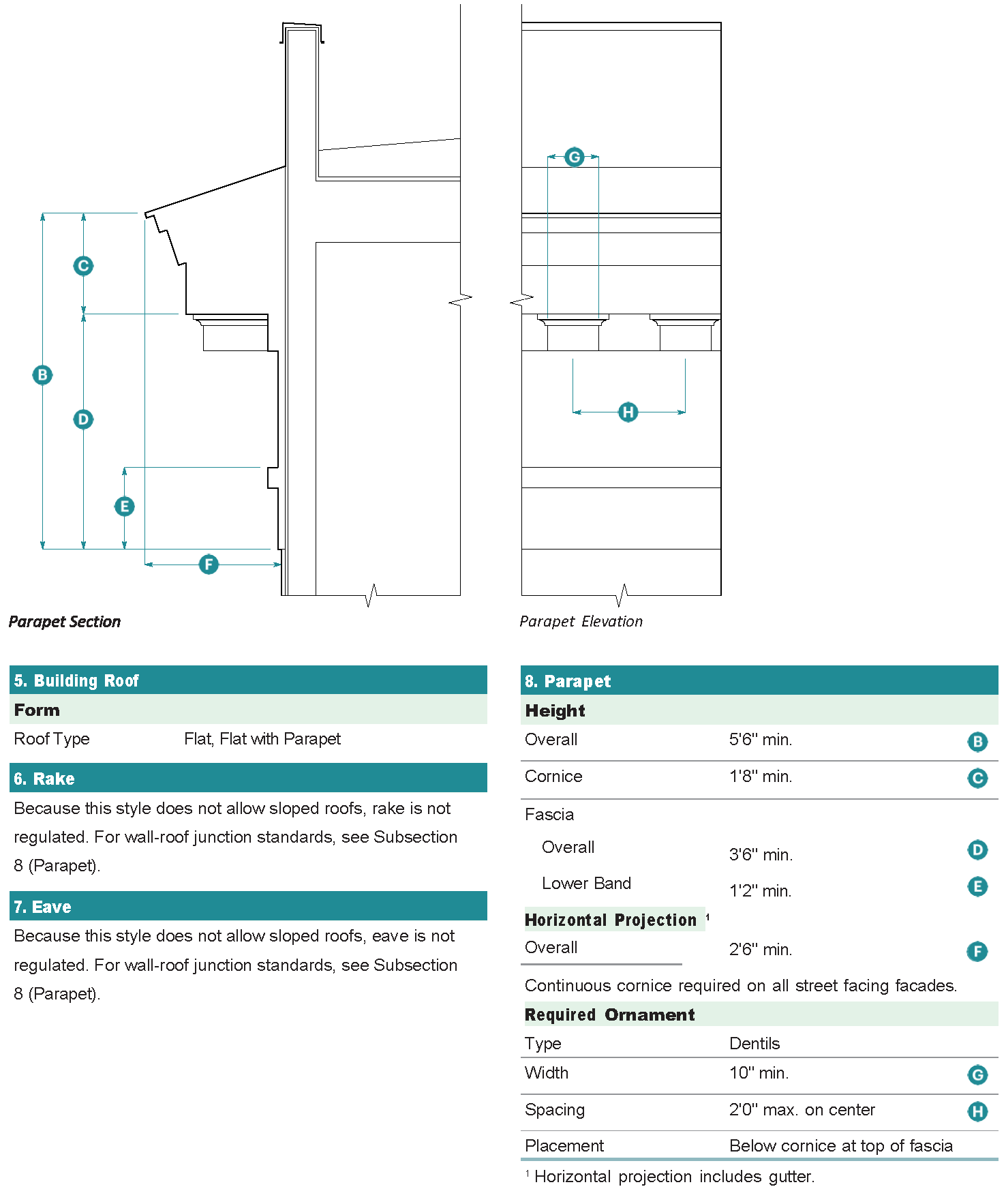
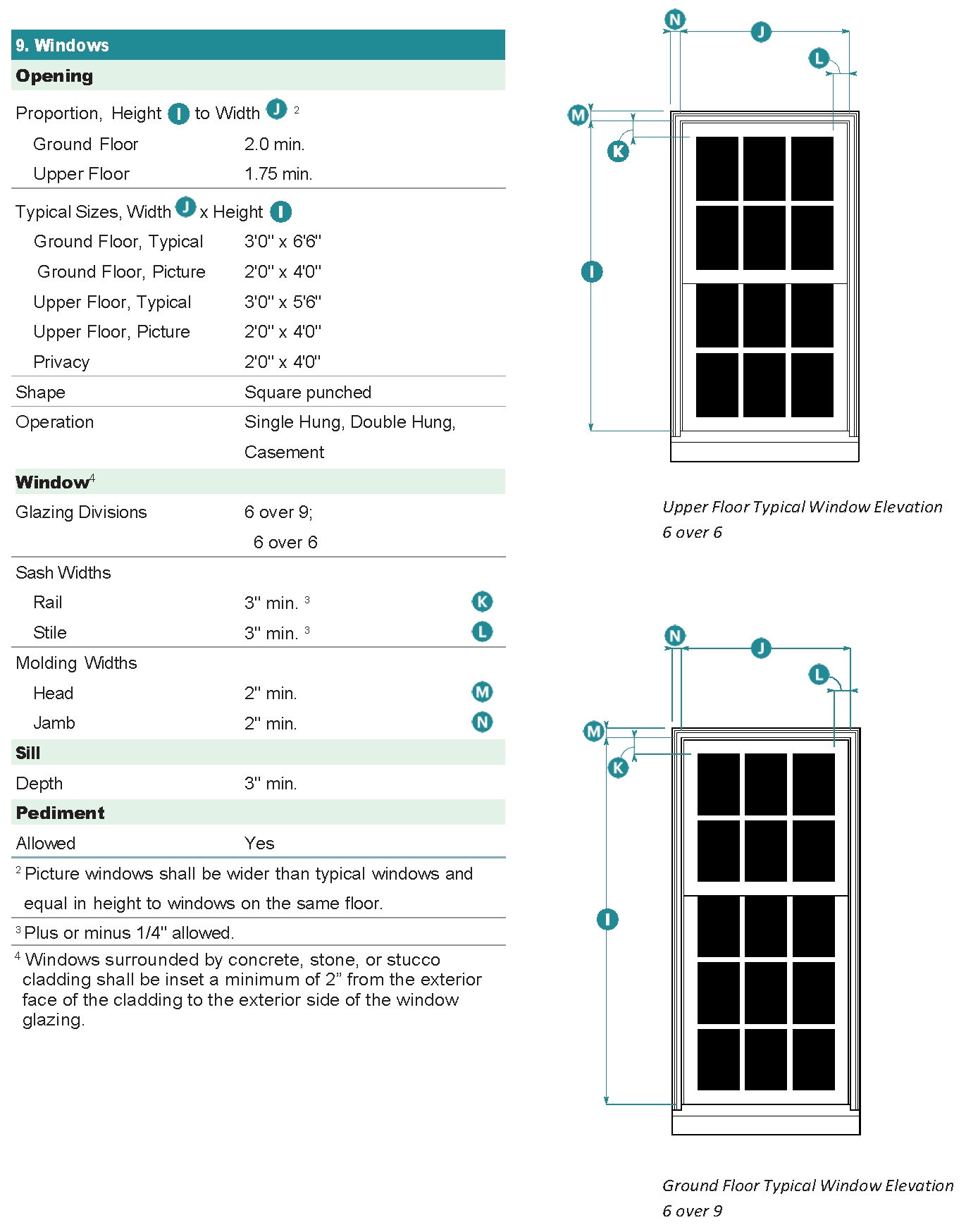
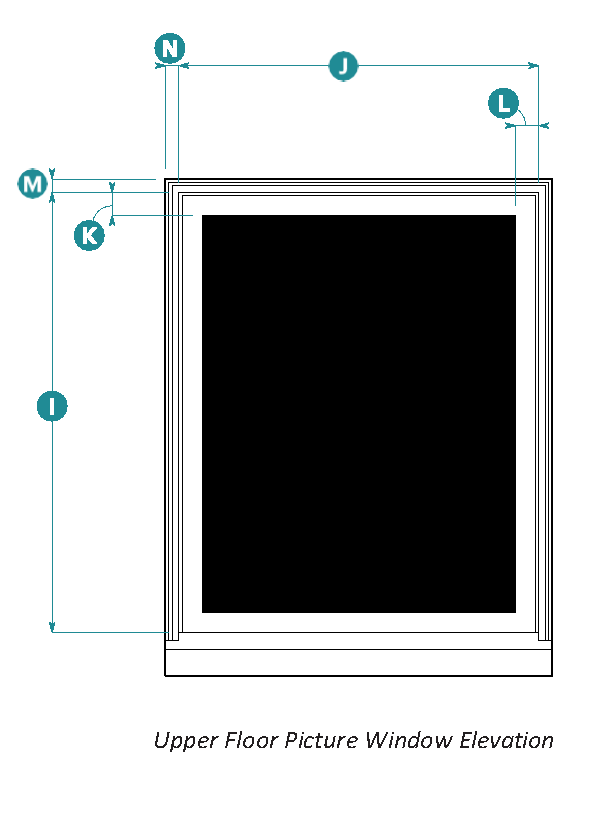
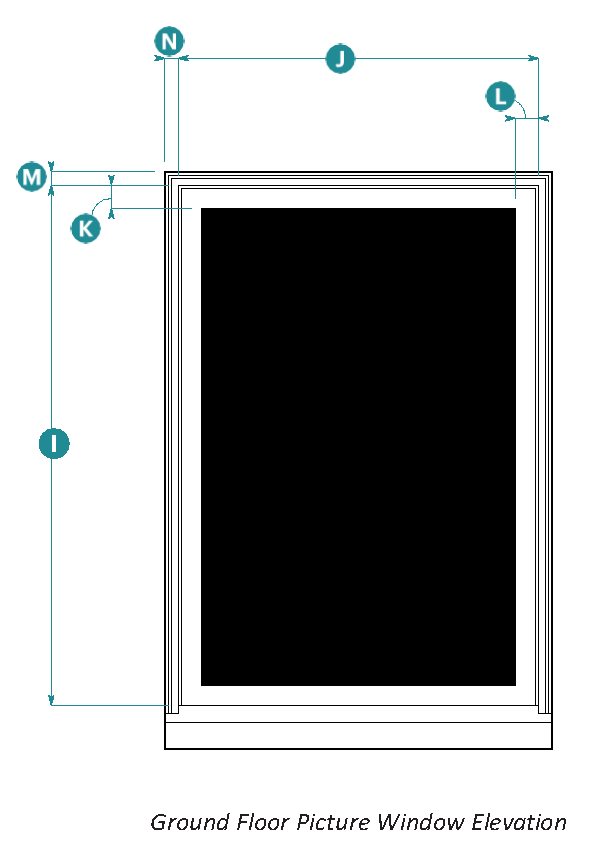
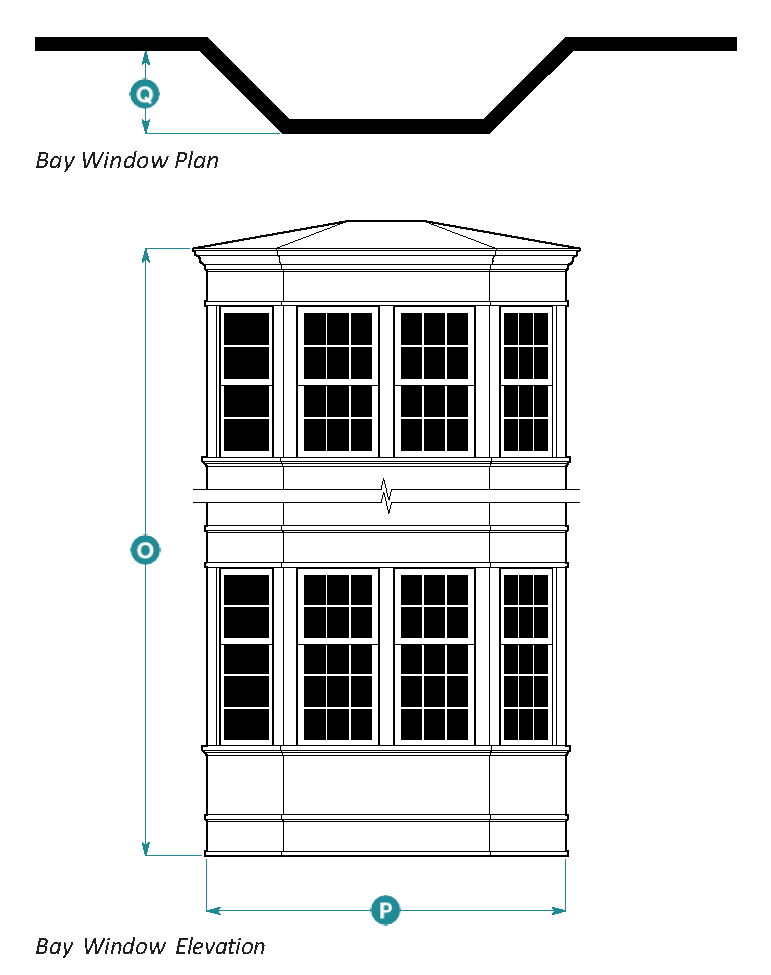
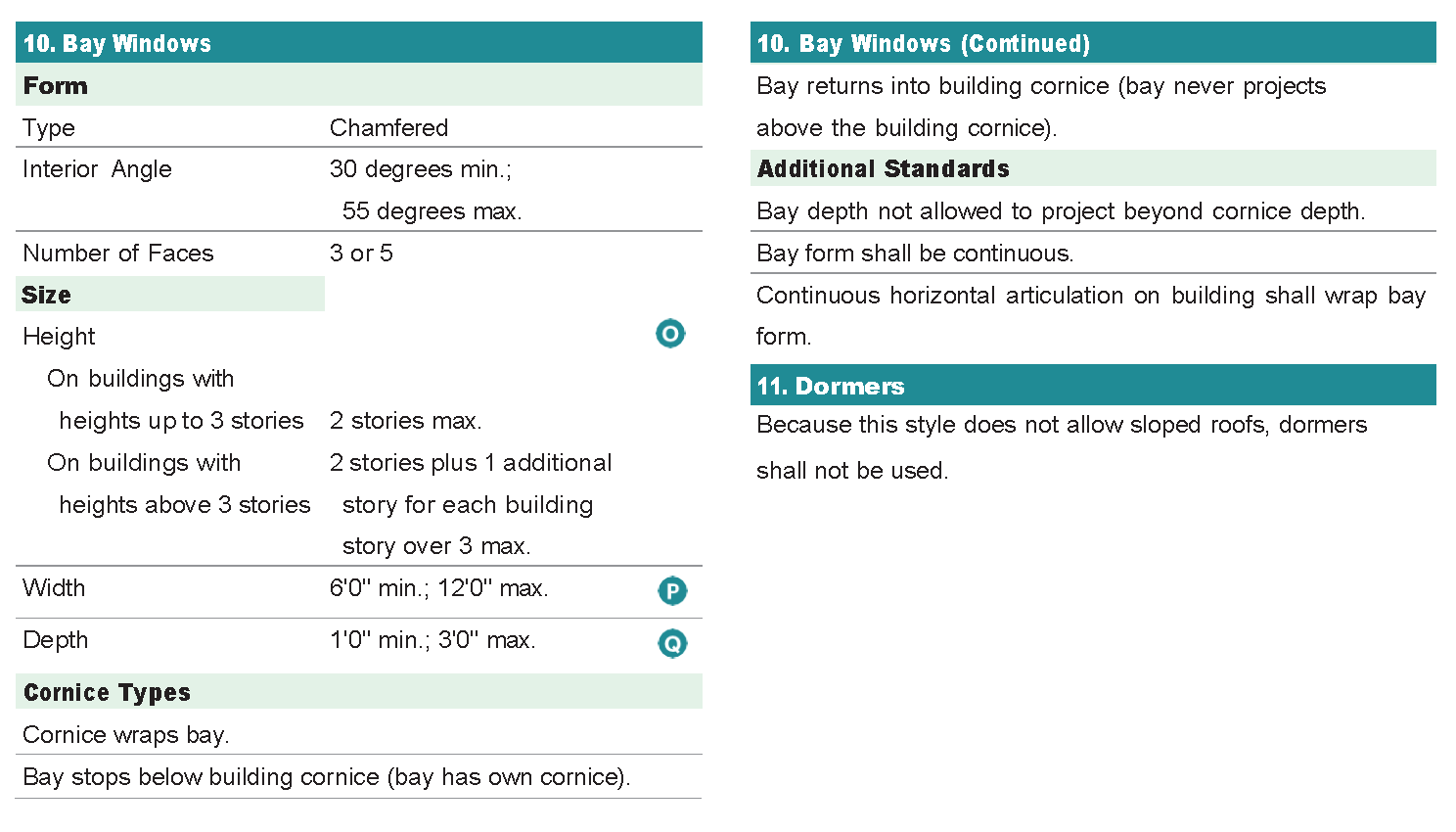
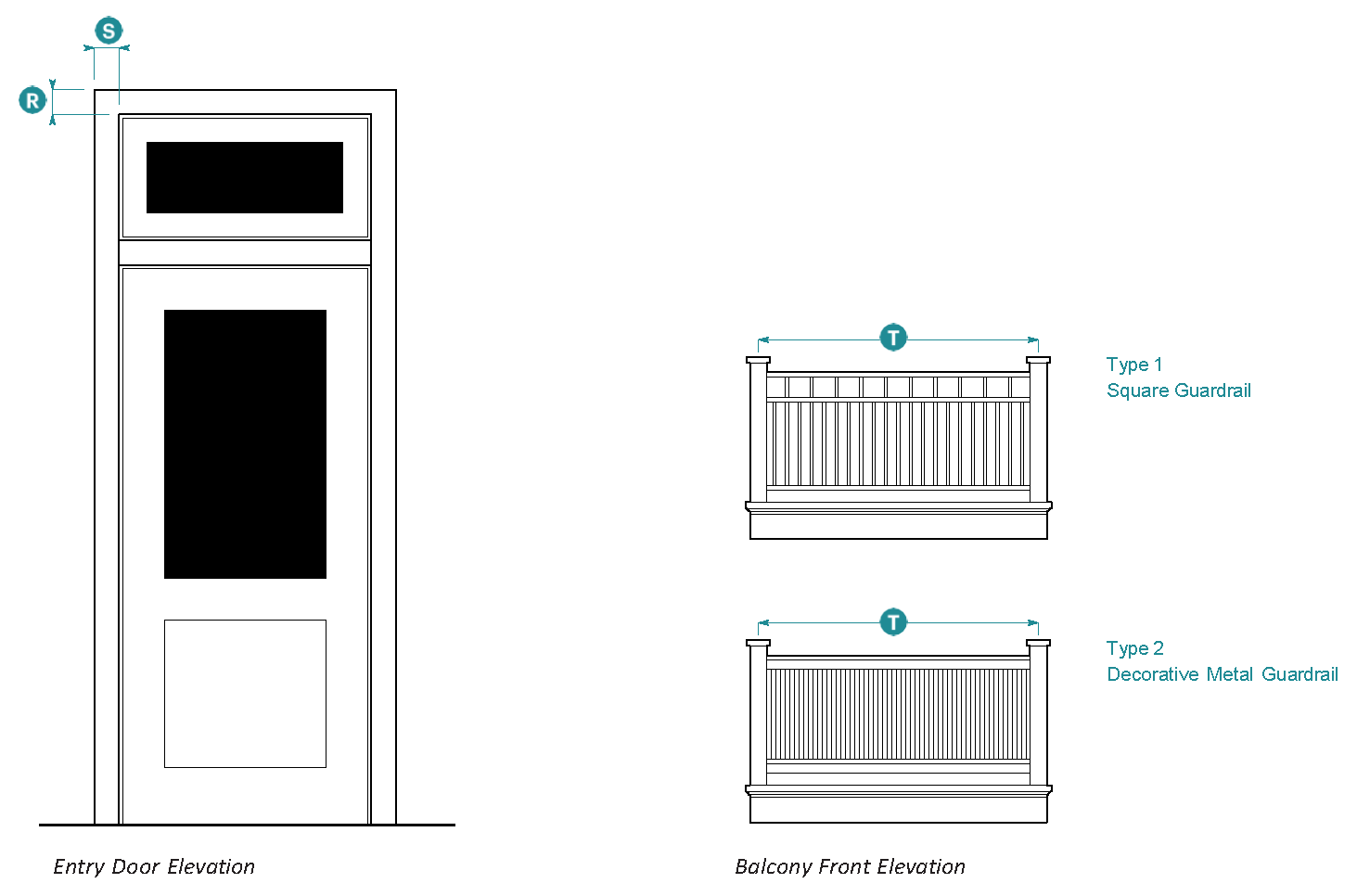
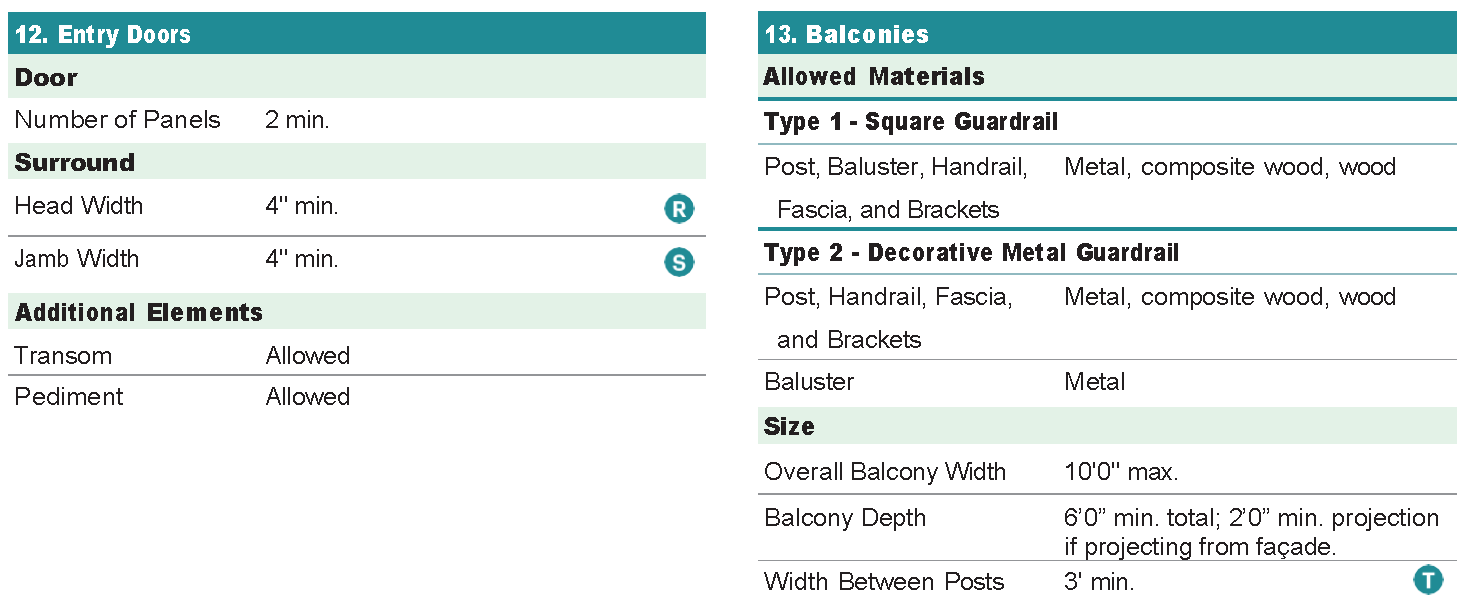
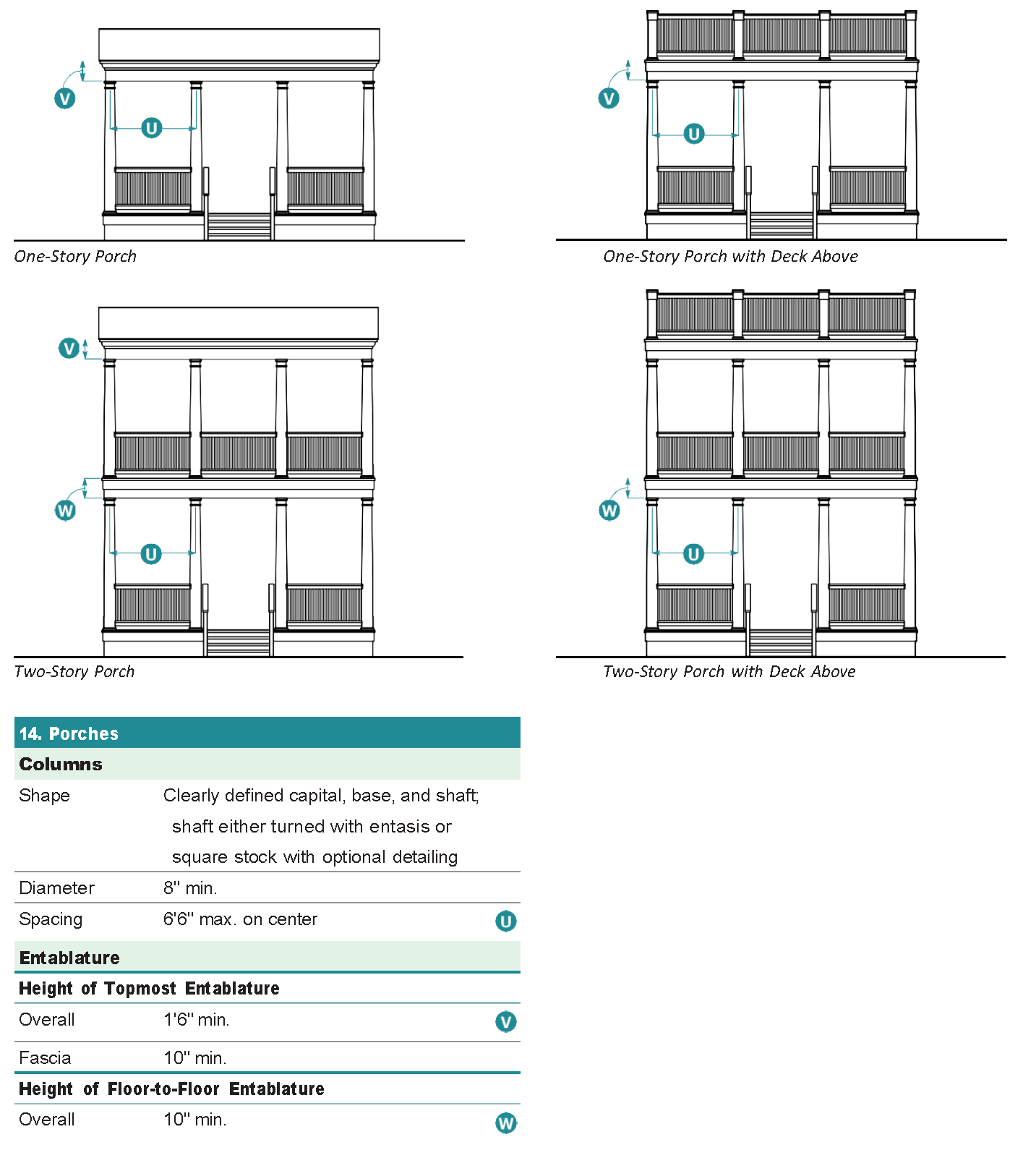
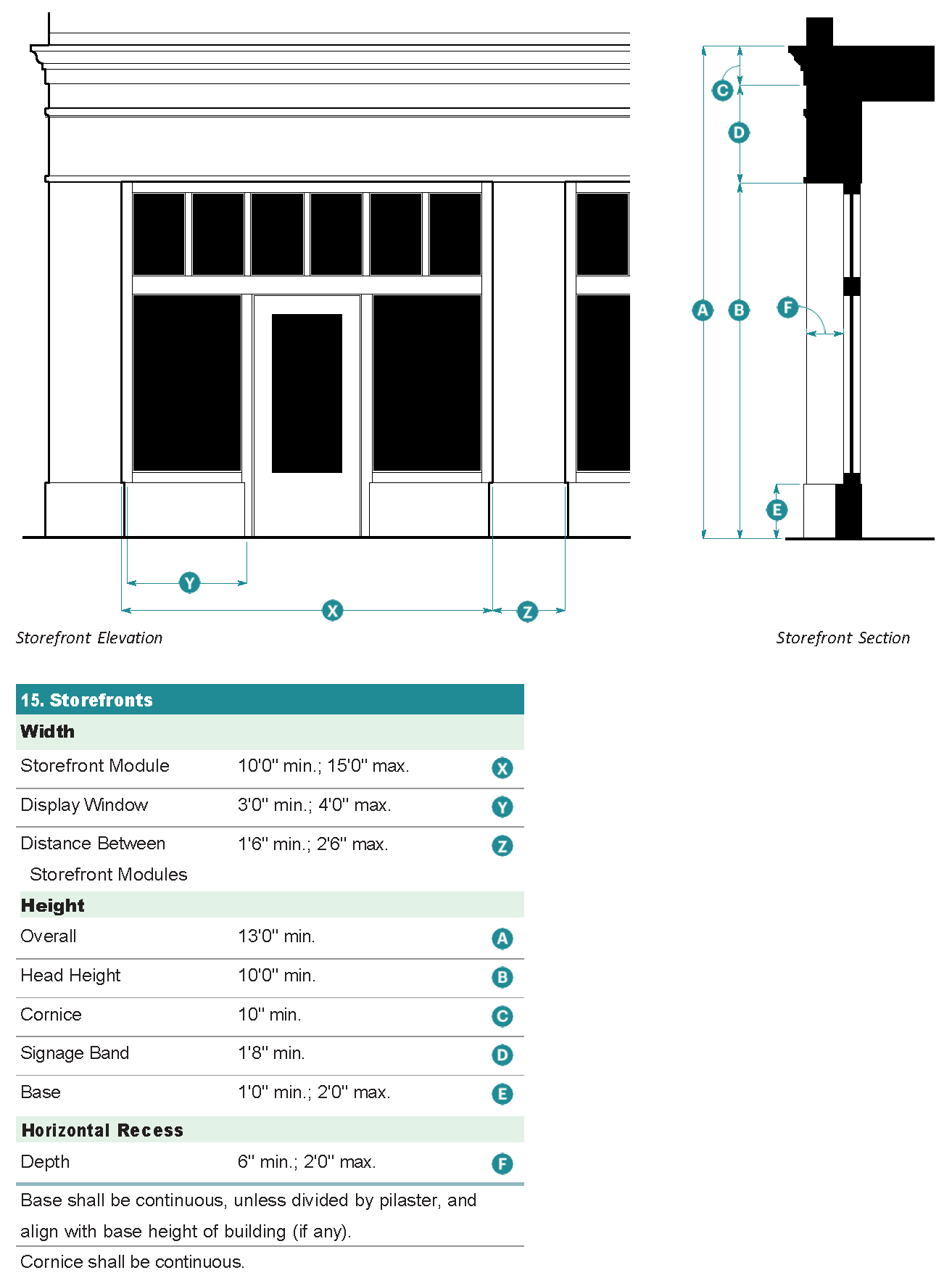
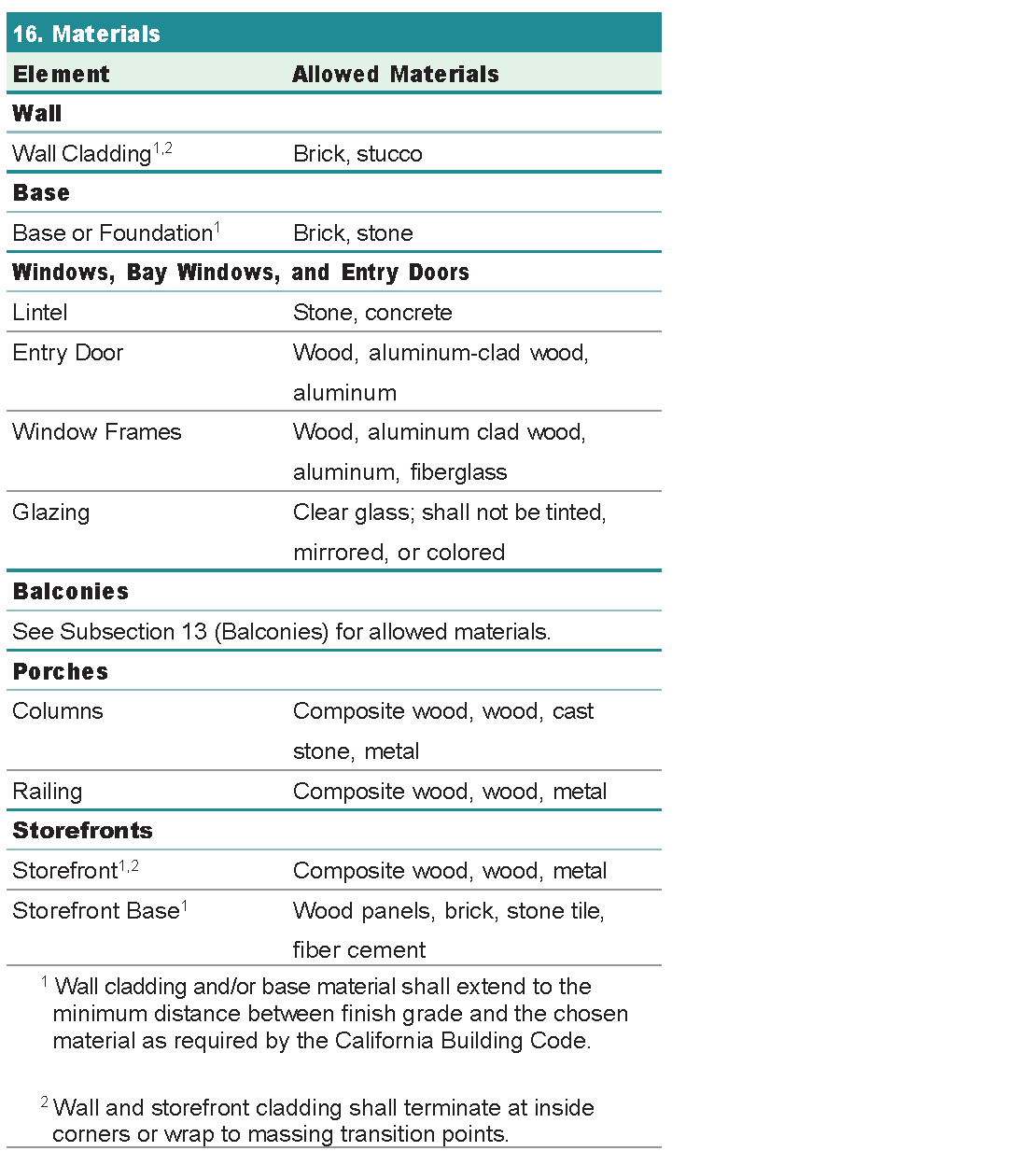
(Ord. No. 1705, § 4(Exh. A), 10-10-2023)
19.27.080 - Mediterranean Standards.
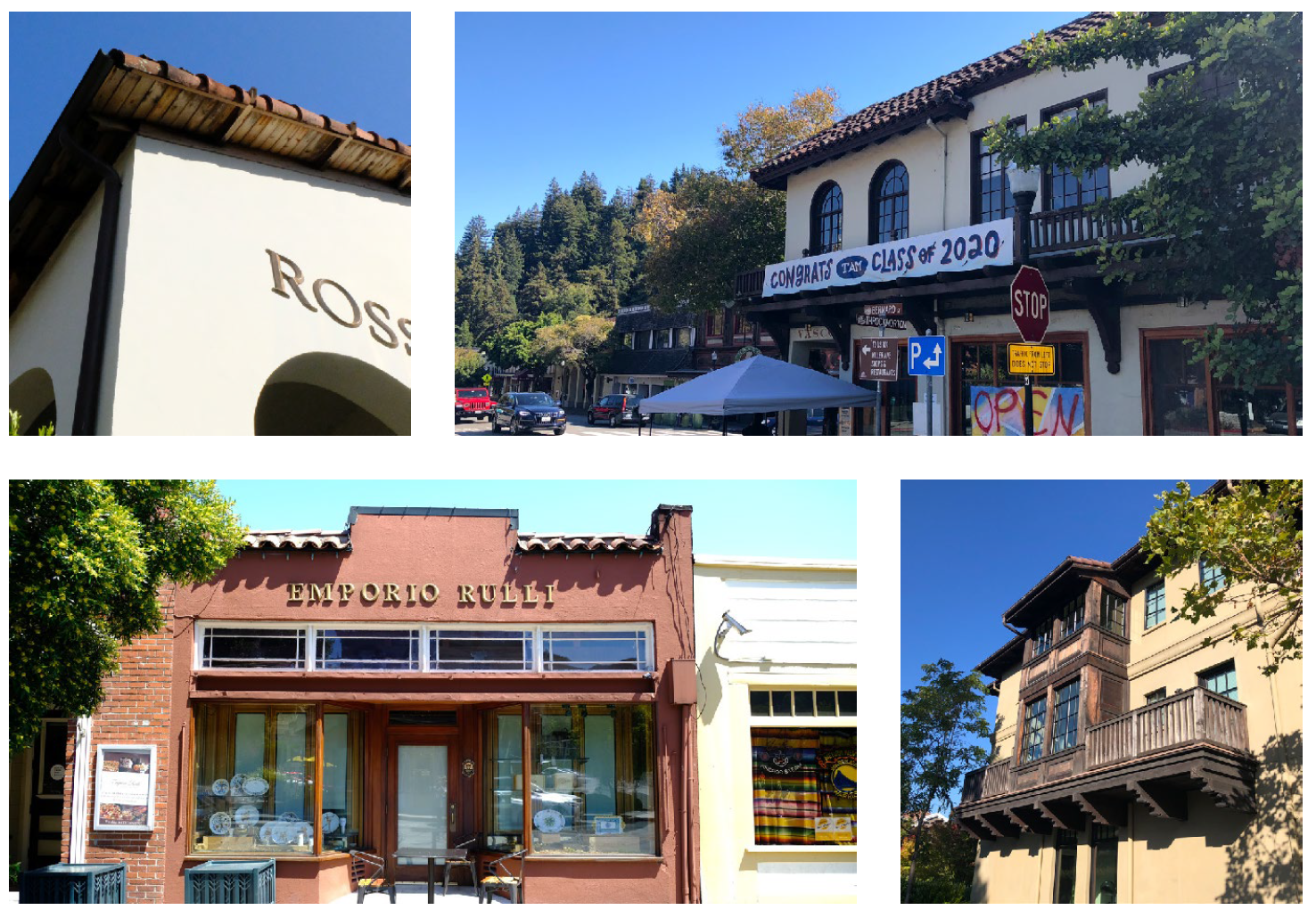
General note: The images above and the descriptions in Subsections 1 and 2 below are intended to provide a brief overview of the architectural style and are descriptive, not regulatory.
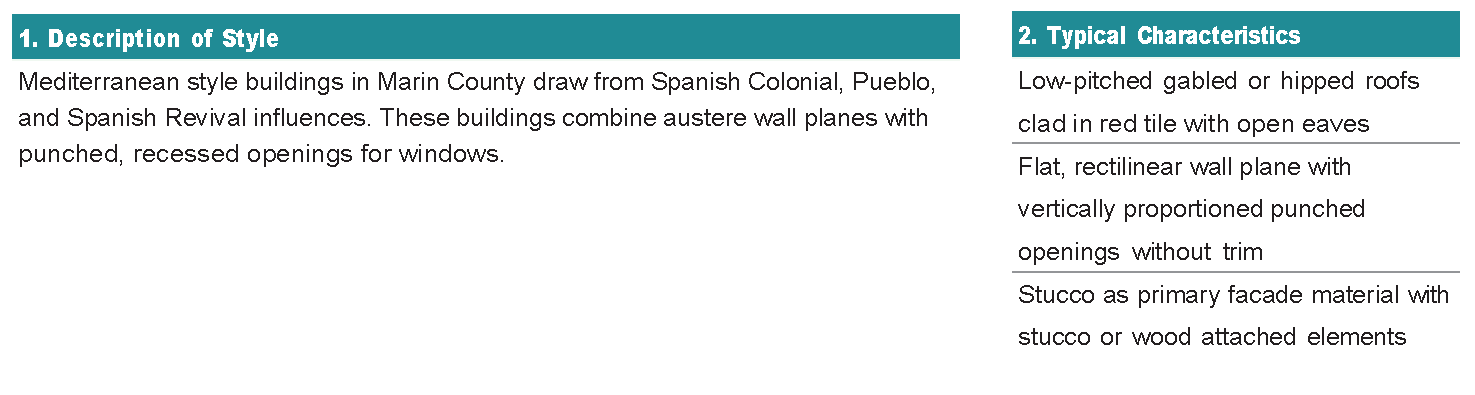
Mediterranean Style Standards
Single-Family and Multifamily Buildings
Note: The image below is intended to provide a reference for architectural elements and is illustrative, not regulatory. It is not an exhaustive list of applicable standards.
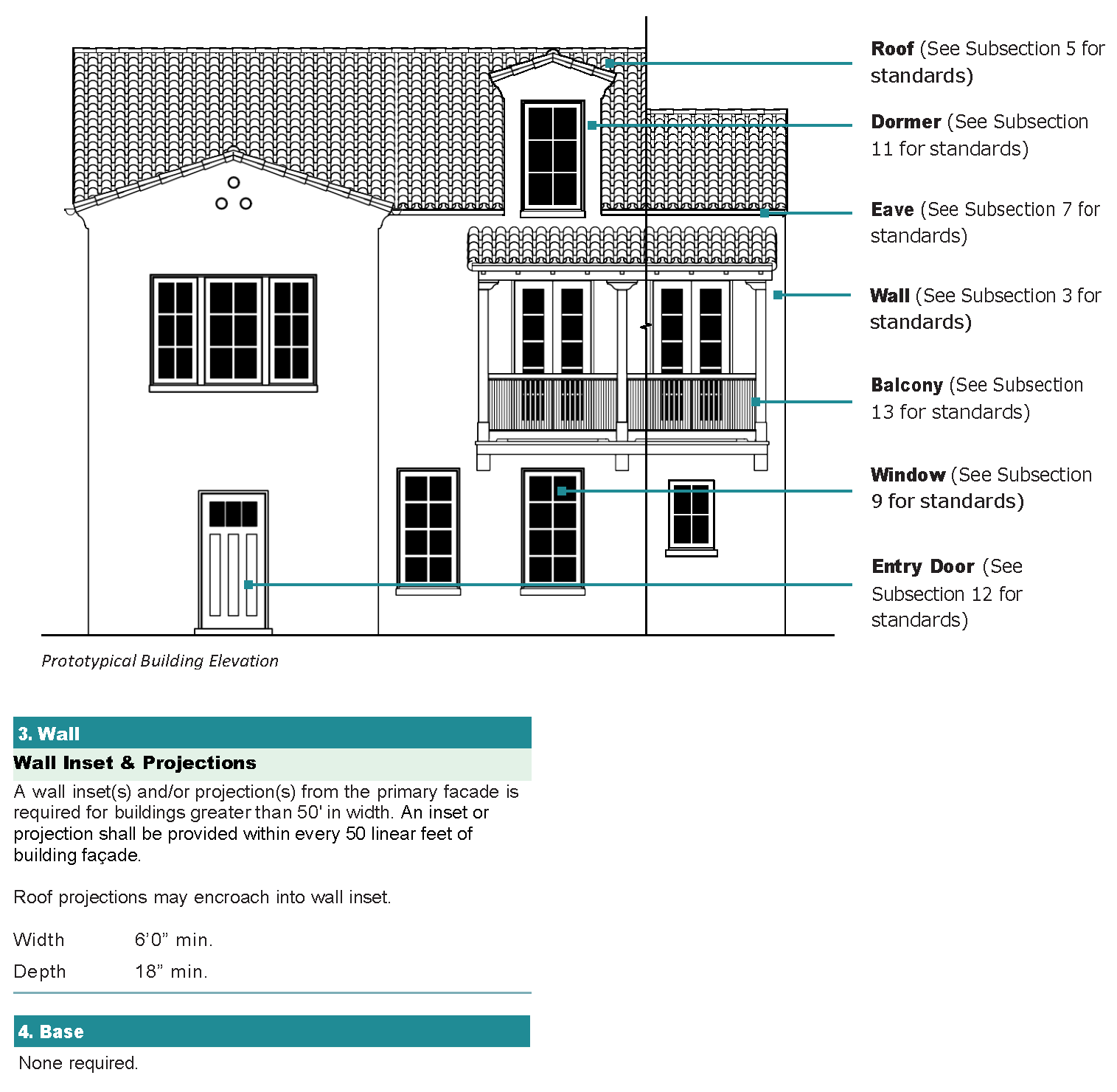
Mediterranean Style Standards — Mixed-Use Building
Note: The image below is intended to provide a reference for architectural elements and is illustrative, not regulatory. It is not an exhaustive list of applicable standards.
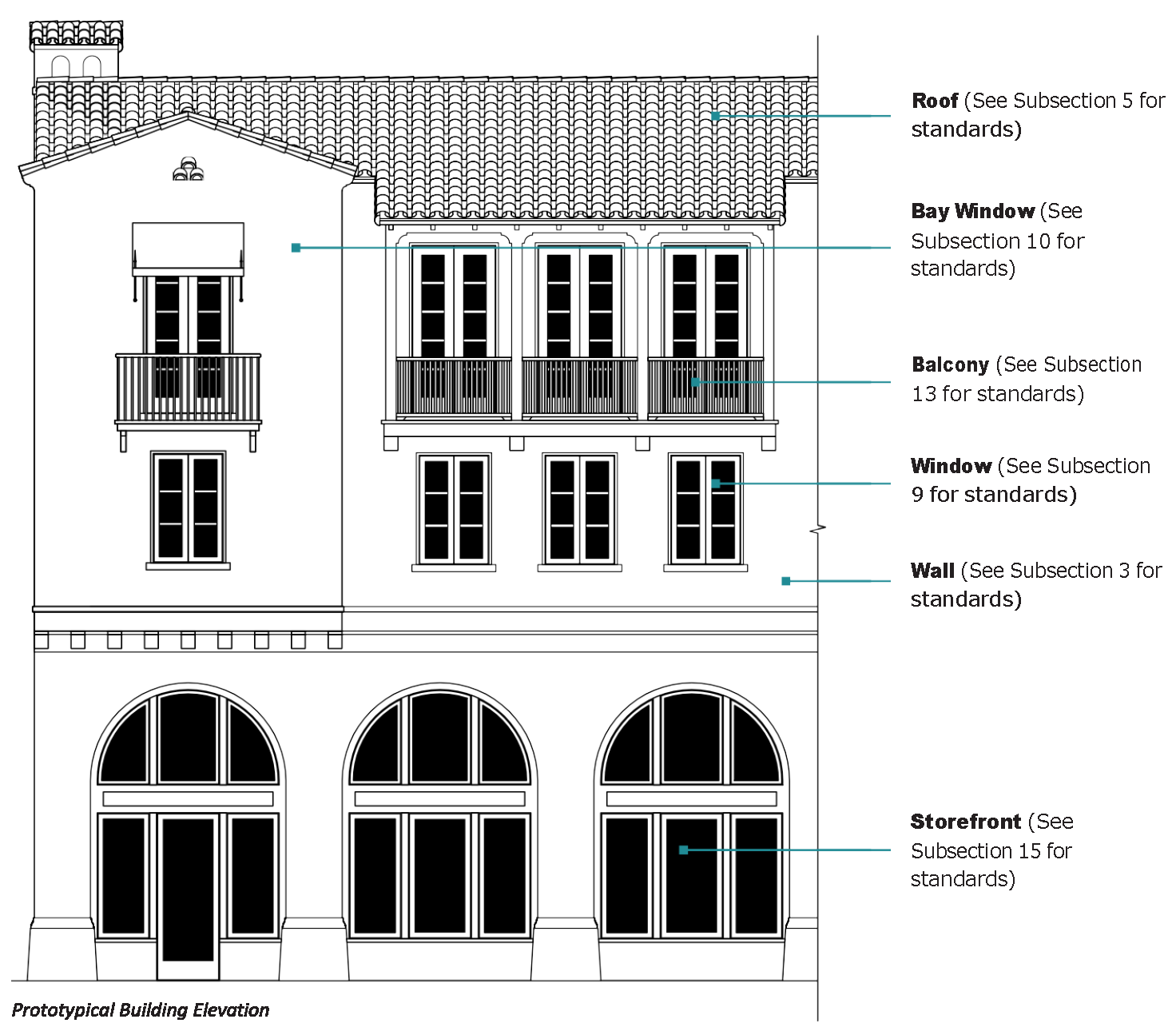
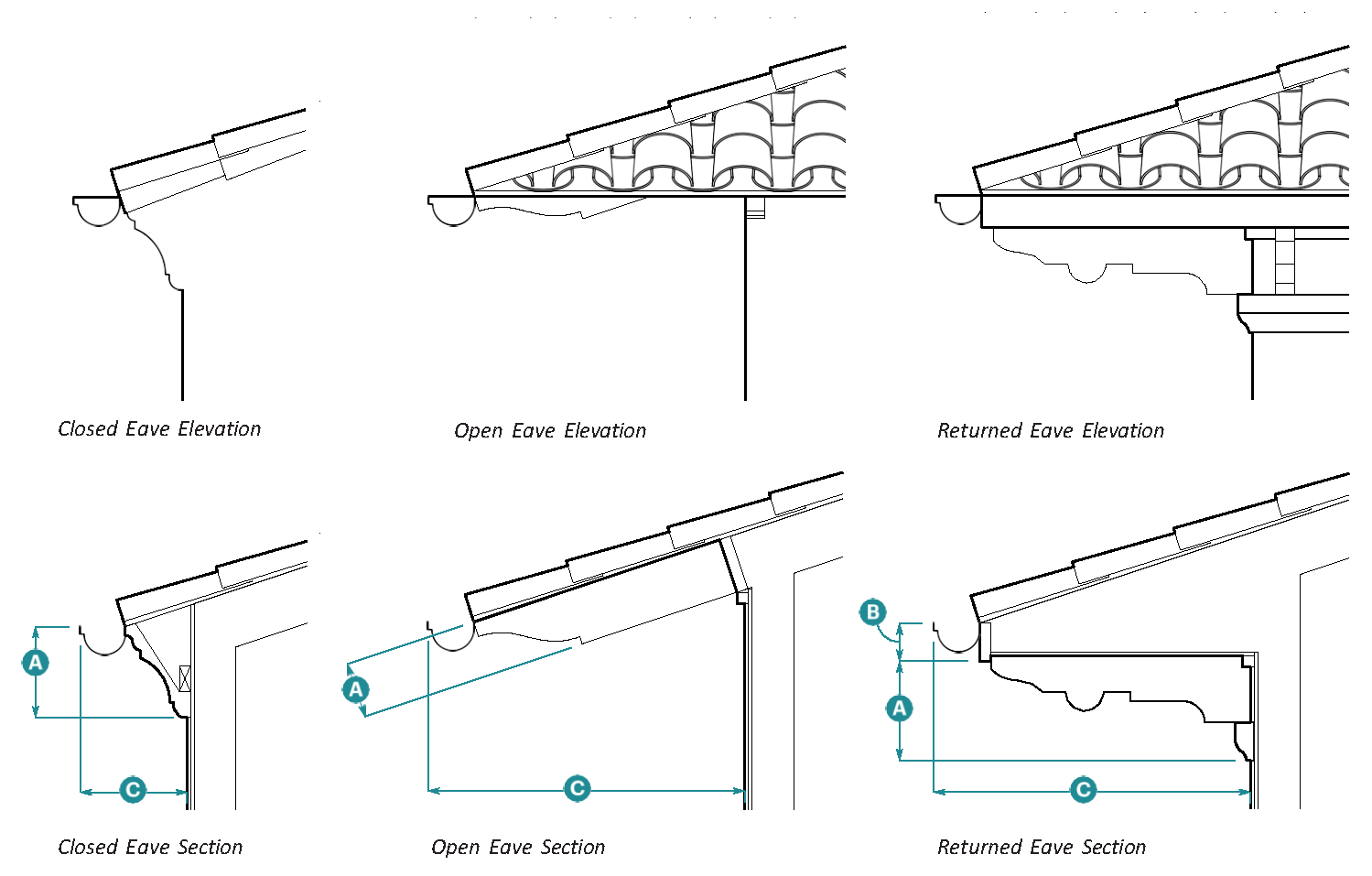
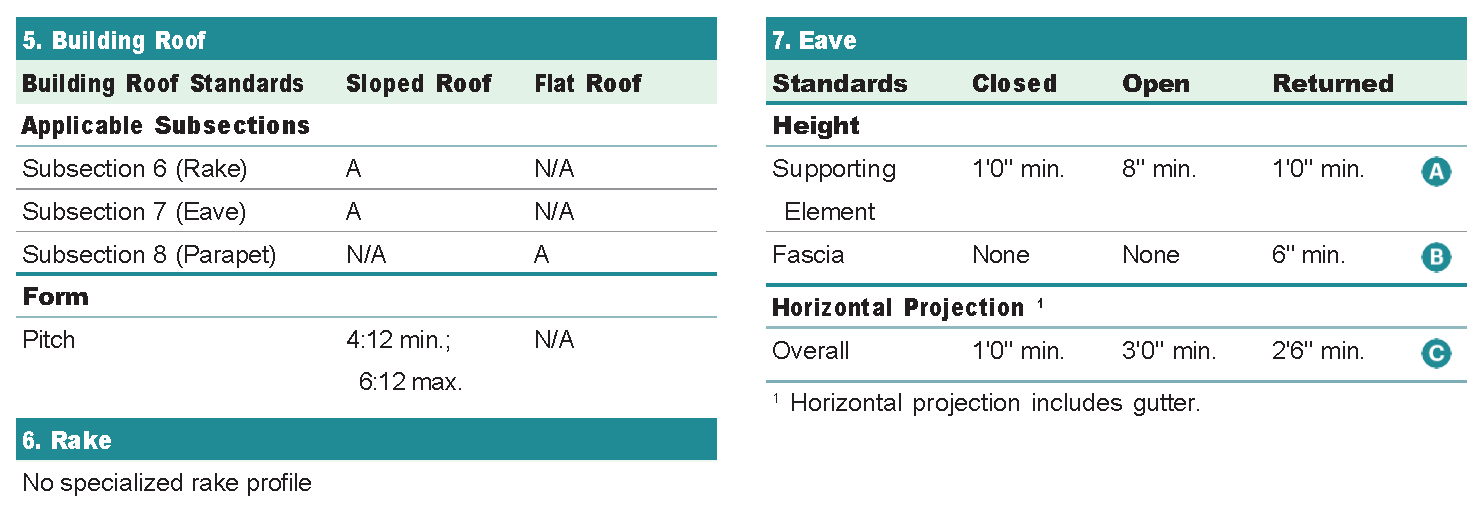
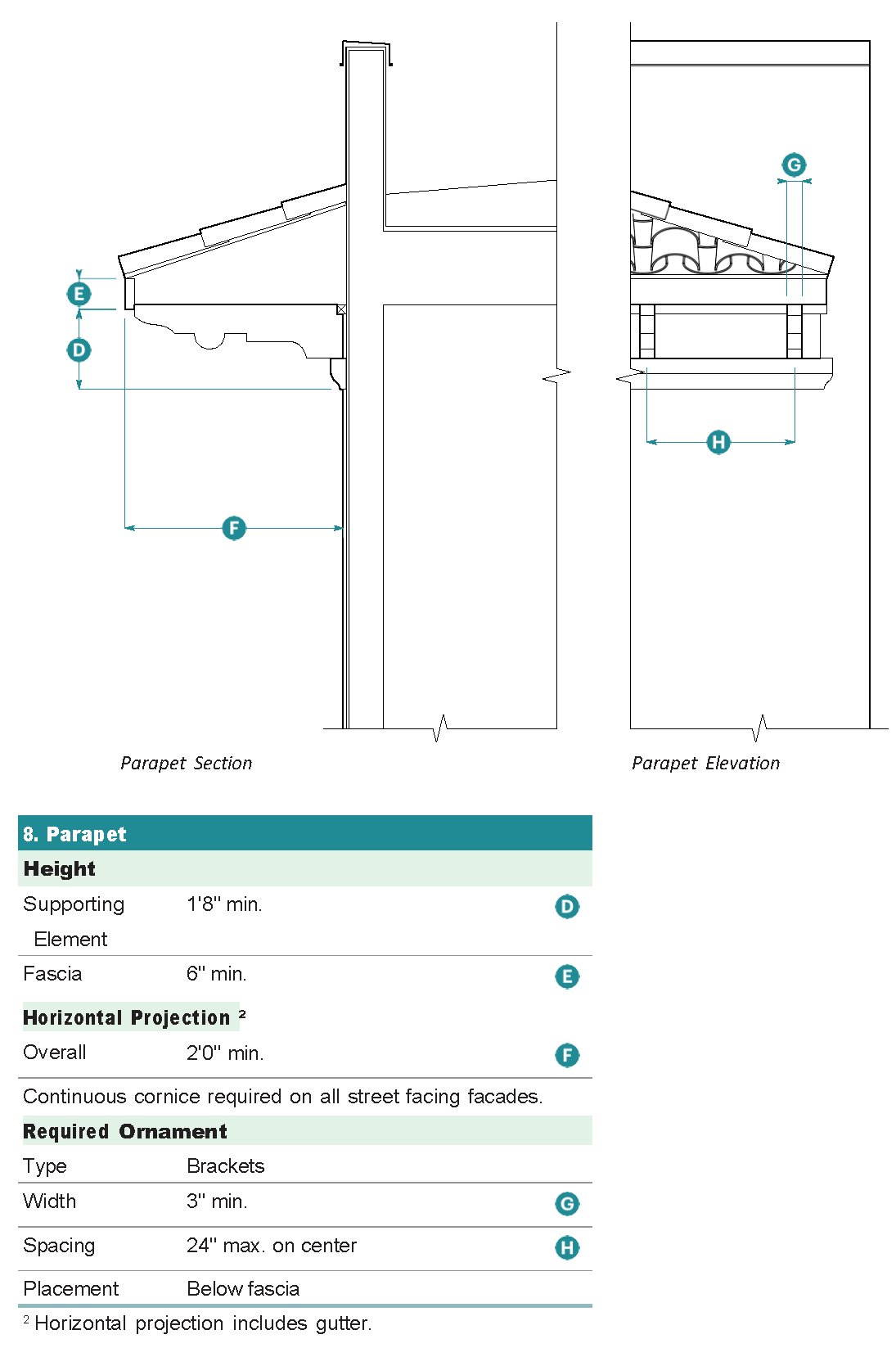
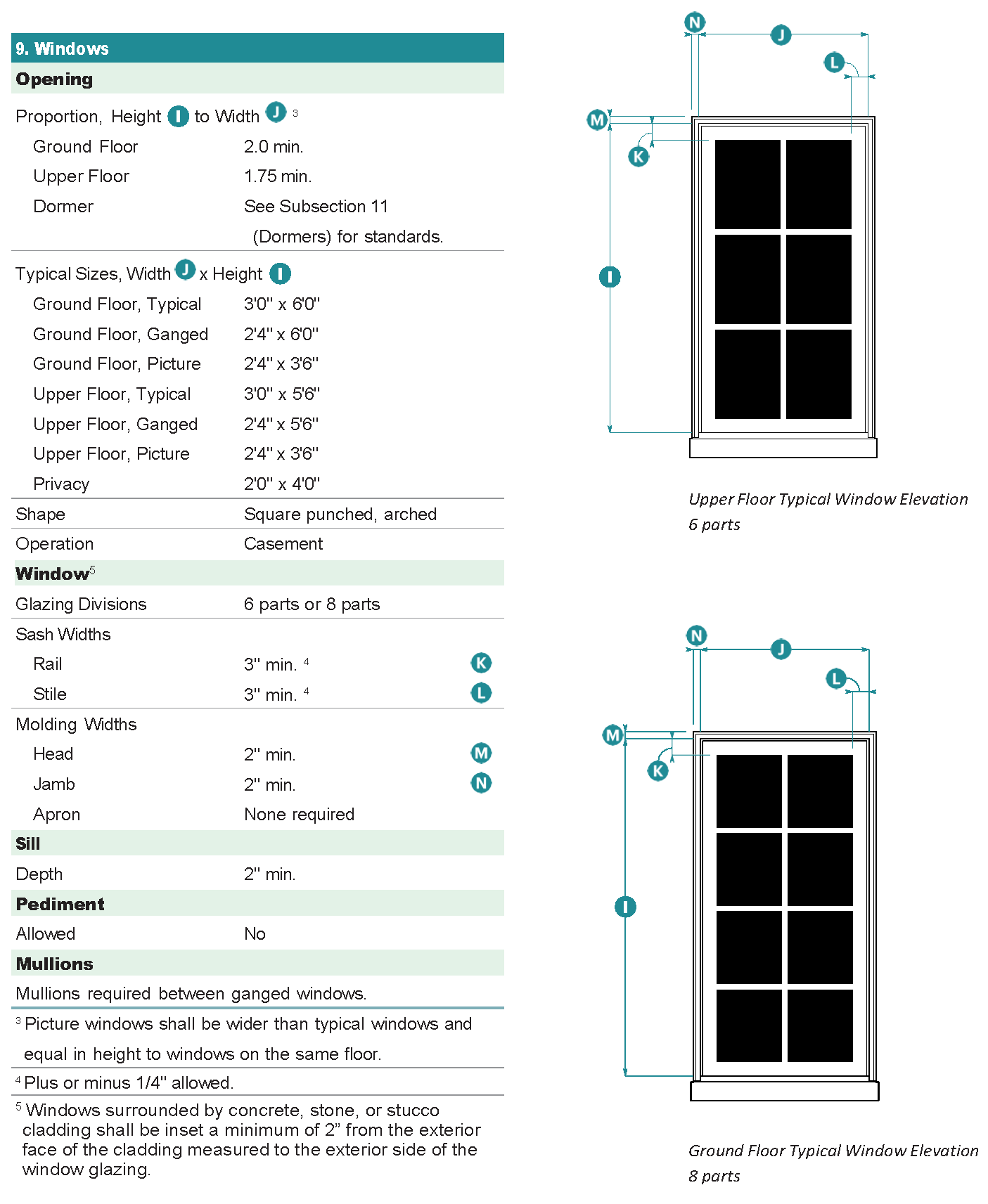
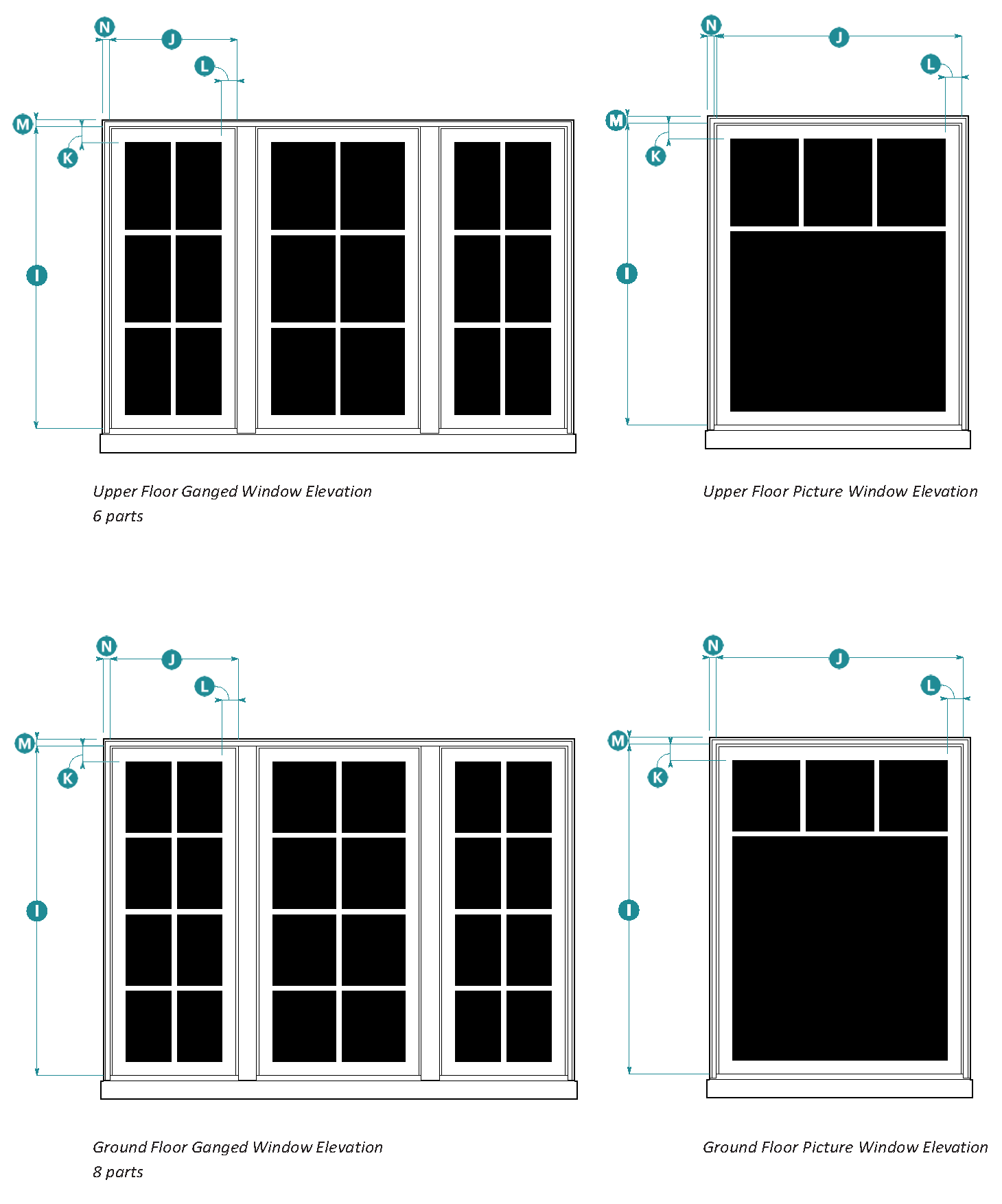
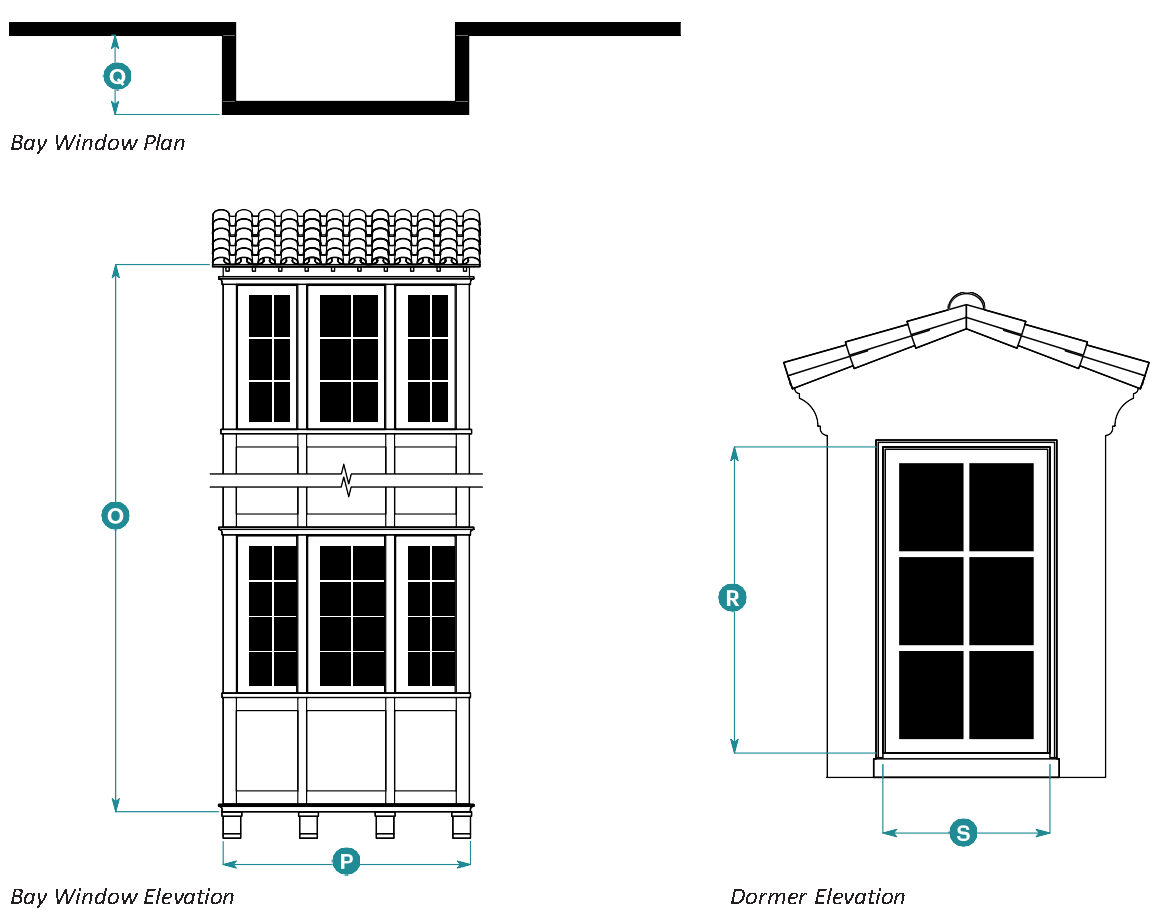
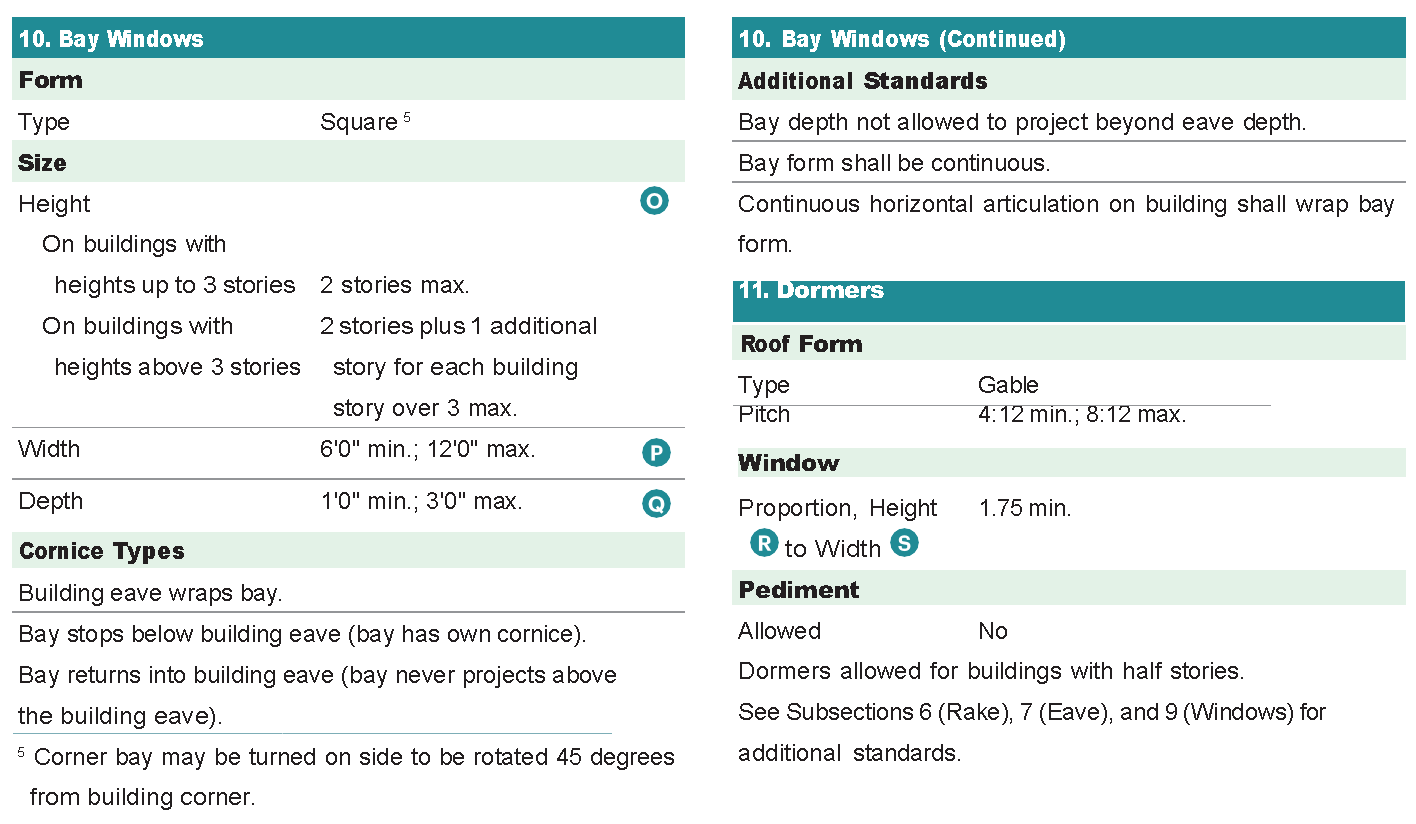
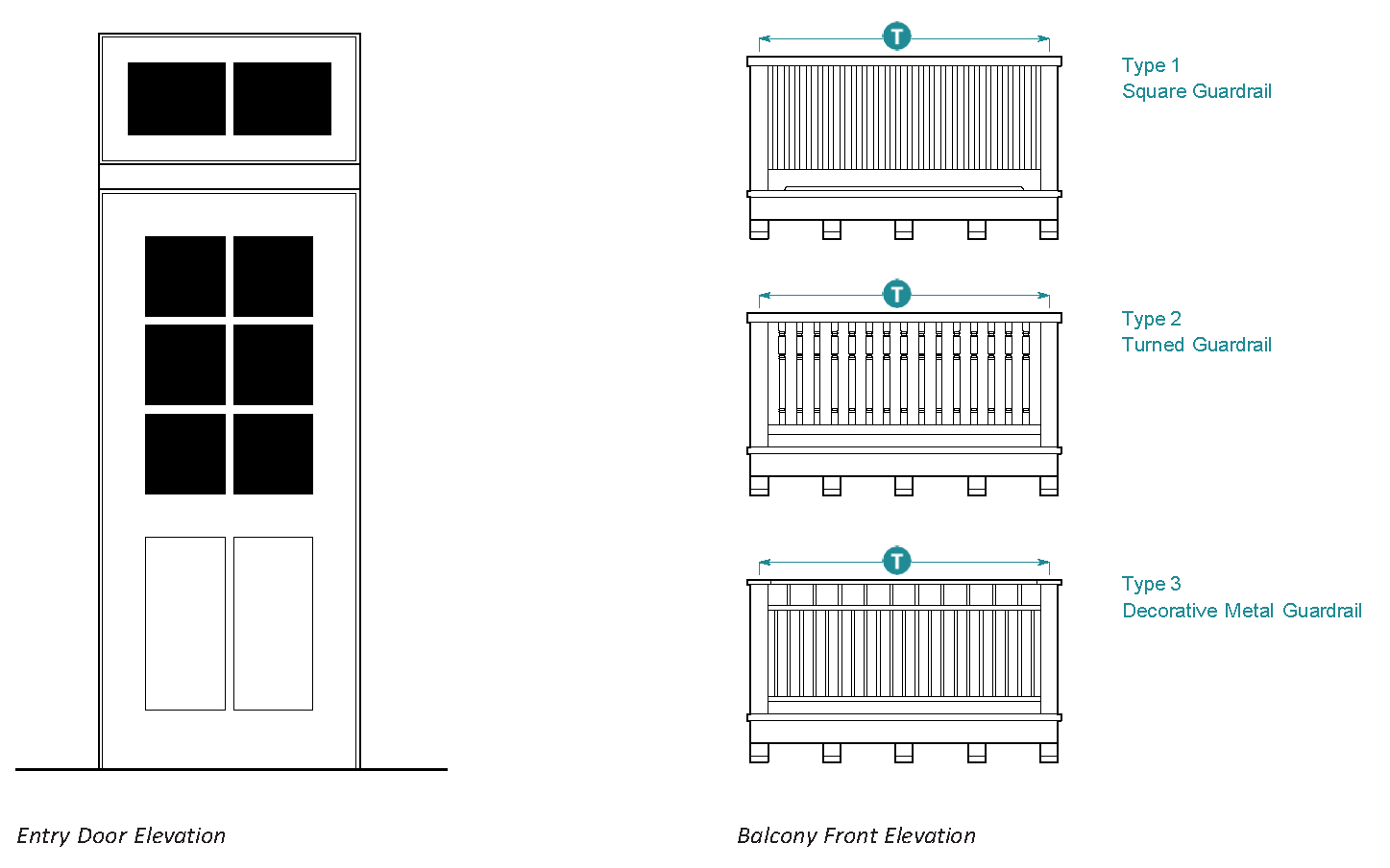
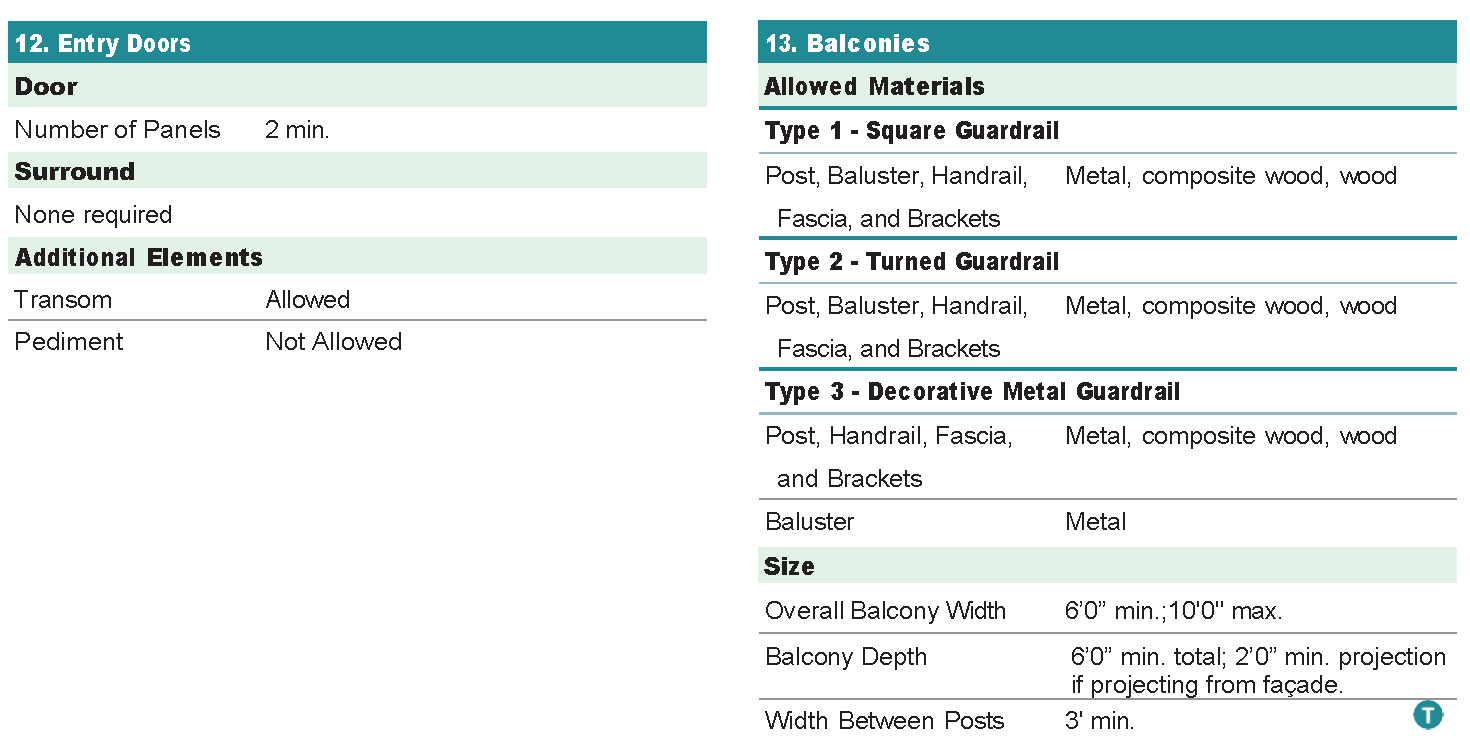
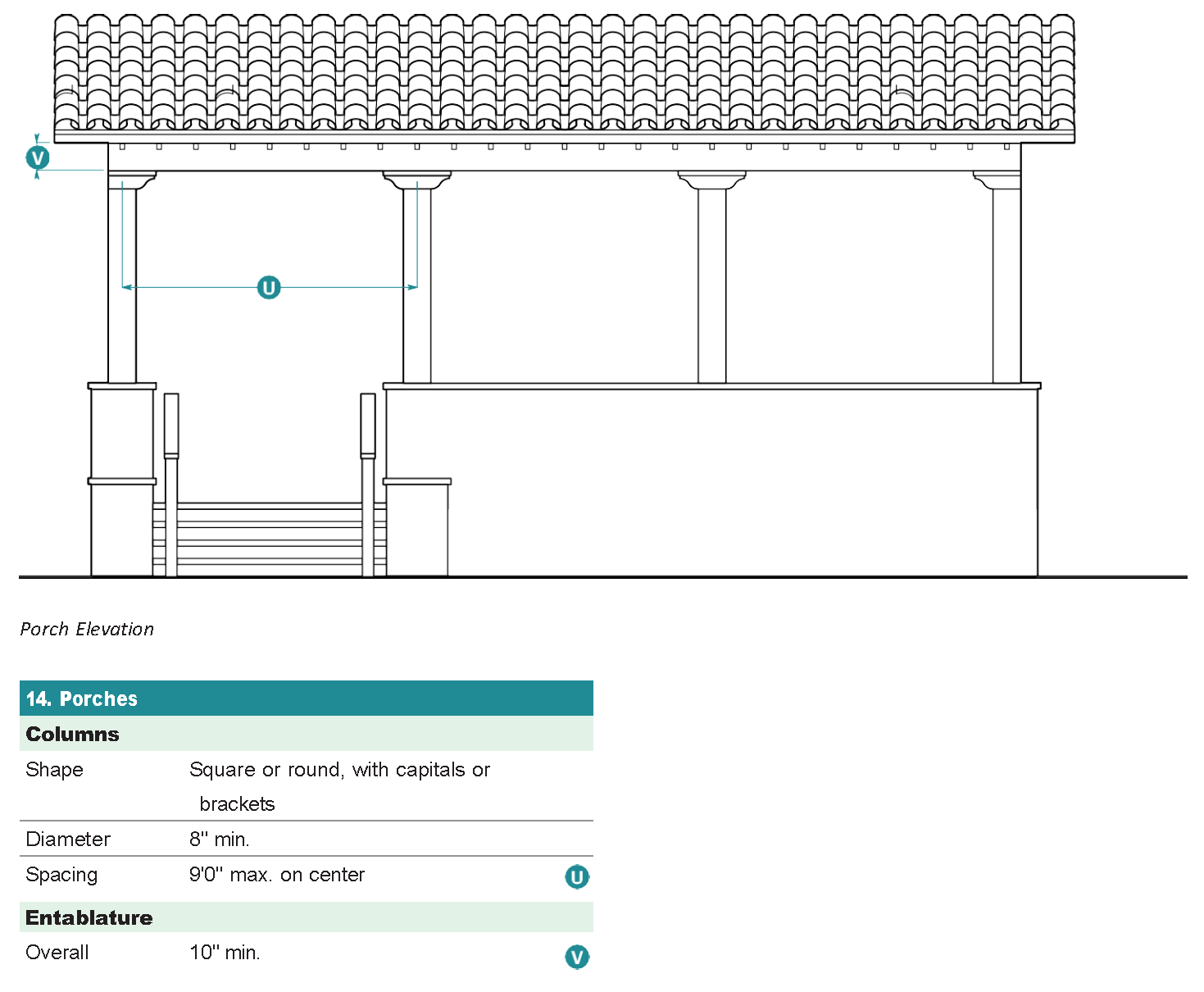
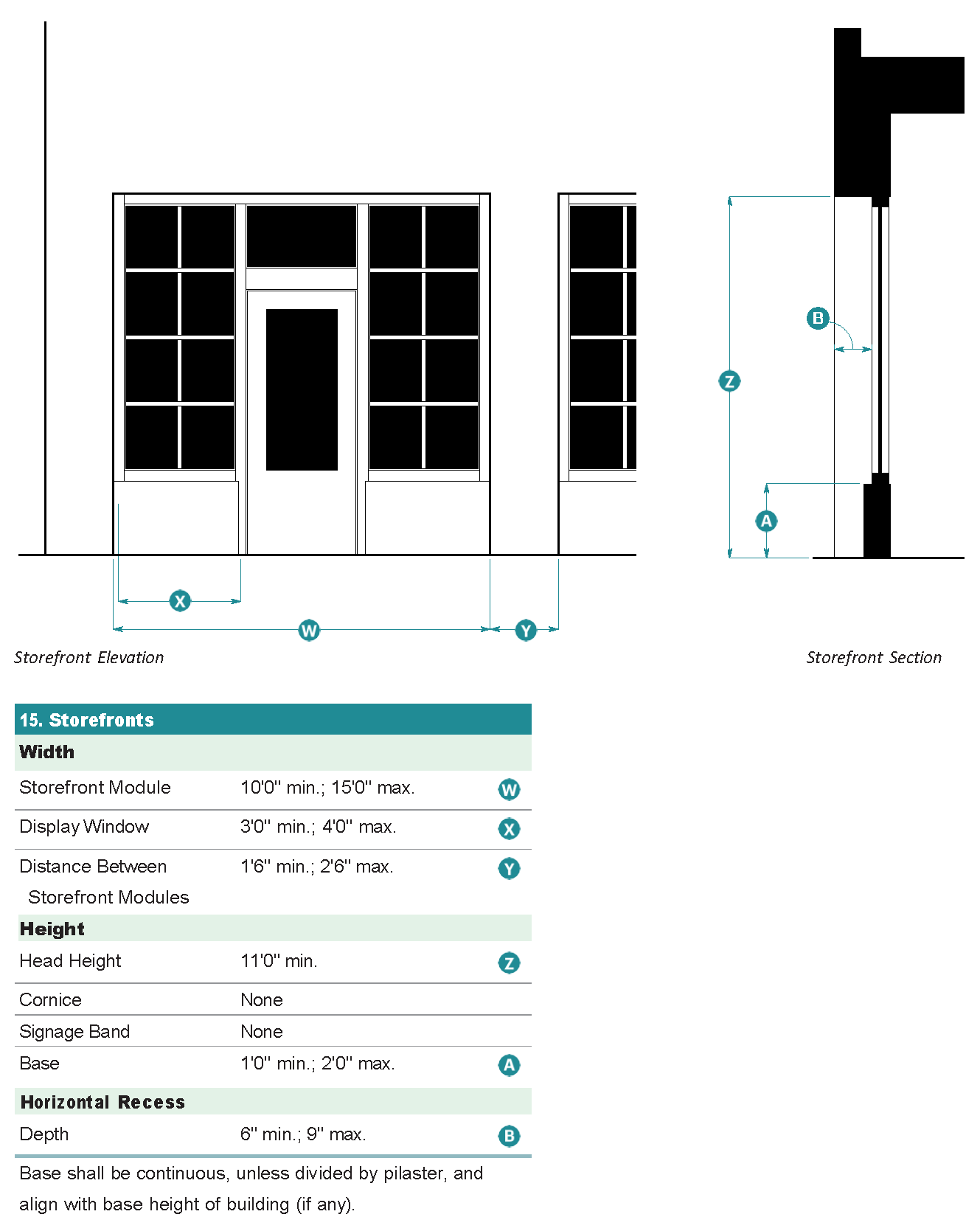
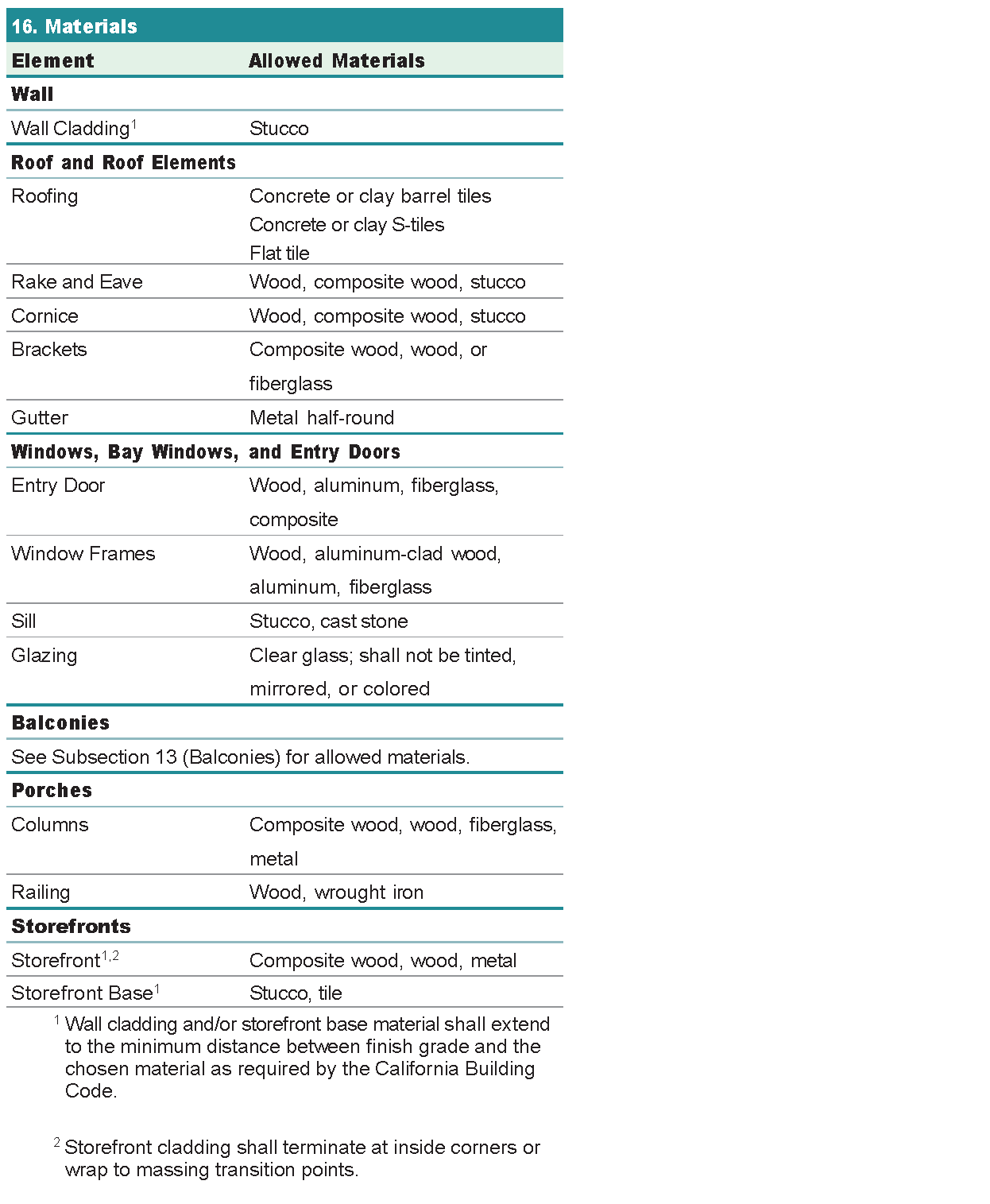
(Ord. No. 1705, § 4(Exh. A), 10-10-2023)
19.27.090 - Tudor Standards.
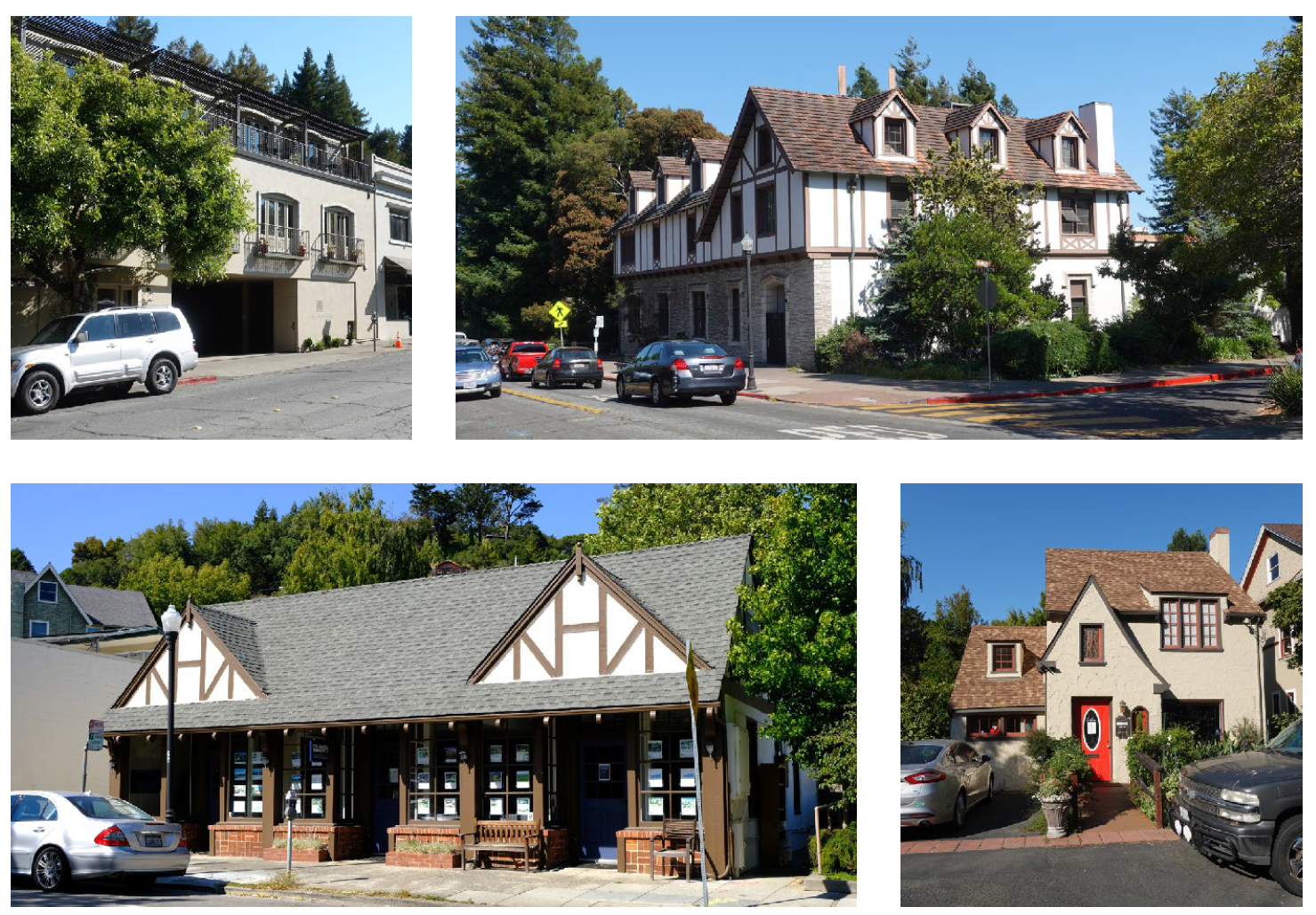
General note: The images above and the descriptions in Subsections 1 and 2 below are intended to provide a brief overview of the architectural style and are descriptive, not regulatory.
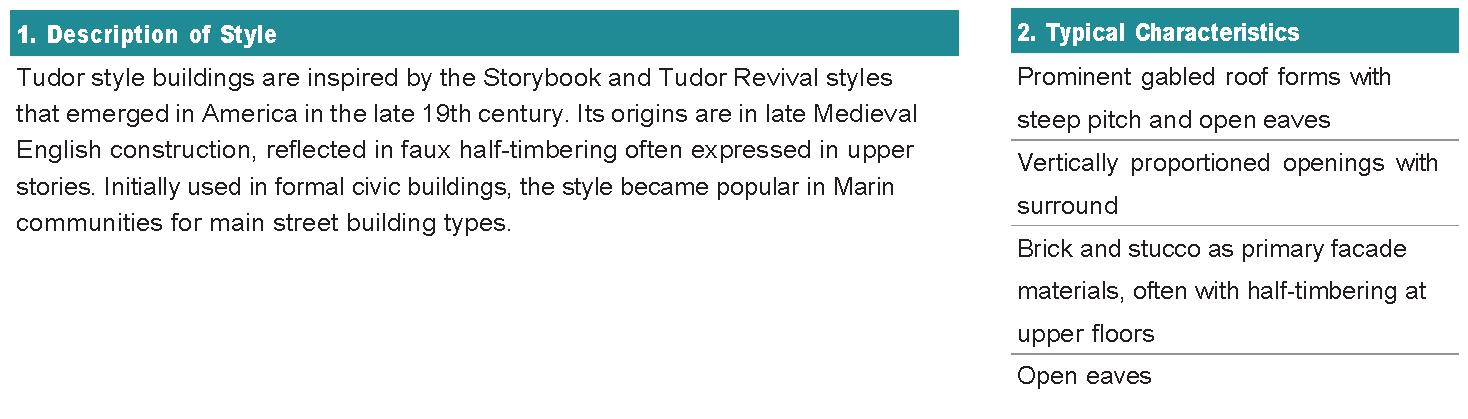
Elements of Tudor Style — Single-Family and Multifamily Buildings
Note: The image below is intended to provide a reference for architectural elements and is illustrative, not regulatory. It is not an exhaustive list of applicable standards.
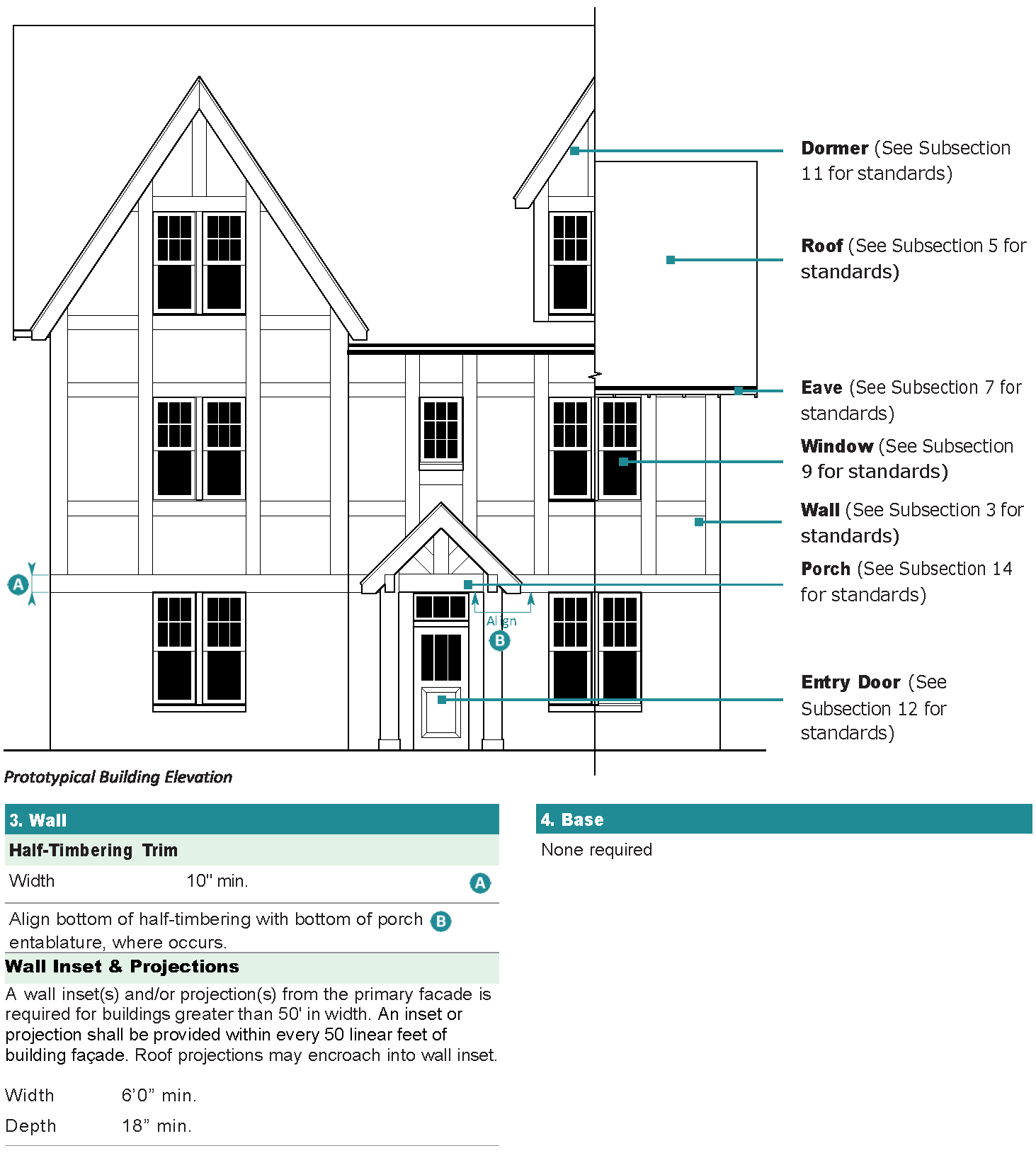
Tudor Style Standards — Mixed-Use Buildings
Note: The image below is intended to provide a reference for architectural elements and is illustrative, not regulatory. It is not an exhaustive list of applicable standards.
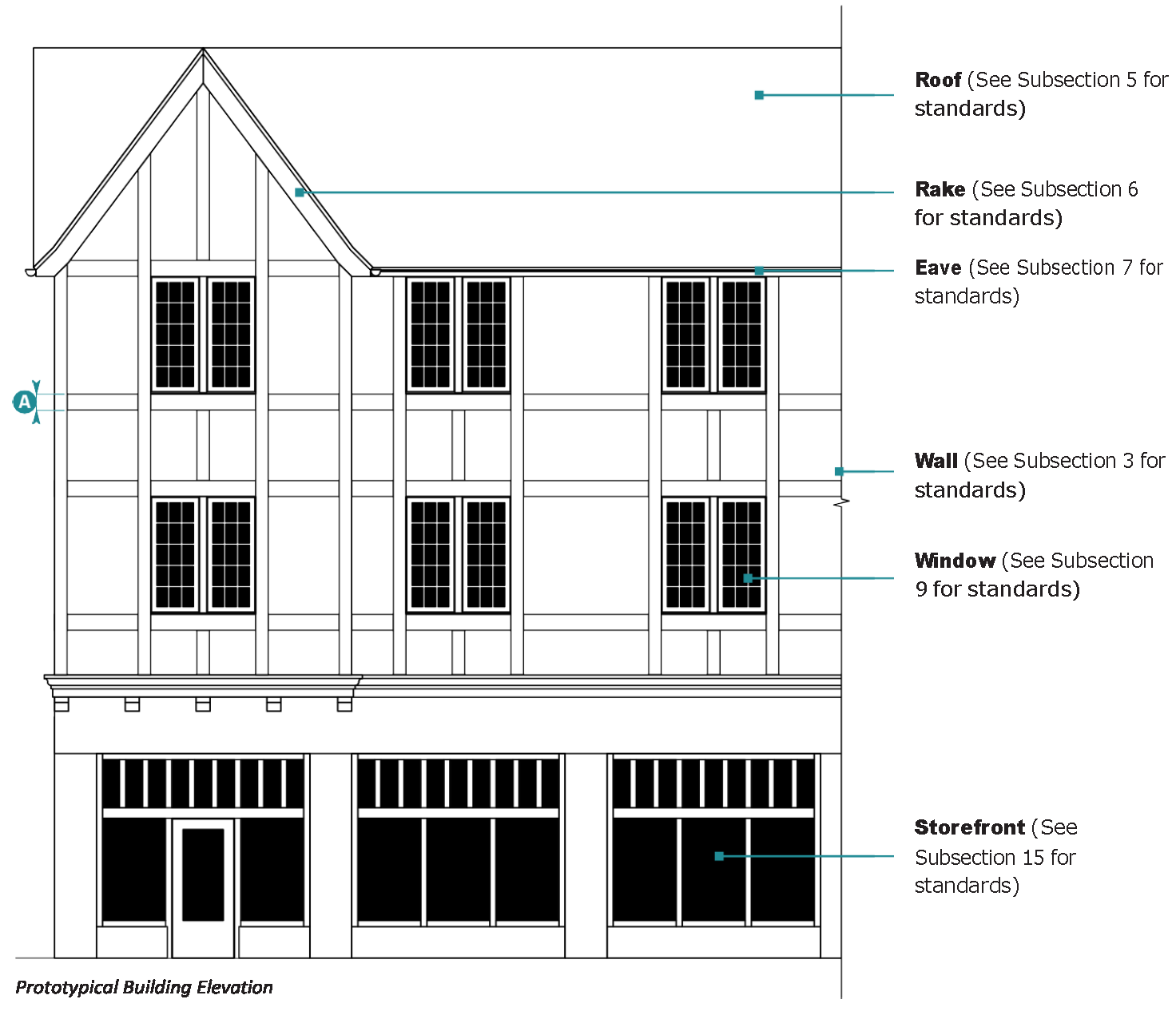
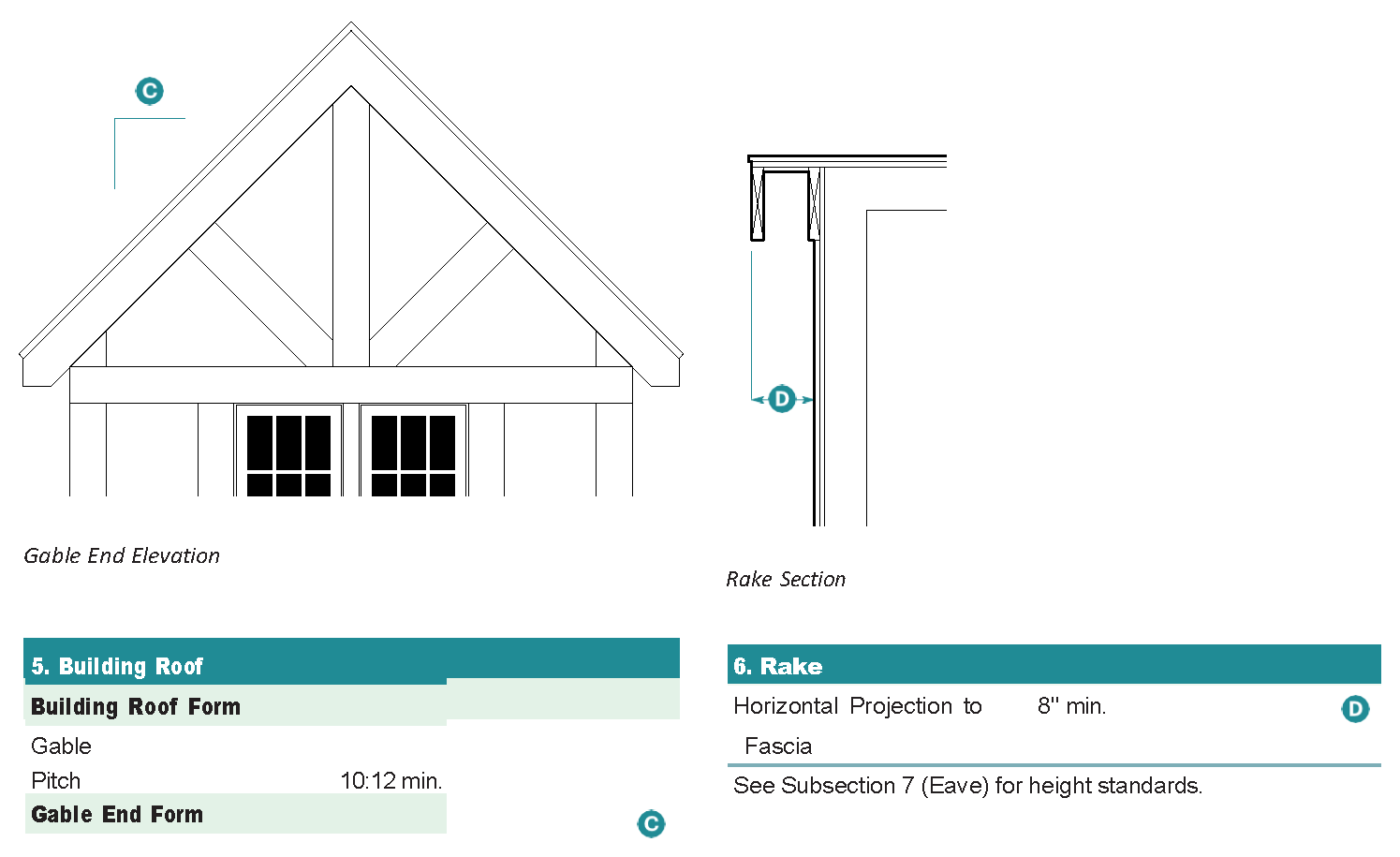
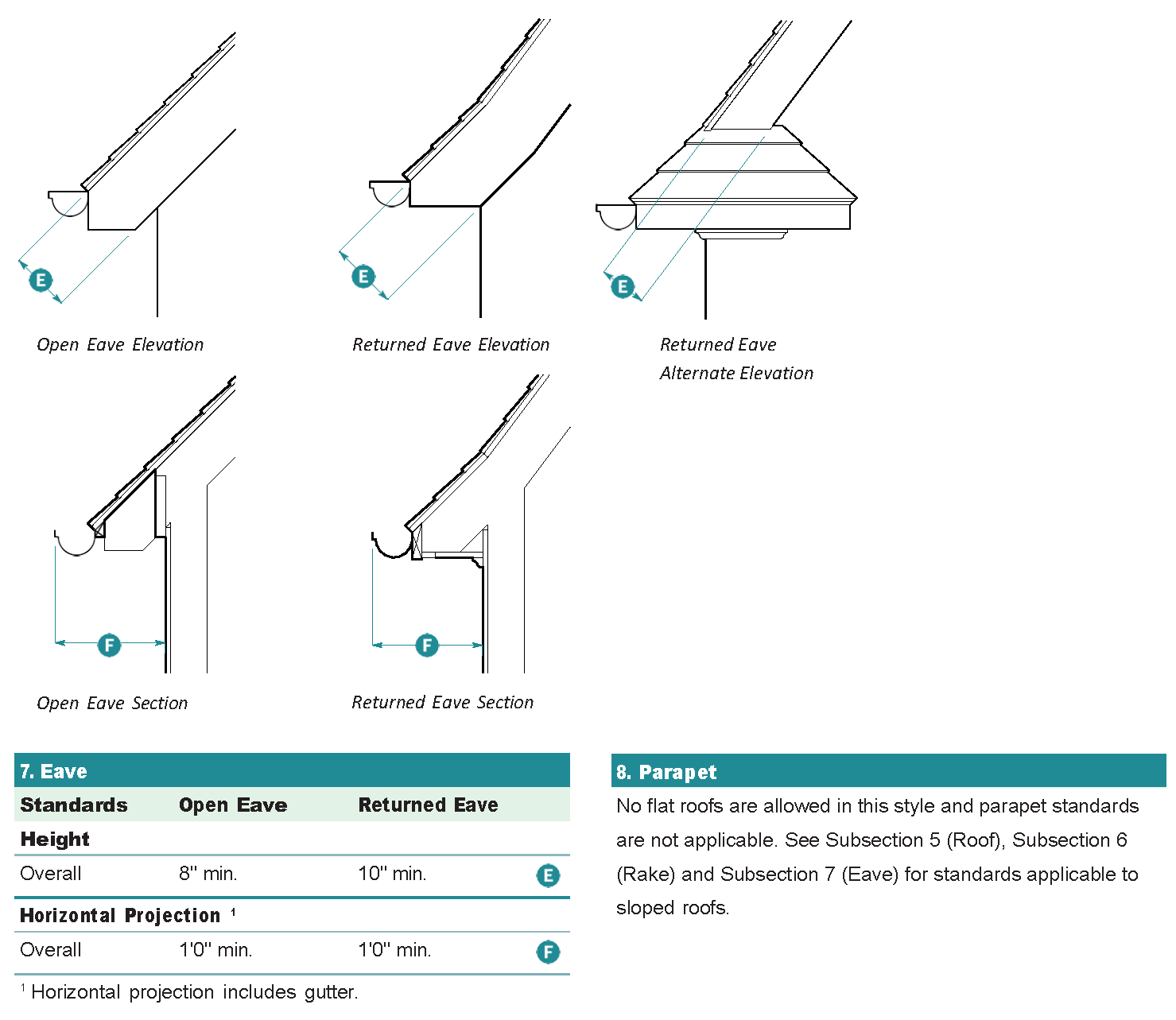
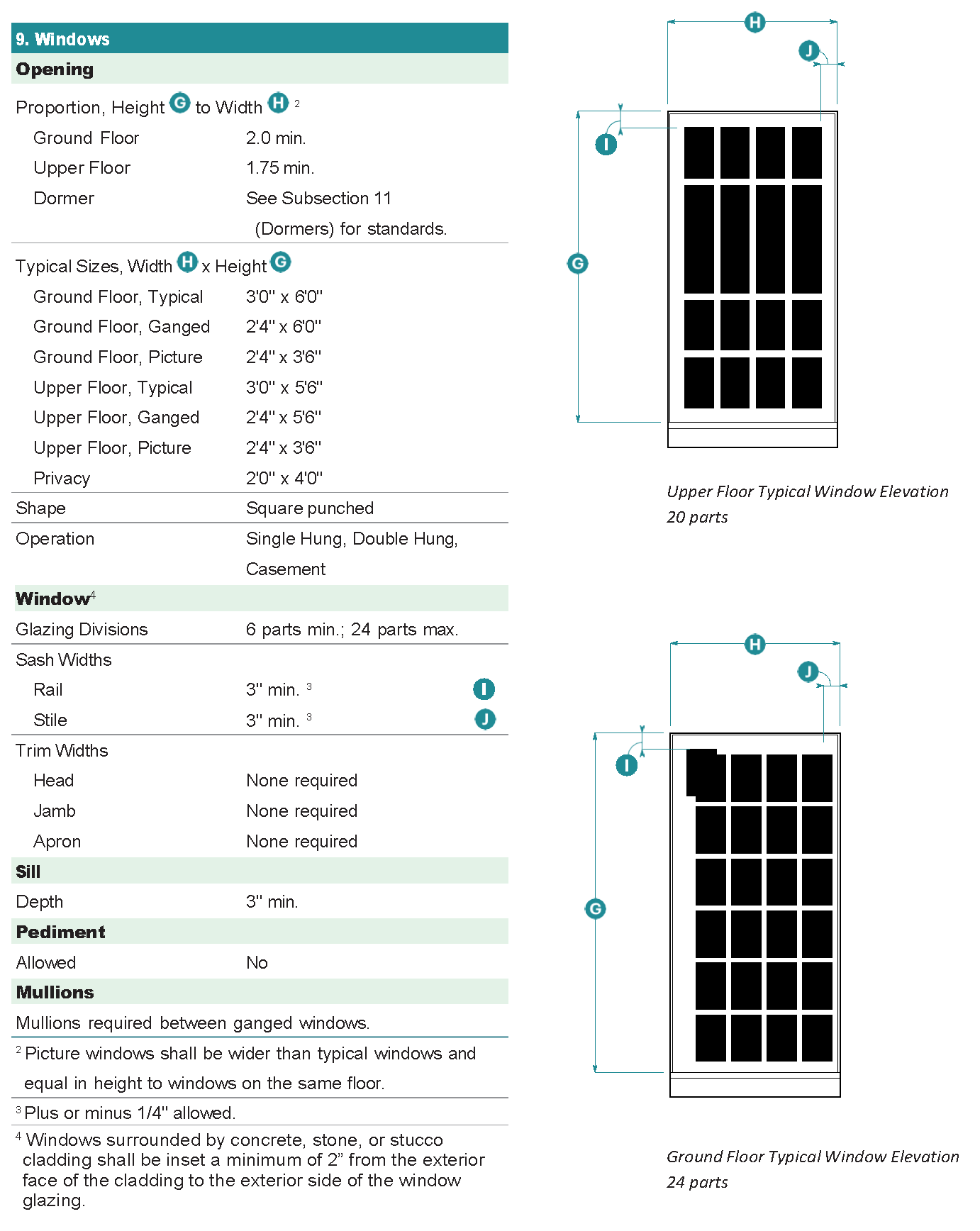
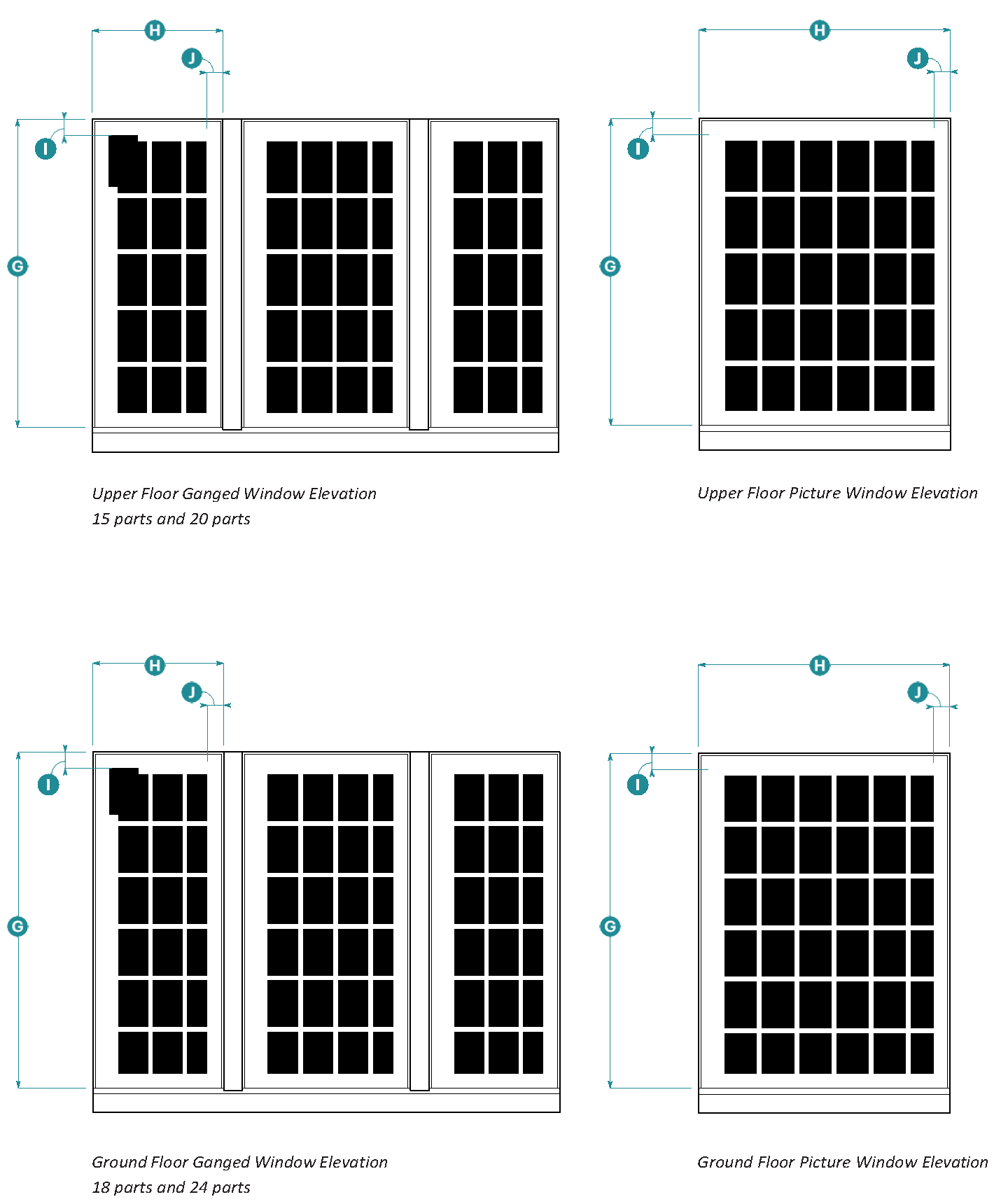
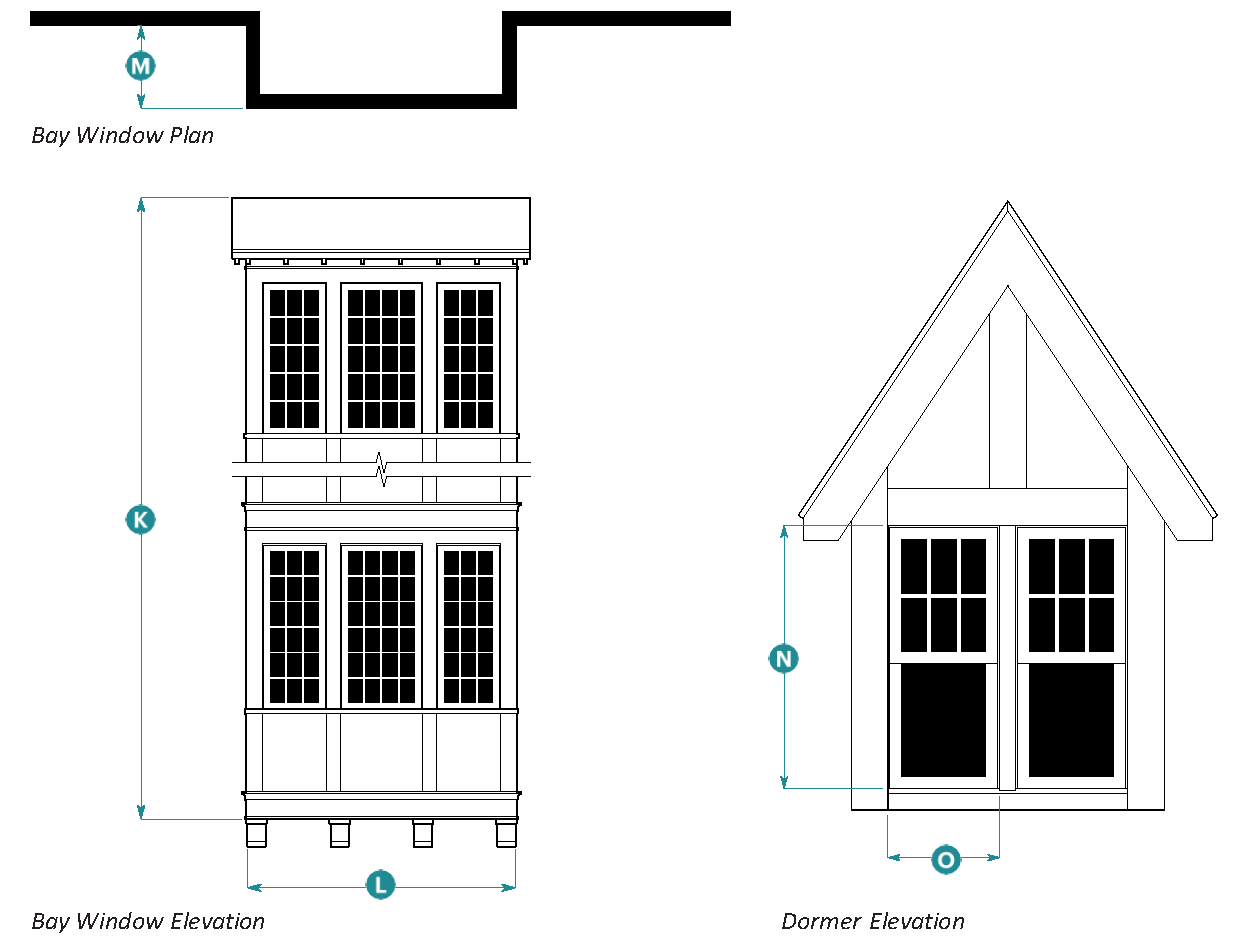
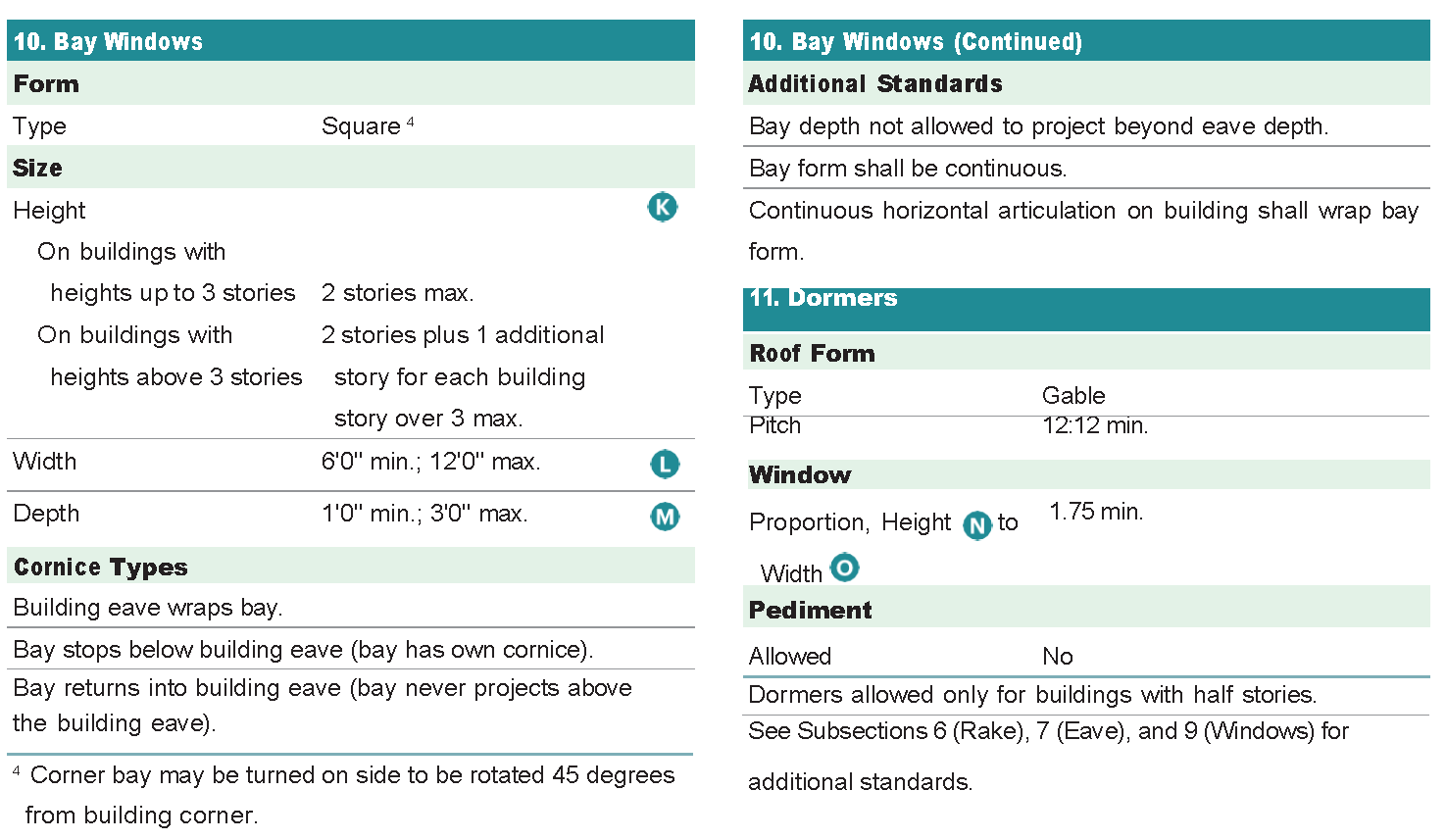
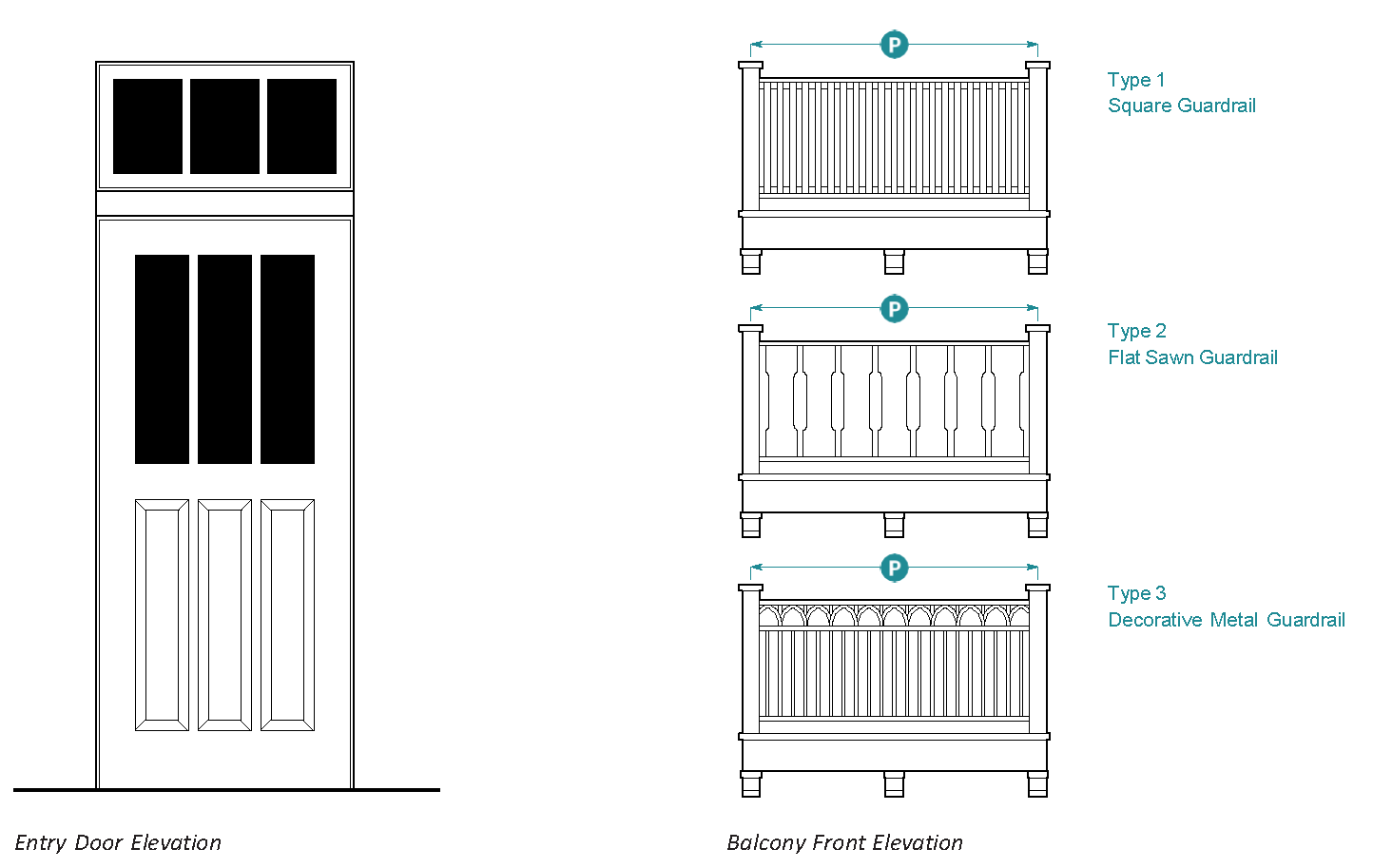
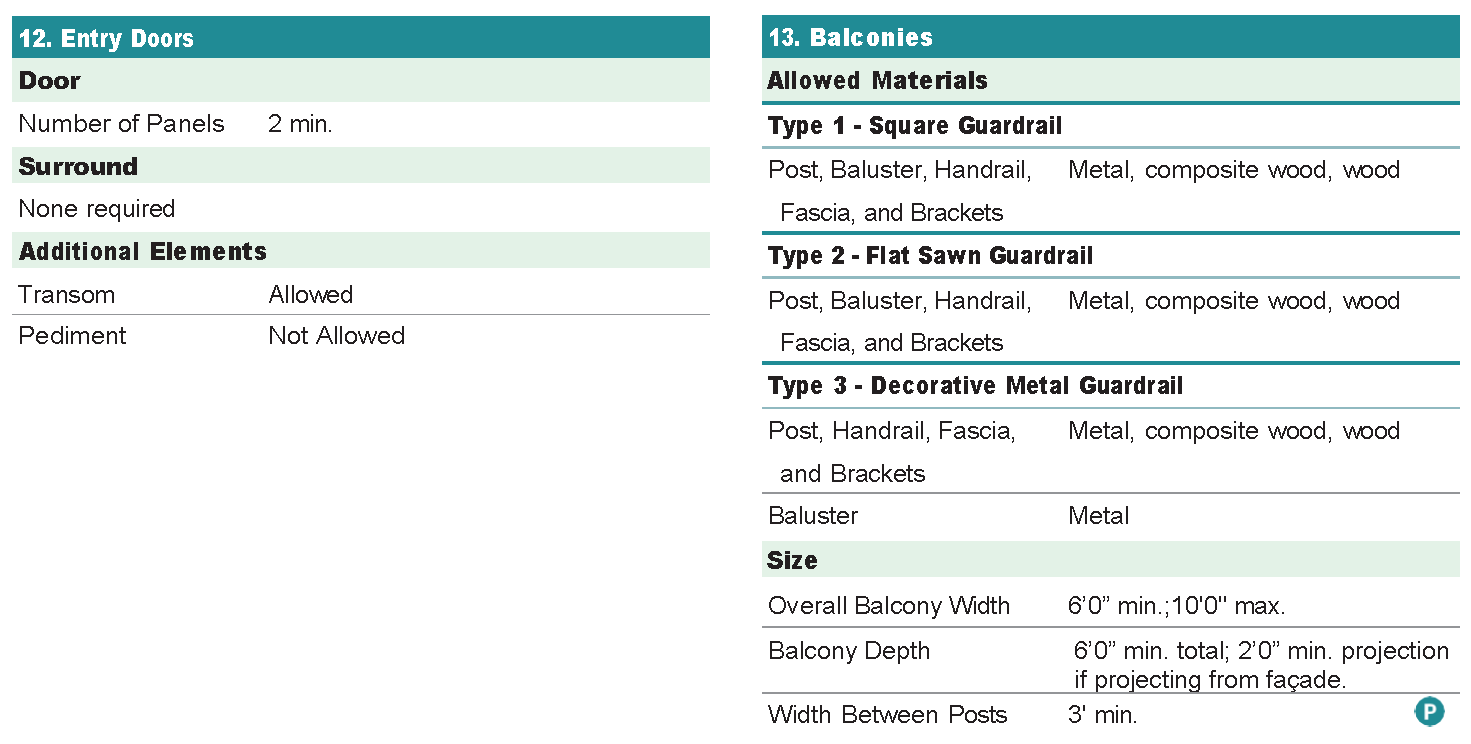
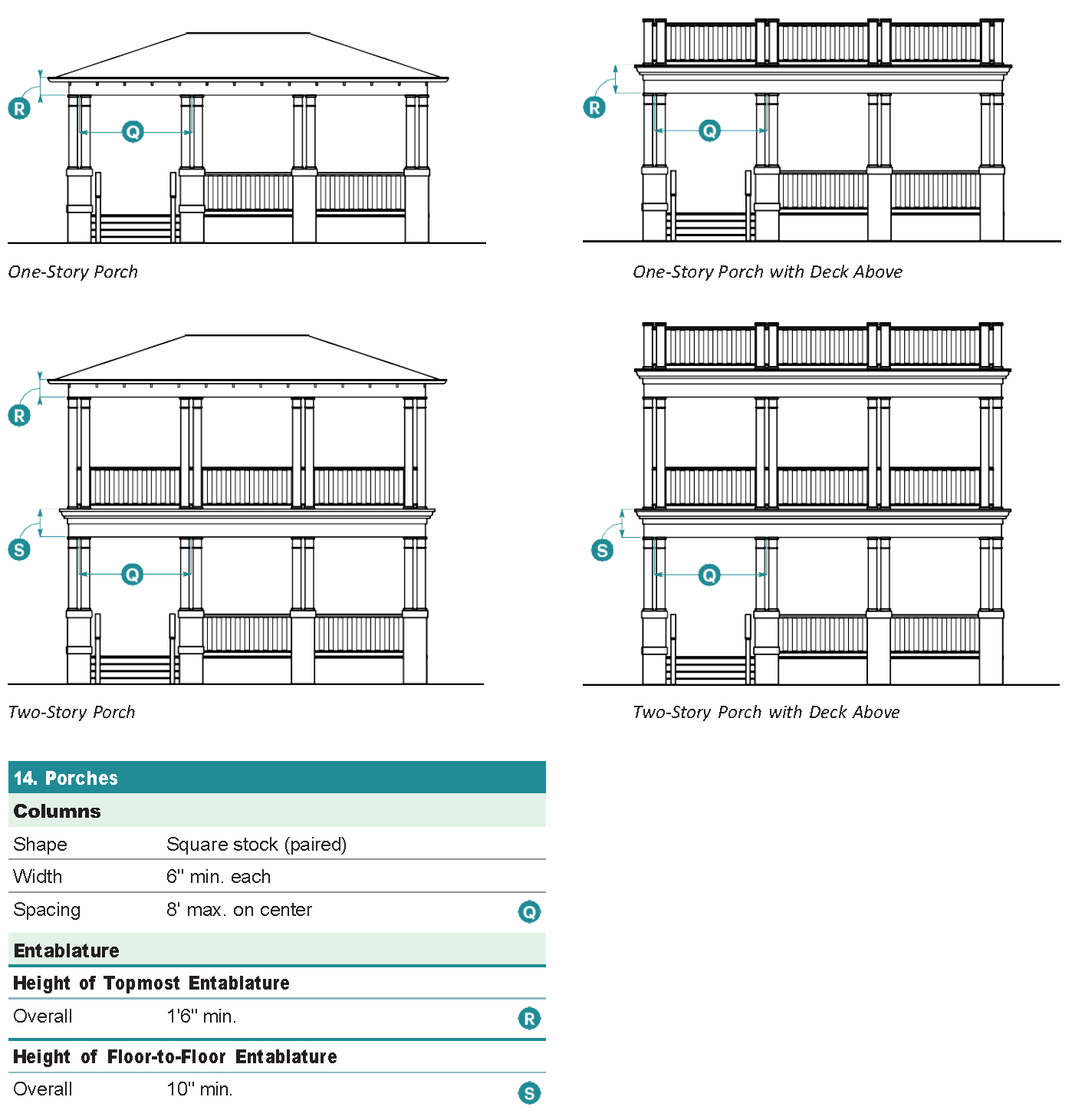
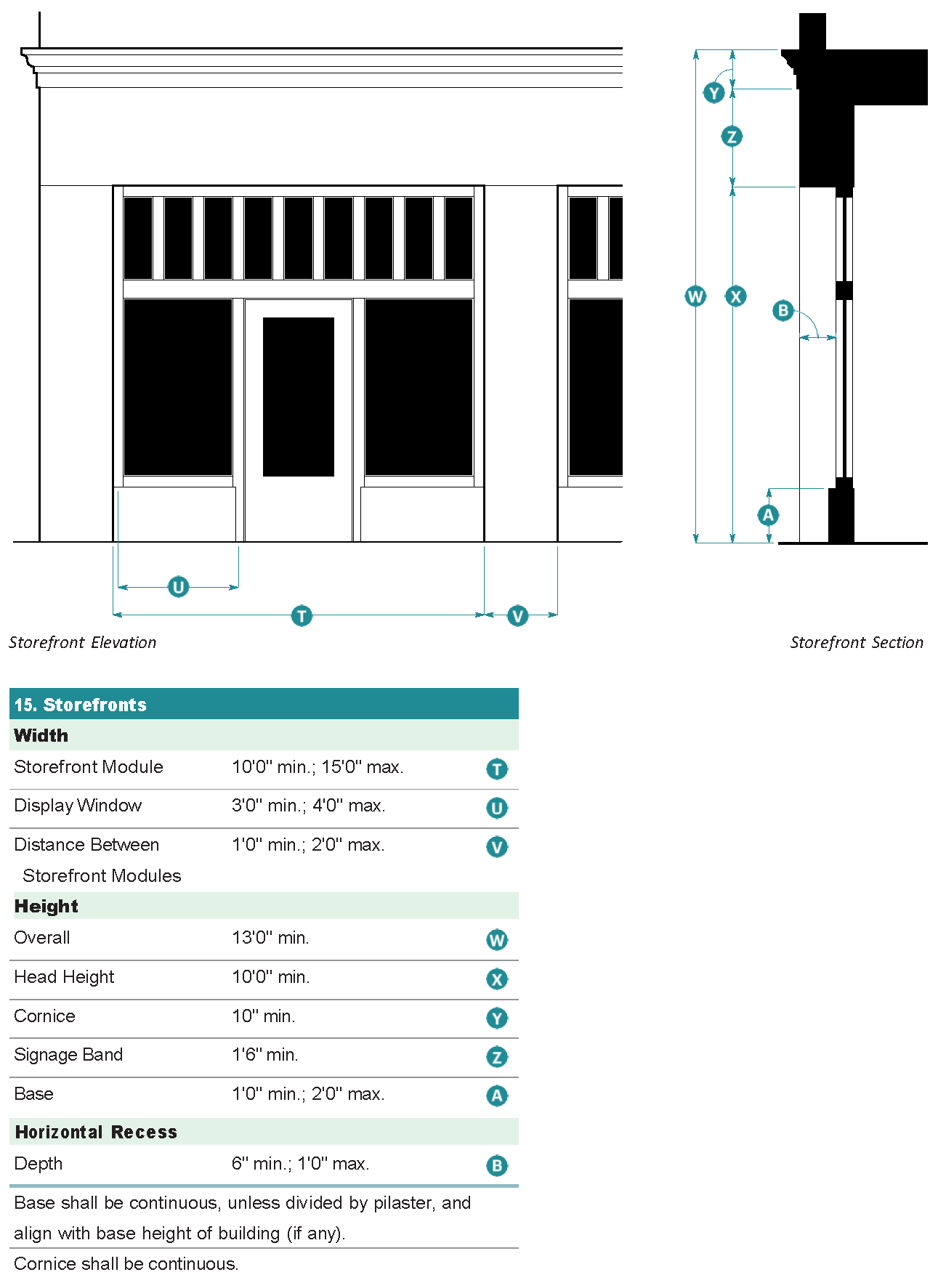
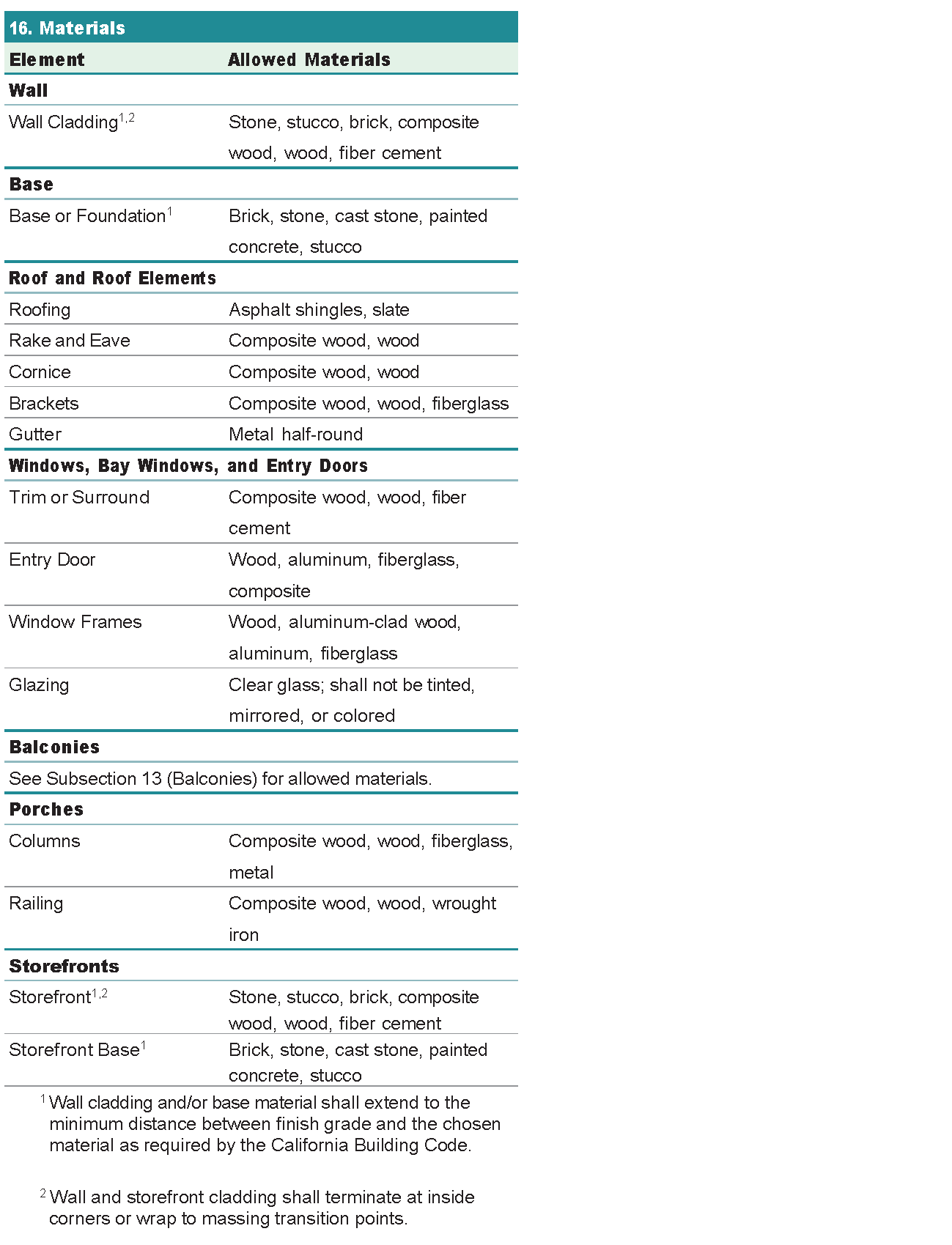
(Ord. No. 1705, § 4(Exh. A), 10-10-2023)
19.27.100 - Victorian Standards.
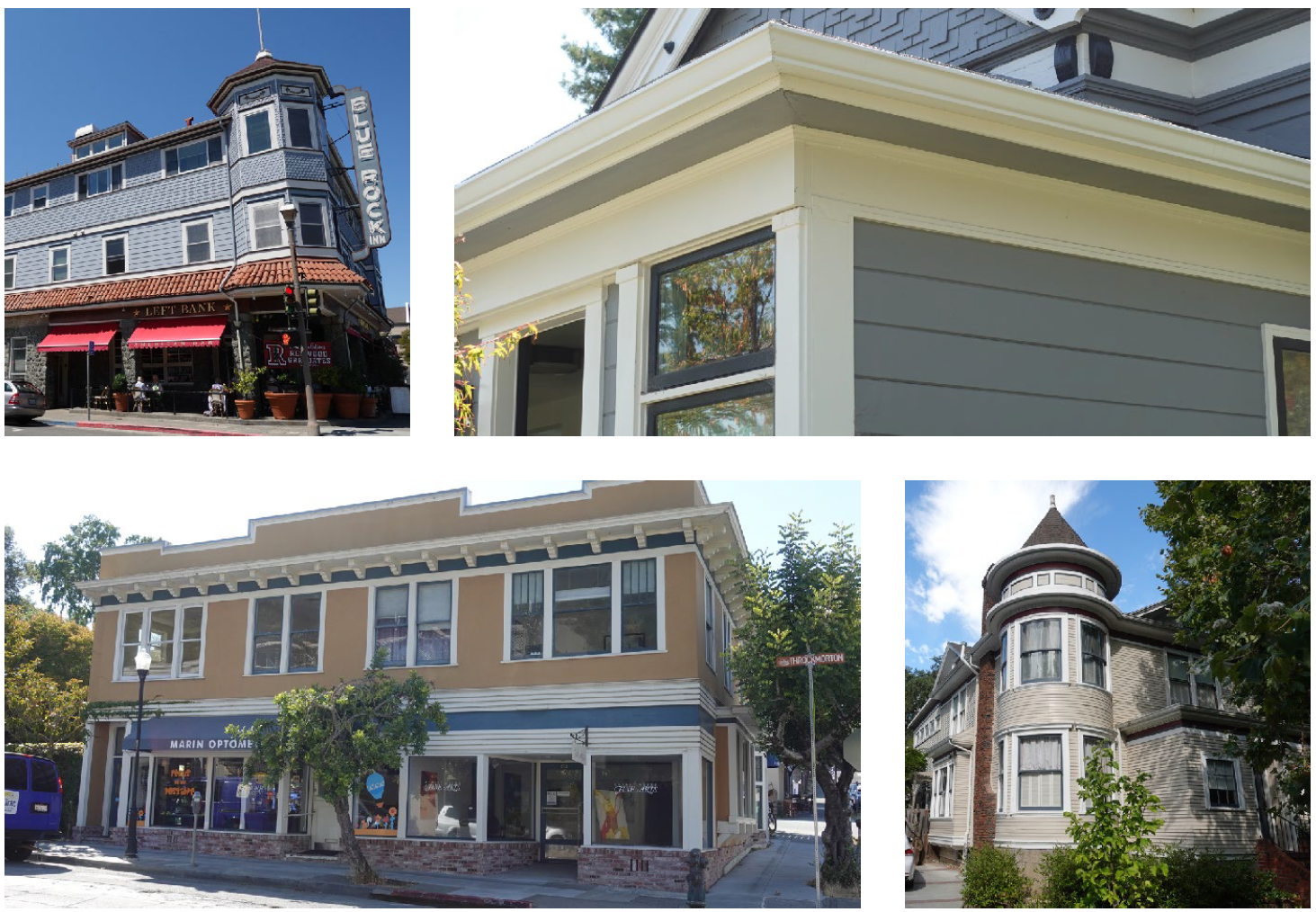
General note: The images above and the descriptions in Subsections 1 and 2 below are intended to provide a brief overview of the architectural style and are descriptive, not regulatory.
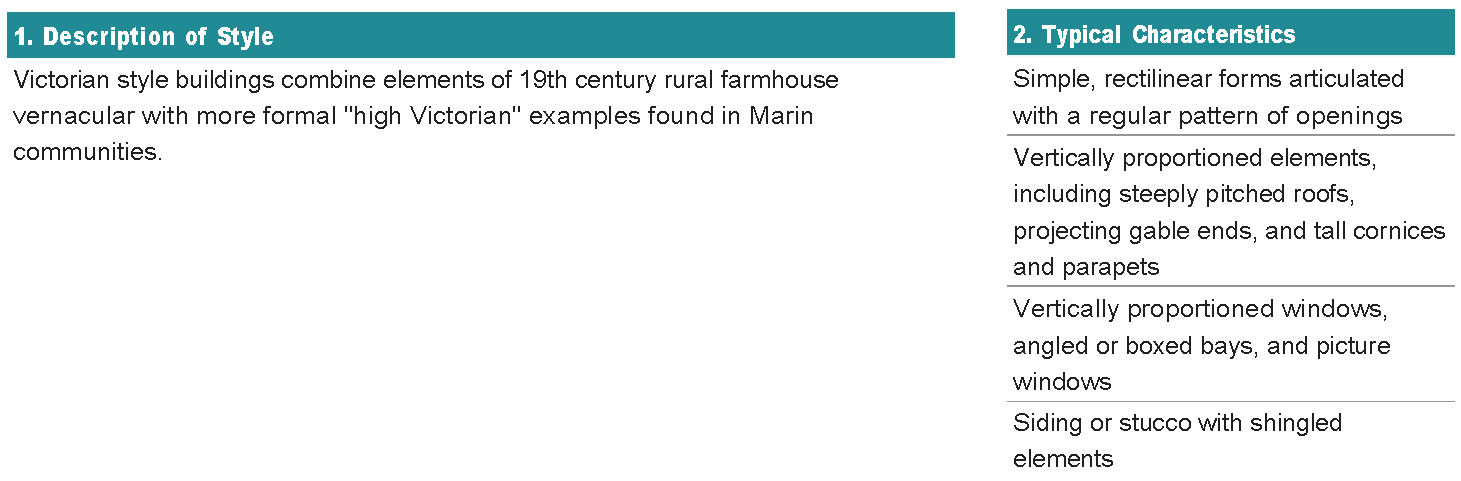
Victorian Style Standards — Single-Family and Multifamily Buildings
Note: The image below is intended to provide a reference for architectural elements and is illustrative, not regulatory. It is not an exhaustive list of applicable standards.
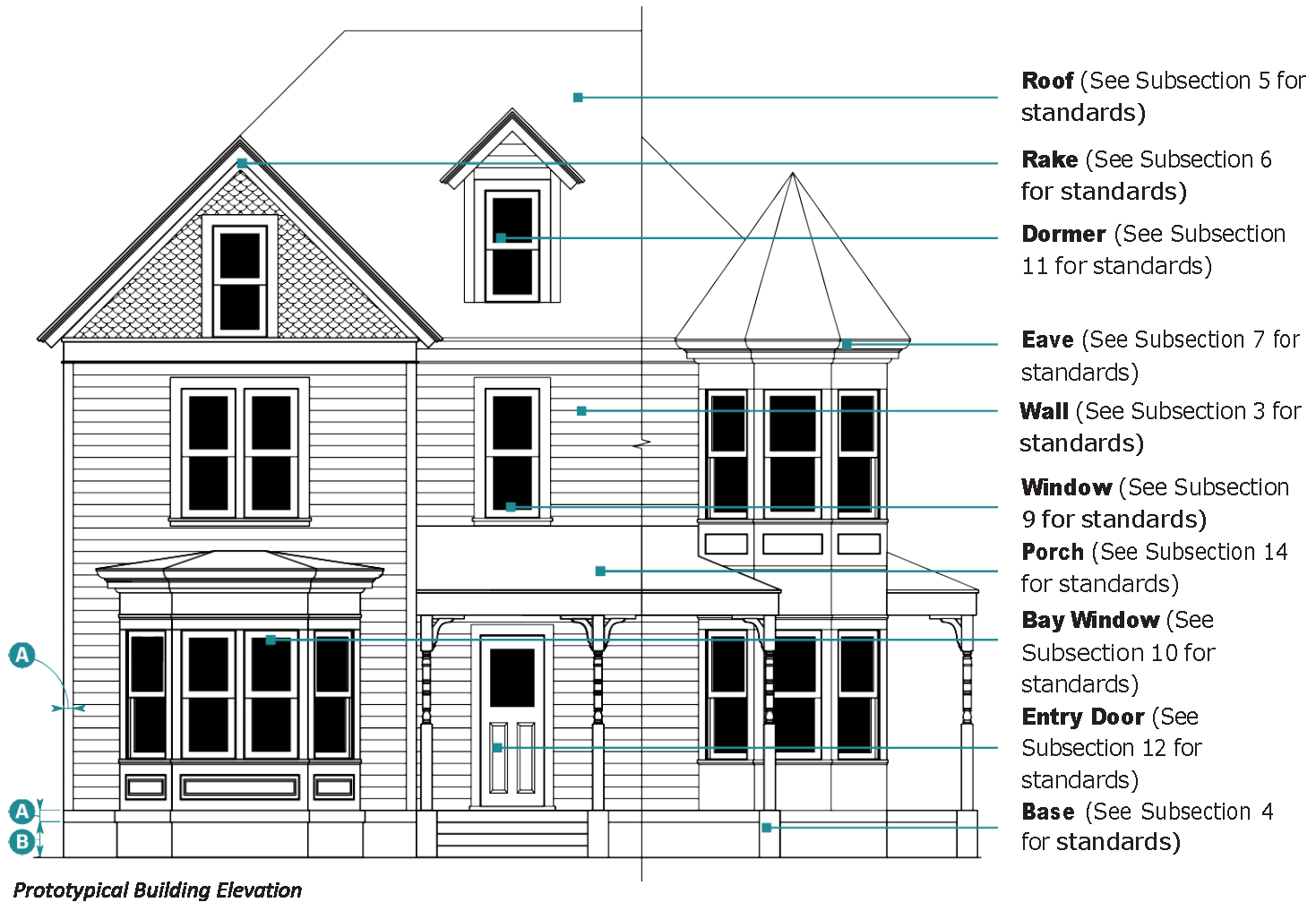
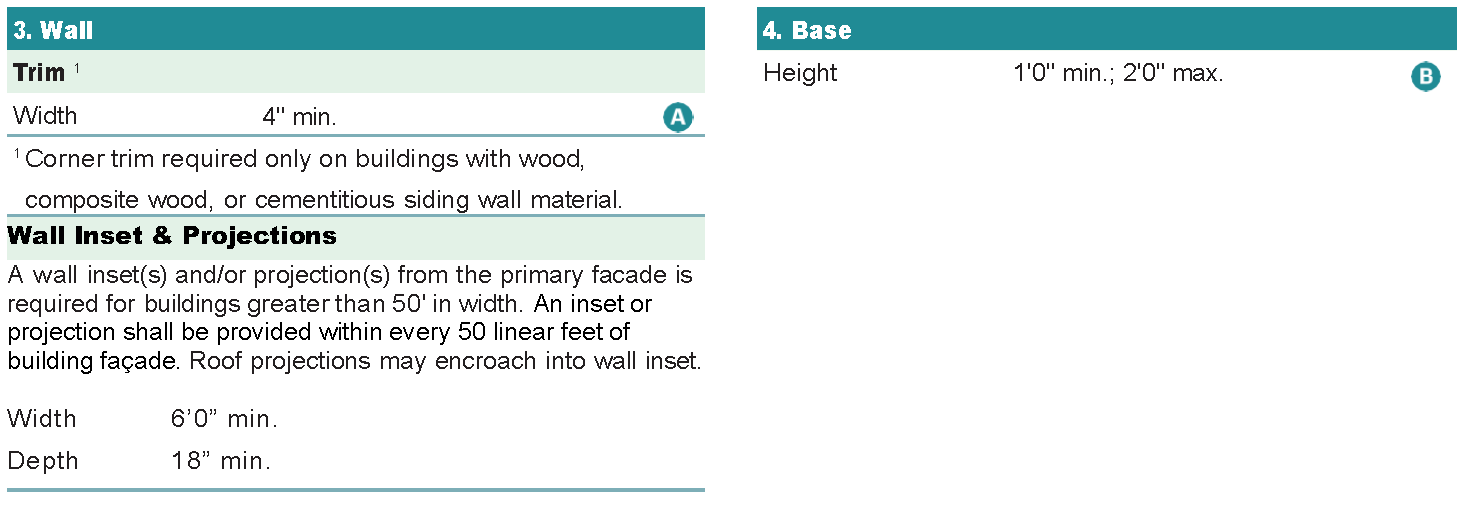
Victorian Style Standards — Mixed-Use Buildings
Note: The image below is intended to provide a reference for architectural elements and is illustrative, not regulatory. It is not an exhaustive list of applicable standards.
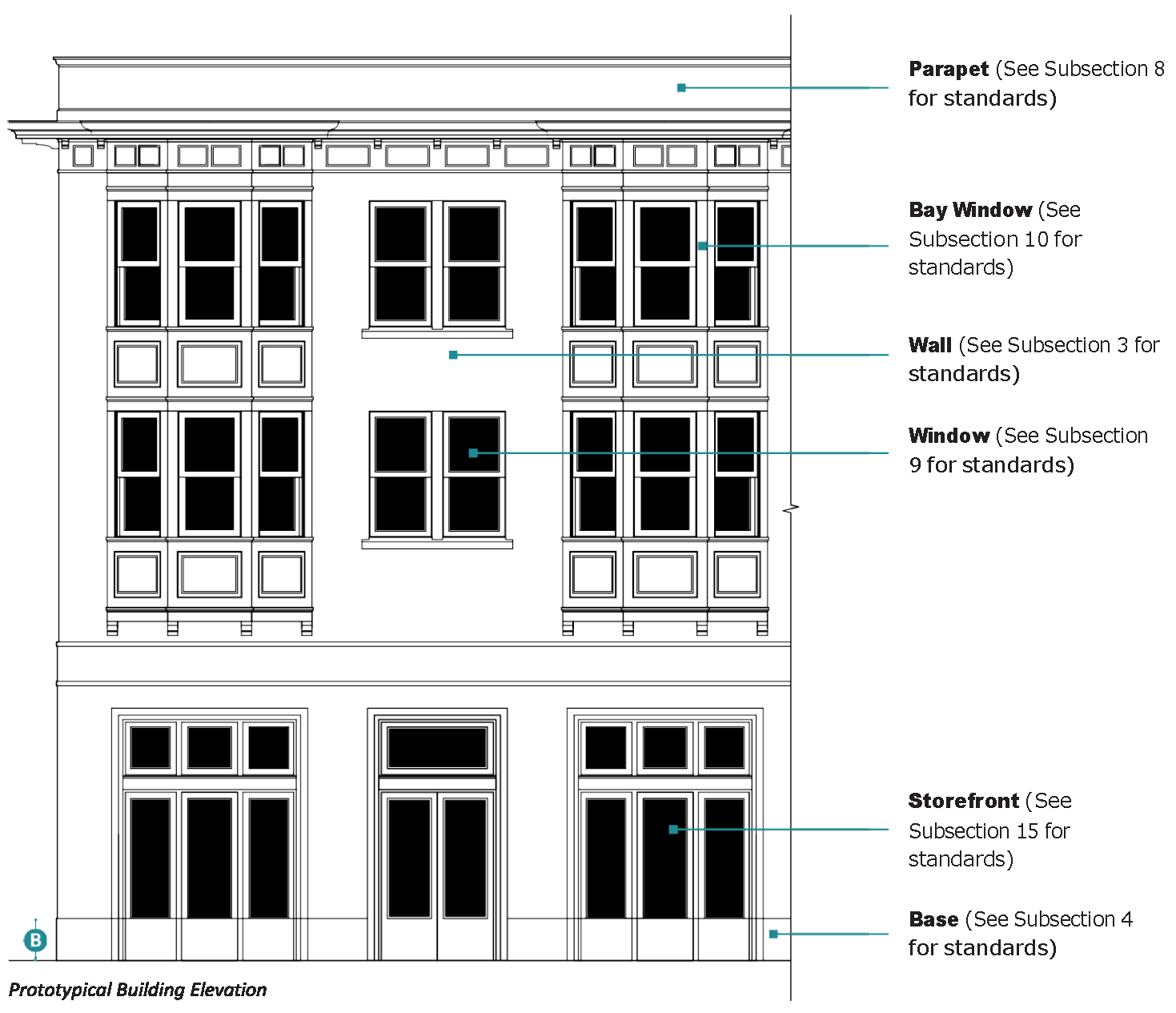
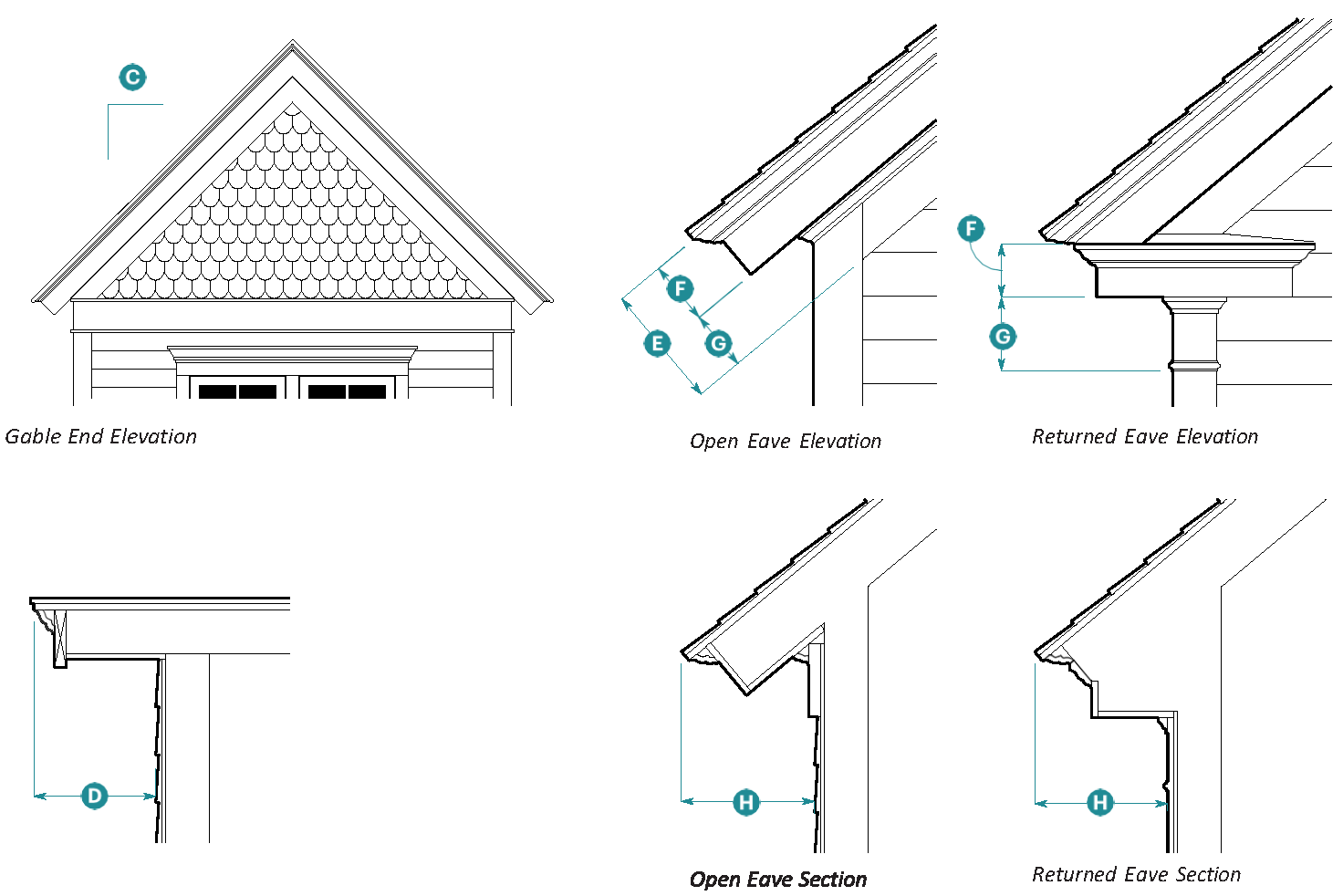
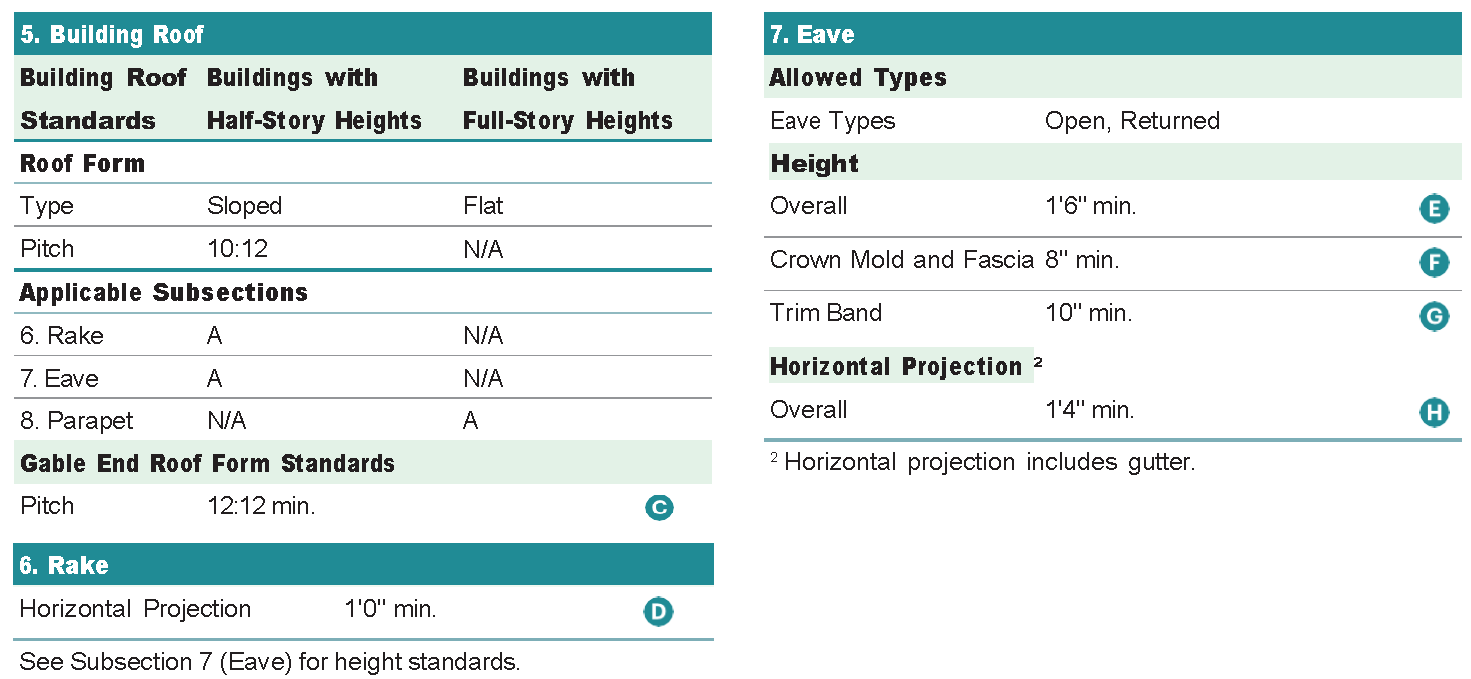
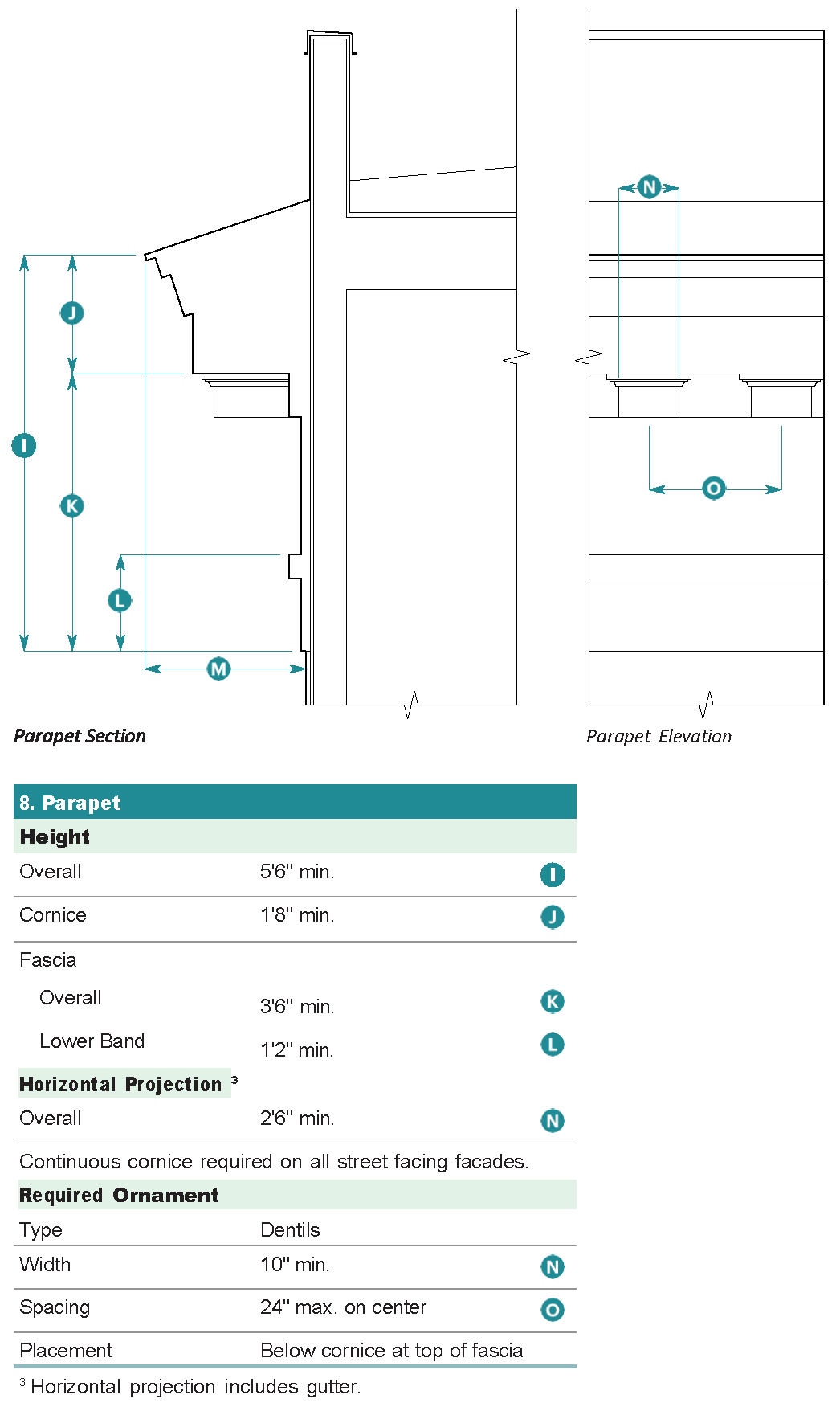
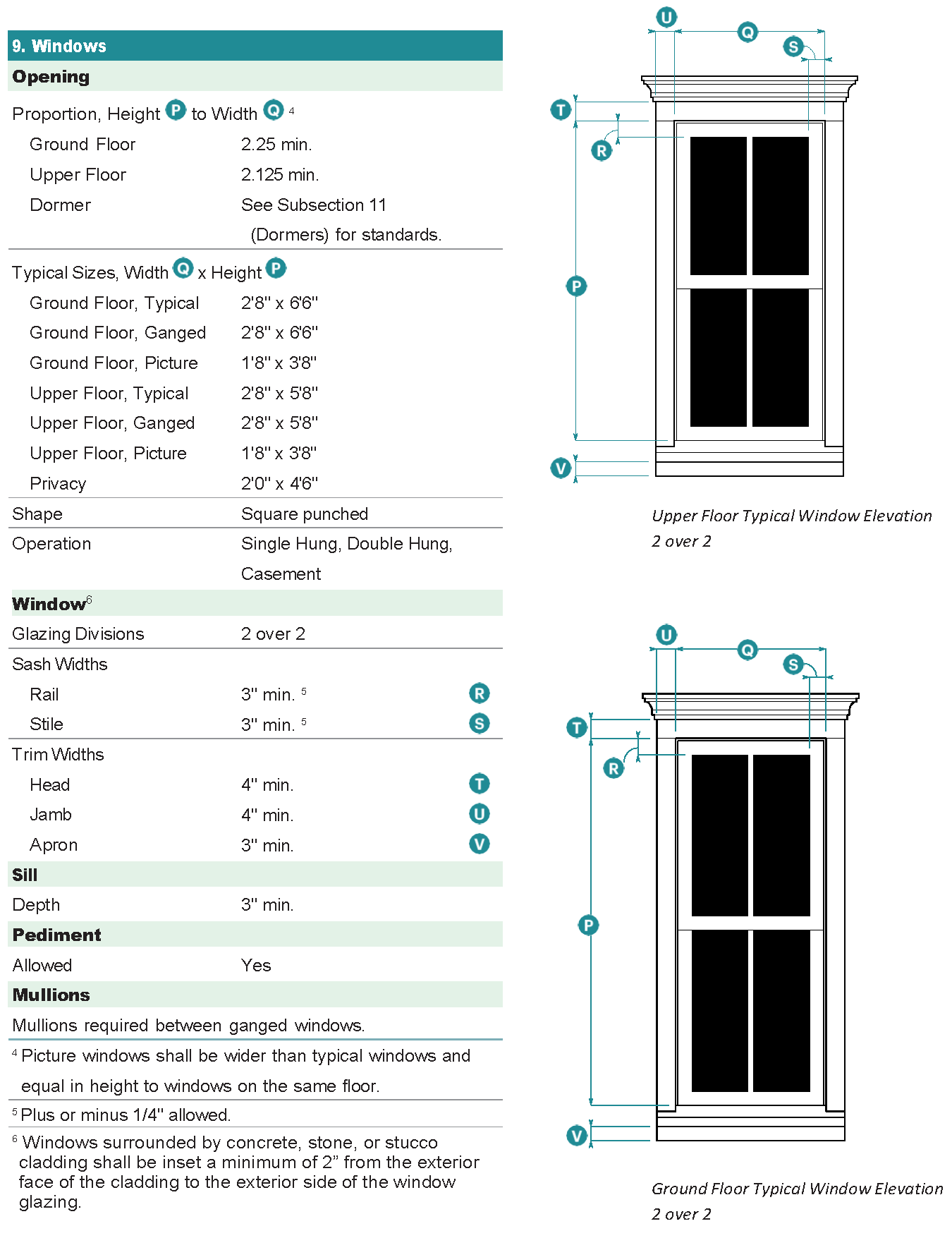
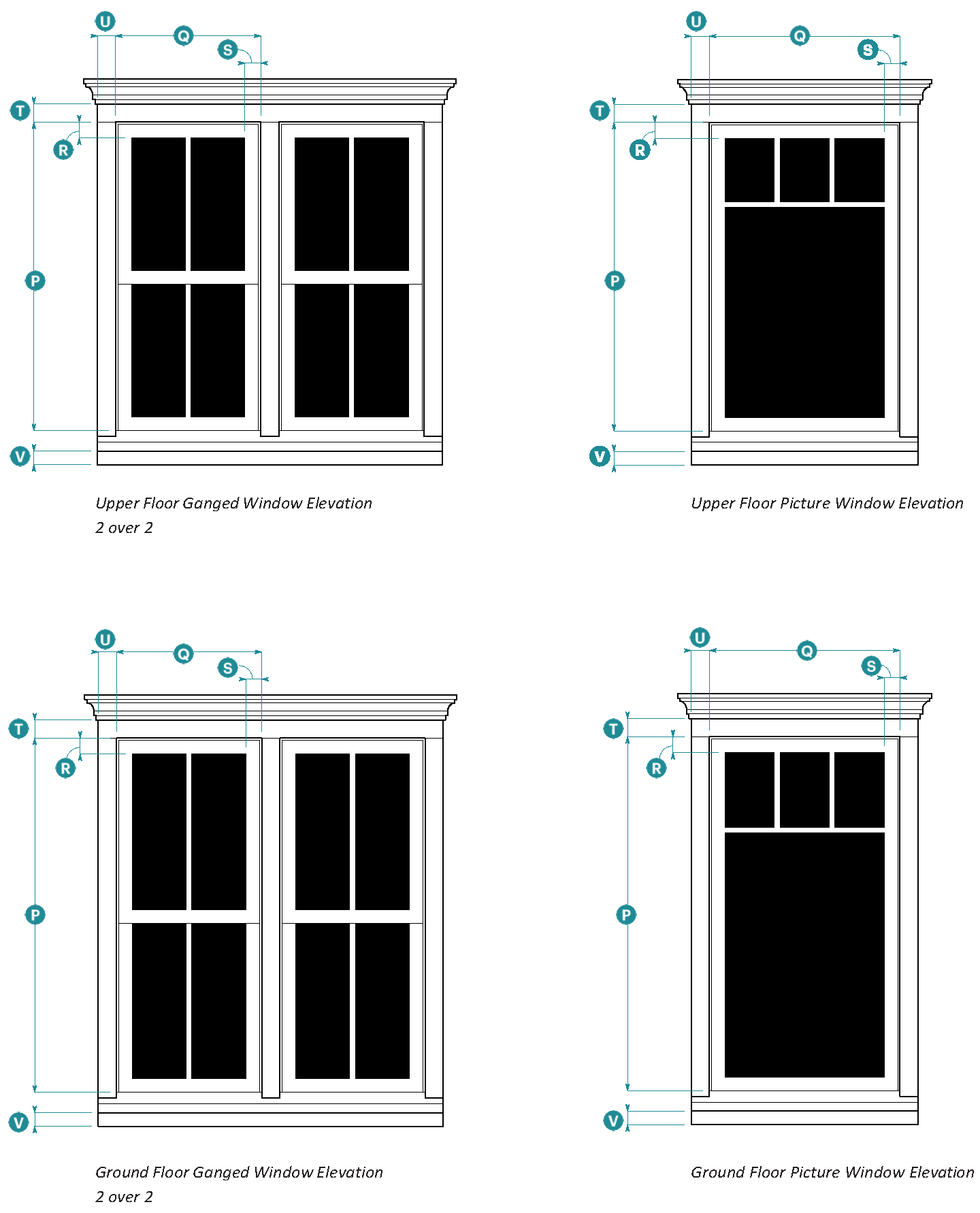
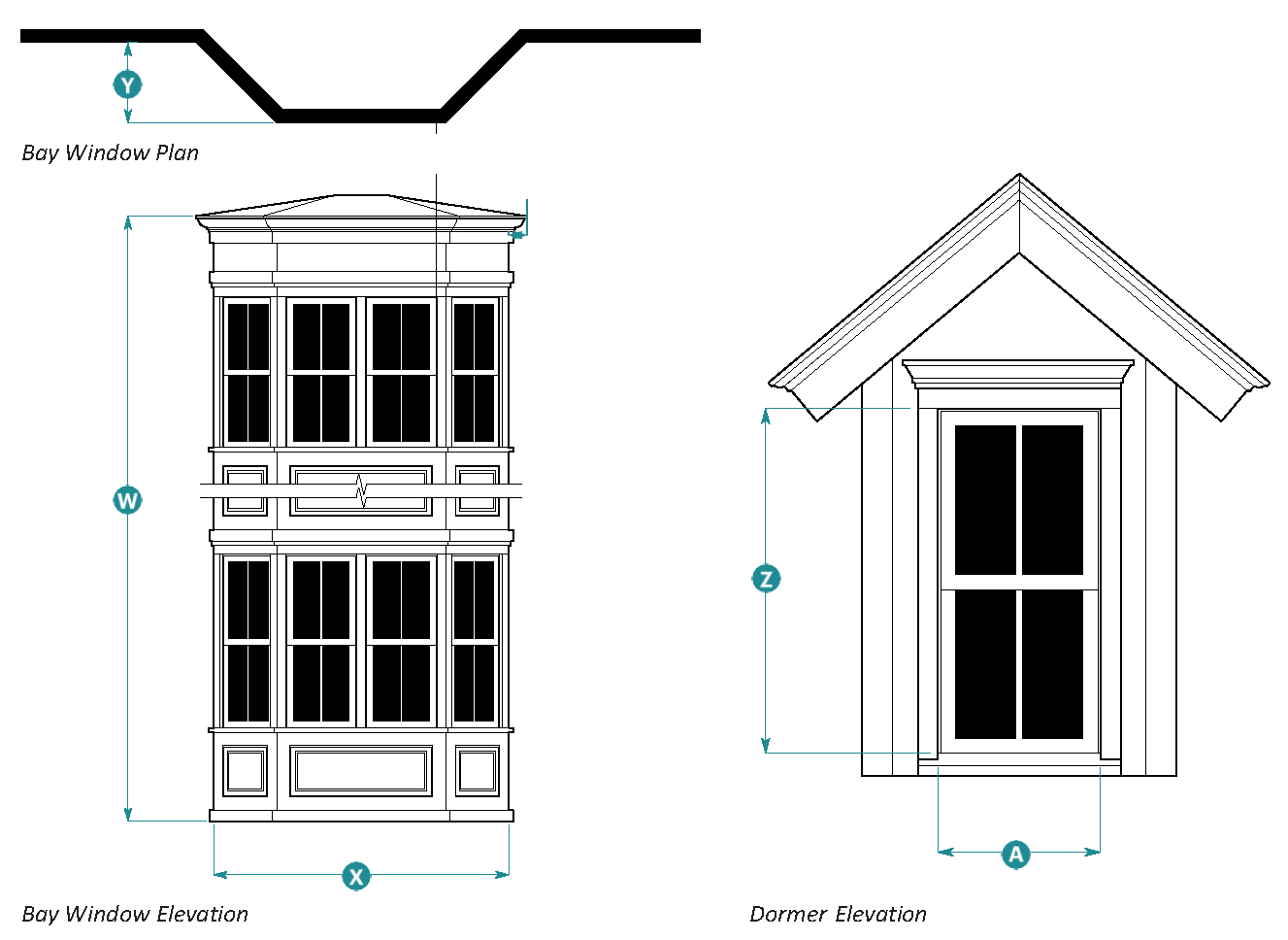
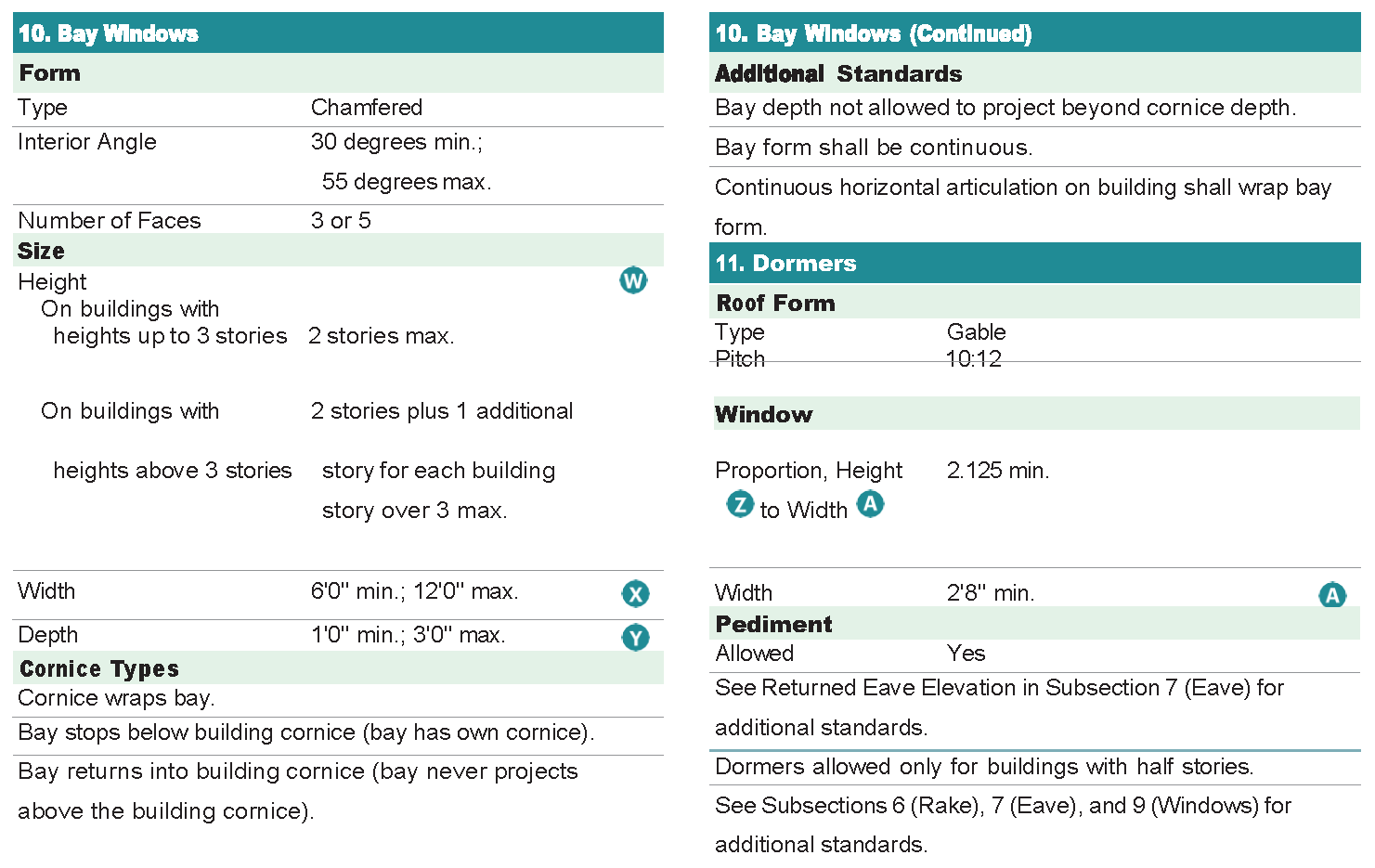
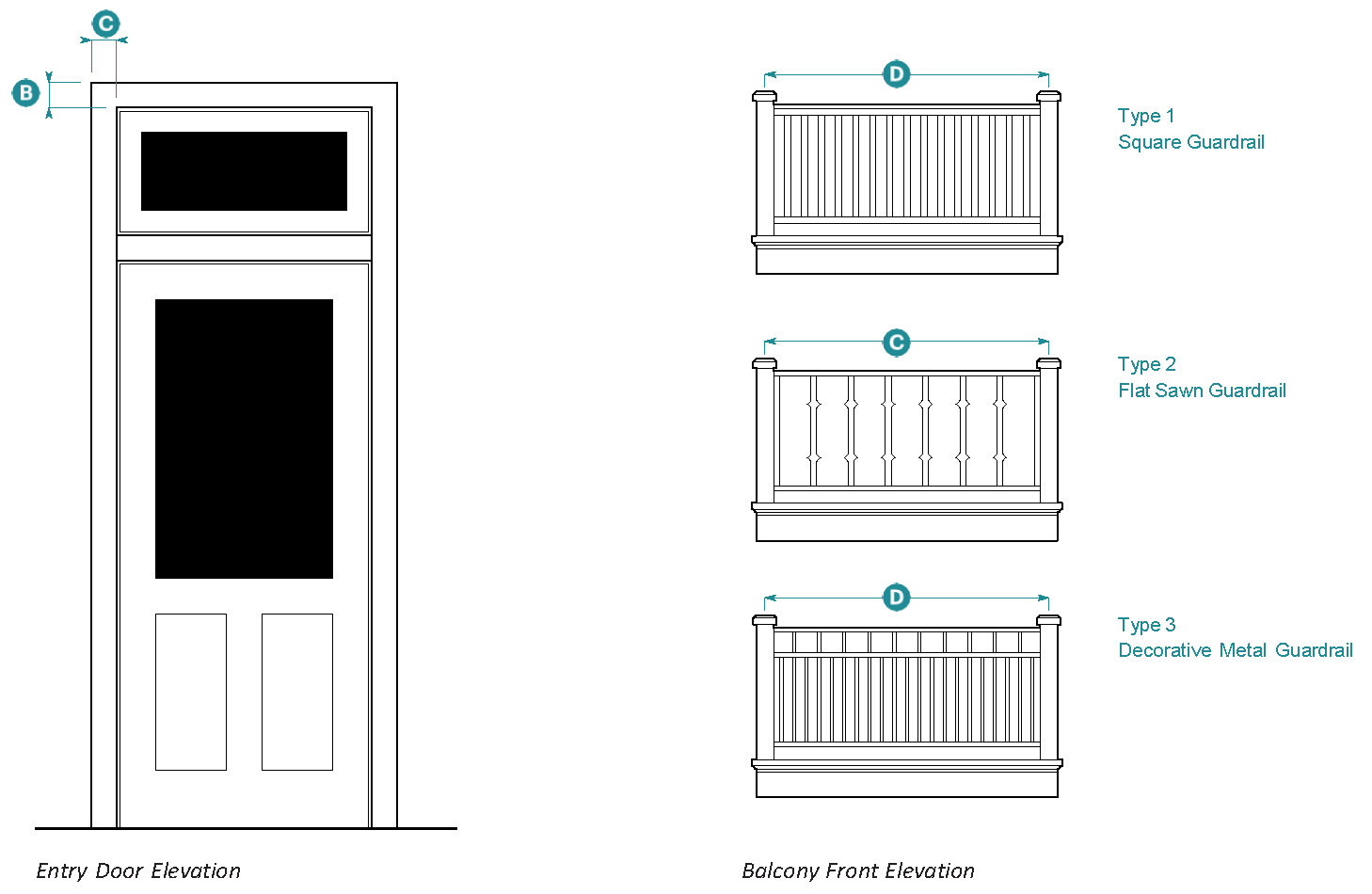
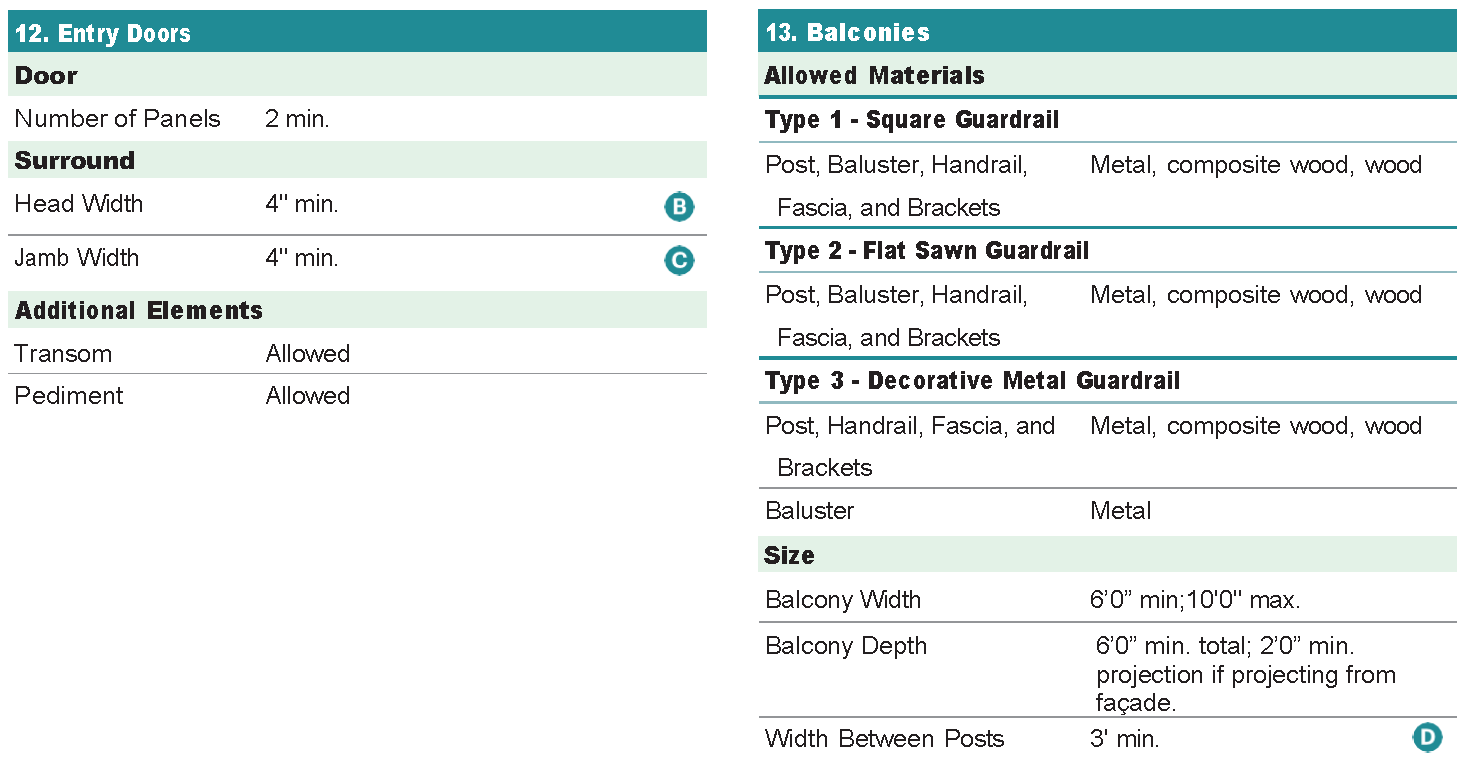
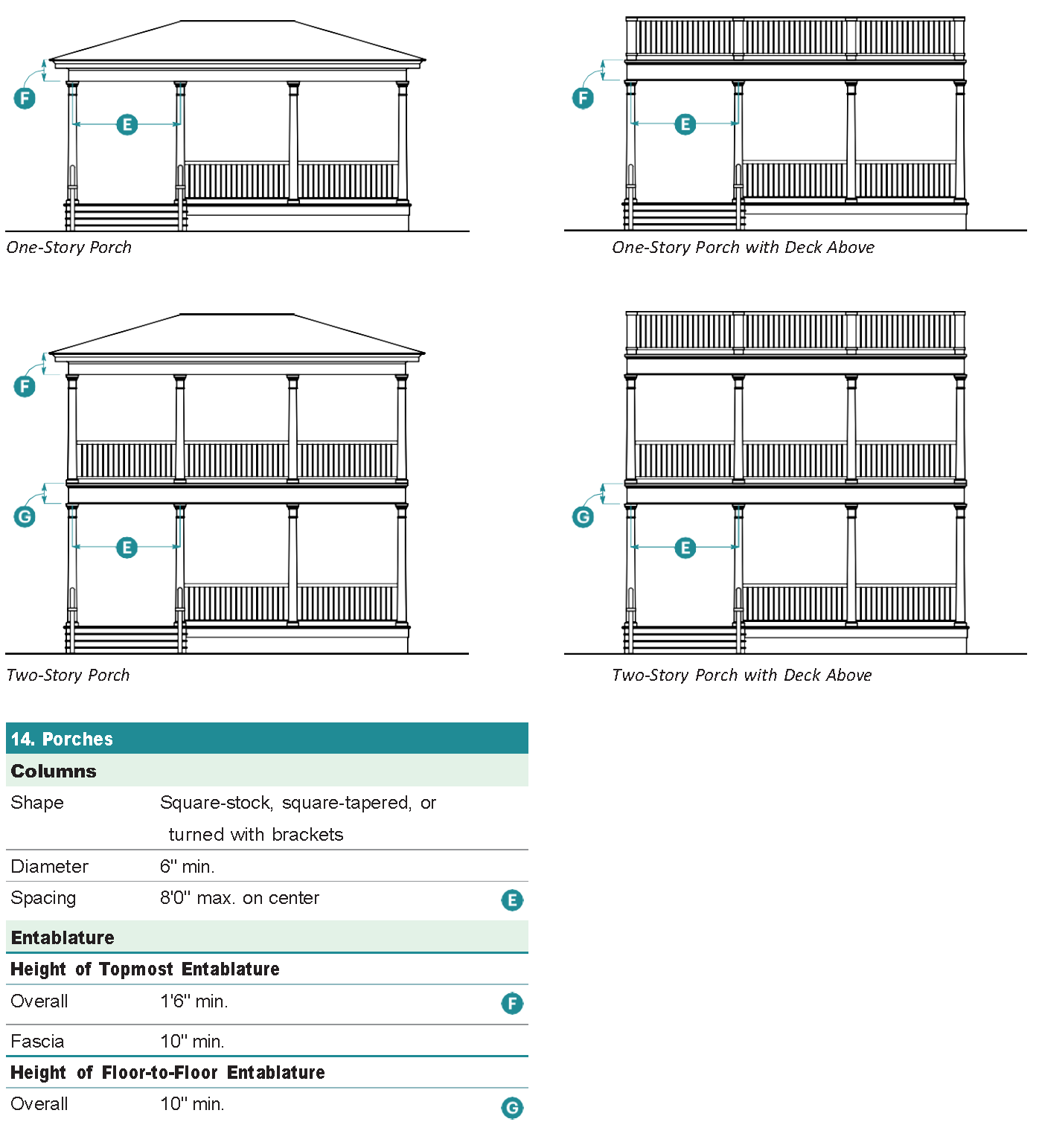
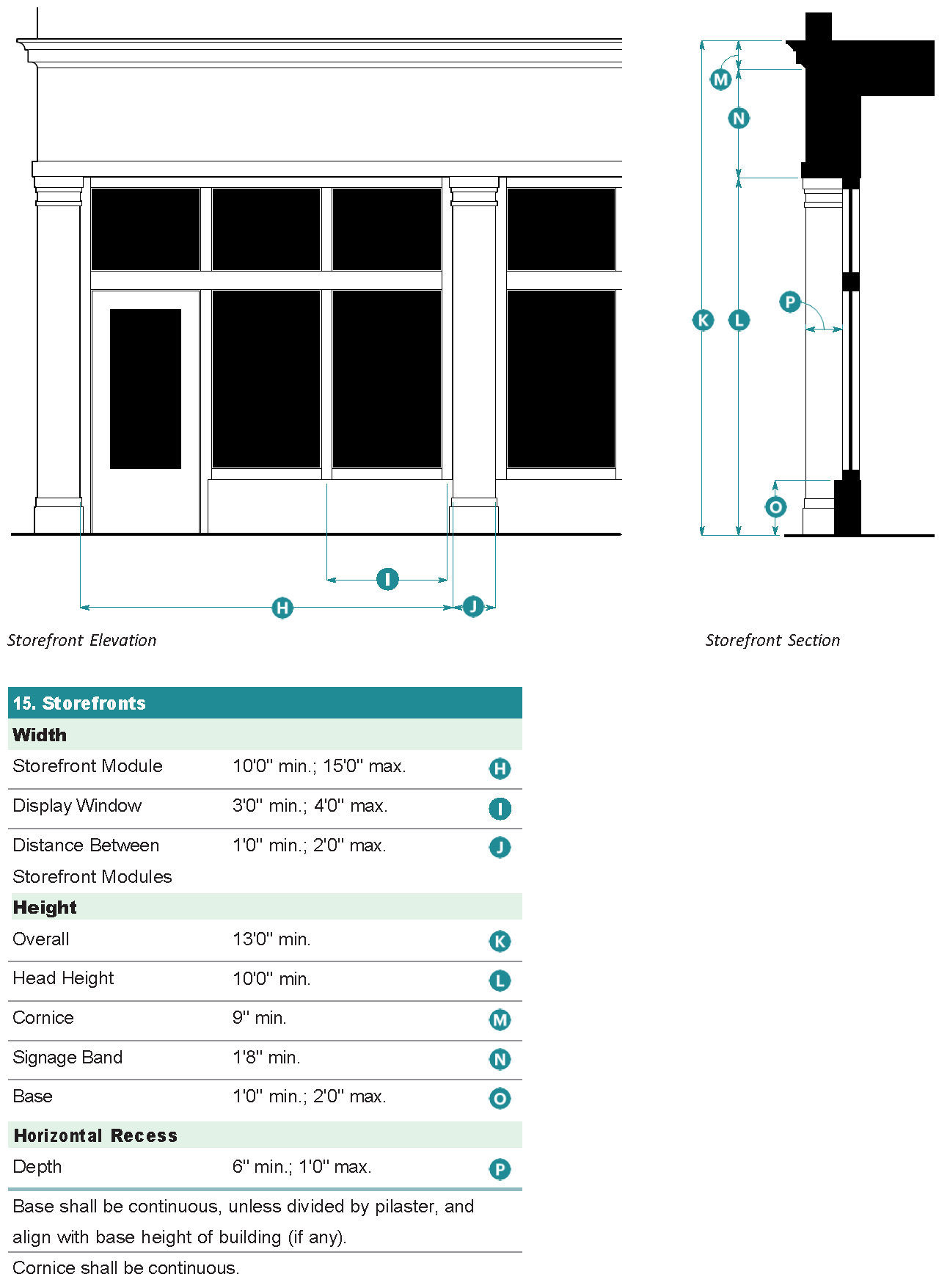
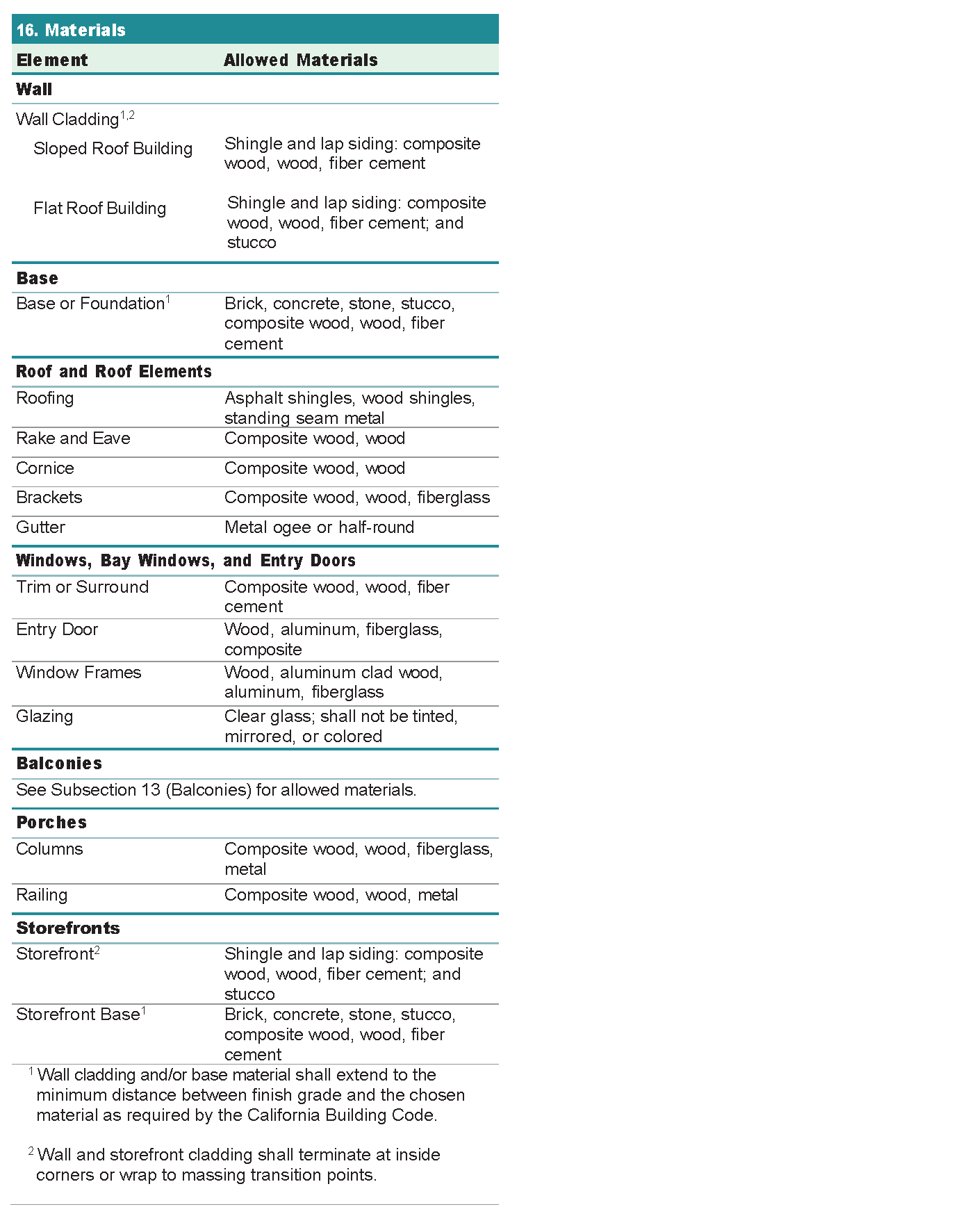
(Ord. No. 1705, § 4(Exh. A), 10-10-2023)
19.28.010 - Purpose of Division.
This Division establishes landscape standards to mitigate the effects of urbanization on the environment and to provide for an aesthetically pleasing urban setting with sufficient outdoor use areas. It is the intent of this Division to establish a measure of consistency in landscaping for new projects as well as providing a mechanism to require updating and upgrading of existing landscaping and outdoor use areas in existing developments when improvements are proposed. It is also the intent of this Division to encourage optimum use of drought-tolerant plant materials in conjunction with water-conserving automatic irrigation systems.
(Ord. No. 1576, § 2 (Exh. A, amd.), 10-23-2012)
19.28.020 - Applicability.
The provisions of this Division apply to all land uses as follows:
A.
New Projects. New nonresidential projects, multi-family residential projects, and single-family residential subdivisions shall provide landscaping in compliance with the requirements of this Division.
B.
Existing Development. The approval of a land Use Permit for physical alterations and/or changes in use within an existing development may include conditions of approval requiring compliance with specific landscaping and irrigation requirements of this Division. When landscaping is required, the landscape and irrigation improvements shall be installed prior to final building inspection.
C.
Alternatives to Requirements. The Review Authority may approve modifications to the standards of this Division to accommodate alternatives to required landscape materials or methods, where the Review Authority first determines that the proposed alternative will be equally effective in achieving the intent of this Division.
(Ord. No. 1576, § 2 (Exh. A, amd.), 10-23-2012)
19.28.030 - Landscape Area Requirements.
A.
General Requirements. Landscaping shall be provided as follows:
1.
Setbacks. The setback, outdoor use and open space areas required by this Zoning Ordinance, and easements for utilities and drainage courses shall be landscaped, except where:
a.
Occupied by allowed structures or paving;
b.
A required setback is screened from public view; or
c.
It is determined by the Director that landscaping is not necessary to fulfill the purposes of this Division.
2.
Unused Areas. All areas of a project site not intended for a specific use, including pad sites in shopping centers intended for future development, shall be landscaped unless the Director determines that landscaping is not necessary to fulfill the purposes of this Division.
3.
Parking Areas. Parking areas shall be landscaped in compliance with Division 19.30 (Parking and Loading).
B.
Measurement of Required Landscape Areas. Wherever this Zoning Ordinance requires landscaping areas of a specified width, the width shall be exclusive of curbs or walls.
C.
Required Outdoor Use Areas. Non-residential uses shall provide outdoor use areas for passive outdoor recreation (i.e., picnicking, hiking, biking, etc.) or may contribute to the provision of such public facilities, where such uses are planned or proposed within 2,500 feet of the project.
(Ord. No. 1576, § 2 (Exh. A, amd.), 10-23-2012)
19.28.040 - Landscape Standards.
A.
General Requirements.
1.
Minimum Dimensions. Landscaped areas shall have a minimum interior width of three feet. Landscaped areas containing trees shall have a minimum interior width of four feet.
2.
Height Limits. Proposed landscape materials shall be designed to:
a.
Comply with the height limits for landscaping within sight distance visibility areas established by Section 19.20.070.D (Height Limits and Exceptions—Sight Visibility Area Required); and
b.
Not interfere with the proper operation of solar collector devices on adjacent parcels.
3.
Protective Curbing. Required landscaping on sites within the R10, R20, and non-residential zoning districts shall be protected with a minimum six-inch high concrete curb, except adjacent to bicycle paths or where deemed unnecessary the Director.
4.
Irrigation System Required. All landscaped areas (except areas to be maintained with intentionally unirrigated native plants) shall be provided with an automatic irrigation system.
5.
Safety Requirements. Landscape materials shall be located so that at maturity they do not:
a.
Interfere with safe sight distances for vehicular, bicycle, or pedestrian traffic;
b.
Conflict with overhead utility lines, overhead lights, or walkway lights; or
c.
Block pedestrian or bicycle ways.
B.
Landscape Plans.
1.
Each application for approval of a project subject to this Division shall include plans and written material showing how the landscaping requirements are to be met.
2.
The degree of specificity of landscape plans and written material shall relate to the type of permit or request for approval being sought. Landscape plans shall include the information and materials listed on the Department handout for landscape and irrigation plans.
3.
Landscape plans shall be prepared by a landscape architect or other person qualified by education and experience to prepare landscape plans.
4.
Changes to approved landscaping or irrigation plans shall not be made without prior written approval of the Director.
5.
The construction/installation of landscape and irrigation improvements shall be accomplished in compliance with the approved plans as a prerequisite to any final approval/clearance of the use or development to which it relates.
C.
Planting Material. Where landscape is required, it shall include trees, shrubs, and ground covers, as follows:
1.
General Requirements.
a.
Plant materials shall be selected for: energy efficiency and drought tolerance; adaptability and relationship to Novato environment; color, form, and pattern; ability to provide shade; soil retention, fire resistiveness, etc. Overall landscape plan shall be integrated with all elements of the project (e.g., buildings, parking lots, and streets) to achieve desirable microclimate and minimize energy demand.
b.
Plant materials shall be sized and spaced to achieve immediate effect and shall not be less than a 15-gallon container for trees, five-gallon container for specimen shrubs and a one-gallon for mass planting, unless otherwise approved by the Review Authority on the basis that the alternate size will achieve the desired immediate effect equally well.
2.
Trees. Tree planting shall comply with the following standards. Existing trees shall be retained and preserved in compliance with Municipal Code Chapter XVII, Shrubs and Trees, and Zoning Code section 19.39.040 (Woodland and Tree Preservation).
a.
Trees shall not be planted under any eave, overhang, balcony, light standard or other structure that may interfere with normal growth.
b.
Trees in landscape planters less than 10 feet in width or located closer than five feet from a permanent structure shall be provided with root barriers.
c.
Trees shall be staked in compliance with standards provided by the Department.
d.
Number of trees:
(1)
Parking area: refer to 19.30 (Parking and Loading).
(2)
Street setbacks: one per 200 square feet of landscaped area.
(3)
Balance of site: one per 600 square feet of landscaped area.
(4)
Street trees: one per 40-foot length of right-of-way. The Director may modify this requirement depending on spread of tree at maturity.
3.
Groundcover and Shrubs.
a.
The majority of areas required to be landscaped shall be covered with groundcover, shrubs, turf, or other types of plants that are predominantly drought tolerant.
b.
A minimum of two, five-gallon size shrubs shall be provided for every 6 feet of distance along street setbacks.
c.
Groundcover shall be provided throughout the landscaped area and shall be planted at least 6 inches on center.
d.
Artificial groundcover or shrubs shall not be allowed.
e.
Crushed rock, redwood chips, pebbles, stone, and similar materials shall be allowed up to 15 percent of the total required landscape area. Artificial or synthetic ground covers are not allowed.
f.
Nonturf areas (e.g., shrub beds) shall be top dressed with a bark chip mulch or approved alternative.
D.
Landscape Design.
1.
Plant Selection and Grouping.
a.
Plants having similar water use shall be grouped together in distinct hydrozones.
b.
Plants shall be selected appropriately based upon their adaptability to the climatic, geological, and topographical conditions of the site. Protection and preservation of native species and natural areas is encouraged.
c.
Fire prevention shall be addressed on sites in areas identified by the Safety Element of the General Plan as being fire prone by providing fire-resistant landscaping buffers between development areas and naturally vegetated areas, as identified by the Director.
2.
Water Features. Decorative water features (e.g., fountains, ponds, waterfalls) shall have recirculating water systems.
E.
Irrigation Design.
1.
Control System. All landscaped areas shall be provided with an approved irrigation system that shall include an automatic master control with multi-calendar, timer, and multi-station capabilities.
2.
Runoff and Overspray. Soil types and infiltration rate shall be considered when designing irrigation systems. All irrigation systems shall be designed to avoid runoff, low head drainage, overspray or other similar conditions where water flows onto adjacent property, nonirrigated areas, walks, roadways or structures. Proper irrigation equipment and schedules, including repeat cycles, shall be used to closely match application rates to infiltration rates to minimize runoff.
Special attention shall be given to avoid runoff on slopes and to avoid overspray in planting areas in median strips.
F.
Hydroseeding.
1.
Plans Required. When planting is to be utilized for permanent landscape treatment or for natural area restoration, plans indicating location and type of hydroseeding shall be submitted in compliance with the Department handout on hydroseeding.
2.
Separation Requirements. Hydroseeded or other "natural" areas shall be separated from structures and other built improvements by an area of more formal landscaping at least five feet in width.
G.
Water-Efficient Landscape Criteria. Landscape and irrigation plans shall comply with the requirements and guidelines of the North Marin Water District for water efficient landscape.
H.
Landscape Completion Certification Required. Evidence of the completion of required landscaping and irrigation improvements shall be supplied to the Department by the author of the landscape and irrigation plan. Evidence shall be on a "Landscape Certification" form available at the Department and shall be submitted as a prerequisite to final building inspection.
I.
Maintenance Contract Required. A two-year landscape maintenance contract which includes a landscaping security in an amount equal to 50 percent of the cost of the landscape project shall be posted as a prerequisite to final building inspection, except for subdivisions with landscaping which is included in the subdivision improvement agreement, in which case a one-year maintenance period is acceptable. The developer may transfer maintenance responsibility to another party, for example, homeowners' association, provided that the security remains posted for the remainder of the originally-required time period.
J.
Maintenance. Landscaping shall be properly maintained at all times.
1.
Irrigation equipment shall be in working condition at all times.
2.
Litter shall be removed from all landscaped areas in a timely fashion.
3.
Turf areas shall be mowed on a regular basis and be kept green. Accumulation of leaves, twigs, bark, and other similar materials shall be removed on a regular basis. Planting areas shall be kept in a weed-free fashion at all times.
4.
Landscaping maintenance shall include pruning, cultivating, weeding, fertilizing, replacement of plants, and watering on a regular basis.
5.
Landscape maintenance shall include the pruning or removal of overgrown vegetation, cultivated or uncultivated, that is likely to harbor rats, vermin or other nuisances, or otherwise be detrimental to neighboring properties.
6.
Landscape maintenance shall include the removal of dead, decayed, diseased, or hazardous trees, weeds and debris constituting unsightly appearance, dangerous to public safety and welfare or detrimental to neighboring properties or property values. Compliance shall be by removal, replacement, or maintenance.
7.
All landscaping (trees, shrubs, ground cover, turf, etc.) which, due to accident, damage, disease, lack of maintenance, or other cause, fail to show a healthy appearance and growth, shall be replaced. Replacement plants shall conform to all standards that govern the original planting installation, approved landscaping plan, or as approved by the Director.
(Ord. No. 1576, § 2 (Exh. A, amd.), 10-23-2012)
19.30.010 - Purpose of Division.
This Division establishes regulations to ensure that sufficient off-street parking facilities are provided for all uses and that parking facilities are properly designed, attractive, and located to be unobtrusive yet meet the needs of the specific use.
(Ord. No. 1576, § 2 (Exh. A, amd.), 10-23-2012)
19.30.020 - Applicability.
Every use and structure, including a change or expansion of a use or structure shall provide parking and loading areas in compliance with the provisions of this Division. A use shall not be commenced and structures shall not be occupied until improvements required by this Division are satisfactorily completed.
(Ord. No. 1576, § 2 (Exh. A, amd.), 10-23-2012)
19.30.030 - General Parking Regulations.
A.
Parking Spaces to be Permanent. Parking spaces shall be permanently available, marked and maintained for parking purposes for the use they are intended to serve. Required parking spaces shall be independently accessible such that a vehicle may enter or exit any space without the necessity of moving another vehicle.
B.
Parking and Loading to be Unrestricted. Owners, lessees, tenants, or persons having control of the operation of a premises for which parking spaces are required shall not prevent or restrict authorized persons from using these spaces without prior approval of the Director. Fees for required on-site parking in residential zones shall be prohibited.
C.
Restriction of Parking Area Use. Required off-street parking areas shall be used exclusively for the temporary parking of vehicles and shall not be used for the sale, lease, display, repair, or storage of vehicles, trailers, boats, campers, mobile homes, recreational vehicles, merchandise, or equipment, or for any other use not authorized by the provisions of this Zoning Ordinance.
(Ord. No. 1576, § 2 (Exh. A, amd.), 10-23-2012)
19.30.040 - Number of Parking Spaces Required.
Each use shall provide at least the minimum number of off-street automobile parking spaces required by this Section, except where parking requirements are adjusted in compliance with Section 19.30.050 (Adjustments to Parking Requirements). See Section 19.30.090 for Bicycle parking requirements, and Section 19.30.100 for motorcycle parking requirements.
A.
Parking Requirements by Land Use. Each land use shall be provided the number of parking spaces required by Table 3-7, except where a greater number of spaces is required through conditions of approval. Sites located within the D (Downtown Novato Specific Plan) overlay district shall provide the number of parking spaces required by Table 3-7 within the Downtown (D) overlay, where applicable.
B.
Basis for Calculations. In any case where Table 3-7 establishes a parking requirement based on the floor area of a use in a specified number of square feet (for example: 1 space per 1,000 sf), the floor area shall be construed to mean gross floor area.
C.
Expansion of Structure, Change in Use. When an existing nonresidential structure is enlarged or increased in capacity, or when a change or expansion in use requires more parking than is presently provided, parking spaces shall be provided for the entire structure in compliance with this Chapter.
D.
Multi-Tenant Sites. A site with multiple tenants shall provide the aggregate number of parking spaces required for each separate use, except where:
1.
The site was developed comprehensively as a shopping center, the parking ratio shall be that required for the shopping center as a whole regardless of individual uses listed in Table 3-7; or
2.
The site qualifies for shared parking in compliance with Section 19.30.050 (Adjustments to Parking Requirements).
E.
Uses Not Listed. Land uses not specifically listed in Table 3-7, shall provide parking as required by the Director. The Director shall use the requirements of Table 3-7 as a guide in determining the minimum number of parking spaces to be provided and may require the applicant fund a parking study. The Director may approve the temporary reduction of parking spaces in conjunction with a seasonal or intermittent use.
F.
Excessive Parking. The parking standards established in this Division are both minimum and maximum standards. Parking spaces in excess of these standards may be approved in conjunction with Design Review, a Use Permit, or Master Plan/Precise Development Plan for the project, and when commensurate landscaping and pedestrian improvements are also provided.
G.
Bench or Bleacher Seating. Where fixed seating is provided (e.g., benches or bleachers), a seat shall be construed to be 18 inches of bench space for the purpose of calculating the number of required parking spaces.
Table 3-7
Parking Requirements by Land Use
Table 3-7
Parking Requirements by Land Use (Continued)
Table 3-7
Parking Requirements by Land Use (Continued)
Notes:
(1)
Guest parking shall be clearly marked for guests only and shall be evenly dispersed throughout the site. Appropriate signs shall be provided to direct visitors to the parking.
(2)
At least one space per unit shall be covered (i.e., within a garage or carport).
(3)
For any unit which is located farther than 150 feet from a street designed to accommodate parking, 4 spaces per unit.
(4)
Adjustments to parking standards for parcels designated Downtown Core on the General Plan Land Use Map are provided in Section 19.30.050F.
Table 3-7
Parking Requirements by Land Use (Continued)
Table 3-7
Parking Requirements by Land Use (Continued)
(Ord. No. 1576, § 2 (Exh. A, amd.), 10-23-2012; Ord. No. 1611, § 5(Exh. D), 11-29-2016; Ord. No. 1637, § 3(Exh. A), 2-27-2018; Ord. No. 1676, Exh. A, 3-8-2022; Ord. No. 1723, § 3(Exhs. A, B), 3-25-2025; Ord. No. 1725, § 5(Exh. A), 7-22-2025)
19.30.050 - Adjustments to Parking Requirements.
A.
Shared On-Site Parking. Where two or more adjacent nonresidential uses have distinct and differing peak parking use periods, (e.g. a theater and a bank), a reduction in the required number of parking spaces may be allowed through Use Permit approval. Approval shall also require a recorded covenant running with the land, recorded by the owner of the parking lot, guaranteeing that the required parking will be maintained exclusively for the use or activity served for the duration of the use or activity.
B.
Reduction of Parking. The Review Authority for a land use or development permit application may reduce the number of parking spaces required by Section 19.30.040 (Number of Parking Spaces Required) based on quantitative information provided by the applicant that documents the need for fewer spaces (e.g., sales receipts, documentation of customer frequency, information on parking standards required for the proposed land use by other cities, etc.).
C.
Reduction of Parking—Off-Hour Uses Within the Downtown (D) Overlay. The Review Authority for a land use or development permit application within the Downtown (D) overlay district may reduce the parking requirements of this Division for land uses that are determined by the Review Authority to operate exclusively at night, when their peak parking demand occurs after the evening peak period parking demand within the Downtown (D) overlay district generally, and adequate on-street or public parking is available.
D.
Public Parking Within the Downtown (D) Overlay. Required parking may be reduced or waived by the Review Authority for projects located within a public parking district or where:
1.
The property owner executes an agreement within the City to pay a parking in-lieu fee (The amount and applicability of an in-lieu fee(s) shall be as established by resolution of the City Council); and
The property owner agrees to execute an agreement with the City to participate in a parking assessment district and waives the right to protest the formation of the district; or
2.
The property owner provides some other fair share contribution/agreement towards the provisions of public parking facilities acceptable to the Review Authority.
Any agreement shall be recorded prior to the issuance of a Building Permit for the project.
E.
Off-Site Parking—Downtown (D) Overlay. Where approved by the Review Authority, parking required for a use proposed within the Downtown (D) overlay district may be located in an off-site parking facility away from the site of the proposed use.
1.
Evaluation of Proposal. In considering a request for off-site parking, the applicant shall submit a proposed parking plan showing the location, layout and proximity of the parking. The Review Authority shall consider how the distance between the parking area and the proposed use may affect whether the off-site facility will satisfy the parking needs of the proposed use.
2.
Guarantee of Continued Availability. Required parking spaces that are approved off-site shall be secured by a recordable covenant, lease, or other agreement, acceptable to the City Attorney. The parties to the covenant, lease, or agreement shall include the owners, and if applicable, the lessees of the off-site parking spaces and the owners, and if applicable, the lessees of the subject site, with covenants reflecting the conditions of approval and the approved off-site parking plan.
3.
Loss of Off-Site Spaces.
a.
Notification to the City. The owner or operator of a business that uses approved off-site spaces to satisfy the parking requirements of this Division shall immediately notify the Director of any change of ownership or use of the property for which the spaces are required, and of any termination or default of the agreement between the parties.
b.
Effect of Termination of Agreement. Upon notification that a lease for required off-site parking has terminated, the Director shall determine a reasonable time in which one of the following shall occur:
(1)
Substitute parking is provided that is acceptable to the Director; or
(2)
The size or capacity of the use is reduced in proportion to the parking spaces lost.
F.
Parking Within the Downtown Core. Notwithstanding any other provisions in Division 19.30, parking for nonresidential uses on parcels designated Downtown Core (CD) on the General Plan Land Use Map shall be provided consistent with the following provisions:
1.
New Construction, Expansion of Use, or Change of Use. New construction, expansion of existing structures, or a change of use not subject to a use permit, involving up to a maximum total building FAR of 1.0, shall be exempt from providing parking in accordance with this Subsection.
2.
Nonresidential Development in Excess of 1.0 FAR. Parking for floor area above a 1.0 FAR shall be provided consistent with the requirements of Table 3-7 of this Division, except where adjusted in compliance with the provisions of this Section.
3.
Change of Use subject to Use Permit. For use changes that are subject to use permit approval, the Review Authority shall have the discretion to waive required parking as described in Subsection F1, subject to making findings required for use permits.
4.
Parking Study. For any project subject to design review, use permit, or proposing a change of use to a land use with a more intensive parking requirement, the Director may require the applicant to submit a parking demand and occupancy study to document the availability of adequate public or private parking capacity to support the proposed project and existing development. Should a project specific parking study identify that insufficient parking is available to support a proposed project, the Review Authority may condition the project to reduce parking demand, allow parking to be satisfied in an alternative manner as specified in this Section, or deny the application. A parking study shall be required for projects involving 10,000 sq. ft. or more of new or expanded floor area.
5.
Review of Parking Demand. To ensure that new nonresidential development, expansion of existing uses, and use changes do not adversely impact public parking availability in the Downtown Core under the provisions of this Subsection, the City shall implement the following procedures and policies:
a.
Conduct an annual parking demand and occupancy study to assess the demand for on-street parking stalls and other public parking facilities in the Downtown Core, including public parking in and around the City Hall campus. The study shall individually analyze parking demand in the Downtown Core areas east and west of Redwood Boulevard.
b.
The parking demand and occupancy study shall be conducted anytime between the last two weeks of September and the first two weeks of October annually. The parking demand and occupancy study shall consist of three consecutive occupancy counts conducted at 12:00 p.m., 2:15 p.m., and 5:15 p.m. on a weekday.
c.
Should the results of the annual parking demand and occupancy study indicate that public parking stall occupancies in the Downtown Core areas east or west of Redwood Boulevard are at or above a threshold of 85%, the City shall initiate a series of confirming parking occupancy counts, utilizing the methodology described in Subsection b. above, to verify the findings of the initial parking demand and occupancy survey.
If public parking stall occupancies are constant at a rate exceeding 85% or higher, the City shall commence planning efforts to ensure adequate parking in the Downtown Core. Should public parking stall occupancies reach a rate of 90%, the on-site parking exemption described in this Subsection shall be suspended, unless additional parking is under construction or a project applicant submits a parking study indicating the proposed project would not create a significant impact. Said suspension shall apply to the specific area of the Downtown Core (e.g., Downtown Core parcels east or west of Redwood Boulevard) that is found to exceed the occupancy threshold. Thereafter, new development, expansion of existing uses, or use changes not subject to a use permit shall provide parking consistent with the requirements of Table 3-7 of this Division, except where adjusted in compliance with other provisions of this Section.
d.
For purposes of this Section, public parking shall include on-street parking stalls located within the public right-of-way, parking stalls located in municipal parking areas, or any other parking stall that is available on an unrestricted basis for use by the general public (e.g., parking stalls leased by the City).
6.
Residential Uses. Residential uses shall provide parking as required by this Division.
7.
Disabled Parking. Notwithstanding any provision of section 19.30.050, disabled parking may be required on-site consistent with applicable state or local regulations.
8.
Removal of Existing Parking Stalls. Existing on-site parking stalls may be removed as necessary to accommodate nonresidential expansions.
9.
Assessment District. The property owner shall execute and record an agreement with the City to participate in a parking assessment district and waive the right to protest the formation of the district.
G.
Parking within the AHO Overlay. Notwithstanding any other provisions in Division 19.30, parking for multi-family residential uses complying with Section 19.16.070, in the AHO Overlay district shall be provided consistent with the following provisions:
1.
Zero to one bedroom: one onsite parking space per unit.
2.
Two to three bedrooms: two onsite parking spaces per unit.
3.
Four and more bedrooms: two and one-half parking spaces per unit.
If the total number of parking spaces required for a development is other than a whole number, the number shall be rounded up to the next whole number. For purposes of this Section, a development may provide onsite parking through tandem parking or uncovered parking but not through on-street parking.
(Ord. No. 1576, § 2 (Exh. A, amd.), 10-23-2012; Ord. No. 1587, § 6(Exh. D), 12-3-2013)
19.30.060 - Disabled/Handicapped Parking Requirements.
Parking areas shall include parking spaces accessible to the disabled in the following manner:
A.
Number of Spaces and Design Standards. Parking spaces for the disabled shall be provided in compliance with Section 1129B of the Uniform Building Code and the Federal Accessibility Guidelines. Disabled accessible parking spaces shall count toward fulfilling the parking requirements of this Division.
B.
Residential Multi-Family Uses. For each dwelling unit required to be designed to accommodate the physically handicapped or required to be made adaptable for the physically handicapped, the required parking shall be provided in compliance with Part 2, Title 24, California Code of Regulations.
(Ord. No. 1576, § 2 (Exh. A, amd.), 10-23-2012)
19.30.070 - Parking Design Standards.
Parking areas shall be designed and constructed in compliance with the following standards:
A.
Location of Parking Areas.
1.
Required off-street parking shall be located on the same parcel as the uses served; except with Use Permit approval, parking may be located on a parcel in the vicinity of the parcel served subject to a recorded covenant running with the land, recorded by the owner of the parking lot, guaranteeing that the required parking will be maintained exclusively for the use or activity served for the duration of the use or activity.
2.
Residential parking areas shall comply with the standards of Sections 19.20.100E.3 and E.4 and Section 19.34.170.
B.
Access to Parking Areas and Parking Spaces.
1.
Access to Parking Lots. Parking lots shall be designed to prevent vehicle access at any point other than at designated access drives.
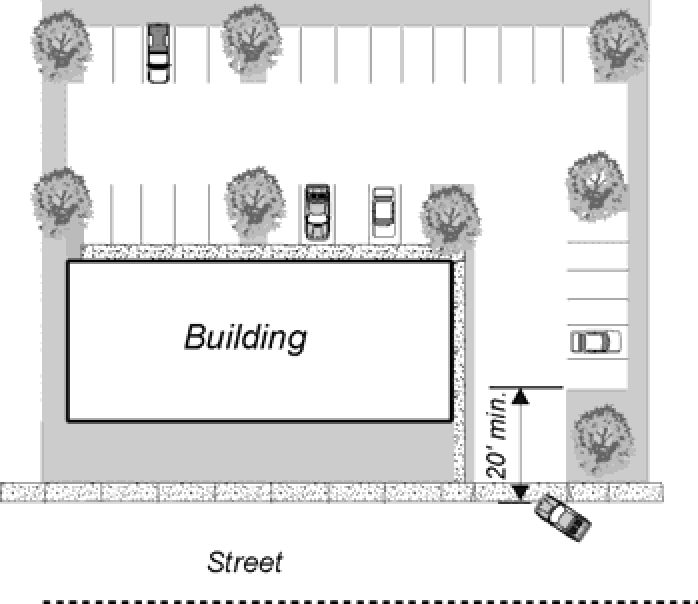
2.
Internal Maneuvering and Queuing. Parking areas shall provide suitable maneuvering room so that vehicles enter the street in a forward direction, except for single-family homes and duplexes. Non-residential parking lots shall also provide queuing area between the street and the first point where vehicles may maneuver within the parking lot. The queuing area shall have a minimum depth of 20 feet. See Figure 3-13.
3.
Vertical Clearance. A minimum unobstructed clearance height of 14 feet shall be maintained above areas accessible to vehicles in non-residential parking facilities.
C.
Access to Adjacent Sites. In non-residential developments, it is encouraged to provide shared vehicle and pedestrian access to adjacent nonresidential properties for convenience, safety and efficient circulation. A joint access agreement guaranteeing the continued availability of the shared access between the properties and running with the land should be recorded by the owners of the abutting properties, as approved by the Director.
D.
Parking Space and Lot Dimensions.
1.
Residential. Parking spaces within carports and garages shall have minimum dimensions of 20 feet in length by 10 feet in width.
2.
All Other Parking Spaces. Minimum parking space dimensions shall be as follows: See Figure 3-14.
a.
Standard parking spaces shall be 9 feet by 19 feet.
b.
Compact parking spaces within a non-residential project, up to a maximum of 20 percent of total number of required spaces, may be 8½ feet by 17 feet.
c.
Parallel parking spaces shall be 8 feet by 24 feet.
d.
The width of a parking space shall be increased by one foot if either side of the space is adjacent to a wall, fence, support column or other structure.
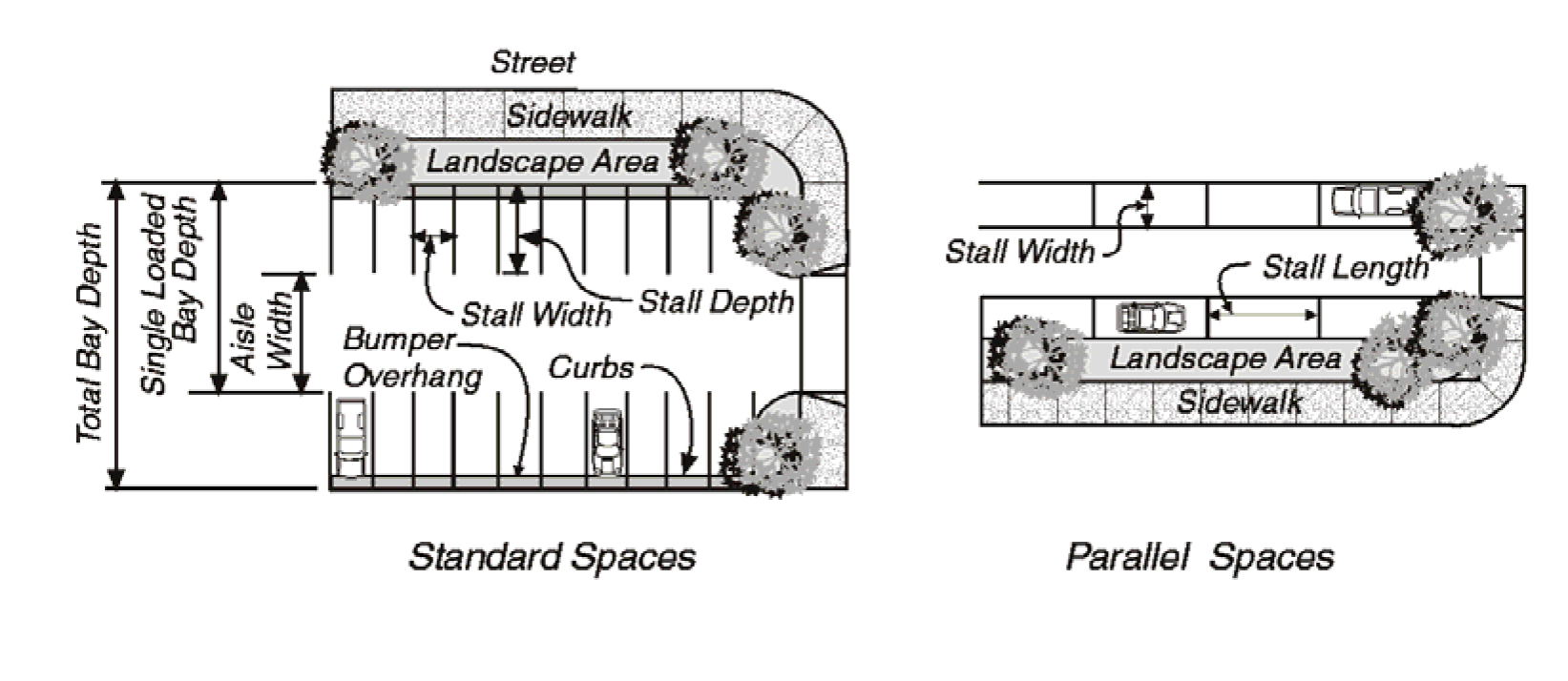
Figure 3-14
Types of Parking Spaces
E.
Curbing and Wheel Stops.
1.
Curbing. Continuous concrete curbing at least six inches high and six inches wide shall be provided along the edges of parking spaces adjacent to fences, walls, sidewalks, other structures, and landscaping.
a.
Alternative barrier designs may be approved by the Director.
b.
Parking spaces adjacent along their length to landscaped areas or other similar surfaces shall incorporate an additional curbing width of 12 inches (for a total of 18 inches) to provide a place to stand while exiting and entering vehicles.
c.
To increase the landscaped area within a parking lot, a maximum of two feet of the parking stall depth shall be landscaped with low-growth, hearty materials in lieu of paving, allowing a two-foot bumper overhang while maintaining the required parking dimensions. In the case where a walkway is necessary in lieu of landscaping, the walkway shall be widened by two feet to provide for a safe curb stop. See Figure 3-15.
2.
Wheel stops. Use of individual wheel stop blocks is prohibited except in work areas, parking areas not open to the public, and in other locations when deemed necessary by the Director.
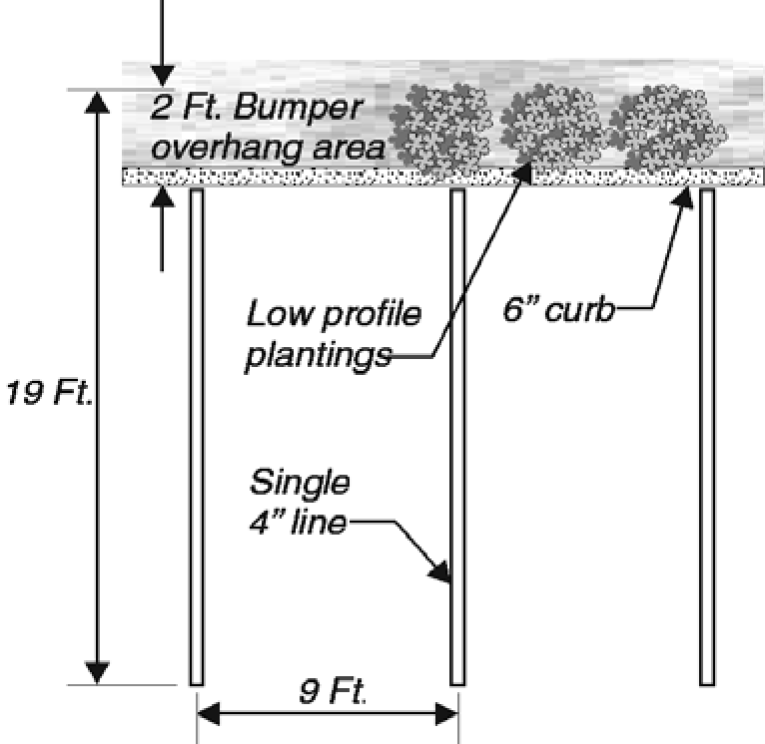
F.
Directional Arrows and Signs.
1.
Parking spaces, aisles, approach lanes and maneuvering areas shall be clearly marked with directional arrows and lines to ensure the safe and efficient flow of vehicles.
2.
The Director may require the installation of traffic signs in addition to directional arrows to ensure the safe and efficient flow of vehicles in a parking facility.
G.
Grade of Parking Areas. Parking areas should not exceed a grade of five percent, and shall not exceed 10 percent measured in any direction.
H.
Landscaping. Parking area landscaping shall be provided in compliance with the following requirements:
1.
Landscape Plan Required. A comprehensive landscape and irrigation plan shall be submitted for review and approval by the Review Authority.
2.
Pedestrian Accessibility. Landscaping shall be designed to accommodate safe convenient and uninterrupted pedestrian circulation throughout the parking lot and to buildings.
3.
Landscape Materials. Landscaping materials shall be provided throughout the parking lot area using a combination of trees, shrubs and ground cover. Drought-tolerant landscape materials shall be emphasized.
4.
Irrigation. All landscaped areas shall be provided with an automatic sprinkler system.
5.
Parking Lot Perimeter Landscaping.
a.
Adjacent to Streets. Parking areas adjoining a public street shall be designed to provide a 10-foot wide landscaped planting strip, exclusive of curbing, between the street right-of-way and parking area.
The landscaping shall be designed and maintained to screen cars from view from the street to a height of 36 inches. Screening materials may include a combination of plant materials, earth berms, solid masonry walls, raised planters, or other screening devices that meet the intent of this requirement. Trees shall be provided at a minimum rate of one for every 20 linear feet of landscaped area.
b.
Adjacent to Side or Rear Property Lines. Parking areas shall provide a perimeter landscaped strip at least five feet wide exclusive of curbing, where the facility adjoins a side or rear property line. The perimeter landscaped strip may be located within a required setback area. Trees shall be provided at minimum rate of one for each 20 linear feet of landscaped area.
c.
Adjacent to Residential Use. Parking areas for nonresidential uses adjoining residential uses shall provide a landscaped buffer yard with a minimum 10-foot width exclusive of curbing between the parking area and the common property line bordering the residential use. A solid decorative masonry wall shall be provided along the property line. Trees shall be provided at a minimum rate of one for every 20 linear feet of landscaped area. The Director may require additional trees where screening is a particular concern.
6.
Parking Lot Interior Landscaping.
a.
Minimum Area of Landscaping. A minimum of five percent of the total off-street parking area shall be landscaped with trees, shrubs, and ground cover. The perimeter landscaping required by Subsection H.5 shall not be considered part of the required parking lot landscaping.
b.
Required Tree Plantings. Trees shall be provided throughout the parking area at a minimum ratio of one tree for every three parking spaces in a row. The trees shall be distributed throughout the parking lot interior to provide shade in warm weather, and may be located in planter strips between parking aisles, and shall be planted in planter areas at the ends of parking aisles and in finger planters between parking spaces, in compliance with the following Subsection H.6.c. The tree species shall be selected from the City's list of acceptable parking lot shade trees, as approved by the Director.
c.
Planter Dimensions. Planters with trees shall have a minimum interior dimension of four feet. All ends of parking lanes shall be separated from drive aisles by landscaped islands or other means approved by the Director. A landscape finger shall be provided between the side lines of adjacent parking spaces at least every eight parking spaces.
d.
Larger Projects. Parking lots with more than 150 spaces shall provide a concentration of landscape elements at primary entrances, including specimen trees, flowering plants, enhanced paving, and project identification.
I.
Lighting. Parking areas shall have lighting capable of providing adequate illumination for security and safety. Lighting standards shall be energy-efficient and in scale with the height and use of the on-site structures. All illumination, including security lighting, shall be directed downward, away from adjacent properties and public rights-of-way. Lighting location shall take into account the location and expected mature characteristics of on-site landscape materials.
J.
Residential Guest Parking. Guest parking for multi-family residential uses shall be designated and restricted for the exclusive use of the guests with appropriate signs and pavement markings.
K.
Striping and Identification. Parking spaces shall be clearly outlined with four-inch wide lines painted on the surface of the parking facility. Circulation aisles, approach lanes, and turning areas shall be clearly marked with directional arrows and lines to ensure safe traffic movement.
L.
Surfacing. Parking spaces, driveways, and maneuvering areas shall be paved and permanently maintained in compliance with the standards in Subsection 5-17.008e of the Development Standards.
M.
Landscape Maintenance Security. Security to guarantee parking lot landscape maintenance shall be provided in compliance with Section 19.28.040.I (Maintenance Contract Required).
(Ord. No. 1576, § 2 (Exh. A, amd.), 10-23-2012)
19.30.080 - Driveways and Aisles.
A.
Single-Family Uses. Each single-family dwelling shall provide a continuous paved driveway from the street to the required parking area. Driveways shall be kept free and clear of stored materials, including inoperable vehicles. Vehicle storage shall comply with 19.34.170 (Vehicle Parking in Residential Zones). The maximum pavement area shall comply with 19.20.100.E.4.
B.
Multi-Family and Nonresidential Uses. Drive aisles within multi-family residential and nonresidential parking areas shall be designed and constructed in compliance with the following standards:
Table 3-8
Drive Aisle Widths
Notes:
(1)
The Director may require greater widths where slopes or other obstructions are encountered.
C.
Drive-Through Facilities. Retail or service uses providing drive-in/drive through facilities shall be designed and operated to effectively mitigate problems of traffic congestion, excessive pavement, litter, noise, and unsightliness.
1.
Drive-through aisles shall have a minimum 15½ -foot radius at curves and a minimum width of 12 feet.
2.
Each entrance to an aisle and the direction of traffic flow shall be clearly designated by signs and pavement markings.
3.
Each drive-through aisle shall be separated from the circulation routes necessary for ingress or egress from the property, or access to a parking space.
4.
The vehicle queuing capacity of the drive-through facility and the design and location of the ordering and pickup facilities shall be determined by the Director.
5.
Each drive-through aisle shall be appropriately screened with a combination of landscaping, low walls, and/or berms to prevent headlight glare from impacting adjacent streets and parking lots.
D.
Clearance from Obstruction. The nearest edge of a driveway apron or curb return shall be at least five feet from the nearest property line, centerline of a fire hydrant, utility pole, traffic signal, light standard, or other similar facility.
E.
Visibility. Drive aisles shall be designed and located so that adequate visibility is ensured for pedestrians, bicyclists, and motorists when entering individual parking spaces, circulating within a parking facility, and entering or leaving a parking facility.
(Ord. No. 1576, § 2 (Exh. A, amd.), 10-23-2012)
19.30.090 - Bicycle Parking and Support Facilities.
Bicycle parking shall be provided for all multi-family projects and non-residential uses in compliance with this Section.
A.
Number of Bicycle Spaces Required.
1.
Multi-family projects shall provide bicycle parking spaces equal to a minimum of 10 percent of the required vehicle spaces, unless separate secured garage space is provided for each unit. The bicycle spaces shall be distributed throughout the project.
2.
Retail commercial uses shall provide bicycle parking spaces equal to a minimum of five percent of the required vehicle spaces, distributed to serve customers and employees of the project.
3.
Other non-residential uses providing employment shall provide bicycle parking spaces equal to a minimum of 10 percent of the required vehicle spaces, distributed to serve employees and visitors to the project
4.
Places of public assembly shall provide bicycle parking spaces equal a minimum of 10 percent of the required vehicle spaces, distributed to serve customers, visitors, and employees.
B.
Bicycle Parking Design and Devices.
1.
Parking Equipment. Each bicycle parking space shall include a stationary parking device to adequately secure the bicycle.
2.
Parking Layout.
a.
Aisles providing access to bicycle parking spaces shall be at least five feet in width.
b.
Each bicycle space shall be a minimum of two feet in width and six feet in length, and have a minimum of seven feet of overhead clearance.
c.
Bicycle spaces shall be conveniently located and generally within proximity to the main entrance of a structure.
d.
Bicycle spaces shall be separated from motor vehicle parking spaces or aisles by a fence, wall, or curb, or by at least five feet of open area, marked to prohibit motor vehicle parking.
C.
Required Shower Facilities. All new buildings and additions to existing buildings that result in a total floor area as shown in the following table shall be required to provide showers and dressing areas for each gender as shown in the following table:
D.
Required Locker Facilities. Land uses required by this Section to provide bicycle parking spaces shall also provide one locker for each required bicycle parking space. Required lockers shall be located in relation to required showers and dressing areas to permit access to locker areas by either gender.
E.
Required Bicycle/Pedestrian Paths. Land uses required to provide bicycle parking spaces shall provide bicycle and pedestrian paths to and from the required parking and locker facilities; access across the site frontage; and provide connections through the interior of the site to any adjacent public open space, rights-of-way, park or community facilities.
(Ord. No. 1576, § 2 (Exh. A, amd.), 10-23-2012)
19.30.100 - Motorcycle Parking.
Parking lots with 50 or more parking spaces shall provide motorcycle parking spaces conveniently located near the main entrance of a structure, accessed by the same aisles that provide access to the automobile parking spaces in the parking lot.
A.
Number of Spaces Required. A minimum of one motorcycle parking space shall be provided for each 50 automobile spaces or fraction thereof.
B.
Space Dimensions. Motorcycle spaces shall have minimum dimensions of four feet by seven feet.
(Ord. No. 1576, § 2 (Exh. A, amd.), 10-23-2012)
19.30.110 - Loading Space Requirements.
A.
Loading Spaces to be Permanent. Loading spaces shall be permanently available, marked and maintained for loading purposes for the use they are intended to serve. The Director may approve the temporary reduction of loading spaces in conjunction with a seasonal or intermittent use.
B.
Number of Loading Spaces Required. Nonresidential uses with less than 10,000 square feet of gross floor area shall provide one loading space, which may be combined with parking spaces. Nonresidential uses with gross floor area of 10,000 square feet or more shall provide loading spaces in compliance with Table 3-9. Requirements for uses not specifically listed shall be determined by the Zoning Administrator based upon the requirements for comparable uses and upon the particular characteristics of the proposed use.
Table 3-9
Loading Space Requirements
Notes:
(1)
The Review Authority may increase these requirements where it determines that additional loading spaces will be needed.
C.
Loading Area Design Standards. Loading areas shall be designed and constructed as follows:
1.
Location. Loading spaces shall be located based on the operating characteristics of the proposed use to:
a.
Ensure that the loading facility is screened from adjacent streets as much as possible;
b.
Ensure that loading and unloading takes place on-site and in no case within adjacent public rights-of-way or other traffic areas on-site;
c.
Ensure that vehicular maneuvers occur on-site; and
d.
Minimize adverse impacts upon neighboring residential properties.
2.
Dimensions. Minimum loading space dimensions shall be 12 feet in width, 45 feet in length, and with 14 feet of vertical clearance. Loading spaces for office facilities and nonresidential land uses of less than 10,000 square feet may be 10 feet in width by 30 feet in length, and may be combined with parking spaces. The Director may increase or decrease the dimensions where it is clear that larger or smaller loading spaces are warranted due to the nature of the proposed project.
3.
Lighting. Loading areas shall have lighting capable of providing adequate illumination for security and safety. Lighting standards shall be energy-efficient and in scale with the height and use of adjacent structures.
4.
Loading Doors and Gates. Loading bays and roll-up doors shall be painted to blend with the exterior structure walls. Loading bays and doors, and related trucks shall be adequately screened from view from adjacent streets as determined by the Review Authority.
5.
Screening. Loading areas abutting residentially zoned parcels shall be screened in compliance with 19.20.090 (Screening).
6.
Striping. Loading areas shall be striped indicating the loading spaces and identifying the spaces for "loading only." The striping shall be permanently maintained by the property owner/tenant in a clear and visible manner at all times. Curb-adjacent loading areas shall be identified by a yellow painted curb and the words "Loading only."
D.
Waiver of Loading Space Requirements. The Director may waive all or part of the requirement to provide loading spaces if he or she first finds that unusual circumstances unique to the proposed project make the requirement unattainable or unnecessary.
(Ord. No. 1576, § 2 (Exh. A, amd.), 10-23-2012)
19.30.120 - Trip and Travel Demand Reduction Measures.
A.
Purpose. This Section provides requirements for new and reconstructed non-residential projects that are intended to reduce vehicle trips and travel demand.
B.
Applicability. Specific trip and travel demand reduction measures shall be incorporated into the design of non-residential projects as provided by this Section. All facilities and improvements constructed or otherwise required shall be permanently maintained in good repair.
C.
Required Project Features. Non-residential uses shall provide the features shown in the following table, as required through the land Use Permit and/or subdivision process, and in compliance with Municipal Code Section 18-14 (Trip Reduction). Subsection D. below provides standards for each of the required measures. All calculations shall be based on gross floor area, in square feet.
Notes:
(1)
Required if determined by the Review Authority to be necessary to mitigate project impacts. See Subsection D.5 below.
D.
Standards for Required Features. Where specific trip and travel demand reduction measures are required by Subsection C. above, each required measure shall be provided as follows:
1.
Electric Vehicle Recharging. Electric vehicle recharging facilities shall be provided to encourage the use of electric powered vehicles.
2.
Tenant Transit Information. The property owner shall provide ridesharing and public transportation information to tenants as part of occupancy move-in materials, in compliance with Municipal Code Section 18-14 et seq. (Trip Reduction).
3.
Preferential Parking. Preferential parking facilities shall be provided as follows:
a.
Minimum Number of Spaces Required. At least one and one-half (1.5) preferential space shall be provided for each 10,000 square feet of commercial/office space and shall be signed/striped for preferential parking vehicles. Preferential parking spaces shall be reserved for use by potential carpool/vanpool vehicles, motorcycles, and electric vehicles. Spaces reserved for vanpools shall be accessible to vanpool vehicles, in compliance with Subsection D.3.c., below.
b.
Location of Employee Spaces. Not less than 10 percent of parking spaces reserved for employees shall be located as close as is practical to the employee entrances without displacing handicapped and customer parking needs.
c.
Space Layout, Vertical Clearance. Vanpool vehicle spaces within a parking structure and access routes to the spaces shall be provided a minimum vertical clearance of seven feet, two inches (7'-2"). Adequate turning radii and space dimensions shall also be provided in vanpool areas.
d.
Information on Space Availability. A statement that preferential parking spaces for employees are available and a description of the method for obtaining the spaces shall be posted at the required transportation information center.
e.
Signage, Striping. Spaces shall be signed/striped as required by the Director.
f.
Permit Application Information. The preferential parking area shall be identified on the site plan submitted with the development permit applications for the project, to the satisfaction of the Director.
4.
Shower/Locker Facilities. Shower and locker facilities shall be provided in compliance with Section 19.30.090 (Bicycle Parking and Support Facilities).
5.
Transit Stop. If determined by the City to be necessary to mitigate project impacts, transit stop improvements shall be provided. The City will consult with the local transit service providers in determining appropriate improvements. When locating transit stops and/or planning building entrances, entrances shall be designed to provide safe and efficient access to nearby transit stations/stops.
6.
Transportation Information Center. A bulletin board, display case, or kiosk displaying transportation information shall be located where the greatest number of employees are likely to see it. Information in the area shall include, but is not limited to the following:
a.
Current maps, routes, and schedules for public transit routes serving the site;
b.
Telephone numbers for referrals on transportation information, including numbers for the regional ridesharing agency and local transit operators;
c.
Ridesharing promotional material supplied by commuter-oriented organizations;
d.
Bicycle route and facility information, including regional/local bicycle maps and bicycle safety information; and
e.
A listing of facilities available for carpoolers, vanpoolers, bicyclists, transit riders and pedestrians at the site.
(Ord. No. 1576, § 2 (Exh. A, amd.), 10-23-2012)
19.31.010 - Purpose.
This Division establishes a process to ensure that the property owner and/or responsible person maintain previously constructed or installed improvements on private property in a manner that protects the public health, safety, and general welfare.
(Ord. No. 1576, § 2 (Exh. A, amd.), 10-23-2012)
19.31.020 - General Maintenance Requirements.
Any person owning, leasing, occupying, or having charge or possession of any property shall maintain it in a manner that is determined by the Director to not be detrimental or injurious to the public health, safety, and general welfare, and that does not interfere with the comfortable enjoyment of life or property.
(Ord. No. 1576, § 2 (Exh. A, amd.), 10-23-2012)
19.31.030 - Specific Violations.
It shall be unlawful to maintain or fail to maintain any property, or on-site improvements, in a manner that results in any of the following conditions:
A.
Nuisances Possibly Dangerous to Children. The storing or allowing the storage of any abandoned or broken appliances and equipment or neglected machinery on private property for any length of time. Any appliances, equipment, machinery, or accumulation of materials shall be removed immediately upon notification by the Director.
B.
Deteriorating and Defective Structures. Any and all improvements located on private property shall be presumed to be in violation of this Section if any of the following conditions exist:
1.
Peeling paint, cracked or broken stucco, or other exterior covering, in excess of four square feet of any single facade (i.e., any exterior side) of a structure;
2.
Broken, cracked, or missing windows or doors;
3.
Roofs missing shingles, tile, or other material used as roof composition or the material is loose or unstable;
4.
Improperly maintained (torn, tattered, shredded, broken, rusted) awnings; or
5.
Fences, walls, and gates with peeling paint, broken bricks, broken mortar, cracked or broken stucco, or are which are not constructed of uniform materials or in a uniform manner.
C.
Hazardous and Unsanitary Conditions.
1.
Accumulating any human or animal waste material or substances, stagnant water, or any combustible or hazardous materials or substances, fluid or solid on any part of or in any structure on real property.
2.
A pond, spa, swimming pool, fountain, or other body of water which is abandoned, unattended, unfiltered, or not otherwise properly maintained, resulting in polluted or stagnant water.
D.
Improper Parking or Storage of Goods, Equipment, and Vehicles.
1.
Using or allowing the use of any hardscape area for parking which prevents or hinders access to elevators, building entrances or exits, or trash receptacles or blocks access to any structure for emergency vehicles or personnel.
2.
The keeping or storing of camper shells, inoperable vehicles, cargo containers, appliances, and other equipment and materials in yard areas or driveways in which storage is not allowed, where the items are not screened from view from public or private streets or highways.
E.
Non-maintenance of Landscape and Hardscape. Maintaining or allowing the maintenance of any paved areas for vehicle parking and access, porches, steps, or walkways in a hazardous condition due to cracked, raised, or missing surface materials.
F.
Non-maintenance of Parking Facilities. Failure to properly maintain any of the following parking lot features:
1.
Driveway and parking area paving;
2.
Lighting fixtures;
3.
Lot striping;
4.
Signs; and
5.
Trash recepticals and enclosures.
G.
Overgrown, Dead, Decayed or Diseased Vegetation. Overgrown, dead, decayed or diseased vegetation on private property. There shall be a conclusive presumption that vegetation is overgrown or dead if it has not been cut and trimmed, not responded to adequate watering and maintenance, or not replaced within 15 days after notification by the Director that the vegetation is overgrown or dead.
H.
Refuse and Waste. Refuse and waste material which by reason of its location or character may constitute a fire hazard or threat to the health, safety, and general welfare, including aesthetic impacts, of the surrounding residential area. Compost piles are not considered refuse and waste.
I.
Other Provisions of the Municipal Code. A violation of any other provisions of the Municipal Code which pertains to real property, structures, or which otherwise concerns the public health, safety, and general welfare.
J.
Code Violations. Any violation of the Uniform Building Code, Uniform Fire Code, or Uniform Housing Code, as amended.
K.
Drainage. Land, the topography, geology, or configuration of which, whether in a natural state or as a result of grading operations, modifications or excavation, causes erosion, subsidence, or surface water drainage problems that may be potentially injurious to the public health, safety and welfare or to adjacent properties. Allowing obstructions to water flow to occur or develop within a natural drainage whether from a natural state, vegetative growth, placement of fill or any structures, or an object from an upstream location.
L.
Signs. Any sign in violation of Section 19.32. Allowing any abandoned sign that refers to a business that is no longer operating at the site to remain in place.
(Ord. No. 1576, § 2 (Exh. A, amd.), 10-23-2012)
19.31.040 - Abatement of Violations.
The abatement of any conditions described in this Chapter shall be performed in compliance with Division 19.59 (Zoning Ordinance Enforcement).
(Ord. No. 1576, § 2 (Exh. A, amd.), 10-23-2012)
19.32.010 - Purpose of Division.
The regulations established by this Division are intended to appropriately limit the placement, type, size, and number of signs allowed within the City, and to require the proper maintenance of signs. The purposes of these limitations and requirements are to:
A.
Avoid traffic safety hazards to motorists and pedestrians caused by visual distractions and obstructions;
B.
Promote the aesthetic and environmental values of the community by providing for signs that do not impair the attractiveness of the City as a place to live, work, and shop;
C.
Provide for signs as an effective channel of communication, while ensuring that signs are aesthetically proportioned in relation to adjacent structures and the structures to which they are attached; and
D.
Safeguard and protect the public health, safety, and general welfare.
(Ord. No. 1576, § 2 (Exh. A, amd.), 10-23-2012)
19.32.020 - Applicability.
A.
Signs Regulated. The requirements of this Division shall apply to all signs in all zoning districts, except as follows:
1.
The requirements of this Division do not apply to signs within the REI zoning district.
2.
The requirements of this Division apply to signs within the PD (Planned Development) zoning district only to the extent that individual sites are not subject to specific sign standards established by an approved Master Plan or Precise Development Plan.
B.
Applicability to Sign Content. The provisions of this Division do not regulate the message content of signs (sign copy), regardless of whether the message content is commercial or noncommercial.
(Ord. No. 1576, § 2 (Exh. A, amd.), 10-23-2012)
19.32.030 - Design Review and Sign Permit Requirements.
No sign shall be installed, constructed, or altered unless it is first approved in compliance with this Section, or allowed without Sign Permit approval by Subsection F., below.
A.
Fees and Plans Required. An application for a Sign Permit shall be filed and processed in compliance with Division 19.40 (Applications - Filing and Processing). The application shall also include architectural elevations and plans of all proposed signs drawn to scale, with all dimensions noted, and include illustrations of copy, colors, materials, and samples of the proposed colors and materials.
B.
Design Review and Approval. The Director shall review all Sign Permit applications and approve only those that comply with the findings required in Subsection D. The Director may require conditions of approval as are reasonably necessary to achieve the purposes of this Division.
The Director may refer Sign Permit applications to the Design Review Commission for action, either for the individual Sign Permit, or as part of a development project that is otherwise subject to Design Review Commission review.
C.
Master Sign Plan.
1.
When Required. A Master Sign Plan must be approved by the Director (or by the Design Review Commission upon referral by the Director) prior to the issuance of any Sign Permit for:
a.
A new nonresidential project with four or more tenants including four or more tenants located on a parcel zoned Planned District (PD) and subject to an approved Precise Development Plan; and
b.
Major rehabilitation work on an existing nonresidential project with four or more tenants, that involves exterior remodeling, and/or application requests to modify 50 percent or more of the existing signs on the site within a one year period. For the purposes of this Division, major rehabilitation means adding more than 50 percent to the gross floor area of the building/buildings, or exterior redesign of more than 50 percent of the length of any facade within the project.
All signs installed or replaced within the nonresidential project shall comply with the approved Master Sign Plan.
2.
Content of Plan. A Master Sign Plan shall provide standards for the uniform style, construction, size, and placement of signs within the proposed nonresidential project.
3.
Revisions. Revisions to a Master Sign Plan may be approved by the Director if it is first determined that the revision is minor and that the intent of the original approval, and any applicable conditions are not affected.
D.
Findings for Approval. The approval of a Sign Permit or Master Sign Plan shall require that the Review Authority first make all the following findings:
1.
The proposed signs do not exceed the standards of Sections 19.32.060 (Zoning District Sign Standards) and 19.32.070 (Standards for Specific Types of Signs), and are of the minimum size and height necessary to enable motorists and pedestrians to readily identify the facility or site from a sufficient distance to safely and conveniently access the facility or site;
2.
The size, location, and design of the signs are visually complementary and compatible with the size and architectural style of the primary structures on the site, any prominent natural features of the site, and structures and prominent natural features on adjacent properties on the same street; and
3.
The proposed signs are in substantial conformance with the design review criteria provided in Section 19.32.050 (General Requirements for All Signs).
E.
Time Limit for Action. A Sign Permit or a Master Sign Plan shall be approved or disapproved by the Review Authority in compliance with Section 19.40.070 (Initial Application Review).
F.
Signs and Sign Changes Allowed Without a Sign Permit. The following are permitted without a Sign Permit, provided that they comply with Section 19.32.050 (General Requirements for All Signs), and any required Building Permit is obtained:
1.
Nonstructural Modifications, and Maintenance.
a.
Modifications to sign copy on conforming signs, or changes to the face or copy of conforming changeable copy signs;
b.
Nonstructural modifications of the face or copy of an existing conforming sign installed in compliance with a Master Sign Plan, provided that the modifications are consistent with the Master Sign Plan approved in compliance with Subsection C.;
c.
The normal maintenance of conforming signs, except as set forth in 19.32.090.C.
2.
Temporary Signs. Temporary signs in compliance with Section 19.32.070.E.
3.
Governmental Signs. Signs installed by the City, or a Federal or State governmental agency within a public right-of-way; and any sign, posting, notice, or similar sign placed by or required by a governmental agency in carrying out its responsibility to protect public health, safety, and general welfare.
4.
Official Flags. Flags of national, State, or local governments, or nationally recognized religious, fraternal, or public service agencies, provided that the length of the flag shall not exceed one-third the height of the flag pole. The maximum allowed height of a flag pole in a residential zoning district shall be 12 feet; the maximum height of a flag pole in a non-residential zoning district shall be 30 feet. Additional height may be authorized through Design Review approval.
5.
Political Signs. Political signs are allowed without a Sign Permit provided that the signs:
a.
Are no more than six (6) feet in height and shall not exceed 24 square feet in area within residential zoning districts and shall not exceed 32 square feet in area within nonresidential zoning districts;
b.
May be installed for up to 60 days prior to an election on private property with the property owner's consent or within the public right-of-way only in accordance with sight visibility area requirements of Section 19.20.070D; and
c.
Shall be removed within seven days following the election. Signs not removed after seven days shall be removed by the City at the expense of the political candidate or organization involved.
6.
Public Directional Signs and Notices. Signs showing the location of public facilities such as public telephones, restrooms, and underground utilities.
7.
Service Station Price Signs. Service station price signs required by State law.
8.
Street Addresses. Street address numbers not exceeding an aggregate area of two square feet.
(Ord. No. 1576, § 2 (Exh. A, amd.), 10-23-2012)
19.32.040 - Prohibited Signs.
The following types of signs and devices shall be specifically prohibited:
A.
Abandoned signs;
B.
Animated signs, including electronic message display signs, and variable intensity, blinking, or flashing signs, except time and temperature displays (which are not considered signs);
C.
Balloons and other inflatable devices;
D.
Banners;
E.
Flags, except those allowed by Section 19.32.030.F;
F.
Illegal signs;
G.
Light bulb strings, except for holiday decorations;
H.
Moving signs, except barber poles;
I.
Obscene signs;
J.
Permanent off-site signs except as provided in Section 19.32.070.E.2;
K.
Pennants;
L.
Pole signs and other freestanding signs over six feet in height;
M.
Roof signs;
N.
Because of the City's compelling interest in ensuring traffic safety, signs that simulate in color, size, or design, any traffic control sign or signal, or that make use of words, symbols, or characters in a manner that interferes with, misleads or confuses pedestrian or vehicular traffic;
O.
Signs attached to or suspended from a vehicle parked within a public right-of-way, or in a location on private property that is visible from a public right-of-way, except a sign painted directly upon, magnetically affixed to, or permanently affixed to the body or other integral part of the vehicle; and
P.
Temporary and portable signs, except as allowed by Subsections 19.32.070.E and G.
(Ord. No. 1576, § 2 (Exh. A, amd.), 10-23-2012)
19.32.050 - General Requirements for All Signs.
A.
Sign Area. The measurement of sign area to determine compliance with the sign area limitations of this Division shall occur as follows:
1.
The surface area of a sign shall be calculated by enclosing the extreme limits of all framing, writing, logo, representation, emblem, or other display within a single continuous perimeter composed of squares or rectangles with no more than eight lines. See Figure 3-16.
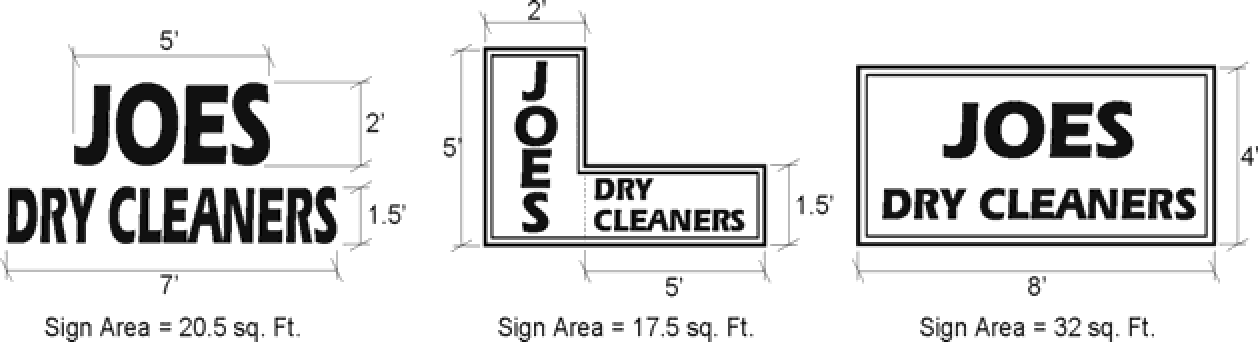
2.
Supporting framework or bracing that is clearly incidental to the display itself shall not be computed as sign area.
3.
The area of a double-faced (back-to-back) sign shall be calculated as a single sign face if the distance between each sign face does not exceed 18 inches and the two faces are parallel with each other.
4.
Where a sign consists of one or more three-dimensional objects (i.e., balls, cubes, clusters of objects, sculpture or statue-like trademarks), the sign area shall be measured as their maximum projection upon a vertical plane. See Figure 3-17.
5.
For signs that incorporate time and temperature devices, the area of these devices shall not be included in the total area of the sign.
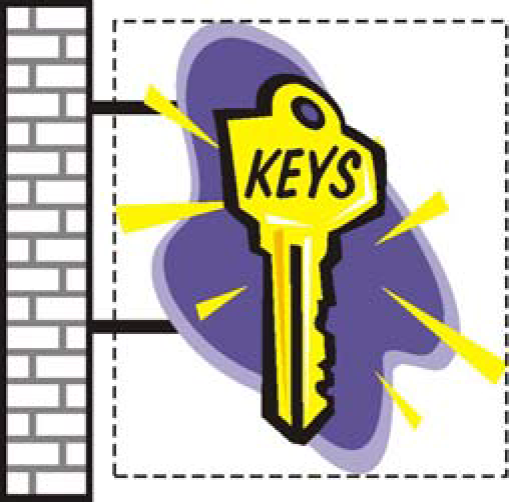
B.
Sign Height (Freestanding). The height of a freestanding sign shall be measured as the vertical distance from the finished grade adjacent to the base of the sign structure to the highest point of the structure, where finished grade does not include fill, planters, or other material artificially placed to allow increased sign height.
C.
Sign Location Requirements.
1.
All signs shall be located on the same site as the subject of the sign, except as otherwise allowed by this Division. A sign may project over an adjacent public right-of-way only when authorized by an encroachment permit as well as a Sign Permit.
2.
No sign shall be located within the public right-of-way, except as otherwise allowed by this Division. Signs permitted within the right-of-way pursuant to this Division shall not be allowed within median islands or on utility poles or in a manner that blocks pedestrian or bicycle access or creates a hazard for any public or private accessway. In any event, no signs shall be allowed in the right-of-way along or adjacent to Scottsdale Marsh.
3.
All signs shall be located to maintain adequate sight distance from intersections, driveways and pedestrian or bicycle accessways and shall meet the sight visibility area requirements of Section 19.20.070D.
4.
The location of all signs shall be evaluated to ensure:
a.
That the setback is appropriate for the height and area of a freestanding or projecting sign;
b.
That flush or projecting signs relate to the architectural design of the building. Signs that cover windows, or that spill over natural boundaries and architectural features shall be discouraged;
c.
That signs do not unreasonably block the sight lines of existing signs on adjacent properties; and
d.
Pedestrian and vehicular safety.
D.
Design Criteria for Signs. The following design criteria shall be used in reviewing the design of individual signs. Substantial conformance with each of the following design criteria shall be required before a Sign Permit or Building Permit can be approved:
1.
Color. Colors on signs and structural members should be harmonious with one another and reflective of the dominant colors of the building or buildings being identified. Contrasting colors may be utilized if the overall effect of the sign is still compatible with the building colors and prevailing colors in the surrounding neighborhood (where a theme can be identified).
2.
Design and Construction.
a.
Design drawings for proposed permanent signs should be prepared by design professionals (e.g., architects, building designers, landscape architects, interior designers, those whose principal business is the design, manufacture, or sale of signs) or others who in the opinion of the Director are capable of producing professional results.
b.
All permanent signs should be constructed by a person or persons whose principal business is building construction or related trade including those whose principal business is the manufacture and installation of signs, or others capable of producing professional results. The intent is to achieve signing of careful construction, neat and readable copy, and durability so as to reduce maintenance costs and to prevent dilapidation.
3.
Materials and Structure.
a.
Sign materials (including those for framing and support) should be representative of the type and scale of materials used on the building or buildings which the sign identifies. Insofar as possible, sign materials should match the materials used on the building and on other signs.
b.
Materials selected for permanent signs shall be durable and capable of withstanding weathering over the life of the sign with reasonable maintenance.
c.
The size of the structural members (e.g. columns, crossbeams, and braces) should be proportional to the sign panel they are supporting. In general, fewer larger supporting members are preferable to many smaller supports.
d.
The use of individual letters incorporated into the building design is encouraged, rather than signs with background and framing other than the building wall.
e.
The use of reflective materials or surfaces may be approved only where the Review Authority determines that these materials will not distract motorists or create other hazards, and should be minimized in all cases.
E.
Copy Design Guidelines. The City does not regulate the message content (copy) of signs; however, the following are principles of copy design and layout that can enhance the readability and attractiveness of signs. Copy design and layout consistent with these principles is encouraged, but not required.
1.
Sign copy should relate only to the name and/or nature of the business or commercial center.
2.
Permanent signs that advertise continuous sales, special prices, or include phone numbers, etc. should be avoided.
3.
Information should be conveyed briefly or by logo, symbol, or other graphic manner. The intent should be to increase the readability of the sign and thereby enhance the identity of the business.
4.
The area of letters or symbols should not exceed 40 percent of the background area in commercial districts or 60 percent in residential districts.
5.
Freestanding signs should contain the street address of the parcel or the range of addresses for a multi-tenant center.
F.
Illumination of Signs. The artificial illumination of signs, either from an internal or external source, shall be designed to minimize light and glare on surrounding rights-of-way and properties.
1.
External light sources shall be directed and shielded to limit direct illumination of any object other than the sign.
2.
The light from an illuminated sign shall not be of an intensity or brightness that will interfere with the reasonable enjoyment of residential properties. In areas with low ambient nighttime illumination levels (e.g., residential neighborhoods or business districts with little or no illuminated signing) applicants shall be encouraged to use light, illuminated copy against dark or opaque backgrounds.
3.
Signs shall not have blinking, flashing, or fluttering lights or other illuminating devices that have a changing light intensity, brightness or color.
4.
Colored lights shall not be used at a location or in a manner so as to be confused or construed as traffic control devices.
5.
Neither the direct nor reflected light from primary light sources shall create a hazard to operators of motor vehicles.
6.
Reflective-type bulbs and incandescent lamps that exceed 15 watts shall not be used on the exterior surface of signs so as to expose the face of the bulb or lamp to a public right-of-way or adjacent property.
7.
Light sources shall utilize energy efficient fixtures to the greatest extent possible.
8.
Illuminated panels, visible tubing, and strings of lights outlining all or a portion of a building, other than lighting that is primarily for indirectly illuminating architectural features, signs, or landscaping, shall be deemed "signs" subject to this Division and shall be counted as part of the allowed sign area. Each line of tubing or lights shall be deemed to have a minimum width of at least six inches for the purpose of area calculation.
G.
Maintenance of Signs. Signs and supporting hardware, including temporary signs, shall be maintained in good repair and functioning properly at all times. Repairs to signs shall be of equal or better in quality of materials and design as the original sign. Signs which are not properly maintained and are dilapidated shall be deemed to be a public nuisance, and may be abated in compliance with Municipal Code Section 1-6.
When existing signs are removed or replaced, all brackets, poles, and other supports that are no longer required shall be removed. Unpainted areas shall be painted to match the adjacent portion of the building or sign support structure.
(Ord. No. 1576, § 2 (Exh. A, amd.), 10-23-2012)
19.32.060 - Zoning District Sign Standards.
Only the signs and sign area authorized by this Section shall be allowed unless otherwise expressly provided in Section 19.32.030.D (Exempt signs) or Section 19.32.070 (Standards for Specific Types of Signs).
A.
A, OS, C, and Residential Zoning Districts. Signs in the Agriculture (A), Open Space (OS), Conservation (C), and residential zoning districts established by Section 19.04.020 (Zoning Districts Established) shall not exceed the standards in the Table 3-10. Temporary construction, real estate and subdivision identification signs may be permitted in residential zoning districts in conformance with the requirements of Section 19.32.070.E, (Standards for Specific Types of Signs).
Table 3-10
Sign Standards for A, OS, C,
and Residential Zoning Districts
B.
Commercial, Office, and Industrial Zoning District Sign Standards. Signs in the Business and Professional Office (BPO), Neighborhood Commercial (CN), General Commercial (CG), Downtown Core (CD), Commercial/Industrial (CI), Light Industrial/Office (LIO), Mixed Use (MU), and Community Facilities and Parkland (CF) zoning districts established by Section 19.04.020 (Zoning Districts Established) shall comply with the following requirements:
1.
General Sign Area Limitations. Signs in the commercial, office, and industrial zoning districts established by Section 19.04.020 (Zoning Districts Established) shall comply with the requirements in Table 3-11.
2.
Multi-Tenant Sites and Buildings. In addition to the signage allowed by Table 3-11 for each occupant on the basis of frontage, multi-tenant sites and buildings may have a freestanding identification sign with an area equal to 1/4 square foot for each ground floor linear foot of primary building frontage, up to a maximum of 200 sf.
C.
Downtown Novato Specific Plan (D) Overlay District Sign Standards. Instead of the "Maximum Sign Area Requirements" of Table 3-11, the aggregate area of all signs on a site within the Downtown Novato Specific Plan (D) overlay district shall not exceed one square foot of sign area for each linear foot of primary building frontage. For corner parcels, an additional one-half square foot of sign area may be allowed for each linear foot of secondary building frontage. No single sign shall exceed 25 square feet. Signs within the Downtown (D) overlay district shall also comply with the standards for specific types of signs in Section 19.32.070.
Table 3-11
Sign Standards for the BPO, CN, CG, CD, CI, LIO, CF, and MU Zoning Districts
Notes:
(1)
These requirements do not apply within the Downtown Novato Specific Plan (D) overlay. See Section 19.32.060.C instead.
(2)
In calculations, freestanding signs shall be assigned to the frontage closest to the sign; or if equidistant from two frontages, the sign may be assigned to either.
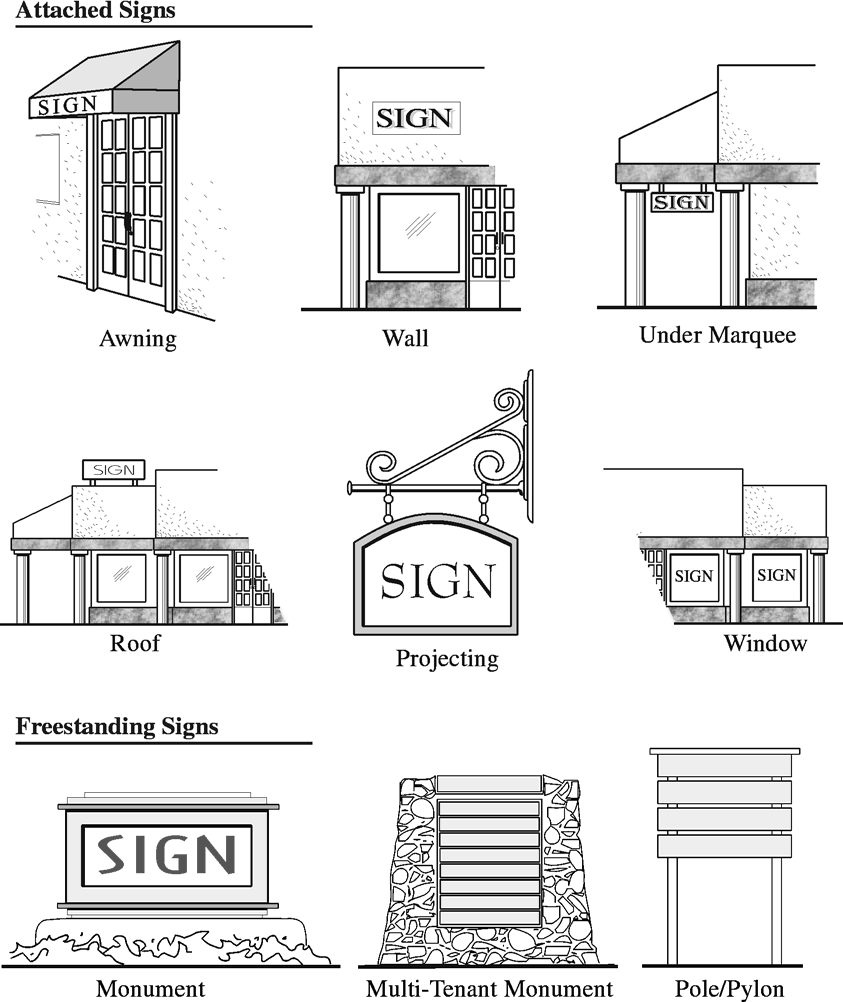
(Ord. No. 1576, § 2 (Exh. A, amd.), 10-23-2012)
19.32.070 - Standards for Specific Types of Signs.
Proposed signs shall comply with the following standards where applicable, in addition to the sign area and height limitations, and other requirements of Section 19.32.060 (Zoning District Sign Standards), and all other applicable provisions of this Division:
A.
Awning Signs. The following standards apply to awning signs in all zoning districts where allowed by Section 19.32.060 (Zoning District Sign Standards):
1.
General Requirements.
a.
Signs on awnings are limited to ground level and second story occupancies only.
b.
Awnings shall not be internally illuminated. Indirect lighting may be allowed. Translucent awning materials are prohibited.
2.
Downtown (D) Overlay District. The following standards apply to awning signs in the Downtown (D) overlay, in addition to the requirements in Subsection A.1.:
a.
A business may use either an awning sign or storefront (wall or projecting) sign, but not both.
b.
Sign letter height shall not exceed eight inches.
c.
The use of logos or symbols depicting the unique nature of a business are encouraged on the sloped face of awnings, provided that their area shall not exceed 10 percent of the total sloped awning face. Logo or symbol area is defined by the smallest continuous line rectangle that can be drawn around the logo or symbol. Sign copy other than logos or symbols is prohibited on the sloped face of awnings.
B.
Freestanding Signs. The following standards apply to freestanding signs in all zoning districts where allowed by Section 19.32.060 (Zoning District Sign Standards):
1.
General Requirements.
a.
Sign height shall not exceed six feet. (See Section 19.32.050.B for measurement.).
b.
A sign may be placed only on a site frontage adjoining a public street.
c.
Multiple signs shall be separated by a minimum of 75 feet to ensure adequate visibility for all signs. The Director may waive this requirement where the locations of existing signs on adjacent properties would make the 75-foot separation impractical.
d.
The signs shall not project over public property, vehicular easements, or rights-of-way. Signs shall not obstruct traffic safety sight areas, as determined by the Director.
e.
To assist emergency response personnel in locating the site, freestanding signs should contain an illuminated street address plate. Numbers should be a minimum of six inches in height. Address plates shall not be calculated as part of the allowed sign area.
2.
Downtown (D) Overlay District. Freestanding signs are not allowed within the Downtown (D) overlay district except in the General Commercial (CG) zoning district.
C.
Murals. Murals may be permitted only within the Downtown (D) overlay district, on public structures, subject to review by the Novato Recreation Cultural & Community Services Commission and approval by the City Council, or in private structures by the Design Review Commission.
1.
Where allowed, murals are in addition to (not counted as part of) the sign area allowed by Section 19.32.060.C (Downtown (D) Overlay District Sign Standards).
2.
Murals that illustrate Novato history and the local setting as sources of inspiration are encouraged.
3.
The approval of a mural shall require that the Review Authority first find that the size, colors, and placement of the mural are visually compatible with the building architecture, and that the mural will serve to enhance the aesthetics of the downtown area.
D.
Projecting Signs. Projecting signs are allowed as follows:
1.
The maximum projection of a sign from a building wall over a public right-of-way shall not exceed 36 inches over a sidewalk, and 24 inches over a traffic way (e.g., an alley).
2.
The maximum height of a projecting sign shall not exceed 14 feet, eave height, parapet height, or sill height of a second floor window, whichever is less. No portion of the sign shall project above the eave line of a sloped roof or the top of the parapet on a flat roof.
3.
A projecting sign shall be installed to maintain a minimum clearance of eight feet from the bottom of the sign to the finished grade below.

4.
Icon signs using shapes or symbols uniquely suited to the business, creative shapes and three-dimensional signs are encouraged.
5.
The sign shall be graphically designed for pedestrians, with a maximum area of nine square feet on each sign face, regardless of the length of the building frontage.
6.
Sign supports shall be well-designed and compatible with the design of the sign.
7.
Interior illuminated boxed display signs ("can" signs) are prohibited.
E.
Temporary Signs. Temporary signs are allowed subject to the following requirements, in addition to meeting the sight visibility requirements of Section 19.20.070D.:
1.
Construction Signs. Construction identification signs may be allowed in all zoning districts with Sign Permit approval, in compliance with the following standards:
a.
Only one sign, located on-site, shall be allowed;
b.
The area of the sign shall not exceed 32 square feet;
c.
Sign height shall not exceed six feet;
d.
The sign shall not be illuminated;
e.
A construction sign shall not be allowed if an on-site subdivision sign is approved.
f.
Construction signs shall be removed within 30 days after completion of construction.
2.
Off-Site Directional Signs. Because of the City's compelling interest in ensuring traffic safety, and the City's interest in improving public convenience, off-site directional signs may be allowed in compliance with the requirements of this Subsection, and subject to the approval of a Sign Permit.
a.
Where Allowed. Directional signs may be approved within the commercial zoning districts, only on sites where:
(1)
The Review Authority determines that a property owner has taken advantage of all permanent signs allowed by this Division, and site visibility remains seriously impaired; and
(2)
The structure to which directions are being provided is on a lot that is located more than 150 feet from a predominant public street frontage, the site is developed with all other signs allowed by this Division, and the business entry and the other exterior signs allowed for the site by this Division are not visible from the predominant public street. The "predominant public street" shall mean the major vehicular route that provides access to the site and surrounding area.
b.
Sign Standards. An approved directional sign shall comply with all the following requirements:
(1)
Number, size, and height limitations. Only one off-site directional sign shall be allowed. The sign shall not exceed an area of 4 square feet, and the height shall not exceed 6 feet.
(2)
Design and construction standards. The appearance of the sign, including any graphics and/or text, will reflect attractive, professional design, and that the sign will be durable and stable when in place.
(3)
Placement requirements. The sign shall be placed only on private property, at the location specified by the Sign Permit.
3.
Real Estate Signs. Real estate signs are allowed without a Sign Permit in compliance with California Civil Code Section 713, and subject to the following requirements:
a.
Commercial, Industrial, and Other Non-Residential Zoning Districts. Properties within commercial, industrial, and other non-residential zoning districts shall be allowed one real estate sign of no more than 6 square feet, with a maximum height for freestanding signs of 6 feet, for each parcel frontage.
b.
Residential Zoning Districts.
(1)
On-site Signs. One residential real estate sign not more than 6 square feet in area, advertising the sale or lease of a parcel or structure, may be located on the property it advertises.
(2)
Off-site Directional Signs. Off-site real estate directional signs not more than 6 square feet in area may be located on private property, provided that they do not obstruct or impede safe pedestrian or vehicular movement and are not secured to prevent removal. No real estate sign shall be permitted within the public right-of-way.
4.
Subdivision Directional Signs, Off-Site. Off-site signs providing directions to a new subdivision may be allowed with Sign Permit approval, and shall comply with the following standards:
a.
A maximum of two off-site signs may be located on private property (not within any public right-of-way).
b.
The total area of each sign shall not exceed 24 square feet;
c.
The height of each sign shall not exceed 6 feet;
d.
The signs shall not be illuminated;
e.
The signs may be displayed only during the two years following date of recordation of the final map, or until all of the units have been sold, whichever occurs first; and
f.
The signs shall not affect pedestrian or vehicular safety.
5.
Subdivision Signs, On-Site. On-site subdivision identification signs may be allowed with Sign Permit approval, in compliance with the following standards:
a.
A maximum of two on-site signs may be located within the project boundaries, provided that no more than one sign per street frontage is allowed, and multiple signs shall be separated by a minimum of 75 feet.
b.
The area of each sign shall not exceed 32 square feet;
c.
Sign height shall not exceed 6 feet;
d.
The signs shall not be illuminated; and
e.
The signs may be displayed only during the two years following the date of recordation of the final map, or until all of the units have been sold, whichever occurs first.
6.
Temporary Signs Within Commercial Zoning Districts. Temporary on-site signs are allowed within commercial zoning districts without a Sign Permit for a maximum of 30 days after the opening of a new business, provided that the area of the temporary signs shall not exceed 50 percent of the total sign area allowed on the site by Section 19.32.060 (Zoning District Sign Standards).
7.
Community Event Signs. Temporary community event signs or banners (see Section 19.60.020 Sign - Civic Event Sign) may be located in the public right-of-way in accordance with the sight visibility area requirements of Section 19.20.070D and the following standards: Community event signs shall not exceed 24 square feet each or be more than six (6) feet in height. Community event signs are allowed for the duration of the event, but not more than 60 days, and shall be removed within 14 days after the event.
F.
Wall Signs. The following standards apply to wall signs in all zoning districts where allowed by Section 19.32.060 (Zoning District Sign Standards):
1.
General Requirements.
a.
Wall signs may be located on any primary or secondary building frontage.
b.
The area of the largest wall sign shall not exceed seven percent of the area of the building facade on which the sign is mounted or painted, including the area of windows, doors, and recesses.
c.
The signs shall not project from the surface upon which they are attached more than required for construction purposes and in no case more than 12 inches.
d.
The signs shall not project above the eave line or the edge of the roof of a building.
e.
The signs shall not be placed so as to interfere with the operation of a door or window.
2.
Downtown (D) Overlay District. Wall signs within the Downtown (D) overlay district shall comply with the following requirements, in addition to those in Subsection F.1 above:
a.
Location of Signs. Any building with exterior wall frontage on a street, alley, or off-street parking area may have a wall sign in each of those locations, subject to the sign area limitations of Section 19.32.060 (Zoning District Sign Standards). Wall signs facing alleys shall be allowed only when a business opens onto the alley.
b.
Maximum Letter Height. Wall sign letters shall not exceed a height of 12 inches.
c.
Maximum Sign Area. All wall signing shall fit within an area that is an architecturally consistent wall surface uninterrupted by doors, windows, or architectural details, and shall not exceed 15 percent of the surface area of the building facade, provided that:
(1)
The height of individual letters, an attached board sign or boxed sign shall not exceed 2/3 the height of the signable area;
(2)
Wall signing facing streets and off-site parking lots shall not exceed 40 percent of the signable area;
(3)
For individual letters, the area of the sign shall be calculated by drawing a box around each word of the display;
(4)
For boxed display graphics or board signs, the area of the sign shall be calculated as the total area of the display including lettering, background, and sign frame; and
(5)
An allowed wall sign facing an alley shall not exceed 10 square feet, which shall be allowed in addition to the maximum sign area allowed by Section 19.32.060.
G.
Window Signs. The following standards apply to window signs in all zoning districts where allowed:
1.
Maximum Sign Area. Permanent and temporary window signs shall not occupy more than 20 percent of the total window area.
2.
Permanent Window Signs.
a.
Signs shall be allowed only on windows located on the ground level and second story of a building frontage.
b.
Signage shall consist of individual letters, logos, or symbols applied to the glass surface; however, neon signs with transparent backgrounds may be hung inside the window glass line.
3.
Temporary Window Signs. Temporary window signs may be allowed provided that the signs:
a.
May be displayed inside a window for a maximum of 10 days.
b.
Shall only be located within the ground-floor windows of the structure.
(Ord. No. 1576, § 2 (Exh. A, amd.), 10-23-2012)
19.32.080 - Exceptions to Sign Area Standards.
The Director or other applicable Review Authority may grant exceptions to the allowed area of a sign if it is first determined that:
A.
The position or setback of the building on the site requires additional area for effective signing. The exception may increase the allowed sign area by up to 25 percent; or
B.
The exceptional size of the structures, uses, or site requires additional sign area for effective identification from major approaches to the site. The exception may increase the allowed sign area by up to 25 percent; or
C.
The name of the business or use to be identified is exceptionally long, so that sign readability would be impaired by crowding words into the allowable sign area. The exception may increase the allowed sign area by up to 25 percent; or
D.
Signing proposed is indistinguishable from the architecture itself (supergraphic design) or achieves the level of sculptural art.
(Ord. No. 1576, § 2 (Exh. A, amd.), 10-23-2012)
19.32.090 - Nonconforming Signs.
A nonconforming sign is any permanent or temporary sign that was legally established and maintained in compliance with the provisions of all applicable laws in effect at the time of original installation but that does not now comply with the provisions of this Zoning Ordinance.
A.
General Requirements. A nonconforming sign may not be:
1.
Changed to another nonconforming sign;
2.
Structurally altered to extend its useful life;
3.
Expanded;
4.
Reestablished after a business is discontinued for 30 days; or
5.
Reestablished after damage or destruction to 50 percent or more of the value of the sign, or its components, as determined by the Building Official.
B.
Abatement. After the expiration of the time period provided in Subsection D., signs not conforming to the provisions of this Chapter shall be brought into compliance or removed.
C.
Maintenance and Changes. During the time period provided in Subsection D., copy and face changes, nonstructural modifications and nonstructural maintenance (i.e., painting, rust removal) are allowed without a Sign Permit up to a maximum of 25 percent of the existing total area of the sign. Copy and face changes, and any nonstructural modifications exceeding 25 percent of the existing total area of the sign, and any structural changes must conform to all applicable standards of this Division.
D.
Amortization. Any nonconforming sign, regardless of material, that is designed and constructed to have a useful life 15 years or longer, shall be brought into compliance with the provisions applicable to the zoning district within 15 years of the effective date of this Section, except as follows:
1.
Abandonment. Notwithstanding the above, any discontinuance or abandonment of a nonconforming sign for 30 days or more shall result in a loss of legal nonconforming status of the sign.
2.
Annexed Areas. Signs in areas annexed to the City after the date of adoption of this Division that do not conform to the provisions of this Division, shall be regarded as nonconforming signs which may remain for the remaining amortization period provided by this Subsection.
3.
Extensions of Time. The owner of a nonconforming sign may apply under the provisions of this Section to the Director for an extension of time within which to terminate the nonconforming sign.
a.
Time and Manner of Application. An application for an extension of time within which to terminate a use made nonconforming by the provisions of this Section may be filed by the owner of the sign. The application shall be filed with the Director at least 90 days but no more than 180 days prior to the time established by this Subsection termination of the sign.
b.
Content of Application, Fees. The application shall state the grounds for requesting an extension of time. The filing fee for the application shall be the same as that for a Variance as is set forth in the schedule of fees established by resolution from time to time by the City Council.
c.
Hearing Procedure. The Director shall hear the application, and shall set the matter for hearing within 45 days of receipt of the application. All parties involved shall have the right to offer testimonial, documentary and tangible evidence bearing on the issues; may be represented by counsel; and shall have the right to confront and cross-examine witnesses. Any relevant evidence may be admitted that is the sort of evidence upon which reasonable persons are accustomed to rely in the conduct of serious affairs. Any hearing under this section may be continued for a reasonable time for the convenience of a party or a witness. The decision of the hearing officer shall be final and subject to judicial review pursuant to Code of Civil Procedure section 1094.6.
d.
Approval of Extension, Findings. An extension under the provisions of this section shall be for a reasonable period of time commensurate with the investment involved, and shall be approved only if the Director makes all of the following findings, or other findings required by law:
(1)
The applicant has made a substantial investment (including but not limited to lease obligations) in the property or structure on or in which the nonconforming sign is located; the property or structure cannot be readily converted to another use; and the investment was made prior to the effective date of this Division.
(2)
The applicant will be unable to recoup their investment as of the date established for termination of the use.
(3)
The applicant has made good faith efforts to recoup the investment and to eliminate the sign or bring the sign into conformity with this Division.
E.
Nonconforming Sign Inventory. Within 120 days of the effective date of this Section, the City shall commence the identification and inventory of all signs within the City that are determined to be illegal or abandoned pursuant to the law that is in effect prior to the effective date of this Section. The inventory shall be completed, and amortization, and sign correction or removal, shall then occur in compliance with this Section, and Business and Professions Code Sections 5490 et seq.
(Ord. No. 1576, § 2 (Exh. A, amd.), 10-23-2012)
19.32.100 - Violations and Abatement.
A.
Public Nuisance Declared by Director. Any sign erected or maintained contrary to the provisions of this Division or that has exceeded the amortization period of Section 19.32.090D may be declared to be a public nuisance by the Director and proceedings for its removal may take place in compliance with Division 19.60 (Enforcement of Zoning Ordinance Provisions).
B.
Public Nuisance Declared by Council. The Director may ask the Council to declare a sign a public nuisance under the following conditions:
1.
The sign is significantly damaged either in support structure or sign face, as determined by the Building Official.
2.
The sign is illegible either through fading, rusting, or erosion of the sign face or through faulty or missing illumination; or
3.
The sign is unsafe for vehicles or pedestrians.
C.
Removal of Abandoned Sign. A sign shall be removed by the owner or lessee of the premises upon which the sign is located when the business that it advertises is no longer conducted on the premises. If the owner or lessee fails to remove the sign, the Director shall give the owner 30 days written notice to remove it. Upon failure to comply with the notice, the Director may have the sign removed at the owner's expense. Proceedings for the removal of signs and/or support structures shall comply with Division 19.59 (Enforcement of Zoning Ordinance Provisions).
(Ord. No. 1576, § 2 (Exh. A, amd.), 10-23-2012)
19.32.110 - Appeal.
After denial of an application for a Sign Permit, the applicant may appeal the administrative action in compliance with Division 19.54 (Appeals). The Review Authority shall act to grant or deny the appeal within 60 days of receipt of the request for review/appeal.
(Ord. No. 1576, § 2 (Exh. A, amd.), 10-23-2012)
19.32.120 - Judicial Review.
Any permit issued or denied in compliance with this Division shall be subject to expedited judicial review in accordance with the time limits set forth in Code of Civil Procedure Sections 1094.8 et seq.
(Ord. No. 1576, § 2 (Exh. A, amd.), 10-23-2012)
19.34.010 - Purpose of Division.
This Division provides site planning and development standards for land uses that are allowed by Article 2 (Zoning Districts, Allowable Land Uses, and Zone-Specific Standards) in individual or multiple zoning districts, and for activities that require special standards to mitigate their potential adverse impacts.
(Ord. No. 1576, § 2 (Exh. A, amd.), 10-23-2012)
19.34.020 - Applicability.
Land uses and activities covered by this Division shall comply with the provisions of the Sections applicable to the specific use, in addition to all other applicable provisions of this Zoning Ordinance.
A.
Where Allowed. The uses that are subject to the standards in this Division shall be located in compliance with the requirements of Article 2 (Zoning Districts, Allowable Land Uses, and Zone-Specific Standards).
B.
Land Use Permit Requirements. The uses that are subject to the standards in this Division shall be authorized by the Land Use Permit required by Article 2, except where a Land Use Permit requirement is established by this Division for a specific use.
(Ord. No. 1576, § 2 (Exh. A, amd.), 10-23-2012)
19.34.029 - Senate Bill 9 Development.
This Section provides the definitions, permit requirements, processing procedures, and standards for the establishment of a Senate Bill 9 Dwelling Unit proposed in compliance with California Government Code Section 65852.21 and Article 2 (Zoning Districts, Allowable Land Uses, and Zone Specific Standards) of this Title.
A.
Definitions. For the purposes of this section, terms used herein that are identical to the terms used in California Government Code Section 65852.21 shall have the same meaning as those terms defined in said Government Code Section. Where terms used herein are identical to the terms used in Section 19.60.020 (Definitions of Specialized Terms and Phrases), the definitions provided in this Section shall control, unless otherwise specified in this Section. Notwithstanding the foregoing, the definitions below shall apply to the following terms as used in this Section:
1.
Accessory Dwelling Unit (ADU). As defined in Section 19.34.030 (Accessory Dwelling Units).
2.
Car Share Vehicle. A vehicle available for sharing located in a Car Share Vehicle Facility approved by the City.
3.
Car Share Vehicle Facility. A facility of fixed location approved by the City to permit the storage, pick-up, and drop off of a Car Share Vehicle.
4.
Efficiency Unit. As defined in Section 17958.1 of the California Health and Safety Code.
5.
Existing Structure. An existing permitted or otherwise legal single-family dwelling.
6.
Floor Area, Gross. As defined in Section 19.60.020 (Definitions of Specialized Terms and Phrases).
7.
Garage. As defined in Section 19.60.020 (Definitions of Specialized Terms and Phrases).
8.
High-Quality Transit Corridor. As defined in California Public Resources Code Section 21155.
9.
Living Area. The interior area of a dwelling unit, including basements and attics, but does not include a garage or any accessory structure.
10.
Lot, or Parcel. As defined in Section 19.60.020 (Definitions of Specialized Terms and Phrases).
11.
Major Transit Stop. As defined in California Public Resources Code Section 21064.3.
12.
Nonconforming Zoning Condition. A physical improvement on a parcel that does not conform with current zoning standards.
13.
Primary Dwelling Unit (or "primary unit," "primary dwelling," "primary single-family dwelling," "primary unit single-family dwelling," or "primary residence"). A permitted or otherwise legal single-family dwelling unit that is the main residential unit on a lot.
14.
Single-Family Dwelling. As defined in Section 19.60.020 (Definitions of Specialized Terms and Phrases).
15.
Senate Bill 9 (SB 9) Development. A proposed housing development containing no more than two residential units within a single-family zone, subject to the qualifying criteria and provisions contained in this Section and the provisions identified in California Government Code Section 65852.21.
16.
SB 9 Dwelling Unit. A dwelling unit that is developed using the provisions in this Section and the provisions identified in California Government Code Section 65852.21.
B.
Land Use, Zoning, Density & Eligibility. A SB 9 Development:
1.
Represents a residential land use;
2.
Is allowed on lots zoned Rural Residential (RR), Very Low Density Residential (RVL), Low Density Residential (R1), and Medium Density Detached Residential (R4) as well as those properties zoned Planned District (PD) and assigned the Rural Residential (RR), Very Low Density Residential (RVL), Low Density Residential (R1) or Medium Density Detached Residential (R4) land use designations of the Novato General Plan;
3.
Is not subject to the density requirements of the Novato General Plan, or Novato Municipal Code, or the maximum density or unit count stipulated in any master plan and/or precise development plan;
4.
Shall only be allowed on parcels located in the single-family zones listed above under subsection B.2, provided that the parcel or the SB 9 Development meets all of the requirements set forth in Government Code Section 65852.21(a)(1)—(5).
C.
Maximum Number of Units. A SB 9 Development shall include no more than two dwelling units.
D.
Nonconforming Zoning Condition. Notwithstanding the provisions of Division 19.52 (Nonconforming Uses, Structure, and Parcels), the construction of a SB 9 Development satisfying the requirements of this Section and Government Code Section 65852.21 shall not be contingent on the correction of any existing Nonconforming Zoning Condition(s).
E.
Separate Sale or Conveyance. A SB 9 Dwelling Unit shall not be separately sold or conveyed from each other unless the dwelling units are subsequently located on separate parcels created under the provisions of Section 9-8 of Chapter IX (Land Subdivision) and Government Code Section 66411.7.
F.
Building Code. All local and state building code provisions applicable to dwelling units shall apply to SB 9 Developments. A SB 9 Dwelling Unit shall meet all building code provisions necessary to allow separate conveyance of the subject dwelling units. Compliance with such provisions will be determined at the time construction detail plans are submitted for a building permit, subject to review and approval by the Chief Building Official or their designee.
G.
Review Procedure. The City shall render a ministerial decision without a public hearing on a SB 9 Development application in accordance with the review procedures stipulated in Government Code Section 65852.21. Notwithstanding the foregoing, the City may deny a SB 9 Development application if the Chief Building Official makes a written finding, based upon a preponderance of the evidence, that the proposed SB 9 Development project would have a specific, adverse impact upon public health and safety for which there is no feasible method to satisfactorily mitigate or avoid the specific, adverse impact.
H.
Appeal. The City's action to approve or deny a SB 9 Development is final and not subject to appeal.
I.
Easements. A SB 9 Dwelling Unit shall not encroach on any recorded or judicially decided easement.
J.
Effect of Other Ordinances, Policies, & Regulations. Unless otherwise specified by this Section, a SB 9 Development shall comply with all applicable ordinances, policies, and regulations of this Title. Accordingly, an applicant for a SB 9 Dwelling Unit is not entitled to construct such a development in any form of their choosing but rather must accept the development configuration meeting all applicable standards. If no form of an SB 9 Dwelling Unit can conform to all applicable ordinances, policies, and regulations of Novato Municipal Code then a property owner shall be entitled to deviate from applicable ordinances, policies, and regulations, in accordance with Government Code Section 65852.21(b)(2)(A).
K.
Rental Period. A SB 9 Dwelling Unit shall be rented to the same person or persons for a term longer than 30 days.
L.
Street Address Required. Street addresses shall be assigned to each dwelling unit in a SB 9 Development proposal to assist in emergency response. The street address shall match the primary dwelling unit followed by a unique alphabetical identifier.
M.
Development Standards & Permit Requirements. SB 9 Developments shall require the approval of both a Planning application approved by the Community Development Director and building permit(s) from the Building Division. Approval of a Planning application is required prior to the issuance of any building permit.
Development standards for SB 9 Developments are provided as follows:
1.
Minimum Unit Size. The minimum gross floor area shall be that which is required for an efficiency unit.
2.
Maximum Floor Area Ratio. The maximum floor area ratio shall be as required by the zoning district in which the SB 9 Development will be located, as specified in Article 2 of this Title.
3.
Maximum Lot Coverage. The maximum lot coverage shall be as required by the zoning district in which the SB 9 Development will be located, as specified in Article 2 of this Title.
4.
Maximum Height. The maximum height shall be as required by the zoning district in which the SB 9 Development will be located, as specified in Article 2 of this Title. The height of a dwelling unit shall be measured in accordance with NMC Section 19.20.070.B. (Height Measurement).
5.
Setbacks. The setbacks applicable to a SB 9 Development project shall be as follows:
a.
Minimum side and rear setbacks of 4 feet.
b.
Minimum front setback as required by the zoning district in which the SB 9 Development will be located, as specified in Article 2 of this Title.
c.
Notwithstanding subsections a and b above, no setback shall be required for an existing structure or a SB 9 Dwelling Unit constructed in the same location and to the same dimensions as an existing structure.
6.
Fire Building Separation Requirement. A detached SB 9 Dwelling Unit shall maintain a minimum building separation distance of 3 feet from any other building(s) on the lot. Notwithstanding the foregoing, an SB 9 Dwelling Unit may be attached to another SB 9 Dwelling Unit.
N.
Architecture. A proposed SB 9 Development shall meet all applicable architecture standards provided by Division 19.27 (Residential Objective Architecture Standards). New additions to create an SB 9 Dwelling Unit shall be constructed using the same building material(s) and color(s) as the existing single-family dwelling to which the addition will be attached for the following architectural elements:
1.
Siding material(s);
2.
Roof pitch and material; and
3.
Doors, windows, and trim.
O.
Required Parking. One (1) off-street parking space per unit is required for a SB 9 Development, except as exempt pursuant to subsection 3 below, subject to the following design standards:
1.
Off-street parking for a SB 9 Dwelling Unit shall be made permanently available and independently accessible as described in Section 19.30.030 (General Parking Regulations).
2.
Off-street parking shall comply with applicable standards in Section 5-17.008.e of Chapter V (Development Standards), Subsection 19.20.070.D. (Sight Visibility Area Required), Subsection 19.20.100.E.4. (Pavement), and Section 19.30.070 (Parking Design Standards).
3.
Off-street parking is not required for a SB 9 Dwelling Unit in any of the following instances:
a.
The subject parcel is located within one-half mile walking distance of either:
(1)
a High-Quality Transit Corridor, as defined in this Section; or
(2)
a Major Transit Stop, as defined in this Section.
b.
When there is a Car Share Vehicle Facility, as defined in this Section, located within one block of the subject parcel.
P.
Noticing. The City's Planning Division shall prepare and issue a courtesy notice for a SB 9 Development in compliance with the provisions of Division 19.58.
Q.
Deed Restriction. A deed restriction, signed by the property owner(s) of record and the Community Development Director or designee, shall be recorded with the Marin County Recorder's office, listing the restrictions and limitations applicable to a SB 9 Dwelling Unit as identified below. Said deed restriction shall be recorded prior to the issuance of a certificate of occupancy for an SB 9 Dwelling Unit, shall run with the land, and shall be binding upon any future owners, heirs, or assigns. The deed restriction shall state:
1.
The SB 9 Dwelling Units shall not be individually sold separately from each other unless an urban lot split is approved pursuant to Government Code Section 66411.7 and other state and local laws and regulations applicable thereto;
2.
A SB 9 Dwelling Unit shall be rented to the same person or persons for a term of 31 consecutive calendar days or longer;
3.
The restrictions shall be binding upon any successor in ownership of the property and lack of compliance with any provisions of applicable state and local law can result in legal action against the property owner, including revocation of any right to maintain a SB 9 Dwelling Unit on the property.
R.
Development Impact Fees. A SB 9 Dwelling Unit shall be subject to the development impact fees applicable to single-family residential development as defined by Novato City Council resolution, as may be amended or repealed and replaced from time to time.
S.
Time Limits & Extensions. A SB 9 Dwelling Unit permit granted pursuant to this Ordinance shall be subject to the time limits and extensions of time specified in Section 19.44.040.
T.
Preemption. In the event of an inconsistency between the provisions of this Section and Government Code Section 65852.21, as may be amended or renumbered from time to time, the latter shall prevail.
(Ord. No. 1725, § 5(Exh. A), 7-22-2025)
19.34.030 - Accessory Dwelling Units.
This section provides the definitions, permit requirements, processing procedures, and standards for the establishment of accessory dwelling units in compliance with California Government Code sections 66310—66342 and article 2 (zoning districts, allowable land uses, and zone-specific standards) of this title.
A.
Definitions. For purposes of this section, terms used herein that are identical to the terms used in California Government Code sections 66310—66342 shall have the same meaning as those terms are defined in said Government Code section. Where terms used herein are identical to the terms used in section 19.60.020 (definitions of specialized terms and phrases), the definitions provided in this section shall control, unless otherwise specified in this section. Notwithstanding the foregoing, the definitions below shall apply to the following terms as used in this Section:
1.
Accessory Dwelling Unit (ADU). An attached or a detached residential dwelling unit that provides complete independent living facilities for one or more persons and is located on a lot with a proposed or existing primary residence. It shall include permanent provisions for living, sleeping, eating, cooking, and sanitation on the same parcel as the single-family or multi-family dwelling is or will be situated. An accessory dwelling unit also includes the following:
a.
Efficiency Unit. As defined in section 17958.1 of the California Health and Safety Code.
b.
Manufactured Home. As defined in section 18007 of the Health and Safety Code.
c.
Attached Accessory Dwelling Unit. A new residential dwelling unit that is constructed as a physical expansion (e.g., building addition) of an existing primary residence by way of one or more common walls or included as an attached component of a proposed primary residence.
d.
Detached Accessory Dwelling Unit. A new residential dwelling unit that is located on the same lot as a primary residence and is not physically attached (e.g., no common wall or roof, etc.) to a primary residence.
e.
Conversion Accessory Dwelling Unit. A dwelling unit created within existing walls of a primary dwelling unit or accessory structure.
2.
Accessory Structure. A structure that is accessory and incidental to a primary dwelling located on the same lot.
3.
Car Share Vehicle. A vehicle available for sharing located in a car share vehicle facility approved by the city.
4.
Car Share Vehicle Facility. A facility of fixed location approved by the city to permit the storage, pick-up, and drop-off of a car share vehicle.
5.
Existing Structure. An existing permitted or otherwise legal single-family dwelling, multi-family dwelling, or accessory structure.
6.
Junior Accessory Dwelling Unit. As defined in section 19.34.031 (junior accessory dwelling unit).
7.
High-Quality Transit Corridor. As defined in California Public Resources Code section 21155.
8.
Livable Space. Space in a dwelling intended for human habitation, including living, sleeping, eating, cooking, or sanitation.
9.
Living Area. The interior habitable area of a dwelling unit, including basements and attics, but does not include a garage or any accessory structure.
10.
Lot, or Parcel. As defined in section 19.60.020 (definitions of specialized terms and phrases).
11.
Major Transit Stop. As defined in California Public Resources Code section 21155.
12.
Multi-Family Dwelling. A building with two or more attached dwelling units located in a residential or mixed-use zoning district. This definition includes, but is not limited to duplexes, triplexes, apartments, and condominiums under common ownership.
13.
Nonconforming Zoning Condition. A physical improvement on a property that does not conform with current zoning standards.
14.
Passageway. A pathway that is unobstructed clear to the sky and extends from a street to one entrance of the accessory dwelling unit.
15.
Primary Dwelling Unit (or "primary unit," "primary dwelling," "primary single-family dwelling," "primary unit single-family dwelling," or "primary residence"): A permitted or otherwise legal single-family dwelling that is the main residential unit on a lot and is larger than any proposed ADU; or a permitted or otherwise legal multi-family dwelling unit on a lot zoned for residential or mixed-use. For any lot with an existing residential unit, the existing residential unit shall be the primary dwelling unit and any proposed new accessory dwelling unit(s) shall be required to qualify under this code as one of the permitted types of accessory dwelling units.
16.
Proposed Dwelling. A new single-family or multi-family dwelling that is the subject of a permit application and that meets the requirements for permitting.
17.
Public Transit. A location, including, but not limited to, a bus stop or train station, where the public may access buses, trains, subways, and other forms of transportation that charge set fares, run on fixed routes, and are available to the public.
18.
Single-Family Dwelling. As defined in division 19.60 (definitions/glossary).
19.
Story. As defined in division 19.60 (definitions/glossary).
20.
Tandem Parking. Two or more automobiles parked on a driveway or in any other location on a lot, lined up one behind the other.
B.
Land Use, Zoning and Density. An accessory dwelling unit:
1.
Represents a residential land use;
2.
Is not subject to the density requirements of the Novato General Plan or this title;
3.
Is allowed on any lot when combined with an existing permitted, otherwise legal, or proposed single-family or multi-family dwelling in a residential or mixed-use zone as specified in the land use tables of Article 2; and
4.
Is allowed on any lot zoned planned district (PD) when combined with an existing or proposed single-family or multi-family dwelling, where such primary dwelling types are a permitted use in an adopted master plan or precise development plan.
C.
Maximum Number of Units.
1.
Single-Family Dwellings. A maximum of one accessory dwelling unit shall be allowed on a lot with an existing or a proposed primary single-family dwelling. Only one accessory dwelling unit shall be permitted per lot regardless of there being multiple, existing detached single-family dwellings on a given lot. An accessory dwelling unit may also be constructed on a lot with a junior accessory dwelling unit subject to the provisions of this section.
2.
Multi-family Dwellings. As specified in subsections 19.34.030.N.2.c. and 19.34.030.N.2.d.
D.
Nonconforming Zoning Condition. Notwithstanding the provisions of division 19.52 (nonconforming uses, structures, and parcels), the construction of an accessory dwelling unit pursuant to this section shall not be contingent on the correction of any existing nonconforming zoning condition as defined by this section.
E.
Nonconforming Single-Family Dwelling (Land Use Conformity). An accessory dwelling unit shall be allowed on lots where an existing single-family dwelling maintains a legal nonconforming land use status in accordance with NMC section 19.52.020 (restrictions on nonconforming uses and structures). Such a non-conforming single-family dwelling shall only be eligible to have an accessory dwelling unit created from conversion of a portion of the existing, legal nonconforming single-family dwelling or existing, legal nonconforming residential accessory structure associated with the single-family dwelling in accordance with the development standards specified in subsection 19.34.030.N.2.b. and all other applicable provisions of this section.
F.
Separate Sale or Conveyance. Except as provided by Government Code section 66314, an accessory dwelling unit shall not be sold or conveyed separately from the primary dwelling unit on a qualifying a lot for development of an accessory dwelling unit. An accessory dwelling unit may be rented separately from the primary dwelling unit.
G.
Building Code. All local and state building code provisions applicable to dwelling units shall apply to accessory dwelling units, except as modified by this section in accordance with state law.
H.
Fire Sprinklers. Fire sprinklers shall not be required for an accessory dwelling unit if not required for the primary dwelling unit. The construction of an accessory dwelling unit shall not trigger a requirement for fire sprinklers to be installed in an existing primary dwelling.
I.
Easements. Accessory dwelling units shall not be permitted to encroach on any recorded or judicially decided easement.
J.
Effect of Other Ordinances, Policies, and Regulations. Unless otherwise specified by this section, accessory dwelling units shall comply with all applicable ordinances, policies, and regulations of this title. Accordingly, an applicant for an accessory dwelling unit shall modify a proposed accessory dwelling unit or select another of the herein listed accessory dwelling unit types (e.g., attached, detached or conversion) in order to comply with all applicable ordinances, policies, and regulations of this title.
K.
Rental Period. An accessory dwelling unit shall be rented to the same person or persons for a term of 30 days or longer.
L.
Certificate of Occupancy. A certificate of occupancy for an accessory dwelling unit shall not be issued before a certificate of occupancy is issued for a primary dwelling unit.
M.
Street Address Required. Street addresses shall be assigned to an accessory dwelling unit to assist in emergency response. The street address shall match that of the primary dwelling unit followed by a unique alphabetical identifier (e.g., 1000A Main Street for an ADU associated with a primary dwelling unit of 1000 Main Street).
N.
Development Standards and Permit Requirements for Specific Accessory Dwelling Units. California Government Code sections 66310—66342 establishes different accessory dwelling unit categories and applicable development standards for each accessory dwelling unit category, including those that must be permitted solely by building permit pursuant to compliance with prescribed objective development standards and others subject to all applicable objective development standards.
Accessory dwelling units shall only require a building permit and are subject to development standards as described below. If a building permit application to create an accessory dwelling unit is submitted concurrently with a permit application to create a new primary dwelling unit on the same lot, a decision on the accessory dwelling unit will be deferred until an action is taken on the permit application to create the new primary dwelling unit. If the application for the primary dwelling unit is approved, then the proposed accessory dwelling unit shall be ministerially approved if it meets the requirements of this section and applicable state law. Development standards for each category of accessory dwelling unit, as addressed by California Government Code sections 66310—66342, are provided as follows.
1.
Accessory Dwelling Unit Development Standards. A proposed accessory dwelling unit that complies with the following development standards and all applicable objective standards contained in ordinances, policies, and regulations of this title, shall be approved ministerially and shall only be subject to the issuance of a building permit.
a.
Attached Accessory Dwelling Unit.
(1)
Unit Size.
i.
The maximum gross floor area shall be 50 percent of the living area of the existing or proposed primary dwelling unit up to a maximum floor area of 850 square feet for a studio or one bedroom unit or 1,000 square feet for a unit of two or more bedrooms. A minimum of two bedrooms are required for any unit over 850 square feet in floor area.
(2)
Maximum Floor Area Ratio. As specified in article 2 based on applicable zoning district.
(3)
Maximum Building Coverage. As specified in article 2 based on applicable zoning district.
(4)
Setbacks:
i.
Minimum side and rear setbacks of 4 feet.
ii.
Minimum front setback as required by the zoning district applicable to the primary dwelling as specified in article 2 of this title.
(5)
Fire Protection Building Separation Requirement. An attached accessory dwelling unit shall maintain a minimum building separation distance of 3 feet from any other building(s) on the lot.
(6)
Height Limit. Maximum height of 25 feet or the height limitation in the underlying zone, whichever is lower. The height of an accessory dwelling unit shall be measured in accordance with subsection 19.20.070.B (height measurement). Architectural, decorative, and other roof elements (i.e., mechanical equipment, roof vents, chimney etc.) attached to the accessory dwelling unit shall not exceed this height limit. An attached ADU shall not exceed two stories.
(7)
Separate Entry. A separate exterior entryway shall be required independent of the primary dwelling unit's entry.
(8)
Interior Connection. An attached accessory dwelling unit shall not have any interior passageway (e.g., doorway, pass-through, etc.) connecting to the interior space of the primary dwelling unit.
b.
Detached Accessory Dwelling Unit.
(1)
Unit Size.
i.
The maximum gross floor area shall be 50 percent of the living area of the existing or proposed primary dwelling unit up to a maximum floor area of 850 square feet for a studio or one bedroom unit or 1,000 square feet for a unit of two or more bedrooms. A minimum of two bedrooms are required for any unit over 850 square feet in floor area.
(2)
Maximum Floor Area Ratio. As specified by the zoning district applicable to the primary dwelling as specified in article 2 of this title.
(3)
Maximum Building Coverage. As specified by the zoning district applicable to the primary dwelling as specified in article 2 of this title.
(4)
Setbacks.
i.
Minimum side and rear setbacks of 4 feet.
ii.
Minimum front setback as required by the zoning district applicable to the primary dwelling as specified in article 2 of this title.
(5)
Fire Protection Building Separation Requirement. A detached accessory dwelling unit shall maintain a minimum building separation distance of 3 feet from any other building(s) on the lot.
(6)
Height Limit. Maximum height of 16 feet or; maximum height of 18 feet for a detached accessory dwelling unit that is within one-half mile walking distance of a major transit stop or high-quality transit corridor and an additional 2 feet is allowed only to the extent that it is necessary to accommodate a roof pitch aligned with that of the primary dwelling unit. The height of an accessory dwelling unit shall be measured in accordance with subsection 19.20.070.B (height measurement). Architectural, decorative, and other roof elements (i.e., mechanical equipment, roof vents, chimney etc.) attached to the accessory dwelling unit shall not exceed this height limit.
c.
Statewide Default Accessory Dwelling Unit. Notwithstanding the maximum unit size based on living area percentage, floor area ratio, open space, front setbacks, minimum lot size, and/or lot coverage standards provided above, an applicant shall be entitled to construct a detached or attached accessory dwelling unit of up to a maximum gross floor area of 800 square feet, 16-feet in height, with 4-foot side and rear setbacks. The height of an accessory dwelling unit shall be measured in accordance with subsection 19.20.070.B (height measurement). Notwithstanding the provisions of subsection 19.20.070.C (exceptions to height limits), architectural, decorative, and other roof elements (i.e., mechanical equipment, roof vents, chimney etc.) attached to the accessory dwelling unit may not exceed this height limit.
2.
Limited Standards Accessory Dwelling Units. The following types of ADUs shall only be subject to the development standards of this subsection as required by and consistent with California Government Code section 66323. An ADU meeting the development standards of this section shall only be subject to securing a building permit.
a.
Detached Accessory Dwelling Unit—On Lots With Existing or Proposed Primary Unit Single-Family Dwellings.
(1)
Unit Size.
i.
The maximum gross floor area permitted shall be 800 square feet.
(2)
Setbacks.
i.
Minimum side and rear setbacks of 4 feet.
(3)
Fire Protection Building Separation Requirement. A detached accessory dwelling unit shall maintain a minimum building separation distance that is sufficient for fire and safety.
(4)
Height Limit. Maximum height of 16 feet or; maximum height of 18 feet for a detached accessory dwelling unit that is within one-half mile walking distance of a major transit stop or high-quality transit corridor and an additional 2 feet is allowed only to the extent that it is necessary to accommodate a roof pitch aligned with that of the primary dwelling unit.
b.
Conversion Accessory Dwelling Units—Within Existing Primary Unit Single-Family Dwellings, Proposed Primary Unit Single-Family Dwellings and Existing Accessory Structures.
(1)
Unit Size.
i.
An accessory dwelling unit is not subject to a maximum floor area limit when created within the walls of an existing or proposed primary unit single-family dwelling or existing accessory structure. However, an addition of up to 150 square feet for the sole purpose of accommodating ingress and egress is allowed for an existing accessory structure being converted to an accessory dwelling unit.
(2)
Setbacks.
i.
An accessory dwelling unit being created within the walls of an existing single-family dwelling or existing accessory structure shall not expand the footprint of the existing primary unit dwelling or accessory structure. However, an addition of up to 150 square feet for the sole purpose of accommodating ingress and egress is allowed for an existing accessory structure being converted to an accessory dwelling unit.
ii.
Minimum side and rear setbacks sufficient to provide for fire and safety shall be required where an addition of up to 150 square feet is proposed.
(3)
Height Limit. An accessory dwelling unit created within the living area of an existing single-family dwelling or within the area of an existing accessory structure shall maintain the height of the existing dwelling or accessory structure. An accessory dwelling unit created within the floor area of a proposed primary unit single-family residence shall be subject to the height limit of the zoning district applicable to the primary dwelling as specified in article 2 of this title.
(4)
Separate Entry. A separate exterior accessible entryway shall be required independent of the primary dwelling unit's entryway.
c.
Conversion Accessory Dwelling Units—Existing Multi-Family Dwellings.
(1)
Location. Accessory dwelling units shall only be allowed through the conversion of existing multi-family building space that is not used as livable space (e.g., storage rooms, boiler rooms, passageways, attics, basements, or garages) and only when the proposed unit(s) complies with state building standards for dwellings.
(2)
Number of Multi-Family Dwelling Conversion Accessory Dwelling Units. A minimum of one (1) conversion accessory dwelling unit shall be permitted and up to a maximum number not exceeding 25 percent of the existing multi-family dwelling units. Any fractional/decimal result of a calculation to determine the number of accessory dwelling units in a multi-family unit shall be rounded down to the next whole unit (e.g., 7 multi-family units allows a maximum of 1 accessory dwelling unit).
(3)
Unit Size.
i.
The maximum gross floor area shall be equal to the area of the existing multi-family building space that is not used as livable space (e.g., storage rooms, boiler rooms, passageways, attics, basements, or garages) and is being converted to accessory dwelling unit(s).
(4)
Setbacks. Not applicable. A multi-family dwelling conversion accessory dwelling unit(s) shall not expand the existing multi-family building footprint.
(5)
Maximum Height. The multi-family dwelling conversion accessory dwelling units shall not exceed the height of the existing building area being converted to an accessory dwelling unit.
(6)
Separate Entry. A separate entryway shall be provided for each accessory dwelling unit.
d.
Detached Accessory Dwelling Unit—Multi-Family Dwellings.
(1)
Number of Detached Accessory Dwelling Units. A maximum of two detached accessory dwelling units shall be allowed on a lot with a proposed multi-family dwelling, and up to a maximum of eight (8) detached accessory dwelling units shall be allowed on a lot with an existing multi-family dwelling unit, provided that the number of accessory dwelling units does not exceed the number of existing units on the lot.
(2)
Setbacks.
i.
Minimum side and rear setbacks of 4 feet.
(3)
Height Limit. Maximum height of 16 feet or; maximum height of 18 feet for a detached accessory dwelling unit that is within one-half mile walking distance of a major transit stop or high-quality transit corridor and an additional 2 feet is allowed only to the extent that it is necessary to accommodate a roof pitch aligned with that of the primary dwelling unit; or maximum height of 18 feet for a detached accessory dwelling unit on a lot with an existing or proposed multi-story multi-family dwelling.
O.
Architecture.
1.
A proposed accessory dwelling unit(s) and proposed primary dwelling shall meet all applicable architecture standards provided by division 19.27 (residential objective architecture standards).
2.
An accessory dwelling unit combined with an existing primary dwelling and located within a required front and/or street side setback area, shall be constructed and painted to match the primary dwelling, using the same:
a.
Paint color(s);
b.
Siding material(s) and style(s);
c.
Roof pitch, material(s), and color(s); and
d.
Door(s), window(s), and trim.
3.
The provisions of this subsection shall not apply to the accessory dwelling unit types addressed in subsection 19.34.030.N.2.
P.
Historic Resources. The following criteria shall apply to accessory dwelling units on properties listed in the California Register of Historic Resources or designated as a local historic resource. The provisions of this subsection shall not apply to the accessory dwelling unit types addressed in subsection 19.34.030.N.2.
1.
The applicant shall submit a historic resource survey prepared by a qualified professional addressing whether the proposed accessory dwelling unit will negatively impact historic resource(s) and is consistent with the Secretary of the Interior's Standards for the Treatment of Historic Properties.
2.
The accessory dwelling unit shall not be a replica of the architectural style of the historic structure(s) on the property;
3.
The accessory dwelling unit shall be consistent with the Secretary of the Interior's Standards for the Treatment of Historic Properties.
Q.
Required Parking.
1.
Off-Street Parking. In addition to required parking for the primary dwelling unit, one (1) off-street parking space is required for an accessory dwelling unit, except as exempt pursuant to subsection d. below, subject to the following design standards:
a.
Off-street parking for an accessory dwelling unit is allowed via installation of a new independent parking stall or by tandem parking on a driveway within a required setback area, unless findings are made that such parking is infeasible based on site specific topographical, fire, and/or life safety conditions.
b.
Off-street parking shall comply with applicable standards in subsection 5-17.008.e of chapter V (development standards), subsection 19.20.070.D. (sight visibility area required), subsection 19.20.100.E.4. (pavement), and subsection 19.30.070 (parking design standards) of the Novato Municipal Code.
c.
Off-Street parking is not required for an accessory dwelling unit in any of the following instances:
(1)
The accessory dwelling unit is located within one-half mile walking distance of public transit as defined in this section.
(2)
The accessory dwelling unit is located within an architecturally and historically significant historic district.
(3)
The accessory dwelling unit is part of a proposed or existing primary residence or existing accessory structure converted to accommodate an accessory dwelling unit.
(4)
When on-street parking permits are required but not offered to the occupant of the accessory dwelling unit.
(5)
When there is a car share vehicle facility, as defined in this section, located within one block of the accessory dwelling unit.
(6)
When a permit application for an accessory dwelling unit is submitted with a permit application to create a new primary dwelling unit on the same lot, provided that the accessory dwelling unit or the parcel satisfies any other criteria listed in this paragraph.
d.
Primary Dwelling Parking. Where an existing garage, carport, uncovered parking space, or covered parking structure is demolished or converted to create an accessory dwelling unit then those off-street parking spaces are not required to be replaced.
2.
The provisions of this subsection shall not apply to the accessory dwelling unit types addressed in subsection 19.34.030.N.2.
R.
Submittal Requirements. The submittal requirements for accessory dwelling units are those required by the community development department for a building permit.
S.
Noticing. The city's planning division shall prepare, and issue a courtesy notice for an accessory dwelling unit in compliance with the provisions of division 19.58.
T.
Deed Restriction. A deed restriction, signed by the property owner(s) of record and the community development director or designee, shall be recorded with the Marin County Recorder's office, listing the restrictions and limitations of an accessory dwelling unit as identified below. Said deed restriction shall be recorded prior to the final occupancy of an accessory dwelling unit and run with the land, and shall be binding upon any future owners, heirs, or assigns. The deed restriction shall state:
1.
The accessory dwelling unit shall not be sold separately from the primary dwelling unit, except as provided by Government Code section 66341;
2.
The accessory dwelling unit shall be rented to the same person or persons for a term of 30 consecutive calendar days or longer;
3.
The restrictions shall be binding upon any successor in ownership of the property and lack of compliance with any provisions of section 19.34.030 can result in legal action against the property owner, including revocation of any right to maintain an accessory dwelling unit on the property.
The provisions of this subsection shall not apply to the accessory dwelling unit types addressed in subsection 19.34.030.N.2.
U.
Development Impact Fees. Accessory dwelling units that are less than 750 square feet in floor area are not subject to paying development impact fees. Accessory dwelling units that are 750 square feet or larger in floor area shall pay development impact fees charged proportionally in relation to the square footage of the primary dwelling unit.
V.
Unpermitted Accessory Dwelling Unit. An unpermitted ADU that was constructed before January 1, 2020, can be permitted pursuant to the provisions of Government Code section 66332.
(Ord. No. 1576, § 2 (Exh. A, amd.), 10-23-2012; Ord. No. 1595, § 2(Exh. A), 12-16-2014; Ord. No. 1637, § 3(Exh. A), 2-27-2018; Ord. No. 1676, Exh. A, 3-8-2022; Ord. No. 1721, § 4(Exh. A), 1-28-2025)
19.34.031 - Junior Accessory Dwelling Units.
This Section provides standards for the establishment of junior accessory dwelling units in compliance with California Government Code §65852.22 and Article 2 (Zoning Districts, Allowable Land Uses, and Zone-Specific Standards) of this Title.
A.
Definitions. The definitions below shall apply to the following terms as used in this Section:
1.
Efficiency Kitchen. A kitchen with the minimum following components:
a.
A sink with a minimum width and length of 16-inches and a waste line diameter of 1.5 inches;
b.
A cooking facility or appliance that uses electrical service, natural gas, or propane gas; and
c.
A food preparation counter and storage cabinets that are 6-feet in length.
2.
Junior Accessory Dwelling Unit (JADU). A dwelling unit that is accessory to and located within the walls of a legal primary single-family dwelling on the same site. A junior accessory dwelling unit provides independent living facilities for one or more persons, including permanent provisions for living, sleeping, eating, and cooking. Cooking and food preparation facilities shall meet the minimum definition of an "Efficiency Kitchen" as defined by A.1. above. Bathroom facilities may be independently provided for the junior accessory dwelling unit or may be shared with occupants of the primary dwelling.
3.
Nonconforming Zoning Condition. A physical improvement on a property that does not conform with current zoning standards.
4.
Proposed Dwelling. A new single-family dwelling that is the subject of a permit application and that meets the requirements for permitting.
5.
Single-Family Dwelling. As defined in Division 19.60 (Definitions/Glossary).
B.
Land Use. Junior accessory dwelling units represent a residential land use and are not required to meet the density requirements of the Novato General Plan or this Title. Junior accessory dwelling units are an allowed land use where single-family dwellings are permitted by zoning as listed in the land use tables of Article 2 subject to meeting the provisions of this section, as well as on lots where an existing single-family dwelling maintains legal nonconforming land use status in accordance with NMC Section 19.52.020 (Restrictions on Nonconforming Uses and Structures).
C.
Maximum Number of Units. A maximum of one junior accessory dwelling unit shall be allowed on a lot within the walls of an existing or a proposed primary single-family dwelling unit.
D.
Accessory Dwelling Unit Combined. An accessory dwelling unit may also be constructed on a lot with a junior accessory dwelling unit subject to the provisions of Section 19.34.030 of this Title.
E.
Nonconforming Zoning Condition. Notwithstanding the provisions of Division 19.52 (Nonconforming Uses, Structures, and Parcels), the construction of a junior accessory dwelling unit shall not be contingent on the correction of any existing nonconforming zoning condition as defined herein.
F.
Separate Sale or Conveyance. A junior accessory dwelling unit shall not be sold or conveyed separately from the single-family dwelling in which it is located.
G.
Building Code. All local and state building code provisions applicable to dwelling units shall apply to junior accessory dwelling units.
H.
Rental Period. A junior accessory dwelling unit shall not be rented for a period of less than 30-days. A junior accessory dwelling unit shall not be used as a short-term rental.
I.
Certificate of Occupancy. A certificate of occupancy for a junior accessory dwelling unit shall not be issued before a certificate of occupancy is issued for a new primary single-family dwelling within which the junior accessory dwelling unit will be located.
J.
Street Address Required. Street addresses shall be assigned to all junior accessory dwellings to assist in emergency response. The street address shall match the primary dwelling followed by a unique alphabetical identifier (e.g., 1000A Main Street for a JADU associated with a primary dwelling of 1000 Main Street).
K.
Owner Occupancy. The owner of a parcel proposed for a junior accessory dwelling unit shall occupy the primary dwelling unit or junior accessory dwelling unit as their principal residence. Owner occupancy shall not be required if the owner is another governmental agency, land trust, or non-profit housing organization as defined by Government Code section 65589.5.
L.
Development Standards. Junior accessory dwelling units shall comply with the following standards as addressed by California Government Code Section 65852.22.
1.
Unit Size: The maximum gross floor area allowed for a junior accessory dwelling unit is 500 square feet.
2.
Setbacks: A junior accessory dwelling unit shall be located entirely within the footprint of an existing or proposed single-family dwelling.
3.
Height Limit: Existing height of the area being converted to a junior accessory dwelling unit or the maximum height approved for a proposed single-family residence within which the junior accessory dwelling unit will be located.
4.
Efficiency Kitchen. A junior accessory dwelling unit shall include an efficiency kitchen.
5.
Separate Exterior Entry. A separate exterior entryway shall be provided independent of the primary dwelling unit's entryway.
6.
Internal Doorway Connection. A common interior doorway shall be provided to connect a junior accessory dwelling unit to the living area of the primary single-family dwelling.
M.
Permit Requirement & Review Procedure. A junior accessory dwelling unit requires only a building permit. If a building permit application to create junior accessory dwelling unit is submitted concurrently with a permit application to create a new single-family dwelling on the same lot, action on the junior accessory dwelling unit will be deferred until an action is taken on the permit application to create the new single-family residence.
N.
Submittal Requirements. The submittal requirements for a building permit for a junior accessory dwelling unit are established by separate policy published by the Community Development Director.
O.
Deed Restriction. Prior to obtaining a certificate of occupancy for a junior accessory dwelling unit, a deed restriction, signed by the owner(s) of record and the Community Development Director or designee, shall be recorded with the County Recorder's office, which shall include the pertinent restrictions and limitations applicable to a junior accessory dwelling unit identified in this Section. Said deed restriction shall run with the land, and shall be binding upon any future owners, heirs, or assigns. The recorded deed restriction shall state that:
1.
The junior accessory dwelling unit shall not be sold separately from the primary dwelling unit;
2.
The junior accessory dwelling unit may not be rented for a period of less than 30 consecutive calendar days;
3.
The junior accessory dwelling unit is restricted to the maximum size allowed per the development standards in Novato Municipal Code Section 19.34.031 (Junior Accessory Dwelling Units).
4.
The junior accessory dwelling unit shall be considered legal only so long as the primary dwelling is occupied by the owner of record of the property, unless the owner is another governmental agency, land trust, or non-profit housing organization;
5.
The restrictions shall be binding upon any successor in ownership of the property and lack of compliance with any provisions of Section 19.34.031, may result in legal action against the property owner, including revocation of any right to maintain a junior accessory dwelling unit on the property.
P.
On-Site Parking. No on-site parking is required for a junior accessory dwelling unit.
Q.
Replacement Parking. Where an existing attached garage providing conforming parking for a single-family dwelling is converted to create a junior accessory dwelling unit then those off-street parking stalls shall be replaced on-site by providing uncovered parking stalls complying with the requirements of subsection 19.20.100.E.4., subsection 19.30.070.D.2.a., subsection 19.30.080.A. of this Title and subsection 5-17.008.e. of Novato Municipal Code chapter V. Notwithstanding subsection 19.20.100.E.3. of this title, replacement parking can be located in a required front yard setback. Notwithstanding the requirements of subsection 19.30.030.A, replacement parking can be provided in a tandem configuration.
R.
Noticing. A courtesy notice shall be issued for junior accessory dwelling unit in compliance with division 19.58.
S.
Unpermitted Junior Accessory Dwelling Unit. An unpermitted JADU that was constructed before January 1, 2020, can be permitted pursuant to the provisions of Government Code section 66332.
(Ord. No. 1595, § 2(Exh. A), 12-16-2014; Ord. No. 1637, § 3(Exh. A), 2-27-2018; Ord. No. 1676, Exh. A, 3-8-2022; Ord. No. 1721, § 4(Exh. A), 1-28-2025)
19.34.032 - Accessory Residential Uses and Structures.
Where allowed in the applicable zoning district by Article 2 (Zoning Districts, Allowable Land Uses, and Zone-Specific Standards), accessory residential uses and structures shall comply with the following criteria and standards. Accessory dwellings are instead subject to the provisions of Section 19.34.030 (Accessory Dwelling Units).
A.
Relationship of Accessory Use or Structure to the Main Use. Accessory uses and structures shall be incidental to and not alter the main use or character of the site.
B.
Timing of Installation. An accessory structure shall be constructed concurrent with or subsequent to the construction of a main structure on the property unless a Use Permit is first obtained in compliance with Section 19.42.050 (Use Permits).
C.
Building Code. The location of all accessory structures shall comply with all applicable Building Code standards.
D.
Location.
1.
A structure greater than 18 inches in height above finished grade and attached to a main structure shall comply with the setback requirements for the main structure.
2.
An accessory structure larger than 40 square feet shall not be located closer than 3 feet to a main structure or closer than 3 feet to any other accessory structure on the same property.
3.
An accessory structure shall not be located closer than 3 feet to a rear or side property line. An accessory structure that is 40 square feet or less in size may be allowed within 3 feet of a side or rear property line provided that it does not exceed 6 feet in height.
4.
A detached deck or patio greater than 18 inches in height measured from finished grade shall not be constructed in required yard areas unless design review approval is first obtained in accordance with Section 19.42.030 (Design Review).
5.
An accessory structure shall not be located in a required front yard, except that decorative garden structures (e.g., small trellis or archway) shall be allowed.
6.
Accessory structures may occupy up to a maximum of 25 percent of a required side yard and up to a maximum of 30 percent of a required rear yard.
7.
Guest houses shall comply with the setback requirements of the main structure.
8.
Mechanical equipment (i.e., air conditioning, heating unit, pool and spa pumps, etc.) located within 15 feet of a side property line shall be sound attenuated in a manner acceptable to the Director. Equipment enclosures shall not be included in the coverage and size limitations set forth in Section H. below (see 19.22.040 Electrical and Mechanical Equipment).
E.
Maximum Number of Accessory Structures. A maximum of two accessory structures shall be allowed unless design review approval is first obtained in compliance with Section 19.42.030 (Design Review).
F.
Height Limitations.
1.
The height of an accessory structure shall not exceed 12 feet unless design review approval is first obtained in accordance with Section 19.42.030 (Design Review).
2.
An accessory structure located within a required side or rear yard shall not exceed eight feet in height unless design review approval is first obtained in accordance with Section 19.42.030 (Design Review).
3.
An accessory structure that is primarily a narrow, vertical element (e.g., flag pole, ham radio antenna, etc.) may be allowed to exceed the 12-foot height limit within the front or rear yard setback, provided that design review approval is first obtained in accordance with Section 19.42.030 (Design Review).
4.
A guest house shall not exceed 16 feet in height.
G.
Coverage and Size Limitations.
1.
The aggregate site coverage of accessory structures in residential districts shall not exceed the lesser of five percent of the lot area, 30 percent of the habitable floor area of the primary dwelling, or 500 square feet, unless design review approval is first obtained.
2.
The aggregate site coverage for all structures on a parcel shall not exceed the maximum allowed in the applicable specific zoning district by Section 19.10.040 (Residential Zoning District General Development Standards).
3.
The gross floor area of a guest house shall not exceed 400 square feet.
H.
Pools, Hot Tubs and Spas. In- and above-ground pools, hot tubs, and spas are subject to the following standards:
1.
May be located within rear or side yard areas. Any decking exceeding 18 inches above surrounding grade must comply with the standards contained in Section 19.34.032D4.
2.
Shall not count towards lot coverage limitations or the maximum number of accessory structures otherwise specified in this Section.
3.
Mechanical equipment shall comply with the requirements of Section 19.22.040 (Electrical and Mechanical Equipment).
4.
Shall comply with all other applicable requirements of this Chapter.
(Ord. No. 1576, § 2 (Exh. A, amd.), 10-23-2012)
19.34.034 - Accessory Retail and Service Uses.
Retail sales and services, including, but not limited to, restaurants, pharmacies, and the sale of retail merchandise, are allowed accessory to a primary use where authorized by Article 2 (Zoning Districts, Allowable Land Uses, and Zone-Specific Standards), as follows:
A.
General Standard. There shall be no external evidence of any commercial activity other than the primary use of the site (e.g., no signs, or windows with merchandise visible from adjoining streets), nor access to any space used for the accessory retail use other than from within the structure.
B.
Commercial Zoning Districts. Restaurants and retail sales are permitted in the commercial zoning districts incidental and accessory to offices, hospitals and other medical facilities; pharmacies are permitted accessory to hospitals and other medical facilities.
C.
Residential and Special Purpose Zoning Districts. Membership organizations, social or recreational establishments may engage in retail sales for guests only.
(Ord. No. 1576, § 2 (Exh. A, amd.), 10-23-2012)
19.34.050 - Alcoholic Beverage Establishments.
A.
Purpose. The provisions of this Section are intended to avoid or minimize the potential adverse effects (e.g., littering, loitering, and others) on the peace, health, safety and welfare of residents in nearby areas, that may arise from the undue proliferation and/or inappropriate location of establishments selling alcoholic beverages.
B.
Exemption from Use Permit Requirement. The Use Permit approval otherwise required by Article 2 (Zoning Districts and Allowable Land Uses) for alcoholic beverage establishments shall not be required for:
1.
The incidental sale and serving of alcohol beverages for on-premise consumption in conjunction with a restaurant. This exemption does not apply to uses classified as night clubs and bars.
2.
The retail sale of alcoholic beverages for off-premise consumption, when the alcoholic beverages are packaged with non-beverage items as a minor component of the product being sold (for example, food gift baskets including wine); or
3.
Wholesale-only operations (no direct sales to consumers).
These exemptions shall not apply where the State Department of Alcoholic Beverage Control (ABC) requires a Letter of Convenience and Necessity for the sales activity.
C.
Display of Permit Required. The Use Permit issued for the alcoholic beverage establishment and a copy of the conditions of approval for the permit shall be displayed on the premises of the establishment in a place where it may readily be viewed by any member of the general public.
D.
Findings for Approval. No alcoholic beverage establishment shall be approved unless the Review Authority first make the findings required for the approval of a Use Permit in Section 19.42.050, and the following additional findings:
1.
The proposed use will not adversely affect the welfare of the area residents, or result in an undue concentration of establishments dispensing alcoholic beverages in the area, as determined by the Review Authority.
2.
The proposed use is located at an appropriate distance from:
a.
Residential uses;
b.
Religious facilities, schools, public parks and playgrounds, and other similar uses; and
c.
Other establishments dispensing alcoholic beverages.
3.
The size and proposed activity level (i.e., music, entertainment activities, food service, arcade games, or other amusement activities, etc.) will be compatible with the uses in and/or character of, the surrounding area.
4.
The signs and other advertising on the exterior of the premises will be compatible with the character of the area.
5.
The applicant has committed to voluntarily provide a beverage service training program, should one be made available locally on a no-charge basis for employees who sell or dispense alcoholic beverages, and would provide them with the knowledge and skills needed to comply with their responsibilities under State law, including the following topics:
a.
State laws relating to alcoholic beverages, particularly ABC regulations and penal provisions concerning sales to minors and intoxicated persons, driving under the influence, hours of legal operation, and penalties for violations of these laws;
b.
The potential legal liabilities of owners and employees of businesses dispensing alcoholic beverages to patrons who may subsequently injure, kill, or harm themselves or innocent victims as a result of the excessive consumption of alcoholic beverages;
c.
Alcohol as a drug and its effects on the body and behavior, including the operation of motor vehicles;
d.
Methods of dealing with intoxicated customers and recognizing underage customers;
e.
Methods to appropriately pace customer drinking to reduce the risk that the customer will leave the premises in an intoxicated manner; and
f.
Knowledge of mixology, including marketable alternatives to alcoholic beverages.
E.
Gas Stations Selling Alcoholic Beverages. Gas stations that sell alcoholic beverages shall be subject to Use Permit approval and the other requirements of this Section. In addition, no advertisement of alcoholic beverages shall be displayed at or located on motor fuel islands, and no self-illuminated advertising for alcoholic beverages shall be located on the exterior portion of the building or in the window area in a manner as to make it identifiable and readable from the closest adjacent roadway.
F.
Nonconforming Uses and Structures. Alcoholic beverage retail establishments which were legally operating prior to the adoption of this Section may continue to operate as nonconforming uses in compliance with the provisions of Chapter 19.52 (Nonconforming Uses, Structures, and Parcels). In addition to those provisions, nonconforming establishments shall be required to apply for a Use Permit in compliance with Section 19.42.050 (Use Permits), if any of the following occur after the effective date of this Section:
1.
The existing establishment requests permission from the ABC to allow the serving of distilled spirits in addition to its original license to sell or serve beer and wine only;
2.
The establishment's liquor license is revoked by the ABC;
3.
The establishment's liquor license is suspended for more than 45 days by the ABC; or
4.
There is a 20 percent or larger expansion of the area within the establishment that is designated for the sale or consumption of alcoholic beverages.
(Ord. No. 1576, § 2 (Exh. A, amd.), 10-23-2012)
19.34.060 - Animal Keeping.
The provisions of this Section are intended to ensure that the raising and maintenance of animals does not create adverse impacts on adjacent properties by reason of dust, noise, visual blight, odor, fumes, bright lights, or insect infestations.
A.
Where Allowed. Animal keeping shall be allowed in any residential zoning district subject to the provisions of this Section.
B.
Pre-existing Uses. Any legally established noncommercial animal keeping use that became nonconforming upon adoption of this Zoning Ordinance, shall be permitted to continue subject to Division 19.52 (Nonconforming Uses, Structures, and Parcels).
C.
Allowable Animal Keeping Activities and Permit Requirements. Animals shall be kept within residential zoning districts only in compliance with the limitations on use and permit requirements in Table 3-13.
Table 3-13
Allowable Animal-Keeping Activities and Permit Requirements
Key to permit requirements:
Notes:
(1)
Allowed in the R1 zoning district only where a lot contains 20,000 sq. ft. or more of land area that is not subject to restricted use, (e.g., private open space easement).
(2)
Animal keeping within the PD (Planned Development) District shall be allowed in accordance with the standards of the applicable Precise Development Plan. If the Precise Plan is silent on animal keeping, the standards from the most comparable zoning district shall apply. Private homeowners associations may also have animal-keeping restrictions.
(3)
UP required for large animal livestock operations, see Table 2-2, Section 19.08.030.
(4)
See Table 3-14 and 19.34.060 (E) for additional requirements.
D.
Animal keeping standards. All animal keeping shall comply with the standards in Table 3-14.
Table 3-14
Animal-Keeping Standards
Notes:
(1)
Offspring allowed in addition to maximum number until weaned.
(2)
Minimum lot area required for the keeping of animals.
(3)
Minimum setbacks from all property lines for areas and structures where animals are kept. Animals shall not be kept in any required front yard setback.
E.
Maintenance and Operational Standards.
1.
Odor and Vector Control. All animal enclosures, including but not limited to pens, coops, cages and feed areas shall be maintained free from litter, garbage and the accumulation of manure, so as to discourage the proliferation of flies, other disease vectors and offensive odors. Sites shall be maintained in a neat and sanitary manner.
2.
Waterway Protection. The keeping of horses or cattle within 50 feet of any waterway shall first require Director approval of a good housekeeping plan to protect the waterway from the polluting effects of runoff from the animal keeping area.
3.
Erosion and Sedimentation Control. In no case shall an animal keeping operation be managed or maintained so as to produce sedimentation on any public road, adjoining property, or in any drainage channel. In the event sedimentation occurs, the keeping of animals outdoors on the site shall be deemed a nuisance and may be subject to abatement in compliance with Division 19.59 (Zoning Ordinance Enforcement).
4.
Noise Control. Animal keeping shall comply with the noise standards established by Section 19.22.060 (Noise).
5.
Additional Standards Specific to Keeping of Chickens.
a.
A minimum separation of 25-feet must be maintained between the animal enclosure and any dwelling other than the keeper's dwelling.
b.
Both a henhouse and pen are required. Animals must be maintained within one of these enclosures at all times and may not roam freely on the property.
c.
Responsible, sanitary and humane conditions must be maintained at all times. Keeper shall not fail to provide proper food, water, shelter or sanitation. Henhouse and enclosure shall be roofed and sufficient to provide shelter from weather and protection from predators. Overcrowding is prohibited. The City generally considers overcrowding to be less than four sf/hen within the enclosure.
(Ord. No. 1576, § 2 (Exh. A, amd.), 10-23-2012; Ord. No. 1675, § V, 12-14-2021)
19.34.065 - Cannabis—Personal Cultivation.
A.
Purpose and Intent. The purpose of this section is to impose regulatory restrictions on the personal cultivation of cannabis pursuant to state law. Nothing in this section is intended to allow commercial cannabis activities as defined in section 19.60.020. This section is not intended to interfere with a patient's right to use medicinal cannabis pursuant to state law, as may be amended, nor does it criminalize cannabis possession or cultivation otherwise authorized by state law. This section is not intended to give any person or entity independent legal authority to operate a cannabis business, as it is intended simply to impose regulatory restrictions regarding personal cultivation of cannabis in the City pursuant to this Code and state law.
B.
Applicability. Nothing in this section shall be construed to allow any conduct or activity relating to the cultivation, distribution, dispensing, sale, or consumption of cannabis that is otherwise illegal under local or state law, nor shall it be construed, to exempt any activity related to the cultivation of cannabis from any applicable electrical, plumbing, land use or other building or land use standards or permitting requirements. No provision of this section shall be deemed a defense or immunity to any action brought against any person by the Marin County District Attorney's office, the Attorney General of the State of California or the United States of America.
C.
Maximum limits.
1.
No indoor, mixed-light or outdoor cannabis cultivation may occur without full compliance with this section.
2.
No personal cultivation of cannabis may occur on a parcel of property unless a private residence is located on the same parcel.
3.
Notwithstanding any other provisions of this Code to the contrary, outdoor cultivation of cannabis (for any purpose) is prohibited.
4.
Except as may be permitted by state law with respect to qualified patients and/or primary caregivers, no more than six (6) cannabis plants may be cultivated inside a private residence and/or on the parcel on which that private residence is located.
D.
Medical Cannabis Cultivation. Medical cannabis shall only be cultivated by:
1.
A qualified patient exclusively for his or her own personal medical use but who does not provide, donate, sell, or distribute medical cannabis to any other person and who can provide a written doctor's recommendation to the City; or
2.
A primary caregiver who cultivates, possesses, stores, manufactures, transports, donates, or provides medical cannabis exclusively for the personal medical purposes of no more than five specified qualified patients for whom he or she is the primary caregiver, but who does not receive remuneration for these activities except for compensation in full compliance with California Health and Safety Code Section 11362.765(c).
E.
Nonmedicinal Cannabis Cultivation. For persons other than qualified patients or primary caregivers, all personal cultivation of cannabis for nonmedicinal purposes shall be conducted by persons twenty-one (21) years of age or older.
F.
Indoor Cannabis Cultivation for Personal Use. Indoor cannabis cultivation for personal use is permitted within all private residences as defined in Health and Safety Code Section 11362.2 and Fully Enclosed and Secure Structures located on the same parcels as the private residences within all zoning districts, subject to all of the following minimum standards:
1)
All indoor cannabis cultivation for personal use, including by a qualified patient or primary caregiver, shall occur in a private residence or Fully Enclosed and Secure Structure located on the same parcel of property as that private residence, subject to the following restrictions:
a)
Structures and equipment used for indoor cannabis cultivation, such as indoor grow lights, shall comply with all applicable zoning, building, electrical and fire code regulations as adopted by the City;
b)
All Fully Enclosed and Secure Structures shall comply with all applicable requirements set forth in this Chapter and in addition shall be setback by a minimum of ten (10) feet from all parcel property lines;
c)
Personal cultivation of cannabis shall not interfere with the primary occupancy of the residence, building or structure, including regular use of kitchen(s) or bathroom(s);
d)
The use of generators to power any cultivation equipment is prohibited; may occur in the substance may occur in the cultivation natural gas) or ozone generators shall not be used in any he use of generators to power any cultivation equipment is prohibited, except as an emergency back-up system. The use of extension cords in the cultivation room is likewise prohibited;
e)
Indoor grow lights used for cultivation shall not exceed 1,200 watts per light, and shall comply with the California Building, Electrical and Fire Codes as adopted by the City;
f)
Any Fully Enclosed and Secure Structure or private residence used for the cultivation of indoor cannabis shall have a ventilation and filtration system installed that shall prevent cannabis plant odors from exiting the interior of the structure and that shall comply with the Building Codes as adopted and amended by Chapter 4 (Building and Housing) of the Novato Municipal Code;
g)
From the ground level of a street, public right-of-way or adjoining parcel, there shall be no visible evidence whatsoever of cannabis cultivation occurring anywhere on the parcel;
h)
Nothing in this section is intended, nor shall it be construed, to preclude any landlord from limiting or prohibiting personal cultivation of cannabis by tenants;
i)
Nothing in this section is intended, nor shall it be construed, to authorize commercial cultivation of cannabis;
j)
Nothing in this section is intended, nor shall it be construed, to authorize any public or private nuisance as specified in this Code;
k)
Except as may otherwise be permitted by state law with respect to the cultivation of medicinal cannabis by qualified patients and/or primary caregivers, the cultivation area shall not be accessible to minors; and
l)
Tenants and all other non-owners of property shall have written consent from the property owner in accordance with the following requirements:
1)
Written consent from the property owner to cultivate cannabis within the residence or in a Fully Enclosed and Secure Structure that otherwise meets the requirements of this section shall be obtained and shall be kept on the premises, and available for inspection by the chief of police or his/her designee;
2)
If there is more than one owner of the residence, all owners must have acknowledged, consented to and granted permission to the authorized grower for the cultivation. The written consent shall be dated and signed by the owner or owners of the residence.
3)
The written consent shall be valid for twelve (12) months from the signing of the written consent. If ownership of the residence changes during the twelve (12) months period after the previous owner or owners had granted permission for the cultivation, the authorized grower must obtain, with thirty (30) days of the change of ownership, a new permission statement from the new owner or owners of the residence; and
4)
Upon request, the authorized grower shall provide the written consent from the owner or owners of the residence as proof that the owner or owners have acknowledged, consented to and granted permission to the authorized grower.
5)
The area of cultivation shall not adversely affect the health or safety of the occupants of the private residence or the parcel on which the residence is located or any other property by creating dust, noise, noxious gasses, smoke, odors, vibration, mold, or other impacts, and shall not be maintained as to constitute a hazard due to use or storage of materials, processes, products or wastes.
6)
The area used for cultivation shall comply with all California Building, Electrical, Fire, Mechanical and Plumbing Codes as adopted and amended by Chapter 4 (Building and Housing) of the Novato Municipal Code; and (1) the private residence must have a permanent connection to a public water source drawing water, (2) the cultivator may not engage in unlawful or unpermitted surface drawing of water for such cultivation, (3) the cultivator may not permit illegal discharges of water from the parcel, and (4) the residence where the cultivation takes place shall be connected to a public sewer system.
7)
The cannabis plants shall be in a locked space so to prevent access by children (except as may otherwise be permitted by state law with respect to the cultivation of medicinal cannabis by qualified patients and/or primary caregivers), visitors, casual passersby, vandals, or anyone not authorized to possess cannabis.
8)
Adequate mechanical locking or electronic security systems must be installed as part of the Fully Enclosed and Secure Structure or the private residence prior to the commencement of cultivation.
9)
A portable fire extinguisher that complies with the regulations and standards adopted by the state fire marshal and applicable law shall be kept in the Fully Enclosed and Secure Structure used for cannabis cultivation. If cultivation occurs in a private residence, the portable fire extinguisher shall be kept in the same room as where the cultivation occurs.
G.
Outdoor cannabis cultivation—Personal Use. Outdoor cannabis cultivation is prohibited under this Section and shall constitute a public nuisance. No personal cultivation of cannabis may occur except within a private residence or Fully Enclosed and Secure Structure.
H.
Cannabis Cultivation Activities Prohibited Unless Specifically Authorized by this Section. Except as specifically authorized in this section, the cultivation of cannabis for personal use is expressly prohibited in the City of Novato.
I.
Enforcement.
1.
Nuisance. Any violation of this Section is declared to be a public nuisance and may be abated by the city pursuant to Section 1-6 of this Code.
2.
Penalty. A violation of this section is punishable as a criminal offense in accordance with Section 1-5 of this Code. However, notwithstanding anything in this code to the contrary, persons violating this section shall not be subject to criminal liability under this Code solely to the extent such conduct or condition is immune from criminal liability pursuant to state law, including the Compassionate Use Act of 1996 (Health and Safety Code Section 11362.5), the Medical Marijuana Program (Health and Safety Code Section 11362.7 et seq.), the Medicinal and Adult-Use Cannabis Regulation and Safety Act or the Control, Regulate and Tax Adult Use of Marijuana Act, as they may be amended. This section does not prohibit the city from abating violations of this section by any administrative, civil or other non-criminal means.
(Ord. No. 1643, § 3, 10-9-2018)
19.34.066 - Cannabis—Commercial Activities.
A.
Purpose and Intent. This section is not intended to give any person or entity authority to operate a commercial cannabis business. That authorization is granted through a licensing process, established in Section 8-11 of the Novato Municipal Code. The purpose of this section, together with Table 2-7 of Section 19.12.030 and Section 19.14.030(B), is to establish the allowable locations and operational limitations of commercial cannabis activities.
B.
Applicability. Nothing in this section shall be construed to allow any conduct or activity relating to the cultivation, manufacture, distribution, dispensing, sale, or consumption of cannabis that is otherwise illegal under local or state law, nor shall it be construed, to exempt any cannabis activity from any applicable electrical, plumbing, or other building permit or any land use standard or permitting requirements. No provision of this section shall be deemed a defense or immunity to any action brought against any person by the Marin County District Attorney's office, the Attorney General of the State of California or the United States of America.
C.
Limitations on Activities. Table 2-7 of Section 19.12.030 establishes the specific types of commercial cannabis activities which can be permitted through the licensing process established in Novato Municipal Code Section 8-11. Section 8-11 also establishes the maximum allowable number of each activity or license type.
D.
Approval Authorities. All newly established commercial cannabis activities must be approved by the City Council. Subsequent renewals may be granted by the City Manager or designee. A Zoning Clearance, signed by the Community Development Director or designee, is required prior to initiation of commercial cannabis activities. The City Council may adopt resolutions as well as administrative forms and procedures in order to establish operational requirements, standardize the approval process and for record keeping.
E.
Prohibited Activities. The following commercial cannabis activities are prohibited.
1.
No outdoor or mixed light cultivation is allowed.
2.
No storefront retail sales are allowed.
3.
Microbusinesses shall not include storefront retail sales.
F.
Location Standards. Commercial cannabis operations require distance separation from the potentially sensitive uses listed below. Distances are measured in a straight line from the nearest boundary of the commercial cannabis premises to the nearest boundary of the premises of the sensitive use. Separation requirements will be determined at the time the Conditional Certificate is issued and do not apply to sensitive uses established after a Conditional Certificate has been awarded by the licensing authority.
1.
Youth facilities including schools providing instruction in kindergarten or any grades 1 through 12, daycare centers or Youth Centers.
a.
Testing laboratories locating on a property carrying a Business & Professional Office zoning or general plan land use may be required to maintain a separation of 0-feet to 300-feet, depending upon specific location and as determined appropriate by the licensing authority.
b.
All other commercial cannabis uses in all other zone districts or land use categories where the use is allowed shall maintain a minimum separation of 600-feet.
2.
Residential. Non-storefront retailers locating on a property carrying a Business & Professional Office zoning or general plan land use designation shall maintain a minimum separation of 600-feet from any residentially zoned property.
(Ord. No. 1656, § V, 11-12-2019; Ord. No. 1674, § V, 12-14-2021)
19.34.070 - Child Day Care Facilities.
This Section provides location and operational standards for child day care facilities, in compliance with State law and in a manner that recognizes the needs of child care operators and minimizes effects on adjoining properties. These standards apply in addition to the other provisions of this Zoning Ordinance and the requirements of the California Department of Social Services. Licensing by the Department of Social Services is required for all facilities.
A.
Applicability. Child day care facilities shall be allowed as follows:
1.
Small Family Day Care Homes (8 or Fewer Children). Allowed within a single-family residence located in a residential zoning district.
2.
Large Family Day Care Homes (9 to 14 Children). Allowed within a single-family residence located in a residential zoning district.
3.
Child Day Care Centers (15 or More Children). Allowed in the zoning districts determined by Article 2 (Zoning Districts, Allowable Land Uses, and Zone-Specific Standards), subject to Use Permit approval, in compliance with Section 19.42.050, and the standards as follows:
a.
The minimum parcel size for a child day care center shall be 10,000 square feet;
b.
Off-street parking shall be as determined through Use Permit approval, but shall be a minimum of one space per employee on the largest shift.
c.
A safe area for picking up and dropping off children shall be provided. This activity shall only be allowed in a driveway, in an approved parking area, or in an area with direct access to the facility.
d.
Potential noise sources shall be identified during the Use Permit process, and noise attenuation and sound dampening shall be addressed. Noise levels shall comply with and Section 19.22.060 (Noise), and the Safety and Noise Chapter of the General Plan.
e.
Alternative Standards. Alternatives to the standards of this Section may be authorized through the Use Permit approval if the Review Authority determines that:
(1)
The intent of these standards is met; and
(2)
There will be no detriment to surrounding properties or residents.
(Ord. No. 1576, § 2 (Exh. A, amd.), 10-23-2012)
19.34.071 - Supportive Housing.
A.
Supportive Housing. Where allowed in the applicable zoning district by Article 2 (Zoning Districts, Allowable Land Uses, and Zone-Specific Standards), supportive housing shall satisfy the requirements of this section and satisfy the requirements of Sections 65650 through 65656 of California Government Code.
1.
Definitions. For the purposes of this Section 19.34.071, the term "supportive housing" shall have the same meaning as set forth in Section 65650 of the California Government Code.
2.
Application Submittal, Review, and Approval Process.
a.
Application Submittal. A Zoning Clearance Application shall be submitted to the Community Development Department for review, and shall include the Zoning Clearance fee, as detailed on the City's Master Fee Schedule; sufficient documentation that the use will comply with Sections 65651 and 65652 of California Government Code, and those submittal requirements established by the Community Development Department.
b.
Review Timelines. The City shall comply with the review timelines consistent with Section 65653 of California Government Code.
3.
Development Standards.
a.
New buildings. When new buildings are proposed to be constructed to house a supportive housing use, the building and site design shall comply with Division 19.27 of the Novato Municipal Code.
b.
Additions to existing buildings. When an addition to an existing building is proposed, and the addition does not exceed twenty-five (25) percent of the gross floor area of the existing building, the addition shall use the same building materials and colors of the existing building. When an addition to an existing building is proposed that exceeds twenty-five (25) percent of the gross floor area of the existing building, the entire building (existing building and proposed addition) shall comply with Division 19.27.
c.
Façade remodels. If a façade remodel is proposed, and the area of the façade remodel does not exceed twenty-five (25) percent of the wall area of the building elevation proposed to be altered, then the exposed building and siding materials and colors shall be the same as that of the existing façade proposed to be remodeled. If a façade remodel is proposed, and the area of the façade remodel exceeds twenty-five (25) percent of the wall area of the building elevation proposed to be altered, then the remodel shall comply with Division 19.27 of the Novato Municipal Code.
d.
Notwithstanding the requirements of subsections b. or c., immediately above, a Developer may voluntarily propose an addition or façade remodel that complies with Division 19.27 regardless of the size of the addition or façade remodel.
e.
A supportive housing center shall comply with all other applicable development and performance standards detailed in Article 2 and Article 3 of Chapter XIX (Zoning) of the Novato Municipal Code.
(Ord. No. 1718, § 3(Exh. B), 9-10-2024)
19.34.072 - Emergency Shelters.
A.
Emergency Shelters are permitted in the Novato Industrial Park within the Hamilton and Ignacio Industrial Parks as set forth and subject to the standards provided in the Novato Industrial Park Master and Precise Development Plan.
B.
Emergency Shelters. Where allowed in the applicable zoning district by Article 2 (Zoning Districts, Allowable Land Uses, and Zone-Specific Standards), emergency shelters shall comply with the requirements of subsections C. through E., inclusive. These subsections are not applicable to temporary emergency shelters established by the City in response to an emergency event.
C.
Application Submittal, Review, and Approval Process. A Zoning Clearance Application shall be submitted to the Community Development Department for review, and shall include the Zoning Clearance fee, as detailed on the City's Master Fee Schedule and documentation demonstrating that the use will comply with the Novato Municipal Code, applicable State regulations, and those submittal requirements established by the Community Development Department.
D.
Location of Emergency Shelters. Emergency shelters shall be located a minimum distance of 300 feet from any other emergency shelter.
E.
Emergency shelters shall comply with the following development and operational standards. In the event of a conflict between these standards and the underlying zoning district regulations, the provision of this section shall apply.
1.
Development and Operational Standards.
a.
Number of beds per facility. The maximum number of beds or clients permitted to be served nightly shall not exceed 50 persons or shall comply with a lower occupancy limit as determined by the California Building Code.
b.
Parking. Off-street parking shall be provided consistent with the objective requirements of Division 19.30, provided that an emergency shelter shall not be required to provide more parking than other residential or commercial uses within the same zone.
c.
An indoor onsite waiting area of no less than 275 square feet shall be provided.
d.
On-site management shall be provided during all hours when the emergency shelter is in operation.
e.
On-site security shall be provided during all hours when the emergency shelter is in operation.
f.
Limited Terms of Stay. The maximum overnight stays for each shelter visitor shall not exceed 180 days in any 12-month period. No individual or household may be denied emergency shelter because of an inability to pay for services.
g.
Exterior lighting shall be provided for security purposes. Exterior lighting shall consist of Dark Sky certified light fixtures providing a minimum average of 3-foot candles at ground level. The lighting shall be stationary and shielded to avoid spillover onto adjacent lots.
h.
Emergency shelters may provide one or more of the following specific common facilities for the exclusive use of the residents and staff:
i.
Central cooking and dining facilities.
ii.
Recreation room.
iii.
Counseling center.
iv.
Childcare facilities.
v.
Other support services that are beneficial to the shelter residents in seeking a permanent residence.
(Ord. No. 1587, § 7(Exh. G), 12-3-2013; Ord. No. 1723, § 3(Exh. A), 3-25-2025)
19.34.073 - Low Barrier Navigation Center.
A.
Where allowed in the applicable zoning district by Article 2 (Zoning Districts, Allowable Land Uses, and Zone-Specific Standards), a low barrier navigation center shall satisfy the requirements of this section and satisfy the requirements of California Government Code Sections 65660 through 65668.
1.
Definitions. For the purposes of this Section 19.34.073, the term "low barrier navigation center" shall have the same meaning as set forth in Section 65660 of California Government Code.
2.
Application Submittal, Review, and Approval Process.
a.
Application Submittal. A Zoning Clearance Application shall be submitted to the Community Development Department for review, and shall include the Zoning Clearance fee, as detailed on the City's Master Fee Schedule; sufficient documentation that the use will comply with Section 65662 of California Government Code, and those submittal requirements established by the Community Development Department.
b.
Review Timelines. The City shall comply with the review timelines consistent with Section 65664 of the California Government Code.
3.
Development Standards.
a.
New buildings. When new buildings are proposed to be constructed to house a low barrier navigation center use, the building and site design shall comply with Division 19.27 of the Novato Municipal Code.
b.
Additions to existing buildings. When an addition to an existing building is proposed, and the addition does not exceed twenty-five (25) percent of the gross floor area of the existing building, the addition shall use the same exposed building materials and siding and colors of the existing building. When an addition to an existing building is proposed that exceeds twenty-five (25) percent of the gross floor area of the existing building, the entire building (existing building and proposed addition) shall comply with Division 19.27.
c.
Façade remodels. If a façade remodel is proposed, and the area of the façade remodel does not exceed twenty-five (25) percent of the wall area of the building elevation proposed to be altered, then the exposed building materials and siding and colors shall be the same as the existing façade proposed to be remodeled. If a façade remodel is proposed, and the area of the façade remodel exceeds twenty-five (25) percent of the wall area of the building elevation proposed to be altered, then the remodel shall comply with Division 19.27 of the Novato Municipal Code.
d.
Notwithstanding the requirements of subsections b. or c., immediately above, a Developer may voluntarily propose an addition or façade remodel that complies with Division 19.27 regardless of the size of the addition or façade remodel.
e.
A low barrier navigation center shall comply with all other applicable development and performance standards detailed in Article 2 and Article 3 of Chapter XIX (Zoning) of the Novato Municipal Code.
(Ord. No. 1718, § 3(Exh. B), 9-10-2024)
19.34.074 - Heliports.
A.
Restrictions. It shall be unlawful for any person to cause a helicopter to take off or land within the City other than at a permitted heliport.
B.
Conditions of Approval. The Review Authority shall impose conditions as necessary to comply with the provisions of this Zoning Ordinance and other City regulations, but shall not impose any condition that would conflict with Public Utilities Code Section 21662.4 pertaining to emergency aircraft flights for medical purposes.
C.
Exemptions. The provisions of this Zoning Ordinance shall not apply to any helicopter operated by the Federal government, or any State, County, or City agency engaged in law enforcement, fire suppression, or going to the aid of any person or the property thereof, provided that the helicopter is operated in compliance with applicable Federal and State regulations and by the authorized personnel of the applicable Federal, State, County, or City agency.
(Ord. No. 1576, § 2 (Exh. A, amd.), 10-23-2012)
19.34.080 - Home Occupations.
This Section provides location and operational standards for the establishment of home businesses, in compliance with Article 2 (Zoning Districts, Allowable Land Uses, and Zone-Specific Standards), which shall be subject to the following criteria and standards:
A.
Permit Requirement. The Director is authorized to approve a home occupation in conjunction with a City Business License.
B.
Limitations on Use. The following are examples of business activities that may be approved as home occupations, and uses that are prohibited as home occupations:
1.
Allowed Home Occupations. The following and other uses determined by the Director to be similar may be approved by the Director in compliance with this Section:
a.
Art and craft work (ceramics, painting, photography, sculpture, etc.);
b.
Tailors, sewing, etc.;
c.
Office-only uses, including an office for an architect, attorney, consultant, counselor, insurance agent, tutor, writer, etc., and electronic commerce.
2.
Uses Prohibited as Home Occupations. The following are examples of business activities that are not incidental to or compatible with residential activities, and are, therefore, prohibited as home occupations:
a.
Adult entertainment activities/businesses;
b.
Animal hospitals and grooming facilities;
c.
Automotive and other vehicle repair and service (body or mechanical), painting, storage, or upholstery, or the repair, reconditioning, servicing, or manufacture of any internal combustion or diesel engines, or of any motor vehicle, including automobiles, boats, motorcycles, or trucks;
d.
Commercial cabinet or furniture making;
e.
Contractor's storage yards;
f.
Dismantling, junk, or scrap yards;
g.
Exercise studios (not including one-on-one personal trainers);
h.
Medical clinics, laboratories, or doctor's offices;
i.
Personal services as defined in Article 6, but not including licensed massage therapists and physical therapists;
j.
On-site sales;
k.
Uses which require explosives or highly combustible or toxic materials;
l.
Welding and machine shop operations; or
m.
Other uses the Director determines to be similar to those listed above.
C.
Operating Standards. Home occupations shall comply with all of the following operating standards:
1.
Accessory Use. The home occupation shall be clearly secondary to the full-time use of the property as a residence.
2.
Location of Home Occupation Activities. All home occupation activities shall occur entirely within:
a.
The main dwelling and shall not exceed 25 percent of the gross floor area or one room, whichever is greater; or
b.
The garage or other approved accessory structure. Use of a garage shall not interfere with the ability to maintain the required number of off-street parking spaces within the garage.
3.
Visibility. The use shall not require any modification not customarily found in a dwelling, nor shall the home occupation activity be visible from the adjoining public right-of-way, or from neighboring residential properties.
4.
Display, Signs. There shall be no window display or advertising signs, other than one name plate not exceeding one square foot in area. There shall be no display of merchandise, equipment, stock-in-trade, or other identification of the home occupation activity on the premises.
5.
Parking. The use shall not negatively impact on-street parking in the neighborhood.
6.
Safety. Activities conducted and equipment or material used shall not change the fire safety or occupancy classifications of the premises. The use shall not employ the storage of flammable, explosive, or hazardous materials unless specifically approved by the Novato Fire Protection District.
7.
Off-site Effects. No home occupation activity shall create dust, electrical interference, fumes, gas, glare, light, noise, odor, smoke, toxic/hazardous materials, vibration, or other hazards or nuisances as determined by the Director.
8.
Employees. A home occupation shall have no on-site employees other than full-time residents of the dwelling.
9.
Customers or Deliveries. The frequency of visitors, customers, or deliveries shall not exceed that normally and reasonably occurring for a residence. On-site presence of clients shall be limited to one client or family at a time.
10.
Motor Vehicles. There shall be no motor vehicles used or kept on the premises, except residents' passenger vehicles, or pickup truck not exceeding one-ton carrying capacity. The keeping of vehicles on the site shall also comply with the provisions of Section 19.34.170 (Vehicle Parking in Residential Zones).
11.
Utility Services Modifications. The home occupation use shall not have utility services modifications, other than those required for normal residential use, that would be classed as commercial or industrial in load or design.
12.
Sale, Storage or Distribution of Goods. Articles stored for distribution or sale at off-premise locations shall be limited to those produced on the premise. Where the person conducting the home occupation serves as an agent or intermediary between off-site suppliers and off-site customers, all articles, except samples, shall be received, stored and sold to customer at off-premise locations.
D.
Revocation of Permit. Upon receipt of complaint regarding the operation of the home occupation or upon observation of a violation of City ordinances, the Director, or designated representative, shall determine whether the subject home occupation is in compliance with the provisions of the permit. If the use is found not to be in full compliance with the standards and conditions of approval, the Director shall have cause to suspend or revoke the permit or amend operational conditions. Once a zoning permit for a home occupation has been revoked, continued practice of the home occupation at that location is no longer permitted and subsequent applications shall not be filed within one (1) year from the date of revocation.
(Ord. No. 1576, § 2 (Exh. A, amd.), 10-23-2012)
19.34.090 - Live/Work Projects
This Section provides standards for the development of new live/work projects and for the reuse of existing commercial and industrial structures to accommodate live/work opportunities. Live/work facilities are intended to be occupied by business operators who live in the same structure that contains the commercial activity or industry.
A.
Limitation on Use. The non-residential component of a live/work project shall be a use allowed within the applicable zoning district by Article 2.
B.
Access. Access to individual live/work quarters shall be provided only from common access areas, corridors, or halls. The live/work quarters shall have an access clearly separate from other live/work quarters or other uses within the structure.
C.
Density. Density for live/work projects shall be consistent with the floor area (FAR) for the underlying zoning district.
D.
Minimum Floor Area. The minimum net floor area of a live/work space shall be 750 square feet. A minimum of 30 percent of the gross floor area shall be for studio/business use.
E.
Occupancy. Live/work quarters shall be occupied and used only by a business operator, or a family of which at least one member shall be the business operator.
F.
Residential Uses. All of the live/work quarters shall be used or arranged for residential purposes (e.g., bathroom, closet, kitchen, and sleeping area).
G.
Signs. There shall be no signs or advertising used in conjunction with a live/work facility other than allowable residential signs in compliance with Division 19.32 (Signs).
H.
Parking. Each live/work unit shall be provided with at least two off-street parking spaces. The Director may modify this requirement with regard to the use of existing structures with limited parking.
I.
Prohibited Uses. Live/work quarters shall not be established or used in conjunction with the following activities:
1.
Adult businesses;
2.
Vehicle maintenance or repair (e.g., body or mechanical work, including boats and recreational vehicles), vehicle detailing and painting, upholstery, etc.);
3.
Storage of flammable liquids or hazardous materials beyond that normally associated with a residential use;
4.
Welding, machining, or any open flame work; and
5.
Any other uses, as determined by the Director to not be compatible with residential activities.
J.
Open Space. A minimum open outdoor space area of 150 square feet shall be required for each live/work unit in accordance with the standards in Section 19.34.124B.2.
(Ord. No. 1576, § 2 (Exh. A, amd.), 10-23-2012)
19.34.100 - Mixed-Use Projects.
This Section provides standards for the design of mixed-use projects.
A.
Design Considerations. Mixed use projects shall be designed to achieve the following objectives:
1.
The design of mixed-use projects shall provide for internal compatibility between the different uses.
2.
In order to properly mix residential and nonresidential uses on the same site, potential noise, odors, glare, pedestrian traffic, and other potentially significant impacts on residents shall be minimized.
3.
The design of the mixed use project shall take into consideration potential impacts on adjacent properties and shall include specific design features to minimize potential impacts.
4.
The design of a mixed-use project shall ensure that the residential units are of a residential character, and that privacy between residential units and between other uses on the site are maximized.
5.
The design of the structures and site planning shall encourage integration of the street pedestrian environment with the nonresidential uses through the use of plazas, courtyards, walkways, and street furniture.
6.
Site planning and building design shall be compatible with and enhance the adjacent and surrounding residential neighborhood in terms of scale, building design, color, exterior materials, roof styles, lighting, landscaping, and signage.
B.
Preferred Mix of Uses. Mixed-use projects that provide commercial and/or office space on the ground floor with residential units above (vertical mix) are encouraged over projects that provide commercial structures on the front portion of the lot with residential uses placed at the rear of the lot (horizontal mix).
C.
Floor Area Ratio (FAR). The FAR allowed by the applicable zoning district may be increased within the Downtown Core Retail, Downtown Core Business and Neighborhood Commercial districts pursuant to Section 19.12.040, Table 2-8, and for projects in the Mixed Use district pursuant to Section 19.14.040, Table 2-10, where the difference between the base FAR and up to the maximum FAR allowed by the applicable zoning district is entirely used for residential purposes.
D.
Location of Units. Within the CDR and CDB Zoning Districts, residential units shall only be allowed on upper floors or at the rear of the ground level, with ground floor street frontage reserved for retail, entertainment, and personal service uses.
E.
Setbacks. Structures with heights greater than 20 feet shall set back the upper portions of the structure a minimum of 10 feet from the side property lines for each additional story above two.
F.
Loading Areas. Commercial loading areas shall be located as far as possible from residential units and shall be completely screened from view from the residential portion of the project.
G.
Refuse and Recycling Areas. Areas for the collection and storage of refuse and recyclable materials shall be located on the site in locations that are convenient for both the residential and non-residential uses.
H.
Lighting. Lighting for the commercial uses shall be appropriately shielded to not negatively impact the residential units.
I.
Noise. All residential units shall be designed to minimize adverse impacts from non-residential project noise, in compliance with Section 19.22.060 (Noise).
J.
Hours of Operation. The Review Authority may restrict the hours of operation of nonresidential to mitigate adverse impacts on residential uses.
K.
Open Space. A minimum outdoor open space area of 150 square feet shall be required for each live/work unit in accordance with the standards in Section 19.34.124B.
(Ord. No. 1576, § 2 (Exh. A, amd.), 10-23-2012)
19.34.110 - Mobile Homes.
This Section provides requirements and development standards for the use of mobile homes as single-family dwellings outside of mobile home parks.
A.
Site and Coach Requirements. A mobile home may be located on a parcel outside of a mobile home park if the mobile home and the parcel comply with the following standards:
1.
The parcel is within a zoning district which allows single-family dwellings;
2.
The site and coach shall comply with all zoning, subdivision, and development standards applicable to a conventional single-family residential dwelling on the same parcel;
3.
The mobile home shall be placed on a permanent foundation system;
4.
The mobile home is certified under the National Mobile Home Construction and Safety Standards Act of 1974, and has been constructed after January 1, 1989;
B.
Design and Development Standards. The use of a mobile home for a single-family dwelling or an accessory dwelling unit shall comply with the following standards:
1.
The exterior siding and trim shall be of materials and treatment found in conventionally built residential structures in the surrounding area.
2.
The roofing material shall be of a material and treatment found on conventionally built residential structures in the surrounding area.
3.
The exterior roofing and siding materials and treatment, including trim, of the mobile home and the required garage shall be compatible.
4.
The roof shall have eave and gable overhangs of not less than 12 inches measured from the vertical side of the home.
(Ord. No. 1576, § 2 (Exh. A, amd.), 10-23-2012)
19.34.120 - Mobile Home Parks and Mobile Home Subdivisions.
New mobile home parks and mobile home subdivisions shall comply with the following minimum standards. The Review Authority may impose other, more restrictive, requirements in the interest of public health, safety, and welfare.
A.
Minimum Site Area: 20 acres.
B.
Minimum Mobile Home Site Area. Individual mobile home sites and contiguous public walkway and greenbelt, but excluding slopes in excess of 15 percent, shall contain a minimum of 3,000 square feet of area for a single-wide mobile home unit and 4,000 square feet for a double-wide mobile home unit.
C.
Maximum Density. Seven units per acre, excluding slopes in excess of 15 percent.
D.
Setbacks. Minimum setbacks for individual sites within the park shall be five feet on all sides, including front and rear, except for any side or rear abutting the project property line, in which case the minimum setback shall be 20 feet.
E.
Parcel Dimensions. Individual mobile home parcels shall be a minimum of 40 feet in width and 70 feet in length.
F.
Parcel Coverage. Maximum site coverage shall comply with the requirements of the applicable zoning district.
G.
Boundary Greenbelt Building Setback. Each park shall provide a building setback and a greenbelt planting strip of at least ten feet in width where trees shall be planted and where general screening and/or a fence shall be provided. Where any portion of the park fronts on a public street, the setback shall be 25 feet.
H.
Parking. Parking shall be provided in compliance with Division 19.30 (Parking and Loading).
I.
Recreational Vehicle Parking. Supplemental parking areas for recreational vehicles if these are allowed to be kept within the mobile home park.
J.
Carport Facilities. Individual carport facilities for each mobile home site shall be provided as part of the development. The location and design shall be approved as part of the total plan.
K.
Community Center Area. A minimum of 500 square feet of net useable area per unit shall be provided for a combination of both indoor and outdoor community recreation and service facilities. The minimum amount of indoor facilities shall be provided on the basis of 50 square feet per unit for the first 150 units and ten square feet for each additional unit.
L.
Accessory Uses Allowed. A mobile home park may contain accessory uses for the convenience of the residents provided that these uses shall be located within the park interior.
M.
Perimeter Wall/Fence Required. A six-foot high solid masonry wall, or a solid wood fence with masonry posts spaced at intervals not less than 30 feet apart shall be provided around the entire perimeter of the mobile home park subject to compliance with the setback requirements of this Section.
N.
Individual Site Design. Individual mobile home sites shall be so designed as to conceal the wheel assemblies and to provide grade entrances for all mobile home units. Concealment shall not be by "skirting" alone, but, may be a combination of grading and "skirting." Where mobile home sites are graded into stepped pads, there shall be no more than a three-foot vertical elevation difference between pads.
O.
Completion of Community Facilities. Prior to occupancy of the mobile home park, not less than 50 mobile home lots and the entire planned community recreation and service areas, both indoor and outdoor, shall be completely prepared and ready for use. The development of the community recreation and service areas may be accomplished in stages provided it has been approved in the conditions of the Use Permit.
(Ord. No. 1576, § 2 (Exh. A, amd.), 10-23-2012)
19.34.124 - Multi-Family Dwellings.
Multi-family dwellings within the R10 and R20 zoning district shall be designed in compliance with the standards of this Section.
A.
Exterior Wall Requirements. Each dwelling unit within a multi-family project shall be designed to have at least two exterior walls that are not common to any other enclosed space. Each of the required exterior walls shall have no dimension less than eight feet.
B.
Open Space Requirements.
1.
Area Required. A multi-family project shall provide usable open space as follows:
2.
Standards for Required Open Space.
a.
The minimum open space area required by this Section shall have no other primary use.
b.
At least one-half of the required open space shall be immediately available to and private for the occupants of each dwelling unit, while the remainder may be combined in common areas available to other residents of the project.
c.
The open space area may include a deck or balcony having no dimension less than six feet.
d.
Front yard setbacks may be used only as common open space areas, except for allowable deck projections.
(Ord. No. 1576, § 2 (Exh. A, amd.), 10-23-2012)
19.34.126 - Single-room Occupancy (SRO) Facility.
A.
Where allowed in the applicable zoning district by Article 2 (Zoning Districts, Allowable Land Uses, and Zone-Specific Standards), a Single-room Occupancy (SRO) Facility shall satisfy the requirements of this section.
B.
Development Standards.
1.
Single-room Occupancy Facilities.
a.
Density. An SRO Facility shall meet the density standards of the General Plan.
b.
Common Area. Four square feet of common area per SRO dwelling unit shall be provided, with at least 200 square feet in area of interior common space, excluding janitorial storage, laundry facilities, and common hallways. The common area shall not be used for any other use.
c.
Laundry Facilities. Laundry facilities shall be provided in a separate room at the ratio of one washer and one dryer for every 10 SRO living units or fractional number thereof, with at least one washer and one dryer on each floor that includes SRO dwelling units.
d.
Cleaning Supply Room. A cleaning supply room or utility closet with a wash tub with hot and cold running water shall be provided on each floor of the SRO facility with SRO dwelling units.
2.
Single-room Occupancy Dwelling Units.
a.
Unit Size. An SRO dwelling unit shall have a minimum floor area of 150 square feet and a maximum floor area of 400 square feet.
b.
Occupancy. An SRO dwelling unit shall accommodate a maximum of two persons.
c.
An SRO dwelling unit is not required to but may contain partial or full bathroom facilities. A partial bathroom facility shall have at least a toilet and sink; a full facility shall have a toilet, sink and bathtub, shower, or bathtub/shower combination. If a full bathroom facility is not provided, common bathroom facilities shall be provided in accordance with the California Building Code for congregate residences with at least one full bathroom per floor.
d.
Kitchen. An SRO dwelling unit is not required to but may contain partial or full kitchen facilities. A full kitchen includes a sink, a refrigerator and a stove, range top or oven. A partial kitchen is missing at least one of these appliances. If a full kitchen is not provided, common kitchen facilities shall be provided with at least one full kitchen on each floor of the SRO Facility with SRO dwelling units.
e.
Closet. Each SRO dwelling unit shall have at least one separate closet.
f.
Code Compliance. SRO dwelling units shall comply with all requirements of the California Building Code and Chapter IV of the Novato Municipal Code.
C.
Accessibility. All SRO dwelling units shall comply with all applicable accessibility and adaptability requirements. All common areas shall be fully accessible.
D.
Management.
1.
Facility Management. An SRO Facility with ten (10) or more units shall provide a manager that resides on-site. An SRO Facility with less than ten (10) units shall provide an on-site management office. Facility management shall have weekly office hours of at least twenty-four (24) hours per week, and a minimum of three (3) days per week. Office hours shall be within the time range of 7:00 AM and 8:00 PM.
2.
Management Agreement and Plan. A management agreement and plan shall be submitted with the Zoning Clearance application for an SRO Facility and shall be approved by the City. The management agreement and plan shall include the items listed in Section 4-15.03.
E.
Parking. Off-street parking shall be provided at a rate of 0.5 spaces per SRO dwelling unit and comply with the parking design standards detailed in Section 19.30.070. Secure bicycle parking shall be provided at a rate of 1.0 spaces per SRO dwelling unit and comply with the parking design standards detailed in Section 19.30.090.B.
F.
Tenancy. Tenancy of SRO shall be limited to thirty (30) or more days. Short-term rentals are not permitted.
G.
Existing Structures. An existing structure may be converted to an SRO Facility, consistent with the provisions of this section.
H.
Periodic Housing Inspection Program. An SRO Facility shall be subject to the requirements of Section 4-14.
I.
Development Standards.
1.
New buildings. When new buildings are proposed to be constructed, the building and site design shall comply with Division 19.27 of the Novato Municipal Code.
2.
Additions to existing buildings. When an addition to an existing building is proposed, and the addition does not exceed twenty-five (25) percent of the gross floor area of the existing building, the addition shall use the same exposed building materials and siding and colors of the existing building. When an addition to an existing building is proposed that exceeds twenty-five (25) percent of the gross floor area of the existing building, the entire building (existing building and proposed addition) shall comply with Division 19.27.
3.
Façade remodels. If a façade remodel is proposed, and the area of the façade remodel does not exceed twenty-five (25) percent of the wall area of the building elevation proposed to be altered, then the exposed building materials and siding and colors shall be the same as that of the existing façade proposed to be remodeled. If a façade remodel is proposed, and the area of the façade remodel exceeds twenty-five (25) percent of the wall area of the building elevation proposed to be altered, then the remodel shall comply with Division 19.27 of the Novato Municipal Code.
4.
Notwithstanding the requirements of subsections 2. or 3., immediately above, a Developer may voluntarily propose an addition or façade remodel that complies with Division 19.27 regardless of the size of the addition or façade remodel.
5.
A Single-room Occupancy Facility shall comply with all other applicable development and performance standards detailed in Article 2 and Article 3 of Chapter XIX (Zoning) of the Novato Municipal Code.
J.
Application Submittal, Review, and Approval Process.
1.
Application Submittal. A Zoning Clearance Application shall be submitted to the Community Development Department for review, and shall include the Zoning Clearance fee, as detailed on the City's Master Fee Schedule; plans and documents sufficient to demonstrate compliance with the development standards, design standards, and management requirement of this section; and those submittal requirements established by the Community Development Department.
2.
Review Timelines. An application shall be reviewed for completeness pursuant to Section 65943 of the California Government Code. Once an application has been deemed complete pursuant to Section 65943 of the California Government Code, a decision regarding the application shall be made pursuant to the timelines of Section 65950 of the California Government Code.
(Ord. No. 1718, § 3(Exh. D), 9-10-2024)
19.34.130 - Outdoor Dining, Display, and Sales.
This Section provides development and operational standards for outdoor uses, including temporary outdoor display and sales, permanent outdoor display and sales and outdoor dining and seating areas.
A.
Temporary Outdoor Displays and Sales. Temporary outdoor displays and sales are allowed only in accordance with the following standards:
1.
Commercial Industrial Zones. Except for sale of certain seasonal products permitted in accordance with Section 19.42.040.D.8, temporary outdoor displays and sales shall be allowed in commercial or industrial districts only if:
a.
The merchandise is regularly sold indoors on the same site.
b.
Merchandise displays shall be located immediately adjacent to the sidewalk or the primary structure where the items are sold indoors.
c.
Merchandise shall be displayed in a planned, orderly and attractive manner as an extension of the window display and shall not constitute an expansion of the retail floor area (such as clothing racks).
d.
Merchandise displays shall not interfere with adjacent business displays, storefront, access, on-street parking or visibility.
e.
Displayed merchandise shall occupy a fixed, specifically approved and defined location that does not disrupt pedestrian traffic or obstruct access to on-street parking areas or driveways or encroach on landscape areas.
f.
Display fixtures shall be of good quality, sturdy, durable materials and construction.
g.
Merchandise displays shall not exceed a height of 8 feet above the sidewalk.
h.
Types of merchandise shall be rotated or changed periodically.
i.
Displays shall be removed during non-business hours.
2.
Downtown Core. Temporary outdoor displays and sales in compliance with Section 19.34.130 A.1 above shall be permitted on the sidewalk in the Downtown Core Retail and Business districts with a license agreement pursuant to Section 15-4 of the Novato Municipal Code.
3.
Residential Zones. In residential districts, garage sales, yard sales, or estate sales are permitted for no more than three (3) consecutive days within a ninety (90) day period.
B.
Temporary Seasonal Outdoor Displays and Sales. Temporary Use Permit approval shall comply with Section 19.42.040 (Temporary Use Permits), and shall include conditions of approval addressing the following issues, where applicable:
1.
Regulation of nuisance factors (e.g., prevention of glare or direct illumination on adjoining parcels, dirt, dust, gases, heat, noise, odors, smoke, waste, and vibration);
2.
Regulation of operating hours and days, including limitation of the duration of the activity;
3.
Adequate temporary parking facilities, vehicular and pedestrian circulation, including vehicular ingress and egress, and public transportation, if applicable, in compliance with 19.30 (Parking and Loading);
4.
If applicable, performance security to ensure that any temporary facilities or structures used would be removed from the site within a reasonable time following the activity, the property would be cleaned of debris, litter, or any other evidence of the temporary event upon completion or removal of the event, and restored to the former condition;
5.
Sanitary facilities, as deemed appropriate;
6.
Security and safety measures, if applicable and as deemed appropriate;
7.
Appropriate setbacks to ensure adequate separation from adjoining land uses and a safe environment for vehicles and pedestrians;
8.
Provision for solid, hazardous, and toxic waste collection, recycling, and/or disposal; and
9.
Other conditions that would ensure the orderly and efficient operation of the proposed temporary activity.
C.
Permanent Outdoor Displays on Private Property. The permanent outdoor display/sale of merchandise is allowed subject to the approval of a Use Permit, and Design Review where in accordance with the following standards:
1.
The outdoor display of merchandise shall not exceed a height of 8 feet above finish grade, unless a greater height is allowed by a Use Permit.
2.
Outdoor sales areas shall not encroach into required setback areas. In zoning districts where no setback area is required, the outdoor sales area shall be set back a minimum of 10 feet from adjoining property lines unless otherwise allowed by a required Use Permit.
3.
Displayed merchandise shall occupy a fixed, specifically approved, and defined location that does not disrupt the normal function of the site or its circulation, and does not encroach upon driveways, landscaped areas, parking spaces, or pedestrian walkways. Displays shall not obstruct sight distance visibility areas or otherwise create hazards for vehicle or pedestrian traffic.
4.
The outdoor display and sales area shall be directly related to a business occupying a permanent structure on the subject parcel.
5.
Outdoor sales and activity areas other than those for auto display and sales shall be screened from adjoining public rights-of-way by decorative walls, fences, sight-obscuring mesh, and/or landscaping in compliance with 19.20.090 (Screening).
6.
Additional signs, beyond those normally allowed for the subject use, shall not be provided as a result of the outdoor display and sales area.
7.
Security lighting and glare controls.
D.
Outdoor Dining and Seating Areas. Outdoor dining and seating areas on private property are allowed, subject to the approval of a Use Permit and Design Review where applicable, and the following standards:
1.
Parking shall be provided in compliance with Division 19.30 (Parking and Loading).
2.
Outdoor dining areas shall:
a.
Be cleaned on a continual basis for removal of litter and food items which would constitute a nuisance to the public health, safety, and general welfare of the patrons and the community; and
b.
Contain waste receptacles for use by the public and/or restaurant employees.
3.
The following standards are intended to ensure compatibility with surrounding uses and a high standard of quality:
a.
Outdoor dining and seating areas:
(1)
And associated structural elements, awnings, covers, furniture, umbrellas or other physical elements that are visible from public rights-of-way, shall be compatible with the character of the main structures;
(2)
That provide entertainment, or amplified music may require the preparation of a noise analysis with appropriate mitigation measures, including limited hours of operation;
(3)
Shall not obstruct vehicular or pedestrian traffic flow and shall not necessitate the removal of existing vehicular or pedestrian movement areas; and
(4)
Shall be designed to mitigate noise and odor impacts on nearby residential areas.
b.
The use of awnings, plants, umbrellas, and other human-scale elements is encouraged to enhance the pedestrian experience.
4.
Downtown Core Retail and Business Districts. Outdoor dining and seating areas may be permitted within the public right-of-way if a license agreement is issued pursuant to Section 15-4 of the Novato Municipal Code. The standards in Section 19.34.130D above shall be applicable to the establishment and use of the outdoor dining and seating areas.
(Ord. No. 1576, § 2 (Exh. A, amd.), 10-23-2012)
19.34.140 - Outdoor Storage.
This Section provides standards for the establishment of outdoor storage areas, in compliance with Article 2 (Zoning Districts, Allowable Land Uses, and Zone-Specific Standards):
A.
Screening Required. Where allowed by Article 2 (Zoning Districts, Allowable Land Uses, and Zone-Specific Standards), outdoor storage areas shall be entirely enclosed and screened by a solid fence or wall a minimum of 6 feet in height in conjunction with landscape screening.
B.
Outdoor Storage of Vehicles. Refer to Section 19.34.170 (Vehicle Parking in Residential Zones) and 19.34.180 (Vehicle Repair in Residential Zones).
C.
Review and Approval Process. Any use proposing outdoor merchandise display or other outdoor business activities shall be subject to review and approval in compliance with 19.34.130 (Outdoor Dining, Displays and Sales), above.
(Ord. No. 1576, § 2 (Exh. A, amd.), 10-23-2012)
19.34.150 - Recycling Facilities.
This Section provides locational and operational standards for the establishment of various types and sizes of commercial recycling facilities, in compliance with Article 2 (Zoning Districts, Allowable Land Uses, and Zone-Specific Standards). Recycling facilities shall comply with the following standards:
A.
Reverse Vending Machines. Reverse vending machines shall comply with the following standards:
1.
Accessory Use Only. The machines shall be installed only as an accessory use to a primary permitted use in compliance with the applicable provisions of this Zoning Ordinance, and shall not require additional parking.
2.
Location Requirements. If located outside of a structure, the machines shall not occupy required parking spaces, and shall be constructed of durable waterproof and rustproof materials.
3.
Maximum Size. When located outdoors, the area occupied by the machines shall not exceed 50 square feet, nor eight feet in height, including any protective enclosure.
4.
Signs. Signs shall not exceed a maximum area of four square feet for each machine, exclusive of operating instructions.
5.
Hours of Operation. The machines shall have operating hours which are consistent with the operating hours of the primary use.
6.
Lighting. The machines shall be illuminated when needed to ensure comfortable and safe operation, in compliance with 19.22.080 (Outdoor Light and Glare).
B.
Small Collection Facilities. Small collection facilities shall comply with the following standards:
1.
Location Requirements. Small collection facilities shall:
a.
Not be located within 50 feet of any parcel zoned or occupied for residential use; and
b.
Be set back at least 10 feet from any public right-of-way, private street, or driveway and not obstruct vehicular or pedestrian circulation.
2.
Maximum Size. A small collection facility shall not occupy more than 350 square feet nor three parking spaces, not including space that would be periodically needed for the removal of materials or exchange of containers.
3.
Appearance of Facility. Collection containers and site fencing shall be of a color and design that is compatible and harmonious with the surrounding uses and neighborhoods.
4.
Operating Standards. Small collection facilities shall:
a.
Not use power-driven processing equipment, except for reverse vending machines;
b.
Accept only glass, metal or plastic containers, paper, and reusable items; and
c.
Use containers that are constructed with durable waterproof and rustproof material(s), secured from unauthorized removal of material, and shall be of a capacity sufficient to accommodate materials collected and the collection schedule.
5.
Signs. Signs may be provided as follows:
a.
Identification signs are allowed with a maximum area of 15 percent for each side of the structure or 12 square feet, whichever is greater. In the case of a wheeled facility, the side shall be measured from the ground to the top of the container;
b.
Signs shall be both compatible and harmonious with the character of their location; and
c.
Directional signs consistent with Chapter 19.32 (Signs) may be approved by the Director if found necessary to facilitate traffic circulation, or if the facility is not visible from the public right-of-way.
6.
Parking Requirements.
a.
No additional parking space shall be required for customers of a small collection facility located in the established parking lot of the primary use. One additional space shall be provided for the attendant, if needed.
b.
Mobile recycling units shall have an area clearly marked to prohibit other vehicular parking during hours when the mobile unit is scheduled to be present; and
c.
Use of parking spaces by the patrons and the attendant shall not reduce available parking spaces below the minimum number required for the main use unless a parking study shows that existing capacity is not fully utilized during the time the recycling facility would be on the site.
C.
Large Collection Facilities. A collection facility that is larger than 350 square feet, or on a separate parcel not accessory to a primary use, shall comply with the following standards:
1.
Location Requirements. The facility shall not abut a parcel zoned for residential use.
2.
Container Location. Any containers provided for "after hours" donation of recyclable materials shall be permanently located at least 100 feet from any residential zoning district, constructed of sturdy, rustproof material(s), have sufficient capacity to accommodate materials collected, and be secured from unauthorized entry or removal of materials; and
3.
Screening. The facility shall be screened from public rights-of-way, by solid masonry walls or located within an enclosed structure.
4.
Setbacks, Landscaping. Structure setbacks and landscaping shall be provided as required for the applicable zoning district.
5.
Outdoor Storage. Exterior storage of material shall be in sturdy containers that are secured and maintained in good condition. Storage shall not be visible above the height of the required solid masonry walls.
6.
Operating Standards.
a.
The site shall be maintained clean, sanitary, and free of litter and any other trash or rubbish, shall be cleaned of loose debris on a daily basis, and shall be maintained free from rodents and other disease vectors.
b.
Dust, fumes, odor, smoke, or vibration, above ambient levels, shall not be detectable on adjoining parcels.
D.
Processing Facilities. Processing facilities shall comply with the following standards:
1.
Location Requirements. The facility shall not abut a parcel zoned or occupied for residential use.
2.
Limitation on Activities. Allowed activities are limited to baling, briquetting, compacting, crushing, grinding, shredding, and sorting of source-separated recyclable materials and repairing of reusable materials. The facility shall not bale, compact, or shred ferrous metals, other than beverage and food containers. Outbound truck shipments from the site shall not exceed an average of two each day.
3.
Maximum Size. The facility shall not exceed 45,000 square feet of floor or ground area.
4.
Container Location. Containers provided for "after hours" donation of recyclable materials shall be permanently located at least 100 feet from any residential zoning district, constructed of sturdy, rustproof materials, have sufficient capacity to accommodate materials collected, and be secured from unauthorized entry or removal of the materials; and
5.
Screening. The facility shall be screened from public rights-of-way, by solid masonry walls or located within an enclosed structure;
6.
Outdoor Storage. Exterior storage of material shall be in sturdy containers or enclosures that are secured and maintained in good condition. Storage shall not be visible above the height of the required solid masonry walls;
7.
Operating Standards. Dust, fumes, odor, smoke, or vibration, above ambient levels, shall not be detectable on adjoining parcels.
(Ord. No. 1576, § 2 (Exh. A, amd.), 10-23-2012)
19.34.160 - Residential Care Facilities for the Elderly (RCFE).
A.
Purpose. This Section establishes zoning and physical standards for residential care facilities for the elderly (RCFE) serving seven (7) or more residents where allowed by Article 2 in certain zoning districts. These provisions are intended to enhance the public welfare and help attain the housing and human services goals, policies and programs of the General Plan.
B.
Limitation on facilities and services. If proposed as a Continuing Care Retirement Community pursuant to Health and Safety Code Section 1770 through 1793.91, the RCFE shall provide no more than twenty-five percent of the dwelling units for skilled nursing care.
C.
Physical Standards.
1.
Setbacks. Front, side and rear yard setbacks and setbacks between buildings shall be established by the applicable zoning district, and may be reduced with consideration of the site characteristics and compatibility with surrounding development as part of a Master Plan and Precise Development Plan approval, or by the approval of a Variance in accordance with Section 19.42.070, on a case-by-case basis.
2.
Site Coverage.
a.
Buildings. The total ground floor area of all buildings within an RCFE, other than open carports, shall not exceed 50 percent of the total lot area. Increases may be granted by the Review Authority on a case-by-case basis as part of a Master Plan and Precise Development Plan approval.
b.
Landscaping and Open Space. A minimum of 30 percent of the site shall be maintained as landscaping and open space.
3.
Floor Area Ratio (FAR). The total floor area of all buildings on the site shall not exceed 60 percent (0.6 FAR) of the total lot area or as otherwise provided by the General Plan.
4.
Height Limit. The maximum height of all structures shall be 35 feet. The Review Authority may grant increases in building height with consideration of the site characteristics and compatibility with surrounding development on a case-by-case basis as part of a Master Plan and Precise Development Plan approval.
5.
Parking. Off-street parking shall be provided at a ratio of one parking space for each three beds.
D.
Design Standards. An RCFE serving seven (7) or more residents shall be subject to Design Review. The following criteria shall be considered in addition to those listed in Section 19.42.030 (Design Review):
1.
New buildings. When new buildings are proposed to be constructed to house an RCFE, the building and site design shall comply with Division 19.27 of the Novato Municipal Code.
2.
Additions to existing buildings. When an addition to an existing building is proposed, and the addition does not exceed twenty-five (25) percent of the gross floor area of the existing building, the addition shall match the building materials and exterior colors of the existing building. When an addition to an existing building is proposed that exceeds twenty-five (25) percent of the gross floor area of the existing building, the entire building (existing building and proposed addition) shall comply with Division 19.27.
3.
Façade remodels. If a façade remodel is proposed, and the area of the façade remodel does not exceed twenty-five (25) percent of the wall area of the building elevation proposed to be altered, then the exposed building and siding materials and colors shall match that of the existing façade proposed to be remodeled. If a façade remodel is proposed, and the area of the façade remodel exceeds twenty-five (25) percent of the wall area of the building elevation proposed to be altered, then the remodel shall comply with Division 19.27 of the Novato Municipal Code.
4.
Notwithstanding the requirements of subsections 2. or 3., immediately above, an applicant may voluntarily propose an addition or façade remodel that complies with Division 19.27 regardless of the size of the addition or façade remodel.
5.
An RCFE shall comply with all other applicable development and performance standards detailed in Article 2 and Article 3 of Chapter XIX (Zoning) of the Novato Municipal Code.
E.
Building, Fire, Health, Safety and Occupancy Standards. Residential care facilities for the elderly shall meet all applicable building, fire, safety and health code requirements of the Federal Government (ADA - Americans with Disabilities Act of 1990), State of California, Marin County and the City of Novato. All permits issued by the City will be subject to initial and continuing compliance with all such applicable requirements.
F.
Affordable Unit Requirements.
1.
Number of Units Required. Projects of 10 or more units shall set aside 10 percent of the units for occupancy by persons of very low and low income. If an RCFE is a life care facility which includes a skilled nursing component, the affordable unit requirement shall be calculated excluding the portion of the project to be devoted to skilled nursing.
2.
Agreement with City Required. The property owner shall execute and record an agreement with the City agreeing to the requirements of this Section. The agreement shall be reviewed by the City Attorney's Office and approved by the final Review Authority for the project. The agreement shall include the following provisions:
a.
Identification of the number of affordable units;
b.
A minimum term of 30 years on the set aside units; and
c.
Compliance with the agreement shall be reviewed annually by the Director.
(Ord. No. 1576, § 2 (Exh. A, amd.), 10-23-2012; Ord. No. 1723, § 3(Exh. B), 3-25-2025)
19.34.164 - Residential Subdivision Architectural Design Standards.
Proposed residential subdivisions should be designed to avoid identical or similar facades on opposing or adjacent lots. Variation in roof styles, reversed building footprints, and changes in elevation for the same unit floor plan are encouraged.
(Ord. No. 1576, § 2 (Exh. A, amd.), 10-23-2012)
19.34.166 - Tobacco Product Shops.
A tobacco product shop business may be located only in a zoning district where allowed by Article 2 (Zoning Districts, Allowable Land Uses, and Zone-Specific Standards), and only on a site that also complies with the requirements of this Section.
A.
Separation from Incompatible Uses. A tobacco product shop business shall not be located within:
1.
1,000 feet from any school, public park or other land use accommodating or oriented to minors as determined by the Zoning Administrator (for example, video game arcades, skating rinks, pizza parlors, teen centers, etc.); or
2.
500 feet from any residential zoning district or conforming residential use (i.e., mixed use project)
(Ord. No. 1576, § 2 (Exh. A, amd.), 10-23-2012)
19.34.168 - Tattoo Parlors.
A tattoo parlor business may be located only in a zoning district where allowed by Article 2 (Zoning Districts, Allowable Land Uses, and Zone-Specific Standards), and only on a site that also complies with the requirements of this Section.
A.
Separation from Incompatible Uses. A tattoo parlor business shall not be located within:
1.
1,000 feet from any school, public park or other land use accommodating or oriented to minors as determined by the Zoning Administrator (for example, video game arcades, skating rinks, pizza parlors, teen centers, etc.); or
2.
500 feet from any residential zoning district or conforming residential use (i.e., mixed use project).
(Ord. No. 1576, § 2 (Exh. A, amd.), 10-23-2012)
19.34.170 - Vehicle Parking and Storage in Residential Zones.
A.
Enclosed Areas. A person may park or store any number of operable or inoperable motor or recreational vehicles (including motorcycles, campers, snowmobiles, jet skis, off-road vehicles, boats or trailers) if completely confined within a building, garage or accessory structure that screens the vehicles from view from adjacent streets and properties and, the enclosed parking is maintained in compliance with Division 19.30 (Parking and Loading).
B.
Outdoors. A maximum of four vehicles including all types of operable or inoperable motor or recreational vehicles, motorcycles, campers, snowmobiles, jet skis, off-road vehicles, boats, and trailers may be parked or stored outdoors only under the following conditions:
1.
Only operable vehicles may be parked in the front yard area. The parking area shall be on a paved driveway in compliance with Division 19.30.070 (Parking Design Standards), Section 19.20.100E (Limitations on the Use of Setbacks), and where adequate sight distance is maintained in compliance with Section 19.20.070 D (Sight Visibility Area Required).
2.
Inoperable vehicles shall not be stored or parked within the required parking areas, front yard or street side yard areas. A person may park or store inoperable or non-operable vehicles only if completely confined within a building, garage or accessory structure; or, in a rear or side yard area where the vehicles are screened from view from adjacent streets and properties.
C.
Habitation Prohibited. Operable or inoperable motor or recreational vehicles, as described in 19.34.170A, stored or parked on a private parcel located in a residential parcel located in a residential zoning district, shall not be used as a temporary or permanent living quarters.
(Ord. No. 1576, § 2 (Exh. A, amd.), 10-23-2012)
19.34.180 - Vehicle Repair in Residential Zones.
A.
Repair of Vehicles. Non-commercial service, repair, assembly, modification, restoration, or other work on any motor or recreational vehicle, trailer, or boat may be allowed only under the following conditions:
1.
The vehicle or boat is owned by a person who resides on the parcel where the work is being done; and
2.
The property resident is doing the work (repair, assembly, etc.); and
3.
The work is completely confined within a garage or carport; or
4.
The work or materials are not located within a front or street side yard setback, and is screened from view from adjacent streets and properties.
B.
Storage of Vehicle Repair Materials, Parts, Etc. The non-commercial storage of tools, equipment, machinery, parts, or other vehicle repair materials may be allowed only under the following conditions:
1.
The tools, equipment, machinery, parts, or other related materials are owned by a person who resides on the parcel where they are stored; and
2.
The tools, equipment, machinery, parts, or other related materials are completely confined within a building; or
3.
The tools, equipment, machinery, parts, or other related materials are not located within a front or street side setback and are screened from view from adjacent streets and properties.
(Ord. No. 1576, § 2 (Exh. A, amd.), 10-23-2012)
19.34.190 - Massage Establishments.
This subsection provides the operational and permitting standards for massage establishments, in compliance with State law, Article 2 (Zoning Districts, Allowable Land Uses, and Zone-Specific Standards), and Article 4 (Land Use and Development Permit Procedures). In addition to the provisions of Article 2 and Article 4, all massage establishments shall comply with the requirements of Section 8-4.
A.
A massage establishment may be located only in a zoning district where allowed by Article 2 (Zoning Districts, Allowable Land Uses, and Zone-Specific Standards).
B.
Inspection Required. A massage establishment shall be inspected by the building division for conformance with building, fire and safety codes prior to issuance of a use permit.
C.
Pre-existing Uses. Any legally established massage establishments that became nonconforming upon adoption of this section may continue to operate as nonconforming uses in compliance with the provisions of Section 19.52 (Nonconforming Uses, Structures, and Parcels), provided, however, that all such nonconforming uses shall, upon the effective date thereof, be required to comply with the provisions of Section 8-4. In addition to those provisions, nonconforming establishments shall be required to apply for a use permit in compliance with subsection 19.42.050 (Use Permits) if any of the following occur after the effective date of this section:
1.
The Operator or any Massage Technician or employee of the massage establishment is found to have violated any of the applicable provisions of Section 8-4.
(Ord. No. 1611, § 7(Exh. F), 11-29-2016)
19.34.200 - Agricultural Worker Housing Center.
This subsection provides the operations and permitting standards for Agricultural Worker Housing Center. Where allowed in the applicable zoning district by Article 2 (Zoning Districts, Allowable Land Uses, and Zone-Specific Standards), an Agricultural Worker Housing Center shall satisfy the requirements of this section and satisfy the requirements of Section 17021.6 of California Health and Safety Code.
A.
Application, Submittal, Review, and Approval Process.
1.
Application Submittal. A Zoning Clearance Application shall be submitted to the Community Development Department for review, and shall include the Zoning Clearance fee, as detailed on the City's Master Fee Schedule; sufficient documentation that the use will comply with Sections 17021.6 of California Health and Safety Code; and those submittal requirements established by the Community Development Department.
B.
Size. Agricultural housing units shall be clustered and shall occupy an area of no more than one-half (1/2) contiguous acre per parcel. No more than twelve (12) agricultural worker housing units or a single building that contains no more than thirty-six (36) beds, and other facilities associated with a residence, may be developed within the one-half (1/2) acre area.
C.
Occupancy. Agricultural worker housing shall be occupied by agricultural employees. The family members of an agricultural employee residing in agricultural worker housing are allowed occupants.
D.
Deed Restriction. Prior to the issuance of a building permit for an Agricultural Worker Housing Center, a covenant of restriction to run with the land shall be recorded which specifies that the agricultural worker housing center cannot be sold separately, that the housing shall only be used to house agricultural workers and their families, and that these restrictions shall be binding on successors in ownership.
E.
Development Standards.
1.
New buildings. When new buildings are proposed to be constructed, the building and site design shall comply with Division 19.27 of the Novato Municipal Code.
2.
Additions to existing buildings. When an addition to an existing building is proposed, and the addition does not exceed twenty-five (25) percent of the gross floor area of the existing building, the addition shall use the same exposed building materials and siding and colors as the existing building. When an addition to an existing building is proposed that exceeds twenty-five (25) percent of the gross floor area of the existing building, the entire building (existing building and proposed addition) shall comply with Division 19.27.
3.
Façade remodels. If a façade remodel is proposed, and the area of the façade remodel does not exceed twenty-five (25) percent of the wall area of the building elevation proposed to be altered, then the exposed building materials and siding and colors shall be the same as that of the existing façade proposed to be remodeled. If a façade remodel is proposed, and the area of the façade remodel exceeds twenty-five (25) percent of the wall area of the building elevation proposed to be altered, then the façade remodel shall comply with Division 19.27 of the Novato Municipal Code.
4.
Notwithstanding the requirements of subsections b. or c., immediately above, a Developer may voluntarily propose an addition or façade remodel that complies with Division 19.27 regardless of the size of the addition or façade remodel.
5.
An Agricultural Worker Housing Center shall comply with all other applicable development and performance standards detailed in Article 2 and Article 3 of Chapter XIX (Zoning) of the Novato Municipal Code.
(Ord. No. 1718, § 3(Exh. C), 9-10-2024)
19.35.010 - Purpose of Division.
This Division provides standards for the protection, maintenance, enhancement and restoration of streams and waterways in a manner which preserves and enhances their ecological integrity and resource functions and value. The purpose of this Division is to establish adequate buffer areas along watercourses to avoid flood hazards and maintain or expand storage capacity for flood waters; protect water quality and in-stream habitat; preserve, enhance and restore riparian habitat and adjacent wetlands and upland buffers; and, provide for continuous wildlife migration corridors connecting habitat areas. The intent is to allow development, which is compatible with the important physical, habitat, aesthetic, and recreational functions of waterways, while ensuring that these functions and values are protected in perpetuity.
(Ord. No. 1576, § 2 (Exh. A, amd.), 10-23-2012)
19.35.020 - Applicability.
A.
Stream Protection Zone. The standards and requirements of this Division shall apply to all lands adjoining or encompassing watercourses shown on EN Map 1 of the General Plan and their significant tributaries as determined by the Director. A Stream Protection Zone shall be established, which shall include the stream bed, the stream banks, all riparian vegetation and an upland buffer zone at least 50 feet wide, measured from the top of the channel bank. The Stream Protection Zone shall be expanded based on individual site evaluations to encompass the existing riparian vegetation and adjacent habitat areas including upland buffers or may be reduced if physical conditions so warrant through the adoption of the Stream Management Plan.
B.
Waiver/Non-Applicability. In developed areas where the existing site and upstream and downstream conditions preclude the establishment the Stream Protection Zone or where the watercourse is owned, managed, and maintained by a qualified public agency and adequate stream buffer areas are provided, the Director may waive the required Use Permit and Stream Management Plan (SMP) and shall establish a minimum stream buffer area/setback requirement and/or development standard as a condition of approval. The Director may require the applicant to submit documentation to support the waiver and define an appropriate setback or development standard.
Routine stream management and maintenance activities authorized or carried out by qualified public agencies are exempt from these provisions.
C.
Additional Standards. Proposed development that is subject to the provisions of this Division shall also comply with the provisions of Municipal Code Section 7-4.11 (Watercourse Protection).
(Ord. No. 1576, § 2 (Exh. A, amd.), 10-23-2012)
19.35.030 - Permit Requirements.
Proposed development, land uses and activities including any proposed development application, land division, use permit, grading or building permit for any excavation, fill, grading, or paving; removal or planting of vegetation; construction, alteration, or removal of any structure; or alteration of any embankment within the Stream Protection Zone shall require Use Permit approval.
A.
Stream Management Plan. Use Permit review and approval shall include the review and approval of a SMP developed in compliance with the City's Stream Management Guidelines.
B.
Maintenance and Management Provisions. The Use Permit shall address annual maintenance requirements and management activities, which shall be included, reviewed and approved as part of the SMP and incorporated into the project.
C.
Action by Review Authority. The Zoning Administrator may approve a Use Permit and SMP subject to the findings contained in Section 19.35.070 for the minor activities, land uses or development in or near a stream or watercourse, including:
1.
Minor road crossings, driveways, pedestrian bridges and pathways, and utilities;
2.
Bank stabilization and erosion control projects involving less than 30 linear feet;
3.
Enhancement and restoration projects involving no mitigation of wetlands or riparian resources; and
4.
Single-family homes and accessory structures and any permitted land use on lots in existing developed areas.
The Commission shall review and approve or disapprove all other Use Permit applications within the Stream Protection Zone.
(Ord. No. 1576, § 2 (Exh. A, amd.), 10-23-2012)
19.35.040 - Application Requirements.
Applications for projects subject to the requirements of this Division shall include a SMP prepared by qualified persons experienced in the development and implementation of riparian restoration and enhancement plans. The SMP shall:
A.
Assess existing conditions and resources on the site and adjacent resources located upstream and downstream or adjacent to the project area. A written description and site plan drawn to scale shall be required illustrating existing topography and adjacent land uses, stream banks, vegetation, structures, paving, access roads and trails, fencing, accessory uses, utilities and easements.
B.
Define the boundaries of the Stream Protection Zone and identify site specific objectives for protection of the resources in compliance with the purpose of this Division. The SMP shall address water quality, flood management, vegetation, fishery, wildlife, and channel stability issues. The objectives may include public access or passive recreation and such other issues as may be required by the Director.
C.
Include measures to protect, enhance and restore native vegetation and wildlife habitat and shall define site preparation, exotic species removal, site grading, erosion control, channel stabilization, habitat preservation methods, fishery enhancement, and revegetation or enhancement plans, as appropriate and such other information as may be required by the Director.
D.
Specify an ongoing long-term management program to ensure the protection of riparian resources, wildlife and fisheries habitat and meet objectives for water quality and flood management. The management program shall specify annual maintenance requirements and the responsibility for implementation and funding. Maintenance responsibility and funding mechanism shall be established in a long-term maintenance agreement or other mechanism approved by the Director prior to final approval of any development permit, land division, or building or grading permit.
E.
If it includes a mitigation or restoration component, the SMP shall specify mitigation goals and define performance standards or success criteria and shall include a construction and minimum 10-year post-construction monitoring program and funding mechanism (bond, trust fund or other method) to ensure that the project goals and performance standards are met. The monitoring period may be reduced if a finding is made that the performance standards and success criteria are met. Annual reports and a final report, prepared by a qualified expert, documenting the success of the mitigation project shall be submitted by the applicant to the City and other responsible or permitting agencies. The monitoring program shall include provision for remedial action as needed to correct deficiencies and shall be integrated with an annual maintenance program. If the performance standards or success criteria are not met, an additional period of correction and monitoring shall be specified until the performance standards or success criteria are met.
The SMP shall be referred to the California Department of Fish and Game for review and comment, prior to project approval.
(Ord. No. 1576, § 2 (Exh. A, amd.), 10-23-2012)
19.35.050 - Limitations on Land Use.
A.
Uses permitted within the Stream Protection Zone shall be limited to native landscaping, fencing, maintenance roads, utilities, storm drains, trails and passive (low-impact) recreation. Fencing and structures shall be set back to provide for unobstructed flow of flood waters and continuous wildlife migration corridors along the riparian areas.
B.
The area within the Stream Protection Zone may be used to calculate allowable residential densities or applied to the landscape area requirements for non-residential uses in accordance with provisions of the primary zoning district.
C.
Encroachments of parking areas, access roads, bridges, structures and other uses may be conditionally permitted by the Review Authority where the following findings are first made:
1.
The proposed use, structure or encroachment cannot be feasibly located outside the Stream Protection Zone or such location would have a more adverse effect on the stream environment; and
2.
Measures are included that provide adequate protection of wildlife habitat, water quality and in-stream habitat, and capacity for flood management; or
3.
The strict application of these limitations would result in a taking of the property without just compensation.
(Ord. No. 1576, § 2 (Exh. A, amd.), 10-23-2012)
19.35.060 - Watercourse Protection Standards and Design Criteria.
Proposed developments, uses, alterations or encroachments within or near watercourses shall comply with the following standards and design criteria:
A.
Stream Buffer Zone. A Stream Buffer Zone shall be established for preservation, restoration or enhancement of riparian vegetation and adjacent upland habitat. The Stream Buffer Zone shall include adjacent upland habitat for sensitive species and wildlife migration, as well as, providing for filtration of sediment and contaminants in storm runoff and allow infiltration of rainfall to maintain an adequate water budget to support the riparian and wetland habitat. Upland buffers shall consist of grasses and native shrubs to be maintained in a natural state.
1.
Removal of existing riparian vegetation shall be avoided to the maximum extent feasible and limited to the minimum amount necessary, except for exotic, invasive species or other vegetation identified on an approved SMP.
2.
Grading, fill, earthwork, or soil compaction, within the Stream Protection Zone shall be avoided or minimized to the maximum extent feasible. During construction, protective fencing shall be installed along existing riparian vegetation to include a buffer area extending beyond the dripline of the tree canopy to protect the root structure. The extent of the buffer area shall be determined based upon the tree species. If encroachment within the root zones of significant trees cannot be avoided, then a certified arborist shall be retained to provide recommendations for less damaging construction practices and long-term maintenance.
3.
Root zone areas of native oaks and riparian vegetation shall be maintained in a natural state. All turf areas, irrigation and drainage shall be designed to drain away from valley oaks and creek corridors to avoid long-term impacts of irrigation and chemical use of pesticides and herbicides.
4.
In disturbed areas, the stream buffer zone shall include area for restoration or enhancement of riparian vegetation to provide for a continuous riparian corridor connecting habitat areas.
5.
Fencing may be required along the Stream Buffer Zone to separate public or private use areas from the creek corridor and prevent encroachment in habitat areas. Fencing shall be designed to permit emergency and maintenance access. Fencing shall not obstruct wildlife migration corridors and shall be designed 6-inches above the ground to allow for passage of small mammals and other species.
B.
Alterations of Stream Channel or Banks. The streambed and stream banks shall not be filled, graded, excavated, or obstructed by any development, construction, or activity associated with such development, nor shall vegetation in the streambed or on the stream banks be cut or removed, except for the following circumstances:
1.
Placement of City-approved storm drain and irrigation outflows. Such outflows and the associated drainage facilities shall be designed so as to eliminate or minimize increases in the rate and amount of storm or irrigation water discharge.
2.
Placement of public and non-public utility lines.
3.
Construction of bridges and their connecting roadways.
4.
Maintenance activities necessary to prevent flooding, reduce siltation, or otherwise provide for the public health and safety.
5.
Work identified in an approved SMP.
C.
Slope Protection and Bank Stabilization. In areas with bank failure or high scour potential, slope protection and biotechnical bank stabilization measures, designed by a qualified registered engineer, may be required and incorporated into the SMP.
D.
Alterations Within the Stream Buffer Zone. The stream protection zone shall not be filled, graded, excavated, or obstructed, nor shall vegetation in the riparian zone be cut or removed, except for the following circumstances:
1.
Construction of facilities for low intensity, passive recreation (e.g., pedestrian and bicycle trails and paths, and foot bridges), nature study or conservation uses approved by the Director.
2.
Restoration, enhancement and maintenance activities, including removal of debris when necessary to protect the public health and safety, or minor weed abatement activity necessary to protect life or property.
3.
Work identified in an approved SMP.
E.
Mitigation, Restoration and Enhancement. Any use or encroachment within the stream Protection Zone shall require mitigation in order to offset the intrusion of human use and limit flood hazards. Mitigation measures shall be incorporated into the SMP to address the existing site conditions and provide additional buffering of wildlife corridors, connect habitat areas and maintain adequate capacity for flood flows. Revegetation program and planting plans shall use indigenous plants in accordance with the City's Stream Management Guidelines.
F.
Erosion Control. All work within stream protection zones shall be kept to the minimum amount necessary to accomplish the goals of this Division. The SMP shall include erosion control and a Stormwater Pollution Prevention Plan utilizing the following best management practices:
1.
Earth work within the Stream Protection Zone shall be permitted only between April 15 and October 15. When necessary, extensions of this time period may be granted by the City Engineer on a case-by-case basis.
2.
Disturbed areas shall be revegetated by October 15. When necessary, extensions of this deadline may be granted by the City Engineer on a case-by-case basis.
3.
Where needed to prevent erosion, exposed soil surfaces shall be hydromulched or stabilized by other erosion control measures prior to October 15. When necessary, extensions of this deadline may be granted by the City Engineer on a case-by-case basis.
4.
Special care shall be taken to avoid removal of vegetation immediately adjacent to the stream banks except for exotic, invasive species or other vegetation identified in the approved SMP.
G.
Urban Runoff and Stormwater Discharges. Any project subject to the requirements of this Division shall incorporate best management practices into the SMP to address potential for long-term water quality impacts related to urban runoff and stormwater discharges including the following, as appropriate:
1.
Where practical, street runoff should be conveyed through vegetated swales or retained in small detention basin or landscape areas which serve to filter and absorb sediment and chemical constituents in urban runoff prior to entering a stream channel, wetland habitat or storm drain.
2.
Provision for vegetated streamside buffer areas separating formal landscape and developed areas from creek channels and drainageways shall be provided. The stream buffer zone shall be landscaped with grasses and native plant species to filter and absorb sediment and chemical constituents and provide a zone for rainfall infiltration next to the creek channel.
3.
Development of a program of parking lot sweeping should be provided for large parking or high volume traffic areas along with an appropriate funding mechanism. Alternatively, filters of oil and contaminants may be incorporated into the design of storm drain drop inlets where an annual maintenance program is provided.
4.
Pesticides and fertilizers shall not be applied to public landscape areas, or any creekside maintenance access-way during the rainy season (October 15 - April 30).
5.
All drainage improvement plans shall include installation of permanent signs (concrete stamps or equivalent) at each storm drain inlet. The sign at each inlet shall read "No Dumping, Flows To San Francisco Bay" or equivalent, and shall be installed at the time of construction and verified prior to acceptance of public improvements or issuance of a certificate of occupancy.
H.
Long-Term Maintenance/Management. As a condition of approval for any project subject to the requirements of this Division, provision for long-term management and maintenance shall be provided along with a funding mechanism. Long-term maintenance and management plans shall include annual inspections and provisions to maintain hydraulic capacity of the stream channel, as well as protect, restore and enhance aquatic and riparian habitat. Management plans may include provisions for debris and sediment removal, clearing of brush and other vegetation that trap sediment, and shall specify methods to preserve, enhance and restore riparian vegetation.
The City may allow dedication to the City, the Marin County Flood Control District, Marin County Open Space District or other appropriate public or private entity, of a conservation easement or fee interest for long-term preservation and management of the Stream Protection Zone as determined necessary for flood control, water quality, and wildlife habitat.
(Ord. No. 1576, § 2 (Exh. A, amd.), 10-23-2012)
19.35.070 - Findings for Approval.
The approval of any project subject to the requirements of this Division shall require that the Review Authority first find that a SMP has been prepared and incorporated into the project in accordance with this Division, including measures to:
A.
Preserve, enhance and/or restore wildlife habitat, riparian vegetation and adjacent upland buffers;
B.
Protect water quality and in-stream habitat including erosion and urban runoff controls; and
C.
Address potential flood hazards and define responsibility and funding mechanism for long-term maintenance of hydraulic capacity and floodplain management.
These findings shall be in addition to those required for Use Permit approval by Section 19.42.050 (Use Permits).
(Ord. No. 1576, § 2 (Exh. A, amd.), 10-23-2012)
19.35.080 - Conditions of Approval.
Prior to issuance of a grading or building permit or approval of any improvement plans for earthwork within any creek corridor or identified wetland site, proof of authorization from all applicable responsible agencies including, but not limited to, the U.S. Army Corps of Engineers, the California Regional Water Quality Control Board, and the California Department of Fish and Game, shall be submitted by the applicant.
(Ord. No. 1576, § 2 (Exh. A, amd.), 10-23-2012)
19.36.010 - Purpose of Division.
This Division provides procedures and standards for identifying and protecting wetland resources, and permitting wetland restoration, enhancement, and mitigation projects.
(Ord. No. 1576, § 2 (Exh. A, amd.), 10-23-2012)
19.36.020 - Applicability.
The standards of this Division apply to all lands within the City that support wetlands as delineated by the U.S. Army Corps of Engineers (Corps) under provisions of the Clean Water Act. The delineation of wetlands is subject to the procedures specified in the "Federal Manual for Identifying and Delineating Jurisdictional Wetlands." The standards of this Division do not apply to treatment wetlands or drainage ways considered "other waters" under the Clean Water Act.
(Ord. No. 1576, § 2 (Exh. A, amd.), 10-23-2012)
19.36.030 - General Wetland Preservation and Enhancement Standards.
A.
Development shall be designed and constructed to avoid wetlands to the maximum extent feasible.
B.
Any permitted development, grading, fill, excavation, or shading within a wetland shall provide for the mitigation of wetland loss at a minimum replacement ratio of 2:1 or greater, and shall ensure that there is no net loss of wetland functions and values.
C.
Off-site mitigation of impacted wetlands may be considered where on-site mitigation is not possible. Off-site mitigation shall provide for a minimum mitigation ratio of 3:1 or greater and must be located within the Novato area watershed.
(Ord. No. 1576, § 2 (Exh. A, amd.), 10-23-2012)
19.36.040 - Permit Requirements.
Use Permit approval is required for any project within 50 feet of a wetland or requiring wetland protection measures or involving wetland fill/encroachment, or requiring wetland mitigation; and, for all wetland protection, restoration, enhancement and/or mitigation projects, in addition to compliance with Municipal Code Section 19.20.050 (Grading), and Chapter VI (Excavation and Fills).
(Ord. No. 1576, § 2 (Exh. A, amd.), 10-23-2012)
19.36.050 - Application Requirements—Wetland Management Plan.
The Use Permit application shall include a wetland delineation, and a Wetlands Management Plan prepared by a qualified wetlands expert. The Wetlands Management Plan shall comply with the City's Stream Management Guidelines, and the standards and design criteria in Section 19.36.070. The Wetlands Management Plan shall include all of the following, and any additional information deemed necessary by the Director:
A.
Goals and Objectives. These shall include a description of the functional relationship of the existing and proposed wetland areas, such as habitat area, type, topography and soil characteristics, water flow patterns and water levels, and upland buffers.
B.
Site Plan. A site plan of the restoration or mitigation area shall identify the location and size of wetland areas to be preserved, restored, or created, and shall include the following:
1.
Grading Plan. Show topography detailed at one-foot increments along with any grading, excavation and/or fill plan. Submit footprints of all improvements indicating heights of all structures as well as access routes for maintenance and monitoring and all uses/structures within 200 feet of the property.
2.
Drainage Plan. Indicate water flow and drainage patterns along with any estimated volume exchange rates.
3.
Planting Plan. Identify the location of flora and fauna habitat areas and types, and any planting plans.
C.
Proposed Techniques and Standards. The application shall include, as applicable, the following wetland preservation, restoration, and creation techniques and standards, indicating processes, practices and criteria used in identifying the wetlands and the adjoining upland buffer required by 19.36.070.
1.
Watershed area and hydrology, water sources, water depths, water-control structures, water-quality watershed area and hydrology parameters, including treatment of urban runoff and water-level maintenance practices needed to achieve the necessary ambient water conditions and characteristics along with a stormwater management plan which identifies potential pollutants and ensures that runoff is substantially free of debris, pollutants and silt. Stormwater runoff management systems may include treatment swales, retention ponds, and other natural treatment systems. Treatment wetlands shall not be considered as habitat mitigation, but may address water quality functions of the impacted wetlands.
2.
Planting plans which identify target wildlife species and specify plant species, quantities, locations, size, space, or density; source of plant materials or seeds; timing, season, water, and nutrient requirements for planting; and, plant protection measures.
3.
Site preparation grading elevations and specifications for, if needed, soil amendments, removal of unsuitable fill, and weed control.
4.
Measures for minimizing impacts to the wetland during grading and construction, and for minimizing disturbances to wildlife habitat.
5.
Vector management, demonstrating ecological vector control developed in consultation with the Marin-Sonoma Mosquito and Vector Control District.
6.
Identification of disposal area for any excavated or dredged material.
D.
Implementation and Monitoring Plan. An implementation and monitoring plan shall provide:
1.
Specific criteria and identification of process and responsibility for evaluating whether or not the goals of the Wetland Management Plan are being achieved at various stages in the development;
2.
Specifications for irrigation as needed, removal of exotic and nuisance vegetation, and maintenance;
3.
Responsibility schedule and reporting requirements for monitoring the hydrology, vegetation, and wildlife of the wetland with a specified monitoring time frame (five years minimum for brackish or tidal marshes, and 10 years required for freshwater and seasonal wetlands);
4.
Procedures for the correction of deficiencies or problems in the Plan discovered after implementation, such as any needed plant substitutions, or modifications to site hydrology;
5.
Identification of methods to ensure that the wetland will be protected in perpetuity; and
6.
A schedule for grading, planting, and long-term maintenance.
E.
Cost Estimate. A cost estimate for implementing, monitoring, and maintaining the wetland. Performance security may be required in compliance with Section 19.44.030 to ensure proper installation, monitoring, and maintenance of the wetland.
F.
Management Plan. A management plan that addresses the long-term fiscal, administrative, and technical requirements to successfully execute and maintain the wetland restoration and enhancement project. The plan shall identify the project funding source and assign responsibilities for the long-term maintenance of the wetland, and the management of the necessary ongoing activities.
(Ord. No. 1576, § 2 (Exh. A, amd.), 10-23-2012)
19.36.060 - Limitations on Land Use Within Wetland Areas.
A.
Allowed Uses. Wetlands may fulfill the landscaping requirements of Section 19.28.030 (except that landscaping required in parking areas shall be provided), where the building and landscape design provides for the participation by residents and/or users of the site in passive outdoor recreational activities such as bird watching, fishing, and nature photography. Public access for passive recreational activities may be permitted and shall be encouraged where appropriate and consistent with the protection of habitat functions and values and adequate habitat protection measures are provided in the Wetland Management Plan.
B.
Allowed Structures. Any structure allowed in a wetland that is being created, preserved or enhanced, shall be designed to minimize its adverse impacts on the wetland. Measures to minimize adverse effects may include construction on pilings to allow unobstructed flow of water, preserving the natural contour of the wetland, and otherwise minimizing impairment, alteration, or loss of the wetland.
(Ord. No. 1576, § 2 (Exh. A, amd.), 10-23-2012)
19.36.070 - Development Standards and Design Criteria.
The Wetlands Management Plan required by Section 19.36.050 shall comply with the following standards. In the event of conflicts between applicable standards, the most restrictive shall apply.
A.
Wetland Buffer. A buffer area of a minimum of 50 feet in width shall be established to provide for undisturbed habitat adjacent to the wetland and to maintain sufficient watershed to support the wetland. The Review Authority may require additional width to protect high habitat values and/or provide adequate watershed area and hydrology.
The Review Authority may reduce the wetland buffer if a finding is made that:
1.
The proposed buffer provides adequate watershed hydrology to support the wetland and protects the resource value of the wetland; or
2.
The strict application of the buffer requirement would result in a taking of the property without just compensation.
B.
Protective Measures. Measures including protective fencing, landscaping, setbacks for roads and parking areas, shall be required to minimize adverse impacts on wetlands and wetland habitat. Facilities, structures, and pavement may be adjacent to, but not within, the wetland setback area. Retention ponds, swales, or water quality control features may be required in setback areas to prevent pollutants in urban runoff from discharging into wetland habitat.
C.
Landscaping. Wetland buffer areas shall be planted and maintained with native vegetation that is consistent with the maintenance of the adjacent wetland habitat values.
D.
Erosion and Sediment Control. Prior to issuance of a Grading Permit, an erosion control plan prepared by a registered professional engineer shall be submitted to the Department for approval, including best-management practices to minimize siltation, sedimentation, and erosion (see Municipal Code Section 5-23.008). During construction, temporary fencing shall be placed around the wetland/buffer area. To ensure that sediment remains on the site and is not transported into wetlands, erosion and sediment controls shall be left in place until the site is stabilized with permanent vegetation.
E.
Timing of Wetland Restoration or Creation. The restoration or creation of wetlands required as a condition of development approval shall be undertaken prior to completion of the development unless a security agreement is provided to the satisfaction of the City Attorney prior to issuance of a certificate of occupancy or acceptance of improvements that will ensure wetland restoration and monitoring of the effort.
(Ord. No. 1576, § 2 (Exh. A, amd.), 10-23-12)
19.36.080 - Prerequisites for Building or Grading Permit Issuance.
Prior to issuance of a Building or Grading Permit for work in or near a wetland, the applicant shall provide the Department with the following:
A.
Verification of Corps delineation of wetland boundaries; and/or a Section 404 or Section 10 permit (or its equivalent successor) from the U.S. Army Corps of Engineers;
B.
A Waiver or Certificate of Conformance with Water Quality Standards issued by the Regional Water Quality Control Board, if applicable;
C.
A consultation with the U.S. Fish and Wildlife Service and/or the California State Department of Fish and Game or National Marine Fisheries Service if any special status species or associated habitat are present; and
D.
If property is located in tidal areas, Bay Conservation and Development Commission (BCDC) approval, if applicable.
(Ord. No. 1576, § 2 (Exh. A, amd.), 10-23-2012)
19.38.010 - Purpose of Division.
This Division provides standards for the installation of towers, antennas, and other wireless communication facilities to greatly reduce or eliminate adverse economic, safety, or aesthetic impacts on neighboring property owners and the overall community. The intent of this Division is to:
A.
Encourage the location of towers in non-residential areas only and minimize the total number of towers throughout the community;
B.
Encourage the joint use of new and existing tower sites as a primary option rather than construction of additional single-use towers;
C.
Encourage users of towers and antennas to locate them in areas where the adverse impact on the community is minimal;
D.
Encourage users of towers and antennas to configure them in a way that minimizes the adverse visual impact of the towers and antennas through careful design (use of stealth facilities), siting, landscape screening, and other innovative camouflaging techniques;
E.
Enhance the ability of the providers of wireless communication services to provide services to the community quickly, effectively, and efficiently; and
F.
Consider the public health and safety of communication towers.
(Ord. No. 1576, § 2 (Exh. A, amd.), 10-23-2012)
19.38.020 - Applicability.
This Division applies to all proposed antennas and other wireless communication facilities, as follows:
A.
Facilities for which applications were received by the Department but not approved prior to the effective date of this Division, and facilities for which applications are filed after the effective date of this Division, shall comply with the regulations and guidelines of this Division.
B.
Facilities for which applications were approved by the Department and/or building permits issued on or prior to the effective date of this Division shall be exempt from the requirements of this Division, except for requirements for validation of proper operation, monitoring, and removal of abandoned facilities, and for proposed modifications to existing facilities.
C.
This Division does not apply to amateur radio station antennas which meet the height limits of the zoning district in which they are located.
(Ord. No. 1576, § 2 (Exh. A, amd.), 10-23-2012)
19.38.030 - Approval Process
A.
Use Permit Required. A Use Permit issued in compliance with section 19.42.050 (Use Permits) shall be required for the following new wireless communication facilities, consistent with all other provisions of this section:
1.
New ground-mounted facilities (on towers and monopoles);
2.
New building-mounted facilities on buildings which do not have existing wireless communication devices;
3.
Any facility which, in conjunction with existing wireless communication facilities in the area, exceeds seventy-five percent (75%) of the standards for permissible human exposure to radio frequency emissions as adopted by the Federal Communications Commission (FCC);
B.
Zoning Clearance Required. A Zoning Clearance in compliance with Section 19.42.020 (Zoning Clearances) shall be issued for the following new wireless communication facilities, consistent with all other provisions of this section:
1.
Co-located facilities on existing and approved ground-mounted facilities (towers and monopoles);
2.
Co-located facilities on buildings which have previously permitted and legal wireless communication devices.
(Ord. No. 1576, § 2 (Exh. A, amd.), 10-23-2012)
19.38.040 - Application Requirements.
An application for administrative approval, a Use Permit, or "Master Use Permit" shall be filed and processed in compliance with Division 19.40 (Permit Application Filing and Processing). Applications shall include a copy of a title report or other legal instrument demonstrating legal access to the proposed site.
(Ord. No. 1576, § 2 (Exh. A, amd.), 10-23-2012)
19.38.050 - Development Standards.
A.
Height. The maximum height of wireless communication facilities shall be in compliance with the height limitations for the zoning district in which they are located. Antennas or facilities exceeding the height limits may be approved with a Use Permit in compliance with Section 19.42.050 (Use Permits).
B.
Setbacks.
1.
Towers and support structures. Towers, guys, and accessory structures shall comply with the setback requirements of the applicable zoning district.
2.
Attached facilities. An attached wireless communication facility antenna array may extend up to five feet horizontally beyond the edge of the attachment structure regardless of setback requirements provided that the antenna array does not encroach over an adjoining parcel or public right-of-way.
C.
Separation from Off-Site Uses/Designated Areas. Separation requirements for freestanding towers shall comply with the minimum standards established in Table 3-15. Tower separation shall be measured from the base of the tower to the lot line of the off-site uses and/or designated area.
Table 3-15
Requirements for Separation from Off-Site Uses/Designated Areas
(Ord. No. 1576, § 2 (Exh. A, amd.), 10-23-2012)
19.38.060 - General Location Standards.
All wireless telecommunications facilities shall be sited to avoid or minimize land use conflicts in compliance with the following standards:
A.
Preferred Locations. Location preference for wireless communications facilities should be given to publicly used structures, co-location and shared-location sites, and industrial or commercial sites. Agricultural and open space areas may be preferred sites when the site design of the proposed facility can avoid or minimize adverse effects related to land use compatibility, visual resources, public safety, and other environmental factors addressed by the environmental review process.
B.
Avoid Residential, Agricultural, and Open Space Areas. Monopoles for new wireless communications facilities should avoid sites within residential, agricultural, or designated open space or conservation areas unless sufficient technical and other information is provided to demonstrate to the satisfaction of the Review Authority that the following findings can be made:
1.
The location of the proposed facility site is essential to meet the service demands of the carrier and, and no other alternative facility site or type of antenna support structure is feasible. This shall be documented by the applicant providing a list of the locations of preferred technically feasible sites, the good faith efforts and measures taken by the applicant to secure the preferred sites, and the specific reasons why those efforts and measures were unsuccessful.
2.
The use of a monopole for the proposed facility by itself or in combination with other existing, approved, and proposed facilities will avoid or minimize adverse effects related to land use compatibility, visual resources, and public safety.
C.
Avoid Airport Interference. Wireless communications facilities shall not be sited in locations where they will unreasonably interfere with the operation of the Marin County Airport (Gnoss Field).
D.
Locate New Facilities Adjacent to Existing Structures. Wireless communications facilities shall be attached or sited adjacent to existing structures unless the applicant demonstrates to the satisfaction of the City that no other technically feasible site exists or that construction of a freestanding facility on or at a distant location from an existing structure will minimize adverse effects related to land use compatibility, visual resources, public safety, and other environmental factors addressed by the environmental review process. Appropriate types of existing structures include buildings, water tanks, telephone and utility poles, signage and sign standards, traffic signals, light standards, and roadway overpasses.
(Ord. No. 1576, § 2 (Exh. A, amd.), 10-23-2012)
19.38.070 - Co-Location and Shared Locations.
Co-location and shared location of wireless communications facilities shall be required when it is feasible and minimizes adverse effects related to land use compatibility, visual resources, public safety, and other environmental factors addressed by the environmental review process. Co-location and shared location sites should be not be required when it creates or significantly increases adverse effects and/or the applicant provides technical evidence that demonstrates to the satisfaction of the City that it is not feasible due to service impairment or operational failures. The following standards should be met to ensure the proper implementation of co-location and shared-location siting:
A.
Analysis of Co-Location and Shared Location Opportunities. To ensure adequate and complete consideration of co-location and shared location siting of proposed wireless communications facilities, the applicant may be required to submit to the City a graphic and written analysis which identifies all technically feasible sites within the coverage area that would accommodate the proposed service. The analysis shall include enough information to provide adequate consideration of technically feasible alternative sites and/or facility designs that would avoid or minimize adverse effects related to land use compatibility, visual resources, public safety, and other environmental factors addressed by the environmental review process. The analysis shall also include the specific factors for selection of the proposed facility site over alternative sites. Facilities that are not proposed to be sited on a co-location or shared location site shall provide information substantiating the infeasibility of these sites. The City may require independent peer review of the analysis prior to making a decision on the permit application. The analysis should, to the extent practical, be incorporated with the required coverage area map.
B.
Facility Leases. Leases that convey exclusive (i.e., single user) rights for new wireless communications facilities to the extent that those leases may preclude development of suitable co-location facilities are discouraged.
C.
Design Facilities for Co-Location. The design of co-location sites should promote shared use among different carriers. To the extent feasible, antenna support and equipment structures should be designed to consolidate future planned facilities to eliminate or minimize the visual clutter resulting from multiple telecommunications structures. Where appropriate, as demonstrated by the applicant and determined by the City, multiple antenna support structures may be approved (shared location) rather than a single larger/higher structure.
D.
Use Unutilized Space on Existing Facilities. Facilities should make available unutilized space for co-location of other antennas and equipment, including space for competing service carriers.
(Ord. No. 1576, § 2 (Exh. A, amd.), 10-23-2012)
19.38.080 - Radio Frequency Radiation (RFR).
A.
RFR Standards. Wireless communications facilities operating alone and in conjunction with other telecommunications facilities shall not produce RFR in excess of the standards for permissible human exposure to RFR as adopted by the Federal Communications Commission (FCC).
B.
RFR report. Applications for wireless communications facilities shall include a radio frequency radiation report which measures the predicted and actual (if available) levels of RFR radiation emitted by the proposed facility operating by itself and in combination with other existing or approved facilities which can be measured at the proposed facility site. Measurements for RFR shall be based on all proposed, approved, and existing facilities operating at maximum power densities and frequencies. The City may require one or more (periodic) post-construction RFR reports as a condition of project approval, to verify that the actual levels of RFR emitted by the approved facilities, operating alone and in combination with other approved facilities, substantially conform to the pre-approval RFR report and do not exceed current standards for permissible human exposure to RFR as adopted by the FCC.
(Ord. No. 1576, § 2 (Exh. A, amd.), 10-23-2012)
19.38.090 - Lighting.
Wireless communications facilities may be lighted in compliance with the following:
A.
Manually-operated, low-wattage, hooded, and downward-directed exterior lighting shall be allowed for safety purposes only and shall be kept off except when maintenance or safety personnel are present at night.
B.
Tower lighting required under FAA regulations shall, to the greatest extent feasible, be shielded or directed to minimize light and glare impacts on nearby properties and residents.
C.
Nighttime lighting of warning signs required near publicly accessible facilities shall consist of low wattage fixtures, and shall be directed downward and hooded.
D.
Applications for wireless communications facilities shall include a detailed lighting plan including the location and type of all exterior lighting fixtures.
(Ord. No. 1576, § 2 (Exh. A, amd.), 10-23-2012)
19.38.100 - Roads and Accessways.
Wireless communications facilities shall be served by the minimum roads and parking areas necessary in compliance with the following:
A.
Whenever feasible, existing roads and parking areas shall be used to access and service new telecommunications facilities.
B.
Any new roads or parking areas constructed shall be shared with subsequent telecommunications facilities and/or other permitted uses to the extent feasible.
C.
New access roads constructed in agricultural or open space areas shall have the minimum width and surfacing necessary to meet fire safety and access requirements.
D.
The size of new parking areas shall be limited to the minimum necessary to accommodate vehicles associated with periodic maintenance of the facility.
(Ord. No. 1576, § 2 (Exh. A, amd.), 10-23-2012)
19.38.110 - Vegetation.
Wireless communications facilities shall be installed in a manner that maintains and enhances existing vegetation. Vegetation protection and facility screening shall be accomplished through the following measures:
A.
Applications for wireless communications facilities shall be accompanied by a landscape plan that shows existing vegetation, indicates any vegetation proposed for removal or trimming, and identifies proposed plantings by type, size, and location. The emphasis of the landscape plan shall be to visually screen the proposed facility and stabilize soils on sloping sites. Introduced vegetation shall be native, drought tolerant species compatible with the predominant natural setting of the adjacent area.
B.
Existing trees to be retained and other screening vegetation in the vicinity of the proposed facility and associated accessways shall be protected from damage both during and after construction. Submission of a tree protection plan may be required to ensure compliance with this requirement.
C.
All vegetation disturbed during project construction shall be replanted with compatible vegetation and soils disturbed by development shall be reseeded to control erosion.
D.
No vegetation shall be removed subsequent to project completion except with City approval, to comply with local and State fire safety regulations, to prevent the spread of disease as required by the State Food and Agriculture Department, or to prevent safety hazards to people and property.
E.
Where appropriate, the applicant shall enter into a landscape performance and maintenance contract with the City to ensure the installation and establishment of required landscaping, in compliance with Section 19.28.040.I (Maintenance Contract Required).
(Ord. No. 1576, § 2 (Exh. A, amd.), 10-23-2012)
19.38.120 - Noise and Traffic.
Wireless communications facilities shall be constructed and operated in a manner that minimizes noise and traffic impacts. Noise and traffic reduction shall be accomplished through the following measures:
A.
Wireless communications facilities shall operate in compliance with the noise exposure standards in Section 19.22.070 (Noise).
B.
Normal testing and maintenance activities shall occur between 7:00 a.m. and 5:00 p.m., Monday through Friday, excluding emergency repairs. Normal testing and maintenance activities which do not involve the use or operation of telecommunications and maintenance equipment that is audible from residences and other nearby sensitive receptors may occur at all other times.
C.
Backup generators shall comply with the same noise standards referenced above and shall only be operated during power outages, emergency occurrences, or for testing and maintenance in compliance with Subsection B, above.
D.
Traffic resulting from the operation and maintenance of a wireless communications facility shall be kept to a minimum. Conditions of project approval shall specify a maximum number of trips on a case-by-case basis based upon the carrier's maintenance and testing schedule.
(Ord. No. 1576, § 2 (Exh. A, amd.), 10-23-2012)
19.38.130 - Visual Compatibility and Facility Site Design.
Wireless communications facility structures and equipment shall be sited, designed, and screened to blend with the surrounding natural or built environment in order to reduce visual impacts to the maximum extent feasible. Visual compatibility shall be accomplished through the following measures:
A.
Visual Analysis. Applications for wireless communications facilities shall include a visual analysis of the proposed facility at design capacity, including but not necessarily limited to a photo montage or photo simulation and/or story poles erected at the proposed site or other similar technique. The visual analysis shall address views from public vantage points and private residences if determined appropriate by the Director. The visual analysis shall also depict cumulative conditions by including information pertaining to existing, approved, and proposed telecommunications facilities that will be constructed at the site by all carriers, based upon permit applications which have been filed with or approved by the City. The visual analysis may be expanded to include alternative locations within the proposed service area.
B.
Stealth Design. To the extent feasible, all such facilities shall be designed to blend into the surrounding natural and built environment and be architecturally integrated into structures upon which such facilities are mounted to appear as an integral part of the structure or otherwise minimize their appearance. The following stealth design techniques are encouraged:
1.
Wall-mounted antennas shall be integrated architecturally with the style, character, materials and color of the structure or otherwise made as unobtrusive as possible. If possible, antennas should be located entirely within an existing or newly-created architectural feature (e.g., cupolas, dormers, chimneys or steeples) so as to be completely screened from view. To the extent feasible, wall-mounted antennas should not be located on the front, or most prominent facade of a structure, and should be located above the pedestrian line-of-sight.
2.
Roof-mounted antennas and associated equipment shall be located as far back from the edge of the roof as possible to minimize visibility from street level locations. Where appropriate, construction of a roof-top parapet wall to hide the facility may be required. To avoid or minimize the appearance of visual clutter on rooftops, proposed facilities should, to the extent possible, be located adjacent to existing rooftop antennas or equipment, incorporated into rooftop antenna or equipment enclosures, or otherwise screened from view. In addition, existing rooftop antenna and equipment should be consolidated where practical and shall be removed if not in active use for a period of six months or longer.
3.
Whenever possible, base stations, equipment cabinets, back-up generators, and other equipment associated with building mounted antennas should be installed within the existing building envelope or underground. If this is not feasible, the equipment shall be painted, screened, fenced, landscaped or otherwise treated architecturally to minimize its appearance from off-site locations and to visually blend with the surrounding natural and built environments. Equipment buildings should be designed in an architectural style and constructed of exterior building materials that are consistent with the surrounding development and/or land use setting.
4.
In certain open space or hillside locations that would be generally viewed from a distance, it may be appropriate to design facilities to resemble a natural feature (e.g., tree or rock outcrop). Other innovative design solutions may be appropriate where the screening potential of a site is low (i.e., disguise facility as a landscape element, public art, etc.).
5.
Facilities should not be located on historically or architecturally significant structures unless visually and architecturally integrated with the structure, and should not interfere with prominent vistas or significant public view corridors.
C.
View Impacts. Facilities should be sited to avoid adverse impacts to existing views from surrounding residences.
D.
Signage. No advertising signage or identifying logos shall be displayed on any personal wireless communications facility, except for small identification plates used for emergency notification.
E.
Minimum Height. Applicants shall demonstrate that facilities have been designed to attain the minimum height required from a technological standpoint for the proposed site.
(Ord. No. 1576, § 2 (Exh. A, amd.), 10-23-2012)
19.38.140 - Removal of Abandoned Wireless Communication Facilities.
A wireless communication facility that is not operated for a continuous period of six months shall be considered abandoned, and the property owner shall remove the facility within 90 days of notice from the City. If the facility is not removed within 90 days, the City may remove the facility at the property owner's expense. If there are two or more users of a single wireless communication facility, then these provisions shall not become effective until all users cease using the facility.
(Ord. No. 1576, § 2 (Exh. A, amd.), 10-23-2012)
19.38.150 - Nonconforming Facilities.
Nonconforming wireless communication facilities are subject to the requirements of Division 19.52 (Nonconforming Uses, Structures, and Parcels).
(Ord. No. 1576, § 2 (Exh. A, amd.), 10-23-2012)
19.38.160 - Modifications to Existing Facilities.
Modifications to existing facilities shall require Use Permit approval in compliance with Section 19.42.050 (Use Permits).
A.
Minor Modifications. Minor modifications to existing wireless communication facilities may be approved by the Zoning Administrator. Minor modifications include the following:
1.
An increase of up to 10 feet above the allowed height limit of the particular zoning district for existing towers to accommodate co-location or to accommodate an attached facility on an existing structure.
2.
A decrease of up to 10 percent in setback requirements.
B.
Major Modifications. Major modifications to wireless communication facilities shall require Planning Commission approval. Major modifications are any modifications that are not listed as minor modifications.
(Ord. No. 1576, § 2 (Exh. A, amd.), 10-23-2012)
19.38.170 - Post Approval Procedures.
Validation of proper operation. Within 90 days of commencement of operations, the applicant for the wireless communication facility shall provide the Department a report prepared by a qualified engineer, verifying that the operation of the facility is in compliance with the standards established by the American National Standards Institute (ANSI) and the Institute of Electrical and Electronic Engineers (IEEE) for safe human exposure to electromagnetic fields (EMF) and radio frequency radiation (RFR).
(Ord. No. 1576, § 2 (Exh. A, amd.), 10-23-2012)
19.39.010 - Purpose of Division.
The following provisions are intended to promote:
A.
The conservation of native trees, forests and woodlands on private lands, and on both public and private lands during development; and
B.
The regeneration of forest or woodland on agricultural lands that were formerly forest or woodland, or have the potential for supporting forest or woodlands, in lieu of secondary development to residential or commercial use.
(Ord. No. 1576, § 2 (Exh. A, amd.), 10-23-2012)
19.39.020 - Applicability.
The provisions of this Section shall apply to all proposed development and new land uses on properties with native tree, forest or woodland resources, as determined by the Director.
(Ord. No. 1576, § 2 (Exh. A, amd.), 10-23-2012)
19.39.030 - Application Content.
The land use permit application for any project that is subject to the provisions of this Section shall include the following information in addition to the information and materials required by Division 19.40 (Permit Application Filing and Processing):
A.
Tree Inventory. A site plan showing the locations and types of all existing trees more than three inches in diameter, and noting which trees are proposed to be removed.
B.
Woodland Conservation and Management Plan. A Woodland Conservation and Management Plan shall be provided, prepared by a qualified forest management professional based on the following principles, and shall comply with the standards in Section 19.39.040.
1.
Preservation of stands or groups of native trees are given priority over individual specimens, provided that heritage and specimen trees shall be protected whenever feasible.
2.
Representative species and age diversity (including ratios of age class populations within each represented species) shall be promoted.
3.
Activities that fragment the forest or woodland into small units shall be minimized or restricted.
4.
Components of forest and woodlands other than trees shall be considered in the plan, including lower story shrubs and grasses, all forms of animal life, soil conditions, and microclimate, including drainage, air and water quality, restrictions on human and domestic animal activity or any other activity that could potentially degrade the forest or woodland.
5.
Ecotones and habitat gradients (for example, woodlands to grasslands or wetlands or baylands) shall be preserved and buffered with preserved habitats on each side of the ecotone or habitat gradient.
6.
Linkages and corridors shall be provided between forest areas, and other habitat areas and types on-site, and in similar fashion protect and sustain the natural use and movement of regional and migratory wildlife through and over the site. Linkages and corridors shall have a width of 300 feet where possible.
7.
Provide for the sustainable regeneration of the native woodland through natural processes and, where appropriate, through human intervention.
(Ord. No. 1576, § 2 (Exh. A, amd.), 10-23-2012)
19.39.040 - Standards for Tree and Forest Retention and Mitigation.
Proposed development that is subject to the provisions of this Section shall be designed and constructed in compliance with the following requirements, except where other mitigation measures are required through project review under the California Environmental Quality Act.
A.
Tree removal shall be avoided by design where possible.
B.
A minimum of 75 percent of existing native trees shall be retained, with optimal and sustainable levels of vegetation age and species diversity.
C.
A minimum of 25 percent of retained native trees shall be in contiguous patches of undisturbed functional forest/canopy as wildlife preserve (minimum patch size and other constraints shall be determined through the environmental review process).
D.
Major acorn, nut, fruit, flower, and food producing trees shall be preserved and protected when possible.
E.
Trees adjacent to riparian corridors, wetlands or seasonal wetlands shall be protected and preserved within buffer zones determined in compliance with Divisions 19.35 (Waterway and Riparian Protection), and 19.36 (Wetland Protection and Restoration).
F.
A mix of snag, dead, and downed material shall be retained in proportion to the natural proportions on the site to provide for habitat diversity.
G.
Where feasible, project design shall provide for on-site tree retention and restoration such that there will be no net loss of trees after project completion. On-site mitigation for resource alteration or removal is preferred to off-site mitigation. Off-site mitigation sites must be within the Novato watershed area as defined by the City's Stream Management Guidelines. Mitigation/replacement ratios shall be determined through analysis of the likelihood of successful replanting as evidenced by soil, hydrologic, irrigation, and other physical and land use conditions, but shall be (dependent upon species, as determined by the Review Authority) not less than 3:1. Plantings shall be from stock generated from on-site resources or local gene pools for each species replanted.
H.
Any project subject to the requirements of this Division shall include a plan for long-term management and maintenance along with a specified funding mechanism. Long-term maintenance and management plans shall include annual inspections and provisions to replace trees or incorporate other protective measures (i.e., browse protection, perimeter fencing, irrigation repair, etc.) as necessary to meet the objectives of the adopted mitigation plan.
(Ord. No. 1576, § 2 (Exh. A, amd.), 10-23-2012)
19.40.010 - Purpose of Division.
This Division provides procedures and requirements for the preparation, filing, and processing of applications for the land use permits required by this Zoning Ordinance.
(Ord. No. 1576, § 2 (Exh. A, amd.), 10-23-2012)
19.40.020 - Authority for Land Use and Zoning Decisions.
Table 4-1 (Review Authority) identifies the City official or body responsible for reviewing and making decisions on each type of application, land use permit, and other approvals required by this Zoning Ordinance.
(Ord. No. 1576, § 2 (Exh. A, amd.), 10-23-2012)
19.40.030 - Concurrent Permit Processing.
When a single project incorporates different land uses or features so that this Zoning Ordinance requires multiple land use permit applications, the Director may determine that all of the applications shall be reviewed, and approved or disapproved, by the highest level Review Authority assigned by Table 4-1 to any of the required applications. (For example, a project that requires a Zoning Map amendment and a Use Permit may be reviewed, and approved or disapproved by the Council (after a recommendation from the Commission), where a Use Permit application by itself may be reviewed and acted upon by the Zoning Administrator.)
Table 4-1
Review Authority
Notes:
(1)
"Recommend" means that the Review Authority makes a recommendation to a higher decision-making body; "Decision" means that the Review Authority makes the final decision on the matter; "Appeal" means that the Review Authority may consider and decide upon appeals to the decision of an earlier decision-making body, in compliance with Division 19.54 (Appeals).
(2)
The Director or Zoning Administrator may defer action on permit applications and refer the items to the Planning Commission for the final decision.
(3)
See Section 19.42.030 for description of Minor and Major Design Review.
(4)
The Director may refer the matter to a Design Review Commission for the final decision.
(5)
The Director may refer the matter to a higher review authority for the final decision.
(Ord. No. 1576, § 2 (Exh. A, amd.), 10-23-2012; Ord. No. 1628, § 2(Exh. A), 11-14-2017)
19.40.040 - Application Preparation and Filing.
The preparation and filing of applications for land use permits, amendments (e.g., General Plan, Zoning Map, and Zoning Ordinance), and other matters pertaining to this Zoning Ordinance shall comply with the following requirements:
A.
Preliminary Review.
1.
In conjunction with the Constraints Analysis identified in Subsection B., below, a prospective applicant or agent is strongly encouraged to request a preliminary review with the Department before completion of project design and the formal submittal of a permit application. A preliminary application is reviewed by the Technical Advisory Committee (TAC), which includes staff from the building, planning and engineering divisions, and the police and fire departments and other responsible agencies as determined appropriate.
2.
A request by an applicant for preliminary review shall be accompanied by preliminary project plans and designs and the required filing fee.
3.
The reviewing TAC members will inform the applicant of requirements as they apply to the proposed development project, provide a preliminary list of issues that will likely be of concern during formal application review, suggest possible alternatives or modifications to the project, and identify any technical studies that may be necessary for the environmental review process when a formal application is filed.
4.
Neither the pre-application review nor information and/or pertinent policies provided by the Department shall be construed as a Department recommendation for approval or disapproval of the application/project.
B.
Constraints Analysis. A prospective applicant or agent is strongly encouraged to utilize the City's Constraints Analysis Guidebook before formally applying to the City for the desired land use permit or other approval on sites with high environmental value or significant hazards, as identified by the General Plan, and/or the overlay zoning districts of Division 19.16 of this Zoning Ordinance.
1.
Applicability. The Constraints Analysis Guidebook is a planning tool established by the General Plan to assist applicants in designing and developing a project that minimizes or preferably avoids negative environmental impacts.
2.
Relationship to CEQA Review. Recognizing that project review in compliance with the California Environmental Quality Act (CEQA) is required for all discretionary projects, it is desirable to use the Constraints Analysis Guidebook to improve the overall design of a project at the earliest possible stage of project development.
3.
Review Process.
a.
After filing by the applicant, the Constraints Analysis is reviewed and evaluated by appropriate Department staff and/or representatives of other agencies designated/invited by the Director.
b.
Following the review, the applicant will be provided a written copy of the comments.
c.
The applicant may request that Department staff assist in explaining the Department conclusions and recommendations.
C.
Application Contents, Fee. Applications shall be submitted on the forms provided by the Department, and shall include all information, materials and submittals required by the Department for the specific type of application (e.g., Use Permit, Variance, Master Plan etc.) and the following:
1.
Application Filing Fees. Application filing fees, as defined by Council resolution and a deposit sufficient to cover the estimated cost of processing the application; and
2.
Indemnification Agreement. An agreement in compliance with Section 19.40.050 (Indemnification); and
3.
Cost Recovery Agreement. A cost recovery agreement, as applicable, with form and content acceptable to the City Attorney, wherein the applicant agrees to reimburse the City for all costs incurred in the processing of the application that are in excess of the filing fee and initial deposit; and
4.
Other Information. The application shall include any additional information determined necessary by the Director to conduct a review and analysis in accordance with the California Environmental Quality Act and with the General Plan, and all applicable provisions of this Zoning Ordinance and Municipal Code.
D.
Eligibility, Filing. All land use permit and other applications required by this Zoning Ordinance shall be filed with the Department. Applications may be made by:
1.
The owner of the subject property; or
2.
Any other person, agent, or representative, with the written consent of the property owner.
3.
Land use actions may also be initiated by the Director or City Council.
(Ord. No. 1576, § 2 (Exh. A, amd.), 10-23-2012)
19.40.050 - Indemnification.
A.
Indemnification Agreement.
1.
All applications described in Section 19.40.040 (Application Preparation and Filing) shall include the applicant agreeing, as part of the application, to defend, indemnify, and hold harmless the City and its agents, officers, attorneys and employees from any claim, action, or proceeding (collectively referred to as "proceeding") brought against the City or its agents, officers, attorneys or employees to attack, set aside, void, or annul:
a.
Any such approval of the City; and/or
b.
An action taken to provide environmental clearance under the California Environmental Quality Act (CEQA) by its advisory agencies, appeal boards, or City Council.
The indemnification agreement shall be in a form acceptable to the City Attorney and shall include, but not be limited to, damages, fees and/or costs awarded against the City, if any, and cost of suit, attorney's fees, and other costs, liabilities and expenses incurred in connection with such proceeding whether incurred by the applicant, the City, and/or the parties initiating or bringing such proceeding. The agreement shall also include a provision obligating the applicant to indemnify the City for all of the City's costs, fees, and damages which the City incurs in enforcing the indemnification provisions of this Section.
2.
Also at the time of submitting an application, the applicant shall agree, as part of the application, to defend, indemnify and hold harmless the City, its agents, officers, employees and attorneys for all costs incurred in additional investigation of or study of, or for supplementing, redrafting, revising, or amending any document (such as an EIR, Negative Declaration, Specific Plan, or General Plan Amendment) if made necessary by said proceeding and if the applicant desires to pursue securing such approvals and/or clearances, after initiation of the proceeding, which are conditioned on the approval of these documents.
3.
In the event that a proceeding described in Subdivision A.1. or 2, above, or in Subsection B. below, is brought, the City shall promptly notify the applicant of the existence of the proceeding and the City will cooperate fully in the defense of the proceeding. Nothing in this section shall prohibit the City from participating in the defense of any proceeding.
4.
In the event that the applicant is required to defend the City in connection with any proceeding described in Subsection A above, or in Subsection B below, the City shall retain the right to approve:
a.
The counsel to so defend the City;
b.
All significant decisions concerning the manner in which the defense is conducted; and
c.
Any and all settlements, which approval shall not be unreasonably withheld.
The City shall also have the right not to participate in the defense, except that the City agrees to cooperate with the applicant in the defense of the proceeding. If the City chooses to have counsel of its own defend any proceeding where the applicant has already retained counsel to defend the City in such matters, the fees and expenses of the counsel selected by the City shall be paid by the City. Notwithstanding the immediately preceding sentence, if the City Attorney's office participates in the defense, all City Attorney fees and costs shall be paid by the applicant.
5.
If at the time that this Section becomes effective, an application for any of the approvals or clearances covered by this Section has already been deemed complete, there shall be added as a condition to its approval or clearance the obligation of the applicant to indemnify the City in a form and with language substantially in conformance with Subsections A.1 through A.4 above.
B.
Indemnification Applicable Even if Applicant Fails or Refuses to Enter into Agreement. Even if the applicant for a discretionary approval described in Subsection A. fails or refuses to enter into the agreement specified in Subsections A.1 and A.2, that applicant and any successor in interest and the owner of the subject property if different from the applicant, whether in whole or part, shall, as a condition to any of the approvals specified below:
1.
Defend, indemnify and hold harmless the City and its agents, officers, attorneys and employees from any claim, action, or proceeding (collectively referred to as "proceeding") brought against the City or its agents, officers, attorneys or employees to attack, set aside, void, or annul the Council's (or Commission's) decision to approve any development or land use permit, license, approval or authorization, including but not limited to approval of, master plans, precise plans, preliminary plans, design review, variances, use permits, general plan amendments, zoning amendments, approvals and certifications under CEQA and/or any mitigation monitoring program, but excluding any subdivision approval governed by California Government Code §66474.9. This indemnification shall include, but not be limited to, damages, fees and/or costs awarded against the City, if any, and cost of suit, attorneys' fees, and other costs, liabilities and expenses incurred in connection with such proceeding whether incurred by applicant, the City, and/or the parties initiating or bringing such proceeding.
2.
Defend, indemnify and hold harmless the City, its agents, officers, employees and attorneys for all costs incurred in additional investigation and/or study of, or for supplementing, preparing, redrafting, revising, or amending any document (such as a Negative Declaration, EIR, Specific Plan or General Plan Amendment), if made necessary by said proceeding and if applicant desires to pursue securing such approvals, after initiation of such proceeding, which are conditioned on the approval of such documents.
3.
Indemnify the City for all the City's costs, fees, and damages which the City incurs in enforcing the indemnification provisions set forth in this Section.
(Ord. No. 1576, § 2 (Exh. A, amd.), 10-23-2012)
19.40.060 - Application Fees.
The Council shall establish by resolution a schedule of fees for full City cost recovery for the processing of land use permits, amendments, and other matters pertaining to this Zoning Ordinance, referred to as the Council's Fee Resolution. The schedule of fees may be changed or modified by resolution of the Council, from time to time.
(Ord. No. 1576, § 2 (Exh. A, amd.), 10-23-2012)
19.40.070 - Initial Application Review.
All applications filed with the Department in compliance with this Zoning Ordinance shall be initially processed as follows:
A.
Completeness Review. The Director shall review all applications for completeness and accuracy before they are accepted as being complete in compliance with Section 19.40.040.C (Application Contents, Fee).
1.
Notification of Applicant. The applicant shall be informed in writing within 30 days of submittal, either that the application is complete and has been accepted for processing, or that the application is incomplete and that additional information, specified in the letter, shall be provided. All additional information needed shall be identified in the letter providing notice of an incomplete application.
2.
Appeal of Determination. Where the director has determined that an application is incomplete, and the applicant believes that the application is complete and/or that the information requested by the director is not required, the applicant may appeal the determination in accordance with division 19.54 (Appeals).
3.
Environmental Information. The director may require the applicant to submit additional information needed for the environmental review of the project in compliance with the Novato environmental review guidelines.
4.
Neighborhood Meeting. In order for an applicant's application to be considered complete, the applicant shall conduct a neighborhood meeting in compliance with Section 19.40.070D below.
B.
Disapproval of Application.
1.
Incomplete Application. If the applicant does not provide the additional information required in compliance with Subsection A.1, above, within 120 days after the date of the letter requesting the additional information, the Director may disapprove the application without prejudice. Application processing shall not resume thereafter until a new application is filed, including fees, plans, exhibits, and other materials that are required for any project on the same site.
2.
Violations on the Site. The Director shall reject and not process an application if conditions exist on the site in violation of this Zoning Ordinance or any permit or other approval granted in compliance with this Zoning Ordinance, other than an application for the approval, entitlement, or permit, if any, needed to correct the violation. The Director's authority under this Subsection shall apply whether:
a.
The current applicant was the owner of the subject property at the time the violation occurred; or
b.
The applicant is the current owner of the subject property with or without actual or constructive knowledge of the violation at the time of acquisition of the subject property.
The Director's decision may be appealed in accordance with Division 19.54 (Appeals).
C.
Referral of Application. At the discretion of the Director, or where otherwise required by this Zoning Ordinance, State, or Federal law, any application filed in compliance with this Zoning Ordinance may be referred to any public agency that may be affected by or have an interest in the proposed land use activity.
D.
Neighborhood Meeting. A neighborhood meeting shall be held after submittal of an application for a project with neighborhood concerns and before the Director considers the application complete. Meetings are required for all proposed commercial/industrial projects located within 600 feet of residential development. A neighborhood meeting is not required if the Director deems the application does not present issues of sufficient concern to warrant a neighborhood meeting. (Ord. No. 1441§2(A); Ord. No. 1531§1)
1.
The applicant and/or his/her/its representative is required to procure a meeting location (See Administrative Policy for location, criteria), prepare a notice of the meeting, facilitate and attend the neighborhood meeting and at the meeting provide basic information, including the following:
a.
Purpose of the project.
b.
Site analysis, graphically depicting existing conditions and the neighborhood context.
c.
Conceptual dimensioned site plan showing locations of all proposed structures, roads, parking areas, landscaping, and parcel boundaries.
d.
Conceptual building design information and proposed density/building sq. ft.
2.
Notification of all owners of properties located within 600 feet of the project's boundaries shall be conducted by City staff in accordance with Section 19.58.020B.(1), (2) or (3) of the Novato Zoning Code.
3.
Notwithstanding the above, if the project does not present issues of sufficient concern to warrant a neighborhood meeting, an exemption may be allowed by the Director. The Director's decision to grant the exemption shall be put in writing and included in the City's project file.
(Ord. No. 1576, § 2 (Exh. A, amd.), 10-23-2012)
19.40.080 - Staff Report and Recommendations.
A.
Staff Evaluation. The Director shall review all applications filed in compliance with this Division to determine whether they comply with the provisions of this Zoning Ordinance, other applicable provisions of the Municipal Code, and the General Plan and any applicable specific plan or Master Plan. Whenever an applicant substantially revises their application submittal, as determined by the Director, the original application shall be deemed withdrawn and the revised application shall be subject to an Initial Application Review pursuant to Section 19.40.070.
B.
Staff Report Preparation.
1.
The Planning Division shall prepare a staff report that describes conclusions about the proposed land use and any development as to its compliance and consistency with the provisions of this Zoning Ordinance, other applicable provisions of the Municipal Code, the General Plan, and any applicable specific plan or Master Plan.
2.
The staff report shall include recommendations on the approval, approval with conditions, or disapproval of the application, based on the project evaluation, and consideration of information provided by an initial study or environmental review document (negative declaration, environmental impact report, etc.).
C.
Report Distribution. Staff reports shall be furnished to the applicants at the same time as they are provided to the Review Authority before the public hearing, or if no hearing is required, prior to action on the application.
(Ord. No. 1576, § 2 (Exh. A, amd.), 10-23-2012)
19.42.010 - Purpose of Division.
A.
Permit Review Procedures. This Division provides procedures for the final review, and approval or disapproval of the land use permit applications established by this Zoning Ordinance.
B.
Subdivision Review Procedures. Procedures and standards for the review and approval of subdivision maps are found in Chapter 9 (Land Subdivision) of the Municipal Code.
C.
Application Filing and Initial Processing. Where applicable, the procedures of this Division are carried out after those described in Division 19.40 (Applications - Filing and Processing), for each application.
(Ord. No. 1576, § 2 (Exh. A, amd.), 10-23-2012)
19.42.020 - Zoning Clearances.
A.
Purpose. Zoning Clearance is the procedure used by the City to verify that a proposed structure or land use complies with the permitted list of activities allowed in the applicable zoning district, and the development standards applicable to the type of use.
B.
Applicability. Where Article 2 (Zoning Districts, Allowable Land Uses, and Zone-Specific Standards) or other provision of this Zoning Ordinance requires a Zoning Clearance as a prerequisite to establishing a land use:
1.
A Zoning Clearance shall be required at the time of Department review of any building, grading, or other construction permit, or other authorization required by this Zoning Ordinance for the proposed use; and
2.
The Director shall evaluate the proposed use to determine whether the clearance may be granted in compliance with this Section.
C.
Review and Approval. The Director shall issue the Zoning Clearance after determining that the request is consistent with the General Plan and any applicable specific plan and complies with all Zoning Ordinance provisions applicable to the proposed use (including applicable Master Plan and Precise Development Plans).
Zoning clearance may be obtained by any one of the following methods:
1.
A Department staff signature or other Department notation on a Building or Grading Permit;
2.
A Department staff signature on a home occupation permit; or
3.
A letter or other certification provided at the discretion of the Director.
(Ord. No. 1576, § 2 (Exh. A, amd.), 10-23-2012)
19.42.030 - Design Review.
A.
Purpose. This Section establishes procedures for the City's review of the design aspects of proposed development (for example, building design, landscaping, site planning and development, and signs). These procedures are not intended to restrict innovation, or variety in design, but rather to focus on design issues and solutions that will have the greatest effect on community character and aesthetics, to encourage imaginative solutions and high-quality urban design. The purposes of this Section are, therefore, to:
1.
Recognize the interdependence of land values and aesthetics and encourage the orderly and harmonious appearance of development within the community;
2.
Ensure that new uses and structures enhance their sites with the highest standards of improvement and are compatible with surrounding neighborhoods;
3.
Protect the increasing values, standards, and importance of land and development in the community;
4.
Retain and strengthen the visual quality of the community;
5.
Assist project developers in understanding the public's concerns for the aesthetics of development, and
6.
Ensure that development complies with all applicable City standards and guidelines, and does not adversely affect community health, safety, aesthetics, or natural resources.
B.
Applicability. Table 4-2 identifies when minor or major design review is required.
Table 4-2
Applicability of Design Review
NOTES:
1 Minor additions and new accessory structures which constitute less than 10% of the square footage of the existing structures and which are deemed to be visually or functionally insignificant are exempt from design review.
2 Projects deemed to be visually and functionally insignificant by the Director are exempt from design review.
3 See Section 19.34.032 for height and location requirements.
C.
Timing of Design Review. When required, Design Review shall be granted before the issuance of the Building Permit or the establishment of a temporary open lot use.
D.
Design Review Process. The Design Review process shall be conducted as follows:
1.
Design Review Workshop. At the option of the applicant, unless otherwise required by another section of this Chapter, the Director will arrange for an introductory workshop with the Design Review Commission (DRC) to review with applicant the City's standards and guidelines that may affect project site design, with respect to elements such as access, grading, tree removal, neighborhood compatibility, building placement and massing. The Director shall provide for courtesy noticing of property owners within 600 feet of the site.
2.
Application Preparation, Filing, Initial Processing. An application for Design Review shall be prepared, filed and processed in compliance with Division 19.40 (Applications - Filing and Processing). The Director shall determine whether the application presents issues or sufficient public concern to warrant a hearing by the Design Review Commission or review and action by the Director.
3.
Evaluation of Proposal. The Review Authority shall consider the design, location, site layout, and the overall effect of the proposed project upon surrounding properties and the City in general. The review shall compare the proposed project to applicable development standards, design guidelines, and other City regulations.
4.
Minor Design Review.
a.
Opportunity for Hearing and Action. An application for Minor Design Review shall be approved or disapproved by the director no sooner than the 11th day after public notice has been provided in compliance with division 19.58 (Public Hearings); provided that no public hearing shall be required unless requested in writing by an interested party on or before the tenth day following public notice.
b.
Findings and Conditions. The decision by the director shall comply with subsection E.; conditions of approval may be imposed in compliance with subsection F.
c.
Referral to DRC. The director may defer action on a minor design review application and instead refer the matter to the DRC for major design review and decision in compliance with the following subsection D.5.
5.
Major Design Review. Decisions on major design review applications shall comply with subsection E.; conditions of approval may be imposed in compliance with subsection F. Public notice of meetings shall be given in compliance with division 19.58 (public hearings).
a.
Design Review of Site Plan. After the director has determined the application complete and prior to any decision on any land use permits or other city entitlements required for the project, an application for major design review shall be scheduled for a public hearing before the design review commission for a recommendation to the review authority on the project site plan.
b.
Design Review of Building and Landscaping. After the approval of the project land use permit by the applicable review authority, the major design review application shall be scheduled for a public hearing before the design review commission for approval or disapproval of project buildings, architecture, landscaping, color and materials.
c.
Combined Review. The review, described in subsection D.5.b., above, may be combined at the applicant's request and processed in compliance with subsection D.5.a., above; and shall be combined in cases where project requires major design review but is not required by this zoning ordinance to have another land use approval at the same time.
E.
Design Criteria. In granting Design Review approval, the Review Authority shall impose conditions as deemed appropriate to ensure compatibility with surrounding uses, to provide good quality architectural and site design, and, to protect the public health, safety, and general welfare. Unless previously established by approval of a precise development plan, the following criteria shall be considered in reviewing an application for design review and establishing conditions for the project:
Site Design.
1.
Height, bulk, and area of buildings and the overall mass and scale of the project in relation to the site characteristics, neighborhood, and surrounding land uses.
2.
Site layout, buffers and setback distances and physical relationship of structures and uses on the site and to surrounding topography, natural resources, uses and structures.
3.
Site access, including pedestrian, bicycle and equestrian access (if appropriate), parking and loading areas (including bicycle parking facilities) and on-site and off-site traffic and pedestrian circulation, access for recycling and refuse collection, loading and disposal.
4.
Landscape elements, integrating opportunities for passive recreation facilities and outdoor use areas and adequate shading of pavement and windows.
5.
Orientation to natural site amenities, scenic views, and protection, preservation and integration of scenic, historic and natural resources.
6.
Integration of site into the pedestrian and traffic circulation system, including off-site improvements and opportunities for connections to adjoining streets, parks, open space, community facilities and commercial areas.
7.
Articulation in building facades, exterior architectural design details, quality of materials, variation of textures, and harmony of colors.
8.
Articulation in rooflines and the type and pitch of roofs and/or mechanical screening and overhangs for proper shading and solar access to windows.
9.
Location, size and spacing of windows, doors and other openings and orientation for passive solar heating and cooling and the provision of awnings, enclosures and overhangs for entryways.
10.
Location and orientation of windows, doorways, and outdoor use areas and the potential for heat, glare, odors, noise or other disturbance from on or off-site sources (i.e., direct sun from west exposures, outdoor lighting, food service areas, recycling and refuse areas, mechanical equipment, roadways, railroads and aircraft overflights, etc.).
11.
Towers, chimneys, roof structures, flagpoles, radio, telecommunications and television masts/poles or other small projections
12.
Signage including the size, type, location, material quality, durability, textures, height, color, light intensity and integration into the building and street design, and the potential for distraction of traffic and/or obstruction of other signs, accessways and sight visibility areas.
13.
Location, design and standards of exterior illumination, including street lighting and signs.
14.
Location of utility installations, access for maintenance and visual screening.
15.
Location, design, visual screening and access for recycling and refuse disposal.
16.
Use of durable quality materials and provisions for long-term maintenance including identification of responsible party and funding source for public improvements and open space areas
F.
Findings and Decision. When acting as a decision maker, the Review Authority may approve a Design Review application only after first finding that:
1.
The design, layout, size, architectural features and general appearance of the proposed project is consistent with the General Plan, and any applicable Specific Plan and with the development standards, design guidelines and all applicable provisions of the Municipal Code, including this Zoning Ordinance and any approved Master Plan and Precise Development Plan.
2.
The proposed project would maintain and enhance the community's character, provide for harmonious and orderly development, and create a desirable environment for the occupants, neighbors, and visiting public.
3.
The proposed development would not be detrimental to the public health, safety, or welfare; is not materially injurious to the properties or improvements in the vicinity; does not interfere with the use and enjoyment of neighboring existing or future developments and does not create potential traffic, pedestrian or bicycle hazards.
G.
Post Approval Procedures. The procedures in Article 5 (Zoning Ordinance Administration) for appeals, project changes, expiration, performance guarantees, and revocation, and the procedures in Division 19.44 (Permit Implementation, Time Limits, and Extensions), shall apply after the decision on a Design Review application.
(Ord. No. 1576, § 2 (Exh. A, amd.), 10-23-2012; Ord. No. 1628, § 3(Exh. B), 11-14-2017)
19.42.040 - Temporary Use Permits.
A.
Purpose. This Section establishes procedures for the granting of Temporary Use Permits that allow short-term activities that may not meet the normal development or use standards of the applicable zoning district, but may be acceptable because of their temporary nature.
B.
Applicability. Temporary land uses shall not be established, operated, or conducted in any manner without the approval and maintenance of a valid Temporary Use Permit in compliance with this Section. The following two categories of temporary uses identify the level of permit required, if any, based on the proposed duration, size, and type of use:
1.
Exempt temporary uses are identified in Subsection C. (Exempt temporary uses), below; or
2.
Temporary Use Permits are identified in Subsection D. (Allowed temporary uses), below.
C.
Exempt Temporary Uses. The following minor and limited duration temporary uses are exempt from the requirement for a Temporary Use Permit. Uses that do not fall within the categories defined below shall comply with Subsection D. (Allowed temporary uses), below.
1.
Car Washes for Fundraising. Car washes, limited to a maximum of two days each month for each sponsoring organization. Sponsorship shall be limited to educational, fraternal, religious, or service organizations located on a site directly engaged in civic or charitable efforts, on non-residential properties.
2.
Construction Yards—On-Site. A construction yard, located on a site with an approved construction project on the same site. The construction yard shall be removed immediately upon completion of the construction project, or the expiration of the companion building permit, authorizing the construction project.
3.
Emergency Facilities. Emergency public health and safety needs/land use activities.
4.
Garage Sales. Garage sales are exempt from the requirement for a Temporary Use Permit provided that sales occur no more often than two times within a 12-month period per residence, for a maximum of two consecutive days each.
D.
Allowed Temporary Uses. The following temporary uses may be allowed, subject to the issuance of a Temporary Use Permit by the Zoning Administrator. Uses that do not fall within the categories defined below shall comply with the use and development regulations and land use permit review provisions that otherwise apply to the property.
1.
Car Washes for Fundraising. Car washes, more than two days each month for each sponsoring organization. Sponsorship shall be limited to educational, fraternal, religious, or service organizations directly engaged in civic or charitable efforts, or to tax exempt organizations in compliance with 501 (c) of the Federal Revenue and Taxation Code.
2.
Construction Yards—Off-Site. A construction yard located off-site from an approved construction project. The permit shall expire and the construction yard shall be removed immediately upon completion of the construction project, or the expiration of the companion building permit, authorizing the construction project. (See also Subsection D.11, below, regarding temporary work trailers.)
3.
Events. Amusement rides, arts and crafts exhibits, auctions, carnivals, circuses, concerts, fairs, farmer's markets, festivals, flea markets, food events, outdoor entertainment/sporting events, rodeos, rummage sales, second hand sales, swap meets, and similar events, for 10 consecutive days or less, or four two-day weekends, within a 12-month period.
4.
Location Filming Activities. The temporary use of an approved site for the filming of commercials, movies, videos, etc. The Zoning Administrator shall make an additional finding: the approval would not result in a frequency of uses likely to create incompatibility between the temporary filming activity and the surrounding neighborhood.
5.
Outdoor Displays/Sales. The temporary outdoor display/sales of merchandise (e.g., sidewalk sales), in compliance with 19.34.130 (Outdoor Dining, Display and Sales).
6.
Outdoor Sales of Flowers and Produce. The temporary outdoor sales of items (e.g., flowers, fruits, vegetables, etc.) grown on the subject property, in compliance with 19.34.130 (Outdoor Dining, Display and Sales), which shall be allowed only if the property is engaged in agricultural production for the duration of the temporary use. The maximum duration shall not exceed 180 consecutive days, within a 12-month period.
7.
Residence. A mobile home as a temporary residence of the property owner when a valid Building Permit for a new single-family dwelling is in force, or for temporary caretaker quarters during the construction of a subdivision, multi-family, or non-residential project. The permit may be approved for a specified duration, or upon expiration of the Building Permit, whichever occurs first.
8.
Seasonal Sales Lots. Seasonal sales activities (for example, pumpkins, Christmas trees, etc.) including temporary residence/security trailers, on non-residential properties, for 45 days or less for each seasonal product, within a 12-month period. These activities shall also comply with Section 19.34.130 (Outdoor Dining, Display, and Sales).
9.
Temporary Model Homes and Real Estate Offices. Temporary model homes, real estate offices, and related facilities may be established within the boundaries of an approved residential subdivision project, solely for the first sale of homes. The application may be approved for a maximum time period of 18 months.
10.
Temporary Structures. A temporary classroom, office, or similar portable structure, including a manufactured or mobile unit, may be approved, for a maximum time period of 12 months, as an accessory use or as the first phase of a development project, in the commercial and industrial zoning districts.
11.
Temporary Work Trailers.
a.
A trailer or mobile home may be used as a temporary work site for employees of a business:
(1)
On a site approved for construction of a subdivision or other development project when a valid Building Permit is in force; or
(2)
Upon demonstration by the applicant that the temporary work site is a short-term necessity, while a permanent work site is being obtained; or
(3)
For short-term (one-month) medical services, such as blood drives or vaccinations, in a nonresidential zone.
b.
A permit for temporary work trailers may be granted for up to 12 months.
12.
Similar Temporary Uses. Similar temporary uses which, in the opinion of the Zoning Administrator, are compatible with the zoning district and surrounding land uses, and are necessary because of unusual or unique circumstances beyond the control of the applicant.
E.
Application Filing, Processing, and Review. An application for a Temporary Use Permit shall be filed with the Department and processed in the following manner:
1.
Application Contents. The application shall be made on forms furnished by the Department, and shall be accompanied by the information identified in the Department handout for Temporary Use Permit applications. It is the responsibility of the applicant to establish evidence in support of the findings required by Subsection G. (Findings and decision), below.
2.
Time for Filing. An application for a Temporary Use Permit shall be submitted for review in compliance with this Section, a minimum of 30 days before the establishment or operation of the proposed use.
F.
Standards. Standards for floor areas, heights, landscaping, parking, setbacks, and other structure and property development standards that apply to the category of use or the zoning district of the subject site shall be used as a guide for determining the appropriate development standards for temporary uses.
1.
Adjustment of Standards. The Zoning Administrator may authorize an adjustment from the specific standards deemed necessary or appropriate consistent with the temporary nature of the use.
2.
Removal of Materials and Structures Associated with the Temporary Use. All materials and structures associated with the temporary use shall be removed within 10 days from the actual termination of operations, or after the expiration of the Temporary Use Permit, whichever first occurs.
3.
30-Day Interval Before New Permit. A minimum of 30 days shall pass between the issuance of a new Temporary Use Permit and the expiration of a similar Temporary Use Permit for the same property, unless otherwise specified by Subsection D. above, or the actual removal of the materials and structures associated with the former use, whichever last occurs.
4.
Other Permits Required. Temporary uses may be subject to additional licenses, inspections, or permits required by applicable local, State, or Federal requirements.
G.
Findings and Decision.
1.
A Temporary Use Permit may be approved, modified, conditioned, or disapproved by the Zoning Administrator, without the requirement for a noticed public hearing.
2.
The Zoning Administrator may defer action and refer the application to the Commission for review and decision at a noticed public hearing, in compliance with Division 19.58 (Public Hearings).
3.
The Zoning Administrator may approve or conditionally approve a Temporary Use Permit application, only after first finding that:
a.
The establishment, maintenance or operation of the use will not, under the circumstances of the particular case, be detrimental to the health, safety, or general welfare of persons residing or working in the neighborhood of the proposed use;
b.
The use, as described and conditionally approved, will not be detrimental or injurious to property and improvements in the neighborhood or to the general welfare of the City; and
c.
Approved measures for the removal of the use and site restoration have been required to ensure that no changes to the site would limit the range of possible future land uses otherwise allowed by this Zoning Ordinance.
H.
Conditions of Approval. In approving a Temporary Use Permit, the Zoning Administrator may impose conditions (e.g., buffers, hours of operation, landscaping and maintenance, lighting, off-site improvements, parking, performance guarantees, property maintenance, signs, surfacing, time limits, traffic circulation, etc.) deemed reasonable and necessary to ensure that the approval would be in compliance with the findings required by Subsection G. (Findings and decision), above.
I.
Condition of Site Following Temporary Use. Each site occupied by a temporary use shall be cleaned of debris, litter, or any other evidence of the temporary use upon completion or removal of the use, and shall thereafter be used in compliance with the provisions of this Zoning Ordinance. The Review Authority may require appropriate security before initiation of the use to ensure proper cleanup after the use is finished.
J.
Post-Approval Procedures. The procedures relating to appeals, changes, expiration, performance guarantees, and revocation that are identified in Article 5 (Zoning Ordinance Administration), and those identified in Division 19.44 (Permit Implementation, Time Limits, and Extensions), shall apply following the decision on a Temporary Use Permit application.
(Ord. No. 1576, § 2 (Exh. A, amd.), 10-23-2012)
19.42.050 - Use Permits.
A.
Purpose. Use Permits are intended to allow for activities and uses which may be acceptable in the applicable zoning district if compatible with adjoining land uses, but whose effect on a site and its surroundings cannot be determined before being proposed for a particular location.
The procedures of this Section provide for the review of the configuration, design, location, and potential impacts of the proposed use, to evaluate the compatibility of the proposed use with surrounding uses and the suitability of the use to the site.
B.
Applicability. A Use Permit is required to authorize proposed land uses and activities identified by Article 2 (Zoning Districts and Allowable Land Uses) and Article 3 (special provisions for uses near Waterways (Division 19.35) or Wetlands (Division 19.36) as being allowable in the applicable zoning district subject to the approval of a Use Permit.
C.
Application Filing and Processing. An application for a Use Permit shall be filed and processed in compliance with Division 19.40 (Applications - Filing and Processing).
D.
Project Review, Notice, and Hearing.
1.
Each Use Permit application shall be analyzed by the Director to ensure that the application is consistent with the purpose and intent of this Section.
2.
The Zoning Administrator shall determine whether the application presents issues or sufficient public concern to warrant hearing by the Commission instead of the Zoning Administrator.
3.
Notice of the public hearing shall be provided, and the hearing shall be conducted in compliance with Division 19.58 (Public Hearings).
4.
The Review Authority shall conduct a public hearing on an application for a Use Permit prior to the approval or disapproval of the permit.
E.
Findings and Decision. Following a public hearing, the Review Authority may approve or disapprove an application for a Use Permit. The Review Authority shall record the decision and the findings upon which the decision is based. The Review Authority may approve a Use Permit only after first finding that:
1.
The proposed use is consistent with the General Plan and any applicable specific plan;
2.
The proposed use is allowed with a Use Permit within the applicable zoning district and complies with all applicable provisions of this Zoning Ordinance and any relevant Master Plan and/or Precise Development Plan;
3.
The establishment, maintenance or operation of the use will not, under the circumstances of the particular case, be detrimental to the health, safety, or general welfare of persons residing or working in the neighborhood of the proposed use;
4.
The use, as described and conditionally approved, will not be detrimental or injurious to property and improvements in the neighborhood or to the general welfare of the City; and
5.
The location, size, design, and operating characteristics of the proposed use are compatible with the existing and future land uses in the vicinity.
F.
Conditions of Approval. In approving a Use Permit, the Review Authority may impose conditions (e.g., limitations on use, buffers, hours of operation, landscaping and maintenance, lighting, off-site improvements, parking, performance guarantees, property maintenance, signs, surfacing, time limits, traffic circulation, etc.) deemed reasonable and necessary to ensure that the approval would be in compliance with the findings required by Subsection E. (Findings and decision), above.
G.
Post-Approval Procedures. Procedures relating to appeals, changes, expiration, performance guarantee, and revocation, as identified in Article 5 (Zoning Ordinance Administration), in addition to those identified in Division 19.44 (Permit Implementation, Time Limits, and Extensions), shall apply following action on a Use Permit application.
(Ord. No. 1576, § 2 (Exh. A, amd.), 10-23-2012)
19.42.060 - Master Plans and Precise Development Plans.
A.
Purpose. Master Plans and Precise Development Plans are intended to promote and encourage innovation and flexibility in the design of proposed development within the PD zoning district, for more effective environmental resource preservation, and greater sensitivity to the characteristics of the site and surrounding properties.
1.
Proposed Master Plans and Precise Development Plans are encouraged and expected to produce a comprehensive development of greater quality than that normally resulting from more traditional development.
2.
The Review Authority shall determine whether a Master Plan or Precise Development Plan should be approved by weighing the public need for, and the benefits to be derived from, the proposed project against the potential negative effects it may cause.
B.
Applicability.
1.
When Required. Master Plans and Precise Development Plans are required prerequisite to development in the PD (Planned Development) zoning district, in compliance with the provisions of Division 19.14 (Special Purpose Zoning Districts).
2.
Scope of Proposal. A Master Plan shall include all contiguous property under the same primary zoning district and ownership.
C.
Scope of Approval. The approval of a Master Plan and Precise Development Plan shall constitute a rezoning of the property and zoning text amendment and shall establish the following specific requirements for the development and use of the proposed site, consistent with the General Plan and any applicable Specific Plan. The following provisions to be included may either be in the form of specific standards unique to the particular project site, or may be in the form of references to specific provisions of this Zoning Ordinance:
1.
Master Plans. Master plans shall establish for the site:
a.
Allowable land uses and any subsequent land use permit requirements that shall apply after Precise Development Plan approval; and
b.
The allowable density and intensity of development, including: the total number and type of dwelling units that may be allowed for residential development (i.e., attached or detached units and product types) and/or the total square footage, maximum floor area ratios and building massing requirements for nonresidential development.
c.
The suitability of the property for the proposed development and the capacity of existing public facilities, services and systems to support the proposed development.
2.
Precise Development Plans. Precise Development Plans shall establish the following, consistent with the approved Master Plan:
a.
Minimum lot size and site coverage requirements;
b.
Minimum setback requirements and structure height limits;
c.
Off-street parking requirements;
d.
Landscaping requirements;
e.
Requirements for accessory uses and structures; and
f.
Other site planning, development standards, and special provisions and requirements as deemed necessary by the Review Authority.
3.
Combined Plans. A single plan, serving as both Master Plan and Precise Development Plan, or as a Master Plan, Precise Development Plan and/or Use Permit and/or Development Agreement or other approval required of the Novato Municipal Code (such as a "rural road" designation, tree removal permit, etc.) may be submitted by an applicant. If so submitted, it shall be processed by the City pursuant to this subsection. All of the information requirements of this Division must be set forth in the combined plan. The combined plan shall constitute a rezoning and zoning text amendment. If a use otherwise requiring a Use Permit in a comparable zoning district or other approval is included in a Master Plan or combined plan pursuant to this subsection, it shall be considered to be a part of the Master Plan or combined plan approval without requiring a separate permit or approval.
D.
Effect of Approval, and Administration of Approved Plans. After the Master Plan and Precise Development Plan approval, the land uses allowed on the site and the proposed development shall comply with:
1.
The standards of the Master Plan and Precise Development Plan to the extent that those provisions differ from the standards of this Zoning Ordinance, and
2.
The provisions of this Zoning Ordinance where the Master Plan or Precise Development Plan are silent on any aspect of land use or development that is otherwise regulated by this Zoning Ordinance.
In any case where a Master Plan or Precise Development Plan is silent on an aspect of land use or development otherwise regulated by this Zoning Ordinance, the allowable land use requirements and development standards of the most comparable zoning district shall apply, as determined by the Director.
E.
Master Plan Procedures. Master Plans shall be prepared, filed, processed, and approved or disapproved as follows:
1.
Application Filing and Processing. An application for Master Plan approval shall be filed and processed in compliance with Division 19.40 (Permit Application Filing and Processing), and as an amendment to the Zoning Ordinance Text and Map in compliance with Division 19.56 (General Plan, Zoning Ordinance, and Zoning Map Amendments and the following requirements). The Master Plan application shall include the following information and materials:
a.
Graphic documents (one or more maps or drawings) accurately drawn to scale and sufficiently detailed to show:
(1)
Boundaries and area of the site;
(2)
Areas of the site to be developed with each type of land use and the maximum allowable density or building intensity identified; areas designated for open space; and the basic street pattern.
(3)
Topography, with existing and proposed contours shown at a minimum interval of 10 feet;
(4)
Site slopes, calculated and classified in ranges from 0 to 15 percent, 15 to 30 percent, and 30 percent plus, with the aggregate area of each range measured and stated and the allowable density based on the hillside reduction factors;
(5)
All existing structures and improvements on the site;
(6)
Existing tree coverage, type of trees, and areas of tree removal;
(7)
All water areas (ponds, lakes, streams, wetlands, and drainage ways);
(8)
Contiguous properties, their zoning and existing uses and structures and other improvements;
(9)
Surrounding street pattern;
(10)
Single-line sections of each building type proposed, sufficiently detailed to show conceptual height, bulk, and their relationship to the topography on slopes over 10 percent;
(11)
Designation of projected density and/or intensity of development. Density in gross and net figures for residential uses and, lot and building coverage, and total square footage of floor area for nonresidential uses; and
(12)
Geologic map graphically identifying areas of potential geologic problems or hazards.
b.
Written statements describing the development concepts as they apply to the following subjects:
(1)
Type, intensity, form and function of the project;
(2)
Utilities (gas, electric, water, sanitary sewer, telephone);
(3)
Public services (police, fire, schools, mail);
(4)
Public conveniences (solid waste, TV, newspapers);
(5)
Public facilities (streets, library, public transportation and parks, including a proposal for meeting Section 9-20 of the Novato Municipal Code);
(6)
Historic or archaeological resources;
(7)
Noise sources;
(8)
Traffic (auto, bike, pedestrian, equestrian);
(9)
Soils, flooding, geologic hazard, seismic hazard;
(10)
Storm drainage;
(11)
Shopping (local, regional) and service uses (medical, financial, administrative);
(12)
Wildlife and vegetation; and
(13)
Disposition or management of nondeveloped areas.
c.
Information provided as required by the Director to allow a determination on environmental review to be made in accordance with the California Environmental Quality Act).
d.
A list of all property owners included on the Master Plan and a map depicting the parcel ownership.
2.
Design Review Required. Prior to review by the Planning Commission, Master Plans shall first be reviewed by the Design Review Commission to review site constraints and for a site plan design recommendation. Recommendations of the Design Review Commission shall be based on review of the submittal items required in Subsections 19.42.060 E(1)a and consideration of appropriate conditions of approval and findings in Subsections 19.42.030 F. Design Review Commission recommendations shall be advisory and shall be transmitted to the Planning Commission with the staff evaluation on the areas of findings required by Subsection E.3 below. The Planning Commission shall consider the staff evaluation and the Design Review Commission's recommendation in making its findings and recommendations to the Council on the Master Plan.
3.
Planning Commission Action on Master Plan. Following a public hearing in compliance with Division 19.58, the Planning Commission may recommend that the Council approve, conditionally approve, or disapprove the Master Plan. The Commission may recommend approval of a Master Plan only after first making all of the following findings:
a.
The proposed Master Plan development is in conformance with the applicable goals and policies of the General Plan and any applicable specific plan;
b.
The proposed Master Plan development can be adequately, conveniently, and reasonably served by public conveniences, facilities, services, and utilities;
c.
The proposed Master Plan development concepts are reasonably suited to the specific characteristics of the site and the surrounding neighborhood; and
d.
The location, access, density/building intensity, size and type of uses proposed in the Master Plan are compatible with the existing and future land uses in the surrounding neighborhood.
4.
Council Action on Master Plans.
a.
After a Planning Commission recommendation for the approval or disapproval of a Master Plan, the Council shall review the Master Plan in a noticed public hearing in compliance with Division 19.58 (Public Hearings).
b.
Following the public hearing, the Council may approve, conditionally approve, or disapprove the Master Plan. The Council may approve the Master Plan only after first making all of the findings required by Subsection E.3 above.
c.
Disapproval shall be by motion. Approval or conditional approval shall be by the adoption of an ordinance in compliance with Division 19.58 (Public Hearings).
F.
Precise Development Plan Procedures. Precise Development Plans shall be prepared, filed, processed, and approved or disapproved as follows: A Precise Development Plan for a proposed development may be submitted and processed concurrently with a proposed Master Plan for the same site, or after Master Plan approval.
1.
Application Filing and Processing. An application for precise Development Plan approval shall be filed and processed in compliance with Division 19-40 (Permit Application Filing and processing) and shall include the following:
a.
Graphic documents (one or more maps or drawings) accurately and clearly drawn to scale and dimensioned to show:
(1)
A site plan for the conceptual and completed project showing all buildings/structures; streets; parking, pathways, patios, decks, pools, accessory buildings, fences, walls and similar improvements.
(2)
A preliminary grading plan with a contour interval of at least five feet, showing area, height and slope of all cut or fill banks, earth quantities of import or export.
(3)
Preliminary landscape plans including the location, trunk diameter and type of all existing trees more than three inches in diameter measured 24 inches above ground level within the development area noting which, if any, are to be removed. These plans shall also show areas to be planted with trees, shrubs, groundcover, and hydroseeding and whether such trees or shrubs are to be evergreen or deciduous.
(4)
Geologic hazard map, identifying areas of geologic problem or hazard.
(5)
Existing land uses and zoning of surrounding properties.
(6)
Preliminary utility plan including storm drainage system.
(7)
Typical architectural concepts including floor plans and sections.
b.
Written statements describing the development concepts related to the following subjects:
(1)
Type and intensity of the uses to be established with approximate land area and square footage of floor areas and number of bedrooms for residential uses.
(2)
Professional analysis and report on soils, flooding, geologic hazard, seismic hazard, wildlife, vegetation, noise, traffic safety, historic or archeological considerations, as identified in the Master Plan or required by the Director.
(3)
Parking computations and ratios (per unit for residential and per square foot in nonresidential).
(4)
Trip generation figures for vehicular traffic (auto/truck/service).
(5)
Subdivision proposals with minimum lot sizes and lot pattern.
(6)
Management plans including standards for maintenance of any open space, common areas, scenic easements, and all waterways or wetlands including identification of responsible party and long-term funding source for maintenance activities.
(7)
Disposition of undeveloped areas, including any proposed dedications or easements.
(8)
Any provisions dealing with ongoing physical development or use limitations such as required yard areas, fence heights, building heights, coverage limitations, maximum floor area ratios, accessory structures, home occupations, parking of recreational vehicles.
(9)
Any provisions dealing with accessory or conditional uses.
(10)
Any provisions dealing with potential for minor deviations from the Precise Development Plan.
(11)
If the project is in a high fire hazard area, as determined by the Novato Fire District, then a fire management plan shall be included. The fire management plan shall describe the terrain, vegetation, fire service, access, and water availability and proposed method to reduce fire hazards, including long-term maintenance standards and management practices and identification of the responsible party and funding source.
(12)
Any proposed exceptions to Chapter 5 (Development Standards Ordinance) of the Novato Municipal Code.
2.
Design Review Required. Prior to review by the Planning Commission, Precise Development Plans shall first be reviewed by the Design Review Commission at a Design Workshop to review site constraints and then second, for a site plan design and building and landscape design recommendation in compliance with Section 19.42.030 D. Recommendations of the Design Review Commission shall be based on review of the submittal items required in Subsections 19.42.060 F 1a. 1, 2, 3, 4, 5, 6, 7 and consideration of appropriate conditions of approval required for both the site and architectural design in Subsections 19.42.030 F. At the election of the applicant, items required in Subsections 19.42.060 F 1a, 1, 3, and 7 may contain schematic designs only with final design details developed after the Planning Commission hearing and the City Council action on the project. If the applicant elects to provide only schematic designs in these areas, then the applicant shall submit final detailed designs for 1, 3, and 7 to Design Review Commission for their review and approval in compliance with Section 19.42.030 D (Design Review) following City Council action. Design Review Commission approval of the final design details shall be required before a project can receive a building permit.
Design Review Commission recommendations shall be advisory and shall be transmitted to the Planning Commission with the staff evaluation on the areas of findings required by Subsection F.3 below. The Planning Commission shall consider the staff evaluation and the Design Review Commission's recommendation in making its findings and recommendations to the Council on the Precise Development Plan.
3.
Planning Commission Action on Precise Development Plans. Following a public hearing in compliance with Division 19.58, the Planning Commission may recommend that the Council approve or disapprove a Precise Development Plan. The Commission may recommend approval of a Precise Development Plan only after first making all of the following findings:
a.
The proposed Precise Development Plan is consistent with the General Plan, any applicable specific plan, and the approved Master Plan;
b.
The proposed Precise Development Plan would produce a comprehensive development of superior quality (e.g., appropriate variety of structure placement and orientation opportunities, appropriate mix of land uses and structure sizes, high quality architectural design, increased amounts of landscaping and open space, improved solutions to the design and placement of parking facilities, etc.) than might otherwise occur from more traditional development applications;
c.
The design, location, shape, size, operating characteristics, and the provision of public and emergency vehicle access and public services and utilities (e.g., drainage, fire protection, sewers, water, etc.), would ensure that the proposed development would not endanger, jeopardize, or otherwise be detrimental to the public health, safety, or general welfare, or injurious to the property or improvements in the vicinity and zoning district in which the property is located;
d.
The proposed Precise Development Plan standards are reasonably suited to the specific characteristics of the site, and are compatible with the existing and future land uses in the surrounding neighborhood;
e.
The subject site is:
(1)
Physically suitable for the type and density/intensity of development being proposed;
(2)
Adequate in shape and size to accommodate the use and all fences and walls, landscaping, loading, parking, yards, and other features required by this Zoning Ordinance; and
(3)
Served by streets and pedestrian facilities adequate in width and pavement type to carry the quantity and type of traffic expected to be generated by the proposed development.
4.
Council Action on Precise Development Plans.
a.
After a Planning Commission recommendation for the approval or disapproval of a Precise Development Plan, the Council shall review the Precise Development Plan in a noticed public hearing in compliance with Division 19.58 (Public Hearings).
b.
Following the public hearing, the Council may approve or disapprove the Precise Development Plan. The Council may approve the Precise Development Plan only after first making all of the findings required by Subsection F.3 above.
c.
Disapproval shall be by motion. Approval or conditional approval shall be by the adoption of a resolution in compliance with Division 19.58 (Public Hearings).
G.
Post-Approval Procedures. The procedures and requirements relating to appeals, changes, expiration, performance guarantees, and revocation, as identified in Article 5 (Zoning Ordinance Administration), in addition to those in Division 19.44 (Permit Implementation, Time Limits, and Extensions), shall apply following the approval of a Master Plan and/or Precise Development Plan. A Master Plan shall be revoked in accordance with Section 19.59.070 (Permit Revocation or Modification) if a Precise Development Plan has not been approved and remains valid within the five (5) year period after the original date of Master Plan approval.
H.
Amendments to a Master Plan or Precise Development Plan. Amendments to a previously approved Master Plan or Precise Development Plan may be applied for in compliance with Division 19.40. The authority of the Planning Commission and Council to act upon an a Master Plan or Precise Development Plan amendment application is limited to considering and taking action with respect to only: (i) the changes in the plan proposed by the amendment; (ii) the direct and indirect effects on the balance of the plan caused by said amendment; and (iii) the environmental consequences of, and any necessary mitigation measure applicable to said changes. The Planning Commission and Council shall follow the same procedures as were required for the City's consideration and action on the original (or previously amended) Master Plan and/or Precise Development Plan approval, except that amendments to a Precise Development Plan involving minor architectural or site changes consistent with the approved Master Plan may be acted upon by the Community Development Director, upon referral, to a higher authority.
(Ord. No. 1576, § 2 (Exh. A, amd.), 10-23-2012)
19.42.070 - Variances.
A.
Purpose. The provisions of this Section allow for Variances from the development standards of this Zoning Ordinance only when, because of special circumstances applicable to the property, including location, shape, size, surroundings, topography, or other conditions, the strict application of this Zoning Ordinance denies the property owner privileges enjoyed by other property owners in the vicinity and under identical zoning districts.
B.
Applicability. A Variance may be granted to waive or modify any requirement of this Zoning Ordinance except allowed land uses, maximum residential density, maximum FAR regulations, specific prohibitions (for example, prohibited signs), or procedural requirements.
C.
Review Authority. A Variance application shall be reviewed, and approved or disapproved by the same Review Authority that is responsible for acting upon the primary land use permit required by this Zoning Ordinance to authorize the use.
D.
Application Requirements. An application for a Variance shall be filed in compliance with Division 19.40 (Application - Filling and Processing). It is the responsibility of the applicant to provide evidence in support of the findings required by Subsection F. (Findings and decision).
E.
Project Review, Notice, and Hearing. Each Variance application shall be reviewed by the Director to ensure that the application is consistent with the purpose and intent of this Section.
1.
The Director shall provide the Review Authority with a recommendation whether the application should be approved, approved subject to conditions, or disapproved.
2.
The Review Authority shall hold a public hearing in compliance with Division 19.58 (Public Hearings), and may approve or disapprove the Variance in compliance with this Section.
3.
In cases where the Zoning Administrator is the Review Authority for a Variance, the Zoning Administrator may defer action and instead refer the application to the Commission for review and decision at a public hearing.
F.
Findings and Decision. Following a public hearing, the Review Authority may approve, approve subject to conditions, or disapprove the Variance, and shall record the decision in writing with the findings upon which the decision is based, in compliance with State law (Government Code Section 65906). The Review Authority may approve an application, with or without conditions, only after first making all of the following findings:
1.
General Findings.
a.
Granting the Variance is consistent with the General Plan and any applicable specific plan;
b.
Granting the Variance would not constitute a grant of special privileges inconsistent with the limitations on other properties in the vicinity and in the same zoning district;
c.
There are special circumstances applicable to the property (e.g., location, shape, size, surroundings, topography, or other conditions), so that the strict application of this Zoning Ordinance denies the property owner privileges enjoyed by other property owners in the vicinity and under identical zoning districts or creates an unnecessary and non-self imposed, hardship or unreasonable regulation which make it obviously impractical to require compliance with the development standards;
d.
Granting the Variance is necessary for the preservation and enjoyment of substantial property rights possessed by other property owners in the same vicinity and zoning district and denied to the property owner for which the Variance is sought; and
e.
Granting the Variance would not be materially detrimental to the public interest, health, safety, convenience, or welfare of the City, or injurious to the property or improvements in the vicinity and zoning district in which the property is located.
2.
Findings for Nonresidential Parking Variances. A Variance from the parking standards of Division 19.30 (Parking and Loading) may be granted a nonresidential project to locate a portion of the required parking at an off-site location, or to provide in-lieu fees or facilities instead of the required on-site parking spaces, provided that Review Authority shall first make the following findings, in compliance with State law (Government Code Section 65906.5):
a.
The Variance would be an incentive to, and a benefit for, the project; and
b.
The Variance would facilitate access to the project by patrons of public transit facilities.
G.
Conditions of Approval. In approving a Variance, the Review Authority may impose conditions to:
1.
Ensure that the Variance does not grant special privileges inconsistent with the limitations on other properties in the vicinity and zoning district in which the property is located; and
2.
Require project alterations and or features (buffers, landscaping and maintenance, lighting, off-site improvements, parking, performance guarantees, property maintenance, signs, surfacing, traffic circulation, etc.) deemed reasonable and necessary to ensure that the approval would be in compliance with the findings required by Subsection F. (Findings and decision), above.
H.
Post-Approval Procedures. Procedures relating to appeals, changes, expiration, performance guarantee, and revocation, as identified in Article 5 (Zoning Ordinance Administration), in addition to those identified in Division 19.44 (Permit Implementation, Time Limits, and Extensions), shall apply following action on a Variance.
(Ord. No. 1576, § 2 (Exh. A, amd.), 10-23-2012)
19.42.080 - Reasonable Accommodations.
A.
Application. A request for reasonable accommodation may be made by any person with a disability, their representative or any entity, when the application of zoning law or other land use regulation, policy or practice acts as a barrier to fair housing opportunities. Requests for reasonable accommodation shall be submitted with an application for zoning /planning/subdivision action (no fee) and with a letter to the community development director and shall contain the following information:
1.
The applicant's name, address and telephone numbers.
2.
Address of the property for which the request is being made.
3.
The name of the property owner and owner's written consent or signature on application form.
4.
The current actual use of the property.
5.
The basis for the claim that the person(s) is considered disabled under the fair housing laws.
6.
The zoning code ordinance provision, regulation or policy from which reasonable accommodation is being requested.
7.
Why the reasonable accommodation is necessary to make the specific property accessible to the person(s).
8.
Copies of memoranda, correspondence, pictures, plans or background information reasonably necessary to reach a decision regarding the need for the reasonable accommodation.
9.
Other relevant supportive information as requested by the community development director or his or her designee, consistent with fair housing laws.
B.
Decision. The community development director or his or her designee shall render a decision in writing within 30 days after the application is complete, and shall approve, approve with conditions or deny the application based on the findings in subsection C.
C.
Findings. The community development director or his or her designee shall approve the application, with or without conditions, if the following findings are made:
1.
The housing will be used by a disabled person(s);
2.
The requested accommodation is necessary to make specific housing available to a disabled person(s);
3.
The requested accommodation would not impose an undue financial or administrative burden on the city; and
4.
The requested accommodation would not require a fundamental alteration in the nature of a city program or law, including but not limited to land use and zoning.
5.
The design and location of the accommodation is done in a way to minimize impacts on neighboring properties and the design character of the neighborhood to the extent reasonably feasible.
D.
Appeal. An appeal of the decision by the community development director or his or her designee may be made pursuant to the appeal procedures in division 19.54.
E.
Review with Other Land Use Applications. If the project for which the request for reasonable accommodation is being made also requires other discretionary approval (including but not limited to: design review, variance, conditional use permit, rezoning, general plan amendment, etc.), then the applicant shall file the information required by subsection A. together for concurrent review with the application for discretionary approval.
(Ord. No. 1592, § 2(Exh. A), 4-15-2014)
19.44.010 - Purpose of Division.
This Division provides requirements for the implementation or "exercising" of the permits required by this Zoning Ordinance, including time limits, and procedures for extensions of time.
(Ord. No. 1576, § 2 (Exh. A, amd.), 10-23-2012)
19.44.020 - Effective Dates.
The approval of a land use permit (e.g., Design Review, Planned Development Permit, Use Permit, Temporary Use Permit, or Variance) shall become effective on the 11th day following the date of application approval by the appropriate Review Authority, where no appeal of the Review Authority's action has been filed in compliance with Division 19.54 (Appeals).
(Ord. No. 1576, § 2 (Exh. A, amd.), 10-23-2012)
19.44.030 - Performance Guarantees.
A permit applicant may be required by conditions of approval or by action of the Director to provide adequate security to guarantee the faithful performance and proper completion of any approved work, and/or compliance with conditions of approval imposed by the Review Authority. The provisions of this Section apply to performance guarantees for projects authorized by any of the land use permits covered by this Article.
A.
Form and Amount of Security. The required security shall be in a form approved by the Director and City Attorney. The amount of security shall be as determined by the Director to be necessary to ensure proper completion of the work and/or compliance with conditions of approval.
B.
Security for Maintenance. In addition to any improvement security required to guarantee proper completion of work, the Director may require security for maintenance of the work, in an amount determined by the Director to be sufficient to ensure the proper maintenance and functioning of improvements.
C.
Duration of Security. Required improvement security shall remain in effect until final inspections have been made and all work has been accepted by the Director, or until any warranty period required by the Director has elapsed. Maintenance security shall remain in effect for one year after the date of final inspection.
D.
Release or Forfeit of Security.
1.
Upon satisfactory completion of work and the approval of a final inspection (or after the end of the required time for maintenance security), the improvement and/or maintenance deposits or bonds shall be released.
2.
Upon failure to complete the work, failure to comply with all of the terms of any applicable permit, or failure of the completed improvements to function properly, the City may do the required work or cause it to be done, and collect from the permittee or surety all the costs incurred by the City, including the costs of the work, and all administrative and inspection costs.
3.
Any unused portion of the security shall be refunded to the funding source after deduction of the cost of the work by the City.
(Ord. No. 1576, § 2 (Exh. A, amd.), 10-23-2012)
19.44.040 - Time Limits and Extensions.
A.
Time Limits.
1.
Unless conditions of approval or other provisions of this Zoning Ordinance establish a different time limit, any permit or approval granted in compliance with Division 19.42 (Permit Approval or Disapproval) that is not exercised within two years of the date of approval shall expire and become void, except where an extension of time is approved in compliance with Subsection B., below.
2.
The permit shall be deemed "exercised" only when the permittee has obtained a Building Permit, or has commenced the operation of a land use not requiring a Building Permit and has met all required conditions, or has submitted a completed application for a subsequent permit.
3.
The land use permit shall remain valid after it has been exercised as long as it has not been revoked, and a building permit is active for the project, or a final building inspection or certificate of occupancy has been granted.
4.
If a project is to be developed in approved phases, each subsequent phase shall be exercised within two years from the date that the previous phase was exercised, unless otherwise specified in the permit, or the permit shall expire and be deemed void. If the project also involves the approval of a Tentative Map, the phasing shall be consistent with the Tentative Map and the permit shall be exercised before the expiration of the Tentative Map, or the permit shall expire and be deemed void. In the event of extensions to approved and unexpired tentative maps and vesting tentative maps enacted by the state legislature, the time limits of all other land use entitlements and approvals granted under this Chapter in conjunction with the original grant of approval to the subdivision map shall also be extended by action of the Community Development Director to be co-terminus with the date of expiration of the tentative map.
B.
Extensions of Time. Upon request by the applicant, the Review Authority may extend the time for an approved permit to be exercised for any approved permit.
1.
The applicant shall file a written request for an extension of time with the Department prior to the date of expiration of the permit, together with the filing fee required by the Council's Fee Resolution.
2.
The burden of proof is on the permittee to establish with substantial evidence that the permit should not expire. If the Review Authority determines that the permittee has proceeded in good faith and has exercised due diligence in complying with the conditions in a timely manner, the Review Authority may grant a time extension for up to an additional two years from the date of the expiration, provided that the Review Authority first finds that:
a.
The proposed extension is consistent with the General Plan, and any applicable specific plan, and the overall project remains consistent with those plans as they exist at the time the extension request is being considered; and
b.
There are adequate provisions for public services and utilities (e.g., access, drainage, fire protection, sewers, water, etc.), to ensure that the proposed extension would not endanger, jeopardize, or otherwise be detrimental to the public health, safety, or general welfare, or be injurious to the property or improvements in the vicinity and applicable zoning district.
3.
No more than two time extensions shall be granted.
C.
Hearing on Expiration. At the request of the applicant, the Review Authority shall hold a hearing on any proposed expiration of a permit, in compliance with Division 19.58 (Public Hearings).
(Ord. No. 1576, § 2 (Exh. A, amd.), 10-23-2012)
19.44.050 - Changes to an Approved Project.
Development or a new land use authorized through a permit granted in compliance with this Zoning Ordinance shall be established only as approved by the Review Authority and subject to any conditions of approval, except where changes to the project are approved in compliance with this Section.
A.
Request for Change. An applicant shall request desired changes in writing, and shall also furnish appropriate supporting materials and an explanation of the reasons for the request. Changes may be requested either before or after construction or establishment and operation of the approved use.
B.
Minor Changes. The Director may approve minor changes to an approved site plan, Master Plan/Precise Development Plan, Design Review, or Use Permit if the changes:
1.
Are consistent with all applicable provisions of this Zoning Ordinance;
2.
Will not involve a change to a negative declaration or environmental impact report for the project;
3.
Do not involve a feature of the project that was specifically addressed in, or was a basis for conditions of approval for the project or that was a specific consideration by the Review Authority in the approval of the permit; and
4.
Do not expand the approved floor area or any outdoor activity area by 10 percent or more over the life of the project.
C.
Major Changes. Changes to the project that do not comply with Subsection B., above, shall only be approved by the appropriate Review Authority through a new permit application.
(Ord. No. 1576, § 2 (Exh. A, amd.), 10-23-2012)
19.44.060 - Permits to Run with the Land.
A land use permit granted in compliance with this Division shall continue to be valid upon a change of ownership (e.g., of the site, structure, or use that was the subject of the permit application), provided that the use remains in compliance with all applicable provisions of this Zoning Ordinance and any conditions of approval.
(Ord. No. 1576, § 2 (Exh. A, amd.), 10-23-2012)
19.44.070 - Resubmittals.
A.
Resubmittals prohibited within 12 months. For a period of 12 months following the disapproval, or revocation of a discretionary land use permit or entitlement, no application for the same or substantially similar project for the same site shall be filed.
B.
Director's determination. The Director shall determine whether the new application is for a project that is the same or substantially similar to the previously approved or disapproved permit or entitlement.
C.
Appeal. The determination of the Director may be appealed to the Commission, in compliance with Division 19.54 (Appeals).
D.
Council waiver. The Council may waive the prohibition in Subsection A., above.
(Ord. No. 1576, § 2 (Exh. A, amd.), 10-23-2012)
19.44.080 - Covenants of Easements.
A.
Applicability. When necessary to achieve the land use goals of the City, the Review Authority may impose conditions on the approval of a discretionary land use permit application requiring the property owners of an approved project who hold property in common ownership to execute and record a Covenant of Easement in favor of the City, in compliance with Government Code Sections 65870 et seq.
1.
A Covenant of Easement may be required to provide for emergency access, landscaping, light and air access, ingress and egress, parking, solar access, or for open space.
2.
The Covenant of Easement may be imposed as a condition of approval by the Review Authority.
B.
Form of Covenant. The form of the Covenant shall be approved by the City Attorney, and the Covenant of Easement shall:
1.
Describe the real property to be subject to the easement;
2.
Describe the real property to be benefitted by the easement;
3.
Identify the City approval or permit granted which relied on or required the Covenant; and
4.
Identify the purpose of the easement.
C.
Recordation. The Covenant of Easement shall be recorded in the County Recorder's Office.
D.
Effect of Covenant. From and after the time of its recordation, the Covenant of Easement shall:
1.
Act as an easement in compliance with State law (Chapter 3 (commencing with Section 801) of Title 2 of Part 2 of Division 2 of the Civil Code), except that it shall not merge into any other interest in the real property. Civil Code Section 1104 shall be applicable to the conveyance of the affected real property; and
2.
Impart notice to all persons to the extent afforded by the recording laws of the State. Upon recordation, the burdens of the Covenant shall be binding on, and the Covenant shall benefit, all successors-in-interest to the real property.
E.
Enforceability of Covenant. The Covenant of Easement shall be enforceable by the successors-in-interest to the real property benefitted by the Covenant and the City. Nothing in this Section creates standing in any person, other than the City, and any owner of the real property burdened or benefitted by the Covenant, to enforce or to challenge the Covenant or any requested amendment or release.
F.
Release of Covenant. The release of the Covenant of Easement may be effected either by the Commission, or the Council on appeal, following a public hearing in compliance with Division 19.58 (Public Hearings).
1.
The Covenant of Easement may be released by the City, at the request of any person, including the City or an affected property owner, on a finding that the Covenant, on the subject property, is no longer necessary to achieve the land use goals of the City.
2.
A notice of the release of the Covenant of Easement shall be recorded by the Director with the County Recorder's Office.
G.
Fees. The City shall impose fees to recover the City's reasonable cost of processing a request for a release. Fees for the processing shall be established by the Council's Fee Resolution.
H.
Open Space Easements. Open space easements shall be granted, released, and/or modified in compliance with Government Code Sections 51075 et seq. An open space easement that was executed prior to 1974 shall be modified or released in compliance with Government Code Sections 51050 et seq.
(Ord. No. 1576, § 2 (Exh. A, amd.), 10-23-2012)
19.48.010 - Purpose of Division.
This Division establishes procedures and requirements for the review and approval of development agreements, consistent with Government Code Sections 65864, et seq.
(Ord. No. 1576, § 2 (Exh. A, amd.), 10-23-2012)
19.48.020 - Application.
A.
Filing. Any owner of real property may request and apply through the Director to enter into a development agreement provided that:
1.
The status of the applicant as the owner or long-term lessee of the property is established to the satisfaction of the Director; and
2.
The application is made on forms approved, and contains all information required, by the Director.
B.
Processing. The Director is hereby empowered to receive, review, process and prepare, together with recommendations for Commission and Council consideration, all applications for development agreements.
C.
Application Filing and Processing.
1.
An application for a development agreement shall be filed and processed in compliance with Division 19.40 (Applications - Filing and Processing).
2.
The application shall be accompanied by the information identified by the Department for development agreement applications and any other information deemed necessary by the Director.
(Ord. No. 1576, § 2 (Exh. A, amd.), 10-23-2012)
19.48.030 - Development Agreement Hearings.
A.
Commission Consideration. Upon finding the application for a development agreement complete, the Director shall set the application and draft agreement, together with staff recommendations, for a public hearing before the Commission in compliance with Division 19.58 (Public Hearings). Following conclusion of the public hearing, the Commission shall make a written recommendation to the Council.
B.
Council Consideration. Upon receipt of the Commission's recommendation, the City Clerk shall set the application, draft agreement, and written report for public hearing before the Council in compliance with Division 19.58 (Public Hearings). Following conclusion of the public hearing, the Council shall approve, conditionally approve or disapprove the application and draft agreement.
C.
Council Action. Should the Council approve or conditionally approve the application and draft agreement, it shall as a part of its action, direct the preparation of a final development agreement embodying the terms and conditions of the draft as approved or conditionally approved, and an ordinance authorizing execution of the development agreement by the City Manager.
D.
Ordinance Content. The ordinance shall contain findings that the development agreement is consistent with this Division, the General Plan, and any applicable specific plans.
(Ord. No. 1576, § 2 (Exh. A, amd.), 10-23-2012)
19.48.040 - Content of Development Agreement.
A.
Mandatory Contents. A development agreement entered into in compliance with this Division shall contain the mandatory provisions specified by State law (Government Code Section 65865.2 [Agreement contents]).
B.
Permissive Contents. A development agreement entered into in compliance with this Division may contain the permissive provisions specified by State law (Government Code Section 65865.2 [Agreement contents]).
(Ord. No. 1576, § 2 (Exh. A, amd.), 10-23-2012)
19.48.050 - Execution and Recordation.
A.
Effective Date. The City shall execute development agreements on or after the effective date of the ordinance approving the agreement.
B.
Recordation. A development agreement shall be recorded in the office of the County Recorder no later than 10 days after it is executed.
(Ord. No. 1576, § 2 (Exh. A, amd.), 10-23-2012)
19.48.060 - Periodic Review.
A.
Review Required. Every development agreement approved and executed in compliance with this Section shall be subject to annual City review, during the full term of the agreement. Appropriate fees to cover the City's costs to conduct the periodic reviews shall be collected from the applicant in compliance with Section 19.40.060 (Application Fees).
B.
Purpose of Review. The purpose of the periodic review shall be to determine whether the applicant or its successor-in-interest has complied in good faith with the terms of the development agreement. The burden of proof shall be on the applicant or its successor to demonstrate compliance to the full satisfaction of, and in a manner prescribed by, the City.
C.
Action Based on Non-Compliance. If, as a result of periodic review the Council finds and determines, on the basis of substantial evidence, that the applicant or its successor-in-interest has not complied in good faith with the terms or conditions of the agreement, the Council may order, after a noticed public hearing, that the agreement be terminated or modified.
(Ord. No. 1576, § 2 (Exh. A, amd.), 10-23-2012)
19.48.070 - Effect of Development Agreement.
A.
Applicable Regulations. Unless otherwise provided by the development agreement itself, the rules, regulations, and official policies governing allowed uses of the land, density and intensity of use, design, improvement, and construction standards and specifications, applicable to development of the property subject to a development agreement, are the rules, regulations, and official policies in force at the time of execution of the agreement.
B.
Additional Requirements. A development agreement does not prevent the City, in subsequent actions, from applying new rules, regulations, and policies that do not conflict with those applicable to the property, nor does a development agreement prevent the City from conditionally approving or disapproving any subsequent development project application on the basis of existing or new rules, regulations and policies.
(Ord. No. 1576, § 2 (Exh. A, amd.), 10-23-2012)
19.48.080 - Amendments or Extensions to Development Agreements.
A.
Changes to Approved Development. If any development agreement is amended during its term, any change shall be consistent with the provisions of the General Plan and any applicable specific plan.
B.
Extension of Agreement. If the term of a development agreement is extended, any development that occurs after the original expiration date shall be consistent with the provisions of the General Plan as of the adoption date of the amended development agreement.
(Ord. No. 1576, § 2 (Exh. A, amd.), 10-23-2012)
19.50.010 - Purpose of Division.
This Division describes the authority and responsibilities of City staff and official bodies in the administration of this Zoning Ordinance, in addition to the Council.
(Ord. No. 1576, § 2 (Exh. A, amd.), 10-23-2012)
19.50.020 - Planning Agency Defined.
The functions of a Planning Agency shall be performed by the Novato City Council, Planning Commission, and Community Development Department, in compliance with State law (Government Code Sections 65100, et seq.)
(Ord. No. 1576, § 2 (Exh. A, amd.), 10-23-2012)
19.50.030 - City Council.
The Novato City Council, in matters related to the City's planning process, shall perform the duties and functions prescribed to the Council in this Zoning Ordinance.
(Ord. No. 1576, § 2 (Exh. A, amd.), 10-23-2012)
19.50.040 - Planning Commission.
A.
Establishment. The Novato Planning Commission is established by Section 2-10 (Planning Commission and Department of Community Development) of the Municipal Code, which identifies the membership, terms of office, removal, and rules of order.
B.
Duties and Authority. The Commission shall perform the duties and functions required by Section 2-10 of the Municipal Code, and the duties and functions prescribed to the Commission in this Zoning Ordinance.
(Ord. No. 1576, § 2 (Exh. A, amd.), 10-23-2012)
19.50.050 - Design Review Commission (DRC).
A.
Establishment. The Novato Design Review Commission is established by Section 2-11 (Design Review Commission) of the Municipal Code, which identifies the membership, terms of office, removal, and rules of order.
B.
Duties and Authority. The DRC shall perform the duties and functions required by Section 2-11 of the Municipal Code, and the duties and functions prescribed to the DRC in this Zoning Ordinance.
(Ord. No. 1576, § 2 (Exh. A, amd.), 10-23-2012)
19.50.060 - Zoning Administrator.
A.
Appointment. The Zoning Administrator shall be an employee of the Department appointed by the City Manager.
B.
Duties and Authority. The Zoning Administrator shall:
1.
Perform the duties and functions prescribed to the Zoning Administrator in this Zoning Ordinance, including action on land use permit applications, in compliance with Section 19.40.020 (Authority for Land Use and Zoning Decisions), Table 4-1 (Review Authority), State law (Government Code Section 65901 et seq.), the California Environmental Quality Act (CEQA), and the Novato Environmental Review Guidelines;
2.
Review and act upon appeals from Department interpretations of this Zoning Ordinance, in compliance with Division 19.54 (Appeals); and
3.
Perform other responsibilities assigned by the City Manager.
C.
Delegation and Supervision. The responsibilities of the Zoning Administrator may also be carried out by Department staff under the supervision of the Zoning Administrator. When the Zoning Administrator designates a Department staff person as a deputy Zoning Administrator, the staff person shall perform the duties assigned by the Zoning Administrator in addition to those listed in Subsection B. above, as appropriate to the personnel title of the designee.
(Ord. No. 1576, § 2 (Exh. A, amd.), 10-23-2012)
19.50.070 - Community Development Director.
A.
Appointment. The Community Development Director shall be appointed by the City Manager.
B.
Duties and Authority. The Director shall perform the duties assigned by Section 2-10.7 of the Municipal Code, and shall also:
1.
Have the responsibility to perform all of the functions designated by State law (Government Code Section 65103 - Planning Agency Functions);
2.
Have the responsibility and authority to take action on applications for all administrative permits and approvals issued by the Department;
3.
Perform other responsibilities assigned by the City Manager;
4.
Perform the duties and functions prescribed in this Zoning Ordinance, including the initial review of land use applications, in compliance with State law (Government Code Sections 65901 et seq.), Section 19.40.020 (Authority for Land Use and Zoning Decisions), Table 4-1 (Review Authority), the California Environmental Quality Act (CEQA), and the Novato Environmental Review Guidelines; and
C.
Delegation and Supervision. The responsibilities of the Director may also be carried out by Department staff under the supervision of the Director. When the Director designates a Department staff person as a deputy, the staff person shall perform the duties assigned by the Director in addition to those listed in Subsection B. above, as appropriate to the personnel title of the designee.
(Ord. No. 1576, § 2 (Exh. A, amd.), 10-23-2012)
19.52.010 - Purpose of Division.
This Division establishes uniform provisions for the regulation of nonconforming land uses, structures, and parcels.
A.
Within the zoning districts established by this Zoning Ordinance, there exist land uses, structures, and parcels that were lawful before the adoption, or amendment of this Zoning Ordinance, but which would be prohibited, regulated, or restricted differently under the terms of this Zoning Ordinance or future amendments.
B.
It is the intent of this Zoning Ordinance to discourage the long-term continuance of nonconformities, but to permit them to exist under limited conditions.
C.
This Division does not apply to land uses, structures, and parcels that were illegally established, constructed, or divided. These are instead subject to Division 19.59 (Zoning Ordinance Enforcement).
(Ord. No. 1576, § 2 (Exh. A, amd.), 10-23-2012)
19.52.020 - Restrictions on Nonconforming Uses and Structures.
A.
Nonconforming Uses of Land. A nonconforming use of land, or a nonconforming use within a structure, may be continued, transferred, or sold, only as follows:
1.
Prohibited Activities for a Nonconforming Use. Owners or tenants of nonconforming uses shall not:
a.
Enlarge or increase the nonconforming use;
b.
Extend the nonconforming use to occupy a greater area of land than that occupied by the use at the time it became nonconforming;
c.
Move the nonconforming use, in whole or in part, to any other location on the subject parcel; or
d.
Retain the benefits under this Division if the nonconforming use ceases for 180 days or longer.
2.
Change of Use. A nonconforming use shall not be changed or expanded, except to reduce the extent of its nonconformity or to remove it from the site.
3.
Loss of Legal Nonconforming Use Status. Without any further action by the City, a nonconforming use shall not retain the benefits under this Division (unless exempt pursuant to Section 19.52.040) if:
a.
The nonconforming use ceases for any reason for 180 days or more;
b.
The structure in which the nonconforming use is conducted or maintained is moved any distance on the site for any reason, or is removed from the site; or
c.
The structure in which the nonconforming use is conducted or maintained is destroyed. For the purposes of this Section, "destroyed" means destruction by any means to more than 75 percent of the assessed value of the structure, excluding the value of the land.
4.
Additional Uses. Additional uses may be allowed on the site of a nonconforming use only in the case of a multi-tenant structure or site, or where the nonconforming use is first discontinued, and any replacement use complies with all applicable provisions of this Zoning Ordinance.
5.
Replacement Uses. The use of the site after the discontinuance or removal of a nonconforming use shall comply with all applicable requirements of this Zoning Ordinance and the applicable zoning district.
B.
Nonconforming Structures. A nonconforming structure may be altered as follows:
1.
Additions or Alterations. A nonconforming structure may undergo additions or alterations, normal maintenance and repairs, including painting, interior and exterior wall surface repair, window and roof repair, and fixture replacement, provided that:
a.
The additions and alterations, and/or repairs comply with all applicable provisions of this Zoning Ordinance; and
b.
The cost of the work as determined by the Building Permit does not exceed 50 percent of the assessed value of the structure in any 24-month period, as determined by the County Assessor.
2.
Replacement After Destruction. A nonconforming structure that is destroyed by any means to more than 75 percent of its assessed value excluding the value of the land shall be reconstructed or replaced only in compliance with all applicable provisions of this Zoning Ordinance.
3.
Reserved.
4.
Seismic Retrofitting/Building Code Compliance. Repairs or alterations otherwise required by law shall be allowed in the following circumstances:
a.
Reconstruction required to reinforce unreinforced masonry structures shall be allowed without cost limitations, provided the retrofitting is limited exclusively to compliance with earthquake safety standards; and
b.
Reconstruction required to comply with Building Code requirements shall be allowed without cost limitations, provided the retrofitting/Code compliance is limited exclusively to compliance with earthquake safety standards, as identified in Subsection B.3.a, above and other applicable Building Code requirements, including State law (e.g., Title 24, California Code of Regulations, etc).
(Ord. No. 1576, § 2 (Exh. A, amd.), 10-23-2012)
19.52.022 - Nonconforming Gas Stations.
A.
Purpose. This section establishes uniform provisions for the regulation of nonconforming gas stations (namely, gas stations that were lawfully operating and in existence prior to December 15, 2022, and is intended to:
1.
Permit the continued operation of gas stations as a legal nonconforming use and detail the circumstances under which such use is deemed to have been abandoned;
2.
Specify the modifications that can be made to a nonconforming gas station; and
3.
Prohibit nonconforming gas stations from enlarging, increasing, extending, or moving any storage or dispensing infrastructure for gasoline, diesel, or any other fossil fuel.
B.
Applicability.
1.
This Section applies to all lawfully permitted, developed, and operating gas stations in existence prior to December 15, 2022.
2.
Any gas station for which a complete application for a zoning and/or planning action has been submitted to the City prior to September 30, 2022, shall be exempt from the prohibition on new gas stations set forth in Sections 19.12.030 and 19.14.030 of this Title. However, if any such application is approved by final action of the City and the gas station that is the subject of said approval is later established in accordance with such approval, said gas station shall be subject to the balance of the provisions of this Section 19.52.022. The provisions of this Section shall not be construed to represent or imply the approval of any complete, pending application for a zoning and/or planning action related to establishing a new gas station or otherwise limit the City's discretion in approving or denying such application.
C.
Prohibited Activities at a Nonconforming Gas Station. A nonconforming gas station can continue to be operated, transferred, sold, or modified only as follows:
1.
Prohibited Activities for a Nonconforming Gas Station. An Owner and/or operator of a nonconforming gas station shall not:
a.
Enlarge, increase, extend, or move any fossil fuel storage or dispensing infrastructure existing prior to December 15, 2022, except as provided herein or as required for compliance with state or federal law. Fossil fuel dispensing and storage infrastructure subject to this provision includes, but is not limited to structures, features, conveyances (e.g., pipelines, conduit, pumps, etc.) or other devices installed for the purpose of selling, storing, or dispensing a fossil fuel; or
b.
Relocate to any other parcel within the City regardless of whether such parcel is located in the same zoning district as the existing use.
D.
Permitted Modifications to Nonconforming Gas Stations.
1.
Modifications to Improve or Protect Soil, Groundwater, Air, or Stormwater Quality. A nonconforming gas station shall be modified to conform to current or amended soil, groundwater, air, or stormwater quality regulations of a regulatory agency with authority to regulate such matters where that agency has ordered such modifications, or its regulations require such modifications. An owner and /or operator of a nonconforming gas station shall be subject to all applicable procedures and permit requirements of the Novato Municipal Code, including those of this Title, applicable to the modifications described in this Subsection prior to the commencement of such modifications.
2.
Modifications to Site & Building Design. A nonconforming gas station may undergo building and site design modifications intended to improve or maintain the appearance of the station and the parcel on which it is located, such as building façade, sign, landscaping, and hardscape renovations. Such modifications shall be subject to all applicable procedures and permit requirements (e.g., design review) specified in the Novato Municipal Code, including this Title, and shall not violate any of the limitations of Subsection C of this Section.
3.
Modifications for Other Commercial Uses. A nonconforming gas station can be modified to accommodate any land use permitted in the zoning district within which the gas station is located, subject to all applicable standards and required permits specified in the Novato Municipal Code, including this Title; and provided the activity does not violate any of the limitations of Subsection C of this Section.
4.
Modifications Required by Law. A nonconforming gas station shall be modified as required by law to comply with building safety requirements, such as seismic retrofitting, access for persons with disabilities, and similar modifications protecting public, health, safety, and welfare. An owner and /or operator of a nonconforming gas station shall be subject to all applicable procedures and permit requirements of the Novato Municipal Code, including those of this Title, applicable to the modifications described in this Subsection prior to the commencement of such modifications.
5.
Maintenance, Repair, and Replacement. A nonconforming gas station can undergo normal maintenance and repairs, including, painting, re-roofing, sign replacement, and similar activities subject to all applicable standards and required permits specified in the Novato Municipal Code, including this Title; and provided the activity does not violate any of the limitations of Subsection C of this Section. Fossil fuel dispensing equipment can be maintained, repaired, and replaced as necessary subject to all applicable standards and required permits specified in the Novato Municipal Code, including this Title; and provided such actions do not violate any of the limitations of Subsection C of this Section.
F.
Loss of Legal Nonconforming Status. Without any further action by the City, a nonconforming gas station shall not retain the benefits of this Section and its owner and/or operator shall be conclusively presumed to have abandoned the gas station's legal nonconforming status if and when:
1.
The nonconforming gas station ceases selling, storing, or dispensing fossil fuels for a continuous period of 180-days or more; or
2.
The nonconforming gas station is converted to or replaced by a permitted, non-gas station use.
G.
Removal of Abandoned Nonconforming Gas Station. The owner and/or operator of a nonconforming gas station that loses its legal nonconforming status pursuant to Subsection F. above shall be deemed to have abandoned the nonconforming gas station and the gas station's nonconforming status. Accordingly, an abandoned gas station shall be physically removed from its site. Physical removal of the gas station shall mean demolition of all fossil fuel sale, storage, and dispensing infrastructure, including the removal of underground storage tanks pursuant to all applicable demolition regulations of the City and procedures and permits of all regulatory agencies with jurisdiction over gas stations. The physical removal of an abandoned gas station shall be completed within 180-days of abandonment of the use as determined by the Community Development Director under the provisions of Subsection F of this Section.
H.
Destruction of a Nonconforming Gas Station. A nonconforming gas station that is damaged or destroyed by any means may be restored or reconstructed as it existed immediately prior to it being damaged or destroyed subject to the limitations of subsections C. and D. of this section. The restoration or reconstruction of a nonconforming gas station shall be completed, as confirmed by a final building inspection, within two years of the date the gas station was damaged or destroyed. Failure to complete such restoration or reconstruction within the specified timeframe shall constitute abandonment of the nonconforming gas station.
(Ord. No. 1693, § 4(Exh. A), 11-15-2022; Ord. No. 1702, Exh. A, 5-9-2023)
19.52.030 - Nonconforming Signs.
Requirements for nonconforming signs are provided by Section 19.32.090 (Nonconforming Signs).
(Ord. No. 1576, § 2 (Exh. A, amd.), 10-23-2012)
19.52.040 - Single- and Multi-Family Dwelling Units Exempt.
A.
Dwellings. Nonconforming single- and multi-family dwellings that have been involuntarily damaged or destroyed by a catastrophic event may be reconstructed or replaced with a new structure using the same development standards applied to the damaged or destroyed structures (e.g., setbacks, building height, and density standards) at the time of construction of the original structure. If no specific development standards are applicable to the original structure (e.g., structure was constructed under authority of the County of Marin) then the structure may be rebuilt as found prior to destruction.
B.
Mobile Homes. A nonconforming mobile home may be replaced with a new or newer and larger mobile home placed in the same location as the former unit, subject to Design Review (Section 19.42.030).
C.
Code Compliance. All new construction shall comply with current Building, Electrical, Plumbing, and Fire Code requirements.
D.
Design Review. The Director may require Design Review (Section 19.42.030) for the replacement of a destroyed dwelling or residential project.
(Ord. No. 1576, § 2 (Exh. A, amd.), 10-23-2012)
19.52.050 - Public Structures and Utilities Exempt.
Nothing in this Division shall be construed to require the discontinuance, removal, or termination, or to prohibit the alteration, expansion, maintenance, modernization, rebuilding, reconstruction, repair, or replacement of a publicly owned structure or utility.
(Ord. No. 1576, § 2 (Exh. A, amd.), 10-23-2012)
19.52.060 - Nonconforming Parcels.
A.
Determination of Nonconforming Status. A nonconforming parcel of record that does not comply with the access, area, or dimensional requirements of this Zoning Ordinance for the zoning district, shall be considered to be a legal building site if it meets one of the criteria specified by this Section. It shall be the responsibility of the applicant to produce sufficient evidence to establish the applicability of one or more of the following.
1.
Approved Subdivision. The parcel was created through a subdivision approved by the City, or the County before incorporation.
2.
Individual Parcel Legally Created by Deed. The parcel is under one ownership and of record, and was legally created by a recorded deed before the effective date of the zoning amendment that made the parcel nonconforming.
3.
Variance or Lot Line Adjustment. The parcel was approved through the Variance procedure (Section 19.42.070) or its current configuration resulted from a legally granted lot line adjustment.
4.
Partial Government Acquisition. The parcel was created in conformity with the provisions of this Zoning Ordinance, but was made nonconforming when a portion of the parcel was acquired by a governmental entity so that the parcel size was decreased not more than 20 percent and the yard facing any road was decreased not more than 50 percent.
B.
Use of Nonconforming Parcels. Nonconforming parcels shall be developed and used only in compliance with all applicable provisions of this Zoning Ordinance
C.
Design Review. The Director may require Design Review (Section 19.42.030) for development proposed on nonconforming parcels.
D.
Further Subdivision Prohibited. Where structures have been erected on a nonconforming parcel, the area where the structures are located shall not be later subdivided, nor shall lot lines be altered through lot line adjustment, so as to reduce the building site area and/or frontage below the requirements of the applicable zoning district or other applicable provisions of this Zoning Ordinance, or in any way that makes the use of the parcel more nonconforming.
(Ord. No. 1576, § 2 (Exh. A, amd.), 10-23-2012)
19.52.070 - Conformity of Uses Requiring Use Permits.
A.
Use Allowed with Use Permit Approval. A land use that was legally-established without a Use Permit, but would be required by current Zoning Ordinance provisions to have Use Permit approval, shall not be altered in any way unless a Use Permit is first obtained.
B.
Use No Longer Allowed with Use Permit Approval. A land use that was established with Use Permit approval, but is not allowed with Use Permit approval by the current Zoning Ordinance may continue only in compliance with the original Use Permit. If the original Use Permit specified a termination date, then the use shall terminate in compliance with the Use Permit.
(Ord. No. 1576, § 2 (Exh. A, amd.), 10-23-2012)
19.52.080 - Unlawful Uses and Structures.
A.
Violations. Uses and structures which did not comply with the applicable provisions of this Zoning Ordinance or prior planning and zoning regulations when established are violations of this Zoning Ordinance and are subject to the provisions of Division 19.59 (Enforcement).
B.
Illegal Uses and Structures Prohibited. This Division does not grant any right to continue occupancy of property containing an illegal use or structure.
C.
Permits Required. The illegal use or structure shall not continue unless/until permits and entitlements required by this Zoning Ordinance and the Municipal Code are first obtained.
(Ord. No. 1576, § 2 (Exh. A, amd.), 10-23-2012)
19.52.090 - Nuisance Abatement.
In the event that a nonconforming use or structure is found to constitute a public nuisance, appropriate action shall be taken by the City, in compliance with Chapter 1-6 of the Municipal Code.
(Ord. No. 1576, § 2 (Exh. A, amd.), 10-23-2012)
19.54.010 - Purpose of Division.
This Division establishes procedures for the appeal and review of determinations of the Director, Zoning Administrator, Design Review Commission, or Planning Commission.
(Ord. No. 1576, § 2 (Exh. A, amd.), 10-23-2012)
19.54.020 - Appeal Subjects and Jurisdiction.
Determinations and actions that may be appealed, and the authority to act upon an appeal shall be as follows:
A.
Ordinance Administration and Interpretation. The following determinations and actions of the Director, Design Review Commission, Zoning Administrator, and Department staff may be appealed to the Planning Commission and then to the Council:
1.
Determinations on the meaning or applicability of the provisions of this Zoning Ordinance that are believed to be in error, and cannot be resolved with staff;
2.
Any determination that a permit application or information submitted with the application is incomplete, in compliance with State law (Government Code Section 65943); and
3.
Any enforcement action in compliance with Division 19.59 (Enforcement of Zoning Ordinance Provisions).
B.
Permit/Entitlement and Hearing Decisions. Decisions by the Director are appealable to the Planning Commission, except for Land Divisions pursuant to Chapter 9 and Tree Removal Permits pursuant to Chapter 17, which are appealable to the Council. Decisions by the Zoning Administrator or Design Review Commission are appealable to the Planning Commission. Decisions by the Planning Commission are appealable to the Council.
(Ord. No. 1576, § 2 (Exh. A, amd.), 10-23-2012)
19.54.030 - Filing of Appeals.
A.
Eligibility. An appeal may be filed by:
1.
Any person affected by an administrative determination or action by the Director, as described in Section 19.54.020.A, above.
2.
In the case of a land use permit or hearing decision described in Section 19.54.020.B, above, by anyone who, in person or through a representative, presented testimony at a public hearing in connection with the decision being appealed, or who otherwise informed the City in writing of the nature of their concerns before the hearing.
B.
Timing and Form of Appeal. Appeals shall be filed with the Department within 10 days following the final date of the determination or action being appealed. All appeals shall be submitted in writing, together with the name, address, phone number, and signature of the appellant, and the filing fee required by the Council's Fee Resolution. The written appeal shall specifically state the pertinent facts of the case and the basis for the appeal.
C.
Scope of Land Use Permit Appeals. An appeal of a decision by the Director, Zoning Administrator, Design Review Commission, or Planning Commission on a land use permit shall be limited to issues raised at the public hearing, or in writing before the hearing, or information that was not known at the time of the decision that is being appealed.
D.
Rights. Pending a decision on an appeal in compliance with this Zoning Ordinance, all rights emanating from the permit, license, or other entitlement that is the subject of the appeal, and all relevant time periods, shall be suspended.
E.
Multiple Actions. In the event an appeal is filed regarding a decision on one of multiple permits or City approvals concurrently granted for a single project (for example, the approval of a Use Permit is appealed on a project for which a Negative Declaration was approved at the same time), all concurrently granted determinations, findings, City permits and approvals for the project shall be automatically appealed, and shall be considered and acted upon in compliance with this Division.
(Ord. No. 1576, § 2 (Exh. A, amd.), 10-23-2012)
19.54.040 - Processing of Appeals.
A.
Scheduling of Hearing. After an appeal has been received in compliance with Section 19.54.030 above, a noticed public hearing on the matter shall be scheduled by the Director for a Planning Commission agenda or the City Clerk for a Council agenda, as applicable to the appeal.
B.
Report. After the appeal hearing has been scheduled, the Director shall prepare a report on the matter, and forward the report to the appropriate appeal body.
C.
Joining an Appeal. Only those persons who file an appeal within the 10-day appeal period in compliance with Section 19.54.030 shall be considered appellants of the matter under appeal.
1.
Any person who wishes to join an appeal shall follow the same procedures for an appellant in compliance with Section 19.54.030.
2.
No person shall be allowed to join an appeal after the end of the 10-day appeal period.
D.
Withdrawal of Appeal. Once filed, an appellant may withdraw an appeal only within the 10-day appeal period established by Section 19.54.030.B (Timing and form of appeal).
E.
Findings and Decision.
1.
General Procedure. The appeal body shall conduct a public hearing in compliance with Division 19.58 (Public Hearings).
a.
Scope of Review. When reviewing an appeal the Review Authority may consider any issues associated with the decision being appealed, in addition to the specific grounds for the appeal. The Review Authority shall also consider any environmental determination applicable to the entitlement or decision being appealed.
b.
Referral. If new or different evidence is presented during the appeal hearing or for any reason determined by the hearing body, the Commission or Council, may refer the matter back to the Director, Zoning Administrator, Design Review Commission, or Commission, as applicable, for a report and recommendation, prior to a final decision on the appeal.
c.
Decision. After a public hearing, the appeal body may:
(1)
Approve, modify, or disapprove the action appealed from, either in whole or in part, based on the record on appeal and the evidence received at the hearing on appeal; and
(2)
Adopt additional conditions of approval deemed reasonable and necessary; or
(3)
Disapprove the land use permit approved by the previous Review Authority, even if the appeal only requested modification or elimination of one or more conditions of approval.
2.
Appeals to the Council. A decision by the Director, Planning Commission or Design Review Commission, or by the Police Chief on an Adult-Oriented Business Permit (Division 19.23) may be appealed to the Council as provided by Section 19.54.030 (Filing of Appeals), above.
a.
Authority of Council. The Council shall have the authority to approve, modify, or disapprove the action appealed from, either in whole or in part, based on the record on appeal and the evidence received at the hearing on appeal. The appeal hearing conducted by the Council shall be de novo. The appeal may be upheld by a majority of Council members when a quorum of at least three members is present. The lack of an affirmative majority vote on the appeal, or a tie vote, shall constitute denial of the project appealed.
b.
Referral. The Council may refer any appeal to a lower review authority for a report and recommendation, or for further proceedings. If referred for a report and recommendation and the lower review authority changes its decision and reports the recommendation to the Council, the appeal shall be deemed to be from the decision of the lower review authority as modified.
c.
Finality of Decision. The findings, decision, and action of the Council on an appeal shall be final.
3.
Simultaneous Appeal and Directed Referral. When an action is both appealed and a directed referral is called (Section 19.54.050), both the appeal and the directed referral shall be heard by the Council.
F.
Effective Date of Appeal Decision. A decision by the Commission on an appeal is effective on the 11th day after the decision, when no appeal to the decision has been filed with the Council. A decision by the Council is effective as of the date of the decision.
(Ord. No. 1576, § 2 (Exh. A, amd.), 10-23-2012)
19.54.050 - Directed Referral.
A.
Purpose. This Section provides procedures for an individual Councilmember to initiate a directed referral on an application where action has been taken and is normally final at a lesser level of authority.
B.
Authority. An individual member of the City Council shall have the authority, pursuant to requirements and procedures of this Section, to direct that an application, approved or denied by a lower review authority, be presented to the full membership of the Council, or direct that the matter be referred to the Planning Commission, for consideration and action.
C.
Grounds for Directed Referral.
1.
If the action will be referred to the Planning Commission, the grounds for the directed referral shall be that the individual Council member believes the matter should be considered and acted on by the Planning Commission.
2.
If the action will be referred to the Council, the grounds for the directed referral shall be that the individual Council member believes the matter should be considered and acted on by the Council.
D.
Procedure for Directed Referral. The individual Council member shall prepare and sign a written directive that specifies:
1.
Whether the action will be referred to the Planning Commission or the Council;
2.
If the action will be referred to the Planning Commission, whether the Planning Commission's decision shall automatically proceed to the Council for review; and
3.
Whether the directed referral is being initiated on the grounds specified in Subsections C.1 or C.2 above. No other grounds or reasons for the directed referral shall be stated.
The Council member shall submit the written directive to the City Manager.
E.
Time Limit. A directed referral shall be filed with the City Manager within the time limit for appeals provided by Section 19.54.030.B (Timing and Form of Appeals) or, in the case of a decision for which no time limit for appeal is specified, within 10 business days of the action being referred.
F.
Action by Planning Commission or Council. Any matter brought before the Planning Commission or Council by the directed referral process shall be considered at a noticed public hearing.
1.
All alternatives available to the Review Authority which considered the original application are also available to the Planning Commission or Council, which may approve, modify, approve with conditions, or disapprove the application(s).
2.
When reviewing a directed referral, the Planning Commission or Council may consider any issues associated with the decision being referred, in addition to the specific grounds for the referral. The hearing(s) conducted by the Planning Commission and/or Council as a result of a directed referral shall be de novo.
3.
In the event a directed referral is filed regarding a decision on one of multiple permits or City approvals concurrently granted for a single project (for example, the approval of a Use Permit is the subject of a directed referral on a project for which a Negative Declaration was approved at the same time), all concurrently granted determinations, findings, City permits and approvals for the project shall be automatically referred, and shall be considered and acted upon in compliance with this Division.
G.
Participation by Initiator of Directed Referral. The individual Councilmember who initiated the referral process shall have full participation rights in the hearing, unless actual bias or prejudice is otherwise shown.
(Ord. No. 1576, § 2 (Exh. A, amd.), 10-23-2012)
19.56.010 - Purpose of Division.
This Division establishes provisions for the amendment of the General Plan, the official Zoning Map, or this Zoning Ordinance whenever required by public necessity and general welfare.
(Ord. No. 1576, § 2 (Exh. A, amd.), 10-23-2012)
19.56.020 - Applicability.
A.
General Plan. A General Plan amendment may include revisions to text or diagrams.
B.
Zoning Map. A Zoning Map amendment has the effect of rezoning property from one zoning district to another.
C.
Zoning Ordinance. A Zoning Ordinance amendment may modify any standard, requirement, or procedure applicable to land use and/or development within the City.
(Ord. No. 1576, § 2 (Exh. A, amd.), 10-23-2012)
19.56.030 - Initiation of Amendments.
An amendment to the General Plan, the Zoning Map, or this Zoning Ordinance shall be initiated in compliance with this Section.
A.
Who May Initiate an Amendment. An amendment may be initiated by:
1.
A resolution of intention by the Planning Commission or Council; or
2.
An application submitted in accordance with Division 19.40 (Permit Application Filing and Processing.
3.
A proposal initiated or authorized by the Director.
B.
Application Filing and Processing.
1.
An application for an amendment shall be filed and processed in compliance with Division 19.40 (Applications - Filing and Processing).
2.
The application shall be accompanied by the information identified in the Department handout for amendment applications.
(Ord. No. 1576, § 2 (Exh. A, amd.), 10-23-2012)
19.56.040 - Hearings and Notice.
A.
Scheduling of Hearings. Upon receipt of a complete application to amend the General Plan, the Zoning Map, or this Zoning Ordinance, or upon initiation by the Planning Commission or Council, and following Department review, public hearings shall be scheduled before the Planning Commission and Council.
B.
Notice of Hearings. Notice of the hearings shall be given in compliance with Division 19.58 (Public Hearings).
(Ord. No. 1576, § 2 (Exh. A, amd.), 10-23-2012)
19.56.050 - Commission Action on Amendments.
The Planning Commission shall make a written recommendation to the Council whether to approve, approve in modified form, or disapprove the proposed amendment, based upon the findings contained in Section 19.56.070 (Findings and Decision), below.
(Ord. No. 1576, § 2 (Exh. A, amd.), 10-23-2012)
19.56.060 - Council Action on Amendments.
A.
Approval or Disapproval of Amendment. Upon receipt of the Planning Commission's recommendation, the Council shall, approve, approve in modified form, or disapprove the proposed amendment based upon the findings in Section 19.56.070 (Findings and Decision), below.
B.
Referral to Commission.
1.
If the Council proposes to adopt any substantial modification to the amendment not previously considered by the Planning Commission during its hearings, the proposed modification shall be first referred back to the Planning Commission for its recommendation, in compliance with State law (Government Code Sections 65356 [General Plan amendments] and 65857 [Zoning Map/Ordinance Amendments]).
2.
Failure of the Planning Commission to report back to the Council within 40 days after the referral, or within any longer time set by the Council, shall be deemed a recommendation for approval of the modifications.
(Ord. No. 1576, § 2 (Exh. A, amd.), 10-23-2012)
19.56.070 - Findings and Decision.
A.
Findings for General Plan Amendments Not Involving the UGB. An amendment to the General Plan not involving the Urban Growth Boundary may be approved only if the Review Authority first makes all of the following findings:
1.
The proposed amendment is internally consistent with the General Plan;
2.
The proposed amendment would not be detrimental to the public interest, health, safety, convenience, or welfare of the City; and
3.
The proposed amendment would further the goals, objectives, policies and programs of the General Plan.
4.
If involving a land use map amendment, the following additional finding shall be made: the site is physically suitable (including consideration of physical constraints, access, compatibility with adjoining land uses, and provision of utilities) for the requested/anticipated land use.
B.
Findings for a General Plan Amendment to the UGB. In accordance with Ordinance No. 1379A adopted by the voters of the City of Novato, the Urban Growth Boundary (UGB) may be amended only by a vote of the people or pursuant to the any of the following procedures. Until November 4, 2017, an amendment to the UGB may be approved by the Council only in compliance with one or more of the criteria listed in Subsections B.1 through B.5 below, provided that the findings required by each Subsection are first made, in addition to the findings in Subsection A above.
1.
To provide for housing for all economic segments of the community, no more than 10 acres of land to be designated for residential uses, may be brought within the UGB in any calendar year. Such an amendment may be adopted by an affirmative majority vote of the Council, only if the Council first makes each of the following findings:
a.
The land is immediately adjacent to existing comparably developed areas, and the applicant for the redesignation (or the City if City-initiated) has provided evidence that the Novato Fire Protection District, Novato Police Department, Novato Community Development Department, the North Marin Water District, Novato Sanitary District, and the School District have adequate capacity to accommodate the proposed development and provide it with adequate public services;
b.
The proposed development will consist of primarily low and very low income housing in compliance with the Housing Element of the General Plan;
c.
There is no existing residentially designated land available within the UGB that can feasibly accommodate the proposed development;
d.
It is not reasonably feasible to accommodate the proposed development by redesignating lands within the UGB for low and very low income housing; and
e.
The proposed development is necessary to comply with state law requirements for the provision of low and very low income housing.
2.
To avoid an unconstitutional taking of private property, the Council may amend the UGB by an affirmative majority vote if it finds that:
a.
The implementation and/or application of the UGB would otherwise constitute a taking of a landowner's property for which compensation must be paid; and
b.
The amendment of the UGB will allow additional land uses consistent with the General Plan only to the minimum extent necessary to avoid such a taking of the landowner's property.
3.
To promote the public health, safety, and welfare, the Council may, by an affirmative majority vote, amend the UGB if it finds that the amendment is necessary for the development of a public park, public school, public facility, or public open space project, and such amendment is otherwise consistent with the General Plan then in effect.
4.
To promote the public health, safety, and welfare, the Council may, by an affirmative majority vote, amend the UGB if the Council makes each of the following findings:
a.
The amendment is the only feasible method of addressing a significant threat to the public health, safety, and welfare;
b.
The amendment would not provide for new development; and
c.
The amendment only involves developed or substantially developed lands.
5.
The Council may, by an affirmative majority vote, exempt projects that have a vested right under law to proceed with development, if the Council determines that the exemption is necessary for the project to proceed consistent with that vested right.
C.
Findings for Zoning Map/Ordinance Amendments. An amendment to the Official Zoning Map or this Zoning Ordinance may be approved only if the Review Authority first finds all of the following, as applicable to the type of amendment:
1.
Findings Required for all Zoning Map/Ordinance Amendments.
a.
The proposed amendment is consistent with the General Plan;
b.
The proposed amendment would not be detrimental to the public interest, health, safety, convenience, or welfare of the City; and
c.
The proposed project has been reviewed in compliance with the provisions of the California Environmental Quality Act (CEQA), and the Novato Environmental Review Guidelines.
2.
Additional Finding for Zoning Map Amendments. The site is physically suitable (including absence of physical constraints, access, compatibility with adjoining land uses, and provision of utilities) for the requested zoning designations and anticipated land uses/developments.
3.
Additional Finding for Zoning Ordinance Amendments. The proposed amendment is internally consistent with other applicable provisions of this Zoning Ordinance.
(Ord. No. 1576, § 2 (Exh. A, amd.), 10-23-2012)
19.56.080 - Effective Date.
A Zoning Ordinance/Map amendment shall become effective on the 31st day following the adoption of an ordinance by the Council. A General Plan amendment shall become effective upon the adoption of a resolution by the Council.
(Ord. No. 1576, § 2 (Exh. A, amd.), 10-23-2012)
19.56.090 - Prezoning.
A.
Purpose. An unincorporated property within the City's sphere of influence may be prezoned to the zoning district that would apply upon annexation to the City, and consistent with the principles of the Urban Growth Boundary.
B.
Initiation and Processing. A prezoning shall be initiated, processed, and approved or disapproved in the same manner as provided for other amendments by this Chapter.
C.
Application of Official Zoning Designation. Upon the effective date of annexation, the zoning designation established by prezoning shall become the official zoning for the property and shall be so designated on the Zoning Map.
(Ord. No. 1576, § 2 (Exh. A, amd.), 10-23-2012)
19.56.100 - Waiver of Dual Annexation Policy for Proposed Special District Annexations.
A.
Purpose. This Section provides procedures for consideration of proposed annexations to the Novato Sanitation District of properties located within the City's Sphere of Influence but outside the City's Urban Growth Boundary to determine compliance with land use Policy 10A of the General Plan, and the Urban Growth Boundary Initiative. These procedures are intended to respond to the Dual Annexation Policy of the Marin County Local Agency Formation Commission (LAFCO).
B.
Applicability. These procedures apply only to referrals from LAFCO for a policy waiver for properties outside of the City limits but within the City's Sphere of Influence that are proposed for annexation to a special district to obtain urban services.
C.
Pre-application Review. Prior to the filing of a formal application for annexation with LAFCO, the applicant may file a request for pre-application review with the City, including the information and materials required by the Director. The Director shall determine whether the request is consistent with the criteria of the Urban Growth Boundary Ordinance and General Plan policies, and shall provide a preliminary determination.
D.
Requests for Policy Waiver.
1.
Requests for a Dual Annexation policy waiver based on health and safety issues shall be approved by the Director only if the Director finds the waiver necessary for public health and safety in accordance with Section 19.56.070B4. The director may refer the matter to the Planning Commission for a recommendation to the Council.
2.
If not a health and safety issue, requests for a Dual Annexation policy waiver on proposed special district annexations shall be referred to the Commission for a report and recommendation to the Council on consistency with the General Plan, including the Urban Growth Boundary ordinance.
3.
The Council shall hold a public hearing in compliance with Division 19.58, prior to a decision on a requested Dual Annexation Policy waiver. The requested waiver may be approved by affirmative vote of the majority of the Council only if the Council finds the waiver necessary for public health and safety, or if the Council finds that waiver of the Dual Annexation Policy meets any of the criteria and findings defined in Section 19.56.070 (Findings for a General Plan Amendment to the Urban Growth Boundary).
(Ord. No. 1576, § 2 (Exh. A, amd.), 10-23-2012)
19.58.010 - Purpose of Division.
This Division establishes procedures for discretionary actions of the Director or public hearings before the Zoning Administrator, Design Review Commission, Planning Commission, and Council. When a discretionary action or public hearing is required by this Zoning Ordinance, public notice shall be given and the action or hearing shall be conducted as provided by this Division.
(Ord. No. 1576, § 2 (Exh. A, amd.), 10-23-2012)
19.58.020 - Notice of Public Hearing or Discretionary Action.
When a land use permit, or other matter requires a public hearing or public notice, the public shall be provided notice of an opportunity for public hearing or meeting in compliance with state law (Government Code Sections 65090, 65091, 65094, 66451.3, and 65850-65857, and Public Resources Code 21000 et seq.), and as required by this division.
A.
Contents of Notice. Notice of discretionary action or public hearing shall include:
1.
Hearing Information. The date of the action or the date, time, and place of the hearing and the name of the individual taking action, hearing body or officer; the phone number and street address of the Department, where an interested person could call or visit to obtain additional information; and
2.
Project Information. A general explanation of the matter to be considered; and a general description, in text and/or by diagram, of the location of the real property, if any, that is the subject of the hearing; and
3.
Statement on Environmental Document. If a draft Negative Declaration or Environmental Impact Report has been prepared for the project in compliance with the California Environmental Quality Act (CEQA) and the Novato Environmental Review Guidelines, the hearing notice shall include a statement that the hearing body will also consider approval of the draft Negative Declaration or certification of the final Environmental Impact Report.
4.
Waiver of Hearing. For administrative actions to be approved by the Zoning Administrator or Director, the notice shall specify the action date and officer and shall indicate that an opportunity for hearing will be provided if requested in writing prior to taking action on the application. If no request is received prior to the action date, the public hearing shall be waived and the application may be approved, denied, or approved with conditions.
B.
Method of Notice Distribution. Notice of an accessory dwelling unit permit, or a discretionary action or public hearing required by this Division for a land use permit, amendment, or appeal shall be given as follows, as required by State law (Government Code Sections 65090 and 65091).
1.
Publication. Notice shall be published at least once in a newspaper of general circulation in the City at least 10 days before the date of the hearing or action. Publication shall not be required for tree permits, accessory dwelling unit permits or Design Review applications.
2.
Mailing. Notice shall be mailed or delivered at least 10 days before the date of the hearing or action to the following:
a.
Owners of the Project Site. Owners of the project site. The owners of the property being considered in the application, or the owner's agent, and the applicant;
b.
Local Agencies. Each local agency expected to provide water, sewage, streets, roads, schools, or other essential facilities or services to the project, whose ability to provide the facilities and services may be significantly affected, and any adjacent City or County government;
c.
Affected Owners. All owners of real property as shown on the latest county equalized assessment roll, within a radius defined below from the exterior boundaries of the parcel that is the subject of either a hearing, action or neighborhood meeting described in subsection 19.40.070D.
i.
For applications involving an amendment of the general plan or urban growth boundary, amendment of the zoning map or text. Master plans and amendments, precise development plans and major amendments, development agreements, a tentative map, use permit, variance, zoning code interpretation or major design review mailed notice shall be provided to property owners within 600 feet of the exterior boundaries of the subject parcel(s);
ii.
For applications involving minor design review, minor amendments to precise development plans involving minor architectural or site changes consistent with the adopted master plan, SB 9 developments, land division of four or fewer lots, lot line adjustment, or a tree permit mailed notice shall be provided to property owners within 300 feet of the exterior boundaries of the subject parcel(s);
iii.
For applications involving accessory dwelling units, mailed notice shall be provided to property owners within 100 feet of the exterior boundaries of the subject parcel; and
d.
Persons Requesting Notice. Any person who has filed a written request for notice with the Director and who has paid the required fee for the notice.
3.
Alternative to Mailing. If the number of property owners to whom notice would be mailed in compliance with Subsection B.2.a through B.2.c above is more than 1,000, the Director may choose to provide the alternative notice by placing a display advertisement of at least 1/8 page in at least one newspaper of general circulation within the City at least 10 days prior to the date of the hearing, in accordance with Government Code Section 65091(a)(3).
4.
On-Site Posting. The applicant shall install one or more signs on the subject property in a place conspicuous to the public, at least ten days before the first scheduled neighborhood meeting or hearing, as follows. Applications involving Minor Design Review, minor Precise Development Plan amendments, land divisions of four or fewer lots, lot line adjustments and tree permits are exempt from this requirement.
a.
Sign Size. The size of the sign shall be 11 inches by 17 inches. Applications involving new development of five or more housing units, 10,000 or more square feet of non-residential development or new tentative maps shall provide one or more signs four feet in height and eight feet in length.
b.
Number of Signs. One sign shall be displayed on each public street frontage of the subject property.
c.
Sign Location. The sign(s) shall be located in a position most visible to the public, but not more than ten feet from the property line. On a corner parcel, the sign(s) shall not be located in the triangle of visibility established by subsection 19.20.070D.
d.
Content. Content for the sign(s) shall be consistent with a format established by the city and approved by city staff prior to installation.
e.
Installation. The applicant shall submit to the city a signed affidavit verifying the date of installation of the sign(s).
f.
Removal. The sign(s) shall be removed within 15 days of final decision on the application(s) or withdrawal of the application.
5.
Additional Notice. In addition to the types of notice required above, the Director may provide any additional notice with content or using a distribution method as the Director determines is necessary or desirable.
(Ord. No. 1576, § 2 (Exh. A, amd.), 10-23-2012; Ord. No. 1628, § 4(Exh. C), 11-14-2017; Ord. No. 1725, § 5(Exh. A), 7-22-2025)
19.58.030 - Scheduling of Action or Hearing.
After the completion of any environmental documents required by the California Environmental Quality Act (CEQA) and the Novato Environmental Review Guidelines, the matter shall be scheduled for action by the Director or for a public hearing on a Zoning Administrator, Design Review Commission, Commission, or Council agenda (as applicable).
(Ord. No. 1576, § 2 (Exh. A, amd.), 10-23-2012)
19.58.040 - Review Authority Decision and Notice.
A.
Decision.
1.
The Review Authority (Zoning Administrator, Community Development Director, Design Review Commission, Planning Commission, or Council, as applicable) may record their decision on the matter being considered at the conclusion of a scheduled hearing, defer action and continue the matter to a later date in compliance with Section 19.58.060 (Hearing Procedure), or in the case of the Zoning Administrator/Director, take the matter under advisement and issue a written decision.
2.
Prior to, or at the conclusion of the notice period, the Director or Zoning Administrator may instead refer the matter to the Planning Commission or Design Review Commission, as appropriate for determination. The referral will require a noticed hearing before the Planning Commission or Design Review Commission.
3.
The decision of the Council on any matter shall be final.
B.
Notice of Decision. After the final decision or recommendation is rendered by the Review Authority, notice of the decision shall be mailed to the applicant, and the property owner, if different from the applicant.
(Ord. No. 1576, § 2 (Exh. A, amd.), 10-23-2012)
19.58.050 - Recommendation by Planning Commission.
At the conclusion of any public hearing on a Master Plan or Precise Development Plan, a Development Agreement, a General Plan amendment, a specific plan, the Zoning Map, or this Zoning Ordinance, the Commission shall forward a recommendation, including all required findings, to the Council for final action.
(Ord. No. 1576, § 2 (Exh. A, amd.), 10-23-2012)
19.58.060 - Effective Date of Decision.
A decision of the Director, Zoning Administrator, Design Review Commission, or Planning Commission (other than a recommendation in compliance with Section 19.58.050) is final and effective on the 11th day following the decision unless an appeal is filed in compliance with Division 19.54 (Appeals).
(Ord. No. 1576, § 2 (Exh. A, amd.), 10-23-2012)
19.58.070 - Hearing Procedures.
A.
Holding of Hearings. Hearings shall be held at the date, time, and place described in the public notice required by this Division.
B.
Continuances. If a hearing cannot be completed on the scheduled day, the Review Authority, before opening the hearing or the adjournment or recess of the hearing, may continue the hearing by publicly announcing the date, time, and place to which the hearing will be continued or may withdraw the item and continue the hearing pending further notice.
C.
Additional Notice Not Required. Additional notice for a hearing continued to a date certain is not required.
(Ord. No. 1576, § 2 (Exh. A, amd.), 10-23-2012)
19.59.010 - Purpose of Division.
This Division establishes provisions which are intended to ensure compliance with the requirements of this Zoning Ordinance and any conditions of land use permit or subdivision approval, to promote the City's planning efforts, and for the protection of the public health, safety, and welfare of the City.
(Ord. No. 1576, § 2 (Exh. A, amd.), 10-23-2012)
19.59.020 - Building Permits and Business Licenses.
All departments, officials, and employees of the City who are assigned the authority or duty to issue permits or licenses shall comply with the provisions of this Zoning Ordinance.
A.
Permits in Conflict with Ordinance. Permits for uses or structures that would be in conflict with the provisions of this Zoning Ordinance shall not be issued.
B.
Permits Deemed Void. Any permit issued in conflict with the provisions of this Zoning Ordinance shall be deemed void.
(Ord. No. 1576, § 2 (Exh. A, amd.), 10-23-2012)
19.59.030 - Official Duty to Enforce.
A.
Designated Employee. The Director may:
1.
Exercise the authority provided in Section 836.5 of the Penal Code through the Code Enforcement Officer; and
2.
Issue citations for any violations of this Zoning Ordinance pertaining to the use of any land and the addition, alteration, construction, conversion, erection, moving, reconstruction, or use of any structure.
B.
Police Chief. The Police Chief shall render any and all necessary assistance to the Director for the enforcement of this Zoning Ordinance.
(Ord. No. 1576, § 2 (Exh. A, amd.), 10-23-2012)
19.59.040 - Violations.
Any structure constructed or maintained contrary to the provisions of this Zoning Ordinance and any use of land or structures operated or maintained contrary to the provisions of this Zoning Ordinance are hereby declared to be a public nuisances.
A.
Public Nuisance. Any structure or use which is altered, constructed, converted, enlarged, established, erected, maintained, moved, or operated, contrary to the provisions of this Zoning Ordinance or any applicable condition of approval imposed on a permit, is hereby declared to be unlawful and a public nuisance, and shall be subject to the remedies and penalties identified in this Division and Section 1-5 (Penalty) of the Municipal Code.
B.
Criminal Violation. Any person, whether an agent, principal, or otherwise, violating or causing the violation of any provision of this Zoning Ordinance or any permit issued in compliance with this Zoning Ordinance shall be guilty of a misdemeanor or an infraction at the election of the City and/or its prosecuting official, and upon conviction thereof, shall be punishable by the applicable fine established by the Council.
C.
Misdemeanors. Any offense that would otherwise be an infraction may, at the discretion of the District Attorney or City Attorney, be filed as a misdemeanor if the defendant has been convicted of two or more violations of any provision of this Zoning Ordinance within the 12 months immediately preceding the commission of the offense, or has been convicted of three or more violations of any provision of this Zoning Ordinance within the 24 months immediately preceding the offense.
D.
Stop Work Order.
1.
Any construction in violation of this Zoning Ordinance or any conditions imposed on a permit shall be subject to the issuance of a "Stop Work Order."
2.
Any violation of a Stop Work Order shall constitute a misdemeanor, subject to the penalties described in Section 1-5 of the Municipal Code.
(Ord. No. 1576, § 2 (Exh. A, amd.), 10-23-2012)
19.59.050 - Remedies are Cumulative.
A.
Cumulative, Not Exclusive. All remedies contained in this Zoning Ordinance for the handling of violations or enforcement of the provisions of this Zoning Ordinance shall be cumulative and not exclusive of any other applicable provisions of City, County, or State law.
B.
Other Remedies. Should a person be found guilty and convicted of a misdemeanor or infraction for the violation of any provision of this Zoning Ordinance, the conviction shall not prevent the City from pursuing any other available remedy to correct the violations.
(Ord. No. 1576, § 2 (Exh. A, amd.), 10-23-2012)
19.59.060 - Inspection.
A.
Preapproval Inspections. Every applicant seeking a permit or any other action in compliance with this Zoning Ordinance shall allow the City officials handling the application access to any premises or property which is the subject of the application.
B.
Post-Approval Inspections. If the permit or other action in compliance with this Zoning Ordinance is approved, the owner or applicant shall allow appropriate City officials access to the premises in order to determine continued compliance with the approved permit and/or any conditions of approval imposed on the permit.
(Ord. No. 1576, § 2 (Exh. A, amd.), 10-23-2012)
19.59.070 - Permit Revocation or Modification.
An approved master plan, precise development plan land use permit or entitlement may be revoked, or conditions of approval or other provisions of the permit or entitlement may be modified by the City in compliance with this Section.
A.
Hearings and Notice.
1.
The appropriate Review Authority shall hold a public hearing to revoke or modify an application, entitlement, or permit granted in compliance with the provisions of this Zoning Ordinance.
2.
Ten days before the public hearing, notice shall be delivered in writing to the applicant and/or owner of the property for which the permit was granted.
3.
Notice shall be deemed delivered two days after being mailed, certified and first class, through the United States Postal Service, postage paid, to the owner as shown on the County's current equalized assessment roll and to the project applicant, if not the owner of the subject property.
B.
Review Authority's Action.
1.
Permits. A master plan, land use entitlement or permit may be revoked or modified by the Review Authority (e.g., Director, Zoning Administrator, Design Review Commission, Planning Commission, or Council) which originally approved the entitlement or permit, or the equivalent City Review Authority, for entitlements or permits originally approved under the County's authority, if any one of the following findings of fact can be made in a positive manner:
a.
Circumstances under which the entitlement or permit was granted have been changed by the applicant to a degree that one or more of the findings contained in the original permit can no longer be made in a positive manner and the public health, safety, and welfare require the revocation;
b.
The entitlement or permit was issued, in whole or in part, on the basis of a misrepresentation or omission of a material statement in the application, or in the applicant's testimony presented during the public hearing, for the entitlement or permit;
c.
One or more of the conditions of the permit have not been substantially fulfilled or have been violated;
d.
The use or structure for which the permit was granted has ceased to exist or has been suspended for at least 180 days;
e.
The improvement authorized in compliance with the permit is not consistent with the General Plan or specific plan or is in violation of any code, law, ordinance, regulation, or statute; or
f.
The improvement/use allowed by the permit has become detrimental to the public health, safety, or welfare, or the manner of operation constitutes or is creating a nuisance.
g.
It has been five years since the approval of the master plan and a precise development plan has not been approved.
2.
Variances. A Variance may be revoked or modified by the Review Authority which originally approved the entitlement, or the equivalent City Review Authority, for entitlements originally approved under the County's authority, if any one of the following findings of fact can be made in a positive manner, in addition to those outlined in Subsection B.1, above:
a.
Circumstances under which the entitlement or permit was granted have been changed by the applicant to a degree that one or more of the findings contained in the original permit can no longer be made in a positive manner, and the grantee has not substantially exercised the rights granted by the Variance; or
b.
One or more of the conditions of the Variance have not been met, or have been violated, and the grantee has not substantially exercised the rights granted by the Variance.
C.
Effect of Revocation. The revocation of a land use entitlement or permit shall have the effect of terminating the permit and denying the privileges granted by the original permit.
(Ord. No. 1576, § 2 (Exh. A, amd.), 10-23-2012)
19.59.080 - Initial Enforcement Action.
This Section describes the procedures for initiating enforcement action in cases where the Director has determined that real property within the City is being used, maintained, or allowed to exist in violation of the provisions of this Zoning Ordinance. It is the objective of these provisions to encourage the voluntary cooperation of responsible parties in the prompt correction of violations, so that the other enforcement measures provided by this Division may be avoided.
A.
Notice to Responsible Parties. The Director shall provide the record owner of the subject site and any person in possession or control of the site with a written Notice of Violation, which shall include the following information:
1.
A description of the violation, and citations of applicable Zoning Ordinance provisions being violated;
2.
A time limit for correcting the violation in compliance with Subsection B, below;
3.
A statement that the City intends to charge the property owner for all administrative costs associated with the abatement of the violations in compliance with Section 19.59.100 (Recovery of Costs), and/or initiate legal action as described in Section 19.59.090 (Legal Remedies);
4.
A statement that the property owner may request and be provided a meeting with the Director to discuss possible methods and time limits for the correction of the violations.
B.
Time Limit for Correction.
1.
The Notice of Violation shall state that the violations shall be corrected within 30 days from the date of the notice to avoid further enforcement action by the City, unless the responsible party contacts the Director within that time to arrange for a longer period for correction.
2.
The 30-day time limit may be extended by the Director upon a showing of good cause.
3.
The Director may also require through the Notice of Violation that the correction occur within less than 30 days if the Director determines that the violation constitutes a hazard to public health or safety.
C.
Use of Other Enforcement Procedures. The enforcement procedures of Section 19.59.090 (Legal Remedies) may be employed by the Director after or instead of the provisions of this Section where the Director determines that this Section would be ineffective in securing the correction of the violations within a reasonable time.
(Ord. No. 1576, § 2 (Exh. A, amd.), 10-23-2012)
19.59.090 - Legal Remedies.
The City may choose to undertake any one or all of the following legal actions to correct and/or abate any nuisances or violations of this Zoning Ordinance:
A.
Civil Actions.
1.
Injunction. The City Attorney, upon order of the Council, may apply to the Superior Court for injunctive relief to terminate a violation of this Zoning Ordinance.
2.
Abatement Proceedings. Where any person fails to abate a violation after being provided a Notice of Violation in compliance with Section 19.59.080.A and the opportunity to correct or end the violation, the City Attorney, upon order of the Council, shall apply to the Superior Court for an order authorizing the City to undertake actions necessary to abate the violation and require the violator to pay for the cost of the actions.
3.
Nuisance Abatement. The City may pursue nuisance abatement in compliance with Chapter 1-6 of the Municipal Code (Public Nuisance Abatement).
B.
Civil Remedies and Penalties.
1.
Civil Penalties. Any person who willfully violates the provisions of this Zoning Ordinance or any permit issued in compliance with this Zoning Ordinance, shall be liable for a civil penalty in compliance with the Code Enforcement Fee Schedule for each day that the violation continues to exist.
2.
Costs and Damages. Any person violating any provisions of this Zoning Ordinance or any permit issued in compliance with this Zoning Ordinance, shall be liable to the City for the costs incurred and the damages suffered by the City, its agents, and agencies as a direct result of the violations.
3.
Procedure. In determining the amount of the civil penalty to impose, the Court should consider all relevant circumstances, including the extent of the harm caused by the conduct constituting a violation, the nature and persistence of the conduct, the length of time over which the conduct occurred, the assets, liabilities, and net worth of the defendant, whether corporate or individual, and any corrective action taken by defendant.
C.
Criminal Actions and Penalties. See Section 19.59.040.B (Criminal Violation).
(Ord. No. 1576, § 2 (Exh. A, amd.), 10-23-2012)
19.59.100 - Recovery of Costs.
This Section establishes procedures for the recovery of administrative costs, including staff and City Attorney time expended on the enforcement of the provisions of this Zoning Ordinance in cases where no permit is required in order to correct a violation. The intent of this Section is to recover City administrative costs reasonably related to enforcement.
A.
Record of Costs.
1.
The Department shall maintain records of all administrative costs, incurred by responsible City departments, associated with the processing of violations and enforcement of this Zoning Ordinance, and shall recover the costs from the property owner in compliance with this Section.
2.
Staff time shall be calculated at an hourly rate as established and revised from time to time by the Council.
B.
Notice. Upon investigation and a determination that a violation of any of the provisions of this Zoning Ordinance is found to exist, the Director shall notify the record owner or any person having possession or control of the property by mail, of the existence of the violation, the Department's intent to charge the property owner for all administrative costs associated with enforcement, and of the owner's right to a hearing on any objections they may have. The notice shall be in a form approved by the City Attorney.
C.
Summary of Costs and Notice.
1.
At the conclusion of the case, the Director shall send a summary of costs associated with enforcement to the owner and/or person having possession or control of the property by certified and first class mail.
2.
The summary shall include a notice in a form approved by the City Attorney, advising the responsible party of their right to request a hearing on the charges for City cost recovery within 10 days of the date of the notice, and that if no request for hearing is filed, the responsible party will be liable for the charges.
3.
In the event that no request for hearing is timely filed or, after a hearing the Director affirms the validity of the costs, the property owner or person in control shall be liable to the City in the amount stated in the summary or any lesser amount as determined by the Director.
4.
The costs shall be recoverable in a civil action in the name of the City, in any court of competent jurisdiction, or by tax assessment, or by a lien on the property, at the City's election.
D.
Request for Hearing on Costs. Any property owner, or other person having possession and control of the subject property, who receives a summary of costs shall have the right to a hearing before the Director on their objections to the proposed costs.
1.
A request for hearing shall be filed with the Department within 10 days of the service by mail of the Department's summary of costs, on a form provided by the Department.
2.
Within 30 days of the filing of the request, and on 10 days written notice to the owner, the Director shall hold a hearing on the owner's objections, and determine their validity.
3.
In determining the validity of the costs, the Director shall consider whether total costs are reasonable in the circumstances of the case. Factors to be considered include: whether the present owner created the violation; whether there is a present ability to correct the violation; whether the owner moved promptly to correct the violation; the degree of cooperation provided by the owner; and whether reasonable minds can differ as to whether a violation exists.
4.
The Director's decision shall be appealable to the Council as provided by Division 19.54 (Appeals).
(Ord. No. 1576, § 2 (Exh. A, amd.), 10-23-2012)
19.59.110 - Additional Permit Processing Fees.
Any person who establishes a land use, or alters, constructs, enlarges, erects, maintains, or moves any structure without first obtaining any permit required by this Zoning Ordinance, shall pay the additional permit processing fees established by the Council's Fee Resolution for the correction of the violations, before being granted a permit for a use or structure on the site.
(Ord. No. 1576, § 2 (Exh. A, amd.), 10-23-2012)
19.59.120 - Reinspection Fees.
A.
Amount and Applicability of Reinspection Fee.
1.
A reinspection fee shall be imposed on each person who receives a Notice of Violation, notice and order, or letter of correction of any provision of the Municipal Code, adopted Building Code, or State law.
a.
The fee amount shall be established by the Council's Fee Resolution.
b.
The fee may be assessed for each inspection or reinspection conducted when the particular violation for which an inspection or reinspection is scheduled is not fully abated or corrected as directed by, and within the time and manner specified in, the notice or letter.
2.
The fee shall not apply to the original inspection to document the violations and shall not apply to the first scheduled compliance inspection made after the issuance of a notice or letter, whether or not the correction has been made.
B.
Continuation of the Original Case.
1.
If a notice or letter has been previously issued for the same violation and the property has been in compliance with the provisions of this Zoning Ordinance or the Municipal Code for less than 180 days, the violation shall be deemed a continuation of the original case, and all inspections or reinspections, including the first inspection for the repeated offense, shall be charged a reinspection fee.
2.
This fee is intended to compensate for administrative costs for unnecessary City inspections, and is not a penalty for violating this Zoning Ordinance or the Municipal Code.
3.
Any reinspection fees imposed shall be separate and apart from any fines or penalties imposed for violation of this Zoning Ordinance or the Municipal Code, or costs incurred by the City for the abatement of a public nuisance.
(Ord. No. 1576, § 2 (Exh. A, amd.), 10-23-2012)
19.60.010 - Purpose of Division.
This Division provides definitions of terms and phrases used in this Zoning Ordinance that are technical or specialized, or that may not reflect common usage. If any of the definitions in this Article conflict with definitions in other provisions of the Municipal Code, these definitions shall control for the purposes of this Zoning Ordinance. If a word is not defined in this Article, or in other provisions of the Zoning Ordinance, the most common dictionary definition is presumed to be correct.
(Ord. No. 1576, § 2 (Exh. A, amd.), 10-23-2012)
19.60.020 - Definitions of Specialized Terms and Phrases.
As used in this Zoning Ordinance, the following terms and phrases shall have the meaning ascribed to them in this Section, unless the context in which they are used clearly requires otherwise.
A.
Definitions, "A."
Accessory Dwelling Units. See Section 19.34.030.
Accessory Residential Uses and Structures. Any use and/or structure that is customarily a part of, and clearly incidental and secondary to, a residence and does not change the character of the residential use. These uses include the following detached accessory structures, and other similar structures normally associated with a residential use of property:
garages
gazebos
greenhouses
mechanic equipment (i.e., air conditioning, spa or pool equipment)
spas and hot tubs
storage sheds
studios
swimming pools
tennis and other on-site sport courts
workshops
Also includes the indoor storage of automobiles (including their incidental restoration and repair), personal recreational vehicles and other personal property, accessory to a residential use. Does not include: accessory dwelling units, which are separately defined; or home satellite dish and other receiving antennas for earth-based TV and radio broadcasts (see "Telecommunications Facilities").
Accessory Retail and Service Uses. The retail sales of various products (including food) and/or the provision of personal services (e.g., hair cutting, etc.) within a health care, hotel, office, or industrial complex for the purpose of serving employees or customers, and is not visible from public streets. These uses include pharmacies, gift shops, and food service establishments within hospitals; convenience stores and food service establishments within hotel, office and industrial complexes.
Accessory Structure. A structure that is physically detached from, secondary and incidental to, and commonly associated with the primary structure. For the purposes of this Zoning Ordinance, accessory structures and uses include: detached garages, greenhouses, artist's studios, and workshops; pool enclosures, and any other open air enclosures, including gazebos, trellises and detached patio covers.
Accessory Use. A use customarily incidental to, related and clearly subordinate to a principal use established on the same parcel, which does not alter the principal use nor serve property other than the parcel where the principal use is located.
Acre. One acre is 43,560 square feet.
Acre, Net. A net acre is one acre minus:
1.
Any easement or area included as a proposed public or private facility, such as an alley, highway, street, or other necessary public site within a proposed development project; or
2.
Any portion that is subject to an easement where the owner of the underlying fee has the right to use the entire surface except the portion where the owner of the easement may place utility poles or minor utility structures.
Except as provided above, portions of a parcel dedicated to a highway easement or any other private or public easement shall not be counted as part of the net area.
Adult-Oriented Business Definitions. The following are definitions related to the regulations of this Zoning Ordinance in Division 19.23 related to Adult-Oriented Businesses:
1.
Adult-Oriented Businesses. Shall mean any one or more of the following:
a.
Adult Arcade. An establishment where, for a fee or any other form of consideration, one or more still or motion picture projectors, or similar machines, for viewing by five or fewer persons each, are used to show films, computer generated images, motion pictures, video cassettes, slides or other photographic reproductions 30 percent or more of the number of which are distinguished or characterized by an emphasis upon the depiction or description of specified sexual activities or specified anatomical areas.
b.
Adult Bookstore. An establishment that has 30 percent or more of its stock in books, magazines, periodicals or other printed matter, or of photographs, films, motion pictures, video cassettes, slides, tapes, records or other form of visual or audio representations which are distinguished or characterized by an emphasis upon the depiction or description of specified sexual activities and or specified anatomical areas.
c.
Adult Cabaret. A nightclub, restaurant, or similar business establishment which: (a) regularly features live performances which are distinguished or characterized by an emphasis upon the display of specified anatomical areas or specified sexual activities; and/or (b) which regularly features persons who appear semi-nude; and/or (c) shows films, computer generated images, motion pictures, video cassettes, slides, or other photographic reproductions 30 percent or more of the number of which are distinguished or characterized by an emphasis upon the depiction or description of specified sexual activities or specified anatomical areas.
d.
Adult Hotel/Motel. A hotel or motel or similar business establishment offering public accommodations for a fee or any other form of consideration which, (a) provides patrons with closed-circuit television transmissions, films, computer generated images, motion pictures, video cassettes, slides, or other photographic reproductions 30 percent or more of the number of which are distinguished or characterized by an emphasis upon the depiction or description of specified sexual activities or specified anatomical areas; and (b) rents, leases, or lets any room for less than a six-hour period, or rents, leases, or lets any single room more than twice in a 24-hour period.
e.
Adult Motion Picture Theater. A business establishment where, for a fee or any other form of consideration, films, computer generated images, motion pictures, video cassettes, slides or similar photographic reproductions are shown, and 30 percent or more of the number of which are distinguished or characterized by an emphasis upon the depiction or description of specified sexual activities or specified anatomical areas.
f.
Adult Theater. A theater, concert hall, auditorium, or similar establishment which, for a fee or any other form of consideration regularly features live performances which are distinguished or characterized by an emphasis on the display of specified anatomical areas or specified sexual activities.
g.
Reserved.
h.
Modeling Studio. A business which provides, for a fee or any other form of consideration, figure models who, for the purposes of sexual stimulation of patrons, display "specified anatomical areas" to be observed, sketched, photographed, painted, sculpted or otherwise depicted by persons paying the consideration. "Modeling studio" does not include schools maintained in compliance with standards set by the State Board of Education. "Modeling studio" further does not include a studio or similar facility owned, operated, or maintained by an individual artist or group of artists, and which does not provide, permit, or make available "specified sexual activities."
2.
Adult-Oriented Business Operator ("Operator"). A person who supervises, manages, inspects, directs, organizes, controls or in any other way is responsible for or in charge of the premises of an Adult-Oriented Business or the conduct or activities occurring on the premises thereof.
3.
Bar. Any commercial establishment licensed by the State Department of Alcoholic Beverage Control to serve any alcoholic beverages on the premises.
4.
Distinguished or Characterized by an Emphasis Upon. The dominant or essential theme of the object described by the phrase. For instance, when the phrase refers to films "which are distinguished or characterized by an emphasis upon" the depiction or description of specified sexual activities or specified anatomical areas, the films so described are those whose dominant or predominant character and theme are the depiction of the enumerated sexual activities or anatomical areas. See Pringle v. City of Covina, 115 Cal. App. 3 151 (1981).
5.
Establishment of an Adult-Oriented Business. Shall mean and include any of the following:
a.
The opening or commencement of any Adult-Oriented Business as a new business;
b.
The conversion of an existing business, whether or not an Adult-Oriented Business, to any Adult-Oriented Business;
c.
The addition of any of the Adult-Oriented Businesses to any other existing Adult-Oriented Business; or
d.
The relocation of any Adult-Oriented Business.
6.
Figure Model. Any person who poses in a modeling studio to be observed, sketched, painted, drawn, sculptured, photographed or otherwise depicted, in return for monetary compensation.
7.
Nudity or a State of Nudity. The showing of the human male or female genitals, pubic area, or buttocks with less than a fully opaque covering, the showing of the female breast with less than a fully opaque covering of any part of the nipple, or the showing of the covered male genitals in a discernibly turgid state.
8.
Operate an Adult-Oriented Business. The supervising, managing, inspecting, directing, organizing, controlling or in any way being responsible for or in charge of the conduct of activities of an Adult-Oriented Business or activities within an Adult-Oriented Business.
9.
Permittee. "Permittee" means the person to whom an Adult-Oriented Business Permit is issued.
10.
Police Chief. The Police Chief of the City of Novato or the authorized representatives thereof.
11.
Regularly Features. With respect to an adult theater or adult cabaret, "regularly features" means a regular and substantial course of conduct. The fact that live performances that are distinguished or characterized by an emphasis upon the display of specified anatomical areas or specified sexual activities occurs on two or more occasions within a 30-day period; three or more occasions within a 60-day period; or four or more occasions within a 180-day period, shall to the extent permitted by law be deemed to be a regular and substantial course of conduct.
12.
School. As used in Division 19.23 (Adult-Oriented Businesses), any child or day care facility, or an institution of learning for minors, whether public or private, offering instruction in those courses of study required by the California Education Code and maintained pursuant to standards set by the State Board of Education. This definition includes a nursery school, kindergarten, elementary school, middle or junior high school, senior high school, or any special institution of education, but it does not include a vocational or professional institution of higher education, including a community or junior college, college, or university.
13.
Semi-Nude. A state of dress in which clothing covers no more than the genitals, pubic region, buttocks, areola of the female breast, as well as portions of the body covered by supporting straps or devices.
14.
Specified Anatomical Areas. Shall mean and include any of the following:
a.
Less than completely and opaquely covered human (a) genitals or pubic region; (b) buttocks; and (c) female breast below a point immediately above the top of the areola;
b.
Human male genitals in a discernibly turgid state, even if completely and opaquely covered; or
c.
Any device, costume or covering that simulates any of the body parts included in 1. or 2. above.
15.
Specified Sexual Activities. Shall mean and include any of the following, whether performed directly or indirectly through clothing or other covering:
a.
The fondling or other erotic touching of human genitals, pubic region, buttocks, anus, or female breast;
b.
Sex acts, actual or simulated, including intercourse, oral copulations or sodomy;
c.
Masturbation, actual or simulated; or
d.
Excretory functions as part of or in connection with any of the other activities described in 1. through 3. above.
Affordable Unit. An ownership or rental housing unit as required by this section, which is affordable by households with very low or low income.
Affordable Unit within a Residential Care Facility for the Elderly. A unit within a residential care facility for the elderly that is affordable to households with very low or low income as defined for Marin County by the U.S. Department of Housing and Urban Development based on the San Francisco Primary Metropolitan Statistical Area median income levels as published by the Marin County Housing Authority.
Agency. The City of Novato Redevelopment Agency.
Agency Director. The executive director or designee of the City of Novato Redevelopment Agency.
Agent. A person authorized in writing by the property owner to represent and act for a property owner in contacts with City employees, committees, Commissions, and the Council, regarding matters regulated by this Zoning Ordinance.
Agricultural Accessory Structure. This land use is an uninhabited structure for the storage of farm animals, implements, supplies or products, that contains no residential use, is not accessory to a residential use, and is not open to the public. Includes:
barns
coops
corrals
grain elevators
pens
silos
stables
other similar structures
Does not include commercial greenhouses (which are under "Plant Nurseries") or structures for agricultural processing activities (which are under "Agricultural Processing").
Agricultural Employee. Shall have the same meaning as defined in Section 1140.4 of the California Labor Code.
Agricultural Processing. The processing of crops after harvest, to prepare them for on-site marketing or processing and packaging elsewhere. Includes the following:
alfalfa cubing
corn shelling
cotton ginning
custom grist mills
custom milling of flour, feed and grain
drying of corn, rice, hay, fruits and vegetables
grain cleaning and custom grinding
hay baling and cubing
pre-cooling and packaging of fresh or farm-dried fruits and vegetables
sorting, grading and packing of fruits and vegetables
tree nut hulling and shelling
Any of the above activities performed in the field with mobile equipment not involving permanent structures are included under the definition of "Crop Production and Horticulture."
Agricultural Worker Housing Center. Is employee housing consisting of no more than 36 beds in group quarters or 12 units or spaces designed for use by a single family or household, or that is approved pursuant to Section 17021.8 of California Health and Safety Code.
Agriculture. The tilling of soil, raising of crops, horticulture, viticulture, small livestock farming, dairying and/or animal husbandry, including accessory structures and accessory uses customarily incidental thereto, but not including slaughter houses, fertilizer works, bone yards or plants for the reduction of animal matter.
Alcoholic Beverage Sales. The retail sale of beer, wine, and/or other alcoholic beverages for on- or off-premise consumption.
Alcoholism or Drug Abuse Recovery or Treatment Facility, 6 or fewer persons. Pursuant to Section 11834.02 of California Health and Safety Code, this land use consists of any premises, place, or building that provides residential nonmedical services to adults who are recovering from problems related to alcohol, drug, or alcohol and drug misuse or abuse, and who need alcohol, drug, or alcohol and drug recovery treatment or detoxification services in a single-family residence.
Alcoholism or Drug Abuse Recovery or Treatment Facility, 7 or more persons. Pursuant to Section 11834.02 of California Health and Safety Code, this land use consists of any premises, place, or building that provides residential nonmedical services to adults who are recovering from problems related to alcohol, drug, or alcohol and drug misuse or abuse, and who need alcohol, drug, or alcohol and drug recovery treatment or detoxification services.
Alley. A public or private roadway, generally not more than 30 feet wide that provides vehicle access to the rear or side of parcels having other public street frontage, that is not intended for general traffic circulation.
Allowed Use. A use of land identified by Article 2 (Zoning Districts, Allowable Land Uses, and Zone-Specific Standards) as a permitted or conditional use that may be established with land use permit and, where applicable, Design Review and/or Building Permit approval, subject to compliance with all applicable provisions of this Zoning Ordinance.
Alteration. Any construction or physical change in the internal arrangement of rooms or the supporting members of a structure, or a change in the external appearance of any structure, not including painting.
Ambient Noise. The composite of noise from all sources within a given area, which constitutes the existing level of environmental noise at a given location.
Amenity. Interior features which are not essential to the health and safety of the resident, but provide visual or aesthetic appeal, or are provided as conveniences rather than as necessities. Interior Amenities may include, but are not limited to fireplaces, garbage disposals, dishwashers, cabinet and storage space and bathrooms in excess of one. Amenities shall in no way include items required by City building codes or other ordinances which are necessary to insure the safety of the building and its residents.
Amusement and Theme Park. See Outdoor Recreation - Active and/or Indoor Amusement and Entertainment Facilities.
Ancillary. See "Accessory Use."
Animal Grooming. Provision of bathing and trimming services for small animals on a commercial basis, but excluding the boarding of domestic animals.
Animal Keeping. The non-commercial keeping or raising of farm animals, including cattle, goats, horses, sheep, swine (including pot bellied pigs), fowl, poultry, and other animals determined by the Director to not be common household pets. Does not include: birds, cats, dogs, and other household pets or exotic animals, which are separately defined.
Antenna. Any system of wires, poles, rods, reflecting discs or similar devices used for the transmission and/or reception of electromagnetic radiation waves, including devices with active elements extending in any direction, and directional parasitic arrays with elements attached to a generally horizontal boom which may be mounted on a vertical support structure. Antenna-related definitions include the following.
1.
Antenna, Amateur Radio. Any antenna used for transmitting and receiving radio signals in conjunction with an amateur radio station licensed by the Federal Communications Commission (FCC).
2.
Antenna, Building or Roof Mounted. An antenna mounted on the side or top of a building or another structure (e.g., water tank, billboard, church steeple, freestanding sign, etc.), where the entire weight of the antenna is supported by the building, through the use of an approved framework or other structural system which is attached to one or more structural members of the roof or walls of the building.
3.
Antenna, Dish. A dish-like antenna used to link communication sites together by wireless transmissions of voice or data. Also called microwave dish antenna.
4.
Antenna, Ground Mounted. Any freestanding antenna, the entire weight of which is supported by an approved freestanding platform, framework, or other structural system which is attached to the ground by a foundation.
5.
Antenna, Monopole. A structure composed of a single spire used to support antennas and related equipment.
6.
Antenna, Panel. An antenna or array of antennas that are flat and rectangular and are designed to concentrate a radio signal in a particular area. Also referred to as a directional antenna.
7.
Antenna, Satellite. An antenna for the home, business, or institutional reception of television, data, and other telecommunications broadcasts from orbiting satellites.
8.
Antenna, Whip. An antenna consisting of a single, slender, rod-like element, which is supported only at or near its base. They are typically less than six inches in diameter and measure up to 18 feet in height. Also called omnidirectional, stick or pipe antennas.
Apartment. See "Multi-Family Dwellings."
Applicant. Any person, firm, partnership, association, joint venture, corporation, or an entity or combination of entities which seeks City permits and approvals.
Approval. Includes both approval and approval with conditions.
Area, Lot. See "Lot Area."
Art, Antique, Collectible and Gift Stores. Retail sales uses including antique shops, art galleries, curio, gift, and souvenir shops, and the sales of collectible items including sports cards and comic books.
Assembly. A use engaged in the assembly or manufacture, predominantly from previously prepared materials or parts, of finished products or parts, including processing, fabrication, and packaging of such products, but excluding basic industrial processing of extracted or raw materials.
At One Location. All adjacent land owned or controlled by the applicant, the property lines of which are contiguous at any point, or the property lines of which are separated only by a public or private street, road or other public or private right-of-way, or separated only by other land of the applicant.
Attached Dwelling. Connected to another structure by a permanent common wall and roof.
Attic. The area located between the uppermost plate and the roof or ridge of a structure.
Auto Parts Sales. Stores that sell new automobile parts, tires, and accessories. May also include minor parts installation (see "Vehicle Services"). Does not include tire recapping establishments, which are found under "Vehicle Services" or businesses dealing exclusively in used parts, which are included under "Recycling - Scrap and Dismantling Yards."
Auto Repair and Maintenance. The repair, alteration, or restoration of automobiles, trucks, recreational vehicles, boats, motorcycles and other motor vehicles as a primary use, including the incidental wholesale and retail sale of vehicle parts. This use is separated into the following categories.
1.
Major Auto Repair and Maintenance. Businesses involved in the repair, restoration, or alteration of major vehicle components, including the rebuilding, replacement or reconditioning of engines or transmissions; collision services, including body, frame or fender straightening or repair; painting or paint shop; customization services, such as suspension alterations (e.g., lifting and lowering of vehicles), and tire recapping.
2.
Minor Auto Repair and Maintenance. Businesses involved in the repair, restoration, or alteration of minor vehicle components, including the replacement of tires, tubes, and batteries; diagnostic services, minor motor services such as grease, oil, spark plug, and filter part changes, radiators, mufflers, performing state inspections and making minor repairs necessary to pass said inspection; servicing of air-conditioning systems, wheel/tire balancing and alignments, brakes, automotive glass and upholstery; stereo installations, and other similar minor services for motor vehicles except heavy load vehicles.
Auto repair and maintenance does not include automobile parking (see "Parking Facilities and Vehicle Storage"), repair shops that are part of a vehicle dealership on the same site (see "Auto Sales and Rental," and "Mobile Home, RV, Motorcycle and Boat Sales"); automobile service stations (see "Gas Station"), attended or self-service car washes (see "Car Wash") or automobile dismantling yards, which are included under "Recycling - Scrap and Dismantling Yards."
Auto Sales and Rental. Retail establishments selling and/or renting automobiles, trucks and vans. May also include repair shops and the sale of parts and accessories, incidental to the primary auto sales and/or rental use. Does not include: bicycle (see "General Retail"); mobile home sales (see "Mobile Home, RV and Boat Sales"); tire recapping establishments (see "Auto Repair"); businesses dealing exclusively in used parts, (see "Recycling - Scrap and Dismantling Yards"); or "Gas Stations," which are separately defined.
Automated Teller Machines (ATM). Computerized, self-service machines used by banking customers for financial transactions, including deposits, withdrawals and fund transfers, without contact with financial institution personnel. The machines may be located at or within banks, or in other locations.
Automobile Dismantling Yard. See "Recycling - Scrap, and Dismantling Yards."
Average Slope. The characteristic slope of the ground surface of an area of land, expressed as a percent, based on the most accurate available topographic information. Average slope shall be determined using one of the following methods.
1.
Basic Method. This method can be used where the Director determines that slopes are uniform, with little variation. Where line drawn between the highest and lowest points on a parcel is adequate to represent the direction and extent of slope for the entire parcel, the difference in elevation between the high and low points, divided by the distance between the points will determine the average slope.
2.
Contour Measurement Method. Where varied slope conditions or complex topography exist, the most precise measurement of average slope is the following formula.
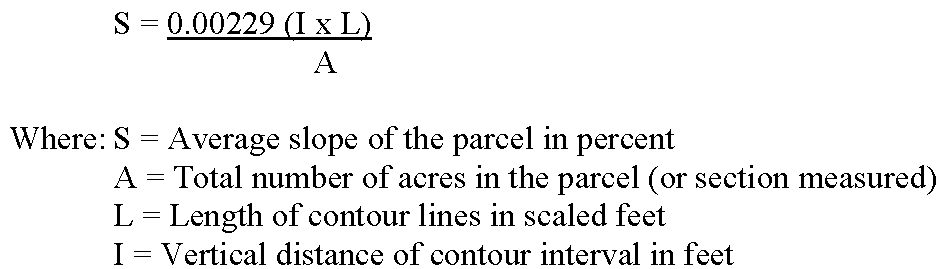
A-Weighted Sound Level (dBA). A decibel scale that approximates the way the human ear responds to sound frequency levels.
B.
Definitions, "B."
Banks and Financial Services. Financial institutions including:
banks and trust companies
credit agencies
holding (but not primarily operating) companies
lending and thrift institutions
other investment companies
securities/commodity contract brokers and dealers
security and commodity exchanges
vehicle finance (equity) leasing agencies
See also, "Automated Teller Machine," above.
Bar. See "Night Clubs and Bars."
Basement. A story having at least one half of its height below grade. A basement shall be counted as a story or as part of the floor area if the vertical distance from grade to the ceiling is over five feet or if it is used for business or dwelling purposes.
Basic Services. Services provided by a residential care facility for the elderly that may include daily activities (social, recreational and educational); community space; utilities and cleaning; safety and security; 24 hour experienced staff; maintenance of residence and grounds; personal care; three daily meals; family support activities; transportation; and medication administration.
Bed and Breakfast Inns (B&Bs). Residential structures with one family in permanent residence with up to five bedrooms rented for overnight lodging, where meals may be provided subject to applicable Health Department regulations. A Bed and Breakfast Inn with more than five guest rooms is considered a hotel or motel, and is included under the definition of "Hotels and Motels." Does not include room rental, which is separately defined (see "Rooming and Boarding Houses).
Best Management Practice. A method, activity, maintenance procedure, or other management practice for reducing the amount of pollution entering a water body. The term originated from the rules and regulations developed pursuant to the federal Clean Water Act (40 CFR 130).
Block. That property abutting on one side of a street and lying between the two nearest intersecting streets, or nearest intersecting streets and railroad right-of-way, mean high tide line or unsubdivided acreage.
Board and Care Home. See "Residential Care Facilities for the Elderly."
Bookstore. A retail store specializing in new or used books; does not include adult businesses.
Broadcasting Studio. A facility where movies, television shows or radio programs are produced and/or transmitted.
Buffer Zone. Areas set aside and maintained in a natural state to minimize the negative effects of land development or human intrusion and use on animals and plants and their habitats.
Building. Any structure having a roof supported by columns or by walls and intended for the shelter, housing or enclosure of any person, animal or chattel. When any portion thereof is completely separated from every other portion thereof by a masonry division or fire wall without any window, door or other opening therein, which wall extends from the ground to the upper surface of the of the roof at every point, then each such portion shall be deemed to be a separate building. See also "Structure."
Building Coverage. The percentage of total site area occupied by buildings, including the primary structure, all accessory structures (e.g., carports, garages, patio covers, storage sheds, trash dumpster enclosures, etc.) and architectural features (e.g., chimneys, balconies, decks above the first floor, porches, and stairs, etc.). Building coverage is measured from exterior wall to exterior wall.
Building Envelope. The area of lot within the required setbacks and limited by the maximum lot coverage and floor area ratios or as defined by an approved Precise Development Plan where a building can be constructed or expanded.
Building Footprint. The area outlining the foundation or exterior walls of a building.
Building Material Stores. Retail establishments selling lumber and other large building materials, where most display and sales occur indoors. Includes paint, wallpaper, glass, fixtures. Includes all these stores selling to the general public, even if contractor sales account for a major proportion of total sales. Includes incidental retail ready-mix concrete operations, except where excluded by a specific zoning district. Establishments primarily selling electrical, plumbing, heating, and air conditioning equipment and supplies are classified in "Warehousing, Wholesaling and Distribution." Hardware stores are listed in the definition of "General Retail," even if they sell some building materials.
Building, Main. A building in which the principal use of the lot is conducted. In any residential or agriculture district any dwelling shall be deemed to be a main building upon the lot.
Building Site. A lot as defined herein.
Business Support Services. Establishments primarily within buildings, providing other businesses with services including maintenance, repair and service, testing, rental, etc., also includes:
blueprinting
business equipment repair services (except vehicle repair, see "Vehicle Services")
commercial art and design (production)
computer-related services (rental, repair)
copying and quick printing services
equipment rental businesses within buildings (rental yards are under "Outdoor Retail Sales and activities")
film processing laboratories
heavy equipment repair services where repair occurs on the client site
janitorial services
mail advertising services (reproduction and shipping)
outdoor advertising services
photofinishing
protective services (other than office related)
soils and materials testing laboratories
window cleaning
C.
Definitions, "C."
California Environmental Quality Act (CEQA). State law (California Public Resources Code Sections 19000 et seq.) requiring public agencies to document and consider the environmental effects of a proposed action, prior to allowing the action to occur.
California Public Utilities Commission (CPUC). The governmental agency which regulates the terms and conditions of public utilities in the State.
Cannabis Related Definitions.
1.
Cannabis. This term refers to all parts of the plant Cannabis sativa Linnaeus, Cannabis indica, or Cannabis ruderalis, or any other strain or varietal of the genus Cannabis that may exist or be discovered, or developed, that has psychoactive or medical properties, whether growing or not, including but not limited to the seeds thereof; the resin, whether crude or purified, extracted from any part of the plant; and every compound, manufacture, salt, derivative, mixture, or preparation of the plant, its seeds, or resin. "Cannabis" also means the separated resin, whether crude or purified, obtained from cannabis. "Cannabis" also means marijuana as defined by California Health and Safety Code section 11018 and Business and Professions Code section 26000(f), as both may be amended from time to time. Any reference to cannabis or cannabis products shall include medical and nonmedical cannabis and medical and nonmedical cannabis products unless otherwise specified. Cannabis or cannabis product does not mean industrial hemp as defined by Health and Safety Code section 11018.5, or the weight of any other ingredient combined with cannabis to prepare topical or oral administrations, food, drink, or other product. Cannabis does not include the mature stalks of the plant, fiber produced from the stalks, oil or cake made from the seeds of the plant, any other compound, manufacture, salt, derivative, mixture, or preparation of the mature stalks (except the resin extracted therefrom), fiber, oil or cake, or the sterilized seed of the plant which is incapable of germination.
2.
Cannabis—Manufactured. This term means raw cannabis that has undergone a process whereby the raw agricultural product has been transformed into a concentrate, an edible product, or a topical product.
3.
Cannabis—Medical or Medicinal Cannabis. These terms are used interchangeably to mean cannabis that is intended to be used for medical cannabis purposes in accordance with the Compassionate Use Act ("CUA," Health and Safety Code section 11362.7 et seq.), the Medical Marijuana Program Act ("MMPA," Health and Safety Code section 11362.7 et seq.) and the Medical Cannabis Regulation and Safety Act ("MCRSA," Business and Professions Code section 19300 et seq.) and the Medicinal and Adult- Use Cannabis Regulation and Safety Act ("MAUCRSA").
4.
Cannabis—Operator. When used in connection with commercial cannabis activities, this term means the natural person or designated officer responsible for the operation of any commercial cannabis use.
5.
Cannabis—Person. When used in connection with commercial cannabis activity, this term means an individual, firm, partnership, joint venture, association, corporation, limited liability company, estate, trust, business trust, receiver, syndicate, tribe, or any other group or combination acting as a unit, whether organized as a non-profit or for profit entity, and includes the plural as well as the singular number.
6.
Cannabis—Primary Caregiver. This term shall have the same meaning as set forth in Health and Safety Code section 11362.7, as the same may be amended from time to time.
7.
Cannabis—Public Place. When used in connection with commercial cannabis activity, this term means any publicly owned property or property on which a public entity has a right of way or easement. Public place also means any private property that is readily accessible to the public without a challenge or barrier, including but not limited to front yards, driveways, and private businesses.
8.
Cannabis—Qualifying Patient or Qualified Patient. These terms are used interchangeably and shall have the same meaning as set forth in Health and Safety Code section 11362.7, as may be amended from time to time.
9.
Cannabis—Volatile Solvent. This term means volatile organic compounds, including but not limited to: (1) explosive gases, such as Butane, Propane, Xylene, Styrene, Gasoline, Kerosene, 02 or H2; and (2) dangerous poisons, toxins, or carcinogens, such as Methanol, Methylene Chloride, Acetone, Benzene, Toluene, and Tri-chloro-ethylene as determined by the Fire Marshall.
10.
Cannabis—Youth Center. When used in connection with commercial cannabis activity, this term means any public or private facility that is used only to host recreation or social activities for minors.
11.
Cannabis Accessories. This term has the same meaning as in Section 11018.2 of the Health and Safety Code.
12.
Cannabis Concentrate. Manufactured cannabis that has undergone a process to concentrate the cannabinoid active ingredient, thereby increasing the product's potency.
13.
Cannabis Cultivation. This term includes any activity involving the planting, growing, harvesting, drying, curing, grading, or trimming of cannabis, including nurseries.
14.
Cannabis Cultivation—Indoor. This term means the cultivation of cannabis within a permanent, lockable structure, using exclusively artificial lighting.
15.
Cannabis Cultivation—Mixed-Light. This term means the cultivation of cannabis using any combination of natural and supplemental artificial lighting. Greenhouses, hoop houses, hot houses and similar structures, or light deprivation systems are included in this category.
16.
Cannabis Cultivation—Outdoor. This term means the cultivation of cannabis using no artificial lighting conducted in the ground or in containers outdoors with no covering.
17.
Cannabis Cultivation Area (or Canopy). This term means the total aggregate area(s) of cannabis cultivation on a single premise as measured around the outermost perimeter of each separate and discrete area of cannabis cultivation at the drip-line of the canopy expected at maturity and includes, but is not limited to, the space between plants within the cultivation area, the exterior dimensions of garden beds, garden plots, hoop houses, green houses, and each room or area where cannabis plants are grown, as determined by the review authority.
18.
Cannabis Cultivation Site. This term means the location, premises, leased area(s), property, location or facility where cannabis is planted, grown, harvested, dried, cured, graded, or trimmed, or a location where all or any combination of those activities.
19.
Cannabis Distribution Facility. This term means the location or a facility where a person conducts the business of procuring cannabis from licensed cultivators or manufacturers for sale to licensed retail or delivery operations, and the inspection, quality assurance, batch testing by a Type 8 licensee, storage, labeling, packaging and other processes, prior to transport to licensed retailers or delivery operations. This facility requires a Type 11 license pursuant to the Medicinal and Adult-Use Cannabis Regulation and Safety Act ("MAUCRSA") or a state cannabis license type subsequently established.
20.
Cannabis Distributor. This term means any commercial cannabis operation that distributes cannabis or cannabis products between licensees, under a valid state license Type 11, or a state cannabis license type subsequently established.
21.
Cannabis License. Cannabis license means a state license issued pursuant to MAUCRSA.
22.
Cannabis Licensee. This term refers to a person issued a state license pursuant to California Business and Professions Code section 26050 and/or other applicable state laws.
23.
Cannabis Manufacture. When used in connection with the processing of commercial cannabis, this term means to compound, blend, extract, infuse, or otherwise make or prepare a cannabis product.
24.
Cannabis Manufacturer. When used in connection with the processing of commercial cannabis, this term means a person that produces, prepares, propagates, or compounds manufactured cannabis or cannabis products, either directly or indirectly or by extraction methods, or independently by means of chemical synthesis or by a combination of extraction and chemical synthesis at a fixed location that packages or repackages cannabis or cannabis products or labels or re-labels its container, that holds a valid state Type 6 or 7 license, or a state cannabis license type subsequently established, and that holds a valid local license or permit.
25.
Cannabis Manufacturing. When used in connection with the processing of commercial cannabis, this term means a facility, that produces, prepares, propagates, or compounds manufactured cannabis or cannabis products, directly or indirectly, by extraction methods, independently by means of chemical synthesis, or by a combination of extraction and chemical synthesis, and is operated by a licensee for these activities.
26.
Cannabis Microbusiness. This term means a commercial cannabis facility operating under a state Type 12 license, or a state cannabis license type subsequently established, and meeting the definition of microbusiness found in Business and Professions Code section 26070(a)(3)(A), as may be amended from time to time, which cultivates less than 10,000 square feet of cannabis and acts as a licensed distributor, Level 1 manufacturer, and retailer.
27.
Cannabis Non-storefront Retailer. This term means a commercial cannabis facility where cannabis and/or cannabis products are offered for retail sale exclusively by delivery; where there is no storefront open to the public, operating under a state license type 9 or a cannabis license type subsequently established. This definition does not include mobile retailers.
28.
Cannabis Nursery. This term means a licensee that produces only clones, immature plants, seeds, and other agricultural products used specifically for the planting, propagation, and cultivation of cannabis. A nursery does not include retail sales.
29.
Cannabis Premises. When used in connection with commercial cannabis activity, this term means the designated structure or structures and land specified in the application that is owned, leased, or otherwise held under the control of the applicant or licensee where the commercial cannabis activity will be or is conducted. The premises shall be a contiguous area and shall only be occupied by one licensee. "Premises" does not include the leasehold spaces of other tenants on the same parcel or group of parcels joined by common facilities or shared amenities.
30.
Cannabis Processing. This term means a cultivation site that conducts only trimming, drying, curing, grading, packaging, or labeling of cannabis and non-manufactured cannabis products.
31.
Cannabis Products. This term means raw cannabis that has undergone a process whereby the raw agricultural product has been transformed into a concentrate, including, but not limited to, concentrated cannabis, or an edible or topical product containing cannabis or concentrated cannabis and other ingredients. "Cannabis product" also means marijuana products as defined by Section 11018.1 of the California Health & Safety Code and is not limited to medical cannabis products.
32.
Cannabis Retailer, Cannabis Dispensary or Dispensary. These terms are used interchangeably and mean a facility operated in accordance with state and local laws and regulations, where cannabis and/or cannabis products are offered for retail sale, including an establishment that delivers cannabis and/or cannabis products as part of a retail sale, under a state license type 10 or a cannabis license type subsequently established. This definition does not include mobile dispensaries.
33.
Cannabis Sale, Sell, and To Sell. These terms are used as appropriate and when used in connection with commercial cannabis activity, shall have the same meaning as set forth in Business and Professions Code section 26001(aa), as the same may be amended from time to time: any transaction whereby, for any consideration, title to cannabis is transferred from one person to another, and includes the delivery of cannabis or cannabis products pursuant to an order placed for the purchase of the same and soliciting or receiving an order for the same, but does not include the return of cannabis or cannabis products by a licensee to the licensee from whom such cannabis or cannabis product was purchased.
34.
Cannabis Testing Service or Testing Laboratory. When used in connection with commercial cannabis activity, these terms mean a laboratory, facility, or entity that offers or performs tests of cannabis or cannabis products, including the equipment provided by such laboratory, facility, or entity, which is accredited by an accrediting body that is independent from all other persons involved in commercial cannabis activity and is licensed by the state. Businesses operating as a testing service or lab offer no services other than such tests and sell no products except testing supplies and materials.
35.
Commercial Cannabis Permit, Cannabis Permit, or Permit. When used in connection with an authorization granted under the Novato Municipal Code, these terms shall mean a permit issued by the City pursuant to Section 19.34.064 for the operation of a commercial cannabis business within the City.
36.
Commercial Cannabis Uses. This term means any commercial cannabis activity licensed pursuant to the Medicinal and Adult-Use Cannabis Regulation and Safety Act ("MAUCRSA"), including but not limited to, cultivation, possession, distribution, laboratory testing, labeling, retail, delivery, sale or manufacturing of cannabis or cannabis products. "Commercial cannabis uses" also means any cannabis activity licensed pursuant to additional state laws regulating such businesses. "Commercial cannabis uses" does not include legal medical cannabis or cannabis activities carried out exclusively for one's personal use that does not involve commercial activity or sales.
Car Share Vehicle. A vehicle available for sharing located in a car share vehicle facility approved by the City.
Car Share Vehicle Facility. A facility of fixed location approved by the City to permit the storage, pick-up, and drop-off of a car share vehicle.
Car Wash. Permanent, self-service and/or attended car washing establishment, including fully mechanized facilities. May include detailing services. Does not include temporary car wash fund-raising activities, typically conducted at a service station or other automotive-related businesses, where volunteers wash vehicles by hand, and the duration of the event is limited to one day. See 19.42.040 (Temporary Use Permits).
Care and Supervision. Services which if provided require a residential care facility for the elderly to be licensed. These services include assistance as needed with activities of daily living and the assumption of varying degrees of responsibility for the safety and well-being of residents to include: assistance in dressing, grooming, bathing and other personal hygiene; assistance with taking medication; central storing and distribution of medications; assistance with medical and dental care (including transportation); maintenance of house rules; supervision of resident schedules and activities; voluntary maintenance and supervision of resident monies or property; and monitoring food intake or special diets.
Caretaker Quarters. A residence that is accessory to a nonresidential primary use of the site, where needed for security, or 24-hour care or supervision.
Cell Site. A geographical area with a radius of two-to-eight miles that contains both transmitting and receiving antennae.
Cellular. An analog or digital wireless communication technology that is based on a system of interconnected neighboring cell sites, each of which contains antennae.
Cemetery. A place for the internment and placement of human remains. A cemetery includes, but is not limited to, both below ground and above ground graves, monuments, and other accessory uses.
Certificate of Public Convenience and Necessity. A certificate issued by the California Public Utilities Commission (CPUC).
Check Cashing Service. A service use engaged in the exchange of business or personal checks for cash or cash advances for a fee or other form of consideration, including wire transfers and money orders.
Child Day Care Facilities. Facilities that provide nonmedical care and supervision of minor children for periods of less than 24 hours. These facilities include the following, all of which are required to be licensed by the California State Department of Social Services.
1.
Child Day Care Center. Commercial or non-profit child day care facilities designed and approved to accommodate 15 or more children. Includes infant centers, preschools, sick-child centers, and school-age day care facilities. These may be operated in conjunction with a school or church facility, or as an independent land use.
2.
Large Family Day Care Home. A day care facility located in a single-family residence where an occupant of the residence provides care and supervision for seven to 14 children. Children under the age of 10 years who reside in the home count as children served by the day care facility.
3.
Small Family Day Care Home. A day care facility located in a single-family residence where an occupant of the residence provides care and supervision for eight or fewer children. Children under the age of 10 years who reside in the home count as children served by the day care facility.
4.
Adult Day Care Facilities. A day care facility providing care and supervision for adult clients.
City. The City of Novato, State of California, referred to in this Zoning Ordinance as the "City."
City Council. The Novato City Council, referred to in this Zoning Ordinance as the "Council."
City Employee. Any head of household, or in the case of married persons either spouse, who has worked within the City limits of the City of Novato continually for one (1) year immediately prior to the date of application for an affordable unit.
City Public Employee. Any head of household, or in the case of married persons either spouse, who has worked for the City of Novato, the Novato Redevelopment Agency, the Novato Sanitary District, the Novato Fire Protection District, North Marin Water District, or any school district located within the City, continually for one year immediately prior to the date of application for an affordable unit.
City Resident. Any person who has lived within the City limits of the City of Novato continually for one year immediately prior to the date of application for an affordable unit.
Clubs, Lodges, and Membership Meeting Halls. Permanent, headquarters-type and meeting facilities for organizations operating on a membership basis for the promotion of the interests of the members, including facilities for:
business associations
civic, social and fraternal organizations
labor unions and similar organizations
political organizations
professional membership organizations
other membership organizations
Co-location. The locating of wireless communications equipment from more than one provider on a single ground-mounted, roof-mounted, or structure-mounted facility.
Commercial cannabis activity. The cultivation, possession, manufacture, distribution, processing, storing, laboratory testing, packaging, labeling, transportation, delivery or sale of cannabis and cannabis product for medicinal, non-medicinal, or any other purpose and includes (i) the production of hashish oil and the distillation or extraction of cannabidiol ("CBD") from industrial hemp having more than three-tenths of one percent THC contained in the dried flowering tops and (ii) the activities of any business licensed by the State or other government entity under Division 10 of the California Business and Professions Code, or any provision of State law that regulates the licensing of cannabis businesses.
Commission. See "Planning Commission."
Common Interest Development. Any residential condominium, community apartment house, or stock cooperative.
Community Care Facility, 6 or fewer persons. Pursuant to California Health & Safety Code section 1502, this land use consists of any facility, place, or building that is maintained and operated to provide nonmedical residential care, day treatment, adult daycare, or foster family agency services for children, adults, or children and adults, including, but not limited to, the physically handicapped, mentally impaired, incompetent persons, and abused or neglected children in a family dwelling.
Community Care Facility, 7 or more persons. Pursuant to California Health & Safety Code section 1502, this land use consists of any facility, place, or building that is maintained and operated to provide nonmedical residential care, day treatment, adult daycare, or foster family agency services for children, adults, or children and adults, including, but not limited to, the physically handicapped, mentally impaired, incompetent persons, and abused or neglected children.
Community Centers. Multi-purpose meeting and recreational facilities typically consisting of one or more meeting or multi-purpose rooms, kitchen and/or outdoor barbecue facilities, that are available for use by various groups for activities including meetings, parties, receptions, dances, etc.
Community Development Director. The director of the City of Novato Department of Community Development or his/her authorized representative.
Community Garden. A site used for growing plants for food, fiber, herbs, flowers, which is shared and maintained by nearby residents.
Community Space. Space within a residential care facility for the elderly that may include dining facilities such as a cafe; or snack bar; beauty or barber shops; retail shops that sell food items, non-prescription drugs, small household items and gifts; pharmacies; libraries; game rooms; meeting rooms; music/craft rooms; community laundry rooms; community kitchens; and other similar facilities for residents and guests.
Condominium. As defined by Civil Code Section 1315, a development where undivided interest in common in a portion of real property is coupled with a separate interest in space called a unit, the boundaries of which are described on a recorded final map or parcel map. The area within the boundaries may be filled with air, earth, or water, or any combination thereof, and need not be physically attached to any land except by easements for access and, if necessary, support.
Congregate Care Facilities. See Residential Care Facilities for the Elderly.
Construction Activity. Any and all construction, building, including mobilization, warming up or servicing equipment, and any preparation for construction, except routine maintenance activities.
Construction/Heavy Equipment Sales and Rental. Retail establishments selling or renting heavy construction equipment, including cranes, earth moving equipment, heavy trucks, etc.
Contractor Storage Yards. Storage yards operated by, or on behalf of a contractor for storage of large equipment, vehicles, or other materials commonly used in the individual contractor's type of business; storage of scrap materials used for repair and maintenance of contractor's own equipment; and buildings or structures for uses such as offices and repair facilities.
Convalescent Hospital. See "Skilled Nursing Facilities."
Convenience Stores. Retail stores of generally 3,500 square feet or less in gross floor area, which carry a range of merchandise oriented to convenience and travelers' shopping needs.
Corps. The U.S. Army Corps of Engineers, the federal agency responsible for issuing wetlands delineations.
Courtyard. An open, unoccupied space, other than a yard on the same lot with a building or buildings and which is bounded on two or more sides by such building or buildings providing access to the units.
County. The County of Marin, State of California.
Crematory. A facility in which human remains are cremated.
Crop Production and Horticulture. Commercial agricultural field and orchard uses including production of:
field crops
flowers and seeds
fruits
grains
melons
ornamental crops
tree nuts
trees and sod
vegetables
Also includes associated crop preparation services and harvesting activities, such as mechanical soil preparation, irrigation system construction, spraying, crop processing and retail sales in the field, including sales sheds.
D.
Definitions, "D."
Dairy Farming. This land use consists of specialized and intensive commercial animal facilities for the raising and keeping of dairy cattle, including facilities for milking.
Day care. See "Child Day Care" or "Adult Day Care"
Decibel (dB). The measurement unit used for the loudness of sound or noise.
Density. The number of housing units per net acre, unless otherwise stated, for residential uses.
Density Bonus. A density increase over the otherwise maximum allowable residential density provided in Division 19.24 (Affordable Housing Incentives/Density Bonus Provisions).
Department. The City of Novato Community Development Department, comprising engineering, building inspection, planning and maintenance divisions, referred to in this Zoning Ordinance as "Department."
Detached. Any structure that does not have a wall or roof in common with another structure.
Developer. Any person, firm, partnership, association, joint venture, corporation, or an entity or combination of entities that seeks City permits and approvals for development.
Development. Any construction activity or alteration of the landscape, its terrain contour or vegetation, including the erection or alteration of structures, and/or the establishment of a new land use. New development is any construction, or alteration of an existing structure or land use, after the effective date of this Zoning Ordinance.
Development Agreement. A development agreement entered into between the City and a developer pursuant to Government Code Sections 65864-65869.5 and this zoning ordinance.
Development Standards. The provisions of Novato Municipal Code Chapter V.
DFG. The California Department of Fish and Game.
Director. The City of Novato Community Development Director or designee of the Director.
District. See "Zoning District."
Drive-in and Drive-thru Sales. Facilities where food or other products may be purchased by motorists without leaving their vehicles. These facilities include fast-food restaurants, drive-through coffee, dairy product, photo stores, etc.
Drive-in and Drive-thru Services. Facilities where services may be obtained by motorists without leaving their vehicles. These facilities include drive-up bank teller windows, dry cleaners, etc. Does not include: automatic teller machines (ATMs) or automobile service stations, or car washes, which are separately defined.
Driveway. A paved area that provides vehicle access from a public right-of-way to a parking area or garage.
Dump. A place used for the disposal, whether by disposition, abandonment, discarding, dumping, reduction, burial, incineration, or by any other means, of any garbage, sewage, trash, refuse, waste material, offal or dead animals; provided that this definition shall not be deemed to include such means waste collection facilities or trash enclosures that are customarily incidental and accessory to dwellings, institutions, and commercial, industrial and agricultural uses.
Duplex. A residential structure under single ownership containing two dwellings.
Dwelling, Dwelling Unit, or Housing Unit. A room or group of internally connected rooms that have sleeping, cooking, eating, and sanitation facilities, but not more than one kitchen, which constitute an independent housekeeping unit, occupied by or intended for one household on a long-term basis, and supportive housing and transitional housing as defined in Government Code Section 65582 subject only to those restrictions that apply to other residential uses and dwelling types of the same type and in the same zone (e.g. permits single-family dwellings within a single-family zoning district and subject to the same maximum density, minimum lot size and maximum lot coverage, etc. applicable to a single-family dwelling. Also permits multi-family dwellings within a multi-family zoning district and subject to the same maximum density, minimum lot size and maximum lot coverage, etc. applicable to a multi-family dwelling. Does not permit single-family zoning requirements to be applied to multi-family residential units and vice versa).
Dwelling, Multiple. A building or portion thereof used and designed as a residence for three or more families living independently of each other, and doing their own cooking in said building, including apartment houses, apartment hotels and flats, but not including automobile courts or camps.
Dwelling, Single-Family. A building designed as an independent structure for use as a residence for one family and which is sited on an individual lot.
Dwelling, Two-Family. See "Duplex."
E.
Definitions, "E."
Easement. A grant of one or more of the property rights by the property owner to and/or for the use by the public, a corporation or another person or entity.
Efficiency Kitchen. See Section 19.34.031.C.
Efficiency Unit. A separate living space with a minimum floor area of 150 square feet intended for occupancy by no more than two persons which contains partial kitchen and bathroom facilities. For the purpose of this section, efficiency unit has the same meaning as Section 17958.1 of the Health and Safety Code.
Elderly Person. For purposes of admission into a residential care facility for the elderly, a person who is 62 years of age or older.
Electromagnetic Field. The local electric and magnetic fields caused by voltage and the flow of electricity that envelop the space surrounding an electrical conductor.
Electronics, Equipment,and Appliance Manufacturing. Establishments engaged in manufacturing machinery, apparatus, and supplies for the generation, storage, transmission, transformation and use of electrical energy, including:
appliances such as stoves/ovens, refrigerators, freezers, laundry equipment, fans, vacuum cleaners, sewing machines
aviation instruments
computers, computer components, and peripherals
electrical transmission and distribution equipment
electronic components and accessories, and semiconductors, integrated circuits, related devices
electronic instruments, components and equipment such as calculators and computers
electrical welding apparatus
lighting and wiring equipment such as lamps and fixtures, wiring devices, vehicle lighting
industrial apparatus
industrial controls
instruments for measurement, testing, analysis and control, associated sensors and accessories
miscellaneous electrical machinery, equipment and supplies such as batteries, X-ray apparatus and tubes, electromedical and electrotherapeutic apparatus, electrical equipment for internal combustion engines
motors and generators
optical instruments and lenses
photographic equipment and supplies
pre-recorded magnetic tape
radio and television receiving equipment such as television and radio sets, phonograph records and surgical, medical and dental instruments, equipment, and supplies
surveying and drafting instruments
telephone and telegraph apparatus
transformers, switch gear and switchboards
watches and clocks
Does not include testing laboratories (soils, materials testing, etc.) (see "Business Support Services"), or research and development facilities separate from manufacturing (see "Research and Development").
Emergency Shelter. Emergency shelter has the same meaning as defined in Section 65582 of the California Government Code. Emergency shelter shall include other interim interventions, including, but not limited to, a navigation center, bridge housing, and respite or recuperative care pursuant to California Government Code Section 65583(a)(4)(c).
Enhanced Specialized Mobile Radio. A digital wireless communication technology that specializes in providing dispatching services.
Enlargement of Use. The expansion of a land use activity on a site or within a structure so that the use/activity occupies more floor or site area.
Environmental Impact Report (EIR). An informational document used to assess the physical characteristics of an area and to determine what effects will result if the area is altered by a proposed action, prepared in compliance with the California Environmental Quality Act (CEQA).
Equestrian Facilities. This land use consists of commercial horse, donkey, and mule facilities, including:
horse ranches
boarding stables
riding schools and academies
horse exhibition facilities
pack stations
This land use includes barns, stables, corrals, and paddocks accessory and incidental to the above uses.
Equipment Rental, Indoor. Service establishments which may offer a wide variety of materials and equipment for rental. Construction equipment rental is separately defined.
Equivalent Sound Level (Leq). A term used to assign a single-value A-weighted decibel level to the measured average sound exposure over a period of time.
Extended Hours Business. A retail use which includes operation hours between 11:00 p.m. and 6:00 a.m.
F.
Definitions, "F."
Factory Built Home. See "Manufactured Home."
Family. One or more persons occupying a premises and living as a single non-profit, domestic housekeeping unit, as distinguished from a group occupying a hotel, club, fraternity or sorority house.
Farm Labor Housing. Shall have the same meaning as Employee Housing as defined in Section 17008 of California Health and Safety Code.
Farm Laborer. Shall have the same meaning as Agricultural Employee.
Farm Produce Stands. A retail stand that sells crops or eggs grown on the premises.
Feasible. Capable of being accomplished in a successful manner within a reasonable period of time, taking into account economic, environmental, social and technological factors.
Financial Guarantee. Cash deposits, payments, surety bonds, or other irrevocable agreements that individually or collectively guarantee the construction of structural measures for flood protection.
Firearm Sales. "See Gun Sales"
Flag Lot. A lot having only its access strip fronting on a private or public street.
Flood Plain. The maximum area that is likely to be flooded.
Flood Protection Plan. A plan prepared for a specific area within a 100-year flood plain, which proposes, by engineered structural measures and by a method for financing the measures, to protect structures and other properties within the area from the effects of a 100-year flood.
Floor Area, Gross. The area in square feet of all floors or stories within a building, measured from the outside surfaces of the exterior walls, but not including covered parking areas or garages.
Floor Area, Net. The floor area within the walls of a building used for service to the public or tenants, but not including areas for storage, mechanical equipment, restrooms, and major pedestrian movement, such as enclosed malls, stairways, or major hallways. In the absence of accurate floor plans when a land use permit application is filed for an office building, net floor area may be estimated to be 80 percent of gross floor area.
Floor Area Ratio (FAR). The Floor Area Ratio (FAR) is the ratio of the gross floor area of a structure (not including covered parking areas or garages) to net lot area (See "Lot Area, Net"). FAR restrictions are used to limit the maximum floor area of all habitable space allowed on a site. The maximum floor area of all structures (measured from exterior wall surfaces) permitted on a site shall be determined by multiplying the FAR by the net lot area (FAR x Net Lot Area = Maximum Allowable Floor Area). See Figure 6-1.
Florist. A use engaged in the retail sale of flowers and ornamental plants.
Food and Beverage Manufacturing. Manufacturing establishments producing or processing foods and beverages for human consumption, and certain related products. Includes:
bakeries
bottling plants
breweries
candy, sugar and confectionery products manufacturing
catering services separate from stores or restaurants
coffee roasting
dairy products manufacturing
fats and oil product manufacturing
fruit and vegetable canning, preserving, related processing
grain mill products and by-products
meat, poultry, and seafood canning, curing, byproduct processing
soft drink production
miscellaneous food item preparation from raw products
May include tasting and accessory retail sales of beverages produced on site. A tasting facility separate from the manufacturing facility is included under the definition of "Night Clubs and Bars" if alcoholic beverages are tasted, and under "Restaurant" if beverages are non-alcoholic.
Does not include: bakeries which sell all products on-site, which are included in the definition of "General Retail;" or beer brewing as part of a brew pub, bar or restaurant (see "Night Clubs and Bars").
Front Wall. The wall of the building or other structure nearest the street upon which the building faces.
Front Yard. See "Yard."
Frontage. The property line of a lot which abuts a public or private street, place, or right-of-way, other than the side property line of a corner lot.
Frontage, Primary Building. Primary Building Frontage shall mean:
1.
In a building containing only one business, the primary frontage shall be the length of the building that contains the main public entrance to the business.
2.
In a building containing more than one business, all of which have their main public entrances on the same frontage, the primary frontage shall be the length containing those public entrances.
3.
In a building containing more than one business, where those businesses have the main public entrances on more than one frontage, the length containing the street with the highest vehicle capacity shall be designated the primary frontage.
Frontage, Secondary Building. A building's length that has not been designated as the primary building frontage if it faces an adjacent street or on-site parking lot.
Fully Enclosed and Secure Structure. A space within a building that complies with the applicable provisions of the California Building Standards Code as adopted and amended by Chapter 4 (Building and Housing) of the Novato Municipal Code, and has a complete roof enclosure supported by connecting walls extending from the ground to the roof, a foundation, slab or equivalent base to which the floor is secured by bolts or similar attachments, is secure against unauthorized entry, and is accessible only through one or more lockable doors. Walls and roof must be constructed of solid materials that cannot be easily broken through, and must be constructed with non-transparent material. Plastic sheeting, canvas, vinyl, or similar products or materials, regardless of gauge, are not considered solid materials;
A Fully Enclosed and Secure Structure must be an accessory structure to a private residence located upon the parcel on which that private residence is situated.
Furniture, Furnishings and Appliance Stores. Stores engaged primarily in selling the following products and related services, including incidental repair services:
computers and computer equipment
draperies
floor coverings
furniture
glass and chinaware
home appliances
home furnishings
home sound systems
interior decorating materials and services
large musical instruments
lawn furniture
mattresses
portable spas and hot tubs
office furniture
other household electrical and gas appliances
outdoor furniture
refrigerators
stoves
televisions
Furniture/Fixtures Manufacturing, Cabinet Shops. Manufacturers producing: wood and metal household furniture and appliances; bedsprings and mattresses; all types of office furniture and public building furniture and partitions, shelving, lockers and store furniture; and miscellaneous drapery hardware, window blinds and shades. Includes wood and cabinet shops, but not sawmills or planing mills, which are instead included under "Lumber and Wood Products."
G.
Definitions, "G."
Garage or Carport. Parking space and shelter for automobiles or other vehicles, where the size of the parking space complies with the provisions of Division 19.30 (Parking and Loading).
1.
A garage is an attached or detached accessory structure specifically designed with a door of at least eight feet wide for a single car garage and sixteen feet wide for two cars, providing a parking stall(s) meeting the requirements of Section 19.30.070, enclosed on at least three sides, and served by a paved driveway of sufficient width to accommodate motor vehicle (car or truck) movements and connected to a public or private street.
2.
A carport is an attached or detached accessory structure enclosed on no more than two sides, providing a parking stall(s) meeting the requirements of Section 19.30.070, and served by a paved driveway or drive aisle of sufficient width to accommodate motor vehicle (car or truck) movements and connected to a public or private street.
Garage Sale. A temporary sale held for no more than 3 consecutive days within a 90 day period for the purpose of selling, trading or otherwise disposing of household furnishings, personal goods or other tangible properties of a resident of the premises on which the sale is conducted in a residential zone.
Gas Station (or Fueling Station). A retail business selling, storing and/or dispensing gasoline, diesel, or any other fossil fuel-based motor vehicle fuels.
General Plan. The City of Novato General Plan, including all its elements and all amendments to the General Plan, as adopted by the City Council under the provisions of Government Code Sections 65300 et seq., and referred to in this Zoning Ordinance as the "General Plan."
General Retail. Stores and shops selling any lines of merchandise, goods or articles directly to the consumer. These stores and lines of merchandise include, but is not limited to:
art galleries
artists' supplies
auto parts sales (not including repair or maintenance service and/or the sale of used parts)
bakeries (all production in support of on-site sales)
bicycles
books
cameras and photographic supplies
clothing and accessories
collectibles (cards, coins, comics, stamps, etc.)
department stores
drug and discount stores
dry goods
fabrics and sewing supplies
florists and houseplant stores (indoor sales only—outdoor sales are "Plant Nurseries")
general stores
gift and souvenir shops
hardware
hobby materials
jewelry
luggage and leather goods
musical instruments, parts and accessories
home health care supplies
pet supplies sales with no animals but fish
religious goods
small wares
specialty shops
sporting goods and equipment
stationery
toys and games
variety stores
See "Large Item Retail" for other retail uses.
Golf Courses and Country Clubs. Golf courses, and accessory facilities and uses including: clubhouses with bar and restaurant, locker and shower facilities; driving ranges; "pro shops" for on-site sales of golfing equipment; and golf cart storage and sales facilities.
Grade. The elevation of the finished ground surface immediately adjacent to the exterior base of a structure, typically used as the basis for measurement of the height of the structure. For buildings or structures located within 5 feet from the street line, the elevation of the sidewalk at the center of the wall adjoining the street. For buildings or structures adjoining more than one street, the average of the elevations of the sidewalks at the centers of all walls adjoining streets.
Grading. Any and all activities involving earthwork, including placement or fill and/or excavation.
Grand Opening. An advertising event which has as it s purpose, the promotion of a newly opened use, a change in the orientation of a use or reopening of a use following a remodeling or major renovation.
Grocery Store. A retail business where the majority of the floor area open to the public is occupied by food products packaged for preparation and consumption away from the site of the store. A grocery store may offer check cashing services as an accessory use (see the separate definition of "Check Cashing Service" and "Accessory Use").
Guest House. A detached structure accessory to a single-family dwelling, accommodating living/sleeping quarters, but without kitchen or cooking facilities and not rented or otherwise used as a separate dwelling.
Gun Sales. A retail business dealing in firearms and ammunition as a regular course of trade or business.
H.
Definitions, "H."
Habitable Space. The interior area of a building intended for occupancy which is located below and including the uppermost ceiling forming the base of the roof structure, excluding attic or equipment storage areas located within the roof pitch or located above the uppermost ceiling.
Handcraft Industries, Small-Scale Manufacturing. Establishments manufacturing and/or assembling small products primarily by hand, including jewelry, pottery and other ceramics, as well as small glass and metal art and craft products.
Hazardous Materials. All materials classified as such in Title 49 of the Code of Federal Regulations, including but not limited to, explosive, flammable, combustible, toxic, corrosive, reactive, unstable, hyperbolic and pyrofolic.
Health/Fitness Facilities. Fitness centers, gymnasiums, health and athletic clubs including any of the following: indoor sauna, spa or hot tub facilities; indoor tennis, handball, racquetball, weight rooms, aerobics, kick-boxing, spinning and other indoor sports activities. This use includes outdoor facilities for tennis, swimming, skating and sport courts provided in conjunction with the indoor facilities. Does not include adult entertainment businesses.
Hedge. Shrubs and/or trees planted and maintained at a spacing interval which creates a physical and/or visual barrier.
Heliport. A designated, marked area on the ground or the top of a structure where helicopters may land at any time.
Hiking Trail. Any paved or unpaved path, track or right-of-way established and/or maintained on public or private property primarily for hiking and public recreation purposes.
Hillside. Any area of land where the average slope exceeds 10 percent. See also "Average Slope."
Hilltop. See "Ridgeline"
Home Occupations. The conduct of a business within a dwelling unit or residential site, employing occupants of the dwelling, with the business activity being subordinate to the residential use of the property.
Hotel or Motel. Facilities with guest rooms or suites, provided with or without kitchen facilities, rented to the general public for transient lodging (less than 30 days). Hotels provide access to most guest rooms from an interior walkway, and typically include a variety of services in addition to lodging; for example, restaurants, meeting facilities, personal services, etc. Motels provide access to most guest rooms from an exterior walkway. Also includes accessory guest facilities such as swimming pools, tennis courts, indoor athletic facilities, accessory retail uses, etc.
Household Pets. The keeping/raising of birds, cats, dogs, or other common household pets, as determined by the Director, accessory to a residential use.
Housing Costs. The monthly mortgage principal and interest, property taxes, homeowners insurance, and condominium fees, where applicable, for ownership units; and the monthly rent for rental units.
Housing Unit. see "Dwelling, Dwelling Unit, or Housing Unit."
HUD. The United States Department of Housing and Urban Development or its successor.
I.
Definitions, "I."
Illegal Building or Use. A building or use that does not conform to one or more of the provisions of this Zoning Ordinance, and did not lawfully exist on the effective date of applicable provisions of this Zoning Ordinance.
Income Eligibility. The gross annual household income considering household size and number of dependents, income of all wage earners, elderly or disabled household members and all other sources of household income.
Independent Living. Housing that is intended for elderly persons who may require some assistance but are generally able to live and function independently. These facilities are usually apartment style housing with a studio, one-bedroom or larger units, one or more bathrooms and either a kitchenette or full kitchen. Meals, housekeeping and laundry services are provided for residents. Social activities and other non-medical services, such as transportation, are sometimes offered.
Indigenous. Native species whose origin has not been introduced from elsewhere.
Indoor Amusement/Entertainment Facilities. Establishments providing indoor amusement and entertainment services for a fee or admission charge, including:
bowling alleys
coin-operated amusement arcades
dance halls, clubs and ballrooms
electronic game arcades
ice skating and roller skating
pool and billiard rooms as primary uses
indoor archery and shooting ranges
This use does not include adult entertainment businesses. Four or more electronic games or coin-operated amusements in any establishment, or a premises where 50 percent or more of the floor area is occupied by amusement devices, are considered an electronic game arcade as described above, three or less machines are not considered a land use separate from the primary use of the site.
Indoor cannabis cultivation. Cultivation of cannabis using exclusively artificial lighting.
In-lieu Housing Fee. A fee paid by persons for projects subject to affordable housing section in-lieu of providing the required affordable units or lots.
Intensification of Use. A change in the use of a structure or site, where the new use is required by Division 19.30 (Parking and Loading) to have more off-street parking spaces than the former use; or a change in the operating characteristics of a use (for example, hours of operation), which generate more activity on the site.
J.
Definitions, "J."
Junior Accessory Dwelling Unit. See Section 19.34.031.
Junk Yard. See "Recycling - Scrap and Dismantling Yards."
K.
Definitions, "K."
Kennel. A commercial facility providing boarding services for domestic animals.
Kitchen. A room or space within a building intended to be used for the cooking or preparation of food.
Knoll. See "Ridgeline."
L.
Definitions, "L."
Land Use Permit. Authority granted by the City to use a specified site for a particular purpose, including Use Permits, Temporary Use Permits, Planned Development Permits, Variances, Zoning Clearances, as established by Article 4 (Land Use and Development Permit Procedures) of this Zoning Ordinance.
Landscaping. The planting and maintaining of an area with predominantly native or exotic plant materials including lawn, groundcover, trees, shrubs, and other plant materials; and also including accessory decorative outdoor landscape elements (for example, pools, fountains, paved or decorated surfaces, but excluding driveways, parking, loading, or storage areas).
Large Family Day Care Home. See "Child Day Care Facilities."
Large Item Retail. Stores selling large substantial items of merchandise, goods or articles directly to the consumer. These stores and lines of merchandise include, but is not limited to:
building materials
equipment sales
furniture stores, furnishing and appliance stores
Lattice Tower. A structure with three or four steel support legs that supports a variety of antennae. These towers generally range in height from 60 to 200 feet and are constructed in areas where increased height is needed, microwave antennas are required, or where the weather demands a more structurally-sound design.
Laundries and Dry Cleaning Plants. Service establishments engaged primarily in high volume laundry and garment services, including: power laundries (family and commercial); garment pressing and dry cleaning; linen supply; diaper service; industrial laundries; carpet and upholstery cleaners. Does not include coin-operated laundries or dry cleaning pick-up stores without dry cleaning equipment; see "Personal Services."
Leather, Fur Products. See "Textile and Leather Products Manufacturing."
Libraries and Museums. Public or quasi-public facilities including aquariums, arboretums, art galleries and exhibitions, botanical gardens, historic sites and exhibits, libraries, museums, and planetariums, which are typically non-commercial, other than an accessory gift/book shop.
License. A basic permit issued by a licensing agency to operate a residential care facility for the elderly.
Licensing Agency. A state, county or other public agency authorized by the State Department of Social Services to assume specified licensing, approval or consultation responsibilities in compliance with Health and Safety Code Section 1569.13.
Life Care/Continuing Care Retirement Communities. See "Residential Care Facilities for the Elderly."
Life Care Contract. A contract to provide to a person for the duration of his or her life, or for a term in excess of one year, nursing services, medical services, or health related services, board and lodging and care as necessary, or any combination of such services, for the person, in a residential care facility for the elderly.
Live/Work Facilities. An integrated housing unit and working space, occupied and utilized by a single household in a commercial or industrial structure which has been designed or structurally modified to accommodate joint residential occupancy and work activity, and which includes:
1.
Complete kitchen space and sanitary facilities in compliance with the City building code; and
2.
Working space reserved for and regularly used by one or more occupants of the unit.
Livestock Operations.
1.
Grazing. This land use consists of the raising or keeping of cattle, or other animals of similar size, on a site larger than 20 acres, where feed is provided primarily by grazing when on-site resources are available.
2.
Large Animals. This land use consists of the raising or keeping of cattle, goats, ostriches, sheep, swine, or other farm or exotic animals of similar size, in corrals or other similar enclosures. Does not include the grazing or pasturing of large animals on open rangeland (see "Grazing" above). See also, "Dairy Farming."
3.
Small Animals. This land use consists of the raising or keeping of more than 12 fowl of any kind and/or 12 rabbits or similar animals. Does not include hog raising, dairying or the raising or keeping for commercial purposes of cattle, horses, or similar livestock, as determined by the Director; see "Large Animals" above.
Lot, or Parcel. A recorded lot or parcel of real property under single ownership, lawfully created as required by the Subdivision Map Act and City ordinances, including this Zoning Ordinance. Types of lots include the following. See Figure 6-2 (Lot Types).
1.
Corner Lot. A lot located at the intersection of two or more streets, where they intersect at an interior angle of not more than 135 degrees. If the intersection angle is more than 135 degrees, the lot is considered an interior lot.
2.
Flag Lot. A lot having access from the building site to a public street by means of private right-of-way strip that is owned in fee.
3.
Interior Lot. A lot abutting only one street.
4.
Key Lot. An interior lot, the front of which adjoins the side property line of a corner lot.
5.
Reverse Corner Lot. A corner lot, the rear of which abuts a key lot.
6.
Through Lot. A lot with frontage on two generally parallel streets.
Lot Area, Gross. Gross lot area is the total area included within the lot lines of a lot, exclusive of existing adjacent dedicated street rights-of-way.
Lot Area, Net. The portion of a parcel that is:
1.
Not subject to any easement or included as a proposed public or private facility, such as an alley, highway, street, or other necessary public site within a proposed development project; or
2.
Subject to an easement where the owner of the underlying fee has the right to use the entire surface except the portion where the owner of the easement may place utility poles or minor utility structures.
Except as provided above, portions of a parcel dedicated to a highway easement or any other private or public easement shall not be counted as part of the net area.
Lot Coverage. See "Site Coverage."
Lot Depth. The average linear distance measured perpendicular between the front and the rear lot lines or the distance to the intersection of the two side lot lines if there is no rear line, not including access easements. The lot depth shall be measured using the average length of imaginary lines spaced at 10-foot intervals perpendicular along the front lot line where each line meets the rear lot line. See Figure 6-3 (Lot Features). The Director shall determine lot depth for parcels of irregular configuration.
Lot Frontage. The boundary of a lot adjacent to a public or private (access easement) street right-of-way.
Lot Line or Property Line. Any recorded boundary of a lot. Types of lot lines are as follows (see Figure 6-3 (Lot Features)):
1.
Front Lot Line. On an interior lot, the property line separating the parcel from the street. The front lot line on a corner lot is the line with the shortest frontage. (If the lot lines of a corner lot are equal in length, the front lot line shall be determined by the Director.) On a through lot, both lot lines are front lot lines and the lot is considered to have no rear lot line.
2.
Interior Lot Line. Any lot line not abutting a street.
3.
Rear Lot Line. A property line that does not intersect the front lot line, which is most distant from and most closely parallel to the front lot line.
4.
Side Lot Line. Any lot line that is not a front or rear lot line.
Lot Width. The linear distance measured between the side lot lines, at right angles to the lot depth at a point midway between the front and rear lot lines, not including access easements. See Figure 6-3 (Lot Features). The Director shall determine lot width for parcels of irregular shape.
Low Barrier Navigation Center. Shall have the same meaning as set forth in Section 65660 of California Government Code.
M.
Definitions, "M."
Manufactured Home. A transportable structure which in the traveling mode is 8 feet or more in width and 40 feet or more in length and is a minimum of 320 square feet in floor area and which is built on a permanent chassis and is designed to be used as a dwelling with or without a permanent foundation. For the purpose of this section, manufactured home has the same meaning as Section 18007 of the Health and Safety Code.
Map Act. See "Subdivision Map Act."
Marinas, Docks and Piers. Facilities for storing, servicing, fueling, berthing and securing and launching of private pleasure craft or commercial boats, and which may include the sale of fuel and incidental supplies for the boat owners, crews and guests.
Massage. Any method of pressure on, or friction against, or stroking, kneading, rubbing, tapping, pounding, vibrating, or stimulating the exterior of the body with the hands or with the aid of any mechanical apparatus or appliance, with or without such supplementary aids as rubbing alcohol, liniment, antiseptic, oil, powder, creams, lotion, ointment, or other similar preparations commonly used in this practice.
Massage Establishments:
Massage Establishment. Any establishment, having a fixed place of business, where five or more persons engage in, conduct, carry on, or permit to be engaged in, conducted, or carried on, for any form of consideration whatsoever, "massage" as defined herein. Any establishment engaging in any combination of massage, bath facilities, including but not limited to showers, baths, hot tubs, saunas, or other dry or wet heat rooms, and personal services as defined in section 19.60.020, shall be deemed a massage establishment.
Massage Establishment - Small. Any establishment having a fixed place of business, where four or fewer persons engage in, conduct, carry on, or permit to be engaged in, conducted, or carried on, for any form of consideration whatsoever, "massage" as defined herein. Any establishment engaging in any combination of massage, bath facilities, including but not limited to showers, baths, hot tubs, saunas, or other dry or wet heat rooms, and personal services as defined in section 19.60.020, where four or fewer persons perform massage shall be deemed a massage establishment - small.
A group of establishments having the same fixed place of business, even if issued multiple permits or licenses, shall be deemed one massage establishment for purposes of determining whether such establishment is a massage establishment or a massage establishment - small.
Massage establishment and massage establishment small do not include:
(1)
Skilled nursing facilities and medical services where massage is performed only by currently licensed physicians, surgeons, chiropractors, osteopaths, physical therapists, or nurses and any persons acting under the direction and control of any of the aforementioned licensed professionals on the premises of the skilled nursing facility or medical services establishment;
(2)
Barber and beauty shops where massage is performed only by licensed cosmetologists and is limited to the head, neck, scalp, feet and legs below the knees;
(3)
Schools and athletic training facilities where massage is performed only by coaches, and trainers of any amateur or professional athlete or athletic team when such practice of massage is limited to such athlete or team.
Master Plan. A Master Plan is a set of documents setting forth a development proposal for a specific area of land. A Master Plan implements the applicable goals, objectives, policies, and programs of the Novato General Plan and any relevant specific plan. A Master Plan consists of written and graphic materials and can be a separate, standalone document, or it can be done in combination or concurrently with a Precise Development Plan or a Precise Development Plan and Subdivision Map and/or Use Permit. Adoption of a Master Plan is a rezoning to a planned district (PD) and zoning text amendment.
MAUCRSA. The Medicinal and Adult-Use Cannabis Regulation and Safety Act, as the same may be amended from time to time.
Medical cannabis or medicinal cannabis. Cannabis that is intended to be used for medical cannabis purposes in accordance with the Compassionate Use Act ("CUA," Health and Safety Code section 11362.7 et seq.), the Medical Marijuana Program Act ("MMPA," Health and Safety Code section 11362.7 et seq.), and the Medicinal Adult-Use Cannabis Regulation and Safety Act ("MAUCRSA).
Medical Services - Clinics, Offices, and Laboratories. Facilities primarily engaged in furnishing outpatient medical, mental health, surgical and other personal health services, but which are separate from hospitals, including:
acupuncture
chiropractic
health management organizations (HMOs)
medical, and dental laboratories
medical, dental, optometry and psychiatric
offices
out-patient care facilities
other allied health services
physical therapy
Counseling services by other than medical doctors or psychiatrists are included under "Offices."
Medical Services - Extended Care. Residential facilities providing nursing and health-related care as a primary use with in-patient beds, such as: board and care homes; convalescent and rest homes; extended care facilities; skilled nursing facilities; and adult day health centers. Long-term personal care facilities that do not emphasize medical treatment are included under "Residential Care Homes."
Medical Services - Hospitals. Hospitals and similar facilities engaged primarily in providing diagnostic services, and extensive medical treatment, including surgical and other hospital services. These establishments have an organized medical staff, inpatient beds, and equipment and facilities to provide complete health care. May include on-site accessory clinics and laboratories, accessory retail and service uses and emergency heliports (see the separate definition of "Accessory Retail and Service Uses").
Metal Products Fabrication, Machine and Welding Shops. Establishments engaged primarily in the assembly of metal parts, including the following uses that produce metal duct work, tanks, towers, cabinets and enclosures, metal doors and gates, and similar products.
blacksmith and welding shops
sheet metal shops
machine shops and boiler shops
Microbrewery. A facility where beer brewed on the premises is sold for on-site consumption.
Microcell. A wireless communication facility that:
1.
Contains a maximum of four whip or panel antennae. Each whip antenna does not exceed four inches in diameter and four feet in length. Each panel antenna does not exceed two square feet in surface area;
2.
Contains a maximum of one microwave antenna no larger than 10 square feet in surface area;
3.
Has an array of antennae less than 10 feet in height;
4.
Is roof- or structure-mounted or, if within the public right-of-way, is located on top of a light pole or telephone pole or a metal or precast concrete monopole (similar in design to a street light pole or street tree); and
5.
Has a total height, if roof- or structure-mounted, that does not exceed the maximum height allowed in the zoning district in which the facility is located.
Mixed-Use Project. A project which combines both commercial and residential uses, where the residential component is typically located above the commercial.
Mobile Home. A trailer, transportable in one or more sections, that is certified under the National Manufactured Housing Construction and Safety Standards Act of 1974, which is over 8 feet in width and 40 feet in length, with or without a permanent foundation and not including recreational vehicle, commercial coach or factory-built housing. A mobile home on a permanent foundation is included under the definition of "Single-Family Dwellings."
Mobile Home Park. Any site that is planned and improved to accommodate two or more mobile homes used for residential purposes, or on which two or more mobile home lots are rented, leased, or held out for rent or lease, or were formerly held out for rent or lease and later converted to a subdivision, cooperative, condominium, or other form of resident ownership, to accommodate mobile homes used for residential purposes.
Mobile Home, RV, Motorcycle and Boat Sales. Retail establishments selling both mobile home dwelling units, and/or various vehicles and watercraft for recreational uses. Includes the sales of boats, campers and camper shells, jet skis, mobile homes, motorcycles, motor homes, and travel trailers. May also include repair, maintenance, and wholesale/retail sales of parts and accessories that are incidental to sale and servicing of mobile homes, recreational vehicles, and boats.
Mortuaries and Funeral Homes. Funeral homes and parlors, where deceased are prepared for burial or cremation, and funeral services may be conducted.
Mounted. Attached or supported.
Multi-Family Dwellings. A building or a portion of a building used and/or designed as residences for three or more families living independently of each other in the same structure. Includes: triplexes, fourplexes (buildings under one ownership with three or four dwelling units, respectively, in the same structure) and apartments (five or more units under one ownership in a single building); townhouse development (three or more attached single-family dwellings where no unit is located over another unit); and senior citizen multi-family housing; see also "Common Interest Developments."
N.
Definitions, "N."
Nature Preserves. Sites with environmental resources intended to be preserved in their natural state.
Negative Declaration. A statement describing the reasoning that a proposed action will not have a significant adverse effect on the environment, in compliance with the California Environmental Quality Act (CEQA).
Night Clubs and Bars. Businesses where alcoholic beverages are sold for on-site consumption, which are not part of a larger restaurant. Includes bars, taverns, pubs, and similar establishments where any food service is subordinate to the sale of alcoholic beverages. May include entertainment (e.g., live music and/or dancing, comedy, etc.). May also include beer brewing as part of a microbrewery, and other beverage tasting facilities. Does not include adult entertainment businesses.
Noise Disturbance. Any sound which, because of its loudness (amplitude), duration or character, disturbs, injures, or endangers the public comfort, health, peace, or safety within the limits of the City.
Noncommercial. Not involving the buying or selling of goods and services (commerce).
Nonconforming Parcel. A parcel that was legally created prior to the adoption of this Zoning Ordinance and which does not conform to current Code provisions/standards (e.g., access, area or width requirements, etc.) prescribed for the zoning district in which the parcel is located.
Nonconforming Sign. A sign which lawfully existed prior to the effective date of this Zoning Ordinance, or any amendment thereto, but which fails by reason of such adoption or amendment to conform to all of the standards and regulations of the adopted or amended provision.
Nonconforming Structure. A structure that was legally constructed prior to the adoption of this Zoning Ordinance and which does not conform to current Code provisions/standards (e.g., open space, distance between structures, etc.) prescribed for the zoning district in which the structure is located.
Nonconforming Use. A use of a structure (either conforming or nonconforming) or land that was legally established and maintained prior to the adoption of this Zoning Ordinance and which does not conform to current Code provisions governing allowable land uses for the zoning district in which the use is located.
Nursing Home. See "Skilled Nursing Facilities."
O.
Definitions, "O."
Occupancy. All or a portion of a structure occupied by one tenant.
On-site. An activity or accessory use that is related to a specific primary use, which is located on the same site as the primary use.
Offices. This Zoning Ordinance distinguishes between the following types of office facilities. These do not include: medical offices (see "Medical Services - Clinics and Laboratories"); or offices that are incidental and accessory to another business or sales activity that is the primary use. Incidental offices that are customarily accessory to another use are allowed as part of an approved primary use.
1.
Administrative/Business. Establishments providing direct services to consumers, such as insurance agencies, real estate offices, utility company offices, etc.
2.
Government. City, and other local, state, and federal government agency or service facilities. Includes post offices, but not bulk mailing distribution centers, which are under "Truck and Freight Terminals."
3.
Production. Office-type facilities occupied by businesses engaged in the production of intellectual property. These uses include:
advertising agencies
architectural, engineering, planning and surveying services
computer software production and programming services
educational, scientific and research organizations
media postproduction services
photography and commercial art studios
writers and artists offices
4.
Professional. Professional offices including:
accounting, auditing and bookkeeping services
attorneys
counseling services
court reporting services
data processing services
detective agencies and similar services
employment, stenographic, secretarial and word processing services
literary and talent agencies
management and public relations services
5.
Temporary. A mobile home, recreational vehicle or modular unit used as a temporary office facility. Temporary Offices may include: construction supervision offices on a construction site or off-site construction yard; a temporary on-site real estate office for a development project; or a temporary business office in advance of permanent facility construction.
6.
Temporary Real Estate. The temporary use of a dwelling unit within a residential development project as a sales office for the units on the same site, which is converted to residential use at the conclusion of its office use.
Off-site. An activity or accessory use that is related to a specific primary use, but is not located on the same site as the primary use.
100-Year Flood. The maximum quantity of water predicted to occur within a watershed or drainage basin on an average of once every 100 years (i.e., a one percent annual recurrence rate). The City Engineer shall determine the extent of the 100-year base flood based on information from the U.S. Army Corps of Engineers, the Federal Emergency Management Agency (FEMA), the Federal Flood Insurance Rate Maps (FIRMs), and/or other site specific hydrological studies, as determined by the City Engineer to be appropriate.
Open Fencing. A barrier constructed of material which is transparent, such as glass, plastic panels or wrought iron, used in conjunction with recreation and seating areas.
Organizational Houses. Residential lodging houses operated by membership organizations for their members and not open to the general public. Includes fraternity and sorority houses, student dormitories, convents, monasteries, and religious residential retreats.
Outdoor cannabis cultivation. Cultivation of cannabis in any area, place or location that is not inside a private residence or a Fully Enclosed and Secure Structure.
Outdoor Displays Retail Sales. Temporary or permanent displays not conducted entirely within a structure. Temporary outdoor retail displays include farmer's markets, seasonal sales of Christmas trees, pumpkins or other seasonal items, sales of art or handcrafted items in conjunction with community festivals or art shows, and sidewalk or parking lot sales.
Outdoor Recreation Facilities - Active. Facilities for various outdoor participant sports and types of recreation, including:
amphitheaters
amusement and theme parks
archery & shooting ranges - outdoor
batting cages
go-cart tracks
golf driving ranges
lighted or amplified outdoor athletic fields, swimming pools, tennis, running tracks and sport court facilities
miniature golf courses
paintball ranges
stadiums and coliseums
water slides
zoos
May also include accessory commercial facilities customarily associated with the above outdoor commercial recreational uses, including concessions, bars and restaurants, video game arcades, etc. Does not include parks and playgrounds (non-lighted athletic fields, running tracks, tennis, pools or sport courts) which are separately defined.
Outdoor Recreation Facilities - Passive. Facilities accommodating and supporting passive recreational activities including:
fitness training paths and equipment
interpretive facilities (kiosks, signs or accessory structures)
non-motorized boating and access facilities
overlooks
picnic facilities (tables, barbeques, fire pits, waste collection etc.)
restrooms
small-scale fishing and viewing docks
trails and trail heads
Outdoor Retail Sales and Activities. Permanent outdoor sales and rental establishments including lumber and other material sales yards, newsstands, merchandise display, dining and seating areas, outdoor facilities for the sale or rental of other vehicles/equipment, and other uses where the business is not conducted entirely within a structure.
Outdoor Retail Sales, Temporary. Temporary outdoor retail operations including:
Christmas trees, pumpkins or the sale of other seasonal items
farmers' markets
semi-annual sales of art/handcrafted items in conjunction with community festivals or art shows
sidewalk or parking lot sales longer than one weekend or occurring more than once in a 90-day period
retail sales from individual vehicles in temporary locations outside the public right-of-way
P.
Definitions, "P."
Parcel. See "Lot, or Parcel."
Parking Facilities. Includes both day use and long-term public and commercial garages, parking lots and structures, except when accessory to a primary use. (All primary uses are considered to include any customer or public use off-street parking required by the Zoning Ordinance.) Includes sites where vehicles are stored for rental or leasing. Does not include dismantling yards (classified in "Recycling Facilities - Scrap and Dismantling Yards"), or establishments offering longer-term vehicle storage services (see "Vehicle Storage").
Parks and Playgrounds. Public outdoor use areas including: picnic areas, play lots, playgrounds, and athletic fields for non-commercial neighborhood or community use, including tennis courts, skate areas, sport courts, swimming pools and accessory uses (i.e. restrooms, showers, etc.). If privately-owned, the same facilities are included under the definition of "Private Residential Recreation Facilities." This use does not include lighted or amplified outdoor athletic fields, swimming pools, tennis courts, running tracks or sport courts which are defined as Outdoor Recreation Facilities - Active. This use also does not include Health/Fitness Facilities, Golf Courses or Country Clubs, Indoor Amusement/Entertainment Facilities or Outdoor Recreation Facilities Active or Passive, which are defined separately.
Passive Outdoor Recreation. See "Outdoor Recreation Facilities - Passive."
Pawn Shops. Indoor retail establishments that accept personal property as collateral for loans, and offer the property for sale to the public.
Pedestrian Orientation. Any physical structure or place with design qualities and elements that contribute to an active, inviting and pleasant place for pedestrians including but not limited to:
1.
Street furniture;
2.
Design amenities related to the street level such as awnings, paseos, arcades;
3.
Visibility into buildings at the street level;
4.
Highly articulated facades at the street level with interesting uses of material, color, and architectural detailing;
5.
Continuity of the sidewalk with a minimum of intrusions into pedestrian right-of-way;
6.
Continuity of building facades along the street with few interruptions in the progression of buildings and stores;
7.
Signage oriented and scaled to the pedestrian rather than the motorist; and
8.
Landscaping.
Pedestrian Oriented Use. A use which is intended to encourage walk-in customers and which generally does not limit the number of customers by requiring appointments or otherwise excluding the general public. A pedestrian oriented use provides spontaneous draw from sidewalk and street due to intense and surprising visual interest, high customer turnover and intense social interaction.
Permitted Use. Any use allowed in a zoning district and subject to the restrictions applicable to that zoning district.
Person. Any individual, firm, co-partnership, corporation, company, association, joint stock association; city, county, state, or district; and includes any trustee, receiver, assignee, or other similar representative thereof.
Personal Communication Services. A digital wireless communications technology with the capacity for multiple communication services, and which provides a system for the routing of calls to individuals rather than places, regardless of location.
Personal cultivation of cannabis. Cannabis cultivation conducted by an individual strictly for that individual's personal use, possession, processing, transporting, or giving away without any compensation whatsoever in accordance with this Code and state law, including but not limited to Health and Safety Code Sections 11362.1 and 11362.2, as may be amended. Personal cultivation also means and includes cultivation of medical cannabis conducted by a qualified patient exclusively for his or her personal medical use, and cultivation conducted by a primary caregiver for the personal medical purposes of no more than five specified qualified patients for whom he or she is the primary caregiver, in accordance with state law, including Health and Safety Code Sections 11362.7 and 11362.765, as may be amended. Except as herein defined, personal cultivation does not include, and shall not authorize, any cultivation conducted as part of a business or commercial activity, including cultivation for compensation or retail or wholesale sales of cannabis.
Personal Services. Establishments providing non-medical services as a primary use, including:
barber and beauty shops
clothing rental
dry cleaning pick-up stores with limited equipment
home electronics and small appliance repair
laundromats (self-service laundries)
nail salons
shoe repair shops
spas
tailors
tanning salons
These uses may also include accessory retail sales of products related to the services provided.
Planning Commission. The City of Novato Planning Commission, appointed by the Novato City Council in compliance with Government Code Section 65101, referred to throughout this Zoning Ordinance as the "Commission."
Plant Nurseries and Garden Supply Stores. Commercial agricultural establishments engaged in the production of ornamental plants and other nursery products, grown under cover or outdoors. Includes stores selling these products, nursery stock, lawn and garden supplies, and commercial scale greenhouses. The sale of house plants or other nursery products entirely within a building is also included under "General Retail Stores." Home greenhouses are included under "Accessory Residential Uses and Structures."
Precise Development Plan. A Precise Development Plan (PDP) is a document which contains the final development standards for all or a part of a land area for which either an approved Master Plan is in effect or a Master Plan is proposed in combination with the Precise Development Plan as a combined plan.
Primary caregiver. As set forth in Health and Safety Code section 11362.7, as amended from time to time.
Primary Structure. A structure that accommodates the primary use of the site.
Primary Use. The main purpose for which a site is developed and occupied, including the activities that are conducted on the site during most of the hours when activities occur.
Primary Zoning District. The zoning district applied to a site by the Zoning Map, to which an overlay zoning district may also be applied.
Printing and Publishing. Establishments engaged in printing by letterpress, lithography, gravure, screen, offset, or electrostatic (xerographic) copying; and other establishments serving the printing trade such as bookbinding, typesetting, engraving, photoengraving and electrotyping. This use also includes establishments that publish newspapers, books and periodicals; establishments manufacturing business forms and binding devices. "Quick printing" services are included in the definition of "Business Support Services."
Private Residential Recreation Facilities. Privately-owned, non-commercial outdoor recreation facilities provided for members or project/neighborhood residents, including athletic fields, tennis courts, skate areas, sport courts, swimming pools and accessory uses. Does not include golf courses and country clubs, Health/Fitness Facilities, Indoor Amusement/Entertainment Facilities or Outdoor Recreation Facilities - Active which are separately defined. This use does not include lighted or amplified outdoor athletic fields, tennis courts, skate areas, sport courts, swimming pools which are defined separately as Outdoor Recreation Facilities - Active.
Private Wireless Communication Facility. A wireless communication facility that has not been granted a Certificate of Public Convenience and Necessity by the California Public Utilities Commission (CPUC).
Project. Proposed development or a new land use.
Property Line. The recorded boundary of a parcel of land.
Proposed Project. A proposed new structure, new addition to an existing structure, or area of other new site development; these do not include the alteration of any portion of an existing structure other than an addition.
Public Safety Facilities. Facilities operated by public agencies including fire stations, other fire prevention and fire fighting facilities, police and sheriff substations and headquarters, including interim incarceration facilities.
Public Transit Facility. See Section 19.34.030.
Public Utility Facilities. Fixed-base structures and facilities serving as junction points for transferring utility services from one transmission voltage to another or to local distribution and service voltages. These uses include any of the following facilities that are not exempted from land use permit requirements by Government Code Section 53091:
corporation and maintenance yards
electrical substations and switching stations
natural gas regulating and distribution facilities
public water system wells, treatment plants and storage
telephone switching facilities
wastewater treatment plants, settling ponds and disposal fields
These uses do not include office or customer service centers (classified in "Offices").
Public Wireless Communication Facility. A wireless communication facility that has been granted a Certificate of Public Convenience and Necessity by the California Public Utilities Commission (CPUC).
Q.
Definitions, "Q."
Qualifying patient or qualified patient. As set forth in Health and Safety Code section 11362.7, as the same may be amended from time to time.
Quarry Materials Storage and Processing. Manufacturing facilities for the sorting, grading, and storage of aggregates as construction materials; includes concrete batch plants. A retail ready-mix concrete operation as an incidental use in conjunction with a building materials outlet is defined under "Building Material Stores."
R.
Definitions, "R."
Radio-Frequency Radiation. Electromagnetic radiation in the portion of the spectrum from three kilohertz to 300 gigahertz.
Real Estate Offices. Establishments providing direct services to consumers in the purchase or sale of real estate.
Reasonable Accommodation. Providing disabled persons flexibility or removal of constraints in the application of land use and zoning regulations and procedures, or even waiving certain requirements, when necessary to eliminate barriers to housing opportunities. It may include such things as yard area modifications for ramps, handrails or other such accessibility improvements; hardscape additions, such as widened driveways, parking areas or walkways; building additions for accessibility; tree removal; or reduced off-street parking where the disability clearly limits the number of people operating vehicles. Reasonable accommodation does not include an accommodation which would impose an undue financial or administrative burden on the City, or require a fundamental alteration in the nature of the City's land use and zoning program.
Recreational Vehicle (RV). A motor home, travel trailer, truck camper, or camping trailer, with or without motive power, originally designed for human habitation for recreational, emergency, or other occupancy, which meets all of the following criteria:
1.
Contains less than 320 square feet of internal living room area, excluding built-in equipment, including wardrobe, closets, cabinets, kitchen units or fixtures, and bath or toilet rooms;
2.
Contains 400 square feet or less of gross area measured at maximum horizontal projections;
3.
Is built on a single chassis; and
4.
Is either self-propelled, truck-mounted, or permanently towable on the highways without a towing permit.
Recreational Vehicle Park. A site where one or more lots are used, or are intended to be used, by campers with recreational vehicles or tents. Recreational vehicle parks may include public restrooms, water, sewer, and electric hookups to each lot and are intended as a higher density, more intensively developed use than campgrounds. May include accessory retail uses where they are clearly incidental and intended to serve RV park patrons only.
Recycling Facilities. This land use type includes a variety of facilities involved with the collection, sorting and processing of recyclable materials.
1.
Collection Facility. A center where the public may donate, redeem or sell recyclable materials, which may include the following, where allowed by the applicable zoning district:
a.
Reverse vending machine(s);
b.
Small collection facilities which occupy an area of 350 square feet or less and may include:
(1)
A mobile unit;
(2)
Bulk reverse vending machines or a grouping of reverse vending machines occupying more than 50 square feet; and
(3)
Kiosk-type units which may include permanent structures.
c.
Large collection facilities which occupy an area of more than 350 square feet and/or include permanent structures.
2.
Mobile Recycling Unit. An automobile, truck, trailer, or van used for the collection of recyclable materials, carrying bins, boxes, or other containers.
3.
Processing Facility. A structure or enclosed space used for the collection and processing of recyclable materials for shipment, or to an end-user's specifications, by such means as baling, briquetting, cleaning, compacting, crushing, flattening, grinding, mechanical sorting, re-manufacturing and shredding. Processing facilities include the following types, both of which are included under the definition of "Scrap and Dismantling Yards," below:
a.
Light processing facility occupies an area of under 45,000 square feet of collection, processing and storage area, and averages two outbound truck shipments each day. Light processing facilities are limited to baling, briquetting, compacting, crushing, grinding, shredding and sorting of source separated recyclable materials sufficient to qualify as a certified processing facility. A light processing facility shall not shred, compact, or bale ferrous metals other than food and beverage containers; and
b.
A heavy processing facility is any processing facility other than a light processing facility.
4.
Recycling Facility. A center for the collection and/or processing of recyclable materials. A "certified" recycling or processing facility is certified by the California Department of Conservation as meeting the requirements of the California Beverage Container Recycling and Litter Reduction Act of 1986. A recycling facility does not include storage containers located on a residentially, commercially or industrially designated site used solely for the recycling of material generated on the site. See "Collection Facility" above.
5.
Recycling or Recyclable Material. Reusable domestic containers and other materials which can be reconstituted, re-manufactured, or reused in an altered form, including glass, metals, paper and plastic. Recyclable material does not include refuse or hazardous materials.
6.
Reverse Vending Machine. An automated mechanical device which accepts at least one or more types of empty beverage containers and issues a cash refund or a redeemable credit slip with a value not less than the container's redemption value, as determined by State law. These vending machines may accept aluminum cans, glass and plastic bottles, and other containers.
A bulk reverse vending machine is a reverse vending machine that is larger than 50 square feet, is designed to accept more than one container at a time, and issues a cash refund based on total weight instead of by container.
7.
Scrap and Dismantling Yards. Outdoor establishments primarily engaged in assembling, breaking up, sorting, and the temporary storage and distribution of recyclable or reusable scrap and waste materials, including auto wreckers engaged in dismantling automobiles for scrap, and the incidental wholesale or retail sales of parts from those vehicles. Includes light and heavy processing facilities for recycling (see the definitions above). Does not include: places where these activities are conducted entirely within buildings; the sale of operative used cars; or landfills or other waste disposal sites.
Religious Facilities. Facilities operated by religious organizations for worship, or the promotion of religious activities, including churches, mosques, synagogues, temples, etc.; and accessory uses on the same site, including living quarters for ministers and staff, child day care facilities and religious schools where authorized by the same type of land use permit required for the religious facility itself. May also include fund-raising sales, bazaars, dinners, parties, or other outdoor events on the same site. Other establishments maintained by religious organizations, including as full-time educational institutions, hospitals and other potentially related operations (for example, a recreational camp) are classified according to their respective activities.
Resale Controls. Legal provisions by which the sale of affordable units will be controlled to insure that the unit is affordable by very low or low income households over time.
Research and Development (R&D). Facilities for scientific research, and the design, development and testing of electrical, electronic, magnetic, optical and computer and telecommunications components in advance of product manufacturing, and the assembly of related products from parts produced off-site, where the manufacturing activity is secondary to the research and development activities. Includes pharmaceutical, chemical and biotechnology research and development. Does not include soils and other materials testing laboratories (see "Business Support Services"), or medical laboratories (see "Medical Services - Clinics and Labs").
Residential Care Facility for the Elderly (RCFE), 6 or fewer persons. Pursuant to Health and Safety Code section 1569.2, this land use is a housing arrangement in a family dwelling chosen voluntarily by persons 60 years of age or over, or their authorized representative, where varying levels and intensities of care and supervision, protective supervision, or personal care are provided, based upon their varying needs, as determined in order to be admitted and to remain in the facility. Persons under 60 years of age with compatible needs may be allowed to be admitted or retained in an RCFE.
Residential Care Facility for the Elderly (RCFE), 7 or more persons. Pursuant to Health and Safety Code section 1569.2, this land use is a housing arrangement chosen voluntarily by persons 60 years of age or over, or their authorized representative, where varying levels and intensities of care and supervision, protective supervision, or personal care are provided, based upon their varying needs, as determined in order to be admitted and to remain in the facility. Persons under 60 years of age with compatible needs may be allowed to be admitted or retained in an RCFE.
Residential Care Home. A dwelling unit licensed or supervised by any Federal, State, or local health/welfare agency which provides 24-hour nonmedical care of unrelated persons who are handicapped and in need of personal services, supervision, or assistance essential for sustaining the activities of daily living or for the protection of the individual in a family-like environment.
Residential District or Zone. Any of the residential zoning districts established by Section 19.04.020 (Zoning Districts Established).
Residential Project. A housing development at one location including all units for which permits have been applied for or approved within a 12-month period, intended and designed for permanent occupancy, including but not limited to single-family dwellings, duplexes, triplexes, fourplexes, apartments, multiple-dwelling structures, or group of dwellings, condominium development, townhouse development, cooperative, or land division.
Restaurant. A retail business selling ready-to-eat food for on- or off-premise consumption. These include eating establishments where customers are served from a walk-up ordering counter for either on- or off-premise consumption, and establishments where most customers are served food at tables for on-premise consumption, but may include providing food for take-out. Also includes coffee houses.
Restoration Design and Management Guidelines for the Novato Watershed. The City's adopted design criteria for restoration of wetlands and stream channels.
Review Authority. The individual or official City body (the Community Development Director, Planning Commission, or City Council) identified by this Zoning Ordinance as having the responsibility and authority to review, and approve or disapprove the permit applications described in Article 5 (Zoning Ordinance Administration).
Ridgeline. The highest 5-foot contour elevation of a landform including any locations which, when viewed from a public street within one-eight (1/8) mile of the subject site, no earth backdrop for a structure placed thereon is afforded by the subject or contiguous property. Scenic ridgelines are delineated in the Novato General Plan EN Map 3.
Riparian Buffer Zone. An upland area adjacent to the riparian vegetation zone.
Riparian Habitat. Vegetation occurring along the bank of a freshwater waterway (e.g., a river, stream, or creek) that provides for a high density, diversity, and productivity of plant and animal species.
Roadside Stands. Open structures for the retail sale of agricultural products (except hay, grain and feed sales, which are included under "Farm Equipment and Supplies"), located on the site or in the area of the property where the products being sold were grown. Does not include field sales or agricultural products, which is included under "Crop Production and Horticulture."
Rooming and Boarding Houses. The renting of individual rooms within a dwelling to two or more unrelated people, whether or not meals are provided.
Runoff. Water from rain, or agricultural or landscape irrigation that flows over the land surface.
S.
Definitions, "S."
SB 9 Dwelling Unit. See Section 19.34.029
Schools. Public and private educational institutions, including:
boarding schools
business, secretarial, and vocational schools
community colleges, colleges and universities
elementary, middle, and junior high schools
establishments providing courses by mail
high schools
military academies
professional schools (law, medicine, etc.)
seminaries/religious ministry training facilities
Also includes specialized schools offering instruction in the following:
art
ballet and other dance
computers and electronics
drama
driver education
language
music
Also includes facilities, institutions and conference centers that offer specialized programs in personal growth and development, such as fitness, environmental awareness, arts, communications, and management. Does not include pre-schools and child day care facilities (see "Child Day Care Facilities"). See also the definition of "Studios - Art, Dance, Music, Photography, etc." for smaller-scale facilities offering specialized instruction.
Section 404 or Section 10 Permit. The permits issued by U.S. Army Corps of Engineers (Corps) establishing wetlands delineations and conditions governing activities therein.
Senate Bill 9 (SB 9) Development. See Section 19.34.029
Senior Continuum of Care Complex. See "Life Care Facility" as defined in "Residential Care Facility for the Elderly."
Senior Citizen. An adult 60 years or older.
Setback. The distance by which the wall of a structure, parking area or other development feature must be separated from a lot line, other structure or development feature, or street centerline. Setbacks from private streets (access easements) are measured from the edge of the easement to the wall of the structure. See also "Yard." Figure 6-4 (Setbacks) shows the location of front, side, street side and rear setbacks.
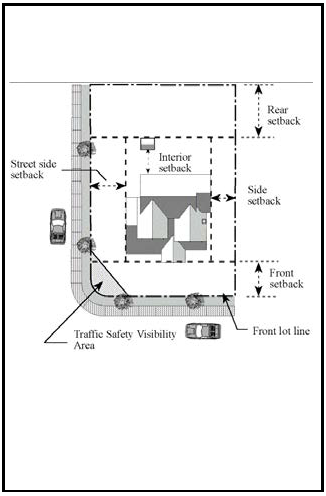
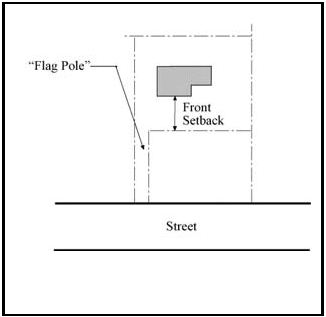
Shopping Center. A unified, primarily retail, commercial development occupied by a group of two or more separate businesses occupying substantially separate divisions of a building or buildings fronting on a privately-owned common mall or parking lot rather than a public street.
Sign. A structure, device, figure, display, message placard, or other contrivance, or any part thereof, situated outdoors or indoors, which is designed, constructed, intended, or used to advertise, or to provide information in the nature of advertising, to direct or attract attention to an object, person, institution, business, product, service, event, or location by any means, including words, letters, figures, designs, symbols, fixtures, colors, illumination, or projected images. Does not include murals, paintings and other works of art that are not intended to advertise or identify any business or product. Types of signs include the following.
1.
Abandoned Sign. A sign that no longer advertises a business, lessor, owner, product, service or activity on the premises where the sign is displayed.
2.
Animated or Moving Sign. A sign which uses movement, lighting, or special materials to depict action or create a special effect to imitate movement.
3.
Awning Sign. A sign copy or logo attached to or painted on an awning.
4.
Banner, Flag, or Pennant. Cloth, bunting, plastic, paper, or similar non-rigid material used for advertising purposes attached to a structure, staff, pole, line, framing, or vehicle, not including official flags of the United States, the State of California, and other states of the nation, counties, municipalities, official flags of foreign nations and nationally or internationally recognized organizations.
5.
Bench Sign. Copy painted on a portion of a bench.
6.
Business Identification Sign. A sign which serves to identify only the name, address, and lawful use of the premises upon which it is located and provides no other advertisements or product identification.
7.
Cabinet Sign (Can Sign). A sign which contains all the text and/or logo symbols within a single enclosed cabinet and may or may not be internally illuminated.
8.
Changeable Copy Sign. A sign designed to allow the changing of copy through manual, mechanical, or electrical means including time and temperature.
9.
Civic Event Sign. A temporary sign, other than a commercial sign, posted to advertise a civic event sponsored by a public agency, school, church, civic-fraternal organization, or similar noncommercial organization.
10.
Contractor or Construction Sign. A sign which states the name of the developer and contractor(s) working on the site and related engineering, architectural or financial firms involved with the project.
11.
Directional Sign. An on-site sign which is designed and erected solely for the purposes of directing vehicular and/or pedestrian traffic within a project.
12.
Directory Sign. A sign for listing the tenants and their suite numbers of a multiple tenant structure or center.
13.
Double-Faced Sign. A sign constructed to display its message on the outer surfaces of two identical and/or opposite parallel planes.
14.
Electronic Reader Board Sign. A sign with a fixed or changing display composed of a series of lights, but not including time and temperature displays.
15.
Flashing Sign. A sign that contains an intermittent or sequential flashing light source.
16.
Future Tenant Identification Sign. A temporary sign that identifies the names of future businesses that will occupy a site or structure.
17.
Garage Sale Sign. A sign with a message advertising the resale of personal property that has been used by the resident.
18.
Grand Opening. A promotional activity not exceeding 30 calendar days used by newly established businesses, within two months after initial occupancy, to inform the public of their location and services available to the community. "Grand Opening" does not mean an annual or occasional promotion of retail sales by a business.
19.
Ground Mounted Sign. A sign fixed in an upright position on the ground not attached to a structure other than a framework, pole or device, erected primarily to support the sign. Includes monument signs and pole signs.
20.
Holiday Decoration Sign. Temporary seasonal signs, in the nature of decorations, clearly incidental to and customarily associated with nationally recognized holidays and which contain no advertising message.
21.
Illegal Sign. An illegal sign is any sign:
a.
Erected without first complying with all regulations in effect at the time of its construction or use;
b.
That was legally erected, but whose use has ceased, the structure upon which the display is placed has been abandoned by its owner, or the sign is not being used to identify or advertise an ongoing business for a period of not less than 90 days;
c.
That was legally erected which later became nonconforming as a result of the adoption of an ordinance, the amortization period for the display provided by the ordinance rending the display conforming has expired, and conformance has not been accomplished;
d.
That was legally erected which later became nonconforming and then was damaged to the extent of 50 percent or more of its current replacement value;
e.
That is a danger to the public or is unsafe;
f.
Which is a traffic hazard not created by relocation of streets or highways or by acts of the Town; or
g.
That pertains to a specific event, and five days have elapsed since the occurrence of the event.
22.
Indirectly Illuminated Sign. A sign whose light source is external to the sign and which casts its light onto the sign from some distance.
23.
Internally Illuminated Sign. A sign whose light source is located in the interior of the sign so that the rays go through the face of the sign, or light source which is attached to the face of the sign and is perceived as a design element of the sign.
24.
Marquee (Canopy) Sign. A sign which is attached to or otherwise made a part of a permanent roof-like structure which projects beyond the building wall in the form of a large canopy to provide protection from the weather.
25.
Monument Sign. An independent, freestanding structure supported on the ground having a solid base as opposed to being supported by poles or open braces.
26.
Multi-Tenant Sign. An identification sign for a commercial site with multiple tenants, displaying the names of each tenant on the site.
27.
Nonconforming Sign. An advertising structure or sign which was lawfully erected and maintained prior to the adoption of this Development Code, but does not now completely comply with current regulations.
28.
Obscene Sign. Signage when taken as a whole, which to the average person applying contemporary statewide standards, appeals to prurient interest and as a while depicts or describes in a patently offensive way sexual conduct which lacks serious literary, artistic, political or scientific value.
29.
Off-site Directional Sign. A sign identifying a publicly owned facility, emergency facility, or a temporary subdivision sign, but excluding real estate signs.
30.
Off-site Sign. A sign identifying a use, facility, service, or product which is not located, sold, or manufactured on the same premise as the sign or which identifies a use, service, or product by a brand name which, although sold or manufactured on the premise, does not constitute the principal item for sale or manufactured on the premise.
31.
Permanent Sign. A sign constructed of durable materials and intended to exist for the duration of time that the use or occupant is located on the premises.
32.
Political Sign. A sign designed for the purpose of advertising support of or opposition to a candidate or proposition for a public election.
33.
Pole/Pylon Sign. An elevated freestanding sign, typically supported by one or two poles or columns.
34.
Portable Sign. A sign that is not permanently affixed to a structure or the ground.
35.
Projecting Sign. A sign other than a wall sign suspending from, or supported by, a structure and projecting outward.
36.
Promotional Sign. A sign erected on a temporary basis to promote the sale of new products, new management, new hours of operation, a new service, or to promote a special sale.
37.
Real Estate Sign. A sign indicating that a property or any portion thereof is available for inspection, sale, lease, rent, or directing people to a property, but not including temporary subdivision signs.
38.
Roof Sign. A sign constructed upon or over a roof, or placed so as to extend above the edge of the roof.
39.
Special Event Sign/Banner. A temporary sign or banner that is intended to inform the public of a unique happening, action, purpose, or occasion (i.e., grand opening or community event).
40.
Temporary Sign. A sign intended to be displayed for a limited period of time and capable of being viewed from a public right-of-way, parking area or neighboring property.
41.
Under Marquee Sign. A sign suspended from a marquee or canopy.
42.
Vehicle Sign. A sign which is attached to or painted on a vehicle which is parked on or adjacent to any property, the principal purpose of which is to attract attention to a product sold or business located on the property.
43.
Wall Sign. A sign which is attached to or painted on the exterior wall of a structure with the display surface of the sign approximately parallel to the building wall.
44.
Window Sign. A sign posted, painted, placed, or affixed in or on a window exposed to public view. An interior sign which faces a window exposed to public view and is located within three feet of the window.
Sign Area. The entire area within a perimeter defined by a continuous line composed of right angles using no more than four lines which enclose the extreme limits of lettering, logo, trademark, or other graphic representation.
Sign Height. The vertical distance from the uppermost point used in measuring the area of a sign to the average grade immediately below the sign, including its base or the top of the nearest curb of the street on which the sign fronts, whichever measurement is the greatest.
Single-Family Dwelling. A building designed for and/or occupied exclusively by one family. Also includes factory-built, modular housing units, constructed in compliance with the Uniform Building Code (UBC), and mobile homes/manufactured housing on permanent foundations. May include the rental of rooms within a dwelling also occupied by the property owner or a primary tenant.
Single-Room Occupancy (SRO) Facility. A multi-family residential building that contains at least two single-room occupancy units, common (vs. private) gathering or open space areas, laundry facilities, a management office, and ancillary facilities necessary to maintain an SRO facility. Sanitation facilities and cooking and eating facilities shall also be provided if each SRO unit does not contain full sanitation and cooking and eating facilities.
Single-Room Occupancy (SRO) Dwelling Unit. A residential dwelling unit located in an SRO Facility that has a minimum floor area of 150 square feet and a maximum floor area of 400 square feet. Each SRO dwelling unit shall contain a closet, and a partial or full bathroom sanitation facility. A partial bathroom shall have at least a toilet and a sink; a full facility shall have a toilet, sink, and bathtub, shower, or bathtub/shower combination. A partial or full kitchen facility may be contained in each unit. An SRO dwelling unit shall accommodate a maximum of two persons.
Site. A parcel or adjoining parcels under single ownership or single control, considered a unit for the purposes of development or other use.
Site Coverage. The percentage of total site area occupied by structures. Structure/building coverage includes the primary structure, all accessory structures (e.g., carports, garages, patio covers, storage sheds, trash dumpster enclosures, etc.) and architectural features (e.g., chimneys, balconies, decks 18" above grade, porches, and stairs, etc.). Structure/building coverage is measured from exterior wall to exterior wall. See Figure 6-6 (Site Coverage).
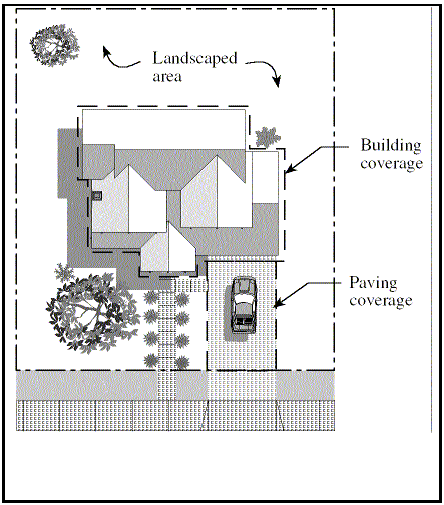
Skilled Nursing Facility (SNF). Also known as convalescent hospitals or nursing homes, these are facilities licensed by the California State Department of Health Services. These facilities house one or more individuals in a single room with a half-bath and provide intensive medical and nursing care, including 24-hour availability of licensed nursing personnel. Residents are often convalescing from serious illness or surgery and require continuous observation and medical supervision, or will reside in the facility as a long-term resident. Does not include residential care facilities.
Slope. See "Average Slope."
Small Family Day Care Homes. See "Child Day Care Facilities."
Stealth Facility. A communications facility that is designed to blend into the surrounding environment, typically one that is architecturally integrated into a structure. Also referred to as concealed antenna.
Storage - Indoor. The storage of various materials entirely within a structure, as the primary use of the structure. Includes personal storage facilities (mini-storage), which are structures containing generally small, individual, compartmentalized stalls or lockers rented as individual storage spaces and characterized by low parking demand. The storage of materials accessory and incidental to a primary use is not considered a land use separate from the primary use.
Storage - Outdoor. The storage of various materials outside of a structure other than fencing, either as an accessory or principal use.
Story. That portion of a building included between the surface of any floor and the surface of the next floor above it or if there is not floor above it, then the space between the floor and the ceiling next above it, as measured from any point on finished grade.
Stream Bank. The land at the edge of the stream bed.
Stream Bed. The bottom surface of a stream or watercourse up to the ordinary high water line.
Stream Management Plan (SMP). A comprehensive plan for the long-term preservation, protection, enhancement, restoration and maintenance of the stream protection zone. The plan may require revegetation, removal of exotic, invasive vegetation, flood improvements, stream bank and stream bed stabilization, erosion control, urban runoff controls, public access, recreation, and aesthetic improvements. The plan shall define responsibility, management practices and funding mechanism for long-term maintenance and management of the stream and adjacent riparian and buffer zones. The Stream Protection and Management Plan must address the need for flood management, water quality and erosion control measures, management of in-stream and riparian vegetation to maintain hydraulic capacity, prevent fire hazards; and may include maintenance of trails, pathways, and maintenance roads.
Stream Protection Zone. A strip of land, which includes the stream bed, stream banks, all riparian vegetation and an upland buffer area extending a minimum of 50-feet from the top of bank or greater as defined by site specific studies.
Street. A public thoroughfare accepted by the City, which affords principal means of access to abutting property, including avenue, place, way, drive, lane, boulevard, road, and any other thoroughfare except an alley, highway, or freeway (i.e., Hwy. 37 & US 101), as defined in this Subsection.
Street Line. The boundary between a street right-of-way and property.
Structural Measures. With respect to flood protection, the construction of walls, dikes, channels, pumps, culverts, basins, or other devices or structures to transport of hold flood waters or to protect property from the effects of flooding.
Structure. Anything constructed or erected, the use of which requires attachment to the ground or attachment to something located on the ground. For the purposes of this Zoning Ordinance, the term "structure" includes "buildings."
Structure, Primary. See "Primary Structure."
Studios for Art, Dance, Music, Photography, Etc. Small scale facilities, typically accommodating one group of students at a time, in no more than one instructional space. Larger facilities are included under the definition of "Schools - Specialized education and training." These include facilities for: individual and group instruction and training in the arts; production rehearsal; photography, and the processing of photographs produced only by users of the studio facilities; martial arts training studios; gymnastics instruction, and aerobics and gymnastics studios with no other fitness facilities or equipment.
Subdivision. The division, by any subdivider, of any unit or portion of land shown on the latest equalized Marin County assessment roll as a unit or contiguous units, for the purpose of sale, lease or financing, whether immediate or future. Property shall be considered as contiguous units, even if it is separated by roads, streets, utility easement or railroad rights-of-way. Subdivision includes the following, as defined in Civil Code Section 1315: a condominium project; a community apartment project; or the conversion of five or more existing dwelling units to a stock cooperative.
Subdivision Map Act, or Map Act. Division 2, Title 7 of the California Government Code, commencing with Section 66410 as presently constituted, and any amendments to those provisions.
Supportive Housing. Shall have the same meaning as set forth in Section 65582(g) of California Government Code or Section 65650 of California Government Code.
T.
Definitions, "T."
Tandem Parking. See Section 19.34.030.
Tattoo Parlor. Any business establishment specializing in the application of tattoos, body piercing, or any other form of skin art applied to human beings, including the sale of accessories and products associated with the aforementioned activities.
Temporary Structure. A structure without any foundation or footings, and which is removed when the designated time period, activity, or use for which the temporary structure was erected has ceased.
Temporary Use. A use of land that is designed, operated and occupies a site for a limited period of time, typically less than 12 months.
Theaters and Auditoriums. Indoor facilities for public assembly and group entertainment, other than sporting events, including:
civic theaters, and facilities for "live" theater and concerts
exhibition and convention halls
motion picture theaters
public and semi-public auditoriums
similar public assembly uses
Does not include outdoor theaters, concert and similar entertainment facilities, and indoor and outdoor facilities for sporting events; see "Sport Facilities and Outdoor Public Assembly."
Tobacco Paraphernalia. Cigarette papers or wrappers, pipes, holders of smoking materials of all types, cigarette rolling machines, and any other item designed for the smoking, use or ingestion of tobacco products.
Tobacco Products. Any substance containing tobacco leaf, including but not limited to cigarettes, cigars, pipe tobacco, snuff, chewing tobacco, and smokeless tobacco.
Tobacco Product Shops. A business that either devotes 20 percent or more of floor area or display area to, or derives 75 percent or more gross sales receipts from, the sale or exchange of tobacco products and/or tobacco paraphernalia.
Transitional Housing. Transitional Housing has the same meaning as defined in Section 65582 of the California Government Code.
Travel Agency. An establishment providing direct services to consumers in making travel arrangements, including the booking of airline tickets, tours and hotel rooms. A travel agency may offer check cashing services as an accessory use (see the separate definition of "Check Cashing Service" and "Accessory Use").
Treatment Wetlands. Wetlands designed to process gray water, effluents and/or other human byproducts.
Truck and Freight Terminals. This land use consists of transportation establishments furnishing services incidental to air, motor freight, and rail transportation including:
freight forwarding services
freight terminal facilities
joint terminal and service facilities
packing, crating, inspection and weighing services
postal service bulk mailing distribution centers
transportation arrangement services
trucking facilities, including transfer and storage
Two-Family Dwellings. Duplexes and other free-standing structures designed and constructed to contain two independent dwelling units.
U.
Definitions, "U."
Unit. See "Housing Unit."
Unit within a Residential Care Facility for the Elderly. Floor space comprised of a living and sleeping room or rooms, storage closets and bathing and toilet facilities.
Upholstering Shop. An establishment engaged in the craft of upholstering, including the repair and replacement of furniture and auto seat coverings.
Urban Lot Split. See Section 9-5.023 of Chapter IX (Land Subdivision).
Use. The purpose for which land or a structure is designed, arranged, intended, occupied, or maintained.
Use, Primary. See "Primary Use."
Utility Facilities. Fixed-base structures and facilities serving as junction points for transferring utility services from one transmission voltage to another or to local distribution and service voltages. These uses include any of the following facilities that are not exempted from land use permit requirements by Government Code Section 53091:
corporation and maintenance yards
electrical substations and switching stations
natural gas regulating and distribution facilities
public water system wells, treatment plants and storage
telephone switching facilities
wastewater treatment plants, settling ponds and disposal fields
These uses do not include office or customer service centers (classified in "Offices"), or equipment and material storage yards.
Utility Infrastructure. Pipelines for water, natural gas, and sewage collection and disposal; and facilities for the transmission of electrical energy for sale, including transmission lines for a public utility company. Also includes telephone, telegraph, cable television and other communications transmission facilities utilizing direct physical conduits. Does not include offices or service centers (see "Offices"), or distribution substations (see "Utility Facilities").
V.
Definitions, "V."
Variance. A discretionary entitlement that may waive or relax the development standards of this Zoning Ordinance, in compliance with 19.42.070 (Variances).
Vehicle Storage. Service establishments in the business of storing operative and/or inoperative cars, trucks, buses, recreational vehicles, and other motor vehicles. Includes tow yards, RV, and boat storage as well as fleet parking or similar uses associated with otherwise permitted uses in the underlying zoning district.
Very Low and Low Income Levels. Those determined periodically for Marin County by the U.S. Department of Housing and Urban Development based on the San Francisco Primary Metropolitan Statistical Area (PMSA) median income levels by household size as published by the Marin County Housing Authority:
1.
Low Income - 50 to 80 percent of the PMSA median without supplementation; and
2.
Very Low Income - Under 50 percent of the PMSA median without supplementation.
Veterinary Clinics, Animal Hospitals, Kennels. Office and indoor medical treatment facilities used by veterinarians, including large and small animal veterinary clinics, and animal hospitals. Kennels and boarding operations are commercial facilities for the keeping, boarding or maintaining of four or more dogs four months of age or older, or four or more cats, except for dogs or cats in pet shops.
Voluntary. Resulting from free will.
W.
Definitions, "W."
Warehouse Retail. Retail stores that emphasize the packaging and sale of products in large quantities or volumes, some at discounted prices, where products are typically displayed in their original shipping containers. Sites and buildings are usually large and industrial in character. Patrons may be required to pay membership fees.
Warehouses, Wholesaling and Distribution. These facilities include:
1.
Warehouses. Facilities for the storage of furniture, household goods, or other commercial goods of any nature. Includes cold storage. Does not include: warehouse, storage or mini-storage facilities offered for rent or lease to the general public (see "Storage, Personal Storage Facilities"); warehouse facilities in which the primary purpose of storage is for wholesaling and distribution (see "Wholesaling and Distribution"); or terminal facilities for handling freight (see "Vehicle and Freight Terminals").
2.
Wholesaling and Distribution. Establishments engaged in selling merchandise to retailers; to industrial, commercial, institutional, farm, or professional business users; or to other wholesalers; or acting as agents or brokers in buying merchandise for or selling merchandise to such persons or companies. Includes such establishments as:
agents, merchandise or commodity brokers, and commission merchants
assemblers, buyers and associations engaged in the cooperative marketing of farm products
merchant wholesalers
stores primarily selling electrical, plumbing, heating and air conditioning supplies and equipment.
Wetlands Buffer. The required setback area surrounding the edge of the wetland intended to protect the habitat and resource value of the wetland and the watershed area needed to support the wetland.
Wetland Delineation. The U.S. Army Corps of Engineers (ACE) determination of the extent of a wetlands that fall under federal jurisdiction in accordance with the Clean Water Act.
Wetlands Management Plan. A plan prepared by a qualified wetlands expert setting forth the requirements for development within or near a wetlands.
Wireless Communication Facility. Public, commercial and private electromagnetic and photoelectrical transmission, broadcast, repeater and receiving stations for radio, television, telegraph, telephone, data network, and wireless communications, including commercial stations for satellite-based communications. Includes antennas, commercial satellite dish antennas, and equipment buildings. Does not include telephone, telegraph and cable television transmission facilities utilizing hard-wired or direct cable connections (see "utility infrastructure").
X.
Definitions, "X."
No specialized terms beginning with the letter "X" are used at this time.
Y.
Definitions, "Y."
Yard. An area between a lot line and the nearest line of the required setback for the main building, unobstructed and unoccupied from the ground upward, except for projections permitted by this Zoning Ordinance. See Section 19.20.100 (Setback Measurement and Exceptions) and Figure 6-4 (Setbacks).
1.
Front Yard. An area extending the full width of a lot between the side property lines and lying between the front property line of a lot and the line delineating the required front setback for the main building.
2.
Rear Yard. An area extending the full width of a lot between the side property lines and lying between the rear property line and the line delineating the required rear setback for the main building. In cases where an access easement extends through a rear yard, the rear yard setback shall be measured from the edge of the access easement closest to the center of the property.
3.
Side Yard. An area extending from the front yard setback to the rear yard setback line between the side property line delineating the required setback for the main building. In cases where an access easement extends through a side yard, the required side yard setback shall be measured from the edge of the access easement closest to the center of the property.
Z.
Definitions, "Z."
Zero Lot Line. The location of a building on a lot in a manner that one or more building edges rest directly on a lot line.
Zoning Clearance. A ministerial issued by the Department prior to issuance of any building permit to ensure that the proposed use and/or construction complies with all of the provisions of this Zoning Ordinance.
Zoning District. Any of the residential, commercial, public, or overlay districts established by Article 2 of this Zoning Ordinance (Zoning Districts, Allowable Land Uses, and Zone-Specific Standards), within which certain land uses are allowed or prohibited, and certain site planning and development standards are established (e.g., setbacks, height limits, site coverage requirements, etc.).
Zoning Ordinance. The Novato Zoning Ordinance, Chapter 19 of the Novato Municipal Code, referred to herein as "this Zoning Ordinance."
(Ord. No. 1576, § 2 (Exh. A, amd.), 10-23-2012; Ord. No. 1587, § 10(Exh. J), 12-3-2013; Ord. No. 1592, §§ 3—5(Exh. A), 4-15-2014; Ord. No. 1595, § 2(Exh. A), 12-16-2014; Ord. No. 1611, §§ 8—10, 11-29-2016; Ord. No. 1637, § 3(Exh. A), 2-27-2018; Ord. No. 1643, § 4, 10-9-2018; Ord. No. 1656, § V, 11-12-2019; Ord. No. 1676, Exh. A, 3-8-2022; Ord. No. 1693, § 4(Exh. A), 11-15-2022; Ord. No. 1715, Exh. A, 4-19-2024; Ord. No. 1718, § 3(Exhs. B—D), 9-10-2024; Ord. No. 1723, § 3(Exhs. A, B), 3-25-2025; Ord. No. 1725, § 5(Exh. A), 7-22-2025)

