
Okeechobee City Zoning Code
ARTICLE IV
- SUPPLEMENTARY DISTRICT REGULATIONS
DIVISION 2. - PARKING AND LOADING REQUIREMENTS[8]
Cross reference— Parking, stopping and standing, § 54-41 et seq.
DIVISION 3. - OFF-STREET PARKING AND LOADING[9]
Cross reference— Parking, stopping and standing, § 54-41 et seq.
DIVISION 5. - SIGNS[10]
Editor's note— Ord. No. 994, § 1, adopted Apr. 21, 2009, repealed the former Art. IV, Div. 5, §§ 90-561—90-573, and enacted a new Art. IV, Div. 5 as set out herein. The former Art. IV, Div. 5 pertained to similar subject matter. See the Code Comparative Table for complete derivation.
DIVISION 6. - COMMUNICATION TOWERS AND COMMUNICATION ANTENNAS[11]
Cross reference— Utilities, ch. 58.
DIVISION 9. - SPECIAL EXCEPTION AND SUPPLEMENTAL USE REGULATIONS[12]
Editor's note— Ord. No. 1079, § 13, adopted Jan. 17, 2012, amended Art. IV, Div. 9 title to read as herein set out. Former Art. IV, Div. 9 title pertained to special exception use regulations.
Sec. 90-441.- Application of article provisions.
The supplementary regulations of this article shall apply to permitted and special exception uses in all zoning districts, unless otherwise noted.
(LDR 1998, § 600)
Sec. 90-442. - Conflict of article with other applicable regulations.
Where conflicts exist between regulations, the more stringent regulation, standard or requirement shall apply.
(LDR 1998, § 601)
Sec. 90-443. - Calculation of building coverage.
In determining the percentage of building coverage of a lot, principal buildings, roofed porches, garages, carports, swimming pool, solid decks, and other accessory buildings shall be included. Vehicular driveways and pedestrian paths are not included in the coverage.
(LDR 1998, § 602)
Sec. 90-444. - Measurement between uses.
When minimum distances are required to be maintained between uses, the distance shall be measured by a straight line between nearest lot property lines.
(LDR 1998, § 603)
Sec. 90-445. - Minimum street frontage.
Single-family residential lots shall have at least 40 feet frontage on a street, unless otherwise approved under the planned unit development district regulations.
(LDR 1998, § 604)
Sec. 90-446. - Required area or yards.
No space necessary under the regulations of this article to satisfy area, yard or other space requirements to relation to a building or use shall be counted as part of the required open space in relation to another lot or building.
(LDR 1998, § 605)
Sec. 90-447. - Yards on corner lots.
Any yard adjoining a street shall be considered a front yard. That yard upon which the property is addressed is required to comply with the minimum depth requirements of the regulations of this article. All other front yards shall be not less than 75 percent of the required minimum depth.
(LDR 1998, § 606; Ord. No. 1170, § 9, 10-2-2018)
Sec. 90-448. - Obstructions in required yard.
A required yard shall be open from ground to sky unobstructed, except for the following:
(1)
Ground structures, not exceeding two feet high above the adjacent grade level.
(2)
Building overhang, eaves, cornice, gutter, sill, screen, chimney, fire escape, not exceeding two feet projecting into the required yard.
(3)
Play equipment, mailbox, lighting fixture, entry gate, boundary wall and fence.
(4)
Landscape features including fountain, steps, seating, and horticultural growth.
(LDR 1998, § 607)
Sec. 90-449. - Yards required for accessory uses in residential districts.
Residential accessory uses shall comply with the following minimum yard requirements:
(1)
Front, side and rear yards: as required for principal structure.
(2)
Uses housing persons, such as a guesthouse, shall not encroach into any required yard.
(LDR 1998, § 608)
Sec. 90-450. - More than one principal building on a lot.
More than one principal structure may be erected on a lot, provided that surveyed legal descriptions shall be used, and area, yard and all other zoning regulations shall be met for each structure as though they were on separate lots. Except for detached single-family housing, all other development is subject to site plan approval.
(LDR 1998, § 609)
Sec. 90-451. - Building setbacks from water bodies.
Notwithstanding any other provision of the regulations of this article, lots with yards abutting any required water retention lake, any required drainage canal, or other water body over 50 feet wide, shall maintain an unobstructed easement 20 feet wide; except that in residential zoning districts, the rear setback may be reduced to zero to accommodate a boathouse or similar structure that is adjacent to or extends beyond the rear property line.
(LDR 1998, § 610)
Sec. 90-452. - Swimming pool.
(a)
As an accessory use to a residential use. Pools shall be surrounded by a wall, fence or other barrier safety enclosure at least five feet high. Doors and gates in the exterior enclosure shall have a self-locking fastener installed at least five feet above the ground level.
(b)
As a principal commercial or recreation use. Pools shall comply with applicable district requirements. Pools shall be surrounded by a wall, fence or other barrier safety enclosure at least six feet high, constructed to prevent normal unauthorized access to the pool.
(LDR 1998, § 611)
Sec. 90-453. - Exclusions from height limits.
In any nonresidential district, the height limitations do not apply to spires, belfries, cupolas, water tanks, ventilators, chimneys or other appurtenances; provided, however, that they shall not exceed Federal Aviation Administration height limitations.
(LDR 1998, § 612)
Sec. 90-454. - Outdoor storage uses in nonresidential districts.
Outdoor storage uses permitted in nonresidential districts, comprising goods and materials, shall be screened from adjacent residential zoning districts by a fence or landscaping at least five feet high. Goods and materials shall not be stored in required yards.
(LDR 1998, § 613)
Sec. 90-455. - Hurricane shelter.
Mobile home parks and mobile home subdivisions shall provide a hurricane shelter for residents and their guests.
(LDR 1998, § 614)
Sec. 90-481.- Generally.
Off-street parking and loading facilities shall be indicated on a site plan and provided in accord with the regulations of this division.
(LDR 1998, § 450)
Sec. 90-482. - Computation of required off-street parking and loading spaces.
Computation of required off-street parking and loading spaces shall be as follows:
(1)
Computation of parking spaces shall be rounded up or down to the nearest whole number.
(2)
Computation of parking spaces based on floor area requirements shall be gross floor area.
(3)
Computation of parking spaces in places of public assembly shall be based on the maximum occupancy rating given the building by the fire marshal.
(4)
Computation of parking spaces based on number of employees shall be at the maximum work shift.
(5)
Spaces for the handicapped are included in the computations of total parking spaces.
(6)
Parking spaces for two or more businesses may be combined, provided that the total number or spaces shall not be less than the sum of required spaces computed separately. Where it can be demonstrated that the need for parking spaces from specific uses do not overlap in time, the number of spaces may be reduced by the number required by the lesser use.
(7)
Loading spaces for two or more businesses may be combined, provided that the total number of loading spaces shall not be less than the sum of required spaces computed separately.
(8)
When a building or use is changed, or enlarged in floor area, the off-street parking and loading spaces as required in this division shall be provided for those changed or enlarged uses.
(LDR 1998, § 451)
Sec. 90-483. - Modification of parking and loading space requirements.
Parking reduction requests to provide less parking and/or loading spaces than is required by sections 90-512 and 90-513 may be submitted, reviewed, and approved by the technical review committee as follows:
(1)
Applicants that submit site plans for review by the technical review committee may request approval of parking reduction concurrently with site plan approval. No additional application or application fees are required if the request is submitted for consideration in conjunction with the site plan submittal package.
(2)
For owners of existing developments where a proposed change of use would require more parking than is currently present on site, a parking reduction request application may be submitted for consideration by the technical review committee. Please see parking reduction application in Appendix A and the associated fee in Appendix C.
(3)
Applicants that submit PUD-M and PUD-R petitions may request approval of parking reduction concurrently with PUD approval. No additional application or application fees are required if the request is submitted for consideration in conjunction with the PUD petition package.
(4)
Applicants shall demonstrate that the parking reduction request is appropriate, justified and in the public interest through one or several of the following. At the discretion of the administrator, a parking study may be specifically required.
a.
Submittal of a parking study demonstrating that the proposed use or combination of uses will have a peak parking demand less than the requirements of sections 90-512 and/or 90-513.
b.
The location, design and proposed uses of the site provide for and encourage exceptional pedestrian and bicycle access.
c.
The site will contain multiple uses with opportunities for internal capture and shared use of parking facilities, and the hours of peak demand for two or more of the proposed uses do not normally overlap.
d.
Public street parking is located adjacent to the site.
e.
Drive through service is available and adequate space for stacking of vehicles is provided. Designated stacking lanes shall be designed to minimize congestion associated with internal circulation as well as site ingress and egress.
f.
The subject property and/or building is in an historic district or is of historic interest.
(5)
In the CBD zoning district, the number of parking spaces shall not be reduced by more than 80 percent.
(6)
In the RSF-1, RSF-2, RMH, RMF, CPO, CLT and CHV zoning districts the number of parking spaces shall not be reduced by more than 20 percent.
(7)
In PUB and IND zoning districts, the number of parking spaces shall not be reduced by more than 50 percent.
(8)
No parking reductions shall be approved for single family residences, mobile homes, or duplexes.
(LDR 1998, § 452; Ord. No. 815, § 1, 2-4-2003; Ord. No. 1223, § 2, 5-18-2021)
Sec. 90-484. - Reduction of paved parking space requirements.
(a)
The number of paved spaces may be reduced through the parking reduction request process as provided in section 90-483, upon demonstration by the applicant that the proposed use normally would have a demand for the total required parking spaces only on one or two days a week.
(b)
Paved parking spaces shall not be reduced by more than 75 percent.
(LDR 1998, § 453; Ord. No. 1223, § 2, 5-18-2021)
Sec. 90-485. - Reserved.
Editor's note— Ord. No. 1223, § 2, adopted May 18, 2021, repealed § 90-485, which pertained to reduction of parking space requirements in commercial districts, and derived from LDR 1998, § 454; and Ord. No. 815, § 1, 2-4-2003.
Sec. 90-511.- Design standards.
(a)
Parking and loading space location.
(1)
Except as provided in this section, required off-street parking and loading spaces shall be located on the same parcel as the primary use.
(2)
The city council may approve off-site parking facilities if the technical review committee finds that the location of the off-site facility will adequately serve the use for which it is intended, and if the applicant submits a written agreement to the city ensuring the continued availability of the off-site facility for parking use.
(b)
Parking space size. The minimum parking space shall be nine feet wide by 20 feet long; handicapped shall be as defined by state handicap code accessibility.
(c)
Loading space size. The minimum loading space shall be ten feet wide by 30 feet long, with 14 feet vertical clearance.
(d)
Parking access driveway width.
(1)
The single-family residence minimum driveway width shall be at least eight feet.
(2)
For all other uses, the minimum driveway width shall be:
a.
Parking spaces between 75 degrees and 90 degrees angles to the driveway, 24 feet.
b.
Parking spaces angled from 60 degrees up to but not including 75 degrees to the driveway, 20 feet.
c.
Parking spaces any other angle to the driveway 16 feet.
(e)
Parking and loading space layout.
(1)
Except for single-family dwellings and places of public assembly or worship, each parking and loading space shall be paved.
(2)
Except for single-family dwellings, each parking or loading space shall open directly onto a driveway that is not a public street, and each parking space shall be designed to permit access without moving another vehicle.
(3)
Buildings, parking and loading areas, landscaping and open spaces shall be designed so that pedestrians moving between parking areas and buildings are not unreasonably exposed to vehicular traffic hazards.
(4)
Paved pedestrian walks shall be provided along the lines of the most intense use, particularly between building entrances to streets, parking areas, and adjacent buildings.
(5)
Loading facilities shall be identified as to purpose and location when not clearly evident.
(6)
For new construction, no parking space accessed via a driveway from a public road shall be located closer than 20 feet from the right-of-way line of said public road.
(LDR 1998, § 460; Ord. No. 1010, § 2, 2-19-2008; Ord. No. 1079, § 9, 1-17-2012)
_____
Sec. 90-512. - Space regulations.
Off-street parking spaces are required as follows:
(LDR 1998, § 470; Ord. No. 815, § 1, 2-4-2003; Ord. No. 962, § 2, 12-5-2006; Ord. No. 1070, § 4, 1-18-2011; Ord. No. 1079, § 10, 1-17-2012; Ord. No. 1130, § 8, 1-19-2016; Ord. No. 1170, § 10, 10-2-2018; Ord. No. 1204, § 2, 2-4-2020)
Sec. 90-513. - Off-street loading space requirement regulations.
Off-street loading spaces are required as follows:
(LDR 1998, § 480)
_____
Sec. 90-531.- Generally.
Landscaping and landscape buffers shall be indicated on a site plan and provided in accord with the regulations of this division.
(LDR 1998, § 500)
Sec. 90-532. - Required landscaping.
Following are requirements for the planting of trees and shrubs associated with development undertaken throughout the city. Landscaping material required under this section may be used to satisfy the requirements for landscaping in parking and vehicular use areas (section 90-533) and in landscape buffer areas (section 90-534).
(LDR 1998, § 501; Ord. No. 1010, § 3, 2-19-2008)
Sec. 90-533. - Landscaping requirements for parking and vehicular use areas.
Except for those associated with an individual single-family or duplex structure, all vehicular use areas containing eight or more parking spaces, or containing an area greater than 2,400 square feet, shall provide perimeter and interior landscaping as follows:
(1)
At least 18 square feet of landscaped area for each required parking space.
(2)
At least one tree for each 72 square feet of required landscaped area.
(3)
Shade trees shall be planted at no more than 20 feet on centers
(4)
A minimum two feet of landscaping shall be required between vehicular use areas and on-site buildings and structures, except at points of ingress and egress.
(5)
The minimum dimension for any required landscaped area within a parking or vehicular use area shall be four feet except for that adjacent to on-site buildings and structures.
(6)
A landscaped island, minimum five feet by 15 feet and containing at least one tree, shall be required for every ten parking spaces with a maximum of 12 uninterrupted parking spaces in a row.
(7)
The remainder of a parking landscape area shall be landscaped with grass, ground cover, or other landscape material.
(LDR 1998, § 502; Ord. No. 1010, § 4, 2-19-2008)
Sec. 90-534. - Required residential and nonresidential buffer areas.
For all development undertaken throughout the city, except for construction of an individual single-family or duplex structure, landscaped buffer areas shall be required within required setbacks and landscaped as follows:
(1)
Minimum width of buffer along street frontage shall be ten feet and on other property lines, two feet.
(2)
At least one tree and three shrubs for each 300 square feet of required landscaped buffer.
(3)
Trees may be planted in clusters, but shall not exceed 50 feet on centers abutting the street.
(4)
The remainder of a landscape buffer shall be landscaped with grass, ground cover, or other landscape material.
(LDR 1998, § 503; Ord. No. 1010, § 4, 2-19-2008; Ord. No. 1079, § 11, 1-17-2012)
Editor's note— Ord. No. 1079, § 11, adopted Jan. 17, 2012, amended § 90-534 title to read as herein set out. Former § 90-534 title pertained to required landscaped buffer areas.
Sec. 90-535. - Reserved.
Editor's note— Ord. No. 1079, § 11, adopted Jan. 17, 2012, repealed former § 90-535, and enacted a new § 90-535 as set out herein. Former § 90-535 pertained to nonresidential buffer regulations and derived from LDR 1998, § 504.
Sec. 90-536. - Planting in dry retention areas.
Slopes of dry retention areas may be used to satisfy landscape requirements, provided that the landscape materials used are not adversely susceptible to periodic inundation.
(LDR 1998, § 505)
Sec. 90-537. - Protection of native vegetative communities and wetlands.
(a)
Native vegetative communities shall be protected from adverse impacts of development.
(b)
Wetland buffers shall be at least 25 feet wide and shall be supplemented only with native trees, shrubs and ground cover.
(LDR 1998, § 506)
Sec. 90-538. - Landscape design and plan.
(a)
Proposed development, vehicular and pedestrian circulation systems, and site drainage shall be integrated into the landscaping plan.
(b)
Existing native vegetation shall be preserved where feasible, and may be used in calculations to meet these landscaping requirements.
(c)
When more than ten trees are required to be planted, two or more species shall be used.
(d)
Trees and shrubs shall not be planted in a location where at their maturity they would interfere with utility services.
(e)
Trees should maximize the shading of pedestrian walks and parking spaces.
(f)
Landscaping ground covers should be used to aid soil stabilization and prevent erosion.
(g)
Landscaping shall be protected from vehicular encroachment by means of curbs, wheel stops, walks or similar barriers.
(LDR 1998, § 510)
Sec. 90-539. - Alternative landscape design and plan.
(a)
An applicant shall be entitled to demonstrate that the landscape and buffer requirements can be more effectively met by an alternative landscape plan.
(b)
Upon review and recommendation, the technical review committee may approve an alternative landscape plan.
(LDR 1998, § 511)
Sec. 90-540. - Native drought tolerant plant materials required.
(a)
Plants required to be installed shall be elected from the South Florida Water Management District's Xeriscape Plant Guide.
(b)
At least 75 percent of the total number of plants required shall be state native very drought tolerant species as listed in the South Florida Water Management District Xeriscape Plant Guide. However, when a landscape irrigation system is installed, at least 75 percent or the total number of plants required shall be state native moderate or very drought tolerant species.
(c)
Trees shall be at least ten feet high and two inches in diameter measured four feet above ground level at the time of planting.
(LDR 1998, § 512)
Sec. 90-541. - Maintenance.
(a)
Sufficient topsoil and water shall be provided during the plants' establishment periods to sustain healthy growth.
(b)
Plants shall be maintained in a healthy condition, and dead, severely damaged or diseased plants shall be replaced.
(LDR 1998, § 513)
_____
Sec. 90-542. - Prohibited plants.
The following plants are deemed and declared to be a nuisance within the city for existing development. In addition, after development approval, the following plant species shall not be used to comply with this division, and shall not be planted:
(LDR 1998, § 514)
_____
Sec. 90-543. - Utility corridor requirements.
(a)
Landscaping near overhead electrical transmission or distribution lines, telephone lines, or cable television lines in both residential and nonresidential areas shall follow the additional requirements of this section to minimize disruption or interference with such lines due to maturing vegetation.
(b)
No tree shall be planted where it could, at mature height, conflict with overhead utility lines. Larger trees (trees with a mature height of 30 feet or more) shall be planted no closer than a horizontal distance of 30 feet from the nearest overhead utility line. Medium trees (trees with a height of 20 to 30 feet) shall be offset at least 20 feet horizontally from the nearest overhead utility line. Small trees (trees with a mature height of less than 20 feet) shall not be required to meet a minimum offset, except that no tree, regardless of size shall be planted within five feet of any existing or proposed utility pole, guy wire, pad-mounted electrical transformer, or other utility transmission/collection structure equipment.
(c)
Palm trees with a maximum mature height great enough to interfere with overhead utility lines shall not be planted below overhead lines, and shall be located a minimum of 2½ feet, plus the average mature frond length, outside of any utility right-of-way. The public works department, together with the Florida Power and Light Company, shall maintain a list of trees typically found in the South-Central Florida area that at mature growth heights could reasonably be expected to interfere with overhead utility lines.
(d)
Vines shall be a minimum of 30 inches in height at planting, and may be used in conjunction with fences, screens, or walls to meet or create physical barriers. No vine, however, shall be planted or permitted to grow within utility easements or within five feet of any existing or proposed utility pole, guy wire or pad-mounted transformer.
(LDR 1998, § 515)
Sec. 90-561.- Purpose and intent.
It is widely recognized that the City of Okeechobee is a predominantly rural community, with reputation as an area comprised of agricultural uses, along with residential and light commercial activities. The city has traditionally permitted advertisement within the city, appropriate to the use or purpose, while attempting to preserve and maintain the natural look and character of the city as a quiet and visitor-friendly community for those wishing to enjoy the atmosphere of a small town.
The city council recognizes that there are various persons and entities that have an interest in communicating with the public through the use of signs that serve to identify businesses and services, residences and neighborhoods, and also to provide for expression of opinion. The council is also responsible for furthering the city's obligation to its residents and visitors to maintain a safe and aesthetically pleasing environment where signs do not create excessive visual clutter and distraction or hazards for pedestrian and vehicles; where signs do not adversely impact the predominantly residential character of the city, and where signs do not conflict with the natural and scenic qualities of the city. It is the intent of the city council that the regulations contained in this article shall provide uniform sign criteria, which regulate the size, height, number and placement of signs in a manner that is compatible to the residential scale and character of the city, and which shall place the fewest possible restrictions on personal liberties, property rights, free commerce, and the free exercise of constitutional rights, while achieving the city's goal of creating a safe, healthy, attractive and aesthetically pleasing environment that does not contain excessive clutter or visual distraction from rights-of-way and adjacent properties; the surrounding natural rural environment and residential neighborhoods.
(Ord. No. 994, § 1, 4-21-2009)
Sec. 90-562. - Compliance with division provisions.
Except as provided or otherwise prohibited in this division, every sign erected on land, attached to a building, wall, fence, pole, tree, or surface, that is constructed, moved, replaced or substantially altered, shall comply with the regulations of this division. Routine maintenance, repainting or permissible changing of copy or content shall not be considered a substantial alteration.
(Ord. No. 994, § 1, 4-21-2009)
Sec. 90-563. - Permit and plan required.
(a)
Except as otherwise provided in this division, no sign shall be erected, operated, used, maintained, enlarged, illuminated or substantially altered until a permit has been issued.
(b)
A separate application for a permit shall be made for each separate advertising sign or advertising structure, except for customary window displays, official public notices and court markers required by federal, state or local regulation; also excepting newspapers, leaflets and books intended for individual distribution to members of the public; attire that is being worn, badges and similar personal gear.
(c)
The application permit shall describe in words and picture form the size, shape and nature of the proposed sign or advertising structure, and its actual or proposed locations with sufficient accuracy to ensure its proper identification.
(d)
The application for a permit shall be signed by the applicant or his authorized agent, and by the property owner, if different from the applicant.
(e)
For multiple occupancy commercial buildings, individual occupants, owners or tenants may apply for a sign permit, but they shall be issued in the name of the lot owner or agent, rather than in the name of the individual occupants. The lot/building owner or their agent shall be solely responsible for allocating allowable sign area and location to individual occupants, owners or tenants, and not the city, subject to these regulations.
(Ord. No. 994, § 1, 4-21-2009)
Sec. 90-564. - Definitions.
The following words, terms and phrases, when used in this division, shall have the meanings ascribed to them in this section, except where the context clearly indicated a different meaning. Refer to Figure 1 for illustrative examples of various types of signs.
Animated sign means any sign or part of a sign, including the advertising message, which changes physical position by means of movement.
Automatic changeable message device means any sign, which through a mechanical, electrical, solar or other source of power is capable of delivering messages which rotate, or appear to rotate, change or move at any time and in any way, including tri-vision or multiprism sign faces.
Banner means a sign having letters, illustrations or ornamentations applied to paper or fabric of any kind, with only such material for a backing. A flag is not a banner.
Billboard means an off-premises sign (1) where the top of the sign is in excess of 20 feet above the ground, or (2) which is more than 50 square feet in total sign face area, or (3) which is for other than directional purposes only.
Building sign means a type of permanent sign displayed upon or attached to any part of the exterior of the building, including walls, windows, doors, parapets, marquees, and roof slopes of 45 degrees or steeper.
Clear visibility triangle means on a corner lot, the triangle of land formed by a straight line connecting two points located on, and 35 feet from, the intersection of the two street property lines.
Facade means that area of a building within a two-dimensional geometric figure coinciding with the outer edges of the walls, windows, doors, parapets, marquees, and roof slopes greater than 45 degrees of a building which is owned by or under lease to a single occupant.
Flag means a sign made of a piece of cloth or other material of individual size, color and design, used as a symbol, signal or emblem, or to convey a message. Flags are distinct by the way that they are displayed. Flags are secured on one side, usually on a flag pole, and usually at two points leaving the remainder of the cloth or material hanging limply or drooping. A flag that is secured to a flag pole or other object, living or nonliving, that is at an angle of less than 65 degrees or more than 115 degrees as measured from the horizontal, or is otherwise displayed so that it does not droop, shall be considered a banner. A flag that is greater than 15 square feet shall be considered a banner.
Freestanding sign means any sign, which is incorporated into or supported by structures or supports in or upon the ground, independent of support from any building. Freestanding sign includes pole sign, pylon sign, ground sign or monument sign or "sandwich sign."
Geometric shape means any of the following geometric shapes used to determine sign area: square, rectangle, parallelogram, triangle, circle or semicircle.
Ground sign means a freestanding sign, other than a pole sign, supported by the ground, or by uprights or braces placed on or in the ground, and wholly independent of any building for support.
Home occupation means a business, profession, or trade conducted within a dwelling for financial gain by an occupant of the dwelling.
Illuminated sign means any sign which contains a source of light or which is designed or arranged to reflect light from an artificial source including indirect lighting, neon, incandescent lights, backlighting, and also shall include signs with reflector that depend upon motor vehicle headlights for an image.
Monument sign means a ground sign in which the entire bottom of the sign is in contact with the ground.
Mural means a painted art form devoid of commercial messages painted on walls or similar building areas.
Occupant means any single commercial use (any use other than residential).
Off-premises sign means a freestanding permanent sign that is located at a site other than that on which the principal use is located.
Permanent sign means any sign, which is designed, constructed, and intended for more than short term use, including freestanding signs and building signs.
Pole sign means a sign mounted on a freestanding pole or other support so that the bottom edge of the sign face is six feet or more above grade.
Portable sign means any sign not permanently attached to the ground or other permanent structure, or a sign designed to be transported, including, but not necessarily limited to signs on wheels and on trailers, and sandwich board signs. It does not, however, include vehicle signs.
Roof line means a horizontal line intersecting the highest point or points of a roof.
Roof sign means a sign placed above the roof line of a building or on or against a roof slope of less than 45 degrees.
Sign means any identification, description, illustration or device illuminated or non-illuminated which is visible from any outdoor place or location, open to the public and which directs attention to a product, service, place, activity, person, institution, or business thereof, including any permanently installed or situated merchandise, or any emblem, painting, banner, pennant, placard, designed to advertise, identify, or convey information with the exception of customary window displays, official public notices and court markers required by federal, state or local regulations; also excepting newspapers, leaflets and books intended for individual distribution to members of the public, attire that is being worn, badges, and similar personal gear. Sign shall also include all outdoor advertising displays as described within Section 31081.1 Florida Building Code, and all signs shall conform to the requirements of Section 3108 of the Florida Building Code. The term shall exclude architectural features or part not intended to communicate information.
Sign area means the area within the smallest regular geometric shape which contains the entire sign copy, but not including any supporting framework, braces or supports.
Sign copy means the linguistic or graphic content, including trim and borders, of a sign.
Sign face means the part of the sign that is or may be used to display sign copy.
Sign height means the vertical distance from the finished grade at the base of the supporting structure to the top of the sign, or its frame or supporting structure, whichever is higher.
Sign structure means any construction used or designed to support a sign.
Snipe sign means any sign, except temporary political campaign signs, of any material, including paper, plastic, cardboard, wood or metal when tacked, nailed or fastened in any way to trees, poles, stakes, fences, the ground, or other objects where such sign may not be applicable to the present use of the property upon which such sign is located.
Temporary sign means any sign which is designed, constructed and intended to be used on a short-term basis. A permanent sign with periodic changes to the message shall not be considered a temporary sign.
Vehicle sign means any sign affixed to a vehicle or trailer.
Wind sign means any cloth or plastic or other flexible light material made in strips, triangles or other shapes which are fastened together at intervals by wire, rope, cord, string or other means, or signs that are inflatable, in such manner as to move by wind pressure and which are used or displayed to attract attention to a business, product, service or entertainment.
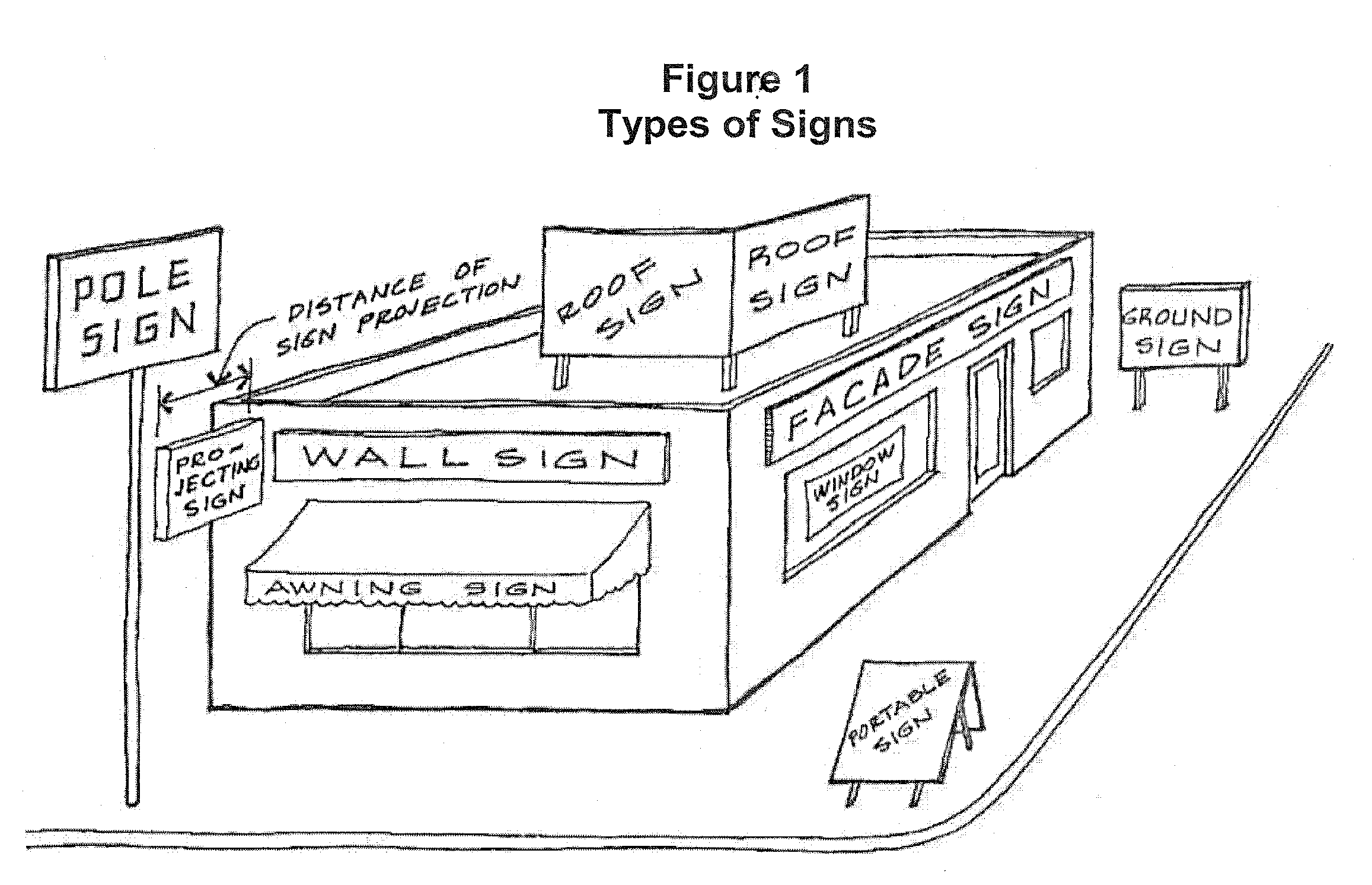
(Ord. No. 994, § 1, 4-21-2009)
Sec. 90-565. - Maintenance of signs.
(a)
All signs allowed by this division, including supports, braces, guys and anchors, electrical parts, and lighting fixtures, and all painted and display areas, shall be maintained in accordance with the building and electrical codes that may be adopted by the city.
(b)
The vegetation around, in front of, behind, and underneath the base of freestanding signs for a distance of ten feet shall be neatly trimmed, and free of unsightly weeds, and no rubbish or debris that may constitute a fire hazard or health hazard shall be permitted under or near the sign.
(c)
Signs and sign structures shall always present a neat and clean appearance; any sign not in this condition by virtue of age, weathering, fading, tearing or loose fabric, or other defect shall be corrected within 30 days of written notice.
(Ord. No. 994, § 1, 4-21-2009)
Sec. 90-566. - Right of entry and inspection.
Appropriate city employees or code officers in the performance of their function and duties and
under the provisions of this division may enter into and onto any lands upon which advertising signs or advertisements area displayed and make such inspections and surveys as may be relevant subject to constitutional limitations and state law.
(Ord. No. 994, § 1, 4-21-2009)
Sec. 90-567. - Exempt signs (no permit required).
(a)
Signs in nonresidential zoning districts (no permit required). The following signs shall be considered as permitted signs and shall be exempt from the requirements to obtain a sign permit as set forth herein, so long as they are not considered prohibited signs:
(1)
Decals, limited to those as required by law, which are affixed to or painted upon store windows, store equipment, fuel pumps or other types of vending equipment used for dispensing retail products.
(2)
Lettering only, for the purpose of providing ownership, licensing and emergency contact information, when placed upon doors and windows of lawfully licensed businesses, and limited to a maximum of two square feet.
(3)
Signs within a building, including window signs affixed to the interior of windows and which are visible from the exterior. The area of such window signs shall not be counted as part of the allowable area for building signs.
(4)
Building signs, historical markers, memorial signs, tablets or plaques, or the name of a building and the date of erection, when the same are cut into the masonry surface or when constructed of bronze or other similar metallic materials.
(5)
Professional nameplates for physicians, surgeons, dentists, lawyers, architects, teachers and other like professional persons placed on the premises occupied by the person, not exceeding one square foot in sign face area, provided such professional has a valid business license as may be required for the particular profession to be operated on those premises.
(6)
Signs denoting only the name and profession of an occupant of a building, placed flat against the exterior surface of the building and not exceeding three square feet in sign face area, and provided such occupant has a valid business license as may be required to operate on those premises.
(7)
Holiday decorations, provided that such decorations are removed within 30 days of the particular day being celebrated.
(8)
Construction signs located on a parcel being developed, for the time period of the building permit, or one year, whichever is shorter, and the sign shall not exceed 32 square feet.
(9)
On-site directional and traffic control signs of no more than four square feet of sign face, and providing that business logos or other non-traffic-control symbols do not exceed 25 percent of total sign face area.
(10)
Signs in commercial and industrial zoning districts (no permit required).
In addition to any other permitted temporary or permanent sign, the following signs are permitted within commercial and industrial zoning districts without the necessity of a sign permit:
a.
Within the CBD district only, temporary portable signs placed on the city-owned sidewalk in front of the business provided they do not interfere or endanger pedestrian traffic and are not displayed any time other than during the normal operating hours of the business.
b.
Signs designating the name of the business operating at the location and which names are printed on the overhanging canopy for those businesses located along and adjacent to Park Street.
c.
Banners that celebrate an event, season, community, neighborhood, or district which is sponsored by the city or a recognized not-for-profit community agency or organization.
d.
Window signs affixed to the interior of windows which are visible from the exterior. The area of such window signs shall not be counted as part of the allowable area for building signs.
e.
"Sticky-back" window coatings or thin coverings affixed to the outside of windows by an adhesive shall not be counted as part of the allowable area for building signs.
(b)
Signs in all zoning districts (no permit required). Within all zoning districts, the following signs shall be considered as permitted signs and shall be exempt from the requirements to obtain a sign permit, so long as they are not considered prohibited signs as set forth herein:
(1)
Not more than two real estate signs advertising the sale, rental or lease of the premises upon which the sign is located. Such signs shall not exceed six square feet in area, and four feet in height.
(2)
Signs noting the architect, engineer or contractor for a development or project when placed upon work under construction, providing the sign shall be removed within 15 days of issuance of certificate of occupancy. Such signs shall not exceed 32 square feet in area, and six feet in height.
(3)
Signs as required by law to display building permits or other similar public notices.
(4)
Traffic signs, street name signs, legal notices of public meetings or zoning/land use change, danger signs and temporary emergency, when erected by city, county, state or federal agencies.
(5)
No trespassing and private property signs not exceeding two square feet in area.
(6)
Vacancy or no vacancy signs not exceeding two square feet in sign area.
(7)
Temporary political campaign signs announcing the candidacy of a candidate for public office not exceeding four square feet in sign area in residential zoned areas, and not exceeding 32 square feet in commercial and industrial areas.
The placing of political signs on city property or rights-of-way is prohibited. Illegally placed signs shall be removed without notice by the code enforcement officer, and all political signs shall be removed within ten days after the election or primary for which the candidate is running. any such signs removed by the city may be cited against the candidate for code violation under F.S. ch. 162, and all actual costs incurred in removal of such signs shall also be assessed in such action.
(8)
Religious symbols and displays.
(9)
Garage and yard sale signs within residential districts only, not to exceed two square feet in sign area; such signs shall not be erected in public rights-of-way, on telephone poles, trees or fences, and shall be removed the same day as the last day of the sale. No such signs shall be permitted for a period in excess of three consecutive days.
(Ord. No. 994, § 1, 4-21-2009; Ord. No. 1058, § 1, 4-6-2010)
Sec. 90-568. - Prohibited signs.
The following signs are expressly prohibited unless otherwise exempted or expressly authorized:
(1)
Signs that violate building or electrical codes.
(2)
Any signs that presents safety, traffic or pedestrian hazard, including signs which obstruct visibility or are located in the clear visibility triangle.
(3)
Blank signs, or signs that have faded or eroded to the extent no message or display is discernable.
(4)
Signs with moving lights. Signs with lights or illuminations that flash, move, rotate, scintillate, blink, flicker, or vary in intensity or color.
Signs with visible moving, revolving, running, or rotating parts or visible mechanical movement of any description or other apparent visible movement achieved by electrical, electronic, or mechanical means except for time-temperature-date signs, traditional barber poles, and governmental traffic devices and signage.
This prohibition includes signs with the optical illusion of movement by means of a design that presents a pattern capable of giving the illusion of motion or changing of copy except signs of this type that provide time and temperature, or that display an image or electronic message, so long as such display or message does not change more frequently than once every 60 seconds.
(5)
Signs that are obscene, indecent or immoral.
(6)
Signs in excess of 100 square feet of sign face or in excess of 30 feet in height.
(7)
Strings of light bulbs used on commercial properties to promote commercial uses, other than holiday decorations.
(8)
Inflatable wind signs, except as permitted under allowable temporary signs.
(9)
Signs that incorporate projected images or emit any sound that is intended to attract attention.
(10)
Signs that emit audible sound, odor or visible attention, such as smoke or steam.
(11)
Signs or sign structures that interfere with the use of any fire escape, emergency exit or standpipe.
(12)
Nongovernmental signs that use the words "stop", "look", "danger" or similar word or phrase.
(13)
Signs that obstruct the vision of pedestrians, cyclists, or motorists traveling on or entering public rights-of-way, including sidewalks.
(14)
Signs within ten feet of a public right-of-way, or within 100 feet of a traffic light, which contain green or red lights, that might be confused with traffic control devices.
(15)
Search or spot lights used to advertise or promote a business or event or to attract customers to the location, except where permitted as temporary signs.
(16)
Signs erected on public property without the permission of the appropriate public authority, other than signs erected by public authority for public purposes, and signs authorized in writing pursuant to F.S. § 337.407.
(17)
Signs erected over or across any public street, on public rights-of-way, or in any public parks, except those that the city would permit for temporary or charitable civic functions, such as, including, but not limited to, church events, Cattlemen's Rodeo, Speckled Perch Festival, holiday parades, chamber of commerce events, and the like, as approved by the appropriate city department.
(18)
Portable signs, including those inserted or fastened to the ground by stake or wires, similar to a political sign; signs mounted on a trailer or towable frame typically surrounded by flashing lights and an arrow with sign display area are prohibited except as otherwise permitted as temporary signs.
(19)
Roof signs, as defined in this division.
(20)
Signs placed, erected or posted on trees, telephone or utility poles, lampposts, hydrants, fences, or any public building, or within the public park, except for banners that celebrate an event, season, community, neighborhood, or district which is sponsored by the city or a recognized not-for-profit community agency or organization.
(21)
Billboards, as defined in this division.
(22)
Signs or posters covering the windows and doors of a convenience business in such number and location so as to obscure one's vision into the business, as provided by F.S. § 812.173.
(23)
Snipe signs, as defined in this division.
(24)
Signs placed on benches, bus shelters, or waste receptacles except;
a.
As may be authorized in writing pursuant to F.S. § 337.407; and,
b.
Waste or recycling receptacles located on-site and containing only the name of the business or organization and the term "waste", "recycling" or similar terms intended to confer the purpose of the receptacle.
(25)
Signs or commercial displays on motor vehicles, trailers, boats, or other transportable device in excess of ten square feet total, when such vehicle, boat, trailer or device is parked on any public street, public right-of-way, on-street parking space or other public parking area, or other municipally owned property, except:
a.
For the period during which the driver is visiting, patronizing, or providing delivery or service to, an establishment in the immediate vicinity; or,
b.
For vehicles which are customarily used on a daily basis for delivery or service and which are parked in the immediate vicinity of the business to which they are associated.
The purpose of this subsection (25) is to prevent the deliberate use of a vehicle or other device to thwart the city's limitations on off-premises advertising.
(26)
Off-premises signs on any property other than property located within the industrial zoning district, except that certain off-premises signs are allowed as provided for under subsections (24)a. and (25) of this section and in section 90-575.
(Ord. No. 994, § 1, 4-21-2009; Ord. No. 1058, § 1, 4-6-2010)
Sec. 90-569. - Sign area computation.
(a)
For freestanding signs, the sign area shall be the area within the smallest geometric shape that touches the outer points or edges of the sign face.
(b)
For building signs, except murals and noncommercial artwork, the sign area shall be the area within the smallest geometric shape that touches the outer point of raised portions of the sign, or all of the borders or trims, or in the absence of such border or trim, the outer points of the letters or pictures.
(c)
For freestanding signs where two sign faces are placed back to back on a single sign structure, and the faces are at no point more than four feet apart, the sign area shall be the area of one of the faces.
(d)
For freestanding signs, where four sign faces are arranged in a square, rectangle, or diamond, the sign area shall be the area of the two largest faces.
(e)
Where a freestanding sign or building sign is in the form of a three-dimensional object, the sign area shall be the area within the smallest geometric shape that touches the outer points or edges of the largest possible two-dimensional outline of the three-dimensional object and multiplying that area by two.
(Ord. No. 994, § 1, 4-21-2009; Ord. No. 1058, § 1, 4-6-2010)
Sec. 90-570. - Allowable temporary signs (no permit required).
(a)
Any temporary sign not complying with the requirements of this section is illegal and subject to immediate removal by the city.
(b)
The following temporary signs are permitted without a sign permit, provided that the sign conforms to the requirements associated therewith. Further, these signs shall not be counted as part of the allowable number or area of freestanding or building signs.
(1)
Signs to indicate that an owner is, either personally or through an agent, actively attempting to sell, rent, or lease property on which the sign is located, provided that the sign:
a.
Does not include the price, terms or similar details.
b.
Is not illuminated in any manner so as to create a traffic hazard or distraction, or constitute a nuisance to any adjacent or surrounding property.
c.
Does not exceed six square feet in area in residential districts.
d.
Does not exceed 32 square feet in all other districts.
e.
Is removed immediately after sale, lease or rental.
(2)
Construction site identification signs provided that the sign:
a.
Does not exceed 32 square feet in sign area.
b.
Is not displayed more than 60 days prior to the beginning of actual construction of the project.
c.
Is removed within 15 days after the issuance of the final certificate of occupancy.
d.
Is removed if construction is not initiated within 60 days after the message is displayed, or if construction is discontinued for a period of more than 60 days, pending initiation or continuation of construction activities.
e.
Is not located on a public right-of-way.
(3)
Signs, including portable signs, to announce or advertise such temporary uses as fairs, carnivals, circuses, revivals, sporting events, festivals or any public, charitable educational or religious event or function, provided that the sign:
a.
Is located on the lot same property where the event will occur or, if located elsewhere, the written consent of the property owner on which the sign(s) will be located has been obtained,
b.
Is not displayed more than 14 days prior to the event, and
c.
Is removed within three days after the event.
(4)
Within the CBD District only, temporary portable signs placed on the city owned sidewalk in front of the business provided they do not interfere or endanger pedestrian traffic and are not displayed any time other than during the normal operating hours of the business.
(5)
Except for Class III MFDVs operating in the right-of-way according to the provisions of section 14-361(2), and unless otherwise permitted according to an approved special exception use petition or temporary use permit, MFDV are allowed one non-affixed, A-frame ground sign to be no larger than 20 square feet in area (including both sides), to be removed once the business is no longer operational.
(Ord. No. 994, § 1, 4-21-2009; Ord. No. 1058, § 1, 4-6-2010; Ord. No. 1272, § 3, 7-18-2023)
Sec. 90-571. - Freestanding monument signs.
Freestanding monument signs are permitted within all commercial and industrial zoning districts provided that;
(1)
The sign area for each multiple occupancy complex and each occupant not located in a multiple occupancy complex shall not exceed 64 square feet in area, or eight feet in height.
(2)
No development shall have more than one freestanding monument sign.
(3)
They are located consistent with all applicable set back requirements and are not located in a public right-of-way.
(Ord. No. 994, § 1, 4-21-2009)
Sec. 90-572. - Building signs.
(a)
Building signs for buildings with a single business or occupant;
(1)
The total area of all building signs for an enterprise shall not exceed one square foot of sign face area for each linear foot of property along the front of the lot. For the purpose of this section, the front of the lot is that side upon which the property is addressed.
(2)
No single building sign on any one side of a building shall exceed 60 square feet of sign face area, except that such size limit shall not apply to a building sign facing parallel to US 441 or SR 70 when the sign is located on a single-use building located on property fronting on US 441 or SR 70.
(3)
Where building signs are placed upon more than one side of the building, the combined sign face area, shall not exceed the amount permitted by subsection (1) above.
(b)
Building signs for buildings with multiple businesses or occupants.
(1)
One square foot of sign face area for each linear foot of the unit occupied by one business or occupant, provided that no such building sign shall exceed 48 square feet of sign face area for any one business (for example, if the width of a unit or several units occupied by one business is 24 feet, then one sign, a maximum of 24 square feet of sign face is permitted).
(2)
Building signs for different occupants shall be separated by a minimum distance of 36 inches.
(c)
Bracket signs or marquee signs. In lieu of the above described fascia signs, a business may install a single bracket sign or a single marquee sign in accordance with the following:
(1)
The maximum size of a bracket sign or a marquee sign shall be determined in the same manner as a fascia sign, provided that no such sign shall have more than 60 square feet of projected sign face area.
(2)
There shall not be more than 12 inches of clear space adjacent to the building wall, and such signs shall not extend or project from the face of the building more than ten feet.
(3)
No portion of such sign shall extend above the height of the roof.
(4)
No portion of such sign shall be closer than three feet of any sidewalk, bike path, or pedestrian walkway and no closer than five feet from any street side property line. All such signs shall be securely anchored to a wall and shall in no manner be connected to or suspended from the roof of any building.
(Ord. No. 994, § 1, 4-21-2009; Ord. No. 1058, § 1, 4-6-2010; Ord. No. 1094, § 1, 11-13-2012; Ord. No. 1130, § 9, 1-19-2016)
Sec. 90-573. - Limitations on the number and type of signs.
The following limitations shall apply to the number and type of all signs except temporary signs, and building signs covered under sections 90-570 and 90-572, respectively.
(a)
Total number of all signs. Only the following number and types of signs and advertising devices shall be located on any lot or parcel at any one time, subject to the following conditions:
(1)
Ground signs and pole signs (permit required). One ground sign or pole sign is allowed in the front yard, and such sign shall not exceed 50 square feet in sign area and 20 feet in height, and shall not be closer than 25 feet to a residential district.
(2)
Inflatable wind signs, search lights, and spot lights (permit required). Not more than one inflatable wind sign or search light or spot light shall be permitted on a single lot or parcel. Inflatable wind signs, search lights, and spot lights shall be permitted only within the commercial and industrial zoning districts and only under the following conditions:
a.
Issuance of a sign permit shall be required;
b.
No such inflatable wind sign, search light, or spot light shall be displayed on the same property more than two times per year and no period of display shall exceed 14 total days; and,
c.
No such inflatable wind sign, search light, or spot light shall be placed on the public right-of-way.
(3)
Other signs such as portable signs, banners, and non-inflatable wind signs (no permit required).
a.
On lots with one single-occupancy building, not more than a total of three such signs shall be allowed on a single lot or parcel and only under the following conditions:
1.
The total area of such signs shall not exceed 48 square feet.
2.
The maximum size of any banner shall be 16 square feet in area and eight feet in height.
b.
On lots with multiple buildings or a multiple occupancy building, one portable sign, banner, or noninflatable wind sign is allowed for each unit within the building(s) and such sign, banner, or noninflatable wind sign shall not exceed 16 square feet in area or eight feet in height.
(b)
Total area of all signs. The combined sign area of building signs, ground signs and pole signs is limited to one square foot for each linear foot of property on a frontage street, plus one square foot for each two linear feet of property on side streets. In addition the total area of other signs identified in subsection (a)(3), above, shall not exceed 48 square feet.
(Ord. No. 994, § 1, 4-21-2009; Ord. No. 1058, § 1, 4-6-2010; Ord. No. 1079, § 12, 1-17-2012)
Editor's note— Ord. No. 1058, § 1, adopted April 6, 2010, amended § 90-573(title) to read as herein set out. Former § 90-573(title) pertained to inflatable wind signs, search lights, and spot lights.
Sec. 90-574. - Display of street numbers required.
All businesses shall display the street number in a manner that is prominent and clearly readable to vehicular and pedestrian traffic, as appropriate. Street numbers shall be displayed on all freestanding signs and over front doors or primary entryways.
(Ord. No. 994, § 1, 4-21-2009)
Sec. 90-575. - Off-premises signs.
Except for signs on benches or bus shelters, which are permitted exceptions under subsection 90-568(24)a., off-premises signs located in other than the industrial zoning district are permitted only for directional purposes and must meet all of the following conditions:
(1)
That such signs are not within a public right-of-way, and a current and valid lease or letter of permission from the property owner for placement of the sign at that location, accompanies the permit application.
(2)
That such signs shall not exceed 20 feet in height nor display a sign face in excess of 50 square feet.
(3)
An off-premises directional sign, may be erected in any zoning district but shall not be attached to another existing sign, or be within 100 feet of a similar sign, or within 600 feet along the street of a sign for the same establishment.
(4)
That such signs contain no advertisement other than the name and type of the business, and directional information to travel to that business.
(5)
That such signs located within any residential district make no reference to a commercial or industrial business or use.
(Ord. No. 994, § 1, 4-21-2009)
Sec. 90-576. - Development signs and entrance signs for subdivisions, multifamily or PUD developments.
(a)
Signs for purposes of announcing a coming development project may be placed within any commercial and industrial zoning district, subject to the following:
(1)
Issuance of a sign permit shall be required, and no such sign shall remain on any development parcel for a period of time exceeding one year from the issuance date of the permit.
(2)
Complete and proper applications for building permits for the related development project must be submitted within 60 days of the placement of any such sign, or the sign shall be removed.
(3)
Such sign shall be removed within 30 days of the issuance of any certificate of occupancy, or at any time when construction ceases for a period of time longer than 30 consecutive days.
(4)
Only one such sign shall be placed upon the development parcel, and the sign face area and height of such sign shall not exceed 32 square feet and six feet in height, respectively.
(b)
Within nonresidential zoning districts, one sign advertising the sale or lease of the property shall be allowed per lot or development parcel and such sign shall be limited to eight feet in height and a maximum of 24 square feet of sign face area. A sign permit shall be required for such signs, and these signs shall be removed within ten days of sale or lease of the property.
(c)
Except for exempt signs as herein provided, signs within Residential or PUD zoning districts shall be limited to those set forth below.
(1)
For single-family and multifamily residential subdivisions, and developments containing more than ten building lots, where individual lots are accessed from a common internal roadway, one sign identifying the name of the subdivision or project shall be allowed at each entranceway from a collector or arterial street, provided that:
a.
There shall be no more than two signs per subdivision or development.
b.
Sign area shall not exceed 32 total square feet of sign face area.
c.
Maximum sign height shall not exceed eight feet.
d.
Any such sign shall be freestanding or monument style. Where more than one sign is allowed, each such sign erected shall be constructed and designed in the same manner.
e.
These signs may be only externally illuminated with ground mounted lighting. Any lighting shall project from the ground onto the sign and shall not be directed towards any street or residential lot.
(2)
For multifamily residential uses, development identification signs, internal directional signs and building identification signs are allowed subject to the following:
a.
One freestanding or monument style sign identifying the name of the development shall be allowed at each entrance provided that:
1.
There shall be no more than two signs per development.
2.
Sign area shall not exceed 32 total square feet of sign face area for each sign.
3.
Maximum sign height shall not exceed eight feet.
4.
Where more than one sign is allowed, each such sign shall be constructed and designed in the same manner.
5.
These signs may be externally illuminated with ground mounted lighting. Any lighting shall project from the ground onto the sign and shall not be directed towards any street or residential lot.
b.
Internal directional signs and signs identifying buildings shall be limited to three feet in height and eight square feet of sign face area.
(Ord. No. 994, § 1, 4-21-2009)
Sec. 90-577. - Special regulations for signs in residential and PUD zoning districts.
(a)
A home occupation may have one nonilluminated sign, not exceeding one square foot, mounted flat against the principal building.
(b)
A boardinghouse or day care center located in a multifamily residential district may have one nonilluminated sign, not exceeding eight square feet and, if freestanding, eight feet in height.
(c)
Except as may be permitted as a temporary sign, no portable sign hall be permitted in any residential zoning district or that portion of a PUD that is devoted to residential use.
(Ord. No. 994, § 1, 4-21-2009)
Sec. 90-578. - Code compliance.
All permanent signs and the illumination thereof, shall be designed, constructed and maintained in conformity with applicable provisions of the building and electrical codes.
(Ord. No. 994, § 1, 4-21-2009)
Sec. 90-579. - Illumination standards.
(a)
Sign lighting may not be designed or located to cause confusion with traffic lights.
(b)
Illumination of the sign is permissible, provided that none of the light emitted shines directly onto an adjoining property or into the eyes of motorists or pedestrians using or entering public streets.
(c)
Illuminated signs shall not have lighting mechanism that project more than 18 inches perpendicularly from any surface of the sign over public space.
(Ord. No. 994, § 1, 4-21-2009)
Sec. 90-580. - Placement standards.
(a)
Supports for signs or sign structures shall not be placed in or upon a public right-of-way or public easement, except under the terms of a lease between the owner of the easement or right-of-way, and the owner of the sign, or with the written approval of the City of Okeechobee.
(b)
No sign or sign structure shall be erected that impedes the use of any fire escape, emergency exit or standpipe.
(c)
All signs on private property shall be located in conformance with the minimum yard regulations of the district in which the sign is located, except that signs in street yards shall comply with the following requirements and limitations:
(1)
No part of any sign shall be located closer than one foot to the property line; and,
(2)
For signs on corner lots and located within the visibility triangle, the bottom of the sign shall be at least ten feet above the crown of the adjacent road, or the top of the sign shall be less than two feet, six inches above the crown of the adjacent road.
(Ord. No. 994, § 1, 4-21-2009; Ord. No. 1058, § 1, 4-6-2010)
Sec. 90-581. - Clearance standards.
(a)
All signs over pedestrian ways shall provide a minimum of seven feet six inches of clearance.
(b)
All signs over vehicular ways shall provide a minimum of 17 feet of clearance.
(Ord. No. 994, § 1, 4-21-2009)
Sec. 90-582. - Design standards.
(a)
All freestanding signs shall be designed to resist a wind pressure of 20 pounds per square foot in any direction.
(b)
No building sign may project more than 18 inches from the building wall.
(Ord. No. 994, § 1, 4-21-2009)
Sec. 90-583. - Nonconforming signs.
All signs which were lawfully in existence and constructed or installed with properly issued sign permits as of the effective date of these amended regulations, and which are made nonconforming by these provisions herein, shall be allowed to remain in accordance with the following conditions:
(1)
Freestanding signs made nonconforming at the initial date of these amended regulations which are not in compliance only with respect to the minimum required distance from any property line shall be allowed to remain in the existing location provided that no portion of the sign is located within any publicly owned right-of-way, or utility easement and that no interference with clear clearance distance exists, and further provided that such signs are otherwise in compliance with the terms of this Code.
(2)
Freestanding signs made nonconforming at the initial date of these amended regulations, which are not in compliance with respect to maximum width, height or size shall be allowed to remain, provided that such signs are otherwise in compliance with the terms of this Code.
(3)
Nonconforming signs, including those as described in subsections (1) and (2) above, shall be made conforming with all provisions of this Code when any of the following changes are made:
a.
Any change to the structural support or structural materials, including temporary relocation associated with routine maintenance of a property, where the cost of such change exceeds 50 percent of the replacement value of the sign including the supporting structure if it is a freestanding sign.
b.
Any voluntary change which increases the height, size, display area or illumination of a sign.
c.
Any sign on which 50 percent or more of the material making up the sign face is replaced (excluding the mere repainting of the message, or the replacement of removable lettering attached to the material making up the sign face, where the cost of such change exceeds 50 percent of the replacement value of the sign including the supporting structure if it is a freestanding sign.
d.
Any sign which is involuntarily damaged to the extent that the repair of such damage exceeds 50 percent of the replacement value of the sign including the supporting structure if it is a freestanding sign.
e.
Any replacement of an abandoned sign, defined as any sign not routinely maintained as required by this Code.
f.
Any change necessary for compliance with Florida Building Code requirements.
(4)
Signs which constitute a hazard. The preceding provisions of this section shall not be construed to apply to signs that are abandoned, deteriorated, dilapidated, or in a general state of disrepair, or which are determined to create a hazard to public safety. A nonconforming sign which constitutes a hazard to public safety or welfare shall be removed or relocated within 30 days of notification to the property owner by the city.
(5)
Discontinuance of use. Nonconforming signs shall be removed by the property owner when the principal structure on the property on which the sign is located is demolished.
(6)
Maintenance. A nonconforming sign shall be maintained in a neat and proper working order, or shall be removed.
(Ord. No. 994, § 1, 4-21-2009; Ord. No. 1058, § 1, 4-6-2010)
Sec. 90-584. - Violation constitutes nuisance; abatement.
Any advertisement, advertising sign or advertising structure which is constructed, erected, operated, used, maintained, posted or displayed in violation of this Code is hereby declared to be a nuisance, and shall be forthwith removed, obliterated or abated. Any portable sign such as snipe signs or real estate signs may be removed without notification of the property owner, or such advertiser, if such sign is placed in a public right-of-way.
(Ord. No. 994, § 1, 4-21-2009)
Sec. 90-585. - Permit application and approval process.
(a)
The developer shall submit to the building official a completed sign application.
(b)
Within ten days after receipt of an application, the building official shall determine that the information is complete or incomplete and inform the developer of the deficiencies, if any. If the application is deemed:
(1)
Incomplete, the developer may submit the required information within ten days without payment of an additional application fee, but if more than ten days elapse, the developer must then initiate a new application and pay a new application fee; or
(2)
Complete, the building official shall determine if the sign meets all provisions of this Code, and shall issue the permit which states whether the application is approved, denied or approved with conditions, within 21 days of receiving the application.
(Ord. No. 994, § 1, 4-21-2009)
Sec. 90-586. - Procedure for appeal.
Any administrative decision that is made by any city official in the administration or enforcement of this Code may be appealed within 30 days to the board of adjustment and appeals, whose decision shall be final.
(Ord. No. 994, § 1, 4-21-2009)
Sec. 90-587. - Murals.
(a)
Murals shall be permitted on all commercial or industrial structures within the city. Murals which depict historical and cultural scenes, and which contain no commercial messages, shall be developed in conjunction with, and under the guidance and supervision of, Okeechobee Main Street Inc., and shall be governed by the provisions of Appendix F, and shall be subject to the following:
(1)
No mural may, as determined by the city council, contain any picture, representation, graphic or display, that the average citizen, applying contemporary community standards, would find that the mural, taken as a whole, appeals to the prurient interest; depicts or describes, in a patently offensive way, sexual conduct as defined in this Code, and lacks any serious commercial, literary, artistic, political or scientific value; and
(2)
No mural may be in such proximity to the road or right-of-way of the city, or displayed in such a manner, that it would unreasonably distract the operators of motor vehicles, or raise public safety concerns.
(Ord. No. 994, § 1, 4-21-2009)
Sec. 90-588. - Signs and artwork not qualifying as murals.
(a)
Art forms on walls or other external building areas which are not considered murals due to their commercial content are permitted in the City of Okeechobee, but shall be considered signs, and the total area of such signs shall not exceed one hundred square feet of sign face. Such signs shall be subject to all applicable sections in this division and the provisions of Appendix F shall not apply.
(b)
Artwork on walls or other external building areas, which contains no commercial messages, and which is not considered a mural due to the fact that it is not a painted art form (e.g., wall paper or another material other than paint) are not considered signs and shall not be counted as part of the allowable area for building signs. Such artwork, however, shall not exceed 100 square feet in area.
(Ord. No. 994, § 1, 4-21-2009; Ord. No. 1058, § 1, 4-6-2010)
Sec. 90-589. - Unsafe locations and offensive signs prohibited.
(a)
As determined by the city council, no sign, mural or artwork subject to this section may contain any picture, representation, graphic or display, that the average citizen, applying contemporary community standards, would find that the sign, taken as a whole, appeals to the prurient interest; that the sign depicts or describes, in a patently offensive way, sexual conduct as defined in this Code, and the sign lacks any serious commercial, literary, artistic, political or scientific value; and
(b)
No sign, mural or artwork may be in such proximity to the road or right-of-way of the city, or displayed in such a manner, that it would unreasonably distract the operators of motor vehicles, or raise public safety concerns.
(Ord. No. 994, § 1, 4-21-2009; Ord. No. 1058, § 1, 4-6-2010)
Sec. 90-601.- Applicability of division provisions.
(a)
All new communication towers and communication antennas, excluding replacement antennas to preexisting towers or to other preexisting nontower antenna placements in the city shall be subject to the regulations of this division and all other applicable regulations. For purposes of measurement, communication tower setbacks and separation distances as listed in section 90-603 shall be calculated and applied irrespective of municipal and county jurisdiction boundaries.
(b)
All communication towers legally existing or which have received land use or building permit approval by the city on the effective date of the ordinance from which this division is derived shall be considered permitted uses, and shall be allowed to continue their usage as they presently exist, including routine maintenance, such as the replacement of antennas which do not involve an increase in the number of providers or a substantial increase in tower load due to construction on an existing communication tower. However, any other construction including, but not limited to, structural modifications, shall comply with the requirements of this division, with the exception of separation distances.
(c)
All government towers with public safety systems or other communications equipment shall be exempt from the requirements of this section.
(d)
All new communication antennas which are not attached to communication towers shall comply with section 90-604.
(LDR 1998, § 580)
Sec. 90-602. - Permitted uses.
(a)
Any communication antenna which is not attached to a freestanding communication tower shall be a permitted ancillary use to any commercial, industrial, office, institution, or public utility structure.
(b)
Communication antennas located on existing buildings or other nontower type structures shall not be subject to the performance and construction standards for freestanding towers contained in section 90-603 pertaining to separation distances, fencing, landscaping, collocation, or any other standard only applicable to a freestanding tower.
(c)
New freestanding communication towers shall not be allowed unless the applicant:
(1)
Proposes the communication facility within the permitted city zoning designations listed as follows:
a.
Industrial;
b.
Public; and
c.
Heavy commercial (by special exception only).
(2)
Secures approval from the city council, through the normal development review and public hearing process upon showing:
a.
Completion of application requirements:
1.
City application including legal description of site;
2.
Letter of intent of facility;
3.
Description of the tower, including technical reasons for its design;
4.
Site plan, including any accessory/shelter buildings, drawn to scale;
5.
Landscape buffering and fencing around proposed communication facility;
6.
General capacity of the tower;
7.
Proof of ownership of proposed site;
8.
Copies of any easements necessary; and
9.
Visual study of the area showing where within a one mile radius any portion of the proposed tower may be seen.
b.
Demonstrated need or demand for the communication facility.
c.
Compliance with FCC technical emission standards.
d.
Compliance with the performance and construction standards listed in section 90-603.
e.
Compliance with any additional requirements as set forth by the city council.
(LDR 1998, § 582)
Sec. 90-603. - Performance and construction standards.
(a)
Structural design. New communication towers and modifications to existing structures including, without limitation, the addition of height, antennas or providers, shall be constructed in accordance with all city building codes.
(b)
Setbacks. Communication tower setbacks shall be measured from the base of the tower, protruding building structure at the base of the tower, or the tower guy wires, whichever is closest to the property line of the parcel on which it is located. Communication towers and their accessory structures shall comply with the minimal setback requirements of the district in which they are located and the applicable street setbacks. In cases where there is a conflict between the minimal setback requirements and the street setbacks, the more restrictive shall apply. In addition, where there is a principal building housing a principal use located on the site, the communication tower and accessory structures to the tower shall be located behind the main building line. All communication tower supports and peripheral anchors shall be located entirely within the boundaries of the development site and shall be set back from the development site perimeter a minimum distance of five feet, or the minimum setback of the zoning district in which the communication tower is located, whichever is greater.
(c)
Separation from off-site uses.
(1)
Communication tower separation shall be measured from the base of the tower to the closest point of off-site uses and/or designated areas as specified in subsection (c)(2) of this section. For purposes of this requirement, global positioning system (GPS) coordinates for the center of the towers may be used.
(2)
Separation requirements for communication towers from residentially zoned lands or residential uses shall comply with the following minimum standards:
(d)
Separation distances between communication towers.
(1)
Separation distances between communication towers shall be applicable for and measured between the proposed tower and those towers that are existing and/or have received land use or building permit approval from the city or adjoining jurisdictions.
(2)
The separation distances shall be measured by drawing or following a straight line between the base of the existing tower and the proposed base, pursuant to a site plan, of the proposed tower. For purposes of this requirement, GPS coordinates for the towers may be used.
_____
(3)
The separation distances (listed in linear feet) shall be as follows:
Separation Distances Between Tower Types
(including extrajurisdiction area)
_____
(e)
Waivers. A waiver from the minimum separation distances set forth in subsections (c) and (d) of this section may be approved through the special exception process in accordance with the procedures set forth in section 70-372 when the proposed communication tower conforms to two or more of the following criteria:
(1)
Camouflaging techniques approved by the city are incorporated into the design of the communication tower.
(2)
The tower is designed for the collocation of communication antennas for at least two communication service providers.
(3)
The towers within the required separation distance are all located in an industrial zoning district as a supplemental use.
(4)
The proposed location will minimize the visual impact of the proposed communication tower due to the bulk height, use, or appearance of the adjacent structures and surrounding area.
(f)
Fencing. A chainlink fence or wall not less than eight feet in height from finished grade shall be provided around each communication tower. Access to the tower shall be through a locked gate.
(g)
Landscaping. The visual impacts of a communication tower shall be mitigated for nearby viewers through landscaping or other screening materials at the base of the tower and ancillary structures. The following landscaping and buffering of communication towers shall be required around the perimeter of the tower and accessory structures. Landscaping shall be installed on the outside of fences. Further, the use of existing vegetation shall be preserved to the maximum extent practicable and may be used as a substitute of or in supplement towards meeting landscaping requirements:
(1)
A row of trees a minimum of three inches at dbh (diameter at breast height) and a minimum of eight feet tall and a maximum of 25 feet apart shall be planted around the perimeter of the fence; and
(2)
A contiguous hedge at least 30 inches high at planting capable of growing to at least 36 inches in height within 18 months shall be planted in front of the tree line referenced in subsection (g)(1) of this section.
(h)
Height.
(1)
The total combined freestanding height of any communication tower and antenna shall not exceed 200 feet from ground level.
(2)
Where installed on top of a building, no communication tower and antenna shall extend greater than 40 percent over the building height.
(3)
An existing communication tower may be modified to a taller height not to exceed 20 feet over the tower's existing height, but only to a maximum combined tower and antenna height of 200 feet, to accommodate the collocation of an additional communication antenna.
a.
The height change referred to in this subsection may only occur one time per communication tower.
b.
The additional height referred to in this subsection shall not require an additional distance separation. The communication tower's premodification height shall be used to calculate such distance separations.
(i)
Type of construction. Communication towers shall be monopole or lattice construction; provided, however, that camouflaged construction may be approved by the planning commission at a supplemental use hearing, upon consideration of the following factors in addition to those set forth in division 10 of article III of this chapter:
(1)
Compatibility with adjacent properties;
(2)
Architectural consistency with adjacent properties;
(3)
Visual impact on adjacent properties, including visual access of adjacent properties to sunlight; and
(4)
Design of accessory structures in order to be architecturally consistent with the existing structures on the site. A variance from the fencing and landscaping requirements of this section may be requested for such accessory structures.
(j)
Development criteria. The parent tract, upon which the site for communication tower/antenna/equipment is located, shall comply with the minimum development criteria of the district in which it is located.
(k)
Illumination. Communication towers/antennas shall not be artificially lighted except to ensure human safety or as required by the Federal Aviation Administration. At the time of construction in cases where there are residential uses within a distance 300 percent of the height of the tower, dual lighting shall be requested from the FAA.
(l)
Collocation.
(1)
Monopole communication towers shall be engineered and constructed to accommodate at least two communication service providers.
(2)
Lattice communication towers shall be engineered and constructed to accommodate at least two communication service providers.
(3)
Camouflaged communication towers may be engineered and constructed without accommodating additional communication service providers.
(4)
Communication towers located within electrical substations may be engineered and constructed without accommodating additional communication service providers. Such towers shall be monopole construction and shall be subject to all of the requirements of this section. The substation shall be located within the zoning category specified in section 90-602(c). All such supports and anchors shall also observe a minimum horizontal setback from any overhead utility lines of not less than ten feet.
(5)
Proposed communication antennas may, and are encouraged to, collocate onto existing communication towers, provided that such collocation is accomplished in a manner consistent with this section.
(6)
If determined by the city prior to construction that the proposed tower is situated in a location on public property which will benefit the city's communication systems, then the tower shall be engineered and constructed to accommodate the additional communication equipment beneficial to the public system at a cost to the city no greater than the actual expense of the provider in engineering and construction of the tower to meet the city's needs.
(7)
The city shall be considered a communication service provider for purposes of the collocation requirements of this division.
(8)
On-site location. A communication tower which is being rebuilt to accommodate the collocation of an additional communication antenna may be moved on-site within 50 feet of its existing location; however, the tower shall meet the setback requirements above in subsection (b) of this section. After the communication tower is rebuilt to accommodate collocation, only one tower may remain on the site.
(9)
A relocated on-site communication tower shall continue to be measured from the original tower location for purposes of calculating separation distances between towers pursuant to subsection (d) of this section. The relocation of a tower in accordance with this subsection shall in no way be deemed to cause a violation of this section. The on-site relocation of a communication tower which comes within the separation distances to residentially zoned lands or residential uses shall require special exception approval.
(10)
The modification or reconstruction of an existing communication tower to accommodate the collocation of two or more communication antennas shall be permitted without new or additional supplemental use permit approvals, provided that the communication antennas are owned or operated by more than one communication service provider, and the collocation is accomplished in a manner consistent with the following requirements:
a.
Type of construction. The modification or reconstruction shall not change the communication tower from one type of tower to another except that any type of communication tower may be reconstructed as a monopole tower.
b.
On-site location. The on-site relocation of a communication tower to a location within the minimum separation distance from residentially zoned property as set forth above in subsection (c) of this section shall only be permitted when notarized written consent is obtained from the owners of all residentially zoned property located within the minimum separation distance.
(m)
Noninterference. No communication tower or antenna shall interfere with public safety communication. Frequency coordination with the public safety system and/or public safety entities is required to ensure noninterference.
(n)
Documentation. Documentation to demonstrate conformance with the requirement of this section shall be submitted by the applicant with all requests to construct, locate or modify a communication tower/antenna. A statement by the applicant as to how construction of the communication tower will accommodate collocation of additional antennas for future users shall be included within the documentation.
(o)
Signs and advertising. The use of any portion of a tower for sign or advertising purposes including, without limitation, company name, banner, or streamer is prohibited.
(p)
Abandonment. If the use of any communication tower has been discontinued for a period of 180 consecutive days, the tower shall be deemed to have been abandoned. Determination of the date of abandonment shall be made by the zoning official who shall have the right to request documentation and/or affidavits from the communication tower owner/operator regarding the active use of the tower. Upon such abandonment, the owner/operator of the tower shall have an additional 180 days within which to:
(1)
Reactivate the use of the tower or transfer the tower to another owner/operator who makes actual use of the tower; or
(2)
Dismantle and remove the tower. The owner of the real property shall be ultimately responsible for all costs of dismantling and removal, and if the tower is not removed within 180 days of abandonment, the city may proceed to do so and assess the costs against the real property. The lien of such assessment shall bear interest, have priority and be collectable at the same rate and in like manner as provided for special assessments by state law. At the earlier of 181 days from the date of abandonment without reactivation or upon completion of dismantling and removal, any special exception, waiver and/or variance approval for the tower shall automatically expire.
(q)
Finished color. Communication towers not requiring FAA painting/marking shall be painted a noncontrasting flat blue, gray, or black finish. The color should be selected so as to minimize the equipment's visibility.
(r)
Certification of compliance with FCC. Certification of compliance with current Federal Communication Commission (FCC) nonionizing electromagnetic radiation (NIER) shall be submitted prior to receiving final inspection by the building department.
(LDR 1998, § 583)
Sec. 90-604. - Communication antennas.
Communication antennas shall meet the following requirements:
(1)
The communication antenna must locate on towers or buildings which are at least 35 feet in height;
(2)
The communication antenna shall not exceed 20 feet above the highest point of the communication tower;
(3)
The communication antenna complies with all applicable FCC and FAA regulations; and
(4)
The communication antenna complies with all applicable building codes and other provisions listed in section 90-603 to the extent applicable.
(LDR 1998, § 584)
Sec. 90-631.- Generally.
Accessory uses and structures shall be subject to the regulations of this division.
(LDR 1998, § 650)
Sec. 90-632. - Applicable regulations for all.
(a)
Where the technical review committee determines that a proposed accessory use or structure may have an adverse impact on the health, safety or welfare of the public, due to the attributes of the property or the structure, the board of adjustment shall have the authority to deny the permit.
(b)
There shall be a principal use on the parcel built in compliance with the regulations of this division.
(c)
Accessory structures shall comply with the yard setback and height regulations pertaining to the principal use.
(d)
Vehicles, recreation vehicles, mobile homes and boats shall not be used as an accessory structure.
(e)
Any structure or container, other than a temporary structure as defined in section 66-1, used for storage as an accessory to a residential use must be placed as an accessory structure in a manner consistent with the requirements of the Florida Building Code.
(LDR 1998, § 651; Ord. No. 1170, § 11, 10-2-2018)
Sec. 90-633. - Home occupation.
A home occupation may be permitted administratively in a dwelling, subject to the following:
(1)
The employees of the home occupation who work at the dwelling must also reside in the dwelling, except that up to a total of two employees or independent contractors who do not reside at the dwelling may work at the home occupation. The home occupation may have additional remote employees that do not work at the dwelling.
(2)
A home occupation shall be secondary to the residential use.
(3)
As viewed from the street, the use of the dwelling is consistent with the uses of the residential areas that surround the property. External modifications made to the dwelling to accommodate the home occupation must conform to the residential character and architectural aesthetics of the neighborhood. The home occupation may not conduct retail transactions at a structure other than the dwelling; however, incidental business uses and activities may be conducted at the dwelling.
(4)
No equipment or process shall be used in the occupation which creates interference to neighboring property due to noise, vibration, heat, smoke, dust, glare, fumes, or noxious odors.
(5)
Storage of materials or disposal at the dwelling of any corrosive, combustible, or other hazardous or flammable used in the home occupation is prohibited.
(6)
Vehicles and trailers used in connection with the home occupation must be parked in legal parking spaces that are not located within the right-of-way, on or over a sidewalk, or on any unimproved surfaces at the dwelling.
(LDR 1998, § 652; Ord. No. 781, § 5, 10-2-2001; Ord. No. 1254, § 2, 7-5-2022)
Cross reference— Businesses, ch. 14.
Sec. 90-634. - Accessory apartment, pool house, and servant's quarters.
An accessory apartment, pool house or servant's quarters may be permitted by special exception use petition in a single-family dwelling, subject to the following regulations:
(1)
No variance to the regulations of this division shall be permitted to accommodate such accessory use.
(2)
Only one such accessory use shall be permitted on a residential lot.
(3)
An accessory apartment or servants quarters shall be attached to, or located within, the principal structure, and shall not alter the appearance as a single-family dwelling.
(4)
Such accessory use shall not exceed 25 percent of the total floor area of the principal structure.
(5)
Such accessory use shall not be used as a rental unit.
(LDR 1998, § 653)
Sec. 90-635. - Amenities.
Any development shall be permitted to provide amenities for the use of their employees or residents subject to the following:
(1)
Amenities include an accessory dining room, snack bar, community or recreation center, and a fitness center.
(2)
Such facilities shall not be open to the general public.
(LDR 1998, § 654)
Sec. 90-636. - Antenna.
An accessory antenna shall be permitted, subject to the following:
(1)
Dish antennas larger than two feet in diameter shall require a special exception use petition.
(2)
A drawing prepared by the manufacturer, an architect or engineer shall be submitted showing the antenna, the foundation or method of attachment to the building.
(3)
Antennas attached to multiple-family structures exceeding two stories, commercial or industrial buildings shall require a certificate of structural integrity that they are designed to withstand a wind load of 120 miles per hour, issued by an architect or engineer.
(4)
Antennas shall not be installed in the front yard, and shall not be closer than five feet to a property line.
(LDR 1998, § 655)
Sec. 90-637. - Antenna for single-family and duplex buildings.
The following additional regulations shall apply to single-family and duplex dwellings:
(1)
Antennas shall not be used for a commercial purpose, and shall be limited to two per residential lot.
(2)
Antennas requiring a permit shall not be installed on a roof, and shall have a maximum dimension of 12 feet. Larger antennas may be permitted only by special exception use petition.
(3)
Ground-mounted antennas shall have a maximum height of 35 feet. Larger antennas may be permitted only by special exception use petition.
(LDR 1998, § 656)
Sec. 90-638. - Storage, garage, carport, greenhouse, gazebo and utility structure.
Storage, private garage, carport, greenhouse, gazebo and utility structures shall be permitted, subject to the following:
(1)
Except a gazebo, such buildings shall not be permitted in the front yard, and shall not encroach into any required yard setback.
(2)
No accessory building used for industrial or commercial storage of hazardous, incendiary or noxious materials shall be located closer to a street line than 15 feet, a side or rear yard than 20 feet, and a residential district than 25 feet.
(3)
Such buildings shall be included in calculations of impervious surface, floor area, and other site design requirements of the principal use.
(4)
Detached accessory buildings shall not exceed 100 percent of the floor area of the principal structure.
(LDR 1998, § 657)
Sec. 90-639. - Walls and fences.
(a)
Walls and fences may be located in front, side and rear yard setback areas, and shall not exceed a height of five feet in front of the front building line, nor a height of two feet, six inches in a visibility triangle, nor a height of eight feet elsewhere.
(b)
Walls and fences shall be constructed with the finished side facing the adjacent property.
(c)
Barbed wire and similar fences shall be prohibited on residential lots.
(LDR 1998, § 658)
Sec. 90-640. - Boat docks and piers.
(a)
Boat docks and piers may be permitted in buffer areas.
(b)
Occupied live-aboard boats are not permitted to be docked in a residential district more than 15 days in a calendar year.
(LDR 1998, § 659)
Sec. 90-641. - Seawall and riprap.
(a)
Seawalls and riprap may be permitted in buffer areas.
(b)
Riprap may be used to stabilize shorelines in lieu of seawalls.
(c)
Native vegetation shall be used to stabilize shorelines in lieu of seawalls and riprap where possible.
(LDR 1998, § 660)
Sec. 90-642. - Tennis, basketball, racquetball, and similar court facilities.
(a)
Court facilities shall not be permitted in a front yard, nor encroach into a yard setback.
(b)
Court facility enclosures and backstops shall not exceed 14 feet in height.
(c)
Lighting shall be directed away from adjacent property and shall not be used between 10:00 p.m. and 6:00 a.m.
(LDR 1998, § 661)
Sec. 90-643. - Flagpole.
(a)
Flagpoles shall be permitted in all zoning districts, and shall be at least five feet from any property line in residential districts and five feet from any property line in other districts.
(b)
Flagpoles shall require a certificate of structural integrity that they are designed to withstand a wind load of 120 miles per hour, issued by the manufacturer, an architect or engineer.
(c)
Flagpoles shall not exceed 35 feet in height in residential districts and 75 feet in other districts.
(LDR 1998, § 662)
Sec. 90-661.- Applicability of division provisions.
Temporary structures shall be subject to the regulations of this division. Public emergency structures and public structures in public parks are exempt from the provisions of this division.
(LDR 1998, § 680)
Sec. 90-662. - Temporary permit.
The following temporary structures may be permitted upon the issuance of a temporary permit, subject where applicable to all requirements of the city licenses and business regulations, which shall include in each instance proof of insurance coverage for the use permitted by the city in such amount as required by these regulations.
(LDR 1998, § 681; Ord. No. 820, 3-18-2003)
Sec. 90-663. - Regulations.
Temporary structures shall be subject to the following regulations:
(1)
Exemptions. Public emergency structures and public structures in public parks, are exempt from this section.
(2)
License. Those persons or entities that request a temporary use license shall conform to, and comply with, the application procedure process set for this section, article IV, chapter 14 of subpart A of this Code, as well as those set forth in this division. All temporary structures, tents, stands or booths shall be structurally sound, secure and approved in design and installation by the city police department at the inception of the event to be held.
(3)
Findings by city. The city finds that the permitting of temporary uses such as produce stands, sale of used items, food items, crafts, and similar goods by members of the general public along the rights-of-way and in commercial and industrial land use districts within the city creates eyesores; trash and refuse; potentially dangerous traffic conditions; and permitting and enforcement difficulties. Therefore, all such temporary use permits shall not be permitted within the city. Any such permit that exists as of the date of the adoption of this section may continue, and be renewed by the existing applicant, but when such applicant abandons the use or fails to otherwise continue the permit, it shall not be thereafter renewed or reissued.
(Code 1982, § 10-77; LDR 1998 § 681(3))
Sec. 90-664. - In connection with a development permit.
Temporary structures in connection with a development permit are as follows: temporary construction office, real estate office, watchman's office and model home on the property under development
(LDR 1998, § 681(1))
Sec. 90-665. - To a commercial or industrial use.
Temporary structures to a commercial or industrial use are as follows: a stand, booth, or similar temporary structure which is an extension of the existing principal use in a commercial or industrial district, and shall be subject to the following regulations. The applicant shall:
(1)
Produce proof that it is the principal use applicant's inventory being sold.
(2)
Not erect the structure for more than 15 days, four times a year.
(3)
Meet all required setbacks and off-street parking regulations of the district in which the structure is located, and all required sign regulations.
(LDR 1998, § 681(2))
Sec. 90-666. - Other temporary structures.
Other temporary structures subject to the following regulations:
(1)
Christmas tree, fireworks and similar seasonal sales operated by a non-profit organization.
(2)
Carnival, circus, fair or other special event operated by a non-profit organization on or abutting their principal use.
(3)
Commercial carnival, circus or fair in commercial or industrial districts.
(4)
Similar temporary structures where the period of use will not exceed 30 days a year.
(5)
Submit proof of liability insurance, paid in full covering the period for which the permit is issued, in the minimum amount of $1,000,000.00 per occurrence.
(6)
Remove all debris within 48 hours of expiration of permit.
(7)
Have notarized written permission of property owner, if applicant is not the property owner.
(LDR 1998, § 681(4); Ord. No. 820, 3-18-2003)
Sec. 90-667. - Temporary off-premises sales, tent sales, outdoor auctions, fund-raising events.
Temporary off premises sales, tent sales, outdoor auctions and certain fundraising events may be permitted in commercial and industrial districts, subject to the following regulations; such applicant shall:
(1)
Have written permission of the property owner.
(2)
Not erect the structure for more than 15 days a year.
(3)
Meet all required setbacks and off-street parking Regulations of the district in which the structure is located, and all required sign Regulations.
(4)
Remove all debris within 48 hours of expiration of the permit.
(5)
Submit proof of liability insurance, paid in full covering the period for which the permit is issued, in the minimum amount of $1,000,000.00 per occurrence.
(6)
Events designed for purposes of fundraising by a religious, veterans, civic or charitable organization, or school district, such as but not limited to car washes, candy or bake sales, or the like, which typically do not erect or use a temporary structure, shall not be subject to the requirements of sections (1)—(5) herein; however, the city reserves the right to inspect and or direct the manner of such event so as to protect pedestrian and motor vehicle flow and traffic in the immediate vicinity.
(7)
All fundraising activities where it is contemplated that the participants would be within a street right-of-way or intersection, to conduct a "boot drive" or similar activity where money is collected from passing motorists, shall obtain a permit under the conditions of section 681(5), Land Development Regulations.
(LDR 1998, § 681(5); Ord. No. 777, § 1, 9-4-2001; Ord. No. 820, 3-18-2003)
Sec. 90-668. - Temporary off-premises motor vehicle sales.
The term "temporary off-premises motor vehicle sales" is defined as any location for the sale of motor vehicles that is not a permanent facility licensed for the sale of motor vehicles by a valid city occupational license. Temporary off-premises new or used motor vehicle sales shall not be permitted in any zoning or land use district within the city. The city finds that such sales are subject to the creation of dangerous overcrowding; traffic flows and parking problems; additional police and fire department supervision; garbage and trash cleanup; enforcement; and other extraordinary city services, and it is in the best interests of the citizens of the city to prohibit such temporary off-premises sales.
(Code 1982, § 10-77(4)b; LDR 1998 § 681(6))
Sec. 90-691.- Generally.
Special exception uses may be granted by the board of adjustment. The supplementary regulations of this division shall apply to specific permitted and special exception uses in all zoning districts, unless otherwise noted.
(LDR 1998, § 700)
Sec. 90-692. - Auto service station requirements.
Sec. 90-693. - Community center requirements.
Community center requirements shall be as follows:
(LDR 1998, § 702; Ord. No. 1079, § 14, 1-17-2012)
Sec. 90-694. - Day care center requirements.
Day care center requirements shall be as follows:
(LDR 1998, § 703)
Sec. 90-695. - Adult family care homes or assisted living facilities requirements.
Adult family care home or assisted living facilities requirements are as follows:
(LDR 1998, § 704; Ord. No. 1079, § 14, 1-17-2012)
Sec. 90-696. - House of worship requirements.
House of worship requirements are as follows:
(LDR 1998, § 705; Ord. No. 1079, § 14, 1-17-2012)
Sec. 90-697. - Nursing home requirements.
Nursing home requirements are as follows:
(LDR 1998, § 706)
Sec. 90-698. - Private club, nightclub and bar requirements.
Private club, nightclub and bar requirements are as follows:
(LDR 1998, § 707)
Sec. 90-699. - Public utility requirements.
Public utility requirements are as follows:
(LDR 1998, § 708)
Sec. 90-700. - Recreational vehicle park lot requirements.
Recreational vehicle park lot requirements are as follows:
(LDR 1998, § 709)
Sec. 90-701. - Salvage yard requirements.
Salvage yard requirements are as follows:
(LDR 1998, § 710)
Sec. 90-702. - Storefront church requirements.
Storefront church requirements are as follows:
(1)
The applicant for use of a unit as a storefront church shall submit to the city, along with its application for a building permit or certificate of occupancy, as appropriate, the following information:
(a)
A list with the names of each of the uses in the multi-use building or shopping center and a description of each (e.g., retail, restaurant, professional or business office, medical office, etc.);
(b)
Square footage of each use upon which parking is calculated (excluding storage);
(c)
Days and hours of operation of each use;
(d)
Total number of required off-street parking spaces associated with the multi-use building or shopping center;
(e)
Number of vacant units and the square footage of each; and
(f)
The number of fixed seats in, or square footage of floor area of, the assembly area of the storefront church that will be used for worship; and the days and hours of use of the assembly area, including estimates of attendance at those times.
(2)
A business tax receipt (BTR) shall only be issued if the city determines the foregoing information indicates that the current parking inventory associated with the multi-use building or shopping center in which the storefront church is located can accommodate the combined parking demand of the existing uses and the use of the assembly area of the storefront church during periods of concurrent use.
(Ord. No. 1070, § 5, 1-18-2011)
Sec. 90-703. - Outdoor vehicle sales lot.
Outdoor vehicle sales lot requirements are as follows:
(Ord. No. 1079, § 15, 1-17-2012)
Sec. 90-704. - Pet grooming requirements.
Pet grooming requirements shall be as follows:
(1)
Lot and structure requirements shall be as by the district in which the use is located.
(2)
Additional requirements shall be as by the district in which the use is located.
(3)
Special conditions and limitations.
a.
No pets shall be kept on the premises overnight.
b.
Pets shall at all times be kept within the principal building.
(Ord. No. 1119, § 5, 2-17-2015)
Sec. 90-705. - Temporary portable storage containers.
(1)
Temporary portable storage containers are allowed in single-family residential zoning districts subject to the following restrictions and limitations:
(a)
The principal use on the property must be a single-family residence.
(b)
The container must remain on the property no more than 15 days, including the day of delivery and removal.
(c)
The container must not exceed any of the following dimensions: eight feet in width, 16 feet in length, and eight feet in height.
(d)
The maximum number of times a container may be delivered to a site is three times per calendar year.
(e)
At least 30 days must elapse between placements of a container on a property.
(f)
The container must be placed only on a driveway or in the side or rear yard.
(g)
When placed on the driveway within the front setback area, the container must be located so that pedestrian and vehicular traffic is not obstructed and so that the view of an operator of a motor vehicle entering or exiting a right-of-way is not obstructed.
(h)
In the case of a city-wide declaration establishing civil emergency conditions, the container may remain on a site for the length of time of the civil emergency established pursuant to F.S. Ch. 252, Emergency Management, § 252.38, but in no event longer than 60 days from the termination date of the emergency.
(i)
In the event the City of Okeechobee is declared to be within the area of a hurricane watch the container must be removed within 24 hours of the issuance of the watch or tied down in a manner sufficient to withstand sustained winds of 140 miles per hour.
(2)
Temporary portable storage containers used in connection with permitted construction activity may be located in any zoning district subject to the following conditions:
(a)
The container must not encroach on sidewalks, rights-of-way, adjacent properties, or obstruct the view of motorists.
(b)
The container may remain on the lot for the duration of construction authorized by an active building permit.
(c)
The container must be removed within 30 days of issuance of a certificate of occupancy or final inspection.
(d)
The location of a container to be placed on a lot within a single-family zoning district must be approved by the building official and must not exceed any of the following dimensions: ten feet in width, 20 feet in length, and ten feet in height.
(e)
The location and size of a container located in any zoning district other than a single-family district shall be determined during site plan review.
(f)
Storage of hazardous materials including flammable and biohazard substances in the container is prohibited.
(g)
In the case of a city-wide declaration establishing civil emergency conditions, the container may remain on a site for the length of time of the civil emergency established pursuant to F.S. Ch. 252, Emergency Management, § 252.38, but in no event longer than the lesser of 60-days from the termination date of the emergency or 30 days after the issuance of a certificate of occupancy or final inspection.
(h)
In the event the city is within the area of a hurricane watch the container must be removed within 24 hours of the issuance of the watch or tied down in a manner sufficient to withstand sustained winds of 140 miles per hour.
(Ord. No. 1170, § 12, 10-2-2018)

