
Rhome City Zoning Code
III ZONING
DISTRICTS
SECTION 12 ZONING DISTRICTS ESTABLISHED
- The City of Rhome, Texas is hereby divided into the following zoning districts. The use, height, and area regulations as set out herein apply to each district. The districts established herein shall be known as:
Abbreviated Designation Zoning District Name Base Districts ES-10 Single-Family Residential - Low-Density 10 acre minimum ES-5 Single-Family Residential - Low-Density 5 acre minimum ES-3 Single-Family Residential - Low-Density 3 acre maximum SF-25 Single-Family Residential - 25,000 square foot lots SF-20 Single-Family Residential - 20,000 square foot lots SF-15 Single-Family Residential - 15,000 square foot lots SF-12 Single-Family Residential - 12,000 square foot lots SF-10 Single-Family Residential - 10,000 square foot lots SF-8.4 Single-Family Residential - 8,400 square foot lots SF-7.2 Single-Family Residential - 7,200 square foot lots SF-6 Single-Family Residential - 6,000 square foot lots SF-5 Single-Family Residential - 5,000 square foot lots 2F Two-Family Residential - Duplex MF Multifamily Residential - 20 units per acre O Office R Retail TC Town Center C Commercial I Industrial LI Light Industrial AG Agricultural Overlay Districts PD Planned Development (Prefix and Overlay District) OTO Old Town Overlay - none
- Certain terms and definitions used in this Ordinance can be found in the Appendix (A-3).
- Cumulative zoning in certain Districts allowing Residential in certain Commercial zones.
The City Council hereby creates a Special Exception allowing cumulative zoning in the Commercial Districts (including Retail) in the Old Town Rhome area (as then currently defined in this Ordinance and other City Ordinances) to the extent that it will be possible to have a Special Exception to place residential uses within such Districts of any sort within the boundaries of Old Town Rhome. This Special Exception shall require the normal findings as required by State law, approval from both the Planning and Zoning Board and City Council, and all Single-Family Residential building construction within this area must meet or exceed the most current Single-Family Residential building restrictions as applicable by the City of Rhome for structures and lots of that type and size. If a currently existing structure that is being used for retail or commercial purposes is to be used as a residence, then such structure must meet or exceed the most current Single-Family Residential building restrictions applicable for a structure of such size and type within the provisions of all applicable City Codes. No current or existing building or structure will be considered for Single-Family Residential use without such approval as stated above from the Planning and Zoning Board and the City Council of the City of Rhome. No HUD-Code manufactured homes or housing will be installed on any lot within this area.
SECTION 13 ES-10 - SINGLE-FAMILY RESIDENTIAL DISTRICT - LOW-DENSITY - 10 ACRES
- GENERAL PURPOSE AND DESCRIPTION:
The ES-10 District is designed to promote and encourage a suitable environment for family life on large parcels of land used only for suburban style single-family homes and their community services and facilities. This District is intended to encourage more open space, permeable surfaces, and greater setbacks with the characteristics of semi-rural areas. - PERMITTED USES:
- Those uses specified in Section 34 (Use Charts).
- Single-family detached dwellings.
- Farms, barns, livestock, nurseries, greenhouses or gardens, limited to the propagation and cultivation of plants, provided no retail business is conducted on the premises except as provided under home occupation (A-3, Definitions).
- Municipally owned facilities and uses.
- Real estate sales offices during the development of residential subdivisions in which the office is located until eighty percent (80%) of the building permits of the platted lots in the subdivision are issued.
- Temporary buildings for uses incidental to construction work on the premises, which said buildings shall be removed upon the completion or abandonment of construction work, or by order of the Building Official.
- Accessory buildings and uses, customarily incidental to the above uses and located on the same lot therewith, but not involving the conduct of a retail business except as provided herein:
- The term accessory use shall include customary home occupations as herein defined. Accessory buildings, including a private garage, shall not occupy more than fifty percent (50%) of the minimum required rear yard. When the accessory building is directly attached to the main building, it shall be considered an integral part of the main building. Accessory buildings having metal construction, over two hundred (200) square feet in floor area, are required to have a Specific Use Permit. See Section 39 for additional accessory use requirements.
- A detached private garage or an attached private garage used in conjunction with the main building.
- One antenna (amateur or CB radio) and/or satellite dish antenna located in the rear yard provided proper guy wires are used or as specified in Section 42.
- Detached garages and living quarters above a detached garage, or other accessory buildings such as barns, sheds, and other structures are permitted. Detached servants’ quarters without a garage shall be permitted by SUP. No such accessory building or quarters shall be used or occupied as a place of abode or dwelling by anyone other than a bona fide servant or farm worker actually and regularly employed by the land owner or occupant of the main building, or a guest or family member. The structure shall in any case not be leased or sold and shall not be separately metered.
- Private open space or other private recreational amenities as part of a residential subdivision and not for commercial purposes.
- Swimming Pool (private).
- A temporary bulletin board or sign appertaining to the lease, hire or sale of a building, premise or acreage (See Section 38, Sign Regulations).
- Family Home.
- Utilities (public or private).
- Such uses as may be permitted under the provisions of Specific Use Permits, Section 32.
- HEIGHT REGULATIONS:
Maximum Height - Two and one-half (2-1/2) stories, not to exceed thirty-five feet (35') for the main building. One (1) story accessory buildings without garages. - AREA REGULATIONS:
- Size of Lots:
- Minimum Lot Area - 10 acres.
- Minimum Lot Width - Four Hundred feet (400').
- Minimum Lot Depth - Four Hundred feet (400').
- Size of Yards:
- Minimum Front Yard - Fifty feet (50').
- Minimum Side Yard - Ten percent (10%) of the lot width.
- Minimum Rear Yard - Twenty percent (20%).
- Maximum Lot Coverage: Thirty percent (30%) occupied by main buildings; fifty percent (50%), including accessory buildings, driveways and parking areas.
- Parking Regulations
Single-Family Dwelling Unit - A minimum of two (2) enclosed spaces behind the front building line on the same lot as the main structure (See Section 36 Off-Street Parking and Loading Regulations). - Minimum Dwelling Unit Area - Two thousand four hundred (2,400) square feet. A minimum dwelling unit of one thousand five hundred (1,500) square feet will be allowed for subdivisions containing three (3) lots or less.
- Size of Lots:
- SPECIAL REQUIREMENTS:
- No permanent use of temporary dwellings, such as recreational vehicles, travel trailers or mobile homes, may be used for on-site dwelling purposes.
- Outside storage is prohibited (except for materials for the resident’s personal use or consumption, i.e. firewood, garden materials, etc.).
- Other Regulations - As established by Sections 35 through 45.
SECTION 14.1 ES-5 - SINGLE-FAMILY RESIDENTIAL DISTRICT - 5 ACRES
- GENERAL PURPOSE AND DESCRIPTION:
The ES-5, Single-Family Low Density Zoning District is designed to promote and encourage a suitable environment for family life on large parcels of land used only for suburban style single-family homes and their community services and facilities. This District is intended to encourage more open space, permeable surfaces, and greater setbacks with characteristics of semi-rural areas. - PERMITTED USES:
- Those uses specified in Section 34 (Use Charts).
- Single-family detached dwellings.
- Nurseries, greenhouses or gardens, limited to the propagation and cultivation of plants, provided no retail business is conducted on the premises except as provided under home occupation (A-3, Definitions),
- Municipally owned facilities and uses.
- Real estate sales offices during the development of residential subdivisions in which the office is located until eighty percent (80%) of the building permits of the platted lots in the subdivision are issued.
- Temporary buildings for uses incidental to construction work on the premises, which said buildings shall be removed upon the completion or abandonment of construction work, or by order of the Building Official.
- Accessory buildings and uses, customarily incidental to the above uses and located on the same lot therewith, but not involving the conduct of a retail business except as provided herein:
- The term accessory use shall include customary home occupations as herein defined. Accessory buildings, including a private garage, shall not occupy more than fifty percent (50%) of the minimum required rear yard. When the accessory building is directly attached to the main building, it shall be considered an integral part of the main building. Accessory buildings having metal construction, over two hundred (200) square feet in floor area, are required to have a Specific Use Permit. See Section 39 for additional accessory use requirements.
- A detached private garage or an attached private garage, used in conjunction with the main building.
- One antenna (amateur or CB radio) and/or satellite dish antenna located in the rear yard provided proper guy wires are used or as specified in Section 42.
- Detached garages and living quarters above a detached garage, or other accessory buildings such as barns, sheds, and other structures are permitted. Detached servants’ quarters without a garage shall be permitted by SUP and are required to be on a lot two (2) acres or larger. No such accessory building or quarters shall be used or occupied as a place of abode or dwelling by anyone other than a bona fide servant or farm worker actually and regularly employed by the land owner or occupant of the main building or a guest or family member. The structure shall in any case not be leased or sold and shall not be separately metered.
- Private open space or other private recreational amenities as part of a residential subdivision and not for commercial purposes.
- Swimming Pool (private).
- A temporary bulletin board or sign appertaining to the lease, hire or sale of a building, premise or acreage (See Section 38, Sign Regulations).
- Family Home.
- Utilities (public or private).
- Such uses as may be permitted under the provisions of Specific Use Permits, Section 32.
- HEIGHT REGULATIONS:
Maximum Height - Two and one-half (2-1/2) stories, not to exceed thirty-five feet (35') for the main building. One (1) story accessory buildings without garages. - AREA REGULATIONS:
- Size of Lots:
- Minimum Lot Area - Five (5) acres.
- Minimum Lot Width - Two Hundred feet (200').
- Minimum Lot Depth - Two hundred feet (200').
- Size of Yards:
- Minimum Front Yard - Fifty feet (50').
- Minimum Side Yard - Ten percent (10%) of the lot width but not less than thirty-five feet (35').
- Minimum Rear Yard - Fifty feet (50').
- Maximum Lot Coverage: Thirty percent (30%) by main buildings; fifty percent (50%) including accessory buildings, driveways and parking areas.
- Parking Regulations.
Single-Family Dwelling Unit - A minimum of two (2) enclosed spaces behind the front building line on the same lot as the main structure (See Section 36, Off-Street Parking and Loading Regulations). - Minimum Dwelling Unit Area - Two thousand one hundred (2,100) square feet.
- Size of Lots:
- SPECIAL REQUIREMENTS:
- No permanent use of temporary dwellings, such as recreational vehicles, travel trailers or mobile homes, may be used for on-site dwelling purposes.
- Outside storage is prohibited (except for materials for the resident’s personal use or consumption, i.e. firewood, garden materials, etc.).
- Other Regulations - As established by Sections 35 through 45.
SECTION 14.2 ES-3 - SINGLE-FAMILY RESIDENTIAL DISTRICT - 3 ACRES MAX
- GENERAL PURPOSE AND DESCRIPTION:
The ES-5, Single-Family, Low Density Zoning District is designed to promote and encourage a suitable environment for family life on large parcels of land used only for suburban style single-family homes and their community services and facilities. This District is intended to encourage more open space, permeable surfaces, and greater setbacks with characteristics of semi-rural areas. - PERMITTED USES:
- Those uses specified in Section 34 (Use Charts).
- Single-family detached dwellings.
- Nurseries, greenhouses or gardens, limited to the propagation and cultivation of plants, provided no retail business is conducted on the premises except as provided under home occupation (A-3, Definitions).
- Municipally owned facilities and uses.
- Real estate sales offices during the development of residential subdivisions in which the office is located until eighty percent (80%) of the building permits of the platted lots in the subdivision are issued.
- Temporary buildings for uses incidental to construction work on the premises, which said buildings shall be removed upon the completion or abandonment of construction work, or by order of the Building Official.
- Accessory buildings and uses, customarily incidental to the above uses and located on the same lot therewith, but not involving the conduct of a retail business except as provided herein:
- The term accessory use shall include customary home occupations as herein defined. Accessory buildings, including a private garage, shall not occupy more than fifty percent (50%) of the minimum required rear yard. When the accessory building is directly attached to the main building, it shall be considered an integral part of the main building. Accessory buildings having metal construction, over two hundred (200) square feet in floor area, are required to have a Specific Use Permit. See Section 39 for additional accessory use requirements.
- A detached private garage, or an attached private garage, used in conjunction with the main building.
- One antenna (amateur or CB radio), and/or satellite dish antenna located in the rear yard, provided proper guy wires are used or as specified in Section 42.
- Detached garages and living quarters above a detached garage, or other accessory buildings such as barns, sheds, and other structures are permitted. Detached servants’ quarters without a garage shall be permitted by SUP and are required to be on a lot two (2) acres or larger. No such accessory building or quarters shall be used or occupied as a place of abode or dwelling by anyone other than a bona fide servant or farm worker actually and regularly employed by the land owner or occupant of the main building or is a guest or family member. The structure shall in any case not be leased or sold and shall not be separately metered.
- Private open space or other private recreational amenities as part of a residential subdivision and not for commercial purposes.
- Swimming Pool (private).
- A temporary bulletin board or sign appertaining to the lease, hire or sale of a building, premise or acreage (See Section 38, Sign Regulations).
- Family Home.
- Utilities (public or private).
- Such uses as may be permitted under the provisions of Specific Use Permits, Section 32.
- HEIGHT REGULATIONS:
Maximum Height - Two and one-half (2-1/2) stories, not to exceed thirty-five feet (35') for the main building. One (1) story accessory buildings without garages. - AREA REGULATIONS:
- Size of Lots:
- Minimum Lot Area - Three (3) acres.
- Minimum Lot Width - One hundred forty feet (140').
- Minimum Lot Depth - Two hundred feet (200').
- Size of Yards:
- Minimum Front Yard - Thirty-five feet (35').
- Minimum Side Yard - Ten percent (10%) of the lot width, but not less than fifteen feet (15'); twenty-five feet (25') from a street right-of-way.
- Minimum Rear Yard - Twenty [feet] (20').
- Maximum Lot Coverage: Thirty percent (30%) by main buildings; fifty percent (50%), including accessory buildings, driveways and parking areas.
- Parking Regulations:
Single-Family Dwelling Unit - A minimum of two (2) enclosed spaces behind the front building line on the same lot as the main structure (See Section 36, Off-Street Parking and Loading Regulations). - Minimum Dwelling Unit Area - Two thousand one hundred (2,100) square feet.
- Size of Lots:
- SPECIAL REQUIREMENTS:
- No permanent use of temporary dwellings, such as recreational vehicles, travel trailers or mobile homes, may be used for on-site dwelling purposes.
- Outside storage is prohibited (except for materials for the resident’s personal use or consumption, i.e. firewood, garden materials, etc.).
- Other Regulations - As established by Sections 35 through 45.
SECTION 14.3 SF-25 - SINGLE-FAMILY RESIDENTIAL DISTRICT - 25,000
- GENERAL PURPOSE AND DESCRIPTION:
The SF-25, Single-Family Residential District - 25,000 is intended to provide for development of single-family detached dwelling units on lots of not less than twenty-five thousand (25,000) square feet. Other uses, such as religious and educational facilities, and open spaces, will be provided to maintain a balanced, orderly, convenient, attractive residential area. - PERMITTED USES:
- Those uses specified in Section 34 (Use Charts).
- Single-family detached dwellings.
- Municipally owned facilities and uses.
- Real estate sales offices during the development of residential subdivisions in which the office is located until eighty percent (80%) of the building permits of the platted lots in the subdivision are issued.
- Temporary buildings for uses incidental to construction work on the premises, which said buildings shall be removed upon the completion or abandonment of construction work or by order of the Building Official.
- Accessory buildings and uses, customarily incidental to the above uses and located on the same lot therewith, but not involving the conduct of a retail business, except as provided herein:
- The term accessory use shall include customary home occupations as herein defined. Accessory buildings, including a private garage, shall not occupy more than fifty percent (50%) of the minimum required rear yard. When the accessory building is directly attached to the main building, it shall be considered an integral part of the main building. Accessory buildings having metal construction, over two hundred (200) square feet in floor area, are required to have a Specific Use Permit. See Section 39 for additional accessory use requirements.
- A detached private garage, or an attached private garage, used in conjunction with the main building.
- One antenna (amateur or CB radio), and/or satellite dish antenna located in the rear yard, provided proper guy wires are used or as specified in Section 42.
- Detached garages and living quarters above a detached garage, or other accessory buildings such as barns, sheds, and other structures are permitted. Detached servants’ quarters without a garage shall be permitted by SUP and are required to be on a lot two (2) acres or larger. No such accessory building or quarters shall be used or occupied as a place of abode or dwelling by anyone other than a bona fide servant or farm worker actually and regularly employed by the landowner or occupant of the main building or is a guest or family member. The structure shall in any case not be leased or sold and shall not be separately metered.
- Private open space, or other private recreational amenities, as part of a residential subdivision, and not for commercial purposes.
- Swimming Pool (private).
- A temporary bulletin board or sign pertaining to the lease, hire or sale of a building, premise, or acreage. (See Section 38, Sign Regulations.)
- Family Home.
- Utilities (public or private).
- Such uses as may be permitted under the provisions of Specific Use Permits, Section 32.
- HEIGHT REGULATIONS:
Maximum Height - Two and one-half (2-1/2) stories, or thirty-five feet (35') for the main building. One story for accessory buildings without garages. - AREA REGULATIONS:
- Size of Lots:
- Minimum Lot Area - Twenty-five thousand (25,000) square feet.
- Minimum Lot Width - One hundred twenty [feet] (120').
- Minimum Lot Depth - One hundred fifty feet (150').
- Size of Yards:
- Minimum Front Yard - Thirty-five feet (35').
- Minimum Side Yard - Ten percent (10%) of the lot width, but no more than fifteen feet (15') required; twenty feet (20') from a street right-of-way.
- Minimum Rear Yard - Twenty feet (20') adjacent to an alley, fifteen feet (15') if no alley.
- Maximum Lot Coverage: Thirty percent (30%) by main buildings.
- Parking Regulations:
Single-Family Dwelling Unit - Two (2) enclosed spaces behind the front building line on the same lot as the main structure. (See Section 36, Off-Street Parking and Loading Requirements.) - Minimum Dwelling Unit Area - Eighteen hundred (1,800) square feet.
- Size of Lots:
- SPECIAL REQUIREMENTS:
- No permanent use of temporary dwellings, such as recreational vehicles, travel trailers or mobile homes, may be used for on-site dwelling purposes.
- Electrical fencing and barbed wire is prohibited as perimeter fencing except for containment of farm animals on two (2) acres or larger.
- Open storage is prohibited (except for materials for the resident’s personal use or consumption, i.e. firewood, gardening materials, etc.).
- Single-family homes with side entry garages, where lot frontage is only to one street (not a corner lot), shall have a minimum of twenty-five feet (25') from the door face of the garage to the side property line for maneuvering.
- Other Regulations - As established in the Development Standards, Sections 35 through 45.
SECTION 15 SF-20 - SINGLE-FAMILY RESIDENTIAL DISTRICT - 20,000
- GENERAL PURPOSE AND DESCRIPTION:
The SF-20, Single-Family Residential District - 20,000 is intended to provide for development of single-family detached dwelling units on lots of not less than twenty thousand (20,000) square feet. Other uses, such as religious and educational facilities, and open spaces will be provided to maintain a balanced, orderly, convenient and attractive residential area. - PERMITTED USES:
- Those uses specified in Section 34 (Use Charts).
- Single-family detached dwellings.
- Municipally owned facilities and uses.
- Real estate sales offices, during the development of residential subdivisions in which the office is located, until eighty percent (80%) of the building permits of the platted lots in the subdivision are issued.
- Temporary buildings for uses incidental to construction work on the premises, which said buildings shall be removed upon the completion or abandonment of construction work, or by order of the Building Official.
- Accessory buildings and uses, customarily incidental to the above uses and located on the same lot therewith, but not involving the conduct of a retail business, except as provided herein:
- The term accessory use shall include customary home occupations as herein defined. Accessory buildings, including a private garage, shall not occupy more than fifty percent (50%) of the minimum required rear yard. When the accessory building is directly attached to the main building, it shall be considered an integral part of the main building. Accessory buildings having metal construction, over two hundred (200) square feet in floor area, are required to have a Specific Use Permit. See Section 39 for additional accessory use requirements.
- A detached private garage, or an attached private garage, used in conjunction with the main building.
- One antenna and/or satellite dish antenna located in the rear yard, provided proper guy wires are used or as specified in Section 42.
- Detached garages and living quarters above a detached garage, or other accessory buildings such as barns, sheds, and other structures are permitted. Detached servants’ quarters without a garage shall be permitted by SUP and are required to be on a lot two (2) acres or larger. No such accessory building or quarters shall be used or occupied as a place of abode or dwelling by anyone other than a bona fide servant or farm worker actually and regularly employed by the landowner or occupant of the main building or is a guest or family member. The structure shall in any case not be leased or sold and shall not be separately metered.
- Private open space, or other private recreational amenities, as part of a residential subdivision and not for commercial purposes.
- Swimming Pool (private).
- A temporary bulletin board or sign pertaining to the lease, hire or sale of a building, premise, or acreage (See Section 38, Sign Regulations).
- Family Home.
- Utilities (public or private).
- Such uses as may be permitted under the provisions of Specific Use Permits, Section 32.
- HEIGHT REGULATIONS:
Maximum Height - Two and one-half (2-1/2) stories or thirty-five feet (35') for the main building. One story for accessory buildings without garages. - AREA REGULATIONS:
- Size of Lots:
- Minimum Lot Area - Twenty thousand (20,000) square feet.
- Minimum Lot Width - One hundred twenty [feet] (120').
- Minimum Lot Depth - One hundred fifty feet (150').
- Size of Yards:
- Minimum Front Yard - Thirty-five feet (35').
- Minimum Side Yard - Ten (10%) percent of the lot width, but no more than fifteen feet (15') required; twenty feet (20') from a street right-of-way.
- Minimum Rear Yard - Twenty feet (20') adjacent to an alley, fifteen feet (15') if no alley.
- Maximum Lot Coverage: Thirty percent (30%) by main buildings.
- Parking Regulations:
Single-Family Dwelling Unit - Two (2) enclosed spaces behind the front building line on the same lot as the main structure. (See Section 36, Off-Street Parking and Loading Requirements.) - Minimum Dwelling Unit Area - One thousand eight hundred (1,800) square feet.
- Size of Lots:
- SPECIAL REQUIREMENTS:
- No permanent use of temporary dwellings, such as recreational vehicles, travel trailers or mobile homes, may be used for on-site dwelling purposes.
- Open storage is prohibited (except for materials for the resident’s personal use or consumption, i.e. firewood, gardening materials, etc.).
- Other Regulations - As established in the Development Standards, Sections 35 through 45.
SECTION 16 SF-15 - SINGLE-FAMILY RESIDENTIAL DISTRICT - 15,000
- GENERAL PURPOSE AND DESCRIPTION:
The SF-15, Single-Family Residential District - 15,000 is intended to be similar to the SF-20 except composed of detached, single-family residences on lots of not less than fifteen thousand (15,000) square feet. - PERMITTED USES:
- Those uses specified in Section 34 (Use Charts).
- Single-family detached dwellings.
- All uses allowed in the SF-20 Zoning District.
- Such uses as may be permitted under the provisions of Specific Use Permits, Section 32.
- HEIGHT REGULATIONS:
Maximum Height - Two and one-half (2-1/2) stories or thirty-five feet (35') for the main building. One story for accessory buildings without garages. - AREA REGULATIONS:
- Size of Lots:
- Minimum Lot Area - Fifteen thousand (15,000) square feet.
- Minimum Lot Width - One hundred five feet (105').
- Minimum Lot Depth - One hundred twenty-five feet (125').
- Size of Yards:
- Minimum Front Yard - Thirty feet (30').
- Minimum Side Yard - Ten percent (10%) of the lot width but no more than fifteen feet (15') required; fifteen feet (15') on corner lot adjacent to a street.
- Minimum Rear Yard - Twenty feet (20') adjacent to an alley, fifteen feet (15') if no alley exists.
- Maximum Lot Coverage:
Thirty-five percent (35%) to be occupied by main and accessory structures. - Parking Regulations
Single-Family Dwelling Unit - A minimum of two (2) enclosed spaces behind the front building line on the same lot as the main structure. (See Section 36, Off-Street Parking and Loading Requirements.) - Minimum Dwelling Unit Area - One thousand eight hundred (1,800) square feet.
- Size of Lots:
- SPECIAL REQUIREMENTS:
- No permanent use of temporary dwellings, such as recreational vehicles, travel trailers or motor home, may be used for on-site dwelling purposes.
- Electrical fencing and barbed wire is prohibited as perimeter fencing except for containment of farm animals on two (2) acres or larger.
- Open storage is prohibited (except for materials for the resident’s personal use or consumption, e.g., firewood, gardening material, etc.).
- Single-family homes with side entry garages, where lot frontage is only to one street (not a corner lot), shall have a minimum of twenty-five feet (25') from the door face of the garage to the side property line for maneuvering.
- Other Regulations - As established in the Development Standards, Sections 35 through 45.
SECTION 17 SF-12 - SINGLE-FAMILY RESIDENTIAL DISTRICT - 12,000
- GENERAL PURPOSE AND DESCRIPTION:
The SF-12 Single-Family Residential District - 12,000 is intended to be similar to the SF-15 except composed of detached, single-family residences on lots of not less than twelve thousand (12,000) square feet. - PERMITTED USES:
- Those uses specified in Section 34 (Use Charts).
- Single-family detached dwellings.
- All uses allowed in the SF-20 Zoning District.
- Such uses as may be permitted under the provisions of Specific Use Permits, Section 32.
- HEIGHT REGULATIONS:
Maximum Height - Two and one-half (2-1/2) stories, or thirty-five feet (35') for the main building. One story for accessory buildings without garages. - AREA REGULATIONS:
- Size of Lots:
- Minimum Lot Area - Twelve thousand (12,000) square feet.
- Minimum Lot Width - One hundred feet (100').
- Minimum Lot Depth - One hundred fifteen feet (115').
- Size of Yards:
- Minimum Front Yard - Thirty feet (30').
- Minimum Side Yard - Ten percent (10%) of the width of the lot but no more than fifteen feet (15') required; fifteen feet (15') on corner lot adjacent to a street.
- Minimum Rear Yard - Twenty feet (20') if adjacent to an alley; fifteen feet (15') if no alley exists.
- Maximum Lot Coverage: Thirty-five percent (35%) by main and accessory structures.
- Parking Regulations:
Single-Family Dwelling Unit - A minimum of two (2) enclosed spaces behind the front building line on the same lot as the main structure. (See Section 36, Off-Street Parking and Loading Requirements.) - Minimum Dwelling Unit Area - One thousand six hundred fifty (1,650) square feet.
- Size of Lots:
- SPECIAL REQUIREMENTS:
- No permanent use of temporary dwellings, such as recreational vehicles, travel trailers or motor homes, may be used for on-site dwelling purposes.
- Electrical fencing and barbed wire is prohibited as perimeter fencing except for containment of farm animals on two (2) acres or larger.
- Open storage is prohibited (except for materials for the resident’s personal use or consumption, i.e. firewood, gardening materials. etc.).
- Single-family homes with side entry garages, where lot frontage is only to one street (not a corner lot), shall have a minimum of twenty-five feet (25') from the door face of the garage to the side property line for maneuvering.
- Other Regulations - As established in the Development Standards, Sections 35 through 45.
SECTION 18 SF-10 - SINGLE-FAMILY RESIDENTIAL DISTRICT - 10,000
- GENERAL PURPOSE AND DESCRIPTION:
The SF-10 Single-Family Residential District - 10,000 is intended to be similar to the SF-12 except composed of detached, single-family residences on lots of not less than ten thousand (10,000) square feet. - PERMITTED USES:
- Those uses specified in Section 34 (Use Charts).
- Single-family detached dwellings.
- All uses allowed the SF-20 Zoning District.
- Such uses as may be permitted under the provisions of Specific Use Permits, Section 32.
- HEIGHT REGULATIONS:
Two and one-half (2-1/2) stories or thirty-five feet (35') for the main building. One story for accessory buildings without garages. - AREA REGULATIONS:
- Size of Lots:
- Minimum Lot Area - Ten thousand (10,000) square feet.
- Minimum Lot Width - Ninety feet (90').
- Minimum Lot Depth - One hundred ten feet (110').
- Size of Yards:
- Minimum Front Yard - Twenty-five feet (25').
- Minimum Side Yard - Ten percent (10%) of the lot width but no more than fifteen feet (15') required; fifteen feet (15') on corner lot adjacent to a street.
- Minimum Rear Yard - Twenty feet (20') adjacent to an alley, fifteen feet (15') if no alley exists.
- Maximum Lot Coverage:
Forty percent (40%) to be occupied by main and accessory structures. - Parking Regulations:
Single-Family Dwelling Unit - Two (2) enclosed spaces behind the front building line on the same lot as the main structure. (See Section 36, Off-Street Parking and Loading Requirements.) - Minimum Dwelling Unit Area - One thousand four hundred (1,400) square feet.
- Size of Lots:
- SPECIAL REQUIREMENTS:
- No permanent use of temporary dwellings, such as recreational vehicles, travel trailers or motor homes, may be for used for on-site dwelling purposes.
- Electrical fencing and barbed wire is prohibited as perimeter fencing except for containment of farm animals on two (2) acres or larger.
- Open storage is prohibited (except for materials for the resident’s personal use or consumption, i.e. firewood, gardening materials, etc.).
- Single-family homes with side entry garages, where lot frontage is only to one street (not a corner lot), shall have a minimum of twenty-five feet (25') from the door face of the garage to the side property line for maneuvering.
- Other Regulations - As established in the Development Standards, Sections 35 through 45.
SECTION 18.A SF-8.4 - SINGLE-FAMILY RESIDENTIAL DISTRICT - 8,400
- GENERAL PURPOSE AND DESCRIPTION
The SF-8.4 - Single-Family Residential District - 8,400 is intended to be similar to the SF-10 except composed of detached single-family residences on lots of not less than eight thousand four hundred (8,400) square feet. The buffer zone will be transitional. The minimum lot size near Ellis Homestead Subdivision - Phase One (1) would be Eight thousand four hundred (8,400) square feet. - PERMITTED USES:
- Those uses specified in Section 34 (Use Charts)
- Single-family detached dwellings.
- All uses allowed in the SF-20 Zoning District.
- Such uses as may be permitted under the provisions of Specific Use Permits Section 32.
- HEIGHT REGULATIONS:
Two and one-half (2-1/2) stories or thirty-five [feet] (35') for the main building. One story for accessory buildings without garages. - AREA REGULATIONS:
- Size of Lots:
- Minimum Lot Area - Eight thousand four hundred (8,400) square feet.
- Minimum Lot Width - Sixty-five feet (65')
- Minimum Lot Depth - One hundred feet (100')
- Size of Yards:
- Minimum Front Yard - Twenty-Five feet (25').
- Minimum Side Yard - Ten percent (10%) of the lot width but no more than fifteen feet (15') required; fifteen feet (15') on corner lot adjacent to a street.
- Minimum Rear Yard - Twenty feet (20') adjacent to an alley, fifteen feet (15') if no alley exists.
- Maximum Lot Coverage:
Forty percent (40%) to be occupied by main and accessory structures. - Parking Regulations:
Single-Family Dwelling Unit - Two (2) enclosed spaces behind the front building line on the same lot as the main structure. (See Section 36, Off-Street Parking and Loading Requirements.) - Minimum Dwelling Unit Area - One thousand four hundred (1,400) square feet.
- Size of Lots:
- SPECIAL REQUIREMENTS:
- No permanent use of temporary dwellings, such as recreational vehicles, travel trailers or motor home, may be for used for on-site dwelling purposes.
- Electrical fencing and barbed wire is prohibited as perimeter fencing except for containment of farm animals on two (2) acres or larger.
- Open storage is prohibited (except for materials for the resident’s personal use or consumption, e.g., firewood, gardening material, etc.).
- Single-family homes with side entry garages, where lot frontage is only to one street (not a corner lot), shall have a minimum of twenty-five feet (25') from the door face of the garage to the side property line for maneuvering.
- Other Regulations - As established in the Development Standards, Section 35 through 45.
SECTION 18.B SF-7.2 - SINGLE-FAMILY RESIDENTIAL DISTRICT - 7,200
- GENERAL PURPOSE AND DESCRIPTION
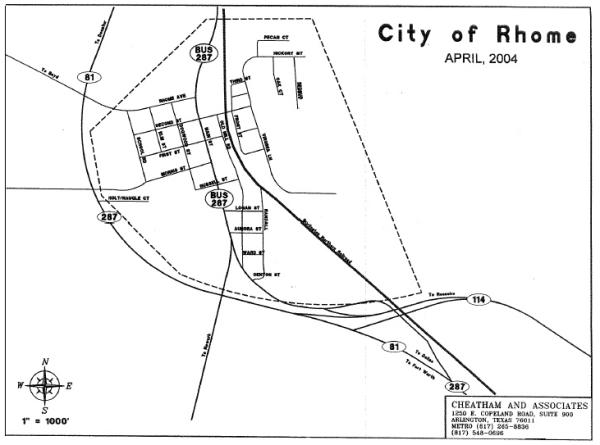
The SF-7.2 - Single-Family Residential District - 7,200 is intended to be similar to the SF-8.4 except composed of detached single-family residences on lots of not less than seven thousand two hundred (7,200) square feet. There is hereby created an overlay district within certain areas of the City which shall be designated as Old Town Rhome and such is, herein, more particularly described on the attached map which is also hereby incorporated within this section and the overall Zoning Ordinance. - PERMITTED USES:
- Those uses specified in Section 34 (Use Charts)
- Single-family detached dwellings.
- Such uses as may be permitted under the provisions of Specific Use Permits Section 32.
- HEIGHT REGULATIONS:
Two and one-half (2-1/2) stories or thirty-five feet (35') for the main building. One story for accessory buildings without garages. - AREA REGULATIONS:
Regulations and requirements for the OTR overlay district:- Only those uses specified in the base zoning for these districts may be allowed as provided in the overall Zoning Ordinance Submission of Old Town Rhome Site Plan. Anyone desiring to build a new residential structure in the overlay district must first submit a site plan showing a survey which will also show all easements and public facilities and a footprint for the proposed buildings.
- Submission of Old Town Rhome Site Plan. Anyone desiring to build a new residential structure in the overlay district must first submit a site plan showing a survey which will also show all easements and public facilities and a footprint for the proposed buildings. Such site plan will also show the following:
- Off-street parking: Two (2) off-street parking spaces shall be required for each residence at each location which shall be constructed of four-inch (4") thick reinforced concrete to the property line.
- Rear yard setback requirements shall be a minimum of fifteen feet (15').
- Front yard setback shall be twenty-five feet (25') from the front property line.
- Side yard setback minimum shall be five feet (5') and, on a corner lot, fifteen feet (15') towards the cornering streets.
- Setbacks to garage shall be a minimum of twenty-five feet (25').
- Rear yard will be fenced with a privacy fence, which shall be a minimum of six feet (6') in height, or a chain-link fence.
Special Exceptions- Special Exceptions are hereby authorized within the boundaries of the Old Town Rhome overlay district, regardless of the use district at each location, with respect to carports, decks and awnings which extend into the twenty-five foot (25') setback on the front of any structure within the district. These special exceptions shall be only granted through the normal procedures for the granting of special exceptions and are to be according to the normal standards for the granting of Special Exceptions anywhere within this ordinance.
- Size of Lots:
- Minimum Lot Area - Seven thousand two hundred (7,200) square feet.
- Minimum Lot Width - Sixty feet (60')
- Minimum Lot Depth - One hundred feet (100')
- Size of Yards:
- Minimum Front Yard - Twenty-Five feet (25')
- Minimum Side Yard - Ten percent (10%) of the lot width but no more than fifteen feet (15') required; fifteen feet (15') on corner lot adjacent to a street.
- Minimum Rear Yard - Twenty feet (20') adjacent to an alley, fifteen feet (15') if no alley exists.
- Maximum Lot Coverage:
Forty percent (40%) to be occupied by main and accessory structures. - Parking Regulations
Single-Family Dwelling Unit - Two (2) enclosed spaces behind the front building line on the same lot as the main structure. (See Section 36, Off-Street Parking and Loading Requirements.) - Minimum Dwelling Unit Area - One thousand four hundred (1,400) square feet.
- Size of Lots:
- SPECIAL REQUIREMENTS:
- No permanent use of temporary dwellings, such as recreational vehicles, travel trailers or motor home, may be for used for on-site dwelling purposes.
- Electrical fencing and barbed wire is prohibited as perimeter fencing except for containment of farm animals on two (2) acres or larger.
- Open storage is prohibited (except for materials for the resident’s personal use or consumption, e.g., firewood, gardening material, etc.).
- Single-family homes with side entry garages, where lot frontage is only to one street (not a corner lot), shall have a minimum of twenty-five feet (25') from the door face of the garage to the side property line for maneuvering.
- Other Regulations - As established in the Development Standards, Section 35 through 45.
SECTION 18.C SF-6 - SINGLE-FAMILY RESIDENTIAL DISTRICT - 6,000
- GENERAL PURPOSE AND DESCRIPTION
The SF-6 - Single-Family Residential District - 6,000 is intended to be similar to the SF-7.2 except composed of detached single-family residences on lots of not less than six thousand (6,000) square feet. There is hereby created an overlay district within certain areas of the City which shall be designated as Old Town Rhome and such is, herein, more particularly described on the attached map which is also hereby incorporated within this section and the overall Zoning Ordinance. - PERMITTED USES:
- Those uses specified in Section 34 (Use Charts)
- Single-family detached dwellings.
- Such uses as may be permitted under the provisions of Specific Use Permits Section 32.
- HEIGHT REGULATIONS:
Two and one-half (2-1/2) stories or thirty-five feet (35') for the main building. One story for accessory buildings without garages. - AREA REGULATIONS:
Regulations and requirements for the OTR overlay district.- Only those uses specified in the base zoning for these districts may be allowed as provided in the overall Zoning Ordinance Submission of Old Town Rhome Site Plan. Anyone desiring to build a new residential structure in the overlay district must first submit a site plan showing a survey which will also show all easements and public facilities and a footprint for the proposed buildings.
- Submission of Old Town Rhome Site Plan. Anyone desiring to build a new residential structure in the overlay district must first submit a site plan showing a survey which will also show all easements and public facilities and a footprint for the proposed buildings. Such site plan will also how the following:
- Off-street parking: Two (2) off-street parking spaces shall be required for each residence at each location which shall be constructed of four-inch (4") thick reinforced concrete to the property line.
- Rear yard setback requirements shall be a minimum of fifteen feet (15').
- Front yard setback shall be twenty-five feet (25') from the front property line.
- Side yard setback minimum shall be five feet (5') and, on a corner lot, fifteen feet (15') towards the cornering streets.
- Setbacks to garage shall be a minimum of twenty-five feet (25').
- Rear yard will be fenced with a privacy fence, which shall be a minimum of six feet (6') in height, or a chain-link fence.
Special Exceptions- Special Exceptions are hereby authorized within the boundaries of the Old Town Rhome overlay district, regardless of the use district at each location, with respect to carports, decks and awnings which extend into the twenty-five foot (25') setback on the front of any structure within the district. These special exceptions shall be only granted through the normal procedures for the granting of special exceptions and are to be according to the normal standards for the granting of Special Exceptions anywhere within this ordinance.
- Size of Lots:
- Minimum Lot Area - Six thousand (6,000) square feet.
- Minimum Lot Width - Fifty-five feet (55')
- Minimum Lot Depth - One hundred feet (100')
- Size of Yards:
- Minimum Front Yard - Twenty-Five feet (25')
- Minimum Side Yard - Ten percent (10%) of the lot width but no more than fifteen feet (15') required; fifteen feet (15') on corner lot adjacent to a street.
- Minimum Rear Yard - Twenty feet (20') adjacent to an alley, fifteen feet (15') if no alley exists.
- Maximum Lot Coverage:
Forty percent (40%) to be occupied by main and accessory structures. - Parking Regulations
Single-Family Dwelling Unit - Two (2) enclosed spaces behind the front building line on the same lot as the main structure. (See Section 36, Off-Street Parking and Loading Requirements.) - Minimum Dwelling Unit Area - One thousand three hundred (1,300) square feet.
- Size of Lots:
- SPECIAL REQUIREMENTS:
- No permanent use of temporary dwellings, such as recreational vehicles, travel trailers or motor home, may be for used for on-site dwelling purposes.
- Electrical fencing and barbed wire is prohibited as perimeter fencing except for containment of farm animals on two (2) acres or larger.
- Open storage is prohibited (except for materials for the resident’s personal use or consumption, e.g., firewood, gardening material, etc.).
- Single-family homes with side entry garages, where lot frontage is only to one street (not a corner lot), shall have a minimum of twenty-five feet (25') from the door face of the garage to the side property line for maneuvering.
- Other Regulations - As established in the Development Standards, Section 35 through 45.
SECTION 18.D SF-5 - SINGLE-FAMILY RESIDENTIAL DISTRICT - 5,000
- GENERAL PURPOSE AND DESCRIPTION
The SF-5 - Single-Family Residential District - 5,000 is intended to be similar to the SF-6 except composed of detached single-family residences on lots of not less than five thousand (5,000) square feet. There is hereby created an overlay district within certain areas of the City which shall be designated as Old Town Rhome and such is, herein, more particularly described on the attached map which is also hereby incorporated within this section and the overall Zoning Ordinance. - PERMITTED USES:
- Those uses specified in Section 34 (Use Charts)
- Single-family detached dwellings.
- Such uses as may be permitted under the provisions of Specific Use Permits Section 32.
- HEIGHT REGULATIONS:
Two and one-half (2-1/2) stories or thirty-five feet (35') for the main building. One story for accessory buildings without garages. - AREA REGULATIONS:
- Only those uses specified in the base zoning for these districts may be allowed as provided in the overall Zoning Ordinance Submission of Old Town Rhome Site Plan. Anyone desiring to build a new residential structure in the overlay district must first submit a site plan showing a survey which will also show all easements and public facilities and a footprint for the proposed buildings.
- Submission of Old Town Rhome Site Plan. Anyone desiring to build a new residential structure in the overlay district must first submit a site plan showing a survey which will also show all easements and public facilities and a footprint for the proposed buildings. Such site plan will also how the following:
- Off-street parking: Two (2) off-street parking spaces shall be required for each residence at each location which shall be constructed of four-inch (4") thick reinforced concrete to the property line.
- Rear yard setback requirements shall be a minimum of fifteen feet (15').
- Front yard setback shall be twenty-five feet (25') from the front property line.
- Side yard setback minimum shall be five feet (5') and, on a corner lot, fifteen feet (15') towards the cornering streets.
- Setbacks to garage shall be a minimum of twenty-five feet (25').
- Rear yard will be fenced with a privacy fence, which shall be a minimum of six feet (6') in height, or a chain-link fence.
Special Exceptions- Special Exceptions are hereby authorized within the boundaries of the Old Town Rhome overlay district, regardless of the use district at each location, with respect to carports, decks and awnings which extend into the twenty-five foot (25') setback on the front of any structure within the district. These special exceptions shall be only granted through the normal procedures for the granting of special exceptions and are to be according to the normal standards for the granting of Special Exceptions anywhere within this ordinance.
- Size of Lots:
- Minimum Lot Area - Five thousand (5,000) square feet.
- Minimum Lot Width - Fifty feet (50')
- Minimum Lot Depth - One hundred feet (100')
- Size of Yards:
- Minimum Front Yard - Twenty-Five feet (25')
- Minimum Side Yard - Ten percent (10%) of the lot width but no more than fifteen feet (15') required; fifteen feet (15') on corner lot adjacent to a street.
- Minimum Rear Yard - Twenty feet (20') adjacent to an alley, fifteen feet (15') if no alley exists.
- Maximum Lot Coverage:
Forty percent (40%) to be occupied by main and accessory structures.
- Size of Lots:
- Parking Regulations
Single-Family Dwelling Unit - Two (2) enclosed spaces behind the front building line on the same lot as the main structure. (See Section 36, Off-Street Parking and Loading Requirements.) - Minimum Dwelling Unit Area - One thousand two hundred (1,200) square feet.
- SPECIAL REQUIREMENTS:
- No permanent use of temporary dwellings, such as recreational vehicles, travel trailers or motor home, may be for used for on-site dwelling purposes.
- Electrical fencing and barbed wire is prohibited as perimeter fencing except for containment of farm animals on two (2) acres or larger.
- Open storage is prohibited (except for materials for the resident’s personal use or consumption, e.g., firewood, gardening material, etc.).
- Single-family homes with side entry garages, where lot frontage is only to one street (not a corner lot), shall have a minimum of twenty-five feet (25') from the door face of the garage to the side property line for maneuvering.
- Other Regulations - As established in the Development Standards, Section 35 through 45.
SECTION 19 2F - TWO-FAMILY RESIDENTIAL DISTRICT - DUPLEX
- GENERAL PURPOSE AND DESCRIPTION:
The 2-F, Two-Family Residential is intended to promote stable, quality multiple-occupancy residential development at slightly increased densities. Individual ownership of the two-family or duplex units is encouraged. This District may include entire neighborhoods, or, when, in accordance with the intent of the Master Plan, may provide a “buffer” or transition district between lower density residential areas and higher or nonresidential areas, or major thoroughfares. - PERMITTED USES:
- Those uses specified in Section 34 (Use Charts).
- Two-family residence (duplex).
- All uses allowed in the SF-20 Zoning District.
- Such uses as may be permitted under the provisions of Specific Use Permits, Section 32.
- HEIGHT REGULATIONS:
Maximum Height - Two and one-half (2-1/2) stories, not to exceed thirty-five feet (35') for the main building. One story for accessory buildings without garages. - REGULATIONS:
- Size of Lots:
- Minimum Lot Area - Eight thousand four hundred (8,400) square feet for each pair of dwelling units or four thousand two hundred (4,200) square feet per unit.
- Minimum Lot Width - Seventy feet (70'); thirty-five feet (35') for each dwelling unit.
- Minimum Lot Depth - One hundred feet (100').
- Size of Yards:
- Minimum Front Yard - Twenty-five feet (25').
- Minimum Side Yard - Ten percent (10%) of the lot width, but no more than fifteen feet (15') required; fifteen feet (15') on corner lot adjacent to street.
- Minimum Rear Yard - Twenty feet (20'), if adjacent to an alley; fifteen feet (15') if no alley exists.
- Maximum Lot Coverage: Fifty percent (50%) by main buildings.
- Parking Regulations:
- Residential Structures - A minimum of two (2) enclosed spaces for each unit behind the front building line on the same lot as each dwelling unit. (See Section 36, Off-Street Parking and Loading Requirements.)
- Minimum Dwelling Area Size - One thousand one hundred (1,100) square feet.
- Lots in the 2-F District shall be platted in pairs such that a duplex may be placed on each pair of lots for the purpose of encouraging individual ownership of each side or unit. The subdivision plat shall designate the pairs of lots and which lot lines are to be the outside lot lines of each pair. There shall be only one dwelling unit per lot, and no dwelling unit shall cross a designated outside lot line. No single-family detached dwelling may be constructed on one of the designated pair of lots.
- All utilities shall be provided separately to each duplex in a 2-F District so that each unit is individually metered.
- Single-family dwellings constructed in this District shall conform to the standards as set forth in the SF-10 District.
- A preliminary plat is required at the time of zoning approval for duplex subdivisions.
- Size of Lots:
- SPECIAL REQUIREMENTS:
- No permanent use of temporary dwellings, such as travel trailers, recreational vehicles, or motor homes, may be used for on-site dwelling purposes.
- Electrical fencing and barbed wire is prohibited as perimeter fencing except for containment of farm animals on two (2) acres or larger.
- Open storage is prohibited (except materials for the resident’s personal use or consumption such as firewood, gardening materials, etc.).
- Single-family homes with side entry garages, where lot frontage is only to one street (not a corner lot), shall have a minimum of twenty-five feet (25') from the door face of the garage to the side property line for maneuvering.
- Other Regulations - As established in the Development Standards, Sections 35 through 45.
SECTION 20 MF - MULTIPLE-FAMILY DISTRICT - 20
- GENERAL PURPOSE AND DESCRIPTION:
The MF, Multiple-Family Residential District is an attached residential district intended to provide the highest residential density of twenty (20) dwelling units per acre. The principal permitted land uses will include low-rise multiple-family dwellings, and garden apartments. Recreational, religious, health and educational uses normally located to serve residential areas are also permitted in this District. This District should be located adjacent to a major thoroughfare and serve as a buffer between retail/commercial development, or heavy automobile traffic, and medium or low density residential development. - PERMITTED USES:
- Those uses specified in Section 34 (Use Charts).
- Multiple-family dwelling greater than two (2) units per building.
- Municipally owned facilities and uses.
- Leasing offices for an apartment complex.
- Temporary buildings for uses incidental to construction work on the premises, which said buildings shall be removed upon the completion or abandonment of construction work, by order of the Building Official.
- Accessory buildings and uses, customarily incidental to the above uses and located on the same lot therewith, but not involving the conduct of a retail business except as provided herein:
- The term accessory use shall include customary home occupations as herein defined. Accessory buildings, including a private garage, shall not occupy more than sixty percent (60%) of the minimum required rear yard. When the accessory building is directly attached to the main building, it shall be considered an integral part of the main building. When the accessory building is attached to the main building by a breezeway, the breezeway is considered a part of the accessory building. Accessory buildings larger than two hundred (200) square feet require a specific use permit. (See Section 39 for additional accessory building regulations.)
- Covered parking areas.
- One antenna, and/or satellite dish antenna per complex located in the rear yard or as specified in Section 42.
- Swimming Pool (private).
- Family Home.
- Common open space, community center, recreational building, and other facilities or amenities, provided they are for use by the residents and guests of the multifamily complex.
- Such uses as may be permitted under the provisions of Specific Use Permits, Section 32.
- HEIGHT REGULATIONS:
Maximum Height - Two and one-half (2-1/2) stories, or thirty-five feet (35'). An accessory building, excluding recreational buildings, shall be limited to one (1) story in height. - AREA REGULATIONS:
- Size of Lots:
- Minimum - Two thousand one hundred seventy-eight (2,178) square feet per dwelling unit, not to exceed twenty (20) dwelling units per acre, calculated on gross acreage. The minimum lot size shall be twenty thousand (20,000) square feet.
- Minimum Lot Width - Seventy feet (70').
- Minimum Lot Depth - One hundred twenty feet (120').
- Size of Yards:
- Minimum Front Yard - Forty feet (40'). All areas adjacent to a street shall be deemed front yards.
- Minimum Side Yard - Fifteen feet (15'); sixty feet (60') when building is in excess of one story in height and adjacent to a Single-Family Zoning District.
- Minimum Rear Yard - Twenty feet (20'); eighty feet (80') when the building is in excess of one story and adjacent to a Single-Family Zoning District.
- Building Separation - One story, fifteen feet (15'), two stories, twenty feet (20') between buildings without openings (windows or doors); one story, twenty-five feet (25'), two stories, thirty-five [feet] (35') between buildings with openings.
- Minimum Area per Dwelling Unit - Seven hundred fifty (750) square feet per unit plus one hundred fifty (150) square feet for each additional bedroom over one.
- Maximum Lot Coverage: Fifty percent (50%) total, including main and accessory buildings.
- Parking Regulations:
- 1.75 per each efficiency or 1 bedroom unit.
- 2 per each 2 bedroom unit.
- 2.5 per each 3 bedroom unit.
- 3 per each 4 or more bedroom unit.
- Fifty percent (50%) of the required parking spaces shall be covered.
- All parking areas shall be screened from view adjacent to public streets. Screening may be in the form of live plant materials, berms, or brick masonry walls.
- See Section 36, Off-Street Parking and Loading Requirements.
- Size of Lots:
- REFUSE FACILITIES:
- Every multifamily dwelling unit shall be located within two hundred fifty feet (250') of a refuse facility; measured along the designated pedestrian and vehicular travel way. A refuse facility shall be a dumpster or other similar receptacle designed for receiving garbage in bulk for more than one dwelling. Refuse dumpsters shall be no closer than thirty feet (30') to any adjacent single-family property.
- Each refuse facility shall be screened from view on three (3) sides from anyone standing at ground level on the site or on the adjoining property, by an opaque wall of brick masonry not less than six (6) feet or more than eight (8) feet in height, or by an enclosure within a building. Refuse containers shall be provided and maintained in a manner to satisfy local public health and sanitary regulations. Each refuse facility shall be located so as to provide safe and convenient pickup by refuse collection agencies.
- SPECIAL DISTRICT REQUIREMENTS:
- Single-family or duplex units constructed in this District shall conform to SF-10 and 2F District standards, respectively.
- No permanent use of temporary dwellings, such as travel trailers, recreational vehicles, or motor homes, may be used for on-site dwelling purposes.
- Open storage is prohibited.
- Site plan with facade elevations is required for all multifamily developments in this District. If site plan and facade elevations are not approved at the time of zoning approval, a public hearing is required at the time of site plan approval as prescribed in Section 41.
- The front door of each apartment unit shall be no more than one hundred fifty feet (150') from a fire lane (measured by an unobstructed straight line).
- A paved walkway shall connect the front door of each ground floor unit to a parking area.
- Each multifamily complex shall provide recreational facilities designed for use by the tenants of the complex.
- Buildings shall not exceed two hundred feet (200') in length.
- All multifamily dwelling units shall have roof slopes with a minimum of 4:12 pitch.
- Buildings with facades that are longer than fifty feet (50') shall have their facades broken up into smaller areas through the use of varying facade setbacks, arcades, architectural features such as recessed vestibules, columns, canopies, or other “acceptable means.”
- Boats, campers, trailers and other recreational vehicles shall be prohibited unless oversize parking areas are provided. This parking area shall not be used to meet the minimum parking requirements and shall not be in view from a public street.
- All buildings containing residential units shall provide a sign, visible from the driveway, identifying the unit numbers within the building.
- All mechanical, heating and air conditioning units shall be screened or hidden from view.
- Usable Open Space - Each lot or parcel of land, which is used for multiple-family residences, shall provide on the same lot or parcel of land, usable open space (as defined below) in accordance with the following requirements:
An area of common usable open space shall have a slope not exceeding ten percent (10%), shall have no dimension of less than ten (10) feet, and may include landscaping, walks, recreational facilities, water features and decorative objects such as artwork or fountains. Usable open space shall not include rooftops; accessory buildings; parking areas; driveways; turnaround areas; or the right-of-way or easement for streets or alleys. - At the time of site plan approval, the Planning and Zoning Commission may recommend, and the City Council may approve, credit for usable open use [space] requirements under the following conditions:
- Up to three (3) square feet for each one (1) square foot of area provided for the following recreational facilities:
- Swimming pools, tennis courts. Racquetball courts or similar facilities.
- Decks, patios or lounge areas adjacent to or within ten (10) feet of swimming pools.
- Children’s play areas developed with play equipment.
- Usable portions of recreational buildings.
- Partial or full credit may be given for on-site open space that exceeds the minimum slope (as defined in this Ordinance), if it is determined that such areas are environmentally or aesthetically significant and their preservation would enhance the development and community. In determining environmental and aesthetic significance, the Planning and Zoning Commission and City Council will consider:
- Preservation of significant trees or other natural vegetation.
- Contribution to on-site retention of stormwater or natural control of drainage.
- Preservation of vistas and other qualities.
- Buffer or transition between the multifamily use and other uses.
- Available off-site open space may be credited for up to one-third (1/3) of the usable open space requirement if:
- Fifteen percent (15%) or more of the site’s boundary is adjacent to park land.
- There are defined pedestrian connections between the multifamily development and park land.
- Permanent usable open space is within one hundred feet (100') of the development that is available for use by the general public.
- The design of the development provides a significant visual and pedestrian connection in park land.
- The combined credit for areas calculated at a three-to-one basis, and off-site parks or usable open space, shall not exceed fifty percent (50%) of the total usable open space requirement for each multifamily development.
- Up to three (3) square feet for each one (1) square foot of area provided for the following recreational facilities:
- Other Regulations: As established in the Development Standards, Sections 35 through 45
SECTION 21 O - OFFICE DISTRICT
- GENERAL PURPOSE AND DESCRIPTION:
The Office District is established to create a flexible District for low intensity office and professional uses generally in buildings two (2) stories or less. Permitted uses should be compatible with adjacent residential areas by limiting heights to one (1) story and utilizing buffers and landscape requirements established by the District. Adaptive reuse of existing structures is encouraged. Sites zoned “O” may be built over two (2) stories in height if located away from any properties zoned for single-family. Buildings in this District should be compatible and in similar scale with residential uses and adjacent property. - USES PERMITTED:
- Those uses specified in Section 34 (Use Charts).
- Accessory uses to the main use.
- Professional, administrative, and general office uses.
- Uses permitted by Specific Use Permit according to Section 32.
- HEIGHT REGULATIONS:
- Maximum Height - Two (2) stories; if additional height over two stories is desired, then an additional setback is required. (See Subsection D,1,d and D,1,e)
- Roof Pitch - Buildings shall have a roof pitch of 4:12 if adjacent to a residential use or zoning district.
- REGULATIONS:
- Size of Yards:
- Minimum Front Yard: Twenty-five feet (25'); all yards adjacent to a street shall be considered a front yard.
- Minimum Side Yard: Exterior, ten feet (10'); interior, none.
- Minimum Rear Yard: Twenty feet (20').
- Adjacent to a Single-Family District: The side or rear setback, whichever is adjacent to the single-family zoning district, shall observe a sixty-foot (60') setback if the office use is over one story in height.
- Additional setback for structures over 2 stories: One additional one-foot (1') setback for each additional two feet (2') in height above 2 stories.
- Size of Lots:
- Minimum Lot Size: Seven thousand (7,000) square feet.
- Minimum Lot Width: Sixty feet (60').
- Lot Depth: One hundred feet (100').
- Size of Yards:
- SPECIAL DISTRICT REQUIREMENTS:
- Maximum Floor Area Ratio: 0.5:1. (See Illustration 15 for example.)
- Parking Requirements: As established by Section 36, Off-Street Parking and Loading Requirements.
- Open storage is prohibited.
- For site plan requirements, see Section 41.
- No permanent use of temporary dwellings, such as travel trailers or mobile homes, may be used for on-site dwelling or nonresidential purposes.
- All mechanical, heating and air conditioning equipment shall be screened from public view.
- Other Regulations: As established in the Development Standards, Sections 35 through 45.
SECTION 22 RESERVED
RESERVED
SECTION 23 R RETAIL DISTRICT
- GENERAL PURPOSES AND DESCRIPTION:
The R, Retail District is established to provide locations for various types of general retail trade, business and service uses. These shopping areas should utilize established landscape. The “R” District should be located along or at the intersection of major collectors or thoroughfares to accommodate higher traffic volumes. - PERMITTED USES:
- Those uses specified in Section 34 (Use Charts).
- Such uses as may be permitted under the provisions of Specific Use Permits, Section 32.
- HEIGHT REQUIREMENTS:
None. - AREA REQUIREMENTS:
- Size of Lot:
- Minimum Lot Area - Five thousand (5,000) square feet.
- Minimum Lot Width - Fifty feet (50').
- Minimum Lot Depth - One hundred feet (100').
- Size of Yard:
- Minimum Front Yard - Twenty-five feet (25').
- Minimum Side Yard - Five feet (5') adjacent to a street or residential property.
- Interior Side Yards - When retail uses are platted adjacent to other retail and other nonresidential uses, no side yard is required provided:
- both property owners agree to adjoining buildings;
- adequate fire lanes and circulation is provided on-site;
- appropriate building codes can be met.
- Minimum Rear Yard - Twenty-five feet (25').
- Maximum Lot Coverage: Forty percent (40%).
- Parking Regulations: As required by Section 36, Off-Street Parking and Loading Requirements.
- Size of Lot:
- CONSTRUCTION STANDARDS:
The exterior of all buildings and structures located in the Retail/Neighborhood Services zoning district shall be constructed of fire resistive materials. A minimum of eighty percent (80%) of the exterior walls, exclusive of doors and windows, shall be constructed of masonry or glass wall construction in accordance with the City’s building code and fire prevention code. Building facades which face or side any public street or residential zoning district or otherwise have public exposure shall be constructed entirely of stone, brick or glass wall construction. Other construction methods and materials utilizing architectural design and creativity and/or designs that result in compatibility with surrounding developed properties will be considered subject to approval by the Planning & Zoning Commission and City Council.- Exterior Lighting:
All exterior lighting designed for security, illumination, parking lot illumination or advertising and which is placed within this zoning district shall be designed in such a manner as to ensure that it does not extend into adjacent properties. Lighting must comply with the City Lighting Ordinance. - Landscape Improvements:
- Purpose:
- Promote water conservation.
- Promote energy conservation.
- Encourage planting and preservation of frees and vegetation.
- Increase ground permeability.
- Enhance the aesthetic quality of the City of Rhome.
- All landscaping must be compliant with the City landscape ordinance.
- A Registered Landscape Architect, or a Landscape Designer or Landscape Contractor knowledgeable in plant materials and landscape design shall prepare landscape plans.
- A Licensed Irrigator or Landscape Architect shall prepare irrigation plans. Any landscape plan should be based on Landscape Plan Requirements. It is highly recommended that the Texas A&M Agricultural Extension Service Xeriscape Landscape publication be consulted.
- All sprinkler systems shall be designed in such a manner as to prevent water runoff and to eliminate overspray into adjoining streets, driveways or parking areas.
- All landscaping shall be maintained and plant materials shall be kept in a healthy and growing condition.
- Drip systems shall be required in confined spaces of four feet (4') or less between paved surfaces.
- No tree or shrub shall be placed in such a manner as to create a hazard to vehicular or pedestrian traffic.
- Purpose:
- Exterior Lighting:
- OTHER REGULATIONS:
- As established in the Development Standards, Sections 35 through 45.
- For site plan requirements see Section 41.
- No permanent use of temporary dwellings, such as travel trailers or mobile homes, may be used for on-site dwelling purposes.
- All mechanical, heating and air conditioning equipment shall be screened from public view.
- Open storage is prohibited.
- Outdoor Storage of Trash Receptacles: Outdoor storage shall be at the side or rear of the site and shall be totally enclosed by a masonry enclosure.
SECTION 24 TC - TOWN CENTER DISTRICT
- GENERAL PURPOSE AND DESCRIPTION:
The Town Center District is a concentrated center of business activity creating a focal point in the center of Rhome. The Town Center District implements the recommendations set forth in the approved Town Center guidelines, adopted June 16, 1999. The Town Center District is primarily nonresidential with residential allowed as part of the overall mixed use nature of the area. The District is divided into development cells and regulated with site plan review and design review using special development standards. A greater development intensity is permitted as a result of the coordinated review requirements and special development standards. It is also an area where the City intends to support development of capital improvements to facilitate the achievement of the overall Town Center Plan contained in the Town Center Guidelines. - SUB-DISTRICTS CREATED:
Development proposed within the Town Center District is required to conform in general to sub-districts created for the purpose of facilitating the implementation of the Town Center Plan. The sub-districts correspond to cells discussed in the Town Center Guidelines and generally shown in the “Framework Plan” of that document. Precise boundaries for the sub-districts are identified through the site plan review process required as part of this district. As the boundaries of the sub-districts are fixed in the site plan review process, they shall be recorded on the City’s official zoning map.
The boundaries for sub-districts shall be determined based on the following factors:- The location of major thoroughfares as shown on the City’s Thoroughfare Plan or, as determined by the subdivision or site planning process for development(s) within the Town Center District.
- The location of the floodplain or delineation of environmentally sensitive areas to be preserved. All floodplains shall be determined by acceptable engineering practices. Only floodplain reclamation that contributes to the implementation of the Town Center Framework Plan will be permitted.
- The location of transitional uses that serve to buffer one use from another in conformance with the concepts of the Town Center Framework Plan.
- The ability to develop tracts within the sub-district in accordance with the Town Center Framework Plan.
- SITE PLAN REQUIRED:
- The criteria for site plan approval shall be in accordance:
- With the process and standards specified in Section 41, Site Plan Review;
- With the development standards for this District; and,
- In general conformance with the Town Center Guidelines as approved and hereafter so amended by the City of Rhome, June 16, 1999.
- All changes and amendments to a site plan for development in the Town Center District shall require a public hearing in accordance with Section 10 except for minor changes that meet the requirements of Section 41(B,2), in which case the City Secretary may approve the modification.
- The criteria for site plan approval shall be in accordance:
- DESIGN REVIEW REQUIRED:
- All nonresidential development within the Town Center District shall be subject to design review as part of the site plan review process.
- Purpose - Design review is required in this District to ensure that development within the District is in conformance with design guidelines for the Town Center and that:
- The proposed development is architecturally compatible with other development in the surrounding areas;
- The proposed development is within the character of the Town Center concept as a community focal point with quality development having pedestrian orientation, suitable amenities, and an overall design theme, and,
- Development that occurs at different times does not adversely affect the overall value of the Town Center area through incompatibility with existing development within the district.
- Process - Design review within the Town Center District will be carried out as part of the site plan review process.
- The following additional items shall be submitted at the time a site plan review is initiated:
- Architectural plans that show front, side and rear elevations of all existing and proposed structures on the lot;
- The plans shall show a reasonable likeness to the materials and colors proposed for the structures on the lot;
- A written document describing how the proposed development complies with the design requirements of this District, including appropriate descriptions and/or specifications for the materials to be used; and,
- Any other reasonable and pertinent information that the City Secretary determines is necessary for design review.
- Upon submission of the required materials for design review, the City Engineer shall review for completeness and advise the applicant if any other materials are needed. The staff shall let the applicant know of any shortcomings with the proposed development prior to the required public hearings on the site plan so that corrections can be made.
- Based on its review, staff may recommend approval, approval with conditions, or denial. In all cases of approval with conditions or denial, staff shall furnish the Planning and Zoning Commission and City Council with the specific reasons why the proposal does not meet the standards for approval.
- Review will be based on the standards contained in the following section and on the overall concepts contained in the Town Center Guidelines. Denial or approval with conditions shall be based only on the standards contained in this ordinance.
- The City may establish a citizen design review committee to advise the staff and/or the Planning and Zoning Commission on matters of design. If formed, such a committee shall have at least one architect, one landscape architect, and any other individuals with the qualifications to advise on design matters.
- The following additional items shall be submitted at the time a site plan review is initiated:
- DESIGN STANDARDS:
The design review process shall be based on the following design standards:- Materials
- Metal buildings, including accessory buildings are prohibited anywhere in the Town Center District. Where existing buildings are made of metal, they shall be replaced with other materials or screened using landscaping.
- Primary building materials shall project an image of quality and permanence; these include brick, stone, and glass.
- No mirror or highly reflective glass shall be used. Ground-floor areas along pedestrian walks in retail areas shall be predominately transparent materials that allow views into and out of the buildings. (Also see Section 24(F,2,d))
- No florescent paints, florescent colors, or exterior florescent neon tubular lights shall be used. Colors shall be compatible with one another.
- Character of the Building Forms
- Buildings within the Town Center shall have 4:12 pitched roof lines unless otherwise specifically approved on the site plan. Flat roofs are prohibited except on buildings over two (2) stories in height.
- The predominant height of buildings along the street line or along pedestrian ways should be one to two stories in height. Where taller buildings are developed, their vertical facades shall be broken up by the use of pitched roof lines at the one or two story levels, arcades, setbacks above the first or second levels, or other acceptable means.
- Buildings with facades that are longer than fifty (50) feet shall have their facades broken up into smaller areas through the use of varying facade setbacks, arcades, architectural features such as plazas, columns, canopies, or other acceptable means. In reviewing this attribute of a proposed building, its relationship with adjacent buildings shall be considered.
- Any facade oriented adjacent to a street or pedestrian way shall have at least 50 (50%) percent of its ground floor wall transparent.
- Buildings within sub-district B shall be oriented to a system of interior pedestrian ways and on-site environmental amenities. Buildings within this sub-district may also be oriented to parking as a secondary orientation.
- Design Compatibility with Development
- As development occurs in the Town Center District under this section, design review shall also consider the design compatibility of a proposed development with existing buildings and structures in the Town Center District.
- Design compatibility means having physical attributes such as building materials, colors, building forms, architectural detailing, and amenities that are coordinated with and complementary of those attributes in existing development. It does not mean that all development has to be the same. Often, compatibility can be achieved by sharing one or two attributes in common.
- Materials
- DEVELOPMENT STANDARDS:
- Site Orientation and Layout
- Buildings shall be oriented to the creek, lakes, or other environmental amenities. Within Sub-District B, buildings shall be oriented toward an internal pedestrian way and the internal streets in order to create a cohesive, pedestrian-oriented development plan.
- On properties located away from the environmental amenities, parking areas shall be located at the side or rear of buildings to improve the overall appearance from the road.
- Site layouts on individual lots shall be designed so that pedestrian connections between buildings and lots within the overall Town Center Framework Plan can be achieved.
- Buildings shall be designed to form courtyards and other pedestrian-oriented environments, and to allow for internal landscaping of the site.
- Building locations shall be chosen to maintain and enhance views of major natural and man-made features of the Town Center area.
- Pad sites within Sub-district A shall be limited to the following:
- Pad sites shall occupy no more than two (2) corners of any street intersection and shall be two (2) acres or less.
- Pad sites shall not block visibility of retail development located behind the pad site. No more than two (2) pad sites shall be located adjacent to each other.
- As a general guideline, pad sites shall be limited to a ratio of one pad site per 500 linear feet of arterial street frontage.
- Regardless of frontage, the maximum number of pad sites per cell shall be: 0 for cells 5, 7, 10 and 11 and for Sub-district D (cells 8 and 9); 1 for cell 4 (not to be located on FM 1709); 2 for cell 6; 4 for cell 2; 2 for cell 1; and 3 for Cell 3 (only 2 allowed on FM 1709.)
- Pedestrian Circulation
- Each lot within the Town Center area shall provide its share of on-site pedestrian facilities. Where the concept plan shows connections to other properties, adequate provisions shall be made for creating a coordinated system of pedestrian ways throughout the district.
- Grade separations shall be provided where pedestrian ways cross thoroughfares or creeks.
- Trails shall be a minimum of 5 feet in width where designed for pedestrian-only travel. Where bicycle travel is anticipated, a minimum width of 8 feet shall be required.
- Surface treatment of walkways and trails shall be of a permanent material in keeping with the overall design character in the Town Center Guidelines.
- Facilities for bike parking shall be provided.
- Building Height, Setback and Density
- Building height, setback and density shall conform to the following standards in this district:
Unless otherwise stated, the building height in the Town Center district shall be two (2) stories, not to exceed thirty-five (35) feet. Restaurant use, kiosks and fuel pump canopies may be single-story in height by right. Hotel uses in the Town Center South sub-district only may be three (3) stories in height by right. Single-story building heights and three (3) story building heights may be approved by Specific Use Permit. Maximum height shall be three (3) stories. If single-story building is proposed the building facade shall either be a minimum height of twenty feet (20') or shall reflect a two-story design to provide for compatibility with other buildings in the area. Single-Family Attached Dwelling (Townhouse) and Patio Home uses shall meet the maximum heights as per the Design Standards within this section. - The exceptions listed above shall not be applied if it would result in a Site Plan that is incompatible with development on an adjacent site.
- Development standards in the remainder of this zoning ordinance shall apply unless specifically listed in this section.
- Building height, setback and density shall conform to the following standards in this district:
- Parking
- The design and layout of parking within the Town Center District shall conform to the following standards to the maximum extent possible:
- Parking lots shall be designed to avoid disturbing the dripline and to save as many of the existing trees (over five inches (5") in caliper measured twelve inches (12") above the ground) as possible.
- Separate pedestrian circulation through parking areas shall be provided.
- Drop-off areas shall be provided throughout the development.
- Changes in pavement or grade shall be used to indicate pedestrian crossings.
- All primary parking shall be constructed of either reinforced concrete or concrete pavers.
- Traffic islands or turnabouts shall be used to add visual interest and directional guidance to parking lots.
- Shared parking within a Sub-district will be considered on a case-by-case basis to reduce the overall amount of parking required. A reduction for shared parking shall be based on the following factors, and in no case shall exceed a reduction of over thirty (30%) percent of the otherwise required parking. (Also see Section 36(G,6))
- The uses clearly shall have mutually exclusive hours of operations; or
- A secondary use shall draw patrons from a primary use and not from the public at large (e.g., a shop selling sundries within a hotel); and
- The reductions in parking and the hours of operation shall be made part of the Certificate of Occupancy record for that use.
- The design and layout of parking within the Town Center District shall conform to the following standards to the maximum extent possible:
- Street Furnishings and Lighting
Private development within the Town Center District shall coordinate the selection and installation of street furniture and lighting with the standards selected by the City for the public areas in order to maintain design continuity. - Paving Design
- In pedestrian areas, colored or textured concrete, modular paving units or other durable, visually interesting paving materials shall be used.
- Pedestrian paving design shall carry over from one development within the Town Center area to another to ensure design continuity.
- Signs
- Signage within the Town Center area shall conform to the standards for signs in the remainder of the City (see Section 38), with the exceptions provided in this subsection.
- Within Sub-district B, one large Town Center identification sign that provides a focal point within the area may be approved. The focal point identification sign shall identify the area as a whole and may be used to announce special events and other civic activities.
- Within the Town Center area, buildings that face into an internal pedestrian way may have signs that are perpendicular to the building facade. In addition, restaurants that open onto internal pedestrian ways may display menu boards in front of the business to advertise daily specials.
- The visual appearance and lighting plans for signs within the Town Center shall be evaluated to ensure the overall visual continuity of the Town Center concept. All signs shall be lit from the front unless specifically approved on the site plan.
- Directional signs may be placed within the roadway medians and along the trail system to provide guidance to automobile and pedestrian traffic. These signs may not contain any type of commercial messages.
- Tree Preservation and Landscape Improvements
- Once the City has developed a master landscape plan for the proposed streets in the Town Center area, landscaping of adjacent parcels shall be done in a compatible manner.
- Existing trees within the Town Center area shall be preserved to as great an extent as possible.
- Landscape requirements shall extend over the entire tract within the Town Center area. In addition to the landscaped buffer required in subsection F,3 above, a minimum of fifteen percent (15%) of the remaining site shall be landscaped area (also see Section 37, Landscape Requirements).
- Tree planting in the required landscape buffer in the Town Center District shall meet all of the requirements in Section 37 (Landscape Requirements) except all sub-districts shall have one tree per thirty feet (30') of street frontage.
- Utility Placement
All utilities within and serving the Town Center District shall be placed underground. However, major long distance transmission lines that are along major thoroughfares may be above ground until such time as it is economically feasible to put them below ground.
- Site Orientation and Layout
SECTION 25 "C" COMMERCIAL DISTRICT
- General Purpose and Description:
The Commercial District is a business district comprised of business, professional service establishments, office spaces, entertainment facilities, and retail stores that serve the regional area including persons living outside the boundaries of the city. Commercial zoning districts are generally located with access to the major thoroughfares including city, county, state, and federal highways. All buildings must comply with the Texas Accessibility Standard.
No new residential use or new residential construction is permitted in this zoning district. Residential use existing when land is newly zoned Commercial shall be grandfathered as long as the building or structure is continuously used for residential purposes. Once a building or structure in this district is used for other than residential purposes, it cannot be used for residential purposes in the future. - Permitted Uses:
- Permitted Uses
- Any use permitted in the Local Retail district.
- Commercial Art Gallery
- Business or Technical College
- Recreation use: commercial amusement centers, bowling alleys, driving ranges, and miniature golf courses, skating rinks.
- Large department stores, home improvement centers, landscape or nursery centers, and supermarkets.
- Service Stations limited to two (2) acres with no overnight parking.
- Transportation terminal for passenger service, air, bus, and rail.
- Veterinarian office with outdoor kennels or pens for large animals. No outside kennels or pens are allowed when abutting residential zoned property.
- Restaurant with dine-in or drive-thru service.
- Outpatient medical offices.
- Health and physical fitness centers and gymnasiums.
- Auditoriums, theaters, and cinemas.
- New vehicle dealership.
- Food or convenience stores.
- Any similar uses approved by the Planning and Zoning Commission and the City Council, which are not noxious, or offensive because of odors, smoke, dust, noise, fumes, vibrations, or in violation of the Sexually Orientated Business Ordinance.
All uses within this district shall be of retail or service character. A mixture of uses may be undertaken provided they occur within a unified development project.
- Accessory Uses:
Any use may be established as an accessory use to a permitted principal use provided that such accessories use:- Is customarily incident to and is maintained and operated as a part of the principal use; and,
- Is not hazardous to and does not impair the use or enjoyment of nearby property in greater degree than the principal use with which it is associated; and
- Does not create levels of noise, odors, vibration and lighting, or degrees of traffic congestion, dust or other pollutants, in a greater amount than that customarily created by the principal use; and,
- Is located behind the minimum front and side street building setback lines, except that parking areas may extend to the property lines along front and side streets.
- Special Exceptions
Special Exceptions for uses not listed may be approved by the Planning and Zoning Commission and City Council.
- Permitted Uses
- Construction Standards:
- Nonresidential:
All nonresidential uses shall be of exterior fire resistant construction having at least seventy-five (75%) percent of the total exterior walls above grade level, excluding doors and windows, constructed of masonry, metal, stucco, or glass wall construction, in accordance with the City’s building code and fire prevention code.
Building facades which face or side any public street or residential zoning districts, or otherwise have public exposure, shall be entirely constructed of stone, metal, brick, glass or a combination thereof [and] at least 50% of these facades must be stone, brick or stone [sic] on building facing city thoroughfare. Strict adherence to this rule shall not be such as to prevent architectural creativity. Consideration for exceptions shall be based only on the following and subject to approval by the City Council:- Architectural design and creativity.
- Compatibility with surrounding developed properties.
- Metal Buildings (main or primary)
In the Commercial zoning district, primary metal buildings may be permitted. The term Metal buildings shall include every building with exterior metal walls.
When walls are metal, the use of corrugated panels is prohibited; profiled panels, deep ribbed panels and concealed fastener systems are permitted. Exterior finish for metal walls fronting or siding on public streets shall be of a permanent material such as a baked or enamel finish or painted to the wall manufacturer’s standards. The use of galvanized, corrugated aluminum coated, zinc-aluminum coated, or unpainted metal finish is prohibited. - Temporary Construction Buildings
Temporary buildings and temporary building material storage areas to be used for construction purposes may be permitted for a specific period of time in accordance with a permit issued by the Building Inspector and subject to periodic renewal by the inspector for cause shown. Upon completion or abandonment of construction or expiration of permit, such field offices and building shall be removed at the satisfaction of the Building Code Official.
All building materials shall be noted and described on the site plan. - Height and Area Regulations
Development in the Commercial District shall be compatible with the development in the district with which it adjoins. The uniform height and area regulations set forth shall apply to all buildings, walls, and uses established on all premises contained within the district but shall be subject to the specific limitations and modifications set forth elsewhere in this Ordinance.- Height - No building or structure shall exceed three stories.
- Front yard - There shall be a front yard of no less than twenty-five (25') feet.
- Side yard - There shall be a side yard of not less than fifteen (15') feet or twenty-five (25') feet if adjacent to a street.
- Zero lot line development may be permitted on a common interior lot line where construction of a common party wall is used and when approved by the City Council after being recommended by the Planning and Zoning Commission.
- Rear yard - There shall be a rear yard of not less than ten feet (10').
- Maximum Lot Coverage: All building and structures shall have a maximum lot coverage not exceeding fifty (50%) percent of the lot area.
- Floor Area: Each shop, store or business shall have a minimum of five hundred (500) square feet of floor area, but the minimum size for a separate building or structure existing within this district shall be two thousand (2,000) square feet. There is no limitation for maximum floor space.
- Pedestrian Circulation:
- Each lot with the area should provide its share of on-site pedestrian facilities. Where the concept plan shows connections to other properties, adequate provisions should be made for creating a coordinated system of sidewalks throughout the district.
- Grade separations shall be provided where sidewalks cross thoroughfares or creeks.
- Trails should be a minimum of five (5') feet in width where designed for pedestrian-only travel.
- Surface treatments of walkways and trails shall be of a permanent material in keeping with the overall design character
- In pedestrian areas, colored or textured concrete, modular paving units or other durable, visually appealing and interesting paving materials shall be used.
- Pedestrian paving design shall carry over from one development within the area to another to ensure design continuity.
- Building Height, Setback and Density:
- Building height, setback and density shall conform to the following standards in this district. Two (2) stories, thirty-five feet (35'); maximum of three (3) stories, if an additional setback is met. One story, twenty-five feet (25') if within one hundred feet (100') of a developed SF Zoning District/lot. Architectural features may exceed twenty-five feet (25').
- The exceptions listed above shall not be applied if it would result in a site plan that is incompatible with development on an adjacent site.
- Development standards in the remainder of this zoning ordinance shall apply unless specifically listed in this section.
- Trash Receptacles:
Outdoor storage of trash receptacles shall be at the side or rear of the site and shall be totally encircled or screened with a masonry enclosure with a solid gate. - Parking:
- The design and layout of parking within the district shall conform to the following standards to the maximum extent possible.
- Parking lots shall be designed to avoid disturbing the drip-line and to save as many of the existing trees (over five inches (5") in caliper measured twelve (12") inches above the ground) as possible.
- Separate pedestrian circulation through parking areas shall be provided.
- Drop-off areas should be provided throughout the development
- Changes in pavement or grade should be used to indicate pedestrian crossings.
- All primary parking shall be constructed of either reinforced concrete or concrete pavestone.
- Use traffic island or turnabouts to add visual interest and directional guidance to parking lots.
- Shared parking within a Sub-district will be considered on a case-by-case basis to reduce the overall amount of parking required. A reduction for shared parking shall be based on the following factors, and in no case shall exceed a reduction of over thirty (30%) percent of the otherwise required parking.
- Off-street parking spaces may be located within the required front, side, and rear yard of any retail or service establishment, however, such off-street parking spaces shall be on a hard-surfaced drive or parking area and will be in accordance with city parking ordinance. All parking lots must comply with the minimum expectations set forth in the Texas Accessibility Standard.
- The design and layout of parking within the district shall conform to the following standards to the maximum extent possible.
- Street Furnishings and Lighting:
Private development within the area shall coordinate the selection and installation of street furniture and lighting with the standards selected by the City for the public areas in order to maintain design continuity.
Proposed addition to Lighting:
All exterior lighting in this district shall comply with the city Lighting Ordinance and shall be designed to enhance security and safety of patrons without being offensive to this or adjacent zoning districts. - Signs:
- Signage within the area shall conform to the standards for signs in the remainder of the City (see Section 38), with the exceptions provided in this subsection.
- Within Sub-district B, one large identification sign that provides a focal point within the area may be approved. The focal point identification sign that provides a focal point within the area may be approved. The focal point identification sign shall identify the area as a whole.
- Within the area, buildings that face into an internal pedestrian way may have signs that are perpendicular to the building facade. In addition, restaurants that open onto internal pedestrian ways may display menu boards in front of the business to advertise daily specials.
- The visual appearance and lighting plans for signs within the area shall be evaluated to ensure the overall visual continuity of the concept. All signs shall be lit from the front unless specifically approved on the site plan.
- Directional signs may be placed within the roadway medians and along any trail system to provide guidance for automobile and/or pedestrian traffic. These signs may not contain any type of commercial message.
- Tree Preservation and Landscape Improvements:
- Landscape plans shall be prepared by a Registered Landscape Architect, a Landscape Designer, knowledgeable in plant materials and landscape design may also prepare the landscape plan. Irrigation plans shall be prepared by a Licensed Irrigator or Landscape Architect. The City of Rhome strongly recommends that any landscape plan be based on the guidelines set forth in the Texas A&M Agricultural Extension Service’s Xeriscape Landscape Water Conservation publication. Plant sources should be based on this publication and the soil of a specific location.
- Landscape Plan Requirements: The following items shall be provided on the required landscape plan:
- Sheet size 22" x 34"
- All sprinkler systems shall be designed in such a manner as to minimize water runoff and to eliminate overspray into adjoining streets, driveways, or parking areas.
- All landscaping shall be maintained and plant material shall be kept in a healthy and growing condition.
- Drip systems shall be required in confined spaces of four feet or less between paved surfaces.
- No tree or shrub shall be placed in such a manner as to create a hazard to vehicular or pedestrian traffic.
- Plants shall be larger than a minimal size as stated below:
- Canopy Tree
- Single Stem/Trunk - 1-1/2" caliper
- Multi-trunk Clump - 6 feet high
- Accent or Understory Tree - 4 feet high
- Shrub
- Deciduous - 15" high
- Evergreen - 12" high
- Ground cover - 4" containers
- Canopy Tree
- If living trees must be removed as part of any permit required, two trees shall be planted as replacements for each tree removed.
- Street Front Trees: Shade or ornamental trees shall be provided at the equivalent of one tree per 30 linear feet of street frontage, or fraction thereof. Such trees may be located in any area facing a public street or paved parking area adjacent to a public street. Trees may be placed in the public right-of-way if adequate space is available and if they do not interfere with existing or future utility services. Pre-approval of trees in the right-of-way is required.
- Parking Lot Trees: Shade trees shall also be required in parking areas at a minimum rate of one tree per 15 parking spaces.
- Nonresidential:
SECTION 26 I INDUSTRIAL DISTRICT
- General Purpose and Description:
This zoning district is designed to accommodate heavy industrial uses and those activities, which clearly generate significant negative environmental impacts, which might negatively affect surrounding properties. These sites are not designed to be located contiguous to residentially zoned properties and should be located in such a manner as to preclude the necessity to transit through residentially zoned areas to reach these sites. This zoning classification should never be placed in an environmentally sensitive area and should be allocated only to those areas appropriately supported by public utility infrastructure and major arterial thoroughfares. Environmental impacts of the uses permitted within this zoning classification should be carefully considered in determining which areas of the city are suitable for this classification. No new residential use or construction shall be permitted in the Heavy Industrial District. - Uses
- Permitted Uses:
- All uses permitted within the Light Industrial Zoning Classification.
- Agricultural implement and tractor sales and service
- Automobile and motorcycle sales, rentals, and service
- Bottling Plants
- Brick, tile, pottery, or terra-cotta manufacturing
- Building material storage
- Bus terminal, maintenance shop
- Contractor’s plan or storage yard
- Corrugated metal manufacture
- Cotton storage
- Electroplating activities
- Feed grinding and processing
- Flour mills
- Food products manufacturing
- Grain elevator and storage
- Lumber yards
- Machine shops
- Milling, custom
- Mobile home manufacturing
- Mobile home sales
- Moving, storage, packing of household goods, crate manufacturing
- Oil well equipment sales, service and/or storage
- Pharmaceutical manufacturing
- Prefabricated or ready-built house or portable building manufacturing and sales
- Printing plant or newspaper
- Railroad yards or shops
- Appliance Manufacturer
- Road machinery sales and service
- Rolling mills
- Sandblasting
- Septic tank services
- Steel and aluminum fabrication plants; metal shop
- Stone cutting; monument works
- Tank manufacturing
- Textile manufacturing
- Tile Roofing manufacturing
- Trailer or camper manufacturing
- Trailer or truck sales, long-term leasing or service
- Truck or railway freight terminal, depot or station
- Truck stops
- Truck terminals, maintenance, and storage
- Warehousing
- Welding shops, equipment, and supplies
- Woodworking shops
- Any and all other uses of a manufacturing character not specifically identified under the terms and conditions of this ordinance permitted use list may be permitted as a special exception use. Special exceptions will be granted upon the recommendation of the Planning and Zoning Committee and approval by the City Council.
- Accessory Uses:
Any use may be established as an accessory use to a permitted principal use provided that such accessory uses:- Is customarily incident to and is maintained and operated as a part of the principal use; and,
- Is not hazardous to and does not impair the use or enjoyment of nearby property in greater degree than the principal use with which it is associated; and
- Does not create levels of noise, odors, vibration and lighting, or degrees of traffic congestion, dust or other pollutants, in a greater amount than that customarily created by the principal use; and
- Is located behind the minimum front and side street building setback lines, except that parking areas may extend to the property lines along front and side streets.
- Special Exception Uses
Special exception uses may be approved by the City Council upon recommendation from the Planning and Zoning Commission. Uses must be in full and complete compliance with any and all conditions set forth in this ordinance. The City Council may impose additional standards for special use.
- Permitted Uses:
- Construction Standards:
- All buildings shall be of exterior fire resistant construction having at least seventy-five (75) percent of the total exterior walls above grade level, excluding doors and windows, constructed of masonry, metal, stucco, or glass wall construction, in accordance with the City’s building code and fire prevention code. All buildings must comply with the Texas Accessibility Code. Building facades which face or side any public street or residential zoning districts, or otherwise have public exposure, shall be entirely constructed of stone, metal, brick, glass or a combination thereof. Metal exterior walls shall be compatible in color with the principal building and existing structures. Strict adherence to this rule shall not be such as to prevent architectural creativity.
In the Heavy Industrial District, primary metal buildings may be permitted. The term Metal Buildings shall include every building with exterior metal walls.
When walls are metal, the use of corrugated panels is prohibited; profiled panels, deep ribbed panels, and concealed fastener systems are permitted. Exterior finish for metal walls fronting or siding on public streets shall be of a permanent material such as a baked or enamel finish or painted to the wall manufacturer’s standards. The use of galvanized corrugated aluminum coated, zinc-aluminum coated, or unpainted metal finish is prohibited.
Consideration for exceptions shall be based only on the following and subject to approval by the City Council:- Architectural design and creativity.
- Compatibility with surrounding developed properties.
- Temporary Construction Buildings:
Temporary buildings and temporary building material storage areas to be used for construction purposes may be permitted for a specific period of time in accordance with a permit issued by the Building Inspector and subject to periodic renewal by the inspector for cause shown. Upon completion or abandonment of construction or expiration of permit, such field offices and building shall be removed at the satisfaction of the Building Code Official. - Development Regulations:
- Height: No building or structure shall exceed the capabilities of the city of Rhome fire department equipment.
- Front Yard: Any and all lots within this district that directly abut lots or tracts zoned in a residential classification and which share a common frontage upon a public street or right-of-way with the residentially zoned property shall maintain a minimum front yard of forty (40) feet. All the lots within this district shall maintain a minimum front yard of thirty (30) feet.
- Side Yard: There shall be a side yard of not less than fifteen (15) feet except where the lot abuts property zoned as single-family residential there shall be a side yard of not less than twenty-five (25) feet.
- Zero lot line development may be permitted on a common interior lot line where construction of a party wall is used and when approved by the City Council after a recommendation from the Planning and Zoning Committee. Party walls must be constructed between properties and must have at least a four-hour fire-resistant rating. Where zero lot line development is utilized, the equivalent open space and plantings (normally provided in adjoining buffer yards along the common lot line) shall be provided elsewhere within the two developing lots. A concept plan meeting the requirements of this ordinance is required to be submitted with a request for zero lot line development. Approval shall be based upon an analysis of the location, the configuration, and the impact and compatibility of the construction with adjacent land uses.
- Rear Yard: There shall be a rear yard of not less than ten (10) feet except where the lot abuts property zoned as single-family residential there shall be a rear yard of not less than twenty-five (25) feet.
- Exterior Lighting: All exterior lighting designed for security, illumination, parking lot illumination, or advertising and which is placed within this zoning district shall be designed in such a manner as to ensure that it does not extend into adjacent properties. Lighting must comply with the City Lighting Ordinance.
- Outdoor Storage of Trash Receptacles: Outdoor storage shall be at the side or rear of the site and shall be totally enclosed by a masonry enclosure.
- Off-Street Vehicle Parking: Off-street vehicle parking may be located within the required front yard of any industrial site, however, such off-street parking space shall be on a hard-surfaced drive or parking area. All parking must be in compliance with the Texas Accessibility Code and the city Parking Ordinance.
- Maximum Impervious Coverage: The maximum impervious coverage shall not exceed eighty percent (80%) of the total lot area.
- Signage within the area shall conform to the standards set forth in the city sign ordinance.
- All landscaping must be compliant with the city landscape ordinance.
- A Registered Landscape Architect, a Landscape Designer, knowledgeable in plant materials and landscape design, shall prepare landscape plans. A Licensed Irrigator or Landscape Architect shall prepare irrigation plans. Any landscape plan should be based on Landscape Plan Requirements. It is highly recommended that the Texas A&M Agricultural Extension Service Xeriscape Landscape publication be consulted.
- Sheet size 22" x 34"
- All sprinkler systems shall be designed in such a manner as to prevent water runoff and to eliminate overspray into adjoining streets, driveways, or parking areas.
- All landscaping shall be maintained and plant material shall be kept in a healthy and growing condition.
- Drip systems shall be required in confined spaces of four feet or less between paved surfaces.
- No tree or shrub shall be placed in such a manner as to create a hazard to vehicular or pedestrian traffic.
- A Registered Landscape Architect, a Landscape Designer, knowledgeable in plant materials and landscape design, shall prepare landscape plans. A Licensed Irrigator or Landscape Architect shall prepare irrigation plans. Any landscape plan should be based on Landscape Plan Requirements. It is highly recommended that the Texas A&M Agricultural Extension Service Xeriscape Landscape publication be consulted.
- SITE PLAN:
A site plan meeting all requirements of the city shall be required prior to the issuance of the building permit for any construction within the Heavy Industrial District.
- All buildings shall be of exterior fire resistant construction having at least seventy-five (75) percent of the total exterior walls above grade level, excluding doors and windows, constructed of masonry, metal, stucco, or glass wall construction, in accordance with the City’s building code and fire prevention code. All buildings must comply with the Texas Accessibility Code. Building facades which face or side any public street or residential zoning districts, or otherwise have public exposure, shall be entirely constructed of stone, metal, brick, glass or a combination thereof. Metal exterior walls shall be compatible in color with the principal building and existing structures. Strict adherence to this rule shall not be such as to prevent architectural creativity.
- PERFORMANCE STANDARDS:
- The following are maximum accepted levels of noise, vibration, smoke, particulate matter, and toxic and noxious matter allowable for industrial uses. If the proposed use is to emit sanitary sewage effluent containing industrial waste or effluent into the City of Rhome sanitary sewage system, which is considered to be unusual or to be capable of damaging the sanitary sewage system. A description of methods of pretreatment must accompany the site plan. All business, or processing, except for off-street parking, off-street loading, display or merchandise for sale to the public, and establishments of the “drive-in” type, shall be conducted within completely enclosed buildings unless otherwise indicated.
- Noise - All uses or activities conducted within this zoning classification shall conform to the following standards for maximum allowable noise level as measured at all points along the property line of each tract or use:
- The single event maximum sound disturbance created by any business activity or use within this district between the hours of 6:00 a.m. - 9:00 p.m. shall be 85 decibels.
- The single event maximum sound disturbance created by any business activity or use within this district between the hours of 9:00 p.m. - 6:00 a.m. shall be 55 decibels.
- The maximum Leq average for a business or activity within this district shall be 65 Leq between 7:00 a.m. - 5:00 p.m.
- The maximum Leq average for a business or activity within this district shall be 60 Leq between 5:00 p.m. - 10:00 p.m.
- Vibration - At the point of measurement taken on the property line of the source property which has the highest reading, the sound pressure level or impact level of any operation or plant shall not exceed the decibel limits for the octave bands designated in Column I below, unless the point of measurement is located on a property line which is also the boundary line of a residential district, in which case the limit set forth in Column II shall apply.
- [Decibel Limits]
Frequency (cycles per second) Column I Displacement Inches Column II Displacement Inches 0 to 10 .0008 .0022 11 to 20 .0005 .0016 21 to 30 .0002 .0010 31 and over .0001 .0005 - Steady State - Vibrations, for the purpose of this ordinance, which are continuous or, if in discrete pulses, are more frequent the [than] sixty (60) per minute. Impact vibrations, that is discrete pulses, which do not exceed sixty (60) pulses per minute, shall not cause in excess of twice the displacement stipulated.
- [Decibel Limits]
- Smoke, Particulate Matter and Visible Emissions - Smoke or visible emissions emitted from any vent, stack, chimney, skylight, or window shall not exceed opacity of twenty (20) percent averaged over a five (5) minute period. Any emission of air pollutant must be in accordance with the requirements of the State of Texas. Emissions shall not exceed any of the following net ground level concentrations.
One hundred micrograms per cubic meter of air sampled averaged over any five consecutive hours.
Two hundred micrograms per cubic meter of air samples, averaged over any three consecutive hours.
Four hundred micrograms per cubic meter of air samples, averaged over any one hour. - Toxic and Noxious Matter - The handling[,] processing, storage and disposal of hazardous, toxic, or noxious materials within this district shall be in accordance with applicable State and Federal laws and regulations. In addition, the Planning and Zoning Commission may establish additional performance standards, including setbacks, berms, and buffers, for the siting of facilities which handle, treat, store, or dispose of potentially hazardous or dangerous materials.
- Odor - No operation shall permit odors to be released, which are detectable at the property, line and which offensively affect the sense of smell.
- Fire Hazards - The storage, utilization or manufacture of solid materials or products ranging from incombustible to moderately combustible is permitted in accordance with applicable city codes and ordinances. The storage, utilization or manufacture of solid materials or products ranging from free burning to intense burning is permitted in accordance with applicable city codes and ordinances provided the following condition is met:
Said materials or products shall be stored, utilized, or manufactured within completely enclosed buildings having incombustible exterior walls and protected throughout by an automatic fire extinguishing system.
The storage, utilization, or manufacture of flammable liquids or gases, which produce flammable or explosive vapors, shall be permitted in accordance with (exclusive of storage of finished products in original sealed containers) the city fire code, the approval of the city council, and the fire chief. - Additional Standards - The Planning and Zoning Commission may recommend to the City Council the establishment of additional performance standards to protect neighboring areas and land uses from potential industrial hazards and nuisances necessary. In the event that a new or unusual industrial use or activity is proposed for a location within this zoning district, the Planning and Zoning Commission will consider whether or not an investigation or analysis should be performed to identify reasonable performance standards for the proposed use. If the Planning and Zoning Commission should determine that additional standards should be considered, they will identify the areas to be studied and will forward a recommendation to the City Council for action. The City Council shall hold a hearing to determine if research should be undertaken on these areas of performance standards development. At the conclusion of this hearing, the City Council may direct city staff to employ such consultants as are necessary to conduct the appropriate research necessary to develop the standards required for successful management of the new project. Any and all costs incurred by the City in this regard shall be chargeable as portions of the building permit costs or zoning application fee (whichever is applicable) for the project or construction activity requiring this research.
SECTION 27 "LI" LIGHT INDUSTRIAL DISTRICT
- General Purpose and Description:
The LI, Light Industrial District is intended primarily for the conduct of light manufacturing, assembling and fabrication, and for warehousing, wholesaling and service operations that do not depend upon frequent customer or client visits. Such uses do require accessibility to major highways, rail lines or other means of transportation.
This zoning district is envisioned to accommodate industrial, manufacturing, fabrication, wholesale, and storage activities of a low intensity, industrial or manufacturing character. This district has been established to accommodate the location of those uses that are clearly industrial in character, but whose operation does not generate significant negative environmental impacts for surrounding properties. Land uses which will be generally be found within this district will be a mixture of uses involving fabrication, manufacturing, assembly, processing, distribution, sale of and repair of material goods, parts, products, equipment, machinery, and other such operations incidental to industrial uses. These sites are not designed to be located contiguous to residentially zoned properties and should be located in such a manner as to preclude the necessity to transit through residentially zoned areas to these sites. This zoning district classification shall be located in those areas designed to accommodate industrial development and the provision of thoroughfares designed to accommodate industrial-level traffic. This zoning category is not appropriate for environmentally sensitive areas. - Uses:
- Permitted Uses:
The following uses are permitted in the “LI” District, provided that such manufacturing or industrial operation shall not disseminate dust, fumes, gas, noxious odor, smoke, glare, or other atmospheric influence beyond the boundaries of the property on which such use is located and which produces noise not exceeding the average intensity of noise of street traffic at that point and provided that such use does not create fire hazards on surrounding property.
Industrial and manufacturing plants including the processing or assembling of parts for production of finished equipment where the process of manufacturing or treatment of materials is such that no dust, odor, gas, smoke or noise is emitted and not more than twenty (20) percent of the lot or tract is used for open storage of products, material, or equipment.- Aluminum product fabrication*
- Armature winding
- Bakery, wholesale
- Blacksmithing or horse shoeing, farrier
- Broom Manufacturing
- Candle Manufacturing
- Candy plant or production facility
- Carpet cleaning operations
- Clothing Manufacturing
- Cold storage warehouse; without size limitation
- Commercial school, including trade school
- Compounding of cosmetics and toiletries
- Creamery and dairy product processing
- Egg storage, candling, sorting and grading
- Electronic components manufacturing and assembly
- Factory Outlet on same premises as production facility
- Feed Store
- Glass blowing
- Ice manufacturing and bulk ice storage
- Insulation application business
- Irrigation sales and services, pumps and equipment
- Janitorial or cleaning services
- Laboratory, chemical analysis, general analysis, physical testing
- Linen and towel service
- Mattress manufacturing or mattress renovation
- Manufacturing of medical and dental equipment
- Mini-warehouses
- Ornamental Iron Works*
- Pest Control businesses
- Plastic fabrication
- Plumbing, heating, refrigeration or air conditioning shop
- Public utility facilities
- Pump sales and services
- Roofing contractor business premises
- Sash and door manufacturing
- Sign manufacturing
- Spray painting shop
- Store fixture manufacturing and sales
- Any and all other uses of a manufacturing character not specifically identified under the terms and conditions of this ordinance permitted use list may be permitted as a special exception use. Special exceptions will be granted upon the recommendation of the Planning and Zoning Committee and approval by the City Council.
*Machine shops and fabrication of metal not more than ten (10) gauge in thickness
- Accessory Uses:
Any use may be established as an accessory use to a permitted principal use provided that such accessory uses:- Is customarily incident to and is maintained and operated as a part of the principal use; and,
- Is not hazardous to and does not impair the use or enjoyment of nearby property in greater degree than the principal use with which it is associated; and
- Does not create levels of noise, odors, vibration and lighting, or degrees of traffic congestion, dust or other pollutants, in a greater amount than that customarily created by the principal use; and
- Is located behind the minimum front and side street building setback lines, except that parking areas may extend to the property lines along front and side streets.
- Special Exception Uses
Special exception uses may be approved by the City Council upon recommendation from the Planning and Zoning Commission. Uses must be in full and complete compliance with any and all conditions set forth in this ordinance. The City Council may impose additional standards for special use.
- Permitted Uses:
- Construction Standards:
- All buildings shall be of exterior fire resistant construction having at least seventy-five (75) percent of the total exterior walls above grade level, excluding doors and windows, constructed of masonry, metal, stucco, or glass wall construction, in accordance with the City’s building code and fire prevention code. All buildings must comply with the Texas Accessibility Code. Building facades which face or side any public street or residential zoning districts, or otherwise have public exposure, shall be entirely constructed of stone, metal, brick, glass or a combination thereof. Metal exterior walls shall be compatible in color with the principal building and existing structures. Strict adherence to this rule shall not be such as to prevent architectural creativity.
In the Light Industrial District, primary metal buildings may be permitted. The term Metal Buildings shall include every building with exterior metal walls.
When walls are metal, the use of corrugated panels is prohibited; profiled panels, deep ribbed panels, and concealed fastener systems are permitted. Exterior finish for metal walls fronting or siding on public streets shall be of a permanent material such as a baked or enamel finish or painted to the wall manufacturer’s standards. The use of galvanized corrugated aluminum coated, zinc-aluminum coated, or unpainted metal finish is prohibited. When the site abuts any zoning other than heavy industrial; an eight foot (8') minimum masonry fence shall be required.
Consideration for exceptions shall be based only on the following and subject to approval by the City Council:- Architectural design and creativity.
- Compatibility with surrounding developed properties.
- Temporary Construction Buildings:
Temporary buildings and temporary building material storage areas to be used for construction purposes may be permitted for a specific period of time in accordance with a permit issued by the Building Inspector and subject to periodic renewal by the inspector for cause shown. Upon completion or abandonment of construction or expiration of permit, such field offices and building shall be removed at the satisfaction of the Building Code Official. - Development Regulations:
- Height: No building or structure shall exceed to capabilities of the city fire department’s equipment.
- Front Yard: Any and all lots within this district that directly abut lots or tracts zoned in a residential classification and which share a common frontage upon a public street or right-of-way with the residentially zoned property shall maintain a minimum front yard of thirty (30) feet. All the lots within this district shall maintain a minimum front yard of thirty (30) feet.
- Side Yard: There shall be a side yard of not less than fifteen (15) feet except where the lot abuts property zoned as single-family residential or on a corner lot; there shall be a side yard of not less than twenty-five (25) feet.
- Zero lot line development may be permitted on a common interior lot line where construction of a party wall is used and when approved by the City Council after a recommendation from the Planning and Zoning Committee. Party walls must be constructed between properties and must have at least a four-hour fire-resistant rating. Where zero lot line development is utilized, the equivalent open space and plantings (normally provided in adjoining buffer yards along the common lot line) shall be provided elsewhere within the two developing lots. A concept plan meeting the requirements of this ordinance is required to be submitted with a request for zero lot line development. Approval shall be based upon an analysis of the location, the configuration, and the impact and compatibility of the construction with adjacent land uses.
- Rear Yard: There shall be a rear yard of not less than ten (10) feet except where the lot abuts property zoned as single-family residential there shall be a rear yard of not less than twenty-five (25) feet.
- Maximum Lot Coverage: All buildings or structures shall have maximum lot coverage not exceeding sixty-five (65%) percent of the lot area.
- Lot Area: The minimum area of a Light Industrial Development shall be 3 acres.
- Floor Area: The minimum square footage of any structure existing within this district shall be one thousand (1,000) square feet.
- Exterior Lighting: All exterior lighting designed for security, illumination, parking lot illumination, or advertising and which is placed within this zoning district shall be designed in such a manner as to ensure that it does not extend into adjacent properties. Lighting must comply with the City Lighting Ordinance.
- Outdoor Storage of Trash Receptacles: Outdoor storage shall be at the side or rear of the site and shall be totally enclosed by a masonry enclosure.
- Off-Street Vehicle Parking: Off-street vehicle parking may be located within the required front yard of any industrial site; however, such off-street parking space shall be on a hard-surfaced drive or parking area. All parking must be in compliance with the Texas Accessibility Code and the city Parking Ordinance.
- Maximum Impervious Coverage: The maximum impervious coverage shall not exceed eighty (80%) of the total lot area.
- Site Plan - A site plan meeting all requirements of the city shall be required prior to the issuance of the building permit for any construction within the Light Industrial District.
- Fire Hazards - The storage, utilization or manufacture of solid materials or products ranging from incombustible to moderately combustible is permitted in accordance with applicable city codes and ordinances. The storage, utilization or manufacture of solid materials or products ranging from free burning to intense burning is permitted in accordance with applicable city codes and ordinances provided the following condition is met:
Said materials or products shall be stored, utilized, or manufactured within completely enclosed buildings having incombustible exterior walls and protected throughout by an automatic fire extinguishing system. - Additional Standards - The Planning and Zoning Commission may recommend to the City Council the establishment of additional performance standards to protect neighboring areas and land uses from potential industrial hazards and nuisances necessary. In the event that a new or unusual industrial use or activity is proposed for a location within this zoning district, the Planning and Zoning Commission will consider whether or not an investigation or analysis should be performed to identify reasonable performance standards for the proposed use. If the Planning and Zoning Commission should determine that additional standards should be considered, they will identify the areas to be studied and will forward a recommendation to the City Council for action. The City Council shall hold a hearing to determine if research should be undertaken on these areas of performance standards development. At the conclusion of this hearing, the City Council may direct city staff to employ such consultants as are necessary to conduct the appropriate research necessary to develop the standards required for successful management of the new project. Any and all costs incurred by the City in this regard shall be chargeable as portions of the building permit costs or zoning application fee (whichever is applicable) for the project or construction activity requiring this research.
- Signage within the area shall conform to the standards set forth in the city sign ordinance.
- Landscape Improvements:
- All landscaping must be compliant with the city landscape ordinance.
- A Registered Landscape Architect, a Landscape Designer, knowledgeable in plant materials and landscape design, shall prepare landscape plans. A Licensed Irrigator or Landscape Architect shall prepare irrigation plans. Any landscape plan should be based on Landscape Plan Requirements. It is highly recommended that the Texas A&M Agricultural Extension Service Xeriscape Landscape publication be consulted.
- Sheet size 22" x 34"
- All sprinkler systems shall be designed in such a manner as to prevent water runoff and to eliminate overspray into adjoining streets, driveways, or parking areas.
- All landscaping shall be maintained and plant material shall be kept in a healthy and growing condition.
- Drip systems shall be required in confined spaces of four feet or less between paved surfaces.
- No tree or shrub shall be placed in such a manner as to create a hazard to vehicular or pedestrian traffic.
- All landscaping must be compliant with the city landscape ordinance.
- All buildings shall be of exterior fire resistant construction having at least seventy-five (75) percent of the total exterior walls above grade level, excluding doors and windows, constructed of masonry, metal, stucco, or glass wall construction, in accordance with the City’s building code and fire prevention code. All buildings must comply with the Texas Accessibility Code. Building facades which face or side any public street or residential zoning districts, or otherwise have public exposure, shall be entirely constructed of stone, metal, brick, glass or a combination thereof. Metal exterior walls shall be compatible in color with the principal building and existing structures. Strict adherence to this rule shall not be such as to prevent architectural creativity.
SECTION 28 OVERLAY AND SPECIAL DISTRICTS
- OVERLAY AND SPECIAL DISTRICTS:
Overlay and Special Districts shall be used in conjunction with base zoning districts. In the use of the following overlay zoning classifications, the base district shall remain in effect if it is already in existence unless changed by zoning amendment. New base districts or changes in existing base districts may be requested at the same time overlay or special districts are requested.
SECTION 29 PD - PLANNED DEVELOPMENT DISTRICT
- GENERAL DESCRIPTION AND PURPOSE:
The Planned Development District is a district in which planned associations of uses developed as integral land use units such as industrial districts, offices, commercial or service centers, shopping centers, residential developments of multiple or mixed housing including attached single-family dwellings or any appropriate combination of uses which may be planned, developed or operated as integral land use units either by a single owner or a combination of owners. A PD District may be used to permit new or innovative concepts in land utilization not permitted by other zoning districts in this Ordinance. While greater flexibility is given to allow special conditions or restrictions that would not otherwise allow the development to occur, procedures are established herein to ensure against misuse of increased flexibility. - PERMITTED USES:
An application for a PD District shall specify the base district and the use or the combination of uses proposed. Uses that may be permitted in a PD are specified in the Use Charts (Section 34) and must be specified, if not permitted in the base district. In the case of residential PD districts for single-family or duplex categories, the proposed lot area shall be no smaller than the lot sizes allowed in the base zoning district, except for minor reductions in a small percentage of the lots, in order to provide improved design. In selecting a base zoning district the uses allowed in the base district must be similar or compatible with those allowed in the PD. A PD designation may not be applied to the TC, Town Center District, except for residential development in Sub-district D. PD designations shall not be attached to SUP requirements. Specific Use Permits allowed in a base zoning district are allowed in a PD only if specifically identified at the time of PD approval. - PLANNED DEVELOPMENT REQUIREMENTS:
- Development requirements for each separate PD District shall be set forth in the amending Ordinance granting the PD District and shall include, but may not be limited to, uses, density, lot area, lot width, lot depth, yard depths and widths, building height, building elevations, coverage, floor area ratio, parking, access, screening, landscaping, accessory buildings, signs, lighting, project phasing or scheduling, management associations, and other requirements as the City Council and Planning and Zoning Commission may deem appropriate.
- In the PD District, uses shall conform to the standards and regulations of the base zoning district to which it is most similar. The base zoning district shall be stated in the granting ordinance. All applications to the City shall list all requested deviations from the standard requirements set forth throughout this Ordinance, applications without this list will be considered incomplete. The Planned Development District shall conform to all other sections of the ordinance unless specifically excluded in the granting ordinance.
- The ordinance granting a PD District shall include a statement as to the purpose and intent of the PD granted therein. A specific list is required of modifications in each district or districts and a general statement citing the reason for the PD request.
- The minimum acreage for a planned development request shall be one (1) acre.
- ESTABLISHING A PLANNED DEVELOPMENT DISTRICT:
In establishing a Planned Development District in accordance with this section, the City Council shall approve and file as part of the amending Ordinance appropriate plans and standards for each Planned Development District. To facilitate understanding of the request during the review and public hearing process, the Planning and Zoning Commission and City Council shall require a Conceptual Plan of the proposed project. A Detailed Site Plan may be submitted in lieu of the Conceptual Plan.- Conceptual Plan - This plan shall be submitted by the applicant at the time of the PD request. The plan shall show the applicant’s intent for the use of the land within the proposed Planned Development District in a graphic manner and, as may be required, supported by written documentation of proposals and standards for development. The City may prepare application form(s) which further describe and explain the following requirements:
- Residential Conceptual Plan - A Conceptual Plan for residential land use shall show general use, thoroughfares and preliminary arrangements. For residential development such as multifamily, which does not propose individual platted lots; the conceptual plan shall set forth the size, type, and location of buildings and building sites, access, density, building height, fire lanes, screening, parking areas, landscaped areas, project scheduling, and other pertinent development data.
- Nonresidential Conceptual Plan - A Conceptual Plan for uses other than residential uses shall set forth the land use proposals in a manner which adequately illustrates the type and nature of the proposed development. Data which may be submitted by the applicant, or required by the Planning and Zoning Commission or City Council, may include, but is not limited to, the types of use(s), topography and boundary, physical features, existing streets, alleys and easements, location of future public facilities, building height and location, parking ratios, project scheduling and other information, which adequately describes the proposed development and which provides data for approval to be used in drafting the final Detailed Site Plan.
- Detailed Site Plan - The Detailed Site Plan shall set forth the final plans for development of the Planned Development District and shall conform to the data presented and approved on the Conceptual Plan. Changes in the Detailed Site Plan that differ from the original Conceptual Plan but do not alter the basic relationship of the proposed development to adjacent property (the uses permitted, increase the density, building height, coverage, off-street parking ratio, reduce the yards provided at the boundary of the site, and does not significantly alter the landscape plans) may be authorized by the City Council. Approval of the Detailed Site Plan shall be the basis for issuance of a building permit, but does not release the applicant’s responsibility to submit plans to the Building Official for a building permit.
For any residential district, AG through 2F, a preliminary plat shall qualify as the detailed Site Plan. The Detailed Site Plan may be submitted for the total area of the PD or for any sections or part as approved on the Conceptual Plan.- The Detailed Site Plan shall include:
- For nonresidential developments, a site inventory analysis including a scale drawing showing major existing vegetation, natural watercourses, creeks or bodies of water and an analysis of planned changes in such natural features as a result of the development. This should include a delineation of any floodprone areas.
- A scale drawing showing any proposed public or private streets and alleys; building sites or lots; and areas reserved as parks, parkways, playgrounds, utility easements, school sites, street widening and street changes; the points of ingress and egress from existing streets; general location and description of existing and proposed utility services, including size of water and sewer mains; the location and width for all curb cuts and the land area of all abutting sites and the zoning classification thereof on an accurate survey of the tract with a topographical contour interval of not more than five feet (5').
- A site plan for proposed building complexes showing the location of separate buildings and the minimum distance between buildings, and between building and property lines, street lines, and alley lines. Also to be included on the site plan is a plan showing the arrangement and provision of off-street parking.
- A conceptual landscape plan showing turf areas, screening walls, ornamental planting, wooded areas and trees to be planted.
- An architectural plan showing elevations and signage style to be used throughout the development in all districts except single-family and two-family may be required by the Planning and Zoning Commission or City Council if deemed appropriate.
- A Detailed Site Plan may have supplemental data describing standards, regulations, or other data pertinent to the development of the Planned Development District as appropriate to adequately explain or understand the request.
- The Detailed Site Plan shall include:
- Conceptual Plan - This plan shall be submitted by the applicant at the time of the PD request. The plan shall show the applicant’s intent for the use of the land within the proposed Planned Development District in a graphic manner and, as may be required, supported by written documentation of proposals and standards for development. The City may prepare application form(s) which further describe and explain the following requirements:
- Approval Process and Procedure:
The procedure for establishing a Planned Development District shall follow the procedure for zoning amendments as set forth in Section 10. This procedure is further expanded as follows for approval of Conceptual and Detailed Site Plans.- The Planning and Zoning Commission shall recommend and the City Council shall approve a Conceptual Plan or Detailed Site Plan in public hearings. One public hearing at the Planning and Zoning Commission and one at the City Council for the PD request is adequate when:
- Information on the Conceptual Plan and attached application is sufficient to determine the appropriate use of the land and the Detailed Site Plan will not deviate substantially from it; or,
- The applicant submits adequate data with the request for the Planned Development District to fulfill the requirement for a Detailed Site Plan.
- If the Detailed Site Plan conforms substantially to the Conceptual Site Plan as approved by the City Council, then a public hearing on the Detailed Site Plan is not required. The staff shall review the Detailed Site Plan for conformance to the Conceptual Plan and other requirements set forth for a Detailed Site Plan. Approval of a Detailed Site Plan by the City Council is required after review by the Planning and Zoning Commission prior to issuance of a building permit.
If the Detailed Site Plan is not in conformance with the Conceptual Plan, then a public hearing is required by the Planning and Zoning Commission and City Council prior to approval of the Detailed Site Plan. After approval by the City Council, a building permit may be issued for the project. - The amending ordinance establishing the Planned Development District shall not be approved until the Conceptual or Detailed Site Plan is approved.
- The Detailed Site Plan may be approved in sections. When a Site Plan is approved in sections, then separate approvals for subsequent sections or phases will be required.
- A Detailed Site Plan shall be submitted for approval within one (1) year from the date of approval of the Conceptual Plan. If a Detailed Site Plan is not submitted within one (1) year, the Conceptual Plan is subject to review by the Planning and Zoning Commission and City Council. If some portion of the project is not started within two (2) years, the Planning and Zoning Commission and City Council may review the original Conceptual Plan or Detailed Site Plan to ensure its continued validity. If the City determines the Conceptual Plan is not valid, a new Conceptual Plan must be approved prior to a Detailed Site Plan for the PD District. Although a new Conceptual Plan or Detailed Site Plan may be required to be approved, this does not affect the validity of the PD in terms of uses, density, and other development standards permitted in the PD.
- When a Planned Development District is being considered, a written form from the appropriate official (i.e. the City Engineer, or his designated representative) discussing the impact on planning, engineering, water utilities, electric, sanitation, building inspection, tax, police, fire, and traffic, as well as written comments from the applicable public agencies, shall be submitted to the Planning and Zoning Commission prior to the Commission making any recommendations to the City Council.
- The Planning and Zoning Commission shall recommend and the City Council shall approve a Conceptual Plan or Detailed Site Plan in public hearings. One public hearing at the Planning and Zoning Commission and one at the City Council for the PD request is adequate when:
- PD Districts Referenced on Zoning Map:
All Planned Development Districts approved in accordance with the provisions of this Ordinance in its original form, or by subsequent amendments thereto, shall be referenced on the Zoning District Map, and a list of such Planned Development Districts, together with the category of uses permitted therein, shall be maintained as part of this Ordinance - Appendix A-1. - Existing PD Districts:
Prior to adoption of this Ordinance, the City Council has established various Planned Development Districts, which are to be continued in full force and effect. The ordinances or parts of ordinances approved prior to this Ordinance, as specified in Appendix A-1, shall remain in full force and effect and are the conditions, restrictions, regulations and requirements which apply to the respective Planned Development Districts shown on the Zoning Map at the date of adoption of this Ordinance. - Uses or Developments Allowed Only by PD Districts:
Because of the uniqueness of the following uses in Rhome, they shall be permitted by PD designation only:- Single-Family Attached Dwelling (Townhouse)
- General Purpose and Description:
Single-family attached homes or townhouses allow for the development of attached, zero lot line units on individually platted lots. - Height Regulations:
Maximum Height - Two and one-half (2-1/2) stories for the main structures, one (1) story for accessory buildings. - Area Regulations:
- Minimum Front Yard - Twenty feet (20').
- Minimum Rear Yard - Twenty feet (20').
- Side Yard Regulations:
- Single-family attached dwellings need not have a side yard except that a minimum fifteen-foot (15') side yard is required adjacent to a street. The ends of any two adjacent building complexes or row of buildings shall be at least twenty feet (20') apart. The required side yards shall be designated upon a plat approved by the City Council.
- A complex of attached single-family dwellings shall have a minimum length of three dwelling units and shall not exceed one hundred fifty feet (150') in length or the width of six attached units.
- Size of Lots:
- Minimum Lot Area - Two thousand seven hundred (2,700) square feet.
- Minimum Lot Width - Twenty-five feet (25').
- Minimum Lot Depth - Ninety feet (90').
- Maximum Lot Coverage - Eighty-five percent (85%), including main and accessory buildings.
- Minimum Dwelling Unit Size - One thousand two hundred (1,200) square feet per unit.
- Parking Regulations:
- Two (2) enclosed spaces on the same lot as the main structure (see Section 36, additional requirements).
- In addition, parking shall be available for visitors, recreational use, clubhouse, or sales office. Designated visitor parking spaces shall be provided in common areas at a ratio of one (1) guest/visitor space per four (4) units.
- Open Space Requirement - All single-family attached developments shall provide usable open space at the same ratio as specified in Section 20(F,14 and F,15).
- General Purpose and Description:
- Patio Homes
- General Purpose and Description:
Patio homes allow for development of detached “zero lot line” homes in a modified residential district which encourage greater use of the side yard areas. Clustered lot patterns, with a common usable open space system, can be incorporated as an integral part of the development. - Height Regulations:
Maximum Height - Two and one-half (2-1/2) stories for the main structure; one (1) story for accessory buildings. - Area Regulations:
- Minimum Front Yard - Twenty-five feet (25').
- Minimum Rear Yard - Twelve feet (12'); twenty feet (20') for a structure accommodating required off-street parking, if provided access from a dedicated or private alley.
- Side Yard Regulations:
- Side Yard Setback: Side yard setbacks are one foot maximum on one side and nine feet (9) on the opposite side. The dwelling shall be no closer than ten feet (10') between the face of exterior walls of neighboring dwelling units.
- No roof overhang, gutter or extension from a wall will be allowed to extend into a neighboring property.
- The closest exterior roofline to an adjacent property shall be storm guttered if the general slope of the roof falls toward the neighboring property.
- Each adjacent lot shall provide an access or use easement of a minimum three feet (3'), adjacent to the “zero” (one foot) side or there must be a three foot (3') setback from the adjacent “zero” side to allow the property owner access for maintenance of his dwelling.
- The majority of one side of the structure shall be located within three feet (3') of one side lot line. The building wall that faces the “zero” side of the lot shall not have any doors, windows, ducts, grills, vents, or other openings.
- Minimum side yard setback adjacent to a street right-of-way is fifteen feet (15').
- Size of Lots:
- Minimum Lot Area - Five thousand (5,000) square feet.
- Minimum Lot Width - Fifty feet (50').
- Minimum Lot Depth - Ninety feet (90').
- Maximum Lot Coverage - Fifty percent (50%) total, including main and accessory buildings.
- Minimum Area of Dwelling Unit - Each unit shall have a minimum floor area of one thousand two hundred (1,200) square feet.
- Parking Regulations:
Two (2) enclosed spaces on the same lot as the main structure (see Section 36, Off-Street Parking and Loading Requirements)
- General Purpose and Description:
- Mobile Home Development
- General Purpose and Description:
The purpose of these regulations is to provide for HUD-code mobile homes. Every mobile home community, whether consisting of a mobile home development, park or subdivision, hereafter created, constructed, enlarged or extended within the City shall comply with the standards of this section governing design and construction of improvements and the placement of mobile homes.
The following requirements shall be met or exceeded to allow for approval of a special use permit for a mobile home development, park or subdivision. - Type of Mobile Home Development:
A mobile home subdivision shown on a land subdivision plat approved by the City Council and filed for record and designed specifically for mobile home development. Said mobile home parks or subdivision shall not have a density of more than one (1) dwelling unit per acre. - Height Regulations:
- Principal structure: One (1) story not to exceed fifteen feet (15').
- Accessory structure: One (1) story not to exceed fifteen feet (15'), except storage buildings which shall not exceed ten feet (10') in height.
- Area Regulations:
- Minimum Front Setback - Twenty-five feet (25').
- Minimum Rear Yard - Twenty-five feet (25').
- Minimum Side Yard - Ten feet (10')
However, if the side yard abuts a dedicated street or highway right-of-way, the setback shall be thirty feet (30') from the right-of-way of the dedicated street. Whenever a mobile home development, a park or subdivision is located adjacent to an existing or zoned residential district without any division such as a dedicated public street, park or permanent open space, all principal buildings or structures shall be set back a minimum of forty feet (40') from the adjoining property line. The setback area shall contain appropriate landscape improvements, fencing, berms or trees to adequately buffer adjoining uses. - Size of Lots:
- Mobile home - Only one (1) single-family mobile home shall be permitted on each lot of record or each plot within a mobile home subdivision. Each lot of record within a mobile home subdivision shall contain a minimum of one (1) acre.
- Mobile home sites are restricted to existing dedicated mobile home districts.
- Minimum square footage per dwelling unit is fourteen hundred (1,400) square feet.
- Parking Regulation:
- Two (2) enclosed spaces per dwelling unit.
- Any accessory uses such as a clubhouse, common recreational center or office shall be required to provide parking according to Section 36.
- Adequate guest and visitor parking shall be provided.
- Mobile home space access - No mobile home space shall have direct access to a major or collector street (60' wide or larger). Each mobile home space shall have direct access to an internal residential street. Internal streets shall be provided to allow access to public streets for the rapid and safe movement of vehicles used for emergency purposes. Each emergency access or internal street shall have a clear unobstructed width of thirty-four feet (34') and shall have a turnaround of eighty feet (80') diameter; corners of intersecting streets shall have sufficient turning area to permit free movement of emergency vehicles. All streets within a mobile home development, park or subdivision shall be constructed to meet City standards and shall include rolled curb and gutter.
- Other Requirements:
- Development Standards - All mobile home developments, parks or subdivisions shall be constructed in accordance with all relevant ordinances and regulations of the City of Rhome, except as otherwise specified within this section of the Ordinance.
All mobile home structures located within a mobile home development, park or subdivision shall be manufactured to either meet or exceed the current Housing and Urban Development mobile home manufacturing standards, as well as any additional standards, as required by the City.
No mobile home, house trailer, dwelling or other structure permitted in the mobile home special use district may be erected, altered, placed, moved or converted on any lot or tract unless it is in conformity with all minimum area regulations specified in this section of the Ordinance. - The following shall be permitted as accessory uses within a mobile home subdivision:
- Mobile home rental office.
- Common swimming pool no nearer than one hundred twenty feet (120') to any residentially zoned districts.
- Laundry room for the use of residents.
- Garbage storage on a concrete pad, no nearer than one hundred twenty feet (120') to any residentially zoned district or fifty feet (50') to any residence within the mobile home subdivision, and not within the front setback. Garbage storage shall be screened by a masonry fence at least six feet (6') in height (Section 40).
- Toilet and shower facilities when used in conjunction with a swimming pool or community or recreational building. Such facilities shall not otherwise be permitted.
- Community or recreational building.
- One (1) storage building per lot one hundred twenty (120) square feet or less, and having no plumbing.
When any of the foregoing permitted accessory uses are detached from the principal single-family dwelling, said uses shall be located not less than forty-five feet (45') from the front line, twenty feet (20') from any street right-of-way, and six feet (6') from rear and side lot lines.
- Accessory Buildings:
- Storage facilities shall not be within any required front, side or rear yard and shall have a minimum capacity of two hundred (200) cubic feet per mobile home space. These shall be provided for each space or in compounds located within one hundred feet (100') of each space. Wherever provided storage facilities shall be constructed of noncombustible materials.
- Additional accessory buildings, including office for the park, community facilities, house for owner or manager, not exceeding ten percent (10%) of the lot area shall be permitted behind any building line; provided, however, such accessory buildings shall be solely for the convenience and necessity of the inhabitants of the park.
- Mobile Home Space Improvements:
- Paving - Each mobile home space shall have a five-inch thick reinforced concrete pad for the purpose of placing the mobile home and shall be of at least the same length and width of the mobile home placed upon it.
- Sanitary Facilities - Each mobile home space shall contain underground water and sewer connections to the City water system.
- Anchoring Devices - Each mobile home space shall be provided with tie-down anchors as provided by state and federal regulations.
- Utilities - All utility service shall be underground.
- Skirting - All skirting shall be of brick, stone, or other masonry or material of equal characteristics or comparable and matching extruded metal material to exterior siding of the mobile home with the necessary vents, screens, and/or openings, and shall be installed prior to occupancy of the mobile home.
- Refuse Containers - All refuse and refuse containers shall be screened from view of all public streets adjacent to the property.
- Fencing - A permanent privacy screen of masonry or natural stone construction shall be constructed around the perimeter of the mobile home subdivision. Screening fence shall be at least six feet (6') in height and shall be erected along the entire length of the perimeter of the property and it shall be permanently and adequately maintained by the owner of the properly. Said screening shall be erected prior to occupancy of the mobile home development, park, or subdivision.
- Landscaping - Landscaping shall be provided in accordance with the provisions of Section 37 of this Ordinance.
- Minimum Usable Open Space - Not less than twenty-five percent (25%) of the gross site area shall be devoted to open space, including required yards and buffer areas. Open space shall not include areas covered by structures, parking areas, driveways and internal streets.
A portion of the minimum open space equivalent to two hundred fifty (250) square feet per dwelling unit or a minimum of one-half (1/2) acre, whichever is greater, shall be devoted to planned and permanent usable recreation areas. The amount, location, and type of usable recreation space shall be shown on the site plan. - Buffer Area Regulations - Whenever a mobile home subdivision is located adjacent to an existing or zoned residential district or lower density development, without any division such as a dedicated public street, park or permanent open space, all principal buildings or structures shall be set back a minimum of forty feet (40') from the adjoining property line. The setback area shall contain appropriate landscape improvements, fencing, berms or trees to adequately buffer adjoining uses.
- Development Standards - All mobile home developments, parks or subdivisions shall be constructed in accordance with all relevant ordinances and regulations of the City of Rhome, except as otherwise specified within this section of the Ordinance.
- General Purpose and Description:
- Private Street Residential Development
- General and Description
A Private Street Residential Development is any development that contains a group of lots that have no frontage on a publicly dedicated street and are accessible by way of a private street or access easement. Such subdivisions may also limit access to lots or dwelling units by the use of a gate, security guard or other active means of limiting access. - Approval Criteria
A private street development may be permitted in the Planned Development zoning district subject to the following approval criteria:- A private street development shall not cross an existing or proposed thoroughfare as shown on the City’s Thoroughfare Plan, or any existing public street.
- A private street development shall not cross or disrupt an existing or proposed public pedestrian pathway, hike and bike trail or park as shown on the City’s Master Plan.
- A private street shall not be an arterial or collector street, affect the circulation of local traffic or have a negative impact on planning for the area. A traffic impact study may be required to show the impact of the limited access development on public streets. The location and number of entrance/exit gates shall be determined based on the traffic study and on a case-by-case basis.
- The primary access for a private street development shall be from an arterial or collector street as shown on the City’s Thoroughfare Plan.
- To prevent an undesirable concentration of private street developments in any one area of the City, a private street development shall not be directly adjacent to another private street development and no more than two private street developments may face a street within any one-mile segment except as part of a master planned community involving several subdivisions.
- Petition to Convert to Private Streets
Existing public street subdivisions may request a Specific Use Permit (SUP) for a private street subdivision subject to the approval criteria for Planned Development (PD) plus the following additional criteria:- An application for a private street subdivision must be accompanied by a petition containing the signatures of the owners of 100% of the existing lots in the subdivision requesting approval of the SUP for a private street subdivision.
- A property owners’ association must be formed or an existing association’s bylaws must be changed to accept the responsibility of maintaining the streets. Applicants must agree to maintain the streets and other private appurtenances to City standards thereafter. Any changes thereafter to the property owners’ association documents, regarding the streets, must be approved by the City Council.
- The original final plat for the property must be vacated and a new plat showing the streets as private must be filed. Any appraisal or surveying required to convey the rights-of-way to the property owners’ association will be at the cost of the property owners.
- The subdivision must substantially meet the Subdivision Ordinance requirements for private streets.
- General and Description
- Single-Family Attached Dwelling (Townhouse)
SECTION 30 SMALL WIND TURBINES
- PURPOSE
- It is the purpose of this Section to promote the safe, effective and efficient use of small wind energy systems installed to reduce the on-site consumption of utility-supplied electricity.
- This Section authorizes the City of Rhome, Texas, to provide, by ordinance, for the installation of small wind energy systems, as specified, and to issue a permit for this purpose. This section authorizes the City of Rhome, Texas, to permit installation of these systems, as specified. No other local ordinance, policy or regulation shall be the basis to deny the siting and operation of a small wind energy system. This Section also requires the City of Rhome, Texas, to approve an application for a small wind energy system by right if the criteria below are met and authorizes the City of Rhome to charge a fee of not more than fifty dollars ($50.00) per small wind energy system. If any portion of the proposed small wind system does not meet the requirements set under this Section, a zoning variance will be required.
- DEFINITIONS
Unless the context requires otherwise, the following terms and phrases, as used in this Section, shall have the meanings hereinafter designated:- Ordinance: Shall mean this Section Establishing Rules and Regulations Regarding Use of Small Wind Turbines.
- Small Wind Energy System: A wind energy conversion system consisting of a wind turbine, a tower, and associated control or conversion electronics, which has a rated capacity appropriate to the on-site electric usage of the end user.
- Tower Height: The height of the fixed portion of the tower, wind turbine and the blades above grade.
- Turbine: The parts of a wind system including the blades, generator and tail.
- OVERLAY ZONING
Use of small wind turbines pursuant to the provisions of this Section shall be permissible in all zones of the City of Rhome and shall be considered a valid use in all such districts. - PERMITTED USES
Small wind energy systems with a rated capacity of not more than one hundred kilowatts (100 KW) shall be permitted use in all zoning classifications where structures of any type are allowed subject to the following requirements:- Tower heights of not more than one hundred fifty feet (150') shall be allowed on parcels between one (1) and five (5) acres. For property sizes of five (5) acres or more, there is no limitation to tower height, except as imposed by Federal Aviation Administration (FAA) regulations, provided that the application includes evidence that the proposed height does not exceed the height recommended by the manufacturer, distributor or designer of the system.
- Setbacks for the system tower shall be no closer to the property line than one hundred twenty-five percent (125%) or the height of the system and no part of the system, including guy wire anchors, may extend closer than ten feet (10') of the property boundary. Additionally, all guy wires must be marked and clearly visible to a height of six feet (6') above the guy wire anchors.
- Building permit applications for small wind energy systems shall be accompanied by a line drawing of the electrical components in sufficient detail to allow for a determination that the manner of installation conforms to the National Electric Code.
- Decibel levels for the system shall not exceed sixty decibels (60 dB), or in excess of five decibels (5 dB) above background noise whichever is greater, as measured at the closest neighboring inhabited dwelling, except during short-term events such as utility outages and severe windstorms.
- The application shall include standard drawings and an engineering analysis of the system’s tower, and certification by a professional mechanical, structural or civil engineer. The application must demonstrate that the system is designed to meet the most stringent wind requirements. The minimum design wind speed shall not be less than ninety miles per hour (90 mph).
- The system shall comply with all applicable Federal Aviation Administration (FAA) requirements, including Part 77 of Title 14 of the Code of Federal Aviation Regulations regarding installations close to airports.
- No grid-interconnected wind energy system shall be installed until evidence has been given that the utility company has been informed of the customer’s intent to install a grid-connected customer-owned generator. Off-grid systems shall be exempt of this requirement.
- All small wind energy systems shall be properly maintained and operational. Upon abandonment or discontinuation of use, the owner shall notify the City of Rhome by certified U.S. mail of the proposed date of abandonment or discontinuation of use and physically remove the small wind energy system within ninety (90) days from that date. “Physically remove” shall include, but not be limited to:
- Removal of the wind turbine and tower and related above-grade structures.
- Restoration of the location of the small wind energy system to its natural condition, except that any landscaping, grading or below-grade foundation may remain in the after conditions.
In the event that an owner fails to give such notice, the system shall be considered abandoned or discontinued if the system is out of service for a continuous twelve (12) month period. After the twelve (12) months of such abandonment or discontinued use, the City of Rhome may issue a Notice of Abandonment to the owner of the small wind energy system. The owner shall have the right to respond to the Notice within thirty (30) days of receipt. The City of Rhome shall withdraw the Notice of Abandonment and notify the owner if the owner provides information that demonstrates the small wind energy system has not been abandoned or neglected.
If the owner fails to respond to the Notice of Abandonment or if, after review by the City Inspector, it is determined that the small wind energy system has been abandoned or discontinued, the owner of the small wind energy system shall remove the wind turbine and tower at the owner’s sole expense within three (3) months of receipt of the Notice of Abandonment. If the owner fails to physically remove the small wind energy system after the Notice of Abandonment procedure, the City shall have the authority to enter the subject property and physically remove the small wind energy system.
The City of Rhome may require the applicant to provide a form of surety (i.e., post a bond, letter of credit or establish an escrow account or other) at the time of construction to cover the costs of the removal in the event the City must remove the facility. The applicant shall submit a fully inclusive estimate of the costs associated with removal, prepared by a qualified engineer. The amount shall include a mechanism to accommodate the rate of inflation over fifteen (15) years.
- It is unlawful for any person to construct, install or operate a small wind energy system that is not in compliance with this Section or with any condition contained in the site plan review issued pursuant to this Section.
- Any person who fails to comply with any provision of this Section or a building permit issued pursuant to this Section shall be subject to enforcement and penalties determined by the City of Rhome.
SECTION 32 SUP Or "S" - SPECIFIC USE PERMITS
- SPECIFIC USES:
The purpose of this district is to allow certain uses in districts that under most circumstances would not be compatible with other permitted uses but with certain conditions and development restrictions may be compatible.
The City Council by an affirmative vote may, after public hearing and proper notice to all parties affected, and after recommendations from the Planning and Zoning Commission that the uses are in general conformance with the Master Plan and general objectives of the City and containing such requirements and safeguards as are necessary to protect adjoining property, authorize certain uses by a Specific Use Permit.
Application shall be accompanied by a site plan (see Section 41) drawn to scale and show the general arrangement of the project, together with essential requirements such as off-street parking facilities; size, height, construction materials, and locations of buildings and the uses to be permitted; location and instruction [construction] of signs; means of ingress and egress to public streets; the type of visual screening such as walls, plantings and fences; and the relationship of the intended use to all existing properties and land uses in all directions to a minimum distance of two hundred feet (200'). The City shall make available application forms specifying drawing requirements. The City Secretary, Planning and Zoning Commission, or City Council may require additional information or drawings (such as building floor plans), operating data and expert evaluation or testimony concerning the location, function and characteristics of any building or use proposed. - SPECIFIC USE PERMIT REGULATIONS:
- In recommending that a Specific Use Permit for the premises under consideration be granted, the City shall determine that such uses are harmonious and adaptable to building structures and uses of abutting property and other property in the vicinity of the premises under consideration, and shall make recommendations as to requirements for the paving of streets, alleys and sidewalks, means of ingress and egress to public streets, provisions for drainage, adequate off-street parking, screening and open space, heights of structures, and compatibility of buildings. In approving a requested SUP, the City Council may consider the following:
- The use is harmonious and compatible with surrounding existing uses or proposed uses;
- The activities requested by the applicant are normally associated with the permitted uses in the base district;
- The nature of the use is reasonable;
- Any negative impact on the surrounding area has been mitigated;
- That any additional conditions specified ensure that the intent of the district purposes is being upheld.
- In granting a Specific Use Permit, the City Council may impose conditions that shall be complied with by the owner or grantee before a Certificate of Occupancy may be issued by the Building Official. Any special conditions that must be met shall be set forth in writing by the City Council prior to issuance of the Certificate of Occupancy.
- No Specific Use Permit shall be granted unless the applicant, owner and grantee of the Specific Use Permit shall be willing to accept and agree to be bound by and comply with the written requirements of the Specific Use Permit, as attached to the site plan drawings and reviewed by the Planning and Zoning Commission and approved by the City Council.
- A Building Permit or Certificate of Occupancy shall be applied for and secured within six (6) months from the time of granting the Specific Use Permit, provided however, that the City Council may authorize an extension. After six (6) months from the date of approval has elapsed, the Planning and Zoning Commission and City Council may review the site plan for compliance. If the site plan is determined to be invalid, the property owner(s) must submit a new or revised site plan for approval prior to any construction or application for Building Permit for the area designated for the Specific Use Permit. If the applicant is not issued a Building Permit or a Certificate of Occupancy within one year, the SUP will automatically expire.
- No building, premise, or land used under a Specific Use Permit may be enlarged, modified, structurally altered, or otherwise significantly changed unless a separate Specific Use Permit is granted for such enlargement, modification, structural alteration, or change.
- The Board of Adjustment shall not have jurisdiction to hear, review, reverse, or modify any decision, determination, or ruling with respect to the specific land use designated by any Specific Use Permit.
- When the City Council authorizes granting of a Specific Use Permit, the Zoning Map shall be amended according to its legend to indicate that the affected area has conditional and limited uses, and said amendment is to indicate the appropriate zoning district for the approved use and prefixed by an ASH designation.
- In recommending that a Specific Use Permit for the premises under consideration be granted, the City shall determine that such uses are harmonious and adaptable to building structures and uses of abutting property and other property in the vicinity of the premises under consideration, and shall make recommendations as to requirements for the paving of streets, alleys and sidewalks, means of ingress and egress to public streets, provisions for drainage, adequate off-street parking, screening and open space, heights of structures, and compatibility of buildings. In approving a requested SUP, the City Council may consider the following:
- USE REGULATIONS:
- Uses permitted by SUP are specified in Section 34 (Use Charts).
- Mobile homes shall be permitted only in existing mobile home parks designated by Specific Use Permit. Existing mobile home parks shall be permitted to develop or add units to the designated boundaries identified by the SUP. All new units shall be HUD-Code mobile homes, provide paved parking areas for two vehicles, and provide skirting at the base of the unit.
- PRIOR SUP ORDINANCES REMAINING IN EFFECT: Prior to adoption of this Ordinance, the City Council had established various Specific Use Permits, some of which are to be continued in full force and effect. The permits or parts of permits approved prior to this Ordinance specified in Appendix A-2 shall be carried forth in full force and effect and are the conditions, restrictions, regulations and requirements which apply to the respective Specific Use Permits shown on the Zoning Map at the date of adoption of this Ordinance.
(Ordinance 2013-11 adopted 11/14/13) - REGULATIONS GOVERNING CONSTRUCTION OF CARPORTS IN SINGLE-FAMILY RESIDENTIAL ZONING DISTRICTS:
In order to obtain a Specific Use Permit to construct a Carport, a property owner must apply for a Specific Use Permit, submit detailed construction plans showing the proposed location on the property, all dimensions, and the building materials and finishes that will be used, and pay the applicable fee. After required legal notices are sent and published, the application and plans will be submitted to the City planning and code enforcement departments or consultants for comment, and then to the Planning and Zoning Commission in a public hearing for review and presentation of a recommendation to the City Council. Thereafter, after required legal notices are sent and published, the plans, application and the Planning and Zoning Commission’s recommendation will be submitted for approval to the City Council in a public hearing. If approved by the City Council, the applicant must then within 30 days of approval of the Specific Use Permit submit the Specific Use Permit with an application for a building permit and pay the associated fee. The City’s planning departments or consultants will review the application and proposed plans for compliance with the conditions, if any, imposed by the City Council on issuance of the Specific Use Permit and if the application is approved, the City will issue a building permit. The applicant must complete the construction of the proposed carport within 90 days of issuance of the building permit. The City’s inspection department or consultant will perform periodic and final inspections to ensure the conditions, regulations and guidelines set forth in the Specific Use Permit and building permit have all been met.
No carport will be permitted on any vacant lot, and can only be constructed in conjunction with and as an accessory use to an existing residential structure. Any carport must be constructed to appear similar in materials and design to the existing residential structure and be compatible with the existing residential structure and with surrounding properties. In determining whether to recommend and/or issue a Specific Use Permit, the Planning and Zoning Commission and the
City Council shall consider whether the proposed use is compatible with the property and surrounding property, and whether the design and appearance of the proposed use is similar in materials and design to the existing residential structure and is complimentary to the existing residential structure on the property and to surrounding properties.
(Ordinance 2016-6, sec. 2, adopted 3/10/16)
SECTION 33 HD - HISTORICAL DISTRICT
- GENERAL PURPOSE AND DESCRIPTION:
The HD District is to be so designated. - PERMITTED USES:
- The uses permitted in the base zoning district according to Section 34 (Use Charts).
- Additional uses as specified in Section 34 (Use Charts) in the HD District by approval of a site plan as per Section 41.
- REGULATIONS AND REQUIREMENTS FOR THE DO HD OVERLAY DISTRICT:
- Only those uses specified in the Use Charts (Section 34) may be approved as part of the site plan.
- The regulations and/or requirements of the base zoning district shall apply to each specific site or lot unless specifically amended through approval of a Detailed Site Plan in accordance with Section 41.
The purpose of the site plan is to facilitate the development and redevelopment of previously platted lots. The site plan shall specify and document all development standards that are different from the base zoning district. Any deviation from the base zoning district shall be based upon the need to permit different standards to reuse or rehabilitate existing structures. Subsection C,4 below further provides criteria for the HD District.- A Detailed Site Plan shall be prepared for the specific site or lot according to the criteria set forth in Section 41; and
- The Detailed Site Plan is required following public hearings by the Planning and Zoning Commission and City Council prior to a Building Permit or Certificate of Occupancy being issued.
- The development standards including, but not limited to, height, area, setback, and coverage of base zoning district shall apply unless modified as part of an approved Site Plan subject to the following limitations:
- Required parking in the “HD” Historical District may be reduced if it is determined that due to existing space constraints, the requirements of this Ordinance cannot be met. This alternative shall apply only to new uses in existing structures and previously platted lots. No variance of the development standards may be granted for construction on replatted or vacant lots unless approved by the Board of Adjustment.
- In nonresidential zoning districts, all required parking shall be provided on paved concrete, asphalt, or brick pavers. Pavement design shall be supplied to the City Engineer for approval along with the proposed loading criteria in accordance with “b” and “c” below. Parking spaces shall be permanently and clearly identified by painted stripes, buttons, tiles, curbs, barriers, or other approved methods. Non-permanent type marking, such as paint, shall be regularly maintained to ensure continuous clear identification of the space.
- Expansion or Use of an Existing Structure - All required off-street parking, loading, and storage areas shall be paved with a minimum of two inches (2") of asphalt over six inches (6") of limed or cement stabilized base, compacted to ninety-five percent (95%) density, or a comparable alternative approved by the City Engineer.
- New Construction or Development of a Vacant Lot - All parking lots for new construction shall meet the standards prescribed for new development in this Ordinance (Section 36(C,3)).
- Expansion of Existing Parking Areas - When existing off-street parking, loading, and storage areas are expanded, the minimum pavement requirements for the Historical District, as specified above, or the existing pavement design, shall be utilized.
- Reduction in the masonry requirements if the existing or adjacent structures are below the standards set forth in Section 35. The reduction in standards shall be only to the extent that the reduction is similar to adjacent structures.
- Allow non-masonry construction based on architectural compatibility.
- Reduce the landscaping requirement of the front yard area, provided the remaining site is landscaped (less what is devoted to parking and circulation).
- Reduce screening and landscaping requirements provided there is no adverse impact on permanent residential property.
- Reduce the required setbacks, provided there is no adverse impact on adjacent property.
- Permit modification of sign design regulations based on constraints of the site.
- Required parking in the “HD” Historical District may be reduced if it is determined that due to existing space constraints, the requirements of this Ordinance cannot be met. This alternative shall apply only to new uses in existing structures and previously platted lots. No variance of the development standards may be granted for construction on replatted or vacant lots unless approved by the Board of Adjustment.
- New construction in the HD District shall meet all requirements of this ordinance unless specifically approved otherwise on the detailed site plan. Development standards shall only be different from the base district for new construction to ameliorate site constraints. Development standards different from the base district may be specified with the site plan to allow new construction on smaller lots.
SECTION 33A OLD TOWN OVERLAY
- OTO - OLD TOWN OVERLAY
There is hereby created an overlay district within certain areas of the City which shall be designated as Old Town Overlay and such is, herein, more particularly described on the map (see below) attached to Ordinance 2004-03 which is also hereby incorporated within this section and the overall Zoning Ordinance. - IMPLEMENTATION AND DESCRIPTION
Regulations and requirements for the OTO overlay district:- Only those uses specified in the base zoning for these districts may be allowed as provided in the overall Zoning Ordinance.
- Submission of Old Town Overlay Site Plan. Anyone desiring to build a new residential structure in the overlay district must first submit a site plan showing a survey which will also show all easements and public facilities and a footprint for the proposed buildings. Such site plan will also show the following:
- Off-street parking: Two (2) off-street parking spaces shall be required for each residence at each location which shall be constructed of four-inch (4") thick reinforced concrete to the property line.
- Rear yard setback requirements shall be a minimum of fifteen feet (15').
- Front yard setback shall be twenty-five feet (25') from the front property line, excluding decks, awnings and carports.
- Side yard setback minimum shall be five feet (5') and, on a corner lot, fifteen feet (15') towards the cornering streets.
- Setbacks to garage shall be a minimum of twenty-five feet (25').
- Rear yard will be fenced with a privacy fence, which shall be a minimum of six feet (6') in height, or a chain-link fence.
All such submissions shall be reviewed by the Planning and Zoning Commission and forwarded with recommendations for review, modification and action by the City Council. Upon approval by the City Council all approved provisions of the site plan will be mandatory for the proposed development.
- SPECIAL EXCEPTIONS
- Special Exceptions are hereby authorized within the boundaries of the Old Town Overlay district, regardless of the use district at each location, with respect to carports, decks and awnings which extend into the twenty-five foot (25') setback on the front of any structure within the district. These special exceptions shall be only granted through the normal procedures for the granting of special exceptions and are to be according to the normal standards for the granting of special exceptions anywhere within this ordinance
- Special Exceptions are hereby authorized within the boundaries of the Old Town Overlay district, regardless of the use district at each location, with respect to carports, decks and awnings which extend into the twenty-five foot (25') setback on the front of any structure within the district. These special exceptions shall be only granted through the normal procedures for the granting of special exceptions and are to be according to the normal standards for the granting of special exceptions anywhere within this ordinance

