Thief River Falls City Zoning Code
ADMINISTRATION AND
ENFORCEMENT
Sec. 152.145. - Enforcing officer.
1.
The council shall appoint a zoning administrator.
2.
The zoning administrator shall enforce this chapter and perform the following duties:
a.
Issue building permits in conjunction with the building official;
b.
Conduct inspections of buildings and land use;
c.
Maintain permanent records;
d.
Receive, file, and forward all applications for appeals, variances, conditional uses, amendments, or other matters to the designated official bodies;
e.
Institute in the name of the city any appropriate actions or procedures against a violator of this chapter;
f.
Serve as an ex-officio, nonvoting member of the planning commission and represent the planning commission at council meetings; and,
g.
Perform such other duties as determined by the council.
Sec. 152.146. - Zoning of annexed land.
The property owner whose land is annexed into the corporate limits shall immediately request a public hearing to determine the proper zoning district. The request shall be treated as a zoning amendment.
Sec. 152.147. - Zoning amendments.
1.
Criteria for granting zoning amendments. In granting a request for a rezoning, the council shall consider the effect of the proposed zoning amendment upon the health, safety, morals and general welfare of the occupants of surrounding lands. Among other things, the council shall make the following findings where applicable:
a.
That the rezoning conforms to the comprehensive plan for the city, as well as present land uses;
b.
That the rezoning will not impede the normal and orderly development and improvement of surrounding property for uses predominant in the area;
c.
That the rezoning will not adversely affect property values of adjacent landowners;
d.
That the rezoning will not impose other undue hardship on adjacent landowners such as noise, electrical display signs, odors, or other nuisances;
e.
That necessary utilities be available to serve the use intended;
f.
That additional public services needed by the rezoning be considered;
g.
That alternate areas previously zoned for the intended use be considered; and,
h.
That there is a public need for the proposed land use.
2.
Procedure.
a.
Application for amendments to this chapter may be initiated by the council, by the planning commission or by the property owner or agent of the property owner.
b.
Persons wishing to initiate an application for amendment to this chapter shall fill out a zoning application prepared by the zoning administrator and submit it to the zoning administrator, together with a fee of $150.00. The person shall also submit exhibits deemed necessary by the zoning administrator to evaluate the application.
c.
The zoning administrator shall transmit the application for a zoning amendment and exhibits to the planning commission for public hearing.
d.
A notice of the time, place, and purpose of the hearing shall be published in the official newspaper of the city at least ten days prior to the day of hearing.
e.
A notice of the time, place, and purpose of the hearing shall be mailed at least ten days before the day of the hearing to property owners within 350 feet of the property to which the amendment relates when an amendment involves changes in district boundaries affecting an area of five acres or less. Notice shall be in writing, mailed by first class mail, to be effective on date of mailing. Failure to give mailed notice to individual property owners or defects in the notice shall not invalidate the proceedings, provided a bona fide attempt to comply with this provision has been made.
f.
The planning commission shall hold a public hearing on the proposed zoning amendment.
g.
Persons requesting a zoning amendment shall appear at the public hearing in order to answer questions.
h.
The planning commission shall report its recommendation of approval, disapproval, or conditional approval of the proposed zoning amendment to the council.
i.
The council shall take action on the application within 60 days after receipt of the application. The council may extend the time limit before the end of the initial 60 day period by providing written notice of the extension to the applicant. The notification must state the reasons for the extension and its anticipated length, which may not exceed 60 days unless approved by the applicant. The council may approve, disapprove, or conditionally approve a proposed zoning amendment. A two-thirds vote of all its members is necessary for an approval or conditional approval.
j.
Once denied by the council, an application for a zoning amendment shall not be reconsidered by the planning commission for six months.
(Ord. No. 27, 3 rd Series)
Sec. 152.148. - Conditional use permits.
1.
Criteria for granting conditional use permits.
a.
The establishment, maintenance, or operation of a conditional use will not be detrimental to or endanger the public health, safety, morals, or general welfare.
b.
The conditional use will not create an excessive burden on existing parks, schools, streets, and other public facilities and services which serve or are proposed to serve the area.
c.
The conditional use will be sufficiently compatible with or separated by distance or screening from adjacent agricultural or residential zoned or used land.
d.
The structure and site shall have an appearance that will not have an adverse effect upon adjacent agricultural or residential zoned or used land.
e.
The conditional use is related to the overall needs of the city and to existing land use.
f.
The conditional use is consistent with the purposes of this chapter and requirements of the zoning district.
g.
The conditional use is not in conflict with the comprehensive plan.
h.
Adjacent businesses will not be adversely affected because of curtailment of customer trade brought by the intrusion of noise, glare, or general unsightliness.
2.
Supplemental criteria for granting conditional use permits in shoreland.
a.
The ability to prevent soil erosion or other possible pollution of public waters, both during and after construction.
b.
The visibility of structures and other facilities as viewed from public waters is limited.
c.
The site is adequate for water supply and on-site sewage treatment.
d.
The types, uses and numbers of watercraft that the project will generate are compatible in relation to the suitability of public waters to safely accommodate these watercraft.
3.
Conditions. Conditions maybe imposed to protect the health, safety, morals, and general welfare of the city to any new or amended conditional use permit. The conditions shall be in addition to the requirements specified in this chapter. The conditions may include, but are not limited to, the following:
a.
Increasing the required lot size or yard dimensions;
b.
Limiting the height, size, or location of buildings;
c.
Controlling the location and number of motor vehicle access points;
d.
Increasing the street width;
e.
Increasing the number of required off-street parking spaces;
f.
Limiting the number, size, location, or lighting of signs;
g.
Requiring buffers, diking, drainage, fencing, landscaping, or other facilities to protect adjacent or nearby property;
h.
Designating sites for open space; or,
i.
Time limits and review dates.
4.
Supplemental conditions for shoreland. Additional conditions within shoreland may include, but are not limited to, the following:
a.
Increased setbacks from the ordinary high water level;
b.
Limitations on the natural vegetation to be removed or the requirement that additional vegetation be planted; or,
c.
Special provisions for the location, design and use of structures, sewage treatment systems, watercraft launching and docking areas, and vehicle parking areas.
5.
Procedure.
a.
Persons applying for a conditional use permit shall fill out a conditional use permit application prepared by the zoning administrator and submit it to the zoning administrator together with a fee of $150.00. The person shall also submit exhibits deemed necessary by the zoning administrator to evaluate the application.
b.
The zoning administrator shall transmit the application for a conditional use permit and exhibits to the planning commission for public hearing.
c.
A notice of the time, place, and purpose of the hearing shall be published in the official newspaper of the city at least ten days prior to the day of hearing.
d.
A notice of the time, place, and purpose of the hearing shall be mailed at least ten days before the day of the hearing to property owners within 350 feet of the property to which the proposed conditional use relates. Notice shall be in writing, mailed by first class mail, to be effective on date of mailing. Failure to give mailed notice to individual property owners or defects in the notice shall not invalidate the proceedings, provided a bona fide attempt to comply with this provision has been made.
e.
The planning commission shall hold a public hearing on the proposed conditional use permit.
f.
Persons requesting a conditional use permit shall appear at the public hearing in order to answer questions.
g.
The planning commission shall report its recommendation of approval, disapproval, or conditional approval of the conditional use permit to the council.
h.
The council shall take action on the application within 60 days after receipt of the application. The council may extend the time limit before the end of the initial 60 day period by providing written notice of the extension to the applicant. The notification must state the reasons for the extension and its anticipated length, which may not exceed 60 days unless approved by the applicant. The council may approve, disapprove, or conditionally approve a proposed conditional use permit.
i.
Once denied by the council, an application for a conditional use permit shall not be reconsidered by the planning commission for six months.
6.
Review. If a time limit or periodic review is included as a condition by which a conditional use permit is granted, the conditional use permit maybe reviewed at a public hearing with notice of the time, place and purpose of the hearing published at least ten days prior to the review. The holder of the conditional use permit shall receive ten days mailed notice of the time, place, and purpose of the hearing, notice to be effective on date of mailing. It shall be the responsibility of the zoning administrator to schedule the public hearings, and the owner of land having a conditional use permit shall not be required to pay a fee for the review. A public hearing for annual review of a conditional use permit may be granted at the discretion of the council.
7.
Time limits. Once issued, a conditional use permit shall be null and void if construction on the proposed project has not been 20 percent completed within one year of the date that the conditional use permit was granted or the project has not been completed within three years of the date the conditional use permit was granted. The conditional use shall expire if that use shall cease for more than 12 consecutive months.
8.
Modification. Any modification involving structural alterations, enlargement, intensification of use, or similar modification not specifically permitted by the conditional use permit shall require a new conditional use permit.
(Ord. No. 27, 3 rd Series)
Sec. 152.149. - Variances.
1.
Criteria for granting variances.
a.
Variances shall only be permitted:
i.
When they are in harmony with the general purposes and intent of this chapter; and
ii.
When the variances are consistent with the comprehensive plan of the city.
b.
Variances may be granted when the applicant for the variance establishes that there are practical difficulties in complying with this chapter.
c.
Practical difficulties as used in connection with the granting of a variance means that:
i.
The property owner proposes to use the property in a reasonable manner not permitted by this chapter;
ii.
The plight of the property owner is due to circumstances unique to the property not created by the property owner; and
iii.
The variance, if granted, will not alter the essential character of the locality.
Economic considerations alone do not constitute practical difficulties. Practical difficulties include, but are not limited to, inadequate access to direct sunlight for solar energy systems.
2.
Conditions. Conditions may be imposed to protect the health, safety, morals, and general welfare of the city to any new or amended variance. The conditions shall be in addition to the requirements specified in this chapter. The conditions may include, but are not limited to, the following:
a.
Increasing the required lot size or yard dimensions;
b.
Limiting the height, size, or location of buildings;
c.
Controlling the location and number of motor vehicle access points;
d.
Increasing the street width;
e.
Increasing the number of required off-street parking spaces;
f.
Limiting the number, size, location, or lighting of signs;
g.
Requiring buffers, diking, drainage, fencing, landscaping, or other facilities to protect adjacent or nearby property;
h.
Designating sites for open space; or,
i.
Time limits and review dates.
3.
Procedure.
a.
Persons applying for a variance shall fill out a variance application prepared by the zoning administrator and submit it to the zoning administrator together with a fee of $150.00. The person shall also submit exhibits deemed necessary by the zoning administrator to evaluate the application.
b.
The zoning administrator shall transmit the application for variance and exhibits to the board of adjustments and appeals for public hearing.
c.
A notice of the time, place, and purpose of the hearing shall be published in the official newspaper of the city at least ten days prior to the day of hearing.
d.
A notice of the time, place, and purpose of the hearing shall be mailed at least ten days before the day of the hearing to property owners within 350 feet of the property to which the variance relates. Notice shall be in writing, mailed by first class mail to be effective on date of mailing. Failure to give mailed notice to individual property owners or defects in the notice shall not invalidate the proceedings, provided a bona fide attempt to comply with this provision has been made.
e.
The board of adjustments and appeals shall hold a public hearing on the proposed variance.
f.
Persons requesting a variance shall appear at the public hearing in order to answer questions.
g.
The board of adjustments and appeals shall report its recommendation of approval, disapproval, or conditional approval of the proposed variance to the council.
h.
The council shall take action on the application within 60 days after receipt of the application by the zoning administrator. The council may extend the time limit before the end of the initial 60 day period by providing written notice of the extension to the applicant. The notification must state the reasons for the extension and its anticipated length, which may not exceed 60 days unless approved by the applicant. The council may approve, disapprove, or conditionally approve a proposed variance.
i.
Once denied by the council, an application for variance shall not be reconsidered by the board of adjustments and appeals for six months.
(Ord. No. 27, 3 rd Series; Ord. No. 56, 3 rd Series 4-17-12)
Sec. 152.150. - Appeals.
1.
Appeals of administrative decisions. A person having interest in land may appeal an administrative decision in the carrying out of the provisions of this chapter. The appeals may include, but are not limited to, the interpretation of the zoning map or any order, requirement, decision, or determination made by the zoning administrator or any other administrative official charged with enforcing this chapter.
2.
Procedure.
a.
Any person wishing to appeal an administrative decision in the enforcement of this chapter shall fill out an appeal application on a form prepared by the zoning administrator and submit it to the zoning administrator, together with a fee of $50.00. The person shall also submit exhibits deemed necessary by the zoning administrator to evaluate the appeal.
b.
The zoning administrator shall transmit the application for appeal and exhibits to the board of adjustments and appeals.
c.
A notice of the time and place of the time that the board of adjustments and appeals will meet to hear the appeal shall be mailed at least ten days before the day of the hearing to the appellant.
d.
The appellant shall appear before the board of adjustments and appeals in order to answer questions.
e.
The board of adjustments and appeals shall review the application, exhibits and statements and make a recommendation to the council.
f.
The council shall take action on the application within 60 days after receipt of the application by the zoning administrator. The council may extend the time limit before the end of the initial 60 day period by providing written notice of the extension to the applicant. The notification must state the reasons for the extension and its anticipated length, which may not exceed 60 days unless approved by the applicant. The council may affirm, reverse or modify the order, interpretation, requirement, decision, or determination of the zoning administrator.
Sec. 152.151. - Site plan.
1.
An individual applying for a zoning amendment, conditional use permit, or variance shall submit a site plan at the time of application.
2.
The applicant shall be bound by the site plan after the granting of a zoning amendment, conditional use permit or variance. No building permit shall be issued unless it is in conformance with the approved site plan. Any changes shall be approved by the council.
3.
The site plan shall include those requirements deemed necessary by the zoning administrator and may include, but are not limited to, the following:
a.
The name and address of all owners and developers of the proposed development;
b.
The legal description and lot size, in feet, of the proposed development;
c.
The location and size of buffers, parking lots, recreation areas and facilities, streets, sidewalks, signs, storage areas, and water areas;
d.
Detailed grading plans and specifications, landscaping, and topography diagrams;
e.
Plans for sanitary sewage disposal, surface drainage, fire hydrants, water systems, electrical services, gas services, cable television, and street lighting;
f.
Preliminary floor plans and elevations for all permanent structures; or,
g.
Staging and timing of construction program regardless of whether the entire area will be developed at one time or in stages.
Sec. 152.152. - Nonconforming lots, structures, and uses.
1.
Nonconforming lots.
a.
Lots of record in the office of the county recorder on the effective date of this chapter that do not meet the minimum lot area requirements of this chapter may be allowed as building sites without variances from minimum lot area requirements, provided it meets the requirements of section 152.028(5), the use is permitted in the zoning district, that the lot has been in separate ownership from abutting lands at all times since it became substandard, the lot was created compliant with official controls in effect at the time and sewage treatment requirements are met. If there were no official controls in effect at the time a lot was established, the lot must meet the requirements of the official controls that were first adopted.
b.
If in a group of two or more contiguous lots under the same ownership any individual lot does not meet the minimum lot area requirements of this chapter, the lot must not be considered as a separate parcel of land for the purposes of development. The lot must be combined with one or more contiguous lots, each group of combined lots meeting the minimum lot area requirements of this chapter where possible.
2.
Nonconforming structures. Any structure existing upon the effective date of this chapter that does not conform to the provisions of this chapter may be continued subject to the following conditions, unless otherwise specified herein:
a.
Nonconforming structures shall not be physically expanded or enlarged; and,
b.
If a nonconforming structure is damaged or destroyed, the structure may be repaired or rebuilt to the original outside dimensions. Any rebuilt structure shall be repositioned on the lot to minimize as many violations of the setback requirements of this chapter as possible as determined by the board of adjustments and appeals.
3.
Nonconforming use. Any use existing upon the effective date of this chapter that does not conform to the provisions of this chapter may be continued subject to the following conditions, unless otherwise specified herein:
a.
A nonconforming use shall not be intensified;
b.
If a nonconforming use is discontinued for a period of 12 consecutive months, any further use must conform to the provisions of this chapter; and,
c.
Normal maintenance of a structure containing or related to a lawful nonconforming use is permitted, including necessary nonstructural repairs and incidental alterations which do not extend, enlarge, or intensify the nonconforming use.
Sec. 152.153. - Sales, garage, rummage, or yard
An activity conducted on a residential lot where an owner or rent of the property sells personally used clothing, equipment, furnishings, machines, or tools. Sales of this nature shall be conducted no more than four times per year on a residential lot and each sale shall have duration of not more than three days.
Sec. 152.154. - Indoor gun range conditional use permit.
1.
License required. It is unlawful for any person or entity to operate or permit to be operated any firearms shooting range or facility except as permitted herein and pursuant to a license issued therefor from the city as provided in this section. No license shall be issued for any firearms shooting range or facility unless all shooting operations occur within the building of the licensed premises. No license under this section shall be required for the permitted firearm shooting ranges existing within the city as the effective date of the ordinance adopting this section.
2.
Applications and Licenses-Procedure and Administration.
a.
Application. All applications shall be filed with the city administrator upon forms prescribed by the City, together with such information as required on the application form and as set forth herein. All questions asked or information required by the application forms shall be answered fully and completely by the applicant. All applications shall be subject to a criminal background investigation.
b.
False statements. It is unlawful for any applicant to intentionally make a false statement or omission upon any application form. Any false statement in such application or any willful omission to state any information requested on the application form shall, upon discovery of such falsehood, be grounds for denial of a license or, if already issued, shall render the license issued pursuant thereto void and of no effect immediately upon notice.
c.
Application and investigation fees. At the time of the initial application, the applicant shall pay the application and background investigation fees as duly set by council resolution. An additional fee of $200.00 for each person or entity beyond five having an interest in the proposed licensed establishment shall be required. An escrow of $1,000.00 for applicants residing outside of the state shall be required to reimburse the city for out-of-pocket investigative costs and the escrow shall be released upon payment in full of actual investigation costs.
d.
Corporate applicants and licensees. A corporate, partnership or other legal entity applicant, at the time of application, shall furnish the city with a list of all persons and entities that have an ownership interest or control in the applicant entity in excess of 5% and the extent of such interest. The list shall name all shareholders, partners or members, as the case may be, and state the number of shares/units held by each, either individually or beneficially for others. It is the duty of each licensee to notify the city administrator in writing of any change in legal ownership or beneficial interest in such entity. Any change in the ownership or beneficial interest in the interest entitled to be voted at a meeting of the owners of the licensee, which results in the change of voting control of the entity by the persons owning the shares/units therein, shall be deemed equivalent to a transfer of the license issued to the entity, and any such license shall terminate 30 days after any such change in ownership or beneficial interest unless the council has been notified of the change in writing and has approved it by appropriate action. The council or any officer of the city designated by it may at any reasonable time examine the stock/unit transfer records and minute books of any licensee in order to verify and identify the shareholders/partners/members, and the councilor its designated officer may examine the business records of any other licensee to the extent necessary to disclose the interest which persons other than the licensee have in the licensed business. The council may revoke any license issued upon its determination that a change of ownership in the entity licensee has actually resulted in the change of control of the licensed business so as materially to affect the integrity and character of its management and its operation, but no such action shall be taken until after a hearing by the council on notice to the licensee.
e.
Action.
i.
Granting. Prior to consideration of any application for an initial license or renewal, the applicant shall pay the license application and investigation fees. The city administrator may reject any incomplete application and an application will not be considered until a fully complete application is submitted. Upon rejection of any application for a license or upon withdrawal of an application before approval of the issuance by the council, the license application fee shall be refunded to the applicant but the investigation fee shall not be refunded, if any background investigation was commenced by the city.
The completed application for the initial license shall be considered for approval by the city council. The renewal application may be considered for approval by the city administrator. A license hereunder shall be denied if the applicant or proposed licensed establishment does not meet all the requirements and conditions for licensing as set forth in this section or elsewhere in this Code or State or Federal statute or rule.
ii.
Issuance. If an application is approved, the city administrator shall forthwith issue a license pursuant thereto in the form prescribed by the City and upon payment of the license fee. All licenses shall be on a calendar-year basis unless otherwise specified herein. For licenses issued and which are to become effective other than on the first day of the license year, the fee to be paid with the application shall be a pro rata share of the annual license fee. Licenses shall be valid only at one location and on the premises therein described.
f.
Transfer . No license shall be transferable between persons or entities or to a different location. Any change in individual ownership or substitution of partners is a transfer. However, a change in corporate name shall not be considered a transfer if at least 90 percent of the issued and outstanding shares are in the same ownership as at the time of original application. It is unlawful to make any transfer in violation of this subparagraph.
3.
Resident manager or operation agent. At the time of application and before a license is issued under this section to an individual who is a non-resident of the state, to more than one individual whether or not they are residents of the state, or to a corporation, partnership, or association, the applicant shall designate in writing a natural person, who shall be a resident of Minnesota, as its operation manager or agent of the licensed establishment. Such operation manager or agent shall, by the terms of his/her written consent: (1) take full responsibility for the conduct of the licensed premises, and (2) serve as agent for service of notices and other process relating to the license; and (3) shall be subject to the criminal background investigation for the license. Such operation manager or agent must be a person who, by reason of age, character, reputation, and other attributes, could qualify individually as a licensee hereunder. If such manager or agent ceases to be a resident of Minnesota or ceases to act in such capacity for the licensee without appointment of a successor, the license issued pursuant to such appointment shall be subject to revocation or suspension. A non-refundable investigation fee of $300.00 shall be paid to the city for all changes in the designated operating manager(s) at the licensed establishment.
4.
Persons disqualified for a license under this section. No license under this section shall be issued to an applicant if the applicant, the owner of an entity interest or the designated operation manager is:
a.
A person not a citizen of the United States or a resident alien;
b.
A person who within five years of the license application has been convicted of a federal or state law or local ordinance governing the manufacture, sale, distribution, or possession of firearms;
c.
A person who has had a federal or state firearms-related license or permit revoked within five years of the license application, or to any person who at the time of the application owns any interest, whether as a holder of more than five percent of the capital stock of a corporate licensee, as a partner or otherwise, in the premises or in the business conducted thereon, or to a corporation, partnership, association, enterprise, business, or firm in which any such person is in any manner interested that has had a federal or state firearms-related license or permit revoked within five years of the license application;
d.
A person under the age of 21 years;
e.
A person who is ineligible to sell, transfer, deal, receive or possess firearms under Minnesota or federal law.
f.
No license under this section shall be granted for operation on any premises upon which real property taxes, assessments, or installments thereof, or other financial claims of the city are owed by the applicant and are delinquent and unpaid. For the purpose of this subparagraph, "applicant" includes persons and related persons, (1) owning at least a 50 percent beneficial interest in the proposed license or in the entity making the application, and (2) at least an undivided one-half interest in the premises proposed to be licensed, or at least a 50 percent beneficial interest in the entity owning such premises.
The term applicant as used in this subdivision shall include any natural person who is an individual applicant or any natural person who owns more than a 5 percent beneficial interest in the legal entity named as applicant and any spouse of such person.
5.
Responsibility for conduct on licensed premises. The licensee under this section shall be responsible for the conduct at the licensed premises and shall maintain conditions of safety and order therein. Any act of an employee of the licensee in or at the licensed premises is the act of the licensee; and every such employer is liable to all of the penalties, except criminal penalties, provided by law for such conduct.
6.
Conditions of license. No license shall be issued hereunder unless the following conditions are met and all licenses issued hereunder shall be subject to the following conditions:
a.
No license shall be granted for premises located in a zoning district other than Commercial (C-2 and/or C-3),through the conditional use process.
b.
The operations under the license shall comply with all regulations in this Code, State and Federal Statutes and/or Rules.
c.
No alcoholic beverages, narcotic drugs or controlled substances, as such terms are defined by Minnesota statutes or the City Code, shall be permitted on licensed premises and shall not be sold, stored, possessed or consumed on the premises of the Indoor Gun Range at any time.
d.
No person under the influence of alcohol or drugs shall be permitted to enter or remain in the licensed premises.
e.
No person under the age of 18 shall be permitted to enter or to remain in the licensed premises, unless accompanied by a parent or an adult chaperone.
f.
Discharge of firearms shall occur only within the designated shooting range area within the building of the licensed premises; no person shall discharge any firearm outside of the licensed premises.
g.
No exploding targets shall be permitted within the licensed premises.
h.
All persons transporting any firearm onto and from the licensed premises shall possess and transport the firearm in accordance with Minnesota state laws governing possession and transport of firearms.
i.
Any patron in the licensed premises who is known by the licensee to be restricted from possession of a firearm under Minnesota or federal laws shall not be permitted to possess or shoot any firearm on or within the licensed premises.
j.
The interior improvements to the licensed premises shall be designed and constructed to attenuate and contain all firearm discharge noise to within the inside of the building; firearm discharge shall not be audible outside of the licensed premises.
k.
The licensed premises shall be equipped with a security alarm system and a surveillance system that has full audio recording and video recording that has infrared capability with high definition video resolution, all of which shall be in operation at all times. The video surveillance shall be directed at all entrances, all areas of the shooting range, the point of sale for and storage area of the firearms. The video recordings shall be maintained for a 30-day period and shall be produced to the city police department immediately upon demand.
l.
All firearms and ammunition shall be stored in a secured locked enclosure or room during non-business hours. Ammunition may remain stored in a sale display cabinet during non-business hours, provided the display cabinet is fully enclosed and is securely locked.
m.
The licensee shall immediately report to the city police department any gunshot wound inflicted upon any person while on the licensed premises.
n.
No firearms, ammunition or firearm accessories shall be purchased, sold or traded on the licensed premises unless the licensee holds a valid federal firearms license or permit pursuant to 18 U.S.C. §§922- 931 (2014 and as amended hereafter).
o.
If the licensee buys, sells or trades firearms under a valid federal firearms license pursuant to 18 U.S.C. §§922-931 (2014 and as amended hereafter) on the licensed premises, then the licensee shall comply with all federal laws and regulations under its federal firearms license.
p.
If the licensee buys, sells or trades firearms under a valid federal firearms license pursuant to 18 U.S.C. §§922-931 (2014 and as amended) on the licensed premises, then the licensed premises shall be subject to the zoning regulations in this Code for retail sales in commercial districts.
q.
If the licensee buys or otherwise acquires a used firearm under a valid federal firearms license pursuant to 18 U.S.C. §§922-931 (2014 and as amended) on the licensed premises, then the licensee shall comply with the following:
i.
The licensee, at the time of purchasing or otherwise receiving a used firearm, shall immediately record the following information:
A.
An accurate description of the article, in English, and any numbers written, stamped, impressed or engraved thereon, together with the name of the manufacturer, model, and serial number of the firearm;
B.
The date, time and place of receipt of the firearm;
C.
The full name, residence address, date of birth and reasonably accurate description of the person, including approximate height, sex and race from whom the firearm was received;
D.
The identification number and state of issue from one of the following forms of identification of the person from whom the item was received, including a photocopy thereof:
(1)
A valid Minnesota driver's license;
(2)
A valid Minnesota identification card; or
(3)
A valid photo identification issued by another state or a province of Canada and one other form of identification .
ii.
The records shall be open to inspection by city police department officers at all reasonable times.
iii.
The records shall be retained by the licensee for so long as the licensee is operating the indoor firearm shooting range under this section.
r.
All premises licensed under this section shall, during all operating hours, be open to inspection by any city police officer or code enforcement personnel to determine whether or not this section and all other laws are being observed. All persons, as a condition to being issued such license, consent to such inspections by such officers.
s.
If during the license period the licensee or designated operation manager becomes ineligible to have or disqualified for a license under this section, then the licensee shall notify the city clerk within five business days of the ineligibility or disqualification.
7.
Financial responsibility of licensee.
a.
No license shall be issued or renewed unless and until the applicant has provided proof of financial responsibility, by filing with the city a certificate of insurance, that there is in effect an insurance liability policy or pool providing minimum coverage's of (1) $500,000.00 because of bodily injury to any one person in any one occurrence and, subject to the limit in the amount of $1,00,000.00 because of bodily injury to two or more persons in any one occurrence and in the amount of $10,000.00 because of injury to or destruction of property of others in any one occurrence; and (2) $500,000.00 for loss of means of support of any one person in any one occurrence, and, subject to the limit of $1,000,000.00 for loss of means of support of two or more persons in any one occurrence; and $500,000.00 for other pecuniary loss of any one person in any one occurrence, and subject to a limit of $1,000,000.00 for other pecuniary loss of two or more persons in any one occurrence.
b.
The applicant shall file with the city administrator a certificate of insurance showing (1) that the limits are at least as high as required in this section; (2) that coverage is effective for at least the license term approved; and (3) that the insurer shall provide 60 days' written notice of policy cancellation to the city, unless policy cancellation is for nonpayment of premium in which case the insurer shall prov ide ten days' written notice of policy cancellation to the city. Cancellation or termination of such coverage shall be grounds for immediate suspension and revocation of the license.
8.
Building and method of operation.
a.
The city shall approve a conditional use permit authorizing an indoor gun range only if all of the criteria found in section 152.154 of this section are satisfied.
b.
The criteria for approval of the conditional use permit are as follows:
i.
The building and method of operation shall comply with Minn. Stat. Chapter 87A.
ii.
Applicant has provided documentation that the Indoor Gun Range will conform to the noise standards provided in Minn. Stat. ch.87A and MN Rules 7030.
iii.
The design and construction of the Indoor Gun Range shall completely confine all ammunition rounds within the building and in a controlled manner. The design and construction of the Indoor Gun Range shall be performed and certified by a professional engineer licensed and registered in the State of Minnesota. The certified plans shall include the specifications and construction of the bullet traps, ceilings, and exterior and interior walls and floors.
iv.
No ammunition shall be used in the Indoor Gun Range that exceeds the certified design and construction specifications of the Indoor Gun Range.
v.
Each Gun Range shall have a clear and concise safety plan. A copy of the safety plan shall be filed with the application for a conditional use permit.
vi.
The applicant shall provide and maintain proof of liability insurance as required herein.
vii.
An outside security plan for the general grounds shall be submitted to the City for review and approval as part of the application for a conditional use permit.
viii.
Signs shall be posted in the entry of the structure and within the Indoor Gun Range space specifying that minors shall be accompanied by an adult at all times. This includes firearm safety classes which must be supervised by an adult instructor.
ix.
Applicant has acknowledged that it will operate and manage the Indoor Gun Range in conformance with all federal, state, and local laws and regulations related to the use, sale, rental, and transportation of Firearms.
x.
Application shall provide documentation that all Backstop and Bullet Traps shall be made of steel that conforms to the NRA Range Source Book: A Guide to Planning and Construction. Article 3, Section 3, Table 1 Examples of Acceptable Ammunition, Muzzle Velocities and Minimum Steel Plat thickness for Metal Backstops, Deflector Plates (Baffles},and Bullet Traps.
9.
Required Plans and Information.
a.
An application for a conditional use permit for an Indoor Gun Range shall include the following information, in addition to that required by this section 152.154, in proper written and/or graphic form.
i.
Site/Grading Plan
ii.
Building Plans and Elevations
iii.
Safety Plan
iv.
Outside Security Plan
v.
Report documenting conformance with Indoor Shooting Range Performance Standards in the current edition of the National Rifle Association's Range Source Book: A Guide to Planning and Construction
vi.
Other plans and/or information, as may be reasonably requested by City staff to verify compliance with this chapter or unique conditions that apply to the site
10.
Required Certificate of Occupancy Documentation.
a.
Prior to occupying the building, requesting a temporary certificate of occupancy or a final certificate of occupancy shall provide the information required by this section.
b.
A certified inspection from an engineer licensed and registered in the State of Minnesota that demonstrates compliance with the conformance criteria for an Indoor Gun Range identified in section 152.154 relating to:
i.
Building construction
ii.
Containment design and construction
iii.
Caliber of Firearms for which Indoor Gun Range is certified
iv.
Noise requirements
11.
Definitions.
Alcoholic beverage means any beverage containing more than one-half of one percent alcohol by volume.
dB means a unit of sound level expressed in decibels (dB).
Decibel means a unit of sound pressure level abbreviated as dB.
Firearm means a gun including but not limited to a pistol, revolver, rifle, muzzleloader, and a shotgun that discharges shot or a projectile by means of an explosive, a gas, or compressed air. All instruments used to propel a high-velocity pellet of any kind, including but not limited to air rifles and compressed air guns. Any similar type instrument, whether such instrument is called by any name set forth in this definition or any other name.
Indoor gun range means an indoor area or facility designated or operated primarily for the use of firearms.
12.
Best practices—performance standards. Shooting Range or Gun Range Performance Standards: The best practices for Shooting Range performance standards. The most current edition of the National Rifle Association's Range Source Book: A Guide to Planning and Construction shall serve as best practices for Indoor Shooting Range Performance Standards and licensee agrees to implement and abide by the same.
13.
Discharge prohibition.
a.
No person shall shoot, discharge or explode any dangerous weapon, including a firearm, cartridges or shell containing an explosive as defined herein, within the corporate limits of the city except as permitted by this section. This section also includes, but is not limited to, air rifles and paintball guns of any type. The provisions of this prohibition section do not apply to:
i.
Persons duly authorized to act as law enforcement officers, or members of military forces of the United States or the state in the discharge of their duties;
ii.
Persons engaged in hunting or shooting pursuant to and within the conditions of this ordinance or of any permits issued by the city;
iii.
Persons acting in self-defense when the use of firearms dangerous weapons for that purpose would not be unlawful under the laws of the state.
(Ord. No. 142,3rd Series, § 1)
Sec. 152.998. - Violation.
Every person violates a section, division, subsection or provision of this chapter when they perform an act thereby prohibited or declared unlawful or fail to act when the failure is thereby prohibited or declared unlawful and, upon conviction thereof, shall be punished as for a misdemeanor, except as otherwise stated in specific provisions hereof.
APPENDIX A: LOTS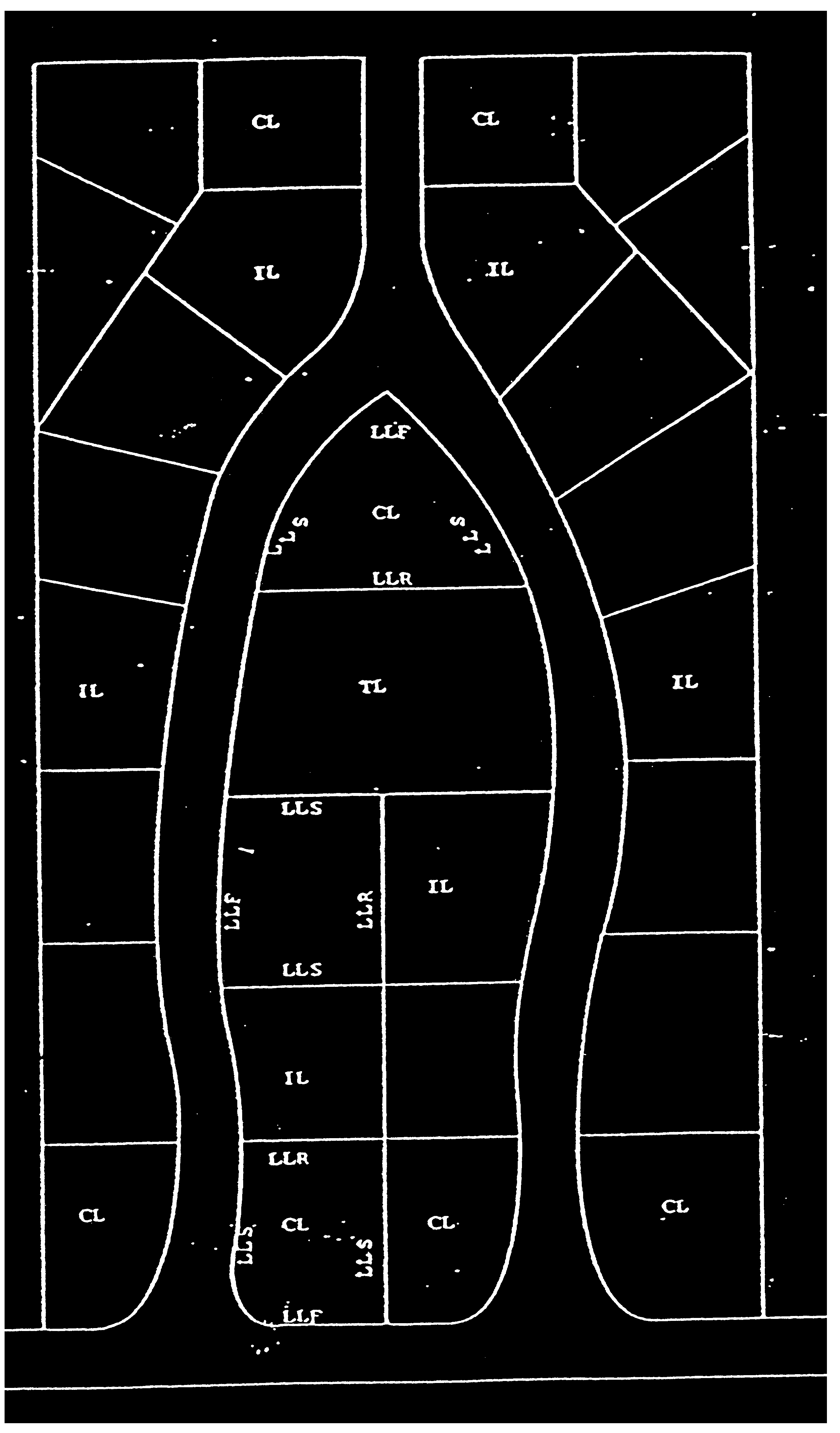
APPENDIX B: YARDS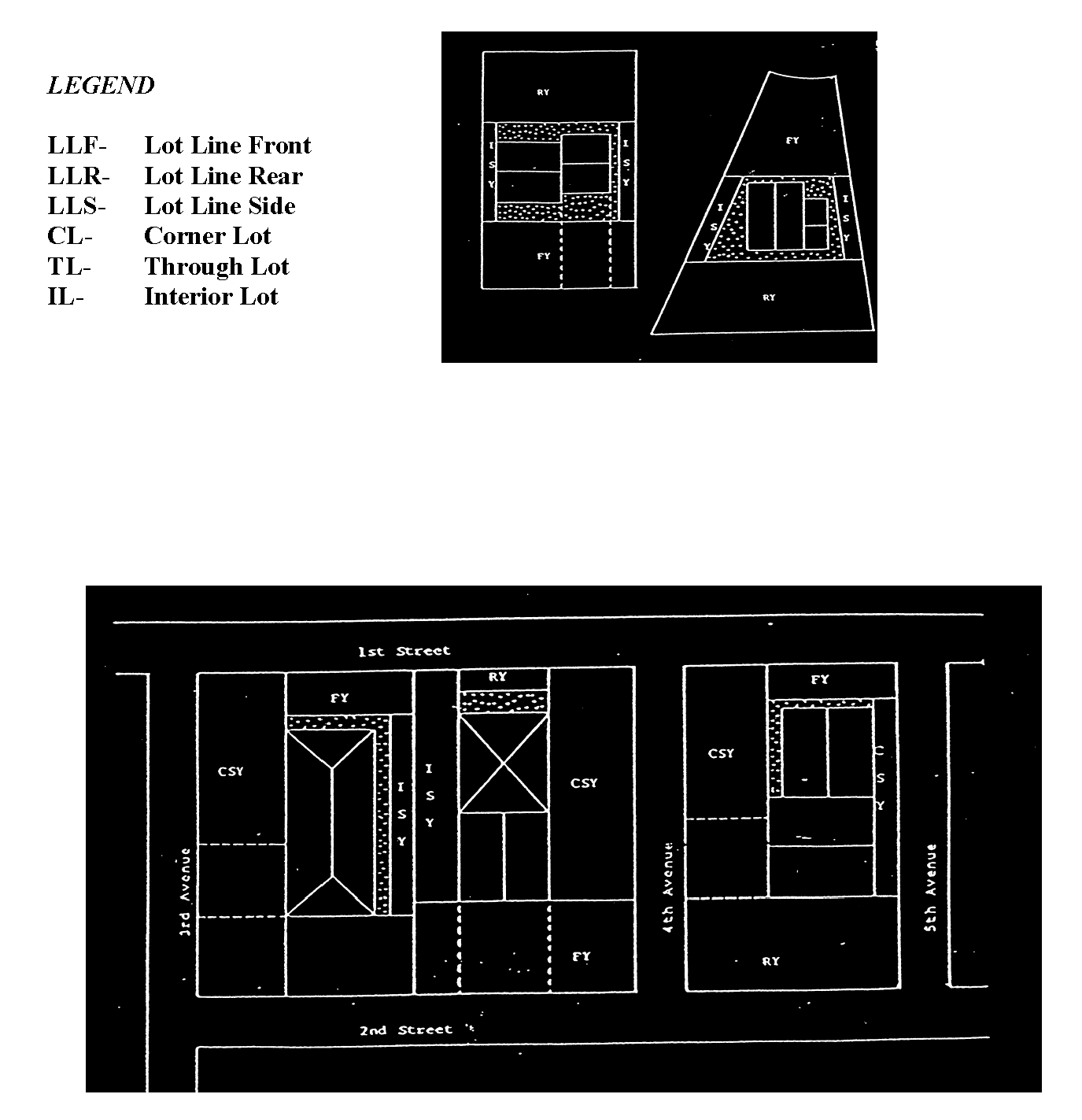
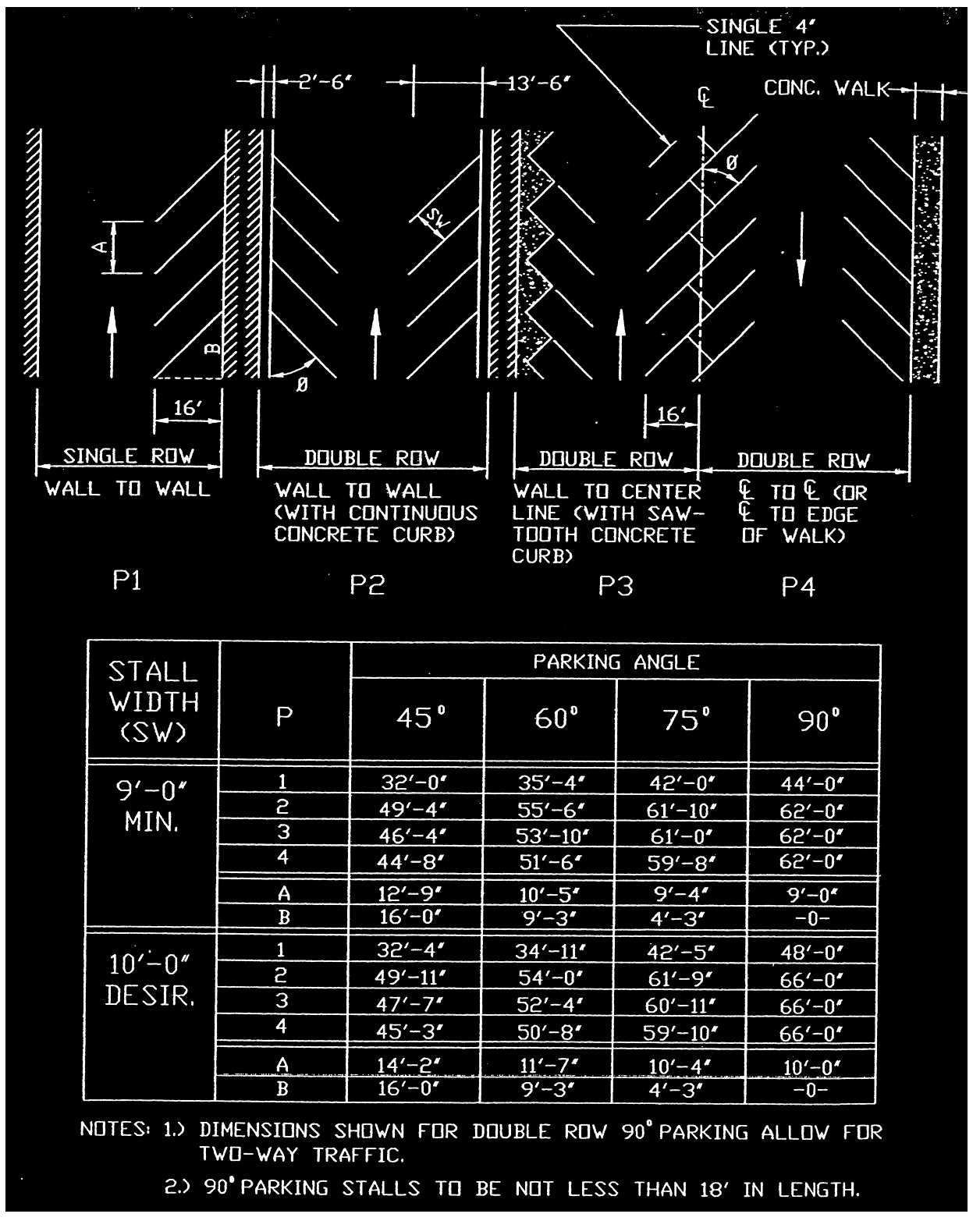
APPENDIX C: PARKING DIMENSIONS