
Walker City Zoning Code
ARTICLE V
- PERFORMANCE STANDARDS
Sec. 109-150.- Residential performance standards.
The following residential (R, LDR, MFR) performance standards are established by the city:
(1)
Single-family and manufactured dwellings. All single-family dwellings shall meet the following criteria:
a.
Minimum roof pitch shall be 3/12.
b.
They shall be 600 square feet minimum.
c.
There shall be 20 feet of building width.
d.
There shall be a full perimeter foundation.
e.
Corrugated metal siding is prohibited.
(2)
Guest quarters dwelling. A guest quarters dwelling must meet the following restrictions:
a.
It shall be situated on the property so as to reduce its visibility from public waters by effective screening, landscaping, or natural topographic features.
b.
It shall not cover more than 700 square feet of land and must not exceed 15 feet in height.
c.
A lot may have a guest quarters only if it exceeds the minimum lot size and width standards for a duplex.
(3)
Lots joined together for zoning permits. Lots joined together for zoning permit applications shall not be divided in the future, but shall be tied together with restrictions filed with the county recorder permanently requiring that the lots be considered as one lot only.
(4)
Significant historical sites. A significant historical site may not be modified, altered, or built upon in a manner which affects the historical value or nature of the site and without consultation with the state historic preservation officer.
(5)
Stairways, lifts, and landings. Stairways and lifts are the preferred alternative to major topographic alterations for achieving access up and down bluffs and steep slopes to shore areas. Stairways and lifts must meet the following design requirements:
a.
Stairways and lifts must not exceed four feet in overall width on residential lots. Wider stairways may be used for commercial properties, public open-space recreational properties, and planned unit developments.
b.
Landings for stairways and lifts on residential lots must not exceed 24 square feet in area. Landings larger than 24 square feet may be used for commercial properties, public open space recreational properties, and planned unit developments.
c.
Canopies or roofs are not allowed on stairways, lifts, or landings.
d.
Stairways, lifts, and landings may be either constructed above the ground on posts or pilings, or placed into the ground, provided they are designed and built in a manner that ensures control of soil erosion.
e.
Stairways, lifts, and landings must be located in the most visually inconspicuous portions of lots, as viewed from the surface of the public water, assuming summer leaf-on conditions, whenever practical.
f.
Facilities such as ramps, lifts, or mobility paths for physically handicapped persons are also allowed for achieving access to shore areas, provided that the dimensional and performance standards of subsections (5)a through e of this section are complied with.
(6)
Fertilizer and pesticides. Use of fertilizer and pesticides in the shoreland management district must be done in such a way as to minimize runoff into the shore impact zone or public water by the use of earth, vegetation, or both.
(7)
Controlled access lots (See Minn. Rules pt. 6120.3300, subpt. 2(E)). Lots intended for the controlled access to public waters for use by more than one owner must meet or exceed the following standard conditions. Said use shall require a conditional use permit.
a.
The lot must meet the width and size for a residential lot in this zoning district and be suitable for use for controlled access.
b.
Six watercraft may be moored on a standard sized lot. The lot width must be increased consistent with the following table for each watercraft in excess of six:
c.
The lot must be jointly owned by all purchasers of the lots or units within the subdivision or planned unit development who are provided riparian access on the access lot. Dwelling units are prohibited on the controlled access lot.
d.
Covenants must be filed with the county recorder that specify which lot owners have an ownership interest in the lot, what activities are allowed, the number of vehicles parked, and the number of watercraft allowed to be moored or stored.
e.
Activities which conflict with typical public uses of the lake or infringe on the rights of adjoining neighbors are prohibited.
f.
Parking and common facilities shall be centralized.
g.
The developer shall provide screening.
(8)
Accessory structures. One water-oriented accessory structure or one boathouse is allowed providing the following requirements are met:
a.
The structure or facility must not exceed ten feet in height (one story maximum), 14 feet maximum from lowest ground elevation, exclusive of safety rails, and cannot occupy an area greater than 250 square feet. Detached decks must not exceed eight feet above grade at any point.
b.
The setback of the structure or facility from the ordinary high water level must be at least ten feet.
c.
The structure or facility must be treated to reduce visibility as viewed from public waters and adjacent shorelands by vegetation, topography, increased setbacks, color, or other means acceptable to the local units of government, assuming summer, leaf-on conditions.
d.
The roof may be used as a deck with safety rails, but must not be enclosed, screened, roofed, or used as a storage area.
e.
The structure or facility must not be designed or used for human habitation and must not contain water supply or sewage treatment facilities.
f.
The lowest floor of the structure shall be three feet above the highest known water table, lake level, or flood level or shall be one foot above that level if the structure is constructed of flood-resistant materials, and electrical and mechanical equipment is at least three feet above that level and the structure is built to withstand ice action and wind-driven waves and debris.
(9)
Patios. A patio may be allowed as a permitted use provided no other water-oriented accessory structure is located on the parcel and the required patio setback distance is met.
(10)
Four unit or larger buildings. Four unit or larger buildings shall meet the requirements of the Minnesota State Building Code and be designed by a licensed architect.
(11)
Multifamily buildings. Multifamily buildings shall have a one hour fire rating on all party walls and floors and shall be designed to a 45 decibel rating between units. The architect shall certify to these requirements.
(12)
Decks. For decks to be added to structures constructed prior to October 8, 1998, such use shall be considered a permitted use provided all the following apply:
a.
A thorough evaluation of the property and structure reveals no possible location exists for a deck meeting or exceeding the waterfront setback.
b.
The deck encroachment toward the ordinary high water level does not exceed 15 percent of the existing ordinary high water (OHW) setback of the structure or does not encroach closer than 50 feet, whichever is more.
c.
The deck is constructed primarily of wood and is not roofed or screened.
(13)
Setback exceptions. Three feet of roof overhang, stoops not exceeding 30 square feet, and steps from stoop to ground not over four feet wide may protrude into the setback. Stoops toward the side or front yards shall not protrude over six feet. Stoops toward the lake shall meet all deck or structure setbacks.
(14)
Duplex, triplex, and quad dwellings.
a.
No more than 25 percent of the shoreline of a natural environment lake shall be allowed to be subdivided or platted for duplex, triplex, or quad dwellings.
b.
Setbacks for duplex, triplex, and quad dwellings shall be increased to 200 feet from the ordinary high water (OHW) level of any natural environment lake.
(15)
The following rural residential (RR) performance standards are established by the city:
a.
Minimum lot size is one acre.
b.
No accessory building shall be permitted to be constructed on any lot prior to the construction of the principal building to which it is accessory.
c.
No accessory building shall exceed 35 feet in overall height.
d.
Define that an accessory structure is anything over 200 square feet.
e.
Maximum building height is 35 feet.
f.
Impervious coverage 35 percent.
g.
Sewer/septic on-site systems as permitted by Cass County with design of two systems for the property.
h.
On site wells permitted.
i.
Minimum principal structure roof pitch shall be 3/12.
j.
The principal structure shall be 600 square feet minimum.
k.
The principal structure shall be a minimum of 20 feet of building width.
l.
The principal structure shall have a full perimeter foundation.
(Code 2000, § 154.040; Ord. of 10-8-1998; Ord. No. 2017-05, § 4, 9-11-2017; Ord. No. 2024-12, § 1, 1-6-2025)
Sec. 109-151. - Commercial/industrial performance standards.
The following commercial/industrial (CBD, TC, GC, WC, I) performance standards are established by the city:
(1)
Building requirements. All newly constructed buildings and building additions shall meet the requirements of the Minnesota State Building Code. All buildings designed for public use shall be designed by a licensed architect and shall meet the Federal Americans with Disabilities Act requirements.
(2)
Multifamily or multi-tenant buildings. Multifamily or multi-tenant buildings shall have a one-hour fire rating on all party walls and floors and shall be designed to a 45-decibel rating between units. The architect shall certify that the building design meets these requirements.
(3)
Short-term mooring. Uses that require short-term watercraft mooring for patrons must centralize these facilities and design them to avoid obstructions of navigation and to be the minimum size necessary to meet the need.
(4)
Stairways, lifts, and landings. Stairways and lifts are the preferred alternative to major topographic alterations for achieving access up and down bluffs and steep slopes to shore areas. Stairways and lifts must meet the following design requirements:
a.
Stairways and lifts must not exceed four feet in overall width on residential lots. Wider stairways may be used for commercial properties, public open-space recreational properties, and planned unit developments.
b.
Landings for stairways and lifts on residential lots must not exceed 24 square feet in area. Landings larger than 24 square feet may be used for commercial properties, public open-space recreational properties, and planned unit developments.
c.
Canopies or roofs are not allowed on stairways, lifts, or landings.
d.
Stairways, lifts, and landings may be either constructed above the ground on posts or pilings, or placed into the ground, provided they are designed and built in a manner that ensures control of soil erosion.
e.
Stairways, lifts, and landings must be located in the most visually inconspicuous portions of lots, as viewed from the surface of the public waters, assuming summer, leaf-on conditions, whenever practical.
f.
Facilities such as ramps, lifts, or mobility paths for physically handicapped persons are also allowed for achieving access to shore areas, provided that the dimensional and performance standards of subsections (4)a through e of this section are complied with.
(5)
Fertilizer and pesticides. Use of fertilizer and pesticides in the shoreland management district must be done in such a way as to minimize runoff into the shore impact zone or public water by the use of earth, vegetation, or both.
(6)
Lots joined together for zoning permits. Lots joined together for zoning permit applications shall not be divided in the future, but shall be tied together by restrictions filed with the county recorder permanently requiring that the lots be considered as one lot only.
(7)
Significant historical sites. A significant historical site may not be modified, altered, or built upon in a manner which affects the historical value or nature of the site and without consultation with the state historic preservation officer.
(8)
Controlled access lots (See Minn. Rules pt. 6120.3300, subpt. 2(E)a). Lots intended for controlled access to public waters for use by more than one owner must meet or exceed the following standard conditions. Said use shall require a conditional use permit.
a.
The lot must meet the width and size for a residential lot in this zoning district and be suitable for use for controlled access.
b.
Six watercraft may be moored on a standard sized lot. The lot width must be increased consistent with the following table for each watercraft in excess of six:
c.
The lot must be jointly owned by all purchasers of the lots or units within the subdivision or planned unit development who are provided riparian access on the access lot. Dwelling units are prohibited on the controlled access lot.
d.
Covenants must be filed with the county recorder that specify which lot owners have an ownership interest in the lot, what activities are allowed, the number of vehicles parked, and the number of watercraft allowed to be moored or stored.
e.
Activities which conflict with typical public uses of the lake or infringe on the rights of adjoining neighbors are prohibited.
f.
Parking and common facilities shall be centralized.
g.
The developer shall provide screening.
(9)
Accessory structures. One water-oriented accessory structure or one boathouse is allowed providing the following requirements are met:
a.
The structure or facility must not exceed ten feet in height (one story maximum), 14 feet maximum from lowest ground elevation, exclusive of safety rails, and cannot occupy an area greater than 250 square feet. Detached decks must not exceed eight feet above grade at any point.
b.
The setback of the structure or facility from the ordinary high water level must be at least ten feet.
c.
The structure or facility must be treated to reduce visibility as viewed from public waters and adjacent shorelands by vegetation, topography, increased setbacks, color, or other means acceptable to the local units of government, assuming summer, leaf-on conditions.
d.
The roof may be used as a deck with safety rails, but must not be enclosed, screened, roofed, or used as a storage area.
e.
The structure or facility must not be designed or used for human habitation and must not contain water supply or sewage treatment facilities.
f.
The lowest floor of the structure shall be three feet above the highest known water table, lake level, or flood level or shall be one foot above that level if the structure is constructed of flood-resistant materials, and electrical and mechanical equipment is at least three feet above that level and the structure is built to withstand ice action and wind-driven waves and debris.
(10)
Patios. A patio may be allowed as a permitted use provided no other water-oriented accessory structure is located on the parcel and the required patio setback distance is met.
(11)
Decks. For decks to be added to structures constructed prior to the adoption of the ordinance from which this chapter is derived, such use shall be considered permitted, provided all the following apply:
a.
A thorough evaluation of the property and structure reveals no reasonable location exists for a deck meeting or exceeding the waterfront setback.
b.
The deck encroachment toward the ordinary high water level does not exceed 15 percent of the existing waterfront setback of the structure or does not encroach closer than 50 feet, whichever is more restrictive.
c.
The deck is constructed primarily of wood and is not roofed or screened.
(12)
All new commercial structures in zones CBD, TC, GC, WC, and I, shall be compatible with the neighboring structures in mass, color, and exterior materials. In transitional commercial zones, the commercial property proposed must maintain a residential appearance so as to blend well with residential properties in the area and be applied for through a conditional use permit. The planning board may place reasonable size and aesthetic conditions on projects to be compatible with the surrounding area. Each new commercial structure application shall first have the planning board approve a design checklist consisting of exterior finish material and vision of what the building will look like on all sides of the building. This includes landscaping and lighting.
a.
No street level portion of any business in central business district on Highway 371/Minnesota Ave, and side streets, to the alley on the south side, the side streets to the north, as well as along Front Street shall be converted to residential living of any kind.
(13)
Landscaping. All sites shall be landscaped with trees and shrubs in accordance with a landscape plan submitted with the application. Landscaping shall be maintained by the property owner.
(14)
Water, sanitation, and solid waste facilities. Water supply and sanitary facilities and solid waste storage facilities shall be adequate. Municipal water or sewage disposal shall be used if available to the site.
(15)
Outside storage. Temporary outside storage of goods and materials shall be allowed for special events but shall not exceed seven consecutive days. Permanent outside storage of materials or goods shall be screened per standards found in section 109-156.
(16)
Lighting. Lighting shall be compatible with the surrounding development and in no case shall exterior light deflect or shine on to any adjacent residentially zoned property.
(17)
Motels/hotels. Motels/hotels shall have a one-hour fire rating on all party walls and floors and shall be designed to a 45-decibel rating between units. The architect shall certify to these requirements.
(18)
Industrial uses. All proposed industrial uses shall be required to disclose any environmentally sensitive emissions, discharges, or waste products at the time of hearing. The allowable level of these parameters shall be established in the conditional use permit at least as restrictive as the applicable state or federal standards, and a testing program shall be established to monitor the facility. Exceeding the allowable level of any parameter shall constitute a failure to perform a condition of the conditional use permit.
(Code 2000, § 154.041; Ord. of 10-8-1998; Ord. No. 2023-03, § 1, 6-5-2023; Ord. No. 2023-08, § 1, 11-6-2023)
Sec. 109-152. - Signs.
(a)
Findings, purpose and intent.
(1)
Findings. The city hereby finds as follows:
a.
Exterior signs have a substantial impact on the character and quality of the environment.
b.
Signs provide an important medium through which individuals convey a variety of messages.
c.
Signs can create traffic hazards and aesthetic concerns, thereby threatening the public health, safety and welfare.
d.
The city's zoning regulations include the regulation of signs in an effort to provide adequate means of expression and to promote the economic viability of the business community, while protecting the city and its citizens from a proliferation of signs of a type, size, location and character that would adversely impact the aesthetics of the community and threaten the health, safety and welfare of the community. The regulation of the physical characteristics of signs within the city has had a positive impact on traffic safety and the appearance of the community.
(2)
Purpose and intent. It is not the purpose or intent of this section to regulate the message displayed on any sign, nor is it the purpose or intent of this section to regulate any building design or any display not defined as a sign, or any sign which cannot be viewed from outside a building. The purpose and intent of this section is to:
a.
Regulate the number, location, size, type, illumination and other physical characteristics of signs within the city in order to promote the public health, safety and welfare;
b.
Maintain, enhance and improve the aesthetic environment of the city by preventing visual clutter that is harmful to the appearance of the community;
c.
Improve the visual appearance of the city while providing for effective means of communication, consistent with constitutional guarantees and the city's goals of public safety and aesthetics; and
d.
Provide for fair and consistent enforcement of the sign regulations set forth herein under the zoning authority of the city.
(b)
Definitions. The following words, terms and phrases, when used in this section, shall have the meanings ascribed to them in this subsection, except where the context clearly indicates a different meaning. Terms not defined shall have the meanings provided in section 109-3.
A-frame sign means a sign placed near the entrance of a business, usually on the public or private sidewalk, advertising particular aspects of the business, goods or services.
Sandwich Board

Abandoned sign means any sign and/or its supporting sign structure which remains without a message or whose display surface remains blank for a period of one year or more, or any sign which pertains to a time, event or purpose which no longer applies, and shall be deemed to have been abandoned. Signs applicable to a business temporarily suspended because of a change in ownership or management of such business shall not be deemed abandoned unless the property remains vacant for a period of one year or more. Any signs remaining after demolition of a principal structure shall be deemed to be abandoned. Signs which are present because of legally established nonconforming signs or signs for which a conditional use permit or variance have been approved shall also be subject to the definition of the term "abandoned sign."
Area identification sign means any sign identifying the name of a neighborhood, residential subdivision, PUD or similar area.
Area, aggregate wall sign means the total square footage of all business signs on a specific building structure facade.
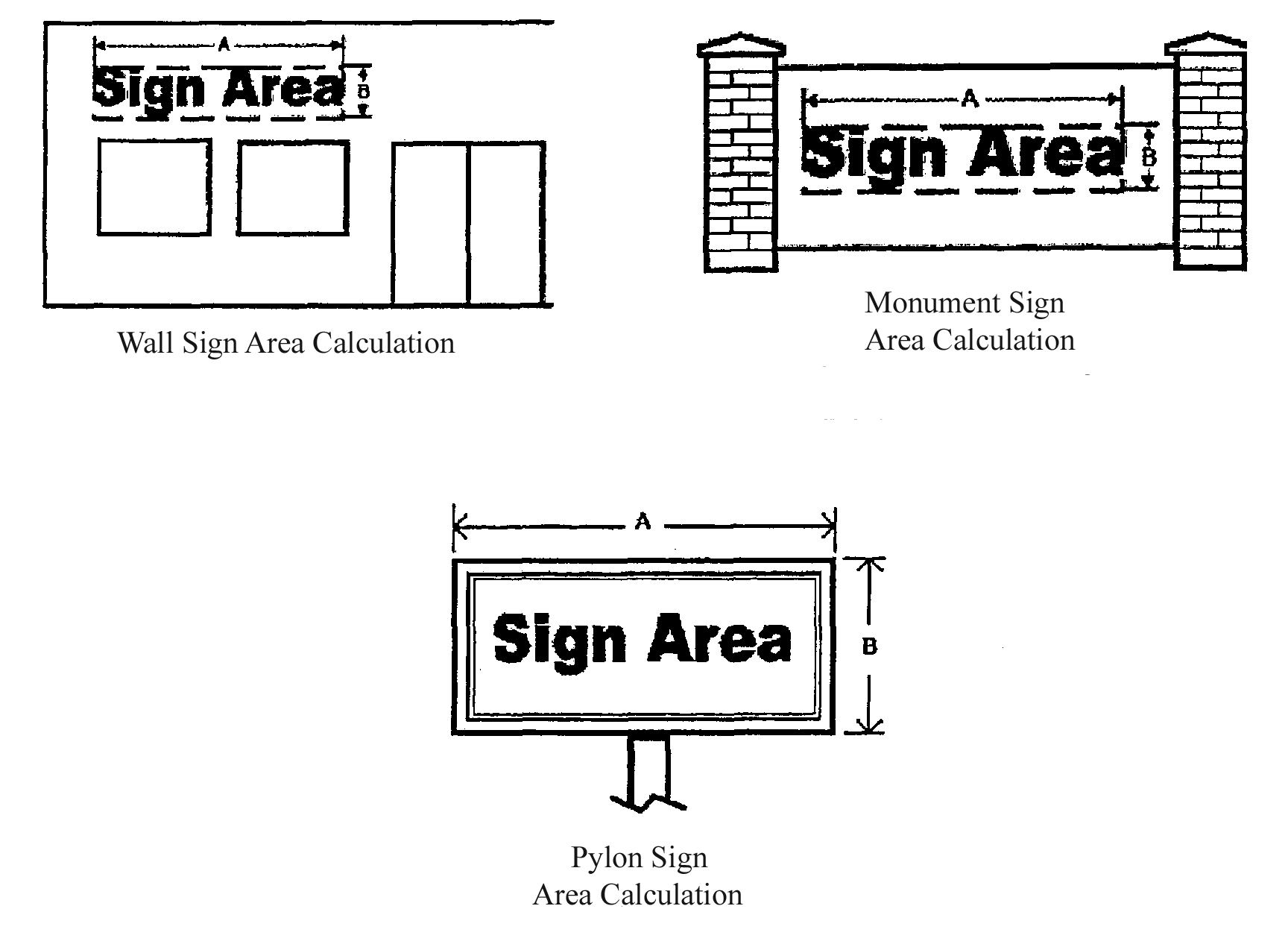
Area, sign means the area of a sign, including the space inside a continuous line drawn around and enclosing all letters, designs and background materials exclusive of border, trim and structural supports. For the purpose of calculating the sign area of multiple-faced or back-to-back signs, the stipulated maximum sign area shall refer to a single face.
Sign Area Calculation
Awning sign means a building sign or graphic printed on or in some fashion attached directly to the awning material designed and intended to provide protection from the weather or as a decorative embellishment, and which projects from a wall or roof over a window, walk or door.
Balloon sign means a sign consisting of a bag made of lightweight material supported by helium, hot or pressurized air, which is greater than 24 inches in diameter.
Banner means a sign made of cloth, canvas, plastic sheeting or any other flexible material, which is not rigidly and permanently attached to a building or the ground through a permanent support structure.
Building frontage means that building elevation that fronts on a public street.
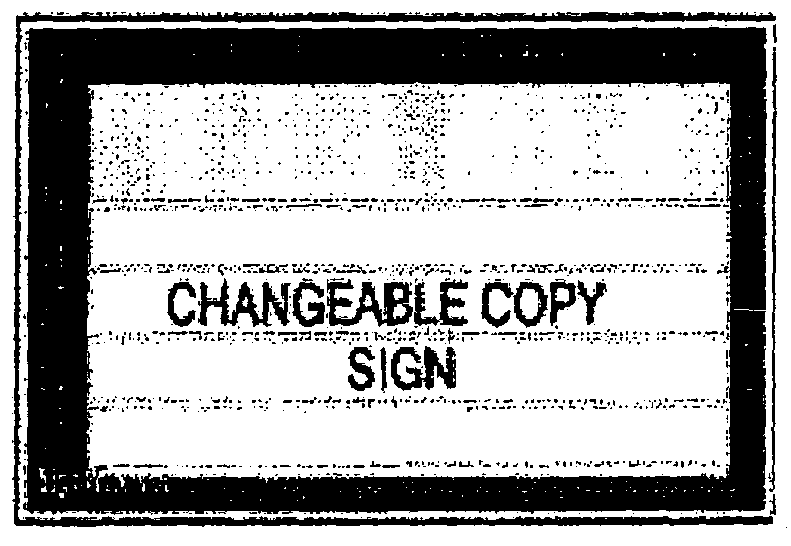
Changeable copy sign means a sign or portion thereof that has a reader board for the display of text information in which each alphanumeric character, graphic or symbol is defined by objects not consisting of an illumination device and may be changed or rearranged manually or mechanically with characters, illustrations, letters or numbers that can be changed or rearranged without altering the face or surface of the sign structure.
Changeable Copy Sign
Changeable copy sign, electronic means a sign or portion thereof that displays electronic, non-pictorial text information in which each alphanumeric character, graphic or symbol is defined by a small number of matrix elements using different combinations of light emitting diodes (LEDs), fiber optics, light bulbs or other illumination devices within the display area. Electronic changeable copy signs include computer programmable, microprocessor controlled electronic displays. Electronic changeable copy signs include projected images or messages with these characteristics onto buildings or objects. Electronic changeable copy signs do not include official signs.
Construction sign means a temporary sign erected during construction on the premises of the site where the construction is taking place indicating the names of the architects, engineers, landscape architects, contractors or similar artisans, and/or the owners, financial supporters, sponsors and similar individuals for firms having a role or interest with respect to the structure or project.
Dynamic display means any sign, portion of a sign or characteristics of a sign that appear to have movement or that appear to change, caused by any method other than physically removing and replacing the sign or its components, whether the apparent movement or change is in the display, the sign structure or any other component of the sign. This includes displays that incorporate technology or methods allowing the sign face to change the image without having to physically or mechanically replace the sign face or its components as well as any rotating, revolving, moving, flashing, blinking or animated display and any display that incorporates rotating panels, LED lights manipulated through digital input, digital ink, incandescent bulbs, or any other method or technology that allows the sign face, or any other device, to present a series of images or displays.
Dynamic display programming means the hardware, software and all necessary equipment and operations associated with the control and programming of a dynamic display.
Flashing sign means a directly or indirectly illuminated sign that exhibits changing light or color effect by any means, so as to provide intermittent illumination that includes the illusion of intermittent flashing light by means of animation; also any mode of lighting that resembles zooming, twinkling or sparkling.
Freestanding sign means any sign that has a supporting framework that is placed on, or anchored in, the ground and which is independent from any building or other structure.
Historical sign means any sign listed as a historic resource on the city's historic resources inventory.
Home occupation sign means any sign designating a home occupation as defined in this chapter when such sign is located on the premises of the residential property where the business is being conducted.
Illuminated sign means a sign where artificial light projects from within or onto the sign copy. The term "interior illumination" shall mean signs where the artificial light source is located within the sign and is not viewable from the exterior of the sign. Exterior illumination is a light source that is visible exterior to the sign.
Internal directional sign means a sign which serves solely to designate the direction of any place or area located on the same lot as the place or area necessary for the orderly movement of traffic or providing necessary direction to users of the site. Examples of internal directional signs include parking lot entrance and exit signs, directional signs to holes within a golf course and similar signs.
Internal identification sign means a sign that has a purpose secondary to the use of the lot on which it is located, such as "telephone," "drive-up window," "cash machine," "air" and similar directives.
Legally established nonconforming sign means any sign and its supporting structure lawfully erected prior to the effective date of the ordinance from which this section is derived which fails to conform to the requirements of this section. A sign which was erected in accordance with a variance granted prior to the adoption of the ordinance from which this section is derived and which does not comply with this section shall be deemed to be a legally established nonconforming sign. A sign which was unlawfully erected shall be deemed to be an illegal sign.
Marquee means any permanent roof-like structure projecting beyond a theater building or extending along and projecting beyond the wall of that building, generally designed and constructed to provide protection from the weather.
Marquee sign means any building sign painted, mounted, constructed or attached in any manner on a marquee.
Marquee Sign

Master sign plan means a plan and accompanying documentation that identifies all existing and proposed on-premises signage on a development or complex of buildings.
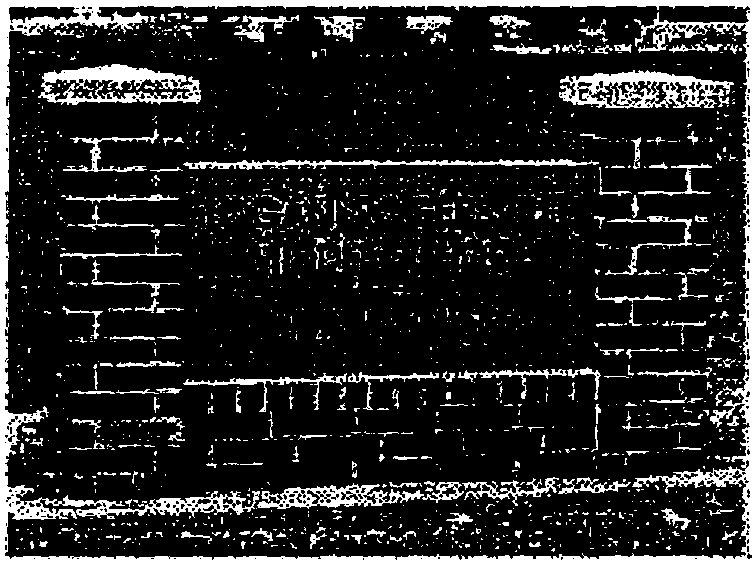
Monument sign means a freestanding sign that does not have an exposed pole or pylon, and is attached to a single columnar base for at least 75 percent of the entire width of the sign.
Monument Sign
Multifamily building identification sign means a sign indicating information related to the name, address, ownership and other incidental property information for a multifamily dwelling complex located on the premises of the complex.
Nameplate sign means any sign indicating the name, address and other noncommercial messages on a residential property.
Off-premises sign means a sign which directs the attention of the public to a business, activity conducted or product sold or offered at a location not on the same premises where such sign is located. For purposes of this section, easements and other appurtenances shall be considered to be outside such platted parcel of land and any sign located or proposed to be located in an easement or other appurtenance shall be considered an off-premises sign.
Official signs and notices means signs and notices erected and maintained by public officers or public agencies within their territorial jurisdiction and pursuant to and in accordance with direction or authorization contained in federal, state or local law for the purposes of carrying out an official duty or responsibility.
On-premises sign means a sign which identifies an establishment, person, activity, goods, products or services located on the premises where the sign is installed.
Pole sign. See Pylon sign.
Political sign means a temporary sign advertising election issues or the candidacy of a person running for office.
Portable sign means any sign which is manifestly designed to be transported, including by trailer or its own wheels, even though the wheels of such sign may be removed and the remaining chassis or support is converted to another sign or attached temporarily or permanently to the ground since this characteristic is based on the design of such sign.
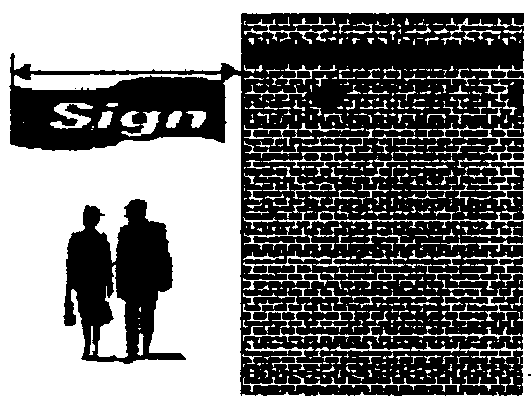
Projecting sign means any sign which is affixed to a building or wall in such a manner that its leading edge extends more than two feet beyond the surface of such building or wall face.
Projecting Sign
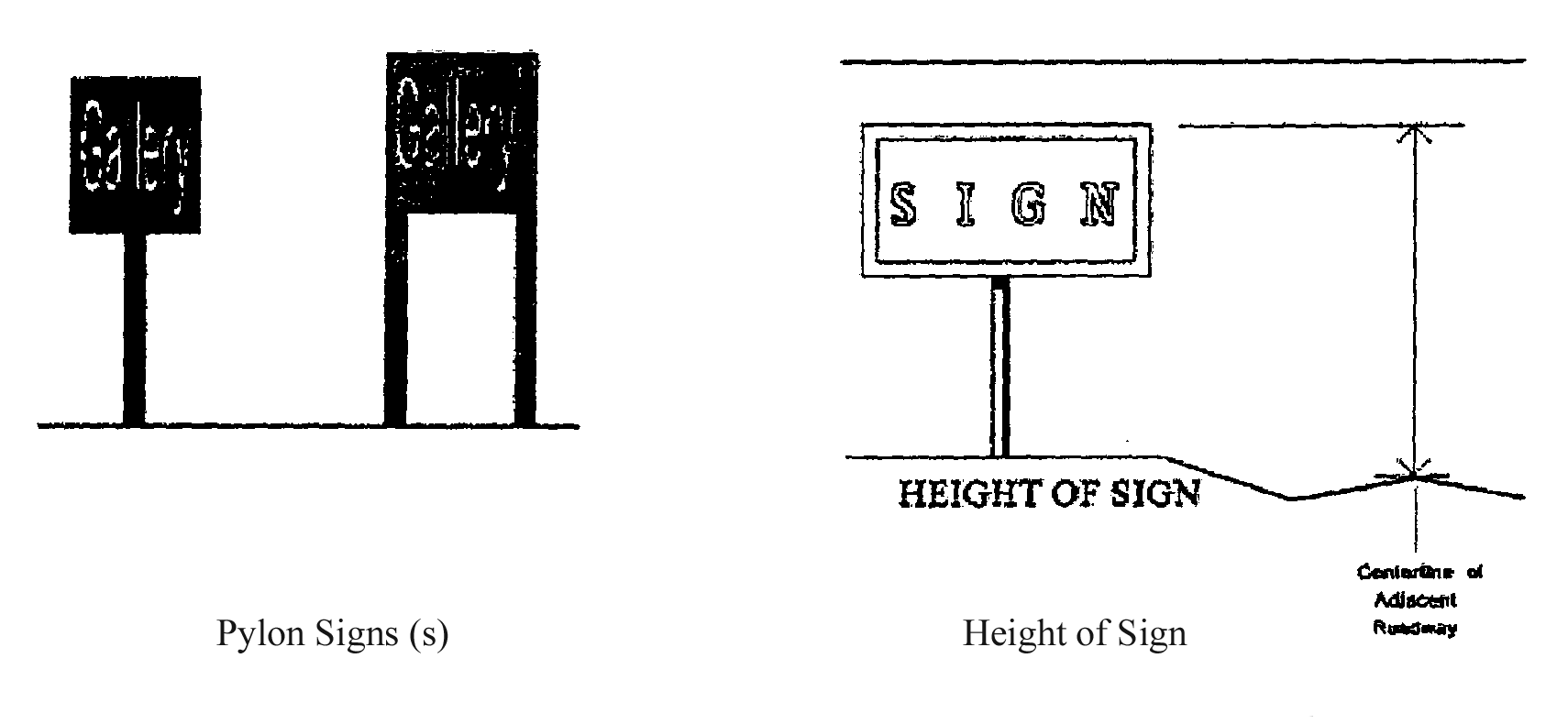
Pylon sign means any freestanding sign which has its supportive structure(s) anchored in the ground and which has a sign face elevated above ground level by pole(s) or beam(s) and with the area below the sign face open.
Pylon Sign(s); Height of Sign
Real estate sign means any sign which announces the sale, rental or lease of property by the owner of the property or real estate company when such sign is located on the site of property being advertised.
Roof sign means any sign placed above the fascia of a roof and below the peak.
Roof-top sign means a sign that sits on or above the peak of a building, or on or above the surface of a flat roof.
Rotating sign means a sign or portion of a sign which turns about on an axis.
Scrolling sign means any sign that uses changing lights or colors to form a sign message or messages wherein the sequence of messages and the rate of change is electronically programmed and can be modified by electronic processes.
Shimmering sign means a sign which reflects an oscillating, sometimes distorted, visual image.
Sign means any letter, word or symbol, poster, statuary, reading matter or representation in the nature of advertisement, announcement, message or visual communication, whether painted, posted, printed, affixed or constructed, including all associated brackets, braces, supports, wires and structures, which is displayed for informational or communicative purposes.
Sign face means the surface of the sign upon, against or through which the message of the sign is exhibited upon.
Sign height means the height of a sign shall be computed as the vertical distance measured from the grade immediately below the sign to the top of the highest attached component of the sign.
Sign structure means any structure, including the supports, uprights, bracing and framework which supports or is capable of supporting any sign.
Static identification sign means a permanent on-premises sign, either freestanding or wall-mounted, and which does not contain a dynamic display or copy that can be changed manually.
Street furniture sign means any sign incorporated into or posted upon any street furnishing or fixture in any public right-of-way. Examples of street furniture signs include, but are not limited to, benches, chairs and trash receptacles.
Temporary sign means any display device, constructed of cloth, canvas, light fabric, cardboard, wall board or other light materials, with or without frames, intended to be displayed for a limited period of time only.
Temporary signage includes, but is not limited to, balloons, banners, flags, pennants, streamers, wind animated devices, inflatable statuary, rigid portable signs, portable reader boards and searchlights. Other types of display devices will require the approval of the zoning administrator.
Trailer sign means any sign mounted on a vehicle normally used as a trailer and used as advertising or for promotional purposes. This sign is portable and may be approved for temporary use only.
Wall sign means a sign attached parallel to, painted on the surface of or erected within the limits of an outside wall of any building or structure, which is supported by such wall or structure and projects 12 inches or less from the surface, and which displays only one sign surface.
Window sign means any building sign, pictures, symbol or combination thereof, designed to communicate information about an activity, business, commodity, event, sale or service, that is placed inside a window or upon the window or glass and is visible from the exterior of the window.
Window Signage
(c)
Severability. If any subsection, sentence, clause or phrase of this section is for any reason held to be invalid, such decision shall not affect the validity of the remaining portions of this section. The city council hereby declares that it would have adopted the sign ordinance in each subsection, sentence or phrase thereof, irrespective of the fact that any one or more subsections, sentences, clauses or phrases be declared invalid.
(d)
Permit required. No sign shall be erected, altered, reconstructed, maintained or moved in the city without first securing a permit from the city.
(1)
The content of the message or speech displayed in the sign shall not be reviewed or considered in determining whether to approve or deny a sign permit;
(2)
Application for a permit shall contain the following information unless waived by the city:
a.
Names and addresses of the applicant, the owner of the sign and lot;
b.
The address at which any signs are to be erected;
c.
The legal description and property identification number at which the signs are to be erected and the street on which they are to front;
d.
Type of sign (wall sign, pylon sign and the like);
e.
A site plan to scale showing the location of lot lines, building structures, parking areas, existing and proposed signs and any physical features;
f.
Plans, location and specifications and method of construction and attachment to the buildings or placement method on the ground;
g.
Written consent of the owner or lessee of any site on which the sign is to be erected;
h.
Any electrical permit required and issued for the sign;
i.
A detailed description of any electronic or electrical components proposed to be added to the sign;
j.
If the proposed sign is along a state trunk highway or interstate highway, the application shall be accompanied by proof that the applicant has obtained a permit from the state for the sign, if required;
k.
An agreement by the applicant affirming that "By submitting this application, the applicant agrees that the applicant assumes all risks associated with the sign and placement of the sign and agrees to release, hold harmless, discharge, defend and indemnify the City of Walker and its respective agents, insurers, employees, volunteers, members and officials from any and all liabilities and damages, direct or indirect, including reasonable attorney fees in defending against claims, arising out of use or placement of any sign."
l.
An agreement by the applicant affirming that "By submitting this application, the applicant agrees that the applicant will pay the reasonable civil enforcement costs, disbursements and attorney fees incurred by the City in enforcing the provisions of any sign permit granted by the City, and the costs, disbursements and attorney fees incurred by the City in any civil action by the City to address any violation of any license or permit granted by the City."
(3)
The application shall be accompanied by the required fee.
(4)
Permit conditions.
a.
Unless otherwise specifically provided in the city code, or by state statute, the issuance of any permit provided by the city may be conditioned upon the agreement by the applicant to assume all risks associated with the sign and placement of the sign and to release, hold harmless, discharge, defend and indemnify the City of Walker and its respective agents, insurers, employees, volunteers, members and officials from any and all liabilities and damages, direct or indirect, including reasonable attorney fees in defending against claims, arising out of use or placement of any sign. The issuance of any permit may further be conditioned upon the applicant providing the city, prior to the issuance of the permit, and maintaining on file with the city a current certificate of general liability insurance with minimum coverages acceptable to the city, insuring the obligations of the applicant agreed to as required herein and naming the City of Walker Minnesota as an additional insured.
b.
Unless otherwise specifically provided in the city code, or by state statute, the issuance of any permit provided by the city may be conditioned upon the agreement by the applicant to pay the reasonable civil enforcement costs, disbursements and attorney fees incurred by the city in enforcing the provisions of the permit, and any violation of the permit. Unless otherwise specifically provided in the city code, or by state statute, the application for any permit provided for in the city code shall include an agreement by the applicant to pay the reasonable civil enforcement costs, disbursements and attorney fees incurred by the city in enforcing the provisions of the permit, and any violation of the permit.
(e)
Permit not required. The following signs shall not require a permit. These exemptions, however, shall not be construed as relieving the owner of the sign from the responsibility of its erection and maintenance, and its compliance with the provisions of this section or any other law or ordinance regulating the same.
(1)
The changing of the display surface on a painted or printed sign only. This exemption, however, shall apply only to poster replacement and/or site changes involving sign painting elsewhere than directly on a building.
(2)
Signs two square feet or less in size.
(3)
One sign per property in residential districts not to exceed three square feet in size.
(4)
Notwithstanding any other provision of this section, all signs of any size containing noncommercial speech may be posted in any number from August 1 in a (state) general election year until ten days following the (state) general election and 13 weeks prior to any special election until ten days following the special election.
(5)
Official signs and notices placed by public officers or public agencies in accordance with federal, state or local law.
(6)
City public facility signs are allowed without a permit, not to exceed the standards for general commercial signage in any zoning district.
(7)
One sign shall be allowed per street frontage when a property is offered for sale or lease, provided that:
a.
The sign does not exceed six square feet in size in a residential zone;
b.
The sign does not exceed 18 square feet in size and six feet in height; and
c.
The sign is removed within 30 days of the completion of construction, sale or rental.
(8)
On-premises banner signs are allowed for special events such as grand openings and promotions. No more than one wall banner sign may be displayed per side of property visible from a publicly traveled street or alley, or in the case of multi-tenant properties, no more than one wall banner sign per business. Freestanding banner signs are limited to one per lot. Banner signs may not exceed 24 square feet in area per side. Off-premises banner signs require a permit from the zoning administrator.
(9)
Window signs mounted on the interior of structures.
(10)
Freestanding or portable signs for garage sales not more than four square feet in size, on private property for not more than three days. Property owner is responsible for removal of signs.
(11)
Internal directional signs and internal identification signs, as specified in this section. Up to three signs of each type, not to exceed four square feet in sign area and six feet in sign height are allowed without a permit.
(12)
Static signs or banners adorning fences in permitted outdoor recreational facilities, provided they are placed so as to only be viewed internal to the play field area and are not placed so as to orient a commercial message toward an adjacent right-of-way.
(13)
A-frame signs on private property. Allowed without a permit in CBD, TC, GC, WC, I, P, and PR zoning districts. Not more than one A-frame sign is allowed per principal structure except that one sign is allowed per tenant within a principal building having two or more tenants each with an exclusive exterior entrance. The sign shall only be displayed when the business is open to the public. The A-frame sign must be no more than four feet in height and two feet in width, shall not be illuminated and shall not contain moving parts or have balloons, streamers, pennants or similar items attached thereto.
(f)
Prohibited signs. The following signs shall not be allowed within the city:
(1)
Any sign painted, attached or in any other manner affixed to trees, rocks, or similar natural surfaces, or attached to public utility poles, bridges, towers, or similar public structures;
(2)
Signs on accessory structures and fences, except as allowed by this chapter;
(3)
A sign or sign structure that is declared to be illegal, unsafe, deteriorated, abandoned, or obsolete;
(4)
A sign on private property placed without permission of the owner;
(5)
Exposed neon lights or signs, not intended to add to the overall architecture theme of the site;
(6)
Balloon signs;
(7)
Directional signs larger than eight square feet;
(8)
Flashing signs;
(9)
Roof top signs on both flat and pitched roofs. Signs are not allowed on flat roof tops or the peak of a pitched roof;
(10)
Rotating signs;
(11)
Scrolling signs, except where allowed in this chapter;
(12)
Shimmering signs;
(13)
Vehicle signs not normally used in the day-to-day operations of a business parked in such a way to draw attention or people away from a public place or street, or private off-site property, and dynamic displays on any moving, motorized or non-motorized vehicle, except as may be allowed in a parade which has been officially approved by a political subdivision;
(14)
Permanent off-premises signs; and
(15)
Billboards, including all dynamic billboard type displays.
(g)
Historic signs.
(1)
Attached sign. The zoning administrator may approve the reconstruction and/or erection of historic signs not otherwise allowed under this Code upon any building or other structure that has been listed as a historic resource on the city's historic resources inventory when that historic sign is a contributing feature to that historic building or structure. Such historic sign shall not reduce the otherwise allowed signage area on the site.
(2)
Detached sign. The zoning administrator may approve the relocation of a historic sign that is listed as a historic resource on the city's historic resources inventory or is a contributing feature to a building or structure listed as a historic resource on the city's historic resources inventory, but not attached to a historic structure and not otherwise allowed under this Code, either on the site of the historic structure or to another site in a manner that preserves the historic sign. Such sign shall not reduce the otherwise allowed signage area for the receiving site.
(h)
Repairs or removal of signs.
(1)
Illegal, prohibited, obsolete, unsafe or abandoned signs. Upon notification by the city that a sign and/or sign structure is illegal, prohibited, obsolete, unsafe or abandoned, the owner of the sign or owner of property thereunder shall remove the same. The city may order the removal of any sign erected or maintained in violation of this section. Sixty days notice in writing shall be given to the owners of such sign, or the owner of the building, structure or premises on which the sign is located, to either bring the sign into compliance with this section, or cause its removal. Upon failure to remove the sign or to comply with this notice, the city council shall remove the sign immediately and without notice, if it reasonably appears that the condition of the sign is such as to present an immediate threat to the safety of the public. Any cost incurred by the city shall be assessed to the owner of the property on which the sign is located or may be collected in the appropriate legal proceedings.
(2)
Deteriorated signs. Any sign or sign structure which may be, or may hereafter become, rotted, unsafe, unsightly or otherwise deteriorated shall be repaired or removed by the lessee, licensee, owner or agent of the owner of the property upon which the sign is located after receipt of written notice from the city.
(i)
Legally established nonconforming signs. It is recognized that signs exist within the zoning districts which were lawful before this section was enacted, which may be prohibited, regulated or restricted under the terms of this chapter or future amendments. It is the intent of this section that nonconforming signs shall not be enlarged upon, expanded or extended, nor be used as grounds for adding other signs or uses prohibited elsewhere in the same district. It is further the intent of this section to permit legally established nonconforming signs existing on the effective date of the ordinance from which this section is derived, or amendments thereto, to continue as legally established nonconforming signs, provided such signs are safe, are maintained so as not to be unsightly and have not been abandoned or removed, subject to the following provisions:
(1)
No sign shall be enlarged or altered in a way which increases its nonconformity;
(2)
Should such sign or sign structure be destroyed by any means to an extent greater than 50 percent of its replacement cost and no sign permit has been applied for within 180 days of when the property was damaged, it shall not be reconstructed except in conformity with the provisions of this section;
(3)
Should such sign or sign structure be moved for any reason for any distance whatsoever, it shall thereafter conform to the regulations for the zoning district in which it is located after it is moved;
(4)
No existing sign devoted to a use not permitted by the zoning ordinance in the zoning district in which it is located shall be enlarged, extended or moved except in changing the sign to a sign permitted in the zoning district in which it is located; and
(5)
When a structure loses its status as a legal nonconforming structure, all signs on the property shall be brought into conformance with this section within 60 days.
(j)
Enforcement and penalties. Violation of section 109-152 is a misdemeanor. Each day that the violation continues is a separate offense. In addition, unless otherwise specifically provided in the city code, or by state statute, section 109-152 may be enforced by civil action, and the city is authorized to pursue any remedy available at law or in equity, including but not limited to temporary restraining orders, injunctions both mandatory and prohibitory as well as damages.
(k)
Substitution. The owner of any sign which is otherwise allowed by this section may substitute noncommercial copy in lieu of any other commercial or noncommercial copy. This substitution of copy may be made without any additional approval or permitting. The purpose of this provision is to prevent any inadvertent favoring of commercial speech over noncommercial speech, or favoring of any particular noncommercial message over any other noncommercial message. This provision prevails over any more specific provisions to the contrary.
(l)
General regulations.
(1)
Setbacks. All signs shall observe the setbacks for structures in the zoning district in which the signs are located.
(2)
Standards. All signs shall be professionally fabricated.
(3)
Placement. Except as hereinafter provided, no signs shall be erected or maintained at any angle to a building or structure so that the sign extends or projects over the street or highway. No wall sign which is erected or maintained flat against any building or structure shall extend or project more than 12 inches from the building.
(4)
Approval. No sign shall be attached or be allowed to hang from any building until all necessary wall and roof attachments have been approved by the zoning administrator. No sign shall be produced, built, erected, installed or located in a manner that violates any applicable building, electrical, fire or life safety code. Where required by any applicable building, electrical, fire or life safety code, any mandatory plan review, permit or approval shall be obtained prior to the installation of a sign. Any sign requiring a building permit shall also require a sign permit.
(5)
Illuminated signs. Illuminated signs shall be shielded to prevent lights from being directed at oncoming traffic in such brilliance that it impairs the vision of the driver and may not interfere with or obscure traffic signs or signals. Lighting may not illuminate any adjacent properties, buildings or streets.
(6)
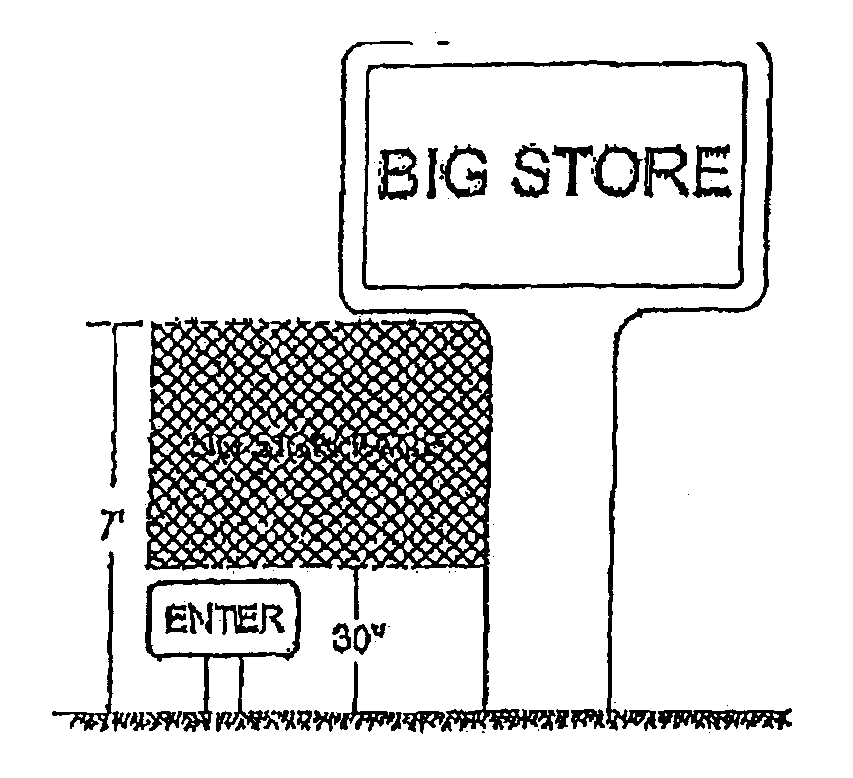
Sight distances. All signs shall consider protecting sight distances at intersections, driveways and curves. Observance of required setbacks is important for maintaining visibility, and topography and other features near a sign may also affect where a sign may be safely located. At an exit drive where the view of oncoming traffic or a turn movement could be obscured by the location of a sign, the sign face is to be located not higher than 30 inches from the ground or not lower than seven feet from the ground as shown in the drawing below.
(7)
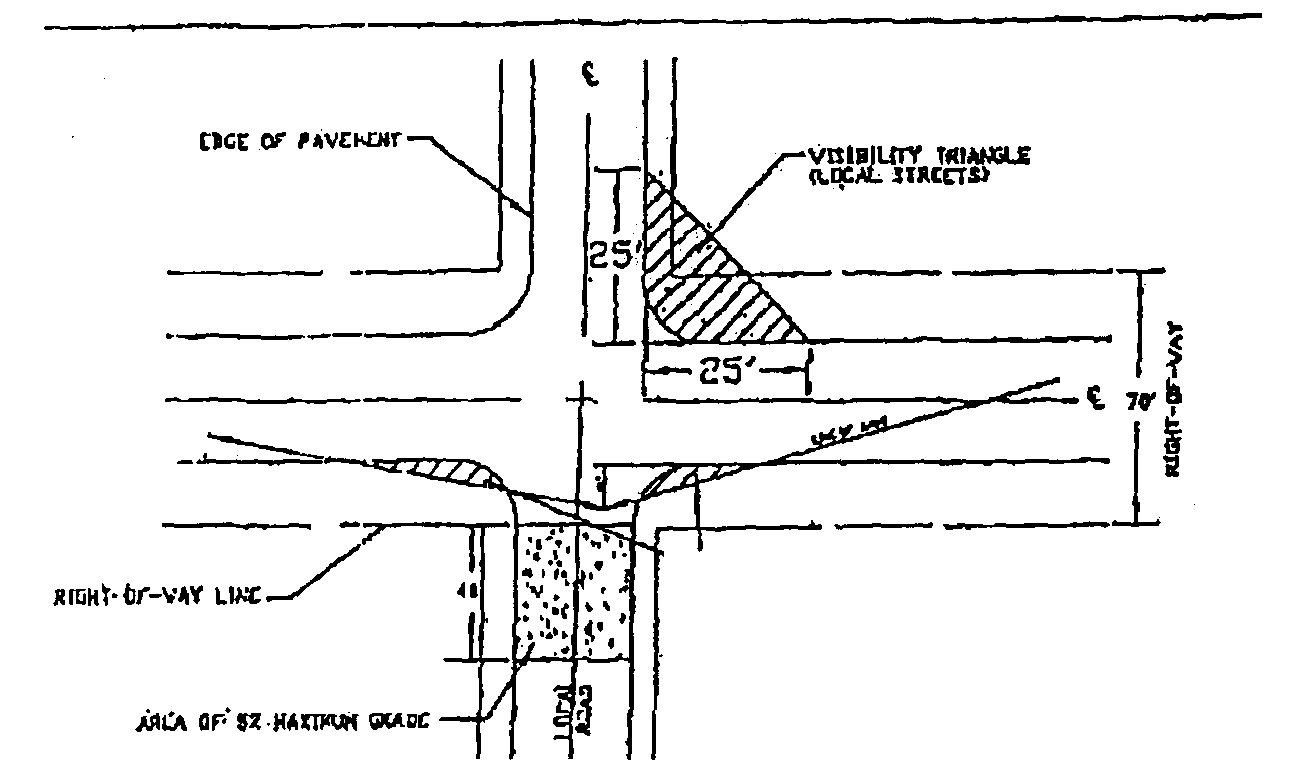
Visibility triangles. Visibility triangles on adjacent streets are to be reserved in accordance with the drawing below.
(8)
Area. The area within the frame shall be used to calculate the square footage. If such letters or graphics are mounted directly on a wall, fascia or awning in such way as to be without a frame, the dimensions for calculating the square footage shall be the area within the periphery around such letters or graphics in a plane figure bounded by straight lines connecting the outermost points thereof. Each surface utilized to display a message or to attract attention shall be measured as a separate sign and shall be calculated in the overall square footage. Symbols, flags, pictures, wording, figures or other forms of graphics painted on or attached to windows, walls, awnings, freestanding structures, suspended by balloons or kites, or on persons, animals or vehicles are considered a sign and are included in calculating the overall square footage.
(9)
Height. The top of a wall sign or projecting sign, including its superstructure, if any, shall be no higher than the roof of the building to which such sign may be attached.
(10)
Motor fuel facilities. Signs for motor fuel facilities shall be regulated by the sign provisions for the zoning district in which the facility is located, except that within a freestanding sign, an area not to exceed 16 square feet shall be allowed for continuous display (no flashing, scrolling or other animation) of electronic or non-electronic changeable copy identifying current fuel prices in accordance with Minn. Stats. § 239.751, as it may be amended from time to time.
(11)
Window signs. Window signs are not considered a part of the maximum sign area otherwise allowed under this section and do not require a permit.
(12)
Design and material standards for signs in commercial and industrial districts. The design and materials of any sign shall be consistent with the building materials requirements of the district in which the sign is located, and shall be the same as, or compatible with, the materials and design of the principal building(s) on the property.
(13)
The owner of any and all signs located within the City of Walker shall assume all risks associated with the sign and placement of the sign and to release, hold harmless, discharge, defend and indemnify the City of Walker and its respective agents, insurers, employees, volunteers, members and officials from any and all liabilities and damages, direct or indirect, including reasonable attorney fees in defending against claims, arising out of use or placement of any sign.
(m)
Specific regulations by sign type.
(1)
Temporary signs.
a.
A-frame signs on public property or right-of-way. Permitted in the CBD, TC, GC, WC, I, P, and PR zoning districts provided that:
1.
Not more than one A-frame sign is permitted per principal structure except that one sign is permitted per tenant within a principal building having two or more tenants each with an exclusive exterior entrance;
2.
The sign shall only be displayed when the business is open to the public;
3.
The sign must not block or impede pedestrian traffic and at least four feet of clear sidewalk width must remain, and vision of vehicular traffic may not be obstructed;
4.
The A-frame sign must be located within two feet of the front wall or window of the building, unless completely located on private property;
5.
The A-frame sign must be no more than four feet in height and two feet in width, and eight square feet;
6.
A-frame signs shall not be illuminated;
7.
A-frame signs shall not contain moving parts or have balloons, streamers, pennants or similar items attached thereto;
8.
A temporary/off premises sign permit is required prior to the display of an A-frame sign off premises, and such a permit is nontransferable. This subsection (m)(1) also applies to off premises, temporary, A-frame signs. Permits areto be applied for prior to any event/advertisement where the A-frame will be displayed off premises. An example: If live music is playing on a particular night and the property owner would like to advertise off premises with an A-frame, that would require an application and fee. An example: If a business with limited visibility for advertisement would like to display an off-premises, A-frame sign for the weekend or peak tourist times of the year, that would require an application and fee. The sign may be displayed for seven consecutive days per application, and no more than ten times per calendar year on one parcel.
9.
If the sign is to be located on public property or in the public right of way, the owner of the sign shall, in the application for a sign permit, agree that the applicant assumes all risks associated with the sign and placement of the sign and agree to release, hold harmless, discharge, defend and indemnify the City of Walker and its respective agents, insurers, employees, volunteers, members and officials from any and all liabilities and damages, direct or indirect, including reasonable attorney fees in defending against claims, arising out of use or placement of any sign. The owner of the sign shall provide the City and maintain on file with the city a current certificate of general liability insurance with minimum coverages acceptable to the city, insuring the obligations of the applicant agreed to as required herein and naming the City of Walker Minnesota as an additional insured;
10.
Off site, A-frame signs are not allowed in the Minnesota Department of Transportation right-of-way along Minnesota State Highway 371 and Minnesota State Highway 34; and
11.
Those existing businesses abutting the state right-of-way, displaying an A-frame, temporary sign just outside their premises must abide by the above 1—9 as well as comply with the regulations of the Minnesota Department of Transportation. If the property on which the sign will be displayed off premises allows for the sign to be on the parcel and out of the right of way, and still advertise sufficiently, the applicant must do so.
b.
Banner signs, off-premises. Permitted in all nonresidential districts.
1.
Off-premises banner signs require a permit from the zoning administrator and permission of the property owner. Signs shall not be in place longer than seven consecutive days and not exceed ten occurrences on a parcel in a 12-month period;
2.
No more than one wall banner sign may be displayed on a facade visible from a publicly traveled street or alley, or in the case of multi-tenant properties, no more than one wall banner sign per business;
3.
Freestanding banner signs are limited to one per lot; and
4.
Banner signs may not exceed 24 square feet in area.
c.
Trailered signs. Trailered signs are permitted in the CBD, GC, TC and I districts, provided:
1.
Trailered signs are not in place longer than seven consecutive days and not to exceed seven occurrences on a parcel in a 12-month period;
2.
Trailered signs are limited to one sign per parcel, regardless of the number of businesses, owners or tenants;
3.
Trailered signs may not exceed 32 square feet in area. No flashing lights will be allowed on trailered signs; and
4.
Trailered signs shall not utilize parking spaces or public sidewalks.
(2)
Permanent signs.
a.
Area identification sign. Permitted in R, LDR, and MFR zoning districts for developments of ten or more parcels or units. One freestanding sign per development not to exceed 18 square feet in area and eight feet in height. Internal illumination is not allowed.
b.
Manual changeable copy signs and electronic changeable copy signs. Where specifically allowed by this section, any legal nonconforming manual changeable copy signs, and electronic changeable copy signs shall comply with the following requirements:
1.
Permitted signs. Manual and electronic changeable copy signs are permitted in the central business district (CBD), general commercial district (GC), waterfront commercial district (WC), industrial district (I), public district (P), and parks and recreational district (PR) as part of a freestanding or wall sign, or as an independent wall sign, and in the transitional commercial district (TC) by conditional use permit as specified by this section. Projecting changeable copy signs are not permitted.
2.
Brightness. LED displays shall be adjusted to a night time brightness setting of no more than 20 percent of their maximum brightness setting. LED dynamic displays may operate at up to 100 percent of their maximum brightness during the day time. Incandescent dynamic displays shall be adjusted to a night time brightness setting of no more than 60 percent. Incandescent dynamic displays may operate at up to 100 percent of their maximum brightness during the day time. Constant night time displays of bright or "hot colors" such as, but not limited to, complete red or white display backgrounds shall be prohibited. All electronic changeable copy signs shall be equipped with a night time, manufacturer auto-dim feature and operated according to manufacturer night time intensity specifications. Legal nonconforming electronic changeable copy signs without a manufacturer auto-dim feature shall comply with this requirement to the extent feasible within the limits of the electronic changeable copy sign's programming.
3.
Motion, animation, video and visual effects. Messages displayed on electronic changeable copy signs shall be static and shall not have any animation, motion, blinking, scrolling, rotating, oscillating, or other apparent flashing or movement. The transition from one static display to another shall be instantaneous and without any special effects.
4.
Time/duration. The minimum frame hold display time duration for all electronic changeable copy signs, including legal nonconforming displays, shall not be less than five minutes, with the exception of time and temperature displays, which shall have a minimum hold time of not less than two seconds.
5.
Message sequencing. Images and messages displayed on an electronic changeable copy sign shall be complete in themselves, without continuation in content to the next image or message or to any other sign.
6.
Size and percentage of sign area. Manual and electronic changeable copy signs may occupy no more than 45 percent of the total allowable sign area of a freestanding sign permitted on a parcel, not to exceed 55 square feet in sign area. Manual and electronic changeable copy wall signs may not exceed 32 square feet in sign area. Only one, contiguous manual changeable copy sign or electronic changeable copy sign is permitted on a sign face.
7.
Maximum number. There shall be no more than one freestanding manual or electronic changeable copy sign permitted per property. Manual or electronic changeable copy signs which are mounted in a back-to-back configuration shall count as one sign provided the total angle for mounting does not exceed 60 degrees. One manual or electronic changeable copy wall sign is permitted per principal structure facade abutting a publicly traveled right-of-way, not to exceed two manual or electronic changeable copy wall signs per parcel.
8.
Spacing from residential uses. No electronic changeable copy sign shall be located within 100 feet of a residential district. The distance shall be measured based upon a horizontal line beginning at the nearest residential property line and the leading edge of the electronic changeable copy sign, or a viewing radius of 45 degrees, whichever is closer.
9.
Spacing from traffic control signals. No electronic changeable copy sign shall be located within 50 feet of an official traffic control signal. The distance shall be measured based upon a horizontal line beginning at the leading edge of the electronic changeable copy sign and any portion of the traffic control device.
10.
Restriction on additional temporary signage. When a manual or electronic changeable copy sign exists on a parcel, there shall be no additional temporary signage, including, but not limited to, banners and portable signs allowed or permitted on the parcel, with the exception of multi-tenant properties for commercial tenants not served by the manual or electronic changeable copy sign.
11.
LED scrolling message board. One LED scrolling message board of less than three square feet in area may be displayed on the interior of a window on parcels in the central business district (CBD). Only one such sign is allowed per parcel. Said sign shall comply with the standards for electronic changeable copy signs, with the exception of limitations on scrolling, hold time, sequencing and additional temporary signage.
c.
Dynamic displays.
1.
Findings.
(i)
Studies show that there is a correlation between dynamic displays on signs and the distraction of highway and commercial thoroughfare drivers. Distraction can lead to traffic accidents. Drivers can be distracted not only by a changing message, but also by knowing that the sign has a changing message. Drivers may watch a sign waiting for the next change to occur. Drivers are also distracted by messages that do not tell the full story in one look. People have a natural desire to see the end of the story and will continue to look at the sign in order to wait for the end. Additionally, drivers are more distracted by special effects used to change the message, such as fade-ins and fade-outs. Finally, drivers are generally more distracted by messages that are too small to be clearly seen or that contain more than a simple message. Time and temperature signs appear to be an exception to these concerns because the messages are short, easily absorbed, and become inaccurate without frequent changes. Despite these public safety concerns, there is merit in allowing new technologies to easily update messages. Except as prohibited by state or federal law, sign owners should have the opportunity to use these technologies with certain restrictions. These regulations are intended to minimize potential driver distraction and to effectively restrict proliferation in residential districts where signs with dynamic displays can adversely impact the residential character of a neighborhood.
(ii)
Local spacing requirements could interfere with the equal opportunity to use such technologies and are not included. Without those requirements, however, there is the potential for numerous dynamic displays to exist along a given roadway. In some instances, more than one dynamic display could be seen from a given location on the road and, therefore, the minimum display time becomes critical especially at night. If the display time is too short, a driver may be subject to a view that appears to have constant movement. This apparent movement would obviously be compounded in a corridor with multiple signs containing dynamic displays. Drivers may be subjected to an unsafe degree of distraction and sensory overload can occur, especially during night time driving conditions. Therefore, a longer display time for dynamic displays is appropriate, along with regulations concerning dynamic display brightness and the manner in which the dynamic display message is presented in order to ensure driver safety.
(iii)
In conclusion, the city finds that dynamic displays should be allowed on certain types of signage within certain districts within the jurisdiction, but with the need to provide significant controls to minimize their potential threats to public safety.
2.
Regulations. Dynamic displays on signs, where specifically allowed or permitted by this section, and legal nonconforming dynamic display signs shall comply with the following requirements:
(i)
Brightness. LED dynamic displays shall be adjusted to a night time brightness setting of no more than 20 percent of their maximum brightness setting. LED dynamic displays may operate at up to 100 percent of their maximum brightness during the day time. Incandescent dynamic displays shall be adjusted to a night time brightness setting of no more than 60 percent. Incandescent dynamic displays may operate at up to 100 percent of their maximum brightness during the day time. Constant night time displays of bright or "hot colors" such as, but not limited to, complete red or white display backgrounds shall be prohibited. All dynamic displays shall be equipped with a night time, manufacturer auto-dim feature and operated according to manufacturer night time intensity specifications. Legal nonconforming dynamic displays without a manufacturer auto-dim feature shall comply with this requirement to the extent feasible within the limits of the dynamic display's programming.
(ii)
Motion, animation, video and visual effects. Images and messages displayed on a dynamic display sign shall be static and shall not have any animation, motion, blinking, scrolling, rotating, oscillating, or other apparent flashing or movement. The transition from one static display to another shall be instantaneous and without any special effects.
(iii)
Time/duration. The minimum frame hold display time duration for all dynamic displays, including legal nonconforming displays, shall not be less than 15 seconds, with the exception of time and temperature displays, which shall have a minimum hold time of not less than two seconds.
(iv)
Message sequencing. Images and messages displayed on a dynamic display sign shall be complete in themselves, without continuation in content to the next image or message or to any other sign.
(v)
Dynamic display size and percentage of sign area. Dynamic display signs may be permitted in the public zoning district on freestanding signs, as specified by this section. Dynamic displays may occupy no more than 45 percent of the total allowable sign area of a freestanding sign permitted on a parcel. No dynamic display may exceed 55 square feet in sign area. Only one contiguous dynamic display area is permitted on a sign face.
(vi)
Maximum number. There shall be no more than one freestanding dynamic display sign permitted per property. Dynamic displays signs which are mounted in a back-to-back configuration shall count as one dynamic display provided the total angle for mounting does not exceed 60 degrees.
(vii)
Spacing from residential uses. No dynamic display shall be located within 100 feet of a residential district. The distance shall be measured based upon a horizontal line beginning at the nearest residential property line and the leading edge of the dynamic display, or a viewing radius of 45 degrees, whichever is closer.
(viii)
Spacing from traffic control signals. No dynamic display shall be located within 50 feet of an official traffic control signal. The distance shall be measured based upon a horizontal line beginning at the leading edge of the dynamic display and any portion of the traffic control device.
(ix)
Restriction on additional temporary signage. When a dynamic display sign exists on a parcel, there shall be no additional temporary signage, including, but not limited to, banners and portable signs allowed or permitted on the parcel, with the exception of multi-tenant properties for commercial tenants not served by the dynamic display sign.
d.
Freestanding sign.
1.
One freestanding sign (monument or pylon) is permitted per parcel according to the following specifications:
2.
Freestanding signs may not exceed 20 feet in height and may have internal or external illumination. Projecting signs are not permitted when a freestanding sign exists on a parcel.
e.
Freestanding sign, nonresidential uses in a residential zone uses conditionally permitted, such as churches, nursing homes. One freestanding sign per street frontage not to exceed 32 square feet in sign area is permitted. Said sign shall not be a dynamic display or a changeable copy sign.
f.
Home occupation sign. No more than one home occupation sign per parcel is permitted in the R, LDR and MFR zoning districts, not to exceed six square feet in sign area. The sign may not be placed higher than six feet from grade level. Home occupation signs shall not be illuminated and shall not contain an electronic or dynamic display.
g.
Internal directional signs. Internal directional signs are allowed in all zoning districts without a permit. Up to three internal directional signs are allowed per parcel. Each sign may not exceed four square feet in area or a height of six feet.
h.
Internal identification signs. Internal identification signs are allowed in all zoning districts without a permit. Up to three internal identification signs are allowed per parcel. Each sign may not exceed four square feet in area or a height of six feet.
i.
Projecting signs. Projecting signs may be allowed in commercial districts provided that:
1.
There is a minimum of eight feet of clearance under the base of the sign to the ground below;
2.
The sign does not project more than five feet beyond the wall to which it is mounted, is at least two feet back from the curb face and may not project over a vehicular drive aisle or traveled portion of a public or private street;
3.
The sign does not exceed the height of the building;
4.
The sign does not exceed 48 square feet in sign area; and
5.
No freestanding signs are located on the parcel.
j.
Static wall sign abutting publicly traveled right-of-way. Wall signs may not exceed the height of the building, project more than 12 inches from the building facade, or exceed 150 square feet in sign area per single wall sign. An unlimited number of static wall signs abutting a publicly traveled right-of-way are permitted as follows:
1.
CBD, GC, I, P, PR. Maximum cumulative wall sign area not to exceed 25 percent of the area of principal structure facade.
2.
TC, WC. Maximum cumulative wall sign area not to exceed 15 percent of the area of principal structure facade.
k.
Static wall sign not abutting publicly traveled right-of-way. One static wall sign, not exceeding 24 square feet in sign area, not exceeding the height of the building, or projecting more than 12 inches from the building facade is permitted on facades not abutting a publicly traveled right-of-way.
(n)
Specific regulations by zoning district.
(1)
The number and types of signage allowed by zoning district is as follows:
(2)
Additional standards within the waterfront commercial (WC) district. Uses that depend on patrons arriving by water craft may use signs and lighting to convey needed information to the public, subject to the following general standards:
a.
No advertising signs or supporting facilities for signs may be placed in or upon public waters. Signs conveying information or safety messages may be placed in or on public waters by a public authority or under a permit issued by the county sheriff.
b.
Signs may be placed, when necessary, within the shore impact zone if they are designed and sized to be the minimum necessary to convey needed information. They must only convey the location and name of the establishment and the general types of goods or services available. The signs must not contain other detailed information such as product brands and prices, must not be located higher than ten feet above the ground and must not exceed 32 square feet in size. If illuminated by artificial lights, the lights must be shielded or directed to prevent illumination out across public waters.
c.
Other outside lighting may be located within the shore impact zone or over public waters if it is used primarily to illuminate potential safety hazards and is shielded or otherwise directed to prevent direct illumination out across public waters. This does not preclude use of navigational lights.
(Code 2000, § 154.042, ch. 154(app., § 3); Ord. of 10-8-1998; Ord. No. 2009-05, 11-11-2009; Ord. No. 2011-07, 12-5-2011; Ord. No. 2016-09, § 1, 9-12-2016; Ord. No. 2019-03, § 1, 6-3-2019; Ord. No. 2022-03, § 1, 4-4-22; Ord. No. 2024-05, § 1, 7-1-2024; Ord. No. 2024-09, § 1, 11-4-2024)
Sec. 109-153. - Nuisances.
(a)
Compliance required. Every use permitted by this chapter shall be so established and maintained as to comply with the provisions of this section. The council may require the complaining party to provide such tests or investigations by an independent testing organization satisfactory to the council as are necessary to show noncompliance with these standards. The entire cost of such investigations and tests shall be paid for by the complaining party unless the results disclose noncompliance with these standards; in that event, the entire cost shall be borne by the owner or operator. This provision does not preclude the city from making any investigation and tests it finds appropriate to determine compliance with these standards.
(b)
Odor. No use shall cause the discharge of toxic, noxious, or odorous matter beyond the limits of the site where it is located in such concentrations as to be obnoxious or otherwise detrimental to the public health, safety, comfort, or welfare or cause injury to property or business.
(c)
Glare. Direct or reflected glare, such as from floodlights, spotlights, or high temperature process, and as differentiated from general illumination, shall not be visible beyond the site of origin at any property line. Any lights used for exterior illumination shall be directed away from adjacent properties. Lights used for external lighting of signs shall be shielded from any roadway.
(d)
Dust. Solid or liquid particles shall not be emitted at any point in concentrations exceeding three-tenths grains per cubic foot of the conveying gas or air. For measurement of the amount of particles in gases resulting from combustion, standard corrections shall be applied to a stack temperature of 500 degrees Fahrenheit and 50 percent excess air.
(e)
Fire hazards. Any activity involving the use or storage of flammable or explosive materials shall be protected by adequate firefighting and fire prevention equipment and by such safety devices as are normally used in the handling of such materials. Such hazards shall be kept removed from adjacent activities to a distance which is compatible with the potential danger involved. The local fire inspector shall be advised of such change.
(f)
Wastes. All solid waste materials, debris, or refuse shall be kept within a completely enclosed building or properly contained in a closed container designed for such purposes. All liquid wastes containing any organic or toxic matter shall be either discharged into a public sanitary sewer with permission of the city or treated in a manner prescribed by the health officer.
(g)
Air pollution. Every activity shall conform to state regulations relating to air quality standards and air pollution control.
(h)
Erosion. No activity shall be carried on in such a way that water, soil, or any objectionable substance is carried on to any adjacent property.
(Code 2000, § 154.043; Ord. of 10-8-1998)
Sec. 109-154. - Fences.
(a)
Fences not exceeding 72 inches in height may be constructed on a property line except within the waterfront setback area.
(b)
Fences over 72 inches in height shall require a conditional use permit.
(c)
Fences shall not be erected within 20 feet of the intersection of two public rights-of-way or where they create a visual safety hazard.
(d)
No fence shall be erected within road right-of-way or public road easement, nor within six feet off the shoulder of any public road, whichever is greatest.
(e)
Fences must be constructed of wood, wood-like material, steel, metal, bricks, masonry, plastic or other materials designed for permanent outdoor fencing. Wood fences must be constructed of cedar, redwood or other decay resistant wood. Chain-link fencing of less than 11 gauge is prohibited. Fences must not be constructed from razor wire, snow fencing, plywood or materials originally intended for other purposes. Above ground electric fencing is not permitted. Barbed wire security fencing is permitted only on top of fences in nonresidential districts, a minimum of six feet above the natural grade, via an approved conditional use permit.
(f)
Fencing used for the screening of material stored outside shall be constructed of an opaque material (wood or cyclone fencing with screening slats).
(Code 2000, § 154.044; Ord. No. 2009-05, 11-11-2009; Ord. No. 2026-05, § 3, 5-5-2026)
Sec. 109-155. - Storage.
(a)
All materials and equipment shall be stored within a building or fully screened so as not to be visible from adjoining properties, except for the following: Laundry drying, recreational equipment, construction and landscaping materials, and equipment currently being used for construction of the premises, woodpiles, agricultural equipment and materials, if these are used or intended for use on the premises, off-street parking except as otherwise regulated. Boats and recreational vehicles and fish houses shall be stored in an enclosed building or stored in the rear or side yard not less than ten feet from any property line. Fish houses shall not be used as a dwelling.
(b)
Abandoned motor vehicles shall not be stored outside in any district. Existing abandoned vehicles shall be removed within 30 days after the adoption of the ordinance from which this chapter is derived.
(c)
Exterior storage of materials within commercial or industrial districts shall be allowed for temporary sale of merchandise or by conditional use permit if the storage exceeds seven consecutive days.
(Code 2000, § 154.045; Ord. of 10-8-1998)
Sec. 109-156. - Screening and landscaping.
(a)
Where any business or industry is adjacent to property zoned residential or any use cannot meet the visual standards of the city, screening shall be provided by the business or offending use.
(b)
Screening required shall be in addition to normal landscaping and planting, and consist of a visual obstruction completely containing the activity on the offending use property, assuming leaf-off conditions.
(c)
Screening shall consist of an appropriate combination of dense evergreen plantings, eight feet or more in height, deciduous shrubs or trees, wood walls with 100 percent obstruction, or a building wall consisting of aesthetically pleasing materials. The property owner shall be responsible for the maintenance of the planting and condition of any fencing.
(d)
No signage shall be allowed on any fence or screening.
(e)
All commercial buildings in the transitional commercial district shall be landscaped according to the plan approved by the planning commission. The type of screening materials shall be approved by the planning commission.
(Code 2000, § 154.046; Ord. of 10-8-1998)
Sec. 109-157. - Sanitation.
(a)
Solid waste. All solid waste shall be disposed of in accordance with the standards of Cass County. Brush piles, yard wastes, and compost piles containing no putrescible materials are permitted provided they do not become a fire hazard or visual nuisance.
(b)
Domestic sewage.
(1)
All structures shall discharge into a municipal sanitary system, if available.
(2)
All other structures shall have an individual or common sewage treatment system meeting the requirements of this chapter and Minn. Rules ch. 7080, Individual Sewage Systems Treatment Programs, as it may be amended from time to time.
(3)
All nonconforming systems shall be brought into conformance as provided in section 109-9.
(4)
Sewage tanks being abandoned shall be thoroughly pumped and filled with soil.
(5)
Maintenance of individual or common sewage treatment systems shall be in accordance with Minn. Rules ch. 7080, Individual Sewage Systems Treatment Programs, as it may be amended from time to time.
(c)
Agricultural or animal wastes. No waste products from agriculture or animal husbandry operations shall be deposited by man within the shoreland area (1,000 feet from a lake or 300 feet from a watercourse) at any greater rate than the plant and soil system can absorb the nutrients. No wastes shall be allowed to accumulate where surface waters flow directly to public waters or watercourses. No livestock shall be allowed to water directly in a stream or public water.
(d)
Water supply.
(1)
All structures shall be connected to a municipal water supply, if available.
(2)
All domestic and agricultural wells shall conform to the Minn. Rules ch. 4725, Wells and Borings, as it may be amended from time to time. All domestic wells shall be drilled by a licensed well driller. The driller shall submit a log to the city.
(3)
All wells being abandoned shall be sealed according to Minn. Rules ch. 4725, Wells and Borings, as it may be amended from time to time, and reported to the Minnesota Department of Health and the city.
(Code 2000, § 154.047; Ord. of 10-8-1998)
Sec. 109-158. - Trees, woodlands, and soil erosion.
(a)
(1)
Except within the CBD zone, clear cutting vegetation removal shall not be allowed within the city unless a vegetative replacement plan has been first approved by the planning commission. The vegetation replacement plan shall include the following information:
a.
The property area and size of area to be disturbed.
b.
A description of the existing species.
c.
A replacement planting plan, including species and size of plantings.
d.
Soil erosion plans, including silt fences, staked hay bales, etc.
(2)
If the vegetative replacement plan is approved, the permit shall include the removal of all debris.
(b)
In CBD, GC, and WC zoning districts, the developer of any property shall submit tree removal plans to the zoning administrator, who shall determine if the proposal requires a conditional use permit. If no conditional use permit is required, the zoning administrator shall review the tree removal plan and certify that no more vegetation is removed than is necessary for the project.
(c)
Select or open cutting vegetation removal, if allowed, must provide for removal of debris.
(d)
Natural areas designated by conditions on conditional use permits for screening or woodland preservation purposes shall be left natural except for removal of diseased trees. Replanting or thickening with native species is encouraged.
(e)
Any area disturbed during any grading operation shall have the native topsoil replaced and be seeded with perennial grasses.
(f)
Vegetation alterations necessary for the construction of structures and sewage treatment systems under validly issued permits for these facilities are exempt from the above standards except subsection (e) of this section. All debris shall be removed.
(Code 2000, § 154.048; Ord. of 10-8-1998)
Sec. 109-159. - Parking and loading.
(a)
Parking.
(1)
On-site parking or garage space shall be provided in all zoning districts, except as specifically exempted, with adequate drive access to eliminate the need to back onto collector streets or highways. On-site parking spaces shall not be used for storage.
(2)
Parking spaces shall be a minimum of 180 square feet in area and shall be either ten feet by 18 feet or nine feet by 20 feet in size.
(3)
Parking for residential zones shall be provided at the following ratios, unless modified by a conditional use permit:
(4)
Parking for commercial zones shall be provided at the following ratios, unless modified by a conditional use permit. Uses not listed below shall provide parking as determined by the planning commission.
(5)
Commercial on-site parking (except in CBD) shall not be closer than five feet from a lot line.
(6)
All parking shall be paved or provided with all-weather surface and be adequately drained to a pervious surface designed to allow entrapment of silts and nutrients prior to discharge to a public water.
(7)
More than five parking stalls contiguously located and any commercial parking adjacent to a residential district shall be landscaped according to a plan approved by the planning commission.
(b)
Loading. All required loading berths shall be off-street and shall be located on the same lot or adjoining lot as the principal use served. Loading shall not occupy front yard space. Berths shall not be used for storage in excess of eight hours. Loading berths shall be no less than 15 feet in width and 50 feet long with 14 feet of vertical clearance. Berths shall have an all-weather surface and be well drained.
(Code 2000, § 154.049; Ord. of 10-8-1998)
Sec. 109-160. - Drainage.
(a)
For all new developments within the city, the developer shall be responsible to provide for proper drainage control on the property. When possible, existing natural drainage ways, wetlands, and vegetated soil surfaces must be used to convey, store, filter, and retain stormwater runoff before discharge to public waters.
(b)
Any development must be planned and conducted in a manner that will minimize the extent of disturbed areas, runoff velocities, erosion potential, and reduce and delay runoff volumes. Disturbed areas must be stabilized and protected as soon as possible and facilities or methods used to retain sediment on the site.
(c)
When development density, topographic features, and soil and vegetation conditions are not sufficient to adequately handle stormwater runoff using natural features and vegetation, various types of constructed facilities such as diversions, settling basins, skimming devices, dikes, waterways, and ponds may be used. Preference must be given to designs using surface drainage, vegetation, and infiltration rather than buried pipes and manmade materials and facilities.
(d)
When constructed facilities are used for stormwater management, they must be designed and installed consistent with the field office technical guide of the local soil and water conservation districts.
(e)
All development shall contain provisions for adequate surface or subsurface runoff of stormwater and snow melt directed to natural drainage ways. A storm frequency of a five-year return period shall be provided for with no flooding of structures or ponding.
(f)
All development shall provide for the continuance of natural drainage ways, and structures shall be so constructed as to be one foot above the water level in the drainage way created by a storm of a 100-year period or a one percent chance of occurrence.
(g)
All drainage structures provided shall be sufficient in size to pass a five-year storm to a natural drainage way and to pass a 100-year storm along a drainage way.
(h)
The use of natural or manmade stormwater storage areas is encouraged. These areas should be vegetated and designed to naturally lower after a storm.
(Code 2000, § 154.050; Ord. of 10-8-1998)
Sec. 109-161. - Grading and road construction.
(a)
Grading and filling in shoreland areas including ice ridges, wetlands, or any alterations of the natural topography in a WC, TC, CBD, R, LDR, or MFR zoning district shall require a permit if the amount of dirt moving is less than ten cubic yards within the shore or bluff impact zone or less than 50 cubic yards outside of the shore or bluff impact zone.
(b)
A conditional use permit shall be required for grading and filling in shoreland areas including ice ridges, wetlands, or any alterations of the natural topography in a WC, TC, CBD, R, LDR, or MFR zoning district; and when the slope of the land is toward a public water or watercourse involving the movement of more than ten cubic yards of material in a bluff or shore impact zone or more than 50 cubic yards of material anywhere else in the city. (Excavation for permitted structures, drives, sewer systems, and parking areas is allowable as part of the structure or sewer permit and shall not require a separate permit.) In either case, the following conditions shall apply:
(1)
The smallest amount of bare ground is exposed for as short a time as feasible.
(2)
Four inches of topsoil is replaced and temporary ground cover such as mulch is used and permanent ground cover such as sod is planted.
(3)
Methods to prevent erosion and trap sediment are employed.
(4)
Fill is stabilized to acceptable engineering standards and must not create an unstable slope.
(5)
Plans to place fill or excavated material on steep slopes must be reviewed by a qualified professional for continued slope stability and must not create finished slopes of 30 percent or greater.
(6)
Fill or excavated material must not be placed in bluff impact zones.
(7)
Only clean fill consisting of sand, gravel, or rock will be allowed where contact with water is anticipated. Mineral soil may be allowed elsewhere.
(8)
Alterations to topography must only be allowed if they are accessory to permitted or conditional uses and do not adversely affect adjacent or nearby properties.
(9)
Placement of natural rock riprap, including associated grading of the shoreline and placement of a filter blanket, is permitted if the finished slope does not exceed 3:1 slope, the landward extent of the riprap is within ten feet of the ordinary high water level, and the height of the riprap above the ordinary high water level does not exceed three feet.
(10)
The owner of any shoreline is responsible for the maintenance of, and erosion prevention of, that shoreline.
(c)
Excavation in the bed of public waters requires a DNR waters permit and/or a Corps of Engineers permit. Maintenance of any excavation shall be the responsibility of the permittee. Fill placed in a public water below the ordinary high water line requires a DNR waters permit and a Corps of Engineers permit.
(d)
Grading or filling in any Type 2, 3, 4, 5, 6, 7, or 8 wetland is prohibited except by variance. A no net loss provision shall be considered as a condition to any variance. DNR and Corps of Engineers permits shall be acquired by the applicant, also. A site plan by a hydrologist, soil conservation service soils data, and other similar information may be required.
(e)
Connections to public waters of manmade boat slips, canals, lagoons, harbors, and similar inland excavations is permitted only by conditional use permit. Approval by the commissioner of natural resources shall be required prior to city approval. Existing connections shall be considered public waters.
(f)
Public and private roads, driveways, and parking areas must be designed to take advantage of natural vegetation and topography to achieve maximum screening from public waters.
(1)
Roads, driveways, and parking areas shall meet structure setbacks and shall not be placed within bluff and shore impact zones when other reasonable and feasible placement alternatives exist. If no alternatives exist, they may be placed within these areas, and shall be designed to minimize adverse impacts.
(2)
Public and private watercraft access ramps, approach roads, and access-related parking areas may be placed within shore impact zones provided the vegetative screening and erosion control conditions of this section are met.
(g)
The potential for possible soil erosion impacts and development visibility from public waters must be evaluated before issuing a permit involving ground disturbance on steep slopes. Conditions must be attached to the permit to prevent erosion and to preserve maximum existing vegetation.
(h)
No filling of areas inundated by the 100-year storm along drainage ways shall be allowed, except by conditional use permit.
(i)
All parking areas, heavy use areas, storage areas, and impervious areas shall be designed to allow entrapment of silts and nutrients prior to discharge to a natural drainage way or public water. New constructed stormwater outfalls to public waters must provide filtering or settling of suspended solids and skimming of surface debris before discharge.
(j)
Erosion control measures shall be provided where necessary in the opinion of the engineer. All areas disturbed during any grading shall be covered with topsoil and seeded. Areas subject to concentrated runoff or steeper than 3:1 shall be sodded or seeded and protected with an appropriate mulch cover as directed by the engineer.
(k)
Grading and filling of less than 1,000 cubic yards associated with engineered city, township, county or state road maintenance or construction projects shall not require conditional use permits in land use districts where dirt moving uses are allowed provided that:
(1)
The dirt moving use is for a specific road maintenance or construction project. Any subsequent use for other commercial purposes shall require a separate conditional use permit.
(2)
All other requirements of this section are met.
(3)
Prior to the construction season for which the proposed road project is planned, city, township, county or state road authorities shall report to the planning commission those projects requiring dirt moving in excess of ten cubic yards of material within the shore or bluff impact zone, or in excess of 50 cubic yards of material outside the shore or bluff impact zone.
(Code 2000, § 154.051; Ord. of 10-8-1998; Ord. No. 2009-03, 7-6-2009)
Sec. 109-162. - Development cost recovery.
(a)
Scope.
(1)
Area covered. Except as otherwise specifically provided, this section applies to all property, including developments and improvements within the city.
(2)
Tax increment financing projects. Tax increment financing projects are excluded from this section, being specifically covered by section 2-124.
(3)
Definitions. The following words, terms and phrases, when used in this section, shall have the meanings ascribed to them in this subsection, except where the context clearly indicates a different meaning:
City attorney means the individual or firm contracted with by the city for the provision of legal services.
City engineer means the individual or firm contracted with by the city for the provision of engineering services.
Developer means the individual, partnership, corporation, sole proprietorship or company acting on their own behalf or on the behalf of the property owner, franchiser, franchisee, or utility company in developing or improving property within the city.
Development costs means costs, expenses and fees directly related to a specific development or improvement within the city limits.
Owner means the individual partnership, corporation, sole proprietorship or company which owns property in fee simple or as a contract for deed purchaser or lessee.
(b)
Determination of development costs. The costs and charges to be assessed for development or improvement related expenses incurred by the city on behalf of developers or owners in the city shall be determined in the following manner:
(1)
The planning and zoning administrator shall take the application of the developer/owner requesting action by the city.
(2)
The planning and zoning administrator shall open a file and place the following information in the file:
a.
Date of application.
b.
Name and address of the owner and/or developer.
c.
Name and address of the fee owner (if different than the property owner).
d.
Complete copy of the application.
e.
Analysis of project and potential city expenses.
f.
Findings of administrator.
(3)
The planning and zoning administrator shall make a preliminary determination of the development costs which must be paid by the developer/owner.
(c)
Notification to developer.
(1)
Determination of deposit amount. The planning and zoning administrator shall notify the developer/owner of the requirement to deposit an amount equal to one and one-half times the anticipated cost of the services and professional fees required or incurred by the city as a development cost.
(2)
Deposit of funds. The planning and zoning administrator shall advise the developer that the funds must be deposited with the city prior to any action on the application or request or placing the application on the agenda before the planning commission or board of adjustments and appeals or city council.
(3)
Examples of development costs. Development costs which may typically be associated with the development and/or improvement of property and the average anticipated expenses include the following (list not inclusive):
a.
Review of development agreements, franchise agreements, negotiation, and title work by city attorney.
b.
Title opinion by city attorney.
c.
Survey check by city engineer.
d.
Ordinance analysis by city attorney.
e.
Preparation for and attendance at city meetings by city attorney or city engineer relating to the specific development project.
f.
Site visits by engineer and/or city attorney.
g.
Review of development plan by city engineer and city attorney.
h.
Feasibility studies related to extension of sewer and water.
i.
Erosion control, traffic studies, lake impact studies, environmental worksheet preparation, environmental impact statement.
j.
Preparation of or participation in environmental assessment worksheets or environmental impact statements, or other environmental matters.
This list is not to be considered all inclusive, but is intended to provide examples of the range of service, the cost of which would be charged to the developer.
(d)
Payment of estimated development costs of owners.
(1)
Deposit. The developer must deposit with the city, a sum equal to one and one-half times the estimated development costs before the notice of hearing on the application shall be published and/or the application placed on an agenda for action. The deposit may consist of a cash deposit or letter of credit in an amount sufficient to cover the deposit required by the city.
(2)
Additional expenses. In the event the costs, expenses and fees incurred by the city on behalf of the developer (or the anticipated expenses to be incurred by the city) exceed the amount deposited with the city, the developer or owner shall be required to pay the additional expenses and fees prior to the final hearing or in the case of post-hearing expenses, before issuance of a permit.
(3)
Overpayment and refund. In the event the amount deposited by the developer is more than the amount expended by the city, the city shall promptly refund to the developer any excess funds as soon as all of the bills for development costs have been received and paid.
(Code 2000, § 154.052; Ord. of 10-8-1998)
Sec. 109-163. - Temporary dwelling.
No tent, trailer, recreational vehicle, garage or accessory building shall be used as a dwelling, except:
(1)
One travel trailer or recreational vehicle (e.g. travel trailers, camper, motor homes & converted buses) may be placed and used for lodging or sleeping for a period not to exceed 30 days per calendar year, provided it is placed on a residential zoned lot which is occupied by a principal dwelling or permanent structure that has access to sanitary sewer and water facilities. They may be placed on a parcel without a principal dwelling or permanent structure provided the adjoining parcel is contiguous and under common ownership with an occupied principal dwelling or permanent structure.
(2)
A travel trailer or recreational vehicle (e.g. travel trailers, camper, motor homes & converted buses) located in a licensed RV park/campground.
(3)
For the purposes of this section use as a dwelling will include, but is not limited to: Acts of sleeping, cooking, bathing, occupying as a dwelling, or any stay within the vehicle not directly related to its driving. The following factors may constitute acts of "living" for purposes of this code section: The connecting to sewer, water, electrical systems, and/or the use of a power generator, except during a loading and/or trip preparation.
(4)
The city council may suspend enforcement of section 109-163 at its discretion when it is deemed to be necessary to allow use of temporary dwellings due to circumstances such as fire, flood, wind, etc.
(Ord. No. 2017-03, § 1, 6-5-2017)
Sec. 109-164. - Driveways, in general.
All new driveways shall comply with the following minimum dimensional standards:
(1)
Driveways serving end loading garages shall maintain a width equivalent to the width of all overhead doors extending 15 feet out from the garage doors.
(2)
Minimum driveway taper ratio shall be 2:1.
(3)
Driveways shall be at least eight feet in width at the street or private road.
(4)
Driveways serving side loading garages shall provide a minimum turn around or back up depth of 20 feet, as measured from the garage door(s).
(5)
A turnaround shall be provided for a driveway serving multi-family or planned unit development with direct access to an arterial or collector roadway or for a side load garage as determined necessary by the zoning administrator. The minimum dimensions of the turnaround shall be eight feet in width by 12 feet in depth.
(6)
All parking must be paved or provided with all-weather surface and be adequately drained to a pervious surface designed to allow entrapment of silts and nutrients prior to discharge to a public water.
(7)
If the driveway abuts an asphalt paved road with or without concrete curb and gutter the driveway material must be concrete or asphalt whether or not it abuts a paved road.
(8)
Roads, driveways and parking areas shall meet structure setbacks and shall not be placed within bluff and shore impact zones when other reasonable and feasible placement alternatives exist. If no alternatives exist, they may be placed within these areas and shall be designed to minimize adverse impacts.
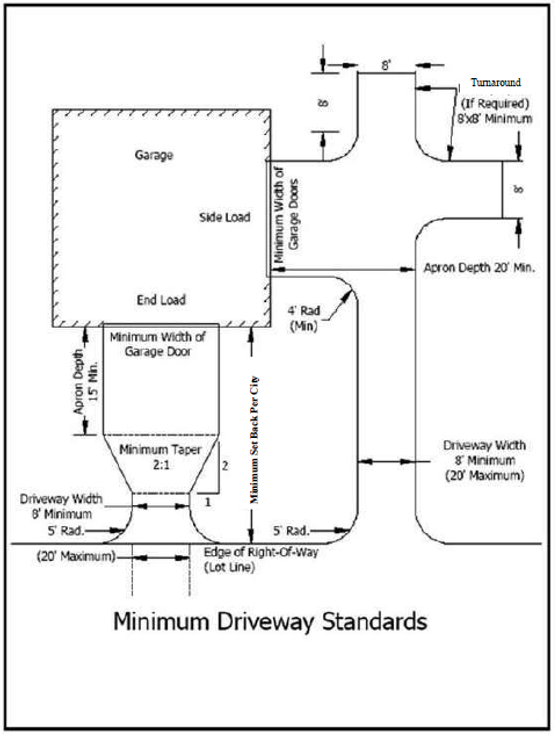
(Ord. No. 2018-01, §§ 1—3, 4-2-2018)

