
Wilsons Mills City Zoning Code
ARTICLE III
DEVELOPMENT STANDARDS
Sec. 30-208. - Off-street parking and loading requirements.
(a)
Off-street parking shall be provided for all uses of land, structures and buildings as well as for any expansion of such uses or increases in intensity of use in accordance with the requirements of this division.
(b)
An off-street loading space shall be provided for all retail business, wholesale and industrial uses as well as for any expansion of such uses or change in use requiring the regular delivery or shipping of goods, merchandise or equipment to site by semitrailer trucks, in accordance with the requirements of this division.
(c)
In the case of developments containing a mix of uses, the total requirements for off-street parking or loading space shall be the sum of the requirements for the various uses computed separately. Off-street parking requirements may be reduced if uses, located on the same site, can utilize the same parking spaces during different times. (For example, a theater that uses spaces at night could share spaces with a hardware store that uses the same spaces during the day.)
(Ord. of 7-10-2006(2), § 400.1(A))
Sec. 30-209. - Methods of providing required parking and loading spaces.
(a)
All required parking or loading spaces shall be located on the same zoning lot as the principal uses it serves, except as provided in this division. In lieu of actual construction of required on-site parking spaces, all or any portion of the off-street parking required in this division may be provided by the following means.
(b)
Required parking for a use on a zoning lot may be located on another zoning lot, either by itself or combined with the parking for other uses, subject to certification by the zoning officer that the following requirements have been met:
(1)
The use being served by the off-site parking is a permitted principal use, as established in division 7 of article II of this chapter, in the zoning district within which the zoning lot is containing such parking located;
(2)
The off-street parking spaces shall be located within 500 feet walking distance of a public entrance to the structure or land area containing the use for which such spaces are required. A safe, direct attractive lighted and convenient pedestrian route shall exist or be provided between off-street parking and the use being served;
(3)
The continued availability of off-site parking spaces necessary to meet the requirements of this section shall be ensured by an appropriate restriction on the title to the land providing the off-street parking spaces, in the form of a declaration, covenant or contract; and
(4)
That the off-site parking lot shall meet the state handicapped parking requirements.
(Ord. of 7-10-2006(2), § 400.1(B))
Sec. 30-210. - Combined parking.
Up to one-half of the parking spaces required for any one use may be used to satisfy the parking requirements for either a second use on the same zoning lot or a use for which the methods described under section 30-209 are utilized, subject to certification by the zoning officer/planning department that such joint usage of parking spaces complies with the following provisions.
(1)
The peak usage of the parking facility by one use shall be at different times than peak usage of the second uses (peak usage for theaters, places of worship and assembly halls may be at night or on Sundays, and the second use may be at other times); or
(2)
The second use is an ancillary use to the first use, such as restaurant and meeting rooms to hotels and motels.
(Ord. of 7-10-2006(2), § 400.1(C))
Sec. 30-211. - Use of required parking and loading space.
(a)
Required parking areas shall be available for the parking of operable vehicles of residents, customers and employees, and shall not be used for the storage of vehicles or materials or for the parking of vehicles used for loading or unloading or in conducting the use.
(b)
Required loading spaces shall be available for the loading and unloading of vehicles and shall not be used for the storage of vehicles and materials, or to meet off-street parking requirements, or in conducting the use.
(Ord. of 7-10-2006(2), § 400.1(D))
Sec. 30-212. - Parking designs standards.
All parking areas shall meet the following minimum design requirements:
(1)
Surfacing of parking and maneuvering spaces. All parking spaces and maneuvering space shall be surfaced with an all-weather material, which shall be maintained in a safe, sanitary and neat condition. If the building site is located more than 100 feet from the right-of-way, the zoning officer may allow an unpaved driveway that is maintained in a safe, sanitary and neat condition at all times.
(2)
Location of parking areas or maneuvering spaces. No parking area or maneuvering space shall be located within a public right-of-way. Parked vehicles in off-street parking spaces shall be prevented from intruding onto travel lanes, walkways, public streets or adjacent properties by means of walls, curbs, wheel stops, or other appropriate means.
(3)
Parking space arrangement. Except for single- or two-family dwellings, or for attendant parking, each parking space shall be arranged so that any vehicle may be parked and unparked without moving another vehicle.
(4)
Parking stall area. Parking stalls shall contain a rectangular area at least nine feet wide and 19 feet long. Lines demarcating parking spaces may be drawn at various angles in relation to curbs or aisles, as long as the parking spaces so created contain within them the rectangular area required by this section.
(5)
Parallel parking. Wherever parking consists of spaces set aside for parallel parking (zero degrees in the table in this section), one foot shall be added to the minimum required width, and three feet to the minimum required length.
(6)
Motorcycle parking. Motorcycle pads shall contain a rectangular area at least four feet wide and eight feet long. Spaces shall be located at either end of parking aisles and shall have, centered, a concrete or metal strip one square foot in area to accommodate the use of kick stands.
(7)
Landscaped islands. Landscaped islands shall be required at the ends of or between parking aisles where necessary for traffic control or drainage control.
(8)
Aisles or turnaround areas. Except for single- or two-family dwellings, parking spaces shall be provided with adequate aisles or turnaround areas so that all vehicles may enter streets in a forward manner.
(9)
Parking facilities. Parking facilities shall be designed to connect with parking facilities on adjacent zoning lots where appropriate to eliminate the need to use the abutting streets for cross movements.
(10)
Drainage system. All off-street parking facilities shall be provided with a drainage system to adequately control stormwater runoff from the site into constructed or natural drainageways.
(11)
Parking regulations for more than ten vehicles. When off-street parking for more than ten vehicles is provided, the following regulations shall apply in addition to all other regulations in this article:
a.
Surfacing. All such parking lots shall be graded and surfaced with blacktop or concrete, or other such surfacing material to ensure a dustless surface condition.
b.
Markings. Each parking stall shall be marked off and maintained so as to be distinguishable.
c.
Lighting. Any lighting shall be so arranged as to direct the light and glare away from streets and adjacent property.
d.
Landscaping. Yards surrounding parking lots shall be planted and maintained in accordance with the landscaping requirements of division 4 of this article.
e.
Curbs or bumpers. The required yards shall be set off from parking areas by either continuous curb or one noncontinuous stationary bumper for each parking space abutting on a yard, which curb or bumper shall not be less than five inches or more than two feet high.
f.
Drainage. Parking lots shall not drain onto or across public sidewalks, or into adjacent property except into a natural watercourse or a drainage easement. In already developed areas where this condition would be impossible to meet, the zoning officer may exempt the developer from this requirement, provided that adequate provision is made for drainage.
g.
Separation of bumper and walkways. In the event any parking stall abuts upon a walkway, there shall be a space of 3½ feet between the wheel bumper or curb and the edge of the walkway.
h.
Entrances and exits. On all corner lots, all vehicular openings shall be located at least 20 feet from the point of intersection of established street right-of-way lines. No entrance and exit, whether or not on a corner lot, shall exceed 30 feet in width at the property line or 40 feet in width at the curbline. There shall be a minimum distance between driveways of 25 feet measured along the curbline, unless such driveways are less than five feet apart.
i.
Internal circulation. Sufficient area shall be provided within the property lines of the parking lot, exclusive of required yards, so that all vehicles may enter and leave the lot in a forward motion.
j.
Handicapped parking. Lots shall conform to the state handicapped parking regulations.
(Ord. of 7-10-2006(2), § 400.1(E))
Sec. 30-213. - Parking area landscape standards.
(a)
It is the intent of this section to protect and promote the public health, safety and general welfare by requiring the landscaping of parking areas which will serve to reduce radiant heat from paved surfaces, to reduce wind and air turbulence, to reduce noise to reduce the glare of automobile lights, to eliminate stormwater drainage problems and to protect and preserve the appearance, character and value of adjacent properties.
(b)
Except for single- or two-family dwellings, all parking facilities, unless located entirely underground, shall meet the following minimum landscaping requirements:
(1)
Parking facilities, unless located on or within a structure, shall be separated from the exterior wall of a building, exclusive of a paved pedestrian walkway or entranceway or loading area, by a landscape strip at least five feet in width, which shall be landscaped in accordance with town landscape standards.
(2)
Entryways into parking facilities shall be bordered by a landscape buffer strip a minimum of eight feet in width, which shall be landscaped in accordance with town landscape standards.
(3)
Ground level parking facilities shall be setback from adjacent streets and/or adjacent properties that are zoned residential a minimum of eight feet. This setback area shall be landscaped in accordance with town landscape standards.
(4)
Parking facilities that accommodate 50 or more vehicles shall provide landscaped islands within the parking lot and be landscaped in accordance with town landscape standards.
(5)
In providing the landscaping required in this section, the retention of existing significant vegetation shall be encouraged.
(Ord. of 7-10-2006(2), § 400.1(F))
Sec. 30-214. - Minimum off-street parking space requirements.
(a)
The following minimum parking space requirements shall apply for the appropriate use and zoning district.
(b)
For uses not listed in the general categories in subsection (a) of this section, the minimum parking space requirement shall be determined by the zoning officer. In making such determinations, the zoning officer shall be guided by the requirements for similar uses, the number and kind of vehicles likely to be attracted to the use, and studies and references of minimum parking space requirements for such use in other jurisdictions. Table 30-214 shows some applications of the off-street parking requirements:
(c)
Where there is more than one use in a single structure, or on a single tract, or two or more instances of the same use, the minimum number of required off-street parking spaces shall be equal to the sum of the requirements of the various uses, except for shopping centers which are expressly provided for.
(d)
Special situations shall be handled by the town council. The board shall make the final determination as to the number of spaces to be required, but shall in all cases give due consideration to the specific parking needs.
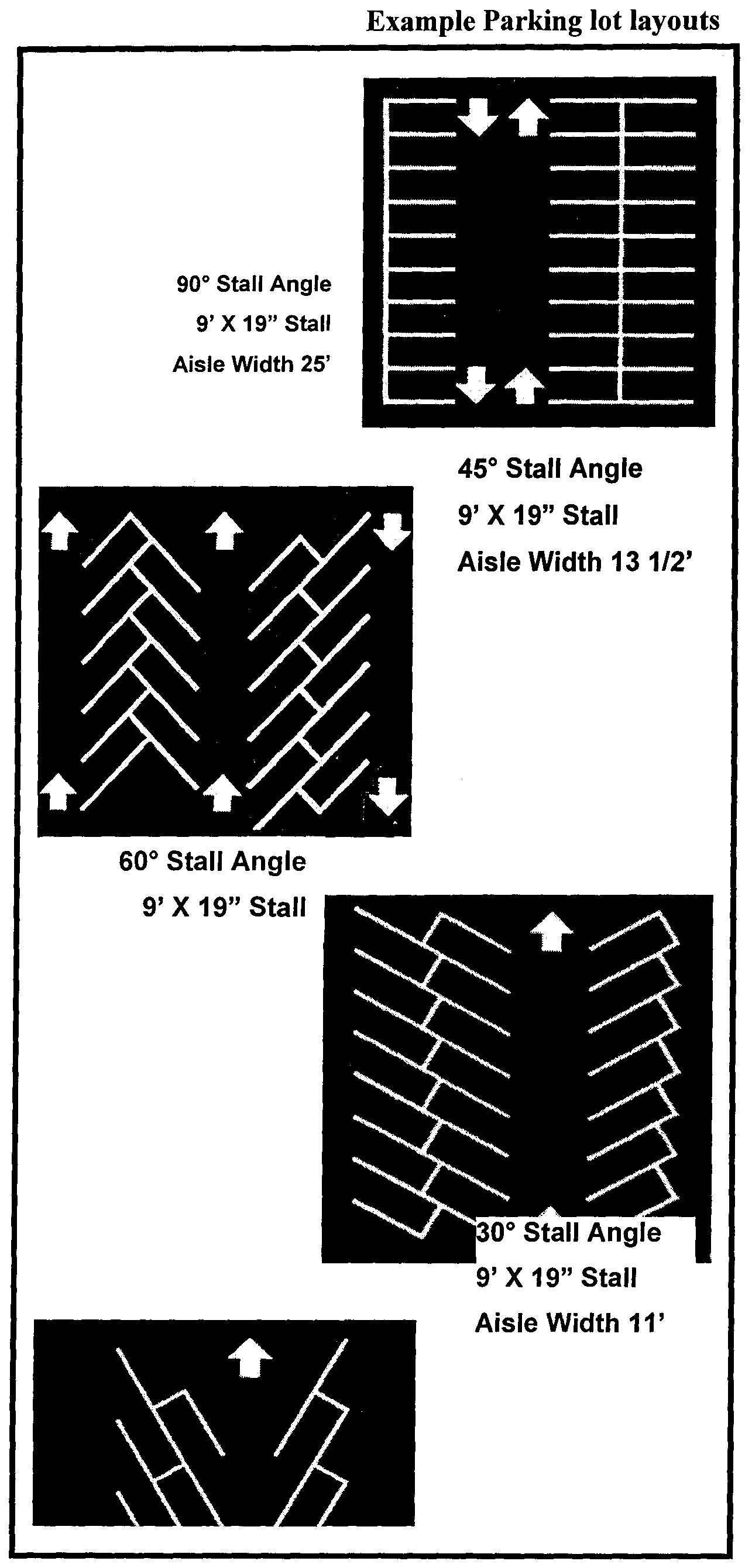
(Ord. of 7-10-2006(2), § 400.1(G))
Sec. 30-215. - Ingress and egress.
A safe means of ingress and egress shall be provided for all parking spaces and driveways for uses other than single- and two-family residential and shall be at least 24 feet wide.
(Ord. of 7-10-2006(2), § 400.1(H))
Sec. 30-216. - Exceptions.
(a)
The zoning officer may withhold a permit or certificate of occupancy if a parking layout not specifically prohibited by this division would be likely to cause avoidable safety or traffic congestion problems until modification is made. The applicant may appeal the zoning officer's decision to the board of adjustment under the normal procedure for an appeal.
(b)
If a peculiar characteristic of an establishment makes the requirements in this division clearly unrealistic, the board of adjustment may grant the applicant a parking modification.
(c)
In the CBD district, the zoning officer may allow a new use to be established in an existing building even if all parking requirements of this article cannot be met for the new use, provided that as much off-street parking as can reasonably be provided is provided by the use, and no foreseeable traffic congestion problems will be created.
(Ord. of 7-10-2006(2), § 400.1(I))
Sec. 30-217. - Off-street loading regulations.
(a)
Loading space requirements. Every building or structure used for business, trade, industry, or office and institutional purposes, shall provide loading space as indicated in this section.
(1)
Each loading space shall be no less than 15 feet in width and 30 feet in depth. Each space shall also have an overhead clearance of no less than 15 feet.
(2)
Each loading space shall have access driveways to public streets or alleys which driveways shall be at least 24 feet wide and with adequate turning radii for the delivery vehicles customarily associated with the particular use.
(3)
If there is not more than one delivery and pickup during the hours when a retail trade, office or institutional establishment is open to patrons, such space may be combined with the existing parking space on the premises.
(4)
All off-street loading spaces shall be designed so that the vehicles loading and unloading shall not set upon or cross any public street or alley right-of-way.
(5)
The space shall be provided in accordance with the following schedule:
a.
Retail business: one space for each 20,000 square feet of gross floor area or fraction thereof, with a minimum of one space.
b.
Wholesale trade and industry: one space for the first 40,000 square feet of gross floor space, plus one space for each additional 60,000.
c.
Office and institutional uses, including hotels and motels: one space for each 100,000 square feet of gross floor area or fraction thereof.
d.
In addition to meeting the requirements of Table 30-217, elementary, junior high, high schools, kindergartens, nurseries and day care centers shall also provide a safe place off the street for the loading and unloading of children from automobiles and buses.
(6)
Exceptions.
a.
If a peculiar characteristic of an establishment makes the requirements in this section clearly unrealistic, the board of adjustment may grant the applicant a modification of the loading requirements in regard to that particular establishment.
b.
The zoning officer may allow a new use to be established in an existing building even if all the loading requirements of this section cannot be met for the new use, provided that as much loading space as can reasonably be provided is provided by the use and traffic or safety hazards will not be created.
(7)
Minimum off-street loading space requirements. The following minimum loading space requirements shall apply for the appropriate use:
(b)
Loading space design standards. All loading spaces shall meet the following minimum design requirements:
(1)
Off-street loading spaces shall be located and arranged in a manner to be able to accommodate the loading and unloading of the appropriate delivery vehicle customarily associated with the particular use.
(2)
Loading spaces shall observe the minimum street and interior setbacks established for structures in article II of this chapter.
(3)
All loading space and maneuvering space shall be surfaced with an all-weather material, which shall be maintained in a safe, sanitary, and neat condition.
(4)
No loading space shall be located so that a vehicle using such space intrudes on travel lanes, walkways, public or private streets, or adjacent properties.
(5)
Each required off-street loading space shall have a minimum width of 12 feet, a minimum depth of 55 feet, and a vertical clearance of 14 feet above the finished grade of the space.
(6)
Loading spaces shall be screened from public view by an effective screening device at least six feet in height above the finished grade of the loading space. Appropriate screening devices may include solid walls, fences, earth berms, tight evergreen hedges, or any combination set forth in this section.
(Ord. of 7-10-2006(2), § 400.2)
Sec. 30-243. - Intent.
It is the intent of this division to authorize the use of signs with size, layout, legibility, and location and arrangements compatible with their surroundings; appropriate to the identity of individual properties or occupants of the community; and appropriate to traffic safety.
(Ord. of 7-10-2006(2), § 402.1)
Sec. 30-244. - Definitions.
The following words, terms and phrases, when used in this division, shall have the meanings ascribed to them in this section, except where the context clearly indicates a different meaning:
Advertising sign means a sign that has as its principal purpose to promote, advertise, or sell a product or service available on the premises upon which the sign is located, and not to identify the premises.
Canopy sign means a building sign that is located on the roof, fascia or ceiling of a canopy, and that is otherwise permitted by ordinance.
Development sign means a sign that, by means of symbol or name, identifies a shopping center, commercial or industrial park, or other development that may contain a mixture of residential, commercial or industrial uses.
Directional sign means an incidental sign (e.g., enter, exit, and one-way signs) that provides information assisting in the flow of pedestrian or vehicular traffic on the premises.
Directory sign means a sign or group of signs attached to a building or ground that identifies the business, owner, address or occupation of a group of businesses, but contains no advertising.
Freestanding sign means a permanent sign anchored directly to the ground or supported by one or more posts, columns, or other vertical structures or supports, and not attached to or dependent for support from any building.
Government sign means a sign erected and maintained by or on behalf of the federal, state or local government for the purpose of regulating traffic or for civic purposes.
Ground sign means a freestanding sign suspended or supported by one or more uprights or braces anchored in the ground with no more than six feet of clearance from the bottom of the sign to the ground below.
Identification sign means a sign that has as its principal purpose to identify, by text, logo, trademark or other identifying symbol, the name and address of a building, business or industrial development or establishment on the premises where it is located.
Incidental sign means a permanent sign that has a purpose secondary to the use of the property that provides information or direction rather than advertising. The term "incidental sign" includes traffic direction signs on the premises such as "No Parking," "Loading Zone" and other signs.
Monument sign means a freestanding sign supported primarily by an internal structural framework or integrated into landscaping or other solid structural features other than support poles.
Off-premises sign means any sign advertising goods, products, services, entertainment, events, or other activities not located, sold or offered on the premises on which the sign is located. Such signs are commonly referred to as billboards.
On-premises sign means any sign relating in its subject matter to the premises on which it is located, or to products, accommodations, services or activities on the premises.
Permanent sign means a sign attached to a building or structure, or to the ground in some permanent manner, and that is made of materials intended for long-term use.
Pole sign means a freestanding sign that is mounted on a freestanding pole or other support so that the bottom edge of the sign face is six feet or more above grade.
Portable sign means a sign whose principal supporting structure is intended, by design and construction, to be used by resting upon the ground for support and may be easily moved or relocated for reuse. The term "portable sign" includes, but is not limited to, A-frame and sandwich board signs.
Projecting sign means a sign attached to a building or structure and which extends more than 18 inches from said building or structure.
Sign means any device using words, lettering, and parts of letters, pictures, figures, numeral, phrases, sentences, emblems, devices, design, trade names or trademarks to inform or attract attention.
Sign height means the vertical height of a ground sign measured from the top of the sign to the ground at the base of the sign or highway grade level, whichever may be the higher.
Subdivision sign means a permanent on-premises sign placed at the vehicular entrance of a subdivision, manufactured home park, multifamily complex, or other residential planned development identifying the development.
Temporary sign means any sign, banner, pennant, or advertising display to be displayed for a limited time period. Easily removed signs attached to windows are considered temporary signs.
Wall sign means any sign attached to or painted on a wall of a building or structure so that the wall forms the supporting structure or becomes the background of the sign and which does not project more than 18 inches from the wall.
Window sign means a building sign affixed to the interior or exterior of a window or placed immediately behind a windowpane so as to attract the attention of persons outside the building.
(Ord. of 7-10-2006(2), § 402.2)
Sec. 30-245. - Sign area and number.
(a)
The area of a display surface of a sign shall be computed as including the entire area visible from any one point within a regular geometric form or combination of forms, comprising all of the display area of the surface and including all of the elements within the display area and the sign frame. Structural members not bearing a sign message shall not be included in the computation of sign area.
(b)
For the purpose of determining the number of signs, a sign shall be considered to be a single display device containing elements organized related and composed to form a unit. Where elements are displayed in random manner without organized relationship, each element shall be considered a single sign.
(Ord. of 7-10-2006(2), § 402.3)
Sec. 30-246. - Traffic safety precautions.
Notwithstanding any other provisions in this chapter, the following restrictions shall apply to signs in order to preserve the safety of pedestrian, bicycle and vehicular movement:
(1)
No sign or part thereof shall be located within a clear-vision triangle area of the lot 25 feet along the property line from the street right-of-way at intersections.
(2)
No sign shall make use of the words "Stop," "Slow," "Caution," "Danger" or any other word, phrase, symbol or character in such manner as is reasonably likely to be confused with traffic directional and regulatory signs.
(3)
No sign shall be erected so that by its location, color, nature or message is likely to be confused with or obstruct the view of traffic signals or signs, or is likely to be confused with the warning lights of an emergency or public safety vehicle.
(4)
Except as used to display time and temperature, no sign shall contain flashing lights.
(Ord. of 7-10-2006(2), § 402.4)
Sec. 30-247. - Obsolete signs.
(a)
Signs that have been abandoned or have become obsolete due to closing of a business, change in the nature of the business, or for any reason the sign becomes inapplicable to the property upon which it is displayed, shall be removed by the owner of the building or premises upon which it is situated within 60 days from the date of the action that caused the sign to be abandoned or obsolete.
(b)
A condition of approval for all sign erection or use permits shall be that the permit holder or owner of the building or premises, at his own expense, removes any abandoned or obsolete sign.
(c)
New signs for buildings or property on which an abandoned sign is located shall not be approved until the abandoned or obsolete sign is removed or is brought into full compliance with these regulations. However, approval may be given on the condition that the abandoned or obsolete sign is removed before a new sign is erected.
(Ord. of 7-10-2006(2), § 402.5)
Sec. 30-248. - Permit required.
Unless specifically exempted, no sign visible from a public right-of-way shall be erected, displayed or substantially altered except in accordance with the provisions of this chapter and until a permit has been issued therefor.
(Ord. of 7-10-2006(2), § 402.6)
Sec. 30-249. - Table of permitted signs.
Except as otherwise provided in this division, signs shall be permitted in each zoning district as indicated in the following table and subject to the regulations applicable to the sign type:
(1)
Signs designated with a "P" under a particular zone are permitted with a zoning permit.
(2)
Signs designated with a "U" under a particular zone are exempt from the permitting requirements.
(3)
Signs designated with a "T" under a particular zone are permitted with a temporary permit.
(4)
Signs designated with a dash (—) under a particular zone are prohibited.
(Ord. of 7-10-2006(2), § 402.7)
Sec. 30-250. - General limitations.
(a)
Except where specifically exempted by this chapter, no sign, including its attendant supports, frames, hardware, and embellishments thereto, shall be located within any public right-of-way or easement. This does not include government signs.
(b)
No sign shall be attached, affixed or painted on any utility pole, light standard, telephone or telegraph pole, any tree, rock, or other natural object.
(c)
Signs placed in illegal locations or not removed in a timely manner may be removed by the town with the cost of removal assessed to the property owner.
(d)
Signs may be illuminated internally from behind to silhouette letters and figures. External lighting shall be concealed to prevent spillover to street or adjacent properties. No source of illumination of a sign shall be directly visible from any public right-of-way or from adjacent properties.
(e)
Animated, rotating, or other moving or apparently moving signs shall be prohibited.
(f)
Devices such as banners, streamers, pennants, balloons, wind-blown propellers, moored blimps, strung light bulbs, and similar installations shall be prohibited except with a temporary use permit approved by the zoning officer for special events.
(g)
No sign shall be erected, painted or otherwise mounted on the roof of a building or above the eaves border or overhang.
(Ord. of 7-10-2006(2), § 402.8)
Sec. 30-251. - Signs in residential districts and PUD, residential developments.
A permitted nonresidential in residential districts or as an accessory used in a residential zone or a residential PUD shall be permitted one freestanding or wall sign identifying the nonresidential use per zoning lot. The maximum sign area shall be 16 square feet.
(Ord. of 7-10-2006(2), § 402.9)
Sec. 30-252. - On-premises sign regulations.
(a)
Generally. The maximum amount of all on-premises sign area permitted on one zoning lot shall be 1.25 times the amount of street frontage.
(b)
Agriculture advertising signs.
(1)
One sign per residential lot.
(2)
Signs shall advertise the sale of products grown on the premises only.
(c)
Building signs. Building signs shall be integrated into the design of the building and shall not be located to conceal major architectural elements.
(1)
Canopy signs.
a.
Maximum sign area: 20 percent of the face of the canopy or awning upon which it is located.
b.
Maximum height: shall not extend beyond the face of the canopy or awning.
(2)
Wall signs.
a.
Maximum sign area: 20 percent of the wall face of the building upon which the sign is located.
b.
Maximum height: shall not extend beyond parapet wall line or the roofline upon the building upon which the sign is located.
(3)
Window signs.
a.
Maximum sign area: 25 percent of the area of the window upon which the sign is located.
b.
Maximum height: shall not extend beyond the face of the window upon which sign is located.
(4)
Projecting sign.
a.
Maximum sign area: six square feet.
b.
Maximum height: no higher than the ceiling of canopy.
c.
Maximum projection from wall: 12 feet.
d.
Minimum clearance from sign bottom: nine feet.
(d)
Bulletin board signs.
(1)
Maximum sign area: 48 square feet.
(2)
Maximum height: 12 feet.
(3)
Maximum number: one sign per zoning lot.
(4)
Use limited to public or religious institutions only.
(5)
Signs shall display name of institution and community interest events and information only.
(6)
Minimum setback from street right-of-way.
(e)
Freestanding signs.
(1)
Maximum number.
a.
One sign per street frontage without an approved uniform sign plan.
b.
With an approved uniform sign plan, two signs may be permitted on a lot with at least 300 feet of frontage on each of two adjacent streets; or 600 feet of frontage on any one street. Only one sign shall be a pole sign.
(2)
Maximum sign area. The total area of freestanding signs on a lot shall not exceed 0.25 square feet per one linear foot of frontage on the adjacent street of the greatest length.
(3)
Minimum setbacks.
a.
No freestanding sign may extend over a property line or street right-of-way.
b.
Minimum setback from interior property line shall be 15 feet.
c.
Minimum setback from any street right-of-way shall be 15 feet, except in CBD, which shall be five feet.
d.
Minimum setback from a collector street right-of-way is 20 feet.
e.
Minimum setback from an arterial street right-of-way or higher is 30 feet.
(4)
Landscaping.
a.
Shrubs, flowers, groundcover and other landscaping materials shall be planted around the entire base of any freestanding sign.
b.
The minimum planting area shall be equal to 50 percent of the area of the sign around which the landscaping is placed.
(5)
Ground signs.
a.
Maximum sign area: 60 square feet.
b.
Maximum height: eight feet.
(6)
Monument signs.
a.
Maximum sign area: 60 square feet.
b.
Maximum height: four feet, or five feet in CBD district.
(7)
Pole signs.
a.
Maximum sign area: 80 square feet.
b.
Maximum height: 20 feet.
c.
Permitted only on lots with at least 100 feet of frontage on the street to which such sign is located.
(f)
Subdivision sign.
(1)
Maximum sign area: one sign of 48 square feet, or two signs of 24 square feet each.
(2)
Maximum height: for one sign, eight feet; for two signs, six feet each.
(3)
Sign type shall be either ground sign, or monument sign.
(4)
Location is limited to the principal entrances of subdivision.
(g)
Signs in complexes and shopping centers.
(1)
Development signs of complexes and shopping centers.
a.
Maximum sign area: 75 square feet per sign. Not to exceed a total of 150 square feet for all development signs.
b.
Maximum height: eight feet.
c.
Maximum number: one freestanding sign per principal access point to the development.
d.
Signs shall identify the name and trademark of the development and the tenants or occupants of the development only.
(2)
Identification signs for each building on the site.
a.
Maximum sign area: sign area of 40 square feet on the face of the building wall.
b.
Maximum number: one wall sign.
c.
Signs shall identify only the name and address or suite number of the building and its occupants.
(3)
Identification signs for individual establishments within development.
a.
Maximum sign area: 16 square feet per sign.
b.
Maximum number: one wall sign per entrance of establishment entering the building.
c.
Signs shall contain the name and/or trademark of the establishment it identifies.
(4)
Uniform sign plan required.
a.
The owner of shopping centers, office park, multifamily development, or other multitenant complexes shall submit a uniform sign plan to the planning board as part of their site plan. No sign permit application will be accepted for such property or use until a unified sign plan is approved by the planning department.
b.
The plan shall show all permanent signs to be placed on the site, whether a permit is required or not. The plan shall also illustrate conformance with the standards of this chapter as applicable to the types of signs proposed.
c.
All signs within a shopping center or multitenant complex shall be in harmony and consistent with each other and all buildings on the site. Signs shall be an integral part of the overall site design and layout. The uniform sign plan shall illustrate a coordinated and compatible theme with regard to colors, letters and graphic, location, materials used, maximum dimensions and proportions of all signs, building and site designs.
d.
A copy of the approved unified sign plan, including any amendments, shall be kept on file in the planning department.
e.
No sign shall be erected, placed, painted or maintained except in conformance with the approved plan. Enforcement of a unified sign plan shall be the joint responsibility of the applicant, tenants and property owner.
f.
If any new or amended unified sign plan is filed for a property on which existing signs are located, the new or amended plan shall include a schedule for bringing any nonconforming sign into full compliance with the approve plan and this chapter within three years from the date the new or amended plan is approved.
(Ord. of 7-10-2006(2), § 402.10)
Sec. 30-253. - Incidental sign regulations.
(a)
Business operation signs.
(1)
Maximum sign area: four square feet.
(2)
Maximum number: one per business establishment.
(3)
Sign shall state that the business is open or closed and operating hours only.
(b)
Directional signs.
(1)
Maximum sign area: four square feet.
(2)
Signs shall direct or guide pedestrian and vehicular traffic around the site only.
(3)
Other than logo, sign shall contain no commercial message.
(4)
Signs shall not be illuminated.
(5)
Flags of government shall not be associated with a commercial promotion.
(c)
Government signs.
(1)
Signs shall relate to legal notices, directional or information signs, traffic regulation and warning signs erected by or on behalf of a governmental entity.
(2)
Signs shall conform to the Manual of Uniform Traffic Control Devices and NCDOT standards.
(d)
Home occupation sign.
(1)
Maximum sign area: three square feet.
(2)
Maximum height: not to exceed height of wall on which it is displayed.
(3)
Maximum number: one wall sign per dwelling where the associate occupation is actively taking place.
(4)
Signs shall identify only the name of the home occupation on the site.
(5)
Signs shall be nonilluminated.
(e)
Memorial signs.
(1)
Information shall be limited to the name of building and its date of construction.
(2)
Signs may be on a tablet or carved into masonry.
(f)
Nameplate signs.
(1)
Maximum sign area: two square feet.
(2)
Maximum number: one sign per occupant.
(3)
Sign shall be nonilluminated.
(4)
Information limited to identifying the name and address of the occupant on the premises.
(5)
No commercial message shall be displayed.
(Ord. of 7-10-2006(2), § 402.11)
Sec. 30-254. - Temporary signs.
(a)
General requirements.
(1)
Location.
a.
No temporary sign shall be placed within five feet of any street pavement.
b.
No temporary sign shall be placed on private property without the owner's permission.
c.
No temporary sign shall be placed on a utility pole or government sign.
(2)
Removal of signs. The owner of the sign and private property shall be jointly responsible for removing all temporary signs from the site.
(b)
Construction site sign.
(1)
Maximum sign area: 32 square feet for residential projects other than multifamily; and 64 square feet for multifamily projects and all nonresidential projects.
(2)
Maximum height: eight feet.
(3)
Maximum number: one sign per street frontage.
(4)
Information limited to project name and the engineer, architect, contractors and others associated with the construction or financing of the project, name of the development, the expected completion date and other information pertinent to the project.
(5)
Signs shall be located on the site where active construction is taking place and during the time of a valid building permit or preliminary plat approval for the development.
(6)
Signs shall be removed within 14 days of issuance of a certificate of occupancy or final plat approval.
(c)
Political sign.
(1)
Maximum sign area: nine square feet.
(2)
Maximum number: one sign per candidate or issue, per zoning lot.
(3)
Signs shall display only information on candidate or issue for an upcoming election or referendum.
(4)
Signs shall be mounted on a temporary stake or pole.
(5)
Signs shall be located on private property with owner's permission.
(6)
Signs shall be erected no more than 30 days before the date of the election or referendum.
(7)
Signs shall be removed within seven days after election or referendum.
(d)
Public event sign.
(1)
Maximum sign area: 32 square feet.
(2)
Maximum number: one sign per street frontage on lot where event will take place.
(3)
Signs shall be placed by public, nonprofit, charitable or civic organizations only.
(4)
Signs shall announce activities and events of interest to general public only.
(5)
Signs shall be displayed no sooner than 30 days before the event or activity.
(6)
Signs shall be removed within 14 days after the event or activity.
(e)
Real estate sign.
(1)
Maximum sign area: 16 square feet in residential zones, 32 square feet in nonresidential zones and within a planned development or multifamily development.
(2)
Maximum number: one sign per street frontage on lot available for sale or lease.
(3)
Signs shall advertise the sale or lease of the premises on which the sign is located only.
(4)
Signs shall be removed immediately after closing of the sale or lease agreement.
(f)
Special event signs.
(1)
Maximum sign area: 32 square feet.
(2)
Signs shall be temporarily but securely attached to building in which the special event will take place.
(3)
Information shall relate to a grand opening, special sale, going-out-of-business sales, and other special promotional events only.
(4)
Signs shall be displayed for a period specified a valid temporary use permit. The effective period shall be no more than 28 days within any 12-month period.
(5)
Special events signs announcing grand openings of new business do not require a temporary permit, but shall be displayed for a period not to exceed 21 days.
(g)
Yard sale signs.
(1)
Maximum sign area: four square feet.
(2)
Maximum number: one sign per site where yard sale will take place.
(3)
Signs shall announce the date, time and location of the yard sale only.
(4)
Signs shall be displayed no longer than seven days before the yard sale event.
(5)
Signs shall be removed within seven days after the yard sale event.
(Ord. of 7-10-2006(2), § 402.12)
Sec. 30-255. - Off-premises advertising (billboards) signs.
(a)
Where permitted. Billboards are permitted along US Highway 70 in GB and I/W districts only.
(b)
Maximum sign area. The maximum sign area permitted is 500 square feet for monopole signs; 300 square feet for non-monopole type signs. The display area shall be measured by the smallest square, rectangle, triangle, circle or combination thereof that will encompass the entire sign.
(c)
Maximum height. The maximum height permitted is 50 feet.
(d)
Maximum length. The maximum length permitted is 50 feet, inclusive of any border and trim but excluding base or apron.
(e)
Maximum size. The maximum size limitations shall apply to each side of a sign structure; signs may be placed back-to-back, side-by-side, or in V-type construction with not more than one display to each facing, and such sign structure shall be considered as one sign.
(f)
Maximum number of messages. Maximum number of messages that can be viewed from any one point at the same time shall be two messages per sign face.
(g)
Spacing.
(1)
No billboard sign shall be placed within 1,000 feet of another billboard.
(2)
Billboard signs shall be located within 600 feet of an existing valid operating industrial or commercial business.
(3)
The minimum distance between signs shall be measured along the nearest edge of the pavement between points directly opposite the signs along each side of the highway and shall apply to sign structures located on both sides of the highway.
(4)
V-type and back-to-back signs shall be considered as one sign when located no more than 15 feet apart at their furthest points and connected and physically contiguous.
(h)
Setback requirements. The minimum setback from a public right-of-way shall be 50 feet; and the maximum setback from a public right-of-way shall be 200 feet.
(i)
Traffic safety and visibility.
(1)
No sign shall be located in such a manner as to obscure or physically interfere with the effectiveness of an official traffic sign, signal or device, nor obstruct or physically interfere with the driver's view of approaching, merging or intersection traffic.
(2)
Minimum distance from a street intersection shall be 500 feet.
(j)
Sign animation and illumination.
(1)
Any flashing, intermittent or moving light, or lights crating a movable message display shall not illuminate signs.
(2)
Signs that contain any changing billboards, rotating slats or other means of creating a moveable message display will use the following requirements:
a.
Billboards may not change content more than one time within a 30-second period and the change must occur within a two-second period.
b.
All LED billboards must be equipped to automatically turn off in case of malfunction.
c.
Only one changeable sign per side is permitted.
d.
The changeable sign is not placed within 2,000 feet of another automatic changeable facing sign on the same side of the highway.
(3)
Signs that direct beams or rays of light towards any portion of the traveled ways of U.S. 70, and which are of such intensity or brilliance as to cause glare and to impair the vision of any motorist or otherwise interfere with operation of a motor vehicle are prohibited.
(4)
No sign shall be so illuminated that it interferes with the effectiveness of or obscures an official traffic sign, device or signal.
(5)
All illumination of signs along highways under the jurisdiction of NCDOT shall be subject to all applicable lighting standards of NCDOT.
(6)
A legally conforming outdoor advertising sign may be modified to add illumination or to add an automatic changeable facing upon compliance with the standards and approved by the town and the state department of transportation. A nonconforming outdoor advertising sign shall not be modified to add any form of illumination or to add an automatic changeable facing.
(k)
Permit required.
(1)
No outdoor advertising sign of any type shall be constructed, erected, placed or replaced, except as permitted by the planning board. The planning board shall not consider a permit until the applicant has submitted a plan showing the location, size, height and style of each sign.
(2)
The applicant will be referred to the state department of transportation district engineer to obtain the proper state permits and emblems for outdoor advertising signs if so required.
(3)
The planning board shall issue a permit only when it has determined that the sign will comply with the requirements of this section and all other applicable provisions of this chapter and any other local, state and federal regulations. The planning board may condition approval of a billboard sign permit subject to the applicant obtaining all required state permits and emblems for outdoor advertising signs.
(4)
The transfer of ownership of a specific outdoor advertising sign for which a permit has been lawfully issued to the original owner shall not in any way affect the validity of the permit for that specific sign, provided that the planning board and the appropriate state department of transportation district engineer is given notice of the transfer of ownership within 30 days of the actual transfer.
(5)
Revocation of permit. Any valid permit issued for a lawful outdoor advertising structure may be revoked by the planning board for any one of the following reasons:
a.
Mistake of material facts by the issuing authority for which had the correct facts been made known, the outdoor advertising permit in question would not have been issued.
b.
Issuance of a permit based on an error of law.
c.
Misrepresentation of material facts by the applicant for a billboard sign permit.
d.
Failure to pay all applicable fees.
e.
Failure to construct outdoor advertising structure and affix the permanent emblem within 180 days from the date the outdoor advertising permit was issued by the state department of transportation if so required.
f.
Failure to maintain an outdoor advertising structure for which a permit has previously been issued in compliance with the provisions of the Outdoor Advertising Control Act, the rules and regulations of NCDOT, and this chapter.
g.
Any alteration of a nonconforming sign shall be made in accordance with the provisions of section 30-513
h.
Unlawful destruction of trees or shrubs or other growth located on the right-of-way in order to increase or enhance the visibility of an outdoor advertising structure.
i.
Failure to maintain a sign such that it reaches a state of dilapidation disrepair or, disuse. The town shall make such determination.
j.
Abandonment, discontinuance or destruction of a sign or making repairs to a nonconforming sign that exceed 50 percent of the initial construction cost of the sign at the time of construction.
(6)
The planning board may consult with the appropriate state department of transportation district engineer concerning any of the items listed in subsection (k)(5) of this section.
(7)
The holder of the sign permit should contact the state department of transportation district engineer prior to making any major repairs to discuss the scope of the proposed improvements. In the event a district engineer determines needed repairs to a nonconforming sign will exceed 50 percent of the value of the sign at the time of construction, he will contact the right-of-way branch to consider purchase of the sign contingent upon funding availability.
(l)
Annexation. Billboards located on property that is annexed by the town shall be allowed a period of 42 months from the date of annexation to comply with the provisions of this section.
(Ord. of 7-10-2006(2), § 402.13; Ord. of 1-22-2013)
Sec. 30-274. - Purpose and scope.
Landscape areas shall be required to separate a proposed development from adjacent major streets and different land uses or zoning designations in order to minimize potential nuisances such as the transmission of noise, dust odor, litter, and glare of lights to reduce the visual impact of unsightly aspects of adjacent development; to provide for separation of spaces; and to establish a sense of privacy.
(Ord. of 7-10-2006(2), § 404.1)
Sec. 30-275. - Definitions.
The following words, terms and phrases, when used in this division, shall have the meanings ascribed to them in this section for the regulation and control of landscaping, except where the context clearly indicates a different meaning:
Caliper means a standard trunk diameter measurement for nursery grown trees taken six inches above the ground for up to and including four-inch caliper size, and twelve inches above the ground for larger sizes.
Critical root zone (CRZ) means a circular region measured outward from a tree trunk representing the essential area of the roots that must be maintained in order for the tree's survival. The critical root zone is one foot of radial distance for every inch of tree DBH, with a minimum of eight feet.
Deciduous means those plants that annually lose their leaves.
Diameter at breast height (DBH) is the tree trunk diameter measured in inches at a height of 4.5 feet above the ground.
Drip line means a vertical line extending from the outermost edge of the tree canopy or shrub branch to the ground.
Evergreen means those plants that retain foliage throughout the year.
Evergreen screen means a plant growing to over 20 feet in height at maturity that retains foliage year round that is planted to provide a dense vegetative screen for purposes of visual mitigation between zoning districts.
Ground cover means a prostrate plant growing less than two feet in height at maturity that is grown for ornamental purposes. Ground covers are used as an alternative to grasses. On slopes, ground covers control erosion while eliminating the maintenance of mowing on hillsides.
Landscaping means the process or product of site development, including grading, installation of plant materials, and seeding of turf or ground cover.
Parking lot plantings means planting areas within and adjacent to parking areas designed to shade and improve the attractiveness of large areas of pavement.
Planting area means the area prepared for the purpose of accommodating the planting of trees, shrubs and groundcovers.
Planting yard means the area between lot lines and street right-of-way lines where landscaping and screening materials are required. Planting yard depth is measured from the lot line towards the building line.
Shrub, large, means an upright plant growing ten feet to 20 feet in height at maturity that is planted for ornamental or screening purposes.
Shrub, medium, means a plant growing five feet to ten feet in height at maturity that is planted for ornamental or screening purposes.
Shrub, small, means a plant growing to less than five feet in height at maturity that is planted for ornamental purposes.
Street tree means a tree planted along the street behind the right-of-way.
Street yard means a planting area parallel to a public street designed to provide continuity of vegetation along the right-of-way and to soften the impact of the development by providing a pleasing view from the road.
Tree, ornamental, means a small to medium tree, growing 15 feet to 40 feet in height at maturity, which is planted for aesthetic purposes such as colorful flowers, interesting bark, or fall foliage.
Tree, shade, means a large tree growing to over 40 feet in height at maturity, usually deciduous, that is planted to provide canopy cover shade.
(Ord. of 7-10-2006(2), § 404.2)
Sec. 30-276. - Areas required.
(a)
A landscape area is a strip of land together with the landscaping or screening required thereon. Except as otherwise specifically provided in this chapter, the type of landscape area required between proposed development and adjacent streets, land uses or zoning designations shall be specified in section 30-280, schedule of required areas.
(b)
Width and screening specifications for each landscape area shall be detailed and illustrated in the town design manual. Screening required within landscape buffers is intended to provide separation of spaces without necessarily eliminating visual contact between spaces, and may consist of existing vegetation, planted vegetation, a landscaped earthen berm, a decorative wall, a wood fence or a combination. Any options specified in the town design manual for the required landscape area type shall satisfy the landscape requirements of this division.
(c)
The provisions of this chapter shall apply to all uses other than single-family and two-family residential dwellings.
(Ord. of 7-10-2006(2), § 404.4)
Sec. 30-277. - Location of areas.
Required landscape areas shall be located along the interior or street lot lines nearest the adjacent streets, land uses, or zoning designations except where such lot lines are intersected by crossing access ways or utility easements or by a joint parking area. Required landscape areas shall not be located on any portion of an existing or proposed street right-of-way or easement.
(Ord. of 7-10-2006(2), § 404.5)
Sec. 30-278. - Use of areas.
Provided the required landscape area width and screening is maintained, a landscape area may contain utilities pedestrian paths and other minor or passive uses compatible with the general separation of land uses.
(Ord. of 7-10-2006(2), § 404.6)
Sec. 30-279. - Required areas off site.
A landscape area meeting the requirements of this division can be located wholly or in part on adjacent zoning lot provided that the adjacent zoning lot owner certifies his approval of the landscape area.
(Ord. of 7-10-2006(2), § 404.7)
Sec. 30-280. - Schedule of required areas.
The following table is the schedule of required landscape areas:
*No landscape area required.
**Adjacent land uses and vacant lands include uses and land across a street from the proposed use.
Existing uses include uses approved as part of development for which a special use permit or zoning permit has been issued.
(Ord. of 7-10-2006(2), § 404.8)
Sec. 30-281. - Planting yard landscaping requirements.
(a)
The following table shows the planting requirements for plant yards adjacent to the street and internal property lines:
(1) Minimum distance between property line and structure or parking lot/internal driveway to be used for landscape area. The minimum distance can be reduced depending upon the type of landscape treatment and/or the utilization of walls or earth berms.
(2) Refers to a location of property line.
(3) Can be combined with the landscaping requirements for parking lots.
(b)
Assigned points for planting shall be as follows:
(c)
When it is acceptable to the town, existing vegetation can be used to satisfy some or all of the required area planting. In these cases, the existing vegetation shall be in good health and be protected during the development process.
(d)
For further landscape design standards and tree placement requirements refer to the town's design manual attached and made a part of this town development chapter. Also included in the design manual is a detailed list of recommended species (large trees, small trees and shrubs) and landscape installation and maintenance specifications.
(e)
Ornamentals should be spaced at least 15 to 20 feet apart.
(Ord. of 7-10-2006(2), § 404.9)
Sec. 30-282. - Tree preservation and care during construction.
(a)
Existing trees shall be preserved whenever feasible. Credits for tree preservation are offered when a tree preservation plan is submitted to the town's zoning officer prior to grading the site. A tree preservation plan must show that there will be no disturbance in the critical root zone (CRZ). A disturbance is considered trenching, placing backfill in the CRZ, driving or parking equipment in the CRZ, and dumping of trash, oil, paint, or other materials detrimental to plant health in close proximity of the trees.
(b)
When selecting which trees to preserve, the following shall be considered: existing and proposed grading; age, condition, and type of tree; and location of site improvements and utility connections.
(c)
Credit for existing trees within parking lots and planting yards will be given at the rate of 18 points per four inches in diameter at breast height (DBH) of existing plant material preserved. Minimum size requirement to qualify for tree preservation is four inches DBH.
(d)
Should any tree designated for preservation in the tree preservation plan die at any time after approval of the plan or issuance of a certificate of occupancy, the owner shall replace sufficient landscaping equal to the tree preservation credit within 180 days. In the event of a restricted site, the owner may request review by the zoning officer. The replacement tree shall be a minimum of two inches in caliper for a shade tree and a minimum of six feet in height for an ornamental tree (six feet from the top of the root ball to the top of the tree) at the time of planting.
(Ord. of 7-10-2006(2), § 404.10)
Sec. 30-283. - Maintenance of landscaping.
All landscaping and screening required herein shall be maintained so as to continue their effectiveness.
(Ord. of 7-10-2006(2), § 404.11)
Sec. 30-315. - Aboveground utilities.
(a)
Generally. Utility distribution lines, which deliver service to the end user from a substation fed by a transmission line providing service to an area larger than the individual parcel or project area, shall be installed underground, unless subsurface conditions make underground installation not possible or practical.
(b)
Facilities used for the operation of aboveground utilities shall, whenever possible, be located on interior properties rather than on properties aligned with other lots that have continuous street frontage.
(c)
Areas around water towers, water and wastewater treatment facilities, substations, and power plants shall be enclosed by a fence at least six feet in height and not easily climbable. The fence shall be located at least 20 feet from any public street right-of-way and abutting property line and shall be planted on the exterior side with a semi-opaque vegetative screen with expected height of at least six feet at maturity.
(Ord. of 7-10-2006(2), § 406.1)
Sec. 30-316. - Accessory buildings or uses (nonresidential).
(a)
Generally. In no event shall "accessory use" or "accessory structure" be construed to authorize a use or structure not otherwise permitted in the district in which the principal use is located. Accessory uses shall be permitted according to the table in section 30-177
(b)
No accessory use or building shall be located in the street-side yard of corner lots.
(c)
Height. Accessory buildings shall conform to the height requirements of the zoning district in which they are located. Accessory buildings shall not exceed the principal building in height except in the RA-30 zoning district where accessory buildings, barns, etc., may exceed 35 feet, provided such buildings maintain a minimum 30-foot setback from all property lines and from the principal structure.
(d)
Setback. No accessory building or recreational structure or use may extend within five feet of a lot line, or within 20 feet of a street right-of-way line.
(e)
Accessory uses and buildings may be erected in any required side or rear yards, provided no separate accessory use or building shall be erected within ten feet of any other building or within five feet from any lot lines.
(f)
No accessory building (except a well house) or recreational structure or use may extend in front of the front building line of a single-family or two-family dwelling or manufactured home.
(g)
No detached accessory building shall be located closer than ten feet to any other building or manufactured home.
(h)
An accessory building sharing one or more common walls with the principal building shall be considered part of the principal building for purposes of this chapter and must meet all yard requirements applied to the principal building.
(i)
Satellite dish antennas. Dish antennas less than 26 inches in diameter shall be allowed as a permitted use in all zoning districts. Dishes larger than 26 inches in diameter may be permitted only as a conditional use.
(j)
Fences and walls. Fences and walls shall be permitted as accessory uses, provided that they comply with the following:
(1)
No fence or wall more than three feet in height, or retaining wall more than five feet in height, may be placed in any front yard, including along the side lot line or in the yard to the front of any principal building, unless required as part of a development standard in accordance with this article.
(2)
Rear and side fences greater than six feet in height shall be of an open type similar to woven wire or wrought iron fencing, except where a buffer with different specifications is required elsewhere by this chapter.
(3)
Fences may not exceed six feet in height, except in commercial and industrial districts, where such fences may be no more than ten feet in height.
(4)
Fences and walls are exempt from the setback requirements of this chapter.
(5)
No fence shall impede vision as regulated in section 30-140
(Ord. of 7-10-2006(2), § 406.2)
Sec. 30-317. - Accessory dwelling unit, attached.
(a)
Generally.
(1)
The accessory unit and principal dwelling unit shall have the same address.
(2)
No more than one accessory dwelling unit is permitted on the same lot with a principal dwelling unit.
(3)
No dwelling accessory unit shall be permitted on the same zone lot with a two-family or multifamily dwelling or family care home.
(b)
Accessory dwelling unit within a principal single-family dwelling.
(1)
The principal dwelling unit shall not be altered in any way so as to appear from a public or private street to be multifamily housing. Prohibited alterations include, but are not limited to, multiple entranceways or multiple mailboxes. Access to the accessory dwelling unit shall be by means of an existing side or rear door, except where a new entrance is required by the state building code. No new doorways or stairways to upper floors are permitted if they are attached to the side of a building facing a public or private street.
(2)
An accessory dwelling unit shall occupy no more than 25 percent of the heated floor area of the principal building. The sum of all accessory uses (including home occupations) in a principal building shall not exceed 25 percent of the total floor area.
(3)
The minimum size of the accessory dwelling shall be 250 square feet. The minimum lot size shall be 20,000 square feet.
(4)
Water, sanitary sewer, and electrical utilities shall not be separately provided to the accessory dwelling unit.
(Ord. of 7-10-2006(2), § 406.3)
Sec. 30-318. - Accessory dwelling unit, detached.
(a)
The accessory dwelling unit and principal dwelling unit shall have the same address.
(b)
No more than one accessory dwelling unit is permitted on the same zone lot with a principal dwelling unit.
(c)
The accessory dwelling unit must meet the state building code and may be a dwelling only or may combine a dwelling with a garage, workshop, studio, or similar use.
(d)
The same person who owns the principal dwelling unit shall own the accessory dwelling.
(e)
A driveway shall not serve the accessory dwelling separate from that serving the principal dwelling unless the accessory dwelling is accessed from a rear alley and the principal dwelling is accessed from a street.
(f)
The accessory dwelling unit shall be housed in a building with a maximum of 1,000 square feet in total area or 30 percent of the gross floor area of the principal dwelling, whichever is less.
(g)
The accessory dwelling unit shall meet all setbacks applicable to the principal dwelling unit and shall be located at least ten feet from the principal dwelling unit.
(Ord. of 7-10-2006(2), § 406.4)
Sec. 30-319. - Adult establishments.
(a)
Location.
(1)
No adult establishment shall be located within 300 yards (determined by a straight line and not street distance) of:
a.
The closest boundary line of any residential zoning district, or of any point on the closest property line of any church, school, day care, public park, residence or playground, as measured by a horizontal, straight line distance from the closest point on the closest boundary line of the property occupied by the adult establishment.
b.
Any other adult establishment, as measured by a horizontal, straight line distance from the closest point on the closest boundary line of the property occupied by each.
(2)
No more than one adult establishment may be located within the same structure.
(b)
General requirements.
(1)
Patrons of adult establishments shall be separated from entertainers, performers or entertainment employees by a minimum of six feet.
(2)
All performers or entertainment employees of adult establishments shall perform on an elevated stage or platform, elevated from the main floor by at least three feet.
(3)
No printed material, slide, video, photograph, written text, live show, or other visual presentation shall be visible to the public or an adjacent property or use, nor shall any live or recorded voices, music or sounds be heard from outside the walls of the establishment.
(c)
Other requirements. Mini-motion-picture booths shall be constructed without doors, and shall orient the customer entrance of each booth toward the principal sales counter.
(Ord. of 7-10-2006(2), § 406.5)
Sec. 30-320. - Automotive repair services, screening.
The automotive storage area shall be surrounded by an opaque fence at least six feet in height.
(Ord. of 7-10-2006(2), § 406.6)
Sec. 30-321. - Automotive storage.
(a)
Maximum automotive storage.
(1)
In the B-1 districts, no more than 20 motor vehicles shall be stored on the premises at any one time.
(2)
In the I district, no more than 100 motor vehicles shall be stored on the premises at any one time.
(b)
The automotive storage area shall be surrounded by a minimum six-foot-high opaque fence.
(Ord. of 7-10-2006(2), § 406.7)
Sec. 30-322. - Bank/financial institution.
Special care shall be given to the placement of the drive-thru window so as not to stop the flow of traffic in and around the building.
(Ord. of 7-13-2009, § 406.7.1)
Sec. 30-323. - Bars or nightclubs.
(a)
No bar or nightclub shall be located within 200 feet of a church, elementary or secondary school, public park or residentially zoned property.
(b)
The main entrance of the building shall be toward a street zoned predominantly for nonresidential uses.
(c)
A minimum six-foot-high opaque fence shall be erected adjacent to the property line of abutting residences.
(d)
Parking areas related to the establishment shall be located no closer than 30 feet to the property line of abutting residences.
(Ord. of 7-10-2006(2), § 406.8)
Sec. 30-324. - Bed and breakfast.
The following are the general requirements for a bed and breakfast:
(1)
The establishment shall not serve food or drink to non-guests for pay.
(2)
The establishment shall serve only breakfast to registered guests of the establishment.
(3)
The price of breakfast shall be included in the room rate.
(4)
The establishment shall be the permanent residence of the owner of the establishment.
(5)
In any residential zoning district, no more than two off-street parking spaces shall be provided in the front yard and overnight guest accommodations shall be in the principal structure only.
(6)
Off-street parking in the side and rear yards shall be screened in accordance with parking lot landscaping and screening requirements. Parking shall be placed on the lot in a manner designed to have the least physical impact on adjoining residential uses.
(7)
Employment shall not exceed two full-time employees in addition to the owners.
(Ord. of 7-10-2006(2), § 406.9)
Sec. 30-325. - Boardinghouse.
(a)
Off-street parking for all boarders will need to be provided.
(b)
The operator of the boardinghouse would need to complete an application to provide the following:
(1)
Number of boarders.
(2)
Schedule of rent fees.
(Ord. of 7-13-2009, § 406.9.1)
Sec. 30-326. - Campground.
(a)
Buildings shall be set back at least 75 feet from any interior side or rear property line that adjoins residentially zoned property.
(b)
A minimum six-foot-high opaque fence shall be provided adjacent to all residentially zoned property.
(Ord. of 7-10-2006(2), § 406.10)
Sec. 30-327. - Cemeteries.
(a)
The zoning lot on which a commercial cemetery is located shall have the minimum acreage required under G.S. 65-69, and shall be free and clear from all encumbrances.
(b)
The applicant shall provide evidence that the requirements of G.S. ch. 65 can be achieved and that the standards of the state cemetery commission shall be met.
(c)
The site shall have access to an arterial or collector street.
(d)
Adequate space for the parking and maneuvering of funeral entourages shall be provided within the site.
(e)
No interments shall take place within 30 feet of any lot line.
(Ord. of 7-10-2006(2), § 406.11)
Sec. 30-328. - Churches and other places of worship.
Noise from a public address system shall not be heard beyond the property line of churches and other places of worship.
(Ord. of 7-10-2006(2), § 406.12)
Sec. 30-329. - Civic and fraternal organizations.
Noise from a public address system shall not be heard beyond the property line of civic and fraternal organizations.
(Ord. of 7-10-2006(2), § 406.13)
Sec. 30-330. - Day care centers and preschools.
(a)
Space requirements.
(1)
Interior. At least 35 square feet per child shall be provided, such space not including closets, passageways, kitchens, or bathrooms.
(2)
Exterior. At least 200 square feet per child of fenced usable play area, not to include parking areas, driveways, or land otherwise unusable.
(b)
Administrative requirements. Before a day care facility may be occupied, licensing is required by the state division of child development with a certificate of compliance furnished to the zoning officer by the operator.
(Ord. of 7-10-2006(2), § 406.14)
Sec. 30-331. - Dwellings, single-family, detached.
To ensure compatibility and design harmony with the historic building patterns in the town, the design standards set forth in this section have been established. The following standards are required for all new single-family residential construction and modular homes:
(1)
All single-family and modular dwellings must meet the provisions of the state residential building code.
(2)
The primary entrance door must front on a street.
(3)
The following materials are acceptable for siding and trim: brick, stucco, wood clapboard, or materials designed to simulate wood clapboard, such as vinyl or cement board (hardi plank). Corrugated metal or non-decorative concrete block is not permitted.
(4)
Roof materials and design. Acceptable roof materials include asphalt shingles, wood shingles, standing seam metal, and slate. The majority of roof areas shall have a minimum 6:12 pitch.
(5)
Additional features. All new homes must be designed with at least one of the following three features:
a.
Varied footprint visible from street.
b.
Covered front porch with a minimum size greater than 36 square feet.
c.
A minimum of two rooflines visible from the street. This may be accomplished through roofs designed with gables, hips and varied pitch, etc.
(Ord. of 7-10-2006(2), § 406.15)
Sec. 30-332. - Dwellings, two-family.
(a)
All two-family dwellings must meet the provisions of the state residential building code.
(b)
The primary entrance door of at least one unit must front on a street.
(c)
The following materials are acceptable for siding and trim: brick, stucco, wood clapboard, or materials designed to simulate wood clapboard, such as vinyl or cement board (hardi plank). Corrugated metal or non-decorative concrete block is not permitted.
(d)
Roof materials and design. Acceptable roof materials include asphalt shingles, wood shingles, standing seam metal, and slate. The majority of roof areas shall have a minimum 6:12 pitch.
(e)
Additional features. All two-family dwellings must be designed with at least one of the following three features:
(1)
Varied footprint visible from street.
(2)
Covered front porch with a minimum size greater than 36 square feet.
(3)
At least two rooflines shall be visible from the street. This may be accomplished through roofs designed with gables, hips and varied pitch, etc.
(Ord. of 7-10-2006(2), § 406.16)
Sec. 30-333. - Electronic gaming.
(a)
General standards.
(1)
Electronic gaming is not allowed as an accessory use.
(2)
There shall be a minimum separation of 300 feet for any electronic gaming use from any other electronic gaming use, bar and/or nightclub or adult business, as measured by a straight line between the closest exterior walls of the principal structures.
(3)
There shall be a minimum separation of 300 feet between any structure proposed for electronic gaming and any existing residential structure, school, day care or house of worship, as measured by a straight line between the closest exterior walls of the principal structures.
(4)
Hours of operation shall be strictly limited to between 8:00 a.m. and 10:00 p.m. Monday through Saturday, and 12:00 noon to 10:00 p.m. on Sunday, or as determined by the town council to ensure conformity with the surrounding area.
(5)
Alcohol may not be consumed or sold on any premises with electronic gaming.
(6)
All food or beverages served and/or distributed by the establishment must meet the requirements of the county health department, including any and all necessary permits and/or licenses.
(7)
The maximum daily cash payout for an individual customer shall not exceed $600.00. Winnings that exceed this amount shall be paid out in the form of a check. All establishments engaged in electronic gaming operations must comply with all reporting requirements regulated by the Internal Revenue Service.
(8)
Any building and/or zoning permits issued for the electronic gaming operation shall be subject to annual review (from date of approval from the town council) to ensure compliance with all relevant regulations and conditions.
(9)
No person under the age of 18 will be allowed in the establishment, and age must be verified for each customer at the time of entry into the establishment.
(10)
In the event that the electronic gaming use, based on the definition in this chapter, is determined by a court of competent jurisdiction or by any law to be an illegal use in accordance with the laws of the state, the applicant shall cease its use upon notification from the town.
(b)
Requirements for convenience stores.
(1)
Convenience stores operating in General Business and Community Business Districts will be allowed to have up to two gaming machines.
(2)
The gaming machines will require a special use permit subject to annual review (from date of approval from the town council) to ensure compliance will all relevant regulations and conditions.
(3)
Hours of operation for the gaming machines are strictly limited to between 8:00 a.m. and 10:00 p.m. Monday through Saturday, and 12:00 noon to 10:00 p.m. on Sunday, or as determined by the town to ensure conformity with the surrounding area.
(4)
Alcohol may not be consumed on premises with electronic gaming.
(5)
All food or beverages served must meet the requirements of the county health department, including any and all necessary permits and/or licenses.
(6)
The maximum daily cash payout for an individual customer shall not exceed $600.00. Winnings that exceed this amount shall be paid out in the form of a check. All establishments engaged in electronic gaming operations must comply with all reporting requirements regulated by the Internal Revenue Service.
(7)
Any fees established by the town council will apply to gaming machines.
(8)
In the event that the electronic gaming use, based on the definition in this chapter, is determined by a court of competent jurisdiction or by any law to be an illegal use in accordance with the laws of the state, the applicant shall cease its use upon notification from the town.
(c)
Additional requirements for application.
(1)
Management plan for operation, including method of age verification and how sweepstakes machines will be used as part of the business.
(2)
Floor plan showing layout of operation.
(3)
Lighting plan.
(4)
Security plan.
(5)
Type and number of all sweepstakes equipment.
(Ord. of 7-10-2006(2), § 406.16.1)
Sec. 30-334. - Entertainment, indoor.
Hours of operation for indoor entertainment establishments are limited to between the hours of 10:00 a.m. and 11:00 p.m.
(Ord. of 7-10-2006(2), § 406.17)
Sec. 30-335. - Carwashes.
(a)
Buildings shall be set back at least 75 feet from any interior side or rear property line that adjoins residentially zoned property.
(b)
A minimum six-foot-high opaque fence shall be provided adjacent to all residentially zoned property.
(c)
Operation.
(1)
All washing operations shall be contained in a building.
(2)
Specific areas shall be provided for the manual drying, waxing, polishing and vacuuming of automobiles and other motor vehicles when these services are offered on the site. These areas shall not conflict with on-site circulation patterns.
(3)
Hours of operation shall be between 7:00 a.m. and 10:00 p.m. when the property adjoins developed residentially zoned property.
(4)
Adequate provisions shall be made for the safe and efficient disposal of waste products.
(Ord. of 7-10-2006(2), § 406.18)
Sec. 30-336. - Church schools.
(a)
Noise from a public address system shall not be heard beyond the property line of church schools.
(b)
Before a school facility may be occupied, licensing is required by the state department of education with a certificate of compliance furnished to the zoning officer by the operator.
(c)
Parking and play areas shall be screened from adjacent residential areas by a buffer strip.
(d)
Plans for any proposed structural alterations to existing structures with complete description are required with application. Also, plans for any new construction, including a complete description of the nature and extent of these plans, are required with application.
(e)
The overall character of the building shall be preserved.
(f)
The structure will continue to be used primarily as a church or house of worship.
(g)
No equipment or process shall be used that creates noise, vibration, fumes, odors, or which causes electrical interference in radio and television reception.
(h)
Any outdoor lighting associated with the use shall not shine directly into yards of a residential use or into the windows of a residential structure.
(i)
Plan of operation for the school shall be included with the application to include the following proposed:
(1)
Start date of operations.
(2)
Hours and days of operations.
(3)
Parking for teachers, students and visitors.
(Ord. of 2-18-2013(2))
Sec. 30-337. - Entertainment, outdoor.
(a)
No outdoor activities, including parking, shall be located within 1,000 feet of any residentially zoned land.
(b)
Lighting associated with the use shall not shine on adjacent properties.
(c)
Noise from commercial amusements shall not be a nuisance to any residentially used or zoned land.
(d)
Hours of operation are limited to between the hours of 10:00 a.m. and 11:00 p.m.
(Ord. of 7-10-2006(2), § 406.21)
Sec. 30-338. - Family care homes.
(a)
Location. No family care home may be located within a one-half-mile radius of an existing family care home.
(b)
Administrative requirements. A zoning compliance certificate must be completed and signed by the zoning officer indicating that the proposed family care home meets all of the town's requirements as described in this section prior to final inspection and issuance of a certificate of occupancy by the county building inspections to allow occupancy.
(Ord. of 7-10-2006(2), § 406.22)
Sec. 30-339. - Family child care homes.
(a)
Space requirements.
(1)
Interior. At least 35 square feet per child shall be provided, such space not including closets, passageways, kitchens or bathrooms.
(2)
Exterior. At least 200 square feet per child of fenced usable play area, not to include parking areas, driveways or land otherwise unusable.
(b)
Administrative requirements. Before a family child care home may be occupied, licensing from the state division of child development is required. The applicant shall submit evidence of license to the building official prior to issuance of a final certificate of occupancy.
(c)
Screening. Buildings, parking and play areas shall be screened from adjacent residential areas by a buffer strip.
(Ord. of 7-10-2006(2), § 406.23)
Sec. 30-340. - General business uses, over 5,000 square feet.
(a)
Accessory shipping containers used for the temporary storage of merchandise must be placed in the rear yard of the use and shall not be visible from the principal entrance.
(b)
Accessory outdoor sales area. All merchandise for sale or rent shall be contained within the building envelope or under cover of attached canopies, except:
(1)
Sidewalk sales or other organized temporary promotional events, not to exceed one event per month.
(2)
Lawn and garden centers, home improvement or department stores may permanently display plant materials, lawn and garden supplies, outdoor furniture or similar merchandise. All sales areas shall be contained within a designated area immediately adjacent to the primary retail building. Any permanent sales area shall be designated on the required site plan. Sales areas shall not encroach upon required parking areas and must be designed so as not to impede the passage of vehicles within required parking areas. All tents or detached canopies must be securely tied down and maintained to prevent a hazardous condition.
(Ord. of 7-10-2006(2), § 406.24)
Sec. 30-341. - Group care facility and adult day care facility.
(a)
Lot requirements.
(1)
The zoning lot on which a group care facility or an adult day care facility is located shall have access onto an arterial or collector street in the R Zoning Districts.
(2)
The zoning lot on which a group care facility or an adult day care facility is proposed shall not be located within 500 feet of a zoning lot containing another group care facility or adult day care facility.
a.
A description of the type of persons to be cared for and the nature of the care to be provided; and
b.
Plans for the proposed structural alterations to existing structures or new construction, including a complete description of the nature and extent of these alterations or new construction.
(b)
Standards of evaluation. The following standards shall be used in evaluation an application:
(1)
The proposed use is not within 500 feet of another existing family care facility or group care facility;
(2)
The residential character of the building shall be preserved; and
(3)
Evidence that all required state license or permit for a group care facility shall be provided to the zoning officer.
(Ord. of 7-10-2006(2), § 406.25)
Sec. 30-342. - Hazardous and/or biological waste.
The following information shall be submitted as part of the application:
(1)
A site plan showing all existing or proposed buildings, storage areas, parking and access areas with topography at a contour interval of five feet, and any officially designated floodplains or alluvial soils.
(2)
Plans and elevations for all proposed structures.
(3)
Landscape plan, at the same scale as the site plan, showing existing and proposed trees, shrubs, ground cover and other landscape material.
(4)
A plan of erosion and sediment controls for the site.
(Ord. of 7-13-2009, § 406.26)
Sec. 30-343. - Home occupation.
The following are the general requirements for home occupations:
(1)
No person other than those residing in the home shall be engaged in the occupation.
(2)
The occupation shall not be visible from the street.
(3)
The home shall continue to be used principally as a dwelling.
(4)
The occupation shall not involve the retail sales of products.
(5)
There shall be no change in the outside appearance of the building or premises, except one home occupation sign in accordance with section 30-253(d).
(6)
No equipment or process shall be used in such home occupation which creates noise, vibration, fumes, odors or which causes electrical interference in radio and television reception.
(7)
No more than 25 percent of the total actual floor area of the dwelling or 500 square feet, whichever is less, shall be used in the conduct of the home occupation, except that a garage is permitted to park vehicles in connection with the home occupation if it meets the normal requirements for accessory buildings.
(8)
No home occupation shall be permitted that:
a.
Generates traffic, parking, sewage or water use in excess of that which is in a residential district.
b.
Creates a hazard to persons or property or is a nuisance per se or per accidents.
c.
Results in any outside storage or displays.
(Ord. of 7-10-2006(2), § 406.27)
Sec. 30-344. - Kennels or riding stables/academies.
(a)
The following shall be submitted as part of the application for a kennel or riding stable/academy:
(1)
A site plan showing the location of all proposed kennels, barns, exercise yards, riding arenas, pens and related improvements; and
(2)
Existing structures on the same lot, and structures on adjacent property.
(b)
Kennels that are accessory to a veterinarian's office shall operate entirely indoors.
(c)
Standard of evaluation. The following specific standards shall be used in evaluating an application:
(1)
The site is of adequate size to protect adjacent properties from adverse effects of the kennel or riding stable/academy;
(2)
No part of any building, structure, runway or riding arena, in which animals are housed or exercised, shall be closer than 150 feet from any property line, except property occupied by the owner/operator of the kennel. These minimum distances shall not apply if all portions of the facility, in which animals are housed, are wholly enclosed within a building;
(3)
Any kennel, which is not wholly enclosed within a building, shall be enclosed by a security fence at least six feet in height which shall include primary enclosures or runs; and
(4)
A site plan that shows parking access areas and screening devices for buildings and animal boarding facilities.
(Ord. of 7-10-2006(2), § 406.28)
Sec. 30-345. - Manufactured home, Class A (double-wide).
(a)
Dimensional requirements.
(1)
The manufactured home has a length not exceeding three times its width, with the length measured along the longest axis and the width measured at the narrowest part of the other axis.
(2)
Minimum square footage: 1,100 square feet.
(b)
Construction standards.
(1)
The pitch of the roof has a minimum vertical rise of four feet for each 12 feet of horizontal run (4:12).
(2)
The roof is finished with a type of shingle that is commonly used in standard residential construction.
(3)
All roof structures shall provide eaves projection of no less than six inches, which may include a gutter.
(4)
The exterior siding consists of vinyl or aluminum horizontal lap siding (whose reflectivity does not exceed that of gloss white paint), wood or hardboard, comparable in composition, appearance and durability to the exterior siding commonly used in standard residential construction.
(c)
Setup and installation.
(1)
Generally.
a.
The manufactured home must be set up in accordance with the standards set forth by the state department of insurance for installation and tie downs.
b.
The tongue, axles, transporting lights and removable towing apparatus must be removed subsequent to final placement.
(2)
Foundation.
a.
Continuous, permanent brick foundation or brick curtain wall, unpierced except for required ventilation and access.
b.
Foundation shrubbery shall be planted along the foundation of the manufactured home.
c.
Concrete footers shall be located under each supporting pillow. These footers are to be below the frost line. Minimum 12 inches below finish grade and on undisturbed soil or on controlled fill with a minimum area of 2.5 square feet. Minimum thickness of footer shall be eight inches.
(3)
Entrances.
a.
Stairs, porches, entrance platforms, ramps and other means of entrance and exit to and from the home shall be installed or constructed in accordance with the standards set by the state department of insurance, attached firmly to the primary structure and anchored securely to the ground.
b.
Primary (front) entrance stairs, porches, entrance platforms, ramps and other means of entrance shall be constructed of brick or concrete with an exterior brick veneer.
(4)
Additional features. All new homes must be designed with at least one of the following three features:
a.
Varied footprint visible from street.
b.
Covered front porch with a minimum size greater than 36 square feet.
c.
More than two rooflines visible from the street. This may be accomplished through roofs designed with gables, hips and varied pitch, etc.
(5)
Site requirements.
a.
The lot must be listed as real property (must own land as well as the home).
b.
The lot must be landscaped and foundation shrubbery installed.
(Ord. of 7-10-2006(2), § 406.29)
Sec. 30-346. - Manufactured home, Class B (single-wide).
Class B manufactured homes shall be located within an approved manufactured home park in the MHP District and shall meet the following standards:
(1)
Exterior finish shall be in good repair and in no case shall the degree or reflectivity of the exterior siding, foundation skirting, and roofing exceed that of gloss white paint;
(2)
Skirting required. A skirt or curtain wall, unpierced except for required ventilation and access, is required under the manufactured home and may consist of brick, masonry, vinyl, or similar materials designed and manufactured for permanent outdoor installation;
(3)
Stairs, porches, entrance platforms, ramps and other means of entrance and exit to and from the home are installed or constructed in accordance with the standards set by the state department of insurance and attached firmly to the primary structure and anchored securely to the ground;
(4)
At least two off-street parking spaces shall be provided;
(5)
All areas not used for parking, manufactured home or required porches shall be grassed or otherwise suitably landscaped to prevent erosion; and
(6)
All standards must be met prior to issuance of a certificate of occupancy.
(Ord. of 7-10-2006(2), § 406.30)
Sec. 30-347. - Manufactured home park.
(a)
Definitions. The following words, terms and phrases, when used in this section, shall have the meanings ascribed to them in this subsection, except where the context clearly indicates a different meaning:
Manufactured home lot means a piece of land within a manufactured home park:
(1)
Whose boundaries are delineated in accordance with the requirements of this chapter; and
(2)
That is designed and improved in accordance with the requirements of this chapter to accommodate one manufactured home.
Manufactured home park, major collector, means any manufactured home park street or road intersecting or providing direct access to a state maintained road, or a street that regularly serves 40 percent of the residents of the park.
Manufactured home park, minor collector, means any manufactured home park street or road serving to provide access to the individual spaces only.
Manufactured home space means a plot of land within a manufactured home park designed for the accommodation of a single manufactured home in accordance with the requirements set forth in this chapter.
Manufactured home stand or pad means that portion of the manufactured home space designed for and used as the area occupied by the manufactured home proper.
Modular or prefabricated construction means construction of prefabricated units which are fabricated prior to erection or installation in a building or structure, and may be shipped to their final on-site location. A manufactured home is considered a manufactured home if a title is issued for the home when manufactured and would be considered personal property. If no title is issued, the home is considered real property rather than personal property.
Operator means the person responsible for the operation of a manufactured home park.
Parking bay means two off-street parking spaces per manufactured home space.
Public or community sewer system means any sewer system serving three or more connections.
Public or community water supply system means a water system serving three or more manufactured homes, thereby requiring approval by the state division of health services.
Rental manufactured homes means manufactured homes that are available on a rental and lease basis.
Steps means that permanent steps shall be constructed at all exterior doors as necessary and a permanent porch or patio measuring at least three feet in width and five feet in length shall be constructed at the front or main entrance to the manufactured home.
Travel trailer means any vehicle, house car, camp car, or any portable or moveable vehicle on wheels, skids, rollers, or blocks either self-propelled or propelled by any other means which is used or designed to be used for residential living, sleeping commercial, or utility purposes, but not including those vehicles primarily designed for the transportation of goods.
Underpinning means metal vinyl, brick, block or other approved skirting material around the manufactured home base. All underpinning will be consistent throughout the park and installed per manufacturer's instructions.
(b)
Manufactured home space requirements.
(1)
Minimum land area.
a.
With public water and sewer connected: 15,000 square feet.
b.
With public water and septic tank: 30,000 feet.
(2)
Minimum lot width and depth requirements.
a.
The minimum lot width shall be 100 feet.
b.
The minimum lot depth shall be 150 feet.
(3)
Minimum building setback requirements.
a.
From any street: 20 feet.
b.
From any interior lot line: ten feet.
(c)
Accessory buildings. Accessory buildings may be constructed in the rear yard of a manufactured home space provided they are no larger than 12 feet by 12 feet and no closer than ten feet from any adjoining lot line.
(d)
Utility requirements.
(1)
An accessible, adequate, safe supply of water shall be provided in each manufactured home park. When a municipal or county water supply is not available, a community water supply shall be developed and its supply used exclusively in accordance with the standards of the state division of health services and the county environmental health department.
(2)
Adequate and safe sewage disposal facilities shall be provided in all manufactured home parks. Collection systems and sewage treatment plants complying with the requirements of the state natural resources and community development shall be provided and plans for sewage collection systems and treatment facilities shall be submitted to the state natural resources and community development and the county environmental health department. Individual septic tank systems can be considered if soil, topography and groundwater conditions are favorable.
(3)
All utilities shall be underground.
(e)
Streets and parking.
(1)
All streets in manufactured home parks shall be paved.
(2)
The owner or operator of the park, who shall post a surety for the first year's maintenance in a form, amount and terms to be determined by the town council, shall provide maintenance of such streets.
(3)
Permanent dead-end streets or cul-de-sacs shall not exceed 1,000 feet in length and shall be provided with a turnaround of at least 100 feet in diameter.
(4)
New street names or manufactured home park names shall not duplicate, or be similar to, existing street names or manufactured home park names in the county. The manufactured home developer shall be required to provide and erect street name signs to state standards at all intersections within the manufactured home park.
(5)
A minimum of two automobile parking spaces surfaced with an all-weather surface shall be provided adjacent to each manufactured home space but shall not be located within any public right-of-way or within any street in the park.
(6)
All spaces within a manufactured home park shall be serially numbered for mailing address purposes. These numbers shall be displayed in the front of the manufactured home on the driveway side with four-inch lettering,
(7)
All streets in the manufactured home park shall be adequately illuminated. The minimum streetlight shall be a 175-watt mercury vapor approximately 7,000-lumen class, or its equivalent, spaced at intervals of not more than 300 feet and at each intersection.
(f)
Recreation areas.
(1)
A play lot of 300 square feet in area, with suitable play equipment.
(2)
A 10,000-square-foot area for recreational facilities, either active or passive, with a minimum area of 10,000 square feet.
(3)
No recreation facilities shall be placed in an area utilized for septic tank filter fields.
(g)
Manufactured home park use/appearance requirements.
(1)
Administrative office. Within a manufactured home park, one manufactured home may be used as an administrative office.
(2)
Extensions. No living compartment or structure other than a Florida-type room, or other prefabricated structure, specifically designed for manufactured home use or extension, shall be added to any manufactured home. Porches covered with a roof and open on three sides may be permitted if yard space requirements of this chapter are not violated.
(3)
Front length to width ratio. The main portion of the building, when viewed from the front lot line, shall have a building length not exceeding six times the building width.
(4)
Chassis and tongue removal. The wheels, towing tongue and undercarriage of the chassis shall be removed upon final placement of the unit.
(5)
Project identification sign. Manufactured home park identification signs shall not exceed 32 square feet in area. Only indirect, non-flashing lighting shall be used for illumination. The top portion of any sign shall not exceed 12 feet in height.
(6)
Mailboxes. When more than five rural boxes are used for mail delivery, the approval of the local post office department and the state district highway engineer shall be required.
(7)
Evacuation. Each manufactured home park in a community's floodprone area shall have an evacuation plan indicating alternate vehicular access and escape routes. All manufactured homes to be placed in floodprone areas shall be anchored to resist flotation, collapse, or lateral movement by providing over-the-top ties at each of the four corners of the manufactured home with two additional ties per side at intermediate locations.
(8)
Solid waste. The manufactured home park management shall be responsible for the proper storage, collection and disposal of solid waste, as specified by the county health department.
(9)
Abandoned vehicle. No junked or abandoned vehicles shall be allowed in manufactured home parks.
(h)
Landscape requirements. All manufactured home parks shall be subject to the landscaping requirements of division 4 of this article.
(i)
Conformance with manufactured home park standards.
(1)
It shall be unlawful for any person to construct or engage in the construction of any manufactured home park or make any addition or alteration to an existing mobile park within the town unless a final plan of the manufactured home park has been approved in accordance with this section. No new manufactured home park or manufactured home park addition shall be occupied subsequent to and until the town's zoning officer has issued a certificate of occupancy.
(2)
The owners, management, or occupants to whom a construction permit for a manufactured home is issued shall operate the park in compliance with this chapter and shall provide adequate supervision to maintain the park, its facilities and equipment in good repair and in a clean and sanitary condition.
(3)
The town council may, after due notice, subject to the right of appeal, suspend or revoke the certificate of occupancy for failure to maintain the park in compliance with the provisions of this chapter. The certificate of occupancy may be revoked for a specific section of a manufactured home park which is not in conformity with the certificate of occupancy.
(4)
The town planning board and county health department may conduct as many inspections of manufactured home parks as are deemed necessary to ensure the maintenance of applicable standards.
(j)
Certificate of occupancy. The town will issue a certificate of occupancy when all ordinances and building guidelines have been met and conform to the approved plan.
(Ord. of 7-10-2006(2), § 406.31)
Sec. 30-348. - Manufactured home, temporary accessory use.
A manufactured home as a temporary accessory use to a principal dwelling may be installed in a zone that does not permit manufactured homes by right in the following situations:
(1)
The manufactured home shall only be occupied by:
a.
The sick, disabled or elderly; or the primary caretaker of such a person.
b.
A holder of a building permit for a principal structure on the same lot to be occupied, for not longer than 18 months during construction of the principal structure.
(2)
Type of manufacture home allowed: Class B.
(3)
Age: not more than ten years old at the time of permit application.
(4)
Skirting. The manufactured home shall be skirted with material constructed of fire- and weather-resistant material, such as aluminum, treated pressed wood or other approved materials that enclose the entire undercarriage and tongue of the manufactured or mobile home.
(5)
Siting.
a.
The manufactured home shall be located a minimum of 30 feet from the principal structure.
b.
The manufactured home shall have access to potable water and a sewage disposal system approved by the county health department.
(6)
Setup and installation.
a.
The manufactured home must be set up in accordance with the standards set forth by the state department of insurance for installation and tie downs.
b.
The axles and transporting lights must be removed subsequent to final placement.
c.
The towing tongue shall be removed and the towing apparatus shall be screened at all times from public view from all sides by shrubbery of appropriate height.
d.
The manufactured home shall not be located in any required front or side yard.
(7)
Permit required. Application must be made on form provided by the town for temporary uses and presented to the board of adjustment. The board, as conditions of approval, may impose any additional reasonable conditions and safeguards as may be necessary to ensure that the criteria for the granting of such a permit will be complied with and to reduce or minimize any potentially injurious effect of the use on adjoining properties, the character of the neighborhood, or the health, safety, morals or general welfare of the community.
(8)
A public hearing is required.
(9)
Permit renewal and expiration.
a.
If the manufactured home is occupied by the sick, disabled or elderly, the permit shall be valid for one year and may be renewed by the zoning officer for additional one-year periods for as long as the condition exists.
b.
If the manufactured home is occupied during the construction of a primary residence as described in subsection (1)b of this section, the permit shall be valid for 18 months and may be renewed by the zoning officer for two additional one-year (12-month) periods. The manufactured home shall be removed within 14 days of issuance of a certificate of occupancy for the primary residence or after the temporary use permit expires, whichever occurs first.
c.
Application for necessary permits for use of the property and construction shall be made within 45 days of the issuance of the temporary use permit; otherwise the temporary use permit becomes null and void.
(Ord. of 7-10-2006(2), § 406.32)
Sec. 30-349. - Manufacturing, light.
A plan to show removal of any waste product must be submitted with application.
(Ord. of 7-13-2009, § 406.32.1)
Sec. 30-350. - Mining; quarrying; extraction.
(a)
The removal of topsoil and other surface grading activities are exempted from this section.
(b)
A site plan and/or information prepared by a state registered land surveyor, engineer, architect or landscape architect shall contain the following:
(1)
Extent of area to be excavated or mined;
(2)
Aerial photograph of site and all areas within 1,000 feet of the perimeter of the property;
(3)
Neighboring land uses, road system natural features, and topographical (minimum ten-foot contour intervals) details;
(4)
A site cross section showing extent of overburden, extent of sand and gravel deposits and water table;
(5)
Location of proposed handling and storage areas for overburden, byproduct and excavated materials;
(6)
Location and results of groundwater boring showing depth to groundwater;
(7)
Any areas proposed for ponds or water collection and storage;
(8)
Wind pattern details and on-site windbreaks;
(9)
Soil conditions, soil descriptions and statement addressing agricultural productivity and reclamation;
(10)
Traffic impact analysis addressing the capacity of the roads to serve the site;
(11)
Access roads to the site, as well as on-site roads, with indication of surface treatment to limit dust; and
(12)
Required setback areas, including buildings, landscape screening/buffering existing and/or proposed. If plant materials are to be installed, the number, location, size and type of plants are to be identified.
(c)
An operations plan shall include:
(1)
The date proposed to commence operations and their expected duration.
(2)
Proposed hours and days of operation.
(3)
Estimated type and volume of extraction.
(4)
Description of method of operation, including the disposition of topsoil, overburden and byproducts.
(5)
Methods to control and respond to spillage of extracted materials, overburden or byproducts and vehicular mud on off-site roads.
(6)
Description of equipment to be used in the extraction process.
(7)
Methods to prevent pollution of surface water and groundwater.
(8)
Operational test wells including schedule of results analysis and response.
(9)
Compliance with provisions of state sediment and erosion control regulations.
(10)
Depth of extractive operations.
(11)
Any phasing of the operations and the relationship among the various phases.
(12)
Operating practices that will be followed to comply with the performance standards applicable to such operation.
(d)
A rehabilitation plan which shall include:
(1)
A statement of planned rehabilitation of the excavated land, including detailed methods of accomplishment and planned future use of the rehabilitation land;
(2)
A plan of the site showing the final topography, after rehabilitation to the same scale as the site plan, depicting any water areas and methods of preventing stagnation and pollution thereof, landscaping and ground cover proposed;
(3)
Typical cross section showing planned rehabilitation;
(4)
A phasing and timing plan, related to the phasing and timing portion of the operations plan, showing the progression of the rehabilitation and the date when it will be complete;
(5)
The method of disposing of all equipment structures, dikes and spoil piles associated with the operations; and
(6)
A copy of the rehabilitation/reclamation plan as required by the North Carolina Mining Act, where applicable.
(e)
Standards of evaluation. The following standards shall be used in evaluation and application:
(1)
The applicant demonstrates that the extractive use operation fulfills primarily a local need as opposed to a regional need in terms of supplying sand and/or gravel for building and construction purposes.
(2)
All operations associated with extraction shall conform to the following performance standards:
a.
Direct illumination resulting from the operation shall not fall upon any land not covered by the application.
b.
Equivalent sound levels at the boundaries of the extraction site shall not exceed the following standards:
1.
Between 7:00 a.m. and 7:00 p.m.: 68 dBA.
2.
Between 7:00 p.m. and 7:00 a.m.: 58 dBA.
c.
Vibration levels at the boundaries of the extraction site shall not exceed a maximum peak particle velocity steady state 1.0-inch per second; and impact of 2.0-inch per second. Note: The maximum particle velocity shall be the product of two times the frequency in cycles per second times the sum of three mutually perpendicular displacement components recorded simultaneously. For purposes of this chapter, steady state vibrations are vibrations that are continuous, or vibrations in discrete impulses more frequent than 60 per minute. Discrete impulses, which do not exceed 60 per minute, shall be considered impact vibrations. Maximum air blast vibration, measured at the lot lines of the zoning lot containing the extractive use, shall be 125 decibels on the linear scale.
(f)
The following standards shall apply:
(1)
The permanent roads, defined as those to be used in excess of one year within the excavation site, shall be surfaced with a dust-free material such as soil cement, bituminous concrete or Portland cement concrete from the nearest public roads to the yard area; also, all permanent roads located within 300 feet of residentially zoned land shall be treated the same.
(2)
Roads other than permanent roads shall be treated with dust inhibitors, to be specified in the operations plan, which will reduce to a minimum the generation of dust from the road surfaces as a result of wind or vehicular action. Properly operated water wagons shall be an acceptable method of dust inhibition.
(3)
Where the proposed extraction shall take place within 300 feet of a dwelling, school, church, hospital, commercial or industrial building, public building, or public land, a security fence at least six feet in height shall be installed.
(4)
Spoil piles and other accumulations of byproducts shall not be created to a height more than 40 feet above the original contour and shall be so graded that the vertical slope shall not exceed the material's natural angle of response.
(5)
The operations plan and the rehabilitation plan shall be coordinated so that the amount of disturbed land is kept to the absolute minimum consonant with good practices and so that rehabilitation proceeds in concert with extract.
(6)
No land disturbance shall take place within 250 feet of the zoning lot line or the property line where the zoning line and the property line are one and the same.
(7)
Within the 250-foot setback area, existing vegetation shall be retained for the purpose of providing a visual screen and noise buffer. No disturbance or removal of vegetation shall be permitted except for access roads leading from the excavation area to public roads. Where vegetation within the 250-foot setback does not exist, the applicant shall be required to provide a dense, evergreen buffer consistent with the purpose cited in this subsection. The buffer shall be in place prior to the initiation of any excavation activities.
(8)
The applicant shall submit operational reports, prepared on an annual basis, detailing the amounts of materials extracted, extent of extractive area, depth of extractive area, and results of groundwater test boring.
(9)
The zoning officer, following submittal of the annual operations reports to determine compliance with the provisions of the special use permit, shall conduct annual inspections of the operations.
(10)
In cases of abandonment or termination of operations for a period of 12 consecutive months, application for a new special use permit is required.
(11)
For all extractive uses, a performance guarantee shall be submitted to the county in order to insure that the provisions of the rehabilitation plan are met; such performance guarantee shall be in a form approved by the town attorney. The amount of such guarantee shall cover the cost of rehabilitation on a per-acre basis, if the cost does not exceed the amount posted with the state. If the rehabilitation cost exceeds the amount required by the state, then the difference shall be made up in a bond to the town.
(Ord. of 7-10-2006(2), § 406.33)
Sec. 30-351. - Modular homes.
Modular homes must meet the same development standards as single-family detached dwellings. See section 30-331.
(Ord. of 7-10-2006(2), § 406.34)
Sec. 30-352. - Nightclubs.
See section 30-323 in reference to bars.
(Ord. of 7-10-2006(2), § 406.35)
Sec. 30-353. - Outdoor sales and service businesses.
The following are regulations for outdoor sales and service businesses:
(1)
Outdoor sales and services includes businesses involved in the sale or lease of automobiles or the sale of boats, manufactured or modular homes, and similar goods.
(2)
Outdoor sales and service businesses shall be located on the lot of a principal structure as an accessory use of land.
(3)
The perimeter of the outdoor sales display area shall be buffered from adjacent residentially zoned or used land by an eight-foot-high screen.
(Ord. of 7-10-2006(2), § 406.36)
Sec. 30-354. - Outdoor storage areas.
(a)
Outdoor storage areas shall be an accessory to the principal business on the lot.
(b)
All outdoor storage areas shall be located behind the front building line of the principal structure.
(c)
All outside storage shall be completely screened from view from all streets and adjacent residentially zoned property.
(d)
Security fencing, a minimum of six feet in height, shall be provided around all outside storage areas.
(e)
All storage areas shall be maintained in a manner so as to prevent dust from adversely impacting adjacent properties.
(Ord. of 7-10-2006(2), § 406.37)
Sec. 30-355. - Park, active.
(a)
Access. All athletic or ball fields shall have primary access to collector or thoroughfare streets.
(b)
Operation. Hours of operation will be no earlier than 7:00 a.m. and no later than 10:00 p.m.
(c)
Lighting. Any outdoor lighting associated with the use shall not shine directly into yards of a residential use or into the windows of a residential structure.
(d)
Screening. Service areas will be separated by an opaque screen from the view from any street and from abutting properties; chain link and similar fencing materials, if used, shall be planted on the exterior side.
(Ord. of 7-10-2006(2), § 406.38)
Sec. 30-356. - Parking lots, standalone.
Automotive parking shall be allowed as a principal use of a lot only when necessary to provide required off-street parking for nearby uses.
(Ord. of 7-10-2006(2), § 406.39)
Sec. 30-357. - Planned unit development (PUD).
(a)
General purpose. Although conventional zoning and subdivision regulations are in the public interest in most instances, such regulations may prohibit certain innovative architectural designs and project plans that might result where projects planned and developed under unified control are involved. Such projects may be planned in such a way that the possible adverse effects from mixing of land uses and densities are minimized or avoided, and significant public benefits such has preservation of large areas of usable open space and natural features, and savings in street and utility costs may be realized.
(b)
Definition. For the purpose of this chapter, the term "planned unit development" means a project on five or more gross acres containing more than four dwelling units or more than two buildings to be located on land under unified control, planned as a whole and developed in a single development operation or in a definitely programmed series of units or stages of development which include all lands in the development, according to comprehensive and detail plans, with a program for the provision, operation and maintenance of any areas, improvements and facilities provided for the common use of the occupants or users of the development. Developers of conventional subdivisions are not required to seek approval as a planned unit development unless the uses proposed within the subdivision require a permit as a PUD by this chapter, or deviation from standard subdivision design is proposed.
(c)
Development plan requirements. The development plan for a planned unit development shall contain the following information:
(1)
All of the information listed as required for a preliminary plat and for a final plat for a major subdivision under the town's subdivision regulations set forth in chapter 22 shall be shown on the development plan, whether or not the planned unit development is a subdivision as defined by section 22-3. If the planned unit development is not a subdivision, the developer may combine the required information on one set of plans rather than having preliminary and final plans if the developer so desires.
(2)
A site plan in accordance with section 30-689(c) that also shows the location, arrangement, number, type, number of stories and dimensions of all existing and proposed structures, units and uses. In the case of individual lots for detached single-family through four-family dwelling units, the lots and setbacks shall be shown, but a detailed plot plan of the structure need not be submitted until such time as the structure is to be built.
(3)
The internal traffic and circulation system, off-street parking, number of off-street parking spaces, service and loading areas, and major points of access to and egress from public rights-of-way.
(4)
The net acreage of usable land in each district in the proposed planned unit development.
(5)
A general landscaping plan.
(6)
The square footage of land covered by each structure.
(7)
The square footage in each structure.
(8)
A statement of the proposed ownership and a legal description of all of the land to be included in the proposed planned unit development.
(9)
Evidence that the developers have or will have sufficient control over the property to develop the proposed plan.
(10)
Copies of any agreements, conveyances, restrictions, or covenants that will govern the use, maintenance and continued protection of the planned unit development.
(11)
When a planned unit development is to be constructed in stages or units, a schedule for the development of such stages or units.
(12)
All information required by the North Carolina Unit Ownership Act, where applicable.
(13)
Any other information requested by the governing body upon its own motion or upon the recommendation of the planning board, the zoning officer or the town attorney, because of special topographic, circulation, traffic, design, sitting, legal or other potential problems raised by the planned unit development.
(Ord. of 7-10-2006(2), § 406.40(C))
Sec. 30-358. - Development standards.
(a)
Uses allowed in a planned unit development.
(1)
Any use allowed as a use by right in the table of uses for the district in which the project is located.
(2)
Any use allowed as a conditional or special use in the table of uses for the district in which the project is located; if a special use is approved as part of a planned unit development, a separate special use permit is not needed.
(3)
Any use allowed in a PUD in the table of uses for the district in which the project is located.
(4)
Recreation buildings primarily for residents of the planned unit development.
(5)
Planned unit developments of ten acres or more in residential districts may have up to 25 percent of floor space in multifamily buildings and recreation buildings devoted to office, light retail and service uses for the convenience of residents of the planned unit development.
(b)
Dimensional and density requirements in planned unit developments.
(1)
Lot size and dimensional requirements for each individual building may be reduced provided that the overall density for the site shall meet the requirements for individual uses of the zoning district in which the project is located. However, the land not in individual lots shall be dedicated as common open space with covenants and agreements providing for their continuing use by occupants of the planned unit development and maintenance.
(2)
The height requirements of the district in which the project is located shall not be exceeded.
(3)
Land in streets, rights-of-way and utility and storm drainage easements shall be excluded when computing density.
(4)
Building separation. Within a PUD, the required separation between buildings shall be determined by their heights. The minimum horizontal distance between vertical projections of any points on two adjacent buildings shall be determined according to the table in this subsection. The vertical projections for each building shall be drawn from that point on each building which is horizontally closest to the other building:
(5)
Distance related to windows. The minimum distance between the centers of the facing windows of different dwelling units within a PUD project shall be 20 feet.
(6)
The proposed land uses, buildings, structures and improvements shall be so located, arranged, fenced, screened, buffered and insulated as to ensure adequate light and air, privacy, protection from noise, and safety from fire and explosion.
(7)
The yard requirements for the district in which the planned unit development is located shall be maintained around the outside edge of the property on which the planned unit development is constructed.
(8)
The landscaping requirements in division 4 of this article shall apply on the perimeter of the planned unit development site.
(9)
All substantive standards of the subdivision regulations set forth in chapter 22 for the town shall be met except those concerning block and lot layout, if the planned unit development is also a subdivision.
(10)
The internal traffic and circulation systems, including off-street parking, loading, refuse and service areas and sidewalks, will adhere to the standards in article III of this chapter, for parking, and loading and substantive standards of the subdivision regulations set forth in chapter 22, and will be safe and convenient, adequate for the type and amount of vehicular and pedestrian traffic reasonably to be expected, and will not have any adverse economic, glare, noise, odor, or other impacts within the planned unit development.
(11)
Any proposed signs, lighting or other advertising devices, if allowed within the applicable use district, will be in accordance with this article and will be located, designed, directed and shielded so as not to have any adverse economic, glare, traffic, safety or other impacts within the planned unit development.
(12)
The open space, which will be provided either through yards, buffers or common open space or recreational areas, will be suitable for such purposes and at least equal to the amount of open space that would have been provided had the applicable yard requirements been applied. Open space means lands which are suitable for yard or common open space or recreational uses, devoid of buildings, structures and improvements, except where accessory to the provision of recreational opportunities and accessible and available to all of the persons for whose use the space is intended. Where significant vegetative cover, natural features or scenic areas or vistas exist, the planning board may recommend that they be preserved, and the governing body may impose conditions or safeguards to ensure their preservation.
(13)
No stage or unit of development includes more than its proportionate share of dwelling units or gross floor area or less than its proportionate share of open space.
(14)
The number of development stages or units are not so great or the length of time over which the development will be constructed so long as to prevent review of the planned unit development and its various stages or units in a coordinated and comprehensive manner.
(15)
Adequate provision will be made through agreements, conveyances, restrictions or covenants for governing the use, maintenance and continued protection of the planned unit development and its common open spaces or recreational areas.
(16)
The type, size and intensity of the planned unit development shall be harmonious with adjoining properties and the general neighborhood.
(Ord. of 7-10-2006(2), § 406.40(D))
Sec. 30-359. - Application.
(a)
The following shall be submitted as part of the application:
(1)
A site plan showing location of proposed buildings used for business and parking areas, including areas reserved for transportation vehicles.
(2)
Existing structures on the same lot and structures on adjacent property.
(b)
The following specific standards shall be used in evaluating an application: the site is of adequate size to protect adjacent properties from adverse effects of the operations of the business.
(c)
Parking in the side and rear shall be screened in accordance with parking lot and screening requirements. Parking shall be placed on the lot in a manner to have the least physical impact on adjoining property.
(Ord. of 7-10-2006(2), § 406.40.1; Ord. of 6-9-2008(1), art. IV)
Sec. 30-360. - Public utility—Electric, gas and liquid fuel transmission lines.
(a)
Application contents. The following shall be submitted as part of the applications:
(1)
A site plan showing all existing and proposed structures within the site of the line, as well as all existing structures within 50 feet of the boundaries of the site.
(2)
A plan of erosion and sediment controls for the site.
(3)
Typical cross sections for the installation showing elevation of all structures and existing and proposed topography.
(4)
Plans and elevations of all proposed structures and descriptions of the color and nature of all exterior materials.
(5)
Certification by the applicant that it is a public utility and a statement that the proposed installation is necessary to accomplish its public utility function and that public convenience and necessity will be served by the proposed installation.
(b)
Standards of evaluation. The following specific standards shall be used in evaluating an application:
(1)
That adequate provision has been made to protect adjacent property from the dangers of explosion, rupture, collapse, fire or other menaces to public health and safety; and
(2)
That the public convenience and necessity shall be served by the proposed installation, if installed as proposed.
(Ord. of 7-10-2006(2), § 406.41)
Sec. 30-361. - Same—Stations and substations, water treatment, and sewage treatment facilities.
(a)
Application contents. The following information shall be submitted as part of the application:
(1)
A site plan showing all existing or proposed buildings, storage areas, parking and access areas, topography at a contour interval of five feet, any officially designated floodplains or alluvial soils;
(2)
Plans and elevations for all proposed structures and descriptions of the color and nature of all exterior materials; and
(3)
Landscape plan, at the same scale as the site plan, showing existing and proposed trees, shrubs, ground cover and other landscape material.
(b)
Standards of evaluation. The following standards shall be used in evaluating an application:
(1)
Where a building is involved and it is proposed to be located in a residentially zoned district, it shall have the appearance suitable for a residential district, or it shall be screened from adjacent residential land.
(2)
Where buildings are set back from rights-of-way or from private property lines by a distance of 200 feet, screening will not be required.
(3)
All outside storage areas are fenced and screened from adjacent residentially developed areas.
(4)
The site is of adequate size for the sewage disposal system proposed and for the proposed use.
(Ord. of 7-10-2006(2), § 406.42)
Sec. 30-362. - Restaurant with drive-through.
All drive-through lanes need to be long enough to keep a good flow of traffic around the building.
(Ord. of 7-13-2009, § 406.42.1)
Sec. 30-363. - Telecommunication towers (radio, television, telephone) and elevated water storage tanks and structures.
(a)
Application contents. The following shall be submitted as part of the application:
(1)
A site plan showing the location and size of all existing and proposed structures, existing and proposed topography at a contour interval of five feet and any officially designated floodways and floodplains or the presence of alluvial soils;
(2)
Plans and elevations for all proposed structures and descriptions of the color and nature of all exterior material; and
(3)
A landscape plan showing, at the same scale as the site plan, existing and proposed trees, plus shrubs ground cover and other landscape materials.
(b)
Standards of evaluation. The following specific standards shall be used in evaluating an application:
(1)
The adequate provision has been made by means of fencing or otherwise, for the security of the site;
(2)
That a minimum lot size shall be adequate for the proposed use; and
(3)
That adequate provision has been made for the protection of adjacent property from the dangers of collapse, fire flooding or other menaces to public health and safety.
(c)
Accessory uses and structures. The following requirements shall apply:
(1)
Ground-mounted equipment, including, but not limited to, equipment cabinets and generators, shall be enclosed in a structure which is architecturally designed to be of residential character and screened from view by suitable vegetation, except where a design of nonvegetative screening better reflects and complements the architectural character of the surrounding neighborhood. Only one such structure shall be permitted per site. All collocators must be housed within a common structure.
(2)
All utility buildings and structures accessory to a wireless communications tower shall be architecturally designed to be of residential character or complement the architectural character of the surrounding neighborhood and shall meet the minimum setback requirements of the underlying zoning district.
(3)
No outdoor storage shall be permitted at any wireless communications tower site, unless specifically identified and approved on the site plan.
(d)
Supplemental requirements. Before the issuance of a building permit, the following supplemental information shall be submitted:
(1)
Proof of compliance with applicable Federal Communications Commission regulations.
(2)
A report from a qualified and licensed professional engineer which demonstrates the tower's compliance with the town's structural and state electrical standards.
(Ord. of 7-10-2006(2), § 406.43; Ord. of 2-18-2013(1))
Sec. 30-364. - Salvage yards (junkyards).
(a)
Site plan contents. Site plans for salvage yards shall indicate the following:
(1)
Detailed plans and specifications for the site screening proposed.
(2)
Description of type and number of motorized machines to be employed upon the site.
(3)
The extent of area to be used for the storage of junked or wrecked motor vehicles.
(b)
Standards of evaluation. The following specific standards shall be used in evaluating an application:
(1)
The site shall be screened from adjacent property by a minimum of an eight-foot-high solid fence or equal, uninterrupted except for required vehicle access points;
(2)
No materials shall be stored closer than 100 feet to a public right-of-way or 40 feet to any property lines;
(3)
The site shall be landscaped according to landscape standards as set out in division 4 of this article; and
(4)
The site is of an adequate size so as to protect adjacent properties from adverse effects of the junkyard.
(Ord. of 7-10-2006(2), § 406.44)
Sec. 30-365. - Shopping centers and complexes.
Office centers, shopping centers, institutional, industrial, multifamily dwelling and similar complexes may have more than one principal building on a single lot provided that the following requirements are met:
(1)
Uses in complexes shall be limited to those permitted within the zoning district in which the project is located.
(2)
The overall intensity of land use shall be no higher, and the standard of open space no lower, than that permitted in the district in which the project is located.
(3)
The distance of every building from the nearest property line shall meet the front yard setback and side yard requirements of the district in which the project is located.
(4)
The building heights shall not exceed the height limits permitted in the district in which the project is located.
(5)
The buildings shall be located so as to provide access for emergency vehicles.
(Ord. of 7-10-2006(2), § 406.45)
Sec. 30-366. - Temporary event.
Temporary events include uses such as circuses, carnivals, fairs, farm stands, flea markets or religious tent revivals, and must comply with the following:
(1)
Location. The site shall be located at least 200 feet from the nearest occupied residential structure, and shall be adequately designed for its size and purpose. The use shall meet any applicable county health department regulations.
(2)
Time limit. Permits for temporary events shall be as stated on the temporary permit but shall not exceed 15 days.
(3)
Temporary use permit from zoning officer required. The applicant must demonstrate provisions for sanitation, parking and security. Temporary use permits are valid for ten days and may be renewed by the zoning officer for one additional ten-day period. A new permit may not be obtained for the same use at the same location until 60 days from the expiration of the previous permit.
(Ord. of 7-10-2006(2), § 406.46)
Sec. 30-367. - Temporary use.
Certain uses of a temporary nature are permitted within the town, provided a temporary use permit is obtained from the zoning officer. All temporary use permits, except those issued for manufactured homes as a temporary use (see section 30-348), are valid for ten days and may be renewed by the zoning officer for one additional ten-day period. A new permit may not be obtained for the same use at the same location until 60 days from the expiration of the previous permit.
(Ord. of 7-10-2006(2), § 406.47; Ord. of 7-13-2009, art. IV; Ord. of 8-20-2012(2), § 406-16.1)

