
Acworth City Zoning Code
SECTION 73
7 - SUPPLEMENTAL REGULATIONS
Any uses identified as requiring compliance with supplemental standards in Section 73-4 Use Standards or enumerated herein, shall comply with the following standards applicable by use type. In some cases, uses may require more or less restrictive standards than the base zoning district for which they are situated. Where the standards in this Section conflict with the District standards, the Supplemental Use Regulations shall govern.
73-7.1.1 - General.
The residential use category includes definitions and, in some cases, supplemental use regulations, for uses that provide for long-term residential occupancy by individual households or by groups of people. The Fair Housing Act (42 U.S.C. Section 3604(f)(3)) makes it unlawful to make a dwelling unavailable to a person because of race, color, national origin, sex, familial status, handicap, or disability. No policy or practice of this ordinance is intended to have a disparate impact on a protected class.
73-7.1.2 - Household Living.
Household living is the residential occupancy of a dwelling unit by a single household, including, single-family detached, single-family attached, multi-family, manufactured homes, and cottage-style development uses.
A.
Single-Family Detached.
1.
One principal dwelling unit on a single lot, which may also include an accessory dwelling unit in the form of an accessory suite or garden cottage, if allowed by the subject zoning district and in accordance with Section 73-7.8 Accessory Uses.
2.
Single-Family Detached dwelling units shall not be less than 1,600 heated square feet, but dwelling units located in the R-5 zoning district shall not be less than 1,000 heated square feet.
3.
Exterior Finish Materials.
a.
Exterior building materials shall be primarily brick, stone, other masonry, glass, wood, or cementitious fiberboard. Other materials such as vinyl may be used only as accent and trim materials.
b.
All exposed foundation walls on all sides of the building shall be faced with brick, stone, or marble.
c.
Metal shall be permitted only as metal split seam roofing or as an architectural accent comprising a maximum often percent (10%) of any one facade. Acceptable metal materials are limited to architectural metal panels, architectural metal cladding, metal mesh, and perforated metal. Examples of metal materials not permitted include but are not limited to stock PEMB metal skins commonly referred to as 'R-panel' and sheet metal systems with exposed fasteners, except as required for perforated metal.
4.
Parking Facilities.
a.
The primary driveway shall be a minimum of 20 feet wide and 20 feet long. Additional driveways are exempt from this dimensional requirement.
b.
All driveways shall be paved with concrete, pervious pavers, or other materials approved by staff.
c.
Garages shall be required for all single-family detached uses in the R-1, R-2, and R-3 districts.
i.
Garages shall accommodate two cars. Interior clear space shall be a minimum of 21 feet wide by 23 feet deep or 23 feet wide by 21 feet deep.
ii.
Doors shall be architectural in style. Standard panel doors are not permitted.
iii.
The garage portion of the structure shall be setback a minimum of 20 feet from the back of the sidewalk or curb (where no sidewalk exists). Should the bulk standards setback for be less restrictive, this setback shall govern for the garage portion of the structure.
iv.
If garage doors account for more than 40 percent of the linear width of any street facing façade the garage portion of the façade must be recessed at least 3 ft.
5.
Outdoor Storage.
a.
All outside storage must be stored in a side or rear yard and screened from all streets and adjacent properties and public view by an opaque fence or wall at least 6 feet in height. Unenclosed carports and front porches may not be used for storing junk or junk vehicles as defined in Section 73-15.4 other than firewood or recyclable materials withing a city approved container.
6.
Properties Abutting Public Lands.
a.
R-zoned properties that abut the PPF zoning district may encroach into established setbacks outlined in TABLE 73-3.5.A Required Residential Dimensional Standards up to 5 ft in the rear and side.
7.
Additions.
a.
The façade of the addition must match the principal structure.
b.
Additions must not exceed 50% of the current gross floor area.
c.
Additions may not exceed the height of the principal structure as measured from the ridge of the existing roof.
B.
Single-Family Detached Uses on Existing Deficient Lots of Record.
1.
For any Single-Family Detached use proposed on an existing lot of record established prior to the enactment of this chapter that is deficient in any horizontal dimensional standards, alternative compliance is permitted by calculating the percentage the subject lot is of the minimum lot size required by zoning district. That proportion may be applied to any other required dimensional standards applied in the horizontal plane, except those standards that are already expressed as a percent of the whole (e.g.: impervious surface ratio).
2.
Example: An R-2 zoned lot that is 10,000 square feet is 83.33 percent (83.33%) of the minimum lot size of 12,000 square feet (10,000/12,000). Applying that proportion to the remainder of the dimensional standards in the R-2 district, the following standards may apply:
a.
Maximum impervious surface ratio: 35% (no change for regulations expressed as a percent of the whole).
b.
Lot frontage: 66.65 feet (80 feet*83.33%).
c.
Street setback: 24.99 feet (30 feet*83.33%).
d.
Interior setback: 8.33 feet (10 feet *83.33%).
e.
Rear setback: 24.99 feet (30 feet *83.33%).
3.
In no case shall the setback standards be reduced to less than ten (10) feet for the street and rear yards and five (5) feet for the side setbacks.
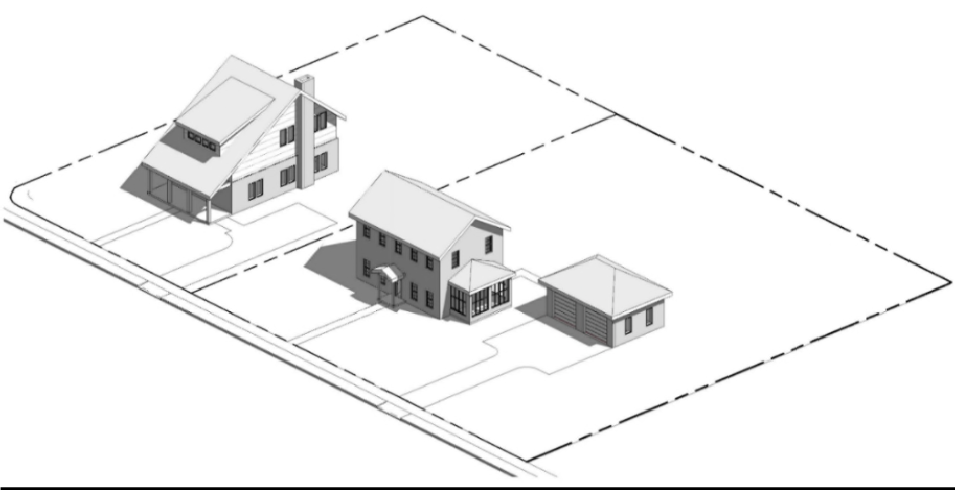
Image 73-7.1.2.A Single-Family Detached Dwellings
C.
Single-Family Attached Dwelling (Townhome).
A type of Household Living use with which is part of a group of three (3) or more such units separated by a common party wall where each unit extends from the foundation to the roof with a separate means of egress.
1.
Applicability. These regulations shall apply to all townhome uses, unless specifically exempted herein. Where provisions in this section conflict with the remainder of the Zoning Ordinance, the provisions provided herein shall govern.
2.
Purpose and Intent. These requirements are intended to regulate the siting and design of townhome projects in pursuit of cohesive design and walkable development patterns. The regulations are intended to define elements of the development that support both horizontal and vertical articulations and variations among units that provide architectural interest and reinforce high quality design and responsible site development practices to meet the goals of the City's Comprehensive Plan.
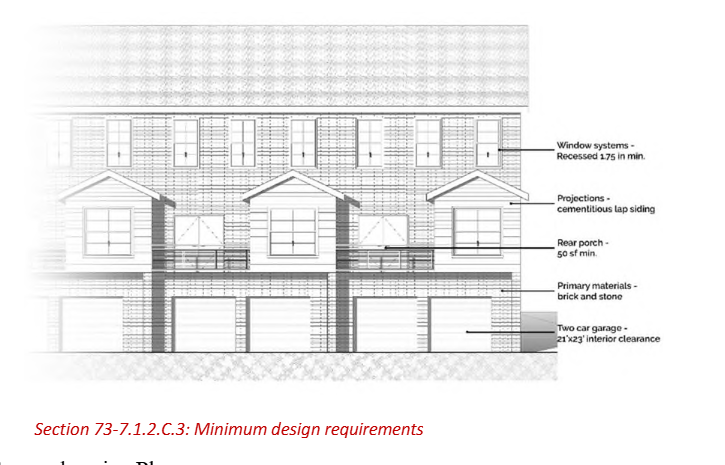
3.
Minimum Design Requirements. Each townhome unit shall provide the following:
a.
The exterior façade comprised primarily of brick or stone materials. Where architectural projections are structurally limited from masonry cladding, those projections are permitted to be faced with cementitious lap and shake siding or other similar cementitious products. Molding, windows and doors, and other accents are exempt from this requirement.
b.
A functional rear porch or deck with a minimum of 50 square feet in area.
c.
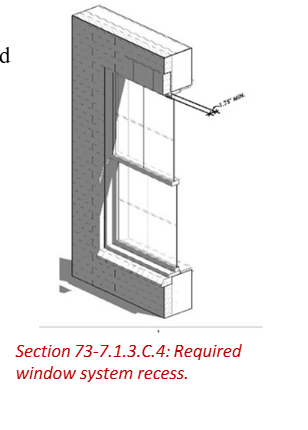
Window systems recessed from the façade of the building a minimum of one and three-quarters (1.75) inches. This reveal shall be accomplished through the design of the window casing reveals and frames.
4.
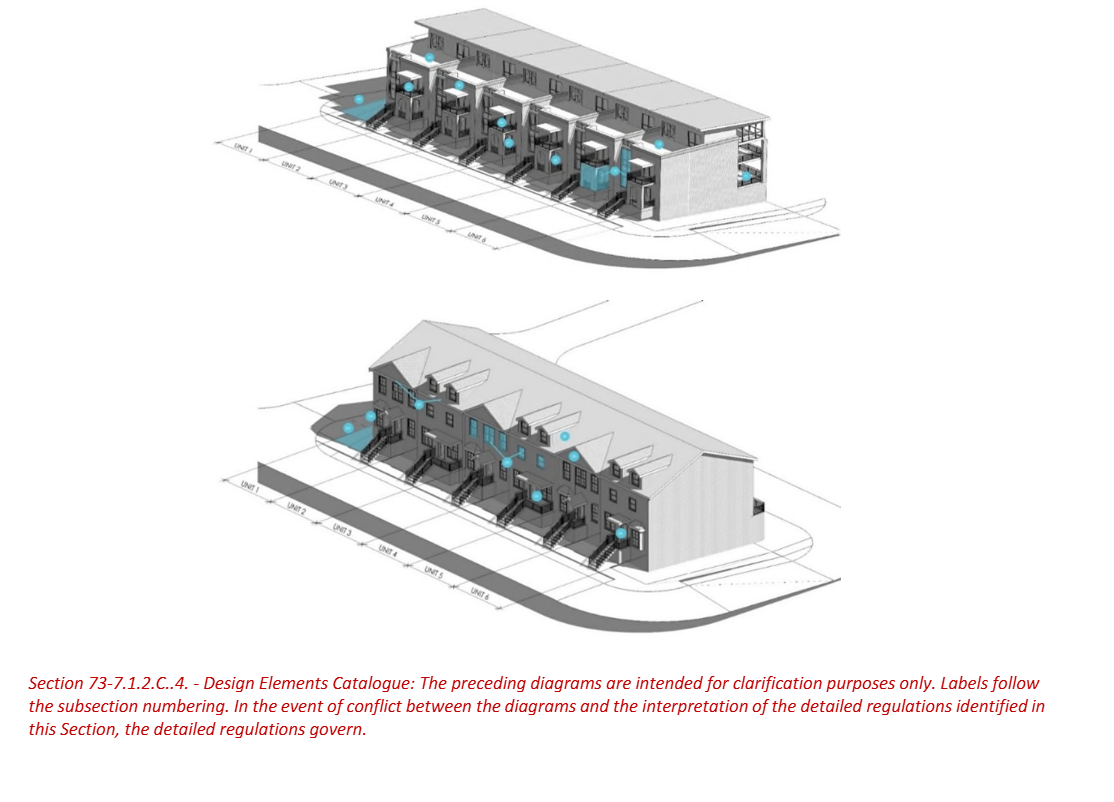
Design Elements Catalogue. Each townhome unit shall provide a minimum of one feature from each of the following categories:
a.
Private outdoor space:
i.
Front porch (minimum 30 square feet in area).
ii.
Private yard space with one tree (minimum 150 square feet in area).
iii.
Front-facing balcony (minimum 50 square feet in area).
iv.
Rear terrace (minimum 100 square feet in area).
v.
Rooftop terrace (minimum 150 square feet in area).
b.
Architectural projection:
i.
Projection window (bay or bow).
ii.
Turret.
iii.
Covered balcony or porch.
c.
Roof element:
i.
Dormers.
ii.
Front gable or pediment.
iii.
Rooftop terrace.
iv.
Varied gable system.
v.
Cornice detailing.
d.
Unit or façade variation (required when more than 5 units front on a single block face):
i.
Change in brick/stone color or a change in masonry material.
ii.
Change in window composition.
iii.
Projection or recess of an architectural feature that is a minimum of 5 feet deep or 15 feet tall (used to distinguish and separate facades vertically because of the significance of the projection).
5.
Bulk Standards.
a.
Maximum height: 35 feet.
b.
Density: Based on zoning district.
c.
Minimum unit width: 24 feet.
d.
Setbacks:
i.
Street: 15 feet.
ii.
Interior Side: 0 feet for attached units; 10 feet between buildings.
iii.
Rear: 15 feet.
iv.
Setbacks shall be measured from the development as a whole, regardless of whether the parcels are intended to be subdivided for fee simple ownership or not.
e.
Floor area minimum: none.
6.
Development Regulations. Sites for all townhome developments shall comply with the following:
a.
Buildings & Lots:
i.
There shall be a maximum of six (6) units per building.
ii.
Rear loaded garages:
a.
A minimum of 25 percent (25%) of units shall be rear loaded.
iii.
Fee simple lot lines shall not extend into any 75-foot stream bank buffer.
b.
Parking Facilities.
i.
All driveways shall be a minimum of 20 feet wide and 20 feet long.
ii.
All driveways shall be paved with concrete, pervious pavers, or others materials approved by staff.
iii.
Garages shall be required for all single-family attached uses.
a.
Garages shall accommodate two cars. Interior clear space shall be a minimum of 21 feet wide by 23 feet deep or 23 feet wide by 21 feet deep.
b.
Doors shall be architectural in style. Standard panel doors are not permitted.
c.
The garage portion of the structure shall be setback a minimum of 20 feet from the back of the sidewalk or curb (where no sidewalk exists). Should the bulk standards setback for be less restrictive, this setback shall govern for the garage portion of the structure.
d.
If garage doors account for more than 40 percent of the linear width of any street facing façade the garage portion of the façade must be recessed at least 3 ft.
c.
Streets:
i.
Sidewalks and streetscape elements are required on each side of the street internal to the development and along all exterior road frontages.
ii.
All streets are required to be developed to public street standards and publicly dedicated.
iii.
Unless developments are proposed to be gated. Streets in gated developments shall be private but are to be developed to public street standards. The developer shall install; and
iv.
Maintain Knox boxes or other public safety equipment required by first responder agencies.
a.
Relationship external to the development:
i.
All units fronting on an external public or private street shall face the subject street with the front/primary façade and shall provide access from the interior of the development.
ii.
Driveways for individual units are not permitted to be accessed from streets external to the development.
b.
Guest parking:
i.
In addition to the minimum parking requirements for the district/use, a minimum of 0.5 spaces per unit is required to accommodate guest parking. Guest parking count may either be accommodated as common spaces or dedicated to each individual unit. Guest parking shall be located within 200 ft of each building measured from any corner of the building.
D.
Single-Family Attached Dwelling (duplex or triplex).
A duplex or triplex is a type of Household Living use designed for occupancy by two or three separate but connected dwelling units, each having its own kitchen, bathroom facilities, and living space.
1.
Individual duplex and triplex units shall not be less than 1,000 heated square feet.
2.
Design Requirements:
a.
Exterior Facade: Duplexes and triplexes shall be designed to resemble single-family detached residences with harmonious architectural features.
b.
Entrances: Contributing to the appearance of individual single-family homes, each duplex or triplex structure shall have a maximum of one entrance facing any one street. If the structure faces more than one street, the additional street(s) may also have a single entrance facing the subject street.
c.
Rooflines and Materials: Rooflines and exterior materials shall be consistent with those found in single-family detached uses within the same zoning district.
3.
Parking Facilities.
a.
All driveways shall be a minimum of 20 feet wide and 20 feet long.
b.
All driveways shall be paved with concrete, previous pavers, or other materials approved by staff.
c.
Parking facilities shall not resemble parking lots. Furthermore, facilities shall not be wide enough to accommodate more than two side-by side spaces between the building and any street frontage.
d.
Garages are not required but shall comply with the following wherever a garage is provided:
i.
The quantity of garage bays shall not exceed the number of units in the structure. Bays shall be concentrated in one area of the structure to resemble the grouping of bays in a single-family detached structure.
ii.
Doors shall be architectural in style. Standard panel doors are not permitted.
iii.
The garage portion of the structure shall be setback a minimum of 20 feet from the back of the sidewalk or curb (where no sidewalk exists). Should the bulk standards setback for be less restrictive, this setback shall govern for the garage portion of the structure.
iv.
If garage doors account for more than 40 percent of the linear width of any street facing façade the garage portion of the façade must be recessed at least 3 ft.
4.
Outdoor Storage.
a.
All outside storage must be stored in a side or rear yard and screened from all streets and adjacent properties and public view by an opaque fence or wall at least 6 feet in height. Unenclosed carports and front porches may not be used for storing junk or junk vehicles as defined in Section 73-15.4 other than firewood or recyclable materials withing a city approved container.
E.
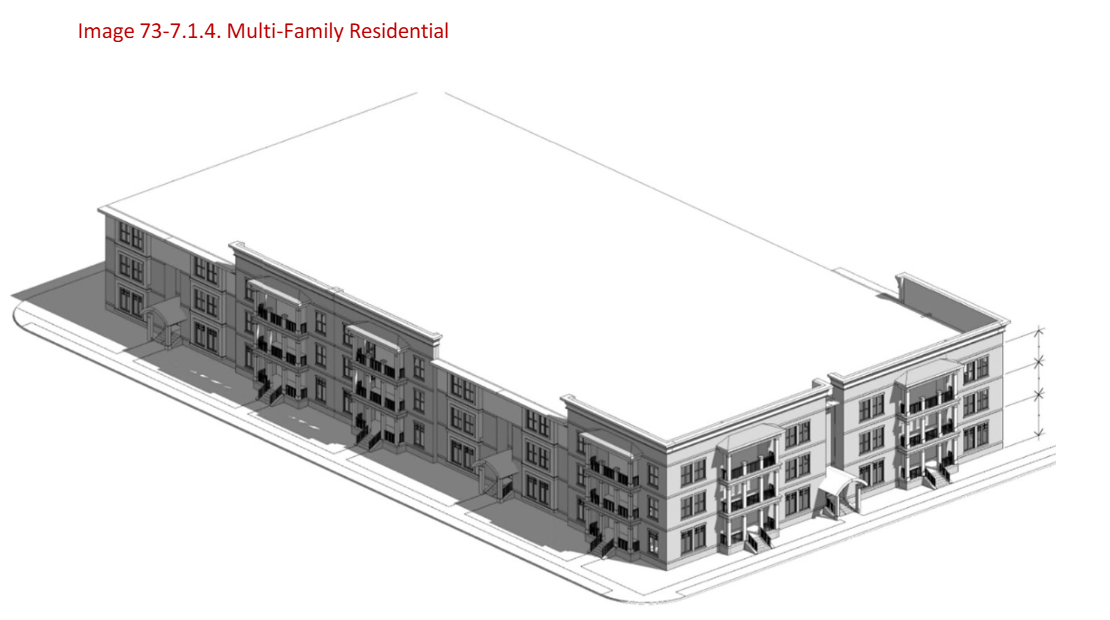
Multi-Family Residential.
A type of Household Living use with a building or set of buildings containing a group of dwelling units on a common lot containing separate living units for four (4) or more families, having separate or joint entrances, and including apartments and condominiums. These are specifically distinguished from units defined as single-family attached dwellings.
1.
Dwelling units in Multi-Family Residential buildings shall not be less than 800 heated square feet.
2.
A minimum of 20 percent (20%) of the lot shall be provided in open space in accordance with Section 73-8.3 Landscape and Open Space.
3.
Buildings shall conform to the following design standards:
a.
Sixty percent (60%) of exterior building materials on façades visible from the public right-of way or an adjoining Residential Zoned lot shall be brick or stone. Masonry shall wrap corners to avoid appearance of being applied.
b.
Façades shall be broken up, both vertically and horizontally, through building materials and offsets.
c.
Roof line shall be varied.
d.
The building shall utilize a variety of materials to create visual interest.
e.
Building entrances shall be well-marked and identifiable from the building form.
f.
Common walls and common floors ceiling between units shall be constructed to meet a sound transmission coefficient (STC) rating of 50 or higher.
F.
Manufactured Homes.
A type of Household Living use that is defined in O.C.G.A § 36-66-7 et seq.
1.
Roof pitch shall be no less than 5:12 and finished with a type of shingle that is commonly used in standard residential construction;
2.
Exterior siding shall consist of wood, vinyl, hardboard, stucco, or brick comparable in composition, appearance, and durability to the exterior siding and use in standard residential construction;
3.
Structure shall be placed and anchored on a permanent foundation, either slab or pier. All anchoring shall be subject to review, approval and inspections by the City's building inspector. A masonry curtain wall designed to coordinate with the siding of the residence (ie: brick or stone), shall be provided in lieu of skirting and shall only be pierced for the required ventilation and access;
4.
Utility meters for the home shall be mounted to the structure rather than on a utility pole or other structure.
5.
Any replacement of a preexisting manufactured home or mobile home with a new manufactured or mobile home shall be permitted in accordance with O.C.G.A § 36-66-7 et seq.
6.
All outside storage must be stored in a side or rear yard and screened from all streets and adjacent properties and public view by a non-opaque fence or wall at least 6 feet in height. Unenclosed carports and front porches may not be used for storing any materials other than firewood or recyclable materials within a city approved container.
G.
Cottage Style Development.
A development design technique that concentrates buildings in specific areas on a site to allow remaining land to be used for recreation, common open space, or the preservation of historically or environmentally sensitive features.
1.
Minimum lot size: 5,400 square feet;
2.
Open space: 15 percent (15%) of the development's buildable total land area shall be designed to accommodate its use for passive or active recreation.
3.
Setbacks:
a.
Street: 20 feet (with the garage portion of the home no less than 20 feet from the back of the curb.
b.
Interior Side: Minimum 10 feet between structures.
c.
Rear: 20 feet.
d.
Maximum Impervious Surface: 60%.
H.
Additional Requirements Applicable for Household Living Uses.
1.
A continuous pedestrian circulation system is required throughout new residential developments. Systems shall link to all planned or developed recreational open space, transit facilities, or existing public sidewalks or public rights-of-way that are located adjacent to the development.
2.
All internal sidewalks shall be least five (5) feet in width on any public or private street or drive.
3.
Lots shall provide at least two (2) trees in the front, side, or rear yards for shade and enjoyment. Trees may be counted toward minimum lot tree density requirements in Section 73-14 Tree Ordinance. To be accepted, plantings shall be located outside any drainage or utility easements applicable to the property.
4.
Vinyl and EIFs are prohibited external building materials.
5.
If garage doors account for more than 40 percent of the linear width of any street facing façade the garage portion of the façade must be recessed at least 3 ft.
6.
Antennas for amateur radio stations licensed by the Federal Communications Commission will not be prohibited by Declaration of Covenants, Conditions and Restrictions or homeowner's association and the installation of such antennas must be reasonably accommodated.
7.
Utility Requirements.
a.
Individual systems for water, fuel/gas, and HVAC shall be required for each unit.
b.
Individual metering shall be provided for water, electric, and fuel/gas utilities.
c.
Easements for utility lines shall be provided in the common ownership area where lateral service connections shall take place.
8.
Outdoor Storage.
a.
All outside storage must be stored in a side or rear yard and screened from all streets and adjacent properties and public view by an opaque fence or wall at least 6 feet in height. Unenclosed carports and front porches may not be used for storing junk or junk vehicles as defined in Section 73-15.4 other than firewood or recyclable materials withing a city approved container.
(Ord. No. 2025-14, §§ 1, 2, 6-5-2025)
73-7.1.3 - Group Living.
Group living is residential occupancy of a building or any portion of a building by a group other than a household. Tenancy is arranged on a long-term (at least 30-day) basis. Buildings or spaces occupied by group living uses contain individual rooms with private or shared bathroom facilities and may also contain shared kitchen facilities, and/or common dining and living areas for residents. Residents may or may not receive any combination of care, training, or treatment, but those receiving such services shall reside at the site. The following describe sub-categories of Group Living uses:
A.
General Requirements: The following regulations apply to all Group Living and accessory uses, except Personal Care Homes (6 or fewer residents):
1.
Applicable Group Living uses are allowed only on lots with frontage on an arterial or collector street.
2.
Uses require a minimum lot area of three (3) acres with a minimum public street frontage of 100 feet.
3.
Occupancy is limited to one bed per 250 gross square feet of heated building space.
4.
The structure meets all aspects of the Standard Housing Code including minimum dwelling space requirements.
5.
The operator obtains certification from the appropriate state licensing body.
6.
No other such facility is located within 1,000 feet as measured from property line to property line.
B.
Assisted Living. An establishment registered with the State of Georgia as an assisted living home.
C.
Convent or Monastery. Group dwellings for members of religious orders.
D.
Halfway House. A temporary residential living arrangement for persons leaving an institutional setting and in need of a supportive living arrangement in order to readjust to living outside the institution. These are persons who are receiving therapy and counseling from support staff who are present when residents are present, for the following purposes:
1.
To help them recuperate from the effects of drug or alcohol addiction;
2.
To help them reenter society while housed under supervision while under the constraints of alternatives to imprisonment including, but not limited to, prerelease, work release, or probationary programs; or
3.
To help persons with family or school adjustment problems that require specialized attention and care in order to achieve personal independence.
E.
Nursing Home. An establishment providing inpatient, skilled nursing and rehabilitative services to patients who require health care but not hospital services. Care is ordered by and under the direction of a physician.
F.
Personal Care Home. The use of a dwelling unit to provide or arrange for the provision of housing, food service, and one or more personal services, including watchful oversight, for two (2) or more adults who are not related to the owner by blood or marriage. "Personal services" include assistance with or supervision of self-administered medication and essential activities of daily living such as eating, bathing, grooming, and dressing. Personal care homes do not provide skilled nursing or other medical services or admit and retain residents who need continuous medical or nursing care.
1.
The personal care home shall be operated in a manner compatible with the neighborhood and must not be detrimental to adjoining properties as a result of traffic, noise, light, refuse, parking or other activities.
2.
In residential districts, the resident manager or caretaker is counted as part of any limit on persons.
3.
For all building permitting procedures, personal care homes will be considered commercial uses.
4.
The maximum number of beds permitted shall be limited to one per 250 gross square feet of heated floor space within the principal structure.
5.
The principal structure contains a residential facade architecturally similar to adjacent buildings.
6.
To prevent the institutional atmosphere created by concentrating or clustering of personal care homes, thereby defeating the goal of integrating individuals into the community, each personal care home must be located a minimum of ¼-mile from any other personal care home when located in a Residential Zoned district.
G.
Temporary Shelter. The provision of overnight housing and sleeping accommodations for persons who have no permanent residence and are in need of temporary, short-term housing assistance, and in which may also be provided meals and social services including counseling services.
H.
Transitional Housing. The provision of long-term but not permanent living accommodations for persons who have no permanent residence and are in need of long-term housing assistance.
73-7.2.1 - General.
The institutional use category includes supplemental use regulations for public, quasi-public, civic and institutional uses.
73-7.2.2 - Cemeteries and Mausoleums.
A.
Minimum lot size: 5 acres.
B.
A 25-foot undisturbed buffer shall be established around the perimeter of the use with a solid fence or wall no less than six (6) feet in height.
C.
All buildings must be set back at least 25 feet from the buffer.
D.
All graves shall be set back 10 feet from the buffer.
E.
No graves may be placed within any required setback.
F.
Funeral homes and mausoleums shall have 20,000 square feet dedicated solely to their use.
73-7.2.3 - Places of Assembly (religious institutions, neighborhood recreation centers and swimming pools, or non-commercial club houses and lodges)
Buildings or sites used for conducting organized events and service. Examples include places of worship (such as synagogues, temples, mosques, and churches). Typical accessory uses include schools, religious education, social gathering rooms, food service facilities, indoor and outdoor recreation facilities, day care centers, kindergartens, cemeteries, funeral/mortuary services, occasional seasonal sale of goods with or without outdoor display of merchandise, and similar uses. Crematoriums are not permitted, unless the place of worship is located within a district that permits a crematorium as a principal use or the activity is defined as a funeral/mortuary service.
A.
Lighting shall be established in such a way that no direct light shall cast over any property line nor adversely affect neighboring properties.
B.
Any building or structure established in connection with such use shall be set back no less than 50 feet from any property line.
C.
All pools shall adhere to the standards of the Standard Swimming Pool Code, as amended.
D.
All parking areas shall include a 30-foot landscaped buffer when abutting any property used for single family residential purposes.
73-7.3.1 - General.
The commercial use category includes supplemental use regulations for uses that provide a business service or involve the selling, leasing, or renting of merchandise to the general public. The commercial use sub-categories are listed below.
73-7.3.2 - Animal Hospitals and Veterinary Clinics.
A.
All structures shall be located and activities conducted at least 100 feet from any property zoned for residential purposes.
B.
All animals shall be housed within an enclosed building and adequate sound and odor control shall be maintained.
73-7.3.3 - Automotive Maintenance Shops including brake repair, installation of tires, tune-up shops, oil change services, emission stations and the like.
A.
All activities shall take place within an enclosed building.
B.
No outside storage or engine/body dismantling is allowed.
C.
No vehicle under repair shall remain parked for a period of more than thirty (30) days without being considered "stored." If a vehicle remains parked for a period of more than thirty (30) days, said vehicle shall be moved to the rear of the repair facility and screened or placed inside said repair facility where the vehicle shall remain until all repairs are completed.
73-7.3.4 - Automotive Repair Shops (including paint and body).
A.
Such use shall not be permitted within 50 feet of any property used for a school, park, playground, or hospital.
B.
All activities shall be carried out entirely within an enclosed building.
C.
Such use shall not be established on a lot which is adjacent to or directly across the street from any single-family residential district.
D.
All outdoor storage shall be located in the rear of the principal structure and enclosed by an opaque fence no less than eight (8) feet in height.
E.
No vehicle under repair shall remain parked for a period of more than thirty (30) days without being considered "stored." If a vehicle remains parked for a period of more than thirty (30) days, said vehicle shall be moved to the rear of the repair facility and screened or placed inside said repair facility where the vehicle shall remain until all repairs are completed.
73-7.3.5 - Automobile Service Stations.
A.
All gasoline pumps, tanks and other service facilities shall be set back at least 20 feet from all property lines.
B.
Canopies over fuel islands shall not encroach within 15 feet of any property line.
C.
Minor automobile repair shall be allowed in conjunction with such use provided all such activities shall take place within an enclosed building.
D.
No outside storage or engine/body dismantling is allowed.
E.
No vehicle under repair shall remain parked for a period of more than thirty (30) days without being considered "stored." If a vehicle remains parked for a period of more than thirty (30) days, said vehicle shall be moved to the rear of the repair facility and screened or placed inside said repair facility where the vehicle shall remain until all repairs are completed.
73-7.3.6 - Automobile, Trailer, and Boat Sales.
A.
Minimum one (1) acre lot size.
B.
All vehicles shall be set back at least 10 feet from the street right-of-way line.
C.
Such use shall be located at least 50 feet from any properties zoned for residential purposes.
D.
A solid fence or wall no less than six (6) feet in height shall be maintained to provide a visual screening between the residential and commercial properties.
73-7.3.7 - Brewery, Brew Pubs, or Distilleries.
A.
All manufacturing activities shall be conducted within a wholly enclosed building.
73-7.3.8 - Day Care Centers and Nursery Schools.
A.
Such use shall obtain certification from the proper State of Georgia Regulatory Agency.
B.
Any outdoor play area shall be enclosed by a fence not less than four (4) feet in height and shall be located in the rear yard area of the principal building with a self-closing, self-latching gate.
73-7.3.9 - Financial Services.
Uses related to the exchange, lending, borrowing and safe keeping of money. Automatic teller machines, kiosks, and similar facilities that do not have on-site employees or amplified sound are not classified as financial service uses if they meet the criteria for classification as a drive-thru or accessory use. Typical examples of financial service use types are federally chartered banks, credit unions, convenient cash businesses, and pawnshops. The following describe the sub-categories of financial service uses:
A.
Banks, Credit Unions, Brokerage, and Investment Services. Financial institutions, including, but not limited to banks and trust companies, credit agencies, holding (but not primarily operating) companies, and other investment companies.
B.
All Other Financial Service Types. Financial service providers which include the following:
1.
Check Cashing Establishment. An establishment licensed by the State of Georgia pursuant to O.C.G.A. § 7-1-700 et seq.
2.
Precious Metal Broker. An establishment engaged in whole or in part in the business of buying gold, precious metals or jewelry.
3.
Pawnshop. An entity engaged in whole or in part in the business of lending money on the security of pledged goods (as that term is defined in O.C.G.A. § 44-12-130(5)), or in the business of purchasing tangible personal property on a condition that it may be redeemed or repurchased by the seller for a fixed price within a fixed period of time, or in the business of purchasing tangible personal property from persons or sources other than manufacturers or licensed dealers as part of or in conjunction with the business activities described in this definition.
4.
Conditions: All Other Financial Service Types are subject to the following supplemental regulations:
a.
Lots on which Other Financial Services are located shall have frontage on an arterial street.
b.
All Other Financial Services are prohibited within 1,000 feet of an existing check cashing establishment, precious metal broker, or pawnshop.
c.
Check cashing establishments shall operate as an independent principal use and not be combined with any other use.
73-7.3.10 - Golf Courses and Driving Ranges.
A.
Any building or structure established in connection with such use must be set back no less than 100 feet from any property line,
B.
Lighting shall be established in such a way that no direct light shall cast over any property line nor adversely affect neighboring properties.
73-7.3.11 - Lodging.
Uses that provide temporary overnight sleeping accommodations or lodging for guests paying a fee or other form of compensation for a period of less than 30 consecutive days. The 30-day period is applied to the consecutive term of stay, regardless of the length of any individual agreement. Lodging uses sometimes provide food or entertainment, primarily to registered guests. Sub-categories of lodging include bed and breakfast, extended stay facilities, hotels, motels, and short-term rentals.
A.
Notwithstanding Section 73-7.3.13.B of this section, occupation of a hotel or motel room in excess of 30 consecutive days during a 180 (one hundred eighty) day period may occur at a lodging facility where the following circumstances are present:
1.
A specific business entity desires such occupation for an employment-related purpose which requires temporary occupancy, including but not limited to relocation service, or
2.
A government, charity, or insurance agency desires such occupation to house persons or families as a result of a Natural Disaster.
73-7.3.12 - Bed and Breakfast.
A type of lodging use in a detached house in which the resident owner/ operator offers accommodations and meal service to overnight guests for compensation.
A.
The facility is operated by the resident-owner with a maximum of five (5) guestrooms rented for a daily or weekly fee, which use is subordinate and incidental to the primary residence.
B.
Such use shall be located within a historical structure at least 50 years old which is included on the local City register. The structure shall also contain 2,000 square feet or more of gross heated floor area.
C.
Food service shall be limited to breakfast only and be served to guests taking lodging in the facility.
D.
No food preparation or cooking for guests shall be conducted within any bedroom made available for rent.
E.
No catering, parties, weddings, or special events shall be permitted.
F.
The exterior appearance of the structure shall not be altered from its single-family character, and, if changes are made, the changes shall be approved by City staff. The architectural integrity of the existing interior spaces shall be maintained.
G.
All bed and breakfast uses shall meet all applicable health and safety codes.
H.
Maximum length of stay shall not exceed 14 days.
I.
A minimum of 1 parking space per rental room is provided in addition to those required for the resident.
73-7.3.13 - Extended Stay Facilities.
A type of lodging use as a hotel or motel in which thirty percent (30%) or greater of all guest rooms have facilities for both the storage and preparation of food and which are designed or utilized for weekly or monthly occupancy.
A.
Extended Stay Hotels and Motels shall comply with the following restrictions:
1.
All guest rooms which have facilities for both the storage and preparation of food and have less than 300 square feet of floor area are limited to a maximum of 2 persons per such room; however, for all such guest rooms greater than 300 square feet, one additional person shall be allowable per each additional 75 square feet of floor area up to and including a maximum of 4 persons.
2.
An indoor or fenced outdoor active recreation area shall be provided. The size of each recreation area shall be calculated at a ratio of 5 square feet per room with a minimum provision of 750 square feet. All recreation areas must be approved prior to development to ensure that all applicable safety specifications and standards are met.
3.
No permanent business license shall be issued for the conduct of any business from any guest room of the facility.
4.
No hotel or motel under this section is to be converted to or used as an apartment or condominium.
5.
Each guest room must be protected with a sprinkler system approved by the fire marshal or their designee.
6.
Each guest room having a stove-top unit or other type burner unit shall be required to also include a maximum 60 minute automatic power off timer for each such unit.
7.
A hard-wired smoke detector shall be provided and installed in each guest room.
8.
No outside storage or permanent parking of equipment or vehicles shall be allowed.
9.
All such facilities shall provide a 50 foot undisturbed buffer from any property zoned for multi-family residential purposes and/or a 100 foot undisturbed buffer from any property zoned for single family residential purposes.
10.
No building may be placed within 100 feet of any residentially zoned property, inclusive of the required buffer.
11.
All extended stay facilities shall have a maximum density of 75 guest units per gross acre of development.
B.
In addition, any hotel or motel which offers or otherwise permits more than three percent (3%) of its rooms to be rented by guests staying on the premises for longer than 30 consecutive days shall also be defined as an extended stay facility, regardless of whether the units provide facilities for the storage and preparation of food.
73-7.3.14 - Hotel.
A building in which lodging or boarding and lodging facilities are provided for transient guests and offered to the public for compensation. Ingress and egress to and from all rooms are through an inside lobby or office supervised by a person in charge at all hours.
73-7.3.15 - Motel.
One or more buildings in which board and/or lodging are provided for transient guests for compensation. Ingress and egress to and from all rooms are made primarily directly from an exterior walkway rather than from an inside lobby.
73-7.3.16 - Outdoor storage facilities, excluding junk and salvage yards.
A.
Such use shall be enclosed by an opaque fence or wall no less than eight (8) feet in height which provides continuous visual screening.
B.
No repair or other such activity shall be conducted.
C.
Such use shall be at least 50 feet from any property zoned or used for residential purposes and 25 feet from City right-of-way.
73-7.3.17 - Special Events.
A special event use is a designated location, structure, or property used for the hosting of special events, including but not limited to weddings, conferences, receptions, parties, and other similar occasions.
A.
Special Event Home. A type of Special Event use located in a former Household Living use or similar low-scaled structure.
1.
Establishment shall be on a minimum of a two (2) acre site.
2.
A maximum of 3,000 square feet may be dedicated to the reception floor area.
3.
Trash receptacles must be located in a rear or side yard and shall be screened on all sides. Garbage shall be collected only during the daytime hours of 9 am. and 5 pm.
4.
All applicants shall comply with the City of Acworth noise Ordinance.
5.
Such use is required to supply one (1) parking space for every three persons of capacity or per every (10) ten square feet of gross reception floor area of the facility. The parking area is not required to be paved but must be an improved surface approved by the Mayor and Board of Aldermen. Only 20 percent of the parking may be off-site.
6.
Capacity of the Special Events Home will be limited to three hundred (300) persons.
7.
There shall be no retail sale of food or alcohol.
8.
The commercial operations of the facility shall not operate between 12 am. and 9 am.
9.
Facility should only be located in appropriate areas of the City and not have a negative impact on surrounding properties.
B.
Special Event Facility. A type of Special Event use located in commercial districts.
73-7.3.18 - Flea Markets.
Flea market means any business where there is operate a center for shopping among collected flea market vendors, marketing merchandise to the public from booths, stalls, tables, benches, individual rooms or display areas, and similar display and marketing configurations and arrangements for the sale of new and used merchandise. Flea markets shall not include developed and operating shopping centers.
A.
Flea markets are not a permissible land-use in any zoning district within the city.
B.
Flea markets existing prior to July 1, 2025, may continue operations, if they obtain a special land-use permit for the Mayor and Board of Aldermen in accordance with Chapter 22, Article VII of the Acworth Code of Ordinances.
(Ord. No. 2025-14, § 4, 6-5-2025)
73-7.4.1 - General.
The industrial use category includes supplemental use regulations for industrial uses. It also includes uses that store or distribute materials or goods in large quantities and uses involved in basic industrial processes.
73-7.4.2 - Adult Entertainment and Sexually Oriented Businesses.
Adult entertainment and sexually oriented businesses are adult bookstores, adult video stores, adult dancing establishments, adult mini-motion picture theaters, adult motion picture arcade, adult video store, erotic dance establishment, or escort service, or other provided in Chapter 10, Article II, Acworth City Code.
A.
Purpose. It is a purpose of this Ordinance to regulate sexually oriented businesses in order to promote the health, safety, and general welfare of the citizens of the City, and to establish reasonable and uniform regulations to prevent the deleterious secondary effects of sexually oriented businesses within the City. The provisions of this Ordinance have neither the purpose nor effect of imposing a limitation or restriction on the content or reasonable access to any communicative materials, including sexually oriented materials. Similarly, it is neither the intent nor effect of this Ordinance to restrict or deny access by adults to sexually oriented materials protected by the First Amendment, or to deny access by the distributors and exhibitors of sexually oriented entertainment to their intended market. Neither is it the intent nor effect of this Ordinance to condone or legitimize the distribution of obscene material.
B.
Findings and Rationale. Based on evidence of the adverse secondary effects of adult uses presented in hearings and in reports made available to the Mayor and Board of Aldermen, the City finds:
1.
Sexually oriented businesses are associated with a wide variety of adverse secondary effects including, but not limited to, personal and property crimes, prostitution, potential spread of disease, lewdness, public indecency, obscenity, illicit drug use and drug trafficking, negative impacts on surrounding properties, urban blight, litter, and sexual assault and exploitation. Alcohol consumption impairs judgment and lowers inhibitions, thereby increasing the risk of adverse secondary effects.
2.
Sexually oriented businesses should be separated from sensitive land uses to minimize the impact of their secondary effects upon such uses, and should be separated from other sexually oriented businesses, to minimize the secondary effects associated with such uses and to prevent an unnecessary concentration of sexually oriented businesses in one area.
3.
Each of the foregoing negative secondary effects constitutes a harm which the City has a substantial government interest in preventing and/or abating. This substantial government interest in preventing secondary effects, which is the City's rationale for this Section, exists independent of any comparative analysis between sexually oriented and non-sexually oriented businesses. Additionally, the City's interest in regulating sexually oriented businesses extends to preventing future secondary effects of either current or future sexually oriented businesses that may locate in the City. The City finds that the cases and documentation relied on in this Section are reasonably believed to be relevant to said secondary effects.
4.
The City hereby adopts and incorporates herein its stated findings and legislative record related to the adverse secondary effects of sexually oriented businesses, including the judicial opinions and reports related to such secondary effects.
C.
Prohibited Locations. It shall be unlawful to establish, operate, or cause to be operated a sexually oriented business in the City that is located:
1.
Within 1,000 feet, measured property line to property line, from a school (public or private), day care, community center, recreational facility, park, place of worship, hospital, or other similar uses where children regularly gather.
2.
Within 1,000 feet, measured property line to property line, from another sexually oriented business.
D.
Measurements.
1.
Measurement of the required spacing between sexually oriented businesses shall be made in a straight line without regard to intervening structures or objects, between the closest points on the property lines of the two (2) sexually oriented businesses.
2.
Measurement of the required spacing between a sexually oriented business and a residential district, place of worship, park, or public library shall be made in a straight line without regard to intervening structures or objects, from the closest part of the structure containing the sexually oriented business to the closest point on the boundary line of the residential district or the closest point on the property line of the place of worship, park, or public library.
73-7.4.3 - Cryptocurrency Mining Operations. Server Farms, and/or Data Centers.
A facility or portion of a facility housing networked computer systems and telecommunications equipment used for remote storage, processing, and distribution of data, including facilities where commercial cryptocurrency transactions are verified and added to the public ledger, through the use of server farms employing data processing equipment. Such facilities shall comply with the following:
A.
Fire Safety Requirements.
1.
Fire Suppression. An active clean agent fire protection system shall be provided and maintained in good working order within any structure. High sensitivity smoke detectors shall be installed and operational in order to activate this clean agent fire suppression system.
2.
There shall be an emergency electricity termination switch installed outside of any containment structure.
3.
Containment Space. The equipment used shall be housed in an individually metered, electrically grounded and metal-encased structure with a fire rating designed to resist an internal electrical fire for at least 30 minutes. The containment space shall contain baffles that will automatically close in the event of fire independent of a possible electric system failure.
4.
All building requirements required by this section, including but not limited to heat transfer apparatuses, fire detection/suppression systems, or containment structures shall be designed by a Georgia licensed engineer and in accordance with all applicable codes and standards.
B.
Heat Safety Requirements.
1.
The ambient temperature inside of a containment space shall not exceed 120 degrees Fahrenheit at any time. No person shall be permitted to regularly inspect and work within the containment area if the ambient temperature within the containment area exceeds 90 degrees Fahrenheit.
2.
No more than 20% of the heat dissipated by the mining activity shall be released directly to the outside when the average daily temperature is less than 40 degrees Fahrenheit.
C.
Nuisance Abatement.
1.
No adverse or detrimental effects shall impact adjoining properties, owners, or residents that diminish the quality of life or increase the costs of serving their business or maintaining their homes.
2.
A noise level exceeding ninety decibels (90 dB) from a distance of twenty-five feet from the exterior of the containment structure is prohibited.
73-7.4.4 - Dry Cleaning Plants.
A.
Such use shall be at least 300 feet from any property zoned or used for residential purposes.
B.
All applicable state, federal, and local codes must be met.
73-7.4.5 - Manufacturing Establishments, Light.
A.
Maximum lot size of five (5) acres.
B.
No activity which produces liquid effluent, odor, fumes, or dust which can be detected beyond the walls of the building is permitted.
73-7.4.6 - Recycling Collection Centers (may also be defined by the State as a construction and demolition transfer station).
A.
Site plan detailing building location, business operation, curb cuts and traffic flow, distance from the nearest facility.
B.
No outside storage allowed.
C.
Location of container bins shall be a minimum of 100 feet from any non-industrial-zoned property.
D.
There shall only be a transfer of construction and demolition debris.
E.
There shall be no transfer of household solid and liquid waste.
F.
The facility shall be located on an arterial or higher classified public road.
G.
The site shall be a minimum of two (2) acres.
H.
Shall be approved and permitted by the State of Georgia and meet all local, state, and federal laws.
73-7.5.1 - Agriculture and Forestry.
A.
All buildings used for livestock shall be set back not less than 200 feet from any property line.
B.
All animals shall be maintained at least 100 feet from any property line.
C.
Livestock and poultry uses are not permitted on lots containing less than 2 acres.
D.
Abattoirs and hatcheries shall be located at least 300 feet from any property zoned for residential use.
73-7.5.2 - Cottage Food Operators.
Cottage food operators as regulated by the Georgia Department of Agriculture in accordance with its Rules, Chapter 40-7-19, as may be amended from time to time subject to the following requirements:
A.
There shall be no signage or other exterior evidence of the cottage food operator.
B.
Deliveries of specialty ingredients such as herbs and spices, etc., limited to those made by the United States Postal Service or other carrier (FedEx, United Parcel Service, etc.) that routinely delivers mail/internet order products to residents.
C.
No cottage food products prepared by the cottage food operator may be picked up by a commercial carrier.
D.
There shall be no employees parking on the site unless approved by the Mayor and Board of Aldermen.
73-7.5.3 - Livestock, Poultry, and Non-commercial Riding Stables.
A.
No livestock shall be kept on a lot containing less than 3 acres.
B.
All buildings used for animals shall be set back not less than 150 feet from all property lines.
C.
All animals shall be maintained at least 50 feet from any property line and shall have 5,000 square feet of fenced lot area not covered by the principal structure for each animal.
73-7.7.1 - General.
A.
The supplemental wireless communication facility regulations of this Section shall be applied within the constraints of state and federal law, the federal Telecommunications Act of 1996 and Section 6409 of the federal Middle Class Tax Relief and Job Creation Act of 2012, as well as all applicable rulings of the FCC and the Streamlining Wireless Facilities and Antennas Act of 2019, as codified in title 36, chapters 66B and 66C.
B.
Exceptions.
1.
Antennas or towers located on publicly owned property or owned by governmental bodies shall be exempt from the requirements of this ordinance, provided a license or lease authorizing such antenna or tower has been approved by the appropriate governing body.
2.
A tower seventy (70) feet or less in height owned and operated by a federally-licensed amateur radio station operator shall be exempted from these requirements. However, the owner or operator of such tower shall be required to comply with all applicable local, state and federal codes. Any existing or previously approved tower or antenna shall be considered nonconforming and shall not be required to meet any additional requirements of this ordinance other than those in place prior.
73-7.7.2 - Wireless Communication Types.
The wireless communication use category includes definitions and, in some cases, supplemental use regulations, for wireless communication facilities and wireless support structures. The location of wire communication facilities/structures may be permitted under the provision of this Section. The intent of this Section is to provide for the appropriate location and development of communication towers to serve the residents and businesses of the city; minimize adverse visual impacts of towers through careful design, siting, landscape and innovative camouflaging techniques; and to encourage and concentrate the location of new communication towers in areas which are not zoned for residential use. The following are regulations for wireless communication facilities:
A.
Wireless Communication Facility. The equipment and network components necessary to provide wireless communications service, excluding the underlying wireless support structure. The term includes antennas, accessory equipment, transmitters, receivers, base stations, power supplies, cabling, and associated equipment necessary to provide wireless communications services.
1.
Carrier on Wheels (COW). A portable, self-contained wireless facility that can be moved to a location and set up to provide wireless services on a temporary or emergency basis. A COW is normally vehicle-mounted and contains a telescoping boom as the antenna support structure.
2.
Co-location. The placement or installation of wireless communication facilities on existing structures, including electrical transmission towers, water towers, buildings and other structures customarily used for and capable of structurally supporting the attachment of wireless communication facilities in compliance with all applicable codes and regulations.
3.
Concealed Wireless Facility. Any wireless communication facility that is integrated as an architectural feature of an existing structure or any new wireless support structure designed to camouflage or conceal the presence of antennas or towers so that the purpose of the facility or wireless support structure is not apparent to a casual observer.
B.
Wireless Support Structure. A freestanding structure, such as a monopole or tower, designed to support wireless communication facilities.
73-7.7.3 - Standards for All Wireless Communications Uses.
A.
Wireless communication facilities are allowed in accordance with Section 73-4.4 Use Table. In addition, the following activities are permitted as of right in all districts:
1.
Removal or replacement of transmission equipment on an existing wireless support structure that does not result in a substantial modification of the wireless communication facility; and,
2.
Ordinary maintenance of existing wireless communication facilities and wireless support structures; and,
3.
Distributed antenna systems when located within a building or on the exterior of a building.
B.
Removal of Abandoned Antenna and Towers. Any wireless support structure that is not actively used by wireless carriers for a continuous period of six (6) consecutive months will be considered abandoned, and the owner of the wireless support structure shall remove it within 60 days of receiving written notice from the City. The City shall ensure and enforce removal by means of its existing regulatory authority, with costs of removal charged to the owner.
C.
Existing Towers and Antennas. Wireless telecommunication facilities lawfully existing on or before the effective date of this Zoning Ordinance are allowed to remain in place and continue in use and operation. Ordinary maintenance and co-location is permitted, provided than any substantial modification requires review and approval in accordance with the special use procedures of Section 73-11.7 Special Use Permits.
D.
Safety standards. To ensure the structural integrity of communication structures, the owner of a structure shall ensure that it is maintained in compliance with standards contained in applicable local building codes and the applicable standards for towers that are published by the Electronic Industries Association, as amended from time to time. Tower owners shall conduct periodic inspections of communication towers at least once every three years to ensure structural integrity. Inspections shall be conducted by a structural engineer licensed to practice in the State.
E.
Regulatory compliance. All structures and facilities shall meet or exceed current standards and regulations of the FAA, the FCC, and any other agency of the state or federal government with the authority to regulate communications towers and antennas. If such standards and regulations are changed then the owners of the communications towers and antennas into compliance with such revised standards and regulations within six (6) months of the effective date of such standards and regulations, unless a more stringent compliance schedule is mandated by the controlling federal agency.
F.
Lighting. No illumination is permitted on an antenna or tower unless required by the FCC, FAA, or other State or federal agency of jurisdiction, in which case the Development Director shall review the available lighting alternatives and approve the design that would cause the least disturbance to the surrounding uses and views.
G.
Signage. No signage is permitted on a facility or structure, except Official Signs as defined in the Sign Ordinance.
H.
Visual impact.
1.
Structures shall either maintain a galvanized steel finish or subject to any applicable standards of the FAA or other applicable federal or state agency, or be painted a neutral color, so as to reduce visual obtrusiveness.
2.
At a structure site, the design of the buildings and related structures shall, to the extent possible, use materials, colors, textures, screening, and landscaping that will blend the tower facilities to the natural setting and built environment.
I.
Decisions.
1.
The environmental effects of radio frequency emissions may not serve as a basis to approve, deny, or otherwise regulate a telecommunication facility to the extent that emissions comply with Federal Communications Commission regulations.
2.
All decisions denying a request to place, construct, or modify a wireless communication use must be in writing and be supported by a written record documenting the reasons for the denial and the evidence in support of the decision.
J.
The placement of additional buildings or other supporting equipment necessarily required in connection with an otherwise authorized wireless communication use is specifically authorized.
73-7.7.4 - Co-locations and Concealed Wireless Facilities.
The requirements of this Section apply to installments on existing buildings and structures on private property.
A.
Antennas that are attached or affixed to existing wireless support structures or alternative telecommunication support structures are permitted as of right in all zoning districts, provided that the antenna does not substantially change the physical dimensions of such structure.
B.
Co-locations and concealed facilities in Residential Zoned districts shall be visually screened from view of all abutting lots. Facilities in other zoning districts must be screened or designed and installed so as to make the antenna and related equipment as visually unobtrusive as possible.
C.
If a facility is installed on a structure other than a tower, the facility and supporting electrical and mechanical equipment must be of a neutral color that is identical to, or closely compatible with, the color of the supporting structure so as to make the antenna and related equipment as visually unobtrusive as possible.
D.
Co-location antennas or concealed facilities that substantially change the physical dimensions of such structure require special use permit approval. For the purpose of this Section, "substantial change" shall mean:
1.
Increases height by more than ten percent (10%) or 20 feet, whichever is greater, as measured from facility as it existed prior to enactment of this Section.
2.
Appurtenances protrude from body of structure more than 20 feet in width.
3.
If it involves installing more than the standard number of cabinets for the technology involved, not to exceed four cabinets; or if it involves installation of any cabinets if there are no pre-existing cabinets or involves installation of ground cabinets that are more than ten (10) percent larger in height or overall volume than any other associated ground cabinets.
4.
Involves excavation or deployment outside the current "site." "Site" shall be defined as the current boundaries of the leased or owned property surrounding the tower and any access or utility easements.
5.
For concealed or stealth-designed facilities, if a modification would defeat the concealment elements of the wireless tower or base station.
6.
The modification would not comply with other conditions imposed on the applicable wireless support structure or base station, unless the non-compliance is due to an increase in height, increase in width, addition of cabinets, or new excavation that does not exceed the above thresholds.
73-7.7.5 - Wireless Support Structures.
The requirements of this Section apply to stand-alone towers and structures.
A.
Height requirements.
1.
For a single user, maximum height is 70 feet.
2.
For two users, maximum height is 100 feet.
3.
For three users, maximum height is 150 feet.
4.
Towers clustered at the same site shall be of similar height and design.
5.
Towers shall be erected a minimum height necessary to provide parity with existing similar tower supported antenna and shall be freestanding where the negative visual effect is less than would be created by use of a guyed tower.
B.
Setbacks. Wireless support structures shall be set back from all property lines a distance that is at least equal to its engineered fall zone.
C.
Security. Communication towers shall be enclosed by decay-resistant security fencing not less than six (6) feet in height and shall be equipped with an appropriate anti-climbing device that meets the fencing and wall requirements of this Zoning Ordinance.
D.
Landscaping. Landscaping shall be used to effectively screen the view of the tower compound from adjoining public rights-of-way, public property, and residential property and shall be as follows:
1.
A buffer area no less than six (6) feet wide shall commence at the base of the tower.
2.
The buffer zone shall consist of materials of a variety and spacing which can be expected to grow to form a continuous hedge at least five (5) feet in height within two (2) years of planting.
3.
Trees and shrubs in the vicinity of guy wires shall be of a kind that would not exceed 20 feet in height or would not affect the stability of the guys, should they be uprooted, and shall not obscure visibility of the anchor from the transmission building or security facilities staff and maintenance.
4.
Native vegetation on the site shall be preserved to the greatest practical extent. The applicant shall provide a site plan showing existing significant vegetation to be replanted to replace that lost.
73-7.7.6 - Application Requirements.
In the case where a special use permit is required, the information required herein shall be required for the special use review process. Regardless, the information shall be provided with a permit for the construction or a facility or support structure.
A.
Each applicant requesting approval of a wireless communication use must provide as a part of the application, an inventory of its existing facilities that are either within the City and/or within one-quarter mile of the City boundaries, including information regarding the location, height, and design of each facility.
B.
No new wireless support structure may be permitted unless the applicant demonstrates that no existing facility or structure can accommodate the applicant's proposed antenna. Evidence must be submitted at the time of application demonstrating that no existing facility or structure can accommodate the applicant's proposed antenna and may consist of one or more of the following:
1.
No existing facilities or structures are located within the geographic area required to meet applicant's engineering requirements.
2.
Existing facilities or structures are not of sufficient height to meet applicant's engineering requirements.
3.
Existing facilities or structures do not have sufficient structural strength to support applicant's proposed antenna and related equipment.
4.
The applicant's proposed antenna would cause electromagnetic interference with the antenna on the existing facilities or structures, or the antenna on the existing facilities or structures would cause interference with the applicant's proposed antenna.
5.
The fees, costs, or contractual provisions required by the owner in order to share an existing or structure or to adapt an existing facility or structure for sharing are unreasonable; or
6.
There are other limiting factors that render existing facilities and structures unsuitable.
73-7.8.1 - Accessory Structures.
A.
All such structures shall be located upon the same lot and to the side or rear of the principal use at least five (5) feet from side or rear lot lines. In cases of corner lots, the accessory structure may not be closer to any right-of-way than the principal building.
B.
When an accessory building is attached to the principal building in any manner, it shall be deemed part of the principal structure and subject to all bulk and area requirements of same.
C.
No accessory building shall be constructed upon a lot before the principal building.
D.
There shall be a maximum of two (2) accessory structures on a lot.
E.
No accessory structure may exceed twenty (20) feet in height.
F.
The aggregate area of all accessory buildings shall not exceed 50% of the area of the principal structure.
73-7.8.2 - Accessory Dwelling Unit.
A.
An accessory dwelling unit is a smaller, secondary home on the same lot as a primary, single-family detached dwelling. ADUs are independently habitable and provide the basic requirements of shelter, heating, cooking, and sanitation. There are two (2) types of ADUs:
1.
Garden cottages. Detached structures where examples include converted garages, second story garage apartments, or new construction.
B.
General provisions applying to all Accessory Dwelling Units (ADUs):
1.
A maximum of one (1) ADU use or structure is permitted on the lot at a time.
2.
The area of the ADU shall not exceed 50% of the footprint of the principal structure or use.
3.
No windows shall be permitted on the sides of an accessory dwelling unit that faces an adjacent property unless the window(s) are at least 20 linear feet from the nearest property line.
4.
An ADU may be used as a Short-Term Rental pursuant to Section 73-7.8.3.
5.
ADUs may not exceed the height of the primary structure in terms of relative elevation.
6.
Prior to the construction of an ADU, the property must have a six (6) ft high privacy fence along the side and rear property lines this fence may begin at the rear edge of the primary building.
7.
Balconies and porches must be enclosed on three sides with the opening facing towards the primary building.
8.
The façade of the ADU must match the façade of the primary structure.
9.
Accessory dwelling units detached from the primary structure shall comply with Accessory Structure regulations in Section 73-7.8.1 Accessory Structures unless otherwise specified in Section 73-7.8.2 Accessory Dwelling Unit.
73-7.8.3 - Home Occupations.
A.
Intent and Purpose. Certain occupational uses termed "home occupations" are allowed in dwelling units on the basis that such uses are incidental to the use of the premises as a residence. They have special regulations that apply to ensure that home occupations will not be a detriment to the character and livability of the surrounding neighborhood. The regulations ensure that the accessory home occupation remains subordinate to the residential use and the residential viability of the dwelling is maintained. The regulations recognize that many types of jobs can be done in a home with little or no effect on the surrounding neighborhood and, as such, may be permitted provided such uses:
1.
Are incidental to the use of the premises as a residence;
2.
Are conducted within the bona fide residence of the principal practitioner;
3.
Are compatible with residential uses;
4.
Are limited in extent and do not detract from the residential character of the neighborhood.
B.
General Provisions. All home occupations shall meet the following:
1.
A home occupation shall be incidental and accessory to the use of a dwelling as a residence. No more than 25% of the floor space of the dwelling unit (including attached and/or detached garages) may be used for the occupation.
2.
There shall be no exterior evidence of the home occupation or alteration of the residence and/or accessory buildings to accommodate the home occupation. Internal or external changes which will make the dwelling appear less residential in nature or function are prohibited. Examples of such prohibited alterations include construction of parking lots (either paved or through use of other material—gravel, etc.), paving of required setbacks, or adding commercial-like exterior lighting. Any alteration or addition which expands the floor area of the principal structure dedicated to the home occupation use shall void the existing business license and require a new business license be obtained, subject to property compliance verification by the Development Director. There shall be no outside operations or exterior storage of inventory or materials to be used in conjunction with a home occupation.
3.
Off-site employees shall not be permitted to work at the residence.
4.
No article, product or service used or sold in connection with such activity shall be other than those normally found on the premises.
5.
No more than one vehicle associated with the home occupation may be parked at the site. Such vehicle is limited to 1½ ton carrying capacity and must be used exclusively by the resident and parked on a valid improved surface (garage, driveway, dedicated parking pad, etc.) out of the public right-of- way. There shall be no parking allowed in the public street in association with or caused by the business.
6.
Pickups from and deliveries to the site in regard to the business shall be restricted to vehicles which have no more than two axles and shall be restricted to no more than two pickups or deliveries per day between the hours of 8 a.m. and 6 p.m.
7.
Family day care facilities must be certified by Georgia Department of Human Resources prior to the issuance of a business license and must accompany all applications for a Special Use Permit. The number of children allowed by this ordinance shall be calculated at one child per 250 gross square feet of the residence with a maximum of eight (excluding those of the proprietor). The annual renewed certification from the Georgia Department of Human Resources shall be provided to the City upon renewal of the Home Occupational license.
8.
All home occupations shall be subject to periodic inspections.
C.
Required Notice and Permits.
1.
The City Clerk-must approve all business licenses which shall be recertified annually.
2.
The initial at-home application shall require the posting of a Public Notice sign, in a conspicuous place in the front yard no farther than fifteen (15) feet from the adjacent public roadway of the applicant's dwelling, with the sign provided by the Business License office within twenty-four (24) hours of submittal of the application. The sign shall allow the public opportunity to notify the City Clerk of any concerns regarding the application. The City Clerk shall not approve the application until ten (10) consecutive days have passed from the first day posting the sign. The City Clerk shall approve or deny the application within twenty (20) days of the posting of the sign. Signs not posted in the manner stated above shall require the applicant to repost the sign as required and the ten-day approval calendar to be restarted.
D.
Prohibited Uses.
1.
Any type of assembly, cleaning, maintenance, or repair of vehicles or equipment with internal combustion engines or of large appliances (such as washing machines, clothes dryers or refrigerators); and,
2.
Group instruction, assembly or activity shall not be permitted (day care excluded); and,
3.
Dispatch centers or other businesses where employees come to the site and are dispatched to other locations; and,
4.
Equipment or supply rental businesses; and,
5.
Taxi, limo, van, or bus services; and,
6.
Tow truck services; and,
7.
Firearms sales establishment; and,
8.
Eating or drinking places; and,
9.
Funeral or interment services; and,
10.
Animal care, grooming, or boarding businesses; and
11.
Any use or activity which may create noise, dust, glare, vibration, smoke, smell, electrical interference or any fire hazard; and,
12.
Any use involving the use or storage of vehicles, products, parts, machinery or similar materials or equipment outside of a completely enclosed building.
73-7.8.4 - Short-Term Rental.
The use of a residential dwelling unit or portion of such dwelling unit for lodging.
A.
A maximum of one (1) short-term rental agreement is permitted for each structure on the lot at any one time.
B.
Any person conducting a short-term rental shall apply for and receive an occupational tax certificate prior to operating. Proof of compliance with all supplemental use regulations herein shall be provided with the application.
C.
The applicant shall identify a short-term rental agent available to be contacted 24 hours a day for complaints or emergency notifications.
D.
A maximum of two (2) people per bedroom are permitted at the property at any time during the short-term rental period.
E.
All short-term rentals shall be owned and operated by a person whose primary residence is in Cobb, Cherokee, Bartow, or Paulding County. If the short-term rental is owned by a corporate entity, such as an LLC, the short-term rental agent must have primary residency in Cobb, Cherokee, Bartow, or Paulding County.
F.
All short-term rentals shall register on a platform that collects hotel/motel tax as a condition of usage agreement (e.g.: Airbnb or VRBO).
73-7.8.4 - Solar Collection Devices.
A.
Solar collection devices, for the purpose of this section, shall pertain to equipment utilized for providing an electric power source to a structure either in part or entirely. This section does not pertain to accent, landscape or exterior lighting devices.
B.
Solar collection devices may not be mounted to the sides or any other portion of a primary structure other than its roof.
C.
Roof mounted systems:
1.
Single-family and duplex dwellings:
a.
No taller than one (1) foot, as measured on a vertical axis to the roof below, to which it is installed, unless the roof pitch is 2:12 or less, in such case two (2) feet is permitted. No portion of a solar collection device shall project above the maximum projection line depicted within figures below.
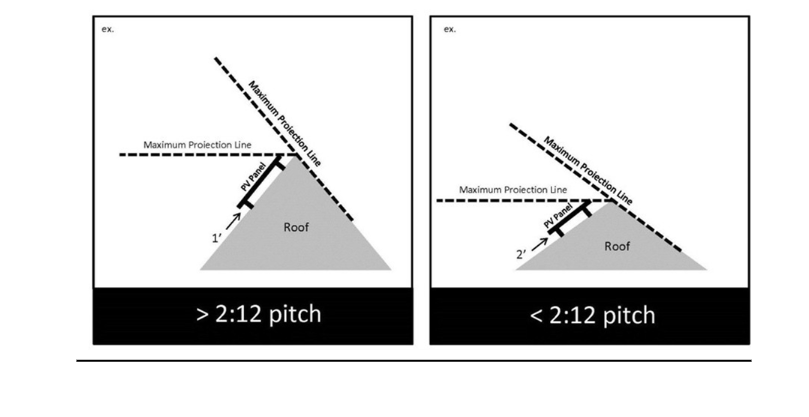
2.
Non-residential and residential multi-family (excluding single-family or duplex dwelling):
a.
If < 2:12 pitch roof, no taller than eight (8) feet as measured on a vertical axis to the roof below, to which it is installed (see figure below).
b.
If 2:12 to 6:12 pitch, no taller than four (4) feet as measured on a vertical axis to the roofline below, to which it is installed.
c.
If > 6:12 pitch, no taller than two (2) feet, as measured on a vertical axis to the roofline below to which it is installed.
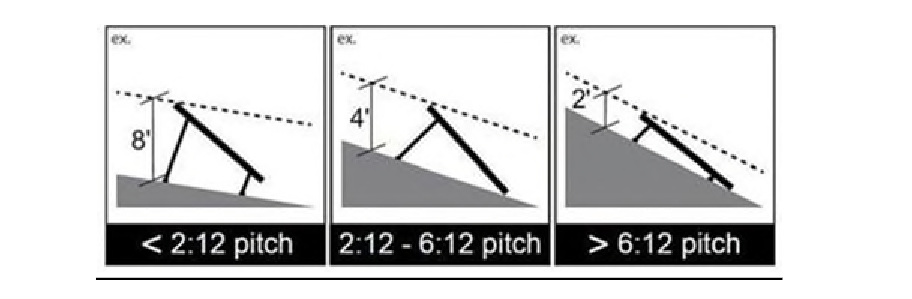
3.
All buildings regardless of use, roof mounted solar collection device shall not extend beyond any roof overhang nor shall it extend beyond a horizontal plane as drawn from the highest point of a roof pitch.
D.
May not be attached to a street facing roof face.
E.
If ground mounted, solar collection devices shall not exceed five (5) feet in height, must be placed to the side or rear of the primary structure and must be screened from view.
73-7.8.5 - Unmanned Retail Structure.
An unmanned retail structure stores or dispenses items for sale, rent, or customer pick-up/drop-off that are accessible from the exterior of a building. This use includes the outdoor placement of soft drink or similar vending machines, propane gas storage racks, ice storage bins, automated teller machines (ATMs), donation bins, and other similar machines. This use may be freestanding or attached to a principal structure.
A.
General.
1.
Up to one (1) unmanned retail structure is allowed per acre of a lot or fraction thereof, not to exceed a maximum of three (3) total on lots three (3) acres or larger.
2.
An unmanned retail structure shall not exceed a footprint of 50 square feet and eight (8) feet in height.
3.
An unmanned retail structure shall not encroach on any required site elements such as landscaping, buffers, setback areas, parking, or pedestrian access.
B.
Building signs may be applied to the unmanned retail structure, provided that they follow the sign requirements in this chapter for signage and do not cause the lot to exceed its allocation of sign area.
C.
All unmanned retail structures and dumpsters shall be delivered and maintained in good condition. It shall be the responsibility of the property owner or occupant and the supplying company to maintain the structures in accordance with the provisions of this section.
73-7.8.6 - Vending Machine Fulfillment Center.
A Vending Machine Fulfillment Center is a structure often affiliated with vehicle sales for the display of products, where products are displayed in a single-or multi-story tower, whether attached to another structure or standalone. Products may be displayed for sale, pick-up, or otherwise.
A.
Vending Machine Fulfillment Centers are only permitted as accessory structures to otherwise compliant principal uses occupying a principal structure.
B.
Whether the structure is attached to the principal structure or not, signage shall only be permitted on all associated structures as if only a single structure exists.
73-7.9.1 - Mobile Food Vendor (Food Truck).
A retail food establishment that is readily moveable in a motorized wheeled vehicle or a towed wheeled vehicle designed and equipped to serve food.
A.
Applicability. The regulations of this subsection apply to any mobile food vendor soliciting to the general public.
B.
Mobile food vendors are required to own or lease a commissary kitchen (base of operation) in the corporate limits of the City of Acworth.
C.
One mobile food vendor is permitted per 20,000 square feet of land area or fraction thereof on any site where a mobile food vendor operates.
D.
Mobile food vendors shall be located at least 500 feet from the main entrance of any eating or drinking establishment and at least 500 feet from any outdoor dining area serving a non-mobile food vendor eating or drinking establishment.
E.
Operators are responsible for ensuring that all waste is disposed of in accordance with City regulations and for maintaining all areas used for food vending and customer activity in a safe and clean condition.
F.
Any person conducting business as a mobile food vendor shall apply for and receive an occupational tax certificate. The following is required to secure a permit:
1.
Written approval from the property owner.
2.
Site plan identifying a working restroom is within 200 feet; including a written restroom agreement from the business that allows employees and customers to have access during operation.
3.
Site plan of any proposed equipment like signage and tables.
4.
Proof of commissary kitchen in the corporate limits of the City of Acworth.
73-7.9.2 - Outdoor Display of Products that are Actively Available for Sale or Lease
A.
Outdoor display is only allowed with a permitted non-residential land use.
B.
For Properties located within the Character Overlay District (COD), outdoor display materials shall abut the primary building façade with the principal customer entrance, not extend more than six (6) feet from the façade, and not occupy more than 25% of the horizontal length of the façade. For all other properties located in the City, outdoor display materials shall abut the primary building façade with the principal customer entrance, not extend more than six (6) feet from the façade, and not occupy more than 40% of the horizontal length of the façade;.
C.
Outdoor display materials shall not exceed six (6) feet in overall height;
D.
Outdoor display materials shall be removed and placed within the fully enclosed building at the end of each posted business day with the exception of propane gas storage racks, ice storage bins, soft drink or similar vending machines which may remain outside overnight; and
E.
Outdoor display materials shall not encroach upon any public right-of-way or sidewalk. Outdoor display shall not impair the ability of pedestrians to use the sidewalk. There shall be a minimum of six (6) feet of clear distance of sidewalk at all times.
73-7.9.3 - Temporary Construction Structures.
A.
Construction Dumpsters. Temporary refuse containers to store trash and recycling during affiliated construction activities, which are not enclosed.
B.
Portable Storage Containers. Designed for the temporary storage of fixtures, furnishings, equipment, or other household goods and materials (also known as PODs). Portable storage containers exclude structures designed for the occupancy by any individual or domestic animal or used as a place of business. When not associated with a valid permit, portable storage containers or temporary dumpsters shall not be parked or stored for more than 15 consecutive days or a total of more than 30 days during any calendar year.
C.
Construction Trailers. Occupiable structures used for temporary management of construction activities and related services.
D.
Standards applying to all Temporary Construction Structures:
1.
Temporary structures shall not be allowed in any district except when utilized for construction in accordance with this section.
2.
Utility hookups shall be screened from view through fencing or landscaping.
3.
Temporary Construction Structures may be parked or stored on any lot when used in conjunction with a valid, unexpired building or development permit.
4.
All Temporary Construction Structures shall be completely removed from the premises within 30 days of issuance of the final Certificate of Occupancy or project close-out pertaining to the building(s)/development associated with the construction.
73-7.9.4 - Temporary Outdoor Sales of Merchandise.
A.
Any applicant for a permit for temporary outdoor sales of merchandise shall demonstrate compliance with the regulations of this Section through an annual permit obtained by the Development Department as an occupational tax certificate.
B.
Temporary sales activities are subject to the following regulations:
1.
No such temporary outdoor sales of merchandise may be conducted on public property, within any public right-of-way, and no display or sales area may block safe pedestrian movement.
2.
Tents may be used in conjunction with temporary sales activities for a maximum of five (5) days over a one (1)-month period.
3.
No operator, employee, or representative may solicit directly to the motoring public.
4.
No temporary outdoor sales may be located within or encroach upon any drainage easement, public sidewalk or right-of-way, required parking spaces, fire lanes, designated loading areas, driveways, maneuvering aisles, or ADA minimum sidewalk width within private sidewalks or other areas intended for pedestrian movement.
73-7.9.5 - Temporary Stage or Tent.
A.
Temporary stages require the review and approval of a building permit.
B.
Tents over 400 square feet require the review and approval of a building permit.

