
Barstow City Zoning Code
CHAPTER 19
06.- DEVELOPMENT STANDARDS
Sec. 19.06.010.- Outdoor lighting.
(a)
Purpose.
(1)
Good outdoor lighting at night benefits everyone. It increases safety, enhances the city's night time character, and helps provide security. New lighting technologies have produced lights that are extremely powerful, and these types of lights may be improperly installed so that they create problems of excessive glare, light trespass, and higher energy use. Excessive glare can be annoying and may cause safety problems. Light trespass reduces everyone's privacy, and higher energy use results in increased costs for everyone. There is a need for a lighting ordinance that recognizes the benefits of outdoor lighting and provides clear guidelines for its installation so as to help maintain and complement the city's character. Appropriately regulated, and properly installed, outdoor lighting will contribute to the safety and welfare of the residents of Barstow.
(2)
This section is intended to reduce the problems created by improperly designed and installed outdoor lighting. It is intended to eliminate problems of glare, minimize light trespass, and help reduce the energy and financial costs of outdoor lighting by establishing regulations which limit the area that certain kinds of outdoor-lighting fixtures can illuminate and by limiting the total allowable illumination of lots located in the city. All businesses, residential, and community driveways, sidewalk and property luminaires should be installed with the idea of being a "good neighbor," with attempts to keep unnecessary direct light from shining onto abutting properties, structures or streets.
(3)
It is also the purpose of this section to provide energy-efficient lighting that will allow for the safe maneuvering of vehicles and pedestrians within parking areas and walkways for multiple-family residential, office, commercial and industrial developments without adversely impacting adjacent properties. This section is not intended to restrict the type of lighting in single-family dwellings that may be provided for security purposes provided it does not cause a nuisance for the adjacent properties.
(b)
Definitions. For the purposes of this section, terms used shall be defined as follows:
Direct light means light emitted directly from the lamp, off of the reflector or reflector diffuser, or through the refractor or diffuser lens, of a luminaire.
Fixture means the assembly that houses the lamp or lamps and can include all or some of the following parts: a housing, a mounting bracket or pole socket, a lamp holder, a ballast, a reflector or mirror, and/or a refractor or lens.
Floodlight or spotlight means any light fixture or lamp that incorporates a reflector or a refractor to concentrate the light output into a directed beam in a particular direction.
Fully shielded lights means outdoor light fixtures shielded or constructed so that no light rays are emitted by the installed fixture at angles above the horizontal plane as certified by a photometric test report.
Glare means light emitting from a luminaire with intensity great enough to reduce a viewer's ability to see, and in extreme cases causing momentary blindness.
Grandfathered luminaires means luminaires not conforming to this Code that were in place at the time this Code was voted into effect. When an ordinance grandfathers a luminaire, it means that such already existing outdoor lighting does not need to be changed unless a specified period of time is identified for adherence to the Code, or as identified in subsection (n) of this section.
Height of luminaire means the vertical distance from the ground directly below the centerline of the luminaire to the lowest direct-light-emitting part of the luminaire.
Indirect light means direct light that has been reflected or has scattered off of other surfaces.
Lamp means the component of a luminaire that produces the actual light.
Light trespass means the shining of light produced by a luminaire beyond the boundaries of the property on which it is located.
Lumen means a unit of luminous flux. One footcandle is one lumen per square foot. For the purposes of this title 19, the lumen-output values shall be the initial lumen output ratings of a lamp.
Luminaire means a complete lighting system, and includes a lamp or lamps and a fixture.
Outdoor lighting means the nighttime illumination of an outside area or object by any manmade device located outdoors that produces light by any means.
Temporary outdoor lighting means the specific illumination of an outside area of object by any manmade device located outdoors that produces light by any means for a period of less than seven days, with at least 180 days passing before being used again.
(c)
General requirements. It shall be the responsibility of city staff to review outside lighting plans for all development affected by this section in accordance with the attached guidelines. This shall be completed through the design review process.
(d)
Applicability. This section shall apply to all new or additions to existing single-family residential, multiple-family residential, office, commercial and industrial structures in excess of $5,000.00 in valuation. Existing developments noted above currently not utilizing energy efficient lamps shall be subject to the requirements listed under subsection (n) of this section.
(e)
Light trespass and control of glare.
(1)
All outdoor lighting shall be designed to minimize the trespass of light onto adjacent properties, walkways, residential buildings, hospitals and other uses that may be sensitive to light. In addition, all lighting shall not emit any direct light above a horizontal plane through the lowest direct-light-emitting part of the luminaire.
(2)
No lighting shall be aimed, directed, or focused such as to cause direct light from the luminaire to be directed toward residential buildings on adjacent or nearby land, or to create glare perceptible to persons operating motor vehicles on public ways.
(f)
Parking areas.
(1)
All lighting allowed by this section must be fully shielded and focused to minimize spillover onto adjacent properties.
(2)
All lighting shall be designed to minimize light pollution into the night sky as identified in subsection (d) of this section.
(3)
All lighting shall be arranged so there will be no more than two footcandles per square foot.
(4)
Height of light standards shall be determined by utilizing the information identified within the zoning designation, specific plan guidelines of the affected area.
(g)
Pedestrian walkways/business entrance/teller machines. Pedestrian walkways shall be illuminated to no less than 0.5 and no more than one footcandle for safety purposes. Business entrances shall be illuminated to no less than one-half and no more than two footcandle. Illumination of teller machines shall be no less than ten footcandles and the light must be able to extend outward by five feet to provide for pedestrian security.
(h)
Recreational facilities. Any light source permitted by this Code may be used for lighting of outdoor recreational facilities (public or private), such as, but not limited to, football fields, soccer fields, baseball fields, softball fields, tennis courts, or show areas, provided all of the following conditions are met:
(1)
All fixtures used for event lighting shall be fully shielded as defined in subsection (d) of this section, or be designed or provided with sharp cut-off capability, so as to minimize up-light, spill-light, and glare.
(2)
All events shall be scheduled so as to complete all activity before or as near to 10:30 p.m. as practical, but under no circumstance shall any illumination of the playing field, court, or track be permitted after 11:00 p.m. except to conclude a scheduled event that was in progress before 11:00 p.m. and circumstances prevented concluding before 11:00 p.m. This exemption is a 24-hour event raising donations for a nonprofit organization, including but not limited to the American Cancer Society. In such event, lighting shall be reduced after 11:00 p.m. to minimize glare onto adjacent properties.
(i)
Luminaries. Luminaries shall include adequate shielding as determined by subsections (e) and (m) of this section, or as approved by the building official.
(j)
Prohibitions. The following light sources are not permitted to illuminate parking areas:
(1)
Flashing.
(2)
Floodlights.
(3)
Fluorescent.
(4)
Incandescent.
(5)
Lights utilizing fossil fuels (kerosene, gas, etc.).
(6)
Low pressure sodium.
(7)
Metal halide.
(8)
Quartz.
(9)
Spotlights.
(10)
Search lights.
(11)
Temporary outdoor lighting except as follows:
a.
Temporary outdoor lighting may be permitted in conjunction with a temporary use permit provided that the temporary lighting is approved by the building official and the lighting is consistent with subsection (e) of this section.
b.
Temporary lighting for the emergency repair of any utility, structure, facility, infrastructure, etc., that is necessary for the safety of the public. Said lighting shall, whenever possible, be directed in such a manner as to minimize the direct beam into traffic or residences.
c.
As required or necessary for any local, state or federally declared emergency.
d.
Any exceptions shall be subject to review and approval by the Barstow planning commission.
(k)
Lamp type.
(1)
All lamp types proposed shall be energy efficient or as approved by the Barstow planning commission. Lamps shall provide sufficient illumination that is no less than one-half footcandles, and no more than two footcandles, throughout the entire parking lot. The business entrance and pedestrian access shall be illuminated as identified under subsection (g) of this section, unless specified differently elsewhere in this Code.
(2)
Lamps used for the purpose of illuminating the exterior of a building shall be subdued to minimize any reflectivity (from windows, other hard, shiny surfaces) and glare. Lighting shall not include any color filter or lens, or other coating to color the light other than that of the type of lamp used (i.e., high-pressure sodium is typically yellow-white, low-pressure sodium is yellow, LED is typically white, etc.) except as approved by the planning commission with the application of a development permit.
(l)
Photosensors. All parking areas shall be illuminated during normal business hours. Businesses shall provide no less than one-half and no more than one footcandle of illumination within the parking areas for safety and security purposes after their normal business hours. The use of photosensors, timers, etc., is encouraged to automatically turn off all exterior lighting during the day.
(m)
Photometrics required. A photometric plan may be required at the discretion of the building official for any project meeting the criteria identified under subsection (d) of this section, except single-family residential. Said plans shall be submitted to and approved by city staff.
(n)
Retrofitting/maintenance. Lamps shall be replaced and cleaned as necessary. Any project identified under subsection (d) of this section currently not utilizing energy efficient lamps shall replace exhausted lamps with energy efficient lamps provided no change in ballasts is required. Should the ballast require replacing, retrofitting to energy efficient lighting shall be required. All new lamps shall provide uniform color and intensity. All outdoor lighting shall be maintained in an operational condition. Failure to maintain said lights will result in enforcement actions identified under subsection (q) of this section.
(o)
Exempt lighting. The following light sources shall be exempt when located within parking areas:
(1)
Holiday decorations.
(2)
Landscape lighting.
(3)
Walkway lighting.
(p)
Light protection. All permitted light fixtures shall include a cover and gasket to prevent the entrance of dirt. In extremely dirty environments, filtered fixtures should be considered.
(q)
Enforcement.
(1)
Compliance with this section shall be subject to review and approval by the city prior to issuance of any certificate of occupancy.
(2)
Any violation or failure to comply with any of the provisions of this section shall constitute sufficient grounds for refusal of a permit and/or license.
(3)
Failure to maintain the lighting consistent with this Code may result in administrative citations and enforcement actions pursuant to chapter 6.30 of the Barstow Municipal Code.
(Ord. No. 934-2015, § 19.06.010, 7-20-2015)
Sec. 19.06.020. - Massage therapy.
(a)
Declaration of purpose and intent.
(1)
The purpose of this section is to establish comprehensive regulations for massage therapy centers and massage practitioners to protect public health, safety, and welfare by:
a.
Requiring a clean and safe environment for massage treatments; and
b.
Providing minimum standards for the conduct of massage practitioners.
(2)
This section shall establish new permitting standards intended to comply with California law.
(3)
This section is not intended to be exclusive and compliance will not excuse noncompliance with any state or local laws or regulations that are uniformly applied to other professional or personal services businesses, including but not limited to, all zoning applications, business license provisions, building code, and fire, electrical, plumbing, and health and safety code laws and regulations applicable to professional or personal services businesses.
(4)
Upon its date of effect, this section establishes a local regulatory system that allows only state certified massage therapists and massage practitioners to operate within the city. Massage practitioners or therapists and massage therapy centers already in possession of certificates, permits and business licenses shall be entitled to operate according to the terms and conditions of said certificates, permits or licenses.
(b)
Definitions. Unless the context or subject matter clearly indicates that a different meaning is intended, the words set forth below shall have the following meaning when used in this section:
California Massage Therapy Council (CAMTC) means the California Massage Therapy Council created pursuant to Business and Professions Code § 4602(a).
Certified massage practitioner means a massage practitioner, as defined in this subsection, who is certified by the CAMTC under Business and Professions Code § 604.2.
Certified massage therapist means a massage therapist, as defined in this subsection, who is certified by the CAMTC under Business and Professions Code § 4604.
Certified massage therapy center means a massage therapy center, as defined in this subsection, in which only CAMTC certified massage practitioners or therapists are employed to perform massage treatment and services.
Manager means the planning and economic development manager or such other manager or director designated by the city manager.
Massage practitioner or massage therapist means any person, male or female, who administers massage or massage treatments for any form of consideration. For the purpose of this section, the following shall be considered synonymous: massage practitioner, massage technician, massage therapist, holistic health practitioner, massage instructor, masseuse, and muscle therapy practitioner.
Massage therapy center means any establishment having a fixed place of business where one or more persons engages in, conducts, carries on, or permits to be engaged in, conducted or carried on, massage treatment for any form of consideration, except those establishments who are exempted under subsection (m) of this section.
Massage or massage treatment means any method of pressure on, or friction against, or stroking, kneading, rubbing, tapping, pounding, vibrating or stimulating the external parts of the human body with the hands or any apparatus, or other appliances or devices, with or without such supplementary aids as rubbing alcohol, liniment, antiseptic, oil, powder, cream, lotion, ointment or other similar preparations. The term "massage" or "massage treatment" includes, but is not limited to, the following: facial massage; fomentations massage; electric or magnetic treatment; shiatsu; alcohol rubs; Turkish baths; and related actions or services.
Off-premises massage service means a business which provides or coordinates massage or massage treatments in any location within the city, but not at any fixed location on an "outcall" basis. This definition may include businesses which are also operating at a fixed location if they also provide or offer "outcall" massage services.
Person means and includes person(s), firms, corporations, partnerships, associations or other forms of business organization or group.
Person who has engaged in disqualifying conduct means a person who has done any of the following within five years of the date of the subject's application for business license:
(1)
Has been convicted in a court of competent jurisdiction of any of the following:
a.
Any misdemeanor or felony that relates directly to the operation of a massage therapy center or any crime involving moral turpitude.
b.
A misdemeanor or felony offense whose commission occurred on the premises of a massage therapy center.
c.
A violation of California Penal Code §§ 266h, 266i, 315, 316, 318, or 647(b).
d.
A felony offense involving the sale of a controlled substance specified in California Health and Safety Code §§ 11054, 11055, 11056, 11057, or 11058.
e.
Conspiracy or attempt to commit any of the aforesaid offenses.
f.
An offense in a jurisdiction outside the State of California that is substantially the equivalent of any of the aforesaid offenses.
(2)
Has been found guilty of, or has pleaded guilty or nolo contendere to, any lesser-included offense of any of the aforesaid offenses.
(3)
Has been subjected to a permanent injunction against the conducting or maintaining of a nuisance pursuant to California Penal Code §§ 11225 through 11235 or any similar provisions of law in a jurisdiction outside the state.
(4)
Has had revoked any massage-related permit or license issued by any other public agency that regulates massage therapy centers or massage practitioners.
(5)
Is required to register as a sex offender pursuant to California Penal Code § 290.
Specified anatomical areas means and includes any of the following human anatomical areas: genitals, pubic regions, anuses, and female breasts below a point immediately above the top of the areola.
Specified sexual activities means and includes all of the following:
(1)
The fondling or other erotic touching of specified anatomical areas;
(2)
Sex acts including, without limitation, intercourse, oral copulation, or sodomy;
(3)
Masturbation; or
(4)
Excretory functions as part of or in connection with any specified sexual activity listed in this definition.
(c)
Administration. The manager is authorized to administer this section and to adopt administrative policies and procedures required to implement the regulations set forth in this section.
(d)
Use permit required.
(1)
Massage therapy centers established after the enactment of this section shall require a conditional use permit and be required to be certified by the California Massage Therapy Council (CAMTC). This shall include the opening of a certified massage therapy center as a new business or the conversion from another business to a certified massage therapy center. No person who has engaged in disqualifying conduct shall be eligible for a conditional use permit to operate a massage therapy center. All massage therapy centers will be required to employ only massage practitioners or therapists who have been certified by the California Massage Therapy Council (CAMTC), unless exempted under subsection (f) of this section.
(2)
Lawfully established massage therapy centers existing at the time of enactment of this section may continue in operation at their present location, but shall comply with all other sections of this chapter. Lawfully established massage therapy centers may also be allowed to relocate one time from their current location to a new location without gaining approval of a conditional use permit, provided:
a.
The new location is within a zone district that allows massage therapy centers;
b.
There has been no change in ownership of the relocating massage therapy center; and
c.
There has been full compliance with the approved conditional use permit which established the massage therapy center and there has been no expiration of the massage therapy center's business license.
(e)
California Massage Therapy Council (CAMTC) Certification required.
(1)
Massage therapy center. Except as provided under subsection (f) of this section, it is unlawful for any person to own, operate or maintain a massage therapy center unless all massage technicians employed by the massage establishment hold a current, valid certification from the CAMTC as a massage practitioner or massage therapist.
(2)
Massage practitioner or massage therapist. Except as provided under subsection (f) of this section, it is unlawful for any person to engage in, or carry on the business or activities of a massage practitioner or massage therapist without a certification from the CAMTC as a massage practitioner or massage therapist.
(3)
Off-premises massage service. Except as provided under subsection (f) of this section, it is unlawful for any person to own, operate, or maintain an off-premises massage service in the city unless all massage practitioners or therapists who are employed by the off-premises massage service hold a current, valid certification from the CAMTC as a certified massage practitioner or certified massage therapist.
(f)
California Massage Therapy Council (CAMTC) Certification exemption.
(1)
Massage practitioners or massage therapists in the possession of a current, valid massage practitioner permit issued by the city's planning department and a business license issued by the city prior to January 15, 2015, shall be entitled to operate according to the terms and conditions of said city massage practitioner permit.
(2)
Should any term or condition of the massage practitioner permit or the conditional use permit which establishes the massage therapy center be violated, or if the related business license expires or is revoked, any exemption under this section shall be considered null and void and all subsections of this section will apply to re-issuance of a conditional use permit or business license.
(g)
Business license and home occupation permit required.
(1)
A city business license shall be required pursuant to title 5 of this Code for each massage therapy center or off-premises massage service operating within the city. Massage practitioners or massage therapists who work as hourly, commissioned or salaried employees of one or more massage therapy centers or off-premises massage services need not obtain a separate business license. Massage practitioners or massage therapists who work as independent contractors or sole practitioners at a massage therapy center or off-premises massage service are required to have their own individual business license. A business license issued for massage therapy services shall only be valid when issued in combination with any applicable conditional use permit, massage practitioner permit, CAMTC certification and/or home occupation permit required under this section and that has not expired or been revoked or suspended.
(2)
A massage therapy center or off-premises massage service operated by a sole individual out of a residentially zoned district, who has no employees and does not contract with any other massage therapists, must apply for and obtain a home occupation permit pursuant to section 19.10.080 prior to operating the business. A home occupation permit issued for massage service shall be limited to one permit per person and limited to one permit per physical address located within the incorporated city limits.
(h)
Posting or presentation of permits, certificates and other information.
(1)
All massage therapy centers shall post the following documents and information in a conspicuous public location:
a.
A valid city business license;
b.
A copy of a valid CAMTC certificate or massage practitioner permit (if applicable) for each and every massage practitioner or therapist performing massage treatments on the premises including a photograph of the certificate holder or permittee two inches by two inches or larger in size affixed to each respective certificate or permit that is on display;
c.
The conditional use permit issued for the business;
d.
A schedule of services which indicates each massage treatment offered, the price of each massage treatment, and the minimum length of time such massage treatment shall be performed. All text on such schedule shall be at least one inch in height, and all letters shall be capitalized.
(2)
Massage practitioners or massage therapists who conduct off-premises massage treatment shall carry a copy of their CAMTC or massage practitioner permit and a copy of their city business license to every location where massage is performed and shall present them to customers or city representatives when requested.
(i)
Facilities and operations. It is unlawful for any massage establishment to operate unless the massage establishment premises and operation comply with the following minimum standards:
(1)
Signs. A readable sign must be posted at the main entrance identifying the establishment as a massage establishment, provided, however, that all such signs must otherwise comply with the sign requirements of this Code.
(2)
Lighting. Minimum lighting must be provided in accordance with the California Building Code, as adopted by this Code, and, in addition, at least one unobstructed artificial light of not less than 900 lumens must be provided in each enclosed room or booth where massage services are being performed on a patron.
(3)
Ventilation. Minimum ventilation must be provided in accordance with the California Building Code, as adopted by this Code.
(4)
Disinfection of instruments. Instruments used for massage must be disinfected before each use. Where instruments for massage are employed, adequate quantities of supplies for disinfection must be available during all hours of operation.
(5)
Water. Hot and cold running water must be provided at all times.
(6)
Dressing and toilet facilities. Separate dressing and separate toilet facilities must be provided for male and female patrons. This condition does not apply to massage establishments that offer foot massage services (reflexology) and provide no other form of massage services or other type of activity regulated by this section.
(7)
Sanitary conditions. All walls, ceilings, floors, steam, pools, showers, bathtubs, steam rooms, vapor rooms, appliances, apparatuses, and all other physical facilities for the massage establishment must be kept in good repair and be maintained in a clean and sanitary condition. Wet and dry heat rooms, steam and vapor rooms, steam and vapor cabinets, shower compartments, and bathrooms shall be thoroughly cleaned and disinfected each day the business is in operation. Bathtubs shall be thoroughly cleaned and disinfected after each use.
(8)
Clean linen. Clean and sanitary towels and linens must be provided in sufficient quantity for patrons receiving massage services. Towels, sheets, and linens shall not be used by more than one person without having first been laundered.
(9)
Linen storage. Closed cabinets must be utilized for the storage of clean towels and linen. After use, towels and linen must be removed and stored in a separate container until laundered.
(10)
Sanitary coverings. A clean sheet or other effective sanitary covering shall be placed over any surface upon which a patron lies during the administration of massage treatments. Such sheet or covering shall be deposited in the "soiled linen," cabinet at the conclusion of any treatment. Heavy white paper may be substituted for sheets provided that such paper is used once for each person and then discarded into a sanitary receptacle.
(11)
Employee and client attire. Employees and massage practitioners or therapists shall be dressed appropriately in clothing that is not transparent, see-through or which substantially exposes undergarments, breasts, buttocks or genitals or any manner that constitutes a violation of Penal Code § 314. Swim attire is not permitted unless providing a water-based massage modality approved by Business and Professions Code § 10.5. Massage practitioners or therapists, employees, and patrons shall not expose specified anatomical areas while providing or receiving massage treatments.
(12)
Compliance with laws. The premises to be used must at all times comply with all applicable state and local laws and regulations.
(13)
Use of massage rooms. Any room in which a massage establishment provides massage services may not be used for residential sleeping purposes.
(14)
Records and inspection. A register of all individuals employed as massage technicians, and copies of their current CAMTC certifications or city massage practitioner permit, pursuant to subsection (f) of this section, and massage technician business licenses, must be maintained and available for inspection at all times during regular business hours.
(15)
Minors accompanied by parent. Minors (children under the age of 18) who receive massage treatment must be accompanied by an parent or legal guardian or provide written authorization by a parent or legal guardian.
(16)
Presence of noncertified personnel. Each person, other than the client (and his parent or legal guardian if a minor), present in any area of the massage establishment other than the waiting area or other areas open to any member of the public must be a certified massage practitioner or certified massage therapist, or the massage establishment owner.
(17)
Hours of operation. Business shall not be conducted between the hours of 11:00 p.m. and 8:00 a.m.
(18)
Alcohol prohibited. Alcoholic beverages shall not be sold, served, furnished, kept, or possessed in any location which offers massage therapy. This does not apply to the occupant/owner of a residence to whom off-premises massage therapy services are provided.
(19)
Responsible person. At least one responsible person acting as manager shall be on the premises at all times the establishment is open for business. Such manager shall be familiar with the requirements of this section and shall be capable of communicating the provisions of this chapter to employees and patrons.
(j)
Compliance with all laws. Before operating a massage therapy center in the city, massage therapy center owners must comply with all applicable federal, state and local laws, including, but without limitation to, the building, electrical and plumbing codes.
(k)
Arrangements for services. All massage therapy centers and sole practitioners shall comply with the following standards in the negotiation and performance of services:
(1)
Arrangements for massage treatments to be administered shall be made within the room containing the posted schedule of services.
(2)
No sums shall be charged other than those listed on the posted schedule of services.
(3)
Employees and massage practitioners and therapists shall not advise, suggest, or otherwise indicate to a patron the availability of any service that is not listed on the posted schedule of services.
(4)
Massage practitioners shall not perform any service for a patron that such patron did not request within the room containing the posted schedule of services in relation to massage treatment.
(l)
Prohibited conduct. It is unlawful for owners or employees of massage establishments or off-premises massage services, or massage technicians, to conduct or allow any of the following activities:
(1)
It is unlawful for any massage practitioner or technician or any other employee working in a massage establishment or for an off-premises massage service, or customers, patrons, or guests of the establishment or service, to engage in any specified sexual activities upon the premises of the massage establishment or the off-premises massage location.
(2)
It is unlawful for any massage technician or other employee of a massage establishment to expose specified anatomical areas in the presence of any client, patron, customer, or guest.
(3)
In the course of administering the massage, it is unlawful for any massage practitioner or technician or other massage establishment employee to make intentional physical contact with the specified anatomical areas of any customer, patron or guest.
(m)
Exceptions. This section shall not apply to the following classes of individuals, and they shall be exempt therefrom, while engaged in the performance of the duties of their respective professions:
(1)
Physicians, surgeons, chiropractors, or osteopaths who are duly permitted to practice their respective professions in the state of California under the provisions of the Business and Professions Code, while performing activities encompassed by such professional permits;
(2)
Nurses or physical therapists who are duly permitted to practice their professions in the state of California under the provisions of Business and Professions Code, while performing activities encompassed by such professional permits;
(3)
Other health care personnel engaged in the healing arts that are regulated and permitted by the state of California pursuant to Business and Professions Code div. 2, including acupuncturists;
(4)
Athletic trainers certified by the state of California performing training services at bona fide professional, amateur or school athletic events or practices;
(5)
Massage practitioners conducting physical therapy treatment under the direct supervision of professionals listed in subsections (a), (b) and (c) of this section, pursuant to the Business and Professions Code or California Code of Regulations and who work as a W-2 employee under the licensed professional;
(6)
Other persons otherwise exempt by state or federal law;
(7)
Reflexologists who provide alternative medicine in which massage is limited strictly to the soles of the feet, ears and hands;
(8)
Estheticians who provide massage limited of the face and shoulders as part of a facial service and who are duly licensed to provide such service;
(9)
Nail salons whose nail technicians provide massage services limited to the hands and feet and which are associated with manicures and pedicures so long as the nail technicians are duly licensed to provide such service.
(n)
Public nuisance abatement. Any massage establishment operated, conducted or maintained contrary to the provisions of this section is unlawful and a public nuisance. The city attorney is authorized, in addition to, or in lieu of, any other legal or criminal proceedings, to commence an action or proceeding for abatement, removal or enjoinment of such massage establishment in the manner provided by law. The city attorney may seek a court order to grant such relief to abate or remove such massage establishments and restrain and enjoin any person from operating, conducting or maintaining such an establishment contrary to the provisions of this section.
(o)
Grounds for suspension or revocation. The manager may suspend or revoke a massage practitioner permit, business license issued to a massage therapy center, massage practitioner or massage therapist, or any other approval under this section, for one or more of the following grounds:
(1)
Fraud or deceit. That the licensee practiced fraud or deceit in obtaining an approval under this section;
(2)
Violation of section. That the massage establishment owner, operator, massage technician, or its employee violated a provision or provisions of this section;
(3)
Criminal conviction. That the licensee has been convicted in a court of competent jurisdiction of any offense described in this section;
(4)
Improperly maintained facilities. That the facilities and operations of the massage establishment are not kept in compliance with this section, and that the holder has failed to promptly remedy any deficiency of which the holder has been notified. For purposes of this subsection, notice shall mean notice given personally or by leaving notice at the massage establishment premises, or by first class mail, postage prepaid, to the address designated by the massage practitioner or therapist or facility on his application for a business license.
(5)
Employment of uncertified massage practitioner or therapist. That the massage therapy center has employed, allowed or permitted an uncertified person to perform massage in the massage establishment;
(6)
Error. That the approval was issued in error;
(7)
Civil penalties. Assessment of three or more civil penalties as provided by this section during any six-month period; or
(8)
Prohibited conduct. A massage establishment owner, operator, massage technician, or its employee or agent has been found to have engaged in prohibited conduct, as defined in subsection (l) of this section, shall be in violation of this section.
(p)
Notice of suspension or revocation.
(1)
Upon the manager's determination that there are grounds to revoke a massage practitioner permit for a violation of this section, the manager shall cause a notice of revocation to be mailed by first class, postage prepaid mail, to the address designated by the massage practitioner technician or massage establishment on his application for the permit or license. Revocations of business licenses shall be subject to section 5.04.060.
(2)
Prior to any suspension or revocation of a massage practitioner permit, the manager shall, by his order, give the licensee 15 days' notice of intent to suspend or revoke such license or approvals. Within 15 days after any such order the licensee may appear and show cause before the manager why such license should not be revoked. Upon the failure of licensee to appear within said time, or, if after appearance and hearing before the manager, he finds good and sufficient cause for revocation under this section, the massage practitioner permit shall be suspended or revoked, as determined appropriate by the Manager.
(3)
Upon any suspension or revocation of a massage practitioner's permit, no refund of any permit fee shall be made and the fee shall be forfeited to the city.
(4)
During the period any required permit or license which is required to operate as a massage practitioner or therapist has been suspended or revoked, the permittee may not conduct any business or operations related to the permit or license in any manner. No person whose license has been revoked shall thereafter conduct such business in the city for a period of 24 months, and no person whose license has been suspended shall conduct business in the city for the duration of the suspension.
(q)
Civil liability and penalties.
(1)
Any person violating any provision of this section is liable in a civil action brought by the city attorney for an amount up to $500.00 per violation. Such person is also liable for reasonable attorneys' fees and costs incurred by the city in any civil proceeding filed to enforce this section.
(2)
Enforcing this section through civil action may be filed as an alternative to criminal enforcement. Civil enforcement does not require the violation to be knowing or willful. A civil action cannot be filed if the person is being criminally prosecuted.
(3)
Each violation of this section is a separate offense subject to the civil penalty.
(4)
A violation of this section may also subject the violator to an administrative penalty pursuant to the procedures set forth in chapter 6.30. All civil fines must be deposited into the general fund.
(r)
Appeal.
(1)
An individual named on a revoked or suspended massage practitioner permit may appeal the suspension or revocation of a massage practitioner permit to the city council in accordance with the provisions of this section.
(2)
A written appeal petition must be filed with the city clerk within five working days after the decision of the manager, accompanied by a fee as adopted by the city council on its fee schedule. If the five days expires on a date that city hall is not open for business, then the appeal period shall be extended to the next city business day. Failure to file a timely appeal petition shall constitute a waiver of the right to appeal.
(3)
The appeal petition must indicate in what way the appellant contends the manager's decision was incorrect or must provide new information or extenuating circumstances which the appellant contends would justify reversal or modification of the manager's decision.
(4)
The effectiveness of any decision of the manager to suspend or revoke a massage practitioner permit shall be stayed during:
a.
The appeal period set forth in subsection (r)(2) of this section; and
b.
The pendency of any appeal.
(5)
The city clerk shall set the appeal for hearing and give notice of the date, time and place for the hearing. The hearing shall be held within 30 days of the filing of the appeal request. The city clerk shall provide the appellant with written notification of the appeal hearing date, time and place no later than ten days prior to the hearing.
(6)
The city council shall render a decision on the appeal following the hearing by resolution. Notice of the decision and a copy of the adopted resolution shall be mailed by first class mail, postage prepaid, to the appellant within three business days after the city council's decision. Such notice shall contain the substance of the following statement: "You are hereby notified that the time within which judicial review of this decision may be sought is governed by California Code of Civil Procedure § 1094.6."
(7)
Judicial review. The appellant may seek judicial review of the city council's decision in accordance with California Code of Civil Procedure § 1094.5 et seq. or as otherwise permitted by law.
(Ord. No. 934-2015, § 19.06.020, 7-20-2015)
State Law reference— Massage therapy and massage therapists generally, Business and Professions Code § 4600 et seq.; authority of municipality to charge a massage establishment a business licensing fee, and to adopt and/or enforce local ordinance that provides for reasonable health and safety requirements for massage establishments, Business and Professions Code § 4612.
Sec. 19.06.030. - Fences, hedges, walls.
(a)
Fences, hedges and walls generally.
(1)
Fences, hedges, and walls not to exceed six feet in height shall be permitted except as may be required by this title, on or within all rear yards and side property lines on interior lots and on or to the rear of all front yard setback lines.
(2)
No fence, wall or hedge over 3½ feet shall be permitted in any required front yard or side yard adjacent to a street excepting that an open chain link fence to a height of not more than four feet may be permitted.
(3)
A six-foot-high fence, hedge, or wall may be located in the side yard adjacent to a street on corner lots provided that the fence, hedge, or wall is at least 40 feet from the front property line.
(4)
Nothing in this section shall be deemed to set aside or reduce the requirements established for security fencing for public utilities or fencing required by local, state or federal law.
(5)
Fence height shall be measured from the highest adjacent surfaces. Street corners are subject to section 19.06.040.
(b)
Walls required for public parking areas.
(1)
When adjoining any lot in an SFR, MDR, OP or DU district, a parking area shall have a six-foot-high masonry or block wall erected and maintained along the property line, excepting that the wall shall not be greater than 42 inches high from the front setback line to the front property line.
(2)
When abutting any street adjacent to any SFR, MDR, OP or DU district, there shall be provided a 42-inch-high masonry or block wall erected and maintained along the property line facing the street, except that vehicle sales and service stations are not required to provide the wall.
(3)
Where this title requires a six-foot wall separating a parking area from any adjoining use or district, and where the topography on such lots differ, a minimum 42-inch wall may be allowed if the grade of the parking lot plus 42-inch wall is a minimum of six feet above the grade of the lower adjoining property. No wall need be provided if the grade of the parking area is a minimum of four feet below the adjacent higher property.
(Ord. No. 934-2015, § 19.06.030, 7-20-2015)
Sec. 19.06.040. - Clear-sight/sight-distance triangle.
(a)
Purpose. The purpose of this section is to ensure that there is an unobstructed view at intersections and driveways where vehicles are backing or pulling out onto a public street, or at intersections to minimize the potential of vehicular accidents due to an obstructed view. A clear sight triangle is described as: "the area within the triangle formed by connecting the points 30 feet (ten feet at driveways) from the intersection of the two right-of-way lines."
(1)
Trees within the clear sight triangle shall be trimmed (to the trunk) to a line at least six feet above the nearest street elevation. Shrubs or groundcover shall be maintained to a height of not more than three feet.
(2)
Any signs that are proposed within this clear sight triangle shall be limited to pole signs where the pole and any appurtenant feature (such as a pole cover) is no more than 12 inches and the sign cabinet is a minimum of eight feet above the adjacent surface or street elevation, whichever is higher. Decorative bases for pole signs larger than 12 inches shall be no more than three feet in height above the street level.
(b)
Existing conditions. When a developed site has an existing condition as a result of development prior to the ordinance from which this title 19 is derived, the potential obstruction shall be resolved upon the significant redevelopment, significant site modification or demolition, providing that the cost of correcting the obstruction is not more than 30 percent of the cost of the proposed modifications. Demolition of the existing structure shall result in the removal of this potential obstruction provided that no other retention is necessary, and if sloping or terracing cannot be feasibly accomplished.
(Ord. No. 934-2015, § 19.06.040, 7-20-2015)
Sec. 19.06.050. - Off-street parking.
(a)
Purpose. Requirements and standards for off-street parking and loading facilities are established by the ordinance codified in this section in order to achieve the following purposes:
(1)
To alleviate or to prevent traffic congestion caused by a shortage of parking spaces in addition to the loading and unloading of trucks on public streets;
(2)
To ensure that off-street parking and loading facilities are provided incidental to new land uses and alterations/enlargements of existing land uses in proportion to the need for such facilities created by the particular type of land use;
(3)
To ensure that off-street parking and loading facilities are designed in a manner that will result in maximum efficiency, protect the public safety, provide for the special needs of the physically handicapped, and where appropriate, insulate surrounding land uses from their impact.
(b)
Generally. Where required, the number of off-street parking spaces shall be provided at the time of initial occupancy of a site or construction of a structure, or at the time that the use of a site or a structure is altered, enlarged, converted, or increased in capacity by adding uses, floor area, dwelling units, guestrooms, beds, or seats. All off-street parking and loading facilities required by the provisions of this section, or as otherwise provided, shall comply with all of the standards prescribed in this section and shall be maintained thereafter in good condition for the duration of the use or uses served by the facilities.
(1)
Reductions. No existing use of a site or structure shall be deemed to be nonconforming solely because of the lack of off-street parking and/or loading spaces as required by this section. Any new use of an existing vacant building shall not be deemed nonconforming solely because of the lack of off-street parking and/or loading spaces as required by this section. Any change of use which results in a more intensive occupancy classification under title 19 shall be considered individually and any additional parking spaces that may be added shall be added prior to occupancy of the building.
(2)
Alterations and enlargements. The number of parking and loading spaces required for an enlargement or alteration of an existing use or structure or for a change in occupancy shall be in addition to the number of spaces existing prior to the alteration, enlargement, or change of occupancy unless the pre-existing number is greater than the number prescribed in this section, in which case the number of spaces in excess of the prescribed minimum shall be counted in determining the number of spaces.
(3)
Fractional number. If in the application of the requirements of this section a fractional number is obtained on parking, loading, compact, R.V./semi or visitor space shall be required for a fraction of more than one-half but shall not be required for a fraction of one-half or less.
(4)
Outdoor storage. Areas designated for off-street parking and/or loading, required access drives, and maneuvering areas shall not be used for outdoor storage of materials or displays. Off-street parking may be used for outdoor displays in association with an approved temporary use permit.
(5)
Multiple/shared uses. If more than one use is located on a site, the number of off-street parking and loading spaces to be provided shall be equal to the sum of the requirements prescribed for each use. If individual uses on the same site have a floor area less than that for which parking or loading spaces would be required, the total gross floor area for all uses on the site shall be used in determining the number of parking and loading spaces. However, where adjoining uses on the same site have different hours of operation or different peak-demands, shared parking shall be permitted subject to subsection (j) of this section. All parking in the classification shall be subject to approval of a conditional use permit and the following conditions for joint use:
a.
Building locations. The building or use for which application is being made to utilize the existing off-street parking facilities provided by another building or use, shall be located within 100 feet of such parking facility;
b.
No conflict. The applicant shall show that there is no substantial conflict in the principal operating hours for the building or uses for which the joint use of off-street parking facilities is proposed.
c.
Agreement by parties. Parties concerned in the joint use of off-street parking facilities shall evidence agreement for such joint use by license, lease, easement or similar legal instrument approved by the city attorney as to form and content.
(c)
Parking spaces required. Off-street parking facilities shall be provided for each use utilizing the following schedule:
(7)
Facilities which cater to truck and R.V. parking.
a.
Trucks only (i.e., repair facility, truck stop only). A minimum of eight, and a maximum of 15 spaces for each truck-oriented fuel pump provided for fueling facilities, and ten spaces for each service bay for repair facilities plus one automobile parking space for each employee on the maximum shift.
b.
Combination auto/truck facility (i.e., service stations which cater to cars and trucks includes all uses developed as part of the overall truck stop). One space per 250 square feet gross floor area for autos.
Plus eight spaces for each truck-oriented fuel pump for trucks and recreational vehicles.
c.
Restaurants within transportation oriented commercial areas. One space per three seats plus one per employee on maximum shift for autos.
Plus one space per 400 square feet gross floor area for trucks and recreational vehicles.
d.
Hotels/motels with more than 20 units within transportation-oriented commercial areas. One space for each guestroom, two spaces for managers unit for autos.
Plus one space per ten units for trucks and recreational vehicles.
or
Motel facility as part of a truck stop. Two spaces for managers unit for autos.
Plus one space for each guestroom for trucks and recreational vehicles.
e.
Grocery stores/supermarkets in excess of 10,000 square feet. One space per 250 square feet of gross floor area for autos.
Plus one space per 6,000 square feet for trucks and recreational vehicles.
f.
Any variation from the above truck and recreational vehicle parking requirements may be considered under a conditional use permit pursuant to chapter 19.30 of this title. A parking demand study may be necessary in order to determine the parking needs of the proposed project.
(8)
Special provisions.
a.
For a use not specified in this section, the same number of off-street parking spaces shall be provided as are required for the most similar specified use, or as approved by the planning commission. Additional off-street parking spaces may be required by the planning commission for any use upon a finding that the additional spaces are needed relative to a critical shortage of curb spaces, to facilitate the free flow of traffic on a street, or to reduce a hazard to public safety.
b.
Exceptions or modifications to the above requirements may be allowed on an individual project basis, upon approval of a conditional use permit by the planning commission. Criteria for approval of such a conditional use permit would be special circumstances (such as number of employees) that would not necessitate the number of parking stalls normally required for the use category. Any subsequent change in occupancy which results in a more intensive occupancy classification under the building code would invalidate the conditional use permit and require additional parking spaces in accordance with the applicable use category.
(d)
Improvements and maintenance. Every parcel of land hereafter used for parking, sales or display purposes for two or more automobiles or trailers shall be improved and maintained as follows:
(1)
All areas shall be surfaced or paved with a minimum of 2½ inches of asphalt concrete or three inches of concrete surfacing acceptable to the city engineer and shall thereafter be maintained in good condition. Areas that receive tractor-trailer (i.e., semi-trucks) or other heavy equipment activities (including, but not limited to deliveries) shall include heavy duty paving as acceptable by the city engineer based upon anticipated weights of the vehicles and soil type.
(2)
The maximum a vehicle may overhang into a planter area shall be two feet, provided this does not damage the landscaping or interfere with the irrigation system. In such cases, the planter width shall be a minimum of seven feet (retaining a five-foot clear landscape area). Vehicles may also overhang onto an on-site sidewalk provided the sidewalk is a minimum of seven feet in width.
(3)
Each automobile parking area shall be provided with marked entrances, exits and aisles and other safety devices to ensure safe movement of vehicles.
(4)
More than 50 spaces. Parking areas serving 50 cars or more shall not have parking located within 50 feet of the nearest curb cut, unless it is separated by a landscaped median.
(5)
Required landscape setback areas adjoining streets may be used only for landscaping, access drives, walkways, on-site retention basins, lighting standards and signs. Any areas behind the required landscape setback may be used for off-street parking.
(6)
No parking spaces or maneuvering areas for commercial or industrial uses shall occupy any part of the required landscape setback adjacent to a street right-of-way. Any areas behind the required landscape setback may be used for off-street parking. No parking spaces for residential uses shall occupy any part of a required front yard or any part of a required street side yard of a corner lot. No maneuvering areas for residential uses, excluding single-family residences, shall occupy any part of any setback requirements of a corner lot. The term "maneuvering area" does not include necessary access drives.
(7)
Ingress and egress for any automobile parking space or area shall be with the vehicle entering in a forward motion, maneuvering and exiting in a forward motion.
(8)
Any parking area providing automobile parking spaces for more than two vehicles shall have each parking space delineated by striping with paint to the standards as provided in the standard specifications for the city and shall thereafter be maintained so that the painted markings are clearly visible.
(9)
Parking areas shall have any lights arranged so that the lights shall be directed into the parking area and away from any adjacent property so as not to cause a public nuisance. All parking lot lighting shall comply with section 19.06.010.
(10)
All parking areas providing more than two parking spaces shall be subject to the requirements as listed in the landscape manual.
(11)
Vehicle storage areas (such as impound yards) may use a minimum of six inches of base material as approved by the city engineer or asphalt grindings provided that the grindings are a maximum of three-quarters-inch in size. Grindings shall be rolled or compacted in lieu of asphaltic concrete or concrete paving. Gravel, base material or grindings shall not be used for parking areas.
(12)
Parking space sizes shall be measured as a rectangle, and sized as follows:
a.
Automobile parking spaces shall be a minimum of nine feet in width and 19 feet in depth.
b.
Compact automobile/motorcycle parking spaces shall be a minimum of 8.5 feet in width and 15 feet in depth. All compact/motorcycle parking spaces shall be marked accordingly.
c.
Dedicated motorcycle parking spaces shall be a minimum of five feet in width by ten feet in depth and shall be marked accordingly. One dedicated motorcycle parking space shall be considered the equivalent to one automobile space, but shall not exceed one motorcycle space for each 25 automobile spaces. Motorcycle parking provided above this ratio will not be considered as part of the required parking.
d.
Recreational vehicle and bus parking spaces shall be a minimum of 12 feet in width and 50 feet in depth and shall be marked accordingly.
e.
Semi-truck tractor-trailers parking spaces shall be a minimum of 12 feet in width and 70 feet in depth and shall be marked accordingly.
(13)
Drive aisle widths shall be as follows:
a.
Ninety-degree automobile parking or two-way drive aisle shall be a minimum of 26 feet.
b.
Thirty-degree automobile parking drive aisle width shall be a minimum of 15 feet (one-way drive aisles only).
c.
Forty-five-degree automobile parking drive aisle width shall be a minimum of 11 feet (one-way drive aisles only).
d.
Sixty-degree automobile parking drive aisle width shall be a minimum of 14 feet (one-way drive aisles only).
e.
Drive aisle widths for recreational vehicles, bus and semi-truck parking shall be designed by a traffic engineer or based upon turning radius templates to reflect the turning radius necessary for entering and exiting the parking spaces, and turning movements on-site.
f.
Drive aisles that are designed to be one-way shall be marked accordingly. Drive aisles that have required directional movements (i.e., right turn only, left turn only) shall also be marked.
(14)
Striping and identification. Parking spaces shall be clearly outlined with four-inch wide lines painted on the surface of the parking facility. Circulation aisles, approach lanes, and turning areas shall be clearly marked with directional arrows and lines to ensure safe traffic movement. Striping and markings shall be painted with either alkyd (oil-based) or latex paint, or thermoplastic.
(15)
Lighting. Parking areas within nonresidential areas shall have lighting that provides adequate illumination for security and safety. Lighting standards shall be consistent with section 19.06.010. Lighting location shall take into account the location and expected mature characteristics of on-site landscape materials.
(16)
Parking incentives. Incentives for reduced parking may be provided for the placement of bicycle storage and electric vehicle charging stations in multiple-family, commercial and industrial sites, as approved by the city planner. The maximum allowable reduction is one space per 1,000 square feet.
(e)
On separate lot. Required off-street parking spaces may be provided on a separate lot not more than 300 feet from the main building if approved by the planning commission. When parking is proposed on a separate lot that is on the opposite side of the street, the distance shall apply to the length of legal pedestrian travel (i.e., crosswalks). In no case shall the parking be located on the opposite side of the street if the street is a collector or arterial street. There shall be recorded in the office of the county recorder and the department of community services a covenant by the owner of the lot for the benefit of the city to the effect that the owner will continue to maintain the parking space so long as the building is maintained.
(f)
Areas annexed to the city. All public, semipublic, or private parking areas shall be required to comply with the parking regulations upon any increase in the size of the structure(s) by 25 percent or more, any increase in intensity of use, or any reconstruction of any structures that are over 1,000 square feet in area.
(g)
Compact/motorcycle parking. Up to 20 percent of the required parking may be utilized for compact parking spaces. All compact/motorcycle parking spaces shall be evenly distributed throughout the parking area and as approved by the city planner or economic development and planning manager. The city planner or economic development and planning manager may also approve, depending on the site configuration, the clustering of compact/motorcycle parking. Each parking space shall be designated "COMPACT/MOTORCYCLE." (See standard drawings for details: S-16A.)
(h)
Recreational vehicle/semi parking. All recreational vehicle parking spaces shall be designed with drive-through capabilities (to avoid backup difficulties) and shall be situated to allow easy ingress and egress. Truck and recreational vehicle spaces shall be designed separately and designated accordingly. Said spaces shall be divided evenly between the two where appropriate. (See standard drawings for details: S-16B and S-16C.)
(i)
Visitor parking. All visitor parking shall be evenly distributed throughout the parking area and as approved by the city planner or economic development and planning manager. Each space shall be designated "VISITOR PARKING." Each space shall meet the requirements of a standard size parking space. (See standard drawings for details: 516-D.)
(j)
Shared parking.
(1)
Shared parking shall be described as a collective of parcels, with or without common ownership, with structures (businesses, residences, etc.) either existing or proposed as part of an overall mixed-use development (including mixed commercial uses), that share parking across the common property lines in order to achieve the parking demand of the project, recognizing that various uses have different peak operating hours. Shared parking is appropriate where:
a.
A specific problem exists;
b.
Land values and parking facility costs are high;
c.
Clustered development is desired;
d.
Traffic congestion or vehicle pollution are significant problems; and
e.
Adding pavement is undesirable.
(2)
Shared parking shall be subject to a conditional use permit and shall be evaluated based upon reference parking materials provided by the Urban Land Institute (ULI), Institute of Transportation Engineers (ITE), or other equivalent reference such as a parking analysis as provided by a parking consultant/engineer.
a.
A parking analysis may be required to justify any reduction in the quantity of parking. Should a parking analysis be required, the applicant shall be responsible for the full cost of said analysis.
b.
Reductions in shared parking shall be based upon the demands during operating hours of the various businesses within the center, in not less than one-hour increments. When considering reductions in parking, said parking shall not be less than 100 percent of the highest demand-hour for the entire center.
c.
In the case of multiple property ownership, all property owners shall submit acknowledgement and agreement to the submittal of a conditional use permit for the shared parking. Said acknowledgement shall be notarized. In the case of corporations or similar ownerships, notarized articles of incorporation or other documents indicating the signer has the authority to sign on behalf of the corporation/similar ownership shall be submitted. Upon approval of the conditional use permit, a deed shall be recorded against all properties involved, for a reciprocal access and parking agreement subject to the criteria identified under subsection (j)(3) of this section.
(3)
Prior to issuance of any business license (for an existing site) or construction permits, the applicant shall submit a reciprocal access and parking agreement for review and recordation in perpetuity against all affected properties. Said agreement shall include the following, or similar language:
"It is specifically understood that the covenants contained in this easement shall not be revoked or amended in any respect whatsoever without the written consent of the City of Barstow, duly recorded, and any attempt to revoke or amend, or actual revocation or amendment, not approved in writing by the City of Barstow shall be void and without force or effect."
(Ord. No. 934-2015, § 19.06.050, 7-20-2015; Ord. No. 976-2021, § 3, 8-16-2021; Ord. No. 981-2021, § 3, 11-15-2021)
Sec. 19.06.060. - Signs.
(a)
Purpose and intent. This chapter shall be known as the Sign Ordinance of the City of Barstow. The purpose is to promote the public health, safety and general welfare of persons living, working, walking, driving, or otherwise conducting activities within the city by regulating the use of on-premise and off-premise signs, whether temporary or permanent in nature. This chapter is intended to provide adequate visual identification of activities through commercial and non-commercial speech display while regulating the design, quality of materials, location, number, size, and maintenance of all signs and sign structures.
Nothing in this chapter shall prohibit the display and/or posting of a sign that is required by some other provision of state or federal law, including but not limited to, public notices, health warnings, etc.
(b)
Definitions. Unless specified elsewhere in this chapter, the following words or phrases shall have the following meanings:
Animated or changeable copy sign means a sign with action or motion, color changes requiring electrical energy, electronic or manufactured sources of supply which the copy changes automatically or on which copy is changed manually (e.g., readerboards with changeable letters), but not including wind actuated elements such as flags, banners, or specialty items.
Architectural projection means any projection which is not intended for occupancy and which extends beyond the face of an exterior wall of a building, but shall not include signs.
Area of sign means the entire area within any type of perimeter or border, which encloses the outer limits of any writing, representation, emblem, figure or character. The area of a sign having no such perimeter or border shall be computed by enclosing the entire area utilized by any writing, representation, emblem, figure or character within a single continuous rectilinear perimeter of the smallest size and computing the area.
Billboard or outdoor advertising structure means a sign which has a flat surface sign space upon which advertising may be posted, painted, or affixed, and which is designed for the rental or lease of such sign space for advertising not relating to the use of the property upon which the sign exists.
Building facade means that portion of an exterior elevation of a building extending from grade to the top of the parapet wall or eaves and the entire width of the building elevation.
Building facade facing means a resurfacing of an existing facade with approved material (illuminated or non-illuminated).
Civic event sign means a sign, other than a commercial sign, posted to advertise a civic event sponsored by a public, religious, charitable, educational, or cultural agency.
Electrical service means the electrical wires or cables which provide direct service to any sign, from the serving utilities facilities.
Electronic reader board means a sign with a fixed or changing display/message composed of a series of lights that may be changed through electronic means.
Free standing sign means a sign which is supported by one or more columns, uprights or braces in or upon the ground and is not dependent on any part of a building.
Freeway oriented sign means a sign that is intended to be visible from a right-of-way constructed and maintained by the California Department of Transportation that is designated for speeds of 60 miles per hour or more.
Incidental informational sign is a sign, emblem or decal conveying information to the general public of goods, facilities or services available on the premises including, but not limited to the following: restrooms, hours of operation, acceptable credit cards, property ownership or management, phone booths and recycling containers.
Gateway signs are city sponsored signs typically placed along the freeway to the city.
Illuminated sign means a sign in which a source of light is used in order to make readable the message. This definition includes internally and externally lighted, and reflectorized, glowing, or radiating signs.
Marquee is a permanent roofed structure attached to, and supported by the building and projecting over public property. "Marquee sign" means any sign attached to or constructed in a marquee.
Monument or ground sign means a low-profile, freestanding structure not more than six feet in height from finished grade nor more than ten feet in length containing a sign area of no more than 50 square feet per sign face and no more than 100 square feet per sign and with no open space below the sign panel.
Nonconforming sign means any sign that does not meet current standards, but met the standards at the time of its lawful construction.
Off-premise promotional sign means a sign that has been determined by the planning commission to be an architecturally distinct edifice designed for the rental or lease of space for advertising not related to the use of the property upon which the sign exists, but for the promotion of one or more activities, events or land uses within the City of Barstow. Promotion of local activities, events and land uses is a compelling governmental interest in that such uses generate revenue for the general fund to help provide police, fire and road infrastructure.
On-site sign means a sign which carries only advertisements strictly incidental to a lawful use of the premises on which it is located. Shopping centers subdivided for financial or ownership purposes shall be considered one site for the purposes of on-site signs. All other signs that do not qualify as an on-site sign shall be classified as an off-site sign.
Permanent directional sign means a sign intended to direct pedestrian and/or vehicle traffic to a land use or event on a permanent basis.
Point of sales sign means a temporary poster type on-site sign typically located: at the ends of fuel pump islands mounted on or between the pipe bollards protecting the pump islands; on fuel pumps; on light standards or; on the building.
Projecting double faced building sign means a double faced sign which projects more than 12 inches over public property, and which uses a building wall as its main source of support.
Revolving sign means a sign or sign structure which revolves 360 degrees.
Roof sign means a sign erected upon or extending above a roof or parapet wall of a building and which is wholly or partially supported by the building.
Shopping center sign means a sign for a group of three or more commercial uses designed to function as an integral unit on a single parcel or contiguous parcels and which utilize common off-street parking and access.
Sign means any material, structure or device and all parts thereof in view of the general public that displays either commercial or noncommercial messages by means of graphic presentation of alphabetic or pictorial symbols and/or representations. Examples include, but are not limited to a billboard, ground mounted, free standing, wall, roof, illuminated, projecting, and monument devices, street clock, and/or flag and includes any announcement, declaration, demonstration, display illustration or insignia.
Sign structure means any structure which supports or is capable of supporting any sign as defined in this code. A sign structure may be a single or multiple pole, ground mounted, and may be a part of a building to which it is attached.
Special event sign means a temporary sign or banner that is intended to inform the public of a unique happening, action, purpose, or occasion, such as a grand opening or community event.
Temporary sign means a sign that is intended to advertise any use on a temporary basis.
Under marquee sign means a lighted or unlighted display attached to the underside of a marquee protruding over public or private sidewalks or right-of-way.
California Building Code means the current edition of the California Building Code, California Code of Regulations, Title 24, Part 2, Volume 2 of 2 as published by the California Building Standards Commission as has been officially adopted by the city.
Uniform Sign Code means the current edition of the Uniform Building Code as published by the International Conference of Building Officials.
Wall sign means a sign which is in any manner affixed to any exterior wall or a building or structure and which projects not more than 18 inches from the building or structure wall.
Window sign means a sign whether temporary or permanent, placed on or parallel to the window of a building, and visible from the outside of the building.
Zoning or land use means the land use district established by the city and contained within this Title 19.
(c)
General provisions.
(1)
Permit required. Except as otherwise provided in this chapter, it is unlawful for any person to construct, erect, repair, alter the structure of, or otherwise relocate any sign without first obtaining a sign permit, and building/electrical permit(s) if required. Repainting a legally existing sign, or changing the advertising copy thereon shall not require a sign permit unless a structural change is made and/or the sign area is increased.
Unless otherwise specified in this chapter, a permit is a sign or construction permit for the modification, repair or construction of a sign. Said permit may also include an electrical permit for signs that are illuminated. Application for permits shall be submitted to the building department accompanied by no less than three sets of plans. Said application and plans shall be reviewed by staff for compliance with this Code and any applicable sign program.
Where specified in this code, certain signs (including but not limited to, off-premise promotional signs, as required by an adopted sign program, adoption of a sign program, or other signs subject to the requirements of chapter 19.30 of the municipal code) shall require the approval of a conditional use permit prior to the issuance of a sign or construction permit.
(2)
Maintenance.
a.
Every sign and sign structure allowed by this chapter shall be continuously maintained. This shall include, but is not limited to, painting, cleaning, replacement of lighting (for illuminated signs) or missing letters, keeping structural elements and bracing in a safe condition, and internal structural elements screened from view.
b.
In addition to subsection (1), every sign and/or sign structure advertising a use no longer being conducted on the property for a continuous period of 90 days or more shall also be subject to the following:
i.
The sign copy and/or panel of a wall and/or freestanding sign shall be removed and replaced with an opaque panel.
ii.
Freestanding sign structures shall be allowed to remain unused for a period not to exceed one year, after which such sign structure shall be removed.
(3)
Signs on municipal properties and public right-of-way. It is unlawful to erect or maintain any sign on city-owned property without first obtaining an encroachment permit from the city engineer. For banners within the public right-of-way, see chapter 12.16. Any permanent sign shall be through a development agreement, or other agreement, approved by the city council.
(4)
Signs on nonconforming sites. Notwithstanding section 19.06.060(g) for nonconforming signs, new signs proposed on property classified as nonconforming shall be subject to the provisions of chapter 19.38.
(5)
Design standards. Signs allowed under this chapter shall be designed to conform to the following criteria:
a.
Freestanding signs. Freestanding signs shall be constructed of a single pole (located in the center of the sign cabinet) or multiple poles (poles located equidistant from the outer edges of the sign cabinet). Said sign pole or poles shall include pole covers unless the pole is designed from square or rectangular tubing. Sign shall include architectural integration to tie the sign to the main structure which it serves.
b.
Freeway oriented signs. Freeway oriented signs shall be of a single pole (located in the center of the sign cabinet) or multiple poles (poles located equidistant from the outer edges of the sign cabinet). Said sign pole or poles shall include pole covers unless the pole is designed from square or rectangular tubing. Sign shall include architectural integration to tie the sign to the main structure which it serves.
c.
Monument signs. Monument signs shall include a base of at least 12 inches in height and continuous along the bottom of the sign cabinet with no open space between the finished grade and base or base and bottom of sign cabinet. The materials of the base shall be masonry, concrete, rock, or of a material consistent with the main building which it serves.
d.
Wall signs. Wall signs shall be cabinet type, individual can letters, UV rated high-quality plastic letters, or sheet (1/2 inch or 3/4 inch, exterior grade medium density overlay (MDO) or high density overlay (HDO) plywood or 0.080 inch aluminum) mounted. Any plywood or aluminum sheet mounted signs shall include some form of trim pieces around the perimeter of the sign such as a 2 × 4 frame notched (centrally located) to accept the plywood, or square or rectangular tubing welded, screwed or bolted to the aluminum panel (no screws or bolts shall protrude from the face of the trim pieces). Trim shall be provided for all visible faces of the sign. See construction standards in Exhibit A1. Any plywood sign shall have the edges sealed to increase the longevity of the sign. Any cabinet or can sign that is illuminated shall be UL approved. Signs painted directly on buildings shall feature an integrated design theme, consistent with any approved specific plans or area plans. Any identifying information on a wall sign shall be subordinate to the theme of the sign. Any existing signs painted on the building shall be maintained in good quality (i.e., no fading, peeling, etc.). Signs that become faded, peeling, etc. shall be repainted or painted over to match the color of the building. When the tenant of a property with a wall sign vacates the premises, any wall signs pertaining to that tenant shall be painted over to match the color of the building in accordance with section 19.06.060(c)b.
(6)
Sign programs. The purpose of a sign program is to provide comprehensive review, address specific signing needs and the establishment of sign details and locations for multiple businesses in a single project, which: 1) may develop separately; 2) the strict application of this sign ordinance will not result in an integrated project; 3) signing required for a specific project may not be adequately addressed within this sign ordinance, and/or 4) may warrant a deviation from the standard provisions in this sign chapter.
a.
Eligibility. A project shall be a minimum of three acres or more in area, must include commercial or industrial uses, and shall be designed to utilize common parking and driveways. If more than one parcel is involved, reciprocal access and parking easement provisions shall be recorded against the properties. However, a sign program application for a single business, or multiple businesses, on a parcel less than three acres may be allowed if directed by the planning commission as a result of a condition of approval from some other discretionary review.
b.
Process. Sign programs shall be processed in a manner consistent with the review and approval of a conditional use permit pursuant to chapter 19.30. The application shall be accompanied by the following information and drawings:
i.
Number of signs.
ii.
Size of signs.
iii.
Location of signs.
iv.
Height, if free standing.
v.
Method of illumination.
vi.
Architectural composition and materials.
vii.
Reader board signs (must adhere to Caltrans regulations).
viii.
Electronic signs (including LED displays) provided no movement (including scrolling or flashing) is depicted or simulated (must adhere to Caltrans regulations).
The area of a reader board signs or electronic sign shall be considered part of the overall area allowed for the type of sign to which it is attached (i.e., reader board attached to wall sign must total no more in area than the maximum allowable for a wall sign).
c.
The location and maximum area of all signs submitted under a sign program shall be subject to the determination of the planning commission. Height of signs is subject to section 19.06.060(d) and section 19.06.060(f)(5).
d.
Specific signing needs may include, but are not limited to, the installation of multiple freeway signs for any applicable project, including, if determined necessary by the planning commission and/or the city council, additional signage and signage types that would otherwise not be allowed under this chapter, the applicable base zoning district, specific plan, or other development plan. Signs associated within a sign program shall not be utilized for off-site advertising, but shall be limited to those land uses or activities within the center. Electronic signs may also be used for emergency announcements, including Amber Alerts. Should sign spaces be available, a business may advertise on up to two freeway signs upon approval, or conditional approval, of the planning commission as part of the sign program adoption or amendment. The provisions of this section 19.06.060(c)(6) related to sign programs shall govern over any conflicting provisions in this chapter.
e.
Requests to modify an approved sign program shall be through a conditional use permit modification.
(d)
Signs in specific zone districts.
(1)
Signs shall be allowed within each zoning district subject to the following provisions: The following signs are allowed within a single-family district:
a.
Personal identification nameplate and address for each residence, not exceeding two square feet in area;
b.
One sign shall be allowed at each major entrance into a housing tract or mobile home park, either in the form of a masonry screen wall sign or retaining wall sign, or in the form of a monument sign. Said sign shall be as follows:
i.
Wall-mounted signs shall not alter the integrity of the screen or retaining wall to which applied, and shall not exceed five feet in height and 20 square feet in area. Said sign shall be a minimum of six inches below the top of a screen or retaining wall. (See location standards in Exhibit A3.)
ii.
Monument signs shall not exceed five feet in overall height from adjacent surface and sign area shall not exceed four feet in height and 20 square feet in area. (See construction standards in Exhibit A2.)
iii.
There shall be a minimum of 300 feet separation along any given street for any single tract or mobile home park, including any applicable phases. A maximum of two signs shall be allowed along any given street frontage.
iv.
For purposes of emergency services and neighborhood identification, signs shall include only the name of the housing tract or mobile home park. Mobile home park signs may include the address of the park.
v.
Subdued illumination of signs shall be allowed.
vi.
Signs shall not be located within any public right-of-way or cause a sight-visibility problem. (See location criteria in Exhibits A2 and A4.)
c.
Any signs associated with a use approved pursuant to chapter 19.30 (Conditional uses).
(2)
Multiple-family residential district. The following signs are allowed within a multiple-family residential district:
a.
One wall or monument sign shall be allowed for each street frontage.
i.
Area of sign shall not exceed one square foot per lineal foot of street frontage with a maximum of 25 square feet. No sign shall exceed ten feet in width.
ii.
Wall signs shall be located below the roof edge, or shall be a minimum of six inches below the top of a screen or retaining wall for wall signs, or shall not be more than four feet in height for a monument sign. (See location standards in Exhibit A3 and construction standards in Exhibit A2 of this chapter.)
iii.
Internal or external illumination is allowed provided that illumination is subdued and that there is no glare onto adjacent properties or within any public right-of-way.
iv.
Signs shall not be located within any public right-of-way or cause a sight-visibility problem. (See location criteria in Exhibits A2 and Exhibit A4.)
b.
Signs that include the name of the apartment and/or occupant name and address for the purpose of neighborhood identification. When there are fewer than four units per complex, signs shall be limited to those allowed in section 19.06.060(d)(1)
c.
Signs associated with a use approved pursuant to section 19.30 (Conditional uses). Such signs shall be limited to the following:
i.
One freestanding sign (regardless of street frontages) not to exceed 15 feet in height and an area not to exceed 25 square feet in area, or one monument sign not to exceed four feet in overall height and not exceeding 30 square feet in area. (See construction standards in Exhibit A2 and Exhibit A4.)
ii.
Wall sign located below the edge of the roof and not exceeding one square foot per linear foot of street frontage, with a maximum of 25 square feet in area and shall not exceed ten feet in width. Wall signs shall be limited to one per street frontage with a maximum of two provided both signs are not on the same building elevation. (See location standards in Exhibit A3.)
iii.
Internal or external illumination is allowed provided that illumination is subdued and that there is no glare onto adjacent properties or within any public right-of-way.
iv.
Signs shall not be located within any public right-of-way or cause a sight-visibility problem. (See location criteria in Exhibit A2 and Exhibit A4.)
d.
Other signs as approved by the planning commission under a conditional use permit.
(3)
Diverse use (DU) and human services (HS) districts. The DU and HS districts are intended for a mixture of uses ranging from a variety of residential uses through commercial. Residential uses shall be subject to section 19.06.060(d)(1) for single family residential (ER, LDR and SFR districts) and section 19.06.060(d)(2) for multiple family residential (MDR district). Signs that are professional office and commercially oriented shall be subject to section 19.06.060(d)(4).
(4)
Commercial district. The following signs are allowed on each parcel within the commercial district, and may be internally or externally illuminated:
a.
One freeway oriented sign as contained within section 19.06.060 (c)(5)b.
b.
One freestanding pylon sign up to 25 feet in height and with an area not to exceed three square feet per linear foot of business frontage up to a maximum of 100 square feet, except a commercial shopping center (containing three or more businesses) shall be allowed a maximum of 150 square feet; or one monument sign up to five feet in overall height and 40 square feet in area, except commercial shopping center shall be allowed a multi-tenant monument sign up to six feet in overall height and up to 50 square feet in area. Centers with secondary street frontage shall be allowed an additional freestanding sign for that frontage up to a maximum of 100 square feet, provided such sign does not exceed the primary frontage freestanding sign area. Any additional freestanding signs, or a multi-tenant sign, shall be subject to a sign program as approved by the planning commission. (See construction standards in Exhibit A2 and Exhibit A4.)
c.
Wall signs shall be allowed as identified below:
i.
One wall sign for each street frontage with up to three square feet of area per lineal foot of business frontage. Said signs shall not exceed in length 75 percent of the business frontage. For the purpose of this chapter a freeway or highway frontage shall be considered a street frontage.
ii.
Additional wall signs may be allowed subject to review by the planning department for visibility from other commercial or industrial properties and/or nearby roadways (including freeways and highways) and access easements. Wall signs shall not exceed the size of the primary street frontage signs. No business shall be allowed more than four wall signs. No business shall have more than one wall sign per building elevation except as allowed under a sign program.
iii.
Wall signs shall be located below the edge of the roof or on a parapet, but the sign cannot extend above the parapet. (See location standards in Exhibit A3.)
d.
Electronic reader board signs may be used as part of any wall or freestanding sign. However, the area of said reader board shall be considered part of the overall area allowed for the type of sign to which attached (i.e., reader board attached to wall sign must total no more in area than the maximum allowable for a wall sign). Electronic reader board signs shall meet Caltrans regulations and shall not scroll, flash, or depict any motion.
Signs shall not be located within any public right-of-way or cause a sight-visibility problem. (See location criteria in Exhibit A2 and Exhibit A4.)
e.
Temporary signs as contained within section 19.06.060(e).
f.
Off-premise promotional signs. Off-premise promotional signs shall be allowed subject to the following standards:
i.
A conditional use permit shall be required.
ii.
Signs shall be architecturally distinct and shall be approved by the planning commission with a specific finding that the proposed sign is architecturally distinct.
Factors to be considered by the planning commission in determining whether the sign is architecturally distinct may include:
• Fully-integrated design with an overarching theme (eg. Route 66 Business Corridor, Heart of the Mojave, etc.)
• Design features that differentiate the structure from conventional highway-oriented advertising signs (placement of a conventional sign atop a distinctive base would not meet the criterion).
• Cladding of pole covers that is cohesive with the overall design of the sign.
• Advertising panels shall be integrated with base and other sign components.
iii.
The overall height of the sign shall be no more than 75 feet above the nearest freeway travel lane or adjacent grade. The planning commission may establish a lower maximum sign height on a case-by-case basis.
iv.
The area of the sign shall be approved by the planning commission based upon the number of individual sign panels and distance from the interstate. Individual businesses shall be limited to one sign panel per sign face. Individual advertising panels shall be limited in size to 350 square feet.
v.
The sign shall be located within 3,500 feet of a freeway interchange.
vi.
Signs shall be separated by a distance of no less than 2,500 feet of any other off-premise promotional sign on the same side of the freeway.
vii.
Light-emitting diode (LED) or similar electronic signs shall incorporate Amber Alert warnings. An automatic dimmer shall also be included to dim the sign during the evening hours to avoid glare. The Electronic/LED sign shall not depict any movement and shall be consistent with Caltrans Standards.
viii.
The sign panels shall be limited to the business name and logo, but may include information such as "next exit" or similar directional information.
ix.
All sign cabinets shall be enclosed on the sides, top and bottom. Single-faced signs shall have an enclosed back.
(5)
Industrial district. The following signs are allowed on each parcel within the industrial district, and may be internally or externally illuminated:
a.
One freeway oriented sign as contained within section 19.06.060(c)(5)b.
b.
One freestanding sign up to 25 feet in height and with an area not to exceed two square feet per linear foot of business frontage up to a maximum of 100 square feet in area, or one monument sign up to six feet in overall height and 50 square feet in area. (See construction standards in Exhibit A2 and Exhibit A4.)
c.
Wall signs shall be allowed as identified below:
i.
One wall sign for each street frontage with up to two square feet of area per lineal foot of business frontage. Said signs shall not exceed in length 30 percent of the business frontage.
ii.
Additional wall signs may be allowed subject to review by the planning department for visibility from other commercial or industrial properties and/or nearby roadways (including freeways and highways) and access easements. Wall signs shall not exceed the size of the street frontage signs. No business shall be allowed more than four wall signs. No business shall have more than one wall sign per building elevation except as allowed under a sign program.
iii.
Wall signs shall be located below the edge of the roof or on a parapet, but the sign cannot extend above the parapet.
iv.
Electronic reader board signs may be used as part of any wall or freestanding sign. However, the area of said reader board shall be considered part of the overall area allowed for the type of sign to which attached (i.e., reader board attached to wall sign must total no more in area than the maximum allowable for a wall sign). Electronic reader board signs shall meet Caltrans regulations for scrolling, flashing, etc.
v.
Signs shall not be located within any public right-of-way or cause a sight-visibility problem. (See location criteria in Exhibit A2 and Exhibit A4.)
d.
Temporary signs as contained within section 19.06.060(e).
(6)
O Open space and PF public facilities districts. The following signs are allowed on each parcel within the open space and public facilities districts:
a.
One freestanding sign up to 20 feet in height and 50 square feet in area, or one monument sign up to five feet in overall height and 40 square feet in area shall be allowed per site. (See construction standards in Exhibit A2 and Exhibit A4.)
b.
One wall sign per business per street frontage (a maximum of two per business) subject to the following:
i.
One wall sign for each street frontage with up to two square foot of area per lineal foot of business frontage. Said sign shall not exceed in length 75 percent of the business frontage.
ii.
Additional wall signs may be allowed subject to review by the planning department for visibility from non-residential properties and/or nearby roadways (including freeways and highways), access easements and on-site pedestrian areas. Wall signs shall not exceed the size of the street frontage signs. Wall signs directed towards on-site pedestrian areas shall not exceed one square foot of area per lineal foot of business frontage. No business shall be allowed more than four wall signs and shall not have more than one wall sign per building elevation, except as allowed under a sign program.
iii.
Wall signs shall be located below the edge of the roof or on a parapet, but the sign cannot extend above the parapet. (See location standards in Exhibit A3.) Wall signs shall not exceed ten feet in width.
iv.
Signs may be internally or externally illuminated.
v.
Signs shall not be located within any public right-of-way or cause a sight visibility problem. (See location criteria in Exhibit A2 and Exhibit A4.)
(7)
SP specific plan district. Signs allowed within an adopted specific plan district shall be those contained within the adopted specific plan pertaining to the site.
a.
When the specific plan refers back to the sign ordinance, the sign standards of the closest comparable zoning district shall be used to determine allowed signs.
b.
Should no specific plan be required signs shall be limited to those allowed in the single-family residential zoning district.
(8)
PUD planned unit development. Signs allowed within the base zoning district to which a planned unit development is applied as an overlay district, or any standards/restrictions established as part of an adopted planned unit development shall be allowed.
(9)
MZ military zone. The military zone is under federal authority and is not subject to this chapter.
(e)
Temporary signs.
(1)
General requirements for temporary signs.
a.
Temporary signs shall be allowed for use in the city subject to the following regulations. Every request for temporary signs listed under subsections (1), (4), (5), (6) and (7) of this section shall be made on a temporary sign permit application available from the city and shall require a $25.00 permit fee.
b.
Temporary sign permits shall be valid for the length of the promotion or up to 90 days, whichever is less, no more than four times per year, unless otherwise specifically stated. All temporary signage must be kept in good repair. Temporary signage that has been damaged by weather, is ripped, torn, faded or no longer able to be read must either be repaired, replaced or removed.
c.
Any temporary sign shall be removed by the owner of the property on which the sign is located within ten days after completion of the event or use it advertises.
(2)
Types of temporary signs.
a.
Banners, flags, streamers/pennants, inflatable advertising devices, hand held signs.
i.
Banner, flags, streamers/pennants (for uses other than automobile sales facilities), and inflatable advertising devices, including nonmetallic balloons, shall be allowed as a means of advertising and promoting businesses subject to the following regulations:
ii.
Only in conjunction with special promotions (i.e., grand openings, sales, new ownership/management or other event approved by the planning department).
iii.
Issuance of a temporary sign permit shall allow for the use of either one banner, two flags, one inflatable device, one handheld sign, pennants or streamers, or a combination of the aforementioned, upon approval of the planning department.
iv.
Placement of all temporary signs, including banners, streamers, pennants, inflatable devices and handheld signs shall be subject to the approval of the planning department.
v.
Method of attachment of banners, flags, inflatable devices and/or pennants/streamers must be approved by the city's building department.
vi.
Banners shall not exceed the total square footage of permanent on-site signage allowed under this chapter for the subject business.
vii.
Streamers, pennants and balloons may be detached from the building, but may not be on or attached to public property, and not attached to utility poles or light standards within the public right-of-way.
viii.
Only one inflatable device, including a balloon larger than 12 inches in diameter, or an inflatable statuary is allowed.
ix.
Banners proposed within the public right-of-way shall be subject to chapter 12.16 (Banners).
b.
Hand-held signs.
i.
Hand-held signs shall not be constructed of paper and/or cardboard.
ii.
Handheld signs shall not constitute a hazard to vehicular and pedestrian traffic.
iii.
Hand held sign applicants shall not be required to pay the $25.00 temporary sign permit fee.
c.
Temporary signs posted prior to an election shall be allowed subject to the following regulations:
i.
Temporary signs shall be allowed on private property three months prior to an election and for ten days following the election. When located on developed property, such signs may not exceed 16 square feet; and when located on vacant property, such signs may not exceed 32 square feet. No such sign may exceed ten feet in overall height.
ii.
Signs posted pursuant to this section that are located at the intersection of two streets shall not cause a sight-distance obstruction for vehicles on the street pursuant to section 19.06.040 of this chapter. Such signs are prohibited within any public right-of-way, and/or public-owned property, including but not limited to curb, sidewalk, parkway, median, and utility poles.
iii.
Signs installed in noncompliance with any of these regulations shall be removed immediately, after the property owner has been given prior notice of the removal. If the city incurs any expense in removing noncompliant signs, the person responsible for such posting may be billed, and if such bill is not paid, will be subject to payment of a civil penalty. The applicant or property owner shall cause the removal of all temporary signs located on his or her property within ten days following the election.
d.
On property for sale, lease, or rent, temporary signs shall be allowed with the following regulations:
i.
Such signs shall not exceed one per street frontage.
ii.
Such signs shall not be illuminated.
iii.
Such signs shall not exceed eight square feet in area in single-family residential districts, and 32 square feet in area in all other districts. For properties in any zone district that abut and are visible from a freeway, such signs shall not exceed 64 square feet in area.
iv.
Such signs shall not exceed ten feet in overall height, except when more than 32 square feet in area. In this case, such signs shall not exceed 16 feet in height.
v.
Such signs shall be removed within 30 days following the sale, lease and/or rental of the property.
vi.
Nothing in the above regulations shall prevent the use of existing on-site sign structures (i.e., wall sign cabinets and/or free standing signs) in place of the signs allowed in this subsection.
e.
Window signs.
1.
Types of window signs. Window signs shall be categorized by the type of sign and allowed in the commercial and industrial districts:
i.
Paper, plastic, painted or other sign material posted in a window that is more than 80 percent opaque, shall be limited to no more than 30 percent of the total window area. This window area may be configured as one or more window panes that make up the storefront of the business to which it applies, or up to 25 percent of each window pane. All signs shall be professionally printed and shall not be hand-written. Painted signs shall be installed by a licensed sign painter and shall require a sign permit.
ii.
Perforated vinyl graphics that are professionally printed and installed by a licensed contractor. Said sign may encompass the entire window or storefront area, and shall be installed as follows:
1.
A sign permit for any perforated vinyl signs shall be required prior to installation.
2.
Perforated signs shall be comprised of a maximum of 50 percent opacity and a minimum of 50 percent, 1.5 millimeter open perforation.
3.
Perforated signs shall have a single, unifying theme and are not intended to be comprised of several different themes or contrasting images or colors.
4.
Due to the climate, any such signs to remain more than one year shall be laminated to prevent dust and water from obscuring the visibility due to collection of dust and water in the perforations.
2.
Window sign standards.
i.
A combination of perforated and other window signs is prohibited except as allowed by state and/or federal law.
ii.
All window signs shall be well maintained. Any fading, peeling, tearing, discoloring of any window sign shall be removed or replaced.
iii.
On a multi-story building, window signage shall be limited to the first floor, or ground level floor.
iv.
Window signs shall be reviewed for form and content prior to installation.
v.
When the tenant of a property with window signs vacates the premises, all signs pertaining to that tenant shall be removed from all windows, including but not limited to perforated vinyl, vinyl, paper, plastic, and/or painted signs.
f.
Signs on a construction site. Signs on a construction site shall be allowed in all zone districts provided such signs do not exceed one per street frontage, nor 48 square feet in area nor ten feet in height. All such signs shall be removed prior to issuance of a certificate of occupancy from the building official.
g.
Signs on a subdivision or model home site. Signs on the site of a subdivision under development or at a model home shall be allowed subject to the following regulations:
i.
Such signs shall be allowed on private property only in the subdivision;
ii.
Such signs shall not exceed ten feet in overall height;
iii.
Such signs shall not exceed 32 square feet in area.
iv.
Such signs may be installed at each street entrance into the subdivision along the perimeter of the subdivision, provided signs are no closer to each other than 300 feet.
v.
Additional signs on model home sites, including off-site subdivision signs, may be allowed if approved as part of a conditional use permit pursuant to chapter 19.30 (Conditional uses).
h.
Other temporary signs. Temporary signs which are deemed non-commercial shall be limited to placement on private property with consent of the property owner.
i.
Non-commercial temporary signs placed on residentially zoned properties shall not exceed four square feet.
ii.
Non-commercial temporary signs placed on non-residentially zoned properties shall not exceed 25 square feet.
iii.
Non-commercial temporary signs are not allowed within the public right-of-way.
iv.
Non-commercial temporary signs can be displayed for a period of no longer than 45 days, up to four times per year.
(f)
Additional signs and sign standards.
(1)
Fueling station signs. The following signs are allowed for fueling stations:
a.
One freeway oriented sign if the service station qualifies under section 19.06.060(f)(5).
b.
One freestanding pylon sign up to 25 feet in height and 45 square feet in area, or one monument sign up to six feet in overall height and 50 square feet in area. (See construction standards in Exhibit A2 and Exhibit A4.)
c.
Wall signs shall be allowed as identified below:
i.
One wall sign for each street frontage with up to one square foot per lineal foot of property frontage up to 35 square feet in area. For the purpose of this chapter a freeway or highway frontage shall be considered a street frontage.
ii.
Additional wall signs may be allowed subject to review by the planning department for visibility from other commercial or industrial properties and/or nearby roadways (including freeways and highways) and access easements. Wall signs shall not exceed the size of the street frontage signs. No business shall be allowed more than four wall signs. No business shall have more than one wall sign per building elevation except as allowed under a sign program.
iii.
Wall signs shall be located below the edge of the roof or on a parapet, but the sign cannot extend above the parapet. (See location standards in Exhibit A3.)
d.
Fueling pumps shall be limited to a cumulative maximum sign area of six square feet per side and shall be consistent with Sections 13470-13490 of the California Business and Professions Code. This shall include any visual information that is placed within the pump base, upon the spandrel, or on a placard (point of sale) or television monitor placed on top of the fuel pump cabinet. Signage located on the spandrel shall be limited to that area directly above the fuel pump. Any variation from this subsection shall require the approval of a conditional use permit pursuant to chapter 19.30 of this Code. Any fuel pump signs in place prior to the adoption of this chapter may remain until such time that the pumps are replaced or re-faced.
e.
Changeable copy sign:
i.
One monument sign (meeting the standards of the applicable zone district) for each street frontage, or one "L" shaped sign located near the property corner if on a corner lot, consistent with Sections 13530-13540 of the California Business and Professions Code; or
ii.
One changeable copy sign as part of the 25 foot high identification sign. Said changeable copy sign shall be located no more than ten feet above the adjacent surface to the top of the sign cabinet and architecturally integrated with the identification sign. Said changeable copy sign shall be visible from all public streets as required by the Department of Weights and Measures, consistent with Sections 13530-13540 of the California Business and Professions Code.
iii.
Two pump island canopy signs shall be allowed. Additional canopy signs may be allowed subject to review by the planning department for visibility from other commercial or industrial properties and/or nearby roadways (including freeways and highways) and access easements. No fueling station shall be allowed more than four signs for each canopy except as allowed under a sign program.
f.
Point of sale signs shall not be allowed.
g.
Signs may be internally or externally illuminated.
h.
Signs shall not be located within, or extend into, any public right-of-way or cause a sight-visibility problem. (See location criteria in Exhibits A2 and A4).
(2)
Automobile sales facility streamers/pennants. Streamers/pennants within vehicle display areas of new and/or used automobile vehicle dealers are allowed provided such signs are kept in good repair and do not extend within public right-of-way. Any weathered, torn or faded streamers and/or pennants shall be repaired, replaced or removed immediately.
(3)
Permanent directional signs. Permanent ancillary signs shall be allowed in all zone districts, except single-family residential, provided the following standards are met:
a.
Directional signs shall be limited to:
i.
Those land uses or events located on the same parcel or center as the sign. May be used to direct vehicles to recreational vehicle and/or commercial truck parking spaces.
ii.
May be used to direct vehicles/pedestrians to shipping/receiving areas for commercial and industrial uses.
iii.
May be used to direct vehicles/pedestrians to manager's unit/office.
iv.
May be used to direct vehicles to drive-through aisle.
b.
Said signs are intended to direct pedestrian and/or vehicle traffic to a land use or event.
c.
Sign cabinets shall be a standard square or rectangular shape, not representing an "identifiable" business shape (i.e., shape of the corporate logo).
d.
Signs shall be mounted on supports that match other signs on-site (i.e., pole covers, masonry, etc.).
e.
Area of signs shall be limited to four square feet per face. Uses that cater to trucks shall be limited to six square feet per face.
f.
Height of signs shall not exceed 42 inches in height. Uses that cater to trucks shall be limited to eight feet in height for directional signs.
g.
Colors shall be integrated with the base colors of the building to which the signs pertain (i.e., building base color shall be used for pole and cabinet, corporate colors may be used for sign faces).
(4)
City-sponsored signs. City-sponsored signs are allowed on city-owned property (including right-of-way) subject to approval of the city council.
(5)
Freeway oriented sign. Freeway oriented signs are allowable for commercial or industrial uses that are oriented towards, or rely on access from the freeway (Interstate 15, 40, and Highway 58) subject to the following standards:
a.
One freeway oriented sign shall be allowed for each parcel or commercial/industrial center.
b.
The maximum height is 50 feet above the nearest travel lane, or (in the case where property is above the freeway) from the finished grade of the property. This does not include the freeway on- or off-ramps.
c.
There shall be a minimum separation of 100 feet from any other freeway oriented sign.
d.
There shall be a maximum sign area of 300 square feet for each single use sign. An additional 125 square feet shall be allowed for each multiple use sign. An additional 50 square feet shall be allowed for each 50 lineal feet over 300 feet from the freeway travel lane for each single use sign, and if the sign is multiple use an additional 25 square feet for each additional use advertised on the sign. In any event, no freeway oriented sign shall have an area larger than 500 square feet.
e.
Signs may be internally or externally illuminated.
f.
Multiple businesses shall, whenever feasibly possible, co-locate on the same sign subject to the following provisions:
i.
A reciprocal maintenance agreement and access easement shall be recorded against the property and with all parties and parcels involved.
ii.
The total sign area for multiple-business signs may be increased up to 25 percent above the overall sign for a single-tenant sign for each additional tenant.
g.
For signs located within the Interstate 15/40 and Highway 58 commercial and industrial areas, the following shall apply:
i.
Freeway oriented signs within 1,000 feet of the nearest freeway travel lane shall be allowed with an overall height of 70 feet from the adjacent grade, or for locations below the freeway, 70 feet above the nearest freeway travel lane. For signs greater than 1,000 feet from the nearest freeway travel lane, but not more than 2,500 feet from the nearest freeway travel lane, the sign height may be increased ten feet for each additional 500 feet distance up to a maximum of 100 feet in overall height. Sign height shall be based upon the average adjacent grade.
ii.
The co-location of multiple business signs on a single sign structure shall be allowed subject to the provisions of 19.06.060(f)(5)f above.
iii.
Signs more than 50 feet in overall height shall utilized two poles.
iv.
The area for a single-tenant sign shall be limited to 300 square feet if within 1,000 feet of the nearest freeway travel lane. For signs between 1,000 and 2,500 feet from the nearest freeway travel lane, the area of the sign shall be considered so the size of the cabinet is proportional to the height of the sign, but must be approved by the community development director or appointed designee up to a maximum of 500 square feet. A flag test may be required to warrant signs above 300 square feet in area.
(6)
Billboards. Billboards shall not be allowed in any zoning district.
(7)
Flags and flagpoles. Flags of a permanent nature and flagpoles shall be allowed subject to the following regulations:
a.
Flagpoles.
i.
For residential districts, flagpoles shall be limited in height to the building height allowed in the respective district. Nothing in this chapter shall be construed to prevent the display of flags of the military branches, and those honoring military veterans and prisoners of war.
ii.
For nonresidential districts, flagpoles shall be limited to 50 feet in height, measured from the grade which the flagpole located.
b.
Flags. Flags shall be counted as part of the total sign area allowable for a site. Nothing in this regulation shall prohibit the display of flags of the United States, state, county and/or city, provided no portion of the flag shall interfere with any use within the public right-of-way. Federal, state, county and city flags shall not be counted as part of the total sign area.
(8)
Gateway signs.
a.
Pylon signs. Pylon gateway signs shall be located within 500 feet of Interstates 15, 40 and Highway 58. Gateway signs shall be a maximum of 80 feet above the nearest freeway travel lane.
b.
Monument signs. Monument gateway signs shall be located at or near the terminus of a freeway off-ramp, or entry point into the city. Monument gateway signs shall also be used for the entry into the city from State Route 247.
(9)
Exempt signs. The following non-illuminated signs and advertising displays shall be allowed in all districts with no permit required, subject to the limitations provided in this chapter, or as otherwise provided by state law:
a.
Signs within a structure and not visible from outside.
b.
Non-advertising warning signs or trespassing signs on private property posted no closer than 100 feet apart not exceeding three square feet in area.
c.
Signs, flags, emblems, notices erected, or issued, by a constituted governmental body, public agency, court, person, or officer in performance of a public duty, including traffic or highway signs, railroad crossing signs, or similar regulatory or warning devices, and legal notices.
d.
Utility company signs not exceeding six square feet identifying conduits, cables, danger, or providing other such similar notice.
e.
Non-advertising displays, signs, and decorations commemorating municipal, state or nationally designated holidays; providing, however, that said displays are not detrimental to public health, safety, and general welfare and are not otherwise prohibited by this chapter.
f.
Property identification in compliance with section 12.20.060.
g.
One single-faced identification nameplate or sign on an apartment house, boarding or rooming house, or similar use, not exceeding six square feet in area; provided that said sign is attached to or mounted parallel to the face of the building and not exceeding one foot from the wall.
h.
One nameplate or occupational sign denoting the name, occupation, address and telephone number of an occupant in a commercial building or public institutional building, provided that said sign does not exceed two square feet in area and is attached and mounted parallel to the face of the building, not exceeding four inches from the wall.
i.
Civic event signs are allowed on private property in all districts subject to the following:
i.
Event and other non-commercial signs shall not be displayed more than 50 days prior to an event.
ii.
Each business or use may display one such sign in its window containing a maximum of four square feet in area.
iii.
In residential districts, signs shall have maximum area of six square feet, with a maximum height of four feet for free-standing signs, except as specified below.
iv.
In nonresidential districts, and on vacant property in residential districts that are located on major divided, major or secondary roads, as indicated in the general plan, signs may have a maximum area of 24 square feet with a maximum height of eight feet for free-standing signs.
v.
Signs may only be placed or erected upon property with the written permission of the property owner or tenant.
vi.
Signs shall not be located in the clear sight triangle.
vii.
Signs shall be removed within ten days after the scheduled event to which it pertains.
viii.
Each special event sign shall include, in legible 12-point type, the name, address and phone number of the responsible party on the back of the sign.
j.
Signs on a coin operated vending machine, telephone booth, news rack, or other such incidental signs provided all of the following conditions exist:
i.
Signs identify only the product contained therein, display operating instructions, or show notices required by law.
ii.
No such signs shall exceed an area of three square feet.
k.
Incidental informational signs provided all of the following conditions exist:
i.
Signs shall be attached to the building or are within a window;
ii.
Sign area of any sign shall be reasonable for the type of sign proposed.
iii.
Signs shall be for the safety of the general population, customers, and/or clients of a land use or event.
l.
Temporary signs posted prior to an election, subject to the regulations in section 19.06.060(e)(2)c of this chapter.
m.
Protected, non-commercial messages are expressly allowed wherever commercial messages are allowed.
n.
Shingle (projecting/under canopy) signs are allowed subject to the following:
i.
Signs shall be suspended from a canopy or shall project no more than three feet from the building face.
ii.
The sign shall be a minimum of eight feet clear of the walkway or ground directly below the sign.
iii.
The maximum allowed size of a sign is 3.5 square feet.
iv.
The maximum number of allowed signs is one per building entrance.
o.
Signs located on the site of a public school for grades K through 12 that is not regulated by the City of Barstow.
p.
Special event window signs not exceeding 25 percent of any window area.
q.
All signage located within any public park or public facility, including bus stop shelters.
(g)
Nonconforming signs.
(1)
Generally. Every nonconforming sign and sign structure shall be subject to the following regulations:
a.
No increase in area nor enlargement is allowed.
b.
The sign may not be relocated nor altered, unless said moving or alteration reduces the degree of nonconformity. Nothing in this regulation shall prevent customary repair and/or maintenance, so long as such repair and/or maintenance shall not extend its useful life.
If a nonconforming sign or sign structure is abandoned or unused for a continuous period of 90 days or more, the nonconforming status shall terminate, and it shall become illegal. If a nonconforming sign or sign structure advertises a use no longer being conducted on the property for a continuous period of 90 days or more, it shall be subject to the provisions of section 19.06.060(c)(2).
(2)
Abatement.
a.
Every nonconforming sign or sign structure shall be removed or made conforming without compensation if all of the following conditions are met:
i.
The nonconforming sign or sign structure is located in an area that, as of the effective date of this sign ordinance, is either designated for residential or agricultural use on the general plan or zoning map;
ii.
The nonconforming sign or sign structure is more than 660 feet from the edge of the right-of-way of an interstate or highway maintained by the state or federal government, or if placed or maintained more than 660 feet from said edge of the right-of-way of a state or federally maintained interstate or primary highway, the purpose of its message is to be read from the main traveled way;
iii.
The nonconforming sign is not required to be removed because the sign is a well maintained and structurally sound vintage sign where the preservation of the sign is desirable for the community; and
iv.
The nonconforming sign or sign structure is allowed to remain in existence for a period of time set forth in the abatement schedule in subsection (3), and after giving notice of the requirement of removal or alteration.
b.
Every nonconforming sign or sign structure, to which all of the provisions of subsection (a) are not met, may be removed, altered or made conforming only upon payment of compensation as defined in, and commencing with, Section 1230.010 of Part Three of the Code of Civil Procedure (Eminent Domain Law). Commencement of abatement shall be in conformance with Business and Professions Code Section 5491.1.
c.
Value of signs and sign structures shall be determined by the building official in the absence of an original contract price less proof of depreciation. Value shall be fair market as defined by the Business and Professions Code Sections 5412.1 and 5412.2.
(3)
Abatement schedule.
Abatement Schedule
Values under this schedule are as of 1/1/1983, and must be adjusted in accordance with the annual changes in building costs as indicated in the U.S. Dept. of Commerce Composite Cost Index for Construction Costs.
(h)
Prohibited signs. The following signs are prohibited by the city:
(1)
Off-site signs unless allowed in section 19.06.060(d)(f).
(2)
Portable signs, such as "A-Frame" or "sandwich board" type sign structures;
(3)
Signs that create a safety hazard by obstructing clear view of pedestrians and/or vehicular traffic;
(4)
Roof signs are prohibited except when other signing alternatives are considered impractical or unreasonable by the director. Roof signs may then be allowed if architecturally designed into the roof system. Whenever possible, new buildings shall be designed with integral roof signs to preclude the necessity for roof signs;
(5)
Pennants and flags except as allowed for special events, promotional events and automobile dealers;
(6)
Inflatable signs and tethered balloons except as allowed for special events;
(7)
Animated or revolving signs where the physical structures or extensions of the sign structure are in motion. This does not include reader boards, barber poles or similar signs where motion may be depicted but where the sign structure itself is not in motion;
(8)
Signs or sign structures which, by color, text, location and/or shape conflict with a traffic control sign or device;
(9)
Signs that depict specific sexual activities or specified anatomical parts as defined under chapter 19.24;
(10)
Vehicle signs, unless the vehicle is used for transporting goods or for services for business purposes; provided, that the sign is affixed so as to not project from the usual profile of the vehicle and not stored/parked in a manner for advertising purposes on private or public property, or within any public right-of-way;
(11)
Signs in the public right-of-way, except as approved by the city;
(12)
Signs that make sounds, emit odors, produce smoke or beacons.
(13)
Signs that contain fighting words or obscene language, or create a clear and present danger to the general public.
(14)
Billboard signs.
(i)
Preservation of vintage signs. Vintage signs located along the Historic Route 66 corridor shall, whenever possible or feasible, be preserved. When the preservation of a vintage sign is not possible on-site, the property owner or developer shall seek to donate or sell the sign to the Route 66 Museum or other business or collector.
(Ord. No. 944-2015, § 1, 1-19-2016; Ord. No. 948-2016, § 1(sub. 19.06.061—19.06.069), 3-21-2016)
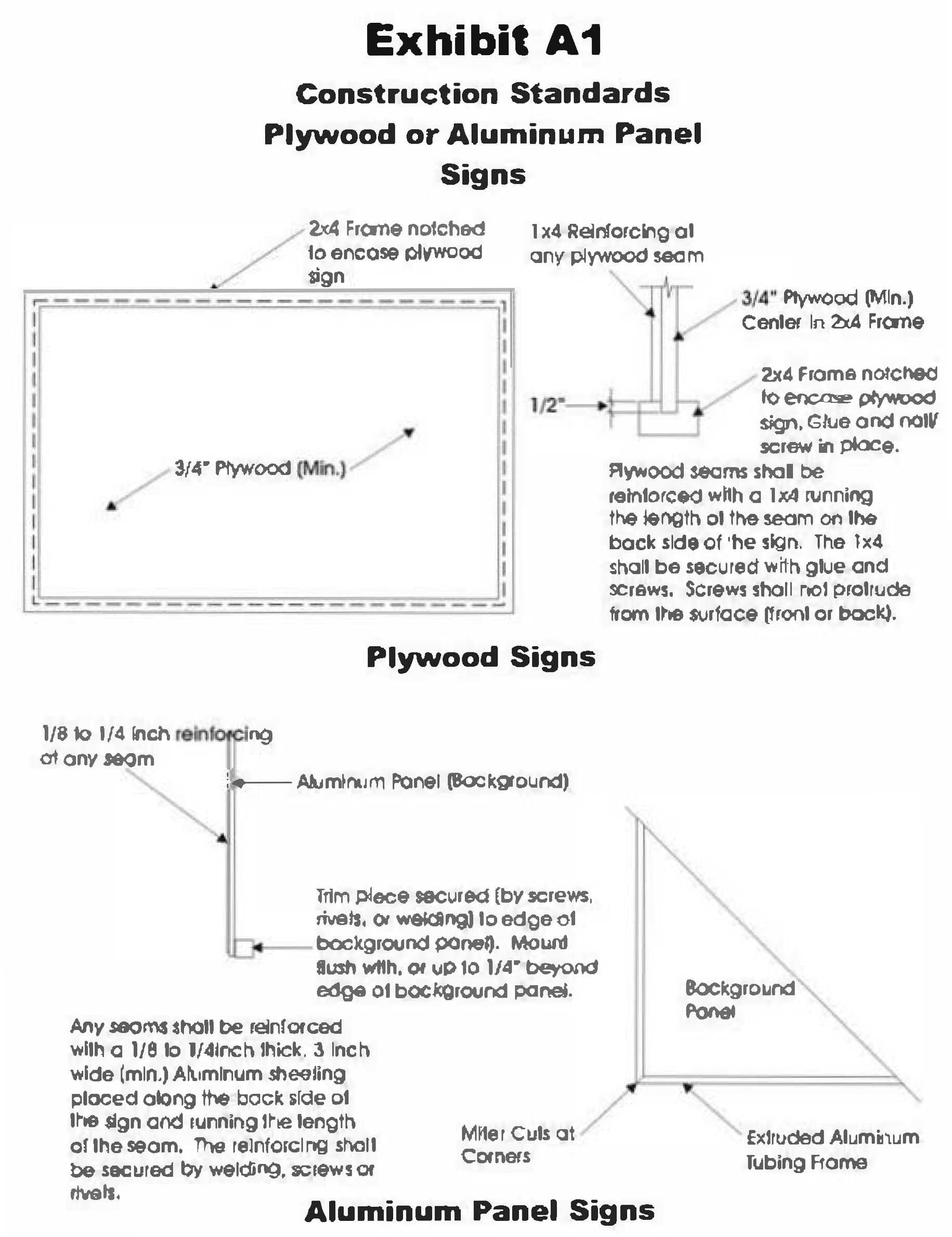
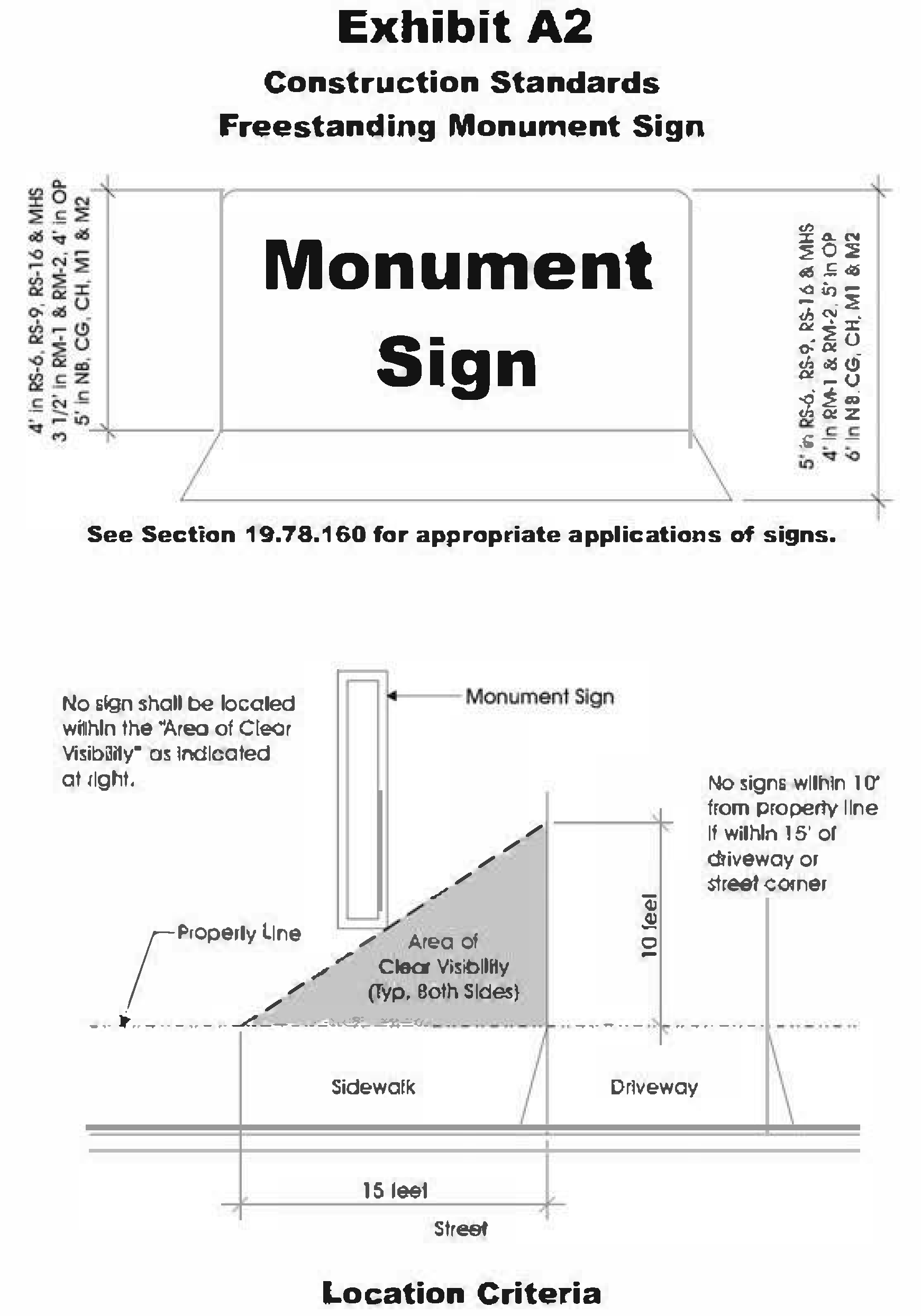
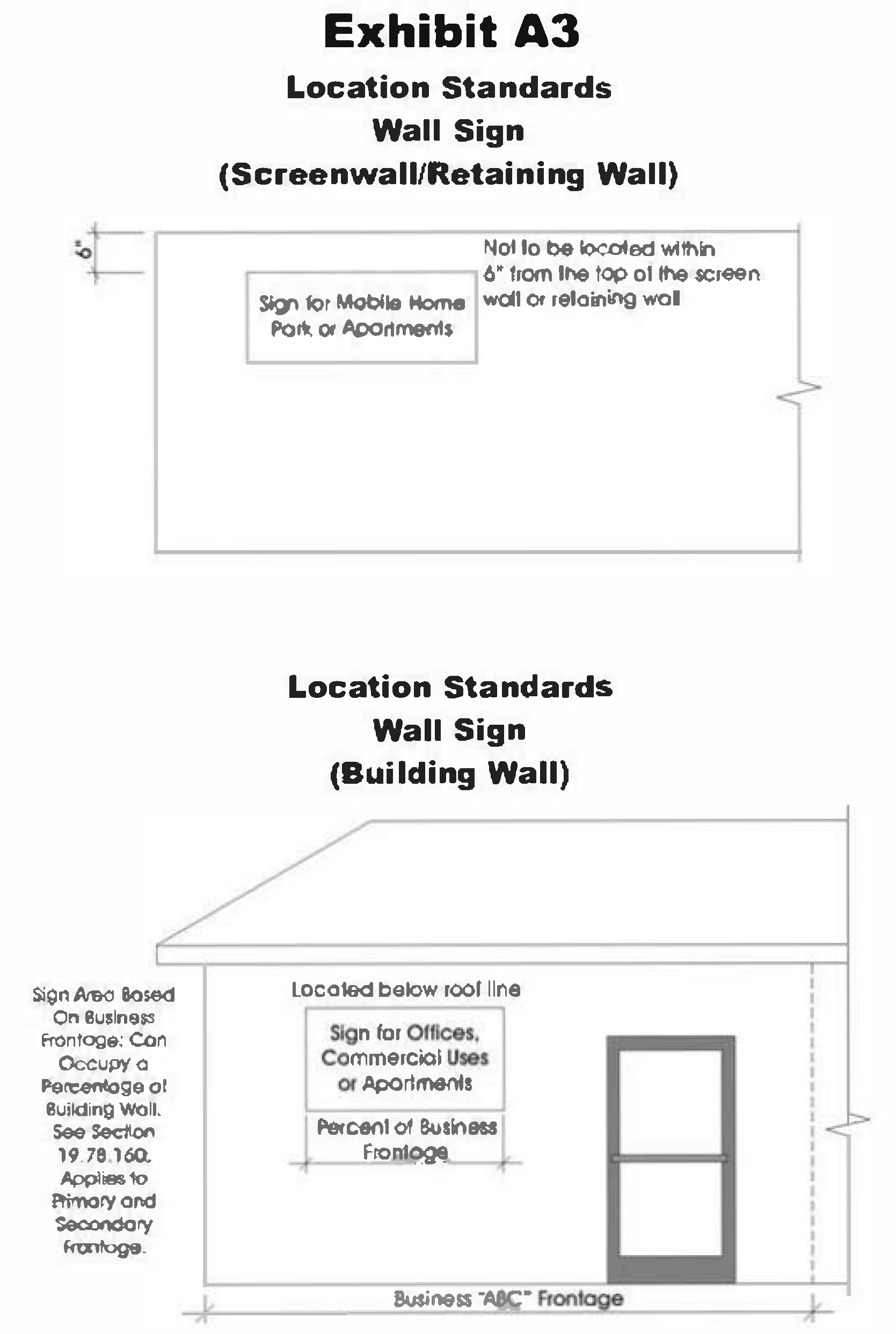
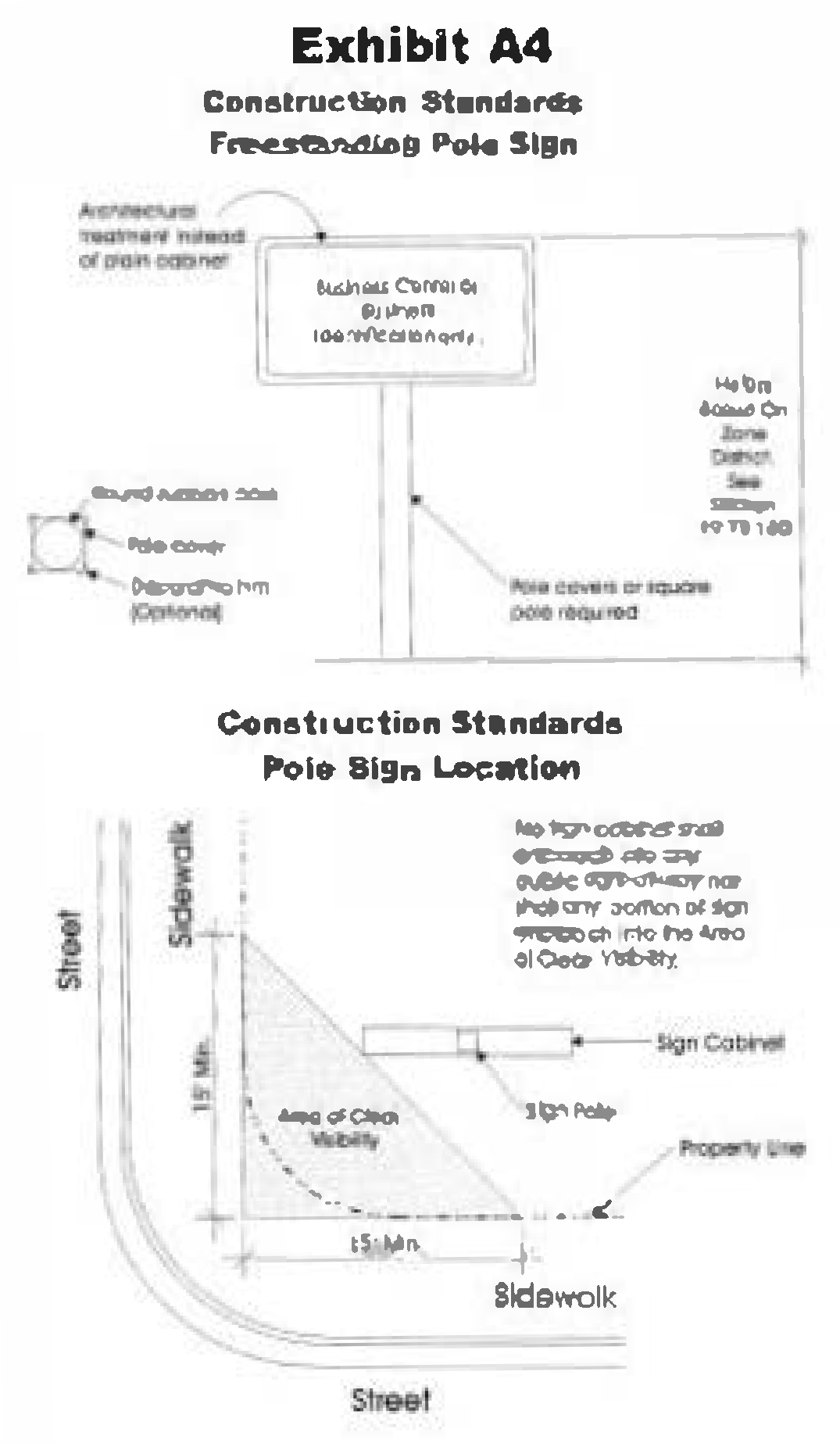
Sec. 19.06.070. - Service station standards.
(a)
Purpose and intent.
(1)
It is recognized that service stations warrant special consideration because they constitute a use attracting vehicular patronage exclusively, and therefore tend to create additional traffic. Noise and traffic hazards arising from the conduct of such businesses require the regulation of service station locations to promote reasonably the health, safety, and general welfare of the citizens of the city.
(2)
These standards are also intended to encourage better land planning techniques by use of aesthetically pleasing architecture, landscaping, site layout and design. As a result, it is intended that the service station operator will keep the service station in a neat, clean and orderly fashion.
(3)
For the purpose of this section, a service station (includes the repair of vehicles) and fueling station (does not include the repair of vehicles) shall be considered the same type of land use.
(b)
Service station. Service stations shall require a conditional use permit.
(c)
Location. Service stations may locate only within the commercial, industrial human services and diverse use zoning districts. When granting a conditional use permit, the planning commission shall consider the following criteria:
(1)
Proximity to other service stations or businesses distributing or handling flammable liquid or materials.
(2)
Proximity to residences, schools, hospitals, churches, theaters, parks and other places of public assembly.
(3)
Any adverse effect that the proposed use will have on traffic on the abutting streets and highways including, but not limited to, congestion, turning movements, and dangers to pedestrians.
(d)
Building site and frontage. The minimum building site shall be 20,000 square feet with a minimum frontage of 150 feet. The architect and/or engineer shall consider the following when designing the building site:
(1)
On-site circulation, to allow the effective, safe flow of pedestrian and vehicular traffic.
(2)
Off-site circulation, with an emphasis on the safety of pedestrians and vehicular traffic.
(3)
Vehicles at the fueling pumps shall not impede the free flow of traffic for vehicles entering and exiting the site, whether to fuel or utilize any other services provided on the station site or adjacent uses.
(4)
Driveway locations shall require the approval of the city engineer and shall not be located within 50 feet of a street intersection.
(e)
Permitted uses. The following uses are permitted subject to approval by the planning commission and shall meet the requirements of chapter 19.30:
(1)
Service stations engaged in the retail business of selling motor fuels and supplying goods and services, as defined in chapter 19.02.
(2)
Fueling stations engaged in the retail business of selling motor fuels, as defined in chapter 19.02.
(f)
Additional uses permitted.
(1)
The following additional uses are permitted when approved by a conditional use permit:
a.
Washing, cleaning and waxing of vehicles. Such activity shall be conducted within the main structure of the service station except when approved outside drainage is supplied. Any vehicle washing facility must include a water recycling system pursuant to chapter 13.40.
b.
Storage of rental and utility trailers. Such trailers shall not exceed 17 feet in total length or, eight feet in total height. Storage area shall be in addition to that area required for off-street parking, driveway or landscaping. One trailer, four feet by eight feet, will be allowed in front of the building for displays; all other trailers will be stored behind the front building setback line within an enclosed area and screened to a minimum of 80 percent opaque. The placement of said display trailer shall not impact any required parking nor block any pedestrian or vehicular access.
c.
Automobile and truck rentals. Such vehicles shall be stored behind the front line of the building, except one rental automobile will be allowed in front of the building for display. Storage area shall be in addition to that required for off-street parking, driveways, and landscaping and shall be striped per city standards. The placement of said display automobile or truck shall not impact any required parking nor block any pedestrian or vehicular access.
d.
Storage of other vehicles. Five such vehicles may be stored behind the front building setback line of the main building. If more than five such vehicles are stored on-site, they shall be within an enclosed area and screened to a minimum of 80 percent opaque. The overnight storage of vehicles shall be screened from public view either by storing the vehicles in the service bays or within a fenced and screened enclosure.
e.
Mini-marts. Mini-marts shall be permitted to be constructed in association with service stations subject to the review of a conditional use permit. Existing service stations requesting a modification to include a mini-mart shall be permitted as a retail use administratively provided no building expansion is required and that required parking can be met on-site. If a building expansion is necessary, the expansion shall be subject to a conditional use permit.
(2)
All uses shall be specifically identified in the additional application. Any additional uses added after the initial approval shall require submittal of a new conditional use permit application or a revision to the approved conditional use permit application.
(3)
Per the general plan, maximum building coverage shall be limited to 50 percent of the lot area.
(g)
Outside activities. Activities conducted outside the main building shall be limited to the dispensing of electricity (for electric vehicle charging station), fuel, oil, and water.
(h)
Design. Emphasis shall be on quality of design and proper balance between building materials of structures and landscaping elements. All service stations (including main buildings, canopies, accessory structures, etc.) shall include a tile mansard roof or equivalent parapet. Roof tile shall consist of a range of earthtone colors (i.e., browns, tans reds). All pump island canopy supports shall be enclosed with decorative masonry block integrated with the design materials of the main building. All buildings shall include wood siding, decorative masonry or equivalent material. Corporate colors are permitted in limited quantities and must be approved by the planning commission. Mini-marts are considered an ancillary use of the service station. Because of this, all mini-marts shall be incorporated into the design of the service station.
(i)
Restrooms. The number of restrooms shall be determined by the California Plumbing Code based upon the occupant load of the building. The restrooms shall comply with the Americans with Disabilities Act.
(j)
Landscaping and screening. All landscaping and screening shall be provided for each service station site consistent with sections 19.06.080 and 19.06.030.
(k)
Trash enclosures. All trash enclosures shall be subject to the Refuse and Recycling Enclosure Ordinance. Refuse and recycling enclosures shall be located in an area that is easily accessible for the refuse and recycling collection trucks.
(l)
Lights. All exterior lighting shall comply with section 19.06.010. Light standards shall be a maximum of 30 feet in height and shall be anodized. All lights shall be designed to confine the rays to the premises. Any deviation shall require planning commission approval.
(m)
Parking. Parking shall be provided in the amounts prescribed under section 19.06.050. Parking requirements for ancillary operations (i.e., mini-marts) shall be determined by the planning commission. Disabled parking spaces shall be provided in the amounts and sizes as described in the Uniform Building Code and the Americans with Disabilities Act (ADA). Any deviation of non-ADA required parking spaces shall require planning commission approval.
(n)
Vending machines. Not more than two vending machines will be allowed outside of the main building.
(o)
Tire storage. Outside display/storage of tires is prohibited. All display/storage of tires shall be located within the main building.
(p)
Signs. All signs shall be provided in the amounts and sizes as prescribed within the Service Station Sign Ordinance No. 688 and section 19.06.060. Sign location, square footage, etc., shall be computed based upon the main use of the property. Signs for ancillary uses shall not be permitted to exceed the maximum amounts prescribed for the main use of the property and shall be considered as one for calculation purposes. Any planning commission interpretations regarding signs shall automatically be included under this section. Any deviation shall require planning commission review and approval.
(q)
Pump islands. Pump islands shall be set back a minimum of 20 feet from the ultimate right-of-way line.
(r)
Canopies. Automobile service station canopies, whether attached or detached, shall not project closer than seven feet to the front or side property lines. Canopies shall maintain a minimum clearance of 12 feet above the centerline grade of the adjacent street.
(s)
Nonconforming service station sites. Existing service station sites made nonconforming as a result of this section shall be made to conform when the service station is remodeled, or improvements are made to existing structures with a net increase in building area. An increase in building area shall be subject to subsection (t)(1)(b) of this section.
(t)
Modernization of nonconforming use.
(1)
All proposals to modernize existing service stations shall be subject to review and approval as provided below:
a.
The corporate reimage or rebranding of a service station shall be reviewed and approved administratively.
b.
A conditional use permit shall be required for the expansion in building area, reconstruction or addition of building, canopy, or other accessory structure, or the addition of a use (such as a car wash) or fuel pumps to the service station.
c.
The addition or replacement of the fuel tanks, or conversion to another fuel (i.e., gasoline to diesel) shall be reviewed and approved administratively and shall require all approvals from other departments and agencies, including but not limited to the fire department and San Bernardino County Fire Department, hazardous materials division.
d.
The replacement of fueling pumps (including the addition of another fuel product to an existing pump) shall be reviewed and approved administratively. However, the addition of fuel pumps shall require the approval of a conditional use permit.
(2)
Proposals to modernize nonconforming service station sites shall be subject to the appropriate requirements identified under chapter 19.38.
(u)
Compliance required. Any service station erected or constructed contrary to the provisions of this chapter, or an idle service station, (one which has been unoccupied for six months or longer) shall be declared unlawful and a public nuisance and shall be subject to review by the planning commission for compliance with one or more of the following recommendations:
(1)
After six months, all windows and doors shall be covered with sheet metal or other approved material and painted to match the building to which applied.
(2)
One year from the date of formal notification by the code enforcement officer, all gas pumps shall be removed from the site.
(3)
One year from the date of formal notification by the code enforcement officer, all signs, sign poles, etc., shall be removed from the site.
(4)
All underground tanks shall be removed from each site consistent with all time frames and procedures prescribed by all local, state and federal regulations.
(5)
Any vapor recovery system shall be screened from view with a fence a minimum of 80 percent opaque.
(6)
Each vacant service station site shall be reviewed annually to determine whether the structure should be demolished and removed from the site.
(7)
All landscaping shall be maintained pursuant to section 19.06.080.
(8)
When a service station site is changed to another use, the pump island canopy shall be removed within one year from the date of issuance of the new business license; or the pump island shall be incorporated into a structural element approved by the planning commission.
(9)
Should it be necessary to fence a site, the fencing shall include slats approved by staff.
(10)
All vacant service station sites shall remain lighted during nighttime hours to prevent vandalism.
(11)
Other remediation measures deemed necessary to remove nuisance factors, as determined by the planning commission.
(12)
Any exceptions to the remediation measures shall be approved by the planning commission pursuant to chapter 19.30.
(v)
Exempted stations. Electric vehicle charging stations installed as an ancillary use in conjunction with a primary use, including those installed as part of an environmental mitigation shall be exempt from the service station requirements. Design of ancillary structures (i.e., canopies and supports) for charging stations shall be integrated with the architectural design of the primary use (i.e., colors, finishes and materials). Exposed conduits and mounting hardware shall be concealed or painted to match the surface to which applied.
(Ord. No. 934-2015, § 19.06.070, 7-20-2015)
Sec. 19.06.080. - Landscape water conservation.
(a)
Title. This section shall be known and may be cited as the City of Barstow "Landscape Water Conservation Ordinance."
(b)
Purpose and intent. In accordance with Water Conservation in the Landscaping Act (Government Code § 65591 et seq.), the purpose and intent of this section is to:
(1)
Promote the values and benefits of landscapes while recognizing the need to utilize water and other resources as efficiently as possible;
(2)
Establish a structure for designing, permitting, installing and maintaining water-efficient landscapes in new projects;
(3)
Establish provisions for water management practices and water waste prevention for established landscapes;
(4)
Implement procedures required to maximize the beneficial use of the available water resources to the extent capable and that the waste or unreasonable use or unreasonable method of use, of water, be prevented and the conservation of such water is to be extended with a view to the reasonable and beneficial use thereof in the interests of the people of the city;
The community development director or his designee is authorized to implement the provisions of this section.
(c)
Definitions. The words used in this section have the meanings set forth below:
Application rate means the depth of water applied to a given area, usually measured in inches per hour.
Applied water means the portion of water supplied by the irrigation system to the landscape.
Automatic controller means a mechanical or solid state timer, capable of operating valve stations to set the days and length of time of a water application.
Backflow prevention device means a safety device used to prevent pollution or contamination of the water supply due to the reverse flow of water from the irrigation system.
Bubbler emitter. See definition of "Low volume irrigation systems."
Check valve means a valve located under a sprinkler head to hold water in the system so it minimizes drainage from higher elevations to downstream sprinkler heads.
City of Barstow means the City of Barstow, a municipal corporation.
Commercial refers to the purchase, sale or other transaction involving the handling or disposition of any article, substance, service or commodity (except as included hereafter under "industrial") for profit or livelihood.
Corner lot. Both front and side-street yards shall be subject to the provisions of this section.
Distribution uniformity means a measure of how evenly sprinklers apply water. The distribution uniformity low quarter (DULQ) measurement method utilized in the irrigation audit procedure is utilized for the purposes of this section. This section assumes an attainable performance level of 75 percent DULQ for spray heads, 80 percent DULQ for rotor heads and 85 percent DULQ for recreational turf grass rotor heads.
Drip emitter. See definition of "Low volume irrigation system."
Duplex means a building designed and used for occupancy by two families, both living independently of each other.
Electric automatic controllers refers to time clocks that have the capabilities of multiprogramming and multiple start times in order to control amount of water applied to landscaping.
Emission uniformity means a measure of how evenly drip and micro spray emitters apply water. The low quarter measurement method (EULQ) utilized in the landscape irrigation evaluation procedure is used for the purpose of this section. This section assumes 90 percent DULQ for drippers, micro sprays, and pressure compensated bubblers.
Established landscape means the point at which new plants in the landscape have developed roots into the soil adjacent to the root ball.
Establishment period means the first year after installing the plant in the landscape.
ET adjustment factor means a factor of 0.35 that when applied to reference evapotranspiration, adjusts for plant factors and irrigation efficiency, two major influences upon the amount of water that needs to be applied to the landscape.
Evapotranspiration or ET means the quantity of water evaporated from adjacent soil surfaces and transpired by plants expressed in inches for a specific time.
Hardscapes means any inorganic decorative landscape materials, including but not limited to, stones, boulders, cobbles, pavers, decorative concrete and/or mulch, incorporated into an overall landscape design.
Hydrozone means a portion of the landscaped area having plants with similar water needs that are served by a valve or set of valves with the same schedule. A hydrozone may be irrigated or nonirrigated. For example: A naturalized area planted with native vegetation that will not need supplemental irrigation (once established) is a nonirrigated hydrozone.
Industrial refers to the manufacture, fabrication, processing, storage, reduction or destruction of material, or any other treatment to change the form character or appearance thereof.
Infiltration rate means the rate of water entry into the soil expressed as a depth of water per unit of time (inches per hour).
Institutional refers to a facility having public character such as a school, church or hospital.
Irrigation efficiency means the measurement of the amount of water beneficially used divided by the amount of water applied. Irrigation efficiency is derived from measurements and estimates of irrigation system characteristics and management practices. The minimum irrigation efficiency for purposes of these regulations is 75 percent.
Landscape area means the entire parcel less the building footprint, driveways, and nonirrigated portions of parking lots including hardscapes, such as decks, patios and other nonporous areas. Water features (including pools and ponds) are included in the calculation of the landscaped area. Areas dedicated to edible plants, such as orchards or vegetable gardens, are not included.
Landscape documentation package means and includes:
(1)
Information on annual irrigation program (with schedule) including timer based and ET controllers;
(2)
Manufacturer information on component parts;
(3)
System design information;
(4)
Final planting and irrigation plan; and
(5)
Water use application projection (water budget).
Landscape irrigation audit means a process to perform site inspections, evaluate irrigation systems and develop efficient irrigation systems. At a minimum, the audit shall be in accordance with the California Landscape Water Management Program as described in the Landscape Irrigation Auditor Handbook, the entire document which is hereby incorporated by reference. (See Landscape Irrigation Auditor Handbook, Department of Water Resources, Water Conservation Office, most recent version.)
Landscape plans means planting plans, notes, details and specifications as well as irrigation plans, notes, details and specifications.
Landscaping and/or landscaping improvements refers to plantings of turf grass, shrubs, trees or similar living plants, with minimal use of other ground surface treatment such as decorative rock, bark or stone. These inert materials are allowed to be used in conjunction with live material in planting beds, but do not count toward the calculations of required landscaping and/or landscaping improvements.
Low volume irrigation systems means appropriately designed irrigation systems that utilize low volume devices appropriate to the climatic and site factors. Such heads include micro sprinkler heads, drip emitters and bubbler emitters.
Low water use plant material means trees, shrubs and ground covers that survive with a limited amount of supplemental water, as identified by the Alliance for Water Awareness and Conservation (AWAC) or similar lists approved by the community development director or his designee.
Main line means the pressurized pipeline that delivers water from the water source to a valve or outlet.
Maximum applied water allowance means, for design purposes, the upper limit of annual applied water for the established landscape area as specified in division 2, title 23, California Code of Regulations, chapter 7 and section 702. It is based upon the area's reference evapotranspiration, ET adjustment factor and the size of the landscaped area. The estimated applied water use shall not exceed the maximum applied water allowance.
Micro sprinkler. See definition of "Low volume irrigation systems."
Model home means a facility used exclusively for the promotion and sale of homes similar to the model.
Mulch means any organic material such as leaves, bark, straw or inorganic material such as pebbles, stones, gravel and decorative sand or decomposed granite left loose and applied to the soil surface to reduce evaporation.
Multifamily dwelling means a building or buildings designed and used for occupancy by three or more families, all living independently of each other.
Native plants means plants that are:
(1)
Indigenous to the desert region of California, Nevada and Arizona;
(2)
Native to the southwestern United States and northern Mexico; and
(3)
Low to minimal water users.
Overdraft means that wherein the current total annual consumptive use of water in the Mojave basin area exceeds the long-term average annual natural water supply to the basin area or sub-area.
Overspray means the water which is delivered beyond the landscaped area, wetting pavements, walks, structures or other nonlandscaped areas.
Person means an individual, corporation, partnership, incorporated association or any other similar entity.
Plant factor means a factor when multiplied by reference evapotranspiration, estimates the amount of water used by plants. For purposes of this section, the plant factor of very low water using plants ranges from 0.01 to 0.10, for low water using plants the range is 0.10 to 0.30, for moderate water using plants the range is 0.30 to 0.60 and for high water using plants the range is 0.60 to 0.90. Reference: Water use classifications of landscape species III (WUCOLS III).
Qualified professional means a person who has been certified by their professional organization or a person who has demonstrated knowledge and is locally recognized as qualified among landscape architects due to long time experience.
Recreation areas means public and institutional areas designed for active play or recreation such as sports fields, school yards, picnic grounds or other areas with intense foot traffic.
Reference evapotranspiration or ETo means a standard measurement of the environmental parameters which affect the water use of plants, using cool season grass as a reference. ETo is expressed in inches per day, month or year and is an estimate of the evapotranspiration of a large field of cool season grass that is well watered. Reference evapotranspiration is used as a basis of determining the maximum applied water allowances so that the regional differences in climate can be accommodated.
Rehabilitated landscape means any re-landscaping project that requires discretionary approval. Any re-landscaping project whose choice of new plant material and/or new irrigation system components is such that the calculation of the site's estimated water use will be significantly changed. The new estimated water use calculation must not exceed the maximum applied water allowance calculated for the site using a 0.6 ET adjustment factor.
Residential development means the development of any type of dwelling unit or units suitable or designed for human habitation, including, but not limited to, single-family homes, condominiums or manufactured homes, but not including hotels, motels, licensed convalescent homes, commercially operated retirement homes, time share units or the like. The term "Residential development" shall not include remodeling or reconstruction.
Right-of-way means land which by deed, conveyance, agreement, easement, dedication, usage or process of law is reserved for or dedicated to the general public for street, highway, alley, public utility or pedestrian walkway purposes.
Run-off means water which is not absorbed by the soil or landscape to which it is applied and flows from the area. For example: Run off may result from water that is applied at too great a rate (application rate exceeds infiltration rate), or when there is a severe slope.
Shall or must means an action which is mandatory.
Single-family dwelling means a detached building designed exclusively for the occupancy of one family.
Sprinkler head means a device which sprays water through a nozzle.
Station means an area served by one valve or by a set of valves that operate simultaneously.
Tract homes means five or more single-family residential units.
Turf means a surface layer of earth containing mowed grass with its roots.
Valve means a device used to control the flow of water in the irrigation system.
Water feature means any water applied to the landscape for nonirrigation, decorative purposes. Fountains, streams, ponds and lakes are considered water features. Water features use more water than efficiently irrigated turf grass and are assigned a plant factor of 1.1 for a stationary body of water and 1.2 for a moving body of water.
Water intensive landscape means an area of land that is watered with a permanent water application system and planted primarily with plants not referred to in the low water use plant list approved by the community development director or his designee. Included is the total surface area of all water features (i.e., swimming pools of any size, fountains, ponds, watercourses, waterfalls and other artificial water structures) filled or refilled with water from any source.
Water waste means any unreasonable or nonbeneficial use of water or any unreasonable method or use of water, including but expressly not limited to, the specific uses, conditions, actions or omissions prohibited or restricted by this section, as hereinafter set forth.
Zone means an area served by one valve, sometimes referred to as a station.
(d)
Applicability.
(1)
This section shall apply to landscaping for all new residential, commercial, industrial, institutional projects that require permitting.
(2)
This section shall not apply to registered historical sites and ecological restoration projects that do not require permanent irrigation systems.
(e)
Required approval for projects. No building permit shall be approved unless the community development director or his designee, finds that the landscape and irrigation plan satisfies the criteria set forth in this section.
(f)
General requirements for new landscaping projects.
(1)
The following are requirements applicable to all new landscaping projects:
a.
Landscapes shall be designed in accordance with the city of Barstow Landscape Manual:
1.
The drip irrigation details as outlined in the city of Barstow Drawing No. 118, as adopted by the city;
2.
The water-efficient plant list as found in the city Landscape Manual, substitutions shall be approved by the planning director or duly appointed representative; and
3.
The water conservation plan as outlined in chapter 13.40 of this Code.
b.
The maximum slope of a turf area shall not exceed four to one or 25 percent.
c.
Turf areas shall not be located within six feet of a street, curb, paved surface or sidewalk unless watered with subterranean drip irrigation.
d.
No area of turf (unless watered with subterranean drip irrigation) shall have a width less than five feet unless adjacent to a planter bed or other landscape area which will catch overspray.
e.
No water intensive landscape or turf (unless watered with subterranean drip irrigation) shall be permitted in any right-of-way. Low water use plant material shall be allowed.
f.
Plant grouping and masses shall be incorporated, grouping plant materials together that have similar water requirements (this is called a hydrozone).
g.
Any ponds, fountains or any similar water features shall use recirculated water. Reclaimed water may be used if available and/or feasible, and verification of limited public access is provided to the city.
h.
The city shall make information prepared by the Alliance for Water Awareness (AWAC) available to new homeowners about designing, installing and maintaining water-efficient landscapes.
i.
Recreational areas shall not be considered in calculating the percentage of the total lot area and shall not be considered in determining compliance with this section, but shall be subject to subsection (i)(4) (Water-efficiency in landscape irrigation and design).
j.
Artificial turf/plant quantities are not limited.
(2)
The following are additional requirements applicable to commercial, industrial, institutional, and multifamily development:
a.
Tracts of 20 or more lots shall have at least one model home demonstrating a water-efficient landscape and have literature and/or brochures available explaining xeriscape landscaping and irrigation.
b.
Provisions for the use of reclaimed water supplied through dual distribution systems, if feasible and cost effective, subject to the appropriate health standards, and if required in project review and approval by the planning commission and/or city council.
c.
No slope adjacent to a parking lot shall exceed a four to one slope, to minimize potential run-off problems.
d.
Decorative rock shall be utilized in lieu of ground cover in interior planter areas and shall not be utilized adjacent to streets and public sidewalks.
e.
All landscape and irrigation shall be continuously maintained. Any faulty equipment or dying plant material shall be replaced with the same type of equipment or the same species of plant material originally approved. Any substitution shall require the approval of the planning director or duly appointed representative.
(g)
Provisions for new landscapes. This section provides two approaches to conservation in new landscapes: the "Turf Limitation Approach" set forth in subsection (h) of this section and the "Water Budget Approach" set forth in subsection (i) of this section. All new landscapes shall conform to either subsection (h) or subsection (i) of this section, not both.
(h)
Turf limitations approach.
(1)
Residential.
a.
Single/duplex dwelling. Landscaping shall be installed in the front yard of the residence. Landscaping shall meet the following requirements:
1.
Limit total area of water intensive landscaping/turf to not more than 30 percent of the landscaped area (up to a maximum of 900 square feet).
2.
Use only low water use plants on all additional landscaped areas, or equivalent materials as approved by the community development director or his designee. Install low volume irrigation systems on these landscaped areas.
b.
Multifamily dwelling. Water intensive landscaping shall be limited to ten percent of the first 9,000 square feet. Additional acreage of development over 9,000 square feet shall be limited to a maximum of five percent water intensive landscape/turf.
(2)
Nonresidential.
a.
The following types of facilities shall limit the water intensive landscape and turf within the landscaped area to the following percentages of the total lot area, and all remaining landscaped area shall consist of plants identified in Appendix A, as used as reference codified in this section. Turf areas shall not be located within six feet of a street, curb, paved surface or sidewalk if adjacent to a paved surface. Turf areas may be located within six feet of the aforementioned features if subterranean drip irrigation is used. The maximum slope of a turf area shall not exceed 25 percent or four to one.
1.
Churches: 25 percent.
2.
Resorts, including hotels and motels: ten percent of the total area.
3.
Commercial, institutional and industrial uses: shall be limited to ten percent of the first acre and not more than five percent water intensive landscape/turf of any additional acreage.
b.
Recreational areas shall not be considered in calculating the percentage of the total lot area and shall not be considered in determining compliance with this section, but shall be subject to subsection (i)(4) of this section (Water-efficiency in landscape irrigation and design).
(3)
Processing procedures and submittal requirements.
a.
For any development proposal, the applicant shall submit landscape plans, meeting the requirements listed below to the city.
b.
Plans submitted for single-family residential development are not required to be prepared by a landscape architect. However, all landscape plans submitted by the applicant shall meet the following requirements:
1.
Plans must be at a reasonable scale to indicate all proposed improvements;
2.
All landscape plans must contain the following minimum information:
(i)
Name of applicant/owner;
(ii)
The dates the plans are submitted and revised;
(iii)
All existing and proposed buildings and other structures, paved areas, landscaped areas (including nonirrigated areas), power poles, fire hydrants, water meters, light standards, streets, street names, signs, fences, walls, water features (including pools and ponds), stormwater retention/detention areas and other permanent features to be added and/or retained on the site;
(iv)
All property lines;
(v)
Project information, including total square footage of the landscaped area, total square footage of the proposed turf grass area;
(vi)
Existing protected trees including any vegetation identified in vegetation preservation plans, if required, to be preserved in place, indicated by botanical name and variety, common name, size and location;
(vii)
Show all paved areas such as driveways, walkways and streets;
(viii)
Show all pools, ponds, lakes, fountains, water features, fences and retaining walls;
(ix)
Show an address or APN number to identify the property.
If approved, the city will make an inspection of the completed project for compliance with the program before issuing a certificate of occupancy.
(4)
Final planting plans shall contain the following minimum information:
a.
The landscape plan shall indicate the name and location of all plants used.
b.
All proposed lawn areas and ground cover areas shall be identified.
(5)
Final irrigation plans shall contain the following minimum information:
a.
The location and type of all sprinkler heads, including drip emitter configurations.
b.
The location and type of irrigation controllers. Programmable controllers are required.
c.
The size and type of all irrigation and emission lines.
(6)
Systems must be designed and operated to maximize irrigation efficiency.
a.
Sprinkler irrigation shall be scheduled to operate during the months of April through September, between the hours of 6:00 p.m. and 9:00 a.m. and during the remaining months of October through March, between the hours of 9:00 a.m. and 3:00 p.m. to reduce water loss from wind and evaporation, and to avoid ice during winter months. Drip irrigation and subterranean devices shall not be subject to this water window.
b.
Valves shall be scheduled for multiple repeat cycles, if necessary, to reduce runoff, especially on slopes and with soils with slow infiltration rates.
c.
All zone run times shall be adjusted seasonally to accommodate landscape water needs or preferably the ET rate, exposure slope and soil types.
d.
Turf and non-turf shall be irrigated on separate valves.
e.
Drip emitters and sprinklers shall be placed on separate valves.
f.
No single zone shall mix head types, such as rotors and pop-up spray heads on the same zone.
g.
Plants with similar water requirements shall be grouped together.
(i)
Water budget approach.
(1)
Processing procedures and submittal requirements.
a.
Projects will be required to submit a landscape documentation package including a water budget statement approved by the community development director or his designee.
b.
As a condition of approval for any development proposal, the applicant shall submit landscape plans meeting the requirements listed below to the city.
c.
All landscape plans submitted by the applicant shall meet the following requirements, or equivalents as approved by the community development director or his designee:
1.
Plans must be at a reasonable scale to indicate all proposed improvements (minimum one inch equals 30 feet).
2.
The drawings shall show zone number, valve size and gallons per minute (gpm), as well as point of connection, meter size, operating pressure, flushing devices, emitters and spray heads.
3.
All must contain the following minimum information:
(i)
North arrow and scale (including bar scale).
(ii)
Name of applicant/owner.
(iii)
The name, address and telephone number of the person or firm responsible for the preparation of the landscape plan.
(iv)
The dates the plans are submitted and revised.
(v)
All existing and proposed buildings and other structures, paved areas, landscaped areas (including nonirrigated areas), power poles, fire hydrants, water meters, light standards, streets, street names, signs, fences, walls, water features (including pools and ponds), stormwater retention/detention areas and other permanent features to be added and/or retained on the site.
(vi)
Show a title block on each sheet with the name of the project, City of Barstow, name and address of the professional design company with its signed professional stamp if applicable.
(vii)
Reserve a three-inch by six-inch space for a signature block on the lower right corner of the cover page and on all of the landscape, irrigation design/detail/specification sheets.
(viii)
Existing or proposed elevations or contour lines at sufficient locations to clearly show the drainage pattern (or a copy of the grading plan).
(ix)
All property lines and easements.
(x)
Project information, including total square footage of the landscaped area, total square footage of the proposed recreational areas and total square footage of turf grass.
(xi)
Existing protected trees including any vegetation identified in vegetation preservation plans, if required, to be preserved in place, indicated by botanical name and variety, common name, size and location.
(xii)
Show all paved areas such as driveways, walkways and streets.
(xiii)
Show all pools, ponds, lakes, fountains, water features, fences and retaining walls.
(xiv)
Show location of all overhead and underground utilities.
(xv)
Show total landscaped area in square feet. Separate area square footages by hydrozone. Show the total percentage area of each hydrozone. Include total area of all water features as separate hydrozones of still or moving water.
(xvi)
Designate recreational areas and recreational turf areas.
(xvii)
Show total maximum annual applied water budget allowance for the proposed project, the formula of which is approved by the community development director or his designee.
If approved, the city will make an inspection of the completed project for compliance with the program before issuing a certificate of occupancy.
(2)
Final planting plans shall contain the following minimum information or equivalents as approved by the community development director or his designee:
a.
A table listing the plant material including the plant symbols, common and botanical names, sizes, spacing (if applicable), quantities and other remarks as appropriate to describe the plant selection.
b.
The location of all plant material shall be shown on the plan at approximately two-thirds the mature size of the plant material.
c.
All proposed lawn areas and ground cover areas shall be identified, including the types and amounts of living plant materials to be used and the size and depth of nonliving materials. The manner in which any lawn areas are to be established shall be included.
(3)
Final irrigation plans shall contain the following minimum information or equivalents as approved by the community development director or his designee:
a.
The location and type of all sprinkler heads, including drip emitter configurations.
b.
The location and size of main line and lateral line piping.
c.
The location and size of water meters.
d.
The location of backflow prevention devices.
e.
The location, size and circuit number of all valves.
f.
The location and type of irrigation controllers.
g.
A table including the manufacturer and a description of all parts used in the irrigation plan.
h.
Details of the backflow prevention devices, valves, sprinkler heads, controllers, etc.
(4)
Water-efficiency in landscape and irrigation design. New irrigation systems and improvements shall be designed to achieve water-efficiency.
a.
Each valve shall irrigate a landscape with similar site, slope and soil conditions and plant materials with similar watering needs.
1.
Turf and non-turf shall be irrigated on separate valves.
2.
Drip emitters and sprinklers shall be placed on separate valves.
3.
Bubblers shall be placed on a separate valve.
4.
Plants with similar water requirements shall be grouped together.
b.
Soil types, infiltration rate and slopes shall be considered in order to avoid runoff and overspray, where water flows onto adjacent property, nonirrigated areas, walks roadways or structures. Proper irrigation equipment, schedules and repeat cycles shall be used to minimize runoff. Spray zones shall run parallel to the slope to minimize runoff.
c.
A minimum of three inches of mulch shall be applied to all exposed soil surface areas in new plantings.
d.
Separate landscape water meters shall be installed for all projects except for single-family homes or any project with a landscaped area of more than 5,000 square feet.
e.
A pressure-reducing valve shall be used when the static water pressure exceeds the pressure needed by the system by 15 pounds per square inch (psi). Pressure reducing valves can be installed within the project on the mainline or at the valve, if elevation changes require it.
f.
Turf irrigation principles.
1.
No single zone shall mix head types, such as rotors and pop-up spray heads on the same zone.
2.
Uniform distribution shall meet 80 percent.
3.
No sprinkler irrigation systems shall be installed in strips less than five feet wide.
4.
Small areas (25 feet wide or less) shall be irrigated with fixed nozzle pop-up spray heads with matched precipitation nozzles. Nozzles shall be sized to provide head to head coverage. Heads shall pop-up a minimum of four inches in turf areas. Heads can be specified with pressure reducing features where needed.
5.
Large areas (wider than 25 feet) shall be irrigated with gear driven rotor heads with a minimum precipitation rate of 1.45 inches per hour for a full circle head. Heads shall pop-up a minimum of four inches in turf areas.
6.
Check valves shall be included in heads or valves where low head drainage will occur due to elevation changes. See irrigation head catalogue for elevation change tolerances.
7.
Use of emerging water saving technology such as evapotranspiration controls and subterranean irrigation systems is highly encouraged.
(5)
Irrigation control systems shall be employed that offer flexibility in programming as follows:
a.
All irrigation systems shall include an electric automatic controller with multiple programs and multiple repeat and rest cycle capabilities and a flexible calendar program.
b.
Each zone/valve shall have its own station on the controller. The exception is drip valves, which can be doubled on the controller.
c.
Recreational areas are required to use ET controllers for irrigation.
(6)
Systems shall be operated to maximize irrigation water-efficiency as follows:
a.
Sprinkler irrigation shall be scheduled to operate during the months of April through September, between the hours of 6:00 p.m. and 9:00 a.m. and during the remaining months of October through March, between the hours of 9:00 a.m. and 3:00 p.m. to reduce water loss from wind and evaporation, and to avoid ice during winter months. Drip irrigation and subterranean devices shall not be subject to this water window.
b.
Valves shall be scheduled for multiple repeat cycles if necessary to reduce runoff, especially on slopes and with soils with slow infiltration rates.
c.
All zone run times shall be adjusted seasonally to accommodate landscape water needs or preferably the ET rate, exposure slope and soil types.
(7)
Irrigation schedules satisfying the following conditions shall be submitted as part of the landscape project tracking form approved by the community development director or his designee:
a.
An annual irrigation program with monthly irrigation schedules shall be required for:
1.
The plant establishment period;
2.
The established landscape; and
3.
Any temporarily irrigated areas.
b.
For timer-based controllers include run time (in minutes per cycle), suggested number of cycles per day and frequency of irrigation for each station; and provide the amount of applied water (in hundred cubic feet, gallons or in whatever billing units the local water supplier uses) recommended on a monthly and annual basis.
c.
For ET based controllers include essential details of the specific controller involved.
d.
Water features shall be considered as high water zones. The total amount of water for irrigation, plus water needed for any water features, shall be combined in the total water budget.
(8)
Certificate of project completion/landscape project tracking form. Verified completion of all elements on the landscape project tracking, as adopted by city council resolution, shall constitute a certification of project completion.
(j)
Provisions for existing landscapes.
(1)
Water management. All existing landscaped areas that are one acre or more in size, including, but not limited to, golf courses, cemeteries, green belts, common areas, multifamily housing, schools, businesses, parks and publicly owned landscapes shall be strongly encouraged to have a landscape irrigation audit at least once every five years. The audit shall be performed in accordance with the California Landscape Water Management Program as described in the Landscape Irrigation Auditor Handbook, by a certified landscape irrigation auditor. (See Landscape Irrigation Auditor Handbook, The Irrigation Association, most current version).
(2)
Water waste prevention. The provisions of this section shall apply to all water users. The city shall encourage the reduction of water waste resulting from inefficient landscape irrigation by prohibiting runoff, low head drainage, overspray, or other similar conditions where water flows onto adjacent property, nonirrigated areas, walks, roadways or structures. The city may, at the discretion of the planning department, require the property owner to conduct a landscape irrigation audit and make corrections to the landscape based on the findings of the water audit. The audit shall be performed in accordance with subsection A of this section.
(k)
Low water use and California native plants. All landscape shall strive to maximize the use of native species. Where native material is not appropriate for the intended use or appearance, plant species that are regionally adapted and non-invasive may be used. A recommended plants list approved by the community development director or his designee is available at the city planning department.
(l)
Prohibited water uses and water waste. It shall be unlawful for any water user to allow water waste at any location or premises within the jurisdiction of the city. Included but not limited to:
(1)
Cause or permit any water furnished to any property within the city to run or to escape from any hose, pipe, valve, faucet, and sprinkler or irrigation device onto any sidewalk, street or gutter or to otherwise escape from the property.
(2)
Wash driveways, sidewalks, parking lots or other hard surfaces by direct hosing except when necessary to prevent or eliminate risk of fire or contamination, which could result in a risk to public health and safety.
(3)
Wash any vehicle, trailers, motor homes, buses, boats and mobile homes except from a bucket and except that from a hose equipped with an automatic shut-off nozzle may be used for a quick rinse.
(4)
Excess use, loss or escape of water through breaks, leaks or other malfunctions in the water user's plumbing or distribution system.
(m)
Public education. The city shall make available information about water-efficient landscaping to water users throughout the community. The city will also use public education to teach and assist water users in water conservation and the need for voluntary compliance. In addition to education, the city may use enforcement measures to curb water waste.
(n)
Screening requirements.
(1)
Motor vehicle parking spaces within an RM-2 development shall not be visible from view from public streets. Architectural walls, buildings, wing walls, or earthforms, a minimum of six feet in height, shall be constructed to screen these parking spaces.
a.
Architectural walls are defined as decorative concrete, stone, brick, tile, or stucco, including combinations thereof (or equivalent masonry material) a minimum of four inches thick. The design of such walls shall be compatible with the architectural design of the project.
b.
Where there is a difference in elevation between property zoned medium density and abutting property, section 19.06.030 shall be applicable.
(2)
All nonresidential parking areas which abut a public street shall have an architectural wall 36 inches in height or equivalent screen composed of plant materials along the entire length of said parking area abutting a public street. Said wall shall be a part of or in conjunction with the landscaping planter strip.
(3)
All outdoor living areas in residential developments (patios, rear yards) shall have an architectural wall a minimum of six feet in height along any portion of the outdoor living area that abuts any freeway, arterial, or collector street, as shown on the circulation element of the Barstow General Plan. The wall shall be located behind the required right-of-way in the case of single-family development, or along the setback line in the case of multiple-family development. Additional setback may be required by the planning commission if it is determined that additional landscaping is needed to support and enhance the landscape design. The design of any outdoor living areas above the ground level shall be reviewed and approved by the planning commission.
(4)
Trash enclosures. Bins for storage of trash and refuse shall be provided for all developments other than single-family residential. Said bins shall be screened by a steel-reinforced, decorative masonry wall a minimum of six feet in height. Trash enclosures shall be located outside of required setback areas.
(o)
Penalties.
(1)
For the first violation of any provision of this section, the city shall issue a written notice of first violation and provide the violator with educational materials on water conservation, including a copy of the relevant provisions of this section. The city shall give the water user a reasonable period of time to correct the violation. Failure to correct the violation within a reasonable period of time shall constitute a second violation.
(2)
For a second violation of any provision of this section, the city shall issue a written notice of second violation to the water user imposing a fine in an amount not to exceed $50.00 and requiring immediate correction of the violation.
(3)
For a third violation of any provision of this section, the city shall issue a written notice of the violation to the water user imposing a fine in an amount not to exceed $200.00 and requiring immediate correction of the violation.
(4)
For a fourth or subsequent violation of this section, the city shall impose a fine in an amount not to exceed $500.00. The fourth and each subsequent violation of this section shall be deemed a public nuisance, which may be abated pursuant to the procedures provided in chapter 6.28 ("Public nuisances") of this Code.
(5)
Any fine imposed under this section shall be collected in accordance with the procedures of chapter 6.30 ("Administrative Fines and Penalties") of this Code. Failure to pay any portion of a water user's account, including any fines imposed pursuant to this section, shall subject said account to termination of water service in accordance with the provisions of this section.
(6)
In addition to the remedies set forth above, the city may seize equipment, line, fountains and other devices, which are operated in violation of this section, until the fine is paid. The city may dispose of these items if the fine is not paid in six months from the date the equipment was confiscated.
(7)
Right to hearing. Any water user against whom a penalty is levied under this section shall have a right to a hearing before the city manager or the city manager's designee.
(p)
Effective date.
(1)
This section shall become enforceable as to tract homes, as that term is defined herein, 30 days after adoption of this section by the city council.
(2)
This section shall become enforceable as to single-family dwellings, as that term is defined herein, 12 months after adoption of this section by the city council.
(Ord. No. 934-2015, § 19.06.080, 7-20-2015)
Sec. 19.06.090. - Alternative energy.
(a)
Purpose.
(1)
The purpose of this section is to address the increasing demand for alternative energy and reduce the governmental barriers to roof-mounted photovoltaic systems. Although most applications for alternative energy have been for residential installation of roof-mounted photovoltaic panels, other forms have been considered and proposed. In addition, this industry is frequently changing and may require regular amendment to this section to address new technological advances. The criteria established under this section are not intended to provide government barriers for other forms of alternative energy, but to minimize the risk (i.e., structural tower failure) and impacts (i.e., noise, glare) upon adjacent properties.
(2)
In addition, this section addresses electrical charging stations for plug-in electric vehicles, and ensuring that adequate facilities are provided should residents wish to purchase such vehicles and businesses to provide charging stations for customers or for their own fleet use.
(b)
Definitions. The following words, terms and phrases, when used in this section, shall have the meanings ascribed to them in this subsection, except where the context clearly indicates a different meaning:
AC Level 1 charging system means a system, typically 110-120 volts, that charges at a rate of two to five miles of range per hour of charging.
AC Level 2 charging system means a system, typically 220-240 volts, that charges at a rate of ten to 20 miles of range per hour of charging.
Concentrated solar energy systems means energy systems that utilize lenses and/or mirrors to concentrate the sunlight. The two most common types are listed below:
(1)
Concentrated photovoltaic (CPV), which utilizes multiple small photovoltaic modules within a large panel with multiple lenses and/or mirrors.
(2)
Concentrated solar system, utilizing ground-mounted mirrors that direct the sunlight to a fixed point in a tower that converts the thermal energy to electrical energy.
DC fast charging/DC Level 2 charging system means a system, typically 480 volts, that charges at a rate of 60 to 80 miles of range in 20 minutes of charging.
Decommissioning means the removal of a use from service, which includes safe storage, dismantling, disposal, recycling, removal of concrete pads, and/or site restoration.
Inductive charging system means a charging system that utilizes equipment that uses an electromagnetic field to transfer electricity to a plug-in electric vehicle (PEV) without a cord. Such systems typically operate at power levels comparable to an AC Level 2 system.
Solar energy systems means, for the purpose of this section, any solar collector device, or structural design feature of a building whose primary purpose is to provide for the collection, storage and distribution of solar energy for space heating or cooling; for domestic, recreational, therapeutic or service water heating; for the generation of electricity; for the production of process heat; and for the production of mechanical work. The term "solar energy system" shall include, but is not limited to, passive thermal systems, semipassive thermal systems, active thermal systems and photovoltaic systems.
Solar farm means a facility that is operated by a power producer and whose primary function is the provision of electricity to the electrical distribution system or transmission grid and produces electricity from a solar energy system. The area of the solar panels is in excess of the accessory use limitations allowed in subsection (c) of this section.
Wind generator includes, for purposes of this section, wind machines and similar accessory structures harnessing wind energy. For the purpose of this title 19, wind turbines, windmills, small wind energy system shall be considered a wind generator.
(c)
Alternative energy technology standards.
(1)
Wind generators as defined by subsection (b) of this section shall be permitted in accordance with subsection (d) of this section and subject to the provisions as provided herein.
a.
The structure and all appurtenant equipment for all tower-mounted wind generators shall be located behind the primary building, not within the front or street side yard, and a minimum of 1.1 times the overall structure height from all property lines, but in no case shall it be less than 100 feet from any property line. Guy wires may encroach into the minimum setbacks, but shall not encroach over property lines.
b.
The structure may need to be farther from the property lines based upon the required specifications regarding noise identified in subsection (c)(1)c of this section.
c.
Specifications on the noise and vibration produced by the wind generator shall be submitted for wind generators within all zone districts, identifying the distance from the structure to the property line to meet the city's noise standards as identified in the General Plan. The wind generator shall be located so that it does not exceed the evening noise standard at any property line. A noise contour map shall be submitted as part of this submittal. Noise generation shall not exceed 60 dBA at any property line. The setback shall be increased should the manufacturers' specifications evidence that the wind generator would exceed the evening noise standard at any property line.
d.
The height of tower-mounted wind generators shall be measured to the top of the blades or rotors or any other portion of the wind generator, which extends farthest above ground level. The blades and rotors of the wind generator shall be a minimum of 15 feet above ground level at the lowest point to ensure the safety of persons and property beneath.
e.
Height. Roof-mounted wind generators shall not exceed 50 feet above the adjacent ground or the height regulation of the zone district, whichever is greater. Approval of a conditional use permit is needed to exceed the height restriction by up to ten percent and approval of a variance shall be required to exceed the allowed height beyond ten percent. The height shall be measured from the ground to the top of the blade/rotor or any other portion of the wind generator.
1.
Roof-mounted wind generators pose a risk to emergency responders. Therefore, any roof-mounted wind generators shall be reviewed and approved by emergency responders to minimize potential safety risks.
2.
Roof-mounted wind generators may generate vibrations that could cause structural damage to the roof and/or building. Vibration damping and structural engineering may be required.
3.
ower or pole-mounted wind generators shall not exceed 80 feet in height, provided that the application includes evidence that the proposed height does not exceed the height recommended by the manufacturer or distributor.
f.
ll wind generators shall be bright white or light off-white pursuant to FAA guidelines. Use of conspicuous colors is prohibited. Wind generators shall not contain signs or be illuminated, unless required by state or federal law. Minor informative signs (i.e., "High Voltage," etc.) used for the safety of emergency responders shall be permitted and must contain no advertisement.
g.
Nothing in this zoning code amendment shall be construed to affect the structural requirements for any wind generator, as enforced by the building and safety division. All wind generators shall require issuance of a building permit prior to installation.
h.
All mechanical equipment associated with the wind generator located outdoors shall be secured by a minimum five-foot high block wall to prevent unauthorized access. Ladders or step bolts on the side of towers shall be a minimum of nine feet above ground level or shall be equipped with an approved method to prevent unauthorized access.
i.
Wind generators shall be equipped with manual and automatic controls to limit the operational speed of the blades/rotor to the design limits of the wind generator. An automatic braking, governing or feathering system shall also be provided to prevent uncontrolled rotation.
j.
No wind generator shall cause any electromagnetic interference.
k.
Wind generators shall be kept in good working order and shall be maintained in an aesthetic state. All wind generators which are in a nonoperational state for 180 consecutive days or more shall be considered abandoned and shall be dismantled and removed from the property at the owner's expense.
l.
The system's turbine shall be approved by the California Energy Commission as qualifying under the emerging renewables fund of the commission's renewables investment plan or certified by a national program recognized and approved by the energy commission.
m.
Standard drawings and engineering analysis of the systems tower, showing compliance with the California Building Standards Code (CBC), and certification by a professional mechanical, structural, or civil engineer licensed by the state shall be submitted with the building permit application.
n.
Line drawings of the electrical components of the system shall be submitted with the building permit application. Said drawings shall include sufficient detail to allow for the determination that the manner of installation conforms to the National Electric Code (NEC).
o.
The applicant shall demonstrate that the system will be used primarily to reduce on-site consumption of electricity. Evidence shall be submitted to the city that the electric utility service provider has been informed of the intent to install an interconnected customer-owned electricity generator.
p.
A wind generator shall not be allowed where otherwise prohibited by any of the following:
1.
Within any Alquist-Priolo earthquake fault zone.
2.
An area considered as a scenic highway corridor designated pursuant to article 2.5 (commencing with section 260) of chapter 2 of division 1 of the Streets and Highways Code or as identified in the General Plan or an applicable area plan or community plan.
q.
Aviation review. Prior to submittal of a conditional use permit, the applicant shall submit preliminary plans to the city. The city shall distribute copies of the proposed site plan, elevation plan, and location map to the aviation-related agencies and shall request comments within a minimum 30-day period. Aviation-related agencies to be consulted include but are not limited to, the Federal Aviation Administration (FAA), Edwards Air Force Base and the Naval Air Weapons Station (NAWS) China Lake. Uses that potentially impact public safety, continued viability of the military training and/or testing operations, or physically obstruct any portion of the military installations and operations areas (MIOAs), shall not be approved unless mitigated to the satisfaction of the affected agency. Any and all costs for the review by other agencies shall be paid by the applicant.
r.
A flashing red (type L-864/20 to 40 flashes per minute) or flashing medium intensity white (type L-865/40 flashes per minute) obstruction light shall be installed on the wind generator.
(2)
Solar energy systems as defined by subsection (b) of this section shall be permitted in accordance with subsection (d) of this section and subject to the provisions as provided herein.
a.
Solar systems are subject to compliance with the minimum setback and accessory structure lot coverage limitations. The area of a solar system is defined as the rectangular area of the solar panels for the purpose of determining accessory structure lot coverage.
b.
Solar systems shall be kept in good working order and shall be maintained in an aesthetic state. All solar systems which are in a nonoperational state for 180 consecutive days or more shall be considered abandoned and shall be dismantled and removed from the property at the owner's expense.
c.
Solar systems shall not contain signs or be illuminated, unless required by state or federal law. Minor informative signs (i.e., "High Voltage," etc.) used for the safety of emergency responders shall be permitted and must contain no advertisement.
(d)
Alternative energy permitting requirements. In addition to required building permits, the following identifies permits that may also be required:
For alternative energy systems not identified by this Code, a determination of use shall be required pursuant to subsection 19.30.030(p) (Conditional uses).
(e)
Special applications. Special applications include the following:
(1)
Passive solar water heating for use of heating pool water. Passive solar water heating used to heat pools that are imbedded in the concrete decking shall be permitted through the application of a building permit. Similar systems used to heat household water shall be permitted through the application of a building permit if the system is similarly integrated into concrete decking or roof-mounted panels parallel to the pitch of the roof.
(2)
Concentrated photovoltaic systems. Concentrated photovoltaic systems (CPV) are systems that track the sun for optimal performance. However, they are also prone to complications as they consist of moving parts (two-axis sunlight tracking system). In addition, the installation of such systems can be hazardous due to the concentration of sunlight on a small area, thereby generating great heat. Therefore, great care must be taken when installing these systems. CPV systems are typically limited to commercial energy production systems known as solar farms or high energy demand uses, but are permitted subject to a conditional use permit, as noted in subsection (d) of this section.
(3)
Concentrated solar systems. "Concentrated solar systems" are systems that include a series of mirrors that track the sun, typically focusing the sunlight directly onto a collector situated within a tower. This type of system generates great heat and is typically limited to commercial energy production. Like the CPV system, the tracking mechanism (two-axis) is prone to complications.
(4)
Parabolic mirrors. "Parabolic mirror" systems are generally high maintenance due to the highly reflective surface impacted by dust and dirt. Many include a one-axis tracking system and are prone to complications. Parabolic mirror systems shall be limited to commercial energy production systems known as solar farms and permitted subject to a conditional use permit, as noted in subsection (d) of this section.
(f)
Installation standards.
(1)
Roof-mounted.
a.
Photovoltaic systems are recommended for roof-mounted applications for single-family, multifamily, commercial and industrial installations. The photovoltaic panels should be mounted parallel to the roof pitch whenever practical and feasible.
b.
Solar water heating systems that are roof-mounted are permitted in any zoning district provided that the system is mounted parallel to the roof pitch to which it is applied.
c.
Setbacks for roof-mounted solar shall be pursuant to the latest adopted California Residential Code section R331—Solar Photovoltaic Panels/Modules for residential, and nonresidential shall be installed pursuant to the latest solar photovoltaic installation guidelines as adopted by the California fire marshal.
(2)
Ground-mounted.
a.
Ground-mounted systems (excluding solar water heating and concentrated photovoltaic systems) are classified as follows:
1.
Commercial energy production: limited to systems that are for the sole purpose of selling energy to the utility companies. Said systems shall be located on a minimum of ten acres of land. Said system shall be screened from public view (off-site and public areas on-site). A conditional use permit is required. Erosion control measures shall be installed along the drip line of the panels to catch and disperse rainwater to minimize soil erosion. Such measures include a trench, no less than 12 inches deep and 12 inches wide, following the drip line filled with gravel.
2.
Solar energy production for the sole use of the structures located on the same site as the solar panels (applicable to all zoning districts): pursuant to subsection (d) of this section. Erosion control measures shall be installed along the drip line of the panels to catch and disperse rainwater to minimize soil erosion. Such measures include a trench, no less than 12 inches deep and 12 inches wide, following the drip line filled with gravel.
b.
Solar water heating integrated into concrete decking shall be permitted through the application of a building permit only. No other ground-mounted solar water heating shall be permitted, except through the approval of a conditional use permit and limited to industrial districts.
c.
Concentrated photovoltaic/concentrated solar systems include mirrors and/or lenses that focus sunlight onto a small photovoltaic panel or other heat absorbing system. Typically, one system panel will include several small modules. This multimodule panel tracks the sun for optimal efficiency and may be 30 feet high or larger. Said systems shall be limited in installation and great care must be taken during the installation process to ensure the safety of the installers and surrounding properties due to the concentrated reflective properties. These systems shall be limited to remote locations and shall require a conditional use permit. These systems are typically associated with commercial electrical producers or large electrical users, not conducive to small business or residences at this time.
(g)
Plug-in electric vehicle incentives. No part of this section shall be construed as a city requirement that land uses be equipped with electric vehicle charging capacity. Plug-in electric vehicles (PEV) shall be encouraged for in all new development as follows:
(1)
New single-family residential development that includes an electrical raceway pursuant to section 106.6 of the latest edition of the California Green Building Standards Code adopted by the city for no less than one AC Level 2 (or equivalent) electrical charging station (i.e., dedicated circuit, raceway, etc.) that is consistent with the latest California Green Building Standards Code adopted by the city shall be accorded an incentive such as density bonuses, reduction in parking standards (i.e., carports in lieu of garages), reduction in setbacks, etc., as approved by the planning department.
(2)
New multiple-family residential development that provides one AC Level 2 (or equivalent) electrical charging station (i.e., dedicated circuit, raceway, etc.), that are consistent with the latest California Green Building Standards Code adopted by the city, for each ten residential units shall be accorded incentives such as density bonuses, reduction in parking standards, reduction in setbacks, etc., as approved by the planning department.
(3)
New commercial and industrial developments may be eligible for a parking reduction subject to the following criteria, as approved by the planning department:
a.
Electric vehicle charging stations shall not supersede placement of required ADA parking spaces.
b.
Parking may be reduced by up to two parking spaces for each electric vehicle charging station, not to exceed a ten percent reduction in overall parking.
c.
Commercial centers utilizing electric vehicle charging stations shall utilize either AC Level 2 or DC Fast Charging (AKA, DC Level 2) technology, or latest charging technology available to charge no less than ten miles of range per hour of charging.
d.
Industrial centers may utilize standard charging technology for employee parking, but shall utilize fast-charge technology (AC Level 2 or equivalent) for customer parking, when such stations are provided.
(4)
Inductive (wireless) charging may be used in lieu of the plug-in systems for the charging of vehicles. The incentives available in subsections (g)(1) through (g)(3) of this section apply as applicable.
(5)
Electric charging stations installed as an ancillary use to a primary use, including those installed as an environmental mitigation, shall be exempt from the conditional use permit process subject to the design criteria included in section 19.06.070(v).
(h)
Decommissioning. In the event that the solar or wind energy generating system is not in operational condition for a consecutive period of six months, or ceased operation, operations for that use shall be deemed to have been discontinued. The code compliance department or planning department shall send written notice to the permittee advising of the discontinued use and require that the use be removed from the site within the time period specified below:
(1)
Within six months after the written notice of discontinued use is sent to the permittee.
(2)
Within the six-month period specified by subsection (h)(1) of this section, the permittee may provide the department with a written request and justification for an extension of up to six months to resume operations of the system. The director may approve one six-month extension.
(Ord. No. 934-2015, § 19.06.090, 7-20-2015)
Sec. 19.06.100. - Cellular communications facilities.
(a)
Purpose. The purpose of this section is to establish general guidelines for the siting of cellular communications towers and antennas. The goals of this section are to minimize potential adverse impacts of towers and antennas by providing guidance concerning their location, configuration and visual aesthetics.
(b)
Locational criteria. Preferred locations for cellular communications towers shall include the following:
a.
Public parks.
b.
Private parks open to the public.
c.
Public schools or private schools located on sites of at least five acres.
d.
Churches located on sites of at least three acres.
e.
Commercially designated properties of at least five acres in size.
f.
Any industrially designated property.
g.
Public facilities locations such as corporation yards, police or fire stations.
Cellular communications facilities placed upon or within such preferred locations shall be located in a manner so that the main structure on site is located between the facility and the main public right-of-way serving the site. Tower facilities proposed at locations other than those listed above shall require approval by the planning commission.
(c)
Aesthetics. Cellular towers, antennas and related facilities shall meet the following requirements:
(1)
They shall be designed and placed in such a manner so as to be screened to minimize their appearance from surrounding properties and public rights-of-way. This shall include the color of the tower, antenna or related facility, the materials and textures of such tower, antenna or related facilities, and the materials or devices used to screen, conceal or blend the tower, antenna or related facility into or with the surrounding properties and development.
(2)
At a tower site, the design of the related facilities shall, to the extent possible, use materials, colors, textures, screening, and landscaping that will blend them into the natural setting and surrounding buildings.
(3)
If an antenna is installed on a structure other than a tower, the antenna and supporting electrical and mechanical equipment must make the antenna and related equipment as visually unobtrusive as possible.
(4)
Towers and antennas shall be designed and constructed to be stealth/camouflaged. The term stealth or camouflage shall mean the following:
a.
The nature of design or construction do not draw undue attention to the structure;
b.
Design and construction cannot clearly be distinguished from the general character of the area in which they are located; and
c.
Design and construction do not cause a conflict with the appearance, character and aesthetics of the site upon which the facility is located, the surrounding properties or the general neighborhood in which they are located.
(5)
Methods of achieving stealth/camouflage may include:
a.
Ensure that physical design and construction are concealed within an architecturally designed feature/structure newly constructed on site, which matches or compliments the existing main structures on-site and in the surrounding area.
b.
Locating the facility/tower and associated antenna/supporting equipment on or within an existing structure or building already on a site with no obviously distinguishable changes to that structure.
c.
Mono-palms, mono-poles and mono pines are discouraged, but may be considered by the planning commission in the review of a conditional use permit application when the applicant can demonstrate the lack of a reasonable, available alternative consistent with the stealth/camouflaging above within the physical environment where the facility is proposed to be located.
(6)
Towers shall not be artificially lighted, unless required by the FAA or other applicable authority.
(d)
Conditional use permit. Pursuant to chapter 19.30, a conditional use permit shall be required for all new or significant changes (pursuant to FCC Rule 6409(a)) are proposed for cellular towers and antennas. In addition to the requirements set forth in chapter 19.30, the following requirements must be met:
(1)
All towers must meet or exceed current standards and regulations of the FAA, the FCC, and any other agency of the state or federal government with the authority to regulate towers and antennas.
(2)
In granting a conditional use permit, the planning commission may impose conditions with specific consideration given to potential aesthetic impacts.
(3)
A scaled site plan clearly indicating the location, type and height of the proposed tower, on-site land uses and zoning, adjacent land uses and zoning within 150 feet of the edges of the property on which the tower is proposed to be located shall accompany the permit application.
(4)
Propagation maps shall be submitted reflecting coverage before the proposed facilities and after installation.
(5)
Samples of the materials and design proposed for use to camouflage the proposed facility or blend it in with the surrounding area.
(6)
Factors to be considered by the planning commission in reviewing the CUP application may include:
a.
Height of the proposed tower;
b.
Proximity of the tower to residential structures and residential district boundaries;
c.
Nature of uses on adjacent and nearby properties;
d.
Impact of the tower(s) upon the present and reasonably foreseen future aesthetics of the site, adjoining properties and general vicinity of the site;
e.
Design of the tower, including the equipment cabinet or structure, with particular reference to design characteristics that have the effect of reducing or eliminating visual obtrusiveness;
f.
Proposed ingress and egress;
g.
Availability of suitable existing towers, other structures, or alternative technologies not requiring the use of towers or structures; and
h.
Stealth and/or camouflaging techniques proposed.
(e)
Colocation or modification of wireless facilities. The colocation of cellular communications facility is the locating of more than one cellular communications service (i.e., competing companies) on one tower, and is encouraged by the city to reduce the number of towers necessary within the city. This reduces the visual clutter and helps to preserve the views of and from the city. For the purpose of this chapter, the terms colocation, collocation and co-location shall be considered synonymous.
(1)
The colocation or modification of wireless communications facilities shall be exempt from a conditional use permit provided that the expansion or modifications fall within the guidelines provided for within the Federal Communication Commission (FCC) Wireless Facility Rules, 6409(a). The basic guidelines indicate that the rule does not apply to leasing, and to be eligible, a facility must have been "approved" at least once.
(2)
Application. An application shall be submitted to the City for the colocation or modification of a wireless facility. The applicant shall identify whether the project is applied pursuant to FCC Rule 6409(a) or 332(c)(7). Applicants seeking to collocate or modify an existing cellular communications site shall submit documentation whether Section 6409(a) requirements are met. The timelines of either FCC Rule 332(c)(7) or 6409(a) (as applicable) shall be followed for the approval/denial process. Wireless facilities pursuant to FCC Rule 106 (colocation on buildings or other nontower structures) may be exempt from a conditional use permit.
(3)
Design elements. Any colocation or modification of a wireless facility shall incorporate the same concealment requirements as the original approved facility. In addition, any conditions of approval of the original application shall apply to the colocation and/or modifications.
(4)
Structural integrity. The application for the colocation or modification of wireless facilities shall include structural calculations and shall be approved by the city engineer to ensure that the tower is capable of supporting the additional capacity or modifications to the facilities. This shall include but not limited to, deflection, wind load, etc.
(f)
Installation standards. The installation of a new cellular communications facility, or modification to an existing facility, shall require the following standards as part of the installation:
(1)
All operations of this use shall be in accordance with all federal, state and local laws and regulations, including all required permits and inspections.
(2)
All towers shall be designed to structurally accommodate at least two antenna arrays and supporting equipment. This shall include but not be limited to, deflection, wind load, etc.
(3)
At least one parking space shall be provided for any service vehicle.
(4)
Parking shall be located within the access drive aisle easement for the telecommunications center. Said parking may be unimproved until such time that the site develops with a commercial, retail or industrial use.
(5)
If the facility is unmanned, no trash enclosure or restroom shall be required. All trash generated by the maintenance of the facility shall be hauled away and disposed of legally by the maintenance crew.
(6)
Any work lights along the perimeter of the enclosure shall be directed to confine light rays onto the property without encroaching onto adjacent properties or causing glare of pedestrian or vehicular traffic onto nearby streets. Light shields may be necessary to minimize glare.
(7)
A sign posting an emergency contact number shall be placed on the access gate to the enclosure. Said sign shall be no larger than two feet high by three feet wide.
(8)
The tower shall be camouflaged or architecturally enhanced to blend in with the surrounding development pursuant to section 19.06.100(c) above. A decorative block wall or other architectural treatment shall be used (as approved by planning department staff) for the enclosure when visible from a public street or adjacent residential property.
(9)
Offsite improvements (including street, curb, gutter, driveways and sidewalk) may be necessary as part of the construction of the cellular communications tower.
(10)
An improved access road shall be provided from the street to the telecommunications facility if one does not currently exist. The access road shall be a minimum of six inches of crushed aggregate base (CAB) a minimum of 26 feet wide for the pathway to the site. The CAB material shall be compacted to 95 percent relative compaction.
(11)
The maintenance of any emergency backup generator shall be conducted between the daytime hours of 7:00 a.m. to 7:00 p.m. to avoid creating a nuisance. In addition, sound and vibration attenuation measures shall be incorporated to minimize the impact on the nearby properties during times of emergency operation.
(12)
The driveway shall be verified whether it meets Americans with Disabilities Act (ADA) standards. Should the driveway not meet ADA standards, modifications or replacement will be required to bring the driveway into compliance. Should any work be required, an encroachment permit shall be necessary for any work to be completed within the street or public right-of-way.
(13)
Should a driveway not exist, an ADA complaint driveway shall be provided for the access to the tower. Should an ADA compliant driveway be constructed, street improvement plans and an encroachment permit will be required as part of the driveway construction. Until such time that the entire site is developed and a hard-surface access is provided to the tower and block/fenced enclosure, an aggregate base as noted above in subsection (9) (or other material as approved by the city engineer) shall be provided from the driveway to the block enclosure.
(14)
Approval is contingent upon applicant executing a lease agreement with the property owner for the project site. Construction may not commence until said agreement is fully executed.
(Ord. No. 934-2015, § 19.06.100, 7-20-2015; Ord. No. 946-2016, § 1(Exh. A), 2-16-2016)
Sec. 19.06.110. - Special provisions.
(a)
Distance between buildings in any residentially zoned districts. The distance between buildings located on the same parcel, including accessory structures, shall not be less than five feet.
(b)
Zoning annexed areas. Any area annexed to the city after the effective date of the ordinance codified herein shall be prezoned by the planning commission. The commission shall recommend to the council appropriate districting of the land within 90 days after an application requesting a change has been filed with the commission.
(c)
Architectural requirements.
(1)
This section shall be applicable to all new single-family residential construction in any residential, DU and HS zoning districts. This criteria shall not apply to manufactured housing within mobile home parks.
(2)
A review shall be performed by city staff on each residential unit for the following requirements:
a.
A minimum 12-inch roof overhang is provided.
b.
Roofing material shall be nonreflective, such as asphalt shingles, shake or wood shingles, rock or clay tile. Sheet metal roofing is not permitted.
c.
Siding material shall be nonreflective; examples are stucco, approved masonite materials, and factory painted low gloss aluminum. Corrugated metal walls and vertical metal rib siding shall not be permitted.
d.
The minimum roof pitch shall consist of no less than three inches rise for each 12 inches of horizontal run, unless the dwelling unit has a flat roof concealed behind a parapet.
e.
Trim shall be provided around window and door frames and at gable ends, unless the dwelling unit has a stucco exterior.
f.
All dwelling units shall be set on a permanent foundation compatible with the existing or anticipated foundation type within the neighborhood. All manufactured housing shall be installed in accordance with manufacturer's specifications, subject to requirements of the state department of housing and community development (pursuant to Health and Safety Code § 18551). Details are on file with the building department. Wheels, axles and tongue shall be removed. Metal frame members shall be screened by concrete or masonry around the perimeter of the dwelling unit, a minimum of six inches and a maximum of 12 inches above adjacent finished grade.
g.
All garages and/or carports shall be consistent and compatible with garages or carports constructed in the neighborhood.
h.
The minimum dwelling unit width shall be 28 feet, measured from exterior wall to exterior wall.
i.
All manufactured homes shall be constructed pursuant to the National Manufactured Housing Corporation and Safety Standards Act of 1974 (42 USC 50401 et seq.) and shall not be more than ten years old at the time of application for installation.
(3)
Dwelling units which do not comply with the above criteria may apply for review and approval by the planning commission (development permit application).
(Ord. No. 934-2015, § 19.06.110, 7-20-2015; Ord. No. 945-2015, § 1, 1-19-2016; Ord. No. 949-2016, § 1, 11-7-2016)
Sec. 19.06.120. - Day care facilities.
This section establishes standards for the city review of day-care facilities, in conformance with state law, including the limitations on the city's authority to regulate these facilities. These standards apply in addition to all other applicable provisions of this development code and any requirements imposed by the California Department of Social Services through its facility licensing procedures. No day care facility shall be allowed or operated within the city unless it acquires a license by the California Department of Social Services.
(a)
Application requirements. Land use permit applications for day care facilities shall include a copy of its license issued by the California Department of Social Services, in addition to all other information and materials required by the department.
(b)
Small family day care homes. Small family day care homes are allowed within any single-family residence pursuant to Table 2-2 in chapter 17.11.
(c)
Large family day care homes as defined by state law. This use is allowed within any single-family residence and, subject to the following requirements:
(1)
Permit requirement—public notice. A large family day care home shall require the approval of a non-discretionary administrative plan review by the director.
(2)
Criteria for approval. Administrative plan review approval shall be granted if the director determines that the proposed large family day care home will comply with the standards in subsection (e) of this section.
(d)
Child day care centers. Child day care centers are allowed in commercial zoning districts pursuant to Table 2-2 and subject to the standards in following subsection (e).
(e)
Standards for day care facilities. Approvals of large family day care homes and child day care centers are subject to the following:
(1)
Spacing/concentration. A large day care home or child day care center is prohibited when it causes a residential property to be bordered on more than one side by a day care facility.
(2)
Traffic control. A drop-off and pickup area shall be established to ensure that people are not placed at risk and street traffic is not unduly interrupted. The driveway of a large family day care home may serve as its drop-off area.
(3)
Distancing. Daycare facilities are prohibited from all locations within at least 600 feet of any business where 80 percent of sales are alcoholic beverages specifically bars including, but not limited to, or type 42 "On-Sale Beer and Wine—Public Premises" and ABC permit type 48 "On-Sale General—Public Premises," or type 20 "Off Sale Beer and Wine" and 21 "Off Sale General" where more than 50 percent of sales are alcoholic beverages, or within 600 feet of any establishment operating with a cannabis business permit.
(f)
Employer child day care facilities. Child day care offered by an employer to his/her employees shall be allowed as an accessory use within places of employment.
(Ord. No. 979-2021, § 2, 11-1-2021)

