
Cape Canaveral City Zoning Code
ARTICLE IX
SUPPLEMENTARY DISTRICT REGULATIONS16
Cross reference— Litter, § 34-26 et seq.; property maintenance requirements, § 34-97; lighting regulations, § 34-206 et seq.; solid waste, ch. 62; signs restrictions based on zoning district, § 94-96 et seq.
DIVISION 2. - OFFSTREET PARKING[17]
Cross reference— Requirements for landscape appearance and maintenance, § 34-99; buildings and building regulations, ch. 82.
DIVISION 4. - HOME BASED BUSINESSES[18]
Editor's note—Ord. No. 36-2021, § 2, adopted Nov. 16, 2021, amended the title of Div. 4 to read as herein set out. Formerly, said division was titled "Home Occupations."
Cross reference— Local business tax, § 70-66 et seq.
DIVISION 6. - VEHICLES AND VESSELS[19]
Cross reference— Traffic and vehicles, ch. 74; stopping, standing, parking, § 74-56 et seq.
DIVISION 7. - LANDSCAPING AND VEGETATION[20]
Cross reference— Environment, ch. 34; requirements for landscape appearance and maintenance, § 34-99.
DIVISION 8. - SWIMMING POOLS[21]
Cross reference— Swimming pool code, § 82-246 et seq.
Sec. 110-456. - Application of performance standards.
(a)
Any use, building, structure or land developed, constructed or used for any permitted principal use or any use permissible as a special exception or any accessory use shall comply with all of the applicable performance standards set by federal, state and county regulations.
(b)
If any use or building or other structure is extended, enlarged or reconstructed, the performance standards involved shall apply with respect to such extended, enlarged or reconstructed portion of such use, building or other structure.
(Ord. No. 02-2016, § 2, 7-19-16)
Sec. 110-457. - Outside storage.
(a)
Outdoor storage yards and lots including auto storage yards (but not scrap processing yards or concrete batch mixing plants) if storage is completely enclosed by a six-foot fence or wall not less than 95 percent opaque.
(b)
All outside storage yards must also meet section 110-566.
(Ord. No. 02-2016, § 2, 7-19-16)
Sec. 110-458. - Shopping centers and retail stores using outside display.
(a)
The area of outside display shall not exceed in size ten percent or 2,000 sf (whichever is smaller) of the enclosed area of the principal structure.
(b)
The outside display area shall be considered the same as the floor area for the purpose of calculating offstreet parking, setbacks and lot coverage. Further, required offstreet parking, setbacks, lot coverage and landscaping shall not be diminished by the outside display area.
(c)
Maintain minimum five foot sidewalk clearance for pedestrians.
(d)
No customer parking or fire lanes shall be used.
(e)
No additional signage.
(f)
All outdoor display must maintain a minimum five foot sidewalk clearance.
(Ord. No. 02-2016, § 2, 7-19-16)
Sec. 110-459. - Self-service storage facilities.
The intent and purpose of this section is to provide minimum design and operational requirements for self-storage facilities located within the city.
(a)
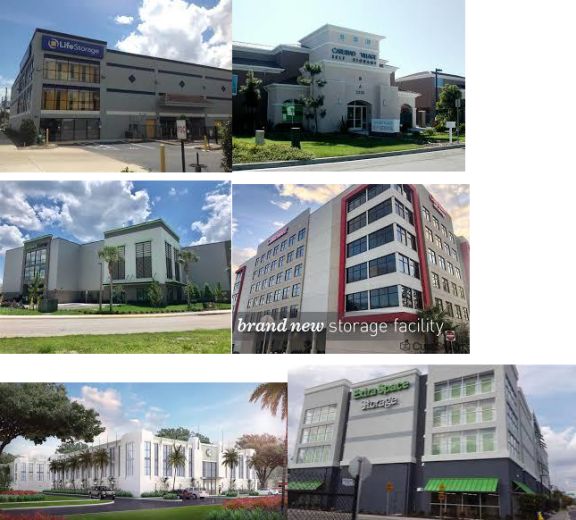
Design standards. After the 18th day of February, 2020, the following minimum design shall apply to the construction of new self-service storage facilities or, to the maximum extent feasible, the expansion or redevelopment of existing self-storage facilities. Such minimum standards shall be in addition to other applicable design standards (e.g., EOOD, aesthetic review process):
(1)
Storage facilities are permitted only in multi-story structures designed to emulate office buildings compatible and in harmony with applicable aesthetic standards including the Economic Opportunity Overlay District standards.
(2)
Storage facilities shall be designed to ensure that access to individual storage units is only available from an interior corridor of the building(s). Individual storage units shall not exceed 300 square feet of net floor area.
(3)
The main office entrance of the storage facility for design purposes shall be located at ground level and oriented towards the street side. The main office entrance foyer shall contain a minimum interior space dimension of at least ten feet in height and 500 square feet in size. This space shall be used as the main entrance foyer for customers. However, up to 25% of this space may also be used for storage supply sales and office use to support the rental of the storage units.
(4)
If the storage facility abuts residentially zoned property or existing residential development, the facility loading bays, docks or doors shall not be located on any side abutting the residentially zoned property or residential development and shall not be visible from said residential property.
(5)
Access to interior common areas via loading bays, docks, or doors may not be located on a street facing side of a building.
(6)
Storage facility access shall be secured such that access to the individual storage units shall only be gained after entering the building through a secured access point. Fences and walls including entry gates shall be constructed of high quality materials and shall be compatible and in harmony with the design and materials of the facilities and site. Decorative metal or wrought iron fences are preferred. Chain-link or similar fences, barbed wire or razor wire fences and walls made of precast concrete are prohibited. Fences or walls are not allowed between the main or front building on the site and the street.
(7)
Storage facility buildings shall be surfaced in high quality materials compatible and in harmony with the site. Unfaced concrete block, painted masonry, tilt-up and pre-cast concrete panels and prefabricated metal sheets are prohibited. Prefabricated buildings are not allowed.
(8)
Exterior colors, including any internal corridors or doors visible through windows, shall be muted tones.
(9)
The façade of the storage facility building shall have exterior vertical surfaces with at least 50 percent of the area covered by a material or combination of materials such as decorative brick veneer, stone, stucco, textured block or similar decorative materials. All materials shall be of high quality.
(10)
Storage facility buildings shall be clad with a mix of durable, low maintenance materials that convey the appearance of high quality. Upon final compatibility and harmony approval by the community appearance board, allowed cladding materials shall include high grade metal composite materials with a factory-applied finish, brick, brick veneer, stone, simulated stone, stucco, cement fiberboard, and concrete masonry units with integrated color, provided the outer surface is either split face or ground faced, or a combination of the two. Prohibited cladding materials include unbacked, non-composite sheet metal products (e.g., standing-seam metal or flat panels that can be easily dented), smooth faced concrete masonry units that are painted or unfinished, board or batten siding, plastic or vinyl siding or unfinished wood.
(11)
Storage facility buildings resembling long, traditional warehouse buildings are prohibited.
(12)
Streetscape landscaping required by the City Code shall not be fenced.
(13)
Electrical service to the storage units shall be for lighting and climate control only. No electrical outlets are permitted inside individual storage units. Lighting fixtures and switches shall be of secure design that will not allow the tapping of fixtures for other purposes.
(14)
The minimum lot size shall be not less than one and one-half acres.
(15)
The following images are demonstrative examples of multi-story structures designed to emulate office buildings:
(b)
Operational requirements. The following minimum operational standards shall apply to self-service storage facilities and tenants of individual storage units:
(1)
Individual storage units shall not be used for activities such as residences, offices, workshops, studios, or hobby or rehearsal areas. Further, storage units shall not be used for manufacturing, fabrication or processing of goods, services or repair of vehicles, engines, appliances or other equipment, or any other industrial activity whatsoever. In addition, storage units shall not be used for commercial activity or places of business of any kind including, but not limited to, retail sales, garage or estate sales, or auctions.
(2)
Storage of flammable, explosive, perishable or hazardous materials within individual storage units and on site is prohibited.
(3)
The storage of gasoline powered motor vehicles within an individual storage unit is prohibited.
(4)
Keeping of animals is prohibited.
(5)
Storage facilities shall not operate or allow tenant access between the hours of 10:00 p.m. and 6:00 a.m.
(6)
All goods and property shall be stored in an enclosed building. Outdoor storage of goods and property shall be prohibited.
(7)
Temporary storage units or shipping containers are prohibited on the property except as provided under section 82-400 of the City Code.
(8)
Storage facilities shall have security access control to buildings and individual storage units and enhanced electronic video surveillance of the property.
(9)
Rental agreements shall provide tenants with written notice of the minimum operational standards set forth in this section and any other conditions imposed by the city.
(Ord. No. 02-2016, § 2, 7-19-16; Ord. No. 01-2020, § 2, 2-18-20)
Sec. 110-460. - Veterinary hospital.
(a)
The portion of the building used for overnight boarding shall be completely soundproof.
(b)
The building shall be located on an individual and separate lot, provided all yards, area, frontage and other requirements of the Code are met for each structure within the zoning district of which it is a part.
(c)
Animals shall be kept in the enclosed soundproof buildings during the hours of 9:00 p.m. to 6:00 a.m.
(d)
A veterinary hospital may be a part of any development when the same meets the following criteria:
(i)
The facility shall be heated and cooled by a unit separate from such unit for the rest of the development.
(ii)
The facility shall be serviced by a water supply separated from the main water supply by a backflow preventer or air gap.
(iii)
The facility shall be soundproofed from the rest of the development.
(iv)
The facility shall have its own independent exterior entrance exclusive from any common entrances.
(Ord. No. 02-2016, § 2, 7-19-16)
Sec. 110-461. - Car wash.
(a)
Car washing facilities must be within a structure with a roof.
(b)
The vacuums, blowers and similar devices may be outside the building but may not be located within 150 feet from a residentially-zoned property unless properly soundproofed and/or regulated by hours of operation.
(c)
All car washes permitted and constructed within the city after July 19, 2016 shall install, utilize, and maintain a water recycling system, pursuant to a water recycling system plan approved by the city's development review committee, which recycles and reuses at least 50 percent of wash and rinse water. Failure to install, utilize, or maintain the water recycling system shall be a violation of this Code.
(Ord. No. 02-2016, § 2, 7-19-16)
Sec. 110-462. - Single-family residential second kitchen facility.
A second kitchen facility may be incorporated into a single-family residence, provided the second kitchen meets the following conditions:
(a)
The second kitchen facility and the area or quarters it serves shall be integrated architecturally, both internally and externally, with the single-family residence. Externally, the structure shall have the appearance of one residence. Internally, there shall be direct access to the kitchen facility and its area from the living area or quarters of the single-family residence.
(b)
The area or quarters to be served by the kitchen facility shall not exceed 600 square feet, excluding the kitchen facility and bath area.
(c)
A floor plan of the entire single-family residence, including the additional kitchen facility, shall be submitted to the building department in order to illustrate compliance with these conditions, and the floor plan shall be binding upon all future construction plans in regard to the single-family residence.
(d)
No portion of the single-family dwelling unit shall be utilized for rental purposes, and the single-family dwelling unit shall be served by one meter for electric and one meter for water.
(e)
The single family dwelling unit shall continue to be utilized by no more than one family as defined under this section.
(Ord. No. 02-2016, § 2, 7-19-16)
Sec. 110-466. - Reserved.
Editor's note— Ord. No. 02-2016, § 2, adopted July 19, 2016, repealed § 110-466, which pertained to application of performance standards and derived from Code 1981, § 641.15. The user's attention is directed to § 110-456.
Sec. 110-467. - Garage sales.
The noncommercial sale of privately owned items at retail from residential premises, commonly known as a garage sale or yard sale, shall comply with the following:
(1)
Hours of sale shall be restricted to daylight hours.
(2)
The sale may continue for two periods of not more than three consecutive days each. The two periods of sale shall be separated by a minimum of four nonsale days, and the total sale days shall be completed within 15 consecutive calendar days.
(3)
Yards shall be cleared of salable items on all nonsale days.
(4)
Subsequent garage sales conducted on the same premises by the same household are permitted 180 days after the close of the preceding sale.
(5)
A sign specifying a garage or yard sale may be displayed on the premises of the sale on sale days only. Such sign shall not exceed four square feet in size.
(6)
The person in charge of the sale shall ensure that automotive vehicles of potential or actual customers do not interfere with pedestrian or vehicular traffic in the vicinity.
(Code 1981, § 641.13)
Sec. 110-468. - Accessory structures.
(a)
No accessory structure shall be erected in any front yard, and the accessory structure shall not cover more than 30 percent of any required rear setback. No separate accessory structures shall be erected within ten feet of any building on the same lot or within five feet of any lot line. An accessory structure shall not exceed 24 feet in height. However, a lot with a one- or two-family residence only may have one additional accessory structure erected per unit, not to exceed 100 square feet with a maximum height of ten feet if detached or 32 square feet with maximum height of ten feet if attached in rear setback. In new construction an accessory building may not be constructed prior to the construction of the main building. No accessory building shall be used for permanent living quarters; it shall contain no kitchen or cooking facilities. It may be used for housing temporary guests of the occupants of the main building. It is not to be rented or otherwise used as a separate dwelling.
(b)
Storage or utility sheds of a temporary nature, without a permanent foundation, not over 100 square feet in size or more than seven feet high, are exempt from this section, provided they are in the rear yard only.
(Code 1981, § 641.23; Ord. No. 36-2021, § 3C, 11-16-21)
Sec. 110-469. - Visibility at intersections.
On a corner lot in any zoning district, nothing, shall be erected or placed in the triangular area bounded on two sides by the street right-of-way lines and on the third side by a straight line drawn between two points on the street right-of-way line located 25 feet from the point of the intersection of the street right-of-way lines ("site visibility triangle"), except traffic signs, utility poles and infrastructure, sidewalks, and ground cover landscaping (e.g. grass, very small shrubs). Ground cover landscaping shall not exceed one and one-half feet in height at and after planting.
As provided above, trees shall not be planted within the site visibility triangle. Any tree existing within this triangular area, as of the effective date of this section, shall be allowed to remain provided the same is trimmed and maintained such that no part of the tree canopy is lower than ten feet in height, measured from the point located on the street right-of-way line nearest the tree.
As provided above, fencing shall not be erected or placed within the site visibility triangle. Any chain-link, wire, or split-rail fencing which lawfully existed as of the effective date of this ordinance, shall be allowed to remain provided the same is maintained clear of vegetation or other opaque material. Any lawfully existing fence shall be removed from the site visibility triangle at the time of permitting any new fencing upon the property.
(Code 1981, § 641.25; Ord. No. 34-2003, § 2, 10-21-03)
Cross reference— Property maintenance requirements, § 34-97; streets, § 66-26 et seq.; traffic and vehicles, ch. 74.
Sec. 110-470. - Fences, walls and hedges.
(a)
Fences and walls may be permitted in any yard, except as specified in section 110-469, provided the following restrictions shall apply:
(1)
In any residential district, no fence or wall in any side or rear yard shall be over six feet in height or over four feet in height if within 25 feet of any public right-of-way, unless otherwise specified in this section;
(2)
In any residential district where property abuts a public beach access parking area, the fence or wall in a side, rear or front yard which abuts the public parking area shall not exceed six feet in height;
(3)
In any commercial or industrial district, no fence or wall in any side or rear yard shall be over eight feet in height or over four feet in height if within 25 feet of any public right-of-way. When the boundary of a commercial or industrial zoning district abuts any residential zoning district, and a fence or wall is used to meet the requirements of section 110-566, the fence or wall shall have a minimum height of six feet and a maximum height of eight feet;
(4)
No wall shall be built along unimproved property boundaries until and unless the owner has obtained and paid for a building permit for the principal structure;
(5)
All concrete boundary walls are to be finished by stuccoing or painting in neutral colors at the time they are constructed. All fences shall be constructed or installed such that the finished side faces abutting properties or public rights-of-way. If chain-link is used for fencing, the same must have a top rail and the rail and chain-link must be coated in a rubber or vinyl material; and
(6)
No words or symbols, other than street addresses and names of occupants in residential districts, shall be permitted on exterior boundary fences or walls, except a small sign, not to exceed 32 square inches, may be attached identifying the fence manufacturer or installer. If there are such nonallowed words or symbols, they shall be covered or removed within seven days of notification to the owner by the city.
(7)
Notwithstanding section 110-470(a)(1) above, in the R-2, R-3 and Townhouse districts on nonconforming corner lots of record, fences and walls may be up to six feet in height if constructed or installed in the side yard and are 15 feet or more from the public right-of-way.
(b)
Hedges may be permitted in any yard, except as specified in section 110-469 of this code, provided the following restrictions shall apply:
(1)
Any hedge planted to satisfy the visual screening requirements provided within section 110-566 of this Code shall have a minimum height at time of planting of three feet and will be required to reach a minimum height of six feet, unless otherwise provided by this chapter, and a density of at least 80 percent opacity within two years of planting;
(2)
No hedge planted to satisfy the visual screening requirements of section 110-566 of this Code and located adjacent to a property boundary shall exceed four feet in height if within 25 feet of any public right-of-way;
(3)
Any hedge located adjacent to any public right-of-way, sidewalk or easement utilized for public purposes shall be set back a minimum of three feet from the property line or easement boundary to ensure such hedge will not encroach into or impede the use of such public right-of-way, sidewalk or easement;
(4)
Any hedge planted or otherwise established in accordance with this chapter shall be comprised of a desirable species of vegetation as defined in chapter 102 of this Code, as may be amended from time to time; and
(5)
All hedges shall be maintained in accordance with Chapter 34 of this code and all other applicable statues, ordinances, and regulations affecting landscaping and vegetation.
(Code 1981, § 641.25; Ord. No. 7-00, § 1, 7-18-00; Ord. No. 03-2003, § 2, 8-19-03; Ord. No. 09-2017, § 2, 7-18-17)
Cross reference— Property maintenance standards, § 34-97; building code, § 82-31 et seq.; swimming pool code, § 82-246 et seq.; housing code, § 82-271 et seq.
Sec. 110-471. - Exceptions to height regulations.
The height limitations contained in article VII of this chapter do not apply to spires, belfries, cupolas, antennas, water tanks, solar panels, ventilators, chimneys, elevator equipment, air conditioning or other necessary equipment room usually required to be placed above the roof level and not intended for human occupancy.
(Code 1981, § 641.29)
Sec. 110-472. - Access.
Every building shall be on a lot fronting on a public street or on an approved private street or with legal access to a public street and shall have a safe and convenient access for servicing, fire protection and required offstreet parking. All lots upon which structures are built shall have a minimum access width of 15 feet to a public right-of-way or an approved private right-of-way.
(Code 1981, § 641.31)
Sec. 110-473. - Minimum width of courts.
The minimum width of a court shall be 30 feet for one-story buildings, 40 feet for two-story buildings and 60 feet for four-story buildings. For every five feet of height over 40 feet, the width of such a court shall be increased by two feet, provided that open unenclosed porches may project into a required court not more than 25 percent of the width of such court. Nominal insets in the building façade of six feet or less shall be exempt from this section.
(Code 1981, § 641.39)
Sec. 110-474. - Water areas.
All areas within the city which are under water and not shown as included within any zoning district shall be subject to all the requirements of the district which immediately adjoins or abuts the water area. If the water area adjoins two or more districts, the boundaries of each district shall be construed to extend into the water area in a straight line as projected until they intersect a projected line from other district boundaries.
(Code 1981, § 641.41)
Cross reference— Waterways, ch. 106.
Sec. 110-475. - Sidewalks required.
(a)
Construction of sidewalks shall be required in conjunction with the construction of any building or development on property abutting any paved street, public and private, within the city limits.
(b)
Sidewalks shall be no less than five feet wide regardless of zoning district. Sidewalks and concrete aprons will be required across asphalt paved driveways. Sidewalks along State Highway A1A will require a permit from the state department of transportation and shall be no less than five feet wide.
(c)
Sidewalks being installed on a street within the same block which already has sidewalks or portions of sidewalks installed must transition to the width of the existing sidewalks, but shall be no less than five feet in width. The transition distance between the two different widths of sidewalks will be a minimum of five feet.
(d)
Sidewalks shall normally abut the property line, but may be installed anywhere within or without the right-of-way to permit alignment with existing sidewalks or to accommodate trees or other objects which are not desired to be moved, altered or removed.
(e)
Construction of sidewalks shall be completed prior to the issuance of the certificate of occupancy or final inspection. Costs of construction shall be borne by the property owner. The construction of the sidewalk shall be in accordance with the provisions of section 98-92(t) of the Code of Ordinances of the City.
(f)
Sidewalks contiguous with or a part of the bicycle path system shall provide for a smooth transition between surfaces.
(g)
Prior to the issuance of a certificate of occupancy or final inspection for new development or redevelopment, the city may, at its discretion and expense, cause the construction of the sidewalk as would otherwise be required by this section and under the following conditions:
(1)
Prior to the commencement of construction, the city shall provide all owners of real property abutting the proposed sidewalk with 30 days written notice of the city's intent to construct the sidewalk and to impose a future impact fee on the property owners for the costs of the sidewalk. Said notice shall provide a general description of the project, an estimated cost, and the date, time, and place of the city council meeting at which the proposed project will be authorized. At the meeting, affected property owners will be allowed an opportunity to be heard.
(2)
Upon completion of the sidewalk by the city, the city manager shall certify in writing to the city council at a public meeting the cost of constructing the sidewalk. The certification shall proportionately allocate the cost of construction to each parcel(s) of real property that has received a special benefit from the sidewalk. At least 15 days' prior notice of the certification hearing shall be provided to those property owners that may be imposed an impact fee. At the hearing, affected property owners will be allowed an opportunity to be heard.
(3)
The city council shall approve the certification by resolution. The certified amount shall constitute a sidewalk impact fee for each property. The resolution shall be duly recorded in the public records of Brevard County, Florida, and shall run with the land.
(4)
The sidewalk impact fee shall be paid by the property owner prior to a certificate of occupancy or final inspection being issued by the city for the property.
(5)
Prior to payment of the sidewalk impact fee, the property owner may petition the city council for a waiver or reduction of the sidewalk impact fee. The amount of any reduction or waiver shall be based on the costs incurred by the property owner to replace or modify the sidewalk caused by implementing a site plan approved by the city. The property owner shall be responsible for repairing, at the owner's expense, any sidewalk which is damaged by construction activities occurring on the property.
(6)
In the event the property owner fails to pay the sidewalk impact fee pursuant to this section, the city shall have the right to withhold any certificate of occupancy or final inspection for the property. The city shall also have the right to collect the sidewalk impact fee in any manner provided by law and to levy interest at a maximum rate allowed by law and penalties not to exceed 25 percent on past due amounts.
(Code 1981, § 641.55; Ord. No. 13-97, § 3, 10-21-97; Ord. No. 08-2003, § 2, 3-18-03; Ord. No. 05-2015, § 2, 6-16-15)
Cross reference— Streets, sidewalks and other public places, ch. 66.
Sec. 110-476. - Dedicated public land.
Dedicated public streets, walkways, alleys, accessways or easements may be closed or relocated as part of or in conjunction with any private development phase upon an application being made to the city council, after review of and recommendation from the planning and zoning board, and if the application is in the best interest of the city. However, the vacated land shall not be used as acreage for any density calculations. Any request for vacating a dedicated public street, walkway, alley, accessway or easement must be submitted no later than 30 days prior to the planning and zoning board meeting at which it is to be considered.
(Code 1981, § 641.57)
Cross reference— Parks and recreation areas, ch. 54; streets, sidewalks and other public places, ch. 66.
Sec. 110-477. - Dedicated public easement.
No purported dedication of an easement to the city shall be effective until it is accepted by the city council, after review and recommendation from the planning and zoning board.
(Code 1981, § 641.58)
Sec. 110-478. - Residential use antennas/satellite dishes.
(a)
Residential use antennas shall mean the residential or personal, noncommercial use of any of the following:
(1)
A ground- or building-mounted receiver-only radio or TV antenna;
(2)
A ground- or building-mounted citizens band radio antenna;
(3)
A ground- or building-mounted panel antenna with a face area of less than four and one-half square feet;
(4)
A ground- or building-mounted satellite dish antenna less than ten feet in diameter.
(b)
Installation of the foregoing antennas shall comply with the following restrictions:
(1)
No owner, occupant or tenant of any residential use property shall erect, construct or install any antenna, or satellite dish antenna over one meter or 39 inches in diameter or on a mast in excess of 12 feet in height without first obtaining a permit from the building official.
(2)
Prior to the issuance of any permit for the erection, construction or installation of any antenna, the building official shall require an approved design placement drawing and engineering specifications, signed and sealed by an engineer licensed in the state, to meet all city and state laws and ordinances relating to attachment and anchoring to achieve compliance with 110 mile per hour wind zone requirements as referred in Chapter 16, Section 1606 of the Standard Building Code.
(3)
All materials that make up the installation of such antennas and supporting structures shall be of a non-corrosive material to prevent metal fatigue from maintenance neglect.
(4)
No earth station antenna exceeding one meter or 39 inches in diameter shall be mounted onto the top of side of any single-family building duplex or triplex.
(5)
Earth satellite dish antennas in excess of one meter or 39 inches in diameter shall be allowed only in the rear or side yard in all zoning districts. Placement shall not be allowed in the front yard of any lot or parcel in any zoning district. Compliance with the side setback is required. The rear setback should be complied with, except when compliance prevents installations.
(6)
All electrical installations for the purpose of erection of antennas shall be in accordance with the electrical code adopted in section 82-116 and all applicable city ordinances. Installation of all antennas shall not be within ten feet horizontally of any overhead power transmission line.
(7)
In all zones, ground-mounted earth station antennas shall be erected at the minimum height which allows satellite reception, not to exceed seven feet in R-1 and R-2 zones and 22 feet in all other zones. The measurement shall be calculated from the established grade to the dish center.
(8)
The maximum outside diameter allowed for a dish receiver is ten feet, and only one satellite dish antenna exceeding one meter or 39 inches in diameter shall be allowed on any lot or parcel of land.
(9)
Any ground-placed antenna drive mechanism, less than six feet high to its lowest point, shall be fenced or screened by a six-foot high fence at least 80 percent opaque at its base.
(Ord. No. 9-97, § 2, 9-2-97)
Sec. 110-479. - Sewage disposal.
No building permit shall be issued unless provisions are included to connect into the city's sewage collection system, except for single-family residences which shall otherwise comply with section 78-26 et seq. pertaining to sewers and other applicable ordinances and regulations.
(Code 1981, § 641.45)
Cross reference— Sanitary sewer system, § 78-26 et seq.
Sec. 110-480. - Atomic energy uses.
All atomic energy uses shall meet the standards established by and have the approval of the state board of health and the Nuclear Regulatory Commission. In addition, such uses shall require the approval of the city council, which shall act only after receiving written recommendations from the city engineer and the planning and zoning board.
(Code 1981, § 641.51)
Sec. 110-481. - Building required for commercial uses.
All commercial uses shall provide at least the minimum size building required for the district in which the use is to be located. The building shall contain plumbing facilities adequate to serve the needs of the customers and employees of the commercial use.
(Code 1981, § 641.53)
Cross reference— Building code, § 82-31 et seq.
Sec. 110-482. - Underground utilities required.
(a)
Utility lines of all kinds, including, but not limited to, electrical service conductors, telephone, cable television, water, sewer, gas and reclaimed water shall be constructed and installed beneath the surface of the ground and in compliance with all applicable laws and ordinances. Primary facilities providing service to the site and leading to the site from franchised utilities shall be placed underground. It shall be the property owner's/developer's responsibility to make the necessary arrangements with each utility in accordance with that utility's established policies. Installation of incidental appurtenances such as transformer boxes, pedestal mounted boxes for electricity, or similar service hardware necessary for the provision of electric and communication utilities shall not be required to be placed underground, although screening of such appurtenances by the use of vegetation is required.
(b)
Underground construction and installation of utility lines shall also be required in conjunction with the substantial renovation of any existing building or the redevelopment of any property. For purposes of this subsection, a "substantial renovation" occurs when the building permit value of the renovations exceeds 50 percent of the fair market value of the existing improvements on the property, as established by the Brevard County Property Appraiser or by a licensed appraiser, whichever is greater.
(c)
The city recognizes that certain existing physical elements on some properties may impose unreasonable hardships on a property owner's/developer's ability to comply with the undergrounding requirements of this section. Such physical elements may include, but are not limited to, soil or topographical conditions, existing buildings, swimming pools and large trees. Upon confirmation of these hardships by the appropriate utility company and the city building official and public works director, the city manager may waive the undergrounding requirement, or may allow the waiver of one (1) required parking space to be used for the required pad mounted transformer and switch gear when the proposed development calls for more than ten (10) parking spaces.
(Ord. No. 6-97, § 1, 5-6-97; Ord. No. 13-2009, § 2, 12-15-09)
Sec. 110-483. - Wireless communications towers and antennas.
1.
Purpose. The purpose of this section is to establish general guidelines for the siting of wireless communications towers and antennas. The goals of this section are to: (1) protect residential areas and land uses from potential adverse impacts of towers and antennas; (2) restrict the location of towers to non-residential areas; (3) minimize the total number of towers throughout the community; (4) strongly encourage the joint use of new and existing tower sites as a primary option rather than construction of additional single-use towers; (5) encourage users of towers and antennas to locate them, to the extent possible, in areas where the adverse impact on the community is minimal; (6) encourage users of towers and antennas to configure them in a way that minimizes the adverse visual impact of the towers and antennas through careful design, siting, landscape screening, and innovative camouflaging techniques; (7) enhance the ability of the providers of telecommunications services to provide such services to the community quickly, effectively, and efficiently; (8) consider the public health and safety and welfare and the safety of communication towers; and (9) avoid potential damage to adjacent properties from tower failure through engineering and careful siting of tower structures. In furtherance of these goals, the City of Cape Canaveral shall give due consideration to the regulations of this section, the City of Cape Canaveral's comprehensive plan, zoning map and regulations, existing land uses, and environmentally sensitive areas in approving sites for the location of towers and antennas.
2.
Definitions. As used in this section, the following terms shall have the meanings set forth below:
Alternative tower structure means man-made trees, clock towers, bell steeples, light poles and similar alternative-design mounting structures that camouflage or conceal the presence of antennas or towers.
Antenna means any exterior transmitting or receiving device mounted on a tower, building or structure and used in communications that radiate or capture electromagnetic waves, digital signals, analog signals, radio frequencies (excluding radar signals), wireless telecommunications signals or other communication signals.
Backhaul network means the lines that connect a provider's towers/cell sites to one or more cellular telephone switching offices, and/or long distance providers, or the public switched telephone network.
Collocation means the location of two or more antennas on a single tower or structure.
FAA means the Federal Aviation Administration.
FCC means the Federal Communications Commission.
Height means, when referring to a tower or antenna, the distance measured from the finished grade of the parcel to the highest point on the tower or antenna, including the base pad and any antenna.
Nonconforming towers and nonconforming antennas means any tower or antenna for which a building permit, special exception, or other development order has been properly issued by the city prior to the effective date of this section, including permitted towers or antennas that have not yet been constructed so long as such approval is current and not expired.
Personal communication services is a relatively new technology of wireless voice, video and data communication systems which are licensed by the Federal Communications Commission over two new frequency bans as defined in the Federal Telecommunications Act of 1996.
Tower means any structure that is designed and constructed primarily for the purpose of supporting one or more antennas for telephone, radio and similar communication purposes, including self-supporting lattice towers, guyed towers, or monopole towers. The term includes radio and television transmission towers, microwave towers, common-carrier towers, cellular telephone towers, alternative tower structures, and the like. The term includes the structure and any support and appurtenances thereto.
Wireless communication is the transmission and reception of voice, data or video transmission via radio frequency (RF) signals through electromagnetic energy.
3.
Applicability.
(a)
New towers and antennas. All new towers or antennas in Cape Canaveral shall be subject to these regulations, except as provided in paragraphs 3.(b) through (e), inclusive.
(b)
Amateur radio station operators/receive only antennas. This section shall not govern any tower, or the installation of any antenna, that is under 70 feet in height and is owned and operated by a federally-licensed amateur radio station operator or is used exclusively for receive only antennas.
(c)
Nonconforming towers or antennas. Nonconforming towers and nonconforming antennas shall not be required to meet the requirements of this section, other than the requirements of paragraphs 4.(f) and 4(g).
(d)
AM array. For purposes of implementing this section, an AM array, consisting of one or more tower units and supporting ground system which functions as one AM broadcasting antenna, shall be considered one tower. Measurements for setbacks and separation distances shall be measured from the outer perimeter of the towers included in the AM array. Additional tower units may be added within the perimeter of the AM array by right. For purposes hereunder, AM or amplitude modulation shall be defined as the encoding of a carrier wave by variation of its amplitude in accordance with an input signal.
(e)
Residential use antennas. This section shall not govern the installation of television satellite antennas or other antennas used solely in conjunction with residential use as defined and regulated by section 110-478 of the Code of Ordinances of the City of Cape Canaveral, Florida.
4.
General requirements.
(a)
Principal or accessory use. Antennas and towers may be considered either principal or accessory uses. A different existing use of an existing structure on the same lot shall not preclude the installation of an antenna or tower on such lot.
(b)
Lot size. For purposes of determining whether the installation of a tower or antenna complies with zoning district development regulations, including but not limited to setback requirements, lot-coverage requirements, and other such requirements, the dimensions of the entire lot shall control, even though the antennas or towers may be located on leased parcels within such lot.
(c)
Inventory of existing sites. Each applicant for an antenna and/or tower shall provide to the building official an inventory of its existing towers, antennas, or sites approved for towers or antennas, that are either within the jurisdiction of the City of Cape Canaveral or within one mile of the border thereof, including specific information about the location, height, and design of each tower. The building official may share such information with other applicants applying for administrative approvals or special exceptions under this section or other organizations seeking to locate antennas within the jurisdiction of Cape Canaveral, provided, however that the building official is not, by sharing such information, in any way representing or warranting that such sites are available or suitable.
(d)
Aesthetics. Towers and antennas shall meet the following requirements:
(1)
Towers shall either maintain a galvanized steel finish or, subject to any applicable standards of the FAA, be painted a neutral color so as to reduce visual obtrusiveness.
(2)
At a tower site, the design of the buildings and related structures shall, to the extent possible, use materials, colors, textures, screening, and landscaping that will blend them into the natural setting and surrounding buildings.
(3)
If an antenna is installed on a structure other than a tower, the antenna and supporting electrical and mechanical equipment must be of a neutral color that is identical to, or closely compatible with, the color of the supporting structure so as to make the antenna and related equipment as visually unobtrusive as possible.
(e)
Lighting. Towers shall not be artificially lighted, unless required by the FAA or other applicable authority. If lighting is required, the lighting alternatives and design chosen must cause the least disturbance to the surrounding views.
(f)
State or federal requirements. All towers must meet or exceed current standards and regulations of the FAA, the FCC, and any other agency of the state or federal government with the authority to regulate towers and antennas. If such standards and regulations are changed, then the owners of the towers and antennas governed by this section shall bring such towers and antennas into compliance with such revised standards and regulations within six months of the effective date of such standards and regulations, unless a different compliance schedule is mandated by the controlling state or federal agency. Failure to bring towers and antennas into compliance with such revised standards and regulations shall constitute grounds for the removal of the tower or antenna at the owner's expense.
(g)
Building codes; safety standards. To ensure the structural integrity of towers, the owner of a tower shall ensure that it is maintained in compliance with standards contained in applicable state or local building codes and the applicable standards for towers that are published by the Electronic Industries Association, as amended from time to time. If, upon inspection, the City of Cape Canaveral concludes that a tower fails to comply with such codes and standards and constitutes a danger to persons or property, then upon notice being provided to the owner of the tower, the owner shall have 30 days to bring such tower into compliance with such standards. Failure to bring such tower into compliance within said 30 days shall constitute grounds for the removal of the tower or antenna at the owner's expense.
(h)
Measurement. For purposes of measurement, tower setbacks and separation distances shall be calculated and applied to facilities located in Cape Canaveral irrespective of municipal and county jurisdictional boundaries.
(i)
Not essential services. Towers and antennas shall be regulated and permitted pursuant to this section and shall not be regulated or permitted as essential services, public utilities, or private utilities.
(j)
Franchises. Owners and/or operators of towers or antennas shall certify that all franchises required by law for the construction and/or operation of a wireless communication system in Cape Canaveral have been obtained and shall file a copy of all required franchises with the building official prior to issuance of a building permit.
(k)
Public notice. For purposes of this section, any special exception request, variance request, or appeal of an administratively approved use shall require public notice to all abutting property owners and all property owners of properties that are located within the corresponding separation distance listed in paragraph 7.(b)(5)(ii), Table 2, in addition to any notice otherwise required by local and state law.
(l)
Signs. No signs as defined in Section 94-1 shall be allowed on an antenna or tower.
(m)
Buildings and support equipment. Buildings and support equipment associated with antennas or towers shall comply with the requirements of subsection 8.
(n)
Multiple antenna/tower plan. Cape Canaveral encourages the users of towers and antennas to submit a single application for approval of multiple towers and/or antenna sites. Applications for approval of multiple sites shall be given priority in the review process.
(o)
Height of towers. The maximum height of any tower to be constructed in the City of Cape Canaveral shall be 230 feet, provided, however, said tower may be increased in height only once pursuant to Paragraph 6.(b)(1)(b)(ii) hereof.
5.
Permitted uses.
(a)
General. The uses listed in this paragraph are deemed to be permitted uses and shall not require administrative approval or a special exception.
(b)
Permitted uses. The following uses are specifically permitted:
Antennas or towers located on property owned, leased, or otherwise controlled by the City of Cape Canaveral provided a license, lease, or approval authorizing such antenna or tower has been approved by the City Council of Cape Canaveral.
6.
Administratively approved uses.
(a)
General. The following provisions shall govern the issuance of administrative approvals by the building official for towers and antennas.
(1)
The Building Official may administratively approve the uses listed in this paragraph 6.
(2)
Each applicant for administrative approval shall apply to the Building Official providing the information set forth in subsections 7.(b)(1) and 7.(b)(3) of this section and a nonrefundable fee as established by the city council to reimburse Cape Canaveral for the costs of reviewing the application.
(3)
The building official shall review the application for administrative approval and determine if the proposed use complies with subsections 4., 7.(b)(4) and 7.(b)(5) of this section.
(4)
The building official shall respond to each such application within 60 days after receiving a fully completed application by either approving or denying the application. If the building official fails to respond to the applicant within said 60 days, then the application shall be deemed to be approved.
(5)
In connection with any such administration approval, the building official may, in order to encourage shares use, administratively waive any zoning district setback requirements in subsection 7(b)(4) or separation distances between towers in subsection 7(b)(5).
(6)
In connection with any such administrative approval, the building official may, in order to encourage the use of monopoles, administratively allow the reconstruction of an existing tower to monopole construction.
(7)
If an administrative approval is denied, the applicant shall file an application for a special exception pursuant to paragraph 7. prior to filing any appeal that may be available under the zoning ordinance.
(b)
List of administratively approved uses. The following uses may be approved by the building official after conducting an administrative review:
(1)
Locating antennas on existing structures or towers consistent with the terms of subparagraphs (a) and (b) below.
(a)
Antennas on existing structures. Any antenna which is not attached to a tower may be approved by the building official as an accessory use to any commercial, industrial, professional, institutional, or multi-family structure of eight or more dwelling units, provided:
(i)
The antenna does not extend more than 30 feet above the highest point of the structure;
(ii)
The antenna complies with all applicable FCC and FAA regulations; and
(iii)
The antenna complies with all applicable building codes.
(b)
Antennas on existing towers. An antenna which is attached to an existing tower may be approved by the building official and, to minimize adverse visual impacts associated with the proliferation and clustering of towers, collocation of antennas by more than one carrier on existing towers shall take precedence over the construction of new towers, provided such collocation is accomplished in a manner consistent with the following:
(i)
A tower which is modified or reconstructed to accommodate the collocation of an additional antenna shall be of the same tower type as the existing tower, unless the building official allows reconstruction as a monopole.
(ii)
Height.
(a)
An existing tower may be modified or rebuilt to a taller height, not to exceed 30 feet over the tower's existing height, to accommodate the collocation of an additional antenna.
(b)
The height change referred to in subparagraph (ii)(a) may only occur one time per communication tower.
(c)
The additional height referred to in subparagraph (ii)(a) shall not require an additional distance separation as set forth in paragraph 7. The tower's premodification height shall be used to calculate such distance separations.
(iii)
Onsite location.
(a)
A tower which is being rebuilt that will accommodate collocation of additional antennas may be moved onsite within one hundred (100) feet of its existing location.
(b)
After the tower is rebuilt to accommodate collocation, only one tower may remain on the site.
(c)
A relocated onsite tower shall continue to be measured from the original tower location for purposes of calculating separation distances between towers pursuant to subparagraph 7.(b)(5). The relocation of a tower hereunder shall in no way be deemed to cause a violation of subparagraph 7.(b)(4) or 7.(b)(5).
(d)
The onsite relocation of a tower which comes within the separation distances to residential units or residentially zoned lands as established in subparagraphs 7.(b)(4) and 7.(b)(5) shall only be permitted when approved by the building official.
(2)
Installing a cable microcell network through the use of multiple low-powered transmitters/receivers attached to existing wireline systems, such as conventional cable or telephone wires, or similar technology that does not require the use of towers.
(3)
Antennas located on existing sites at grade level subject to compliance with separation distances as established in paragraph 7.(b)(5), compliance with all adopted building codes and adequate screening from adjacent property and city rights-of-ways.
7.
Special exceptions (M-1 zoning district only).
(a)
General. The following provisions which shall govern the issuance of special exceptions for towers or antennas:
(1)
If the tower or antenna is not a permitted use under paragraph 5. of this section or permitted to be approved administratively pursuant to paragraph 6. of this section, then the construction of a tower or the placement of an antenna is only permitted on real property with an M-1 zoning district designation.
(2)
Applications for special exceptions under this paragraph shall be subject to any applicable procedures and requirements of the zoning ordinance, except as modified in this paragraph.
(3)
In granting a special exception, the board of adjustment may impose conditions to the extent the board of adjustment concludes such conditions are necessary to minimize any adverse effect of the proposed tower on adjoining properties.
(4)
Any information of an engineering nature that the applicant submits, whether civil, mechanical, or electrical, shall be certified by a licensed professional engineer.
(5)
An applicant for a special exception shall submit the information described both in this paragraph and section 110-46 and a non-refundable fee as established by the city council to reimburse Cape Canaveral for the costs of reviewing the application.
(b)
Towers.
(1)
Information required. In addition to any information required for applications for special exceptions pursuant to the zoning ordinance, applicants for a special exception for a tower shall submit the following information:
(i)
A scaled site plan (no greater than one inch to 50 feet) clearly indicating the location, type and height of the proposed tower, on-site land uses and zoning, adjacent land uses and zoning (including when adjacent to other municipalities), Comprehensive Plan classification of the site and all properties within the applicable separation distances set forth in paragraph 7.(b)(5), adjacent roadways, proposed means of access, setbacks from property lines, elevation drawings of the proposed tower and any other structures, topography, parking, and other information deemed by the building official to be necessary to assess compliance with this section.
(ii)
Legal description of the parent tract and leased parcel (if applicable).
(iii)
The setback distance between the proposed tower and the nearest residential unit, platted residentially zoned properties, and unplatted residentially zoned properties.
(iv)
The separation distance from other towers described in the inventory of existing sites submitted pursuant to paragraph 4.(c) shall be shown on an updated site plan or map. The applicant shall also identify the type of construction of the existing tower(s) and the owner/operator of the existing tower(s), if known.
(v)
A landscape plan showing specific landscape materials.
(vi)
Method of fencing, and finished color and, if applicable, the method of camouflage and illumination.
(vii)
A description of compliance with paragraphs 4.(c), (d), (e), (f), (g), (j), (l), and (m), 7(b)(4), 7(b)(5) and all applicable federal, state or local laws.
(viii)
A notarized statement by the applicant as to whether construction of the tower will accommodate collocation of additional antennas for future users.
(ix)
Identification of the entities providing the backhaul network for the tower(s) described in the application and other cellular sites owned or operated by the applicant in the municipality.
(x)
A description of the suitability of the use of existing towers, other structures or alternative technology not requiring the use of towers or structures to provide the services to be provided through the use of the proposed new tower.
(xi)
A description of the feasible location(s) of future towers or antennas within Cape Canaveral based upon existing physical, engineering, technological or geographical limitations in the event the proposed tower is erected.
(2)
Factors considered in granting special exceptions for towers. In addition to any standards for consideration of special exception applications pursuant to the zoning ordinance, the board of adjustment shall consider the following factors in determining whether to issue a special exception, although the board of adjustment may waive or reduce the burden on the applicant of one or more of these criteria if the board of adjustment concludes that the goals of this section are better served thereby:
(i)
Height of the proposed tower;
(ii)
Proximity of the tower to residential structures and residential district boundaries;
(iii)
Nature of uses on adjacent and nearby properties;
(iv)
Surrounding topography;
(v)
Surrounding tree coverage and foliage;
(vi)
Design of the tower, with particular reference to design characteristics that have the effect of reducing or eliminating visual obtrusiveness;
(vii)
Proposed ingress and egress; and
(viii)
Availability of suitable existing towers, other structures, or alternative technologies not requiring the use of towers or structures, as discussed in paragraph 7.(b)(3) of this section.
(3)
Availability of suitable existing towers, other structures, or alternative technology. No new tower shall be permitted unless the applicant demonstrates to the reasonable satisfaction of the board of adjustment that no existing tower, structure or alternative technology that does not require the use of towers or structures can accommodate the applicant's a proposed antenna. An applicant shall submit information requested by the board of adjustment related to the availability of suitable existing towers, other structures or alternative technology. Evidence submitted to demonstrate that no existing tower, structure or alternative technology can accommodate the applicant's proposed antenna may consist of any of the following:
(i)
No existing towers or structures are located within the geographic area which meet applicant's engineering requirements.
(ii)
Existing towers or structures are not of sufficient height to meet applicant's engineering requirements.
(iii)
Existing towers or structures do not have sufficient structural strength to support applicant's proposed antenna and related equipment.
(iv)
The applicant's proposed antenna would cause electromagnetic interference with the antenna on the existing towers or structures, or the antenna on the existing towers or structures would cause interference with the applicant's proposed antenna.
(v)
The fees, costs, or contractual provisions required by the owner in order to share an existing tower or structure or to adapt an existing tower or structure for sharing are unreasonable. Costs exceeding new tower development are presumed to be unreasonable.
(vi)
The applicant demonstrates that there are other limiting factors that render existing towers and structures unsuitable.
(vii)
The applicant demonstrates that an alternative technology that does not require the use of towers or structures, such as a cable microcell network using multiple low-powered transmitters/receivers attached to a wireline system, is unsuitable. Costs of alternative technology that exceed new tower or antenna development shall not be presumed to render the technology unsuitable.
(4)
Setbacks. The following setback requirements shall apply to all towers for which a special exception is required; provided, however, that the board of adjustment may reduce the standard setback requirements if the goals of this section would be better served:
(i)
Towers must be set back a distance equal to at least 75 percent of the height of the tower from any adjoining lot line.
(ii)
Guys and accessory buildings must satisfy the minimum zoning district setback requirements.
(5)
Separation. The following separation requirements shall apply to all towers and antennas for which a special exception is required; provided, however, that the board of adjustment may reduce the standard separation requirements if the goals of this section would be better served thereby.
(i)
Separation from off-site uses/designated areas.
(a)
Tower separation shall be measured from the base of the tower to the lot line of the off-site uses and/or designated areas as specified in Table 1, except as otherwise provided in Table 1.
(b)
Separation requirements for towers shall comply with the minimum standards established in Table 1.
1 Includes modular homes and mobile homes used for living purposes.
2 Separation measured from base of tower to closest building setback line.
3 Includes any unplatted residential use properties without a valid preliminary subdivision plan or valid development plan approval and any multi-family residentially zoned land greater than duplex.
(ii)
Separation distances between towers.
(a)
Separation distances between towers shall be applicable for and measured between the proposed tower and preexisting towers. The separation distances shall be measured by drawing or following a straight line between the base of the existing tower and the proposed base, pursuant to a site plan, of the proposed tower. The separation distances (listed in linear feet) shall be as shown in Table 2.
(b)
Table 2:
(6)
Security fencing. Towers shall be enclosed by security fencing not less than six feet in height and shall also be equipped with an appropriate anti-climbing device; provided however, that the board of adjustment may waive such requirements, if the goals of this section are better served thereby and the public health, safety, and welfare is not adversely affected by such waiver.
(7)
Landscaping. In addition to any other applicable landscaping requirements in the zoning ordinance, the following requirements shall also govern the landscaping surrounding towers for which a special exception is required; provided, however, that the board of adjustment may waive such requirements if the goals of this section would be better served thereby.
(i)
Tower facilities shall be landscaped with a buffer of plant materials that effectively screens the view of the tower compound from property used for residences. The standard buffer shall consist of a landscaped strip at least four feet wide outside the perimeter of the compound.
(ii)
In locations where the visual impact of the tower would be minimal, the landscaping requirement may be reduced or waived by the board of adjustment if the goals of this section would be better served thereby.
(iii)
Existing mature tree growth and natural land forms on the site shall be preserved to the maximum extent possible. In some cases, such as towers sited on large, wooded lots, natural growth around the property perimeter may be sufficient buffer.
8.
Equipment cabinets and accessory structures.
(a)
Antennas mounted on structures or rooftops. The equipment cabinets or structures used in association with antennas shall comply with the following:
(1)
The cabinet or structure shall not contain more than 36 square feet of gross floor area or be more than six feet in height.
(2)
Equipment storage buildings or cabinets shall comply with all applicable building codes.
(b)
Antennas mounted on utility poles or light poles. The equipment cabinet or structure used in association with antennas shall be located in accordance with the following:
(1)
In residential districts, the equipment cabinet or structure may be located:
(i)
In a rear or side yard provided the cabinet or structure is no greater than six feet in height or 36 square feet of gross floor area and shall otherwise conform to the requirements of section 110-468 as an accessory structure.
(ii)
The structure or cabinet shall be screened from view.
(2)
In commercial or industrial districts the equipment cabinet or structure shall be no greater than six feet in height or 36 square feet in gross floor area and shall otherwise conform to the requirements of section 110-468 as an accessory structure. The structure or cabinet shall be screened from view.
9.
Removal of abandoned antennas and towers. Any antenna or tower that is not operated for a continuous period of 12 months shall be considered abandoned, and the owner of such antenna or tower shall remove the same within 90 days of receipt of notice from the City of Cape Canaveral notifying the owner of such abandonment. Failure to remove an abandoned antenna or tower within said 90-day shall be grounds to remove the tower or antenna at the owner's expense. If there are two or more users of a single tower, then this provision shall not become effective until all users cease using the tower.
10.
Nonconforming uses.
(a)
Not expansion of nonconforming use. Towers or antennas that are constructed, and antennas that are installed, in accordance with the provisions of this section shall not be deemed to constitute the expansion of a nonconforming use or structure.
(b)
Preexisting towers. Nonconforming towers or antennas shall be allowed to continue their usage as they presently exist. Routine maintenance shall be permitted on such nonconforming towers or antennas. New construction other than routine maintenance on a nonconforming tower or antenna shall comply with the requirements of this section.
(c)
Rebuilding damaged or destroyed nonconforming towers or antennas. Notwithstanding paragraph 9., bona fide nonconforming towers or antennas that are damaged or destroyed may be rebuilt without having to first obtain administrative approval or a special exception and without having to meet the separation requirements specified in paragraphs 7(b)(4) and 7(b)(5). The type, height, and location of the tower onsite shall be of the same type and intensity as the original facility approval. Building permits to rebuild the facility shall comply with the then applicable building codes and shall be obtained within 180 days from the date the facility is damaged or destroyed. If no permit is obtained or if said permit expires, the tower or antenna shall be deemed abandoned as specified in paragraph 9.
(d)
Collocation. To accommodate collocation, nonconforming towers may add additional antennas (belonging to the same carrier or other carrier) subject to administrative review pursuant to paragraph 6. of this section.
(e)
Repair. Nothing in this section shall be deemed to prevent the strengthening or restoring to a safe condition of any nonconforming tower or antenna or part thereof declared to be unsafe by the building official or any other city official authorized to protect the public, health, safety, and welfare.
11.
Nonconforming towers shall be allowed to be rebuilt and relocated elsewhere on the existing site with administrative approval of the building official under the following conditions:
(a)
The tower does not exceed the maximum height allowed in 110-483, 4(o).
(b)
The tower does not reduce the existing setback from residentially zoned property.
(c)
The tower does not reduce the existing separation distances from other existing towers.
(d)
The tower includes the provision for the collocation of antennas.
(e)
The tower is designed to be less intrusive than the existing tower.
(f)
The existing tower is removed within 30 days of completion of the new tower.
(Ord. No. 8-97, § 2, 9-2-97; Ord. No. 22-98, § 1, 7-7-98; Ord. No. 28-98, §§ 1—5, 9-15-98)
Sec. 110-484. - Emergency pad-mounted generators.
(a)
The term "emergency pad-mounted generators" ("EPMG") shall mean the residential or commercial use of a ground-mounted standby generator system to be utilized in emergency power outage situations.
(b)
This section refers to EPMGs serving public, government or private facilities where life safety does not depend on the performance of the system.
(c)
All EPMG units and installations must meet all the requirements of this Code, as well as all other appropriate technical codes and any applicable manufacturer specifications.
(d)
The EPMG may only be used in emergency situations where there is a power outage.
(e)
Testing, diagnostic and maintenance procedures may only occur during daylight hours between 8:00 a.m. and 5:00 p.m. at a maximum of once per week.
(f)
Installation of an EPMG shall comply with the following restrictions:
(1)
A permit shall be obtained from the building official prior to any installation.
(2)
The installation shall meet all applicable building, electrical and technical codes.
(3)
The EPMG shall not encroach more than five and one-half feet into any required setback, and in no case shall be any closer than two and one-half feet from any property line, fence or other structure.
(4)
The EPMG shall not be installed in an easement.
(5)
The EPMG shall be fastened to a minimum three-and-one-half-inch-thick concrete pad or manufacturer-approved pad.
(6)
Exhaust termination shall be located as prescribed within the technical codes referenced in chapter 82 of this Code.
(7)
The EPMG shall be situated near the existing electrical service entrance of the structure and screened from public view.
(8)
Permanent signage shall be placed at the service entrance equipment indicating the type and location of the EPMG.
(9)
For EPMGs that produce a carbon-type exhaust, a permanently wired carbon-type exhaust sensor, with a battery backup, shall be located within the residence served. The location shall be approved by the building official.
(10)
One side setback on the property shall remain open space in accordance with this Code.
(Ord. No. 15-2005, § 2, 9-20-05)
Sec. 110-485. - Liquefied petroleum gas.
The tank capacity for storage of liquefied petroleum gas for distribution purposes shall not exceed 1,000 total gallons per lot of record. To the extent that this section conflicts with a more restrictive provision of any applicable fire safety code or law, the more restrictive code or law shall apply. For purposes of this section, the term "lot of record" shall have the same meaning set forth in section 110-1 and shall also include a combination of contiguous lots of record that are either under single ownership, unified in title, or used for common development purposes.
(Ord. No. 01-2007, § 2, 2-20-07)
Sec. 110-486. - Vacation rentals.
(a)
Authority, scope and purpose.
(1)
This section is enacted under the home rule power of the City of Cape Canaveral in the interest of the health, peace, safety and general welfare, and to preserve the quiet nature and atmosphere of residential areas, and to ensure that the city's residents have the opportunity to maintain tranquility and peaceful enjoyment of their neighborhoods. This section shall be liberally construed to accomplish its purpose of regulating vacation rentals, protecting the residential character of the City of Cape Canaveral, the health, safety, and general welfare of its residents and visitors, and the quiet enjoyment by the City of Cape Canaveral's residents of their residential property.
(2)
This section is also enacted to better inform and protect transient occupants of vacation rentals by requiring vacation rental owners to conspicuously post minimum information related to health and safety and applicable local regulations.
(3)
The maximum overnight occupancy limits for vacation rental units established herein are enacted to mitigate against the potential harms caused by the unsafe overcrowding of vacation rentals by overnight transient occupants, as well as the incompatible nature of overcrowded transient vacation rentals with existing residential neighborhoods which statistically have a much lower average household size based on U.S. Census data.
(4)
This section does not prohibit vacation rentals, nor regulate the duration or frequency of rental of vacation rentals, nor is it the intention of the City of Cape Canaveral to do so, but rather this section is intended to address life safety and compatibility concerns in the interests of the health, peace, safety, and general welfare.
(5)
Nothing contained in this section is intended to amend or repeal the minimum seven consecutive day rental restriction set forth in section 110-487 of the City Code which was enacted by the city prior to the statutory preemption date of June 1, 2011 under F.S. § 509.032(7)(b). Section 110-487 shall remain in full force and effect.
(6)
Notwithstanding any other provision of this section, pre-existing contracts are exempt from the provisions of this section. If a vacation rental is cited for a violation of the provisions herein, when the vacation rental is occupied under the terms of a pre-existing contract, the vacation rental owner may raise the pre-existing contract as an affirmative defense and defend such violation based on the fact that the vacation rental was exempt from applicable provisions of this section due to it being occupied pursuant to a pre-existing contract, provided the fact finder determines by competent substantial evidence that the contract exists and satisfies the definition of pre-existing contract. A pre-existing contract may not be raised as an affirmative defense to an alleged violation of any other provision of the City Code outside of this section.
(b)
Definitions. The following terms as used in this section are defined as set forth hereinafter:
Bedroom means any room in a vacation rental which has a minimum of 70 square feet, a bed or other place for sleeping and a separate closet that is an integral part of the permanent construction within the bedroom or an en suite bathroom and is located along an exterior wall with an emergency means of escape and rescue opening to the outside, but shall not include a bathroom, a kitchen, a dining room, or any main living area. A bedroom shall not constitute the only means of access to other bedrooms or habitable spaces and shall not serve as the only means of egress from other habitable spaces. If a room has been added, altered, or converted without any required building permit having been granted, such room shall not be deemed a bedroom. If a previously approved bedroom in an existing vacation rental exists as of the effective date of this section, and does not have a separate closet that is an integral part of the permanent construction of the structure, but rather utilizes an armoire or other furniture piece for clothing storage for at least two persons, the requirement for a closet to qualify as a bedroom is waived.
City fiscal year means the annual period from October 1 through September 30.
Occupant means any person who occupies a vacation rental overnight.
Owner occupied means the vacation rental is occupied by the owner of the vacation rental or other person(s), at the vacation rental owner's consent, who do not pay rent for the occupancy of the vacation rental, when such persons are members of the family of the vacation rental owner. Family shall be defined as any number of individuals related by blood, marriage or legal adoption, and not more than four persons not so related, living together as a single housekeeping unit. Foster children are considered part of a family.
Pre-existing contract means a duly executed written contract entered into by a vacation rental owner and a future occupant prior to the enactment of this section on October 1, 2021 under which the vacation rental owner has agreed to rent a vacation rental to the occupant in compliance with the minimum seven consecutive day rental requirement under section 110-487 of the City Code, if applicable.
Transient public lodging establishments means any unit, group of units, dwelling, building, or group of buildings within a single complex of buildings which is rented to guests more than three times in a calendar year for periods of less than 30 days or one calendar month, whichever is less, or which is advertised or held out to the public as a place regularly rented to guests.
Vacation rental is defined under Florida Statutes and is currently defined as any unit or group of units in a condominium or cooperative or any individually or collectively owned single-family, two-family, three-family, or four-family house or dwelling unit that is also a transient public lodging establishment but that is not a timeshare project. A vacation rental is the entire dwelling unit or house. An accessory structure where people are permitted to sleep that is not a lawfully permitted separate dwelling unit or house is not a vacation rental. Further, one or group of individual rooms independently rented or offered for rent apart from the entire dwelling unit or house is not a vacation rental.
Vacation rental owner is the fee simple owner of the vacation rental, whether an individual, partnership, corporation, limited liability company, trust, or other entity. In the event the vacation rental owner is not an individual, each and every person who owns 20 percent or more of the equitable interest in the vacation rental shall also be deemed a vacation rental owner.
(c)
Registration. Registration shall be based on the city's fiscal year similar to city business tax receipts. Prior to initiating the operation of a property as a vacation rental and prior to October 1 for each subsequent year, a vacation rental owner, either personally or through an agent, shall register with the City of Cape Canaveral utilizing forms promulgated by the city. A leaseholder of an entire dwelling unit or house may also register the entire dwelling or house as a vacation rental provided written consent of the vacation rental owner is filed with the city along with verification of the lease. Registration may be conducted by electronic means by the city and through a third-party contractor retained by the city for such purposes. The city, with the approval of the city manager, may extend the date that such registration is required by notice on the city's website, and prorate up to 50 percent of the required registration fee for initial registrations filed after April 1. A separate registration shall be required for each vacation rental. The operation of a vacation rental without registration after the date registration is required shall be a violation of this section, except in the instance of providing accommodations to fulfil a pre-existing contract as provided hereinafter. Upon receipt of written notice by the city that a vacation rental is in noncompliance with the registration requirements, the vacation rental owner or agent, as applicable, shall have a five-day grace period in which to register the vacation rental. Renting the subject vacation rental without registration after the five-day grace period shall constitute a separate violation of this section for each day after the grace period.
(1)
A vacation rental owner or agent, as applicable, registering a vacation rental with the city shall submit to the city a completed registration form utilizing the registration method established by the city, together with a registration fee in the amount set by resolution of the city council.
(2)
A registration shall include the following submittals:
(i)
A completed vacation rental registration form.
(ii)
Payment of applicable fee which shall be nonrefundable.
(iii)
A copy of the vacation rental's current and active license as a transient public lodging establishment with the Florida Department of Business and Professional Regulation, if the registrant is required to have such license.
(iv)
A copy of the vacation rental's current and active certificate of registration with the Florida Department of Revenue for the purposes of collecting and remitting sales surtaxes, transient rental taxes, and any other taxes required by law to be remitted to the Florida Department of Revenue.
(vi)
A copy of the current city business tax receipt.
(vii)
Evidence of the vacation rental's current and active account with the Brevard County Tax Collector for the purposes of collecting and remitting tourist development taxes and any other taxes required by law to be remitted to the Brevard County Tax Collector.
(viii)
Exterior site sketch. An exterior sketch of the vacation rental facility shall be provided. The sketch shall show and identify the dwelling unit or house and all structures, pools, spas, hot tubs, fencing, and uses, including areas provided for off-street parking. For purposes of the sketch, off-street parking spaces shall be delineated so as to enable a fixed count of the number of spaces provided. At the option of the vacation rental owner, such sketch may be hand drawn, and need not be professionally prepared.
(ix)
Interior building sketch by floor. A building sketch by floor shall be provided, showing a floor layout identifying all bedrooms, other rooms, exits, hallways and stairways, as applicable. At the option of the vacation rental owner, such sketch may be hand drawn, and need not be professionally prepared.
(3)
If a registration form is incomplete, the registrant will be notified of the deficiency, and be allowed ten days to provide any missing information or fees unless additional time is granted by the city for good cause.
(4)
A vacation rental owner, either personally or through an agent, shall be required to amend the vacation rental registration in the following circumstances:
(i)
A change in ownership of the vacation rental;
(ii)
An increase or decrease in the number of bedrooms in the vacation rental;
(iii)
An increase or decrease in the maximum occupancy of the vacation rental; or
(iv)
An increase or decrease in the number of parking spaces, or a change in location of parking spaces for the vacation rental.
(5)
A vacation rental registration shall be based upon and valid for one city fiscal year, and renewals shall be annually prior to the expiration date of the previous vacation rental registration.
(6)
A vacation rental registration is transferable when the ownership of the vacation rental is sold or otherwise transferred, and the new owner has filed a modification of the registration with the city within 30 days from the date of sale or transfer. If the new owner fails to timely modify the registration, any existing registration related to the subject property shall be deemed null and void on the 31st day after such sale or transfer, and the new property owner will thereafter be required to file a new registration form and pay a new registration fee.
(7)
The registration of vacation rental shall not be construed to establish any vested right or entitle the registered vacation rental to any rights under the theory of estoppel. Registrations accepted in error by the city or based on false or misleading information may be freely revoked by the city upon written notice to the vacation rental owner. Registration shall not be construed as a waiver of any other requirements contained in the City Code or applicable law and is not an approval of any other code requirement outside of acknowledging registration with the city under this section. The registration of a vacation rental is not an approval of a use or activity that would otherwise be illegal under applicable law and does not in any way limit or prevent the city from enforcing applicable law.
(8)
It shall be a violation of this section for any person to provide false or misleading information in connection with any application for registration, modification or renewal of a vacation rental as required by this section.
(d)
Maximum overnight occupancy.
(1)
The maximum overnight occupancy of a vacation rental shall be two occupants per bedroom (as defined herein), plus two additional occupants per vacation rental, excluding children under the age of six years old, up to a maximum occupancy of:
(i)
Eight occupants per dwelling unit or house not exceeding 2,000 square feet under enclosed roof/air;
(ii)
Ten occupants per dwelling unit or house between 2,001 and 3,000 square feet under enclosed roof/air;
(iii)
Twelve occupants per dwelling unit or house between 3,001 square feet and 4,500 square feet under enclosed/air; or
(iv)
Fourteen occupants per dwelling unit or house over 4,500 square feet under enclosed roof/air.
For purposes of this subsection, the term "overnight" shall mean between the hours of 10:00 p.m. and 7:00 a.m. the following day. Square footage shall be determined based on data contained in a floor plan prepared by a duly licensed engineer, recorded official condominium declarations or the Brevard County Property Appraiser's official website.
(2)
Notwithstanding the maximum occupancy restrictions set forth in subsection (1), the occupancy of a vacation rental shall not exceed the maximum occupancy permitted by the Florida Building or Fire Prevention Code or International Property Maintenance Code if less than the requirements allowed by this section.
(3)
The maximum occupancy restrictions set forth in subsection (1) shall not apply when the vacation rental is being physically owner occupied.
(4)
If the vacation rental owner has a pre-existing contract booking a vacation rental prior to the adoption of this subsection (d) that exceeds the maximum occupancy requirements, the vacation rental owner shall request in writing that the city exclude the pre-existing contractual booking from the requirements set forth in this subsection (d). The written request must be submitted on a form prescribed by the city, which shall be submitted under oath and penalties of perjury, and provide verifiable proof of the pre-existing contract, number of occupants and number of bedrooms. Only verifiable and pre-existing contracts approved by the city shall be excluded from the requirements of this subsection, and then the exclusion shall only apply to the specific date, time and duration of the pre-existing booking. It is the intent and purpose of this subsection to allow the vacation rental owner to honor the terms and conditions of such pre-existing contracts entered into prior to the enactment of this subsection (d) that exceed the maximum occupancy requirements.
(e)
Posting of safety and information notice.
(1)
In each vacation rental, there shall be provided and posted, in a prominent, conspicuous location, the following minimum written information:
(2)
The name, address and phone number(s) of the vacation rental owner or agent, as applicable. The phone number required by subsection (g) must be listed at a minimum.
(3)
The maximum occupancy of the vacation rental.
(4)
The Cape Canaveral address and telephone number for the Brevard County Sheriff's Office and Cape Canaveral Volunteer Fire Department.
(5)
A copy of document to be supplied by the city which includes excerpts from the City of Cape Canaveral Ordinance provisions of general application relevant to vacation rentals to include solid waste pick-up regulations, parking restrictions, regulations related to sea turtles and sea turtle lighting, and beach, park and nuisance regulations. The city will make available to vacation rental owners and agents a copy of such document in digital format upon request, and the city will post such document on its website.
(6)
The maximum number of vehicles that can be parked at the vacation rental, along with a sketch of any off-street parking space locations including any existing driveway and parking garage.
(7)
The days and times of trash pickup.
(8)
The location and telephone number of the nearest hospital.
(9)
The location of any additional off-site parking spaces for occupants and guests of the vacation rental, if available and needed.
(f)
Inspections.
(1)
An inspection of a vacation rental to verify compliance with the provisions of this section, the Florida Building Code, Florida Fire and Life Safety Codes and International Property Maintenance Code may be requested by the city on an annual basis or as needed to address code compliance issues. Upon such request, the inspection shall be made by the city through appointment with the vacation rental owner or agent, as applicable. Upon conclusion of the inspection, the city will inform the vacation rental owner or agent in writing of any non-compliance issues that must be remedied by the vacation rental owner.
(2)
If the vacation rental owner or agent, as applicable, does not make the vacation rental available for inspection within 20 days after notification by the city, in writing, that the city is ready to conduct the inspection, said failure shall constitute a violation of this section. Such violation shall continue until the inspection is accomplished. Each day that such violation continues shall be a separate violation.
(3)
This section shall not be construed to limit or restrict the city's authority under the Florida Building Code, Fire Prevention Code or International Property Maintenance Code to conduct required safety and permit inspections nor limit the city's authority to seek an administrative search warrant under applicable law.
(g)
Duties of vacation rental owner to be available.
(1)
The duties and functions of a vacation rental owner may, at the option of the vacation rental owner, be performed by a designated agent of the vacation rental owner, so long as the vacation rental owner notifies the city, in writing, on a designated agent form provided by the city, of the identity and contact information of such agent, and the specific duties that the agent will be performing for the vacation rental owner. The vacation rental owner may change the designation of agent at any time through the filing of a new form and the payment of an administrative fee in an amount as set by resolution by the city council. A designated agent may be held accountable for violations of this section with respect to the applicable vacation rental assigned to the agent. However, the vacation rental owner shall be held responsible for all actions of such designated agent.
(2)
A vacation rental owner or designated agent, as applicable, shall register a contact telephone number with the city which shall be monitored and answered by the vacation rental owner or designated agent on a 24-hour a day, seven days a week basis to respond to police, fire or other emergency personnel requests, the needs of occupants staying at the vacation rental and responding to complaints regarding the conduct or behavior of occupants and their guests. The contact number shall be required to be posted on the notice required by subsection (e). Otherwise, a vacation rental owner or designated agent, as applicable, must also register a telephone number to respond to the city's regulatory personnel during normal business hours on Monday through Saturday, 9:00 a.m. to 5:00 p.m.
(3)
A vacation rental owner or designated agent must be willing and able to be physically present at the vacation rental for inspections required by this section and upon notification of code or law enforcement or fire/EMS personnel for issues related to the vacation rental, and shall be physically present within 60 minutes of notification unless otherwise required by such personnel.
(4)
Conduct on-site inspections of the vacation rental at the end of each rental period to ensure continued compliance with the requirements of this section.
(5)
Maintain for three years a log of all bookings of the vacation rental. The log shall only be required to contain the booking date of each rental and the number of occupants on each booking date. The log shall be available for inspection by the city to determine compliance with this section. Nothing herein shall be construed to require the provision of any other information in the log including any personal information of the occupants.
(h)
Independently renting rooms prohibited. It shall be unlawful to independently rent or offer for rent individual rooms or groups of rooms apart from the entire dwelling unit or house as a vacation rental.
(i)
Commercial use of property; entertainment venue prohibited. A vacation rental shall not be used or advertised for any commercial or non-residential use, including use of the property primarily as a party, event or entertainment venue or social hall.
(j)
Compliance with codes; enforcement; penalties.
(1)
In addition to the provisions of this section, vacation rental owners, designated agents, occupants and guests of the vacation rental shall comply with the provisions of this section and all other applicable local, state and federal laws, regulations, rules and standards ("Codes"). If violations of such Codes are found, such violations shall be handled by the city in the customary code enforcement manner, and the city may pursue such code enforcement, administrative and/or judicial action as deemed necessary and allowed by law to gain current and future compliance by the violator.
(2)
Any person owning, renting, operating or using a vacation rental in violation of this section shall be subject to the penalties set forth in section 1-15 unless otherwise specifically set forth in the City Code, and to all applicable enforcement measures and penalties authorized by law. Any person operating a vacation rental without registering as required by this section shall be subject to a penalty of $100.00 for the first offense, $250.00 for the second offense, and $500.00 for each subsequent offense thereafter.
(Ord. No. 04-2007, § 2, 6-19-07; Ord. No. 02-2011, § 2, 5-17-11; Ord. No. 06-2012, § 2, 4-17-12; Ord. No. 10-2021, § 2, 3-16-21)
Sec. 110-487. - Rental restrictions on dwelling units.
It shall be unlawful for any person to rent a dwelling for less than seven consecutive days in any zoning district, excluding hotels and motels under subsection 110-332(4), vacation rentals in the C-1 zoning district, and a vacation resort campus under section 110-490.1.
(Ord. No. 04-2007, § 2, 6-19-07; Ord. No. 06-2012, § 2, 4-17-12; Ord. No. 10-2013, § 2, 7-16-13)
Sec. 110-488. - Assisted living facilities.
Assisted living facilities may only be permitted in the R-3, C-1 and C-2 zoning districts subject to the following minimum requirements:
(a)
Front, side and rear setbacks shall be a minimum of 25 feet; setbacks from adjacent residential lot lines shall be a minimum of 50 feet.
(b)
Minimum lot area shall be five acres.
(c)
Each assisted living facility unit shall contain minimum living area of 400 square feet for single bed units and 700 square feet for double bed units.
(d)
Loading docks and dumpster areas shall conform to the following:
(1)
Loading docks and dumpster areas shall be directed away from any residential development adjacent to the assisted living facility.
(2)
Dumpsters shall be visually screened from public view from an adjacent public right-of-way or residential development by fully enclosed screening that is a minimum of six feet in height, measured above finished grade.
(3)
Each enclosure shall include a decorative opaque gate that is a minimum of six feet in height, measured above finished grade.
(4)
Each dumpster enclosure shall be constructed as one of the following:
(A)
A masonry wall at a minimum of six feet in height, measured from finished grade. The masonry wall shall be decoratively finished concrete masonry unit, brick, stucco, pre-cast panels, split-face block or other material matching the exterior of the principal building.
(B)
A combination of fencing and landscape buffer. Fencing shall be fabricated from aluminum, wrought iron, vinyl, brick, or other approved materials. The landscape buffer shall be a minimum of five feet in width, a minimum of three feet in height, 50 percent opaque at planting and capable of attaining a height of six feet and 75 percent opaqueness within 24 months.
(5)
The dumpster shall be located so as to facilitate pickup by solid waste collection agencies.
(6)
The dumpster enclosure shall not be placed in drainage flow areas.
(7)
Adequate reinforced paved areas shall be provided for the dumpster and their approaches for loading and unloading.
(8)
No part of a dumpster or materials stored within the screen area shall extend above the dumpster enclosure.
(9)
Chain link, painted or unpainted block walls, barbed wire and wood are prohibited as part of a dumpster enclosure.
(Ord. No. 17-2010, § 2, 11-16-10; Ord. No. 02-2016, § 2, 7-19-16)
Sec. 110-489. - Pain management clinic regulations.
(1)
Pain management clinics may only be permitted by special exception in the C-1, C-2 and M-1 zoning districts, subject to the general conditions for special exceptions and subject to the following requirements:
(a)
State registration. Pain management clinics must be registered with the state if required by Florida law. If registration is required by state law, then proof of registration, application for registration or letter of exemption must be provided with the special exception application for the pain management clinic.
(b)
Pain management clinic licensing. Each pain management clinic shall be operated by a medical director who is a Florida-licensed physician, board-certified in pain medicine, and who shall be responsible for complying with all requirements related to registration and operation of the clinic. The designated physician must have a full, active, and unencumbered license under F.S. ch. 458 or ch. 459, and shall practice at the clinic location for which the physician has assumed responsibility. Within ten days after termination or absence of the medical director, the clinic must notify the city of the identity of another medical director for the clinic.
(c)
Separation requirements from similar uses. There shall be no less than one-half-mile distance between each pain management clinic regardless of the municipal boundaries of the city.
(d)
Separation requirements from schools, churches and daycare facilities. No pain management clinic shall be permitted to locate within 1,000 feet of any public or private school, church, or daycare facility and no public or private school, church, or daycare facility shall be permitted to locate within 1,000 feet of a pain management clinic.
(e)
Hours of operation. Pain management clinics shall only be permitted to operate between the hours of 9:00 a.m. and 7:00 p.m., Monday through Friday, and 9:00 a.m. to 12:00 p.m. on Saturday.
(f)
Requirement for indoor operation and prohibition on loitering. There shall be no outdoor seating areas, queues, or customer waiting areas. All activities of the pain management clinic; including sales, display, preparations and storage; shall be conducted entirely within an enclosed building. A pain management clinic shall provide adequate seating for its patients and business invitees. The pain management clinic shall not direct or encourage any patient or business invitee to stand, sit, gather or loiter outside of the building where the clinic or center operates, including in a parked car, including in any parking areas, sidewalks, rights-of-way, or neighboring properties for any period of time longer than reasonably required for patients to conduct their official business and depart. The pain management clinic shall post conspicuous signs on at least three sides of the building stating that no loitering is allowed on the property.
(g)
Vehicular traffic. The pain management clinic shall ensure that there is no queuing of vehicles in the rights-of-way. No pain management clinic shall have a drive-through or drive-in service aisle.
(h)
Prohibition of on-site consumption of pain management drugs, marijuana or alcohol. No consumption of a pain management drug, marijuana, or alcoholic beverage shall be allowed on the premises, including in the parking areas, sidewalks, or rights-of-way.
(i)
Parking. Any parking demand created by a pain management clinic shall not exceed the parking spaces located or allocated on site, as required by the city's parking regulations. An applicant shall be required to demonstrate that on-site traffic and parking attributable to the pain management clinic will be sufficient to accommodate traffic and parking demands it generates, based upon a current traffic and parking study prepared by a certified professional.
(j)
Prohibition on cash only businesses. Limiting payment for goods or services to cash only is prohibited.
(k)
Daily reports required. Pain management clinics shall be required to submit to the Brevard County Sheriffs Office a daily summary containing the following information from the prior business day:
(i)
The total number of prescriptions written that day;
(ii)
The total number of doses of drugs sold and/or dispensed by the pain management clinic that day (including samples), specifying how many doses were sold or dispensed; the person prescribing or dispensing same; and the manner of payment by each person who was dispensed drugs at the clinic that day; and
(iii)
The state of residence of each person to whom drugs were prescribed or dispensed that day.
(l)
Reserved.
(m)
No pain management clinic shall be wholly or partially owned by, or have any contractual relationship (whether as a principal, partner, officer, member, managing member, employee, independent contractor, or otherwise) with any physician, pharmacist, or any other person who prescribes drugs and who, within five years prior to the receipt of any application for special exception:
(i)
Has been suspended, had his or her license revoked, or been subject to disciplinary action for prescribing, dispensing, administering, providing, supplying, or selling any controlled substance in violation of any state, federal, or similar law where such person is licensed to practice;
(ii)
Has been convicted of, pled nolo contendere to, or violated any plea agreement regarding an arrest for, a violation of any state, federal, or similar law related to drugs or alcohol, specifically including but not limited to, prescribing, dispensing, administering, providing, supplying, or selling any controlled substance;
(iii)
Has been suspended, had his or her license revoked, or been subject to disciplinary action by any state, federal, or other governmental entity where such person is licensed to practice;
(iv)
Has had any state, federal, or other governmental entity where such person is licensed to practice take any action against such person's license as a result of dependency on drugs or alcohol; or
(v)
Has been convicted of, pled nolo contendere to, or violated any plea agreement regarding an arrest for, any felony or crime involving moral turpitude.
(n)
No pain management clinic shall be wholly or partially owned by, or have as a principal, partner, officer, member, managing member, or otherwise where the owner is an entity, any person who:
(i)
Has been convicted of, pled nolo contendere to, or violated any plea agreement regarding an arrest for, a violation of any state, federal, or similar law related to drugs or alcohol; or
(ii)
Has been convicted of, pled nolo contendere to, or violated any plea agreement regarding an arrest for, any felony or crime involving moral turpitude.
(o)
No pain management clinic shall employ any person, as an independent contractor or otherwise, who:
(i)
Has been convicted of, pled nolo contendere to, or violated any plea agreement regarding an arrest for, a violation of any state, federal, or similar law related to drugs or alcohol, specifically including but not limited to, prescribing, dispensing, administering, providing, supplying or selling any controlled substance; or
(ii)
Has been convicted of, pled nolo contendere to, or violated any plea agreement regarding an arrest for, any felony or crime involving moral turpitude within the five years preceding the application for special exception.
(p)
Landlord responsibilities.
(i)
Any landlord, leasing agent, or owner of property upon which a pain management clinic operates, who knows, or in the exercise of reasonable care should know, that a pain management clinic is operating in violation of city code or applicable Florida law, including the rules and regulations promulgated by the state department of health, must prevent, stop, or take reasonable steps to prevent the continued illegal activity on the leased premises.
(ii)
Landlords who lease space to a pain management clinic must expressly incorporate language into the lease or rental agreement stating that failure to comply with city code is a material non-curable breach of the lease and shall constitute grounds for termination of the lease and immediate eviction by the landlord.
(q)
Additional application information. An applicant seeking a special exception for a pain management clinic shall, in addition to the general application information required for special exceptions, provide the following:
(i)
The pain management clinic's registration number issued by the Florida Department of Health, as required by Florida law.
(ii)
For pain management clinics, the name of the medical director, as required herein, responsible for complying with all requirements related to operation of the pain management clinic and the medical director's Drug Enforcement Agency number.
(iii)
A list of all persons associated with the management or operation of the pain management clinic, whether paid or unpaid, part-time or full-time, including all contract labor and independent contractors. This list shall include, but not be limited to, all owners, operators, employees and volunteers. For persons listed, the following additional information must be provided:
(A)
Person's title, current home address, telephone number and date of birth;
(B)
List of all criminal convictions whether misdemeanor or felony; that are drug related;
(C)
A copy of a current Florida driver's license or government issued photo identification; and
(D)
A set of fingerprints.
(iv)
If the property owner is different from the owner of the pain management clinic, the applicant shall provide the name, address, telephone number and a copy of a Florida driver's license or government issued photo identification of the property owner along with the application.
(v)
An inventory of diagnostic equipment to be located at the clinic;
(vi)
A natural disaster management plan;
(vii)
A floor plan showing the location and nature of adequate security measures, including those required by the State of Florida for controlled substances, to safeguard all drugs to be dispensed in the course of its business.
(viii)
An affidavit of the medical director of the pain management clinic, signed under oath, attesting:
(A)
That their practice is located at the subject site;
(B)
That no employees of the facility have been convicted of a drug-related felony within the five years preceding the application for special exception;
(C)
That the pain management clinic will not knowingly employ any such convicted felons thereafter; and
(D)
For pain management clinics, that the medical director shall be required to inform the city within ten days should the medical director be terminated or otherwise leave the affiliation of the pain management clinic as medical director.
The medical director of the pain management clinic shall be required to keep all application information updated with the city at all times, even after issuance of a special exception, and said information shall be verified annually by the city in conjunction with the city's local business tax receipt renewal process. The medical director of the pain management clinic shall notify the city of any change to the information within ten days of any new person becoming associated with the pain management clinic or any other change to the application information required herein. Failure to properly maintain updated information with the city shall be grounds for revocation of the special exception.
(r)
Single special exception application/Single classification of special exception. Only one special exception may be issued for a location or any single building and only under a single classification for a pain management clinic.
(s)
Compliance with law. The pain management clinic shall at all times be subject to the requirements of all applicable federal, state, county and local laws and ordinances, as they may be amended from time to time.
(t)
Suspension or revocation of special exception. Any special exception granted for a pain management clinic may be temporarily suspended or absolutely revoked by majority vote of the board of adjustment at a public hearing, when the board of adjustment has determined by competent substantial evidence that either:
(i)
The pain management clinic has obtained the special exception upon false statements, fraud, deceit, misleading statements, or suppression of material facts;
(ii)
The pain management clinic has committed substantial violations of the terms and conditions on which the special exception was granted;
(iii)
The pain management clinic no longer meets the requirements of this section or other applicable law; or
(iv)
The medical director or any other employee of the pain management clinic knowingly allowed illegal activities to be conducted on the premises.
Prior to any special exception being revoked, the pain management clinic shall be provided with minimum due process including notice of the grounds for revocation and hearing date, an opportunity to be heard, the right to present evidence, and the right to cross-examine adverse witnesses.
(u)
Certification affidavit by applicants for related uses.
(i)
Any application for a business tax receipt under chapter 70 of this Code, as a pain management clinic as such terms is defined in section 110-1 of this Code, shall be accompanied by an executed affidavit certifying registration with the State of Florida and the city as a pain management clinic. The failure of an applicant to identify the business in the application for a business tax receipt as a pain management clinic will result in the immediate expiration of the business tax receipt and immediate ceasing of all activity conducted in the pain management clinic.
(ii)
Any applicant's application for a business tax receipt and executed affidavit relating to use as a pain management clinic, where applicable, shall be provided to the city building division at the time of the proposed use.
(2)
[Reserved.]
(Ord. No. 06-2011, § 2, 10-18-11; Ord. No. 09-2014, § 2, 9-16-14; Ord. No. 11-2017, § 2, 8-15-17; Ord. No. 04-2018, § 2, 6-19-18; Ord. No. 36-2021, § 3C, 11-16-21)
Sec. 110-490. - Donation bins prohibited.
It shall be unlawful to deposit, store, keep or maintain or to permit to be deposited, stored, kept or maintained, a donation bin in or on any lot, parcel or tract of land in any zoning district. As used in this section, "donation bin" shall mean any unattended container, receptacle or similar device that is located on any property within the city used for the solicitation, collection and storage of donations of clothing or other salvageable personal property. This term does not include recycle bins for the collection of recyclable materials.
(Ord. No. 13-2012, § 2, 9-18-12)
Sec. 110-490.1. - Vacation resort campus.
A vacation resort campus is a multiple building property that includes a hotel, condominium, cooperative or timeshare plan, or any combination thereof, and is also a transient public lodging establishment duly licensed pursuant to F.S. ch. 509, and in which the units are master planned and organized in a campus arrangement that meets the following requirements:
(a)
The campus shall be master planned pursuant to the terms and conditions of a negotiated development agreement approved by the city council;
(b)
The campus, as used herein, shall contain a minimum of 25 contiguous acres of C-1 zoned property or a combination of C-1 and R-3 zoned property in which a hotel operation must exist within the campus;
(c)
The campus shall have direct access on a thoroughfare or high capacity roadway;
(d)
The campus shall provide indoor and outdoor recreational amenities customarily provided by a resort for their guests, such as a pool, theater, restaurant, daycare, etc.;
(e)
The campus shall include a food service facility that is open to the general public;
(f)
The total number of units in the campus shall not exceed the maximum density of the underlying zoning category; and
(g)
All development criteria shall be governed by the underlying zoning category, including but not limited to building setbacks, building separation, required parking, height limits and density, unless otherwise agreed by the city in the master development agreement required by this section.
(Ord. No. 10-2013, § 2, 7-16-13)
Editor's note— Ord. No. 10-2013, § 2, adopted July 16, 2013, set out provisions intended for use as § 110-491. At the editor's discretion, to prevent duplication of section numbers, these provisions have been included as § 110-490.1.
Sec. 110-490.2. - Oak Lane.
Notwithstanding any contrary provision in the City Code, the following provisions shall apply to properties abutting Oak Lane:
(a)
The minimum front setback shall be 19 feet.
(b)
Private driveway aprons, curbing, pavers, mailboxes, landscaping, and utilities ("Private Improvements") may be maintained by property owners within the unpaved portion of Oak Lane at the property owner's expense. However, upon written notice by the city, property owners shall be required to remove and relocate the private improvements in the event the city determines that removal and relocation is required because of any of the following reasons:
(1)
An emergency exists;
(2)
The private improvements interfere with the free flow of vehicular or pedestrian traffic within Oak Lane; or
(3)
The repair, maintenance or improvement of Oak Lane by the city.
(Ord. No. 17-2019, § 2, 11-19-19)
Sec. 110-491. - Number of spaces required.
There shall be provided at the time of the erection or change of use of any main building or structure or at the time any main building or structure is enlarged or increased in capacity, by adding dwelling units, guestrooms, floor area or seats, minimum offstreet automobile parking space with adequate provisions for ingress or egress in accordance with the following:
(1)
Auditoriums, theatres, and other places of assembly excluding restaurants, bars, and clubs and lodges which shall be subject to section 110-498. One space for each three seats or seating places or one space for every 100 square feet of floor area of the main assembly hall, whichever is greater.
(2)
Churches, temples or places of worship. One space for each four seats or seating places or one space for each 125 square feet of floor area of the main assembly hall, whichever is greater.
(3)
Hospitals. Two spaces for each patient bed plus one space for each employee on the largest work shift.
(4)
Libraries, museums. Offstreet parking spaces equal in area to 50 percent of the floor area open to the public.
(5)
Manufacturing and industrial uses. One space for each employee on the largest work shift.
(6)
Medical or dental clinics. Three spaces for each examination or treatment room plus one space for each employee.
(7)
Mortuaries. One space for each five seats or seating places, exclusive of areas needed for ambulances.
(8)
Nursing or convalescent homes and sanitariums. One space for each four patient beds plus one space for each employee on the largest work shift.
(9)
Commercial, office and professional buildings, excluding medical and dental clinics. One space for each 300 square feet of gross floor area.
(10)
Public buildings. One space for each five seats or seating places or one space for every 150 square feet of floor area in the main assembly room, whichever is greater.
(11)
Residential uses, including single-family, two-family and multiple-family dwellings and mobile homes. Two spaces for each living unit.
(12)
Colleges, technical and vocational schools. One space for each student and faculty member.
(13)
Hotels and motels. One space for each sleeping unit plus one space for 12 sleeping units for employee parking.
(14)
Assisted living facilities. One space for each employee on the largest working shift plus two spaces for every three units.
(15)
All other uses. To be determined by the city manager or designee, who shall use the ratios established in this section as a standard for determining the requirements.
(Code 1981, § 641.01(A); Ord. No. 17-2010, § 2, 11-16-10; Ord. No. 06-2020, § 2, 12-15-20; Ord. No. 12-2023, § 2, 12-19-23)
Sec. 110-492. - Location of spaces.
(a)
Parking spaces for all residential uses shall be located on the same property as the main building, except that one-half the total number of required spaces for multiple-family dwellings, townhouses and mobile homes may be located in a common parking facility not more than 200 feet distant from the nearest boundary of the main building site.
(b)
Parking spaces for uses other than residential shall be provided on the same lot or off-site on an adjacent or different property not more than 500 feet distance measured from the nearest point of public entrance to the building to the nearest point of the off-site parking area. The availability of off-site parking shall be marked with directional signage. A convenient pedestrian connection shall be provided between the properties.
(c)
Parking requirements for two or more uses of the same or different types may be satisfied by the allocation of the required number of spaces for each use in a common parking facility.
(d)
Required offstreet parking areas for seven or more automobiles shall have individual spaces marked and shall be so designed, maintained and regulated that no parking or maneuvering shall be on any landscaped buffer, public street, walk or alley and so that any automobile may be parked and unparked without moving another, allowing, however, a driveway of not more than 24 feet total on any street or alley for ingress or egress to the offstreet parking area.
(e)
Parking spaces, access drives and aisles, and dumpster areas are permitted within setbacks.
(f)
Temporary parking on unpaved areas may be approved by the city manager or designee as part of a permitted outdoor entertainment event or city special event. Such approval shall apply only to properly licensed, operable motor vehicles for a specified limited duration.
(g)
Whenever a property owner or owners desire to propose a shared or off-site parking arrangement on an adjacent or different property, the property owner(s) shall submit a written explanation to the community development director explaining how the shared or off-site parking arrangement will function in a safe and efficient manner consistent with the requirements of the City Code. If the community development director and city engineer determine that the arrangement will function sufficiently, the arrangement may be approved by the city subject to the property owner(s) submitting a written cross access and parking easement to the community development director for consideration and approval by the city. If approved, the easement shall be recorded in the Official Records of Brevard County, Florida prior to the shared or off-site parking arrangement becoming effective and shall run with the land of the affected properties. If any party to the easement withdraws, the affected property owners shall be required to satisfy the parking requirements on-site in accordance with the provisions of the City Code.
(Code 1981, § 641.01(B); Ord. No. 04-2011, § 2, 6-21-11; Ord. No. 06-2013, § 2, 6-18-13; Ord. No. 06-2020, § 2, 12-15-20)
Sec. 110-493. - Access.
(a)
In order to promote the safety of the motorist and the pedestrian and to minimize traffic congestion and conflict by reducing the magnitude of and the points of contact, the following shall apply:
(1)
A point of access (a driveway or other opening for vehicles onto a public street) shall not exceed 24 feet in width, except as otherwise provided in this division.
(2)
The maximum number of points of access permitted onto any one street shall be as follows:
provided; however, that a residential lot of less than 125 feet may have a circle driveway with two points of access provided that it comply with the other terms and conditions of this section.
(3)
Joint use access between abutting properties is encouraged and there may be permitted a single joint use point of access up to 35 feet in width. Service stations shall be permitted two openings not to exceed 35 feet each in width along any abutting public street, provided that such property abuts such street for a distance of not less than 120 feet.
(4)
There shall be a minimum distance of 30 feet between any two openings onto the same street.
(5)
No point of access shall be allowed within 30 feet of the intersection of the right-of-way lines of any public street.
(6)
No curbs shall be cut or altered and no point of access or opening for vehicles onto a public street shall be established without a permit issued by the building department.
(7)
In lieu of any two openings permitted on any one street, there may be permitted a single point of access up to 35 feet in width when the property frontage is in excess of 200 feet.
(b)
Projects for which a site plan is required, such as plaza developments, compound uses and shopping centers, shall be considered on an individual basis and may deviate from this section in the interest of traffic safety, upon recommendation by the planning and zoning board.
(c)
One-family, two-family and three-family dwelling units shall be exempt from this section.
(Code 1981, § 641.01(C); Ord. No. 3-96, § 1, 3-5-96; Ord. No. 26-96, § 1, 1-14-97)
Sec. 110-494. - Dimensions.
(a)
Offstreet parking spaces shall consist of a minimum paved area of 162 square feet for parking an automobile, exclusive of access drives or aisles thereto. The minimum width of each space shall be nine feet and minimum length shall be 18 feet.
(b)
Compact parking spaces. In parking areas for seven or more automobiles, up to 30 percent of the total required parking spaces may be compact. The minimum width of each space shall be eight feet and minimum length shall be 16 feet. All compact spaces shall be prominently marked, posted and oriented to discourage use by non-compact vehicles.
(Ord. No. 04-2017, § 2, 4-18-17; Ord. No. 06-2020, § 2, 12-15-20)
Sec. 110-495. - Alternative sustainable green parking lots.
(a)
The city manager or designee may approve alternative parking requirements and plans for commercial, industrial, multi-family, and mixed-use developments in lieu of the standard parking requirements set forth in the City Code as an incentive to encourage the construction of sustainable green parking lots. Alternative parking requirements and plans may be approved upon a finding that the alternative parking requirements and plans will not only provide adequate parking for the affected land uses on the subject property, but will also result in a more environmentally green and sustainable parking lot by demonstrating consistency with the intent and purpose of this section and compliance with a significant combination of the following factors:
(i)
The inclusion of facilities for alternative modes of transportation and vehicles such as bicycles, motorcycles and compact vehicles;
(ii)
The incorporation of long term shared parking facilities and arrangements with affected on-site land uses with varying parking demands or adjacent properties that reduce the number of required parking spaces. Shared parking facilities and off-site parking arrangements with adjacent or different properties shall be subject to the requirements set forth in section 110-492 of the City Code;
(iii)
The aesthetic and environmentally friendly integration of the parking facility into the surrounding built and natural environment;
(iv)
Management of water as a resource by promoting infiltration and natural water retention systems;
(v)
Minimizing the heat island effect through effective and generous shading, reduced parking spaces and alternative pavement materials;
(vi)
Conservation of energy usage by encouraging the placement of sustainable energy infrastructure such as solar lighting and low energy usage infrastructure;
(vii)
Eliminating excess lighting that can waste energy, cause light trespass, and diminish dark sky vistas;
(viii)
Creation of focal points that add community character;
(ix)
Providing a suitable growing environment for generous planting and tree rooting areas by implementing safe and healthy planting practices including, but not limited to, planting native high grade plant species, improving soil conditions, incorporating watering and natural moisture delivery and drainage systems to sustain plantings, incorporating bioretention areas, and planting plant materials in groups and large swaths to minimize maintenance and weeding costs.
(b)
This section shall be liberally construed to implement sustainable green parking facilities within the City of Cape Canaveral in lieu of traditional, less environmentally friendly parking standards. The design, construction and maintenance of sustainable green parking lot facilities shall be governed by commonly acceptable industry standards for such facilities. The city manager or designee is hereby authorized to approve such standards to be utilized by the city in considering development permit applications in furtherance of this section.
(Ord. No. 06-2020, § 2, 12-15-20)
Sec. 110-496. - Administrative parking reductions.
(a)
Where two or more adjacent nonresidential uses have distinct and differing peak parking usage periods, the city manager or designee may approve a reduction in the required number of parking spaces provided said reduction is adequately supported by the findings of a parking generation study prepared by a duly qualified traffic engineer, or based on competent substantial evidence of parking ratios adopted and successfully applied by one or more Florida counties or other municipalities for the specific use. The maximum reduction may be up to the number of parking spaces required for the least intensive use.
(b)
Parking areas with more than 20 spaces may substitute up to five standard parking spaces or five percent of required automobile parking with motorcycle spaces. The minimum width of each space shall be four feet and minimum length shall be eight feet.
(c)
The city manager or designee may grant a parking reduction for residential and mixed use developments to allow the reduction of at least five parking spaces, with the total reduction not to exceed 15 percent of the required parking. The city manager or designee may grant a parking reduction exceeding 15 percent for those uses that comply with the requirements of subparagraph (b). Parking reductions are approved based on the operating characteristics of a specific use. No person shall change a use of land that is subject to a parking reduction except in compliance with the provisions of this section.
(d)
The city manager or designee may determine the minimum parking requirements for a use which is not specifically referenced in section 110-491 or for which an applicant has provided evidence that a specific use is of such a unique nature that the applicable minimum parking ratio listed should not be applied. The determination must be adequately supported by the findings of a parking generation study prepared by a duly qualified traffic engineer, or be based on competent substantial evidence of parking ratios adopted and successfully applied by one or more Florida counties or municipalities for the specific use.
(e)
All off-street parking shall meet the following standards:
(i)
The use of pervious all-weather hard surface is encouraged and can reduce the minimum parking spaces required by this section by a maximum of ten percent, provided ten percent or more of the required parking spaces utilize a pervious hard surface approved by the city engineer as an industry acceptable parking standard. In no instance shall this reduction be combined with any other allowable reduction that results in more than a ten percent total reduction of the minimum required parking spaces. The installation of a pervious all-weather surface shall be installed according to manufacturer's installation guidelines and good engineering practices as approved by the city engineer. In any case where a pervious pavement incentive authorized in this section is utilized, it shall result in additional on-site, storage capacity beyond that which would otherwise be required.
Example: Minimum required number of spaces = 100
Spaces paved with pervious surface = 10 (10% of required)
Reduced total number of required spaces = 90 (10 of which are pervious)
(ii)
Parking spaces provided in excess of 110 percent of the minimum required by this section shall utilize a pervious hard surface or an alternative parking surface material provided the spaces comply with the requirements identified herein and such surface is approved by the city engineer as an industry acceptable parking standard.
(iii)
Alternative parking surface materials.
(1)
Gravel parking surfaces may be utilized only if all of the following criteria are met (items a—h):
a.
The parking area is used for any of the following:
i.
The number of parking spaces required is eight or less; or
ii.
The use generates less than 40 average annual daily trips (AADT) per day; or
iii.
The parking space(s) are designated for employee parking only.
b.
Gravel is to be washed stone size #57 (three-fourths-inch or larger).
c.
Gravel parking spaces requires the installation of an appropriate sub-grade and drainage plans approved by the engineering services manager.
d.
Gravel parking lots shall be designed and constructed such that siltation resulting from stormwater run-off does not enter adjacent properties or public rights-of-way. The lots must be designed so as to prevent loose aggregate or other materials from leaving the lot.
e.
A concrete apron, constructed as per city standards, shall be installed from the edge of the pavement to the property line for all entrances and exits to the parking area.
f.
All drive aisles shall be concrete, asphalt, or a pervious all-weather hard surface, as per city standards.
g.
The area surrounding the gravel lot shall have a minimum of a six inch band of concrete or asphalt, a curb, or an elevated landscaped area so as to contain the gravel in the parking lot.
h.
Any required handicapped parking space shall be paved.
(2)
Pervious parking surfaces, including gravel, turf or other similar surface may be permitted with the written approval of the city manager or designee upon favorable recommendation of the city engineer in any of the following circumstances:
a.
Uses with intermittent parking such as churches and other similar establishments. All required handicapped parking spaces shall be paved.
b.
Parking spaces and vehicle driving surfaces for parking areas which are designed as temporary parking, overflow or storage lots, or generate less than 40 average daily trips.
i.
A temporary parking lot is any property, located within any zoning district which allows parking lots, that provides interim parking until permanent parking for a use is provided or the site can be developed.
ii.
Overflow parking for this section shall mean an area of land that is either a part of a development site or not more than 660 feet distant, as measured along the nearest pedestrian walkway, that provides in excess of 110 percent of the minimum number of parking spaces required by this section.
iii.
Storage lots are used to park vehicles that are not moved on a daily basis (e.g. car dealerships, cruise parking, vehicle rental companies, or similar uses).
iv.
Drive aisles may be required to be paved with asphalt, concrete, paver bricks or another durable material approved by the city engineer.
However, the subject lot shall meet all drainage standards required by this Code or other regulatory authority. In addition, a scaled plan shall be submitted clearly indicating the property owner, entity responsible for the vehicles parked on the property, ingress/egress, parking space layout, drive aisles, adjacent uses, any landscaping/buffer requirements, and a maintenance plan which includes provisions for trash or debris removal, erosion control, and landscape management. The temporary, overflow, or storage lot shall conform to the plan and this section.
(3)
Alternative impervious surfaces such as compacted shell or other similar surface may be permitted with the approval of the city manager or designee upon favorable recommendation of the city engineer in the following circumstances.
a.
Parking spaces and vehicle driving surfaces for parking areas which are designed as temporary or storage lots, or employee only designated parking areas. Employee only parking areas must be clearly identified by appropriate signage.
b.
Alternative impervious surfaces must provide stormwater attenuation and treatment in compliance with stormwater permitting approvals by the city and other regulatory agencies.
(f)
Maintenance of alternative parking surfaces.
(i)
Off-street parking areas approved for gravel surfaces shall be properly maintained to prevent the growth of grass and weeds, potholes and ruts, uneven gravel surface and gravel spreading outside of the designated parking lot area.
(ii)
Off-street parking spaces approved for turf surfaces shall be maintained and the turf kept in good condition and not allowed to be overgrown or taken over by weeds. In the event the frequency of parking or the length of time parked vehicles use turf surfaces causes the turf to be damaged or destroyed to the extent the grass ceases to grow, the city may require the turf to be replaced with durable pervious material such as turf grid, gravel, porous asphalt, pervious concrete, or open joint pavers.
(iii)
Evidence of a violation of this subsection includes, but is not limited to:
a.
The settlement or alteration of the alternative parking surface such that drainage patterns are redirected onto off-site properties rather than the intended stormwater management facilities.
b.
The absence or failed condition of the approved alternative parking surface.
c.
Introduction of sediment, material or debris from the alternative parking surface onto city rights-of-way, easements or neighboring properties.
(iv)
Without limiting any other remedies the city may legally have to remedy a maintenance violation under this subsection, the city may also require the area to be paved or require the installation of pervious hard surfaces such as pervious concrete, porous asphalt, or open joint pavers to remedy any violation of this subsection. If paving is deemed necessary by the city, the property owner will be required to demonstrate compliance with all drainage standards required by this Code or other regulatory agency.
(Ord. No. 06-2020, § 2, 12-15-20)
Sec. 110-497. - Bicycle parking.
Bicycle parking shall be located in a highly-visible, active, well-lighted area near a building's principal entrance and shall not interfere with pedestrian movements.
(Ord. No. 06-2020, § 2, 12-15-20)
Sec. 110-498. - Restaurants and bars; clubs and lodges—Offstreet parking.
There shall be no minimum number of offstreet automobile parking spaces required for restaurants, bars and clubs and lodges. However, any offstreet parking spaces, access drives and aisles proposed for a restaurant, bar and club and lodge shall be subject to the site plan approval process and other applicable provisions of the City Code.
(Ord. No. 12-2023, § 2, 12-19-23)
Sec. 110-506. - Requirements.
(a)
Every permitted use requiring the receipt or distribution by vehicles of materials or merchandise and having a floor area of 10,000 square feet or more shall have at least one permanently maintained offstreet loading space for each 10,000 square feet or fraction thereof of gross floor area.
(b)
Single-occupancy retail operations, wholesale operations and industrial operations with a gross floor area of less than 10,000 square feet shall provide sufficient receiving space on the property so as not to hinder the movement of vehicles and pedestrians over a sidewalk, street or alley.
(Code 1981, § 641.03(A))
Sec. 110-507. - Location and dimensions of space.
Each offstreet loading space shall have direct access to an alley or street and shall have the following minimum dimensions:
(1)
Length, 45 feet.
(2)
Width, 12 feet.
(3)
Height, 14 feet.
(Code 1981, § 641.03(B))
Sec. 110-521. - Permitted home based businesses.
(a)
Home based businesses shall be permitted from a residential property provided such businesses comply with the requirements set forth in F.S. § 559.955 and other applicable federal and state law. Such businesses shall also comply with any applicable provision of the City Code not otherwise preempted by law.
(b)
Pursuant to F.S. § 559.955(d), the activities of the home-based business are required to be secondary to the property's use as a residential dwelling. For purposes of this section, "secondary" means a use that is incidental and subordinate to the primary use and area of the property serving as a residential dwelling and does not alter the principal residential use of the property.
(c)
This section does not supersede or repeal:
(1)
Any current or future declaration or declaration of condominium adopted pursuant to F.S. ch. 718, cooperative document adopted pursuant to F.S. ch. 719, or declaration or declaration of covenant adopted pursuant to F.S. ch. 720.
(2)
Any provision of the City Code related to transient public lodging establishments, as defined in F.S. § 509.013(4)(a)1., that are not otherwise preempted under chapter 509, Florida Statutes including, but not limited to sections 110-486 and 110-487 regulating vacation rentals.
(Code 1981, § 641.07; Ord. No. 36-2021, § 2, 11-16-21)
Sec. 110-522. - Reserved.
Editor's note— Ord. No. 36-2021, § 2, adopted Nov. 16, 2021, repealed § 110-522, which pertained to requirements and derived from Code 1981, § 641.09.
Sec. 110-523. - Reserved.
Editor's note— Ord. No. 36-2021, § 2, adopted Nov. 16, 2021, repealed § 110-523, which pertained to local business tax receipt required and derived from Code 1981, § 641.11; Ord. No. 02-2007, § 9, adopted Feb. 20, 2007.
Sec. 110-536. - Building setback lines.
(a)
The following shall be the minimum building setback lines along the listed roads:
(1)
Highway A1A (portions known as North Atlantic Avenue and Astronaut Boulevard). Setback, each side, from the northern city boundary to the southern city boundary shall be 50 feet from the highway right-of-way.
(2)
North Atlantic Avenue (that portion of North Atlantic Avenue also known as Palm Avenue and S.R. 401). Setback, each side, from its intersection with Monroe Avenue to the northern city boundary shall be 50 feet from the right-of-way.
(3)
Ridgewood Avenue. Setback, each side, from the southern city boundary to the northern city boundary of Ridgewood Avenue shall be 25 feet from the right-of-way.
(b)
On the Atlantic Ocean, the setback shall comply with the coastal construction setback. See section 82-81 et seq.
(c)
In determining the setback requirements for any building proposed to be erected, the setback requirements in this section shall be construed as a minimum setback, and if a greater setback is required under any of the zoning districts such greater setback requirements shall be enforced.
(Code 1981, § 641.17)
Cross reference— Building code, § 82-31 et seq.
Sec. 110-537. - Erection of more than one principal structure on lot.
(a)
In any district, except R-1, more than one structure housing a permitted or permissible principal use may be erected on a single lot, provided that this division and other requirements of this chapter shall be met for each structure.
(b)
The distance between buildings shall be as follows:
(1)
Twenty feet for first two stories;
(2)
Twenty-five feet for first three stories;
(3)
Thirty feet for first four stories; and
(4)
Two additional feet for each story above four.
(Code 1981, § 641.19)
Sec. 110-538. - Encroachments.
Every part of every required setback shall be open and unobstructed from the ground to the sky, except as follows or as otherwise permitted in this chapter:
(1)
Sills or belt courses may project not over 18 inches into a required setback.
(2)
Movable awnings may project not over three feet into a required setback.
(3)
Chimneys, fireplaces or pilasters may project not over two feet into a required setback.
(4)
Fire escapes, stairways and balconies which are unroofed and unenclosed may project not over five feet into a required rear setback or not over three feet into a side setback and shall not project into a required front setback of a multiple dwelling, hotel or motel.
(5)
Hoods, canopies or marquees may project not over three feet into a required setback.
(6)
Fences, walls and hedges shall be permitted in the required setback, subject to this chapter.
(7)
Open, unenclosed porches, platforms or paved terraces not covered by a roof or a canopy and which do not extend above the level of the first floor of the building may extend or project into the required setback.
(8)
Signs for on-site advertising shall be in conformance with chapter 94 pertaining to signs.
(9)
Roof overhangs (eaves) may project not over two feet into a required setback.
(10)
Air conditioner units and pool equipment may project not over five feet into a required rear or side setback.
(11)
Emergency pad-mounted generators as provided for in section 110-484.
(12)
Conveyor systems may be located within setbacks in the M-1 light industrial and research and development district by special exception, for purposes of moving aggregate and other materials.
(Code 1981, § 641.21; Ord. No. 15-2005, § 2, 9-20-05; Ord. No. 16-2005, § 2, 10-4-05; Ord. No. 04-2011, § 2, 6-21-11; Ord. No. 15-2014, § 2, 12-16-14)
Sec. 110-551. - Location of recreational vehicles, camping equipment, boats and boat trailers.
(a)
No person shall occupy or reside in any travel trailer, camper trailer, camper (truck mounted), motor travel home or tent in any location within the city other than a duly licensed and approved trailer park, except as provided in this section.
(b)
(1) Definitions. For the purpose of this section, the following definitions shall apply unless the context clearly indicates or requires a different meaning, all of which defined terms may be generally referred to as "vehicles" in this subsection (b).
Boat means any contrivance designed to be propelled through or upon the water.
For-hire vehicle shall include recreational vehicle and special purpose vehicle and have the meaning so set forth in F.S. 320.01, as amended.
Multifamily development means the real property and single structure in which six or more dwelling units are located, but does not include any combination of townhouses.
Recreational vehicle means any vehicle or portable structure designed primarily to provide temporary living quarters for recreation, camping, travel or similar use; either mounted on wheels or designed to be mounted upon and carried by another vehicle. This definition is intended to include a travel vehicle, motor home, camping trailer, camp bus, house bus and truck camper unit of walk-in capacity.
Special purpose vehicle means a vehicle especially designed primarily for unusual terrain and conditions, and not usually licensed for or used on the public roads, including, but not limited to, swamp buggies and tracked vehicles.
Utility trailer means a trailer designed to transport materials, goods, equipment or boats.
(2)
Regulations. The following regulations shall apply to boats, utility trailers, recreational vehicles or special purpose vehicles:
a.
In all zoning classifications, no boats, utility trailers, recreational vehicles or special purpose vehicles shall park within the right-of-way line abutting any street.
b.
In all zoning classifications, no boats, utility trailers, recreational vehicles or special purpose vehicles shall be parked any closer than three feet from the exterior of all buildings, homes or other structures, including eaves and overhangs.
c.
In multi-family developments, if boats, utility or boat trailers, recreational vehicles or special purpose vehicles are allowed to be parked pursuant to its organizational documents and covenants, then in that event, the parking of boats, utility or boat trailers, recreational vehicles or special purpose vehicles shall be contained within a special parking facility. As used herein, a special parking facility shall consist of at least ten percent additional parking spaces. Notwithstanding the foregoing, if a multifamily development amends its organizational documents or covenants to allow previously prohibited parking of boats, utility or boat trailers, recreational vehicles or special purpose vehicles, then in that event, a special parking facility shall be added to the existing facilities and parking of the foregoing shall be prohibited until such times as the special parking facility is constructed. Nothing contained herein shall be deemed a waiver by the city of its setback, lot coverage or other zoning regulations in the addition of a special parking facility. This subparagraph (b)(2)c shall be effective for multifamily developments for which the building permit for initial construction is issued after the effective date hereof.
d.
All vehicles herein permitted shall have affixed thereto a currently valid license tag registered to the vehicle, shall be parked or stored with wheels and tires mounted, and shall be maintained in a movable condition.
e.
Except as necessary for repair or maintenance, no boat, utility trailer, recreational vehicle or special purpose vehicle or structure designed to be mounted upon and carried by another vehicle, shall be used as an accessory building or connected to any utility or electrical service, except for temporary connections to battery charging devices.
f.
The surface of the lot or parcel of land upon which or above which a boat, utility trailer, recreational vehicle or special purpose vehicle is parked shall be paved or shall be maintained in the same manner as the remainder of the lot or parcel of land and there shall not be permitted upon such surface a growth of weeds, undergrowth or lawn which exceeds the height of the immediately surrounding landscape.
g.
On a corner lot in any district, no boats, utility trailers, recreational vehicles or special purpose vehicles shall be parked or placed in the triangular area bounded on two sides by the street right-of-way lines, and on the third side by a straight line drawn between two points on the street right-of-way line located 25 feet from the point of the intersection of the street right-of-way lines.
h.
No for-hire vehicle, commercially registered vehicle and no other manner of conveyance not contemplated herein shall be parked in any R-1, R-2 or R-3 zone, nor shall any boat, utility trailer, recreational vehicle or special purpose vehicle be parked in any R-1, R-2 or R-3 zone other than as provided herein. This section shall not be construed to prohibit parking of automobiles, pickup trucks and minivans.
i.
Boats, utility trailers, recreational vehicles and special purpose vehicles, or any combination thereof, parked in unison or in tandem in excess of 30 feet in length shall not be allowed to be parked or stored in the R-1 and R-2 zoning classifications of the city, unless the boat, utility trailer, recreational vehicle, special purpose vehicle or combination is located in a rear yard, side yard or any setback abutting a street and is fenced or screened from view or is located in a front yard and under covered parking which shall, as a minimum, consist of a carport.
(c)
Except as provided in subsection (b) above, in commercial and industrial zones, all boats, utility trailers, recreational vehicles and special purpose vehicles shall be parked in the parking areas designated in sections 110-491 through 110-493.
(Code 1981, § 641.33; Ord. No. 20-94, § 1, 9-20-94; Ord. No. 14-99, § 1, 11-16-99)
Sec. 110-552. - Living aboard boats.
Any boat moored or parked within 100 feet of the shoreline within the city limits shall not be used as a residence for a period exceeding 15 days, unless certification is given to the building official that any discharge from the boat meets applicable federal regulations.
(Code 1981, § 641.35)
Sec. 110-553. - Living or residing in boats, utility trailers, recreational vehicles and special purpose vehicles.
No person or persons shall reside in or occupy with the intent of using as shelter any boat, utility trailer, recreational vehicle, special purpose vehicle or other automotive vehicles, such as an automobile, truck, bus or the like in the city for a period in excess of 24 hours, with the exception of recreational vehicles in an approved and permitted site used for recreational vehicles.
(Code 1981, § 641.36; Ord. No. 20-94, § 2, 9-20-94)
Sec. 110-554. - Parking and storage of certain vehicles.
(a)
Boats, utility trailers, recreational vehicles, special purpose vehicles, automotive vehicles or trailers of any kind or type without current license plates shall not be stored on any residentially-zoned property, other than in completely enclosed buildings.
(b)
Construction trailers located on a construction site may be used as an office or a work or security trailer. Use of these trailers as living quarters is expressly prohibited. In each case and for every trailer, temporary permits shall be required. The temporary permits shall be limited to 90 days with 90-day extensions permitted, subject to the need thereof as determined by the building official. No temporary trailer permit shall be issued prior to issuance of a construction permit.
(Code 1981, § 641.37; Ord. No. 24-92, § 1(641.37), 1-5-93; Ord. No. 20-94, § 3, 9-20-94)
Sec. 110-555. - Paving of vehicular use areas.
All commercial and industrial areas used for the display or parking of any and all types of vehicles, boats or heavy construction equipment and all land upon which vehicles traverse the property as a function of the primary use, including but not limited to drives, parking, service and display areas, shall be paved.
(Code 1981, § 641.49)
Sec. 110-556. - Vehicle rental facility.
(a)
Definition of vehicle rental facility. Vehicle rental facilities shall be defined as commercial establishments where motor vehicles are kept and maintained for lease, where such vehicles are dropped off or picked up and where customers complete all transactions necessary for the short term lease of such vehicle.
(b)
Limitations on vehicle rental facilities. Vehicle rental facilities may only be permitted in the M-1 zoning district subject to the following minimum requirements:
(1)
Minimum lot area for facilities shall be 12,000 square feet, however, two or more facilities may be situated on a minimum of one acre;
(2)
Minimum lot width for facilities shall be 100 feet;
(3)
That a continuous, densely planted, greenbelt of not less than 15 feet in width, penetrated only at points approved during site plan approval, for ingress and egress to the property, shall be provided along all property lines abutting public rights-of-way or properties zoned residential. Said greenbelt shall be in conformance with the requirements of section 110-566 et seq. of the City Code, as may be amended from time to time. Where a wall or fence is to be used as screening, as may be provided within this Code, the greenbelt will be located between the property line and the wall or fence such that greenbelt is adjacent to the bordering property;
(4)
Outside areas where the motor vehicles are to be displayed or stored shall be paved and striped in accordance with the city's off-street parking regulations;
(5)
All ingress and egress points to abutting streets shall be marked clearly and placed not closer than 150 feet apart on the same street and shall not be placed so as to endanger pedestrian traffic;
(6)
Servicing or repair of vehicles is prohibited except within a fully enclosed structure;
(7)
All outdoor paging or speaker systems are expressly prohibited; and
(8)
The hours of operation for such facility shall be limited to 7:00 a.m. to 9:00 p.m. daily.
(Ord. No. 02-2003, § 3, 3-4-03; Ord. No. 02-2016, § 2, 7-19-16)
Sec. 110-566. - Landscaping and screening between commercial or industrial zoning districts and residential zoning districts.
(a)
Whenever the boundaries of a commercial or industrial zoning district and a residential zoning district abut, a visual screen shall be provided within the required setbacks of the property which is developing or redeveloping.
(b)
Such visual screen shall:
(1)
Be provided along the entire length of the boundary separating the commercial or industrial zoning district from the residential zoning district.
(2)
Consist of decorative or ornamental fencing or shrubs designed and placed in a manner rendering such visual screen density of at least 80 percent within a period of two years after such screen is provided.
(3)
Be not less than four or more than eight feet in height, except as provided in section 110-470.
(4)
Have a minimum of one ten-point tree value as defined in section 110-567 which shall be planted every 35 feet with at least two five-point trees on the minimum 50-foot C-1 lot and three five-point trees on the minimum 75-foot M-1 lot.
(5)
Be serviced by a functional underground sprinkler system adequate to maintain such landscaping.
(6)
Be properly maintained and replaced if for any reason it does not survive.
(7)
Be protected from vehicular encroachment.
(c)
All areas not paved or with other landscaping, as designated in this section or in section 110-567, shall be planted with grass, hardy shrubs, evergreen or other ground cover materials, as specified in section 102-52, having the cold-tolerance designation (+). Otherwise, the owner or developer must provide documentation from a recognized knowledgeable person, as defined in section 102-36, that his choice of vegetation has a good chance of thriving or meets state requirements for low water need (xeriscape).
(d)
Where a fence or wall is used to fulfill the screening requirements within a vegetative buffer, it shall be located one foot inside of the property line of the property which is developing or redeveloping. When a drainage easement, ditch or water body runs along a property line, an administrative waiver may be granted by the building official to allow the masonry wall or fence to be placed along the edge of the ditch or water body, instead of on the property line. Where existing trees exist within the buffer area, the fence or wall shall be located so as to preserve the trees.
(Code 1981, § 641.43; Ord. No. 1-92, § 1, 1-21-92; Ord. No. 03-2003, § 2, 8-19-03; Ord. No. 05-2005, § 3, 4-19-05)
Sec. 110-567. - Interior landscaping for offstreet parking areas.
(a)
Offstreet parking areas in C-1, C-2, M-1 and R-3 districts shall have internal and perimeter landscaping as follows:
(1)
Parking areas with ten or fewer spaces shall have at least one ten-point tree for every five spaces or fraction thereof planted within the interior of the parking lot.
(2)
Parking areas with 11 or more spaces shall have at least one five-point tree for every five spaces or fraction thereof interspersed throughout the parking area. In addition, one ten-point tree shall be placed at the end of each row where internal curbing would be placed, even though internal curbing may not be required. However, trees must be protected from vehicular encroachment.
(3)
Subsections (a)(1) and (2) may be satisfied by cluster plantings, at the discretion of the building official.
(4)
Parking areas in the C-1, C-2 and M-1 districts and parking areas in the R-3 districts that contain 16 or more parking spaces shall be planted to a width of at least two feet of the entire perimeter facing the public right-of-way, except for ingress and egress and sidewalks. The perimeter shall be planted with decorative shrubs and bushes not less than three feet in height to form a visual screen with a density of at least 80 percent within two years of planting. Perimeters facing such public right-of-way shall, in addition, have five tree value points planted every 35 feet with at least ten tree values on a minimum 50-foot C-1 lot, and 15 tree values on the minimum 75-foot C-2 or R-3 lot unless a greater restriction is otherwise provided for in this chapter.
(5)
No trees shall be planted that will obstruct visibility at intersections or points of ingress and egress to streets. See section 110-469. The perimeter footage defined in section 110-469 and ingress and egress shall not be used to calculate landscaping of perimeters.
(6)
Every effort shall be made to build, pave or otherwise construct around existing trees of value.
(7)
Each landscaped area, both within the interior parking area and around the perimeter, shall be served by a functioning underground sprinkler system adequate to maintain all landscaping.
(8)
All landscaping specified in this subsection shall be properly maintained and replaced if for any reason it does not survive.
(9)
The value of the landscaping for the internal parking areas and their perimeter, as well as all additional external landscaping for other areas on the site, will not be less than one percent of the total cost of the project, including land acquisition, or three percent of the project, excluding land acquisition, whichever is greater.
(b)
Tree value points referred to in subsection (a) of this section shall be grade Florida Fancy or Florida #1 and will have the following values:
(c)
Only trees listed in section 102-52 having the cold tolerance designation (+) shall be considered for use in meeting landscaping requirements for C-1, M-1 and R-3 zones. Further, if the planting is in an area subjected to salt air, the B (barrier island) designation shall be present, which meets the state requirement to tolerate xeric conditions. Otherwise, documentation must be presented as provided in section 110-566(d).
(Code 1981, § 641.44; Ord. No. 1-92, § 2, 1-21-92; Ord. No. 28-94, § 1, 7-19-94; Ord. No. 14-98, § 1, 9-15-98; Ord. No. 03-2003, § 2, 8-19-03; Ord. No. 05-2005, § 3, 4-19-05)
Sec. 110-568. - Reserved.
Editor's note— Ord. No. 05-2005, § 3, adopted April 19, 2005, deleted section 110-568, which pertained to preservation of trees in all districts and derived from Code 1981, § 641.59.
Sec. 110-581. - Construction and location.
(a)
Swimming pools shall be installed to city requirements, and a city permit shall be required and approved by the building department prior to construction or installation (placement).
(b)
Swimming pools may be built within the principal structure if it is determined through analysis by a certified engineer that such construction shall not be harmful to the principal structure. At the discretion of the building official, engineering may be required when the vertical wall of the pool (water's edge) is located within five feet of the foundation system supporting the principal structure. Engineering may also be required on all premanufactured or prefabricated pools which do not bear product approval from an accredited testing agency.
(c)
Swimming pools which are open and unenclosed may occupy a required rear or interior side yard setback, provided they are not located closer than five feet to a rear lot line or eight feet to an interior side lot line.
(d)
Commercial swimming pools are prohibited in residential districts.
(e)
Swimming pools shall not occupy a required front or corner side yard setback.
(f)
Swimming pools may not be constructed prior to the construction of the principal building.
(g)
For the purposes of this section, neither pools nor screened enclosures are considered structures for the sole purpose of determining lot coverage. Pools and screen enclosures shall meet the setback requirements as stipulated elsewhere in this chapter.
(h)
For the purposes of this section, neither pools nor screened enclosures are considered structures for the purpose of determining lot coverage. Pools and screened enclosures are not permitted in the setback area.
(Code 1981, § 641.47(A); Ord. No. 16-98, § 1, 5-5-98)
Sec. 110-582. - Swimming pool barriers.
Swimming pool barriers shall be required pursuant to F.S. ch. 515, and the Florida Building Code, as adopted by chapter 82 of this code.
(Code 1981, § 641.47(B); Ord. No. 16-98, § 2, 5-5-98; Ord. No. 06-2007, § 4, 10-16-07)
Sec. 110-583. - Accessories.
Swimming pool accessories, such as ladders, slides, pumps and similar items, shall not encroach into a required yard setback beyond the limits specified for swimming pools.
(Code 1981, § 641.47(C))
Sec. 110-584. - Minimum setbacks.
(a)
The minimum setbacks for swimming pools, enclosures and accessories shall be as follows and shall be in compliance with the electrical code as adopted in Chapter 82 of the City of Code of Ordinances:
(1)
Front, 25 feet (see subsection (b) of this section).
(2)
Side (interior lot line), eight feet.
(3)
Side (corner lot line), 25 feet; on all nonconforming lots of record 15 feet (see subsection (b) of this section.)
(4)
Rear, five feet (see subsection (c) of this section).
(b)
See section 110-536 for special setbacks.
(c)
In no event shall a swimming pool, screen enclosure or accessory feature be located within 15 feet of a property line that abuts and runs parallel to a public street.
(Code 1981, § 641.47(D); Ord. No. 16-98, § 3, 5-5-98)
Sec. 110-584.1. - Mobile food dispensing vehicles.
(a)
Purpose and intent. The purpose and intent of this section is to establish land use and zoning regulations for real property upon which a mobile food dispensing vehicle is authorized to operate within the jurisdictional limits of the city. Mobile food dispensing vehicles, except for those operating on real property authorized in this section, are prohibited and unlawful on other real property not so authorized. This section is neither intended to prohibit mobile food dispensing vehicles from operating within the entirety of the city nor regulate the licensing, registration, permitting and fees of mobile food dispensing vehicles preempted by the state under F.S. § 509.102.
(b)
Definitions. As used in this section, the following words and phrases shall have the following meanings, unless the context clearly indicates that a difference meaning is intended:
Accessory shall mean clearly incidental or subordinate to and customary in connection with the principal building or use on a developed site and which is located on the same lot or parcel with such principal building or use.
City manager shall mean the city manager or designee thereof.
Developed site shall mean real property upon which a building and other permanent improvements have been legally constructed and which is currently in compliance with all land development regulations and the City Code.
Food shall mean all substances commonly used for human consumption as food, beverage, confectionery or condiments, whether simple, mixed or compound, and all substances or ingredients used in preparation thereof.
Mobile food dispensing vehicle shall have the same meaning as that term is defined in F.S. § 509.102(1), and upon the effective date of this section means any vehicle that is a public food service establishment and that is self-propelled or otherwise moveable from place to place and includes self-contained utilities, including, but not limited to, gas, water, electricity, or liquid waste disposal.
Public road shall mean any public right-of-way for cars and trucks in the city.
Special event shall mean any organized, temporary public or private celebration or gathering of people which requires a city special event permit including by way of example events relating to athletic contests, carnivals, fairs, cook-offs, entertainment, dancing, music concerts, dramatic productions, art exhibitions, parades, fundraisers (such as religious, charitable, patriotic or philanthropic events), or the sale of merchandise, food or alcohol, or any combination of the foregoing.
(c)
Authorized locations. Subject to the terms and conditions set forth in subsection (d), mobile food dispensing vehicles shall be allowed to operate within the jurisdictional limits of the city in the following authorized areas:
(1)
As a temporary accessory use on property which is designated C-1, C-2 or M-1 on the city's official zoning map.
(2)
To deliver food for sale during normal lunch (approximately 12:00 p.m.) or dinner (approximately 6:00 p.m.) time to employees on-site of an existing business located on property with a zoning designation of C-1, C-2 or M-1. Sale of food shall be strictly limited to only the employees of the business working on-site during normal business hours of the business. The sale to any other persons shall be strictly prohibited unless the sales occur within an area on which the subject property owner has obtained site plan approval for accessory temporary outdoor sales pursuant to the provisions of this section. Sales permitted under this subsection shall be limited to no more than two hours on any day in which the business being served is open for employees to work. The sale of food authorized by this subsection shall be exempt from subsections (d)(4) and (d)(6) of this section.
(3)
Within a clearly delineated area on city property or a public road which has been specifically and temporarily set aside for a mobile food dispensing vehicle to operate during a special event which is open to the general public, provided the event has been lawfully permitted by the city and any mobile food dispensing vehicle has been contractually arranged by the event organizer to be part of the event.
(4)
Within a clearly delineated area on public or private school property which has been specifically and temporarily set aside for a mobile food dispensing vehicle to operate during a school sponsored event held entirely on school property which is open to the faculty and student body, provided the event has been lawfully permitted by the city and any mobile food dispensing vehicle has been contractually arranged by the school to be part of the event.
(5)
Within a clearly delineated area on private property which has been specifically and temporarily set aside for a mobile food dispensing vehicle to operate during a special event held entirely on private property which is private or open to the general public, provided the event has been lawfully permitted by the city and any mobile food dispensing vehicle has been contractually arranged by the event organizer to be part of the event. However, a mobile food dispensing vehicle shall not be allowed to operate on any existing single or multi-family residential use property unless the property owner complies with the requirements of subsection (6).
(6)
Within a clearly delineated on-site vehicle parking surface on an existing single or multi-family residential property for the sole purpose of operating during a private on-site special event held entirely on the single or multi-family property which is not open to the general public, provided the event has been lawfully permitted by the city and any mobile food dispensing vehicle has been contractually arranged by the owner of the single or multi-family residential property. In addition, a property owner association of a multi-family development project may likewise utilize any suitable common area of a residential project to hold a private on-site special event for its residents. A private property owner shall not permit a mobile food dispensing vehicle to operate on their property under this subsection more than two times in any calendar year. The hours of operation for special events authorized under this subsection shall be limited between 7:00 a.m. and 10:00 p.m.
(d)
Conditions of land use and operational standards. The following land use and operational standards shall apply to all mobile food dispensing vehicles operating within the city:
(1)
When the mobile food dispensing vehicle will be operating on private property, a notarized affidavit and indemnification of the city signed by the property owner indicating that the vehicle has permission to operate and vend on the property shall be submitted to the city. The affidavit and indemnification must be on a form approved and provided by the city and shall also indicate that the property owner acknowledges the following requirements:
a.
The property owner shall comply with all ordinances regarding solid waste disposal and must provide the vehicle access to solid waste collection on the subject property;
b.
The property owner shall require that the vehicle meet all applicable federal, state and local statutes, regulations, laws, ordinances, rules and codes including, but not limited to, applicable land use and zoning requirements regarding the subject property including site plan requirements;
c.
The property owner shall acknowledge that the property owner understands the regulations governing mobile food dispensing vehicles and will be held responsible, along with the vehicle owner, for any code violations; and
d.
The property owner shall ensure that the property will be continuously maintained in a neat, clean, and orderly manner; and
e.
The property owner shall ensure the mobile food dispensing vehicle be limited to operating as a temporary accessory use on the subject property.
(2)
The subject property must be a developed site. The subject property must not be vacant or unimproved.
(3)
No more than one mobile food dispensing vehicle shall be parked or in operation on a single property at any given time, except multiple mobile food dispensing vehicles may be allowed with express written permission of the city during an authorized special event or as authorized by the city council.
(4)
A mobile food dispensing vehicle may operate at a single location up to a maximum of four days per week but no more than three consecutive days, or if operation is allowed as part of a special event permit, said vehicles may operate in accordance with the duration of the special event permit.
(5)
Except with the express written permission of the city during an authorized special event, hours of operation shall be limited between 7:00 a.m. and 10:00 p.m.
(6)
The person in charge of the mobile food dispensing vehicle when in operation on the developed site must be present at all times during hours of operation.
(7)
When the mobile food dispensing vehicle will be operating on private property, the vehicle must be parked when in operation within an area on the property specifically authorized for accessory temporary outdoor sales on the property owner's master site plan previously approved by the city. If the property owner does not have specific site plan approval for accessory temporary outdoor sales on the master site plan, the property owner shall be required to obtain supplemental site plan approval pursuant to the minor site plan amendment review procedure and criteria under chapter 110, article VI of the City Code before the mobile food dispensing vehicle may operate as an accessory use on the subject property. For purposes of obtaining supplemental site plan approval, the property owner shall submit a site plan or detailed sketch depicting the proposed location of temporary mobile food dispensing vehicle operations; all parking spaces, entrances and exits to and from the site; and distances from any buildings or structures, sidewalks, rights-of-way, fire hydrants, fire lanes and landscaped areas, storm drains, and such other information or documentation deemed by the city to be reasonably necessary to authorize outdoor accessory temporary sales on the subject property in a manner that is compatible with the existing uses on the subject property and the surrounding area and protects the public health, safety and welfare of the citizens of the city. The supplemental site plan submittal requirements required under this subsection for mobile food dispensing vehicles are in lieu of the site plan amendment submittal requirements under section 110-222 unless major building or infrastructure improvements are being proposed to accommodate the mobile food dispensing vehicles. The mobile food dispensing vehicle temporary sales area must be on an approved parking surface. The approved area must not adversely affect existing uses on the subject property or the flow of pedestrian and vehicular traffic on the developed site. There must be an adequate number of parking spaces available for the general public visiting the developed site. Supplemental site plan approval granted by the city under this subsection is subject to being suspended or revoked pursuant to subsection (e) or at such time the master site plan is revoked or modified by the city.
(8)
Outdoor dining areas are prohibited including, but not limited to, tables, chairs, booths, bar stools, benches, and standup counters, except if dining areas are allowed with express written permission of the city during an authorized special event.
(9)
Mobile food dispensing vehicles selling or dispensing of food to customers in a moving vehicle or otherwise engaging in drive-up sales is prohibited.
(10)
A mobile food dispensing vehicle shall not be located on private property upon which uncorrected code violations exist, or which is under citation for code violations.
(11)
Mobile food dispensing vehicles and all materials associated with such vehicles must physically be moved at least daily and cannot remain on the subject property outside the approved hours of operation unless otherwise allowed by the city for special events. Overnight parking of mobile food dispensing vehicles is prohibited unless located within an enclosed garage or on property zoned for an authorized open storage use and said storage complies with any applicable storage requirements set forth in the City Code.
(12)
Mobile food dispensing vehicles shall not sell alcohol unless specifically approved as part of a special event or other permit approved by the city. The alcohol-related restrictions of Chapter 6 of the City Code are applicable unless otherwise authorized by the City Code, or expressly waived by the city.
(13)
The operation of a mobile food dispensing vehicle must not obstruct or interfere with vehicular or pedestrian traffic, building access, fire lanes, crosswalks, driveways, fire hydrants, loading areas, stormwater drainage systems, or landscape buffers associated with the principal use.
(14)
Mobile food dispensing vehicles must not enter or park upon playgrounds, playing fields and courts, sidewalks, footpaths or bicycle paths.
(15)
Mobile food dispensing vehicles must not enter or park upon any "no parking" area, loading zone, driveway, handicapped parking space, or designated public safety lane (e.g., fire lanes) or within 20 feet of a crosswalk or within 15 feet of a fire hydrant or storm drainage structure.
(16)
No additional signage shall be permitted on the developed site related to the mobile food dispensing vehicle except as to signage permanently affixed and displayed on the vehicle.
(17)
Amplified music or other sounds from any mobile food dispensing vehicle or from audio equipment installed on the developed site by the property owner or person in charge of the vehicle for purposes of vending, attracting or encouraging the congregation of customers shall be prohibited.
(18)
Mobile food dispensing vehicles shall maintain an appropriate number and size of operable fire extinguishers.
(19)
The operation of a mobile food dispensing vehicles shall not create or cause nuisance conditions to include, but not be limited to, displaying flags or unauthorized signage, loud noises, visual glare, flashing or animated lights, shouting or amplified music or sound, excessive fumes or smoke, environmental hazards, and any vehicular or pedestrian hazard.
(20)
The grounds around the mobile food dispensing vehicle and within the vending space shall be kept free of litter, trash, paper and waste at all times. Waste containers shall be provided and all trash shall be taken with the vehicle when the vendor leaves or placed inside a commercial solid waste dumpster provided by the property owner and in use and located on the developed site.
(21)
Mobile food dispensing vehicles must not discharge waste, fat, oil, grease or such other similar substances from the vehicle. All such substances related to or generated from the vehicle shall be taken with the vehicle when vehicle leaves the subject property and disposed of in accordance with law.
(22)
Mobile food dispensing vehicles shall comply with all applicable federal, state and local laws, rules and regulations including, but not limited to, the standards specified by Chapter 5K-4.002, Florida Administrative Code, and the U.S. Food and Drug Administrative 2001 Food Code, as such laws, rules and regulations may be amended from time to time.
(23)
A copy of the appropriate license(s) issued from the Florida Department of Business & Professional Regulation (Division of Hotels and Restaurants) shall be maintained on the mobile food dispensing vehicle at all times when the vehicle is in operation on real property located within the city, and shall be made available for inspection upon request by the city's law or code enforcement officers.
(e)
Penalties.
(1)
Owners and operators of mobile food dispensing vehicles, and property owners on which such vehicles operate, shall be joint and severally liable for any violations of this section. The penalty provisions set forth in section 1-15 of the City Code shall apply to violations of this section.
(2)
In addition to the penalties authorized by subsection (1), the city manager may also suspend or revoke the property owner's site plan approval for accessory temporary outdoor sales and/or special event permit, as may be applicable, upon a finding that a mobile food dispensing vehicle was operating on the subject property in violation of this section. Prior to suspending or revoking the applicable site plan approval and/or special event permit, the city manager shall:
(i)
Afford the property owner notice of the violation(s) and a reasonable, informal opportunity to be heard regarding the violation(s);
(ii)
Consider the property owner's past record of compliance with this section and related laws; and
(iii)
Consider the degree of risk to public health, safety, and welfare arising from the alleged violation(s) in evidence.
(3)
The city manager's decision under subsection (2) shall be rendered in writing and shall be deemed final.
(4)
Any site plan approval or special event permit suspended or revoked pursuant to this subsection shall immediately be void and of no further use and effect to any person. If revoked, the property owner shall be prohibited from seeking subsequent site plan approval for accessory temporary outdoor sales or a special event permit for the subject property for a period of one year from the date of the revocation.
(5)
The operation of a mobile food dispensing vehicle without a valid site plan approval for accessory temporary outdoor sales or special event permit (including if operated during a period of license suspensions or revocation) shall subject the owner of the property and the owner of the vehicle and operator thereof to code enforcement action, civil action, or action as otherwise allowed by state law or the City Code.
(Ord. No. 05-2020, § 2, 11-17-20)

