
Chamblee City Zoning Code
MF DISTRICTS
INFILL DEV./REUSE DESIGN GUIDELINES
1.0 - General Design Principles
Context
The design principles illustrated here represent a framework that can be applied to
multifamily and various other developments. These principles look holistically at
the site and its adjacencies in an effort to:
•
Create connected and walkablable developments.
•
Ensure well-constructed development that is reflective of the community's character.
•
Provide long-term and flexible development scenarios that enhance overall mobility and provide multi-modal transportation options.
•
Enhance the existing character of the city.
Connectivity + Block Structure
Connectivity and block size are two of the most effective strategies to create a walkable
community. A well-connected, fine-grained street and block pattern will influence
the form, intensity and character of development. As connectivity increases, travel
decreases and routing options increase. In general, the more connected a system the
greater the efficiency. Elements Include:
•
Streets and public spaces should be designed for multiple users.
•
Parking should be placed internal to development with vehicular access from secondary streets.
•
Direct pedestrian connections from parking lots to building entrances should be well defined.
•
Stub-outs for future connections are required.
•
Joint access and cross access is encouraged.
•
Dead-end streets and cul-de-sacs are discouraged.
Site Layout + Building Placement
The arrangement and placement of buildings have an effect on the character, sense
of place and walkability of a site.
•
Primary streets should have building frontage-"built-to the street"-with parking located behind the building.
•
Buildings should be oriented with windows and main entrances facing streets.
•
Loading areas, dumpsters, and other building supportive facilities should be screened from view from main vehicular and pedestrian connections.
Parking and Circulation
Existing commercial development in the city needs better vehicular and pedestrian
connectivity. As a result, too many vehicle trips have to use major arterials. By
providing new street connectivity and cross-access between parcels, less pressure
will be placed on the most congested streets and intersections.
•
Shared access and parking are encouraged, with stub-outs for future connections when adjacent to undeveloped parcels that could be redeveloped.
•
Parking facing primary streets should be adequately landscaped with designated pedestrian connections from the street to building entrances.
•
Surface parking should be kept to a minimum and should be well landscaped to mitigate "heat islands".
•
The design and landscaping of parking lots is important in creating an attractive environment that encourages pedestrian activity and controls the micro-climate created by large paved areas.
•
Providing non-vehicular access and circulation is as important as providing vehicular access and circulation.
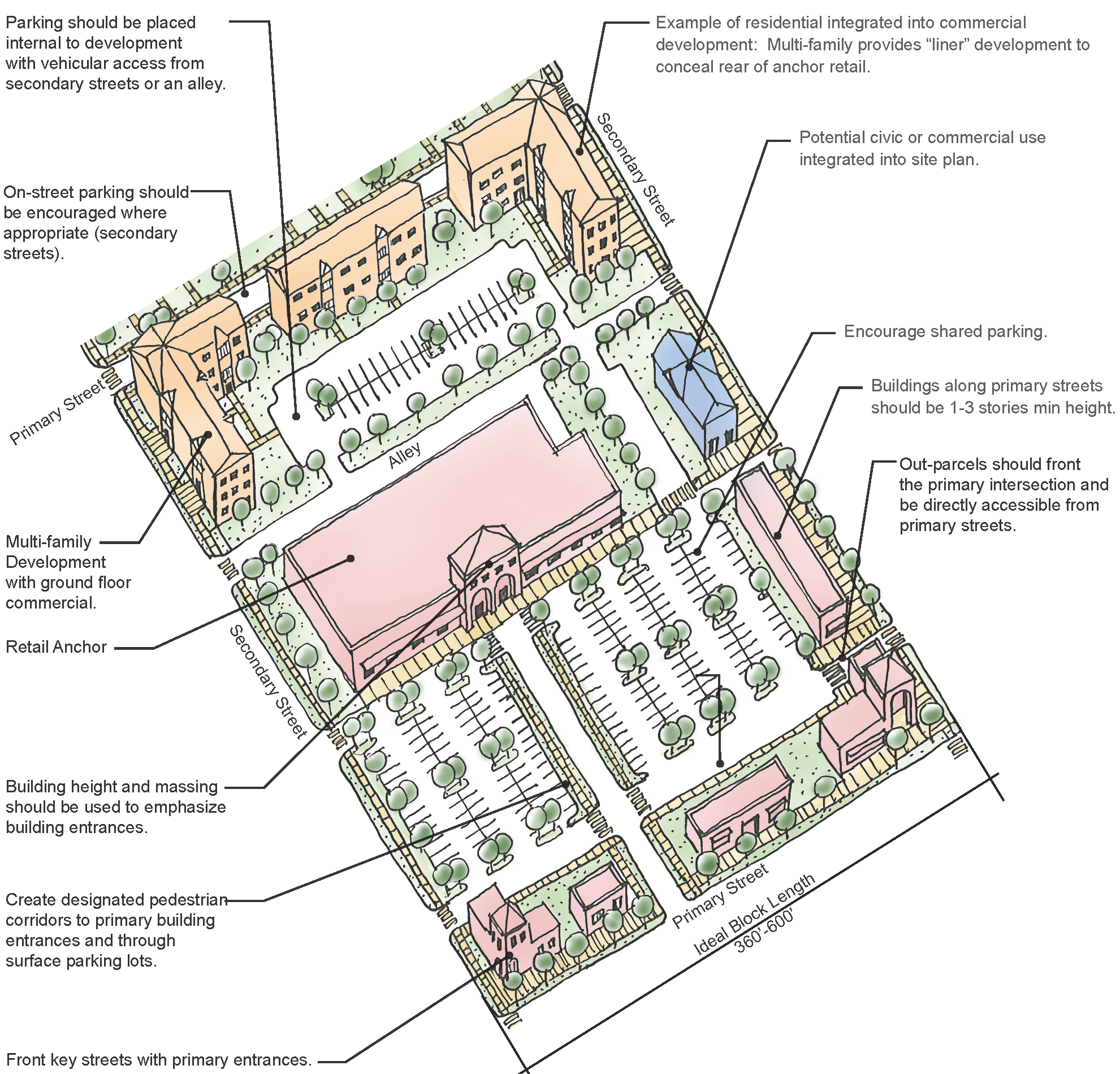
Figure DG-1 - Block Structure Adaptability
2.0 - Multifamily Design Guidelines
Building Design and Placement
Building design and placement is an important contributor to the pedestrian realm.
Building design includes everything from height and architectural scale to the orientation
of building entries.
•
Buildings should meet setback requirements.
•
Buildings should incorporate design elements to enhance visual interest, such as balconies, porches, bays, etc.
•
Building entrances should be well-marked and identifiable from the building form.
•
On-street parking is strongly encouraged to provide parking for visitors.
•
Parking should be accessed from secondary streets and clearly marked.
•
Parking should be well-lit and screened from major pedestrian corridors.
Open Space and Landscaping
•
Encourage open space to be semi-public to contribute to larger open space network.
•
Landscaping should not obstruct entrances and pedestrian lighting, or obscure views of public or semi-public spaces.
•
Fencing should be permeable and not opaque. Chain-link is not acceptable.
4.0 - Adaptive Reuse
Non-conforming Strip Commercial
Incremental re-investment of strip commercial and industrial properties is likely
to occur along major corridors. The proposed block structure illustrates how surface
parking can adapt and change over time into a mixed-use, walkable street framework.
Existing strip commercial buildings generally include:
•
Few designated pedestrian connections to building entrances
•
Multiple entry points with no cross-parcel access or shared parking
•
Large surface parking with limited tree coverage creates heat islands
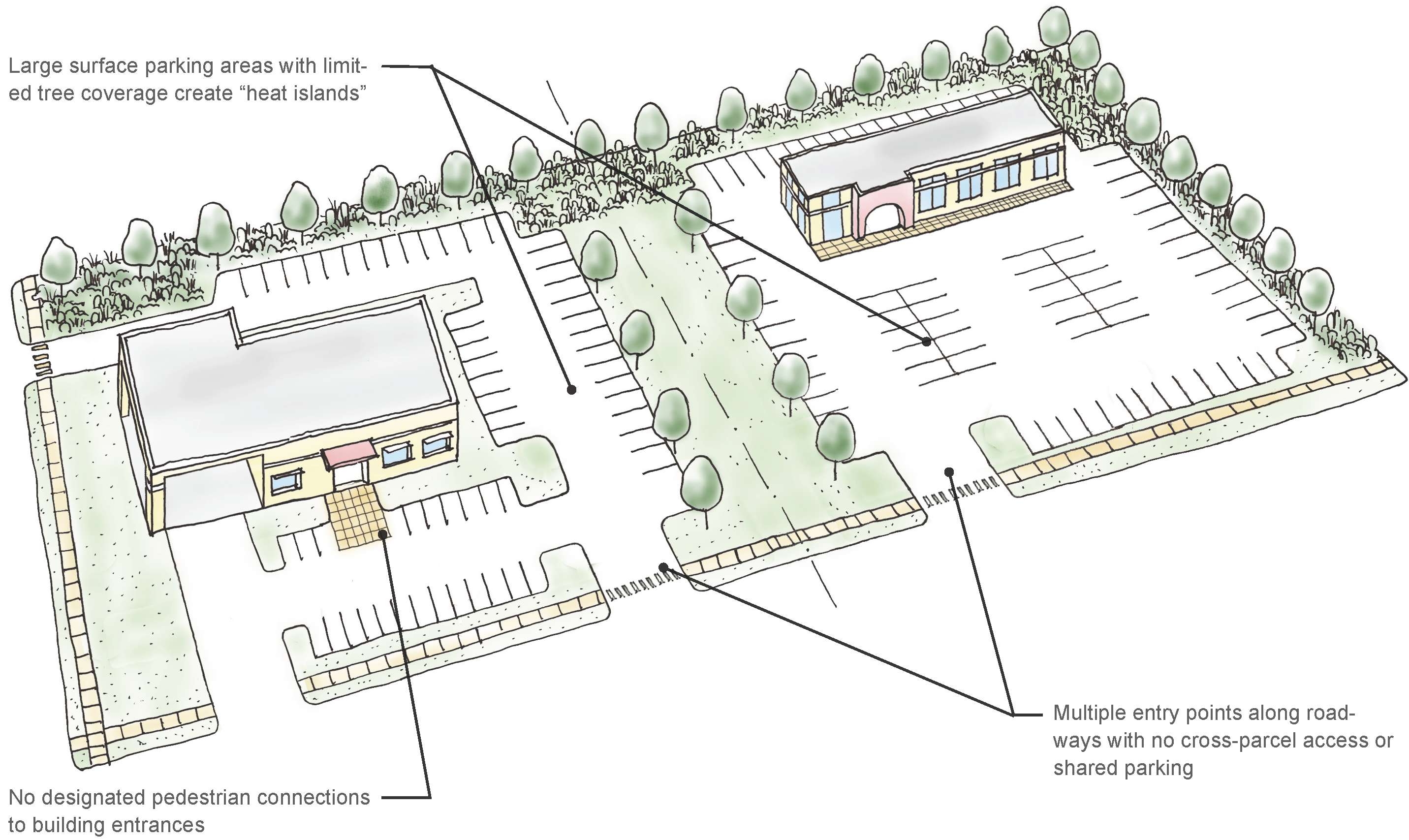
Figure DG.7 - Existing Strip Commercial
Adaptive Reuse of Strip Commercial Property
Adaptive reuse of strip commercial buildings should:
•
Provide connections between parking lots.
•
Locate all new parking at rear of building.
•
Screen and locate dumpsters at rear of building.
•
Create direct pedestrian connections between building entrance and parking.
•
Incorporate massing changes to emphasize building entrance.
•
Encourage new commercial development to front key streets, limit blank walls, and provide pedestrian-scale amenities.
•
Parking lot landscaping: one tree per 10 parking spaces.
•
Encourage stub-outs for future connections.
•
Provide landscaped buffer for adjacent non-commercial uses.
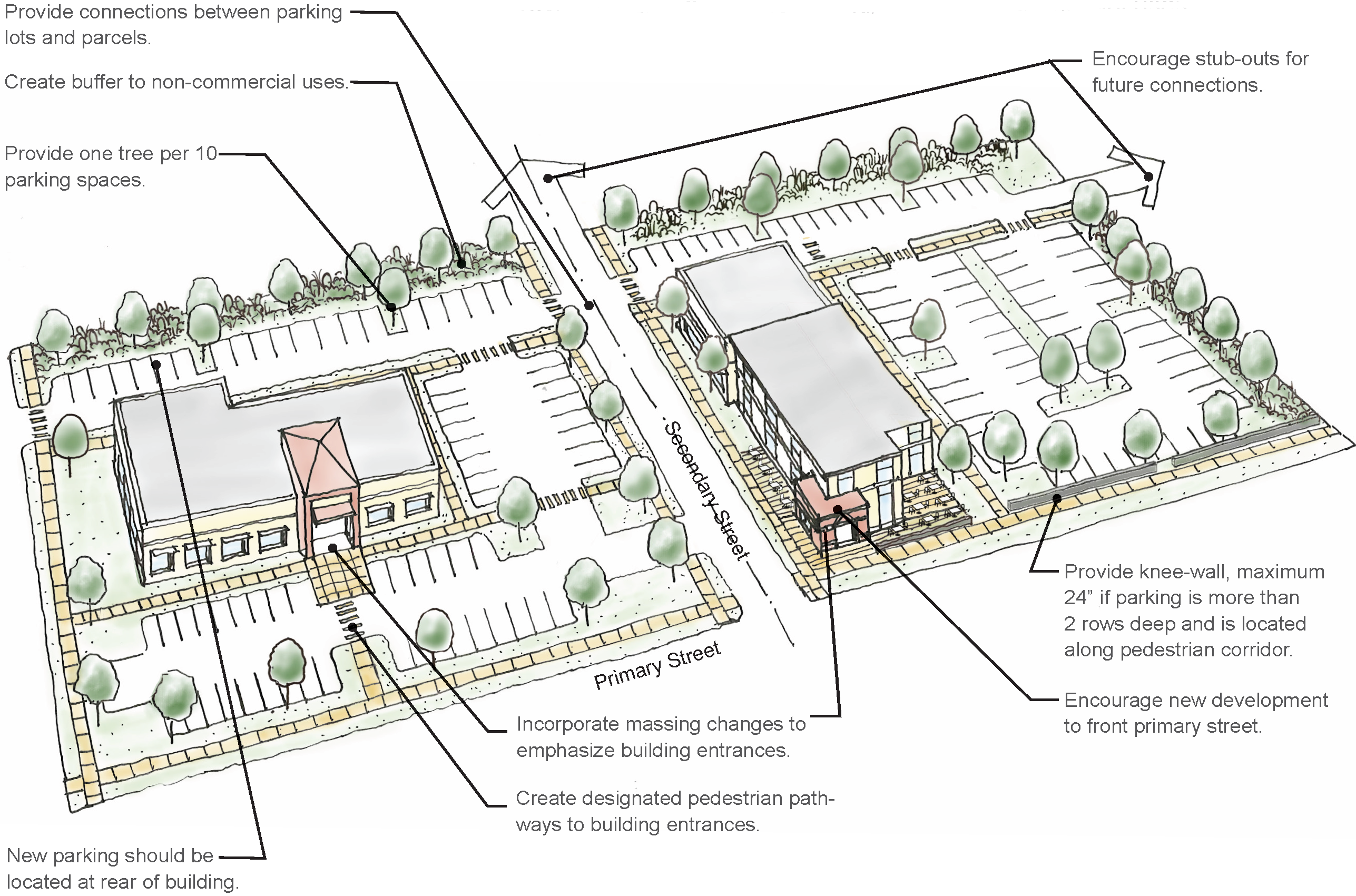
Figure DG.8 - Adaptive Re-use of Strip Commercial
 [2]
[2]
June 11, 2015
(Revised May 18, 2016)
On October 20, 1998, the City of Chamblee unanimously passed a Tree Preservation Ordinance, which was most recently revised in 2014 and combined with the City's zoning buffer and landscaping ordinances within one ordinance (Chapter 320 of the Unified Development Ordinance). This ordinance provides standards for the preservation and/or replacement of the City of Chamblee's trees and requirements for zoning buffers and landscape areas. What follows are the administrative guidelines to be considered during the permitting process in coordination with Chapter 320 requirements. These guidelines have been approved by the City Landscape Coordinator and by the Chamblee City Council. Any questions about these guidelines or about the permitting process should be directed to the Development Director at 470-395-2333.
Table of Contents
Editor's note— Addendum 2.0 has been amended by the following: Ord. No. 716, pt. II(Exh. A), 8-16-16.
2.1. - TREE PRESERVATION AND PROTECTION FEE SCHEDULE
Reserved.
For plant materials not indicated on all lists below, developer to provide City Development Department information about tree height, caliper, form, and tolerance for environmental conditions on required landscape plans.
2.2. - PLANT SPECIES SELECTION LIST FOR PERMANENT BUFFERS
EVERGREEN SCREENING TREES - SPACED AT EIGHT (8) FEET ON CENTER
OTHER EVERGREEN OVERSTORY TREES
DECIDUOUS OVERSTORY TREES
DECIDUOUS UNDERSTORY TREES
EVERGREEN SHRUBS FOR FIVE (5) FOOT SPACING
DECIDUOUS SHRUBS FOR FIVE (5) FOOT SPACING
* Other trees with similar qualities and impact may be approved by the City Landscape Consultant.
** Non-native species. Native material is recommended when buffer material is incorporated in a naturalized area.
2.3. - TREE SPECIES SELECTION LIST
CULTIVARS FOR PARKING LOTS, LANDSCAPE STRIPS AND STREETSCAPES
Overstory Trees
Understory Trees
ADDITONAL TREE SPECIES NOT NOTED IN CULTIVAR OR BUFFER LISTS
* Use of clonal cultivars is recommended for parking lot trees and required for streetscape trees, to ensure uniformity in size and form of species.
**
Non-native species.
Notes:
1.
Acer rubrum, Acer saccharum, Platanus sp. not recommended for parking lots due to shallow roots. Provide clonal varieties in streetscape situations.
2.
Other trees with similar qualities and impact may be approved by the City Landscape Consultant.
(Ord. No. 828, 11-21-23)
2.4. - TREES APPROPRIATE FOR PLANTING IN GDOT RIGHT-OF-WAY
Peachtree Blvd. [SR 141], Buford Hwy. [SR 13], Clairmont Rd. [SR 155]
* Specific trees are still subject to approval by GDOT and exact site requirements and must fall under GDOT Policy #6755-9: Policy for Landscaping and Enhancements on GDOT Right of Way for specifications of trees within GDOT rights of way.
** Non-native
2.5. - TREES APPROPRIATE FOR PLANTING IN GDOT RIGHT-OF-WAY WITHIN 500-FOOT BILLBOARD ZONES
NOTE: Only small cultivars and hybrids of above species per GDOT and billboard requirements will be permitted In areas within billboard view zone areas.
* Other trees may be permitted on a case by case basis upon approval by Chamblee Development Department and GDOT.
** Non-native
2.6. - ACCEPTABLE MULCHING MATERIALS
The following mulch materials are acceptable:
•
Pine straw
•
Shredded Bark
•
Aged Hardwood/Wood chips
•
Turf grass, or other acceptable low growing grasses
•
Cypress mulch
Lava rock, boulders, river rock, and other stone materials are prohibited as mulch.
Boulders, River rock, and other stonework accents shall only be allowed as landscaping accents at less than 20% total.
(Ord. No. 828, 11-21-23)
2.7. - INVASIVE SPECIES LIST
The City of Chamblee references invasive species lists as maintained by the Georgia Exotic Pest Plant Council and specifically prohibits the use of the following plant material outright for buffer, landscaping, and tree replacement due to their invasive tendency or other unfavorable characteristics.
TREES
SHRUBS
GRASSES AND VINES
2.8. - BIORETENTION AREA SPECIES SELECTION LIST
NATIVE TREES FOR INUNDATION AREAS OF BIORETENTION AREAS/CONSTRUCTED WETLANDS
NATIVE TREES FOR MINIMAL INUNDATION AREAS OF BIORETENTION AREAS/CONSTRUCTED WETLAND EDGE
NATIVE SHRUBS FOR BIORETENTION AREAS/CONSTRUCTED WETLANDS
NATIVE ORNAMENTAL GRASSES FOR BIORETENTION AREAS
NATIVE SEDGES AND FERNS FOR BIORETENTION AREAS
NATIVE HERBACEOUS/PERENNIAL FOR BIORETENTION AREAS
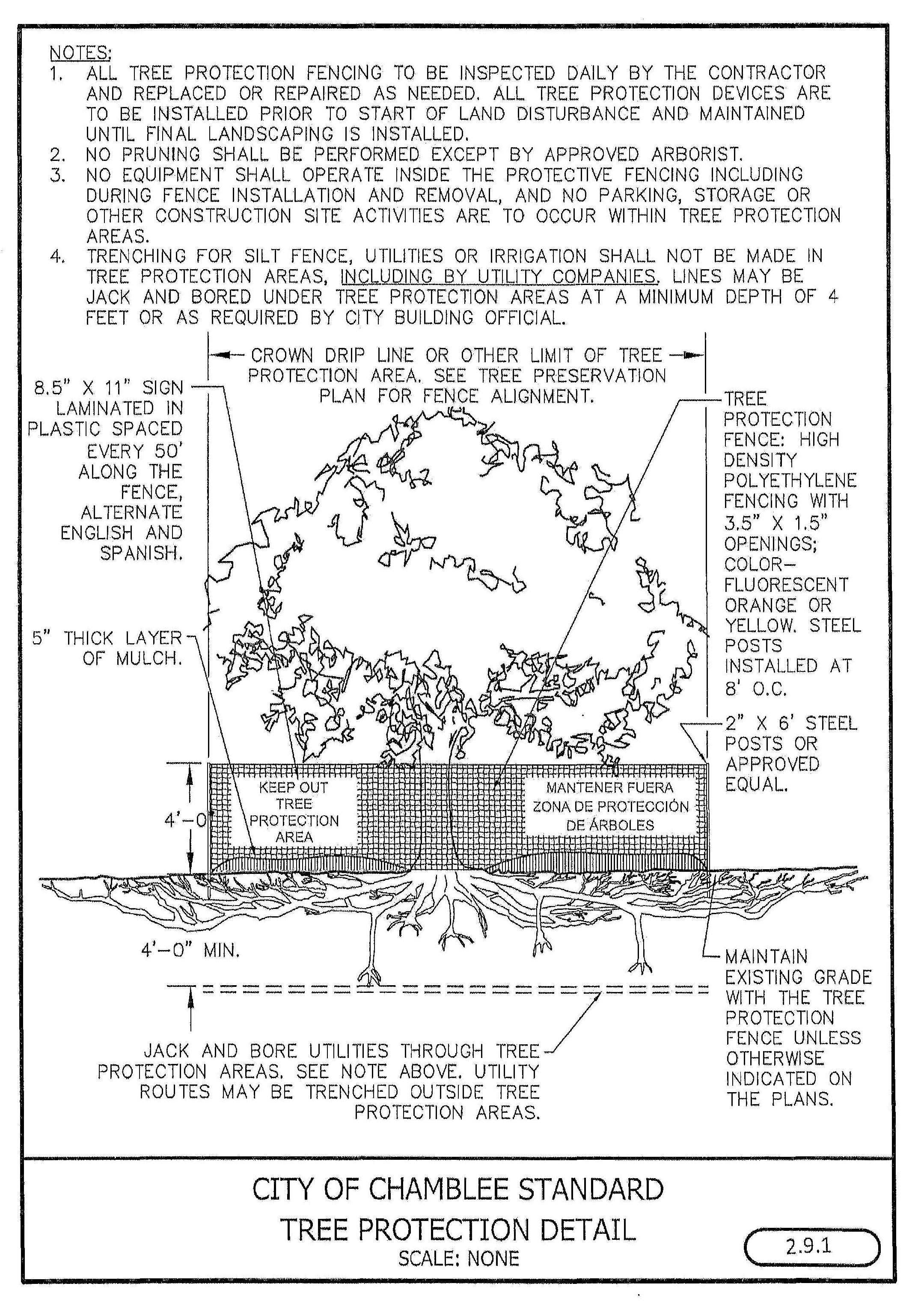
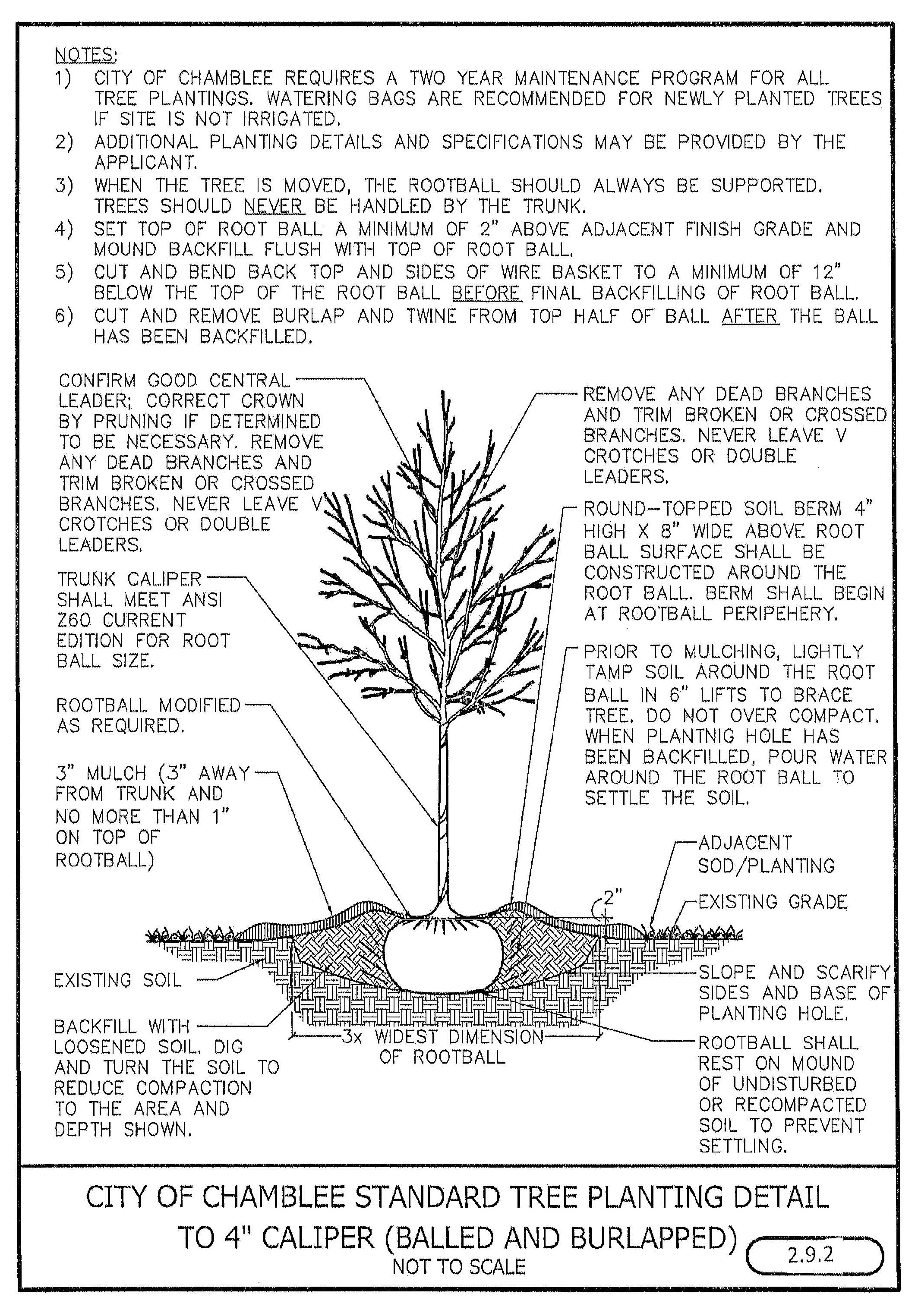
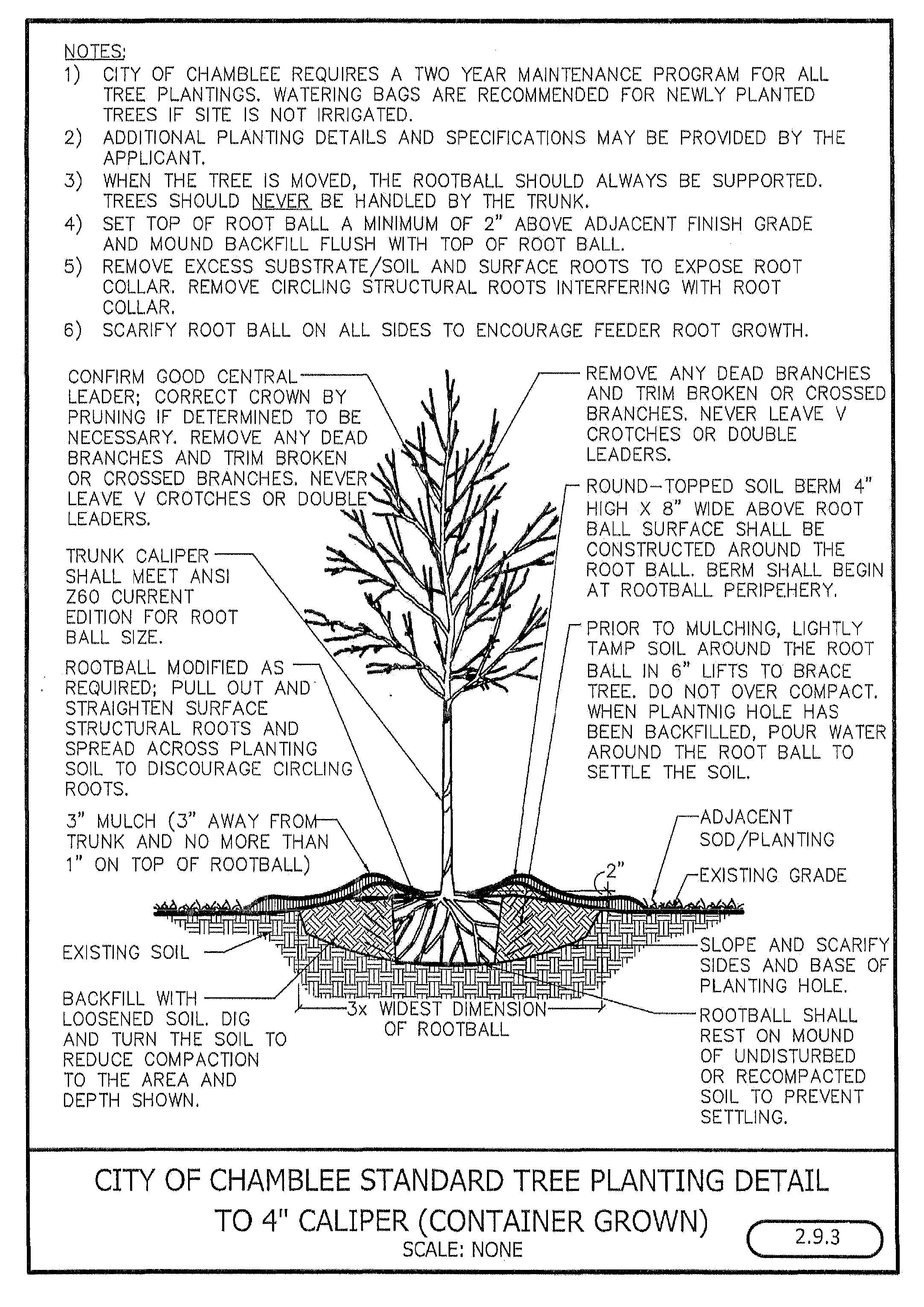
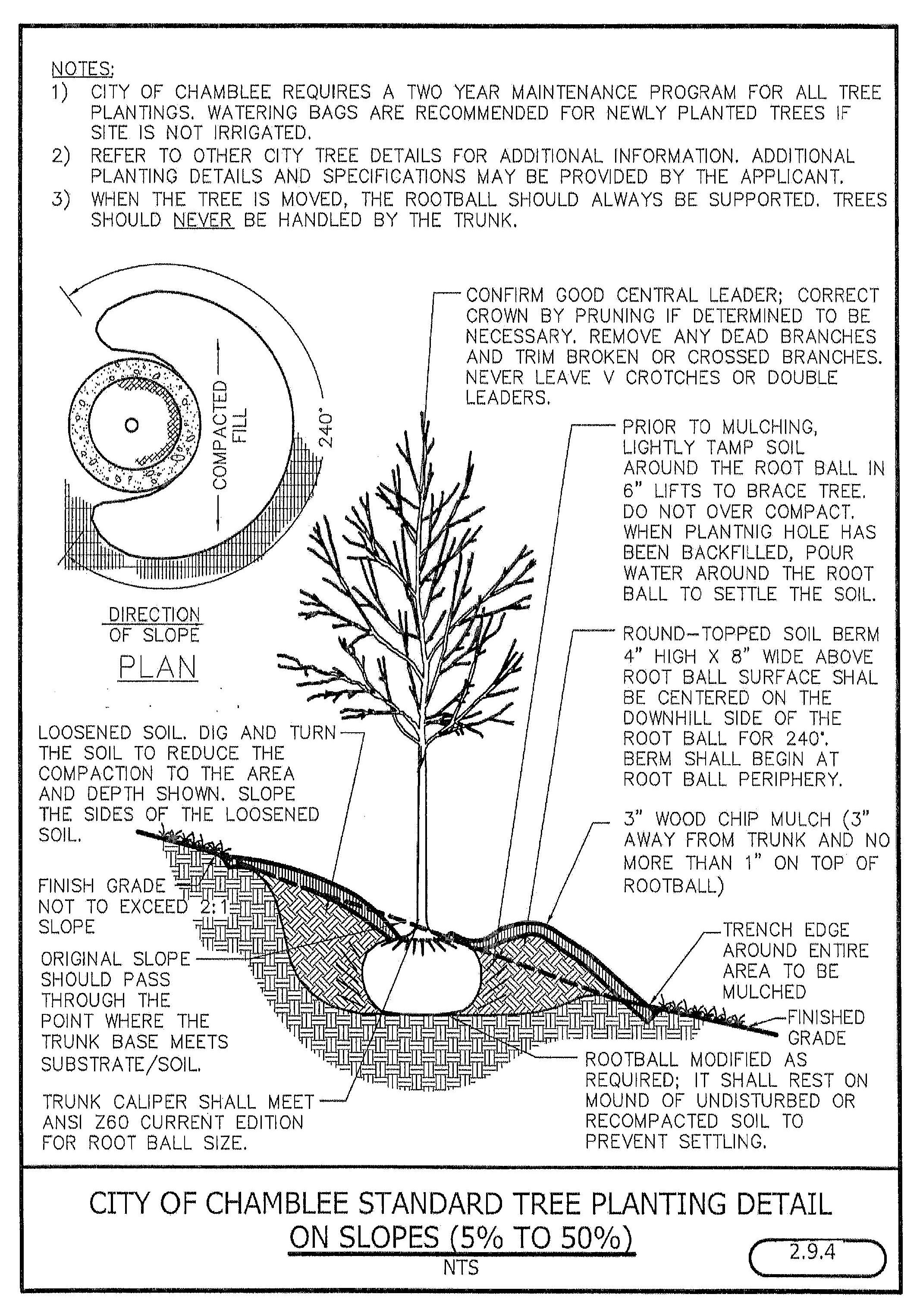
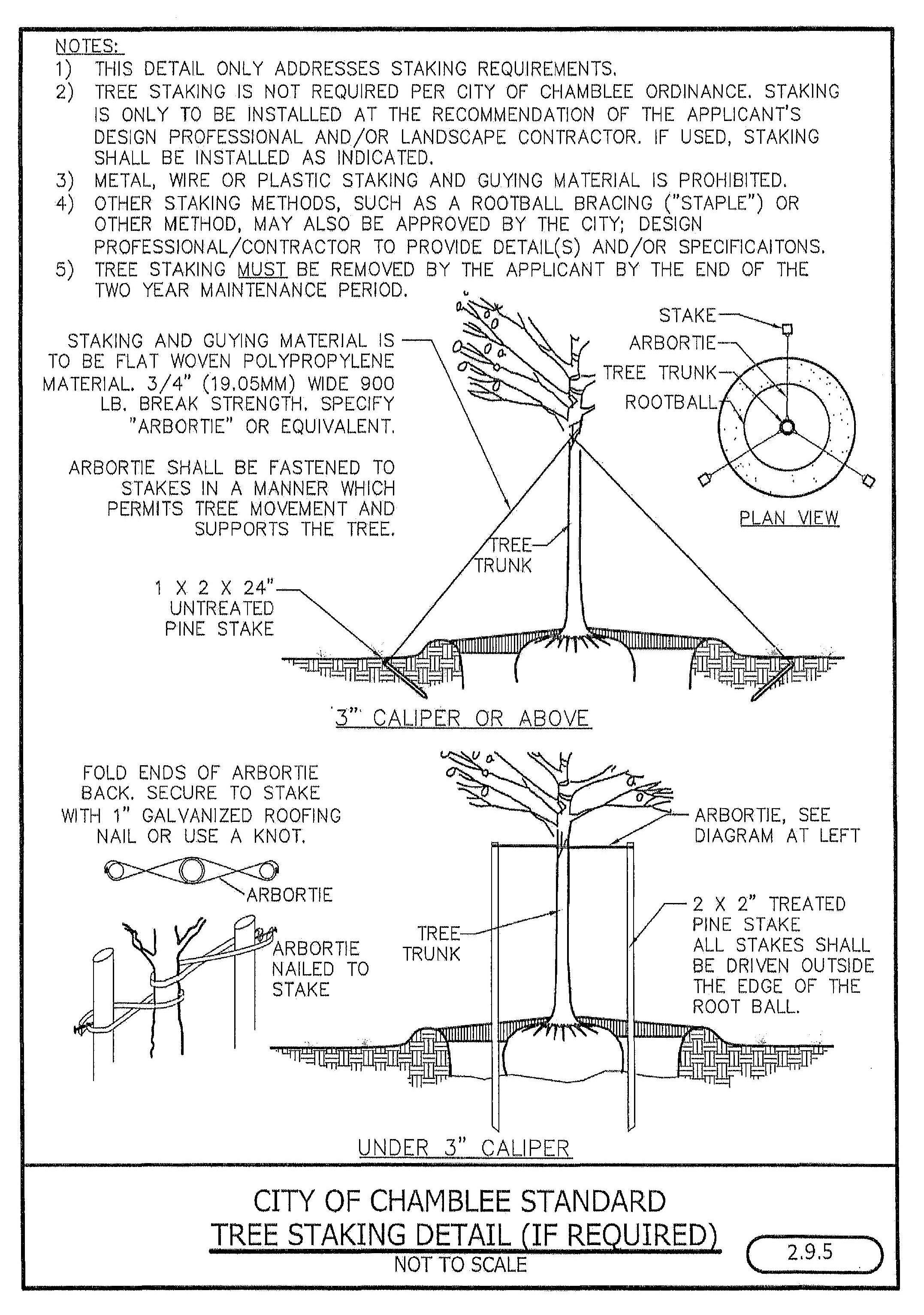
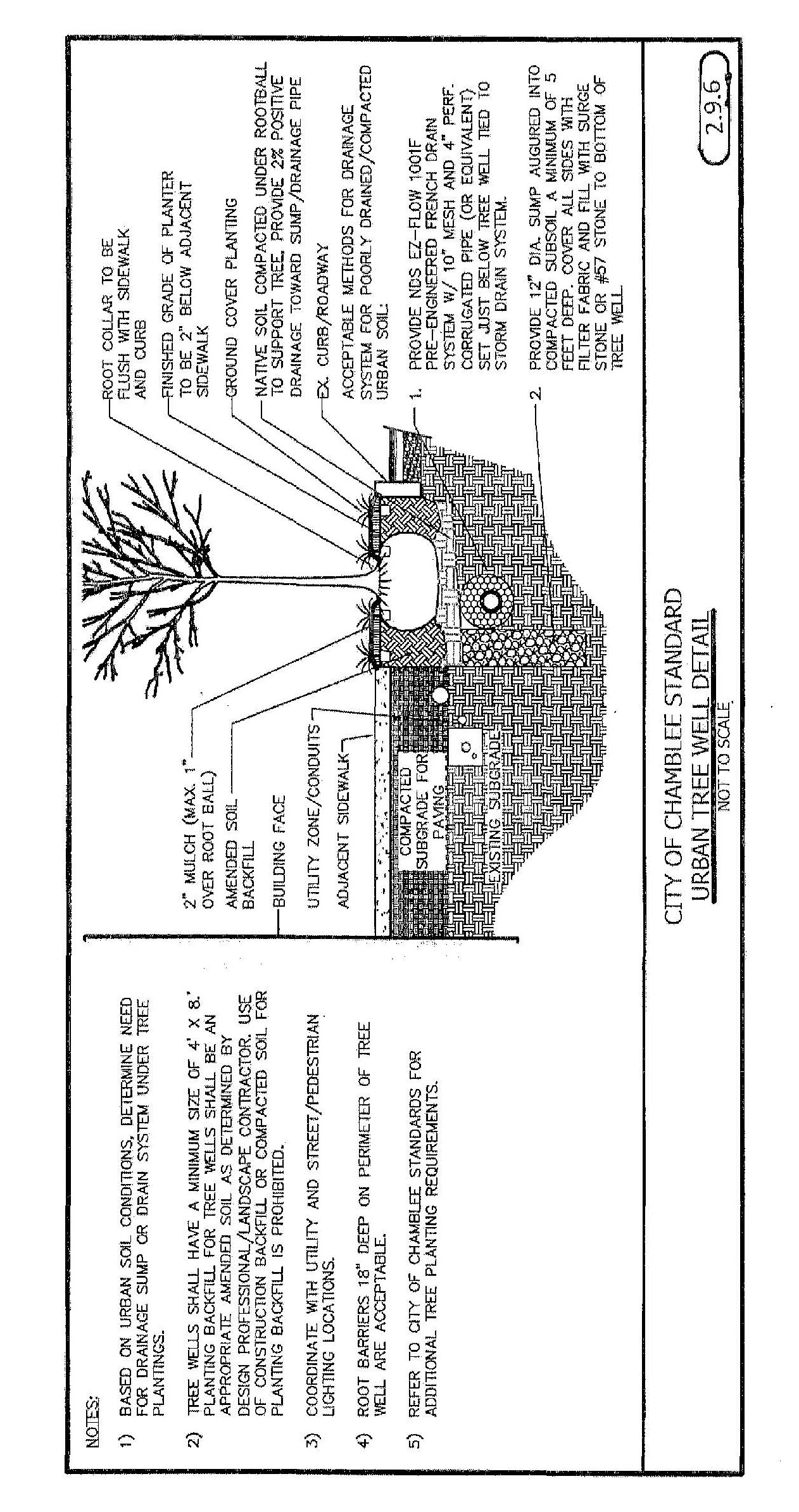
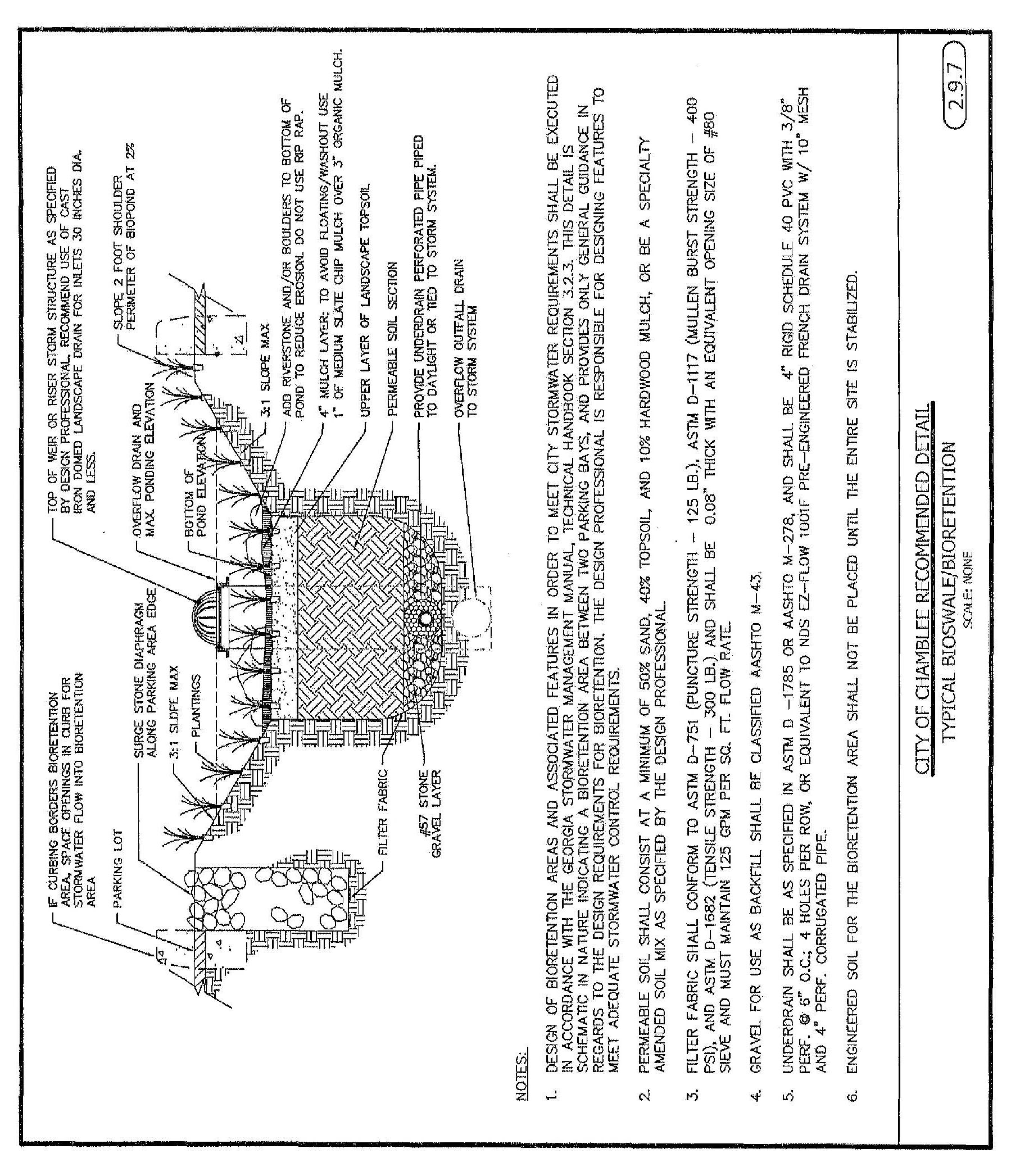
2.9. - STANDARD DETAILS
 [3]
[3]
June 11, 2015
Preface
In December 2008, the City of Chamblee adopted Streetscape Guidelines in order to assist with the administration and enforcement of the City of Chamblee's Code of Ordinances as they related to streetscape improvements within the public rights-of-way. With the preparation of the draft Unified Development Ordinance in 2014 these Guidelines were updated to match the terminology and standards of the draft code and new Comprehensive Plan. In 2017, several of these recommendations were incorporated into the UDO. What follows are the administrative guidelines to be considered during the permitting process in coordination with Chapter 350 requirements.
Table of Contents
Editor's note— Addendum 3.0 has been amended by the following: Ord. No. 710, pts. I—V(Exhs. B—F), 7-19-16; Ord. No. 743, 12-19-17.
3.1. - Street Designations
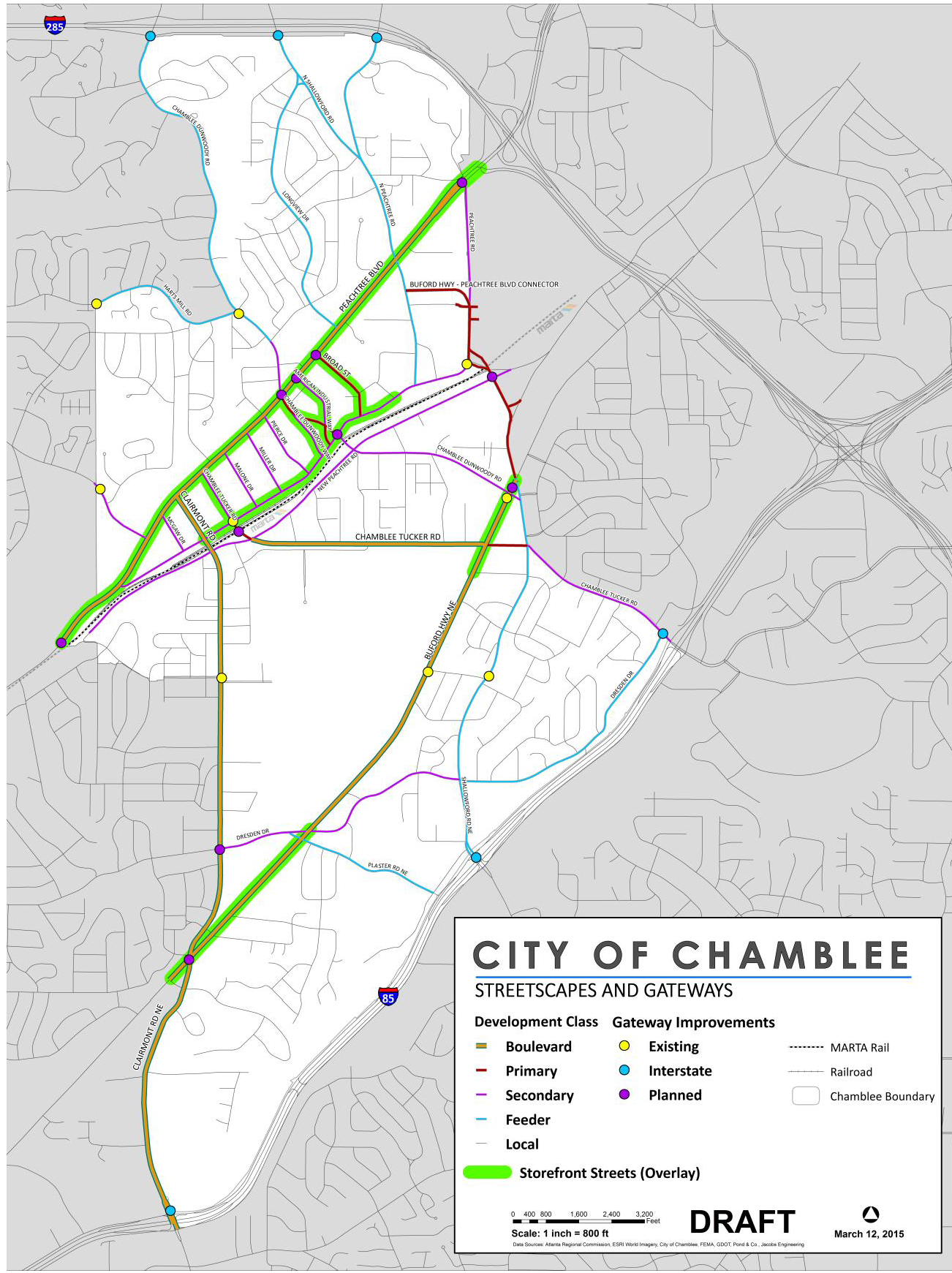
In accordance with the Unified Development Ordinance (UDO), the dimensions of all landscape zones, sidewalks, minimum building façade heights and front yards are governed by the street designation that the lot fronts on, in order to ensure consistency and application of the streetscape requirements. The street designations of all public streets are defined in Chapter 350 of the UDO, and are illustrated in the City of Chamblee Comprehensive Plan on the "Streetscape and Gateways Map." A reduced copy of this map is on the following page, and a poster sized copy of the map is available on the city website at www.chambleega.gov.
In addition to public streets, the city also allows private streets, which may follow the same designations as the public streets or one of two other typologies: alleys and narrow streets. These private streets are not shown on the Streetscape and Gateways Map, and must be approved under the provisions of the UDO.
3.2. - General Notes
(a)
Current Americans with Disabilities Act (ADA) standards shall apply to the design and installation of all pedestrian facilities (e.g., sidewalks, ramps, crosswalks).
(b)
Street trees pre-approved for installation in the landscape zone, are listed in Addendum 2.0 of the UDO.
(c)
Retaining walls, where pre-approved for installation in the right-of-way, must be installed in accordance with the following specifications:
a.
All walls over 4 feet in height require engineering certification.
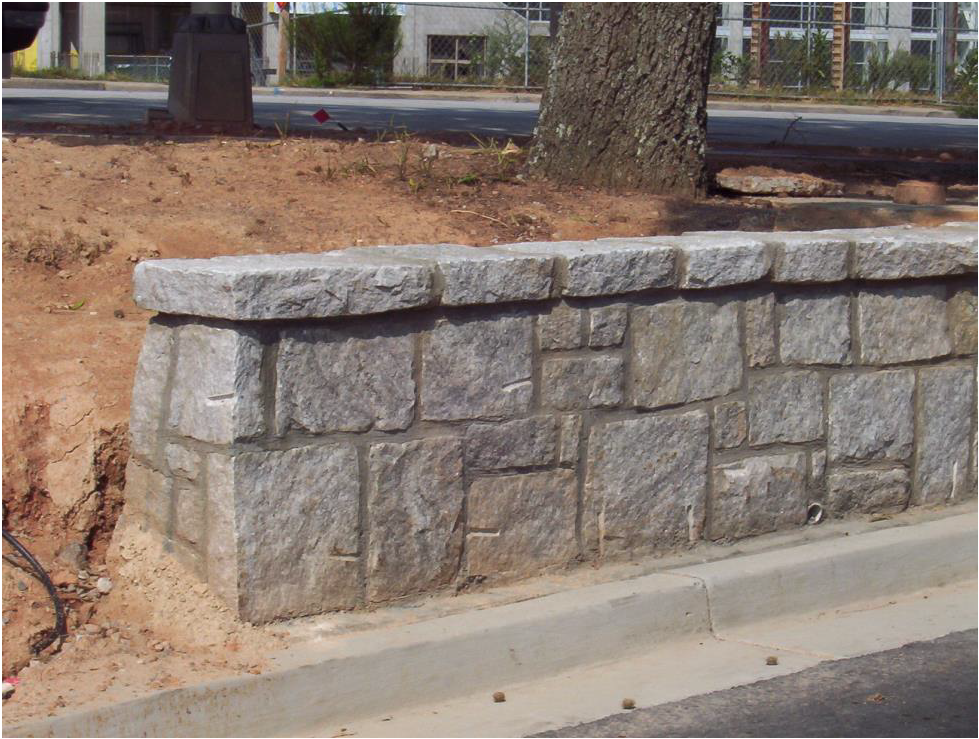
b.
Walls within limits of streetscape requirement are encouraged to be granite veneer masonry walls or granite rubble masonry walls as indicated by the following graphics:
(d)
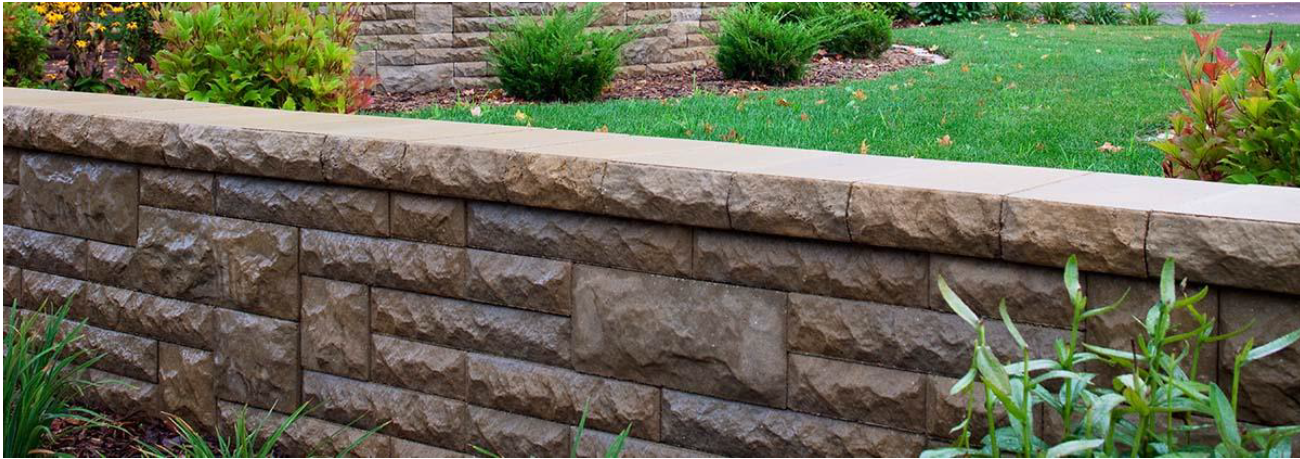
The following style of segmental block wall is acceptable without City review: BelAir by Belgard. http://www.belgard.com/products/retaining_walls/belair_wall
(e)
Other styles of segmental block or other masonry may be approved on a case by case basis.
3.1 - Single-family Zero Lot Line
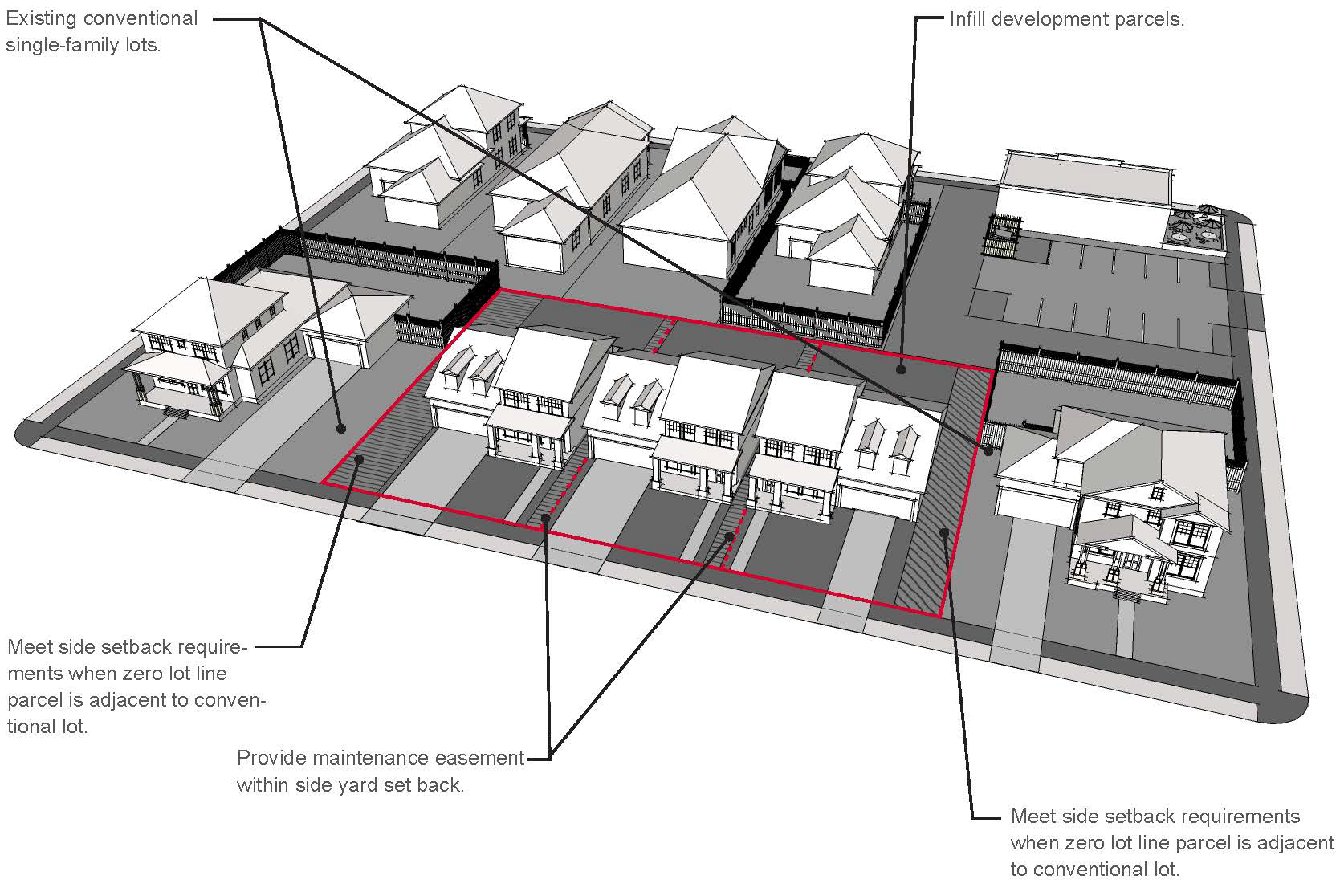
Figure DG.3 - Single-family Zero Lot Line
3.2 - Single-family Attached and Townhouses
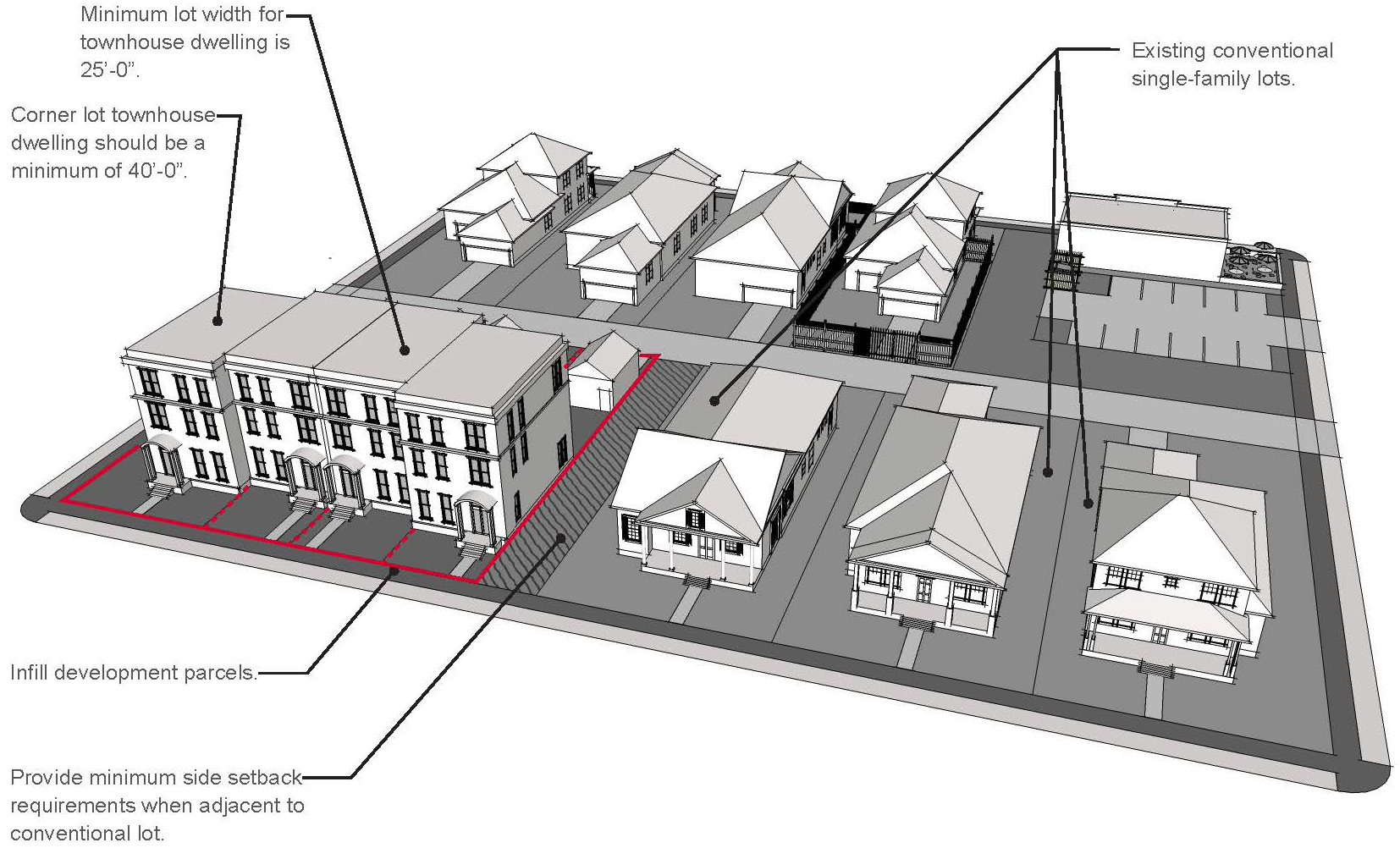
Figure DG.4 - Single-family Attached and Townhomes
3.3 - Corner Commercial
Properly designed corner commercial infill can be implemented into the existing character of the community.
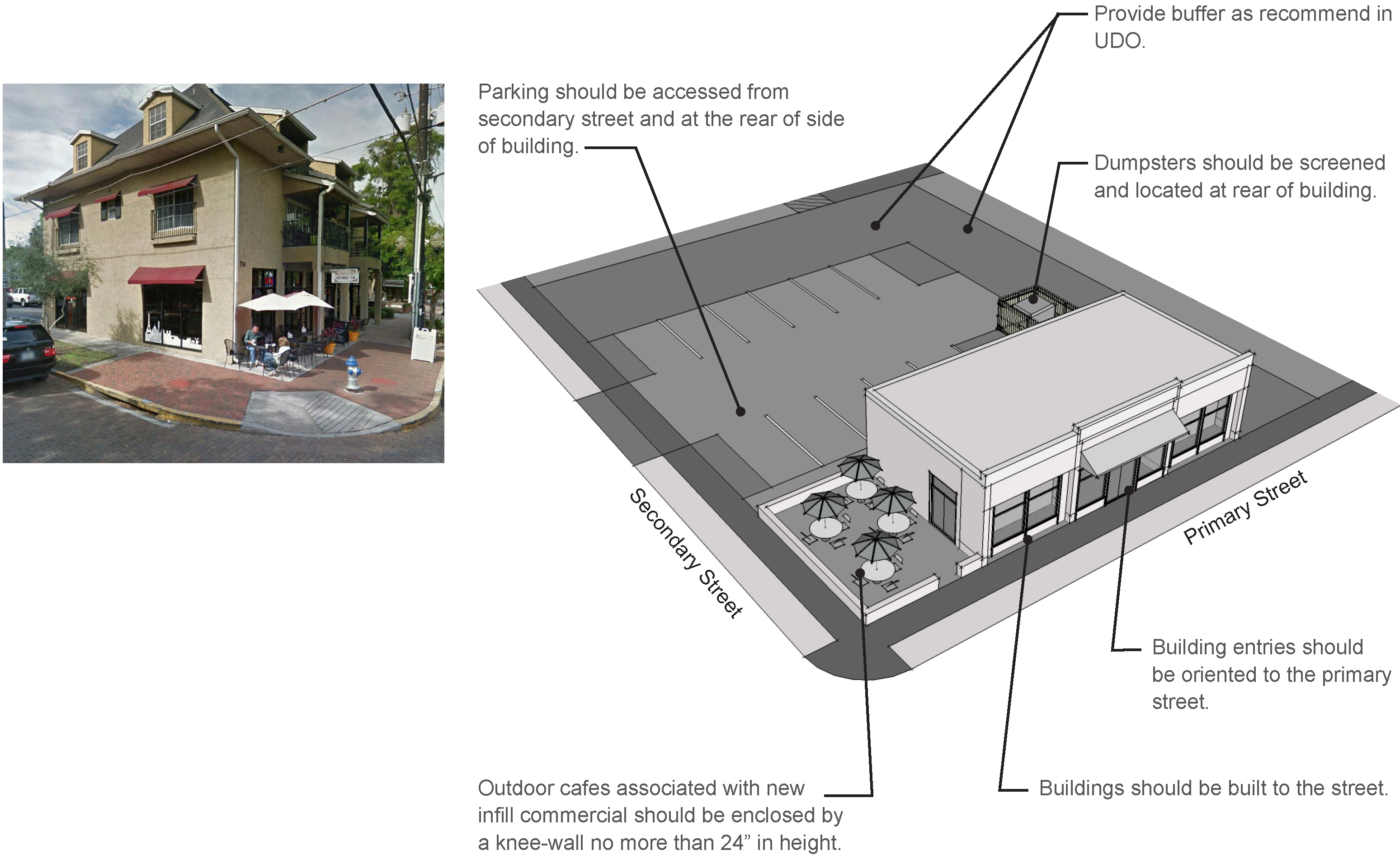
Figure DG.6 - Corner Commercial

