
Chicago Heights City Zoning Code
CHAPTER 8
MIXED-USE MX DISTRICTS1
Editor's note— Sec. 1 of Ord. No. 2018-6, adopted February 21, 2018, repealed Ch. 8, which pertained to manufacturing districts, consisted of §§ 8-1—8-12, and derived from Ord. No. 04-67, adopted October 18, 2004; Ord. No. 2014-25, adopted September 3, 2014; and Ord. No. 2018-4, adopted February 5, 2018. Sec. 2 of said ordinance enacted a new Ch. 8 to read as herein set out.
8-1.- Overview of code.
8-1.1.
Purpose. The regulations of the MX districts are intended to implement the Comprehensive Plan and promote new development in the downtown, while preserving what remains of the historic character. The districts are intended to:
a.
Mixed-Use. Achieve a balanced pattern of development, providing for mixed-use development in the core that encourages a high level of activity through the day and into the evening.
b.
Pedestrian-Orientation. Orient development to sidewalks to enhance the vibrancy of the area and increase pedestrian activity.
c.
High Quality and Distinctive. Require high quality development that draws on the history of the downtown.
d.
Compact Development. Achieve development that is appropriate in scale and compact to encourage walking between uses in the downtown and adjacent areas.
e.
Diversity of Housing. Ensure that a mix of housing types and sizes can be developed in the areas surrounding the downtown.
8-1.2.
Districts. A set of mixed-use (MX) districts addresses the downtown core, neighborhood and office areas within the downtown, and commercial corridors on the edges. These districts and primary frontages are mapped on the City's zoning map and listed in Chapter 4-1. Districts.
8-1.3.
Zoning Map. These regulations apply to the MX districts as mapped on the City's zoning map [2].
8-1.4.
Building Types. Building types define the building form requirements for each MX district. A mix of building types are permitted per district per the table in Figure 8.5(1), Table Building Types by Districts. The building types contain regulations that determine basic physical building elements such as the location of the building and parking on the site, height requirements, and facade requirements. Refer to 8-4 through 8-10 for building type requirements.
8-1.5.
Primary Street Designation. In the MX districts, the orientation and location of the building is determined by the primary street designation. Some building type requirements are specific to the primary street frontage.
a.
Designation on Regulating Plan. The regulating plan (Figure 8-3(2)) designates certain streets as primary. Lot lines generally parallel to these street rights-of-way are considered primary frontages.
b.
Two Primary Streets. When two primary streets abut a parcel, the zoning officer shall determine which street shall serve as the primary street for the lot, based upon the following:
1.
The orientation of the adjacent buildings.
2.
The visibility of the corner side facade.
3.
The pedestrian, vehicular, and bicycle traffic volumes (perceived or actual) of the streets.
c.
Open Space. Parcels abutting or adjacent to open space designated on the regulating plan shall treat the frontages abutting or adjacent to the open space as primary frontages.
8-1.6.
Uses. Use requirements for the MX districts are defined in Chapter 6, Uses. Uses may also be further limited by the building type regulations based on the use location within the building. Refer to building types under "Uses" in the tables per building type.
8-1.7.
General Design. General design requirements are applicable to all building types. Design standards related to materials, windows, entrances, and roofs are established in this section. Refer to 8-12, General Design Requirements.
(Ord. No. 2018-6, §§ 1, 2, 2-21-18)
Note that, for review purposes, districts are illustrated on Figure 8-3(2). The districts will be transferred to the zoning map for adoption. Primary frontage designations would remain on this map and included in the mixed-us districts chapter.
8-2. - Mixed-use (MX) districts.
The following districts are established. These districts have been defined to apply to the specific geographic locations on which they are designated, considering the scale and context of the existing parcels. Refer to the City's zoning map for locations.
8-2.1.
MX1: Main Street District. The MX1 district is the core district for the downtown, is intended to reinforce the historic main-street form and character of existing buildings in the core of the downtown. This district incorporates a high level of pedestrian- oriented design with a vertical mix of uses.
8-2.2.
MX2: Corridor Commercial District. The MX2 district is located on the edges of the downtown, especially along Chicago Road and is meant to mainly accommodate retail and service uses, either single-use or mixed-use. While still pedestrian-focused, the building forms of this district allow for more visible and flexible accommodation of automobile parking and access.
8-2.3.
MX3: Office-Residential Mix. The MX3 district accommodates a flexible mix of office and/or residential uses in similar building forms. While this district is intended for pedestrian-scaled building forms, parking is also an important component.
8-2.4.
MXR: Mixed Residential. The MXR district allows an array of residential building types intended to infill within existing housing areas, maintaining the existing scale and encouraging a mix of housing to support commercial and add 24-hour activity.
(Ord. No. 2018-6, §§ 1, 2, 2-21-18)
8-3. - Definitions.
For the purposes of Chapter 8, the following terms shall have the following meanings:
Build-to Zone. An area in which the front or corner side facade of a building shall be placed; it may or may not be located directly abutting a lot line. The zone dictates the minimum and maximum distance a structure may be placed from a lot line. Refer to Figure 8(2), Build-to Zone vs Setback Line.
Courtyard. An outdoor area enclosed by a building on at least 3 sides and open to the sky.
Expression Line. An architectural feature consisting of a decorative, three-dimensional, linear element, horizontal or vertical, protruding or indented at least 2 inches from the exterior facade of a building typically utilized to delineate the top or bottom of floors or stories of a building, intended to create a shadow line. Examples may include cast stone cornices, pilasters, or stepped brick coursing.
Impervious Site Coverage. The percentage of a lot developed with principal or accessory structures and impervious surfaces, such as driveways, sidewalks, and patios.
Main Parking Facade. The facade(s) facing the parking lot that contains more than 50 percent of the parking designated for the building.
Non-Primary Street. Any street that is not designated as a primary street. Refer to Figure 8-3(2) for mapped Primary Streets.
Non-Primary Frontage. Frontage along the lot line of a non-primary street includes the non-primary street yard, the facade of the building facing the non-primary street, and the interior of the building along that facade of the building.
Occupied Space. Interior building space regularly occupied by the building users. It does not include storage areas, utility space, or parking.
Parking Yards. Parking yards may contain parking lots or structures, as permitted by district.
Parking Yard Rear. The rear parking yard is located between the rear facade(s) of the building and the minimum rear setback line, and extends between the yards on either side of the building; the rear parking yard is screened from the front of the lot by the building. If the building extends to the minimum rear setback line, no rear parking yard will exist.
Parking Yard Side. The side parking yard is located between the interior side facade(s) of the building and the minimum side setback line, and extends to the front facade of the building and the minimum rear setback lines. Side parking yards are not located in exterior side yards. If the building extends to the minimum side setback line, no side parking yard will exist.
Parking Yard Limited Side. A side parking yard per definition and limited to one double or single loaded aisle, with the centerline of the drive aligned perpendicular to the street centerline.
Pedestrianway. A pathway designed for use by pedestrians; it can be located mid-block allowing pedestrian movement from one street to another without traveling along the block's perimeter.
Pervious Surface. Also referred to as pervious material. A material or surface that allows for the absorption of water into the ground or plant material, such as permeable pavers or a vegetated roof.
Porch. A raised, roofed platform at a building entrance that is unenclosed on at least 2 sides and open to the air.
Primary Street. A street that receives priority over other streets in terms of setting front lot lines and locating building entrances. Refer to Figure 8-3(3) for mapped Primary Streets.
Primary Frontage. Frontage along the lot line of a primary street includes the primary street yard, the facade of the building facing the primary street, and the interior of the building along that facade of the building.
Semi-Pervious Surface. Also referred to as semi-pervious material. A material that allows for at least 40% absorption of water into the ground or plant material, such as pervious pavers, permeable asphalt and concrete, or gravel.
Stoop. A platform at the entrance to a building that may or may not be roofed and may or may not be raised, but is open to the air.
Story, Ground. Also referred to as ground floor. The first floor of a building that is level to or elevated above the finished grade on the front and corner facades, excluding basements or cellars.
Story, Half. A story either in the base of the building, partially below grade and partially above grade ("basement"), or a story fully within the roof structure with transparency facing the street.
Story, Upper. Also referred to as upper floor. The floors located above the ground story of a building.
Street Face. The facade of a building that faces a street right-of-way.
Street Yard.
Transparency. The measurement of the percentage of a facade that has highly transparent, low reflectance windows. Mirrored glass is not permitted.
Visible Basement. A half story partially below grade and partially exposed above with transparency (windows) on the street facade as required per building type.
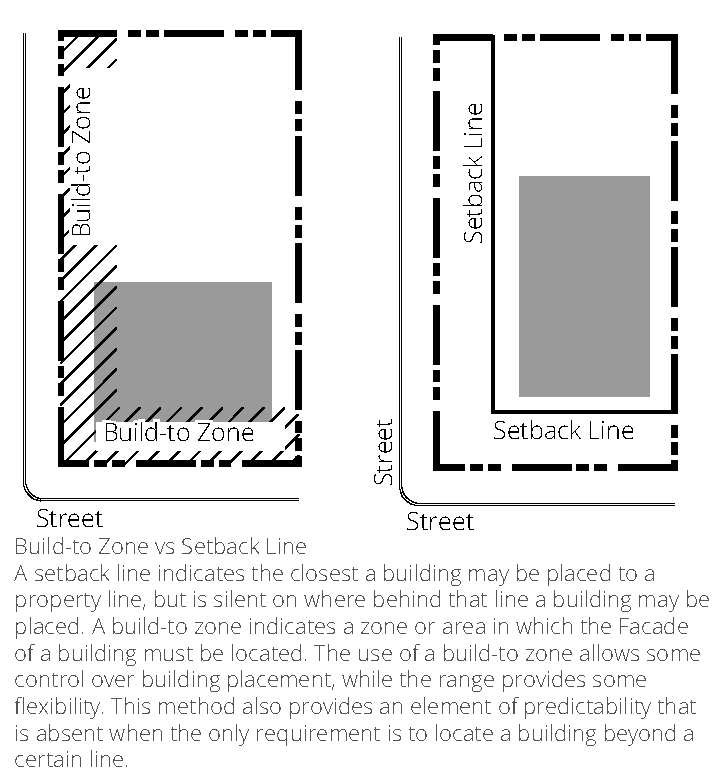
Figure 8-3(1). Build-to Zone vs Setback Line
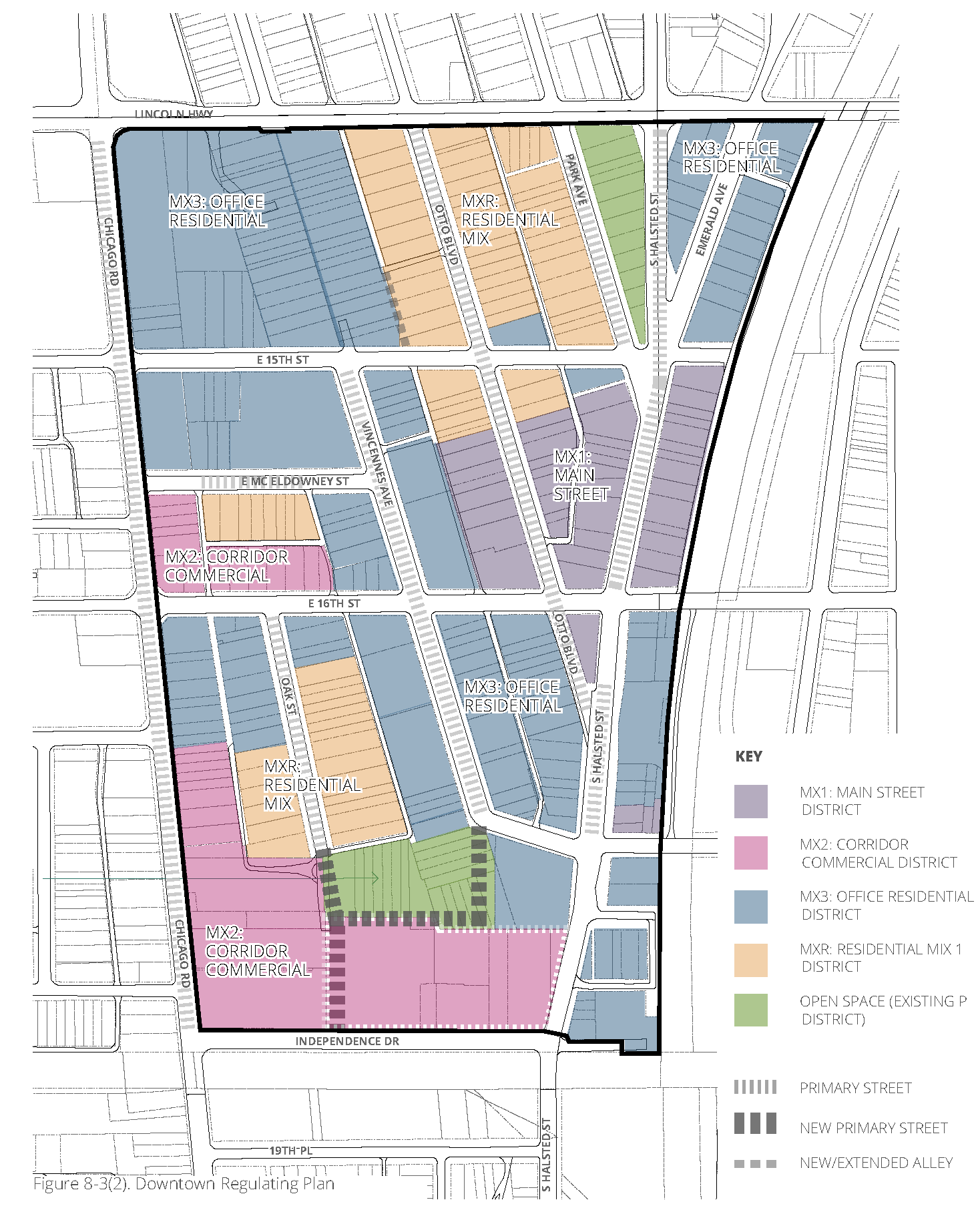
Figure 8-3(2). Downtown Regulating Plan
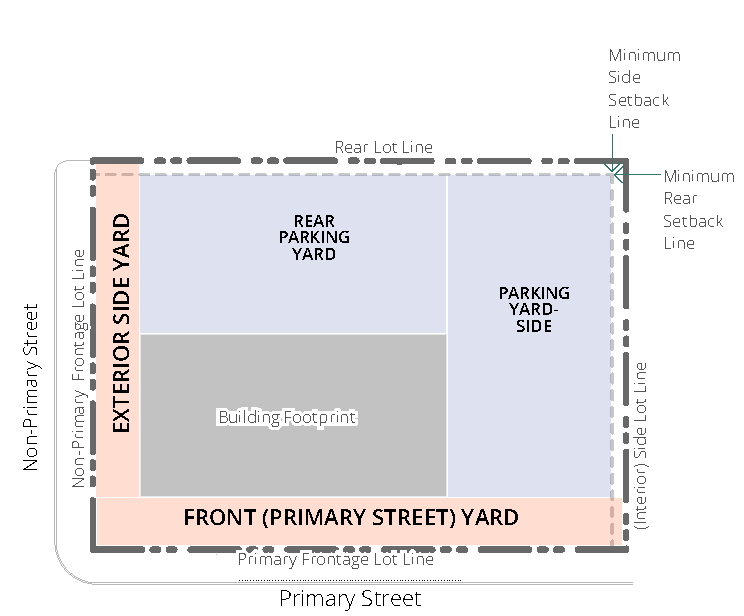
Figure 8-3(3). Illustration of Street & Parking Yards
(Ord. No. 2018-6, §§ 1, 2, 2-21-18)
8-4. - Requirements for all building types.
8-4.1.
Applicability. This section establishes general regulations applicable to all building types within the MX districts.
8-4.2.
Allowable Building Types. The following outlines allowable building types per lots.
a.
Building Types by Zoning Districts. Each building type shall be constructed only within the districts permitted per Figure 8-5(1), Table of Building Types by Districts.
b.
No Other Building Types. All buildings constructed shall meet the standards of one of the permitted building types within the zoning district of the lot. Mixing of regulations from different building types is not permitted.
c.
Permanent Structures. All buildings constructed shall be permanent construction without a chassis, hitch, or wheels, or other features that would make the structure mobile, unless otherwise noted.
d.
Temporary Buildings and Utility Structures. Temporary buildings and utility structures permitted in the district (see Chapter 6: Use Regulations) are exempted from the building type standards.
e.
Outdoor Dining/Display. An abutting lot may be utilized for outdoor dining or display of merchandise without construction of a building type under the following conditions:
1.
Location. The lot shall be directly abutting the lot containing the principal structure of the use.
2.
Area. The area of the abutting lot shall not be larger than the area of the principal structure.
3.
Continuation of Streetwall. The lot with the outdoor dining or display shall include a fence within the build- to zone, connecting to and continuing the facade of the abutting building along the sidewalk. The fence shall be a minimum of 6 feet high with an opacity no more than 80 percent, constructed of steel pickets, brick, or wood.
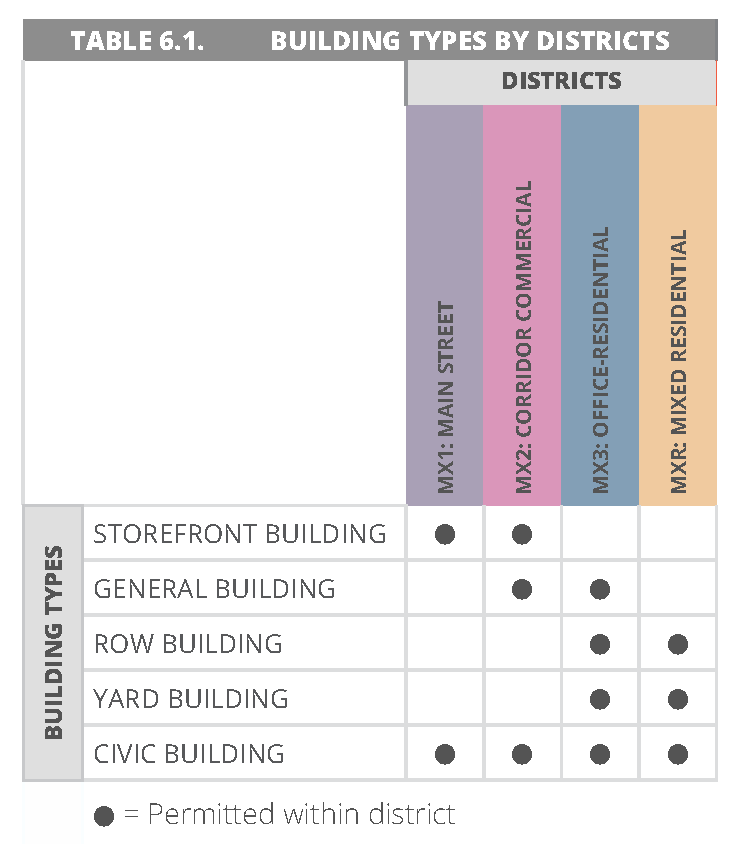
Figure 8-5(1). Table of Building Types by Districts
8-4.3.
Uses. Each building type may house a variety of uses depending on the district in which it is located. See Chapter 6 for uses permitted per district. Some building types have additional standards on permitted uses.
8-4.4.
Locating Buildings on the Lot. The building siting requirements of the building type define the location of the building on the lot.
a.
Multiple Principal Buildings on One Lot. For all building types except the Yard building, multiple principal buildings are permitted on a lot. Unless otherwise noted, each building must meet the requirements of the building type; each building must have street frontage and shall have a front facade located in a build-to zone.
b.
Build to the Corner. The intersections of two build-to zones at a corner shall be occupied by building. Refer to Figure 8-5(2), Illustration of Build-to Zones and Building to the Corner.
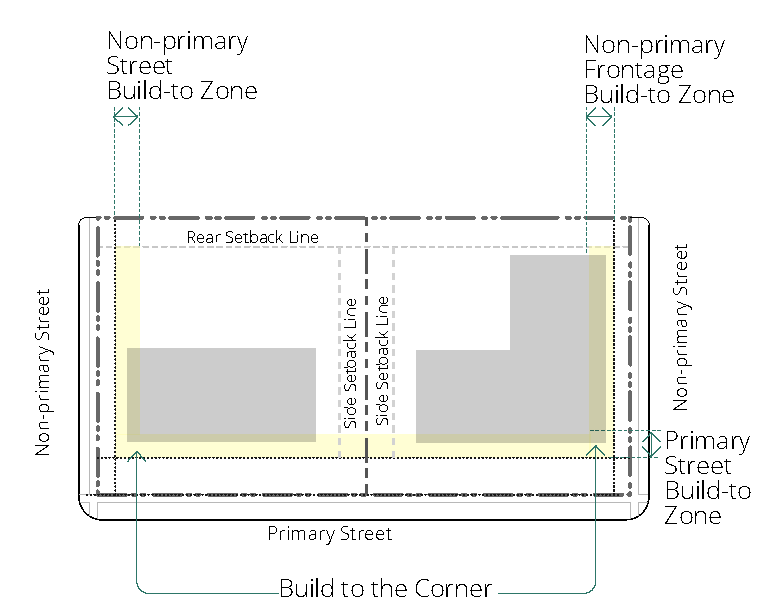
Figure 8-5(2). Illustration of Build-to Zones and Building to the Corner
8-4.5.
Primary and Non-Primary Street Frontages. A hierarchy of frontages is established for the MX districts by the definition of primary streets on the regulating plan (Figure 8-3(2)). Refer to building type requirements (8-4 through 8-10) for requirements along these street frontages.
a.
Frontages along Civic or Open Space. Lots containing or abutting civic spaces or public open space shall treat frontages abutting that space as primary frontages.
b.
Corners. At all intersections of primary with non-primary streets, primary facade requirements (including but not limited to transparency, materials, and horizontal and vertical divisions)shall turn the corner a minimum of 30 ft. horizontally along the non-primary street facade.
c.
Non-Primary Frontages. Non-primary frontages include all street frontages that are not designated as primary on the regulating plan. Per the regulations for each building type, non-primary frontages may have a lower level of facade treatment than a primary frontage. Garage and parking lot driveways may be accessed off non-primary streets, if specifically defined per building type. Non-primary frontages may always be treated at the higher level of a primary frontage.
8-4.6.
Treatment of Non-Building Lot Areas.
a.
Build-To Zones and Setback Areas. All build-to zones and setback areas not covered by building shall contain either landscape, patio, or sidewalk space, not to exceed the impervious and semi-pervious site coverage allowed per building type.
1.
Exception. Where driveways are allowed, driveways may cross perpendicularly through the build-to zone or setback with a maximum width of 22 feet for two-way driveways and 12 feet for one-way and detached house driveways.
2.
Parking. Parking spaces are not permitted in build-to zones or setbacks.
b.
Yards. All yards not covered by accessory structures, parking, or drives shall contain either landscape, patio, or sidewalk space. Refer to 8-15 for ground plane vegetation requirements in landscape areas.
8-4.7.
Accessory Structures. Refer to Chapter 6 for permitted accessory structures other than general outbuildings to support the principal use.
a.
Attached accessory structures are considered part of the principal structure.
b.
Detached garages or general outbuildings are allowed as follows:
1.
Detached accessory structures shall comply with all setbacks, unless otherwise noted in this Chapter.
2.
Detached accessory structures are permitted only in the rear yard. See 8-3, Definitions for yard definition.
3.
Detached accessory structures shall be a maximum of one story lower than the height of the principal structure or one story in height, whichever is higher.
(Ord. No. 2018-6, §§ 1, 2, 2-21-18)
8-5. - Descriptions and intent of building types.
The following describes the intent of each building type defined in the following sections. Refer to Table 8.1. Building Types by Districts and the City's zoning map, for permitted locations.
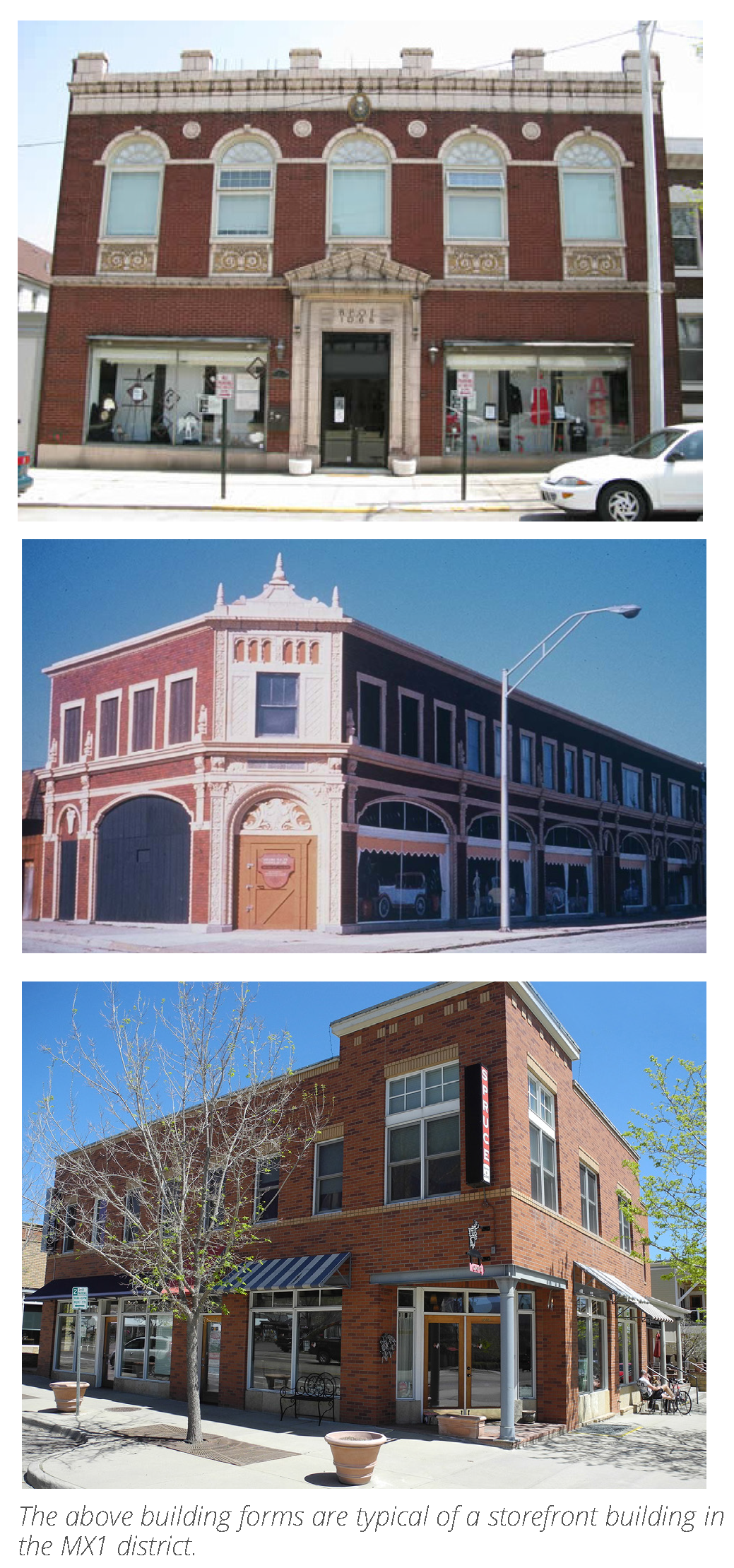
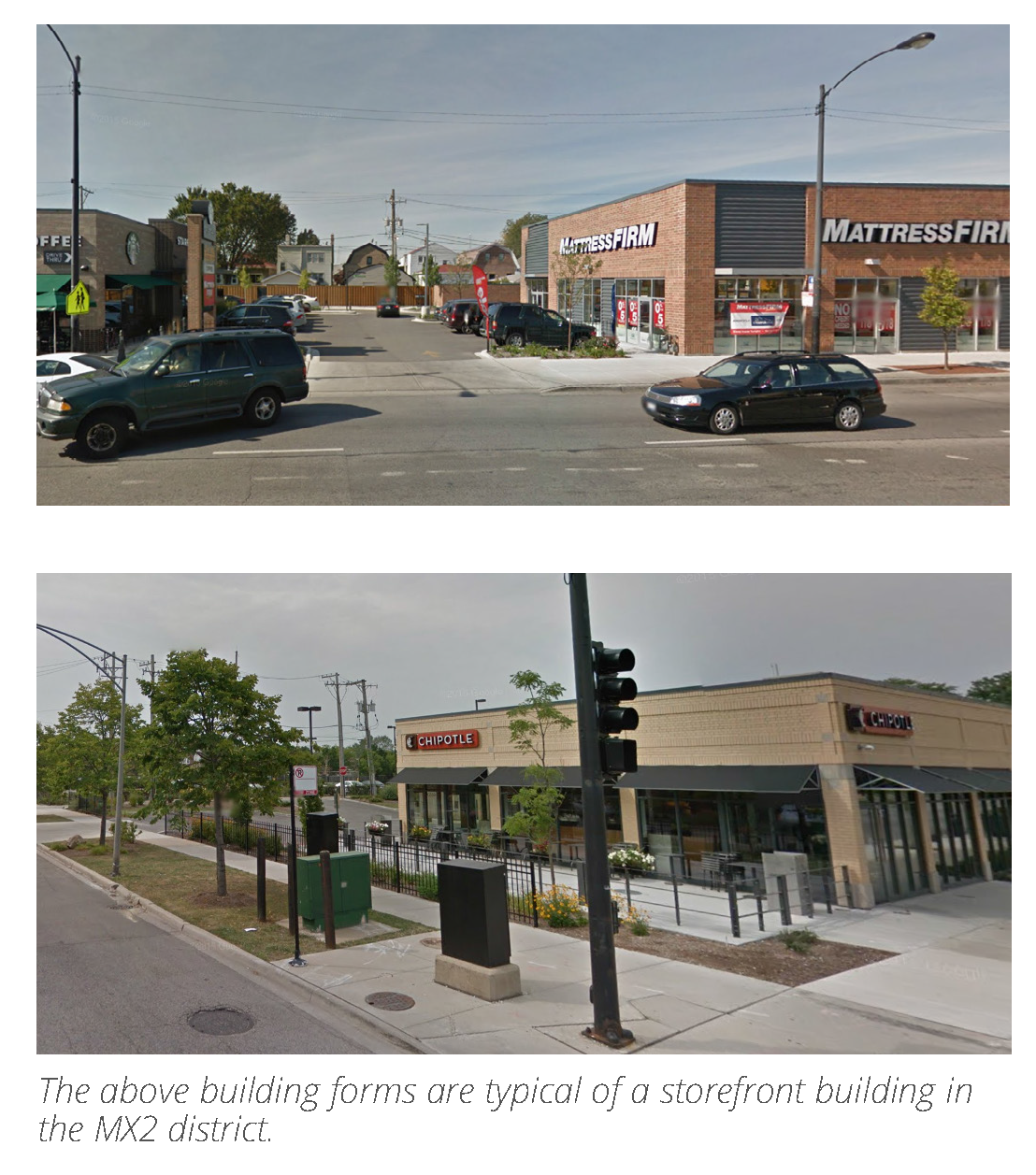
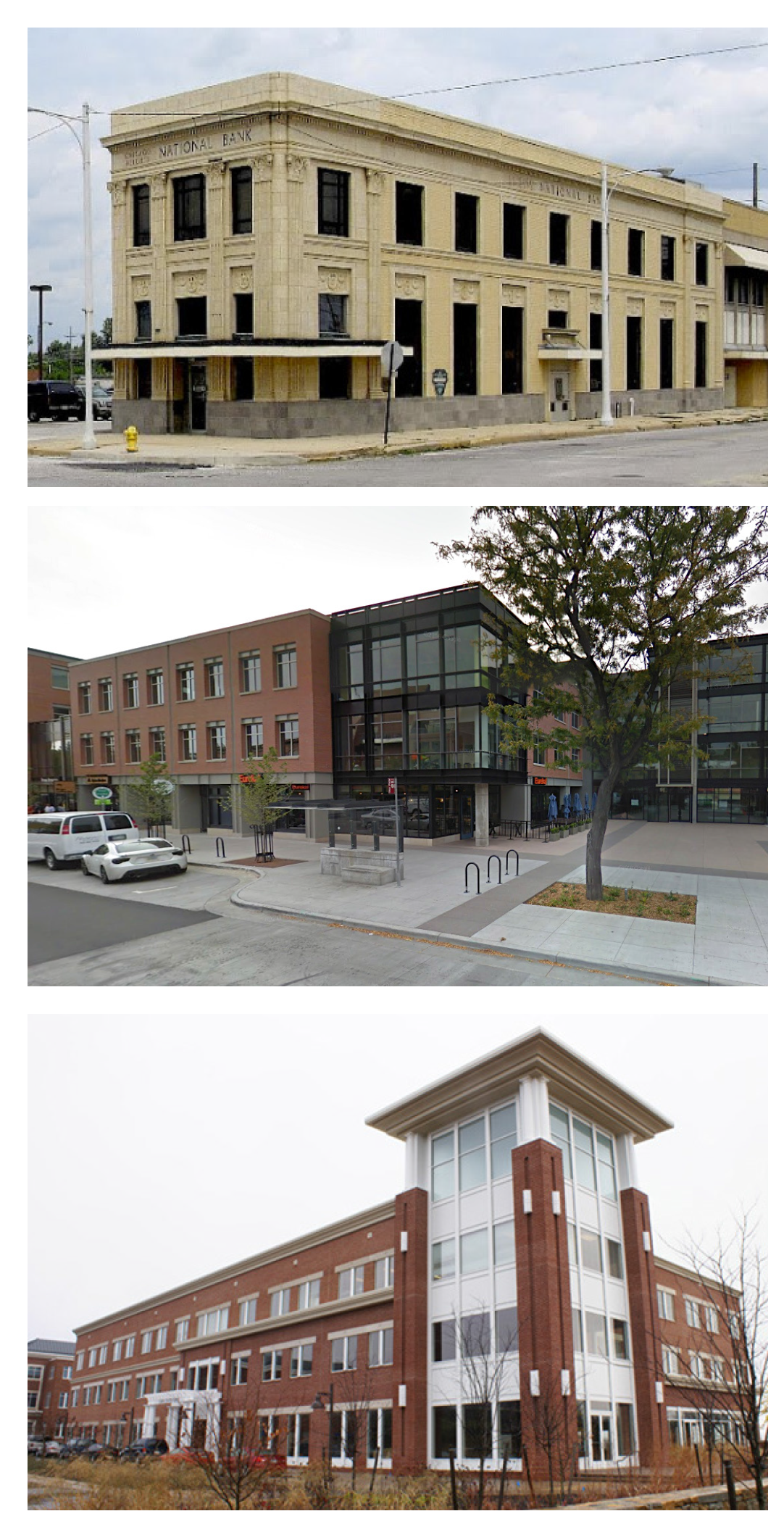
Images are intended to illustrate the general character intent for each building type. The buildings and sites in each image may not fulfill all of the building type requirements.
8-5.1.
Storefront Building. The Storefront building type is a pedestrian-oriented, mixed-use building. Ground story storefront is required along all primary streets with retail and service uses to provide activity. Upper story uses are highly flexible. Parking is in the rear and side yards, depending on the district.
8-5.2.
General Building. The General building type is a flexible building form intended for residential and office uses. Unlike the Storefront building, the ground story transparency requirement is the same as upper stories and the ground story is not required to be at sidewalk level.
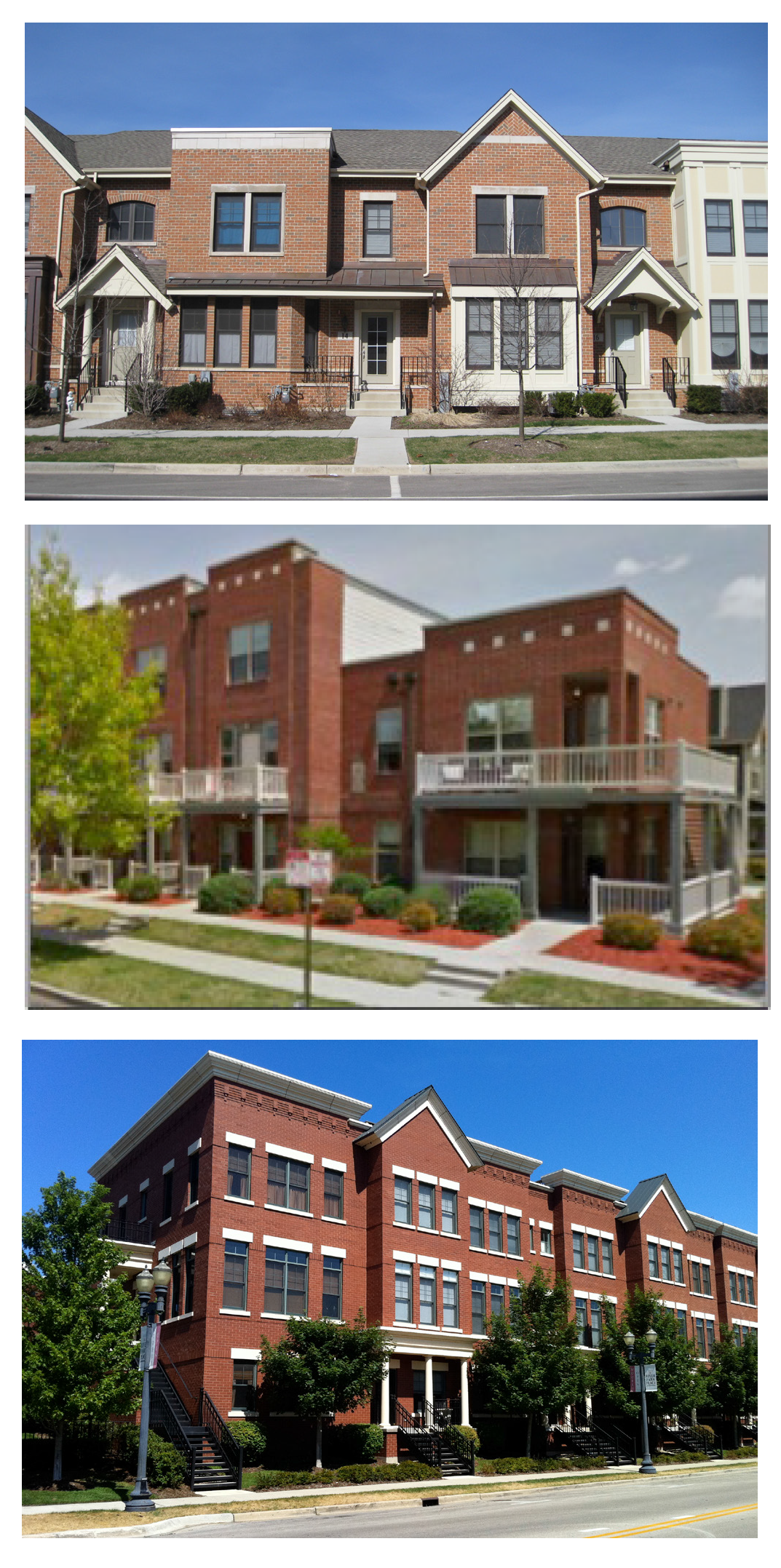
8-5.3.
Row Building. The Row building type is similar to the General building, but is smaller in scale and divided into separate vertical units each with its own entrance. Parking is in the rear and can be attached or detached, with access off a rear lane or alley.
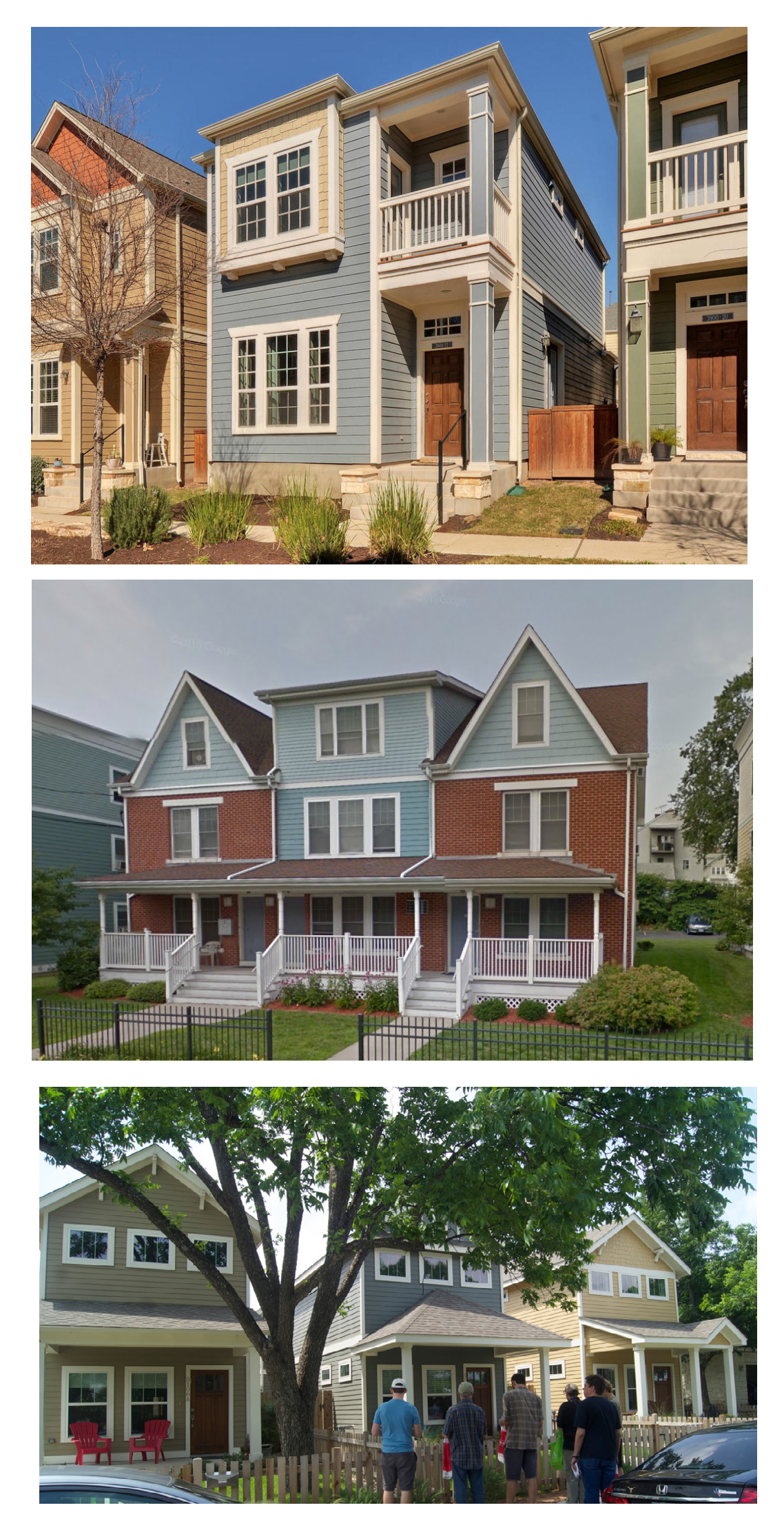
8-5.4.
Yard Building. The Yard building type applies to new construction single family houses. This building type is intended to fit into the character of housing existing in the downtown area. Parking is required to be located in the rear of the house and a front entrance is required facing the street.
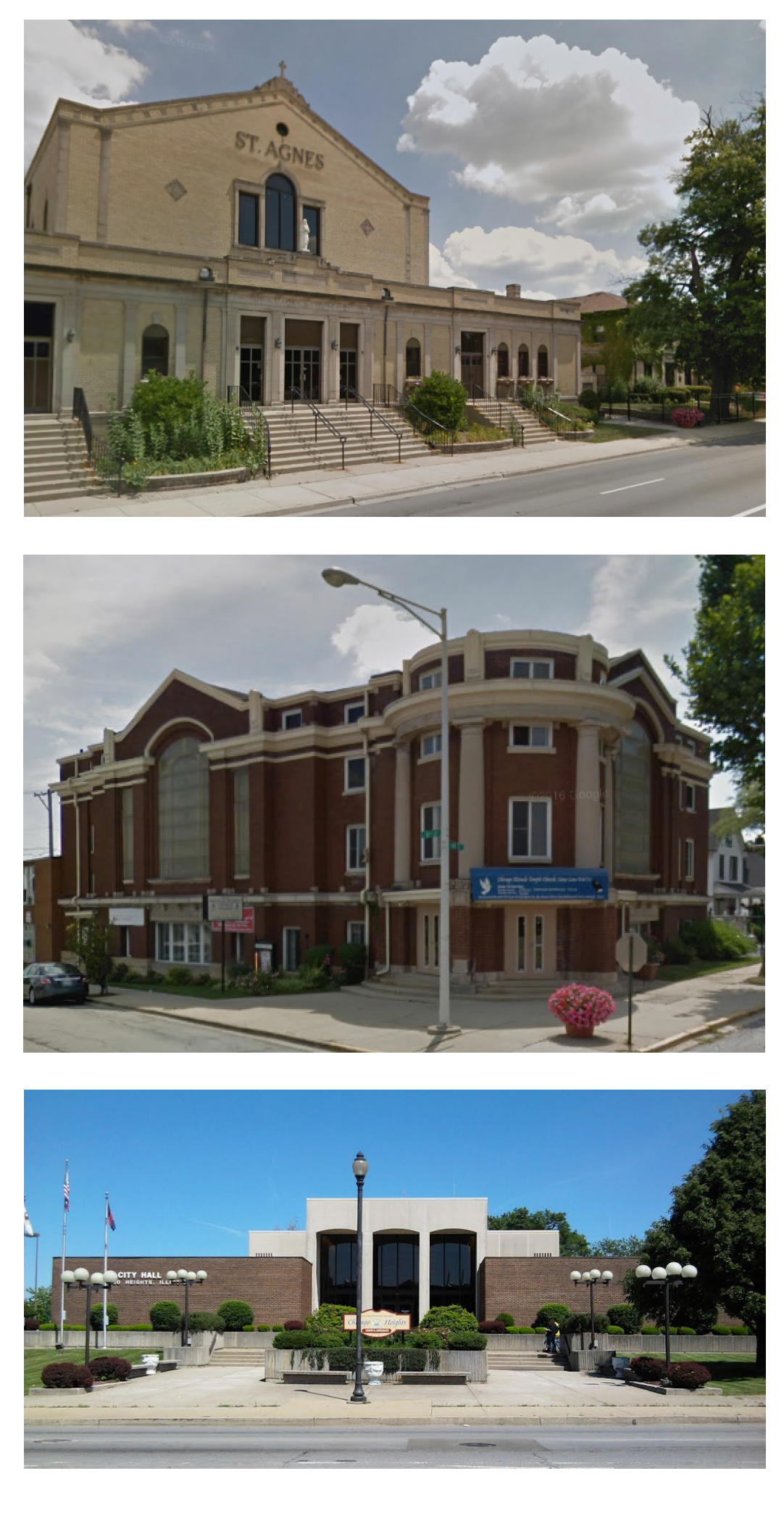
8-5.5.
Civic Building. The Civic building type is the most flexible building, meant to allow for more iconic designs within the urban fabric of the area. This building type, however, is limited to civic and institutional uses.
(Ord. No. 2018-6, §§ 1, 2, 2-21-18)
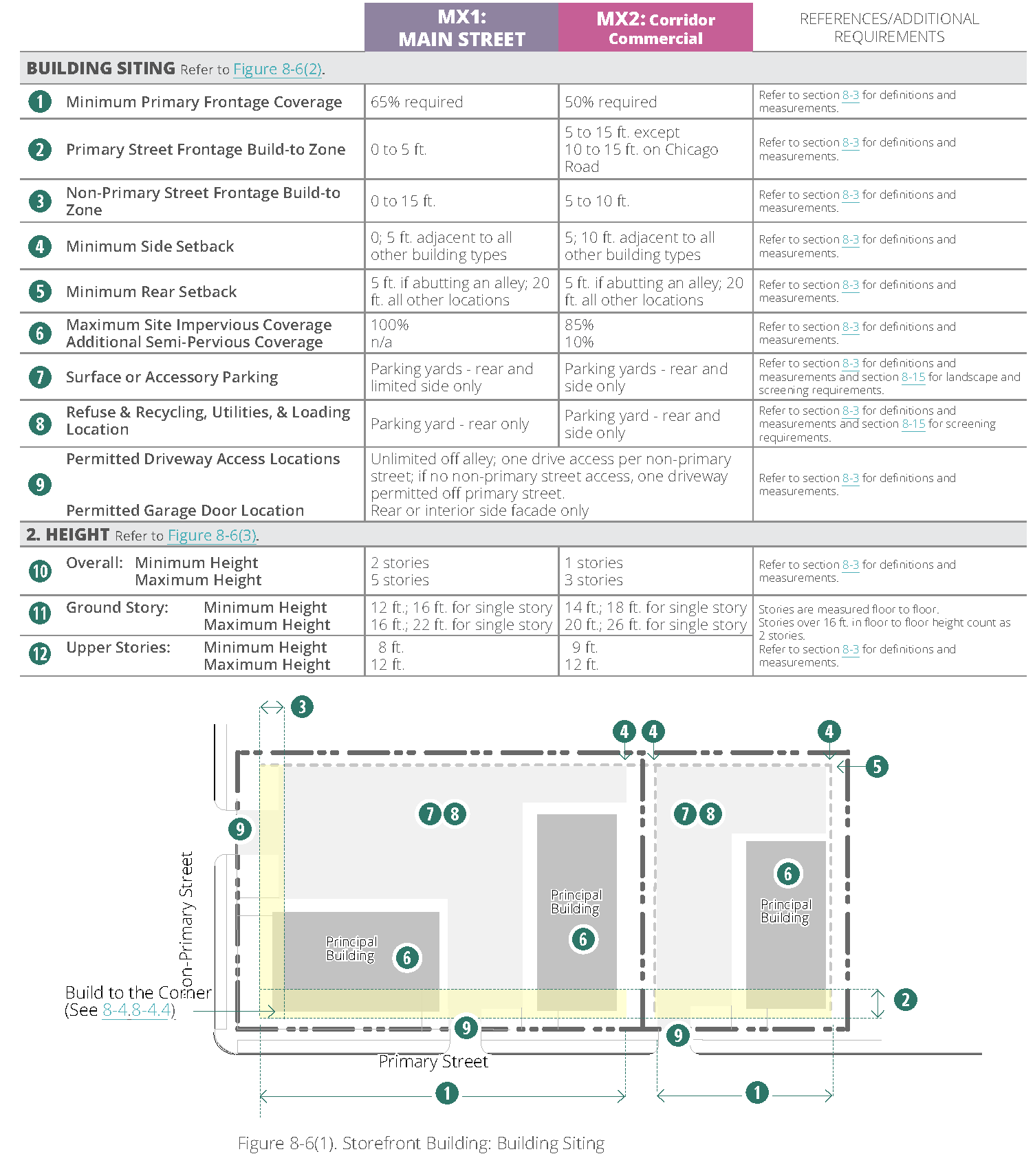
8-6. - Storefront building type.
The following defines the requirements specific to this building type. Refer to 8-4 and 8-11 for requirements applicable to all building types.
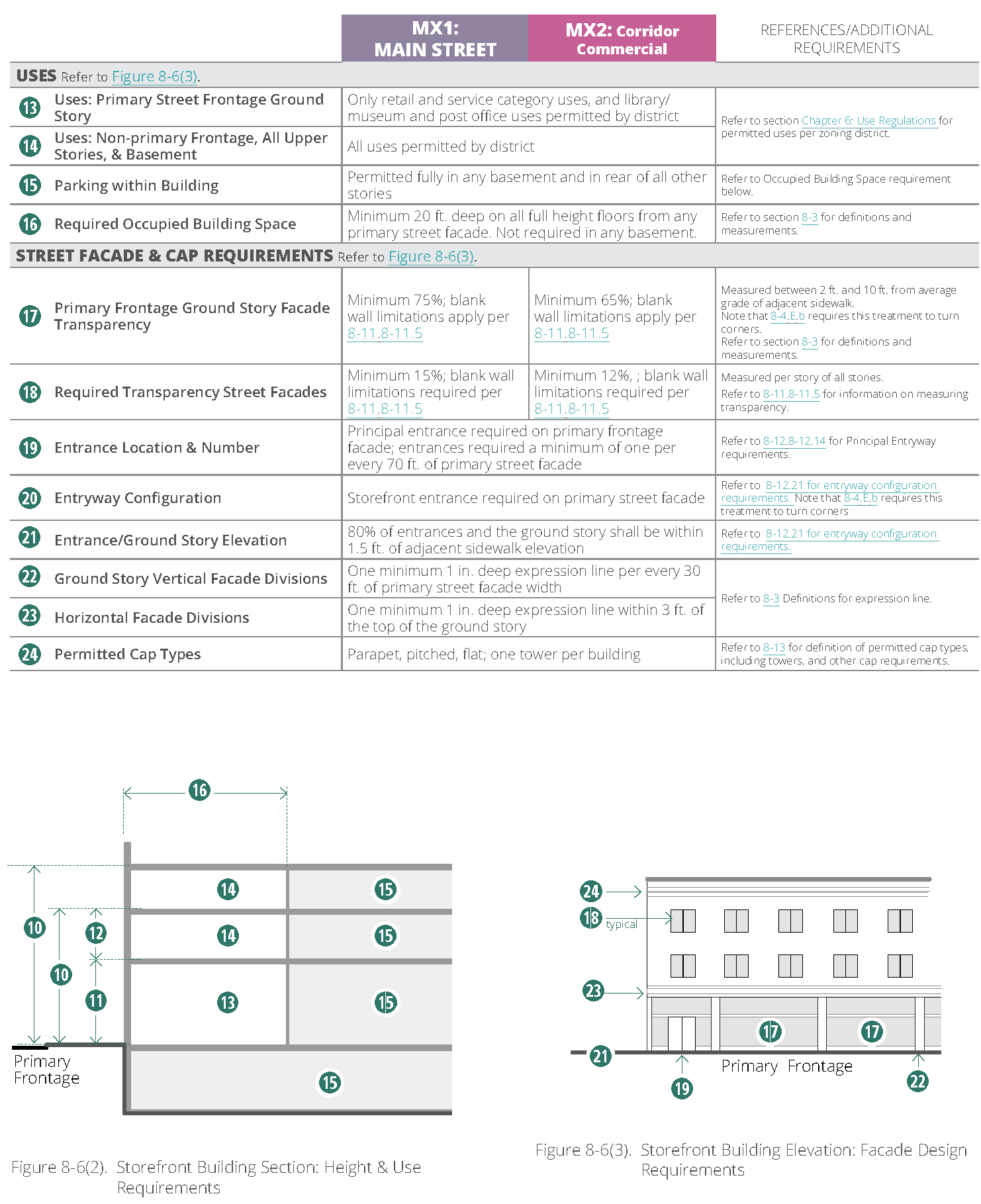
(Ord. No. 2018-6, §§ 1, 2, 2-21-18)
8-7. - General building type.
The following defines the requirements specific to this building type. Refer to 8-4 and 8-11 for requirements applicable to all building types.
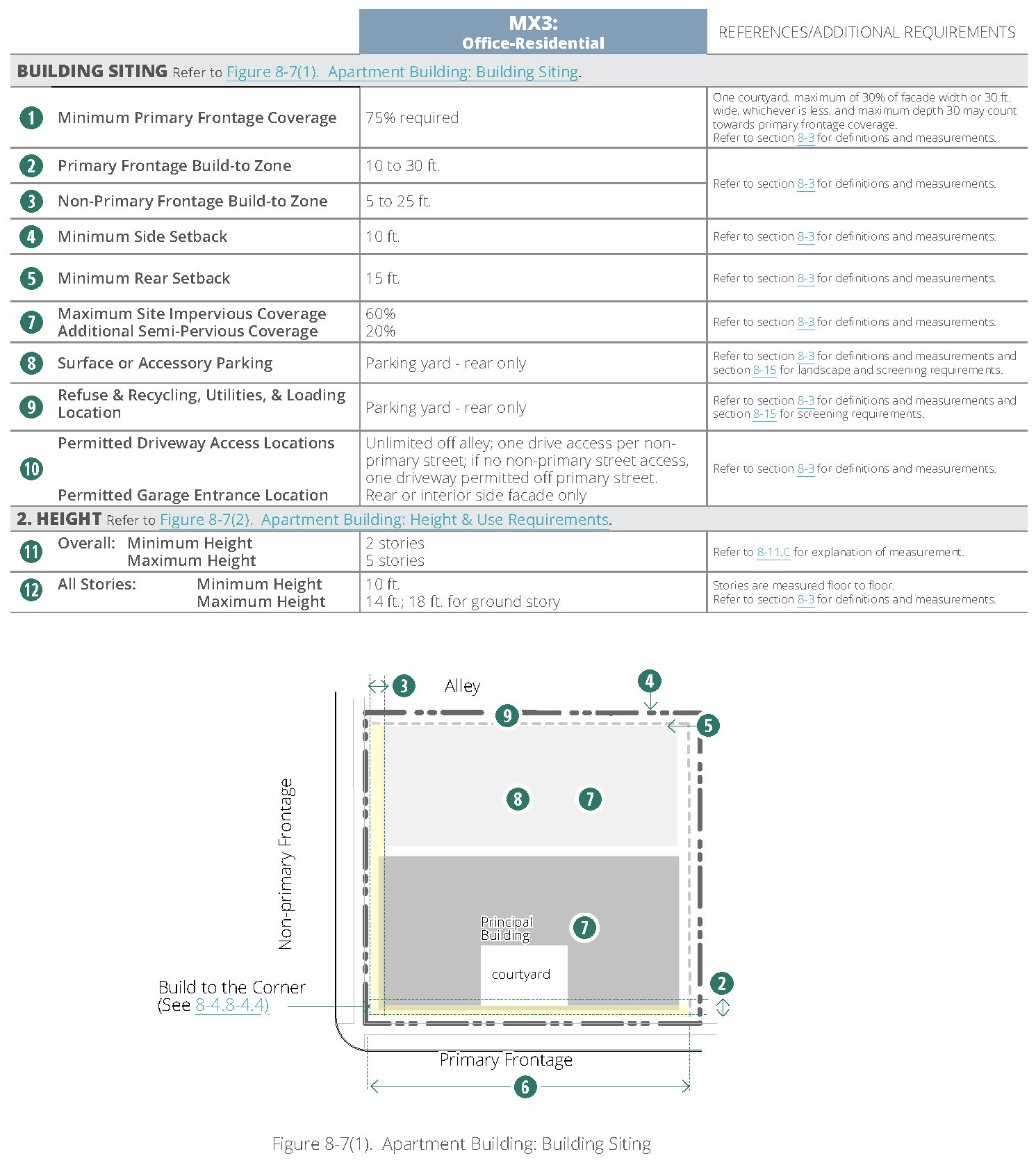
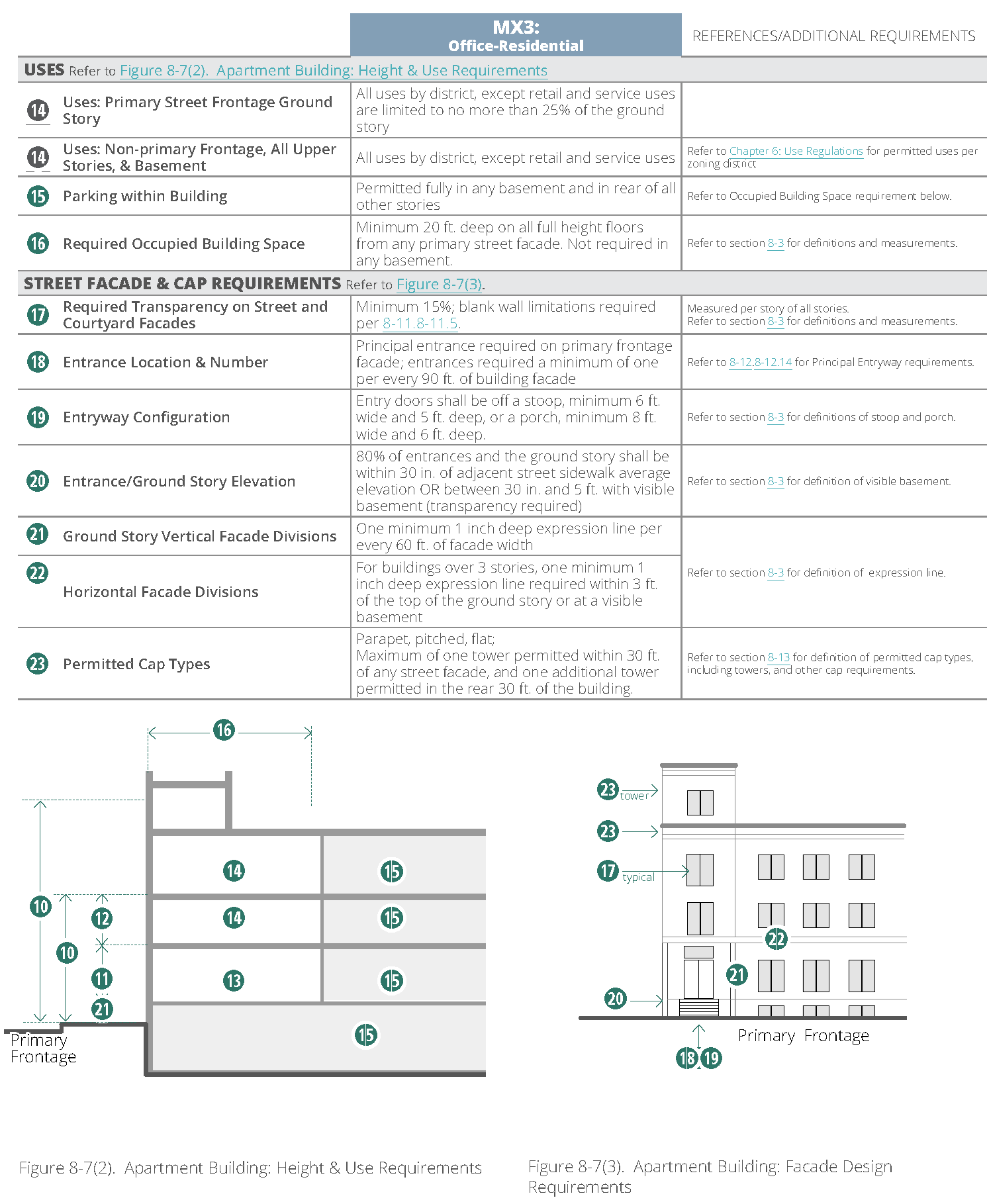
(Ord. No. 2018-6, §§ 1, 2, 2-21-18)
8-8. - Row building type.
The following defines the requirements specific to this building type. Refer to 8-4 and 8-11 for requirements applicable to all building types.
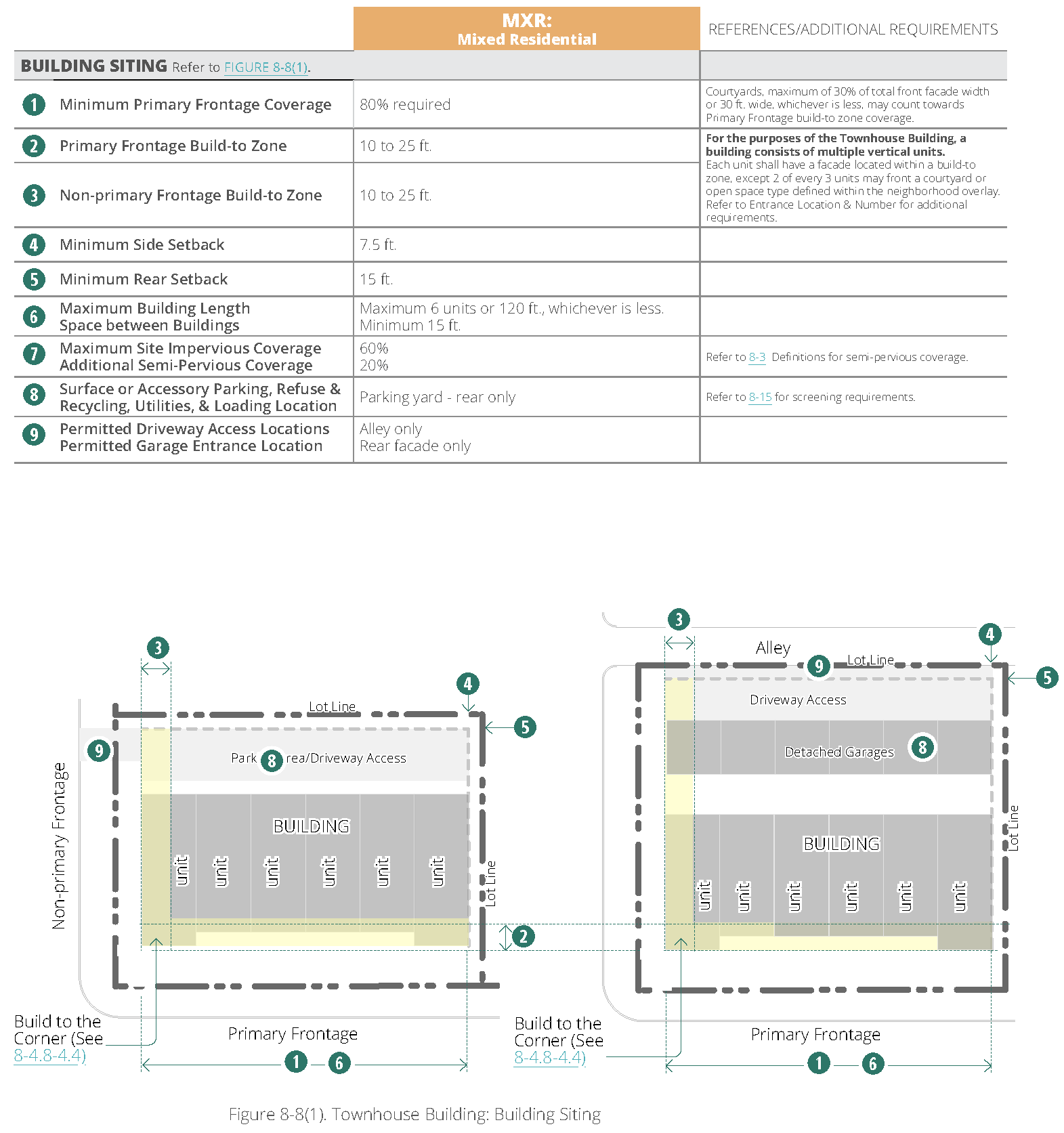
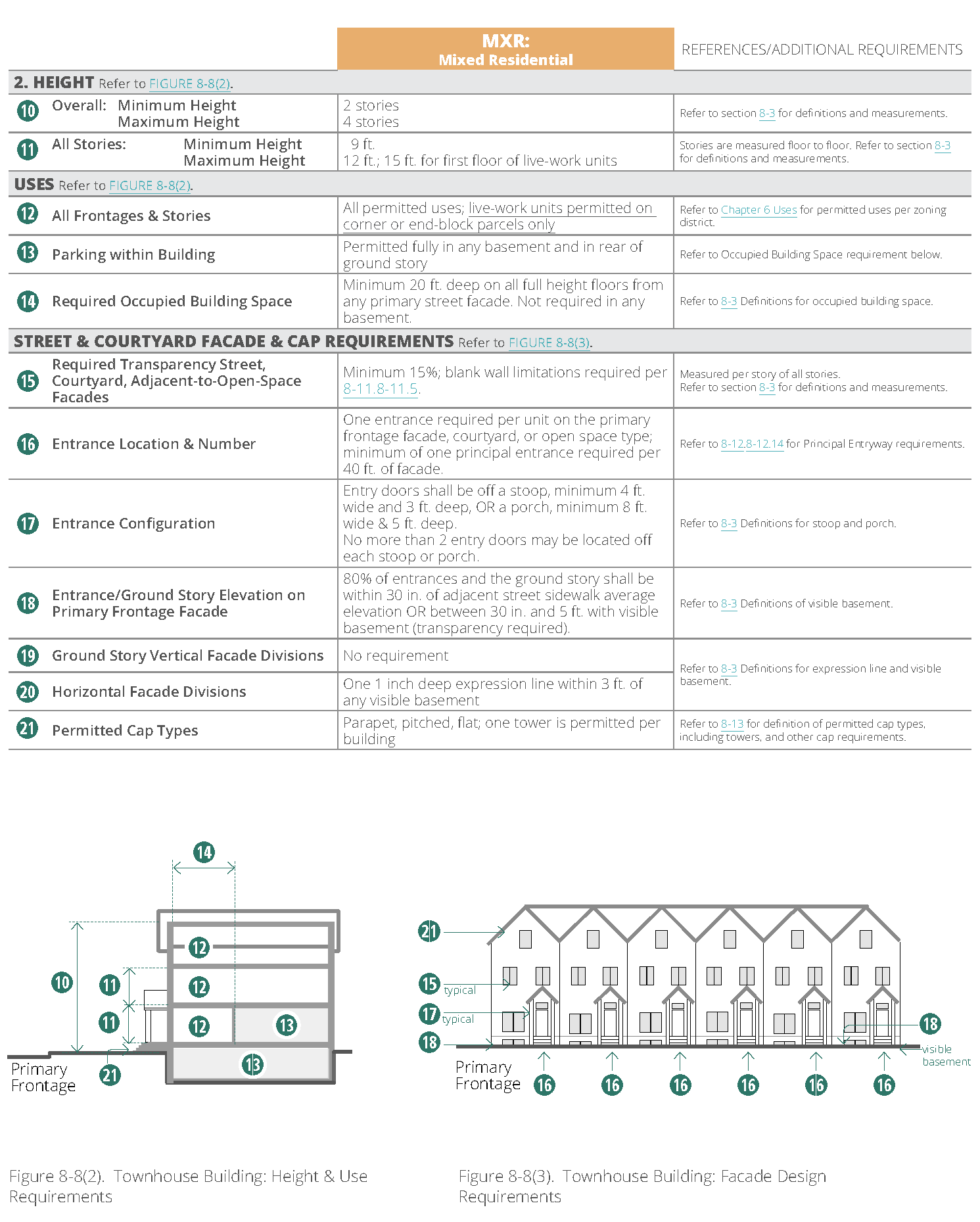
(Ord. No. 2018-6, §§ 1, 2, 2-21-18)
8-9. - Yard building type.
The following defines the requirements specific to this building type. Refer to 8-4 and 8-11 for requirements applicable to all building types.
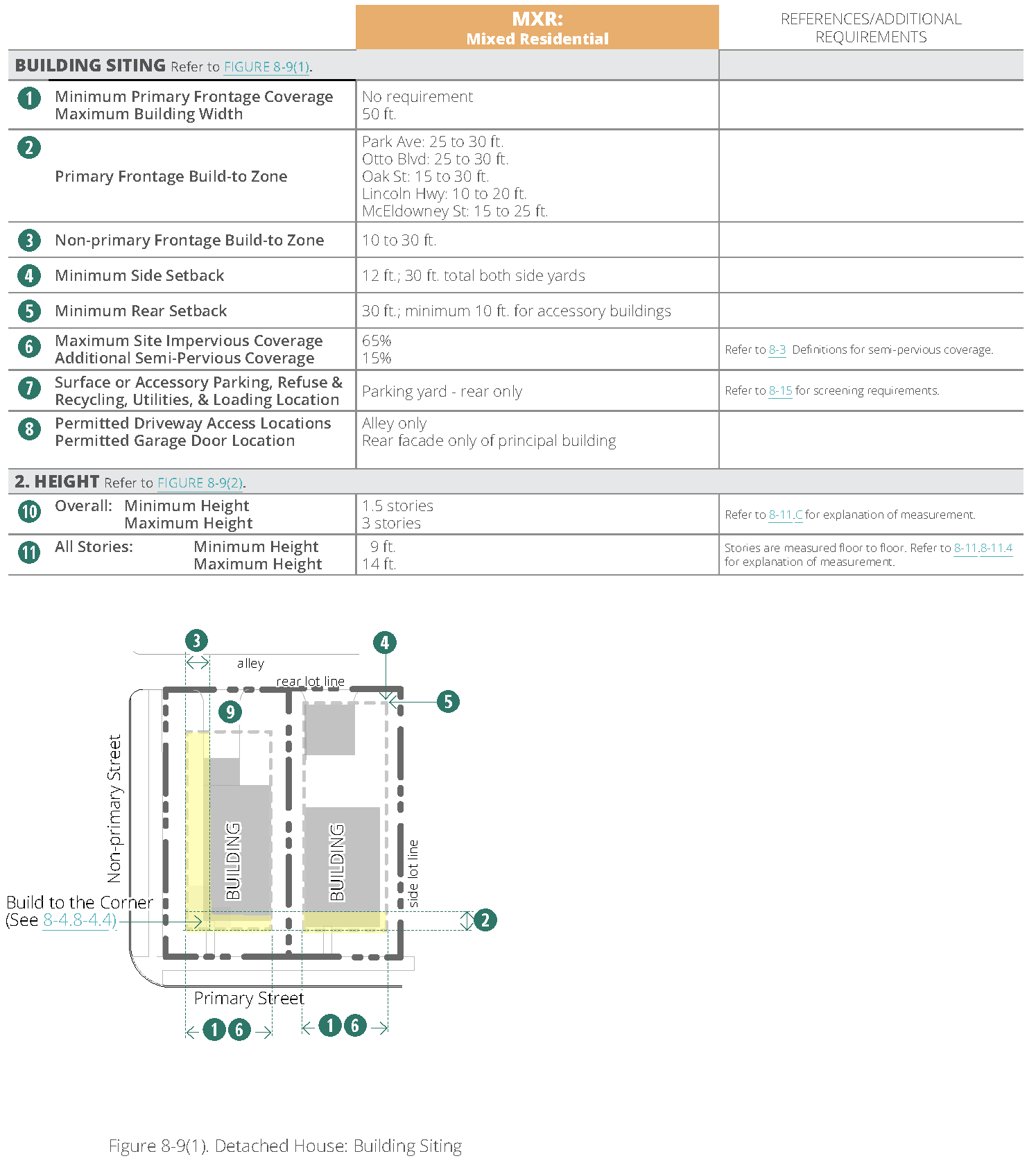
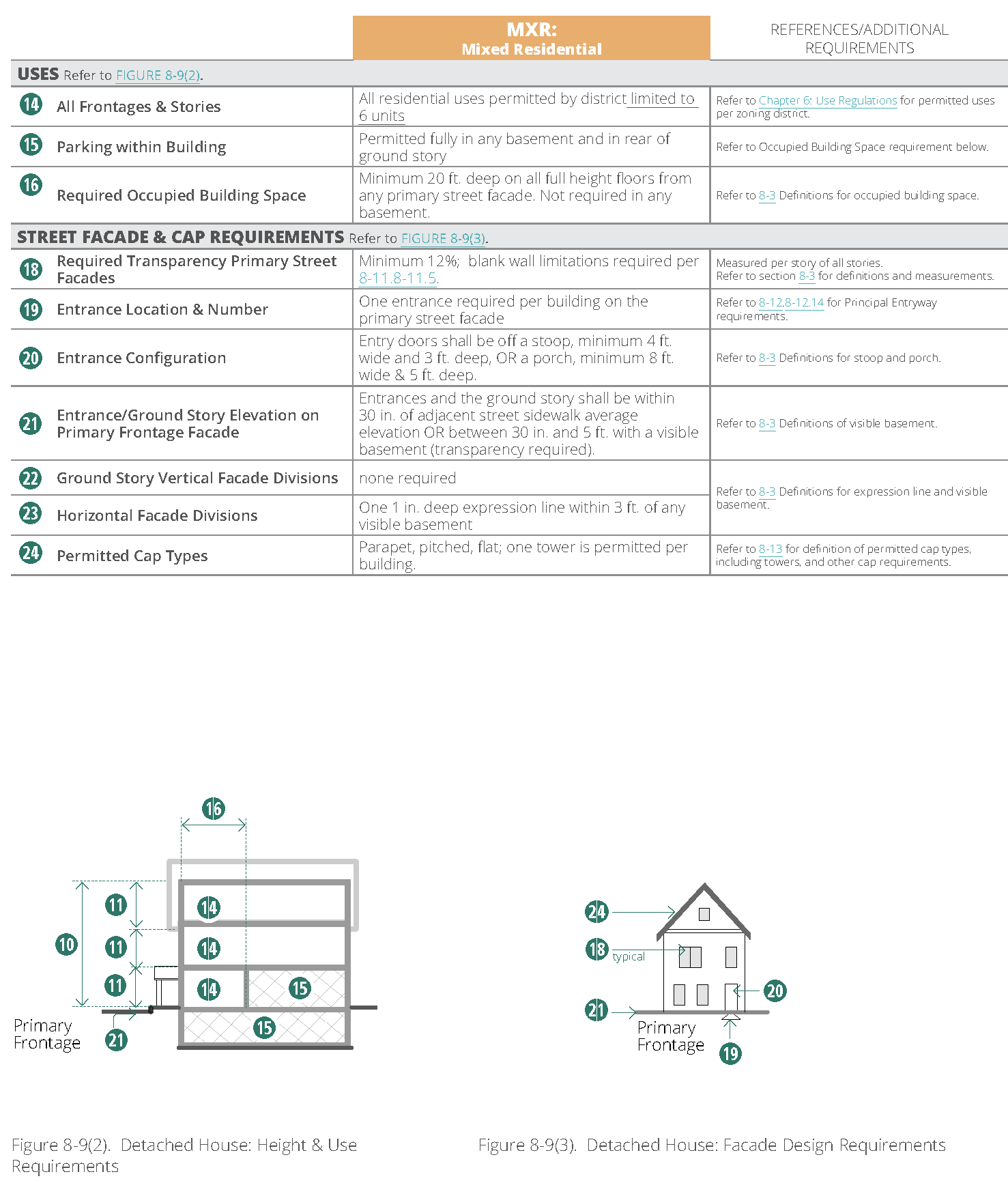
(Ord. No. 2018-6, §§ 1, 2, 2-21-18)
8-10. - Civic building type.
The following defines the requirements specific to this building type. In all districts, development of this building type requires a special use permit. Refer to 8-4 and 8-11 for requirements applicable to all building types.
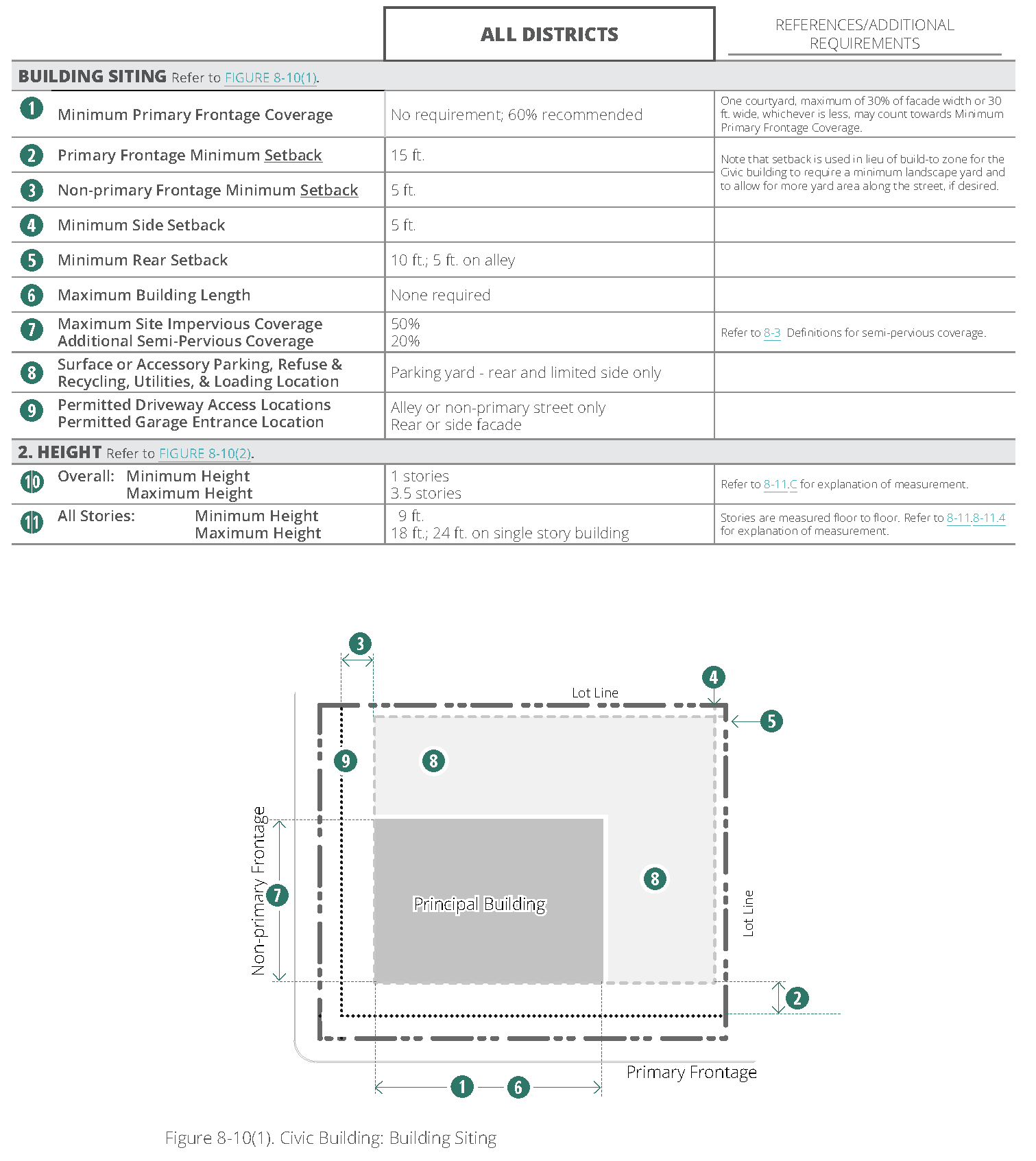
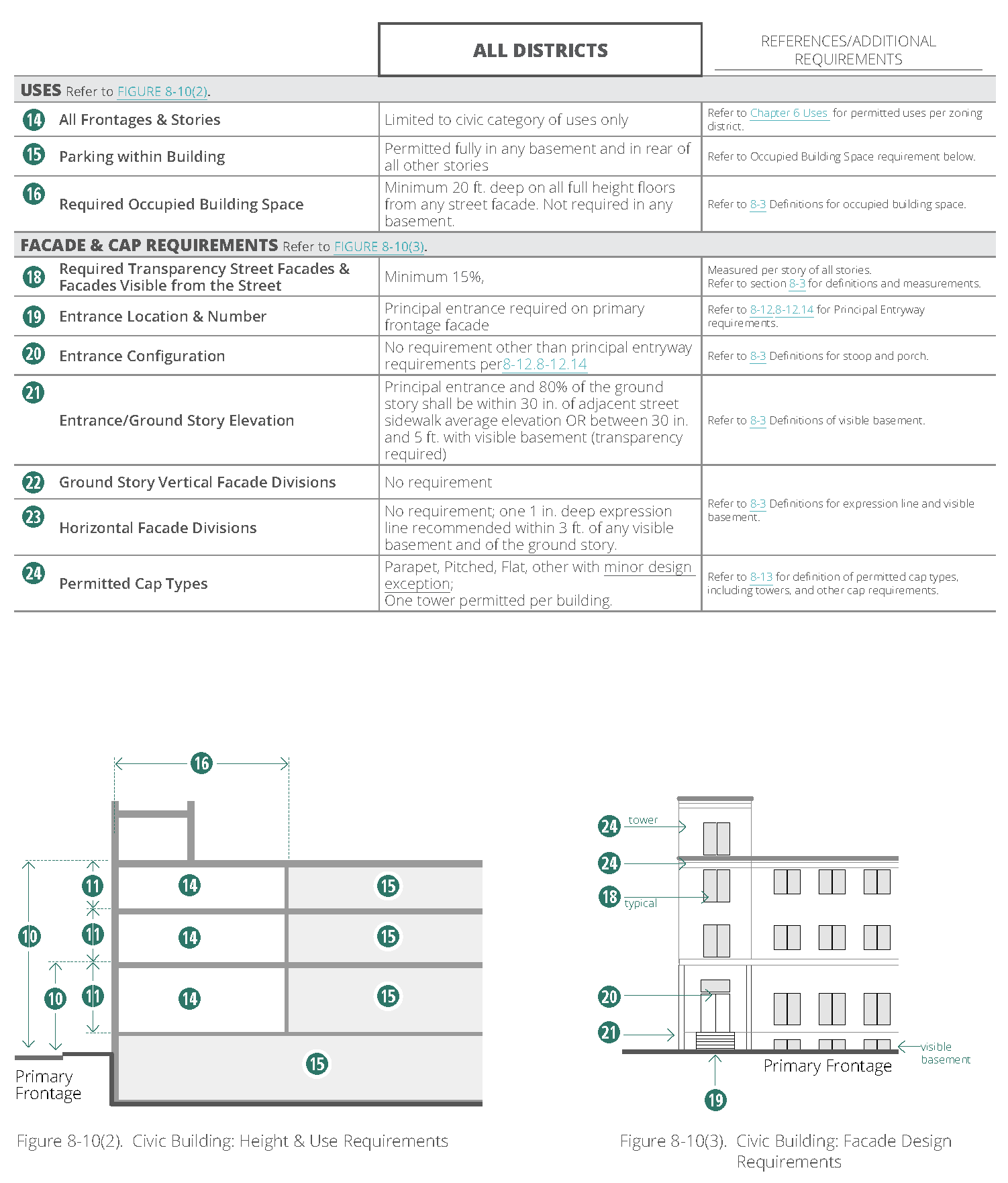
(Ord. No. 2018-6, §§ 1, 2, 2-21-18)
8-11. - Measurement of building type requirements.
The following explains and further defines the standards outlined on the tables on the previous pages, specific to each building type, refer to 8-6 through 8-10.
8-11.1.
Minimum Primary Frontage Coverage. The minimum percentage of building facade along the Primary Frontage of a lot is designated on each building type table.
a.
Measurement. The width of the principal structures (as measured within the build-to zone along the frontage edge) is divided by the length of the frontage parallel to the property line following the street. Refer to Figure 8-11(1), Minimum Primary Frontage Lot Line Coverage.
b.
Courtyards. Where noted by building type, courtyards, per 8-3, Definitions, located along the facade in the build-to zone count towards the minimum coverage.
c.
Civic Space Type. Open spaces per civic space type requirements are exempt from minimum Primary frontage lot line coverage.
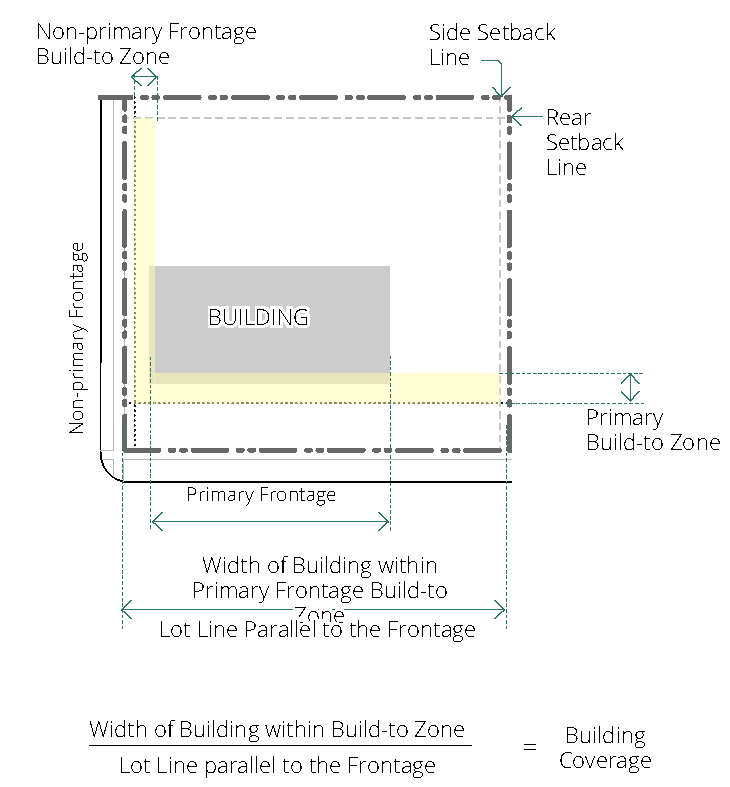
Figure 8-11(1). Minimum Primary Frontage Lot Line Coverage
8-11.2.
Build-to Zone. The build-to zone is designated separately for each frontage on each building type table. Refer to Figure 8-11(2), Build-to Zones.
a.
Measurement. The build-to zone for all frontages is measured from the property line parallel to the frontage, unless otherwise noted.
b.
Frontage Drive. Where a frontage drive is required per the regulating plan, the build-to zone is set in relationship to the frontage drive. Refer to 8-12.21 for Frontage Drive requirements.
c.
Encroachments. Awnings, balconies, and building mounted signage may extend beyond the build-to zone into any yard area, but may not extend into the street right-of-way. In MX1, awnings, balconies, and building- mounted signage may extend into the street right-of-way within 3 feet of the curb with permission and agreement from the City.
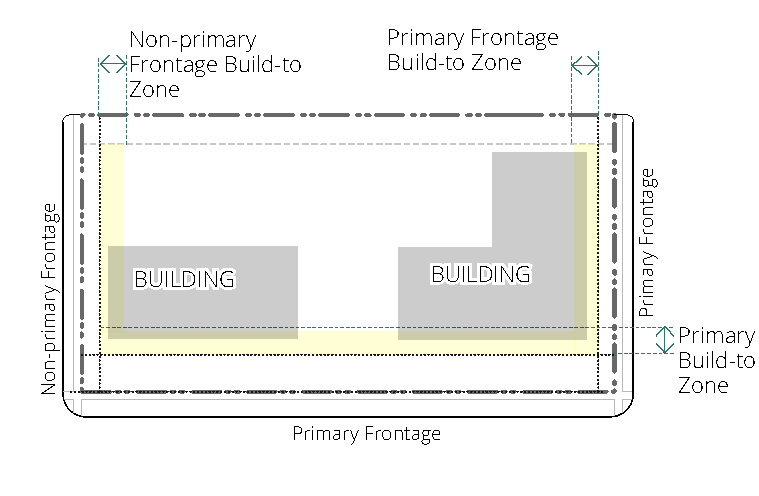
Figure 8-11(2). Build-to Zones
8-11.3.
Minimum and Maximum Height. (Refer to Figure 8-11(3), Measuring Stories with Floor-to-Floor Height).
a.
Minimum Overall Height. Minimum heights require a minimum number of stories on the primary frontage facades of the building. The building must meet the minimum required height for the first 30 feet of occupied building space measured from the primary frontage facade into the building.
b.
Maximum Overall Height. Maximum heights are specified both in number of stories and overall dimension. This requirement applies to the entire building.
1.
Towers. Where noted, towers may exceed the overall maximum height per 8-13, Cap Types.
2.
Cap Type. Where noted, certain cap types may allow additional height.
c.
Two Half Stories. Refer to 8-3 for definition of a half story. A building incorporating both a half story within the roof and a visible basement shall count the height of the two half stories as one full story.
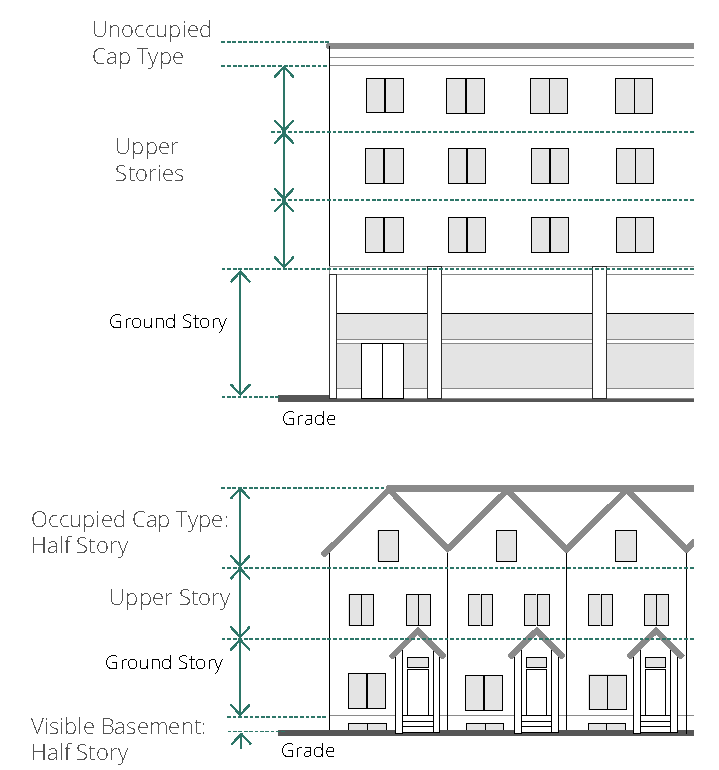
Figure 8-11(3). Measuring Stories with Floor-to-Floor Height
8-11.4.
Minimum and Maximum Height per Story. Each story is measured with a range of permitted floor-to-floor heights. Refer to Figure 8-11(3), Measuring Stories with Floor-to-Floor Height.
a.
Measurement. Floor height is measured in feet between the floor of a story to the floor of the story above it. Minimum and maximum floor-to-floor heights are required to be met on floors along facades, a minimum of 80 percent of each story.
b.
Single Story Buildings and Top Floor Measurement. For single story buildings and the uppermost story of a multiple story building, floor-to-floor height shall be one foot less than noted per building type and measured from the floor of the story to the ceiling.
c.
Mezzanines. Mezzanines may be included within the floor-to-floor height of any story, included in the calculation of stories. Mezzanines occupying more than 30 percent of the floor area below and extending above the story's allowable floor-to-floor height shall count as an additional story.
d.
Taller Spaces. Spaces exceeding the allowable floor-to-floor heights of the building type are not permitted on primary frontage facades. These spaces are unlimited on interior lots and non-primary frontage facades.
8-11.5.
Minimum Required Transparency. Per the requirements of each building type, a minimum amount of transparency is required on all stories of all facades.
a.
Measurement. Minimum facade transparency is measured from floor-to-floor of each story separately. Refer to Figure 8-11(4), Measuring Minimum Facade Transparency. Transparency, defined in 8-3, Definitions, includes windows and any glass in doors that is highly transparent with low reflectance. The measurement may include the frame, mullions, and muntins, but shall not include trim or casing.
b.
Blank Wall Segments. No more than a 15-foot-wide section, measured horizontally, and no more than 30 percent of any story shall be without transparency.
1.
Exception. When a facade of any story is located within 3 feet of a parallel building facade, no minimum transparency is required for that story.
c.
Minimum Ground Story Transparency. When required by the building type, ground story transparency shall be measured between 2 feet and either 8 or 10 feet, as noted, from the average grade at the base of the facade. Minimum ground story transparency supersedes the overall minimum transparency required for the building type.
d.
Tall Stories. Stories that are 18 feet or taller in height shall be counted as 2 stories for the purpose of calculating minimum facade transparency, with each horizontal half of the story calculated separately.
e.
Half Stories. All half stories located within roof structure and visible basements are required to meet the minimum transparency.
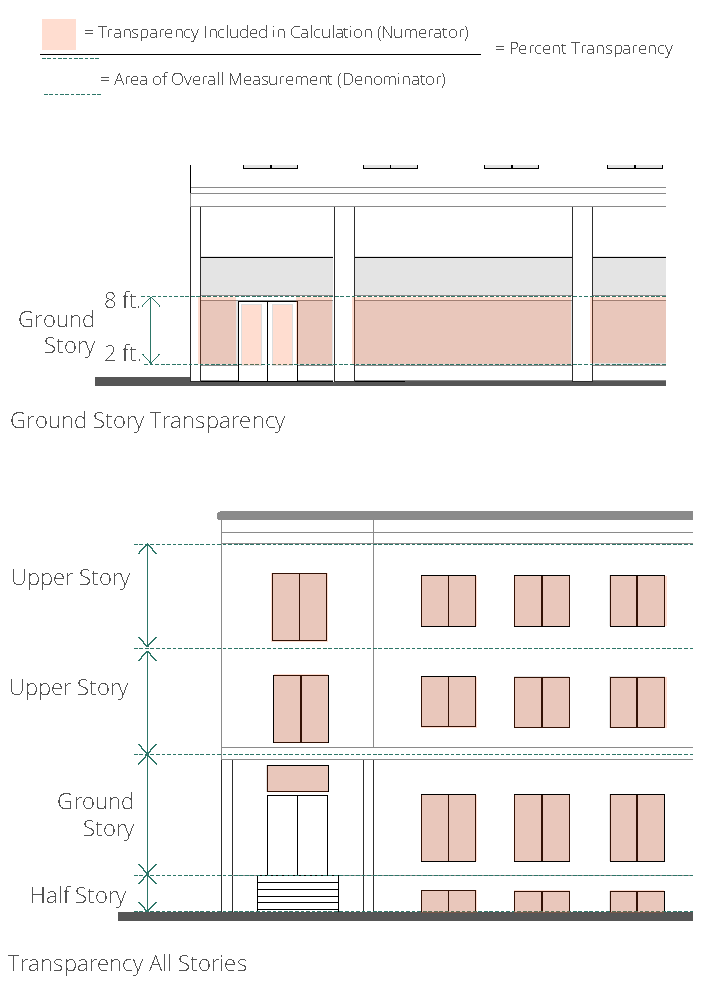
Figure 8-11(4). Measuring Minimum Facade Transparency
(Ord. No. 2018-6, §§ 1, 2, 2-21-18)
8-12. - General design requirements.
8-12.1.
Applicability. The following establishes general building design requirements applicable to all building types in the DT districts, unless otherwise specified.
8-12.2.
Intent. The intent of the following requirements is to require well-tested, high quality, durable, natural materials intended for the majority of finished surfaces, while permitting a wider range of materials for details.
8-12.3.
Major Materials. A minimum of 80 percent of each street facade, not including window and door areas, shall be constructed of major materials.
a.
Simplicity of Surface Materials. A minimum of 60 percent of each facade, not including window and door areas, shall be constructed of one major material.
b.
Side and Rear Facades. Permitted major materials shall turn the corner from the street facade onto the side or rear facade for no less than 30 feet along the adjacent facade. Refer to Limited Use Major Materials for materials permitted on side and rear facades.
c.
Permitted Major Materials. Major materials shall generally be natural, finish materials in small-scaled units. The following are acceptable major facade materials. Refer to Figure 8-12(1), Major Materials.
1.
Stone
2.
Brick
3.
Cement-Based Stucco
4.
Glass curtain wall
5.
Architectural metal panels
6.
Wood and composite wood rainscreen systems
d.
Prohibited Major Materials. The following materials are not permitted for use as major materials. Refer to Figure 8-12(1), Major Materials.
1.
Exposed, unfinished concrete
2.
Synthetic stucco (using foam insulation board)
3.
Unfinished or untreated wood except as listed above
4.
Glass block
5.
Plastic, fiberglass and acrylic panels
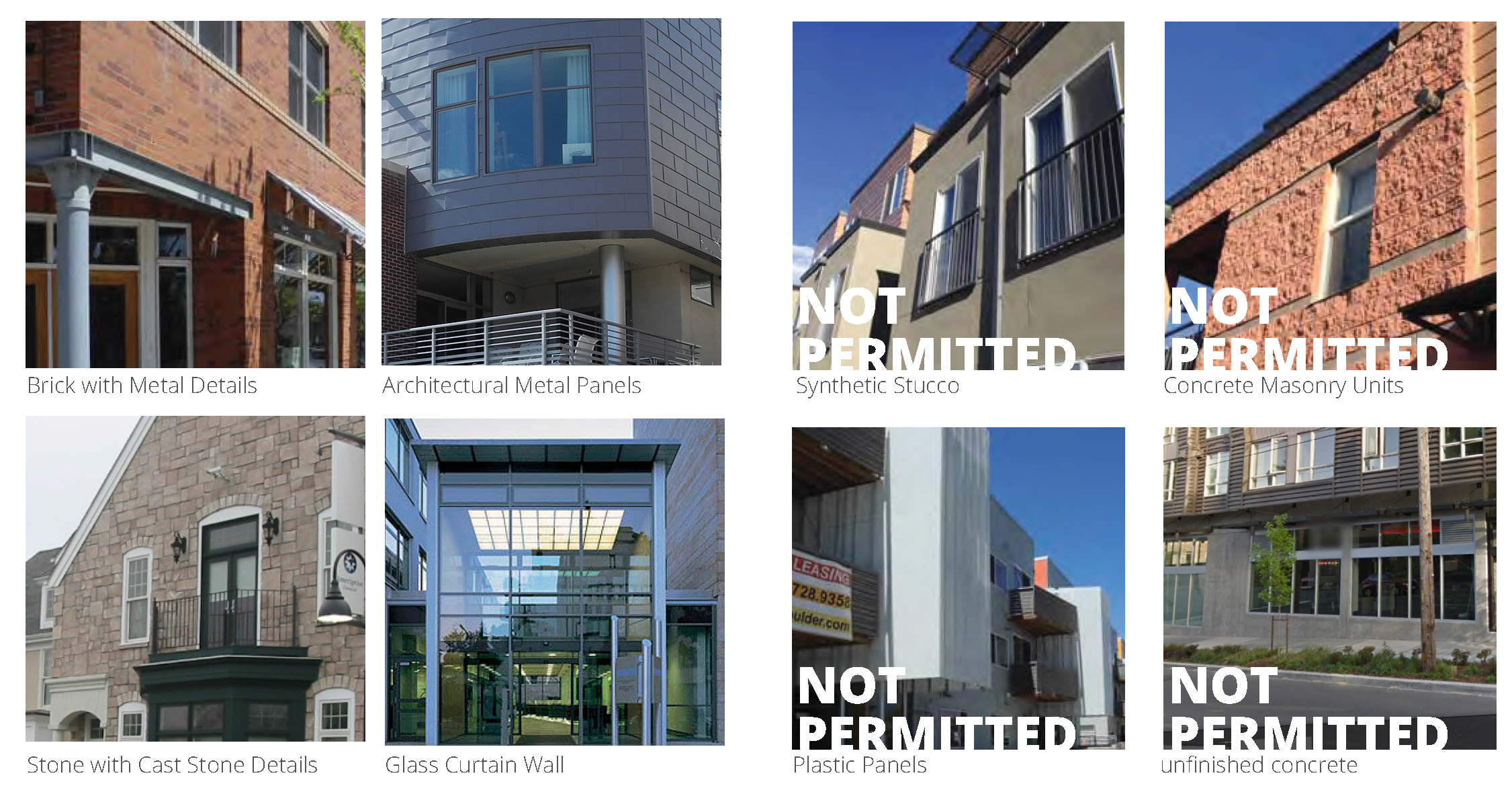
Figure 8-12(1). Major Materials
e.
Limited Use Major Materials. The following materials are prohibited except consistent with the following:
1.
Fiber Cement Board. Fiber cement lap siding or shingles (such as HardiePlank or HardieShingle or similar) are permitted major materials on the Row and Yard building types.
2.
Wood Lap Siding and Shingles. Painted wood lap siding and wood shingles are permitted major materials on the Row and Yard building types.
3.
Vinyl Siding. Vinyl siding is permitted for the rear, alley, and rail corridor facades of all buildings. Vinyl siding is permitted as a major material for the Row and Yard building types.
4.
Concrete Masonry Units (CMU). Burnished, glazed, or honed concrete masonry units (CMU) or block are permitted as major materials on facades facing rear, alley, and the rail corridor.
8-12.4.
Minor Materials. Minor materials are limited to trim, details, and other accent areas that combine to less than 20 percent of the total surface of each facade.
a.
Major Materials. All permitted major materials may serve as minor materials.
b.
Permitted Minor Materials. Permitted minor materials include the following:
1.
Fiber cement and wood trim pieces.
2.
Metal for beams, lintels, trim, exposed structure, and other ornamentation.
3.
Burnished, glazed, or honed concrete masonry units (CMU) or block for columns, trim, and details, but no surfaces except storefront bulkheads.
4.
Split-face, honed, or glazed concrete masonry units with a height less than 4.5 inches for surfaces less than 10 percent of the facade surface.
5.
Cast stone concrete elements.
6.
Vinyl for window trim and soffits.
7.
Glass curtain wall.
c.
Limited Use Minor Materials. The following materials are permitted as minor surface materials on upper floor facades only:
1.
Synthetic stucco or exterior insulation and finishing systems (EIFS), such as Dryvit.
2.
Fiber cement lap siding or shingles (such as HardiePlank or HardieShingle or similar).
8-12.5.
Pitched Roof Materials. Acceptable materials on pitched roofs include dimensional asphalt composite shingles, wood shingles and shakes, metal tiles or standing seam, slate, and ceramic tile. "Engineered" wood or slate may be approved during the site plan process with an approved sample and examples of successful, high quality local installations.
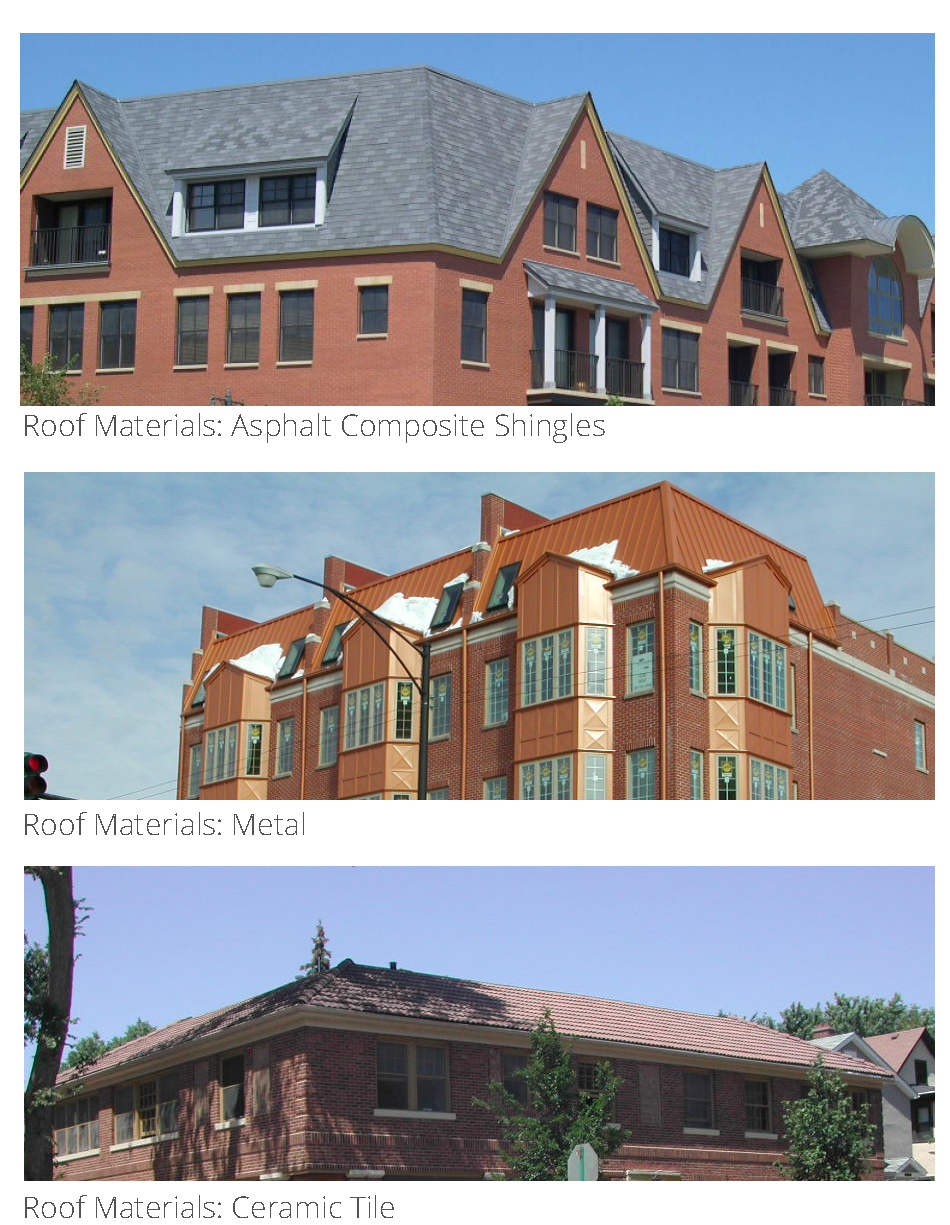
Figure 8-12(2). Roof Materials
8-12.6.
Other Materials with Approval. Other high quality materials, not listed, may be requested with a minor design exception during the design review approval process. Samples and examples of successful, high quality local installations shall be provided by the applicant.
8-12.7.
Appropriate Grade of Materials. Commercial quality doors, windows, and hardware shall be used on all building types with the exception of the Townhouse building and the Detached House. Refer to Figure 8-12(3).
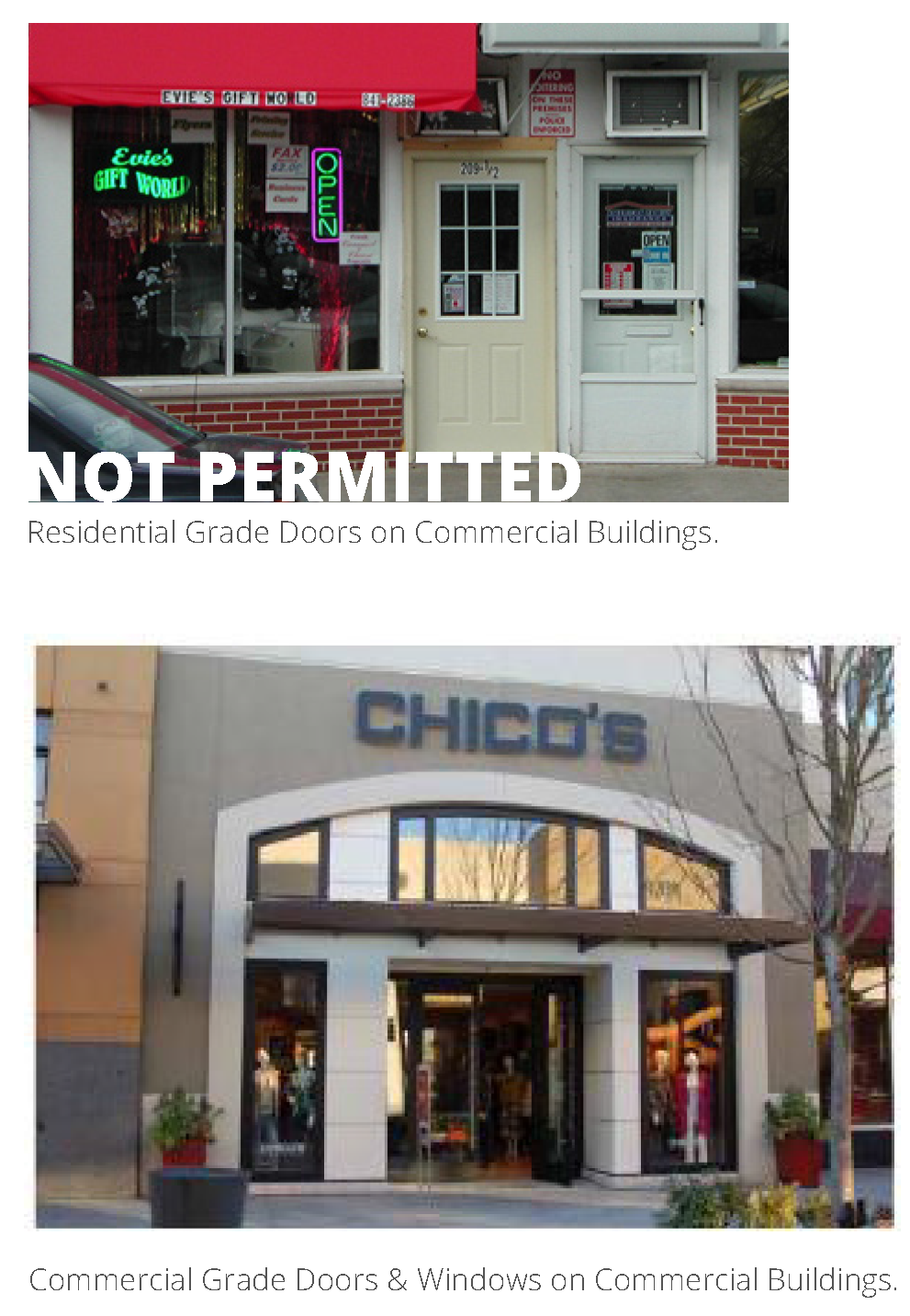
Figure 8-12(3). Commercial Grade Doors & Windows
8-12.8.
Color. Dominant building colors shall be from a historic palette from any major paint manufacturer. Other colors may be utilized for details and accents, but shall not exceed a total area larger than 10 percent of the facade surface area.
8-12.9.
Windows. Windows on all buildings shall be constructed per the following requirements as shown in Figure 8-12(4), Vertically Oriented Windows with Expressed Lintels. The following requirements apply to all buildings in the MX districts.
a.
Amount. Percent of transparency is required per building type.
b.
Recessed. On all buildings, all windows, with the exception of ground story storefront systems, shall be recessed with the glass a minimum of 2 inches back from the facade surface material or adjacent trim.
c.
Vertically Oriented. All windows shall be vertically oriented with the following exceptions:
1.
Flat Cap Type. When the flat cap type (refer to 8-13, Cap Types) is utilized, horizontally oriented windows are permitted for 30 percent of the total transparency area of each story above the ground story.
2.
Rear and Side Facades. On rear and side facades, up to 50 percent of the total transparency area of each story may include horizontally oriented windows.
3.
Exception. Horizontally oriented windows exceeding 40 percent or more of the level of transparency for any story may be requested through the minor design exception process.
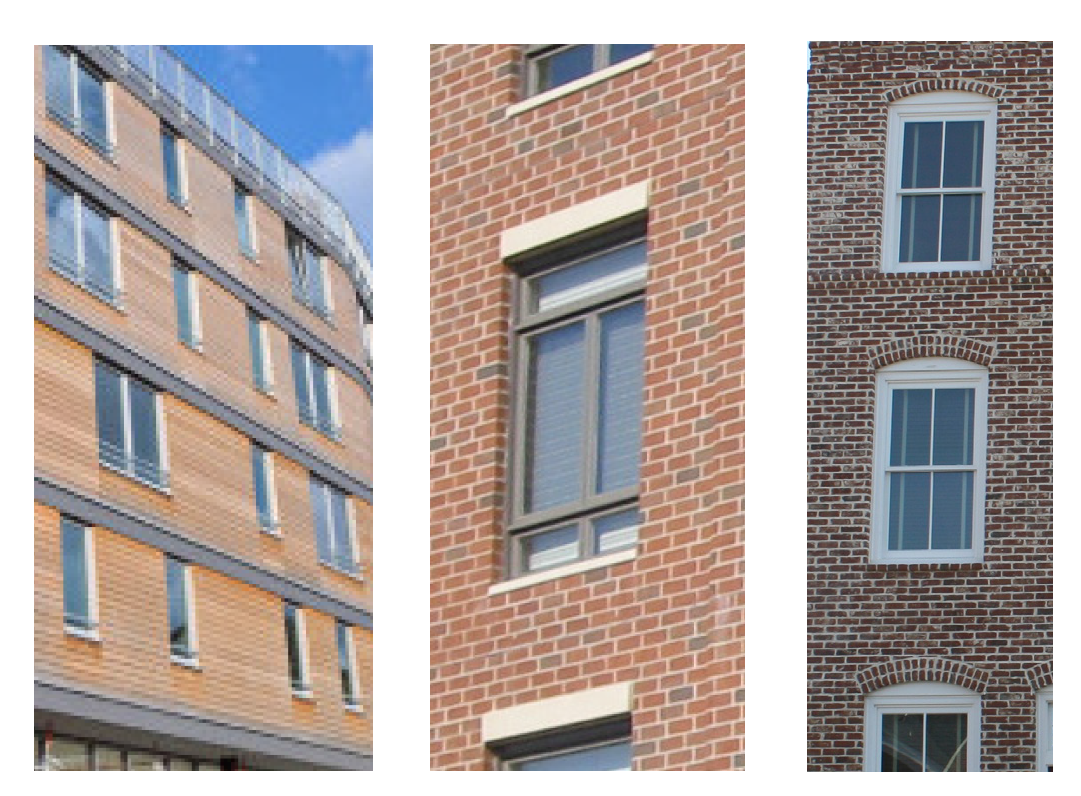
Figure 8-12(4). Vertically Oriented Windows with Expressed Lintels
d.
Visibility through Glass. Reflective glass and glass block are prohibited on street facades. Refer to 8-3. Definitions for permitted reflectance of window and door glass.
e.
Operable Windows. A minimum of 50 percent of the windows on each story of each facade shall be operable.
f.
Expressed Lintels. Lintels for windows abutting stone, brick, or stucco shall be expressed by a change in brick coursing or a separate material.
8-12.10.
Awnings. Refer to Figure 8-12(5), Examples of Permitted Awnings.
a.
Material. All awnings shall be canvas or metal. Plastic awnings are prohibited.
b.
Shapes. Waterfall or convex, dome, and elongated dome awnings are not permitted.
c.
Lighting. Backlit awnings are not permitted.
d.
Supports. Frames shall be metal and shall be wall mounted. Support poles are not permitted unless utilized for outdoor eating areas over 8 feet in depth.
e.
Clearance. All portions of any awning shall provide at least 8 feet of clearance over any walkway and shall not extend over any driveway.
f.
Multiple Awnings on the Facade. When more than one awning is mounted on a facade, the awning types and colors shall be coordinated by matching the color, shape, material, or other element.
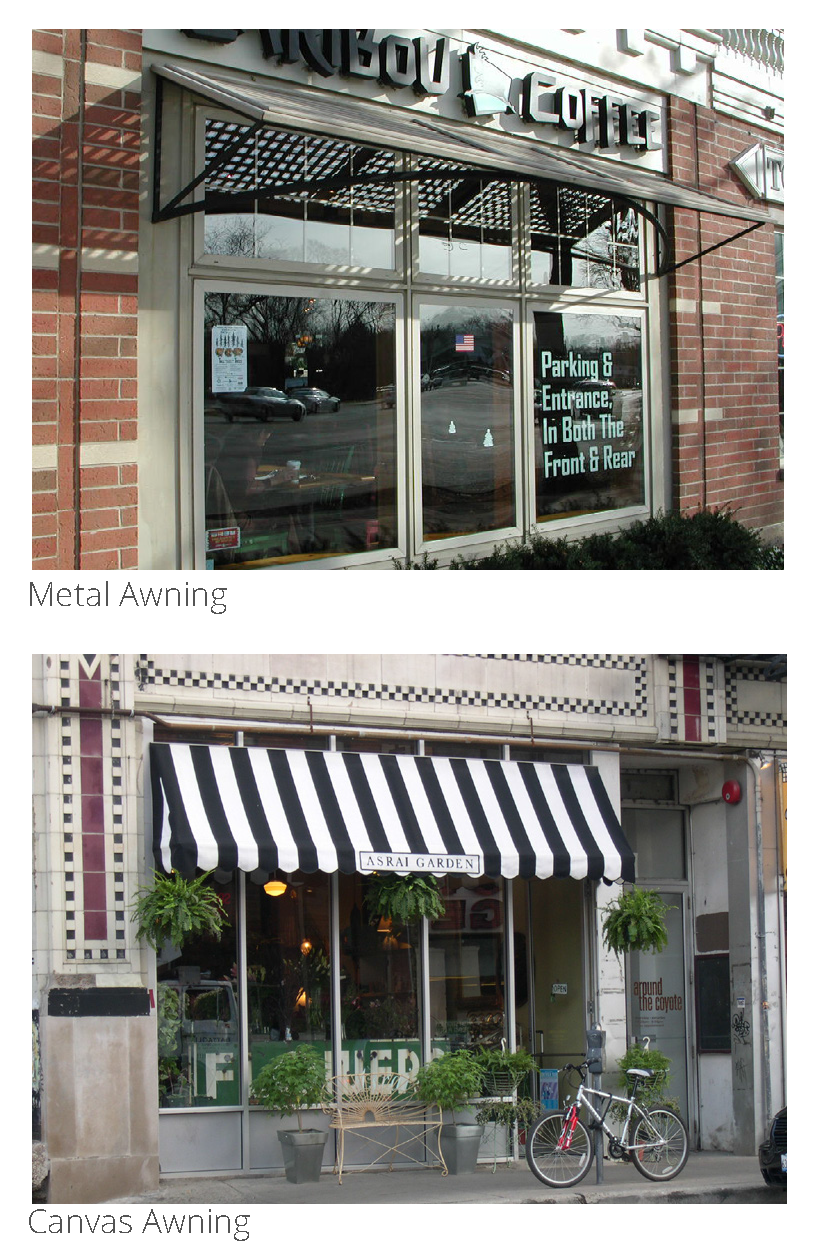
Figure 8-12(5). Examples of Permitted Awnings
8-12.11.
Security Grills. Interior and exterior security bars, grills, mesh or similar obstructions, whether permanently or temporarily affixed, shall not cover any exterior door or more than ten percent of any individual window or contiguous window area.
8-12.12.
Balconies. The installation or construction of balconies on street facades is encouraged, but not required. Refer to Figure 8-12(6), Examples of Balconies.
a.
Applicability. These provisions apply to locations where balconies are incorporated into the facade design facing any street or public way.
b.
Size. Balconies shall be a minimum of 4 feet deep and 5 feet wide.
c.
Balcony Structure. Balconies shall be integral to the facade. Balconies on stepped-back stories may be independently secured, extending from the facade. Balcony structure shall not include more than one balcony.
d.
Facade Coverage. A maximum of 40 percent of the Primary and Non-primary Frontage facades, calculated separately for each facade, may be covered by balconies. The balcony area is calculated by drawing a rectangle around the platform/floor of balcony, any columns or indentions, and any ceiling/upper balcony.
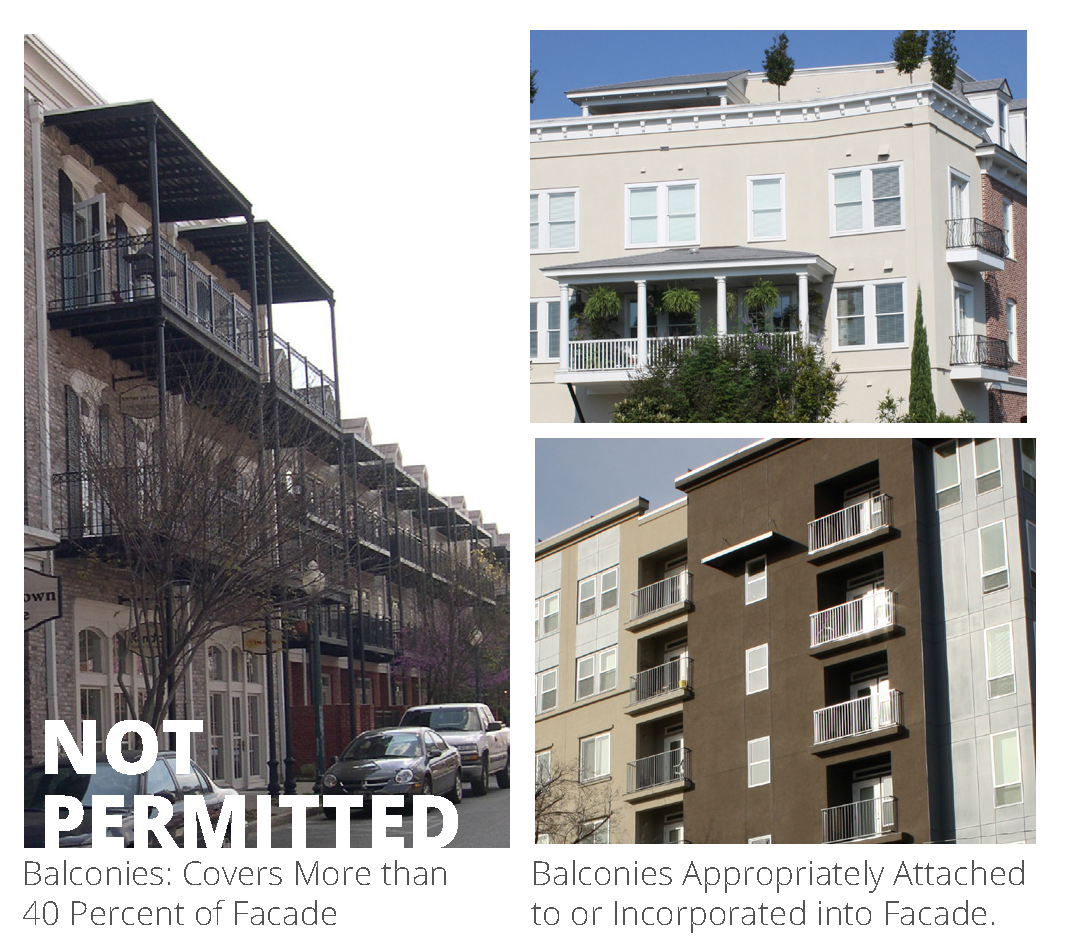
Figure 8-12(6). Examples of Balconies
8-12.13.
Shutters. If installed, shutters on any facing facade, whether functional or not, shall meet the following requirements:
a.
Size. All shutters shall be sized for the windows, so that if the shutters were to be closed, they would not be too small for complete coverage of the window.
b.
Materials. Shutters shall be wood, metal, or fiber cement. Vinyl shutters are not permitted. Other "engineered" woods may be approved through a minor design exception during the design review process with an approved sample and examples of successful, high quality local installations, installed a minimum of 5 years earlier and showing no degradation or wear of the material.
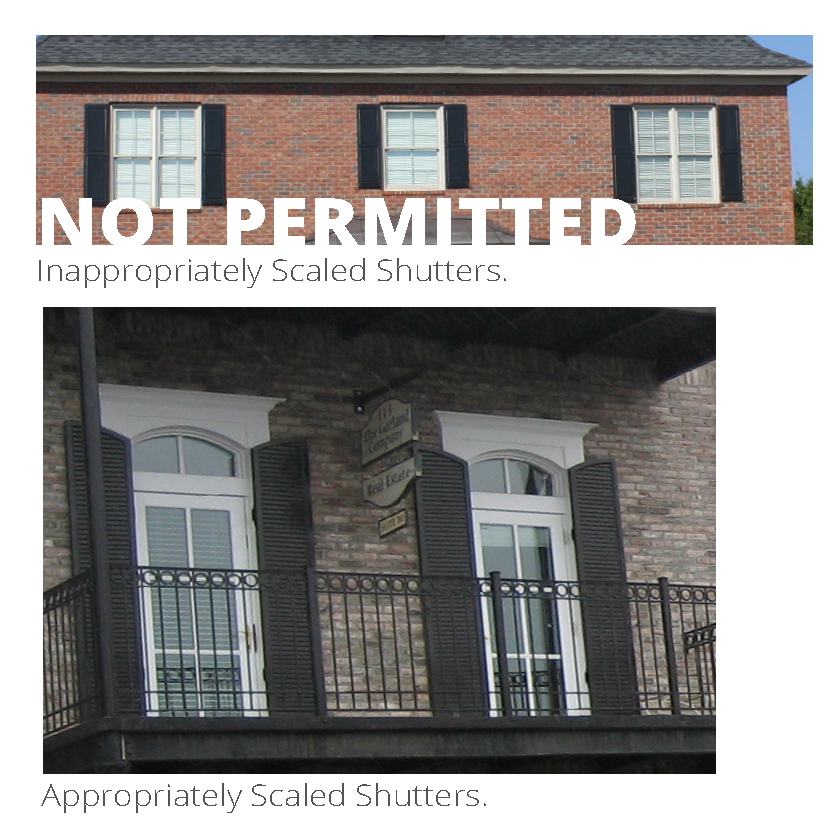
Figure 8-12(7). Shutters
8-12.14.
Principal Entryway. Refer to Figure 8-12(9), Examples of Defined Principal Entryway. Principal entrances to buildings or units shall be clearly delineated through one or more of the following:
a.
Cap or Canopy. The entryway shall be covered by a cap or canopy differentiating it from the overall building cap.
b.
Applicability. These provisions apply to locations where balconies are incorporated into the facade design facing any street or public way.
c.
Size. Balconies shall be a minimum of 4 feet deep and 5 feet wide.
d.
Balcony Structure. Balconies shall be integral to the facade. Balconies on stepped-back stories may be independently secured, extending from the facade. Balcony structure shall not include more than one balcony.
e.
Sidelights and Transom. Sidelights and/or transom windows shall be included around the entryway.
f.
Extended Articulation. The entryway shall be included in a separate bay of the building extended up at least two stories.
g.
Other Design Options. Other design options may be approved through the design exceptions process, with the requirement that the design adds emphasis and draws attention to the entryway.
h.
Awnings and signage are encouraged. When awnings and signage are utilized on the front facade, that treatment is required to be continued on similar facades on rail right-of-way facades.
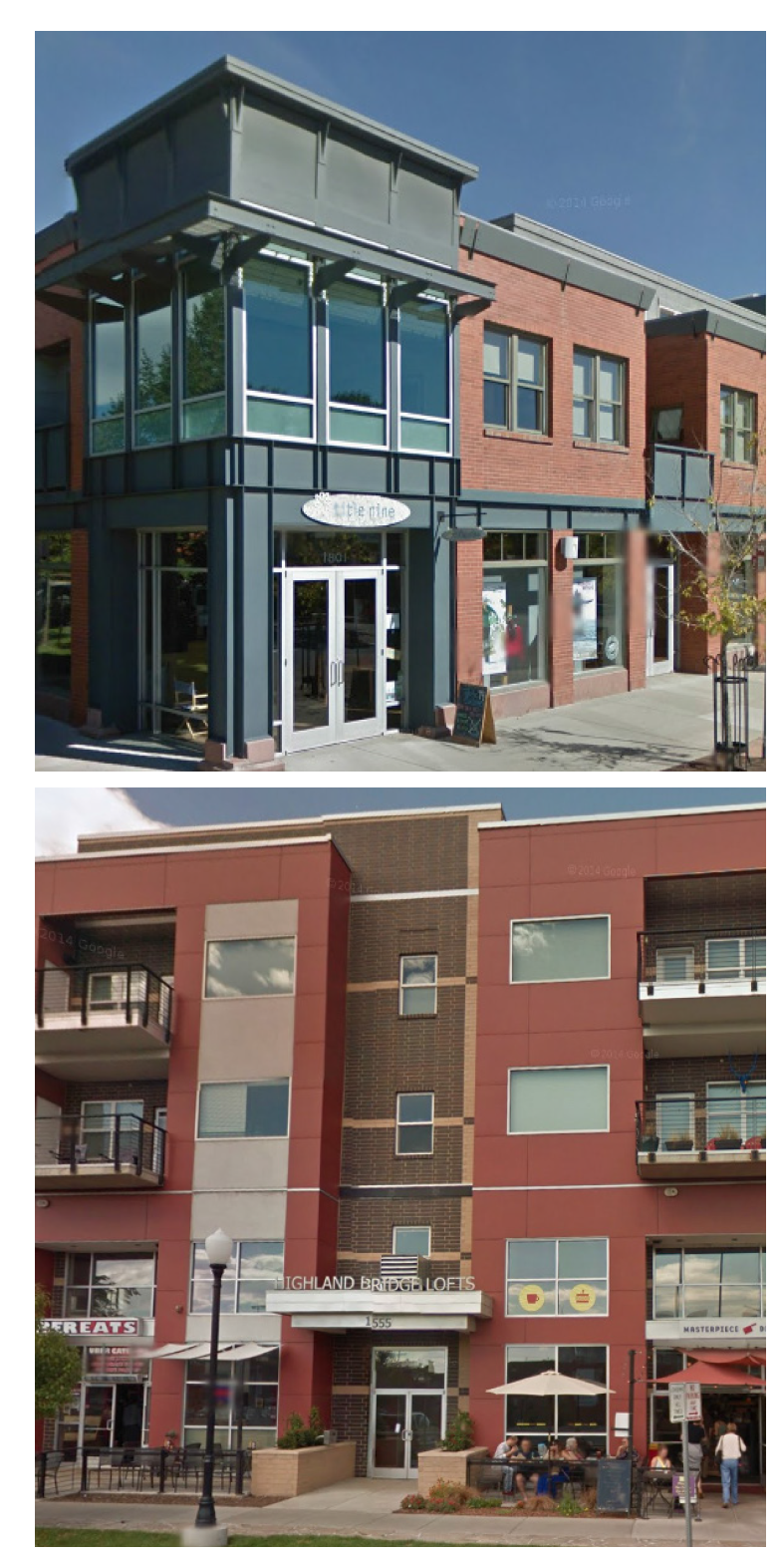
Figure 8-12(9). Example of Defined Principal Entryway
8-12.15.
Articulation of Stories. Stories shall be clearly readable and articulated on all street and rail facades utilizing the following.
1.
Fenestration. Fenestration or window placement shall be organized by stories. Minimum transparency is required per story per building type (refer to sections 8-6 through 8-10. Refer to 8-11 for requirements for measuring transparency.
2.
Expression Lines. Horizontal expression lines and/or lintels may be used to delineate stories. Minimum expression lines are required per building type (refer to sections 8-6 through 8-10).
3.
Mezzanines. Mezzanines designed with a separate floor to floor height and story shall be articulated on the facade as a separate story.
4.
Taller Spaces. Refer to 8-11.5 for transparency requirements on tall stories, over 18 feet in floor-to-floor height.
8-12.16.
Building Facade Variety. All buildings 100 feet in width or greater along any primary street frontage shall fulfill the following requirements:
a.
Increments. Each primary frontage facade shall be varied in segments less than or equal to 60 feet.
b.
Requirements. Each facade segment shall vary by the type of dominant material, or color, scale, or orientation of that material, and at least two of the following:
1.
The proportion of recesses and projections.
2.
The location of the entrance and window placement, unless storefronts are utilized.
3.
Cap type, plane, or material, unless otherwise stated in the building type requirements.
4.
Building heights.
Figure 8-12(8). illustration of Building Facade Variety
8-12.17.
Storefront Design. Refer to Figure 8-12(10), Typical Storefront.
a.
Amount of Glass. Storefront glass quantity is required by building type.
b.
Clear Windows. Windows shall be unobstructed during the daytime and evening hours. Displays inside the building, viewable from outside the window, are encouraged, but the area on the other side of the window shall be occupied space.
c.
Transom Windows. Transom windows above doors are encouraged. Transom windows are encouraged to extend along all storefront windows.
d.
Bulkhead. A bulkhead, minimum height of 12 inches and maximum height of 30 inches is required. The bulkhead may be constructed of wood, metal, concrete, or masonry. Concrete masonry units may not be exposed.
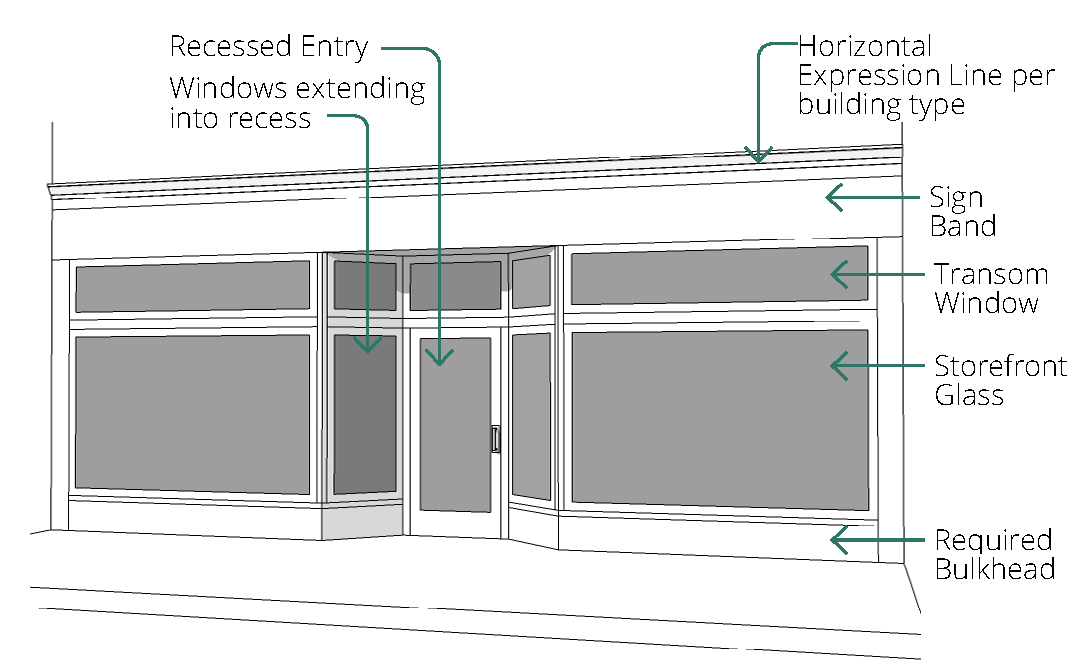
Figure 8-12(10). Typical Storefront
8-12.18.
Terminal Views. Views down a street shall be considered when locating a building or open space on a lot.
a.
The location of open space shall not create views of the rear of buildings or parking behind buildings.
b.
When a street terminates at a parcel, the parcel shall be occupied as follows:
1.
Open Space. If the parcel is open space, any open space type shall be utilized and a vertical element shall terminate the view. Acceptable vertical elements include, but are not limited to, a stand or group of trees, a sculpture, a gazebo or other public structure, or a fountain.
2.
Building. If the parcel is not utilized as an open space, the facade of a building, whether fronting a primary street or not, shall terminate the view. The building shall incorporate one of the following treatments to terminate the view: a tower, a bay, or a courtyard.
3.
Parking. In no case, shall a parking structure or a surface parking lot terminate a vista.
(Ord. No. 2018-6, §§ 1, 2, 2-21-18)
8-13. - Cap types.
The major components of any roof shall meet the requirements of one of the cap types permitted per building type. Roofs for bay or bow windows and dormers are not required to meet a cap type.
8-13.1.
Other Cap Types. Special cap designs may be approved through an minor design exception during the design review process with the following requirements:
a.
The building shall warrant a separate status from the fabric of surrounding buildings, with a correspondence between the form of the cap and the meaning of the building use, such as a dome for a planetarium or a unique roof for a civic building type.
b.
The cap type shall not create additional occupiable space beyond that permitted by the building type.
c.
The shape of the roof shall be different from any cap type defined in this section, such as a dome, spire, or vault, and not a gabled roof, hipped roof, butterfly roof, gambrel roof, mansard roof, roof with parapet, or flat roof.
8-13.2.
Pitched Cap Type. (Refer to Figure 8-13(1), Examples of Pitched Cap Type). This cap type has a sloped or pitched roof. Slope is measured with the vertical rise divided by the horizontal span or run.
a.
Pitch Measure. The roof may not be sloped less than a 4:12 (rise:run) or more than 14:12. Slopes less than 4:12 are permitted to occur on second story or higher roofs.
b.
Configurations.
1.
Hipped, gabled, and combination of hips and gables with or without dormers are permitted.
2.
Butterfly (inverted gable roof) and shed roofs are permitted with a maximum height of 8 feet, inclusive of overhang.
3.
Gambrel and mansard roofs are not permitted.
c.
Parallel Ridge Line. A gabled end or perpendicular ridge line shall occur at least every 100 feet of roof when the ridge line runs parallel to the front lot line. (Refer to Figure 8-13(1), Examples of Pitched Cap Type).
d.
Roof Height. Roofs without occupied building space and/or dormers shall have a maximum height on Primary and Non-primary Frontage facades equal to no more than 1.5 times the upper story floor to floor height utilized on the building.
e.
Occupied Building Space. Occupied building space may be incorporated behind this cap type. If used, the space counts as a half story.
f.
Rooftop Appurtenances. Any rooftop appurtenances shall be recessed within the pitched roof with no visibility on any street elevation drawing.
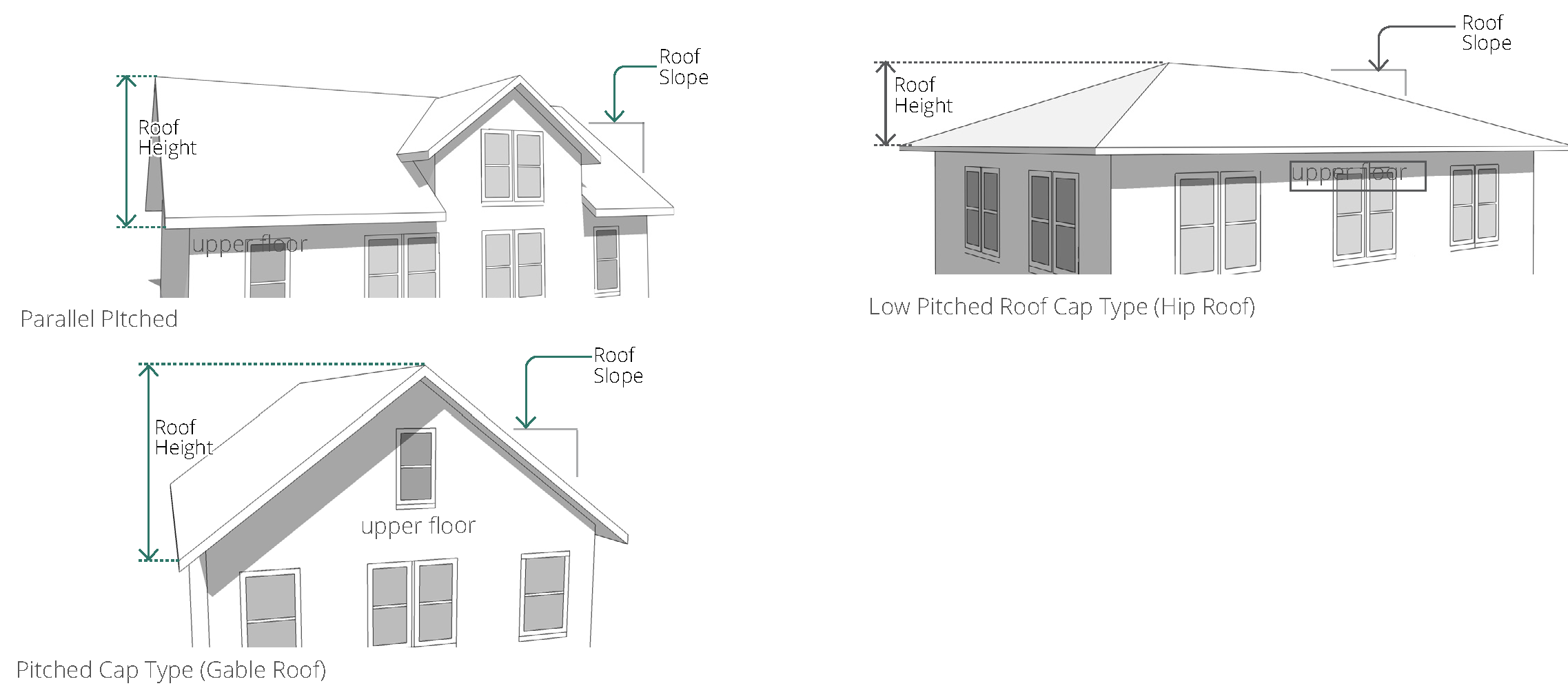
Figure 8-13(1). Examples of Pitched Cap Type
8-13.3.
Parapet Cap Type. (Refer to Figure 8-13(2), Example of a Parapet Cap Type). A parapet is a low wall projecting above a building's roof along the perimeter of the building.
a.
Parapet Height. Height is measured from the top of the upper story to the top of the parapet. Minimum height is 2 feet with a maximum height of 6 feet. Horizontal Expression Lines. An Expression Line shall define the parapet from the upper stories of the building and shall also define the top of the cap.
b.
Occupied Building Space. Occupied building space shall not be incorporated behind this cap type.
c.
Rooftop Appurtenances. Any rooftop appurtenances shall be located towards the rear or interior of the parapet roof. The parapet shall screen the mechanicals from the elevation of the sidewalk across the street.
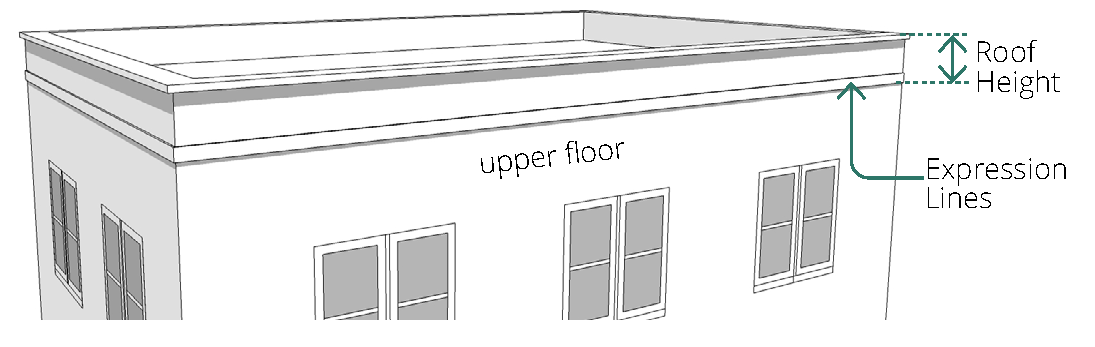
Figure 8-13(2). Example of a Parapet Cap Type
8-13.4.
Flat Cap Type. (Refer to Figure 8-13(3), Example of a Flat Cap Type). This cap type has an essentially flat roof with overhanging eaves.
a.
Configuration. The roof shall have no visible slope from the street and eaves are required on all Primary and Non-primary Frontage facades.
b.
Eave Depth. Eave depth is measured from the building facade to the outside edge of the eave. Eaves shall have a depth of at least 14 inches.
c.
Eave Thickness. Eave thickness is measured at the outside edge of the eave, from the bottom of the eave to the top of the eave. Eaves shall be a minimum of 6 inches thick.
d.
Interrupting Vertical Walls. Vertical walls may interrupt the eave and extend above the top of the eave with no discernible cap.
1.
No more than one-third of the front facade may consist of an interrupting vertical wall.
2.
Vertical walls shall extend no more than 8 feet above the top of the eave.
e.
Occupied Building Space. Occupied building space shall not be incorporated behind this cap type.
f.
Rooftop Appurtenances. Any rooftop appurtenances shall be located behind the interrupting vertical wall with no visibility on any street elevation drawing.
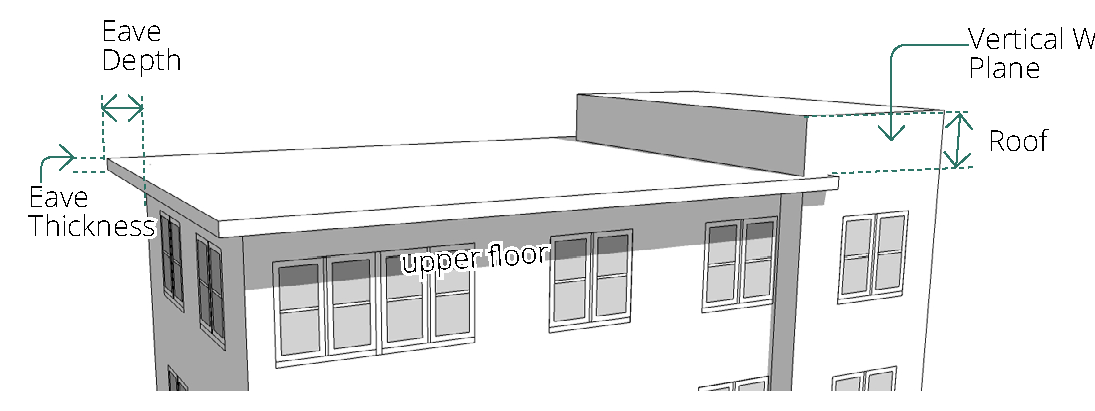
Figure 8-13(3). Example of a Flat Cap Type
8-13.5.
Towers. A tower is a vertical element, polygonal (simple), rectilinear or cylindrical in plan that shall be used with other cap types. Refer to Figure 8-13(4), Example of a Tower.
a.
Quantity. The number of towers permitted on each building type is specified in the building type tables (8-6 through 8-10). Tower locations are typically limited to allowing towers associated with the facade design and visible from the street, and those more functional towers located beyond the facade.
b.
Tower Height. Maximum height, measured from the top of the parapet or eave to the top of the tower shaft not including the cap, is the equivalent of the height of one upper floor of the building to which the tower is applied.
c.
Tower Width. Maximum width along all facades is one-third the width of the front facade or 30 feet, whichever is less.
d.
Tower Spacing. Towers shall be generally spaced from other towers a minimum of 60 feet and specifically by a minimum of 120 feet along a Primary or Non-primary Frontage facade.
e.
Transparency. Towers that meet the minimum floor-to-floor height of the building and are located within 30 feet of a facade shall meet the minimum transparency requirements of the building.
f.
Horizontal Expression Lines. An expression line is required at the cap of the tower.
g.
Occupied Building Space. Towers may be occupied by the same uses allowed in upper stories of the building type to which it is applied, unless otherwise stated.
h.
Rooftop Appurtenances. No rooftop appurtenances are permitted on tower roofs.
i.
Tower Cap. The tower may be capped by the parapet, pitched, or flat roof cap types.
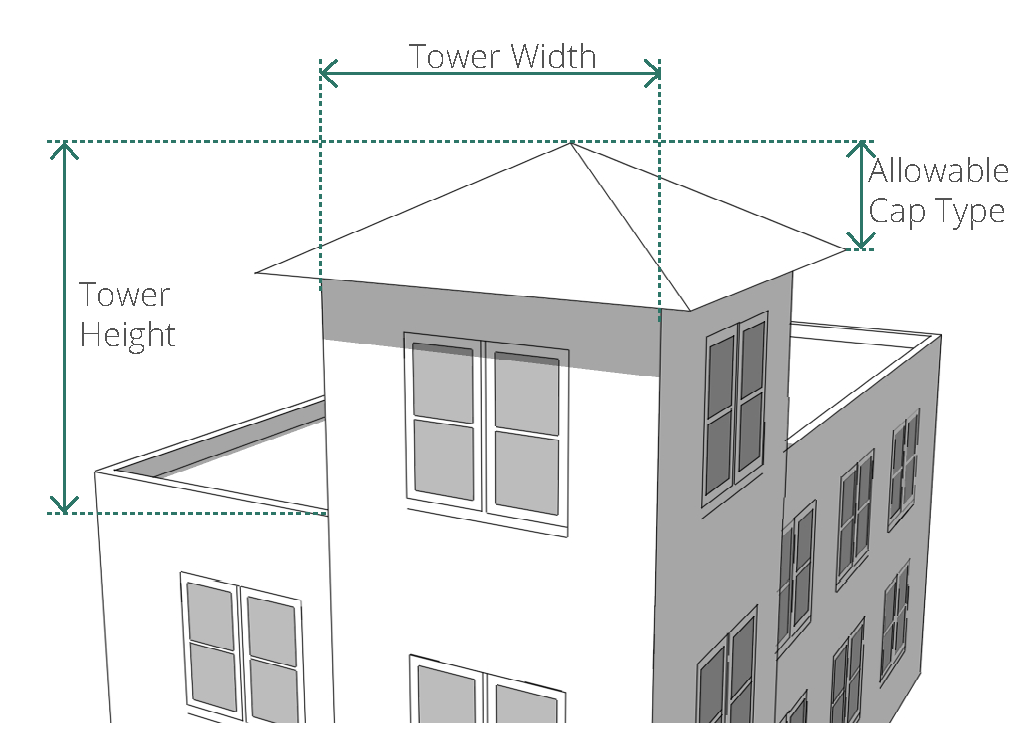
Figure 8-13(4). Example of a Tower
(Ord. No. 2018-6, §§ 1, 2, 2-21-18)
8-14. - New street components.
Refer to Figure 8-16(1) for the required basic components of any new street in the MX districts. The City may require additional street right-of-way or configuration based on existing context and circulation needs.
a.
On-Street Parking. On-street parallel parking shall be provided on both sides of all new streets. Head-in or back-in parking may be provided for commercial uses.
b.
Required Streetscape Area. The minimum dimension for streetscapes along non-residential ground stories is 16 feet, with a clear sidewalk width of at least 8 feet. Along residential ground stories, the minimum is 13 feet with a clear sidewalk of at least 5 feet and an 8-foot landscape zone (parkway).
c.
Reduced Minimum Pavement. When only one lane of on-street parking is utilized, the minimum pavement width is 28 feet and the minimum right-of-way width is 54 feet.
d.
Bicycle Accommodations. Refer to any City bicycle plan for accommodating bicycle access through and within the site.
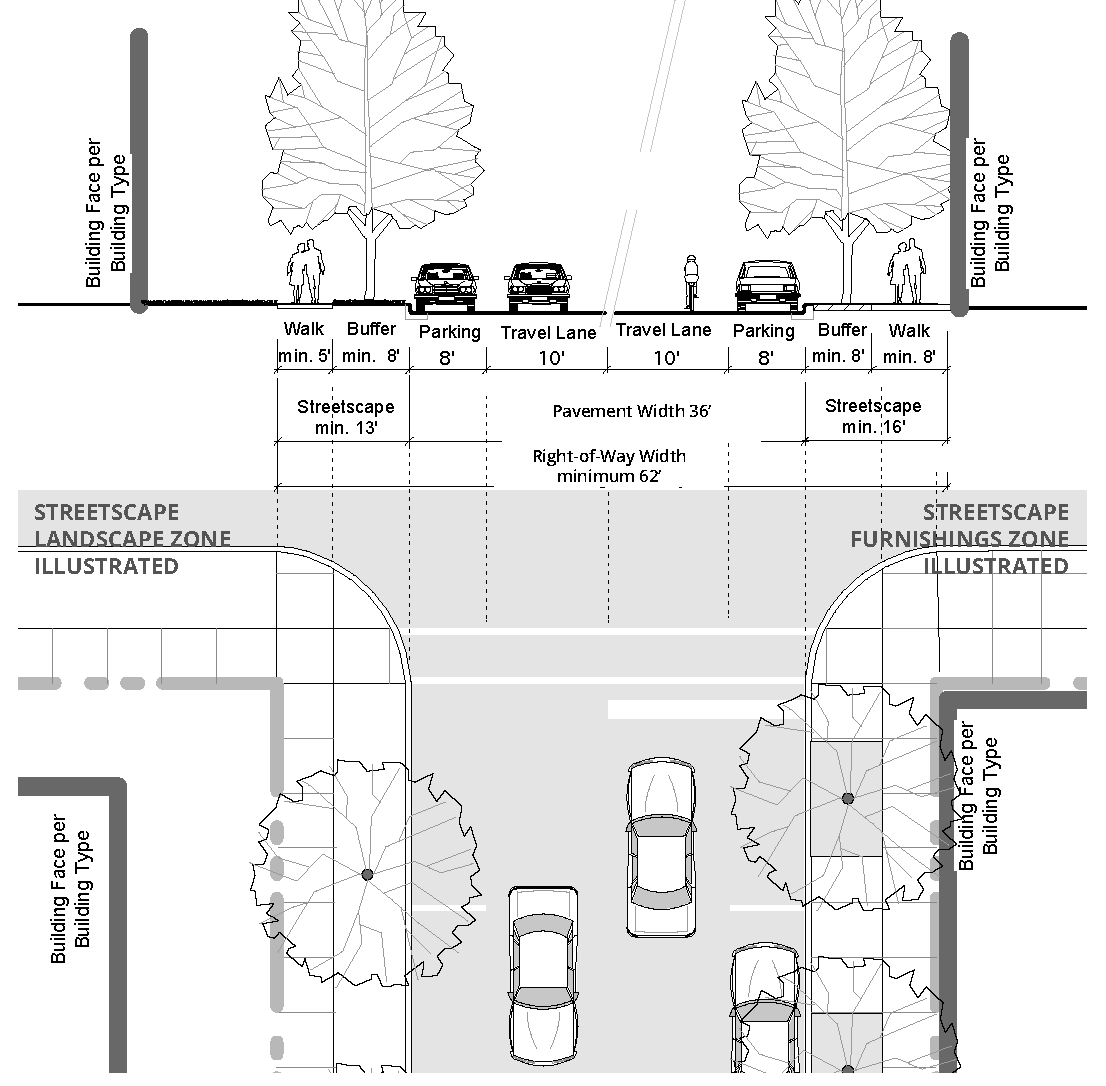
Figure 8-16(1). Typical Base Street
(Ord. No. 2018-6, §§ 1, 2, 2-21-18)
8-15. - Landscape requirements.
The following establishes general landscape requirements applicable to all building types in the MX districts.
8-15.1.
General Installation Requirements. The installation of landscape shall adhere to the following standards.
a.
National Standards. All landscape shall be installed in conformance with the practices and procedures established by the most recent edition of the American Standard for Nursery Stock (ANSI Z60.1) as published by the American Association of Nurserymen.
b.
Seasonal Preclusion of Installation. If seasonal conditions preclude the complete installation, a cash escrow or irrevocable letter of credit, equal to 1.5 times the installation costs as estimated by a qualified professional. Complete installation is required within 9 months of the issuance of the occupancy permit or the cash escrow or letter of credit may be forfeited.
c.
Condition of Planting Materials. The landscape materials used shall be free from visible signs of disease, infestation, or physical defect at the time of planting.
d.
Selection of Materials. Landscape materials shall be appropriate for the conditions of the location, including sun and wind exposure, air quality, salt exposure, soil type, expected moisture content of soil, and slope. Plant material shall be native or naturalized to the area, and shall not be considered invasive or potentially invasive.
e.
Compost, Mulch, and Organic Matter. Compost, mulch, and organic matter shall be utilized within the soil mix to reduce the need for fertilizers and increase water retention.
f.
Establishment. All installed plant material shall be fully maintained, including watering, fertilization, and replacement as necessary. All landscaping and trees shall be maintained according to the most recent edition of the American National Standards Institute, including its provisions on pruning, fertilizing, support systems, lighting protection, and safety.
8-15.2.
Ground Plane Vegetation Requirements. All areas on the lot not dedicated to buildings, structures, parking spaces, parking drives, sidewalks, or patios/decks/ porches shall be covered by one of the following.
a.
Planting Bed. Planting beds shall include shrubs, ornamental grasses, ground cover, vines, or perennials. A minimum of 60 percent of the bed area shall be covered in plant material. The remaining portion of the bed shall be covered with non-living permeable materials, such as mulch or landscape aggregate.
b.
Grass. Seeded, plugged, or sodded grass shall be established within 90 days of planting or the area must be reseeded, replugged, or resodded.
8-15.3.
Tree Installations. Refer to the list of permitted tree types, available at City Hall.
a.
Tree Measurement. New trees shall be measured at 6 inches above the mean grade of the tree's trunk when 4 inch caliper or less and 12 inches for tree trunks above 4 inches, and noted as caliper inches throughout this ordinance.
b.
Tree Maintenance. Tree trimming, fertilization, and other similar work shall be performed by or under the management of an ISA certified arborist.
c.
Species Composition. Trees planted on a site shall be any combination of permitted species with the following exceptions.
1.
One genus shall not comprise more than 30% of trees planted on a site.
2.
One species shall not comprise more than 10% of trees planted on a site.
3.
Exceptions to this provision may be granted by the zoning officer.
d.
Tree Size. All trees to be installed to meet the requirements of this section shall be a minimum of 1.5-inch caliper at the time of installation.
e.
Trees Close to Sidewalks and Curbs. No trees may be planted closer to any curb or sidewalk than as follows unless a permeable surface is provided:
1.
Medium trees: Three feet.
2.
Large trees: Four feet.
f.
Permeable Surface. For each tree preserved or planted, a minimum amount of permeable surface area is recommended, unless otherwise stated in this ordinance.
1.
At least 70% of the canopy limits of preserved trees should have a permeable surface.
2.
Planted trees have a suggested minimum permeable area of 225 square feet for medium trees and 400 square feet for large trees.
3.
Permeable area for one tree cannot count toward that of another tree.
g.
Structural Soil. When the canopy of the tree at maturity would extend over pavement, structural soil or an approved equal method is required underneath that pavement. Structural soil is a medium that can be compacted to pavement design and installation requirements while still permitting root growth. It is a mixture of gap-graded gravels (made of crushed stone), clay loam, and a hydrogel stabilizing agent to keep the mixture from separating. It provides an integrated, root penetrable, high strength pavement system that shifts design away from individual tree pits (source: Cornell University, Urban Horticulture Institute).
h.
Irrigation Systems. Permanent irrigation, beyond establishment, is required and shall adhere to the following standards.
1.
All irrigation systems shall be designed to minimize the use of water.
2.
Nonresidential landscape irrigation shall have an automatic clock-activated permanent system.
3.
The irrigation system shall provide sufficient coverage to all landscape areas.
4.
The irrigation system shall not spray or irrigate impervious surfaces, including sidewalks, driveways, streets, and parking and loading areas.
5.
All systems shall be equipped with a back-flow prevention device.
6.
All mechanical systems including controllers and back-flow prevention devices shall be properly screened from public view.
7.
Any irrigation system shall remain in good repair.
8-15.4.
Maintenance of Landscape. All landscaping shall be maintained in good condition at all times to ensure a healthy and orderly appearance.
a.
All required landscape shall be maintained to adhere to all requirements of this ordinance.
b.
Replacing Unhealthy Landscaping. Unhealthy landscaping shall be replaced with healthy, live plants by the end of the next applicable growing season. This includes all plant material that shows dead branches over a minimum of 25 percent of the normal branching pattern.
c.
Maintenance Responsibility. The owner is responsible for the maintenance, repair, and replacement of all landscaping, screening, and curbing required herein.
d.
Maintain Quality and Quantity. Maintenance shall preserve at least the same quantity, quality, and screening effectiveness as initially installed.
e.
Fences and Other Barriers. Fences, walls, and other barriers shall be maintained in good repair and free of rust, flaking paint, graffiti, and broken or damaged parts.
f.
Tree Topping. Tree topping is not permitted. When necessary, crown reduction thinning or pruning is permitted.
g.
City Inspection. All landscaped areas regulated by this ordinance may be inspected by the city.
8-15.5.
Street Trees. Street trees are required along all street frontage, unless otherwise determined by the zoning officer.
a.
Forestry Requirements. Refer to Chapter 18 Forestry for tree removal requirements.
b.
Minimum Street Tree Requirements. The following standards apply to the installation of street trees.
c.
Clear Branch Height. Minimum clear branch height is 6 feet; in commercial districts, minimum clear branch height is eight feet.
d.
Street Tree Type. Medium and large shade trees are permitted to be installed as street trees.
e.
Street Tree Spacing. Unless otherwise determined by the city, each lot is required to have one tree for every 40 feet of street frontage with a minimum of one street tree per street frontage.
f.
Spacing.
1.
Large trees must be spaced a minimum of 30 and a maximum of 60 feet on center.
2.
Medium trees must be spaced a minimum of 20 and a maximum of 40 feet on center.
g.
Tree Wells. In commercial districts, where the sidewalk extends from the back of curb to the property line, tree wells shall be utilized.
1.
For tree wells adjacent to sidewalks five feet wide or less, open pit is not permitted.
2.
The opening must be covered with a tree grate or pervious pavement.
3.
The opening in a tree grate for the trunk must be expandable.
8-15.6.
Frontage Buffer. The frontage buffer is required in all locations in the MX districts where vehicular areas are adjacent to or visible from any street right-of-way, except alleys. Refer to Figure 8-16(2), Frontage Buffer Illustration.
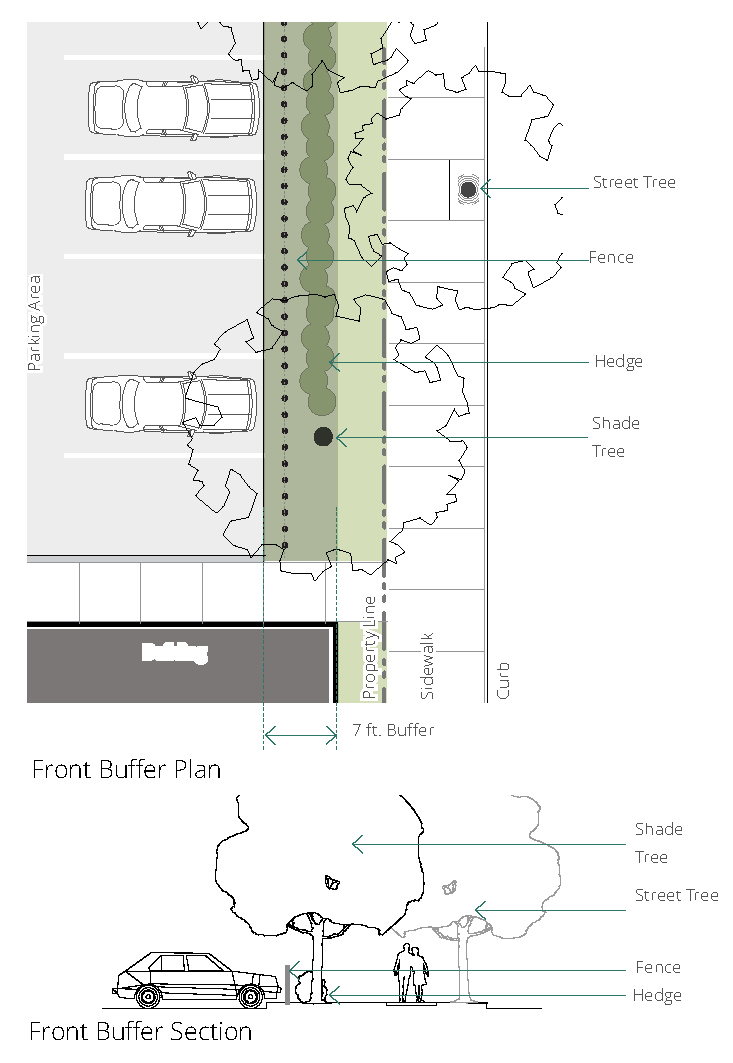
Figure 8-16(2). Frontage Buffer Illustration
(Ord. No. 2018-6, §§ 1, 2, 2-21-18)
8-15.7.
Interior Parking Lot Landscape. The following applies to all off-street, open air parking lots of more than 10 spaces. Refer to Figure 8-16(3), Interior Parking Lot Landscape Illustration.
a.
Other Internal Parking Lot Areas. Internal areas not dedicated to parking spaces, loading, or drives shall be landscaped with a minimum of one medium or large shade tree for the first 150 square feet and one medium or large shade tree for every 650 feet thereafter. Pavement that is diagonally striped and not intended for use as a parking space or drive is not permitted.
b.
Existing Vegetation. Existing vegetation may be credited toward these requirements.
c.
Definitions.
1.
Parking lot interior is defined as the area dedicated to parking on a given parcel as measured from edge of pavement to edge of pavement.
2.
Freestanding rows or bays of parking are those not abutting the parking lot perimeter or building face, and may have a single or double row of parking.
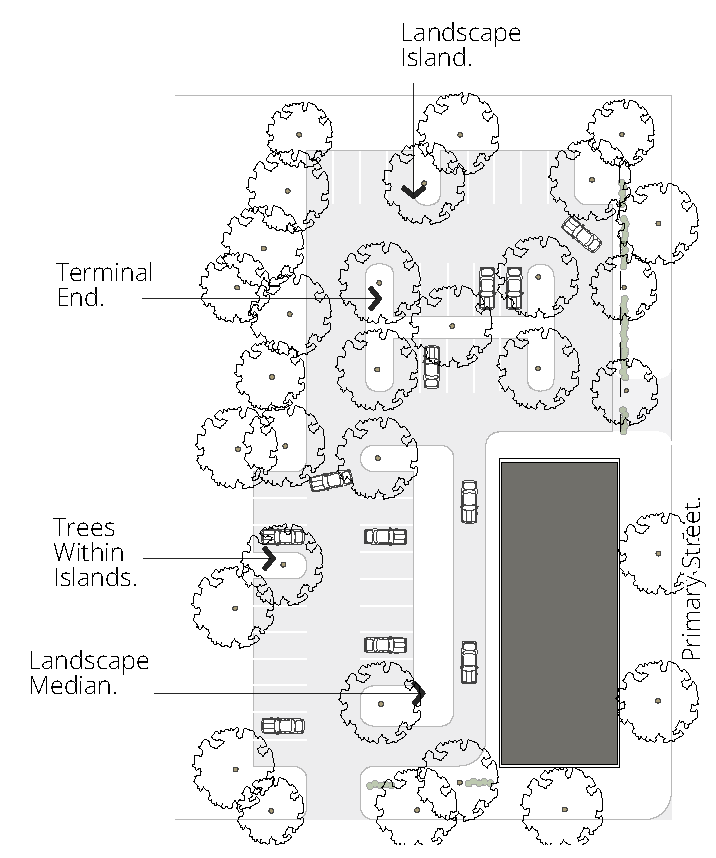
Figure 8-16(3). Interior Parking Lot Landscape Illustration
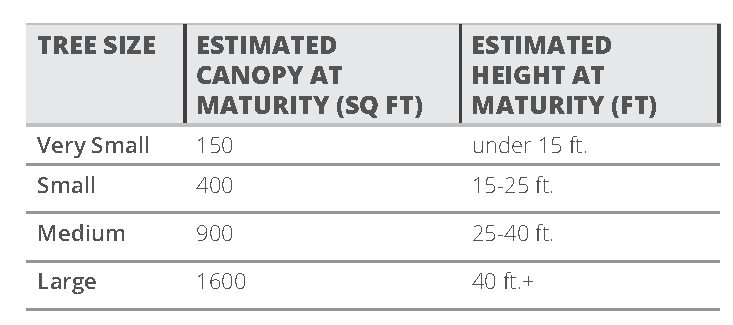
Figure 8-16(4). Table of Estimated Canopy at maturity
(Ord. No. 2018-6, §§ 1, 2, 2-21-18)
8-16. - Streetscape requirements.
8-16.1.
Applicability. Streetscape is required to be implemented under the following conditions:
a.
New Streets. For all developments proposing new streets, the applicant shall submit a streetscape design for approval and is responsible for installing streetscape along the required street, unless otherwise coordinated with the city.
b.
Existing Streets. For all developments with a total existing street frontage of 400 feet or more, unless otherwise required per the Zoning officer, a streetscape design shall be submitted for approval and installed within the adjacent right-of-way under the following circumstances:
1.
Redevelopment or Renovation. When an alteration to an existing structure includes an addition of more than 60 percent in gross building square footage.
2.
New Structure. Development of a new structure on a previously undeveloped or currently demolished lot, or development of a new structure on a lot that increases the total gross building square footage of the lot by 25 percent or more.
8-16.2.
Submittal Required. A streetscape design shall be submitted for all affected streets with approval during Site Plan Review.
8-16.3.
Standard Specifications. Streetscape shall meet any standards defined by the City for sidewalk, curb, access, and parkway construction.
8-16.4.
Streetscape Design Continuation. The approved streetscape design may be utilized by the City for the extension of any street outside the development to provide continuity.
8-16.5.
Streetscape Design. Streetscape occupies the full pedestrian realm of any street right-of-way plus any building setback area less than 15 feet deep from the streetside lot line.
a.
Parkway. The parkway is the area between the sidewalk and back of curb that serves to buffer pedestrians or bicyclists from the movements of higher speed vehicles in the vehicular realm. The parkway shall be treated with one of the following:
1.
MX1 and MX3 Districts. In the MX1 and MX3 districts, a furnishings zone is required. A furnishings zone is a hardscape area that extends from the sidewalk to the back of curb, in which street trees, street furniture, planters, and lighting and signage may be located.
2.
MXR Districts. In the DT 3 and DT 4 districts, a landscape zone is required. A landscape area between the back of curb and the sidewalk in which street trees, stormwater accommodations, and lighting and signage may be located.
3.
MX2 Districts. The zoning officer shall determine whether a landscape zone or furnishings zone is appropriate based upon existing conditions and dominant use.
b.
General Configuration. Refer to Figure 8-16(1) for the general configuration and components of the streetscape area. At a minimum, the streetscape design shall include the following:
1.
Street Trees. Trees spaced a minimum of 60 feet on center shall be included in the streetscape design. Tree grates are required over tree wells on sidewalks less than 6 feet in width.
2.
Pavement Design. Pedestrian paving materials and patterns are required for each street. Pavement design shall include the minimum sidewalk width and any extension of the sidewalk to the back of curb included in a Furnishings Zone.
3.
Street Furnishings. Benches and/or seatwalls, planters, planter fences, tree grates, tree guards, and trash receptacles shall be specified and quantities and locations listed for each street. For each block face, a minimum of two benches and one trash receptacle is required.
4.
Bicycle Racks. Bicycle racks shall be supplied to meet the minimum bicycle parking requirements of the blockface uses per 8-17.4 for required bicycle parking spaces. If rear bicycle parking is utilized, a minimum of 50% of the required ground floor use bicycle parking shall be supplied within the streetscape.
5.
Landscape Design. Ground plane vegetation shall be designated for any landscape bed areas, planter areas, and open tree wells.
6.
Lighting. Pedestrian and vehicular lighting shall be specified and locations and quantities noted. Cut sheets and samples shall be submitted.
7.
Stormwater Facilities. Any stormwater facilities proposed within the streetscape shall be included in the streetscape design. Facilities such as stormwater planter or parkway swales may be included. Maintenance responsibilities and processes shall be included.
8.
Identity Elements. Any other elements designed to establish the identity of each street, such as banners mounted on lightpoles, pavement markers, artwork, or wayfinding signage, shall be included in the streetscape design.
(Ord. No. 2018-6, §§ 1, 2, 2-21-18)
8-17. - MX District parking.
8-17.1.
General Requirements.
a.
Applicability. This section shall apply to all new development and changes in use or intensity of use for existing development in any MX district.
b.
General Requirements. Off-street parking spaces shall be provided in conformance with Chapter 10 of the Zoning Ordinance.
8-17.2.
Multiple Use Reductions. The following reductions may be taken for multiple non-residential uses.
a.
Shared Vehicular Parking. An arrangement in which two or more non-residential uses with different peak parking demands use the same off-street parking spaces to meet their off-street parking requirements.
1.
General Provisions. The Zoning officer may permit up to 100% percent of the parking required for a daytime use to be supplied by the off-street parking spaces provided for a nighttime or Sunday use and vice versa.
2.
Approval. In order to approve a shared parking arrangement, the Zoning officer must find, based on competent evidence provided by the Applicant, that there is no substantial conflict in the principal operating hours of the uses for which the sharing of parking is proposed.
3.
Description of Uses with Weekday, Nighttime, and Sunday Peak Parking.
(1)
The following uses are considered predominantly weekday uses: office and industrial uses and other similar uses as authorized by the Zoning officer.
(2)
The following uses are typically considered predominantly nighttime or Sunday uses: entertainment uses, eating and drinking establishments, assembly uses, auditoriums accessory to schools and other similar uses with peak activity at night or on Sundays, as authorized by the Zoning officer.
b.
Mixed Use Vehicular Parking. When two or more categories of non-residential uses share a parking lot and are located on the same lot or adjacent lots, a cooperative parking agreement may be utilized and the following applies:
1.
General Provisions. Cooperative parking will be approved in accordance with the following:
(1)
A 25% percent reduction is permitted when four or more use categories are involved.
(2)
A 15% percent reduction is permitted when three use categories are involved.
(3)
A 10% reduction is permitted when two use categories are involved.
2.
Uses in Different Buildings. The Zoning officer may approve the cooperative agreement if any of the uses are not located in the same structure or building.
3.
Location of Cooperative Parking. Any cooperative parking must be within 1000 feet from the entrance of the use to the closest parking space within the cooperative parking lot, measured along a dedicated pedestrian path.
4.
Off-Site Cooperative Parking Agreement. An agreement approved by the city attorney providing for cooperative use of off-site parking spaces, executed by the parties involved, shall be reviewed by the Zoning officer.
(1)
Off-site cooperative parking arrangements shall continue in effect only as long as the agreement remains in force.
(2)
If the agreement is no longer in force, then parking must be provided as otherwise required in this section.
8-17.3.
Parking Credits. Off-street parking requirements may be reduced by achieving one or all of the following credits.
a.
On-Street Parking Credit. For all non-residential uses, on-street parking spaces that meet the following shall be credited against the parking requirement.
1.
Spaces shall be designated on-street parking available 24 hours of every day.
2.
On-street space must be located a minimum of adjacent to the property line of the lot.
b.
Public Parking Credit. For all non-residential uses, public parking spaces located within 1,000 feet of any property line may be credited against the parking requirement at a rate of one credit for every three public parking spaces.
c.
Transit Credit. For all uses, vehicular parking requirements may be reduced with proximity to any commuter rail station, bus terminal, or transit line with headways of at least 10 minutes. Proximity is measured from any point along the property line to the platform or transit stop.
1.
Within ¼ mile. A reduction of 15% percent of the required off-street parking.
d.
Motorcycle and Scooter Parking. In parking lots containing more than 10 parking spaces, the provision of motorcycle or scooter parking spaces may be credited toward satisfying the minimum off-street parking requirements.
1.
Rate. One motor vehicle parking space may be credited for each 2 motorcycle or scooter parking spaces.
2.
Maximum Credit. The maximum credit allowed under this provision is 2 spaces or 10% of the total minimum motor vehicle parking requirement for the subject property, whichever is greater.
3.
Configuration. To receive credit, each motorcycle and scooter space must have a concrete surface and minimum dimensions of 4 feet by 8 feet.
e.
Long-term Bicycle Parking. Each 6 long-term bicycle parking spaces is credited as one motor vehicle space.
1.
Long-term bicycle parking spaces provided to receive parking credit must be provided in the building or in a weather-protected area. Long-term bicycle parking spaces must be protected from access by unauthorized persons.
2.
Long-term bicycle parking spaces provided to receive parking credit must:
(1)
Consist of bike racks or lockers anchored so that they cannot be easily removed;
(2)
Allow both the bicycle frame and the wheels to be locked with the bicycle in an upright position using a standard U-lock;
(3)
Be designed so as not to cause damage to the bicycle;
(4)
Facilitate easy locking without interference from or to adjacent bicycles; and
(5)
Have minimum dimensions of 2 feet in width by 6 feet in length, with a minimum overhead vertical clearance of 7 feet. Bicycle lockers are exempt from overhead clearance requirements.
f.
Car-Share and Bike-Share Parking Credit. The vehicular parking requirements can be reduced with the inclusion of car-share parking spaces as follows.
1.
Per each car-share parking space provided, required parking spaces shall be reduced by four spaces. Required parking spaces may be reduced up to 40%.
2.
The number of required motor vehicle parking spaces may be reduced by 2 spaces for uses that provide space for a city-approved bike-share program facility with a minimum of 10 bicycle parking docks.
3.
Approval. Applicant must provide documentation of an agreement with a car-share company. If this agreement should terminate at any point, applicant shall be required to provide parking as otherwise required herein.
g.
Other Parking Reductions. Additional reductions may be approved through the Site Plan process with the submittal of a parking study illustrating the reduction.
8-17.4.
Bicycle Parking.
a.
Required Bicycle Parking. The Required Bicycle Parking Table in Table 8.5 indicates the minimum bicycle parking ratio for a given use.
1.
Bicycle parking is not required for uses not listed.
2.
Bicycle parking is not required for uses less than 2,500 square feet in size.
3.
No use, other than Civic is required to accommodate more than 20 bicycles.
4.
With approval of the Zoning officer, a fee in lieu of providing spaces may be permitted for physically constrained sites.
b.
Bicycle Parking Design. Bicycle parking (refer to Figure 8-17(1)) Required Bicycle Parking for quantity required) shall be designed and located as follows.
c.
Dimensions.
1.
Required bicycle parking spaces shall have minimum dimensions of two feet in width and six feet in length.
2.
An aisle a minimum of five feet wide shall be provided behind bicycle parking facilities to allow for maneuvering.
3.
A minimum of two feet shall be provided beside each parked bicycle to allows access. This access may be shared by adjacent bicycles.
4.
Racks shall be installed a minimum of two feet from any wall or other obstruction.
d.
Location. Bicycle parking should be located within 50 feet of the entrance of the use.
1.
Indoor or outdoor spaces are permitted, provided they are located on the lot with which they are associated.
2.
Spaces located within individual dwelling units may not be counted toward bicycle parking requirements.
3.
Bicycle parking facilities shall be separated from vehicular parking areas to protect parked bicycles from damage. The separation may be accomplished through grade separation, distance or physical barrier, such as curbs, wheel stops, poles or other similar features.
e.
Racks and Structures. Racks and structures shall be provided for each unprotected parking space, and shall be designed to accommodate both chain and U-shaped locking devices supporting the bicycle frame at two points.
f.
Surface. The parking surface shall be designed and maintained to be mud and dust free. The use of rock or gravel areas for bicycle parking is permitted provided that edging materials, so that the bicycle parking area is clearly demarcated and the rock material is contained.
g.
Signage. If required bicycle parking for public use is not visible from the street, Signs must be posted indicating their location.
h.
Maintenance and Lighting. Areas used for required bicycle parking must be well-lit with acceptable drainage to be reasonably free of mud and standing water. Accessory off-street parking for bicycles shall include provision for secure storage of bicycles. Such facilities shall provide lockable enclosed lockers or racks or equivalent structures in or upon which a bicycle may be locked by the user.
i.
Long-Term Parking. For multiple family residential uses, half of the bicycle parking spaces should be provided as long-term parking, safe and secure from vandalism and theft, and protected from the elements.
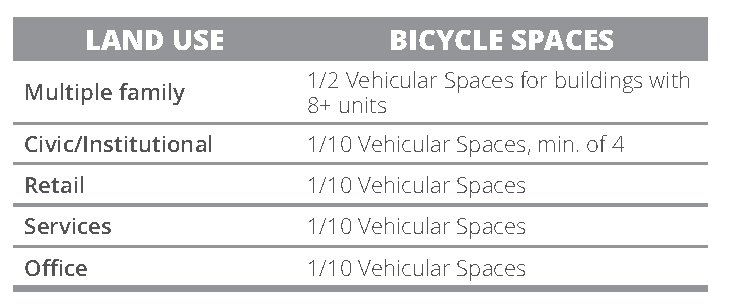
Figure 8-17(1). Bicycle Parking Requirements
(Ord. No. 2018-6, §§ 1, 2, 2-21-18)
8-18. - Development approval process.
8-18.1.
Zoning Permit. An approved zoning permit per section 13-8 of the zoning ordinance is required for the development or redevelopment of all parcels in any MX district.
8-18.2.
Applicability. Development or redevelopment is defined as construction of a new building, any addition to an existing building or site, renovation to the exterior facades or site, or change in use.
8-18.3.
Pre-Submittal Meeting. For new buildings, additions to buildings, additions or renovation of site features, and changes to the exterior facade, a pre-submittal meeting is required with staff.
8-18.4.
Submittal Materials. In addition to the requirements of section 13-8, an application and the following review documents are required. All maps and plans shall include the date of preparation, north arrow, and scale.
a.
Site Location Map, Legal Description/Limits of Plan.
b.
Survey Plat. Dimensions of property lines, easements, rights-of-way. Plat shall be no older than one year from date of application submittal.
c.
Development Boundaries and Proposed Phasing, if applicable.
d.
Existing Conditions Plan. Existing on-site and adjacent off-site structures, streets, utilities, easements, pavement noted either on an aerial photograph or site survey.
e.
Existing Natural Conditions Plan. Existing topography, vegetation, drainageways, floodplain/way, or other unique features either on an aerial photograph or site survey.
f.
Site Plan. A Site Plan delineating all proposed structures and surfaces, including parking, pavement, decks, patios, landscape, and retaining walls.
g.
Building Plan(s). Floor plans for all buildings illustrating compliance with the requirements of Building Types.
h.
Declaration of Use. A table of uses is required on the Building Plan delineating locations and gross square footages of categories of uses, special uses, and illustrating compliance with Uses.
i.
Building Elevations. Building elevations of all facades, rendered to illustrate compliance with the requirements of Building Types, including, but not limited to, such items as color, materials, depth of details on facades, glass locations, entrance locations, and types of glass.
j.
Landscape Plan. Landscape Plan illustrating compliance with the requirements of Landscape. All ground plane vegetation shall be illustrated. For sites with less than ten percent landscape area, the Landscape Plan may be combined with the Site Plan.
k.
Parking Plan. Parking layout/location plan with table of spaces keyed to plan, illustrating compliance with Parking. Driveways, shared parking arrangements, cooperative parking, and any other parking reductions shall be included and noted for compliance with Parking.
l.
Signage Plan, if signage is included. Signage plan and elevation illustrating compliance with the requirements of Chapter 11, Signs.
8-18.5.
Exceptions Process. The Applicant shall submit requested exceptions to the zoning officer with the site plan review application.
8-18.6.
Minor Exceptions. Minor exceptions may be requested as follows:
a.
Conditions. Minor exceptions as defined in subsection b, below, are permitted under the following conditions:
1.
No other alternative is possible.
2.
The exception fulfills the purpose defined for this chapter of the zoning regulations. Refer to 8-1.2.
3.
The resulting building form is consistent or compatible with the surrounding context.
b.
Permitted Minor Exceptions. The following are the only permitted minor exceptions, if the above conditions are met.
1.
The location of the building within up to 1 foot from any minimum yard requirement or build-to zone width/location.
2.
Up to 10 percent increase in total impervious coverage, not to exceed the total amount of permitted impervious plus semi-pervious coverage.
3.
Up to 10 percent decrease in Front Property Line coverage.
4.
Additional height of any story up to two feet, as long as the overall building height does not exceed the allowable height of all floors at their maximum permitted height.
5.
Up to ten percent decrease in transparency or a ten percent increase in blank wall limitation for corner side facades.
c.
Design Exceptions. Design exceptions may be requested per the following.
1.
Alternative Building Materials. Alternative building materials are permitted from the requirements of 8-19.1. Materials, with the exception of the prohibited materials. For approval of the site plan, the following shall be met:
(1)
The Applicant shall submit samples and local examples of the material a minimum of four weeks prior to the review, to allow site visits to the location.
(2)
The submitted application meets the intent of the materials requirements and the material will hold up for a minimum period of 15 years with little or no maintenance.
2.
Alternative Cap Type. Special cap designs may be approved with the following requirements:
(1)
The building shall warrant a separate status from the fabric of surrounding buildings, with a correspondence between the form of the cap and the meaning of the building use, such as a dome for a planetarium or a unique roof for a civic building type.
(2)
The cap type shall not create additional occupiable space beyond that permitted by the building type.
(3)
The shape of the roof shall be different from any cap type defined Sec. 8-13, such as a dome, spire, or vault, and not a gabled roof, hipped roof, butterfly roof, gambrel roof, mansard roof, roof with parapet, or flat roof.
d.
Existing Building Exceptions. The following exceptions are permitted when applied to the renovation of an existing building(s):
1.
For renovation of existing buildings, the maximum front property line coverage may be waived with an existing coverage of 60%; however, any expansion on the ground story shall contribute to the extension of the front property line coverage.
2.
For renovation of existing buildings, the location of the building within up to five feet from any minimum yard requirement or build-to zone width/location.
3.
For renovation of existing buildings, the minimum height of the ground story and upper story may be increased or decreased by up to two feet for existing stories.
4.
For renovation of existing buildings, other required dimensions may be modified up to five feet or 10 percent, whichever is less, unless otherwise modified by this section.
(Ord. No. 2018-6, §§ 1, 2, 2-21-18)
8-19. - Nonconforming structures.
All building type standards apply to all new construction and renovation of existing structures. The following exception for nonconforming buildings in the MX districts is in addition to the requirements of Chapter 12.
8-19.1.
General Design Requirements. For any expansion, or exterior renovation or renovation, Section 8-12. General Design Requirements shall be met.
8-19.2.
General Renovations. Where any renovation includes an addition of more than 60 percent in gross building square footage within a five-year period, all requirements of this division shall be met.
8-19.3.
Facade Renovations. For any level of renovation, if the building's facade exists or will exist within the required build-to zone of these regulations, the Street Facade Requirements and Base Type Requirements of the applicable building type shall be met if the renovation includes any one of the following:
a.
Installation of additional doors or a change in location of a door.
b.
Expansion or change in location of 30 percent of windows on any street facade.
c.
Replacement of 30 percent or more of facade materials on any street facing Facade with a different facade material.
8-19.4.
Roof Renovations. For any level of renovation, if the renovation of the shape or style of more than 50 percent of the roof occurs and 30 percent of the street facing facade exists within the Build-to Zone, the Cap Type Requirements of the applicable building type (per Section 8-13, Cap Types) shall be met.
a.
Installation of additional doors or a change in location of a door. For a storefront door and window system, installation or change in location of 2 or more doors.
b.
Expansion or change in location of 30 percent of windows on any street facade.
c.
Replacement of 30 percent or more of facade materials on any street facing facade with a different facade material.
(Ord. No. 2018-6, §§ 1, 2, 2-21-18)

