
Cocoa Beach City Zoning Code
CHAPTER II
ZONING DISTRICTS
ARTICLE IV. - ESTABLISHMENT OF OVERLAY AND PLANNED DEVELOPMENT DISTRICTS[1]
Editor's note— Ord. No. 1627, § 2(Att.), adopted March 7, 2019, amended the title of Art. IV to read as herein set out. Former Art. IV was titled, "Establishment of Overlay Districts."
ARTICLE VII. - CONDITIONAL USES AND STANDARDS FOR OPERATIONS IN ALL ZONING DISTRICTS[2]
Editor's note— Ord. No. 1649, § 2(Exh. A), adopted Oct. 1, 2020, amended Art. VII in its entirety to read as herein set out. Former Art. VII, §§ 2-61—2-65, pertained to conditional uses for special exceptions in all zoning districts and derived from Ord. No. 1614, § 2(Exh. A), adopted April 5, 2018.
Section 2-01. - Intent.
To accomplish the aims and purposes of these Land Development Code (LDC) regulations, the city is divided into zoning districts of such common unity of purpose which are deemed to have harmonious activities and operations. To further meet these purposes, the design and development regulations for each zoning district are specifically defined herein.
Section 2-02. - Rules for interpretation of zoning district boundaries and permitted uses.
Where uncertainty exists in regard to the boundaries of any zoning district or the permitted, special exception or prohibited uses, the following rules shall apply:
A.
Where boundaries are shown as following street, alley or lot lines, such lines shall be construed to be the boundaries.
B.
In un-subdivided property, where a district boundary divides a lot, the location of the boundary, if not specified with dimensions, shall be determined by the scale shown on the official zoning map.
C.
Boundaries indicated as following the shoreline and/or mean-high water line shall be construed as such, and should either water line change, the boundary line shall change accordingly.
D.
Where any street or alley is officially vacated or abandoned, the abutting property and/or boundary line shall be adjusted to the newly adjusted boundary line.
E.
Distances or dimensions not specially indicated on the official zoning map shall be determined by using the scale shown on the map.
F.
Annexed territory shall be classified in accordance with state requirements until otherwise changed by ordinance as provided herein, unless such property has a preliminary zoning district designation in the Comp Plan, then such property may be annexed with said zoning designation.
G.
Where physical features existing on the ground vary from those shown on the official zoning map, or when other circumstances exist not covered by this section, the administrator shall make the final determination on the boundaries.
H.
Section 2-73 of these LDC regulations provides a list of uses which are specifically prohibited.
(Ord. No. 1649, § 2(Exh. A), 10-1-2020)
Section 2-03. - Official zoning map.
The city is hereby divided into zoning districts, as shown on the official zoning map which is hereby adopted by reference and declared to be a part of these LDC regulations. The city commission has given careful consideration to the peculiar suitability of each zoning district, their specific development regulations, and the various uses, densities and intensities for each district, in accordance with the overall plan for the development of the City of Cocoa Beach.
The official zoning map or any amendments thereto, shall be identified by the signature of the mayor, attested by the city clerk, and bear the seal of the city under the following words: "This is to certify that this is the official zoning map of the City of Cocoa Beach, Florida."
If changes are made in district boundaries or other matter portrayed on the official zoning map, such map changes shall be made promptly thereafter, together with an entry which provides the following:
A.
The date of the official action of the city commission of the City of Cocoa Beach, Florida.
B.
A listing and description of the zoning map changes
C.
The date of adoption of the official zoning map which is being replaced.
If the official zoning map has been amended, the changes or amendments shall not become effective until they have been duly entered onto the official zoning map. No changes shall be made to the official zoning map except in conformity with the procedures set forth in this article. Unauthorized changes by any person(s) shall be considered a violation of these regulations and punishable as provided under City Code chapter 30.
Only the zoning map located in the office of the city manager or his designee shall be deemed as the official zoning map for the city.
(Ord. No. 1649, § 2(Exh. A), 10-1-2020)
Section 2-04. - Replacement of official zoning map.
Should the official zoning map become damaged, destroyed, lost, or difficult to interpret due to the nature and/or number of changes and additions made to it, the city commission may by resolution adopt a new official zoning map to replace the previous map. The new official zoning map may correct drafting, written or other errors or omissions in the previous map, but no such correction(s) shall have the effect of amending the previous map or any subsequent amendment thereof. The new zoning map shall only be made official by following the same procedures outlined in section 2-03 above.
Section 2-05. - Dimensional design standards.
The dimensional design standards for standard zoning districts in this article are detailed within each zoning district description and summarized in Tables 2-16 and 2-17.
Once a lot has been constructed with the maximum number of units permitted under density allowances, no additional subdivision of that lot will be permitted.
(Ord. No. 1614, § 2(Exh. A), 4-5-2018)
Section 2-06. - RS-1 single-family residential district.
A.
Scope. The regulations contained herein shall apply to all RS-1 single-family residential districts which are consistent with the low density residential classification as designated on the future land use map of the Cocoa Beach Comprehensive Plan.
B.
Purpose. This district is intended for single-family residential structures which preserve and enhance the low-density neighborhood values and character.
C.
Permitted principal uses and structures.
1.
Single-family dwellings.
2.
Community residential homes, level I.
3.
Minor public utility structures owned, operated or supervised by the city.
4.
Family day care in accordance with F.S. § 402.302(8).
D.
Permitted accessory uses and structures.
1.
Structures which are clearly incidental and subordinate to permitted uses and structures (i.e., sheds or docks).
2.
Home occupations in accordance with section 2-68 of these regulations.
3.
Any freestanding accessory structure will be included in the calculation of maximum lot coverage, intensity of uses, and other zoning regulations related to structures in this district.
E.
Special exceptions. After public notice and hearing and subject to appropriate conditions and safeguards, as provided in section 4-43 of these regulations, the board of adjustment may permit the following as special exceptions:
1.
Churches and similar places of worship with educational buildings and recreational facilities, if located on an arterial or collector street.
2.
Public and private schools.
3.
Major public utility and governmental structures, provided exceptional measures are taken to provide open space, suitable landscaping and to adequately protect adjoining uses.
4.
Public and private parks, playgrounds, community centers, recreation and cultural facilities.
F.
Prohibited uses and structures. This shall include, any uses not listed as permitted or allowed by special exception.
G.
Minimum off-street parking requirements. Refer to section 3-01 for off street parking regulations.
H.
Signage. See chapter V of these regulations.
I.
Sidewalks. At a minimum, sidewalks shall be constructed on one (1) side of all public streets in accordance with section 3-05.
J.
Density. Five (5) dwelling units per acre.
K.
Reserved.
L.
Minimum lot size.
•
Width: Eighty (80) feet
•
Depth: One hundred (100) feet
•
Area: Eight thousand (8,000) square feet
M.
Minimum floor area. Single family - One thousand two hundred fifty (1,250) square feet
N.
Maximum building height. Twenty-five (25) feet
Section 3-37 provides details regarding the forty-five-foot building height limit.
O.
Maximum lot coverage. Sixty (60) percent
Lot coverage, as defined in section 1-20, includes all portions of a site which are impervious. Maximum lot coverage may be adjusted when elements of low impact development (LID), as detailed in section 3-27, and an extensive stormwater management system are implemented, as approved by the administrator and/or city engineer.
P.
Front setbacks: Twenty-five (25) feet
Q.
Side setbacks: Ten (10) feet
•
Side street: Fifteen (15) feet
•
Lots less than eighty (80) feet in width - Ten (10) percent of the lot width or seven and one half (7.5) feet, whichever is greater, with an additional five (5) feet for side street setbacks.
•
Greater setbacks shall be required, as needed, to accommodate drainage or utility easements.
R.
Rear setbacks: Fifteen (15) feet or coastal construction setback line for oceanfront property
(Ord. No. 1614, § 2(Exh. A), 4-5-2018; Ord. No. 1623, 2(Exh. A), 6-7-2018; Ord. No. 1649, § 2(Exh. A), 10-1-2020)
Section 2-07. - RM-1 multifamily residential district.
A.
Scope. The regulations contained within this section shall apply to all RM-1 multifamily residential districts. This district is consistent with the moderate density residential classification as designated on the future land use map of the Cocoa Beach Comprehensive Plan.
B.
Purpose. This district is intended for medium density residential structures recognizing the accessibility of major streets and the proximity of community facilities.
C.
Permitted principal uses and structures.
1.
Duplexes and triplexes.
2.
Multiple-family dwellings.
3.
Single-family dwellings.
4.
Public and private parks, playgrounds, community centers, recreation and cultural facilities.
5.
Community residential homes, level I.
6.
Minor public utility structures, owned, operated or supervised by the city.
D.
Permitted accessory uses and structures.
1.
Structures and uses which are clearly incidental and subordinate to permitted uses and structures (i.e., sheds or docks).
2.
Home occupations in accordance with section 2-68 of these regulations.
3.
Any freestanding accessory structure will be included in the calculation of maximum lot coverage, intensity of uses, and other zoning regulations related to structures in this district.
E.
Special exceptions. After public notice and hearing and subject to appropriate conditions and safeguards, as provided in section 4-43 of these regulations, the board of adjustment may permit the following as special exceptions:
1.
Churches and similar places of worship with educational buildings and recreational facilities, if located on an arterial or collector street.
2.
Public and private schools.
3.
Major public utility and governmental structures, provided exceptional measures are taken to provide open space, suitable landscaping and to adequately protect adjoining uses.
4.
Public and private parks, playgrounds, community centers, recreation and cultural facilities.
5.
Convalescent and nursing homes.
6.
Nursery schools and kindergartens provided:
a.
Outside play area shall be fenced.
b.
The operation and maintenance of the facility shall meet the requirements of the state board of health and city departments.
F.
Prohibited uses and structures. This shall include, any uses not listed as permitted or allowed by special exception.
G.
Minimum off-street parking requirements. Refer to section 3-01 for off street parking regulations.
H.
Signage. See chapter V of these regulations.
I.
Sidewalks. At a minimum, sidewalks shall be constructed on one (1) side of all public streets in accordance with section 3-05.
J.
Density.
1.
Eight (8) dwelling units per acre.
2.
Once a lot has been used to compute density for residential occupancy and said residential project has been constructed with the maximum number of units permitted under density allowances, no subdivision of that land is permitted.
K.
Reserved.
L.
Minimum lot size.
•
Width: Seventy-five (75) feet
•
Depth: One hundred (100) feet
•
Area: Seven thousand five hundred (7,500) square feet
M.
Minimum floor area.
•
Single family: One thousand two hundred fifty (1,250) square feet
•
Multifamily:
•
Two-bedroom: Seven hundred fifty (750) square feet
•
One-bedroom: Five hundred (500) square feet
•
Efficiency: Four hundred (400) square feet
•
Duplex and triplex determined by number of bedrooms
N.
Maximum building height. Thirty-five (35) feet
Buildings within fifty (50) feet of properties within the RS-1 zoning district shall have a maximum building height of twenty-five (25) feet). Section 3-37 provides details regarding the forty-five-foot building height limit.
O.
Maximum lot coverage. Fifty-five (55) percent
Lot coverage, as defined in Section 1-20, includes all portions of a site which are impervious. Maximum lot coverage may be adjusted when elements of low impact development (LID), as detailed in Section 3-27, and an extensive stormwater management system are implemented, as approved by the administrator and/or city engineer.
P.
Front setbacks: Twenty-five (25) feet
Q.
Side setbacks: Ten (10) feet
•
Side street: Fifteen (15) feet
•
Lots less than eighty (80) feet in width - Ten (10) percent of the lot width or seven and one half (7.5) feet, whichever is greater, with an additional five (5) feet for side street setbacks.
•
Greater setbacks shall be required, as needed, to accommodate drainage or utility easements.
R.
Rear setbacks: Fifteen (15) feet or coastal construction setback line for oceanfront property
(Ord. No. 1614, § 2(Exh. A), 4-5-2018; Ord. No. 1623, 2(Exh. A), 6-7-2018; Ord. No. 1649, § 2(Exh. A), 10-1-2020)
Section 2-08. - RM-2 multifamily professional district.
A.
Scope. The regulations contained within this section shall apply to all RM-2 districts. This district is consistent with the professional category and high density residential and tourist categories as designated on the future land use map of the Cocoa Beach Comprehensive Plan.
B.
Purpose. This district is intended for medium density residential structures and professional facilities, recognizing the accessibility of major streets and the proximity of community facilities.
C.
Permitted principal uses and structures.
1.
Multifamily dwellings.
2.
Professional and business offices. Examples of such uses are medical, legal, architectural, engineering, real estate offices, and barber shops.
3.
Churches and similar places of worship with educational buildings and recreational facilities, if located on a major street or thoroughfare.
4.
Community residential homes, level I.
5.
Major and minor public utility structures, owned, operated or supervised by the city.
6.
Mixed-use development, as defined in section 1-20.
7.
Day care centers.
8.
Assisted living facility in accordance with F.S. § 429.02(5).
9.
Home occupations, in compliance with section 2-68 of these regulations
D.
Permitted accessory uses and structures.
1.
Uses and structures which are clearly ancillary and accessory to the principal use.
2.
The following accessory uses, when clearly subordinate to an apartment or multifamily complex of fifty (50) or more dwelling or rental units, are permitted, provided the nonresidential density is in compliance with the FAR requirements within this section:
a.
Restaurant or bar, as defined in section 1-20, when located at least one hundred (100) feet from a residentially zoned property (RS-1, RM-1), as measured in a straight line from the nearest point of the structure of the establishment to the nearest point of the residential property line. All operations shall be in compliance with the requirements of section 2-65 of these LDC regulations.
b.
Retail, business or professional offices.
3.
Any freestanding accessory structure will be included in the calculation of maximum lot coverage, intensity of uses, and other zoning regulations related to structures in this district.
E.
Special exceptions. After public notice and hearing and subject to appropriate conditions and safeguards, as provided in section 4-43 of these regulations, the board of adjustment may permit the following as special exceptions:
1.
Community residential homes, levels II and III.
2.
Public and private parks, playgrounds, community centers, and recreation and cultural facilities.
3.
Public and private schools, including day care nurseries and kindergartens.
4.
Major public utility structures, owned, operated or supervised by the city.
5.
Bed and breakfast establishment.
6.
Travel and car rental agency as an accessory use to a transient lodging or multifamily complex of fifty (50) or more dwelling units.
7.
The following accessory uses, when clearly subordinate to an apartment, multifamily, or transient lodging complex of less than fifty (50) dwelling or rental units, provided the nonresidential uses are in compliance with the FAR requirements within this section:
a.
Restaurant or bar, as defined in section 1-20, when located at least one hundred (100) feet from a residentially zoned property (RS-1, RM-1), as measured in a straight line from the nearest point of the structure of the establishment to the nearest point of the residential property line. All operations shall be in compliance with the requirements of section 2-65 of these LDC regulations.
b.
Retail and professional service shops.
F.
Prohibited uses and structures. This shall include, any uses not listed as permitted or allowed by special exception.
G.
Minimum off-street parking requirements. Refer to section 3-01 for off street parking regulations.
H.
Signage. See chapter V of these regulations.
I.
Sidewalks. At a minimum, sidewalks shall be constructed on one (1) side of all public streets in accordance with section 3-05.
J.
Density/intensity.
1.
Multifamily dwellings: Ten (10) units per acre.
2.
Nonresidential uses: Floor area ratio (FAR) not to exceed 2.5.
K.
Reserved.
L.
Minimum lot size.
•
Width: One hundred (100) feet
•
Depth: One hundred (100) feet
•
Area: Ten thousand (10,000) square feet
M.
Minimum floor area. Multifamily.
•
Two-bedroom: Seven hundred fifty (750) square feet
•
One-bedroom: Five hundred (500) square feet
•
Efficiency: Four hundred (400) square feet
N.
Maximum building height.
•
Forty-five (45) feet
Buildings within fifty (50) feet of properties within the RS-1 zoning district shall have a maximum building height of twenty-five (25) feet). Section 3-37 provides details regarding the forty-five-foot building height limit.
O.
Maximum lot coverage. Fifty-five (55) percent
Lot coverage, as defined in Section 1-20, includes all portions of a site which are impervious. Maximum lot coverage may be adjusted when elements of low impact development (LID), as detailed in section 3-27, and an extensive stormwater management system are implemented, as approved by the administrator and/or city engineer.
P.
Front setbacks: Twenty-five (25) feet
Q.
Side setbacks: Fifteen (15) feet
•
Side street setback - Twenty (20) feet
R.
Rear setbacks: Fifteen (15) feet or coastal construction setback line for oceanfront property
(Ord. No. 1614, § 2(Exh. A), 4-5-2018; Ord. No. 1623, 2(Exh. A), 6-7-2018; Ord. No. 1649, § 2(Exh. A), 10-1-2020)
Section 2-09. - Reserved.
Editor's note— Ord. No. 1614, § 2(Exh. A), adopted April 5, 2018, repealed § 2-09, which pertained to RM-2A high density multifamily district II.
Section 2-10. - CT-1 oceanfront residential and transient district.
A.
Scope. The regulations contained within this section shall apply to all CT-1 districts. The district is consistent with the high density residential and tourist designation of the future land use map in the Cocoa Beach Comprehensive Plan.
B.
Purpose. This district is intended to provide for multifamily structures on or near the city's ocean frontage, and to provide, transient lodging accommodations and essential services for the city's transient population.
C.
Permitted principal uses and structures.
1.
Multiple-family dwellings.
2.
Transient lodging facilities.
3.
Restaurant or bar, as defined in section 1-20, when located at least one hundred (100) feet from a residentially zoned property (RS-1, RM-1), as measured in a straight line from the nearest point of the structure of the establishment to the nearest point of the residential property line. All operations shall be in compliance with the requirements of section 2-65 of these LDC regulations.
4.
Retail, business, or professional, service shops.
5.
Minor public utility structures owned, operated or supervised by the city.
6.
Home occupations, in compliance with section 3-42 of these regulations.
7.
Mixed use development, provided the nonresidential density is in compliance with the FAR requirements within this section.
D.
Permitted accessory uses and structures.
1.
The following accessory uses, when clearly subordinate to an apartment, multifamily, or transient lodging complex of fifty (50) or more dwelling or rental units, are permitted. Such uses may include:
a.
Meeting/conference rooms, indoor recreation and banquet facilities.
b.
Parking garage.
c.
Outdoor recreation facilities.
d.
Recreational equipment, rental and guided tours.
e.
Outdoor poolside food and beverage service.
f.
Travel and car rental agencies.
2.
Any freestanding accessory structure will be included in the calculation of maximum lot coverage, intensity of uses, and other zoning regulations related to structures in this district.
3.
Setback requirements for accessory structures shall be as provided within section 3-33 of these LDC regulations.
E.
Special exceptions. After public notice and hearing and subject to appropriate conditions and safeguards, as provided in section 4-43 of these regulations, the board of adjustment may permit the following as special exceptions:
1.
Churches and similar places of worship with educational buildings and recreational facilities, if located on a major street or thoroughfare.
2.
Public and private schools.
3.
The following uses when accessory to an apartment, multifamily or transient lodging complex of less than fifty (50) units:
a.
Restaurant or bar, as defined in section 1-20, when located at least one hundred (100) feet from a residentially zoned property (RS-1, RM-1), as measured in a straight line from the nearest point of the structure of the establishment to the nearest point of the residential property line. All operations shall be in compliance with the requirements of section 2-65 of these LDC regulations.
b.
Retail, business or professional shop.
F.
Prohibited uses and structures. This shall include, any uses not listed as permitted or allowed by special exception.
G.
Minimum off-street parking requirements. Refer to section 3-01 for off street parking regulations.
H.
Signage. See chapter V of these regulations.
I.
Sidewalks. At a minimum, sidewalks shall be constructed on one (1) side of all public streets in accordance with section 3-05.
J.
Density/intensity.
1.
Transient accommodations: Twenty-eight (28) units per acre.
2.
Multifamily dwellings: Ten (10) dwelling units per acre.
3.
Nonresidential uses: Floor area ratio (FAR) not to exceed 2.5
K.
Reserved
L.
Minimum lot size.
•
Width: One hundred (100) feet
•
Depth: None
•
Area: Twenty thousand (20,000) square feet
M.
Minimum floor area. Multifamily/Hotel.
•
Two-bedroom: Seven hundred fifty (750) square feet
•
One-bedroom: Five hundred (500) square feet
•
Efficiency: Four hundred (400) square feet
N.
Maximum building height. Forty-five (45) feet
Buildings within fifty (50) feet of properties within the RS-1 zoning district shall have a maximum building height of twenty-five (25) feet). Section 3-37 provides details regarding the forty-five-foot building height limit.
O.
Maximum lot coverage. Sixty (60) percent
Lot coverage, as defined in section 1-20, includes all portions of a site which are impervious. Maximum lot coverage may be adjusted when elements of low impact development (LID), as detailed in section 3-27, and an extensive stormwater management system are implemented, as approved by the administrator and/or city engineer.
P.
Front setbacks: Twenty-five (25) feet
Q.
Side setbacks: Fifteen (15) feet
•
Side street setback - Twenty (20) feet
•
Any building exceeding forty-five (45) feet in height shall increase the side setbacks an additional five (5) feet per ten (10) feet of additional height or fraction thereof.
R.
Rear setbacks: Twenty-five (25) feet or coastal construction setback line for oceanfront property
(Ord. No. 1614, § 2(Exh. A), 4-5-2018; Ord. No. 1623, 2(Exh. A), 6-7-2018; Ord. No. 1649, § 2(Exh. A), 10-1-2020)
Section 2-11. - CN neighborhood commercial.
A.
Scope. The regulations contained within this section shall apply to all CN districts. This district is consistent with the general commercial land use category as designated on the future land use map of the Cocoa Beach Comprehensive Plan.
B.
Purpose. To meet the wide spectrum of retail and service needs of the total community, this district allows certain office, business, retail and professional services, while specifically prohibiting any transient lodging facility and time-share related uses.
C.
Permitted principal uses and structures.
1.
Retail, deli and grocery store.
2.
Professional services.
3.
Commercial recreational facilities within a soundproof building.
4.
Professional offices and clinics.
5.
Financial institutions.
6.
Business offices.
7.
Restaurant or bar, as defined in section 1-20, when located at least one hundred (100) feet from a residentially zoned property (RS-1, RM-1), as measured in a straight line from the nearest point of the structure of the establishment to the nearest point of the residential property line. All operations shall be in compliance with the requirements of section 2-65 of these LDC regulations.
8.
Mobile food dispensing vehicle, in compliance with the regulations found in section 3-35.D of these LDC regulations.
9.
Communication media facilities and offices.
10.
Parking garages.
11.
Enclosed car wash.
12.
Animal hospitals and/or kennels within a soundproof, air-conditioned building.
13.
Major and minor public utility structures owned, operated or supervised by the city.
14.
Adult entertainment establishments located in accordance with the provisions of section 2-69.
15.
Health clubs, gyms and spas.
16.
Indoor non-manufacturing research and development facilities.
17.
Funeral homes.
18.
Recreational water sports, comprising non-motorized vessels of twenty (20) feet or less in length.
19.
Outdoor recreational facility, public parks and/or recreational facilities.
20.
Day care centers, child or adult.
21.
Art or tattoo studios and galleries.
D.
Permitted accessory uses and structures.
1.
Are clearly subordinate to the permitted uses and structures.
2.
Commercial parking lots, in compliance with the design, construction and landscape buffer requirements in Section 3-01 of these regulations.
3.
Are located on the same lot as the principal use.
4.
Do not involve operations or structures not in character with the zoning district.
5.
Any freestanding accessory structure will be included in the calculation of maximum lot coverage, intensity of uses, and other zoning regulations related to structures in this district.
6.
Setback requirements for accessory structures shall be as provided within section 3-33 of these LDC regulations.
E.
Special exceptions. After public notice and hearing and subject to appropriate conditions and safeguards, as provided in section 4-43 of these regulations, the board of adjustment may permit the following as special exceptions.
1.
Churches and similar places of worship with educational buildings and recreational facilities, if located on a major street or thoroughfare.
2.
Indoor auction sales.
3.
Filling (service) station without major vehicle repairs, in compliance with section 3-36. Vehicles stored on the premises longer than forty-eight (48) hours shall be placed within a suitably screened storage area.
4.
Commercial marinas and motorized watercraft launch facilities, provided all structures are located within the bulkhead lines and not adjacent to a residential district.
5.
Mechanical garage with all activities conducted within fully enclosed buildings. Vehicles stored on the premises longer than forty-eight (48) hours shall be placed within a suitable screened storage area.
6.
Any legitimate commercial use not prohibited in this zone but not falling within the specific permitted uses and which, by a preponderance of evidence, is shown to further the interests of the citizens of Cocoa Beach in the establishment of a low-density family oriented residential and resort community with paramount consideration given to the health, comfort, well-being, and quality of life for the citizens and found to be compatible with the City Charter and Comprehensive Plan.
7.
Public and private schools.
8.
Major public utility structures owned, operated or supervised by the city.
9.
Hospice, assisted living facility, or short-term respite care center.
10.
Pain management clinic that is in compliance with the provisions in section 2-61.
11.
Self-storage facility in compliance with the provisions in section 2-62.
12.
Pharmacy or medical marijuana dispensary in compliance with the provisions in section 2-63.
F.
Prohibited uses and structures. This shall include, any uses not listed as permitted or allowed by special exception.
G.
Minimum off-street parking requirements. Refer to section 3-01 for off street parking regulations.
H.
Signage. See chapter V of these regulations.
I.
Sidewalks. At a minimum, sidewalks shall be constructed on one (1) side of all public streets in accordance with section 3-05.
J.
Reserved.
K.
Minimum lot size.
•
Width: Fifty (50) feet
•
Depth: One hundred fifty (150) feet
•
Area: Seven thousand five hundred (7,500) square feet
L.
Maximum building height.
•
Forty-five (45) feet
Buildings within fifty (50) feet of properties within the RS-1 zoning district shall have a maximum building height of twenty-five (25) feet). Section 3-37 provides details regarding the forty-five-foot building height limit.
M.
Maximum lot coverage. Fifty-five (55) percent
Lot coverage, as defined in Section 1-20, includes all portions of a site which are impervious. Maximum lot coverage may be adjusted when elements of low impact development (LID), as detailed in Section 3-27, and an extensive stormwater management system are implemented, as approved by the administrator and/or city engineer.
N.
Front setbacks: Twenty-five (25) feet
O.
Side setbacks: Fifteen (15) feet
•
Side street setback - Twenty (20) feet
•
Any building exceeding forty-five (45) feet in height shall increase the side setbacks an additional five (5) feet per ten (10) feet of additional height or fraction thereof.
P.
Rear setbacks: Twenty-five (25) feet or coastal construction setback line for oceanfront property
(Ord. No. 1614, § 2(Exh. A), 4-5-2018; Ord. No. 1623, 2(Exh. A), 6-7-2018; Ord. No. 1649, § 2(Exh. A), 10-1-2020)
Editor's note— Ord. No. 1614, § 2(Exh. A), adopted April 5, 2018, amended § 2-11 in its entirety to read as herein set out. Former § 2-11 pertained to general provisions applicable to all commercial zoning districts.
Section 2-12. - Reserved.
Editor's note— Ord. No. 1614, § 2(Exh. A), adopted April 5, 2018, repealed § 2-12, which pertained to special provisions for the CN neighborhood commercial district.
Section 2-13. - Reserved.
Editor's note— Ord. No. 1614, § 2(Exh. A), adopted April 5, 2018, repealed § 2-13, which pertained to special provisions for the CG general commercial district.
Section 2-14. - B-1 public and recreational use district.
A.
Scope. The regulations contained within this section shall apply to the B-1 district, and is consistent with the Conservation and Recreation land use districts of the Cocoa Beach Comprehensive Plan.
B.
Purpose. The district is intended for public, conservation, or recreational activities and to preserve the natural resources and scenic assets of the city.
C.
Permitted principal uses and structures.
1.
Public parks, owned, operated or supervised by the city.
2.
Publicly and privately owned conservation areas.
D.
Permitted accessory uses and structures.
1.
Uses which are clearly incidental and subordinate to permitted uses and structures that do not create an aggregate impervious surface that exceeds five (5) percent of the tract.
E.
Special exceptions. After public notice and hearing and subject to appropriate conditions and safeguards, as provided in Section 4-43 of these regulations, the board of adjustment may permit the following as special exceptions:
1.
Major public utility facilities.
2.
Reduction in minimum pervious area.
F.
Prohibited uses and structures. This shall include, any uses not listed as permitted or allowed by special exception.
G.
Minimum off-street parking requirements. Refer to section 3-01 for off street parking regulations.
H.
Signage. Signs in B-1 zoning district are prohibited except those erected by the city or other appropriate governmental entities for information, control or directional purposes.
I.
Sidewalks. At a minimum, sidewalks shall be constructed on one (1) side of all public streets in accordance with section 3-05.
J.
Reserved
K.
Minimum lot size. None
L.
Maximum building height.
•
Building Thirty-five (35) feet
Buildings within fifty (50) feet of properties within the RS-1 zoning district shall have a maximum building height of twenty-five (25) feet). Section 3-37 provides details regarding the forty-five-foot building height limit.
M.
Maximum lot coverage. Ten (10) percent
N.
Setbacks. None
(Ord. No. 1649, § 2(Exh. A), 10-1-2020)
Editor's note— Ord. No. 1649, § 2(Exh. A), adopted Oct. 1, 2020, amended § 2-14 in its entirety to read as herein set out. Former § 2-14 pertained to B-1 public and recreational open space district and derived from Ord. No. 1614, § 2(Exh. A), adopted April 5, 2018.
Section 2-15. - PS-1 public and semi-public district.
A.
Scope. The regulations contained within this section shall apply to the PS-1 district and implements the public and institutional future land use map categories in the Comprehensive Plan.
B.
Purpose. This district is intended for school, government and public health uses throughout the city.
C.
Permitted principal uses and structures.
1.
Public schools that shall be subject to the public school siting policies, as adopted by the city, and F.S. § 163.3177(6)(a), as amended.
2.
Private schools offering a general education curriculum.
3.
Minor public utility structures owned, operated or supervised by the city.
4.
All buildings where there exists any city, county, state or federal government operation in support of the intent and purpose of this district.
5.
Government or private hospitals and other health care related institutions.
D.
Permitted accessory uses and structures.
1.
Uses and structures which are clearly incidental and subordinate to permitted or permissible uses and structures.
2.
Uses which are located on the same lot as the principal use or structure.
3.
Uses which do not involve operations of structures not in keeping with the intended character of the district.
4.
Any freestanding accessory structure will be included in the calculation of maximum lot coverage, intensity of uses, and other zoning regulations related to structures in this district.
E.
Special exceptions. After public notice and hearing and subject to appropriate conditions and safeguards, as provided in section 4-43 of these regulations, the board of adjustment may permit the following as special exceptions:
1.
Community residential homes (levels II and III), ALF, and nursing homes.
2.
Major public utility facilities owned, operated or supervised by the city.
F.
Prohibited uses and structures. This shall include, any uses not listed as permitted or allowed by special exception.
G.
Minimum off-street parking requirements. Refer to section 3-01 for off street parking regulations.
H.
Signage. See chapter V of these regulations.
I.
Sidewalks. At a minimum, sidewalks shall be constructed on one (1) side of all public streets in accordance with section 3-05.
J.
Reserved.
K.
Minimum lot size. None
L.
Maximum building height.
•
Forty-five (45) feet
Buildings within fifty (50) feet of properties within the RS-1 zoning district shall have a maximum building height of twenty-five (25) feet). Section 3-37 provides details regarding the forty-five-foot building height limit.
M.
Maximum lot coverage. Sixty (60) percent
Lot coverage, as defined in section 1-20, includes all portions of a site which are impervious. Maximum lot coverage may be adjusted when elements of low impact development (LID), as detailed in section 3-27, and an extensive stormwater management system are implemented, as approved by the administrator and/or city engineer.
N.
Setbacks. None
(Ord. No. 1614, § 2(Exh. A), 4-5-2018; Ord. No. 1649, § 2(Exh. A), 10-1-2020)
Section 2-16. - Summary of dimensional standards.
The dimensional design standards for each zoning district are summarized in the following table. See section 1-20 for definitions of terms used below.
Table 2-16
Summary of Dimensional Standards
1.
Buildings within fifty (50) feet of properties within the RS-1 zoning district shall have a maximum building height of twenty-five (25) feet). Section 3-37 provides details regarding the forty-five-foot building height limit.
2.
Lot coverage, as defined in Section 1-20, includes all portions of a site which are impervious. Maximum lot coverage may be adjusted when elements of low impact development (LID), as detailed in section 3-27, and an extensive stormwater management system are implemented, as approved by the administrator and/or city engineer.
(Ord. No. 1614, § 2(Exh. A), 4-5-2018; Ord. No. 1649, § 2(Exh. A), 10-1-2020)
Section 2-17. - Minimum yard requirements.
The minimum yard requirements are summarized in the table below.
Note: All setbacks requirements must accommodate drainage and utility easements.
Table 2-17
Minimum yard requirements
(Ord. No. 1614, § 2(Exh. A), 4-5-2018; Ord. No. 1623, 2(Exh. A), 6-7-2018; Ord. No. 1649, § 2(Exh. A), 10-1-2020)
Section 2-18. - Accessory dwelling units within the standard zoning districts.
Within the standard zoning districts, accessory dwelling units, as defined in section 1-20, may be permitted on any residentially zoned property if the structures meet the zoning and development requirements within section 3-33.
(Ord. No. 1649, § 2(Exh. A), 10-1-2020)
Section 2-20. - Reserved.
Editor's note— Ord. No. 1614, § 2(Exh. A), adopted April 5, 2018, repealed § 2-20, which pertained to downtown area overlay district (DOD) and neighborhood subdistrict administrative requirements.
Section 2-21. - Reserved.
Editor's note— Ord. No. 1614, § 2(Exh. A), adopted April 5, 2018, repealed § 2-21, which pertained to general provisions for the DOD and the neighborhood subdistricts.
Section 2-22. - Reserved.
Editor's note— Ord. No. 1614, § 2(Exh. A), adopted April 5, 2018, repealed § 2-22, which pertained to special provisions for the neighborhood subdistricts.
Section 2-23. - Professional-commercial opportunity overlay district.
A.
Scope. The regulations contained within this section shall apply to the properties designated on the overlay map. These properties have an underlying zoning of RM-2 multifamily-professional. This district is consistent with the high density residential and professional and high density residential and tourist categories as designated on the future land use map contained within the Future Land Use Element of the City of Cocoa Beach Comprehensive Plan.
B.
Purpose. In the City of Cocoa Beach, overlay districts have been incorporated to further specify and define development standards, provisions, and regulations for certain geographic areas where further specificity is required to more accurately facilitate development based upon area specific needs and goals wherein these needs and goals do not apply to the zoning category citywide. This overlay district provides more flexibility to the applicant relative to what types of uses are permitted in the overlay district as opposed to requiring the applicant to strictly comply with the more widely accepted city-wide uses permitted by the underlying zoning category. Development in this overly district is expected to benefit from frontage on or proximity to the SR A1A corridor while recognizing the necessity of protecting the adjacent residentially zoned properties.
C.
Permitted principal uses and structures.
1.
Multifamily dwellings.
2.
Professional and business offices such as medical, legal, architectural, engineering, and real estate offices.
3.
Community residential homes, level I.
4.
Major and minor public utility structures, owned, operated or supervised by the city.
5.
Mixed-use development, as defined in section 1-20, of the Land Development Code.
6.
Day care centers.
7.
Assisted living facility in accordance with F.S. § 429.02(5).
8.
Art galleries and studios.
9.
Retail sales ancillary to a permitted use.
10.
Professional services.
11.
Financial institutions
D.
Permitted accessory uses and structures.
1.
The following accessory uses, when clearly subordinate to a multifamily complex of fifty (50) or more dwelling units are permitted, provided the nonresidential density is in compliance with the FAR requirements within this section:
a.
Restaurant or bar, as defined in section 1-20, when located at least one hundred (100) feet from a residentially zoned property (RS-1, RM-1), as measured in a straight line from the nearest point of the structure of the establishment to the nearest point of the residential property line. All operations shall be in compliance with the requirements of section 2-65 of these LDC regulations.
b.
Retail, business or professional establishment
2.
Any freestanding accessory structure will be included in the calculation of maximum lot coverage, intensity of uses, and other zoning regulations related to structures in this district.
3.
Setback requirements for accessory structures shall be as provided within section 3-33 of these LDC regulations.
E.
Special exceptions. After public notice and hearing and subject to appropriate conditions and safeguards, as provided in section 4-43, the board of adjustment may permit the following as special exceptions:
1.
Community residential homes, levels II and III.
2.
Public and private parks, playgrounds, community centers, and recreation and cultural facilities.
3.
Public and private schools, including day care nurseries and kindergartens.
4.
Major public utility structures, owned, operated or supervised by the city.
5.
Bed and breakfast, as defined in section 1-20 of the Land Development Code.
6.
Restaurant or bar, as defined in section 1-20, when located at least one hundred (100) feet from a residentially zoned property (RS-1, RM-1), as measured in a straight line from the nearest point of the structure of the establishment to the nearest point of the residential property line. All operations shall be in compliance with the requirements of section 2-65 of these LDC regulations.
7.
Travel and car rental agency as an accessory use to a transient lodging or multifamily complex of fifty (50) or more dwelling units.
F.
This shall include, generally, any uses not listed as permitted or allowed by special exception.
G.
Minimum off-street parking requirements. Refer to section 3-01 for off street parking regulations.
H.
Signage. See chapter V of these regulations.
I.
Sidewalks. At a minimum, sidewalks shall be constructed on one (1) side of all public streets in accordance with section 3-05.
J.
Density/intensity.
1.
Multifamily dwellings: Ten (10) units per acre.
2.
Transient lodging facility: Twenty-eight (28) units per acre.
3.
Non-residential uses: Floor area ratio (FAR) not to exceed 2.5.
K.
Maximum lot coverage. Fifty-five (55) percent
Lot coverage, as defined in Section 1-20, includes all portions of a site which are impervious. Maximum lot coverage may be adjusted when elements of low impact development (LID), as detailed in section 3-27, and an extensive stormwater management system are implemented, as approved by the administrator and/or city engineer.
L.
Minimum lot size.
•
Width: One hundred (100) feet
•
Depth: One hundred (100) feet
•
Area: Ten thousand (10,000) square feet
M.
Minimum floor area. Multifamily:
•
Two-bedroom: Seven hundred fifty (750) square feet
•
One-bedroom: Five hundred (500) square feet
•
Efficiency: Four hundred (400) square feet
N.
Maximum building height.
•
Forty-five (45) feet
•
Within fifty (50) feet of RS-1 - Twenty-five (25) feet
O.
Front setbacks.
•
Twenty-five (25) feet
P.
Side setbacks: Fifteen (15) feet
•
Side street setback - Twenty (20) feet
Q.
Rear setbacks: Fifteen (15) feet or coastal construction setback line for oceanfront property
Figure 2-23. Professional/Commercial Opportunity Overlay District Map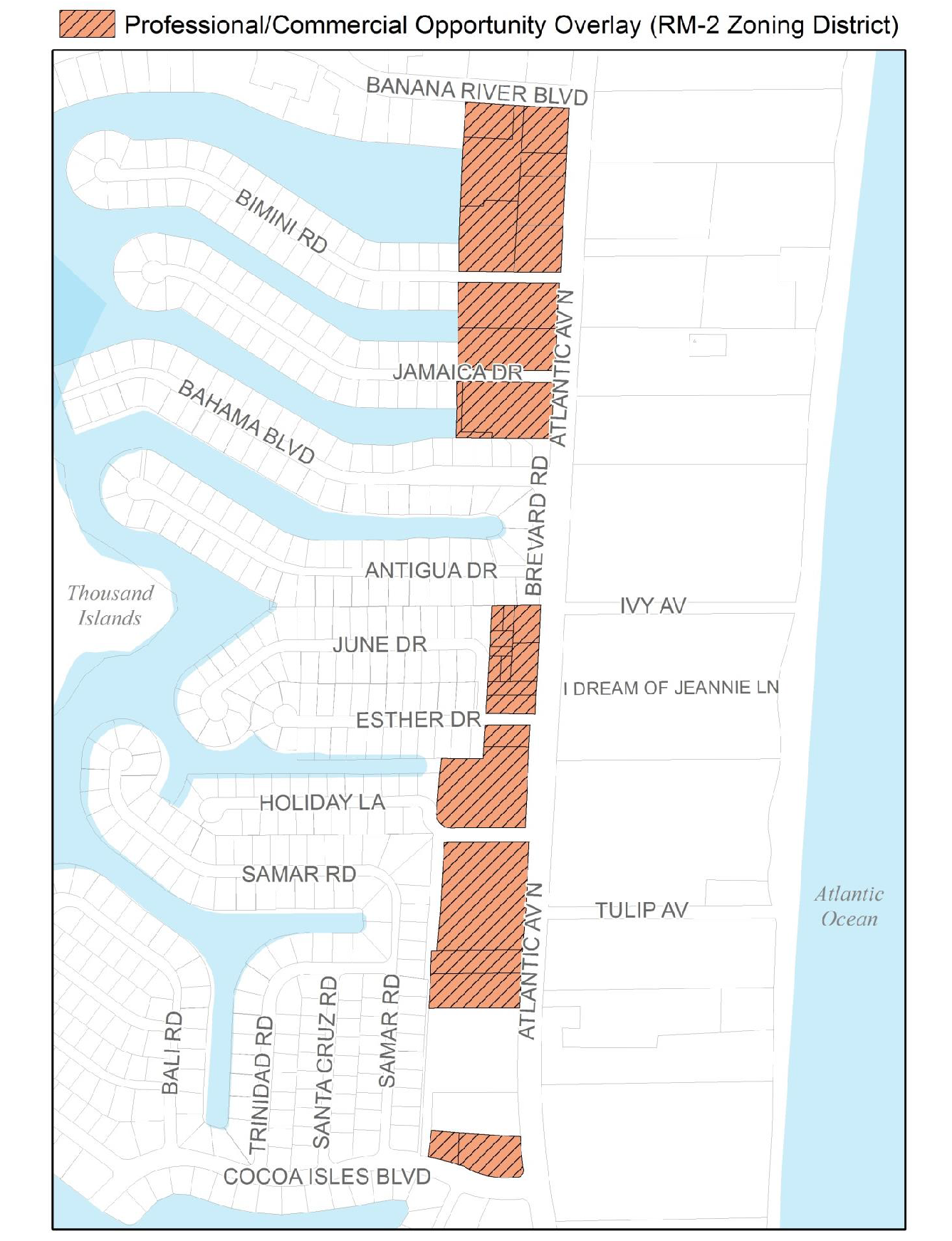
(Ord. No. 1614, § 2(Exh. A), 4-5-2018; Ord. No. 1649, § 2(Exh. A), 10-1-2020)
Section 2-26. - Planned development (PD).
A.
Purpose and intent. The planned development approach is an option that may be used by the private sector and city to achieve redevelopment and economic development, environmental reparation and enhancement, and social and cultural enrichment. The intent and purpose of the planned development (PD) district is to accomplish within the redevelopment districts, a more desirable environment and efficient land use pattern than would be possible through the application of conventional zoning and the form-based code, while adhering to the provisions of the comprehensive plan and applicable federal and state regulations. The purpose of the PD is further defined to:
1.
Allow a more flexible management structure for the efficient, orderly, and sustainable integration of uses, consistent with and complementary to their context within the community;
2.
Achieve higher quality urban design amenities, which serve to encourage redevelopment and infill development;
3.
Promote a mix of commercial, retail, professional, and residential uses, with positive interactions among and between these uses that could not be readily accomplished through conventional zoning;
4.
Create a greater sense of place, community, and neighborhood identity, through superlative urban design and innovation;
5.
Provide an environment that encourages and is based upon a more walkable and less auto-centric community;
6.
Provide a development plan that is compatible with and complements the surrounding community, creating a safe inviting environment, a sense of place, and neighborhood cohesiveness;
7.
Maintain, enhance, and preserve salient or otherwise significant existing natural features, by identifying these features and designing the project to incorporate them as view-sheds, terminating vistas, focal points, and/or other scenic amenities;
8.
Provide the greatest choice of realistic, safe, functional, interconnected, and convenient multi-modal transportation options within the PD and surrounding areas;
9.
Limit urban sprawl, greenhouse gas emissions, stormwater runoff, and vehicle miles traveled;
10.
Provide economically efficient means for delivery of government services and increased infrastructure stability;
11.
Provide a mix of housing designed in pedestrian scale neighborhood unit increments;
12.
Incorporate energy and water efficient land use patterns and technologies beyond the minimums required by state law or the Florida Building Code;
13.
Incorporate crime prevention through environmental design (CPTED) principles compatible with the pedestrian-oriented design; and
14.
Further the goals, objectives and policies of the comprehensive plan.
B.
Development agreement and master plan.
1.
Development agreement.
a.
The PD zoning designation requires the review, approval, execution and recording of a development agreement between the applicant and city commission.
b.
No site work, other than that normally associated with surveying and soil boring, may be initiated prior to recordation of such development agreement
c.
Demolition of structures, wells, and/or septic systems or hazardous material cleanups may be permitted if not otherwise prohibited by this Code.
2.
Master plan. The PD district requires the review and approval of a master plan, which is approved as an exhibit to or by reference in a development agreement.
3.
Amendments.
a.
Proposed amendments to an approved development agreement shall be reviewed and approved in the same manner as the approved development agreement.
b.
Proposed amendments to an approved master plan shall be considered an amendment to the approved development agreement.
C.
General guidelines and standards for planned developments.
1.
Unified control.
a.
At the time of application, all properties within a proposed PD shall be under unified ownership or control, as demonstrated by appropriate legal documents submitted by the applicant.
b.
These documents shall be reviewed for and are subject to a determination of legal sufficiency by the city attorney.
2.
Minimum size. The minimum parcel size for a PD is three (3) acres.
3.
Land use. The planned development option is available within the redevelopment land use district.
4.
Permissible uses.
a.
Permissible uses within the PD shall be established within the development agreement, consistent with the underlying future land use designation(s) identified on the future land use map of the comprehensive plan.
b.
A PD can be comprised of a single use, such as residential, or a mixture of residential and nonresidential uses.
c.
In furtherance of the City's Comprehensive Plan and Strategic Plan goals of promoting mixed use development, the PD may contain both residential and transient accommodations, as well as attendant non-residential uses.
d.
When more than one (1) residential type is included within a PD, the development shall assign a designated amount of acreage to each residential type, such that the densities enumerated in the city charter are not exceeded.
e.
In compliance with Comprehensive Plan Policy IV.2.2, non-residential development may occur at a maximum floor area ratio (FAR) of 3.0. The intensity of non-residential development shall be considered independently.
5.
Size and dimensional regulations. The location, size, dimensions, and design of yards, building and parking setbacks, vehicular access, loading and unloading areas, accessory structures, and utility areas (including, but not limited to, permanent areas for dumpster enclosures, utility infrastructure, stormwater management facilities, outdoor storage of vehicles, machines, and materials) shall be identified and set forth in the development agreement and master plan, and/or preliminary engineering plans for each applicable portion of the PD.
6.
Conflicts.
a.
In the event of any conflict between the requirements of this section and any declarations of covenants and restrictions governing site conditions of a PD development within the city, the more restrictive shall apply.
b.
In the event of any conflict between the requirements of this section and any recorded development agreement approved by the city commission or court approved settlement agreement governing site conditions of a PD development within the city, the provision in the development agreement or court approved settlement agreement shall prevail.
7.
Perimeter transition.
a.
General. The transition between existing development and the PD shall provide a progression of complementary uses to the greatest extent reasonably possible. The goal is to encourage interconnectivity, to avoid the need for or use of walls, earthen berms, or other obstacles, and to encourage access and positive interaction and synergy among and between uses.
b.
Landscape buffers. If the City Commission determines that a buffer is required, the buffer shall be dedicated on the plat, if applicable, and shall be held in common ownership to ensure adequate and uniform maintenance. Any buffer plantings around the perimeter of the PD or any portion of the PD shall be comprised of at least seventy-five (75) percent native plant species and shall be compatible with the soil pH conditions and hydrology.
8.
Street dedication and public access.
a.
In new development or substantial redevelopment, emergency, pedestrian, and bicycle access shall be maximized to the extent that is reasonable, even if or when motor vehicle access cannot be expanded.
b.
Intersections within the PD shall be designed to ensure pedestrian safety.
c.
Pedestrian-oriented block size of approximately one-quarter (¼) mile in length, interconnected roadways, and building orientation toward the most prominent public spaces are key elements to be considered in the review of a new PD.
9.
Sidewalks and trails.
a.
Sidewalks, a minimum of six (6) feet in width, or pedestrian transportation trails, a minimum of eight (8) feet in width, shall be provided within any new PD or any new or redeveloped subdivision within an existing PD.
b.
Sidewalks and trails shall be planned, designed, and constructed to provide maximum safe connection to mass transit, other trails and sidewalks, schools, parks, restaurants, shopping, and other activity centers.
10.
Lighting and signage.
a.
Street lighting and signage which promotes aesthetics and reinforces appropriate pedestrian-oriented streetscape design is expected to be incorporated throughout the PD.
b.
On-site lighting is to be designed so that off-site light spillage is limited to not more than one-half (0.5) foot-candles, unless otherwise approved by the city commission.
c.
Adequate lighting will be provided within pedestrian walkways, trails and parking areas to ensure pedestrian safety.
d.
Street and parking lot lighting within or adjacent to residential portions of the PD shall be designed to be consistent with residential development in such a manner that lights do not interfere with residential activities and light source glare is not visible from adjacent residential properties.
e.
Signage will incorporate a common architectural and aesthetic integrity, context harmony, and theme, which will be subject to approval by the city commission for aesthetics, dimensions, materials, colors, illumination, context and location, and must be detailed within the development agreement.
11.
Environmental impact. An environmental impact assessment of the project site is required which, at a minimum, shall consist of a description of the existing environmental elements and the potential positive and negative impacts as a result of the proposed development.
12.
Stormwater management.
a.
Stormwater management shall be master planned for the PD.
b.
Innovative, low impact designs shall be incorporated including, but not limited to, Florida-friendly landscaping, cisterns, green roofs, rain gardens, pervious pavement to limit stormwater pollution, to off-set potable water use for irrigation, and to aid in efficient and economical heating and cooling of buildings.
13.
Traffic impact study.
a.
A traffic impact study is required for both vehicular, cycling, and pedestrian traffic.
b.
The study shall include trip generation and distribution, intersection capacity and any potential trip mitigation as result of the mixed-use components creating a degree of trip capture.
c.
If the proposed PD represents the redevelopment of a property, the traffic study must include existing impacts compared to the projected impacts of the proposed redevelopment project.
14.
Parking plan.
a.
A parking/pedestrian circulation plan is required and must include the access/circulation routing for both vehicular and pedestrian traffic. The use of innovative design alternatives, such as pervious pavements and recessed landscaping islands, is strongly encouraged.
b.
All vehicle parking should be screened, to the extent possible, from any roadway frontages.
15.
Utilities.
a.
All new or relocated utility lines shall be located underground and installed or relocated at the developer's expense.
b.
Unshielded utility features shall not be visible from private or public rights-of-way or other public places. Placement of a utility feature in conflict with this provision in a new development or substantial redevelopment shall be relocated at the developer's expense.
c.
All PDs shall connect to city potable water and sanitary sewer services at the developer's expense. The applicant/developer shall extend or upgrade the utility distribution lines to accommodate the PD and adjacent properties.
d.
Where the city requests utility lines of greater capacity than required for the proposed development, the city shall be responsible for providing the greater capacity and shall reimburse the developer for such excess costs.
e.
No interim water or sewer service other than the city system shall be allowed.
f.
Where available, connection to reclaimed effluent shall be required.
16.
Architectural aesthetic concepts.
a.
The use of innovative, as well as traditional, architectural concepts is encouraged within the PD, and will be part of the negotiated development agreement.
b.
Construction which is straightforward and functional, and which draws its ornament and variety from the assembly of genuine materials is to be considered as a key element in the selection of architectural design.
17.
Landscaping.
a.
A landscape plan shall be submitted and must include the locations and layout of landscape islands, buffers, and any required or optional fencing.
b.
All planted material shall be certified as Florida number one grades and standards, most recent iteration, before installation and shall be installed pursuant to plan specifications or as approved by the City.
c.
Landscaping installation specifications shall be consistent with the Institute for Agricultural Sciences (IFAS) standards and best practices.
d.
After installation, the applicant's landscape architect shall certify that the landscape materials have been appropriately installed pursuant to the specifications set forth on the landscape plans approved by the City, relative to species, quality, height, location, spacing, quantity, site preparation, planting, and mulching.
e.
Certification by the landscape architect is required to ensure that plantings are at the prescribed and appropriate depth, in relation to adjacent grade, to ensure survivability.
18.
School capacity. For PDs which propose the additional of new residential units, a Brevard County School Impact Analysis (SIA) is required to be submitted. Upon review and approval by the Brevard County Public School District, the applicant will be issued a capacity determination letter (CDL).
D.
Procedures for approval of planned developments (PDs).
1.
The process for approval of a development agreement with a PD master plan is detailed in the subsections below.
2.
Development agreements constitute a contract between the applicant and the City Commission of the City of Cocoa Beach.
a.
Since these contracts are specific to land development efforts, they shall be drafted in concert with development of the master plan.
b.
The draft development agreement shall be reviewed formally by the development services department and other departments as necessary to determine the feasibility and suitability of the proposal prior to the submission of the master plan and development agreement to the planning board.
c.
Staff shall provide comments on the proposed master plan and development agreement in accordance with the factors set forth in this section.
3.
Planning board public hearing. The planning board shall hold a public hearing to consider the master plan and proposed development agreement. The board shall make recommendations to the city commission for approval, approval with modifications/conditions, or denial of the request, stating their reasons for such action. In making a recommendation, the planning board shall make findings of fact based upon the following:
a.
Consistency between the proposal and the City Charter, Comprehensive Plan and City Codes;
b.
Compatibility with the surrounding land uses, both existing, approved entitlements, and those currently or actively proposed for development;
c.
Adequacy of existing infrastructure to accommodate the development and existing entitlements;
d.
Financial impact to the city for installed or upgraded infrastructure;
e.
Significant ecological, geological, or aesthetic features which may be incorporated into the plan. These may include, but are not limited to approximate wetland boundaries, listed species survey, and general assessment by both an ecologist and landscape architect; and
f.
The nature, design, and appropriateness of the proposed development arrangement to the properties involved.
4.
City commission public hearing. At a public hearing, noticed in accordance with the requirements of section 4-44 of these LDC regulations, the city commission shall review the master plan, proposed development agreement, the development review comments, and the planning board recommendations.
a.
Approval of the PD is by ordinance, heard and considered according to the requirements of F.S. § 166.041.
b.
The decision of the city commission shall be based on consideration of the facts specified within subsection 3 above.
c.
In approving a PD, the city commission may establish any reasonable conditions or requirements in addition to those provided in this Code.
1)
Such additional conditions or requirements shall be entered into the development agreement and/or depicted on the master plan prior to execution of the development agreement by the city and are enforceable in the same manner and to the same extent as the other requirements of the development agreement and/or master plan.
d.
If the request is approved, the property shall have a zoning designation of PD planned development and shall be so designated on the official zoning map.
5.
The applicant shall pay all costs to record the development agreement and provide the city with a copy of such recording within thirty (30) days after the effective date.
(Ord. No. 1627, § 2(Att.), 3-7-2019; Ord. No. 1649, § 2(Exh. A), 10-1-2020)
Editor's note— Ord. No. 1627, § 2(Att.), adopted March 7, 2019, amended § 2-26 in its entirety to read as herein set out. Former § 2-26 pertained to special development overlay district (SDOD).
Section 2-30. - Purpose of redevelopment zoning.
Within the City of Cocoa Beach the redevelopment zoning districts have been created to achieve these ends:
•
Provide areas where the city can accommodate defined growth and redevelopment, while protecting the residential districts of the city.
•
Provide a variety of activities in walkable settings to meet the daily needs of residents, visitors, workers, and businesses.
•
Enhance the interconnected network of pedestrian and bicycle friendly streets that link beaches, sidewalks, bike routes, transit stops, parks, and buildings.
•
Accommodate redevelopment at a range of scales including expansions to existing buildings and new small to medium-sized infill buildings.
•
Implement the Downtown Vision Plan and the Gateways Master Plan.
•
Support the efforts of the community redevelopment agency and local economic development and redevelopment agencies.
(Ord. No. 1614, § 2(Exh. A), 4-5-2018)
Section 2-31. - Redevelopment district boundaries.
There have been identified four (4) redevelopment zoning districts within Cocoa Beach, the boundaries of which are described below:
A.
Downtown. The downtown redevelopment district is generally located in the areas between Cocoa Isles Boulevard to the north and Ramp Road to the south. The district includes those properties on both sides of A1A between Cocoa Isles Boulevard and Fourth Street North; those properties between the ocean beach and midblock between Catalina Avenue and Woodland Avenue between Fourth Street North and First Street North; those properties east of Azalea Drive and the ocean beach between First Street North and Minutemen Causeway; those properties on both sides of Atlantic Avenue South and Orlando Avenue South between Minutemen Causeway and First Street South; those properties west of Atlantic Avenue South and east of Brevard Avenue South between First Street South and Fifth Street South; and those parcels west of Brevard Avenue South, north of Ramp Road, and south of Fourth Street South. The specific boundaries are illustrated on the map located in Figure 2-32A.
B.
Midtown. The midtown redevelopment district is generally located on the east side of Atlantic Avenue North. Included in the district are Lori Wilson Park, properties on the south side of the park to a point generally across from Maritime Hammock and properties to the north of the park to a point generally across from Bahama Boulevard and Jamaica Drive. The specific boundaries are illustrated on the map located in Figure 2-32B.
C.
Uptown. The uptown redevelopment district is generally located at the intersection of SR 520 and SR A1A. Included in the district are the properties along the east side of SR A1A with the south boundary inclusive of both sides of Surf Drive and those parcels directly south of Surf Drive and across from Manatee Lane, Volusia Lane East to the north, and the ocean beach on the east; the properties on the north side of SR 520 west of SR A1A, east of the Banana River, with the north boundary being the canal south of Angelo Lane and those properties on the north and south sides of Columbia Lane West; and those properties south of SR 520 between the Banana River and SR A1A, extending south to include those properties between South Banana River Boulevard and SR A1A surrounding Canaveral Plaza Boulevard to include those properties fronting SR A1A south to Escambia Lane. The specific boundaries are illustrated on the map located in Figure 2-32C.
D.
North Cocoa Beach. The north Cocoa Beach redevelopment district is generally at the north end of the city limits. Included are the properties north of California Avenue between Palm Avenue and SR A1A; the properties on the north side of Shepard Drive South to about 600 feet west of SR A1A, on the south side of Shepard Drive South to about 700 feet west of SR A1A, including the Cornerstone Plaza; and the properties on the east side of SR A1A from Pulsipher Avenue to Harding Avenue to the ocean beach. The specific boundaries are illustrated on the map located in Figure 2-32D.
(Ord. No. 1614, § 2(Exh. A), 4-5-2018)
Section 2-32. - Subdistricts.
Each property within the redevelopment zoning district is assigned to a subdistrict that provides suitable regulations for the characteristics and location of that land. Subdistricts are illustrated in Figures 2-32A through D for the downtown, midtown, uptown, and north Cocoa Beach areas.
A.
TC Towncenter. The town center subdistrict is a mixed use, pedestrian oriented hub for surrounding neighborhoods and the entire city. This is the downtown center for dining, shopping, housing, and entertainment, with shaded sidewalks, large windows, intimate pedestrian spaces, outdoor dining, and richly detailed building facades. This subdistrict supports a variety of special events and public gathering activities.
B.
GW Gateway. The gateway subdistrict offers opportunities to upgrade existing commercial districts into destination showcases with a wide variety of pedestrian-oriented, mixed use developments and open spaces. Vacant and underdeveloped sites provide possibilities for larger, planned use developments.
C.
OC Oceanside. The oceanside subdistrict contains multifamily housing, hotels and amenities, which are closely linked to public spaces like parks, shopping, and the ocean. The intent is to provide a walkable beach-oriented experience for residents and visitors. East/west streets allow public access to main thoroughfares and the beaches, and the area encourages mixed use development.
D.
CR Cottage Row. The cottage row subdistrict is primarily residential with a wide variety of housing types. New and renovated buildings tuck parking between, behind, and under buildings to maintain a strongly pedestrian character. This area is intended to maintain its residential character and should be preserved as one (1) of the primary destinations for downtown living.
E.
CV Civic. The civic subdistrict provides locations for civic uses within the community, such as schools, post offices, religious institutions, community centers and parks. The uses allowed are generally considered to be compatible with the residential neighborhoods that surround this subdistrict.
Figure 2-32A. Downtown district and subdistricts.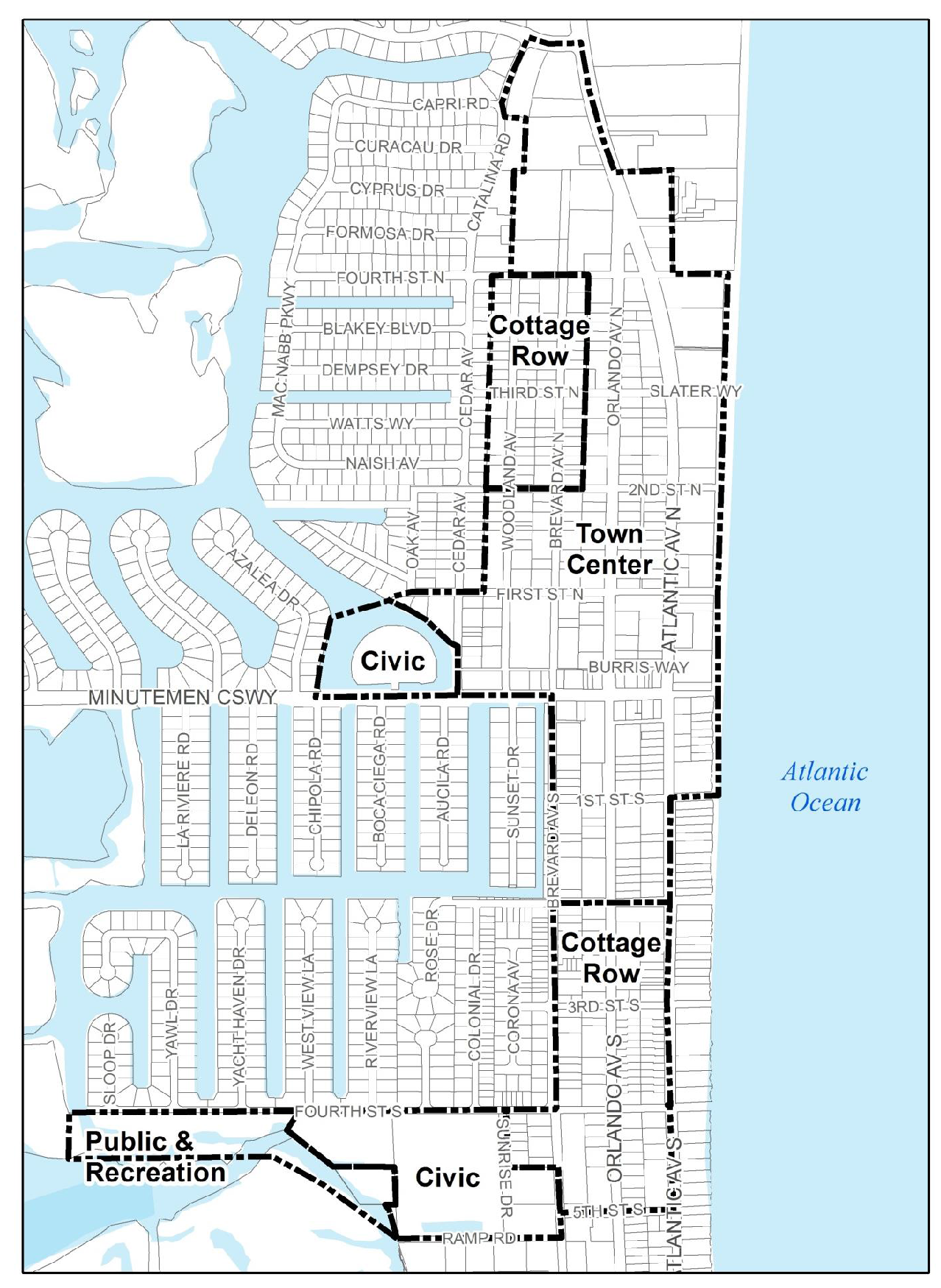
Figure 2-32B. Midtown district and subdistricts.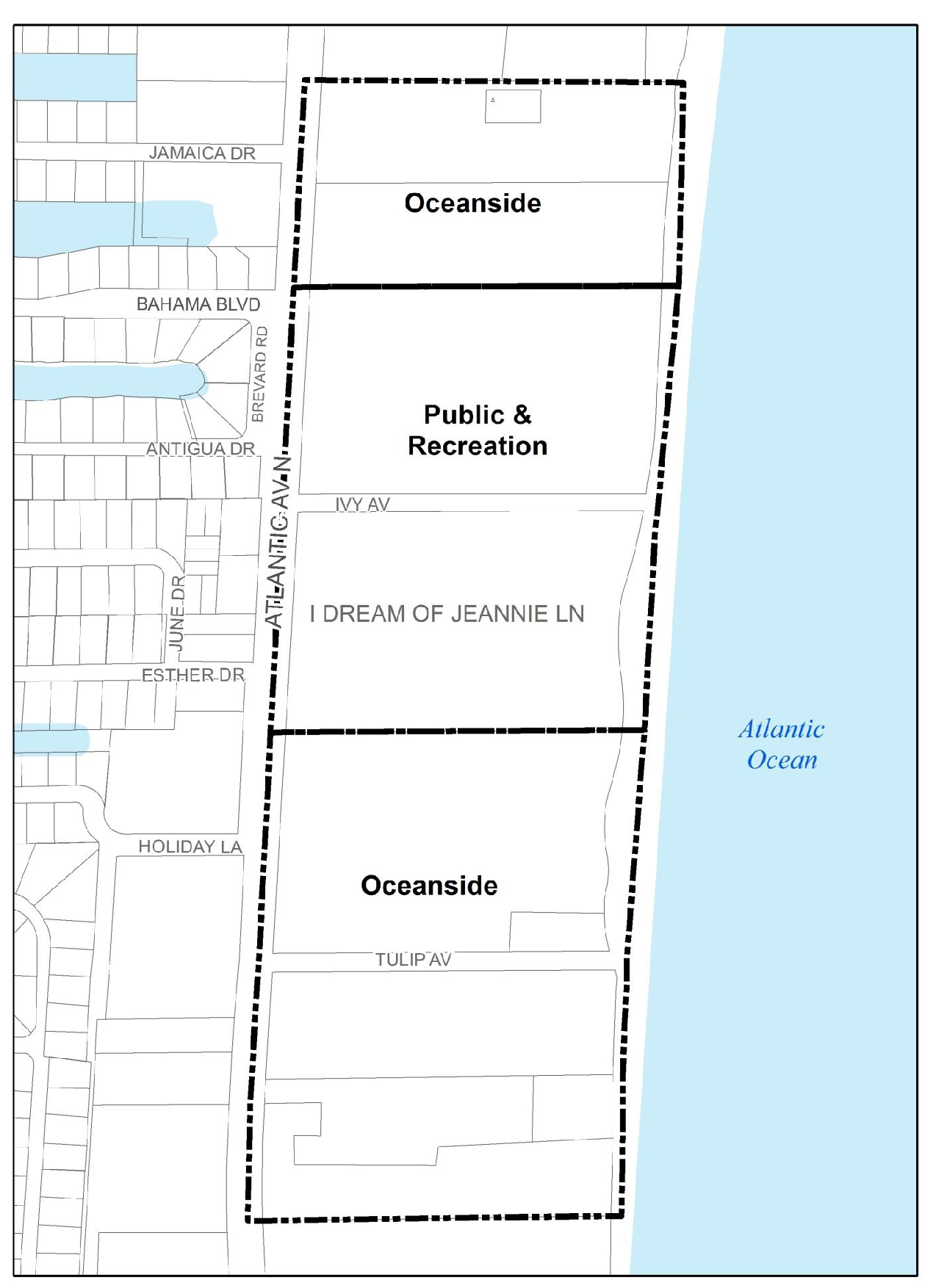
Figure 2-32C. Uptown district and subdistricts.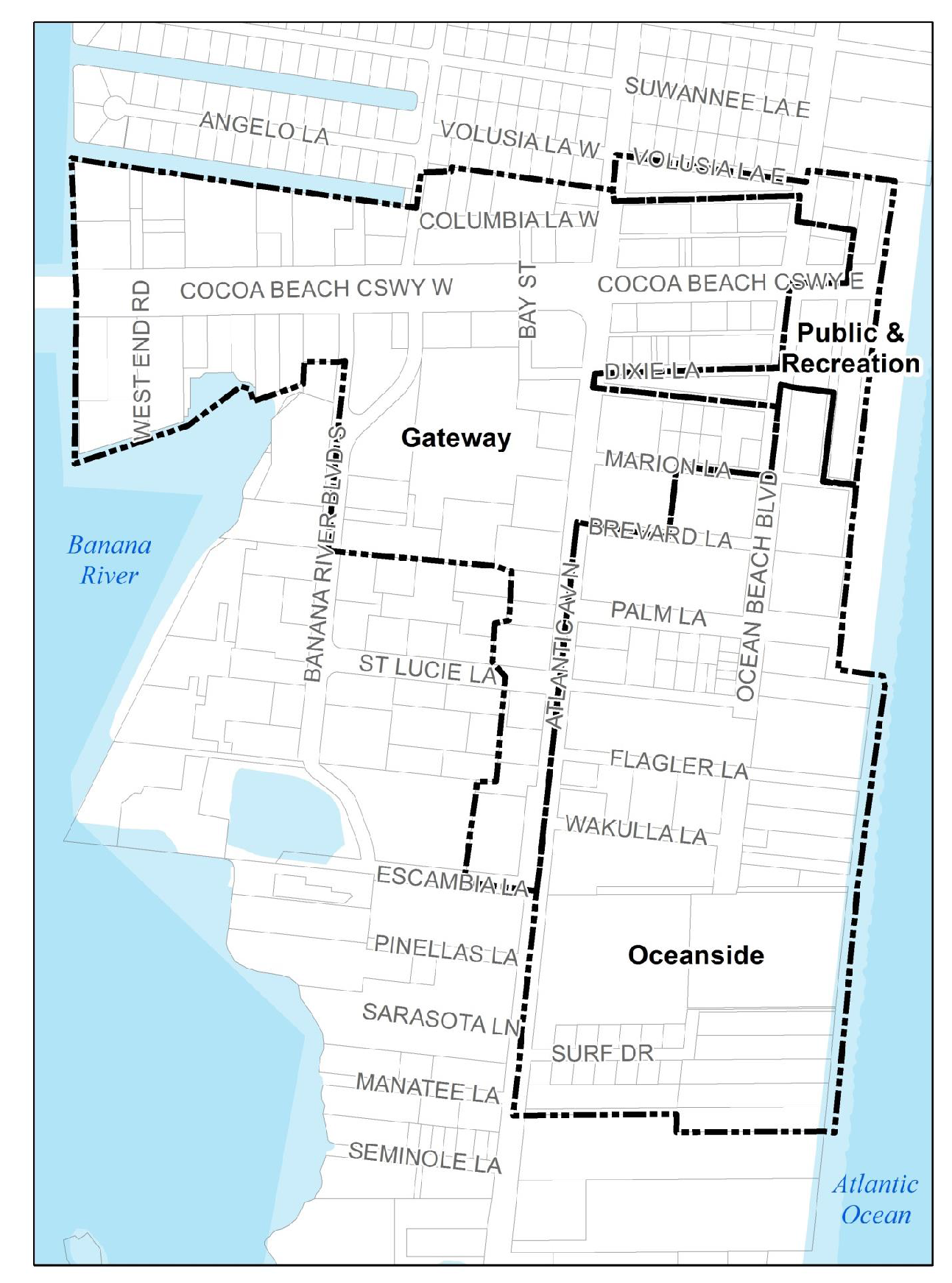
Figure 2-32D. North Cocoa Beach district and subdistricts.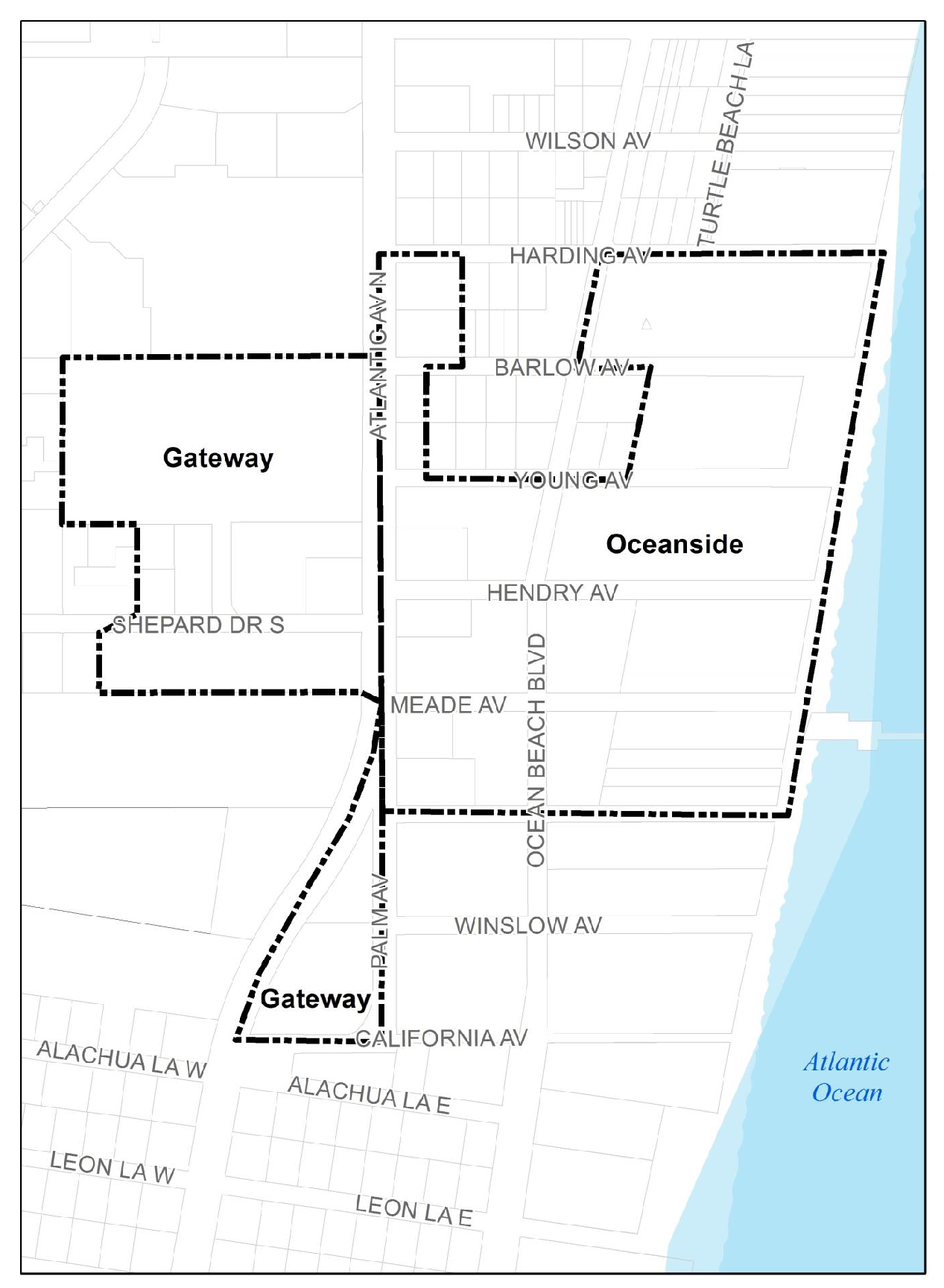
(Ord. No. 1614, § 2(Exh. A), 4-5-2018; Ord. No. 1649, § 2(Exh. A), 10-1-2020)
Section 2-33. - Permitted uses within the redevelopment district.
Table 2-33 identifies uses that are permitted in each subdistrict, organized into residential, business, and civic/education categories. Table 2-33 applies to existing buildings as well as new and expanded buildings.
A.
Uses identified with a "P" are principal uses that are permitted by right.
B.
Uses identified with an "SE" may be permitted by approval of a special exception, per the requirements within chapter IV.
C.
Uses which are not identified in Table 2-33 are not permitted within that subdistrict.
D.
Definitions are listed in section 1-20.
E.
Any uses which do not fit specifically into one (1) or more category will be subject to the determination of the administrator as to whether the particular proposed use is permitted, permitted upon special exception approval, or not permitted.
F.
Accessory uses and structures within the redevelopment district are permitted where they are clearly incidental and subordinate to existing principal uses. Accessory structures and uses must be in compliance with the criteria in chapter III and must meet the setback requirements provided within section 3-33. Cottage row and civic subdistricts are considered residential, and all other subdistricts are considered commercial.
Table 2-33. Permitted Uses Per Subdistrict
(Ord. No. 1614, § 2(Exh. A), 4-5-2018; Ord. No. 1649, § 2(Exh. A), 10-1-2020)
Section 2-34. - Accessory dwelling units within the redevelopment district.
Within the redevelopment districts, accessory dwelling units, as defined in section 1-20, may be permitted on any residentially zoned property if the structures meet the zoning and development requirements within section 3-33.
(Ord. No. 1649, § 2(Exh. A), 10-1-2020)
Editor's note— Ord. No. 1649, § 2(Exh. A), adopted Oct. 1, 2020, amended § 2-34 in its entirety to read as herein set out. Former § 2-34 pertained to accessory dwellings and derived from Ord. 1614, § 2(Exh. A), adopted April 5, 2018.
Section 2-35. - Live/work units.
A live/work unit is a single dwelling unit in a detached building, or in a multifamily or mixed-use building, that also accommodates limited commercial uses within the dwelling unit. The use of a live/work unit is predominately residential; commercial activities are secondary. The quiet enjoyment of residential neighbors takes precedence over the work needs of a live/work unit.
A.
Live/work units are permitted in certain subdistricts either by right or by special exception.
B.
Commercial uses in live/work units are restricted to offices, limited and to store and services, limited, as those terms are defined by this code.
C.
Commercial uses in live/work units must be conducted entirely within the unit or a customary residential accessory structure.
D.
No more than two (2) employees or contractors other than family members residing in the dwelling may work in a live/work unit.
E.
Signage for live/work units is limited to one (1) non-illuminated wall or window sign up to three (3) square feet.
F.
Products and equipment must not be visible from the street and may not be stored outdoors.
G.
No equipment may create noise, vibration, glare, fumes, or odors outside the dwelling unit that are objectionable to the normal senses.
(Ord. No. 1614, § 2(Exh. A), 4-5-2018; Ord. No. 1649, § 2(Exh. A), 10-1-2020)
Section 2-36. - Work/live units.
A work/live unit is a single dwelling unit in a detached building, or in a multifamily, mixed-use, or commercial building, where the predominate use of the unit is commercial. Because the predominate use of a work/live unit is commercial, customary commercial impacts may take precedence over the quiet enjoyment expectations of residential neighbors.
A.
Work/live units are permitted in certain subdistricts either by right or by special exception.
B.
Commercial uses in work/live units are restricted to offices, limited or general and to stores and services, limited or general, as those terms are defined by this code.
C.
Commercial uses in work/live units must be conducted entirely within the unit or a customary accessory structure.
D.
Signage for work/live units is limited to either one (1) non-illuminated wall or window sign up to three (3) square feet or to a shingle sign no greater than two (2) square feet and is installed such that the bottom of the sign is at least eight (8) feet above the walking surface.
(Ord. No. 1614, § 2(Exh. A), 4-5-2018; Ord. No. 1649, § 2(Exh. A), 10-1-2020)
Section 2-37. - Reserved.
Editor's note— Ord. No. 1649, § 2(Exh. A), adopted Oct. 1, 2020, repealed § 2-37, which pertained to dimensional regulations for existing buildings and derived from Ord. No. 1614, § 2(Exh. A), adopted April 5, 2018.
Section 2-38. - Dimensional regulations for buildings within the redevelopment district.
A.
Existing buildings within the redevelopment district shall be permitted to undergo maintenance, improvements and minor expansions, as determined by the administrator.
B.
When existing buildings are expanded more than thirty (30) percent of their gross floor area or improved more than fifty (50) percent of the total assessed value, as determined by the chief building official (CBO), the improved structure shall meet the requirements for new buildings.
C.
When a site within the redevelopment district is redeveloped, the site development, including building and parking placement, stormwater management, and architectural design shall be in compliance with the requirements for the redevelopment district.
(Ord. No. 1649, § 2(Exh. A), 10-1-2020)
Editor's note— Ord. No. 1649, § 2(Exh. A), adopted Oct. 1, 2020, amended § 2-38 in its entirety to read as herein set out. Former § 2-38 pertained to dimensional regulations for new and expanded buildings and derived from Ord. No. 1614, § 2(Exh. A), adopted April 5, 2018.
Section 2-39. - Building types generally.
Each new building constructed within a redevelopment zoning district must meet the standards for one (1) or more of the building types described in section 2-42 and the architectural standards provided in section 2-41. The building types are further summarized in Table 2-43.
(Ord. No. 1614, § 2(Exh. A), 4-5-2018; Ord. No. 1649, § 2(Exh. A), 10-1-2020)
Section 2-40. - Allowable building types described.
A.
Shopfront. A shopfront building has ground-floor space immediately adjoining the sidewalk that can accommodate business uses with doors and large windows facing the sidewalk.
B.
Mixed-use. A mixed-use building has multiple tenants or occupancies and may contain residences, lodging and/or businesses to the extent allowed in the subdistrict. Shopfronts are permitted in mixed-use buildings but are not required.
C.
Courtyard. A courtyard building accommodates multiple dwellings or businesses arranged around and fronting on a central garden or courtyard that may be partially or wholly open to the street.
D.
Townhouse. A townhouse is a building with common walls on both sides and a private garden to the rear. Service and parking access is from the rear.
E.
Detached. A detached building is freestanding with small side yards and a large front yard.
F.
Multiple-unit. A multiple-unit building contains multiple dwellings above and/or beside each other in a building that occupies most of its lot width and is placed close to the sidewalk. Off-street parking is accommodated to the side, rear, or street level.
G.
Parking garage. A parking garage is a specialized building to park vehicles, with screening to conceal parked vehicles.
H.
Civic. A civic building is a specialized building for public or civic uses such as schools, places of worship, or government functions.
I.
Outbuilding. An outbuilding is an additional building on a lot, such as a detached garage, workshop or accessory dwelling.
(Ord. No. 1614, § 2(Exh. A), 4-5-2018; Ord. No. 1649, § 2(Exh. A), 10-1-2020)
Section 2-41. - Building architectural guidelines.
Intent. The City of Cocoa Beach is seeking to create, through the use of a form-based code in the redevelopment subdistricts, architectural forms that add texture and composition to the streets and to these subdistricts. Architecture derives much of its aesthetics from its structural system which guides the placement of door and window openings and other design elements. Buildings must be sized appropriately for their context and should help to form well-proportioned public spaces.
A.
Building footprint and proportion. Both new developments and redevelopment, must consider the building footprint and proportions of adjacent structures and neighborhood context.
1.
The arrangement of openings on building facades must be organized in a rational manner typically aligned both vertically and horizontally.
2.
Frequent building entries must be provided. These entries would ideally be functional but may be faux if circumstances of structure and function preclude an operable entry. Long building facades or storefronts must have multiple openings to preserve the small scale and character of Cocoa Beach.
3.
When a property to be developed or redeveloped is adjacent to an existing single family residence, the setback requirement provided within the RS-1 zoning district shall apply for the adjacent side.
B.
Varying height and volume. Nothing in this code section is intended to change the building height or density restrictions contained in the City of Cocoa Beach Charter.
1.
Mixed-use developments and larger single-use buildings shall avoid creation of a large, dominant building mass by varying height and volumes in multi-story buildings.
2.
Varying roof heights and façade treatments and color can create a better scale of the buildings to the street or other public realm.
C.
Building articulation, architectural and façade treatment. The city's objective is to encourage the use of innovative and varied architectural designs, which are inspired by vernacular styles of Cocoa Beach, to enhance the sidewalk and encourage people to walk throughout the subdistricts.
1.
Designs for the street levels of buildings - the ground level that meets the sidewalk - must consider the use of a variety of element such as active storefronts, visually appealing window displays, comfortable and attractive café seating, and artwork to attract people and encourage more walking.
2.
Building facades, whether simple or complex and where their location is proximate to pedestrian traffic, must be designed to appeal to pedestrians to promote social interaction and increase foot traffic.
3.
New buildings must consider the historic/vernacular architecture of the subdistrict.
4.
Building renovations should reveal and preserve original facades which may have been covered with false facades.
5.
Long and uninterrupted facades that do not match the existing building footprints of the subdistrict are to be avoided.
6.
Plain or long building facades must utilize architectural treatments to create buildings and streetscapes that are visually appealing.
7.
To achieve this character, apply at least two (2) of the following suggested architectural treatments to buildings facades:
a.
A variety of building volumes;
b.
Repeated similar materials and construction assemblies', common elements and architectural details;
c.
Vertical and horizontal projections greater than four (4) inches in height, width, or depth;
d.
Architectural screens, meshes, louvers, and glass;
e.
Vegetated surfaces and planters;
f.
Murals;
g.
Sculptural screen;
h.
Signage, graphics, and architectural lighting;
i.
Art and artistic motifs that visually reflect the creative character of the community.
D.
Building projections and shading of pedestrian areas. Temporary structural shading like awnings and fixed structural shading like canopies, concrete eyebrows, and colonnades improve a building's energy efficiency, protect pedestrians from the sun and rain, and create more comfortable sidewalk and pedestrian spaces. These structures also create a richer and more detailed building façade and assist in differentiating uses and spaces within the building, thereby providing a more unique and interesting pedestrian experience. Shading devices should be incorporated into new buildings and building renovations whenever possible.
1.
Canopies, awnings, overhangs, porches, stoops, and other vertical projections must have a minimum clearance of eight (8) feet from the lowest portion of the assembly area or sidewalk elevation, whichever produces the most clearance distance.
2.
Canopies, as defined in section 1-20, shall be in compliance with the following guidelines.
a.
First floor canopy minimum depth is six (6) feet (measured perpendicular to the wall face).
b.
Canopies above the first floor are not permitted except and unless they are covering a recessed terrace and thus behind the main plane of the building's façade.
c.
Canopies may encroach over the sidewalk up to five (5) feet in depth, but shall not extend closer than two (2) feet to any curb line. Exceptions to the encroachment depth may be considered by the Administrator (if less than ten (10) percent) or the Board of Adjustment if site conditions warrant a larger encroachment.
d.
Canopies must be constructed of durable materials like concrete or metal, to reinforce the architecture.
e.
Canopies may be either supported from below by brackets or from above by suspension cables or chains.
3.
Awnings, as defined in section 1-20, shall be in compliance with the following guidelines.
a.
Awnings should frame storefronts and windows to highlight them from the street, provide weather protection from sun and rain, and reinforce a building's architecture.
b.
Ground floor awnings must have a minimum depth of four (4) feet, measured perpendicular from the wall face.
c.
Architectural and historic details of the building should be highlighted by awnings and should not be obscured by them.
d.
Awnings should be made of commercial grade canvas and can be either fixed or retractable.
e.
Plasticized and/or vinyl fabrics are prohibited.
f.
Awnings shall not be illuminated from underneath or from behind to compete with other signage.
g.
Awnings colors and styles may vary depending on the storefront, the architectural style, and the color(s) of the building.
h.
Awnings may have lettering and be used as a secondary sign for businesses, in compliance with chapter V of these LDC regulations. Awnings cannot be used to advertise off-site businesses.
i.
Awnings may encroach over the sidewalk up to five (5) feet in depth, but shall not extend closer than two (2) feet to any curb line. Exceptions to the encroachment depth may be considered by the Administrator (if less than ten (10) percent) or the Board of Adjustment if site conditions warrant a larger encroachment.
j.
Awnings should maintain a minimum six (6) inch clearance from second floor features such as windows.
4.
Balconies, as defined in section 1-20, shall be in compliance with the following guidelines.
a.
Balconies (except for Juliet Balconies) must have a minimum depth of three (3) feet but can be larger to accommodate items such as a small seating area.
b.
Balconies must have an underside clearance of at least nine (9) feet from the sidewalk.
c.
Balconies may project beyond the required setback line, but may not extend beyond the lot line.
d.
Balconies may have roofs, but still must be open, non-air-conditioned parts of the building.
e.
All balconies should be supported by visual architectural elements such as decorative beams and/or brackets below or cables from above. Hidden internal structural support is an option if the building architecture is complementary with such structure.
f.
On corners, balconies are encouraged to wrap around the side of the building.
5.
Colonnades, galleries or arcades, as defined in section 1-20, shall be in compliance with the following guidelines.
a.
Colonnade height should generally align with the ground floor building height and maintain a minimum underside clearance of nine (9) feet.
b.
Colonnades should be at least eight (8) feet deep to accommodate space for seating, circulation, and door swing. They should have a consistent depth that matches those of neighboring building colonnades or arcades. Changes in the plain of the building façade may allow for some parts of the colonnade to be deeper that others while maintaining a consistent, parallel location to the sidewalk.
c.
A clear, unobstructed walking path must be maintained on the sidewalk.
d.
Colonnades should be only one (1) or two (2) stories in height and have flat or pitched roof.
e.
On corners, colonnades are encouraged to wrap around the sides of the building.
f.
Open terraces are permitted on the tops of colonnades.
g.
Colonnade floors are to be flush with the sidewalk and are not to be raised.
6.
Porches, as defined in section 1-20, shall be in compliance with the following guidelines.
a.
Minimum porch depth, not including ramps and steps, is six (6) feet measured from the face of the building to the outside column face.
b.
The minimum finished floor height can be no more than eight (8) inches below the interior finished floor height.
c.
Porches may project forward of the required setback line but may not extend beyond the lot line.
7.
Stoops, as defined in section 1-20, shall be in compliance with the following guidelines.
a.
Minimum stoop depth shall be three (3) feet as measured from the face of the buildings to the outside column face.
b.
Minimum stoop length shall be four (4) feet.
c.
Minimum finished stoop flor height can be no more than eight (8) inches below the interior finished floor height,
d.
Stoops may project forward of the required setback line but may not extend beyond the lot line.
e.
Stoops should be covered, either with a roof, or be part of an area inset into the main body of the building.
E.
Transparency. Transparent windows are used to promote visibility into buildings, interest for pedestrians walking on sidewalks, and eyes on the street for safety. Transparency creates interplay between a building's interior space, exterior space, and the street. It animates the sidewalk and provides something interesting to look at while walking by. It also fosters natural surveillance of the street.
1.
The percentage of transparency per story shall be calculated within the area between the finished floor and the finished ceiling and is a total percentage of doors and windows along that portion of the façade. The appropriate percentage of transparency on a building's façade varies depending on the use, street type, and subdistrict. These percentages are detailed below.
a.
Ground floors of commercial buildings shall be composed of at least sixty (60) percent transparency on primary pedestrian streets and a minimum of thirty (30) percent on secondary streets and twenty-five (25) percent on east/west streets, local streets, and active alleys.
b.
Large blank walls are prohibited
c.
Window openings may be smaller and less frequent for multi-family residential uses, but should be expressed in such a way as to break down the facades of large buildings into smaller parts.
d.
Ground floors of residential building facades shall be composed of at least fifty (50) percent transparency on primary pedestrian streets and a minimum of twenty-five (25) percent on secondary streets.
e.
Clear glass is highly preferable for ground floor commercial entrance doors and storefronts to facilitate views of merchandise from the sidewalk. Tinted, reflective, or frosted glass in storefront windows is prohibited unless good cause can be shown necessitating the use of these glass options. The use of any of these options is subject to the approval of the administrator and will be considered only on a case by case basis. Where glare and heat gain are problems, other means of shielding openings such as awnings should be utilized.
f.
Non-retail uses that do not typically use display windows or storefronts are highly encouraged to locate public uses at the street level along with other activity areas including rehearsal space, exhibition space, food service, show rooms, meetings rooms, offices, exercise rooms, common entry lobbies, and other support functions.
F.
Storefronts and entrances. A well-designed storefront draws people inside during its hours of operation and enhances the sidewalk experience twenty-four (24) hours a day by adding visual interest and contributing to an overall image for the surrounding area. Well-designed storefronts engage pedestrians and increase street level activity.
1.
In new buildings, the top of all storefront window sills shall be between one (1) foot and three (3) feet above the adjacent sidewalk.
2.
In new buildings, shopfront windows are to be designed to extend up from the sill at least nine (9) feet above the adjacent sidewalk.
3.
Permanent and temporary signs in display windows shall not obstruct more than twenty-five (25) percent of the total window glass area and should not obstruct the display area.
4.
All signs must be coordinated to present a clear and cohesive display.
5.
Display signs may include lettering applied directly to the glass with paint, vinyl, die cut lettering, or etching. Banners, hanging, and neon signs must be set back slightly from the glass display window.
6.
Occupied and vacant storefronts may be used to display art as long as they allow views into the stores. These displays shall not impede more than thirty-five (35) percent of the storefront area.
7.
Window displays should remain lit at night to animate the street level.
8.
Storefront windows cannot be made opaque by window treatments (except operable sunscreen devices within the conditioned space).
9.
In the cottage row subdistrict, commercial storefronts in converted historic homes shall, where possible and not precluded by the structural requirements of the building, preserve any existing multi-paned windows rather than replace them with single pane display windows. Attention can be attracted to the storefront by the use of exterior improvements like hanging signs, shingle signs, awnings, and color.
10.
Existing warehouses that are converted to sell goods and/or art to the general public must have storefronts that are integrated with the building's openings, front the sidewalk and be visible from the street. In this instance, windows do not need to be elevated from the street.
11.
Artist workspaces/dwellings must have storefronts that are integrated with the building's openings and front the sidewalk and are visible from the street. These storefronts are typically for workspace, studios, and exhibition space and may be larger than typical storefronts and slightly elevated above street level. Window framing materials may be atypical to differentiate these uses from other traditional commercial uses.
12.
All uses open to the public must have an entrance to the street.
13.
Entries and ground floors above the existing sidewalk are prohibited unless said entrances were existing as of the adoption date of this code.
14.
Secondary shopfront entrances may face the alley or parking lot.
15.
Main pedestrian entrances must be easily recognizable, weather protected, oriented toward the right-of-way, and at grade level.
16.
The entrances to all shopfronts must be covered, either by an awning, canopy, or by being inset into the main body of the building.
17.
Shopfront doors must contain at least sixty (60) percent transparent glass. Solid doors on the main shopfront entries are strongly discouraged and will be allowed only upon approval of the Administrator as a result of good cause shown. Any use of solid entry doors must be in conjunction with storefront glass areas.
18.
Storefronts and entrances may be designed as a single continuous opening using French doors or accordion style glass doors to extend the interior space out onto the sidewalk.
19.
When an alley or rear lane is present, garage doors must face towards the alley.
20.
Garage doors may only be a single bay in width, up to a maximum of ten (10) feet wide when visible from the street.
(Ord. No. 1614, § 2(Exh. A), 4-5-2018; Ord. No. 1649, § 2(Exh. A), 10-1-2020)
Section 2-42. - Building type diagrams.
Building types and placement on the lot are illustrated in Figures 2-42A through I. For illustrative purposes only, character examples are provided for each building type. Also included are the requirements for where on a lot a building may be placed. Each building type identifies building placement, minimum yard size and parking placement. The details provided on the diagrams are further summarized in Table 2-43.
Figure 2-42A. Shopfront Building
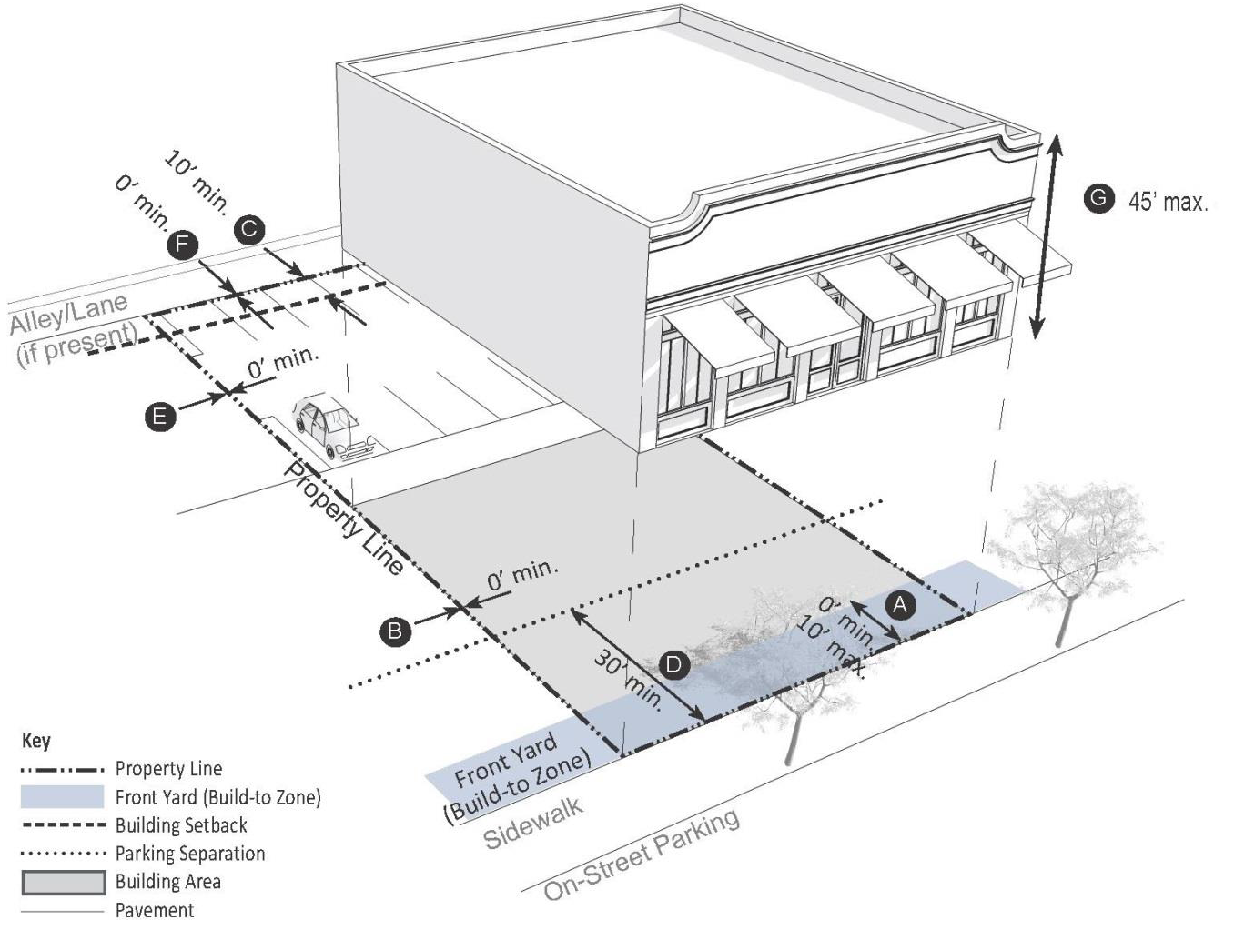
| Building Placement (Distance from the Lot Line)* | ||
| Front Yard (Build-to Zone) |
0' min.,
10' max. |  |
| Side Yard |
0' min.
(See notes) |  |
| Side Street | 0' min., 10' max. | |
| Rear Yard |
10' min.
(See notes) |  |
| Parking Placement (Distance from the Lot Line)* | ||
| Front Separation |
30' min.
(See notes) |  |
| Side Lot Separation | 0' min. |  |
| Side Street Separation | 10' min. | |
| Rear Separation |
5' min. (no alley)
0' with alley |  |
| Building Size* | ||
| Building Height |
45' max.
(See Sec. 3-37) |  |
| Frontage Percentage |
80% min., 100% max.
(See Sec. 2-44) | |
|
Notes:
• On oceanfront properties the rear setback is the FDEP Coastal Construction Setback Line. • Front separation maximums may be adjusted when incorporating a common area plaza, dedicated green space or other low impact development element as approved by the administrator. • When commercial development or redevelopment is adjacent to existing single-family residences, the setback requirements provided within the RS-1 zoning district shall apply for the adjacent side. | ||
Figure 2-42B. Mixed-Use Building
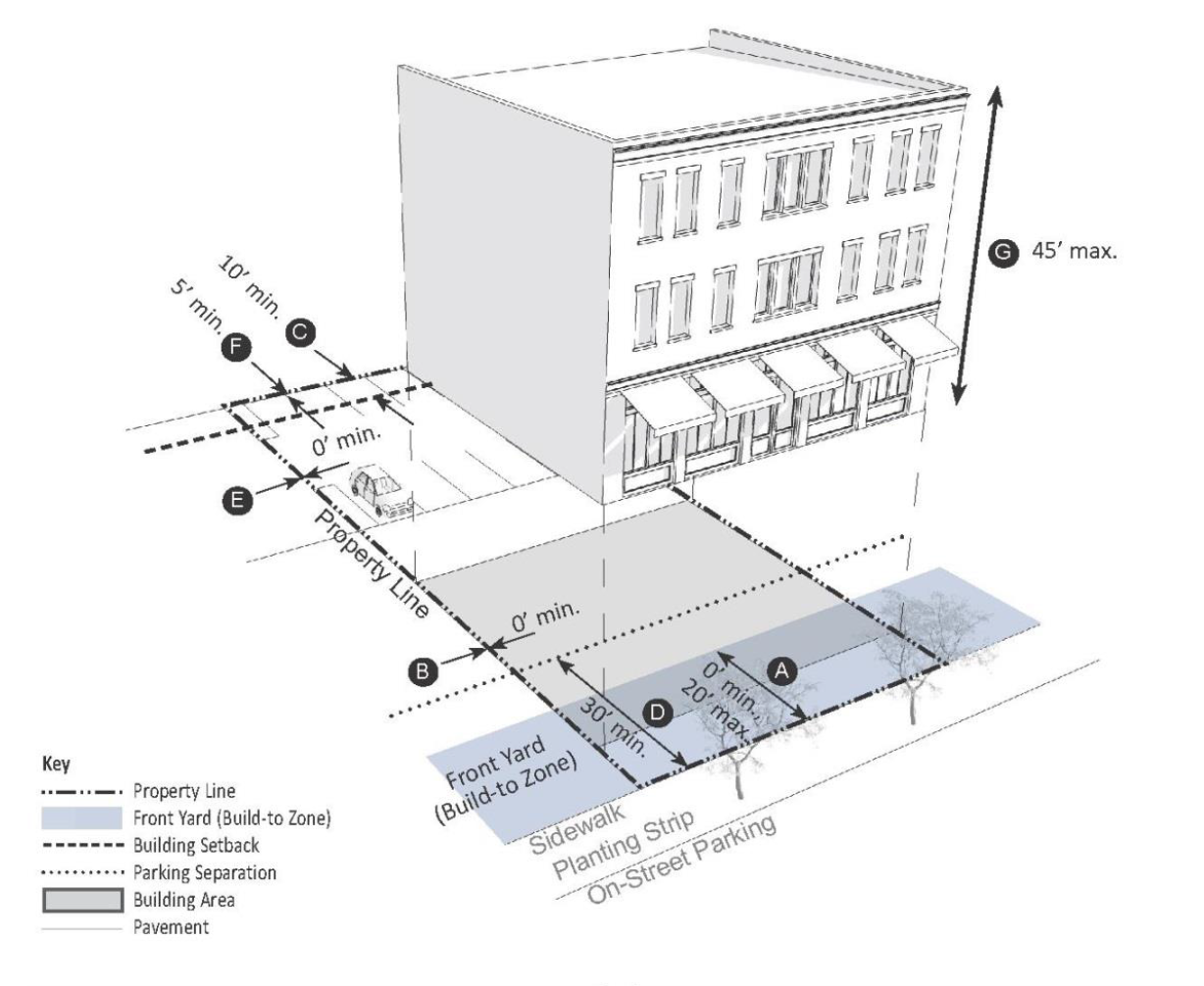
| Building Placement (Distance from the Lot Line)* | ||
| Front Yard (Build-to Zone) |
0' min.,
20' max. | |
| Side Yard |
0' min.
(See notes) | |
| Side Street | 0' min. | |
| Rear Yard |
10' min.
(See notes) | |
| Parking Placement (Distance from the Lot Line)* | ||
| Front Separation |
30' min.
(See notes) | |
| Side Lot Separation | 0' min. | |
| Side Street Separation | 10' min. | |
| Rear Separation |
5' min. (no alley)
0' with alley | |
| Building Size* | ||
| Building Height |
45' max.
(See Sec. 3-37) | |
| Frontage Percentage |
80% min., 100% max.
(See Sec. 2-44) | |
|
Notes:
• On oceanfront properties the rear setback is the FDEP Coastal Construction Setback Line. • Front separation maximums may be adjusted when incorporating a common area plaza, dedicated green space or other low impact development element as approved by the administrator. • When commercial development or redevelopment is adjacent to existing single-family residences, the setback requirements provided within the RS-1 zoning district shall apply for the adjacent side. | ||
Figure 2-42C. Courtyard Building
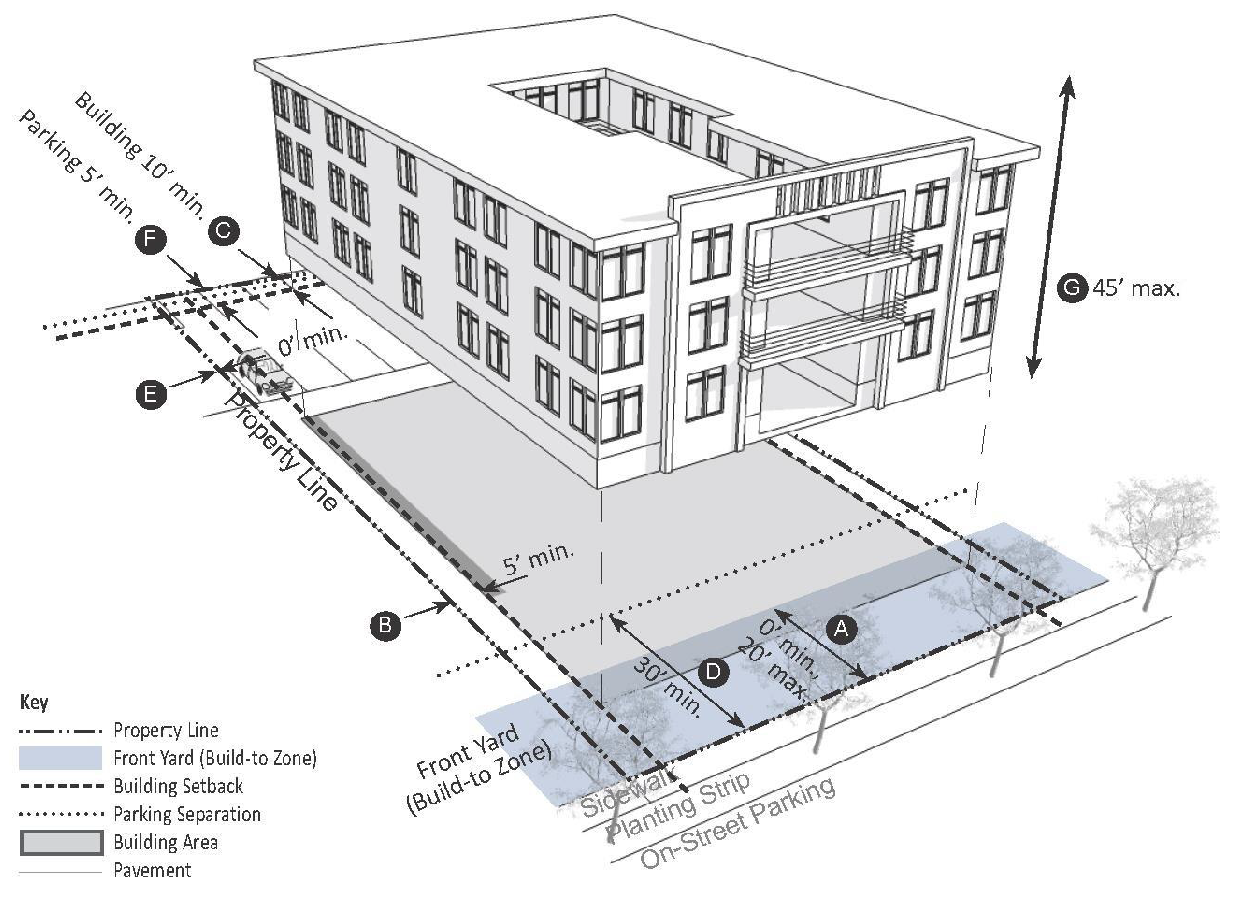
| Building Placement (Distance from the Lot Line)* | ||
| Front Yard (Build-to Zone) |
0' min.,
20' max. | |
| Side Yard |
5' min.
(See notes) | |
| Side Street | 0' min. | |
| Rear Yard |
10' min.
(See notes) | |
| Parking Placement (Distance from the Lot Line)* | ||
| Front Separation |
30' min.
(See notes) | |
| Side Lot Separation | 0' min. | |
| Side Street Separation | 10' min. | |
| Rear Separation |
5' min. (no alley)
0' with alley | |
| Building Size* | ||
| Building Height |
45' max.
(See Sec. 3-37) | |
| Frontage Percentage |
60% min., 100% max.
(See Sec. 2-44) | |
|
Notes:
• On oceanfront properties the rear setback is the FDEP Coastal Construction Setback Line. • Front separation maximums may be adjusted when incorporating a common area plaza, dedicated green space or other low impact development element as approved by the administrator. • When commercial development or redevelopment is adjacent to existing single-family residences, the setback requirements provided within the RS-1 zoning district shall apply for the adjacent side. | ||
Figure 2-42D. Townhouse Building
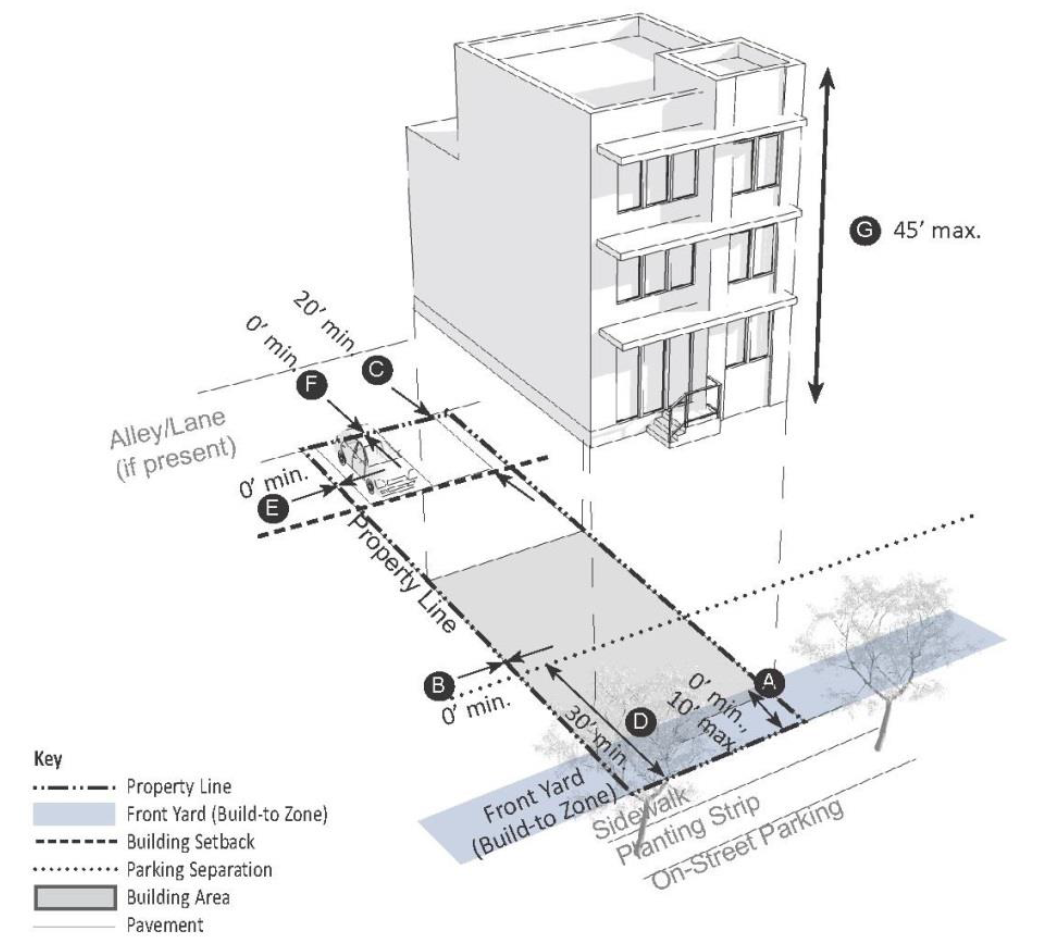
| Building Placement (Distance from the Lot Line)* | ||
| Front Yard (Build-to Zone) |
0' min.,
10' max. | |
| Side Yard |
0' min.
(See notes) | |
| Side Street | 10' min. | |
| Rear Yard |
20' min.
(See notes) | |
| Parking Placement (Distance from the Lot Line)* | ||
| Front Separation |
30' min.
(See notes) | |
| Side Lot Separation | 0' min. | |
| Side Street Separation | 10' min. | |
| Rear Separation |
5' min. (no alley)
0' with alley | |
| Building Size* | ||
| Building Height |
45' max.
(See Sec. 3-37) | |
| Frontage Percentage |
90% min., 100% max.
(See Sec. 2-44) | |
|
Notes:
• On oceanfront properties the rear setback is the FDEP Coastal Construction Setback Line. • Front separation maximums may be adjusted when incorporating a common area plaza, dedicated green space or other low impact development element as approved by the administrator. • When commercial development or redevelopment is adjacent to existing single-family residences, the setback requirements provided within the RS-1 zoning district shall apply for the adjacent side. | ||
Figure 2-42E. Detached Building
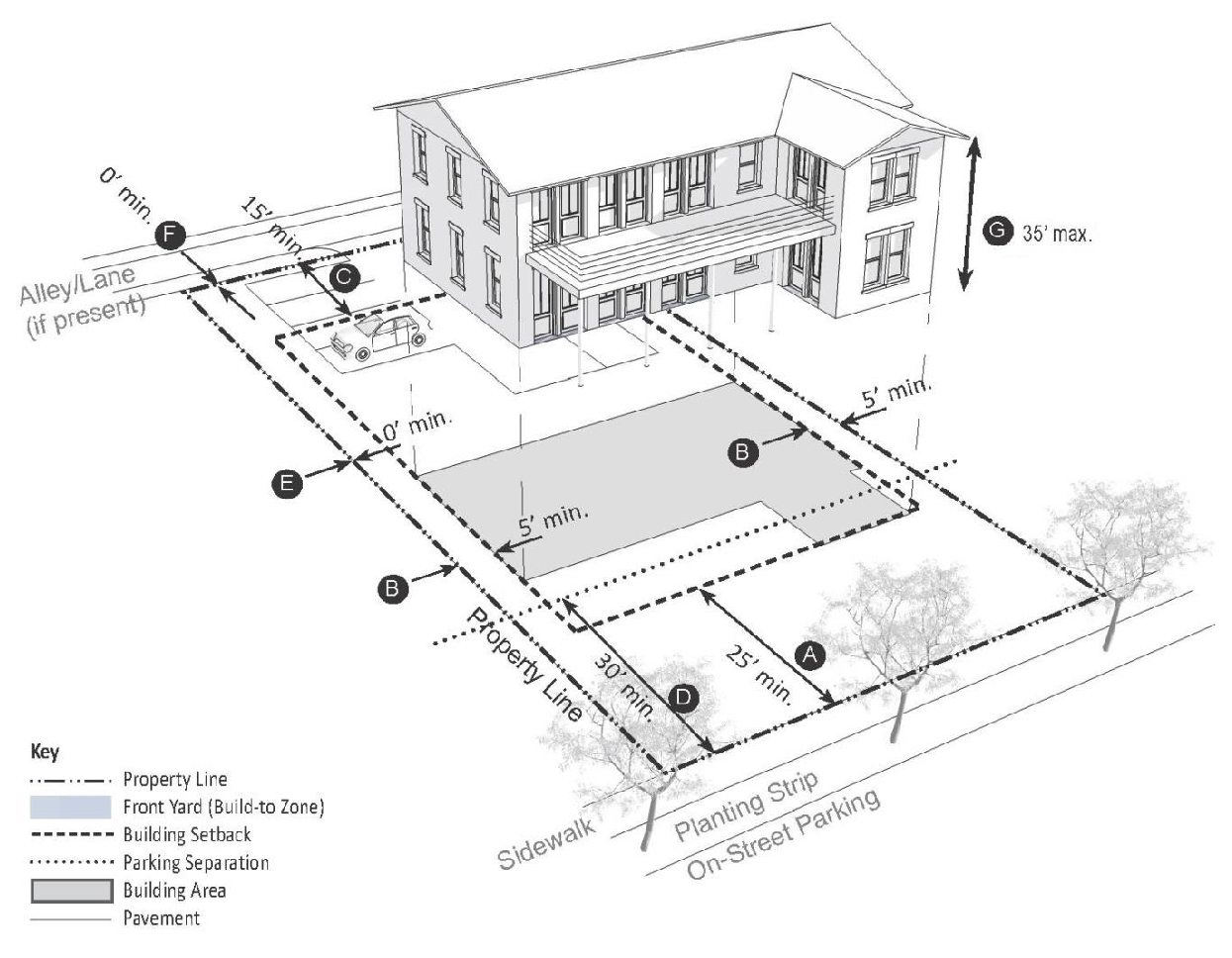
| Building Placement (Distance from the Lot Line)* | ||
| Front Yard | 25' min. | |
| Side Yard | 5' min. | |
| Side Street | 5' min. | |
| Rear Yard | 15' min. | |
| Parking Placement (Distance from the Lot Line)* | ||
| Front Separation | n/a | |
| Side Lot Separation | 5' min. | |
| Side Street Separation | 5' min. | |
| Rear Separation | 5' min. | |
| Building Size* | ||
| Building Height | 45' max. | |
| Frontage Percentage | n/a | |
|
Notes:
• On oceanfront properties the rear setback is the FDEP Coastal Construction Setback Line. • When commercial development or redevelopment is adjacent to existing single-family residences, the setback requirements provided within the RS-1 zoning district shall apply for the adjacent side. | ||
Figure 2-42F. Multiple-Unit Building
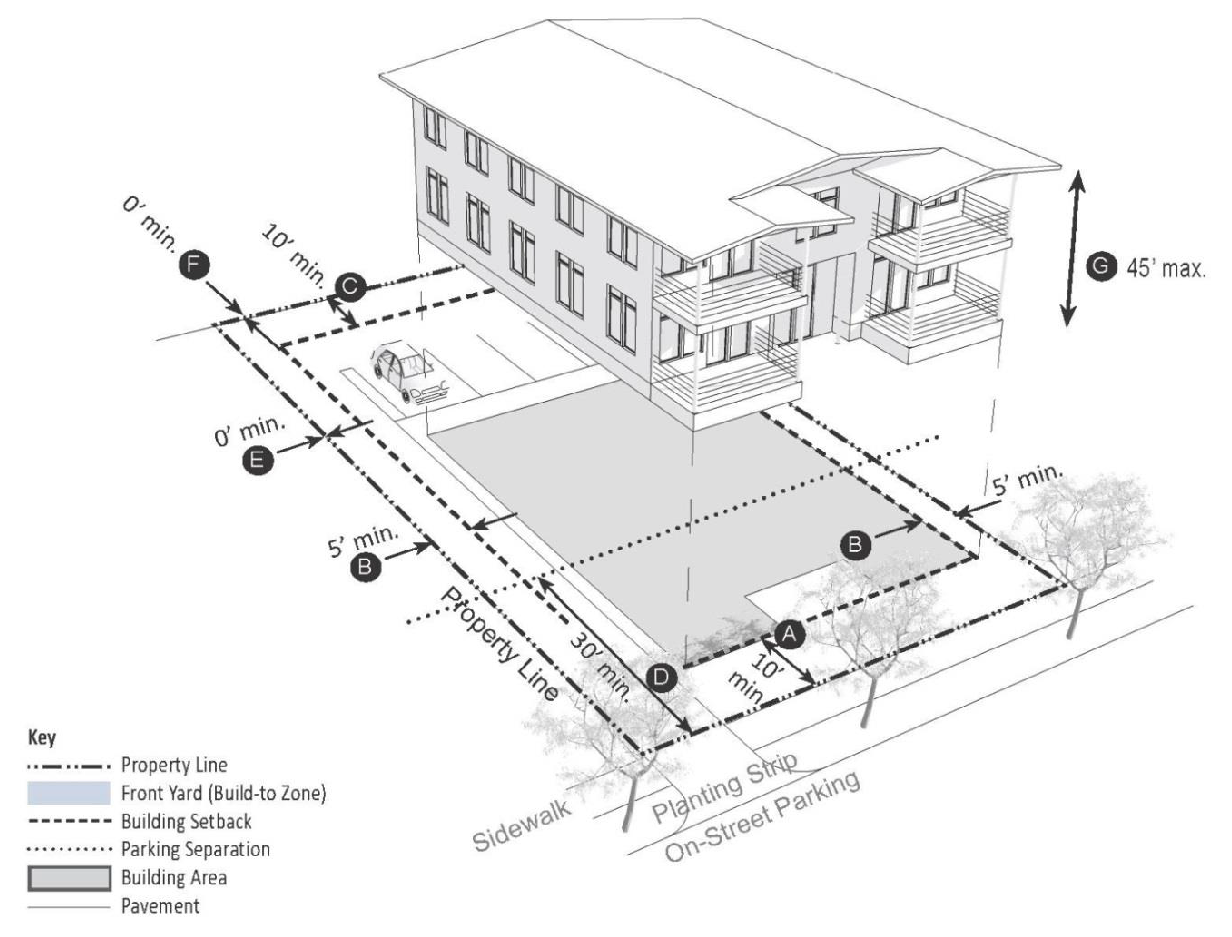
| Building Placement (Distance from the Lot Line)* | ||
| Front Yard | 10' min. | |
| Side Yard |
5' min.
(See notes) | |
| Side Street | 10' min. | |
| Rear Yard |
10' min.
(See notes) | |
| Parking Placement (Distance from the Lot Line)* | ||
| Front Separation |
30' min.
(See notes) | |
| Side Lot Separation | 0' min. | |
| Side Street Separation | 10' min. | |
| Rear Separation |
5' min. (no alley)
0' with alley | |
| Building Size* | ||
| Building Height |
45' max.
(See Sec. 3-37) | |
| Frontage Percentage | n/a | |
|
Notes:
• On oceanfront properties the rear setback is the FDEP Coastal Construction Setback Line. • Front separation maximums may be adjusted when incorporating a common area plaza, dedicated green space or other low impact development element as approved by the administrator. • When commercial development or redevelopment is adjacent to existing single-family residences, the setback requirements provided within the RS-1 zoning district shall apply for the adjacent side. | ||
Figure 2-42G (G1 to G3). Garage Building
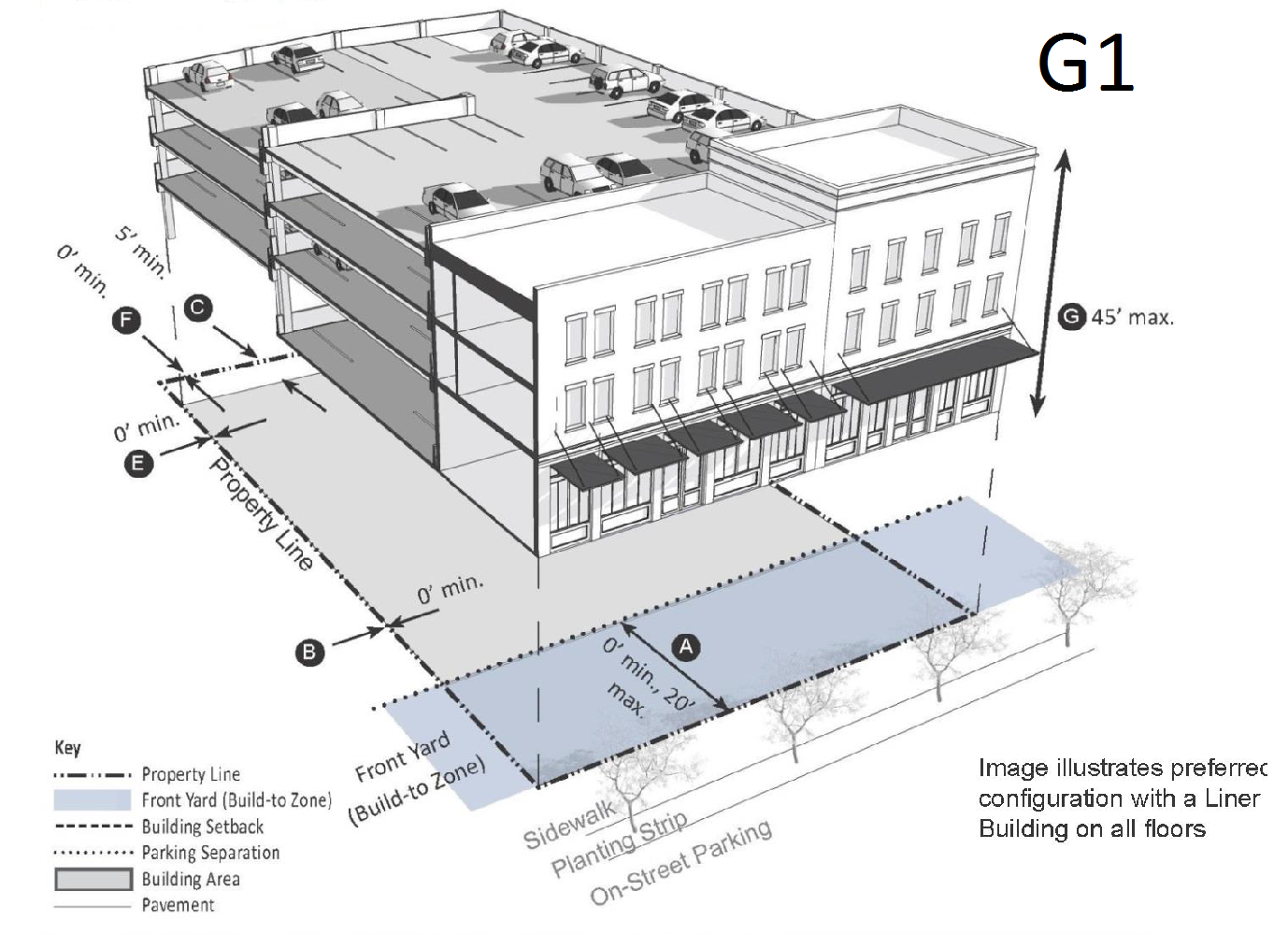
| Building Placement (Distance from the Lot Line)* | ||
| Front Yard (Build-to Zone) | 0' min., 20' max | |
| Side Yard |
0' min.
(See note) | |
| Side Street | 0' min. | |
| Rear Yard |
5' min. (no alley)
0' with alley (See notes) | |
| Parking Placement (Distance from the Lot Line)* | ||
| Front Separation | n/a | |
| Side Lot Separation | 0' min. | |
| Side Street Separation | 10' min. | |
| Rear Separation |
5' min. (no alley)
0' with alley | |
| Building Size* | ||
| Building Height |
45' max.
(See Sec. 3-37) | |
| Frontage Percentage | n/a | |
|
Notes:
• On oceanfront properties the rear setback is the FDEP Coastal Construction Setback Line. • When commercial development or redevelopment is adjacent to existing single-family residences, the setback requirements provided within the RS-1 zoning district shall apply for the adjacent side. | ||
* See Table 2-85 for footnotes and explanations and for certain exceptions to those requirements.
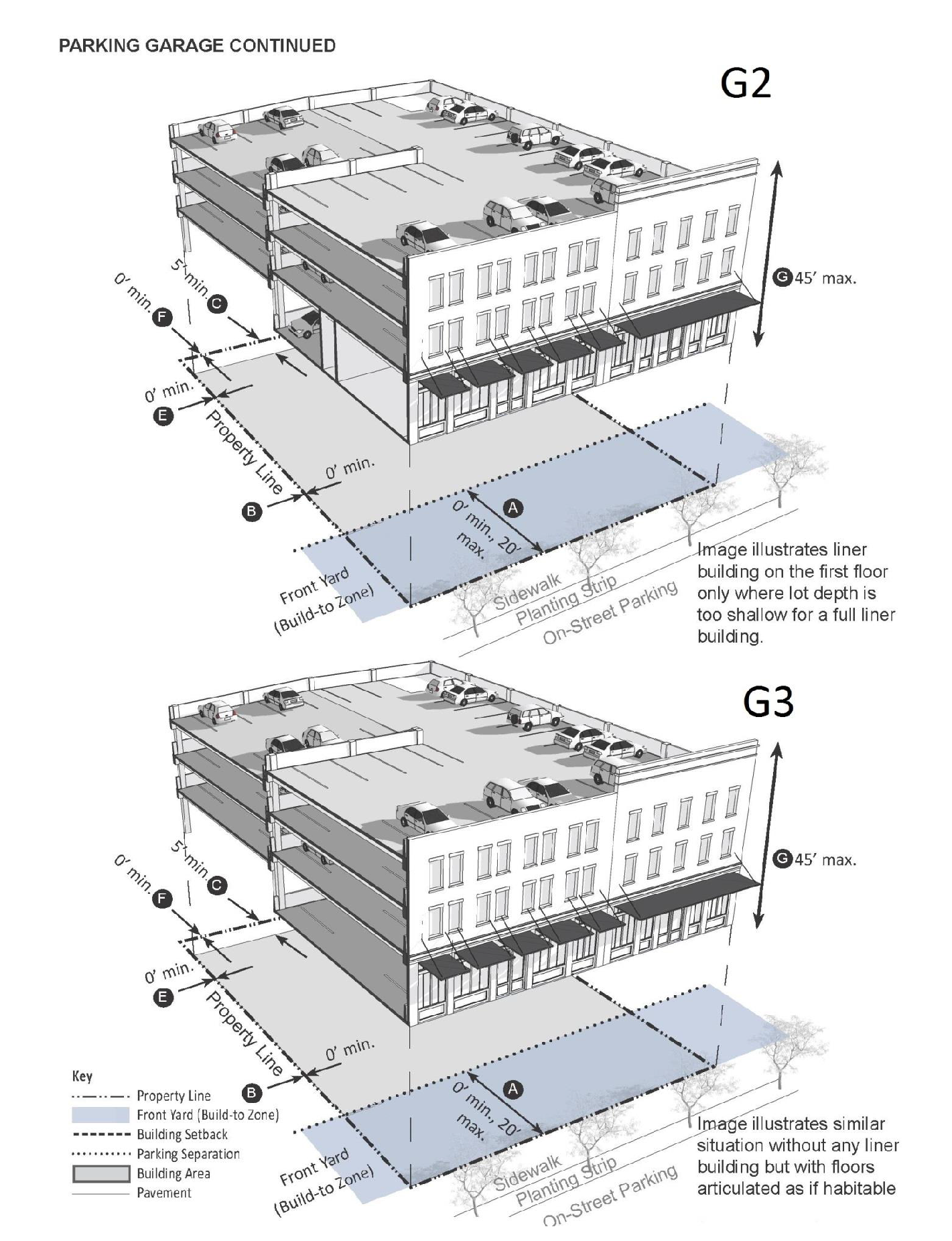
Figure 2-42H. Civic Building
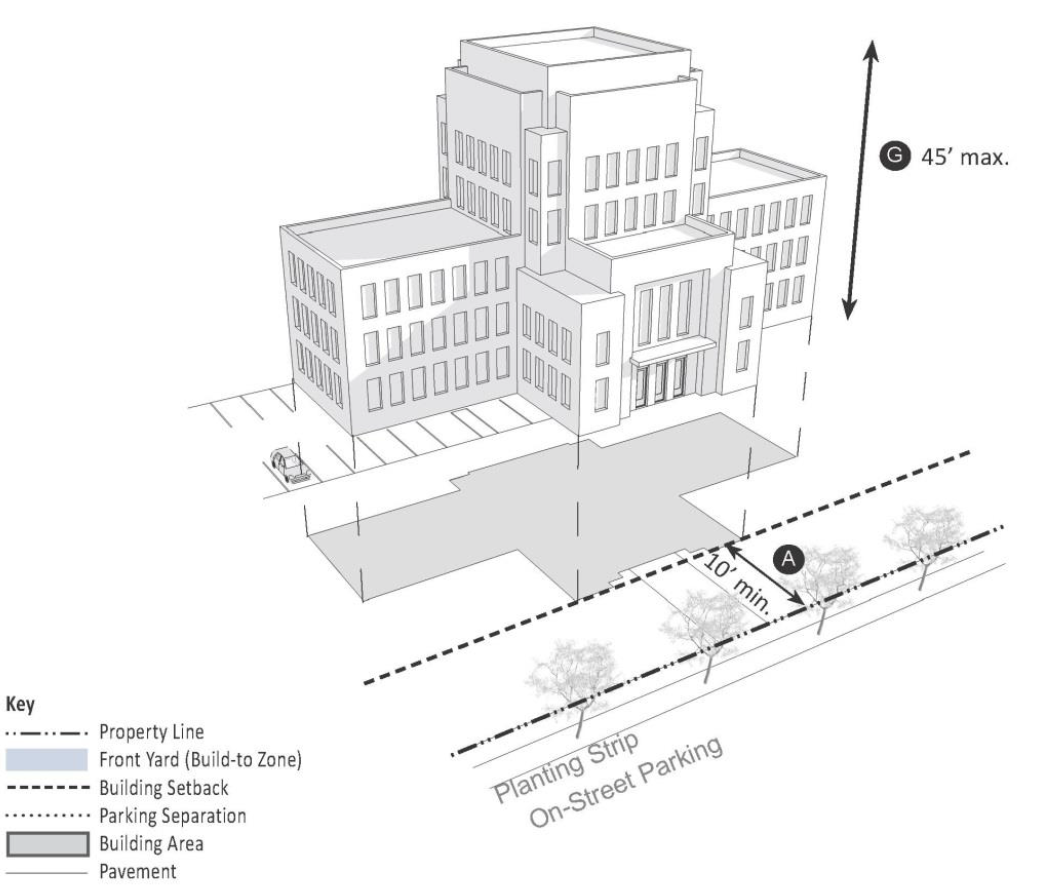
| Building Placement (Distance from the Lot Line)* | ||
| Front Yard | 10' min. | |
| Side Yard |
10' min.
(See notes) | |
| Side Street | 5' min. | |
| Rear Yard |
5' min.
(See notes) | |
| Parking Placement (Distance from the Lot Line)* | ||
| Front Separation | n/a | |
| Side Separation | n/a | |
| Side Street Separation | n/a | |
| Rear Separation | n/a | |
| Building Size* | ||
| Building Height |
45' max.
(See Sec. 3-37) | |
| Frontage Percentage | n/a | |
|
Notes:
• On oceanfront properties the rear setback is the FDEP Coastal Construction Setback Line. • When commercial development or redevelopment is adjacent to existing single-family residences, the setback requirements provided within the RS-1 zoning district shall apply for the adjacent side. | ||
Figure 2-42I. Outbuilding
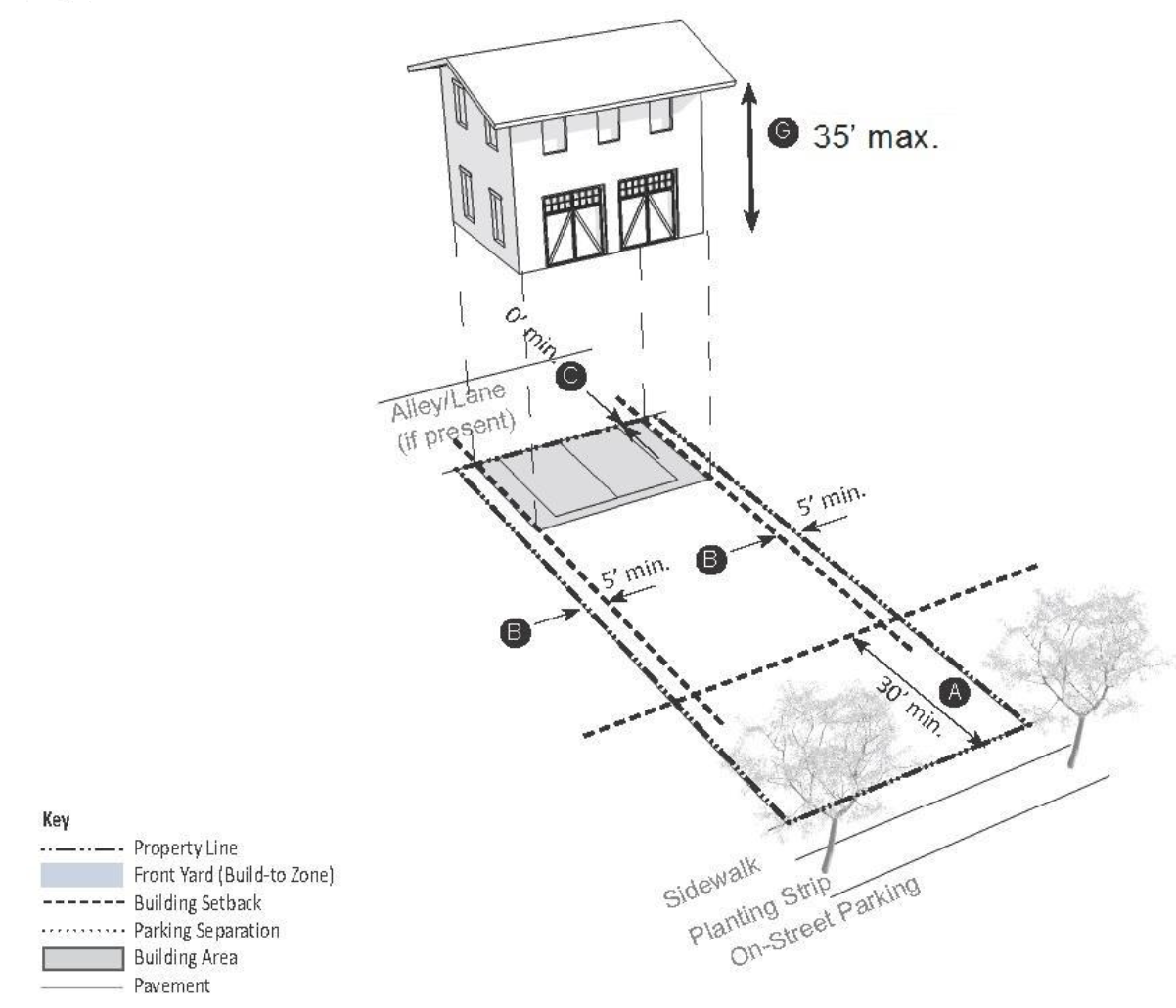
| Building Placement (Distance from the Lot Line)* | ||
| Front Yard | 30' min. | |
| Side Yard | 5' min. | |
| Side Street | 10' min. | |
| Rear Yard |
5' min. (no alley)
0' with alley (See notes) | |
| Parking Placement (Distance from the Lot Line)* | ||
| Front Separation | n/a | |
| Side Lot Separation | n/a | |
| Side Street Separation | n/a | |
| Rear Separation | n/a | |
| Building Size* | ||
| Building Height |
35' max.
(See Sec. 3-37) | |
| Area Maximum | 35% of principal, up to 800 sf | |
|
Notes:
• On oceanfront properties the rear setback is the FDEP Coastal Construction Setback Line. | ||
(Ord. No. 1614, § 2(Exh. A), 4-5-2018; Ord. No. 1649, § 2(Exh. A), 10-1-2020)
Section 2-43. - Summary of building type dimensions and requirements.
The table below provides a summary of each building type and requirements, which were illustrated in section 2-42.
Table 2-43
Summary of Building Type Dimensions and Requirements
1 See definition of building height in section 1-20. See building height limits in section 3-37.
2 Frontage percentage is the percentage of the width of the lot that is required to be occupied by the building's primary façade; see details in section 2-44.
3 Front separation maximums may be adjusted when incorporating a common area plaza, dedicated green space or other low impact development element as approved by the administrator.
4 On oceanfront properties the rear setback is the FDEP Coastal Construction Setback Line.
5 When commercial development or redevelopment is adjacent to existing single-family residences, the setback requirements provided within the RS-1 zoning district shall apply for the adjacent side.
(Ord. No. 1614, § 2(Exh. A), 4-5-2018; Ord. No. 1649, § 2(Exh. A), 10-1-2020)
Section 2-44. - Building frontage requirements.
A.
Primary entrances. The primary entrance of new buildings must directly face a street, civic space, or public space, except:
1.
Courtyard building entrances may face a central garden or courtyard.
2.
Outbuildings have no requirements for the direction that primary entrances face.
B.
Frontage percentage. Frontage percentage means the percentage of the width of a lot that is required to be occupied by the building's primary facade. Table 2-43 provides minimum and maximum frontage percentages for several building types.
1.
Up to fifty (50) percent of the width of the primary facade may be counted as meeting the frontage percentage requirement even though it may be set back up to ten (10) feet further from the street than the primary facade's principal plane. See illustration in Figure 2-44A.
Figure 2-44A - Frontage Percentages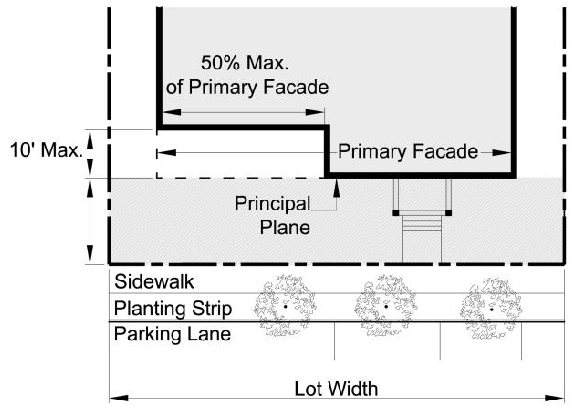
2.
The location of the primary facade's principal plane is not changed by facade extensions such as bay windows, awnings, porches, balconies, stoops, colonnades, or arcades, or by upper stories that are closer to or further from the street.
3.
The width of a porte cochere may be counted as part of the primary facade.
C.
Forecourts. For mixed-use buildings and courtyard buildings only, a portion of the building's primary facade may be set back up to thirty (30) feet further from the street than the primary facade's principal plane if this space is constructed as a forecourt or pedestrian entryway that is open to the sidewalk. This recessed portion may be up to forty (40) percent of the total width of the primary facade and may not be used by vehicles. See illustration in Figure 2-44B. For courtyard buildings, this forecourt may extend beyond thirty (30) feet into the central garden or courtyard.
Figure 2-44B - Forecourts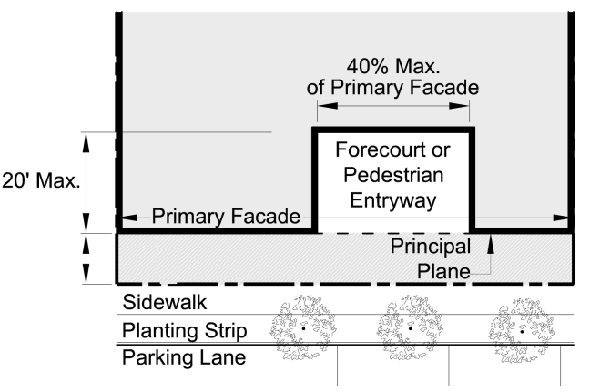
(Ord. No. 1614, § 2(Exh. A), 4-5-2018)
Section 2-45. - Parking placement.
Figures 2-42A through I provide requirements for parking areas that may be provided on a lot. These parking placement requirements identify the minimum distance in feet from front, side, and rear lot lines to all parking spaces, aisles, and driveways. Parking area regulations are explained in sections 3.01 and 3.02.
(Ord. No. 1614, § 2(Exh. A), 4-5-2018)
Section 2-46. - Streets, blocks and public spaces.
Streets, blocks, and public spaces, both existing and proposed, are illustrated in Figures 2-46A through D. Any proposed changes or modifications are to be made in accordance with the procedures provided within section 2-56.
Figure 2-46A. Downtown public spaces.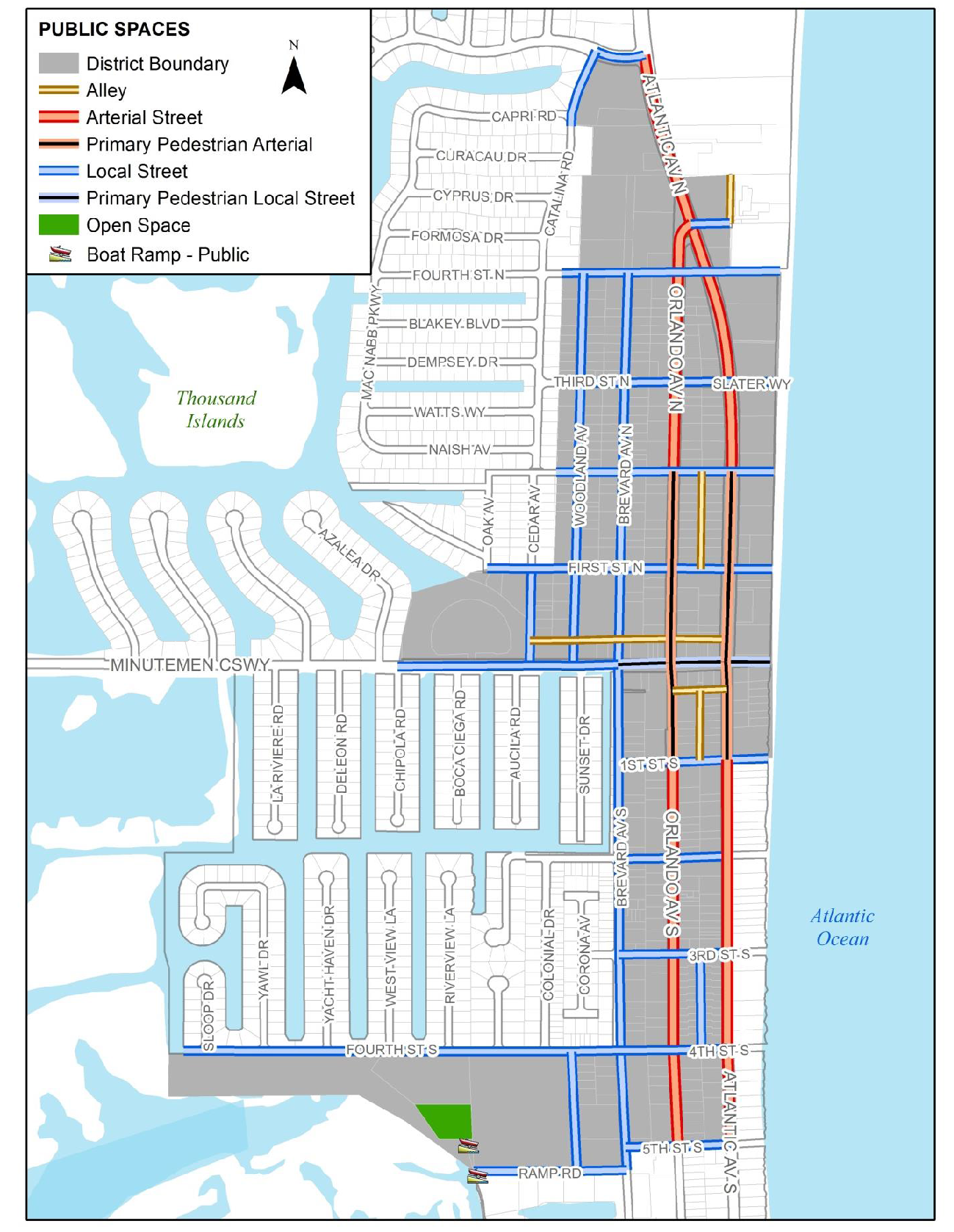
Figure 2-46B. Midtown public spaces.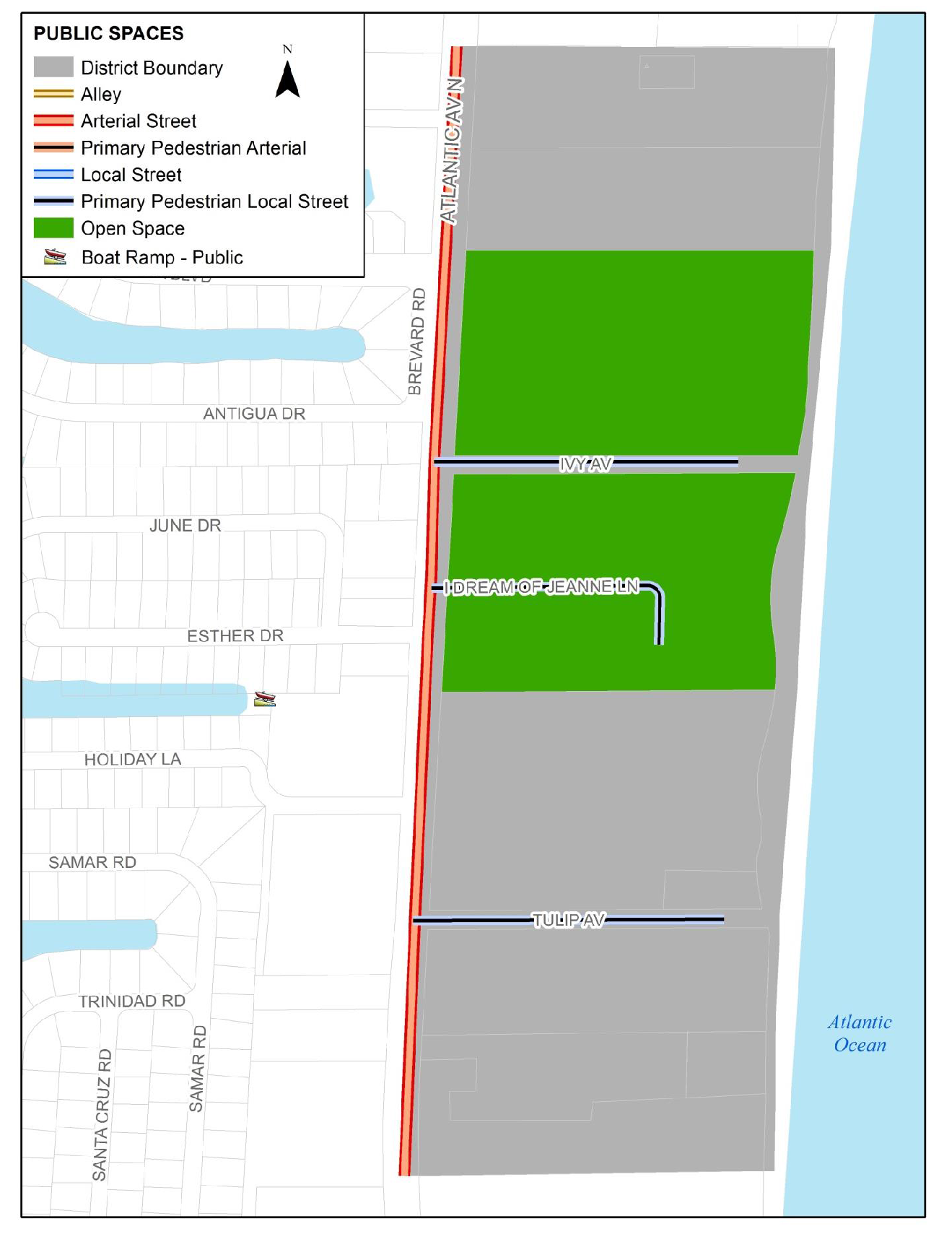
Figure 2-46C. Uptown public spaces.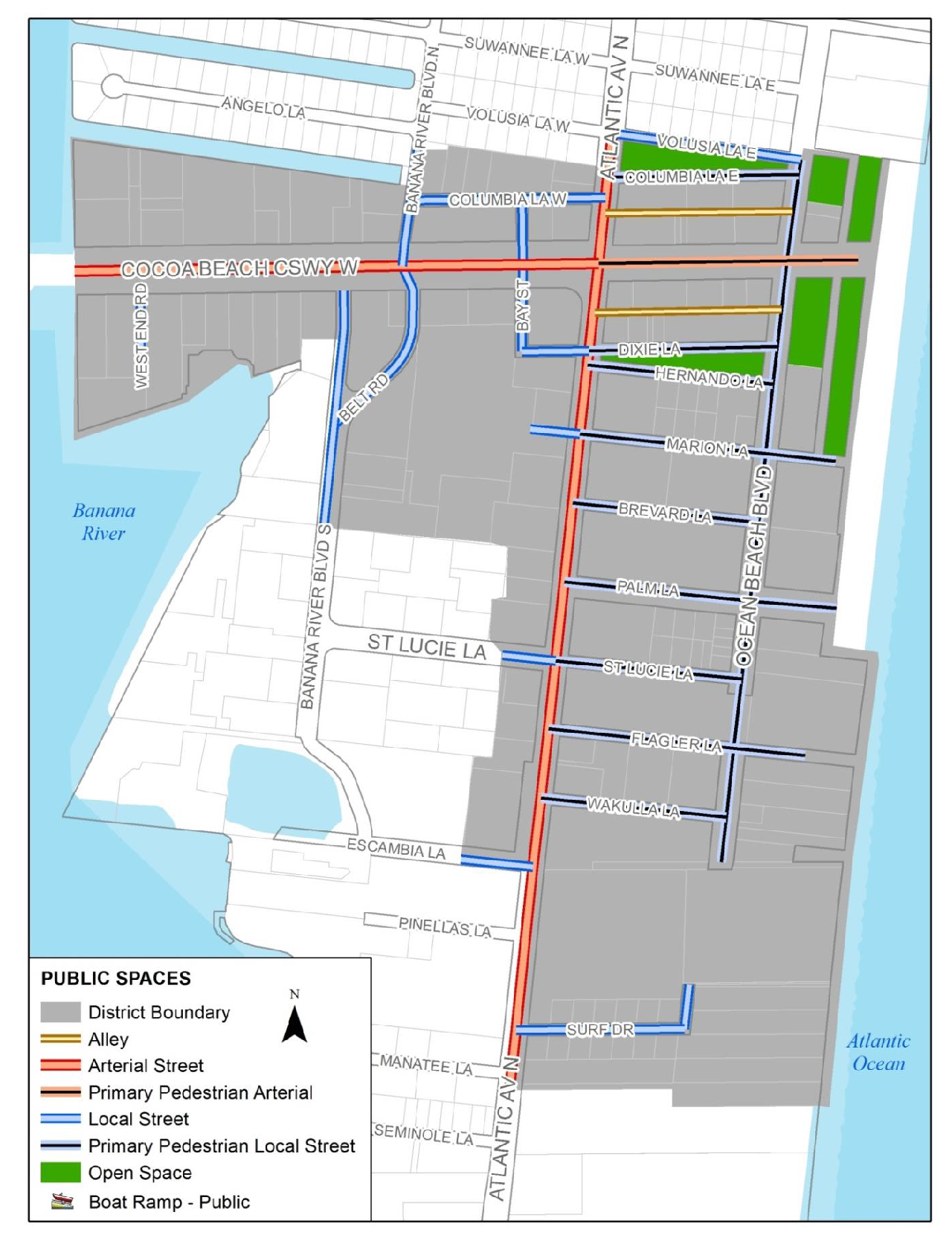
Figure 2-46D. North Cocoa Beach public spaces.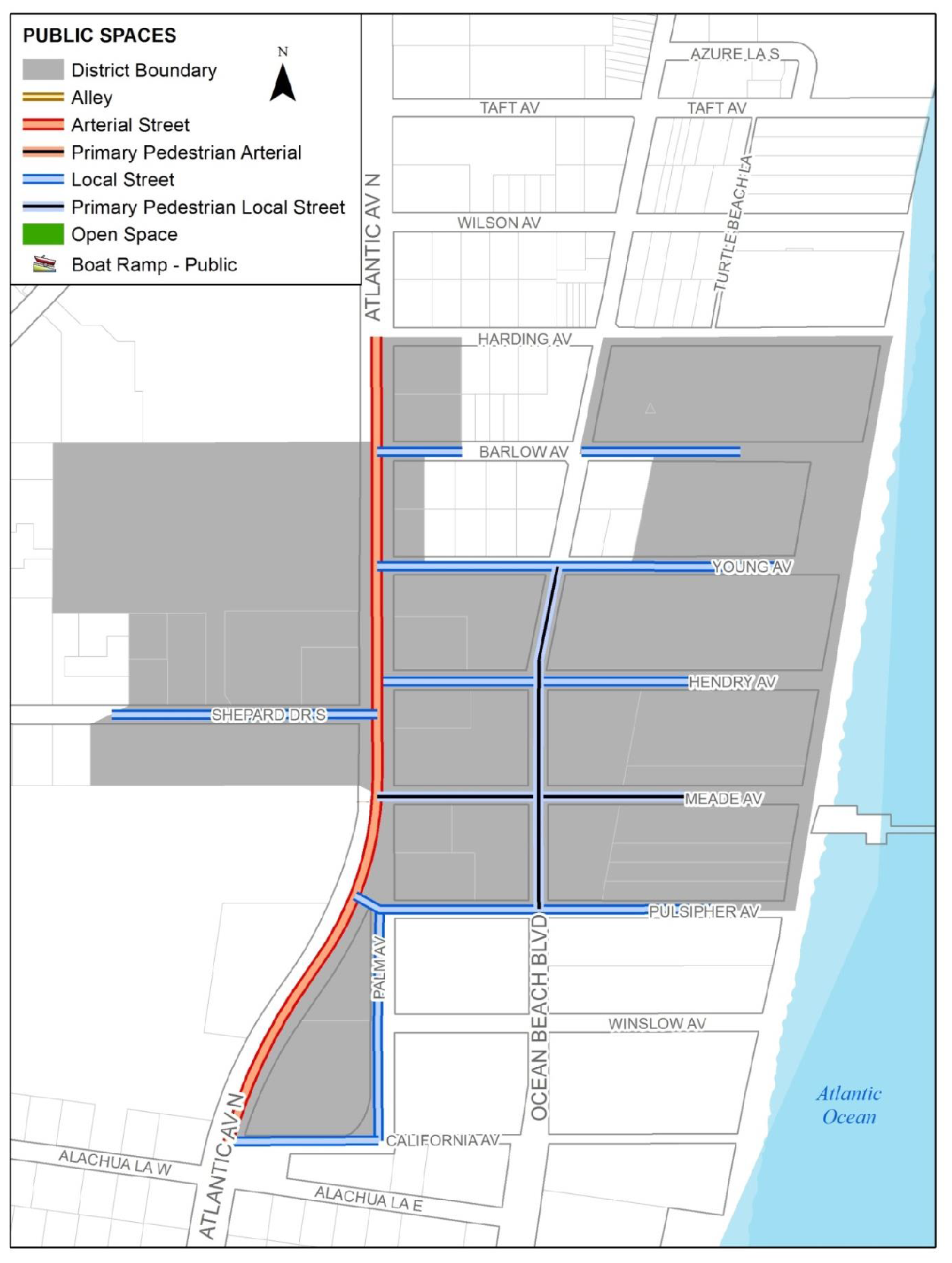
(Ord. No. 1614, § 2(Exh. A), 4-5-2018)
Section 2-47. - Open spaces.
Open spaces can include civic spaces, view corridors and semi-public spaces. These areas are intended to remain open and not covered with structures and are not to be used for vehicular traffic.
A.
Civic spaces. Civic spaces are a type of public space, to be constructed by the property owner during the redevelopment process.
1.
Civic space location. The location and configuration of new civic spaces may be adjusted during the site plan approval process if the location and configuration meets these requirements:
a.
Does not reduce the level of connectivity of surrounding streets;
b.
Maintains or enhances pedestrian convenience and safety and does not create any traffic hazards; and
c.
Provides substantially equal benefits, including similar size and location relative to important streets and amenities.
2.
Civic space design. Civic spaces are to be available for civic and recreational uses and strategically placed as focal points of neighborhoods. Civic spaces can be configured as such:
a.
An open space available for unstructured recreation, typically defined by landscaping or natural edges, rather than building frontages. Areas of shade, with seating are to be provided.
b.
An open area suitable for unstructured recreation and gatherings, typically defined by building frontages, streets or waterways. Landscaping could include lawns, plants and trees, with the inclusion of walking paths throughout.
c.
An open space available for public gatherings and outdoor markets, typically defined by building frontages or streets. Landscaping can incorporate pervious pavers with shade trees and available seating.
d.
Fountains, art work, trees and shrubbery is encouraged, and shade structures, such as pergolas, can be incorporated, as space permits.
3.
Civic space maintenance. Unless accepted by a public agency for maintenance, new civic spaces will be owned and maintained by the landowner and they must remain available for civic and recreational uses. If civic spaces are offered to and accepted by the city, maintenance will no longer be the responsibility of the landowner and the civic spaces will become public spaces that are fully accessible to the general public.
B.
View corridors. Cocoa Beach's oceanfront is an important part of the community's cultural and ecological heritage, but it is rarely visible from the street. It is mostly viewed from the beach itself and the beachside of oceanfront buildings.
1.
East/west street ends provide the primary access points to the beach and ocean. These street ends consist mostly of a small parking area and a non-descript dune crossover structure. As redevelopment of adjacent property occurs or as public funds become available, the ends of these streets must be redesigned to enhance views to the water and each street end should be distinctively designed.
2.
On new construction and redevelopment, allow more views to the water from the sidewalk, street, and other public/semi-public areas by creating building separation and by creating view corridors through the building from the street.
3.
Buildings at street ends must be set back from the sidewalk to create a transition zone of semi-public space which can highlight views and beach access points with additional landscaping, gathering spaces, or sidewalks.
4.
For corner buildings with frontage on east/west streets, lobbies and commercial spaces must have a second entrance on the east/west street to encourage more people to walk to the end of the street and the beach.
C.
Semi-public spaces. The placement of buildings on their lot and the spaces between the building and public spaces such as streets can be considered semi-public space. Semi-public spaces are visible from the sidewalk but not necessarily open to the public. Semi-public spaces support pedestrian activity and connectivity between private and public spaces.
1.
Plazas, courtyards and forecourts are examples of semi-public spaces designed to attract stationary activity such as sitting, standing, and socializing, using a combination of elements such as fountains, sculptures, seating, lighting, shade structures, and exhibits. These elements are encouraged in central locations and should be visible from the sidewalk.
2.
Plazas, courtyards, and forecourts must be designed to maximize pedestrian movement between adjacent buildings and uses.
(Ord. No. 1614, § 2(Exh. A), 4-5-2018)
Section 2-48. - Streets.
In each subdistrict, there are future public streets to be constructed by the landowner during the redevelopment process. These streets will provide direct access to every lot and will create small blocks that promote walkability and traffic circulation.
A.
Street location. Proposed future street locations may be developed and adjusted during the site plan approval process if the new locations meet these requirements:
1.
The new location does not reduce the level of connectivity with surrounding streets.
2.
The new location does not reduce the level of street connectivity within the site or substantially increase the average block size.
3.
The new location does not diminish the size of any proposed civic space.
4.
The new location maintains or enhances pedestrian convenience and safety and does not create any traffic hazards.
B.
Street design. Each new street must meet these design requirements:
1.
Sidewalks must be provided on both sides of all streets. Sidewalks must be at least eight (8) feet wide.
2.
Street trees must be provided in regularly spaced rows on both sides of all streets except where colonnades are being provided over sidewalks. Street trees may be planted in landscaped planting strips at least eight (8) feet wide or may be planted in tree wells in sidewalks if the sidewalks are widened to accommodate the trees and tree wells in addition to the required eight (8) foot minimum sidewalk width.
3.
On-street parking must be accommodated on new streets. Parking lanes may be used for drop-off areas, valet stands, transit stops, or fire lanes.
4.
Streets may not have more than two (2) travel lanes and must accommodate travel in both directions. One-way blocks may be considered on a case by case basis when overall traffic circulation is not impeded.
5.
Streets or public sidewalks must provide direct access to every new lot.
6.
Alleys or rear lanes are required in accordance with section 2-50.
7.
All streets, alleys, and lanes must connect to other streets; cul-de-sacs and T-turnarounds are not permitted except along water bodies.
8.
Block faces may not be longer than three hundred twenty-five (325) feet without a street, pedestrian trail, or alley providing through access to another street, pedestrian trail, or alley.
9.
Street designs must also comply with the current edition of the Traditional Neighborhood Development chapter of the Florida Greenbook (Manual of Uniform Minimum Standards for Design, Construction and Maintenance for Streets and Highways, published by Florida DOT) for slow or yield movement types. Lane widths include the width of horizontal extensions of curbs such as gutter pans.
10.
Street rights-of-way are the preferred location for water and wastewater lines; fire hydrants are the only above-ground projections of utilities that are permitted. Alleys or lanes are the preferred location for power, telephone, television, and internet cables.
C.
Street maintenance. The landowner must construct these streets using city specifications and then dedicate them to the City of Cocoa Beach. After the dedication is accepted, the city will maintain these streets.
D.
Street types. Listed below are descriptions of the various street types within the city.
1.
Arterial street. State roads are conventionally arterial streets that must allow regional traffic flow along the route. SR A1A and SR 520 are the two (2) major arterial streets in Cocoa Beach.
a.
SR A1A provides corridor access as it passes through Cocoa Beach. As such, this corridor must not only serve as a high-volume traffic roadway but also as an important public space. This corridor must be visually appealing while linking smaller streets, accommodating pedestrians, bicycles, and public transit, and it must be supportive of street-oriented businesses.
i.
The portions of State Road A1A contained in the redevelopment districts must encourage active uses by including wide sidewalks that are shaded with awnings, overhangs, and street trees wherever possible. Active uses include cafes, restaurants, libraries, stores, educational and cultural facilities, and residential uses.
ii.
Buildings on the redevelopment portion of SR A1A must have doors, windows, and signs designed for those approaching by vehicle, foot, or bicycle.
b.
SR 520 is an arterial that is designed as a boulevard that features higher speed central lanes for through traffic and slower moving side access lanes for local traffic. The central and side access lanes are separated from each other by medians planted with regularly-spaced trees.
i.
The slow moving side access lanes accommodate bicycles and on-street parking. This on-street parking is key to achieving street-oriented buildings built close to the sidewalk.
ii.
Sidewalks on a boulevard must be a minimum of ten (10) feet wide to accommodate easy strolling for pedestrians and outdoor dining. Pedestrians on the sidewalk must be sheltered from the sun and elements with regularly planted shade trees and awnings.
iii.
Signage along a boulevard must be designed for visibility both to passing vehicles as well as pedestrians on the sidewalk. Shopfronts should feature plentiful areas of transparent glass to give pedestrians visual access to the goods offered for sale in the shops.
2.
Local streets. Local streets are quieter and designed to accommodate some through traffic. Local streets must have sidewalks that encourage walking and window shopping but they may also accommodate some surface parking lots. These lots must be shielded from view with landscaping or other appropriate methods which, in certain cases, may include garden walls.
a.
New buildings on local streets must, where practical, continue commercial frontages around the corners of the building.
b.
Attractive fences and garden walls in place of or in conjunction with landscaping shall be used to buffer surface parking areas from pedestrians on the sidewalk.
c.
Building designs must be permeable to create and enhance views to the beach and ocean from the public sidewalk and to preserve the character and texture of existing historic and culturally significant structures and open spaces.
d.
Wide curb cuts that accommodate head in parking are not allowed, and as much as possible, sidewalk continuity is to be maintained.
e.
Attractive, well maintained landscaped front yards must be used to form a zone of semi-public space and to reduce the negative visual impact of parked cars facing the sidewalk.
3.
Primary pedestrian streets. Primary pedestrian streets are the streets most attractive to pedestrians, even though they also accommodate slower-moving cars. Primary pedestrian streets can occur on some sections or all parts of certain local or arterial streets. These streets include shopping, dining, and entertainment venues that are the hub of pedestrian activity and social interactions in the redevelopment districts. Businesses along these corridors are expected to appeal to those on foot.
a.
Vehicle access for parking and loading must be from alleys when they are present or proposed.
b.
Storefronts and facades should be as close to the sidewalk edge as possible to create an engaging and interesting route for pedestrians.
c.
Surface parking lots must not be visible from primary pedestrian streets. Private parking for customers, if provided, should be centralized rear parking lots that can be accessed from either a common driveway of a secondary street or from an alley.
d.
Active uses, such as retail, physical exercise, dancing, cooking, must be the dominant use of the ground floor of buildings fronting primary pedestrian streets.
e.
The use of removable bollards and curbless streets can allow primary pedestrian streets to be closed to traffic for street festivals and markets.
f.
Primary pedestrian streets must have, to the greatest extent possible, uninterrupted sidewalks and storefronts to maximize the comfort, safely, and aesthetic enjoyment of pedestrians as well as automobile occupants.
(Ord. No. 1614, § 2(Exh. A), 4-5-2018)
Section 2-49. - Sidewalks.
Sidewalks shall be constructed along all public streets in accordance with section 3-05 of the Land Development Code.
A.
In the redevelopment areas, sidewalks must be constructed on both sides of a street unless impractical to do so.
B.
Sidewalks in the redevelopment area shall be a minimum of eight (8) feet wide. Wider sidewalks, where warranted and possible, will enhance the ability of pedestrians and bicyclists to use them for non-motorized mobility.
C.
New buildings and building renovations can include outdoor sidewalk furniture like café tables and chairs, planters, and benches. These pieces can delineate the public walking zone from a more intimate semi-public zone that is exclusively used by a building's patrons. When placing furniture in the public sidewalk the following guidelines must be met:
1.
Outdoor furniture in the right-of-way shall not be allowed to obstruct pedestrian movement and must be arranged to leave a five (5) foot minimum path for pedestrians.
2.
Outdoor furniture cannot spill out in front of other storefronts except by mutual agreement of the shop owners.
3.
Outdoor furniture must be sturdy, decorative, and well maintained to represent the image of Cocoa Beach relative to surfing, space travel, the arts or the environment. Street furniture representative of the associated business is also permitted.
4.
When space permits, building edges must be softened with planters and landscaping to enhance the street's aesthetic quality.
(Ord. No. 1614, § 2(Exh. A), 4-5-2018; Ord. No. 1649, § 2(Exh. A), 10-1-2020)
Section 2-50. - Alleys and rear lanes.
Alleys and rear lanes supplement the access provided by streets to provide space for utility lines, to allow parking areas to be approached from the rear, to accommodate routine removal of trash and recyclable materials, and to provide supplemental access to lots. Alleys and lanes allow streets, sidewalks, and planting strips to have fewer interruptions and more on-street parking, features that promote walkability and improve safety for pedestrians, bicyclists, and motorists. The maps within section 2-46 identify the locations of alleys.
A.
Requirements for alleys and rear lanes.
1.
Existing alleys may not be vacated unless a redevelopment proposal would accommodate all functions of alleys in another acceptable manner. An example would be new buildings constructed along the perimeter of a block with common areas inside the block providing alley functions.
2.
Existing alleys must be maintained and must be extended by the landowner during the redevelopment process.
3.
Within certain areas, existing alleys allow buildings to have a second entrance facing the rear.
4.
All alleys and lanes must connect to other streets, alleys, or lanes; cul-de-sacs and T-turnarounds are not permitted except along water bodies.
5.
Alleys and lanes are the preferred location for power, telephone, television, and internet cables. Minimal above-ground projections of utilities are permitted in alleys when constructed within a utility easement.
6.
Unless technically infeasible, all new alleys shall be constructed of pervious pavement.
(Ord. No. 1614, § 2(Exh. A), 4-5-2018; Ord. No. 1649, § 2(Exh. A), 10-1-2020)
Section 2-51. - Fences and walls.
The rules for fences and walls are found in section 3-32. Within the redevelopment districts, cottage row and civic are considered residential and all other subdistricts are considered commercial.
(Ord. No. 1614, § 2(Exh. A), 4-5-2018; Ord. No. 1649, § 2(Exh. A), 10-1-2020)
Section 2-52. - Performance standards for fuel pumps.
A.
Fuel sales. Fuel sales are allowed by right or by special exception in certain subdistricts; see Table 2-33.
B.
Location. When fuel sales are allowed, the location of fuel pumps and vehicular circulation must comply with these requirements, and with section 3-36:
1.
All fuel pumps, parking, and drive-through areas must be located behind a building.
2.
Along primary pedestrian streets:
a.
A ground-floor shopfront must face the street.
b.
On corner lots, the shopfront must define the corner.
3.
See example in Figure 2-52.
Figure 2-52 - Fuel Pumps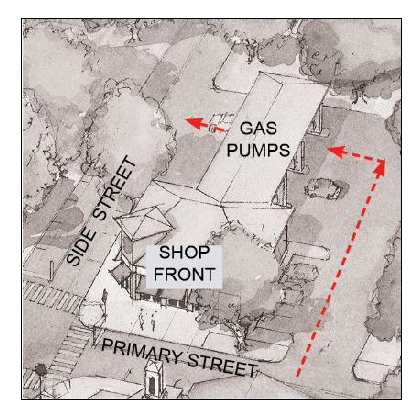
(Ord. No. 1614, § 2(Exh. A), 4-5-2018; Ord. No. 1649, § 2(Exh. A), 10-1-2020)
Section 2-53. - Performance standards for drive-through lanes.
A.
Drive through lanes. Drive-through lanes are allowed by right or by special exception in certain subdistricts; see Table 2-33.
B.
Location. Where drive-through lanes are allowed, their location must comply with these requirements:
1.
Drive-through lanes must be located behind or to the side of a building.
2.
All parking must be located behind the building and accessed from an alley when present.
3.
Along primary pedestrian streets, a ground-floor shopfront must face the street.
4.
See example in Figure 2-53 [below].
Figure 2-53 - Drive Throughs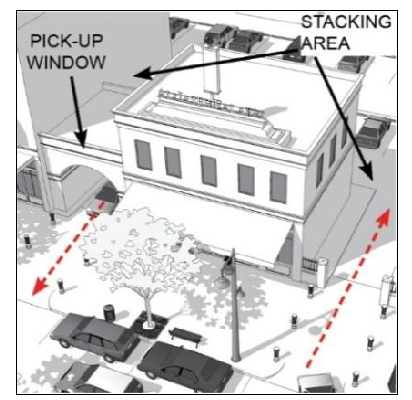
(Ord. No. 1614, § 2(Exh. A), 4-5-2018; Ord. No. 1649, § 2(Exh. A), 10-1-2020)
Section 2-54. - Number of off-street parking spaces permitted.
Within the redevelopment districts the maximum number of parking spaces permitted for each use is regulated by sections 3-01 and 3-02. For new and expanded buildings, the allowable placement of off-street parking spaces is shown on the building-type diagrams in Figures 2-42A through I.
(Ord. No. 1614, § 2(Exh. A), 4-5-2018)
Section 2-55. - Accessible and bicycle parking, landscaping, loading, construction details.
A.
Accessible parking. Where off-street parking lots are provided, they must include ADA accessible parking spaces as required by the Florida Building Code.
B.
Bicycle parking. Where off-street parking lots are provided, they must include spaces to park bicycles that are equipped with durable bike racks.
C.
Landscaping. Off-street parking lots must include landscaping that meets the requirements of chapter III, article V.
D.
Loading. Off-street loading facilities may be shared by multiple users.
E.
Construction details. Where off-street parking or loading facilities are provided, they must comply with the Cocoa Beach Standard Construction Details for private parking lots in the city's engineering design standards.
(Ord. No. 1614, § 2(Exh. A), 4-5-2018; Ord. No. 1649, § 2(Exh. A), 10-1-2020)
Section 2-56. - Site plan review and approval within the redevelopment district.
Proposals for development or redevelopment within the redevelopment zoning district will be reviewed and approved using the site plan approval process within chapter IV of these LDC regulations.
(Ord. No. 1649, § 2(Exh. A), 10-1-2020)
Editor's note— Ord. No. 1649, § 2(Exh. A), adopted Oct. 1, 2020, amended § 2-56 in its entirety to read as herein set out. Former § 2-56 pertained to site plan review and design modifications and derived from Ord. No. 1614, § 2(Exh. A), adopted April 5, 2018.
Section 2-57. - Reserved.
Editor's note— Ord. No. 1649, § 2(Exh. A), adopted Oct. 1, 2020, repealed § 2-57, which pertained to special exceptions, variances, waivers, and appeals and derived from Ord. No. 1614, § 2(Exh. A), adopted April 5, 2018.
Section 2-58. - Adjustments to the redevelopment zoning district boundaries.
Adjustments to the redevelopment zoning district boundaries are possible only by following the procedures provided within the Land Development Code chapter IV, article VII of these regulations.
(Ord. No. 1614, § 2(Exh. A), 4-5-2018; Ord. No. 1649, § 2(Exh. A), 10-1-2020)
Section 2-61. - Pain management clinic.
If indicated within the permitted uses of a specific zoning district, a pain management clinic may be permitted upon approval of a special exception, which requires a hearing and approval by the board of adjustment. When considering an application for a pain management clinic, the board must consider the special exception criteria listed below, in addition to that criteria listed in subsection 4-43.C.
A.
Whether the request will cause damage, hazard, nuisance or other detriment to persons or property.
B.
Any parking demand created by a pain management clinic shall not exceed the parking spaces located or allocated on site, as required by the city's parking regulations. An applicant shall be required to demonstrate that on-site traffic and parking attributable to the pain management clinic will be sufficient to accommodate traffic and parking demands generated by the pain management clinic, based upon a current traffic and parking study prepared by a certified professional.
C.
No pain management clinic shall be located within two hundred (200) feet of any residentially zoned property, or one thousand (1,000) feet of any school, as defined by these regulations. The distance from a pain management clinic to a school shall be measured by drawing a straight line between the closest point of the pain management clinic structure (be it a building or leased space in a building) to the closest property line or edge of leased space (whichever is closer to the pain management clinic) of the school.
D.
Any other issue that is reasonably related to the nature of the request, including but not limited to, access to the site, the proximity of the proposed use to a public park or the ocean beach, the proximity of the proposed use to a similar use and surrounding land uses.
(Ord. No. 1649, § 2(Exh. A), 10-1-2020)
Section 2-62. - Self-storage facility.
Within specific zoning districts, a self-storage facility, as defined in section 1-20, may be listed as permitted by special exception. In such cases, approval must be from the board of adjustment. When considering an application for a self-storage facility, the board must consider the special exception criteria listed below, in addition to that criteria listed in section 4-43C.
A.
Self-storage facility must have suitable screening compatible with the architecture of the project. Fences and walls including entry gates shall be constructed of high quality materials and shall be compatible and in harmony with the design and materials of the facilities and site. Decorative metal or wrought iron fences are preferred. Chain-link or similar fences, barbed wire or razor wire fences are prohibited. Fences or walls are not allowed between the main or front building on the site and the street.
B.
On-site parking shall be provided on the basis of one (1) space per five hundred sixty (560) square feet of gross floor area. In the redevelopment districts, parking shall be provided as allowed in section 3-02 of this Land Development Code (LDC) and as approved by the administrator. A parking plan must be provided by the property owner for review by the city.
C.
Off-street loading shall be as required in section 3-01(K) of the LDC and as approved by the administrator.
D.
If motor vehicles or vessels are stored in an individual facility, there shall be no mechanical work performed on the premises.
E.
No single compartment shall have a floor area exceeding one thousand five hundred (1,500) square feet.
F.
Each compartment shall have an exterior independent entrance under exclusive control of the tenant thereof. Entrances to compartments can be from a hallway or common area when the individual compartments are located within a common building designated and approved for self-storage.
G.
Use of compartment shall be limited to storage of personal property.
H.
There shall be no outside storage of goods or materials of any type. Storage areas located in the side or rear yards shall be fenced as authorized by section 3-32 of these regulations and the fence shall be constructed to meet the opacity of a solid wall.
I.
If the storage facility abuts residentially zoned property or existing residential development, the facility loading bays, docks or doors shall not be located on any side abutting the residentially zoned property or residential development.
J.
Electrical service to the storage units shall be for lighting and climate control only. No electrical outlets are permitted inside individual storage units. Lighting fixtures and switches shall be of secure design that will not allow the-tapping of fixtures for other purposes.
K.
Operational standards. The following minimum operational standards shall apply to self-storage facilities and tenants of individual storage units:
1.
Individual storage units shall not be used for activities such as residences, offices, workshops, studios, or hobby or rehearsal areas. Further, storage units shall not be used for manufacturing, fabrication or processing of goods. In addition, storage units shall not be used for commercial activity or places of business of any kind including, but not limited to, retail sales, garage or estate sales, or auctions.
2.
Storage of flammable, explosive, perishable or hazardous materials within individual storage units and on site is prohibited.
3.
Keeping of animals is prohibited.
4.
Storage facilities shall have security access control to buildings and individual storage units and enhanced electronic video surveillance of the property.
5.
Rental agreements shall provide tenants with written notice of the minimum operational standards set forth in this section and any other conditions imposed by the city.
(Ord. No. 1649, § 2(Exh. A), 10-1-2020; Ord. No. 1696, § 1(Exh. A), 4-17-2025)
Section 2-63. - Medical marijuana dispensary or pharmacy.
The criteria for siting and all business operations for a medical marijuana dispensary or a pharmacy shall be in compliance with applicable Florida State Statutes.
(Ord. No. 1649, § 2(Exh. A), 10-1-2020)
Section 2-65. - Restaurants or bars.
Where permitted, the operation of a restaurant or bar, as defined in section 1-20, shall be in compliance with the following:
A.
Approval of a building permit is required prior to any building maintenance, renovation, or expansion activities.
B.
Parking requirements shall be evaluated according to the requirements of section 3-01 of these Land Development Code (LDC) regulations.
1.
When a restaurant or bar is renovated, expanded, or changes ownership, the parking requirements will be reevaluated and may result in increased parking requirements.
C.
Any outdoor lighting shall be in compliance with the requirements of LDC chapter III, article VI.
D.
Outdoor signs shall meet the requirements of LDC chapter V.
E.
All outdoor areas, including seating and sidewalk areas, shall maintain the ADA required minimum five-foot unobstructed pathway at all times.
F.
Any outdoor noise, music, or entertainment shall be in compliance with the requirements of City Code of Ordinances section 15-23.
G.
The sale of alcohol shall be in compliance with the requirements of section 2-66 of these LDC regulations.
(Ord. No. 1649, § 2(Exh. A), 10-1-2020)
Section 2-66. - Alcoholic beverage establishments.
A.
A location for on-premises consumption of alcoholic beverages shall not be approved when the location is within five hundred (500) feet of an established public or private school, in accordance with F.S. § 562.45(2), or within five hundred (500) feet of an existing church.
B.
For purposes of measuring distance, the straight line measurement shall be taken from the nearest point of the alcoholic business establishment structure (a building or leased space) to the nearest property line of the school or church location.
C.
The distance requirement between an alcoholic beverage establishment and an existing church does not apply for those properties within the redevelopment districts.
D.
The distance requirement does not apply to restaurants which derive at least fifty-one (51) percent of gross revenues from the sale of food and nonalcoholic beverages.
E.
The distance requirement does not apply to alcoholic beverages sold and consumed under the provisions of a special event permit approved in accordance with city Code of Ordinances chapter 14.
(Ord. No. 1649, § 2(Exh. A), 10-1-2020)
Section 2-67. - Conversion of transient accommodations to other dwellings.
Transient accommodations (hotel, motel) shall not be converted to other types of residential dwellings at more than the density permitted for each residential type within the zoning district, and in compliance with the Comprehensive Plan and City Charter.
(Ord. No. 1649, § 2(Exh. A), 10-1-2020)
Section 2-68. - Home occupations.
Any lawful home occupation use, which is clearly incidental and secondary to the use of the structure as a dwelling; which is conducted entirely within a dwelling and carried on by occupants of the dwelling; and does not change the residential character of the neighborhood, shall be permitted. The following conditions shall apply:
A.
No unauthorized employees or persons other than the residents of the dwelling and employees pre-approved by the administrator shall be engaged in such occupations.
B.
Home occupations must be accessory to the principal residential use.
C.
There shall be no visible change in the outside appearance of the dwelling or premises to conduct such occupations.
D.
There shall be no occupation advertising signs located on residentially zoned properties or public rights-of-way to advertise such occupation.
E.
The home occupation shall not displace the normal use of residential and accessory structures.
F.
There shall be no outside storage of materials or products on the premises visible from the property boundaries, and all such materials or products shall be stored in a wholly enclosed structure located in only the side or rear yards of the property. No toxic or noxious chemicals or materials are permitted to be stored in amounts in excess of those normally found in a residential dwelling. No additional and separate entrance will be constructed to conduct the occupation.
G.
No display of products will be permitted to be visible from outside the building.
H.
Traffic generated by the home occupation shall increase the volume normally found in a residential neighborhood.
I.
Additional driveways or paved areas to serve such occupations shall not be permitted.
J.
A reasonable number of occupation-related product deliveries shall be permitted, but in no instance shall more than three (3) deliveries per day be allowed. No occupations or associated activities shall be permitted to interfere with, or share a driveway or off-street parking space with an adjoining property.
K.
No equipment or process shall be used in such occupation which creates any type of nuisance such as noise, vibration, glare, fumes, odors, or heat, which is detectable to the human senses from any adjacent or abutting lot, or which is harmful in any way to persons, animals, flora or fauna on or off the premises. No equipment or process shall be used which creates visual or audible electrical interference with any radio or television receivers, or with any other electronic equipment on any adjacent or abutting lot.
L.
A person desiring to conduct a home occupation in a district where it is permitted shall first pay the non-refundable application fee and complete the home occupation application.
M.
Upon compliance with these regulations, the administrator or his appointed designee shall issue a permit for such home occupation. Any home occupation permit is subject to revocation by the administrator or his designee ten (10) calendar days after being documented that the home occupation has become a public nuisance and/or is not in compliance with the City Codes. The applicant shall have this ten-day notice period to either cure the violation(s) or shut down the home occupation.
N.
The administrator or any applicant whose home occupation license has been denied or revoked may request an appeal at a public hearing before the board of adjustment as outlined in section 1-49 of these regulations.
O.
A home occupation license is only valid for a period of one (1) year, and must be renewed by the business tax receipt (BTR) annual deadline date of September 30. A city BTR that is not renewed by October 1 is subject to penalties outlined in the city code of ordinances section 13-6(b).
P.
Home occupations shall be limited to uses that have minimal to no impact on the residential character of neighborhoods.
(Ord. No. 1649, § 2(Exh. A), 10-1-2020)
Section 2-69. - Adult entertainment establishments.
A.
Where permitted.
1.
Notwithstanding any other provision of these regulations or any provision of chapter 2.5 of the City Code of Ordinances, no person shall propose, cause or permit the operation of, or expansion of (except when an expansion may be required by law), an adult entertainment establishment which, while in operation or after expansion, would or will be located within:
a.
One thousand five hundred (1,500) feet of a preexisting adult entertainment establishment;
b.
Nine hundred (900) feet of a preexisting church, temple or place or worship;
c.
Two thousand five hundred (2,500) feet of the real property that comprises a public or private elementary school, middle school, or secondary school, or the distance restrictions set forth in F.S. § 847.0134, whichever is greater;
d.
Nine hundred (900) feet of a preexisting public library;
e.
One hundred seventy-five (175) feet of an area zoned city B-1 public and recreational use district or city PS-1 public and semi-public district;
f.
One thousand two hundred (1,200) feet of the Banana River Aquatic Preserve as delineated on the official map thereof as provided by the State of Florida; or,
g.
Four hundred (400) feet of any residentially zoned property.
B.
The distance requirements of subsection A. above, are independent of and do not supersede the distance requirements for alcoholic beverage establishment contained in section 2-66 or in F.S. § 562.45(2).
C.
Measurement of distance. The distance from a proposed or existing adult entertainment establishment to any of the preexisting structures or zoning districts listed in subsection A. above shall be measured by drawing a straight line between the closest point of the proposed or existing adult entertainment establishment structure (be it a building or leased space in a building) to the closest point of the preexisting building or structure or leased space in a building or zoning district boundary.
D.
Nonconforming uses and amortization. Any establishment that satisfies the definition of an adult entertainment establishment contained in Cocoa Beach Code of Ordinances Chapter 2.5, that is in operation, and that is not in compliance with this section shall be permitted to operate as a nonconforming adult entertainment establishment, subject to abandonment of use, as described below.
1.
Any nonconforming adult entertainment establishment shall be deemed abandoned if operations have been discontinued for ninety (90) consecutive days or more. This does not apply when closure is due to a natural disaster or a declared state of emergency affecting Cocoa Beach. Upon such abandonment the future use of the land shall conform to the uses permitted in the district where the establishment was located.
(Ord. No. 1649, § 2(Exh. A), 10-1-2020)
Section 2-70. - Temporary sales.
A.
Temporary sales.
1.
Temporary sales are subject to the permitting requirements defined in the city Code of Ordinances chapter 13.
2.
No use that is prohibited in the zoning district where the temporary sales are proposed shall be permitted.
3.
The temporary sale of fireworks is prohibited.
4.
Temporary sales are prohibited on properties being used as an automobile service station, on public sidewalks, on public rights-of-way, within public parks including beach parks, or in any residential developments, including multifamily developments, except as may be permitted as a city approved special event.
5.
No lighting shall be installed without an electrical permit and inspection.
6.
Temporary signage shall be in compliance with chapter V of these regulations.
7.
Hours of operation shall be specified and confined to that noted on the approved permit.
8.
Outdoor sales are permitted only on commercially zoned private property, on the same property where the permanent business is located, and all operations shall be in compliance with city regulations for zoning.
9.
Temporary/seasonal sales, per site (property), shall be conducted no more than twenty-eight (28) consecutive days, with no more than four (4) temporary sale events permitted within one (1) calendar year.
10.
If tents or canopies are used as temporary structures for temporary sales, and are larger in area than one hundred (100) feet square feet, an approved temporary building permit, with inspections, is required.
11.
The display and location of temporary sales shall not reduce the required Americans with Disabilities Act (ADA) accessibility requirements for sidewalks, the number of parking spaces or landscaped areas and shall not adversely impact abutting properties.
12.
A minimum of five (5) feet in width for all sidewalks affected by a temporary sale shall be maintained unobstructed for pedestrian traffic.
B.
Garage sales. Garage sales are permitted in all residentially zoned districts, subject to the following provisions:
1.
Garage sales are for the purpose of offering for sale old, used or unwanted personal household items, articles and effects on a residential lot by the property owner or occupant.
2.
Garage sales shall not include any new or used items, articles or effects which have been purchased for the purpose of resale.
3.
Nothing in this section shall be construed or interpreted to mean that the property owner or occupant cannot sell their isolated personal property, such as a vehicle, a piano, an appliance, and other similar isolated household items typically found in a residential dwelling. A garage sale permit is not required for the sale of these isolated personal items, which are typically noticed to the public for sale through an advertising medium.
4.
An estate sale is considered a garage sale, and shall be conducted in compliance with this section.
5.
On residentially zoned properties a garage sale is permitted for no more than two (2) calendar days, not including holidays, and no more than two (2) times within one (1) calendar year from any single lot.
6.
Within a multifamily development a communitywide garage sale is permitted for a maximum of two (2) calendar days, not including holidays, a maximum of two (2) times per calendar year. Individual units are not permitted to conduct a garage sale outside of the referenced communitywide sale.
7.
At the conclusion of the garage sale, all unsold articles and items shall be removed so as not to be visible from any public street or abutting property.
8.
A garage sale permit is required, and is available free of charge from the city, for all garage or estate sales, and it must be displayed on the garage sale property for the duration of the sale.
(Ord. No. 1649, § 2(Exh. A), 10-1-2020)
Section 2-71. - Vehicle sales.
A.
Purpose and intent. The intent of this regulation is to allow a private citizen to sell privately-owned vehicles. It is not the intent of this section to allow for any form of commercial vehicle sales which are otherwise prohibited by law in the City of Cocoa Beach. For the purposes of these regulations, the word "vehicle" includes any motorized automobile, motorcycle, scooter, golf cart, pickup truck, boat, jet ski, watercraft, aircraft, recreational vehicle, and/or any trailer used to haul vehicles.
B.
General. The sale of a private vehicle by the owner of the vehicle is permitted within the following guidelines:
1.
The display of a privately-owned vehicle for sale is allowed only on improved and occupied residential property when the private vehicle to be sold is owned by the residential property owner or occupant.
2.
No vehicles offered for sale shall be displayed on any vacant, unimproved, or undeveloped property.
3.
On residential properties, the owner of the private vehicle for sale must have a residential occupancy interest on the property where the vehicle is displayed for sale.
4.
If the vehicle for sale is displayed on commercial property for a period greater than four (4) hours, the vehicle shall be displayed only when the owner of the vehicle is on the property, and during normal operating hours of the business.
5.
Any vehicle for sale must be properly licensed, registered and operable.
6.
Only one (1) vehicle offered for sale is allowed on any one (1) parcel at any one (1) time within six (6) calendar months.
7.
Vehicles offered for sale shall be displayed in a parking area, and shall not be located on any public right of way, sidewalk, landscape area or buffer.
8.
Signage advertising the vehicle for sale shall not be greater than four (4) square feet in total area, and must be affixed inside the vehicle, or in the case of motorcycles, boats, and trailers, securely affixed to the vehicle.
C.
The commercial sales of any vehicles are prohibited within the City of Cocoa Beach.
D.
The commercial rental of any vehicles is prohibited within the City of Cocoa Beach, except as an accessory use within a transient lodging facility of fifty (50) units or more.
(Ord. No. 1649, § 2(Exh. A), 10-1-2020)
Section 2-72. - Dog friendly dining.
Pursuant to F.S. § 509.233(2), there is hereby created in the city, a local exemption procedure to allow patrons' dogs, which is not a service dog, within certain designated outdoor areas of a public food service establishment. Service dogs are provided equal access in compliance with F.S. § 413.08.
A.
Permit required; submittals.
1.
In order to allow a patron's dogs on their premises, a food service establishment shall secure a valid permit issued in accordance with this section.
2.
Applications for a permit to meet the requirements of F.S. § 509.233(4)(b), shall include:
a.
The name, location, and mailing address of the public food service establishment;
b.
The name, mailing address, and telephone contact information of the permit applicant;
c.
A diagram and description of the outdoor area designated as available to patrons' dogs, and the boundaries of the designated area and other outdoor dining areas not available for patrons' dogs. The diagram or plan and the dimensions shown shall be accurate but it does not need to be prepared by a design professional; and,
d.
The days of the week and hours when patrons' dogs are permitted in the area.
3.
The city commission may adopt by resolution reasonable fees necessary to:
a.
Recoup the costs of processing the initial application, permitting, and inspections.
b.
Provide for an annual renewal and enforcement.
B.
General regulations; cooperation; enforcement.
1.
In order to protect the health, safety, and general welfare of the public, and pursuant to F.S. § 509.233, all permits issued are subject to the requirements contained within F.S. § 509.233(4)(c) and shall include the following:
a.
All public food service establishment employees shall wash their hands promptly after touching, petting, or otherwise handling dogs.
b.
Waterless hand sanitizer shall be provided at tables in the designated outdoor area.
c.
Patrons shall keep their dogs on a leash at all times and under control.
d.
Dogs shall not be allowed on chairs, tables, or other furnishings.
e.
All table and chair surfaces shall be maintained and kept clean with an approved product between seating of patrons.
f.
Accidents involving dog waste shall be cleaned immediately and the area sanitized with an approved product. A kit with the appropriate cleaning products shall be kept near the designated outdoor area.
g.
At least one (1) sign reminding patrons and employees of the applicable rules shall be posted in a conspicuous location frequented by employees within the public food service establishment. The mandatory sign shall be a minimum of eight and one-half (8½) inches by eleven (11) inches and printed in easily legible typeface of not less than twenty-point font size.
h.
A sign shall be posted in a conspicuous and public location near all entrances to the designated area to place patrons on notice that the designated area permits dogs to accompany their owners. The sign shall be a minimum of twelve (12) inches by fifteen (15) inches and printed in easily legible typeface of not less than twenty-point font size that "Dogs are permitted in outdoor seating areas."
i.
Dogs shall not be permitted to travel through indoor or non-designated outdoor portions where dogs are not permitted.
2.
A permit issued pursuant to this subsection shall not be transferred to a subsequent owner upon the sale or transfer of a public food service establishment, but shall expire automatically upon such sale or transfer.
3.
Permits shall expire each year, with any required annual renewal fee being due and payable on or before September 30, concurrent with payment of the annual business tax receipt (BTR).
4.
Any public food service establishment that fails to comply with the requirements of this section shall be subject to any and all enforcement proceedings consistent with the applicable provisions of city codes and state statutes, as detailed below:
a.
Failure to follow the procedures required by this subsection shall result in the immediate revocation of the permit, with notice, as prescribed by the code enforcement notification requirements set for in F.S. § 162.12 and shall result in the issuance of a Class III citation in accordance with the city code of ordinances chapter 30.
b.
A public food service establishment may appeal the revocation of the permit within fifteen (15) calendar days of the receipt of notice of revocation by providing notice of such appeal to the administrator.
(Ord. No. 1649, § 2(Exh. A), 10-1-2020)
Section 2-73. - Prohibited uses.
A.
Fireworks. The commercial sale of fireworks is prohibited within the City of Cocoa Beach.
B.
Vehicles. The commercial sales of vehicles, which are defined in section 1-20, are prohibited within the City of Cocoa Beach. The private sales of vehicles are permitted under the guidelines detailed within section 2-71 of these regulations.
C.
Gambling. Gambling, as defined in section 1-20, is a prohibited use. This does not include the purchase of a Florida Lottery related product or the purchase of a raffle ticket offered by a non-profit organization.
(Ord. No. 1649, § 2(Exh. A), 10-1-2020)
Section 2-74. - Change of use.
When there is a proposed change in the use of a property or structure, a change of use review may be required, as determined by the administrator. In such cases, the following shall apply:
A.
A change of use application shall be completed with supporting documentation as may be required or requested, and which may include but is not limited to, an explanation of the request, a property survey of the site and a sketch or floor plan of the proposal.
B.
A change of use request shall not permit the approval of a prohibited use on the site.
C.
The request will be reviewed by the city for compliance with the City's Land Development Code, Florida Building Code, and Florida Fire Prevention Code, all as amended from time to time.
D.
The change of use review shall occur prior to submittal and review of a site plan or building permit application.
E.
During the review, the city shall identify what building or site improvements are required and what procedures are necessary to obtain final approval of the proposed use.
F.
In the case of a large scale project, as defined in section 1-20, the proposed change of use shall require a site plan review. The process for a site plan review is detailed in chapter IV, article I.
(Ord. No. 1649, § 2(Exh. A), 10-1-2020)

