
Coral Springs City Zoning Code
ARTICLE XV
REDEVELOPMENT
Sec. 2501017.- Purpose.
This article provides regulations for the redevelopment of all properties within the City of Coral Springs. The purpose of the regulations is to ensure that redeveloped properties are consistent with city standards for character, quality, and the protection of property values during and after demolition of existing structures and for new construction. The following criteria are intended to accomplish this purpose:
a.
Methods of compliance, which encourage urban techniques and design generally consistent with the Land Development Code and Architectural Guidelines;
b.
Site requirements for connectivity to pedestrian, bicycle and mass transit routes;
c.
Encouragement of redevelopment that reduces the impact of the building and site on the natural environment and energy use;
d.
Safe and visually buffered property.
(Ord. No. 2007-115, § 34, 11-20-07)
Sec. 2501018. - Demolition of structures.
1.
Definitions. [The following words, terms and phrases, when used in this section, shall have the meanings ascribed to them in this section, except where the context clearly indicates a different meaning:]
Building pad: The building footprint plus an additional five-foot extension beyond the exterior walls or; the extent of overhangs, porches, loading docks or covered walkways, whichever is greater.
Demolition: Means any dismantling, intentional destruction or removal of any or part of any structures, utilities, public or private right-of-way surfaces, or similar property.
Temporary construction fence: An opaque fence that is a maximum of eight (8) feet in height and does not encroach into any sight visibility triangle, and must not encroach beyond the plot line.
2.
Demolition permit requirements.
(a)
The plan must ensure that all applicable utility connections will be disconnected and secured in such manner that no unsafe or unsanitary conditions shall exist during or after demolition operations as required by Section 110.3 in the Florida Building Code as amended from time to time.
(b)
Initial inspections must be approved by the building department's applicable disciplines after all utility connections have been disconnected and secured in such a manner that no unsafe or unsanitary conditions shall exist during or after demolition operations.
(c)
All hazardous building components and materials shall be removed prior to the approval of a demolition permit.
(d)
The plan must contain an asbestos notification statement, which indicates the owner's or operator's responsibility to comply with provisions of Section 469.003 of the Florida Statutes and to notify the Department of Environmental Protection of their intentions to remove asbestos, when applicable, in accordance with State and Federal law.
(e)
The plan must include removal and/or remediation of any contaminated soil.
(f)
The plan must indicate that water will be available onsite to minimize the spread of dust or other materials.
(g)
The plan shall indicate the total square footage of the structures being demolished.
(h)
The plan will not be approved until all National Pollutant Discharge Elimination System (NPDES) permit requirements are met.
(i)
A tree permit is required for the preservation, relocation or removal of any existing trees, prior to the approval of a demolition permit.
(j)
A temporary construction fence permit is required prior to the approval of a demolition permit if the site is to be redeveloped in the immediate future.
(k)
A temporary construction fence may be required for any demolition project, whether it is immediately to be redeveloped or not, as determined by the city manager or their designee.
(l)
The owner, lessee, or authorized representative responsible for future maintenance of site prior to any redevelopment must be identified for authorization and contact purposes.
(m)
A demolition permit is valid for sixty (60) days after issuance.
3.
Demolition permit inspection approval requirements.
(a)
A final inspection must be approved by both the building and development services departments after all demolition work is completed to ensure the following:
(b)
That all building debris, materials and accessory structures shall be completely cleared from the property.
(c)
That the surface of the building pad and adjacent areas contained within the temporary construction fence shall be compacted and graded in an even manner to allow for future maintenance of site.
(d)
That the pre-approved temporary construction fence be erected in the approved location if required.
(e)
If demolition is only for portion of unified site, and remaining portions will be accessible to general public, all other aspects of the Land Development Code and Florida Building Code shall be maintained.
(f)
The site that has been demolished must not interfere or create a hazardous or unsafe condition for any adjacent properties.
(Ord. No. 2007-115, § 35, 11-20-07; Ord. No. 2023-101, § 192, 4-19-23)
Sec. 2501019. - Redevelopment criteria.
1.
Redevelopment criteria: During the redevelopment process, the following items will require bringing the entire site up to current code requirements including landscaping, parking, mass transit requirements, pedestrian sidewalks or bikeways, signage, screening of accessory equipment, building colors and other structures that exist within the property should one (1) or more occur:
(a)
Demolition and reconstruction or reconfiguration of one-third (⅓) or more of an existing structure over a two-year period;
(b)
Demolition and reconstruction or reconfiguration of one-third (⅓) or more of an existing sites exterior area over a two-year period;
(c)
Proposed expansion or addition of the interior footprint or floor area of an existing structure located on a unified property that exceeds five (5) per cent or one thousand (1,000) square feet;
(d)
Building elevation changes, excluding minor cosmetic items such as painting, lighting fixtures, awnings and signs, involving fifty (50) per cent or more of the exterior walls of a roofed structure on the property within a two-year period. A modification to only part of a building elevation shall constitute a change in the entire elevation of that exterior wall;
(e)
Any tenant change for a stand-alone non-residential structure that also involves any change to any building elevation, excluding minor cosmetic items such as painting, lighting fixtures, awnings and sign painting;
(f)
Any tenant change for a non-residential structure that is the anchor tenant of a property that also involves any change to any building elevation, excluding minor cosmetic items such as painting, lighting fixtures, awnings and signs.
2.
Public Art: Compliance of the public art program for redeveloped buildings is as follows:
Contribution into Fund. The public art ordinance does not apply to any existing structure that complied with the public art ordinance within the last twenty (20) years from the date of the certificate of occupancy.
Installation Onsite. When a property is redeveloped that formerly complied with the public art ordinance and installed an artwork on the property, the owner must maintain the original artwork on the property unless otherwise determined by the city manager or their designee.
Calculation of Square Footage. When a structure is redeveloped, the total square footage for the public art ordinance calculation shall be the sum of the square feet of each and every room, internal corridor and other habitable space in which structural roofs, floors, exterior walls, full height partitions or ceilings have been demolished, replaced or added in whole or part.
(Ord. No. 2007-115, § 36, 11-20-07; Ord. No. 2023-101, § 193, 4-19-23)
Sec. 2501020. - Parking lot compliance.
1.
Parking lot compliance: Parking lots that do not meet code requirements with regards to the size of landscaped parking island dimensions must increase the size of such islands to meet code requirements to such a level that will not substantially reduce actual parking spaces below required parking as required by Section 250816. The city will make this determination after the city and property owner have done a complete review of required parking and existing and proposed uses in the property. This process will be initiated by criteria detailed in Section 2501019 regarding redevelopment criteria. The following options may be employed, as an alternative to accomplish this objective:
a.
Smaller size trees may be substituted in parking islands as determined by the city manager or their designee.
b.
Parking islands may be eliminated and grouped to provide larger parking islands in other areas of the property as described in Section 250833.
c.
A combination of the above options may be employed to maximize the amount of larger islands and maintaining required parking spaces for the property.
2.
In addition to the above, property owners shall maintain or create both pedestrian and vehicular connectivity between adjacent properties, where applicable as determined by the city manager or their designee. In the event that this objective would create a deficit of required parking spaces, staff shall require the property owner to study the level of parking and staff shall make the final determination of acceptable parking.
(Ord. No. 2007-115, § 37, 11-20-07; Ord. No. 2023-101, § 194, 4-19-23)
Sec. 2501021. - Building, remodeling and repainting.
1.
Strip shopping centers, campus style office complexes, outparcels and shopping centers that are unified in ownership or have been developed previously to appear as a unified property must remodel or repaint exterior building elevations in one (1) of the following ways:
(a)
The building elevations must match the other existing structures within the property regarding all aspects of building materials, color and other accessory architectural features, or;
(b)
The building elevations must employ a compatible style utilizing materials, color and other accessory architectural features that the overall development will still appear relatively uniform and act as a planned scheme as determined by the city manager or their designee.
2.
Freestanding buildings such as office, office warehouse or mixed-use developments must maintain the shell structures one hundred (100) per cent in uniformity at all times. Any changes to any part of a structure must be applied to all like structures, including the painting of all evaluations of a buildup at the same time. The only exceptions that may apply are planned painting/color schemes where all structures relate to a particular palette and is applied in an unified manner as approved by the city. The association or owners should submit an adopted plan prior to any modifications.
3.
Residential properties that involve more than one (1) building must employ a compatible style utilizing materials, color and other accessory architectural features that the overall development will still appear relatively uniform and act as a planned scheme as determined by the city manager or their designee.
4.
Developments that have been previously approved for a master signage program must adhere to the original agreement regarding all signage unless the city approves a new agreement.
5.
All buildings must receive color approval that follow the acceptable criteria set forth in the city's Architectural Guidelines prior to any work.
(Ord. No. 2007-115, § 38, 11-20-07; Ord. No. 2023-101, § 195, 4-19-23)
Sec. 2501022. - Bicyclists, pedestrians, and mass transit users.
1.
Bicycle racks.
(a)
For all non-residential properties and residential properties greater than a four-plex, bicycle racks must be provided according to the following calculation:
1.
One (1) bicycle rack that will hold a minimum of three (3) bicycles.
2.
In addition to the above requirement, one (1) bicycle space shall be provided for each forty (40) parking spaces. For rounding purposes, any such fraction equal to or greater than one-half (½) shall require an additional bicycle space.
(b)
Bicycle racks must be designed and constructed in an aesthetic manner.
2.
Sidewalks.
(a)
For commercial properties that utilize master parking areas, a pedestrian pathway, involving sidewalks that are a minimum five (5) feet in width, and drive aisle crossings, must be constructed across the site from property line to property line, parallel with the adjacent right-of-way or drive-aisle connecting to existing approved pathways on adjacent properties or rights-of-way.
(b)
In all properties other than non-single-family and duplex dwellings that are adjacent to street rights-of-way, a minimum five (5) foot wide concrete sidewalk must be constructed adjacent to the property line, parallel with the adjacent right-of-way, along all applicable road rights-of-way. The sidewalks must connect to any existing or planned sidewalks on adjacent properties including properties across roads.
(c)
The location and use of sidewalks are subject to review by the city engineer, and in certain cases, may not be required.
3.
Walkways, greenways and linear parks.
(a)
For selected properties within the city, the city commission may adopt pedestrian sidewalk and bikeway plans to create citywide linked systems. Property owners will be required to accommodate these plans through the DRC process. In the event that this objective would create a deficit of required parking spaces, staff shall require the property owner to study the level of parking and staff shall make the final determination of acceptable parking.
4.
Mass transit.
(a)
Bus stops with shelters and the necessary connections to such shelter that are either onsite or offsite must be constructed if required by the city or Broward County by the property owner during any new development or redevelopment as required in Section 2501019. Bus shelters must comply with all applicable regulations regarding design guidelines and ADA requirements.
(Ord. No. 2007-115, § 39, 11-20-07)
Sec. 2501023. - LEED certified structures.
The city encourages that renovated and redeveloped structures achieve LEED certification. The owner shall submit with the site plan, a LEED checklist that notes the LEED features that will be achieved. The total points will be reported on the site plan documents.
(Ord. No. 2007-115, § 40, 11-20-07)
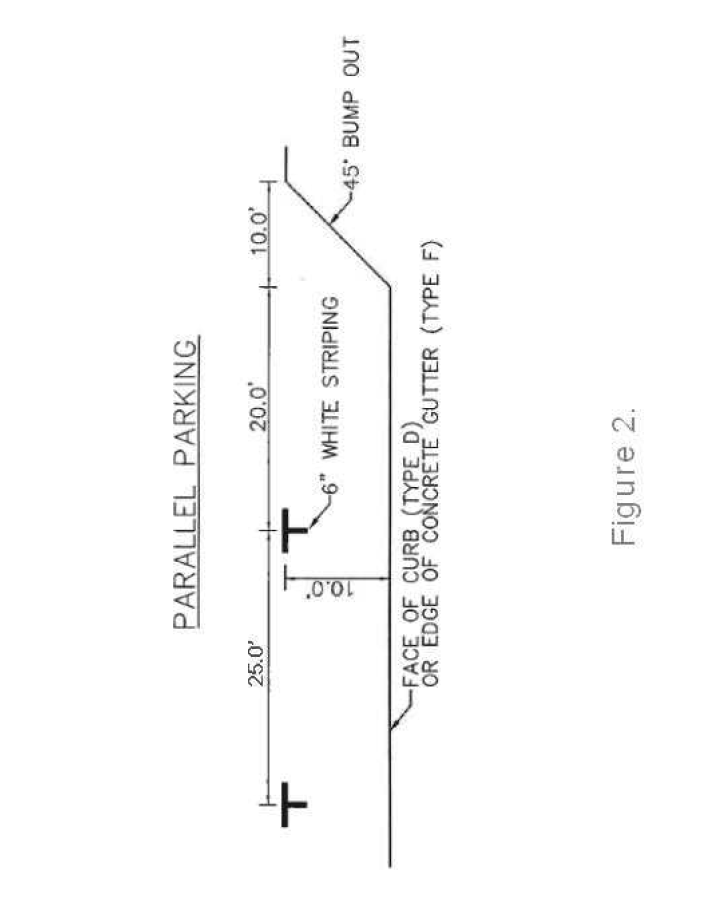
(Ord. No. 2007-115, 11-20-07)
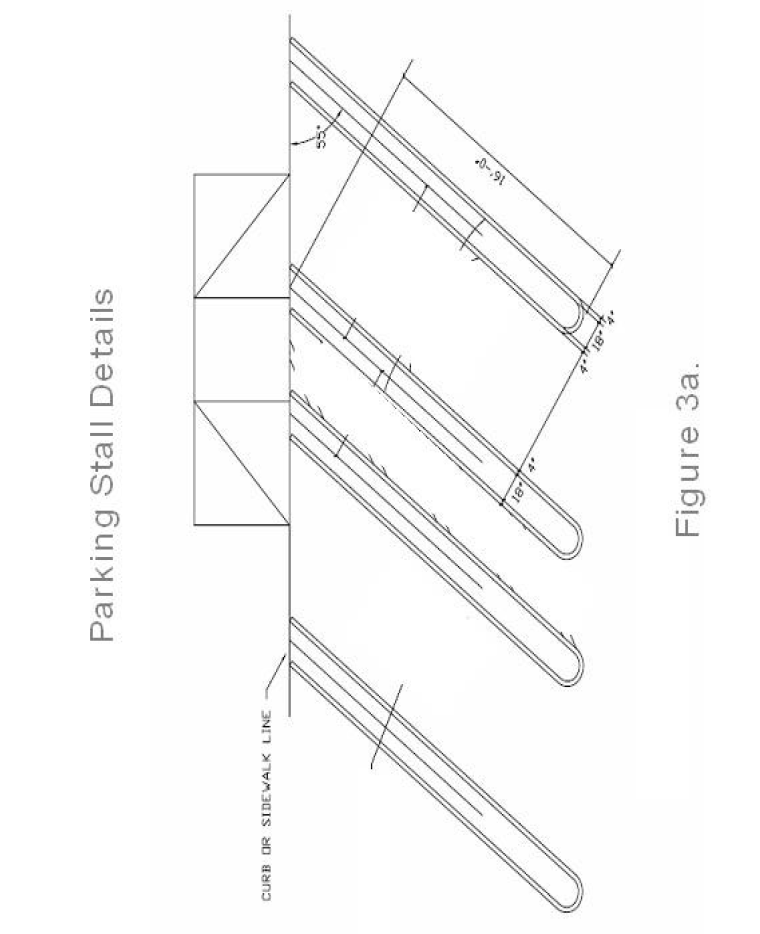
(Ord. No. 2007-115, 11-20-07)
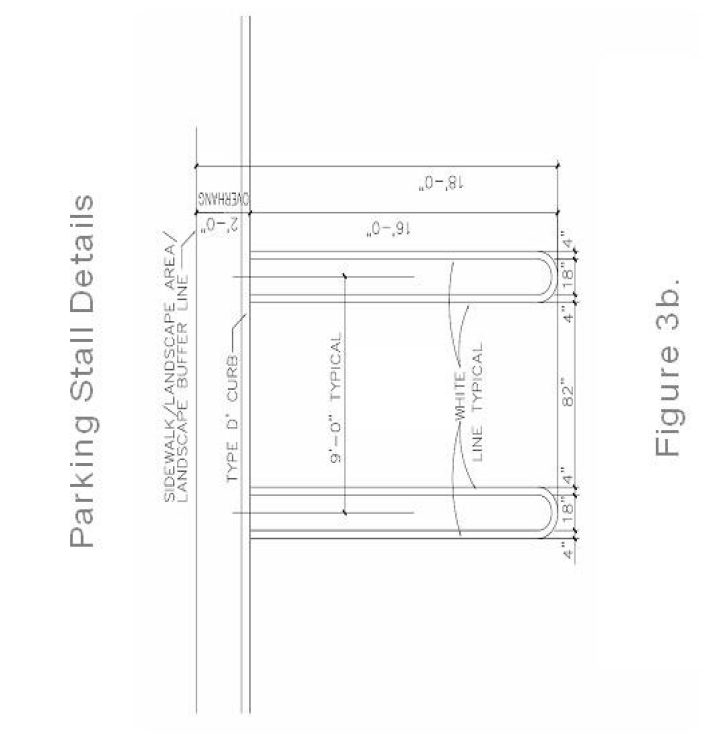
(Ord. No. 2007-115, 11-20-07)

