
Creston City Zoning Code
ARTICLE VI
LAND USE AND DEVELOPMENT STANDARDS
Sec. 105-461. - New structures.
All structures built hereafter shall comply with all of the regulations of this chapter. Any structure hereafter moved from one site to another site shall be considered to be a structure built hereafter. Any structure rebuilt or restored after damage or destruction by fire or other casualty shall be considered to be structure built hereafter, unless article III of this chapter permits such structure to be rebuilt or restored.
Sec. 105-462. - New uses of old structures.
If the use of any existing structure is hereafter changed to another use, then the new use shall comply with the use regulations of this chapter; provided, however, the mere establishment of a new use does not itself require the existing structure to conform to the lot size or other bulk regulations of this chapter.
Sec. 105-463. - Remodeling.
If any structure is hereafter remodeled:
(1)
The entire structure as remodeled shall comply with the use regulations of this chapter;
(2)
Any alterations or enlargements of, or additions to, the structure shall comply with the bulk regulations of this chapter; and
(3)
The off-street parking facilities provided for the structure shall not be reduced below (or if already less than, shall not be further reduced below) the requirements that would be applicable to a similar new structure or use.
Sec. 105-464. - Uses of open land.
If any use of open land is hereafter established, or if any use of open land is hereafter changed to another use, such use shall comply with all the regulations of this chapter.
Sec. 105-465. - Uses permitted in all districts.
The following public utility and municipal uses are permitted in all districts: poles, wires, cables, conduits, vaults, laterals, pipes, mains, valves or any other similar equipment (not including substations located on or above the surface of the ground) for the distribution to consumers of telephone or other communications, electricity, gas, or water, or for the collection of sewage or surface water.
Sec. 105-466. - Public sewer and water facilities required.
All structures built hereafter shall be served by and connected to a public sanitary sewage disposal system and water distribution system. Existing structures not connected to a public sanitary sewage disposal system and water distribution system may be enlarged, repaired, or altered without connection to such system provided that the failure to connect the structure shall not create a hazard to the public health, safety, or welfare.
Sec. 105-467. - Permitted uses.
No structure shall hereafter be built, moved or remodeled, and no structure or land shall be used, occupied or designed for use or occupancy, except for a use that is permitted within the zoning district in which the structure or land is located.
Sec. 105-468. - Special uses.
No use of a structure or land that is designed as a special use in any zoning district shall hereafter be established and no existing special use shall hereafter be changed to another special use in any zoning district unless a special use permit has been secured in accordance with the provisions of article IV, division 3 of this chapter.
Sec. 105-469. - Lot size requirements.
(a)
No structure or part thereof shall hereafter be built, moved or remodeled and no structure or land shall hereafter be used, occupied, arranged or designed for use or occupancy on a zoning lot which is:
(1)
Smaller in area than the minimum lot area or minimum lot area per dwelling unit required in the zoning district in which the structure or land is located;
(2)
Narrower than the minimum lot width required in the zoning district in which the structure or land is located; or
(3)
Shallower than the minimum lot depth required in the zoning district in which the structure or land is located.
(b)
No existing structure shall hereafter be rebuilt, remodeled or otherwise altered or modified so as to conflict or further conflict with the lot area per dwelling unit or lot size requirements as set forth in division 5 of this article for the zoning district in which the structure is located.
(c)
Whenever a minimum contiguous area is specified for a zoning district, then no property shall be classified or reclassified in any such zoning district unless, after such classification or reclassification, the property will, when considered alone or in conjunction with similarly classified property which it abuts, contain at least the minimum contiguous area specified for such zoning district.
Sec. 105-470. - Bulk regulations.
In this chapter, bulk regulations are expressed in terms of maximum structure height, maximum lot coverage, maximum floor area ratio, minimum building separation and minimum front, side, corner side, transition, rear, and double frontage yards, among other terms. No structure or part thereof shall hereafter be built, moved or remodeled and no structure or land shall hereafter be used, occupied or designed for use or occupancy so as to:
(1)
Exceed the maximum lot coverage percentage, the maximum structure height or the maximum floor area ratio specified for the zoning district in which the structure is located; or
(2)
Provide any setback or front, side, corner side, transition or rear yard that is less than that specified for the zoning district in which such structure or use of land is located or maintained.
Sec. 105-471. - Off-street parking and loading.
No structure shall hereafter be built or moved and no structure or land shall hereafter be used, occupied or designed for use or occupancy unless the minimum off-street parking and off-street loading spaces required by division 7 of this article are provided. No structure or use already established on the effective date of the ordinance enacting this chapter shall be enlarged unless the minimum off-street parking and loading spaces required by division 7 of this article for such enlargement are provided.
Sec. 105-472. - Number of structures and uses on zoning lot.
(a)
Residential districts. Unless otherwise permitted in a specific zoning district, not more than one principal residential building shall be located on a single zoning lot, unless such principal residential building is located in a planned development that was approved pursuant to the provisions of this chapter.
(b)
Commercial and industrial districts. In commercial and industrial districts, any number of structures and uses, including residential uses, when permitted, may be constructed or established on a single zoning lot, but no single zoning lot shall be smaller than the minimum lot area prescribed for the district in which such structure is located.
Sec. 105-473. - Yard requirements for open land.
If a zoning lot is, or will be, occupied by a permitted use without structures, then the minimum front, side or rear yards that would otherwise be required for such zoning lot shall be provided and maintained unless some other provision of this chapter requires or permits a different front, side, corner side or rear yard, on zoning lots used for garden purposes without structures, or on zoning lots used for open public recreation areas.
Sec. 105-474. - Restrictions on allocation and disposition of required yards or open space.
(a)
No part of the lot area or of a yard or other open space or off-street parking or loading space provided in connection with any structure or use in order to comply with this chapter shall, by reason of a change of ownership or otherwise, be included as a part of the minimum lot area, yard, other open space, or off-street parking or loading space required for any other structure or use, except as specifically permitted by this chapter.
(b)
All of the lot area and all yards and other open spaces provided in connection with any structure or use in order to comply with this chapter shall be located on the same lot as the structure or use.
Sec. 105-475. - Use limitations.
No permitted use hereafter established, altered, modified or enlarged shall be operated or designed so as to conflict with the use limitations for the zoning district in which such use is, or will be, located. No permitted use already established on the effective date of the ordinance enacting this chapter shall be altered, modified or enlarged so as to conflict with, or further conflict with, the use limitations for the zoning district in which such use is located.
Sec. 105-501. - Generally.
No accessory structure or use, as defined in this chapter, shall hereafter be built, moved or remodeled, established, altered or enlarged unless such accessory structure or use is permitted by this chapter. Accessory uses are permitted in any zoning district in connection with any principal use that is permitted within such district.
Sec. 105-502. - Limitations and conditions.
Each accessory structure and use shall comply with the applicable limitations in the zoning district in which it is located and, in addition:
(1)
No accessory structure or use shall be constructed, occupied or established on any lot prior to the completion of the principal structure to which it is accessory.
(2)
No accessory structure or use shall be permitted in any yard unless it is a permitted yard obstruction as provided in section 105-503.
(3)
Outdoor storage, where permitted, shall be maintained in such a manner so as to prevent the overgrowth of weeds, grasses and other obnoxious plant material, and the harboring of rodents and other animal and insect pests.
(4)
Buildings and structures essential, incidental or customary to the pursuit of agriculture are exempt from the requirements of this division.
(5)
On a corner lot occupied by a principal residential structure that is legally nonconforming with respect to the corner side yard setbacks, accessory uses and structures may be located in the corner side yard provided they maintain the same setback as the principal residential structure.
(6)
No accessory structure or use except fences shall be constructed, occupied or established on any public utility, drainage, or pipeline easement, except with the written permission of the village and all utility companies having rights to use the easement.
Sec. 105-503. - Permitted yard obstructions.
(a)
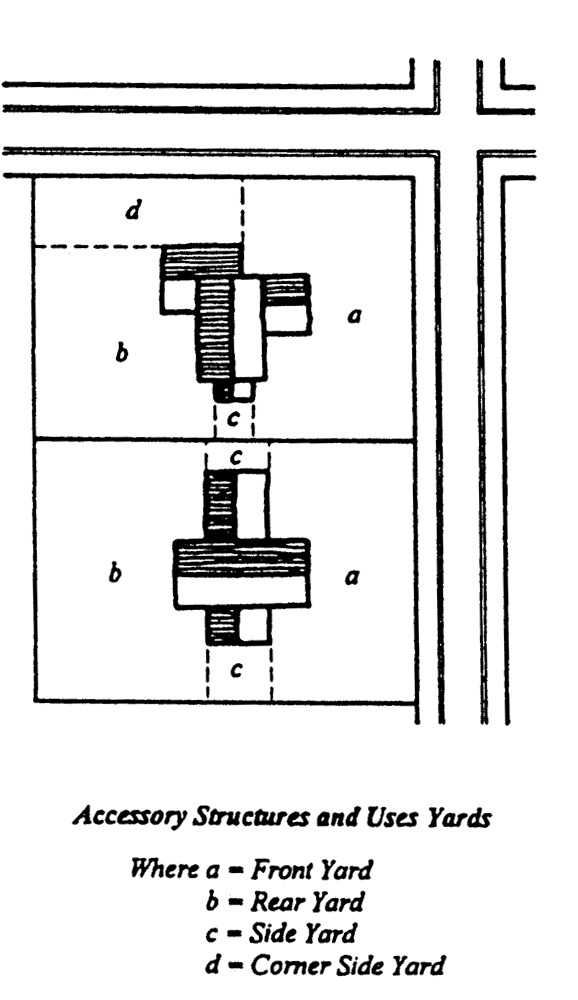
Generally; yards defined. No accessory structures and uses, except those which are permitted as obstructions in yards as indicated in the table of permitted yard obstructions in subsection (b) of this section, shall be established, constructed or altered in, or moved to, any yard. For the purpose of this division:
(1)
Front yard shall refer to the open space on a lot between the front lot line and all of the vertical planes forming the front elevation of the principal structure;
(2)
Rear yard shall refer to the open space on a lot between the rear lot line and all of the vertical planes forming the rear elevation of the principal structure, but excluding any corner side yard;
(3)
Side yard shall refer to the open space on a lot between the side lot line and the vertical plane forming the side elevation of the principal structure closest to the side lot line, but excluding any rear or front yards; and
(4)
Corner side yard shall refer to the open space on a lot between the corner side lot line and the vertical plane forming the side walls of the principal structure closest to the corner side lot line, but excluding any rear or front yards.
(b)
Table of permitted yard obstructions.
Where "P" indicates accessory structure or use is a permitted yard obstruction in the indicated yard as defined in subsection (a) of this section.
Accessory structures and uses not listed in this table shall be considered to be prohibited yard obstructions.
Accessory structures and uses listed in this table shall conform with the bulk regulations in section 105-504 unless otherwise specified in this table.
Sec. 105-504. - Bulk regulations generally.
Except as otherwise provided by this chapter, all accessory structures and uses shall observe the bulk regulations of the district in which they are located, provided that:
(1)
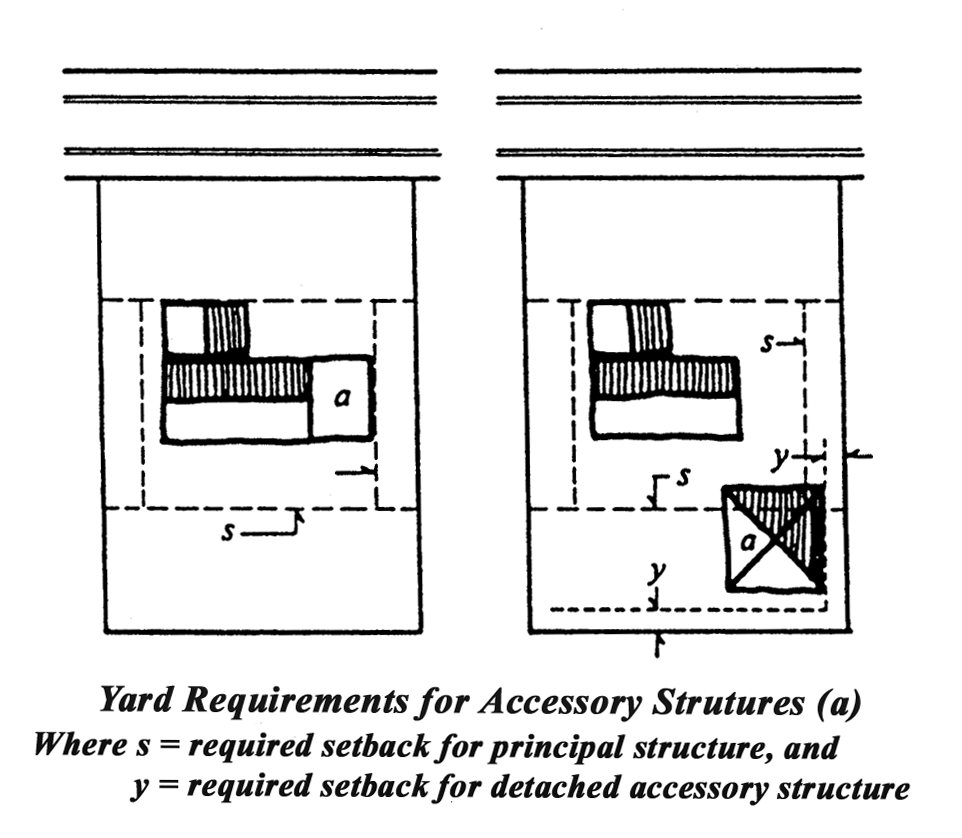
Attached accessory structures. Accessory structures, except porches, balconies and decks attached to the principal structure, shall be considered part of the principal building and shall comply with the required yards for the principal structure.
(2)
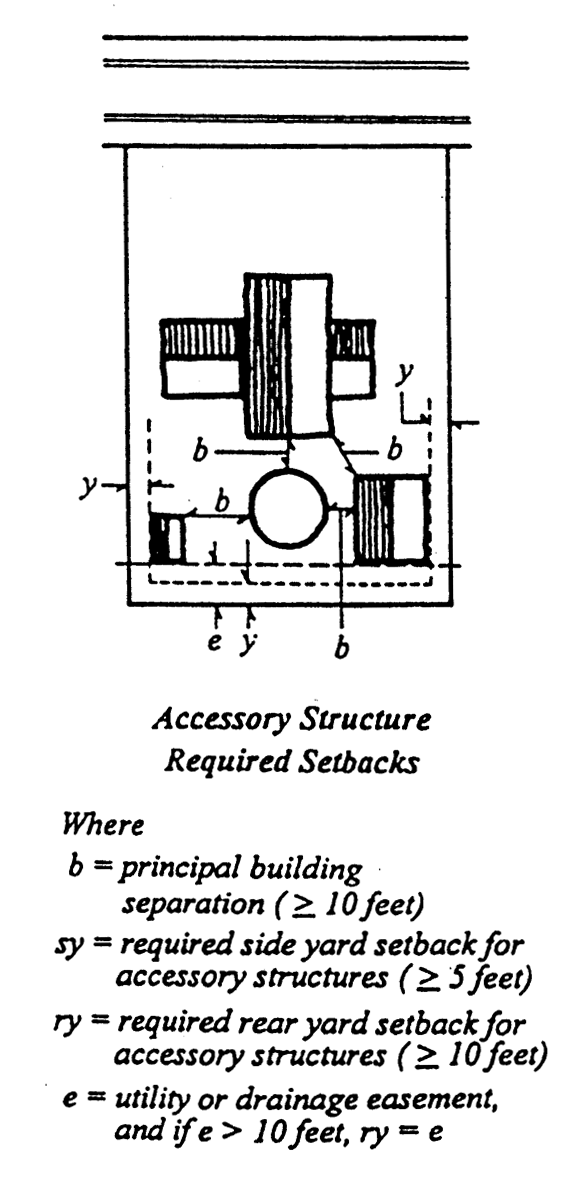
Detached accessory structures, except fences and walls. The following shall apply to detached accessory structures, except fences and walls:
a.
Minimum rear and side yard: Five feet from any side or rear lot line.
b.
Maximum structure height: 15 feet.
c.
Minimum building separation: No detached accessory structure may be located less than ten feet from the principal structure or another accessory structure on the lot.
Sec. 105-505. - Additional bulk regulations for specific structures and uses.
(a)
Swimming pools, hot tubs, and outdoor spas.
(1)
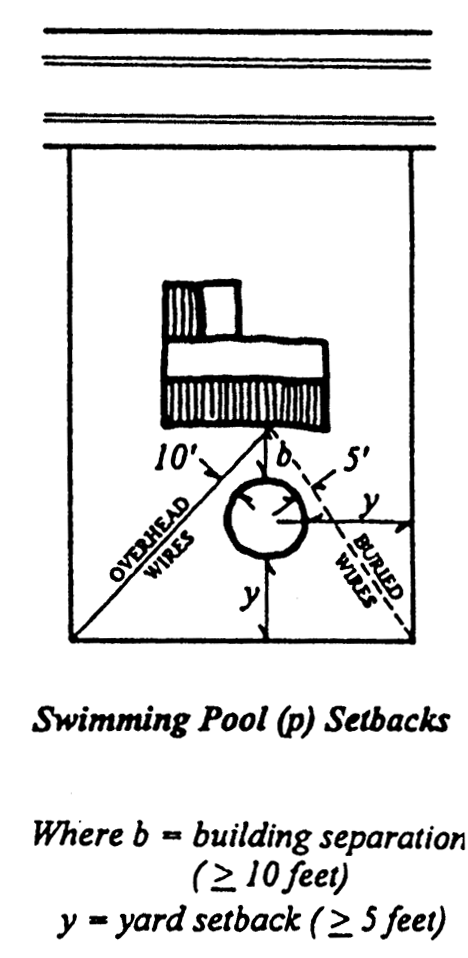
No swimming pool, hot tub, or outdoor spa, or any deck attached thereto, may be located less than five feet from any fence or property line.
(2)
No swimming pool, hot tub, or outdoor spa shall be located within ten feet of any overhead electric distribution or aboveground service utility line transformer, pedestal or meter, or within five feet of any buried electric distribution or service utility line.
(3)
All swimming pools, hot tubs, and outdoor spas (referred to in this section as a "pool") shall provide adequate enclosure when not in use or supervised.
a.
The enclosure shall be a fence or wall with no openings or breaks, except for gates, not less than four feet in height, and must be placed around the pool or lot on which the pool is located;
b.
The pool must be constructed with a self-contained fence and retractable ladder; or
c.
The enclosure shall be a manufacturer's swimming pool, hot tub, or outdoor spa cover or other type of protective device providing an equal or better degree of protection than the other options in this section and approved by the village building official.
Planting material shall not be used as a substitute for a fence or wall required by this section.
(4)
The maximum area of all swimming pools, hot tubs, or outdoor spas located on a lot shall not exceed 600 square feet or one percent of the lot area, whichever is less.
(b)
Fences and walls.
(1)
Prohibited fences and walls. The following are prohibited:
a.
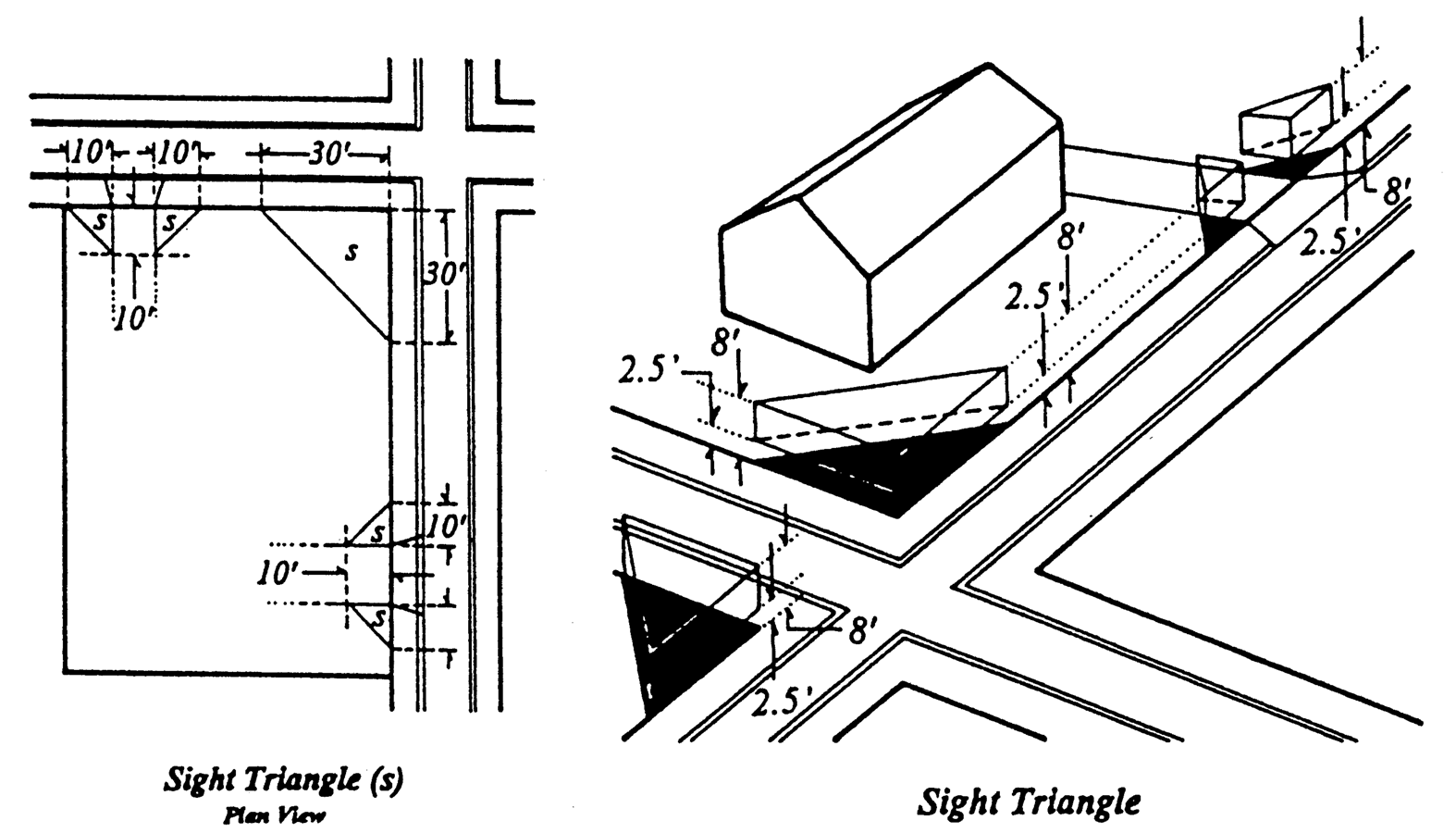
Fences, including walls, and planting material used in the nature of a fence, placed or maintained on any portion of any public right-of-way or in any required yard, which, by the nature of the materials used for its construction, design or location, would impair public safety by interfering with and obstructing the vision of persons using the streets, sidewalks or driveways on or adjacent to such a yard. No such fence may be located within the sight triangle, the sides of which are formed by the right-of-way lines of two intersecting streets or a street and a driveway. The length of the sides of the triangle shall be 30 feet along the street rights-of-way that intersect, and ten feet along the street right-of-way and driveway when a street and driveway intersect, or along the street right-of-way and alley when a street and alley intersect.
b.
Fences or walls constructed in whole or in part of electrically charged wire, barbed wire, spikes, glass, protruding nails, or other sharp or pointed material of any kind; except that barbed wire may be used on a lot in the A-1 district when such lot is used for permitted agriculture purposes.
c.
Chainlink fences with barbed ends up.
d.
Chainlink fences with privacy insert strips in residential zoning districts. Privacy insert strips may be used in chainlink fences in nonresidential zoning districts provided all of the inserts are of the same color.
e.
Snow fences, except for the exclusive control of windblown snow between November 1 and March 31 and erected by state or local highway authorities, or used exclusively for protection devices at excavation sites.
f.
Fences constructed of less than nine-gauge wire.
Exceptions to this section may be granted by petition to the hearing officer.
(2)
Fence and wall requirements.
a.
For the purpose of this section, there shall be two categories of fences in the village:
1.
Type A. A type A fence may only be a decorative fence and shall not exceed four feet in height above the ground level in all zoning districts. Type A fences are permitted in all yards. When a type A fence erected in a front or corner side yard is of wood construction, it shall be painted or stained white in color.
2.
Type B. A type B fence may be a wall or a natural or solid fence and shall not exceed six feet in height in residential districts or ten feet in all other districts, and is permitted only in rear and side yards, unless otherwise specified or permitted in this chapter.
b.
Fences and walls shall be located entirely on the lot of the property owner constructing the fence or wall.
c.
The finished side of the fence or wall must face out from the property of the property owner constructing the fence or wall.
d.
No fence or wall shall be constructed or maintained in such a manner as to obstruct, inhibit, impair or otherwise alter overland surface drainage across any adjoining lot.
e.
Fences may be located on public utility and drainage easements; however, the village and the public utility companies having rights to use the easement reserve the right to remove the fence to construct, repair or maintain utility facilities, with no obligation to replace or restore the fence unless so stated in the governing easement document. It shall be the obligation of the property owner to locate all utilities prior to construction of a fence.
f.
Walls, except terraces, knee walls and retaining walls, and chainlink fences shall be prohibited in a front yard.
(3)
Exemptions. The provisions of this chapter shall not apply to the following:
a.
Fences constructed for the safety of children on park or school playgrounds.
b.
Planting material used in the nature of a fence, except as otherwise prohibited by subsection (b)(1)a of this section.
(c)
Private antenna towers and satellite stations. Satellite stations with a diameter of 40 inches or less are exempt from this subsection. All other antennas and satellite stations shall conform with the following:
(1)
Maximum height. Maximum height is 50 feet above grade.
(2)
Minimum yards.
a.
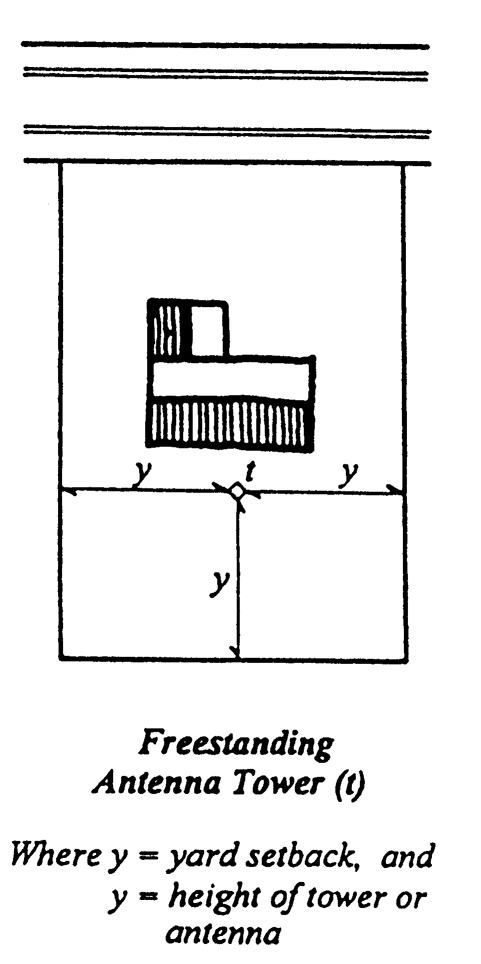
Freestanding towers or antenna structures and satellite stations that are unattached to the principal structure shall not be located closer to the lot line than the total height of the tower, satellite station or antenna structure. All unattached freestanding towers, satellite stations or antenna structures shall be located in the rear yard and must be properly guyed entirely within the limits of the property.
b.
Towers, satellite stations or antenna structures that are directly attached to the principal structure may be located in a side yard or rear yard.
(3)
Screening required. Detached satellite stations greater than 40 inches in diameter shall be screened from view from adjoining lots and adjoining public right-of-way by a solid fence, wall and/or landscaping.
(4)
Exemptions. Satellite stations 40 inches or less in diameter or diagonal dimension and personal wireless communication facilities are exempt from the regulations of this subsection.
(d)
Detached garages and carports.
(1)
Maximum area. Maximum area is 1,200 square feet or eight percent of the lot area, whichever is less.
(2)
Maximum number. Maximum number is one per single-family lot.
(3)
Access. A continuous hard dust-free surface shall be provided between any garage or carport and the adjoining public right-of-way or alley.
(4)
Maximum height. Maximum height is 15 feet, unless an accessory cottage or accessory cottage office is located above the garage, in which case the garage shall not exceed the height of the principal structure.
(e)
Decks, open to the sky.
(1)
Maximum area. Maximum area is 500 square feet or one percent of the lot area, whichever is less.
(2)
Minimum yards. Minimum yards are five feet from any side or rear lot line, provided that no deck attached to the principal building shall be located less than 15 feet from a rear lot line.
(3)
Maximum height. No deck detached from the principal building shall be higher than 36 inches above the ground beneath the deck. Decks attached to aboveground swimming pools shall be exempt from the maximum height limitation set forth in this subsection but shall not be less than five feet from any adjoining property line.
(f)
Accessory cottages and accessory cottage offices.
(1)
Maximum floor area. Maximum floor area is 650 square feet.
(2)
Number. Not more than one accessory cottage or accessory cottage office shall be permitted on a lot.
(3)
Maximum height. The accessory cottage or accessory cottage office shall not exceed the height of the principal residential building on the lot.
(g)
Porte-cocheres and attached carports.
(1)
Number. One is permitted per lot.
(2)
Maximum height. The top of the porte-cochere shall not be higher than the lowest eave line of the wall to which it is attached.
(3)
Yards. A porte-cochere may extend into a required yard provided that it has no solid wall and is open to the elements yearround.
(4)
Use of roof as deck. The roof of a porte-cochere may be used as a deck, but shall not be enclosed and used or used as habitable space if the porte-cochere is located in a required yard.
(h)
Tool, garden storage sheds, gazebos, cabanas and other structures not otherwise specified in this division.
(1)
Maximum area. Maximum area is 150 square feet or 0.5 percent of the lot area, whichever is less, for each such accessory structure.
(2)
Maximum number. Maximum number is one each per lot.
Sec. 105-521. - Regulations for specific structures and uses.
No temporary structure or use listed in this chapter shall hereafter be built, established, moved or remodeled, altered or enlarged unless such temporary structure or use is permitted by this chapter. The following uses of land are permitted in each zoning district (unless specifically restricted to a particular district), subject to the specific regulations and time limits which follow and to the other applicable regulations of the district in which the use is located:
(1)
Christmas tree sales. Christmas tree sales, when located on a lot not less than two acres located in a commercial or industrial district, for a period not to exceed 30 days. Such use need not comply with the yard requirements of this chapter, provided than no trees shall be displayed within ten feet of any driveway or street right-of-way or within 30 feet of the intersection of the rights-of-way of any two streets.
(2)
Contractors' offices and equipment sheds and trailers. Contractors' offices and equipment sheds and trailers, when accessory to a construction project and only for the duration of the project while building permits are in effect and provided that such office or equipment shed or trailer is located on the premises undergoing construction. No such office, shed or trailer shall contain sleeping accommodations or cooking facilities. Such use shall be removed upon the lapse of building permits or issuance of the last occupancy certificate and shall be screened from view with a fence or landscaping.
(3)
Subdivision sales offices. Subdivision sales offices, sometimes in a model home, when incidental to a new housing development. No such use may be used for sleeping or cooking purposes and such use may continue only until all dwelling units in the development have been sold or leased. Fences may be located on lots used for subdivision sales offices and model homes provided that such fences comply with the provisions of section 105-505(b), except that points of access shall be provided as required by the zoning administrator for persons, equipment and vehicles which may be required in case of emergency.
(4)
Seasonal sales of farm products. Seasonal sales of farm produce grown on the premises, in an A-1 district, for a period not to exceed four months in any calendar year. Structures incidental to such sales shall comply with the yard requirements of the district in which the use is located.
(5)
Circuses and carnivals. Circus or carnivals, when operated or sponsored by a religious, civic, or institutional not-for-profit group for a period not to exceed one week. No such use may occur on a lot which will pose a safety hazard to pedestrians and motorists or interfere with the use and privacy of adjacent property. Such use may not be located in any residential district, except on park, church, or school property, and shall comply with the yard requirements of the district in which it is located.
(6)
Sidewalk sales. Sidewalk sales, when conducted in a commercial district incidental to the business located on the lot, provided such use in conducted in conjunction with a special event or promotion which is related to or sponsored by the business on the lot and conducted adjacent to the entrance of the business, and that such use occurs for a period not to exceed four days and does not to occur more than three times in a calendar year.
(7)
Garage or yard sales. Garage or yard sales, estate sales and house auctions when conducted on private property in a residential district for the display and sale of household and personal items, provided such use occurs for a period not to exceed six days in a calendar year.
Sec. 105-541. - Purpose.
Home-based businesses are a necessary and desirable part of the development of a community, but if left unchecked can have a deleterious effect on the value, use and enjoyment of adjoining property and the neighborhood. It is necessary to establish performance standards to measure the appropriateness of the many diverse home-based businesses in village neighborhoods. It is the intent of this division to:
(1)
Ensure the compatibility of home-based businesses with other uses permitted in residential zoning districts;
(2)
Maintain and preserve the character of residential neighborhoods;
(3)
Promote the efficient use of public services and facilities by ensuring that services are provided to the residential population for which they were planned and constructed, rather than provided to commercial uses; and
(4)
Prevent the generation of vehicular or pedestrian traffic in greater volumes than would normally be expected in a residential neighborhood.
Sec. 105-542. - Performance standards.
In addition to all of the use limitations applicable in the district in which a home-based business is located, no home-based business shall hereafter be established, altered or enlarged in any residence district unless such home-based business complies with the following performance standards in all residence districts:
(1)
Employees. Not more than one person who is not a member of the immediate family occupying such dwelling unit shall be employed at the home in connection with the home-based business.
(2)
Signs. No sign on the premises shall advertise the presence or conduct of a home-based business.
(3)
Wholesale, jobbing or retail businesses. No wholesale, jobbing or retail business shall be permitted unless sales are conducted entirely by mail or telephone or by appointment and the business does not involve the receipt, shipment, delivery (except by U.S. mail or overnight package delivery service) or storage of merchandise on or from the premises.
(4)
Exterior evidence of business. There shall be no activity, structure, or other exterior evidence that the dwelling unit is being used for any nonresidential purpose in order to conduct the home-based business.
(5)
Area limitation. No more than 25 percent of the area of a dwelling shall be devoted to the home-based business.
(6)
Equipment. No mechanical or electrical equipment may be used except such types as are customary for purely domestic, household, or hobby purposes, or used in a manner to indicate that the structure is being used for a nonresidential purpose. Furthermore, no equipment which creates noise, vibration, glare, fumes, odors or electrical interference beyond what normally occurs in the applicable zoning district shall be used in such home-based business.
(7)
Outside storage. There shall be no storage outside a principal building or accessory structure of equipment or materials or products used in the home-based business.
(8)
Outdoor business operations. The home-based business shall be conducted entirely within the principal residential building or in a private garage accessory thereto.
(9)
Character. The home-based business shall be conducted in a manner which would not cause the premises to differ from its residential character either by use of colors, materials, or lighting, or the emission of sounds, noises, or vibrations.
(10)
Traffic impact. The home-based business shall not have an adverse affect on the neighborhood through the congestion of village streets.
(11)
Scale. The home-based business shall be incidental and subordinate to the principal use of a building used as a dwelling.
(12)
Customer sales and pickup. Direct sales of products from the dwelling unit are prohibited, but a person may pick up an order placed earlier.
(13)
Displays. No article or stock in trade shall be displayed such that it is visible from the exterior of the dwelling unit.
(14)
Origin of goods. Goods that are the subject of the home-based business may be fabricated or produced on the premises, as well as manufactured elsewhere, subject to the standards set forth in this division.
(15)
Parking. The conduct of the home-based business shall not require more vehicle parking space than exists on the residential driveway on the property, or on assigned parking spaces serving the dwelling unit. The conduct or operation of a home-based business shall not reduce or render unusable any areas provided for required off-street parking, or prevent the number of cars intended to be parked in a garage from doing so. Parking for any employees shall be provided off-street on the property.
(16)
Human care services and personal instruction. Home-based businesses involving human care services or personal instruction shall be limited to the care of humans for barber or beauty shops with not more than two cutting chairs, babysitting services and licensed day care homes, and personal instruction for not more than three individuals at one time.
Sec. 105-543. - Prohibited businesses.
Any home-based business that cannot satisfy the requirements of section 105-542 shall be prohibited. Prohibited home-based businesses include, but are not limited to, the following:
(1)
Funeral homes.
(2)
Nursery schools and day care centers.
(3)
Restaurants.
(4)
Stables, kennels, or animal hospitals.
(5)
Tourist homes and lodginghouses.
(6)
Medical or dental offices, clinics or hospitals.
(7)
Antique shops or sales.
(8)
Catering.
(9)
Motor vehicle body shops and repair shops.
Sec. 105-561. - Purpose; applicability.
The standards set forth in this division are established to govern the placement of structures and parking and the physical development and improvement of lots in all districts in the village.
Sec. 105-562. - Type 1, small detached house.
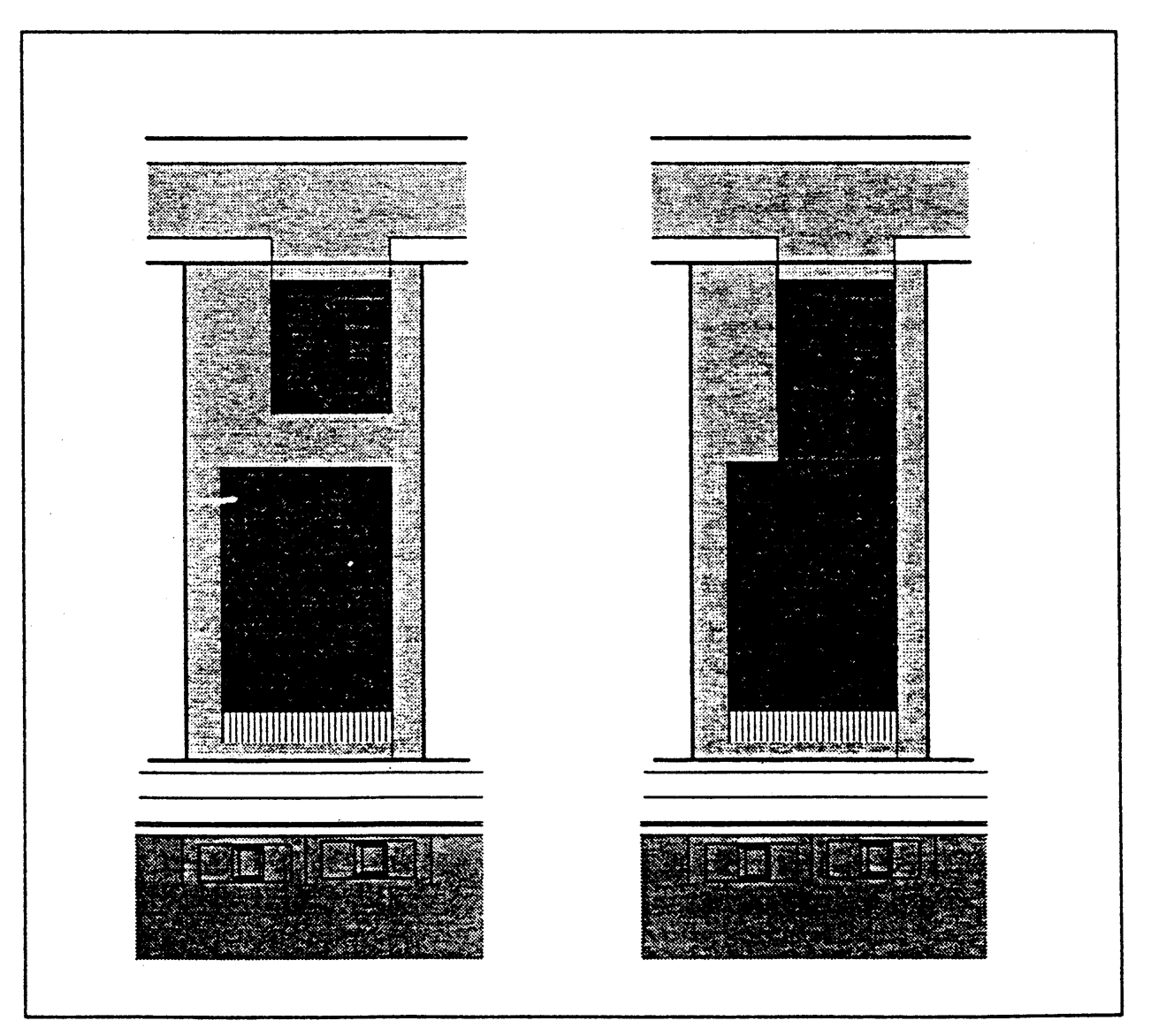
Type 1, small detached house development standards are as follows:
General notes:
N/A = Not applicable.
All dimensions are measured in feet unless otherwise indicated.
Porch width is measured as a percentage of the building facade across the lot frontage.
Heights are measured from existing average lot grade, or from centerline of roadway in front of lot to highest point of the building.
Porches and balconies may encroach upon the front, side and rear setbacks.
Sec. 105-563. - Type 2, large detached house.
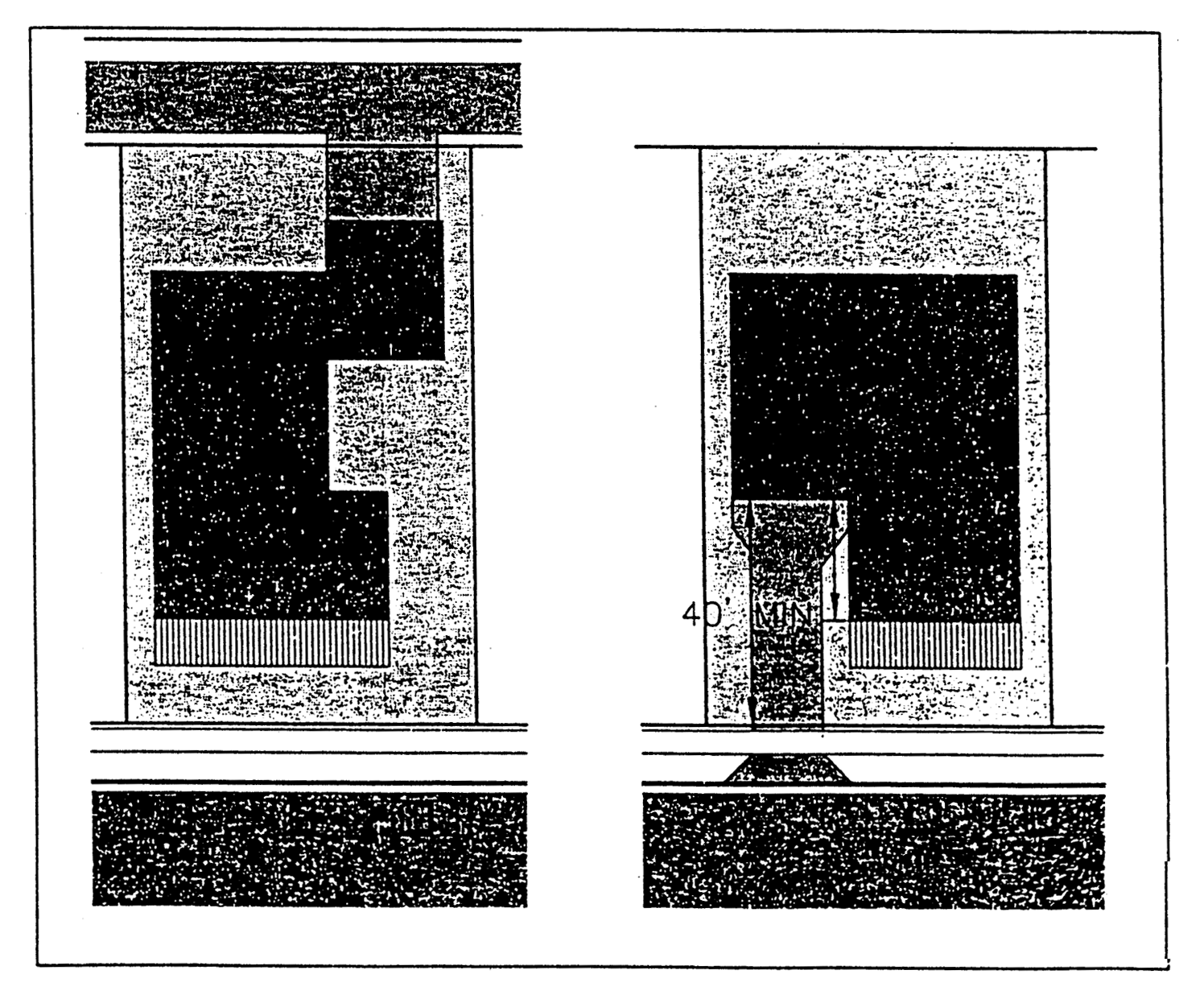
Type 2, large detached house development standards are as follows:
General notes:
N/A = Not applicable.
All dimensions are measured in feet unless otherwise indicated.
Porch width is measured as a percentage of the building facade across the lot frontage.
Heights are measured from existing average lot grade, or from centerline of roadway in front of lot to highest point of the building.
Porches and balconies may encroach upon the front, side and rear setbacks.
TYPE 2. LARGE DETACHED HOUSE
Sec. 105-564. - Type 3, estate house.
Type 3, estate house development standards are as follows:
General notes:
N/A = Not applicable.
All dimensions are measured in feet unless otherwise indicated.
Heights are measured from existing average lot grade, or from centerline of roadway in front of lot to highest point of the building.
Balconies may encroach upon the front, side and rear setbacks.
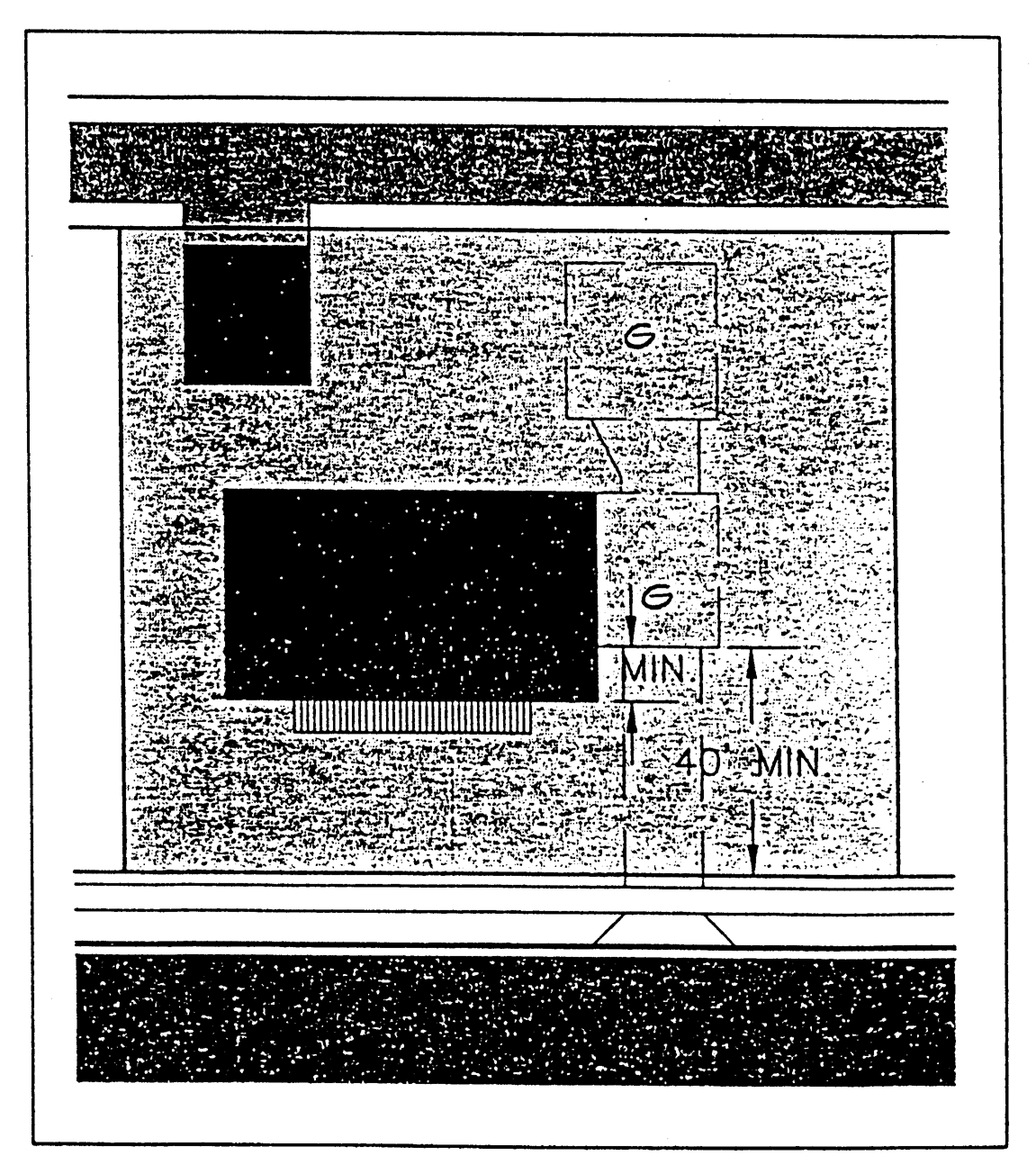
Sec. 105-565. - Type 4, side-yard house.
Type 4, side-yard house development standards are as follows:
General notes:
N/A = Not applicable.
All dimensions are measured in feet unless otherwise indicated.
Heights are measured from existing average lot grade, or from centerline of roadway in front of lot to highest point of the building.
Balconies may encroach upon the front, side and rear setbacks.
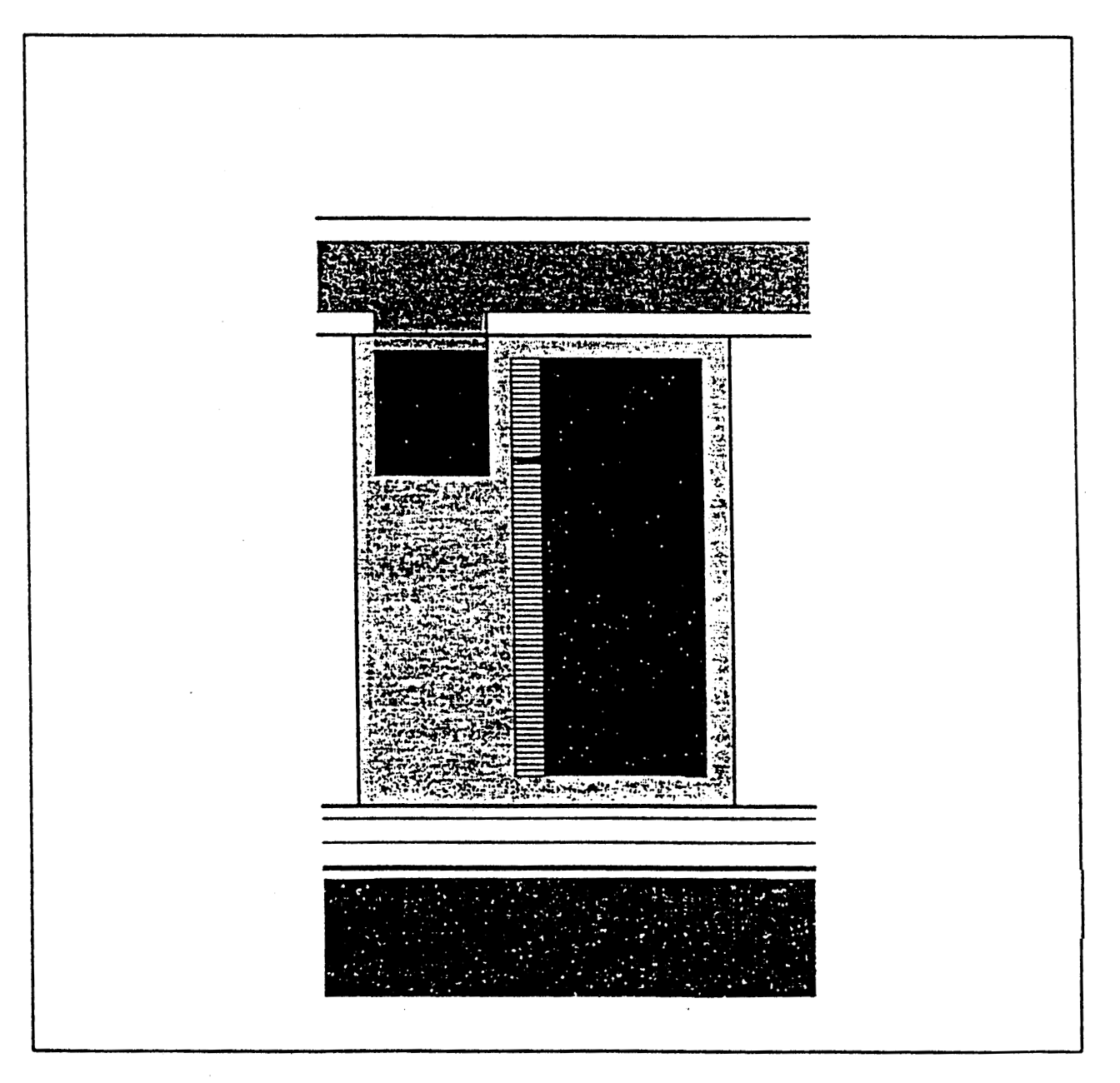
Sec. 105-566. - Type 5, attached house.
Type 5, attached house development standards are as follows:
General notes:
N/A = Not applicable.
All dimensions are measured in feet unless otherwise indicated.
Heights are measured from existing average lot grade, or from centerline of roadway in front of lot to highest point of the building.
Balconies may encroach upon the front, side and rear setbacks.
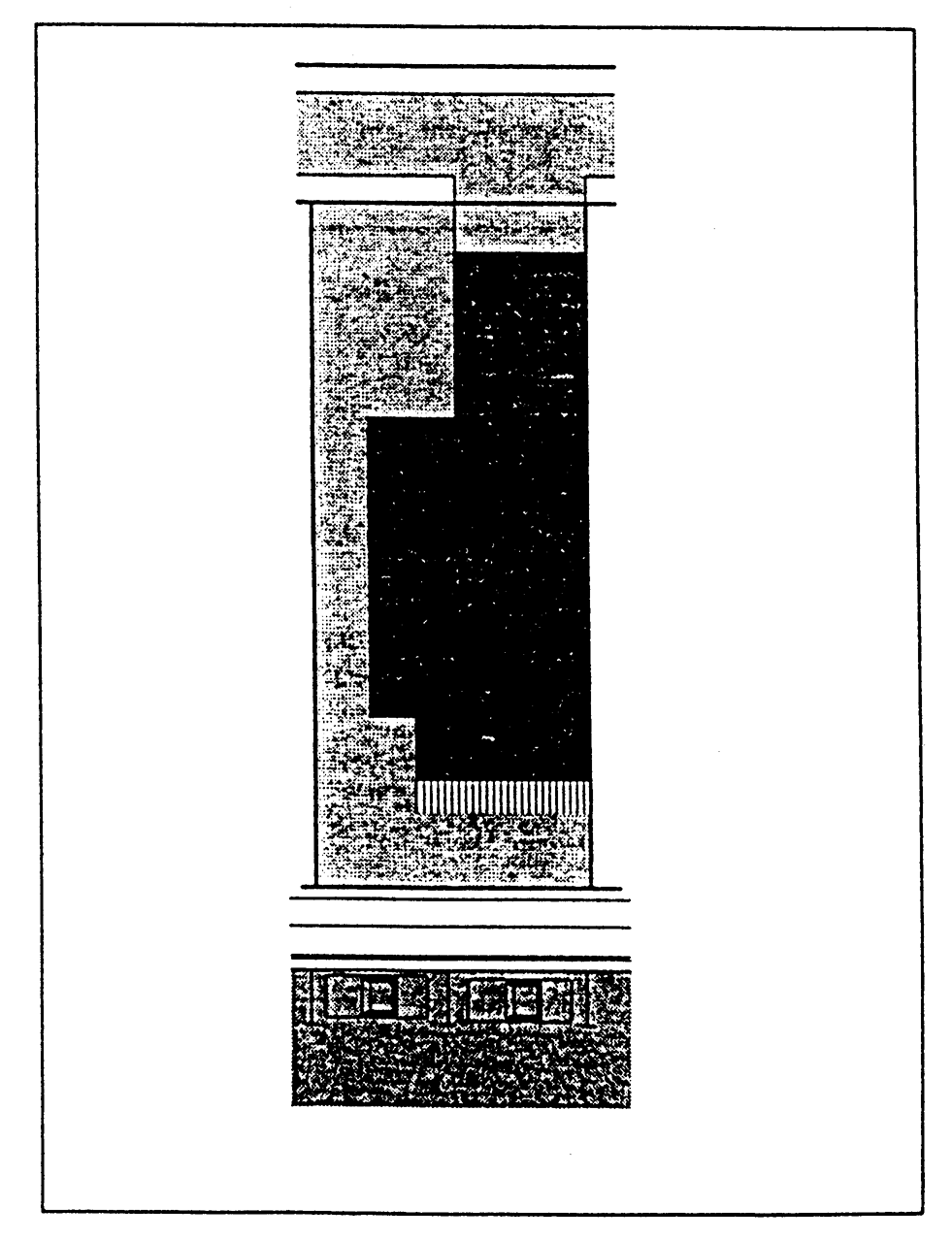
Sec. 105-567. - Type 6, small townhouse.
Type 6, small townhouse development standards are as follows:
General notes:
N/A = Not applicable.
All dimensions are measured in feet unless otherwise indicated.
Heights are measured from existing average lot grade, or from centerline of roadway in front of lot to highest point of the building.
Balconies may encroach upon the front, side and rear setbacks.
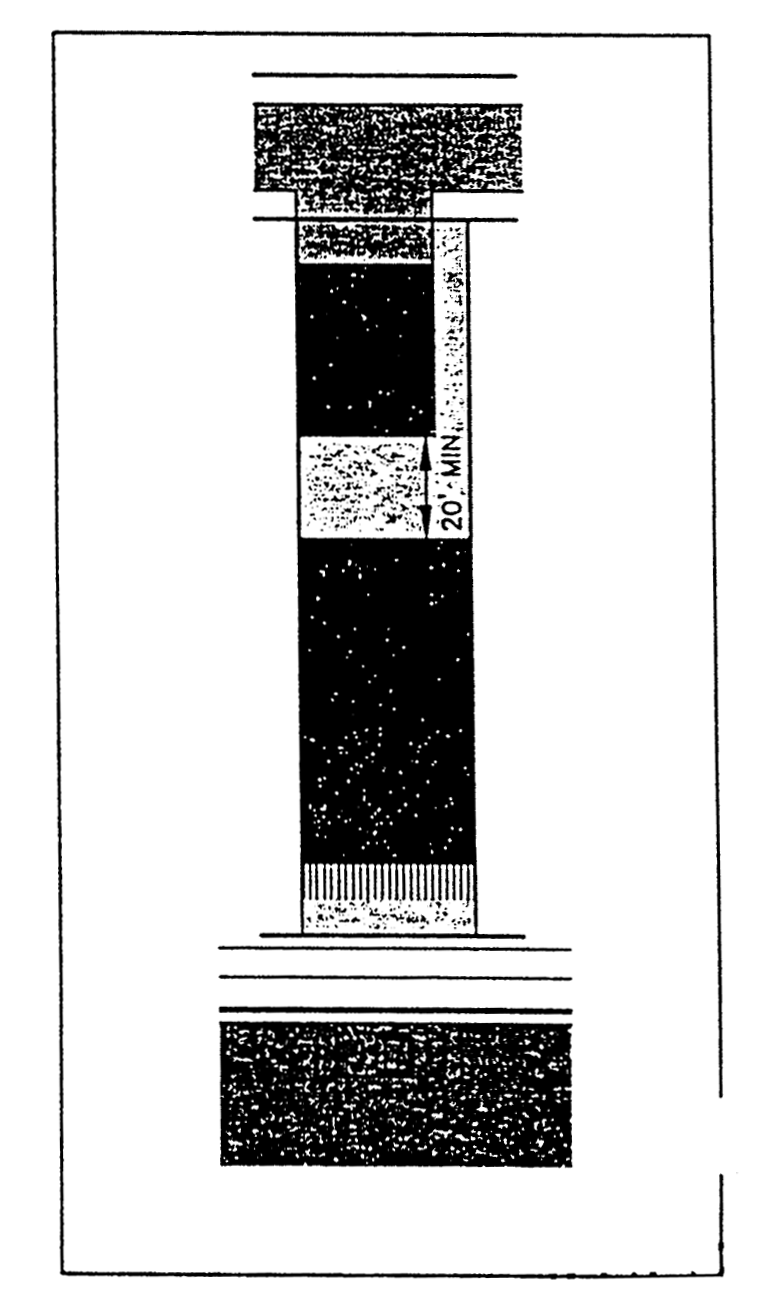
Sec. 105-568. - Type 7, large townhouse.
Type 7, large townhouse development standards are as follows:
General notes:
N/A = Not applicable.
All dimensions are measured in feet unless otherwise indicated.
Heights are measured from existing average lot grade, or from centerline of roadway, in front of lot to highest point of the building.
Balconies may encroach upon the front, side and rear setbacks.
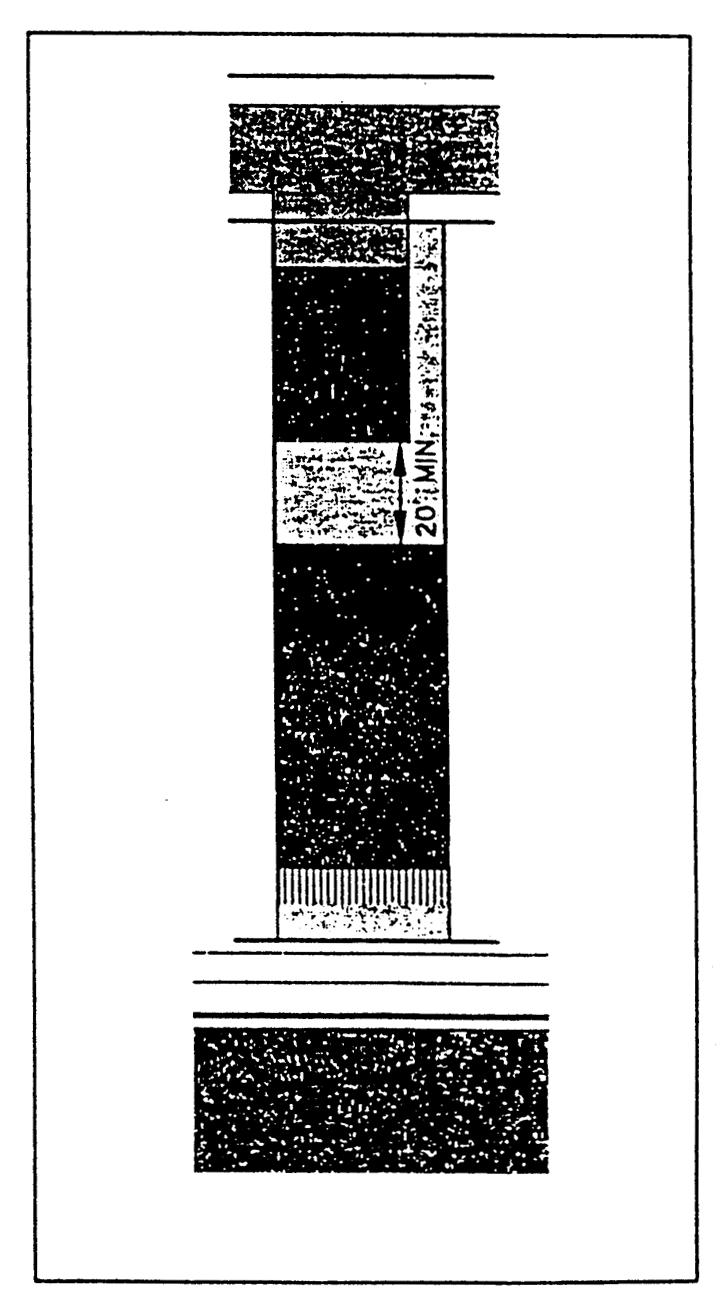
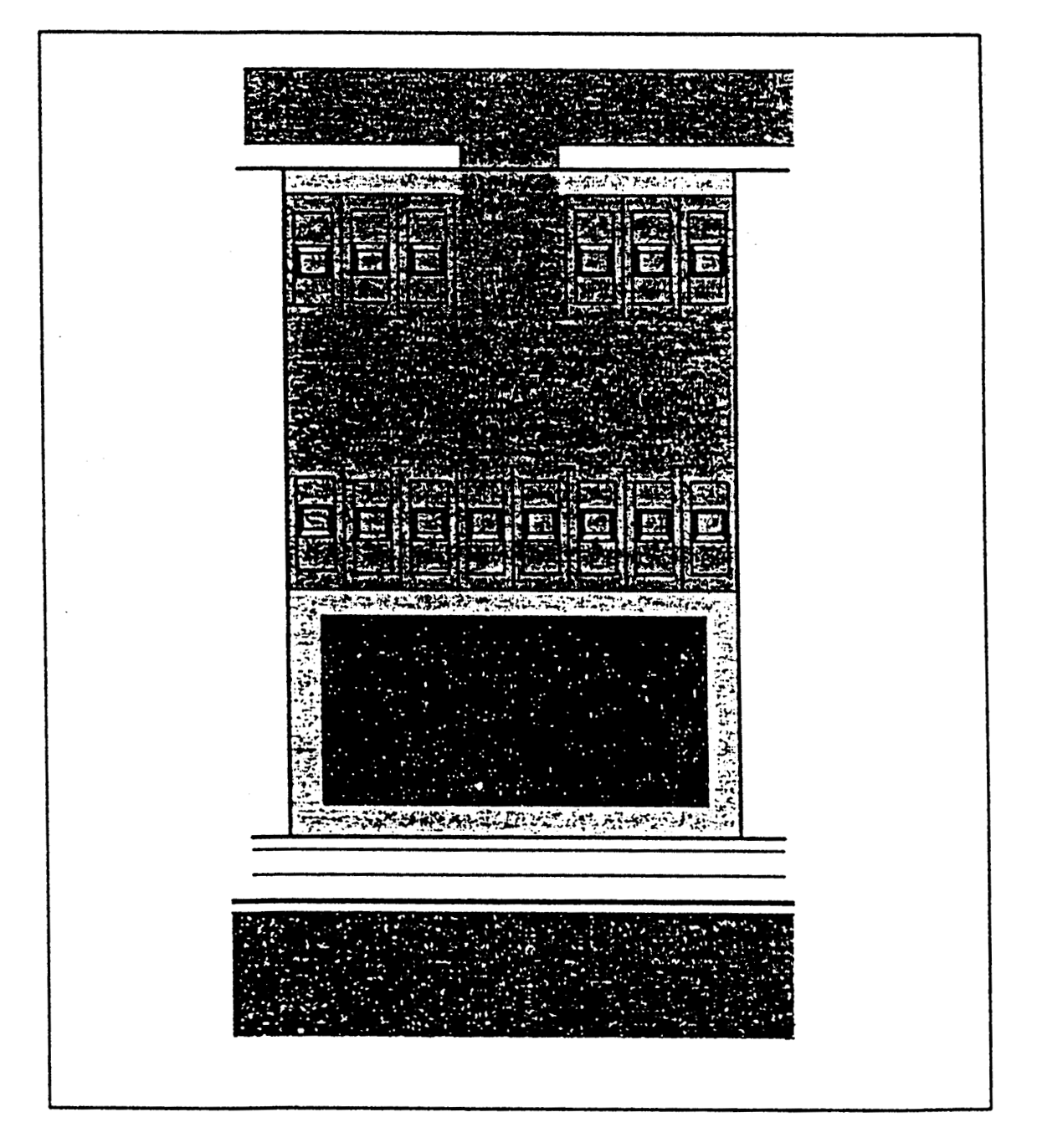
Sec. 105-569. - Type 8, apartment house.
Type 8, apartment house development standards are as follows:
General notes:
N/A = Not applicable.
All dimensions are measured in feet unless otherwise indicated.
Heights are measured from existing average lot grade, or from centerline of roadway in front of lot to highest point of the building.
Balconies may encroach upon the front, side and rear setbacks.
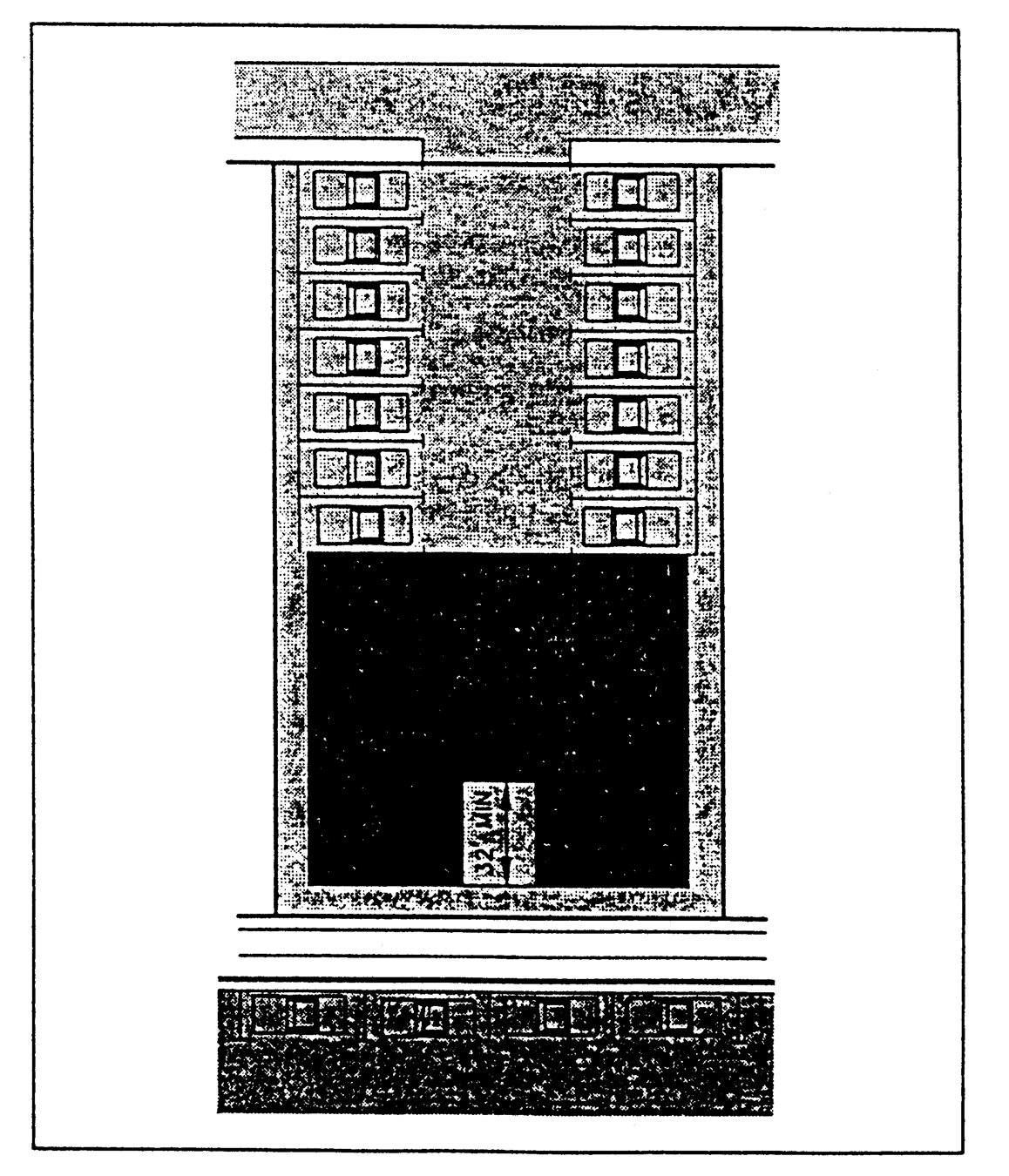
Sec. 105-570. - Type 9, courtyard apartment building.
Type 9, courtyard apartment building development standards are as follows:
General notes:
N/A = Not applicable.
All dimensions are measured in feet unless otherwise indicated.
Heights are measured from existing average lot grade, or from centerline of roadway in front of lot to highest point of the building.
Balconies may encroach upon the front, side and rear setbacks.
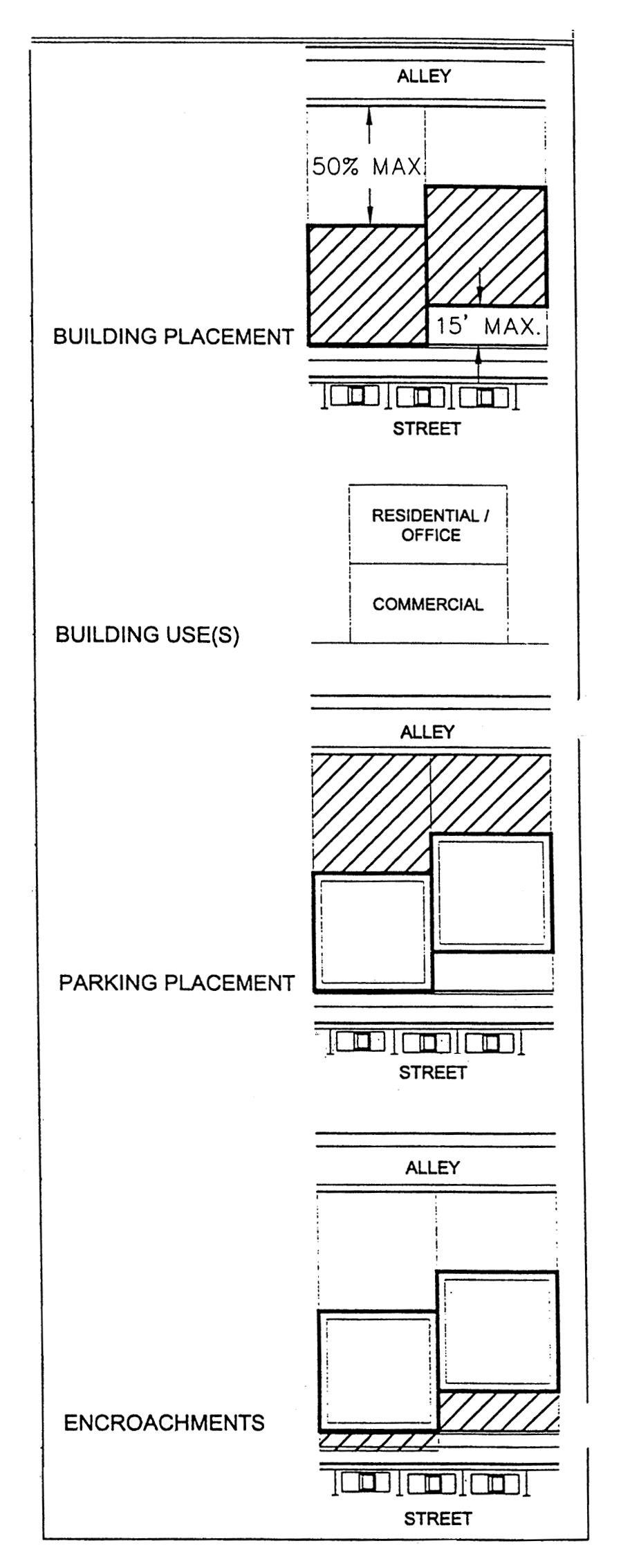
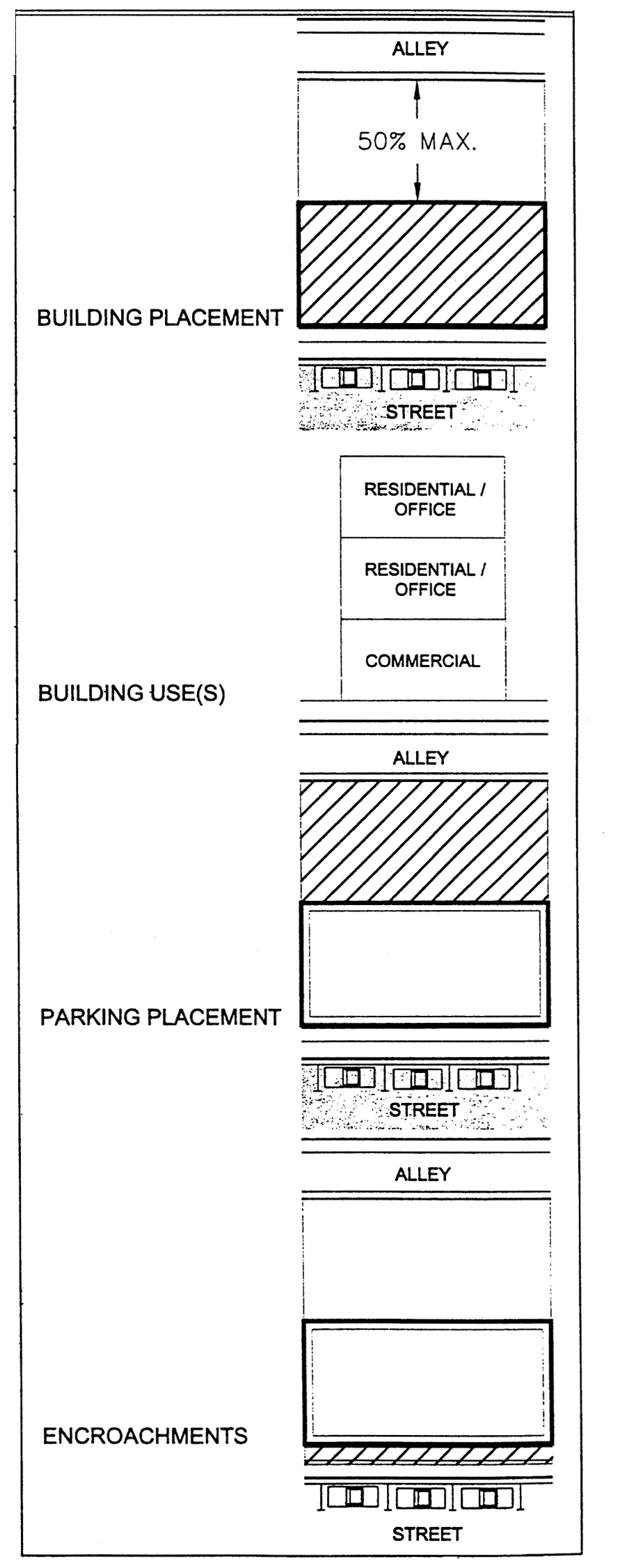
Sec. 105-571. - Type 10, neighborhood commercial building.
Type 10, neighborhood commercial building development standards are as follows:
General notes:
All dimensions are measured in feet unless otherwise indicated.
Permitted encroachments include awnings, steps, stoops, balconies, and arcades with an easement on public right-of-way.
Awnings may encroach in the right-of-way no more than five feet.
Balconies and roof overhangs may encroach on the right-of-way no more than five feet.
Shop front entries shall be recessed or set back from the front wall at least five feet and ten feet wide to accommodate a vestibule.
Where no building wall is present, a garden wall or fence is required along any side frontage adjacent to a street. Garden walls and fences shall be at least six feet in height.
All uncovered parking spaces shall be screened from view from public streets and private yards by fences, walls, and/or dense landscaping.
Trash containers and loading areas shall be located in the rear off-street parking areas and shall be screened from view.
Front yard fences shall be wrought iron or wooden picket painted white, not more than 42 inches in height. Brick or stone columns may be used.
Signs may project from the front building wall but shall not project more than four feet from the wall and may encroach in the right-of-way no more than four feet.
Sec. 105-572. - Type 11, central business district building.
Type 11, central business district building development standards are as follows:
General notes:
All dimensions are measured in feet unless otherwise indicated.
Permitted encroachments include awnings, steps, stoops, balconies, and arcades with an easement on public right-of-way.
Awnings may encroach in the right-of-way no more than five feet.
Balconies and roof overhangs may encroach on the right-of-way no more than five feet.
Shop front entries shall be recessed or set back from the front wall at least five feet and ten feet wide to accommodate a vestibule.
Where no building wall is present, a garden wall or fence is required along any side frontage adjacent to a street, and fences shall be at least eight feet in height.
All uncovered parking spaces shall be screened from view from public streets and private yards by fences, walls, and/or dense landscaping.
Trash containers and loading areas shall be located in the rear off-street parking areas and shall be screened from view.
Front yard fences shall be wrought iron or wooden picket painted white, not more than 42 inches in height. Brick or stone columns may be used.
Signs may project from the front building wall but shall not project more than four feet from the wall and may encroach in the right-of-way no more than four feet.
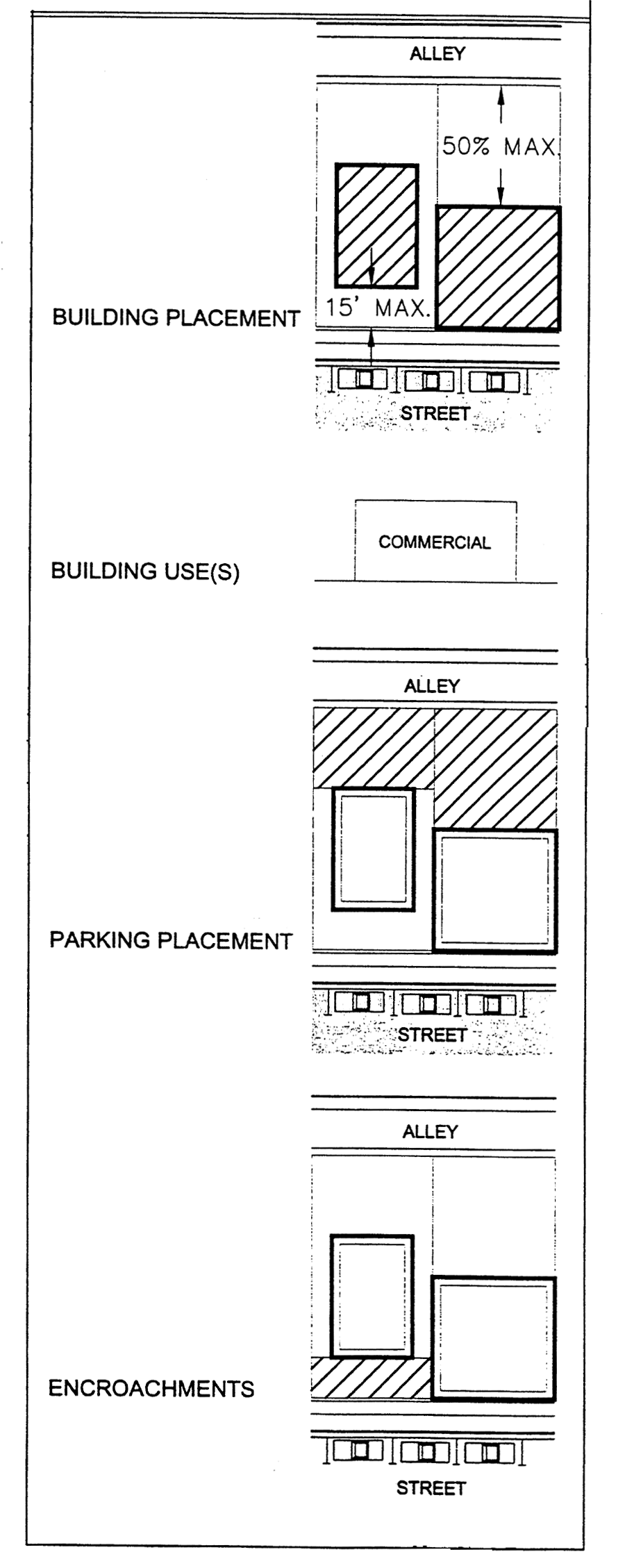
Sec. 105-573. - Type 12, Main Street business district building.
Type 12, Main Street business district building development standards are as follows:
General notes:
All dimensions are measured in feet unless otherwise indicated.
Permitted encroachments include awnings, steps, stoops, balconies, and arcades with an easement on public right-of-way.
Awnings may encroach in the right-of-way no more than five feet.
Balconies and roof overhangs may encroach on the right-of-way no more than five feet.
Shop fronts entries shall be recessed or set back from the front wall at least five feet and ten feet wide to accommodate a vestibule.
Where no building wall is present, a garden wall or fence is required along any side frontage adjacent to a street. Garden walls and fences shall be at least six feet in height.
All uncovered parking spaces shall be screened from view from public streets and private yards by fences, walls, and/or dense landscaping.
Trash containers and loading areas shall be located in the rear off-street parking areas and shall be screened from view.
Front yard fences shall be wrought iron or wooden picket painted white, not more than 42 inches in height. Brick or stone columns may be used.
Signs may project from the front building wall but shall not project more than four feet from the wall and may encroach in the right-of-way no more than four feet.
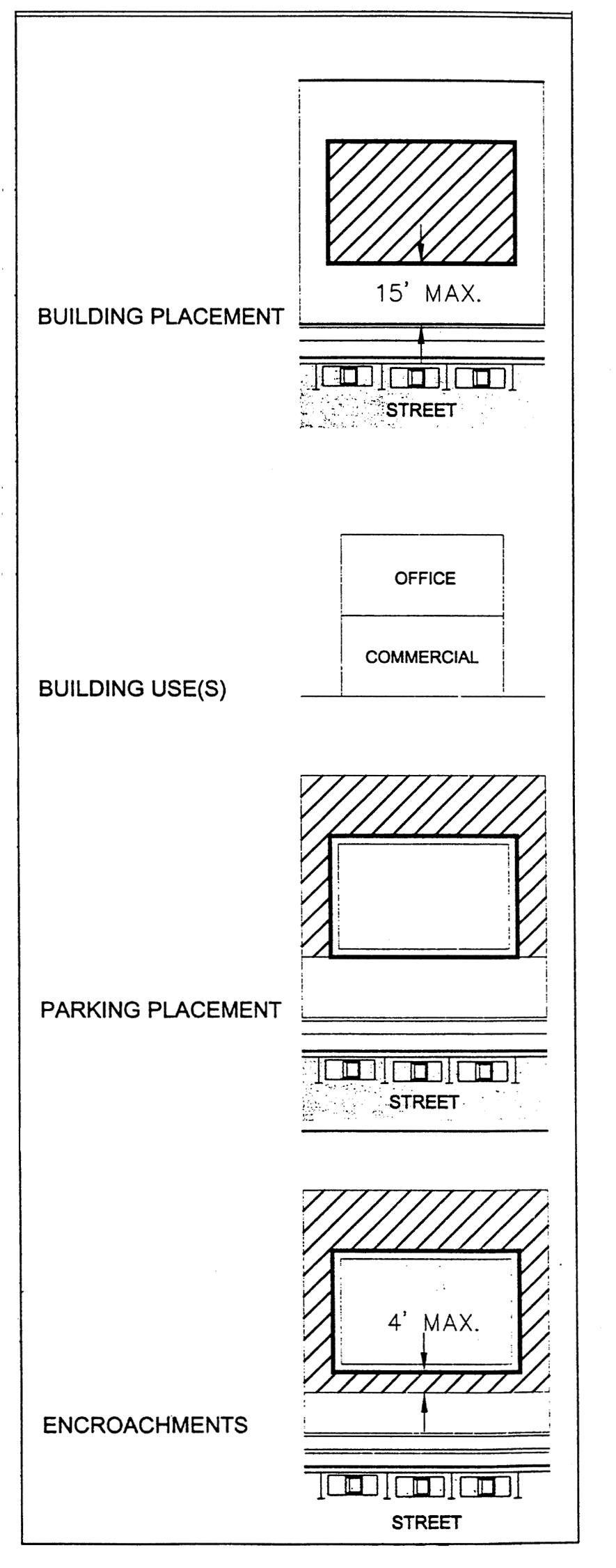
Sec. 105-574. - Type 13, highway business district building.
Type 13, highway business district building development standards are as follows:
General notes:
All dimensions are measured in feet unless otherwise indicated.
Permitted encroachments include awnings, steps, stoops, balconies, and arcades with an easement on public right-of-way.
Awnings may encroach in the right-of-way no more than five feet.
Balconies and roof overhangs may encroach on the right-of-way no more than five feet.
Shop front entries shall be recessed or set back from the front wall at least five feet and ten feet wide to accommodate a vestibule.
Where no building wall is present, a garden wall or fence is required along any side frontage adjacent to a street. Garden walls and fences shall be at least six feet in height.
All uncovered parking spaces shall be screened from view from public streets and private yards by fences, walls, and/or dense landscaping.
Trash containers and loading areas shall be located in the rear off-street parking areas and shall be screened from view.
Front yard fences shall be wrought iron or wooden picket painted white, not more than 42 inches in height. Brick or stone columns may be used.
Signs may project from the front building wall but shall not project more than four feet from the wall and may encroach in the right-of-way no more than four feet.
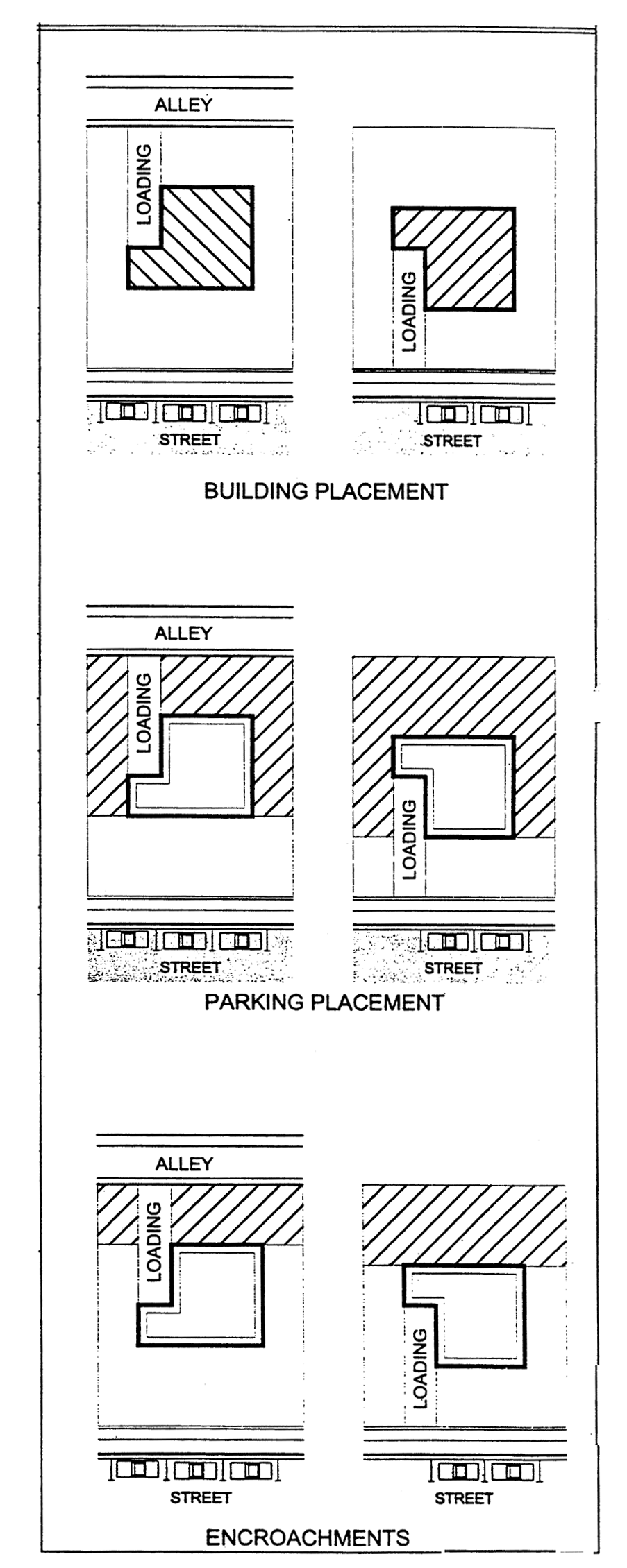
Sec. 105-575. - Type 14, industrial building.
Type 14, industrial building development standards are as follows:
General notes:
N/A = Not applicable.
All dimensions are measured in feet unless otherwise indicated.
Permitted encroachments include awnings, steps, stoops and balconies.
Sec. 105-591. - Purpose.
This division is established to create uniform landscape, screening and tree preservation standards for development of property in the village and review of plans therefor, in order to ensure that the village remains attractive, safe and comfortable. Landscaping required by this division shall be a condition to the issuance of a certificate of occupancy for any improvements built on a lot in the village. The landscape standards in this division are established to:
(1)
Promote, protect and preserve the general health and safety of the people of the community and, as part of the general welfare, ensure aesthetic compatibility among land uses within the community;
(2)
Conserve soil and reduce soil erosion, reduce stormwater runoff, provide oxygen regeneration to enhance air quality, and reduce the effects of urban heat islands;
(3)
Minimize the harmful or nuisance effects resulting from noise, dust, debris, motor exhaust, headlight glare, artificial light intrusions, objectionable sights or activities, or similar incompatible impacts conducted or created by adjoining or nearby land use;
(4)
Safeguard the environmental quality and aesthetic character of the community by limiting the removal and ensuring replacement of trees upon private property within the village;
(5)
Preserve, insofar as practical, existing vegetation and topographical features by limiting unnecessary clearing and modification of land, encouraging the retention of existing mature trees, and requiring the replacement of indigenous trees with approved species; and
(6)
Encourage the energy-efficient operation of land uses in the public interest.
Sec. 105-592. - Tree preservation and removal regulations.
(a)
Generally; exceptions. It shall be unlawful for any person to remove or cause the removal of any tree having a caliper of four inches or greater in the village without having first obtained approval from the village of a tree preservation and removal plan as described in this section. Nothing in this section shall apply to tree removal by an owner of a lot having a single-family, two-family or duplex dwelling located thereon.
(b)
Tree preservation and removal plan required; contents. A tree preservation and removal plan shall be required for any parcel of land involving the construction of any new building or structure or other site improvements, or the removal of a tree having a caliper of four inches or greater. All tree preservation and removal plans shall include or have attached thereto the following information:
(1)
A tree survey.
(2)
The location of those trees to be removed and preserved and the methods which are to be used to remove and preserve such trees during site development and/or tree removal procedures.
(3)
A written statement indicating the reason for removal of the trees. A report from a licensed state arborist may be requested by the zoning administrator if deemed appropriate.
(4)
A general description of the trees to be removed.
(5)
Details, specifications and/or technical information of materials or procedures to be used to preserve and protect trees.
(c)
General standards and criteria.
(1)
Every reasonable effort shall be made to retain existing trees on the tree survey through the integration of those trees into the site plan and landscape plan for a proposed development.
(2)
Grading and construction equipment shall be forbidden from encroaching within the dripline of a tree.
(3)
Crushed limestone hydrocarbons and other material detrimental to trees shall not be stored or dumped within the dripline of any tree or at any higher location where drainage toward the tree could conceivably effect the health of the tree.
(4)
Toxic chemicals, gasoline, oil and other injurious substances shall not be stored or allowed to seep, drain or empty within 100 feet of the dripline of protected trees.
(5)
Snow fencing shall be temporarily installed at the periphery of the tree's dripline.
(6)
Tree trunks and branches shall be protected when construction must occur within a tree dripline.
(7)
No grade changes shall be allowed under the dripline of any trees designated for preservation.
(8)
No ropes, signs, wires, unprotected electrical installations or other device or material shall be secured or fastened around or through a protected tree.
(9)
To improve the survival rate of trees, root pruning and/or thinning should be performed in accordance with the Arboricultural Specifications Manual.
(10)
If underground utility lines are proposed within five feet of the trunk of a tree, then augering of the utility line should be considered and may be required by the village.
(d)
Tree replacement required. Any tree intended to be removed or unintentionally removed or damaged during construction on the lot shall be replaced in the manner prescribed in this section.
(1)
If a tree is designated for removal during the construction process, such tree shall be replaced with new trees in accordance with the following schedule:
except that, when a tree designated for removal is one of the following species, each such tree shall be replaced with one replacement tree from the list of species provided in subsection (d)(4) of this section: Black Locust (Robinea psuedoacacia), Box Elder (Acer negundo), Buckthorn (Rhamnus cathartica), Chokecherry (Prunus virginiana), Cottonwood (Populus deltoides), Chinese Elm (Ulmus parvflora), Goldenchain Tree (Laburnum anagyroides), Laurel Willow (Salix pentandra), Mulberry (Morus spp.), Osage Orange (Maclura pomifera), Russian Olive (Elaeagnus angustifolia), Siberian Elm (Ulmus pumila), Tree of Heaven (Ailanthus altissima), and Weeping Willow (Salix baylonica).
(2)
If a tree designated for preservation is destroyed, damaged, or removed during the construction process, such tree shall be replaced with new trees in accordance with the following schedule:
(3)
All replacement trees shall have a minimum caliper of 2.5 inches.
(4)
Replacement trees shall be limited to the following species: American Beech, Ash, European Beech, Gingko, Hackberry, Horse Chestnut, Linden, Maidenhair Tree, Maple (excluding Silver Maple and other similar softwood species), Oak, Purple Leaf Beech, Thornless Honeylocust (cultivars), and Tulip Tree.
(5)
The landscape plan shall identify each replacement tree as a replacement tree and indicate its location, species, and size. No replacement trees shall be used to satisfy the requirements for tree planting in the public right-of-way or in parking lots.
(6)
Removal of trees designated for preservation shall be allowed only by amending the landscape plan.
(7)
Tree preservation and replacement required by this division shall be a condition to the issuance of a certificate of occupancy for any improvements constructed on a zoning lot in the village.
(8)
If it is impractical to plant the required number of replacement trees on the same zoning lot due to space limitations or the density of existing trees, the village shall require the owner to plant such trees at its discretion on other public property, excluding rights-of-way.
(e)
Guidelines for review of tree removal plan. The village shall approve removal of a tree if one or more of the following conditions is present:
(1)
It is necessary to remove a tree that poses a safety hazard to pedestrian or vehicular traffic or threatens to cause disruption of public safety.
(2)
It is necessary to remove a tree which poses a safety hazard to structures.
(3)
It is necessary to remove a tree which is diseased or has been weakened by age, storm, fire or other injury.
(4)
It is necessary to observe good forestry practice, i.e., the number of healthy trees a given parcel of land will support.
(f)
Tree removal permit. When tree removal is occasioned by any development or land use requiring the submission of a landscape plan, tree preservation and removal plan, site plan, or subdivision plan, the plan shall, upon approval by the village, constitute a tree removal permit.
(g)
Failure to comply. If, in the opinion of the zoning administrator, the necessary precautions as specified in the tree preservation and removal plan were not undertaken before or maintained during construction, the land development permit for the parcel shall not be issued or, if previously issued, shall be revoked until such time as these precautions have been satisfied.
Sec. 105-593. - Landscaping and screening regulations.
(a)
Generally. A landscape plan prepared in accordance with the standards set forth in this division shall be required for any multiple-family or nonresidential land development requiring site plan review described in article IV, division 2 of this chapter. Landscaping and screening required by this division shall be a condition to the issuance of a certificate of occupancy for any improvements built on a zoning lot in the village.
(b)
Landscape plan required. A landscape plan shall be completed by a landscape architect or a person capable of fulfilling all requirements set forth in this chapter. Applicants may elect to prepare a landscape plan in two phases: a preliminary landscape plan and a final plan. Requests for relief or revisions to these requirements of this chapter may be submitted to the zoning administrator for his consideration.
(c)
Contents of landscape plan.
(1)
Preliminary landscape plan. All preliminary landscape plans shall include or have attached thereto the following information:
a.
The name, address and phone number of the landscape architect or other person who prepared the plan, scale, north arrow, date of preparation, and identification of the plans as a preliminary landscape plan.
b.
The proposed location of all new plant materials.
c.
An indication of the character of suggested plant materials to be used, i.e., shade trees, ornamental trees, shrubbery, ground cover, etc.
d.
A tree preservation and removal plan.
e.
The location of existing natural site features, including, but not limited to, large boulders, rock outcroppings, wetlands and streams.
f.
The location and dimension of all existing and proposed buildings, parking lots and driveways, roadways and rights-of-way, sidewalks, bicycle paths, signs, fences, refuse disposal areas, freestanding electrical equipment, setbacks, easements, and other freestanding structures or features as determined by the zoning administrator.
g.
Existing and proposed contours, including proposed berms, at one-foot contour intervals.
(2)
Final landscape plan. All final landscape plans shall include or have attached thereto to the following information:
a.
The name, address and phone number of the landscape architect or other person who prepared the plan, scale, north arrow, date of preparation, and identification of the plan as a final landscape plan.
b.
The location of existing and proposed improvements, including, but not limited to, buildings, with entry and exit points identified; all utilities, lighting, walls and fences, and parking areas (with spaces delineated, including handicapped spaces and curbs); spot elevations and contours; existing and proposed berms; existing (four-inch caliper and larger with dripline) and proposed plant material; paved surfaces; sign locations; public rights-of-way and easements, including street widths; refuse disposal areas; property lines; and other exterior landscape amenities, such as bikepaths, plazas, architectural paving, flagpoles, foundations, benches, and bicycle racks.
c.
The planting schedule, listing botanical names, common names, caliper or height, and quantity.
d.
The proposed treatment of all ground surfaces (pea gravel, ground covers, sod, seed and/or prairie).
e.
Other drawings and information as required, such as an irrigation plan, if appropriate, grading and drainage plan, showing spot elevations and/or cross section, or methods to be used to protect plants and planted areas, e.g., curbs, ties, walls.
f.
Tree preservation and removal plan.
g.
Elevations, cross sections, samples and/or photographs to indicate texture of exposed surfaces, landscape material, scale, color of exposed surfaces, and planting in relation to buildings, if requested by the zoning administrator.
h.
Technical information, samples, details, and/or photographs of materials to be used for light standards, benches, fences, walls, signage, safety lighting, and other site details.
(d)
General design criteria.
(1)
Scale and nature of landscape materials. The scale and nature of landscape material shall be appropriate to the site and the structures thereon.
(2)
Selection of plant material.
a.
General standards. Planting materials used in conformance with the provisions of this division shall be:
1.
Of good quality and of a species normally grown in northeastern Illinois.
2.
Capable of withstanding the extremes of individual site microclimates.
3.
Selected for interest in its structure, texture, and color for its ultimate growth.
4.
Harmonious to the design, and of good appearance.
5.
In conformance with American Standard for nursery stock as approved by American National Standards Institute and issued as ANSI 2601.1986.
b.
Evergreens. Evergreens shall be incorporated into the landscape treatment of a site, particularly in those areas screening parking lots from dedicated public rights-of-way or property zoned for residential use.
c.
Minimum size. Minimum sizes for plant materials at time of installation for all landscape areas shall be as follows:
1.
Deciduous trees shall be a minimum caliper size of 2½ inches when installed. Evergreen trees shall be a minimum size of six feet in height when installed.
2.
Deciduous shrubs (other than dwarf varieties) shall be a minimum of three feet in height at time of installation if used as a perimeter screen planting, and 30 inches in height for all other installations. Dwarf varieties and plants normally measured by spread shall be a minimum of 24 inches in height/spread.
3.
Ground cover shall be so planted and spaced that complete coverage can be obtained within two years after the date of installation.
4.
Ornamental trees shall be used, especially in smaller planting areas, and shall have a minimum trunk size of two inches caliper, or be of a clump form at a minimum height of five feet.
d.
Prohibited trees. The following trees shall not be used to satisfy the requirements of this division: Silver Maple (except new hybrids), Box Elder, Red Mulberry, Osage Orange, Poplar (all species), Black Locust, Weeping Willow (except in large wet areas), Catalpa, Tree of Heaven, White Birch, Elm (except new hybrids, Russian Olive, Mountain Ash, and fruit trees.
(3)
Installation of plant materials. Plant materials of all types and species shall be installed in accordance with the minimum technical specifications of the Illinois Landscape Contractors Association, including the provisions for guarantee and replacement.
(4)
Maintenance of plant material. The owner of the premises shall be responsible for the maintenance, repair and replacement of all landscaping materials and barriers, including refuse disposal areas, walls, fences, and other amenities, as may be required by the provisions of this division. A means of irrigating plant material shall be provided. Installation by an automatic underground sprinkling system is recommended.
(5)
Planting beds. Planting beds shall be mulched in their entirety with shredded bark or other similar organic material. Lava rock or large diameter (1½-inch diameter or larger) bark chips (chunk bark) are not acceptable. Gravel and stone mulches are not permitted, unless specifically approved in writing by the village. Mulch beds at time of planting shall extend a minimum of two feet beyond the center of a shrub.
(6)
Walls and fences. Plant materials shall be placed intermittently against long expanses of building walls, fences and other barriers to create a softening effect. All wood fences proposed to be used to satisfy the requirements of this division shall be of red cedar, redwood, cypress, or other approved decay-resistant treated wood, at least six feet high, and of solid construction. Wood fences shall be not less than 75 percent opaque, with all supporting posts exposed to the lot interior. Stockade type fences are not permitted.
(7)
Detention/retention basins and ponds. Detention/retention basin and pond areas shall be planted. Such plantings shall include shade and ornamental trees, evergreens, shrubbery, hedges and/or other live planting materials. Plants must be able to tolerate wet conditions if planted within the basin.
(8)
Energy conservation.
a.
Deciduous trees, shrubs and vines should dominate the south and west sides of buildings and plaza areas to provide shade during the summer and limited shade during the winter.
b.
Evergreens and other plant materials should be concentrated on the north side of buildings in a manner that dissipates the effect of winter winds.
(9)
Berms. Earthen berms and existing topography shall, wherever practical, be incorporated into the landscape treatment of a site. Berms shall not exceed a maximum slope of four horizontal units to one vertical unit, except in parking islands, where the maximum slope shall not exceed two horizontal units to one vertical unit.
(10)
Topography. Where natural existing topographic patterns contribute to the beauty and utility of a development, they shall be preserved and developed. Modification of topography may be allowed where it contributes to the aesthetic quality of the site.
(11)
Protection of plant material and prevention of injury to persons. In locations where plant materials may be susceptible to injury or cause personal injury, appropriate curbs, tree guards, or other devices shall be provided.
(12)
Areas where plant material will not prosper. In areas where general planting will not prosper, other materials such as fences, walls and pavings of wood, brick, stone, and cobbles shall be used. Carefully selected plant material shall be combined with such materials where possible.
(13)
Exterior landscape lighting. Lighting standards and fixtures when used to enhance the building design and the adjoining landscape shall be of a size and design compatible with the building and adjacent areas. Lighting shall be restrained in design, and excessive brightness and brilliant colors shall be avoided. Electrical service shall be underground.
(14)
Amenities. In business, office and industrial districts, seating areas, paved areas, plant enclosures, benches, waste receptacles, lights, and other amenities shall be provided where appropriate.
(15)
Service yard screening. Service yards, loading docks and other places that tend to be unsightly shall be screened from view. Screening shall be equally effective at all times of the year.
a.
Trash dumpsters and other waste receptacles or equipment shall be screened on three sides with a solid wall at least six feet in height, and a solid single or double access gate on the fourth side.
b.
All utility equipment (meters, transformers, etc.) shall be provided with appropriate planting screens.
c.
Except when located across a street from residential zoned property, all garage doors and loading areas on nonresidential property shall be concealed from view (at grade) from adjoining residential zoned property.
d.
All outdoor storage facilities for raw materials and finished products within 500 feet of a residence district shall be effectively screened and enclosed by a solid wall or fence at least eight feet in height. If materials to be stored outdoors are in excess of eight feet in height, then landscape screening shall be provided in addition to the fence or wall installed along the outside perimeter of the fence or wall, equal or exceeding the height of the materials to be stored outdoors.
(16)
Innovative landscaping. Innovative landscaping treatments are encouraged and shall be considered as a positive attribute in connection with any request for a variation from the requirements of this division.
(17)
Intersection visibility. Landscaping must be designed and installed to minimize potential obstruction of critical sight lines. Landscape planting shall be so designed as to avoid obstruction of a motorist's vision at the intersection of parking aisles, driveways, or public or private streets and alleys. Unobstructed visibility between 2.5 feet and eight feet above the height of the pavement must be maintained at all intersections. To maintain this visibility, no berms, shrubs or other landscape material which will reach a mature height greater than 2.5 feet shall be permitted within a sight triangle. Trees are allowed in sight triangles provided the lowest branching begins not less than eight feet above the pavement.
(18)
Edging. Edging is recommended to separate grass areas from shrubs, ground cover and mulch and shall be a good quality steel, plastic, or weather resistant (redwood, cedar) or treated wood secured with stakes.
(19)
Artificial plants. No artificial plants of any type shall be used to satisfy any requirements of this article.
(20)
Ground cover. All drainage swales and slopes having a slope of three vertical units to one horizontal unit or greater shall be sodded. All other ground areas not covered by buildings, parking, sidewalks or other impervious surfaces, or occupied by planting beds, shall be graded smooth with a minimum of six inches of black dirt after compacting and removing stumps, rocks and other debris, and shall be seeded or sodded to prevent soil erosion and sedimentation of public drainage systems, creeks, streams, rivers and wetlands.
(21)
Water conservation. Wherever possible, landscape designs and plant material which is indigenous and/or drought tolerant should be used to reduce the need for irrigation.
(22)
Flower beds. Flower beds are encouraged and shall be planted in masses in acceptable areas to create color, texture and visual interest.
(e)
Additional right-of-way landscaping requirements. In addition to the general design criteria prescribed in subsection (d) of this section, the following requirements shall also apply to landscaping in rights-of-way:
(1)
Where a zoning lot abuts a dedicated public right-of-way, trees shall be provided in accordance with the provisions of this division.
(2)
Street trees shall be planted in all parkways having a width of five feet or more. The village shall have the discretion to require trees be planted outside of the right-of-way if the parkway is less than five feet wide or overhead or buried utilities may conflict with the growth of street trees. Street trees shall be planted not more than 40 feet apart whenever possible, and shall have a minimum trunk diameter of 2½ inches measured six inches above ground level.
(f)
Additional parking lot landscaping requirements. In addition to the general design criteria prescribed in subsection (d) of this section, the following requirements shall also apply to landscaping parking lots:
(1)
Applicability. All parking lots designed for 20 or more parking spaces shall be landscaped in accordance with the provisions of this division.
(2)
Interior parking lot landscaping. To define circulation within a parking lot and to visually and physically break up long rows of parking spaces, landscape islands are required to be provided within parking lot areas, as follows:
a.
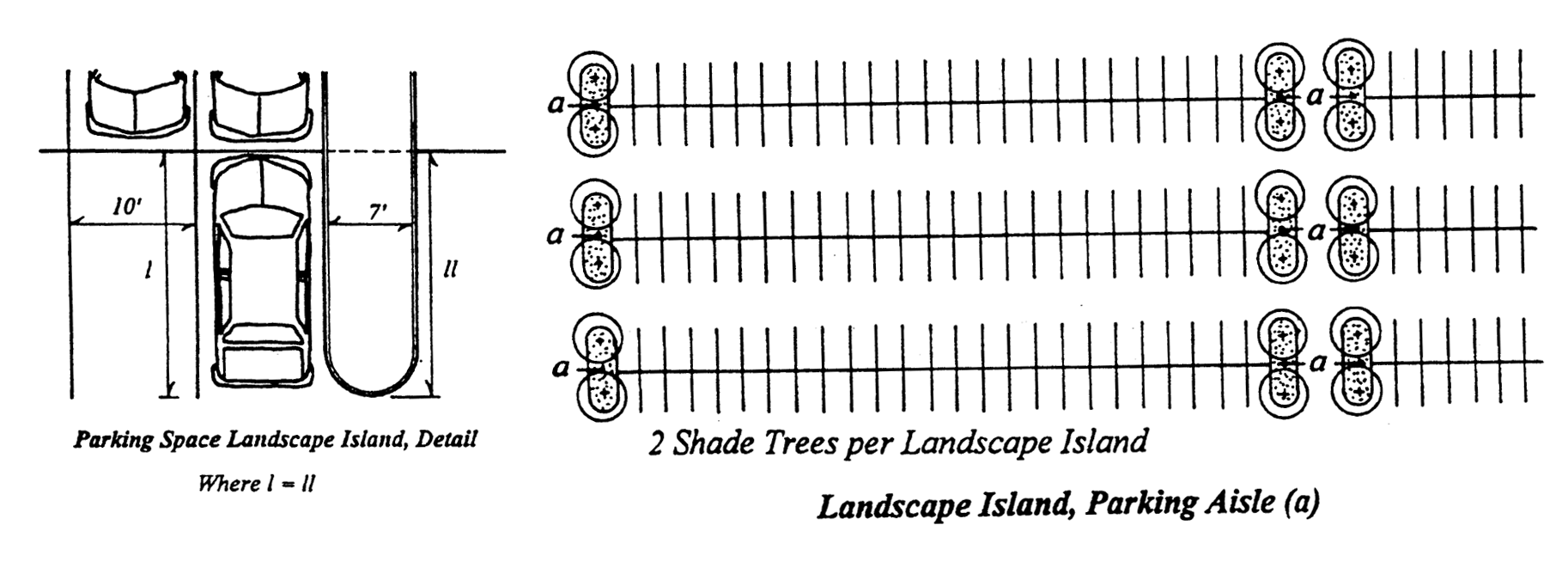
Parking aisle landscape islands. A landscaped island shall be provided at the end of each parking row. The island shall be protected by a continuous concrete barrier curb and shall have a minimum width of seven feet, measured back-of-curb to back-of-curb, and shall have a depth equal to the adjoining parking space. Each parking aisle landscape island shall contain two shade trees.
b.
Parking space landscape islands. In addition to parking aisle landscape islands, one or more of the following alternatives shall be used to divide each row of parking having 20 spaces or more:
1.
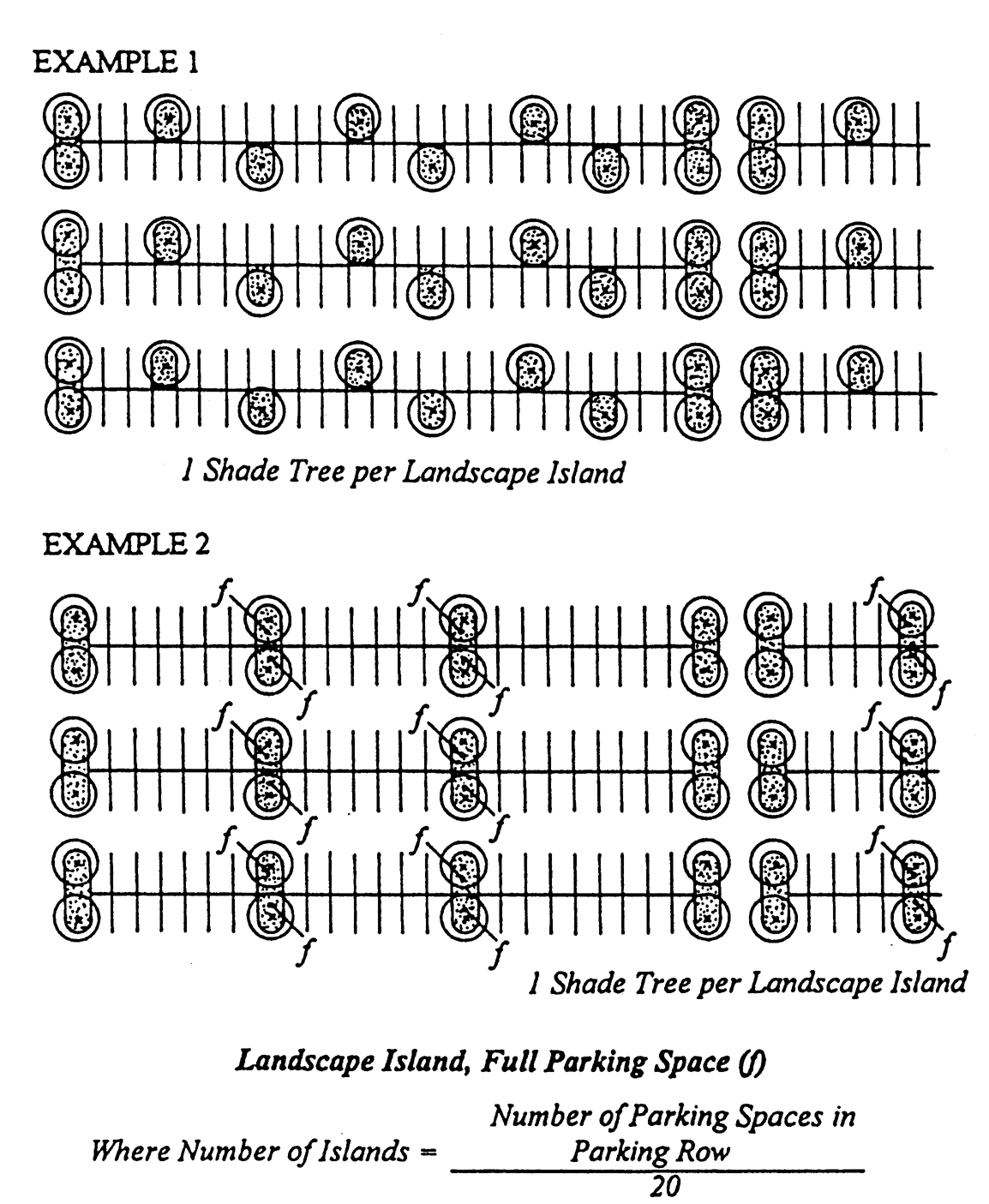
Full parking space landscape island. One landscape island protected by a continuous concrete barrier curb and having a minimum width of seven feet, measured back-of-curb to back-of-curb, and a depth equal to the adjoining parking space, may be provided for each 20 parking spaces in the parking row. Such landscape islands shall be dispersed throughout the parking row. Each such landscape island shall contain one shade tree.
2.
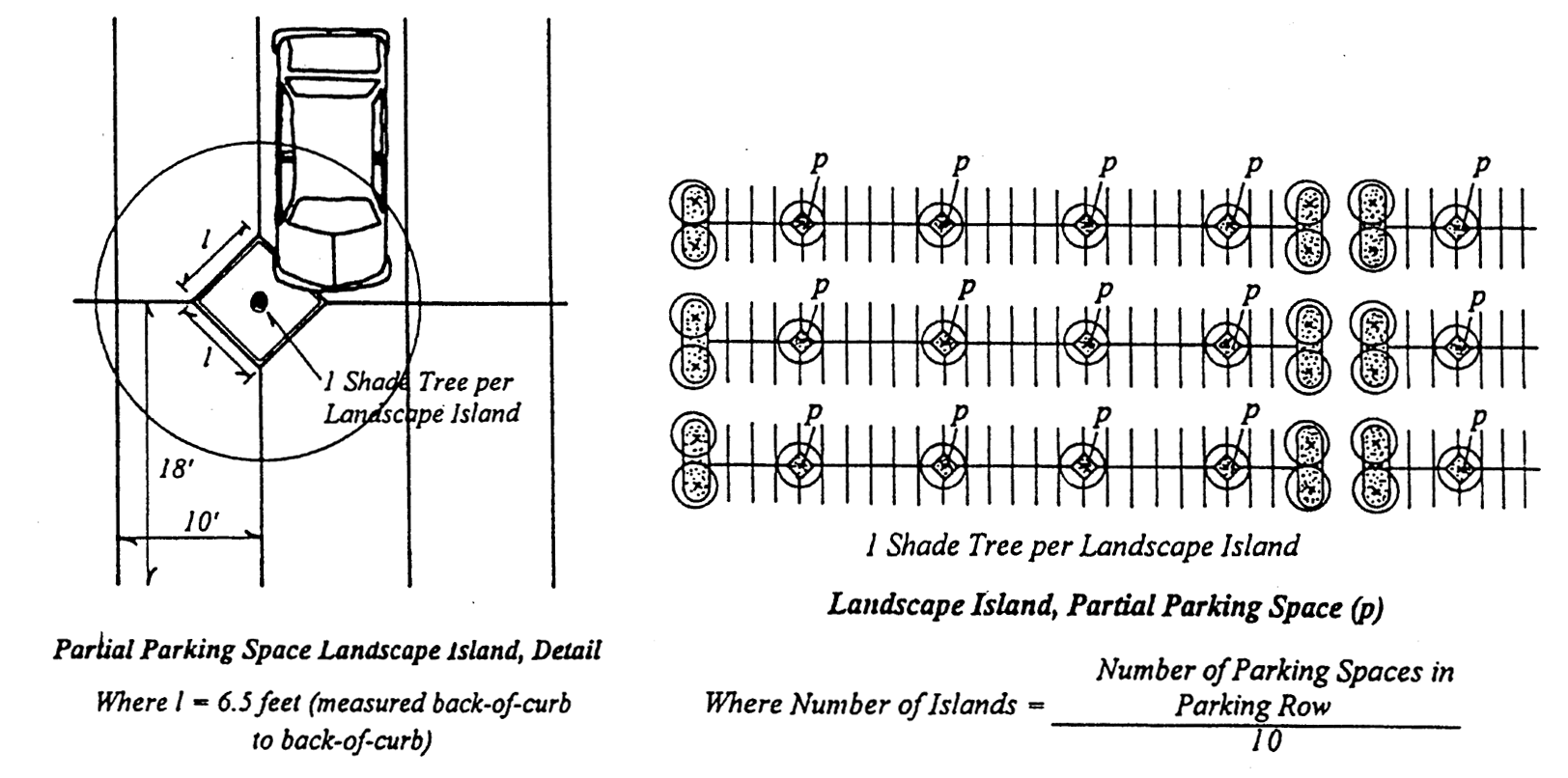
Partial parking space landscape island. One landscape island positioned at the front corner of a parking space, protected by a continuous concrete barrier curb and having minimum dimensions of 6.5 feet square, measured back-of-curb to back-of-curb, may be provided for each ten parking spaces in the parking row. Such landscape islands shall be dispersed throughout the parking row and shall not be used in parking rows along the perimeter of a parking lot. Each such landscape island shall contain one shade tree.
3.
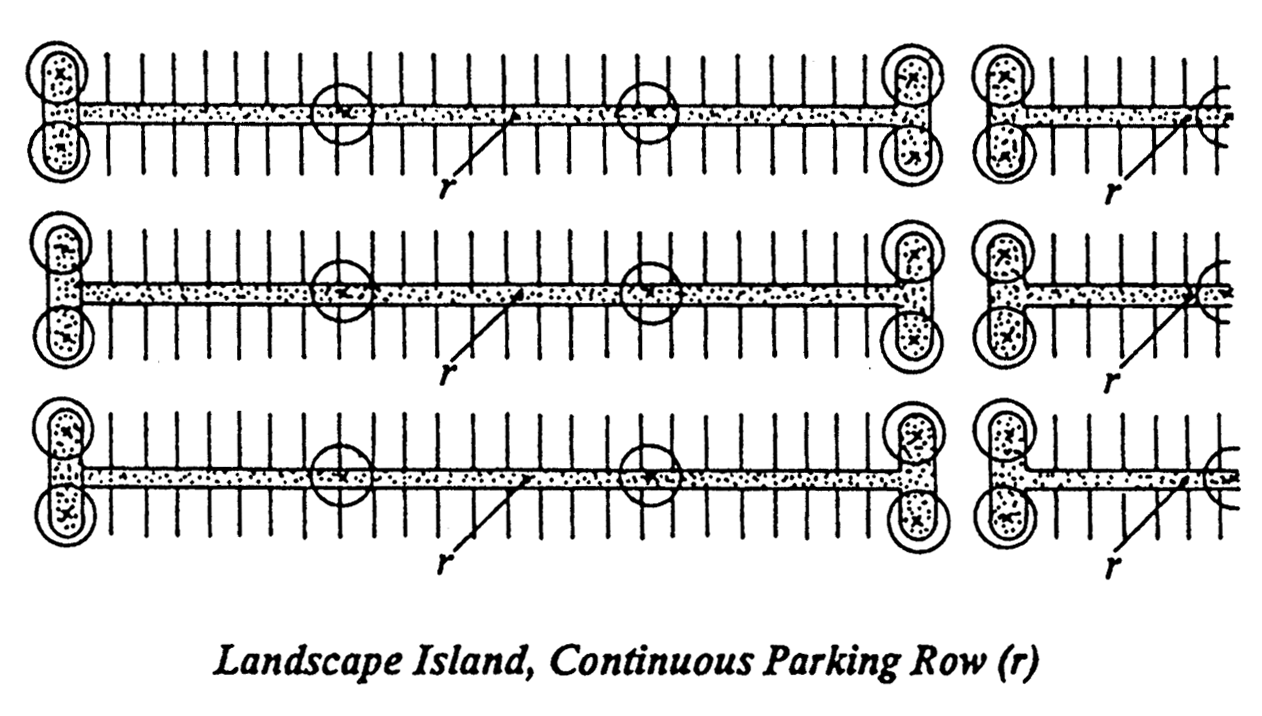
Continuous parking row landscape island. A continuous landscape island protected by a continuous concrete barrier curb and having a minimum depth of seven feet, measured back-of-curb to back-of-curb, may be provided between parking rows. Such landscape island shall not be used in parking rows along the perimeter of a parking lot. Each such landscape island shall contain one shade tree for each 20 parking spaces in the parking row.
c.
Additional landscaping standards. In addition to the shade trees required in this section, each landscape island required in this section shall be landscaped with an appropriate number and selection of shrubs, flowers, ground covers, sod and mulch. Shrubs planted in a parking lot landscape island shall not exceed a mature height of 30 inches above the adjoining pavement. No tree planted in a parking lot landscape island shall have branches maintained at a height less than six feet above the adjoining pavement.
(3)
Parking lot perimeter landscaping.
a.
Front and corner side yards.
1.
Where a parking lot is located in or adjacent to a front or corner side yard in a residential district, continuous landscaping shall be provided across not less than 100 percent of the parking lot frontage to a minimum height of three feet. Such landscaping shall consist of any combination of berms, shade and ornamental trees, evergreens, shrubbery, hedges, and/or other live planting material.
2.
Where a parking lot is located in or adjacent to a front or corner side yard not in a residential district, continuous landscaping shall be provided across not less than 60 percent of the parking lot frontage to a minimum height of three feet. Such landscaping shall consist of any combination of berms, shade and ornamental trees, evergreens, shrubbery, hedges, and/or other live planting material. Plantings may be placed in clusters, containing at minimum seven evergreens and/or shrubs per cluster, spaced at intervals of approximately 35 feet along the frontage of the parking lot. However, when a continuous row of shrubs or hedges is chosen, the entire parking lot frontage shall be screened.
b.
Rear and side yards.
1.
Where a parking lot is located in a yard adjacent to a residential zoning district, landscaping shall be provided as follows:
i.
Screening between the parking lot and the residential property line shall be a minimum of six feet in height.
ii.
Shade trees shall be provided at the equivalent of one for each 50 lineal feet, or fraction thereof, of parking lot frontage and shall not be planted more than 40 feet apart.
iii.
Other planting material, including ornamental trees, evergreens, shrubbery, hedges, and/or other live planting materials, shall be provided in a continuous row covering 100 percent of the frontage of the parking lot adjacent to the residential lot.
iv.
Except where occupied by planting beds, all side and rear yard perimeter landscaping area shall be sodded or seeded.
2.
Where a parking lot is located in a yard adjacent to nonresidential property, landscaping shall be provided across not less than 50 percent of that portion of the parking lot abutting the property line to a minimum height of three feet. Such landscaping shall consist of any combination of berms, shade and ornamental trees, evergreens, shrubbery, hedges, and/or other live planting materials. Plantings may be placed in clusters, containing not less than seven shrubs per cluster, spaced at intervals of approximately 35 feet along the property line.
(g)
Additional foundation landscaping requirements. In addition to the general design criteria prescribed in subsection (d) of this section, the following requirements shall also apply to foundation landscaping:
(1)
Perimeter landscaping. All nonresidential and multiple-family development shall provide perimeter landscaping as prescribed in this section. Parking lots located on the perimeter of a lot shall comply with the requirements of subsection (f) of this section.
(2)
Width. A landscaping area not less than ten feet in width shall be located around the perimeter of all buildings, except where impractical, i.e., loading dock areas, entryways, etc.
(3)
Coverage. Required foundation landscaping areas shall remain open and free of all paving except where walks to buildings and other similar paving is required.
(4)
Landscaping materials. Foundation landscaping shall consist of shade and ornamental trees, evergreens, shrubbery, hedges, and/or other live planting materials. Particular attention shall be paid toward screening mechanical equipment, bicycle parking areas, and loading docks; softening large expanses of building walls; and accenting entrances and architectural features of the building.
(h)
Additional perimeter landscaping requirements. In addition to the general design criteria prescribed in subsection (d) of this section, the following requirements shall also apply to foundation landscaping:
(1)
Applicability. All nonresidential and multiple-family development shall provide perimeter landscaping as prescribed in this division.
(2)
Nonresidential property abutting nonresidential property. Where nonresidential property abuts property in a business, office or industrial district, landscaping shall be provided as follows:
a.
Shade trees shall be provided at the equivalent of one for each 75 feet, or fraction thereof, of frontage along the abutting property line. Such trees shall be planted no more than 40 feet apart and may be clustered or spaced linearly as determined appropriate.
b.
Other landscaping materials, including berms, ornamental trees, evergreens, shrubbery, hedges, and/or other live planting materials, shall be provided at appropriate locations along the abutting property line.
(3)
Nonresidential property abutting residential property. Where nonresidential property abuts property in a residential district, landscaping shall be provided as follows:
a.
A solid screen six feet in height shall be provided along the entire length of the abutting property line. Such screen shall consist of a solid wood fence, berms, trees, evergreens, shrubbery, and/or other live planting materials necessary to provide 100 percent coverage.
b.
Shade trees shall be provided at the equivalent of one for each 75 feet, or fraction thereof, of frontage along the abutting property line. Such trees shall not be planted more than 40 feet apart and may be clustered or spaced linearly as determined appropriate.
(4)
Multiple-family residential property. Where a multiple-family residential use abuts property in any zoning district, landscaping shall be provided as follows:
a.
Shade trees shall be provided at the equivalent of not less than one for each 75 feet, or fraction thereof, of frontage along the abutting property line. Such trees shall not be planted more than 40 feet apart and may be clustered or spaced linearly as appropriate.
b.
Other landscaping materials, including berms, if possible, ornamental trees, evergreens, shrubbery, hedges, and/or other live planting materials shall be provided at intermittent locations across 50 percent of the abutting property line. Shrubs shall be placed in clusters containing at least seven per cluster, spaced at intervals of approximately 35 feet along the abutting property line.
Sec. 105-594. - Administration.
(a)
Variations. The village recognizes that, because of the wide variety of types of developments and the relationships between them, some flexibility in applying the standards set forth in sections 105-592 and 105-593 are appropriate as long as the intent of specified requirements are met. The zoning administrator may authorize deviations of not more than 20 percent from any specific requirement set forth in sections 105-592 and 105-593. Whenever the village allows or requires deviation from the requirements set forth in this division, it shall enter on the face of the landscape plan the reasons for allowing or requiring deviation from the requirements of this division.
(b)
Certificate of occupancy. All required landscaping shall be installed prior to the issuance of a certificate of occupancy. If weather conditions or other circumstances beyond the developer's control prevent installation of all or portions of the landscape materials and all other requirements for the issuance of a certificate of occupancy have been met, a letter of credit or a performance guarantee approved by the village attorney to ensure completion of approved landscaping shall be filed with the zoning administrator. The amount of the performance guarantee and the required completion data shall be recommended by the zoning administrator based on current costs set by the village. If such a letter of credit or performance guarantee has already been submitted for the proposed landscape improvements, the village may permit the developer to extend the performance guarantee for an additional specified period of time.
Sec. 105-595. - Guidelines for approval of landscape plans.
A landscape plan shall be approved if the following conditions are satisfied:
(1)
Shrubs, flowers, berms and ground cover are used appropriately to enhance the overall appearance and function of the site or open spaces on the site.
(2)
The planting of shade and ornamental and evergreen trees is used to define and enhance spaces on the site.
(3)
Planting material is used to effectively screen adjacent dwelling units, service areas, and parking areas.
(4)
Planting material is used to contribute to water conservation and energy efficiency.
(5)
Planting material of seasonal color, texture, size and form is used to create seasonal and visual interest and appeal in the community.
(6)
The composition, number, location, and species of landscape material, berms, fences and other features, and supporting documentation, are provided as required by this division.
Sec. 105-621. - Purpose.
The purpose of this division is to alleviate or prevent the congestion of the public streets and to promote the safety and welfare of the public by establishing minimum requirements for the off-street parking and loading and unloading of motor vehicles in accordance with the use to which property is put.
Sec. 105-622. - Applicability.
The off-street parking and loading provisions of this chapter shall apply as follows:
(1)
For all buildings and structures erected and all uses of land established after the effective date of the ordinance enacting this chapter, accessory parking and loading facilities shall be provided as required by the regulations of the district in which buildings or uses are located. However, where a permit has been issued prior to the effective date of the ordinance enacting this chapter, and provided that construction is begun within one year of such effective date, and diligently prosecuted to completion, parking and loading facilities as required in this division need not be provided.
(2)
When the intensity of use of any building, structure or premises shall be increased through the addition of dwelling units, gross floor area, seating capacity or other units of measurement specified in this division for required parking or loading facilities, parking and loading facilities as required in this division shall be provided for such increase in intensity of use.
(3)
However, no building or structure lawfully erected or use lawfully established prior to the effective date of the ordinance enacting this chapter shall be required to provide such additional parking or loading facilities unless and until the aggregate increase in units of measurement shall equal not less than 15 percent of the units of measurement existing upon the effective date of the ordinance enacting this chapter, in which event parking or loading facilities as required in this division shall be provided for the total increase.
(4)
Whenever the existing use of a building or structure shall be changed hereafter to a new use, parking and loading facilities shall be provided as required for such new use. However, if the building or structure was erected prior to the effective date of the ordinance enacting this chapter, additional parking or loading facilities shall be required only in the amount by which the requirements for the new use would exceed those for the existing use if the latter were subject to the parking and loading provisions of this chapter.
Sec. 105-623. - General standards.
(a)
Existing parking and loading facilities. Accessory off-street parking or loading facilities which are located on the same lot as the building or use served and which were in existence on the effective date of the ordinance enacting this chapter or were provided voluntarily after such effective date shall not hereafter be reduced below, or, if already less than, shall not further be reduced below, the requirements of this chapter for a similar new building or use.
(b)
Permissive parking and loading facilities. Nothing in this division shall be deemed to prevent the voluntary establishment of off-street parking or loading facilities to serve any existing use of land or buildings provided that all regulations in this chapter governing the location, design, improvement and operation of such facilities are adhered to.
(c)
Damage or destruction. For any conforming or legally nonconforming building or use which is in existence on the effective date of the ordinance enacting this chapter, which subsequent thereto is damaged or destroyed by fire, collapse, explosion or other cause, and which is reconstructed, reestablished or repaired, off-street parking or loading facilities equivalent to any maintained at the time of such damage or destruction shall be restored or continued in operation, except that, when such damage or destruction exceeds more than 50 percent of the value of the building or use, sufficient off-street parking or loading facilities shall be provided as required by this chapter for the equivalent new use or construction. However, in no case shall it be necessary to restore or maintain parking or loading facilities in excess of those required by this chapter for equivalent new uses or construction.
(d)
Computation of required off-street parking spaces and loading berths. When determination of the number of off-street parking spaces and loading berths required by this division results in a requirement of a fractional space, any fraction of one-half or less may be disregarded, while a fraction in excess of one-half shall be counted as one parking space or loading berth.
(e)
Yards. Off-street parking spaces and loading berths and access thereto in industrial or commercial districts, or for nonresidential uses in residential districts, may be located in required rear, side or transition yards, except no parking spaces or loading berths may be located within 20 feet of adjacent residential districts. Off-street parking spaces in any zoning district shall not be located within ten feet of a front or corner side lot line.
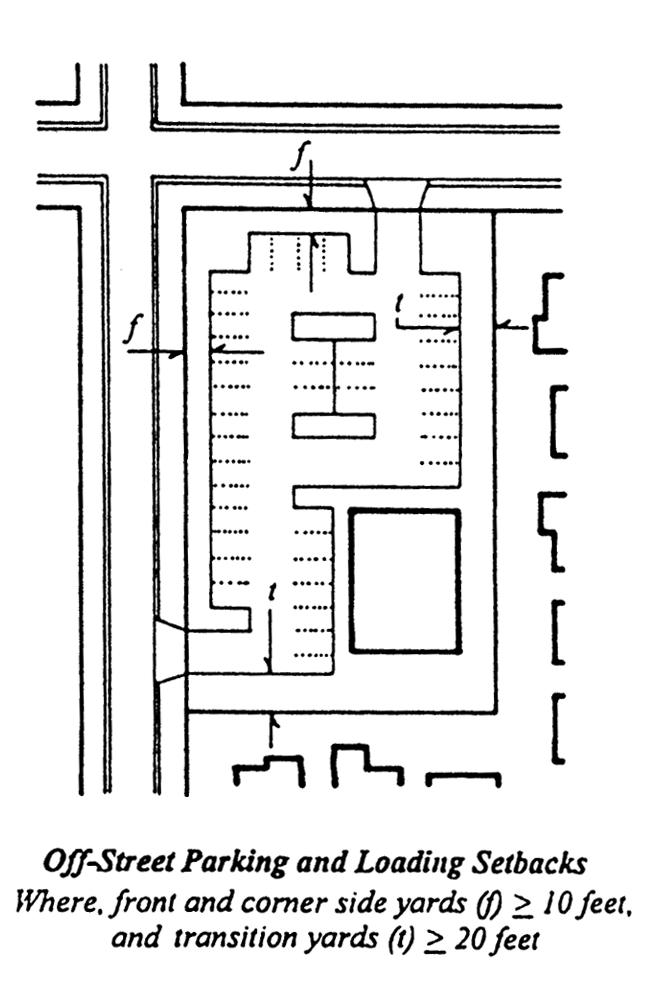
(f)
Design and maintenance.
(1)
Open and enclosed parking spaces and loading berths. Accessory parking spaces and loading berths may be open to the sky or enclosed in a building.
(2)
Screening and landscaping. All open loading areas and all parking areas providing space for five or more vehicles shall be effectively screened in accordance with the landscaping requirements in article VI, division 6 of this chapter.
(3)
Illumination. Lighting used to illuminate off-street parking and loading areas shall be directed away from all adjacent property and roadways.
(4)
Signs. Signs for the purpose of assigning parking spaces and loading areas or giving directions thereto may be placed in parking and loading areas.
(5)
Repair and service. No motor vehicle repair work of any kind shall be permitted in conjunction with accessory open off-street parking or loading facilities in any district.
(6)
Gasoline and oil sales. The sale of gasoline and motor oil in conjunction with accessory off-street parking or loading facilities shall not be permitted in any district.
(7)
Curbing. The perimeter of all loading areas and parking areas providing loading berths for one or more vehicles or parking space for five or more vehicles shall provide vehicular barriers around the perimeter of the loading area and parking area. The vehicular barriers of such loading and parking areas shall be continuous concrete barrier curbing, minimum six inches by 18 inches.
(8)
Striping. The pavement surface of off-street parking and loading areas shall be striped to define each loading berth and parking space. Striping shall be a minimum of four inches in width for the length of each space and shall be painted white or yellow. All areas designated as fire lanes and/or no parking areas shall be painted yellow.
(9)
Circulation and access. Parking lot driveways on opposite sides of an arterial or collector street shall be either aligned or offset by no less than 150 feet between the centerlines of each opposing driveway. Parking aisles throughout the parking lot shall align as closely as practical in order to create four-way intersections. Shared driveways and access easements between adjoining lots shall be encouraged to reduce the number of parking lot driveways along public streets.
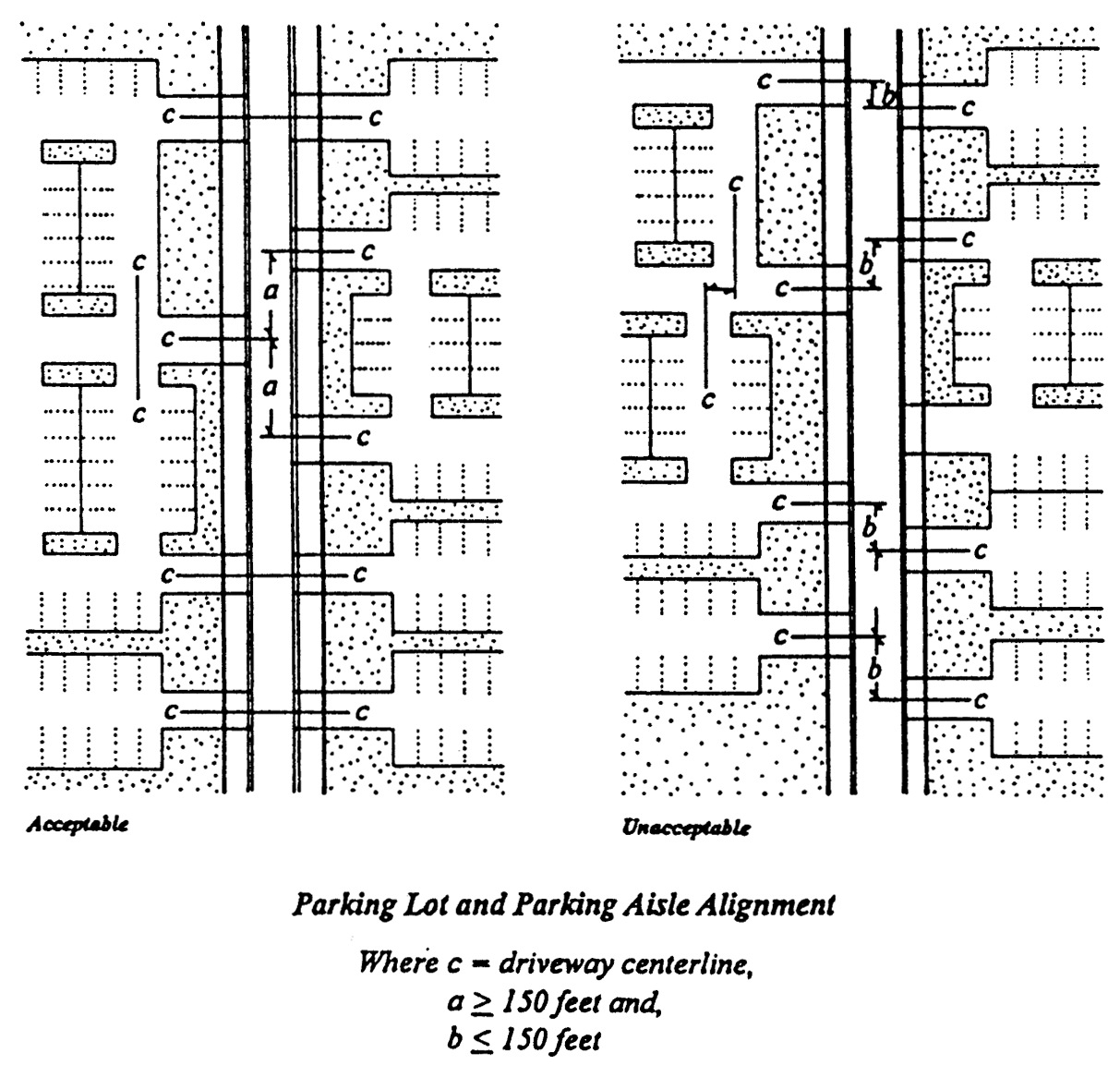
(g)
Submission of landscape plan. Any application for an improvement location permit, or certificate of occupancy where no permit is required, shall include therewith a land plan drawn to scale and fully dimensioned showing any parking or loading facilities, lighting, landscaping, signs and other improvements accessory thereto provided in compliance with this chapter.
Sec. 105-624. - Additional standards and requirements for parking facilities.
In addition to the standards and requirements in section 105-623, accessory off-street parking facilities shall conform with the following:
(1)
Control of off-site parking facilities. When required parking facilities are provided off-site, that is, on land other than the zoning lot on which the building or use served by such off-site facilities is located, they shall be and remain in the same possession or ownership as the zoning lot occupied by the building or use which the off-street parking facilities serve until and unless the plan commission has reviewed the plans and heard the applicant and made findings that the common ownership or possession of the zoning lot and the site of the parking facilities is reasonably certain to continue and that the off-site parking facilities will be maintained at all times during the life of the proposed use of the building.
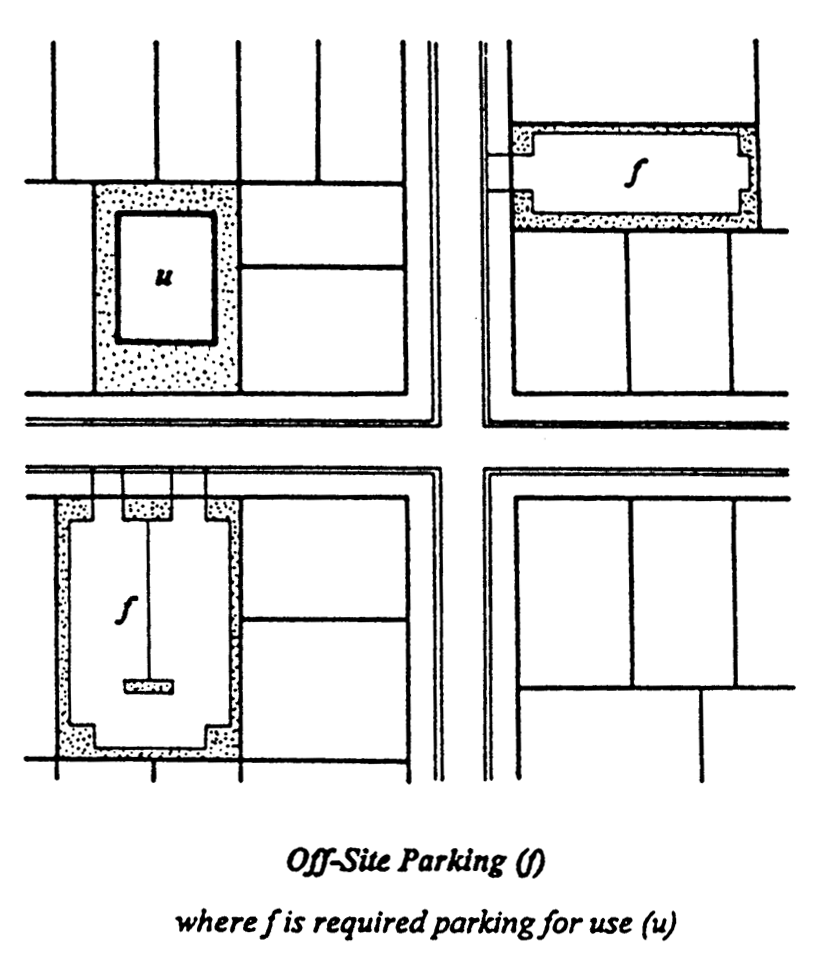
(2)
Use of parking facilities accessory to residential uses. Off-street parking facilities accessory to residential uses and developed in any residential district in accordance with the requirements of this section shall be used solely for the parking of passenger automobiles owned by occupants of the dwellings to which such facilities are accessory or by guests of the occupants. Required parking facilities accessory to residential structures shall not be used for the storage of commercial vehicles or the parking of automobiles belonging to employees, owners, tenants, visitors, or customers of business, office or manufacturing establishments. For the purpose of this subsection, storage shall mean a vehicle parked on the zoning lot for more than 48 hours in any 72-hour period.
(3)
Design and maintenance.
a.
Construction and surfacing. Except as provided otherwise in this chapter, the construction and design of off-street parking facilities shall be reviewed by the village engineer to determine that:
1.
Every parking space, including access thereto, shall have an all-weather dust-free surface and shall be so graded and drained as to dispose of surface water accumulation by means of a positive stormwater drainage system connected to a public drainageway.
2.
Parking areas shall be constructed in accordance with a minimum structural number of 2.5 and a minimum surface slope of one percent, provided that no parking area shall have less than 2.5 inches of bituminous surface course.
3.
Every driveway approach shall comply with the following standards and those set forth in section 5.09 of Appendix A to this Code. For the purpose of this section, a driveway approach shall mean that portion of a driveway located in the right-of-way of a street.
i.
For residential uses: 2.5 inches of bituminous on eight inches of compacted crushed gravel or crushed stone.
ii.
For nonresidential uses: 2.5 inches of bituminous on ten inches of compacted crushed gravel or crushed stone.
iii.
For sidewalks at driveway crossings: seven inches of concrete with mesh on seven inches of compacted crushed gravel or crushed stone.
Parking spaces and the access thereto for individual single-family, duplex, two-family, and townhouse dwellings shall not require review by the village engineer, but shall be constructed of 2.5 inches of bituminous surface over ten inches of gravel or crushed stone or six inches of concrete with a mesh grid over four inches of gravel or crushed stone and be graded so as to dispose of surface water accumulation by means of positive stormwater drainage.
b.
Size. Except for parallel parking spaces and handicap parking spaces, required off-street parking spaces shall be 180 square feet in area and shall be no less than 18 feet long with a vertical clearance of seven feet, all exclusive of access drives, aisles, ramps, columns, office or work space; provided, however, that in measuring the length of a parking space the area safely occupied by a vehicle beyond a curb stop, whether paved or unpaved, shall be included. Each off-street parking space parallel to the parking aisle or driveway shall be no less than nine feet wide and 23 feet in length.
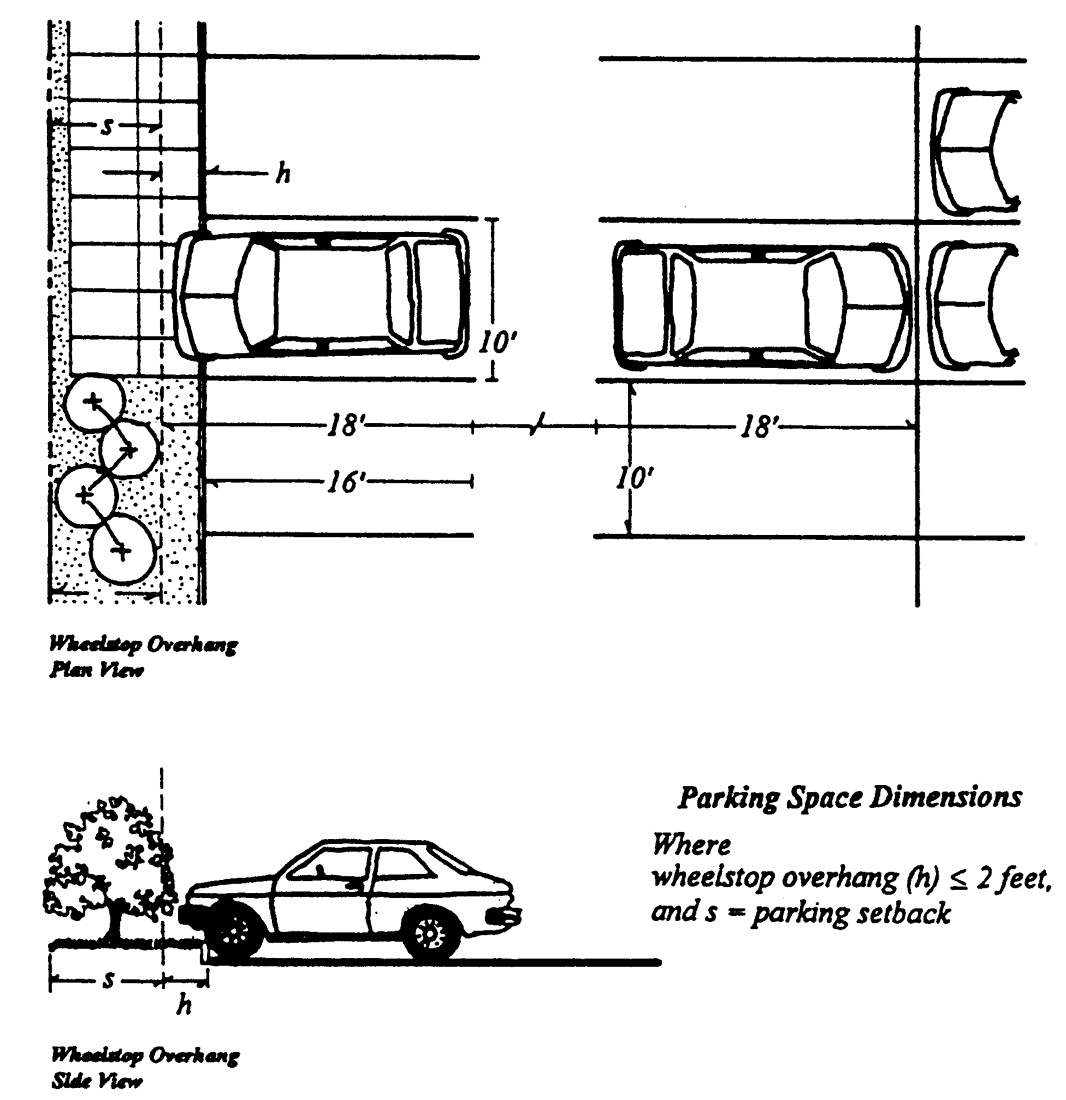
c.
Access and on-site circulation. Off-street parking areas shall be designed so as to require egress from the zoning lot to the street or alley by forward motion of the vehicle.
1.
Aisles. Each required off-street parking space shall open directly upon an aisle or driveway of such width and design as to provide safe and efficient means of vehicular access to such parking space. Aisle widths shall not be less than the following: 24 feet for any aisle designed for two-way traffic, 24 feet for each perpendicular parking space, 18 feet for each parking space on a 60-degree angle to the aisle, 13 feet for each parallel parking space or parking space on a 45-degree or 30-degree angle to the aisle, and 12 feet for each parallel parking space.
2.
Parking modules. A parking module shall mean a row of parking spaces, a parking aisle, and another row of parking spaces. Parking module widths shall not be less than the following: 61 feet for perpendicular parking spaces, 60 feet for parking spaces on a 60-degree angle to the aisle, 53 feet for parking spaces on a 45-degree angle from the aisle, 49 feet for parking spaces on a 30-degree angle from the aisle, and 30 feet for parallel parking modules.
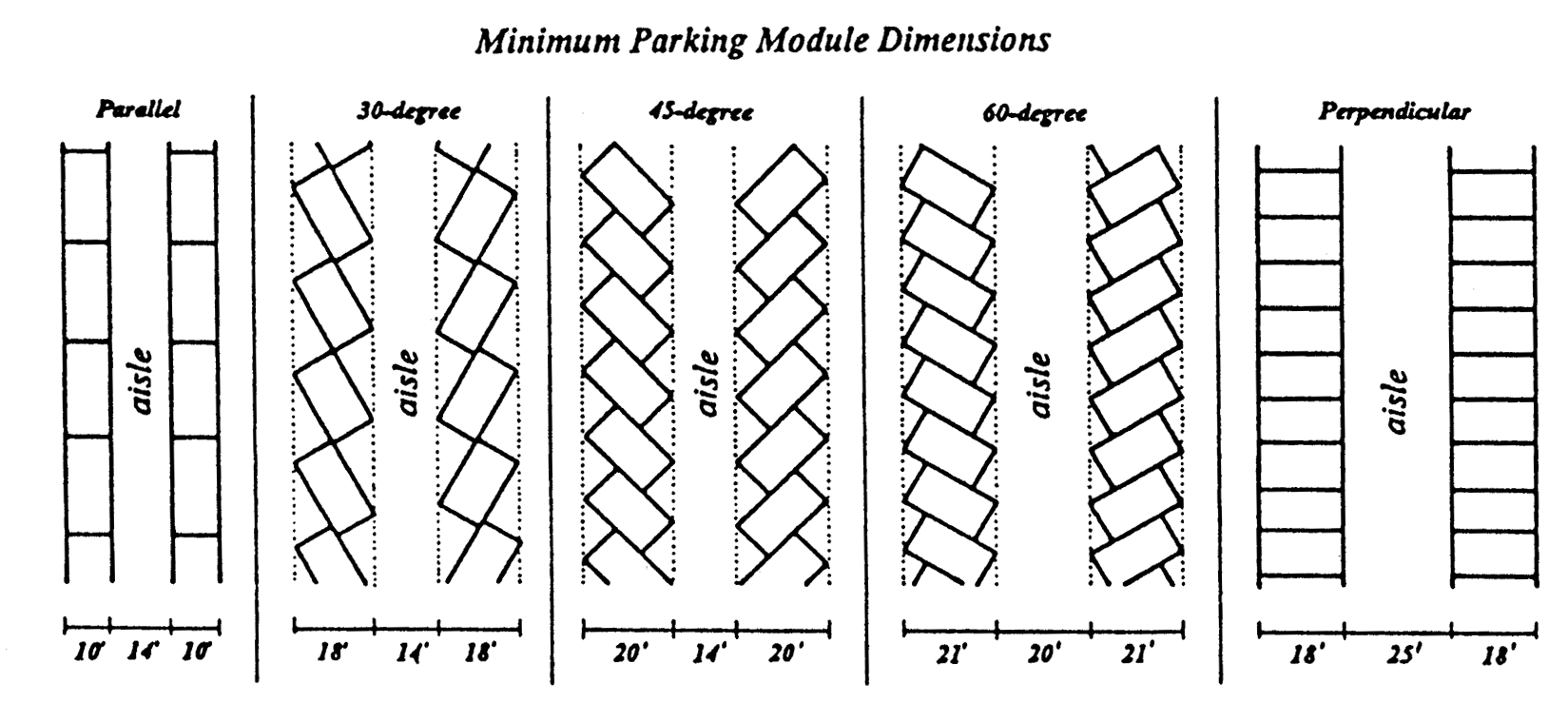
3.
Driveways. All off-street parking facilities shall be designed with appropriate means of vehicular access to a street or alley in a manner which will least interfere with traffic movements on the public streets.
i.
Intersection setbacks.
(A)
Driveways located along an arterial road right-of-way shall not be located less than 60 feet from an intersecting right-of-way.
(B)
Driveways located along a collector road right-of-way shall not be located less than 50 feet from an intersecting right-of-way.
(C)
Driveways located along local or cul-de-sac right-of-way shall not be located less than 30 feet from an intersecting right-of-way.
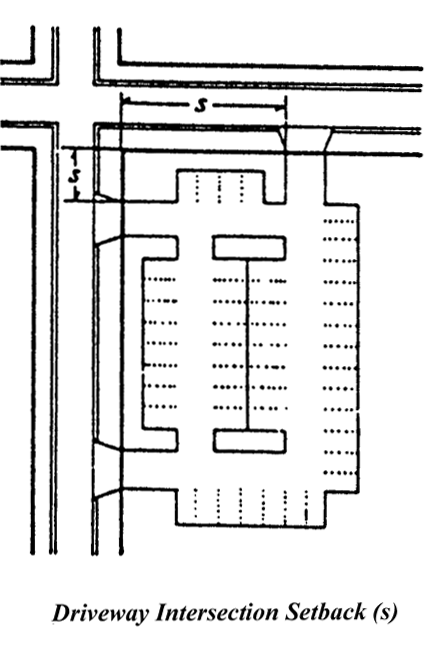
ii.
Street transition. All parking facility driveways which lead to or from a public right-of-way shall provide a transition space of not less than 30 feet in length from the public right-of-way to the nearest parking space, an intersecting driveway or a parking aisle along the driveway to ensure traffic safety and circulation efficiency.
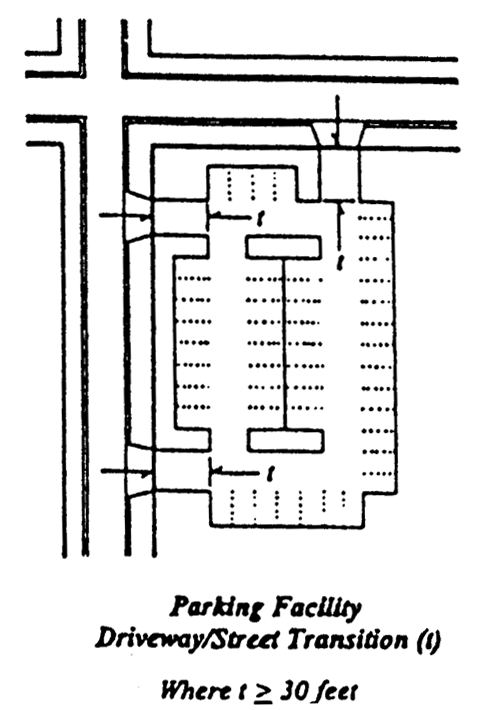
d.
Width. All driveways installed, altered, changed, replaced, or extended after the effective date of the ordinance enacting this chapter shall meet the following requirements: No driveway for vehicular ingress and egress shall exceed 28 feet in width at the right-of-way and 36 feet in width at the roadway in residential districts, and no driveway for vehicular ingress and egress shall exceed 36 feet in width at the right-of-way and 48 feet in width at the roadway in industrial districts.
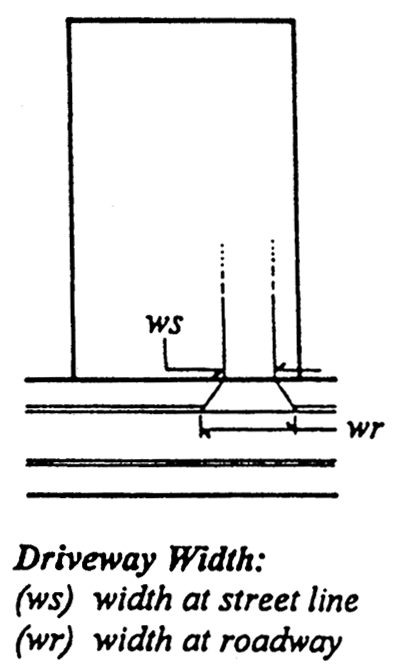
(4)
Queuing spaces. Queuing spaces shall be provided accessory to drive-up service facilities in the number prescribed in the table of parking requirements. Queuing spaces shall be located so as to not interfere with parking or pedestrian and vehicular circulation on the zoning lot, or circulation on adjacent public streets. Queuing spaces shall measure ten feet in width and 18 feet in length. Queuing space shall not occupy the same spaces as parking or aisles thereto.
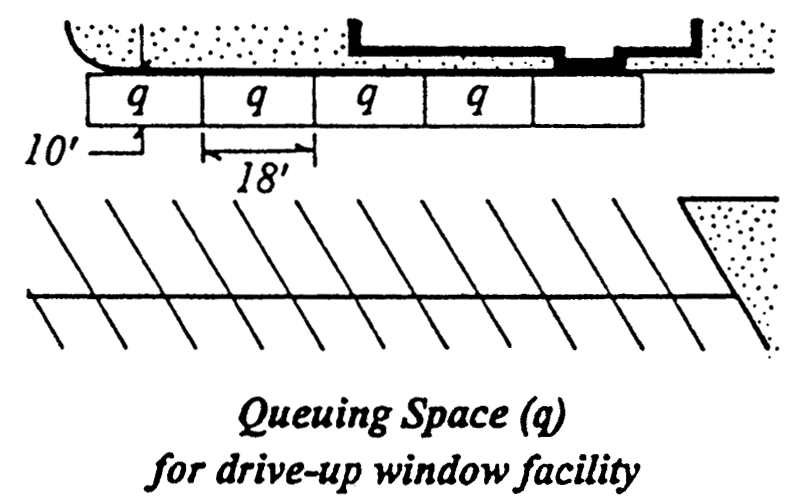
(5)
Location. The location of off-street parking spaces accessory to the use served shall be as follows:
a.
Uses in residential districts. Parking spaces accessory to dwellings shall be located on the same zoning lot as the use served. Parking spaces accessory to uses other than dwellings in a residential district may be located on an adjacent lot or directly across a street or alley from the lot occupied by the use served, but in no case more than 300 feet from such use.
b.
Uses in commercial and industrial districts. All required parking spaces shall be not more than 500 feet from the use served, except for spaces accessory to dwelling units, which shall be not more than 300 feet from the uses served. However, no parking spaces accessory to a use in a commercial or industrial district shall be located in a residential district, except that private, free, off-street parking accessory to and located not more than 200 feet from such uses and municipal parking lots may be allowed by special use permit in accordance with the standards and procedures provided in article IV, division 3 of this chapter.
(6)
Parking or storage of recreational vehicles and trailers in residential districts.
a.
General standards.
1.
At no time shall a parked or stored recreational vehicle be used for living, sleeping, or housekeeping purposes, except as may be provided in accordance with subsection (6)a.9 of this section.
2.
Recreational vehicles shall not be used as accessory structures in any district.
3.
Recreational vehicles shall not have their wheels removed or be affixed to the ground so as to prevent ready removal of the vehicle.
4.
Recreational vehicles shall not be parked or stored in such a way as to create a dangerous or unsafe condition.
5.
No recreational vehicle, including attachments and appurtenances, shall be parked within one foot of a public sidewalk, right-of-way, or alley.
6.
The ground under and surrounding where any such recreational vehicle is parked or stored must be kept free of noxious weeds, overgrowth, or debris.
7.
No recreational vehicle shall be used for storage of goods, materials, or equipment other than those items considered to be part of the unit or essential to its immediate use.
8.
No recreational vehicle shall be connected to electric, gas, water, or sanitary sewer service, except for temporary service connection for maintenance.
9.
No recreational vehicle may be temporarily occupied for more than 14 days in any six-month period to accommodate visitors. Use of internal cooking and sanitary facilities shall not be permitted.
10.
Recreational vehicles may be stored in rear yards on a temporary surface, including but not limited to gravel, patio blocks, or similar material.
b.
Parking and storage restrictions.
1.
Not more than two recreational vehicles conforming to the size restrictions stated in subsection (6)b.4 of this section may be parked or stored in the open in a front or corner side yard on a lot in a residential district, except as set forth in this section.
2.
Recreational vehicles may be parked or stored in the side yard and rear yard, subject to the standards set forth in this section, but no more than one of the side yards of any residential lot may be used for parking or storage of recreational vehicles.
3.
Recreational vehicles, such as, but not limited to, camping trailers, boat trailers, boats, snowmobiles, snowmobile trailers, all-terrain vehicles, camping buses, camping trucks, and house trailers, shall not be parked or stored in any front yard or corner side yard in any residential district unless the vehicle is located on a hard-surfaced driveway and complies with the standards provided in subsection (6)a of this section.
4.
No trucks, trailers, or buses which exceed nine feet in height, or 20 feet in length, or 16,000 pounds in gross vehicle weight, shall be stored in a driveway in any front yard or corner side yard in any residential district.
5.
For the purpose of this section, storage shall mean a vehicle parked on the zoning lot for more than 48 hours in any 72-hour period.
(7)
Handicapped parking. Any parking area for use by the general public shall provide parking spaces designated and located to accommodate the handicapped. Parking spaces reserved for persons with disabilities shall be located, designed, identified, and otherwise provided in accordance with the most restrictive requirements of the Illinois Accessibility Code, 71 Ill. Adm. Code, part 400, and the Americans with Disabilities Act of 1990 (ADA) Guidelines, 28 CFR 36, appendix A, as from time to time amended.
a.
Size. Each parking space reserved for use by persons with disabilities shall be at least 16 feet in width by 18 feet in length.
b.
Enforcement. The designation of handicapped parking stalls shall constitute consent by the property owner to the enforcement by the village of the restriction of use of such spaces to motorists with disabilities.
Sec. 105-625. - Schedule of required parking.
(a)
For the following uses, accessory off-street parking spaces shall be provided as required in this section:
(1)
Uses not specifically listed. For uses not listed in the table of parking requirements in subsection (b) of this section, parking spaces shall be provided on the same basis as required for the most similar listed use, or as determined by the zoning administrator.
(2)
Parking basis. Parking spaces required for floor area shall be based on the maximum net floor area devoted to such use. Parking spaces required for employees shall be based on the maximum number of employees on duty, or residing, or both, on the premises at any one time.
(3)
Floor area exemptions.
a.
When two or more nonresidential uses are located on the same zoning lot, only one exemption in terms of floor area, as set forth in the table of parking requirements in subsection (b) of this section, may be permitted.
b.
If on-street parking is provided adjacent to the proposed use, an exemption of 1,000 square feet shall be applied toward the calculation of required off-street parking spaces.
(4)
On-street parking credits. On-street parking directly enfronting a lot shall count toward fulfilling the parking requirement of that lot. One parking space credit shall be given for every partial on-street parking space in front of the lot that is over 50 percent of the length of the on-street parking space.
(5)
Shared parking. When two or more nonresidential uses are located on the same zoning lot and their respective hours of operation do not overlap, the zoning administrator may authorize a reduction in the total number of required parking spaces subject to the following conditions:
a.
Not more than 50 percent of the parking spaces required for a building or use may be supplied by the parking facilities required for any other building or use on the same zoning lot.
b.
The number of shared parking spaces for two or more distinguishable land uses shall be determined by the following procedure:
1.
Multiply the minimum parking required for each individual use, as set forth in the table of parking requirements in subsection (b) of this section, by the appropriate percentage indicated in subsection (a)(5)b.4 of this section (schedule of shared parking), for each of the six designated time periods therein.
2.
Sum the required parking for each of the six columns.
3.
The minimum parking requirement shall be the largest sum among the six columns resulting from these calculations.
4.
The schedule of shared parking is as follows:
c.
If one or all of the land uses for which shared parking facilities are proposed do not conform to one of the general land use classifications in the shared parking schedule as determined by the zoning administrator, then the applicant, owner or developer shall submit sufficient data to indicate that there is not substantial conflict in the principal hours of operation of the uses. The property owners involved in the shared use of off-street parking facilities shall submit a legal agreement, approved by the village attorney, guaranteeing that the parking spaces shall be maintained so long as the uses requiring parking are in existence or unless the required parking spaces are provided elsewhere in accordance with this division. Such instrument shall be recorded by the property owner with the county recorder of deeds, and a copy filed with the zoning administrator.
(6)
C-2 district exceptions. For all nonresidential uses in the C-2 district, the number of required parking spaces shall be 50 percent of the number otherwise required in the table of parking requirements in subsection (b) of this section. For example, if a use requires 12 parking spaces, the same use would be required to provide only six spaces if it were located in the C-2 district.
(7)
Cash in lieu of off-street parking spaces.
a.
Authorized. If it is found impossible to provide the required number of off-street parking spaces on a lot in the C-2 district, the village board may authorize the provision of less than the required number of off-street parking spaces on a lot in the C-2 district and require the lot owner to contribute cash in lieu of parking spaces.
b.
Request by property owner. The owner of the property desiring to make a cash payment in lieu of required off-street parking spaces shall submit a request for cash in lieu of parking spaces agreement for review and approval by the village board. The request shall indicate the number of off-street parking spaces required by this chapter, and the number of spaces for which the lot owner desires to make payment, and such other information as may deemed necessary by the village board.
c.
Decision. The village board shall have the right in its sole and absolute discretion to approve such request, considering the types of adjacent uses, the peak hours of parking demand for the proposed use and adjacent uses, the location of the subject property, existing demand and utilization of parking spaces in the neighborhood, and other factors.
d.
Agreement required. If the village board approves a request for payment of cash in lieu of parking spaces, the village and the lot owner shall execute an agreement specifying the terms and conditions of the cash in lieu of parking payment. Such agreement shall be adopted by ordinance by the village board.
e.
Amount; payment. If a request for cash in lieu of parking spaces agreement is approved by the village board, the owner of a lot requesting payment of cash in lieu of parking spaces shall pay to the village a sum in the amount established by the board and included in the village fee schedule on file in the office of the village clerk for each parking space not provided.
f.
Disposition of funds. Any such sums collected by the village shall be held in a separate account and are to be used only for the acquisition, improvement, or maintenance of public off-street parking spaces in the central business district.
(b)
For the following uses, accessory off-street parking spaces shall be provided as required in the following table:
TABLE OF PARKING REQUIREMENTS
(1)
Agriculture uses. Agriculture uses, as follows:
(2)
Construction uses. Construction uses shall provide one parking space per 800 square feet NFA.
(3)
Finance, insurance, and real estate uses. Finance, insurance, real estate uses shall provide one parking space for each 300 square feet NFA.
(4)
Food service uses. Food service uses shall provide one parking space per 200 square feet of NFA, unless indicated otherwise, as follows:
(5)
Manufacturing and processing uses. Manufacturing and processing uses shall provide one parking space per 800 square feet NFA unless indicated otherwise, as follows:
(6)
Motor vehicle uses. Motor vehicle uses shall provide one space per 200 square feet NFA, unless indicated otherwise, as follows:
(7)
Municipal uses. Municipal uses, as follows:
(8)
Personal and business service uses. Personal and business service uses shall provide one parking space per 300 square feet NFA, unless otherwise indicated, as follows:
(9)
Recreation and entertainment uses. Recreation and entertainment uses, as follows:
(10)
Residential uses. Residential uses, as follows:
(11)
Retail trade uses. Retail trade uses shall provide one parking space per 200 square feet NFA, unless indicated otherwise, as follows:
(12)
Transportation, communication and utility uses. Transportation, communication and utility uses, as follows:
(13)
Wholesale trade uses. Wholesale trade uses shall provide one parking space per 5,000 square feet NFA.
(14)
Miscellaneous uses. Miscellaneous uses, as follows:
(Ord. No. 100504A, § 1, 10-5-2004)
Sec. 105-626. - Land banked parking facilities.
(a)
Land banking authorized. Notwithstanding any other provision of this division, the village board may authorize not more than 50 percent of the off-street parking spaces required by this division in a commercial or industrial zoning district, or for a nonresidential use in a residential district, to be left as open space which can be readily converted to parking facilities (land bank). The parking facilities to be constructed and the land bank, if converted to parking spaces, must comply with the off-street parking facility requirements of this division at the time the land bank is approved.
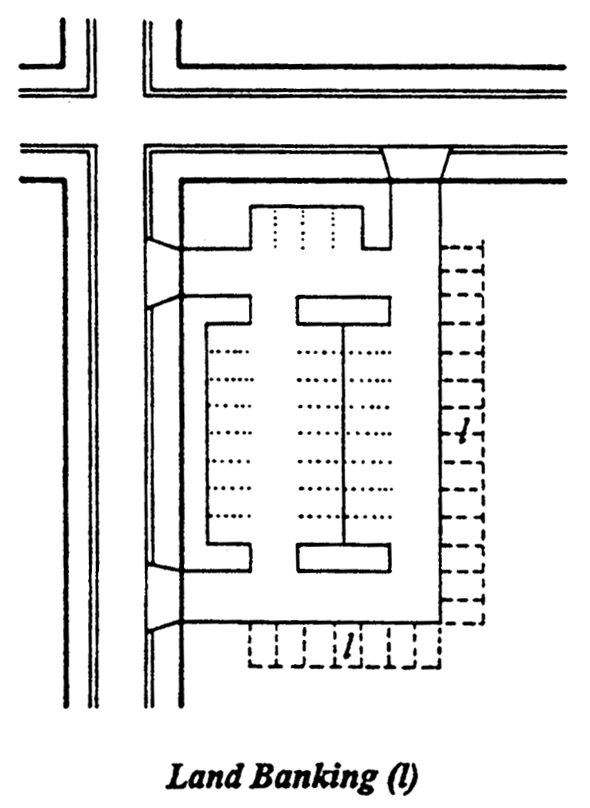
(b)
Land bank plans required. The owner of the property making a land bank request shall submit a detailed land banked parking plan for review and approval by the village board and an application fee in the amount established by the board and included in the village fee schedule on file in the office of the village clerk for each parking space to be land banked. The land banked parking plan shall show both full compliance with the parking regulations of this division and the land bank area showing the reduced number of parking spaces and interim use of the land banked area.
(c)
Termination of land bank. The village board shall have the right in its sole and absolute discretion to require the property owner or successor, at any time, to construct all or a portion of the land banked parking facilities, with the zoning administrator providing notice to the owner that the land banked parking facilities must be constructed and completed within 240 days from the date of the notice.
(d)
Land banked parking covenant. As a condition of approving a land bank request, the property owner shall file with the zoning administrator his unconditional agreement and covenant in a form and substance satisfactory to the village attorney. The agreement and covenant, after approval by the village board, shall be recorded with the county recorder of deeds.
Sec. 105-627. - Additional regulations for off-street loading facilities.
(a)
Location. All required off-street loading berths shall be located on the same zoning lot as the use served. No loading berth for vehicles over two tons in capacity shall be closer than 20 feet to any property in a residence district unless completely enclosed by building walls, or a uniformly solid fence or wall, or any combination thereof, not less than six feet in height. No permitted or required portion of a loading berth shall be located within 25 feet of the nearest point of intersection of any two streets.
(b)
Size. Unless otherwise specified, a required loading berth shall be at least 12 feet in width, and at least 65 feet in length, exclusive of aisles and maneuvering space, and shall have a vertical clearance of at least 14 feet.
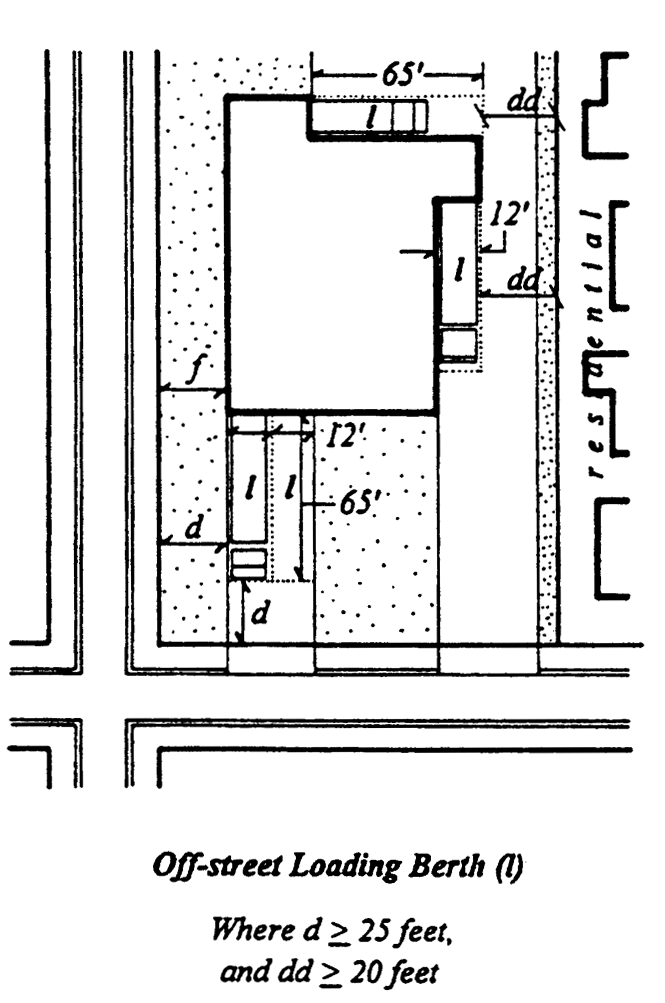
(c)
Design.
(1)
Construction and surfacing. The construction design of all off-street loading berths, and access thereto, shall be reviewed by the village engineer to determine that they are constructed in accordance with a minimum structural number of 3.25. A concrete surface shall be required for each loading berth which serves a dock, ramp or elevator.
(2)
Circulation and access. Off-street loading areas shall be so designed as to not require the use of any arterial or collector street for maneuvering space into or out of the loading berth. Adequate space to accommodate the turning radii of trucks and trailers, exclusive of any parking spaces and landscaping, shall be provided.
(d)
Use of loading facilities. Space allocated to any off-street loading berth shall not also be used to satisfy the space requirements for any off-street parking facilities or portions thereof.
(e)
Central loading. Off-street loading berths for separate uses, different buildings, structures or uses, or mixed uses may be provided collectively in any zoning district in which separate loading berths for each constituent use would be required, provided that the total number of loading berths so located together shall not be less than the sum of the separate requirements for each use.
(f)
Computation of number of berths. When determination of the number of off-street loading berths required by this chapter results in a requirement of a fractional berth, any fraction of one-half or less may be disregarded, while a fraction in excess of one-half shall be counted as one loading berth.
(g)
Location in yards; setback from residence districts. Off-street loading berths in industrial, business or office districts may be located in required rear, side or transition yards, except no loading berth may be located within 20 feet of adjacent residence districts. No off-street loading berth in any zoning district may be located within a required front or corner side yard.
Sec. 105-628. - Required number of loading berths.
(a)
Off-street loading berths shall be provided on the basis of gross floor area of buildings or portions thereof devoted to such uses in the amounts shown in this section.
(b)
For special exceptions other than prescribed in this section, loading berths adequate in number and size to serve such uses shall be provided as determined by the zoning administrator.
(c)
Uses for which off-street loading berths are required in this section, but which are located in buildings of less floor area than the minimum prescribed for such required berth, shall be provided with adequate off-street receiving facilities, accessible by motor vehicle off any abutting street, driveway, or service drive, on the same zoning lot.
(d)
No off-street loading is required for freestanding buildings that have less than 5,000 square feet in gross floor area and are located in a business, office or industrial zoning district.
(e)
Unless otherwise indicated, in the business, office and industrial zoning districts, the loading requirements shall be based on the floor area of the building as follows:
Each additional 100,000 square feet or fraction thereof in excess of the first 100,000 square feet shall require one additional loading berth.
(f)
Loading berths required for floor areas shall be based upon the maximum net floor area devoted to such use.
Sec. 105-651. - Purpose.
The regulation of signs by this division is intended to promote and protect the public health, safety and welfare by:
(1)
Reducing the depreciation of property values caused by signs that are incompatible with surrounding land uses;
(2)
Creating a viable economic and business climate within the commercial and industrial areas of the village;
(3)
Enhancing and protecting the physical appearance of all areas of the village; and
(4)
Reducing the distractions, obstructions and hazards to pedestrians and vehicular traffic caused by the indiscriminate placement and use of signs.
Sec. 105-652. - Scope.
(a)
The regulations of this division shall govern and control the erection, enlargement, expansion, alteration, operation, maintenance, relocation and removal of all signs within the village, and any sign not expressly permitted by these regulations shall be prohibited.
(b)
The regulations of this chapter related to the location of signs, by function and type, within zoning districts and shall be in addition to provisions of the village building code and the village electrical code.
(c)
For the purposes of this division, a sign shall mean any object, device, display, or structure or part thereof situated outdoors or, when situated indoors, intended to be seen from the out-of-doors which is used to advertise, identify, display, direct or attract attention to an object, person, institution, organization, business, product, service, event or location by any means, including words, figures, designs, symbols, fixtures, colors, motion, illumination, or projected images.
Sec. 105-653. - Prohibited signs.
The following signs shall not be permitted in any zoning district:
(1)
Flashing signs, except electronic message boards which show temperature, time, business or public service messages for not less than two-second intervals.
(2)
Signs which are wholly dependent upon a building for support or mounted on the roof, which project more than six inches above the highest point of a building or roof to which they are attached, unless permitted otherwise in this division.
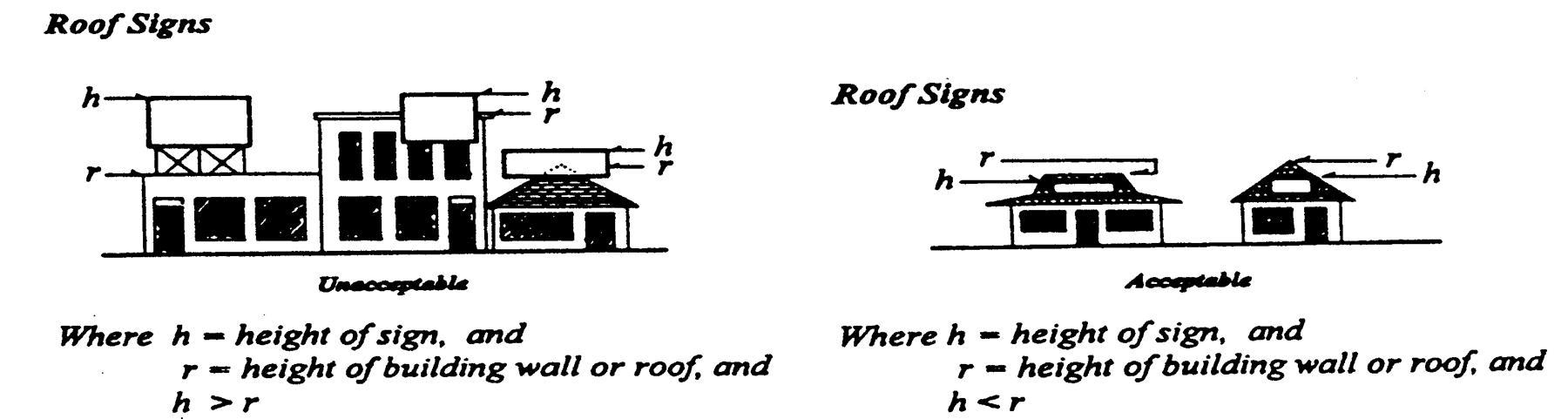
(3)
Signs which constitute a hazard to public health or safety.
(4)
Signs displaying obscene, indecent or immoral matter.
(5)
Signs mounted on trailers or motor vehicles, provided that signs containing the name, address or business identification of the owner or user and displayed on a motor vehicle in use and portable signs as defined in this division are exempt from this subsection.
(6)
Attention-getting devices, including, but not limited to, inflatable, moving, rotating or undulating signs, or light beams, except as otherwise permitted with a special events permit only once annually per establishment.
(7)
Signs which, by reason of size, location, content, color, or manner of illumination, obstruct the vision of motorists or interfere with the visibility or effectiveness of any traffic sign or control device on public streets.
(8)
Signs which make use of words such as "Stop," "Look," "One-Way," "Danger," and "Yield" or any similar word, phrase, symbol or light so as to interfere with or confuse pedestrian or vehicular traffic.
(9)
Signs displayed within or extended over a public right-of-way, except those erected or authorized by a government authority.
(10)
Signs which obstruct ingress to or egress from any fire escape, door, window, or other exit or entrance.
(11)
Advertising, business, or identification signs on light poles of establishments.
(12)
Signs painted directly on trees, rocks and fences and other structures or objects, except walls.
(13)
Festoon lighting.
Sec. 105-654. - General provisions.
(a)
Sign area. The area of a sign shall be the smallest rectangle that encloses the entire perimeter of a sign, but excluding the supporting structure which does not form part of the sign proper or of the display. Where a sign is designed with more than one surface, the area computed shall include only the largest single display surface which is visible from any one side or position.
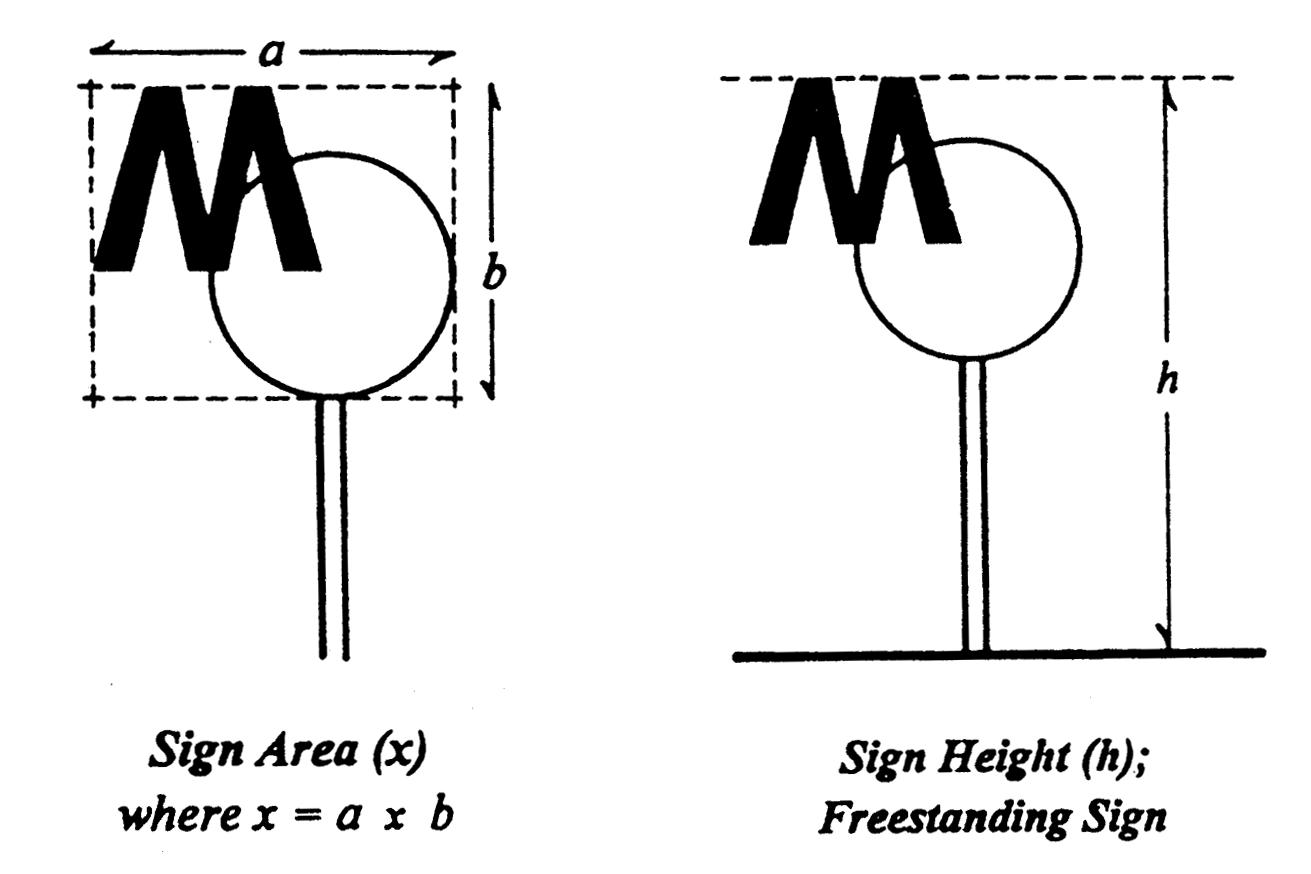
(b)
Sign height. The height of a sign shall be the distance measured between the top of the nearest public street curb and the highest point of the sign for freestanding signs. For other signs, the height of the sign shall be the distance measured between the finished grade adjoining the wall on which a wall, projecting, awning, or window sign is attached and the highest point of the sign.
(c)
Illumination. An illuminated sign is any sign from which artificial light emanates either by means of exposed lighting on the surface of the sign or through transparent or translucent material from a source within the sign, or a sign which reflects artificial light from a source intentionally directed upon it.
(1)
Illuminated signs permitted in residential districts or within 100 feet of a residential district shall not be illuminated between the hours of 11:00 p.m. and 7:00 a.m., unless the use to which the sign pertains is open.
(2)
No illuminated sign shall be positioned or maintained so as to permit the beams and illumination therefrom to be directed or beamed upon any adjacent property or to cause glare or reflection that may constitute a nuisance or traffic hazard.
(d)
Setback. Except as otherwise provided in this division, freestanding signs shall be located at least ten feet from any driveway and lot line.
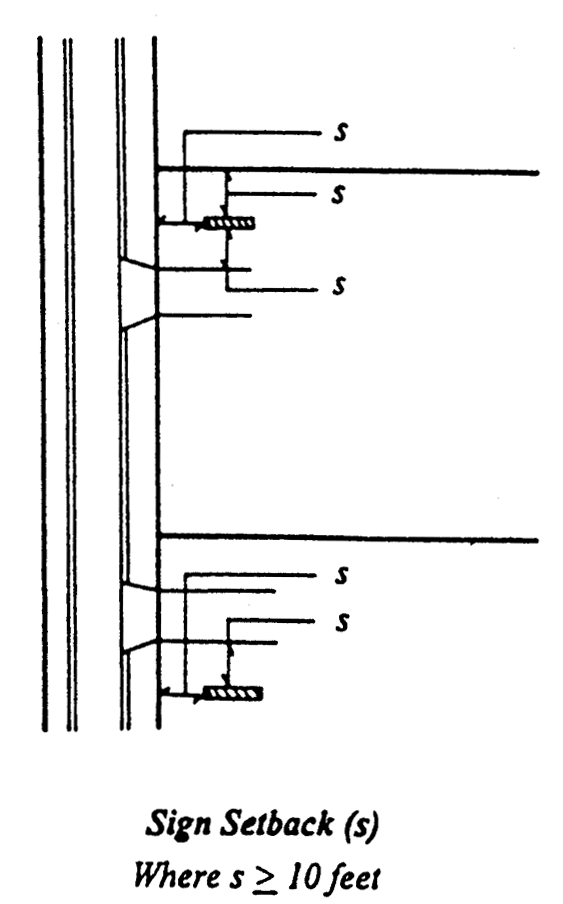
(e)
Maintenance. The owner of a sign or the premises on which such sign is located shall be liable for maintenance of such sign, including its source of illumination, in neat and orderly condition and in good working order at all times, and for preventing deterioration of the physical appearance or safety of such sign. Message board signs must be designed in such a manner that the message area is resistant to damage by wind and vandalism.
(f)
Distance measurement. The location of a sign shall be measured as the distance between the point of reference sign setback specified and the closest point on the sign.
(g)
Electrical elements. All wiring, fittings, and materials used in the construction, connection and operation of electrically illuminated signs shall be in accordance with the provisions of the village electrical code and shall be contained in rigid conduit or enclosed in poles or raceways. No wiring may be exposed on the surface of any element of the sign.
(h)
Structural elements. The construction and structural components of all signs shall be in accordance with the standards and regulations of the village building code.
(i)
Location in sight triangle. Signs, and any concealed support elements supporting a sign, shall not be located within any sight triangle as defined in this chapter.
(j)
Overhang. Except awning, canopy and projecting signs, no sign may overhang any part of a structure, sidewalk, parking or loading space, driveway or maneuvering aisle.
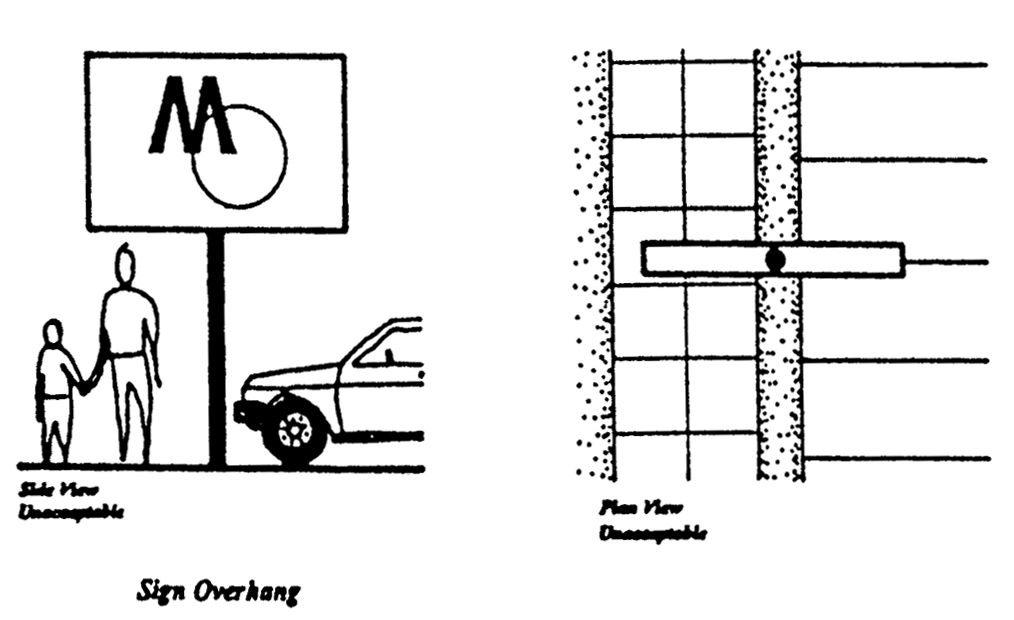
Sec. 105-655. - Exempt signs.
Nothing in this section shall be construed as exempting the following signs from the provisions of sections 105-653 and 105-654 or from any provisions of the building code or other chapters of this Code applicable to signs. The following signs are otherwise exempt from regulations of this chapter:
(1)
Flags, symbols or crests of nations, states, cities or political, fraternal, religious or civic organizations, provided the number of such flags does not exceed four. One flag displaying the name or logo of a company or business shall be allowed provided that it is flown along with the American flag and shall not be larger than the American flag. These flags shall be flown in accordance with protocol established by the Congress of the United States for the Stars and Stripes.
(2)
Decorations customarily and commonly associated with a national, local or religious holiday, or recognized local special event, provided that such decorations shall not be displayed for more than 60 days.
(3)
Signs which direct or regulate the movement of pedestrians or vehicles into or within a site, provided that:
a.
No more than one such sign is displayed per driveway;
b.
The sign does not exceed six square feet in area or three feet in height from finished grade for freestanding signs or eight feet in height from finished grade for wall signs; and
c.
No more than ten percent of the area of the sign is used to advertise any business, product or service provided on the lot.
(4)
Signs which identify only the names and locations of occupants or uses within a building on a lot, provided that such signs shall not exceed 20 square feet in area or eight feet in height from finished grade, and shall not be located closer than 50 feet to any property line.
(5)
Signs not exceeding two square feet in area bearing only the name or logo of the occupant, or address of the lot, or indicating building entrances or exits. Such signs may be illuminated.
(6)
Legal notices or identification, informational, directional, traffic or other signs erected or required by governmental authority under the law, statute or ordinance.
(7)
Signs no greater than 16 square feet in area announcing candidates for political office or political issues, provided that such signs shall not be displayed more than 30 days before any election and shall be removed within five days thereafter.
(8)
Memorial signs or tablets containing the name of a building and the date of construction, when cut into any masonry surface so as to be part of the building or when constructed of bronze or some other noncombustible material and permanently attached to a building.
(9)
Nonilluminated signs displayed on windows provided the area of all window signs occupies no more than 40 percent of the window surface area.
(10)
Real estate signs not more than six square feet in area, provided that no more than one such sign shall be permitted in each yard abutting a street. Real estate signs shall be freestanding signs and set back not less than ten feet from any lot line and shall not exceed six feet in height and shall not be illuminated. Real estate signs must be removed within two days of closing or lease transaction.
(11)
Signs attached to the underside of a canopy, provided such signs do not exceed six square feet in area and are mounted at right angles to the building facade and provided a minimum clearance of seven feet above the sidewalk is maintained and that no portion of such sign is within one foot of the edge of the canopy.
(12)
Public telephone, gasoline pump and vending machine graphics, logos and instructions.
(13)
Signs not exceeding three square feet in area, not closer to any property line than ten feet, and legible to a person of average eyesight standing on the nearest property line.
(14)
One sign not exceeding 32 square feet in area, and eight feet in height, erected on a lot on which construction is taking place, indicating the name of the architects, engineers, landscape architects, contractors, and similar artisans, and the owners, financial supporters, sponsors and similar persons having a role or interest with respect to the structure or project. Such sign shall be erected only so long as construction is occurring on the lot. Such sign shall be a wall or freestanding sign.
(15)
Works of art that do not include a commercial message, graphic or logo.
(16)
One menu board sign for a drive-in window operation, provided such sign does not exceed 32 square feet in area or six feet in height.
(17)
Signs no greater than two square feet in area giving warning, e.g., "beware of dog," "no trespassing," and "no dumping," and not to exceed four per lot, except that the zoning administrator may permit additional such signs under proven special circumstances.
(18)
Religious symbols, identification emblems of religious orders, or commemorative plaques of recognized historical agencies, no greater than 16 square feet in area.
(19)
When located on agricultural property used for agricultural purposes, signs no greater than two square feet in area pertaining to seed or hybrid products used, produced or cultivated on the property, and signs no greater than 32 square feet in area pertaining to the sale in season of agricultural products grown or produced on the property.
(20)
Signs no greater than four square feet in area which provide the hours of operation or business or indicate whether the premises are open for business or inspection.
(21)
Portable signs no larger than ten square feet in area when displayed on a sidewalk along the facade of a tenant space or a building occupied by a commercial use, provided such sign is displayed only during the hours of operation of the commercial use, and the sign does not interfere with pedestrian movement. Such signs are intended to benefit and to attract the attention of pedestrians.
Sec. 105-656. - Classifications of signs.
For purpose of this division, signs shall be classified according to their function and structural type, defined as follows:
(1)
Functional types.
a.
Advertising sign. A sign, commonly known as a billboard, which directs attention to a business, commodity, service or entertainment conducted, sold, or offered at a location other than the lot on which the sign is located; or a sign which directs attention to a business that is no longer conducted or to a product that is no longer sold on the lot on which the sign is located. An advertising sign shall be a freestanding sign.
b.
Business sign. A sign which directs attention to a business or profession conducted, or to a commodity or service sold, offered or manufactured, or to an entertainment offered, on the premises where the sign is located or to which it is affixed. A business sign shall be an awning, canopy, roof, wall or window sign.
c.
Development sign. A sign designating the name and/or address of the development. A development for the purpose of this division shall mean a building or buildings located on a lot not less than 100 feet in width at the front property line and under unified ownership or control. A development sign may be used for the identification of residential or nonresidential subdivisions. A development sign shall be a freestanding sign and may or may not include the following:
1.
Tenant identification signs. A sign giving the name of a tenant on a lot on which two or more tenants or businesses are located. Such sign shall only indicate the name of the tenant or business establishment or a logo or symbolic representation of the type of business. Tenant identification signs shall be uniform in size and shape and be designed for maximum legibility; and/or
2.
Message board sign. A sign designed so that characters, letters, or illustrations can be changed or rearranged electronically, electrically, or manually without altering the face or surface of the sign.
d.
Grand opening sign. Any sign used for the purpose of advertising a grand opening or grand reopening of a new business. A grand opening sign may be displayed only within one year of issuance of an occupancy certificate. A grand opening sign may be an awning, canopy, freestanding, portable, roof, temporary, wall or window sign. Grand opening signs shall not be used for promotions, special sales, seasonal sales, or going-out-of-business sales.
e.
Identification sign. A sign giving the name and address of a residential building, business, development, industry, or other building or establishment. Such signs may be wholly or partly devoted to a readily recognized symbol. An identification sign shall be an awning, canopy, freestanding, projecting, roof, wall or window sign.
f.
Real estate sign. A sign indicating the sale, rental, lease, or development of a building or lot, or a portion thereof, on which the sign is located. A real estate sign shall be a freestanding, wall or window sign.
(2)
Structural types.
a.
Awning sign. A sign that is mounted on or attached to an awning that is otherwise permitted by this division. An awning may be fixed or retractable and shall be securely attached to and supported by the building. No posts or columns shall be permitted to support the awning. Awnings shall be designed to provide unobstructed flow of pedestrian traffic along any sidewalk. The construction materials and the manner of construction of all awnings shall be in accordance with the village building code.
b.
Canopy sign. A sign that is mounted on or attached to a canopy that is otherwise permitted by this division. A canopy shall not encroach upon the required building line on a lot. The construction materials and the manner of construction of all canopies shall be in accordance with the village building code.
c.
Freestanding sign. A sign supported independently of any structure. Such sign may be referred to as a ground or pole sign.
d.
Portable sign. A freestanding sign, no face of which shall exceed 50 square feet, attached to or mounted upon a frame intended to be moved from place to place. Such sign may be used as a grand opening sign and may or may not include moveable lettering and/or electrical equipment for use as an illuminated sign. All illuminated portable signs shall be wired with a UL-approved ground fault interrupter, and all service connections shall be approved by a village electrical inspector. No flashing lights or other moving displays shall be permitted on such sign, and all illumination shall be of an indirect or diffused nature.
e.
Projecting sign. A sign attached perpendicular to a wall of a building, supported solely by the building, and having not more than two faces, which may be no more than 12 inches apart.
f.
Temporary sign. Any sign, banner, pennant, streamer, or advertising display constructed of cloth, canvas, light fabric, cardboard, wallboard, or other lightweight material without a frame. A temporary sign shall be a wall, window, awning or canopy sign.
g.
Wall sign. A sign painted on or fastened to the wall of a building or structure in such a manner that the wall becomes the supporting structure for, or forms the background surface of, the sign, and which does not project more than 12 inches from such building or structure. No sign shall extend beyond the width of the facade of the building to which it is attached.
h.
Window sign. A sign which is painted, applied, or attached to, or located within three feet of, the interior of a window, which sign may be seen through the window from the exterior of the structure.
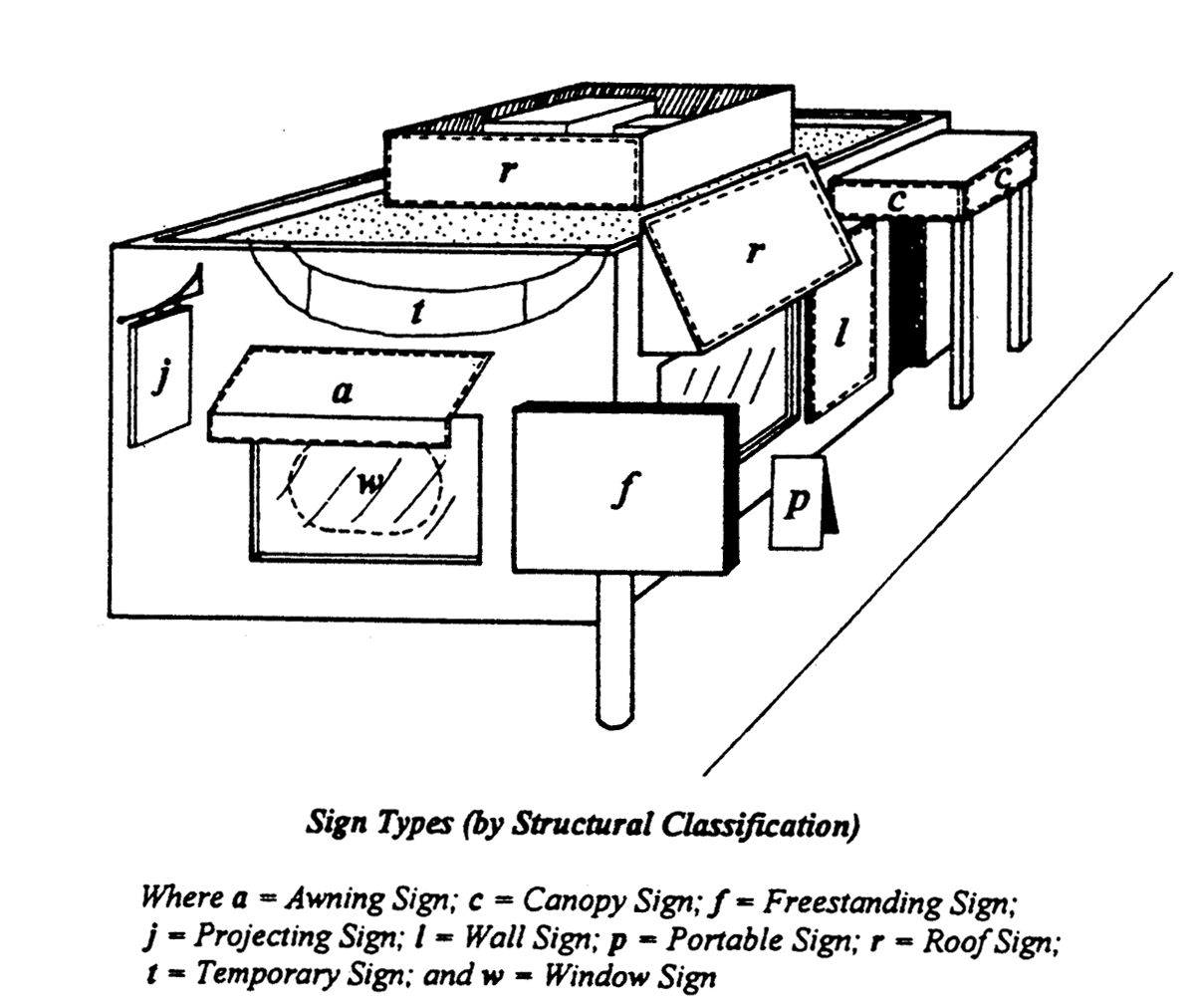
(3)
Sign classification table. For purposes of convenience, the following table is provided to clarify which sign structural types may be used for particular types of sign functions. An "X" shall indicate the only permitted use of various sign structural types for various types of sign functions.
Sec. 105-657. - Permitted signs.
The following signs shall be permitted in the village as accessory structures, subject to all applicable standards:
(1)
Awning signs. Where permitted in the table of sign requirements in section 105-658, business and identification awning signs shall be permitted subject to the following:
a.
Number. Not more than one awning sign shall be permitted on each awning.
b.
Location. Individual letters, words or symbols may be affixed or applied to any awning surface facing a public street or mounted over a public entrance to an establishment.
c.
Height. The maximum height of an awning sign shall be the highest point of the awning to which the sign is attached or 16 feet, whichever is less.
d.
Sign display area. Each awning sign shall be located within a selected sign display area. The awning sign display area shall be the exterior area of the permitted awning. The awning sign display area may be computed using a combination of two adjoining geometric shapes (circles, squares, rectangles, triangles only). The vertical dimensions of the awning sign display area shall not exceed six feet.
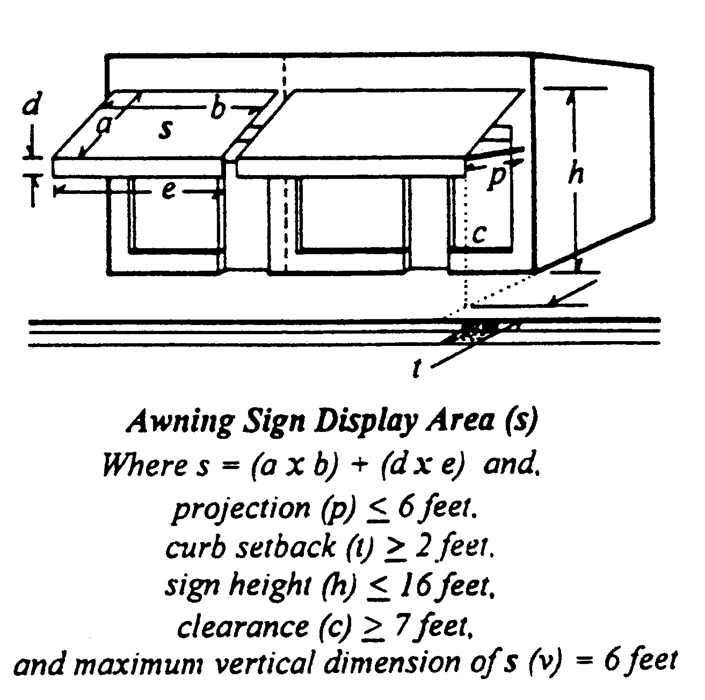
e.
Sign display area limits. The awning sign display area shall not extend beyond the awning surface on which the sign is located, or beyond the premises of a particular establishment.
f.
Sign area. The area of an awning sign shall not exceed the maximum percentage of sign display area as defined in this section and as specified in the table of sign requirement in section 105-658.
g.
Illumination. Awning signs may be illuminated subject to the standards in section 105-654.
h.
Clearance. A minimum clearance of seven feet shall be provided between finished grade and the lowest point of an awning sign, but in no instance shall an awning sign extend below the lowest point of the awning to which the sign is attached.
i.
Projection. No awning sign or the awning to which it is affixed shall project more than eight feet from the building wall, but signs and awnings shall not project into or over the roadway of any street or driveway.
j.
Setback from curb. No awning sign or the awning to which it is affixed shall project within two feet of the curb of a street or driveway.
(2)
Canopy signs. Where permitted in the table of sign requirements in section 105-658, business and identification canopy signs shall be permitted subject to the following:
a.
Number. Not more than one canopy sign shall be permitted per street frontage per building or tenant space having an exterior public entrance.
b.
Location. Canopy signs shall be mounted on the face of a canopy provided no wall or roof signs are directed to the same street frontage.
c.
Height. The maximum height of a canopy sign shall be the highest point of the canopy to which the sign is attached or 16 feet, whichever is less.
d.
Sign display area. Each canopy sign shall be located within a selected sign display area. The canopy sign display area shall be the area of the permitted canopy. The canopy sign display area may be computed using a combination of two adjoining geometric shapes (circles, squares, rectangles, or triangles only). The vertical dimensions of the canopy sign display area shall not exceed six feet, except that the zoning administrator may authorize additional vertical dimensions if the area of the canopy sign is less than 15 percent of the total area of the canopy and is located more than 300 feet from a public right-of-way.
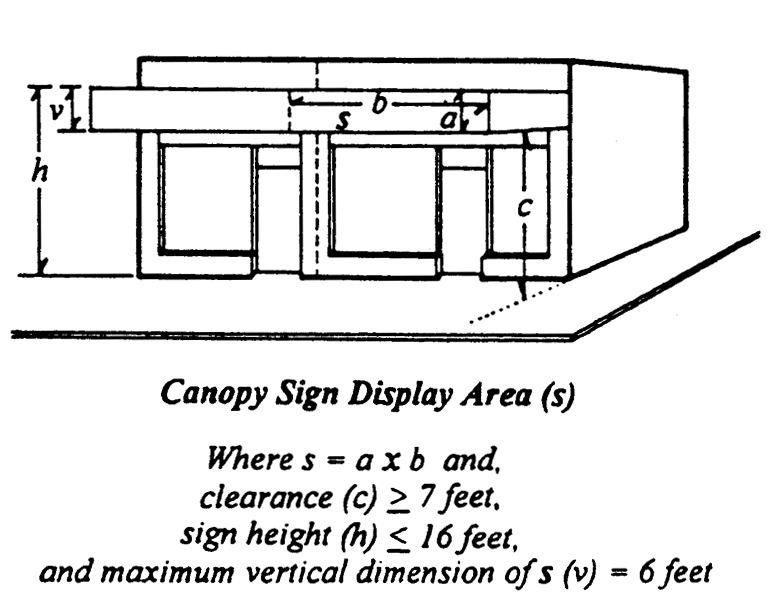
e.
Sign display area limits. The canopy sign display area shall not extend beyond the canopy face on which the sign is located, or beyond the premises of a particular establishment.
f.
Sign area. The area of a canopy sign shall not exceed the maximum percentage of sign display area as defined in this section and as specified in the table of sign requirements in section 105-658.
g.
Illumination. Canopy signs may be illuminated subject to the standards in section 105-654.
h.
Clearance. A minimum clearance of seven feet shall be provided between finished grade to the lowest point of a canopy sign, but in no instance shall a canopy sign extend below the lowest point of the canopy on which the sign is attached.
i.
Projection. No canopy sign shall project more than 12 inches from the canopy to which it is attached.
j.
Time and temperature displays. Time and temperature displays may be incorporated into a canopy sign provided location, area and other technical requirements in this division are satisfied.
k.
Message board signs. Message board signs shall be permitted when incorporated into a permitted canopy sign subject to all applicable standards and the following conditions:
1.
No more than 50 percent of the wall sign area shall be used as a message board sign.
2.
Lettering used on manual changeable copy signs directed to local or collector streets shall be at least three inches in height.
3.
Lettering used on manual changeable copy signs directed to secondary or major arterial streets shall be at least six inches in height.
4.
Lettering used on manual changeable copy signs directed to pedestrians shall be at least one inch in height.
(3)
Freestanding signs. Where permitted in the table of sign requirements, freestanding development and identification signs shall be permitted subject to the following:
a.
Number. No more than one freestanding sign per street frontage per lot shall be permitted on a lot.
b.
Location. No freestanding signs shall be located closer than ten feet to a front property line, and signs shall be located as far as possible from any transition side property line.
c.
Height. No freestanding sign shall exceed 15 feet in height.
d.
Sign area. No freestanding sign shall exceed the maximum area as specified in the table of sign requirements in section 105-658.
e.
Illumination. Freestanding signs may be illuminated subject to the standards in section 105-654.
f.
Time and temperature displays. Time and temperature displays may be incorporated into a freestanding sign provided location, area and other technical requirements in this division are satisfied.
g.
Message board signs. Message board signs shall be permitted when incorporated into a freestanding sign subject to all applicable standards in this division and the following conditions:
1.
No more than 50 percent of the freestanding sign area provided shall be used as a message board sign.
2.
Lettering used on manual changeable copy signs directed to local or collector streets shall be at least three inches in height.
3.
Lettering used on manual changeable copy signs directed to secondary or major arterial streets shall be at least six inches in height.
4.
Lettering used on manual changeable copy signs directed to pedestrians shall be at least one inch in height.
h.
Distance from building. No freestanding sign shall be located closer than ten feet to a building, provided that a freestanding sign four feet in height or less may be located as close as three feet to a building.
i.
Sign landscaping. All freestanding signs shall be located in a landscaped area separated and protected from vehicular circulation and parking areas. A minimum of two square feet of landscaping area shall be required for every one square foot of sign face provided, but no freestanding sign landscape area shall be less than 50 square feet in area. The landscape area shall be landscaped appropriately.
(4)
Portable signs. Where permitted in the table of sign requirements in section 105-658, portable signs shall be permitted subject to the following:
a.
Number. No more than one portable sign shall be permitted on a lot at any one time.
b.
Location. Portable signs shall comply with all location requirements for freestanding signs, with the exception that portable signs may be located closer than 100 feet to a freestanding sign.
c.
Sign area. The area of a portable sign shall not exceed 50 square feet.
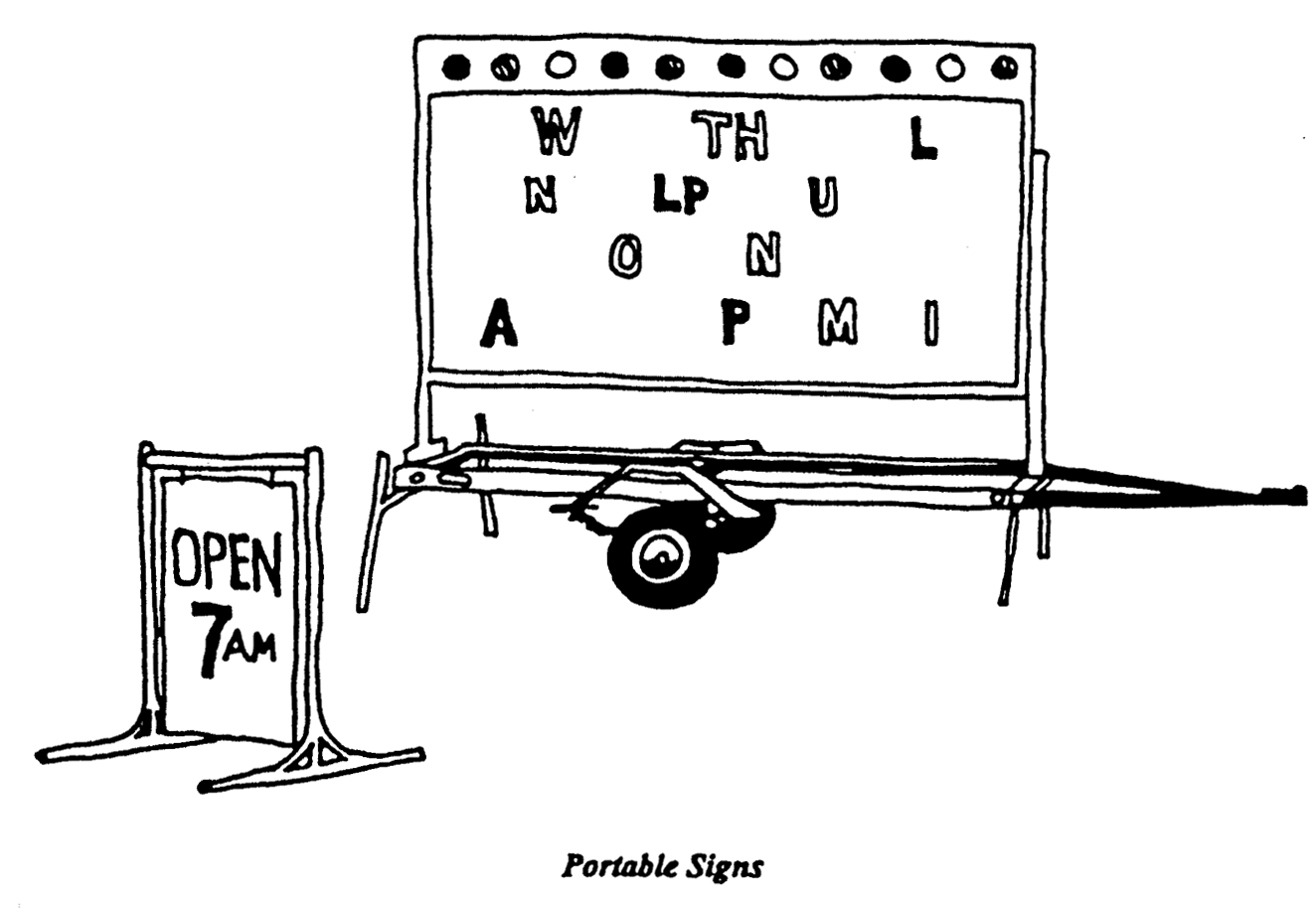
d.
Duration of display.
1.
No portable sign shall be displayed for more than 30 consecutive days within one year of occupancy of a building or tenant space.
2.
Portable signs may be displayed only for grand opening or re-opening sales or celebrations.
(5)
Projecting signs. Where permitted in the table of sign requirements in section 105-658, projecting identification signs shall be permitted subject to the following:
a.
Number. Not more than one projecting sign per street frontage per establishment or building wall having a public entrance shall be permitted, provided no canopy or roof sign for the establishment is located on the same building wall.
b.
Location. Projecting signs shall be affixed to the wall having the establishment's public entrance and shall not be located beyond the premises of a particular establishment.
c.
Height. No projecting sign shall extend above the roofline or the highest point of the wall of the building on which it is located or 14 feet from finished grade, whichever is less.
d.
Sign area. The area of a projecting sign shall not exceed 16 square feet.
e.
Illumination. Projecting signs may be illuminated subject to the standards in section 105-654.
f.
Clearance. Projecting signs shall provide a minimum clearance of seven feet between the finished grade below the sign to the lowest edge of the sign.
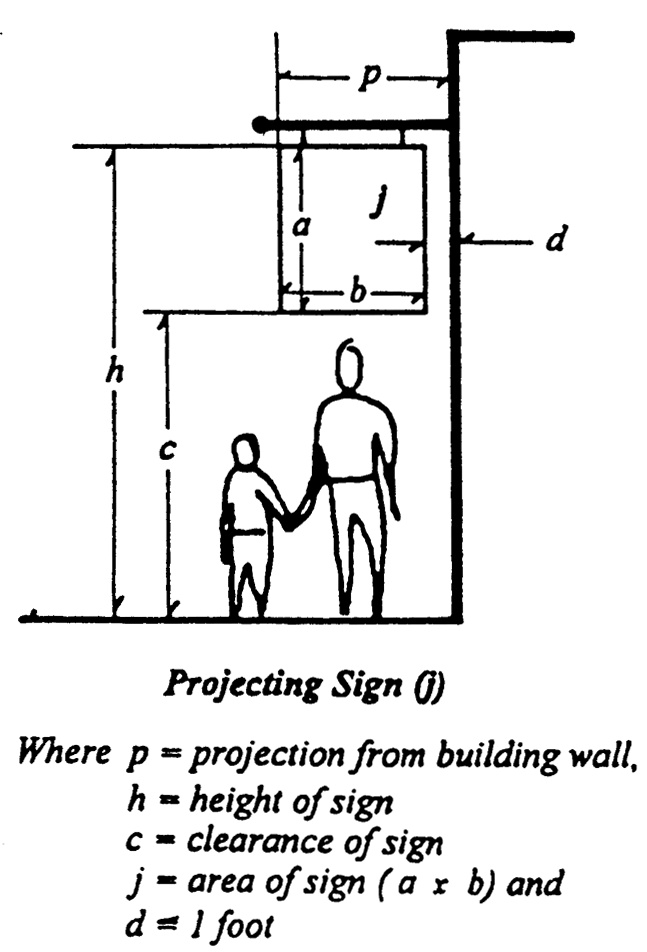
g.
Projection. No projecting sign shall project from the building wall more than six feet. The innermost edge of the projecting sign shall be no more than one foot from the wall of the building to which it is attached. Projecting signs may swing, but all projecting signs shall be permanently attached to the building.
h.
Setback from curb. No projecting sign shall project within two feet of the curb of a street or driveway.
(6)
Roof signs. Where permitted in the table of sign requirements in section 105-658, business and identification roof signs shall be permitted subject to the following:
a.
Number. Not more than one business and identification roof sign per street frontage per establishment shall be permitted, provided no wall or canopy sign for the same establishment is directed to the same street frontage, except that:
1.
No roof sign shall face a residential lot and signs shall be at least 50 feet from a public street.
2.
No roof sign shall be allowed for individual tenants in a multitenant building or a multistory building.
b.
Location. A roof sign shall be located on a decorative mansard, penthouse or other architectural element of a building which extends vertically beyond the roofline, and shall be single-faced and be mounted directly vertical as a wall sign, with no visible angle iron, guy wires, braces or secondary supports and all hardware concealed. A roof sign shall be displayed parallel to the eave line of the roof to which it is attached, or parallel to the penthouse or architectural element above the roofline to which it is attached, and shall face a public street.
c.
Height. The maximum height of a roof sign shall be 30 feet from finished grade or two stories, whichever is less.
d.
Sign display area. Each roof sign shall be located within a selected sign display area. The roof sign display area shall be the area of the permitted roof, mansard, penthouse or other architectural element of a building that extends vertically above the roofline. The roof sign display area may be computed using a combination of two adjoining geometric shapes (circles, squares, rectangles, or triangles only). The vertical dimensions of the roof sign display area shall not exceed six feet, except that the zoning administrator may authorize additional vertical dimensions if the area of the roof sign is less than 15 percent of the total area of the roof and is located more than 300 feet from a public right-of-way.
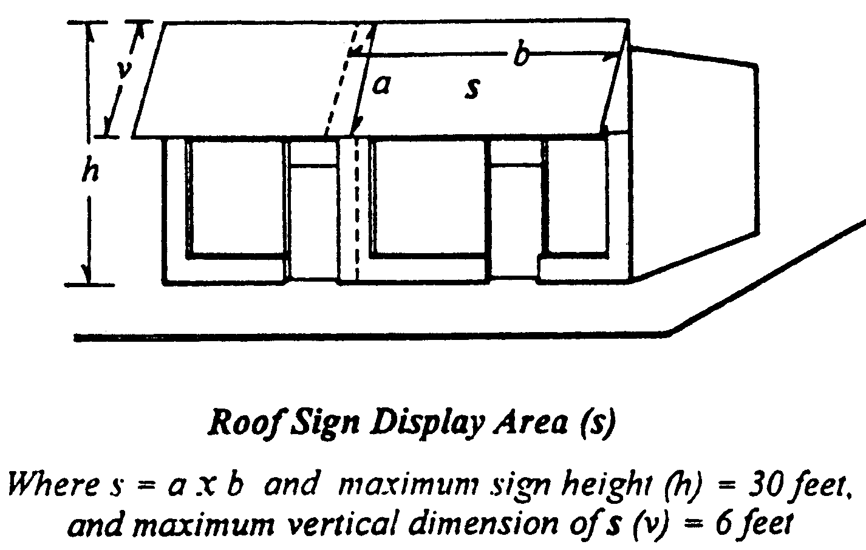
e.
Sign display area limits. The roof sign display area shall not extend beyond the dimensions of the mansard, penthouse or architectural element on which the sign is located, or beyond the premises of a particular establishment.
f.
Sign area. The area of a roof sign shall not exceed the maximum percentage of sign display area as defined in this section and as specified in the table of sign requirements in section 105-658.
g.
Illumination. Projecting signs may be illuminated subject to the standards in section 105-654.
(7)
Temporary signs. Where permitted in the table of sign requirements in section 105-658, awning, canopy, roof and wall temporary signs shall be permitted subject to the following:
a.
Number. Except for grand openings as provided in section 105-659(4), not more than one temporary sign shall be permitted per street frontage.
b.
Location. Temporary signs shall comply with all location requirements for awning, canopy, roof and wall signs.
c.
Height. Temporary signs shall comply with the height requirements for awning, canopy, roof and wall signs.
d.
Sign area. No freestanding temporary sign shall exceed 32 square feet in area or eight feet in height. No temporary sign attached to an awning, canopy, roof or wall shall exceed 60 square feet in area.
e.
Illumination. Temporary signs shall not be illuminated.
f.
Duration of display.
1.
Except for grand openings as provided in section 105-659(4), temporary signs shall be permitted for no more than 14 consecutive days, provided that temporary signs displayed in connection with a grand opening may be displayed for no more than 30 consecutive days.
2.
Temporary signs shall not be displayed more than four times in any one calendar year by an establishment on a lot.
(8)
Wall signs. Where permitted in the table of sign requirements in section 105-658, business and identification wall signs shall be permitted subject to the following:
a.
Number. Not more than one business and identification wall sign per street frontage or per building wall having a public entrance per establishment shall be permitted, provided no canopy or roof sign for the same establishment is directed to the same street frontage, except that:
1.
Not more than one business or identification wall sign may be permitted on walls not facing a street or having a public entrance, provided the wall does not face a residential lot and is at least 50 feet from the nearest property line or another building on the lot.
2.
No wall signs shall be allowed for individual tenants in a multistory or a multitenant building having no exterior building entrance for each tenant.
b.
Location. Wall signs shall be affixed only to a wall having the establishment's public entrance or a wall facing a public street.
c.
Height. The maximum height of a wall sign shall be 30 feet from finished grade or two stories, whichever is less.
d.
Sign display area. Each wall sign shall be located within a selected sign display area. The sign display area shall be the area of the permitted wall less the area of the wall occupied by windows, doors, canopies, awnings and roofs. The wall sign display area may be computed using a combination of two adjoining geometric shapes (circles, squares, rectangles, or triangles only). The vertical dimensions of the wall sign display area shall not exceed six feet, except that the zoning administrator may authorize additional vertical dimensions if the area of the wall sign is less than 15 percent of the total area of the wall and is located more than 300 feet from a public right-of-way.
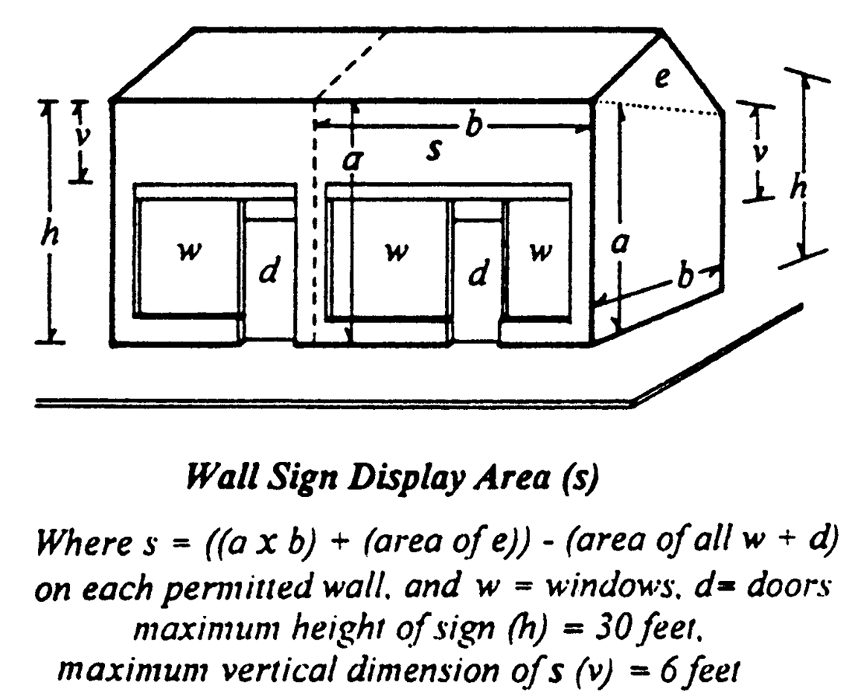
e.
Sign display area limits. The wall sign display area shall not extend above the roofline or the wall of a building or beyond the premises of a particular establishment in the building.
f.
Sign area. The total area of all wall signs per wall shall not exceed the maximum percentage of sign display area as defined in this section and as specified in the table of sign requirements in section 105-658. The sign area is in addition to any other sign types on the premises.
g.
Illumination. Wall signs may be illuminated subject to the standards in section 105-654.
h.
Time and temperature displays. Time and temperature displays may be incorporated into a wall sign if location, area and other technical requirements in this division are satisfied.
i.
Message board signs. Message board signs may be displayed when incorporated into a wall sign subject to all applicable standards in this division and the following conditions:
1.
No more than 50 percent of the area of the wall sign displayed shall be used as a message board sign.
2.
Lettering used on manual changeable copy signs directed to local or collector streets shall be at least three inches in height.
3.
Lettering used on manual changeable copy signs directed to secondary or major arterial streets shall be at least six inches in height.
4.
Lettering used on manual changeable copy signs directed to pedestrians shall be at least one inch in height.
(9)
Window signs. Where permitted in the table of sign requirements in section 105-658, business and identification signs may be painted, affixed or applied to the interior of window glass, subject to the following:
a.
Location. Window signs may be displayed only in windows facing a public street, or in windows in a wall having a public entrance.
b.
Sign display area. Each window sign shall be located within a selected sign display area. The window sign display area shall be the exterior glass surface area of all permitted windows, excluding doors and superficial borders or trim.
c.
Sign display area limits. The sign display area for window signs shall not extend beyond the window surface on which the sign is located, or beyond the premises of a particular establishment.
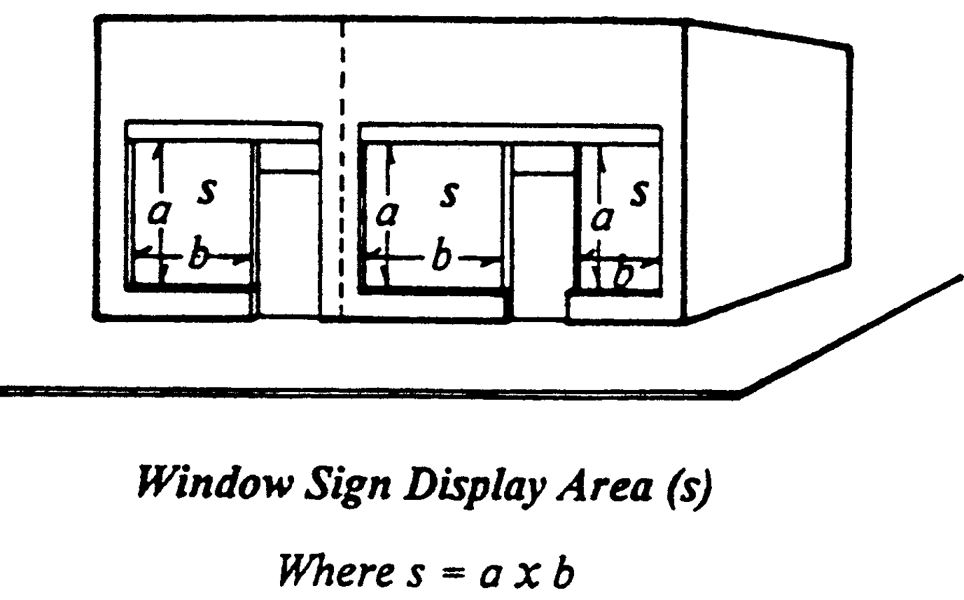
d.
Sign area. The area of a window sign shall not exceed the maximum percentage of sign display area as specified in the table of sign requirements in section 105-658.
e.
Illumination. Window signs may be illuminated subject to the standards in section 105-654.
Sec. 105-658. - Table of sign requirements.
All signs permitted in the village shall be erected in accordance with the specifications provided in the table of sign requirements, a copy of which is available in the office of the village clerk.
(Ord. No. 050305A, § 1, 5-3-2005)
Sec. 105-659. - Special signs.
In addition to the other requirements of this division, the following signs shall be permitted subject to the following:
(1)
Gasoline stations, service stations and minimarts.
a.
Each gasoline station, service station or minimart shall be allowed:
1.
One freestanding sign per street frontage. Gasoline price signs shall be integrated into the freestanding sign.
2.
Business signs at each pump island, the total area of which at each pump island shall not exceed four square feet per gasoline pump. No such sign may be located more than eight feet above grade and each such sign shall not exceed three square feet in area. For the purposes of this section, a pump is the aboveground equipment used to dispense and measure multiple grades of gasoline for full-service or self-service use of the customer and may have one or more pump nozzles attached thereto for dispensing fuel to up to two cars at one time.
3.
Identification signs at each pump island, the total area of which shall not exceed six feet square feet per gasoline pump at the pump island. No such sign shall exceed 14 square feet.
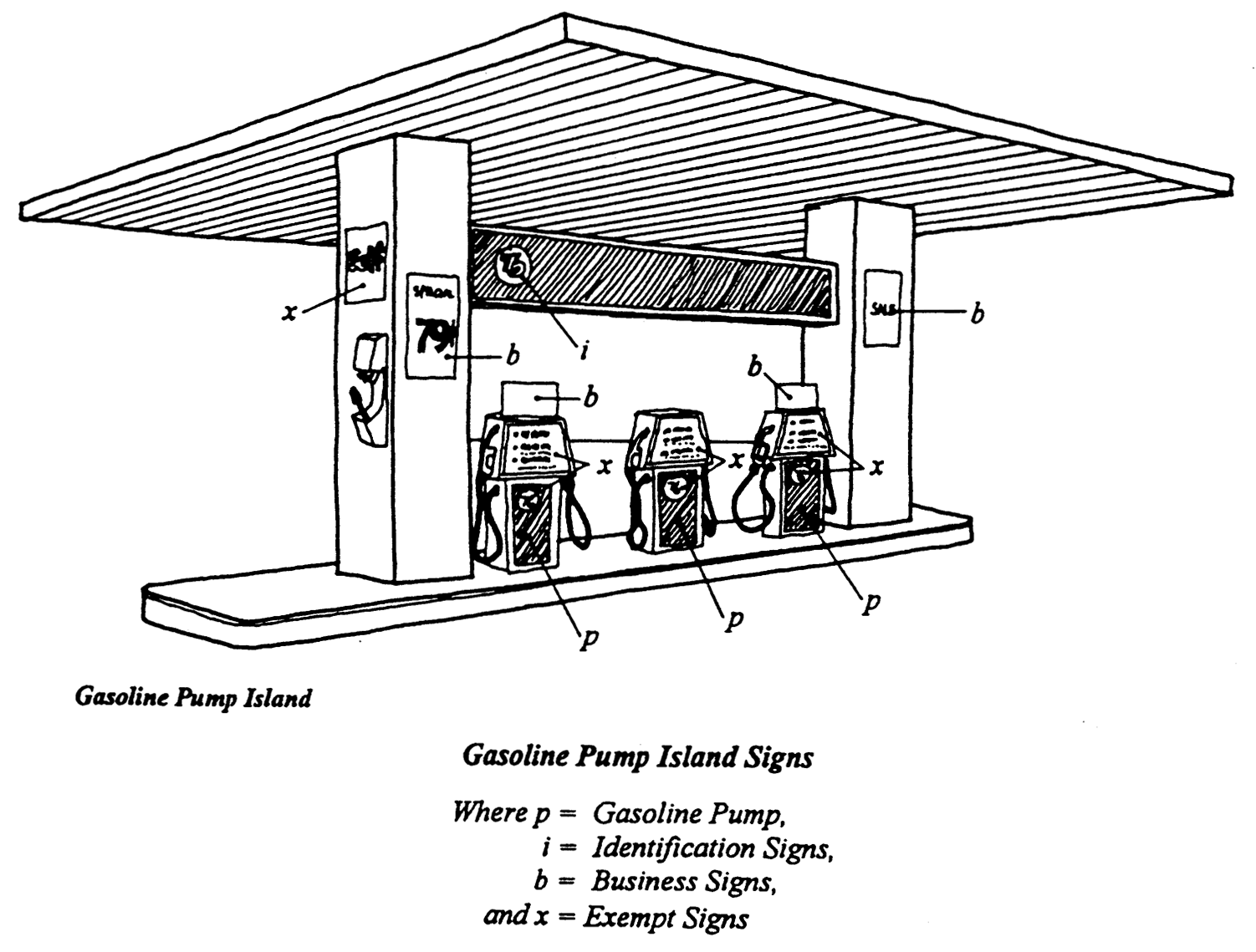
b.
Business and identification signs located at the pump island shall not be illuminated.
c.
For the purpose of this section, a pump island shall mean one or more pumps arranged in a row. More than one pump island may be located under a protective canopy or other roof-like structure.
(2)
Automobile/truck dealership.
a.
Each dealership shall be allowed a second freestanding development sign only if the lot is used for both new and preowned vehicles, or if two or more makes are offered for sale on the same lot. No more than two such signs shall be allowed: one identifying the new vehicle product line, and one identifying preowned vehicles or the sale of a second vehicle product line. Each sign shall otherwise conform with the height, area and location requirements in this division.
b.
Notwithstanding the provisions of section 105-653(2), each automobile/truck dealership may display pennants or streamers on the lot provided pennants or streamers are kept in good appearance.
(3)
Oversized real estate signs. Real estate signs exceeding the standards in section 105-655(10) and located on a lot having a minimum 125-foot frontage and having an area of five acres or more shall be permitted subject to the following:
a.
Number. Not more than one freestanding oversized real estate sign per street frontage shall be permitted, or not more than one roof, wall or window real estate sign shall be permitted per street frontage per building or tenant space having an exterior public entrance.
b.
Location. No freestanding oversized real estate sign shall be located closer than ten feet to any property line. No roof, wall or window real estate sign shall be located beyond the premises of a particular establishment.
c.
Sign area. No oversized real estate sign shall exceed 32 square feet in area.
d.
Height. The maximum height for an oversized real estate sign complying with this subsection shall be eight feet in height.
e.
Illumination. Oversized real estate signs shall not be illuminated.
(4)
Grand opening signs. Portable and temporary signs shall be permitted for grand opening promotions and business anniversaries, subject to the following:
a.
Portable signs.
1.
Number. No more than one portable sign shall be permitted on a lot at any one time.
2.
Location. Portable signs shall comply with all location requirements for freestanding signs, with the exception that portable signs may be located closer than 100 feet to a freestanding sign.
3.
Sign area. The area of a portable sign shall not exceed 50 square feet.
4.
Illumination. Portable signs may be illuminated subject to the standards in section 105-654.
b.
Temporary signs.
1.
Number. Except flags, pennants and streamers, the maximum number of temporary signs shall not exceed the number of awning, canopy, freestanding, roof, and wall signs displayed on the premises.
2.
Sign area. No temporary sign attached to a freestanding sign shall exceed 32 square feet in area or eight feet in height. No temporary sign attached to a wall, canopy, or awning shall exceed 60 square feet in area, and such signs shall conform to the sign display area limits for such awning, canopy and/or wall signs.
3.
Location. Temporary signs shall comply with all location requirements for awning, canopy, freestanding, roof, and wall signs.
4.
Illumination. Temporary signs may not be illuminated.
c.
Duration of display.
1.
No portable and/or temporary sign used for advertising a grand opening of a new business shall be displayed for more than one period of time not exceeding 30 consecutive days within a calendar year, and such signs shall be displayed only within one year of new occupancy of a building or tenant space.
2.
All portable and temporary signs used for advertising a grand opening of a new business or a business anniversary shall be displayed simultaneously.
3.
Portable signs may be displayed only for grand opening or re-opening promotions or business anniversaries.
d.
Searchlights. Searchlights may be used in connection with a grand opening display provided the light beacons are directed more than 45 degrees skyward and are not operated between the hours of 11:00 p.m. and 7:00 a.m.
(5)
Movie and live performance theaters.
a.
Number. One freestanding development or identification sign per street frontage and wall signs in accordance with the requirements of section 105-657(3) are allowed.
b.
Sign area. The area of a canopy, freestanding, roof, or wall theater sign shall not exceed the maximum percentage of sign display area as specified in the table of sign requirements in section 105-658.
c.
If the theater is located on a lot having more than one use, a freestanding theater sign shall be permitted in addition to any other freestanding development or identification sign permitted on the lot.
d.
Message board signs may be displayed when incorporated into a canopy, freestanding, roof, or wall sign subject to all applicable standards in this division and the following conditions:
1.
No more than 90 percent of the area of the canopy, freestanding, roof, or wall sign displayed shall be used as a message board sign.
2.
Lettering used on manual changeable copy signs directed to local or collector streets shall be at least three inches in height.
3.
Lettering used on manual changeable copy signs directed to secondary or major arterial streets shall be at least six inches in height.
(6)
Model home sales area signs.
a.
Definition. For the purpose of this section, a model home sales area shall mean one or more lots or dwellings arranged, developed and displayed in such a manner as to showcase on a temporary basis various dwelling styles, features, exteriors, and other design options to the general public, and at least one such model home or a temporary structure may be used for sales presentations, consultations and displays for prospective purchasers. A model home sales area shall provide accessory off-street parking, and may include model homes for sale by more than one builder. A model home sales area is usually located in the same recorded subdivision as the lots on which the dwellings are to be constructed. Model homes may be furnished and decorated.
b.
Master sign plan required. A master sign plan for model home sales areas shall be provided by the builder and/or subdivider. The master sign plan shall specify the standards for consistency among all signs in the model home sales area and subdivision, if applicable, with regard to color, lettering or graphic style, illumination, decorative lighting, materials, location of signs on the building and in the model home sales area and subdivision, and dimensions of all signs, subject to the following:
1.
Model home sales area identification sign.
i.
Number. One freestanding sign identifying the model home sales area shall be permitted.
ii.
Location. The freestanding model home sales area identification sign shall be located in the model home area it is identifying.
iii.
Height. The freestanding model home sales area identification sign shall not exceed 15 feet in height.
iv.
Sign area. The maximum area of the model home area identification sign shall be 64 square feet, provided that, if the model home sales area consists of two or less adjacent lots or buildings, or the recorded subdivision has a development gateway sign, the freestanding sign shall not exceed 32 square feet in area.
2.
Temporary signs. Temporary signs may be displayed in a model home sales area subject to the requirements of this division. In addition, flags, banners, pennants and streamers may be displayed in a model home sales area provided the flags, banners, pennants and streamers are kept in good appearance.
3.
Additional model home sales area signs. Signs identifying individual model homes, manufacturers, builders or sponsors shall be permitted provided the total area of such signs shall not exceed 16 square feet per model home and no individual sign shall exceed six square feet in area and six feet in height. Such signs shall be freestanding or wall signs.
c.
Illumination. Model home sales area signs may be illuminated subject to the standards in section 105-654.
d.
Duration of display. The model home sales area sign shall be displayed as long as the model home is open to the general public and homes are actively marketed. In no instance shall such signs be displayed continuously for more than two years. The village board may grant extensions of time for no more than one year for each request by the subdivider.
Sec. 105-660. - Signs allowed by special use permit.
The following signs may be allowed only by special use permit issued in accordance with the general objectives and procedures outlined in article IV, division 3 of this chapter:
(1)
Advertising signs.
a.
Number. Not more than one advertising sign per street frontage per lot shall be permitted.
b.
Area and height. The area and height of advertising signs shall not exceed the maximum specified for undeveloped land in the table of sign requirements in section 105-658.
c.
Distance from residential lots. No advertising sign shall be located closer than 100 yards to a residential zoning lot.
d.
Distance between signs. No advertising sign shall be located closer than 100 feet to another freestanding sign on the same lot.
e.
Setbacks. No advertising sign shall be located closer than ten feet to any right-of-way line or closer than 75 feet to any side property line.
f.
Permitted locations. Advertising signs shall be permitted only on unimproved property.
g.
Removal. Advertising signs shall be removed at such time as the lot on which they are located is improved.
h.
Illumination. Advertising signs shall not be illuminated.
(2)
Electronic message center signs.
a.
For the purpose of this section, an electronic message center shall mean a message board comprised of electrical circuitry, wiring and lights designed, arranged and operated in a manner to display messages programmed from a remote location.
b.
The sign message shall periodically include public service information such as time, temperature, date, weather, traffic conditions, or other messages of interest to the traveling public.
c.
The electronic message center shall be designed and located such that the entire sign message will be legible to motorists viewing the sign.
d.
The sign structure shall conform to all applicable regulations as specified in this division.
e.
The sign message shall not consist of flashing, scintillating, chasing or animated lights, and shall not change more frequently than once every two seconds.
(3)
Marquee signs.
a.
Marquees shall be designed and specified by a registered structural engineer or registered architect and shall be subject to approval by the village building official.
b.
Marquees shall be supported solely by the building to which they are attached. No columns or posts shall be permitted as supports. Marquees shall be designed to provide unobstructed flow of pedestrian traffic along any sidewalk.
c.
No marquee shall project within two feet of the curb of any street or driveway.
Sec. 105-661. - Special areas of control.
The village board may designate geographic areas within the village as a special area of control for purposes of this division. A special area of control is an area in which special standards are drafted in order to incorporate a wider variety of sign design, or to address unique communication needs.
Sec. 105-662. - Nonconforming signs.
(a)
Authority to continue. Subject to the elimination and termination provisions set forth in this section, any sign lawfully existing upon the effective date of the ordinance enacting this chapter may be continued so long as it complies with the applicable provisions of this Code.
(b)
Repair, alteration, expansion or moving. The owner or beneficial user of any nonconforming sign shall maintain such sign in good condition and repair; provided that such sign shall not be changed or altered in any manner which would increase the degree of its nonconformity, shall not be changed to another nonconforming sign, shall not be expanded, shall not be structurally altered to prolong its useful life, and shall not be moved in whole or part in any other location where it would remain nonconforming.
(c)
Exception for repairs pursuant to public order. Nothing in this section shall be deemed to prevent strengthening for complying with a reasonable order of a public official who is charged with protecting the public safety and who declares such a sign to be unsafe and orders its restoration to a safe condition, provided such restoration is not otherwise in violation of the various provisions of this section prohibiting the repair or restoration of partially damaged or destroyed structures.
(d)
Termination.
(1)
Immediate termination. Any sign or sign feature prohibited by section 105-653 shall be terminated within 30 days after the effective date of the ordinance enacting this chapter by removal of the sign or by alteration of the sign to eliminate the specified nonconforming feature.
(2)
Termination by abandonment. Any nonconforming sign, the use of which is discontinued for a period of 60 days, shall be presumed abandoned and shall not thereafter be reestablished. Any period of such discontinuance caused by government actions, strikes, material shortages or acts of God, and without any contributing fault by the nonconforming user, shall not be considered in calculating the length of discontinuance for purposes of this subsection.
(3)
Termination by change of business. Any nonconforming sign advertising or relating to a business on the premises on which it is located shall be terminated upon any change in the nature, ownership of control of the business; provided, however, such termination shall not be required if there is no change in the name or manner in which the business is conducted and such change, ownership or control does not require the modification or alteration of any existing sign.
(4)
Termination by damage or destruction. Any nonconforming sign damaged or destroyed, by any means, to the extent of 35 percent of its replacement cost new shall not be restored, but shall be terminated.
Sec. 105-663. - Zoning certificate.
(a)
Required. Except for those signs enumerated in section 105-655, no sign shall be erected, enlarged, expanded, altered or relocated unless a zoning certificate evidencing the compliance of such sign with the provisions of this division and other applicable provisions of this chapter shall have been first issued in accordance with the provisions of subsection (b) of this section. Routine sign maintenance, changing of parts designed for change or changing the content of a sign in any manner which does not change the functional classification of the sign shall not, standing alone, be considered an alteration of the sign requiring issuance of a zoning certificate, unless such change of parts or content relates to or is occasioned by a change in the ownership or nature of the activity to which the sign relates or to the nature of the activity which is conducted on the premises on which the sign is located.
(b)
Application. Application for a zoning certificate for a sign shall be filed with the zoning administrator upon forms provided by the village. Every application for zoning certificate for a sign shall be accompanied by the following, as needed:
(1)
A copy of plans and specifications showing the method of construction, illumination, if any, and support of such sign. Calculations showing the sign is designed for dead load and wind pressure in any direction in the amount required by applicable laws and ordinances of the village may be required.
(2)
An accurate plan showing the location of the signs on the lot and a drawing indicating the location of the signs on any building or structure on the lot.
(3)
A sketch, drawn to scale, showing sign faces, exposed surface areas and the proposed message and design, accurately represented as to size, area, proportion and color.
(4)
The written consent of the owner or agent of the building, structure, or land on which the sign is erected.
(5)
An insurance policy or bond as required by subsection (c) of this section.
(c)
Bond or insurance. Every applicant for a sign permit shall, before the permit is granted, file with the zoning administrator a continuing bond in the penal sum of $10,000.00, executed by the applicant and a surety company to be approved by the zoning administrator and conditioned for the faithful observance of the provisions of this division and all laws and ordinances relating to signs, and which shall indemnify and save harmless the village from any and all damages, judgments, costs or expenses which the village may incur or suffer by reason of the granting of the permit. A liability insurance policy, in an amount not less than $1,000,000.00, issued by an insurance company authorized to do business in the state, conforming to this section may be permitted in lieu of a bond. The requirements of this subsection (c) shall not apply to temporary signs.
(d)
Fee. The fee to be charged for permits for the construction or erection of any sign, except those enumerated in section 105-655, shall be as determined by the village board and amended from time to time.
(e)
Revocation. All rights and privileges acquired under the provisions of this division are mere licenses revocable at any time by the majority of the president and board of trustees, and all such permits shall contain this provision.

