
De Beque City Zoning Code
CHAPTER 14
12. - PROVISIONS, USES, AND REQUIREMENTS
Sec. 14.12.010. - Establishment of zone districts.
(a)
To carry out the provisions of this title, the Town is divided into zone districts. The purposes of dividing the Town into zone districts are to:
(1)
Recognize that certain areas of the town are in various stages of development;
(2)
Preserve the character of certain neighborhoods in the Town;
(3)
Conserve the value of property; and
(4)
Establish and encourage appropriate land uses in existing and newly annexed areas of the Town.
(b)
It is intended that the boundaries of the zone districts shown on the zoning map adopted contemporaneously herewith, will not usually be changed unless it is demonstrated that the character of an area has so changed that amending the zoning map is in the public interest.
(c)
The town is divided into the following districts:
Table 14.12.010. Zone Districts
(Ord. No. 325, § 1(part), 2006; Ord. No. 373, § 1, 2008; Ord. No. 436, § 2, 2013; Ord. No. 531 (Series 2023), exh. 1(14.03.010), 3-28-2023)
Sec. 14.12.020. - Zone district boundaries.
(a)
Except where otherwise indicated, zone district boundaries shall follow municipal corporation limits, section lines, ¼ section lines, ½ section lines, center lines of major rivers or tributaries, lot lines of platted blocks, center lines of town roads, county roads, highways, interstates, or right-of-way lines or extensions thereof.
(b)
When there is uncertainty about the boundaries of a zone district shown on the Town's zoning map, the following rules shall apply:
(1)
For non-subdivided property or where a zone district boundary divides a lot or parcel, the location of such boundary, unless indicated by dimension, shall be determined by the scale of the zoning map.
(2)
Where a zone district boundary coincides with a right-of-way line of a right-of-way that has been abandoned, the boundary shall be construed as following the centerline of the former right-of-way.
(3)
Land that is not part of a public, railroad, or utility right-of-way and is not indicated as being in any zone district shall be included in the most restrictive, adjacent zone district, even if such district is separated from the land in question by a public, railroad, or utility right-of-way.
(4)
A zone district boundary indicated as approximately following the Town's municipal limits shall be construed as following such limits.
(5)
A zone district boundary indicated as approximately following platted lot lines or platted parcel boundary lines shall be construed as following such lot lines or parcel boundary lines.
(6)
A zone district boundary indicated as approximately following the centerline of a river or stream shall be construed as following such centerline.
(Ord. No. 531 (Series 2023), exh. 1(14.03.020), 3-28-2023)
Sec. 14.12.030. - Incorporation of the zoning map.
(a)
The location and boundaries of the Town's zone districts, established by the ordinance codified herein, shall be shown on a map titled "Official Zoning Map of the Town of De Beque, Colorado" (referenced herein as the "zoning map"), which is incorporated into this title.
(b)
The zoning map, together with all data shown thereon and all amendments thereto, is by reference made a part of this title.
(c)
The zoning map shall bear the signature of the Mayor, attested by the Town Clerk, the seal of the Town, and the date of adoption.
(d)
The zoning map shall be maintained as follows:
(1)
All changes to the zoning map shall be made by an amendment to the ordinance codified herein.
(2)
Within 30 days of the effective date of an amending ordinance, the Town Planner shall update the zoning map to reflect the amendment and note the number of the ordinance. The updated zoning map shall be signed and dated by the Mayor, attested by the Town Clerk.
(3)
The zoning map is to be kept in the Town's municipal offices and made available on the Town's website.
(Ord. No. 531 (Series 2023), exh. 1(14.03.030), 3-28-2023; Ord. No. 544 (Series 2024), 8-27-2024)
Sec. 14.12.040. - Zoning of annexed land.
(a)
Any land annexed to the Town, after the effective date of the ordinance codified herein, shall be zoned in accordance with the zone district classifications set forth in this chapter.
(b)
The Board of Trustees shall designate a zone district for such land at the time of annexation. Prior to the designation of a zone district, the Board of Trustees shall refer the proposed annexation to the Planning Commission for a recommendation. The petitioner for annexation may request that annexed land be placed in a specific zone district(s). The zoning of annexed land shall be established in accordance with applicable State statutes.
(c)
The zoning for annexed land shall not become effective until the effective date of the ordinance approving the annexation.
(d)
This section shall not preclude subsequent rezoning of annexed land in accordance with chapter 14.24 of this title.
(Ord. No. 531 (Series 2023), exh. 1(14.03.040), 3-28-2023)
Sec. 14.12.050. - Application of regulations.
(a)
Conformity to use regulations required.
(1)
Except as otherwise provided in this title, no land shall hereafter be used, be designed to be used, or be intended to be used for any purpose or in any manner other than in accordance with the regulations for the zone district in which such land is located.
(2)
Except as otherwise provided in this title, no building or structure shall hereafter be erected, moved, altered, extended, used, be designed to be used, or be intended to be used for any purpose or in any manner other than in accordance with the regulations for the zone district in which such building or structure is located.
(b)
Conformity to dimensional requirements required.
(1)
Except as otherwise provided in this title, all buildings and structures shall be erected, moved, altered, or extended in conformance with the dimensional requirements for the zone district in which such buildings or structures are located.
(2)
Except as otherwise provided in this title, no yard surrounding a building or structure may be encroached upon or reduced in any manner, except for in conformance with the applicable requirements set forth in section 14.12.100.
(c)
Lot area, yard, frontage, open space, and parking restrictions. Except as otherwise provided in this title, no lot area, yard, frontage, other open space, or parking provided about any building for the purpose of complying with provisions of this title shall be considered as providing lot area, yard, frontage, other open space, or parking for any other building.
(Ord. No. 531 (Series 2023), exh. 1(14.03.050), 3-28-2023)
Sec. 14.12.060. - Principal and accessory uses.
(a)
Principal uses.
(1)
Principal uses, permitted in the town's zone districts, are identified in section 14.12.090 and are categorized as: agricultural uses; commercial and industrial uses; public, institutional, and civic uses; and residential uses. All principal uses are subject to the applicable requirements of this title.
(2)
Only one principal use and one principal building per lot is allowed in the residential zone district (RZD) unless specifically permitted by an approved special use or planned unit development (PUD).
(3)
More than one principal use and principal building per lot is allowed in the non-residential zone districts (OTC, SC, HC, I, P, and AG).
(4)
When more than one principal building is on a lot the following requirements shall be met:
a.
The minimum spacing between separate buildings shall be ten feet or half the height of the tallest building, whichever is greater.
b.
Adequate infrastructure (e.g., roads, sidewalks, etc.) and utilities (e.g., water, sewer, electricity, gas, etc.) to serve each building must be provided.
(b)
Accessory uses.
(1)
Accessory uses, permitted in the town's zone districts, are identified in section 14.12.090 and are subject to the applicable requirements of this title.
(2)
A principal use must be established on a lot before an accessory use is permitted. This requirement does not apply to fences, which are permitted on a lot prior to a principal use being established.
(3)
More than one accessory use may be permitted per lot.
(4)
Unless otherwise stated in this section, any land use or structure identified as an accessory use in section 14.12.090 may be permitted as a principal use on a lot if a special use is approved for such land use or structure.
(Ord. No. 531 (Series 2023), exh. 1(14.03.060), 3-28-2023; Ord. No. 546 (Series 2025), Exh. 1, 2-25-2025)
Sec. 14.12.070. - Permitted, special, and prohibited uses.
Section 14.12.090 identifies the principal and accessory uses allowed in the Town's zone districts. Table 14.12.100-1 uses the following classification system to specify if a land use is a permitted use, special use, or if it is prohibited:
(1)
Permitted uses. A "P" indicates that a use is allowed by right in a zone district, subject to all applicable requirements of this title, including, but not limited to, general use standards (refer to section 14.12.110), use-specific standards (refer to section 14.12.120), dimensional requirements, (refer to section 14.12.100), and design standards (refer to chapter 14.32).
(2)
Special uses.
a.
An "S" indicates that a use is allowed in a zone district, subject to the approval by the Board of Trustees (refer to chapter 14.24) and all applicable requirements of this title, including, but not limited to, general use standards (refer to section 14.12.110), use-specific standards (refer to section 14.12.120), dimensional requirements, (refer to section 14.12.100), and design standards (refer to chapter 14.32).
b.
Uses designated as a special use are contingent uses which may or may not be appropriate in a particular location depending on the nature of the proposed use, its relationship to surrounding land uses, its impact on traffic capacities, potential environmental effects, and compatibility with the neighborhood. It is the intent of these regulations to provide a review of special uses so that the community is assured that any proposed special use is suitable for the proposed location and is compatible with the surrounding land uses.
(3)
Prohibited uses. A "-" indicates that a use is not allowed in a zone district.
(Ord. No. 531 (Series 2023), exh. 1(14.03.070), 3-28-2023)
Sec. 14.12.080. - Classification of unlisted uses.
The town recognizes that new types of land uses, not listed in this chapter, may emerge over time. When an application is made for such a land use, the following procedures shall be followed to determine an appropriate classification:
(1)
Determination by Town Planner.
a.
The Town Planner shall provide an interpretation as to which existing use type, in section 14.12.090, an unlisted use should be classified as. In doing so, the Town Planner shall consider the purpose of the town's zone districts, the nature of the unlisted use, and the potential impacts on surrounding properties.
b.
If the Town Planner determines that an unlisted use falls within an existing use type, they shall provide written notification of their decision to the applicant, the Planning Commission, and the Town Board. The decision by the Town Planner shall be effective 14 days after written notification is sent.
(2)
Special use required. If the Town Planner is unable to determine a classification for an unlisted use, they shall notify the applicant that such use will only be permitted upon the approval of a special use, in accordance with chapter 14.24.
(3)
Appeal of a decision. An applicant may appeal a decision by the Town Planner to the Board of Adjustment, in accordance with sections 14.24.310 to 14.24.390.
(Ord. No. 531 (Series 2023), exh. 1(14.03.080), 3-28-2023)
Sec. 14.12.090. - Schedule of uses.
(a)
Table 14.12.090 lists the uses allowed within the Town's zone districts and provides cross-references to the specific requirements associated with certain types of uses (i.e., use-specific standards).
(b)
All uses listed in Table 14.12.090 must comply with the general use standards set forth in section 14.12.110. Definitions for use types listed in Table 14.12.090 are set forth in chapter 14.04.
Table 14.12.090. Schedule of Uses
Legend:
P: Permitted use
S: Special use
—: Not Permitted
(Ord. No. 373, § 4, 2008; Ord. No. 436, § 2, 2013; Ord. No. 440, § 1, 2013; Ord. No. 443, § 1, 2014; Ord. No. 450, § 1, 2015; Ord. No. 498, § 2, 2019; Ord. No. 531 (Series 2023), exh. 1(14.03.090), 3-28-2023; Ord. No. 546 (Series 2025), Exh. 2, 2-25-2025)
Sec. 14.12.100. - Dimensional requirements.
(a)
Table 14.12.100 sets forth the dimensional requirements for the town's zone districts. These requirements define the minimum lot, setback, and public street frontage requirements and maximum lot coverage and building height allowances, unless otherwise restricted or exempted in this title.
Table 14.12.100. Dimensional Requirements for All Zone Districts
1 Per lot or parcel in separate ownership.
Legend:
SF: Square Feet
LF: Linear Feet
(b)
Authorized exceptions to setback requirements.
(1)
Where a property in a nonresidential zone district (OTC, SC, HC, I, P, or AG) shares a side lot line with a property in a residential zone district (RZD), the required side yard setback of the residential zoning district shall apply along both sides of the common lot line.
(2)
When a vacant lot is bordered on two sides by lots with existing principal buildings or structures, either of which do not meet the front setback requirements for the zone district, the required front setback for the vacant lot shall be the average of the front setbacks of the buildings or structures on the adjoining lots.
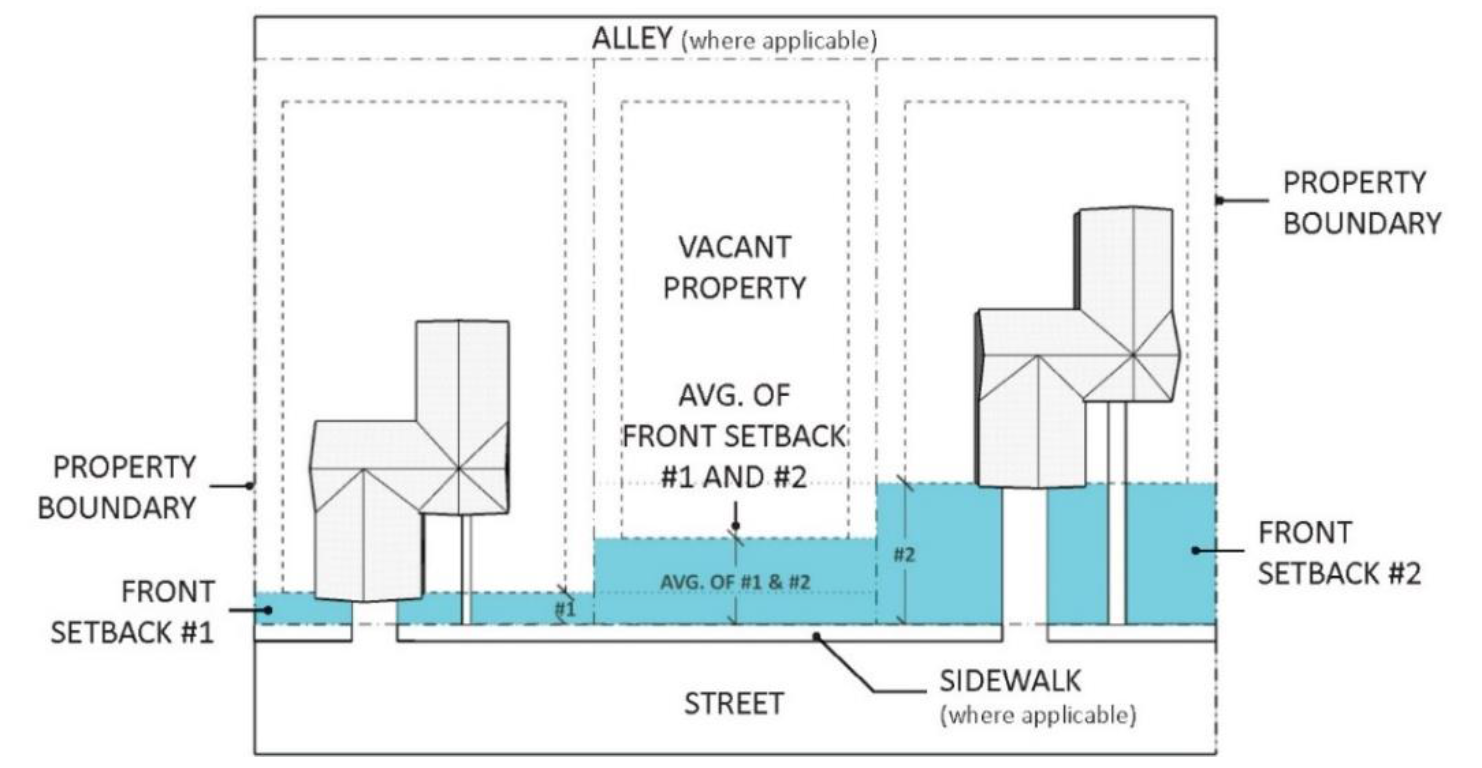
Diagram 14.12.100-1 - Averaging Setbacks
(3)
When buildings share a common wall (e.g., a duplex), only those buildings that do not share a common wall need observe the required side setback for the zone district.
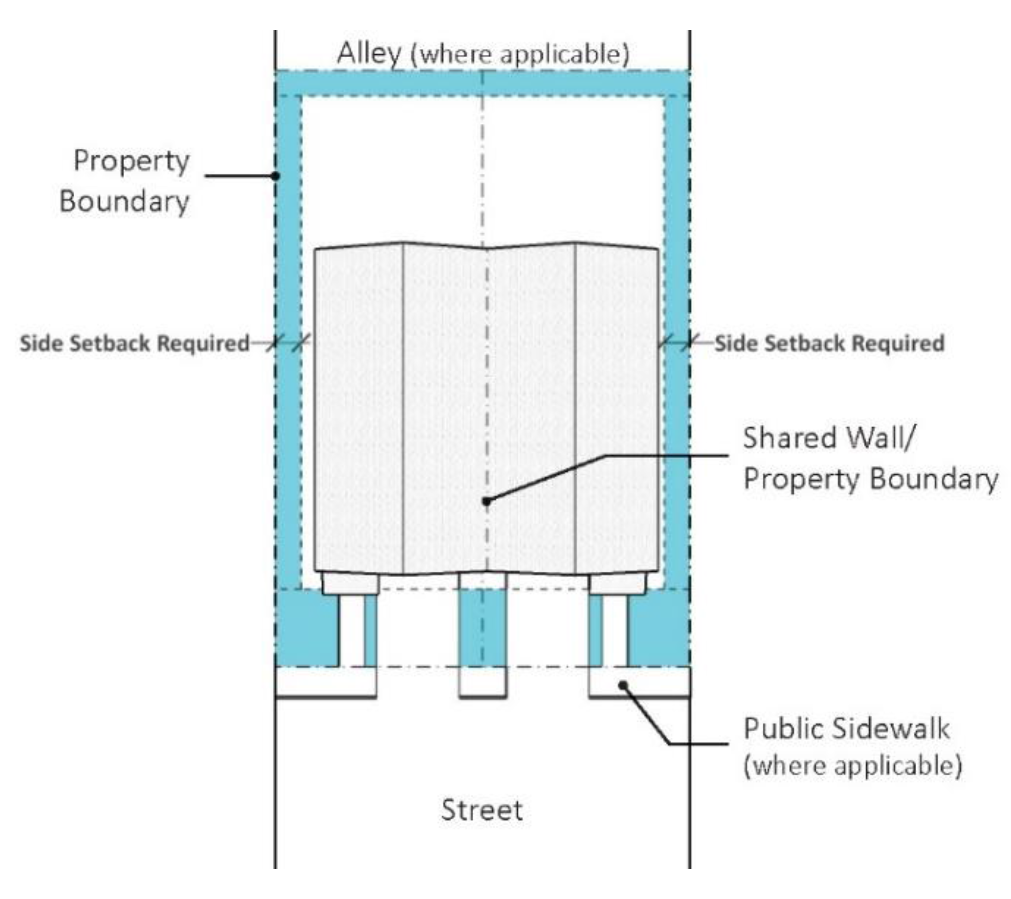
Diagram 14.12.100-2 - Buildings with Shared Walls
(4)
On double frontage lots (i.e., lots extending from one street to another paralleling street), the front yard setback for the zone district shall be observed from both streets.
(5)
On corner lots, the owner/developer shall determine which yard shall be the rear yard if the definition of a rear yard defines more than one rear yard.
(6)
Every part of a required yard shall be unobstructed from ground level to the sky. Select improvements and architectural features may encroach into required setbacks as follows:
a.
Cornices, sills, and ornamental features may project up to one foot into a required yard.
b.
Roof eaves may project up to 18 inches into a required yard.
c.
Uncovered porches, slabs, and patios, walks, steps, fences, hedges, and walls are permitted in a required yard if they do not exceed a height of 42 inches above ground level.
d.
Covered front porches or stoops may extend up to eight feet into a required front yard, provided that the porch or stoop is at least five feet from any lot line.
e.
Fire escapes and individual balconies, not used as passageways, may project up to 18 inches into a required side yard or up to four feet into a required front or rear yard.
f.
Solar collection devices and equipment may project up to 18 inches into a required yard.
g.
Driveways may be located within any required setback.
h.
ADA access ramps may be located within any required yard.
i.
Utility lines and minor, incidental utility structures (e.g., fire hydrants, manholes, and transformers and other cabinet structures) may encroach into any required yard.
(c)
Authorized exceptions to building height requirements. Architectural features shall not exceed the maximum building height, unless specifically authorized below:
(1)
Cupolas, domes, towers, spires, belfries or similar noninhabitable structural appurtenance may exceed the maximum building height by no more than ten feet.
(2)
Parapet walls may exceed the maximum building height by up to four feet.
(3)
Stacks, vents, chimneys, antennae, cooling towers, elevator bulkheads and overrides, solar panels, tanks, or similar mechanical equipment may extend up to ten feet above the maximum building height.
(d)
Authorized exceptions for original townsite lots. The following shall apply to contiguous original townsite lots that are under common ownership and are all located in the same zone district:
(1)
The perimeter of the lots may be used to measure and establish compliance with the minimum front, side, and rear setback requirements for the applicable zone district.
(2)
The combined area of the lots may be used to calculate and establish compliance with the minimum lot area and maximum lot coverage requirements for the applicable zone district.
(3)
A structure(s) may be constructed across shared lot lines.
(4)
Any conveyance of a lot(s) that results in noncompliance with any applicable requirement of this title and/or other title of this Code is prohibited.
(5)
In the discretion of the Board of Trustees, the owner(s) of contiguous original townsite lots may be required to execute and record a covenant notifying successors in title of development pursuant to this subsection, the requirements of this title, and/or other provisions of this Code.
(e)
Measurement standards. The following standards shall be used for measuring, interpreting, and enforcing the dimensional requirements set forth in this section:
(1)
Lot measurements.
a.
Lot area. Measured as the total area within the boundaries of a lot.
b.
Lot width. Measured as the horizontal distance between the side lot lines, at the front lot line.
c.
Lot depth. Measured as the horizontal distance between the front and rear lot lines.
(2)
Setback measurements.
a.
Front setback. Measured as the horizontal distance of a line perpendicular to the front lot line extending towards the rear lot line.
b.
Side setback. Measured as the horizontal distance of a line perpendicular to a side lot line extending towards the opposite side lot line.
c.
Rear setback. Measured as the horizontal distance of a line perpendicular to the rear lot line extending towards the front lot line.
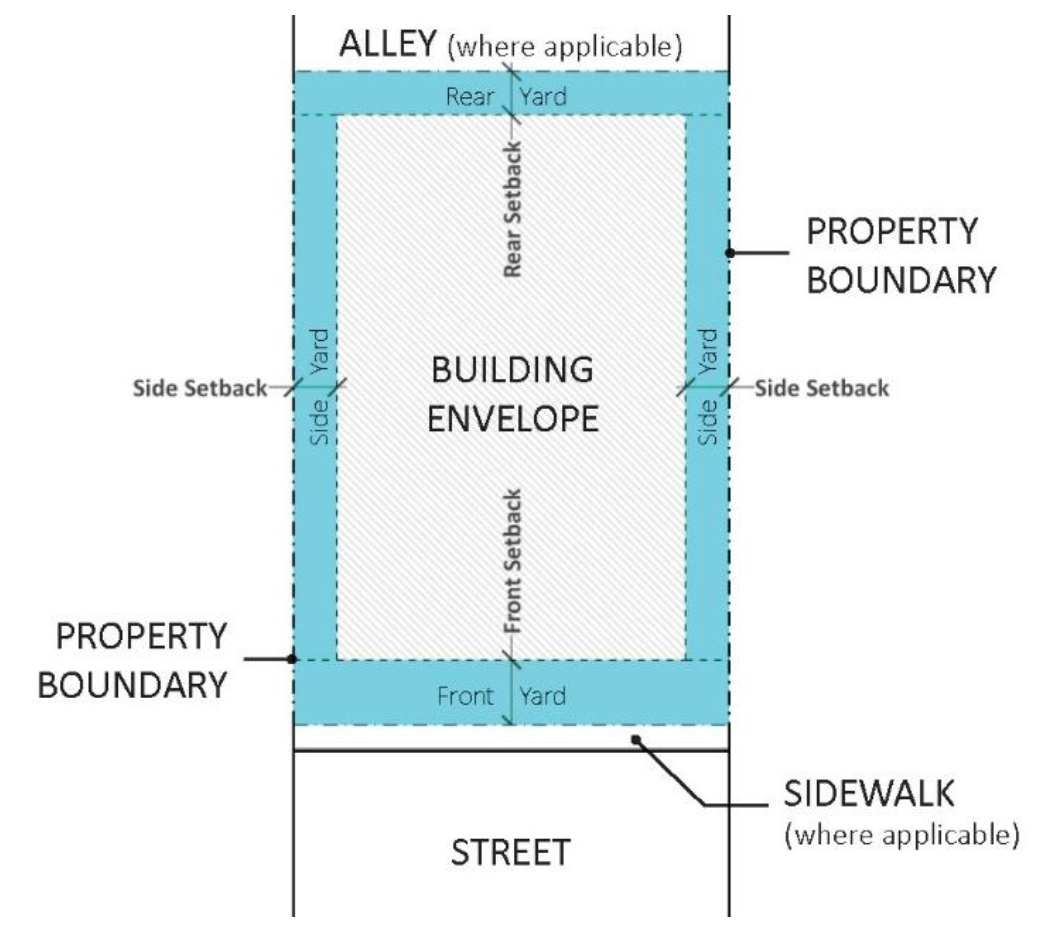
Diagram 14.12.100-3 - Setback Measurements
(f)
Height measurements.
(1)
Building and structure height for lots with slopes less than 1:10. Unless otherwise provided in this title, for lots sloping less than one foot vertically in ten feet horizontally, away from the established street grade, the height of a building or structure shall be measured as the vertical distance between undisturbed or natural ground level to:
a.
The top of a flat or mansard roof; or
b.
The midpoint between the eave line, ridge line of a gable, gambrel, hip, shed or similar pitched roof.
(2)
Building and structure height for lots with slopes greater than 1:10. Unless otherwise provided in this title, for lots sloping more than one foot vertically in ten feet horizontally, the height of a building or structure shall be measured as the vertical distance between undisturbed or natural ground level to:
a.
The top of a flat or mansard roof; or
b.
The midpoint between the eave line, ridge line of a gable, gambrel, hip, shed or similar pitched roof.
The maximum building height for such a lot shall parallel the slope of the lot's existing/preconstruction grade.
(3)
Yard shed height. Shall be measured as the vertical distance between the undisturbed or natural grade at the base of a yard shed and the highest point of the shed's roof or wall, whichever is greater.
(4)
Fence, hedge, or wall height. Shall be measured as the vertical distance between the undisturbed or natural grade at the base of a fence, hedge, or wall and the highest point of the fence, hedge, or wall.
(Ord. No. 373, § 4, 2008; Ord. No. 420, § 1, 2012; Ord. No. 436, § 2, 2013; Ord. No. 440, § 1, 2013; Ord. No. 531 (Series 2023), exh. 1(14.03.100), 3-28-2023; Ord. No. 546 (Series 2025), Exh. 3, 2-25-2025)
Sec. 14.12.110. - General use standards.
The following standards shall apply to all uses in all zone districts in the Town:
(1)
Compliance with Town, State, and Federal regulations required. All applicable regulations of the Town, the State, and the federal government must be complied with at all times.
(2)
Vibration. Ground vibration that is perceptible, without an instrument, any distance beyond a property line, is prohibited.
(3)
Noise.
a.
The maximum permissible noise levels in the Town shall be in accordance with C.R.S. § 25-12-103. Table 14.12.110 serves as a reference to the maximum permissible noise levels set forth in C.R.S. § 25-12-103.
Table 14.12.110. Maximum Permissible Noise Levels By Zone and Time Period
b.
Every activity, to which this title applies, shall be conducted in a manner so that any noise produced is not objectionable due to intermittence, beat frequency, or shrillness. Sound levels of noise radiating from a property line at a distance of 25 feet or more in excess of the db(A) established in Table 14.12.110 shall constitute prima facie evidence that such noise is a public nuisance.
c.
In the hours between 7:00 a.m. and the next 7:00 p.m., the noise levels permitted in Table 14.12.110 may be increased by ten db(A) for a period of not to exceed 15 minutes in any one hour period.
d.
Periodic, impulsive, or shrill noises shall be considered a public nuisance when such noises are at a sound level of five db(A) less than those listed in Table 14.12.110.
e.
Construction projects shall be subject to the maximum permissible noise levels specified for the Industrial zone for the period within which construction is to be completed pursuant to any applicable construction permit issued by the town or, if no time limitation is imposed, for a reasonable period of time for completion of project.
f.
Measurements. Measurements with a sound level meter shall be made when the wind velocity at the time and place of such measurement is not more than five miles per hour. In all sound level measurements, consideration shall be given to the effect of the ambient noise level created by the encompassing noise of the environment from all sources at the time and place of such sound level measurement.
g.
Exemptions. The provisions of this subsection (3) are:
1.
Not intended to apply to the operation of aircraft or to other activities which are subject to federal law with respect to noise control;
2.
Not applicable to the use of property for purposes of conducting speed or endurance events involving motor or other vehicles, but such exception is effective only during the specific period of time within which such use of the property is authorized by the town; and
3.
Not applicable to the use of property by the State, any political subdivision of the State, or any other entity not organized for profit, including, but not limited to, nonprofit corporations, or any of their lessees, licensees, or permittees, for the purpose of promoting, producing, or holding cultural, entertainment, athletic, or patriotic events, including, but not limited to, concerts, music festivals, and fireworks displays.
(4)
Nonresidential uses. All nonresidential uses shall comply with the following standards:
a.
When adjacent to a residential use, a nonresidential use must be screened, from such use, with an opaque fence with a minimum height of six feet. This standard does not apply to residential uses located in the same building as a nonresidential use.
b.
All outside storage areas, associated with a nonresidential use, must comply with the following standards, unless otherwise authorized by an approved special use permit:
1.
Must be screened with an opaque fence with a minimum height of six feet that screens the storage area from view when observed from the centerline of all adjoining street rights-of-way.
2.
All stored, piled, or stacked materials must be configured to ensure adequate screening by the opaque fence.
3.
All equipment must be stored in the lowest operating position.
4.
All screening fences must always be maintained in a good and safe condition.
5.
All fences, with structural support members on one side, must be constructed with the structural support members facing the interior of the property.
(5)
Compliance with standards.
a.
An approval by the Town, for any use requiring a permit and/or license from the Town, the County and/or a state or Federal agency, shall not become valid until it has been certified to the Town Planner that the appropriate permits and/or licenses have been issued to the user and that the use complies with all applicable regulations.
b.
No building permit or certificate of occupancy shall be issued until without evidence of the ability to comply with the appropriate standards and mitigation measures, as deemed necessary by the Town Planner, has been provided to the Town Planner.
c.
Noncompliance with any of the applicable standards shall be grounds for the revocation of any permits issued by the Town.
(Ord. No. 531 (Series 2023), exh. 1(14.03.110), 3-28-2023)
Sec. 14.12.120. - Use-specific standards.
The following standards apply to specific uses identified in section 14.12.090:
(1)
Accessory dwelling units. An accessory dwelling unit (ADU) shall comply with the following standards:
a.
Only one ADU per parcel is allowed.
b.
An ADU is only allowed as an accessory use to a single-family detached dwelling.
c.
An ADU may be fully attached to, or within, the principal dwelling unit.
d.
A detached ADU may be located to the side or rear of the principal dwelling unit and not beyond the front building line.
e.
An ADU is not required to front on a public street.
f.
ADUs shall not exceed 800 square feet.
g.
Each ADU must be a separate dwelling unit that is separated from the primary dwelling unit.
h.
ADU's must have separate exterior access. An airlock type entry is permitted if separate access to the accessory dwelling unit is provided immediately following entry into the primary dwelling unit.
i.
Must have cooking (stove, sink, refrigerator, and counter space), sleeping, and sanitary facilities (toilet, sink, shower or bathtub).
j.
ADUs shall not have more than two bedrooms.
k.
A minimum of one off-street parking space per ADU shall be provided. Off-street parking shall comply with the applicable requirements of chapter 14.36.
l.
The ownership of an ADU shall not be severed from the ownership of the principal use on the lot.
(2)
Dwelling, accessory to a business. A dwelling that is accessory to a business shall comply with the following standards:
a.
Must be located in the same building as the business that the dwelling is accessory to.
b.
If located at the street level of the building, the dwelling cannot be in any portion of the building the fronts on a street.
c.
The dwelling may be located anywhere in the second story of the building.
(3)
Drive-in/drive-through. A drive-in/drive-through in the Old Town Center (OTC) zone district shall comply with the following standards:
a.
Must be located to the side or rear of a building and accessed from an existing access point or from an alley abutting the lot.
b.
Must be designed and constructed so that pedestrians entering and exiting a building (associated with the drive-in/drive-through) are not required to cross the drive-in/drive-through lane. If it is necessary for pedestrians to cross the drive-in/drive-through lane, the crossing shall be clearly demarcated with signage and striping, unique paving material, or other similar treatment.
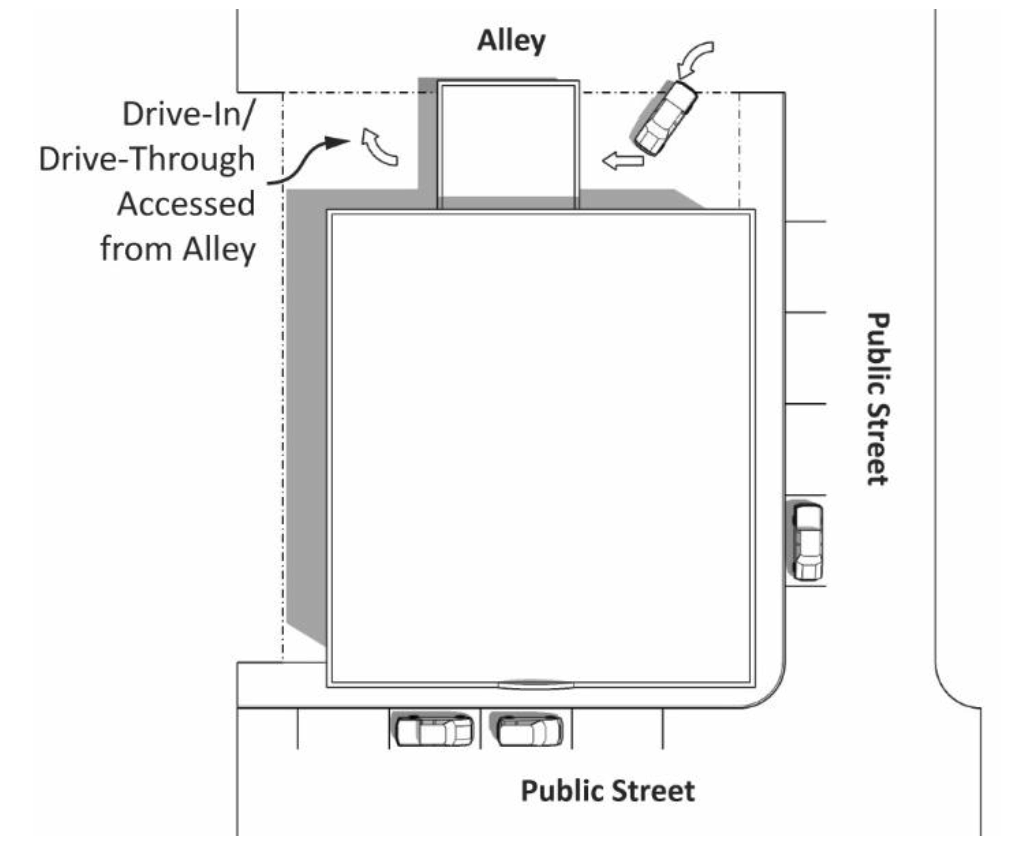
Diagram 14.12.120 — Drive-In/Drive-Through Accessed from Alley
(4)
Fences, hedges, and walls. Fences, hedges, and walls must comply with the following standards:
a.
General requirements.
1.
All fences and walls must comply with applicable building code requirements.
2.
No fence, hedge, or wall may extend beyond, or across, a property line unless authorized by a joint written agreement with the abutting property owners. It shall be the responsibility of the property owner to accurately locate all property lines.
b.
Siting requirements.
1.
Fences, hedges, and walls must be a minimum of one foot from any public sidewalk.
2.
No fence, hedge, or wall over 42 inches in height shall be placed within sight distance triangles required at all intersections of driveways, parking access, or alleys and streets and at all intersections of streets (refer to chapter 14.32).
c.
Design requirements.
1.
The following types of fencing are prohibited:
(i)
Barbed wire, razor wire, or similar types of sharp-pointed fencing.
(ii)
Electrically charged fencing.
2.
Fences or walls shall not exceed seven feet in height unless required by the Town as a condition of approval of a special use.
3.
Fences, hedges, or walls located within a front yard shall not exceed 42 inches in height.
(5)
Fueling stations. A fueling station must comply with the following standards:
a.
All buildings shall be a minimum of 40 feet from any street right-of-way line.
b.
Fuel pumps and other appliances shall be a minimum of 15 feet from any street right-of-way line.
c.
All service, storage, or similar activities shall be conducted entirely on the premises.
d.
Open storage of wrecked or inoperable automobiles, trucks, discarded tires, automotive parts, or similar materials is not permitted.
(6)
Home occupations. A home occupation must comply with the following standards:
a.
No persons other than those residing in the dwelling and up to two full-time employees are to be engaged in a home occupation.
b.
No more than 25 percent of the dwelling's floor area can be used for a home occupation.
c.
An accessory building may be used for a home occupation provided the floor area requirements are not exceeded.
d.
All activity associated with a home occupation must be conducted within an enclosed building.
e.
A minimum of one off-street parking space per employee of a home occupation shall be provided. Off-street parking shall comply with the applicable requirements of chapter 14.36.
f.
The property must maintain a non-business appearance at all times.
g.
Signage for a home occupation is permitted in accordance with chapter 14.48.
h.
A home occupation must operate in such a manner that it is not a nuisance to surrounding properties due to noise, odor, vibration, glare, dust, increased traffic, or other adverse impacts or effects. If a home occupation is lawfully established and other persons complain of nuisance conditions, the town may issue a notice of violation directing the owner or occupant to cure or abate specific conditions within 120 days. If the owner or occupant fails or refuses to timely abate the violation(s) the town may undertake enforcement as provided for other violations of zoning laws, including injunctive relief, damages, or both as applicable.
(7)
Natural medicine businesses. A natural medicine cultivation facility, healing center, products manufacturer, and/or testing facility shall comply with the following standards:
a.
Must be a minimum of 400 feet from an existing licensed childcare facility or a private or public school. This distance shall be calculated in accordance with the applicable requirements of the State of Colorado.
b.
Cannot operate unless licensed by the State Licensing Authority.
(8)
Shipping containers, permanent. A permanent shipping container is permitted as an accessory use in all zone districts, except for the Old Town Center (OTC) zone district, subject to the following standards:
a.
Special use permit required.
1.
Approval of a special use permit, in accordance with chapter 14.24, is required prior to the placement of a permanent shipping container.
2.
If approved, a shipping container must comply with all conditions of approval and the standards set forth in this section, at all times.
b.
General standards.
1.
Cannot be used for temporary or permanent habitation by humans or animals.
2.
Must be kept in a state of good repair so that the container can be moved intact, does not have holes due to damage or rust, and is not infested with vermin or other pests.
3.
Must be secured against unauthorized entry.
4.
Must comply with all applicable health regulations.
5.
Storage of materials on top of a shipping container is prohibited.
6.
Materials stored within a shipping container are subject to review and approval by the Fire District.
c.
Building permit requirements.
1.
A building permit is required prior to the placement of a shipping container larger than 200 square feet in total area to ensure effective anchoring/foundation in accordance with title 12.
2.
Any additions to, or remodels of, a shipping container require the issuance of a building permit.
3.
Issuance of a certificate of planning and zoning compliance, by the town, in accordance with section 14.04.110 is required prior to the issuance of a building permit.
d.
Other permit requirements. Prior to the installation of any utilities (ex. electricity, gas, water, etc.) in a shipping container, all required permits must be obtained in accordance with title 12.
e.
Siting requirements.
1.
Cannot be placed in a public right-of-way, accessway, front yard or any required off-street parking, loading, or landscape area.
2.
Must comply with the applicable requirements set forth in section 14.12.100, including, but not limited to, setbacks and lot coverage.
3.
Vertical stacking of shipping containers is prohibited.
4.
If not on a permanent foundation, a storage container must be placed on a level, all-weather surface to ensure stability and safety.
f.
Design standards.
1.
The exterior of a shipping container must match the color of existing structures on the property. The exterior color must be changed within 90 days of placement on the property.
2.
If placed on a nonresidential property, adjacent to a residential use, a shipping container must be screened from such the residential use with an opaque fence with a minimum height of seven feet.
g.
Nonconforming shipping containers. All owners of property that currently contain a shipping container, have 180 calendar days from the effective date of the ordinance codified in this section to bring their property into full compliance with the provisions of this section.
(9)
Shipping containers, temporary. The temporary placement of a shipping container is permitted as an accessory use in all zone districts subject to the following standards:
a.
May be placed on a residentially zoned property, or on a property the principal use of which is residential, for the limited purpose of loading and unloading household contents for a maximum of 30 days in one calendar year.
b.
May be used as an office or storage for equipment and/or materials storage while there is an active building permit for the property where the container is located.
c.
Must comply with the general standards for permanent shipping containers set forth in subsection (8) of this section.
(10)
Yard sheds. A yard shed is allowed as an accessory use to a residential dwelling, subject to the following standards:
a.
General standards.
1.
There is no limit on the number of yard sheds allowed provided that the applicable lot coverage requirements set forth in section 14.12.100 are not exceeded.
2.
All yard sheds require the issuance of certificate a planning and zoning compliance, by the Town, in accordance with section 14.04.110.
3.
Cannot be used for human or animal habitation, or as a garage.
4.
No hazardous or explosive materials can be stored in a yard shed.
b.
Building permit requirements.
1.
A building permit is not required for a yard shed that is 200 square feet or less, in total area and complies with the standards in this subsection.
2.
A building permit is required for a yard shed that is greater than 200 square feet in total area and/or multiple yard sheds are combined under a single roof.
c.
Other permit requirements. Prior to the installation of any utilities (ex. electricity, gas, water, etc.) in a yard shed, all required permits must be obtained in accordance with title 12.
d.
Siting requirements.
1.
May be located anywhere in a rear yard if the yard shed:
(i)
Is not placed on a permanent foundation;
(ii)
Can be moved at the request of the Town or a utility company, if the shed's placement interferes with the intended use of an easement;
(iii)
Does not create an unsightly or unsafe condition; and
(iv)
No portion of the shed, including roof eaves, is located in, or extends beyond, the property line.
2.
If the shed is placed within a utility easement, the affected utility company or the Town (for Town facilities) must authorize the location of the shed.
3.
Yard sheds cannot be placed in a drainage easement or drainage way.
e.
Design standards.
1.
The length of yard shed walls cannot exceed 20 feet on any side.
2.
The height of a yard shed cannot exceed ten feet measured as the vertical distance between undisturbed or natural grade at the base of the shed to the highest point of the shed's roof or wall, whichever is greater.
(Ord. No. 531 (Series 2023), exh. 1(14.03.120), 3-28-2023; Ord. No. 546 (Series 2025), Exh. 4, 2-25-2025)

