
Elgin City Zoning Code
ARTICLE IV
ZONING DISTRICT REGULATIONS
Sec. 46-203. - Establishment of zoning districts.
For the purpose of this section the following districts are hereby established for the city:
(1)
Residential districts.
a.
R-1 Single-Family Dwelling District.
b.
R-2 Single-Family and Duplex Dwelling District.
c.
R-3 Single-Family, Duplex, and Zero Lot Line Two Family District.
d.
R-4 Multiple-Family Residential District.
(2)
Commercial districts.
a.
C-1 Neighborhood Shopping District.
b.
C-2 General Commercial District.
c.
C-3 Highway Commercial District.
(3)
Industrial district. I-General Industrial District.
(Code 1990, ch. 11, § 2(C)(1); Ord. No. 2023-03-07-06, 3-7-2023)
Sec. 46-230. - General description.
The R-1 Single-Family Dwelling District is the most restrictive residential district. The principal use is the single-family dwelling and related recreational, religious and educational facilities normally required to provide an orderly and attractive residential area. These residential areas are appropriate to the residential environment. Internal stability, attractiveness, order and efficiency are encouraged by providing for adequate light, air, and open space for dwelling and related facilities and through consideration of the proper functional relationship of the different uses.
(Code 1990, ch. 11, § 2(C)(2)(a))
Sec. 46-231. - Uses permitted.
Property and buildings in an R-1 Single-Family Dwelling District shall be used only for the following purposes:
(1)
Detached single-family dwelling.
(2)
Churches, but not including revival tents or arbors.
(3)
Public school offering general educational courses the same as ordinarily given in public schools and having no rooms regularly used for housing and sleeping.
(4)
Public park and playground.
(5)
Library.
(6)
Growing of farm products.
(7)
Municipal use.
(8)
Telephone exchanges.
(9)
Home occupations.
(10)
Transportation and utility easements, alleys and rights-of-way.
(11)
Accessory building which is not a part of a main building, including one private garage, or accessory building which is a part of a main building, including one private garage.
(12)
Uses customarily incidental to any of the uses set forth in subsection (a) of this section when located upon the same lot and not involving the conduct of a business.
(13)
Temporary building of the construction industry which is incidental to the erection of buildings permitted in this district and which shall be removed when construction work is completed.
(14)
Accessory uses, which shall include the following where the primary use is residential: Customary home occupations, if done inside of building, such as dressmaking, babysitting, seamstress, tailoring, millinery, tutoring, when engaged in by members of the resident family and employing not more than one person, not a member of the resident family, but not including beauty culture, barbering or appliance repairing.
(15)
Accessory dwelling unit.
(Code 1990, ch. 11, § 2(C)(2)(b); Ord. No. 2021-01-05-01, § II, 1-5-2021; Ord. No. 2023-03-07-06, 3-7-2023; Ord. No. 2023-05-16-15, § II, 5-16-2023)
Sec. 46-232. - Height regulations.
No building in the R-1 Single-Family Dwelling District shall exceed 2½ stories or 35 in height except as provided in article V, division 3 of this chapter.
(Code 1990, ch. 11, § 2(C)(2)(c))
Sec. 46-233. - Area regulations.
The area regulations in the R-1 Single-Family Dwelling District are as follows:
(1)
Front yard. The minimum depth of the front yard shall be 25 feet. If 25 percent or more of the lots on one side of the street between two intersecting streets are improved with buildings, all of which have observed an average setback line of greater than 25 feet, then no building shall be erected closer to the building line than the minimum setback so established by the existing building; but this regulation shall not require a front yard of greater depth than 40 feet. When a yard has double frontage, the front yard requirements shall be complied with on both streets.
(2)
Side yard.
a.
For all dwellings located on interior lots there shall be a side yard on each side of the main building of not less than seven and one-half feet for dwellings of one story, and of not less than ten feet for dwellings or more than one story except as hereinafter provided in this subsection.
b.
For unattached buildings of accessory use, not including accessory dwelling units, there shall be a side yard of not less than five feet; provided, however, that unattached one story buildings of accessory use shall not be required to set back more than three feet from an interior side line when all parts of the accessory building are located more than 90 feet behind the front lot lines. In cases where the accessory building is 100 square feet or less in size there is no side setback.
c.
For dwellings and accessory buildings located on corner lots there shall be a side yard from the intersecting street of not less than 15 feet in case such lot is back to back with another corner lot, and 25 feet in every other case. The interior side yard of a corner lot shall be the same as for dwellings and accessory buildings on an interior lot.
d.
Churches and main accessory buildings, other than dwellings, and buildings accessory to dwellings, shall set back from all exterior and interior side lot lines a distance of not less than 25 feet.
(3)
Rear yard. There shall be a rear yard for a main building and accessory dwelling units of not less than ten feet. Unattached buildings of accessory use are located in the rear yard of a main building.
(4)
Lot width. For dwellings there shall be a minimum lot width of 75 feet at the front building line, and such lot shall abut on a street for a distance of not less than 35 feet.
(5)
Lot area.
a.
For each main dwelling, and building accessory thereto, there shall be lot area of not less than 9,000 square feet.
b.
For churches and main and accessory buildings, other than dwellings and accessory to buildings, the lot area shall be adequate to provide the yard areas required by this subsection and the off-street parking areas required; provided, however, that the lot area for a church shall not be less than 21,000 square feet.
c.
For each accessory dwelling unit there shall be a lot area of not less than 10,000 square feet.
(6)
Impervious coverage. Main buildings, accessory dwelling units, and accessory buildings and other impervious cover shall not cover more than 45 percent of lot area on interior lots, and 50 percent of the lot area on corner lots. Accessory buildings shall not cover more than ten percent of the impervious cover requirements, this ten percent is not applicable to accessory dwelling units.
(7)
Separation between all buildings. There shall be a five-foot separation between all buildings on a lot.
(8)
Driveways and sidewalks. An improved impervious driveway shall be constructed for each dwelling unit, and each driveway shall include enough area for two parking spaces. Sidewalks shall be constructed. In addition, a fee in lieu of sidewalks may be required.
(Code 1990, ch. 11, § 2(C)(2)(d); Ord. No. 2015-1-6-2, § III, 1-6-2015; Ord. No. 2018-5-15-32, § I, 5-15-2018; Ord. No. 2021-01-05-01, § II, 1-5-2021; Ord. No. 2023-03-07-06, 3-7-2023; Ord. No. 2023-05-16-15, § III, 5-16-2023)
Secs. 46-234—46-261. - Reserved.
Editor's note— Ord. No. 2015-1-6-2, § IV, adopted January 6, 2015, repealed § 46-234, which pertained to masonry and derived from the Code of 1990, ch. 11, § 2(C)(2)(d).
Sec. 46-262. - General description.
The R-2 Single-Family and Duplex Dwelling District is slightly less restrictive than the R-1 district. The principal use of land is for single-family and related recreational, religious, and educational facilities normally required to provide an orderly and attractive residential area. These residential areas are intended to be defined and protected from the encroachment of uses which are not appropriate to residential environment. Internal stability, attractiveness, order and efficiency are encouraged by providing for adequate light, air and open space for dwellings and related facilities and through consideration of, the proper functional relationship of the different uses.
(Code 1990, ch. 11, § 2(C)(3)(a))
Sec. 46-263. - Uses permitted.
The following uses are permitted in the R-2 Single-Family and Duplex Dwelling District:
(1)
Any use permitted in an R-1 residential district.
(2)
Duplex.
(Code 1990, ch. 11, § 2(C)(3)(b); Ord. No. 2021-01-05-01, § III, 1-5-2021; Ord. No. 2023-05-16-15, § IV, 5-16-2023)
Sec. 46-264. - Height regulations.
No building in the R-2 Single-Family and Duplex Dwelling District shall exceed two and one-half stories or 35 feet in height except as provided in article V, division 3 of this chapter.
(Code 1990, ch. 11, § 2(C)(3)(c); Ord. No. 2023-03-07-06, 3-7-2023)
Sec. 46-265. - Area regulations.
The area regulations in the R-2 Single-Family and Duplex Dwelling District are as follows:
(1)
Front yard. The minimum depth of the front yard shall be 25 feet. If 25 percent or more of the lots on one side of the street between two intersecting streets are improved with buildings, all of which have observed an average setback line of greater than 25 feet, and no building varies more [than] six feet from this average setback line, then no building shall be erected closer to the street line than the minimum setback so established by the existing buildings; but this regulation shall not require a front yard of greater depth than 40 feet. When a yard has double frontage the front yard requirements shall be complied with on both streets.
(2)
Side yard.
a.
For all dwellings located on interior lots there shall be a side yard on each of the main building of not less than five feet for dwellings of one story, and of not less than ten feet for dwellings of more than one story, except as hereafter as provided in article V, division 2 of this chapter.
b.
For unattached buildings of accessory use, not including accessory dwelling units, there shall be a side yard of not less than five feet; provided, however, that unattached one story buildings of accessory use shall not be required to set back more than three feet from an interior side line when all parts of the accessory building are located more than 90 feet behind the front lot lines. In cases where the accessory building is 100 square feet or less in size there is no side setback.
c.
For dwellings and accessory buildings located on corner lots there shall be a side yard setback from the intersecting street of not less than 15 feet in case such lot is back with another corner lot, and 25 feet in every other case. The interior side yard of a corner lot shall be the same as for dwellings and accessory buildings on an interior lot.
d.
Churches, main and accessory buildings, other than dwellings, and buildings accessory to dwellings, shall set back from all exterior and interior side lot lines a distance of not less than 25 feet.
(3)
Rear yard. There shall be a rear yard for a main building and accessory dwelling units of not less than ten feet. Unattached buildings of accessory use are located in the rear yard of a main building.
(4)
Lot width. For dwellings there shall be a minimum lot width of 60 feet at the front building line, and such lot shall abut on a street for a distance of not less than 35 feet.
(5)
Lot area.
a.
For each main dwelling, and building accessory thereto, there shall be lot area of not less than 7,500 square feet.
b.
For each accessory dwelling unit there shall be a lot area of not less than 10,000 square feet.
c
For churches and main and accessory buildings, other than dwellings and accessory to buildings, the lot area shall be adequate to provide the yard areas required by this subsection and the off-street parking areas required; provided, however, that the lot area for a church shall not be less than 21,000 square feet.
(6)
Impervious coverage. Main buildings, accessory dwelling units, and accessory buildings and other impervious cover shall not cover more than 45 percent of lot area on interior lots, and 50 percent of the lot area on corner lots. Accessory buildings shall not cover more than ten percent of the impervious cover requirements, this ten percent is not applicable to accessory dwelling units.
(7)
Separation between all buildings. There shall be a five-foot separation between all buildings on a lot.
(8)
Driveways and sidewalks. An improved impervious driveway shall be constructed for each dwelling unit, and each driveway shall include enough area for two parking spaces. Sidewalks shall be constructed as specified. In addition, a fee in lieu of sidewalks may be required.
(Code 1990, ch. 11, § 2(C)(3)(d); Ord. No. 2015-1-6-2, § V, 1-6-2015; Ord. No. 2018-5-15-32, § II, 5-15-2018; Ord. No. 2021-01-05-01, § III, 1-5-2021; Ord. No. 2023-03-07-06, 3-7-2023; Ord. No. 2023-05-16-15, § V, 5-16-2023)
Sec. 46-266. - Reserved.
Editor's note— Ord. No. 2015-1-6-2, § VI, adopted January 6, 2015, repealed § 46-266, which pertained to masonry and derived from the Code of 1990, ch. 11, § 2(C)(3)(d).
Sec. 46-267. - Reserved.
Editor's note— Ord. No. 2023-03-07-06, adopted March 7, 2023, repealed § 46-267, which pertained to zero lot line duplexes and derived from the Code of 1990, ch. 11, § 2(C)(3)(e).
Sec. 46-268. - Minimum criteria for development.
The following items are established as minimum criteria for development within the R-2 Single-Family and Duplex Dwelling District:
(1)
Front yards shall have a minimum of 60 percent landscaped area.
(2)
Front yards and side street yards shall be sodded and landscaped prior to an issuance of a certificate of occupancy.
(3)
Permanent six-foot privacy fences shall be erected along all property lines which abut a single-family residential lot line prior to the acceptance of subdivision improvements by the city.
(Code 1990, ch. 11, § 2(C)(3)(e))
Sec. 46-300. - General description.
The R-3 Single-Family, Duplex, and Townhouse Dwelling District is slightly less restrictive than the R-2 district. The principal use of land is for single-family and two-family dwellings and related recreational, religious and educational facilities area. These provide an orderly and attractive residential area. These residential areas are intended to be defined and protected from the encroachment of uses which are not appropriate to residential environment and include internal stability, attractiveness, light, air and open space for dwellings and related facilities and through consideration of the proper functional relationship of the different uses.
(Code 1990, ch. 11, § 2(C)(4)(a); Ord. No. 2023-03-07-06, 3-7-2023)
Sec. 46-301. - Uses permitted.
The following uses are permitted in the R-3 Single-Family, Two-Family and Industrialized District:
(1)
Any use permitted in an R-2 Single-Family and Duplex Dwelling District.
(2)
Zero lot line two-family dwelling.
(Code 1990, ch. 11, § 2(C)(4)(b); Ord. No. 2020-02-04-06, § I, 2-4-2020; Ord. No. 2023-03-07-06, 3-7-2023)
Sec. 46-302. - Height regulations.
The following are the height regulations in R-3 Single-Family Dwelling District: No building shall exceed two and one-half stories or 35 feet in height.
(Code 1990, ch. 11, § 2(C)(4)(c); Ord. No. 2023-03-07-06, 3-7-2023)
Sec. 46-303. - Area regulations.
The following are the area regulations in R-3 Single-Family Dwelling District:
(1)
Front yard. The minimum depth of the front yard shall be 15 feet. If 25 percent or more of the lots on one side of the street between two intersecting streets are improved with buildings, all of which have observed an average setback line of greater than 15 feet, and no building varies more than six feet from this average setback line, then no building shall be erected closer to the street line, than the minimum setback so established by the existing buildings; but this regulation shall not require a front yard of greater depth than 25 feet. When a yard has double frontage the front yard requirements shall be complied with on both streets.
(2)
Side yard.
a.
For all dwellings located on interior lots there shall be a side yard on each side of the main building of not less than five feet for dwellings of one story, and of not less than seven and one-half feet for dwellings or more than one story except as hereinafter provided in this subsection.
b.
For unattached buildings of accessory use, not including accessory dwelling units, there shall be a side yard of not less than five feet; provided, however, that unattached one story buildings of accessory use shall not be required to set back more than three feet from an interior side line when all parts of the accessory building are located more than 90 feet behind the front lot lines. In cases where the accessory building is 100 square feet or less in size there is no side setback.
c.
For dwellings and accessory buildings located on corner lots there shall be a side yard from the intersecting street of not less than 15 feet in case such lot is back to back with another corner lot, and 25 feet in every other case. The interior side yard of a corner lot shall be the same as for dwellings and accessory buildings on an interior lot.
d.
Churches and main accessory buildings, other than dwellings, and buildings accessory to dwellings, shall set back from all exterior and interior side lot lines a distance of not less than 25 feet.
(3)
Rear yard. There shall be a rear yard for a main building and accessory dwelling units of not less than ten feet. Unattached buildings of accessory use are located in the rear yard of a main building.
(4)
Lot width. For dwellings there shall be a minimum lot width of 50 feet at the building line, and such lot shall abut on a street for a distance of not less than 25 feet.
(5)
Lot area.
a.
For each main dwelling, and building accessory thereto, there shall be lot area of not less than 6,000 square feet.
b.
For each accessory dwelling unit there shall be a lot area of not less than 10,000 square feet.
c
For churches and main and accessory buildings, other than dwellings and accessory to buildings, the lot area shall be adequate to provide the yard areas required by this subsection and the off-street parking areas required; provided, however, that the lot area for a church shall not be less than 10,000 square feet
(6)
Impervious coverage. Main buildings, accessory dwelling units, and accessory buildings and other impervious cover shall not cover more than 45 percent of lot area on interior lots, and 50 percent of the lot area on corner lots. Accessory buildings shall not cover more than ten percent of the impervious cover requirements, this ten percent is not applicable to accessory dwelling units.
(7)
Separation between all buildings. There shall be a 5-foot separation between all buildings on a lot.
(8)
Driveways and sidewalks. An improved impervious driveway shall be constructed for each dwelling unit, and each driveway shall include enough area for two parking spaces. Sidewalks shall be constructed as specified in section 36-140. In addition, a fee in lieu of sidewalks may be required as specified in section 36-143.
(Code 1990, ch. 11, § 2(C)(4)(d); Ord. No. 2015-1-6-2, § VII, 1-6-2015; Ord. No. 2018-5-15-32, § III, 5-15-2018, § VII, 1-6-2015; Ord. No. 2021-01-05-01, § IV, 1-5-2021; Ord. No. 2023-03-07-06, 3-7-2023; Ord. No. 2023-05-16-15, § VI, 5-16-2023; Ord. No. 2025-11-17-23, § I(Exh. A), 11-17-2025)
Sec. 46-304. - Zero lot line two-family dwellings.
(a)
Subdivision for separate title. A two-family dwelling may be subdivided through the common wall for the sole purpose of creating a separate fee simple title for each dwelling unit provided that the parcel containing each dwelling unit shall not be less than 3,000 square feet and provided each parcel had access to a public street and meets all applicable ordinances.
(b)
Minimum criteria for development. The following items are established as minimum criteria for development within the zero lot line two-family dwellings:
(1)
Front yards shall have a minimum of 60 percent landscaped area.
(Code 1990, ch. 11, § 2(C)(4)(e); Ord. No. 2015-1-6-2, § VIII, 1-6-2015; Ord. No. 2018-5-15-32, § IV, 5-15-2018; Ord. No. 2021-01-05-01, § IV, 1-5-2021; Ord. No. 2023-03-07-06, 3-7-2023)
Sec. 46-331. - General description.
The R-4-Multiple-Family Residential District is a residential district to provide for medium and high population density. Certain uses which are more compatible functionally with intense residential uses than with commercial uses are permitted. The recreational, religious and educational facilities normally required to provide an orderly and attractive residential area are permitted and including internal stability, attractiveness, order and efficiency are encouraged by providing for adequate light, air, and open space for dwellings and relationship of each use permitted in the district.
(Code 1990, ch. 11, § 2(C)(5)(a); Ord. No. 2023-03-07-06, 3-7-2023)
Sec. 46-332. - Uses permitted.
The following are permitted uses R-4-Multiple-Family Residential District:
(1)
Multiple-family dwellings.
(2)
Accessory buildings and uses customarily incidental to the uses in this section when located on the same lot.
(Code 1990, ch. 11, § 2(C)(5)(b); Ord. No. 2023-03-07-06, 3-7-2023)
Sec. 46-333. - Area regulations.
All buildings shall be set back from street right-of-way lines or lot lines to comply with following yard requirements:
(1)
Front yard. There shall be a front yard having a minimum depth of not less than 25 feet. Where lots have double frontage running through from one street to another, the required front yard shall be provided on both streets.
(2)
Side yard. For multiple-family dwellings the side yard shall be ten feet where no windows or other openings for light face the side yard. In all other cases the minimum depth shall be not less than 12 feet, plus one foot for each 15 feet in length (L).
D = 12 + L/15
In all cases, where the side yard is adjacent to a side street, the side yard shall not be less than ten feet. Where the corner lot is a key lot, the required front yard shall be provided in both streets.
(3)
Rear yard. For multiple-family dwellings, same as side yard except where property backs up to residentially zoned property the rear yard must have a depth of 50 feet including parking areas. In addition, a brick, stone or acceptable masonry or other cementatious material wall not less than six feet high must be provided along rear property line.
(4)
Distances. The distance between buildings within an apartment development shall in no case be less than the sum of the required minimum depth of the yard requirements set forth in this section. One windowless wall, where window wall faces a windowless wall, the required distance between the two buildings shall be computed as if both walls contained windows.
(5)
Lot coverage. A lot on which there is erected or converted a multiple-family dwelling shall contain a total lot area according to the following schedule:
Any room other than a living room, bathroom, dining room and kitchen shall be counted as a bedroom.
(6)
Livability open space. No less than 30 percent of the total gross land area used for people, planting and visual appeal.
(7)
Front exterior walls. There shall be a minimum of 75 percent brick, stone or stucco construction on all front exterior walls.
(Code 1990, ch. 11, § 2(C)(5)(c); Ord. No. 2015-1-6-2, § IX, 1-6-2015)
Sec. 46-334. - Height regulations.
The following are height regulations for the R-4-Multiple-Family Residential District: no buildings shall exceed 50 feet in height.
(Code 1990, ch. 11, § 2(C)(5)(d); Ord. No. 2023-03-07-06, 3-7-2023)
Sec. 46-335. - Minimum parking stall coverage requirements.
With a minimum of 25 percent of said parking spaces being covered in a manner approved by the city prior to construction of said cover.
(Code 1990, ch. 11, § 2(C)(5)(e); Ord. No. 2015-1-6-2, § X, 1-6-2015; Ord. No. 2023-03-07-06, 3-7-2023)
Secs. 46-336—46-360. - Reserved.
Editor's note— Ord. No. 2015-1-6-2, § XI, adopted January 6, 2015, repealed § 46-336, which pertained to masonry and derived from the Code of 1990, ch. 11, § 2(C)(5)(f).
Sec. 46-361. - General description.
The C-1 Neighborhood Shopping District, a commercial district, is for the conduct of retail trade and personal service enterprises to meet the regular needs and for the convenience of the people of adjacent residential areas. Because these shops and stores may be an integral part of the neighborhood closely associated with residential, religious, recreational and educational uses, more restrictive requirements for light, air, open space and off-street parking are made than are provided in other commercial districts.
(Code 1990, ch. 11, § 2(C)(6)(a))
Sec. 46-362. - Uses permitted.
(a)
Property and building in a C-1 Neighborhood Shopping District shall be used only for the following purposes: Retail stores and shops which do not exceed 5,000 square feet of gross floor area and which supply the regular and customary needs of the residents of the neighborhood and which are primarily for their convenience, as follows:
(1)
Antique shop.
(2)
Appliance shop.
(3)
Arts school, gallery or museum.
(4)
Artists materials, supply studio.
(5)
Automobile parking lot.
(6)
Baby shop.
(7)
Bakery goods store.
(8)
Bank.
(9)
Barbershop.
(10)
Beauty shop.
(11)
Book or stationery store.
(12)
Camera shop.
(13)
Candy store.
(14)
Catering establishment.
(15)
Cleaning, pressing, laundry collection agency.
(16)
Curio or gift shop.
(17)
Drug store or fountain.
(18)
Dry goods store.
(19)
Dairy products or ice cream store.
(20)
Delicatessen.
(21)
Dress shop.
(22)
Florist shop, greenhouse, nursery.
(23)
Furniture store.
(24)
Grocery store or supermarket.
(25)
Hardware store.
(26)
Jewelry or notion store.
(27)
Lodge hall.
(28)
Meat market.
(29)
Medical facility.
(30)
Messenger or telegraph service.
(31)
Musical instrument sales.
(32)
Newspaper or magazine sales.
(33)
Office business.
(34)
Optometrists sales and service.
(35)
Photographer studio.
(36)
Pharmacy.
(37)
Radio and television sales and service.
(38)
Restaurant.
(39)
Self-service laundry or dry cleaning.
(40)
Sewing machine sales, instruction.
(41)
Sporting goods sales.
(42)
Shoe repair shop.
(43)
Tailor shop.
(44)
Toy store.
(45)
Variety store.
(b)
Accessory buildings and uses customarily incidental to the uses set forth in this section.
(c)
A building used for any of the previously listed uses may not have more than 40 percent of its floor area devoted to purposes incidental to the primary use. No material or goods offered for sale or stored in connection with the uses previously listed shall be displayed or stored outside of a building.
(Code 1990, ch. 11, § 2(C)(6)(b); Ord. No. 2023-03-07-06, 3-7-2023)
Sec. 46-363. - Area regulations.
The following requirements shall apply to all uses permitted in this district:
(1)
Front yard. All buildings shall set back from the street right-of-way line to provide a front yard having not less than 25 feet in depth.
(2)
Side yard. On the side of a lot adjoining a dwelling district there shall be a side yard of not less than ten feet. There shall be a side yard setback from an intersecting street of not less than 25 feet.
(3)
Rear yard. The rear of a lot adjoining a dwelling district there shall be a rear yard of not less than ten feet, same as the requirements for a side yard.
(Code 1990, ch. 11, § 2(C)(6)(c))
Sec. 46-364. - Height requirements.
In the C-1 Neighborhood Shopping District no building shall exceed 50 feet in height.
(Code 1990, ch. 11, § 2(C)(6)(d))
Sec. 46-365. - Masonry requirements within a locally designated historic district.
In the C-1 Neighborhood Shopping District, when property is located within a locally designated historic district, all buildings shall have all exterior walls constructed using a masonry material covering at least 80 percent of said walls, exclusive of all windows, doors, roofs, glass construction materials or sidewalk and walkway covers.
(Code 1990, ch. 11, § 2(C)(6)(e); Ord. No. 2023-03-07-06, 3-7-2023)
Sec. 46-389. - General description.
The C-2 General Commercial District is intended for the conduct of personal and business services and the general retail business of the community. Persons living in the community and in the surrounding trade territory require direct and frequent access. Traffic generated by the uses will be primarily passenger vehicles and only those trucks and commercial vehicles required for stocking and delivery of retail goods.
(Code 1990, ch. 11, § 2(C)(7)(a); Ord. No. 96-03-19-09, 3-19-1996; Ord. No. 97-12-02-31, 12-2-1997; Ord. No. 2001-09-11-21, 9-11-2001; Ord. No. 98-11-03-54, 11-3-1998; Ord. No. 2001-04-03-10, 4-3-2001; Ord. No. 2002-02-05-06, 2-5-2002; Ord. No. 2011-07-05-37, §§ I—XXV, 7-5-2011)
Sec. 46-390. - Uses permitted.
(a)
Property and buildings in a C-2 General Commercial District shall be used only for the following purposes:
(1)
Any use permitted in a C-1 Neighborhood Shopping District.
(2)
Amusement enterprises.
(3)
Advertising signs or structures.
(4)
Ambulance service, office or garage.
(5)
Automobile retail gasoline service station.
(6)
Bakery.
(7)
Bathhouse.
(8)
Boat sales.
(9)
Billiard hall.
(10)
Bus terminal.
(11)
Cleaning plant, commercial laundry or dry cleaning.
(12)
Clothing or apparel store.
(13)
Commercial school or hall.
(14)
Cafe.
(15)
Department store.
(16)
Hotel.
(17)
Feed and fuel store.
(18)
Frozen food locker.
(19)
Furniture repair and upholstery.
(20)
Funeral parlor or mortuary.
(21)
Golf course, miniature or practice range.
(22)
Heating, ventilating or plumbing supplies, sales and service.
(23)
Interior decorating store.
(24)
Ice storage locker plant, or storage house for food.
(25)
Key shop.
(26)
Laboratories, testing and experimental.
(27)
Laundry.
(28)
Leather goods shop.
(29)
Museums.
(30)
Novelty club.
(31)
Novelty shop.
(32)
Nursery or garden supply store.
(33)
Outdoor advertising signs.
(34)
Pawn shop.
(35)
Pet shop.
(36)
Printing plant.
(37)
Recreation center.
(38)
Research laboratories.
(39)
Restaurant.
(40)
Sign painting shop.
(41)
Hospital for small animals.
(42)
Sporting goods store.
(43)
Stocks and bonds broker.
(44)
Storage warehouse.
(45)
Sale of beer for off-premises consumption.
(46)
Theater.
(47)
Toy store.
(48)
Travel store.
(49)
Travel trailer park.
(50)
Used automobile sales.
(51)
Wholesale distributing center.
(52)
Buildings, structures, and uses accessory and customarily incidental to any of the uses set forth in this subsection (a), provided that there shall be no manufacture, processing, or compounding of products other than such as are customarily incidental and essential to retail establishments.
(53)
Any other store or shop for retail trade or for rendering personal, professional or business service which does not produce more noise, odor, dust, vibration or traffic than those listed in this subsection (a).
(b)
No article or material stored or offered for sale in connection with uses permitted under this section shall be stored or displayed outside of a building unless it is so screened by permanent ornamental walls, fences or planting that it cannot be seen from adjoining streets or lots when viewed by a person standing on ground level; provided, however, that no screening in excess of seven feet in height shall be required.
(c)
A building used for any of the previously listed uses may not have more than 40 percent of its floor area devoted to purposes incidental to the primary use.
(Code 1990, ch. 11, § 2(C)(7)(b); Ord. No. 96-03-19-09, 3-19-1996; Ord. No. 97-12-02-31, 12-2-1997; Ord. No. 2001-09-11-21, 9-11-2001; Ord. No. 98-11-03-54, 11-3-1998; Ord. No. 2001-04-03-10, 4-3-2001; Ord. No. 2002-02-05-06, 2-5-2002; Ord. No. 2011-07-05-37, §§ I—XXV, 7-5-2011; Ord. No. 2023-03-07-06, 3-7-2023)
Sec. 46-391. - Area regulations.
The area regulations for dwellings in the C-2 General Commercial District shall be the same as the requirements of the A-Multiple-Family Residential District. The following requirements shall apply to all other uses permitted in the district:
(1)
Front, side and rear yards. There are no specific front, side or rear yard requirements for uses other than dwellings, except where the property is adjacent to residential property, then the yard requirements shall be the same as in the C-1 Neighborhood Shopping District.
(2)
Area for off-street parking. Buildings shall be provided with a yard area adequate to meet the off-street parking requirements set forth in this section.
(Code 1990, ch. 11, § 2(C)(7)(c); Ord. No. 96-03-19-09, 3-19-1996; Ord. No. 97-12-02-31, 12-2-1997; Ord. No. 2001-09-11-21, 9-11-2001; Ord. No. 98-11-03-54, 11-3-1998; Ord. No. 2001-04-03-10, 4-3-2001; Ord. No. 2002-02-05-06, 2-5-2002; Ord. No. 2011-07-05-37, §§ I—XXV, 7-5-2011)
Sec. 46-392. - Height regulations.
No building in the C-2 General Commercial District shall exceed 50 feet in height.
(Code 1990, ch. 11, § 2(C)(7)(d); Ord. No. 96-03-19-09, 3-19-1996; Ord. No. 97-12-02-31, 12-2-1997; Ord. No. 2001-09-11-21, 9-11-2001; Ord. No. 98-11-03-54, 11-3-1998; Ord. No. 2001-04-03-10, 4-3-2001; Ord. No. 2002-02-05-06, 2-5-2002; Ord. No. 2011-07-05-37, §§ I—XXV, 7-5-2011)
Sec. 46-393. - Masonry requirements within a locally designated historic district.
All buildings in the C-2 General Commercial District, on property located in a locally designated historic district, shall have all exterior walls constructed using a masonry material covering at least 80 percent of said walls, exclusive of all windows, doors, roofs, glass construction materials or sidewalk and walkway covers.
(Code 1990, ch. 11, § 2(C)(7)(e); Ord. No. 96-03-19-09, 3-19-1996; Ord. No. 97-12-02-31, 12-2-1997; Ord. No. 2001-09-11-21, 9-11-2001; Ord. No. 98-11-03-54, 11-3-1998; Ord. No. 2001-04-03-10, 4-3-2001; Ord. No. 2002-02-05-06, 2-5-2002; Ord. No. 2011-07-05-37, §§ I—XXV, 7-5-2011; Ord. No. 2023-03-07-06, 3-7-2023)
Secs. 46-394—46-414. - Reserved.
Editor's note— Ord. No. 2023-03-07-06, adopted March 7, 2023, repealed § 46-267, which pertained to downtown overlay and derived from Ord. No. 2014-09-02-08, adopted September 2, 2014, and Ord. No. 2017-06-06-07, adopted June 6, 2017.
Sec. 46-415. - General description.
The C-3 Highway Commercial District is intended for the conduct of personal business services and the general retail businesses of the community having space and land requirements not commonly available or compatible in central business districts.
(Code 1990, ch. 11, § 2(C)(8)(a); Ord. No. 96-03-19-09, 3-19-1996; Ord. No. 97-12-02-31, 12-2-1997; Ord. No. 2001-09-11-21, 9-11-2001; Ord. No. 98-11-03-54, 11-3-1998; Ord. No. 2001-04-03-10, 4-3-2001; Ord. No. 2002-02-05-06, 2-5-2002; Ord. No. 2011-07-05-37, §§ I—XXV, 7-5-2011)
Sec. 46-416. - Uses permitted.
(a)
Property and buildings in a C-3 Highway Commercial District shall be used only for the following purposes:
(1)
Any use permitted in a C-2 General Commercial District.
(2)
Boat sales and service.
(3)
Farm implement and machinery, new and used, sales.
(4)
Metal and wood fencing, ornamental grillwork and decorative wrought iron work and play equipment sales.
(5)
Mobile home and travel trailer sales.
(6)
Monument sales.
(7)
New and used automobile sales and service.
(8)
Prefabricated house sales.
(9)
Trailers for hauling, rental and sales.
(10)
Motels or tourist courts.
(11)
Drive-in theater or restaurant.
(12)
Billboards.
(b)
A building used for any of the previously listed uses may not have more than 40 percent of its floor area devoted to purposes incidental to the primary use.
(Code 1990, ch. 11, § 2(C)(8)(b); Ord. No. 96-03-19-09, 3-19-1996; Ord. No. 97-12-02-31, 12-2-1997; Ord. No. 2001-09-11-21, 9-11-2001; Ord. No. 98-11-03-54, 11-3-1998; Ord. No. 2001-04-03-10, 4-3-2001; Ord. No. 2002-02-05-06, 2-5-2002; Ord. No. 2011-07-05-37, §§ I—XXV, 7-5-2011; Ord. No. 2023-03-07-06, 3-7-2023)
Sec. 46-417. - Area regulations.
The area regulations for dwellings in the C-3 Highway Commercial District shall be the same as the requirements of the A-Multiple-Family Residential District. The following requirements shall apply to all other uses permitted in this district:
(1)
Front yard. All buildings shall be setback from the street right-of-way line to provide a front yard having not less than 25 feet in depth.
(2)
Side yard. On the side of a lot adjoining a dwelling district there shall be a side yard of not less than ten feet. There shall be a side yard setback from an intersecting street of not less than 25 feet.
(3)
Rear yard. On the rear yard of a lot adjoining a dwelling district there shall be a rear yard of not less than ten feet. There shall be a side yard setback from an intersecting street of not less than 25 feet. In all other cases requirement will be the same as side yards.
(Code 1990, ch. 11, § 2(C)(8)(c); Ord. No. 96-03-19-09, 3-19-1996; Ord. No. 97-12-02-31, 12-2-1997; Ord. No. 2001-09-11-21, 9-11-2001; Ord. No. 98-11-03-54, 11-3-1998; Ord. No. 2001-04-03-10, 4-3-2001; Ord. No. 2002-02-05-06, 2-5-2002; Ord. No. 2011-07-05-37, §§ I—XXV, 7-5-2011)
Sec. 46-418. - Height regulations.
No building in the C-3 Highway Commercial District shall exceed 50 feet in height.
(Code 1990, ch. 11, § 2(C)(8)(d); Ord. No. 96-03-19-09, 3-19-1996; Ord. No. 97-12-02-31, 12-2-1997; Ord. No. 2001-09-11-21, 9-11-2001; Ord. No. 98-11-03-54, 11-3-1998; Ord. No. 2001-04-03-10, 4-3-2001; Ord. No. 2002-02-05-06, 2-5-2002; Ord. No. 2011-07-05-37, §§ I—XXV, 7-5-2011)
Sec. 46-419. - Masonry requirements in a locally designated historic district.
All buildings, located in a locally designated historic district, in the C-3 Highway Commercial District shall have all exterior walls constructed using a masonry material covering at least 80 percent of said walls, exclusive of all windows, doors, roofs, glass construction materials or sidewalk and walkway covers.
(Code 1990, ch. 11, § 2(C)(8)(e); Ord. No. 96-03-19-09, 3-19-1996; Ord. No. 97-12-02-31, 12-2-1997; Ord. No. 2001-09-11-21, 9-11-2001; Ord. No. 98-11-03-54, 11-3-1998; Ord. No. 2001-04-03-10, 4-3-2001; Ord. No. 2002-02-05-06, 2-5-2002; Ord. No. 2011-07-05-37, §§ I—XXV, 7-5-2011; Ord. No. 2023-03-07-06, 3-7-2023)
Sec. 46-420. - Special parking and circulation requirements.
All parking areas and drives in the C-3 Highway Commercial District shall be designed so that adequate space is provided on the premises for the turning around of motor vehicles, preventing the need for vehicles to back onto the street or highway.
(Code 1990, ch. 11, § 2(C)(8)(f); Ord. No. 96-03-19-09, 3-19-1996; Ord. No. 97-12-02-31, 12-2-1997; Ord. No. 2001-09-11-21, 9-11-2001; Ord. No. 98-11-03-54, 11-3-1998; Ord. No. 2001-04-03-10, 4-3-2001; Ord. No. 2002-02-05-06, 2-5-2002; Ord. No. 2011-07-05-37, §§ I—XXV, 7-5-2011)
Sec. 46-439. - General description.
The I General Industrial District is intended primarily for the conduct of manufacturing, assembling and fabrication. These uses do not depend primarily on frequent personal visits of customers or clients, but usually require good accessibility to major rail, air or street transportation facilities.
(Code 1990, ch. 11, § 2(C)(9)(a); Ord. No. 96-03-19-09, 3-19-1996; Ord. No. 97-12-02-31, 12-2-1997; Ord. No. 2001-09-11-21, 9-11-2001; Ord. No. 98-11-03-54, 11-3-1998; Ord. No. 2001-04-03-10, 4-3-2001; Ord. No. 2002-02-05-06, 2-5-2002; Ord. No. 2011-07-05-37, §§ I—XXV, 7-5-2011)
Sec. 46-440. - Uses permitted.
(a)
Property and buildings in an I General Industrial District shall be used only for the following purposes:
(1)
Bottling works;
(2)
Book bindery;
(3)
Candy manufacturing;
(4)
Engraving plant;
(5)
Electrical equipment assembly;
(6)
Electronic equipment assembly and manufacture;
(7)
Food products processing and packing;
(8)
Furniture manufacturing;
(9)
Instrument and meter manufacturing;
(10)
Jewelry and watch manufacturing;
(11)
Laundry and cleaning establishment;
(12)
Leather goods fabrication;
(13)
Optical goods manufacturing;
(14)
Paper products manufacturing wholesale or warehousing enterprise;
(15)
Building material sales yard and lumberyard, including the sale of rock, sand, gravel and the like as an incidental part of the main business;
(16)
Contractor's equipment storage yard or plant, or rental equipment commonly used by contractors;
(17)
Freighting or trucking yard or terminal;
(18)
Oil field equipment storage yard;
(19)
Public utility service yard or electrical receiving yard;
provided, however, that all yard operations shall be so screened by ornamental walls, fences or evergreen planting that it cannot be seen by a person standing at ground level at any place immediately adjacent to the lot on which the use is located; provided, however, that screening shall not be required in excess of seven feet in height.
(b)
The following uses when conducted within a completely enclosed building:
(1)
The manufacture, compounding, processing, packaging or treatment of such products as bakery goods, candy, cosmetics, dairy products, drugs, perfumes, pharmaceuticals, perfumed toilet soap, toiletries and food products;
(2)
The manufacture, compounding, assembling or treatment of articles or merchandise from the following previously prepared materials: Bond, cellophane, canvas, cloth, cork feathers, felt, fiber, fur, glass, hair, horn, leather, paper, plastics, precious or semi-precious metals or stone, shell, textiles, tobacco, wood, yarn and paint not employing a boiling process;
(3)
The manufacture of pottery and figurines or other similar ceramic products, using only previously pulverized clay and kilns fired only by electricity or gas;
(4)
The manufacture and maintenance of electric and neon signs, commercial advertising structure, light sheet metal products, including heating and ventilating ducts and equipment, cornices, eaves and the like;
(5)
Manufacture of musical instruments, toys, novelties and rubber and metal stamps;
(6)
Automobile assembling, painting, upholstering, rebuilding, reconditioning, body and fender works, truck repairing and overhauling, tire retreading or recapping and battery manufacturing;
(7)
Machine shop;
(8)
Foundry casting lightweight nonferrous metal not causing noxious fumes or odors;
(9)
Assembly of electrical appliances, electronic instruments and devices, radios and phonographs, including the manufacturing of small parts only, such as coils, condensers, transformers, crystal holders and the like;
(10)
Buildings, structures and uses accessory and customarily incidental to any of the uses in this subsection.
(c)
The uses permitted under this section shall be conducted in such a manner that no noxious odor, fumes or dust will be emitted beyond the property line of the lot on which the use is located.
(d)
A building used for any of the previously listed uses may not have more than 40 percent of its floor area devoted to purposes incidental to the primary use.
(Code 1990, ch. 11, § 2(C)(9)(b); Ord. No. 96-03-19-09, 3-19-1996; Ord. No. 97-12-02-31, 12-2-1997; Ord. No. 2001-09-11-21, 9-11-2001; Ord. No. 98-11-03-54, 11-3-1998; Ord. No. 2001-04-03-10, 4-3-2001; Ord. No. 2002-02-05-06, 2-5-2002; Ord. No. 2011-07-05-37, §§ I—XXV, 7-5-2011; Ord. No. 2020-09-01-25, § I, 9-1-2020; Ord. No. 2023-03-07-06, 3-7-2023)
Sec. 46-441. - Area regulations.
(a)
Front and side yards. There are no specific front or side yard requirements for uses in the I General Industrial District; however, that a building shall set back a distance of not less than 25 feet from the side lot line that adjoins a dwelling district.
(b)
Rear yard. Where a building is to be serviced from the rear there shall be provided an alley, service court, rear yard or combination thereof of not less than 30 feet in width or of adequate area and width to provide for maneuver of service vehicles, whichever is greater. In all other cases no rear yard is required; provided, however, that a building shall set back a distance of not less than 25 feet from the rear lot line that adjoins a dwelling district.
(c)
Yard area. Buildings shall be provided with a yard area adequate to meet the off-street parking requirements set forth in this section.
(Code 1990, ch. 11, § 2(C)(9)(c); Ord. No. 96-03-19-09, 3-19-1996; Ord. No. 97-12-02-31, 12-2-1997; Ord. No. 2001-09-11-21, 9-11-2001; Ord. No. 98-11-03-54, 11-3-1998; Ord. No. 2001-04-03-10, 4-3-2001; Ord. No. 2002-02-05-06, 2-5-2002; Ord. No. 2011-07-05-37, §§ I—XXV, 7-5-2011)
Sec. 46-442. - Height regulations.
No building in the I General Industrial District shall exceed 90 feet in height.
(Code 1990, ch. 11, § 2(C)(9)(d); Ord. No. 96-03-19-09, 3-19-1996; Ord. No. 97-12-02-31, 12-2-1997; Ord. No. 2001-09-11-21, 9-11-2001; Ord. No. 98-11-03-54, 11-3-1998; Ord. No. 2001-04-03-10, 4-3-2001; Ord. No. 2002-02-05-06, 2-5-2002; Ord. No. 2011-07-05-37, §§ I—XXV, 7-5-2011)
Sec. 46-468. - General description.
The Planned Development District is a district which accommodates planned associations of uses developed as integral land use units such as industrial districts, offices, commercial or service centers, shopping centers, residential developments of multiple or mixed housing including attached single-family dwellings or any appropriate combination of uses which may be planned, developed or operated as integral land use units either by a single owner or a combination of owners.
(Code 1990, ch. 11, § 2(C)(10)(a); Ord. No. 96-03-19-09, 3-19-1996; Ord. No. 97-12-02-31, 12-2-1997; Ord. No. 2001-09-11-21, 9-11-2001; Ord. No. 98-11-03-54, 11-3-1998; Ord. No. 2001-04-03-10, 4-3-2001; Ord. No. 2002-02-05-06, 2-5-2002; Ord. No. 2011-07-05-37, §§ I—XXV, 7-5-2011)
Sec. 46-469. - Creation.
The city council, after public hearing and proper notice to all affected property owners and after recommendation by the planning and zoning commission, may authorize the creation of a Planned Development District on sites of any size to accommodate various types of development and conditions of development for any use or combination of uses permitted by this article. The uses to be permitted in any specific Planned Development District shall be enumerated in the ordinance establishing such district and shown on the approved plan for development which becomes part of said ordinance.
(Code 1990, ch. 11, § 2(C)(10)(b); Ord. No. 96-03-19-09, 3-19-1996; Ord. No. 97-12-02-31, 12-2-1997; Ord. No. 2001-09-11-21, 9-11-2001; Ord. No. 98-11-03-54, 11-3-1998; Ord. No. 2001-04-03-10, 4-3-2001; Ord. No. 2002-02-05-06, 2-5-2002; Ord. No. 2011-07-05-37, §§ I—XXV, 7-5-2011; Ord. No. 2017-11-14-20, § I, 11-14-2017)
Sec. 46-470. - Design standards.
In approving the development plan and the ordinance establishing the Planned Development District, the city council shall, after recommendation by the planning and zoning commission, specify such maximum height, floor area ratio density and minimum off-street parking and loading standards within the limits of those specified in the districts listed for the specific uses involved as is appropriate for the development. The city council shall, after receiving the recommendations of the planning and zoning commission, establish the standards for yards, signs, building spacing, site coverage, access, screening or landscaping, building streets and alleys to be observed in a Planned Development District and such standards shall be specified in the ordinance establishing the district.
(Code 1990, ch. 11, § 2(C)(10)(c); Ord. No. 96-03-19-09, 3-19-1996; Ord. No. 97-12-02-31, 12-2-1997; Ord. No. 2001-09-11-21, 9-11-2001; Ord. No. 98-11-03-54, 11-3-1998; Ord. No. 2001-04-03-10, 4-3-2001; Ord. No. 2002-02-05-06, 2-5-2002; Ord. No. 2011-07-05-37, §§ I—XXV, 7-5-2011)
Sec. 46-471. - Development schedule.
An application for a Planned Development District shall, if the applicant desires, or the planning and zoning commission or city council requires, be accompanied by a development schedule indicating the appropriate date on which construction is expected to begin and the rate of anticipated development to completion. The development schedule, if adopted and approved by the city council, shall become part of the development plan and shall be adhered to by the owner, developer and his successors in interest.
(Code 1990, ch. 11, § 2(C)(10)(d); Ord. No. 96-03-19-09, 3-19-1996; Ord. No. 97-12-02-31, 12-2-1997; Ord. No. 2001-09-11-21, 9-11-2001; Ord. No. 98-11-03-54, 11-3-1998; Ord. No. 2001-04-03-10, 4-3-2001; Ord. No. 2002-02-05-06, 2-5-2002; Ord. No. 2011-07-05-37, §§ I—XXV, 7-5-2011)
Sec. 46-472. - Annual development report.
Annually, where a development schedule has been require, the building inspector shall report to the city planning and zoning commission the actual development accomplished in the various Planned Development Districts as compared with the development schedule.
(Code 1990, ch. 11, § 2(C)(10)(e); Ord. No. 96-03-19-09, 3-19-1996; Ord. No. 97-12-02-31, 12-2-1997; Ord. No. 2001-09-11-21, 9-11-2001; Ord. No. 98-11-03-54, 11-3-1998; Ord. No. 2001-04-03-10, 4-3-2001; Ord. No. 2002-02-05-06, 2-5-2002; Ord. No. 2011-07-05-37, §§ I—XXV, 7-5-2011)
Sec. 46-473. - Failure to meet development schedule.
The city planning and zoning commission may if in its opinion the owner or owners of property are failing or have failed to meet the approved schedule, initiate proceedings to amend the zoning district map or the Planned Development District by removing all or part of the Planned Development District from the zoning district map and placing the area involved in another appropriate zoning district. Upon the recommendation of the city planning and zoning commission and for good cause shown by the owner and developer, the city council may also extend the development schedule or adopt such new development schedule as may be indicated by the facts and conditions of the case.
(Code 1990, ch. 11, § 2(C)(10)(f); Ord. No. 96-03-19-09, 3-19-1996; Ord. No. 97-12-02-31, 12-2-1997; Ord. No. 2001-09-11-21, 9-11-2001; Ord. No. 98-11-03-54, 11-3-1998; Ord. No. 2001-04-03-10, 4-3-2001; Ord. No. 2002-02-05-06, 2-5-2002; Ord. No. 2011-07-05-37, §§ I—XXV, 7-5-2011)
Sec. 46-474. - Development plan required.
An application for a Planned Development District shall include and be accompanied by a development plan which shall become a part of the amending ordinance and shall be referenced on the zoning district map. Changes in the development plan shall be considered the same as changes on the zoning district map and shall be processed as required, except that changes of detail which do not alter the basic relationship of the proposed development to adjacent property and which do not alter the uses permitted or increase the density, floor area ratio, height or coverage of the site, or which do not decrease the off-street parking ratio, or reduce the yards provided at the boundary of the site as indicated on the approved development plan may be authorized by the city planning and zoning commission. Any applicant may appeal the decision of the city planning and zoning commission to the city council for review and decision as to whether an amendment to the Planned Development District shall be required. All uses shown on the development plan shall be mutually exclusive.
(Code 1990, ch. 11, § 2(C)(10)(g); Ord. No. 96-03-19-09, 3-19-1996; Ord. No. 97-12-02-31, 12-2-1997; Ord. No. 2001-09-11-21, 9-11-2001; Ord. No. 98-11-03-54, 11-3-1998; Ord. No. 2001-04-03-10, 4-3-2001; Ord. No. 2002-02-05-06, 2-5-2002; Ord. No. 2011-07-05-37, §§ I—XXV, 7-5-2011)
Sec. 46-475. - Requirements of development plan.
The development plan shall include:
(1)
A scale drawing showing any proposed:
a.
Public or private streets and alleys;
b.
Building sites or building lots;
c.
Any areas proposed for dedication or reserve as parks, parkways, playgrounds, utility and garbage easements, school sites, street widening, street changes;
d.
The points of ingress and egress from existing public streets on an accurate survey of the boundary of tract and topography with a contour interval of not less than five feet, or spot grades where the relief is limited.
(2)
Where multiple types of land uses are proposed, a land use plan delineating the specific areas to be devoted to various uses shall be required.
(3)
Where building complexes are proposed, a site plan showing the location of each building and the minimum distance between buildings, and between buildings and the property line, street line and/or alley line shall be submitted. For buildings more than one story in height, except single-family and two-family residences, elevations and/or perspective drawings may be required in order that the relationship of the building to adjacent property, open spaces and to other features of the development plan may be determined. Such drawings need only indicate the height, number of floors, and exposures for access, light and air.
(4)
A plan indicating the arrangement and provision of off-street parking and off-street loading where required. Such plan may be presented as a ratio of off-street loading area to building area when accompanied by typical example indicating the feasibility of the arrangement proposed and when the areas where the example would be applied are dimensioned on the drawing of the entire site. Any special traffic regulation facilities proposed or required to ensure the safe function of the circulation plan shall also be shown.
(5)
A designation of the maximum building coverage of the site shall be indicated upon the site plan.
(6)
Screening and landscaping plan shall be required where such treatment is essential to the proper arrangement of the development in relation to adjacent property. Such plan shall, when required, include screening walls, ornamental planting, playgrounds, wooded areas to be retained, lawns and gardens if such are determined to be necessary by city council.
(7)
Any or all of the required features may be incorporated on a single drawing if such drawing is clear and capable of evaluation by the city manager and interpretation of the building inspector, building official or other authorized official.
(Code 1990, ch. 11, § 2(C)(10)(h); Ord. No. 96-03-19-09, 3-19-1996; Ord. No. 97-12-02-31, 12-2-1997; Ord. No. 2001-09-11-21, 9-11-2001; Ord. No. 98-11-03-54, 11-3-1998; Ord. No. 2001-04-03-10, 4-3-2001; Ord. No. 2002-02-05-06, 2-5-2002; Ord. No. 2011-07-05-37, §§ I—XXV, 7-5-2011)
Sec. 46-476. - Development conditions.
Every Planned Development District approved under the provisions of this chapter shall be considered as an amendment to the zoning ordinance, as applicable to the property involved. In carrying out the development of a Planned Development District, the development conditions and the development schedule, if required, shall be complied with and such conditions specified for the development of a Planned Development District shall not be construed as conditions precedent to the approval of the zoning amendment, but shall be construed as conditions precedent to the granting of a certificate of occupancy and compliance as required in this chapter.
(Code 1990, ch. 11, § 2(C)(10)(i); Ord. No. 96-03-19-09, 3-19-1996; Ord. No. 97-12-02-31, 12-2-1997; Ord. No. 2001-09-11-21, 9-11-2001; Ord. No. 98-11-03-54, 11-3-1998; Ord. No. 2001-04-03-10, 4-3-2001; Ord. No. 2002-02-05-06, 2-5-2002; Ord. No. 2011-07-05-37, §§ I—XXV, 7-5-2011)
Sec. 46-477. - Description of different Planned Development District arrangements.
(a)
In a Planned Development District, with residential uses, one-family attached dwelling defined as a dwelling unit on a separately platted lot which is joined to another dwelling unit on one or more sides by a party wall or abutting separate wall, served by separate utilities and not occupied by more than one family shall be permitted. The requirements prescribed in the community development may be adopted to residential developments planned as planned developments with variable housing wherein the types of dwelling structure may vary from those permitted in the district in which the development is proposed, as attached single-family or apartments in a single-family area.
(b)
One-family attached dwellings need not provide a side yard except that a minimum required side yard adjacent to a side street of ten feet shall be provided. A minimum required side yard of five feet shall be provided at the end of each one family attached dwelling complex so that the ends of any two adjacent building complexes shall be at least ten feet apart. The required side yards for complexes of one-family attached dwellings may be designated upon a plat approved by the planning and zoning commission. A complex of attached one-family dwellings shall have a minimum length of three dwelling units and shall not exceed 300 feet in length or width of a cluster module.
(c)
A single-family attached dwelling shall be located on a platted lot with a minimum width of 25 feet, a minimum depth of 75 feet and contain a minimum area of 3,000 square feet. Two off-street parking spaces or a two-car garage or carport shall be provided for each living unit. A front setback of 20 feet shall be provided on the side of the structure facing a street, drive or common open area.
(d)
A Planned Development District with residential uses may also be approved for special apartment designs such as a fourplex, a structure with four living units, or a sixplex, a structure with six living units, all of which must comply with the minimum requirements of the A-Multiple-Family Residential District.
(Code 1990, ch. 11, § 2(C)(10)(j); Ord. No. 96-03-19-09, 3-19-1996; Ord. No. 97-12-02-31, 12-2-1997; Ord. No. 2001-09-11-21, 9-11-2001; Ord. No. 98-11-03-54, 11-3-1998; Ord. No. 2001-04-03-10, 4-3-2001; Ord. No. 2002-02-05-06, 2-5-2002; Ord. No. 2011-07-05-37, §§ I—XXV, 7-5-2011)
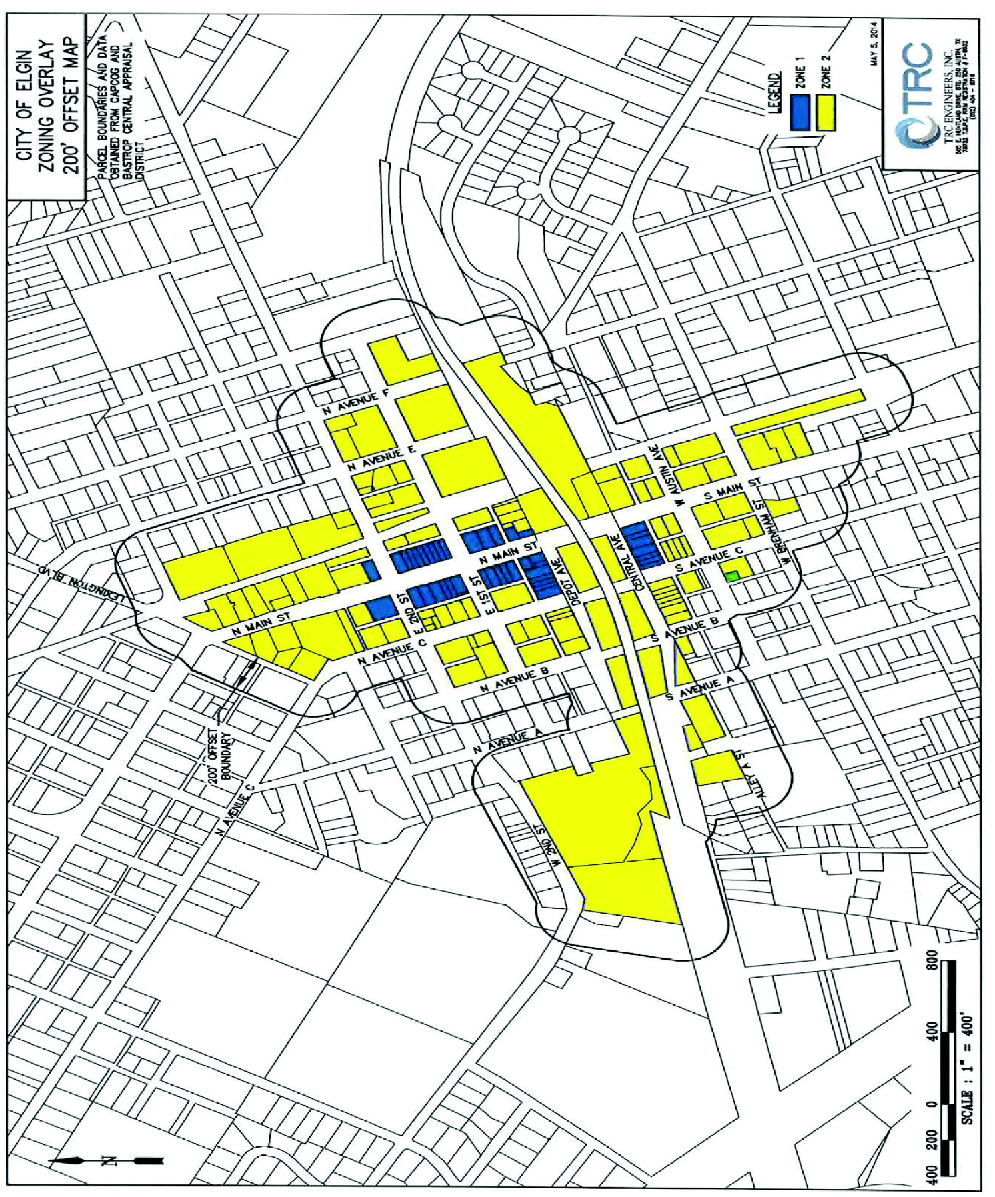
Sec. 46-500. - Downtown Overlay.
(a)
In addition to the uses allowed in the specific zoning district, the following additional uses are permitted:
(1)
Winery;
(2)
Brewery;
(3)
Food processing;
(4)
Meadery;
(5)
Metal smithing;
(6)
Pottery making;
(7)
Cabinetry making;
(8)
Bicycle sales and repair;
(9)
Soap making;
(10)
Fiber processing;
(11)
Woodworking;
(12)
Automotive repair;
(13)
Leather works and boot-making;
(14)
Distillery;
(15)
Light manufacturing similar to the uses described above;
(16)
Residential uses.
(b)
The following uses are prohibited:
(1)
New or used automobile sales;
(2)
Storage units, warehouses or mini-warehouses, leased or rented as individual units.
(c)
Uses defined under the applicable zoning category and uses under subsection (a) are allowed at 100 percent of the square footage on a street level floor in Zone 1.
(d)
Residential uses are also allowed on the street floor level in Zone 1 with the following conditions:
(1)
Each dwelling unit shall be at least 150 square feet, exclusive of kitchen, bath, closets, and hallways.
(2)
Each dwelling unit shall provide at least one exit which does not require persons to exit through the non-residential areas of the street level floor.
(3)
A minimum of the front 50 percent of the square footage of a street-level floor must be dedicated to uses defined under the applicable zoning category and uses under subsection (a).
(e)
Residential uses, uses defined under the applicable zoning category, and uses under subsection (a) are allowed on the additional floors in Zone 1 in any combination thereof.
(f)
Residential uses, uses defined under the applicable zoning category, and uses under subsection (a) are allowed on any floor, including a street level floor, in any combination thereof in Zone 2.
(g)
Only the following paving materials may be used for parking areas, rear lot space adjacent to alleys, sidewalks, and driveways:
(1)
Crushed granite with a border of concrete;
(2)
Permeable pavers;
(3)
Paving stones;
(4)
Concrete;
(5)
Cut stone;
(6)
Natural rock;
(7)
Permeable asphalt;
(8)
Permeable gravel grids;
(9)
Permeable grass grids.
(Ord. No. 2023-03-07-06, 3-7-2023)

