
Elgin City Zoning Code
ARTICLE V
- SUPPLEMENTARY DISTRICT REGULATIONS
Sec. 46-508. - General provisions applying to all or to several districts.
Application of regulation to the uses of a more restricted district are applicable. Whenever the specific district regulations pertaining to one district permit the uses of a more restricted district, such uses shall be subject to the conditions as set forth in the regulations of the more restricted district, unless otherwise specified.
(Code 1990, ch. 11, § 2(D)(1)(a); Ord. No. 96-03-19-09, 3-19-1996; Ord. No. 97-12-02-31, 12-2-1997; Ord. No. 2001-09-11-21, 9-11-2001; Ord. No. 98-11-03-54, 11-3-1998; Ord. No. 2001-04-03-10, 4-3-2001; Ord. No. 2002-02-05-06, 2-5-2002; Ord. No. 2011-07-05-37, §§ I—XXV, 7-5-2011)
Sec. 46-509. - Dwelling units prohibited when nonresidential purposes intended.
It is intended that these regulations be interpreted as not permitting a dwelling unit to be located on the same lot with or within a structure used or intended to be used primarily for nonresidential purposes.
(Code 1990, ch. 11, § 2(D)(1)(b); Ord. No. 96-03-19-09, 3-19-1996; Ord. No. 97-12-02-31, 12-2-1997; Ord. No. 2001-09-11-21, 9-11-2001; Ord. No. 98-11-03-54, 11-3-1998; Ord. No. 2001-04-03-10, 4-3-2001; Ord. No. 2002-02-05-06, 2-5-2002; Ord. No. 2011-07-05-37, §§ I—XXV, 7-5-2011)
Sec. 46-510. - Impervious driveway required; minimum square footage of dwellings.
(a)
All dwellings shall have an approved impervious driveway accessible to a public city approved and accepted street or alley, except as otherwise noted in division 10.
(b)
The minimum single-family dwelling size shall be 800 square feet of living area.
(c)
The minimum two-family dwelling size shall be 800 square feet for each living unit.
(d)
Accessory dwelling units shall be a minimum of 250 square feet and a maximum of 900 square feet and shall not exceed one-half of the gross floor area of the main building.
(Code 1990, ch. 11, § 2(D)(1)(d); Ord. No. 96-03-19-09, 3-19-1996; Ord. No. 97-12-02-31, 12-2-1997; Ord. No. 2001-09-11-21, 9-11-2001; Ord. No. 98-11-03-54, 11-3-1998; Ord. No. 2001-04-03-10, 4-3-2001; Ord. No. 2002-02-05-06, 2-5-2002; Ord. No. 2011-07-05-37, §§ I—XXV, 7-5-2011; Ord. No. 2015-1-6-2, § XII, 1-6-2015; Ord. No. 2023-03-07-06, 3-7-2023; Ord. No. 2023-05-16-15, § VII, 5-16-2023)
Editor's note— Ord. No. 2023-03-07-06, adopted March 7, 2023, repealed § 46-510 and renumbered the former § 46-511 as § 46-510. The former § 46-510 pertained to residential uses within commercial zone and derived from the Code of 1990, ch. 11, § 2(D)(1)(c); Ord. No. 96-03-19-09, adopted March 19, 1996; Ord. No. 97-12-02-31, adopted December 2, 1997; Ord. No. 98-11-03-54, adopted November 3, 1998; Ord. No. 2001-04-03-10, adopted April 3, 2001; Ord. No. 2001-09-11-21, adopted September 11, 2001; Ord. No. 2002-02-05-06, adopted February 5, 2002 and Ord. No. 2011-07-05-37, adopted July 5, 2011.
Secs. 46-511—46-530. - Reserved.
Editor's note— See editor's note at § 46-510.
Sec. 46-531. - Purpose.
The requirements of this division are intended to provide exceptions or qualify and supplement, as the case may be, the specific district regulations set forth in section article IV of this chapter.
(Code 1990, ch. 11, § 2(D)(2)(intro.); Ord. No. 96-03-19-09, 3-19-1996; Ord. No. 97-12-02-31, 12-2-1997; Ord. No. 2001-09-11-21, 9-11-2001; Ord. No. 98-11-03-54, 11-3-1998; Ord. No. 2001-04-03-10, 4-3-2001; Ord. No. 2002-02-05-06, 2-5-2002; Ord. No. 2011-07-05-37, §§ I—XXV, 7-5-2011)
Sec. 46-532. - Existing building or structure.
An open space or lot area required for an existing building or structure shall not be counted as open space for any other building or structure.
(Code 1990, ch. 11, § 2(D)(2)(a); Ord. No. 96-03-19-09, 3-19-1996; Ord. No. 97-12-02-31, 12-2-1997; Ord. No. 2001-09-11-21, 9-11-2001; Ord. No. 98-11-03-54, 11-3-1998; Ord. No. 2001-04-03-10, 4-3-2001; Ord. No. 2002-02-05-06, 2-5-2002; Ord. No. 2011-07-05-37, §§ I—XXV, 7-5-2011)
Sec. 46-533. - Projections into yards.
Open eaves, cornices, window sills, covered porches, and belt courses may project into any required yard a distance not to exceed three feet. Open uncovered porches or open fire escapes may project into a front or rear yard a distance not to exceed five feet. Fences, walls and hedges in residential districts may be erected in any required yard, or along the edge of any yard.
(Code 1990, ch. 11, § 2(D)(2)(b); Ord. No. 96-03-19-09, 3-19-1996; Ord. No. 97-12-02-31, 12-2-1997; Ord. No. 2001-09-11-21, 9-11-2001; Ord. No. 98-11-03-54, 11-3-1998; Ord. No. 2001-04-03-10, 4-3-2001; Ord. No. 2002-02-05-06, 2-5-2002; Ord. No. 2011-07-05-37, §§ I—XXV, 7-5-2011; Ord. No. 2018-4-3-28, § 3, 4-3-2018; Ord. No. 2023-03-07-06, 3-7-2023)
Sec. 46-534. - Fence or enclosure wall.
(a)
A fence or enclosure wall provided:
(1)
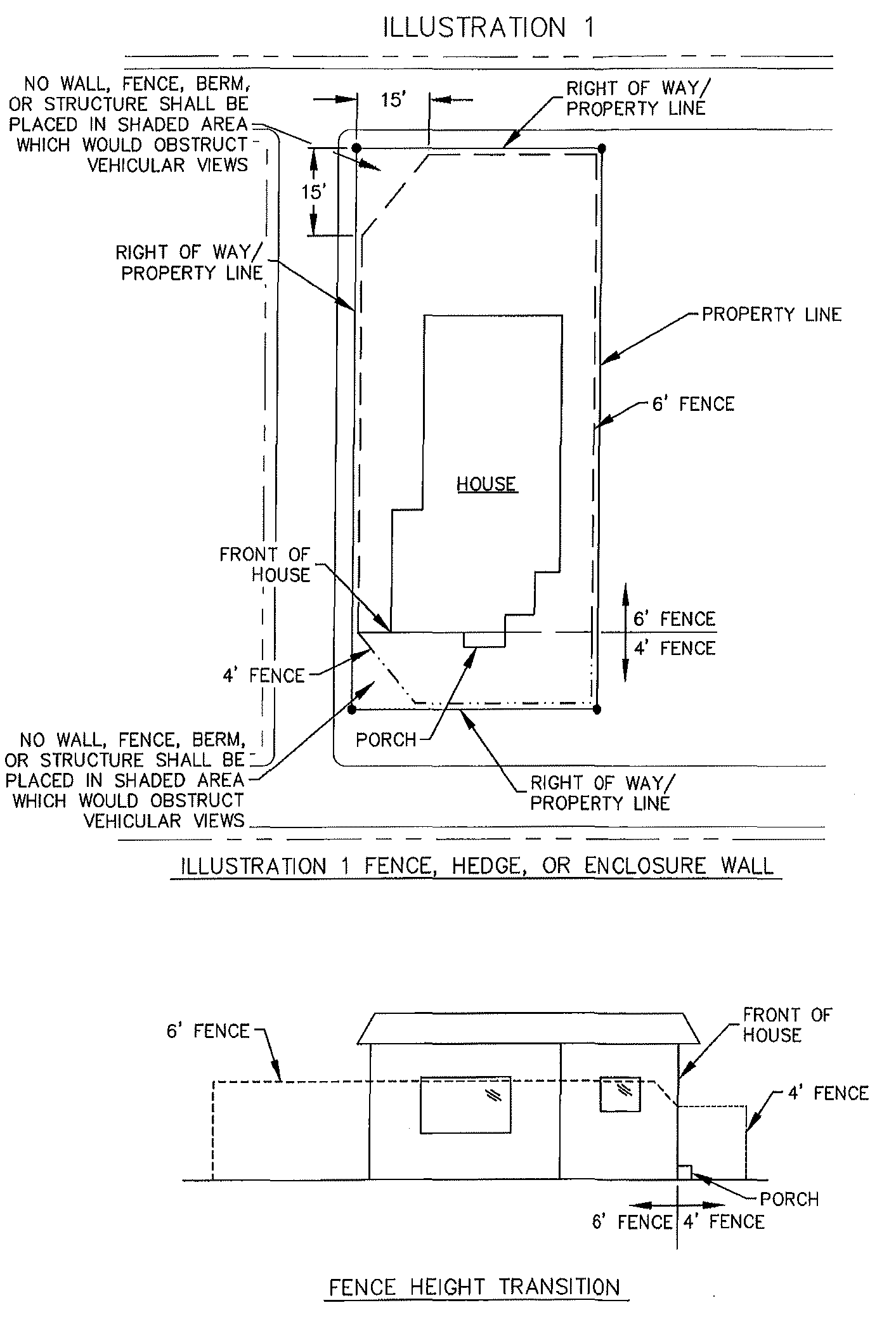
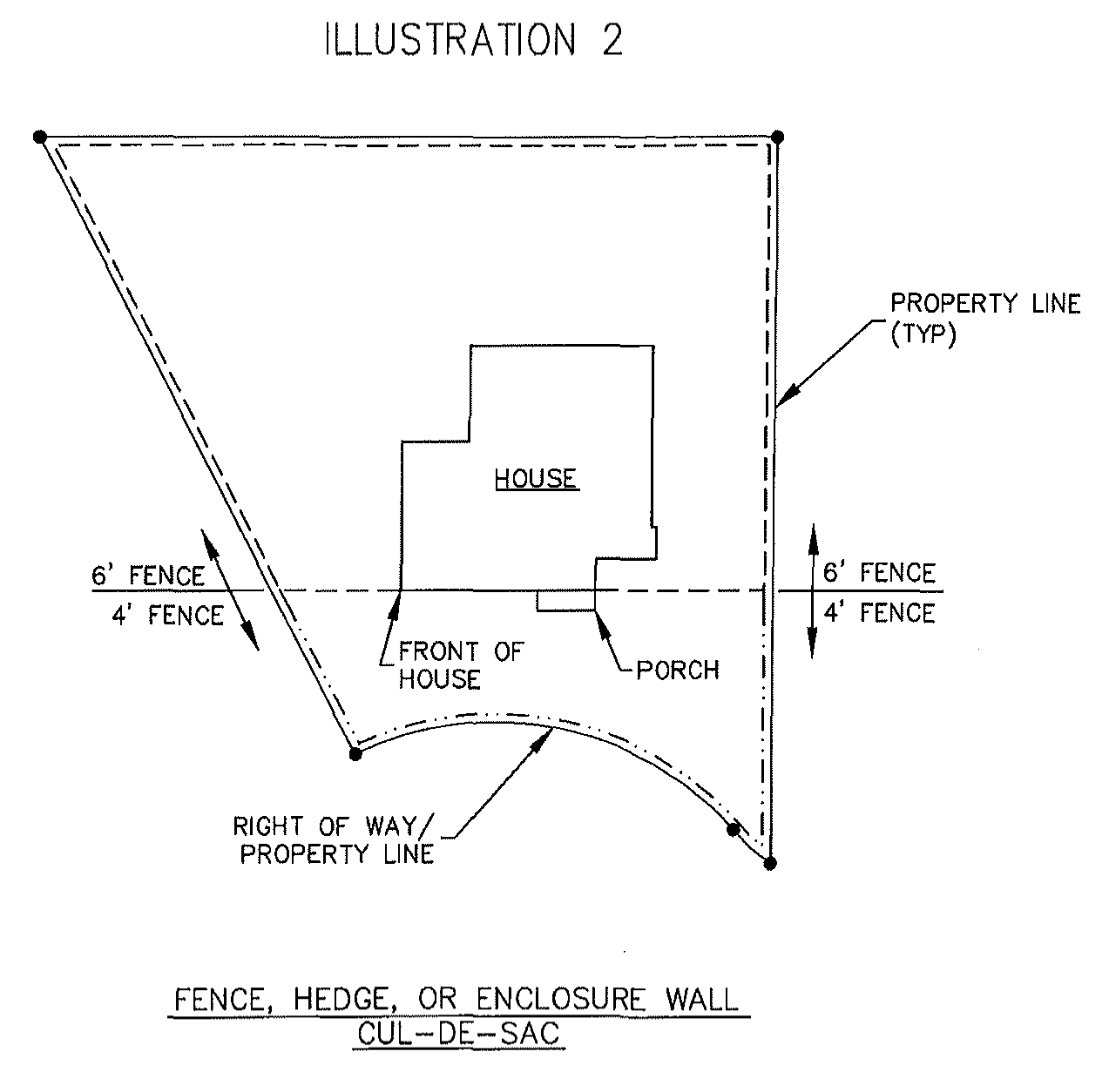
No solid fence or enclosure wall shall exceed a height of six feet and no such six-foot fence or enclosure shall extend beyond the front of a dwelling exclusive of porches in a residential zoning district, excluding the R-4 Multiple Family District. (See illustration.)
(2)
An ornamental fence may not exceed four feet in height but shall have a ratio of solid material to open space not in excess of one-to-four and shall be allowed to extend to the front property line in a residential zoning district, excluding the R-4 Multiple Family District.
(3)
Any fence, hedge or enclosure wall on a corner lot, and situated within 15 feet of the intersections of the two street lines shall not extend all the way to the corner of the property and shall not create any visual obstruction to traffic on a public street or highway in any zoning district. (See illustration of corner lot.)
(b)
All wooden privacy fences shall have metal post of sufficient gauge and diameter, embedded in concrete to support the weight and wind load of the fence. Wooden privacy fence posts will not be allowed for construction after July 31, 2011.
(c)
Fences shall be maintained in a safe condition and in good repair, with all components free from deterioration, dilapidation, rot, and rust, loosening, or leaning.
(d)
Common fences between properties will be the responsibly of all owners to maintain.
(e)
Fence beautification standards:
(1)
Newly installed fencing constructed with untreated wood lumber:
a.
Be painted with a clear coat, excluding metal posts, or
b.
Be painted in earth tone colors, excluding metal posts, or
c.
Be prefabricated in earth tone colors excluding metal posts.
(2)
Newly installed fencing constructed with pressure treated wood lumber is not required to meet any standard in subsection (1).
(3)
All fences shall be constructed with the attractive portions facing outwards from the property if bordering on a public street, excluding alleys.
(f)
Permanent six-foot fences or enclosure walls in all residential zoning districts shall be erected along all rear and side property lot lines which abut another residential lot or land use. Except in situations where the lot is 100 feet or more in width or is 0.50 acres or more in size. Placement of any fencing along the side property lines shall start at the rear elevation of the dwelling and proceed to the rear property line.
(Code 1990, ch. 11, § 2(D)(2)(c); Ord. No. 96-03-19-09, 3-19-1996; Ord. No. 97-12-02-31, 12-2-1997; Ord. No. 2001-09-11-21, 9-11-2001; Ord. No. 98-11-03-54, 11-3-1998; Ord. No. 2001-04-03-10, 4-3-2001; Ord. No. 2002-02-05-06, 2-5-2002; Ord. No. 2011-07-05-37, §§ I—XXV, 7-5-2011; Ord. No. 2018-4-3-28, § 4, 4-3-2018; Ord. No. 2021-01-05-01, § V, 1-5-2021; Ord. No. 2023-03-07-06, 3-7-2023)
Sec. 46-535. - Reserved.
Editor's note— Ord. No. 2023-03-07-06, adopted March 7, 2023, repealed § 46-535, which pertained to street right-of-way widths less than 50 feet and derived from the Code of 1990, ch. 11, § 2(D)(2)(d); Ord. No. 96-03-19-09, adopted March 19, 1996; Ord. No. 97-12-02-31, adopted December 2, 1997; Ord. No. 98-11-03-54, adopted November 3, 1998; Ord. No. 2001-04-03-10, 4-3-2001; Ord. No. 2001-09-11-21, adopted September 11, 2001; Ord. No. 2002-02-05-06, adopted February 5, 2002; Ord. No. 2011-07-05-37, adopted July 5, 2011.
Sec. 46-536. - Placement of dwelling in relation to existing right-of-way sizes; exemptions.
No dwelling shall be erected on a lot which does not abut on at least one street at least 50 feet in width, if a through street, and at least 30 feet in width if a dead-end street, for at least 35 feet, unless the lot existed and has remained unchanged in lot width and lot area since March 28, 1973 or the lot was platted with smaller streets through a development agreement. A street shall form the direct and primary means of ingress or egress for all dwelling units. Alleys, where they exist, shall form only a secondary means of ingress or egress.
(Code 1990, ch. 11, § 2(D)(2)(e); Ord. No. 96-03-19-09, 3-19-1996; Ord. No. 97-12-02-31, 12-2-1997; Ord. No. 2001-09-11-21, 9-11-2001; Ord. No. 98-11-03-54, 11-3-1998; Ord. No. 2001-04-03-10, 4-3-2001; Ord. No. 2002-02-05-06, 2-5-2002; Ord. No. 2011-07-05-37, §§ I—XXV, 7-5-2011; Ord. No. 2023-03-07-06, 3-7-2023)
Sec. 46-537. - Commercial and industrial uses.
No minimum lot sizes and open spaces are prescribed for commercial and industrial uses. It is the intent of this chapter that lots of sufficient size be used by any business or industry to provide adequate parking and unloading and loading space required for operation of the enterprise.
(Code 1990, ch. 11, § 2(D)(2)(f); Ord. No. 96-03-19-09, 3-19-1996; Ord. No. 97-12-02-31, 12-2-1997; Ord. No. 2001-09-11-21, 9-11-2001; Ord. No. 98-11-03-54, 11-3-1998; Ord. No. 2001-04-03-10, 4-3-2001; Ord. No. 2002-02-05-06, 2-5-2002; Ord. No. 2011-07-05-37, §§ I—XXV, 7-5-2011)
Sec. 46-538. - Obstructions on corner lots prohibited.
On any corner lot on which a front and side yard is required, no wall, fence, sign, structure or any plant growth which obstructs sight lines at elevations between 2½ feet and six feet above any portion of the crown of the adjacent roadway shall be maintained in a triangle formed by measuring from the point of intersection of the front and exterior side lot lines a distance of 25 feet along the established to form a right triangle on the area of the lot adjacent to the street intersection.
(Code 1990, ch. 11, § 2(D)(2)(g); Ord. No. 96-03-19-09, 3-19-1996; Ord. No. 97-12-02-31, 12-2-1997; Ord. No. 2001-09-11-21, 9-11-2001; Ord. No. 98-11-03-54, 11-3-1998; Ord. No. 2001-04-03-10, 4-3-2001; Ord. No. 2002-02-05-06, 2-5-2002; Ord. No. 2011-07-05-37, §§ I—XXV, 7-5-2011)
Sec. 46-539. - Private garage setback.
An attached or detached private garage which faces on a street shall not be located closer than 25 feet to the front property line.
(Code 1990, ch. 11, § 2(D)(2)(h); Ord. No. 96-03-19-09, 3-19-1996; Ord. No. 97-12-02-31, 12-2-1997; Ord. No. 2001-09-11-21, 9-11-2001; Ord. No. 98-11-03-54, 11-3-1998; Ord. No. 2001-04-03-10, 4-3-2001; Ord. No. 2002-02-05-06, 2-5-2002; Ord. No. 2011-07-05-37, §§ I—XXV, 7-5-2011)
Sec. 46-540. - Accessory building restrictions and accessory dwelling unit restrictions.
(a)
No accessory building and/or accessory dwelling unit shall be constructed upon a lot until the construction of the main building has been actually commenced.
(b)
An accessory dwelling unit shall not be rented out for a period of less than 30 consecutive calendar days in a year.
(c)
An accessory dwelling unit shall not be sold separately from the property.
(d)
An accessory dwelling unit is subject to the applicable density standards in its applicable zoning category.
(e)
An accessory dwelling unit cannot be located past the front elevation of the main building.
(f)
No accessory building shall be used unless the main building on the lot is also being used.
(Code 1990, ch. 11, § 2(D)(2)(i); Ord. No. 96-03-19-09, 3-19-1996; Ord. No. 97-12-02-31, 12-2-1997; Ord. No. 2001-09-11-21, 9-11-2001; Ord. No. 98-11-03-54, 11-3-1998; Ord. No. 2001-04-03-10, 4-3-2001; Ord. No. 2002-02-05-06, 2-5-2002; Ord. No. 2011-07-05-37, §§ I—XXV, 7-5-2011; Ord. No. 2023-05-16-15, § VIII, 5-16-2023)
Sec. 46-541. - Building in a cluster arrangement.
Whenever one or more residential, institutional, commercial, or industrial buildings are proposed to be located in a cluster or grouping which has a different arrangement, orientation, or other site planning variation from that of other buildings, structures, or uses in the area or on adjacent properties, the architectural design, location, orientation, service and parking areas of such buildings shall be planned so as not to adversely affect the use of adjacent or other properties in the area, as determined by the planning and zoning commission.
(Code 1990, ch. 11, § 2(D)(2)(j); Ord. No. 96-03-19-09, 3-19-1996; Ord. No. 97-12-02-31, 12-2-1997; Ord. No. 2001-09-11-21, 9-11-2001; Ord. No. 98-11-03-54, 11-3-1998; Ord. No. 2001-04-03-10, 4-3-2001; Ord. No. 2002-02-05-06, 2-5-2002; Ord. No. 2011-07-05-37, §§ I—XXV, 7-5-2011)
Sec. 46-542. - Commercial and industrial uses in, or adjacent to residential districts.
In all cases when a side or rear yard of a commercial or industrial use is adjacent to a residential use a wall of not less than six-foot shall be constructed of brick, stone, masonry or other cementitious material along that property line.
(Code 1990, ch. 11, § 2(D)(2)(k); Ord. No. 96-03-19-09, 3-19-1996; Ord. No. 97-12-02-31, 12-2-1997; Ord. No. 2001-09-11-21, 9-11-2001; Ord. No. 98-11-03-54, 11-3-1998; Ord. No. 2001-04-03-10, 4-3-2001; Ord. No. 2002-02-05-06, 2-5-2002; Ord. No. 2011-07-05-37, §§ I—XXV, 7-5-2011; Ord. No. 2023-03-07-06, 3-7-2023)
Sec. 46-543. - Fencing illustrations.
The following are illustrations related to fencing:
(Ord. No. 2018-4-3-28, § 6, 4-3-2018)
Sec. 46-563. - Purpose.
The requirements of this division are intended to provide exceptions or qualify and supplement, as the case may be, the specific district regulations set forth in article IV of this chapter.
(Code 1990, ch. 11, § 2(D)(3)(intro.); Ord. No. 96-03-19-09, 3-19-1996; Ord. No. 97-12-02-31, 12-2-1997; Ord. No. 2001-09-11-21, 9-11-2001; Ord. No. 98-11-03-54, 11-3-1998; Ord. No. 2001-04-03-10, 4-3-2001; Ord. No. 2002-02-05-06, 2-5-2002; Ord. No. 2011-07-05-37, §§ I—XXV, 7-5-2011)
Sec. 46-564. - Habitable basement or attic counted as a story.
In measuring heights, a habitable basement or attic shall be counted as a story. A story in a sloping roof, the area of which story at a height of four feet above the floor does not exceed two-thirds of the floor area of the story immediately below it and which does not contain an independent apartment, shall be counted as a half story.
(Code 1990, ch. 11, § 2(D)(3)(a); Ord. No. 96-03-19-09, 3-19-1996; Ord. No. 97-12-02-31, 12-2-1997; Ord. No. 2001-09-11-21, 9-11-2001; Ord. No. 98-11-03-54, 11-3-1998; Ord. No. 2001-04-03-10, 4-3-2001; Ord. No. 2002-02-05-06, 2-5-2002; Ord. No. 2011-07-05-37, §§ I—XXV, 7-5-2011)
Sec. 46-565. - Projections not used for occupancy.
Chimneys, elevators, poles, spires, tanks, towers and other projections not used for human occupancy may extend above the height limit.
(Code 1990, ch. 11, § 2(D)(3)(b); Ord. No. 96-03-19-09, 3-19-1996; Ord. No. 97-12-02-31, 12-2-1997; Ord. No. 2001-09-11-21, 9-11-2001; Ord. No. 98-11-03-54, 11-3-1998; Ord. No. 2001-04-03-10, 4-3-2001; Ord. No. 2002-02-05-06, 2-5-2002; Ord. No. 2011-07-05-37, §§ I—XXV, 7-5-2011)
Sec. 46-566. - Public and semi-public buildings.
Churches, schools, hospitals, sanatoriums, and other public and semi-public buildings may exceed the height limitation of the district if the minimum depth of rear yards and the minimum width of the side yards required in the district are increased one foot for each two feet by which the height of such public or semi-public structure exceeds the prescribed height limit.
(Code 1990, ch. 11, § 2(D)(3)(c); Ord. No. 96-03-19-09, 3-19-1996; Ord. No. 97-12-02-31, 12-2-1997; Ord. No. 2001-09-11-21, 9-11-2001; Ord. No. 98-11-03-54, 11-3-1998; Ord. No. 2001-04-03-10, 4-3-2001; Ord. No. 2002-02-05-06, 2-5-2002; Ord. No. 2011-07-05-37, §§ I—XXV, 7-5-2011)
Sec. 46-596. - Purpose.
Commercial vehicles and trailers of all types, including travel, recreational vehicles, watercraft, camping and hauling shall not be parked or stored on any lot occupied by a dwelling or on any lot in any residential zoning district except in accordance with the provisions set forth in this division.
(Code 1990, ch. 11, § 2(D)(4)(intro.); Ord. No. 96-03-19-09, 3-19-1996; Ord. No. 97-12-02-31, 12-2-1997; Ord. No. 2001-09-11-21, 9-11-2001; Ord. No. 98-11-03-54, 11-3-1998; Ord. No. 2001-04-03-10, 4-3-2001; Ord. No. 2002-02-05-06, 2-5-2002; Ord. No. 2011-07-05-37, §§ I—XXV, 7-5-2011; Ord. No. 2023-03-07-06, 3-7-2023)
Sec. 46-597. - Commercial vehicle restrictions.
Not more than one commercial vehicle, which does not exceed two tons rated capacity, per family living on the premises, shall be permitted; and in no case shall a commercial vehicle used for hauling explosives, gasoline, or other liquefied petroleum products be permitted.
(Code 1990, ch. 11, § 2(D)(4)(a); Ord. No. 96-03-19-09, 3-19-1996; Ord. No. 97-12-02-31, 12-2-1997; Ord. No. 2001-09-11-21, 9-11-2001; Ord. No. 98-11-03-54, 11-3-1998; Ord. No. 2001-04-03-10, 4-3-2001; Ord. No. 2002-02-05-06, 2-5-2002; Ord. No. 2011-07-05-37, §§ I—XXV, 7-5-2011)
Sec. 46-598. - Camping, recreational vehicle, motor home, travel trailer and other trailer restrictions.
Not more than one camping, recreational vehicle, motor home, travel trailer, hauling trailer, boat or jet ski trailer, or similar equipment per family living on the premises shall be permitted, and said trailer shall not exceed 40 feet in length, or eight feet in width; and further provided that said trailer shall not be parked or stored for more than 48 hours unless it is located behind the front yard building line. A camping, recreational vehicle, motor home or travel trailer or mobile home park shall not be occupied either temporarily or permanently while it is parked or stored in any area within the incorporated limits except in a trailer court authorized under the ordinances of the city. When a recreational vehicle or trailer is parked in a driveway temporarily, at no time shall it encroach or block any public sidewalk.
(Code 1990, ch. 11, § 2(D)(4)(b); Ord. No. 96-03-19-09, 3-19-1996; Ord. No. 97-12-02-31, 12-2-1997; Ord. No. 2001-09-11-21, 9-11-2001; Ord. No. 98-11-03-54, 11-3-1998; Ord. No. 2001-04-03-10, 4-3-2001; Ord. No. 2002-02-05-06, 2-5-2002; Ord. No. 2011-07-05-37, §§ I—XXV, 7-5-2011; Ord. No. 2017-07-11-09, § III, 7-11-2017)
Sec. 46-630. - General intent and application.
It is the intent of these requirements that adequate parking and loading facilities be provided off the street easement for each use of land within the city. Requirements are intended to be based on the demand created by each use. These requirements shall apply to all uses in all districts.
(Code 1990, ch. 11, § 2(D)(5)(a); Ord. No. 96-03-19-09, 3-19-1996; Ord. No. 97-12-02-31, 12-2-1997; Ord. No. 2001-09-11-21, 9-11-2001; Ord. No. 98-11-03-54, 11-3-1998; Ord. No. 2001-04-03-10, 4-3-2001; Ord. No. 2002-02-05-06, 2-5-2002; Ord. No. 2011-07-05-37, §§ I—XXV, 7-5-2011)
Sec. 46-631. - Parking and loading spaces part of open space.
Off-street parking or loading spaces shall be a part of the required open space associated with the permitted use and shall not be reduced or encroached upon in any manner.
(Code 1990, ch. 11, § 2(D)(5)(b); Ord. No. 96-03-19-09, 3-19-1996; Ord. No. 97-12-02-31, 12-2-1997; Ord. No. 2001-09-11-21, 9-11-2001; Ord. No. 98-11-03-54, 11-3-1998; Ord. No. 2001-04-03-10, 4-3-2001; Ord. No. 2002-02-05-06, 2-5-2002; Ord. No. 2011-07-05-37, §§ I—XXV, 7-5-2011; Ord. No. 2023-03-07-06, 3-7-2023)
Sec. 46-632. - Location.
The off-street parking lot shall be located within 200 feet, exclusive of street and alley widths, of the principal use and shall have direct access to a street or alley.
(Code 1990, ch. 11, § 2(D)(5)(c); Ord. No. 96-03-19-09, 3-19-1996; Ord. No. 97-12-02-31, 12-2-1997; Ord. No. 2001-09-11-21, 9-11-2001; Ord. No. 98-11-03-54, 11-3-1998; Ord. No. 2001-04-03-10, 4-3-2001; Ord. No. 2002-02-05-06, 2-5-2002; Ord. No. 2011-07-05-37, §§ I—XXV, 7-5-2011)
Sec. 46-633. - Joint parking facilities.
Whenever two or more uses are located together in a common building, shopping center or other integrated building complex, the parking requirements may be complied with by providing a permanent common parking facility, cooperatively established and operated, which contains the requisite number of spaces for each use. The total number of spaces provided shall not be less than the sum of the individual requirements.
(Code 1990, ch. 11, § 2(D)(5)(d); Ord. No. 96-03-19-09, 3-19-1996; Ord. No. 97-12-02-31, 12-2-1997; Ord. No. 2001-09-11-21, 9-11-2001; Ord. No. 98-11-03-54, 11-3-1998; Ord. No. 2001-04-03-10, 4-3-2001; Ord. No. 2002-02-05-06, 2-5-2002; Ord. No. 2011-07-05-37, §§ I—XXV, 7-5-2011)
Sec. 46-634. - Size of off-street parking space.
The size of a parking space for one vehicle shall consist of a rectangular area having dimensions of not less than nine feet by 18 feet, plus adequate area for ingress and egress.
(Code 1990, ch. 11, § 2(D)(5)(e); Ord. No. 96-03-19-09, 3-19-1996; Ord. No. 97-12-02-31, 12-2-1997; Ord. No. 2001-09-11-21, 9-11-2001; Ord. No. 98-11-03-54, 11-3-1998; Ord. No. 2001-04-03-10, 4-3-2001; Ord. No. 2002-02-05-06, 2-5-2002; Ord. No. 2011-07-05-37, §§ I—XXV, 7-5-2011; Ord. No. 2023-03-07-06, 3-7-2023)
Sec. 46-635. - Amount of off-street parking and loading required.
(a)
Off-street parking and loading facilities shall be provided in all zoning districts, except within the Downtown Historic District, in accordance with the following schedule:
(1)
Dwelling, single-family or two-family: Two parking spaces for each separate dwelling unit within a garage and two separate parking spaces within a driveway for each dwelling unit; parking may only be in tandem for a single-family dwelling unit. This does not include an accessory dwelling unit.
(2)
Accessory dwelling unit: Two parking spaces for each dwelling unit; parking may be in tandem.
(3)
Dwelling, multiple family: 1.5 spaces per one bedroom unit; two spaces per two bedroom unit; 2.5 spaces per three or more bedroom unit; guest parking at a ratio of five percent of the required spaces. At least 25 percent of all overall parking spaces shall be covered parking. All parking spaces shall be so arranged as to permit vehicles to be parked and removed without moving one car to facilitate the movement of the other. All parking areas shall be paved according to the city's standard specifications.
(4)
Boardinghouse, rooming house, tourist home, bed and breakfast or hotel: One parking space per room + one parking space per 200 square feet of commercial gross floor area or + four parking spaces for a use that doesn't have a commercial gross floor area.
(5)
Hospitals: One space for each four patient beds, exclusive of bassinets, plus adequate area for the parking of emergency vehicles.
(6)
Medical or dental clinics or offices: One parking space per 200 square feet of gross floor area.
(7)
Sanatoriums, convalescent or nursing homes: One parking space per one bedroom unit + 4 additional parking spaces.
(8)
Community center, theater, auditorium, church sanctuary: One parking space for each four seats, based on maximum seating capacity.
(9)
Convention hall, lodge, club, library, museum, place of amusement or recreations: One parking space for each 50 square feet of floor area used for assembly or recreation in the building.
(10)
Office building: One parking space for each 300 square feet of gross floor area in the building, exclusive of the area used for storage, utilities and building service.
(11)
Restaurants, cafes, dinners, clubs, bars and other establishments which provide tables and/or bar seating: One parking space per 100 square feet of gross floor area (includes outdoor seating, outdoor smoking areas, and waiting areas).
(12)
Commercial establishments not otherwise classified: One parking space for each 200 square feet of floor space used for retail trade in the building and including all areas used by the public.
(13)
Industrial establishments: One parking space per 600 square feet of gross floor area for indoor facility; and one parking space per additional 1,000 square feet gross floor area for outdoor facility; and one parking space per 2,500 square feet indoor storage area.
(14)
Public elementary school and middle school (junior high): One space per 300 square feet of classrooms.
(15)
Private school, primary: One space per 300 square feet of classrooms.
(16)
Private school, secondary: One space per 200 square feet of classrooms.
(17)
Public high school: One space per 200 square feet of classrooms.
(18)
Post-secondary institution: One space for each two residents for dormitories or other residences; one space for each 500 square feet of gymnasium and classrooms; one space for each 300 square feet of administrative and office space.
(b)
For all uses not covered by the uses listed in subsection (a) of this section, the planning and zoning commission shall make a determination of the parking demand to be created by the proposed use, and the amount of parking thus determined shall be the off-street parking requirement for the permitted use.
(c)
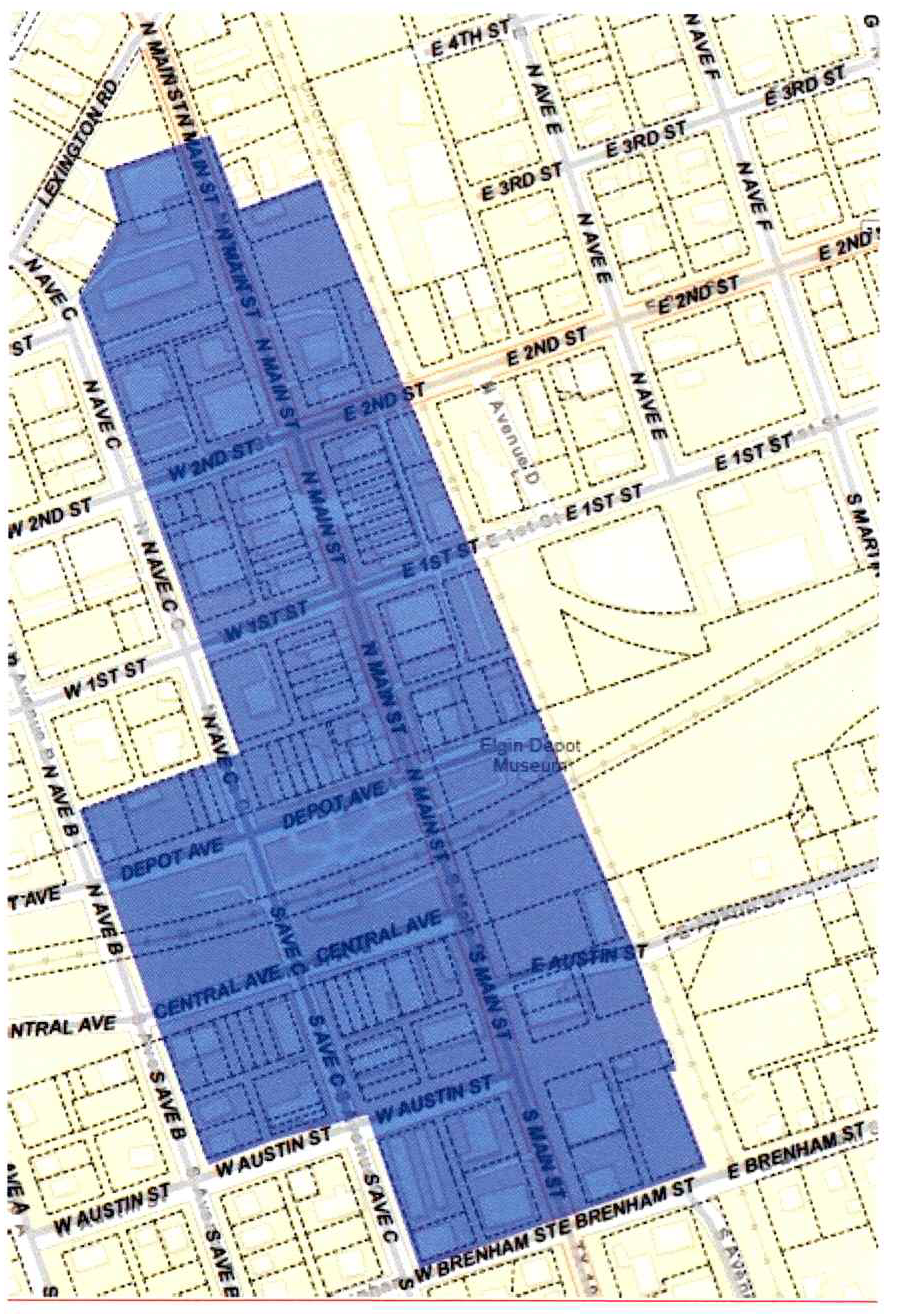
Property located within the below map boundaries shall not have any minimum parking requirements or loading zone requirements as denoted in subsection (a) or (b). Any off-street parking constructed voluntarily within the below map boundaries shall be limited to a maximum of six parking spaces, this standard shall not be applicable to any government or transit authority created off-street parking spaces. Creation of voluntary on-site loading zones shall also be prohibited within the below map boundaries, however this standard shall not be applicable to any government or transit authority created on-site loading zones.
(Code 1990, ch. 11, § 2(D)(5)(f); Ord. No. 96-03-19-09, 3-19-1996; Ord. No. 97-12-02-31, 12-2-1997; Ord. No. 2001-09-11-21, 9-11-2001; Ord. No. 98-11-03-54, 11-3-1998; Ord. No. 2001-04-03-10, 4-3-2001; Ord. No. 2002-02-05-06, 2-5-2002; Ord. No. 2011-07-05-37, §§ I—XXV, 7-5-2011; Ord. No. 2020-02-04-09, § I, 2-4-2020; Ord. No. 2021-01-05-01, § VI, 1-5-2021; Ord. No. 2022-02-01-04, § I, 2-1-2022; Ord. No. 2023-03-07-06, 3-7-2023; Ord. No. 2023-05-16-15, § IX, 5-16-2023)
Sec. 46-636. - Paved surface required.
All parking spaces shall be paved with a sealed surface pavement and maintained in a manner that no dust will result from continued use.
(Code 1990, ch. 11, § 2(D)(5)(g); Ord. No. 96-03-19-09, 3-19-1996; Ord. No. 97-12-02-31, 12-2-1997; Ord. No. 2001-09-11-21, 9-11-2001; Ord. No. 98-11-03-54, 11-3-1998; Ord. No. 2001-04-03-10, 4-3-2001; Ord. No. 2002-02-05-06, 2-5-2002; Ord. No. 2011-07-05-37, §§ I—XXV, 7-5-2011)
Sec. 46-637. - Off-street parking lots in residential districts.
Whenever off-street parking lots for more than six vehicles are to be located within or adjacent to a residential district, the following provisions shall apply:
(1)
All sides of the lot within or abutting the residential district shall be enclosed with an opaque ornamental fence, wall or dense evergreen hedge having a height of not less than five feet nor more than six feet. Such fence, wall or hedge shall be maintained in good condition year-round.
(2)
No parking shall be permitted within a front yard setback line established 15 feet back of the property line of interior and corner lots wherever the parking lot is located in a residential district or immediately abuts the front yard of a residential unit. In all other cases no setback shall be required.
(3)
Driveways used for ingress and egress shall be confined to and shall not exceed 25 feet in width exclusive of curb returns.
(4)
All of the lot used for parking and driveway purposes shall be paved with a sealed surface pavement and maintained in such a manner that no dust will be produced by continued use.
(5)
Whenever lighting is provided, the intensity of light and arrangement of reflectors shall be such as not to interfere with residential district uses.
(6)
No sign of any kind shall be erected except information signs used to guide traffic and to state the condition and terms of the use of the lots. Only nonintermittent white lighting of signs shall be permitted.
All yards shall be landscaped with grass and shrubs and maintained in good condition year-round.
(Code 1990, ch. 11, § 2(D)(5)(h); Ord. No. 96-03-19-09, 3-19-1996; Ord. No. 97-12-02-31, 12-2-1997; Ord. No. 2001-09-11-21, 9-11-2001; Ord. No. 98-11-03-54, 11-3-1998; Ord. No. 2001-04-03-10, 4-3-2001; Ord. No. 2002-02-05-06, 2-5-2002; Ord. No. 2011-07-05-37, §§ I—XXV, 7-5-2011)
Sec. 46-663. - Purpose.
Whenever connection with sanitary sewer system will require unreasonable expenditure and septic tanks are to be installed for residential lots, the requirements of this division shall be met.
(Code 1990, ch. 11, § 2(D)(6)(intro.); Ord. No. 96-03-19-09, 3-19-1996; Ord. No. 97-12-02-31, 12-2-1997; Ord. No. 2001-09-11-21, 9-11-2001; Ord. No. 98-11-03-54, 11-3-1998; Ord. No. 2001-04-03-10, 4-3-2001; Ord. No. 2002-02-05-06, 2-5-2002; Ord. No. 2011-07-05-37, §§ I—XXV, 7-5-2011)
Sec. 46-664. - Minimum lot area.
Residential lots shall have an area of at least 12,000 square feet, shall be at least 80 feet wide, and shall be at least 120 feet deep.
(Code 1990, ch. 11, § 2(D)(6)(a); Ord. No. 96-03-19-09, 3-19-1996; Ord. No. 97-12-02-31, 12-2-1997; Ord. No. 2001-09-11-21, 9-11-2001; Ord. No. 98-11-03-54, 11-3-1998; Ord. No. 2001-04-03-10, 4-3-2001; Ord. No. 2002-02-05-06, 2-5-2002; Ord. No. 2011-07-05-37, §§ I—XXV, 7-5-2011)
Sec. 46-665. - Additional lot area may be necessary.
Where, as the result of necessary percolation tests as required by the city, the city's engineer deems the minimum lot area insufficient, the city shall require additional lot area sufficient to accommodate the sanitary facilities deemed necessary by the city's engineer.
(Code 1990, ch. 11, § 2(D)(6)(b); Ord. No. 96-03-19-09, 3-19-1996; Ord. No. 97-12-02-31, 12-2-1997; Ord. No. 2001-09-11-21, 9-11-2001; Ord. No. 98-11-03-54, 11-3-1998; Ord. No. 2001-04-03-10, 4-3-2001; Ord. No. 2002-02-05-06, 2-5-2002; Ord. No. 2011-07-05-37, §§ I—XXV, 7-5-2011)
Sec. 46-689. - Vision clearance.
On any corner lot on which front and side yards are required, no wall, fence, structure, sign, tree, shrub, or hedge may be maintained as to cause danger to traffic by obstructing the view and when topography prevents a clear view, this obstruction shall be removed.
(Code 1990, ch. 11, § 2(G)(1); Ord. No. 96-03-19-09, 3-19-1996; Ord. No. 97-12-02-31, 12-2-1997; Ord. No. 2001-09-11-21, 9-11-2001; Ord. No. 98-11-03-54, 11-3-1998; Ord. No. 2001-04-03-10, 4-3-2001; Ord. No. 2002-02-05-06, 2-5-2002; Ord. No. 2011-07-05-37, §§ I—XXV, 7-5-2011)
Sec. 46-690. - Building lines.
(a)
Front. The front building line of the main dwelling hereafter constructed in residence districts, or altered in such a manner as to change the position of such front building line, shall be located the distance required from the front lot line as may be required in the residential district in which such dwellings are located.
(b)
Extensions into front yard. Open porches of dwellings may extend into the front yard a distance of ten feet from the main line of the building. Cornices and eaves of the main building may project not more than three feet into the front yard.
(Code 1990, ch. 11, § 2(G)(2); Ord. No. 96-03-19-09, 3-19-1996; Ord. No. 97-12-02-31, 12-2-1997; Ord. No. 2001-09-11-21, 9-11-2001; Ord. No. 98-11-03-54, 11-3-1998; Ord. No. 2001-04-03-10, 4-3-2001; Ord. No. 2002-02-05-06, 2-5-2002; Ord. No. 2011-07-05-37, §§ I—XXV, 7-5-2011)
Sec. 46-691. - Lot area.
On any lot separately owned on March 28, 1973, a single-family dwelling may be erected even though such lot has less area than required by these regulations.
(Code 1990, ch. 11, § 2(G)(3); Ord. No. 96-03-19-09, 3-19-1996; Ord. No. 97-12-02-31, 12-2-1997; Ord. No. 2001-09-11-21, 9-11-2001; Ord. No. 98-11-03-54, 11-3-1998; Ord. No. 2001-04-03-10, 4-3-2001; Ord. No. 2002-02-05-06, 2-5-2002; Ord. No. 2011-07-05-37, §§ I—XXV, 7-5-2011)
Sec. 46-692. - Location of dwellings and buildings.
(a)
Only one main building for single-family or two-family use, with permitted accessory buildings, may be located upon a lot or unplatted tract. Every dwelling shall front upon a street or officially approved place, other than an alley.
(b)
Only one accessory dwelling unit may be located upon a lot or unplatted tract. Every dwelling shall front upon a street or officially approved place, other than an alley.
(c)
Where a lot or tract of land is used for multifamily, commercial, or industrial purposes, more than one main building may be located upon the lot but only when such buildings conform to all the open space, parking and density requirements applicable to the uses and district, and when all such main buildings face upon a street or officially approved place, other than an alley.
(Code 1990, ch. 11, § 2(G)(4); Ord. No. 96-03-19-09, 3-19-1996; Ord. No. 97-12-02-31, 12-2-1997; Ord. No. 2001-09-11-21, 9-11-2001; Ord. No. 98-11-03-54, 11-3-1998; Ord. No. 2001-04-03-10, 4-3-2001; Ord. No. 2002-02-05-06, 2-5-2002; Ord. No. 2011-07-05-37, §§ I—XXV, 7-5-2011; Ord. No. 2023-03-07-06, 3-7-2023; Ord. No. 2023-05-16-15, § X, 5-16-2023)
Sec. 46-693. - Special exception approval.
(a)
The board of adjustments (B.O.A.) may grant a special exception from the requirements of certain provisions of this Code if the special exceptions are not contrary to public interest and the spirit of this Code is preserved and substantial fairness is accomplished. The only special exceptions that may be granted are:
(1)
Front and back setback requirements;
(2)
Building size requirements;
(3)
Building height requirements;
(4)
Vehicle parking requirements;
(5)
Screening and buffering requirements.
(b)
In granting the special exception, the (B.O.A.) may impose conditions for which the applicant or his successors shall be in compliance before a certificate of occupation may be issued by the building official. Any special exceptions shall be included on a preliminary and final plat, site plan or, if necessary, through a separate recordable document approved by the (B.O.A.).
(c)
In no event can a special exception exceed ten percent over or under the requirements of this Code for which a special exception is granted.
(Code 1990, ch. 11, § 2(G)(5); Ord. No. 96-03-19-09, 3-19-1996; Ord. No. 97-12-02-31, 12-2-1997; Ord. No. 2001-09-11-21, 9-11-2001; Ord. No. 98-11-03-54, 11-3-1998; Ord. No. 2001-04-03-10, 4-3-2001; Ord. No. 2002-02-05-06, 2-5-2002; Ord. No. 2011-07-05-37, §§ I—XXV, 7-5-2011; Ord. No. 2015-1-6-2, § XII, 1-6-2015; Ord. No. 2023-03-07-06, 3-7-2023)
Sec. 46-715. - City council to permanently zone all plats.
The planning and zoning commission shall not approve any plat of any subdivision within the city limits until the area covered by the proposed plat shall have been permanently zoned by the city council.
(Code 1990, ch. 11, § 2(J)(1); Ord. No. 96-03-19-09, 3-19-1996; Ord. No. 97-12-02-31, 12-2-1997; Ord. No. 2001-09-11-21, 9-11-2001; Ord. No. 98-11-03-54, 11-3-1998; Ord. No. 2001-04-03-10, 4-3-2001; Ord. No. 2002-02-05-06, 2-5-2002; Ord. No. 2011-07-05-37, §§ I—XXV, 7-5-2011)
Sec. 46-716. - Pending annexations.
The planning and zoning commission shall not approve any plat of any subdivision within any area where a petition or ordinance for annexation or a recommendation for annexation to the city is pending before the city council.
(Code 1990, ch. 11, § 2(J)(2); Ord. No. 96-03-19-09, 3-19-1996; Ord. No. 97-12-02-31, 12-2-1997; Ord. No. 2001-09-11-21, 9-11-2001; Ord. No. 98-11-03-54, 11-3-1998; Ord. No. 2001-04-03-10, 4-3-2001; Ord. No. 2002-02-05-06, 2-5-2002; Ord. No. 2011-07-05-37, §§ I—XXV, 7-5-2011)
Sec. 46-717. - Commission may make zoning and annexation recommendation to city council.
In the event the planning and zoning commission holds a hearing on a proposed annexation, it may, at its discretion, at the same time hold a hearing upon the permanent zoning that is to be given to the area or tract to be annexed, and make a recommendation on both matters to the city council so that the city council can, if it desires, act on the matter of permanent zoning and annexation at the same time.
(Code 1990, ch. 11, § 2(J)(3); Ord. No. 96-03-19-09, 3-19-1996; Ord. No. 97-12-02-31, 12-2-1997; Ord. No. 2001-09-11-21, 9-11-2001; Ord. No. 98-11-03-54, 11-3-1998; Ord. No. 2001-04-03-10, 4-3-2001; Ord. No. 2002-02-05-06, 2-5-2002; Ord. No. 2011-07-05-37, §§ I—XXV, 7-5-2011)
Sec. 46-738. - General standards.
(a)
Public government exemption. A public governmental entity shall be exempt from the requirements of this division.
(b)
Prohibited in historic districts and placement on signs. Any WCFs shall be prohibited in any local designated historic district and on placement of any signs.
(c)
Automation. Except as provided in subsection (d) and during construction or an emergency, a WCF shall be fully automated and unattended on a daily basis and shall be visited only for periodic and necessary maintenance.
(d)
Maintenance and repair. All WCFs and associated equipment shall at all times be kept and maintained in good condition, order, and repair so that the same shall not menace or endanger the life or property of any person. Routine testing and maintenance shall be limited to weekdays between sunrise and sunset. Emergency repairs shall be allowed at all times.
(e)
Removal. Any WCF that is not operated for a continuous period of six months shall be considered abandoned and shall be removed within 60 days of receipt of notice from the city of such abandonment. Each property owner and person in control of the site is responsible for removal, jointly and severally. If such facility is not removed within said 60 days, the city may remove such facility at their expense. If there are two or more users of a single WCF, then this provision shall not become effective until all users cease operations on the facility housing the users.
(f)
Improvement and replacement. An existing WCF may be improved or replaced with a new WCF provided the improvements or replacement comply with the provisions of this section.
(g)
Easements and approvals. The applicant shall present documentation that the owner of the property has granted an easement or entered into a lease for the WCF and that access is provided to the facility or the owner of the building or structure to which the WCF will be attached has granted permission for the proposed facility to be attached and maintained.
(h)
Engineer's certification for roof-mounted WCF and/or equipment. Any WCF mounted to a roof must receive engineer's certification that the roof will support the proposed WCF and associated roof-mounted equipment.
(i)
Landscaping and irrigation for WCFs. Any required landscaping must be shown on a landscape plan and an irrigation plan must be concurrently provided which shows an underground or above ground drip irrigation system adequate enough to water landscaping. Any irrigation system shall be required to have rain sensor.
(j)
Application. An application packet will need to be completed by an applicant and approved by the city. Information shall be provided as indicated within the application packet and this division. The applicant is responsible for full completion of the application packet.
(k)
As-built letter. After the WCF has been constructed the project engineer or project architect, as applicable, shall provide a letter certifying that the WCF was constructed in accordance with the approved plans.
(Ord. No. 2020-02-04-10, § III, 2-4-2020)
Sec. 46-739. - Physical standards.
(a)
Exemption. WCFs associated with a television or radio stations shall be exempt from this section.
(b)
Monopoles and self-enclosed monopoles.
(1)
Permitted locations.
a.
Monopoles may only be in any commercial zoning district, industrial zoning district, or in any Planned Development District (PDD) with commercial or industrial uses unless otherwise prohibited in the PDD provided the location of the monopole is at least 200 feet from any residential zoning district, residential land uses in a PDD, or a residential land use on five acres of land or less for properties without a zoning category, or is at least 200 feet from the edge of the right-of-way of U.S. Hwy 290 or State Road 95, subject to the following conditions:
1.
Only one monopole is permitted for every ten acres on the lot. Poles may be clustered together.
b.
Self-enclosed monopoles may be in any commercial zoning district or industrial zoning districts or in any Planned Development District (PDD) with commercial or industrial uses unless otherwise prohibited in the PDD, subject to the following conditions:
1.
Only one self-enclosed monopole is permitted for every five acres on the lot. Poles may be clustered together.
c.
Self-enclosed monopoles may be in any residential zoning districts, excluding PDDs, in accordance with section 46-138, subject to the following conditions:
1.
WCFs must be separated by a distance of one-quarter of a mile from each other.
2.
Documentation from an engineer that an attached WCF or stealth WCF cannot accommodate the proposed improvement.
(2)
Setbacks. The standard setbacks for each zoning district, including setbacks within the Planned Development District (PDD), shall apply to the poles and any associated equipment.
(3)
Maximum height.
a.
Commercial zoning districts, industrial zoning districts, or Planned Development Districts (PDD) with commercial or industrial uses. The maximum height of a pole shall be 150 feet.
b.
Residential zoning districts or Planned Development Districts (PDD) with residential uses. The maximum height of a pole shall be 80 feet.
c.
The maximum height of associated equipment located at the base of a monopole or self-enclosed monopole shall be no more than ten feet.
(4)
Color. Monopoles and self-enclosed monopoles shall be painted a non-contrasting gray, beige or similar neutral color minimizing its visibility, unless otherwise required by the Federal Communications Commission or Federal Aviation Administration.
(5)
Lighting. No pole shall be artificially lighted except as required by the Federal Communications Commission (FCC) and Federal Aviation Administration (FAA) or their predecessors. Security lighting around the equipment shelter is permitted provided it is not visible from neighboring properties. Lighting for maintenance purposes is permitted, provided the lights are not used at any other time.
(6)
Screening. The equipment shelter at the base of a pole shall be screened from public view by an unpainted split-face decorative masonry wall with a minimum height of one foot greater than the height of the equipment shelter.
(7)
Collocation requirements. New monopoles and self-enclosed monopoles shall be designed to accommodate at a minimum three antennae and any associated ground-mounted equipment, unless an engineer demonstrates that such a design is not feasible for technical or physical reasons. Service providers shall allow the collocation of antenna by competing service providers.
(8)
Mandatory co-location required. An applicant shall be required to co-locate, as feasible, on an existing tower if it is within one-quarter mile of the proposed new monopole or self-enclosed monopole tower. The applicant shall inquire about potential collocation opportunities at all technically feasible locations.
(c)
Attached WCF.
(1)
Permitted locations.
a.
An attached WCF may be placed on a building or structure in the residential zoning district that only allows for multi-family development, commercial zoning district, or industrial zoning districts.
b.
An attached WCF may be placed on a building or structure on a lot that has schools, religious institutions, facilities or buildings or structures owned by a utility, multi-family land uses, commercial land uses, or industrial land uses in a Planned Development District (PDD), unless otherwise prohibited in the PDD.
c.
An attached WCF may also be attached to a building with non-residential uses that is in a residential zoning district. This includes schools, religious institutions, facilities or buildings or structures owned by a utility, subject to the conditions of this section.
(2)
Mounting and setbacks.
a.
The support structure or equipment for an attached WCF that is mounted flush with the vertical exterior of the building or structure to which it is attached or shall project no more than 24 inches from the surface of the building or structure to which it is attached, and shall not violate the building setback requirements of the zoning district in which the building or structure is located.
b.
Support structure or equipment for an attached WCF may be placed on the roof of a building in accordance with this section.
c.
Support structure or equipment for an attached WCF must be placed underground if not located on the side of a building or on the roof. Placement on the ground may be allowed so long as it cannot be visible from the street in accordance with this section.
(3)
Maximum height. An attached WCF shall not extend more than ten feet above the building or structure to which it is attached and shall not violate the maximum height restriction of the zoning district in which the building or structure is located.
(4)
Visibility.
a.
Equipment associated with roof-mounted WCFs shall be screened from public view. Screening shall utilize the same or similar materials as the principal structure or building. If roof decks with mechanical equipment are visible from any level of adjacent buildings, the mechanical equipment must be painted to match the finished roof material.
b.
Attached WCFs that are side-mounted shall blend with the existing building's architecture and shall be painted or shielded with material that is consistent with the design features and materials of the building.
c.
All cabinets, boxes, and WCF associated equipment that is not roof-mounted or side-mounted shall be located underground, unless it is so designed and located that it is not visible from a street.
(d)
Stealth WCP.
(1)
Permitted locations.
a.
A stealth WCF can be located in all zoning districts or all uses in a Planned Development District (PDD), unless otherwise prohibited by the PDD.
b.
A stealth WCF can be attached to any building or structure or be freestanding.
(2)
Setbacks. The standard setbacks for each zoning district or Planned Development District (PDD) shall apply to all stealth WCFs. To protect citizens in their homes, freestanding stealth WCFs shall be placed a minimum distance equal to the height of the freestanding stealth WCF away from any residential structure. No guy wires may be used.
(3)
Maximum height. The maximum height of a stealth WCF shall be determined by the height limitations for the type of structure the WCF resembles, the zoning district maximum height, or the required setback distance whichever results in less height.
(4)
Visibility. The antenna and associated equipment of a stealth WCF shall be screened, disguised, concealed or otherwise camouflaged as part of a structure such that the antenna and associated equipment of the WCF are indistinguishable from the structure that it is attached to or within. If freestanding it shall resemble natural elements such as a flagpole, tree, or shrub, including colors. If the city determines that the associated equipment cannot be feasibly or adequately camouflaged due to the unique circumstances of the proposed location, it shall be placed underground; or it may be screened from view from a street and adjacent properties by an unpainted decorative masonry wall with a minimum height of one foot greater than the height of the equipment shelter. In residential zoning districts the required masonry wall shall be screened by planting one five-gallon or larger size shrub for every three linear feet around the boundary of the wall.
(Ord. No. 2020-02-04-10, § III, 2-4-2020; Ord. No. 2023-03-07-06, 3-7-2023)

