
Ellensburg City Zoning Code
DIVISION V
PROJECT DESIGN
CHAPTER 15.590 - REGIONAL RETAIL COMMERCIAL DESIGN STANDARDS
(Recodified as chapter 15.390A ECC by Ord. 4769)
15.500.010 - Purpose.
This division was authorized by the city council as a major implementation tool of Ellensburg's comprehensive plan. Overall, this division intends to:
A.
Provide clear objectives for those embarking on the planning and design of development projects in Ellensburg;
B.
Preserve and protect the public health, safety, and welfare of the citizens of Ellensburg;
C.
Promote and accomplish the goals, policies, and objectives of the Ellensburg comprehensive plan;
D.
Preserve and enhance downtown's historic resources and character;
E.
Ensure that new mixed-use and commercial development is of high quality and appropriate to Ellensburg's character;
F.
Upgrade the visual appearance of Ellensburg's principal vehicular corridors;
G.
Ensure that new developments within existing neighborhoods are compatible with, and enhance the character of Ellensburg's neighborhoods;
H.
Promote increased pedestrian, bicycling, and transit use downtown, and in the residential areas;
I.
Promote compact and energy efficient development patterns throughout Ellensburg;
J.
Enhance the livability of Ellensburg's residential developments;
K.
Increase awareness of design considerations among the citizens of Ellensburg; and
L.
Maintain and enhance property values within Ellensburg.
(Ord. 4656 § 1 (Exh. O2), 2013)
15.500.020 - Applicability and compliance.
The project design provisions in this division generally apply to all new development within the city, including building additions, site improvements, and new signage. However, since each chapter herein addresses different design and development elements, the applicability of each chapter is clarified at the beginning of the chapter. For instance, some chapters may only apply to new commercial and multifamily development, while individual sections in chapter 15.540 ECC only apply to specific housing types. Co-living housing is considered multifamily for the purpose of this division.
It's also important to note that these standards are intended to supplement other provisions of this title and other existing city codes applicable to developments. Where there is a conflict between the provisions of this division and other codes, the provisions herein shall apply.
For building additions, remodels, and site improvements, three different thresholds have been established to gauge how the standards herein are applied to such projects. See figure 15.500.020 for examples of site development and the respective types of improvements required under each of the three levels of improvements.
A.
Level I improvements include all exterior remodels, building additions, and/or site improvements commenced within a three-year period (based on the date of permit issuance) that affect the exterior appearance of the building/site and/or increase the building's footprint by up to 50 percent. The requirement for such improvements is only that the proposed improvements meet the standards and do not lead to further nonconformance with the standards. For example, if a property owner decides to replace a building facade's siding, then the siding shall meet the applicable exterior building material standards, but elements such as building articulation would not be required.
B.
Level II improvements include all improvements commenced within a three-year period (based on the date of permit issuance) that increase the building's footprint by more than 50 percent, but not greater than 100 percent. All standards that do not involve repositioning the building or reconfiguring site development shall apply to level II improvements. For example, if a property owner of an existing home in the R-O zone wants to convert the home to an office and build an addition equaling 75 percent of the current building's footprint, then the following elements shall apply:
1.
The location and design of the addition/remodel shall be consistent with the site orientation standards (chapter 15.510 ECC), which address building frontages, entries, parking lot location, and front yard landscaping. For such developments seeking additions to buildings where off-street parking location currently does not comply with applicable parking location standards, building additions are allowed provided they do not increase any current nonconformity and generally bring the project closer into conformance with the standards. (See chapter 15.550 ECC, off-street parking).
2.
Comply with applicable site planning and design elements (chapter 15.520 ECC).
3.
Comply with all building design provisions of chapter 15.530 ECC, except architectural scale and materials provisions related to the existing portion of the building where no exterior changes are proposed. The entire building shall comply with building elements/details, materials, and blank wall treatment standards of ECC 15.530.060.
4.
Comply with the off-street parking, signage, and landscaping provisions of chapters 15.550 through 15.570 ECC that relate to proposed improvements.
C.
Level III improvements include all improvements commenced within a three-year period (based on the date of permit issuance) that increase the building's footprint by more than 100 percent. Such developments shall conform to all applicable standards.
The application review procedures for new development are addressed in division II of this title. For procedures associated with new developments requiring a building permit, see ECC 15.250.030 (design review).
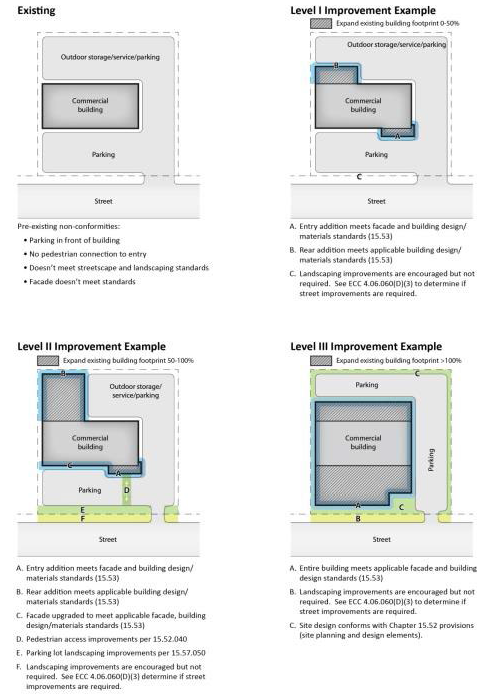
Figure 15.500.020. Examples of site development and the respective types of improvements
required under each of the three levels of improvements.
(Ord. No. 4975, § 59, 11-17-2025; Ord. 4656 § 1 (Exh. O2), 2013)
15.500.030 - How the provisions of this division are applied.
Most sections within the chapters herein include the following elements:
A.
Purpose statements, which are overarching objectives.
B.
Standards use words such as "shall," "must," and "is/are required," signifying required actions.
C.
Guidelines use words such as "should" or "is/are recommended," signifying voluntary measures.
D.
Departures are provided for specific standards. They allow alternative designs provided the reviewing authority determines the design meets the purpose of the standards and guidelines and other applicable criteria. See ECC 15.210.060 for related procedures associated with departures.
Furthermore, this division contains some specific standards that are easily quantifiable, while others provide a level of discretion in how they are complied with. In the latter case, the applicant must demonstrate to the director, in writing, how the project meets the purpose of the standard or standards.
(Ord. 4656 § 1 (Exh. O2), 2013)
15.500.040 - Administrative variance.
A.
Purpose. To apply limited flexibility in the application of the development standards herein.
B.
Applicability. The director may allow an administrative variance for proposals that are within ten percent of compliance of applicable dimensional standards within division V. For example, ECC 15.530.030(D) requires articulation features at intervals no more than 30 feet along facades. The applicant could request an administrative variance to allow the articulation interval to be increased by up to ten percent (to 33 feet).
C.
Procedures. An administrative variance is subject to the Type II review process set forth in chapter 15.210 ECC.
D.
Decision criteria. Proposals shall meet the purpose(s) of the applicable development standards.
(Ord. 4656 § 1 (Exh. O2), 2013)
15.510.010 - Purpose.
A.
To reinforce the historic storefront character of Ellensburg's downtown core area;
B.
To enhance the pedestrian environment throughout Ellensburg;
C.
To minimize potential negative impacts of parking lots and garages on the streetscape;
D.
To promote "eyes on the street" for security for pedestrians and to create a more welcoming and interesting streetscape; and
E.
To reinforce and enhance the streetscape character of Ellensburg's established residential neighborhoods.
(Ord. 4656 § 1 (Exh. O2), 2013)
15.510.020 - Applicability.
The provisions of this chapter shall apply to all nonresidential and multifamily development.
(Ord. 4656 § 1 (Exh. O2), 2013)
15.510.030 - How to use this chapter.
Site orientation standards for individual properties depend on the type of street properties front onto. Thus, consider the following steps in using this chapter:
A.
Go to the maps in ECC 15.510.040 to find your property and the street frontage type designation for the street or streets fronting your property. For properties in residential zones, the standards for landscaped streets (see ECC 15.510.080) apply. For properties in light industrial (I-L), heavy industrial (I-H), and public reserve (P-R) zones, see ECC 15.510.090. For properties that front onto multiple streets, see provisions in ECC 15.510.110;
B.
Go to the appropriate code section in this chapter for the site orientation standards for applicable street frontage type designation. Table 15.510.030 includes a summary of the five street frontage type designations along with links to the appropriate sections, the intention for each street type, and key design/use provisions; and
C.
Review ECC 15.510.120 for criteria for "departures" to site orientation standards and ECC 15.210.060 for general information and procedures associated with departures.
Table 15.510.030
Street Frontage Type Descriptions
(Ord. 4656 § 1 (Exh. O2), 2013)
15.510.040 - Street frontage type maps.
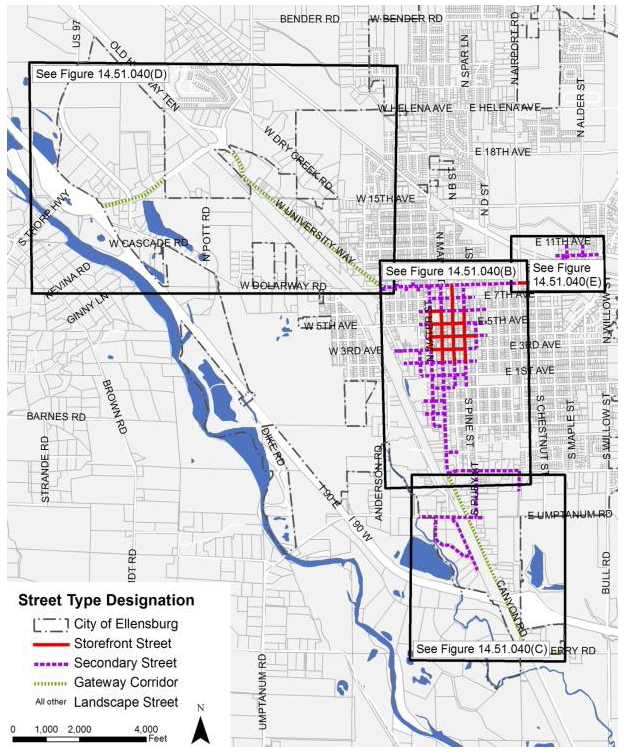
Figure 15.510.040(A). Index map for street frontage type designations.
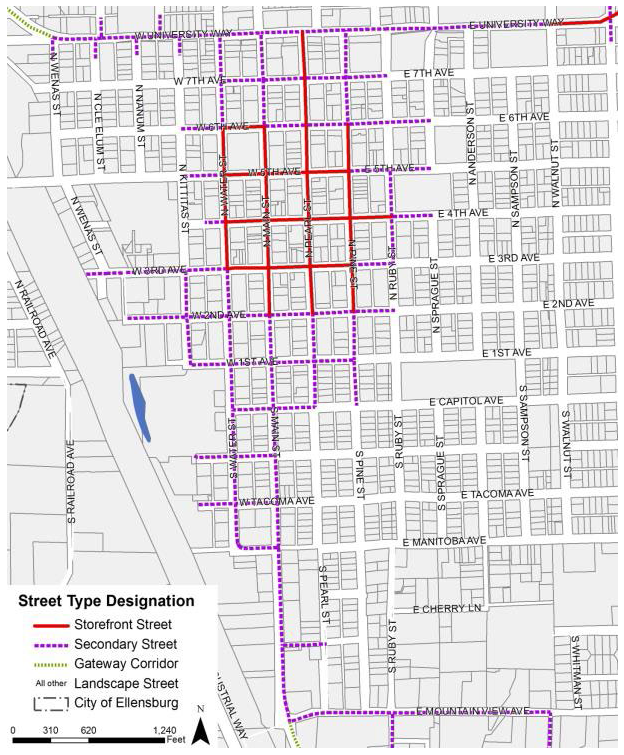
Figure 15.510.040(B) sets forth street frontage type designations for the greater
downtown area, which is roughly bounded by West 9th Avenue in the north, the railroad
in the west, Mountain View Avenue in the south, and Walnut Street in the east.
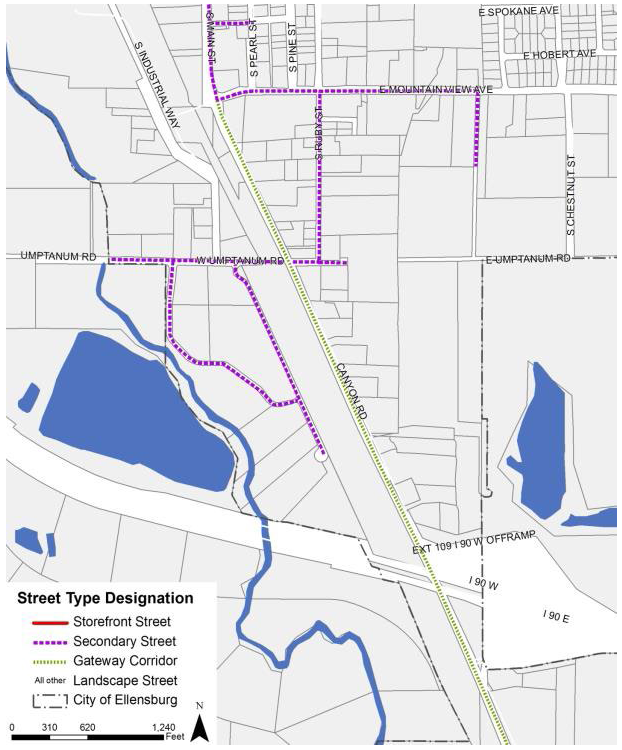
Figure 15.510.040(C) sets forth street frontage type designations for the Canyon Road
corridor/south interchange area.
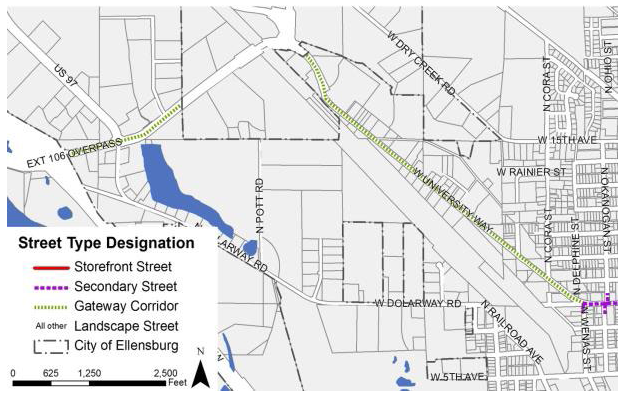
Figure 15.510.040(D). Street frontage type designations for the west interchange area.
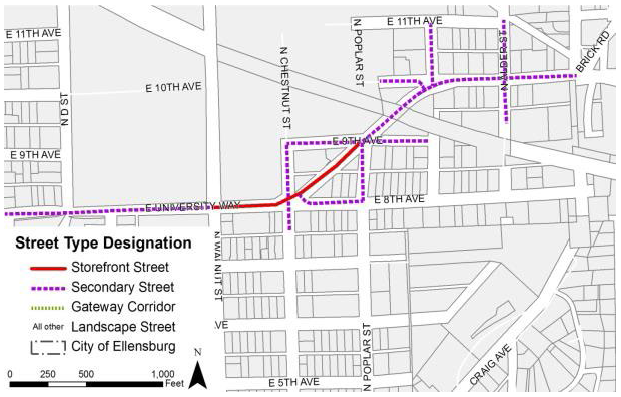
Figure 15.510.040(E). Street frontage type designations for the campus area.
(Ord. 4656 § 1 (Exh. O2), 2013)
15.510.050 - Storefront street standards.
The intent is to emphasize and/or reinforce a "Main Street" setting with storefronts placed adjacent to sidewalks.
A.
Applicability. The standards herein shall apply to all designated storefront streets per ECC 15.510.040.
B.
Building frontage. Buildings shall be located adjacent to the sidewalk. Building setbacks from the public right-of-way may be permitted provided the space between the front property line and the building:
1.
Is a widened sidewalk area; or
2.
Is a pedestrian-oriented space, as defined in ECC 15.520.030(C).
C.
Parking location. Parking shall be located to the rear, below, or above storefronts. Where some off-street parking (both surface and structured) adjacent to the storefront street is unavoidable, no more than 60 feet of frontage shall be occupied by parking and vehicular access (see figure 15.510.050(B)). New parking lots adjacent to street corners shall be prohibited.
D.
Vehicular access. Vehicular access (driveways) is discouraged on storefront streets. Where vehicular access is unavoidable, no more than one curb cut shall be allowed.
E.
Ground floor use. Except for lobbies or similar entrances, residential uses are prohibited within 30 feet of the sidewalk on the ground floor of designated storefront streets.
F.
Building entry. Building entries shall face the sidewalk.
G.
Weather protection. Weather protection at least three feet deep is required over all primary entries. For south and west facing facades, weather protection at least six feet deep along a majority of the storefront is encouraged to provide shade in the summer months. Storefront all-weather protection projections shall not interfere with street trees, street lights, street signs, or extend beyond the edge of the sidewalk and they must maintain at least eight feet of clearance over the sidewalk.
H.
Storefront transparency. Transparent window area along at least 70 percent of the ground floor facade between 30 inches and eight feet above grade is required. Display windows may count for up to 50 percent of the transparency requirements provided they are at least 16 inches of depth to allow for changeable displays. Tack on display cases shall not qualify as transparent window area. Departures to the transparency requirement will be considered pursuant to the provisions of ECC 15.210.060 and 15.510.120. Such departures may decrease the minimum amount of transparency by up to 50 percent (with no less than 35 percent of the ground floor facade between 30 inches and eight feet above grade).
I.
Ground floor and facade heights.
1.
The ground floor shall have a minimum floor-to-floor height of 15 feet, as measured from grade.
2.
All storefront facades shall maintain a minimum height of 20 feet.
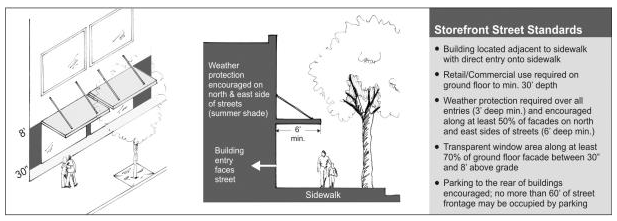
Figure 15.510.050(A). Summary of key storefront street standards.
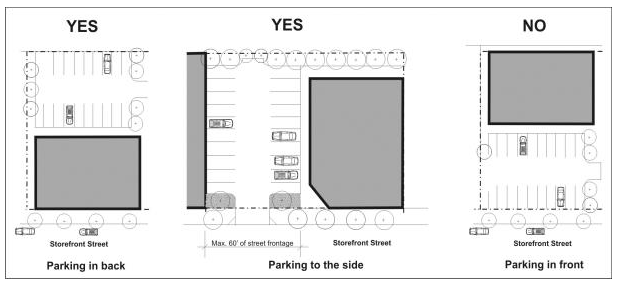
Figure 15.510.050(B). Parking location standards for designated storefront streets.
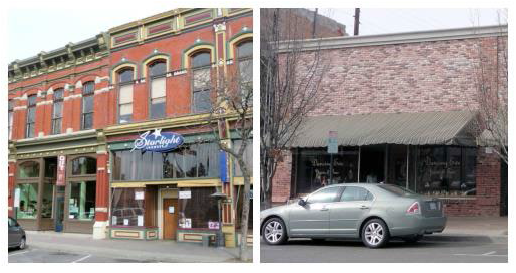
Figure 15.510.050(C). Current storefront examples. Note the large storefront windows
and recessed entries in the left image. In the right image, note the relatively tall
height of the single-story building. The height helps to add a sense of enclosure
to the street.
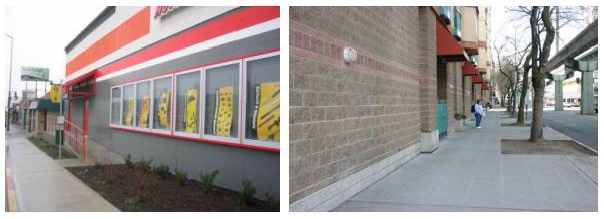
Figure 15.510.050(D). These facades do not meet the storefront standards. The tack-on
display cases in the left image do not qualify as transparent window area.
(Ord. 4656 § 1 (Exh. O2), 2013)
15.510.060 - Secondary street standards.
For all designated secondary streets, development frontages may either be storefronts (see subsection (B) of this section), landscaped frontages (see subsection (C) of this section), or a combination of both.
A.
Applicability. The standards herein shall apply to all nonresidential and multifamily development on designated secondary streets per ECC 15.510.040.
B.
Storefront standards. All storefront buildings along designated secondary streets shall comply with all building-related storefront street standards set forth in ECC 15.510.050.
C.
Landscaped frontage standards for secondary streets.
1.
Building setbacks. Ten-foot minimum or consistent with minimum requirements of the applicable zoning district (see ECC 15.320.030, 15.320.040, and 15.320.045), whichever is greater. Covered entries and other weather protection features may extend into this setback by up to six feet.
2.
Building entry. At least one building entry shall be visible from the sidewalk.
3.
Weather protection. Weather protection at least three feet deep shall be provided over all primary entries.
4.
Transparency. Transparent window area shall be provided along at least 15 percent of the facade of the building (all vertical surfaces of the facade). Departures will be considered pursuant to ECC 15.210.060 and 15.510.120.
5.
Landscaping. All areas between the sidewalk and the building shall be landscaped, except for walkways, porches, decks, and other areas meeting the definition of pedestrian-oriented space.
D.
Parking location. No more than 50 percent of the street frontage can be occupied by off-street parking and driveways (see figure 15.510.060(B)). Departures will be considered pursuant to ECC 15.210.060 and 15.510.120.
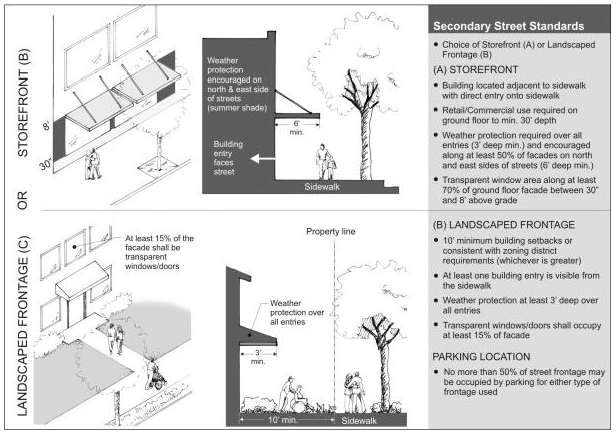
Figure 15.510.060(A). Summary of key secondary street standards.
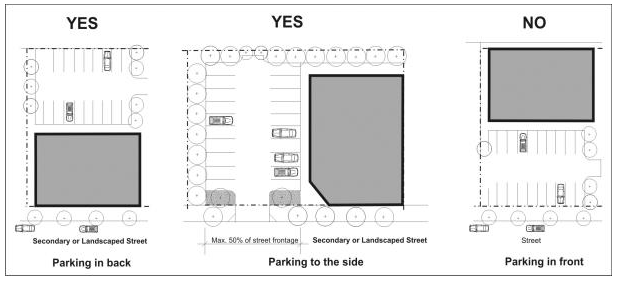
Figure 15.510.060(B). Parking location standards for designated secondary streets.
(Ord. 4887 § 29, 2022; Ord. 4656 § 1 (Exh. O2), 2013)
15.510.070 - Gateway street standards.
A.
Applicability. The standards herein shall apply to all designated gateway streets per ECC 15.510.040.
B.
Building setbacks. Fifteen feet minimum, or consistent with minimum requirements of the applicable zoning district (see ECC 15.320.040 and 15.320.045), whichever is greater.
C.
Building entry. At least one building entry shall be visible from the sidewalk.
D.
Weather protection. Weather protection at least three feet deep shall be provided over all primary entries.
E.
Transparency. Transparent window area shall be provided along at least 15 percent of the facade of the building (all vertical surfaces of the facade). Departures will be considered pursuant to ECC 15.210.060 and 15.510.120.
F.
Landscaping. All areas between the sidewalk and the building shall be landscaped, except for walkways, porches, decks, and other areas meeting the definition of pedestrian-oriented space.
G.
Parking location. Parking and driveways shall be located to the side or rear of buildings. Drive-through lanes between the sidewalk and the building are prohibited. Departures will be considered pursuant to ECC 15.210.060 and 15.510.120.
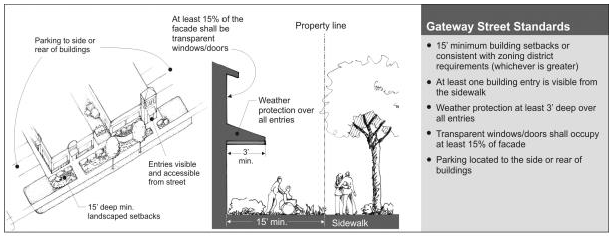
Figure 15.510.070. Summary of key gateway street standards.
(Ord. 4887 § 30, 2022; Ord. 4656 § 1 (Exh. O2), 2013)
15.510.080 - Landscaped street standards.
A.
Applicability. The standards herein shall apply to all nonresidential and multifamily development on designated landscaped streets per ECC 15.510.040.
B.
Building setbacks. Fifteen feet minimum, or consistent with minimum requirements of the applicable zoning district (see ECC 15.320.030, 15.320.040, and 15.320.045), whichever is greater.
C.
Building entry. At least one building entry shall be visible from the sidewalk.
D.
Weather protection. Weather protection at least three feet deep shall be provided over all primary entries.
E.
Transparency. Transparent window area shall be provided along at least 15 percent of the facade of the building (all vertical surfaces of the facade). Departures for nonresidential uses will be considered pursuant to ECC 15.210.060 and 15.510.120.
F.
Landscaping. All areas between the sidewalk and the building shall be landscaped, except for walkways, porches, decks, and other areas meeting the definition of pedestrian-oriented space.
G.
Parking location. No more than 50 percent of the street frontage can be occupied by off-street parking and driveways. Departures will be considered pursuant to ECC 15.210.060 and 15.510.120.
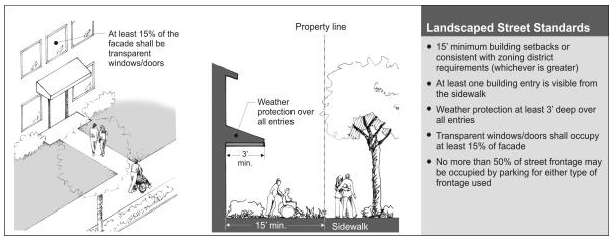
Figure 15.510.080. Summary of key landscaped street standards.
(Ord. 4887 § 31, 2022; Ord. 4656 § 1 (Exh. O2), 2013)
15.510.090 - Site orientation standards for properties in the light industrial (I-L), heavy industrial (I-H), and public reserve (P-R) zones.
Unless otherwise designated on a map within ECC 15.510.040, sites within the I-L, I-H, and P-R zones shall comply with the standards for secondary streets (see ECC 15.510.060), except there are no limitations as to the location of parking along street frontages. Parking lot landscaping and buffer provisions set forth in ECC 15.520.070 are applicable.
(Ord. 4656 § 1 (Exh. O2), 2013)
15.510.100 - Site orientation standards for properties in all residential zones.
All nonresidential and multifamily development within residential zones shall comply with the frontage standards for landscaped streets as set forth in ECC 15.510.080.
(Ord. 4656 § 1 (Exh. O2), 2013)
15.510.110 - Where properties front onto multiple streets.
Where properties front onto multiple streets and/or multiple street type designations, the frontages shall comply with the applicable standards for each street frontage, with the following exceptions:
A.
Entries.
1.
For street corner properties, a pedestrian entry on only one of the frontages is required. However, pedestrian entries located at the corner and/or along both streets are encouraged. Storefront street frontages shall take precedence over non-storefront street frontages in terms of which street to locate frontages along. For properties fronting three or more streets, direct pedestrian entries shall be required on at least two street frontages. Departures will be considered pursuant to ECC 15.210.060 and 15.510.120.
2.
For dual frontage properties, a pedestrian entry needs to be visible from both streets. Departures will be considered pursuant to ECC 15.210.060 and 15.510.120.
B.
Transparency. For street corner properties and other properties fronting on multiple streets, the minimum required transparency percentage may be reduced by 50 percent on secondary facades (facades where no entry is included). Departures will be considered pursuant to ECC 15.210.060 and 15.510.120.
C.
Parking location. For properties fronting on multiple streets, departures will be considered pursuant to ECC 15.210.060 for all but one of the frontages. Departures to parking location standards shall not be granted for developments adjacent to storefront streets, except where the site fronts onto three or more storefront streets.
(Ord. 4656 § 1 (Exh. O2), 2013)
15.510.120 - Site orientation departures.
Select departure opportunities are provided pursuant to ECC 15.210.060 for each of the street type designations set forth in ECC 15.510.050 through 15.510.080. For each proposed departure, the applicant shall demonstrate how the proposal meets the purposes of the standards herein. Considerations for determining whether an alternative design meets the purposes of the standards include:
A.
Current and future context. Consider both the current context of the site and the possible future context of the surrounding area per the comprehensive plan goals and policies and zoning/design provisions set forth in this title.
B.
Special site constraint. Consider whether the shape or location of the site presents any special challenges in meeting the parking location requirement.
C.
Visual impacts. Consider whether the proposed design of streetfront elements (such as the combination of landscaping, building frontages, or other site elements/details) help to mitigate the visual impacts of large parking areas fronting on the street.
D.
Impacts to nonmotorized traffic. Consider whether the proposed design addresses or impacts nonmotorized transportation elements along the street frontage.
E.
Conformance with Ellensburg design standards. Consider whether the proposed design conforms to applicable provisions of the design standards, which includes chapters on multifamily, commercial, and industrial development. If there is a conflict between the Ellensburg design standards and the provisions in this division, the provisions herein shall apply.
(Ord. 4656 § 1 (Exh. O2), 2013)
15.510.130 - Civic building frontages.
Public buildings are exempted from the site orientation standards herein provided design treatments are integrated that meet the following objectives:
A.
Enliven the pedestrian environment adjacent to the sidewalk; and
B.
Incorporate a visually prominent and inviting entry from the street (applied to the frontage containing the public building entry).
(Ord. 4656 § 1 (Exh. O2), 2013)
15.520.010 - Purpose and applicability.
A.
Purpose. This section provides direction for the layout of buildings, open spaces, circulation elements, and large site development and the design of site elements consistent with the goals and policies of the Ellensburg comprehensive plan.
B.
Applicability. Unless otherwise noted, the provisions in this section apply to all new nonresidential and multifamily development within the city.
(Ord. 4656 § 1 (Exh. O2), 2013)
15.520.020 - Side/rear yard design.
A.
Purpose.
1.
To provide for compatibility between developments;
2.
To provide side and rear yard design options that enhance Ellensburg's pedestrian environment and the areas around the development; and
3.
To provide flexible standards that allow property owners to maximize on-site development while meeting community design goals.
B.
Solar access and privacy along side and rear yards.
1.
Buildings or portions thereof containing multifamily dwelling units whose only solar access is from the applicable side of the building (facing towards the side property line) shall be set back from the applicable side or rear property lines at least 15 feet. See figure 15.520.020(B).
2.
Balconies or rooftop decks within 15 horizontal feet of a side property line must utilize opaque guard rails to minimize privacy impacts to adjacent properties.
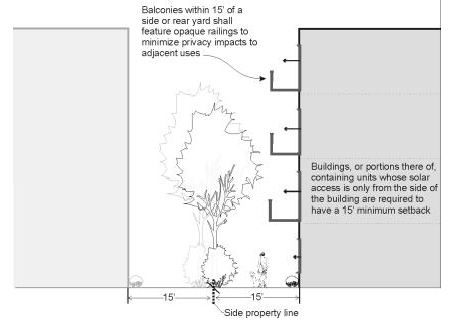
Figure 15.520.020(B). Solar access and privacy standards for multifamily residential
buildings along side/rear yards.
C.
Side/rear yard design/options. All new developments and developments qualifying as Level II or III improvements shall incorporate one or more of the following design options along side and rear property lines:
1.
Provide landscaping Type A (see ECC 15.570.040(A)) at least ten feet deep along side and rear property lines. This treatment shall be required for developments in the I-H, I-L, C-H, C-T that abut residential zoned properties (zone edges that run along streets or alleys are not applicable to this standard).
Departures. Alternative buffer techniques will be considered pursuant to ECC 15.210.060 provided the design mitigates the anticipated impacts between uses and applicable property owners provide written notice to the city that the proposed buffer design is acceptable.
2.
Provide landscaping Type B or C (see ECC 15.570.040(B) or (C)) at least ten feet deep along side and rear property lines where a visual separation of uses is desired. The width of the planting strip may be reduced to five feet if used in conjunction with a screen fence between six and eight feet tall.
3.
Other treatments that meet the purpose of the standards. Factors that must be considered in determining the appropriate treatment include views, applicable uses, connectivity, and desired level of privacy. Some options include:
a.
Shared pathway along or adjacent to the property line with landscaping. This is a desirable configuration that can enhance pedestrian circulation and provides an efficient use of space. This treatment requires a recorded agreement with applicable adjacent property owner(s).
b.
Shared internal drive along or adjacent to the property line. This is a desirable configuration for nonresidential uses that can enhance circulation and provides an efficient use of space. This treatment requires a recorded agreement with applicable adjacent property owner(s).
c.
Tall privacy fence or hedge (up to eight feet tall). This is most applicable where screening on-site uses is desired and/or for commercial uses adjacent to residential uses—where the fence doesn't negatively impact views from the street or nearby properties. Except for developments in the I-H zone, landscaping elements shall be included in front of the fence to screen and soften the view of the fence.
d.
Low screen fence or hedge (up to 42 inches tall). This may be a more attractive option where a taller fence might provide negative visual impacts to the proposed or adjacent uses.
e.
Where allowed in the specific zoning district, buildings sited up to the property line may be acceptable provided material, color, and/or textural changes to the building wall are included that add visual interest to the wall. See ECC 15.530.060(D) for applicable zero-lot line building design provisions.
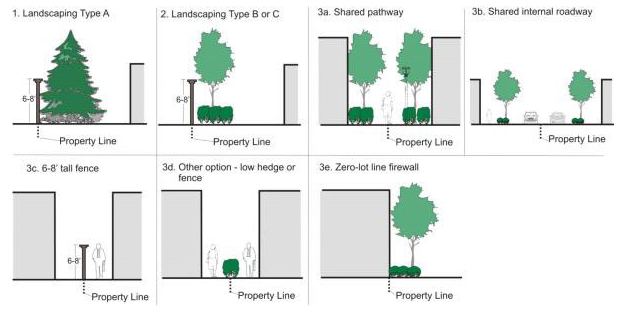
Figure 15.520.020(C). Illustrating the various side and rear yard design treatment
standards and options.
(Ord. 4656 § 1 (Exh. O2), 2013)
15.520.030 - Open space for nonresidential and multifamily uses.
A.
Purpose.
1.
To enrich the pedestrian environment in Ellensburg;
2.
To provide accessible, safe, convenient, and usable on-site open space for residential uses;
3.
To promote the health of residents by providing access to on-site open space for recreational activities, physical exercise, and/or food production;
4.
To create open spaces that enhance the residential setting; and
5.
To provide for pedestrian-oriented open space in conjunction with large scale commercial development.
B.
Open space requirements for nonresidential uses. (See figure 15.520.030(B)). All nonresidential development on sites outside of the I-H zone more than one acre in size, including commercial portions of mixed use development, shall provide pedestrian-oriented space equal to at least one percent of the net project area plus one percent of the gross nonresidential building floor area, exclusive of structured parking. The intent is to mitigate the impacts of large scale commercial development, provide outdoor spaces for resting, dining, and socializing, and to contribute to the desired pedestrian-oriented character of commercial areas and the economic viability of Ellensburg. The one percent standard is modest with respect to building and parking areas, provides for proportionality, and the standards provide flexibility in how the standard can be met. Buildings used entirely for storage purposes are exempt from this standard. Pedestrian-oriented space shall comply with the design provisions of subsection (C) of this section. The applicable open space(s) shall be maintained by the property owner.
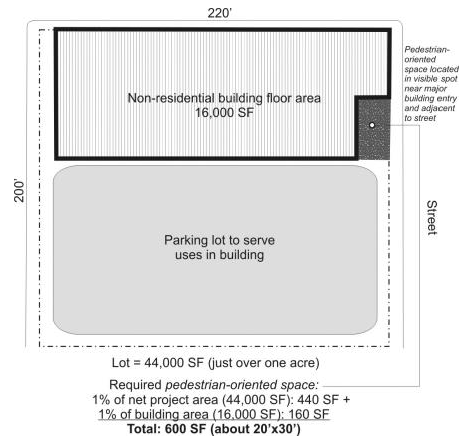
Figure 15.520.030(B). Illustrating the amount of open space required for nonresidential
development.
C.
Pedestrian-oriented space design criteria. These spaces, as required per subsection (B) of this section, are intended to be publicly accessible spaces that enliven the pedestrian environment by providing (1) opportunities for outdoor dining, socializing, relaxing and (2) visual amenities that contribute to the character of commercial areas. Design criteria for pedestrian-oriented space:
1.
Sidewalk area, where widened beyond minimum requirements, shall count as pedestrian-oriented open space. The additional sidewalk area may be used for outdoor dining and temporary display of retail goods. The standards in subsections (C)(2) through (4) of this section shall not apply to sidewalks, where used as usable open space.
2.
The following design elements are required for pedestrian-oriented open space:
a.
Spaces shall be physically and visually accessible from the adjacent street or major internal vehicle or pedestrian route. Spaces shall be in locations that the intended user can easily access and use, rather than simply left-over or undevelopable spaces where very little pedestrian traffic is anticipated;
b.
Paved walking surfaces of either concrete or approved unit paving;
c.
Pedestrian-scaled lighting (no more than 14 feet in height) at a level averaging at least two foot-candles throughout the space. Lighting may be on-site or building-mounted lighting (see chapter 15.580 ECC, outdoor lighting, for additional lighting requirements);
d.
At least three feet of seating area (bench, ledge, etc.) or one individual seat per 60 square feet of plaza area or open space. This provision may be relaxed or waived where there are provisions for movable seating that meet the purpose of the standard;
e.
Spaces shall be positioned in areas with significant pedestrian traffic to provide interest and security—such as adjacent to a building entry; and
f.
Landscaping that adds visual or seasonal interest to the space.
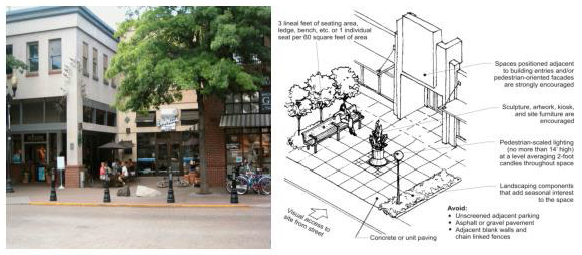
Figure 15.520.030(C). Examples of pedestrian-oriented open spaces.
3.
The following features are encouraged in pedestrian-oriented space:
a.
Pedestrian amenities such as a water feature, drinking fountain, and/or distinctive paving or artwork;
b.
Provide pedestrian-oriented facades on some or all buildings facing the space;
c.
Consideration of the sun angle at noon and the wind pattern in the design of the space;
d.
Transitional zones along building edges to allow for outdoor eating areas and a planted buffer;
e.
Movable seating;
f.
Incorporation of water treatment features such as rain gardens or the use of an area over a vault as a pedestrian-oriented space; and
g.
Weather protection, especially weather protection that can be moved or altered to accommodate conditions.
4.
The following features are prohibited within pedestrian-oriented space:
a.
Asphalt or gravel pavement, except where continuous gravel or asphalt paths intersect with the space;
b.
Adjacent chain link fences;
c.
Adjacent unscreened blank walls; and
d.
Adjacent dumpsters or service areas.
D.
Open space requirements for multifamily uses. All multifamily development, including multifamily portions of mixed use development, shall provide open space at least equal to ten percent of the building living space, not counting corridors, lobbies, etc. For example, for an eight-unit development where the units average 1,000 square feet, the minimum required open space shall be 800 square feet. The applicable open space(s) shall be maintained by the property owner or homeowners' association, where applicable, per ECC 15.290.020. The required open space may be provided in a combination of the following ways:
1.
One hundred percent of the required open space may be in the form of common open space available to all residents and meeting the requirements of subsection (E)(1) of this section. Common open space may be in the form of courtyards, front porches, patios, play areas, gardens or similar spaces;
2.
Up to 50 percent of the required open space may be provided by private or common balconies meeting the requirements of subsection (E)(2) of this section;
3.
For mixed-use buildings up to 50 percent of the required open space may be provided by common indoor recreation areas meeting the requirements of subsection (E)(3) of this section;
4.
For mixed-use buildings, up to 50 percent of the required open space may be provided by shared roof decks located on the top of buildings which are available to all residents and meet the requirements of subsection (E)(4) of this section; and/or
5.
Up to 25 percent of the required open space may be provided by community garden areas meeting the requirements of subsection (E)(5) of this section.
6.
For co-living housing, one hundred percent of the required open space may be in the form of shared kitchen and living spaces (such as lounge/social rooms, fitness rooms, libraries, workshops and similar amenities) available to all residents.
E.
Multifamily open space design criteria.
1.
Common open space. Such spaces include landscaped courtyards or decks, front porches, gardens with pathways, children's play areas, or other multi-purpose recreational and/or green spaces. Special requirements and recommendations for common open spaces include the following:
a.
Required setback areas shall not count towards the open space requirement unless they are portions of a space that meets the dimensional and design requirements and guidelines set forth below;
b.
Space shall be large enough to provide functional leisure or recreational activity. To meet this requirement, no dimension shall be less than 15 feet in width (except for front porches);
c.
Spaces (particularly children's play areas) shall be visible from at least some dwelling units and positioned near pedestrian activity;
d.
Spaces shall feature paths, landscaping, seating, lighting and other pedestrian amenities to make the area more functional and enjoyable;
e.
Individual entries may be provided onto common open space from adjacent ground floor residential units, where applicable. Small, semi-private open spaces for adjacent ground floor units that maintain visual access to the common area are encouraged to enliven the space. Low walls or hedges (less than three feet in height) are encouraged to provide clear definition of semi-private and common spaces;
f.
Separate common space from ground floor windows, automobile circulation, service areas and parking lots by utilizing landscaping, low-level fencing, and/or other treatments that enhance safety and privacy (both for common open space and dwelling units);
g.
Space should be oriented to receive sunlight, facing east, west, or (preferably) south, when possible;
h.
Space should sited to minimize impacts from prevailing winds;
i.
Stairways, stair landings and above grade walkways shall not encroach into minimum required common open space areas. An atrium roof covering may be built over a courtyard to provide weather protection provided it does not obstruct natural light inside the courtyard; and
j.
Shared front porches qualify as common open space provided:
i.
No dimension is less than eight feet; and
ii.
The porches are accessible to all residents.
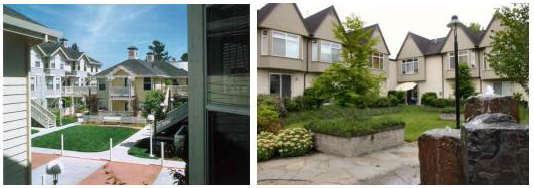
Figure 15.520.030(D)(1). Examples of common open space.
2.
Private balconies and decks. Such spaces shall be at least 35 square feet, with no dimension less than four feet, to provide a space usable for human activity. The space shall meet ADA standards. This standard also applies to individual front porches if counted toward townhouse open space requirements.
3.
Indoor recreational areas. Such spaces shall meet the following conditions:
a.
The space shall meet ADA standards and shall be located in a visible area, such as near an entrance, lobby, or high traffic corridors; and
b.
Space shall be designed specifically to serve interior recreational functions and not merely be leftover unrentable space used to meet the open space requirement. Such space shall include amenities and design elements that will encourage use by residents.
4.
Shared rooftop decks. Such spaces shall meet the following requirements:
a.
Space shall be ADA accessible to all dwelling units;
b.
Space shall provide amenities such as seating areas, landscaping, and/or other features that encourage use;
c.
Space shall feature hard surfacing appropriate to encourage resident use; and
d.
Space shall incorporate features that provide for the safety of residents, such as enclosures, railings, and appropriate lighting levels.
5.
Community gardens. (See figure 15.520.030(D)(2)). Such spaces shall meet the following conditions:
a.
All spaces shall be located to receive at least six hours of natural sunlight per day in summer months.
b.
All spaces shall have access to irrigation.
c.
All spaces shall have tillable soil to a depth of one foot, minimum.
d.
Spaces may be provided in shared or private yard areas, at ground level, on balconies, or on rooftop decks.
e.
Where some or all of the community garden is within shared common open space, a management program shall be required setting forth the following provisions:
i.
Access to interested residents meeting minimum space requirements set forth herein;
ii.
Provisions for space management and maintenance; and
iii.
No additional fees shall be assessed to space users beyond standard homeowners' association or resident maintenance fees.
f.
Standards where community garden space is provided within shared common open spaces:
i.
Walkways between planting beds shall be at least two feet wide; and
ii.
Planting beds shall be raised above surface level. For ground level spaces, planting beds shall be raised at least six inches. For rooftop spaces, planting beds shall be raised by at least 18 inches.
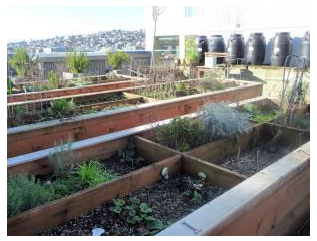
Figure 15.520.030(D)(2). Community garden example.
(Ord. No. 4975, § 60, 11-17-2025; Ord. 4656 § 1 (Exh. O2), 2013)
15.520.040 - Internal pedestrian access and design.
A.
Purpose. To improve the pedestrian environment by providing safe and clear connections between the sidewalk and adjacent uses, between businesses, and through parking lots.
B.
Access to sidewalk. All buildings shall have clear pedestrian access to the sidewalk. Where a use fronts two streets, access shall be provided from the road closest to the main entrance, preferably from both streets. Buildings with entries not facing the street shall have a clear and obvious pedestrian access way from the street to the entry.
C.
Sites with multiple businesses or buildings. Pedestrian paths or walkways connecting all businesses and the entries of multiple commercial buildings frequented by the public on the same development site shall be provided.
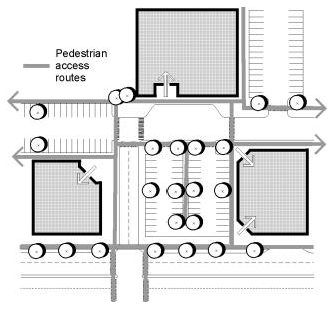
Figure 15.520.040(C). Good internal pedestrian circulation. Note connections from
the street, between buildings and through parking lots.
D.
Parking lot pathways. A hard-surfaced walkway with six feet of unobstructed width shall be provided for safe walking areas through parking lots greater than 150 feet long (measured either parallel or perpendicular to the street front). Walkways shall be provided for at least every three parking aisles or a distance of less than 150 feet shall be maintained between paths. Such access routes through parking areas shall be separated from vehicular parking and travel lanes by use of contrasting paving material, which may be raised above the vehicular pavement. Speed bumps may not be used to satisfy this requirement. Trees and pedestrian-scaled lighting (maximum 15 feet in height) shall be used to clearly define pedestrian walkways or other pedestrian areas within the parking area.
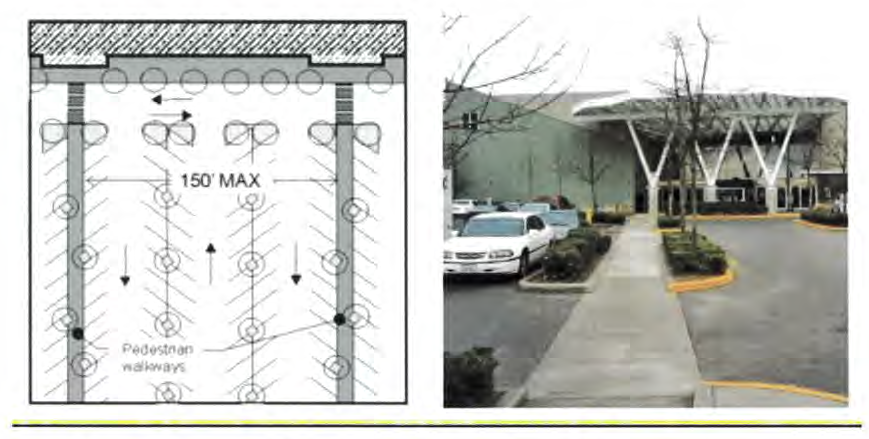
Figure 15.520.040(D). Parking lot pathway standards and example.
E.
Internal walkway widths and design.
1.
Pathways along the front facade of mixed-use and retail buildings 100 feet or more in length (measured along the facade) that are not located adjacent to a street must be at least 12 feet wide with eight feet minimum unobstructed width and include the following:
a.
Street trees shall be placed at an average of 30 feet on center and placed in planting pits (except where trees are placed in continuous planting strips). Breaks in the tree coverage will be allowed near major building entries to enhance visibility. However, no less than one tree per 60 lineal feet of building facade must be provided;
b.
Planting strips may be used between any vehicular access or parking area and the pathway; provided, that the required trees are included and the pathway is at least eight feet in width and the combined pathway and planting strip is at least 14 feet in width; and
c.
Pedestrian-scaled lighting may be used as a substitute to the required street trees, provided they are used at the same intervals.
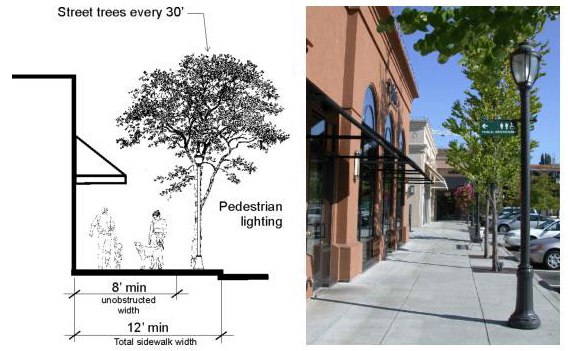
Figure 15.520.040(E)(1). Internal walkway standards and an example along retail or
mixed-use buildings.
2.
For all other interior pathways, the applicant shall successfully demonstrate that the proposed walkway is of sufficient width to accommodate the anticipated number of users.
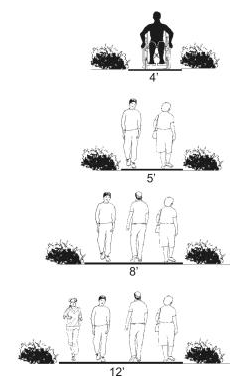
Figure 15.520.040(E)(2). Considerations for pathway walking widths.
F.
Pedestrian crossings.
1.
Crosswalks are required when a walkway crosses a paved area accessible to vehicles; and
2.
Applicants must continue the sidewalk pattern and material across internal driveways.
(Ord. No. 4975, § 61, 11-17-2025; Ord. 4656 § 1 (Exh. O2), 2013)
15.520.050 - Internal vehicular circulation.
A.
Purpose.
1.
To create a safe, convenient, and efficient network for vehicle circulation and parking;
2.
To enhance the visual character of interior access roads; and
3.
To minimize conflicts with pedestrian circulation and activity.
B.
Internal vehicular circulation standards. All developments shall provide a safe and convenient network of vehicular circulation that connects to the surrounding road/access network and provides the opportunity for future connections to adjacent parcels, where applicable.
Large site circulation. Sites larger than two acres and deeper than 150 feet (as measured perpendicular to fronting right-of-way) are required to facilitate enhanced internal vehicular connections.
Specifically:
1.
Multifamily and nonresidential developments shall comply with applicable block design and connectivity standards set forth in ECC 15.420.020.
2.
Where abutting developed land provides road stub-outs, easements, or other methods to provide the opportunity for future road connections, the interior network of the new development shall be designed to utilize these connections.
3.
Buildings and internal vehicular access shall be configured to allow future redevelopment on applicable adjacent sites to connect to the project's internal roads. Examples include internal road stubouts, "T" intersections near the property line, or the capability of constructing a new vehicular connection based on the location and design of buildings.
4.
Exceptions to subsections (B)(2) and (3) of this section:
a.
On-site environmental conditions make such a connection cost prohibitive or undesirable; or
b.
Applicable adjacent site is unlikely to be redeveloped in the near future based on the AV Value (ratio of the assessed value of improvements to the assessed value of land). Parcels with an AV ratio of less than 1.0, where the value of the building is less than the value of the land, are assumed to have redevelopment potential.
C.
Driveways. See section 3 (driveway standards), public works development standards.
D.
Drive-through lanes.
1.
Drive-through lanes shall be delineated from other pedestrian pathways and vehicular use areas by means of a landscaping divider median. See table 15.550.040(A) for stacking requirements.
2.
Drive-through lanes between a building and the street. All applicable developments shall comply with the following standards:
a.
For the purpose of the site orientation standards in chapter 15.510 ECC, drive-through lanes between a street and a building are considered as a parking lot;
b.
Drive-through lanes shall be separated from the sidewalk by a planting strip with Type C landscaping at least five feet in width. Alternative landscaping schemes may be permitted provided they meet the minimum planting width requirement and help to mitigate the visual impact of the drive-through use on the streetscape environment; and
c.
Drive-through lanes shall not restrict pedestrian access between the sidewalk and on-site buildings, as determined by the reviewing authority. Where pedestrian routes cross drive-through lanes, a crosswalk that is raised or features a change in texture and/or other treatment must be utilized to enhance the safety and visual appearance of the pedestrian crossing.
(Ord. 4656 § 1 (Exh. O2), 2013)
15.520.060 - Service areas and mechanical equipment.
A.
Purpose.
1.
To minimize the potential negative impacts of service elements; and
2.
To encourage thoughtful siting of service elements that balance functional needs with the desire to screen negative impacts.
B.
Service element location and design. All developments shall provide a designated spot for service elements (refuse and disposal). Such elements shall meet the following requirements:
1.
Service elements shall be located to minimize the negative visual, noise, odor, and physical impacts to the street environment, adjacent (on- and off-site) residents or other uses, and pedestrian areas;
2.
The designated spot for service elements shall be paved with concrete;
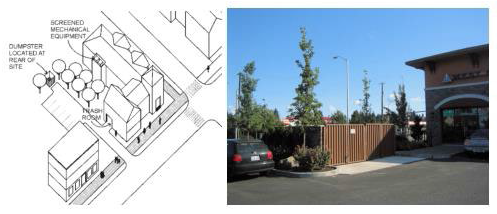
Figure 15.520.060(B). Appropriate service area location and enclosure example.
3.
Appropriate enclosure of the common trash and recycling elements shall be required. Requirements and considerations:
a.
Service areas visible from the street, pathway, pedestrian-oriented space or public parking area (alleys are exempt) shall be enclosed and screened around their perimeter by a durable wall or fence at least six feet high. Developments shall use materials and detailing consistent with primary structures on site. Acceptable materials include brick, concrete block or stone;
b.
The sides and rear of the enclosure must be screened with Type A, B, or C landscaping (see ECC 15.570.040) at least five feet deep in locations visible from the street, dwelling units, customer parking areas, or pathways to soften the views of the screening element and add visual interest;
c.
Collection points shall be located and configured so that the enclosure gate swing does not obstruct pedestrian or vehicle traffic, or does not require that a hauling truck project into any public right-of-way;
d.
Proximity to adjacent residential units will be a key factor in determining appropriate service element treatment; and
e.
Preferably, service enclosures are integrated into the building itself.
C.
Utility meters, electrical conduit, and other service utility apparatus. These elements shall be located and/or designed to minimize their visibility to the public. Project designers are strongly encouraged to coordinate with applicable service providers early in the design process to determine the best approach in meeting these standards. If such elements are mounted in a location visible from the street, pedestrian pathway, common open space, or shared auto courtyards, they shall be screened with vegetation or by architectural features.
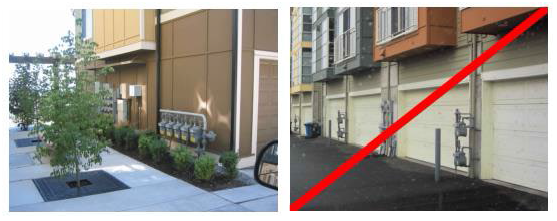
Figure 15.520.060(C). Good and bad utility meter configurations. The examples on the
left are consolidated and somewhat screened by landscaping elements, whereas the right
examples are exposed and degrade the character of these townhouses.
D.
Rooftop mechanical equipment. All rooftop mechanical equipment shall be organized, proportioned, detailed, screened, landscaped (with decks or terraces) and/or colored to be an integral element of the building and minimize visual impacts from the ground level of adjacent streets and properties. For example, screening features should utilize similar building materials and forms to blend with the architectural character of the building.
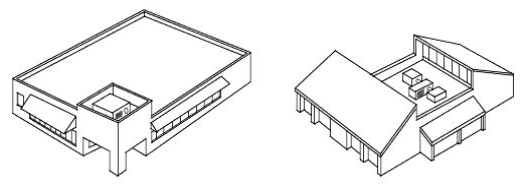
Figure 15.520.060(D). Screening examples of rooftop mechanical equipment.
(Ord. 4807 § 57, 2018; Ord. 4656 § 1 (Exh. O2), 2013)
15.520.070 - Parking lot design.
A.
Purpose. To minimize potential negative impacts of parking lots on the streetscape's visual character, pedestrian environment, local water quality conditions, and adjacent uses.
B.
Surface parking lot screening standards.
1.
Where new surface parking lots or parking lots associated with new construction or level III improvements (see ECC 15.500.020) are adjacent to streets, one of the following buffer options between the sidewalk and the parking lot shall be incorporated:
a.
Provide a five-foot-wide planting bed that incorporates a continuous low wall (approximately three feet tall). The planting bed shall be in front of the wall and feature Type C landscaping (see ECC 15.570.040(C)). Departures utilizing alternative landscaping schemes will be considered pursuant to ECC 15.210.060 provided they meet the purpose of the standards in this section. The wall shall be constructed of brick, stone, decorative concrete or concrete block, or other permanent material that provides visual interest and helps to define the street edge (see figure 15.520.070(B)(1)(a)).
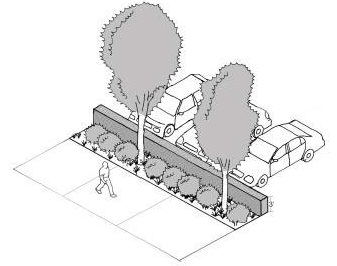
Figure 15.520.070(B)(1)(a). Parking lot planting buffer with low wall.
b.
Provide an elevated planter which is a minimum of five feet wide and between two and three feet in height. Ledges that are approximately 12 inches in width are encouraged as they can double as a seating area. The planter must be constructed of masonry, concrete or other permanent material that effectively contrasts with the color of the sidewalk and combines groundcover and annuals, perennials, ornamental grasses, low shrubs, and/or small trees that provide seasonal interest (see Figure 15.520.070(B)(1)(b)).
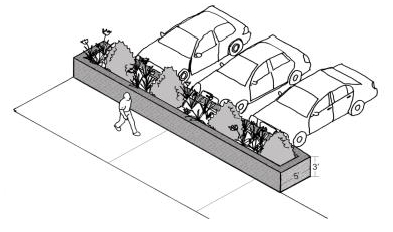
Figure 15.520.070(B)(1)(b). Elevated parking lot planting buffer.
c.
Provide at least ten feet of Type C landscaping (ECC 15.570.040(C)). (See figure 15.520.070(B)(1)(c)).
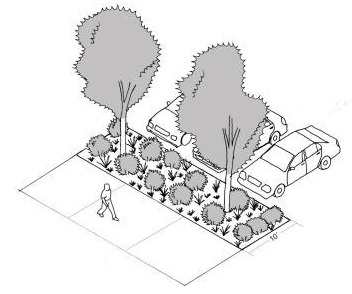
Figure 15.520.070(B)(1)(c). Example of a 10-foot parking lot buffer with Type C landscaping.
All options above should choose and maintain plantings to maintain eye level visibility between the street/sidewalk and parking area for safety. This means that shrubs and other low plantings should be maintained below three feet in height while trees (once they achieve taller heights) should generally have their crowns raised up to the eight-foot level. (See figure 15.520.070(B)(1)(c)).
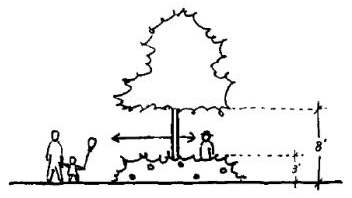
Figure 15.520.070(B)(1)(c). Parking lot planting buffers shall emphasize the 3:8 rule
for visibility and safety.
2.
Where new surface parking lots or parking lots associated with new construction or level III improvements (see ECC 15.500.020) are located along side property lines, a six- to eight-foot screen fence shall be required on the property line with at least five feet of Type A, B, or C landscaping (see ECC 15.570.040) in front of the fence. Breaks in the fence/landscaping are permitted for internal pedestrian and vehicular connections between properties. Properties fronting on designated storefront streets and/or those with shared parking agreements with applicable neighbors are exempt from this requirement. Departures will be considered pursuant to ECC 15.210.060 provided they meet the purpose of the standards in this section.
3.
Other relevant code sections.
a.
Section 6, parking standards, of the city's public works development standards and chapter 15.550 ECC, off-street parking;
b.
Parking lot pathway standards set forth ECC 15.520.040(C); and
c.
Internal parking lot landscaping standards set forth in ECC 15.570.050(A)(3).
(Ord. No. 4975, § 62, 11-17-2025; Ord. 4656 § 1 (Exh. O2), 2013)
15.520.080 - Special features and amenities.
A.
Purpose.
1.
To create attractive and comfortable pedestrian environments; and
2.
To enhance the unique character and identity of downtown and other commercial/mixed-use areas within Ellensburg.
B.
Durable pedestrian furniture. Pedestrian furniture provided in public spaces shall be made of durable, vandal- and weather-resistant materials that do not retain rainwater and can be reasonably maintained over an extended period of time.
C.
Streetscape amenities. Streetscape amenities must be integrated into the design of sidewalks in conjunction with new development and level III improvements (see ECC 15.500.020(C)) along all designated storefront and secondary streets. Level I and II improvements (see ECC 15.500.020(A) and (B)) and project sites adjacent to sidewalks that were recently constructed or upgraded by the city shall be exempt from these standards as determined by the director. For each 100 cumulative lineal feet of storefront street frontage, at least two of the desired amenity elements listed below shall be included. Along designated secondary streets, at least one amenity element shall be included. The type, location, and design of chosen amenities shall contribute to a well-balanced mix of features on the street. Such amenities shall be installed per ECC 4.14.100 and maintained by the adjacent property owner. Amenities below that are publicly funded, already required by code, and/or that obstruct pedestrian movement shall not qualify as an amenity to meet this standard.
Desired amenities include:
1.
Seating. Each six feet of seating area or four individual seats count as one amenity element. Seating areas should generally be located in areas that provide views of pedestrian activity. Seating ledges must be at least 12 inches wide to qualify;
2.
Trash receptacles. To qualify as an amenity, at least one trash receptacle is needed per 100 linear feet of sidewalk. For designated storefront streets, this shall be required;
3.
Permanent landscaping elements including planting beds and other landscaping elements that add visual interest to the sidewalk;
4.
Special pavement patterns and/or tree grates;
5.
Bicycle racks;
6.
Informational kiosks (may count as two amenity elements at the discretion of the permit review authority);
7.
Decorative clocks (may count as two amenity elements at the discretion of the permit review authority);
8.
Artwork as approved by the arts commission (may count as two amenity elements at the discretion of the arts commission);
9.
Special lighting; and
10.
Other amenities that meet the purpose of the standards.
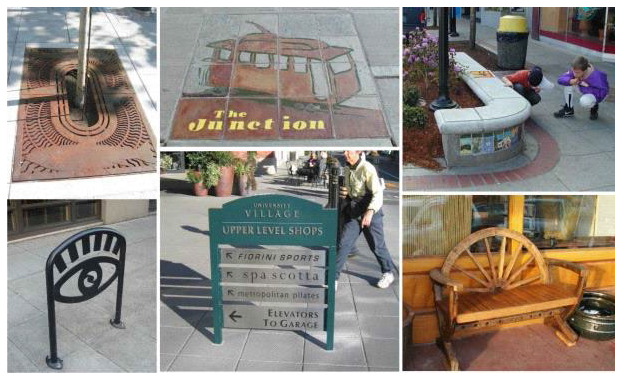
Figure 15.520.080. Examples of desirable streetscape amenities for Ellensburg.
(Ord. 4656 § 1 (Exh. O2), 2013)
15.530.010 - Purpose and applicability.
A.
Purpose. This section provides direction for the design of buildings consistent with the goals and policies of the Ellensburg comprehensive plan.
B.
Applicability. Unless otherwise noted, the provisions in this section apply to all nonresidential and multifamily development.
(Ord. 4656 § 1 (Exh. O2), 2013)
15.530.020 - Historic buildings and districts.
A.
Purpose. To preserve and reinforce the historic character of Ellensburg's downtown and older residential areas.
B.
Historic buildings and districts standards and guidelines.
1.
All development projects identified on the Ellensburg landmarks register are subject to review by the Ellensburg landmarks and design commission per chapter 15.280 ECC and conformance with the following design standards for rehabilitating existing buildings.
a.
Retain and preserve the overall historic character of the building;
b.
Ensure that proposed alterations are compatible with the building's own architectural character, and do not create a false historical appearance;
c.
Retain and preserve early alterations which have architectural significance in their own right;
d.
Treat distinctive original features, finishes, and examples of skilled craftsmanship with sensitivity;
e.
Repair rather than replace deteriorated architectural features whenever possible;
f.
Use the gentlest means possible when surface cleaning exterior masonry;
g.
Protect and preserve significant archaeological sites affected by the project, or provide mitigation for their disturbance; and
h.
Design new additions to existing buildings and new infill construction to be compatible with the massing, scale, materials, and architectural features of adjacent historic structures.
These standards are supplemented and further defined or explained by that document entitled "Design Standards for the City of Ellensburg," as currently enacted.
2.
Property owners of historic district buildings are also encouraged to use the Secretary of the Interior's Standards for the Treatment of Historic Properties (web: http://www.nps.gov/hps/tps/standards.htm) (hard copy also available at City Hall) as a guide to preserve, rehabilitate, restore, reconstruct, or add to historic properties. These standards provide detailed recommendations on restoration, maintenance, repair, replacement, design, alterations, building materials, roofs, interiors, etc.
(Ord. 4656 § 1 (Exh. O2), 2013)
15.530.030 - Architectural scale.
A.
Purpose.
1.
To reduce the scale of large buildings and add visual interest;
2.
To promote compatible development in terms of architectural scale; and
3.
To enhance the visual character of Ellensburg.
B.
Building articulation—Storefronts. All buildings adjacent to storefront streets (see ECC 15.510.040 for maps) or meeting the definition of a storefront (see ECC 15.130.190) must include articulation features no more than every 40 feet to create a pattern of small storefronts. Buildings less than 60 feet wide are exempt from this standard. At least two of the following methods must be employed:
1.
Use of window and/or entries that reinforce the pattern of small storefront spaces;
2.
Use of weather protection features that reinforce small storefronts. For example, for a business that occupies 120 feet of frontage, use three separate awnings to break down the scale of the storefronts. Alternating colors of the awnings may be useful as well;
3.
Change of roofline per subsection (F) of this section;
4.
Use of vertical piers that reinforce the storefront pattern;
5.
Change in building material or siding style; and/or
6.
Other methods that meet the purpose of the standards.
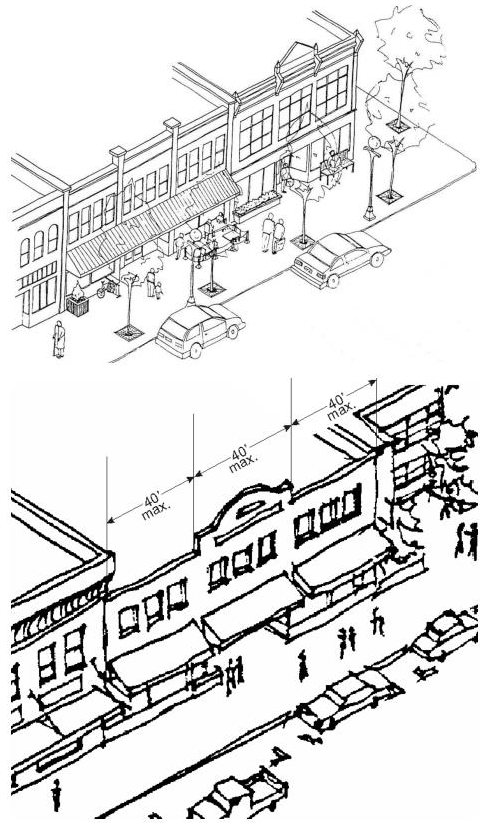
Figure 15.530.030(B). Storefront articulation examples.
Departures will be considered pursuant to ECC 15.210.060 provided the design meets the purpose of the standards in this section. For example, the proposed articulation may be longer, but if the building features attractive detailing, materials, interesting roofline treatments, and interesting storefront design that helps the design fit into the site's context and contributes to the pedestrian environment and existing/desired character, then perhaps it should be considered for approval as a departure.
C.
Building articulation—Other nonresidential/mixed-use buildings. All other buildings featuring nonresidential uses on the ground floor (not covered in subsection (B) of this section) shall include at least three of the following articulation features along all facades facing a street and containing the customer building entries (alley facades are exempt) at intervals of no more than 60 feet.
1.
Providing vertical building modulation of at least two feet in depth and four feet in width if combined with a change in siding materials and/or roofline modulation per subsection (F) of this section. Otherwise, the vertical modulation shall be at least ten feet deep and 15 feet wide to qualify;
2.
Providing horizontal modulation (upper level stepbacks). To qualify for this measure, the minimum upper level stepback shall be at least five feet and the treatment shall be used consistently with other articulation elements or utilized along at least 75 percent of the facade;
3.
Repeating distinctive window patterns at intervals less than the articulation interval;
4.
Providing a covered entry or separate weather protection feature for each articulation interval;
5.
Use of vertical piers that reinforce storefront pattern. To qualify for this measure, the piers must project at least two inches from the facade and extend from the ground to the roofline;
6.
Change of roofline per subsection (F) of this section;
7.
Changing materials and/or color with a change in building plane;
8.
Providing lighting fixtures, trellis, tree, or other landscape feature within each interval; and/or
9.
Other methods that meet the purpose of the standards.
Departures will be considered pursuant to ECC 15.210.060 provided the design meets the purpose of the standards in this section. Criteria to consider are the level of detailing, quality of building materials, design of storefronts, and integration with, or enhancement of, the surrounding context.
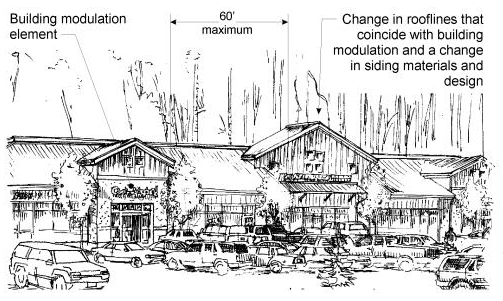
Figure 15.530.030(C). Building articulation example for other non-storefront commercial
facades.
D.
Building articulation—Multifamily buildings. All multifamily buildings and residential portions of mixed-use buildings shall include at least three of the following articulation features at intervals of no more than 30 feet along all facades facing a street, common open space, and common parking areas:
1.
Repeating distinctive window patterns at intervals less than the required interval;
2.
Providing vertical building modulation. Minimum depth and width of modulation is 18 inches and four feet (respectively) if tied to a change in color or building material and/or roofline modulation as defined in subsection (F) of this section. Otherwise, minimum depth of modulation is ten feet and minimum width for each modulation is 15 feet. Balconies may not be used to meet modulation option unless they are recessed or projected from the facade and integrated with the building's architecture. For example, "cave" balconies or other balconies that appear to be "tacked on" to the facade will not qualify for this option;
3.
Change of roofline per subsection (F) of this section;
4.
Providing horizontal modulation (upper level stepbacks). To qualify for this measure, the minimum upper level stepback shall be at least five feet and the treatment shall be used consistently with other articulation elements or utilized along at least 50 percent of the facade;
5.
Articulating of the building's top, middle, and bottom. This includes a distinctive ground floor or lower floor design, consistent articulation of middle floors, and a distinctive roofline; and/or
6.
Other methods that meet the purpose of the standards.
Departures will be considered pursuant to ECC 15.210.060 provided the design meets the purpose of the standards in this section. Criteria to consider are the level of detailing, quality of building materials, types and length of articulated features, and integration with/or enhancement of, the surrounding context.
For articulation of townhouses, see ECC 15.540.060(E).
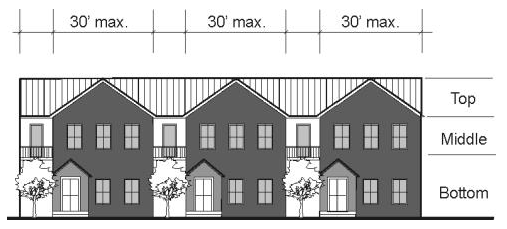
Figure 15.530.030(D)(1). Articulation for multifamily buildings.
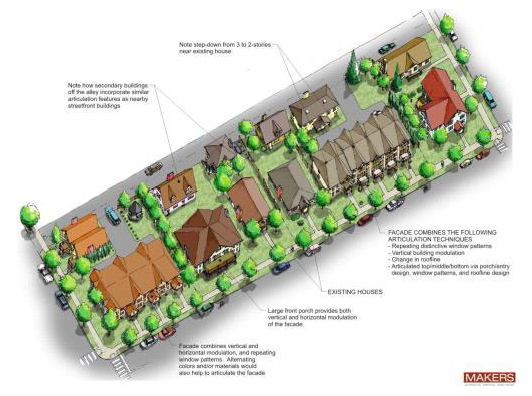
Figure 15.530.030(D)(2). Illustrating desirable multifamily building articulation
compatible with the design of older neighborhood homes.
E.
Roofline/cornice design options. Rooflines visible from a public street, open space, or public parking area must meet one of the following design options:
1.
Comply with roofline modulation provisions per subsection (F) of this section;
2.
Provide a decorative building cornice that projects at least six inches from the face of the building. The cornice line must extend along at least 75 percent of the facade; or
3.
Any combination of the options above.
Buildings in the I-H zone and buildings in the I-L zone that are primarily used for manufacturing, storage, and/or service uses and are generally not visible from the street or customer parking lot are exempt from this standard.
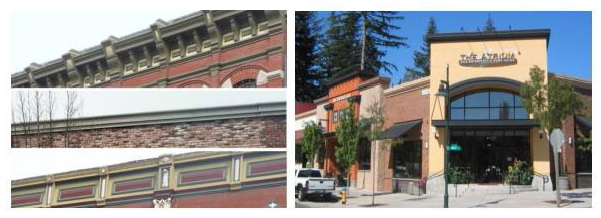
Figure 15.530.030(E)(1). Decorative cornice examples on existing historic buildings
downtown (left images). The right image shows examples of a variety of cornice designs
on a new building.
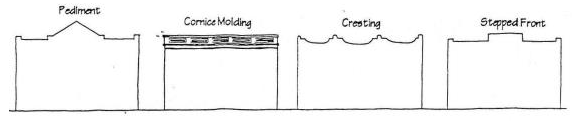
Figure 15.530.030(E)(2). Acceptable roof forms for commercial buildings.
F.
Roofline modulation. In order to qualify as a roofline modulation treatment in the standards herein, rooflines shall be varied by emphasizing dormers, chimneys, stepped roofs, gables, or a broken or articulated roofline consistent with the required articulation interval. Modulation shall consist of either:
1.
For flat roofs or facades with horizontal eave, fascia, or parapet, the minimum vertical dimension of roofline modulation is the greater of two feet or 0.1 multiplied by the wall height (finish grade to top of the wall) when combined with vertical building modulation techniques described in subsection (C)(1) of this section. Otherwise, the minimum vertical dimension of roofline modulation is the greater of four feet or 0.2 multiplied by the wall height;
2.
A sloped or gabled roofline segment of at least 20 feet in width and a minimum slope of 6:12. The roofline must include modulated segments at no more than the interval required per the applicable standard above; or
3.
A combination of the above.
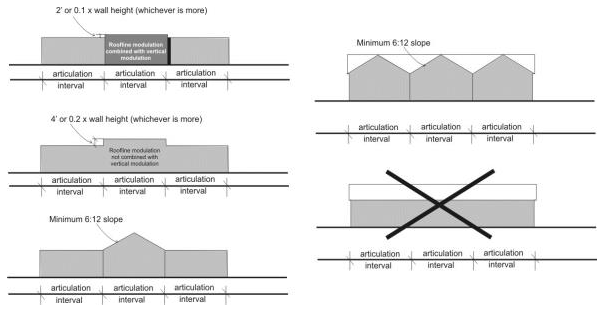
Figure 15.530.030(F). Roofline modulation standards.
G.
Maximum facade width. The maximum facade width (facades facing the street or customer parking lot) for commercial and residential buildings is 120 feet (buildings in the I-H zone are exempt from this standard). Exceptions: buildings exceeding 120 feet in width shall incorporate significant modulation and/or articulation features that effectively break up the scale of the building and add visual interest from the street. Such buildings shall incorporate at least one of the following design elements:
1.
Provide vertical building modulation at least ten feet deep and 20 feet wide. For multi-story buildings the modulation must extend through more than one-half of the building floors;
2.
Use of a contrasting vertical modulated design component featuring at least two of the following:
a.
Component extends through all floors above the first floor fronting on the street. Exception: upper floors that are stepped back more than ten feet from the facade are exempt;
b.
Utilizes a change in building materials that effectively contrast from the rest of the facade;
c.
Component is modulated vertically from the rest of the facade by an average of six inches; and
d.
Component is designed to provide roofline modulation per subsection (F) of this section; or
3.
Facade employs building walls with contrasting articulation that make it appear like two distinct buildings. To qualify for this option, these contrasting facades must employ both of the following:
a.
Different building materials and/or configuration of building materials; and
b.
Contrasting window design (sizes or configurations).
Departures will be considered pursuant to ECC 15.210.060 provided the design meets the purpose of the standards in this section. Elements to consider are the level of detailing, quality of building materials, types of articulated features, and integration with or enhancement of the surrounding context (considering views from all publicly observable locations within the area).
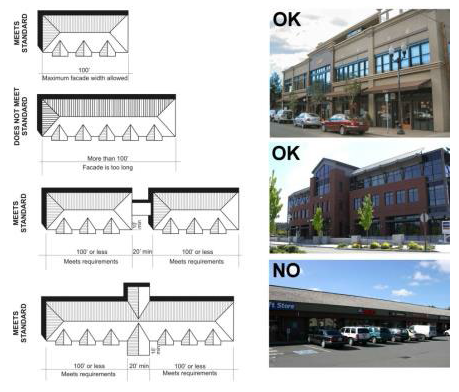
Figure 15.530.030(G). Maximum facade width standards and acceptable/unacceptable departure
examples. The upper right example uses a change in materials, facade articulation
(window styles), and roofline change. The middle right image uses substantial facade
and roofline modulation. The lower right doesn't include any notable articulation
or modulation.
(Ord. 4656 § 1 (Exh. O2), 2013)
15.530.040 - Building elements and details.
A.
Purpose. To encourage the incorporation of design details and small-scale elements into building facades that are attractive at a pedestrian scale.
B.
Applicability. All nonresidential and mixed-use buildings shall comply with the building elements and details standards herein unless otherwise noted.
C.
Facade details toolbox. All nonresidential and mixed-use buildings shall be enhanced with appropriate details. All new buildings and additions and buildings associated with level II and III improvements must employ at least one detail element from each of the three categories below for each facade facing a street, featuring a customer entry, or featuring the primary residential entry for each facade articulation interval (see ECC 15.530.030). For example, a building with 120 feet of street frontage with a facade articulated at 40-foot intervals will need to meet the standards for each of the three facade segments below:
1.
Window and/or entry treatment.
a.
Display windows divided into a grid of multiple panes;
b.
Transom windows;
c.
Roll-up windows/doors;
d.
Other distinctive window treatment that meets the purpose of the standards;
e.
Recessed entry;
f.
Decorative door;
g.
Arcade;
h.
Landscaped trellises or other decorative element that incorporates landscaping near the building entry; or
i.
Other decorative or specially designed entry treatment that meets the purpose of the standards.
2.
Building elements and facade details.
a.
Custom-designed weather protection element such as a steel canopy, cloth awning, or retractable awning;
b.
Decorative, custom hanging sign(s);
c.
Decorative building-mounted light fixtures;
d.
Bay windows, trellises, towers, and similar elements; or
e.
Other details or elements that meet the purpose of these standards.
3.
Building materials and other facade elements.
a.
Use of decorative building materials/use of building materials. Examples include decorative use of brick, tile, or stonework;
b.
Artwork on building (such as a mural) or bas-relief sculpture;
c.
Decorative kick-plate, pier, beltcourse, or other similar feature;
d.
Hand-crafted material, such as special wrought iron or carved wood; or
e.
Other details that meet the purpose of the standards.
"Custom," "decorative," or "hand-crafted" elements referenced above must be distinctive or "one-of-a-kind" elements or unusual designs that require a high level of craftsmanship.
Departures to the standards above will be considered pursuant to ECC 15.210.060 provided the number, quality, and mix of details meet the purpose of the standards in this section.
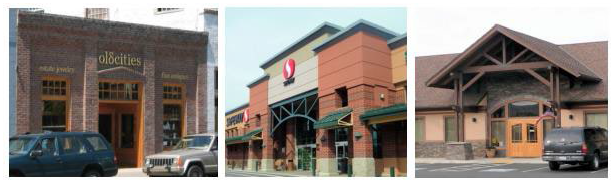
Figure 15.530.040(C). Facade details examples. The building on the left uses decorative
windows and doors, decorative roofline and columns, and decorative materials (brick
and wood). The center image uses a decorative entry feature (metal feature over entry),
decorative weather protection and lighting, and decorative use of brickwork. The right
image uses decorative wood beams over the entry, decorative windows and doors, and
stonework.
D.
High visibility street corner buildings. Buildings located at designated high visibility street corners (see subsection (D)(1) of this section) shall provide one or more of the elements listed in subsection (D)(2) of this section on the building corner. All corner building design elements must be sized to be proportional to the building and the size of the applicable intersection (for example, larger intersections warrant more substantial design treatments).
1.
Designated high visibility street corners include all street corners within the downtown historic district (see figure 15.300.070(B)) and other street corners illustrated in figure 15.530.040(D)(2).
2.
Street corner design element options.
a.
A cropped building corner with corner pedestrian entry;
b.
A bay window or turret;
c.
A clock or bell tower;
d.
Balconies above the ground floor;
e.
Sculpture or artwork element; must be a one-of-a-kind design element;
f.
Distinctive use of facade materials; and/or
g.
Other special or unique corner building treatment, other than the use of fabric or vinyl awnings, for pedestrian weather protection at the corner of the building.
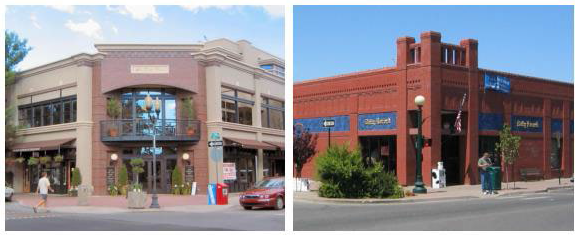
Figure 15.530.040(D)(1). Desirable building corner examples.
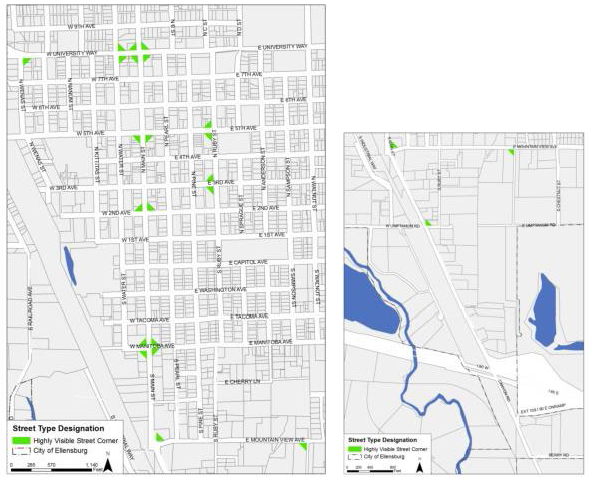
Figure 15.530.040(D)(2). Designated high visibility street corners. All street corners
within the downtown historic district are considered a high visibility street corner.
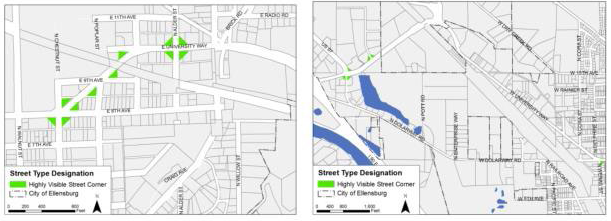
Figure 15.530.040(D)(2). Designated high visibility street corners (continued).
E.
Window design. Buildings shall employ techniques to recess or project individual windows above the ground floor at least two inches from the facade or incorporate window trim at least four inches in width that features color that contrasts with the base building color. Buildings in the I-H zone and facades of buildings in the I-L zone that do not face a street or contain a customer entrance are exempt from this standard. Departures will be considered pursuant to ECC 15.210.060 where buildings employ other distinctive window or facade treatments that add a sense of depth to the facade and/or visual interest to the building.
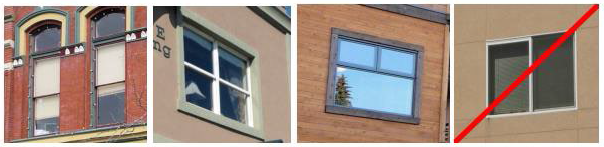
Figure 15.530.040(E). Acceptable and unacceptable (far right image) window design
on upper floors. Note that the windows in the brick building on the left are recessed
from the facade. The windows in the middle images include trim. The image on the right
includes no trim or recess/projection, and thus would not be permitted.
F.
Year of construction plaque. All new commercial and mixed-use buildings may note the year of construction of the building by the installation of a plaque attached to the building near the main entrance. Numbers etched into stone, brick, or concrete may be used in lieu of a plaque. The year of construction is to be noted by numbers not less than six inches high nor more than 12 inches high. Other information associated with the building that may be of public interest may be included.
(Ord. 4887 § 32, 2022; Ord. 4656 § 1 (Exh. O2), 2013)
15.530.050 - Building materials.
A.
Purpose.
1.
To encourage high-quality building materials that reinforce the historic small town character of Ellensburg.
2.
To discourage poor materials with high life-cycle costs.
3.
To encourage the use of materials that reduce the visual bulk of large buildings.
B.
Applicability. All nonresidential and mixed-use buildings shall comply with the materials standards herein. Exception: buildings in the I-H zone and buildings in the I-L zones that do not face a street or contain a customer entrance are exempt from these standards.
C.
Metal siding standards. Metal siding may be used if it is incorporated with other permitted materials and it complies with the following:
1.
It features visible corner molding and trim and does not extend lower than two feet above grade. Masonry, concrete, or other durable material must be incorporated between the siding and the ground plane;
2.
Metal siding shall be factory finished, with a matt, nonreflective surface; and
3.
The use of metal siding is prohibited on all landmarks register properties and within all historic districts.
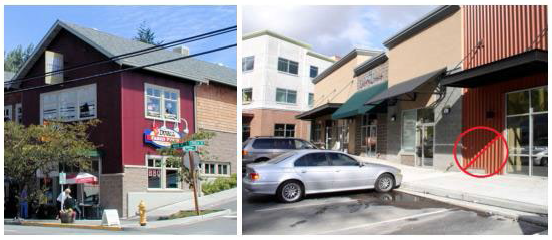
Figure 15.530.050(C). Acceptable and unacceptable metal siding examples. Notice the
corner and window trim and use of concrete block near the ground level on the left
image. The circled area on the right includes metal siding all the way to the ground,
which is prohibited.
D.
Concrete block standards. Concrete block may be used if it is incorporated with other permitted materials and it complies with the following:
1.
When used for the primary facade, buildings must incorporate a combination of textures and/or colors to add visual interest. For example, combining split or rock-facade units with smooth blocks can create distinctive patterns; and
2.
Concrete block may comprise no more than 50 percent of a facade facing a public right-of-way or open space. Departures to this standard will be considered pursuant to ECC 15.210.060 provided design treatments are included to enhance the visual character of the building at all observable scales.
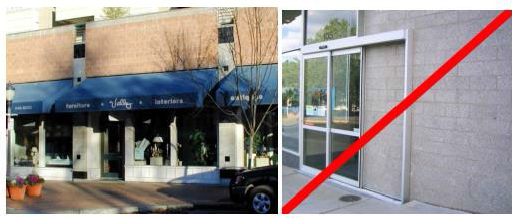
Figure 15.530.050(D). Acceptable and unacceptable concrete block examples. The left
example uses a mixture of split-faced colored concrete block and smooth-faced concrete
block, together comprising just under 50 percent of the whole facade. The large expanse
of smooth-faced concrete block on the right is not desirable for Ellensburg facades.
E.
Standards for EIFS or other similar synthetic stucco finishes. EIFS refers to "Exterior Insulation Finishing System." Such material/finishes (including other similar synthetic stucco materials) may be used if it is incorporated with other permitted materials and it complies with the following:
1.
EIFS must be trimmed in wood, masonry, or other material and must be sheltered from extreme weather by roof overhangs or other methods and are limited to no more than 50 percent of the facade area facing a public right-of-way or open space. Departures to this standard will be considered pursuant to ECC 15.210.060 provided design treatments are included to enhance the visual character of the building at all observable scales;
2.
Horizontal surfaces exposed to the weather must be avoided; and
3.
EIFS and similar surfaces should not extend below two feet above the ground plane. Concrete, masonry, or other durable material must be used for wall surfaces within two feet of grade to provide a durable surface where damage is most likely.
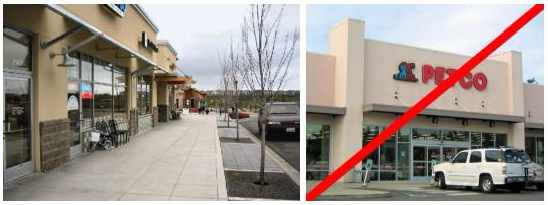
Figure 15.530.050(E). Acceptable and unacceptable stucco examples. The left image
uses concrete block near the sidewalk, while the Petco maintains EIFS to the base
of the facade.
F.
Prohibited materials.
1.
Mirrored glass where used on more than ten percent of the facade;
2.
T-111 siding and similar processed sheet products;
3.
Chain-link fencing (except for temporary fencing and for parks);
4.
Fiberglass products and similar sheet products; and
5.
Back-lit vinyl awnings used as signs.
(Ord. 4656 § 1 (Exh. O2), 2013)
15.530.060 - Blank wall treatment.
A.
Purpose.
1.
To avoid untreated blank walls.
2.
To retain and enhance the character of Ellensburg's streets, business districts, and neighborhoods.
B.
Blank wall definition. A wall (including building facades and retaining walls) is considered a blank wall if:
1.
A ground floor wall or portion of a ground floor wall over six feet in height has a horizontal length greater than 15 feet and does not include a transparent window or door; or
2.
Any portion of a ground floor wall having a surface area of 400 square feet or greater does not include a transparent window or door.
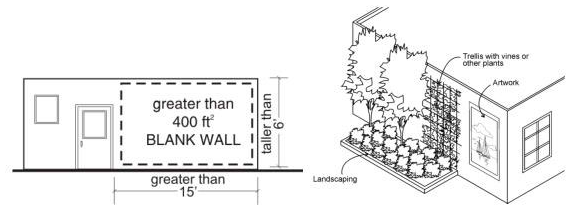
Figure 15.530.060(B). Blank wall definition and treatment examples.
C.
Blank wall treatment standards. Untreated blank walls visible from a public street or pedestrian pathway are prohibited. Methods to treat blank walls can include:
1.
Display windows at least 16 inches of depth to allow for changeable displays. Tack on display cases shall not qualify as a blank wall treatment;
2.
Landscape planting bed at least five feet wide or a raised planter bed at least two feet high and three feet wide in front of the wall with planting materials that are sufficient to obscure or screen at least 60 percent of the wall's surface within three years;
3.
Installing a vertical trellis in front of the wall with climbing vines or plant materials;
4.
Installing a mural as approved by the reviewing authority; and/or
5.
Special building detailing that adds visual interest at a pedestrian scale. Such detailing must use a variety of surfaces; monotonous designs will not meet the purpose of the standards.
For large visible blank walls, a variety of treatments may be required to meet the purpose of the standards.
D.
Firewalls. Firewalls along property lines are exempt from the above standards, but where they are visible to the public, they shall include horizontal and/or vertical banding or other design treatments to add visual interest to the wall.
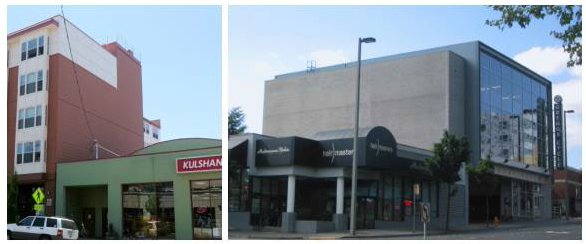
Figure 15.530.060(D). Acceptable and unacceptable fire wall treatments. Note the use
of horizontal banding in the left image. Plain concrete block as in the right image
is not allowed.
(Ord. 4656 § 1 (Exh. O2), 2013)
15.530.070 - Energy efficient building design.
The following provisions are intended to encourage energy efficient building design within Ellensburg.
A.
Purpose.
1.
To reduce greenhouse gas emissions resulting from buildings; and
2.
To encourage high quality energy efficient construction that reduces long-term maintenance costs.
B.
Residential buildings. New and remodeled buildings should be designed to meet the Northwest ENERGY STAR Homes Certification Requirements for Single Family Homes or Multifamily Homes (link: http://www.northwestenergystar.com/partner-resources/bopmulti/index.html).
C.
Commercial or mixed-use buildings. New and remodeled buildings should be designed to earn the ENERGY STAR rating by achieving the rating of 75 or higher using the EPA Energy Target Finder tool (link: http://www.energystar.gov/index.cfm?c=new-bldg-design.bus-target-finder).
(Ord. 4656 § 1 (Exh. O2), 2013)
15.540.010 - Purpose and applicability.
A.
Purpose. This section provides supplemental direction for the design of new residential developments consistent with the goals and policies of the comprehensive plan.
B.
Applicability. Each section herein provides standards that apply to a particular type of housing. Like all other standards in this division, the provisions herein supplement other relevant standards set forth in ECC, most notably the zoning provisions and dimensional standards set forth in chapter 15.320 ECC. Townhouses are also subject to all other provisions in this division unless otherwise noted.
(Ord. 4807 § 58, 2018; Ord. 4656 § 1 (Exh. O2), 2013)
15.540.020 - Single-family design standards.
A.
Purpose.
1.
To enhance the character of the street;
2.
To maintain "eyes on the street" for safety to pedestrians and to create a more welcoming and interesting streetscape;
3.
To deemphasize garages and driveways as major visual elements along the street; and
4.
To provide usable yard space for residents.
B.
Entries and facade transparency.
1.
Clear and obvious pedestrian access between the sidewalk and the building entry is required for new dwelling units (the driveway may be used to help meet this requirement);
2.
All new houses shall provide a covered entry with a minimum size of three feet by three feet. Covered entries may project up to six feet into the front yard per chapter 15.320 ECC; and
3.
At least eight percent of the facade (all vertical surfaces facing the street) shall include transparent windows or doors.
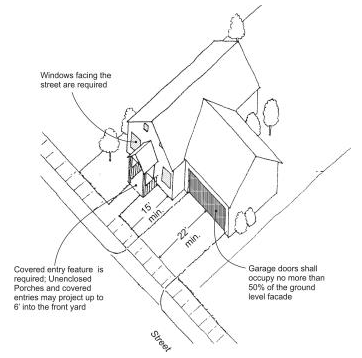
Figure 15.540.020(B). Single-family design requirements.
C.
Garage placement and design.
1.
Where lots abut an alley, the garage or off-street parking area is encouraged to take access from the alley;
2.
The garage doors shall occupy no more than 50 percent of the ground-level facade facing the street. Departure: garage doors may exceed this limit up to a maximum of 65 percent of the ground level facade facing the street provided at least two of the following design details are utilized. For front-loaded lots where the garage faces the street and the garage is even with the facade of the house or less than five feet behind the front facade of the house, at least one of the following design details shall be utilized:
a.
A decorative trellis over the entire garage;
b.
A window or windows are placed above the garage on a second story or attic space under roofline;
c.
A balcony that extends out over the garage and includes columns;
d.
Utilizing all single vehicle car doors as an alternative to wider garage doors suitable for two-car garages;
e.
Decorative windows on the garage door;
f.
Decorative details on the garage door. Standard squares on a garage door will not qualify as a decorative detail;
g.
A garage door color (other than white) that matches or complements the color of the house; and/or
h.
Other design techniques that meet the intent, as determined by the director.
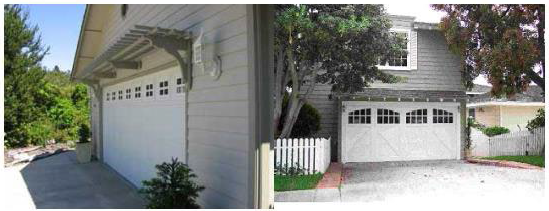
Figure 15.540.020(C). Garage design detail examples.
3.
The minimum garage setback is at least 22 feet from the sidewalk edge.
D.
Driveway standards. Where a new driveway off of a public street is permitted, the following standards apply:
1.
No more than one driveway per dwelling unit;
2.
Private driveways shall not exceed the following widths:
3.
Tandem parking configurations may be used to accommodate two-car garages for single-family and duplex structures pursuant to ECC 15.550.040(A).
The width of properties with nonparallel side lot lines shall be determined at the plane of the garage door when determining conformance with the standards above.
Also see section 3, street standards, of the city's public works development standards for additional driveway standards.
E.
Minimum usable open space. All new single-family residences shall provide a contiguous open space equivalent to ten percent of the lot size (excluding area within an adjacent alley or public right-of-way). The required open space shall feature a minimum dimension of 15 feet on all sides. For example, a 6,000-square-foot lot would require a contiguous open space of at least 600 square feet, or 20 feet by 30 feet in area. Driveways shall not count in the calculations for usable open space. Single-family additions shall not create or increase any nonconformity with this standard.
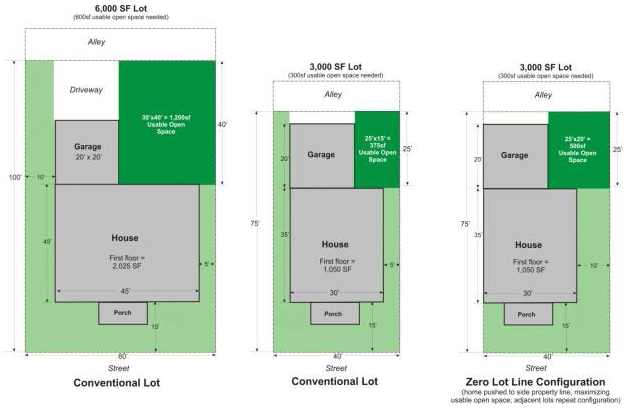
Figure 15.540.020. Examples of how to meet open space requirements for alley-loaded
lots.
(Ord. No. 4953, § 11, 1-21-2025; Ord. No. 4929, § 6, 11-6-2023; Ord. 4807 § 58, 2018; Ord. 4656 § 1 (Exh. O2), 2013)
15.540.030 - Duplex design standards.
A.
Purpose. Duplexes should be designed similar in nature to single-family dwellings and shall feature a visible entry and windows facing the street. The visibility of driveways and garages should be minimized and sufficient private open space should be provided.
B.
Design provisions. Specifically, duplexes shall comply with the single-family design provisions set forth in ECC 15.540.020 with the following exceptions and additional provisions:
1.
Duplexes may include a 24-foot-wide shared driveway or two 12-foot driveways on opposite ends of the lot;
2.
Tandem parking to accommodate two-car garages may be used for duplex structures pursuant to ECC 15.550.040(A); and
3.
Separate covered entries for each unit are required (applicable to new buildings only).
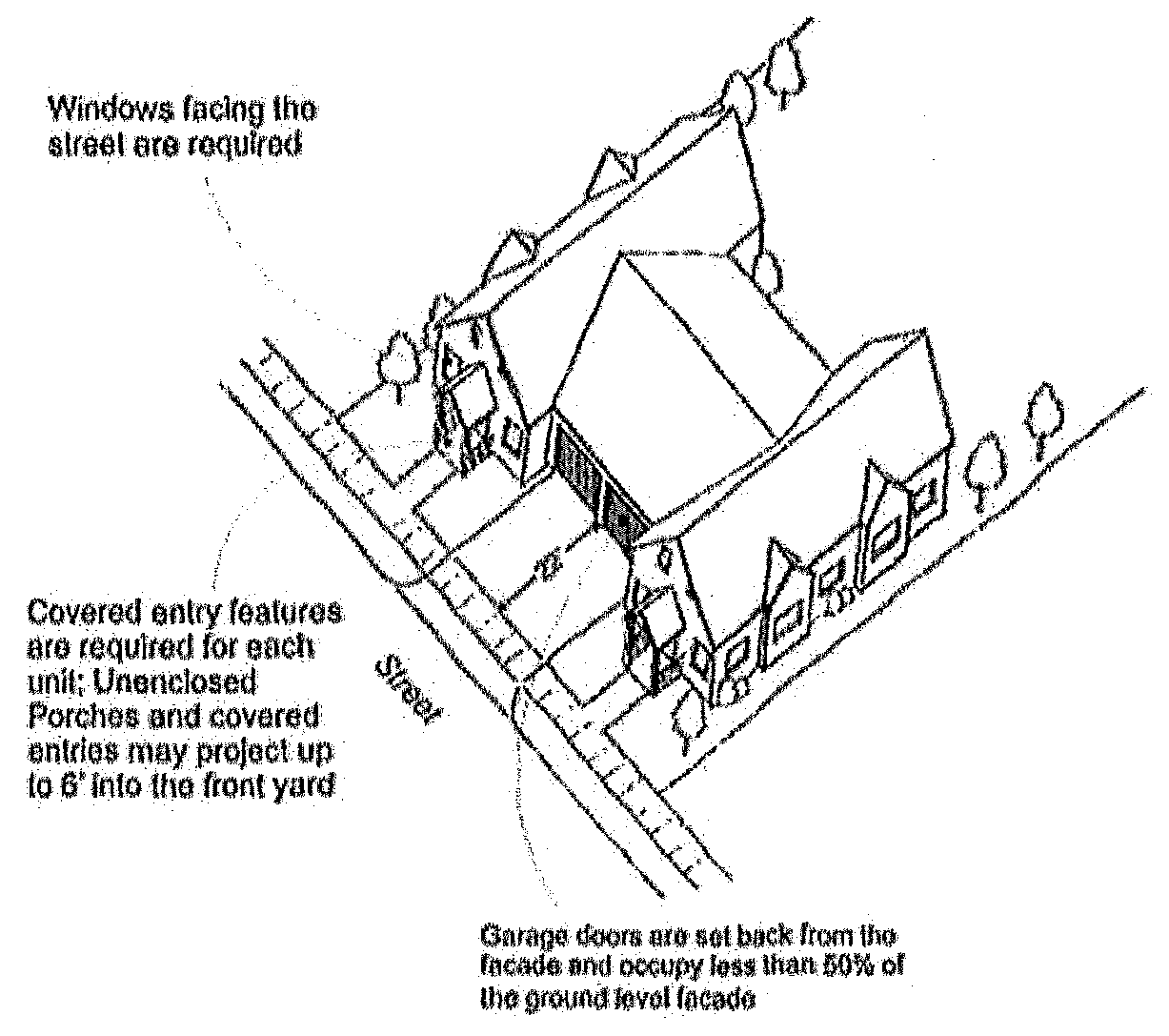
Figure 15.540.030. Diagram Illustrating duplex design provisions.
(Ord. No. 4953, § 12, 1-21-2025; Ord. 4807 § 58, 2018; Ord. 4656 § 1 (Exh. O2), 2013)
15.540.040 - Accessory dwelling unit design standards (ADU).
A.
Purpose.
1.
To provide infill housing opportunities throughout residential zones in Ellensburg;
2.
To provide affordable housing options; and
3.
To provide an opportunity for rental income for property owners.
B.
Standards for all ADUs. An ADU is designed and established to be a separate dwelling unit that is accessory to a principal unit. ADUs can be attached to the principal unit or detached. ADUs differ from duplexes in the zoning districts where they are allowed and ADUs are subject to specific size and design criteria relative to the principal unit. ADUs shall not be subject to any more restrictive setback requirements, yard coverage limits, restrictions on entry door locations or aesthetic requirements than the principal unit. If standards conflict, the principal unit standards shall apply.
Two accessory dwelling units are permitted on any lot of record in any zone that permits single-family dwellings and is currently developed or being developed with a principal unit provided all of the following conditions are met:
1.
ADUs shall not exceed 1,000 square feet of gross floor area. Gross floor area is the interior habitable area under the International Residential Code, including basements and attics, where they meet height minimums, but does not include a garage or accessory structure; and
2.
The presence of an accessory dwelling unit must be clearly identified on each entrance by proper numbering.
C.
Additional standards for a detached ADU (DADU).
1.
DADUs may be separate freestanding structures located to the side or rear of a primary dwelling unit or may be placed next to and/or above a garage. Existing structures or garages can be converted to an ADU provided the conversion does not impact the ability for the principal unit to demonstrate consistency with current parking standards at the time of building application. This conversion shall not make a legal nonconforming structure or garage more nonconforming in relation to setback or building size;
2.
There shall be a minimum separation of 15 feet between the existing dwellings and the DADU, except where the DADU is converted from an existing garage or structure or built on top of and/or next to an existing garage or structure. The space between a DADU and a principal unit is considered a yard for the purpose of DADU permitted projections pursuant to ECC 15.520.080.
(Ord. No. 4975, § 63, 11-17-2025; Ord. No. 4953, § 13, 1-21-2025; Ord. 4810 § 1, 2018; Ord. 4807 § 58, 2018; Ord. 4656 § 1 (Exh. O2), 2013)
15.540.050 - Cottage housing design standards.
A.
Purpose.
1.
To provide an opportunity for small, detached housing types clustered around a common open space;
2.
To ensure that cottage developments contribute to the overall character of residential areas;
3.
To provide for centrally located and functional common open space that fosters a sense of community;
4.
To provide for semi-private area around individual cottages to enable diversity in landscape design and foster a sense of ownership;
5.
To minimize visual impacts of parking areas on the street and adjacent properties and the visual setting for the development; and
6.
To promote conservation of resources by providing for clusters of small dwelling units on a property.
B.
Description. Cottage housing refers to clusters of small detached dwelling units arranged around a common open space.
C.
Lot configuration. Cottages may be configured as condominiums or fee-simple lots provided they meet the standards herein.
D.
Density calculation. Due to the smaller relative size of cottage units, each cottage shall be counted as one-half a dwelling unit for the purpose of calculating density. For example, a cluster of six cottages would be equivalent to three dwelling units. When calculating parking, one cottage shall be counted as one dwelling unit.
E.
Dimensional standards.
Table 15.540.050(A)
Dimensional Standards for Cottages
F.
Units in each cluster. Cottage housing developments shall contain a minimum of four and a maximum of 12 cottages located in a cluster to encourage a sense of community among the residents. A development site may contain more than one cottage housing development.
G.
Transparency. Transparent windows and/or doors are required on at least eight percent of the facades (all vertical surfaces) of all cottages facing the street and common open space. Departures will be considered pursuant to ECC 15.210.060 for cottages where that standard applies to two or more facades, provided the design meets the purpose of the standards.
H.
Parking and driveway location and design.
1.
Parking shall be located on the same property as the cottage development;
2.
Where lots abut an alley, the garage or off-street parking area is encouraged to take access from the alley;
3.
Parking is prohibited in the front and interior setback areas;
4.
Streetscape design must be provided consistent with relevant standards in ECC chapter 15.410;
5.
Garages may be attached to individual cottages provided all other standards herein are met. Such garages shall be located away from the common open spaces; and
6.
No more than one driveway per cottage cluster shall be permitted, except where clusters front onto more than one street.
I.
Common open space requirements.
1.
Open space shall have cottages abutting on at least two sides;
2.
Cottages shall be oriented around the common open space; and
3.
Open space shall include at least one courtyard, plaza, garden, or other central open space, with access to all units. The minimum dimensions of this open space are 15 feet by 15 feet.
J.
Covered entry and visual interest. Cottages located facing a public street shall provide:
1.
A covered entry feature (with a minimum dimension of three feet by three feet); and
2.
At least ten feet of landscaped open space between the residence and the street.
K.
Character and diversity. Cottages and accessory buildings within a particular cluster shall be designed within the same "family" of architectural styles. Examples of elements include:
1.
Similar building/roof form and pitch;
2.
Similar siding materials;
3.
Similar porch detailing; and/or
4.
Similar window trim.
A diversity of cottages can be achieved within a "family" of styles by:
1.
Alternating porch styles (such as roof forms);
2.
Alternating siding details on facades and/or roof gables; and/or
3.
Different siding color.
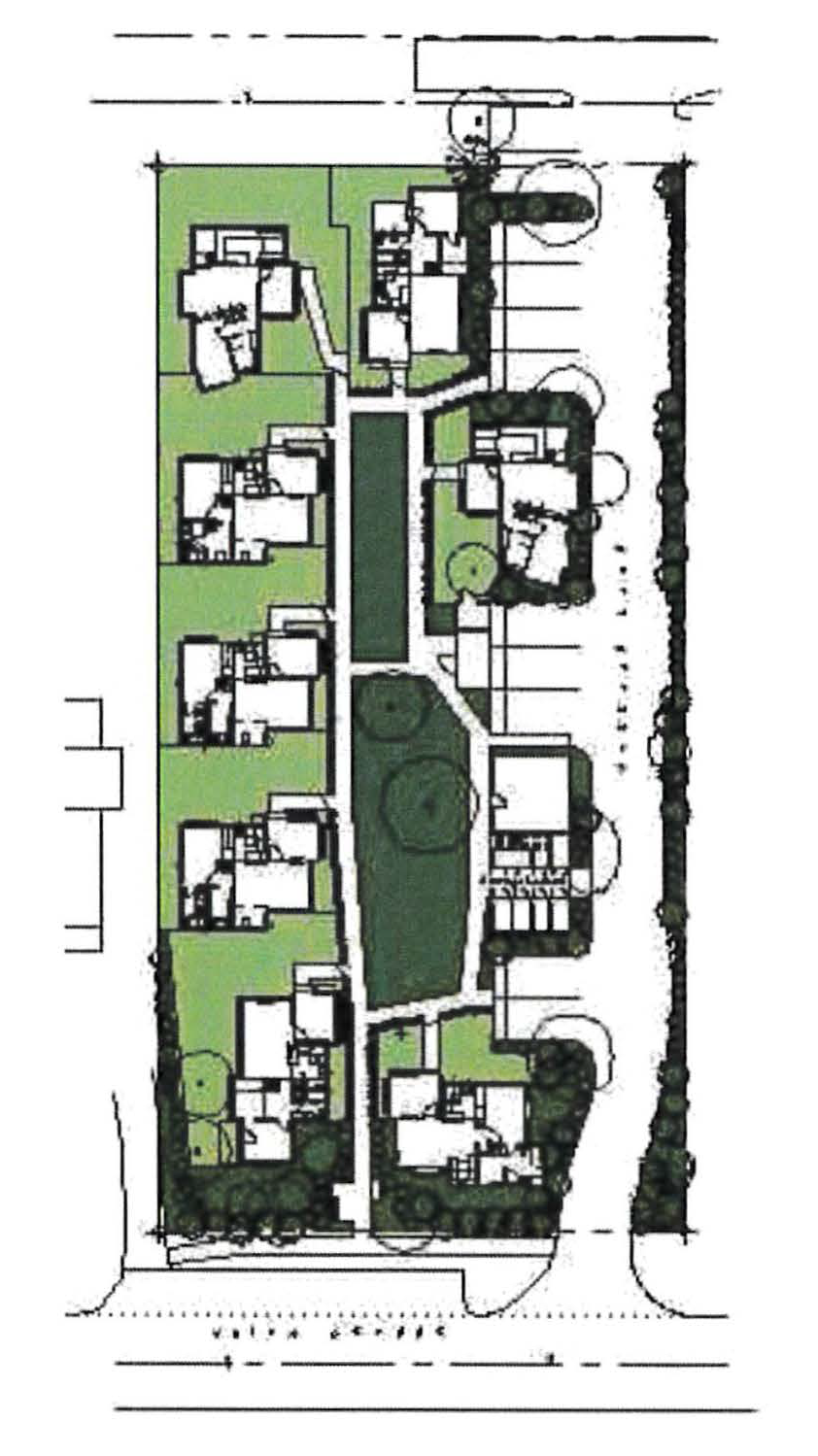
Figure 15.540.050(K)(1). Sample cottage housing layouts—Example 1.
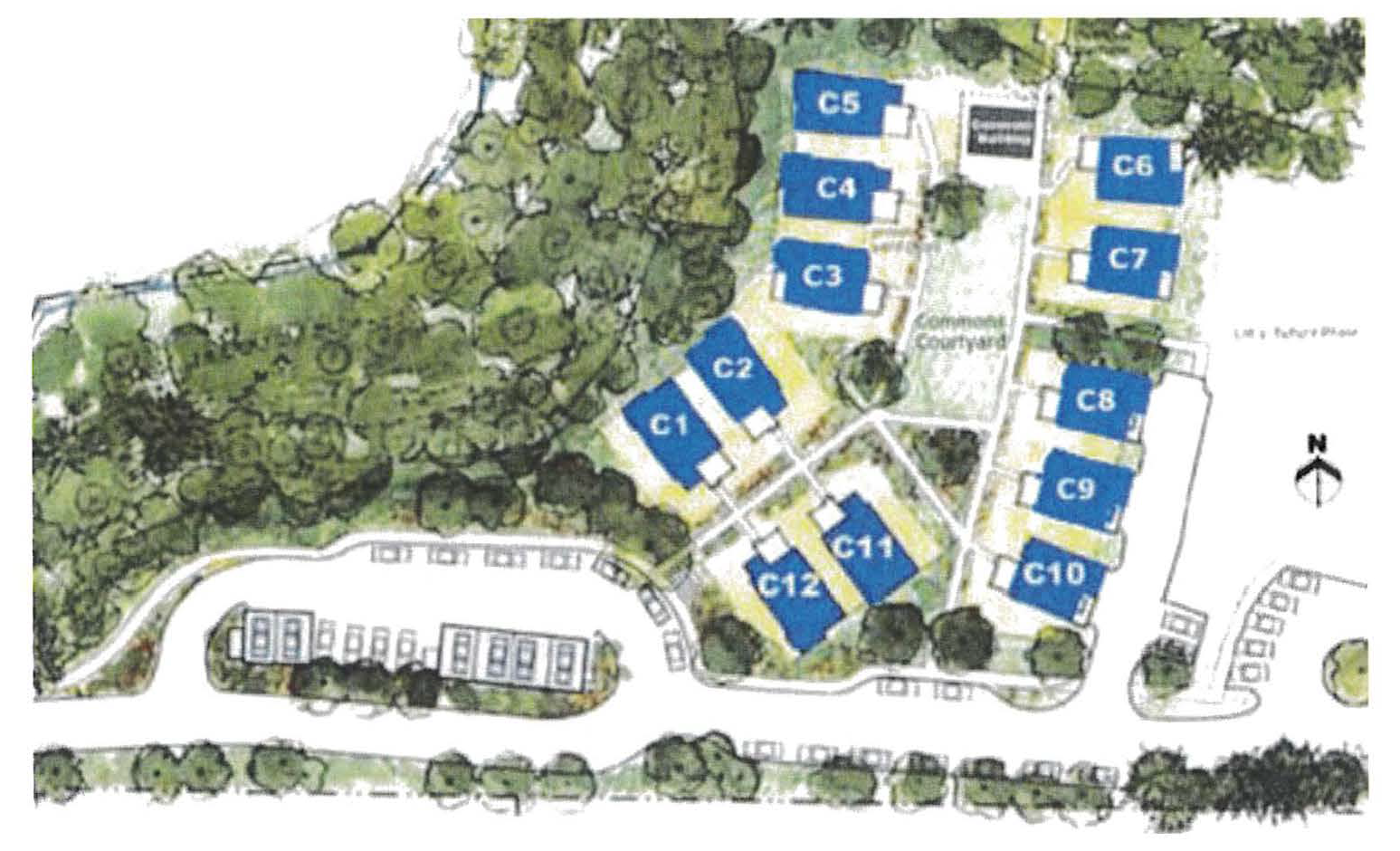
Figure 15.540.050(K)(1). Sample cottage housing layouts—Example 2.
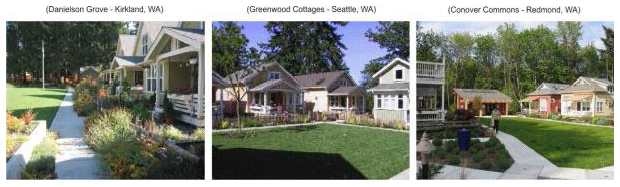
Figure 15.540.050(K)(2). Cottage housing examples.
(Ord. No. 4953, § 14, 1-21-2025; Ord. 4807 § 58, 2018; Ord. 4656 § 1 (Exh. O2), 2013)
15.540.060 - Townhouse design standards.
A.
Purpose.
1.
To ensure that townhouse developments enhance the pedestrian-oriented character of downtown streets;
2.
To provide adequate open space for townhouse developments;
3.
To reduce the impact of garages and driveways on the pedestrian environment;
4.
To reduce the apparent bulk and scale of townhouse buildings compatible with adjacent uses; and
5.
To promote architectural variety that adds visual interest to the neighborhood.
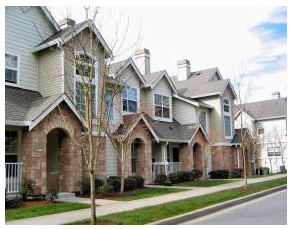
Figure 15.540.060(A). Desirable townhouse example. With units fronting on the street
and garages placed to the rear accessible from an alley or shared driveway.
B.
Entries.
1.
Townhouses fronting on a street must all have individual ground-related entries accessible from the street. Configurations where enclosed rear yards back up to a street are prohibited;
2.
Separate covered entries at least three feet deep are required for all dwelling units; and
3.
For sites without alleys or other rear vehicular access, new buildings are encouraged to emphasize individual pedestrian entrances over private garages by enhancing entries with a trellis, small porch, or other architectural features that provide cover for a person entering the unit and a transitional space between outside and inside the dwelling.
C.
Garages and driveways.
1.
Where lots abut an alley, the garage or off-street parking area should take access from the alley.
2.
For lots without alleys, individual driveways off of the street are prohibited (shared driveways are required).
3.
Garages facing a public street are prohibited.
4.
Internal drive aisle standards.
a.
Must meet minimum fire code widths;
b.
Minimum building separation along uncovered internal drive aisles shall be 25 feet. The purpose is to provide adequate vehicular turning radius, allow for landscaping elements on at least one side, and to provide adequate light and air on both sides of the dwelling units and drive aisles, which often function as usable open space for residents; and
c.
Upper level building projections over drive aisles are limited to three feet, and must comply with provisions in subsection (C)(4)(b) of this section.
D.
Open space. Townhouse residential units shall provide open space at least equal to ten percent of the building living space, not counting automobile storage. The required open space may be provided by one or more of the following ways:
1.
Usable private open space that is directly adjacent and accessible to dwelling units. Such space shall have minimum dimensions of at least 12 feet on all sides and be configured to accommodate human activity such as outdoor eating, gardening, toddler play, etc.;
2.
Common open space meeting the requirements of ECC 15.520.030(E)(1);
3.
Balconies, decks and/or front porches meeting the requirements of ECC 15.520.030(E)(2); and/or
4.
Community garden space meeting the requirements of ECC 15.520.030(E)(5).
E.
Building design.
1.
Townhouse articulation. Townhouse buildings shall comply with multifamily building articulation standards as set forth in ECC 15.530.030(D) except that the articulation intervals shall be no wider than the width of units in the building.
(Ord. No. 4953, § 15, 1-21-2025; Ord. 4807 § 58, 2018; Ord. 4656 § 1 (Exh. O2), 2013)
15.550.010 - Purpose.
The purpose of this chapter is to provide adequate parking for all uses allowed in this title, to reduce demand for parking by encouraging alternative means of transportation including public transit and bicycles, and to increase pedestrian mobility by:
A.
Setting minimum off-street parking standards for different land uses and districts that assure safe, convenient and adequately sized parking facilities;
B.
Recognizing that developed properties are likely to support a variety of different uses over time; and
C.
Providing for parking and storage of bicycles.
(Ord. 4656 § 1 (Exh. O2), 2013)
15.550.020 - Authority and application.
A.
The regulations of this chapter apply to all off-street parking areas in all zoning districts within the city of Ellensburg.
B.
The regulations of this chapter apply to all new development applications, all new parking lot construction or enlargement. In addition, these regulations shall apply at the time of enlarging, moving or increasing the capacity of existing structures by creating or adding dwelling units, commercial or industrial floor space, or seating facilities, and shall also apply when an existing land use within an existing structure is changed to a category of land use as set forth below that is different than the category of land use (as set forth in table 15.550.040(A)) for which the existing parking facility was designed and installed.
C.
Whenever a building or use is expanded, enlarged or altered, additional off-street parking will be required for such expansion, enlargement or alteration based on the additional square footage of the expansion, enlargement or alteration, not on the total square footage of the building. However, in the event of enlargement or alteration of a structure, no additional off-street parking need be provided where the number of parking spaces required for such expansion, enlargement, or alteration is less than ten percent of the off-street parking requirement specified in this chapter.
D.
Before an occupancy permit may be granted for any new or enlarged building or for a change of use in any existing building, the use shall be required to meet the provisions of this chapter.
E.
If this chapter does not specify a parking requirement for a land use, the director shall establish the minimum requirement based on a study of anticipated parking demand. Transportation demand management actions taken at the site shall be considered in determining anticipated demand. In the study the applicant shall provide sufficient information to demonstrate that the parking demand for a specific land use will be satisfied. Parking studies shall be prepared by a professional engineer with expertise in traffic and parking analyses, or an equally qualified individual as authorized by the director.
(Ord. 4656 § 1 (Exh. O2), 2013)
15.550.030 - Parking plan—Building permit, surety bond, and occupancy requirements.
A.
Building permit. No building permit nor parking lot construction or enlargement shall be issued until a parking plan showing provisions for the required off-street parking, as specified in this chapter, has been submitted and approved by the director. The plan shall clearly indicate the proposed development, including parking lot location, size, shape, design, number of spaces, curb cuts, lighting, landscaping, and other features and appurtenances required by this chapter. The landscaping requirements for parking areas shall also meet the requirements of chapter 15.570 ECC. The parking plan shall show/state the number of parking spaces and handicap spaces required and provided.
B.
Surety. Before a building permit is issued for any building or structure for which this chapter requires off-street parking and where such off-street parking is not to be contained within the building for which the building permit is requested, the director may require that the applicant provide the city with a surety bond or other sufficient security approved by the city attorney guaranteeing to the city the installation and improvement of the required off-street parking within a time not to exceed six months following the completion of the building(s) for which such off-street parking is to be provided.
C.
Occupancy. All required off-street parking areas must be completed and landscaped prior to occupancy of any structure except as provided in chapter 15.570 ECC, landscaping.
(Ord. 4656 § 1 (Exh. O2), 2013)
15.550.040 - Computation of required off-street parking spaces.
A.
Spaces required. Except as modified in subsections below, off-street parking areas shall contain at a minimum the number of parking spaces as stipulated in the following table. Off-street parking ratios expressed as number of spaces per square feet means the usable or net square footage of floor area, exclusive of nonpublic areas. Nonpublic areas include but are not limited to building maintenance areas, storage areas, closets or restrooms. If the formula for determining the number of off-street parking spaces results in a fraction, the number of off-street parking spaces shall be rounded to the nearest whole number with fractions of 0.50 or greater rounding up and fractions below 0.50 rounding down.
Table 15.550.040(A)
Computation of Required Off-Street Parking Spaces
Notes:
A.
In those situations where a particular use is not specifically mentioned in this table, the requirements for off-street parking shall be determined by the director and in accordance with the most comparable use listed.
B.
Uses in the C-C zone. There are no off-street parking requirements for any uses in the C-C zone, except residential uses located outside of the downtown historic district per table 15.550.040(A).
C.
Shell building permit applications. When the city has received a shell building permit application, off-street parking requirements shall be based on the possible tenant improvements or uses authorized by the zone designation and compatible with the limitations of the shell permit. When the range of possible uses results in different parking requirements, the director shall establish the amount of parking based on a likely range of uses.
For example, an applicant submits a permit for a 5,000-square-foot shell building in the C-H zone. The zone allows for a range of retail, personal, and general service retail uses. Most permitted uses in this zone fall in the category of general retail and service uses in table 15.550.040(A) which requires one space per 300 square feet of gross floor area. Restaurants require more parking (one space per 200 square feet of gross floor area). While the director might find it unreasonable to require parking for the "worst case scenario" in terms of possible use types, he or she will typically choose a requirement that falls between the possible use scenarios. In this case, the odds are that most possible uses fall in the general retail and service use category with a lower parking requirement, though a slightly higher parking requirement would make sense given the possibility of a use such as a restaurant, which requires greater parking. Thus, a compromise standard, requiring a minimum of one space per 275 square feet of gross floor area, would be reasonable in this instance.
D.
Other provisions of code. Where provisions of this title conflict regarding the number required off-street parking spaces, the lower requirement or more lenient interpretation shall prevail.
E.
Bicycle parking. Multifamily and nonresidential developments shall provide for bicycle parking per the standards below:
1.
Amount of bicycle parking.
Table 15.550.040(B)
Computation of Required Off-Street Bicycle Parking Spaces
2.
Parking location and design—Nonresidential uses. Bicycle facilities for patrons shall be located within 100 feet of the building entrance and located in safe, visible areas that do not impede pedestrian or vehicle traffic flow. Proper lighting of area is required per chapter 15.580 ECC.
3.
Parking location and design—Residential uses. Bicycle facilities for residents shall be located within 100 feet of all building or individual unit entrances and located on the ground level in safe, visible areas that do not impede pedestrian or vehicle traffic flow. Proper lighting of area is required per chapter 15.580 ECC.
4.
Bicycle parking hardware shall be installed according to its manufacturer's instructions, allowing adequate clearance for bicycles and their riders.
5.
Projects in the C-C zone may contribute to a bicycle parking fund (subject to establishment by the city) maintained by the city in lieu of required parking set forth in table 15.550.040(B). Calculation of the required fund contributions will be based on the cost to purchase, install, and maintain bicycle parking and associated improvements. The cost will be adjusted annually by the city. The fund will be used by the city to provide bicycle parking in the C-C zone and in other locations within the city.
F.
Primary use. The minimum number of parking spaces shall be computed based on the primary uses on the property, except as stated in subsection (G) of this section that addresses accessory uses. When there are two or more separate primary uses on a property, the required off-street parking for the property is the sum of the required parking for the individual primary uses.
G.
Accessory use. When more than 20 percent of the gross floor area on a property is in an accessory use, the required off-street parking shall be calculated separately for the accessory use and for the primary use and then added together for the total required off-street parking. When 20 percent or less of the gross floor area on a property is in an accessory use, the required off-street parking shall be calculated on the gross floor area of the building as if it were all under the primary use.
Examples:
1.
A 40,000-square-foot building containing a 30,000-square-foot warehouse space (75 percent of total) and a 10,000-square-foot accessory office space (25 percent of total). The minimum parking requirement would be calculated separately for the office use and the warehouse use and then added together.
2.
The same 40,000-square-foot building containing a 35,000-square-foot warehouse space (88 percent of total) and a 5,000-square-foot accessory office space (12 percent of total). The required parking would be based solely on the gross floor area of the building as if it were all the primary use (40,000 square feet).
H.
On-street parking. On-street parking immediately adjacent to the property may be counted towards the parking requirement for nonresidential uses.
I.
Off-site parking. Off-site parking is not permitted for residential uses outside of the C-C zone, except for guest parking provisions associated with local access streets per ECC 15.410.040(B)(2). For nonresidential uses, a maximum of 25 percent of the required off-street parking for a building or use may be located on a separate lot of record. Specifically:
1.
The location of the off-site parking shall be within 600 feet of any property line of the property for which the off-site parking is provided.
2.
Off-site parking facilities are subject to applicable design provisions in this division, including site orientation standards in chapter 15.510 ECC, site planning and design elements in chapter 15.520 ECC, and landscaping standards in chapter 15.570 ECC.
3.
There shall be sidewalks or paved pedestrian paths between the off-site parking site and the use for which the off-site parking is provided.
4.
There shall be adequate lighting to provide safe walking between the off-site parking and the use for which the off-site parking is provided.
5.
The owner of the off-site parking property shall execute a covenant in a form acceptable to the city attorney that shall clearly:
a.
Identify the legal description of the property that is to benefit from the off-site parking lot and the legal description of the off-site property that is to be encumbered in whole or in part by the covenant.
b.
Specify the terms and conditions of such encumbrance.
c.
Clearly state that the terms of the covenant cannot be modified or revoked without the written consent of the city council.
d.
The covenant shall be recorded with the Kittitas County auditor's office to run as a deed restriction on both the benefited and encumbered properties as long as the business requiring these off-street parking spaces is in operation. A copy of the recorded covenant shall be provided to the community development department.
J.
Required access. All required off-street parking must have direct and unobstructed access to ingress and egress from a public street, and stacked or tandem parking shall not be counted toward meeting the required off-street parking requirements in any zoning district except for residential dwelling units pursuant to RCW 36.70A.622.
K.
Setback areas.
1.
Required off-street parking spaces may extend into the rear yard setbacks in the R-L, R-M, R-O, and R-H zoning districts. Required parking may not extend into required open space. If the lot abuts an alley, parking shall be set back five feet from the alley line. Single-family residences located in any of the R-L, R-M, R-O, and R-H zoning districts are allowed to locate the minimum required two off-street parking spaces within the setback areas or required open space area. Any additional parking spaces must be located outside of the required open space and setback areas.
2.
At locations where single-family residential parking is permitted within setback or required open space, provisions shall be made to prevent this parking from encroaching upon adjacent sidewalks. For the purposes of this requirement there shall be a minimum of 22 feet between adjacent structures and sidewalks to allow for parking clearance when required parking for single family residential development is sited on the required building setback(s) or open space.
L.
Garages. Required off-street parking that is provided in garages or carports shall be credited toward the required off-street parking spaces except that no stacked or tandem parking that blocks off those garages or carport parking spaces from direct or unobstructed access to ingress or egress to a public street shall be credited toward the required parking spaces except for single-family residential structures and duplex structures as set forth in table 15.550.040(A).
M.
Handicapped parking. Off-street parking and access for the physically handicapped shall be provided in accordance with the Uniform Building Code.
N.
Fire lane standards. Fire lanes may be required by the fire codes and by Kittitas Valley fire and rescue within off-street parking facilities. Such fire lanes, including dimensions, width, location, etc., shall be installed as required by the fire code or Kittitas Valley fire and rescue and shall remain in effect throughout the life of the parking facility.
O.
Change in use. Changes in use to a different land use category shall provide the minimum off-street parking for the new general land use category.
(Ord. No. 4975, § 64, 11-17-2025; Ord. No. 4953, § 16, 1-21-2025; Ord. No. 4929, § 8, 11-6-2023; Ord. 4887 § 33, 2022; Ord. 4810 § 2, 2018; Ord. 4807 § 59, 2018; Ord. 4656 § 1 (Exh. O2), 2013)
15.550.050 - Continued use of required parking spaces.
A.
Continued use. Required off-street parking spaces must be available for the continued use of residents, customers, or employees of the use, and the continued use of a building or structure or property for which off-street parking is required shall be conditioned upon the continued existence of such off-street parking. If the required off-street parking ceases to exist in connection with the use for which it was reserved, and no equivalent off-street parking is provided, such occupancy and use of the building or structure or property shall become illegal and the occupancy permit shall become void.
B.
Assignment prohibited. Required off-street parking spaces may not be assigned in any way to another use on another site except as provided in ECC 15.550.060 relating to cooperative parking facilities.
C.
Use for non-parking purposes prohibited. Required off-street parking spaces shall not be used for the parking of equipment or for storage of materials or goods or inoperable vehicles. Use of required off-street parking for commercial or other purposes in conjunction with a temporary use of a limited and specific duration shall require separate review and approval by the director in conjunction with the temporary use.
D.
Maintenance required. The off-street parking required by this chapter shall be maintained in a good and functioning condition as determined by the director.
(Ord. 4807 § 60, 2018; Ord. 4804 § 3, 2018; Ord. 4656 § 1 (Exh. O2), 2013)
15.550.060 - Cooperative parking facilities.
Cooperative parking facilities may be provided subject to the approval of the director where two or more land uses can be joined or coordinated to achieve efficiency of vehicular and pedestrian circulation, economy of space, and a superior grouping of buildings or uses. When cooperative parking facilities can be provided, the director may reduce the on-site parking requirements based on the following criteria:
A.
Peak demand occurs at distinctly different times.
B.
The minimum required parking for a multi-tenant facility shall be based upon the minimum amount necessary to satisfy the highest average daily peak demand generated by the uses at a single time period. In no case shall the minimum required parking for a multi-tenant facility be less than 60 percent of the total required for all uses in the facility.
C.
The continuation of the cooperative facility shall be assured by a sufficient legal document, such as a covenant or reciprocal easement agreement, or by participation in a local improvement district or parking cooperative or association. If a covenant is used, the owner of the off-site parking property shall execute a covenant in a form acceptable to the city attorney that shall clearly:
1.
Identify the legal description of the properties that are to benefit from the cooperative parking facilities and the legal description of the property that is to be encumbered in whole or in part by the covenant;
2.
Specify the terms and conditions of the such encumbrance; and
3.
Clearly state that the terms of the covenant cannot be modified or revoked without the written consent of the city council.
The covenant shall be recorded with the Kittitas County auditor's office to run as a deed restriction on both the benefited and encumbered properties. A copy of the recorded covenant shall be provided to the community development department.
D.
Shared parking associated with multi-tenant retail and commercial facilities will be considered to be a cooperative parking facility. Lease agreements recorded per subsection (C) of this section will satisfy the requirement for a sufficient legal document.
E.
In the event that the uses subject to the cooperative parking facility agreement change to different categories of use than the original uses, the new uses must be reviewed by the director to ensure that there is adequate on-site parking for the new use combined with the other uses subject to the cooperative parking facility agreement.
(Ord. 4656 § 1 (Exh. O2), 2013)
15.550.070 - Loading space requirements.
A.
Every nonresidential building engaged in retail, wholesale, manufacturing, or storage activities, excluding self-service storage facilities, shall provide loading spaces in accordance with the standards listed below:
Table 15.550.070(A)
Loading Space Requirements for Retail, Wholesale, Manufacturing, or Storage Activities,
Excluding Self-Service Storage Facilities
B.
Every building engaged in hotel, office building, restaurant, hospital, auditorium, convention hall, exhibition hall, sports arena/stadium or other similar use shall provide loading spaces in accordance with the standards listed below:
Table 15.550.070(B)
Loading Space Requirements for Hotel, Office Building, Restaurant, Hospital, Auditorium,
Convention Hall, Exhibition Hall, Sports Arena/Stadium or Other Similar Uses
C.
For storefronts and other similar buildings sited adjacent to a street without individual businesses over 10,000 square feet and no alley access, loading space may be provided by on-street designated loading zones upon approval of the public works director as a Type I decision based on access and safety considerations. A site plan, proposed conditions, and reason for on-street loading facilities shall be included in the application.
D.
Each loading space required by this section shall be a minimum of ten feet wide, 30 feet long, and have an unobstructed vertical clearance of 14 feet six inches, and shall be surfaced, improved and maintained as required by this chapter. Loading spaces shall be located so that trucks shall not obstruct pedestrian or vehicle traffic movement or project into any public right-of-way. All loading space areas shall be separated from parking areas and shall be designated as truck loading spaces.
E.
Any loading space located within 100 feet of areas zoned for residential use shall be screened and operated as necessary to reduce noise and visual impacts. Noise mitigation measures may include architectural or structural barriers, beams, walls, or restrictions on the hours of operation.
F.
Multi-story self-service storage facilities shall provide two loading spaces, and single-story facilities one loading space, adjacent to each building entrance that provides common access to interior storage units. Each loading berth shall measure not less than 25 feet by 12 feet with an unobstructed vertical clearance of 14 feet six inches, and shall be surfaced, improved and maintained as required by this chapter. Any floor area additions or structural alterations to a building shall be required to provide loading space or spaces as set forth in this chapter.
(Ord. No. 4955, § 116, 2-18-2025; Ord. 4804 § 4, 2018; Ord. 4656 § 1 (Exh. O2), 2013)
15.550.080 - Parking lot design and construction standards.
A.
Parking area access standards. See section 6, parking standards, of the city's public works development standards.
B.
Parking stall and aisle dimensions. See section 6, parking standards, of the city's public works development standards.
C.
Parking area development and design provisions.
1.
For parking area surfacing standards, see section 6, parking standards, of the city's public works development standards. Fire lane shall be in accordance with the International Fire Code (IFC) as adopted in ECC title 3.
2.
For on-site parking lot location standards along street frontages, see chapter 15.510 ECC, site orientation.
3.
For pedestrian access provisions within parking lots, see ECC 15.520.040, internal pedestrian access and design.
4.
For lighting standards, see chapter 15.580 ECC, outdoor lighting.
5.
For parking lot screening and internal landscaping, see ECC 15.570.050(A), surface parking lot landscaping.
(Ord. 4656 § 1 (Exh. O2), 2013)
15.570.010 - Purpose.
A.
Promote well-conceived and attractive landscaping that reinforces the architectural and site planning concepts in response to site conditions and context;
B.
To enhance environmental conditions;
C.
To maintain and enhance the character of the area;
D.
To reduce negative potential impacts between adjacent and neighboring uses;
E.
To encourage the use of attractive and drought tolerant plant materials native to eastern Washington;
F.
To ensure that plants will quickly achieve their intended visual objectives;
G.
To promote tree retention and the protection of existing native vegetation;
H.
To define, break up, and screen parking areas to reduce potentially negative impacts on adjacent uses;
I.
To provide for the long-term establishment and health of new landscape plantings; and
J.
To ensure the long-term maintenance and attractiveness of landscape plantings.
(Ord. 4656 § 1 (Exh. O2), 2013)
15.570.020 - Applicability.
The standards herein apply to nonresidential and multifamily development unless otherwise noted herein.
(Ord. 4656 § 1 (Exh. O2), 2013)
15.570.030 - Plant material standards.
A.
Native and naturalized plant species. New landscaping materials shall include species native to eastern Washington or hardy, waterwise, and noninvasive species appropriate in the climatic conditions of eastern Washington (decorative annuals are an exception). Washington State University maintains a list of trees, shrubs, vines, ground covers, perennials, grasses, bulbs, and annuals that are appropriate for eastern Washington (link: http://public.wsu.edu/lohr/wcl/). The selection of plant species should include consideration of soil type and depth, the amount of maintenance required, spacing, exposure to sun and wind, the slope and contours of the site, compatibility with existing native vegetation preserved on the site, water conservation where needed, and the impact of landscaping on visibility of the site for purposes of public safety and surveillance.
B.
Tree standards and guidelines. Unless otherwise noted herein, required trees shall meet the following standards at time of planting:
1.
Required trees within parking areas shall be a minimum caliper of one inch (as measured six inches above the root ball) and a minimum height of ten feet at the time of planting.
2.
Required deciduous trees (other than street trees) shall be fully branched, have a minimum caliper of one and one-half inches (as measured six inches above the root ball), and a minimum height of six feet at the time of planting.
3.
Required evergreen shall be fully branched and a minimum of six feet in height, measured from the treetop to the ground, at the time of planting.
4.
If the reviewing authority decides reducing the minimum size of trees will not detract from the desired effect of the trees, the minimum size of trees (other than street trees) may be reduced if the applicant submits a written statement by a licensed Washington landscape architect or Washington-certified professional horticulturist (CPH) certifying that the reduction in size at planting will not decrease the likelihood the trees will survive.
C.
Shrub standard. Shrubs, except for ornamental grasses, shall be a minimum of one gallon size at the time of planting.
D.
Ground cover standards and guidelines.
1.
Ground covers shall be planted and spaced to result in total coverage of the required landscape area within three years, or as per recommendations by a licensed Washington landscape architect or CHP as follows:
a.
Four-inch pots at 18 inches on center.
b.
One-gallon or greater sized containers at 24 inches on center.
c.
A bed of flowers in place of ground cover plants. A reduction in the minimum size may be permitted if certified by a registered landscape architect or CHP that the reduction shall not diminish the intended effect or the likelihood the plants will survive;
2.
Grass is acceptable as ground cover in landscaped areas, but generally not preferred for water conservation and maintenance purposes (lawn areas designed as play areas are an exception); and
3.
Ground cover areas shall contain at least two inches of composted organic material at finished grade.
E.
Soil augmentation and mulching.
1.
Existing soils shall be augmented with a two-inch layer of fully composted organic material tilled a minimum of six inches deep prior to initial planting.
2.
Landscape areas shall be covered with at least two inches of mulch to minimize evaporation. Mulch shall consist of organic materials such as bark chips and wood grindings or yard waste, sawdust, and/or manure that is fully composted. Washed rock can also be used as a mulch.
3.
Berm/mound standards. Berms or mounds shall be no steeper than 3(H):1(V). Any slopes steeper than 3:1 (: 1 is maximum permitted by the city for fill slopes) need erosion control netting or other erosion control methods in planting areas not covered by grass (e.g. rockery).
4.
Tree/shrub height and location. The landscape plan should plan for the mature size of trees and major shrubs to avoid interference with windows, decks or lighting.
(Ord. 4656 § 1 (Exh. O2), 2013)
15.570.040 - Landscaping types.
Below are described four landscaping types. These landscaping types may be required by different sections of code within this chapter and elsewhere in this division.
A.
Type A landscaping.
1.
Type A landscaping shall function as a full screen and visual barrier. This landscaping is typically found between residential and nonresidential areas and to screen unwanted views.
2.
Type A landscaping shall minimally consist of:
a.
A mix of primarily evergreen trees and shrubs generally interspersed throughout the landscape strip and spaced to form a continuous screen;
b.
Predominately evergreen trees;
c.
Trees provided at the rate of one tree per 300 square feet or one tree per 30 linear feet, whichever is greater, of landscape strip;
d.
Predominately evergreen shrubs provided at the rate of one shrub per 20 square feet of landscape strip;
e.
Groundcover; and
f.
The selected plant materials and configuration will be able to completely screen 70 percent of the unwanted views within five years of planting and fully screen the unwanted view within six years. This requirement will account for the size of materials planted and their typical growth rate.
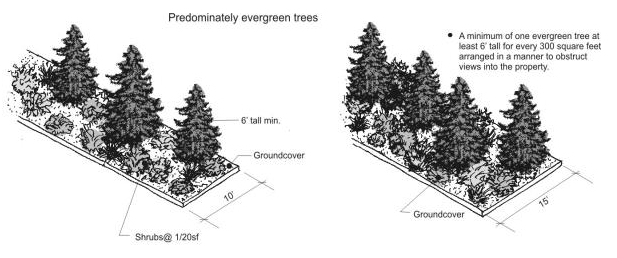
Figure 15.570.040(A). Type A landscaping standards.
B.
Type B landscaping.
1.
Type B landscaping is a "filtered screen" that functions as a visual separator. This landscaping is typically found between differing types of residential development, and to screen unwanted views from the pedestrian environment.
2.
Type B landscaping shall minimally consist of:
a.
A mix of evergreen and deciduous trees and shrubs generally interspersed throughout the landscape strip spaced to create a filtered screen;
b.
At least 50 percent deciduous trees and at least 30 percent evergreen trees;
c.
Trees provided at the rate of one tree per 300 square feet or one tree per 30 linear feet, whichever is greater, of landscape strip;
d.
Shrubs provided at the rate of one shrub per 20 square feet of landscape strip and spaced no more than eight feet apart on center;
e.
Groundcover; and
f.
The selected plant materials and configuration will meet the purpose of the standards within five years of planting. This requirement will account for the size of materials and the growth rate.
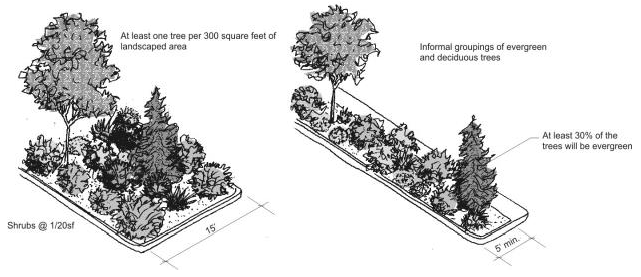
Figure 15.570.040(B). Type B landscaping standards.
C.
Type C landscaping.
1.
Type C landscaping is a "see-through screen" that functions as a partial visual separator to soften the appearance of parking areas and building elevations. This landscaping is typically found along street frontage or between multifamily developments.
2.
Type C landscaping shall minimally consist of:
a.
Primarily deciduous trees generally spaced to create a continuous canopy that extends well beyond the landscaped area;
b.
At least 70 percent deciduous trees;
c.
Trees provided at the rate of one tree per 300 square feet or one tree per 30 linear feet, whichever is greater, of landscape strip;
d.
Shrubs provided at the rate of one shrub per 20 square feet of landscape strip and spaced no more than eight feet apart on center;
e.
Groundcover;
f.
Maintain trees and shrubs to maximize pedestrian visibility (generally between three and eight feet above grade); and
g.
The selected plant materials and configuration will meet the purpose of the standards within five years of planting. This requirement will account for the size of materials and the growth rate.
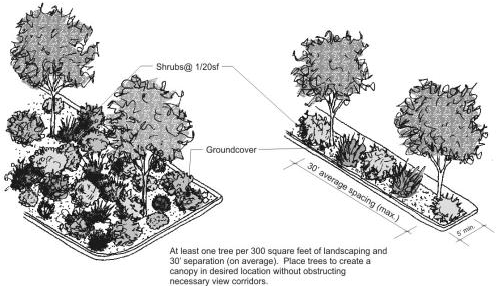
Figure 15.570.040(C). Type C landscaping standards.
D.
Type D landscaping.
1.
Type D landscaping refers to all other landscaped areas that do not qualify as Type A-C landscaping. While native and low maintenance trees and shrubs are encouraged in these areas, lawn areas may be used for recreational or design purposes. These areas also could include flower beds and perennial beds.
2.
Type D landscaping may include any combination of plant materials provided they comply with ECC 15.570.030.
(Ord. 4656 § 1 (Exh. O2), 2013)
15.570.050 - Landscape site design standards.
A.
Surface parking lot landscaping.
1.
Purpose. To minimize potential negative impacts of parking lots on downtown's visual character, pedestrian environment, local water quality conditions, and adjacent uses.
2.
Parking lot perimeters.
a.
For parking lots adjacent to public streets, use Type C landscaping at least six feet deep and no less than the minimum applicable building setback (whichever is more).
b.
For parking lots along internal private roadways in commercial areas, provide a planting strip at least six feet wide with Type C landscaping.
c.
For parking lots along internal lot lines, use Type A or B landscaping at least ten feet deep.
d.
Departures to the landscaping standard will be considered pursuant to ECC 15.210.060 provided the alternative landscaping design meets the purposes of the standards in this section.
3.
Internal parking lot landscaping. All parking lot whose development exceeds 40 spaces shall meet the following standards; parking lots with 40 or fewer spaces are exempt.
a.
Twenty square feet of planting area utilizing Type C landscaping is required for each parking space.
b.
At least one tree is required for every planting island within a parking lot;
c.
All parking spaces shall be within 50 feet of a planting island with a tree;
d.
Planting islands must be at least six feet deep and wide to be used in planting area calculations;
e.
Wheel stops, curbs or walkways shall be used to protect planting islands from vehicles;
f.
Canopy type trees shall be utilized;
g.
Rain gardens and swales may be integrated into required planting areas (see section 4 of the public works development standards for related standards); and
h.
Departures to the landscaping standard will be considered pursuant to ECC 15.210.060 provided the alternative landscaping design meets the purposes of the applicable standards.
B.
Side/rear yard screening. See ECC 15.520.020 for applicable standards.
C.
Foundation planting. All street-facing elevations must have landscaping along any exposed foundation. The landscaped area may be along the outer edge of a porch instead of the foundation. This landscaping requirement does not apply to portions of the building facade that provide access for pedestrians or vehicles to the building. The foundation landscaping must meet the following standards:
1.
The landscaped area must be at least three feet wide;
2.
There must be at least one three-gallon shrub for every three lineal feet of foundation; and
3.
Ground cover plants must fully cover the remainder of the landscaped area.
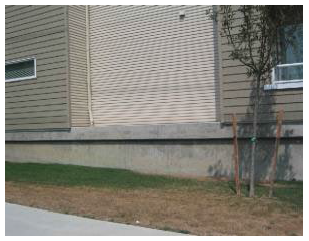
Figure 15.570.050(C). Foundation plantings would be required along the exposed concrete
foundation.
(Ord. No. 4975, § 66, 11-17-2025; Ord. 4656 § 1 (Exh. O2), 2013)
15.570.060 - Installation and maintenance.
A.
Timing of installation. The applicant shall install landscaping and screening required by this title consistent with the approved site plan or an approved modification thereto before the city issues an occupancy permit or final inspection for the development in question; provided, the reviewing authority may defer installation of plant materials for up to six months after the city issues an occupancy permit or final inspection for the development in question if the reviewing authority finds doing so increases the likely survival of plants.
B.
Installation standards. The applicant shall show and comply with the following:
1.
Plant materials will be installed to current nursery industry standards.
2.
Plant materials shall be properly supported to ensure survival. Support devices such as guy wires or stakes shall not interfere with vehicular or pedestrian movement.
3.
Existing trees and plant materials to be retained shall be protected during construction, such as by use of chain link or other sturdy fence placed at the dripline of trees to be retained. Grading, topsoil storage, construction material storage, vehicles and equipment shall not be allowed within the dripline of trees to be retained.
C.
Verification of the installation of landscape. Required planting/irrigation shall be installed within six months of the date of final construction permit approval or the issuance of a certificate of occupancy, whichever is later. For development sites 20,000 square feet in area (this includes the entire lot or parcel or applicable portion of site being developed including buildings, parking and storage areas, landscaping, etc.) or larger, the applicant shall submit a copy of the approved landscape plan(s) with a letter signed and stamped by a Washington-licensed landscape architect or CPH certifying that the landscape and irrigation (if any) have been installed in accordance with the attached approved plan(s) and verifying that any plant substitutions are comparable to the approved plantings and suitable for the site. Any substituted plants shall be no smaller than those shown on the approved plan(s) and shall have similar characteristics in terms of height, drought tolerance and suitability for screening.
D.
Maintenance standards. All landscape areas shall be maintained in accordance with the following standards:
1.
All landscaping shall be maintained with respect to pruning, trimming, mowing, watering, insect control, fertilizing, or other requirements to create a healthy growing condition and attractive appearance and to maintain the purpose of the landscape type. Vegetation shall be controlled by pruning, trimming or otherwise so that it will not interfere with the maintenance or repair of any public utility, restrict pedestrian or vehicular access, or obstruct sight distance at intersections;
2.
Dead, diseased, stolen, vandalized, or damaged plants shall be replaced within three months with the plants indicated on the approved landscape plan;
3.
All landscaped areas shall be maintained reasonably free of weeds and trash; and
4.
All required landscaping that is located within public rights-of-way shall be maintained by the abutting property owner.
E.
Irrigation standards. The purpose of this standard is to ensure that plants will survive the critical establishment period when they are most vulnerable due to lack of watering.
All required landscaped areas in the city must comply with at least one of the following:
1.
A permanent built-in irrigation system with an automatic controller will serve the landscape area in question, and the system will be installed and operational before the city grants an occupancy permit or final inspection for the development in question.
2.
A temporary irrigation system will serve the landscape area in question; provided the applicant can successfully demonstrate that the proposed temporary irrigation system will provide sufficient water to ensure that the plant materials to be planted will survive installation and, once established, will survive without watering other than natural rainfall.
3.
A permanent or temporary irrigation system will not serve the landscape area in subsection (C) of this section; provided:
a.
The reviewing authority finds the landscape area otherwise fulfills the requirements of this section; and
b.
The applicant submits the following with the site plan application:
i.
A statement from a Washington-licensed landscape architect or CPH certifying that the materials to be planted will survive without watering other than natural rainfall; and
ii.
A plan for monitoring the survival of required vegetation on the approved site plan for at least one year and for detection and replacement of required vegetation that does not survive with like-kind material or other material approved by the reviewing authority; and
iii.
A statement from the applicant agreeing to install an irrigation system if the reviewing authority finds one is needed to ensure survival of required vegetation, based on the results of the monitoring plan.
(Ord. 4656 § 1 (Exh. O2), 2013)
15.580.010 - Purpose.
A.
To encourage the judicious use of lighting in conjunction with other security methods to increase site safety;
B.
To encourage the use of lighting as an integral design component to enhance buildings, landscaping, and other site features and for the enjoyment of property;
C.
To encourage night sky visibility and to reduce the general illumination of the sky in Ellensburg;
D.
To promote energy conservation;
E.
To reduce the horizontal glare and vertical light trespass from a development onto adjacent parcels and natural features; and
F.
To discourage the use of lighting for advertising purposes.
(Ord. 4656 § 1 (Exh. O2), 2013)
15.580.020 - Applicability.
A.
All outdoor lighting fixtures that are to be installed on private and public property in association with any building permit application or subdivision application shall comply with this chapter. This chapter does not apply to interior lighting. Types of outdoor lighting to which this chapter applies include, but are not limited to, lighting for:
1.
Building and structures including, but not limited to, overhangs and canopies.
2.
Recreational areas.
3.
Parking lot lighting.
4.
Landscape and architectural lighting.
B.
The city's building official shall administer and enforce this chapter.
(Ord. 4656 § 1 (Exh. O2), 2013)
15.580.030 - Exemptions.
The following are exempt from the provisions of this chapter:
A.
Traffic control signals and devices.
B.
Public street lights; provided, however, public street lights must conform to the most current version of the city's public works development standards.
C.
Temporary emergency lighting (i.e. fire, police, medical personnel, repair workers) or warning lights.
D.
Moving vehicle lights.
E.
Navigation lights (e.g. on radio/television towers, microwave towers) or any other lights where state or federal statute or other provision of the Ellensburg City Code requires lighting that cannot comply with this chapter. In such situations, lighting shall be shielded to the maximum extent possible, and lumens shall be minimized to the maximum extent possible, while still complying with state or federal statute.
F.
Seasonal decorations.
G.
Outdoor lighting approved by the building official for temporary or periodic events (e.g. fairs, nighttime construction).
H.
Outdoor lighting fixtures installed prior to the effective date of the ordinance codified in this chapter.
I.
Fossil fuel lights.
(Ord. 4656 § 1 (Exh. O2), 2013)
15.580.040 - Lighting standards and guidelines.
The following general standards shall apply to all nonexempt outdoor lighting fixtures and accent lighting unless specifically noted:
A.
All light trespass as defined in ECC 15.130.120 is prohibited.
B.
Shielding. (See figures 15.580.040(B)(1) through (4)). Outdoor lighting fixtures and accent lighting with 2,000 lumens or more must be shielded and aimed downward. The shield must mask the direct horizontal surface of the light source. The light must be aimed to ensure that the illumination is only pointing downward onto the ground surface, with no escaping direct light permitted to contribute to light pollution by shining upward into the sky.
C.
All outdoor lighting fixtures and accent lighting shall be designed, installed, located and maintained such that there is no light trespass (see figure 15.580.040(B)(3)).
D.
Accent lighting shall be directed downward onto the illuminated object or area and not toward the sky or onto adjacent properties (see figure 15.580.040(B)(4)). Direct light emissions of such accent lighting shall not be visible above the roof line or beyond the building, structure, or object edge.
E.
Bridge, flag, fountain, statue, monument, similar public artwork, feature lighting and private street lighting are permitted provided such lighting does not cause the spilling of direct light to other properties or traveled public ways.
F.
Sports field lighting. Lighting shall be fully shielded with an allowance of five percent uplighting. Sports field lighting shall be exempt from the light trespass provisions of this chapter; provided, however, such light shall be extinguished when not in use and fixtures shall be aimed to control light trespass to the extent possible for the mounting height and required shielding.
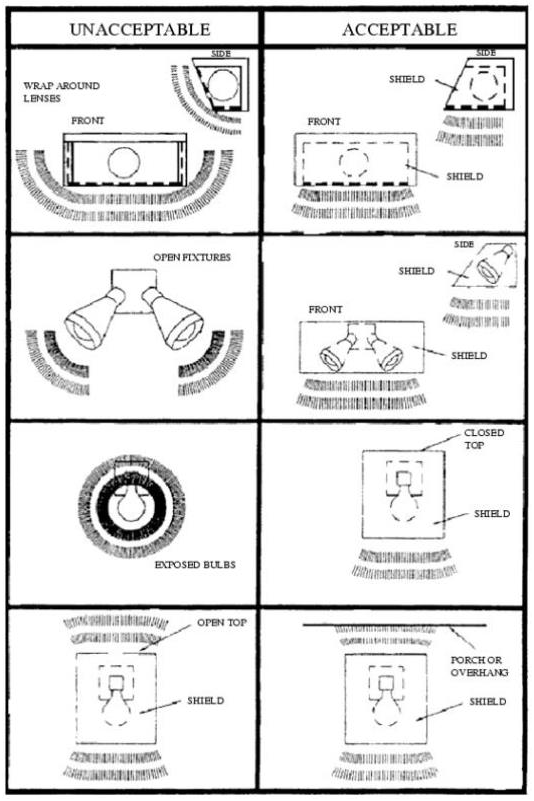
Figure 15.580.040(B)(1). Wall-mounted lights.
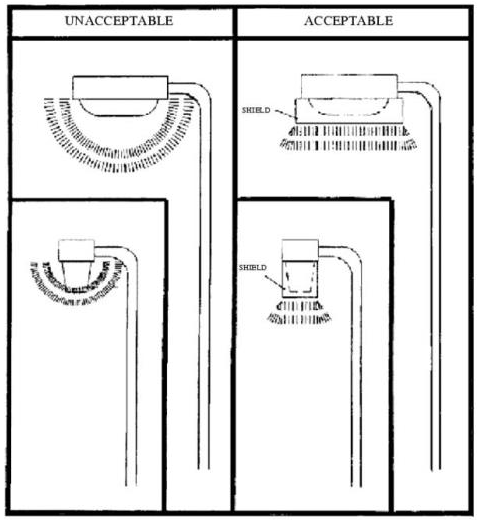
Figure 15.580.040(B)(2). Freestanding outdoor lighting fixtures.
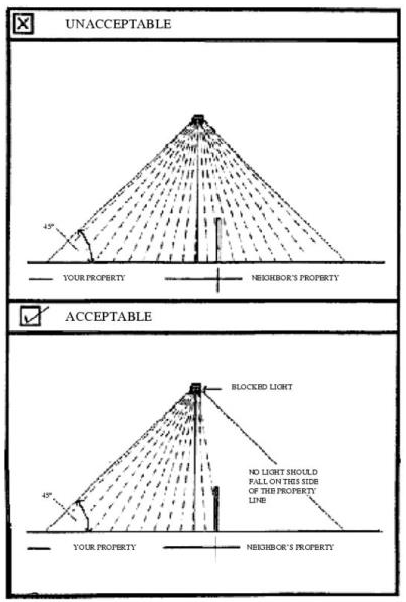
Figure 15.580.040(B)(3). Outdoor lighting fixtures—street and lot light cut-off at
property line.
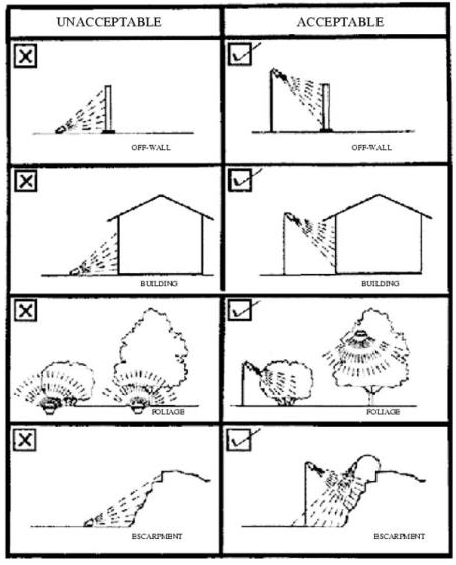
Figure 15.580.040(B)(4). Accent lighting.
G.
Lighting standards for all new nonresidential and multifamily development within the city. An exterior lighting plan providing appropriate lighting levels in all areas used by pedestrians or automobiles, including building entries, walkways, parking areas, circulation areas, and other open space areas shall be submitted and meet the following standards and guidelines:
1.
All public areas shall be lighted with average minimum and maximum levels as follows:
a.
Minimum (for low or nonpedestrian and vehicular traffic areas) of 0.5 foot-candles;
b.
Moderate (for moderate or high volume pedestrian areas) of one to two foot-candles; and
c.
Maximum (for high volume pedestrian areas and building entries) of four foot-candles;
2.
Lighting shall be provided at consistent levels, with gradual transitions between maximum and minimum levels of lighting and between lit areas and unlit areas. Highly contrasting pools of light and dark areas shall be avoided;
3.
Parking lot lighting fixtures shall be non-glare and mounted no more than 25 feet above the ground, with lower fixtures preferable so as to maintain a human scale;
4.
Pedestrian-scaled lighting (light fixtures no taller than 15 feet) is encouraged in areas with high anticipated pedestrian activity. Lighting shall enable pedestrians to identify a face 45 feet away in order to promote safety; and
5.
Vegetation and landscaping shall be maintained in a manner that does not obstruct security lighting.
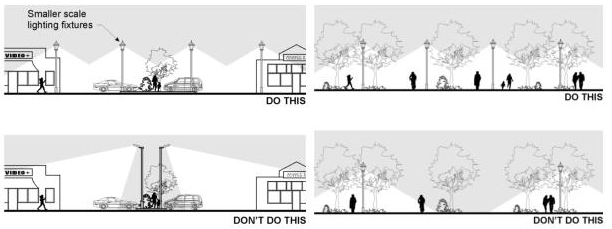
Figure 15.580.040(G). Lighting guidelines.
(Ord. 4656 § 1 (Exh. O2), 2013)
15.580.050 - Submission of plans and evidence of compliance with code.
A.
Submission contents. The applicant for any building permit or subdivision approval required by any provision of the laws of this jurisdiction in connection with proposed work involving outdoor lighting fixtures shall submit (as part of the application for permit or subdivision approval) evidence that the proposed work will comply with this chapter. The submission shall contain but shall not necessarily be limited to the following, all or part of which may be part of or in addition to the information required elsewhere in the laws of this jurisdiction upon application for the required permit or subdivision approval:
1.
Plans indicating the location on the premises of all proposed newly installed or relocated outdoor lighting fixtures;
2.
Description of all proposed newly installed or relocated outdoor lighting fixtures. The description may include, but is not limited to, catalog cuts and illustrations by manufacturers (including sections where required), lamp types, wattages and initial lumen outputs; and
3.
Photometric data, such as that furnished by manufacturers, or similar showing the angle of cut-off of proposed newly installed or relocated outdoor light emissions.
B.
Additional submission. The above required plans, descriptions and data shall be sufficiently complete to enable the building official to readily determine whether compliance with the requirements of this chapter will be secured. If such plans, descriptions and data cannot enable this ready determination, the applicant shall additionally submit as evidence of compliance to enable such determination such certified reports of tests as will do so; provided, that these tests shall have been performed and certified by a recognized testing laboratory.
C.
Subdivision plats. If any subdivision proposes to have installed street or other common or public area outdoor lighting, submission of the information as described in subsection (A) of this section shall be required for all such lighting, and the lighting shall comply with the most current version of the city's public works development standards.
D.
Lamp or fixture substitution. Should any outdoor light fixture approved through the imposition of the requirements of this chapter, or the type of light source therein, be changed after the permit has been issued, a change request must be submitted to the building official for approval, together with adequate information to assure compliance with this chapter, which must be received prior to substitution.
(Ord. 4656 § 1 (Exh. O2), 2013)
15.580.060 - Approved materials and methods of construction or installation/operation.
A.
Approval of alternatives. The provisions of this chapter are not intended to prevent the use of any design, material, or method of installation or operation not specifically prescribed by this chapter, provided any such alternate has been approved by the building official to meet the purpose and intent of this chapter.
(Ord. 4656 § 1 (Exh. O2), 2013)

