
Federal Heights City Zoning Code
ARTICLE VII
DISTRICTS AND DISTRICT REGULATIONS
Sec. 70-182. - Zoning districts enumerated.
In order to carry out the provisions of this chapter, the city is hereby divided into the following zoning districts:
(Code 1985, § 10-1-4)
Sec. 70-183. - Zoning map.
(a)
The boundaries and zoning classification of districts hereby established are shown on a map attached entitled, "City of Federal Heights Zoning," which map and all notations, references, data and other information shown hereon are by this reference hereby made a part of this chapter.
(b)
In the event uncertainty shall be deemed to exist on the zoning district map, district boundaries shall be on section lines, lot lines, the centerlines of highways, streets and alleys or other lines to be determined by the use of scales shown on the said map.
(c)
Where a lot is divided by a zoning district boundary line at the time of the enactment of this chapter, or by subsequent amendments, the less restrictive zone requirements may be extended within the lot into the more restrictive zoning district for a distance of not more than 25 feet.
(Code 1985, § 10-1-5)
Sec. 70-184. - Listing of uses.
The listing of any use in said schedule as being permitted in any particular district shall be deemed to be an exclusion of such use from any other district unless the use is specifically permitted in such other district under the language set forth in the schedule.
(Code 1985, § 10-1-6)
Sec. 70-185. - Reserved.
Editor's note— Ord. No. 12-10, § 1, adopted October 16, 2012, repealed § 70-185, which pertained to temporary uses allowed in all districts; subject to obtaining permit and derived from Ord. No. 06-03, adopted August 15, 2006.
Sec. 70-186. - Uses permitted in all districts.
Uses permitted in all districts are as follows:
(1)
Public utilities including, but not limited to, water mains, sewer mains, utility poles, well houses, water storage tanks, utility poles, substations and storage facilities appurtenant to such uses.
(2)
Municipal buildings and associated facilities.
(3)
Mobile offices for construction purposes during a reasonable construction period.
(4)
Accessory uses.
(5)
Public, charter and parochial schools and hospitals.
(6)
Public parks, playgrounds and other recreational facilities.
(7)
Churches.
(8)
The keeping of animals in accordance with the requirements of chapter 6 of the Code.
(Code 1985, § 10-1-8; Ord. No. 10-15, § 2, 9-21-2010; Ord. No. 13-06, § 1, 3-5-2013; Ord. No. 17-14, § 2, 9-5-2017; Ord. No. 18-03, § 2, 4-3-2018; Ord. No. 18-08, § 4, 8-7-2018)
Sec. 70-187. - Reserved.
Editor's note— Ord. No. 18-03, § 3, adopted April 3, 2018, repealed § 70-187, which pertained to uses permitted in all districts except industrial and derived from the Code of 1985, § 10-1-9 and Ord. No. 04-06, adopted June 1, 2004.
Sec. 70-213. - Uses permitted in R-1 district.
The following uses are permitted in the R-1 single-family residential district:
(a)
Uses permitted by right in the R-1 single-family residential district:
(1)
Single-family dwellings occupied as a residence by not more than one family.
(2)
Community residential homes as defined by state statute, provided that such homes meet such minimum square footage per occupant as may be required by other applicable law.
(3)
Child day care facilities, provided that such facilities have a valid state license and city business license.
(4)
Assisted living facilities, as defined by state statute, provided that such facilities have a valid state license.
(5)
Accessory use, Level 1, 2 and 3 EVCS.
(b)
Conditional uses in the R-1 single-family residential district:
(1)
Primary use, Level 1, 2 and 3 EVCS.
(Code 1985, § 10-2-1; Ord. No. 14-05, § 1, 5-20-2014; Ord. No. 25-17, § 2, 12-16-2025)
Sec. 70-214. - Permitted density in R-1 district.
The following are the area requirements in the R-1 single-family residential district:
(1)
Minimum lot size and setbacks:
a.
Interior lot:
1.
Area: 6,500 ft. 2
2.
Width: 65 ft.
b.
Corner lot:
1.
Area: 8,000 ft. 2
2.
Width: 80 ft.
c.
Depth: 100 ft.
d.
Front yard setback:
1.
Principal building: 25 ft.
2.
Accessory buildings: 60 ft.
e.
Side yard setback:
1.
Interior lot:
i.
Principal building: 5 ft.
(total for both side yards): 10 ft.
ii.
Accessory building from property line: 3 ft.
2.
Corner lot requirement on side street:
i.
Principal building: 15 ft.
ii.
Accessory building: 5 ft.
f.
Rear yard setback:
1.
Principal building: 20 ft.
2.
Accessory building from property line: 3 ft.
g.
Garages, including freestanding garages and garages that are attached to the principal structure. Notwithstanding the setback requirements above, there shall be a minimum distance of 20 feet from the middle of the main opening of any garage to the property line common to a right-of-way.
(2)
Maximum lot coverage (percentage of total area):
a.
Principal building, 35 percent.
b.
Total for all accessory buildings, 10 percent.
(3)
Maximum height of buildings:
a.
Principal building, 35 ft.
b.
Accessory buildings, 20 ft.
(4)
Minimum floor area per dwelling, 950 ft. 2
(Code 1985, § 10-2-2; Ord. No. 22-08, § 1, 3-7-2023)
Sec. 70-215. - Principal buildings in R-1 district.
(a)
There shall be no more than one principal building on each lot in the R-1 district.
(b)
Principal buildings in the R-1 district shall:
(1)
Be constructed or installed on engineered, permanent foundations; and
(2)
Have wood, brick or cosmetically equivalent exterior siding.
(Code 1985, § 10-2-3)
Sec. 70-241. - Uses permitted in R-2 district.
The following uses are permitted in the R-2 multiple-family residential district:
(a)
Uses permitted by right in the R-2 multiple-family residential district:
(1)
Multiple -family dwellings containing not more than two dwelling units, with each dwelling unit being occupied as a residence by not more than one family.
(2)
Community residential homes as defined by state statute, provided that such homes meet such minimum square footage per occupant as may be required by other applicable law.
(3)
Child day care facilities, provided that such facilities have a valid state license and city business license.
(4)
Assisted living facilities, as defined by state statute, provided that such facilities have a valid state license.
(5)
Accessory use, Level 1, 2 and 3 EVCS.
(b)
Conditional uses in the R-2 multiple-family residential district:
(1)
Primary use, Level 1, 2 and 3 EVCS.
(Code 1985, § 10-3-1; Ord. No. 14-05, § 2, 5-20-2014; Ord. No. 25-17, § 3, 12-16-2025)
Sec. 70-242. - Permitted density in R-2 district.
The following are the area requirements for the R-2 multiple-family residential district:
(1)
Minimum lot size and setbacks:
a.
Interior lot:
1.
Area: 7,500 ft. 2
2.
Width: 75 ft.
b.
Corner lot:
1.
Area: 8,500 ft. 2
2.
Width: 85 ft.
c.
Depth: 100 ft.
d.
Front yard setback:
1.
Principal building: 25 ft.
2.
Accessory buildings: 60 ft.
e.
Side yard setback:
1.
Interior lot:
i.
Principal building: 5 ft.
(total for both side yards): 10 ft.
ii.
Accessory building from property line: 3 ft.
2.
Corner lot requirement on side street: 25 ft.
i.
Principal building: 25 ft.
ii.
Accessory building: 25 ft.
f.
Rear yard setback:
1.
Principal building: 20 ft.
2.
Accessory building from property line: 3 ft.
(2)
Maximum lot coverage (percentage of total area):
a.
Principal building, 25 percent.
b.
Total for all accessory buildings, 10 percent.
(3)
Maximum height of buildings:
a.
Principal building, 35 ft.
b.
Accessory buildings, 20 ft.
(4)
Minimum floor area per dwelling, 850 ft. 2
(Code 1985, § 10-3-2)
Sec. 70-263. - Uses permitted in R-3 multiple-family residential district.
The following uses are permitted in the R-3 multiple-family district:
(a)
Uses permitted by right in the R-3 multiple-family residential district:
(1)
Multiple-family dwellings, not over 2½ stories in height (rental or condominium).
(2)
Boardinghouses and rooming houses.
(3)
Rest homes, convalescent homes and nursing homes.
(4)
Child day care facilities, provided that such facilities have a valid state license and city business license.
(5)
Family dwellings in accordance with R-2 permitted density.
(6)
Assisted living facilities, as defined by state statute, provided that such facilities have a valid state license.
(7)
Accessory use, Level 1, 2 and 3 EVCS.
(b)
Conditional uses in the R-3 multiple-family residential district:
(1)
Primary use, Level 1, 2 and 3 EVCS.
(Code 1985, § 10-4-1; Ord. No. 14-05, § 3, 5-20-2014; Ord. No. 25-17, § 4, 12-16-2025)
Sec. 70-264. - Permitted density in R-3 multiple-family residential district.
The following densities may be permitted in the R-3 multiple-family residential district:
(1)
Minimum lot size and setbacks: 13,500 ft. 2
a.
Additional square feet of lot area for each dwelling unit in excess of four: 2,000 ft. 2
b.
Width:
1.
Interior lot: 75 ft.
2.
Corner lot: 85 ft.
3.
Additional lot frontage for each unit in excess of two on grade level: 10 ft.
c.
Depth: 100 ft.
d.
Front yard setback:
1.
Principal building: 30 ft.
2.
Accessory buildings: 60 ft.
3.
Minimum landscape depth requirement: 15 ft.
4.
Maximum width of one-way access or egress through landscaped area: 16 ft.
5.
Maximum width of two-way access/egress through landscaped area: 26 ft.
6.
Maximum total frontage to be used for access and egress: 30 percent
e.
Side yard setback:
1.
Interior lot:
i.
Principal building: ½ ft. setback for each 1 ft. of building height with a 20 ft. minimum for each side
ii.
Accessory building: ½ ft. setback for each 1 ft. of building height with a 5 ft. minimum for each side
2.
Corner lot setback:
i.
Requirement on side streets: 30 ft.
ii.
Principal building: 30 ft.
iii.
Accessory buildings: 30 ft.
f.
Rear yard setback:
1.
Principal building: 20 ft.
2.
Accessory buildings: 5 ft.
(2)
Maximum lot coverage (percentage of total lot area):
a.
Principal building, 40 percent
b.
Total for all accessory buildings, 20 percent
(3)
Maximum height of buildings:
a.
Principal building, 40 ft.
b.
Accessory buildings, 20 ft.
(4)
Minimum floor area (square feet) per unit:
a.
One-bedroom unit, 500 ft. 2
b.
Two-bedroom unit, 650 ft. 2
c.
Three-bedroom unit, 800 ft. 2
d.
Four-bedroom unit, 950 ft. 2
(5)
Playground and recreational requirement: For each multiple unit development there shall be a fenced and improved playground or recreational area equaling the greater of 15 percent of the total square footage of the units, or 1,000 square feet; and a landscaped area equal to 100 percent of the total square footage of the units.
(Code 1985, § 10-4-2)
Sec. 70-291. - Uses permitted in R-4 single-family mobile home districts.
The following uses are permitted in the R-4 single family mobile home district:
(a)
Uses permitted by right in the R-4 single-family mobile home district:
(1)
Single-family mobile and manufactured homes on individually rented spaces contained within a mobile home park.
(2)
Group homes pursuant to C.R.S. § 31-23-303, as amended, provided that such group homes meet such minimum square footage per occupant as may be required by other applicable laws.
(3)
Other secondary structures attached to a mobile home, which may contain additional living area.
(4)
Accessory structures.
(5)
Office and storage structures devoted exclusively to the management and maintenance of the park. Such office may be used to transact business related to the lease of spaces and sale of mobile homes within the park. (Separate mobile home sales offices and display lots are restricted to C-1 districts and require a special review use permit.)
(6)
Noncommercial recreational building for the use of residents and their guests only.
(7)
Child day care facilities, provided that such facilities have a valid state license and city business license.
(8)
Accessory use, Level 1, 2 and 3 EVCS.
(b)
Conditional uses in the R-4 multiple-family mobile home district:
(1)
Primary use, Level 1, 2 and 3 EVCS.
(Code 1985, § 10-5-1; Ord. No. 12-05, § 9, 8-7-2012; Ord. No. 25-17, § 5, 12-16-2025)
Sec. 70-292. - Mobile homes not meeting definition of manufactured homes.
Effective March 1, 2004, mobile homes not meeting the definition of a manufactured home shall not be moved into or otherwise installed in the R-4 district. Effective March 1, 2004, mobile homes not meeting the definition of a manufactured home that exist in the R-4 district shall not be relocated to any other mobile home space within the R-4 district.
(Ord. No. 04-02, § 4(10-5-2), 3-16-2004; Ord. No. 10-16, § 1, 9-21-2010)
Sec. 70-293. - Mobile home park design requirements in R-4 district.
(a)
Recreational area. An amount equal to eight percent of the mobile home park area in the R-4 district shall be devoted to recreational and park usage, and further, that said area is to be in parcels of not less than 2.4 acres.
(b)
Recreational building. Each park shall have a recreational building containing not less than 2,500 square feet per 200 spaces or fraction thereof.
(c)
Swimming pool. Each park shall have a standard depth swimming pool of not less than 800 square feet.
(d)
Storage area. Each park shall contain a storage area for boats, boat trailers, travel trailers, tent trailers, horse trailers, motor homes, campers and detached pick-up campers in an amount equal to 100 square feet per space in the mobile home park.
(e)
Service facilities. Adequate laundry facilities shall be provided for the residents of the mobile home park, and if the area is contained within the recreational building, it shall not count as part of the area required in subsection (b) of this section.
(f)
Utilities. All utilities, including electrical, telephone, gas, television cable distribution, sanitary sewer and storm sewers shall be installed, or provided, by the park owner and shall be located underground and remain in private ownership. All utilities shall conform to standard city specifications as outlined in chapter 10, but, in no event, shall be less than:
(1)
Water mains: Not less than six-inch ductile iron pipe with complete valving at every street intersection and fire hydrant, and fire hydrants not less than 400 feet apart.
(2)
Sanitary sewer mains: Not less than eight-inch PVC with manholes at each change in grade or direction, and not more than 300 feet apart.
(3)
Streets and sidewalks: All streets and sidewalks shall be installed and maintained by the park owner to the specifications outlined in chapter 10 and shall conform to the following minimum standards:
a.
At least one entrance and one exit roadway, each a minimum of 18 feet in width, flow line to flow line, divided by a landscaped median of not less than six feet in width;
b.
All interior park streets shall have a width of 32 feet, flow line to flow line, and shall have a mountable curb, gutter and sidewalk with no less than three feet of walking surface on both sides of the street.
(g)
Exterior fencing requirements. Along all exterior property boundaries of any mobile home park there shall be screening provided (walls or fences) at a minimum of six feet in height. A permit shall be required for all walls and fences.
(Code 1985, § 10-5-3; Ord. No. 19-02, § 2, 4-16-2019)
Sec. 70-294. - Mobile home park management.
(a)
Management generally. The management of mobile home parks in the R-4 district shall be as follows:
(1)
The owner or operator of any mobile home park shall arrange for the management and supervision of such mobile home park so as to enforce or cause compliance with the provisions of these rules and regulations, as well as all ordinances of the city.
(2)
The owner, operator and attendant of every mobile home park shall assume full responsibility for maintaining in good repair and condition, all facilities of the mobile home park as required herein.
(3)
In every mobile home park, there shall be a designated office building in which shall be located the office of the person in charge of said park. A copy of all required city and state licenses and permits and of this division 5, of article VII shall be posted therein and the park register shall at all times be kept in said office.
(4)
It shall be the duty of the attendant or person in charge, together with the owner or operator, to:
a.
Keep at all times a register of all tenants which shall be open at all times to inspection by state, county and federal officers and officers of the city, showing, for all tenants: names of all persons inhabiting each mobile home, dates of entrance and departures; license numbers of all mobile homes and towing vehicles or automobiles, and states issuing such licenses;
b.
Maintain the park in a clean, orderly and sanitary condition at all times;
c.
See that the provisions of this division 5, of article VII are complied with and enforced and report promptly to the proper authorities any violations of this division 5, of article VII or any other violations of law which may come to his attention;
d.
Report to local health authorities all cases known to the owner to be infected with any communicable disease;
e.
Prohibit the use of any mobile homes by a greater number of occupants than that which it is designed to accommodate.
(b)
Licenses. An annual license fee for R-4 mobile home parks shall be charged, due and payable on January 1 of each year. The actual license fee shall be as prescribed by resolution in accordance with section 1-16. No such license shall be issued by the city clerk until it has been determined by proper authorities that said park is in compliance with all health and sanitation requirements of the city or any other county or state public health agency having jurisdiction of such matters. No person shall operate any mobile home park within the city without securing and having in effect at all times the license referred to above. No license will be issued on a new park in the process of completion until all prior contracts, agreements, deeds to the city for public right-of-way or for other uses have been properly executed and fully performed.
(c)
Additional requirements.
(1)
Removal of trash. The owner of the mobile home park shall be responsible for the removal of trash.
(2)
Alterations and additions; signs.
a.
Conformity. No alterations or additions shall be made to or within any mobile home park unless in conformity with the city building code.
b.
Signs and space numbers. Each mobile home park shall provide identification of the park at a primary vehicle entrance, subject to the standards outline in the Sign Code (article XI, herein), to include the name of the park and street address in letters of a minimum of ten inches in height. Each mobile home shall be uniformly numbered with reflectorized numbers of a minimum height of three inches and located at least three feet above the ground.
(d)
Responsibility of park owner. It shall be the duty of the owner of each mobile home park to maintain or cause to be maintained all facilities and properties within the park, including the planting and maintaining of grass, shrubbery and trees in the required setback areas as provided for in this division 5, of article VII. It shall be unlawful for the owner of a mobile home park to fail to comply with any requirements of this division 5, of article VII.
(e)
Exclusions. No junk, garbage, trash or hazardous substance shall be stored outdoors or under mobile homes, except outside storage is permissible in containers and subject to removal requirements as provided in sections 42-27 and 42-28.
(f)
Abandonment of home and park owner responsibility. It shall be unlawful for any owner of any home to abandon such home within the R-4 district. Once a home has been abandoned, the park owner shall have 180 days to obtain title, or a certificate of destruction, or to remove the home from the park. At all times during the 180 day time period the park owner shall demonstrate it is making a good faith attempt to obtain title, or a certificate of destruction, or to remove the home. Proof of such effort may include, but is not limited to, copies of correspondence with Adams County and/or the state, or documents filed with Adams County and/or the state, or other forms of written documentation demonstrating the park owner's good faith attempt to obtain title, or a certificate of destruction, or remove the home. The existence of such correspondence or documents shall be an affirmative defense to any enforcement action of the city.
If the park owner obtains title to the home, the park owner shall have 90 days to bring such home into compliance with all applicable requirements of the Code.
It shall be unlawful for any park owner to fail to obtain either title, or a certificate of destruction, or to remove or bring into compliance any home, within the time periods set forth in this section.
For the purposes of this section, evidence that a home has been abandoned shall include, but not be limited to, the absence of occupancy with no forwarding information provided to authorities, or any signage, or published listing, indicating that the home is for rent or sale or where the property has not been secured within 30 days after the park owner has issued an order and notice to abate to the homes' owners and/or residents.
(Code 1985, § 10-5-4; Ord. No. 08-01, § 1, 1-15-2008; Ord. No. 12-05, § 7, 8-7-2012)
Sec. 70-295. - Mobile home park manager's license; license requirements; revocation.
(a)
It shall be unlawful for any person to assume the position of, or act as, a mobile home park manager in the R-4 district for any period exceeding 30 days without first having obtained a license as provided in this section.
(b)
It shall be unlawful for the owner of any mobile home park to employ any mobile home park manager unless the person so employed has obtained a license as hereinafter provided.
(c)
Each applicant for a license, as described in subsection (a) of this section shall provide the clerk the following information:
(1)
A description of the mobile home park that the applicant intends to manage;
(2)
The name and address of his employer;
(3)
Verification that the applicant is 21 years of age;
(4)
A signed and verified statement that the applicant has read this division 5, of article VII and other applicable regulations of the city which pertain to zoning and building requirements of mobile home parks.
(d)
The license may be revoked or suspended in accordance with chapter 14.
(Code 1985, § 10-5-5)
Sec. 70-296. - Set-up permits; separation and setback requirements.
(a)
Definitions. For purposes of this section, manufactured home shall have the definition ascribed to by section 70-4(b). The term home, when separate from the term manufactured home, shall include the definitions of manufactured home or mobile home ascribed by section 70-4(b).
(b)
Permits required. Set-up permits for a manufactured home shall be required as set forth in section 10-42 of the Code.
(c)
Architectural standards, set-up permits, separation and setback requirements. To be issued a set-up permit all manufactured homes must be in compliance with the installation standards set forth in article III of chapter 10 of the Code, and must have been constructed or manufactured on a date not more than 20 years prior to the date of the manufactured home's initial placement or relocation within the city, and have exterior siding material of wood, vinyl or stucco, or material equivalent in appearance, and skirting material of stucco or material similar in appearance, or vinyl skirting in good repair that is compatible with the home. Proof of construction or manufacture date must be provided at the time of application for a set-up permit.
(d)
Separation and setback requirements.
(1)
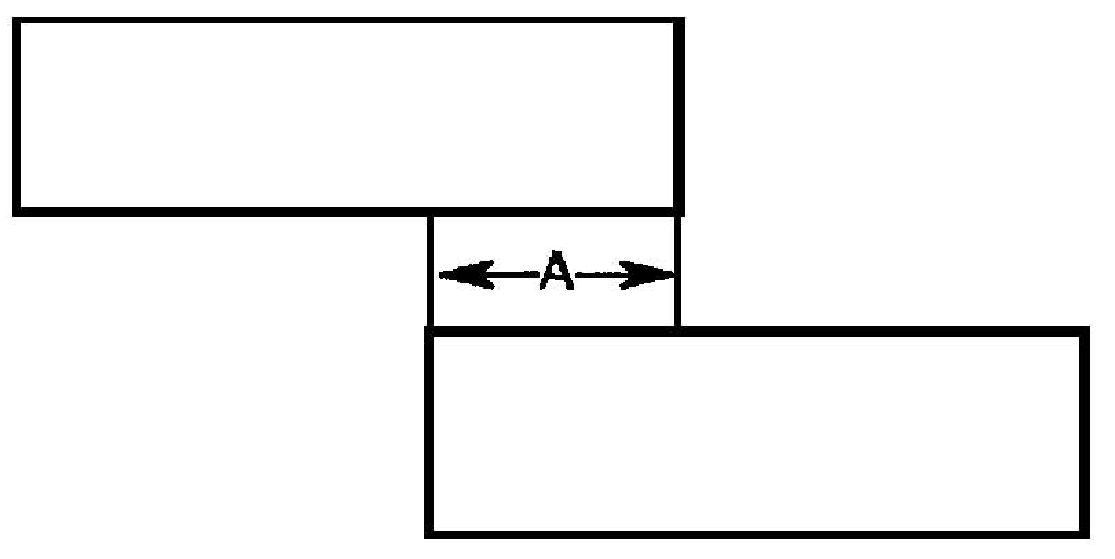
The minimum side-to-side distance, referring to the long sides of the home, shall be at least 12 feet with the following exception: The minimum side-to-side distance between homes may be ten feet, provided that the overlapping distance "A" is not greater than ten feet.
(2)
The minimum distance between the long side of one home and the short side of an adjacent home shall be ten feet.
(3)
The minimum distance between the short sides of two homes shall be ten feet.
(4)
The minimum distance between the short side of a home and the back of curb shall be three feet, provided that:
a.
The hitch is removed;
b.
A traffic hazard is not created;
c.
The home is not located on a corner lot or on the inside of a curve greater than 12 degrees (radius 477.5), in which case, the setback shall be five feet;
d.
The park manager provides the city building department with an accurate list of all lots or spaces located on the inside of a curve greater than 12 degrees.
(5)
The minimum distance between the long side of a home and any curb shall be ten feet.
(6)
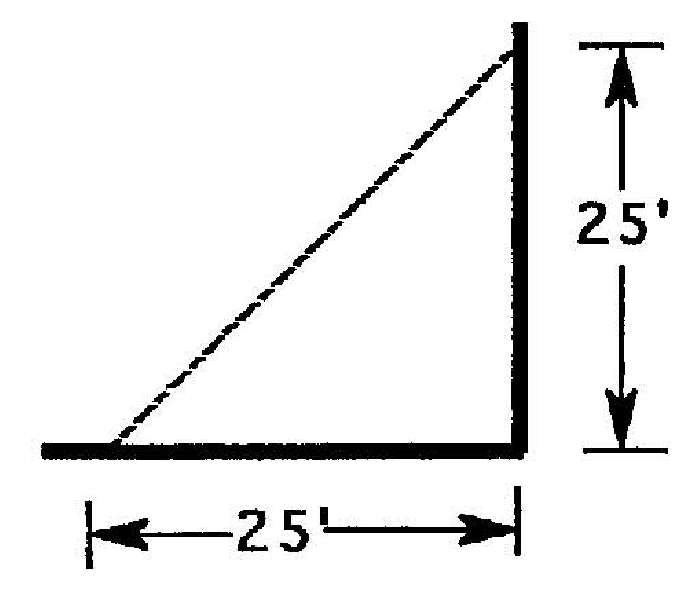
On corner lots, no planting of shrubs, trees or flowers or erection of any fence or structure (except a home) over 30 inches above the level of the street shall be permitted within the triangular area measured 25 feet back from the projected intersection of the two curbs.
(7)
Secondary structures.
a.
The following words, terms and phrases, when used in this subsection (7), shall have the meanings ascribed to them in this subsection (7)a, except where the context clearly indicates a different meaning:
1.
Secondary structures means anything constructed or erected which is attached to the home and which requires location on the ground or attached to something having a permanent location on the ground, except mailboxes, light fixtures, flagpoles and fences. Secondary structures include carports, decks, porches, garages, and patio covers.
2.
Wall means a structure, or portion thereof, which has a slope of 60 degrees or greater with a horizontal plane, a height in excess of 42 inches, and a surface area which is 50 percent or more covered with any materials, including transparent or opaque material.
b.
All secondary structures, except garages, shall be set back at least three feet from the back of curb of any interior street within the park.
c.
All secondary structures which are garages shall be set back at least 20 feet from the back of the curb of any interior park street, except that such setback shall be reduced to five feet if the garage is equipped with a door which is operable by an automatic garage door opening device. The setback requirement for garages shall be measured from the mid-point of the main opening of the garage.
d.
The minimum distance between the secondary structure and any structure associated with other homes in the same park (including other homes, secondary structures and accessory structures), shall be six feet, except that such minimum distance shall be increased to ten feet if the secondary structure has a wall in addition to the home which is attached. This separation distance shall be measured from the outermost projection of the relevant structures.
(8)
Accessory structures.
a.
For the purpose of this subsection, the term "accessory structure" shall mean anything constructed or erected which is not attached to the home and which requires location on the ground or attached to something having a permanent location on the ground, the use of which is associated with a particular home. Mailboxes, light poles and fences are not accessory structures.
b.
Accessory structures, excluding carports which are open on all sides, and excluding garages, shall be set back five feet from the back of the curb of any interior park streets, except as provided for in subsection (8)e of this section.
c.
Accessory structures which are carports that are open on all sides shall be set back at least three feet from the back of the curb of any interior park streets.
d.
All accessory structures which are garages shall be set back at least 20 feet from the back of the curb of any interior park street, except that such setback shall be reduced to five feet if the garage is equipped with a door which is operable by an automatic garage door opening device. The setback requirement for garages shall be measured from the mid-point of the main opening of the garage.
e.
Accessory structures, excluding carports and garages, shall not be located closer to the back of the curb of any interior park street than the front plane of the associated home. For the purpose of this subsection, the front plane shall be established at the distance of the closest projection of the home (excluding eaves) to the back of curb of the interior park street, and shall run parallel to the back of the curb of the interior park street.
f.
The minimum distance between an accessory structure and any structure associated with other homes (including the other home, secondary structures and accessory structures) shall be six feet. This separation distance shall be measured from the outermost projection of the relevant structures.
g.
The cumulative square footage of all accessory structures, which are associated with any home, shall not exceed 600 square feet.
(9)
The maximum height limitation for all structures shall be 20 feet. Only one story structures are permitted.
(10)
Property line setbacks:
a.
The setback for all structures with respect to exterior property lines which are not adjacent to state highways shall be ten feet.
b.
The setback for all structures with respect to exterior property lines which are adjacent to state highways shall be 50 feet.
(e)
Existing accessory and secondary structures. Set-up permits shall not be issued for homes if the placement of the home, as proposed in the set-up application, would cause, or otherwise perpetuate, a violation of any of the setback and separation requirements of this section as they pertain to accessory structures and secondary structures.
(Code 1985, § 10-5-6; Ord. No. 12-05, § 8, 8-7-2012; Ord. No. 14-04, § 3, 4-15-2014)
Sec. 70-297. - Retaliation prohibited.
(a)
It shall be unlawful for a manager, owner or agent of a manufactured home park to retaliate against a tenant or manufactured home owner in response to any protected action taken by such tenant or manufactured home owner.
(b)
Any attempt by a manager, owner or agent of a manufactured home park owner to evict a tenant or manufactured home owner, or to raise such tenant's or manufactured home owner's rent, at any time during the pendency of such tenant or manufactured home owner's complaint filed pursuant to the mobile home park act dispute resolution and enforcement program ("program"), C.R.S. § 38-12-1101 et seq., as amended, or within six months of receiving:
(1)
A notice of violation or notice of non-violation issued as a result of such complaint; or
(2)
An order to cease and desist or an order to take action issued pursuant to such complaint, shall create a rebuttable presumption in favor of the tenant or manufactured home owner that the eviction action or rent increase was retaliatory.
(c)
The presumption created by subsection (b) above may be rebutted by a preponderance of the evidence. Such evidence may include without limitation:
(1)
that the manager, agent or owner of a manufactured home park was authorized to terminate the tenancy at the end of any term of the rental agreement;
(2)
that the action for termination or rent increase was authorized by the Mobile Home Park Act ("Act"), C.R.S. § 38-12-200.1 et seq., as amended;
(3)
Possession was authorized under C.R.S. tit. 13, art. 40, as amended; or
(4)
The eviction or rent increase is by mutual consent of the parties.
(d)
For purposes of this section only, the following terms shall have the following meanings:
Protected action means any of the following actions:
(1)
Expressing an intention to file a complaint or private right of action alleging a violation of the Act;
(2)
Filing or bringing a complaint or private right of action against the manager, agent or owner of a manufactured home park for a violation of the Act;
(3)
Expressing an intention to file a complaint alleging a violation of the program;
(4)
Filing a complaint alleging a violation of the program;
(5)
Expressing an intention to complain or has complained to a governmental agency about conditions in the manufactured home park;
(6)
Expressing an intention to complain or has complained to the manufactured home park owner or manager about conditions in the manufactured home park;
(7)
Expressing an intention to organize, or has organized, or participation or membership in, a resident association; or
(8)
Expressing an intention to perform or has performed any other act for the purpose of asserting, protecting, or invoking the protection of any right secured under any federal, state, or local law.
Retaliate means any of the following actions:
(1)
Increasing a tenant's or manufactured home owner's rent;
(2)
Decreasing any services that are required to be provided to a tenant or manufactured home owner under the Act or any applicable local law or regulation relating to manufactured home parks;
(3)
Altering or changing the rules and regulations or the manufactured home park in an unreasonable manner;
(4)
Enforcing the rules and regulations of the manufactured home park in an unreasonable, arbitrary or capricious manner;
(5)
Altering or seeking to alter the terms of an existing rental agreement as a condition of renewal; or
(6)
bringing or threatening to bring any legal action, including without limitation an action for termination or eviction.
(Ord. No. 19-06, § 1, 8-20-2019)
Sec. 70-326. - Uses permitted in R-5 single-family residential districts.
The following uses are permitted in R-5 single-family districts:
(a)
Uses permitted by right in the R-5 single-family residential district:
(1)
Single-family dwellings occupied as a residence by not more than one family.
(2)
Mobile homes occupied as a residence by not more than one family, provided that effective March 1, 2004, mobile homes not meeting the definition of a manufactured home shall not be moved into or otherwise installed in the R-5 district, and mobile homes not meeting the definition of a manufactured home that exist in the R-5 district on March 1, 2004, shall not be relocated to any other lot within the R-5 district.
(3)
Community residential homes as defined by state statute provided that such homes meet such minimum square footage per occupant as may be required by other laws.
(4)
Child day care facilities, provided that such facilities have a valid state license and city business license.
(5)
Accessory use, Level 1, 2 and 3 EVCS.
(b)
Conditional uses in the R-5 single-family residential district:
(1)
Primary use, Level 1, 2 and 3 EVCS.
(Ord. No. 04-02, § 6(10-6-1), 3-16-2004; Ord. No. 25-17, § 6, 12-16-2025)
Sec. 70-327. - Principal building; architectural standards.
(a)
There shall be no more than one principal building on each lot in the R-5 district.
(b)
Principal buildings constructed or installed after March 1, 2004, shall:
(1)
Be constructed or installed on engineered, permanent foundations; and
(2)
Have wood, brick or cosmetically equivalent exterior siding.
(Ord. No. 04-02, § 6(10-6-2), 3-16-2004; Ord. No. 13-01, § 1, 2-5-2013; Ord. No. 14-04, § 4, 4-15-2014)
Sec. 70-327.5. - Architectural standards, set-up permit requirements.
To be issued a set-up permit all manufactured homes must be in compliance with the installation standards set forth in article III of chapter 10 of the Code, and must have been constructed or manufactured on a date not more than 20 years prior to the date of the manufactured home's initial placement or relocation within the city and have exterior siding material of wood, vinyl or stucco, or material equivalent in appearance, and skirting material of stucco, or material similar in appearance, or vinyl skirting in good repair that is compatible with the home. Proof of construction or manufacture date must be provided at the time of application for a set-up permit.
(Ord. No. 14-03, § 5, 4-15-2014)
Sec. 70-328. - Permitted density in R-5 district.
The following are the area requirements in the R-5 single-family residential district:
(1)
Zone area. Each R-5 district shall include not less than five acres. The minimum area of the zone district shall include acreage of any contiguous, separately zoned R-5 districts for determining the minimum size.
(2)
Lot size.
a.
Minimum lot size, 4,245 square feet.
b.
Minimum width of interior lots, 35 feet.
c.
Minimum width of corner lots, 40 feet.
(3)
Maximum height.
a.
Principal building, 30 feet.
b.
Accessory buildings, 20 feet.
(4)
Minimum above grade floor area of principal structure.
a.
If principal building is greater than 17 feet high, 950 square feet.
b.
Principal building equal to or less than 17 feet high that is constructed after March 1, 2004, 850 square feet.
c.
Principal building equal to or less than 17 feet high that was constructed before March 1, 2004, 500 square feet.
(5)
Maximum lot coverage (as a percentage of the total lot area) for all structures.
a.
Principal building greater than 17 feet high, 40 percent.
b.
Principal building equal to or less than 17 feet high, 60 percent.
(6)
Setback requirements.
a.
Front setback:
1.
Principal buildings, ten feet.
2.
Accessory buildings, ten feet.
b.
Side setback:
1.
Interior lots, five feet.
2.
Corner lot setback from street, ten feet.
3.
Accessory buildings, five feet.
c.
Rear setback:
1.
Principal building greater than 17 feet high, 20 feet.
2.
Principal building equal to or less than 17 feet high, five feet.
3.
Accessory buildings, five feet.
(7)
Garages. The distance from the middle of the main opening of any garage shall be at least 20 feet from any street property line.
(8)
Carports. The setbacks requirements of subsection (6) of this section notwithstanding:
a.
Carports may be located no closer than three feet from any property line adjacent to a street.
b.
Carport walls located within ten feet of the street property line shall not exceed 30 inches in height above the level of the street.
c.
The portion of a carport used as the access for automobiles shall remain unobstructed across the entire width of the carport so as to allow vehicular entry into the carport without stopping on the street.
(9)
Corner lot sight triangles. On corner lots, no shrubs, trees, flowers or structures over 36 inches in height shall be permitted within the triangular area measured 25 feet back from the projected intersection of the two curbs.
(Ord. No. 04-02, § 6(10-6-3), 3-16-2004; Ord. No. 18-12, § 1, 8-21-2018)
Sec. 70-360. - Purpose of article provisions.
The purpose of the C-1 district is to meet the needs of most levels of commercial development ranging from the small scale retail and service stores serving local neighborhoods, to the larger scale regional service and retail facilities. Accommodating this diverse range of commercial facilities will require thoughtful review procedures, including conditional use applications, site development plans and landscape plans, to ensure compatibility between adjacent commercial uses and residential areas. Many commercial uses will be subject to at least one of these reviews to ensure that development occurs harmoniously and takes into consideration the anticipated adverse impacts of development, existing site conditions, and adjacent land uses.
(Ord. No. 05-03, § 1(10-8-1), 3-1-2005)
Sec. 70-361. - Uses permitted by right in the C-1 district.
Subject to the review process set forth in this Code, the following uses are permitted by right in the C-1 district:
(1)
Retail stores, unless listed as a conditional use in the C-1 district, or listed as a use by right or conditional use in any other zone district. Provided there is no outdoor storage or displays except:
a.
Seasonal displays and items displayed or offered for sale by a retail business owner occupying the principle building including such things as Christmas trees, pumpkins, lawn and garden materials, but only when the area of such sales or display does not exceed five percent or 180 square feet, whichever is greater, of the principle building or portion of the principle building occupied by such retail business owner and provided that such display shall not eliminate or encroach onto the minimum required number of parking spaces for the principle use at the site; or
b.
Exchange and display of up to 500 pounds of LP-gas in tanks of a size not larger than the minimum necessary to contain 20 pounds LP-gas weight.
(2)
Grocery stores, supermarkets, food and beverage retailers, and convenience stores.
(3)
Gasoline stations with convenience stores, without motor vehicle service, repair or body shop facilities.
(4)
Restaurants including fast food, drive-in, carry-out facilities and microbreweries.
(5)
Retail lawn and garden centers, retail landscape material centers, retail home improvement centers, and retail building material centers, with or without outdoor storage and/or displays.
(5)
Licensed medical and retail marijuana establishments.
(6)
Construction trailers during construction only.
(7)
Temporary uses as permitted under article XIV of this Code.
(8)
Professional services, including medical, dental and veterinarian offices, located upon a parcel where there exists a retail establishment occupying 40,000 or more square feet.
(9)
Primary and accessory use, Level 1, 2 and 3 EVCS.
(Ord. No. 05-03, § 1(10-8-2), 3-1-2005; Ord. No. 17-14, § 3, 9-5-2017; Ord. No. 17-19, § 1, 12-5-2017; Ord. No. 25-17, § 7, 12-16-2025)
Sec. 70-362. - Conditional uses in the C-1 district.
The following uses are permitted in the C-1 district only upon approval of a conditional use pursuant to article X and any other applicable provisions of this Code:
(1)
Specific uses permitted by right or as a conditional use in the P-1 district.
(2)
Outside sale/rental of any commodity, except for where specifically allowed as a use by right in the C-1 district, and except for outside sales/rentals for which a temporary use permit is required.
(3)
Banks and other financial institutions.
(4)
Motor vehicle service, repair or body shops.
(5)
Automobile, motorcycle, snowmobile, ATV, recreational vehicle, and manufactured home sales, leasing or rental, with or without outdoor storage and/or displays.
(6)
Pawnshops.
(7)
Veterinary hospitals.
(8)
Public and private colleges and schools including: trade, vocational and professional schools.
(9)
Service of motorcycles, snowmobiles, with or without outdoor storage and/or displays.
(10)
Entertainment facilities, including but not limited to movie theaters, bowling alleys, skating rinks, pool halls, miniature golf, and arcades.
(11)
Recreational facilities, including but not limited to swimming, tennis, health and court sports facilities.
(12)
Hotels and motels.
(13)
Massage parlors.
(14)
Taverns, nightclubs, lounges and dancehalls.
(15)
Rental stores.
(16)
Reserved.
(17)
Temporary shelters for homeless.
(18)
Shops for custom work to include electrical, plumbing, air conditioning, and similar-type shops.
(19)
Retail with enclosed accessory light assembly provided that the fabrication area does not exceed 50 percent of the gross floor area of the entire use.
(20)
Caretaker's residence for any allowed use or conditional use provided that the residence occupies less than 50 percent of the gross floor area of the allowed or conditional use and is architecturally integrated with the structure of that use or located within the principal building.
(21)
Medical and dental, business and professional offices.
(22)
Reserved.
(23)
Full-service auto dealerships.
(24)
Postal substations, and related storage of operable motor vehicles.
(25)
Telecommunications facilities.
(26)
Adult entertainment establishments, provided that no such adult entertainment establishment shall be located within 500 feet of a church, public or private school or another adult entertainment establishment or within 500 feet of a residential-zoned area, and provided that any such use conforms to the requirements of chapter 14, article XI. The 500-foot restriction set forth herein shall be measured from the closest boundary line of any affected adult entertainment establishment, church, public or private school or residential area. In addition, the city shall notify all governmental entities of any proposed adult entertainment establishment to be located within 500 feet of such entities' corporate limits.
(27)
Outdoor exchange and display of greater than 500 pounds but not to exceed 1,000 pounds of LP-gas in tanks of a size not larger than the minimum necessary to contain 20 pounds LP-gas weight.
(28)
State licensed day-care centers, preschools or nurseries.
(Ord. No. 05-03, § 1(10-8-3), 3-1-2005; Ord. No. 10-15, § 3, 9-21-2010; Ord. No. 17-14, § 4, 9-5-2017; Ord. No. 18-03, § 4, 4-3-2018)
Sec. 70-363. - Height and setback requirements.
(a)
Maximum height.
(1)
Principal building: 65 feet.
(2)
Accessory building: 20 feet.
(3)
On-site light poles and flagpoles: 25 feet.
(b)
Front setbacks.
(1)
From property line to any building: 65 feet.
(2)
From property line to manufactured housing displayed for sale: 65 feet.
(3)
From property line to the display area for any seasonal display items or items for sale other than manufactured homes: 30 feet.
(4)
From property line to the storage area for any items stored outdoors: 65 feet or behind the front of the principal building of the allowed use, whichever is greater.
(c)
Side setbacks.
(1)
Except as provided below, the minimum side setback for the property line to the structure shall be five feet. This setback requirement shall not be construed to authorize a decrease in any building separation requirements that may be otherwise required by law.
(2)
The side setback for structures on lots adjacent to residential areas shall be increased to one-half foot for each foot of building height with a 20-foot minimum.
(3)
The side setback of structures on corner lots shall be increased to 30 feet from the property line bordering a public street.
(4)
On corner lots, from the property line bordering a public street or public right-of-way to:
a.
Seasonal display items or items for sale: 30 feet.
b.
Any items stored outdoors: 30 feet.
(d)
Rear setbacks.
(1)
Except as provided below, the minimum side setback for the property line to the structure shall be five feet. This setback requirement shall not be construed to authorize a decrease in any building separation requirements that may be otherwise required by law.
(2)
The rear setback of structures on lots abutting alleys shall be increased to 20 feet from the centerline of the alley.
(3)
The rear setback of structures on lots adjacent to residential areas shall be increased to one-half foot for each foot of building height with a 20-foot minimum.
(Ord. No. 05-03, § 1(10-8-4), 3-1-2005)
Sec. 70-364. - Reserved.
Editor's note— Ord. No. 12-10, § 2, adopted October 16, 2012, repealed § 70-364, which pertained to temporary uses in the C-1 district and derived from Ord. No. 05-03, adopted March 1, 2005; Ord. No. 06-03, adopted August 15, 2006 and Ord. No. 11-06, adopted June 7, 2011.
Sec. 70-387. - Purpose.
It is the purpose of the I-1 district to provide for areas that allow a diverse range of industrial activities, subject to review procedures that aim to mitigate any impacts that may occur, and to confine these impacts to this I-1 district. The impact on adjacent commercial and residential land uses will be a significant factor in the review of any proposed use in this district given the relatively small land area of industrially zoned land in the city and its close proximity to commercial and residential land uses.
(Code 1985, § 10-10-1)
Sec. 70-388. - Uses permitted by right in the I-1 district.
The following uses are permitted by right in the I-1 district, subject to the applicable provisions of this Code:
(1)
Manufacturing, processing, fabrication, assembly, packaging, warehousing, storage, wholesaling, repair or servicing of any commodity, but only if totally enclosed within a building or structure and provided that all noise, dust, odors, smoke and fumes are contained within the structure where such use is located.
(2)
All specific uses permitted by right or allowed as conditional uses or temporary uses in the C-1 district except those uses which are conditional uses in the I-1 district. A person seeking a temporary use in the I-1 district shall follow the procedures for obtaining a temporary use permit as set forth in section 70-364.
(3)
Sale at retail of any commodity manufactured, processed, fabricated or warehoused on the premises.
(4)
Sale at retail of hardware or equipment, supplies and materials (except commercial explosives) for agriculture, mining, industry, transportation, commercial building and other commercial construction.
(5)
Miniwarehouses.
(6)
Kennels.
(7)
Contractor shops and building trades supplies storage if totally enclosed within a building or structure.
(8)
Primary and accessory use, Level 1, 2 and 3 EVCS.
(Code 1985, § 10-10-2; Ord. No. 05-03, § 2, 3-1-2005; Ord. No. 25-17, § 8, 12-16-2025)
Sec. 70-389. - Conditional uses in the I-1 district.
The following uses are permitted in the I-1 district only upon approval as a conditional use pursuant to Article XI and any other applicable provisions of this Code:
(1)
Manufacturing, processing, fabrication, assembly, packaging, warehousing, storage, wholesaling, repair or servicing of any commodity not otherwise allowed as a use by right.
(2)
Building material sales.
(3)
Flea markets.
(4)
Light or power plant.
(5)
Auction houses, including auction houses for animals.
(6)
Recycling facility.
(7)
Trash transfer station.
(8)
Terminals for transportation and public transit vehicles.
(9)
Parking and storage of operable or non-operable motor vehicles, boats, trailers, recreational vehicles, and other similar recreation equipment.
(10)
Crematoriums.
(11)
Rental/sales facilities for heavy equipment, machinery or commercial trucks that have a load capacity in excess of two tons.
(12)
Junkyards, automobile wrecking and processing and salvage yards.
(13)
Telecommunications facilities.
(14)
Contractor shops and building trades supplies storage if not totally enclosed within a building or structure.
(15)
Drive-in movie theaters.
(16)
Public wastewater facility.
(17)
Communication centers, including radio and television studios, transmitting centers, towers and accessory equipment, and telephone exchanges.
(18)
Firing and archery ranges.
(19)
Car washes.
(20)
Auditoriums and conference rooms.
(21)
Gasoline stations, with or without convenience stores.
(22)
Agricultural uses.
(Code 1985, § 10-10-3; Ord. No. 10-15, § 4, 9-21-2010; Ord. No. 17-14, § 5, 9-5-2017)
Sec. 70-390. - Height and setback requirements.
The area requirements in the I-1 district are as follows:
(1)
Maximum height:
a.
Principal buildings, 65 feet;
b.
Accessory buildings, 20 feet;
c.
On-site light poles and flagpoles, 25 feet.
(2)
Minimum front setbacks:
a.
From property line to principal buildings, 80 feet;
b.
From property line to accessory buildings, 80 feet, or behind the front place of the principal building, whichever is greater.
(3)
Minimum side yard setback of all structures, 40 feet.
(4)
Minimum rear yard setback of all structures, 40 feet.
(Code 1985, § 10-10-4)
Sec. 70-411. - Uses permitted by right in the P-1 district.
Uses permitted by right in the P-1 district are as follows: All those uses normally associated with parks, reservations, playgrounds, recreation facilities or any other open space areas owned, leased or operated by the city, any park or recreation district, or any governmental or quasigovernmental or public corporation or entity, including:
(1)
Recreational facilities.
(2)
Bicycle trails.
(3)
Picnicking.
(4)
Tennis courts.
(5)
Sports centers.
(6)
Playgrounds.
(7)
Places of assembly contained in an enclosed structure (shelters).
(8)
Fishing areas.
(9)
Swimming areas.
(10)
Basketball courts.
(11)
Golf ranges and courses.
(12)
Baseball fields.
(13)
Bridle trails.
(14)
Football fields.
(15)
Small concessions.
(16)
Nature trails.
(17)
Horseback riding.
(18)
Related maintenance facilities.
(Code 1985, § 10-12-1)
Sec. 70-412. - Permitted density in P-1 district.
The permitted density in the P-1 district is as follows:
(1)
Maximum height of structures, 80 feet;
(2)
Minimum setback from each property line, 75 feet.
(3)
No more than 25 percent of total park area may be used for parking and structures excluding trailways, bridges, retaining walls, dams and ponds.
(Code 1985, § 10-12-2; Ord. No. 04-12, § 1, 11-16-2004)
Sec. 70-413. - Conditional uses in the P-1 district.
The following uses are permitted in the P-1 district only upon approval as a conditional use pursuant to article IV of this chapter:
(1)
Horse stables.
(2)
Petting zoos.
(3)
Amphitheaters.
(4)
Mechanically operated amusement rides, except wading pools, swimming pools, watercourses or water slides.
(Code 1985, § 10-12-3)
Sec. 70-414. - Screening.
Outdoor storage, equipment, maintenance and refuse areas in the P-1 district shall be concealed from view from abutting rights-of-way and adjoining residential areas by the installation of suitable screening.
(Code 1985, § 10-12-4)
Sec. 70-415. - Reserved.
Editor's note— Ord. No. 12-10, § 3, adopted October 16, 2012, repealed § 70-415, which pertained to carnival, circus, petting zoo, outdoor concert, etc., as temporary uses and derived from Ord. No. 06-03, adopted August, 15, 2006.
Sec. 70-436. - Intent and general purpose.
(a)
The planned unit development zone district ("PUD district") is intended to respond to unique and extraordinary circumstances, where more flexible zoning than what is achievable through a standard zone district is desirable and multiple variances, waivers, and conditions can be avoided.
(b)
The general purpose of a PUD district is to provide an alternative to conventional land use regulations, combining use, density, site plan, and building form considerations into a single process, and substituting procedural protections for the more prescriptive requirements in this Code.
(c)
"Unique and extraordinary circumstances" that justify use of a PUD district include, but are not limited to, the following:
(1)
Where a development site has special physical characteristics, including but not limited to irregular or odd-shaped lots, or lots with significant topographical barriers to standard development or construction practice; or
(2)
Where a development site is subject to an existing PUD and rezoning to a new PUD district will bring the site closer to conformance with current zoning regulations and adopted plans; or
(3)
A development proposal is unable to meet the standard zoning district requirements due to unique development design; or
(4)
Where the proposed scale or timing of a development project demands a more customized zoning approach to achieve a successful, phased development.
(d)
A PUD district is not intended as either a vehicle to develop a site inconsistent with the applicable neighborhood context and character, or solely as a vehicle to enhance a proposed development's economic feasibility.
(e)
In return for the flexibility in site design with respect to the arrangement, heights, and setbacks of buildings, densities, open space and circulation elements, development under a PUD district should provide significant public benefit not achievable through application of a standard zone district, including but not limited to diversification in the use of land; innovation in development; more efficient use of land and energy; exemplary pedestrian connections, amenities, and considerations; and development patterns compatible in character and design with nearby areas and with the goals and objectives of city's comprehensive plan and other pertinent city plan and policy documents.
(Code 1985, § 10-9-1; Ord. No. 21-09, § 1, 7-20-2021)
Editor's note— Ord. No. 21-09, § 1, adopted July 20, 2021, amended the title of § 70-436 to read as set out herein. The former § 70-436 pertained to uses permitted in PUD planned unit development district.
Sec. 70-437. - Permitted density.
Permitted density in the PUD planned unit development district shall be as follows:
(1)
Maximum height of buildings, as stated on the PUD plan.
(2)
Minimum front setback, side yard and rear yard, as stated on the PUD plan.
(3)
Minimum unobstructed open space, for each type of use, as stated on the PUD plan.
(4)
Sidewalk, as stated on the PUD plan.
(5)
Parking, as stated on the PUD plan.
(6)
Maximum width of one-way access, as stated on the PUD plan.
(7)
Maximum width of two-way access, as stated on the PUD plan.
(Code 1985, § 10-9-2)
Sec. 70-438. - Application and review procedure.
(a)
An application fee is required. The fee shall be as prescribed by resolution in accordance with section 1-16.
(b)
No building permit or certificate of occupancy shall be issued in the planned unit development district without prior approval of a PUD plan by the city council after review by the planning and zoning commission.
(c)
If the affected property is zoned PUD, the following administrative steps are required to consider a PUD plan for approval:
(1)
Preapplication conference with city staff: Feasibility of the project, specific problems/issues and detailed procedural requirements shall be discussed.
(2)
Application, supporting material, and PUD plan is submitted.
(3)
Post application conference with city staff: Staff comments resulting from review of the PUD plan shall be discussed.
(4)
Revised PUD plan and supporting material is submitted: At the applicant's option, the PUD plan and supporting material may be revised in full or in part to reflect city staff comments. In the event that the PUD plan and supporting material is not revised to reflect one or more city staff comments, a written statement shall be submitted explaining the reasons for this fact.
(5)
Planning and zoning commission hearing: The revised PUD plan and supporting material, city staff comments which are not reflected in the revisions discussed above, and the applicant's statement, if applicable, are presented to the planning and zoning commission for review. The planning and zoning commission may request additional material be submitted to enable thorough consideration of the application or may take the request under advisement until the next regularly scheduled planning and zoning commission meeting. Within 90 days after receipt of a formal application and additional material, a recommendation to approve, disapprove or approve with conditions, shall be forwarded to the city manager. If the planning and zoning commission disapproves the application, no further action will be taken.
(6)
City council hearing: The PUD plan and supporting material, planning and zoning commission recommendation, city staff comments which have not been addressed, and the applicant's statement, if applicable, are presented to the city council for review. The city council may approve in whole or in part, with or without conditions, or disapprove the application.
(7)
Prior to planning and zoning commission and/or city council review, public notice of the pending action shall be published in a local newspaper of general circulation, posted on the affected property and mailed to property owners within 300 feet of the PUD site. Ten days prior to each hearing, the applicant shall provide the city manager a list of property owners within 300 feet of the PUD site along with a stamped and addressed envelope for each property owner.
(d)
The PUD plan shall include, as a minimum, the following subject areas in written and/or graphic form:
(1)
Site development plan.
(2)
Landscape plan.
(3)
Architectural elevations.
(4)
Grading/drainage plan.
(5)
Utility plan.
(6)
Signage plan.
(7)
PUD district use plan. A PUD district use plan shall permit any use which is a permitted use in any zone district when such use is provided for, enumerated, and approved in the PUD district use plan.
(e)
The following material shall be submitted to support the application and PUD plan:
(1)
Proof of property ownership.
(2)
Legal description of affected property.
(3)
Material related to the arrangements for ownership and maintenance of the common aspects of the development.
(4)
Other material as required by city staff, the planning and zoning commission, or the city council to verify appropriate arrangements with irrigation ditch companies, private utility companies, other public agencies, etc.
(5)
A community impact assessment shall be required for any proposed development exceeding 20 acres, or when otherwise determined to be necessary by the planning and zoning commission or the city council. The community impact assessment shall include, as a minimum, an analysis of the development's impact on the provision of municipal services, transportation system, adjacent land uses, public education, long-range plan and various other factors relating to the quality of life.
(f)
Reserved.
(g)
If the affected property is not zoned PUD, the standard zone change procedure shall be followed. A PUD plan or a conceptual PUD plan may be reviewed during the zone change procedure, provided that all requirements pertaining to each procedure are complied with.
(h)
If the affected property requires subdivision or re-subdivision, the standard procedure shall be followed. A subdivision plat may be reviewed during the PUD plan review procedure, provided that all requirements pertaining to each procedure are complied with. Processing of a subdivision plan simultaneously with a PUD plan may be required by city staff if it is not practical to separate the two procedures.
(i)
Detailed requirements for preparing and processing the conceptual PUD plan, PUD plan and supporting material and recommended design standards, shall be contained in separate administrative publications prepared and maintained by city staff.
(j)
Upon approval, the PUD plan shall be filed in the permanent records of the applicable county clerk and recorder.
(Code 1985, § 10-9-3; Ord. No. 19-12, § 1, 12-3-2019; Ord. No. 21-09, § 2, 7-20-2021)
Sec. 70-439. - Amending an approved PUD plan.
(a)
The city manager may approve minor alterations to a PUD plan without review by the planning and zoning commission or city council if the alterations do not affect the overall character of the development and if the alterations are in full compliance or greater compliance with all applicable provisions of this chapter and this Code. In order to apply this provision, the applicant shall submit a written and/or graphic statement describing in full detail the nature of the alteration. Once approved by the city manager, the statement shall be signed by the applicant and the city manager and then placed in the permanent case file. In addition to the above limitations, the total of the alterations approved by the city manager shall not, in aggregate, result in:
(1)
An increase of more than one percent in residential density;
(2)
An increase of more than five percent in the floor area of a commercial or industrial use;
(3)
An increase of more than two percent in the ground areas covered by buildings;
(4)
A reduction of more than two percent in the quantity of off-street parking.
(b)
Alterations to a PUD plan exceeding the limits established in subsection (a) of this section, or any change in the category of use, shall be reviewed by the planning and zoning commission and city council according to the complete PUD plan review procedure and based upon the standards provided in section 70-442.
(Code 1985, § 10-9-4; Ord. No. 21-09, § 3, 7-20-2021)
Sec. 70-440. - Withdrawal of decision.
(a)
If the applicant is responsible for delay of more than six months between planning and zoning commission and city council review, the planning and zoning commission's previous decision shall be null and void. The applicant may request reconsideration of the original PUD plan or may prepare a new PUD plan. In either case, the complete PUD plan review procedure shall apply.
(b)
If a building permit has not been issued, or if construction has not begun which pertains to an approved PUD plan within one year from the date of final approval, the city shall withdraw its approval of the plan and notify the county clerk that the plan is null and void. If this action is taken, the applicant may request reconsideration of the original PUD plan, or may prepare a new PUD plan. In either case, the complete PUD plan review procedure shall apply. This provision shall be applicable to each subsequent one-year period following original approval or confirmation of approval.
(Code 1985, § 10-9-5)
Sec. 70-441. - Control.
An approved PUD plan shall be binding upon the owner of the land, their heirs, successors and assigns. The PUD plan shall limit and control the issuance and validity of all building permits and certificates of occupancy, and shall restrict and limit the construction, location, design, use and operation of all land and buildings included within the plan to all conditions and limitations set forth in the PUD plan. Any element of the construction, location, design, use or operation of land or buildings not specifically shown on an approved PUD plan, in graphic or written form, shall conform to the provisions of this chapter which are applicable to the most restrictive zoning district in which the approved use is allowed by this chapter, and shall conform with all other applicable requirements of this Code.
(Code 1985, § 10-9-6)
Sec. 70-442. - Standards for approval.
A PUD district plan shall be approved only if the city council finds that the proposal meets the following standards:
(1)
The PUD district zoning is generally consistent with the purpose of the PUD zone district as set forth in section 70-436.
(2)
The PUD district plan complies with all applicable standards and criteria stated in section 70-438(d).
(3)
The PUD district plan will not result in an over-intensive use of land.
(4)
The PUD district plan will not have a material adverse effect on community capital improvements programs.
(5)
The development proposed on the subject property is not feasible under any other zone districts, and would require an unreasonable number of variances or waivers and conditions.
(6)
The PUD district and the PUD district plan establish permitted uses that are compatible with existing land uses adjacent to the subject property.
(7)
The PUD district and the PUD district plan establish permitted building forms that are compatible with adjacent existing building forms, or which are made compatible through appropriate transitions at the boundaries of the PUD district plan (e.g., through decreases in building height; through significant distance or separation by rights-of-way, landscaping or similar features; or through innovative building design).
(8)
The PUD district plan will not require a level of community facilities and services greater than that which is available.
(9)
The PUD district plan will not result in undue traffic congestion or traffic hazards.
(10)
The PUD district plan will not cause significant air, water, or noise pollution.
(Ord. No. 21-09, § 4, 7-20-2021)

