
Florence City Zoning Code
Sec. IV
Sign regulations.
(A)
Purpose and intent. It is the intent of these regulations to provide for the orderly and harmonious display of signs within the community; to aid in the identification of properties and enterprises for the convenience of the public; to avoid the erection of displays which produce deleterious and injurious effects to adjacent properties and to the natural beauty of the environment; to provide for the safety of the traveling public from distractions, hazards and obstructions; and to promote the mental and physical health, safety and welfare of the public.
(B)
General conditions definitions.
(1)
Conditions. The provisions of this ordinance shall apply to all areas within the corporate limits of the City of Florence and within the extraterritorial zoning jurisdiction of the city. The regulations of this ordinance describe those signs that are permitted; all others are excluded unless specifically referred to in the sections contained herein (see section [E]). Where in conflict with other lawfully adopted rules, policies or ordinances, Section IV shall apply.
(2)
Definitions.
(a)
Sign: For the purpose of this ordinance, a sign is defined as any visual communication fixed to a stationary structural system and exposed to vision from public rights-of-way.
(b)
Sign maintenance: The normal care and minor repair that is necessary to retain safe, attractive and finished structure, frame, pole, brackets and surface.
Repairing or repainting copy or logo shall be considered maintenance if the information product or service depicted remains the same and if the sign is to serve the identification of the establishment using the same business firm name as before the change. The message or copy on a billboard lawfully existing on or before the effective date of this ordinance may be changed as a part of normal maintenance as long as the billboard structure or frame is not altered.
(c)
Sign alteration: The replacement, enlargement, reduction, reshaping, or adding to a sign, frame, pole, brackets or any supporting member; or replacing the words, numerals, or other surface of the sign to serve a different establishment or business or create substantially different visual effect without altering, moving or replacing the structure, frame, pole or brackets supporting the sign.
(3)
Sign characteristics:
(a)
Position: The structural positions of signs are described as:
1.
Ground supported: A freestanding sign whose base is permanently constructed in the ground;
2.
Surface mounted: A sign attached to a wall of a building with the exposed face of the sign parallel to the wall; a durable sign affixed to the surface of a window is a surface-mounted sign for terms of this ordinance. Surface mounted signs shall not project more than twelve (12) inches from the supporting wall.
3.
Surface projected: A sign perpendicularly suspended or supported by a building or other structure.
(b)
Density: The number of signs permitted per units specified.
(c)
Dimension: The dimensional characteristics of the sign.
1.
Area: The surface area of a sign including decorative borders; The area measured within the periphery of self-supporting letters or displays;
2.
Height: The vertical distance of a sign measured from the vantage point of the primary public right-of-way to the top of the sign including its border;
3.
Maximum area: The total area of all permitted signs contained within the boundary of the site of display.
(C)
Signs permitted.
(1)
R-1, single-family residential/conventional lots zone.
(a)
Position:
1.
Ground supported: No more than one (1) ground supported sign per site.
2.
Surface mounted.
(b)
Density: Two (2) per site, not to exceed maximum total area.
(c)
Dimension:
Area: Four (4) square feet maximum for residential; thirty-six (36) square feet maximum for all other permitted uses.
(d)
Height:
a.
Ground supported: Six (6) feet maximum.
b.
Surface mounted: Signs shall not extend above the roof or parapet.
(2)
R-2, single-family residential/small lots zone.
(a)
Position:
1.
Ground supported: No more than one (1) ground supported sign per site.
2.
Surface mounted.
(b)
Density: Two (2) per site, not to exceed maximum total area
(c)
Dimension:
Area: Four (4) square feet maximum for single-family residences; thirty-six (36) square feet maximum for all other permitted uses.
(d)
Height:
1.
Ground supported: Six (6) feet maximum;
2.
Surface mounted: Signs shall not extend above the roof or parapet.
(3)
R-3, multi-family residential zone.
(a)
Position:
1.
Ground supported: No more than one (1) ground supported sign per site.
2.
Surface mounted.
(b)
Density: Two (2) per site, not to exceed maximum total area.
(c)
Dimension:
Area: Four (4) square feet maximum total for single-family residences; thirty-six (36) square feet maximum for all other permitted uses.
(d)
Height:
1.
Ground supported: Six (6) feet maximum;
2.
Surface mounted: Signs shall not extend above the roof or parapet.
(4)
R-B, residence-business zone.
(a)
Position:
1.
Ground supported: No more than one (1) ground supported sign per site.
2.
Surface mounted.
(b)
Density:
1.
Establishment: Two (2) signs, with no more than one ground supported sign per site. For establishments on corner lots, one (1) surface mounted sign per street front shall be permitted in addition to one (1) ground supported sign per site. The square footage of said signs, combined, shall not exceed the maximum allowable total.
2.
Group occupancy: One (1) per tenant plus one (1) group occupancy sign.
(c)
Dimension:
Area: One (1) square foot per building fronting foot maximum; Signage shall not exceed a combined total of one (1) square feet per building front foot, and, in no event shall a ground supported sign exceed two hundred (200) square feet.
(d)
Height:
1.
Ground supported: Six (6) feet maximum;
2.
Surface mounted: The height of a surface mounted sign shall not be limited. However, in no case shall a surface mounted sign extend above a roof or parapet.
(5)
B-1, neighborhood business zone. Regulations of this subsection shall apply to any use or combination of uses identified in the list (chart) of permitted uses for neighborhood business districts (B-1 Zone) under the conditions stipulated in Section III(F). In addition to the specific uses identified, the following categories of uses are defined for further determining the appropriate application of these regulations. Also see information regarding unit structures in section (7), B-2, general business zone.
Establishment. A place for the conduct of a specific business, service or other permitted use occupying the entire ground floor of the confines of a unit structure.
Group occupancy. A place for the conduct of business, services or other permitted uses which share the occupancy of a given structure; or two (2) or more businesses, services and other permitted uses forming a complete unit structure.
(a)
Position:
1.
Ground supported: No more than one (1) ground supported sign per site;
2.
Surface mounted.
(b)
Density:
1.
Establishment: Two (2) signs, with no more than one ground supported sign per site; For establishments on corner lots, one (1) surface mounted sign per street front shall be permitted in addition to one (1) ground supported sign per site. The square footage of said signs shall not exceed the maximum allowable total.
2.
Group occupancy: One (1) per tenant plus one (1) group cluster sign
(c)
Dimension:
Area:
1.
Establishment: One and one-half (1.5) square feet per building fronting foot maximum; Signage shall not exceed a combined total of one and one-half (1.5) square feet per building front foot, and, in no event shall a ground supported sign exceed two hundred (200) square feet.
2.
Group occupancy: One and one-half (1.5) square feet per building fronting foot maximum. A group occupancy whose structural unit exceeds one hundred thirty (130) building fronting feet is permitted one (1) ground supported sign per site not to exceed two hundred (200) square feet.
(d)
Height:
1.
Ground supported: Eighteen (18) feet maximum, eight-foot vertical clearance. Signs six (6) feet or less in height are exempt from vertical clearance requirements provided there is no visual hindrance.
2.
Surface mounted: The height of a surface mounted sign shall not be limited. However, in no case shall a surface mounted sign extend above a roof or parapet.
(6)
B-1 H, neighborhood business/high impact zone. Regulations of this subsection shall apply to any use or combination of uses identified in the list (chart) of permitted uses for neighborhood business districts/high impact (B-1H Zone) under the conditions stipulated in Section III(F). In addition to the specific uses identified, the following categories of uses are defined for further determining the appropriate application of these regulations. Also see information regarding unit structures in section (7), B-2, general business zone.
Establishment. A place for the conduct of a specific business, service or other permitted use occupying the entire ground floor of the confines of a unit structure.
Group occupancy. A place for the conduct of business, services or other permitted uses which share the occupancy of a given structure; or two (2) or more businesses, services and other permitted uses forming a complete unit structure.
(a)
Position:
1.
Ground supported: Where allowed, no more than one (1) ground supported sign per site.
2.
Surface mounted.
(b)
Density:
1.
Establishment: Two (2) signs, with no more than one ground supported sign per site; For establishments on corner lots, one (1) surface mounted sign per street front shall be permitted in addition to one (1) ground supported sign per site. The square footage of said signs shall not exceed the maximum allowable total.
2.
Group occupancy: One (1) per tenant plus one (1) group cluster sign.
(c)
Dimension:
Area.
1.
Establishment: One and one-half (1.5) square feet per building fronting foot maximum; Signage shall not exceed a combined total of one and one-half (1.5) square feet per building front foot, and, in no event shall a ground supported sign exceed two hundred (200) square feet.
2.
Group occupancy: One and one-half (1.5) square feet per building fronting foot maximum. A group occupancy whose structural unit exceeds one hundred thirty (130) building fronting feet is permitted one (1) ground supported sign per site not to exceed two hundred (200) square feet.
(d)
Height:
1.
Ground supported: Eighteen (18) feet maximum, eight-foot vertical clearance. Signs six (6) feet or less in height are exempt from vertical clearance requirements provided there is no visual hindrance.
2.
Surface mounted: The height of a surface mounted sign shall not be limited. However, in no case shall a surface mounted sign extend above a roof or parapet.
(7)
B-2, general business zone. Regulations of this subsection shall apply to any use or combination of uses identified in the list (chart) of permitted uses for general business districts (B-2 Zone) under the conditions stipulated in Section III(F). In addition to the specific uses identified, the following categories of uses are defined for further determining the appropriate application of these regulations.
The uses are distinguished in terms of unit structure(s). A unit structure is defined as the space contained within the area of a structure formed by the exterior of the load-bearing walls, or planes of vertical support, and the exterior walls, or end planes, connecting the load-bearing walls combination with the ground structure and exterior of the primary roof structure. A complex is defined as more than one (1) unit structure for particular building group sharing mutual on-site parking or drives.
Establishment. A place for the conduct of a specific business, service or other permitted use occupying the entire ground floor of the confines of a unit structure. For structures two (2) or more stories in height, with group tenants, see "group occupancy."
Group occupancy. A place for the conduct of business, services or other permitted uses which share the occupancy of a given structure; or two (2) or more businesses, services and other permitted uses forming a complete unit structure.
Shopping center. For the purposes of this ordinance, shopping centers are identified as regional, community or neighborhood shopping centers.
Regional shopping center. A grouping of stores comprising a unit structure which contains three (3) or more retail anchor stores, each of which exceeds fifty thousand (50,000) square feet of gross floor area. Regional shopping center signage is permitted by approval of the building official and is exempt from other provisions of the sign ordinance.
Community shopping center. A grouping of stores forming a unit structure, or a complex of unit structures for a particular building group sharing on-site parking or drives, which contains at least two (2) retail anchor stores whose total gross square footage exceeds forty thousand (40,000) square feet. For the purposes of this ordinance the types of anchor stores for a community shopping center are grocery stores, drug stores and department stores.
Neighborhood shopping center. A grouping of stores comprising a unit structure, one (1) of which is a retail anchor store containing ten thousand (10,000) square feet of gross floor area. For the purposes of this ordinance the types of retail anchor stores for neighborhood shopping centers are food stores, drug stores and department stores.
(a)
Position:
1.
Ground supported: Where allowed, no more than one (1) ground supported sign per site.
2.
Surface mounted.
(b)
Density:
1.
Establishment: Two (2) signs, with no more than one ground supported sign per site; For establishments on corner lots, one (1) surface mounted sign per street front shall be permitted in addition to one (1) ground supported sign per site. The combined square footage of said signs shall not exceed the maximum allowable total.
2.
Group occupancy: One (1) per tenant plus one (1) group cluster sign;
3.
Shopping center: One (1) per tenant plus one (1) center cluster sign; Additional signage for community shopping centers located on corner lots may be permitted with building official approval.
(c)
Dimension:
Area.
1.
Establishment: Two (2) square feet per building fronting foot maximum; Signage shall not exceed a combined total of two (2) square feet per building front foot, and, in no event shall a ground supported sign exceed two hundred (200) square feet.
2.
Group occupancy: Two (2) square feet per building fronting foot maximum. A group occupancy whose structural unit exceeds one hundred (100) building fronting feet is permitted the same signage as a neighborhood shopping center (see 4 below).
3.
Community shopping center: Two (2) square feet per tenant fronting foot of building. Shopping center is considered one (1) tenant and is permitted one (1) sign with maximum of two hundred (200) square feet.
4.
Neighborhood shopping center: Two (2) square feet per building fronting foot. Neighborhood shopping center is considered one (1) tenant and is permitted one (1) sign with maximum of two hundred (200) square feet.
(d)
Height:
1.
Ground supported: Twenty-five (25) feet maximum height with eight (8) feet vertical clearance. Signs six (6) feet or less in height are exempt from vertical clearance requirements provided there is no visual hindrance.
2.
Surface mounted: The height of a surface mounted sign shall not be limited. However, in no case shall a surface mounted sign extend above a roof or parapet.
(8)
B-3, central business zone.
(a)
Position:
1.
Ground supported;
2.
Surface mounted: Can extend no more than twelve (12) inches into public right-of-way;
3.
Surface projected: Can extend no more than two-thirds (⅔) width of the sidewalk with a maximum of four (4) feet and a minimum vertical clearance of eight (8) feet. Surface projected signs shall not exceed twelve (12) square feet in area with no one dimension to exceed four (4) feet in any direction.
(b)
Density:
One (1) per establishment; one (1) per tenant in group occupancy. Signs shall be limited to one (1) per street front per establishment.
(c)
Dimension:
Area. Signs shall not exceed fifteen (15) percent of the exposed principle building surface, or two hundred (200) square feet, whichever is less; and shall not project more than twelve (12) inches into public right-of-way. Where a building has more than one (1) frontage, one (1) on-site identification sign shall be permitted on each front. On a one-story building, such on-site identification signs shall not exceed three (3) square feet per front foot of the building or fifteen (15) percent of such building surface, whichever is greater; on a multi-storied building, four (4) stories or more, a larger sign may be approved as a special exception if the design of the sign is integrated with that of the building. Ground supported signs shall not exceed thirty-six (36) square feet in area. Signs six (6) feet or less in height are exempt from vertical clearance, provided there is no visual hindrance.
(d)
Height:
1.
Ground supported: Sixteen (16) feet maximum height with eight (8) feet vertical clearance;
2.
Surface mounted: The height of a surface mounted sign shall not be limited. However, in no case shall a surface mounted sign extend above a roof or parapet.
(9)
H-1, Florence Harbor District. Regulations of this subsection shall apply to any use or combination of uses identified in the list (chart) of permitted uses for Florence Harbor District (H-1) under the conditions stipulated in Section III(F). In addition to the specific uses identified, the following categories of uses are defined for further determining the appropriate application of these regulations. Also see information regarding unit structures in section (7), B-2, General business zone.
Establishment. A place for the conduct of a specific business, service or other permitted use occupying the entire ground floor of the confines of a unit structure.
Group occupancy. A place for the conduct of business, services or other permitted uses which share the occupancy of a given structure; or two (2) or more businesses, services and other permitted uses forming a complete unit structure.
(a)
Position:
1.
Ground supported: Where allowed, no more than one (1) ground supported sign per site;
2.
Surface mounted.
(b)
Density:
1.
Establishment: Two (2) signs, with no more than one (1) ground supported sign per site. For establishments on corner lots, one (1) surface mounted sign per street front shall be permitted in addition to one (1) ground supported sign per site.
2.
Group occupancy: One (1) per tenant plus one (1) group cluster sign.
(c)
Dimension:
Area:
1.
Establishment. One and one-half (1.5) square feet per building fronting foot maximum. Signage shall not exceed a combined total of two (2) square feet per building front foot, and, in no event shall a ground supported sign exceed two hundred (200) square feet.
2.
Group occupancy. One and one-half (1.5) square feet per building fronting foot maximum. A group occupancy whose structural unit exceeds one hundred thirty (130) building fronting feet is permitted one (1) ground supported sign per site not to exceed two hundred (200) square feet.
(d)
Height:
1.
Ground supported: Eighteen (18) feet maximum, eight (8) foot vertical clearance. Signs six (6) feet or less in height are exempt from vertical clearance requirements provided there is no visual hindrance.
2.
Surface mounted: The height of a surface mounted sign shall not be limited; however, in no case shall a surface mounted sign extend above a roof or parapet.
(10)
SD, Sweetwater district: Regulations of this subsection shall apply to any use or combination of uses identified in the list (chart) of permitted uses for Sweetwater district (SD) under the conditions stipulated in Section III(F). In addition to the specific uses identified, the following categories of uses are defined for further determining the appropriate application of these regulations. Also see information regarding unit structures in section (7), B-2, general business zone.
Establishment. A place for the conduct of a specific business, service or other permitted use occupying the entire ground floor of the confines of a unit structure.
Group occupancy. A place for the conduct of business, services or other permitted uses which share the occupancy of a given structure; or two (2) or more businesses, services and other permitted uses forming a complete unit structure.
(a)
Position:
1.
Ground supported: No more than one (1) ground supported sign per site.
2.
Surface mounted.
3.
Surface projected: Can extend no more than two-thirds (⅔) width of the sidewalk with a maximum of four (4) feet and a minimum vertical clearance of eight (8) feet. Surface projected signs shall not exceed twelve (12) square feet in area with no one (1) dimension to exceed four (4) feet in any direction.
(b)
Density:
1.
Establishment: Two (2) signs with no more than one ground supported sign per site; For establishments on corner lots, one (1) surface mounted sign per street front shall be permitted in addition to one (1) ground supported sign per site.
2.
Group occupancy: One (1) per tenant plus one (1) group cluster sign.
(c)
Dimension:
Area.
1.
Establishment. One and one-half (1.5) square feet per building fronting foot maximum; Signage shall not exceed a combined total of one and one-half (1.5) square feet per building front foot, and, in no event shall a ground supported sign exceed two hundred (200) square feet.
2.
Group occupancy. One and one-half (1.5) square feet per building fronting foot maximum. A group occupancy whose structural unit exceeds one hundred thirty (130) building fronting feet is permitted one ground supported sign per site not to exceed two hundred (200) square feet.
(d)
Height:
1.
Ground supported: Eighteen (18) feet maximum, eight-foot vertical clearance. Signs six (6) feet or less in height are exempt from vertical clearance requirements provided there is no visual hindrance.
2.
Surface mounted: The height of a surface mounted sign shall not be limited. However, in no case shall a surface mounted sign extend above a roof or parapet.
(11)
FAR, floodway-agricultural-recreational zone.
(a)
Position:
1.
Ground Supported: No more than one (1) ground supported sign per site.
2.
Surface mounted.
(b)
Density: Two (2) per site, not to exceed maximum total area.
(c)
Dimension:
1.
Area. Two (2) square feet maximum total for residential; thirty-six (36) square feet maximum total, all other permitted uses.
(d)
Height:
1.
Ground supported: Six (6) feet maximum.
2.
Surface mounted: The height of a surface mounted sign shall not be limited. However, in no case shall a surface mounted sign extend above a roof or parapet.
(12)
I-1, light industrial zone.
(a)
Position:
1.
Ground supported.
2.
Surface mounted.
(b)
Density: One (1) per entrance, maximum three (3) per establishment.
(c)
Dimension:
Area: Two (2) square feet per building fronting foot; Signage shall not exceed a combined total of two (2) square feet per building front foot, and, in no event shall a ground supported sign exceed two hundred (200) square feet.
(d)
Height:
1.
Ground supported: Twenty-five (25) feet maximum height with eight (8) feet vertical clearance. Signs six (6) feet or less in height are exempt from vertical clearance requirements provided there is no visual hindrance.
2.
Surface mounted: The height of a surface mounted sign shall not be limited. However, in no case shall a surface mounted sign extend above a roof or parapet.
(13)
I-2, heavy industrial zone.
(a)
Position:
1.
Ground supported.
2.
Surface mounted.
(b)
Density: One (1) per entrance, maximum three (3) per establishment.
(c)
Dimension:
Area: Two (2) square feet per building fronting foot; Signage shall not exceed a combined total of two (2) square feet per building front foot, and, in no event shall a ground supported sign exceed two hundred (200) square feet.
(d)
Height:
1.
Ground supported: Twenty-five (25) feet maximum height with eight (8) feet vertical clearance; Signs six (6) feet or less in height are exempt from vertical clearance requirements provided there is no visual hindrance.
2.
Surface mounted: The height of a surface mounted sign shall not be limited. However, in no case shall a surface mounted sign extend above a roof or parapet.
(14)
Planned unit development districts. All signage within a planned unit development district shall be reviewed for compatibility with the overall development plan in terms of square footage, density, position, and height. Signage within a planned unit development may not be restricted to current zoning standards if it is determined by the planning commission and city council that the proposed character of such meets the intent of the PUD regulations.
(15)
Conditional overlay districts. All signage within an area designated as a conditional overlay district shall be reviewed for compatibility with the overall development plan in terms of square footage, density, position, and height and may be held to higher standards than outlined in the current sign regulations. The building official shall review signage under a conditional overlay proposal based on the underlying zoning district, although, more restrictive measures may be imposed based on the individual circumstances of the application. The building official shall make a recommendation to the planning commission regarding signage. The planning commission and city council shall consider the proposed signage as a part of the conditional overlay review process.
(16)
Dynamic signs.
(a)
Purpose and intent. The purpose of this section is to standardize dynamic signs in the city with appropriate size, number, location, brightness, nighttime lighting levels, motion, and design using scientific evidence from industry research to control light pollution, ensure ecological responsibility, protect the overall health, safety, and welfare of the public, and to promote the high standards established by the citizens of the city to achieve and maintain a high quality of life and economic vitality.
(b)
General conditions and definitions.
1.
Conditions. The provisions of this section shall apply to all areas within the corporate limits of the city and within the extraterritorial zoning jurisdiction of the city. The regulations of this section describe those signs that are permitted; all others are excluded unless specifically referred to in the sections contained herein. Where in conflict with other lawfully adopted rules, policies or ordinances, this section shall apply.
2.
Definitions.
a.
Dynamic sign: A non-static (traditional print) sign utilizing actual motion or the illusion of motion by artificial means. Such means include displays using incandescent lamps, LEDs, LCDs, or a flipper matrix. Dynamic signs constitute a broad category of which are differentiated from manually changeable signs as defined and regulated by this section and include the following types:
i.
Electronic display screen: A sign, or portion of a sign, that displays an electronic image, which may or may not include text. This definition includes television screens, multiprism screens, plasma screens, digital screens, flat screens, LED screens, video boards, and holographic displays.
ii.
Electronic message center: Any sign or portion of a sign that uses changing lights to form a sign message or messages in text form wherein the sequence of messages and the rate of change is electronically programmed and can be modified by electronic processes. This definition includes electronic changeable copy signs and menu boards.
iii.
Electronic message display: A sign capable of displaying words, symbols, figures, or images that can be electronically changed by remote or automatic means.
b.
Footcandle: A unit of illuminance on a surface that is everywhere one (1) foot from a uniform point source of light of one (1) candle and equal to one (1) lumen per square foot.
c.
Illuminance: The measure (footcandle) of the amount of light intercepting an object at a given distance from its source.
d.
NITS: Units of visible-light intensity, commonly used to specify the brightness of a cathode ray tube or liquid crystal display (LCD) display. One (1) nit is equivalent to one (1) candela per square meter.
3.
Zoning districts.
a.
On-site dynamic signs, in accordance with all applicable requirements, are permitted by right within the B-1, B-1H, B-2, I-1 and I-2 zones.
On-site dynamic signs are permitted as a special exception by the board of zoning adjustment for the following uses: church; schools (public, parochial, private); university (college, schools of higher learning).
Standards for dynamic signs may be modified by regulations which apply in designated overlay districts and planned unit developments (PUD).
b.
On-site dynamic signs, in accordance with all applicable requirements, are permitted within R-B zones on properties adjoining the rights-of-way of the following geographic areas:
i.
Helton Drive—From its intersection with Rickwood Road north to its intersection with Cox Creek Parkway.
ii.
Florence Boulevard—From its intersection with Helton Drive east to Shoal Creek.
iii.
Cox Creek Parkway—From its intersection with Florence Boulevard west to its intersection with Highway 20.
iv.
Cloverdale Road—From its intersection with Cox Creek Parkway north to its intersection with Taylor Road.
c.
On-site dynamic signs are permitted as a special exception by the board of zoning adjustment for the following uses: church; schools (public, parochial, private); university (college, schools of higher learning).
d.
Standards for dynamic signs may be modified by regulations, which apply in designated overlay districts and planned unit developments (PUD).
e.
On-site dynamic signs are prohibited within historic districts.
f.
All signs fronting or adjacent to rights-of-ways controlled by the state department of transportation are subject to additional study, permitting, and regulations deemed necessary by the agency.
4.
Sign characteristics.
a.
Position and dimensions.
i.
Dynamic signs shall not constitute the principal on-premise sign.
ii.
Dynamic signs shall be permitted on as a portion of the principal ground supported on-premise sign.
iii.
Shall not exceed fifty (50) percent of the total sign area the dynamic portion is attached to.
iv.
Surface mounted dynamic signs are prohibited on buildings, in windows, vehicles, and accessory structures.
v.
Dynamic signs shall be oriented away from residential structures and neighborhoods.
b.
Illumination (brightness).
i.
Illumination is the only accepted measurement of brightness as it is scientific and has the ability to account for ambient light conditions as opposed to lumination.
ii.
A footcandle meter (or luxmeter) will be used to measure illumination. All measurements shall be taken perpendicular to the face of the dynamic sign with accuracy to at least two (2) decimal places.
iii.
Measurement distance shall be calculated based upon the following formula rounded to the nearest whole number:
√Area of sign sq. ft. x 100
iv.
Internal Illumination shall not exceed six (6) footcandles at a distance of eight (8) feet from the centerline of the sign.
v.
External illumination.
1.
Shall not exceed seventeen (17) footcandles at the face of the sign.
2.
Shall not exceed four thousand (4,000) K (amber to white color range only).
3.
Shall consist of a uniform distribution of light intensity.
4.
Maximum illuminance levels must be programmed.
5.
Automatic dimming capability to adjust illuminance as ambient light conditions change is required. Scheduled dimming using sunset-sunrise tables or manual dimming methods is prohibited.
c.
Motion, performance, and glare control.
i.
Motion and sound.
1.
Hold time. Each message displayed must be static or depicted for a minimum of ten (10) seconds.
2.
Transitions. Transitions from one (1) image or text change to the text must be accomplished in one (1) second or less.
3.
No sequential messages are allowed. All messages displayed must be complete in themselves, without continuation in content to the next image or message or to any other sign.
4.
Animation. Fading, flashing, scrolling, spinning, dissolving, traveling, blinking, stroboscopic lights, or other animated effects are prohibited.
5.
Emittance of any audio, verbal announcement or noise of any kind is prohibited.
ii.
Copy dimensions and display.
1.
Static copy only.
2.
Height of all text including letters and numbers shall be no less than seven (7) inches.
iii.
Image dimensions and display.
1.
Static images only. No video.
2.
Only one (1) image, other than text, shall be permitted per hold time message.
3.
Images shall not resemble any traffic signalization, traffic control sign, or emergency response implements (i.e. vehicles, lights, equipment).
iv.
Performance.
1.
Dynamic signs shall be designed and equipped to immediately freeze or discontinue the device in one (1) position if a malfunction occurs.
2.
Sign owner is responsible for making any adjustments to the dynamic sign following notification by the city.
v.
Glare control. The external light source of the dynamic sign shall be shaded, hooded, or otherwise screened to prevent the source of the light from causing glare upon traveling motorists or visible on adjacent property. Glare control shall be achieved primarily through the use of means such as cutoff fixtures, shields and baffles, appropriate mounting, height, aiming angle, and fixture placement. Vegetative screens shall not be used as the primary means for controlling glare.
vi.
Hours of operation. Dynamic signs shall be de-energized between 12:00 a.m. and 5:00 a.m.
d.
Electrical standards.
i.
Application for an electrical permit shall be filed at the same time as the sign permit application.
ii.
All work shall be completed in accordance with electrical codes and standards adopted by the city.
iii.
Sign owner is responsible for providing a certificate showing compliance with the illumination standards set forth herein by an independent, licensed contractor. Such certification is required prior to the issuance of a sign permit and annually for the life of the sign.
(5)
Administration.
a.
A sign permit is required for all dynamic signs provided for under the conditions of this section.
b.
Additions of dynamic signage to any existing, conforming sign shall be considered the same as new signage.
c.
Additions of dynamic signage to any non-conforming sign is prohibited.
d.
Dynamic signs permitted prior to the adoption of the ordinance from which this section is derived shall be granted a grace period of sixty (60) days from the date of the adopting resolution by the city council to comply with the requirements set forth in section (4).
(6)
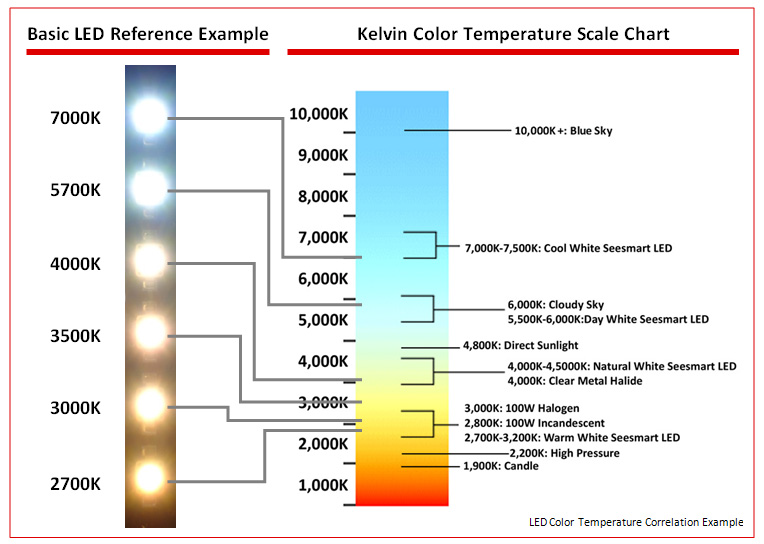
Color temperature conversion table.
(7)
Illuminations conversion table.
Dynamic Signage Illumination Conversion Table
1 nit = 3.14159 lux or 0.0929 fc
(D)
Signs not requiring permits. The following miscellaneous signs are exempt from permits and provisions of this ordinance except as specified in the following descriptions:
(1)
Banner. A sign of canvas, plastic sheeting, paper or cloth without supporting frame, and affixed to a flat surface such as an exterior wall, window or mansard. A banner may be completely attached to a permanent freestanding sign. In no case will a banner be partly attached leaving one (1) or more ends staked to the ground or attached to a pole or any other object. No more than one (1) banner is allowed per site, or per tenant in a group occupancy, at a time. The size of a banner shall not exceed thirty-two (32) square feet.
(2)
Construction signs. Construction signs which identify the architects, engineers, contractors and other individuals or firms involved with the construction but not including any advertisement of any product, and signs announcing the character of the building enterprise or the purpose for which the building is intended, during the construction period to a maximum area of thirty-two (32) square feet for each firm. The signs shall be confined to the site of construction and shall be removed within fourteen (14) days of the beginning of the intended use of the project.
(3)
Flags. Category includes the United States flag, the Alabama State flag, other official governmental flags; flags representing public and private educational institutions; also religious, charitable, fraternal and corporate flags. Any flags other than the United States flag, the Alabama State flag, or other official governmental flags shall be limited to one (1) per street front, and shall not exceed fifteen (15) square feet with no one (1) dimension to exceed six (6) feet in any direction.
(4)
Real estate signs. Real estate signs advertising the sale, rental or lease of the premises or part of the premises on which the signs are displayed may have up to a total area of twelve (12) square feet in R-1, R-2 and R-3 zones. Thirty-two (32) square feet of total area is allowed for real estate signs in R-B, B-1, B-1 H, B-2, B-3, H-1, SD, FAR, I-1 and I-2 zones, and in residential zones for properties containing three (3) or more acres. Such signs shall be removed within ten (10) days of the sale, rental or lease.
(5)
Political campaign signs. Political campaign signs announcing the candidates seeking public political office and other data pertinent thereto up to an area of thirty-two (32) square feet for each premises. These signs shall be confined within private property and removed within seven (7) days after the election for which they were made.
(6)
Window display signs. A sign temporarily positioned for view through a window.
(7)
Marquees. Marquees, with the following exceptions, are considered as a part of the permitted signage and, as such, do not require a separate permit. Theater marquees are permitted by special exception of the board of zoning adjustment.
(8)
Subdivision entrance identification signs. The total area shall not exceed thirty-six (36) square feet of signage per entrance. No more than two (2) signs per entrance will be allowed.
(E)
Exceptions. The following types of signs are exempt from provisions of this ordinance except as specified in the following descriptions:
(1)
Public signs. Signs of a noncommercial nature and in the public interest as duly authorized by constituted governmental bodies for reasons of safety, regulatory information, legal notices or other legal requirements.
(2)
Institutional. In R-1, R-2, and R-B zones, signs setting forth the name for any public, charitable, educational or religious institution, located entirely within the premises of that institution, up to a maximum area of one (1) square foot per building front foot. Such signs may be illuminated in accordance with the regulations of the district wherein contained. If surface mounted, these signs shall be flat wall signs and shall not project above the roof line. If ground mounted, the top shall be no more than ten (10) feet above ground level, and in no event shall a ground supported sign exceed two hundred (200) square feet. Institutional signs shall require permits in accordance with these regulations.
(3)
Integral. Names of buildings, dates of erection, monumental citations, commemorative tablets and the like when carved into stone, concrete or similar materials or other permanent-type construction made an integral part of the structure.
(4)
On-premises directions. Secondary on-premises signs of an informational nature for the purpose of guidance or instruction only. Maximum of three (3) feet in height, three (3) square feet in area.
(5)
Official historical signs. Signs which have been identified by the Florence Historical Board as historical signs.
(6)
Vehicles. Signs on vehicles licensed for travel upon public ways, provided the sign is painted or attached directly to the body of the vehicle.
(7)
In the B-3 Central Business District, one (1) non-electric chalkboard or daily-special-type sign is allowed for the announcement of menus, daily specials or special sales. The advertisement/announcement is typically hand-written. The sign shall not exceed four (4) square feet, nor be internally illuminated. It must be secured and not pose a hazard to pedestrians.
(F)
Prohibited signs.
(1)
Signs on public rights-of-way. Signs which are contained on, or surface-mounted signs which project into a public right-of-way more than twelve (12) inches, except public signs, as noted in Section (E). No person shall post or affix any notice, poster or other paper or device calculated to attract the attention of the public, to any lamppost, public utility pole, traffic sign, street sign, trees or other natural features.
(2)
Obstructions to public signs. Signs that obstruct from view any traffic or street sign or signal, if so arranged as to interfere with traffic by blocking vision.
(3)
Simulation of traffic signs. Signs imitating an official traffic-control device by reason of working, color, shape or other characteristic.
(4)
Abandoned signs. Advertising an activity, product or business no longer conducted on the premises upon which the sign is located.
(5)
Roof-mounted signs. A sign erected upon or above the roof, parapet or facia of a building.
(6)
Wall-painted signs. Signs painted on the exterior face of a building, except murals in business districts with approval of the building official.
(7)
Portable signs. Signs of any size and of any material, with or without changeable lettering, which are designed to be or are portable/transient. Portable signs may, or may not be, designed to be transported by means of wheels or considered temporary in nature.
Portable signs include, but are not limited to, the following:
• Signs, posted or displayed on utility poles or other street appurtenances.
• Signs, posted or displayed on stakes (metal, wood, wire, etc.), often called "snipe" signs or "street spam".
• Banners displayed on stakes (metal, wooden, wire, pvc, or otherwise).
• Banners tied to utility poles or trees/bushes (See section (D)(1) for allowable banner regulations).
• Inflatable structures, including air walkers.
• Non-exempt A-frame, T-frame or sandwich board signs.
• Signs attached to or painted on a vehicle, parked and visible from a public right-of-way, unless said vehicle is used in the normal day-to-day operations of the business.
(8)
Snipe sign. Any sign made of any material, including paper, cardboard, wood, or metal; Transient in nature and usually found staked in the ground or tacked upon trees, official street signs, or utility poles.
(G)
Administration. The building official is the authorized official for the administration and enforcement of sign regulations.
(1)
Permit requirement. No sign shall be erected, altered or relocated without a permit issued by the building official, except as is otherwise provided by exceptions, specified, in Section (D), Signs not requiring permits, or Section (E), Exceptions.
(2)
Permit application. The permit application shall contain the name and address of the sign owner(s) and property owner(s), location of the sign, drawing showing the design and location of the sign on the premises and other pertinent information as the building official may require to ensure compliance with the ordinances of the city.
(3)
Fees. Fees for sign permits shall be the cost of administrative processing and inspection plus a sliding fee schedule established by the building official and approved by the city council. A fee for maintenance, painting and repair of an approved sign is not required unless a structural change is made.
(4)
Permit termination. A sign permit shall become void if work for which the permit was issued has not been completed within a period of six (6) months from date of issuance or if construction of the sign is not in conformity with the ordinances of the city as determined by the building official.
(5)
Appeals. Any person aggrieved by any decision or order of the building official may appeal to the board of zoning adjustment by serving written notice to the building official, who, in turn, shall immediately transmit the notice to the board, which shall meet to hear it within forty-five (45) days thereafter. The building official shall take no further action on the matter pending the board's decision, except for unsafe signs which present an immediate and serious danger to the public. Appeals taken to the board shall be advertised, considered and disposed of in accordance with the procedure and bylaws set forth in the establishment of the board.
(6)
Penalties. Any person who violates any section of this ordinance or fails to comply with any section thereof shall be guilty of a misdemeanor which shall be punishable as provided in Chapter 1, Section 1-6 of the Code of the City of Florence, Alabama, as amended.
(7)
Nonconforming signs. Nonconforming signs may remain in use and may be maintained as defined in Section (B)(2)(b). Any sign alteration as defined in Section (B)(3)(c), or, any sign requiring repairs or alterations consisting of more than fifty (50) percent of the value of said sign, any sign destroyed to the extent of more than fifty (50) percent of its depreciated valuation, or any sign subject to change in the business or tenant such as, but not limited to, name, logo or updating of corporate symbols shall be deemed a new sign and shall require a permit and shall conform to the provisions of this chapter.
(H)
Appendix. Provisions of the "Highway Beautification Act—Outdoor Advertising," State of Alabama, Act No. 276, adopted in 1971, as may be amended, are hereby adopted and made a part of these regulations by reference.
(16)
Dynamic signs.
(a)
Purpose and intent. The purpose of this section is to standardize dynamic signs in the city with appropriate size, number, location, brightness, nighttime lighting levels, motion, and design using scientific evidence from industry research to control light pollution, ensure ecological responsibility, protect the overall health, safety, and welfare of the public, and to promote the high standards established by the citizens of the city to achieve and maintain a high quality of life and economic vitality.
(b)
General conditions and definitions.
1.
Conditions. The provisions of this section shall apply to all areas within the corporate limits of the city and within the extraterritorial zoning jurisdiction of the city. The regulations of this section describe those signs that are permitted; all others are excluded unless specifically referred to in the sections contained herein. Where in conflict with other lawfully adopted rules, policies or ordinances, this section shall apply.
2.
Definitions.
a.
Dynamic sign: A non-static (traditional print) sign utilizing actual motion or the illusion of motion by artificial means. Such means include displays using incandescent lamps, LEDs, LCDs, or a flipper matrix. Dynamic signs constitute a broad category of which are differentiated from manually changeable signs as defined and regulated by this section and include the following types:
i.
Electronic display screen: A sign, or portion of a sign, that displays an electronic image, which may or may not include text. This definition includes television screens, multiprism screens, plasma screens, digital screens, flat screens, LED screens, video boards, and holographic displays.
ii.
Electronic message center: Any sign or portion of a sign that uses changing lights to form a sign message or messages in text form wherein the sequence of messages and the rate of change is electronically programmed and can be modified by electronic processes. This definition includes electronic changeable copy signs and menu boards.
iii.
Electronic message display: A sign capable of displaying words, symbols, figures, or images that can be electronically changed by remote or automatic means.
b.
Footcandle: A unit of illuminance on a surface that is everywhere one (1) foot from a uniform point source of light of one (1) candle and equal to one (1) lumen per square foot.
c.
Illuminance: The measure (footcandle) of the amount of light intercepting an object at a given distance from its source.
d.
NITS: Units of visible-light intensity, commonly used to specify the brightness of a cathode ray tube or liquid crystal display (LCD) display. One (1) nit is equivalent to one (1) candela per square meter.
3.
Zoning districts.
a.
On-site dynamic signs, in accordance with all applicable requirements, are permitted by right within the B-1, B-1H, B-2, I-1 and I-2 zones.
On-site dynamic signs are permitted as a special exception by the board of zoning adjustment for the following uses: church; schools (public, parochial, private); university (college, schools of higher learning).
Standards for dynamic signs may be modified by regulations which apply in designated overlay districts and planned unit developments (PUD).
b.
On-site dynamic signs, in accordance with all applicable requirements, are permitted within R-B zones on properties adjoining the rights-of-way of the following geographic areas:
i.
Helton Drive—From its intersection with Rickwood Road north to its intersection with Cox Creek Parkway.
ii.
Florence Boulevard—From its intersection with Helton Drive east to Shoal Creek.
iii.
Cox Creek Parkway—From its intersection with Florence Boulevard west to its intersection with Highway 20.
iv.
Cloverdale Road—From its intersection with Cox Creek Parkway north to its intersection with Taylor Road.
c.
On-site dynamic signs are permitted as a special exception by the board of zoning adjustment for the following uses: church; schools (public, parochial, private); university (college, schools of higher learning).
d.
Standards for dynamic signs may be modified by regulations, which apply in designated overlay districts and planned unit developments (PUD).
e.
On-site dynamic signs are prohibited within historic districts.
f.
All signs fronting or adjacent to rights-of-ways controlled by the state department of transportation are subject to additional study, permitting, and regulations deemed necessary by the agency.
4.
Sign characteristics.
a.
Position and dimensions.
i.
Dynamic signs shall not constitute the principal on-premise sign.
ii.
Dynamic signs shall be permitted on as a portion of the principal ground supported on-premise sign.
iii.
Shall not exceed fifty (50) percent of the total sign area the dynamic portion is attached to.
iv.
Surface mounted dynamic signs are prohibited on buildings, in windows, vehicles, and accessory structures.
v.
Dynamic signs shall be oriented away from residential structures and neighborhoods.
b.
Illumination (brightness).
i.
Illumination is the only accepted measurement of brightness as it is scientific and has the ability to account for ambient light conditions as opposed to lumination.
ii.
A footcandle meter (or luxmeter) will be used to measure illumination. All measurements shall be taken perpendicular to the face of the dynamic sign with accuracy to at least two (2) decimal places.
iii.
Measurement distance shall be calculated based upon the following formula rounded to the nearest whole number:
√Area of sign sq. ft. x 100
iv.
Internal Illumination shall not exceed six (6) footcandles at a distance of eight (8) feet from the centerline of the sign.
v.
External illumination.
1.
Shall not exceed seventeen (17) footcandles at the face of the sign.
2.
Shall not exceed four thousand (4,000) K (amber to white color range only).
3.
Shall consist of a uniform distribution of light intensity.
4.
Maximum illuminance levels must be programmed.
5.
Automatic dimming capability to adjust illuminance as ambient light conditions change is required. Scheduled dimming using sunset-sunrise tables or manual dimming methods is prohibited.
c.
Motion, performance, and glare control.
i.
Motion and sound.
1.
Hold time. Each message displayed must be static or depicted for a minimum of ten (10) seconds.
2.
Transitions. Transitions from one (1) image or text change to the text must be accomplished in one (1) second or less.
3.
No sequential messages are allowed. All messages displayed must be complete in themselves, without continuation in content to the next image or message or to any other sign.
4.
Animation. Fading, flashing, scrolling, spinning, dissolving, traveling, blinking, stroboscopic lights, or other animated effects are prohibited.
5.
Emittance of any audio, verbal announcement or noise of any kind is prohibited.
ii.
Copy dimensions and display.
1.
Static copy only.
2.
Height of all text including letters and numbers shall be no less than seven (7) inches.
iii.
Image dimensions and display.
1.
Static images only. No video.
2.
Only one (1) image, other than text, shall be permitted per hold time message.
3.
Images shall not resemble any traffic signalization, traffic control sign, or emergency response implements (i.e. vehicles, lights, equipment).
iv.
Performance.
1.
Dynamic signs shall be designed and equipped to immediately freeze or discontinue the device in one (1) position if a malfunction occurs.
2.
Sign owner is responsible for making any adjustments to the dynamic sign following notification by the city.
v.
Glare control. The external light source of the dynamic sign shall be shaded, hooded, or otherwise screened to prevent the source of the light from causing glare upon traveling motorists or visible on adjacent property. Glare control shall be achieved primarily through the use of means such as cutoff fixtures, shields and baffles, appropriate mounting, height, aiming angle, and fixture placement. Vegetative screens shall not be used as the primary means for controlling glare.
vi.
Hours of operation. Dynamic signs shall be de-energized between 12:00 a.m. and 5:00 a.m.
d.
Electrical standards.
i.
Application for an electrical permit shall be filed at the same time as the sign permit application.
ii.
All work shall be completed in accordance with electrical codes and standards adopted by the city.
iii.
Sign owner is responsible for providing a certificate showing compliance with the illumination standards set forth herein by an independent, licensed contractor. Such certification is required prior to the issuance of a sign permit and annually for the life of the sign.
(5)
Administration.
(a)
A sign permit is required for all dynamic signs provided for under the conditions of this section.
(b)
Additions of dynamic signage to any existing, conforming sign shall be considered the same as new signage.
(c)
Additions of dynamic signage to any non-conforming sign is prohibited.
(d)
Dynamic signs permitted prior to the adoption of the ordinance from which this section is derived shall be granted a grace period of sixty (60) days from the date of the adopting resolution by the city council to comply with the requirements set forth in section (4).
(6)
Color temperature conversion table.
(7)
Illuminations conversion table.
Dynamic Signage Illumination Conversion Table
1 nit = 3.14159 lux or 0.0929 fc
(Ord. No. 2017-18, 9-5-2017)

