
Forest Park City Zoning Code
ARTICLE B
- ZONING DISTRICTS, OVERLAY DISTRICTS, AND DESIGN GUIDELINES ESTABLISHED
Sec. 8-8-21.- Establishment of zoning districts.
For the purpose of this chapter, the planning jurisdiction is divided into the following zoning districts for the general uses as stated. These districts shall be indicated on the official zoning map and labeled using the codes noted below. Each of the zoning districts stands alone and is not part of a hierarchy-system of zoning. Only those uses and development standards which are expressly permitted and noted for each district apply to that district.
RS—Single family residential district: This district is established to provide for moderate sized lot residential development in a suburban environment.
RT—Two family residential district: This district is established to provide for the medium density development of single family and two (2) family homes on moderate sized lots in a suburban environment.
RM—Multiple family residential district: This district is established to provide for the development of multiple family residential units, including apartments, townhomes, fee simple townhomes, condominiums, and structures containing three (3) or more dwelling units.
MH—Mobile home residential district: This district is established to provide for the development of manufactured housing as an attractive and attainable housing option.
DM—Downtown mainstreet district: This district is established to provide for the development of mixed-use structures in an urban walkable environment with retail commercial as the predominant use.
IC—Institutional commercial district: This district is established to provide a land use category for appropriate office, institutional, and public uses in a suburban setting.
GC—General commercial district: This district is established to provide a land use category for conventional suburban commercial development at a scale that will provide goods and services to city neighborhoods and surrounding areas.
UV—Urban village district: This district is established to provide a walkable environment for a mixture of residential, commercial, and office uses within close proximity to each other.
LI—Light industrial district: This district is established to provide a land use category for assembly, warehousing, wholesale activities, and other light industrial operations.
HI—Heavy industrial district: This district is established to provide for a land use category for manufacturing, assembling, and fabrication activities including large scale or specialized industrial operations.
PI—Planned industrial district: This district is established to provide a comprehensively planned district for the orderly growth and development of certain industrial uses which are mutually harmonious with other industries permitted in the community.
GZ—Gillem district: This district is established to provide a land use category to allow an appropriate mix of industrial, commercial, office, residential, and public uses, while improving the aesthetics of the built environment.
(Ord. No. 21-11, § 1(Exh. A), 9-7-2021)
Sec. 8-8-22. - Standards for district land uses.
Specific land uses are either permitted, non-permitted or a conditional use in each zoning district. The city's permitted and conditional uses for each district are noted in the permitted use and conditional use columns of this chapter.
(Ord. No. 21-11, § 1(Exh. A), 9-7-2021)
Sec. 8-8-23. - Unlisted or questionable land uses.
The director shall determine into which category any questionable use be placed if it is not specifically listed but similar to another use that is a permitted or conditional use.
(Ord. No. 21-11, § 1(Exh. A), 9-7-2021)
Sec. 8-8-24. - Official zoning map.
The zoning map for the City of Forest Park, officially labeled the City of Forest Park Zoning Map, is hereby included as part of this Code. The map may also be known as and referred to as the official zoning map.
(Ord. No. 21-11, § 1(Exh. A), 9-7-2021)
Sec. 8-8-25. - Location of the official zoning map.
The official zoning map will be located in the planning and community development department.
(Ord. No. 21-11, § 1(Exh. A), 9-7-2021)
Sec. 8-8-26. - Zoning district boundaries.
The zoning district boundaries shall be shown on the official zoning map. The abbreviations for the zoning districts appearing in this Code shall be used to identify the zoning districts on the official zoning map.
(Ord. No. 21-11, § 1(Exh. A), 9-7-2021)
Sec. 8-8-27 - Measurement of distance requirement.
All distance limitations required by the Forest Park Zoning Ordinance shall be measured in all cases by a straight line from the closest point of the property line of the proposed use being measured to the closest point of the property line of the site occupied by the other use from which the measurement is being taken.
(Ord. No. 21-11, § 1(Exh. A), 9-7-2021)
Sec. 8-8-28. - Single family residential district (RS).
(Ord. No. 21-11, § 1(Exh. A), 9-7-2021)
Sec. 8-8-29. - Single family residential district (RS) standards.
| RS - Single Family Residential District | ||
|---|---|---|
| District Standards | ||
 |  |  |
|
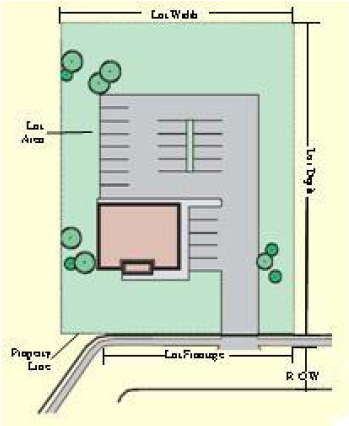
Minimum Lot Area:
• 8,200 sq. ft. Minimum Lot Width: • 80 feet Maximum Lot Depth: • None Minimum Lot Frontage: • 100% of the lot width |
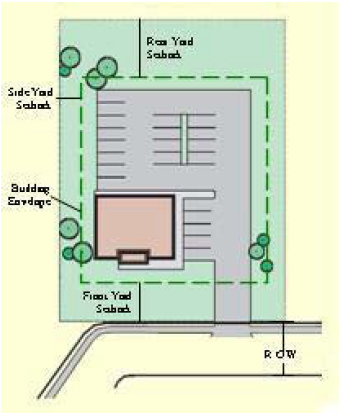
Minimum Front Yard Setback:
• 25 feet Minimum Side Yard Setback: • 10 feet Minimum Rear Yard Setback: • 30 feet |
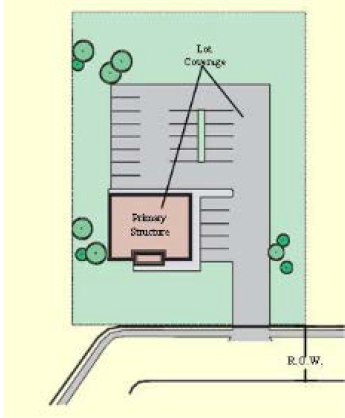
Maximum Lot Coverage:
• 30 percent Minimum Living Area: • 1,400 sq. ft. |
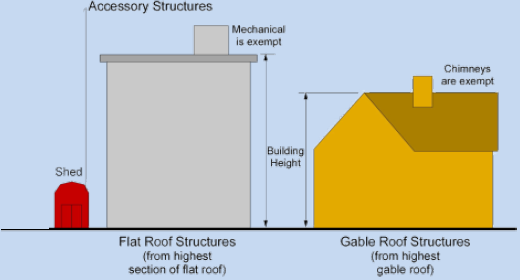 | Maximum Structure Height: • 35 feet for the primary structure • 15 feet for accessory structures | |
(Ord. No. 21-11, § 1(Exh. A), 9-7-2021)
Sec. 8-8-30. - Two family residential district (RT).
(Ord. No. 21-11, § 1(Exh. A), 9-7-2021)
Sec. 8-8-31. - Two family residential district (RT) standards.
| RT - Two Family Residential District | ||
|---|---|---|
| District Standards | ||
 |  |  |
|
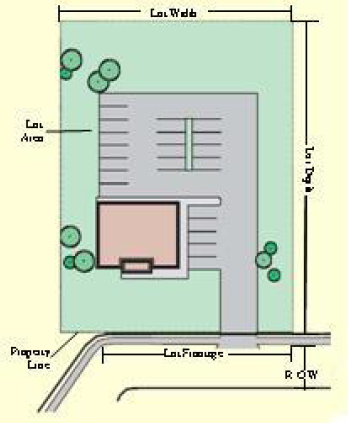
Minimum Lot Area:
• 9,000 sq. ft. Minimum Lot Width: • 90 feet Maximum Lot Depth: • None Minimum Lot Frontage: • 100% of the lot width |
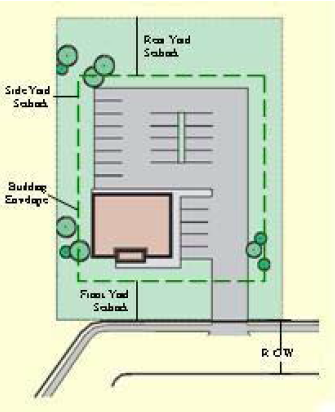
Minimum Front Yard Setback:
• 25 feet Minimum Side Yard Setback: • 10 feet Minimum Distance Between Buildings: • 30 feet Minimum Rear Yard Setback: • 30 feet |
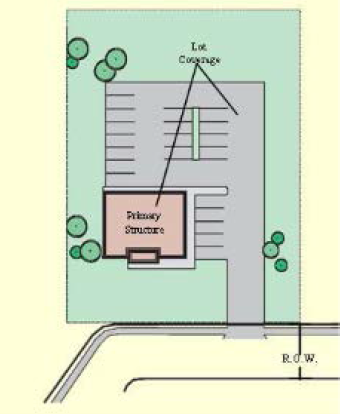
Maximum Lot Coverage:
• 30 percent Minimum Living Area: • 1,200 sq. ft. |
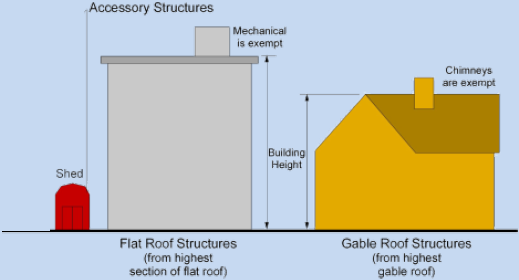 | Maximum Structure Height: • 40 feet for the primary structure • 15 feet for accessory structures | |
(Ord. No. 21-11, § 1(Exh. A), 9-7-2021)
Sec. 8-8-32. - Multiple family residential district (RM).
(Ord. No. 21-11, § 1(Exh. A), 9-7-2021)
Sec. 8-8-33. - Multiple family residential district (RM) standards.
| RM - Multiple Family Residential District | ||
|---|---|---|
| District Standards | ||
 |  |  |
|
Minimum Lot Area:
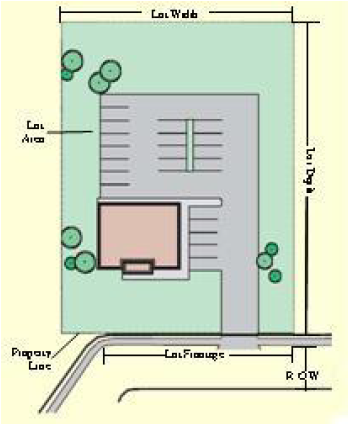
• 3 acres Minimum Lot Width: • 200 feet Maximum Lot Depth: • None Minimum Lot Frontage: • 100% of the lot width Maximum Density: • 16 units per acre |
Minimum Front Yard Setback:
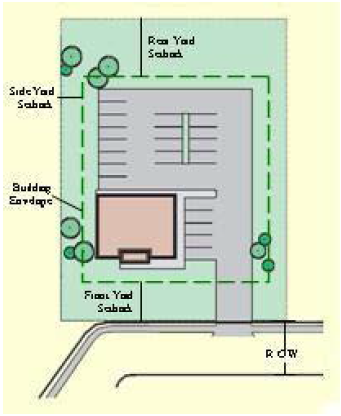
• 30 feet Minimum Side Yard Setback: • 25 feet Minimum Distance Between Buildings: • 20 feet Minimum Rear Yard Setback: • 35 feet |
Maximum Lot Coverage:
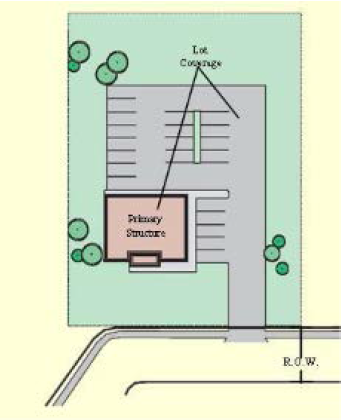
• 40 percent Minimum Open Space: • 20 percent Minimum Living Area: • Studio - 600 sq. ft. • 1 bedroom - 800 sq. ft. • 2 bedroom - 1,000 sq. ft. • 3 bedroom - 1,100 sq. ft. |
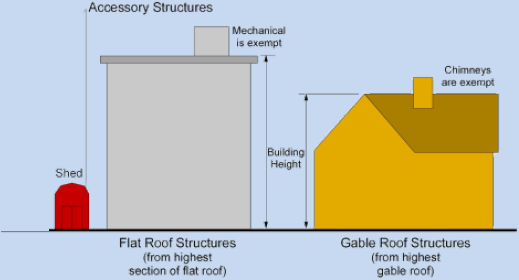 | Maximum Structure Height: • 35 feet for the primary structure • 15 feet for accessory structures | |
(Ord. No. 21-11, § 1(Exh. A), 9-7-2021)
Sec. 8-8-34. - Mobile home residential district (MH).
(Ord. No. 21-11, § 1(Exh. A), 9-7-2021)
Sec. 8-8-35. - Mobile home residential district (MH) standards.
| MH - Mobile Home Residential District | ||
|---|---|---|
| District Standards | ||
 |  |  |
|
Minimum Lot Area:
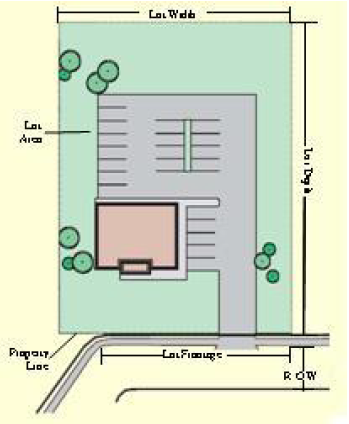
• 15 acres Minimum Lot Width: • 200 feet Maximum Lot Depth: • None Minimum Lot Frontage: • 100% of the lot width Minimum Internal Lot Area: • 6,000 sq. ft. |
Minimum Front Yard Setback:
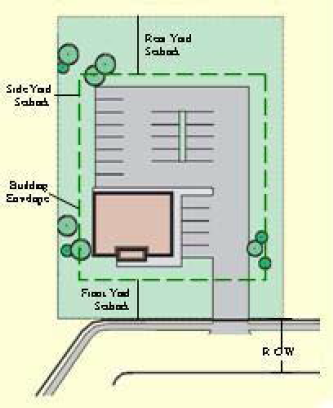
• 10 Minimum Side Yard Setback: • 10 feet Minimum Distance Between Buildings: • 20 feet Minimum Rear Yard Setback: • 20 feet |
Maximum Lot Coverage:
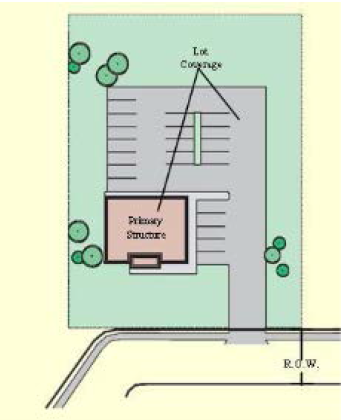
• 40 percent Minimum Open Space: • 20 percent Minimum Number of Units: • 50 per development |
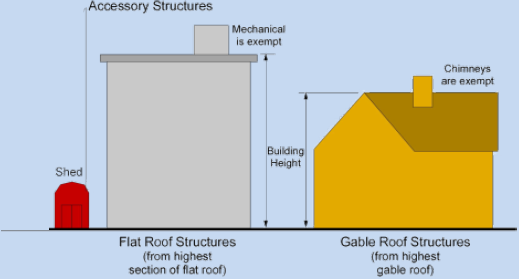 | Maximum Structure Height: • 35 feet for the primary structure • 15 feet for accessory structures | |
(Ord. No. 21-11, § 1(Exh. A), 9-7-2021)
Sec. 8-8-36. - Downtown mainstreet district (DM).
(Ord. No. 21-11, § 1(Exh. A), 9-7-2021)
Sec. 8-8-37. - Downtown mainstreet district (DM) standards.
| DM - Downtown Mainstreet District | ||
|---|---|---|
| District Standards | ||
 |  |  |
|
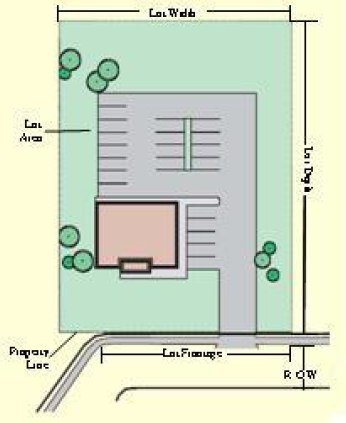
Minimum Lot Area:
• None Minimum Lot Width: • None Maximum Lot Depth: • None Minimum Lot Frontage: • None |
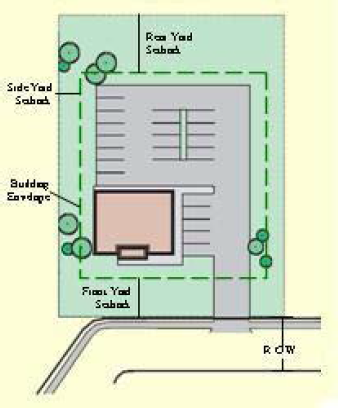
Maximum Front Yard Setback:
• 10 feet Minimum Side Yard Setback: • 10 feet, with doors and windows Minimum Rear Yard Setback: • 10 feet |
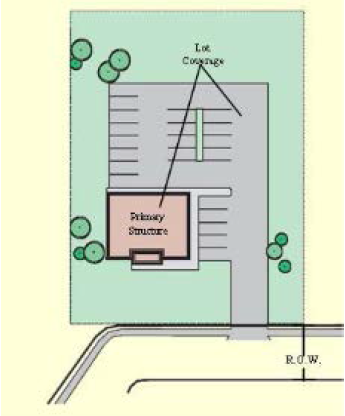
Maximum Lot Coverage:
• 90 percent Minimum Living Area: • Studio - 600 sq. ft. • 1 bedroom - 800 sq. ft. • 2 bedroom - 1,000 sq. ft. • 3 bedroom - 1,100 sq. ft. |
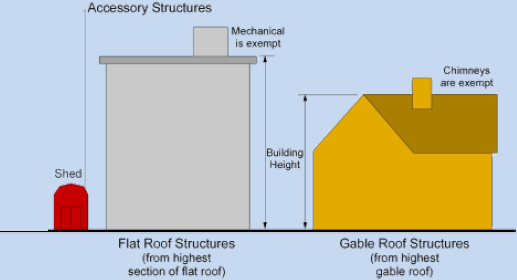 | Maximum Structure Height: • 45 feet for the primary structure • 15 feet for accessory structures | |
(Ord. No. 21-11, § 1(Exh. A), 9-7-2021)
Sec. 8-8-38. - Institutional commercial district (IC).
(Ord. No. 21-11, § 1(Exh. A), 9-7-2021; Ord. No. 23-02, § 2, 5-1-2023)
Sec. 8-8-39. - Institutional commercial district (IC) standards.
| IC - Institutional Commercial District | ||
|---|---|---|
| District Standards | ||
 |  |  |
|
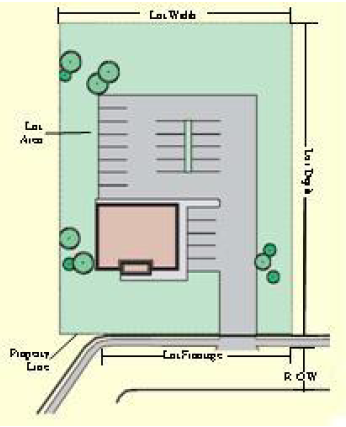
Minimum Lot Area:
• None Minimum Lot Width: • 100 feet Maximum Lot Depth: • None Minimum Lot Frontage: • 100% of the lot width |
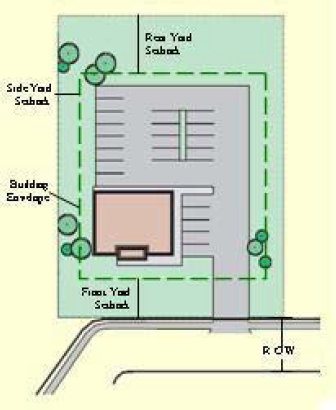
Minimum Front Yard Setback:
• 25 feet Minimum Side Yard Setback: • 15 feet Minimum Distance Between Buildings: • 20 feet Minimum Rear Yard Setback: • 30 feet |
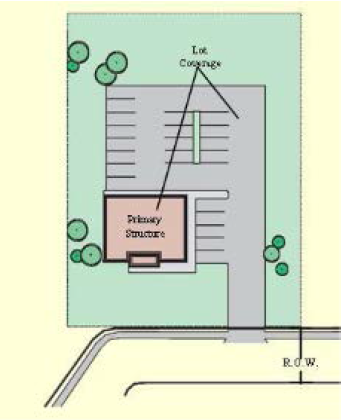
Maximum Lot Coverage:
• 70 percent |
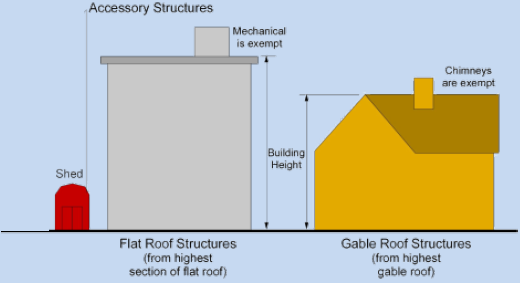 | Maximum Structure Height: • 45 feet for the primary structure • 15 feet for accessory structures | |
(Ord. No. 21-11, § 1(Exh. A), 9-7-2021)
Sec. 8-8-40. - General commercial district (GC).
(Ord. No. 21-11, § 1(Exh. A), 9-7-2021; Ord. No. TA-24-03, § 2, 5-20-2024; Ord. No. 23-25, § 2, 12-4-2023)
Sec. 8-8-41. - General commercial district (GC) standards.
| GC - General Commercial District | ||
|---|---|---|
| District Standards | ||
 |  |  |
|
Minimum Lot Area:
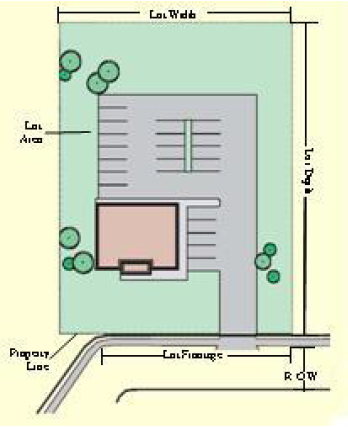
• None Minimum Lot Width: • 100 >Maximum Lot Depth: • None Minimum Lot Frontage: • 100% of the lot width |
Minimum Front Yard Setback:
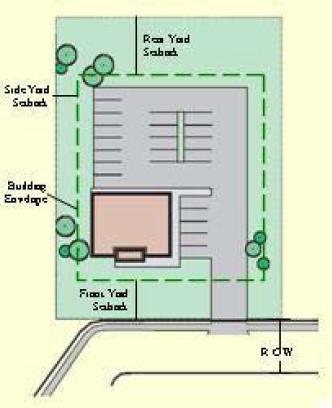
• 25 feet Minimum Side Yard Setback: • 10 feet Minimum Distance Between Buildings: • 20 feet Minimum Rear Yard Setback: • 30 feet |
Maximum Lot Coverage:
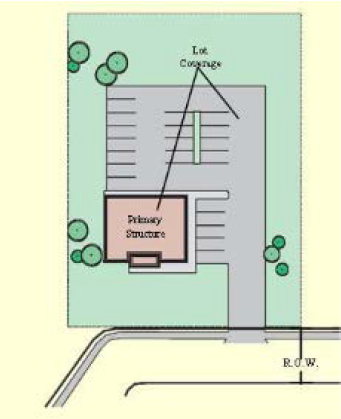
• 70 percent |
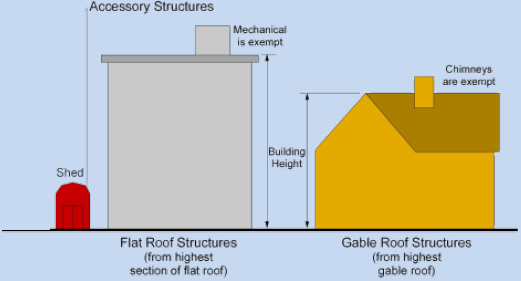 | Maximum Structure Height: • 45 feet for the primary structure • 15 feet for accessory structures | |
(Ord. No. 21-11, § 1(Exh. A), 9-7-2021)
Sec. 8-8-42. - Urban village district (UV).
(Ord. No. 21-11, § 1(Exh. A), 9-7-2021; Ord. No. 25-01, § 3 (Exh. A), 1-6-2025)
Sec. 8-8-43. - Urban village district (UV) standards.
| UV - Urban Village District | ||
|---|---|---|
| District Standards | ||
 |  |  |
|
Minimum Lot Area:
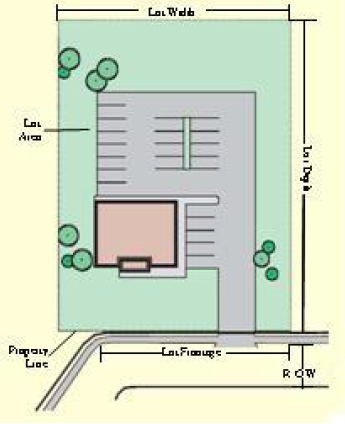
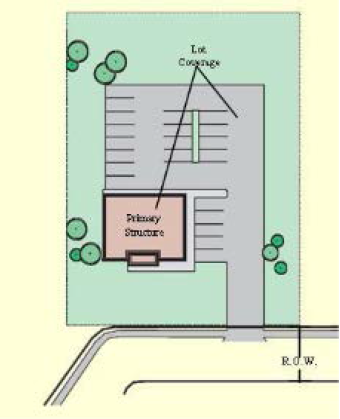
• None Minimum Lot Width: • None Maximum Lot Depth: • None Minimum Lot Frontage: • 100% of the lot width Maximum Lot Coverage: • 70 percent |
Minimum Front Yard Setback:
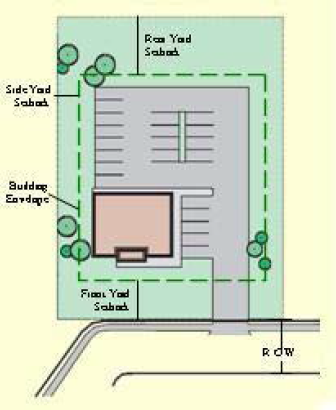
• 10 feet Minimum Side Yard Setback: • 10 feet Minimum Distance Between Buildings: • 20 feet Minimum Rear Yard Setback: • 20 feet Minimum Open Space: • 15 percent |
Maximum Building Size:
• 250,000 sq. ft. on ground floor Maximum Building Length: • 400 feet Maximum Density: • 24 du/acre Minimum Living Area: • Studio - 600 sq. ft. • 1 bedroom - 800 sq. ft. • 2 bedroom - 1,000 sq. ft. • 3 bedroom - 1,100 sq. ft. |
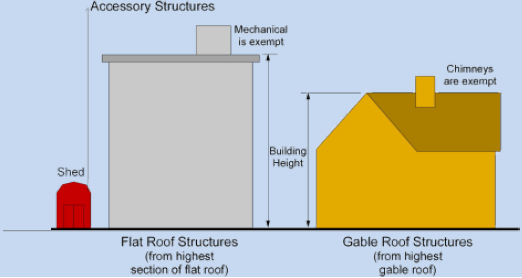 | Maximum Structure Height: • 35 feet for the primary structure • 15 feet for accessory structures | |
(Ord. No. 21-11, § 1(Exh. A), 9-7-2021)
Sec. 8-8-44. - Light industrial district (LI).
(Ord. No. 21-11, § 1(Exh. A), 9-7-2021; Ord. No. 23-02, § 3, 5-1-2023; Ord. No. 23-25, § 3, 12-4-2023)
Sec. 8-8-45. - Light industrial district (LI) standards.
| LI - Light Industrial District | ||
|---|---|---|
| District Standards | ||
 |  |  |
|
Minimum Lot Area:
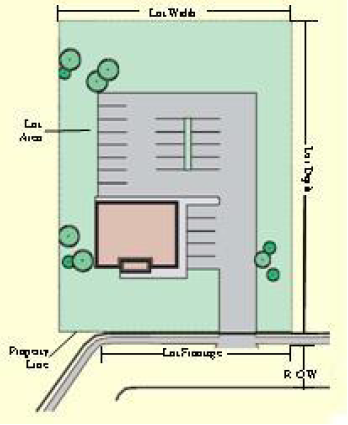
• 1 acre Minimum Lot Width: • 150 feet Maximum Lot Depth: • None Minimum Lot Frontage: • 100% of the lot width |
Minimum Front Yard Setback:
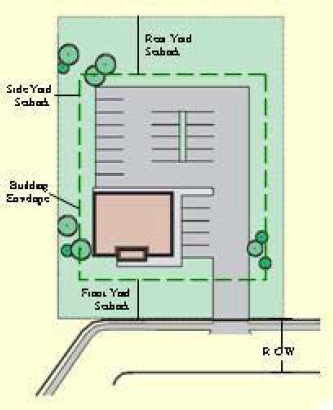
• 50 feet Minimum Side Yard Setback: • 20 feet Minimum Distance Between Buildings: • 20 feet Minimum Rear Yard Setback: • 25 feet |
Maximum Lot Coverage:
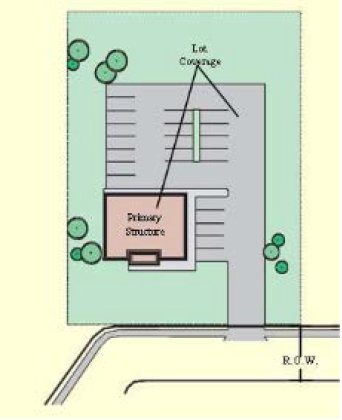
• 50 percent |
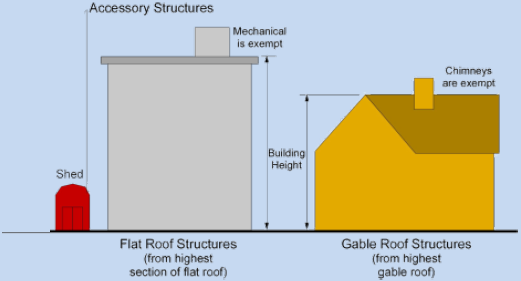 | Maximum Structure Height: • 100 feet or as approved by the fire marshal for primary structure • 60 feet for accessory structures | |
(Ord. No. 21-11, § 1(Exh. A), 9-7-2021)
Sec. 8-8-46. - Heavy industrial district (HI).
(Ord. No. 21-11, § 1(Exh. A), 9-7-2021)
Sec. 8-8-47. - Heavy industrial district (HI) standards.
| HI - Heavy Industrial District | ||
|---|---|---|
| District Standards | ||
 |  |  |
|
Minimum Lot Area:
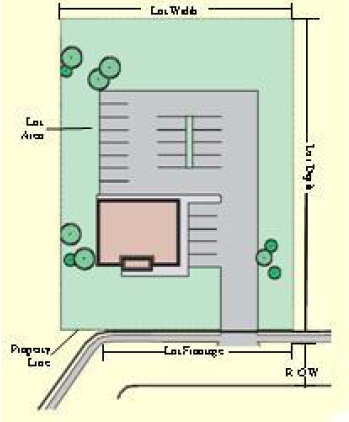
• 1 acre Minimum Lot Width: • 150 feet Maximum Lot Depth: • None Minimum Lot Frontage: • 50% of the lot width |
Minimum Front Yard Setback:
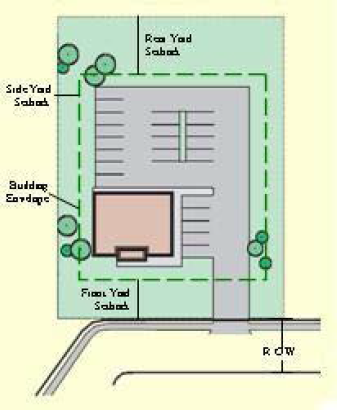
• 25 feet Minimum Side Yard Setback: • 15 feet Minimum Distance Between Buildings: • 20 feet Minimum Rear Yard Setback: • 25 feet |
Maximum Lot Coverage:
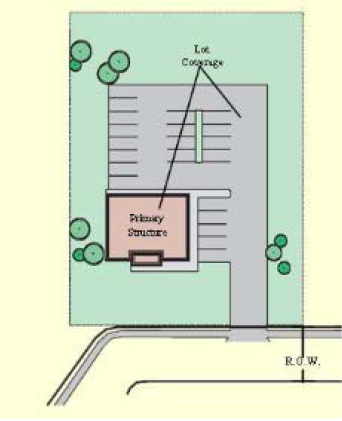
• 50 percent |
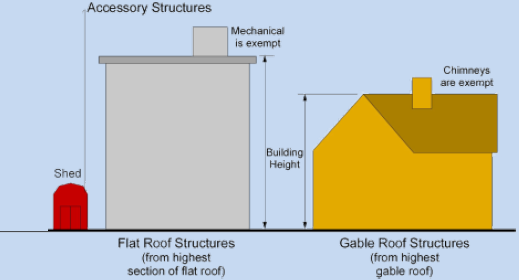 | Maximum Structure Height: • 100 feet or as approved by the fire marshal for primary structure • 60 feet for accessory structures | |
(Ord. No. 21-11, § 1(Exh. A), 9-7-2021)
Sec. 8-8-48. - Planned industrial district (PI).
(Ord. No. 21-11, § 1(Exh. A), 9-7-2021; Ord. No. 23-02, § 4, 5-1-2023)
Sec. 8-8-49. - Planned industrial district (PI) standards.
| PI - Planned Industrial District | ||
|---|---|---|
| District Standards | ||
 |  |  |
|
Minimum Lot Area:
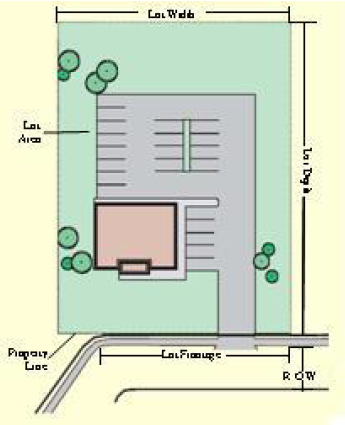
• 10 acres Minimum Lot Width: • 150 feet Maximum Lot Depth: • None Minimum Lot Frontage: • 50% of the lot width |
Minimum Front Yard Setback:
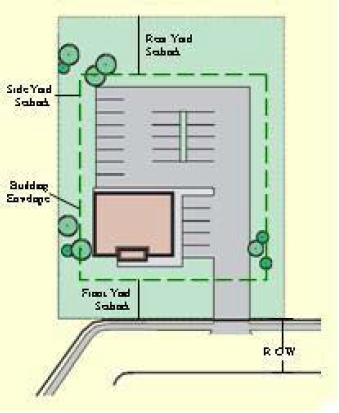
• 30 feet Minimum Side Yard Setback: • 10 feet Minimum Distance Between Buildings: • 20 feet Minimum Rear Yard Setback: • 30 feet |
Maximum Lot Coverage:
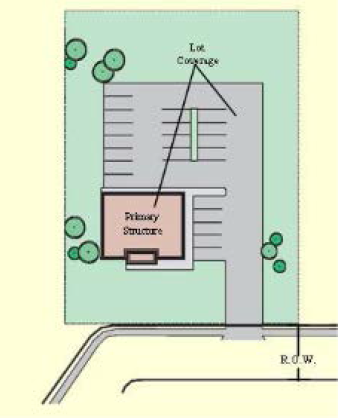
• 50 percent Minimum Open Space: • 10 percent |
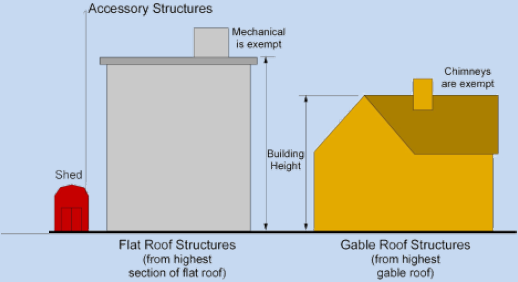 | Maximum Structure Height: • 45 feet for the primary structure • 15 feet for accessory structures | |
(Ord. No. 21-11, § 1(Exh. A), 9-7-2021)
Sec. 8-8-50. - Gillem district (GZ).
(Ord. No. 21-11, § 1(Exh. A), 9-7-2021; Ord. No. 25-01, § 4 (Exh. B), 1-6-2025)
Sec. 8-8-51. - Gillem district (GZ) standards.
| GZ - Gillem District | ||
|---|---|---|
| District Standards | ||
 |  |  |
|
Minimum Lot Area:
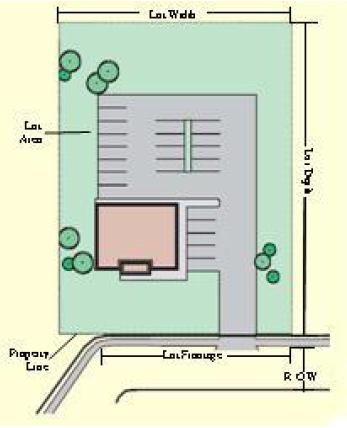
• 1 acre Minimum Lot Width: • 100 Maximum Lot Depth: • None Minimum Lot Frontage: • 50% of the lot width |
Minimum Front Yard Setback:
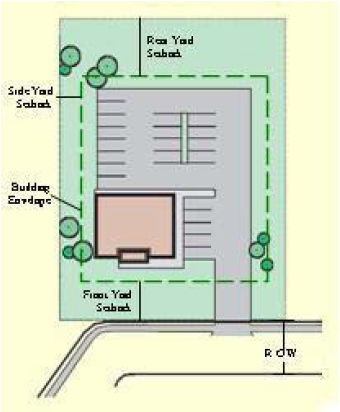
• 20 feet Minimum Side Yard Setback: • 10 feet Minimum Distance Between Buildings: • 20 feet Minimum Rear Yard Setback: • 25 feet |
Maximum Lot Coverage:
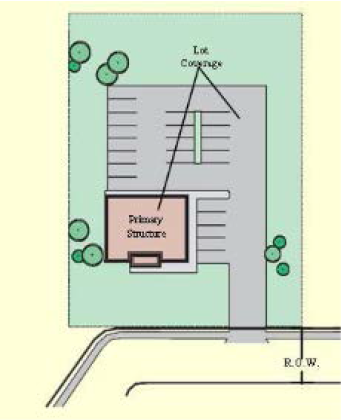
• 50 percent Minimum Open Space: • 15 percent Density: • 14 du/acre Minimum Living Area: • Studio - 600 sq. ft. • 1 bedroom - 800 sq. ft. • 2 bedroom - 1,000 sq. ft. • 3 bedroom - 1,100 sq. ft. |
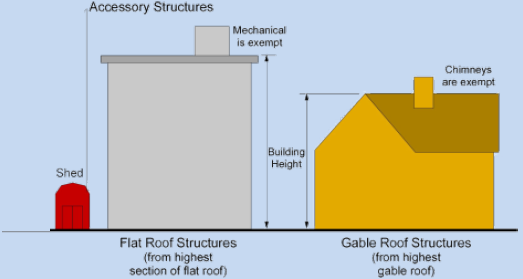 | Maximum Structure Height: • 60 feet for the primary structure • 15 feet for accessory structures | |
(Ord. No. 21-11, § 1(Exh. A), 9-7-2021)
Sec. 8-8-52. - Sexually orientated business overlay district.
There is hereby established a sexually oriented business overlay district. The sexually oriented business overlay district may overlay other districts on the official zoning map of the City of Forest Park.
(Ord. No. 21-11, § 1(Exh. A), 9-7-2021)
Sec. 8-8-53. - Boundaries.
The boundaries of the sexually oriented business overlay district shall be confined to those tracts of land having the following Clayton County Tax Identification Numbers as of December 31, 2006: 13-015B-B003; 13-015B-B002; 13-015B-B001; 13-015B-B007; 13-015B-B002A; 13-015B-B008; and 13-015B-B009; and more specifically, describes as:
Those portions of the city located within the following described area: beginning at the intersection of the northernmost right-of-way line of Georgia State Route 331, aka Forest Parkway, with the westernmost right-of-way line of the spur railroad line that coincides with the western boundary of the incorporated limits of the city, proceed in a generally easterly direction along the northernmost right-of-way line of Georgia State Route 331, aka Forest Parkway to its intersection with the westerly right-of-way line of U.S. Route 41, aka Old Dixie Highway; thence proceed in a generally northerly direction along said right-of-way line to its intersection with the southerly right-of-way line of Interstate 285; thence proceed in a generally westerly direction along said right-of-way line to its intersection with the easternmost right-of-way line of Interstate 75; thence proceed in a generally southerly direction along said right-of-way line to its intersection with the northernmost right-of-way line of Georgia State Route 331, aka Forest Parkway; thence proceed in a generally westerly direction along said right-of-way line to its intersection with the railroad spur line that coincides with the western boundary of the incorporated limits of the city, which is the point of beginning.
(Ord. No. 21-11, § 1(Exh. A), 9-7-2021)
Sec. 8-8-54. - Downtown mainstreet district (DM) design guidelines.
The downtown mainstreet design guidelines are created to help attract and direct new growth as the city anticipates development in the Main Street and Gillem Logistic Center areas. The city has created the Main Street and Forest Park Tax Allocation District to incentivize the type of targeted growth that will revitalize these strategic areas of the city. These design guidelines will inform the redevelopment of the downtown mainstreet district to ensure that new construction and renovation contribute to a sense of place, a lively pedestrian environment, and a high-quality small-town destination. The regulations will provide strong direction for property owners and property developers seeking to be a part of the Main Street revitalization while reassuring residents that new development is guided by a vision to maintain the historic identity, create a vibrant and inviting Main Street, build diverse mixed-use, provide walkable and accessible streets, create and inclusive community, and improve the quality of life for all.
The guidelines establish a framework upon which the various aspects of development can evolve as part of a cohesive fabric. They provide criteria for project review, and an objective basis for the decisions and recommendations of the Forest Park Urban Design Review Board. This review process governs all proposed development in the downtown mainstreet district, as identified within sections 8-8-158 to 8-8-163. The guidelines also include design requirements that promote effective use of the built environment, which can lead to a reduction in the incidence and fear of crime, and an improvement in the quality of life. The guidelines and design requirements and their enforcement serve to protect property values and personal investment by ensuring a quality and consistency of design, continuity, a sense of order, and the reinforcement of community.
8-8-54.1
Tree and Vegetation Requirements.
Trees and vegetation. The requirements of the Forest Park Tree and Vegetation Protection Ordinance shall be applied within the downtown mainstreet district. In addition, street trees shall meet the following requirements:
a.
Street trees shall have minimum caliper of three (3) inches DBH (diameter at breast height) and twelve (12) feet in height at installation.
b.
They shall have a minimum mature height of forty (40) feet.
c.
As they grow to maturity, street trees shall be limbed to a minimum of eight (8) feet above the sidewalk to maintain appropriate clearance at the sidewalk.
d.
They shall be centered in the furniture or landscape zone and located a minimum of fifty (50) feet on-center.
e.
Street trees species shall vary by street throughout the downtown mainstreet district. Every street shall use the same species along its length, but other streets will use different species. This will encourage biodiversity and individual street character while reducing susceptibility to insects and disease. Tree species will be determined by the city as part of the UDRB review process.
8-8-54.2
Streetscape requirements. The downtown mainstreet district streetscapes are the common elements that visually unite the area and lend it a distinct identity and boundaries. It is important to express the pedestrian-friendly, lively, safe environment that the city desires for this area through its design. The many elements that make up a complete streetscape work together to create an atmosphere that people will enjoy visiting and lingering. The following guidelines are general principles that apply to any streetscape in the downtown mainstreet district.
a.
Pedestrian and bicycle access.
1.
All new sidewalks shall connect to existing sidewalks to extend the network of pedestrian movement.
2.
Crosswalks shall be visually emphasized through the use of one (1) of the following methods, appropriate to the street type:
i.
Contrasting specialty paving;
ii.
Raised crosswalks;
iii.
Striping; and
iv.
Curb bulb-outs and extensions.
3.
Special treatment shall be given to crosswalks at key intersections to calm traffic and give pedestrians priority.
4.
Bike lanes, where appropriate, shall be designed to reduce conflicts between motorists and cyclists.
5.
On-street parallel parking shall be provided where possible on residential streets to slow traffic, buffer pedestrians, and provide additional parking.
6.
Multi-use paths shall be provided (minimum width of eight (8) feet—ten (10) feet), where feasible and in accordance with the locations set forth in the 2021 Downtown Forest Park Livable Centers Initiative Study, to expand pedestrian and bike connections.
b.
Vehicular access and surface parking.
1.
The number of curb cuts shall be minimized to the greatest extent possible by utilizing shared drives. Access shall be located off of secondary streets where possible. The width of curb cuts shall be kept to a maximum width of twelve (12) feet for one-way access and twenty-four (24) feet for two-way access.
2.
Parking shall not be permitted between the back of sidewalk and the building façade. Parking shall be located behind buildings and shared among multiple tenants.
3.
Surface parking lots shall be vegetated to help shade the paving and to soften their impact on the streetscape. Vegetated swales shall be utilized along the edges and in islands or medians within the lot to help treat and detain stormwater runoff.
4.
Where parking areas are adjacent to buildings and front the sidewalk, they shall be screened with continuous vegetation or a low wall, a maximum of forty-two (42) inches tall with limited access.
5.
On Main Street, on-street parallel parking shall be used to buffer pedestrians from traffic and to allow easy access to street-level retail.
6.
Parking lots that abut streets with residential frontages shall be buffered to soften their appearance. Use of low walls, ample plantings, and at least a four (4) foot setback from the edge of sidewalk shall be required.
c.
Sidewalk—Generally in downtown mainstreet district.
1.
All sidewalks shall consist at a minimum of two (2) distinct zones:
i.
A furniture or landscape zone along the back of the curb; and
ii.
A clear walking zone.
2.
The furniture or landscape zone shall be determined by street type and shall be a minimum of four (4) feet wide. The clear walking zone shall be a minimum of six (6) feet wide.
3.
Additional zones and added widths may be required depending on the street type.
4.
Sidewalks shall be continuous across driveways to prioritize pedestrians.
5.
Sidewalks shall have a minimum clear vertical clearance of eight (8) feet.
6.
A supplemental zone shall exist on residential sidewalks adjacent to the clear walking zone. It shall be four (4) feet—eight (8) feet wide to accommodate stoops, stairs, low walls or fences, and landscaping.
d.
Street trees.
1.
Street trees shall comply with the requirements in section 8-8-88(d).
e.
Streetscapes—Authorized materials.
1.
Sidewalk clear walking zones shall be concrete, plain or stained, with a broom finish, or brick/concrete pavers set in sand without mortar.
2.
The furniture zone shall be brick or concrete permeable pavers to permit infiltration of stormwater.
3.
A change in material color and/or texture shall be used at the back of curb and at crosswalks to assist visually impaired pedestrians in navigating safely.
4.
Parking lots may be pervious pavement, brick and concrete pervious pavers, or standard asphalt. Overflow or lesser used parking lots may be light colored aggregate, as approved by the director.
5.
Walls shall be brick, natural stone, or cast stone; and fences shall be wrought iron painted black. Chain link, vinyl fencing, and barbed or razor wire are not allowed.
6.
Street furniture adds amenities to the environment by providing places to sit and rest, receptacles for trash and recyclables, and secure places to lock bicycles.
i.
Street furniture shall be of high-quality durable construction.
ii.
Street furniture shall be placed in the furniture zone and shall not encroach on the clear walking zone.
iii.
Street furniture shall be acquired from the city or a city-approved vendor in a design and style as established by the mayor and city council from time to time.
f.
Pedestrian lighting.
1.
Pedestrian lighting standards shall be centered between street trees a maximum of fifty (50) feet on center.
2.
Pedestrian lighting fixtures shall be a maximum of sixteen (16) feet tall and shall illuminate the sidewalk with full cut-off fixtures that meet dark sky initiative guidelines.
3.
Banners may be mounted to lighting standards and must provide a minimum of eight (8) feet clearance above the sidewalk.
4.
Seasonal lighting, or festival lighting for special events, may be strung from buildings or poles to overhang the street and add excitement and interest.
g.
Walls and fences.
1.
Walls and fences used along sidewalks to delineate private property from pedestrian areas shall be a maximum of forty-two (42) inches tall and shall have openings for safety and security reasons.
2.
Walls and fences used to screen dumpsters from view, shall be a minimum of eight (8) feet tall to provide proper screening.
3.
Walls and fences along the cemetery boundaries shall have openings to create a minimum forty (40) percent transparency to allow glimpses inside and add interest to the perimeter of the cemetery.
8-8-54.3
Main street district signage. Signage shall comply with the requirements of title 8, chapter 3 of this Code, with the exception of the following:
a.
Streetscape signage.
1.
Streetscape signage design shall be compatible in scale, style, and composition with the building and storefront as a whole.
2.
Durable materials and quality construction shall be evident in all streetscape signage.
3.
Corner buildings may place projecting signage on their corner.
4.
Blade signs shall be mounted to provide an eight (8) feet clearance under the lowest part of the sign and shall not extend more than five (5) feet into the right-of-way; all right-of-way encroachments shall require an encroachment permit.
5.
Channel letters, silhouette signage, and individualized letter signs may be located in a signage band above the storefront windows.
6.
Awnings may include signage.
7.
Freestanding signage is prohibited.
8-8-54.4
Specialized streetscape regulations for Main Street. In addition to the other streetscape requirements of this article, on Main Street, the following shall also apply. To the extent there is any conflict with this section, these provisions will control:
a.
Drive-through facilities. Drive-throughs directly accessed to and from Main Street and visible from Main Street are prohibited. Drive-throughs should be located behind buildings to minimize their visual appearance from Main Street. Menu boards and speaker boxes should be located behind buildings and screened, as determined by the director, to minimize their visual impact.
b.
On-street parallel parking, a minimum of eight (8) feet wide, shall be used to buffer pedestrians from traffic and to allow easy access to street-level retail.
c.
Sidewalks. Sidewalks along Main Street shall consist of three (3) distinct zones.
1.
A furniture zone along the back of curb.
2.
A clear walking zone and/or multi-use path.
3.
A supplemental zone adjacent to storefront façades.
d.
The furniture zone shall be a minimum of five (5) feet wide to accommodate street furniture and trees.
e.
The clear walking zone shall be a minimum of eight (8) feet—ten (10) feet wide to accommodate pedestrian and bike amenities (multi-use path).
f.
The supplemental zone, where required adjacent to restaurants and shops, shall be five (5) feet—ten (10) feet wide to allow for cafe dining and store displays.
g.
If Main Street has a shared, identifiable bike lane, the travel lane should be a minimum of fourteen (14) feet wide.
h.
Street trees shall be planted in five (5) feet by five (5) feet wells with a metal grate covering, flush to the surrounding pavers. Metal grate coverings around street trees shall be acquired from the city or a city-approved vendor in a design and style as established by the mayor and city council from time to time.
8-8-54.5
Specialized streetscape regulations for Forest Parkway. In addition to the other streetscape requirements of this article, on the section of Forest Parkway within the downtown mainstreet district, the following shall also apply. To the extent there is any conflict with this section, these provisions will control.
a.
Pedestrian and bicycle access.
1.
Crosswalks shall be visually emphasized through the use of contrasting specialty paving or striping.
2.
Pedestrian refuges in existing medians shall be added to allow people a safe place to wait while crossing the street.
3.
Mid-block crosswalks shall be added to shorten the distance between street crossings. These crossings shall utilize pedestrian activated signals to allow safe crossing while not slowing traffic when not in use.
b.
Sidewalks. Sidewalks along Forest Parkway shall be designed to buffer pedestrians from traffic. They shall consist of a landscape zone, at the back of the curb, and a clear walking zone. The landscape zone shall be a minimum of six (6) feet wide and the clear walking zone shall be at least eight (8) feet wide.
c.
Vegetated swales.
1.
Vegetated swales shall be used to treat and infiltrate stormwater runoff. Swales shall be located in existing medians and in the landscape zone adjacent to the street to help capture and detain runoff.
2.
The swales shall be planted with native grasses and groundcover suitable for retention and cleansing of stormwater.
3.
Street trees shall not be planted in the vegetated swales and instead planted behind the back edge of the sidewalk.
d.
Street furniture. Street furniture shall not be allowed to encroach in the clear walking zone. A three (3) feet × eight (8) feet concrete or paved pad shall be provided at the back edge of the sidewalk to accommodate street furniture. This will allow benches and waste receptacles to be placed along the edge of the sidewalk without impeding easy pedestrian movement.
8-8-54.6
Specialized streetscape regulations for Jonesboro Road. In addition to the other streetscape requirements of this article, on the portion of Jonesboro Road within the downtown mainstreet district, the following shall also apply. To the extent there is any conflict with this section, these provisions will control.
a.
Pedestrian and bicycle access. Crosswalks shall be visually emphasized through the use of contrasting specialty paving or striping.
b.
Sidewalks. Sidewalks along Jonesboro Road shall be designed to buffer pedestrians from traffic. They shall consist of a landscape zone, a furniture zone, and a clear walking zone. The landscape zone shall be a minimum of six (6) feet wide. The furniture zone shall be at least four (4) feet wide and the clear walking zone shall be at least eight (8) feet wide.
c.
Street trees. Street trees shall be located in the furniture zone. Trees shall be placed in four (4) feet × ten (10) feet planting beds with groundcover filling the rest of the bed.
d.
Vegetated swales.
1.
Vegetated swales shall be used to treat and infiltrate stormwater runoff. Swales shall be located in existing medians and in the landscape zone adjacent to the street to help capture and detain runoff.
2.
The swales shall be planted with native grasses and groundcover suitable for retention and cleansing of stormwater.
8-8-54.7
Setbacks and orientation of buildings
a.
Mixed-use and commercial buildings shall have zero setback from the back of sidewalk. Projecting façade elements such as columns or pilasters shall be set at the back of the sidewalk with the mass of the building within three (3) feet of the setback line.
b.
Buildings located at prominent intersections may address the corner with special treatments such as chamfered edges with entrances or tower elements.
c.
Upper balconies, bay windows, or other projections from the main facade shall require an encroachment permit.
d.
All buildings shall be oriented to a public street with pedestrian entrances located along the sidewalk.
8-8-54.8
Special building standards for development subareas in downtown. In addition to the general development standards in the downtown mainstreet district, four (4) distinct subareas are defined for future mixed-use development. These subareas are defined and delineated in the Downtown Forest Park Livable Centers Initiative Study adopted by the city in 2021. The map is identified below:
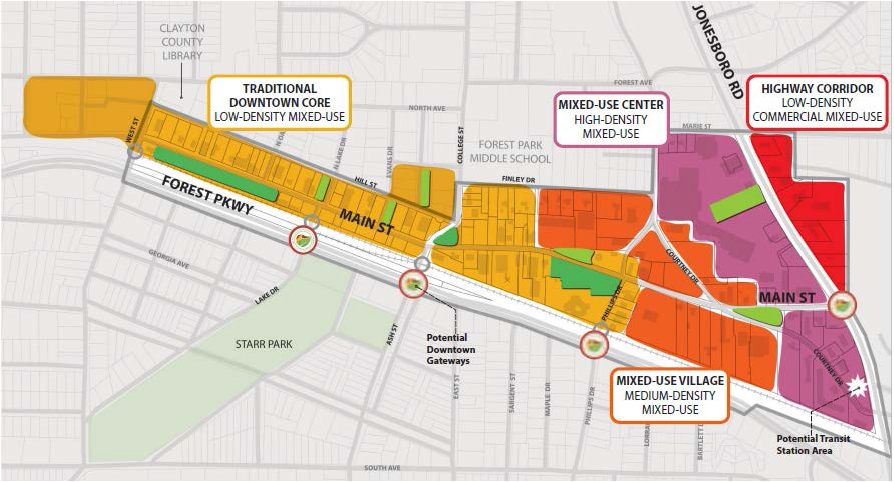
As defined by the 2021 Downtown Forest Park Livable Centers Initiative Study, any new development or redevelopment should comply with the following standards:
a.
Traditional downtown core: Low-density mixed-use with retail/commercial and single-family attached.
1.
Building height: 2—3 stories.
2.
Residential density: 6—12 units/acre.
3.
Residential density over twelve (12) units/acre requires a conditional use permit pursuant to section 8-8-188.
4.
Commercial size: 3,000—5,000 square feet.
b.
Mixed-use village: Medium-density mixed-use with retail/commercial and single-family attached and multi-family.
1.
Building height: 3—4 stories.
2.
Residential density: 15—24 units/acre.
3.
Residential density over twenty-four (24) units/acre requires a conditional use permit pursuant to section 8-8-188.
4.
Commercial size: 6,000—15,000 square feet.
c.
Mixed-use center: Higher-density mixed-use.
1.
Building height: 5—6 stories.
2.
Residential density: 25—35 units/acre.
3.
Residential density over thirty-five (35) units/acre requires a conditional use permit pursuant to section 8-8-188.
4.
Commercial size: 16,000—40,000 square feet.
d.
Highway commercial: Mixed-use retail/commercial.
1.
Building height: 2 stories.
2.
Residential density: None.
3.
Commercial size: 20,000—30,000 square feet.
8-8-54.9
Mixed use and non-residential building height, materials, and color.
a.
Minimum height is one (1) floor or twenty-four (24) feet. The first floor shall have a minimum floor-to-ceiling height of eighteen (18) feet.
b.
Allowable materials include brick masonry as the primary facade material, wood and aluminum for storefronts, stone or cast stone for details, transparent glass, fabric awnings, and metal canopies.
c.
Prohibited materials include stucco or plaster, tinted or reflective glass, exterior insulation and finish systems (EIFS), and vinyl or wood siding.
d.
Allowable brick colors shall include natural tones such as browns, oranges, reds, creams, and yellows, to be approved by the urban design review board.
e.
Paint and fabric colors shall be complementary subtle tones such as dark greens, blues, or neutral tones, to be approved by the urban design review board.
8-8-54.10
Building entrances.
a.
Primary building entrances for all uses shall be oriented towards, architecturally articulated, and be directly accessible to a public street. Secondary entrances for upper-level uses may be located at the rear of the building or may be located to face the parking areas located to the rear of buildings. The use of fire-escape, entrance-only and exit-only doors as primary entrances is explicitly prohibited.
b.
Primary building entrances shall be at grade for universal accessibility.
c.
Entrances on the sidewalk for upper-level uses shall be distinguished from retail entrances.
d.
Entrances shall be emphasized with architectural features, such as varied massing, materials, architectural details, a canopy or awning, or a change in the roofline above.
e.
Recessed entries are required to prevent doors from opening into the sidewalk clear zone. They shall be a maximum of four (4) feet deep, shall be illuminated at night, and shall continue the storefront glass along the walls of the recess.
f.
Primary entry doors shall be at least fifty (50) percent transparent.
g.
To facilitate easy movement from the parking areas to the sidewalk, pedestrian alleys shall be included between buildings and shall be well-lit and marked.
h.
A street address number shall be located directly above or beside the primary building and business establishment entrances, shall be clearly visible from the sidewalk, and shall have a minimum height of six (6) inches.
8-8-54.11
Building façade transparency.
a.
Ground floor facades shall be at minimum sixty-five (65) percent transparent.
b.
Storefront windows shall begin no higher than thirty-six (36) inches above grade and the head height shall be at least ten (10) feet above grade.
c.
Doors shall be at least fifty (50) percent transparent which shall count towards the overall transparency of the ground floor facade.
d.
Upper façades shall be at least thirty-five (35) percent transparent but not more than fifty (50) percent transparent.
e.
Windowless expanses shall be less than ten (10) feet long at street level to maintain visual interest and pedestrian safety.
f.
Upper-level windows shall be vertically proportioned in either 1:2, 1:3, or 1:4 ratios. Grouped windows may have an overall horizontal proportion but shall be internally divided into vertical components. Street level windows may be horizontal to allow the greatest amount of transparency.
8-8-54.12
Ground floor standards. These requirements shall not apply to residential buildings but shall apply to other buildings in the district:
a.
Ground floor space shall have a floor to ceiling height of eighteen (18) feet to accommodate a range of retail, commercial, and office uses.
b.
Storefront bulkheads shall be between eighteen (18) inches and thirty-six (36) inches in height above grade.
c.
Transom windows are encouraged over doors and storefronts to maximize penetration of light and provide greater transparency to the façade.
d.
Storefront windows may display merchandise, temporary signs, and other displays only in a manner which still allows customer and pedestrian views into shops and restaurants.
e.
A continuous horizontal band shall be located between sixteen (16) feet and twenty (20) feet above grade for placement of signage and separation of the base and middle or top of the building.
f.
Architectural detailing shall be highly articulated at the ground floor to generate pedestrian interest and create variety at street level.
g.
Building floors shall be delineated up to, and including, the fifth story above the sidewalk-level, executed by windows, belt courses, cornice lines or similar architectural detailing.
8-8-54.13
Awnings and canopies. These requirements shall not apply to residential buildings but shall apply to other buildings in the district:
a.
Fabric awnings in shed form are encouraged over retail storefronts as well as other nonresidential buildings. Awnings shall be no wider than the storefront and shall provide clearance of at least eight (8) feet above the sidewalk.
b.
Metal canopies may be used to mark building entrances. They shall be limited to twice the width of the doorway.
c.
All canopies or awnings shall be supported from the building and shall not be supported with columns in the sidewalk.
8-8-54.14
Green roofs and rooflines. These requirements shall not apply to residential buildings but shall apply to other buildings in the district:
a.
Roofs shall typically be low slope ("flat"). Only noncommercial buildings that are one (1) to two (2) stories tall may have a pitched hip roof form.
b.
Low-slope roofs shall incorporate decorative parapets, cornices, or corbelling of the masonry.
c.
Pitched roofs shall have a minimum eighteen (18) inch overhang and be supported by decorative brackets.
d.
At a minimum, low-slope roofs shall have a white reflective membrane to help lessen the heat island effect.
e.
Terraces, or amenities for users of the building, are encouraged for low-slope roofs.
f.
Green roofs that incorporate native, drought-tolerant plants or xeriscaping are encouraged to reduce the heat island effect and manage stormwater. They may be cross utilized as attractive amenities for building inhabitants.
g.
Low-slope roofs shall have internal roof drains or be sloped to drain toward the rear of the building. Downspouts and gutters shall not be incorporated into the front façade of any building.
h.
Sloped roofs shall be asphalt shingles, clay tile or metal roof systems as approved by the UDRB.
8-8-54.15
Exterior nighttime illumination of non-residential buildings. These requirements shall not apply to residential buildings but shall apply to other buildings in the district:
a.
Building lighting design shall follow dark sky initiatives and minimize light trespass across property lines.
b.
Building mounted lights must not extend lower than eight (8) feet above grade and project no more than twenty-four (24) inches from the façade.
c.
Moving, blinking, or strobe lights are prohibited.
8-8-54.16
Security measures for non-residential buildings. These requirements shall not apply to residential buildings but shall apply to other buildings in the district:
a.
Security measures shall be concealed when not in use and must be equipped with key boxes, such as the KNOX-BOX® rapid entry system or other system approved by the city fire chief or fire marshal, to allow public safety personnel to enter buildings quickly in case of emergency. The key boxes shall be marked, conspicuous, and accessible. The fire chief or fire marshal shall approve the key box location.
b.
External roll down gates are prohibited.
c.
Internal roll down gates may be used but shall be designed to allow visual monitoring of the interior from the sidewalk.
d.
Window bars are prohibited.
8-8-54.17
Services and utilities for non-residential buildings. Service and utilities shall be located behind buildings whenever possible. If it is not possible, a location on the side of the building is acceptable, with adequate screening.
a.
Dumpsters shall be enclosed on four (4) sides with three (3) walls eight (8) feet tall, and one (1) side providing a gated opening for access.
b.
Utilities shall be screened with vegetation or walls less than forty-two (42) inches tall.
c.
Rooftop equipment shall be screened from public view with parapet walls that match the primary façade materials.
8-8-54.18
Sustainable design. Innovation green building strategies shall be encouraged to further the implementation of sustainable design. Applicants are encouraged to submit such information with the application submitted to the UDRB.
8-8-54.19
Regulation of large buildings occupied by a single retailer.
a.
To discourage single tenant and stand-alone commercial buildings on Main Street, refer to section 8-8-54.8, special building standards for development subareas in downtown. Unless the single commercial retail establishment is accessed and fronts on Jonesboro Road, no single commercial retail establishment within the downtown mainstreet district shall occupy more than thirty thousand (30,000) square feet of floor area. All structures, including structures housing such large retail establishments, must comply with the design standards of this article.
b.
Along that portion of Jonesboro Road located within the downtown mainstreet district, no single commercial retail establishment shall occupy more than fifty thousand (50,000) square feet of floor area. All structures, including structures housing such large retail establishments, must comply with the design standards of this article.
8-8-54.20
Additional regulation or residential buildings.
a.
Residential buildings shall be set at the back of a four (4) to eight (8) wide supplemental zone adjacent to the sidewalk.
b.
The supplemental zone will allow for stoops, stairs, low walls and fences, and small gardens to buffer the ground floor from the sidewalk.
c.
Residential buildings shall be set back from the back of the sidewalk at least fifteen (15) feet.
8-8-54.21
Residential building height, material, and color regulations.
a.
The maximum height of residential buildings is three (3) floors, or forty-six (46) feet tall. The minimum height for such buildings is two (2) floors, or twenty-two (22) feet.
b.
Residential buildings shall be constructed of brick masonry as the primary façade material, stone or cast stone for details, transparent glass, and cement-board siding.
c.
Prohibited materials for residential buildings include stucco or plaster, tinted or reflective glass, and vinyl siding.
8-8-54.22
Residential building entrances.
a.
Residential buildings shall locate their primary entrance oriented to the street and shall open directly onto the adjacent sidewalk, supplemental zone, terrace, porch, plaza, or park adjacent to the sidewalk.
b.
Residential buildings shall locate their secondary entrances in the rear to access off-street parking and shall open directly onto the adjacent sidewalk, supplemental zone, terrace, porch, plaza, or park adjacent to the sidewalk.
c.
Primary building entrances shall be elevated a minimum of eighteen (18) inches above grade and no more than sixty (60) inches.
d.
Residential building entrances shall be emphasized with architectural features such as stoops and stairs with decorative railings. Said buildings shall have porches, stoops, or wheelchair access at each sidewalk-level entrance.
e.
All residential buildings not located at sidewalk-level shall have pedestrian access to the required public sidewalk via a lobby fronting and accessible from said sidewalk.
f.
Recessed entries for townhomes and condominiums are encouraged to give a sense of privacy and delineate semi-public space. They shall be a maximum of three (3) feet deep and shall be illuminated at night.
g.
All residences shall have an address identifier displayed at the primary entrance and illuminated at night. The identifier shall be located directly above or beside the primary residential entrance, shall be clearly visible from the sidewalk, and numbers shall have a minimum height of six (6) inches.
8-8-54.23
Windows in residential buildings.
a.
Windows in residential buildings shall be vertically proportioned in either 1:2 or 1:3 ratios.
b.
Grouped windows in residential buildings may have an overall horizontal proportion but shall be internally divided into vertical components.
c.
Bay windows in residential buildings may be used as accents and to gain better views down the street.
d.
Windows in residential buildings shall be double-hung with true divided lights in a ratio of 1-over-1, 2-over-1, 4-over-1, 2-over-2, and 4-over-4.
e.
Small fixed windows in residential buildings may be used as accents but shall be limited to one (1) per façade.
8-8-54.24
Townhome architectural standards.
a.
The maximum number of attached units is four (4).
b.
Frontloaded townhomes where garages face the primary street frontage are prohibited.
c.
Townhomes are permitted to face a courtyard rather than a roadway. The courtyard must be at least fifteen (15) feet wide and include a minimum six (6) feet wide sidewalk.
d.
Minimum lot width for townhomes is eighteen (18) feet.
e.
On all street-facing facades, at least twenty (20) percent of the façade must include windows, doors, or other transparent openings. Interior facing facades must have at least ten (10) percent of the façade include windows, doors, or other transparent openings.
f.
Adjacent townhomes cannot have identical façades. The facades must be designed to include variety in at least three (3) of the following elements:
1.
Roof style.
2.
Architectural banding, trim, or cornice detail.
3.
Window trim, the number of mullions or muntins, or shutters.
4.
Window size and placement.
5.
A covered entryway or front porch design.
6.
Balconies or Juliette balconies.
7.
Building projections and recesses.
8.
Decorative roofline elements such as brackets or chimneys.
9.
Façade articulation such as bay windows or dormers.
10.
One- and two-story units.
g.
Building materials, excluding architectural accents, shall be primarily brick, wood, stucco, or stone. Textured concrete masonry or cementitious fiberboard may be used as an exterior building materials, but shall not constitute the majority of any side of a building.
8-8-54.25
Duplex, triplex, and quadplex architectural standards.
a.
Duplexes are allowed on parcels that front minor and local roadways. They are prohibited on major roadways.
b.
Duplexes must provide transparent windows and/or doors on at least twenty (20) percent of all facades visible from the public right-of-way.
c.
Side-by-side duplexes must not have front elevations that are mirror images. The left side and right side of the building must be designed to include variety in at least three (3) of the following elements:
1.
Roof style.
2.
Architectural banding, trim, or cornice detail.
3.
Window trim, the number of mullions or muntins, or shutters.
4.
Window size and placement.
5.
A covered entryway or front porch design.
6.
Balconies or Juliette balconies.
7.
Building projections and recesses.
8.
Decorative roofline elements such as brackets or chimneys.
9.
Façade articulation such as bay windows or dormers.
10.
One- and two-story units.
d.
Duplexes with identical front elevations must not be located on adjacent building sites. Simple reverse configurations of the same elevation on adjacent lots are not sufficient. In order to qualify as a different façade elevation, dwellings must have different roofline configurations. In addition, at least three (3) of the following architectural elements must be different from the adjacent building site(s):
1.
Architectural banding, trim, or cornice detail.
2.
Window trim, the number of mullions or shutters.
3.
Window size and placement.
4.
A covered entryway or front porch design.
5.
Building projections and recesses.
6.
Decorative roofline elements such as brackets or chimneys.
7.
Façade articulation such as bay windows or dormers.
8.
Exterior color and material.
9.
One- and two-story units.
8-8-54.26
Multiple family (residential on upper stories) architectural standards.
a.
Multi-family buildings on major and minor roadways must include windows, doors, or other transparent openings for at least forty (40) percent of the building between two and one-half (2.5) and seven (7) feet above the level of the sidewalk.
b.
Multi-family buildings on local roadways must include windows, doors, or other transparent openings for at least thirty (30) percent of the building between two and one-half (2.5) and seven (7) feet above the level of the sidewalk.
c.
At least one (1) entrance should be provided on every street frontage.
d.
Building façades shall be multi-faced creating visual variety through the roof line, window trim/recess, and façade articulation.
e.
Building materials, excluding architectural accents, shall be primarily brick, wood, stucco, or stone. Textured concrete masonry or cementitious fiberboard may be used as an exterior building material, but shall not constitute the majority of any side of a building.
8-8-54.27
Façade articulation on residential buildings.
a.
Townhome or multiple family building façades shall reflect the individual units to reduce the scale and add architectural interest. The dwelling units shall be delineated by pilasters, material or color change, or other façade treatment.
b.
The traditional horizontal division of façades into a base, middle and top shall be expressed with cornice lines and material changes.
c.
Townhomes or multiple family buildings located at important intersections may address the corner in a monumental way, with a chamfered corner or tower element featuring an entrance.
d.
Flat façades with little or no articulation or detail are not permitted.
e.
Ground floor height shall be ten (10) feet to twelve (12) feet to accommodate generous ceilings in the living spaces.
f.
Transom windows over doors are encouraged to maximize light penetration and give greater verticality to the entrance.
g.
Floor plans shall be organized to place the more public rooms, such as the living room, in the front of the house and the more private rooms towards the rear.
8-8-54.28
Roofing on residential buildings.
a.
Roofs on townhomes or multiple family buildings shall be low-slope ("flat") and incorporate decorative parapets, cornices, or corbelling of the masonry.
b.
At a minimum, low-slope roofs shall have a white reflective membrane to help lessen the heat island effect.
c.
Roofs on townhomes or multiple family buildings are encouraged to be designed as terraces or amenities for residents of the building. They may incorporate native, drought-tolerant plants to add interest to the terrace, help reduce the heat island effect and manage stormwater runoff.
d.
Low-slope roofs shall have internal roof drains or be sloped to drain toward the rear of the building. Downspouts and gutters shall not be incorporated into the front façade.
e.
Sloped roofs shall be asphalt shingles or standing seam metal.
8-8-54.29
Residential nighttime illumination.
a.
Building and landscape lighting design shall follow dark sky initiatives and minimize light trespass across property lines.
b.
Landscape lighting may include low-level path lighting.
c.
All entrances shall be capable of being illuminated at night for security.
d.
Residential building lighting should provide visual security by minimizing or eliminating dark shadows and glare around the perimeter of the house.
8-8-54.30
Residential open space requirement.
a.
All new residential development on lots of greater than twenty thousand (20,000) square feet must provide urban open space. Such open space shall be either private open space and/or public open space.
1.
Private open space is defined as an area that is:
i.
Accessible and visible to residents, tenants, and/or users of the development.
ii.
Improved with seating, plantings, and/or other amenities.
iii.
Located on the ground floor or first level of the development, or on a roof or terrace level, or in an interior courtyard area of the development, or a combination of these locations.
b.
Out of doors, or in the open air (may be under a roof or canopy) excluding balconies that can only be accessed through private units.
1.
Public urban open space is defined as an area that is:
i.
Accessible and open to the public.
ii.
Improved with seating, plantings, and/or other amenities.
iii.
Visible and accessible from the street or public pedestrian areas.
iv.
Located on the ground floor or no more than five (5) feet above or five (5) feet below ground level.
v.
Out of doors, or in the open air (may be under a roof or canopy).
c.
Residential development on lots greater than twenty thousand (20,000) square feet must provide a minimum of one (1) square feet per one hundred (100) square feet gross floor area of private open space, or one-half (0.5) feet per one hundred (100) square feet gross floor area of public open space.
1.
Non-residential development on lots greater than twenty thousand (20,000) square feet must provide a minimum of one (1) square feet per one hundred (100) square feet gross floor area of public open space
2.
All required open space shall be located behind the sidewalk.
8-8-54.31
Service and utilities for residential buildings.
a.
Service and utilities shall be located behind residential buildings whenever possible. If it is not possible to locate them to the rear, a location on the side of the building is acceptable with adequate screening.
b.
Utilities shall be screened with vegetation or walls less than forty-two (42) inches tall.
c.
Residential trash bins shall be stored in a concealed location, either behind the main house or within an enclosure such as a fence or vegetation screen.
8-8-54.32
Sustainable residential design.
a.
Parking structures of one (1) level or more shall be located in the interior of blocks when possible and surrounded by active uses on the perimeter where appropriate.
b.
Parking structures of one (1) level or more fronting a public sidewalk shall have active uses such as shops, restaurants, and offices along the primary sidewalk.
c.
Vehicular entrances to the parking structure shall not be located on Main Street but instead off of secondary streets and shall be of the minimum width required. Pedestrian entrances may be located on Main Street for ease of access.
d.
Architectural treatment of parking structures.
1.
The ground floor of a parking structure shall be articulated with the same materials required in mixed-use buildings: brick, ample glass, awnings, and pedestrian-level detail, as required in section 8-8-90.
2.
The upper levels shall be articulated in such a way as to conceal the cars parked within.
3.
Openings shall be regularly sized and spaces and have vertical divisions.
4.
Emphasize stair towers to add a vertical expression to the façade. The ramping system shall be contained within the bulk of the deck and not expressed on any public façade.
5.
Use vegetated screens or planters with hanging plants to enliven the facade with color and help reduce the heat island effect.
6.
Use metal architectural grillwork to add interest to openings above the ground floor while still allowing adequate ventilation.
8-8-54.33
Fire sprinkler installation requirements.
a.
Definitions. For purposes of this article the following definitions will apply:
1.
Approved sprinkler system means any sprinkler system that is designed, installed, and tested according to NFPA 13, 13R, or 13D standards.
2.
Assembly occupancies include, but are not limited to, buildings or portions of buildings used for gathering of fifty (50) or more people for such purposes as deliberation, worship, entertainment, eating, drinking, amusement, or awaiting transportation. Assembly occupancies also include special amusement buildings such as fun house amusement structures, regardless of occupant load.
3.
Fire protection sprinkler system means an integrated system designed in accordance with fire protection engineering standards. The installation includes one (1) or more automatic water supplies, usually activated by heat from a fire, and discharges water over the fire area.
4.
New construction means any structure constructed after the date of this article that is used or intended for supporting or sheltering any use or occupancy. For the purpose of this section, "new" shall also include any additions to existing buildings, whether vertical or horizontal, which exceeds thirty-five (35) percent of the original floor area for commercial, townhome and condominium structures or exceeds fifty (50) percent for single-family residential structures; or any existing building or structure which shall be deemed to be a new building in the event such building or structure is subject to substantial renovation, or a fire, or other hazard of serious consequence as determined by the city's fire chief or fire marshal.
5.
Substantial renovation means, for nonresidential structures, any construction project where the cumulative costs of any combination of repairs, reconstruction, alterations, remodeling, replacement, renovations, or improvements (collectively called "renovations") to such structures exceeds thirty-five (35) percent of the fair market value of said structure. The fair market value of the building is the current appraised value for the building as determined by the Clayton County Tax Assessor at the time of such renovations. For residential dwellings, substantial renovation means any structural improvement costing more than fifty (50) percent of the building's structure's assessed value as determined by the Clayton County Tax Assessor at the time of such renovations.
b.
Sprinklers required. Approved automatic sprinkler equipment shall be installed and maintained by the owner in all new and substantially renovated buildings within the downtown mainstreet district as follows:
1.
New construction. Throughout all new commercial, retail, office and business structures, new residential structures of any type, repair garages, basements, dormitories, high rise buildings or structures, new hotels, new assembly occupancies, new health care occupancies, new educational occupancies, or new day care occupancies.
2.
Existing commercial, retail and office buildings, and multifamily dwellings. Throughout all substantially renovated commercial, retail and office buildings, and condominium and townhome dwellings where the cumulative costs of any combination of repairs, reconstruction, alterations, remodeling replacement, renovations, or improvements to such building exceeds thirty-five (35) percent of the fair market value of said building. The fair market value of the building is the current appraised value for the building as determined by the Clayton County Tax Assessor at the time of such repairs, reconstruction, alterations, renovations, or improvements. Nothing contained in this section shall authorize the construction of multifamily dwellings, or residential dwellings other than owner-occupied townhomes and condominiums within the downtown mainstreet district.
3.
Existing single-family residential, townhome and multiple family dwellings. Throughout all substantially renovated single-family residential dwellings of any type, where the cumulative costs of any combination of repairs, reconstruction, alterations, remodeling replacement, renovations, or improvements to such dwelling exceeds fifty (50) percent of the fair market value of said dwelling. The fair market value of the building is the current appraised value for the dwelling as determined by the Clayton County Tax Assessor at the time of such repairs, reconstruction, alterations, renovations, or improvements.
4.
High hazard areas. Throughout those areas of structures used for purposes that involve highly combustible, highly flammable, or explosive products or materials that are likely to burn with extreme rapidity, or that may produce poisonous fumes or gases, including highly toxic or noxious alkalines, acids, or other liquids or chemicals that involve flame, fume, explosive, poisonous, or irritant hazards; that involve flame, fume, explosive, poisonous, or irritant hazards; that involve division of material into fine particle or dust subject to explosion or spontaneous combustion, and that involve a high fire hazard because of the form, character, or volume of the material used.
5.
Mercantile, industrial and storage occupancies. Throughout every building occupied in whole for manufacture, storage or sale of combustible goods or merchandise.
(Ord. No. 21-11, § 1(Exh. A), 9-7-2021; Ord. No. 24-04, § 1(Exh. A), 6-3-2024)
Sec. 8-8-55. - Arts and entertainment overlay district.
There is hereby established an arts and entertainment overlay district. The purpose of the arts and entertainment overlay district is to facilitate the creation of an arts destination, sustain established arts and cultural uses and promote new arts and cultural uses. The arts and entertainment district overlay seeks integration of the arts into the fabric of the community and is conceived as the location of art galleries and art studios forming the core of an arts district. A complementary mix of shops, restaurants and entertainment venues will support these uses. These elements are expected to generate interest in downtown Forest Park and attract arts and cultural events.
The arts and entertainment district overlay features an expanded range of permitted uses focused on the arts while retaining all property rights established by the underlying zoning. The arts and entertainment district overlay encourages adaptive reuse of historic buildings and new construction technologies, affording owners expanded development options. These measures will enhance the market attractiveness of the arts district.
Arts venues, community festivals, expanded arts uses and pedestrian character are expected to promote an arts district. Planned investment in public art, lighting, sidewalks, and off-street parking will leverage private investment and enhance public safety. This combination of public and private investment is expected to advance Forest Park's position in regional leadership in the arts and stimulate broad economic revitalization. Importantly, the arts district overlay features walkable distances from nearby neighborhoods to small-scale establishments and live entertainment venues accommodated by the arts district overlay and compatible with the neighborhood character.
8-8-55.1
Applicability. Unless expressly modified by regulations in this article establishing the arts and entertainment district overlay, the regulations governing the use of land and structures shall be as set forth in the underlying zoning districts and as regulated by other provisions of the Forest Park City Code. The architectural design standards shall control development in the arts and entertainment district overlay, unless an alternate provision is adopted in the arts and entertainment district overlay. Where a conflict with other Forest Park City Code and ordinance provisions exists, the more permissive standard shall apply.
8-8-55.2
Boundaries. The arts and entertainment district overlay radiates from the current downtown Forest Park entertainment district and the downtown Main Street district running along Main Street (i.e. from Jonesboro Road west to West Street), and expanding to include properties south of Forest Parkway; Ash Street (from Forest Parkway to South Avenue) and Oak Street (i.e. from Forest Parkway, merging onto Lake Drive to South Avenue) to include Starr Park, city government buildings, and adjoining property). The district is more specifically identified in Exhibit A entitled "Forest Park Arts and Entertainment District Overlay Zone."
8-8-55.3
Scale. Downtown Forest Park and the Starr Park complex is the focus of the arts and entertainment district overlay. Forest Park was established at a time when walking was the primary means of travel, and downtown is characterized by a pedestrian scale. This scale is preserved by height limits inherent in the development intensity assigned to downtown in the zoning ordinance as described in section 8-8-54.8 special building standards for development subareas in downtown. A sense of place will be maintained by adherence to these height limits. Preservation of pedestrian scale is important as arts districts are typically designed to encourage walking to a variety of venues.
8-8-55.4
Permitted and encouraged uses in the arts and entertainment district overlay. Uses permitted by the underlying zoning are unaffected by adoption of the arts and entertainment district overlay; the following uses shall be specifically permitted in the arts and entertainment district overlay:
a.
Arts uses.
• Art gallery.
• Artist studio.
• Artist studio workspace.
• Artist co-op to allow multiple artist spaces that are not bazaars, junk stores, specialty shops and flea markets, etc.
• Arts and crafts retail sales.
• Arts center.
• Arts related businesses and services such as craft shops, galleries, and studios within which is conducted the preparation, display, or sale of art products such as antiques, collectibles, custom apparel, jewelry, paintings, photography, picture framing, pottery, sculpture, stained glass and similar arts, crafts merchandise, and activities such as set design and restoration of artwork.
• Arts supply store.
• Cabaret, concert hall or other performing arts space, dinner theater, legitimate theater or movie theater.
• Craftsman or artisan shop.
• Music store, musical instruments store.
• Performing arts ticket office or booking agency.
• Photographic studio.
• Recording studios, provided appropriate soundproofing is installed.
• Television and radio broadcast studio.
• Video and movie production.
b.
Retail uses.
• Farmers market.
• Framing shop.
• Pottery and ceramics shop.
• Growler shop.
c.
Cultural and entertainment uses.
• Brew pubs, including outdoor seating.
• Microbreweries, subject to the provisions of title 9—licensing and regulation, chapter 2, "alcoholic beverages."
• City-sponsored and/or approved outdoor cultural events and performances that feature visual art, music, dance, theater, performance art, science, design, or cultural heritage.
• Live entertainment, provided that all establishments hosting live entertainment shall comply with any and all applicable noise regulations and ordinances of the City of Forest Park.
d.
Educational uses.
• Art school and other visual and performing arts instruction including school of dance, photography, filmmaking, music, writing, painting, sculpting and printmaking, but excluding adult entertainment and erotic dance.
• Educational or instructional activities, including training, vocational or craft schools, the arts and personal development.
• Libraries.
• Museums.
• Social and philanthropic institutions.
• Training studios, including martial arts studios, gymnastics and yoga.
e.
Permitted accessory uses.
• Outdoor display of artwork and merchandise during hours of operation of the primary business or activity on the property.
• Power tools. The use of hand tools is encouraged; the use of small power tools is allowed. All tools shall be used in compliance with the noise regulations and ordinances of the City of Forest Park.
• Street performers.
• Food trucks, in designated food truck courts only.
• Makerspaces.
8-8-55.5
Uses prohibited in the arts and entertainment district. The following uses shall be prohibited in the arts and entertainment district overlay:
• Any drive-through facility, with the exception of restaurants which shall have no visible drive-through.
• Any outdoor storage of materials or any outdoor processing, fabricating or repair work, except for work performed with hand tools and small power tools.
• Use of any structure primarily for storage (meaning no more than twenty-five (25) percent of the total interior space of said structure may be used for storage of goods, materials, or equipment).
• Car wash.
• Convenience store with or without fuel sales.
• Gas station.
• Motor vehicle service or repair.
• Tire stores.
• Any use that involves the outdoor storage of materials or products. The production of offensive noise, vibration, smoke, dust or other particulate matter, heat, humidity, glare or other objectionable effects shall also be prohibited.
8-5-55.6
Public art placement. Placement or installation of outdoor sculpture and other art forms on private property intended to be viewed from a public right-of way or other public property shall not be subject to setback standards of the applicable zoning district and shall not require a permit, provided that:
• The art is not offered for sale.
• The art does not constitute an advertisement; and
• The placement does not impede the flow of pedestrian, bicycle or vehicle traffic or block motorist visibility at intersections, alleys, or driveways.
8-8-55.7
Art and entertainment district use specific standards. The following standards shall control the development and manner of operation of the following uses within the arts and entertainment district overlay:
a.
Food truck court.
1.
Food truck courts may be established in free-standing commercial parking lots accessory to an operating, permitted use provided that (a) the lot has been designated for food truck courts, (b) the property is zoned DM (downtown Main Street) or IC (institutional commercial) and (c) parking supply exists in excess of that required by ordinance or code for uses or commercial space existing on the site and two (2) off-street parking spaces shall be reserved for the exclusive use of customers of each food truck vendor. Such designation shall be subject to review and approval by the city manager who shall maintain the following database:
A.
Property address and number of spaces designated as a "food truck court."
B.
Site sketch depicting the building, parking spaces and parking spaces so designated.
C.
Dimensions and color photos (front, both sides and rear) of the dispensing vehicle. Include the make, model, vehicle identification number and license plan number of the vendor unit (if applicable).
D.
A copy of all lease agreements between the property owner and/or landlord and any food truck vendor, including the specific space being leased which shall be marked on the ground.
E.
Proof of compliance with all Clayton County Health Department regulations.
F.
An occupational tax permit issued by the City of Forest Park or other jurisdiction, which permit shall be posted in the front window of the food truck vendor vehicle or trailer while in use.
G.
A vendor permit issued by the city.
H.
All permits or licenses as may be required by the State of Georgia, including Clayton County and the Department of Public Health.
2.
Food Trucks shall not be permitted on the premises before 7:00 a.m. or after 10:00 p.m.
3.
Each food truck vendor shall submit on an annual basis a written application for a vendor permit prior to operating in any area designated as a food truck court.
4.
No minimum or maximum number of food trucks shall be established; food truck courts need not be contiguous and may be designated in several locations within a single lot.
5.
No waste of any kind shall be discharged from a food truck. Trash receptacles shall be provided by the food truck vendor for customers to dispose of food wrappers, food utensils, paper products, cans, bottles, food, and other such waste. Such receptacles shall be located no more than ten (10) feet from the food truck. The food truck vendor shall be responsible for removing all trash, litter and refuse from the site at the end of each business day.
6.
No LED strip lighting shall be used in conjunction with any food truck court.
7.
No loudspeakers shall be used for announcements or hawking of products in conjunction with any food truck court.
8.
The property owner and/or landlord may provide limited seating on the food truck court to customers of the food truck vendor(s). Canopies for the protection of customers from the elements may also be provided by the property owner and/or landlord or the food truck vendor(s). Such canopies shall be temporary, located within three (3) feet of the food truck, not to exceed an area of one hundred and forty-four (144) square feet and shall be subject to approval by the city manager.
9.
A minimum distance of one hundred (100) feet shall be maintained between any food truck and the entrance to any permanent restaurant building.
10.
The food truck shall not be located within any required setback, any sight distance triangle or required buffer. Access aisles sufficient to provide emergency access to any food truck shall be provided subject to approval by the fire marshal.
11.
Sales of articles other than food shall be prohibited.
b.
Kilns.
1.
The total volume of kiln space shall not exceed twenty-four (24) cubic feet and no individual kiln shall exceed eight (8) cubic feet.
2.
Kilns may be located outside, preferably in the back of the business if applicable. Outside kilns shall be set back a minimum of twenty-five (25) feet from any boundary common to property zoned residential or in residential use.
c.
Street performers.
1.
Street performers shall obtain a permit from the City of Forest Park.
2.
Performers shall operate only in designated areas.
3.
No street performer shall impede movement along a public sidewalk; a minimum sidewalk width of five (5) feet, independent of the performance area, shall be maintained throughout any performance.
8-8-55.8
Signs in art and entertainment district. Signs with lights and movable elements that contribute to the unique character of the district shall be permitted. However, signage located in the underlying DM (downtown Main Street) district should adhere to the design standards established for the downtown Main Street district. All signs in the arts and entertainment district shall be subject to approval by the planning director or his/her designee upon the submission of a sign application, and any applicable documents and fees.
(Ord. No. 23-08, § 2, 8-7-2023)

