
Fountain City Zoning Code
ARTICLE II
DISTRICT REGULATIONS
Sec. 17.03.010. - Districts established.
A.
Districts. To carry out the purpose and provisions of this title, the incorporated area of the city is divided into the following zoning districts:
1.
LLR: large lot agricultural/residential district.
2.
RA: residential agricultural district.
3.
R1: single family residential: small lot district.
4.
RMU: residential mixed use district.
5.
MF: multifamily residential district.
6.
MHP: manufactured housing park.
7.
MHS: manufactured housing subdivision district.
8.
MU: downtown mixed use district.
9.
CMU: central mixed use business district.
10.
NC: neighborhood commercial district.
11.
VC: village center district.
12.
RC: regional commercial district.
13.
BP: business parks district.
14.
SO: small office/warehouse.
15.
PI: planned industrial district.
16.
POS: parks and open space district.
17.
PUD: planned unit development district.
B.
Characteristics and objectives. Describe the location, natural and built characteristics and attributes which shall be used to determine appropriate zoning district classifications for particular land parcels. In addition, this section describes the desired characteristics, functions and attributes of appropriate uses for the zoning district, carrying out the intent of the Fountain Comprehensive Development Plan. Appropriate uses shall be located and designed to fulfill the desired characteristics and objectives of the zoning district in which they are located.
C.
Use regulations.
1.
Permitted principal uses. Uses by right, which are permitted anywhere within the particular zoning district in which they are identified. Additional uses that are not listed, but which are consistent with the purpose and objectives of the zoning district, and are similar in character and level of impacts as identified in the permitted and accessory uses for the zoning district, may also be permitted. Permitted principal uses, other than a single family or two-family dwelling units, require site development plan approval. All structures require building permit approval.
2.
Permitted accessory uses. Uses by right that are customarily incidental to the identified permitted uses, if they meet any applicable regulations. Permitted accessory uses or structures, may require site development plan approval and building permit approval, as applicable and in accordance with these regulations.
3.
Conditional uses. Uses that may be allowed in the zoning district indicated subject to any applicable regulations. Conditional uses are permitted if it can be demonstrated that the location and the site proposed for the use are appropriate, facilitating the use in a manner which supports the purposes of the zoning district and which is compatible with the surrounding area. Additional uses that are not listed, but which are consistent with the purpose and objectives of the zoning district, and are similar in character and level of impacts as identified in the permitted and accessory uses for the zoning district, may also be permitted subject to review. Conditional uses require the issuance of a permit approved by resolution by the city council after public hearings before the planning commission and the city council.
D.
Dimensional requirements. Minimum restrictions which apply to the siting, and massing of buildings and structures on the lot, from which no variance will be permitted, except as provided under Variances and Appeals, chapter 17.25, Planned Unit Developments, chapter 17.04 and Non-Conforming Uses, Structures, Lots and Parking, chapter 17.27. Dimensional requirements include:
1.
Minimum lot area.
2.
Minimum lot width.
3.
Maximum density.
4.
Front, side and rear yard setbacks.
5.
Minimum open space.
6.
Maximum impervious coverage.
7.
Maximum building height.
E.
Development standards. Minimum standards that development and uses within the zoning district must meet to obtain site development plan or plot plan approval.
(Ord. No. 1742, § 1, 1-14-2020)
Sec. 17.03.020. - Official zoning map adopted.
The location and boundaries of the zoning districts established by this title are shown on the official zoning map of the City of Fountain. The official zoning map, together with all data shown thereon and all amendments thereto, is by reference made part of this title. The official zoning map shall be identified by the signature of the mayor of the city and attested by the city clerk and shall bear the seal of the city and the date of adoption. The official zoning map shall be located in the office of the city clerk and shall be available for inspection at the city hall.
(Ord. No. 1742, § 1, 1-14-2020)
Sec. 17.03.030. - District boundaries.
A.
District boundaries. Except where otherwise indicated, zoning district boundaries shall follow municipal corporation limits, section lines, lot lines, right-of-way lines, or extensions thereof. In property where a zoning district boundary divides a lot or parcel, the location of such boundary, unless indicated by legal description with distance and bearing or other dimensions, shall be determined by using the graphic scale of the official zoning map. In interpreting the official zoning map, unless otherwise specified on the official zoning map, zoning district boundary lines are intended to be property ownership lines or lot lines; centerline of streets, alleys, channel waterways or similar rights-of-way; the centerline of blocks; section or township lines; municipal corporate boundaries; the centerline of stream beds; or other lines drawn approximately to scale on the official zoning map.
B.
Boundary clarification.
1.
In the event that a zoning district boundary is unclear or is disputed, it shall be the responsibility of the zoning administrator to determine the intent and actual location of the zoning district boundary.
2.
Any appeal of the determination of the zoning district boundary made by the zoning administrator shall be heard by the Hearing Officer in accordance with the procedures outlined in article V.
C.
Amendments to map. Changes in the boundaries of any zoning district shall be made only upon amendment to this title as specified in chapter 17.24 and shall promptly be entered on the official zoning map with an entry on the map giving the number of the amending ordinance.
(Ord. No. 1742, § 1, 1-14-2020; Ord. No. 1790, § 6(Exh. D), 7-11-2023)
Sec. 17.03.040. - Minimum sizes for new districts.
A.
Minimum sizes for new zoning districts. Unless contiguous to the same zoning district, all newly created zoning districts shall comply with the following minimum district size. When contiguous to an existing district of the same designation these minimums shall not apply:
1.
LLR large lot agricultural/residential district: ten acres.
2.
RA residential agricultural district: five acres.
3.
R1 single family residential small lot district: one acre.
4.
RMU residential mixed use district: one acre.
5.
MF multifamily residential district: two acres.
6.
MHP manufactured housing park district: three acres.
7.
MHS manufactured housing subdivision district: three acres.
8.
MU downtown mixed use district: none.
9.
CMU central mixed use business district: none.
10.
NC neighborhood commercial district: none.
11.
VC village center district: one acre.
12.
RC regional commercial district: five acres.
13.
BP business park district: two acres.
14.
SO small office/warehouse district: one acre.
15.
PI planned industrial district: three acres.
16.
POS parks and open space district: none.
17.
PUD planned unit development district: ten acres.
(Ord. No. 1742, § 1, 1-14-2020)
Sec. 17.03.050. - Listing of permitted principal uses.
A.
No use shall be allowed in any zoning district unless it is specifically enumerated as an allowed principal use or accessory use in the particular zoning district.
B.
Designations in lists of uses shall be determined as follows:
1.
Permitted principal uses are uses by right and are permitted anywhere within the zoning districts indicated.
2.
All principal and accessory uses require a building permit approval, except as exempted by the Pikes Peak Regional Building Code.
3.
Permitted principal uses, other than a single family dwelling unit and two-family units, which only require a plot plan, require a site development plan.
4.
Uses listed as accessory uses are permitted only if they meet specific criteria contained in this title, and can demonstrate that they are clearly accessory to the principal use.
5.
No accessory uses or structures shall be permitted on a lot unless the principal use or structure is previously existing or until construction has begun on the principal use or structure.
6.
A conditional use may be allowed in the district indicated if it can be demonstrated that the location and the site proposed for the use is appropriate, facilitates the use in a manner which support the purposes of the zoning district, and is compatible with adjacent properties and uses.
7.
Uses not listed as permitted principal or permitted accessory uses require determination by the zoning administrator. The zoning administrator will determine if a principal use or permitted use not listed in article II for the district in which the use is proposed, is similar in character and impact to those listed. If it is determined by the zoning administrator to be a substantially different use, then it will be considered and deemed to be prohibited in that zoning district.
(Ord. No. 1742, § 1, 1-14-2020)
Sec. 17.03.060. - Public and quasi-public uses permitted in all districts.
A.
Except as otherwise regulated by chapter 17.04, Zoning Districts, the following uses shall be permitted in all districts:
1.
Minor utility facilities.
2.
Irrigation ditches.
3.
Park and open space uses and facilities (public or quasi-public).
4.
Railway rights-of-way, but not including railway maintenance facilities.
B.
Except as otherwise regulated by chapter 17.04, Zoning Districts, the following uses shall be permitted in all districts upon approval of a preliminary site development plan by the planning commission:
1.
Major utility facilities.
2.
Public services.
(Ord. No. 1742, § 1, 1-14-2020)
Sec. 17.04.010. - Large lot agricultural/residential district (LLR).
A.
Characteristics and objectives. The large lot agricultural/residential district is designed to accommodate very low density single family residential uses on large lots that may accommodate livestock at specified density limits as set forth in chapter 17.18 and allow land to remain in agricultural production. The purpose of the LLR zoning district is to promote the continuance of single family neighborhoods by:
1.
Allowing for larger lot development that assists in retaining the rural character of Fountain.
2.
Allowing for agricultural and home-based businesses to help provide homeowners with additional economic means for maintaining permanent residency.
3.
Ensuring that new development retains the natural conditions of the environment and land.
B.
Use regulations.
1.
Permitted principal uses.
a.
Single family detached dwelling units, excluding manufactured homes, but including modular dwelling units and tiny homes as specified in chapter 17.15.
b.
Agricultural activities as defined in this title.
c.
Keeping of animals as specified in chapter 17.18.
d.
Group homes for no more than eight persons.
2.
Permitted accessory uses.
a.
Uses that are customarily incidental to any of the permitted principal uses and are located on the same lot. Residential accessory uses and structures include, but are not limited to, sheds, play areas and equipment, detached garages, solar panels, landscape areas and gardens, well houses, and pools. Agricultural accessory structures include, but are not limited to, riding stables, barns, silos, and pens.
b.
Home-based businesses as specified in chapter 17.19.
c.
Crop farming.
3.
Conditional uses.
a.
Non-public schools.
b.
Places of worship.
c.
Group homes exceeding eight persons.
d.
Commercial riding stables.
e.
Child care facilities.
C.
Dimensional requirements.
1.
Minimum lot area: two and one-half acres.
2.
Minimum lot width: 200 feet.
3.
Maximum density: one dwelling unit per two and one-half acres.
4.
Maximum impervious coverage: 25 percent.
5.
Minimum front yard setback: 25 feet.
6.
Minimum side yard setback: 25 feet.
7.
Minimum rear yard setback: 25 feet.
8.
Maximum building height: 35 feet.
D.
Development standards.
1.
One secondary dwelling unit in accordance with chapter 17.15 may be located on lots five acres or more of total lot area, provided it does not exceed the gross floor area of the primary dwelling unit.
2.
Structures and areas where animals are kept shall comply with the requirements of chapter 17.18, Animal Raising and Keeping.
3.
Off-street parking for the principal use shall be provided as specified in chapter 17.09.
4.
Development shall be located, sited and designed to blend in with the existing natural environment and minimize disruption to existing terrain, vegetation, drainage patterns, natural slopes and any other distinctive natural features.
E.
Development design and site layout shall protect and preserve wetlands and riparian areas, critical wildlife habitats and natural features and landmarks.
F.
Additional standards for conditional uses.
1.
Non-public schools and places of worship may be permitted if the traffic impacts can be mitigated and if adequate parking arrangements are made on site in accordance with chapter 17.09, Off-Street Parking.
2.
Commercial riding stables shall adhere to the requirements of chapter 17.18, Animal Raising and Keeping.
(Ord. No. 1742, § 1, 1-14-2020)
Sec. 17.04.020. - Residential agricultural district (RA).
A.
Characteristics and objectives. The RA zoning district is intended for single family detached residential units with a maximum density of one dwelling unit per acre. Incidental recreational, institutional, public and accessory uses compatible with the character of the district and customarily found in proximity to low density residential areas, may be permitted.
B.
Other objectives for the RA district include:
1.
Allowing for larger lot development that assists in retaining the rural character of Fountain.
2.
Allowing for limited home-based businesses to help provide homeowners with additional economic means for maintaining permanent residency.
3.
Ensuring that new development is compatible with and enhances the character of existing residences and the natural environment.
C.
Use regulations.
1.
Permitted principal uses.
a.
Single family detached dwelling units, not including manufactured homes, and tiny homes as specified in chapter 17.15.
b.
Agricultural activities as defined in this title.
c.
Keeping of animals as specified in chapter 17.18.
d.
Group homes for no more than eight persons.
2.
Permitted accessory uses.
a.
Uses that are customarily incidental to any of the permitted principal uses and are located on the same lot. Residential accessory uses and structures include, but are not limited to, sheds, play areas and equipment, detached garages, solar panels, landscape areas and gardens, well houses, and pools.
b.
Home-based businesses as specified in chapter 17.19.
c.
Crop farming.
3.
Conditional uses.
a.
Non-public schools.
b.
Places of worship.
c.
Group homes for more than eight persons.
d.
Commercial riding stables.
e.
Child care facilities.
D.
Dimensional requirements.
1.
Minimum lot area: one acre.
2.
Minimum lot width: 120 feet.
3.
Maximum density: one dwelling unit per acre.
4.
Maximum impervious coverage: 25 percent.
5.
Minimum front yard setback: 25 feet.
6.
Minimum side yard setback: ten feet.
7.
Minimum rear yard setback: 20 feet.
8.
Maximum building height: 35 feet.
E.
Development standards.
1.
One secondary dwelling unit in accordance with chapter 17.15 may be located on lots five acres or more of total lot area, provided it does not exceed the gross floor area of the primary dwelling unit.
2.
Residential accessory structures may not be located between the public right-of-way and the primary building's face.
3.
Parking for the principal use as specified in chapter 17.09.
4.
Additional standards for conditional uses.
a.
Non-public schools and places of worship may be permitted if the traffic impacts can be mitigated and if adequate parking arrangements are made on site in accordance with chapter 17.09, Off-Street Parking.
b.
Commercial riding stables shall adhere to the requirements of chapter 17.18, Animal Raising and Keeping.
(Ord. No. 1742, § 1, 1-14-2020)
Sec. 17.04.030. - Single family residential small lot district (R1).
A.
Characteristics and objectives.
1.
The purpose of the R1 zoning district is to establish and preserve residential neighborhoods for detached single family units free from other uses except those which are compatible with, and serve the residents of, this district.
B.
Use regulations.
1.
Permitted principal uses.
a.
Single family detached dwelling units, not including manufactured homes.
b.
Group homes for no more than eight persons.
2.
Permitted accessory uses.
a.
Uses that are customarily incidental to any of the permitted principal uses and are located on the same lot. Residential accessory uses and structures include, but are not limited to, sheds, play areas and equipment, detached garages, solar panels, landscape areas and gardens, and pools.
b.
Home-based businesses as specified in chapter 17.19.
3.
Conditional uses.
a.
Non-public schools.
b.
Places of worship.
c.
Group homes for more than eight persons
d.
Child care facilities.
C.
Dimensional requirements.
1.
Maximum density: six dwelling units per acre.
2.
Minimum lot area: 6,000 square feet per dwelling unit.
3.
Minimum lot width: 60 feet per dwelling unit measured at building setback line.
4.
Maximum impervious coverage: 35 percent.
5.
Maximum building height: 35 feet.
6.
Minimum front yard setback: 18 feet.
7.
Minimum side yard setback: five feet.
8.
Minimum rear yard setback: 20 feet and 12 feet for accessory buildings.
D.
Development standards.
1.
Off-street parking for the principal use shall be provided as specified in chapter 17.09.
2.
Development shall be located, sited and designed to blend in with the existing natural environment and minimize disruption to existing terrain, vegetation, drainage patterns, natural slopes and any other distinctive natural features.
3.
Development design and site layout shall protect and preserve wetlands and riparian areas, critical wildlife habitats and natural features and landmarks.
4.
Additional standards for conditional uses.
a.
Non-public schools and places of worship may be permitted if the traffic impacts can be mitigated and if adequate parking arrangements are made either on site or on an adjacent site in accordance with chapter 17.09, Off-Street Parking.
(Ord. No. 1742, § 1, 1-14-2020)
Sec. 17.04.040. - Residential mixed use district (RMU).
A.
Characteristics and objectives.
1.
The residential mixed use district shall be located in those areas contiguous to the Fountain downtown mixed use district and must be accessible by arterial or collector streets. the residential mixed use district is intended to provide sites for combined residential and low impact commercial and service uses and to maintain a residential appearance of such sites by establishing appropriate site development standards. This district allows for higher density residential development in close proximity to commercial activity by:
a.
Encouraging growth to occur where land and service capacities can accommodate it.
b.
Ensuring that development is designed with sensitivity to nearby pre-existing development.
c.
Providing for a broader mix in the type and cost of housing available for all housing consumers.
B.
Use regulations.
1.
Permitted principal uses. Any of the following uses are permitted if the gross floor area of a single building or structure containing the use does not exceed 5,000 square feet.
a.
Single family dwelling units, not including manufactured homes.
b.
Two-family dwellings and town homes.
c.
Multifamily dwellings not to exceed 16 dwelling units per acre.
d.
Professional offices, business offices, and studios.
e.
Retail stores and commercial establishments.
f.
Restaurants, breweries and taprooms.
g.
Personal services such as barber shops, beauty shops, business and office services, and travel and ticket agencies.
h.
Bed and breakfast establishments.
i.
Commercial accommodations.
j.
Places of worship.
k.
Educational centers, including daycare centers and cultural complexes.
l.
Regional transportation and parking facilities that support area transit.
m.
Group homes for no more than eight persons.
2.
Permitted accessory uses.
a.
Uses that are customarily incidental to any of the permitted principal uses and are located on the same lot.
b.
Home-based businesses as specified in chapter 17.19.
3.
Conditional uses.
a.
Group homes for more than eight persons.
C.
Dimensional requirements.
1.
Minimum lot area: 5,000 square feet.
2.
Minimum lot width: 50 feet.
3.
Maximum residential density: 16 dwelling units per acre.
4.
Maximum impervious coverage: 80 percent.
5.
Maximum building height: 35 feet.
6.
Minimum front yard setback: none.
7.
Minimum side yard setback: five feet.
8.
Minimum rear yard setback: five feet.
D.
Development standards.
1.
Off-street parking shall be provided as specified in chapter 17.09.
2.
Open space requirements.
a.
Common open space. At least 20 percent of each site shall be landscaped. Create pocket parks or green spaces that are accessible to the public and at a minimum provide seating and landscaping.
i.
Minimum outdoor space for residential development. At a minimum, each unit shall have a total of 48 square feet of outdoor space, whether provided for individual units as private outdoor space or as common open space. Private outdoor space includes private outdoor balconies, patios, or decks attached to individual units. Minimum length and width of each private outdoor space shall be eight by six feet.
ii.
Minimum outdoor space for mixed use and nonresidential development. Every nonresidential and mixed use development shall provide common outdoor space no less than a minimum width of 20 feet and a minimum depth of 20 feet as an amenity for the tenants, customers and visitors and shall be comfortable, secure and inviting spaces for a variety of activities during all hours and seasons while maximizing opportunities for use. These spaces shall be owned and maintained by the property owner, and be accessible to the public.
3.
All development shall be designed so that for the given location, egress points, grading and other elements of the development could not be reasonably altered to:
a.
Reduce the number of access points onto an arterial collector or local street.
b.
Minimize adverse impacts on any existing or planned residential uses.
c.
Improve pedestrian or vehicle safety within the site and exiting from it.
d.
Reduce the visual intrusion of parking areas, screened outdoor storage areas and similar accessory areas and structures.
E.
Development in the residential mixed use district, including buildings, walls and fences shall be so sited to:
1.
Complement existing development in scale and location.
2.
Set back upper stories to help reduce the apparent bulk and scale of a building and promote human scale, while also providing for an effective architectural treatment if the building is adjacent to a less intense use.
3.
Walls visible from streets or public spaces shall utilize articulation or other techniques such as piers, modulation, bays, recesses, and detailing; combinations of materials and textures as well as their detailing; and applied elements, such as art and trellises. Generally buildings should have no "back side."
4.
Provide sidewalks as specified in the city's subdivision regulations or an off road system of pedestrian and bicycle trails of greater than five feet in width.
F.
Additional standards for conditional uses.
1.
Professional activities and convenience businesses, if located on the ground floor of any residential development, shall be accessible from an arterial or collector street and adequate parking can be accommodated on-site in accordance with chapter 17.09, Off-Street Parking.
(Ord. No. 1742, § 1, 1-14-2020)
Sec. 17.04.050. - Multifamily residential district (MF).
A.
Characteristics and objectives. This district is intended to provide for the development of multifamily residential uses in areas where such development would be compatible with surrounding uses and where such intensive use would not create service problems. Incidental recreational, institutional, public, and accessory uses customarily found in proximity to medium and higher density residential areas may be permitted.
B.
Use regulations.
1.
Permitted principal uses.
a.
Multifamily dwelling.
b.
Single family, not including manufactured homes.
c.
Two-family dwellings.
d.
Rooming house, boarding house and dormitory.
e.
Group homes of no more than eight persons.
2.
Permitted accessory uses.
a.
Uses that are customarily incidental to any of the permitted principal uses and are located on the same lot.
b.
Home-based businesses as specified in chapter 17.19.
3.
Conditional uses.
a.
Group homes of more than eight persons.
b.
Child care facilities.
c.
Institutional and quasi-public uses: community center, detoxification center, family care home, group home, health care support facility, religious institution, and homeless shelter.
C.
Dimensional requirements.
1.
Minimum lot area.
a.
Single family residential: 6,000 square feet.
b.
Two-family residential: 7,000 square feet.
c.
Multifamily residential: 10,000 square feet.
2.
Lot area per residential unit: 1,000 square feet.
3.
Minimum lot width.
a.
Single family residential: 60 feet.
b.
Two-family residential: 60 feet.
c.
Multifamily residential: 75 feet.
4.
Maximum density: 16 dwelling units per acre.
5.
Maximum building height: 40 feet.
6.
Minimum open space: 250 square feet per dwelling unit.
7.
Maximum impervious surface: none.
8.
Minimum front yard setback: 25 feet.
9.
Minimum side yard setback: five feet for the first story, plus an additional five feet for each additional story.
10.
Minimum rear yard setback: 20 feet.
D.
Development standards.
1.
All development shall be designed so that for the given location, egress points, grading and other elements of the development, could not be reasonably altered to:
a.
Reduce disruption to the existing terrain, vegetation or other natural site features.
b.
Minimize adverse impacts on any existing or planned residential uses.
c.
Improve pedestrian or vehicle safety within the site and exiting from it.
d.
Reduce the visual intrusion of parking areas, screened outdoor storage areas and similar accessory areas and structures.
2.
All development including buildings, walls and fences shall be so sited to:
a.
Complement existing development in scale and location.
b.
Provide sidewalks as specified in the subdivision standards or an off road system of pedestrian and bicycle trails of greater than five feet in width.
c.
Create pocket parks or green spaces that at a minimum provide seating and landscaping.
3.
Off-street parking shall be provided as specified in chapter 17.09.
(Ord. No. 1742, § 1, 1-14-2020)
Sec. 17.04.060. - Manufactured housing park district (MHP).
A.
Characteristics and objectives.
1.
As used in this chapter, a manufactured housing park shall be designated MHP. Manufactured housing parks are composed of residential, medium to low density occupancy of manufactured homes on areas of land having undivided individual, joint or common ownership. This zoning district replaces the district previously entitled MHPS and applies exclusively to those mobile home parks that were previously subject to the MHPS zoning district.
2.
Location of manufactured housing restricted. Manufactured housing shall be located only in a manufactured housing park or manufactured housing subdivision.
3.
Non-conforming manufactured housing parks shall comply with section 17.27.020.C.1., Application for Rezoning. The applicant for a MHP district shall make written application for rezoning which shall be processed in the manner as set forth in chapter 17.24. The application shall be accompanied by a site development plan that shall contain the information in chapter 17.23.
B.
Use regulations.
1.
Permitted principal uses.
a.
Any single family dwelling regardless of its method of assembly, including type 1 and type 2 manufactured homes, module homes assembled after 1976, factory built homes, tiny homes or on-site built homes, provided said on-site built homes have been constructed no more than ten years prior to the effective date of this title.
b.
Community center.
c.
Group home of less than eight persons.
2.
Permitted accessory uses.
a.
Uses that are customarily incidental to any of the permitted principal uses and are located on the same lot or on an adjacent lot.
b.
Recreational facilities.
c.
Service facilities.
d.
Storage facilities.
3.
Conditional uses.
a.
Recreational vehicle, occupied.
C.
Dimensional requirements.
1.
Minimum manufactured housing park area: three contiguous acres.
2.
Minimum manufactured housing park width: 200 feet.
3.
Maximum density: eight manufactured homes per gross acre.
4.
Maximum building coverage: 65 percent of manufactured housing lot or space.
5.
Minimum individual lot or space area.
a.
Singlewide manufactured housing: 3,000 square feet.
b.
Doublewide or expandable manufactured housing: 4,000 square feet.
6.
Individual lot or space width: 40 feet.
7.
Minimum setbacks: within a manufactured housing park, dwelling sites are not sited on defined lots. Therefore, all setbacks shall be calculated based on the distance between structures and streets.
8.
Minimum distance between structures and from streets: 15 feet.
9.
Maximum structural height: 30 feet.
D.
Development standards.
1.
All manufactured homes are required to meet the provision of C.R.S. art. 32, tit. 24 that requires comprehensive regulation of the installation of manufactured homes to ensure the safety, affordability and performance of such dwelling units.
2.
Interior streets. All interior streets shall be hard-surfaced with asphalt or concrete and shall provide convenient access to each individual lot or space. Street widths shall be in accordance with adopted city street standards.
3.
Walkways. Walkways not less than four feet in width and having an all-weather surface shall be provided from manufactured homes to service buildings.
4.
Lighting. Interior streets, parking areas and walkways shall be adequately lighted to provide safe movement of vehicles and pedestrians at night.
5.
Common storage area. An enclosed individual or common storage area for the use of the manufactured housing park residents shall be provided in an amount equal to 80 square feet per manufactured home.
6.
Landscaping. Landscaping which complies with the provisions set forth in chapter 17.11 shall be submitted as part of the required site plan for the park. All setback areas, with the exception of driveways and sidewalks, and other open space shall be landscaped to soften the appearance of the manufactured housing park.
7.
Recreation area. Not less than ten percent of the total land area of the manufactured housing park shall be devoted to space for private recreation and play areas.
8.
Skirting. All manufactured housing shall be skirted between the floor and the ground surface with durable, all-weather construction as manufactured specifically for covering the undercarriage area of the manufactured housing park.
9.
Replacement mobile homes. No replacement mobile home or manufactured home shall be moved onto any lot unless such mobile home or manufactured home is certified pursuant to the "National Manufactured Housing Construction and Safety Standards Act of 1974," 42 U.S.C. § 5401 et seq., as amended or is certified by the Colorado Division of Housing pursuant to C.R.S. § 24-32-701 et seq., and was constructed no more than ten years prior to the effective date of this title. A mobile home presently located within a mobile home park that is relocated within the same mobile home park is exempted from the requirements of this chapter.
(Ord. No. 1742, § 1, 1-14-2020)
Sec. 17.04.070. - Manufactured housing subdivision district (MHS).
A.
Characteristics and objectives. As used in this section, a planned manufactured housing subdivision district shall be designated MHS. These standards are designed for promoting a low-medium density, quiet environment for manufactured homes on individually owned lots in manufactured housing subdivisions. It is intended that these standards shall be such that the quality of an adjacent neighborhood is not detrimentally affected by a manufactured housing subdivision.
B.
Use regulations.
1.
Permitted principal uses.
a.
Type I manufactured homes, modular homes assembled after 1976, factory built homes, tiny homes and on-site built homes, provided said on-site built homes have been constructed no more than ten years prior to the effective date of this title.
b.
Accessory buildings and uses incidental to a permitted principal use.
c.
Schools, public and non-public.
d.
Places of worship.
2.
Permitted accessory uses.
a.
Uses that are customarily incidental to any of the permitted principal uses and are located on the same lot or on an adjacent lot.
b.
Recreational facilities.
c.
Home-based businesses as specified in chapter 17.19.
3.
Conditional uses.
a.
Child care facilities.
C.
Dimensional requirements.
1.
Minimum manufactured housing subdivision area: five contiguous acres.
2.
Minimum lot area: 4,500 square feet.
3.
Minimum lot width: 50 feet.
4.
Minimum front yard setback: 20 feet.
5.
Minimum side yard setback: five feet.
6.
Minimum rear yard setback: ten feet.
7.
Maximum structural height: 30 feet.
8.
Maximum structural coverage: 60 percent.
D.
Performance standards. all modular structures and manufactured homes shall meet the following criteria:
1.
Must be partly or entirely commercially manufactured in a factory.
2.
Must be a minimum of 24 feet wide and 36 feet long.
3.
The manufactured home and any additions to it must be permanently anchored to a permanent foundation that has been certified by a professional engineer licensed by the State of Colorado.
4.
The manufactured home and any additions to it must have standard exterior siding.
5.
The manufactured home and any additions to it must have a pitched roof structure with standard house shingles or other standard roofing materials.
6.
The manufactured home must require a change in plane on two sides of the home through the use of one or more of the following: porches, bay windows, patios, offset garages or home additions, breezeways, porticos or other similar site-built add-ons.
7.
Is certified pursuant to the "National Manufactured Housing Construction and Safety Standards Act of 1974" 42 USC 5401, etc., as amended.
8.
Meets or exceeds, on an equivalent performance engineering basis, the standards established by HUD code or the Pikes Peak Regional Building Code, and the Uniform Code for Abatement of Dangerous Buildings as adopted in the City of Fountain Municipal Code.
9.
In determining the engineering basis, normal engineering calculations for testing following commonly accepted engineering practices, all components and sub-systems of a manufactured home must meet or exceed health, safety and functional requirements to the same extent as other single family dwellings as outlined in the Pikes Peak Regional Building Code.
10.
As an equivalent performance engineering standard for manufactured homes, snow loads shall meet the requirements as outlined in the Pikes Peak Regional Building Code, as adopted by the City of Fountain.
E.
Development standards for manufactured homes.
1.
Perimeter fencing. Perimeter fencing for manufactured housing in any MHS district is required and shall not be located within the setback cited in subsection C.4. of this section.
2.
Fences shall conform to standards set forth in chapter 17.11, Landscaping, generally.
3.
All lots within a MHS shall comply with the landscaping standards set forth in chapter 17.11.
(Ord. No. 1742, § 1, 1-14-2020)
Sec. 17.04.080. - Downtown mixed use district (MU).
A.
Characteristics and objectives. The downtown MU zoning district is intended to accommodate specialized government functions, specialty retail and housing. The purpose of this district is to promote the development of Fountain's historic downtown area district for retail, service commercial, recreational, institutional and secondary residential uses and to enhance the visual character, scale and vitality of the downtown by:
1.
Providing convenient business and other services for resident families and visitors to Fountain.
2.
Providing a broad mixture of uses within a compact pedestrian oriented environment.
3.
Facilitating small business development and vitality.
4.
Building a clear identity for the historic central core of Fountain that is distinct from other parts of the community.
B.
Use regulations.
1.
Permitted principal uses.
a.
Small businesses that provide services or limited and specialty retail establishments on the ground floor level.
b.
Personal services and servicing facilities that support activities within the downtown core.
c.
Restaurants.
d.
Entertainment facilities, not including adult-oriented uses.
e.
Commercial services.
f.
Offices: professional, financial, insurance personal services and other office uses deemed to be of similar impact by the zoning administrator.
g.
Residential dwelling units, including two-family dwellings, condominiums, town houses and group homes, only if located above ground floor nonresidential uses and not exceeding 16 dwelling units per acre.
h.
Recreation, cultural and educational institution facilities, public or non-public.
i.
Commercial accommodations only if located above ground floor nonresidential uses.
j.
Small inns and lodges ranging from five to 20 rooms.
k.
Public or private open spaces, parks and common areas.
l.
Places of worship.
2.
Permitted accessory uses.
a.
Storage of material, such as equipment, tools, etc., accessory to any of the uses listed in permitted uses for this district, provided all such storage is located within a structure.
b.
Uses that are customarily incidental to any of the permitted principal uses and are located on the same lot.
3.
Conditional uses.
a.
Residential dwelling units, such as multifamily dwelling units, including townhomes, not exceeding 16 dwelling units per acre.
b.
Theaters, meeting rooms and convention centers.
c.
Hospitals and clinic facilities.
C.
Dimensional requirements.
1.
Minimum lot area: none.
2.
Minimum lot width: none.
3.
Maximum impervious coverage: 90 percent.
4.
Maximum building height: 40 feet or three stories, whichever is lower.
5.
Street setbacks: within eight horizontal feet of a street property line.
6.
Minimum side yard setback: none is required if the side wall is a party wall; but ten feet shall be allowed if the side wall is not a party wall.
7.
Minimum rear yard setback: none.
D.
Development standards.
1.
Entrances to buildings shall be designed to ensure smooth and safe pedestrian circulation, and ease of snow removal.
2.
Loading and unloading facilities shall be located in the rear of buildings and shall be screened from public view.
3.
Buildings shall be designed to minimize snow shedding and runoff onto pedestrian areas and public ways.
4.
All activities shall be wholly contained within buildings except for access, parking, loading and if screened by sight impervious fencing or plantings, storage and refuse containers.
5.
Driveways crossing sidewalks on arterial streets may serve parking and loading areas only, but shall not serve any drive-in, drive-through or auto service facility.
6.
An exterior front wall of a building (street grade) shall not exceed an increment of 25 feet without being differentiated by settings providing structural bays, clearly expressed columns or other architectural elements to add interest at the sidewalk edge.
(Ord. No. 1742, § 1, 1-14-2020)
Sec. 17.04.090. - Central mixed use business district (CMU).
A.
Characteristics and objectives. The central mixed use business zone district is intended to accommodate specialized government functions, specialty retail and housing. The purpose of this district is to promote the development of Fountain's central business area district for retail, service commercial, recreational, institutional and residential uses and to enhance the visual character, scale and vitality of Fountain's downtown by:
1.
Providing convenient business and other services for residents and visitors to Fountain.
2.
Providing a broad mixture of uses with consolidated access points as required by the Colorado Department of Transportation (CDOT) access management permit process.
3.
Facilitating small business development and vitality.
4.
Building a clear identity for the corridor that is distinct from other parts of the community.
B.
Use regulations.
1.
Permitted principal uses.
a.
Vehicle and boat sales and services, including auto detail, car washes, gas stations and auto service/repair and accessory storage or parking of vehicles which are awaiting service or pick-up, but excluding auto body and paint shops and storage of junk vehicles.
b.
Commercial accommodations, including bed and breakfast inns.
c.
Commercial establishments engaged in providing personal or financial services to the general public, including but not limited to: banking, dry cleaning, laundromats, tailoring, shipping and receiving services that cater to walk-in customers, barber and beauty shops, garden shops, appliance stores, feed stores, fishing bait and tackle shops and businesses that offer goods and services for sale.
d.
Indoor entertainment facilities, excluding adult-oriented uses and including but not limited to, bowling alleys, arcades (pinball, video, etc.), movie theaters, dinner theaters, skating rinks, billiard parlors, teen clubs, concert or music halls and organizational clubs.
e.
Offices used for the transaction of business, professional, or medical services and activities including, but not limited to: real estate brokers, non-profit organizations, travel agents, advertising or insurance agents, lawyers, physicians, dentists, architects, engineers, accountants, and other licensed professionals.
f.
Eating and drinking establishments, including but not limited to: bakeries and delicatessens, cocktail lounges, taverns and bars, coffee shops, fountain and sandwich shops, restaurants and brew pubs, and nightclubs with or without live entertainment, all of which may provide off site catering services. Drive-thru window services shall be allowed in this district provided they meet all other development criteria.
g.
Indoor recreation, cultural and educational institution facilities, both public and non-public including, but not limited to: art gallery or studio, gymnasium, library, museum, non-public school, vocational training facilities, amphitheaters, and performing arts studios.
h.
Residential dwelling units, including two-family dwellings, condominiums, townhomes, apartment complexes, live/work residences, and group homes, not exceeding 16 dwelling units per acre.
i.
Retail establishments.
j.
Child care facilities.
k.
Transit facilities and structures such as park n' ride lots; public parking lots and bus stops.
2.
Permitted accessory uses.
a.
Storage of materials, such as equipment, tools, etc., accessory to any of the uses listed in permitted principal and conditional uses for this district, provided all such storage is located within a structure. No outside storage shall be permitted.
b.
Any accessory building, structures or uses in addition to and in conjunction with any permitted use in the district.
c.
Home-based businesses as specified in chapter 17.19.
3.
Conditional uses.
a.
Hospitals, medical and clinic facilities over 25,000 square feet.
b.
Outdoor entertainment, entertainment facilities (not including adult-oriented uses), recreation and cultural facilities.
c.
Automotive body, or paint shop.
d.
Single family dwelling.
e.
Pawn shops.
f.
Mortuary and funeral home.
C.
Dimensional requirements.
1.
Minimum lot area: none.
2.
Minimum lot width: none.
3.
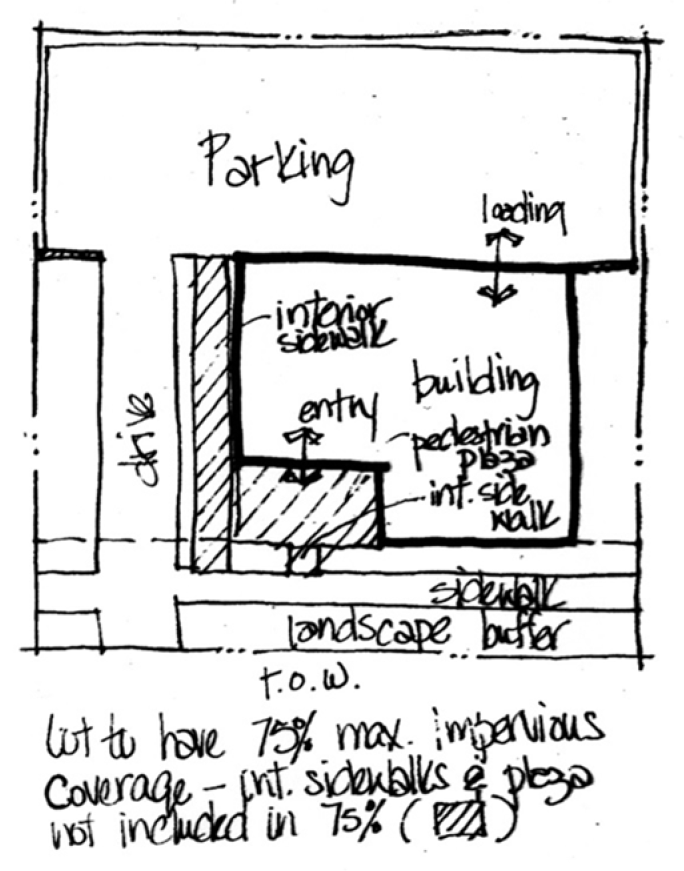
Maximum impervious coverage: 75 percent excluding sidewalks, pedestrian plazas and other amenities.
4.
Minimum landscaped area: ten percent.
5.
Maximum building height: 40 feet or three stories, whichever is less.
6.
Street setbacks: ten feet from the front lot line.
7.
Side yard setback: none is required if the side wall is a party wall; but five feet is required if the side wall is not a party wall.
8.
Rear yard setback: none is required if the rear wall is a party wall; but five feet is required if the rear wall is not a party wall.
9.
Transition between uses: section 17.07.050 of this article shall not apply to this zone district.
10.
Landscape setback: section 17.11.010.D shall not apply to this zone district.
D.
Development standards.
1.
Building orientation and function.
a.
Entrances to buildings shall be designed to ensure smooth and safe pedestrian circulation, and ease of snow removal.
b.
Buildings shall be designed so as to minimize snow shedding and runoff onto pedestrian areas and public ways.
c.
Buildings shall orient facades and main entries toward the street, toward a plaza or toward a pedestrian way that leads directly to a street.
d.
Residential, employment, retail, service and open space shall be arranged and designed such that they are convenient to and compatible with each other.
e.
Minimum of two of the following design elements shall be incorporated for each 50 horizontal feet of a building facade or wall while incorporating architectural consistency:
i.
Changes in color, texture, or materials.
ii.
Projections, recesses, and reveals, expressing structural bays, entrances, or other aspects of the architecture with a minimum change of plane of 12 inches.
iii.
Grouping of windows or doors.
iv.
Trellis, arcades, or pergolas providing pedestrian interest.
f.
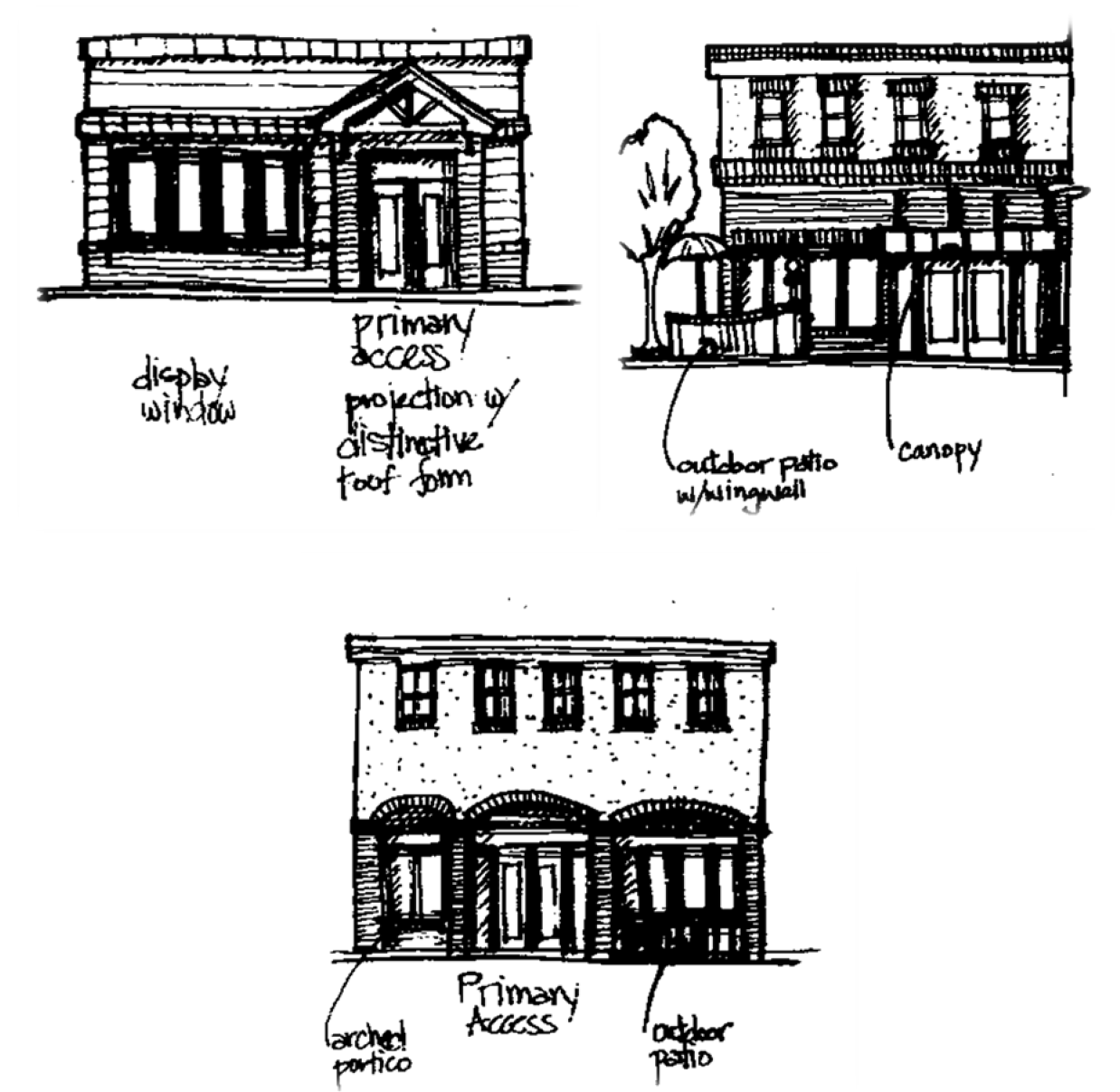
Building facades facing a primary access street shall have clearly defined, highly visible customer entrances that feature no less than two of the following:
i.
Canopies or porticos.
ii.
Overhangs, recesses/projections.
iii.
Distinctive roof forms that vary in pitch and slope.
iv.
Arches.
v.
Outdoor patios.
vi.
Display windows.
vii.
Planters or wing walls that incorporate landscaped areas and/or places for sitting.
2.
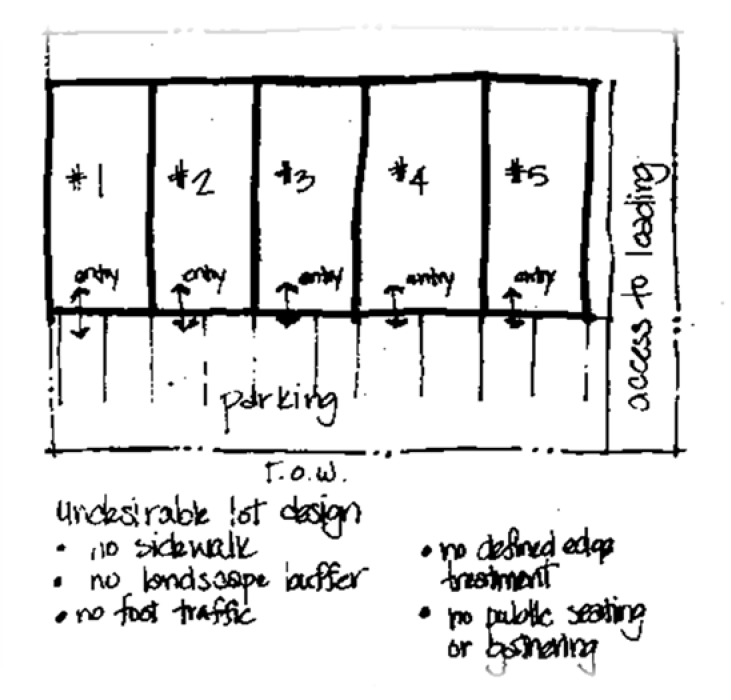
Site layout.
a.
Every lot within this district shall provide a defined edge treatment and clearly defined driveway entrances along the street frontage.
b.
Entrance drives shall be readily observable to the first time visitor.
c.
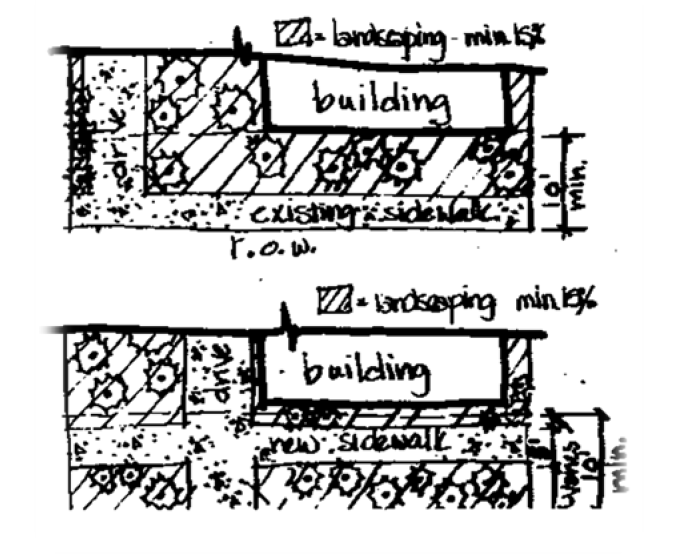
All development including buildings, walls and fences shall provide sidewalks at least five feet in width between the front property line and any existing or proposed improvements (improvements shall include parking areas, walls, fences, building, storage areas, etc.) unless a sidewalk already exists along the street frontage.
d.
All development shall provide one of the following between the front property line and the outdoor parking area or the service area:
i.
A landscaped area of a minimum ten feet wide containing a minimum 40 percent landscaping; or
ii.
A building, building facade, decorative wall, entry feature or other similar structure.
e.
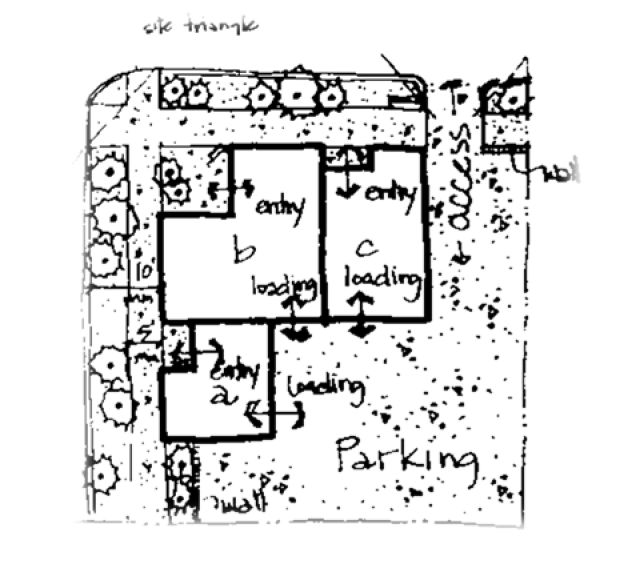
All development shall provide at least two or more of the following design features:
i.
Create useable pedestrian plaza or green spaces that are accessible to the public and at a minimum provide seating and landscaping.
ii.
Public or private outdoor seating areas.
iii.
Inviting street level storefront that is oriented toward pedestrians and provides visually interesting forms or displays.
iv.
Parking placed totally behind the primary structure, below grade, in a parking structure, or limit parking to one side of the building. In larger mixed-use projects, consider placing the parking within the interior of the project.
3.
Parking, vehicle access and loading areas.
a.
Parking lots shall be screened from the street by low walls, landscaping and/or railings that effectively conceal parked cars.
b.
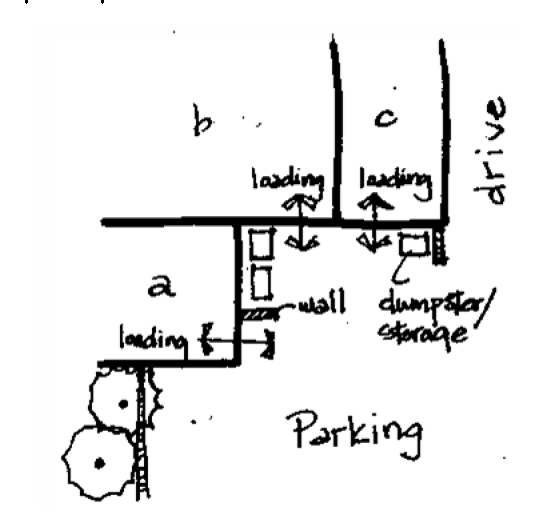
Loading and unloading facilities shall be located in the rear of buildings and shall be screened from public view.
c.
Parking lots shall be located at the side or rear of the buildings. Avoid locating parking between a building's frontage and the street or open space.
d.
Drive-throughs, vehicle bays and paint booths shall be located to the side and rear of buildings.
e.
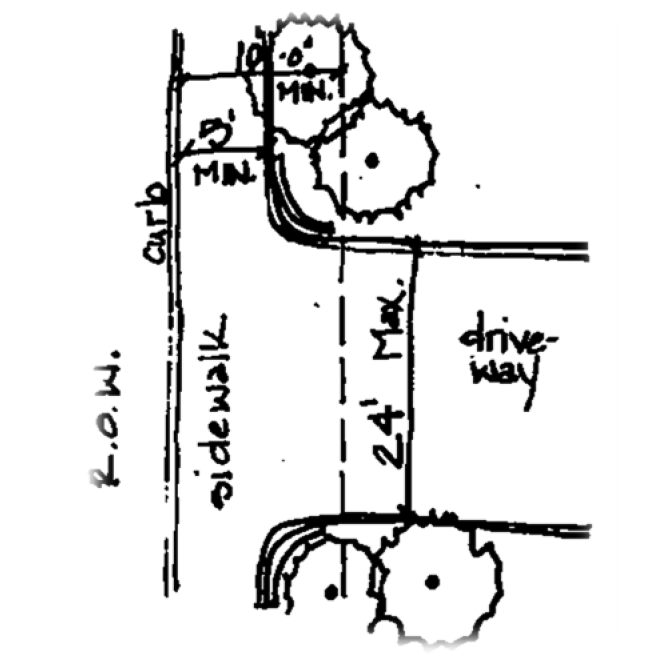
Driveways shall be perpendicular to the street.
f.
The number and width of driveways and curb cuts shall be minimized as required by CDOT. The sharing of vehicle entries between two adjacent lots is strongly encouraged.
g.
Continuous walkways shall provide connections to and between:
i.
The primary entrance or entrances to each building, including pad site buildings.
ii.
All parking lots or parking structures that serve such buildings.
iii.
Any sidewalks or walkways on adjacent properties that extend to the boundaries shared with the development.
iv.
Any public sidewalk system along the perimeter streets adjacent to the development.
4.
Service areas, trash enclosures, utility and mechanical equipment locations.
a.
Storage and refuse containers and collection areas shall be screened by a six foot high masonry wall, styled to match the material of adjacent walls or the main building on the site and shall not front onto any street.
b.
Refuse storage and pick-up areas shall be combined with other service and loading areas.
c.
Utility meters shall not be mounted on the front or street facing facade of any building, but shall be mounted on the side or rear facade unless required by the utility provider.
d.
All mechanical equipment and utility meters placed on roof tops or the sides of a building shall be screened by way of screen walls, paint treatments, landscaping or similar techniques.
e.
Application.
i.
See section 17.06.020 and section 17.09.040 as they relate to the application of this section to existing, new or changes in land uses, buildings, site development, additions, occupancy or parking.
ii.
Compliance with requirements as stated above to the extent practical and feasible for landscaping, screening and building improvements shall be required for all changes to a site, building or use and any improvements to the visual nature of the landscaping, screening or building that are not addressed in section 17.06.020 and section 17.09.040.
(Ord. No. 1742, § 1, 1-14-2020)
Sec. 17.04.100. - Neighborhood commercial district (NC).
A.
Characteristics and objectives. Neighborhood commercial zoning districts shall be established in those areas, which are located along community collector streets and within walking distance of existing neighborhoods. This district is designed to create walking and short distance destinations for residents. It is intended for small independently owned retail and service establishments, such as legal and professional services, cafes and restaurants, and specialty retail that are not dependent on high traffic volumes. These uses are of such character, scale, appearance and operation as to be compatible with the character of surrounding residential areas.
B.
Use regulations.
1.
Permitted principal uses. If the gross floor area of a single building or structure containing the use does not exceed 3,000 square feet:
a.
Specialty retail and service establishments, such as florists, studios, coffee shops, small appliance stores, bakery, candy and ice cream shops, barber shops/beauty salons, stationary store, pet shops and gift shops.
b.
Offices: professional, financial, insurance, personal services, medical and other office uses deemed to be of similar impact to the zoning administrator.
c.
Restaurants, without drive-through facilities.
d.
Convenience store without gas pumps.
2.
Permitted accessory uses.
a.
Uses that are customarily incidental to any of the permitted principal uses and are located on the same lot.
3.
Conditional uses.
a.
Any of the permitted principal uses where the gross floor area of a single building containing the use exceeds 3,000 square feet.
b.
Convenience stores with gas pumps.
C.
Dimensional requirements.
1.
Minimum lot area: none.
2.
Minimum lot width: none.
3.
Maximum impervious coverage: 80 percent.
4.
Maximum building height: 30 feet.
5.
Minimum front yard setback: ten feet.
6.
Minimum side yard setback: five feet; however, if located adjacent to a residential district or public use, the minimum setback shall be ten feet.
7.
Minimum rear yard setback: 15 feet.
D.
Development standards.
1.
All development shall be designed so that for the given location, egress points, grading and other elements of the development, could not be reasonably altered to:
a.
Reduce the number of access points onto an arterial or collector street.
b.
Minimize adverse impacts on any existing or planned residential uses.
c.
Improve pedestrian or vehicle safety within the site and exiting from it.
d.
Reduce the visual intrusion of parking areas, screened outdoor storage areas and similar accessory areas and structures.
2.
Reduce the number of removed trees measuring four inches in diameter and taller than five feet above ground level.
3.
All development including buildings, walls and fences shall be so sited to:
a.
Complement the scale and location of existing development.
b.
Provide sidewalks as specified in the subdivision standards or an off road system of pedestrian and bicycle trails of greater than six feet in width.
c.
Create pocket parks or green spaces that are accessible to the public and at a minimum provide seating and landscaping.
i.
New development shall minimize unused or unusable public or private areas in the side or rear yards.
ii.
Parking and loading areas for all uses must be paved and screened from view, by use of either fences or landscaping, of any adjacent residential properties.
4.
Accessory uses that are customarily incidental to the permitted principal uses shall represent less than 35 percent of the ground floor area on the lot.
5.
Garages or other buildings intended for vehicular storage shall provide a minimum 18 foot setback between property line and garage door into the structure to accommodate vehicle driveway parking and prevent vehicle encroachment into the access street or alley.
6.
No drive up facility of any sort is permitted.
7.
Additional standards for conditional uses.
a.
For any of the permitted principal uses where the gross floor area of a single building containing the use exceeds 3,000 square feet said building(s) shall be designed to be consistent with the desired character of the area and shall not adversely affect other uses in the area.
(Ord. No. 1742, § 1, 1-14-2020)
Sec. 17.04.110. - Village center district (VC).
A.
Characteristics and objectives. Village center zoning districts shall be established in those areas, which are located at the intersection of at least one community arterial street and community collector street. The VC zoning district is intended to provide shopping goods and services for surrounding neighborhoods, such as small-scale retail, professional offices and services, live/work development and medical offices. The intent of this zoning district is to encourage a mix of complementary commercial uses that share ingress and egress and clustered on-site parking and that are linked by pedestrian walkways, corridors and plazas.
B.
Use regulations. Any of the following uses are permitted if the gross floor area of a single building or structure containing the use does not exceed 100,000 square feet.
1.
Permitted principal uses.
a.
Retail establishments.
b.
Offices: professional, financial, insurance, personal services, medical and other office uses deemed to be of similar impact by the zoning administrator.
c.
Veterinary clinic (no boarding).
d.
Pharmacies.
e.
Studios for professional work or services.
f.
Ambulance facilities.
g.
Eating and drinking establishments.
h.
Places of worship.
i.
Commercial uses and professional services deemed to be of similar impact.
j.
Health or fitness center; personal fitness, including crossfit gyms; martial arts school; dance, yoga or pilates studios.
k.
Auto service/repair.
2.
Permitted accessory uses.
a.
Storage of materials accessory to any of the uses listed in permitted uses for this district provided all such storage is located within a structure.
b.
Uses that are customarily incidental to any of the permitted principal uses and are located on the same lot.
3.
Conditional uses.
a.
Recreational facilities and clubs.
b.
Theaters, meeting rooms and convention centers.
c.
Hospitals and clinic facilities.
d.
Indoor entertainment facilities, excluding adult-oriented uses and including but not limited to, bowling alleys, arcades (pinball, video, etc.), movie theaters, dinner theaters, skating rinks, billiard parlors, teen clubs, concert or music hall and organizational clubs.
e.
Child care facilities.
f.
Non-public schools.
g.
Lodging and meeting facilities, including hotels, motels and extended stay lodging, reception and banquette halls, event and conference centers, and excluding RV parks.
C.
Dimensional requirements.
1.
Minimum lot area: one acre.
a.
Parcels of less than one acre may be allowed if the applicant, through joint access easements or other negotiated means, has provided for:
i.
Shared ingress and egress access between properties.
ii.
Consolidated access points with abutting properties.
iii.
Contiguous sidewalks with abutting properties.
iv.
Two or more of the following:
(a)
An integrated pattern of streets.
(b)
Outdoor spaces.
(c)
Building styles.
(d)
Land uses on any parcel abutting the parcel.
2.
Minimum lot width: none.
3.
Maximum impervious coverage: 85 percent.
4.
Maximum building height: 40 feet.
5.
Minimum front yard setback: 20 feet.
6.
Minimum side yard setback: ten feet.
7.
Minimum rear yard setback: 20 feet.
D.
Development standards.
1.
Entrances to buildings shall be designed to ensure smooth and safe pedestrian circulation, and ease of snow removal.
2.
Loading and unloading facilities shall be located in the rear of buildings and shall be screened from public view.
3.
Buildings shall be designed to minimize snow shedding and runoff onto pedestrian areas and public ways.
4.
Driveways crossing sidewalks on arterial streets may serve parking and loading only, but may not serve any drive-in, drive-through or auto service facility.
5.
All activities shall be wholly contained within buildings except for access, parking, loading and if screened by sight impervious fencing or plantings, storage and refuse containers.
6.
New development shall minimize unused or unusable public or private areas in the side or rear yards.
7.
All development shall be designed so that for the given location, egress points, grading and other elements of the development could not be reasonably altered to:
a.
Reduce the number of access points onto an arterial or collector street.
b.
Minimize adverse impacts on any existing or planned residential uses.
c.
Improve pedestrian or vehicle safety within the site and exiting from it.
d.
Reduce the visual intrusion of parking areas, screened outdoor storage areas and similar accessory areas and structures.
e.
Reduce the number of removed trees measuring four inches in diameter.
(Ord. No. 1742, § 1, 1-14-2020)
Sec. 17.04.120. - Regional commercial district (RC).
A.
Characteristics and objectives. RC zoning districts shall be established in those areas which are in close proximity to Interstate 25 or the proposed Powers Boulevard extension and/or highly visible from major roadways and have easy and safe access. This district is oriented to the traveler in the region and includes by way of example commercial uses such as gas stations, restaurants, motels and related businesses. It is intended to encourage a broad range of commercial services for visitors and residents, which are conveniently accessible by automobile, and which are designed to complement each other in character, scale, and proximity by:
1.
Accommodating retail sales, services, and amenities which are oriented to serving a majority of the needs of residents and visitors and which generate substantial volumes of traffic.
2.
Encouraging well planned attractive clusters or groupings of development that complement the scale of existing structures.
3.
Encouraging a mix of complementary commercial uses that share ingress, egress, and clustered on-site parking, and that are linked by pedestrian corridors, sidewalks, or plazas.
B.
Use regulations.
1.
Permitted principal uses.
a.
Retail establishments.
b.
Lodging and meeting facilities, including hotels, motels and extended stay lodging, reception and banquet halls, event and conference centers, and excluding RV parks.
c.
Entertainment facilities and complexes, not including adult-oriented uses.
d.
Automobile repair/service stations.
e.
Restaurants, breweries and tap rooms.
f.
Destination retail, shopping centers, shopping malls, including large specialty retail establishments that people will drive distances to shop such as membership warehouses and natural food chain stores.
g.
Office campuses with convenience retail located within each building.
h.
Regional transportation facilities.
i.
Child care facilities.
2.
Permitted accessory uses.
a.
Uses that are customarily incidental to any of the permitted principal uses and are located on the same lot.
3.
Conditional uses.
a.
Outdoor recreation facilities.
b.
Public utility storage facilities, maintenance facilities, substations, treatment facilities, regulator stations, exchanges and business offices.
C.
Dimensional requirements.
1.
Minimum lot area: 21,780 square feet or one-half acre.
2.
Minimum lot width and depth: None.
3.
Maximum impervious coverage: 80 percent.
4.
Maximum building height: 40 feet.
5.
Minimum front yard setback: 20 feet.
6.
Minimum side yard setback: 20 feet.
7.
Minimum rear yard setback: 25 feet.
D.
Development standards.
1.
All development shall be designed so that for the given location, egress points, grading and other elements of the development could not be reasonably altered to:
a.
Reduce the number of access points onto an arterial or collector street.
b.
Minimize adverse impacts on any existing or planned residential uses.
c.
Improve pedestrian or vehicle safety within the site and exiting from it.
2.
All development including buildings, walls and fences shall be so sited to:
a.
Complement the scale and location existing development within 200 feet of the site.
b.
Provide sidewalks as specified in the subdivision standards or an off road system of pedestrian and bicycle trails of greater than five feet in width.
c.
Create active and passive open spaces that are accessible to the public.
3.
New development shall minimize unused or unusable public or private areas in the side or rear yards.
4.
Parking and loading areas for commercial and office uses must be paved and screened from view of any adjacent residential properties.
5.
Additional standards for conditional uses.
a.
Outdoor recreation and amusements may be permitted if they are designed to be consistent with the desired character of the area, do not adversely affect other uses in the area and do not pose a threat to public safety.
(Ord. No. 1742, § 1, 1-14-2020; Ord. No. 1786, § 2, 4-25-2023)
Sec. 17.04.130. - Business park district (BP).
A.
Characteristics and objectives. This district is intended to protect and preserve prime industrial lands for high quality manufacturing, assembly, research and development and related supporting uses. BP zoning districts should be established in those areas that have direct access to major transportation thoroughfares. The primary objective of this district is to ensure the proper development and use of land and improvements so as to achieve a high quality, master planned, campus-like, nuisance free environment for manufacturing, assembly, research and development land uses. All development within a BP zoning district must follow a preliminary site development plan for the area. The uses, regulations and standards of this district strive to upgrade industrial development standards to protect the owner of each parcel against development and uses which could depreciate the value of individual parcels. This district allows a mixture of office, light industrial and commercial uses.
B.
Use regulations.
1.
Permitted principal uses.
a.
Uses primarily engaged in research and development activities including research laboratories and facilities, development laboratories and facilities and compatible light manufacturing facilities such as but not limited to the following: bio-chemical; chemical; genetics; environmental and natural resources; electronics; pharmaceutical and sonic and sound imaging.
b.
Office uses aimed at providing areas for intensive employment including but not limited to professional, financial, insurance, personal services, and research and development facilities.
c.
Uses primarily engaged in manufacturing, assembly, testing and repair of components, devices, equipment and parts. Examples include: communication, transmissions, and reception equipment; computer hardware and software development; telecommunication devices and educational or training facilities.
d.
Any production, fabrication or assembly activities, provided that the proposed use can demonstrate that it will not create traffic hazards, noise, dust, noxious fumes, odors, smoke, vapor, vibration or industrial waste disposal problems, and if the characteristics and appearance do not have undesirable impacts on surrounding uses.
e.
Warehousing and distribution facilities provided that such activities shall be conducted wholly within a completely enclosed building and shall not occupy more than 50 percent of the area of any building.
2.
Permitted accessory uses.
a.
Uses that are customarily incidental to any of the permitted principal uses and are located on the same lot.
b.
Employee recreational facilities, dining facilities, and personal and professional services as an accessory use incidental to the primary use of the parcel.
c.
Associated uses to include by way of example: medical offices, pharmacies, child care facilities, public or private spaces and community facilities.
3.
Conditional uses.
a.
Retail.
b.
Personal and professional services.
c.
Offices.
d.
Child care facilities.
e.
Eating establishments.
f.
Lodging and meeting facilities including hotels, motels and extended stay lodging, excluding RV parks, and also including reception and banquet halls, event and conference centers.
C.
Dimensional requirements.
1.
Minimum lot area: none.
2.
Minimum lot dimensions: none.
3.
Maximum impervious coverage: 80 percent.
4.
Maximum building height: 40 feet.
5.
Minimum front yard setback: 20 feet.
6.
Minimum side yard setback: ten feet.
7.
Minimum rear yard setback: 20 feet.
D.
Development standards.
1.
All development shall be designed so that for the given location, egress points, grading and other elements of the development could not be reasonably altered to:
a.
Reduce the number of access points onto an arterial or collector street.
b.
Minimize adverse impacts on any existing or planned residential uses.
c.
Improve pedestrian or vehicle safety within the site and exiting from it.
d.
Reduce the visual intrusion of parking areas, screened outdoor storage areas and similar accessory areas and structures.
e.
Reduce the number of removed trees measuring four inches in diameter and taller than five feet above ground level.
2.
All development including buildings, walls and fences shall be so sited to:
a.
Complement the scale and location of existing development.
b.
Provide sidewalks as specified in the subdivision standards or an off road system of pedestrian and bicycle trails of greater than five feet in width.
c.
Create passive and active open spaces that are accessible to the public.
3.
New development shall minimize unused or unusable public or private areas in the side or rear yards.
4.
Parking and loading areas for all uses must be paved and screened from view of any adjacent residential properties.
(Ord. No. 1742, § 1, 1-14-2020)
Sec. 17.04.140. - Small office/warehouse district (SO).
A.
Characteristics and objectives. This district is intended for uses such as smaller businesses, office, warehouse, research and development space, contractor/trades, repair and equipment shops and workshops that may require the distribution of goods by cargo vans and smaller trucks (UPS, FEDEX) but not semi-trucks. The site is easily accessible onto a major arterial or major street but circulation is handled internally and on-site. The uses do not have any visible outdoor storage.
B.
Use regulations.
1.
Permitted principal uses. Any of the following uses, if there is no outside storage and access onto major arterials and streets are combined whenever possible.
a.
Repair, professional trade and contractor/trade services.
b.
Businesses engaged in providing health, grooming and kenneling services for animals, provided all activities other than kenneling are in a completely enclosed building.
c.
Businesses located in an enclosed building, which does research, and development of products or processes but do not include materials in amounts which would be considered hazardous to general health and welfare.
d.
Uses primarily engaged in selling goods or merchandise to the general public for personal, household, or business use and rendering services incidental to the sale of such goods, including building materials and garden supplies.
e.
Auto repair/service.
f.
Commercial accommodations.
g.
Places of worship.
h.
Educational centers, including day-care centers and cultural complexes.
i.
Self-storage facilities.
j.
Lodging and meeting facilities including hotels, motels and extended stay lodging, excluding RV parks, and reception and banquet hall, event and conference centers.
k.
Restaurants.
l.
Offices/warehouses.
2.
Permitted accessory uses.
a.
Uses that are customarily incidental to any of the permitted principal use and are located on the same lot.
3.
Conditional uses.
a.
Outdoor dining areas operated in conjunction with permitted eating and drinking establishments.
b.
Theaters, meeting rooms and convention centers.
c.
Outside storage if screened from view.
C.
Dimensional requirements.
1.
Minimum lot area: none.
2.
Minimum lot width and depth: none.
3.
Maximum impervious coverage: 80 percent.
4.
Maximum building height: 40 feet.
5.
Minimum front yard setback: 20 feet.
6.
Minimum side yard setback: ten feet.
7.
Minimum rear yard setback: 20 feet.
D.
Development standards.
1.
All development shall be designed so that for the given location, egress points, grading and other elements of the development could not be reasonably altered to:
a.
Reduce the number of access points onto an arterial or collector street.
b.
Minimize adverse impacts on any existing or planned residential uses.
c.
Improve pedestrian or vehicle safety within the site and exiting from it.
2.
All development including buildings, walls and fences shall be so sited to:
a.
Complement the scale and location of existing development within 100 feet of the site.
b.
Provide sidewalks at least five feet in width.
c.
Create active or passive open spaces that are accessible to the public.
3.
New development shall minimize unused or unusable public or private areas in the side or rear yards.
(Ord. No. 1742, § 1, 1-14-2020)
Sec. 17.04.150. - Planned industrial district (PI).
A.
Characteristics and objectives. Planned industrial zoning districts may be established in those areas that are appropriate for limited industrial uses and contractor trades. This district should be created in areas having access to major streets and a low likelihood of conflict with other uses, as well as a low potential for adverse impacts on the overall visual image of key areas, including entryways into the community. This district is intended to accommodate a range of industrial activities that are of limited intensity, such as contractor trades, research and development institutions, warehousing and wholesaling, and small-scale production, fabrication, assembly or processing activities, to help provide a diversified employment base for the community by:
1.
Allowing for planned industrial uses and the development of professional trades and contractor services that may serve and provide jobs for the City of Fountain and the surrounding area, in a manner which minimizes adverse impacts on adjacent uses and the community.
2.
Limiting uses to those that will not create traffic hazards, noise, dust, fumes, odors, smoke, vapor, vibration or industrial waste disposal problems, but their operating characteristics and appearance may have impacts not desirable in other zoning districts.
B.
Use regulations.
1.
Permitted principal uses. Any of the following uses, if outside storage and activity areas, other than employee and visitor parking or loading areas, do not exceed 15 percent of the lot area and such uses are screened from view.
a.
Repair, professional trade and construction contractor services.
b.
Production, fabrication or assembly activities, provided that the proposed use can demonstrate that it will not create traffic hazards, noise, dust, noxious fumes, odors, smoke, vapor, vibration or industrial waste disposal problems, and if the characteristics and appearance does not have undesirable impacts on surrounding uses.
c.
Railroad spur lines where such lines are used only for delivery or loading of freight to industries or businesses in occupancy of this zoning district but not including mainline.
d.
Commercial laundries and dry cleaning.
e.
Printing or publishing facilities.
f.
Educational institutions, including vocational schools.
g.
Retail sale of products produced on-site.
h.
Distribution centers and warehouses.
i.
Auto service/repair.
j.
Self-storage facilities.
k.
Restaurants.
l.
Kennels.
2.
Permitted accessory uses.
a.
Uses that are customarily incidental to any of the principal uses and are located on the same lot, subject to the restrictions on outside activities cited above for the permitted principal uses.
3.
Conditional uses.
a.
Any of the permitted uses requiring an outdoor storage or activity area that is equal to or greater than 15 percent of the lot area.
b.
Storage or warehouse facilities for materials or equipment such as explosives or any materials that are classified as toxic or hazardous under state and federal law.
c.
Pawnshops, if it is not established, operated, or maintained within 1,000 feet of any commercial zoning district.
d.
Adult-oriented use, if it is not established, operated, or maintained within 1,000 feet of a residential zoning district, place of worship, park, child care facility, including day cares, and/or school meeting the requirements of the compulsory education laws of the state and is not established, operated, or maintained within 300 feet of another adult-oriented use.
e.
Trucking terminals.
C.
Dimensional requirements.
1.
Minimum lot area: 20,000 square feet.
2.
Minimum lot width: 100 feet.
3.
Maximum impervious coverage: 90 percent.
4.
Maximum building height: 50 feet.
5.
Minimum front yard setback: 20 feet.
6.
Minimum side yard setback: 15 feet.
7.
Minimum rear yard setback: 20 feet.
D.
Development standards.
1.
All development shall be designed so that for the given location, egress points, grading and other elements of the development satisfy the requirements set forth below to the greatest extent practicable:
a.
Reduce disruption to the existing terrain, vegetation or other natural site features.
b.
Minimize adverse impacts on residential uses in the area.
c.
Improve vehicle safety within and exiting from the site.
2.
Reduce the visual intrusion of parking areas, screened outdoor storage areas and similar accessory areas and structures.
3.
Reduce the number of removed trees measuring four inches in diameter and taller than five feet above ground level.
4.
Parking and loading areas shall screened from view of any adjacent residential properties.
5.
Additional standards for conditional uses.
a.
Any of the permitted uses requiring an outside outdoor storage or activity area that is equal to or greater than 15 percent of the lot area, may be permitted if such outside uses will not have an adverse impact on existing uses in the area, including but not limited to safety, noise, odor, light or visual impacts. All outdoor storage shall be screened in accordance with section 17.11.030.
b.
Storage or warehouse facilities for materials or equipment such as explosives or any materials that are classified as toxic or hazardous under state and federal law, may be permitted if such a use demonstrates continuing compliance with state and federal requirements and will not have an adverse impact on existing uses in the area, including but not limited to safety, noise, odor, light or visual impacts.
(Ord. No. 1742, § 1, 1-14-2020)
Sec. 17.04.160. - Parks and open space district (POS).
A.
Characteristics and objectives. The parks and open space zoning district shall contain those areas, which are considered to be of special significance for their natural importance in defining the city of Fountain, or for the protection of public health and safety. The POS zoning district is intended to preserve the publicly owned or privately dedicated environmentally sensitive and culturally significant areas that are prominent features of the community, undeveloped or open space lands from intensive development and protect public health and safety by:
1.
Preserving distinctive natural features including drainage swales, streams, hillsides, ridges, rock outcroppings, vistas, natural plant formations, trees and scenic views.
2.
Preserving distinctive features of the city's railroad and agricultural heritage, which are a cultural amenity to the community.
3.
Avoiding development in areas that may be a threat to public health and safety.
B.
Use regulations.
1.
Permitted principal uses.
a.
Agricultural activities.
b.
Public parks, recreational areas and open space.
2.
Permitted accessory uses.
a.
Accessory buildings and uses customarily incidental to permitted agricultural uses, including barns, sheds, corrals and similar uses.
b.
Retail sale of plants, trees or other farm or agricultural products grown, produced or made on the premises.
C.
Conditional uses.
1.
Non-public schools and, colleges.
2.
Private golf, tennis, swimming and riding clubs, rodeo facilities, hunting and fishing lodges and guide services.
D.
Dimensional requirements.
1.
Minimum lot area: one acre.
2.
Minimum width dimensions: 100 feet.
3.
Maximum impervious coverage: 15 percent.
4.
Maximum building height: 35 feet.
5.
Minimum front yard setback: 20 feet.
6.
Minimum side yard setback: 20 feet.
7.
Minimum rear yard setback: 20 feet.
E.
Development standards.
1.
Development shall be located, sited and designed to:
a.
Blend in with the existing natural environment.
b.
Minimize disruption to existing terrain, vegetation, drainage patterns, natural slopes and any other distinctive natural features.
(Ord. No. 1742, § 1, 1-14-2020)
Sec. 17.04.170. - Planned unit development district (PUD).
A.
Purpose, conditions and standards.
1.
Purpose. Planned unit developments are intended, to facilitate the achievement of the purposes and objectives of this title, the Fountain Comprehensive Development Plan and to permit the application of new technology and greater freedom of design in land development than may be possible under the application of standard zoning districts. Developments, however, must demonstrate that flexibility from the provisions of the existing zoning will result in higher quality development and in addition, when one or more following purposes can be achieved:
a.
The provision of necessary commercial, recreational and educational institution facilities in convenient proximity to housing.
b.
The provision of well located, clean, safe and pleasant industrial sites involving a minimum impact on transportation facilities.
c.
The encouragement of innovations in residential, commercial, and limited industrial development and renewal so that the growing demands of the population may be met by greater variety in type, design, and lay-out of buildings that the city's existing zoning districts and associated development standards cannot accommodate and by the conservation and more efficient use of open space ancillary to said buildings.
d.
The encouragement of a more efficient use of land and of public services, or private services in lieu thereof, and to reflect changes in the technology of land development so that resulting economies may inure to the benefit of those who need homes.
e.
A better distribution of induced traffic on the streets and highways.
f.
Conservation of the value of the land.
g.
Preservation of the site's natural characteristics.
2.
Conditions. The use of the PUD provisions must be in accordance with the Fountain Comprehensive Development Plan and is dependent upon the submission of an acceptable plan, and satisfactory assurances that the plan will be carried out. The PUD is an entire development program concept and shall be reviewed as a whole.
a.
The PUD shall be considered by the planning commission and city council from the point of view of the relationship and compatibility of the individual elements, which make up the development and, only after specifically and properly applied for, may be approved by the planning commission and city council in accordance with the provisions of this article.
b.
The parcel being considered for a PUD must have been legally created pursuant to the subdivision regulations.
c.
The request for PUD approval is a voluntary act by the applicant and does not require or imply any acceptance or approval by the city. The proposed uses and densities may be deemed inappropriate after review by the city, and alternative action may be required of the applicant.
d.
Staging of development. Each stage within a PUD shall be so planned and so related to the existing surroundings and available facilities and services that failure to proceed to the subsequent stages will not have an adverse impact on the PUD or its surroundings at any stage of the development.
3.
Standards generally. The following standards and requirements shall govern the application of a PUD:
a.
The PUD shall be consistent with the intent of the Fountain Comprehensive Development Plan and the principles and policies therein.
b.
No PUD shall be approved without a plan setting forth the provisions for development of the PUD, including but not necessarily limited to easements, covenants and restrictions relating to use, location, and bulk of buildings and other structures, intensity of use or density of development, utilities, streets, roads, pedestrian areas, and parking facilities, common (or dedicated) open spaces, and other public facilities. All PUDs shall incorporate alternative design standards, none of which should fully replicate existing zoning districts, along with a justification of how the alternative standards are equal to or superior to the existing zoning districts.
c.
The design and construction of the PUD shall include adequate, safe and convenient arrangements for pedestrian and vehicular circulation, off-street parking and loading space.
d.
While there may be no fixed setbacks and lot widths, the planning commission and city council may require such setbacks, lot widths and space between buildings as necessary to provide adequate access and fire protection, to ensure proper ventilation, light, air and snow melt between buildings, and to ensure that the PUD is compatible with other developments in the area.
e.
Open space for the PUD shall be planned to produce maximum usefulness to the residents of the development for purposes of recreation and scenery and to produce a feeling of openness. All areas designated as common or public open space pursuant to the requirements of this section shall be accessible by proper physical and legal access ways.
f.
The developer shall provide within the PUD central water and sewer facilities as required by the planning commission, city council, the Fountain Water Code, the state department of public health and the local health authorities.
g.
The development shall be designed with the necessary commercial, recreational and educational institution facilities conveniently located adjacent to residential housing.
h.
Clustered housing and other buildings shall be encouraged to promote maximum open space, economy of development and variety in type, design and layout of buildings.
i.
Maximum height of structures shall be established in the approved PUD plan.
4.
Relationship to the subdivision regulations. The uniqueness of each PUD may require that specifications for the width and surfacing of streets, public ways, public utility rights-of-way, curbs, and other standards may be subject to modifications from the specifications established in the subdivision regulations adopted by the City of Fountain, if the reasons for such exceptions are well documented. Modifications may be incorporated only with the approval of the planning commission and city council as a part of its review of the PUD. The modifications shall conform to acceptable engineering, architectural and planning principles and practices.
5.
Evaluation criteria. The following criteria shall be utilized by the planning commission and the city council in evaluating any plan for planned unit development:
a.
Open space—Residential uses. A minimum of 25 percent of the total PUD area shall be devoted to open space for residential uses. No more than five percent of the required percentage of usable open space shall be in the form of water surfaces, floodplains, steep slopes, or storm water detention areas. The city may consider the provision of other site amenities in lieu of the full 25 percent requirement for open space that fulfill the same function and purpose of the provision of open space. The open space requirement can be met through:
i.
Development of active recreation uses such as traditional parks, play field, tennis courts, playground equipment, picnicking facilities, swimming pools, golf courses, greenways, trails and joint use school and park facilities.
ii.
Environmental preservation of significant natural areas such as bluffs and other geological formations, water bodies/water resources such as irrigation ditches, wildlife habitat areas, fragile eco-systems (wetlands) and vegetative stands.
iii.
Preservation of lands which preserve significant views, provide transitions between different densities and uses (buffers) and otherwise serve to give shape and form to the proposed development and surrounding area.
b.
Open space—Nonresidential uses. A minimum of 15 percent of the total PUD area shall be devoted to open space for nonresidential uses. The city may consider the provision of other site amenities in lieu of a portion of the 15 percent requirement for open space.
c.
Site amenities in lieu of the provision of open space, include:
i.
The floor area of indoor site amenities that provide recreational spaces, such as indoor neighborhood pools and clubhouses, may count towards the open space requirement.
ii.
The floor area of outdoor spaces accessible from within buildings, but otherwise located outdoors, such as rooftop decks, courtyards and other shared spaces among residents and tenants that provides useable open space.
d.
Residential density. Density shall be limited as required by the planning commission and city council upon consideration of the overall development plan and individual characteristics of the property.
e.
Gross building floor area. The gross building floor area of uses other than residential may be limited as required by the city council upon consideration of the overall development plan and individual characteristics of the property.
f.
Architecture. The following architectural standard and design criteria are intended to prevent monotonous streetscapes and offer consumers a wider choice of housing styles.
i.
Architectural standard. To avoid uniformity and lack of variety in design among housing units within the PUD, no home model elevation shall be repeated more than once every five lots on the same side of the street (e.g., the first and fifth lots in a row may contain the same model elevation, but the second, third, and fourth lots must contain different model elevations).
ii.
No home model elevation shall be repeated directly across the street from the same model elevation.
iii.
Mirror images of the same home model shall not count as two distinctly different models.
iv.
The frontal plane of all single family detached units are required to be staggered four feet from one another along the front yard, meaning there must be a four-foot difference of front yard setbacks for adjacent units.
v.
Design criteria. All front elevations must incorporate at least four of the following nine design criteria to be considered distinctly different from another home model front elevation:
(a)
The use of different materials (i.e. stucco, brick, stone, lap siding, clay tiles, etc.) in reasonably significant quantities on the front facade elevation or roof.
(b)
The use of different, yet cohesive, colors between buildings, including the primary building color, secondary color and trim color.
(c)
The width of the front facade elevation, which exceeds three feet.
(d)
The location, proportion and architectural features (columns, railing, etc.) of covered front porches and entries that vary substantially.
(e)
The location, number, proportion or design of garage doors that vary substantially.
(f)
The use of two or three car attached garages or side-loaded garages.
(g)
Variations in the front plane or roofline.
(h)
The use, design (gabled, arched, etc.) and location of roof or window dormers.
(i)
Window shapes, sizes or location, which are substantially different.
(j)
The use and style of at least three different ornamental features on the exterior elevation such as bay windows, divided light windows, balconies, dormers, oriels, lintels, projecting eaves, knee braces under eaves, elaborate window sills, decorative cornices, corner blocks, entry doors, vent covers, window shutters, etc.
g.
Mixed uses. The PUD shall be designed, insofar as practicable when considering the overall size of the PUD, to provide commercial, recreational and educational amenities to its residents to alleviate the necessity of increased traffic and traffic congestion. A PUD may include any uses permitted by right or as conditional use review, any other zoning district except that any use that has been declared a nuisance by statute, ordinance or any court of competent jurisdiction shall not be permitted.
h.
Minimum area. A PUD shall not be permitted on a parcel of land less than three acres in area. The minimum area requirement may be waived upon adequate justification shown by the applicant.
i.
Internal compatibility of design elements. It is recognized that certain individual land uses, regardless of their adherence to all the design elements provided for in this chapter, might not exist compatibly with one another. Therefore, a proposed PUD shall be considered from the point of view of the relationship and compatibility of the individual elements of the plan, and no PUD shall be approved which contains incompatible elements.
j.
The PUD shall provide an adequate internal street circulation system designed for the type of traffic generated, safety, and separation from living areas, convenience and access. Private internal streets may be permitted if adequate access for police and fire protection is maintained and provisions for using and maintaining such streets are imposed upon the private users and approved by the planning commission and city council. Bicycle traffic shall be provided for if appropriate for the land use.
k.
The PUD shall provide parking areas in conformance with the minimum site development standards of this title in terms of number of spaces for each use, location, dimensions, circulation, landscaping, safety, convenience, separation and screening. The PUD shall strive for optimum preservation of the natural features on the site.
l.
The PUD shall provide for a variety in housing types and densities, other facilities, and common open space.
m.
The PUD shall provide adequate privacy between dwelling units.
n.
The PUD shall provide pedestrian ways adequate in terms of safety, separation, convenience, and access to points of destination and attractiveness.
o.
The maximum height of buildings may be increased above the maximum permitted for like buildings in other zoning districts in relation to the following characteristics of the proposed building:
i.
Its geographic location.
ii.
The probable effect on surrounding slopes and terrain.
iii.
Unreasonable adverse visual effects on adjacent sites or other areas in the vicinity.
iv.
Potential problems for adjacent sites caused by shadows, loss of air circulation or loss of view.
v.
Influence on the general vicinity, with regard to extreme contrast, vistas and open space.
vi.
Uses within the proposed building.
vii.
Fire protection needs.
6.
Special conditions.
a.
No PUD shall be approved unless the city council, after planning commission review and recommendation, is satisfied that the landowner has provided for or established an adequate organization for the ownership and maintenance of common open space and private roads, drives and parking which, in the opinion of the city council, is best calculated to ensure maintenance of such areas.
b.
Lot area and coverage, setbacks and clustering. In a multi-lot PUD, the averaging of lot areas shall be permitted to provide flexibility in design and to relate lot size to topography, but each lot shall contain an acceptable building site. The clustering of development with usable common open areas shall be permitted to encourage provision for and access to common open areas and to save street and utility construction and maintenance costs. Such clustering is also intended to accommodate contemporary building types which are not spaced individually on their own lots but share common side walls, combined service facilities or similar architectural innovations, whether or not providing for separate ownership of land and buildings.
c.
Maintenance provisions. In the event that the organization established to own and maintain common open space, or any successor organization, shall at any time after approval of the planned unit development, fail to maintain the common open space in reasonable order and condition, the applicable code enforcement procedures will be implemented.
7.
Consent of landowner(s) required. No PUD may be approved by the planning commission or city council without written consent or a letter of authorization of the landowner or landowners whose properties are included within the PUD. All owners of land within the proposed PUD shall sign each application form requesting consideration or approval of any PUD.
(Ord. No. 1742, § 1, 1-14-2020)
Sec. 17.05.010. - Purpose.
The purpose of these overlay standards is to implement the Olde Town and Interstate Gateway Aesthetic Design Guidelines and Urban Renewal Vision (2017).
(Ord. No. 1742, § 1, 1-14-2020)
Sec. 17.05.020. - Applicability.
Commercial and residential uses of land and structures within the districts designated as Olde Town and Gateway may be governed by the following overlay standards at the option of the owner and/or developer.
(Ord. No. 1742, § 1, 1-14-2020)
Sec. 17.05.030. - Overlay district map.
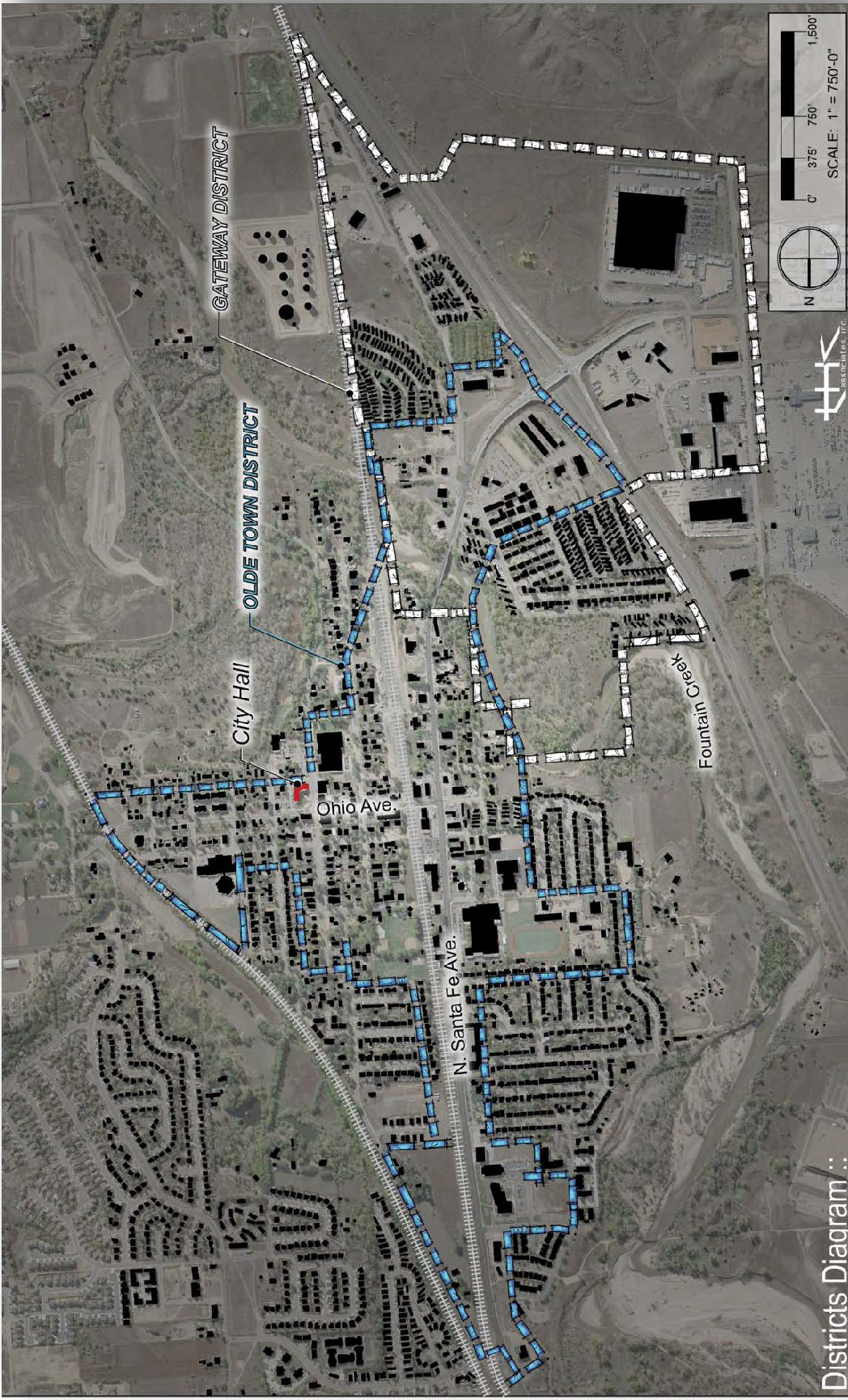
(Ord. No. 1742, § 1, 1-14-2020)
Sec. 17.05.040. - Overlay land use plan.
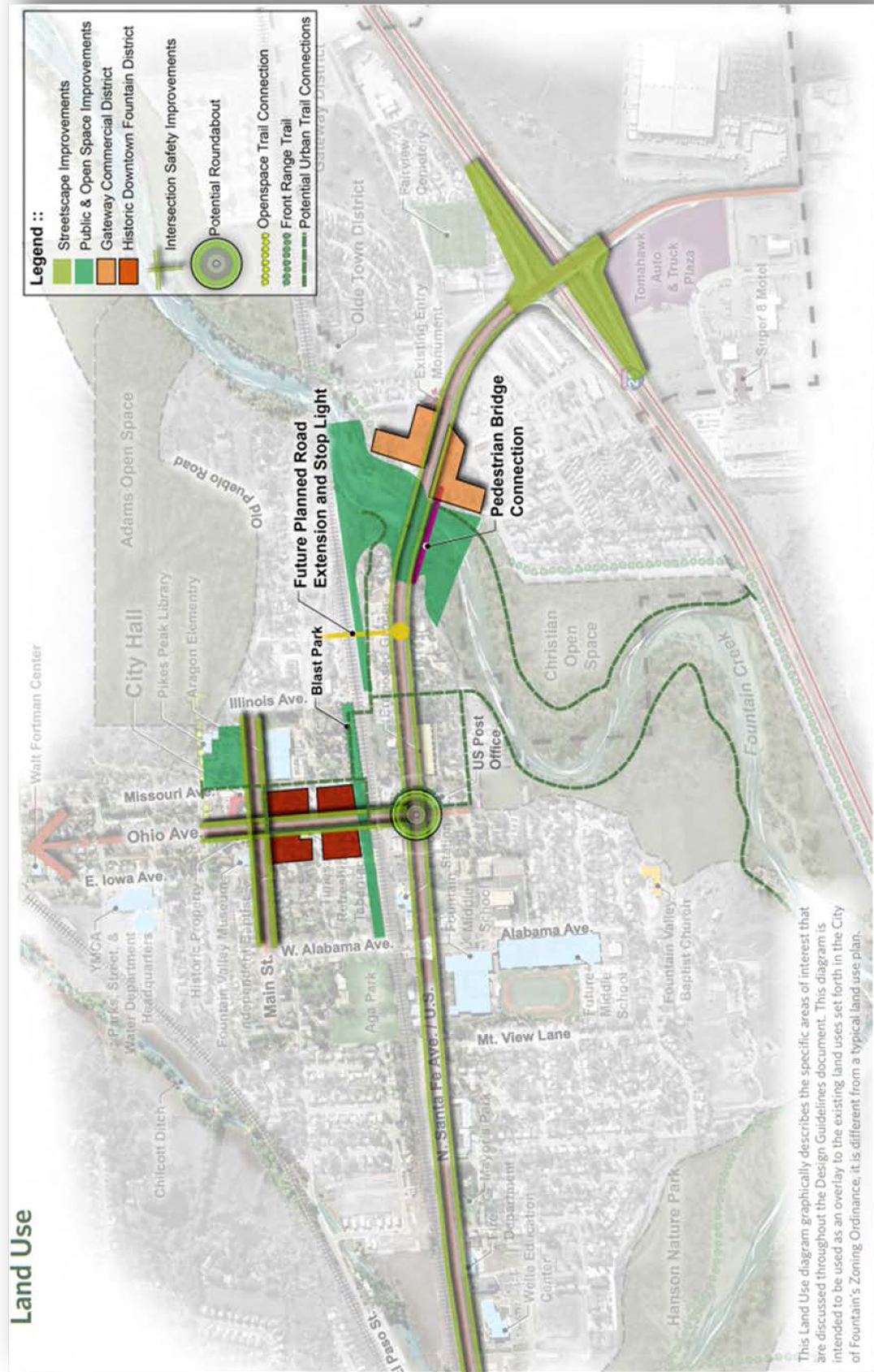
(Ord. No. 1742, § 1, 1-14-2020)
Sec. 17.05.050. - Overlay vehicular and pedestrian circulation plan.
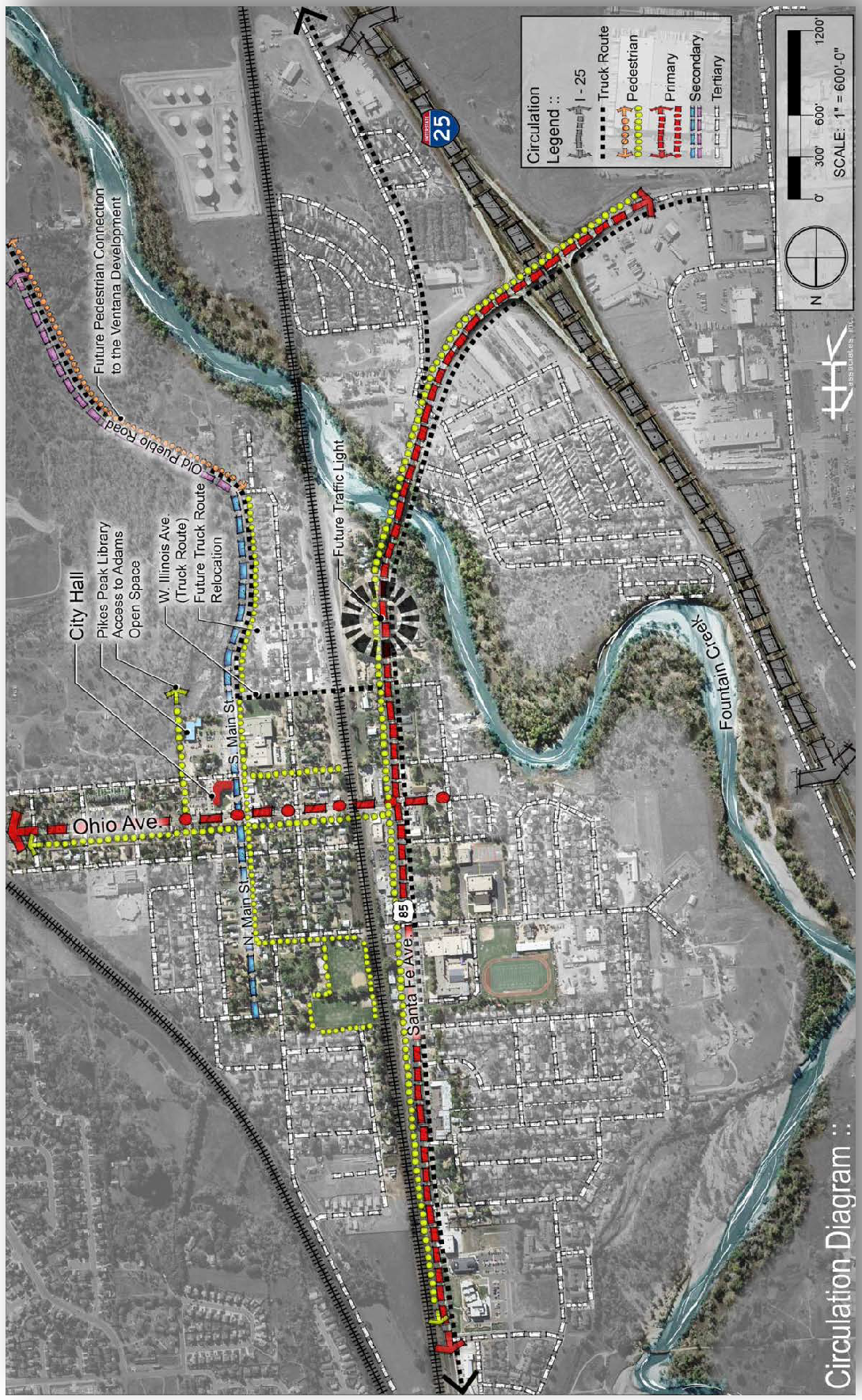
(Ord. No. 1742, § 1, 1-14-2020)
Sec. 17.05.060. - Overlay architectural character.
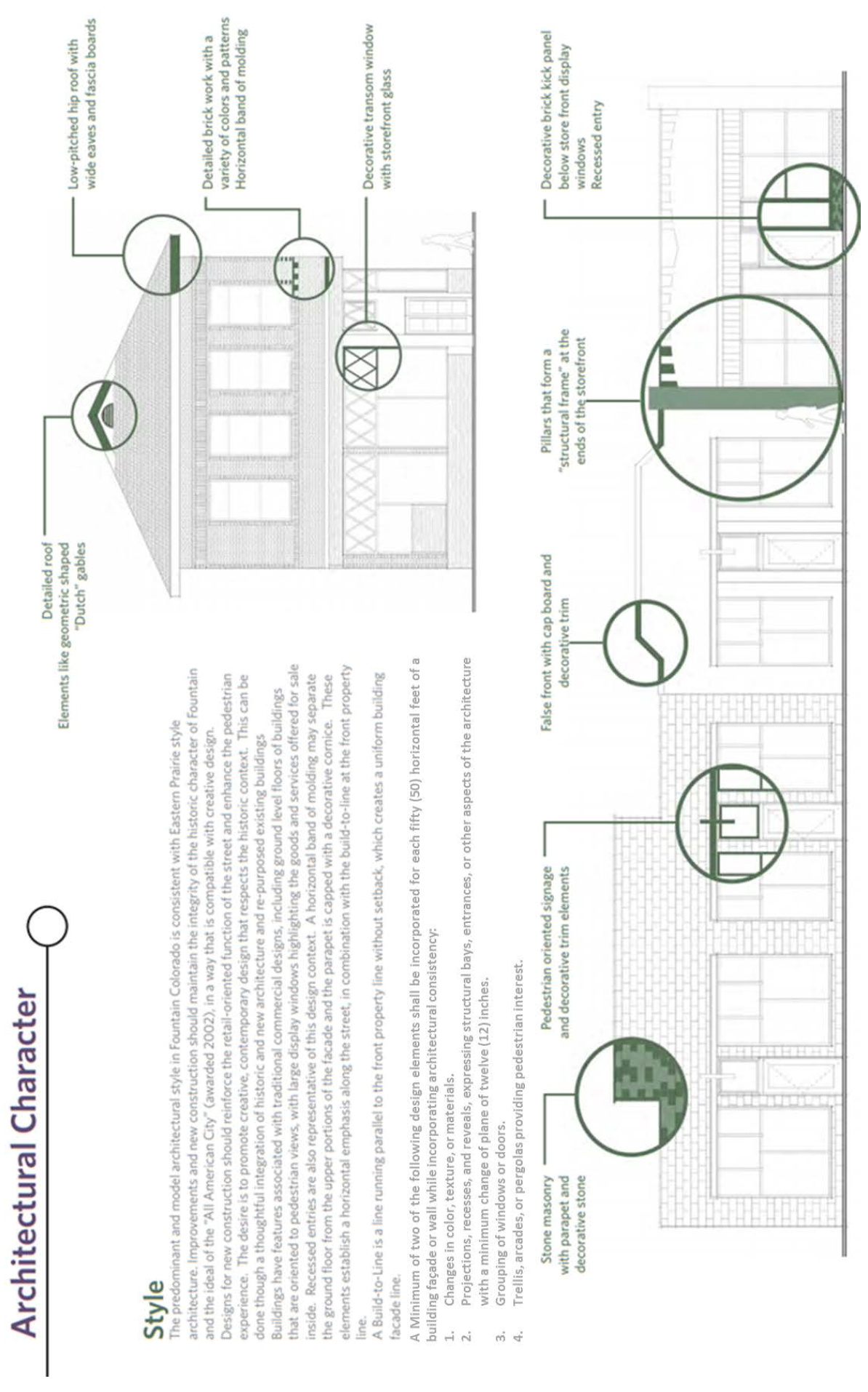
(Ord. No. 1742, § 1, 1-14-2020)
Sec. 17.05.070. - Overlay form and color.
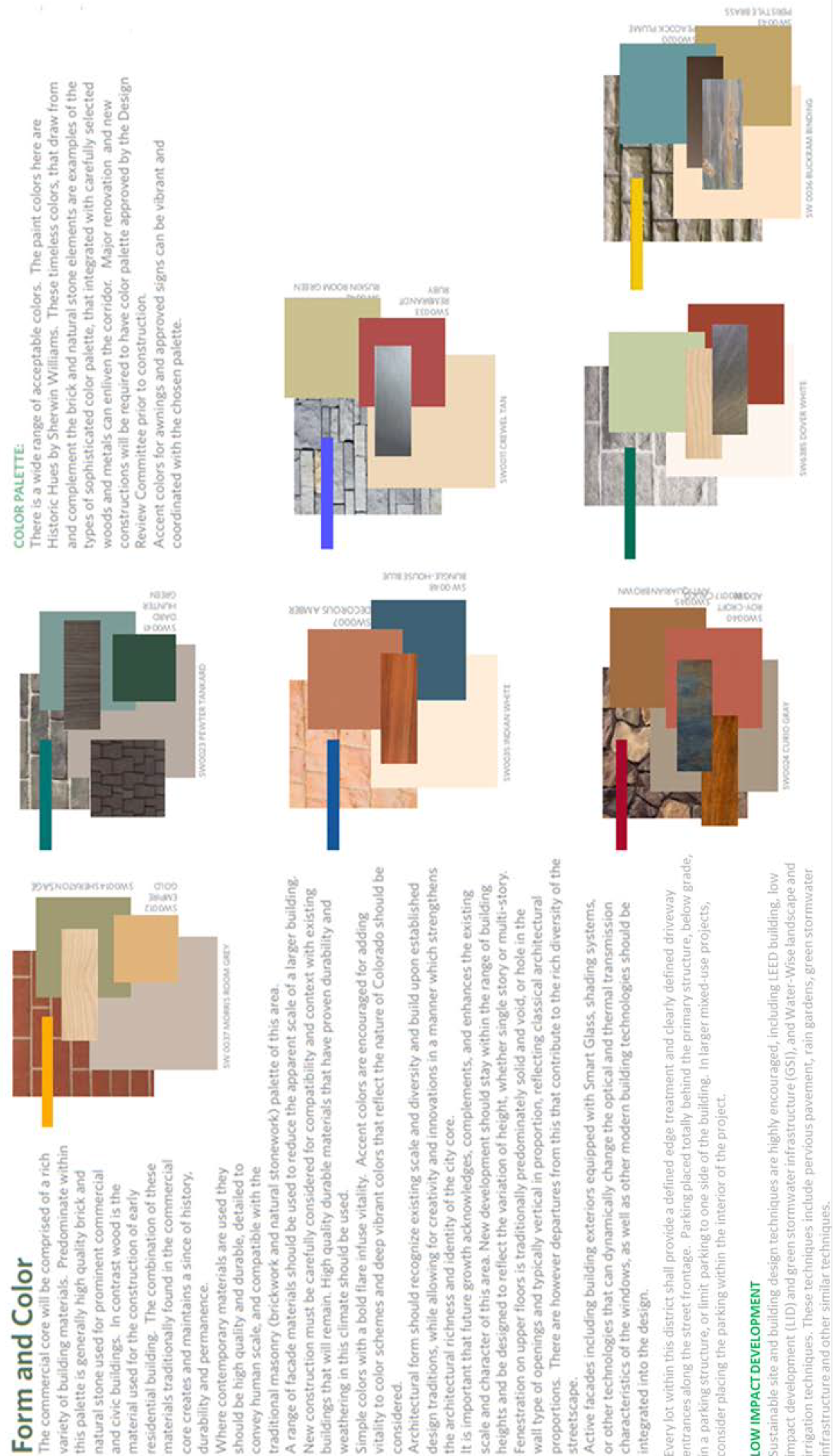
(Ord. No. 1742, § 1, 1-14-2020)
Sec. 17.05.080. - Overlay design segment transition.
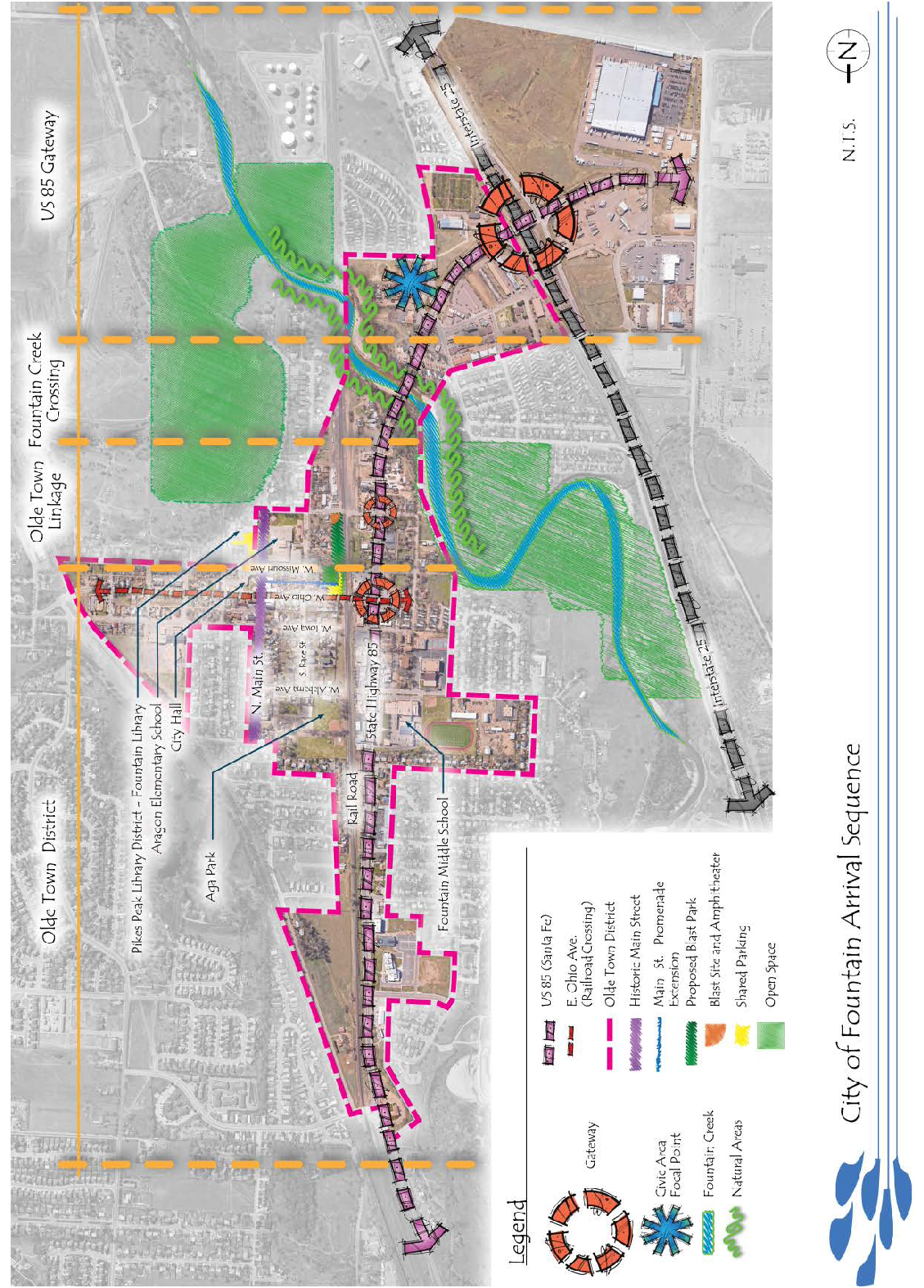
(Ord. No. 1742, § 1, 1-14-2020)
Sec. 17.05.090. - Olde Town district overlay vision design and guidance.
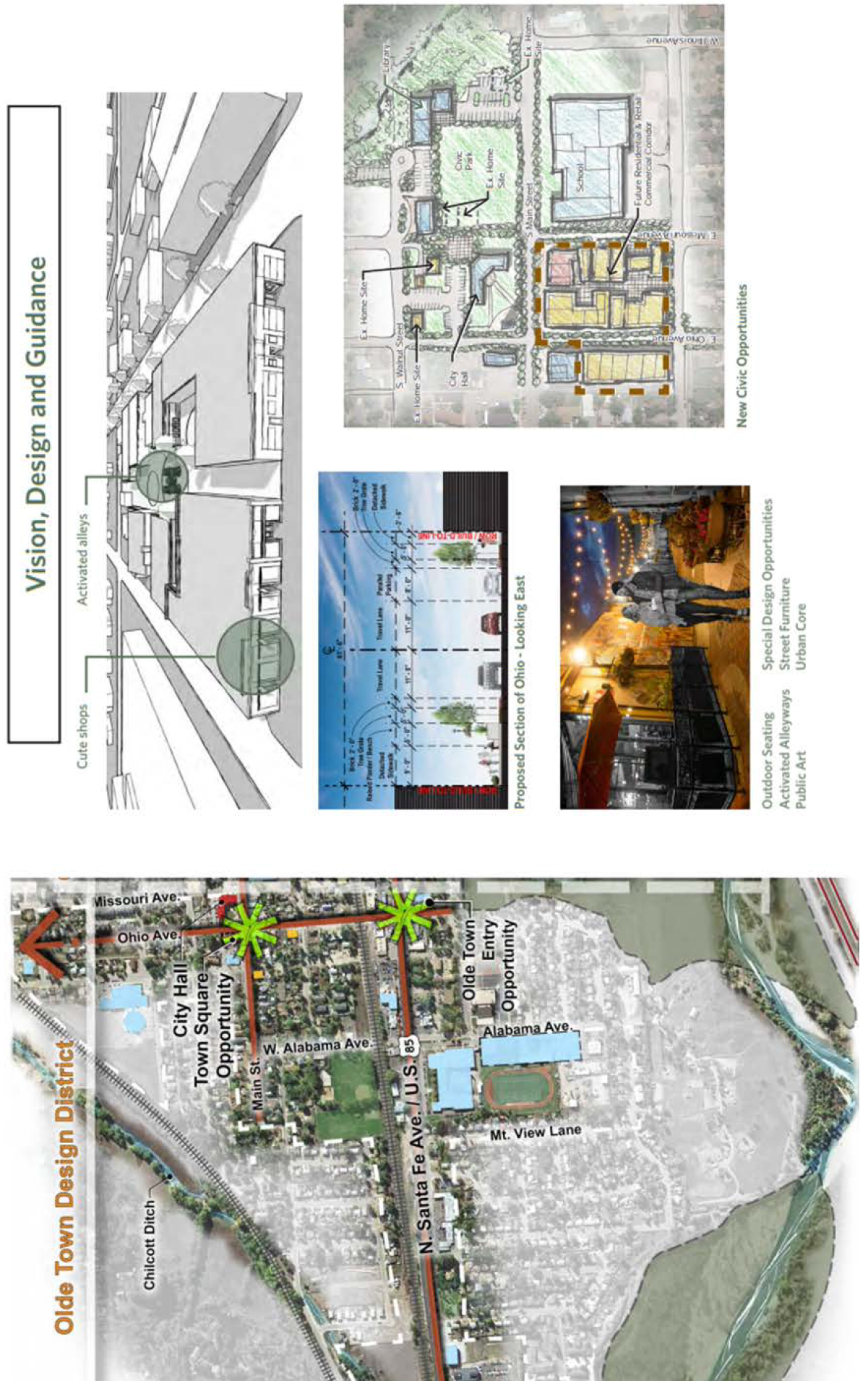
(Ord. No. 1742, § 1, 1-14-2020)
Sec. 17.05.100. - Gateway district overlay vision design and guidance.
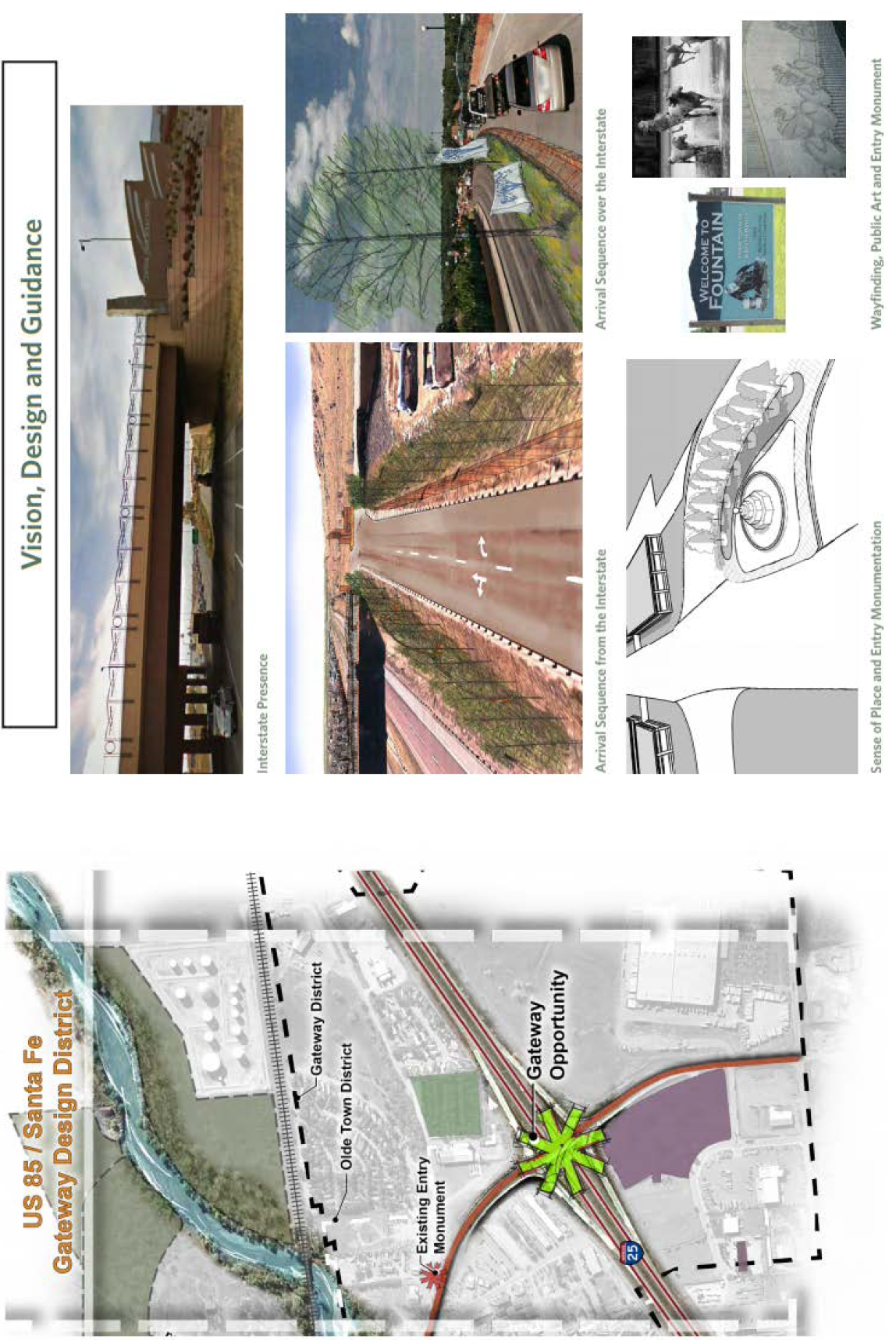
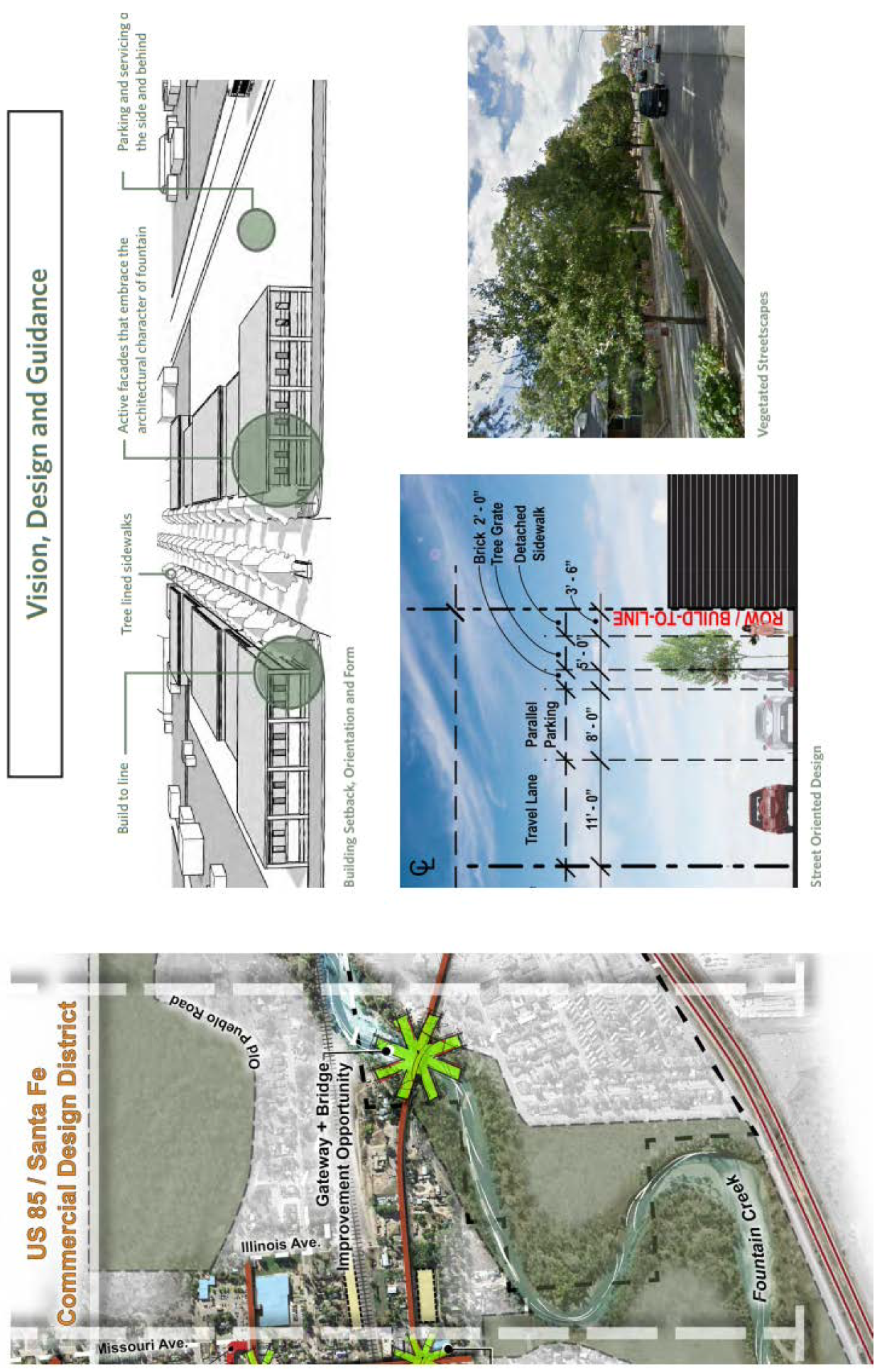
(Ord. No. 1742, § 1, 1-14-2020)
Sec. 17.05.110. - Fountain Creek access.
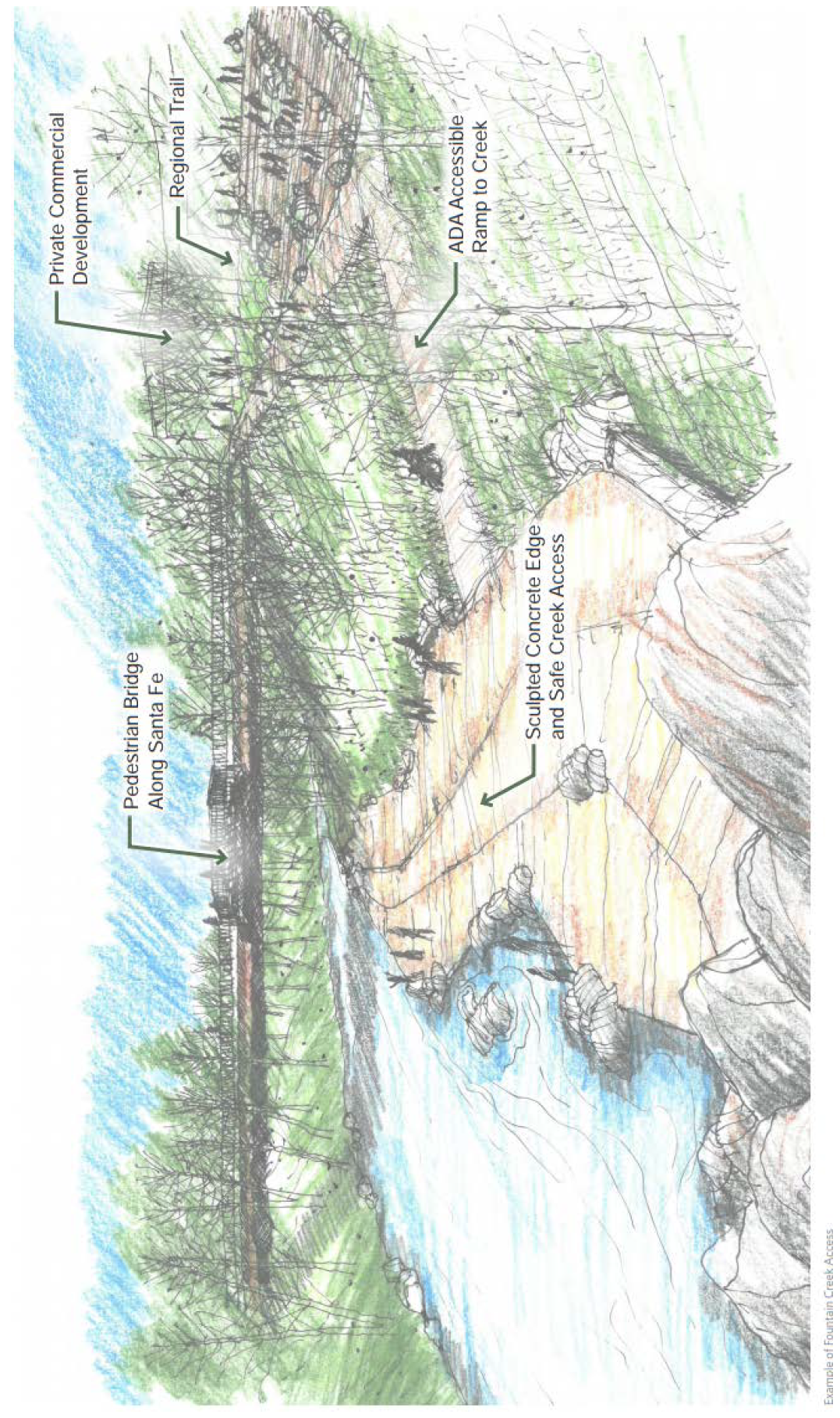
(Ord. No. 1742, § 1, 1-14-2020)

