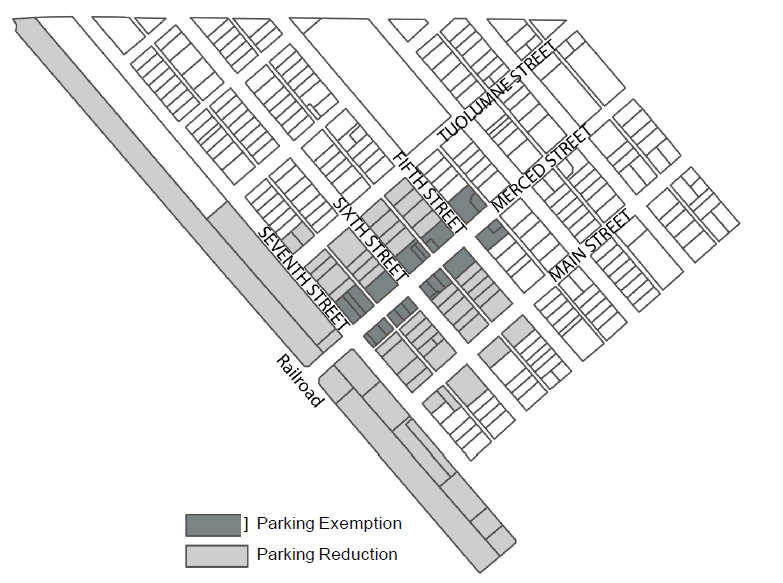
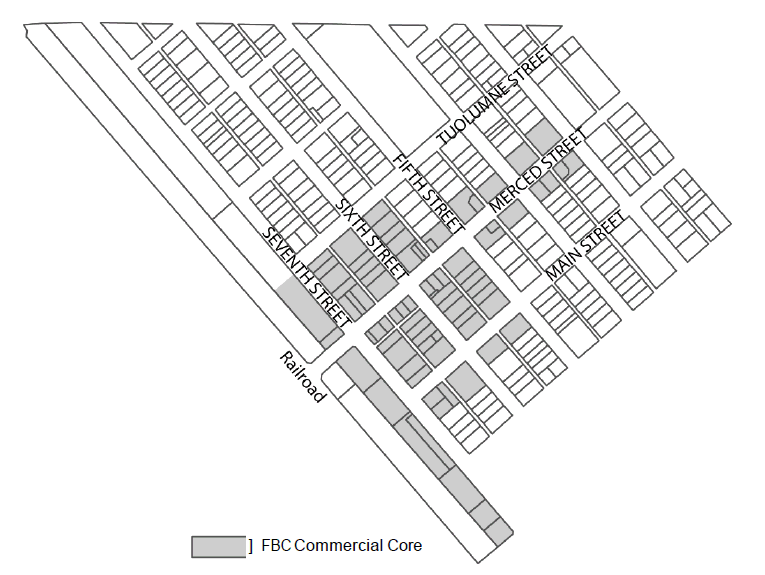
- SITE DEVELOPMENT REGULATIONS
The purpose of this Chapter is to provide general development standards to ensure future development is well designed and integrated with existing development.
The standards of this Chapter apply to multiple zone districts. To eliminate redundancies, these standards have been combined in this Chapter. These standards shall be considered in combination with any additional standards outlined in the individual zones included in Article 3 (Zones).
This Section establishes standards to ensure the provision of open areas around structures for visibility and traffic safety, access to and around structures, access to natural light, ventilation and direct sunlight, separation of incompatible land uses, and space for privacy, landscaping, and recreation. These requirements do not supersede any contained in Title 8 (Building Regulations).
A.
Setback Requirements and Measurement. All structures shall conform with the setback requirements established for each zoning district as outlined in Article 3 (Zones), and with any special setbacks established for specific uses by this Title. The nearest wall or post of a structure shall be used to determine the setback measurement. Except as otherwise specified in this Title, required yard areas shall be kept free of buildings and structures. Each yard shall be open and unobstructed from the ground upward, except as provided in this Section. Portions of a structure, including eaves or roof overhangs, shall not extend beyond a property line or into an access easement or street right-of-way.
B.
Exemptions from Setback Requirements. The minimum setback requirements of this Title apply to all uses except the following:
1.
Fences or walls constructed within the height limitations of this Title.
2.
Decks, patios, steps, terraces, and other site design elements that are placed directly upon the finished grade and do not exceed a height of eighteen (18) inches above the surrounding finished grade at any point.
3.
Retaining walls less than three (3) feet in height above the finished grade.
4.
Water elements, such as fountains, ponds, and other water treatments, may be placed in setback areas, provided they are integral to the overall architectural or landscape design of the site and comply with applicable site distance requirements as outlined in Section 9.150.070 (Intersection Sight Distance).
5.
Landscaping features, such as an entry gate or arbor, may be placed in setback areas, provided they are integral to the overall architectural or landscape design of the site and comply with applicable site distance requirements as outlined in Section 9.150.070 (Intersection Sight Distance).
6.
Public art, such as sculptures, statues, murals, and other installations of a durable and weatherproof design, may be placed in setback areas along public rights-of-way, provided they complement the overall architectural or landscape design of the site and comply with applicable site distance requirements as outlined in Section 9.150.070 (Intersection Sight Distance).
C.
Measurement of Setbacks. Setbacks shall be measured as follows (see Figure 9.150.030-1: Lot Types and Yard Setbacks):
1.
Front Yard Setbacks. Generally, the front yard setback is determined by the front lot line, which is the lot line paralleling the street. The setback shall be measured at right angles from the nearest point of the front property line, establishing a setback line parallel to the front property line that extends from the side property lines on each side.
a.
Corner Lots. In the case of a lot abutting two (2) or more streets (corner lot), the front yard shall be the shortest length of the lot abutting a street, unless otherwise designated by the Community and Economic Development Director.
b.
Flag Lots. The measurement shall be taken from the nearest point of the wall of the structure to the point where the access strip meets the bulk of the parcel, establishing a building line parallel to the lot line nearest to the public street or right-of-way.
2.
Interior Side Yard Setbacks. The interior side yard setback shall be measured at right angles from the nearest point of the interior side property line, establishing a setback line parallel to the side property lines that extends between the front yard setback and rear property line. For lots containing more than four (4) sides, any setback that is not a front, rear, or street side yard setback shall be designated an interior side yard setback.
3.
Street Side Yard Setbacks. The side yard on the street side of a corner lot shall be measured at right angles from the nearest point of the side property line adjoining the street, establishing a setback line parallel to the street side property line that extends between the front yard setback and rear property line.
4.
Rear Yard Setbacks. The rear yard shall be measured at right angles from the nearest point of the rear property line of the parcel, establishing a setback line parallel to the rear property line that extends between the street side yard and interior side yard setbacks. For lots containing more than four (4) sides, there shall be only one (1) side designated for the rear yard setback, which shall typically be located along the side abutting the rear yard of an adjacent residential property, or as determined by the Director.
5.
Through Lots. On through lots, either lot line separating such lot from a street may be designated as the front lot line. The required rear yard setback shall be equal to the required front yard setback.
Figure 9.150.030-1: Lot Types and Yard Setbacks
D.
Allowed Projections into Setbacks. The following architectural features, not providing additional floor space, may extend into the front, side, street side, and rear yard setbacks, only as follows and provided they comply with applicable site distance requirements as outlined in Section 9.150.070 (Intersection Sight Distance):
1.
Chimneys/Fireplaces. A chimney/fireplace that is attached to the primary structure, up to eight (8) feet in width, may extend a maximum of three (3) feet into a required setback but no closer than three (3) feet to a side or rear property line.
2.
Canopies, Cornices, Eaves, Roof Overhangs, and Wall Projections. Architectural features of structures, including, but not limited to, balconies, bay windows, canopies, cornices, eaves, wall projections, overhangs, and decorative features, that do not increase the floor area enclosed by the structure, may extend a maximum of three (3) feet into required yard setbacks but no closer than three (3) feet to a side or rear property line.
3.
Porches and pergolas. Porches and pergolas located at the same level as the entrance floor of the primary structure may extend:
a.
A maximum of six (6) feet into the required front yard setback. This standard applies only to porches; pergolas are prohibited from being located in a front yard area.
b.
A maximum of three (3) feet into the required interior and street side yard setback, provided however that no porch or pergola shall be located nearer than five (5) feet to the side or street side yard property line.
c.
A maximum of five (5) feet into the required rear yard setback, provided however that no porch or pergola shall be located nearer than five (5) feet to the rear yard property line.
4.
Stairways. External stairways may extend into the required interior side yard, street side yard, and rear yard setback by a maximum of two (2) feet, provided however that a stairway shall not be located within five (5) feet of an interior side or rear yard property line.
5.
Mechanical Equipment. Any mechanical equipment, including ground-mounted solar equipment, ground-mounted air conditioning units, electrical or gas meters, fixed equipment such as pool pumps and filters, and similar mechanical equipment may extend a maximum of three (3) feet into the street side yard setback. Any mechanical equipment, including ground-mounted air conditioning units, electrical or gas meters, fixed equipment such as pool pumps and filters, and similar mechanical equipment may be located no less than three (3) feet from a rear property or interior side property line. Mechanical equipment of any kind is not permitted in the front yard setback.
6.
Swimming Pools, Spas, Hot Tubs, and Related Features. Swimming pools, spas, hot tubs, and related features such as diving boards, pool slides, rock features, and similar features shall not be located less than five feet from the rear property line. Swimming pools, spas, hot tubs, and related features are not permitted in the front yard, street side yard, or interior side yard setbacks. The water's edge of a swimming pool, spa, hot tub and any associated water slide, rock feature or other structure shall be used to determine setback distance. Pool equipment shall comply with the setback requirements for mechanical equipment in accordance with Subsection (D)(5) of this Section.
The following rules apply to the calculation and determination of height of structures. The intent of these regulations is to provide for consistency in the measurement of building height under a variety of circumstances (e.g., graded site).
A.
Height Measurement. The height of a structure shall be measured as the vertical distance from the finished grade at the perimeter of the structure to the highest point of the structure. Height is measured as the vertical distance from the finished grade of the site to an imaginary plane located above and parallel to the finished grade. See Figure 19.150.040-1: Building Height Measurement.
B.
Height Exceptions. The following features are excluded from the height limits specified in this Title.
1.
Architectural Features. Chimneys, cupolas, flagpoles, monuments, radio and other towers, and similar structures and mechanical appurtenances may be permitted in excess of building height limits by no more than ten (10) feet.
2.
Amateur Radio Antennas. Amateur radio antennas may be permitted in excess of building height to allow for sufficient amateur radio service communications in accordance with Government Code section 65850.3, provided, however, that the same may be safely erected and maintained at such height in view of the specific conditions and circumstances affecting the structure and adjacent properties.
Figure 9.150.040-1: Building Height Measurement
Lot coverage shall be calculated by adding the square footage of each covered structure on a given lot. Lot coverage is measured from exterior wall to exterior wall. The following shall not be used in the calculation for lot coverage:
A.
Patios or decks.
B.
Playground structures.
C.
Outdoor fireplaces.
D.
Accessory Dwelling Units.
E.
Swimming pools, spas, hot tubs, and related features.
Every structure shall be constructed or placed upon a legally recorded parcel with a permanent means of access to a public street or road, or a private street or road, conforming to City standards. All structures shall be located to provide safe and convenient vehicular and pedestrian access.
A.
No structures, features, or projections shall be permitted in the clear sight triangle, except as follows:
1.
Structures, features, or projections less than eighteen (18) inches in height.
2.
Structures, features, or projections with a clearance height of less than eight (8) feet
B.
The clear sight triangle shall be determined by measuring in a horizontal plane along a property line, a specified distance from the intersecting point of two (2) property lines that comprise a ninety-degree (90°) angle and connecting the end points of each measured distance as shown in Figure 9.150.070-1: Clear Sight Triangle. The specified distances to be measured are as follows:
1.
For intersections of a major street to a major street, the distance measured shall be thirty (30) feet along each property line.
2.
For intersections of a major street to a minor street or local street, the distance measured shall be thirty (30) feet along the major street property line and ten (10) feet along the minor or local street property line.
3.
For intersections of a local street to a local street or alley, the distance measured shall be ten (10) feet along each property line.
C.
For intersections of a private driveway with a major street, minor street, local street, or alley, the distance measured shall be ten (10) feet along both property lines. Driveways serving a single-family residence are exempt from this requirement.
D.
Exemptions. Buildings located in the FBC district are exempt from providing the clear sight triangle required in this Section. Signs, walls, and landscaping in the FBC district shall comply.
Figure 9.150.070-1: Clear Sight Triangle
In addition to the requirements of CBC Section 1030 all bars, grills, grates, or similar devices shall comply with the following:
A.
In addition to the requirements of California Building Code (CBC) Section 1030, non-decorative bars, grills, grates, or similar shall not be visible from a public street, not including alleys. Such features shall be included on all permit applications for evaluation by the City in compliance with this Section.
B.
Any person who willfully or knowingly, with the intent to deceive, makes a false statement or representation, or knowingly fails to disclose a material fact in any documentation required by the Department to evaluate compliance with this Section, including any oral or written evidence presented, shall be guilty of a misdemeanor.
This Chapter establishes regulations for the design and location of accessory structures to ensure that such structures are compatible with the primary structure on a lot and maintain the residential character of the property.
The regulations in this Chapter apply to the following accessory structures located within zones that allow residential uses:
A.
Unenclosed accessory structures, including carports, pergolas, gazebos, and front porch covers. For purposes of this Chapter, rear porch covers are not considered accessory structures.
B.
Enclosed accessory structures, including garages, sheds, workshops, greenhouses, guest quarters, and pool houses. For the purposes of this Chapter, accessory dwelling units are not considered accessory structures; accessory dwelling units are governed by the requirements of Chapter 9.200 (Accessory Dwelling Units).
C.
Playground structures, outdoor fireplaces, and similar structures.
A.
Site Plan Review Required. Accessory structures meeting either of the following thresholds shall require a Site Plan Review in accordance with Chapter 9.85 (Site Plan Review).
1.
Structures greater than six hundred (600) square feet in size.
2.
Structures exceeding a building height of twelve (12) feet at plate height or an overall height of sixteen (16) feet, unless the accessory structure is located less than ten (10) feet from the primary structure.
B.
Zone Clearance Required. Accessory structures requiring a building permit or accessory structures meeting both of the following thresholds shall require a Zone Clearance in accordance with Chapter 9.105 (Zone Clearance).
1.
Structures greater than one hundred twenty (120) square feet but less than or equal to six hundred (600) square feet in size.
2.
Structures with a plate height of less than or equal to twelve (12) feet and an overall height of less than or equal to sixteen (16) feet.
C.
Exemptions. The following accessory structures do not require a Site Plan Review or Zone Clearance, provided they meet all applicable development standards as contained in this Chapter. Additional permits, such as building permits, may be required.
1.
Accessory structures of one hundred twenty (120) square feet or less.
2.
Playground structures, outdoor fireplaces, and structures determined to be similar by the Director meeting all the following standards:
a.
Structures of one hundred twenty (120) square feet or less.
b.
Structures located no closer than five (5) feet to the interior side property line if located to the rear of the primary structure.
c.
Structures located no closer than five (5) feet to the rear property line.
d.
Playground structures shall not have an overall height greater than twelve (12) feet.
e.
Outdoor fireplaces, or similar structures as determined by the Director, shall not have an overall height greater than six (6) feet.
An accessory structure is permitted in all zones that allow residential uses, subject to the following requirements, which are in addition to any requirements of the applicable zone.
A.
Incidental Use. Accessory structures shall be incidental to and not alter the residential character of a parcel and no accessory structure shall be erected unless a primary building exists on the parcel.
B.
Location. Accessory structures shall be located only in rear or interior side yards.
C.
Setbacks. The minimum setbacks for accessory structures shall be as follows:
1.
Unenclosed or partially enclosed accessory structures located less than ten (10) feet from the primary structure shall comply with the required setbacks of the primary structure.
2.
Enclosed accessory structures located less than ten (10) feet from the primary structure shall comply with the required setbacks for the primary structure.
3.
Enclosed, partially enclosed, and unenclosed accessory structures located ten (10) feet or more from the primary structure shall comply with the minimum setbacks identified in Table 9.155.040-1: Accessory Structure Setbacks.
4.
Partially enclosed for purposes of this Section shall mean that at least seventy-five percent (75%) of all exposed sides are open or transparent.
Table 9.155.040-1: Accessory Structure Setbacks
;sz=9;Notes:
;sz=9; 1 Minimum setbacks apply only to those unenclosed, partially enclosed, and enclosed accessory structures located ten (10) feet or more from the primary structure.
;sz=9; 2 Projections and encroachments may be permitted within required setbacks in accordance with Section 9.150.030 (Setback Requirements and Exceptions).
D.
Distance Between Buildings. A minimum of ten (10) feet shall be maintained between accessory structures on the same parcel.
E.
Height. The height of accessory structures shall be limited to the following:
1.
Unenclosed and partially enclosed accessory structures located less than ten (10) feet from the main structure shall not exceed an overall height of sixteen (16) feet or a plate height of twelve (12) feet, except as allowed under Subsection (E)(4), Exceptions, of this Section.
2.
Enclosed accessory structures located less than ten (10) feet from the main structure shall comply with the development standards for the main structure, including building height.
3.
Enclosed, partially enclosed, and unenclosed accessory structures located ten (10) feet or more from the main structure shall not exceed an overall height of sixteen (16) feet or a plate height of twelve (12) feet, except as allowed under Subsection (E)(4), Exceptions, of this Section.
4.
Exceptions. Accessory structures may exceed an overall height of sixteen (16) feet or a plate height of twelve (12) feet, subject to review and approval of a Site Plan Review.
F.
Architectural Compatibility. All accessory structures that enclose or cover more than one hundred twenty (120) square feet shall be required to be architecturally compatible with the primary structure on site. Architectural compatibility shall be determined as follows:
1.
An accessory structure shall be considered architecturally compatible when the accessory structure is consistent with at least three (3) of the following architectural features or traits of the primary structure on-site:
a.
Wall color.
b.
Wall-covering materials (e.g., wood, stucco, metal).
c.
Wall texture (e.g., smooth, stucco, lace stucco, lap siding).
d.
Roofing material (e.g., tile, shake, composition, metal).
e.
Roof pitch.
f.
Structural eaves (e.g., present or absent; when present, the extent/distance projecting from supporting wall).
g.
Fascia materials (e.g., present and, if so, decorative or functional).
h.
Decorative treatments (e.g., pop-outs, columns, dormers, window surrounds, decorative arches).
2.
Exemptions. The following accessory structures are exempt from the requirement to demonstrate architectural compatibility.
a.
Accessory structures exempt from permit requirements, as outlined in Section 9.155.030, Subsection (C).
b.
Any accessory structure which, by its location, is not visible to an individual standing at ground level from any public street, not including alleys.
G.
Access. An accessory structure used for vehicle storage shall have clear, unobstructed access to the structure from the street. The access drive shall be improved with a City-approved surface material. No additional curb cuts may be installed for the accessory structure unless otherwise approved by the City Engineer.
This Chapter implements the statutory requirements set forth in Government Code sections 65915—65918 (State Density Bonus Law).
The provisions of this Chapter shall apply to all housing developments, including mixed-use developments, providing a minimum of five (5) residential units. If any provision of this Chapter conflicts with State Density Bonus Law, the latter shall govern.
A.
Eligibility. Eligibility for density bonus allowances and incentives are determined based on the provision of a minimum number of affordable units within the projects as specified by project type and income level, as specified in Section 9.160.050 (Density Bonus Allowances for Qualified Housing Developments), Section 9.160.060 (Density Bonus Allowances for Target Population Housing), and Section 9.160.070 (Density Bonus Allowances for Qualified Land Donations).
B.
Ineligibility. An applicant shall be ineligible for density bonus allowances or incentives if the housing development meets any of the following, unless the proposed housing development replaces those units, and meet either of the criteria specified in Government Code section 65915, subdivision (c)(3)(A).
1.
The housing development is proposed on any property that includes a parcel or parcels on which rental dwelling units are located or, if the dwelling units have been vacated or demolished in the five-year period preceding the application, have been subject to a recorded covenant, ordinance, or law that restricts rents to levels affordable to persons and families of low-income or very low-income.
2.
The housing development is subject to any other form of rent or price control through a public entity's valid exercise of its police power.
3.
The housing development is occupied by lower or very low-income households.
A.
Application Filing. When an applicant seeks a density bonus for a housing development that provides at least the minimum number of affordable units required, the affordable housing developer shall comply with all the following:
1.
File an application for a density bonus on a form provided by the City. Such application shall be submitted in conjunction with the project application and shall be processed concurrently with all other applications required for the project.
2.
State in the application the specific minimum affordable housing units, income levels, and/or target populations, as applicable, proposed for the housing development.
3.
If an applicant is requesting an incentive or concession in accordance with Section 9.160.080 (Incentives and Concessions), the application shall:
i.
Include a specific written proposal for the requested incentive or concession.
ii.
Establish that each requested incentive or concession would result in identifiable, financially sufficient, and actual cost reductions for the qualified housing development.
4.
If the applicant is requesting a waiver or reduction in accordance with Section 9.160.090 (Waivers or Reductions of Development Standards), the application shall:
a.
Include a specific written proposal for the requested waiver or reduction.
b.
Demonstrate how the waiver or reduction is necessary for construction of the housing development at the densities or with the concessions or incentives permitted in accordance with this Chapter.
5.
If the applicant is requesting a parking standard in accordance with Section 9.160.100 (Parking Standard Modifications), the application shall include a specific written statement noting the request.
B.
Application Fees. Application fees shall be collected in accordance with Section 9.30.020 (Applications and Fees).
C.
Completeness Review. The City shall review the submitted application for completeness in accordance with Government Code section 65943. Upon review, the City shall provide the applicant with a determination as to the following matters:
1.
The amount of density bonus for which the applicant is eligible.
2.
Whether the applicant has provided adequate information for the City to make a determination as to the incentives, concessions, or waiver or reduction of development standards, if requested.
3.
The parking ratio for which the applicant is eligible, if requested.
D.
Meeting with City Upon Request. An applicant for a density bonus, incentive and concession, waiver or reduction of development standards, or parking standard request pursuant to this Chapter may request a meeting with the Community and Economic Development Director, or designee, to review the proposal.
A.
Density Bonus Allowance. Density bonus allowances are determined based on the percent and type of affordable housing units provided within a housing development, as identified in Table 9.160.050-1: Density Bonus Allowance by Affordability. The applicant may also elect to accept a lesser percentage of density bonus.
B.
Calculations.
1.
For the purpose of calculating a density bonus, residential units shall be on contiguous sites that are the subject of one development application, but do not have to be based upon individual subdivision maps or parcels.
2.
All density calculations resulting in fractional units shall be rounded up to the next whole number.
Table 9.160.050-1: Density Bonus Allowance by Affordability
Notes:
1 Income category of affordable housing units provided within the housing development.
2 Minimum percentage of affordable housing units required within the housing development to qualify for a density bonus.
3 Maximum percentage of affordable housing units required within the housing development to qualify for the maximum density bonus.
4 Density bonus allowances are determined based on the percentage and income category of the affordable units provided. Density bonuses are percent increases beyond the maximum residential density allowed.
5 Minimum density bonus allowance to be provided. The minimum density bonus is provided only once the minimum percentage of affordable housing units is provided within the related income category.
6 Maximum density bonus allowance to be required. The maximum density bonus is provided only once the maximum percentage of affordable housing units is provided within the related income category.
7 For every one percent (1%) increase in the affordable housing units provided within the housing development beyond the minimum percentage of affordable units specified within the applicable income category, the minimum density bonus allowance shall increase by the stated increment to the maximum density bonus allowed.
C.
Additional Density Bonus Allowance for One Hundred Percent (100%) Affordable Housing. Notwithstanding the maximum density bonus allowance specified in Table 9.160.050-1: Density Bonus Allowance by Affordability, housing developments providing one hundred percent (100%) affordable housing units at either the very low-income, low-income, or moderate-income category, or any combination thereof, shall be eligible for a density bonus of eighty percent (80%).
D.
Additional Density Bonus Allowance for Provision of Childcare Facilities.
1.
Eligibility. Housing developments providing a childcare facility located on the premises, as a part of, or adjacent to the housing development and meeting, or are conditioned to meet, both of the following requirements shall be eligible for an additional density bonus allowance as specified in Subsection (D)(3), Childcare Facility Density Bonus Allowance of this Section.
a.
The childcare facility shall remain in operation for a period of time that is as long as or longer than the period of time during which the affordable units are required to remain affordable pursuant to Government Code section 65915, subdivision (c).
b.
Of the children who attend the childcare facility, the children of very low-income households, low-income households, or moderate-income households shall constitute a percentage that is equal to or greater than the percentage of dwelling units that are required under the respective minimum affordable housing component income category for which the density bonus is sought.
2.
Adequate Facilities. The City is authorized to not provide a density bonus as provided in this Section upon substantial evidence that the community has adequate childcare facilities.
3.
Childcare Facility Density Bonus Allowance. A density bonus allowance shall be granted in the amount of square feet of residential space that is equal to or greater than the amount of square feet in the childcare facility. This density bonus allowance is in addition to the density bonus allowance provided under Subsection (A), Density Bonus Allowance, of this Section.
E.
Additional Density Bonus Allowance for Mixed-Income Housing.
1.
Eligibility. Housing developments providing the following percent and type of affordable housing units are eligible for an additional density bonus allowance as specified in Subsection (E)(2), Mixed-Income Density Bonus Allowance, of this Section.
a.
Housing developments providing at least fifteen percent (15%) affordable housing units at the very low-income category and providing additional affordable units at the income category and percentages specified in Table 9.160.050-2: Mixed-Income Density Bonus Allowance by Affordability.
b.
Housing developments providing at least twenty-four percent (24%) affordable housing units at the low-income category and providing additional affordable units at the income category and percentages specified in Table 9.160.050-2: Mixed-Income Density Bonus Allowance by Affordability.
c.
Housing developments providing at least forty-four percent (44%) affordable housing units at the moderate-income category and providing additional affordable units at the income category and percentages specified in Table 9.160.050-2: Mixed-Income Density Bonus Allowance by Affordability.
2.
Additional Mixed-Income Density Bonus Allowance. Additional density bonus allowances are determined based on the percent and type of additional affordable housing units provided within a housing development, as identified in Table 9.160.050-2: Mixed-Income Density Bonus Allowance by Affordability.
3.
Maximum on Affordable Units. No more than fifty percent (50%) of the resulting housing development, inclusive of the units awarded through a density bonus, shall be income restricted to the very low-income, low-income, or moderate-income category.
Table 9.160.050-2: Mixed-Income Density Bonus Allowance by Affordability
Notes:
1 Income category of affordable housing units provided within the housing development in addition to the percent of affordable housing units provided to qualify for a density bonus allowance in accordance with Section 9.160.050.A (Density Bonus Allowance) ("additional affordable units").
2 Minimum percentage of additional affordable housing units required within the housing development to qualify for the mixed-income density bonus.
3 Maximum percentage of additional affordable housing units required within the housing development to qualify for the maximum mixed-income density bonus.
4 Density bonus allowances are determined based on the percentage and income category of the additional affordable units provided. Density bonuses are percent increases beyond the number of housing units excluding any density bonus awarded by this Chapter.
5 Minimum density bonus allowance to be provided. The minimum density bonus is provided only once the minimum percentage of additional affordable housing units is provided within the related income category.
6 Maximum density bonus allowance to be required. The maximum density bonus is provided only once the maximum percentage of additional affordable housing units is provided within the related income category.
7 For every one percent (1%) increase in the additional affordable housing units provided within the housing development beyond the minimum percentage of additional affordable units specified within the applicable income category, the minimum density bonus allowance shall increase by the stated increment to the maximum density bonus allowed.
A.
Senior Housing. Senior citizen housing developments or mobile home parks that limit residency based on age requirements for housing for older persons pursuant to Civil Code sections 798.76 or 799.5, are eligible for a twenty percent (20%) density bonus allowance. The density bonus shall be calculated based on the number of senior housing units provided.
B.
Transitional Foster Youth, Disabled Veterans, or Homeless Persons. Housing developments providing a minimum of ten percent (10%) of units for individuals qualifying as transitional foster youth, as defined in Section 66025.9 of the Education Code, disabled veterans, as defined in Section 18541 of the Government Code, or homeless persons, as defined in the federal McKinney-Vento Homeless Assistance Act (42 U.S.C. § 11301, et seq.), are eligible for a twenty percent (20%) density bonus allowance beyond the maximum density allowed. Housing units provided for transitional foster youth, disabled veterans, and homeless persons shall be subject to a recorded affordability restriction of fifty-five (55) years and shall be provided at the same affordability level as very low-income units.
C.
Student Housing. Housing developments providing a minimum of twenty percent (20%) of units for lower income students as defined by Government Code section 65915, subdivision (b)(1)(F)(I) and meeting all the following criteria shall be eligible for a thirty-five percent (35%) density bonus allowance. The density bonus shall be calculated based on the number of student housing units provided.
1.
The rent provided in the lower income student housing units equals thirty percent (30%) of sixty-five percent (65%) of the area median income for a single-room occupancy unit type.
2.
The housing development gives priority to lower income students experiencing homelessness.
3.
For purposes of calculating a density bonus pursuant to this Section, the term "unit" means one (1) rental bed and its pro rata share of associated common area facilities.
A.
Eligibility. For a density bonus for a qualified land donation to be granted, all the following requirements shall be met.
1.
The applicant is applying for a tentative subdivision map, tentative parcel map, or other residential development approval.
2.
The applicant agrees to donate and transfer qualified land, which is land that meets both the following criteria:
a.
The developable acreage and zoning classification of the land being transferred must be sufficient to permit construction of units affordable to very low-income households in an amount equal to not less than ten percent (10%) of the number of residential units of the proposed development.
b.
The transferred land shall be at least one (1) acre in size or of sufficient size to permit development of at least forty (40) units, have the appropriate General Plan land use designation, be appropriately zoned with development standards for development at a minimum density of twenty (20) dwelling units per acre, in accordance with Government Code section 65583.2, subdivision (c)(3), and be or will be served by adequate public facilities and infrastructure.
3.
The qualified land shall be transferred to the City or to a housing developer approved by the City no later than the date of approval of the final subdivision map, parcel map, or residential development application. The City may require the applicant to identify and transfer the land to an approved housing developer.
4.
The qualified land has all of the permits and approvals, other than building permits, necessary for the development of the very low-income affordable housing units on the qualified land, not later than the date of approval of the final subdivision map, parcel map, or residential development application filed. However, the City may subject the proposed development to subsequent design review to the extent authorized by Government Code section 65583.2, subdivision (i) if the design is not reviewed by the City prior to the time of transfer.
5.
The qualified land and the affordable units are subject to a deed restriction ensuring continued affordability of the units for fifty-five (55) years, which must be recorded against the qualified land at the time of the transfer.
6.
The qualified land is within the boundary of the proposed development or, if approved by the City, within one-quarter (0.25) mile of the boundary of the proposed development.
7.
A proposed source of funding for the very low-income affordable housing units shall be identified no later than the date of approval of the final subdivision map, parcel map, or residential development application.
B.
Qualified Land Donation Density Bonus Allowance. If all requirements of Section 9.160.070, Subsection (A), Eligibility, are met, the applicant shall be entitled to a density bonus allowance, as specified in Table 9.160.070-1: Qualified Land Donation Density Bonus Allowance.
Table 9.160.070-1: Qualified Land Donation Density Bonus Allowance
A.
Qualifications for Incentives and Concessions. An applicant for a density bonus pursuant to this Chapter may request incentives or concessions in association with the housing development or land donation qualifying for such density bonus.
B.
Number of Incentives or Concessions. The following number of incentives or concessions may be granted, based on the number and income level of affordable housing units of the housing development.
1.
One (1) incentive for qualified housing development projects that include at least five percent (5%) of the total units for very low-income households, at least ten percent (10%) for low-income households, or at least ten percent (10%) for persons and families of moderate-income households in a common interest development.
2.
Two (2) incentives for qualified housing development projects that include at least ten percent (10%) of the total units for very low-income households, at least seventeen percent (17%) for low-income households, or at least twenty percent (20%) for persons and families of moderate-income households in a common interest development.
3.
Three (3) incentives for qualified housing development projects that include at least fifteen percent (15%) of the total units for very low-income households, at least twenty-four percent (25%) for low-income households, or at least thirty percent (30%) for persons and families of moderate-income households in a common interest development.
4.
Four (4) incentives for qualified housing developments that include one hundred percent (100%) of total units, exclusive of a manager's unit or units, for lower income households, except that up to twenty percent (20%) of the total units in the development may be for moderate-income households.
5.
Additional incentives or concessions. Projects meeting either of the following criteria shall receive incentives and concessions in addition to the number specified above.
a.
If the project is within one-half (0.5) mile of a major transit stop, the project shall also receive a height increase of up to three (3) additional stories, or thirty-three (33) feet.
b.
A qualified housing development proposal that includes a childcare facility shall be granted an additional incentive that contributes significantly to the economic feasibility of the construction of the childcare facility.
C.
Types of Incentives or Concessions. Incentive or concession means any of the following:
1.
A reduction in site development standards or a modification of development code requirements or design guidelines that exceed the minimum building standards approved by the California Building Standards Commission as provided in Part 2.5 (commencing with Section 18901) of Division 13 of the Health and Safety Code that would result in identifiable and actual cost reductions to provide for affordable housing costs.
2.
Approval of mixed-use zoning in conjunction with the qualified housing development if commercial, office, industrial, or other land uses will reduce the cost of the qualified housing development and if the commercial, office, industrial, or other land uses are compatible with the qualified housing development and the existing or planned development in the area where the proposed qualified housing development will be located.
3.
Other regulatory incentives proposed by the affordable housing developer or the City that result in identifiable, financially sufficient, and actual cost reductions to provide for affordable housing costs.
4.
Nothing in this Section limits or requires the provision of direct financial incentives by the City for the qualified housing development, including the provision of publicly owned land, or the waiver of fees or dedication requirements.
C.
Criteria for Denial of Incentives and Concessions. Except as otherwise provided in this Chapter or by State law, the City shall grant the incentive(s) or concession(s) requested unless a written finding, based upon substantial evidence, is made with respect to any of the following, in which case the City may refuse to grant the incentive(s) or concession(s):
1.
The incentive or concession is not required in order to provide affordable housing costs or affordable rents for the affordable units subject to the qualified housing development application.
2.
The incentive or concession would have a specific, adverse impact, as defined in Government Code section 65589.5, subdivision (d)(2), upon health and safety and, if such a specific, adverse impact exists, there is no feasible method to satisfactorily mitigate or avoid the specific, adverse impact.
3.
The incentive or concession would have an adverse impact on any real property that is listed in the California Register of Historical Resources.
4.
The incentive or concession would be contrary to State or federal law.
A.
Qualifications for Waivers or Reductions. An applicant for a density bonus pursuant to this Chapter may request a waiver or reduction in development standards in association with the housing development or land donation qualifying for such density bonus.
B.
Effect of Proposal for Waiver or Reduction of Development Standards. A proposal for the waiver or reduction of development standards shall neither reduce nor increase the number of incentives or concessions to which the applicant is entitled to pursuant to Section 9.160.080 (Incentives or Concessions).
C.
Findings for Approval of Waiver or Reduction of Development Standards. All of the following findings shall be made to approve the requested waiver or reduction of development standard.
1.
The development standard for which a waiver or reduction is requested will have the effect of physically precluding the construction of the proposed qualified housing development at the densities or with the incentives permitted under this Chapter.
2.
The requested waiver or reduction of a development standard will not have a specific, adverse impact, as defined in Government Code section 65589.5, subdivision (d)(2), upon health and safety or, if such a specific, adverse impact exists, there is a feasible method to satisfactorily mitigate or avoid the specific, adverse impact.
3.
The requested waiver or reduction of a development standard will not have an adverse impact on any real property that is listed in the California Register of Historical Resources.
4.
The requested waiver or reduction of a development standard is not contrary to State or federal law.
A.
Maximum Parking Standard Upon Request. In addition to any incentives or concessions pursuant to Section 9.160.080 (Incentives and Concessions) or any waivers or reductions pursuant to Section 9.160.090 (Waivers or Reductions), an applicant for a density bonus pursuant to this Chapter may request the following maximum parking rates, inclusive of handicap and guest parking, for a qualified housing development or land donation:
1.
Zero (0) to one (1) bedroom: One (1) on-site parking space
2.
Two (2) to three (3) bedrooms: One and one-half (1.5) on-site parking spaces
3.
Four (4) and more bedrooms: Two and one-half (2.5) on-site parking spaces
B.
Exceptions. The maximum parking standards shall be as follows for projects meeting the specified criteria. Such parking standards shall apply, inclusive of handicap and guest parking, to the entire housing development, unless a citywide parking study has been prepared in accordance with Government Code section 65915, subdivision (p)(7).
1.
A maximum of one-half (0.5) parking spaces per unit shall apply for projects meeting all the following criteria:
a.
The development includes at least twenty percent (20%) low-income units or at least eleven percent (11%) very low-income units.
b.
The development is located within one-half (0.5) miles of a major transit stop, as defined in subdivision (b) of Section 21155 of the California Public Resources Code.
c.
There is unobstructed access to the major transit stop from the development. A development shall have unobstructed access to a major transit stop if a resident is able to access the major transit stop without encountering natural or constructed impediments.
2.
A maximum of one-half (0.5) spaces per bedroom shall apply for projects meeting all the following criteria:
a.
The development includes at least forty percent (40%) moderate-income for-sale units.
b.
The development is located within one-half (0.5) miles of a major transit stop, as defined in subdivision (b) of Section 21155 of the Public Resources Code.
c.
There is unobstructed access to the major transit stop from the development. A development shall have unobstructed access to a major transit stop if a resident is able to access the major transit stop without encountering natural or constructed impediments.
3.
No vehicular parking requirement shall be imposed on any projects providing one hundred percent (100%) affordable units and meeting all applicable criteria as specified in Government Code section 65915, subdivision (p)(3).
C.
If the total number of parking spaces required for the qualified housing development is other than a whole number, the number shall be rounded up to the next whole number. For purposes of this Section, "on-site parking" may be provided through tandem parking or uncovered parking, but not through on-street parking.
D.
Except as otherwise provided in this Section, all other provisions of this Title, including the standards of Chapter 9.180 (Parking and Loading Standards) applicable to residential development, shall apply.
No density bonus pursuant to this Chapter shall be granted unless and until the applicant and the City enters into an affordable housing agreement and, if applicable, an equity sharing agreement, in compliance with Government Code section 65915, subdivision (c)(1) or (2), as applicable. The affordable housing agreement shall be recorded prior to, or concurrently with, final map recordation or, where the qualified housing development does not include a map, prior to issuance of a building permit for any structure on the site.
This chapter establishes minimum landscape requirements for consistent application throughout the City. These requirements include provisions to reduce heat by providing landscaped areas and shading, improve health and livability, promote efficient use of water, and ensure that landscaping is maintained.
A.
New Buildings and Uses. All buildings approved and all uses of land established after the effective date of this Title shall comply with the requirements of this Chapter.
B.
Modification to Existing Structures and Uses. Whenever an existing building is modified, or a use is expanded such that it creates an increase of more than ten percent (10%) in the number of existing dwelling units for residential projects or more than ten percent (10%) in the existing square footage of commercial or industrial projects, landscaping shall be provided as required by this Chapter to the greatest extent feasible.
C.
Rehabilitated Landscape Projects. Rehabilitated landscape projects that require a building permit and have an aggregate landscape area equal to or greater than two thousand five hundred (2,500) square feet.
D.
Change of Use. Whenever a change of use is proposed within an existing building and such use is a change in building classification, landscaping shall be provided as required by this Chapter.
E.
Maintenance. Maintenance requirements, including requirements for removal and replacement of landscaping and irrigation, shall apply to all landscape areas regardless of when they were installed.
Preliminary and final landscape plans shall be submitted for review and approval as follows.
A.
Preliminary Landscape Plan Required. A preliminary landscape plan shall be submitted for review as part of the applicable planning review process. The preliminary landscape plan may be combined with the submitted site plan. At a minimum, a preliminary landscape plan shall include the following:
1.
Square feet of landscaped areas, square feet of impervious materials, and conceptual locations for trees, shrubs, ground cover, etc.
2.
A corresponding list of planting material by species (using common and scientific name), quantity, and size shall be included.
B.
Final Landscape and Irrigation Plan Required. Following review and approval of a preliminary landscape plan, a final landscape and irrigation plan shall be submitted prior to, or concurrent with, the building permit and shall be approved prior to installation. The final landscape and irrigation plan shall be reviewed through the Zone Clearance process. At a minimum, the final landscape and irrigation plan shall:
1.
Be prepared by a registered licensed landscape architect and shall be in substantial compliance with the preliminary landscape plan approved by the designated approving authority.
2.
Show the location of and irrigation for trees, shrubs, and ground cover.
3.
Include, at a minimum, plant name (providing both common and scientific name), plant quantity, plant size, location of permeable surfaces, utilities and lighting, irrigation system, and plans for tree retention and removal where applicable.
4.
Include a water budget that identifies the estimated water use (in gallons), irrigated area (in square feet), precipitation rate, and flow rate in gallons per minute.
The following standards shall apply to all landscaping.
A.
Compliance with Water Efficient Landscape Ordinance. All applicable projects are required to comply with the provisions of Section 6-4.1301 (Water Efficient Landscaping Standards) of the Fowler Municipal Code. Such requirements are in addition to the standards of this Chapter. Where such standards are in conflict, the more restrictive standard shall apply.
B.
Landscaping Required. All required yards shall be landscaped, except where the required yard is:
1.
Occupied by a walkway or driveway or other approved hardscape in accordance with the requirements of this Title; or
2.
Screened from public view by a wall or fence of at least six (6) feet in height.
C.
Substantial Landscaping. All required landscape areas and planters, unless utilized for other purposes such as water quality and retention (e.g., low impact development) shall be landscaped with a mix of trees, shrubs, and ground cover to create a dense and layered design.
D.
Decorative Materials. Decorative materials such as mulch, decomposed granite, and bark, as well as non-living inert material (e.g., rock, cobbles, decorative stone), may be used within any landscape area required by this Chapter. Decorative materials shall constitute no more than forty percent (40%) of the landscape area, not including any hardscape areas (e.g., walkways, driveways).
E.
Public and Pedestrian Spaces. Public and pedestrian space landscaping shall include a combination of shade trees and pedestrian shading devices (e.g., canopies, awnings, umbrellas) placed so as to cover fifty percent (50%) of the total space with a shade canopy within fifteen (15) years.
F.
Trees Adjacent to Buildings. Trees shall be planted at a rate of one (1) tree for every thirty (30) linear feet adjacent to buildings measuring over thirty (30) lineal feet in areas of public view. Trees shall be located to interrupt expansive horizontal and vertical surfaces.
G.
Street Trees Required. One (1) medium-sized street tree shall be required at the following rates within the public right-of-way frontage, not including alleys. Street trees shall be planted within the public right-of-way. Where there is no allowance for street trees to be planted within the public right-of-way, the street tree shall be planted on-site within fifteen (15) feet of the front and street side property line, as applicable, and shall be an approved street tree type. Such tree shall not be removed without replacement and such replacement tree shall be of an approved street tree type.
1.
Single-family residential, multi-family residential, and commercial: One (1) tree for every thirty (30) lineal feet.
2.
Industrial: One (1) tree for every sixty (60) lineal feet.
H.
Tree Requirements. In addition to the number of trees required, the following shall also be required:
1.
Tree size. All trees required shall be a minimum 15-gallon size at the time of planting.
2.
Tree location. No trees shall be planted under any eave, balcony, or overhang, or located within an easement without the express, written permission of the easement holder.
3.
Street trees. Street trees, including those planted on private lots in accordance with Subsection (G) of this Section, shall be provided per City standards.
I.
Existing Trees. Mature trees on site and in good health but that do not meet the size standard to qualify as a protected private tree in accordance with Section 9.165.080 (Protected Private Trees) shall be preserved whenever possible. Trees maintained on-site may count toward the on-site tree requirement.
J.
Compliance Required Prior to Occupancy. When property is undeveloped at the time landscaping requirements are imposed, all required landscaping and irrigation shall be provided and operational prior to the time a main building is occupied or when any open use, other than agricultural, occurs on the property.
K.
Water Source Required. All vegetation shall be provided with a permanent source of water by means of an on-site watering system. The irrigation plan shall indicate the type of heads, pipe size, valve size, backflow valve, and water supply size and source.
The following standards shall apply to all single-family residential uses.
A.
Front Yard Landscaping Requirements. All front yards shall be maintained with a maximum of fifty percent (50%) hardscape area, which shall include any required walkways or driveways. The balance of the front yard shall be landscaped. Front yards for purposes of this standard shall be measured as the area between the front property line and the front of the single-family residence extending from one (1) side property line to the opposite side property line. Walkways and driveways shall be counted in the hardscape calculation.
B.
Front Yard Landscaping Required. For new construction, front yard landscaping shall include one (1) medium-sized tree, shrubs, groundcover, decorative materials, and a permanent irrigation system to be installed by the developer prior to occupancy. These requirements shall be in addition to any required street trees. Front yards measuring less than one thousand five hundred (1,500) square feet in size shall not be required to provide the 15-gallon tree. Front yards for purposes of this exception shall be measured as the area between the front property line and the front of the single-family residence extending from one side property line to the opposite side property line.
C.
Additional Requirements for Single-Family Residential Subdivisions. All single-family residential subdivisions, either detached or attached, shall provide a minimum of five percent (5%) usable open space within the boundaries of the development. Such usable open space may include such spaces as common recreation areas, mini-parks, trails, and landscaping meeting minimum City standards. Such usable open space shall be maintained by a landscape/lighting/maintenance district, homeowners' association, or other appropriate maintenance entity.
The following standards shall apply to all multi-family residential or mixed-use projects containing five (5) or more residential units.
A.
Usable Open Space. A minimum of ten percent (10%) of the total lot area shall be provided for usable open space. Open space areas shall be a minimum of ten (10) feet by ten (10) feet in size to be eligible for meeting this requirement, except that porches, patios, and balconies may be counted if they meet the minimum size requirement for private open space in Subsection (B) (Private Open Space) of this Section. The following areas are excluded from counting toward the usable open space requirement:
1.
Common leisure/recreation areas within an enclosed structure, such as a community room, shall be excluded from the open space calculation.
2.
Parking areas, driveways, and required front and street side setbacks shall be excluded from the open space calculation, except that porches, patios, and balconies may be counted if they meet the minimum size requirement for private open space in Subsection (B) (Private Open Space) of this Section.
3.
Open space areas measuring less than ten (10) feet by ten (10) feet, except where such area is connected to an open spaces area complying with this size standard. A minimum of five (5) feet must be contiguous to the boundary of the open space area complying with the size standard. A maximum of one hundred (100) square feet in size for such open space areas measuring less than ten (10) feet by ten (10) feet may be counted toward meeting the usable open space requirement.
B.
Private Open Space. A private porch, patio, or balcony measuring a minimum of fifty (50) square feet in area with one (1) dimension of at least six (6) feet shall be provided for and directly connected to each unit.
C.
Trees Required. A minimum of one (1) medium-sized tree shall be required for every three (3) units. Trees shall be provided on-site and distributed relatively evenly throughout the development. This requirement shall be in addition to any required street trees in accordance with Section 9.165.040, Subsection (G) (Street Trees Required) and required parking lot trees in accordance with Section 9.165.060, Subsection (C)(1) (Trees Required).
A.
Maintenance. All areas required to be landscaped by this Title shall be irrigated and maintained in a clean, weed-free, and disease-free manner at all times. Property owners/tenants shall regularly inspect their property to ensure that all plants are healthy; that irrigation systems, control devices, and timers are functioning properly; that dead or dying plants are removed and replaced; and that all areas using mulch, decorative rock, or other features are in good condition and are consistent with the plans originally approved, installed, and/or inspected by the City.
B.
Landscaping with Public Right-of-Way. Every property owner or occupant shall be responsible for the maintenance and care of all trees, shrubs, plants, and vegetation in the public right-of-way abutting such property, except where such landscaping is included in a maintenance district or equivalent. Such maintenance shall include keeping hedges and shrubs trimmed so that no part will project into a sidewalk or other path of travel.
C.
Use of Landscaped Areas. Use of required landscaped areas for purposes other than landscaping as approved in the landscape plan is prohibited.
D.
Removal and Replacement of Required Landscaping. Plant material or trees removed from a project for which the Community Development Department has approved the landscape plan shall be replaced with the same or similar vegetation of a size and character as approved on the landscape plan.
A.
Intent.
1.
This Section is adopted to preserve a healthy, diverse tree canopy in Fowler. Trees control temperature, noise, air quality, and erosion; provide shelter from the elements; add to the City's unique character; enhance community identifiers in the built environment; enhance neighborhood property values; and provide habitat for wildlife.
2.
This Section establishes regulations for the removal and replacement of certain trees on private property, the maintenance and preservation of these trees following industry best management practices and, consistent with the purposes of this Section, the reasonable enjoyment of public and private property, and protection of property rights, all in alignment with the General Plan.
B.
Applicability. The standards in this Section apply to "protected private trees," which shall mean all trees which have a trunk diameter with a circumference of fifty-five (55) inches or more, measured fifty-four (54) inches above grade.
C.
Permit Required. It is unlawful for any person to perform major pruning, remove, or cause to be removed, any protected private tree from any parcel of property in the City, without obtaining a Tree Removal Permit in accordance with Subsection (D) (Tree Removal Permit Process) of this Section, unless excepted otherwise specified in this Section. "Major pruning" is the significant removal of roots or foliage that has the potential to negatively impact the health or structural stability of a tree. Major pruning includes the removal of more than one-fourth (0.25) of the live branches or roots within a twelve (12) month period.
D.
Tree Removal Permit Process.
1.
Application and fee required. Applicants shall file a Tree Removal Permit application and pay the fee established by City Council.
2.
Permit issuance and findings. The Community Development Director may only issue a permit for the removal or major pruning of a protected private tree if there is good cause for such action, based on the following:
a.
Death. The protected private tree is dead, as determined by an International Society Arboriculture (ISA) certified arborist or the Community Development Director.
b.
Tree risk rating. The condition of the protected private tree poses a high or extreme risk rating under the ISA Best Management Practices: Tree Risk Assessment and the risk cannot be reasonably abated to a low-risk rating with sound arboricultural treatments, as determined by an ISA certified arborist.
c.
Tree health rating. The protected private tree meets either of the following conditions:
i.
Is dying or has a severe disease, pest infestation, intolerance to adverse site conditions, or other condition and pruning or other reasonable treatments based on current arboricultural standards will not restore the protected private tree to a fair, good or excellent health rating as defined in the ISA Guide for Plant Appraisal, 10 th Edition, or its successor manual.
ii.
Is likely to die within a year, as determined by an ISA certified arborist.
d.
Species. The protected private tree is a member of a species that has been designated as invasive or of low species desirability by the Community Development Director.
e.
Development. The protected private tree interferes with proposed development, repair, alteration, or improvement of a site; or the protected private tree is causing/contributing to structural damage to a habitable building (excluding amenities, such as walkways, patios, pools, and fire pits); and there is no financially feasible and/or reasonable design alternative that would permit preservation of the protected private tree while achieving the applicant's reasonable development objectives or reasonable economic enjoyment of the property.
f.
Utility interference. The removal is requested by a utility, public transportation agency, or other governmental agency due to a health or safety risk resulting from the protected private tree's interference with existing or planned public infrastructure, as determined by the Community Development Director.
3.
Appeal of determination. Determinations made by the Community Development Director are subject to appeal, in accordance with Section 9.30.090 (Appeals of Discretionary Actions).
4.
Exceptions from permit requirement. In case of emergency, when a protected private tree is imminently hazardous or a danger to life or property, it may be removed by order of the Community Development Director or their designee without a Tree Removal Permit.
E.
Maintenance and Preservation of Protected Private Trees.
1.
Any person who owns, controls, or has custody or possession of any real property within the City shall use reasonable efforts to maintain and preserve all protected private trees located thereon in a state of good health pursuant to the provisions of this Section. Failure to do so shall constitute a violation of this Section.
2.
Any person who conducts any grading, excavation, demolition, or construction activity on property shall do so in such a manner as to not threaten the health or viability or cause the removal of any protected private tree.
3.
Any work performed within an area ten (10) times the diameter of a protected private tree (i.e., the tree protection zone) shall require submittal and implementation of a tree protection plan for review and approval prior to issuance of any permit for grading or construction. The tree protection plan shall be prepared by a certified arborist and shall address issues related to protective fencing and protective techniques to minimize impacts associated with grading, excavation, demolition, and construction. The Community Development Director may impose conditions on any City permit to assure compliance with this Section.
F.
Violations.
1.
Any violation of this Section is hereby declared to be a public nuisance. Fines may be assessed for violations of this Section in accordance with Section 1-8.08 of the Fowler Municipal Code, in addition to any other remedies available under the Municipal Code for infractions.
2.
Any person who vandalizes, grievously mutilates, destroys, or unbalances a protected private tree without a permit or beyond the scope of an approved permit shall be in violation of this Section.
This Chapter establishes lighting standards to maintain nighttime safety, allow for activities in the built environment after dusk, safety, and productivity; and encourage lighting practices and systems which will minimize light pollution, protect circadian rhythms, prevent glare and light trespassing, and conserve energy and resources.
The standards contained in this Chapter shall apply to the following:
A.
New Uses and Buildings. All buildings approved and all uses of land established after the effective date of this Title, including single-family residential, shall comply with the requirements of this Chapter.
B.
Modification to Existing Structures and Uses. Lighting shall be provided as required by this Chapter whenever an existing building is modified, a use is expanded such that it creates an increase of more than ten percent (10%) in the number of existing dwelling units for residential projects or more than ten percent (10%) in the existing square footage of commercial or industrial projects. This includes the provision of new outdoor lighting fixtures and the replacement of existing outdoor lighting fixtures in compliance with the standards contained in this Chapter.
A.
Permit Required. Outdoor lighting proposed as part of new or expanded development shall be shown on the submitted site plan and reviewed for compliance with this Chapter as part of the review and approval process for the primary use.
B.
Zone Clearance Required. Outdoor lighting proposed separate from new or expanded development shall be submitted for review and approval through the Zone Clearance process in accordance with Chapter 9.105 (Zone Clearance).
A.
All outdoor lighting fixtures, exempt or otherwise, shall require approval of an outdoor lighting plan to verify compliance with the standards of this Chapter.
B.
An outdoor lighting plan shall be submitted for review at the time of building permit and shall be approved prior to installation. At a minimum, an outdoor lighting plan shall include the following:
1.
Manufacturer specifications sheets, cut sheets, and other manufacturer-provided information for all proposed outdoor light fixtures to show fixture diagrams and outdoor light output levels.
2.
The proposed location, mounting height, and aiming point of all outdoor lighting fixtures.
3.
If building elevations are proposed for illumination, drawings of all relevant building elevations showing the fixtures, the portions of the elevations to be illuminated, the illumination level of the elevations, and the aiming point for any remote light fixture.
4.
Photometric data including a computer-generated photometric grid showing foot-candle readings every ten (10) feet within the property or site.
The following types of outdoor lighting shall be exempt from the permit requirements of Section 9.170.030 (Permit Requirements). An outdoor lighting plan in accordance with Section 9.170.040 (Outdoor Lighting Plan Requirements) shall still be required.
A.
All outdoor light fixtures producing light directly by the combustion of fossil fuels, such as kerosene lanterns or gas fixtures.
B.
Holiday lighting and fixtures provided such lighting and fixtures do not remain for longer than sixty (60) consecutive days in duration.
C.
Lighting for temporary uses and special events as permitted and consistent with the Fowler Municipal Code.
D.
Emergency lighting operated by a public utility or agency during the course of repairing or replacing damaged facilities.
E.
Emergency lighting and fixtures necessary to conduct rescue operations, provide emergency medical treatment, or address any other emergency situation.
F.
Lighting fixtures within five (5) feet of an entrance or exit door and/or alcove of a dwelling unit, not exceeding a height of eight (8) feet and no greater than five (5.0) foot-candles as measured at a five-foot radius from the door and no greater than zero and five one-hundredths (0.05) foot-candle measured at the property line abutting residential uses and provided the lighting fixtures are regulated by motion detector.
G.
Pedestrian lighting which does not exceed a maximum intensity of two (2.0) foot-candles.
H.
Vertical lighting for a properly displayed United States flag.
The following types of lighting are prohibited, unless specifically exempted under Section 9.170.050 (Exempt Lighting):
A.
Lighting that is not hooded or directed away from adjacent properties.
B.
Flood lights.
C.
Neon tubing or band lighting along buildings and/or structures as articulation, including signage, except as approved through Site Plan Review.
D.
Search lights, laser source lights, or any similar high-intensity light.
E.
Lighting fixtures operated in such a manner as to constitute a hazard or danger to persons or to safe vehicular travel.
F.
Illumination of entire buildings, except for public, civic, and religious buildings.
G.
Roof-mounted lighting.
H.
Moving, flashing, or animated lighting except as allowed per Chapter 9.185 (Sign Regulations).
The following standards shall apply to all outdoor lighting:
A.
Shielding. All outdoor lighting, except as specified in Section 9.170.050 (Exempt Lighting) shall be fully shielded. Except as otherwise exempt, all outdoor lighting shall be constructed with full shielding and/or be recessed to reduce light trespass to adjoining properties. Each fixture shall be directed away from adjoining properties and public rights-of-way, so that no light fixture directly illuminates an area outside of the site.
B.
Level of Illumination.
1.
Outdoor lighting shall be designed to illuminate at the minimum level necessary for safety and security and to avoid harsh contrasts in lighting levels between the project site and adjacent properties.
2.
Lighting sources adjacent to residential uses shall measure no more than zero and five one-hundredths (0.05) foot-candles at the rear yard property lines or at the residential structure in all other yards.
3.
Controls shall be provided that automatically extinguish all outdoor lighting when sufficient daylight is available using a control device or system such as a photoelectric switch, astronomic time switch or equivalent functions from a programmable lighting controller, building automation system or lighting energy management system.
A.
Residential. Pole lighting shall not exceed twelve (12) feet in height.
B.
Non-residential Facilities. Outdoor lighting for safety and security purposes shall be provided at entryways, along walkways, between buildings, and within other outdoor areas open to the public.
C.
Parking Lot Lighting. At least fifty percent (50%) of all lighting fixtures within parking lots or within open lot sale areas shall be turned off within one (1) hour after closing or between 10:00 p.m., whichever occurs first, and sunrise. All parking lot lighting fixtures shall be bi-level and equipped with an occupancy sensor to dim the lights down to a predetermined percentage of the maximum light available when the area is unoccupied.
D.
Parks and Trail Facilities. Outdoor lighting for safety and security purposes shall be provided within public and private park spaces and along trails.
E.
Recreational Facilities. There shall be no illumination of private or public recreational facilities, not including parks, unless the facilities are being used. The illumination must be turned off between the hours of 10:00 p.m. or one (1) hour after the termination of the event and/or use, whichever occurs later, and sunrise.
F.
Billboards and Externally Illuminated Signs. Lighting fixtures used to illuminate any new sign comply with the standards of Chapter 9.185 (Sign Regulations).
The purpose of this Chapter is to provide sufficient off-street parking and loading spaces for all land uses in Fowler and to ensure the provision and maintenance of safe, adequate, and well-designed off-street parking facilities. It is the intent of this Chapter that the number of required parking and loading spaces will meet the needs created by the particular uses. The standards for parking facilities are also intended to reduce street congestion and traffic hazards and to promote vehicular and pedestrian safety and efficient land use.
The standards contained in this Chapter shall apply to the following:
A.
New Uses and Buildings. All buildings approved and all uses of land established after the effective date of this Title shall comply with the requirements of this Chapter.
B.
Modification to Existing Structures and Uses. Where an existing structure or use is expanded, the parking requirements of this Chapter shall apply only to the addition. No existing use shall be deemed to be nonconforming solely because of the lack of off-street parking or loading facilities, provided, however, that facilities being used for off-street parking and loading at the time of the adoption of this Title shall not be reduced to less than the number of spaces or reduced to less than the minimum standards prescribed in this Chapter. The following expansions are exempt from providing additional parking:
1.
Non-residential expansions of less than five hundred (500) square feet of usable floor space to a building or buildings in the aggregate.
2.
Church expansions, provided that no addition is made to the auditorium seating capacity.
C.
Change of Use. Whenever a change of use is proposed within an existing building and such use is a change in building classification, parking shall be provided as required by this Chapter. This provision shall not apply to properties within the Form Based Code district.
D.
Maintenance. Maintenance requirements shall apply to all parking areas regardless of when they were installed.
A.
Consistency with the regulations contained in this Chapter shall be reviewed concurrent with any required building permit or land use permit for applicable projects.
B.
In the absence of a previously approved permit for the primary use or when parking improvements or modifications are proposed separate from a primary use, a Zone Clearance shall be required for review and approval in accordance with Chapter 9.105 (Zone Clearance).
A.
Number of Vehicle Parking Spaces Required. The number of parking spaces for a use shall be as required as specified in Table 9.180.040-1: Parking Requirements.
B.
Number of Bicycle Parking Spaces Required. A minimum of one (1) bicycle parking space shall be required for every ten (10) vehicle parking spaces, or as required by the CBC, whichever is more.
C.
Calculation of Parking Spaces Required.
1.
Where there are mixed-use or multiple-tenant developments, the total number of parking spaces required shall be calculated as the sum of the requirement for each use unless shared parking is approved by the designated approval authority in accordance with Subsection (E) (Shared Parking) of this Section.
2.
Where there is an integrated shopping center, the total number of parking spaces required shall be calculated using the rate specified for such centers in Table 9.175.040-1: Parking Requirements in addition to the calculation as specified in Subsection (C)(1) of this Section. The calculation resulting in the lesser amount of required parking spaces shall apply.
D.
Location of Parking. Required parking shall be provided on the same site as the use being served, except that required parking, or portion thereof, may be provided off-site as follows:
1.
On a contiguous site or sites located within three hundred fifty (350) feet of the building or use being served. A written agreement shall be drawn by the applicant to the satisfaction of the Community Development Director, and approved as to form by the City attorney, and executed by all parties concerned assuring the continued availability of the number of stalls necessary to meet the required parking.
2.
By membership in an assessment district established for the purpose of providing off-street parking for the uses in said district.
E.
Shared Parking. Parking facilities may be shared with parking facilities for other uses when operations are not normally conducted during the same hours, or when hours of peak use vary. Requests for shared parking are subject to the following conditions:
1.
A parking analysis shall be presented demonstrating that substantial conflict will not exist in the principal hours or periods of peak demand between the proposed use and the other uses.
2.
Parking facilities designated for shared use shall not be located further than three hundred fifty (350) feet from any building or use being served.
3.
A written agreement shall be drawn by the applicant to the satisfaction of the City and executed by all parties concerned assuring the continued availability of the number of stalls designated for shared use.
F.
Reduction of Off-Street Parking and Off-Street Loading Facilities. No existing off-street parking or loading space required for compliance with this Chapter shall be reduced in capacity or area without sufficient additional capacity or area being provided to comply with the regulations of this Chapter.
G.
Unspecified Uses. For a use not specified in Table 9.180.040-1, the same number of parking spaces shall be provided as are required for the most similar specified use, as determined by the Community Development Director.
Table 9.180.040-1: Parking Requirements
Notes:
1 Square feet shall mean that area used for service to the public, including areas used for display or sale of merchandise and areas occupied by fixtures and equipment. It shall not include areas used for storage or administrative offices incidental to a commercial use.
2 A minimum of four hundred (400) square feet of covered parking area shall be provided.
3 Any parking standard contained herein may be reduced upon approval of a Variance, in accordance with Chapter 9.195 (Variances). Such application request shall require submittal of a parking analysis.
4 For purposes of calculating required parking spaces, multi-family residential standards shall apply to two (2) or more units.
5 Up to one hundred percent (100%) of the required guest parking may be accommodated through on-street parking, if located within the limits of the property boundaries.
Off-street parking facilities shall conform to the following standards:
A.
All parking areas, which shall include the parking space and drive aisles, shall have adequate ingress and egress to and from a street or alley. Sufficient room for turning and maneuvering vehicles shall be provided on the site. Bollards or other barriers shall be provided where needed for safety or to protect property, as determined by the City Engineer.
B.
Entrances and exits to parking areas shall be provided only at locations approved by the City Engineer.
C.
Each parking space shall be not less than twenty (20) feet in length and nine (9) feet in width, exclusive of aisles and access drives consistent with adopted City standards, except that for single-family dwellings, each parking space shall be not less than ten (10) feet in width.
D.
The number and design of accessible parking spaces shall meet State standards.
E.
No commercial repair work or servicing of vehicles shall be conducted in parking spaces or areas, unless specifically permitted.
F.
All parking areas, inclusive of spaces, aisles, and access drives, shall be paved and shall be so graded and drained as to dispose of surface water, subject to City standards and the approval of the City Engineer.
G.
All required parking shall be made permanently available and be permanently maintained for parking purposes, unless otherwise approved by the Community Development Director.
H.
All landscaped areas shall be maintained in accordance with Section 5-21.101 (Neighborhood Preservation).
The following standards shall apply to all parking lots, which for the purposes of this Section shall include parking areas providing five (5) or more parking spaces.
A.
Parking Dimensions. Parking stall, drive aisle, and access drive dimensions shall comply with the adopted City standards.
B.
Lighting. Lighting provided shall comply with the standards of Chapter 9.170 (Outdoor Lighting Standards).
C.
Landscaping. Landscaping shall be provided within all parking lots as follows, in addition to all applicable standards within Chapter 9.165 (Landscaping).
1.
Trees Required. A minimum of one (1) tree shall be provided for every five parking spaces. Trees shall be distributed relatively evenly throughout the parking area and adjacent landscaped areas on-site and shall be located to provide a minimum of fifty percent (50%) of the shading requirement specified under Subsection (C)(2) of this Section.
2.
Shading. A minimum of fifty percent (50%) of the parking lot shall be shaded. Shading may be achieved by planting trees of a sufficient size and type so as to achieve the fifty percent (50%) shading requirement within fifteen (15) years of planting or by providing shade structures, such as carports. Compliance shall be demonstrated through submittal of landscape plans as required under Subsection 9.165.030, Subsection (A) (Preliminary Landscape Plan Required), except that the total area in square feet of the paved parking lot, the area shaded by tree canopies at fifteen (15) years and/or shade structures, and the percentage of parking area shaded shall be included. Trees planted within five (5) feet of the perimeter of a parking lot may be counted as providing shade for the full area of their canopy. Truck parking areas in industrial zones and motor vehicle display areas are not subject to the shading requirement.
3.
Planters. Trees shall be located within planters throughout the parking lot when such planters are not located under a shade structure. A minimum of one planter shall be provided for each row of parking of at least ten (10) contiguous spaces. The minimum dimension of the planter shall be twenty (20) square feet.
4.
End Row Planter. A planter measuring a minimum of four (4) feet in width and extending the full length of the adjacent parking space shall be provided at the end of each row of parking spaces. Such planter shall include a minimum 12-inch-wide concrete pour along the side closest to the vehicle parking space.
5.
Clearance from Vehicles. All required landscaped areas shall be designed so that plant materials, at maturity, are protected from vehicle damage by providing a minimum two-foot clearance.
6.
Curbing. A continuous concrete curb measuring six (6) inches in height shall be provided between all landscaped areas and adjacent sidewalks and paved parking areas. Curbs separating landscaped areas from parking areas shall be designed to allow storm-water runoff to pass through. Alternative approaches may be approved by the City Engineer that facilitate low impact development design solutions.
D.
Parking Lot Marking.
1.
All paved parking stalls shall be clearly marked by painted (or other easily distinguished and durable material) pavement striping.
2.
Entrances, exits, and aisles shall be clearly marked with arrows painted on the parking lot surface and/or with appropriate signage.
E.
Pedestrian Access. Dedicated pedestrian pathways shall be integrated into the parking lot design and shall provide, at a minimum, a four-foot path of travel from the parking lot to each entrance of the building or use served and at least one (1) pedestrian path to each adjacent street or alley. The pedestrian path shall be located proximal to any existing or proposed pedestrian and public transit facilities located within the public right-of-way, such as a crosswalk or bus stop location.
A.
Loading Spaces Required. In connection with every building or part thereof, off-street loading spaces shall be provided and maintained on the same site with such building, as follows:
1.
Having a gross floor area of four thousand (4,000) square feet or less: no requirement.
2.
Having a gross floor area greater than four thousand (4,000) and less than forty thousand (40,000) square feet: At least one (1) off-street loading space.
3.
For uses having a gross floor area greater than forty thousand (40,000) square feet: One (1) additional off-street loading space for each thirty thousand (30,000) square feet or major fraction thereof of gross floor area over forty thousand (40,000) square feet, to a maximum of five (5) off-street loading spaces.
B.
Development Standards. Loading spaces shall meet the following development standards, where applicable:
1.
Every required loading space shall have a minimum length of forty (40) feet, a minimum width of twelve (12) feet, and a minimum vertical clearance of fourteen (14) feet.
2.
Loading spaces shall be clearly marked with striping and signage.
3.
Required loading spaces may be located within a building.
4.
No loading space shall be required where buildings are served by a public alley.
5.
A loading space may occupy a rear or side yard, except such portion required to be landscaped. Loading spaces shall not be located in a front or street side yard.
6.
Where a loading area is adjacent to a residential zoning district, loading shall be done only between the hours of 7:00 a.m. and 8:00 p.m., unless the loading area is located more than one hundred (100) feet from the nearest residential building or is separated by a wall or fence or within an enclosed building.
This Chapter establishes general performance standards in order to ensure compatibility of new and existing operations with surrounding areas and land uses.
The standards in this Chapter shall apply to new and existing uses in all zones.
A.
Proposed or Expanded Uses. Consistency with the regulations contained in this Chapter shall be reviewed concurrent with any required land use permit for the proposed or expanded use. In the absence of a required land use permit, a Zone Clearance shall be required for review and approval in accordance with Chapter 9.105 (Zone Clearance).
B.
Existing Uses. The Director may determine that there are reasonable grounds to believe that an existing use may be violating these performance standards and may initiate an investigation, the following shall apply.
1.
Where determinations can reasonably be made by the Director using equipment normally available to the City or obtainable without extraordinary expense, such determinations shall be made before a notice of violation is issued in accordance Chapter 9.20 (Enforcement). Where technical complexity or extraordinary expense make it unreasonable for the City to maintain the personnel or equipment necessary for making a determination, procedures as herein set forth shall be available for protecting individuals from arbitrary administration and enforcement of performance standard regulations, and for protecting the general public from unnecessary costs for administration and enforcement.
2.
Where determination of violation of performance standards can be made using equipment and personnel available to the City or obtainable without extraordinary expense, determination of violation shall be made; and the Director shall initiate a code enforcement action to eliminate such violation.
3.
Where determination of violation entails the use of skilled personnel and instrumentation not ordinarily available to the City and when, in the judgment of the Director a violation exists, the procedure shall be as follows:
a.
Notice. The Director shall give a written notice, by posting on the property and by USPS certified mail to the parties responsible for the alleged violation. Such notice shall describe the alleged violation and shall require a response or correction of the alleged violation within a reasonable time limit set by the Director. The notice shall declare that failure to reply or to correct the alleged violation within the time limit set constitutes admission of violation. The notice shall further state that upon request of those to whom is the notice is directed, that they may appeal the alleged violation and technical determinations as described in the appropriate portions of these provisions will be made, and if that violation as alleged is sustained, costs of the technical determinations will be charged against those responsible in addition to such other penalties as may be appropriate. If it is determined that no violation exists, costs of the determinations will be paid by the City.
b.
No Correction. If the alleged violation is not corrected within the time limit set or if there is no reply within the time limits set thus establishing admission of violation as provided above and the alleged violation is not corrected within the time limit set, the Director shall take such action as warranted by continuation of an admitted violation after notice to cease.
c.
Extension Request. The Director may grant an extension of time if such extension will not cause imminent peril to life, health, or property. In acting on such requests for extension of time, the Director shall state in writing reasons for granting or refusing to grant the extension and shall transmit the same by certified mail, return receipt requested, or other means ensuring a signed receipt, to those to whom original notice was sent.
d.
Appeal and Technical Determination Request. If a reply is received within the time limit set requesting an appeal and technical determinations as described in the appropriate provisions of this Section and if the alleged violations continue, the Director may call in properly qualified experts to make the determinations. If expert findings indicate violation of the performance standards, the costs of the determinations shall be paid by the responsible parties for the violations, in addition any other penalties in accordance with Chapter 9.20 (Enforcement) of this Code. If no violation is found, costs of the technical determination shall be paid by the City.
A.
Noise. No use shall create noise that causes the exterior noise level when measured on any other property to exceed the following thresholds as compared to the noise levels contained in Table 9.195.040-1: Noise Level Standards:
1.
The noise standard for a cumulative period of more than thirty (30) minutes in any hour.
2.
The noise standard plus ten (10) dB for a cumulative period of more than five (5) minutes in any hour.
3.
The noise standard plus twenty (20) dB or the maximum measured ambient level, for any period of time.
Table 9.195.040-1: Noise Level Standards
Notes:
1 The specified noise standards shall not apply to railroad operations, motor vehicles, including trucks, or to agricultural equipment used in the cultivation of any agricultural land.
B.
Vibration. No vibration shall be permitted that is perceptible without instruments at the property line of the source use or beyond. For the purpose of interpretation, the perception threshold shall be presumed to be a motion velocity of zero and one one-hundredths (0.01) inches per second over a range of one (1) to one hundred (100) Hertz.
C.
Odors. No emission shall be permitted of odorous gases or other odorous matter in such quantities as to be readily discernible without instruments at the property line of the source use or beyond.
D.
Glare. No direct or sky-reflected glare, whether from floodlights or from a high temperature process such as combustion or welding or otherwise, shall be permitted so as to be visible at the property line of the source use or beyond.
E.
Fire and Explosion Hazards. All activities involving inflammable and explosive materials shall be provided with adequate safety devices, and adequate firefighting and fire suppression equipment, as required by Title 8 (Building Regulations) of the Fowler Municipal Code.
F.
Radio and Electric Disturbance. No activities shall be permitted that emit electrical disturbance adversely affecting the operation of any equipment other than that of the creator of such disturbance.
G.
Air Pollution. All uses shall be subject to the rules and regulations established by the San Joaquin Valley Air Pollution Control District, and the State and federal government.
H.
Liquid and Solid Waste. No discharge into the public sewer, private sewage system or into the ground shall be permitted, except in compliance with the standards of the State Department of Health, the City of Fowler, the California Regional Water Quality Control Board, and the Selma-Kingsburg-Fowler County Sanitation District. No materials or wastes shall be deposited on any property in such form or manner that they may be transferred off the property by natural causes or forces and any waste that might be attractive to rodents or insects shall be stored outdoors only in closed containers.
The requirements set forth in this Chapter shall apply to all signs erected, relocated, or maintained within the City. No sign shall be erected, repaired, or relocated except as provided in this Chapter. The purpose of the sign code is to protect the public safety and general welfare, and to control the location, size, height, illumination, construction, and maintenance of signs and outdoor advertising structures.
All signs, both permanent and temporary, require a permit prior to being placed or erected, unless specifically exempt from permitting requirements under this Chapter. The permits required under this Chapter are in addition to any other permits, licenses, or other approvals required by local, State, or federal law or regulation.
A.
No person shall erect, move, alter, repair, or attach any sign without first obtaining a Sign Permit in accordance with Chapter 9.75 (Sign Permit).
B.
The placement of all signs shall meet the requirements of the State Public Utilities Commission and all other relevant federal, State, and local laws and regulations.
C.
Additional Permits Required. No person shall install or attach any sign or install any electrical wiring or lighting to be used in connection with any sign without first obtaining a building permit.
D.
Appeal from Decision. An appeal may be filed in accordance with Section 9.30.090 (Appeals of Discretionary Actions).
The following types of signs shall be exempt from the permit requirements of Section 9.185.030 (Permit Requirements).
A.
Real estate signs not exceeding six (6) square feet in area and having a vertical dimension of not more than four (4) feet, pertaining to the sale, lease or rental of the property on which they are displayed, may be erected without obtaining a sign permit; provided, that not more than one (1) such sign shall be permitted on a lot, or upon each sixty (60) feet of frontage of larger parcels; provided further that when located in any R or RM zone, not more than one (1) such sign shall be allowed no matter the size of the parcel.
B.
The following signs and nameplates may be erected without obtaining a sign permit:
1.
Street number and/or name signs not exceeding one (1) square foot per sign for single-family or duplex structures and three (3) square feet per sign for all other uses. One (1) sign per street frontage shall be allowed. This shall include signs that identify the location of the office of the manager of the property.
2.
Signs not to exceed twelve (12) square feet in area identifying persons engaged in construction on the site, while construction is in progress; but for not longer than six (6) months.
3.
Signs for identification of institutional buildings, private clubs, lodges, schools, and churches, provided:
a.
Such signs shall not exceed two (2) in total,
b.
Such sign or signs shall not exceed more than twenty (20) square feet in the aggregate,
c.
Such signs shall be attached to a wall of the building, parallel to the wall and shall not project out from the wall more than six (6) inches, nor extend above the wall.
4.
Bulletin boards which may be double-faced, not over twelve (12) square feet on one (1) side, for public, nonprofit charitable or religious institutions, provided that such bulletin boards shall have letters not more than six (6) inches in height, be internally illuminated, and serve only to identify the institution and announce its services and/or activities.
5.
Memorial signs or tablets, historical monuments, and religious symbols and similar emblems when such are constructed of incombustible materials, when submitted with the building and approved under the zoning provisions.
C.
Signs not greater than twelve (12) square feet in area accessory to public garages or parking areas, when such signs are located on the same lot.
D.
Signs not exceeding twelve (12) square feet denoting the owner, architect, engineer or contractor, when placed during construction, provided that not more than one (1) such sign shall be erected on the site. Such signs shall be removed thirty (30) days after obtaining an occupancy permit for the structure.
E.
Signs used exclusively for the posting or display of official notices by a public agency or official, or by a person giving legal notice.
F.
Signs erected or maintained by a public agency or official or required by law to be displayed by a public utility for directional, warning or information purposes.
G.
Credit cards accepted, trading stamps given, and association membership signs when not exceeding one-half (0.5) square foot per window sign and one and one-half (1.5) square feet per hanging sign and a total of four (4) in number.
H.
Directional signs located on the site necessary to facilitate circulation within the site or egress and ingress. Each sign shall not be greater than four (4) square feet in size.
I.
Flags of any nation, political subdivision, or fraternal or religious organization and those flags determined by the Director to be of a nonprofit civic character provided the pole height does not exceed twenty-four (24) feet and the flag height is not more than one-fourth (0.25) the height of the pole. A sign application may be submitted for a flagpole higher than twenty-four (24) feet or a flag that exceeds one-fourth (0.25) the height of the pole where the applicant can show that the proposed flag and/or pole is consistent with the intent and purpose of this Chapter. This section is not intended to allow the clustering or display of flags for the purpose of commercial attraction as determined by the Director.
J.
Park signs consistent with adopted City standards.
K.
Signs such as "rest rooms," "telephone," "no smoking," and other signs of a similar nature may be allowed up to five (5) square feet in area.
L.
Signs located in the interior of any building or within an enclosed lobby or court of any building or group of buildings, and that are not visible from any public right-of-way, shall not be subject to the size and location criteria within this Chapter.
M.
Temporary display posters in connection with nonprofit civic and cultural events (such as Red Cross, United Way, performing arts, and the like). Such posters shall be removed within fourteen (14) days after the termination of the event.
N.
The removing and replacing of only the sign copy without increasing or decreasing the area of conforming signs. The sign container, including the structural and electrical connections, shall remain unchanged. This Section is not intended to allow changeable copy signs.
O.
Holiday greetings, decorations, and displays, such as relate to Christmas, Thanksgiving, the Fourth of July, and the like, excluding advertising signs disguised as seasonal decorations.
P.
Temporary window signs (non-internally illuminated) announcing special sales, a change in management, individual product and/or price signs, or similar information and designed to be viewed from adjacent streets, sidewalks, parking lots within a business center. This Section is not intended to allow additional permanent signs.
Q.
Temporary signs directing traffic to a residential property for sale provided that such signs shall have an area on any face not greater than three (3) square feet, shall be limited to two (2) in total pertaining to any property and shall be displayed only during the hours between 8:00 a.m. and 5:00 p.m.
Unless otherwise provided, the following signs are expressly prohibited.
A.
No person, except a duly authorized public official, shall erect, paint, nail, or otherwise fasten, any banner, sign, advertisement or notice of any kind, on any pole, utility pole, bench, hydrant, wall, tree, sidewalk or structure, in, upon or across any public street, alley, or public property except as may be required or permitted by law.
B.
Human signs.
C.
Signs or advertising structures placed upon or attached to the ground on any portion of the public street, sidewalk or right-of-way, except for A-frame signs within the FBC district.
D.
Snipe signs.
E.
Glaring and flashing lights, including illuminated window signs, excepting seasonal decorations.
F.
Pennants, streamers, spinners, ribbons except as provided in Section 9.185.070, Subsection (D) (C-2/FBC Districts) and Section 9.185.100 (Temporary Signs).
G.
Animated signs, the movement of which is simulated by variations in the intensity, color, pattern or illumination, and flashing signs, shall be prohibited in all districts, except as follows:
1.
A sign changing so as to show time and/or temperature.
2.
An on-premise barber pole operated during business hours.
3.
Electronic signs displaying such things as time, temperature, or advertisement of community events shall be permitted, subject to a Major Conditional Use Permit. The area of such signs shall be included when computing the total sign area of a business or site.
H.
Murals that contain advertising copy or that function as an advertisement.
I.
Signs having one (1) or any combination of the following characteristics:
1.
Obscene or Offensive to Morals. Containing statements, words, or pictures of an obscene, indecent, or immoral character that, taken as a whole, appeal to the prurient interest in sex, and which signs are patently offensive and, when taken as a whole, do not have serious literary, artistic, political, or scientific value;
2.
Imitative of Official Signs. Signs (other than when used for traffic direction) that contain or are an imitation of an official traffic sign or signal, or contain the words stop, go, slow, caution, danger, warning, or similar words, or signs that imitate or may be construed as other public notices, such as zoning violations, building permits, business licenses, and the like;
3.
Natural Despoliation. Signs that are cut, burned, painted, or otherwise marked on a field, tree, rock, or other natural item; and
4.
Changeable Copy Signs. Signs designed to have changeable copy as a part of all of their copy, except as specifically provided by this Chapter.
J.
No vehicle may be used as a platform or substitute for a billboard, freestanding sign, or movable sign, whether parked on private property or the public right-of-way. This is specifically intended to include the use of vehicles as a freestanding or off-premises sign,
K.
The tacking, posting, or otherwise affixing of signs of a miscellaneous character, visible from a public way, located on the walls of buildings, barns, or sheds or on trees, poles, posts, fences, or other structures shall be prohibited, unless specifically permitted by this Chapter.
A.
A-Frame Board Sign. The following standards shall apply to A-frame board signs. A-frame signs shall only be permitted within the FBC district.
1.
Sign area (maximum): A width of thirty (30) inches and a height forty-two (42) inches; it may be necessary that signs be smaller than the maximum allowed to be proportionate in size and scale to achieve the design objectives of this Section.
2.
Maximum area: Six (6) square feet each side.
3.
Number per business: One (1) per business address.
4.
Location: May be placed on the business site as long as conflicts with vehicle safety are not caused. May also be placed on the public sidewalk adjacent to the business. Sidewalk signs must not interfere with pedestrian travel or encroach upon the required accessible path.
5.
Permitted display time: Only during business hours and must be removed when the business is closed.
6.
Lighting: Illuminated signs may not be used.
7.
Advertising: May only advertise for goods and services from the adjoining business.
8.
Design compatibility: The design of all signs shall be compatible and harmonious with the colors, materials and architecture of the building and the immediate vicinity. Sign copy should be simple and concise without excessive description of services or products.
9.
Permit. A sign permit shall be obtained for all A-board signs.
10.
The code enforcement officer shall immediately cause the removal of any sign which, in the judgment of the code enforcement officer or the Public Works Director, is found to place citizens in immediate peril, or to be not in compliance with provisions of this Section.
B.
Awning Sign. An awning sign shall be located on the hanging border of awnings only and shall be not less than eight (8) feet above the sidewalk line.
C.
Barber Pole. A barber pole shall not project more than fourteen (14) inches from the face of the building and the bottom portion shall be not less than eight (8) feet above the ground or sidewalk.
D.
Freestanding Sign. A freestanding sign shall be so installed that no part of the sign or structure extends beyond the property line and shall only be permitted within the HB Overlay, subject to the limitations contained in Section 9.145.040 (Highway Beautification Overlay Zone).
E.
Marquee Sign. A marquee sign shall be located approximately parallel to the face of the supporting marquee, shall be located no less than ten (10) feet above the sidewalk or ground, shall not project more than six (6) inches from the face of the supporting marquee, nor shall be within two (2) feet of the perpendicular projections of the curb line, and shall not be more than four (4) feet in vertical dimension. No more than one (1) such sign per place of business or street frontage shall be permitted.
F.
Monument Sign. A sign no larger than twenty-four (24) square feet in size, the dimension of which shall be no larger than six (6) feet long and four (4) feet tall with a maximum depth of one (1) foot. Monument signs shall be located on the same premises as the place of business in which the use, service, or activity shown on the sign is being conducted.
G.
Murals. Murals shall mean a display or picture painted directly on an exterior wall of a structure, designed as a decorative or ornamental feature. A mural may not contain text, registered trademarks, logos, or business advertising.
H.
Name Plate. Name plates shall be no more than twenty (20) square feet in size.
I.
Projecting Sign. A projecting sign shall be located no less than ten (10) feet above the sidewalk or ground, shall project from the face of the building no more than four (4) feet, or no closer than two (2) feet to the curb line whichever is more restrictive, shall extend above the roof line or parapet wall no more than four (4) feet, and shall be of no greater thickness than two (2) feet.
J.
Roof Sign. A roof sign shall not extend more than four (4) feet above that portion of any parapet wall or roof located directly below said sign, except that no portion of the sign shall project above the maximum height requirement of the zone in which it is located, shall not extend across more than seventy-five percent (75%) of any street frontage of the building, and shall have a thickness of no more than two (2) feet.
K.
Wall Sign. Wall signs shall be no more than ten percent (10%) of the building surface area upon which it is placed. No wall sign shall project from the face of the building more than eighteen (18) inches nor extend above the roof line or parapet line of the building.
A.
PF District. Name plates or signs not directly lighted, with an aggregate area of not more than twenty (20) square feet.
B.
R and RM Districts.
1.
Not more than one (1) sign advertising a subdivision under construction and located on the site of the subdivision.
2.
Signs and pennants advertising the sale of lots and tract homes shall be permitted for a period of twenty-four (24) months from the date of beginning construction provided that when seventy-five percent (75%) of the lots in the subdivision have been built, all such signs shall be removed.
3.
Size.
a.
For multi-family residences. One (1) monument sign per street frontage not to exceed twenty-four (24) square feet shall be permitted.
b.
For planned developments. Signs shall be approved in conjunction with the Planned Development for a residential planned unit development.
4.
Location. Multi-family development signs may be monument or wall-mounted. When a monument sign, such signs shall not be less than five (5) feet inside the property line, nor closer than one hundred (100) feet from another monument sign on the same parcel. If wall-mounted, signs shall be flush-mounted on the wall.
C.
C-1 District. All signs relating to any one (1) occupant or business shall not exceed sixty (60) square feet in area in the aggregate.
D.
C-2/FBC Districts.
1.
Any sign allowed in the C-1 district.
2.
Any awning signs, barber poles, marquee signs, monument signs, projecting signs, roof signs, and wall signs as defined in this Chapter.
3.
Real estate signs for the sale, lease or rental of the property on which they are displayed, not exceeding thirty-two (32) square feet in area, having a vertical dimension of not more than eight (8) feet and extending not more than twelve (12) feet above grade; provided that not more than one (1) such sign shall be permitted on single-owned acreage parcels.
4.
Pennants and flags are permitted for new and used car sales, recreation vehicle and boat sales.
E.
C-3 District. Any sign allowed in the C-2 District.
F.
M Districts. Any signs permitted in C districts.
A.
Gross Area of Signs.
1.
The aggregate area of signs permitted on any building site shall not exceed one and one-half (1.5) square feet of display area for each front foot of the structure or portion of the structure wherein the use referred to is conducted. For purposes of calculating the permitted sign area, the term frontage shall include a public entrance to the related occupancy. Separate calculations may be made for front, side and rear entrances and separate signs may be erected on each of these frontages; provided however, that such signs may be only located on the sides of a building with a public entry;
2.
The aggregate area of signs on any site where on the majority of the business is conducted outside a building shall not exceed one (1) square foot of display area for each foot of street frontage of the site, or portion thereof, where on the use referred to is conducted. In the case of sites having frontage and access by customers and/or customer's vehicles on more than one (1) street, the aggregate frontage of the site along all such streets may be used in calculating the permitted display area.
B.
Temporary Signs. Temporary signs of an area not greater than thirty-two (32) square feet may be erected or maintained for a period of not more than ninety (90) days upon approval of the Director and the obtaining of a temporary sign permit from the Building Official, other provisions of this Chapter notwithstanding.
C.
Maintenance of Sign Premises. It is unlawful to permit vegetation, rubbish or inflammable material to accumulate within ten (10) feet of any sign.
D.
Obstruction of Fire Escape. No sign shall be erected, relocated or maintained so as to prevent free ingress to or egress from any door, window or fire escape. No sign of any kind shall be attached to a standpipe or fire escape.
E.
Traffic Hazard. No sign shall be erected at or near a street in such a manner as to obstruct clear vision, or at any location where the position, shape or color, may obstruct the view of, or be confused with any authorized traffic sign, signal or device, or that uses any word, phrase, symbol or character in such manner as to interfere with or confuse traffic.
F.
Movement. A moving sign shall be permitted only in C or M Districts, provided that movement shall be slow (not to exceed ten (10) rpm) and shall not simulate effects obtained by varying the intensity, color, pattern or illumination, subject to a Major Conditional Use Permit.
G.
Utility Lines and Easements. No sign or outdoor advertising structure shall be located within a utility easement, or erected or located in a manner that will reduce the vertical or horizontal clearance from communication or energized electric power lines as required by laws, rules and regulations of the State of California and agencies thereof.
Certain uses, because of their special sign needs or their allowance in several districts, have been specifically listed in this Section. Where such uses are approved, the sign standards allowed for such uses shall as follows:
A.
Political Signs.
1.
No person except a duly authorized public official shall erect any sign, outdoor advertising structure or display of any character upon any public property other than a public right-of-way and no such sign, outdoor advertising structure or display shall be erected or maintained within any city street right-of-way without first obtaining approval from the City in writing.
2.
No political signs are permitted within the City street right-of-way.
3.
No political signs shall be erected prior to sixty (60) days before the date of the election to which they pertain.
4.
Each candidate or person/group named on such political sign shall be responsible for the removal of all such signs within six (6) days after the polls close. After that date, the cost of removal of any sign shall be assessed to the candidate or person/group named on the sign.
B.
Banners.
1.
No person shall erect or maintain over, across or above any public street, alley or other public place, any sign or banner for any purpose whatsoever, without first obtaining approval from the City in writing.
2.
Any sign or banner placed across or above any public street, alley or other public place, shall be installed and removed by the City or its agents. Such banner or sign shall be removed within six (6) days of the termination of the event shown on the banner or sign.
C.
Temporary Banners, Posters or Pennants. Temporary banners, posters, or pennants not to exceed in size the total allowable sign area for the lease space. Such signs may be used in conjunction with an event or sale, and may be displayed for twenty-one (21) days maximum, and shall be limited to one (1) such display four (4) separate times a year. A minimum of seven (7) days shall separate such display periods. Such promotional displays shall not list individual product prices and will require written notification given to the Director.
D.
Grand Opening Signs. A-frame signs, L-frame signs, and portable changeable copy signs shall be limited to only one (1) grand opening and a maximum display time of twenty-one (21) days per business, with written notification given to the Director.
E.
Search Lights. Search lights associated with a special event or grand opening shall be limited to a maximum display time of five (5) days and shall be limited to one (1) such annual display per location, with written notification given to the Director.
A.
Illegal Signs. Every sign in existence at the time this ordinance became effective that was prohibited or illegal at the time of installation, and that does not conform to the provisions of this Chapter shall be an illegal sign. Such signs shall be removed immediately upon notification of illegality. Signs that are not constructed, maintained, or displayed pursuant to the requirements of this Chapter, that are not legal and that are nonconforming, shall be illegal.
B.
Nonconforming Signs. Signs existing at the time this ordinance became effective which were legal at the time of installation but that do not conform to this Chapter, shall be a legal nonconforming sign. If such nonconforming sign is abandoned or discontinued, such sign shall be required to conform to the provisions of this Chapter. A change of copy or sign face shall not be deemed a discontinuance of use. Any structural alteration to any part of the sign shall be deemed a discontinuance of use. A nonconforming sign shall be made to conform immediately to the provisions of this Chapter if:
1.
The owner remodels a nonconforming sign, or expands or enlarges the building or land use upon which the advertising display is located;
2.
The owner relocates a sign;
3.
There is an agreement between the owner and the City for the removal of a sign on a given date;
4.
The sign display is or may become a danger to the public or is unsafe; or
5.
The sign display constitutes a traffic hazard.
C.
Amortization. Nonconforming signs shall, within ten (10) years, be removed or made to conform, except as follows:
1.
Any sign conforming to County laws at the time of annexation to the City and that is made nonconforming or illegal under the provisions of this Chapter, shall be removed or brought into conformance within five (5) years after the date it became nonconforming. Any sign that has been declared nonconforming under County laws prior to annexation to the City shall be removed or brought into conformance with this Chapter within the time period provided for under the County's law provided the time period is less than five (5) years.
A.
Signs and other advertising structures regulated in this Chapter, when found by the Building Official to be unsafe or a menace to the public, or erected in violation of the provisions of this Chapter, shall be and constitute a public nuisance and shall be subject to abatement.
B.
Any sign that, because of changes in building or site occupancy or use, does not comply with the requirements of this Article, may be maintained for a period not longer than thirty (30) days after which time any such sign shall be in violation of the provisions of this Chapter and subject to abatement within a period not exceeding one (1) year.
C.
Any sign or sign structure erected, altered, moved or maintained contrary to the provisions of this Chapter, is declared to be unlawful and a public nuisance; and the City shall, upon order of the Council, immediately commence action or proceedings for the abatement and removal and enjoinment thereof in the manner provide by law, and shall take such other steps and shall apply to such courts as may have jurisdiction to grant such relief as will abate and remove such sign or structure.
For purposes of this Article, the following definitions shall apply:
A.
A-board means a portable sign capable of standing without support or attachment.
B.
Advertising structure means a structure erected exclusively for advertising purposes upon which any poster, printing, device or other advertisement of any kind may be placed, printed or fastened and having a surface of twelve (12) square feet or more.
C.
Awning sign means any sign located on an awning.
D.
Building means the building on which a sign is located or attached, but excluding an advertising structure.
E.
Directional sign means any sign other than a sign erected by public authority that directs persons to a place or activity not located on the same premises as the sign.
F.
Erect means to build, place, suspend, or affix, including the painting or otherwise applying of wall signs.
G.
Face means the surface of a sign on, against or through which the message or design is displayed or illustrated.
H.
Face of building means the exposed side of a main wall of a building, excluding structural projections facing a street or highway.
I.
Freestanding sign means any sign that is self-supporting in a fixed location and not attached to any building.
J.
Gross surface area of sign means the area contained within a single continuous perimeter, enclosing all parts of the sign but excluding any structural elements outside the limits of signs required to support the sign.
K.
Human sign means a temporary sign carried or held by a person.
L.
Illuminated sign means any sign illuminated by any light source, on, within or attached to the sign or by a light source removed therefrom.
M.
Marquee means a permanent roofed structure attached to and supported by the building.
N.
Marquee sign means any sign attached to or supported by a marquee.
O.
Monument sign means any low-profile sign located on the premises and advertising the business, service or activity being conducted on the premises.
P.
Outdoor advertising structure (billboard) means any sign having a gross area of fifty (50) square feet or more, if single-faced; or one hundred (100) square feet or more if double-faced, that advertises a business, product, service, or activity, made available elsewhere than upon where the sign is located.
Q.
Political sign means any sign that promotes or opposes any person's candidacy for public office, any issue in a public election, or any other political cause.
R.
Projecting sign means any sign attached to the face of a building that projects more than eighteen (18) inches from the face of the building.
S.
Real estate sign means any sign used exclusively for advertising a parcel of property or a building for sale, lease or rent.
T.
Roof sign means any sign located on a roof of a building or having its major structural supports attached to a roof.
U.
Sign means any advertisement, announcement, display (including electronic display), banner, insignia or mechanism that is affixed to, painted on or otherwise represented on a building or site, on any vegetation, rock, wall, post, fence or any other object and that is used to advertise or promote the interests of any person on the sale, use or consumption of any service, commodity, article or thing. For the purpose of this Article, the term "sign" shall not include the following:
1.
Advertising media located entirely within an enclosed building;
2.
Traffic highway markers, parking directional signs not greater than three (3) square feet in area, and railroad crossing or danger signals;
3.
The display of official court or public notices;
4.
Any sign erected or maintained by a public authority;
5.
Signs used for the safety, welfare or convenience of the public by utility companies.
V.
Sign structure means the structure supporting a sign but excluding any portion of the sign structure that meets the definition of a "sign."
W.
Sniping means affixing advertising to a building, pole or other surface without consent of the owner or other person exercising control of the premises, excluding any posting by an authorized public officer or employee, or the giving of a notice required or authorized by law.
X.
Street frontage of a lot means the face of a lot abutting a street for interior lots and the narrowest frontage abutting a street on corner lots.
Y.
Wall sign means any sign painted or attached on a wall or of solid construction located as to be approximately parallel with the face of a building including a "V" type sign that does not extend more than eighteen (18) inches from the face of the building or structure.
Z.
Window sign means any sign painted on or attached to a window or located inside and designed to be viewed from the outside of the building in which the window is located.
The purpose of this Chapter is to regulate the development, installation, and maintenance of walls and fences and to provide for screening between differing uses, where appropriate.
The standards contained in this Chapter shall apply to the following:
A.
New Uses and Buildings. For all buildings approved and all uses of land established after the effective date of this Title, walls and fences shall be provided as required by this Chapter.
B.
Modification to Existing Structures and Uses. Whenever an existing building is modified, or a use is expanded such that it creates an increase of more than ten percent (10%) in the number of existing dwelling units for residential developments or more than ten percent (10%) in the existing square footage of commercial or industrial developments, walls and fences shall be provided as required by this Chapter.
C.
New Walls and Fences. All walls and fences erected after the effective date of this Title shall be consistent with this Chapter.
D.
Maintenance Requirements. Maintenance requirements shall apply to all walls and fences regardless of when they were installed.
A.
Permit Required. Walls and fences proposed as part of new or expanded development shall be shown on the submitted site plan and reviewed for compliance with this Chapter as part of the review and approval process for the primary use.
B.
Zone Clearance Required. Walls and fences proposed separate from new or expanded development shall be reviewed through the Zone Clearance process in accordance with Chapter 9.105 (Zone Clearance).
C.
Exemptions from Planning Permit Review. The following walls and fences do not require planning permit review, provided they meet all applicable development standards as contained in this Chapter. Additional permits, such as building permits, may be required.
1.
Retaining Walls. Retaining walls less than three (3) feet in height.
2.
Residential Fences. Fences located on residential property (privacy fences) constructed in compliance with the standards of this Chapter, except as otherwise required by Title 8 (Building Regulations) of the Fowler Municipal Code.
3.
Required Walls and Fences. Walls and fences required by a State or federal agency, or by the City for public safety.
A.
Architectural Compatibility. Walls and fences shall be compatible with the architectural treatment of the primary building on the parcel and shall meet all standards applicable to the underlying zone district unless otherwise modified by this Chapter.
B.
Visibility. Walls and fences shall not interfere with the clear sight triangle in accordance with Section 9.150.070 (Intersection Sight Distance) or be positioned in a manner which would create other safety issues.
C.
Landscaping Required. Where walls or fences (excluding wrought iron fences) are located within ten (10) feet of a public right-of-way, landscaping shall be provided between the wall or fence and the right-of-way to a minimum height of forty-two (42) inches.
D.
Permitted Materials. Approved materials include wood, plexi-glass, vinyl, stone, masonry, brick, block, stucco, wrought iron, and concrete, or similar as determined by the Community Development Director. Where opaque walls or fences are required, they shall be constructed of brick, split-face block, stone, or frame-stucco.
E.
Prohibited Materials. The following materials are prohibited for use as fencing or screening materials, unless specifically noted otherwise.
1.
Corrugated metal, corrugated plastic, plastic sheeting, scrim, and tarps are prohibited in all zone districts.
2.
Barbed, razor, or concertina wire are prohibited in all zone districts, except as follows. Where allowed, the overall height, including the barbed, razor, concertina wire shall be limited to eight (8) feet:
a.
In the M-1 (Light Industrial) or M-2 (Heavy Industrial) zones, subject to approval of a Site Plan Review.
b.
In any commercial zone district identified in Chapter 9.125 (Commercial Districts), subject to the approval of a Major Conditional Use Permit.
c.
Where required by any regulation of the State of California or any law enforcement agency thereof.
3.
Electrified security fencing meeting the definition in Civil Code section 835, and all other electrified fencing of any kind or configuration is prohibited in all zone districts.
4.
In residential zones, chain link fencing shall not be located along a front or street side setback is not permitted.
F.
Maintenance. Walls and fences shall be constructed of new material and shall be maintained in accordance with Section 5-21.101 (Neighborhood Preservation) of the Fowler Municipal Code.
G.
Setback Requirement for Walls and Fences. There is no setback requirement for walls and fences, unless specified otherwise in this Chapter.
H.
Hedges. Hedges and similar landscaping shall be required to meet the height requirements as set forth in this Chapter.
A.
Maximum Height. The height of all walls and fences shall be measured from the highest point of the finished grade between contiguous parcels as shown in Figure 9.190.050-1: Fence Height Measurement. Walls and fences shall not exceed the following, unless specifically allowed:
1.
Forty-two (42) inches in height within the required front yard setback.
2.
Six (6) feet in height within the required side yard and rear yard setbacks.
Figure 9.190.050-1 Fence Height Measurement
B.
Exceptions. The following exceptions shall apply:
1.
Combination walls and fences. Combination walls and fences are permitted in residential districts as specified in Section 9.190.060, Subsection (B).
2.
Deviation. Up to thirty percent (30%) of the length of a fence may exceed the height limits specified in this division by up to six (6) inches.
3.
Commercial and industrial districts adjoining residential districts. Where a commercially or industrially zoned site adjoins a residential district, the side and/or rear height may be up to eight (8) feet with the approval of the Community Development Director.
4.
Transitional height allowance. Walls and fences located within the front yard setback may exceed the height limitation where transitioning to a wall or fence located within the side yard setbacks. Such transition area shall be measured horizontally and be limited to a maximum of five (5) linear feet. The height of the wall or fence within the transition area shall increase in graduated increments from the maximum height allowance in the front yard setback to the maximum height allowance in the side yard setback. In no case shall the wall or fence within the transition area exceed an average height exceedance of forty percent (40%).
5.
Courtyard wall and fence height allowance. Where courtyard walls or fences are proposed within the required front yard setback area, the fence height shall be allowed as follows:
a.
Within the area located between the front property line and a line drawn parallel to the front property line measured at a point equal to fifty percent (50%) of the required front yard setback and extending the full width of the property, the maximum wall and fence height for courtyards shall be forty-two (42) inches.
b.
Within the required front yard setback not including in that area described by Subsection (B)(5)(a) of this Section, the maximum wall and fence height for courtyards shall be sixty (60) inches.
A.
Height. Walls and fences are permitted up to the maximum height specified in Section 9.190.050 (Wall and Fence Height). Walls and fences are not required in residential zones.
B.
Combination Walls and Fences. On the rear or side yard of any residential district, a combination wall or fence of up to eight (8) feet is allowed. Combination walls and fences shall consist of at least six (6) feet of solid construction, and the upper two (2) feet being constructed of a material where at least fifty percent (50%) of the vertical surface area (excluding vertical fence posts) is open to light.
C.
Multi-family Developments. Where a multi-family development of five or more units adjoins or is located across an alley from any single-family residential district, a solid masonry wall shall be located on the property line between the multi-family site and the single-family site. This provision shall not be required within the Downtown area as defined by the Fowler General Plan.
D.
Freeway Adjacencies. Residential parcels adjacent to the freeway where a solid masonry wall is provided may be permitted to increase the height of the wall by up to six (6) feet for a maximum height of twelve (12) feet based on submission and approval of a noise study to the Community Development Director.
A.
Adjacent to a Residential District. Where a commercially zoned site adjoins or is located across an alley from any residential district, a decorative masonry wall shall be located on the property line between the commercial and residential zone districts, except in a required front yard setback. This provision shall not apply within the Downtown area as defined by the Fowler General Plan.
B.
Open Storage. Open storage of materials and equipment related to a permitted use or conditional use shall be permitted only within an area surrounded or screened by a solid wall or fence. Said storage shall not be visible above said fence or wall.
A.
Adjacent to a Residential District. Where an industrially zoned site adjoins or is located across an alley from any residential district, a solid wall or fence shall be located on the property line between the industrial and residential district, except in a required front yard setback.
B.
Outdoor Uses. A use not conducted entirely within a completely enclosed structure, on a site across a street or alley from any non-industrial district, shall be screened by a solid masonry wall not less than six (6) feet in height.
C.
Open Storage. Open storage of materials and equipment shall be permitted only within an area surrounded and screened by a solid masonry wall or fence. Where gates are necessary, they shall be composed of solid material and shall be at the same height as the wall or fence.
Walls and fences shall not be limited in height within the Open Space or Public Facilities zone district.
This Section establishes screening standards and special provisions for walls and fences.
A.
Screening of Mechanical Equipment. Within commercial and industrial zone districts, mechanical equipment, including rooftop equipment, shall be screened by a permanent parapet wall and shall not be visible from grade level or adjacent street elevations. Such screening shall be as high as the highest portion of the equipment and shall be readily accessible for maintenance.
B.
Construction Site Fencing. Temporary chain-link fencing or similar materials are allowed for the duration of an active building permit issued pursuant to Title 8 (Building Regulations) of the Fowler Municipal Code. Barbed wire is allowed, but razor wire and concertina wire are not.
C.
Temporary Protective Fencing. Temporary protective fencing may be required by the approving authority when necessary to protect trees or other sensitive features and the general public from construction activities for the duration of an active building permit issued pursuant to Title 8 (Building Regulations) of the Fowler Municipal Code.
D.
Open Space and Trails. Walls or fences adjacent to open space and trail areas shall be constructed and maintained as open fencing and shall be constructed per the City's design standard drawing as approved by City Council. This provision shall not apply where adjacent fencing is a wall or fence for single-family residential uses.
E.
Sports Facilities. Sports facilities such as ball fields and tennis courts may have fencing at a maximum of fifteen (15) feet, provided the fencing is set back at least five (5) feet from the property line and is at least eighty percent (80%) open to light.
This Chapter establishes standards for the provision and construction of waste storage enclosures, designed to screen waste container(s) from public view, maintain loose debris, and provide a permanent location for waste containers that will not encroach on driveways, parking, or pedestrian and emergency access areas. The intent of these regulations is to comply with State law. (Pub. Res. Code §§ 42900—42911 ["The CA Solid Waste Reuse and Recycling Access Act"].) The term "waste" shall be used in this Chapter to represent refuse, including organic waste, and recyclable materials.
The standards contained in this Chapter shall apply to the following:
A.
New Uses and Buildings. For all buildings approved and all uses of land established after the effective date of this Title, waste storage enclosures and individual waste containers shall be provided as required by this Chapter.
B.
Modification to Existing Structures and Uses. Whenever an existing building is modified, or a use is expanded such that it creates an increase of more than ten percent (10%) in the number of existing dwelling units for residential projects or more than ten percent (10%) in the existing square footage of commercial or industrial projects, waste container enclosures shall be provided as required by this Chapter.
C.
Change of Use. Whenever a new use is established within an existing building and such use is a change in building classification, waste storage enclosures shall be provided as required by this Chapter.
A.
Permit Required. Waste storage enclosures proposed or required as part of new or expanded development shall be shown on the submitted site plan and reviewed for compliance with this Chapter as part of the review and approval process for the primary use.
B.
Zone Clearance Required. Waste storage enclosures proposed or required separate from new or expanded development shall be submitted for review and approval through the Zone Clearance process in accordance with Chapter 9.105 (Zone Clearance).
The following projects are exempt from waste storage enclosure requirements of this Chapter:
A.
Residential Projects of Two (2) Units or Less. Residential projects containing two (2) units or less are not subject to the requirements in this Chapter. Individual waste storage containers are still required.
B.
Temporary Uses. Temporary uses shall not be required to provide an enclosure in accordance with this Chapter. Individual waste storage containers are still required.
A.
Waste Storage Enclosures. When required in accordance with this Chapter, waste storage enclosures shall be constructed pursuant to the following standards:
1.
Location and number.
a.
Enclosures shall be provided in accordance with current City standards in a location, or locations, approved by the City Engineer and the City's solid waste provider. The City Engineer, in coordination with, the City's solid waste provider will determine if a site requires multiple waste storage enclosures based on industry standards and the type of use proposed on a given site.
b.
Waste storage enclosures shall not be located within the required front or street side setbacks and shall be located to allow access by the waste pickup vehicles.
B.
Waste Storage Enclosure Design. The following shall apply to all waste storage enclosures:
1.
Gates of waste storage enclosures shall always remain closed, except when the enclosure is being accessed for refuse disposal or pickup.
2.
Gates shall not swing into the public right-of-way, not including alleys.
3.
Waste bins shall not be visible above the wall.
C.
Architectural Treatment. All waste storage enclosures visible from streets or public parking areas shall be constructed and finished to be compatible with the architectural details of the primary structure.
D.
Maintenance. The property owner shall keep all waste storage enclosures, including gates, maintained in a clean condition, free of graffiti, in good repair, and in functional order at all times.
E.
Individual Waste Bins. When waste storage enclosures are not required in accordance with this Chapter, individual waste bins shall be kept, placed, or maintained so as to not be visible from any public street, except on days designated for waste collection.
- SITE DEVELOPMENT REGULATIONS
The purpose of this Chapter is to provide general development standards to ensure future development is well designed and integrated with existing development.
The standards of this Chapter apply to multiple zone districts. To eliminate redundancies, these standards have been combined in this Chapter. These standards shall be considered in combination with any additional standards outlined in the individual zones included in Article 3 (Zones).
This Section establishes standards to ensure the provision of open areas around structures for visibility and traffic safety, access to and around structures, access to natural light, ventilation and direct sunlight, separation of incompatible land uses, and space for privacy, landscaping, and recreation. These requirements do not supersede any contained in Title 8 (Building Regulations).
A.
Setback Requirements and Measurement. All structures shall conform with the setback requirements established for each zoning district as outlined in Article 3 (Zones), and with any special setbacks established for specific uses by this Title. The nearest wall or post of a structure shall be used to determine the setback measurement. Except as otherwise specified in this Title, required yard areas shall be kept free of buildings and structures. Each yard shall be open and unobstructed from the ground upward, except as provided in this Section. Portions of a structure, including eaves or roof overhangs, shall not extend beyond a property line or into an access easement or street right-of-way.
B.
Exemptions from Setback Requirements. The minimum setback requirements of this Title apply to all uses except the following:
1.
Fences or walls constructed within the height limitations of this Title.
2.
Decks, patios, steps, terraces, and other site design elements that are placed directly upon the finished grade and do not exceed a height of eighteen (18) inches above the surrounding finished grade at any point.
3.
Retaining walls less than three (3) feet in height above the finished grade.
4.
Water elements, such as fountains, ponds, and other water treatments, may be placed in setback areas, provided they are integral to the overall architectural or landscape design of the site and comply with applicable site distance requirements as outlined in Section 9.150.070 (Intersection Sight Distance).
5.
Landscaping features, such as an entry gate or arbor, may be placed in setback areas, provided they are integral to the overall architectural or landscape design of the site and comply with applicable site distance requirements as outlined in Section 9.150.070 (Intersection Sight Distance).
6.
Public art, such as sculptures, statues, murals, and other installations of a durable and weatherproof design, may be placed in setback areas along public rights-of-way, provided they complement the overall architectural or landscape design of the site and comply with applicable site distance requirements as outlined in Section 9.150.070 (Intersection Sight Distance).
C.
Measurement of Setbacks. Setbacks shall be measured as follows (see Figure 9.150.030-1: Lot Types and Yard Setbacks):
1.
Front Yard Setbacks. Generally, the front yard setback is determined by the front lot line, which is the lot line paralleling the street. The setback shall be measured at right angles from the nearest point of the front property line, establishing a setback line parallel to the front property line that extends from the side property lines on each side.
a.
Corner Lots. In the case of a lot abutting two (2) or more streets (corner lot), the front yard shall be the shortest length of the lot abutting a street, unless otherwise designated by the Community and Economic Development Director.
b.
Flag Lots. The measurement shall be taken from the nearest point of the wall of the structure to the point where the access strip meets the bulk of the parcel, establishing a building line parallel to the lot line nearest to the public street or right-of-way.
2.
Interior Side Yard Setbacks. The interior side yard setback shall be measured at right angles from the nearest point of the interior side property line, establishing a setback line parallel to the side property lines that extends between the front yard setback and rear property line. For lots containing more than four (4) sides, any setback that is not a front, rear, or street side yard setback shall be designated an interior side yard setback.
3.
Street Side Yard Setbacks. The side yard on the street side of a corner lot shall be measured at right angles from the nearest point of the side property line adjoining the street, establishing a setback line parallel to the street side property line that extends between the front yard setback and rear property line.
4.
Rear Yard Setbacks. The rear yard shall be measured at right angles from the nearest point of the rear property line of the parcel, establishing a setback line parallel to the rear property line that extends between the street side yard and interior side yard setbacks. For lots containing more than four (4) sides, there shall be only one (1) side designated for the rear yard setback, which shall typically be located along the side abutting the rear yard of an adjacent residential property, or as determined by the Director.
5.
Through Lots. On through lots, either lot line separating such lot from a street may be designated as the front lot line. The required rear yard setback shall be equal to the required front yard setback.
Figure 9.150.030-1: Lot Types and Yard Setbacks
D.
Allowed Projections into Setbacks. The following architectural features, not providing additional floor space, may extend into the front, side, street side, and rear yard setbacks, only as follows and provided they comply with applicable site distance requirements as outlined in Section 9.150.070 (Intersection Sight Distance):
1.
Chimneys/Fireplaces. A chimney/fireplace that is attached to the primary structure, up to eight (8) feet in width, may extend a maximum of three (3) feet into a required setback but no closer than three (3) feet to a side or rear property line.
2.
Canopies, Cornices, Eaves, Roof Overhangs, and Wall Projections. Architectural features of structures, including, but not limited to, balconies, bay windows, canopies, cornices, eaves, wall projections, overhangs, and decorative features, that do not increase the floor area enclosed by the structure, may extend a maximum of three (3) feet into required yard setbacks but no closer than three (3) feet to a side or rear property line.
3.
Porches and pergolas. Porches and pergolas located at the same level as the entrance floor of the primary structure may extend:
a.
A maximum of six (6) feet into the required front yard setback. This standard applies only to porches; pergolas are prohibited from being located in a front yard area.
b.
A maximum of three (3) feet into the required interior and street side yard setback, provided however that no porch or pergola shall be located nearer than five (5) feet to the side or street side yard property line.
c.
A maximum of five (5) feet into the required rear yard setback, provided however that no porch or pergola shall be located nearer than five (5) feet to the rear yard property line.
4.
Stairways. External stairways may extend into the required interior side yard, street side yard, and rear yard setback by a maximum of two (2) feet, provided however that a stairway shall not be located within five (5) feet of an interior side or rear yard property line.
5.
Mechanical Equipment. Any mechanical equipment, including ground-mounted solar equipment, ground-mounted air conditioning units, electrical or gas meters, fixed equipment such as pool pumps and filters, and similar mechanical equipment may extend a maximum of three (3) feet into the street side yard setback. Any mechanical equipment, including ground-mounted air conditioning units, electrical or gas meters, fixed equipment such as pool pumps and filters, and similar mechanical equipment may be located no less than three (3) feet from a rear property or interior side property line. Mechanical equipment of any kind is not permitted in the front yard setback.
6.
Swimming Pools, Spas, Hot Tubs, and Related Features. Swimming pools, spas, hot tubs, and related features such as diving boards, pool slides, rock features, and similar features shall not be located less than five feet from the rear property line. Swimming pools, spas, hot tubs, and related features are not permitted in the front yard, street side yard, or interior side yard setbacks. The water's edge of a swimming pool, spa, hot tub and any associated water slide, rock feature or other structure shall be used to determine setback distance. Pool equipment shall comply with the setback requirements for mechanical equipment in accordance with Subsection (D)(5) of this Section.
The following rules apply to the calculation and determination of height of structures. The intent of these regulations is to provide for consistency in the measurement of building height under a variety of circumstances (e.g., graded site).
A.
Height Measurement. The height of a structure shall be measured as the vertical distance from the finished grade at the perimeter of the structure to the highest point of the structure. Height is measured as the vertical distance from the finished grade of the site to an imaginary plane located above and parallel to the finished grade. See Figure 19.150.040-1: Building Height Measurement.
B.
Height Exceptions. The following features are excluded from the height limits specified in this Title.
1.
Architectural Features. Chimneys, cupolas, flagpoles, monuments, radio and other towers, and similar structures and mechanical appurtenances may be permitted in excess of building height limits by no more than ten (10) feet.
2.
Amateur Radio Antennas. Amateur radio antennas may be permitted in excess of building height to allow for sufficient amateur radio service communications in accordance with Government Code section 65850.3, provided, however, that the same may be safely erected and maintained at such height in view of the specific conditions and circumstances affecting the structure and adjacent properties.
Figure 9.150.040-1: Building Height Measurement
Lot coverage shall be calculated by adding the square footage of each covered structure on a given lot. Lot coverage is measured from exterior wall to exterior wall. The following shall not be used in the calculation for lot coverage:
A.
Patios or decks.
B.
Playground structures.
C.
Outdoor fireplaces.
D.
Accessory Dwelling Units.
E.
Swimming pools, spas, hot tubs, and related features.
Every structure shall be constructed or placed upon a legally recorded parcel with a permanent means of access to a public street or road, or a private street or road, conforming to City standards. All structures shall be located to provide safe and convenient vehicular and pedestrian access.
A.
No structures, features, or projections shall be permitted in the clear sight triangle, except as follows:
1.
Structures, features, or projections less than eighteen (18) inches in height.
2.
Structures, features, or projections with a clearance height of less than eight (8) feet
B.
The clear sight triangle shall be determined by measuring in a horizontal plane along a property line, a specified distance from the intersecting point of two (2) property lines that comprise a ninety-degree (90°) angle and connecting the end points of each measured distance as shown in Figure 9.150.070-1: Clear Sight Triangle. The specified distances to be measured are as follows:
1.
For intersections of a major street to a major street, the distance measured shall be thirty (30) feet along each property line.
2.
For intersections of a major street to a minor street or local street, the distance measured shall be thirty (30) feet along the major street property line and ten (10) feet along the minor or local street property line.
3.
For intersections of a local street to a local street or alley, the distance measured shall be ten (10) feet along each property line.
C.
For intersections of a private driveway with a major street, minor street, local street, or alley, the distance measured shall be ten (10) feet along both property lines. Driveways serving a single-family residence are exempt from this requirement.
D.
Exemptions. Buildings located in the FBC district are exempt from providing the clear sight triangle required in this Section. Signs, walls, and landscaping in the FBC district shall comply.
Figure 9.150.070-1: Clear Sight Triangle
In addition to the requirements of CBC Section 1030 all bars, grills, grates, or similar devices shall comply with the following:
A.
In addition to the requirements of California Building Code (CBC) Section 1030, non-decorative bars, grills, grates, or similar shall not be visible from a public street, not including alleys. Such features shall be included on all permit applications for evaluation by the City in compliance with this Section.
B.
Any person who willfully or knowingly, with the intent to deceive, makes a false statement or representation, or knowingly fails to disclose a material fact in any documentation required by the Department to evaluate compliance with this Section, including any oral or written evidence presented, shall be guilty of a misdemeanor.
This Chapter establishes regulations for the design and location of accessory structures to ensure that such structures are compatible with the primary structure on a lot and maintain the residential character of the property.
The regulations in this Chapter apply to the following accessory structures located within zones that allow residential uses:
A.
Unenclosed accessory structures, including carports, pergolas, gazebos, and front porch covers. For purposes of this Chapter, rear porch covers are not considered accessory structures.
B.
Enclosed accessory structures, including garages, sheds, workshops, greenhouses, guest quarters, and pool houses. For the purposes of this Chapter, accessory dwelling units are not considered accessory structures; accessory dwelling units are governed by the requirements of Chapter 9.200 (Accessory Dwelling Units).
C.
Playground structures, outdoor fireplaces, and similar structures.
A.
Site Plan Review Required. Accessory structures meeting either of the following thresholds shall require a Site Plan Review in accordance with Chapter 9.85 (Site Plan Review).
1.
Structures greater than six hundred (600) square feet in size.
2.
Structures exceeding a building height of twelve (12) feet at plate height or an overall height of sixteen (16) feet, unless the accessory structure is located less than ten (10) feet from the primary structure.
B.
Zone Clearance Required. Accessory structures requiring a building permit or accessory structures meeting both of the following thresholds shall require a Zone Clearance in accordance with Chapter 9.105 (Zone Clearance).
1.
Structures greater than one hundred twenty (120) square feet but less than or equal to six hundred (600) square feet in size.
2.
Structures with a plate height of less than or equal to twelve (12) feet and an overall height of less than or equal to sixteen (16) feet.
C.
Exemptions. The following accessory structures do not require a Site Plan Review or Zone Clearance, provided they meet all applicable development standards as contained in this Chapter. Additional permits, such as building permits, may be required.
1.
Accessory structures of one hundred twenty (120) square feet or less.
2.
Playground structures, outdoor fireplaces, and structures determined to be similar by the Director meeting all the following standards:
a.
Structures of one hundred twenty (120) square feet or less.
b.
Structures located no closer than five (5) feet to the interior side property line if located to the rear of the primary structure.
c.
Structures located no closer than five (5) feet to the rear property line.
d.
Playground structures shall not have an overall height greater than twelve (12) feet.
e.
Outdoor fireplaces, or similar structures as determined by the Director, shall not have an overall height greater than six (6) feet.
An accessory structure is permitted in all zones that allow residential uses, subject to the following requirements, which are in addition to any requirements of the applicable zone.
A.
Incidental Use. Accessory structures shall be incidental to and not alter the residential character of a parcel and no accessory structure shall be erected unless a primary building exists on the parcel.
B.
Location. Accessory structures shall be located only in rear or interior side yards.
C.
Setbacks. The minimum setbacks for accessory structures shall be as follows:
1.
Unenclosed or partially enclosed accessory structures located less than ten (10) feet from the primary structure shall comply with the required setbacks of the primary structure.
2.
Enclosed accessory structures located less than ten (10) feet from the primary structure shall comply with the required setbacks for the primary structure.
3.
Enclosed, partially enclosed, and unenclosed accessory structures located ten (10) feet or more from the primary structure shall comply with the minimum setbacks identified in Table 9.155.040-1: Accessory Structure Setbacks.
4.
Partially enclosed for purposes of this Section shall mean that at least seventy-five percent (75%) of all exposed sides are open or transparent.
Table 9.155.040-1: Accessory Structure Setbacks
;sz=9;Notes:
;sz=9; 1 Minimum setbacks apply only to those unenclosed, partially enclosed, and enclosed accessory structures located ten (10) feet or more from the primary structure.
;sz=9; 2 Projections and encroachments may be permitted within required setbacks in accordance with Section 9.150.030 (Setback Requirements and Exceptions).
D.
Distance Between Buildings. A minimum of ten (10) feet shall be maintained between accessory structures on the same parcel.
E.
Height. The height of accessory structures shall be limited to the following:
1.
Unenclosed and partially enclosed accessory structures located less than ten (10) feet from the main structure shall not exceed an overall height of sixteen (16) feet or a plate height of twelve (12) feet, except as allowed under Subsection (E)(4), Exceptions, of this Section.
2.
Enclosed accessory structures located less than ten (10) feet from the main structure shall comply with the development standards for the main structure, including building height.
3.
Enclosed, partially enclosed, and unenclosed accessory structures located ten (10) feet or more from the main structure shall not exceed an overall height of sixteen (16) feet or a plate height of twelve (12) feet, except as allowed under Subsection (E)(4), Exceptions, of this Section.
4.
Exceptions. Accessory structures may exceed an overall height of sixteen (16) feet or a plate height of twelve (12) feet, subject to review and approval of a Site Plan Review.
F.
Architectural Compatibility. All accessory structures that enclose or cover more than one hundred twenty (120) square feet shall be required to be architecturally compatible with the primary structure on site. Architectural compatibility shall be determined as follows:
1.
An accessory structure shall be considered architecturally compatible when the accessory structure is consistent with at least three (3) of the following architectural features or traits of the primary structure on-site:
a.
Wall color.
b.
Wall-covering materials (e.g., wood, stucco, metal).
c.
Wall texture (e.g., smooth, stucco, lace stucco, lap siding).
d.
Roofing material (e.g., tile, shake, composition, metal).
e.
Roof pitch.
f.
Structural eaves (e.g., present or absent; when present, the extent/distance projecting from supporting wall).
g.
Fascia materials (e.g., present and, if so, decorative or functional).
h.
Decorative treatments (e.g., pop-outs, columns, dormers, window surrounds, decorative arches).
2.
Exemptions. The following accessory structures are exempt from the requirement to demonstrate architectural compatibility.
a.
Accessory structures exempt from permit requirements, as outlined in Section 9.155.030, Subsection (C).
b.
Any accessory structure which, by its location, is not visible to an individual standing at ground level from any public street, not including alleys.
G.
Access. An accessory structure used for vehicle storage shall have clear, unobstructed access to the structure from the street. The access drive shall be improved with a City-approved surface material. No additional curb cuts may be installed for the accessory structure unless otherwise approved by the City Engineer.
This Chapter implements the statutory requirements set forth in Government Code sections 65915—65918 (State Density Bonus Law).
The provisions of this Chapter shall apply to all housing developments, including mixed-use developments, providing a minimum of five (5) residential units. If any provision of this Chapter conflicts with State Density Bonus Law, the latter shall govern.
A.
Eligibility. Eligibility for density bonus allowances and incentives are determined based on the provision of a minimum number of affordable units within the projects as specified by project type and income level, as specified in Section 9.160.050 (Density Bonus Allowances for Qualified Housing Developments), Section 9.160.060 (Density Bonus Allowances for Target Population Housing), and Section 9.160.070 (Density Bonus Allowances for Qualified Land Donations).
B.
Ineligibility. An applicant shall be ineligible for density bonus allowances or incentives if the housing development meets any of the following, unless the proposed housing development replaces those units, and meet either of the criteria specified in Government Code section 65915, subdivision (c)(3)(A).
1.
The housing development is proposed on any property that includes a parcel or parcels on which rental dwelling units are located or, if the dwelling units have been vacated or demolished in the five-year period preceding the application, have been subject to a recorded covenant, ordinance, or law that restricts rents to levels affordable to persons and families of low-income or very low-income.
2.
The housing development is subject to any other form of rent or price control through a public entity's valid exercise of its police power.
3.
The housing development is occupied by lower or very low-income households.
A.
Application Filing. When an applicant seeks a density bonus for a housing development that provides at least the minimum number of affordable units required, the affordable housing developer shall comply with all the following:
1.
File an application for a density bonus on a form provided by the City. Such application shall be submitted in conjunction with the project application and shall be processed concurrently with all other applications required for the project.
2.
State in the application the specific minimum affordable housing units, income levels, and/or target populations, as applicable, proposed for the housing development.
3.
If an applicant is requesting an incentive or concession in accordance with Section 9.160.080 (Incentives and Concessions), the application shall:
i.
Include a specific written proposal for the requested incentive or concession.
ii.
Establish that each requested incentive or concession would result in identifiable, financially sufficient, and actual cost reductions for the qualified housing development.
4.
If the applicant is requesting a waiver or reduction in accordance with Section 9.160.090 (Waivers or Reductions of Development Standards), the application shall:
a.
Include a specific written proposal for the requested waiver or reduction.
b.
Demonstrate how the waiver or reduction is necessary for construction of the housing development at the densities or with the concessions or incentives permitted in accordance with this Chapter.
5.
If the applicant is requesting a parking standard in accordance with Section 9.160.100 (Parking Standard Modifications), the application shall include a specific written statement noting the request.
B.
Application Fees. Application fees shall be collected in accordance with Section 9.30.020 (Applications and Fees).
C.
Completeness Review. The City shall review the submitted application for completeness in accordance with Government Code section 65943. Upon review, the City shall provide the applicant with a determination as to the following matters:
1.
The amount of density bonus for which the applicant is eligible.
2.
Whether the applicant has provided adequate information for the City to make a determination as to the incentives, concessions, or waiver or reduction of development standards, if requested.
3.
The parking ratio for which the applicant is eligible, if requested.
D.
Meeting with City Upon Request. An applicant for a density bonus, incentive and concession, waiver or reduction of development standards, or parking standard request pursuant to this Chapter may request a meeting with the Community and Economic Development Director, or designee, to review the proposal.
A.
Density Bonus Allowance. Density bonus allowances are determined based on the percent and type of affordable housing units provided within a housing development, as identified in Table 9.160.050-1: Density Bonus Allowance by Affordability. The applicant may also elect to accept a lesser percentage of density bonus.
B.
Calculations.
1.
For the purpose of calculating a density bonus, residential units shall be on contiguous sites that are the subject of one development application, but do not have to be based upon individual subdivision maps or parcels.
2.
All density calculations resulting in fractional units shall be rounded up to the next whole number.
Table 9.160.050-1: Density Bonus Allowance by Affordability
Notes:
1 Income category of affordable housing units provided within the housing development.
2 Minimum percentage of affordable housing units required within the housing development to qualify for a density bonus.
3 Maximum percentage of affordable housing units required within the housing development to qualify for the maximum density bonus.
4 Density bonus allowances are determined based on the percentage and income category of the affordable units provided. Density bonuses are percent increases beyond the maximum residential density allowed.
5 Minimum density bonus allowance to be provided. The minimum density bonus is provided only once the minimum percentage of affordable housing units is provided within the related income category.
6 Maximum density bonus allowance to be required. The maximum density bonus is provided only once the maximum percentage of affordable housing units is provided within the related income category.
7 For every one percent (1%) increase in the affordable housing units provided within the housing development beyond the minimum percentage of affordable units specified within the applicable income category, the minimum density bonus allowance shall increase by the stated increment to the maximum density bonus allowed.
C.
Additional Density Bonus Allowance for One Hundred Percent (100%) Affordable Housing. Notwithstanding the maximum density bonus allowance specified in Table 9.160.050-1: Density Bonus Allowance by Affordability, housing developments providing one hundred percent (100%) affordable housing units at either the very low-income, low-income, or moderate-income category, or any combination thereof, shall be eligible for a density bonus of eighty percent (80%).
D.
Additional Density Bonus Allowance for Provision of Childcare Facilities.
1.
Eligibility. Housing developments providing a childcare facility located on the premises, as a part of, or adjacent to the housing development and meeting, or are conditioned to meet, both of the following requirements shall be eligible for an additional density bonus allowance as specified in Subsection (D)(3), Childcare Facility Density Bonus Allowance of this Section.
a.
The childcare facility shall remain in operation for a period of time that is as long as or longer than the period of time during which the affordable units are required to remain affordable pursuant to Government Code section 65915, subdivision (c).
b.
Of the children who attend the childcare facility, the children of very low-income households, low-income households, or moderate-income households shall constitute a percentage that is equal to or greater than the percentage of dwelling units that are required under the respective minimum affordable housing component income category for which the density bonus is sought.
2.
Adequate Facilities. The City is authorized to not provide a density bonus as provided in this Section upon substantial evidence that the community has adequate childcare facilities.
3.
Childcare Facility Density Bonus Allowance. A density bonus allowance shall be granted in the amount of square feet of residential space that is equal to or greater than the amount of square feet in the childcare facility. This density bonus allowance is in addition to the density bonus allowance provided under Subsection (A), Density Bonus Allowance, of this Section.
E.
Additional Density Bonus Allowance for Mixed-Income Housing.
1.
Eligibility. Housing developments providing the following percent and type of affordable housing units are eligible for an additional density bonus allowance as specified in Subsection (E)(2), Mixed-Income Density Bonus Allowance, of this Section.
a.
Housing developments providing at least fifteen percent (15%) affordable housing units at the very low-income category and providing additional affordable units at the income category and percentages specified in Table 9.160.050-2: Mixed-Income Density Bonus Allowance by Affordability.
b.
Housing developments providing at least twenty-four percent (24%) affordable housing units at the low-income category and providing additional affordable units at the income category and percentages specified in Table 9.160.050-2: Mixed-Income Density Bonus Allowance by Affordability.
c.
Housing developments providing at least forty-four percent (44%) affordable housing units at the moderate-income category and providing additional affordable units at the income category and percentages specified in Table 9.160.050-2: Mixed-Income Density Bonus Allowance by Affordability.
2.
Additional Mixed-Income Density Bonus Allowance. Additional density bonus allowances are determined based on the percent and type of additional affordable housing units provided within a housing development, as identified in Table 9.160.050-2: Mixed-Income Density Bonus Allowance by Affordability.
3.
Maximum on Affordable Units. No more than fifty percent (50%) of the resulting housing development, inclusive of the units awarded through a density bonus, shall be income restricted to the very low-income, low-income, or moderate-income category.
Table 9.160.050-2: Mixed-Income Density Bonus Allowance by Affordability
Notes:
1 Income category of affordable housing units provided within the housing development in addition to the percent of affordable housing units provided to qualify for a density bonus allowance in accordance with Section 9.160.050.A (Density Bonus Allowance) ("additional affordable units").
2 Minimum percentage of additional affordable housing units required within the housing development to qualify for the mixed-income density bonus.
3 Maximum percentage of additional affordable housing units required within the housing development to qualify for the maximum mixed-income density bonus.
4 Density bonus allowances are determined based on the percentage and income category of the additional affordable units provided. Density bonuses are percent increases beyond the number of housing units excluding any density bonus awarded by this Chapter.
5 Minimum density bonus allowance to be provided. The minimum density bonus is provided only once the minimum percentage of additional affordable housing units is provided within the related income category.
6 Maximum density bonus allowance to be required. The maximum density bonus is provided only once the maximum percentage of additional affordable housing units is provided within the related income category.
7 For every one percent (1%) increase in the additional affordable housing units provided within the housing development beyond the minimum percentage of additional affordable units specified within the applicable income category, the minimum density bonus allowance shall increase by the stated increment to the maximum density bonus allowed.
A.
Senior Housing. Senior citizen housing developments or mobile home parks that limit residency based on age requirements for housing for older persons pursuant to Civil Code sections 798.76 or 799.5, are eligible for a twenty percent (20%) density bonus allowance. The density bonus shall be calculated based on the number of senior housing units provided.
B.
Transitional Foster Youth, Disabled Veterans, or Homeless Persons. Housing developments providing a minimum of ten percent (10%) of units for individuals qualifying as transitional foster youth, as defined in Section 66025.9 of the Education Code, disabled veterans, as defined in Section 18541 of the Government Code, or homeless persons, as defined in the federal McKinney-Vento Homeless Assistance Act (42 U.S.C. § 11301, et seq.), are eligible for a twenty percent (20%) density bonus allowance beyond the maximum density allowed. Housing units provided for transitional foster youth, disabled veterans, and homeless persons shall be subject to a recorded affordability restriction of fifty-five (55) years and shall be provided at the same affordability level as very low-income units.
C.
Student Housing. Housing developments providing a minimum of twenty percent (20%) of units for lower income students as defined by Government Code section 65915, subdivision (b)(1)(F)(I) and meeting all the following criteria shall be eligible for a thirty-five percent (35%) density bonus allowance. The density bonus shall be calculated based on the number of student housing units provided.
1.
The rent provided in the lower income student housing units equals thirty percent (30%) of sixty-five percent (65%) of the area median income for a single-room occupancy unit type.
2.
The housing development gives priority to lower income students experiencing homelessness.
3.
For purposes of calculating a density bonus pursuant to this Section, the term "unit" means one (1) rental bed and its pro rata share of associated common area facilities.
A.
Eligibility. For a density bonus for a qualified land donation to be granted, all the following requirements shall be met.
1.
The applicant is applying for a tentative subdivision map, tentative parcel map, or other residential development approval.
2.
The applicant agrees to donate and transfer qualified land, which is land that meets both the following criteria:
a.
The developable acreage and zoning classification of the land being transferred must be sufficient to permit construction of units affordable to very low-income households in an amount equal to not less than ten percent (10%) of the number of residential units of the proposed development.
b.
The transferred land shall be at least one (1) acre in size or of sufficient size to permit development of at least forty (40) units, have the appropriate General Plan land use designation, be appropriately zoned with development standards for development at a minimum density of twenty (20) dwelling units per acre, in accordance with Government Code section 65583.2, subdivision (c)(3), and be or will be served by adequate public facilities and infrastructure.
3.
The qualified land shall be transferred to the City or to a housing developer approved by the City no later than the date of approval of the final subdivision map, parcel map, or residential development application. The City may require the applicant to identify and transfer the land to an approved housing developer.
4.
The qualified land has all of the permits and approvals, other than building permits, necessary for the development of the very low-income affordable housing units on the qualified land, not later than the date of approval of the final subdivision map, parcel map, or residential development application filed. However, the City may subject the proposed development to subsequent design review to the extent authorized by Government Code section 65583.2, subdivision (i) if the design is not reviewed by the City prior to the time of transfer.
5.
The qualified land and the affordable units are subject to a deed restriction ensuring continued affordability of the units for fifty-five (55) years, which must be recorded against the qualified land at the time of the transfer.
6.
The qualified land is within the boundary of the proposed development or, if approved by the City, within one-quarter (0.25) mile of the boundary of the proposed development.
7.
A proposed source of funding for the very low-income affordable housing units shall be identified no later than the date of approval of the final subdivision map, parcel map, or residential development application.
B.
Qualified Land Donation Density Bonus Allowance. If all requirements of Section 9.160.070, Subsection (A), Eligibility, are met, the applicant shall be entitled to a density bonus allowance, as specified in Table 9.160.070-1: Qualified Land Donation Density Bonus Allowance.
Table 9.160.070-1: Qualified Land Donation Density Bonus Allowance
A.
Qualifications for Incentives and Concessions. An applicant for a density bonus pursuant to this Chapter may request incentives or concessions in association with the housing development or land donation qualifying for such density bonus.
B.
Number of Incentives or Concessions. The following number of incentives or concessions may be granted, based on the number and income level of affordable housing units of the housing development.
1.
One (1) incentive for qualified housing development projects that include at least five percent (5%) of the total units for very low-income households, at least ten percent (10%) for low-income households, or at least ten percent (10%) for persons and families of moderate-income households in a common interest development.
2.
Two (2) incentives for qualified housing development projects that include at least ten percent (10%) of the total units for very low-income households, at least seventeen percent (17%) for low-income households, or at least twenty percent (20%) for persons and families of moderate-income households in a common interest development.
3.
Three (3) incentives for qualified housing development projects that include at least fifteen percent (15%) of the total units for very low-income households, at least twenty-four percent (25%) for low-income households, or at least thirty percent (30%) for persons and families of moderate-income households in a common interest development.
4.
Four (4) incentives for qualified housing developments that include one hundred percent (100%) of total units, exclusive of a manager's unit or units, for lower income households, except that up to twenty percent (20%) of the total units in the development may be for moderate-income households.
5.
Additional incentives or concessions. Projects meeting either of the following criteria shall receive incentives and concessions in addition to the number specified above.
a.
If the project is within one-half (0.5) mile of a major transit stop, the project shall also receive a height increase of up to three (3) additional stories, or thirty-three (33) feet.
b.
A qualified housing development proposal that includes a childcare facility shall be granted an additional incentive that contributes significantly to the economic feasibility of the construction of the childcare facility.
C.
Types of Incentives or Concessions. Incentive or concession means any of the following:
1.
A reduction in site development standards or a modification of development code requirements or design guidelines that exceed the minimum building standards approved by the California Building Standards Commission as provided in Part 2.5 (commencing with Section 18901) of Division 13 of the Health and Safety Code that would result in identifiable and actual cost reductions to provide for affordable housing costs.
2.
Approval of mixed-use zoning in conjunction with the qualified housing development if commercial, office, industrial, or other land uses will reduce the cost of the qualified housing development and if the commercial, office, industrial, or other land uses are compatible with the qualified housing development and the existing or planned development in the area where the proposed qualified housing development will be located.
3.
Other regulatory incentives proposed by the affordable housing developer or the City that result in identifiable, financially sufficient, and actual cost reductions to provide for affordable housing costs.
4.
Nothing in this Section limits or requires the provision of direct financial incentives by the City for the qualified housing development, including the provision of publicly owned land, or the waiver of fees or dedication requirements.
C.
Criteria for Denial of Incentives and Concessions. Except as otherwise provided in this Chapter or by State law, the City shall grant the incentive(s) or concession(s) requested unless a written finding, based upon substantial evidence, is made with respect to any of the following, in which case the City may refuse to grant the incentive(s) or concession(s):
1.
The incentive or concession is not required in order to provide affordable housing costs or affordable rents for the affordable units subject to the qualified housing development application.
2.
The incentive or concession would have a specific, adverse impact, as defined in Government Code section 65589.5, subdivision (d)(2), upon health and safety and, if such a specific, adverse impact exists, there is no feasible method to satisfactorily mitigate or avoid the specific, adverse impact.
3.
The incentive or concession would have an adverse impact on any real property that is listed in the California Register of Historical Resources.
4.
The incentive or concession would be contrary to State or federal law.
A.
Qualifications for Waivers or Reductions. An applicant for a density bonus pursuant to this Chapter may request a waiver or reduction in development standards in association with the housing development or land donation qualifying for such density bonus.
B.
Effect of Proposal for Waiver or Reduction of Development Standards. A proposal for the waiver or reduction of development standards shall neither reduce nor increase the number of incentives or concessions to which the applicant is entitled to pursuant to Section 9.160.080 (Incentives or Concessions).
C.
Findings for Approval of Waiver or Reduction of Development Standards. All of the following findings shall be made to approve the requested waiver or reduction of development standard.
1.
The development standard for which a waiver or reduction is requested will have the effect of physically precluding the construction of the proposed qualified housing development at the densities or with the incentives permitted under this Chapter.
2.
The requested waiver or reduction of a development standard will not have a specific, adverse impact, as defined in Government Code section 65589.5, subdivision (d)(2), upon health and safety or, if such a specific, adverse impact exists, there is a feasible method to satisfactorily mitigate or avoid the specific, adverse impact.
3.
The requested waiver or reduction of a development standard will not have an adverse impact on any real property that is listed in the California Register of Historical Resources.
4.
The requested waiver or reduction of a development standard is not contrary to State or federal law.
A.
Maximum Parking Standard Upon Request. In addition to any incentives or concessions pursuant to Section 9.160.080 (Incentives and Concessions) or any waivers or reductions pursuant to Section 9.160.090 (Waivers or Reductions), an applicant for a density bonus pursuant to this Chapter may request the following maximum parking rates, inclusive of handicap and guest parking, for a qualified housing development or land donation:
1.
Zero (0) to one (1) bedroom: One (1) on-site parking space
2.
Two (2) to three (3) bedrooms: One and one-half (1.5) on-site parking spaces
3.
Four (4) and more bedrooms: Two and one-half (2.5) on-site parking spaces
B.
Exceptions. The maximum parking standards shall be as follows for projects meeting the specified criteria. Such parking standards shall apply, inclusive of handicap and guest parking, to the entire housing development, unless a citywide parking study has been prepared in accordance with Government Code section 65915, subdivision (p)(7).
1.
A maximum of one-half (0.5) parking spaces per unit shall apply for projects meeting all the following criteria:
a.
The development includes at least twenty percent (20%) low-income units or at least eleven percent (11%) very low-income units.
b.
The development is located within one-half (0.5) miles of a major transit stop, as defined in subdivision (b) of Section 21155 of the California Public Resources Code.
c.
There is unobstructed access to the major transit stop from the development. A development shall have unobstructed access to a major transit stop if a resident is able to access the major transit stop without encountering natural or constructed impediments.
2.
A maximum of one-half (0.5) spaces per bedroom shall apply for projects meeting all the following criteria:
a.
The development includes at least forty percent (40%) moderate-income for-sale units.
b.
The development is located within one-half (0.5) miles of a major transit stop, as defined in subdivision (b) of Section 21155 of the Public Resources Code.
c.
There is unobstructed access to the major transit stop from the development. A development shall have unobstructed access to a major transit stop if a resident is able to access the major transit stop without encountering natural or constructed impediments.
3.
No vehicular parking requirement shall be imposed on any projects providing one hundred percent (100%) affordable units and meeting all applicable criteria as specified in Government Code section 65915, subdivision (p)(3).
C.
If the total number of parking spaces required for the qualified housing development is other than a whole number, the number shall be rounded up to the next whole number. For purposes of this Section, "on-site parking" may be provided through tandem parking or uncovered parking, but not through on-street parking.
D.
Except as otherwise provided in this Section, all other provisions of this Title, including the standards of Chapter 9.180 (Parking and Loading Standards) applicable to residential development, shall apply.
No density bonus pursuant to this Chapter shall be granted unless and until the applicant and the City enters into an affordable housing agreement and, if applicable, an equity sharing agreement, in compliance with Government Code section 65915, subdivision (c)(1) or (2), as applicable. The affordable housing agreement shall be recorded prior to, or concurrently with, final map recordation or, where the qualified housing development does not include a map, prior to issuance of a building permit for any structure on the site.
This chapter establishes minimum landscape requirements for consistent application throughout the City. These requirements include provisions to reduce heat by providing landscaped areas and shading, improve health and livability, promote efficient use of water, and ensure that landscaping is maintained.
A.
New Buildings and Uses. All buildings approved and all uses of land established after the effective date of this Title shall comply with the requirements of this Chapter.
B.
Modification to Existing Structures and Uses. Whenever an existing building is modified, or a use is expanded such that it creates an increase of more than ten percent (10%) in the number of existing dwelling units for residential projects or more than ten percent (10%) in the existing square footage of commercial or industrial projects, landscaping shall be provided as required by this Chapter to the greatest extent feasible.
C.
Rehabilitated Landscape Projects. Rehabilitated landscape projects that require a building permit and have an aggregate landscape area equal to or greater than two thousand five hundred (2,500) square feet.
D.
Change of Use. Whenever a change of use is proposed within an existing building and such use is a change in building classification, landscaping shall be provided as required by this Chapter.
E.
Maintenance. Maintenance requirements, including requirements for removal and replacement of landscaping and irrigation, shall apply to all landscape areas regardless of when they were installed.
Preliminary and final landscape plans shall be submitted for review and approval as follows.
A.
Preliminary Landscape Plan Required. A preliminary landscape plan shall be submitted for review as part of the applicable planning review process. The preliminary landscape plan may be combined with the submitted site plan. At a minimum, a preliminary landscape plan shall include the following:
1.
Square feet of landscaped areas, square feet of impervious materials, and conceptual locations for trees, shrubs, ground cover, etc.
2.
A corresponding list of planting material by species (using common and scientific name), quantity, and size shall be included.
B.
Final Landscape and Irrigation Plan Required. Following review and approval of a preliminary landscape plan, a final landscape and irrigation plan shall be submitted prior to, or concurrent with, the building permit and shall be approved prior to installation. The final landscape and irrigation plan shall be reviewed through the Zone Clearance process. At a minimum, the final landscape and irrigation plan shall:
1.
Be prepared by a registered licensed landscape architect and shall be in substantial compliance with the preliminary landscape plan approved by the designated approving authority.
2.
Show the location of and irrigation for trees, shrubs, and ground cover.
3.
Include, at a minimum, plant name (providing both common and scientific name), plant quantity, plant size, location of permeable surfaces, utilities and lighting, irrigation system, and plans for tree retention and removal where applicable.
4.
Include a water budget that identifies the estimated water use (in gallons), irrigated area (in square feet), precipitation rate, and flow rate in gallons per minute.
The following standards shall apply to all landscaping.
A.
Compliance with Water Efficient Landscape Ordinance. All applicable projects are required to comply with the provisions of Section 6-4.1301 (Water Efficient Landscaping Standards) of the Fowler Municipal Code. Such requirements are in addition to the standards of this Chapter. Where such standards are in conflict, the more restrictive standard shall apply.
B.
Landscaping Required. All required yards shall be landscaped, except where the required yard is:
1.
Occupied by a walkway or driveway or other approved hardscape in accordance with the requirements of this Title; or
2.
Screened from public view by a wall or fence of at least six (6) feet in height.
C.
Substantial Landscaping. All required landscape areas and planters, unless utilized for other purposes such as water quality and retention (e.g., low impact development) shall be landscaped with a mix of trees, shrubs, and ground cover to create a dense and layered design.
D.
Decorative Materials. Decorative materials such as mulch, decomposed granite, and bark, as well as non-living inert material (e.g., rock, cobbles, decorative stone), may be used within any landscape area required by this Chapter. Decorative materials shall constitute no more than forty percent (40%) of the landscape area, not including any hardscape areas (e.g., walkways, driveways).
E.
Public and Pedestrian Spaces. Public and pedestrian space landscaping shall include a combination of shade trees and pedestrian shading devices (e.g., canopies, awnings, umbrellas) placed so as to cover fifty percent (50%) of the total space with a shade canopy within fifteen (15) years.
F.
Trees Adjacent to Buildings. Trees shall be planted at a rate of one (1) tree for every thirty (30) linear feet adjacent to buildings measuring over thirty (30) lineal feet in areas of public view. Trees shall be located to interrupt expansive horizontal and vertical surfaces.
G.
Street Trees Required. One (1) medium-sized street tree shall be required at the following rates within the public right-of-way frontage, not including alleys. Street trees shall be planted within the public right-of-way. Where there is no allowance for street trees to be planted within the public right-of-way, the street tree shall be planted on-site within fifteen (15) feet of the front and street side property line, as applicable, and shall be an approved street tree type. Such tree shall not be removed without replacement and such replacement tree shall be of an approved street tree type.
1.
Single-family residential, multi-family residential, and commercial: One (1) tree for every thirty (30) lineal feet.
2.
Industrial: One (1) tree for every sixty (60) lineal feet.
H.
Tree Requirements. In addition to the number of trees required, the following shall also be required:
1.
Tree size. All trees required shall be a minimum 15-gallon size at the time of planting.
2.
Tree location. No trees shall be planted under any eave, balcony, or overhang, or located within an easement without the express, written permission of the easement holder.
3.
Street trees. Street trees, including those planted on private lots in accordance with Subsection (G) of this Section, shall be provided per City standards.
I.
Existing Trees. Mature trees on site and in good health but that do not meet the size standard to qualify as a protected private tree in accordance with Section 9.165.080 (Protected Private Trees) shall be preserved whenever possible. Trees maintained on-site may count toward the on-site tree requirement.
J.
Compliance Required Prior to Occupancy. When property is undeveloped at the time landscaping requirements are imposed, all required landscaping and irrigation shall be provided and operational prior to the time a main building is occupied or when any open use, other than agricultural, occurs on the property.
K.
Water Source Required. All vegetation shall be provided with a permanent source of water by means of an on-site watering system. The irrigation plan shall indicate the type of heads, pipe size, valve size, backflow valve, and water supply size and source.
The following standards shall apply to all single-family residential uses.
A.
Front Yard Landscaping Requirements. All front yards shall be maintained with a maximum of fifty percent (50%) hardscape area, which shall include any required walkways or driveways. The balance of the front yard shall be landscaped. Front yards for purposes of this standard shall be measured as the area between the front property line and the front of the single-family residence extending from one (1) side property line to the opposite side property line. Walkways and driveways shall be counted in the hardscape calculation.
B.
Front Yard Landscaping Required. For new construction, front yard landscaping shall include one (1) medium-sized tree, shrubs, groundcover, decorative materials, and a permanent irrigation system to be installed by the developer prior to occupancy. These requirements shall be in addition to any required street trees. Front yards measuring less than one thousand five hundred (1,500) square feet in size shall not be required to provide the 15-gallon tree. Front yards for purposes of this exception shall be measured as the area between the front property line and the front of the single-family residence extending from one side property line to the opposite side property line.
C.
Additional Requirements for Single-Family Residential Subdivisions. All single-family residential subdivisions, either detached or attached, shall provide a minimum of five percent (5%) usable open space within the boundaries of the development. Such usable open space may include such spaces as common recreation areas, mini-parks, trails, and landscaping meeting minimum City standards. Such usable open space shall be maintained by a landscape/lighting/maintenance district, homeowners' association, or other appropriate maintenance entity.
The following standards shall apply to all multi-family residential or mixed-use projects containing five (5) or more residential units.
A.
Usable Open Space. A minimum of ten percent (10%) of the total lot area shall be provided for usable open space. Open space areas shall be a minimum of ten (10) feet by ten (10) feet in size to be eligible for meeting this requirement, except that porches, patios, and balconies may be counted if they meet the minimum size requirement for private open space in Subsection (B) (Private Open Space) of this Section. The following areas are excluded from counting toward the usable open space requirement:
1.
Common leisure/recreation areas within an enclosed structure, such as a community room, shall be excluded from the open space calculation.
2.
Parking areas, driveways, and required front and street side setbacks shall be excluded from the open space calculation, except that porches, patios, and balconies may be counted if they meet the minimum size requirement for private open space in Subsection (B) (Private Open Space) of this Section.
3.
Open space areas measuring less than ten (10) feet by ten (10) feet, except where such area is connected to an open spaces area complying with this size standard. A minimum of five (5) feet must be contiguous to the boundary of the open space area complying with the size standard. A maximum of one hundred (100) square feet in size for such open space areas measuring less than ten (10) feet by ten (10) feet may be counted toward meeting the usable open space requirement.
B.
Private Open Space. A private porch, patio, or balcony measuring a minimum of fifty (50) square feet in area with one (1) dimension of at least six (6) feet shall be provided for and directly connected to each unit.
C.
Trees Required. A minimum of one (1) medium-sized tree shall be required for every three (3) units. Trees shall be provided on-site and distributed relatively evenly throughout the development. This requirement shall be in addition to any required street trees in accordance with Section 9.165.040, Subsection (G) (Street Trees Required) and required parking lot trees in accordance with Section 9.165.060, Subsection (C)(1) (Trees Required).
A.
Maintenance. All areas required to be landscaped by this Title shall be irrigated and maintained in a clean, weed-free, and disease-free manner at all times. Property owners/tenants shall regularly inspect their property to ensure that all plants are healthy; that irrigation systems, control devices, and timers are functioning properly; that dead or dying plants are removed and replaced; and that all areas using mulch, decorative rock, or other features are in good condition and are consistent with the plans originally approved, installed, and/or inspected by the City.
B.
Landscaping with Public Right-of-Way. Every property owner or occupant shall be responsible for the maintenance and care of all trees, shrubs, plants, and vegetation in the public right-of-way abutting such property, except where such landscaping is included in a maintenance district or equivalent. Such maintenance shall include keeping hedges and shrubs trimmed so that no part will project into a sidewalk or other path of travel.
C.
Use of Landscaped Areas. Use of required landscaped areas for purposes other than landscaping as approved in the landscape plan is prohibited.
D.
Removal and Replacement of Required Landscaping. Plant material or trees removed from a project for which the Community Development Department has approved the landscape plan shall be replaced with the same or similar vegetation of a size and character as approved on the landscape plan.
A.
Intent.
1.
This Section is adopted to preserve a healthy, diverse tree canopy in Fowler. Trees control temperature, noise, air quality, and erosion; provide shelter from the elements; add to the City's unique character; enhance community identifiers in the built environment; enhance neighborhood property values; and provide habitat for wildlife.
2.
This Section establishes regulations for the removal and replacement of certain trees on private property, the maintenance and preservation of these trees following industry best management practices and, consistent with the purposes of this Section, the reasonable enjoyment of public and private property, and protection of property rights, all in alignment with the General Plan.
B.
Applicability. The standards in this Section apply to "protected private trees," which shall mean all trees which have a trunk diameter with a circumference of fifty-five (55) inches or more, measured fifty-four (54) inches above grade.
C.
Permit Required. It is unlawful for any person to perform major pruning, remove, or cause to be removed, any protected private tree from any parcel of property in the City, without obtaining a Tree Removal Permit in accordance with Subsection (D) (Tree Removal Permit Process) of this Section, unless excepted otherwise specified in this Section. "Major pruning" is the significant removal of roots or foliage that has the potential to negatively impact the health or structural stability of a tree. Major pruning includes the removal of more than one-fourth (0.25) of the live branches or roots within a twelve (12) month period.
D.
Tree Removal Permit Process.
1.
Application and fee required. Applicants shall file a Tree Removal Permit application and pay the fee established by City Council.
2.
Permit issuance and findings. The Community Development Director may only issue a permit for the removal or major pruning of a protected private tree if there is good cause for such action, based on the following:
a.
Death. The protected private tree is dead, as determined by an International Society Arboriculture (ISA) certified arborist or the Community Development Director.
b.
Tree risk rating. The condition of the protected private tree poses a high or extreme risk rating under the ISA Best Management Practices: Tree Risk Assessment and the risk cannot be reasonably abated to a low-risk rating with sound arboricultural treatments, as determined by an ISA certified arborist.
c.
Tree health rating. The protected private tree meets either of the following conditions:
i.
Is dying or has a severe disease, pest infestation, intolerance to adverse site conditions, or other condition and pruning or other reasonable treatments based on current arboricultural standards will not restore the protected private tree to a fair, good or excellent health rating as defined in the ISA Guide for Plant Appraisal, 10 th Edition, or its successor manual.
ii.
Is likely to die within a year, as determined by an ISA certified arborist.
d.
Species. The protected private tree is a member of a species that has been designated as invasive or of low species desirability by the Community Development Director.
e.
Development. The protected private tree interferes with proposed development, repair, alteration, or improvement of a site; or the protected private tree is causing/contributing to structural damage to a habitable building (excluding amenities, such as walkways, patios, pools, and fire pits); and there is no financially feasible and/or reasonable design alternative that would permit preservation of the protected private tree while achieving the applicant's reasonable development objectives or reasonable economic enjoyment of the property.
f.
Utility interference. The removal is requested by a utility, public transportation agency, or other governmental agency due to a health or safety risk resulting from the protected private tree's interference with existing or planned public infrastructure, as determined by the Community Development Director.
3.
Appeal of determination. Determinations made by the Community Development Director are subject to appeal, in accordance with Section 9.30.090 (Appeals of Discretionary Actions).
4.
Exceptions from permit requirement. In case of emergency, when a protected private tree is imminently hazardous or a danger to life or property, it may be removed by order of the Community Development Director or their designee without a Tree Removal Permit.
E.
Maintenance and Preservation of Protected Private Trees.
1.
Any person who owns, controls, or has custody or possession of any real property within the City shall use reasonable efforts to maintain and preserve all protected private trees located thereon in a state of good health pursuant to the provisions of this Section. Failure to do so shall constitute a violation of this Section.
2.
Any person who conducts any grading, excavation, demolition, or construction activity on property shall do so in such a manner as to not threaten the health or viability or cause the removal of any protected private tree.
3.
Any work performed within an area ten (10) times the diameter of a protected private tree (i.e., the tree protection zone) shall require submittal and implementation of a tree protection plan for review and approval prior to issuance of any permit for grading or construction. The tree protection plan shall be prepared by a certified arborist and shall address issues related to protective fencing and protective techniques to minimize impacts associated with grading, excavation, demolition, and construction. The Community Development Director may impose conditions on any City permit to assure compliance with this Section.
F.
Violations.
1.
Any violation of this Section is hereby declared to be a public nuisance. Fines may be assessed for violations of this Section in accordance with Section 1-8.08 of the Fowler Municipal Code, in addition to any other remedies available under the Municipal Code for infractions.
2.
Any person who vandalizes, grievously mutilates, destroys, or unbalances a protected private tree without a permit or beyond the scope of an approved permit shall be in violation of this Section.
This Chapter establishes lighting standards to maintain nighttime safety, allow for activities in the built environment after dusk, safety, and productivity; and encourage lighting practices and systems which will minimize light pollution, protect circadian rhythms, prevent glare and light trespassing, and conserve energy and resources.
The standards contained in this Chapter shall apply to the following:
A.
New Uses and Buildings. All buildings approved and all uses of land established after the effective date of this Title, including single-family residential, shall comply with the requirements of this Chapter.
B.
Modification to Existing Structures and Uses. Lighting shall be provided as required by this Chapter whenever an existing building is modified, a use is expanded such that it creates an increase of more than ten percent (10%) in the number of existing dwelling units for residential projects or more than ten percent (10%) in the existing square footage of commercial or industrial projects. This includes the provision of new outdoor lighting fixtures and the replacement of existing outdoor lighting fixtures in compliance with the standards contained in this Chapter.
A.
Permit Required. Outdoor lighting proposed as part of new or expanded development shall be shown on the submitted site plan and reviewed for compliance with this Chapter as part of the review and approval process for the primary use.
B.
Zone Clearance Required. Outdoor lighting proposed separate from new or expanded development shall be submitted for review and approval through the Zone Clearance process in accordance with Chapter 9.105 (Zone Clearance).
A.
All outdoor lighting fixtures, exempt or otherwise, shall require approval of an outdoor lighting plan to verify compliance with the standards of this Chapter.
B.
An outdoor lighting plan shall be submitted for review at the time of building permit and shall be approved prior to installation. At a minimum, an outdoor lighting plan shall include the following:
1.
Manufacturer specifications sheets, cut sheets, and other manufacturer-provided information for all proposed outdoor light fixtures to show fixture diagrams and outdoor light output levels.
2.
The proposed location, mounting height, and aiming point of all outdoor lighting fixtures.
3.
If building elevations are proposed for illumination, drawings of all relevant building elevations showing the fixtures, the portions of the elevations to be illuminated, the illumination level of the elevations, and the aiming point for any remote light fixture.
4.
Photometric data including a computer-generated photometric grid showing foot-candle readings every ten (10) feet within the property or site.
The following types of outdoor lighting shall be exempt from the permit requirements of Section 9.170.030 (Permit Requirements). An outdoor lighting plan in accordance with Section 9.170.040 (Outdoor Lighting Plan Requirements) shall still be required.
A.
All outdoor light fixtures producing light directly by the combustion of fossil fuels, such as kerosene lanterns or gas fixtures.
B.
Holiday lighting and fixtures provided such lighting and fixtures do not remain for longer than sixty (60) consecutive days in duration.
C.
Lighting for temporary uses and special events as permitted and consistent with the Fowler Municipal Code.
D.
Emergency lighting operated by a public utility or agency during the course of repairing or replacing damaged facilities.
E.
Emergency lighting and fixtures necessary to conduct rescue operations, provide emergency medical treatment, or address any other emergency situation.
F.
Lighting fixtures within five (5) feet of an entrance or exit door and/or alcove of a dwelling unit, not exceeding a height of eight (8) feet and no greater than five (5.0) foot-candles as measured at a five-foot radius from the door and no greater than zero and five one-hundredths (0.05) foot-candle measured at the property line abutting residential uses and provided the lighting fixtures are regulated by motion detector.
G.
Pedestrian lighting which does not exceed a maximum intensity of two (2.0) foot-candles.
H.
Vertical lighting for a properly displayed United States flag.
The following types of lighting are prohibited, unless specifically exempted under Section 9.170.050 (Exempt Lighting):
A.
Lighting that is not hooded or directed away from adjacent properties.
B.
Flood lights.
C.
Neon tubing or band lighting along buildings and/or structures as articulation, including signage, except as approved through Site Plan Review.
D.
Search lights, laser source lights, or any similar high-intensity light.
E.
Lighting fixtures operated in such a manner as to constitute a hazard or danger to persons or to safe vehicular travel.
F.
Illumination of entire buildings, except for public, civic, and religious buildings.
G.
Roof-mounted lighting.
H.
Moving, flashing, or animated lighting except as allowed per Chapter 9.185 (Sign Regulations).
The following standards shall apply to all outdoor lighting:
A.
Shielding. All outdoor lighting, except as specified in Section 9.170.050 (Exempt Lighting) shall be fully shielded. Except as otherwise exempt, all outdoor lighting shall be constructed with full shielding and/or be recessed to reduce light trespass to adjoining properties. Each fixture shall be directed away from adjoining properties and public rights-of-way, so that no light fixture directly illuminates an area outside of the site.
B.
Level of Illumination.
1.
Outdoor lighting shall be designed to illuminate at the minimum level necessary for safety and security and to avoid harsh contrasts in lighting levels between the project site and adjacent properties.
2.
Lighting sources adjacent to residential uses shall measure no more than zero and five one-hundredths (0.05) foot-candles at the rear yard property lines or at the residential structure in all other yards.
3.
Controls shall be provided that automatically extinguish all outdoor lighting when sufficient daylight is available using a control device or system such as a photoelectric switch, astronomic time switch or equivalent functions from a programmable lighting controller, building automation system or lighting energy management system.
A.
Residential. Pole lighting shall not exceed twelve (12) feet in height.
B.
Non-residential Facilities. Outdoor lighting for safety and security purposes shall be provided at entryways, along walkways, between buildings, and within other outdoor areas open to the public.
C.
Parking Lot Lighting. At least fifty percent (50%) of all lighting fixtures within parking lots or within open lot sale areas shall be turned off within one (1) hour after closing or between 10:00 p.m., whichever occurs first, and sunrise. All parking lot lighting fixtures shall be bi-level and equipped with an occupancy sensor to dim the lights down to a predetermined percentage of the maximum light available when the area is unoccupied.
D.
Parks and Trail Facilities. Outdoor lighting for safety and security purposes shall be provided within public and private park spaces and along trails.
E.
Recreational Facilities. There shall be no illumination of private or public recreational facilities, not including parks, unless the facilities are being used. The illumination must be turned off between the hours of 10:00 p.m. or one (1) hour after the termination of the event and/or use, whichever occurs later, and sunrise.
F.
Billboards and Externally Illuminated Signs. Lighting fixtures used to illuminate any new sign comply with the standards of Chapter 9.185 (Sign Regulations).
The purpose of this Chapter is to provide sufficient off-street parking and loading spaces for all land uses in Fowler and to ensure the provision and maintenance of safe, adequate, and well-designed off-street parking facilities. It is the intent of this Chapter that the number of required parking and loading spaces will meet the needs created by the particular uses. The standards for parking facilities are also intended to reduce street congestion and traffic hazards and to promote vehicular and pedestrian safety and efficient land use.
The standards contained in this Chapter shall apply to the following:
A.
New Uses and Buildings. All buildings approved and all uses of land established after the effective date of this Title shall comply with the requirements of this Chapter.
B.
Modification to Existing Structures and Uses. Where an existing structure or use is expanded, the parking requirements of this Chapter shall apply only to the addition. No existing use shall be deemed to be nonconforming solely because of the lack of off-street parking or loading facilities, provided, however, that facilities being used for off-street parking and loading at the time of the adoption of this Title shall not be reduced to less than the number of spaces or reduced to less than the minimum standards prescribed in this Chapter. The following expansions are exempt from providing additional parking:
1.
Non-residential expansions of less than five hundred (500) square feet of usable floor space to a building or buildings in the aggregate.
2.
Church expansions, provided that no addition is made to the auditorium seating capacity.
C.
Change of Use. Whenever a change of use is proposed within an existing building and such use is a change in building classification, parking shall be provided as required by this Chapter. This provision shall not apply to properties within the Form Based Code district.
D.
Maintenance. Maintenance requirements shall apply to all parking areas regardless of when they were installed.
A.
Consistency with the regulations contained in this Chapter shall be reviewed concurrent with any required building permit or land use permit for applicable projects.
B.
In the absence of a previously approved permit for the primary use or when parking improvements or modifications are proposed separate from a primary use, a Zone Clearance shall be required for review and approval in accordance with Chapter 9.105 (Zone Clearance).
A.
Number of Vehicle Parking Spaces Required. The number of parking spaces for a use shall be as required as specified in Table 9.180.040-1: Parking Requirements.
B.
Number of Bicycle Parking Spaces Required. A minimum of one (1) bicycle parking space shall be required for every ten (10) vehicle parking spaces, or as required by the CBC, whichever is more.
C.
Calculation of Parking Spaces Required.
1.
Where there are mixed-use or multiple-tenant developments, the total number of parking spaces required shall be calculated as the sum of the requirement for each use unless shared parking is approved by the designated approval authority in accordance with Subsection (E) (Shared Parking) of this Section.
2.
Where there is an integrated shopping center, the total number of parking spaces required shall be calculated using the rate specified for such centers in Table 9.175.040-1: Parking Requirements in addition to the calculation as specified in Subsection (C)(1) of this Section. The calculation resulting in the lesser amount of required parking spaces shall apply.
D.
Location of Parking. Required parking shall be provided on the same site as the use being served, except that required parking, or portion thereof, may be provided off-site as follows:
1.
On a contiguous site or sites located within three hundred fifty (350) feet of the building or use being served. A written agreement shall be drawn by the applicant to the satisfaction of the Community Development Director, and approved as to form by the City attorney, and executed by all parties concerned assuring the continued availability of the number of stalls necessary to meet the required parking.
2.
By membership in an assessment district established for the purpose of providing off-street parking for the uses in said district.
E.
Shared Parking. Parking facilities may be shared with parking facilities for other uses when operations are not normally conducted during the same hours, or when hours of peak use vary. Requests for shared parking are subject to the following conditions:
1.
A parking analysis shall be presented demonstrating that substantial conflict will not exist in the principal hours or periods of peak demand between the proposed use and the other uses.
2.
Parking facilities designated for shared use shall not be located further than three hundred fifty (350) feet from any building or use being served.
3.
A written agreement shall be drawn by the applicant to the satisfaction of the City and executed by all parties concerned assuring the continued availability of the number of stalls designated for shared use.
F.
Reduction of Off-Street Parking and Off-Street Loading Facilities. No existing off-street parking or loading space required for compliance with this Chapter shall be reduced in capacity or area without sufficient additional capacity or area being provided to comply with the regulations of this Chapter.
G.
Unspecified Uses. For a use not specified in Table 9.180.040-1, the same number of parking spaces shall be provided as are required for the most similar specified use, as determined by the Community Development Director.
Table 9.180.040-1: Parking Requirements
Notes:
1 Square feet shall mean that area used for service to the public, including areas used for display or sale of merchandise and areas occupied by fixtures and equipment. It shall not include areas used for storage or administrative offices incidental to a commercial use.
2 A minimum of four hundred (400) square feet of covered parking area shall be provided.
3 Any parking standard contained herein may be reduced upon approval of a Variance, in accordance with Chapter 9.195 (Variances). Such application request shall require submittal of a parking analysis.
4 For purposes of calculating required parking spaces, multi-family residential standards shall apply to two (2) or more units.
5 Up to one hundred percent (100%) of the required guest parking may be accommodated through on-street parking, if located within the limits of the property boundaries.
Off-street parking facilities shall conform to the following standards:
A.
All parking areas, which shall include the parking space and drive aisles, shall have adequate ingress and egress to and from a street or alley. Sufficient room for turning and maneuvering vehicles shall be provided on the site. Bollards or other barriers shall be provided where needed for safety or to protect property, as determined by the City Engineer.
B.
Entrances and exits to parking areas shall be provided only at locations approved by the City Engineer.
C.
Each parking space shall be not less than twenty (20) feet in length and nine (9) feet in width, exclusive of aisles and access drives consistent with adopted City standards, except that for single-family dwellings, each parking space shall be not less than ten (10) feet in width.
D.
The number and design of accessible parking spaces shall meet State standards.
E.
No commercial repair work or servicing of vehicles shall be conducted in parking spaces or areas, unless specifically permitted.
F.
All parking areas, inclusive of spaces, aisles, and access drives, shall be paved and shall be so graded and drained as to dispose of surface water, subject to City standards and the approval of the City Engineer.
G.
All required parking shall be made permanently available and be permanently maintained for parking purposes, unless otherwise approved by the Community Development Director.
H.
All landscaped areas shall be maintained in accordance with Section 5-21.101 (Neighborhood Preservation).
The following standards shall apply to all parking lots, which for the purposes of this Section shall include parking areas providing five (5) or more parking spaces.
A.
Parking Dimensions. Parking stall, drive aisle, and access drive dimensions shall comply with the adopted City standards.
B.
Lighting. Lighting provided shall comply with the standards of Chapter 9.170 (Outdoor Lighting Standards).
C.
Landscaping. Landscaping shall be provided within all parking lots as follows, in addition to all applicable standards within Chapter 9.165 (Landscaping).
1.
Trees Required. A minimum of one (1) tree shall be provided for every five parking spaces. Trees shall be distributed relatively evenly throughout the parking area and adjacent landscaped areas on-site and shall be located to provide a minimum of fifty percent (50%) of the shading requirement specified under Subsection (C)(2) of this Section.
2.
Shading. A minimum of fifty percent (50%) of the parking lot shall be shaded. Shading may be achieved by planting trees of a sufficient size and type so as to achieve the fifty percent (50%) shading requirement within fifteen (15) years of planting or by providing shade structures, such as carports. Compliance shall be demonstrated through submittal of landscape plans as required under Subsection 9.165.030, Subsection (A) (Preliminary Landscape Plan Required), except that the total area in square feet of the paved parking lot, the area shaded by tree canopies at fifteen (15) years and/or shade structures, and the percentage of parking area shaded shall be included. Trees planted within five (5) feet of the perimeter of a parking lot may be counted as providing shade for the full area of their canopy. Truck parking areas in industrial zones and motor vehicle display areas are not subject to the shading requirement.
3.
Planters. Trees shall be located within planters throughout the parking lot when such planters are not located under a shade structure. A minimum of one planter shall be provided for each row of parking of at least ten (10) contiguous spaces. The minimum dimension of the planter shall be twenty (20) square feet.
4.
End Row Planter. A planter measuring a minimum of four (4) feet in width and extending the full length of the adjacent parking space shall be provided at the end of each row of parking spaces. Such planter shall include a minimum 12-inch-wide concrete pour along the side closest to the vehicle parking space.
5.
Clearance from Vehicles. All required landscaped areas shall be designed so that plant materials, at maturity, are protected from vehicle damage by providing a minimum two-foot clearance.
6.
Curbing. A continuous concrete curb measuring six (6) inches in height shall be provided between all landscaped areas and adjacent sidewalks and paved parking areas. Curbs separating landscaped areas from parking areas shall be designed to allow storm-water runoff to pass through. Alternative approaches may be approved by the City Engineer that facilitate low impact development design solutions.
D.
Parking Lot Marking.
1.
All paved parking stalls shall be clearly marked by painted (or other easily distinguished and durable material) pavement striping.
2.
Entrances, exits, and aisles shall be clearly marked with arrows painted on the parking lot surface and/or with appropriate signage.
E.
Pedestrian Access. Dedicated pedestrian pathways shall be integrated into the parking lot design and shall provide, at a minimum, a four-foot path of travel from the parking lot to each entrance of the building or use served and at least one (1) pedestrian path to each adjacent street or alley. The pedestrian path shall be located proximal to any existing or proposed pedestrian and public transit facilities located within the public right-of-way, such as a crosswalk or bus stop location.
A.
Loading Spaces Required. In connection with every building or part thereof, off-street loading spaces shall be provided and maintained on the same site with such building, as follows:
1.
Having a gross floor area of four thousand (4,000) square feet or less: no requirement.
2.
Having a gross floor area greater than four thousand (4,000) and less than forty thousand (40,000) square feet: At least one (1) off-street loading space.
3.
For uses having a gross floor area greater than forty thousand (40,000) square feet: One (1) additional off-street loading space for each thirty thousand (30,000) square feet or major fraction thereof of gross floor area over forty thousand (40,000) square feet, to a maximum of five (5) off-street loading spaces.
B.
Development Standards. Loading spaces shall meet the following development standards, where applicable:
1.
Every required loading space shall have a minimum length of forty (40) feet, a minimum width of twelve (12) feet, and a minimum vertical clearance of fourteen (14) feet.
2.
Loading spaces shall be clearly marked with striping and signage.
3.
Required loading spaces may be located within a building.
4.
No loading space shall be required where buildings are served by a public alley.
5.
A loading space may occupy a rear or side yard, except such portion required to be landscaped. Loading spaces shall not be located in a front or street side yard.
6.
Where a loading area is adjacent to a residential zoning district, loading shall be done only between the hours of 7:00 a.m. and 8:00 p.m., unless the loading area is located more than one hundred (100) feet from the nearest residential building or is separated by a wall or fence or within an enclosed building.
This Chapter establishes general performance standards in order to ensure compatibility of new and existing operations with surrounding areas and land uses.
The standards in this Chapter shall apply to new and existing uses in all zones.
A.
Proposed or Expanded Uses. Consistency with the regulations contained in this Chapter shall be reviewed concurrent with any required land use permit for the proposed or expanded use. In the absence of a required land use permit, a Zone Clearance shall be required for review and approval in accordance with Chapter 9.105 (Zone Clearance).
B.
Existing Uses. The Director may determine that there are reasonable grounds to believe that an existing use may be violating these performance standards and may initiate an investigation, the following shall apply.
1.
Where determinations can reasonably be made by the Director using equipment normally available to the City or obtainable without extraordinary expense, such determinations shall be made before a notice of violation is issued in accordance Chapter 9.20 (Enforcement). Where technical complexity or extraordinary expense make it unreasonable for the City to maintain the personnel or equipment necessary for making a determination, procedures as herein set forth shall be available for protecting individuals from arbitrary administration and enforcement of performance standard regulations, and for protecting the general public from unnecessary costs for administration and enforcement.
2.
Where determination of violation of performance standards can be made using equipment and personnel available to the City or obtainable without extraordinary expense, determination of violation shall be made; and the Director shall initiate a code enforcement action to eliminate such violation.
3.
Where determination of violation entails the use of skilled personnel and instrumentation not ordinarily available to the City and when, in the judgment of the Director a violation exists, the procedure shall be as follows:
a.
Notice. The Director shall give a written notice, by posting on the property and by USPS certified mail to the parties responsible for the alleged violation. Such notice shall describe the alleged violation and shall require a response or correction of the alleged violation within a reasonable time limit set by the Director. The notice shall declare that failure to reply or to correct the alleged violation within the time limit set constitutes admission of violation. The notice shall further state that upon request of those to whom is the notice is directed, that they may appeal the alleged violation and technical determinations as described in the appropriate portions of these provisions will be made, and if that violation as alleged is sustained, costs of the technical determinations will be charged against those responsible in addition to such other penalties as may be appropriate. If it is determined that no violation exists, costs of the determinations will be paid by the City.
b.
No Correction. If the alleged violation is not corrected within the time limit set or if there is no reply within the time limits set thus establishing admission of violation as provided above and the alleged violation is not corrected within the time limit set, the Director shall take such action as warranted by continuation of an admitted violation after notice to cease.
c.
Extension Request. The Director may grant an extension of time if such extension will not cause imminent peril to life, health, or property. In acting on such requests for extension of time, the Director shall state in writing reasons for granting or refusing to grant the extension and shall transmit the same by certified mail, return receipt requested, or other means ensuring a signed receipt, to those to whom original notice was sent.
d.
Appeal and Technical Determination Request. If a reply is received within the time limit set requesting an appeal and technical determinations as described in the appropriate provisions of this Section and if the alleged violations continue, the Director may call in properly qualified experts to make the determinations. If expert findings indicate violation of the performance standards, the costs of the determinations shall be paid by the responsible parties for the violations, in addition any other penalties in accordance with Chapter 9.20 (Enforcement) of this Code. If no violation is found, costs of the technical determination shall be paid by the City.
A.
Noise. No use shall create noise that causes the exterior noise level when measured on any other property to exceed the following thresholds as compared to the noise levels contained in Table 9.195.040-1: Noise Level Standards:
1.
The noise standard for a cumulative period of more than thirty (30) minutes in any hour.
2.
The noise standard plus ten (10) dB for a cumulative period of more than five (5) minutes in any hour.
3.
The noise standard plus twenty (20) dB or the maximum measured ambient level, for any period of time.
Table 9.195.040-1: Noise Level Standards
Notes:
1 The specified noise standards shall not apply to railroad operations, motor vehicles, including trucks, or to agricultural equipment used in the cultivation of any agricultural land.
B.
Vibration. No vibration shall be permitted that is perceptible without instruments at the property line of the source use or beyond. For the purpose of interpretation, the perception threshold shall be presumed to be a motion velocity of zero and one one-hundredths (0.01) inches per second over a range of one (1) to one hundred (100) Hertz.
C.
Odors. No emission shall be permitted of odorous gases or other odorous matter in such quantities as to be readily discernible without instruments at the property line of the source use or beyond.
D.
Glare. No direct or sky-reflected glare, whether from floodlights or from a high temperature process such as combustion or welding or otherwise, shall be permitted so as to be visible at the property line of the source use or beyond.
E.
Fire and Explosion Hazards. All activities involving inflammable and explosive materials shall be provided with adequate safety devices, and adequate firefighting and fire suppression equipment, as required by Title 8 (Building Regulations) of the Fowler Municipal Code.
F.
Radio and Electric Disturbance. No activities shall be permitted that emit electrical disturbance adversely affecting the operation of any equipment other than that of the creator of such disturbance.
G.
Air Pollution. All uses shall be subject to the rules and regulations established by the San Joaquin Valley Air Pollution Control District, and the State and federal government.
H.
Liquid and Solid Waste. No discharge into the public sewer, private sewage system or into the ground shall be permitted, except in compliance with the standards of the State Department of Health, the City of Fowler, the California Regional Water Quality Control Board, and the Selma-Kingsburg-Fowler County Sanitation District. No materials or wastes shall be deposited on any property in such form or manner that they may be transferred off the property by natural causes or forces and any waste that might be attractive to rodents or insects shall be stored outdoors only in closed containers.
The requirements set forth in this Chapter shall apply to all signs erected, relocated, or maintained within the City. No sign shall be erected, repaired, or relocated except as provided in this Chapter. The purpose of the sign code is to protect the public safety and general welfare, and to control the location, size, height, illumination, construction, and maintenance of signs and outdoor advertising structures.
All signs, both permanent and temporary, require a permit prior to being placed or erected, unless specifically exempt from permitting requirements under this Chapter. The permits required under this Chapter are in addition to any other permits, licenses, or other approvals required by local, State, or federal law or regulation.
A.
No person shall erect, move, alter, repair, or attach any sign without first obtaining a Sign Permit in accordance with Chapter 9.75 (Sign Permit).
B.
The placement of all signs shall meet the requirements of the State Public Utilities Commission and all other relevant federal, State, and local laws and regulations.
C.
Additional Permits Required. No person shall install or attach any sign or install any electrical wiring or lighting to be used in connection with any sign without first obtaining a building permit.
D.
Appeal from Decision. An appeal may be filed in accordance with Section 9.30.090 (Appeals of Discretionary Actions).
The following types of signs shall be exempt from the permit requirements of Section 9.185.030 (Permit Requirements).
A.
Real estate signs not exceeding six (6) square feet in area and having a vertical dimension of not more than four (4) feet, pertaining to the sale, lease or rental of the property on which they are displayed, may be erected without obtaining a sign permit; provided, that not more than one (1) such sign shall be permitted on a lot, or upon each sixty (60) feet of frontage of larger parcels; provided further that when located in any R or RM zone, not more than one (1) such sign shall be allowed no matter the size of the parcel.
B.
The following signs and nameplates may be erected without obtaining a sign permit:
1.
Street number and/or name signs not exceeding one (1) square foot per sign for single-family or duplex structures and three (3) square feet per sign for all other uses. One (1) sign per street frontage shall be allowed. This shall include signs that identify the location of the office of the manager of the property.
2.
Signs not to exceed twelve (12) square feet in area identifying persons engaged in construction on the site, while construction is in progress; but for not longer than six (6) months.
3.
Signs for identification of institutional buildings, private clubs, lodges, schools, and churches, provided:
a.
Such signs shall not exceed two (2) in total,
b.
Such sign or signs shall not exceed more than twenty (20) square feet in the aggregate,
c.
Such signs shall be attached to a wall of the building, parallel to the wall and shall not project out from the wall more than six (6) inches, nor extend above the wall.
4.
Bulletin boards which may be double-faced, not over twelve (12) square feet on one (1) side, for public, nonprofit charitable or religious institutions, provided that such bulletin boards shall have letters not more than six (6) inches in height, be internally illuminated, and serve only to identify the institution and announce its services and/or activities.
5.
Memorial signs or tablets, historical monuments, and religious symbols and similar emblems when such are constructed of incombustible materials, when submitted with the building and approved under the zoning provisions.
C.
Signs not greater than twelve (12) square feet in area accessory to public garages or parking areas, when such signs are located on the same lot.
D.
Signs not exceeding twelve (12) square feet denoting the owner, architect, engineer or contractor, when placed during construction, provided that not more than one (1) such sign shall be erected on the site. Such signs shall be removed thirty (30) days after obtaining an occupancy permit for the structure.
E.
Signs used exclusively for the posting or display of official notices by a public agency or official, or by a person giving legal notice.
F.
Signs erected or maintained by a public agency or official or required by law to be displayed by a public utility for directional, warning or information purposes.
G.
Credit cards accepted, trading stamps given, and association membership signs when not exceeding one-half (0.5) square foot per window sign and one and one-half (1.5) square feet per hanging sign and a total of four (4) in number.
H.
Directional signs located on the site necessary to facilitate circulation within the site or egress and ingress. Each sign shall not be greater than four (4) square feet in size.
I.
Flags of any nation, political subdivision, or fraternal or religious organization and those flags determined by the Director to be of a nonprofit civic character provided the pole height does not exceed twenty-four (24) feet and the flag height is not more than one-fourth (0.25) the height of the pole. A sign application may be submitted for a flagpole higher than twenty-four (24) feet or a flag that exceeds one-fourth (0.25) the height of the pole where the applicant can show that the proposed flag and/or pole is consistent with the intent and purpose of this Chapter. This section is not intended to allow the clustering or display of flags for the purpose of commercial attraction as determined by the Director.
J.
Park signs consistent with adopted City standards.
K.
Signs such as "rest rooms," "telephone," "no smoking," and other signs of a similar nature may be allowed up to five (5) square feet in area.
L.
Signs located in the interior of any building or within an enclosed lobby or court of any building or group of buildings, and that are not visible from any public right-of-way, shall not be subject to the size and location criteria within this Chapter.
M.
Temporary display posters in connection with nonprofit civic and cultural events (such as Red Cross, United Way, performing arts, and the like). Such posters shall be removed within fourteen (14) days after the termination of the event.
N.
The removing and replacing of only the sign copy without increasing or decreasing the area of conforming signs. The sign container, including the structural and electrical connections, shall remain unchanged. This Section is not intended to allow changeable copy signs.
O.
Holiday greetings, decorations, and displays, such as relate to Christmas, Thanksgiving, the Fourth of July, and the like, excluding advertising signs disguised as seasonal decorations.
P.
Temporary window signs (non-internally illuminated) announcing special sales, a change in management, individual product and/or price signs, or similar information and designed to be viewed from adjacent streets, sidewalks, parking lots within a business center. This Section is not intended to allow additional permanent signs.
Q.
Temporary signs directing traffic to a residential property for sale provided that such signs shall have an area on any face not greater than three (3) square feet, shall be limited to two (2) in total pertaining to any property and shall be displayed only during the hours between 8:00 a.m. and 5:00 p.m.
Unless otherwise provided, the following signs are expressly prohibited.
A.
No person, except a duly authorized public official, shall erect, paint, nail, or otherwise fasten, any banner, sign, advertisement or notice of any kind, on any pole, utility pole, bench, hydrant, wall, tree, sidewalk or structure, in, upon or across any public street, alley, or public property except as may be required or permitted by law.
B.
Human signs.
C.
Signs or advertising structures placed upon or attached to the ground on any portion of the public street, sidewalk or right-of-way, except for A-frame signs within the FBC district.
D.
Snipe signs.
E.
Glaring and flashing lights, including illuminated window signs, excepting seasonal decorations.
F.
Pennants, streamers, spinners, ribbons except as provided in Section 9.185.070, Subsection (D) (C-2/FBC Districts) and Section 9.185.100 (Temporary Signs).
G.
Animated signs, the movement of which is simulated by variations in the intensity, color, pattern or illumination, and flashing signs, shall be prohibited in all districts, except as follows:
1.
A sign changing so as to show time and/or temperature.
2.
An on-premise barber pole operated during business hours.
3.
Electronic signs displaying such things as time, temperature, or advertisement of community events shall be permitted, subject to a Major Conditional Use Permit. The area of such signs shall be included when computing the total sign area of a business or site.
H.
Murals that contain advertising copy or that function as an advertisement.
I.
Signs having one (1) or any combination of the following characteristics:
1.
Obscene or Offensive to Morals. Containing statements, words, or pictures of an obscene, indecent, or immoral character that, taken as a whole, appeal to the prurient interest in sex, and which signs are patently offensive and, when taken as a whole, do not have serious literary, artistic, political, or scientific value;
2.
Imitative of Official Signs. Signs (other than when used for traffic direction) that contain or are an imitation of an official traffic sign or signal, or contain the words stop, go, slow, caution, danger, warning, or similar words, or signs that imitate or may be construed as other public notices, such as zoning violations, building permits, business licenses, and the like;
3.
Natural Despoliation. Signs that are cut, burned, painted, or otherwise marked on a field, tree, rock, or other natural item; and
4.
Changeable Copy Signs. Signs designed to have changeable copy as a part of all of their copy, except as specifically provided by this Chapter.
J.
No vehicle may be used as a platform or substitute for a billboard, freestanding sign, or movable sign, whether parked on private property or the public right-of-way. This is specifically intended to include the use of vehicles as a freestanding or off-premises sign,
K.
The tacking, posting, or otherwise affixing of signs of a miscellaneous character, visible from a public way, located on the walls of buildings, barns, or sheds or on trees, poles, posts, fences, or other structures shall be prohibited, unless specifically permitted by this Chapter.
A.
A-Frame Board Sign. The following standards shall apply to A-frame board signs. A-frame signs shall only be permitted within the FBC district.
1.
Sign area (maximum): A width of thirty (30) inches and a height forty-two (42) inches; it may be necessary that signs be smaller than the maximum allowed to be proportionate in size and scale to achieve the design objectives of this Section.
2.
Maximum area: Six (6) square feet each side.
3.
Number per business: One (1) per business address.
4.
Location: May be placed on the business site as long as conflicts with vehicle safety are not caused. May also be placed on the public sidewalk adjacent to the business. Sidewalk signs must not interfere with pedestrian travel or encroach upon the required accessible path.
5.
Permitted display time: Only during business hours and must be removed when the business is closed.
6.
Lighting: Illuminated signs may not be used.
7.
Advertising: May only advertise for goods and services from the adjoining business.
8.
Design compatibility: The design of all signs shall be compatible and harmonious with the colors, materials and architecture of the building and the immediate vicinity. Sign copy should be simple and concise without excessive description of services or products.
9.
Permit. A sign permit shall be obtained for all A-board signs.
10.
The code enforcement officer shall immediately cause the removal of any sign which, in the judgment of the code enforcement officer or the Public Works Director, is found to place citizens in immediate peril, or to be not in compliance with provisions of this Section.
B.
Awning Sign. An awning sign shall be located on the hanging border of awnings only and shall be not less than eight (8) feet above the sidewalk line.
C.
Barber Pole. A barber pole shall not project more than fourteen (14) inches from the face of the building and the bottom portion shall be not less than eight (8) feet above the ground or sidewalk.
D.
Freestanding Sign. A freestanding sign shall be so installed that no part of the sign or structure extends beyond the property line and shall only be permitted within the HB Overlay, subject to the limitations contained in Section 9.145.040 (Highway Beautification Overlay Zone).
E.
Marquee Sign. A marquee sign shall be located approximately parallel to the face of the supporting marquee, shall be located no less than ten (10) feet above the sidewalk or ground, shall not project more than six (6) inches from the face of the supporting marquee, nor shall be within two (2) feet of the perpendicular projections of the curb line, and shall not be more than four (4) feet in vertical dimension. No more than one (1) such sign per place of business or street frontage shall be permitted.
F.
Monument Sign. A sign no larger than twenty-four (24) square feet in size, the dimension of which shall be no larger than six (6) feet long and four (4) feet tall with a maximum depth of one (1) foot. Monument signs shall be located on the same premises as the place of business in which the use, service, or activity shown on the sign is being conducted.
G.
Murals. Murals shall mean a display or picture painted directly on an exterior wall of a structure, designed as a decorative or ornamental feature. A mural may not contain text, registered trademarks, logos, or business advertising.
H.
Name Plate. Name plates shall be no more than twenty (20) square feet in size.
I.
Projecting Sign. A projecting sign shall be located no less than ten (10) feet above the sidewalk or ground, shall project from the face of the building no more than four (4) feet, or no closer than two (2) feet to the curb line whichever is more restrictive, shall extend above the roof line or parapet wall no more than four (4) feet, and shall be of no greater thickness than two (2) feet.
J.
Roof Sign. A roof sign shall not extend more than four (4) feet above that portion of any parapet wall or roof located directly below said sign, except that no portion of the sign shall project above the maximum height requirement of the zone in which it is located, shall not extend across more than seventy-five percent (75%) of any street frontage of the building, and shall have a thickness of no more than two (2) feet.
K.
Wall Sign. Wall signs shall be no more than ten percent (10%) of the building surface area upon which it is placed. No wall sign shall project from the face of the building more than eighteen (18) inches nor extend above the roof line or parapet line of the building.
A.
PF District. Name plates or signs not directly lighted, with an aggregate area of not more than twenty (20) square feet.
B.
R and RM Districts.
1.
Not more than one (1) sign advertising a subdivision under construction and located on the site of the subdivision.
2.
Signs and pennants advertising the sale of lots and tract homes shall be permitted for a period of twenty-four (24) months from the date of beginning construction provided that when seventy-five percent (75%) of the lots in the subdivision have been built, all such signs shall be removed.
3.
Size.
a.
For multi-family residences. One (1) monument sign per street frontage not to exceed twenty-four (24) square feet shall be permitted.
b.
For planned developments. Signs shall be approved in conjunction with the Planned Development for a residential planned unit development.
4.
Location. Multi-family development signs may be monument or wall-mounted. When a monument sign, such signs shall not be less than five (5) feet inside the property line, nor closer than one hundred (100) feet from another monument sign on the same parcel. If wall-mounted, signs shall be flush-mounted on the wall.
C.
C-1 District. All signs relating to any one (1) occupant or business shall not exceed sixty (60) square feet in area in the aggregate.
D.
C-2/FBC Districts.
1.
Any sign allowed in the C-1 district.
2.
Any awning signs, barber poles, marquee signs, monument signs, projecting signs, roof signs, and wall signs as defined in this Chapter.
3.
Real estate signs for the sale, lease or rental of the property on which they are displayed, not exceeding thirty-two (32) square feet in area, having a vertical dimension of not more than eight (8) feet and extending not more than twelve (12) feet above grade; provided that not more than one (1) such sign shall be permitted on single-owned acreage parcels.
4.
Pennants and flags are permitted for new and used car sales, recreation vehicle and boat sales.
E.
C-3 District. Any sign allowed in the C-2 District.
F.
M Districts. Any signs permitted in C districts.
A.
Gross Area of Signs.
1.
The aggregate area of signs permitted on any building site shall not exceed one and one-half (1.5) square feet of display area for each front foot of the structure or portion of the structure wherein the use referred to is conducted. For purposes of calculating the permitted sign area, the term frontage shall include a public entrance to the related occupancy. Separate calculations may be made for front, side and rear entrances and separate signs may be erected on each of these frontages; provided however, that such signs may be only located on the sides of a building with a public entry;
2.
The aggregate area of signs on any site where on the majority of the business is conducted outside a building shall not exceed one (1) square foot of display area for each foot of street frontage of the site, or portion thereof, where on the use referred to is conducted. In the case of sites having frontage and access by customers and/or customer's vehicles on more than one (1) street, the aggregate frontage of the site along all such streets may be used in calculating the permitted display area.
B.
Temporary Signs. Temporary signs of an area not greater than thirty-two (32) square feet may be erected or maintained for a period of not more than ninety (90) days upon approval of the Director and the obtaining of a temporary sign permit from the Building Official, other provisions of this Chapter notwithstanding.
C.
Maintenance of Sign Premises. It is unlawful to permit vegetation, rubbish or inflammable material to accumulate within ten (10) feet of any sign.
D.
Obstruction of Fire Escape. No sign shall be erected, relocated or maintained so as to prevent free ingress to or egress from any door, window or fire escape. No sign of any kind shall be attached to a standpipe or fire escape.
E.
Traffic Hazard. No sign shall be erected at or near a street in such a manner as to obstruct clear vision, or at any location where the position, shape or color, may obstruct the view of, or be confused with any authorized traffic sign, signal or device, or that uses any word, phrase, symbol or character in such manner as to interfere with or confuse traffic.
F.
Movement. A moving sign shall be permitted only in C or M Districts, provided that movement shall be slow (not to exceed ten (10) rpm) and shall not simulate effects obtained by varying the intensity, color, pattern or illumination, subject to a Major Conditional Use Permit.
G.
Utility Lines and Easements. No sign or outdoor advertising structure shall be located within a utility easement, or erected or located in a manner that will reduce the vertical or horizontal clearance from communication or energized electric power lines as required by laws, rules and regulations of the State of California and agencies thereof.
Certain uses, because of their special sign needs or their allowance in several districts, have been specifically listed in this Section. Where such uses are approved, the sign standards allowed for such uses shall as follows:
A.
Political Signs.
1.
No person except a duly authorized public official shall erect any sign, outdoor advertising structure or display of any character upon any public property other than a public right-of-way and no such sign, outdoor advertising structure or display shall be erected or maintained within any city street right-of-way without first obtaining approval from the City in writing.
2.
No political signs are permitted within the City street right-of-way.
3.
No political signs shall be erected prior to sixty (60) days before the date of the election to which they pertain.
4.
Each candidate or person/group named on such political sign shall be responsible for the removal of all such signs within six (6) days after the polls close. After that date, the cost of removal of any sign shall be assessed to the candidate or person/group named on the sign.
B.
Banners.
1.
No person shall erect or maintain over, across or above any public street, alley or other public place, any sign or banner for any purpose whatsoever, without first obtaining approval from the City in writing.
2.
Any sign or banner placed across or above any public street, alley or other public place, shall be installed and removed by the City or its agents. Such banner or sign shall be removed within six (6) days of the termination of the event shown on the banner or sign.
C.
Temporary Banners, Posters or Pennants. Temporary banners, posters, or pennants not to exceed in size the total allowable sign area for the lease space. Such signs may be used in conjunction with an event or sale, and may be displayed for twenty-one (21) days maximum, and shall be limited to one (1) such display four (4) separate times a year. A minimum of seven (7) days shall separate such display periods. Such promotional displays shall not list individual product prices and will require written notification given to the Director.
D.
Grand Opening Signs. A-frame signs, L-frame signs, and portable changeable copy signs shall be limited to only one (1) grand opening and a maximum display time of twenty-one (21) days per business, with written notification given to the Director.
E.
Search Lights. Search lights associated with a special event or grand opening shall be limited to a maximum display time of five (5) days and shall be limited to one (1) such annual display per location, with written notification given to the Director.
A.
Illegal Signs. Every sign in existence at the time this ordinance became effective that was prohibited or illegal at the time of installation, and that does not conform to the provisions of this Chapter shall be an illegal sign. Such signs shall be removed immediately upon notification of illegality. Signs that are not constructed, maintained, or displayed pursuant to the requirements of this Chapter, that are not legal and that are nonconforming, shall be illegal.
B.
Nonconforming Signs. Signs existing at the time this ordinance became effective which were legal at the time of installation but that do not conform to this Chapter, shall be a legal nonconforming sign. If such nonconforming sign is abandoned or discontinued, such sign shall be required to conform to the provisions of this Chapter. A change of copy or sign face shall not be deemed a discontinuance of use. Any structural alteration to any part of the sign shall be deemed a discontinuance of use. A nonconforming sign shall be made to conform immediately to the provisions of this Chapter if:
1.
The owner remodels a nonconforming sign, or expands or enlarges the building or land use upon which the advertising display is located;
2.
The owner relocates a sign;
3.
There is an agreement between the owner and the City for the removal of a sign on a given date;
4.
The sign display is or may become a danger to the public or is unsafe; or
5.
The sign display constitutes a traffic hazard.
C.
Amortization. Nonconforming signs shall, within ten (10) years, be removed or made to conform, except as follows:
1.
Any sign conforming to County laws at the time of annexation to the City and that is made nonconforming or illegal under the provisions of this Chapter, shall be removed or brought into conformance within five (5) years after the date it became nonconforming. Any sign that has been declared nonconforming under County laws prior to annexation to the City shall be removed or brought into conformance with this Chapter within the time period provided for under the County's law provided the time period is less than five (5) years.
A.
Signs and other advertising structures regulated in this Chapter, when found by the Building Official to be unsafe or a menace to the public, or erected in violation of the provisions of this Chapter, shall be and constitute a public nuisance and shall be subject to abatement.
B.
Any sign that, because of changes in building or site occupancy or use, does not comply with the requirements of this Article, may be maintained for a period not longer than thirty (30) days after which time any such sign shall be in violation of the provisions of this Chapter and subject to abatement within a period not exceeding one (1) year.
C.
Any sign or sign structure erected, altered, moved or maintained contrary to the provisions of this Chapter, is declared to be unlawful and a public nuisance; and the City shall, upon order of the Council, immediately commence action or proceedings for the abatement and removal and enjoinment thereof in the manner provide by law, and shall take such other steps and shall apply to such courts as may have jurisdiction to grant such relief as will abate and remove such sign or structure.
For purposes of this Article, the following definitions shall apply:
A.
A-board means a portable sign capable of standing without support or attachment.
B.
Advertising structure means a structure erected exclusively for advertising purposes upon which any poster, printing, device or other advertisement of any kind may be placed, printed or fastened and having a surface of twelve (12) square feet or more.
C.
Awning sign means any sign located on an awning.
D.
Building means the building on which a sign is located or attached, but excluding an advertising structure.
E.
Directional sign means any sign other than a sign erected by public authority that directs persons to a place or activity not located on the same premises as the sign.
F.
Erect means to build, place, suspend, or affix, including the painting or otherwise applying of wall signs.
G.
Face means the surface of a sign on, against or through which the message or design is displayed or illustrated.
H.
Face of building means the exposed side of a main wall of a building, excluding structural projections facing a street or highway.
I.
Freestanding sign means any sign that is self-supporting in a fixed location and not attached to any building.
J.
Gross surface area of sign means the area contained within a single continuous perimeter, enclosing all parts of the sign but excluding any structural elements outside the limits of signs required to support the sign.
K.
Human sign means a temporary sign carried or held by a person.
L.
Illuminated sign means any sign illuminated by any light source, on, within or attached to the sign or by a light source removed therefrom.
M.
Marquee means a permanent roofed structure attached to and supported by the building.
N.
Marquee sign means any sign attached to or supported by a marquee.
O.
Monument sign means any low-profile sign located on the premises and advertising the business, service or activity being conducted on the premises.
P.
Outdoor advertising structure (billboard) means any sign having a gross area of fifty (50) square feet or more, if single-faced; or one hundred (100) square feet or more if double-faced, that advertises a business, product, service, or activity, made available elsewhere than upon where the sign is located.
Q.
Political sign means any sign that promotes or opposes any person's candidacy for public office, any issue in a public election, or any other political cause.
R.
Projecting sign means any sign attached to the face of a building that projects more than eighteen (18) inches from the face of the building.
S.
Real estate sign means any sign used exclusively for advertising a parcel of property or a building for sale, lease or rent.
T.
Roof sign means any sign located on a roof of a building or having its major structural supports attached to a roof.
U.
Sign means any advertisement, announcement, display (including electronic display), banner, insignia or mechanism that is affixed to, painted on or otherwise represented on a building or site, on any vegetation, rock, wall, post, fence or any other object and that is used to advertise or promote the interests of any person on the sale, use or consumption of any service, commodity, article or thing. For the purpose of this Article, the term "sign" shall not include the following:
1.
Advertising media located entirely within an enclosed building;
2.
Traffic highway markers, parking directional signs not greater than three (3) square feet in area, and railroad crossing or danger signals;
3.
The display of official court or public notices;
4.
Any sign erected or maintained by a public authority;
5.
Signs used for the safety, welfare or convenience of the public by utility companies.
V.
Sign structure means the structure supporting a sign but excluding any portion of the sign structure that meets the definition of a "sign."
W.
Sniping means affixing advertising to a building, pole or other surface without consent of the owner or other person exercising control of the premises, excluding any posting by an authorized public officer or employee, or the giving of a notice required or authorized by law.
X.
Street frontage of a lot means the face of a lot abutting a street for interior lots and the narrowest frontage abutting a street on corner lots.
Y.
Wall sign means any sign painted or attached on a wall or of solid construction located as to be approximately parallel with the face of a building including a "V" type sign that does not extend more than eighteen (18) inches from the face of the building or structure.
Z.
Window sign means any sign painted on or attached to a window or located inside and designed to be viewed from the outside of the building in which the window is located.
The purpose of this Chapter is to regulate the development, installation, and maintenance of walls and fences and to provide for screening between differing uses, where appropriate.
The standards contained in this Chapter shall apply to the following:
A.
New Uses and Buildings. For all buildings approved and all uses of land established after the effective date of this Title, walls and fences shall be provided as required by this Chapter.
B.
Modification to Existing Structures and Uses. Whenever an existing building is modified, or a use is expanded such that it creates an increase of more than ten percent (10%) in the number of existing dwelling units for residential developments or more than ten percent (10%) in the existing square footage of commercial or industrial developments, walls and fences shall be provided as required by this Chapter.
C.
New Walls and Fences. All walls and fences erected after the effective date of this Title shall be consistent with this Chapter.
D.
Maintenance Requirements. Maintenance requirements shall apply to all walls and fences regardless of when they were installed.
A.
Permit Required. Walls and fences proposed as part of new or expanded development shall be shown on the submitted site plan and reviewed for compliance with this Chapter as part of the review and approval process for the primary use.
B.
Zone Clearance Required. Walls and fences proposed separate from new or expanded development shall be reviewed through the Zone Clearance process in accordance with Chapter 9.105 (Zone Clearance).
C.
Exemptions from Planning Permit Review. The following walls and fences do not require planning permit review, provided they meet all applicable development standards as contained in this Chapter. Additional permits, such as building permits, may be required.
1.
Retaining Walls. Retaining walls less than three (3) feet in height.
2.
Residential Fences. Fences located on residential property (privacy fences) constructed in compliance with the standards of this Chapter, except as otherwise required by Title 8 (Building Regulations) of the Fowler Municipal Code.
3.
Required Walls and Fences. Walls and fences required by a State or federal agency, or by the City for public safety.
A.
Architectural Compatibility. Walls and fences shall be compatible with the architectural treatment of the primary building on the parcel and shall meet all standards applicable to the underlying zone district unless otherwise modified by this Chapter.
B.
Visibility. Walls and fences shall not interfere with the clear sight triangle in accordance with Section 9.150.070 (Intersection Sight Distance) or be positioned in a manner which would create other safety issues.
C.
Landscaping Required. Where walls or fences (excluding wrought iron fences) are located within ten (10) feet of a public right-of-way, landscaping shall be provided between the wall or fence and the right-of-way to a minimum height of forty-two (42) inches.
D.
Permitted Materials. Approved materials include wood, plexi-glass, vinyl, stone, masonry, brick, block, stucco, wrought iron, and concrete, or similar as determined by the Community Development Director. Where opaque walls or fences are required, they shall be constructed of brick, split-face block, stone, or frame-stucco.
E.
Prohibited Materials. The following materials are prohibited for use as fencing or screening materials, unless specifically noted otherwise.
1.
Corrugated metal, corrugated plastic, plastic sheeting, scrim, and tarps are prohibited in all zone districts.
2.
Barbed, razor, or concertina wire are prohibited in all zone districts, except as follows. Where allowed, the overall height, including the barbed, razor, concertina wire shall be limited to eight (8) feet:
a.
In the M-1 (Light Industrial) or M-2 (Heavy Industrial) zones, subject to approval of a Site Plan Review.
b.
In any commercial zone district identified in Chapter 9.125 (Commercial Districts), subject to the approval of a Major Conditional Use Permit.
c.
Where required by any regulation of the State of California or any law enforcement agency thereof.
3.
Electrified security fencing meeting the definition in Civil Code section 835, and all other electrified fencing of any kind or configuration is prohibited in all zone districts.
4.
In residential zones, chain link fencing shall not be located along a front or street side setback is not permitted.
F.
Maintenance. Walls and fences shall be constructed of new material and shall be maintained in accordance with Section 5-21.101 (Neighborhood Preservation) of the Fowler Municipal Code.
G.
Setback Requirement for Walls and Fences. There is no setback requirement for walls and fences, unless specified otherwise in this Chapter.
H.
Hedges. Hedges and similar landscaping shall be required to meet the height requirements as set forth in this Chapter.
A.
Maximum Height. The height of all walls and fences shall be measured from the highest point of the finished grade between contiguous parcels as shown in Figure 9.190.050-1: Fence Height Measurement. Walls and fences shall not exceed the following, unless specifically allowed:
1.
Forty-two (42) inches in height within the required front yard setback.
2.
Six (6) feet in height within the required side yard and rear yard setbacks.
Figure 9.190.050-1 Fence Height Measurement
B.
Exceptions. The following exceptions shall apply:
1.
Combination walls and fences. Combination walls and fences are permitted in residential districts as specified in Section 9.190.060, Subsection (B).
2.
Deviation. Up to thirty percent (30%) of the length of a fence may exceed the height limits specified in this division by up to six (6) inches.
3.
Commercial and industrial districts adjoining residential districts. Where a commercially or industrially zoned site adjoins a residential district, the side and/or rear height may be up to eight (8) feet with the approval of the Community Development Director.
4.
Transitional height allowance. Walls and fences located within the front yard setback may exceed the height limitation where transitioning to a wall or fence located within the side yard setbacks. Such transition area shall be measured horizontally and be limited to a maximum of five (5) linear feet. The height of the wall or fence within the transition area shall increase in graduated increments from the maximum height allowance in the front yard setback to the maximum height allowance in the side yard setback. In no case shall the wall or fence within the transition area exceed an average height exceedance of forty percent (40%).
5.
Courtyard wall and fence height allowance. Where courtyard walls or fences are proposed within the required front yard setback area, the fence height shall be allowed as follows:
a.
Within the area located between the front property line and a line drawn parallel to the front property line measured at a point equal to fifty percent (50%) of the required front yard setback and extending the full width of the property, the maximum wall and fence height for courtyards shall be forty-two (42) inches.
b.
Within the required front yard setback not including in that area described by Subsection (B)(5)(a) of this Section, the maximum wall and fence height for courtyards shall be sixty (60) inches.
A.
Height. Walls and fences are permitted up to the maximum height specified in Section 9.190.050 (Wall and Fence Height). Walls and fences are not required in residential zones.
B.
Combination Walls and Fences. On the rear or side yard of any residential district, a combination wall or fence of up to eight (8) feet is allowed. Combination walls and fences shall consist of at least six (6) feet of solid construction, and the upper two (2) feet being constructed of a material where at least fifty percent (50%) of the vertical surface area (excluding vertical fence posts) is open to light.
C.
Multi-family Developments. Where a multi-family development of five or more units adjoins or is located across an alley from any single-family residential district, a solid masonry wall shall be located on the property line between the multi-family site and the single-family site. This provision shall not be required within the Downtown area as defined by the Fowler General Plan.
D.
Freeway Adjacencies. Residential parcels adjacent to the freeway where a solid masonry wall is provided may be permitted to increase the height of the wall by up to six (6) feet for a maximum height of twelve (12) feet based on submission and approval of a noise study to the Community Development Director.
A.
Adjacent to a Residential District. Where a commercially zoned site adjoins or is located across an alley from any residential district, a decorative masonry wall shall be located on the property line between the commercial and residential zone districts, except in a required front yard setback. This provision shall not apply within the Downtown area as defined by the Fowler General Plan.
B.
Open Storage. Open storage of materials and equipment related to a permitted use or conditional use shall be permitted only within an area surrounded or screened by a solid wall or fence. Said storage shall not be visible above said fence or wall.
A.
Adjacent to a Residential District. Where an industrially zoned site adjoins or is located across an alley from any residential district, a solid wall or fence shall be located on the property line between the industrial and residential district, except in a required front yard setback.
B.
Outdoor Uses. A use not conducted entirely within a completely enclosed structure, on a site across a street or alley from any non-industrial district, shall be screened by a solid masonry wall not less than six (6) feet in height.
C.
Open Storage. Open storage of materials and equipment shall be permitted only within an area surrounded and screened by a solid masonry wall or fence. Where gates are necessary, they shall be composed of solid material and shall be at the same height as the wall or fence.
Walls and fences shall not be limited in height within the Open Space or Public Facilities zone district.
This Section establishes screening standards and special provisions for walls and fences.
A.
Screening of Mechanical Equipment. Within commercial and industrial zone districts, mechanical equipment, including rooftop equipment, shall be screened by a permanent parapet wall and shall not be visible from grade level or adjacent street elevations. Such screening shall be as high as the highest portion of the equipment and shall be readily accessible for maintenance.
B.
Construction Site Fencing. Temporary chain-link fencing or similar materials are allowed for the duration of an active building permit issued pursuant to Title 8 (Building Regulations) of the Fowler Municipal Code. Barbed wire is allowed, but razor wire and concertina wire are not.
C.
Temporary Protective Fencing. Temporary protective fencing may be required by the approving authority when necessary to protect trees or other sensitive features and the general public from construction activities for the duration of an active building permit issued pursuant to Title 8 (Building Regulations) of the Fowler Municipal Code.
D.
Open Space and Trails. Walls or fences adjacent to open space and trail areas shall be constructed and maintained as open fencing and shall be constructed per the City's design standard drawing as approved by City Council. This provision shall not apply where adjacent fencing is a wall or fence for single-family residential uses.
E.
Sports Facilities. Sports facilities such as ball fields and tennis courts may have fencing at a maximum of fifteen (15) feet, provided the fencing is set back at least five (5) feet from the property line and is at least eighty percent (80%) open to light.
This Chapter establishes standards for the provision and construction of waste storage enclosures, designed to screen waste container(s) from public view, maintain loose debris, and provide a permanent location for waste containers that will not encroach on driveways, parking, or pedestrian and emergency access areas. The intent of these regulations is to comply with State law. (Pub. Res. Code §§ 42900—42911 ["The CA Solid Waste Reuse and Recycling Access Act"].) The term "waste" shall be used in this Chapter to represent refuse, including organic waste, and recyclable materials.
The standards contained in this Chapter shall apply to the following:
A.
New Uses and Buildings. For all buildings approved and all uses of land established after the effective date of this Title, waste storage enclosures and individual waste containers shall be provided as required by this Chapter.
B.
Modification to Existing Structures and Uses. Whenever an existing building is modified, or a use is expanded such that it creates an increase of more than ten percent (10%) in the number of existing dwelling units for residential projects or more than ten percent (10%) in the existing square footage of commercial or industrial projects, waste container enclosures shall be provided as required by this Chapter.
C.
Change of Use. Whenever a new use is established within an existing building and such use is a change in building classification, waste storage enclosures shall be provided as required by this Chapter.
A.
Permit Required. Waste storage enclosures proposed or required as part of new or expanded development shall be shown on the submitted site plan and reviewed for compliance with this Chapter as part of the review and approval process for the primary use.
B.
Zone Clearance Required. Waste storage enclosures proposed or required separate from new or expanded development shall be submitted for review and approval through the Zone Clearance process in accordance with Chapter 9.105 (Zone Clearance).
The following projects are exempt from waste storage enclosure requirements of this Chapter:
A.
Residential Projects of Two (2) Units or Less. Residential projects containing two (2) units or less are not subject to the requirements in this Chapter. Individual waste storage containers are still required.
B.
Temporary Uses. Temporary uses shall not be required to provide an enclosure in accordance with this Chapter. Individual waste storage containers are still required.
A.
Waste Storage Enclosures. When required in accordance with this Chapter, waste storage enclosures shall be constructed pursuant to the following standards:
1.
Location and number.
a.
Enclosures shall be provided in accordance with current City standards in a location, or locations, approved by the City Engineer and the City's solid waste provider. The City Engineer, in coordination with, the City's solid waste provider will determine if a site requires multiple waste storage enclosures based on industry standards and the type of use proposed on a given site.
b.
Waste storage enclosures shall not be located within the required front or street side setbacks and shall be located to allow access by the waste pickup vehicles.
B.
Waste Storage Enclosure Design. The following shall apply to all waste storage enclosures:
1.
Gates of waste storage enclosures shall always remain closed, except when the enclosure is being accessed for refuse disposal or pickup.
2.
Gates shall not swing into the public right-of-way, not including alleys.
3.
Waste bins shall not be visible above the wall.
C.
Architectural Treatment. All waste storage enclosures visible from streets or public parking areas shall be constructed and finished to be compatible with the architectural details of the primary structure.
D.
Maintenance. The property owner shall keep all waste storage enclosures, including gates, maintained in a clean condition, free of graffiti, in good repair, and in functional order at all times.
E.
Individual Waste Bins. When waste storage enclosures are not required in accordance with this Chapter, individual waste bins shall be kept, placed, or maintained so as to not be visible from any public street, except on days designated for waste collection.