
Fraser City Zoning Code
ARTICLE V
- ENVIRONMENTAL PROVISIONS
Sec. 32-81.- Intent.
The intent of the environmental provisions is to preserve the quality and character of the city's environment by regulating man-made development and by conserving natural resources. The requirements of this section are promulgated pursuant to the following objectives:
Screen and buffer incompatible views and activities within and between uses.
Define the limits of site functions and areas.
Reduce or eliminate glare into and from adjacent sites and activities.
Reduce dust and other pollutants from the air.
Control noise and provide acoustical modification into and from adjacent sites.
Contain odors and minimize their passage into and from adjacent sites.
Control the direction and velocity of surface water runoff and minimize soil erosion.
Moderate interior and exterior temperatures by controlling solar radiation on buildings and paved surfaces.
Maintain aesthetic quality of property and preserve its value.
Maintain and enhance the visual quality of the city.
(Ord. No. 279, § 5.01, 12-12-96)
Sec. 32-82. - Screening requirements.
Screening shall be required between any use district that abuts any other use district or an existing residentially used lot or parcel, except for adjoining one- or two-family districts or dwellings. Plans shall not be approved unless a protective wall or a greenbelt with a fence and/or landscaped berm has been properly indicated and meets planning commission requirements.
Rules for the REC, IR and IC districts only:
(1)
The planning commission shall determine the height of an eight (8) inch steel reinforced protective faced brick or approved poured concrete decorative wall from four (4) to six (6) feet, when not specifically determined by chapter, in a manner as to be in harmony with the general character of the neighborhood; and the color of the brick or facing shall be compatible with brick used in the area. Such determination shall be made prior to the issuance of a building permit. When it is determined that masonry will not be feasible, a greenbelt buffer strip of trees and shrubs of not less than eight (8) feet in width, maintained in a healthy growing condition, together with a four (4) foot to six (6) foot chain-link fence with or without view-obscuring pickets, may be substituted by the planning commission.
a.
Required walls shall be located on the lot line, except where underground utilities or drainage requirements interfere and except in instances that require conformance with front yard setback lines in abutting residential districts. Required walls may, upon approval of the planning commission, be located on the opposite side of an alley right-of-way from a nonresidential district that abuts a residential district when mutually agreeable to affected property owners. The continuity of the required wall on a given block will be a major consideration in reviewing such request.
b.
Such walls and screening barriers shall have no openings for vehicular traffic or other purposes, except as otherwise provided in this chapter and except such openings as may be approved by the planning commission.
(2)
Masonry walls may be constructed with openings which do not, in any square section (height and width), exceed twenty (20) percent of the surface. Where walls are so pierced, the openings shall be so spaced as to maintain the obscuring character required and shall not reduce the minimum height requirements. The arrangement of the openings shall be reviewed and approved by the planning commission and in accord with the requirements of this chapter.
a.
If the ornamental masonry wall is substituted for by a greenbelt of at least eight (8) feet, then the greenbelt shall be constructed to the following standards:
1.
Plant material shall not be placed closer than four (4) feet from the fence line or property line.
2.
Where plant materials are planted in two (2) or more rows, planting shall be staggered in rows.
3.
Evergreen trees shall be planted not more than five (5) feet on centers.
4.
Narrow evergreens shall be planted not more than three (3) feet on centers.
5.
Deciduous trees shall be planted not more than thirty (30) feet on centers.
6.
Tree-like shrubs shall be planted not more than ten (10) feet on centers.
7.
Large deciduous shrubs shall be planted not more than four (4) feet on centers.
b.
Whenever a protective wall or greenbelt is required, it shall be constructed prior to the date of issuance of a certificate of occupancy and shall thereafter be reasonably maintained to provide a screen to abutting properties.
c.
In consideration of requests to waive wall or greenbelt requirements between any districts or existing use, the zoning board of appeals shall refer the request to the planning commission for a recommendation, citing reasons supporting the recommendation.
In such cases as the planning commission determines the changing district to be a future compatible area, the zoning board of appeals may temporarily waive wall requirements for an initial period, not to exceed twelve (12) months. Granting of subsequent waivers shall be permitted, provided that the planning commission shall make a determination as hereinbefore described, for each subsequent waiver prior to the granting of such waiver by the board.
Rules for all zoning districts, except REC, IR and IC:
(3)
In the event that a one- or two-family development results in the creation of an excepted parcel that is not intended for residential development, the one- or two-family development shall be responsible for providing the screening. The type of screening required shall be the same as indicated for the requirements based upon anticipated use of the excepted parcel.
(4)
The planning commission shall determine the height of the wall from four (4) to six (6) feet when not specifically determined by chapter. Such determination shall be made prior to the issuance of a building permit. When it is determined that poured concrete or reinforced masonry wall may not be feasible, a greenbelt buffer strip of trees and shrubs or landscaped berm, maintained in a healthy growing condition, together with a fence, may be substituted by the planning commission.
a.
Walls. Whenever a wall is required, it shall be constructed according to the following standards:
1.
Walls shall be constructed of decorative poured reinforced concrete, reinforced protective face brick, or similar decorative building material acceptable to the planning commission. The color of brick or facing shall be compatible with brick used on the site and shall be durable, weather resistant and easy to maintain.
2.
Walls shall be placed on the lot line and shall have no openings for vehicular traffic or other purposes, except as otherwise provided in this chapter and except such openings, and the arrangement of such, as may be approved by the planning commission for the purposes of public safety. Where walls are pierced, the openings shall be so spaced as to maintain the overall obscuring character required and shall not reduce the minimum height requirement.
3.
The foundation of any wall shall be constructed to meet the requirements of the building department and the city's engineering chapter. The height of all wall and screening shall be measured from the higher elevation where the land is not level.
4.
No such wall shall be painted nor shall it be constructed of exposed concrete block, cinder block or wood products.
5.
Whenever the layout of the site places passenger vehicular parking areas adjacent to a residential district or use, a minimum five (5) foot high poured decorative concrete wall shall be required. The wall shall be placed on the property line with a five (5) foot wide landscaped greenbelt provided between the wall and parking area. This greenbelt shall be planted with decorative shrubs and grass, ground cover, or other landscape materials acceptable to the planning commission. The wall shall not be permitted to extend into the required front yard setback or the parking lot setback, whichever is less.
6.
Whenever an industrial use or general commercial use abuts a residential use or use district, a six (6) foot high poured decorative concrete wall shall be placed on the property line, with a ten (10) foot wide landscaped greenbelt provided between the wall and the building, parking lot or loading area. Such greenbelt shall be planted with one (1) two-inch deciduous tree for each thirty (30) feet of wall length, or portion thereof. The remainder of the greenbelt shall be planted with decorative shrubs and grass, ground cover, or other acceptable landscape materials as determined to be appropriate by the planning commission.
b.
Greenbelts. If a required decorative wall is substituted for by a greenbelt, then the greenbelt shall be constructed to the following standards:
1.
A minimum ten (10) foot wide greenbelt, with a four (4) to six (6) foot high, dark color-coated chain-link fence. The fence requirement may be waived by the planning commission when they feel it is not necessary to meet the intent of this section.
2.
Five (5) foot high evergreen trees and/or one and one-half (1½) inch caliper deciduous trees, planted at staggered intervals an average of not less than ten (10) feet on center. Not more than fifty (50) percent of planting shall consist of deciduous trees.
3.
Shrubs and ground cover or mulches so as to cover the ground at the time of planting. All such plantings shall meet the height and spacing requirements specified herein.
(a)
Plant material shall not be placed closer than four (4) feet from the fence line or property line.
(b)
Where plant materials are planted in two (2) or more rows, planting shall be staggered in rows.
(c)
Evergreen trees shall be planted not more than five (5) feet on centers.
(d)
Narrow evergreens shall be planted not more than three (3) feet on centers.
(e)
Deciduous trees shall be planted not more than thirty (30) feet on centers.
(f)
Tree-like shrubs shall be planted not more than ten (10) feet on centers.
(g)
Large deciduous shrubs shall be planted not more than four (4) feet on centers.
c.
Berms. Whenever a berm is to be used to supplement a greenbelt, it shall be constructed to the following standards:
1.
In lieu of the wall, the planning commission may allow the development of a three (3) to six (6) foot high landscaped earthen berm with a twenty-four (24) to forty-eight (48) foot wide greenbelt, meeting the requirements of this section. The landscaped earthen berm shall be planted with two (2) staggered rows of six (6) foot high evergreens, planted at intervals not exceeding ten (10) feet on center. All areas which are not covered with trees shall be covered with acceptable ground cover or shrubs with a maximum height of thirty (30) inches.
2.
Berms shall be designed to be consistent with architectural character of the building(s) to be located on the site and shall consist of landscaped earth mounds possessing a maximum slope ratio of four (4) feet horizontal to one (1) foot vertical, except where retaining walls are used. Side slopes shall be designed and planted with sod or hydro seeded to prevent erosion.
3.
In those instances where a berm is included as part of a greenbelt, a detailed drawing and cross-section of the proposed berm shall be provided as part of the landscape plan. Undulating berms may be acceptable, provided the screening intent is satisfied and a minimum height agreeable to the planning commission is specified.
(5)
Combinations of various screening types (undulating berms, walls, fences, and greenbelts plantings) may be acceptable when the combination accomplishes the objectives of the screening requirements in a more aesthetically pleasing or acceptable manner as determined by the planning commission.
(6)
Unless otherwise expressly directed by the provisions of this chapter, all protective walls or greenbelts shall be provided when required along, and immediately joining, the zoning district boundary line and/or property line and shall be installed so as to lie wholly on the land of the applicant seeking site plan approval. In instances where drains, trees or other obstacles preclude such location, the planning commission shall determine the most appropriate alternative location.
(7)
All walls or greenbelts required by this chapter shall be completely installed prior to the issuance of an occupancy permit for the use of the premises, except as provided hereinafter.
(8)
In any case where the development of the land and/or buildings has been fully completed and an occupancy permit would otherwise be issued, and the completed installation of the wall, greenbelt and/or landscaping required is prevented by inclement weather or acts of nature beyond the control of the owner, the owner may receive an extension of no more than six (6) months subject to the requirements of section 32-248 of this chapter.
(9)
Maintenance of the wall or any other substituted screening device shall be the responsibility of the property owner on whose property such wall or screen is located and shall thereafter be reasonably maintained to provide a screen to abutting properties.
(10)
In consideration of requests to waive wall or greenbelt requirements between any districts or existing use, the zoning board of appeals shall refer the request to the planning commission for a recommendation, citing reasons supporting the recommendation.
In such cases as the planning commission determines the changing district to be a future compatible area, the zoning board of appeals may temporarily waive wall requirements for an initial period not to exceed twelve (12) months. Granting of subsequent waivers shall be permitted, provided that the planning commission shall make a determination as hereinbefore described for each subsequent waiver prior to the granting of such waiver by the board.
(Ord. No. 279, § 5.01, 12-12-96)
Sec. 32-83. - Preservation of wooded and shrubbed areas.
The intent of this section is to preserve the wooded and shrubbed areas of the city to the extent preservation is compatible with reasonableness and the following purposes cited in the city's adopted master plan.
Erosion control.
Conserving water quality.
Maintaining a micro climate.
Filtering pollution from the atmosphere.
Decreasing noise.
Providing a habitat for wildlife.
Visual character.
Recognizing the above-cited benefits of vegetation and woodlands, it is important to integrate these natural features into future development to improve the community's environmental qualities and to enhance the visual character of the constructed environment. Site plan review by the planning commission shall be consistent with this intent and the following provisions:
(1)
The developer or owner of undeveloped property shall provide the planning commission with a detailed description of the natural features and characteristics located on the site if the property is to be altered in anticipation of sale or development. Alterations of the site, such as tree removal, shrub and ground cover removal, regrading or filling, are prohibited prior to submission of an inventory and preservation plan to the planning commission. Any such site alteration shall be considered a violation of the chapter and may require substantial replacement as a condition of site plan approval.
(2)
The site plan shall meet the requirements of Article VII and further contain:
a.
Current, or not older than five (5) years, 1" = 100' aerial photographs and U.S.G.S. quadrant maps of the area to provide as a vegetation map source.
b.
A preliminary field survey of typical size and type of trees and other vegetation. Any significant large (twenty-four (24) inch caliper or greater) tree should be noted by type, size and location.
c.
All groupings of existing trees containing trees that are generally six (6) inches or more in diameter as measured four (4) feet above the ground.
d.
All thriving existing trees which are not located within and are ten (10) feet larger than the footprint of the proposed principal building, or within the area where the driveway or other improvements are to be located, shall be preserved by the builder or person developing the site. The builder or person developing the site shall erect and maintain suitable barriers (such as snow fencing or cyclone fencing to protect the trees to be preserved from damage caused by construction activities. Such person shall remove any trees that are dead or dying as determined by the building official. This section shall not, however, prevent the homeowner actually occupying the lot from removing any trees from the lot.
e.
A preservation plan with specifications describing removal of any trees, individually or as groupings, that are six (6) inches or more in diameter, as measured four (4) feet above the ground, as well as shrubbed areas. The plan shall also describe the method to be employed for protection of trees and shrubbed areas designated to remain during construction. The plan and specifications shall include grade changes or other work adjacent to the remaining trees and shrubbed areas which might produce an adverse effect such as, but not limited to, surface drainage, aeration and piling of excavated soil.
(3)
The amount of tree canopy which shall be reserved as a percent of the total site area shall meet the following minimum requirements:
Single-family residential subdivisions .....Exempt*
Single-family residential acreage .....35%
Multiple-family .....25%
Office .....20%
Neighborhood commercial .....15%
Central business .....15%
General commercial .....10%
Industrial .....10%
* Tree preservation to be addressed in tentative preliminary plat or preliminary site condominium subdivision review.
Special consideration in developing wooded areas may be requested; however, any grant of special consideration shall be based upon specific conditions applicable to the site. If special consideration is not granted, the applicant will be required to maintain the percentage of wooded area as required herein. A grant of special consideration may require the planting of replacement trees and/or other vegetation, as determined by the planning commission to be specified as a condition of site plan review.
a.
The following species of tress shall be permitted:
1.
Norway maple.
2.
London plane.
3.
Pin oak.
4.
Honey locust.
5.
Sugar maple.
6.
Little leaf linden.
7.
Modesta ash.
8.
Idaho locust.
9.
Moraine locust.
10.
Scarlet hawthorne.
11.
Other species approved by the building department.
b.
All trees planted pursuant to this article shall be of first quality meeting the standards of the American Association of Nurserymen, and shall be guaranteed for one (1) year. The person responsible for planting any tree under this article shall furnish to the city a maintenance bond satisfactory to the city, or shall deposit with the city a sum equal to the amount necessary to replace any such tree that dies within one (1) year of its planting date, based upon a written city schedule.
(4)
The planning commission shall be the exclusive reviewing authority of the detailed requirements of this section, as well as the overall site plan. If the site plan is rejected pursuant to this section, a written reason for rejection will be provided the applicant by the planning commission.
(Ord. No. 279, § 5.02, 12-12-96)
Sec. 32-84. - Landscaping requirements.
(a)
General requirements.
(1)
Whenever any yard (front, side or rear) is not designated for building, off-street parking, loading and unloading, storage or other approved purpose within the terms and requirements of a given zoning district, it shall be landscaped with either approved natural materials or living plant materials which shall be maintained in a sound, weed-free, healthy and vigorous growing condition.
A landscape plan is required in accordance with the following provisions, except for single-family lots and sites in the IR and IC districts:
(2)
All landscaping shall consist either of approved natural materials or living plant materials. All landscaped areas shall be protected from the encroachment of vehicles by curbing or other suitable device. The installation of irrigation systems shall be required to ensure the maintenance of all landscaped areas.
(3)
A detailed landscape plan for all yard areas shall be submitted to the planning commission showing the names (common and botanical), location, spacing, starting size and planting and staking details of all plantings to be installed, and the location and types of all natural materials proposed to be included in the landscape treatment of the yard areas. This provision shall apply to all landscape yards including those expanded beyond the minimum setback requirements of this chapter. This landscape plan shall be reviewed and approved by the planning commission.
(4)
Existing trees, tree stands, natural vegetation and wildlife habitat shall be integrated into the site landscape plan to the maximum extent possible and shall meet the standards of section 32-83 above.
(5)
Undeveloped portions and subsequent phases of the site shall be seeded, mowed and maintained.
(6)
The planning commission may approve constructed features of other materials such as masonry walls or brick, stone and cobblestone pavement as a supplement or substitute, upon a showing by the applicant that general plantings will not prosper at the intended location.
(7)
Landscaping shall be planted, landscape elements shall be installed, and earth moving or grading performed in a sound workmanlike manner and according to accepted good planting and grading procedures, with the quality of plant materials and grading as hereinafter described, and a copy of current acceptable standards is available from the city building department.
(8)
The owner of property required to be landscaped by this section shall maintain such landscaping in good condition so as to present a healthy, neat and orderly appearance, free from refuse and debris. All plant materials shall be watered, fertilized and continuously maintained in a sound, weed-free, healthy and vigorous growing condition and shall be kept free of plant diseases and insect pests. All unhealthy and dead material shall be replaced within one (1) year or the next appropriate planting period, whichever comes first.
(9)
Plant and grass materials shall be of acceptable varieties and species, free of pests and diseases, hardy in Macomb County, and shall conform to standards of the American Association of Nurserymen and the city, and shall have passed any inspections required under state regulations. Standards shall be in written form and made available by the building department. No plant materials used to satisfy some or all planting requirements of this section shall be comprised of non-living materials, except as provided herein.
(10)
Approved ground cover used in lieu of grass, in whole or in part, shall be planted in such a manner as to present a finished appearance and reasonably complete coverage after one (1) complete growing season, with at least three (3) plants per square foot.
(11)
Lawn grass. Grass areas shall be planted in species normally grown as permanent lawns in Macomb County. Grass may be plugged, sprigged, seeded or sodded, except that rolled sod, erosion reducing net or suitable mulch shall be used in swales or other areas subject to erosion. Grass, sod and seed shall be clean and free of weeds and noxious pests or diseases.
(b)
Design objectives.
(1)
The following general design objectives and criteria shall be considered in the evaluation of landscape plans:
a.
Ample variety and quantity of ornamental plants, trees and shrubs should be provided. A few dominant types are usually chosen with subordinate types interspersed for accent. Repeating some types creates unity, but no types should be overused. Variety should be achieved with respect to seasonal changes, species selected, texture, color and size at maturity.
b.
Landscaping should be encouraged that will serve the functions of enhancing the visual environment, ensuring public safety, moderating the microclimate and minimizing nuisances.
c.
Landscaping should serve to integrate the project with the site, with a particular sensitivity to the natural topography, drainage and existing native vegetation. It should enhance the architecture of site structures, when possible, by being of similar scale.
d.
Preservation of the existing landscape material and landforms consistent with the standards of section 32-83 above is mandatory, particularly where mature trees are a part of the site.
e.
Visual variety should be the aim of landscaping treatment. Landscaping should be used to interrupt large expanses of pavement.
f.
Local soil, water, and other climatic conditions should be considered when choosing landscape materials to create optimum conditions for their survival and to ensure that they will thrive with a minimum amount of maintenance.
g.
Landscaping should be protected from vehicular and pedestrian encroachment. Raised planting surfaces and the use of curbs are ways of achieving this objective.
h.
Species that are a public nuisance or that cause litter should be avoided. When landscaping is to be installed in areas that children will frequent, trees and bushes with sharp needles shall be prohibited.
i.
The aesthetic and functional aspects of the proposed landscaping, both at installation and at maturity, shall be a paramount consideration in review and approval by the planning commission.
(c)
Plants and materials.
(1)
All plant materials used shall be placed in fertile soil with good surface drainage and shall be given reasonable maintenance necessary to ensure their healthy existence and survival. All natural materials shall be maintained, refurbished or replaced, as necessary, to ensure a pleasing aesthetic quality.
(2)
All proposed landscaped plantings shall meet the minimum size requirements specified in the following table.
(d)
Where a landscape plan is required, the following proposed plant materials are specifically prohibited:
(1)
Box elder.
(2)
Soft maple (silver).
(3)
Elm.
(4)
Poplar.
(5)
Willow.
(6)
Horse chestnut (nut bearing).
(7)
Tree of Heaven.
(8)
Catalpa.
(9)
Fruit-bearing trees.
(10)
All thorned trees and shrubs.
(11)
Ribes (Gooseberry).
(12)
Cottonwood.
(See following schedule)
PLANT MATERIAL SIZE
(Ord. No. 279, § 5.03, 12-12-96)
Sec. 32-85. - Sign regulations.
(a)
Intent and purpose. This section sets forth guidelines and criteria governing the installation, placement, maintenance, and removal of all signs, excluding those specifically exempted. Its purpose is to protect the public health, safety, and welfare, as well as to preserve a visually appealing environment, all while providing reasonable identification and communication outlets for sign users. To fulfill these purposes, the following objectives shall guide this section and any subsequent revisions, additions, or modifications:
(1)
Generally. Ensure that signs are located, designed, constructed, installed, and maintained in a way that protects health, safety, property, and the public welfare.
(2)
Public safety. Protect public safety by prohibiting signs that
a.
Are structurally unsafe or poorly maintained;
b.
Cause unsafe traffic conditions because they unreasonably distract motorists, have similarities to official traffic signs or hinder vision; and
c.
Impede safe movement of pedestrians or safe ingress and egress from buildings or sites.
(3)
Protect aesthetic quality of districts and neighborhoods. Prevent blight and protect aesthetic qualities by preventing visual clutter and protecting views. Prevent proliferation of signs in residential areas and eliminate abandoned signs and sign structures on unused properties. Avoid glare, light trespass, and skyglow through selection of proper fixture type(s) and location, lighting technology, and control of light levels.
(4)
Business identification. Allow for adequate signage for business identification and other commercial speech, noncommercial speech, and dissemination of public information, including, but not limited to, public safety information and notification as may be required by law.
(5)
Foster economic development. Ensure that signs are located in a manner that does not cause visual clutter, blight, and distraction, but rather promotes identification and communication necessary for sustaining and expanding economic development in the city.
(6)
Discontinue nonconforming signs. Facilitate the removal or replacement of all noncompliant signs in the city as alterations are made to sites and signs throughout the area.
The important governmental interests contained herein are not intended to target the content of messages to be displayed on signs, but instead seek to achieve non-speech objectives. In no respect do the regulations of signage prohibit a property owner or occupant from an effective means of conveying the desired message. Nothing in this section is intended to prohibit the right to convey and receive messages, particularly noncommercial messages such as religious, political, economic, social, philosophical, or other types of speech protected by the First Amendment of the United States Constitution.
(b)
Definitions.
(1)
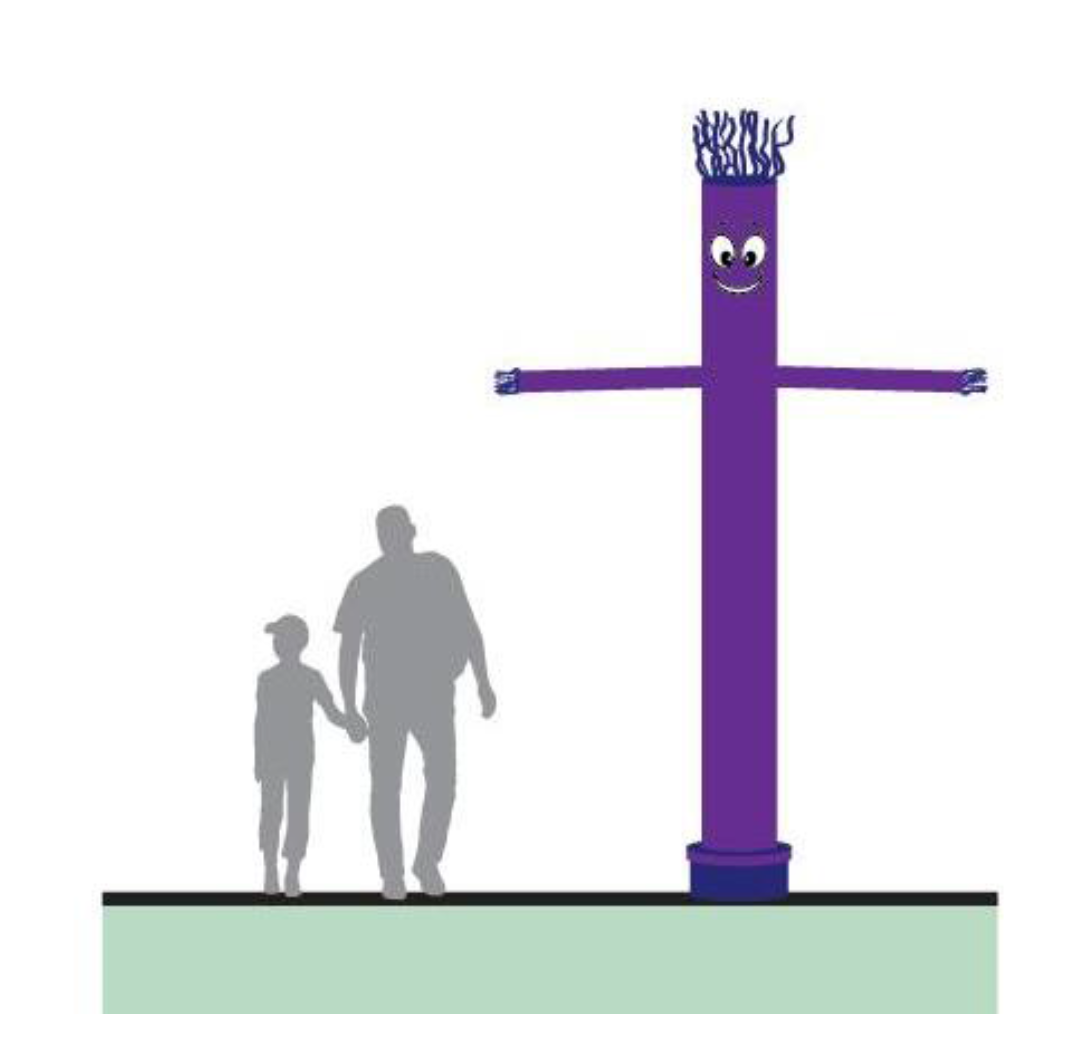
Air-blown sign. A balloon or other air-borne flotation device ("wind dancers") which is tethered to the ground or to a building or other structure.
(2)
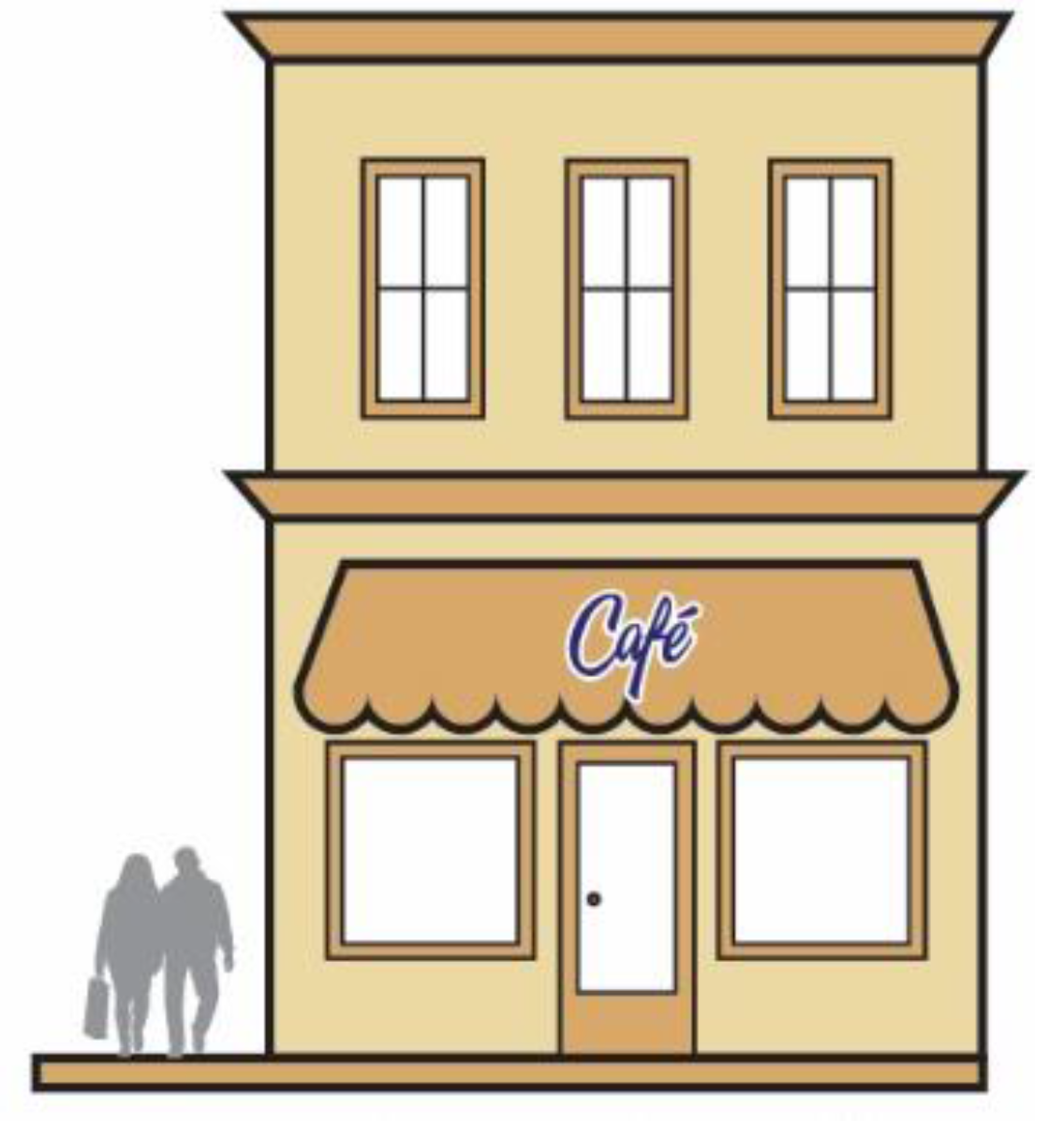
Awning sign. A sign painted or attached to the surface of a retractable or fixed shelter constructed of materials on a supporting framework that projects from the exterior wall of a building.
(3)
Banner sign. A temporary sign typically on paper, cloth, fabric, or other flexible or combustible material of any kind that is attached against a permanent sign face or strung between two (2) poles or structures.

(4)
Bench sign. A sign which has painted on, or in any other way attached to, a bench, chair, or an attachment to a building which provides a bench, chair, or seating device.
(5)
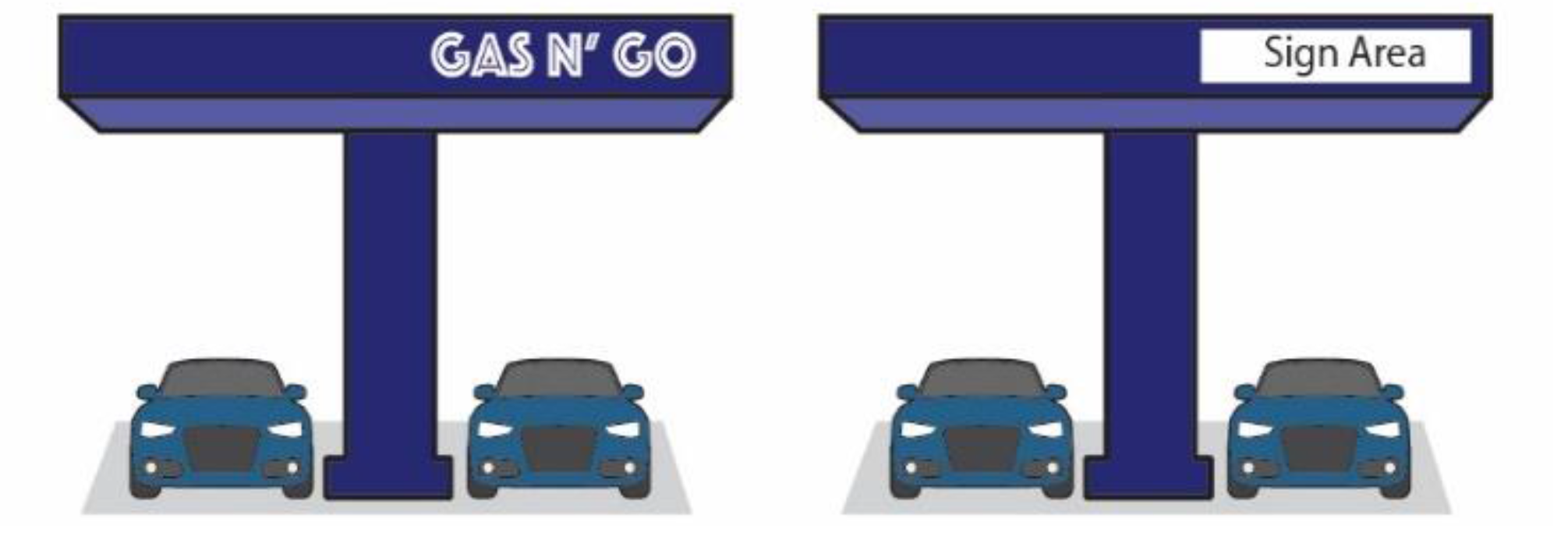
Canopy sign. A sign painted on or attached to the surface of a structure that is supported by columns or posts affixed to the ground and provides protection from the elements.
(6)
Changeable copy sign. A changeable copy sign is a sign that permits alteration of letters, characters, or illustrations without altering the sign's surface or face. This can be achieved by rearranging or adding new letters or messages without the need to remove and replace the sign's face.
(7)
Directional sign. A sign the primary purpose of which is to facilitate the flow of traffic within a site.
(8)
Directory sign. A ground or building sign that lists tenants or occupants of a building or project with unit numbers, arrows, or other directional information.
(9)
Electronic message board sign. An electrically activated changeable copy sign whose variable message and/or graphic presentation capability can be electronically programmed.
(10)
Feather sign. A form of temporary sign composed of durable lightweight fabric with a sturdy frame enclosing only a portion of the material's edge so that it can remain upright and still be flexible in the breeze, generally shaped to be tall and narrow when affixed into the ground or other bottom support.

(11)
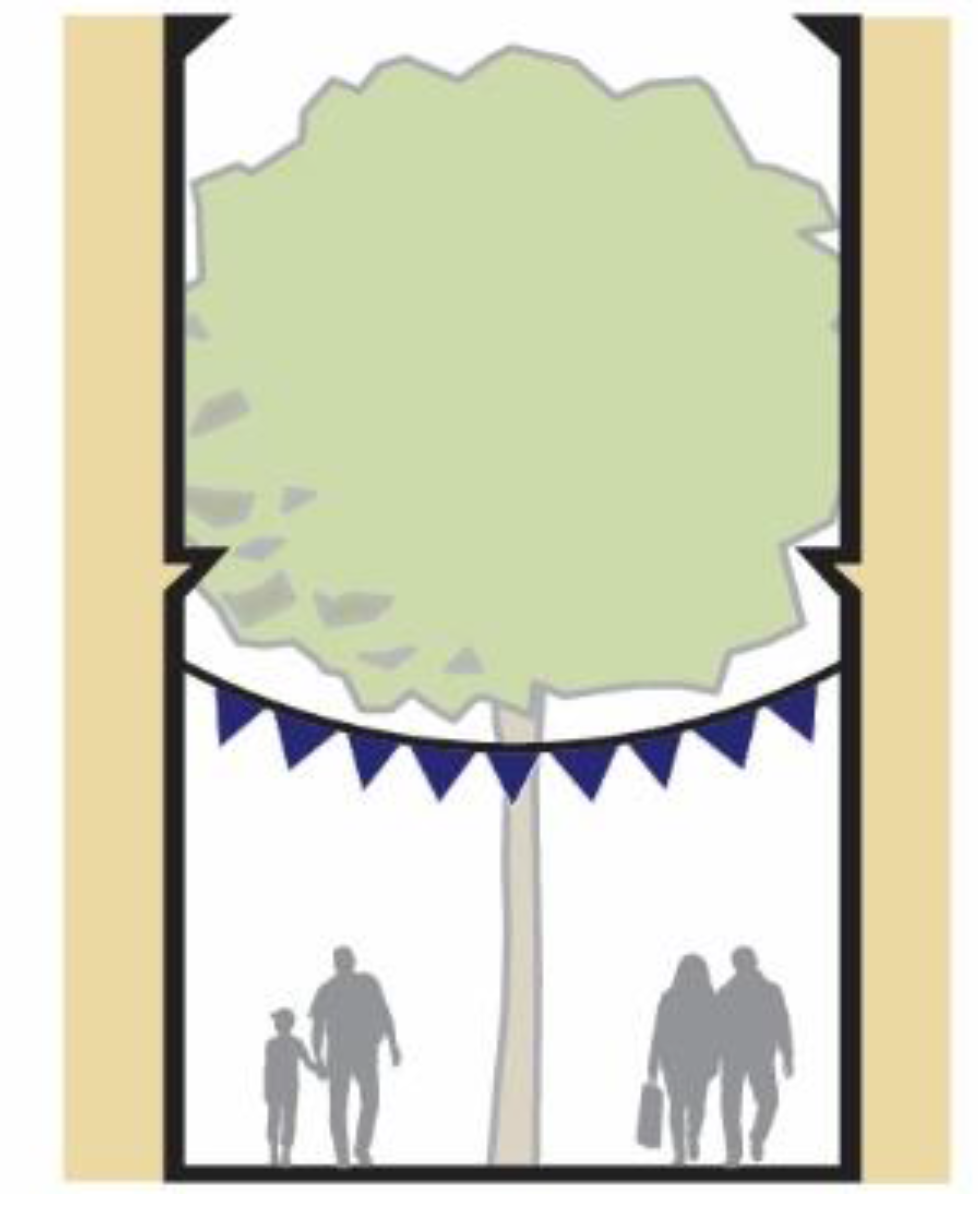
Festoon sign. A sign where incandescent light bulbs, banners or pennants, or other such features are hung or strung overhead and are not an integral physical part of the building or structure they are intended to serve.
(12)
Flag. Any sign printed, sewn, painted, or affixed on cloth, plastic, canvas, or other like material with distinctive colors, patterns, or symbols attached to a pole or staff and anchored along only one (1) edge or supported or anchored at only two (2) corners.
(13)
Ground sign. A sign supported by structures or supports that are placed on, or anchored in, the ground, and which is independent and detached from any building or other structure.
(14)
Identification and Nameplate Sign. A wall sign identifying the occupant, business name, and/or address of a building or parcel of land.
(15)
Menu board. A sign providing items and prices associated with on-site products or services.
(16)
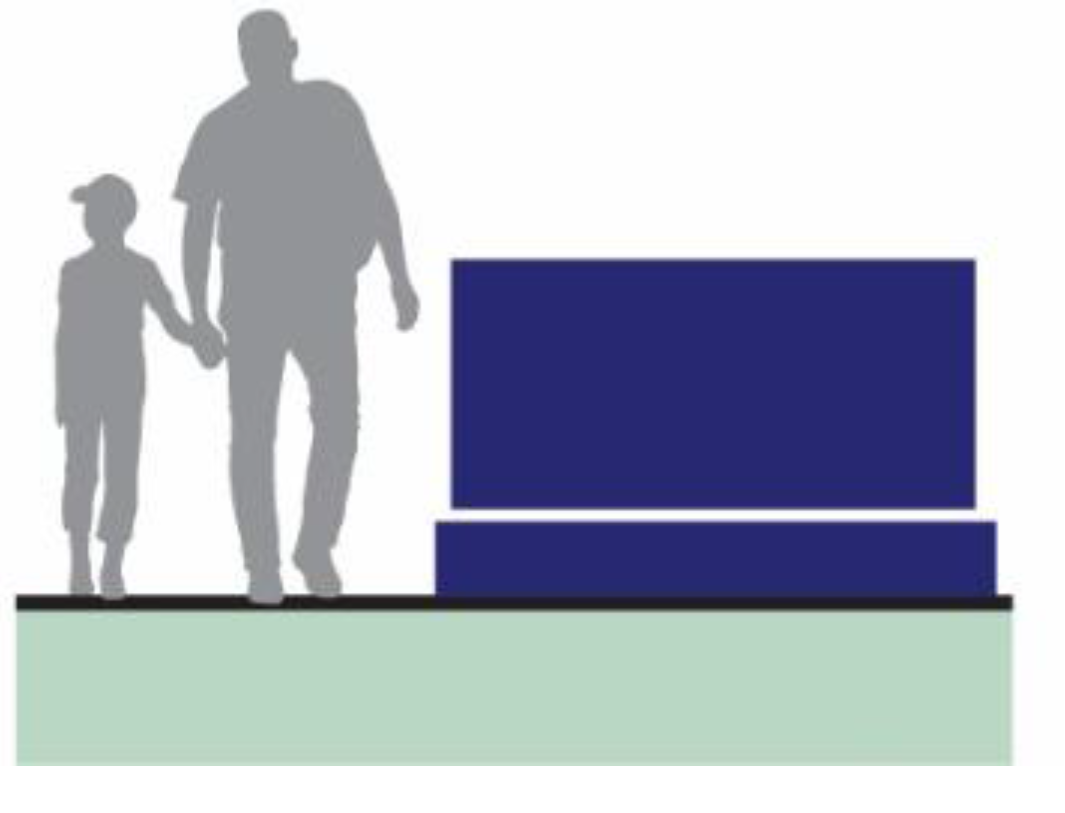
Monument sign. A base-mounted ground sign. A monument sign includes a solid supporting base with a width equal to or greater than the width of the sign face.
(17)
Moving sign. A sign that has any visible moving part either constantly or at intervals; flashing, scintillating, intermittent, or oscillating lights; visible mechanical movement of any description; or other apparent visible movement achieved by any means. This definition does not include changeable copy signs and electronic message board signs that comply with this section.
(18)
Off-premises sign. A sign that pertains to a business, person, organization, activity, event, place, service or product not principally located or primarily manufactured or sold on the premises on which the sign is located.
(19)
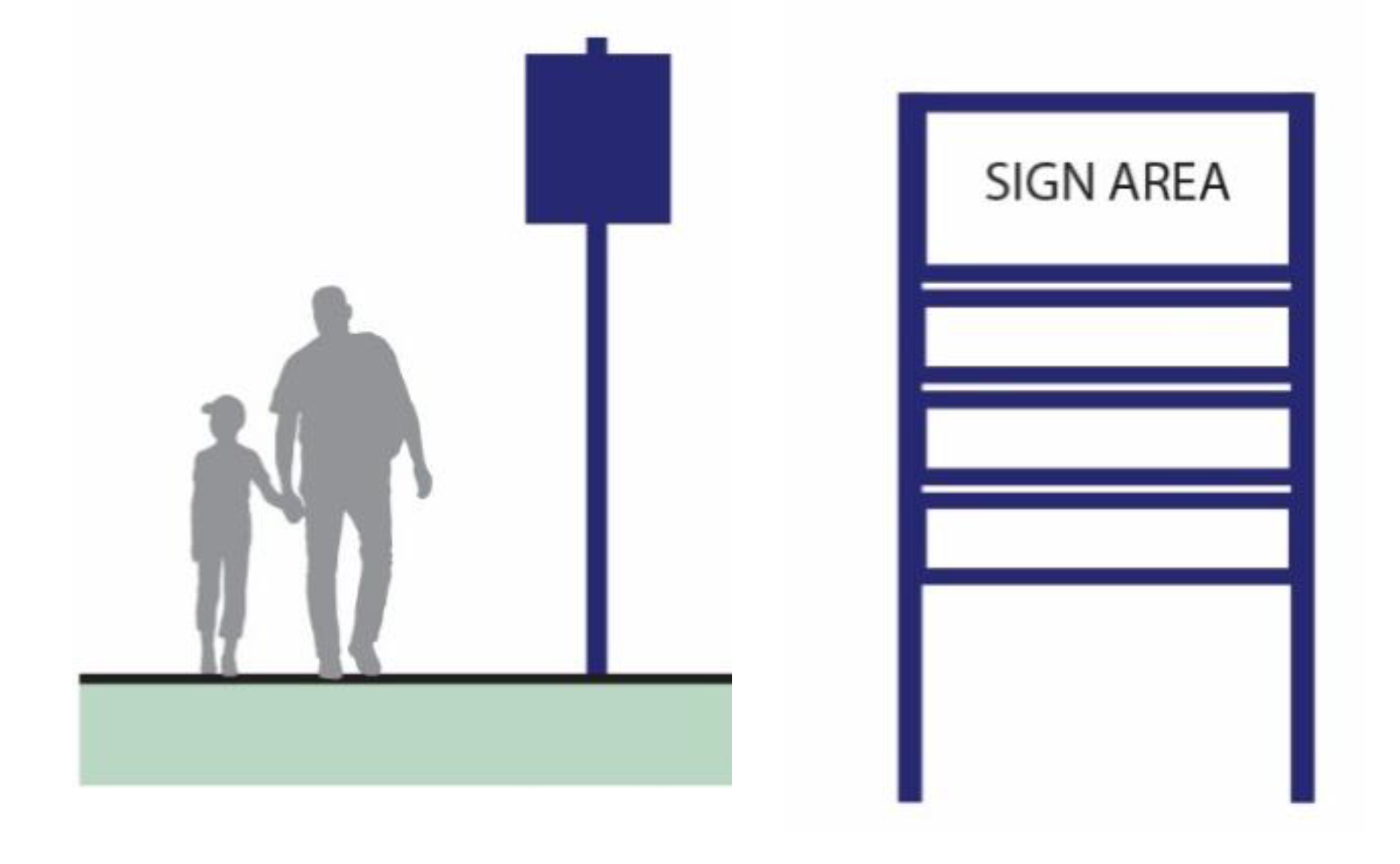
Pole or pylon sign. A ground sign which is supported by one (1) or more poles.
(20)
Portable sign. A sign without a permanent foundation and not permanently attached to a fixed location which can be carried, towed, hauled, or driven and is primarily designed or installed to be mobile rather than be limited to a fixed location regardless of modifications that limit its mobility, such as, but not limited to, vehicles, trailers, "A" frame, "T"-shaped, or inverted "T"-shaped sign structures.

(21)
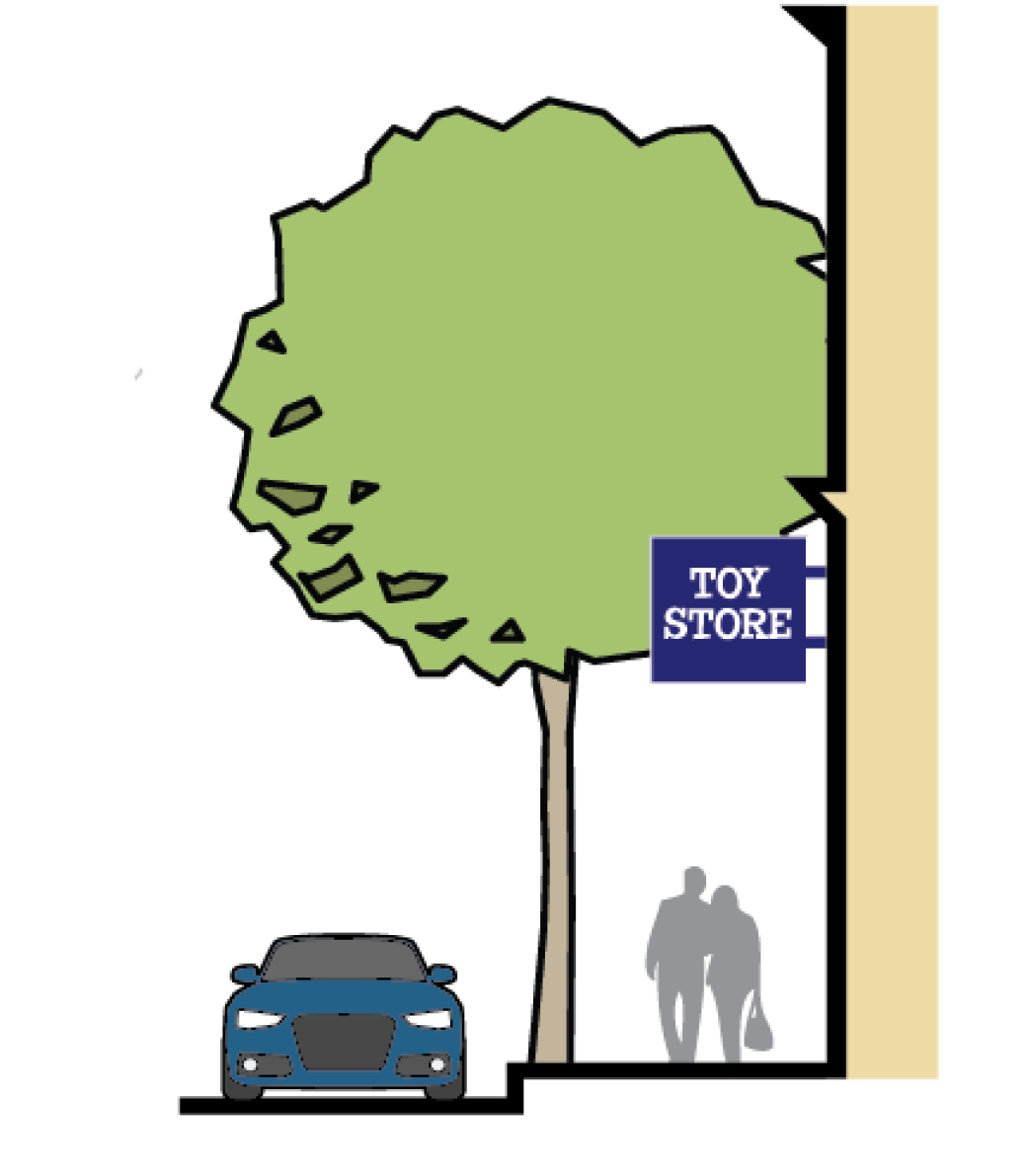
Projecting sign. A sign which is affixed to any building or structure, or part thereof, which extends beyond the building wall or structure by more than twelve (12) inches.
(22)
Public sign. A sign required by law or governmental regulations, including, but not limited to, legal notices and traffic controls or similar regulatory devices.
(23)
Real estate development sign. A temporary sign placed on premises of a subdivision or other real estate development to provide information regarding the project during the project's development.
(24)
Real estate sign. A temporary sign placed upon a property advertising that particular property for sale, for rent, or for lease.
(25)
Residential identification sign. A permanent sign installed to exhibit the name of the residential development within which it is installed.
(26)
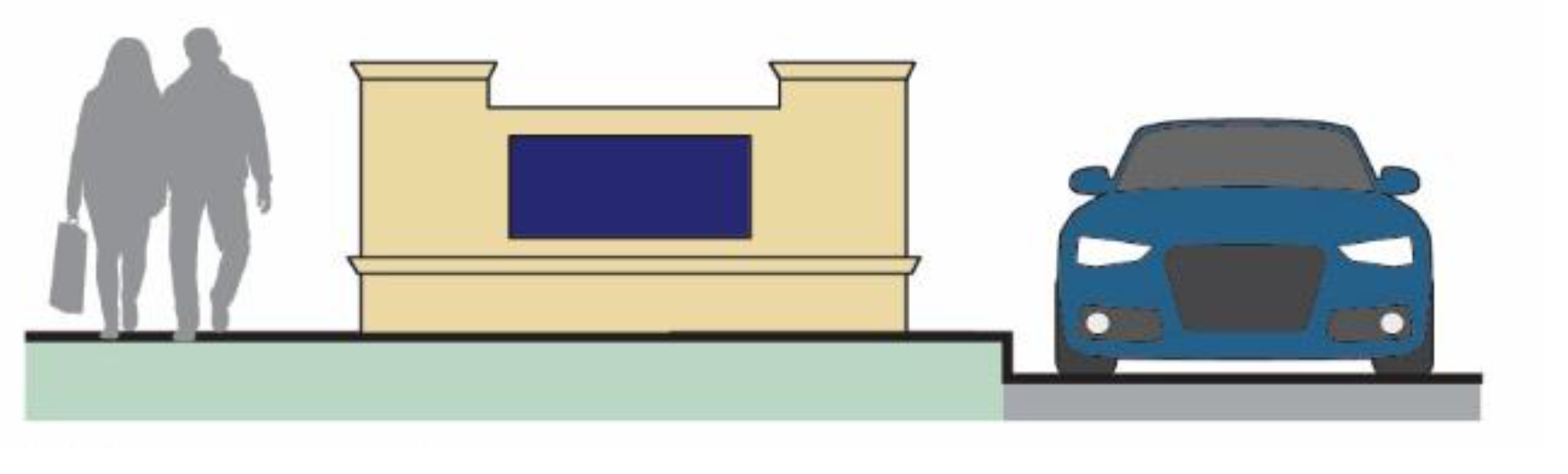
Roof sign. A sign that is erected, constructed, or maintained upon, against, or above the roof or parapet of a building or any portion thereof. A sign mounted upon a mansard fascia that does not project above the highest point of the roof or parapet is considered a wall sign.

(27)
Sign. Any display or object which is primarily used to identify or display information or direct or attract attention by any means which is visible from outside of the parcel on which it is situated. The definition does not include goods displayed in a window.
(28)
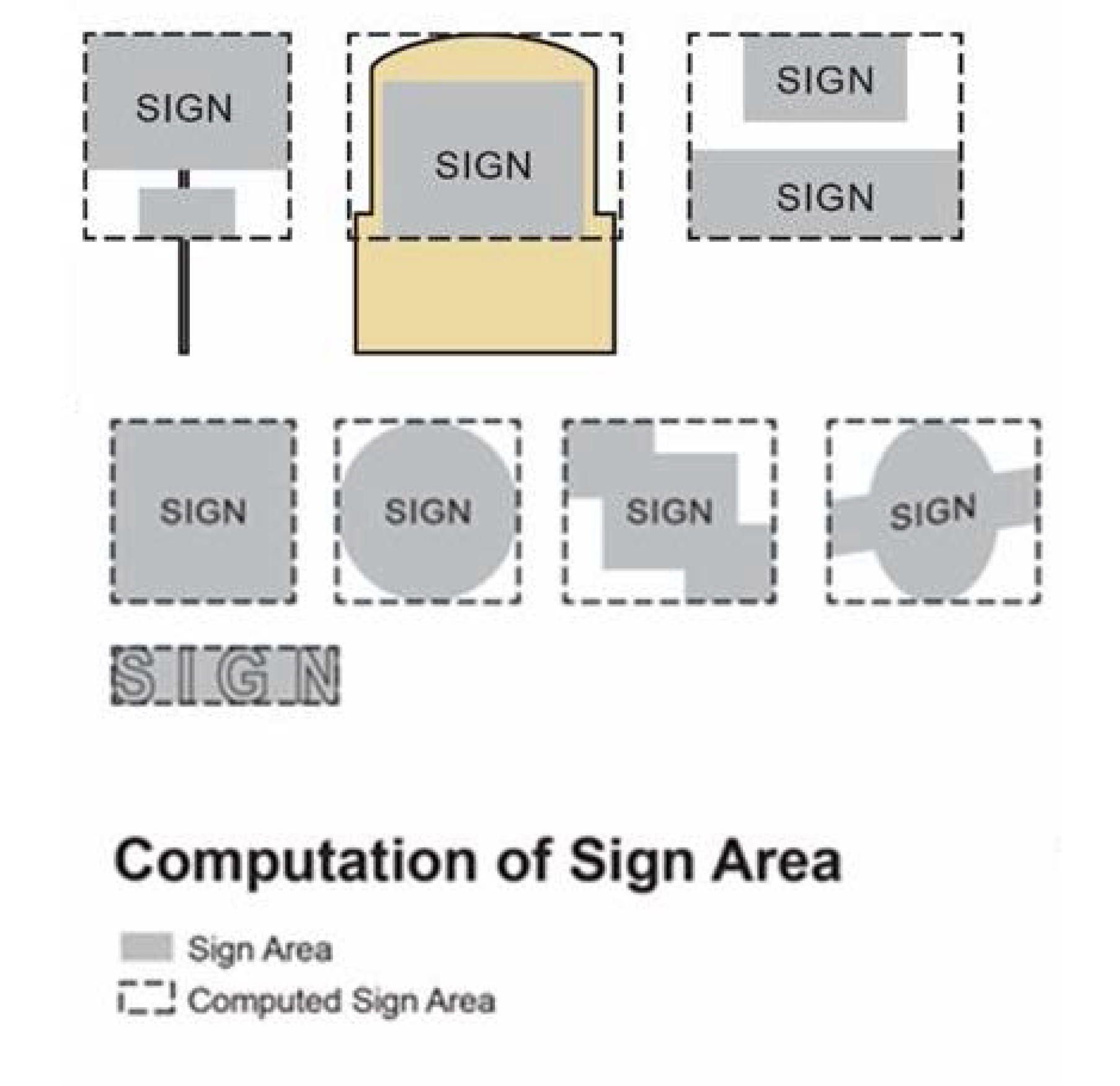
Sign area. The entire area within a circle, triangle, rectangle, oval, or other geometric shape enclosing the extreme limits of writing, representation, emblem, or any figure of similar character, together with any frame or other material or element forming an integral part of the display or used to differentiate the sign from the background against which it is placed, excluding the necessary supports or uprights on which such sign is placed. Where a sign has two (2) faces, the area of both faces shall be included in determining the area of the sign, except that where two (2) such faces are placed back-to-back and less than twenty-four (24) inches apart, the area of the sign shall equal the area of one (1) face.
(29)
Sign construction. Shall mean to build, construct, attach, hang, place, suspend, or affix, and shall also include the painting of wall signs.
(30)
Sign face. The portion of the sign used for display of sign copy, including all background area, pictures, and any other advertising devices shown in or on the sign. Sign frame and supports are excluded from this definition.
(31)
Sign height. The height of the sign measured from the ground to the highest point of the sign from the ground.
(32)
Temporary sign. A type of sign that will only be displayed for a limited duration of time and is not intended to be permanent.
(33)
Vehicle sign. A vehicle, or any type of trailer, which has attached thereto, or painted or placed thereon, any sign or advertising device (including electronic message boards) displaying the name of any business, product, or service.
(34)
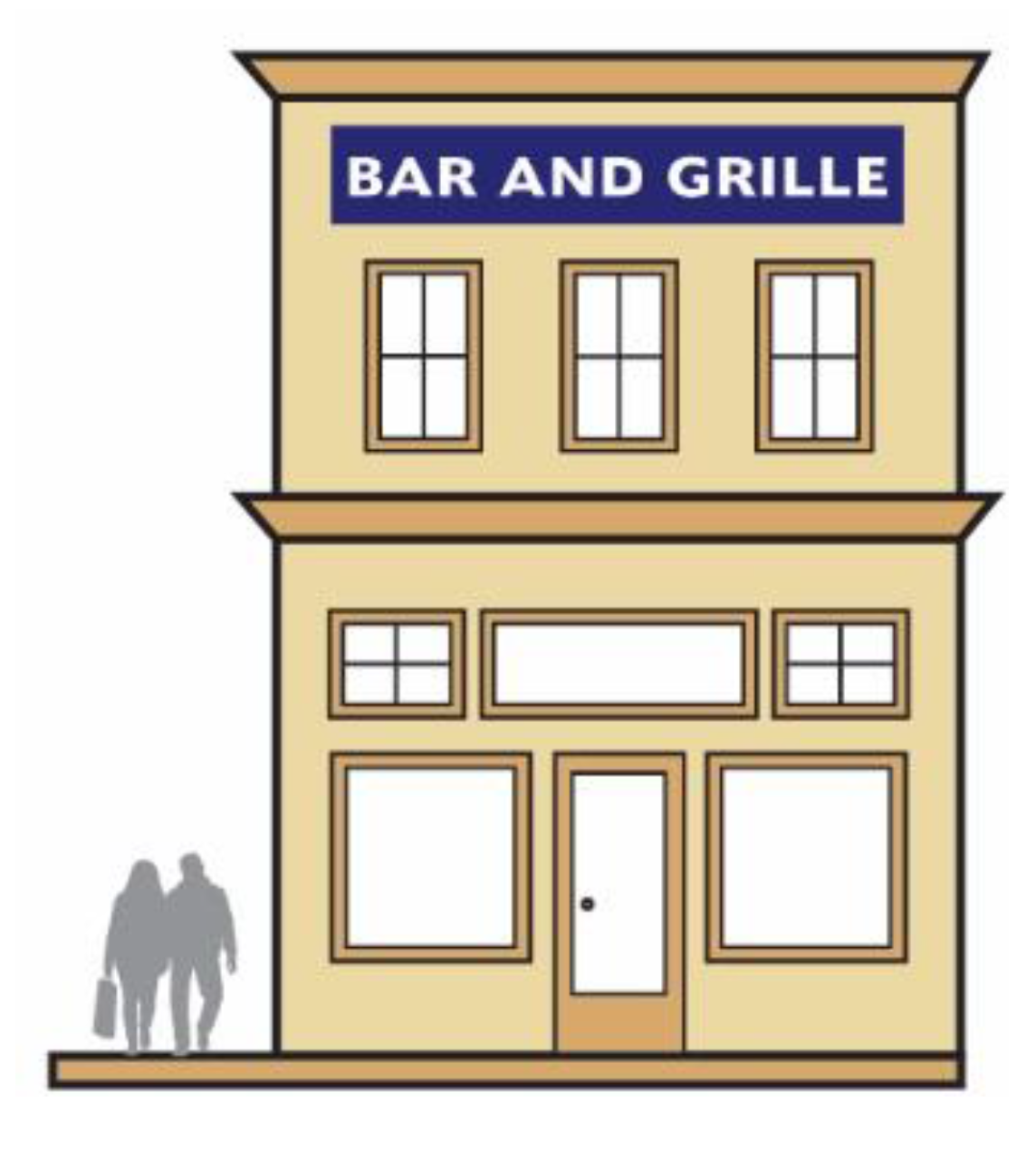
Wall sign. A sign attached to and placed flat against the exterior wall or surface of any building, no portion of which projects more than twelve (12) inches from the wall.
(35)
Window sign. Any sign that is applied, painted on, or affixed to a window, or placed inside a window, facing the outside of the building.

(36)
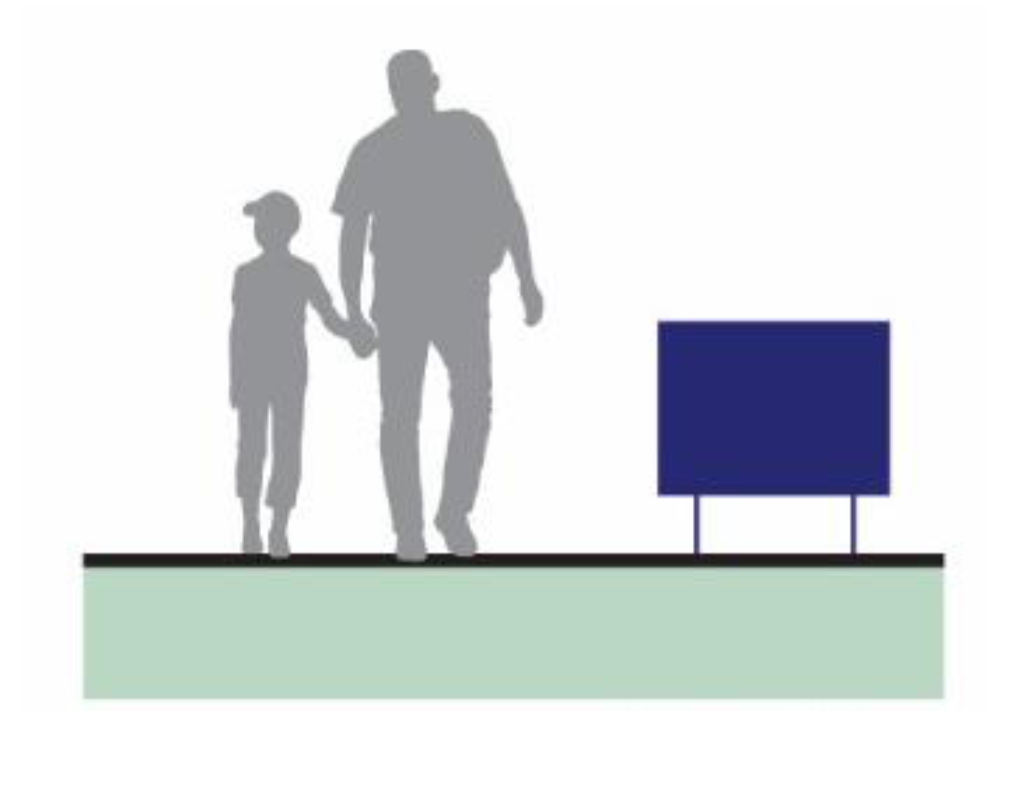
Yard sign. A small sign inserted into the ground that is temporary and disposable in nature.
(c)
Permits.
(1)
Permit required. It is unlawful for any person to erect, alter, or structurally change a sign (unless the sign is specifically exempt) without first obtaining a permit from the city. Any sign that makes use of electricity must, in addition to a sign permit, have an electrical permit.
(2)
Signs Exempt from Permits. The following signs are allowed in all zoning districts and do not require a permit:
a.
Directional signs, no larger than four (4) square feet in area.
b.
Flags, subject to the following:
1.
Flags and flagpoles cannot be located within any right-of-way.
2.
Flagpoles may not exceed the maximum building height in the district in which they are located.
3.
No more than one (1) flag and one (1) flagpole is permitted per parcel in a residential district, and no more than three (3) flags and three (3) flagpoles are permitted per parcel in all other districts.
4.
The maximum total flag area for residential districts is forty-five (45) square feet, with no single flag exceeding fifteen (15) square feet.
5.
The maximum total flag area for non-residential districts is seventy-five (75) square feet, with no single flag exceeding forty (40) square feet.
6.
One (1) official United States flag and one (1) official flag of the State of Michigan are permitted and do not count toward the maximum number of flags allowed, but are included in the maximum flag area.
c.
Historic markers that are in compliance with state and federal law.
d.
Identification and name plate signs, no larger than two (2) square feet in area.
e.
Menu signs affixed to the wall of the correlating restaurant.
f.
Numerals that identify the address of the property in accordance with applicable laws, codes, and regulations, so that public safety responders can easily identify the address from the public street.
1.
Unless an alternative requirement is adopted in the city Code or as part of a technical code adopted by the city, address numbers for all commercial buildings shall be displayed on the facade of the building adjacent to a public entrance to the building and each tenant space with its own address, and on a freestanding sign at the front of the site. For multiple tenant buildings, the freestanding sign shall include the address range of all addresses contained within the building. Further, numerals shall also be displayed at the rear entrance of the building/tenant space if there is access to a hard-surfaced area upon which vehicular traffic may maneuver. All address numbers shall be at least four (4) inches in height. The color of the required numbers shall starkly contrast the background to which they are affixed. Because the required numbers are for emergency responders, they shall be excluded from any calculations of the property's total permitted signage.
g.
Signs installed by a governmental entity, including those used to identify public facilities, government buildings, parks, and temporary government signs used for decoration, public announcements, or for seasonal events or holidays, including, but not limited to, highway and street signs and signs authorized by a road agency in conjunction with infrastructure improvements.
h.
Signs installed by MISS DIG, utility companies, lawn treatment companies, "No Trespassing," and similar signs intended to warn of a danger or alert the reader to a potentially dangerous condition or the existence of utility pipes or lines on the property.
i.
Signs required by law.
j.
Temporary signs.
k.
Traffic control devices on public property, installed and maintained to comply with the Michigan Manual on Uniform Traffic Control Devices and, if not covered, with the Manual on Uniform Traffic Control Devices adopted by the Federal Highway Administration. Traffic control devices on private property may be installed and maintained if substantially similar to the regulations of the Michigan Manual on Uniform Traffic Control Devices and/or as approved by the Fraser Public Safety Department.
l.
Window signs.
(3)
Review process.
a.
Applications for a sign permit shall be submitted to the building department on a form approved by the city and must include the following:
1.
The name, address, email, and telephone number of the applicant.
2.
Letter of approval, which provides the consent of the property owner, if different from the applicant.
3.
The location of the building, structure, or lot to which or upon which the sign is attached or installed.
4.
Photographs showing the location of the proposed sign.
5.
Two (2) sets of plans and specifications indicating the method of construction and attachment to the building or the ground.
6.
A copy of the stress sheets and calculations showing the structure is designed for dead load and wind pressure in any direction in the amount required by the current Michigan Building Code. A registered engineer must approve the structural design.
7.
The name of the person or company installing the structure.
8.
An elevation of the proposed sign with dimensions, materials, colors, and wording.
9.
Any other information deemed necessary by the city to ensure public safety.
b.
The city planner reviews all final sign applications and determines if the proposed request meets all the requirements of this section.
c.
Prior to the issuance of a sign permit, a fee must be paid, as established by the city's fee schedule.
d.
Signs for which a permit has been issued shall be inspected by the building official, or designee, once installed. Approval is granted only if the sign is constructed in compliance with the approved plans and all applicable zoning and building code standards.
e.
All rights and privileges acquired by any person under the provisions of this section may be revoked upon violation of any of the conditions herein. If the work authorized under a permit has not been started within six (6) months after the date of issuance, the permit is null and void.
(d)
Temporary signs.
(1)
Generally. Temporary signs shall be maintained free of rust, corrosion, peeling, breakage, graffiti, obfuscation, and all other damage or defacement. A temporary sign shall not be installed in such a manner that it interferes with vehicular or pedestrian traffic.
(2)
Placement.
a.
Temporary signs shall only be located on property with the approval of the person or entity with authority to approve it.
b.
All temporary signs shall be subject to removal by the city if the signs are placed within any right-of-way, or after issuance of notice if they have become dilapidated, damaged, dangerous, faded, obsolete, out of compliance, or an attractive nuisance.
1.
Signs removed by the city shall be held for ten (10) days before disposal and may be retrieved during that time by the owner or individual responsible for the sign upon payment of any administrative processing fee established by the city's fee schedule.
2.
The owner or individual responsible for the sign may appeal the city's determination regarding the improper condition of the sign to the building official. In such instance, the city shall retain the sign until the appeal is concluded, but need not retain the sign for any future appeal efforts if the appeal is denied by the building official. If the building official grants the appeal and deems the sign to be satisfactory, the administrative processing fee shall be waived and the sign shall be returned to the applicant within one (1) business day and may not be removed by the city again for a minimum of fourteen (14) days or for such other period of time deemed appropriate by the building official.
3.
Construction.
(a)
For real estate and real estate development signs, all ground-mounted support posts shall be constructed of four-inch by four-inch pressure-treated posts with decorative post caps. All support posts and decorative post caps, and other supporting framework, shall be painted a uniform color.
(b)
All temporary signs shall be stabilized so as not to pose a danger to public safety.
(4)
Schedule of regulations for temporary signs.
(e)
Prohibited signs.
(1)
Signs that violate any federal, state, or local law, code, or regulation.
(2)
Air-blown signs, unless approved as part of an authorized temporary use.
(3)
Banner signs, unless approved as part of an authorized temporary use.
(4)
Bench signs.
(5)
Festoon signs, unless approved as part of an authorized temporary use.
(6)
Pole and pylon signs.
(7)
Roof signs.
(8)
Off-premises signs. Off-premises signs are not permitted in the city, except as may be permitted by any governmental entity not subject to city regulation or control.
(9)
Vehicle signs. Vehicle signs are not permitted between the structure(s) located on the property and any property line abutting any adjacent street or any public-right-of-way.
a.
Vehicles engaged in attended loading or unloading activities shall be exempt from this provision.
b.
Vehicles engaged in the services advertised on the vehicle shall be exempt from this section.
c.
Operable vehicles that are properly licensed and plated and which are adorned or embedded with permanent graphics, information, and/or messages that are visible to passersby shall only be parked on a property owned or operated by the vehicle owner or pertaining to an activity underway on the property where it is parked and shall be kept in a lawful vehicular parking or storage location a minimum of thirty (30) feet from any public right-of-way.
(10)
Signs whose construction, design, location, or other physical characteristics are determined by any code official or law enforcement official to create a safety hazard or to be detrimental to the general welfare, including, but not limited to:
a.
Signs of a size, location, movement, coloring, or manner of illumination which may be confused with or construed as, or which may conflict with, a traffic control device, or which hide from view any traffic or street sign or signal.
b.
Signs consisting of moored balloons or other type of tethered floating signs unless approved by the city planner in conjunction with an approved temporary use and if tethered to the ground. Floating signs cannot be tethered to the roof.
c.
Banners, pennants, LED lights, spinners, or other similarly moving devices or signs which may move or swing as a result of wind pressure or other power source, unless approved by the city planner in conjunction with approval of a temporary use for a special event of limited duration, permitted as holiday decorations for a period of one hundred eighty (180) days or less in a given calendar year, or otherwise permitted elsewhere in this section.
d.
Flashing, oscillating, or intermittent type of illuminated signs or displays and electronic signs with any of these characteristics are hereby prohibited.
e.
Signs that consist of or include a searchlight, beacon, strobe light, or similar form of illumination.
(f)
General requirements.
(1)
Generally. Signs must comply with all ordinances and regulations of the city, including zoning, regulatory, and building codes.
(2)
Support location. Signs shall not be placed in, project into, or overhang any public right-of-way or dedicated public easement, existing or proposed, unless placed or approved for placement by the city or applicable governmental entity or agency.
(3)
Construction. Every sign, including the sign structure, shall be maintained in a safe structural condition and in a neat, clean, secure, and attractive condition, with upright, secure supports. All sign materials shall be kept free of defective or missing parts, peeling, corrosion, or other surface or support deterioration, and in compliance with the current provisions of the International Property Maintenance Code, with local amendments as adopted by the city. All sign copy shall be maintained intact, free of defacement, and free of missing characters. If the sign is illuminated, all lighting fixtures and sources of illumination shall be maintained in a manner that renders them safe and in proper working order.
(4)
Placement.
a.
Signs shall not be placed:
1.
On city property unless placed or approved for placement by the city for city purposes, including, but not limited to, city events, public safety, and approval of requests from other governmental agencies.
2.
On utility poles, utility boxes, traffic control devices, telecommunications towers, sidewalks, lamp posts, hydrants, bridges, public property, public ways, easements, or trees unless placed or approved for placement by a governmental entity as public signs or warning signs.
3.
Above non-public sidewalks, driveways, and maneuvering lanes, unless approved by the public safety department.
b.
Permanent signs shall not be placed in a required side yard setback, unless otherwise provided in this section.
(5)
Clear vision distance.
a.
Signs shall not be placed in a manner that obstructs or diminishes sight lines for vehicular travel, obstructs driver vision, or creates potential hazards to pedestrian safety.
b.
No sign above a height of two (2) feet from the established street grades shall be permitted within the triangular area formed at the intersection of any street right-of-way lines by a straight line drawn between such right-of-way lines at a distance along each line of twenty-five (25) feet from their point of intersection.
c.
No sign above a height of two (2) feet from the established street grades shall be permitted within fifteen (15) feet, in either direction, from any driveway.
d.
The sight distance triangle may be extended by the city to conform to minimum Michigan Department of Transportation sight distance standards or in situations when the city planner determines that an extension is required for public safety due to topography, road alignment, or other physical conditions of the area.
(6)
Sign faces. Signs shall not have more than two (2) sides.
(7)
Effects. Signs shall not:
a.
Be equipped with audio capabilities and sound shall not be projected from any sign, except that menu boards approved as part of a drive through facility or signage designed for purposes of complying with laws enacted for the protection of persons with disabilities shall not be restricted by this provision.
b.
Project images beyond the face of the sign.
c.
Emit any odors or visible matter such as smoke or steam.
(8)
Obsolete signs. No person, entity, owner, business, or tenant shall allow an obsolete sign to be maintained on a property for more than thirty (30) days after same has become obsolete because of discontinuance of the business, service, or activity which the sign advertises, relocation to another site, or for any other reason. The fact that the obsolete sign is nonconforming shall not be construed as modifying any of the requirements of this section.
(9)
Ground signs.
a.
A permanent ground sign, excluding residential entranceway signs, shall not be closer than one hundred (100) feet, measured from the nearest point on the closest parcel line, from any adjacent residential zoning district or parcel being used for residential purposes.
b.
Up to one-third (⅓) of a permitted ground sign may consist of an electronic message board or changeable copy area.
(10)
Wall signs.
a.
A wall sign may be located on the front, rear, or side facade of the building.
b.
Wall signs shall not extend above the top of a parapet wall or an eave line at the wall, whichever is higher.
c.
No wall sign shall protrude more than twelve (12) inches from the wall or structure on which it is mounted.
d.
A wall sign shall be installed only on the wall of the tenant space to which the sign pertains and shall be aesthetically and thematically compatible with the building, other wall signs, the overall development of the parcel, and nearby properties.
e.
No sign shall be painted directly onto the wall of a building, unless under the direction and control of the city.
(11)
Residential entranceway signs.
a.
No entranceway sign structure permitted under this section shall be constructed of exposed concrete block, cinder block, precast concrete panels, or poured concrete.
b.
Any permitted residential subdivision identification sign shall be located in either a common area of the development or upon property for which a private easement has been granted to a subdivision association (or similar entity) which shall have the responsibility for maintaining the sign and any appurtenant structures. An agreement providing for the maintenance of the sign(s) or structure(s) in recordable form satisfactory to the city shall be furnished to the city prior to installation of the sign(s) or structure(s).
(12)
Electronic message boards. Electronic message boards are permitted as part of an approved sign, subject to the standards of this section and subject to the following standards:
a.
The area of an electronic message board may not exceed one-third (⅓) of the entire area of the sign.
b.
Display only static messages and/or images that remain constant in illumination intensity and do not have movement or the appearance of optical illusion or movement.
c.
Change from one (1) message or image to another message or image no more frequently than once every thirty (30) seconds, and the actual change process must be accomplished instantly with no effects.
d.
Not operate at a brightness more than 0.3 footcandles over ambient lighting conditions when measured at a distance of one hundred fifty (150) feet.
e.
Be equipped with a fully operational light sensor that automatically adjusts the intensity of the electronic message board according to the amount of ambient light.
f.
The electronic message board shall operate only between the hours of 6:00 a.m. and 12:00 a.m.
1.
Electronic message boards may operate only when the nonresidential use to which they belong is open or between the hours of 6:00 a.m. and 10:00 p.m., whichever time period is shorter, if installed on a property located adjacent to a residential use, except that noncommercial uses may also operate an approved electronic message board until and during an event that is open to the public and held after 10:00 p.m. until the conclusion of the event.
g.
Be designed to either display a full black screen or turn off in the event of a malfunction.
h.
The owner of an electronic message board shall allow the city to use the electronic message board to communicate emergency public service information approved by the city. The operational restrictions on electronic message boards set forth in this subsection shall not apply during any time that the electronic message board is used to communicate authorized emergency public service information for the city.
i.
The owner agrees to (i) update with an approved emergency public service information communication, or (ii) discontinue the emergency public service message as soon as possible after receiving a request from the public safety director or designee. The owner shall file and keep current at all times with the city the name, email address, phone number, cell phone number, pager and other available emergency contact information of the employee(s) or representative(s) of the owner who has been authorized and designated by the owner to communicate the approved emergency public service message using the electronic message board.
(13)
Directional signs.
a.
Directional signs shall be considered incidental and shall not exceed four (4) square feet in area and four (4) feet in height.
b.
Directional signs set at an entrance point may be located within a required yard subject to the sight line and clear vision restrictions set forth in this section.
c.
Directional, informational, and traffic control signs placed by government entities are permitted in all zoning districts and shall be installed, to the extent applicable, in accordance with the Manual on Uniform Traffic Control Devices.
(14)
Menu boards.
a.
One (1) menu order board and one (1) preorder menu board shall be permitted for each drive-thru lane.
b.
The maximum height for such signs shall be seven (7) feet and the total sign area allowed for each drive-through lane shall not exceed forty-five (45) square feet.
c.
Menu boards are exempt from the total sign area for permitted signs.
d.
Menu boards shall be located on the interior of the lot or parcel and shall not be readable from the exterior of the lot.
e.
The placement, size, content, coloring, or manner or illumination of the sign shall not cause a traffic or pedestrian hazard or impair vehicular or pedestrian flow.
f.
The volume on the menu board or order board shall be maintained at the minimum level necessary so that it is audible to users but minimizes extraneous noise traveling off site.
(15)
Illumination. Internal and external illumination of signs shall be permitted and subject to the following standards.
a.
No sign shall include or use flashing or intermittent illumination.
b.
Rope lights, string lights, or similar accent lighting attached to, surrounding, or otherwise drawing attention to a sign are prohibited.
c.
Animation is prohibited.
d.
Illumination of signs shall be directed or shaded downward so as not to interfere with the vision of persons on the adjacent roadway or adjacent property.
e.
No exposed reflective type bulb, par spot, or incandescent lamp shall be exposed to direct view from a public street or highway, but may be used for external light illumination of the display surface of a sign, so long as the brightness does not exceed 0.3 footcandles over ambient lighting conditions when measured at a distance of one hundred fifty (150) feet.
f.
Internally illuminated signs are not permitted on properties utilized for residential purposes, with the exception of internal illumination for the address of the property if the address is affixed to a home, garage, or mailbox on the property.
(g)
Regulations for allowable signs. The following conditions shall apply to all signs erected or located in the specified zoning district(s):
(1)
Residential districts.
a.
RL, Residential Low, One-Family.
b.
RM, Residential Medium, One-Family.
c.
RH, Residential High, Multiple.
d.
REC, Recreational.
(2)
Non-residential districts.
a.
OS, Office Service.
b.
OR, Office Research.
c.
CN, Commercial Neighborhood.
d.
CBD, Community Business District.
e.
CG, Commercial General.
f.
IR, Industrial Restricted.
g.
IC, Industrial Controlled.
(h)
Nonconformity and modification.
(1)
Lawful existing signs. Any sign lawfully existing at the time of adoption of this section which does not fully comply with all provisions of this section shall be considered a legal nonconforming sign and shall be permitted to remain as long as the sign is properly maintained, there is no increase in nonconformity, and the sign is not detrimental to the health, safety, and welfare of the community except as hereafter provided.
(2)
Continuance. A nonconforming sign may be continued but shall be maintained in good condition, and shall not be:
a.
Enlarged or extended.
b.
Replaced by another non-conforming sign.
c.
Moved to another location on the same lot or to any other lot.
d.
Structurally altered so as to prolong the life of the sign, including modifications to cabinets, support structures, and framing elements. A sign face change is permitted on a nonconforming sign if there are no other structural modifications. However, a static panel on a nonconforming sign shall not be replaced with an electronic message board.
e.
Replaced or restored if the nonconforming sign is destroyed or damaged as a result of factors beyond the control of the owner of the sign and the owner of the premises on which the sign is located, to an extent the destruction or damage exceeds fifty (50) percent of the sign.
(3)
A nonconforming sign that is destroyed or damaged as a result of factors beyond the control of the owner of the sign and the owner of the premises on which the sign is located, to an extent the destruction or damage is fifty (50) percent or less of the sign, may be replaced or restored provided that:
a.
The replacement or restoration is completed within six (6) months after the date of the destruction or damage.
b.
The sign is not enlarged or extended.
(4)
A nonconforming sign declared to be unsafe by a code enforcement official because of the physical condition of the sign, including an unsafe physical condition arising from the failure of the sign to be maintained, shall be removed.
(i)
Enforcement.
(1)
For purposes of this subsection,
a.
"Issuance of notice" is defined to include any of the following:
1.
Facsimile, electronic mail, or first-class mail transmission of notice of a violation to either a person or committee mentioned on the sign or to the person responsible for placing the sign or to the property owner;
2.
Posting of notice of a violation on or reasonably near the sign which is in violation, so long as the posting is conspicuous from the distance at which the sign is generally readable;
3.
Posting of notice of a violation on or reasonably near one (1) or more entrances of a habitable building on the same property as the sign, so long as the posting is conspicuous;
4.
Transmission of a telephone message which indicates that a violation exists, and which offers a brief explanation of the nature of the violation, recorded on an answering system of either a person or committee mentioned on the sign or to the person responsible for placing the sign or to the property owner.
b.
"Personal contact" means that a code enforcement official, or other duly authorized agent of the city, initiated a person-to-person conversation, or some other real-time communication via electronic means, whereby the officer or agent communicated the existence of the violation and a brief explanation of its nature.
c.
"Personal notice" means personal contact by a code enforcement official, or other duly authorized agent of the city, with either a person mentioned on the sign, the person responsible for placing the sign, the property owner, or the property owner's authorized representative or resident agent.
d.
"Person responsible" for a temporary sign is the person who places the sign, unless the person first notifies the city clerk's office in writing of another person who is responsible. Persons responsible for political campaign signs also include the candidate for the political office advertised on the sign, unless the candidate first notifies the city clerk's office in writing of another person who is responsible, and the property owner. In a campaign regarding a ballot measure, the president or chair of the committee supporting or opposing the ballot measure, as well as the property owner, shall be deemed the responsible person, unless the city clerk's office is notified in writing of another person who is responsible. The person who places the sign, the candidate, or the president as applicable must provide the name, address, telephone number, and signed consent of the other responsible person. Persons residing or located outside of Michigan may not be designated as responsible persons. The person placing the sign, or in the case of political campaign signs, the candidate, or in the case of a ballot measure, the committee president or chair, or in each of these cases the other responsible person if so designated, shall be liable to pay any fees or costs incurred for the removal and storage of illegal signs upon retrieval. This subsection shall not be construed to place responsibility upon responsible persons for civil infraction or misdemeanor violations of the city code.
(2)
Owners, lessors, and lessees may all be held equally responsible for violations of this section.
(3)
The city may remove any non-temporary sign which violates any provisions of this section if the owner upon whose property the sign is located fails to make the sign conform to the provisions of this section within forty-eight (48) hours of issuance of written notice of violation. The person responsible for the sign in violation shall be liable to pay any fees or costs incurred for the removal and storage of illegal signs upon retrieval.
(4)
In the absence of prior permission having been granted by the property owner for the immediate removal of temporary signs in violation, the city may remove any such sign which violates any provisions of this section if the owner upon whose property the sign is located fails to make the sign conform to the provisions of this section within four (4) hours of personal notice, or within forty-eight (48) hours of issuance of notice. In the event that the sign is moved to another location, and such move does not remedy the violation, the city shall not be required to give any additional notice before impounding the sign as a nuisance pursuant to the terms of this section.
(5)
In the case of any sign which is located in, projects into, or overhangs a public right-of-way or public easement in violation of this section, the city may remove said sign without notice.
(6)
Signs impounded under this subsection will be logged and stored by the city for retrieval by their owner. Before any removed sign is returned to its owner, a fee as determined by the city's fee schedule, shall be paid for the removal, storage, and reclamation. Any sign which is removed in accordance with this section shall be deemed abandoned if its owner or the person responsible for the sign does not reclaim it within ten (10) days of the date of its removal, after which the city may dispose of the sign without any further notice.
(7)
Any entity or individual which files a false affidavit or application for any reason relating to signage under this section shall be guilty of a misdemeanor punishable in accordance with the penalties applicable to misdemeanors set forth in chapter 1 of the city Code.
(Ord. No. 279, § 5.04, 12-12-96; Ord. No. 350, § 1, 5-13-10; Ord. No. 352, §§ 2, 3, 8-12-10; Ord. No. 279-2024, § 1, 11-14-24)
Sec. 32-86. - Lighting.
Lighting in all use districts shall conform to the following requirements as to type, location and intensity:
(1)
All outdoor lighting used to light the general area of a specific site shall be shielded to reduce glare and shall be so arranged as to reflect light away from all adjacent residential districts or adjacent residences.
(2)
All outdoor lighting shall be directed toward and confined to the ground areas of lawns parking lots or surface areas, except as noted in subsection (3) below.
(3)
All lighting in nonresidential districts used for the external illumination of buildings, so as to feature said buildings, shall be placed and shielded so as not to interfere with the vision of persons on adjacent highways or adjacent property.
(4)
Artificial light shall be maintained stationary and constant in intensity and color at all times when in use. There shall be no flashing, oscillating, moving or intermittent type of lighting or illumination. In addition, there shall be no bare bulb illumination of any kind exposed to public view.
(5)
There shall be no lights which tend to be harmful to natural forms of vegetation in any use district.
(6)
The intensity of outdoor lighting in all use districts shall be limited to the following maximum amounts:
Schedule of Maximum Illumination
(in foot candles measures at the surface)
No light measured (at eye level) at the property line between any non-residential use and any residential district or use shall be greater than one-quarter (¼) foot candle at the side and rear property line, nor greater than one-half (½) foot candle or the intensity of the available street lighting at the front property line, whichever is greater.
(Ord. No. 279, § 5.05, 12-12-96; Ord. No. 399, § 2, 12-11-25)
Sec. 32-87. - Performance standards.
It is the intent of this subsection to regulate all uses except industrial (see Article XI) and require that each permitted use shall be a good neighbor to adjoining properties by control of noise, odor, glare, vibration, smoke, dust, liquid wastes, radiation, radioactivity, etc. The sum of the effects of concurrent operations on two or more lots measured at any property line shall not be greater or more offensive to the senses than the standards contained herein. Compliance with the provisions of this subsection by single or mutual changes in operational levels, scheduling of operations and other adjustments is permitted. In case of conflict among these standards and federal and state regulations, the most restrictive standard or regulation shall apply.
(1)
Noise. See Fraser Code Chapter 14.5 (noise chapter).
(2)
Odors. Odors from any use shall not be discernible at the property line to a greater degree than odors from plants for the manufacture of electronic equipment. The values given in Table III (Odor Thresholds) in the latest revision of Chapter 5, "Physiological Effects," in the "Air Pollution Abatement Manual," by the Manufacturing Chemists' Association, Inc., Washington, D.C., copyright 1951, shall be used as standard in case of doubt concerning the character of odors emitted. In such case, the smallest value given in Table III shall be the maximum odor permitted.
(3)
Glare. Glare, whether direct or reflected, such as from floodlights or high temperature processes, and as differentiated from general illumination, shall not be visible at any property line.
(4)
Vibration. Vibration shall not be discernible at any property line to the human sense of feeling.
(5)
Smoke. Emission of smoke on the site shall be controlled so that a nuisance will not result. Emission of smoke shall not exceed the number 1 standard as established by the Ringlemann Chart.
(6)
Gases. Fumes or gases shall not be emitted at any point in concentrations or amounts that are noxious, toxic, or corrosive.
(7)
Electrical radiation. Electrical radiation shall not adversely affect at any point any operations or any equipment other than those of the creator of the radiation.
(8)
Airborne matter general. There shall not be discharged from any source whatsoever such quantities of air contaminants or other materials which cause injury, detriment or nuisance to the public, or which endanger the comfort, repose, health or safety of persons, or which cause injury or damage to business or property.
(9)
Storage of hazardous substances.
a.
Definition of hazardous substances. Hazardous substances include hazardous chemicals as defined by the Michigan Department of Public Health and the Michigan Department of Labor; hazardous materials are defined by the U.S. Department of Transportation; critical materials and polluting materials as defined by the Michigan Department of Natural Resources, and hazardous waste as defined by the Michigan Department of Natural Resources.
b.
Applicability. These provisions apply to all businesses and facilities which use, store or generate hazardous substances in quantities greater than one hundred (100) kilograms per month (equal to about twenty-five (25) gallons or two hundred twenty (220) pounds).
c.
Above-ground storage.
1.
Primary containment of hazardous substances shall be product-tight.
2.
Secondary containment of hazardous substances shall be provided for all facilities, subject to site plan review. Secondary containment shall be sufficient to store the substance for the maximum anticipated period of time necessary for the recovery of any released substance.
3.
Outdoor storage of hazardous substances when permitted in this chapter is prohibited except in product-tight containers which are protected from weather, leakage, accidental damage and vandalism. Secondary containment shall be sufficient to store the substance for the maximum anticipated period of time necessary for the recovery of any released substance, including an allowance for the expected accumulation of precipitation.
4.
At a minimum, state and federal agency requirements for storage, leak detection, record-keeping, spill prevention, emergency response, transport and disposal shall be met.
d.
Below-ground storage.
1.
At a minimum, regulations of the Michigan Department of Natural Resources, Michigan Fire Marshal Division, and the city for the installation, inspection, maintenance of a leak detection system, inventory and record-keeping, emergency response and closure must be met.
2.
All underground storage tanks which have been out-of-service for nine (9) months or longer shall be removed from the site before a building permit is issued. This requirement may be adjusted by the fire marshal in situations where a clear timetable for the safe use of the underground tank is established.
e.
Plan review and approval. Site plans for facilities with hazardous substances shall be reviewed by the fire marshal or his/her designee prior to the approval by the planning commission.
(Ord. No. 279, § 5.06, 12-12-96)
Sec. 32-88. - Parking lot landscaping requirements.
The intent of these requirements is to enhance the visual environment of the city; to promote public safety; to moderate heat, wind and other local climatic effects produced by parking lots; and to minimize nuisances, particularly noise and glare.
(1)
Interior parking lot landscaping. All interior parking lots, except those in the IR and IC districts, shall incorporate and provide curbed tree planting spaces providing not less than fifty (50) square feet of land area for each tree planted. Trees shall be placed somewhat evenly, either symmetrically or asymmetrically, throughout the parking area. The number of trees required shall be based on a ratio of one (1) tree for each six (6) parking spaces, or fraction thereof. The minimum size of all parking lot trees shall be one and one-half (1½) inches caliper at the time of planting. The following types of trees or similar types are considered to be suitable for parking lots and other intense urban conditions:
a.
White fir.
b.
Norway maple.
c.
Tulip tree (Magnolia).
d.
Austrian and red pine.
e.
Moraine, skyline, majestic and sunburst locusts.
(2)
Frontage landscaping. Street landscaping shall be required along any public right-of-way line of any street, road or highway equal in depth to the required front yard setback. One (1) tree shall be planted for each thirty (30) linear feet of the landscaping strip and shall be located within the required front yard setback.
(3)
Vision clearance. To ensure that landscape materials do not constitute a driving hazard, clear vision-site triangles shall be established at all street intersections and at the intersection of site driveways and streets. As provided and regulated in section 32-39 of this chapter. Internal parking lot landscaping improvements should be located to avoid blocking the vision of drivers within the parking lot.
(Ord. No. 279, § 5.07, 12-12-96)

