
Gloucester County Unincorporated
City Zoning Code
City Zoning Code
ARTICLE XIV
STORMWATER AND DRAINAGE MANAGEMENT DURING DEVELOPMENT, MAINTENANCE OR REDEVELOPMENT ACTIVITIES11
Cross reference— Stormwater management utility, § 70-131 et seq.
Sec. 34-700.- Short title.
This article shall be referred to as stormwater and drainage management during development, maintenance or redevelopment activities regulations of the town land development code.
(Ord. No. 09-04, § 1(Att. A), 8-10-04)
Sec. 34-701. - Purpose and intent.
The purpose of this chapter is to establish requirements for managing drainage and stormwater runoff for new development or rehabilitation work in Inglis. Goal 4 in Chapter IV of the Inglis Comprehensive Plan Adoptable Portion (adopted May 18, 1990) requires that stormwater be managed for quality and quantity. These requirements are intended to supplement, not replace, requirements of other ordinances.
(Ord. No. 09-04, § 1(Att. A), 8-10-04)
Sec. 34-702. - Site preparation.
The purpose of this section is to establish requirements for any site preparation work. These requirements are intended to supplement, not replace, existing requirements in other sections of this Code.
A construction water control plan shall accompany all permit applications for new development orders submitted pursuant to section 34-35 and also for all building permits for rehabilitative and maintenance projects. These plans should clearly demonstrate how stormwater runoff will be moved throughout the site during construction. Typical management techniques include use of staked hay bales, prefabricated silt fence, temporary swale and ponding areas. Typical methods that may be used are shown in Figure XIV-1. Applications shall also specify the types and frequency of routine inspections to be used for systems established to meet these requirements. Maintenance should be performed immediately upon detection of a problem.
Silt laden water must be treated prior to discharge offsite. Where required, sedimentation ponds shall be used for settling purposes. Sedimentation traps, grassed swales and filtration through vegetated areas may also be approved as a means to remove sediment. A typical sedimentation pond is depicted in Figure XIV-2.
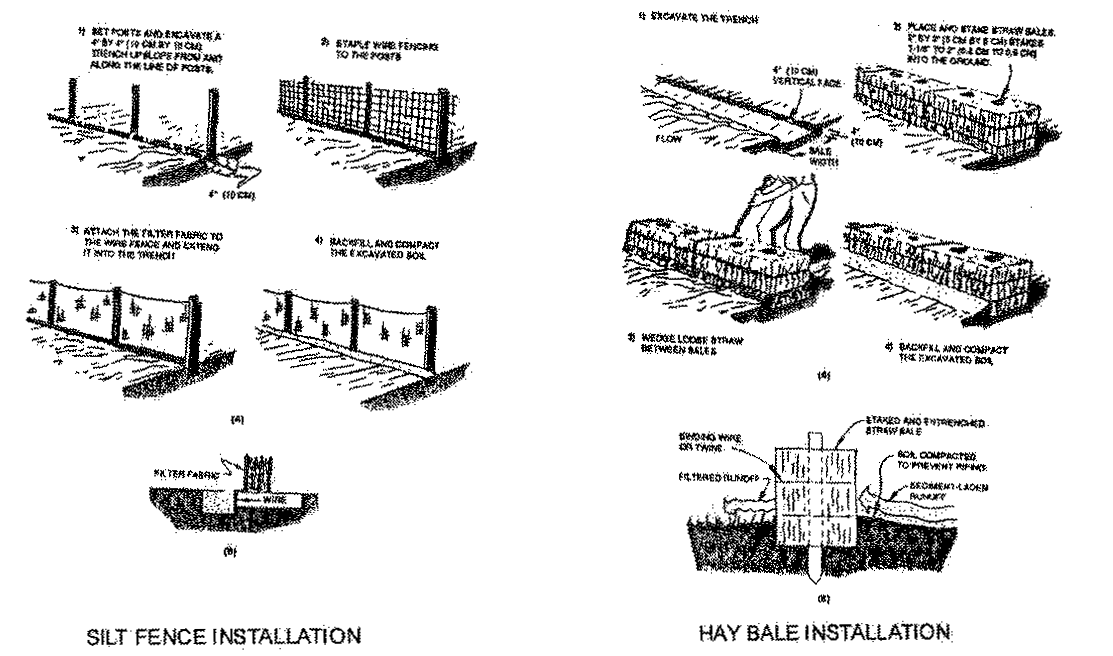
Figure XIV-1 TYPICAL HAY BALE AND SILT FENCE INSTALLATION
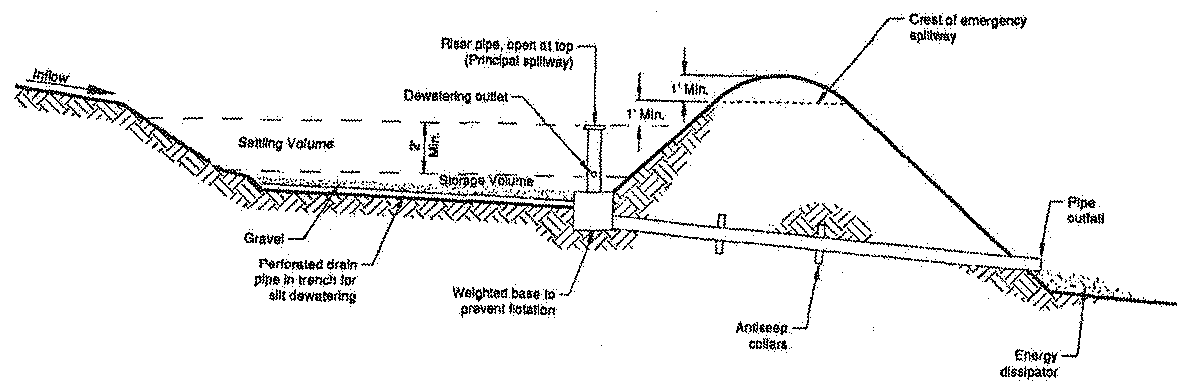
Figure XIV-2 TYPICAL SEDIMENTATION POND
(Ord. No. 09-04, § 1(Att. A), 8-10-04)
Sec. 34-703. - Earthwork.
Earthwork includes site grading and changing existing drainage patterns. All earthwork shall be performed in such a manner as not to inadvertently disrupt natural or normal drainage patterns. A detailed grading plan shall be required prior to construction. The grading plan should clearly show existing drainage patterns and topography. Proposed or final grades should also be included in the grading plan. Other areas of concern to be addressed include:
(1)
Temporary or permanent placement of fill which blocks a drainageway should be avoided.
(2)
Earthened stockpiles or excavation areas should be stabilized or other measures taken to prevent erosion and sediment transport problems.
(3)
Incomplete fill projects or partially excavated pits, trenches or channels must be completed and stabilized. Assurances that the project will be completed should be provided to the town's satisfaction prior to construction.
(4)
The aggregate effect of unregulated filling in flood plains or other surface water storage areas should be avoided unless it can be demonstrated that compensating storage is provided.
(5)
Encroachment into drainageways should be avoided. No net reduction in conveyance capacity should occur as a result of land development projects, rehabilitation projects or maintenance projects.
(6)
Spoil material should not be placed such that culverts are impeded or blocked in any manner.
(Ord. No. 09-04, § 1(Att. A), 8-10-04)

