
Harrison Village City Zoning Code
ARTICLE XV
DEFINITIONS
Sec. 117-426.- Purpose.
The following words and terms, wherever they occur in this chapter, shall be construed as herein defined. Words not defined in this chapter shall be interpreted in accordance with definitions in the 21st Century Land Development Code by Freilich, White, and Murray, Planners Dictionary by AP A Planning Advisory Service Report 521/522, the State Building Code or Uniform Dwelling Code. If a word or term is not defined as identified by the protocol above, it shall have the meaning set forth in the latest edition of Webster's New World College Dictionary.
(Ord. No. 10-147, § 15.0(1), 7-27-2010)
Sec. 117-427. - Generally.
The word "person" includes a firm, association, organization, partnership, trust, company or corporation as well as an individual. The present tense includes the future tense and the singular includes the plural. The word "shall" is mandatory and the word "may" is permissive. The words "used" or "occupied" also mean intended, designed or arranged to be used or occupied.
(Ord. No. 10-147, § 15.0(2), 7-27-2010)
Sec. 117-428. - Words and terms defined.
For the purposes of this chapter, certain terms shall have the meanings ascribed to them in this section, unless the context clearly indicates otherwise.
Abandonment. To cease or discontinue a use or activity without intent to resume. Generally, if a use or activity is discontinued for more than 12 months, unless otherwise specified in this chapter, it shall be considered abandoned.
Abutting. Having a common border with, or being separated from such common border by a right-of-way or easement.
Addition. Any construction which increase the outside dimensions of a building or structure.
Adjacent. See Abutting.
Agriculture. The use of land for agricultural purposes, including farming, pasturage, horticulture, floriculture, viticulture, and the necessary accessory uses for packing, treating, or storing the produce; provided, however, that the operation of any such accessory uses shall be secondary to that of the normal agricultural activities.
Airport (public). Any airport which complies with the definition contained in Wis. Stats. ch. 114, or any airport which serves or offers to serve common carriers engaged in air transport.
Alley. A public or approved private way which affords only a secondary means of access to abutting property.
Alteration. A change or rearrangement in the structural parts of a structure, an enlargement of a structure, whether by extending on the side or by increasing the height, or the movement of a structure from one location to another.
Asphalt plant. A use that stores materials for and manufactures asphalt products for distribution off premises.
Assisted living and retirement home. A use where the primary function is to provide personal care, food, or shelter to three or more unrelated adults whom are retired or do not need the care associated with a nursing or convalescent home, either for profit or nonprofit.
Automobile body repair or paint shop. A use, within an enclosed building, conducting body work, frame work, welding and painting of an entire vehicle, boat, RV, or truck or a major portion thereof of any of the aforementioned motor vehicles, excluding heavy truck and buses.
Automobile repair and service establishments. A use where the exclusive service performed or executed, within an enclosed building, on any motor vehicle, excluding heavy truck and buses, for compensation, including the installation of exhaust system, repair of the electrical system, transmission repair, brake repair, tire repair and installation, rust proofing, motor vehicle diagnostic center, major and minor mechanical repairs, or similar.
Bar. see Tavern.
Basement. A story partly or wholly underground. A basement shall be counted as a story for purposes of allowable number of stories where more than one-half of its height is above the average level of the surrounding grade.
Bed and breakfast establishment. A use involving lodging in a single-family dwelling that provides for overnight accommodations and a morning meal to customers for compensation where the owner resides on the premises.
Berm. Earthen material and soil covered with grass or other landscaping materials along a property line, right-of-way line or other feature typically for aesthetics or screening purposes.
Billboard. An advertising sign used to advertise goods, services, establishments or organizations off the premises. See article VII, Signs and Billboards.
Boarding houses. An establishment where meals and lodging are provided for compensation by prearrangement other than in dwelling units, without limitation on time periods involved, and for a total of at least four or more boarders.
Boathouse. An accessory building or accessory structure, which is accessible by boats from navigable water, is designed, constructed, and used solely for the purpose of storing or protecting boats and other water related recreational materials, and is used in conjunction with a principal use on a property.
Buffer. The use of land, topography, difference in elevation, space fences or landscape planting to screen, or partially screen a use or property from another use or property.
Buildable area. The space remaining on a lot after the minimum setback, open space, easements and other site constraint requirements of this chapter have been satisfied.
Building footprint. The ground area covered by and including the exterior dimensions of a building, including enclosed and/or covered porches or patios and attached garages.
Building line. A line, usually fixed parallel to the lot line, beyond which a building or structure cannot extend under the terms of this chapter. Building line will constitute the footing walls rather than the overhang.
Building or structure, attached. A building or structure which is attached to another building or structure by a wall, a roof, or by a continuous foundation.
Building or structure, detached. A building or structure on the same lot and having no structural or physical connection with another structure.
Building site. The lot or lots or portion of a lot or lots used for building, the total area of which lots is ascribed to the building for compliance with these zoning regulations.
Building, accessory. A building which is located on the same lot with such principal building, structure, or use and which is customarily incidental to and subordinate to the principal building, structure, or use. Examples of accessory buildings include, but are not limited to, attached garages, detached garages, sheds, and gazebos.
Building, principal. A building which contains the primary use of the lot, as contrasted to an accessory building, structure, or use.
Building. A structure having a roof supported by columns and/or walls for the housing or enclosure of persons, animals or personal property.
Build-to line. A line parallel to a lot line or street setback line along which a building or structure, or a portion of a building or structure, determined by use, shall be required to be built.
Business. Any lawful use, occupation, employment or enterprise where merchandise is sold or where services are offered for compensation.
Calumet County (also county). Calumet County, Wisconsin.
Calumet County Board. Board of Supervisors, Calumet County, Wisconsin.
Car wash. The use of a tract of land, building, or portion thereof, for the manual or automatic washing and cleaning of passenger vehicles, recreational vehicles or other light duty equipment.
Carport. A detached or attached accessory building that consists of a roof and that has at least two sides completely unenclosed from the ground to the roof, which is designed primarily for storage and/or parking of passenger vehicles, trailers, recreational vehicles, and trucks.
Cemetery. The use of land or land dedicated for the burial of the dead, including mausoleums, necessary sales and maintenance facilities.
Clinic. An office or group of offices relating to the health care professions including physicians, dentists and the like engaged in the treatment of persons.
Commercial truck body and/or paint shop. A use, within an enclosed building, conducting body work, frame work, welding and painting of the entire vehicle or major portion thereof any commercial truck, tractor, semi-trailer or truck-trailer combination.
Commercial truck repair and service establishments. A use where the exclusive service performed or executed, within an enclosed building, on any commercial truck, tractor, semi-trailer combination for compensation which shall include the installation of exhaust system, repair of the electrical system, transmission repair, brake repair, tire repair and installation, rust proofing, truck diagnostic center, major and minor mechanical repairs.
Common open space. A parcel or parcels of land or an area of water or combination of land and water designated and intended for either the recreational use and enjoyment of residents of the development for which it was established and for the general public or for the exclusive recreational use and enjoyment of residents of the development for which it was established. No yard required in connection with any principal use or structure shall be designated or intended for use as common open space.
Community living arrangement. Facilities defined in Wis. Stats. § 46.03(22).
Comprehensive plan. A compilation of policy statements, goals, objectives and maps for guiding the physical, social, and economic development, both private and public, of the village.
Concrete mixing plant. A use that stores water, aggregate and cement and mixes those items for the production of concrete for distribution into trucks for off site use.
Conditional use. Use of a special nature as to make impractical their predetermined classification as a permitted use in a district. See article XI, Conditional Use Permits. Sometime referred to as special exceptions.
Conditional use permit. Authorizes the use of a building, structure or land according to stated conditions.
Condominium. A building or group of buildings in which dwelling units, offices or floor area are owned individually, and the structure, common areas, and facilities are owned by all the owners on a proportional, undivided basis.
Convenience store. A convenience store is a retail business with primary emphasis placed on providing the public a convenient location to quickly purchase from a wide array of consumable products (predominantly food or food and motor fuels) and services.
Covenant. A contract or other written agreement between private parties that constitutes a restriction on a particular parcel of land.
Day care, family. A place where-regular day care is provided to not more than eight children and is licensed pursuant to Wis. Stats. ch. 48.
Day care, group or day care center. A place where regular day care is provided to nine or more children and is licensed pursuant to Wis. Stats. ch. 48.
Deck. An open structure not enclosed with walls or roof which is accessory to the principal dwelling.
Density. The ratio of the number of dwelling units to the lot area. Areas used in computing "density" are the actual sites devoted to the residential use and consist of the area of the lot and any private roads.
Development. Any man-made change to improved or unimproved real estate, including, but not limited to, the construction of buildings, structures or accessory structures; the construction of additions or substantial alterations to buildings, structures or accessory structures; the placement of buildings or structures; ditching, lagooning, dredging, filling, grading, paving, excavation or drilling operations; and the deposition or extraction of earthen materials.
Development standards. Minimum requirements and maximum allowable limits established for the effects and characteristics of conditional uses.
Drainage system. One or more artificial ditches, tile drains or similar devices which collect surface runoff or groundwater and convey it to a point of discharge.
Drive-in restaurant. Any establishment dispensing or serving food in automobiles including those establishments where customers serve themselves and may eat or drink in the building or in their automobiles on the premises.
Drive-thru facility. An improvement to a new or existing building which expands the use and physical characteristics of the property so as to permit patrons and customers who are operators or passengers in a motor vehicle, to receive a service or obtain a product on or from the exterior of the building.
Dwelling or dwelling unit. A room or rooms connected together, constituting a separate, independent housekeeping establishment for one family only, for owner occupancy or for rental, lease or other occupancy on a weekly or longer basis, physically separated from any other dwelling unit.
Dwelling, single-family detached. A building containing not more than one dwelling unit, entirely separated from structures on adjacent lots by yard or open space. The term "detached dwelling" shall not include mobile homes, travel trailers, or other forms of portable or temporary housing.
Dwelling, single-family attached. A building containing dwelling units attached at the side or sides in a series to a group of two or more dwelling units. Each dwelling unit shall be separated from the adjoining dwelling unit by a party wall or walls extending from footings through roofs. The term "attached dwelling" is intended to imply townhouses or condominiums or any form which conforms to this definition.
Dwelling, two-family. One building containing not more than two dwelling units. The term "two-family dwelling" is intended to imply single-family semi-detached buildings and duplexes or any form which conforms to this definition.
Dwelling, multiple family. A building containing three or more dwelling units. The term "multi-family dwelling" shall include cooperative apartments, condominiums, apartments and the like. Regardless of how rental units are equipped, any multi-family dwelling in which units are available for rental periods of less than one week shall be considered a motel.
Dwelling, mobile home. See Mobile home.
Dwelling, modular home or manufactured home. A building made up of two or more modular sections transported to the home site, put on a permanent foundation and joined to make a single dwelling. For the purposes of this chapter, modular homes shall be allowed as a single-family detached dwelling.
Easement. A grant by a property owner for use of a parcel of land by the public or any person for any specific purpose or for purposes of access, construction, and installation and maintaining utilities, including: sanitary sewers, water mains, electric lines, telephone lines, cable television lines, other transmission lines, storm sewer, storm drainage ways, gas lines or other service utilities.
Educational institution; business, technical or vocational. A use including specialized instructional classes that provides training for business, commercial, or trade skills such as accounting, data processing or automotive repair.
Educational institution; college or university. A public or private post-secondary use, with an academic curricula, including uses, structures, and/or facilities sanctioned by, ancillary to, or necessary to the operation of the college or university. This includes, but is not limited to the following ancillary uses affiliated with the college or university: food sales, retail sales indoor and/or outdoor recreation facilities, offices, printing, museums and professional service.
Educational institution; elementary, middle, high school. A public or private use that provides an academic curricula of elementary or secondary academic instruction, kindergartens, elementary schools, middle schools, junior high schools and high schools.
Environmental control facility. Any facility, temporary or permanent, which is reasonably expected to abate, reduce or aid in the prevention, measurement, control or monitoring of noise, air or water pollutants, solid waste and thermal pollution, radiation or other pollutants, including facilities installed principally to supplement or to replace existing property or equipment not meeting or allegedly not meeting acceptable pollution control standards or which are to be supplemented or replaced by other pollution control facilities.
Essential services means overhead or underground electrical, cable, telephone (excluding wireless), internet, gas, steam or water transmission or distribution systems, and collection, communication, supply or disposal systems and structures used by public utilities or governmental departments or commissions or systems as are required for the protection of public health, safety or general welfare, including: towers, poles, wires, mains, drains, sewers, pipes, conduits, cables and similar improvements. This does not include buildings, structures or substations.
Fair market value. Assessed value adjusted for equalized value.
Family. One or more individuals not necessarily related by blood, marriage, adoption, or guardianship, living together under common housekeeping living arrangement.
Farmor farming. A parcel of land which is developed primarily to agriculture and agricultural use, including all appurtenant structures.
Fence. Any partition, structure, wall or gate erected as a divider, marker, barrier or enclosure and located along the boundary, or within the required yard.
Finished grade. The average elevation of the finished surface of the ground adjacent to the exterior walls of the building or structure.
Floor area. The sum of the gross horizontal areas of the several floors of a building measured from the exterior faces of the exterior walls or from the centerline of walls separating two buildings.
Floor area ratio. The ratio of the total floor area of a building to the total lot area.
Frontage, building, structure, lot. The horizontal distance of a building, structure, or lot facing or abutting a street right-of-way.
Fur farm. Land, buildings or structures used for the purpose of raising or harboring fur bearing animals including those defined in Wis. Stats. § 29.01, and also including chinchillas, whether the animals kept for breeding, slaughtering or petting.
Garage. A detached or attached accessory building or a portion of the principal building, which is designed or used primarily for storage and/or parking of private vehicles, trailers, or recreational vehicles.
Gasoline/fueling stations. A retail store for servicing motor vehicles, especially with gasoline or other fueling sources.
Height, building. The vertical dimension measured from the average elevation of the finished lot grade at the front of the building to the highest point of the roof or parapet wall, in case of a flat roof.
Home occupation. Refer to section 117-127.
Home business. Refer to section 117-127.
Hospital. A use providing inpatient and outpatient medical and surgical care, diagnosis and treatment for sick or injured persons including beds for overnight care, laboratories, training facilities, and/or other necessary accessory facilities.
Hotel or motel. A use offering lodging accommodations, in individual rooms or suites, on a daily rate to the general public and which may include additional accessory services such as restaurants, meeting rooms and personal fitness facilities.
Houseboat, fixed. Defined in § 30.121(1), Wis. Stats., means a structure not actually used for navigation which extends beyond the ordinary high-water mark of a navigable waterway and is retained in place either by cables to the shoreline or by anchors or spudpoles attached to the bed of the waterway.
Impervious surface. An area that releases, as runoff, all or a large portion of the precipitation that falls on it, except for frozen soil. Rooftops, sidewalks, driveways, parking lots, and streets are examples of surfaces that are typically impervious.
Impervious surface ratio or coverage. The measure of intensity of land use, determined by dividing the total of all impervious surfaces on a site by the gross area of the site.
Kennel. Any use where any person engages in the business of boarding, grooming, breeding, buying, letting for hire, training for a fee or selling of small animals either inside or outside a completely enclosed building or structure.
Kennel, dog. A place of business where more than two adult dogs are boarded for a fee on a recurrent basis. Also, a household in a residential zoning district (RS-1, RS-2, RT, RM) that keeps, harbors or has custody of four or more adult dogs for any purpose.
Landscaping. Alteration of the natural terrain consisting of, but not limited to, grass, ground covers, shrubs, vines, hedges, trees, berms and complementary structural landscape architectural features such as rock, fountains, sculpture, decorative walls and tree wells.
Livestock. Generally means cattle, horses, pigs, fowl and other animals typically found on a farm.
Lot. A distinct and separate parcel of land used or set aside and available for use as the site for one or more buildings and buildings accessory thereto or for any other purpose, in one ownership and not divided by a street nor including any land within the limits of a public or private street right-of-way. See also "lot of record".
Lot, corner. A lot located at the intersection of two or more streets.
Lot, back. A lot held in common ownership directly across the road from the lot fronting on the shore of Lake Winnebago.
Lot, double frontage (lot, through). An interior lot having street frontage on the front and the rear of the lot.
Lot, interior. A lot other than a corner lot, with only one frontage on a street.
Lot area. Any area within a lot, including land over which easement have been granted, but not including any land within the limits of a street right-of-way upon which such lot abuts, even if fee title to such street is held by the owner of the lot.
Lot coverage. The percentage of the lot area covered by all principal and accessory building(s) or structure(s) and other such uses as specified in section 117-51.
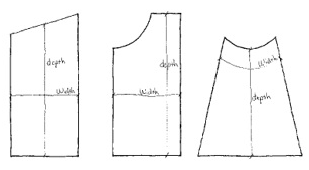
Lot depth. The horizontal distance between the front and rear lot lines measured along a line joining the midpoints of the front and rear lot lines.
Lot frontage. The front of an interior lot shall be construed to be the portion nearest the street. For the purpose of determining yard requirements on comer lots and double frontage lots, all sides of a lot adjacent to a street shall be considered frontage, and yards shall be provided as set out in these zoning regulations.
Lot line, front. That boundary of a lot which abuts a dedicated public street or private street. If a lot abuts two or more dedicated public streets or two or more private streets, all sides facing a dedicated public street or private street shall be considered the front. In the case of a land-locked lot, the front lot line shall be that lot line that faces the access to the lot.
Lot line, rear. A boundary line which is opposite and most distant from the front lot line. In the case of comer lots, the rear lot line is the boundary line that has the greatest lot depth from either of the front lot lines. If the rear lot line is less than ten feet in length, or if the lot forms a point at the rear, the rear lot line shall be defined as a line ten feet in length within the lots, parallel to, and at the maximum distance from the front lot line.
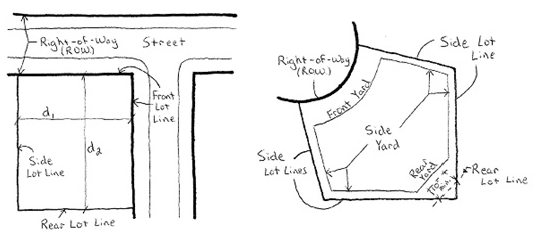
Lot line, side. Any boundary line not a front lot line or a rear lot line.
Lot of record. A lot which is part of a subdivision recorded in the office of the Calumet County Register of Deeds, or a lot or parcel described by metes and bounds, the description of which has been recorded in said office, or a certified survey which has been recorded in said office.
Lot width. The maximum horizontal distance between the side lot lines of a lot measured along the front lot line. On a cul-de-sac, or curved street, the front setback line shall be used to determine minimum lot width.
Manufacturing, custom. A use primarily engaged in the limited on-site production of goods by hand manufacturing which involves only the use of hand tools or domestic mechanical equipment that does not exceed two horsepower each or a single kiln not exceeding eight cubic feet in volume and the incidental direct sale to consumers.
Typical custom manufacturing include: custom furniture, ceramic studios, glass blowing, candle making, custom jewelry, stained and leaded glass, woodworking shops, custom textile manufacturing and craft shops.
Manufacturing, heavy. A use engaged in the processing or production of materials or products predominately from extracted or raw materials, or a use engaged in storage of, or manufacturing processes using flammable or explosive materials, or storage or manufacturing processes that potentially involve hazardous or commonly recognized offensive conditions which would generate objectionable or hazardous elements such as: heat, smoke, noise, odor, vibration, water pollution, electromagnetic disturbances, radiation or dust. Heavy manufacturing uses may include uses such as a metal foundry, metal stamping plant, electrical generation plants, extraction of mineral resources in an open mine, concrete processing facility, paper manufacturing facility from raw materials, asphalt manufacturing facility, petroleum refining, private garbage incineration and animal processing and rendering plants.
Manufacturing, light. A use engaged in the processing, repair, production, assembling, altering, converting, fabricating, finishing, processing or treatment of a product utilizing a relatively clean and quiet process which does not include or generate objectionable or hazardous elements such as smoke, noise, odor, vibration, water pollution or dust and which is operating and storing products and materials in a completely enclosed structure. Light manufacturing uses may include uses such as: assembly or maintenance of machinery, manufacture or assembly of cloth, wire or rubber products in a completely enclosed building, chemical mixing or storage in a completely enclosed building, microchip manufacturing, assembly of precision instruments, assembly of electronic devices, assembly of medical devices, completely enclosed machine shops, cabinet making facilities and silk screening facilities.
Metes and bounds description. A description of real property which is not described by reference to a lot or block shown on a map, but is described by starting at a known point and describing the bearings and distances of the lines forming the boundaries of the property or delineates a fractional portion of a section, lot or area by described lines or portions thereof.
Mobile home. Mobile home, as defined in section 107-1 of this Code.
Mobile home park. Mobile home community, as defined in section 107-1 of this Code.
Mobile home site. Mobile home space, as defined in section 107-1 of this Code.
Mobile home subdivision. Mobile home community, as defined in section 107-1 of this Code.
Multi-tenant building. Any building or structure that is occupied by two or more owners, renters or land uses, which is managed as a single property.
Navigable water. Lake Superior, Lake Michigan, all natural inland lakes within Wisconsin, and all streams, ponds, sloughs, flowages and other waters within the territorial limits of this state, including the Wisconsin portion of boundary waters, which are navigable under the laws of this state. Under § 281.31, Wis. Stats., not withstanding any other provision of law or administrative rule promulgated thereunder, shoreland ordinances required under §§ 61.3 51 or 62.231, Wis. Stats., and chapter NR 117, Wis. Adm. Code, do not apply to lands adjacent to farm drainage ditches if;
(a)
Such lands are not adjacent to a natural navigable stream or river;
(b)
Those parts of such drainage ditches adjacent to such lands were not navigable streams before ditching; and
(c)
Such lands are maintained in nonstructural agricultural use.
"Wisconsin's Supreme Court has declared navigable bodies of water that have a bed differentiated from adjacent uplands and levels or flow sufficient to support navigation by a recreational craft of the shallowest draft on an annually recurring basis [Muench v. Public Service Commission, 261 Wis. 492 (1952) and DeGaynor and Co., Inc., v. Department of Natural Resources, 70 Wis. 2d 936 (1975)]. For example, a stream which is navigable by skiff or canoe during normal spring high water is navigable, in fact, under the laws of this state though it may be dry during other seasons."
Nonconforming characteristics. Lawful, pre-existing aspects of a site that do not comply with the standards of this chapter, even though the principal use or structure may be conforming.
Nonconforming lot. A lot of record that does not comply with the lot requirements for any permitted use in the zone in which it is located.
Nonconforming structure. A lawful, pre-existing structure that does not comply with all relevant dimensional standards of this chapter.
Nonconforming use. Any lot or structure, lawfully occupied by a use at the time of the passage of this chapter or any subsequent amendments thereto, which do not conform to the applicable use regulations of the district in which it is located.
Nursery, orchards or tree farm. The use of land for the establishment, care and harvesting of trees, shrubs, plants or fruit from fruit bearing trees.
Nursing or convalescent home. A use where the primary function is to provide personal care, food, or shelter to three or more unrelated adults whom are infirmed, have a chronic illness or are unable to care for themselves either for profit or nonprofit.
Obstruction to flow. Any development which blocks the conveyance of floodwaters such that this development alone or together with any future development will cause an increase in regional flood height.
Occupancy. To reside in as an owner or tenant on a permanent or temporary basis.
Office. A use in a building or portion of a building wherein services are performed involving predominately administrative, professional or clerical operations.
Open space. A natural or manmade landscaped area not occupied by any structures, buildings or impervious surfaces.
Ordinary high water mark. The point on the bank or shore up to which the presence and action of surface water is so continuous as to leave a distinctive mark such as by erosion, destruction or prevention of terrestrial vegetation, predominance of aquatic vegetation, or other easily recognized characteristic.
Outdoor commercial entertainment. A use involving entertainment or recreation services offered outside of an enclosed building that is open to the general public for a fee.
Examples include: driving ranges, miniature golf courses, Go-Kart tracks, volleyball courts, water parks, skating rinks, batting cages and amusement parks.
Outdoor display and/or sales. An area of designated size located outside of an enclosed permanent building or structure used in conjunction with the a business that is occupying a permanent building or structure for the display of merchandise, goods, wares or tangible property normally sold, rented or leased within the business on the lot where the merchandise is sold, rented or leased.
Outdoor storage. An area of designated size located outside of an enclosed permanent building or structure used in conjunction with the business that is occupying a permanent building or structure on the same lot for the keeping of personal or business property, goods, wares, or merchandise that are not located in that specific area for customer viewing or immediate sale.
Overlay zoning district. A district established to prescribe special regulations to be applied to a described area in combination with the underlying zoning district.
Owner. A person, individual firm, association, syndicate or partnership that appears on the recorded deed of the lot.
Office, business. A business office is an office for such activities as real estate agencies, advertising agencies (but not sign shops), insurance agencies, travel agencies and ticket sales, chamber of commerce, credit bureau (but not finance company), abstract and title agencies or insurance companies, stockbrokers, and the like. It is characteristic of a business office that retail or wholesale goods are not shown on the premises to a customer. A barber or beauty shop is not a business office.
Office, professional. A professional office is an office for the use of a person or persons generally classified as professionals, such as architects, engineers, attorneys, accountants, doctors, dentists, chiropractors, psychiatrists, psychologists, and the like.
Parcel. See Lot of record.
Park or playground. The use of any land or open space for passive or active recreation purposes. Private parks or playgrounds are those owned or controlled by a private or for profit entity while public parks or playgrounds are those owned or controlled by a governmental entity. Private parks or private playgrounds as defined in this chapter are not intended to be single lots, or grouping of lots, located in a platted subdivision.
Parking lot and structure. An off-street, ground level open area or structure, used exclusively for the temporary storage of motor vehicles. Does not include an area for the display of motor vehicles for sale as part of an automobile dealership.
Plan commission. The plan commission of the Village of Harrison, Calumet and Outagamie Counties, Wisconsin.
Personal storage. The primary use of a building containing individual, compartmentalized and controlled access spaces, rooms or lockers that are leased, rented or owned by different individuals for the storage of individual possessions or personal property.
Pervious surface. An area that releases, as runoff, a small portion of the precipitation that falls on it. Lawns, gardens, parks, forests or similar vegetated areas are examples of surfaces that are typically pervious.
Planned unit development. A parcel of land or contiguous parcels of land controlled by a single landowner or by a group of landowners in common agreement as to control, to be developed as a single entity, the environment of which is compatible with adjacent parcels, and the intent of the zoning district or districts in which it is located.
Plat. A minor land division (certified survey map), map, graphics or drawing which graphically delineates the boundary of land parcels for the purpose of identification and record title. The plat is a recorded, legal document and must conform to all Wisconsin Statutes.
Porch. A platform at or above ground level adjoining and extending outward from the exterior walls of a building.
Private drive. A roadway, not maintained by the village, providing access from a public street to a lot or building.
Processing plant, food. Any place where the manufacture or preparation of food for sale through the process of canning, extracting, fermenting, distilling, pickling, freezing, baking, drying, smoking, grinding, cutting, mixing, coating, stuffing, packing, bottling, or packaging, or through any other treatment or preservation process is conducted. This does not include places defined under retail establishments, food.
Professional service. The use of office and other related spaces for such services as are provided by medical practitioners not intended for overnight care, dentists, attorneys, architects, real estate agents, engineers, funeral homes, banks, credit unions, savings and loan institutions, lending establishments and mortgage companies and other similar professions.
Property line. The legal boundaries of a parcel of property or lot that may or may not coincide with platted lot lines or street right-of-way.
Premises. A lot, or a building or structure.
Recreational camp. Premises and facilities used occasionally or periodically for the accommodation of members of groups or associations for outdoor recreational activities.
Recreational vehicle. A structure or vehicle designed to be towed, hauled or driven and used for temporary living or sleeping purposes and equipped with wheels to facilitate movement from place to place including, but not limited to: campers, motorized homes and travel trailers.
Recycling and waste recovery center. A use in which recoverable resources such as newspapers, magazines, books and other paper products, glass, metal cans and other products are recycled, reprocessed and treated to return such products to a condition in which they may be used again for production.
Recycling center. A use whose purpose is to collect and process recyclable materials and transfer the processed materials off site, not including a junkyard. Processing shall be limited to the preparation of material for efficient shipment by such means as compacting, flattening, crushing, mechanical sorting, cleaning and loading, all done within the confines of a building. For the purposes of this chapter, recyclable material collection shall be limited to aluminum, glass, paper or plastic.
Religious institution. A use involving a building, together with its accessory structures and uses, where persons regularly assemble for religious worship and which building, together with its accessory structures and uses, is maintained and controlled by a religious body organized to sustain public worship.
Research laboratory or testing facility. A use in which scientific research, investigation, testing or experimentation is conducted, but not including the manufacturing or sale of products, except as incidental and accessory to the main purpose of the facility.
Residence. See Dwelling.
Restaurant. A use involving a business establishment, with a valid liquor license issued by the village or without alcoholic beverages, with or without table service, within which food is prepared and offered for sale and consumption on or off the premises, to the customer, in a ready to consume state in individual serving or in nondisposable containers.
Restaurant, fast food. A use involving a business establishment whose principal business is the sale of previously prepared food, in disposable containers, directly to the consumer in a ready to consume state for consumption either within the restaurant or off-premises.
Retail establishments, food. An establishment required to be licensed under Wis. Stats. § 97.30, and all other commercial enterprises, fixed or mobile, where food is processed or sold or offered for sale at retail. The term shall also include all areas and facilities of such establishments used in conjunction therewith and all vehicles and equipment utilized in conjunction therewith. It includes retail grocery stores, meat markets, poultry markets, fish markets, delicatessens, bakeries, confectionaries, ice cream shops, cheese stores, convenience marts, milk cases, spice and herb shops, temporary retail food establishments and all other establishments where food is processed or sold or offered for sale at retail.
Retail establishments, general merchandise. A use that provides goods, wares, merchandise and/or services directly to the consumer, where such goods are available for immediate purchase.
Retail establishments, personal services. Any use which caters to customers' needs, and which may include the incidental sale of products. Personal services may include barbershops, beauty shops, copying and duplicating services, dry cleaners, health clubs, pet grooming and tanning spas. Personal services shall not include adult entertainment or sexually oriented businesses.
Rummage sale. The sale of personal household goods on a property customarily used as a residence.
Rezoning. The redesignation of an area, lot, or parcel from one zoning district to another.
Right-of-way line. The dividing line between the street and the lot.
Roadside stand. A structure not permanently fixed to the ground that is readily removable in its entirety for the display and sale of agricultural products. No such structure shall exceed 200 square feet in area and there shall be no more than one such structure on any one premises.
Salvage yard or junk yard. Premises where land, buildings or structures where junk, waste, discarded, salvaged or similar materials such as old metals, wood, lumber, glass, paper, rags, cloth, cordage, barrels, containers, etc., are brought, bought, sold, exchanged, baled, packed, stored or handled, including used lumber and building materials, equipment, wrecking yards and the like. This definition shall not include automobile salvage or wrecking yards or pawnshops and establishments for the sale, storage or purchase of secondhand vehicles, clothing, furniture, appliances or similar household goods, all of which shall be usable, nor shall it apply to the processing of used, discarded or salvageable materials incident to manufacturing activity on the same site.
Salvage yards, automobile and commercial truck. Premises used for the storing, dismantling, crushing, shredding or disassembly of used motor vehicles or their parts.
Setback. The required distance the exterior wall of a building or structure must be located from a lot line, easement, right-of-way, adjacent building or other feature as indicated in this chapter.
Setback, front yard. The minimum distance between the street lot line and the nearest part of the building or structure.
Setback, rear yard. The minimum distance between the rear lot line and the nearest part of the building or structure.
Setback, side yard. The minimum distance between the side lot line and the nearest part of the building or structure.
Shopping center. A use involving a group of retail business establishments and/or service uses on a single site, under one ownership, which leases spaces for separate establishments and which has common parking spaces and no lot lines between establishments.
Shorelands. The area within the following distances from the ordinary high-water mark of navigable waters, as defined under § 281.31(2)(d):
(a)
One thousand feet from a lake, pond or flowage. If the navigable water is a glacial pothole lake, this distance shall be measured from the high-water mark of the lake.
(b)
Three hundred feet from a river or stream or to the landward side of the floodplain, whichever distance is greater.
Shoreland setback area. An area in a shore land that is within a certain distance of the ordinary high-water mark in which the construction or placement of buildings or structures has been limited or prohibited under the Harrison zoning ordinance.
Shoreland-wetland overlay district. The zoning overlay district, created in this ordinance, comprised of shorelands that are designated as wetlands on the wetlands inventory maps which have been adopted and made a part of this ordinance.
Showroom. An indoor use or the indoor portion of a building or use where merchandise is on display for consumer viewing.
Solar energy systems. A system of equipment which directly converts and then transfers or stores solar energy into usable forms of thermal or electrical energy.
Special exception. See Variance.
Stable. Premises where more than one horse is boarded, raised, kept or trained regardless of whether such horses are owned by the occupants or owners of the premises. A stable shall provide not less than three acres of lot area.
Stable, riding. Premises on which horses are kept for the purpose of renting them to the public on any basis. A riding stable shall consist of not less than five acres.
Storage establishment. Premises where goods and materials or more than three motor vehicles, recreational vehicles or boats are stored or kept for a fee.
Storage, climate controlled. A self-storage facility with indoor storage units with interior access that manages both temperature and humidity levels, with a maintained temperature range of 55 to 80 degrees Fahrenheit with a max relative humidity of 55 percent.
Storage, mini-warehousing. A self-storage facility with storage space at ambient (outside) temperature with exterior access.
Storage, temperature controlled. A self-storage facility that manages only temperature of storage units. Typically provides heat only. Interior and exterior access.
Story. That portion of a building, other than a basement, that is between the surface of any floor and the surface of the next floor above it or, if there is not a floor above, then the space between such floor and the ceiling next above it.
Street. A dedicated right-of-way affording primary access by pedestrians or vehicles to abutting property. Egress and ingress easements shall not be considered streets or roads.
Street, private. A street that has not been accepted by the village or other governmental agency.
Structure. Anything constructed or erected with a fixed location on the ground or attached or resting on something having a fixed location on the ground. Moreover, the following shall always be considered structures: parking lots, buildings, walls, fences, signs and billboards.
Structure, accessory. A structure which is located on the same lot with such principal building, structure, or use and which is customarily incidental to and subordinate to the principal building, structure, or use. An accessory structure is not necessarily a building. Examples of accessory structures include, but are not limited to, parking lots, fences, patios, decks, swimming pools, and game courts.
Structure, principal. A structure which contains the primary use of the lot, as contrasted to an accessory building, structure, or use.
Structure, temporary. A structure without any foundation or footings and that is removed when the designated time period, activity, or use for which the temporary structure was erected or placed has ceased.
Tavern. A use, licensed by the village, to sell retail alcoholic beverages to be consumed on premises and which may provide dancing (not exotic), entertainment and food. The term tavern shall include bar, pub, nightclub and cocktail lounge.
Temporary contractor's offices. A temporary structure used as an office in conjunction with a construction project.
Temporary merchandise sales, outdoor. A temporary use that is conducted outside of an enclosed permanent building or structure on a lot where a temporary merchant or a group of temporary merchants displays and sells goods, wares and merchandise to the general public.
Temporary merchant. Any individual who engages in, conducts any temporary use in the village, either in one location or by moving his or her place of business from one lot to another lot in the village, displaying or selling goods, wares or merchandise, or who solicits for such trade to the general public.
Temporary model home sales office. A dwelling temporarily used as a real estate office for a residential development or subdivision under construction for on-site real estate sales.
Tent. A temporary structure constructed of fabric or pliable material supported by any manner except by air or the contents that it protects, and is open without sidewalls or drops on 75 percent or more of the perimeter.
Towed vehicle storage. A use that provides for the temporary storage of vehicles that have been towed, but does not include disposal, permanent disassembly, salvage or accessory storage of inoperable vehicles.
Towing business. A use that provides for the removal of vehicles.
Toxic and hazardous waste. Waste materials as defined by the DNR and EPA.
Truck and heavy equipment sales and rental. A use involving the display and temporary storage of trucks or other equipment commonly used in commercial, industrial or construction enterprises for sale, lease or rental.
Undue hardship. As used in connection with the granting of a variance means the property in question cannot be put to any reasonable use if established under conditions required by this chapter, and, where the plight of the landowner is due to circumstances unique to his property not created by the landowner, and the variance, if approved, will not alter the essential character of the locality. Economic considerations alone shall not constitute an undue hardship if any reasonable use for the property exists under the terms of this chapter.
Use. The purpose or activity for which the land, building or structure thereon is designated, arranged or intended, for which it is occupied, utilized or maintained.
Use, accessory. A use which is located on the same lot with such principal building, structure, or use and which is customarily incidental to and subordinate to the principal building, structure, or use.
Use, conditional. See Conditional use.
Use, permitted. A public or private use which of itself conforms to the intent, requirements, regulations and design standards of a particular zoning district.
Use, principal. The main use of the land, building or structure as distinguished from accessory use. A "principal use" may be "permitted" or "conditional".
Use, temporary. A use that is established for a limited duration with the intent to discontinue such use upon the expiration of the time period.
Utility substation. Public or private buildings or structures required to provide essential municipal or other utility services (gas, electric, telephone, water, sewer, cable, etc.).
Variance. A relaxation of the terms of the this chapter where such variation will not be contrary to the public interest and where, owing to conditions peculiar to the property and not the result of the actions of the applicant, a literal enforcement of this chapter would result in unnecessary and undue hardship.
Veterinarian clinic. A use in a completely enclosed building, or portion thereof, designed or used for the care, observation or treatment of domestic animals by or under the supervision of a licensed veterinarian.
Village board. Village board of trustees, Village of Harrison, Calumet and Outagamie Counties, Wisconsin.
Vision clearance or vision corner. The triangular approach zones at street and/or driveway intersections intended to allow visibility of approaching traffic, pedestrians and bicycles and as regulated in section 117-53.
Warehouse or storage facility. A use of a building or part of a building primarily involved in the indoor storage of goods and materials.
WDNR. The Wisconsin Department of Natural Resources.
Wetlands. Those areas where water is at, near or above the land surface long enough to support aquatic or hydrophytic vegetation and which have soils indicative of wet conditions.
Wetland, alteration. Any filling, flooding, draining, dredging, ditching, tiling, excavating, temporary water level stabilization measures or dike and dam construction in a wetland area.
Wholesale and distribution facility. A use that maintains a stock of goods, other than samples on premises, and is engaged in the resale of commodities in quantity, to businesses, industries and institutions.
Yard. A required open space, on a lot between a lot line and a building or structure, which is unoccupied and unobstructed from the ground upward, except for permitted obstructions.
Yard, front. An open space extending the full width of the lot, between the building and the front lot line, unoccupied and unobstructed by buildings or structures from the ground upward except as provided herein, the depth of which shall be measured as the least distance between the front lot line and the front foundation wall of the main building.
Yard, rear. An open space extending the full width of the lot, between the building and the rear lot line, unoccupied and unobstructed by buildings or structures from the ground upward, except as provided herein, the depth of which shall be measured as the least distance between the rear lot line and the rear foundation wall of the main building.
Yard, side. An open space extending from the front yard to the rear yard, between the building and the side lot line, unoccupied and unobstructed from the ground upward, except as provided herein, the depth of which shall be measured as the least distance between the side lot line and the side foundation wall of the main building.
Zoning administrator. The zoning administrator shall be the village planner.
Zoning amendment. A change of the zoning map or zoning text authorized by the village, either in the allowable use within a district, in the boundaries of a district or in a change to the text of this chapter.
Zoning district. An area or areas within the limits of the village for which the regulations and requirements governing uses of land, premises and buildings are uniform, within which certain yards and open spaces are required and certain height limits are established for buildings.
Zoning map. The map or maps incorporated into this chapter as a part thereof, designating the zoning districts.
(Ord. No. 10-147, § 15.0(3), 7-27-2010; Ord. No. 11-162, 11-29-2011; Ord. No. V21-01, 1-12-2021)

