
Kearns City Zoning Code
CHAPTER 19
22 PARKS AND RECREATION ZONE
19.22.010 Purpose Of Provisions
The purpose of the Parks and Recreation Zone is to preserve and enhance public and private open space, natural areas and habitats, and improved park and recreational areas. The Zone provides opportunities for active and passive outdoor recreation; provides contrasts to and relief from the built environment; preserves scenic qualities and viewsheds; protects sensitive or fragile environmental areas such as wetlands, steep slopes, ridge lines, meadows, and stream corridors; encourages sustainability and conservation; and provides transportation connections for people walking, biking, scootering, or using other forms of active transportation.
Repealed & Replaced by Ord. 2023-06-01 (Title 19) on 6/26/2023
19.22.020 Establishment Of Parks And Recreation Zone
- To anticipate and respond to the changing needs of the municipality and implement greenway, natural resource preservation, and health and recreation concepts included in the adopted General Plan, Kearns establishes the following zone:
- Parks and Recreation Zone (PR). The PR Zone is intended for improved parks, recreational areas, and other public and private open spaces which can accommodate human use and visitation. Encouraged uses in this Zone include public parks, multi-use trails, ball fields, special uses such as mobile food carts and festivals, and landscaping and equipment sheds.
Repealed & Replaced by Ord. 2023-06-01 (Title 19) on 6/26/2023
19.22.030 Schedule Of Permitted Uses
- Schedule of Permitted Uses. The specific uses listed in the following schedule are permitted in the zones as indicated, subject to the general provisions, special conditions, additional restrictions, and exceptions set forth in this Title.
- Procedure for Multiple Uses (Combination of Uses). If a development proposal involves a combination of uses other than accessory uses as identified in Table 19.22.030, the more restrictive provisions of this Title shall apply. For example, if a portion of a development is subject to conditional use (“C”) approval and the other portion is subject only to permitted use (“P”) review, the entire development shall be reviewed and approved by the conditional use process.
- Abbreviations. The abbreviations used in the schedule mean:
- P = Permitted Use. This use is allowed in the zone but may be subject to additional restrictions and approval processes as provided in this Title.
- C = Conditional Use. This use is conditional because of the unique characteristics or potential impacts on the municipality, surrounding neighbors, or adjacent uses, incompatibility in some areas of the zone, or compatibility only if special provisions or conditions are required to mitigate the detrimental impacts of the use. The Planning Commission is the land use authority for uses with this designation.
- X = Prohibited Use. This use is prohibited in this zone. Any use not specifically identified in Table 19.22.030 is prohibited in this zone.
Table 19.22.030 – Uses Allowed in the PR Zone. Use Categories PR AGRICULTURAL: Agricultural Building P Agriculture P Agritourism C Apiary P Aviary P RESIDENTIAL USES: No residential uses are allowed in the PR Zone. RETAIL AND SERVICES: Child Care P FOOD AND DRINK: Food Truck / Mobile Restaurant / Food Cart P RECREATIONAL: Campground C Commercial Recreation P Micro Park P Multi-use Trail, Paved P Multi-use Trail, Unpaved P Open Space P Private, Non-Profit Recreational Grounds and
FacilitiesP Recreation Facility - Private, Public, or
CommercialP Stable, Public P Trailhead Infrastructure, Large Scale: paved
parking, restrooms, wayfinding and
interpretive signage, trash receptacles, other
improvementsP Trailhead Infrastructure, Small Scale: unpaved
parking (10 or less spaces), pit toilet, wooden
trail signage.P LODGING: Yurt P INDUSTRIAL: No Industrial Uses are allowed in the PR Zone. INSTITUTIONAL USES: Church, Synagogue, Mosque, Temple,
Cathedral, or Other Religious BuildingsP Cemetery P Community Garden P Micromobility Support Infrastructure P Public Parks P Public Use P Solar Energy System, Accessory P Wind Energy System, Accessory P PLANNED UNIT DEVELOPMENTS, SUBJECT TO CHAPTER 19.18: No Planned Unit Developments are allowed in the PR Zone. SPECIALTY: Park and Ride P ACCESSORY USES: Sidewalk Displays and Cafes P Accessory structures P
Repealed & Replaced by Ord. 2023-06-01 (Title 19) on 6/26/2023
19.22.040 Schedule Of Uses, Special Conditions
See Chapter 19.42: Specific Use Standards for conditions and regulations related to specific uses.
Repealed & Replaced by Ord. 2023-06-01 (Title 19) on 6/26/2023
19.22.050 Development Standards
Any development in the PR Zone shall comply with the development standards of Table 19.22.050 and all other applicable standards in this Title.
| Table 19.22.050 – Parks and Recreation Zone Development Standards. | |
| Standard | PR |
| Minimum Lot Size (in square feet) | NA |
| Minimum Frontage (in feet) | Any project area in the Parks and Recreation Zone shall have a minimum frontage of 30’ on a public street. |
| Minimum Lot Width (in feet) | NA |
| Maximum Building Height (in feet) A | For lot areas of 5 acres or greater, the
maximum is 45’. For lot areas smaller than 5 acres, the maximum is 35’. |
| Minimum Floor Area Ratio | NA |
| Maximum Building Lot Coverage | 30% |
- Height Exception for Recreational Equipment: In the PR Zone, if necessary to ensure protection of public health, safety, or welfare, recreation equipment heights are permitted up to fifty feet (50’). For example, nets around batting cages or fences at driving ranges may exceed thirty-five feet (35’) as necessary and as approved by the Director or designee.
- Accessory Structure Development Standards. Accessory structures in the PR Zone are subject to the standards found in Section 19.26.080 of this Title.
Repealed & Replaced by Ord. 2023-06-01 (Title 19) on 6/26/2023
19.22.060 Required Yards And Setbacks
Any development in the PR Zone shall comply with the yard and setback standards shown in Table 19.22.060 and all other applicable standards in this Title.
| Table 19.22.060 - Yards and Setbacks for the PR Zone | |
| Standard | PR |
| Front Yard Setback (in feet) | Minimum: 20 |
| Side Yard Setback - Interior Lots (in feet) | Minimum: 20 Maximum: NA |
| Side Yard Setback - Corner Lots (in feet) | Minimum: 20 Maximum: NA |
| Rear Yard Setback (in feet) | Minimum: 20 Maximum: NA |
| Minimum Distance between Primary and Accessory Structures (in feet) | 10 |
Repealed & Replaced by Ord. 2023-06-01 (Title 19) on 6/26/2023
19.22.070 Height Exceptions
Exceptions to the building heights specified in Table 19.22.050 apply, in accordance with Subsection 19.46.120(H).
Repealed & Replaced by Ord. 2023-06-01 (Title 19) on 6/26/2023
19.22.080 Parking Requirements
- In addition to the requirements in 19.48, the following shall apply:
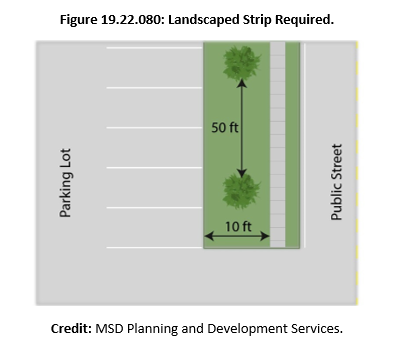
- Landscaped Strips. All parking areas for a commercial, institutional, or other public use that are adjacent to a public street shall have a landscaped strip of at least ten feet (10’) placed between the sidewalk and the parking area. This strip shall contain drought-resistant vegetation, and at least one (1) native or drought-friendly tree shall be placed every fifty feet (50’).
 Pedestrian Access. Any parking lot with an area greater than twenty-thousand square feet (20,000 sq. ft.) shall provide dedicated ADA-compliant walkways, at least six feet (6’) wide, for pedestrians navigating from their vehicles to a building or park entrance. At a minimum, walkways shall be placed through the center of the parking area and in front of the building(s) to serve as pedestrian access to the area. Walkways shall be landscaped with trees at least every fifty feet (50’). Walkways shall be easily accessed from designated ADA parking stalls.
Repealed & Replaced by Ord. 2023-06-01 (Title 19) on 6/26/2023
19.22.090 Landscaping And Screening Standards
- All landscaping and screening standards found in Chapter 19.50 apply in the PR Zone. In addition, the following fencing standards apply:
- Fencing: Fencing may be allowed in the PR Zone where desirable to establish sense of privacy, protect children and pets, provide a buffer from street traffic, or enhance property appearance. The following standards apply to fencing in the PR Zone:
- Height: Fences may be up to six feet (6’) tall at the property line. Fences taller than six feet (6’) shall be set back from the property line an additional foot for each foot of fence over six feet (6’).
- Materials: Fences in the PR Zone shall be designed to enhance the visual appearance of the area. Chain link fencing is prohibited except where necessary to provide a perimeter or safety backing for recreational fields, as determined by the Director or designee.
- Fencing: Fencing may be allowed in the PR Zone where desirable to establish sense of privacy, protect children and pets, provide a buffer from street traffic, or enhance property appearance. The following standards apply to fencing in the PR Zone:
Repealed & Replaced by Ord. 2023-06-01 (Title 19) on 6/26/2023
19.22.100 Lighting Standards
Any new development in the PR Zone shall comply with the following lighting standards, in addition to any other applicable standards in this Title:
- Lighting shall be located and installed to minimize any adverse impact on the natural environment, including avoiding lighting in critical habitat areas or where it may pose traffic safety problems;
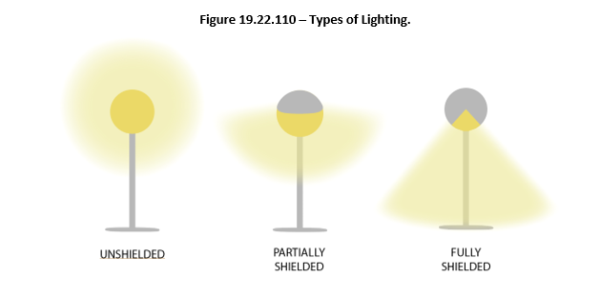
- All lighting shall be fully shielded to eliminate glare, prevent light trespass onto neighboring properties, and protect views of the night sky; and
- Lights for outdoor recreation equipment and infrastructure may be permitted up to sixty feet (60’) in height, provided they are set back from any residential use at least one-hundred and fifty feet (150’). Such lights shall be directed in a manner that minimizes light trespass onto adjacent properties.
Repealed & Replaced by Ord. 2023-06-01 (Title 19) on 6/26/2023
19.22.110 Additional Standards
It is the responsibility of the applicant to comply with all other standards of Title 19 and all other municipal ordinances.
Repealed & Replaced by Ord. 2023-06-01 (Title 19) on 6/26/2023

