
Kennett Square City Zoning Code
ARTICLE II
Definitions.
23-6 - General interpretation.
(a)
For the purposes of this chapter, words and terms used herein shall be interpreted as follows:
(b)
Words in the present tense shall include the future tense.
(c)
The singular shall include the plural and the plural shall include the singular.
(d)
The masculine gender shall include the feminine and the neuter and vice-versa.
(e)
The word "shall" is always mandatory, the word "may" means that it is permissible, and the word "should" means that it is strongly recommended but not mandatory.
(f)
The word "used" or "occupied" as applied to any land or building shall be construed to include the words "intended, arranged, or designed to be occupied."
(g)
"Sale" shall also include rental.
(h)
The words "such as," "includes," "including" and "specifically" shall provide examples, but shall not by themselves limit a provision only to items specifically mentioned, if other items would otherwise comply with the provision.
(i)
Any word or term not defined in this chapter shall be used with a meaning of standard usage.
(Ord. No. 761, § 201; Ord. No. 844 (part))
23-7 - Definitions.
When used in this chapter, the following words, terms and phrases shall have the following meanings, unless expressly stated otherwise or unless the context clearly indicates otherwise:
"Abut" means next to or adjacent to; and includes the words "directly across from streets, natural features, and rights-of-way."
"Accessory apartment" means a residential living unit incidental to a principal residential dwelling and located within the principal dwelling unit. Each accessory apartment must have its own sanitary, sleeping, and cooking facilities.
"Accessory building" means a building (such as a private garage, private toolhouse or children's playhouse or a noncommercial greenhouse) which is subordinate and accessory to a principal building on the same lot and which is used for purposes customarily incidental to those of the principal building. See standards in section 23-30(c).
"Accessory dwelling unit" means a residential living unit on the same parcel as a detached single-family primary residential structure, in an accessory building and not located within the principal dwelling unit. The ADU shall provide complete and independent living facilities for one or more persons (i.e., its own sanitary, sleeping, and cooking facilities).
"Accessory structure" means a structure serving a purpose customarily incidental to the use of the principal building and located on the same lot as the principal building. No accessory structure shall exceed fifteen feet in height, except for radio antennas and accessory signs which are regulated by article VI of this chapter. See standards in section 23-30(c).
"Accessory use" means a use subordinate and customarily incidental to the principal use on the same lot.
"Accommodations" means rooms with provisions for sleeping but without other conveniences normally associated with a dwelling.
"Acre" means forty-three thousand five hundred sixty square feet.
"Adjacent" means a state of being side-by-side, next to, adjoining, contiguous or abutting one to another.
"Administrative activities" means any business function in which there is no regular contact with the general public and no materials, products, goods or prepared foods are stored except for office use.
"Adult day care center" means a use providing supervised care and assistance primarily to persons over age sixty and/or disabled persons who need such daily assistance because of physical disability, old age or mental problems that are not criminal or violent in nature. This use may involve occasional overnight stays, but shall not primarily be a residential use. The use shall involve typical stays of less than sixty hours per week per person.
"Adult bookstore" means a commercial establishment having as a substantial or significant portion of its stock in trade, books, videos, magazines, periodicals, photographs or other adult items, devices, paraphernalia or materials which are distinguished or characterized by their emphasis on matter depicting, describing or relating to sexual activities or an establishment with a designated segment or section devoted to the sale or display of such material.
"Adult motion picture theater" means an enclosed building or outdoor theater used for presenting motion pictures, slides or video tape disks or similarly reproduced images distinguished or characterized by an emphasis on matter depicting, describing or relating to sexual activities for observation by patrons therein.
"Agriculture" means the cultivation of the soils and the raising and harvesting of the products of the soil, including nursery, horticulture, and forestry.
"Agricultural Operation" means an enterprise that is actively engaged in the commercial production and preparation for market of crops, livestock and livestock products, and in the production, harvesting, and preparation for market or use of agricultural, agronomic, horticultural, silvicultural, and aquacultural crops and commodities. The term includes an enterprise that implements changes in production practices and procedures or types of crops, livestock, livestock products or commodities produced consistent with practices and procedures that are normally engaged by farmers or are consistent with technological development within the agricultural industry.
"Alley" means a street, usually located to the rear or side of properties otherwise abutting a street public, used primarily for vehicular service access.
"Alteration", as applied to a building or structure, means a change or rearrangement in the structural parts or in the means of egress, or an enlargement, whether by extending on a side or by increasing in height, or the moving from one location or position to another.
"Alternative Learning Center" means an educational use to address the educational needs of developmentally delayed and learning-disabled children and/or adolescents whose educational needs cannot be met with traditional public and/or private education. The maximum population for an Alternative Learning Center is fifty children and/or adolescents and a student-to-teacher ratio not to exceed two to one.
"Animal hospital" means a building, structure or area of land where animals are given medical care, other than the premises where such animals are normally kept.
"Animal husbandry" means the raising and keeping of livestock or poultry for any commercial purpose. The keeping of livestock or poultry as farm pets or for domestic purposes pursuant to the regulations of this chapter and the raising of garbage-fed pigs or minks shall not be construed as animal husbandry.
Apartment. See "Dwelling."
"Archaeologist" means an individual with a degree from a recognized university in the science of archaeology. A Master's degree is usually required for professional purposes in this field.
"Archaeology" means the science of investigation and study of the past by examination of artifacts—remains of human activity; the examination of non-renewable cultural resources deposited in the earth by human or animal-related activity over time for the purpose of defining or affirming human activities and behavior.
"Architect" means an individual with a degree from a recognized university and registered in the Comonwealth of Pennsylvania in the profession of architecture.
"Architecture" means the art/science of building design and construction; a method or style of building; the product of construction; the recognizable features of by kind of structure; the materials and methods used to produce a structure. Architecture signifies a standing cultural resource, either in whole or in part, used at one time for dwelling, storage, industry, recreation, religious use or any other activity related to reasonable human functioning.
"Area" means the size of a portion of land or building.
"Auditorium" means a building containing a stage and seating for meetings and performances.
"Auto gas station" means a place where only gasoline and a limited selection of automobile accessories are sold to the public at retail.
"Automobile oriented uses" means those uses which include, but are not limited to, auto service station, public garage, gasoline/retail store, sales of automobiles, recreational vehicles and boats, and car wash.
"Auto, recreation vehicle, or boat sales area" means an open area, other than a street, used for the display, sale or rental of new or used motor vehicles, recreation vehicles, boats or mobile/manufactured homes in operable condition, and where no major repair work is done.
"Auto service station" means buildings and land areas where gasoline, oil, grease, batteries, tires or automobile accessories are supplied and dispensed at retail and where minor repairs are conducted, including the exchange of parts, oil changes, engine tune ups and similar maintenance work (see definition of minor auto repairs and services). Uses permissible at a service station do not include major mechanical and body work, straightening of body parts, painting, welding or other work involving noise, glare, fumes, smoke, or other characteristics to an extent greater than customary. Outside storage of inoperable or unlicensed vehicles at service stations is limited to a maximum seven day period of time for each such vehicle.
"Auto wrecking yard" means any establishment, building or place where the business carried on involves wrecking motor vehicles or storing two or more old unregistered motor vehicles, which are unfit for reconditioning for use on a public highway and which may include using parts therefrom to equip, repair or rebuild other motor vehicles, and the storing, selling or otherwise disposing of such accessories or parts.
"Bank" means a financial service organization, including but not limited to savings and loan, finance companies, credit unions and other similar enterprises.
Banner. See definitions in article VI.
"Bar" means an establishment in which alcoholic beverages are served, primarily by the drink, and where food or packaged liquor may also be served or sold. An area may be provided for performers of the arts, such as musicians or comedians, but there shall be no area provided for dancing. On-site manufacturing of alcoholic beverages is not permitted.
"Basement" means that portion of a building which is partly or completely below grade. A basement shall be considered as a story above grade when the finished surface of the floor above the basement is: (1) more than six feet above grade plane, (2) more than six feet above the finished ground level for more than fifty percent of the total building perimeter; or (3) more than twelve feet above the finished ground level at any point.
"Bed and breakfast inn" means a professional business that is operated on a full-time basis primarily providing overnight accommodations to the public.
"Betting parlor" means an indoor establishment in which legal betting activities are conducted, including parimutuel wagering activities but excluding "games of chance" under the Local Option Small Games of Chance Act, 10 Pennsylvania Statutes Annotated Section 311, et seq. The term shall specifically include "non-primary location" as defined in the Race Horse Industry Reform Act, as amended, 53 P.S. Section 10101 et seq.
"Block" means a tract of land bounded by streets, or by a combination of streets, railroads, watercourses, public lands or boundary lines of the borough.
"Block frontage" means that portion of block which fronts on a single street.
"Board" or "zoning hearing board" means the zoning hearing board of the Borough of Kennett Square.
"Boarding house (rooming house, lodging house)" means a building which has a dwelling unit occupied by the owner or manager and which has rental units for not more than ten roomers or boarders.
"Bomb or fallout shelter" means a structure designed as a bomb or fallout shelter under applicable federal or state standards.
"Borough" means the Borough of Kennett Square, Chester County, Pennsylvania.
"Borough council" means the governing body of Kennett Square Borough.
"Breweries" means establishments which brew beer onsite and in which the only alcoholic beverages served or sold are beer and wine. Breweries are further subcategorized as follows:
"Brewpub" means a combined brewery and restaurant that sells twenty-five percent or more of its brewed beer onsite. The beer is brewed primarily for sale in the restaurant. The beer is often dispensed directly from the brewers' storage tanks. Beer may be sold to go.
"Craft brewery" means a small, independent, and traditional brewery with an annual production of less than six million U.S. beer barrels as defined by the American Brewers Association.
"Microbrewery" means a brewery that produces less than fifteen thousand barrels of beer per year with seventy-five percent or more of its beer sold off-site.
"Nanobrewery" means a very small brewery, defined by a less than four U.S. beer barrels (470 L) brew system.
"Regional brewery" means a brewery with an annual production between fifteen thousand U.S. beer barrels and two million U.S. beer barrels. The regional brewery must have either an all-malt flagship or have at least fifty percent of its volume in either all-malt beer or in beer which uses adjuncts to enhance rather than to lighten flavor.
"Wine bar/BYOF" means a commercial establishment that lacks a full kitchen, traditionally serves cheeses and desserts, and allows food to be brought in from other locations and consumed onsite.
"Buffer yard" means a strip of land at least twenty feet in width which may be a part of the minimum setback distance and which is free of any principal or accessory building, parking, outdoor storage or any other use than open space and fences. (Also see section 23-34(d) relating to buffer yard requirements.)
"Building" means a structure having a roof supported by columns or walls, used for the shelter, housing or enclosure of persons, animals or property. Building is interpreted as including "or part thereof."
"Building area" means the area included within the surrounding exterior walls, and the area covered by a pad or floor area with or without a roof covering. Areas of the building not provided with surrounding wall shall be included in the building area if included within the horizontal projection of the roof or floor above, excluding eaves, cornices or gutters.
"Building coverage" means the percentage obtained by dividing the total building area of all buildings on the lot or parcel by the total area upon which the structures are located, excluding street rights-of-way.
Building, detached. "Detached building" means a building surrounded by open space on all four sides within the same lot.
"Building height" means the vertical distance measured from the median level of the existing grade of the building to:
(1)
The highest point of the roof in the case of a flat roof; or
(2)
The mean height between eaves and ridge of a pitched roof provided that the portion of the building above the maximum building height is for decorative purposes only.
For the purposes of determining the maximum building height, building height does not include basement or cellar/below grade parking, roof-top mechanical equipment, air conditioners, elevator penthouses, chimneys, spires, cupolas, steeples and similar rooftop appurtenances and/or architectural features designed solely to conceal roof-mounted mechanical equipment.
"Building line" or "building setback line" means a line, established by the zoning ordinance, within a lot defining the minimum distance between any structure or portion thereof to be erected or altered, and an adjacent right-of-way or street line.
"Building official" means the borough code enforcement officer or his designee.
"Bulk" means the volume of a building or other structure.
"Bulk fuel storage" means any structure designed for the above ground storage of fuel for commercial distribution.
"Bus terminal" means any premises for the transient housing or parking of motor-driven buses and the loading and unloading of passengers.
"Cabaret" means a club, theater, hall or similar place which features topless or bottomless dancers, entertainers or employees, strippers, simulated sex acts, live or actual sex acts or similar entertainers or entertainment.
"Carport" means a building open on one or more sides for the storage of private motor vehicles.
"Cartway" means the paved portion of a street right-of-way, customarily used by vehicles in the regular course of travel over the street.
"Certificate of compliance" means a certificate issued upon completion of the construction of a structure, or change in use of structure or parcel of land, or reoccupancy of a structure or land indicating that the premises comply with the provisions of the zoning ordinance.
Church. See "Place of worship."
"Civic organization" means a body of persons established for the purpose of promoting citizenship and providing services benefiting the general public and the public good.
"Cleaning" means a function involving the restoration of materials, goods or products to a more pure, less contaminated, less adulterated or less blemished condition.
"Club" means any local chapter or club duly chartered by a recognized state, national or international governing body or a private organization incorporated under the Non-Profit Corporation Law of the Commonwealth of Pennsylvania.
"Colleges, universities, technological, theological schools and adjunct dormitories and other uses customarily incidental to a school" means a school of higher learning, public or private, providing professional or technical education supplemental to or beyond that provided by a school.
"Commercial indoor recreation" means a permanent structure containing facilities for recreational activities, such as tennis, platform and tabletop games, swimming, exercise rooms, handball/ racquet-ball, and similar activities.
"Commercial motor vehicle" means a motor vehicle licensed by any state that is identified as a vehicle other than a passenger or personal recreation vehicle.
"Commercial outdoor recreation" means any area which is predominantly open space, is used principally for active or passive recreation and is used for a profit-making purpose.
"Commercial warehouse and storage" means a storage facility operated as an integral part of a retail business and located on or adjacent to the same premises. The goods stored therein shall predominately be the property of the business operator until removed for delivery. No processing or fabrication shall be permitted.
"Commission" means the planning commission of the Borough of Kennett Square.
"Community center" means a building to be used as a place of meeting, recreation, or social activity and not operated for profit where neither alcoholic beverages, nor meals are normally dispensed or consumed.
Community Living Arrangement. See "Group home."
"Comprehensive plan" means the document entitled "Kennett Square Borough Comprehensive Plan" or any part thereof, adopted by the borough council.
"Conditional use" means a specified use which is allowed or denied by borough council after recommendation by the planning commission and the historical commission pursuant to express standards and criteria set forth in this chapter.
"Condominium" means real estate, portions of which are designated for separate ownership and the remainder of which is designated for common ownership solely by the owners of those portions, created under either the Pennsylvania Unit Property Act of July 3, 1963 or the Pennsylvania Uniform Condominium Act.
"Conference center" means a large building that is designed to hold a convention or similar use, where individuals and groups gather to promote and share common interests. This includes wedding events.
"Consistency" means an agreement or correspondence between matters being compared which denotes a reasonable, rational, similar connection or relationship.
"Construction" means the erection, alteration, repair, removal, demolition or removal of any building or structure; and the excavation, filling and grading of lots in connection therewith.
"Construction site" means the total necessary land required for all buildings or uses within a unified development before a zoning permit may be issued.
"Contractors yards" means land used for the storage of machinery, vehicles, equipment and supplies used in the construction industry.
"Conversion" means to change or adapt land or structures to a different use, occupancy or purpose.
Contributing Building Structure, Site or Object. A "contributing building, structure, site or object" within the borough means that which reflects the cultural, historical or architectural character of the historic district as defined by the national register nomination or of the borough as identified on the historic resources map(s).
"County" means the county of Chester, Common wealth of Pennsylvania.
"County comprehensive plan" means a land use and growth management plan prepared by the county planning commission and adopted by the county commissioners which establishes broad goals and criteria for municipalities to use in preparation of their comprehensive plans and land use regulation.
"County planning commission" means the Chester County planning commission.
"Craft distillery" means a small-scale establishment where potable distilled spirits are manufactured, and which is operated by a licensee in accordance with the requirements of the Pennsylvania Liquor Code, 47 P.S. § 1-101 et seq., and other applicable state laws and regulations.
"Criminal treatment center" means a type of institutional use, other than a prison or a permitted type of "hospital," providing living accommodations and/or treatment facilities for persons needing such treatment because of offenses or actions that are criminal in nature. This shall include, but not be limited to, persons requiring such treatment or housing because of current, illegal use of or addiction to a controlled substance as defined by federal law. This use shall include, but not be limited to, drug rehabilitation centers, half-way houses for persons recently released from prison, holding centers for persons who would otherwise be imprisoned, facilities for the housing and treatment of persons who suffer from a mental illness that is criminal in nature and holding/treatment centers for drunk drivers.
"Cultural center" means a building or complex that promotes culture and the arts. Cultural centers can be operated by neighborhood community arts organizations, private entities, or government-sponsored entities.
"Cultural landscape" means the minimum essential setting or context in which an identified historic resource retains its historic integrity; "resource" being constituted by either an individual object site or structure, or by multiple objects, sites or structures; "historic setting" including both natural (trees, streams, slopes, etc.) and man-made features (bridges, outbuildings such as spring houses, barns, stables, railroad tracks, cemetery markers, etc.); "historic integrity" being the unimpaired state which allows the viewer of the resource to have an idea of the materials and culture of the past.
"Curative amendment" means a proposed zoning amendment made to the borough council by any landowner who desires to challenge on substantive grounds the validity of an ordinance which prohibits or restricts the use or development of land in which he has an interest.
"Day care center" means a use involving the supervised care of children under age sixteen outside of the children's own home primarily for periods of less than eighteen hours during the average day. This use may also include educational programs that are supplementary to state required education, including "nursery school."
"Day Spa/Salon" means an establishment subject to licensure and regulation by the Pennsylvania Board of Cosmetology.
"Decision" means final adjudication of any board or other body granted jurisdiction under any land use ordinance or this act, either by reason of the grant of exclusive jurisdiction or by reason of appeals from determinations. All decisions shall be appealable to the court of common pleas.
"Demolition by neglect" means the failure to provide ordinary and necessary maintenance and repair to a building or structure that is an historic resource, whether by ordinary negligence or willful neglect, purpose or design, by the owner or any party in possession thereof which results in one of the following:
(1)
The deterioration of exterior features so as to create or permit a hazardous or unsafe condition to exist;
(2)
The deterioration of exterior walls, roofs, chimneys, windows, the lack of adequate waterproofing, or deterioration of interior features or foundations which will or could result in permanent damage or loss of exterior features.
A confirmation of such demolition by neglect shall be issued by the building official.
"Density" means the number of dwelling units per acre, calculated by dividing the total number of dwelling units by the total tract area, exclusive of rights-of-way of interior and exterior streets.
"Detached" means a state of being surrounded on all sides by yards.
"Determination" means final action by an officer, body or agency charged with the administration of any land use ordinance or applications thereunder, except the following:
(1)
The borough council;
(2)
The zoning hearing board; or
(3)
The planning commission, only in and to the extent the planning commission is charged with final decision on preliminary or final plans under the subdivision and land development ordinance.
Determinations shall be appealable only to the boards designated as having jurisdiction for such appeal.
"Developer" means any landowner, agent of such landowner, or tenant with the permission of such landowner, who makes or causes to be made a subdivision of land or a land development.
"Distribution" means a function involved in the diversion, dispensation or relocation of materials, goods or products.
"District" or "zoning district" means a portion of the territory of the borough within which certain uniform regulations and requirements or various combinations thereof apply under the provisions of this chapter.
"Drive-in commercial uses" means the use of land and structures in which goods and services are dispensed directly to the patron in a motor vehicle by any means which eliminates the necessity for the patron to exit the motor vehicle.
"Driveway" means the vehicular ingress or egress to a land use.
"Dump" means a site used primarily for the disposal by abandonment, dumping, burial, burning or other means and for whatever purpose of garbage, trash, junk, vehicles or parts thereof, or waste material of any kind.
"Dwelling (residence, residential structure)" means a building containing one or more dwelling units. The term "dwelling" shall not be deemed to include automobile court, rooming house, tourist home, hotel, motel, hospital, nursing home, dormitory, fraternity, sorority house, or other group residence.
(1)
"Single-family detached dwelling" means a dwelling which is designed for and occupied by one family, surrounded by open space, and which is not attached to any other dwelling unit by any means. This term shall be deemed to include a "modular home" and a "mobile/manufactured home" herein defined.

(A)
"Modular home" (defined by the Pennsylvania Industrialized Housing Act/Act 70) means any structure designed primarily for residential occupancy which is wholly or in substantial part made, fabricated, formed or assembled in manufacturing facilities for installation or assembly and installation, on the building site; housing units defined as mobile homes are excluded from this definition.
(B)
"Mobile/manufactured home" means a transportable, single-family dwelling intended for permanent occupancy, contained in one unit or in two or more units designed to be joined into one integral unit capable of again being separated for repeated towing, which arrives at a site complete and ready for occupancy except for minor and incidental unpacking and assembly operations.
(2)
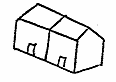
"Single-family semi-detached (twin) dwelling" means a one-family dwelling attached to one other one-family dwelling by a common vertical wall, with each dwelling located on a separate lot and having yard areas on three sides.
(3)
"Two-family detached (duplex) dwelling" means a structure on a single lot which contains two dwelling units, each of which is totally separable from the other, with one unit located over the other, and which is surrounded by open space.

(4)
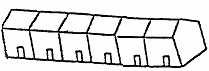
"Multiple family dwelling" means a building containing three or more dwelling units. Each dwelling unit may be separately owned, provided that the area formed by the combined lots of all dwelling units in a multiple family dwelling shall comply with all of the requirements for that type of multiple family dwelling in that district.
(A)
"Low-rise multiple family building" means a multiple family dwelling (including townhouses, garden apartments, quadruplexes and other housing types) which does not exceed three stories in height.
(i)
"Single-family attached dwelling (townhouse)" means a one-family dwelling attached to at least one other such dwelling by a common vertical wall in a building with at least three such dwellings, with each dwelling being located on a separate lot.

(ii)
"Two-family semi-detached dwelling (semi-detached duplex)" means a two-family dwelling attached to one other two-family dwelling by a common vertical wall.

(iii)
"Garden apartment" means a low-rise multiple family building in which individuals dwelling units are entirely separated by vertical walls or horizontal floors. Individual units may share a common outside access with at least one other dwelling unit.

(B)
"High-rise apartment" means a multiple family dwelling over three stories in height, in which each dwelling unit shares a common outside access with at least one other dwelling unit and elevators serve each floor.
"Dwelling unit" means a building or a self-contained portion thereof containing complete housekeeping facilities, including not more than one kitchen used exclusively for the residence of one family.
"Essential services" means the erection, construction, alteration or maintenance by public utilities or municipalities or other governmental agencies of underground or overhead gas, electric, steam or water transmission or distribution systems, collection, communication, supply or disposal systems.
"Exterior features" means the architectural style, design and general arrangement of the exterior of a building, structure or object, including the color, nature and texture of building materials, and the type of style of all windows, doors, light fixtures, signs or other similar items found on or related to the exterior of a building, structure or object.
"Family" means:
(1)
A single person occupying a dwelling unit; or
(2)
Two or more persons related by blood or marriage occupying a dwelling unit, including not more than one boarder, roomer or lodger; or
(3)
Not more than four unrelated persons occupying a dwelling unit and living together, excluding a dormitory, boarding house, or similar living arrangement.
(Note: Total permitted occupancy of a dwelling unit or similar living space is regulated by other borough and governmental regulations.)
Fence. A "fence" as used herein means and includes, but is not limited to, any structure composed of natural vegetation or manufactured material designed as an enclosure to prevent intrusion upon a lot or piece of ground and/or for the purpose of privacy for the occupant or occupants of said lot or piece of ground. Natural living fences (such as hedges) are included in this definition.
"Finished grade level" means a reference plane representing the average of the finished ground level adjoining the building at all exterior walls. When the finished ground level slopes away from the exterior walls, the reference plane shall be established by the lowest point within the area between the building and the lot line or, when the lot line is more than six feet from the building, between the building and a point six feet from the building.
"Flea market" means a temporary or occasional gathering of people for the purpose of buying, selling, trading or swapping predominantly used or antique household furniture, collectibles, fixtures, books, clothing or personal items such as watches or jewelry.
"Flood plain overlay area" means relatively flat or lowland areas adjoining a stream or watercourse which have been determined to be subject to inundation by a one-hundred-year flood. The flood plain overlay area includes the areas identified in article X "Flood Plain Management," section 23-90 "Identification of floodplain areas." The one-hundred-year flood is, on the average, likely to occur once every one hundred years, although it may occur in any year.
Floor Area, Gross. "Gross floor area" is the floor area within the perimeter of the outside walls of the building under consideration, without deduction for hallways, stairs, closets, thickness of walls, columns or other features.
Floor Area. Net. "Net floor area" is the actual occupied area, not including accessory unoccupied areas such as hallways, stairs or thickness of walls.
Floor Area (as used for Parking and Loading Requirement). For the purposes of applying the requirements for off-street parking and loading, "floor area" in the case of offices, merchandising or service types of users, means the net floor area used or intended to be used by tenants or for the service to the public or customers, patrons, clients or patients, including areas occupied by fixtures and equipment used for display or sale of merchandise. It shall not include areas used principally for nonpublic purposes such as storage, incidental repair, processing or packaging of merchandise, for shop windows, for offices incidental to the management or maintenance of stores or buildings, for toilet or restrooms, for utilities or dressing rooms, fitting or alteration rooms.
"Forestry" means the management of forests and timberlands when practiced in accordance with accepted silvicultural principles, through developing, cultivating, harvesting, transporting, and selling trees for commercial purposes, which does not involve any land development.
"Frontage" means the side or sides of a lot abutting on a street.
Garage, Private. "Private garage" means any accessory building to a residential use for the storage of motor vehicles which may include commercial vehicles, owned and used by the owner or tenant of the premises, and for the storage of not more than three vehicles per dwelling unit.
Garage, Public. "Public garage" means a parking garage or deck used for public parking as a principle use.
"Gasoline retail store" means an auto service station which also sells retail convenience goods and products as an accessory use.
"General consistency, generally consistent" means that which exhibits consistency.
"Government services and facilities" means municipal, county, state or federal government buildings or facilities designed and intended to be occupied by the government or designed and intended for public use sponsored by such governments.
"Group home" means:
(1)
The use of a permitted dwelling unit in such a way that it meets all of the following criteria:
(A)
Involves the care of not more than four persons at any one time.
(B)
Involves the care of persons who need nonroutine support services and oversight in order to function, because of physical illness, old age, physical disability, mental illness, mental retardation or emotional disability, or other "handicap" as defined by the relevant federal law or regulation, but not including any use that meets the definition in this article of a "criminal treatment center";
(Note: As of 1990, the Federal Fair Housing Act defined " 'handicap' with respect to a person" as follows: "(1) a physical or mental impairment which substantially limits one or more of such person's major life activities, (2) a record of having such an impairment, or (3) being regarded as having such an impairment, but such term does not include current, illegal use of or addiction to a controlled substance as defined in Section 802 of Title 21.")
(C)
Involves persons living together and functioning as a common household;
(D)
Meets all of the standards in section 23-29;
(E)
Does not involve the housing of persons who constitute a direct threat to the physical safety of others, including but not limited to, persons prone to physical violence against others.
(2)
Either of the following shall not by itself cause the regulations of Section 23-29 to apply other than what applies to a "family":
(A)
The care of one or two persons in a group home type of setting; and
(B)
The care of persons who are related to each other or to a resident caregiver by blood, marriage, adoption or formal foster relationship.
"Hazardous waste" means wastes that are defined as hazardous wastes by the Pennsylvania Solid Waste Management Act, PEMA, OSHA, Chester County and other applicable federal and state agencies.
"Height of structures other than buildings" means vertical distance measured from the average grade of the structure abutting the front yard. See definition for "Building height" and article XI for sign height regulations.
"Home occupation" means an accessory use for commercial gain customarily conducted within a dwelling which is clearly incidental and secondary to the use of the dwelling for dwelling purposes and does not change its character, provided that such an occupation is operated and conducted entirely by members of the family resident in the main building of a lot, except that there may be one employee who is not a member of the family.
"Hospital" means a building used for the diagnosis, treatment or other care of human ailments. Unless otherwise specified, "hospital" shall be deemed to include a sanitarium, clinic, medical center or other equivalent use.
"Hotel (motel)" means a building or group of buildings which contains six or more rental units for overnight lodging of travelers or for the temporary occupancy of transients, licensed under applicable laws.
"Impervious coverage" means the percentage of a lot covered by buildings, structures, paved areas and by manmade materials that are impenetrable by water.
"Improvement" means any type of structure, excavation or paved sections.
"Institution" means any building or open area used only by an educational, religious, medical, charitable, philanthropic or other essentially nonprofit organization, either public or private.
"Institutional uses" means a use, such as a religious institution, library, public or private school, nursery/day care center, hospital, or government-operated structure or land used for public purpose.
"Junk" or "Salvage" means any discarded material or articles (including scrap metallic or nonmetallic items, abandoned vehicles and equipment, paper, glass, containers and structures). It does not include refuse or garbage which is normally kept in a proper container for the purpose of prompt disposal.
"Junk yard" means any building, structure, yard or place for the keeping, storing, sorting, baling or piling, whether temporarily, irregularly or continually, or for the buying and selling at retail or wholesale of and old, used or secondhand materials such as rags, paper, bags, metal, bottles, tires, including old automobiles or parts thereof, or other articles which from its worn condition renders it practically useless for the purpose for which it was made, and which is commonly referred to as "junk" or "salvage."
"Kennel" means the use of land, buildings and/or structures for the purpose of trading, breeding, boarding, training or grooming customary household pets.
"Kitchen facilities" shall consist of all the following: sink with piped water capable of producing water temperature to a minimum of one hundred ten degrees; a cooking appliance with a minimum of two surface burners and a refrigerator, both of these shall produce temperatures as established by ordinance.
"Land development" means any of the following activities:
(1)
The improvement of one lot or two or more contiguous lots, tracts or parcels of land for any purpose involving:
(A)
A group of two or more residential or nonresidential buildings, whether proposed initially or cumulatively, or a single nonresidential building on a lot or lots regardless of the number of occupants or tenure, or
(B)
The division or allocation of land or space, whether initially or cumulatively, between or among two or more existing or prospective occupants by means of, or for the purpose of streets, common areas, leaseholds, condominiums, building groups or other features;
(2)
A subdivision of land;
(3)
The following shall not be considered a land development:
(A)
The conversion of an existing single-family detached dwelling or single family semi-detached dwelling into not more than three residential units, unless such units are intended to be a condominium,
(B)
The addition of an accessory building, including farm buildings, on a lot or lots subordinate to an existing principal building.
"Landowner" means the legal or beneficial owner or owners of land, including the holder of an option or contract to purchase (whether or not such option or contract is subject to any condition), a lessee if he or she is authorized under the lease to exercise the right of the landowner, or other person having a proprietary interest in land.
Lodging House. See "Boarding house."
"Lot" means a designated parcel, tract or area of land established by a plat or otherwise as permitted by law and to be used, developed or built upon as a unit.
(1)
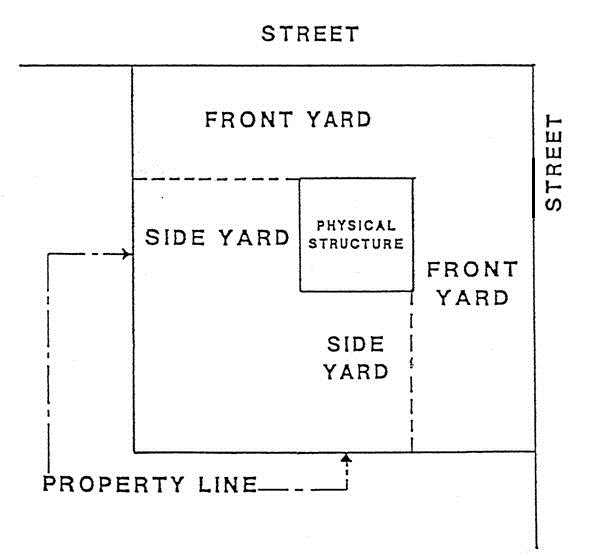
"Corner lot" means a lot situated at and abutting the intersection of two streets. A corner lot shall have two front yards.
(2)
"Flag lot" means a single irregular shaped interior lot, the principal or larger area of which is located to the rear of another interior lot, access to which is over the narrow portion of the lot which extends from the principal area to the street. Road access is to be utilized for this single flag lot only.
(3)
"Interior lot" means a lot other than a corner lot (whose sides do not abut a street).
(4)
"Reverse frontage" means a lot extending between and having frontage on two generally parallel streets (excluding service streets or alleys), with vehicular access solely from one street.
(5)
"Double frontage" means a lot extending between and having frontage on two generally parallel streets.
"Lot area" means the area contained within all property lines of a lot. The space within all street rights-of-way shall not be included when calculating minimum lot area.
"Lot coverage" means a percentage which when multiplied by the lot area will determine the permit-ted building area, including all roofed structures and buildings.
"Lot depth" means the mean average horizontal distance between the front and the rear lot lines.
"Lot lines" means the property lines bounding the lot.
(1)
"Front lot line (street line)" means a lot line separating the lot from a street right-of-way. The front lot line shall be the same as an existing or future right-of-way line (whichever establishes a greater width).
(2)
"Rear lot line" means a lot line opposite and most distant from the front lot line or in the case of triangular lots, a line ten feet in length entirely within the lot, parallel to and a maximum distance from the front lot line.
(3)
"Side lot line" means any lot line other than a front or rear lot line.
(Note: Sample lot configurations: Numbers correspond to the above definitions.)
"Lot of record" means any lot which individually, or as a part of a subdivision, has been recorded in the office of the recorder of deeds of Chester County, Pennsylvania.
"Lot width" means the horizontal distance between the side lot lines measured along the minimum prescribed front yard setback line as set forth in the borough zoning ordinance.
Exhibit A
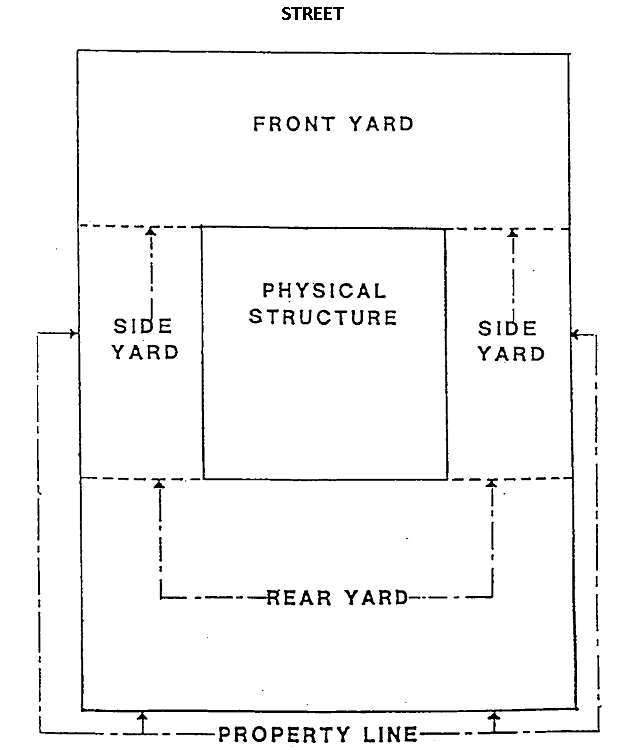
Exhibit B
"Major auto repairs" means and includes major mechanical and body work, straightening of body parts, painting, welding, storage of automobiles not in operating condition, or other work involving noise, glare, fumes, smoke or other characteristics to an extent greater than normally found in auto service stations.
"Makerspace" means a facility where individuals gather to share resources and equipment, work on projects, network, and create.
"Manufacture" means a function involving assembling, disassembling, alteration, processing, production of materials, goods or products.
"Materials" means articles which are components of a product.
"Massage parlor" means any place or establishment where a massage is available. A massage being construed to mean the performance of manipulative exercises upon the human body of another by rubbing, kneading, stroking or tapping with the hand or hands or with any mechanical or bathing device with or without supplementary aids, including, but not by way of limitation, a massage school.
"Medical office building" means a building used exclusively by physicians and dentists for treatment and examination of patients, provided that no overnight patients shall be kept on the premises.
"Membership club" means an area of land or building owned, leased or occupied by an association of persons, operated solely for a recreational, social, fraternal, religious, political or athletic purpose, and whose activities are confined to the members and guests and are not extended to the general public.
"Minerals" means any aggregate or mass of mineral matter, whether or not coherent. The term includes, but not limited to, limestone and dolomite, sand and gravel, rock and stone, earth, fill, slag, iron ore, zinc ore, vermiculite and clay, anthracite and bituminous coal, coal refuse, peat, and crude oil and natural gas.
"Mini-warehouse/self-storage development" means a building or group of buildings divided into individual separate access units which are rented or leased for the storage of personal property.
"Minor auto repairs and services" means and includes:
(1)
Sale and servicing of spark plugs, batteries and distributors and distributor parts;
(2)
Tire servicing and repair, but not recapping or regrooving;
(3)
Replacement of mufflers and tailpipes, water hoses, fan belts, brake fluid, light bulbs, fuses, floor mats, seat covers, windshield wipers and wiper blades, grease retainers, wheel bearings, mirrors and the like;
(4)
Radiator cleaning and flushing;
(5)
Washing and polishing and sale of automotive washing and polishing materials;
(6)
Greasing and lubrication;
(7)
Providing and repairing fuel pumps, oil filters and lines;
(8)
Minor servicing and repair of carburetors;
(9)
Emergency electrical repairs;
(10)
Adjusting and repairing brakes;
(11)
Minor motor adjustment not involving removal of the head or crankcase or racing the motor;
(12)
Mini grocery store with sales of packaged foods, beverages, tobacco and similar convenience goods for filling station customers, as accessory to principal operation; and
(13)
Provision of road maps and other informational material to customers; provision of restroom facilities.
"Mixed-use building" means a building with two or more principal uses.
"Mobile home park" means a parcel or contiguous parcels of land which has been so designated and improved that it contains two or more mobile manufactured homes for nontransient residential use.
Motel. See "Hotel."
"Motor freight terminal" means the building plus contiguous space to which freight is brought for transfer, assembly and sorting for shipment by motor truck.
"National register historic district" means an area of any size that has been designated as a National Register Historic District pursuant to the requirements of the National Park Service.
"National register site" is defined in the definition for "National Register Historic District", but an individual site or structure.
"No-impact home-based business" means a business or commercial activity administered or conducted as an accessory use which is clearly secondary to the use as a residential dwelling and which involves no customer, client or patient traffic, whether vehicular or pedestrian, pickup, delivery or removal functions to or from the premises, in excess of those normally associated with residential use.
"Nonconforming lot" means a lot the area or dimension of which was lawful prior to the adoption or amendment of the zoning ordinance, but which fails to conform to the requirements of the zoning district in which it is located by reasons of such adoption or amendment.
"Nonconforming structure" means a structure or part of a structure not designed to comply with the applicable use or extent of the use provisions in the zoning ordinance or amendments heretofore or hereafter enacted, where such structure lawfully existed prior to the enactment of such ordinance or amendment or prior to the application of such ordinance or amendment to its location by reason of annexation. Such nonconforming structures include, but are not limited to, nonconforming signs.
"Nonconforming use" means a use, whether of land or of structure, which does not comply with the applicable use provisions in the zoning ordinance or amendment heretofore or hereafter enacted, where such use was lawfully in existence prior to the enactment of such ordinance or amendment, or prior to the application of such ordinance or amendment to its location by reason of annexation.
"Nursery/greenhouse" means the raising of trees (for transplanting), ornamentals, shrubs, flowers or houseplants for any commercial purpose including the sale of related products such as pots, decorations, tools and bagged soil supplements.
"Nursing home" means an extended or intermediate care facility licensed or approved to provide full-time convalescent or chronic care to individuals who, by reason of advanced age, chronic illness or infirmity, are unable to care for themselves.
"Object" means a material thing of functional, aesthetic, cultural, historic or scientific value that may be, by nature or design movable yet related to a specific culture, setting or environment. An example would be a statue.
"Office" means a building in which a business is conducted, but is not a personal service, professional service or retail store.
"Official map" means the official map as adopted or amended by borough council showing the characteristics of streets, watercourses and public grounds.
"Official street classification map" means the circulation plan map, included in the Kennett Square comprehensive plan, or a subsequent map amended by borough council classifying the streets of the borough into functional categories.
"Official zoning map" means the map as adopted or amended by borough council which designated the location and boundaries of zoning districts.
"Open air markets" means an occasional, temporary, or periodic market held in an open area or structure where groups of individuals or individual sellers offer goods for sale to the public.
"Open-air restaurant" means an occasional or temporary restaurant held in an open area or structure where groups of individuals or individual sellers offer food and beverages for sale to the public.
"Open-air seating area" means an accessory use to a microbrewery or craft distillery that is an open air area, roofed or unroofed, where alcoholic beverages produced onsite are served and consumed in compliance with the requirements of the Pennsylvania Liquor Code, 47 P.S. § 1-101 et seq., and other applicable state laws and regulations.
"Open space" means the area of a lot unoccupied by principal or accessory structures, streets, driveways or parking areas; but includes areas occupied by walkways, patios or trees.
Open space, common. "Common open space" means a parcel or parcels of land, or an area of water, or a combination of land and water within a development site which is open space designed and intended for the use or enjoyment of residents of a development, not including streets, off-street parking areas, and areas set aside for public facilities.
"Ordinance" means the Kennett Square borough zoning ordinance, including the official zoning map and any amendments enacted by borough council.
"Park" means any area which is predominantly open space, is used by the public principally for active or passive recreation, and is not used for a profit-making purpose.
"Parking facilities" means outdoor areas or specially designed buildings or garages used for the storage of vehicles.
"Parking Space" means an off- or on-street space available for parking; parking spots shall conform to the requirements of section 23-67 of this chapter, measuring nine feet by eighteen feet deep for a single space, nine feet by twenty-two feet wide for a parallel parking space, or as stipulated in design standards for off street parking facilities.
"Permit" means a document issued by the proper borough authority authorizing the applicant to undertake certain activities.
(1)
"Zoning permit" means a permit issued indicating that a proposed use, building or structure is in accordance with the zoning ordinance which authorizes an applicant to proceed with said use, building or structure.
(2)
"Building permit" means a permit indicating that a proposed construction, alteration or reconstruction of a structure is in accordance with the construction provisions of any building code which may be adopted by the borough which authorizes an applicant to commence with said construction, alteration or reconstruction.
"Permitted use" means a use which does not require special action by the zoning hearing board or by borough council before a zoning permit is granted by the zoning officer.
"Person" means an individual, partnership, organization, association, trust or corporation. When used in a penalty provision, "person" shall include the members of such partnership, the trustees of such trust and the officers of such organization, association, or corporation.
"Personal care facilities" means a premises, licensed by the Commonwealth of Pennsylvania, in which food, shelter, and personal assistance or supervision are provided for a period exceeding twenty-four hours, for four or more adults who are not relatives of the operator and who do not require the services of a skilled nursing or intermediate care facility, but who do require assistance or supervision in matters such as dressing, bathing, diet or medication prescribed for self-administration. Sometimes known as an "assisted living facility."
"Personal service" means a building in which a business provides a service oriented to personal needs which do not involve primarily retail sales of goods or professional advisory services. "Personal services" include barber and beauty shops, shoe repair shops, household appliance repair shops, and other similar establishments.
"Picnic grove" means an area of land which is commercially rented for picnics.
"Place of worship" means a building used for public worship by a congregation, excluding buildings used exclusively for residential, educational, burial, recreational or other uses not normally associated with worship.
"Planned development" means a land development which is under single ownership and totally planned, which meets the required minimum contiguous tract size and other requirements of article III, and which includes one or more principal uses.
"Planning commission" means the Kennett Square Borough planning commission, Chester County, Pennsylvania.
"Planting screen" means a maintained planted all-season visual barrier composed of natural vegetation (i.e., plants, trees, hedges) arranged to form a visual barrier. A planting screen is not considered to be a structure.
"Plat" means the map or plan of a subdivision or land development, whether preliminary or final.
"Prepared foods" means foodstuffs, drinks, or both, which have been cooked, changed, cleaned or otherwise altered for public consumption.
"Preservation" or "Protection," when used in connection with natural and historic resources, shall include means to conserve and safeguard these resources from wasteful or destructive use, but shall not be interpreted to authorize the unreasonable restriction of forestry, mining or other lawful uses of natural resources.
"Principal building" means the building in which the principal use of a lot is conducted.
"Principal use" means the single dominant use or single main use on a lot.
"Product" means any article whose appearance or composition has been changed or altered.
"Professional/administrative services" means personal services provided for a fee, including physicians, dentists, lawyers, architects, planners, engineers, musicians, artists, teachers, optometrists, photographers and including the sale of products customarily incidental to these services and activities.
"Professional office" means a building in which services are performed by a member of a profession, including but not limited to an accountant, architect, author, community planner, dentist, engineer, insurance agent, landscape architect, lawyer, minister, notary, optometrist, physician or realtor.
"Public hearing" means a formal meeting held pursuant to public notice by the borough council, planning commission or zoning hearing board, intended to inform and obtain public comment, prior to taking action in accordance with this act.
"Public meeting" means a forum held pursuant to notice under 65 Pa.C.S.Ch. 7 (related to open meetings).
"Public notice" means a notice published in accordance with the public notice requirements of the Pennsylvania Municipalities Planning Code.
"Public recreation" means any facility or use that is administered for the general public by a governmental or not-for-profit body.
"Public recreation center" means buildings, grounds and structures maintained and operated by a municipal or qualified not-for-profit organization, whose principal purpose is to provide recreational and athletic facilities to the community.
"Public uses" means public schools, parks and administrative, cultural and service buildings and telephone exchange buildings, utilities, but not including public land or buildings devoted primarily or solely to the storage and maintenance of equipment and material.
"Radio/TV transmitter" means any structure used for the transmission or retransmission of a commercial radio or TV broadcast signal.
"Reasonable accommodations" means modifications or exceptions to rules, policies, practices, or services when necessary to afford persons with disabilities an equal opportunity to the enjoyment or exercise on an equal basis with others of all human rights and fundamental freedoms.
"Recreational vehicle" means a vehicle (regardless of size) which is designed principally for travel, recreational and vacation uses regardless of whether it is self-propelled or is designed to be towed or carried by another vehicle. "Recreation vehicle" includes campers, pickup coaches, travel trailers, motor homes and boats.
"Recycling collection facility" means an area of land where solid waste such as paper, cardboard, glass, aluminum or plastic that is no longer useful for its intended purpose is separated and accumulated for reuse.
"Removal of natural resources" means the extraction for sale or other disposition of water, soil, timber and/or minerals.
"Report" means any letter, review, memorandum, compilation or similar writing made by any body, board, officer or consultant other than a solicitor to any other body, board, officer or consultant for the purpose of assisting the recipient of such report in the rendering of any decision or determination. All reports shall be deemed recommendatory and advisory only and shall not be binding upon their recipient, board, officer, body or agency, nor shall any appeal lie therefrom. Any report used, received or considered by the body, board, officer or agency rendering a determination or decision shall be made available for inspection to the applicant and all other parties to any proceeding upon request, and copies thereof shall be provided at cost of production.
Rental Unit.
(1)
Rental Unit, Residential. "Residential rental unit" means a single unit of one or more rooms intended to be occupied by one family as separate living quarters providing complete independent living facilities. The unit is to provide permanent provisions for living, sleeping, kitchen facilities and sanitation.
(2)
Rental Unit, Commercial. "Commercial rental unit" means a structure or part of a structure to be used as a nonresidential use containing the minimum requirement for health and safety as established by local ordinances, and secured from use by the property owner or their agent for which the occupant may or may not reimburse the owner or agent.
"Restaurant" means a commercial establishment where food and drink are prepared for sale, served, and consumed, mostly within the principal building. The sale and service of alcoholic beverages shall be secondary to the sale and service of food. A restaurant may have limited forms of entertainment by performers of the arts to accompany the dining experience, but not dancing or stage shows.
(1)
"Fast food restaurant" means a restaurant providing service to customers, but where no waiters or waitresses take orders and serve food to seated patrons at tables, booths or counter seats.
(2)
"Fast food restaurant with drive-in service" means a restaurant providing service to customers remaining seated in automobiles, either through an exterior window or service area or through service to parked automobiles.
"Retail store" means a building in which retail merchandise is sold or rented, except for any type of business selling any type of retail merchandise which is specifically listed in this chapter.
"Right-of-way" means the total width of any land reserved or dedicated as a street, alley, crosswalk or for other public purposes.
Rooming House. See "Boarding house."
"Sanitary facilities" means all of the following: sink with hot and cold piped water, a toilet and a bathtub or shower with hot and cold piped water.
"Satellite earth station" means a dish-shaped antenna together with all attachments and parts, the purpose of which is to receive communication from orbiting satellites or other extraterrestrial sources.
"Scenic," "historic" or "cultural resource" means a site, or collection of sites, building or collection of buildings, with such a combination of historical, natural and scenic attributes as to create an irreplaceable, unique entity that serves as an element in defining the community character, as identified in the historic resources map.
"School, public or private" means a facility primarily for the education of persons in grades kindergarten and above.
"Sign, awning" means a sign that is mounted or painted on, or attached to, an awning, canopy, or marquee that is otherwise permitted by this chapter.
"Sign, ground" means any sign, other than a pole sign, placed upon or supported by the ground independent of any other structure.
"Sign, height line" means:
(a)
The height at which the structural bearing wall or the structural bearing steel or concrete beams or the columns behind a nonbearing wall support the roof load.
(b)
In the case of a gable end wall or a building end wall which does not support a roof load, the "sign height line" shall be the height of a straight line which shall be drawn so as to connect the top of the structural bearing walls or structural beams or columns, where such walls, beams or columns support the roof load, of the two adjacent walls.
"Site" means the location of a significant event, a prehistoric or historic occupation or activity, or a building or structure, whether standing, ruined or vanished, where the location itself maintains historical, cultural or archaeological value, regardless of the value of any existing structure.
"Seasonal roadside product market" means an accessory use for the sale of dairy, farm, greenhouse or nursery products.
"Sewage disposal system" means a system designed to collect, treat and dispose of sewage from users in compliance with regulations of the appropriate state agency and of the borough.
"Shopping center" means a retail commercial area designed as a "planned development," with adequate off-street free parking area and usually consisting of several one-story buildings.
"Short-term rental" means a rental of a residential dwelling unit or an accessory dwelling unit intended for occupancy for dwelling, sleeping, or lodging purposes, for a period of fewer than thirty consecutive days, in exchange for compensation for the occupancy.
Sign. (See definitions in article VI.)
"Site alteration" means and includes regrading the existing topography, filling lakes, ponds, marshes or floodplains, clearing vegetation or altering watercourses. Normal agricultural tillage operations are not considered to be site alterations.
"Site plan" means the plan submitted for site plan review, prepared in accordance with the requirements of section 23-39(c) of this chapter.
"Solar access" means the capability of receiving direct sunlight between 9:00 a.m. and 3:00 p.m. (solar time) on any area of a lot not within required yard areas.
"Special exception use" means a use for which the zoning hearing board may grant permission following a public hearing and findings of fact consistent with this chapter, provided the use complies with the conditions and standards required by this chapter.
"Storefront" means those businesses which face onto the Retail Use Overlay District, as defined by section 23-8 of this chapter, that include picture windows displaying retail goods for sale to the general populace.
"Story" means that portion of a building, included between the upper surface of any floor and the upper surface of the floor or roof next above it.
"Street" means and includes street, avenue, boulevard, road, highway, freeway, parkway, lane, alley, viaduct and any other ways intended for general public use to provide means of approach for vehicles and pedestrians.
(1)
"Arterial street" means a street designed for large volumes of comparatively high-speed and long-distance traffic, involving all streets classified as main and secondary highways by the Pennsylvania Department of Transportation. Access to abutting properties is restricted in an effort to give preference to through movement of traffic.
(2)
"Collector street" means a street which, in addition, to providing access to abutting properties, intercepts minor local streets to provide a route to community facilities and/or other collector and arterial streets.
(3)
"Marginal access street" means a minor local street, parallel and adjacent to an arterial street, but separated from it by a reserve strip, which provides access to abutting properties and control of intersections with arterial streets.
(4)
"Local street" means a street used primarily to provide access to abutting properties.23-7
Street, Cul-De-Sac. "Cul-de-sac street" means a minor street intersecting another street and terminating in a vehicular turn-around at the other end.
Street, Partial. "Partial street" means a street, generally parallel and adjacent to a property line, having a lesser right-of-way width than normally required for improvement and use of the street.
Street, Private. "Private street" means a local street, serving only abutting lots which is not offered or required to be offered for dedication.
Street, Public. "Public street" means a strip of land, including the entire right-of-way (i.e., not limited to the cartway) intended for general public use as a means of vehicular and pedestrian circulation to provide access to more than one lot. The term "public street" includes any thoroughfare intended for public use.
"Street line" means a line marking the extent of the street right-of-way.
"Structural alteration" means any change in the structural parts of a structure such as walls, columns, beams, girders, floors, roof or ceiling, or any addition to any structure; or the moving of a structure from one location to another. "Structural alteration" does not include normal maintenance, minor repairs, or interior alterations.
"Structure" means any manmade object having an ascertainable, stationary location on or in land or water, whether or not affixed to the land. The term "structure" shall include: building, signs, fences, walls, towers, swimming pool, porches, garages, and similar structures. "Structure" shall be interpreted as including the words "or part thereof." For the purpose of this chapter, streets and/or driveways are not considered to be structures.
"Subdivision" means the division or redivision of a lot, tract or parcel of land by any means into two or more lots, tracts, parcels or other divisions of land including change in existing lot lines for the purpose, whether immediate or future, of lease, partition by court for distribution to heirs or devises, transfer of ownership or building or lot development; provided, however, that the subdivision by lease of land for any agricultural purposes into parcels of more than ten acres, not involving any new street or easement of access or any residential dwelling, shall be exempted.
"Subterranean building" means a building covered by land on at least fifty percent of the total surface of its walls and roof.
"Swimming club" means an area containing a swimming pool which is used by the public or by members for a fee.
"Swimming pool/hot tub" means a body of water or receptacle for water having a depth at any point greater than thirty inches which is primarily used or intended to be used for swimming, bathing or relaxation.
"Taproom" means an accessory use to a microbrewery or craft distillery where alcoholic beverages produced onsite are available for sale by the glass and consumed on the premises. The sale of food is secondary and subordinate to the sale of alcohol. A taproom is distinguished from a restaurant where the sale of food is the primary and dominant use.
"Tasting room" means an accessory use to a microbrewery or craft distillery where spirits and/or beer produced onsite are consumed only for the purpose of sampling for prospective purchase.
"Tavern" means "bar."
"Telephone exchange building" means a building and its equipment erected and used for the purpose of facilitating transmission and exchange of telephone and radio messages between subscribers, provided that in a residential district such building shall conform to the architectural design of the neighborhood, and shall not include public access or business facilities, storage of materials, trucks or repair facilities or housing of repair crews.
"Temporary occupancy (seasonal occupancy)" means the use of any premises or structure for living and/or sleeping purposes for less than one hundred consecutive days in any calendar year.
"Temporary structure or use" means a structure or use which is not designed to last or to be used for a specific use for more than one year.
"Tract" means one or more lots assembled for the purpose of unified development, including but not limited to a planned residential development, shopping center, office or industrial park.
Trailer. See "Mobile, manufactured home" (listed under "Dwelling") and "Recreation vehicle."
Travel Trailer. See "Recreation vehicle."
"Truck/bus repair facility" means buildings and land where fuel and truck, trailer or bus parts and supplies are sold at retail and where repairs are conducted.
"Ultimate right-of-way" means the right-of-way width of a street or other corridor as computed from the center line, which is expected to be needed in the future to adequately and properly accommodate the anticipated vehicular and pedestrian traffic and related appurtenances, based on the function of the road circulation system.
"Usable satellite signal" means a satellite signal which, when viewed on a conventional television set, is at least equal in picture quality to that received from local commercial television stations or by way of cable television.
"Use" means the specific purpose for which land or a building is designed, arranged, intended or for which it is or may be occupied or maintained.
"Variance" means relief granted pursuant to the provisions of Articles VI and IX of the Pennsylvania Municipalities Planning Code.
"Video store" means a store which sells or rents video cassettes. A video store shall have no more than five percent of its floor area devoted to adult or "X"-rated videos and any viewing of adult or "X"-rated videos shall be prohibited within the store.
Veterinarian Office. See "Animal hospital."
"Water supply system" means a system for supplying water from a common source or sources, available to all dwellings and buildings within a franchise area.
"Yard" means an open space that lies between the principal building and the nearest lot line and which is unoccupied and unobstructed from the ground upward except as herein permitted.
(1)
"Front yard" means a yard extending the full width of the lot between the principal building and the front lot line and measured perpendicular to the building at the closest point to the front lot line (see Exhibits A and B and Section 23-34(e)).
(2)
"Rear yard" means a yard extending the full width of the lot between the principal building and the rear lot line and measured perpendicular to the building at the closest point to the rear lot line (see Exhibits A and B).
(3)
"Side yard" means a yard extending from the front yard to the rear yard between the principal building and the nearest side lot line (see Exhibits A and B).
Zone. See "District."
Zoning Hearing Board. See "Board."
"Zoning officer" means the administrative officer or others charged with the duty of enforcing the provisions of the zoning ordinance.
(Ord. No. 761; Ord. No. 778, § 1; Ord. No. 810; Ord. No. 813; Ord. No. 826 (part); Ord. No. 831 (part); Ord. No. 835, § 1; Ord. No. 844 (part); Ord. No. 879, § 1, 11-16-2009; Ord. No. 900, § 1, 8-6-2012;Ord. No. 905, § 1, 6-17-2013; Ord. No. 913, § 1, 11-3-2014; Ord. No. 918, § 1, 9-8-2015; Ord. No. 926, § 1, 2-1-2016; Ord. No. 939, § 3, 8-7-2017; Ord. No. 940, §§ 1—3, 8-7-2017; Ord. No. 947, § 1, 4-15-2019; Ord. No. 949, § 1, 6-17-2019; Ord. No. 983, § 1, 8-4-2025; Ord. No. 984, § 2, 8-4-2025)

