
Kewaunee City Zoning Code
ARTICLE II
DEFINITIONS
Sec. 94-5.- Construction of language.
In interpreting the various contents of the ordinance from which this chapter is derived, the following rules of construction shall apply:
(1)
Unless the context clearly indicates the contrary, the following conjunctions shall be interpreted as follows:
a.
"And" indicates that all connected words or provisions shall apply.
b.
"And/or" indicates that the connected words or provisions may apply singly or in any combination.
c.
"Or" indicates that the connected words or provisions may apply singly or in any combination.
d.
"Either... or" indicates that the connected words or provisions shall apply singly but not in combination.
(2)
In case of conflict between the text and a diagram or graphic, the text controls.
(3)
All references to departments, committees, commissions, boards, or other public agencies are to those of the City of Kewaunee, unless otherwise indicated.
(4)
All references to public officials are to those of the City of Kewaunee, and include designated deputies of such officials, unless otherwise indicated.
(5)
The term "building" includes the word "structure." A "building" or "structure" includes any part thereof.
(6)
The term "person" includes an individual, a corporation, a partnership, an incorporated association, or any other similar entity.
(7)
The term "dwelling" includes the word "residence" and the word "lot" includes the words "plat" or "parcel."
(8)
All references to "article", "divison", or "section" shall refer to this zoning ordinance unless another meaning is clear from the context of the reference.
(9)
The words "shall," "will," and "must" are always mandatory and not discretionary. The word "should" indicates that which is recommended but not required; and the word "may" is permissive.
(10)
The present tense includes the past and future tenses, and the future tense includes the past.
(11)
The singular number includes the plural, and the plural number includes the singular.
(12)
Sections and section headings contained herein shall not be deemed to govern, limit, modify, or in any manner affect the scope, meaning, or intent of any section.
(13)
Any words not herein defined shall be presumed to have their customary dictionary definitions.
(Ord. No. 566-12, § 1, 2-13-2012)
Sec. 94-6. - Words defined.
The following words, terms, and phrases, when used in this chapter, shall have the meanings ascribed to them in this section, except where the context clearly indicates a different meaning:
Abutting means having property or lot lines in common.
Access means a way of approaching or entering a property. The term also refers to ingress and egress.
Alley means a special public right-of-way affording only secondary access to abutting properties.
Bed and breakfast establishment means any place of lodging that provides four or fewer rooms for rent for more than ten nights in a 12-month period, is the owner's personal residence, is occupied by the owner at the time of rental and in which the only meal served to guests is breakfast.
Block means a tract of land bounded by streets or by a combination of streets and public parks, cemeteries, railroad rights-of-way, shorelines of waterways or municipal boundary lines.
Boardinghouse means a building other than a hotel where meals or lodging and meals are furnished for compensation for three or more persons not members of a family.
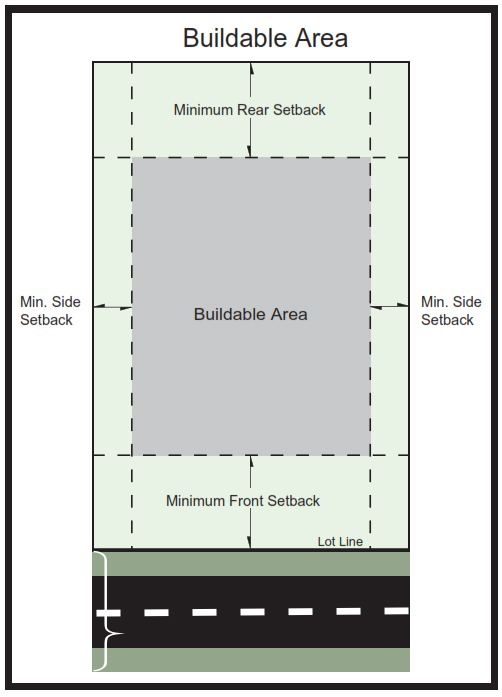
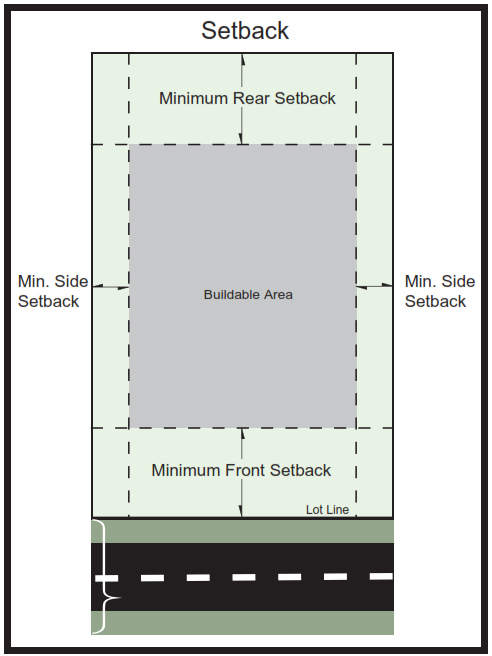
Buildable area means the ground area of a lot which is defined by the minimum setback and spacing requirements within which construction of a permitted building and any attached accessory structures is permitted by this ordinance.
Building means any structure having a roof supported by columns or walls used or intended to be used for the shelter or enclosure or persons, animals, equipment, machinery or materials.
Building height means the vertical distance from the top of the building roof to the average elevation at the front property line.
District means a section of the city designated in the text of this chapter and delineated on the zoning map, in which requirements for the use of land and buildings and development standards are prescribed. Within each district, all requirements must be uniform.
District, overlay means a district that provides for the possibility of superimposing certain additional requirements upon an underlying zoning district without disturbing the requirements of the underlying district. In the instance of conflicting requirements, the more strict of the conflicting requirements shall apply.
Dwelling means a building or portion thereof, designed or used exclusively for residential occupancy, including single-family dwellings, two-family dwellings, and multiple-family dwellings, but not including hotels or motels, but not a mobile home.
Dwelling, multiple-family, means a residential building designed for or occupied by three or more families, with the number of families in residence not to exceed the number of dwelling units provided.
Dwelling, single-family, means a detached building designed for or occupied exclusively by one family. Manufactured homes within this ordinance shall be considered single-family dwellings.
Dwelling, two-family, means a detached building containing two separate dwelling (or living) units, designed for occupancy by not more than two families.
Dwelling unit means consisting of one or more rooms which are arranged, designed or used as living quarters for one family only. Individual bathrooms and complete kitchen facilities, permanently installed, shall always be included for each dwelling unit.
Easement means a right given by the owner of land to another party for specific limited use of that land.
Essential services means services provided by public and private utilities necessary for the exercise of the principal use or service of the principal structure. These services include underground, surface or overhead gas, electrical, steam, water, sanitary sewage, stormwater drainage, and communication systems and accessories thereto, such as poles, towers, wires, mains, drains, vaults, culverts, laterals, sewers, pipes, catchbasins, water storage tanks, conduits, cables, fire alarm boxes, police call boxes, traffic signals, pumps, lift stations, and hydrants, but not including buildings.
Family means consisting of one or more persons each related to the other by blood, marriage, adoption, or foster children, who are living together in a single dwelling and maintaining a common household. Not more than five unrelated persons living together on the premises may constitute a family if specifically approved by the building inspector. A family includes any domestic servants, and not more than one gratuitous guest residing with said family.
Floor area means the sum of the gross horizontal areas of the several floors of the building, measured from the outer lines of the exterior walls of the building; provided that the floor area of a dwelling shall not include space not usable for living quarters, such as attics, unfinished basement rooms, garages, breezeways and unenclosed porches or terraces.
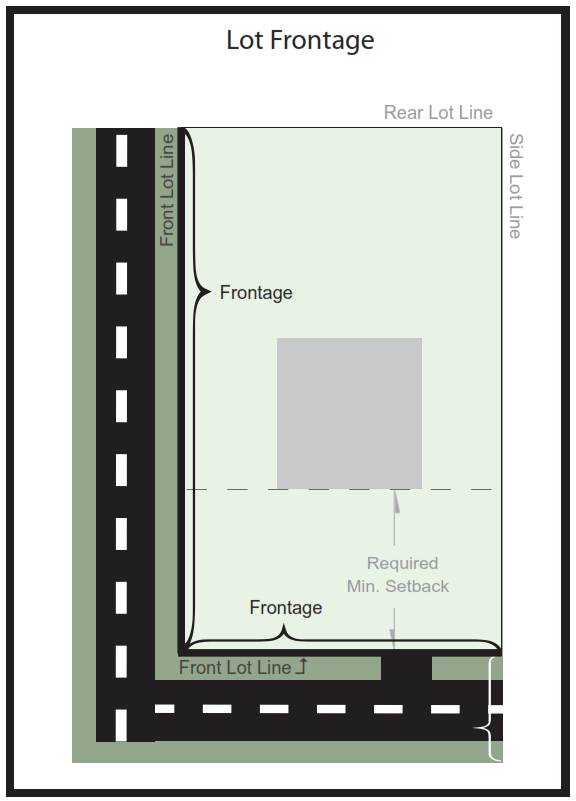
Frontage means the length of the lot line of any premises parallel to and along each public right-of-way it borders.
Garage, private means a structure primarily intended for and used for the enclosed storage or shelter of the private motor vehicles of the family resident upon the premises. The garage may be attached to or detached from the principal structure on the premises. Carports are considered garages.
Garage, public or commercial means any garage other than a private garage.
Grade means the elevation of the finished street at the centerline or curb as fixed by such authority as shall be designated by law to determine such an elevation.
Home occupation means a gainful occupation conducted by members of the family within their place of residence, provided that no article is sold or offered for sale on the premises except such as is produced by such occupation, that no stock in trade is kept or sold, that only one person other than a member of the immediate family living on the premises is employed, where the space used is incidental and subordinate to the residential use, and where the floor area does not exceed 20 percent of the total floor area. A household occupation includes such things as babysitting, millinery, dressmaking, canning, laundering and crafts, but does not include the display of any goods, nor such occupations as barbering, beauty shops, dance schools, real estate brokerage or photographic studios. When a home occupation and a professional office are conducted in the same residence, the total combined floor area for such uses shall not exceed 30 percent of the total floor area.
Loading area means a completely off-street space or berth on the same lot as the principal use it serves for the loading or unloading of freight carriers, having adequate ingress and egress to a public street or alley.
Lot-related definitions:
Lot means a parcel of land on which a principal building and its accessory building are placed, together with the required yards, provided that no such parcel shall be bisected by a public street and such lot shall not include any portion of a public right-of-way. No lands dedicated to the public or reserved for roadway purposes shall be included in the computation of lot size for the purpose of this chapter.
Lot coverage means the amount of land covered or permitted to be covered by a building, usually measured in terms of percentage of a lot.
Lot line means the boundary line of a lot. It may be further defined as a front, side, or rear lot line.
Lot, substandard, means a lot which does not contain sufficient area to conform to the dimensional requirements of this chapter for the district in which the lot is located. A substandard lot is also known as a nonconforming lot.
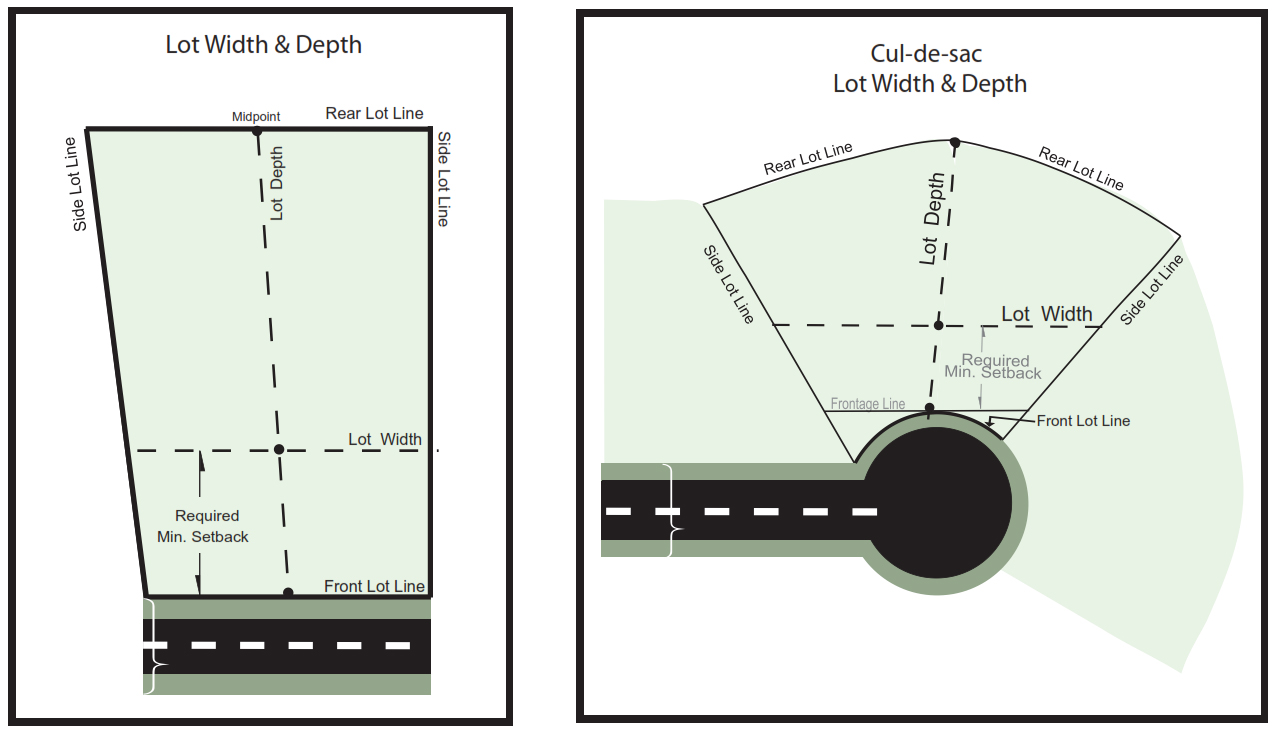
Lot depth means the mean horizontal distance between the front lot line and the rear line of a lot, measured within the lot boundaries.
Lot width means the horizontal distance between the side lot lines at the rear line of the required front yard. Minimum lot width is measured at the building setback line of a lot located on the outer radius of a curved street, such as a cul-de-sac.
Lot-type definitions:
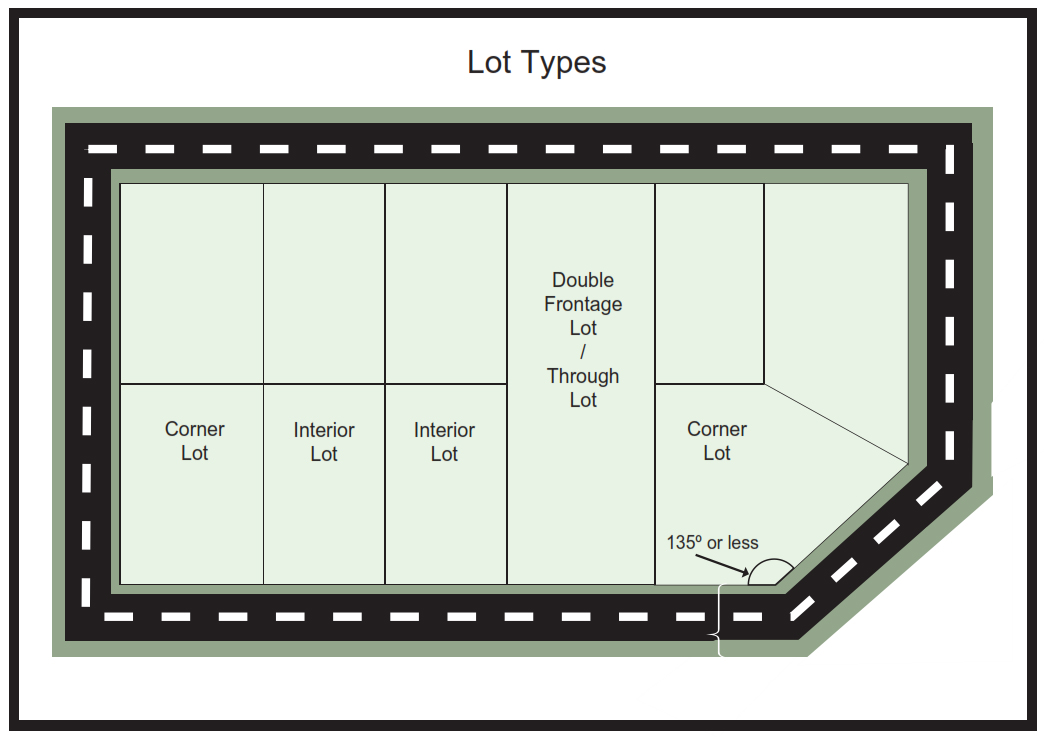
Lot, corner, means a lot abutting two or more streets at their intersection, provided that the corner of such intersection shall have an angle of 135 degrees or less, measured on the lot side.
Lot, double frontage, means a parcel of land, other than a corner lot, with frontage on more than one street or with frontage on a street and a navigable body of water. Double frontage lots, for the purpose of this chapter, shall be deemed to have two front yards and no rear yard. A double frontage lot is also known as a through lot.
Lot, interior, means a lot bounded by a street on only one side.
Lot, through. See Lot, double frontage.
Manufactured home means a structure, transportable in one or more sections built on a permanent chassis and designed to be used as a dwelling unit, with or without permanent foundation, when connected to the required utilities, and includes the plumbing, heating, air conditioning, and electrical systems contained in it, and is certified and labeled as a manufactured home under 42 USC §§ 5401—5426. Manufactured homes within this ordinance shall be considered single-family dwellings.
Mobile home means a structure, transportable in one or more sections built on a chassis and designed to be used as a dwelling unit, with or without permanent foundation, when connected to the required utilities, and includes the plumbing, heating, air conditioning, and electrical systems contained in it, and built prior to the enactment of the Federal Manufactured Construction and Safety Standards Act of 1974, which became effective July 15, 1976. No mobile home shall be used as a residence within the city unless located within a mobile home park.
Mobile home park means any park, court, camp, site, plot, parcel, or tract of land designed, maintained, intended or used for the purpose of supplying a location or accommodations for more than two mobile homes and shall include all buildings used or intended for use as a part of the equipment thereof whether or not a charge is made for the use of the mobile home park and its facilities. "Mobile home park" shall not include automobile or mobile home sales lots on which unoccupied mobile homes are parked for purposes of inspection and sale.
Motel means an establishment consisting of a group of attached or detached living or sleeping accommodations with bathroom and closet space, located on a single zoning lot and designed for use by transient automobile tourists.
Net acre means an acre of land minus the area consumed by the public right-of-way, for example, streets, sidewalks and nonresidential uses.
Nonconforming use or structure means any structure, land, or water lawfully used, occupied, or erected at the time of the effective date of this chapter or amendments thereto which does not conform to the regulations of this chapter or amendment thereto. Any such structure conforming in respect to use but not in respect to frontage, width, height, area, yard, parking, loading, or distance requirements shall be considered a nonconforming structure and not a nonconforming use.
Nonconforming lot. See Lot, substandard.
Premises means a tract of land under single or joint ownership with the buildings thereon.
Professional office means the office of a doctor, practitioner, dentist, clergyman, architect, landscape architect, professional engineer, registered land surveyor, lawyer, real estate agent, artist, teacher, author, musician, or other recognized profession. When established in a residential district, a professional office shall be incidental and subordinate to the residential use, the office shall not exceed 25 percent of the area of only one floor of the residence. When a professional office and a home occupation are conducted in the same residence, the total combined floor area for such use shall not exceed 30 percent of the total floor area.
Public right-of-way means any sidewalk, street, alley, highway or other public thoroughfare.
Setback means the minimum horizontal distance between the line of a building or structure and the lot line.
Solar collector means a device, structure or a part of a device or structure a primary purpose of which is to transform solar energy into thermal, mechanical, chemical or electrical energy.
Street means a public or private right-of-way which affords a primary means of vehicular access to abutting property, whether designated as a street, avenue, highway, road, boulevard, land, or throughway, or however otherwise designated, but does not include driveways to buildings.
Structural alterations means any change, other than incidental repairs, which would prolong the life of the supporting members of a building, such as the addition, removal, or alteration of bearing walls, columns, beams, girders or foundations.
Structure means anything constructed or erected, the use of which requires a more or less permanent location on or in the ground.
Tourist home means a building in which lodging, with or without meals, is offered to transient guests for compensation, provided there are no more than five sleeping rooms for such purpose and no cooking facilities are provided in the individual rooms or apartments.
Use-related definitions:
Use means the purpose or activity for which the land or building thereon is designed, arranged or intended, or for which it is occupied or maintained.
Use, accessory, means a building or use which:
(1)
Is subordinate to and serves a principal building or principal use;
(2)
Is subordinate in area, extent or purpose to the principal building or principal use served;
(3)
Contributes to the comfort, convenience or necessity of occupants of the principal building or principal use; and
(4)
Is located on the same zoning lot as the principal building or principal use.
Use, conditional, means uses of a special nature as to make impractical their predetermination as a permitted use in a district.
Use, incompatible, means a use which is unsuitable for direct association with certain other uses because it is contradictory, incongruous, or discordant.
Use, permitted, means a use which may be lawfully established in a particular district or districts, provided it conforms with all requirements, regulations, and standards of such district.
Use, principal, means the main use of land or buildings as distinguished from a subordinate or accessory use. A principal use may be permitted or conditional.
Variance means a device which grants a property owner relief from certain provisions of this chapter when, because of the particular physical surroundings, shape, or topographical condition of the property, compliance would result in a particular hardship upon the owner, as distinguished from a mere inconvenience or a desire to make more money.
Yard-related definitions:
Yard means an open space on the same lot with a structure, unoccupied and unobstructed from the ground upward except for vegetation.
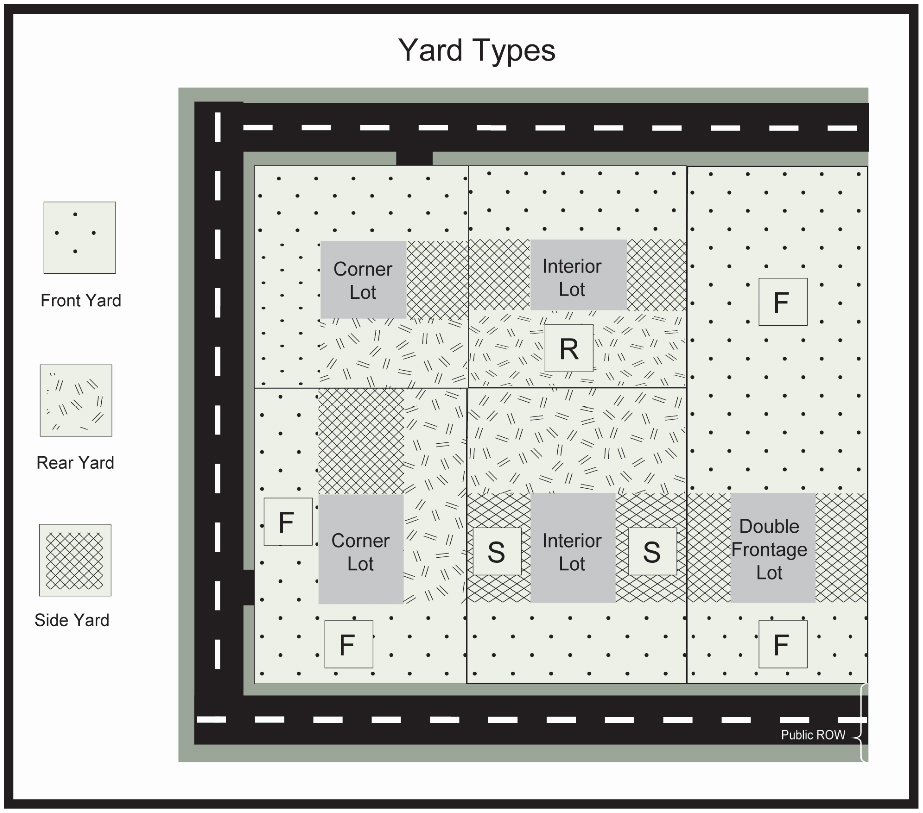
Yard, front, means a yard extending across the full width of the lot, the depth of which shall be the minimum horizontal distance between the existing or proposed street or highway right-of-way and a line parallel thereto through the nearest point of the principal structure. Corner lots shall have two such yards.
Yard, rear, means a yard extending across the full width of the lot, the depth of which shall be the minimum horizontal distance between the rear lot line and a line parallel thereto through the nearest point of the principal structure. This yard shall be opposite the street yard or one of the street yards on a corner lot.
Yard, side, means a yard extending from the street yard to the rear yard of the lot, the width of which shall be the minimum horizontal distance between the side lot line and a line parallel thereto through the nearest point of the principal structure.
(Ord. No. 566-12, § 1, 2-13-2012)
Cross reference— Definitions generally, § 1-2.

