
Livingston Parish City Zoning Code
CHAPTER 125
SUBDIVISION REGULATIONS1
Editor's note— LPO 22-36, adopted July 14, 2022, repealed the former ch. 125, §§ 125-1—125-111, and enacted a new ch. 125 as set out herein. The former ch. 125 pertained to similar subject matter and derived from LPO 20-16, adopted July 9, 2020; LPO 20-21, adopted Aug. 13, 2020; LPO 20-23, adopted Sept. 24, 2020; LPO 20-26, adopted Sept. 24, 2020; LPO 21-02, adopted Feb. 11, 2021; LPO 21-03, adopted Feb. 25, 2021; LPO 21-14, adopted May 13, 2021; LPO 21-17, adopted June 24, 2021; LPO 21-23, adopted Aug. 26, 2021; LPO 22-07, adopted April 28, 2022; LPO 22-08, adopted June 9, 2022; LPO 22-10, adopted June 9, 2022; LPO 22-13, adopted June 9, 2022; LPO 22-18, adopted June 9, 2022; LPO 22-19, adopted June 9, 2022; LPO 22-22, adopted June 9, 2022; LPO 22-23, adopted June 9, 2022; LPO 22-24, adopted June 9, 2022; LPO 21-09, adopted July 14, 2022; LPO No. 22-14, adopted June 9, 2022; LPO 22-09, July 14, 2022; LPO 22-35, adopted July 14, 2022. Previously, LPO 20-15, adopted July 9, 2020, amended ch. 125 in its entirety to read as herein set out. Former ch. 125, §§ 125-1—125-111, pertained to similar subject matter, and derived from Code 1983, § 13-45, 13-46, 13-46.1, 13-47, 13-48, 13-49, 13-49.1, 13-49.2, 13-49.3, 13-49.4, 13-49.5, 13-49.6, 13-50, 13-50.2, 13-52, 13-54, 13-54.1, 13-54.2, 13-54.3, 13-54.4, 13-55, 13-56, 13-57, 13-57.1, 13-58, 13-59, 13-60, 13-62, 13-64, 13-65, 13-66, 13-66.1, 13-66.2, 13-66.3, 13-67, 13-67.1, 13-67.2, 13-67.3, 13-68, 13-68.1, 13-68.2, 13-68.4, 13-68.5, 13-69; LPO 01-16, adopted September 13, 2001; LPO 02-02, §§ 1, 2, 3, 4, 5, 6, 7, 8, 9, 10, 11, 12, 13, adopted February 14, 2002; LPO 02-22, adopted July 25, 2002; LPO 02-27, adopted August 22, 2002; LPO 03-09, §§ 1, 2, 3, adopted March 27, 2003; LPO 03-10, §§ 1, 2, 3, 4, adopted April 24, 2003; LPO 03-12, §§ 1, 2, 3, 4, 5, adopted June 12, 2003; LPO 03-24, §§ 1, 2, 9-11-2003; LPO 04-02, §§ 1, 3, 4, 5, 2-12-2004; LPO 04-16, §§ 1, 2, 4, 5, 6, 7, 8, 9, 10, 11, adopted June 10, 2004; LPO 04-37, § 1, adopted September 9, 2004; LPO 05-19, § 1, 2, 3, 4, 5, 6, adopted June 23, 2005; LPO 06-05, §§ 1, 2, 3, 4, 5, 6, 7, 8, 9, adopted 3-23-2006; LPO 06-14, § 1, adopted June 8, 2006; LPO 06-18, adopted June 22, 2006; LPO 06-19, arts. I, II, adopted July 13, 2006; LPO 06-27, § 1, adopted August 10, 2006; LPO 06-31, arts. 1—7, adopted August 24, 2006; LPO 06-37, § 1, adopted September 14, 2006; LPO 07-66, adopted December 13, 2007; LPO 08-18, § 1, adopted March 27, 2008; LPO 08-20, adopted April 10, 2008; LPO 08-25, adopted May 8, 2008; LPO 08-29, adopted June 12, 2008; LPO 08-31, §§ 1, 2, adopted June 12, 2008; LPO 09-28, §§ 1, 2, adopted October 13, 2009; LPO 09-33, adopted January 14, 2010; LPO 09-34, adopted January 14, 2010; LPO 10-03, adopted February 22, 2010; LPO 10-06, adopted May 13, 2010; LPO 10-10, adopted June 10, 2010; LPO 10-24, adopted September 23, 2010; LPO 12-19, adopted July 26, 2012; LPO 12-34, adopted September 13, 2012; LPO 12-37, adopted October 25, 2012; LPO 13-07, adopted April 11, 2013; LPO 13-12, adopted May 9, 2013; LPO 14-12, adopted June 12, 2014; LPO 14-17, adopted August 14, 2014; LPO 14-19, adopted August 14, 2014; LPO 14-20, adopted August 14, 2014; LPO 14-21, adopted August 14, 2014; LPO 14-22, adopted August 14, 2014; LPO 14-24, adopted August 14, 2014; LPO 14-25, adopted August 14, 2014; LPO 14-26, adopted August 14, 2014; LPO 14-38, adopted October 9, 2014; LPO 15-07, adopted March 26, 2015; LPO 15-08, adopted March 26, 2015; LPO 15-09, adopted April 9, 2015; LPO 15-10, adopted April 9, 2015; LPO 15-26, adopted September 10, 2015; LPO 15-27, adopted September 10, 2015; LPO 16-35, adopted August 11, 2016; LPO 16-37, adopted August 11, 2016; LPO 16-38, adopted August 11, 2016; LPO 17-10, adopted March 23, 2017; LPO 17-13, adopted April 13, 2017; LPO 17-18, adopted May 25, 2017; LPO 17-22, adopted June 8, 2017; LPO 17-30, adopted September 14, 2017; LPO 17-39, adopted October 12, 2017; LPO 17-43, adopted November 9, 2017; LPO 18-02, adopted March 18, 2018; LPO 18-03, adopted March 8, 2018; LPO 18-17, adopted May 24, 2018; LPO 18-22, adopted October 25, 2018; LPO 18-23, adopted October 25, 2018; LPO 19-03, adopted January 24, 2019; LPO 19-04, adopted February 7, 2019; LPO 19-09, adopted April 11, 2019; LPO 19-40, adopted January 9, 2020; LPO 20-07, adopted June 25, 2020; LPO 20-10, adopted June 25, 2020; LPO 20-12, adopted June 25, 2020.
Sec. 125-1. - Definitions.
The following words, terms and phrases, when used in this chapter, shall have the meanings ascribed to them in this Section, except where the context clearly indicates a different meaning:
As-built drawings means a final record to show all modifications or deviations from the approved plan. They are required to reflect the same degree of detail as the original construction plans and are required for all new construction, excluding new single residential dwellings.
Boulevard. An entrance to a subdivision that shall have a minimum of two (2) twenty (20') foot lanes with a fifteen (15') foot median.
Combination of lots is combining two (2) or more adjacent lots or parcels of land into one (1) larger parcel.
Commercial development means any proposed development that has a proposed use as institutional, religious, commercial, and industrial (schools, hospitals, manufacturing plants, shopping centers, churches, RV parks, motels, hotels, and rental property, etc.).
Condominium means a building or group of buildings in which units are owned individually and the structure, common areas, and facilities are owned by all owners on a proportional, undivided basis. It is a legal form of ownership of real estate and not a specific building type or style. A condominium is a form of multifamily development as set forth in this section.
Drainage analysis means any Pre and Post development analysis identifying outfalls.
Exchange survey is transferring or conveying property in exchange for the reciprocal transfer or conveyance of property between two (2) adjacent property owners.
FONSI is a certification by a licensed engineer that has validated the drainage impact study and traffic impact study based on as-built conditions and has concluded that the project as designed and constructed will pose no additional negative impacts on the surrounding communities.
Garden home means a garden home is a detached, single-family unit typically situated on a reduced size lot that orients outdoor activity within rear patio areas for better use of the site for outdoor living space. The garden home cannot be in a zero (0) lot-line configuration. The rear yard of a garden home is typically enclosed with a privacy fence, which is six (6') feet high within required setback areas and sometimes higher within the building envelope. Garden home lots shall be ten thousand (10,000 sq ft) square feet or less.
Large lot subdivision means the division of a lot, tract or parcel of land into ten (10) or more lots and a maximum of forty (40) with a minimum lot size of eighty seven thousand one hundred twenty (87,120) square feet (2 acres) and a maximum density of one (1) lot per three (3) acres. Should a development of large lots exceed the maximum of forty (40) lots, then they shall be governed and fall under the regulations of subdivisions with improvements.
LOT is a parcel of ground not to exceed a density two and a half (2.5) per acre.
Major street plan means a plan delineating a system of streets adopted by the Parish Council and includes all subsequent revisions or extensions and applicable rights-of-way and/or servitudes required herein.
Manufactured home means a structure transportable in one (1) or more sections, which is built on a permanent chassis, is designed for use with or without a permanent foundation and is to be used as a dwelling. Such use thereof shall be governed by the same restrictions as for a mobile home.
Minor subdivision means the division or re-subdivision of a lot, tract or parcel of land or a portion thereof into six (6) lots or less shall be deemed and referred to as the term "minor subdivision."
Mobile home park means more than one (1) mobile home located on the same tract of land occupying such space as required by this chapter.
Multifamily development means any proposed development that has a proposed use of two (2) or more living units and shall include duplexes, apartment houses, townhouses and condominiums with a density of eight (8) units per acre.
O/D/S means owner/developer/subdivider.
Owner means the individual or company that has legal possession and rights to the property.
Preliminary plat is a conceptual plan of a proposed development and does not represent a fully engineered, dimensioned or designed project and must include current and future filings and/or development. The preliminary plat must be completed by an independent land surveyor licensed to practice in the state.
Recreational vehicle (RV): motorhomes, campervans, coaches, caravans, fifth-wheel trailers, popup campers, truck campers, vacation trailers, travel trailers, pick-up campers, tent trailers, and bus campers. Recreational Vehicles located in a trailer park, mobile home park, or camp site and are intended for occupancy will be permitted through the Livingston Parish Permit Office through regulatory permitting processes.
Review engineer means a licensed civil engineering firm appointed to review technical documents and advise the Planning and Zoning Commission.
Right-of-way means a parcel of ground dedicated by the public owner/developer/subdivider (O/D/S) for public use, title to which shall rest in the public for the purposes stated in the dedication.
Servitude means a parcel of ground reserved by the O/D/S for public utilities, drainage and other public purposes, the title to which shall remain with the property owner, subject to the right of use designated in the reservation of the servitude; or a strip of ground designated to be used for access to a building or other sites.
Street means a way for vehicular traffic, whether designated as a street, highway, thoroughfare, parkway, throughway, freeway, road, avenue, boulevard, place, lane or however otherwise designated.
Subdivision means:
(1)
The division of a lot, a tract, or parcel of land or a portion thereof into two (2) or more lots, sites, or other divisions, anyone or more of which is to be platted as a lot of record for the purpose whether immediate or future, of sale or building development. Lot size shall be as per Section 125-106.
(2)
The re-subdivision of a lot, a tract, or parcel of land or a portion thereof, into two (2) or more lots, sites, or other divisions, any one (1) or more of which is to be platted as a lot of record for the purpose, whether immediate or future, of sale or building development.
(3)
The dedication, granting or constructing of a road, highway, street, alley or servitude of passage through a tract of land regardless of size, unless expropriated by a public entity.
(4)
All subdivision and/or re-subdivision developments with improvements consisting of a combined total of seven (7) lots or more, not previously submitted, must submit for approval to the Parish Planning Commission, all requirements set forth in Section 125-68 or 125-118, accordingly.
Subdivision with improvements means the division of a lot, tract or parcel of land into seven (7) or more lots when the O/D/S intends to construct a road, highway, street, alley, drainage or any utilities that include, but are not limited to, sewer, water or gas.
Submittal date: When the plat goes before the Planning and Zoning Commission for a vote (Stage 3).
Townhouse means an attached, privately-owned single-family dwelling unit which is a part of, and, adjacent to other similarly owned single-family dwelling units that are connected to but separated from one (1) another by a common party fire wall having no doors, windows, or other provisions for human passage or visibility. The rear yard of a townhome is enclosed by a privacy fence. A townhouse is a form of multifamily development as set forth in this section.
Trailer or mobile home, for the purpose of this chapter, means a vehicle equipped for use as a dwelling that may be hauled or transported along a highway. As such, the mobile home will be duly titled by the appropriate regulatory agency. A mobile home which has been rendered unsuitable for transportation, and which has had its title rescinded, shall not be considered a mobile home. Recreational Vehicles are included in this definition if they are intended for occupancy.
Under construction, for the purpose of these regulations, means the O/D/S has submitted construction plans.
Vicinity map is a map showing sufficient features and landmarks (officially named streets and street intersection, lots and blocks within a subdivision, adjoining subdivisions, Township-Range-Section lines, etc.) that would sufficiently enable a person to identify the location of the survey site.
(LPO 22-36, 7-14-2022; LPO 22-40, 8-25-2022; LPO No. 22-52, 10-27-2022; LPO No. 22-53, 11-10-2022; LPO 22-60, 1-12-2023; LPO No. 23-45, 12-14-2023; LPO No. 25-28, 10-23-2025)
Sec. 125-2. - Authority; purpose.
(a)
In accordance with the provisions of R.S. 33:101 et seq., and particularly R.S. 33:112 thereof, and in order to promote the health, safety, convenience, morale and general welfare of the community, to provide for the proper arrangement and width of streets in relation to other existing or planned streets and to the master plan, and to provide for adequate and convenient open spaces for traffic, vehicular parking, utilities, access of firefighting apparatus, recreation, light and air for avoidance of congestion of population, the following regulations are adopted by the Parish Council.
(b)
The Parish may reject any permit application based upon the health, safety and welfare based on the factors enumerated in subsection (a) of this section. No sale of land shall occur when such sale meets the descriptions contained herein, including, but not limited to, Section 125-1, until such approval is granted as required by this chapter or by other local and state law.
(c)
Administration of this chapter shall be by the Parish Council Planning and Zoning Commission under the direction of the Parish President. These regulations shall apply to any developments that are not under construction as defined in Section 125-1, definitions, as of the date of the adoption of the ordinance amending this article, February 14, 2002. However, Sections 125-9, 125-13, 125-14, 125-15, 125-19, 125-24, 125-25, 125-27 and 125-28 shall apply upon adoption of the ordinance from which this article is derived.
(d)
Classification of subdivision procedure.
A.
Whenever any subdivision of land is proposed, excluding family partitions, before any contract is made for the sale of any part thereof and before any permit for the erection of a structure in such proposed subdivision shall be granted, the subdividing owner, or his authorized agent, shall apply and secure approval of such proposed subdivision in accordance with the following procedure, which includes basically one step for simple subdivisions with less than 9 (nine) lots and three steps for all other subdivisions.
1.
Simple subdivisions with nine lots or less:
a.
Sketch plat (optional);
b.
Final subdivision plat submitted in electronic format and hard copy.
2.
All other subdivisions (Major or Minor):
a.
Sketch plat (optional);
b.
Preliminary Plat submitted in electronic format and hard copy;
c.
Construction drawings submitted in electronic format;
d.
Final subdivision plat.
(LPO 22-36, 7-14-2022; Ord. No. 24-36, 2-27-2025)
Sec. 125-3. - Exclusions.
(a)
These regulations shall not apply to:
(1)
Land in subdivisions previously legally recorded, except in the case of resubdivisions which plat shall evidence the Parish President or Planning Director's signature and approval prior to filing with the Parish clerk of court.
(2)
Subdivisions in which a building exists on each proposed lot, provided that the owner certifies on the plat that all such existing buildings were constructed prior to April 27, 1982.
(3)
The division of land to be used for orchards, forestry or farming, provided that the owner certifies upon the final plat to the Parish President that such land is to be used only for orchards, forestry or farming and provided that such final plat evidences the Parish President or Planning Director's signature and approval prior to filing with the Parish clerk of court.
(4)
Parcels of land sold to or exchanged between adjoining property owners, where such sale or exchange does not create additional lots and where the sale or transfer results in one (1) contiguous tract, provided that the property owner certifies upon the revised plat that the sale or exchange does not create additional lots and provided that such final plat evidences the Parish President or Planning Director's signature and approval prior to filing with the Parish clerk of court.
(b)
The O/D/S or donor or donee shall be responsible for filing the approved plat in the office of the clerk of court and providing the Parish with the number of certified copies as required for minor subdivisions.
(LPO 22-36, 7-14-2022)
Sec. 125-4. - Parish Council Planning and Zoning Commission.
(a)
There is hereby established the Parish Council Planning and Zoning Commission pursuant to Section 7-07 of the Home Rule Charter.
(b)
The Parish Council Planning and Zoning Commission shall be appointed by majority vote of the Council and shall consist of nine (9) members, one (1) from each Council district, to be nominated by each of the Parish Councilmembers of the Parish. Parish Council Planning and Zoning Commission members shall serve terms coinciding with the term of the sitting Council approving same.
(c)
The members of the Planning and Zoning Commission shall elect a chairperson and a vice-chairperson. The ranking officer shall preside over the proceedings. The Planning Director shall serve as the non-recording secretary of the commission. In the absence of the Planning Director, the Parish President may appoint an acting non-recording secretary.
(d)
Not less than a majority of the authorized membership of the Parish Council Planning and Zoning Commission shall constitute a quorum to transact business. Rulings shall be by simple majority vote.
(e)
Robert's Rules of Order shall govern proceedings of the Planning and Zoning Commission. Open meetings rules will apply.
(f)
In performing its duties, the Planning and Zoning Commission will be assisted by a recording secretary, a legal consultant and an engineering consultant, none of whom will have a vote on matters before the Planning and Zoning Commission.
(g)
The members of the Parish Planning and Zoning Commission shall be compensated a per diem of one hundred dollars ($100.00) for each meeting that is attended, not to exceed two hundred dollars ($200.00) a month, or a maximum of twenty-four (24) meetings per year.
(LPO 22-36, 7-14-2022)
Sec. 125-5. - Sale, etc., prior to approval of plat.
No sale of land either by lot description or metes and bounds shall be made prior to the approval of a plat thereof as established by this chapter. Whoever, being the owner, or registered agent of the owner, of any land located in a subdivision, transfers or sells land by reference to, or exhibition of, or by other use of a plat of a subdivision, before such plat has been approved in accordance with this chapter and recorded or filed in the office of the clerk of court of the Parish, shall forfeit and pay a penalty of one hundred dollars ($100.00) for each lot or parcel so transferred or sold, and the description of such lot or parcel by metes and bounds in the instrument of transfer of other document used in the process of selling or transferring shall not exempt the transaction from such penalties.
(LPO 22-36, 7-14-2022)
Sec. 125-6. - Building permit office requirements.
(a)
The building permit office shall not issue a building permit on any lot or parcel of land that has been subdivided or created since April 27, 1982, unless said lot or parcel of land was created in accordance with this chapter.
(b)
The building permit office shall not issue a certificate of occupancy on any habitable structure unless and until sanitary sewer disposal facilities servicing such structure has been constructed and approved by the state department of health and hospitals.
(c)
Certificate of occupancy may not be given unless an on-site inspection of the site has been made by representatives of the Parish and approved by the planning department on all commercial, multifamily, and mobile home parks.
(LPO 22-36, 7-14-2022)
Sec. 125-7. - Building lines.
(a)
The building lines shall be appropriate for the location of the subdivision and for the type of development and use contemplated. For all subdivision/re-subdivision developments not yet approved including minor subdivisions, subdivisions with improvements, subdivisions without improvements, commercial developments, and multifamily housing, the required minimum building line setbacks are:
(1)
Front yard: twenty-five (25') feet;
(2)
Rear yard: twenty (20') feet;
(3)
Side yard: A lot width of sixty-five (65') feet or less shall have a six (6') foot setback.
A lot width of more than sixty-five (65') feet shall have seven (7') foot setback.
Developments such as garden homes may not have zero (0') foot building lines (no zero (0) lot lines) for any detached single-family dwelling.
(b)
Corner lots shall have extra width to permit appropriate building setback from and orientation to both streets.
(c)
Minor variance of servitudes and lot line setback may be granted with the approval of the review engineer and Planning Director or by resolution of the Parish Council.
(LPO 22-36, 7-14-2022)
Sec. 125-8. - Final plats.
(a)
Within twelve (12) working days of submittal, the review engineer shall review the final plat accompanied by FONSI to ensure that it is made in accordance with the approved preliminary plat, construction plans, and other requirements of this article. Legal matters must be referred to the Parish attorney. Once the review engineer has completed his review and the plat meets the requirements of this article, then he shall provide a letter of recommendation to the Parish President. Upon receipt of the letter of recommendation and receipt of the original bond from the Parish attorney, the Parish President or the Planning Director shall sign the plat. The plat must be recorded by the O/D/S in the official records of the clerk of court. The following items must be completed prior to approval of the final plat:
(1)
All requirements of completed Form 20-A (preliminary plat checklist) have been complied with (for subdivisions with improvements).
(2)
All requirements of completed Form 20-B (final plat checklist) have been complied with.
(3)
Payment in full of all permit and inspection fees.
(b)
Upon final approval of a subdivision, the project engineer, if capable, shall furnish to the Planning and Zoning Commission office said subdivision drawing on a disk in CAD (computer aided drawing) format. Drawing shall include lot lines, street names, lot numbers and servitudes.
(LPO 22-36, 7-14-2022)
Sec. 125-9. - As-built drawings.
(a)
As-Built Drawings shall be prepared by a Professional Land Surveyor licensed by the State of Louisiana and shall contain an As-Built Certification that conforms to the following:
"I CERTIFY THAT THE LOCATIONS, ELEVATIONS, DEPTHS, AND AS-BUILT COMMENTS REFLECTING MATERIALS ACTUALLY USED DURING CONSTRUCTION ACCURATELY REFLECTS EXISTING FIELD CONDITIONS AS DETERMINED BY ME OR UNDER MY DIRECT SUPERVISION ON THIS DATE:__ ."
Professional Land Surveyor Stamp,
Signature and Date Signed
(b)
All relevant improvement sizes, diameters, elevations, depths, and materials specified on the approved plans must be checked by a Louisiana-licensed Professional Land Surveyor in the field during and/or after construction. Note: that critical pipe invert elevations and pipe lengths must be checked by the surveyor and approved by the Parish prior to paving any portion of the site, and prior to installation of catch basin lids or manhole cones or lids.
(c)
All grate and invert elevations and all pipe lengths shall be clearly marked "As-Built" in some way on the approved As-Built Drawings. The preferred format for As-Built Drawings is to draw a line through design elevations, lengths, etc., and to show the As-Built value within an "As-Built cloud."
Where the As-Built information is the same as the design information, the design information shall be enclosed in an "As-Built cloud" to show that it was checked, but that it did not change.
(d)
All stormwater detention/retention storage volumes shall be clearly shown as "calculated As-Built volumes" on the As-Built Drawings. Note: that As-Built volumes must be provided to the Parish for review and approval prior to paving any portion of the site.
(e)
To facilitate the preparation of a detailed As-Built Drawing, the surveyor may add a note that states "Unless otherwise shown on these As-Built drawings, all improvements shown hereon are the same diameter, length, and/or size, and/or constructed of the same materials as shown on the approved plans.
(f)
When the design plans have been prepared with a computer-aided drafting (CAD) program, the design professional is required to provide the Parish with a digital copy of the approved As-Built Drawing(s) in digital format. The digital information can be formatted in either a *.DWG file (AutoCAD file) or a *.DXF file (Drawing Exchange File), and the digital information must be based upon State Plane Coordinates. An assumed coordinate system for digital files is not permitted.
(g)
Regardless of whether plans are prepared by CAD or by hand, all plan sheets, including approved As-Built Drawings, must include at least four (4) coordinate tics spaced across the extent of each plan view. Each coordinate tic must be labeled with State Plane Coordinate values, which will be used to facilitate registration.
(h)
Changes that occur during the construction phase should be brought to the attention of the Planning Department for that project. Minor alterations to the approved plan may, at the discretion of the Planning Director, be captured in an As-Built drawing. As-Built drawings will be reviewed to ensure that the project was constructed per the approved plans and that all known changes are adequately documented.
(i)
All cost incurred during any construction/repair/development shall be borne by the owner/developer.
(j)
Subject to the following conditions, a waiver may be requested from the Parish Council for submittal of As-Built Drawings for specific constructed items.
(i)
A waiver may be requested for submittal of As-Built Drawings of the following subsurface constructed items.
1.
Pressure flow lines (e.g., gas, water, sewer force mains, etc.) that are designed to convey pipe contents solely by pumped pressure flow and that typically do not have specific pipe invert elevation design requirements.
2.
Gravity flow lines (e.g., storm water or sewer pipes) with documented as-built invert elevations that were surveyed by a Louisiana-registered Professional Land Surveyor at the time of installation.
3.
Subsurface constructed items that cannot be safely accessed after completion of construction.
(ii)
Each waiver request must clearly identify the following specific items as they relate to the constructed item for which the As-Built Drawing submittal requirement waiver is requested.
1.
The specific constructed item type, material of construction, and known dimensions.
2.
Location of tie-in points to surveyed features (e.g., sewer wyes, surface outfalls, service drops, etc.).
3.
Reason why an As-Built survey of the constructed item cannot be completed.
4.
Basis for estimating the lateral and vertical location on submitted As-Built Drawings of all subsurface items for which the waiver is requested.
(LPO 22-36, 7-14-2022)
Sec. 125-10. - Clearing and grubbing.
(a)
The Drainage Impact Study shall be approved before any clearing of property. Removal of bushes, shrubs, and small trees under eight (8'') inches shall be allowed.
(b)
Approved erosion control measures must be installed prior to the commencement of the clearing and grubbing.
(LPO 22-36, 7-14-2022; LPO 23-18, 5-11-2023)
Sec. 125-21. - Required studies and statistical data for development.
(a)
The following information shall be presented with all Stage 3 preliminary plats and reviewed, with all comments addressed, by our Parish Review Engineer before the 18 th day of the month prior to the planning and zoning commission meeting.
(1)
Fire Protection Review
(2)
School Impact Study
(3)
Traffic Impact Study
(4)
Drainage Impact Study
(b)
Exceptions.
(1)
Minor Subdivisions
(LPO 22-36, 7-14-2022)
Sec. 125-22. - Fire protection review.
(a)
The owner of any new development shall provide a letter of adequate flow, capacity, and pressure for fire protection from the applicable fire district.
(b)
Adequate flow and pressure shall be defined as seven hundred fifty (750) gallons per minute at twenty (20) pounds per square inch (PSI).
(c)
If adequate flow, capacity, and pressure cannot be determined a letter shall be submitted stating there is a failing level of service and shall be accompanied by a plan for fire protection signed by the applicable fire district.
(d)
A fire hydrant shall be deemed out of service if it produces less than five hundred (500) gallons per minute at twenty (20) pounds per square inch (PSI).
(LPO 22-36, 7-14-2022)
Sec. 125-23. - School impact study.
[Reserved.]
Sec. 125-24. - Traffic impact study.
This section establishes requirements for transportation studies that provide information on traffic projected to be generated by proposed developments. The purpose and intent of these requirements is to protect the health, safety, and welfare of the citizens and visitors of the Parish by ensuring the provision of safe and adequate transportation facilities. It is the further intent of this section to establish requirements for the identification of any potential traffic operational problems or concerns, as well as potential solutions to such problems or concerns.
(1)
The O/D/S shall submit a Traffic Impact Study Scope to the Planning Department for approval. Due to project specific conditions the parish may request additional information apart from the requirements below and a traffic scoping meeting will be held to develop the traffic impact study requirements.
(2)
The O/D/S must determine, and state in writing, the anticipated impact of the proposed development on the existing transportation network. All information and analysis submitted by the O/D/S must follow the requirements and methods outlined in this section. There are three (3) levels (Thresholds 1, 2, and 3) of analysis. Any development that is required to submit a traffic impact statement or study to DOTD will be exempt from the requirements of this section and shall submit the required traffic impact statement or study to the proper review agency at DOTD. When a traffic impact statement or study is submitted to the Parish for review, the following conditions will apply:
a.
The study must be completed and submitted with the preliminary plat or Stage 3 submittal.
b.
All analysis must be performed by a state-registered professional civil engineer with experience in performing similar-type studies.
c.
Prior to beginning a comprehensive traffic impact study (Threshold 3), the engineer will meet with the review engineer and the Planning Director to develop the exact scope of the study and determine the actual area to be studied and methods used.
(3)
Traffic impact study threshold levels.
a.
Threshold 1 (traffic impact statement required). If the proposed development results in less than forty (40) (<40) peak hour trips, either a.m. or p.m. (whichever is greater) the O/D/S would submit:
1.
The proposed trip generation and distribution;
2.
Source of information (trip generation manual), or a comparison to an equivalent site in the Parish with known trip data;
3.
Any additional information requested during the traffic scoping meeting.
4.
Sight distance evaluation.
b.
Threshold 2 (limited traffic impact study). If the proposed development results in greater than forty (40) and less than four hundred (400) peak hour trips either a.m. or p.m. the O/D/S would submit:
1.
Subsections (3)a.1 through 3 of this section;
2.
Analysis of the access/egress of development in relation to level of service of the adjacent roadway system.
3.
Recommendations for any roadway and/or intersection improvements to maintain or improve the existing level of service;
4.
Provide vehicle accident data in proximity to site (if available);
5.
Analysis of the roadway capacity (existing and/or proposed) on all roadway links abutting the proposed development site and identify necessary roadway and/or intersection improvements to maintain the existing level-of-service;
6.
An analysis of the nearest major intersection (typically signalized) in each direction from the major site driveway.
c.
Threshold 3 (comprehensive traffic impact study). If the proposed development results in greater than four hundred (>400) peak hour trips either a.m. or p.m. the O/D/S would submit:
1.
Subsections (3)b.1 through 6 of this Section;
2.
The new traffic generated for the proposed development would be distributed onto the existing transportation network within an area defined by the engineer review agency. Analysis of each roadway link and intersection link within this area for both existing and proposed conditions;
3.
Identification of any deficiencies determined by this analysis and resolve such deficiencies.
(4)
The peak hour trips are not the only threshold factor in deciding which type of analysis will be required. At the discretion of the review engineer and the Parish Planning Director, other items which significantly influence the traffic movements or safety (such as a development that falls within a high-accident area) may require a higher level of study.
(5)
A proposed development may be disapproved if it is found to overburden the existing transportation network, cause a reduction in service of affected roadways, negatively impact the safety of the roadway, or causes part of the transportation network to be below an acceptable level of service (LOS D). In the case where the existing Level of Service (LOS) is below "D," the required mitigating improvements shall improve the LOS to "D" or better. The O/D/S, at the agreement of the review engineer and the Parish Planning Director, may modify the development proposal to minimize the identified traffic related impacts. Modifications to applications for projects may include, but shall not be limited to:
a.
A reduction in the projected vehicle trips per day;
b.
Dedication of additional right-of-way for future roadway improvements;
c.
Rerouting of traffic and proposed access points serving the proposed project; or
d.
Participation in funding transportation facilities, including signals, roadway, and intersection improvements.
O/D/S will be responsible for the cost and implementation of identified improvement(s) to mitigate the traffic impact of their proposed development. If traffic mitigation is part of an approved Traffic Impact Study, all approved traffic improvements must be implemented prior to final plat approval.
(LPO 22-36, 7-14-2022)
Sec. 125-25. - Drainage/drainage impact study.
All drainage design shall be in accordance with the Livingston Parish Drainage Criteria Manual.
(a)
The O/D/S's engineer shall plan all drainage for the project in accordance with the master drainage plan. Until such time that a master drainage plan is adopted by the Parish Council, the O/D/S's engineer shall utilize sound engineering practice and the criteria specified in this chapter. Subdivisions shall be designed for either open ditches or enclosed conduit systems. Installation of subsurface drainage is prohibited in any subdivision designed for open ditches without approval from the agency or agencies responsible for the maintenance of the ditch. The agency approval should include a statement that there is no negative impact on the flow of water.
(b)
Whenever any stream or improved surface drainage course is located in an area that is being subdivided, the O/D/S shall dedicate an adequate right-of-way along each side of the stream sufficient for maintenance thereof.
(c)
A contour map based on U.S.G.S. datum shall be prepared for the area comprising the subdivision and such additional areas as may be required to include all watersheds which drain into the property to be developed. In the design of the drainage for the subdivision, provision must be made to adequately take care of adjacent watershed areas. The O/D/S shall be required to construct to the ultimate finished width but only to a depth sufficient for his subdivision unless the off-site improvements are in or near the construction stage. Sufficient right-of-way, however, must be dedicated for future enlargement.
(d)
Storm drainage shall be located within the street right-of-way except where it is located in servitudes to facilitate outfall needs or for subdivision interconnections.
(e)
In all areas to be developed, the O/D/S's engineer shall prepare and submit a drainage impact study of the area prior to approval of construction plans. The following exceptions from the requirement of preparing a drainage impact study can be allowed:
(1)
Development in which the area of impervious surface does not exceed twenty (20%) percent of the development area at the point of discharge from the site. The total impervious area shall include all buildings, driveways, sidewalks, streets, parking lots, lakes, ponds, etc. All undeveloped open space, common area, etc., must be clearly identified.
(2)
Additions or modifications to existing developments which result in no more than a ten (10%) percent increase in existing impervious area and which have existing public storm drainage facilities designed to accommodate runoff from the existing site.
(3)
The site is located within existing developed areas which are served by a network of public storm drainage facilities which were designed to accommodate runoff from the development site.
(LPO 22-36, 7-14-2022; LPO No. 24-34, 1-9-2025)
Sec. 125-26. - Drainage impact study/drainage design requirements.
(a)
Site location and description. The drainage impact study shall comply with the following minimum requirements:
(1)
Location. Describe location of subject property located by township and range; identify adjacent developments, major drainage outfalls, streets, highways, lot and block page number; and provide a vicinity map.
(2)
Description. Describe the predominate existing land use and future land use in project watershed using the latest data available. Describe the proposed development, soil types, vegetative cover, watershed slopes and provide an estimate of percent of impervious area for pre- and post-development conditions.
(b)
Watershed map.
(1)
The watershed map should show the location of the project, drainage boundaries and acreage, existing channels, ditches, natural drains, proposed major drainage structures, channel realignment cross section locations and contours.
(2)
Contours may be taken from the latest U.S.G.S. seven-point five (7.5) minute quadrangle map or better.
(3)
The watershed map must be at least one (1") inch equals five hundred (500') feet scale or less.
(4)
The pre-development and post-development five (5) year, ten (10) year, twenty-five (25) year and one hundred (100) year runoff rate and water surface must be shown at all entrance and exit points of the development.
(c)
Hydrologic design.
(1)
The drainage impact analysis shall indicate existing condition peak five (5) year, ten (10) year, twenty-five year (25) and one hundred (100) year flow rates at the development entry and exit points.
(2)
The drainage impact analysis shall indicate future condition peak ten (10)-year, twenty-five year (25) and one-hundred (100) year flow rates at the development entry and exit points.
(d)
Hydraulic capacities.
(1)
On-site capacity. Indicate capacity of any existing drainage outfall facility (ditch, canal, culvert, bridge, etc.) within the proposed development site and required type size, and capacity of any proposed outfall facilities as defined in the drainage criteria manual.
(2)
Off-site capacity. Determine capacity of existing downstream outfall facilities (ditches, canals, culverts, bridges, etc.) that will be utilized to convey flow from the downstream limits of the proposed development. An inventory of downstream structures including size, type, invert elevation, and cover topping elevation should be made. Channel cross sections at upstream and downstream limits of the proposed development at structure locations and at intermediate canal locations shall be required to adequately define existing channel capacities.
(e)
Special site conditions. Special conditions which may exist at the proposed development site should be clearly identified, including, but not limited to, such items as:
(1)
Special flood hazard areas (FIRM Zones A and AE)
(2)
Regulatory floodway (if applicable)
(3)
Churches
(4)
Schools
(5)
Cemeteries
(6)
Landfills and hazardous waste sites
(7)
Parks
(f)
Study conclusions and recommendations. Study should clearly identify the results and conclusions of the analysis and provide recommendations of any required action so that no adverse impact is experienced by surrounding properties.
(g)
Design and construction criteria.
(1)
Complete hydraulic calculations shall be prepared and sealed by a professional civil engineer and submitted along with the construction plans.
(2)
Erosive soils-many subdivisions are developed in areas of the Parish where erosive soils exist. All ditch side slopes shall be stabilized by fertilizing, seeding and erosion hay blankets installed per manufacturer and as approved by review engineer and Planning Director.
(3)
The following servitude criteria shall be required for each ditch, canal, and storm sewer; however where applicable, local drainage districts reserve the right to review and request modifications as necessary to facilitate future maintenance of proposed ditches, canals and storm sewer systems, in addition, (with the approval from local drainage districts if applicable) the review engineer may allow variations based on sound engineering practices:
a.
Storm sewers: fifteen (15') foot minimum servitude.
b.
Ditches with a top width up to fifteen (15') feet: Width of ditch plus a minimum of fifteen (15') feet from the top of bank on one (1) side.
c.
Canals with top widths greater than fifteen (15') feet: Width of canal plus a minimum of fifteen (15') feet on each side.
d.
Canals with bottom widths greater than fifteen (15') feet and a top width of less than forty (40') feet: Width of canal plus a minimum of fifteen (15') feet from the top of bank on one (1) side and twenty-five (25') feet on the other.
e.
Canals with a top width greater than forty (40') feet: twenty-five (25') feet from the top of bank on both sides. When a proposed ditch must discharge into a major unlined canal, the O/D/S shall be required to enclose the ditch, under the necessary strip of the major canal in an adequate size bituminous-coated metal pipe. The pipe shall be an appropriate length to provide a fifteen (15') foot-wide level surface to traverse ditch and extend four (4') feet into the canal beyond the side slope, and shall discharge into rip rap that extends a minimum of five (5') feet into the bottom of the canal. Rip rap shall be constructed immediately after conduit is installed.
f.
All drainage servitudes shall be labeled as drainage servitudes and shall be restricted to drainage uses only. No other structures shall be allowed within the drainage servitude (i.e., telephone junction boxes, cable junction boxes, power poles and/or junction boxes, owners minutes structures). The purpose of this is to ensure proper access for maintenance of the servitude by the drainage district.
g.
No utilities shall place their services within the drainage servitude (i.e., above ground or buried cables, pipes, valves etc.)
h.
Where a servitude lies between any two (2) lots or parcels of ground, a fifteen (15) minutes forty-five (45) degree chamfer will be placed on both sides of the servitude at its intersection with the back-of-lot servitude. This allows ease of access for drainage district equipment to turn the corner without going outside the servitude.
Where a proposed ditch must discharge into a major unlined canal, the O/D/S shall be required to enclose the ditch, under the necessary strip of the major canal in an adequate size polyamorous-coated metal pipe. The pipe shall be a minimum of twenty (20) feet long and shall extend one (1) foot into the canal beyond the side slope, and shall discharge into rip rap that extends a minimum of five (5) feet into the bottom of the canal. Rip rap shall be constructed immediately after conduit is installed.
(h)
Subdivision drainage shall be designed in accordance with one (1) of the following three (3) options:
(1)
Open ditch subdivision. A subdivision that will be designed and built with open ditches. Installation of any subsurface drainage (other than a driveway culvert) is prohibited in any subdivision designed for open ditches. Driveway culvert pipe shall be designed and shown on the drainage layout map. All sellers of any lot/parcel within an open ditch subdivision shall make the buyer beware that any subsurface drainage will not be allowed to be added (other than one (1) driveway culvert per lot or parcel). The following statement must be placed on the bill of sale: "BUYER BEWARE: Installation of any subsurface drainage (other than a driveway culvert) is prohibited in this subdivision designed for open ditches."
Open ditch subdivision with design for subsurface. A subdivision designed for subsurface drainage and built as an open ditch subdivision. Should the subdivision be initially built as an open ditch subdivision, then any future installation of subsurface drainage shall be in accordance to the drainage plans provided in the construction plans.
(2)
Subsurface drainage subdivision. A subdivision that will be designed and built for subsurface drainage.
(3)
Outlet ditches. Outlet ditches (minor and major) located between lots shall be piped their entire length.
All design criteria of drainage, whether open or closed system, shall meet sound engineering practices and principles. The review engineer will have the option to ask for any outfall ditch (the term "outfall ditch" means a ditch that connects to the roadside ditch and outfalls at another location) to be enclosed for the entire length of the outfall.
(i)
Detention/retention basin. Whenever a detention/retention basin is utilized by the O/D/S's engineer to minimize downstream flooding, the design shall address, at a minimum, the following:
(1)
Adequate land must be reserved for maintenance of detention/retention pond:
a.
Ponds shall have at least a twenty-foot (20') deeded access around the perimeter of the pond and the entire basin.
b.
Ponds shall have a twenty-foot (20') gated deeded access to the detention basin for access and maintenance of the pond.
c.
The twenty foot (20') gated access shall have a crushed concrete or gravel base.
d.
Access servitude to the pond must be granted and end at a public right-of-way or street.
(2)
Detention/retention basins may be wet (lakes or ponds) or dry.
a.
Wet detention/retention basins shorelines and control structures shall be privately owned and maintained. Both the construction plans and final plat for development shall include a note which states that the proposed detention basin, shoreline and control structure shall be privately owned and maintained. Storm drainage pipe inverts must be designed to be above the normal water surface elevation of the basin unless the review engineer approves variations.
b.
Dry detention/retention basins shall be privately owned and maintained as part of the development drainage system. The basin must have minimum side slopes of three to one (3 to 1). Storm drainage pipe inverts must be designed to be above the normal water surface elevation of the basin unless the review engineer approves variations. The basin bottom shall be designed and compacted to allow for proper maintenance with mowing machines and other equipment.
(3)
The O/D/S may propose off-site improvements to downstream facilities to minimize the impact of the development, subject to approval of the review engineer.
(j)
Expiration. Drainage Impact studies are applicable for twenty-four (24) months from the date approved. Resubmitted drainage impact studies shall follow all updated design requirements.
(LPO 22-36, 7-14-2022; LPO No. 24-34, 1-9-2025; LPO No. 25-07, 5-8-2025)
Sec. 125-27. - Requirements for evacuation plan.
Developers of any subdivision larger than fifty (50) lots and all multifamily developments, shall provide to the Parish proof that the residents of the development will be able to safely self-evacuate when a disaster makes it necessary to do so and obtain approval of the evacuation plan from the Livingston Parish Council. The process for the approval of the evacuation plan is as follows:
(a)
The initial application for all developments of subdivisions over fifty (50) lots and all multifamily developments shall include a proposed evacuation plan that will allow residents to safely evacuate in a disaster. The plan shall show a specified safe evacuation route that residents can use to self-evacuate.
(b)
The evacuation plan shall be filed by either uploading the proposed plan to the Livingston Parish Department of Homeland Security web site or by submitting the plan in person the Office of Homeland Security at 20355 Government Boulevard, Suite D, Livingston, Louisiana.
(c)
The proposed evacuation plan must be approved by the Livingston Parish Council at Stage 2 of the subdivision approval process before the development can proceed further.
(d)
The Council approval of the evacuation plan shall be submitted to the Planning Commission. No application for a preliminary plat that requires an evacuation plan is complete and ready for Planning Commission consideration until the evacuation plan has been approved and submitted to the planning Commission.
(e)
The term "safely self-evacuate" means that the residents of the subdivision will be able to travel by automobile to the nearest interstate without encountering a road which is likely to be impassable due to events causing the evacuation.
This requirement is in addition to and takes precedence over other provisions of the Land Development Code.
The developer or realtor must provide the evacuation plan to the buyer at time of sale.
The Parish may enforce this prohibition through any of the remedies available in the Land Development Code.
(LPO 24-12, 6-13-2024)
Sec. 125-36. - Application.
(a)
Applications shall be signed by both the applicant and property owner, if different.
(b)
A letter of authorization shall be submitted when an authorized agent(s) sign in lieu of the property owner and applicant.
(c)
Deeds of all proposed property to be subdivided shall be included with applications
(d)
The original of the final plat must be signed by the landowner or registered agent and submitted to the Planning Department for approval by the Parish President or Planning Director. After all fees are paid, the plat is approved and signed, the O/D/S shall record a copy of the plat in the official records of the clerk of court and provide (1) certified copy to the planning department. The Planning Director shall check the site and refer any drainage concerns to the Parish Council who shall have the right of approval or rejection.
(LPO 22-36, 7-14-2022; LPO 22-40, 8-25-2022)
Sec. 125-37. - Requirements for minor subdivisions/re-subdivisions of property.
The division or re-subdivision of a lot, tract or parcel of land, for a purpose allowed by the zoning classification assigned to such lot, tract or parcel of land, into six (6) lots or less, that have at least eighty (80) foot frontage on a public right of way or private non-public road meeting the requirements below shall be deemed and referred to as a minor subdivision. All lot sizes will follow the current Zoning classifications; but no lot shall be smaller than one-half (1/2) acre. The landowner or registered agent and the Parish Planning Director shall review and sign the plat for the minor subdivision if it meets the requirements set forth herein. The Planning Director may send the minor subdivision to the Parish Council if any drainage or road infrastructure is required. The Parish Planning Director shall notify the Councilmember in whose district the minor subdivision is located. Such minor subdivisions shall be submitted as per Section 125-36 and, upon approval, recorded as per this article.
(1)
All division of property shall be cumulative and shall not be re-subdivided within a thirty-six (36) month period pursuant to this article; however, it may be re-subdivided as a subdivision with improvements within said thirty-six (36) month period, provided that it complies with the requirements of said article. As an exception, the thirty-six (36) month period shall be reconsidered upon submission of legal documentation.
(2)
All lots shall comply with the underlying zoning (Section 117) and all flood protection or mitigation requirements (Section 115).
(3)
Any division of property where any lot within the division is less than one (1) acre, shall not have more than four (4) total lots on a private, non-public road or servitude. The servitude must be a minimum sixty (60') feet in width. No additional lots shall be served by this private servitude beyond the existing four (4) lots, regardless of frontage on the public road.
(4)
Any division of property where all lots within the division are of one (1) acre or more may have frontage on a private non-public road or servitude but shall not have more than five (5) total lots on a private, non-public road or servitude. The servitude must be a minimum sixty (60') feet in width. No additional lots shall be served by this private servitude beyond the existing five (5) lots, regardless of frontage on the public road.
(5)
Any division of property that utilizes a private non-public road or servitude shall provide each buyer with a mandatory buyer beware affidavit, advising of the private non-public road or servitude and the plat for such lot must note on the plat that the Parish Council has no agreement or obligation to take in or maintain this access.
(6)
Once the planning department has received a plat for a minor subdivision, the Parish Council clerk and any appropriate drainage district are to be notified in writing. The drainage district shall provide the Planning Department with any concerns and/or the needs for a public drainage servitude for future maintenance. The drainage district will have no more than twenty (20) days to approve or produce a written letter of objection to the Planning Department. If the drainage district fails to approve or produce a written letter of objection, the Planning department will then move forward with what they deem necessary. For all areas not located within a funded drainage district, the Department of Public Works shall provide the Planning Department with any concerns and/or the need for a public drainage servitude for future maintenance. The planning department will have no more than thirty (30) working days to approve or produce a written letter of objection to the developer or the developer's authorized representative, and the Councilmember of the area. The thirty (30) working days will begin after the erection of the sign and plat has been submitted.
(7)
The following signage will be required for minor subdivisions creating three (3) lots or more within the thirty-six (36) month period. The O/D/S shall erect a sign that shall be measured four (4') foot by eight (8') foot. The sign shall be black and white sign with a minimum of four (4") inch-high letters located with no obstructions within five (5') feet of the nearest public right-of-way leading to the original filing, any new additional filing, and any other entrance or road tied to the development for connectivity purposes. The bottom of the sign shall be at least four (4') feet from the ground. Twenty-five (25%) percent of the sign may be dedicated for advertising purposes and graphics, provided such area is contiguous. The sign shall be erected at least ten (10) days prior to the submission of the application to the Planning Department. The sign must remain visible and upright until final approval. Failure to keep the sign visible and upright is cause for project work to be stopped by the Parish and review engineer until the sign is corrected. The developer is responsible for any and all associated costs including attorney fees. The sign shall be titled "A Minor Subdivision Is Proposed For This Site" and shall contain the following information:
a.
Name, address and working telephone number of the O/D/S.
b.
Number of lots.
c.
Number of acres.
d.
Email address.
(8)
Once subdivided, lots one (1) through six (6) shall require a drainage plan completed by the property owner. The drainage plan shall be submitted to the Planning Department. The Planning Department shall send it to the drainage district, if applicable for review and/or recommendations. The drainage district will have no more than twenty (20) days to approve or produce a written letter of objection to the Planning Department for the drainage plan. For lots seven (7) through twelve (12), a drainage analysis shall be required to show the existing drainage conditions of the property completed by an engineer. Once the drainage analysis is complete the Drainage District will have no more than twenty (20) days to reply with recommendations and opinions. Twelve (12) lots or more shall require a drainage and traffic impact study, review by the Parish Engineer, and shall be sent to the Planning Commission for recommendation.
a.
Fees for review engineering or any other professional service fee which may be incurred for these reviews will be billed to the ODS (Owner/Developer/Subdivider) and must be paid prior to the re-sub being signed.
(LPO 22-36, 7-14-2022; LPO 22-40, 8-25-2022; LPO No. 23-25, 7-13-2023; LPO 24-13, 6-13-2024; LPO 25-19, 9-25-2025)
Sec. 125-38. - Requirements for exchange surveys
(a)
Requirements set forth in section 125-37 (1) through (7). The Planning Director may send exchange surveys to the Planning and Zoning Commission and the Parish Council if needed. The Parish Planning Director shall notify the Councilmember in whose district the re-sub is located. Such minor subdivisions shall be submitted as per Section 125-36 and, upon approval, recorded as per this article.
(b)
All fees shall be paid prior to release of approved documents and proof of payment shall be received before final approval of the Planning Department.
(LPO 22-36, 7-14-2022; LPO 22-40, 8-25-2022)
Sec. 125-39. - Requirements for combination of lots
(a)
Requirements set forth in section 125-37 (1) through (7). The Planning Director may send combination of lots to the Planning and Zoning Commission and the Parish Council if needed. The Parish Planning Director shall notify the Councilmember in whose district the re-sub is located. Such minor subdivisions shall be submitted as per Section 125-36 and, upon approval, recorded as per this article.
(b)
All fees shall be paid prior to release of approved documents and proof of payment shall be received before final approval of the Planning Department.
(LPO 22-36, 7-14-2022; LPO 22-40, 8-25-2022)
Sec. 125-51. - Reserved.
Editor's note— LPO No. 24-26, adopted Sept. 19, 2024, repealed § 125-51, which pertained to submittals and derived from LPO 22-36, adopted July 14, 2022; and Ord. No. 24-19, adopted July 25, 2024.
Sec. 125-52. - Reserved.
Editor's note— LPO 24-26, adopted Sept. 19, 2024, repealed § 125-52, which pertained to procedures for subdivisions without improvements and derived from LPO 22-36, adopted July 14, 2022; and LPO 23-18, adopted May 11, 2023.
Sec. 125-53. - Benchmarks.
The O/D/S must furnish benchmarks in all subdivisions, with improvements, filed with the Parish Council Planning and Zoning Commission, at locations established by the O/D/S engineer and approved by the review engineer. Benchmarks are to be identified as to location and elevation and shall be noted on the construction plans and final plat.
(LPO 22-36, 7-14-2022)
Sec. 125-67. - Submittals.
(a)
Applications/submittals shall be signed by both the applicant and property owner, if different.
(b)
A letter of authorization shall be submitted when an authorized agent(s) sign in lieu of the property owner and applicant.
(c)
Deeds of all proposed property to be subdivided shall be included with applications/submittals.
(d)
All preliminary plats and submittals shall be submitted, reviewed, and all comments addressed before the 18 th day of the month prior to the planning and zoning commission meeting at which it is to be considered.
(1)
Preliminary plat.
a.
Review engineer. One (1) copy, including supplementary material and completed Form 20 and 20-A.
b.
Planning department. Twelve (12) copies and one (1) eleven (11") inch by seventeen (17") inch or smaller copy complete and corrected, including supplementary material including transmittals showing that submittals to all parties and completed Form 20 and 20A.
c.
Parish health unit. One (1) copy.
d.
Fire district (if applicable). One (1) copy. (Copy of signed letter should be attached to Form 20 when submitting to planning commission secretary and review engineer.)
e.
School Board. One (1) copy.
f.
Sewer District (if applicable). One (1) copy.
g.
All other affected utility companies. Two (2) copies. (Copies of transmittal letters to utility companies and signed letters from the sewer district, drainage district, fire district, and school board should be attached to Form 20 when submitting to planning commission secretary and review engineer.)
(2)
Drainage Impact study (or Comprehensive Drainage Plan for Large Lot Subdivisions).
a.
Review engineer. One (1) copy.
b.
Planning department office. One (1) copy.
c.
Drainage district (if applicable). One (1) copy.
(3)
Traffic Impact Study.
a.
Review engineer. One (1) copy.
b.
Planning department. One (1) copy.
(4)
Construction plans.
a.
Review engineer. One (1) set of plans, specifications and required drainage calculations.
b.
Parish planning department. One (1) set of plans, specifications and required drainage calculations. After approved, two (2) sets of approved plans, specifications and required drainage calculations. Once complete, two (2) copies of as-builts.
c.
Applicable sewer district. One (1) set of approved plans, specifications and required sewer demands.
d.
Applicable drainage district. Two (2) sets of plans, specifications and required drainage calculations.
e.
Applicable water district. Two (2) sets of plans, specifications and required drainage calculations.
f.
Applicable fire district. One (1) set of plans and specifications.
g.
Parish permit office. One (1) copy of an approved drainage map.
(5)
As-built drawings.
a.
Review engineer. One (1) set of plans and/or electric files.
b.
Parish planning department. One (1) set of plans and/or electric files.
c.
Applicable sewer district. One (1) set of plans and/or electric files.
d.
Applicable drainage district. One (1) set of plans and/or electric files.
e.
Applicable water district. One (1) set of plans and/or electric files.
(6)
Final plat.
a.
Review engineer. One (1) copy, including supplementary material and completed Form 20-B.
b.
Planning department. Four (4) copies and one (1) copy of supplementary materials and completed Form 20-B.
c.
Health unit office. One (1) copy.
d.
Applicable sewer district. One (1) copy.
e.
Applicable drainage district. One (1) copy.
f.
Once the final plat has been signed and/or filed, no lots can be re-subdivided, unless the final plat was filed in or prior to the year 1980 and is two (2) or more acres in size.
(7)
FONSI. The shall accompany the final plat.
(8)
Surety instruments (performance and maintenance bonds); Parish attorney. The original bond must be submitted to the Parish attorney for review and approval.
(e)
O/D/S. At the time of all submittals, the O/D/S's name, address, telephone number and email address shall be submitted to review engineer and Planning Director. Review engineer shall forward copies of all reviews to the O/D/S.
(LPO 22-36, 7-14-2022; Ord. No. 24-19, 7-25-2024)
Sec. 125-68. - Procedures for subdivisions with improvements.
(a)
Stage 1—Preliminary meeting (informal discussion). Prior to the filing of an application for approval of the preliminary plat, an applicant is required to have a Pre-Application Meeting to discuss with the planning and zoning commission's review engineer and other Parish staff and officials deemed appropriate in an effort to outline technical matters regarding the proposed subdivision. At the Pre-Application meeting the applicant will provide an initial outline of the proposed project for discussion. The Applicant shall specifically address whether the proposed development is compliant with the current zoning of the property and the parish Master Plan unless the project has a previously approved development agreement. If the proposed development is one which is required to have a development agreement or one where the O/D/S has chosen to enter into a development agreement with the parish the meeting shall address the timetable for the completion of the steps to comply with the development agreement. All O/D/S proposing a subdivision which has 50 or more lots, including anticipated future filings, shall negotiate a development agreement with the parish and have the agreement approved by the Planning and Zoning Commission before filing a preliminary plat and shall submit the development agreement with the proposed preliminary plat. No preliminary plat is complete and ready for review without an approved development agreement if one is required, After presentation by the applicant, Parish staff, review engineer and other Parish officials will outline required documents and associated studies to be included in the official application package to be sent to the Planning Commission for approval at a scheduled meeting of the Commission. Parish staff will provide the parameters of the drainage study, traffic study, and other required documentation from public agencies outlining how the proposed development will impact the facilities those agencies control. Examples include but are not limited to the Livingston Parish School District, flood control district, Fire Control district(s). A Fee, payable to the Parish of Livingston, will accompany the request for a Pre-Application meeting. In addition to the required studies set forth herein, additional studies may be required by the Parish staff due to particular issues presented by the development. After this meeting, the proposal shall be put on the Planning Commission agenda for an informational meeting with the Planning Commission. At this meeting, the Planning Commission may suggest any additional information or studies that the Planning Commission recommends be submitted with the application. Notice of this informational meeting shall be given to the public by signs posted on the property and distribution of the Planning Commission agenda. Any member of the public may appear and suggest issues for the Planning Commission to consider in the review of the project, however this will be an informational meeting and not a public hearing and no decisions will be made or vote taken.
(b)
Stage 2—Preliminary plat application submitted and public hearing scheduled.
(1)
Upon the satisfactory conclusion of the Pre-Application meeting with the planning and zoning commission's review engineer and other designated officials, the fee payable to the Parish, of Livingston, the complete application, the preliminary plat, applicable studies, and the preliminary plat checklist Form 20-A shall be submitted to the Director of Planning and Development. The preliminary plat is a conceptual plan of a proposed development and does not represent a fully engineered, dimensioned or designed project and must include current and future filings and/or development. A vicinity map must be included on the preliminary plat. The preliminary plat must be completed by an independent land surveyor licensed to practice in the state. The complete application including forms, preliminary plat, and all applicable studies must be submitted in accordance with subsection 125-67 and placed on the planning and zoning commission agenda for a public hearing within sixty (60) days of receipt by the Planning Director. Should the Application deemed to be not complete, the Planning Director shall notify the Applicate of the deficiencies in the Application within five (5) business days of receipt of the Application. Only Complete Applications will be considered by the Planning Director and scheduled for a hearing before the Planning Commission.
(2)
The following signage will be required for subdivisions with improvements. The O/D/S shall erect two (2) signs that will be placed corner to corner in a V-shaped formation that shall each be measured four (4') foot by eight (8') foot. The sign shall be black and white sign with a minimum of four (4") inch-high letters located with no obstructions within five (5') feet of the nearest public right-of-way leading to the original filing, any new additional filing, and any other entrance or road tied to the development for connectivity purposes. The bottom of the sign shall be at least four (4') feet from the ground. Twenty-five (25%) percent of the sign may be dedicated for advertising purposes and graphics, provided such area is contiguous. The sign shall be erected at least ten (10) days prior to the planning and zoning commission meeting at which the public hearing is set for the subdivision. The sign must remain visible and until final approval. Failure to keep the sign visible and upright is cause for project work to be stopped by the Parish and review engineer until the sign is corrected. The developer is responsible for any and all associated costs including attorney fees. The sign shall be titled "A Subdivision Is Proposed For This Site" and shall contain the following information:
a.
Name, address and working telephone number of the O/D/S.
b.
Name of subdivision or development.
c.
Number of lots.
d.
Number of acres in the development.
e.
Email address.
(3)
Supplementary materials. The application for a Subdivision with Improvements shall include the following along with a copy of the application and preliminary plat:
a.
Drainage impact study (or Comprehensive Drainage Plan for Large Lot Subdivisions) (required and approved by review engineer). The O/D/S shall have a drainage impact study prepared and sealed by a civil engineer currently licensed to practice in the state. The drainage impact study must be submitted to the review engineer and drainage district (if applicable) for review and approval. The drainage impact study must be submitted in accordance with subsection 125-67.
b.
Traffic impact study. Traffic impact study in accordance with Section 125-24 and 125-25 of this chapter. The O/D/S shall have a traffic impact study prepared and sealed by a civil engineer currently licensed to practice in the State of Louisiana. All information and analysis submitted by the O/D/S must follow the requirements and methods outlined in Section 125-24.
c.
Fire Protection Review. Upon receipt of the preliminary plat, the review engineer must complete a Fire Protection Review in accordance with Section 125-22 of this chapter.
d.
School Impact Study. O/D/S shall provide a School Impact Study within twenty (20) working days of submittal of all required materials the review engineer must provide the O/D/S's project engineer with comments from his/her review. The O/D/S shall address all comments before proceeding to the planning and zoning commission for approval.
(d)
Stage 3— Public Hearing to Consider the Preliminary plat.
(1)
Following the submission of the full and complete application for a preliminary plat in conformity to this Chapter, the Planning and Zoning Commission shall, within sixty (60) days, approve, disapprove, or defer thereon as submitted or modified, and if approved, the Planning and Zoning Commission shall express its approval on the preliminary plat or give its reasons for disapproval. The applicant may waive this requirement and consent to an extension of such period. Any cancellation or deferral request by the O/D/S shall be deemed as consent to an extension of the time period contained herein. All such requests for deferrals or agenda cancellation shall be in written form.
(2)
Appeals. If approval is denied by the Planning and Zoning Commission, the appeal shall be added to the agenda of the next regularly scheduled council meeting.
(3)
Waivers. If a waiver is requested by the O/D/S, the Planning and Zoning Commission shall make a recommendation to the Parish Council.
(4)
Action noted on plat. The action of the Planning and Zoning Commission shall be noted on five (5) copies of the preliminary plat. One (1) copy shall be returned to the O/D/S, one (1) copy provided to review engineer's office, one (1) copy to the Parish health office, one (1) copy to the Parish planning department and the remainder retained by the Parish Council.
(5)
Changes or alterations. Any alterations made by the O/D/S after approval of the preliminary plat shall be submitted to the Planning Director and reviewed by the Planning and Zoning commission.
(6)
Expiration. Approval of the preliminary plat shall be effective for twenty-four (24) months.
(e)
Stage 4—Construction Plans.
(1)
Within twelve (12) working days of submittal of the construction plans, review engineer must provide the O/D/S's project engineer with any additional comments from his review. After all the comments have been addressed by the project engineer, the review engineer must provide to the Parish President a letter of recommendation of conformity to this chapter. Following the review by the review engineer, two (2) sets of construction plans must be submitted to the Parish President's office for approval. Within twelve (12) days of receipt of the letter of recommendation from the review engineer, the Parish President or the Planning Director must issue a letter of approval to the O/D/S's project engineer.
(2)
Flood zones, as reflected on the Flood Insurance Rate Map (FIRM) maps, shall be indicated on the construction plans.
(3)
Any changes or re-design of construction plans shall be indicated on the construction plans.
(4)
Construction procedure requirements are to be followed as set forth in Section 125-118 of this chapter.
(5)
An O/D/S shall not commence construction of a project until Construction Plans have been approved in accordance with this Chapter and filed with the Planning Department. In the event that plans are approved while the parish offices are closed, it is the responsibility of the O/D/S to verify that the plans are properly filed with the Planning Department before commencing work.
(f)
Stage 5—as-built drawings. Upon completion of construction plans prior to final plat submittal, the O/D/S must submit a copy of the as-built drawings to the review engineer, Planning Director, and other applicable utilities.
Upon the approval from the Planning Director the surveyor shall provide the parish with the following:
(1)
After the Planning Director preliminary approval of As-Built Drawings (see notes above for elements that require preliminary approval), the surveyor shall provide the Parish with the following:
a.
All design and As-Built elevations based upon the North American Vertical Datum of 1988 (NAVD88).
b.
All coordinates shall be based upon the State Plane Coordinate System.
c.
The As-Built Drawing shall be either the original, approved plan, or clearly marked as an As-Built Drawing. Unless otherwise approved by the Planning Director, all accepted As-Built Drawings shall be twenty-two (22") inches by thirty-four (34") inches or twenty-four (24") inches by thirty-six (36") inches.
(g)
Stage 6—Final plat and bonding.
(1)
Upon the recommendation of the review engineer, the Planning Director shall approve the final plat accompanied by FONSI. The O/D/S may request approval of the final plat by constructing all improvements shown on the construction plans, completing all requirements specified in any development agreement applicable to the project and posting a maintenance bond to start the eighteen (18) month maintenance period. The procedures are defined in Section 125-14 of this chapter and only apply after completion and inspection. The O/D/S may choose to substantially complete construction and post a performance bond for punch list items shown on the final inspection report to receive approval of the final plat.
(2)
The Finding Of No Significant Impact (FONSI) shall accompany the final plat.
(h)
Acceptable surety instruments. All bonds, when submitted, shall provide the name of the developer of the subdivision acting as the principal obligator; be for the correct amount; and be in the correct form. (See Submittals for submission of all bonds to Parish attorney.)
(1)
Maintenance bond.
a.
Maintenance bond amounts shall be equal to twenty (20%) percent of the final cost of improvements (streets, drainage, and other publicly-maintained utilities), with said costs to be certified correct by the O/D/S's project engineer and approved by the Parish Review Engineer. The maintenance bond and maintenance period shall be for a period of twenty-four (24) months.
b.
A maintenance bond shall be either a commercial surety bond or a bank letter of credit.
c.
Sixty (60) days prior to the expiration of the twenty four (24) month maintenance period, the O/D/S shall notify the Parish, in writing, to request an inspection to determine if the improvements (streets, drainage and other publicly-maintained utilities) are in accordance with the approved construction plans. All items not in accordance with the approved construction plans shall be corrected and re-inspected at least ten (10) days prior to the Parish Council meeting at which the improvements are requested to be accepted into the Parish maintenance system.
d.
If an O/D/S uses access to his development through an existing parish maintained subdivision, then the O/D/S shall post a separate and additional maintenance bond in an amount equal to fifty (50%) percent of the value of the roads in the existing subdivision.
e.
No maintenance bond shall be posted until after final inspection and completion of punch list items.
(2)
Surety instruments.
a.
All commercial surety bonds shall be written by a surety or insurance company currently listed on the United States Department of Treasury financial management service list of approved bonding companies or a bonding company approved by the state commissioner of insurance.
b.
All surety instruments shall be subject to review and approval by the Parish attorney prior to final approval.
c.
All surety bonds shall have attached the certificate of the O/D/S's engineer attesting to the costs of the improvements (streets, drainage, and other publicly-maintained utilities).
d.
All surety instruments shall be subject to cancellation only upon resolution of the Parish Council.
(LPO 22-36, 7-14-2022; LPO No. 22-51, 10-13-2022; LPO 23-18, 5-11-2023; LPO 25-10, 7-24-2025)
Sec. 125-76. - Streets.
(a)
The O/D/S's project engineer shall design all roads/streets utilizing sound engineering practices, principles and the criteria specified in this chapter.
(b)
The arrangement, character, extent, width, grade and location of all streets shall conform to the major street plan and shall be considered in their relation to existing streets; to topographical conditions; to public convenience and safety; and in their appropriate relation to the proposed uses of land to be served by such streets. Prior to acceptance by the Parish Council of any roads/streets in a subdivision, the O/D/S shall furnish proof and certification that the roads/streets join an existing publicly-maintained road/street. The subdivider shall furnish proof and certification that the owner of the private road or street has executed and recorded a written instrument allowing use by the public of such private road or street. If the streets in the proposed subdivision do not join a publicly-maintained road or street, the recorded subdivision plat shall contain the following statement:
"Streets, servitudes and rights-of-way in the subdivision which do not join or connect with publicly-maintained streets, roads, servitudes or rights-of-way shall not be maintained by the Parish Council or any other public body."
(c)
Where such is not shown in the major street plan, the arrangement of streets in a subdivision shall conform to a plan for the neighborhood approved or adopted by the Parish Council to meet a particular situation where topographical or other conditions make continuance or conformance to existing streets impracticable.
(d)
No street name or subdivision name shall be used which will duplicate or be confused with the names of existing streets or subdivisions. All street names and subdivision names must be approved by the Parish building permit office. Streets that are obviously in alignment with other already existing streets shall bear the names of the existing streets.
(e)
Street jogs with centerline offsets of less than one hundred twenty-five (125') feet shall be prohibited.
(f)
Streets shall be laid out so as to intersect as nearly as possible at right angles and no street shall intersect any other street at less than seventy-five (75) degrees.
(g)
All dead-end streets, roads, etc., must have a cul-de-sac or a T-turnaround as per Section 125-77.
(h)
Subdivision Covenants shall not be written to discourage or disallow the connection to adjacent properties thru any existing lots or tracts when such connections can be made using good engineering practices.
(i)
The arrangement of new public streets in new subdivisions or developments shall make provisions for the continuation of existing streets in adjoining areas on each side of the development, as deemed necessary by the Parish to promote the development of a good street network. The street arrangement must also be such as to not intentionally cause any hardship to owners of adjoining property when they plat their own land and seek to provide convenient access. In general, provisions should be made for through streets at twenty-five hundred (2,500') feet intervals unless otherwise directed or approved by the Parish of Livingston. The existence of two (2) or more street entrances does not eliminate the need to provide connectivity to the properties adjacent to the proposed subdivision.
(j)
Any opportunities to connect to existing streets shall be identified and presented to the Livingston Parish Planning and Zoning Commission during the preliminary meeting for the proposed land development.
(k)
Elevation of all roads must be equal to or above the ten (10) year storm based on drainage calculations and projected hydraulic grade lines.
(LPO 22-36, 7-14-2022)
Sec. 125-77. - Street standards.
(a)
All new roads/streets (private or public) shall be paved and constructed in accordance with these regulations and to Louisiana DOTD Standard Specifications for Roads and Bridges, 2016 Edition (or latest). These LA DOTD Standards Specifications will specifically apply for any roadway base work, asphalt work, concrete work (including curbs) and subsurface drainage (with exception of side drain inlets; Parish inlets shall still be required but constructed using DOTD specifications). The O/D/S that constructs a private road shall be required to obtain a signed affidavit from all buyers located on the private road acknowledging it is a private road and not maintained by the Parish. A copy of the signed affidavit must be sent to the Parish Council office. A large note shall be placed on the final plat stating the following: BUYER BEWARE—-THE STREETS, ROADS, SERVITUDES AND RIGHTS OF WAY IN THIS SUBDIVISION WILL NOT BE MAINTAINED BY THE LIVINGSTON PARISH COUNCIL OR ANY OTHER PUBLIC BODY.
(b)
Design and construction criteria.
(1)
The riding surface of all public streets/roads where open ditches are used for drainage shall be a minimum of twenty (20') feet wide:
a.
With three (3") inch hot asphaltic concrete wearing surface (One and one-half (1 1/2") inch and one and one-half (1 1/2") inch layers) on ten (10") inch soil cement base at least twenty-one (21') feet wide;
b.
With three (3") inch hot asphaltic concrete wearing surface (One and one-half (1 1/2") inch and one and one-half (1 1/2) inch layers) on compacted eight (8") inch crushed limestone base at least twenty-one (21') feet wide;
c.
With eight (8") inches of four thousand (4,000) psi concrete on eight (8") inch compacted base; or
d.
Same standards as c of this Section, but with five (5") inches of four thousand (4,000) psi concrete base and one and one-half (1 1/2") inches of hot asphaltic concrete wearing surface.
e.
Compacted eight (8) inch crushed limestone can be utilized as the riding surface for Large Lot Subdivisions ONLY.
f.
Crown of roadbed shall be a minimum of thirty (30') feet wide.
g.
Road shoulders shall be a minimum of five (5') feet wide and be fertilized and seeded to prevent erosion of shoulders and to prevent depositing of soil in road ditches.
h.
Roadside ditches shall be constructed with a roadside slope of three (3) to one (1) and a back slope of three (3) to one (1).
(2)
The area between the backside of the road ditch and the road right-of-way shall be graded to drain, fertilized and seeded and erosion hay blankets installed per manufacturer and as approved by review engineer and Planning Director.
(3)
All streets with curb, gutter and/or enclosed drainage systems shall be at least twenty-seven (27') feet wide from back of curb to back of curb or twenty (20') feet with subsurface drainage and no curbs.
a.
With three (3") inch hot asphaltic concrete wearing surface (one and one-half (1 1/2") inch and one and one-half (1 1/2") inch layers) on ten (10") inch soil cement base at least 21 feet wide;
b.
With three-inch hot asphaltic concrete wearing surface (one and one-half (1 1/2") inch and one and one-half (1 1/2") inch layers) on compacted eight (8") inch crushed limestone base at least twenty-one (21') feet wide;
c.
With eight (8") inches of four thousand (4,000) psi concrete on eight (8") inch compacted base; or
d.
With six (6") inches of four thousand (4,000) psi concrete and three (3") inches of hot asphaltic concrete wearing surface on eight (8") inch compacted base.
(4)
The area between the backside of the curb and the road right-of-way shall be graded to drain, fertilized and seeded and erosion hay blankets installed per manufacturer and as approved by review engineer and Planning Director.
(5)
Based upon the soil classification and strength test results, the licensed engineer shall design the typical street sections. If the licensed engineer recommends a soil-cement treated base or sub-base, or a lime modified base or sub-base, the minimum amount of lime and/or cement required shall also be shown on the typical section. The amount of lime and/or cement shall be indicated in pounds per square yards for the base or sub-base thickness specified. For lime-treated bases or sub-bases the type of lime shall also be specified (hydrated or quicklime).
(6)
All costs for the sampling and all required laboratory tests shall be borne by the O/D/S. The O/D/S may select any approved materials testing laboratory acceptable to the Department of Public Works.
(7)
Where boulevards are constructed, this is, two (2) lanes of traffic separated by a neutral ground, the paving on each lane shall be not less than twenty (20') feet in width with a center neutral ground of not less than fifteen (15') feet in width.
(8)
Cul-de-sacs (turnarounds) at the end of dead-end streets shall have a minimum outside turning radius of fifty-five (55') feet, with a minimum inside turning radius of thirty-five (35') feet. The O/D/S shall provide street right-of-way sufficient to accommodate the cul-de-sac described in this subsection. Pavement width in the turnarounds shall have a minimum width of twenty (20') feet. The center of the cul-de-sac shall be graded in order to provide positive drainage. Once graded, this area is to be immediately fertilized and seeded to stabilize the soil and prevent erosion. Permanent T-turnarounds may be used for streets no greater than five hundred (500') feet in length. The T-turnaround shall have a minimum paved width of twenty (20') feet and a minimum paved length of eighty (80') feet. Sufficient right-of-way shall be dedicated to accommodate necessary drainage.
(9)
Profiles of all streets and ditches shall be submitted with the construction plans. Minimum gutter slope shall be 0.40%. Where open ditches are used for drainage, a drainage map showing size and grade of all pipe to be used under driveways and inverts of all ditches at property corners also shall be furnished.
(10)
All roads/streets shall have a minimum of the following signs: street name, speed limit twenty-five (25) miles per hour, stop, dead-end (if applicable).
(11)
When sidewalks are constructed in an approved subdivision, such sidewalks shall be at least four (4") inches thick and four (4') feet wide. All sidewalks shall be located in a five (5') foot servitude on each lot abutting all road/street rights-of-way.
(12)
A minimum of the following independent testing laboratory reports: within five (5) days of the test results, a copy of said results is to be submitted directly to the following: Parish Council office, office of the review engineer, the O/D/S's project engineer's office and contractor's office.
a.
Soil test to determine percent of lime required in road base.
b.
Soil test to determine percent of cement required for soil cement base.
c.
Tested limestone base material.
d.
Asphaltic concrete batch mixture and certify thickness.
e.
Inspection of soil-cement installation.
f.
Ample number of field density tests to confirm limestone or soil cement base is properly compacted.
g.
Inspection of hot asphaltic concrete wearing surface or concrete roadway during installation.
h.
Test sub-base and base prior to concrete street being poured.
i.
Pull and test standard concrete cylinders for concrete strength four thousand (4,000) psi or as required by review engineer).
j.
Certify concrete street depth—thickness measurement required everyone hundred (100') feet.
k.
Certify that construction and expansion joints on concrete streets are adequate.
l.
Any and all road failures shall be repaired and proof rolled afterwards with twelve (12) yard dump truck fully loaded. All work to be performed in presence of testing lab employee and lab to certify repairs to the Parish Council.
m.
Reports to provide, at a minimum, the following:
1.
Full name of subdivision.
2.
Name and address of the O/D/S.
3.
Location of subdivision—section, township and range, Parish or state road.
(13)
Minimum longitudinal slope for street design shall be 0.40 percent.
(14)
Minimum of fifty (50') feet length vertical curve shall be required for all longitudinal slope breaks of one (1%) percent or greater.
(15)
Temporary T-turnarounds, as approved by the review engineer and Planning Director, shall be twenty (20') feet by eighty (80') feet and constructed of aggregate or crushed limestone six (6") inches thick.
(16)
Streets with sub-surface drainage and curb shall have maximum of eight (8') feet of lane flooding on twenty-five (25) year storm.
(17)
Gutter inlets shall be used on all curb and gutter sections (detail attached to ordinance from which this article is derived). Curb inlets shall not be allowed unless approved by the review engineer and Planning Director.
(18)
Where a subdivision borders on or contains an existing or proposed roadway, it shall be required for access to such street of said subdivision that lots be platted such that the driveway of said lots connects to the proposed street and not the existing Parish street, with exception to minor subdivisions.
(c)
Criteria for accepting existing roads into the Parish maintenance system.
(1)
Must have five (5) residential structures in place fronting said road.
(2)
Gravel or asphalt roads with open ditches are to have a sixty (60') foot right-of-way, gravel roads with closed drainage are to have a fifty (50') foot right-of-way, and asphalt roads with curb and gutter and subsurface drainage are to have a fifty (50') foot right-of-way.
(3)
Gravel roads must have a twenty (20') foot surface with three (3") inches washed gravel or crushed limestone. Asphalt roads must meet Parish standards as described in subsection (b) of this Section.
(4)
Dead-end streets shall have a cul-de-sac or T-turnaround that meets the Parish standards as described in subsection (b)(8) of this Section.
(5)
Pictures of the road and residential structures must be presented to the full Parish Council.
(6)
Complete ownership of land and mineral rights within the right-of-way shall be deeded to the Parish. If the mineral rights have been transferred or alienated such as to prevent ownership from vesting in the Parish, the Council may, in its discretion, refuse to accept such streets into the Parish system.
(7)
Acceptance into the Parish system must be approved by the Parish Council.
(8)
Minimum of one thousand fifty-six (1,056') feet of road length required.
(9)
Property owners must provide to Parish a complete survey of road right-of-way to be dedicated to Parish.
(LPO 22-36, 7-14-2022)
Sec. 125-78. - Road base testing required; culvert requirement.
(a)
The developer shall retain and pay for the services of an independent testing laboratory acceptable to the Parish Council and such testing lab will provide a minimum of the following services along with certified testing and inspection reports to the Parish Council, review engineer, the O/D/S and the O/D/S's project engineer:
(1)
If the review engineer or testing lab deems it necessary, test the soil to determine the percent of lime.
(2)
If the review engineer or testing lab deems it necessary, test the soil to determine the percent of cement.
(3)
Verify asphaltic concrete batch mixture for wearing course per LA DOTD specifications.
(4)
Inspect soil-cement installation for soil-cement base roads.
(5)
Provide ample field density tests to determine that limestone base is compacted.
(6)
Inspect installation of hot asphaltic concrete wearing surface of concrete roadway.
(b)
Developers shall be required to install bituminous coated or reinforced concrete (Class III) culverts in all cross drains under streets and roads.
(LPO 22-36, 7-14-2022)
Sec. 125-79. - Final acceptance of streets and improvements.
The O/D/S must maintain all streets and improvements for a period of eighteen (18) months from acceptance for maintenance period. Before the end of the eighteen (18) month period, a final inspection must be made by the Department of Public Works and the review engineer who recommend to the Parish Council whether or not to accept the streets and improvements into the Parish maintenance system. All repairs including crack sealing must be completed.
(LPO 22-36, 7-14-2022)
Sec. 125-80. - Servitudes; rights-of-way.
(a)
The Parish Council may require the dedication of additional right-of-way when the existing major or secondary street has a width less than the minimum established herein.
(b)
Where a subdivision or development is traversed by a watercourse, drainageway, channel, or stream, there shall be provided a stormwater servitude or drainage right-of-way conforming substantially with the lines of such watercourse, plus be adequate in size (as per Section 125-4) for future drainage purposes.
(c)
The minimum servitude width shall be fifteen (15') feet.
(d)
All street and road rights-of-way shall conform to the widths designated on the major street plan as adopted by the Parish Council and on all subsequent amendments and additions thereto. The servitude must be a minimum sixty (60') feet in width. For minor subdivisions, see Section 125-37.
(e)
No subdivider shall alienate the oil, gas and mineral rights to that land lying beneath the street and road rights-of-way, publicly-maintained, with the intention of depriving the Parish Council of the ownership of the oil, gas or minerals beneath such road or street. In the event any subdivider should do so, the Parish Council is not obligated to accept such road or street for inclusion in the Parish road system for future maintenance or upkeep.
(f)
The full width and length of all rights-of-way and servitudes are to be completely cleared and grubbed of all trees, brush, debris, etc.
(g)
Permanent structures, such as fences, portable buildings, sheds, etc., cannot be constructed or placed within servitudes or rights-of-way.
(h)
All subdivision/re-subdivision garden home and multifamily developments consisting of a combined total of thirty (30) lots/units or more, not yet submitted, must include non-wetland, usable and cleared recreational space of a minimum one-fourth (1/4) acre for every thirty (30) lots/units.
(i)
All subdivision/re-subdivision developments consisting of combined total of fifteen (15) lots or more, not yet approved, must include:
(1)
Curb and gutter with subsurface drainage culverts of the size and specification required shall be designed by the O/D/S project engineer shall be as required and approved by the review engineer and the Planning Director unless the development meets the following requirements, or it can be shown to the review engineer that such an improvement will not be feasible.
a.
Minimum lot size of thirty-two thousand six hundred seventy (32,670) feet
b.
Minimum lot width of one hundred (100) feet
c.
Sixty foot (60') of right-of-way
d.
Open ditches shall have side slopes of four (4) to one (1)
e.
Density shall not exceed one (1) lot per acre.
(2)
Streetlights shall be according to specifications by the utility company.
(LPO 22-36, 7-14-2022; LPO 22-40, 8-25-2022)
Sec. 125-81. - Provision for subdivision street entrances.
(1)
Parish and State roads and highways.
a.
All subdivisions or subdivision developments, whether with improvements or without improvements, shall meet the following requirements set forth in this section.
b.
When the access to a new subdivision is provided thru an existing subdivision, the number of lots within the existing subdivision shall be added to the number of lots in the proposed subdivision to determine the number of entrances required.
c.
If the cumulative/combined number of lots is between one and one hundred and ninety-nine (199) then one (1) entrance shall be provided.
d.
When the cumulative/combined number of lots is between two hundred (200) and three hundred and ninety-nine (399), two (2) street entrances shall be required.
e.
When the cumulative/combined number of lots is between four hundred (400) and five hundred and ninety-nine (599), three (3) street entrances shall be required.
f.
When the cumulative/combined number of lots exceeds six hundred (600), four (4) street entrances shall be required.
g.
If a four lane (4) boulevard is constructed one (1) required entrance can be eliminated from the requirement as long as the boulevard extends past 200 lots.
h.
All entrances must connect to an approved main road and be at least seventy-five (75) yards apart from each other.
i.
Subdivision covenants shall not be written to discourage or disallow the connection to adjacent properties thru any existing lots or tracts when such connections can be made using good engineering practices.
j.
The arrangement of new public streets in new subdivisions or developments shall make provisions for the continuation of existing streets in adjoining areas on each side of the development, as deemed necessary by the Parish to promote the development of a good street network. The street arrangement must also be such as to not intentionally cause any hardship to owners of adjoining property when they plat their own land and seek to provide convenient access. In general, provisions should be made for through streets at twenty-five hundred feet (2500') intervals unless otherwise directed or approved by the Parish of Livingston.
k.
Any opportunities to connect to existing streets shall be identified and presented to the Livingston Parish Planning and Zoning Commission during the preliminary meeting for the proposed land development.
(2)
Failure to comply. Failure to comply will result in denial or forfeiture of approval of Preliminary Subdivision Plans and Final Subdivision Plans by the Planning and Zoning Commission and Planning Department. Any cost incurred as a result of the denial or forfeiture is the sole responsibility of the Developer. Permit(s) will not be issued.
(3)
Width requirements.
a.
Developments with ninety-nine (99) or less lots shall be developed on roads eighteen foot (18') in width or greater.
b.
Developments with one hundred (100) and over lots shall be developed on roads with a width of twenty foot (20') or greater.
c.
Developments that do not meet the required road width shall make improvements from the entrance/exit of the development to the nearest state or parish road that meets the eighteen-foot (18') or twenty-foot (20') requirement. All roadway improvements should meet the parish standards outlines in section 125-17 and be approved by the Review Engineer and Planning Director.
(LPO 22-36, 7-14-2022)
Sec. 125-91. - Driveway culverts and/or subsurface drainage.
(a)
All culverts in subdivisions legally platted and accepted by the planning and zoning commission shall be installed to the size and grade shown on the construction plans or as determined by a licensed engineer and submitted in writing to the Parish building permit office. In the division or re-subdivision with improvements, a licensed engineer shall provide in the construction plans stated above a separate drainage map that will include ditch inverts at property corners and a culvert size list.
(1)
Culverts installed in other areas of the Parish shall be installed pursuant to the procedure mandated by the Parish Department of Public Works.
(2)
In the division or re-subdivision without improvements on an existing roadway, culverts shall be allowed by either requesting the Parish Department of Public Works to designate the size of the needed culvert and shoot elevations or have a state-licensed civil/registered land surveyor perform the work and submit the information to the Parish permit office for the issuance of a culvert permit.
(b)
No person, including, but not limited to, contractor, house-builder, homeowner, or lot owner, shall install subsurface drainage culverts, other than an approved driveway culvert, in road/street ditches for subdivisions designed for open ditches without approval from the agency or agencies responsible for the maintenance of the ditch. The agency approval should include a statement that there is no negative impact on the flow of water. Only subdivisions designed for subsurface drainage may install subsurface drainage during or after the maintenance period in accordance to the drainage plans provided in the construction plans.
(c)
An impervious substance (asphalt, tar, concrete, etc.) shall have expansion joints placed three (3') feet from center of culvert on either side. This shall apply to all driveway, path or sidewalk culverts. In the event there is less than three (3') feet distance, joint shall be placed at the furthest point.
(d)
Parish building permit office.
(1)
Anyone installing culverts in any Parish road/street ditch shall obtain a permit to install culverts from the Parish building permit office. Improper, inadequate or un-permitted installations shall be corrected by the Parish Council and all expenses incurred shall be borne by the property owner.
(2)
In subdivisions legally platted and approved by the Parish Council, the building contractor or homeowner shall hire a licensed engineer or licensed surveyor to stake in the field the required grade and driveway culvert size. Culvert size is to be determined by licensed engineer as per the recorded plans. After culvert is installed but prior to concrete or asphalt being installed over culvert, building contractor or homeowner shall have a licensed engineer or licensed surveyor return to site to certify size and grade and report same in writing to the permit office, on Form 20-C provided. The permit office will not authorize the utility company to provide permanent power to the building until driveway culvert grade and size is certified correct.
(3)
The Parish building/permit office is authorized to issue permits to all persons installing subsurface drainage wherein aggregate coated steel, concrete, galvanized or plastic pipe were installed between September 13, 2001, and March 1, 2002, without the need to correct improper and/or inadequate installation as determined by subsection (d)(2) of this Section. This waiver is only limited to the installation of aggregate coated steel, concrete, galvanized or plastic pipe.
(e)
No person shall intentionally obstruct the flow or alter the design of any open ditch or subsurface drainage. The discharge or placing of any foreign material in open ditches or subsurface drainage is hereby prohibited.
(f)
Culverts.
(1)
Driveway culverts and culverts not located under pavement shall be one (1) of the following:
a.
Reinforced concrete pipe (ASTM C-76, Class III).
b.
Bituminous coated corrugated steel pipe (Minimum 16 gage).
c.
Plastic pipe (as approved by LA DOTD QPL List).
(2)
Pipes located under pavement shall be one (1) of the following:
a.
Reinforced concrete pipe (ASTM C-76, Class III).
b.
Bituminous coated corrugated steel pipe (Minimum 14 gage).
(3)
Pipes not located under pavement for subsurface drainage shall be one (1) of the following:
a.
Reinforced concrete pipe (ASTM C-76, Class III).
b.
Bituminous coated corrugated steel pipe (Minimum 14 gage).
c.
Plastic pipe (as approved by LA DOTD QPL List).
(4)
All pipes/culverts shall be laid in accordance with the manufacturer's recommendations and having watertight joints. Backfill for reinforced concrete pipe and bituminous coated corrugated steel pipe shall be selected soils or granular materials. Backfill for plastic pipe shall be granular material. A minimum of a nine (9") inch cover shall be required over plastic pipe. Any pipes found to be damaged or out of alignment or grade shall be removed and reinstalled, or replaced at the expense of the O/D/S.
(g)
Gravity Drainage Districts One (1) and Two (2) exceptions within their jurisdiction.
(1)
Any new installation of subsurface culverts shall be preauthorized by Livingston Parish Gravity Drainage District One (1) or Two (2) and a culvert permit shall be obtained.
(2)
Permits shall be granted assuming the subsurface culvert improves the overall drainage of the surrounding areas.
(3)
Any new installation shall be sized by a licensed professional engineer and approved by an engineer representing Livingston Parish Gravity Drainage District One (1) or Two (2).
(4)
Any new installation shall consist of the following materials only:
Polyvinyl Chloride (PVC)
Reinforced Concrete (RCP)
Polymer Coated Corrugated Metal
Uncoated, galvanized steel, and asphalt coated are not approved coatings
(5)
All installations shall consist of proper bedding material that ensures pipe stability and adheres to standard construction pipe installation practices.
(6)
All installations shall be inspected prior to trench backfill by an authorized representative of Livingston Parish Gravity Drainage District One (1) or Two (2).
(7)
Livingston Parish Gravity Drainage District One (1) or Two (2) shall not perform or assist in installing any new subsurface culvert installations for private individuals, commercial entities, etc.
(8)
Should any of these policies not be met, Livingston Parish Gravity Drainage District One (1) or Two (2) shall issue a cease-and-desist order and/or remove the subsurface culvert and return the jurisdictional waterway to pre-project conditions with or without authorization of the landowner.
(LPO 22-36, 7-14-2022)
Sec. 125-92. - Drainage districts.
(a)
In all areas of development which lie all or in part within a funded drainage district, complete drainage impact studies, when required, shall be submitted to the applicable drainage district in accordance with Section 125-36, 125-51, and 125-67 of this chapter. Any comments must be directed to the O/D/S's project engineer and the review engineer for consideration.
(b)
All costs incurred by the drainage district in the course of their review of any construction/development shall be borne by the O/D/S.
(c)
All fees shall be paid prior to release of approved documents and proof of payment shall be received before final approval of the Planning Department.
(LPO 22-36, 7-14-2022)
Sec. 125-93. - Drainage easement requirements.
(a)
Purpose and Intent. The purpose of this article is to codify the requirements of drainage easements located within Livingston Parish. The requirements of this article are directed to ensure the proper width easements are in place to allow for maintenance of drainage pipes.
(b)
Applicability. This ordinance shall apply to any proposed new construction located within Livingston Parish.
(c)
The width of drainage easements shall vary depending on the drainage pipe diameter and the depth of the drainage pipe. The table below specifies the drainage easement widths for drainage pipes.
The centerline of the servitude shall be within 18" of the centerline of the drainage pipe as laid.
All building line setbacks should be at least five (5) feet from the drainage easement.
For pipe types which are not circular, the span shall be used to determine minimum easement widths rather than the diameter. The span, defined to be the maximum inside width of a pipe or culvert, shall be used to define drainage easement widths for noncircular shapes.
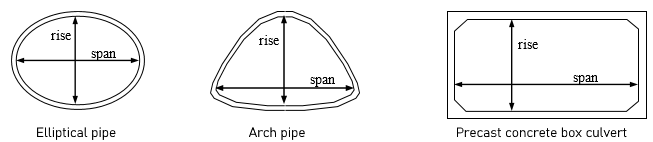
(LPO 22-36, 7-14-2022)
Sec. 125-106. - Utilities.
(a)
Sewerage and water supply. Proposed sewerage and water systems must be shown on the construction plans and submitted in accordance with this chapter. The O/D/S must obtain approval from the state department of health and hospitals and/or any other required approval.
(1)
Sanitary sewer accessible. The subdivider shall connect with the public sanitary sewer and provide adequate sewer lines to the property line of each lot, and for site or tract developments provide additional treatment where existing trunk lines are inadequate.
(2)
Sanitary sewer not accessible. Sewage treatment and disposal shall be as follows according to the number and sizes of lots in the subdivision or resubdivisions (the number of lots to be determined by all filings and/or connecting filings of the subdivision):
a.
Subdivisions having twenty (20) or less lots, each containing sixteen thousand (16,000) square feet or more and with a width of at least eighty (80') feet at building line, may have effluent from an approved individual mechanical system and absorption bed draining to open effluent ditches.
b.
Subdivisions having twenty-one (21) through thirty (30) lots, each containing thirty thousand (30,000) square feet or more and with a width of at least eighty (80') feet at building line may have effluent from an approved individual mechanical system and absorption bed draining to open effluent ditches.
c.
Subdivisions having thirty-one (31) or more lots shall have an approved community sewage treatment system.
d.
Large Lot Subdivisions having ninety (90) lots or less may have effluent from an approved individual mechanical system and absorption bed drainage to open effluent ditches. Should the total number of lots total more than ninety (90) lots the subdivision shall have an approved community sewage treatment system.
(3)
In no event shall the O/D/S fail to meet minimum standards prescribed by the state.
(4)
Sanitary sewer wet wells shall be coated with a minimum of coal tar epoxy (two (2) coats at ten (10) to twelve (12) mils per coat).
(5)
O/D/S shall not place sewer treatment facility for development next to existing residential property. Approval shall be at the discretion of the Parish Council.
(b)
New water lines/fire hydrants.
(1)
All newly constructed water distribution lines for either new water systems or extensions to existing systems will be designed and constructed in accordance and in conjunction with the utility company providing water service to subdivisions to provide adequate flow capacity and pressure, together with an adequate number of fire hydrants required for fire protection in that area. The minimum pipe size will be six (6") inches.
(2)
Materials and methods used to construct the systems will be of such quality and standards as approved for fire defense by Underwriters' Laboratories, Inc., and/or the American Water Works Association.
(3)
The placement of any form of landscape material, plantings or any type of trash, garbage, junk, vehicles, or any other items is prohibited within a ten (10') foot radius of any fire hydrant or in any such manner that it is not clearly visible or freely accessible by fire or other emergency personnel. Landscaping materials are exempt if fire hydrant is set in place in existing plantings and/or materials.
(4)
No new fire hydrant shall be placed within a ten (10') foot radius of any existing landscape materials, plantings, or anything else that may cause it to be not readily visible or freely accessible by fire or other emergency personnel. Fire or other emergency personnel or public employees having to remove such items blocking clear visibility or free accessibility in an emergency shall not be liable for any damages caused in their removal.
(c)
Utilities. Utilities shall not be situated or located under any Parish road/street ditch or road/street bed except if the utility is located perpendicular to the road/street bed.
(d)
Plan submission and transmittal letter. The O/D/S must submit a plan for the water supply and distribution system and sewerage treatment and collection system to the review engineer along with a copy of transmittal letter to utility companies and state/Parish board of health.
(e)
Public systems. All inhabited premises and buildings located within three hundred (300') feet of an approved public water supply or wastewater system shall be connected to such supply, provided that the property owner is legally entitled to make such a connection. The Parish President and/or Parish Council may grant permission to use water and wastewater from some other source. This shall apply to new or existing water supplies and wastewater systems and shall include all new or existing inhabited premises, residences and buildings. (The term "public system" means a system owned and/or operated by the Parish or an entity of the Parish such as a water district or sewer district).
(f)
Penalty for violations. Each and every day of violations of this section shall be considered a separate violation bearing a penalty of two hundred fifty dollars ($250.00) per day of violation.
(LPO 22-36, 7-14-2022)
Sec. 125-116. - Construction.
(a)
The O/D/S may construct the required improvements after filing two (2) sets of the approved construction plans with the Parish President's office. Prior to construction, written notification is to be given to the Parish President of the O/D/S's intention to proceed with construction; and that an independent testing laboratory, acceptable to the Parish Department of Public Works, has been employed by the O/D/S for this project.
(b)
The Parish Council has established detailed inspection and testing requirements for each project, the cost of which will be borne by the O/D/S. The Parish inspector shall attach to all approved construction plans a list of required inspections. It is the responsibility of the contractor to notify the Parish inspector to schedule these inspections forty-eight (48) hours prior to proceeding with the work.
(c)
Upon completion, the O/D/S shall notify the Parish President's office, in writing, of the completion of construction and request an inspection to begin the eighteen (18) month maintenance period. Upon a satisfactory inspection, the Parish President shall in turn submit to the O/D/S, in writing, that the construction meets the specifications of the construction plan. Also, to begin the eighteen (18) month maintenance period, an as-built set of plans must be provided to the Parish and the review engineer to include, but not be limited to, the following: roadway and ditch elevations, sewer, water and other utilities.
(d)
For a minimum period of eighteen (18) months after acceptance of the work by the Department of Public Works, the O/D/S shall keep all filled trenches, outfall ditches, pipes, manholes, structures, road ditches, paving, etc., constructed by him in a good condition, making repairs to such defects in materials or workmanship as may develop or be discovered by the Parish inspector. In no event shall the bond be released until all repairs to defects in materials or workmanship are made.
(e)
The O/D/S shall file with the Parish Council an approved surety instrument maintenance bond, securing to the government the satisfactory performance of this work
(LPO 22-36, 7-14-2022)
Sec. 125-117. - Construction plans.
Construction plans for all subdivisions, with improvements, shall be prepared by a civil engineer currently licensed to practice in the state. Said construction plans must be submitted and approved in accordance with this Chapter. Construction plans must be made in accordance with the approved preliminary plat, drainage impact study, any other required supplementary materials from requested studies, and in accordance with the design and construction criteria set forth in this Chapter. Approval of the construction plans shall be effective for twenty-four (24) months.
(LPO 22-36, 7-14-2022; LPO 23-18, 5-11-2023)
Sec. 125-118. - Construction procedure.
(a)
Construction plans, specifications, drainage calculations, etc., must be reviewed by review engineer and approved by the Parish President or Planning Director.
(b)
After the Review Engineer Agency recommends approval, and before the Planning Department approves and gives a permit for construction (Construction Permit is at no cost to owner/developer), there shall be a pre-construction meeting held at the Parish Planning office. The owner, owner's engineer, owner's testing lab and all other parties required by the Parish shall attend said pre-construction meeting.
(c)
It shall be the responsibility of the O/D/S to notify the Parish and the Parish Review Engineer, at a minimum, forty-eight (48) hours prior to beginning any phase of construction so that the review engineer may have a construction observer present for all utility, sub-base, drainage, and roadway work. It will be the owner/developer/contractor's responsibility to pay for such observation services. Should the observer not be notified prior to a work item, that work item will be subject to rejection by the Parish.
(d)
O/D/S to retain and pay for the services of an independent testing laboratory licensed and in good standing in the state of Louisiana.
(e)
Acceptance of construction and improvements by the Parish President or Planning Director.
(f)
The O/D/S shall file with the Livingston Parish Council a surety Instrument (maintenance bond) securing to the Parish government the maintenance of this work for an eighteen (18) month period; however, the bond shall not expire prior to twenty-four (24) months.
(g)
The O/D/S must record in the official records of the clerk of court, the approved final plat and maintenance bond and immediately provide four (4) certified copies of the final plat and one (1) certified copy of the maintenance bond to the Parish Council office.
(h)
Lots may be sold upon completion of steps in subsections (a) through (h) of this section.
(i)
Building permits for individual lots will not be issued until a certified copy of the final plat accompanied by the FONSI is provided to the building permit office.
(j)
Prior to the building permit office issuing an individual lot building permit, the builder shall retain the services of a licensed land surveyor/engineer to set the finished floor elevation in flood zone areas and to set driveway culvert elevations.
(k)
Prior to permitted structure being approved for permanent power, the builder shall provide following to building permit office:
(1)
Flood certificate that certifies finished floor is one (1) foot above the latest one hundred (100) year flood elevation.
(LPO 22-36, 7-14-2022)
Sec. 125-126. - Wetland regulations; prohibited and permitted uses.
(a)
Total acreage of proposed development shall not include wetlands classified as marsh, swamp, or fens according to the EPA.
(b)
Wetlands classified as marsh, swamp, or fens defined by the EPA shall not be developed or mitigated.
(c)
Exclusions: Minor subdivisions as outlined in Section 125-37 with four (4) lots or less.
(d)
The O/D/S shall supply a Corps of Engineers jurisdictional wetland determination. If any jurisdictional wetlands and/or other waters of the United States exist, within the Parish rights-of-way, utility servitudes, drainage servitudes or any other public servitude located in this subdivision, Corps of Engineer documentation shall be submitted proving said jurisdictional wetlands and/or other waters of the United States have been mitigated or permitted for.
(LPO 22-36, 7-14-2022; LPO 22-40, 8-25-2022; LPO No. 22-51, 10-13-2022)
Sec. 125-131. - Streets, quitclaims, servitude and rights-of-way revocation procedure.
(a)
Application requirements. An application must be filed with the Livingston Parish Planning Department to initiate the quitclaim and revocation of any street, servitude or right-of-way dedication that is no longer needed for public purposes.
Said application shall contain the following:
(1)
A cover letter indicating the applicant's full name, mailing address, phone number and the reason and/or purpose for the quitclaim/revocation submission.
(2)
Letters of no objection shall be obtained by the applicant from all current neighboring property owners and shall contain the names and addresses of those property owners.
(3)
Letters of no objection shall be obtained from the utility companies located in the area of the quitclaim/revocation submission.
(4)
Quitclaim/revocation survey map containing the measurements, degrees and bearing calls (legal description), inclusive of the plotting of all utility locations and hatch marks and/or shading of the area to be revocated. Said survey map must be certified by a state registered engineer or land surveyor and stamped with an official seal. Signature lines shall be placed on the survey map for signatures by the Livingston Parish President and/or the Livingston Parish Planning Director.
(5)
The survey map indicating the area to be revocated (submitted in PDF format), a proposed ordinance and a quitclaim document shall be submitted in digital format (Word format and/or other preferred method of the Livingston Parish Council), in addition to a hard copy.
(6)
Submission of five hundred dollar ($500.00) filing fee.
(b)
Procedure. Upon the acceptable submission of application to the Livingston Parish Planning Department, the request shall be placed on the next available agenda of the Livingston Parish Planning and Zoning Commission to investigate the propriety and feasibility of the quitclaim/ revocation. A recommendation shall be provided to the Livingston Parish Council by the Livingston Parish Planning and Zoning Commission. The recommendation shall include all application documents received, including required digital copies as stated above. Such recommendation shall be placed on the next available agenda of the Livingston Parish Council.
(c)
Actions by the Livingston Parish Council. Upon being set on the next available agenda, the Livingston Parish Council shall review the recommendations received from the Livingston Parish Planning and Zoning Commission, and may, if it so desires, introduce an ordinance revoking the street, right-of-way or servitude. The date and time of a Public Hearing shall be set and announced on the matter. Said Public Hearing and Notice of Introduction of Ordinance shall be published in the Parish Official Journal and follow the publication requirements of the Livingston Parish Home Rule Charter. Upon the outcome and closure of the Public Hearing, the Livingston Parish Council may adopt or reject the ordinance as it sees fit by majority vote.
The Council Clerk shall certify the passage of the adopted ordinance, quitclaim document and survey map and shall present said documentation to the office of the Parish President. The office of the Parish President shall contact the applicant and arrange for the notarization of the quitclaim. Upon receipt of the completion and execution of the adopted ordinance, quitclaim document and survey map, the Council Clerk shall publish the ordinance in the Parish Official Journal. The quitclaim and survey map are to be filed at the Livingston Parish Clerk of Court's office. The costs associated with these actions shall be assumed by the applicant and are to be considered collected within the submission of the Planning Department's five hundred dollar ($500.00) filing fee. The Livingston Parish Council office will submit the invoices for these actions to Administration to be paid and coded from the hundred dollar ($500.00) filing fee that has been previously collected by the Planning Department.
(LPO 22-36, 7-14-2022)
Sec. 125-136. - Variances.
Adherence to the provisions of this article is required except for special cases which arise because of the configuration of a particular parcel or to be consistent with adjoining property or adjoining developments. In no case shall the granting of a variance impair the health, safety, comfort or general welfare of the public.
(LPO 22-36, 7-14-2022)
Sec. 125-137. - Prohibitions and restrictions of use.
(a)
It shall be unlawful for a person to reside in or use as a residence or to rent out to another person a mobile/manufactured home in an established, dedicated and named subdivision or newly developed named subdivision that has been accepted by the Parish previously for the intent of on-site custom built, single-family dwelling homes.
(b)
Exceptions.
(1)
If the property has been deemed and labeled to be a known "subdivision" and the Subdivision Restrictions allow mobile homes to be placed within the described property, prohibitions and restrictions to place the mobile home are waived.
(2)
If the property has been deemed and labeled to be a known "subdivision," and does not meet the above criteria, the applicant may appeal to the Livingston Parish Council for a waiver.
(3)
If approved by a majority vote of the Livingston Parish Council, the applicant, subdivision's name, and property address will be compiled and added to a list to be forwarded to the Livingston Parish Building and Permit Department. If any applicants seek permitting and their property is located within a named subdivision that has been previously added to this list, the applicant will not apply in duplicate for a waiver as previous determination has been made.
(4)
If an applicant is removing a mobile home currently in existence, to be replaced with another mobile home that is located at the same property location that has been deemed as a "subdivision," prohibitions and restrictions will not apply.
Notwithstanding prior waivers or actions of the Livingston Parish Council, Live Oak Acres Subdivision is hereby removed from the list of named subdivisions that can allow mobile homes.
(LPO 22-36, 7-14-2022; LPO No. 25-11, 6-26-2025)
Sec. 125-138. - Requirements and procedures for recreational vehicles (RV).
It shall be unlawful for a person to reside in or use as a residence or to rent out to another person a Recreational Vehicle (RV) outside of a trailer park, mobile home park, or camp site without demonstrated cause for more than one hundred eighty (180) days.
(LPO 22-36, 7-14-2022; LPO 23-12, 4-27-2023)
Sec. 125-139. - Prohibitions and restrictions of use for recreational vehicles (RV).
It shall be unlawful for a person to reside in or use as a residence or to rent out to another person recreational vehicle (RV) in an established, dedicated and named subdivision or newly developed named subdivision that has been accepted by the Parish previously for the intent of on-site custom built, single-family dwelling homes.
(LPO 22-36, 7-14-2022)
Sec. 125-140. - Notification sign requirement.
When a development is located on a dead-end road the O/D/S shall place a notification sign following all guidelines set forth in this chapter with the exception of the V-shape formation. The sign may be one-sided.
(LPO 23-04, 1-26-2023)
Sec. 125-151. - Subdivision processing fees schedule.
(a)
The fees for this section are or shall be in amounts as established by the Parish Council from time to time and do not include fees for review engineering or any other professional service fee which may be incurred on the part of the Parish in review and/or certification of plans, plats or specifications, inspection and/or analysis of materials, sites or any other services rendered. These services shall be performed to ensure adherence to the subdivision and/or development ordinances of the Parish, and proper planning on behalf of the Parish and its residents.
(b)
These charges shall be invoiced by the review engineer directly to the O/D/S. Invoices shall be due and payable upon receipt, and failure to remit such payment invoiced shall be cause for denial of any and all submission for development, future developments and for the revocation of any and all permits issued for the construction of any such development and/or subdivision.
(c)
The Parish hereby reserves the right to select and direct the individuals and/or firms needed for professional services described herein.
(d)
The fees for this section are or shall be in amounts as established by the Parish Council from time to time and this Section do not include charges for media advertising as mandated by federal, state or local law or ordinance. Such charges will be invoiced by the Parish directly to the O/D/S. Invoices shall be due and payable upon receipt, and failure to remit such payment invoiced shall be cause for denial of any and all submission for development and for the revocation of any and all permits issued for the construction of any such development and/or subdivision.
(LPO 22-36, 7-14-2022)
Sec. 125-176. - Definitions.
The following words, terms and phrases, when used in this article, shall have the meanings ascribed to them in this section, except where the context clearly indicates a different meaning:
Mobile home park means more than one (1) mobile home located on the same tract of land occupying such space as required by this article. However, if a landowner makes application with the planning department and meets the requirements of the affidavit attached to the ordinance from which this article is derived and executed, then placement of one (1) mobile home on the same tract of land, excluding the homestead, will be permitted by the Planning Department. The additional mobile home shall be occupied by a lineal descendant of the landowner. The landowner must subdivide to add any more mobile homes.
Recreational vehicle (RV): motorhomes, campervans, coaches, caravans, fifth-wheel trailers, popup campers, truck campers, vacation trailers, travel trailers, pick-up campers, tent trailers, and bus campers. Recreational Vehicles located in a trailer park, mobile home park, or camp site and are intended for occupancy will be permitted through the Livingston Parish Permit Office through regulatory permitting processes.
Trailer or mobile home, for the purpose of this chapter, means a vehicle equipped for use as a dwelling that may be hauled or transported along a highway. As such, the mobile home will be duly titled by the appropriate regulatory agency. A mobile home which has been rendered unsuitable for transportation, and which has had its title rescinded, shall not be considered a mobile home. Recreational Vehicles are included in this definition if they are intended for occupancy.
(LPO 22-36, 7-14-2022; LPO 22-61, 1-12-2023)
Sec. 125-177. - Public notice.
The following signage will be required for subdivisions with improvements. The O/D/S shall erect two (2) signs that will be placed corner to corner in a V-shaped formation that shall each be measured four (4') foot by eight (8') foot. The sign shall be black and white sign with a minimum of four (4") inch-high letters located with no obstructions within five (5') feet of the nearest public right-of-way leading to the original filing, any new additional filing, and any other entrance or road tied to the development for connectivity purposes. The bottom of the sign shall be at least four (4') feet from the ground. Twenty-five (25%) percent of the sign may be dedicated for advertising purposes and graphics, provided such area is contiguous. The sign shall be erected at least ten (10) days prior to the planning and zoning commission meeting at which the subdivision is to be considered. The sign must remain visible and upright until final approval. Failure to keep the sign visible and upright is cause for project work to be stopped by the Parish and review engineer until the sign is corrected. The developer is responsible for any and all associated costs including attorney fees. The sign shall be titled "A Subdivision Is Proposed For This Site" and shall contain the following information:
a.
Name, address, and working telephone number of the O/D/S.
b.
Name of subdivision or development.
c.
Number of lots.
d.
Number of acres in the development.
e.
Email address.
(LPO 22-36, 7-14-2022)
Sec. 125-178. - Procedures for development.
(a)
All O/D/S of mobile home or trailer parks shall submit a preliminary site plan to the planning and zoning commission for approval. The drainage impact study and construction plans will be submitted to the review engineer for review and approval. Upon receipt of the preliminary site plan, the development will be placed on the planning and zoning commission agenda for a public hearing. After the planning and zoning commission has held a public hearing, it will make a recommendation for approval. Upon approval of the preliminary site plan, the drainage impact study and construction plans may be submitted to the planning department and review engineer for review and approval. When the drainage impact study, construction plans and final site plan are approved, the site construction may begin. Certificate of occupancy may not be given unless an on-site inspection of the site has been made by representatives of the Parish and approval by the planning department. Approval to construct the project shall expire after twelve (12) months unless extended by the Parish Council.
(b)
Prior to the filing of an application for approval of the preliminary plat, a representative is required to have an informal discussion with the planning and zoning commission's review engineer and other Parish staff and officials deemed appropriate in an effort to resolve technical matters regarding the proposed subdivision prior to consideration by the planning and zoning commission.
(c)
No mobile home parks shall be developed until owners or developers secure approval from the Parish health unit or the state department of health and hospitals of the method of sewage treatment and disposal and of the public water supply. Each shall be constructed in accordance with the following minimum standards:
(1)
Individual mobile home or trailer sites may be leased or rented, but not subdivided or sold. No mobile home shall be moved into a mobile home park until all construction and related road, drainage and utility work are complete, and the final site plan is approved by the planning and zoning commission and Parish Council.
(2)
A minimum of three (3) acres is required for each trailer or mobile home park, with a minimum frontage of two hundred (200') feet, located on a publicly-maintained street or road.
(3)
Maximum density would be seven point five (7.5) mobile home sites per acre.
(4)
Access to each mobile home site shall be provided by twenty-four (24') foot wide private drives located within private servitudes of access having a minimum width of fifty (50') feet. Minimum improvement requirements for private drives within the mobile home park shall be thirty (30') feet roadway with an eight and one-half (8 1/2) inch base as specified by the Parish Council and a twenty-four (24') foot wide, two (2") inch thick hot asphaltic concrete, crushed concrete, or limestone surface. A protective apron shall be required at the entrance to any site equal to the radius of the driveway or equal to the depth of the servitude, whichever is greater.
(5)
Where only one (1) drive is to be provided, each mobile home park shall include Cul-de-sacs (turnarounds) shall have a minimum outside turning radius of fifty-five (55') feet, with a minimum inside turning radius of thirty-five (35') feet. Width in the turnarounds shall have a minimum width of twenty (20') feet. Permanent T-turnarounds may be used. The T-turnaround shall have a minimum width of twenty (20') feet and a minimum length of eighty (80') feet.
(6)
Each trailer or mobile home shall be set on solid concrete, crushed concrete, or limestone footings of a minimum of four (4") inches thick and have a four (4") inch thick, eighteen (18') foot by twenty-four (24') foot solid concrete, crushed concrete, or limestone parking area, to be measured from the back of the curb or edge of surface at the front of the site.
(7)
Garbage hoppers with a minimum capacity of point five (0.5) cubic yards per family per week must be provided and must be enclosed with a six (6') foot solid fence.
(8)
Each mobile home site shall be provided with a sanitary sewer connection, and each mobile home park shall be provided with a collection and treatment system and public water supply in compliance with the standards of the state health department.
(9)
Any mobile home park developed under these standards shall provide a solid wood or metal fence at least eight (8') feet high along all side and rear property lines of said mobile home park.
(10)
All mobile homes shall be required to have on all sides at the base of the unit, a skirting or a rigid-type material specific to trailers.
(11)
Utilities. Refer to Section 125-06.
(12)
A minimum of one (1) streetlight for every three (3) lots shall be provided along the private drives within the mobile home park, as dictated by the illumination design.
(13)
Before the site plan is submitted to the planning and zoning commission for review and approval, the developer and his consulting engineer must meet with the Parish engineer, a representative of the Department of Public Works and the Planning Director and staff for a pre-application meeting. Prior to the issuance of a permit for a mobile home park, the site plan shall be subject to a public hearing held by the planning and zoning commission with the planning and zoning commission staff mailing notices by certified mail to the adjacent property owners. The site plan shall be reviewed by the Department of Public Works, the chief of the fire department responsible for providing fire protection services and the Parish engineer prior to the planning and zoning commission public hearing. After approval of the site plan by the planning and zoning commission, the construction plans shall be reviewed and approved by the Department of Public Works and the Parish engineer. With the submittal of the construction plans, the wetlands determination, delineation and permit shall also be submitted. Construction of the improvements shall be reviewed and inspected by the Parish engineer and the Department of Public Works.
(14)
Prior to issuance of a permit for a mobile home park, the plan of the proposed development shall be placed on the planning and zoning commission's agenda. After consideration by the planning and zoning commission, the planning and zoning commission's recommendation will be submitted to the Parish Council for approval. Plans shall be reviewed by the review engineer prior to said hearing.
(15)
Sewer treatment plant has been completed, and written approval from the Department of Health and Human Resources of the state has been obtained.
(16)
FEMA elevation requirements for a trailer on each rental site shall be of a permanent material and attached to a service pole or concrete monument.
(17)
Form 20-D. This form shall only be used as a checklist. For further details on the items addressed in the checklist, refer to the requirements of the subdivision regulations. This form must accompany the preliminary site plan submittal.
(LPO 22-36, 7-14-2022)
Sec. 125-179. - Road width requirements.
(a)
Developments with ninety-nine (99) or less lots shall be developed on roads eighteen foot (18') in width or greater.
(b)
Developments with one hundred (100) and over lots shall be developed on roads with a width of twenty foot (20') or greater.
(c)
Developments that do not meet the required road width shall make improvements from the entrance/exit of the development to the nearest state or parish road that meets the eighteen-foot (18') or twenty-foot (20') requirement. All roadway improvements should meet the parish standards outlines in Section 125-77 and be approved by the Review Engineer and Planning Director.
(LPO 22-36, 7-14-2022; LPO No. 23-44, 12-14-2023)
Sec. 125-180. - Mobile home park submittals.
(a)
Preliminary site plan. The preliminary site plan shall be submitted in accordance with Section 125-51, and 125-67 (preliminary plat) of this chapter. Any alterations made by the O/D/S after approval of the preliminary plat shall be submitted to the Planning Director and reviewed by the planning and zoning commission.
(b)
Drainage impact study. The drainage impact study shall be submitted in accordance with Section 125-51, and 125-67 (drainage impact study).
(c)
Construction plans. One (1) set of the construction plans must be submitted to the planning and zoning commission, review engineer, applicable sewer district, and applicable drainage district at least on the eighth (8 th ) day of the month prior to the planning and zoning commission meeting.
(d)
Twelve (12) copies and one (1) eleven (11") inch by seventeen (17") inch copy of the final site plan must be submitted to the planning and zoning commission and one (1) copy must be sent to the review engineer.
(e)
School Impact Study.
(LPO 22-36, 7-14-2022)
Sec. 125-181. - Manufactured and mobile homes on individual lots.
The purpose of this Section is to provide minimum standards to safeguard public health, property, and public welfare in Livingston Parish by establishing standards for the placement of manufactured housing and mobile homes on individual lots or subdivision development lots in the parish and distinguishing between manufactured and mobile homes.
(a)
Location of manufactured housing. Establishment, location and use of manufactured housing as single-family residences shall be permitted in any district permitting installation and use of manufactured or mobile homes. Manufactured homes with no HUD Code seal are not permitted in any zoning district.
(b)
Standards for siting manufactured housing.
(1)
To be eligible for siting in Livingston Parish, manufactured housing must meet the following requirements:
a.
Permanent foundation systems shall be anchored.
b.
Exterior material shall be material customarily used on site-built dwellings, such as board siding, plywood or presswood siding, vinyl, stucco, brick, or non-reflective aluminum.
c.
Roofing material shall be of wood, tile, composition shingles, or other materials compatible with the conventionally built residential structures in the neighborhood which shall be installed on a surface appropriately pitched for the materials used.
d.
Exterior covering material extending to the ground or to the top of the foundation shall be used. Skirting materials that harmonize with the architectural style of the home shall be used.
(2)
Structural additions or alterations shall be subject to the same regulations and requirements and procedures including building permit that must be complied with to obtain such a permit for additions or alterations to a conventionally-built house.
(3)
Manufactured homes not conforming to the requirements of this Section shall not be permitted.
(c)
Permitted placement of mobile homes.
(1)
Class A and B mobile homes may be placed in any district permitting installation and use of mobile homes as single-family residences. Manufactured homes with no HUD Code seal are not permitted in any zoning district
(2)
Mobile homes with no Class A or B seal are not permitted in any zoning district. Those which at the time of the adoption of this ordinance are located within the parish are nonconforming uses, subject to the same requirements and regulations as any other nonconforming use.
(d)
Existing units.
(1)
Mobile homes legally located and existing in Livingston Parish at the time this ordinance is passed may continue to be occupied. These mobile homes may be upgraded and replaced, regardless of the zoning district they occupy, if the upgrading and replacement meets the requirements of this ordinance.
(e)
Permits.
(1)
Manufactured Housing. Building permits for manufactured homes shall be issued, providing that the other requirements for the applicable zoning district are met, upon presentation of certification either by the United States Department of Housing and Urban Development or Office of State Fire Marshal, that the home has been constructed in accordance with the Manufactured Home Construction and Safety Standards Act. The building official shall inspect the manufactured housing in accordance with Livingston Parish building regulations.
(2)
Mobile Homes. Building permits for Class A and Class B mobile homes shall be issued where permitted upon receipt of certification that they are Class A or B mobile homes and after compliance with all the other provisions of the zoning ordinance and subdivision regulations. The building official shall inspect the manufactured housing in accordance with Livingston Parish building regulations.
(Ord. No. 24-36, 2-27-2025)

