
Lodi City Zoning Code
ARTICLE 2
- ZONING DISTRICTS LAND USE AND DEVELOPMENT STANDARDS
17.10.010 - Purpose of chapter.
This chapter establishes the zoning districts applied to property within the city, determines how the zoning districts are applied on the zoning map, and establishes general permit requirements for development and new land uses.
(Ord. No. 1869, § 2, 2-20-2013)
17.10.020 - Zoning districts established.
The city of Lodi shall be divided into zoning districts which implement the Lodi general plan. The zoning districts shown in Table 2-1 are hereby established, and shall be shown on the official zoning map.
(Ord. No. 1869, § 2, 2-20-2013)
17.10.030 - Zoning map adopted.
The council hereby adopts the city of Lodi zoning map (hereafter referred to as the "zoning map"), which is on file with the department. The zoning map is hereby incorporated into this development code by reference as though it were fully included here. The boundaries of the zoning districts established by Section 17.10.020 (Zoning Districts Established) shall be shown upon the zoning map.
(Ord. No. 1869, § 2, 2-20-2013; Ord. No. 2016, § 2, 8-2-2023; Ord. No. 2019, § 2, 11-15-2023; Ord. No. 2021, § 1, 1-3-2024; Ord. No. 2025, § 1, 6-5-2024)
17.10.040 - Zoning district boundaries.
Where uncertainty exists as to the boundaries of any district on the district map, the following rules shall govern:
A.
Where such boundaries are indicated as approximately following street or alley lines, such lines shall be construed to be such boundaries.
B.
In the case of unsubdivided property and where a district boundary divides a parcel of property in one ownership, the locations of such boundaries shall be determined from the scale appearing on the map.
C.
Where a public street or alley is officially vacated, the regulations of abutting properties shall apply to such vacated street or alley after being added to such properties.
D.
In case of further uncertainty, the director shall determine the location of such boundaries.
(Ord. No. 1869, § 2, 2-20-2013)
17.12.010 - Purpose of chapter.
This chapter provides general requirements for the approval of proposed development and new land uses in the city. The land use permit requirements established by this development code for specific land uses are in Chapters 17.14 through 17.28, and in Article 3.
(Ord. No. 1869, § 2, 2-20-2013)
17.12.020 - General requirements for development and new land uses.
All uses of land and/or structures shall be established, constructed, reconstructed, altered, or replaced, in compliance with the following requirements:
A.
Allowable Use. The use of land shall be identified by Chapters 17.18 (Residential Zoning Districts), 17.20 (Commercial Zoning Districts), 17.22 (Mixed Use Zoning Districts), 17.24 (Industrial Zoning Districts), 17.26 (Special Purpose Zoning Districts), or 17.28 (Overlay Zoning Districts) as being allowable in the zoning districts applied to the site. The director may determine whether a particular land use is allowable, in compliance with Section 17.12.030.
B.
Permit/Approval Requirements. Any land use permit or other approval required by Section 17.12.030 (Allowable Land Uses and Permit Requirements) shall be obtained before the proposed use is constructed, otherwise established or put into operation, unless the proposed use is listed in Section 17.12.040 (Exemptions from Land Use Permit Requirements).
C.
Development Standards. The use of land and/or structure shall comply with all applicable requirements of this development code, including the zoning district standards of this article, and the provisions of Article 3 (Site Planning and General Development Standards).
D.
Conditions of Approval. The use of land and/or structure shall comply with any applicable conditions imposed by any previously granted land use permit or other approval.
E.
Legal Parcel. The use of land and/or structures shall only be established on a parcel of land which has been legally created in compliance with the Subdivision Map Act and Article 5 (Subdivisions), as applicable at the time the parcel was created.
F.
Development Agreements. The use and/or structures shall comply with any applicable development agreement approved by the city in compliance with Chapter 17.44 (Development Agreements).
(Ord. No. 1869, § 2, 2-20-2013)
17.12.030 - Allowable land uses and permit requirements.
The uses of land allowed by this development code in each zoning district are identified in Chapters 17.18, 17.20, 17.22, 17.24, 17.26, and 17.28 together with the type of land use permit required for each use.
A.
Permit Requirements. Tables 2-4, 2-6, 2-8, 2-10, and 2-12 provide for land uses that are:
1.
Allowed uses subject to compliance with all applicable provisions of this development code, subject to first obtaining a building permit or other permit required by the municipal code. These are shown as "A" uses in the tables; and
2.
Allowed subject to the approval of a use permit (Section 17.40.040), and shown as "UP" uses in the tables.
3.
Allowed subject to the approval of a minor use permit, and as shown as "MUP" uses in the tables.
4.
Not allowed in particular zones and shown as "—" uses in the tables.
Note: Design review may also be required for certain uses and types of development. Design review requirements are established by Section 17.40.020.
B.
Multiple Uses on a Single Site. Where a proposed project includes multiple land uses, and Tables 2-4, 2-6, 2-8, 2-10, and 2-12 require different land use permits for some of the uses, each use shall be authorized through the approval of the permit required for the specific use.
C.
Uses Not Listed. Land uses that are not listed in Tables 2-4, 2-6, 2-8, 2-10 or 2-12, or are not shown in a particular zoning district are not allowed, except as otherwise provided by Section 17.02.020 (Rules of Interpretation), or Section 17.12.040 (Exemptions from Land Use Permit Requirements).
(Ord. No. 1869, § 2, 2-20-2013)
17.12.040 - Exemptions from land use permit requirements.
The land use permit requirements of this development code do not apply to the activities, uses of land and/or structures identified by this section. However, nothing in this section shall eliminate the requirements of the municipal code for obtaining grading, building, and/or other construction permits prior to starting any work.
A.
Governmental Facilities. Facilities of the city; the Lodi unified school district (LUSD); and facilities of the county, state, or the federal government on land owned or leased by a governmental agency, for governmental operations, to the extent that exemption is required by state or federal law.
B.
Interior Remodeling. Interior alterations that do not increase the number of rooms or the gross floor area within the structure, or change the approved use of the structure.
C.
Reconstruction of Destroyed Uses and Structures. A use of land and/or structure destroyed by fire or natural disaster may be re-established as it existed, provided that:
1.
It was legally established and in compliance with this development code before destruction; and
2.
Reconstruction occurs in compliance with all applicable building, electrical, mechanical, and plumbing code requirements.
See Section 17.68.020 regarding repairs to nonconforming structures.
D.
Repairs and Maintenance. Ordinary repairs and maintenance, if:
1.
The work does not result in any change in the approved land use of the site or structure, addition to, or enlargement/expansion of the land use and/or structure; and
2.
The exterior repairs employ the same materials and design as the original construction.
(Ord. No. 1869, § 2, 2-20-2013)
17.12.050 - Requirements for sites divided by zoning boundary.
Where a site is divided by one or more zoning district boundaries, the site shall be developed in compliance with the requirements of each district, as applicable. For example, if a site is zoned both commercial and residential, the portion of the site zoned commercial shall be developed in compliance with the commercial zoning regulations, and the portion zoned residential shall be developed in compliance with the requirements of the applicable residential district.
(Ord. No. 1869, § 2, 2-20-2013)
17.12.060 - Temporary uses.
Requirements for establishing a temporary use (e.g., construction yards, seasonal sales lots, special events, temporary office trailers, etc.) are in Section 17.40.030 (Temporary Use Permits).
(Ord. No. 1869, § 2, 2-20-2013)
17.12.070 - Additional permits and approvals may be required.
An allowed land use that has been granted a land use permit, or is exempt from a land use approval, may still be required to obtain city permits or approvals before the use is constructed, or otherwise established and put into operation. Nothing in this division shall eliminate the need to obtain any permits or approvals required by:
A.
Other municipal code provisions, including: building, grading or other construction permits or a business license if required by municipal code; or
B.
Any applicable county, or any regional, state or federal agency regulations. All necessary permits shall be obtained before starting work or establishing new uses.
(Ord. No. 1869, § 2, 2-20-2013)
17.14.010 - Purpose of chapter.
This chapter expands upon the standards of Article 2 (Land Use and Development Standards) by addressing the details of site planning and project design. These standards are intended to ensure that all development produces an environment of desirable character that is compatible with existing and future development and protects the use and enjoyment of neighboring properties, consistent with the General Plan.
(Ord. No. 1869, § 2, 2-20-2013)
17.14.020 - Applicability.
The provisions of this chapter apply to all proposed development and new land uses.
A.
These standards shall be considered in combination with the standards for each zoning district in Article 2 (Land Use and Development Standards). If there is a conflict, the standards applicable to the zoning district shall take precedence over these general standards, except where these standards provide otherwise.
B.
All new or modified structures and uses shall comply with all applicable provisions of this chapter, except as specified in Chapter 17.68 (Nonconforming Uses, Structures, and Parcels).
(Ord. No. 1869, § 2, 2-20-2013)
17.14.030 - Development across property lines.
Where an existing structure is located on two or more lots and crosses one or more of the property lines between the lots, the approval of any addition to the structure shall require that the property owner merge the parcels prior to the issuance of a certificate of occupancy.
(Ord. No. 1869, § 2, 2-20-2013)
17.14.040 - General performance standards.
All land uses activities, and processes shall be operated and maintained so as to not be injurious to public health, safety or welfare, and to comply with the following standards:
A.
Air Emissions. No visible dust, gasses, or smoke shall be emitted, except as necessary for the heating or cooling of structures, and the operation of motor vehicles on the site.
B.
Combustibles and Explosives. The use, handling, storage, and transportation of combustibles and explosives shall comply with the Uniform Fire Code.
C.
Ground Vibration. No ground vibration shall be generated that is perceptible without instruments by a reasonable person at the property lines of the site, except for motor vehicle operations.
D.
Light and Glare. See Section 17.14.070 (Lighting).
E.
Liquid Waste. No liquid shall be discharged into a public or private body of water, sewage system, watercourse, or into the ground, except in compliance with applicable regulations of the California Regional Water Quality Control Board.
F.
Noise. No use, activity, or process shall exceed the maximum allowable noise standards identified by the general plan.
G.
Odor. No obnoxious odor or fumes shall be emitted that are perceptible without instruments by a reasonable person at the property line of the site.
H.
Radioactivity, Electrical Disturbance or Electromagnetic Interference. None of the following shall be emitted:
1.
Radioactivity, in a manner that does not comply with all applicable state and federal regulations; or
2.
Electrical disturbance or electromagnetic interference that interferes with normal radio or television reception, or with the function of other electronic equipment beyond the property line of the site; or that does not comply with all applicable Federal Communications Commission (FCC) and other applicable state and federal regulations.
I.
Flooding. All development shall be in compliance with the provisions of Chapter 15.60 (Flood Damage Prevention).
(Ord. No. 1869, § 2, 2-20-2013; Ord. No. 1979, § 2, 10-21-2020)
17.14.050 - Height limits and exceptions.
All structures shall comply with the height limits of this section, except for fences and walls, which are instead subject to the provisions of Section 17.14.100 (Walls, Fences, and Hedges).
A.
Maximum Height of Structures. The height of structures shall not exceed the limit for the applicable zoning district in Article 2 (Land Use and Development Standards).
B.
Height Measurement. The maximum allowable height shall be measured as the vertical distance from finished grade at the base of the structure to the top of structure. See Figure 2-1. Finished grade shall be established in a manner consistent with parcels in the immediate vicinity as determined by the director, and shall not be artificially raised to gain additional building height.
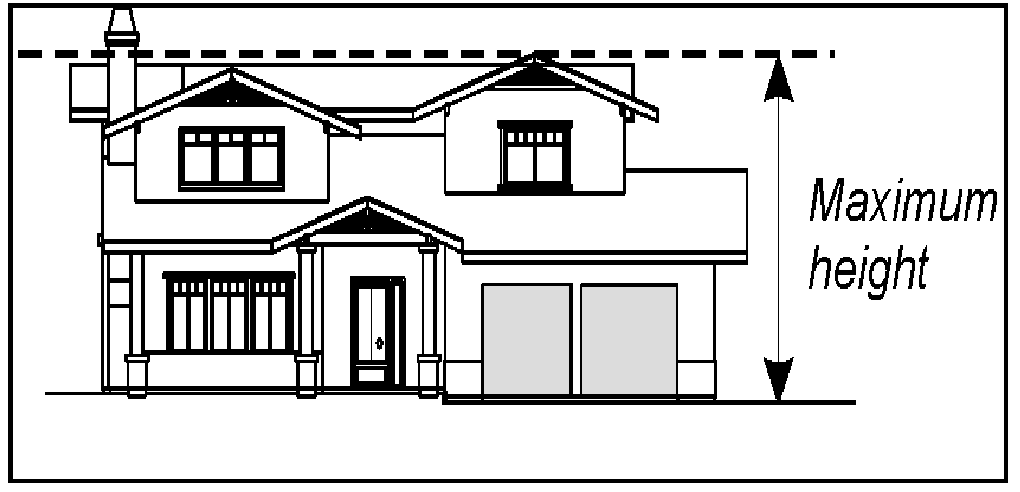
Figure 2-1 - Height Measurement
C.
Exceptions to Height Limits. The following structures and structural features may exceed the height limits of this development code provided that the additional building area is not used as habitable space.
1.
Towers, spires, cupolas, domes, flag poles, gables, monuments, penthouses, theater scenery lofts, water tanks, similar structures, and necessary mechanical appurtenances may exceed the height limit established for the applicable zoning district to a maximum of twenty percent of the height limit.
2.
Public and semi-public structures including hospitals may be up to seventy-five feet, provided that the front, side and rear setbacks are increased by one foot for each foot of building height above the height limit.
3.
Telecommunications facilities, including antennas, poles, towers, and necessary mechanical appurtenances, may be authorized to exceed the height limit established for the applicable zoning district, in compliance with Section 17.36.140 (Telecommunications Facilities).
D.
Height Limit at Street Corners. No structure or landscape element shall exceed forty-two inches in height within a street corner sight visibility area, except:
1.
Within the downtown area;
2.
Trees with their canopy trimmed to a minimum of eight feet above grade; and
3.
Where otherwise approved by the director on the basis of a determination that a structure and/or landscaping with greater height will not create a safety hazard for pedestrians or motorists.
The required sight visibility area is defined by a line between two points on the street property lines of a corner parcel, each thirty-five feet from the intersection of the two property lines forming the corner at the street right of way. See Figure 2-2.
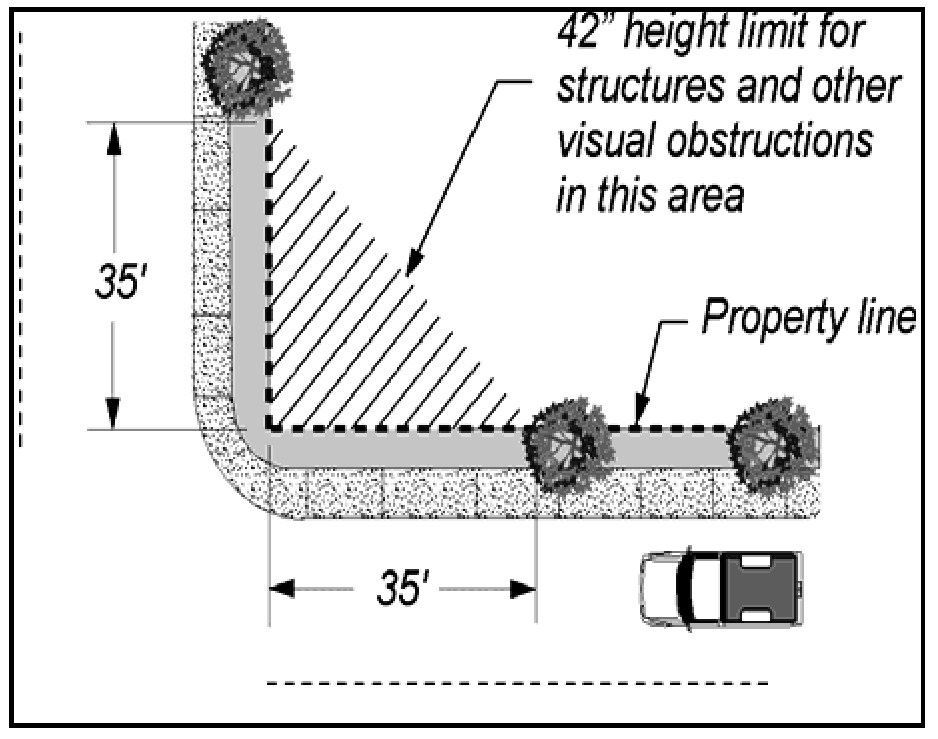
Figure 2-2 - Sight Visibility Area
(Ord. No. 1869, § 2, 2-20-2013)
17.14.060 - Setback measurement and exceptions.
This section provides standards for the use and minimum size of required setbacks. These standards are intended to provide open areas around structures for: Visibility and traffic safety; access to and around structures; access to natural light, ventilation and direct sunlight; separation of incompatible land uses; and space for privacy, landscaping, and recreation.
A.
Setback Requirements.
1.
All structures shall comply with the setback requirements of the applicable zoning districts established by Article 2 (Land Use and Development Standards), and with any special setbacks established for specific uses by this development code.
2.
No portion of a structure, including eaves or roof overhangs, or other architectural features shall extend into a yard more than twenty-four inches, and they must be at least thirty-six inches away from any property line.
3.
Each required setback shall be open and unobstructed from the ground upward.
B.
Exemptions from Setback Requirements. The minimum setback requirements of this development code apply to all uses and structures except the following:
1.
Fences, walls, and hedges forty-two inches or less in height above the natural grade of the parcel; except as otherwise provided in Section 17.14.100;
2.
Decks, earthworks, pavement, steps, terraces, and other site design elements placed directly upon the finish grade, and that do not exceed a height of eighteen inches above the surrounding finish grade at any point; and
3.
Pools, ponds, and spas, except as required by the California Building Code.
C.
Measurement of Setbacks. Setbacks shall be measured from the exterior wall of structures, as follows: See Figure 2-3.
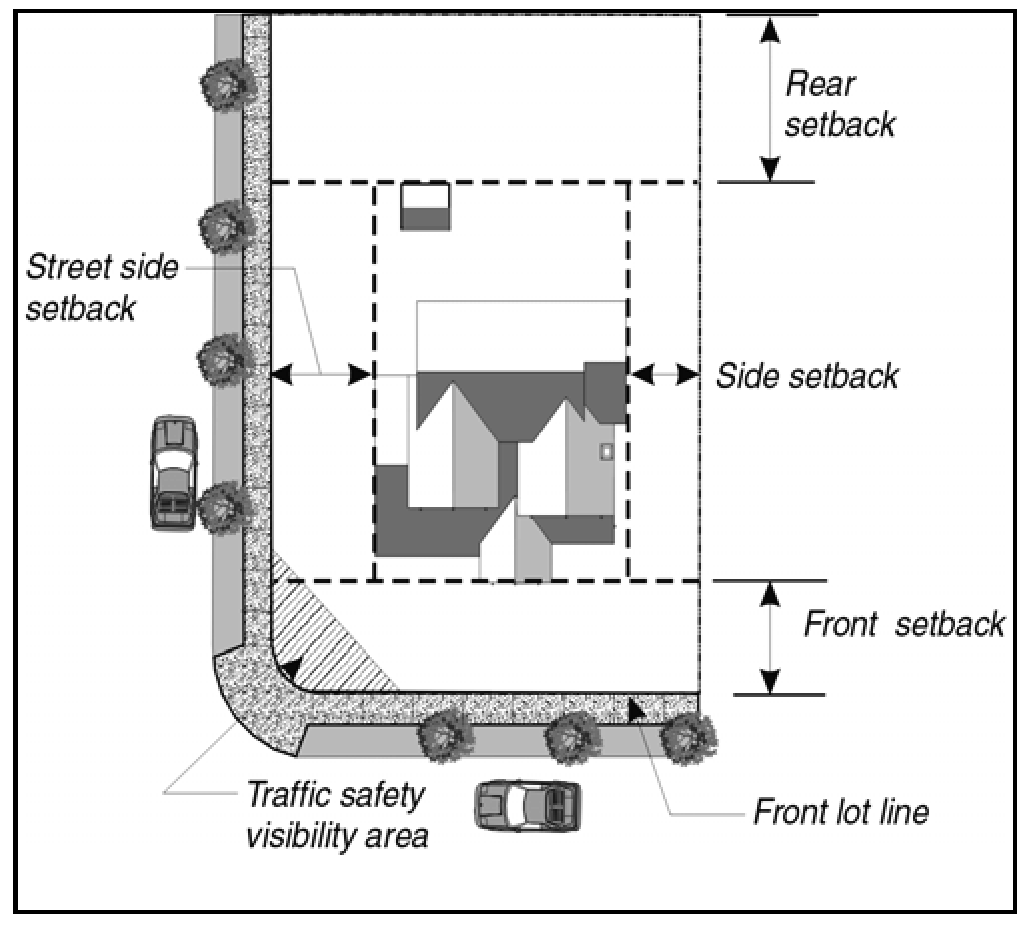
Figure 2-3 - Location and Measurement of Setbacks
1.
Front Yard Setbacks. The front yard setback shall be measured at right angles from the nearest point on the front property line of the parcel to the nearest portion of the structure, except as provided in following subsections (C)(1)(a) through (C)(1)(b). Garages and carports shall be setback at least twenty feet from the street right-of-way.
a.
Corner Parcels. The measurement shall be taken from the nearest line of the structure to the nearest point of the property line adjoining the street which is opposite the rear yard.
b.
Flag Lots. The measurement shall be taken from the nearest point of the wall of the structure facing the street to the point where the access strip meets the bulk of the parcel; establishing a building line parallel to the lot line nearest to the public street or right-of-way. See Figure 2-4.
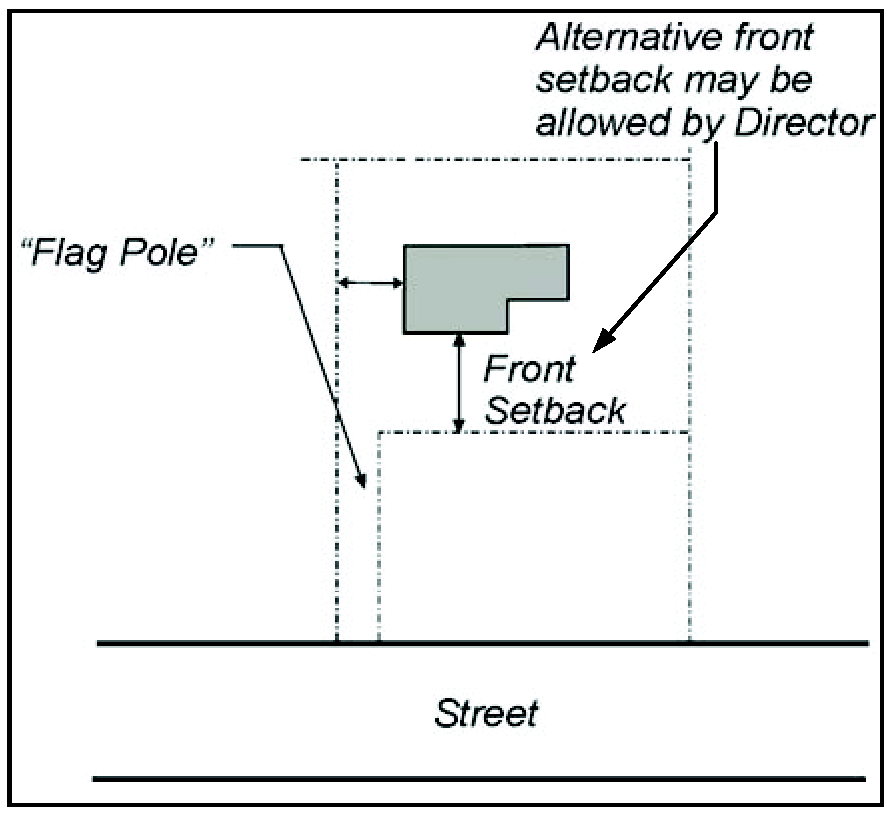
Figure 2-4 - Flag Lot Setbacks
2.
Side Yard and Street Side Yard Setbacks. Side yard and street side yard setbacks shall be measured at right angles from the nearest point on the side property line of the parcel to the nearest portion of the structure; establishing a setback line parallel to the side property line, which extends between the front and rear yards.
3.
Rear Yard Setbacks. The rear yard setback shall be measured at right angles from the nearest point on the rear property line of the parcel to the nearest portion of the structure, establishing a setback line parallel to the rear property line, except:
The rear yard setback on the street side of a through lot shall be measured from the nearest point of the rear property line adjoining the street and shall be setback a minimum of forty feet.
If a parcel abuts an alley, the rear yard setback shall be five feet.
D.
Allowed Projections into Setbacks. Attached architectural features may extend from the wall of the structure into a front, side, or rear setback, in compliance with Table 2-2. See Figure 2-5.
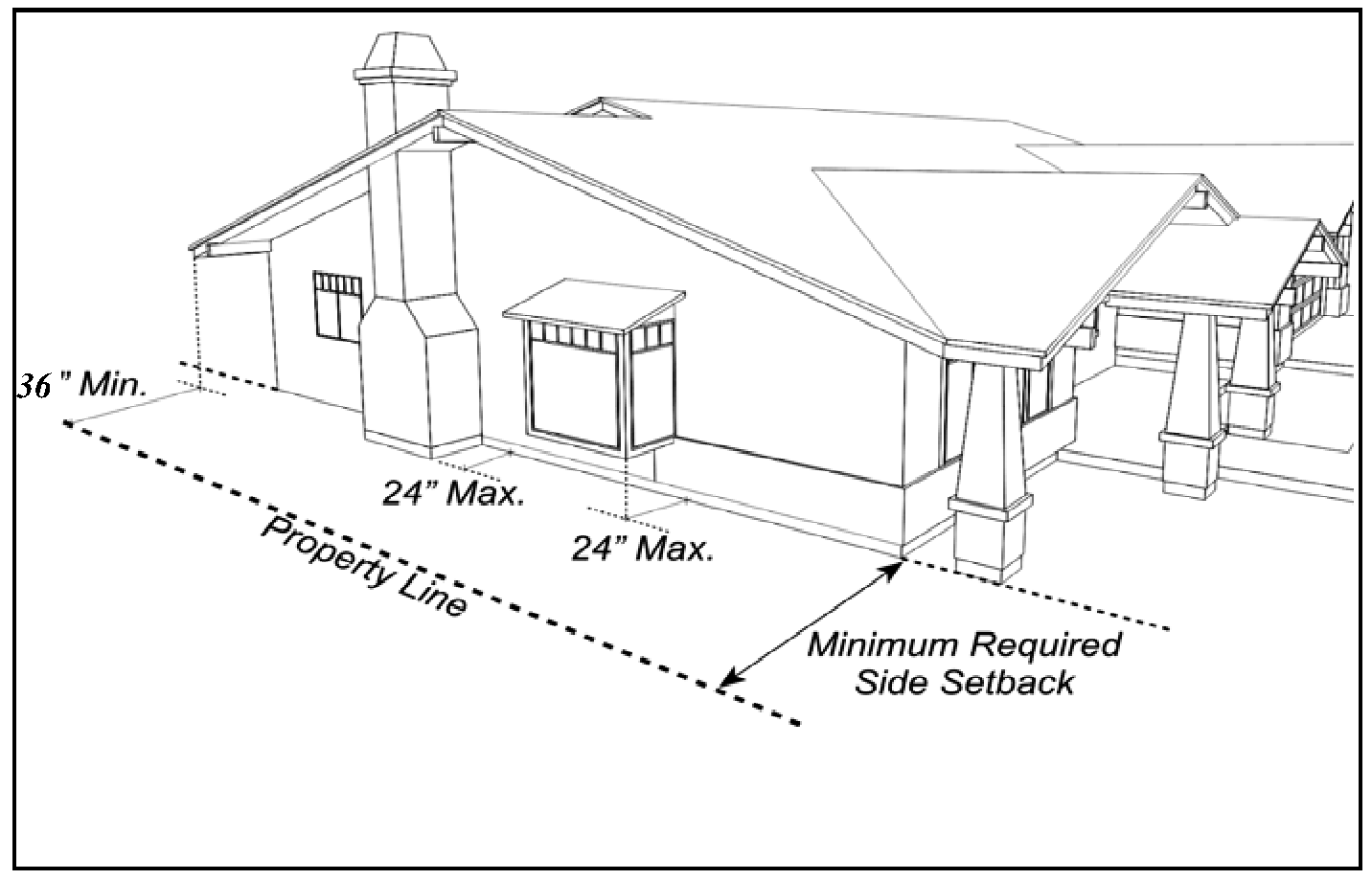
Figure 2-5 - Examples of Allowed Projections into Residential
E.
Limitations on the Use of Setbacks. Required setback areas shall only be used in compliance with the following requirements:
1.
Storage. No required setback visible from the public right-of-way shall be used for the storage of inoperable vehicles, scrap, junk, building materials, or similar material.
2.
Parking. Residential parking is allowable within required setback areas only on a paved surface, in compliance with Section 17.32.070 (Parking Design Standards).
3.
Swimming Pool Equipment. Swimming pool equipment (e.g., pumps and filters) shall be located a minimum of five feet from side and rear property lines.
(Ord. No. 1869, § 2, 2-20-2013)
17.14.070 - Lighting.
Exterior lighting on private property within the city shall comply with the requirements of this section.
A.
Exterior lighting fixtures shall not exceed a height of twenty feet or the height of the nearest building, whichever is less.
B.
Lighting shall be energy-efficient, and shielded or recessed so that direct glare and reflections are confined to the maximum extent feasible within the boundaries of the site, and shall be directed downward and away from adjoining properties and public rights-of-way.
C.
No permanently installed lighting shall blink, flash, or be of unusually high intensity or brightness, as determined by the director.
D.
All lighting fixtures shall be appropriate in scale, intensity, and height to the use they are serving.
E.
All lighting shall be properly maintained.
(Ord. No. 1869, § 2, 2-20-2013)
17.14.080 - Screening.
This section establishes standards for the screening and separation of adjoining residential and nonresidential land uses, equipment and outdoor storage areas, and surface parking areas.
A.
Screening Between Different Land Uses. An opaque screen consisting of a solid, decorative masonry wall a minimum of six feet in height, shall be installed along parcel boundaries whenever a non-residential use adjoins a residential zoning district. The maximum height of the wall shall comply with the provisions of Section 17.14.100 (Walls, Fences, and Hedges). The wall shall be architecturally treated on both sides, subject to the approval of the Director.
B.
Mechanical Equipment, Loading Docks, and Refuse Areas.
1.
Roof or ground mounted mechanical equipment (e.g., air conditioning, heating, ventilation ducts, and exhaust, etc.), loading docks, refuse storage areas, and utility services (e.g. electrical transformers, gas meters, etc.) shall be screened from public view from adjoining public streets and rights-of-way and adjoining area(s) zoned for residential uses.
2.
The colors, materials, and architectural style of screening features shall be architecturally compatible with other on-site development.
3.
Landscaping shall be installed adjacent to screen walls, at the discretion of the director.
C.
Outdoor Storage and Work Yards. Where allowed by Article 2, areas for the outdoor storage of materials, recycling facility-processing centers, waste resource and waste recycling operations, and similar uses shall comply with the following requirements, in addition to those of subsection A of this section, where applicable.
1.
Within commercial zoning districts, outdoor storage and work areas shall be screened on all sides with a solid sight-obscuring masonry wall, a minimum of six feet and a maximum of eight feet in height or as otherwise determined to reduce noise. Points of entry through the wall shall have sight-obscuring gates. The wall and gates shall be continuously maintained in good repair. Within industrial zoning districts, this screening requirement shall apply only on property lines adjacent to streets.
2.
Site operations in conjunction with outdoor uses, including the loading and unloading of equipment and materials, shall be screened to minimize the visibility of operations from abutting streets and residential zoning districts.
D.
Outdoor Building Materials and Garden Supply Storage and Sales Areas. Outdoor building materials and garden supply storage areas shall be screened with fencing, landscaping, meshing, walls, or similar material to minimize visibility of the storage area.
(Ord. No. 1869, § 2, 2-20-2013)
17.14.090 - Solid waste collection and storage areas.
The following regulations shall apply to garbage, refuse and recycling facilities on residential and commercial properties. Placement of these facilities within the public right-of-way is governed by Municipal Code Chapter 12.04:
A.
Roll-away and Portable Containers. All roll-away and other portable containers must be kept out-of-view from the public right-of-ways, excluding alleys, and may not be stored within the front yard setback.
B.
Dumpster Bins. All dumpster bin storage and refuse collection areas shall be screened from public view by a concrete block or masonry wall or in such a manner so that it is not visible from abutting public right-of-ways, excluding alleys. All storage and collection areas and enclosures shall be maintained in a sanitary condition and walls, roof coverings and doors to enclosures must be maintained in good condition and must be in working order.
C.
Exceptions. The following exceptions pertain to both commercial and residential garbage, refuse and recycling facilities:
1.
Garbage, refuse and recycling storage containers can be placed out for collection, from 5:00 p.m. the day before garbage collection to 8:00 p.m. the day of garbage collection, in accordance with the requirements of the garbage collector.
2.
Rented containers and dumpster bins can be placed in public view on private property for the duration of the special project, remodeling or construction project, or special event for which they are being used, but must be maintained in a sanitary condition and removed when filled to prevent overflow and blight.
(Ord. No. 1869, § 2, 2-20-2013)
17.14.100 - Walls, fences and hedges.
A.
Applicability. The provisions of this chapter apply to all walls, fences, and hedges, unless otherwise stated.
B.
Exemptions. These regulations do not apply to fences or walls required by regulations of a state or federal agency, or by the city for reasons of public safety, or to retaining walls.
C.
Height limitations. Fences, walls, and hedges shall comply with the height limitations shown in Table 2-3.
(1) Except in visibility triangle when the maximum height is thirty inches for walls and solid fences or thirty-six inches for fences constructed of open grillwork or similar material, whether wood, wrought iron, or other allowable material that allows at least thirty-three percent view penetration through the fence.
D.
Measurement of Fence or Wall Height. Fence and wall height shall be measured from finished grade at the base of the fence to the uppermost part of the fence. Where there is a difference in the ground level between two adjoining parcels of less than two feet, the height of a fence or wall constructed along the common property line shall be determined by using the finished grade of the highest contiguous parcel. See Figure 2-6.
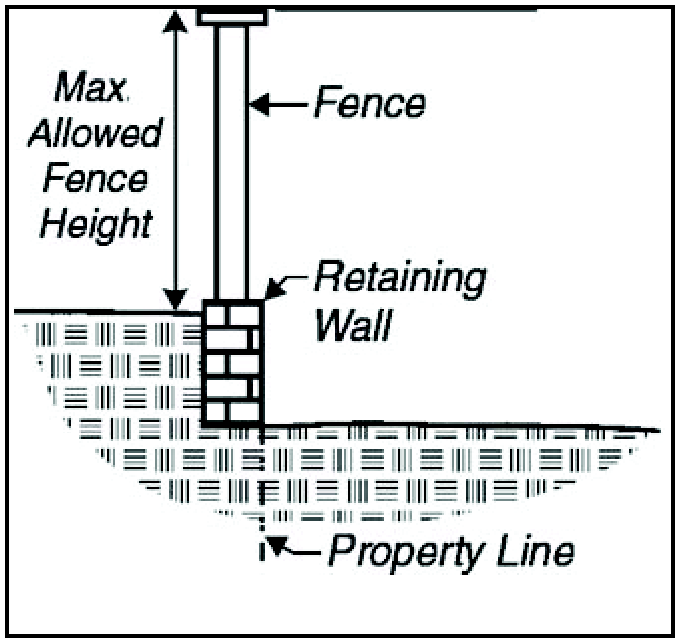
Figure 2-6 - Fence Height Measurement
E.
Swimming Pools, Spas, and Similar Features. Swimming pools/spas and other similar water features shall be fenced in compliance with the California Building Code and State law.
F.
Outdoor Equipment, Storage, and Work Areas. Screening of outdoor uses and equipment shall be provided in compliance with Section 17.14.080 (Screening).
G.
Temporary Fencing. Temporary fencing may be necessary during site preparation and construction. Temporary fencing for these purposes shall be subject to approval by the director.
(Ord. No. 1869, § 2, 2-20-2013; Ord. No. 2022, § 1, 1-17-2024; Ord. No. 2030, § 1, 3-19-2025)
17.16.010 - Purpose of design guidelines.
The design guidelines in this article are intended as a guide to assist property owners and project designers in understanding the city's goals for attaining high quality development that is sensitive to the city's unique character. The guidelines will be used by staff and the site plan and architectural review committee (SPARC) during the design review process, and by the commission in the review of land use permit applications.
(Ord. No. 1869, § 2, 2-20-2013)
17.16.020 - Applicability.
A.
The design guidelines in this article apply to all development within the city. The design elements of each project (including site design, architecture, landscaping, signs, parking design) will be reviewed on a comprehensive basis.
B.
The review authority may interpret these design guidelines with some flexibility in their application to specific projects, as not all design criteria may be workable or appropriate for each project. In some circumstances, one guideline may be relaxed to facilitate compliance with another guideline determined by the review authority to be more important in the particular case. The overall objective is to ensure that the intent and spirit of the design guidelines are followed.
(Ord. No. 1869, § 2, 2-20-2013)
17.16.030 - General design guidelines.
This section provides general design guidelines and principles that are applicable to all development within the city.
A.
Consider Adjacent Development. Each development proposal should demonstrate consideration for the context of the proposed project on and off the site including the following:
1.
Land uses and site organization of neighboring properties;
2.
The architectural style and building forms of neighboring structures;
3.
Existing natural features (i.e., mature trees, etc.);
4.
Privacy on the site and neighboring properties; and
5.
Links to adjacent development using sidewalks and shared access drives and parking.
B.
Landscaping.
1.
Landscaped areas should be planned as an integral part of the overall project and not simply located in "left over" areas of the site.
2.
Landscaping should be used to help define outdoor spaces, soften a structure's appearance, and to screen parking, loading, storage, and equipment areas.
3.
The use of on-site pedestrian amenities (e.g., benches, shelters, drinking fountains, lighting, and trash receptacles) is encouraged. These elements should be provided in conjunction with on-site open spaces and be integrated into the site plan as primary features.
C.
Exterior Lighting. Exterior lighting should be designed to be compatible with the architectural and landscape design of the project.
1.
An appropriate hierarchy of lighting fixtures/structures and intensity should be considered when designing the lighting for the various elements of a project (i.e., building and site entrances, walkways, parking areas, or other areas of the site).
2.
The use of exterior lighting to accent a building's architecture is encouraged. All lighting fixtures should be properly shielded to eliminate light and glare from impacting adjacent properties, and passing vehicles or pedestrians. If neon tubing is used to illuminate portions of a building it should be concealed from view through the use of parapets, cornices or ledges. Small portions of exposed neon tubing may be used to add a special effect to a building's architecture but this must be well thought out and integrated into the overall design of the project.
3.
To achieve the desired lighting level for parking and pedestrian areas, the use of more short, low intensity fixtures is encouraged over the use of a few tall fixtures that illuminate large areas.
D.
Screening.
1.
Screening is a technique used to protect and separate uses and site functions from one another for the purpose of decreasing adverse noise, wind, or visual impacts and to provide privacy. The need for screening should be considered early in the design process so that screening elements (e.g., walls, fences, berms, landscaping) can be effectively integrated into the overall project design and not added later as an afterthought.
2.
The method of screening should be compatible with the adjacent structure in terms of overall design, materials, and color.
3.
Where screening is required at the ground level, a combination of elements should be considered including solid masonry walls, wood fences, berms, and landscaping.
E.
Refuse, Storage, and Equipment Areas.
1.
Refuse containers, service areas, loading docks, and similar facilities should be located in areas out of view from the general public and so that their use does not interfere with on-site parking or circulation areas, and adjacent uses, especially residential uses.
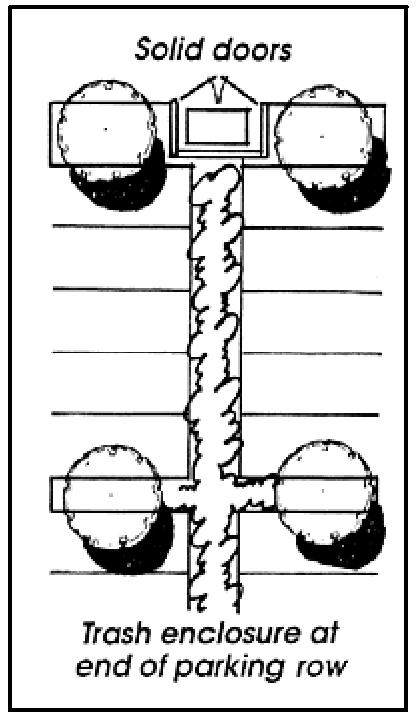
Figure 2-7 - Trash Enclosure Location
2.
Trash bins shall be fully enclosed. Enclosures should be screened with landscaping on their most visible sides. Recommended locations include inside parking courts or at the end of parking bays. Locations should be conveniently accessible for trash collection and maintenance and should not block access driveway during loading operations.
3.
Trash storage areas that are visible from the upper stories of adjacent structures should have an opaque or semi-opaque horizontal cover/screen to mitigate unsightly views. The covering structure should be compatible with the site's architectural style.
4.
All screening facilities should be of adequate size for their intended purpose without dominating the site, blocking sight distances, or creating unnecessary barriers.
F.
General Building Design Guidelines.
1.
Compatibility With Context. New buildings should be in proportion to surrounding buildings, except in those cases where current buildings are oversize. Harmony in mass, lines, and materials is important but monotony should be avoided. Buildings should be designed so that adverse impacts on adjacent buildings and properties are minimized. Loss of natural lighting, shade trees, noise pollution, and exhaust fumes and heat from venting should be addressed during project review, and all possible efforts should be made to avoid these effects.
2.
Facade Design. Building facades should be designed to provide visual interest and relief. Continuous street facades, as near the street as possible with predominantly retail uses at grade and office/professional uses above, are encouraged. Buildings should not be overpowering or monotonous. A change in the planes of walls or variety in the roof form provides diversity and visual interest.
3.
Building Materials.
a.
Artificial or decorative facade treatments, where one or more unrelated materials appear to be simply applied to the surface of a building rather than an integral part of its design, should be avoided. Materials should be used honestly. Artificial products that attempt to imitate real materials (for example, wood, stone, brick, etc.) are discouraged.
b.
The composition of materials should avoid creating the impression of thinness and artificiality. Veneers should turn corners, avoiding exposed edges.
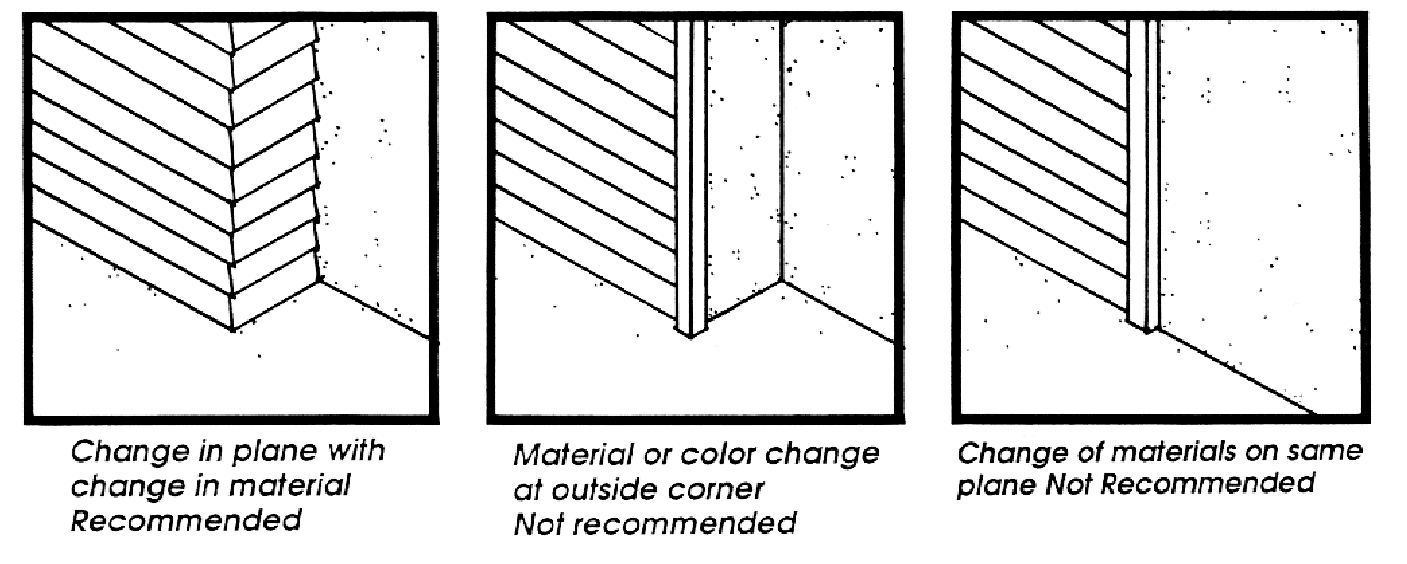
Figure 2-8 - Building Material at Wall Edges
c.
Natural building materials (e.g., wood, stone, and brick) that blend with the natural surroundings should be used. Other materials should be reviewed on a case-by-case basis. Buildings should minimize the use of large expanses of reflective glazing, aluminum panels, and other materials not normally found in Lodi. Synthetic materials that attempt to simulate the textures or patterns of other materials (e.g., vinyl siding that attempts to simulate the pattern of woodgrain) should not be used.
4.
Colors.
a.
Colors should be compatible with the existing colors of the surrounding area but need not duplicate existing colors. The use of muted tones for the structure's base color is recommended. Color should not be used as an attention getting device.
b.
Accent colors should be used carefully and be complementary to the base color or a variation of its hue, either weaker or stronger.
c.
The transition between base and accent colors should relate to changes in building materials or the change of building surface planes. Colors should generally not meet or change without some physical change or definition to the surface plane.
d.
In most cases, only one or two accent colors should be used in addition to the base color.
G.
Subdivisions. Subdivisions of commercial, industrial, and multi-family residential properties should be designed to allow coordinated development of the parcels, facilitate shared parking and common driveways, reduce encroachments onto public and private streets, and promote pedestrian activity.
(Ord. No. 1869, § 2, 2-20-2013)
17.18.010 - Purpose of chapter.
This chapter lists the uses of land that may be allowed within the residential zoning districts established by Section 17.10.020 (Zoning Districts Established). It also determines the type of land use permit/approval required for each use, and provides general standards for site development.
(Ord. No. 1869, § 2, 2-20-2013)
17.18.020 - Purposes of residential zoning districts.
The residential zoning districts are intended to provide for a range of housing types and densities for all economic segments of the community while emphasizing high quality development and home ownership (general plan, housing element). The purposes of the individual residential zoning districts and the manner in which they are applied are as follows.
A.
RLD (Low-Density Residential) District. The RLD zoning district is intended for areas appropriate for the development of single-family detached, two-family, and three-family homes. All interior lots are restricted to single-family homes. Corner lots can have one-, two-, or three-family homes. The maximum allowable residential density is 8.0 dwelling units per acre. The RLD zoning district is consistent with the low-density residential land use designation of the general plan.
B.
RMD (Medium-Density Residential) District. The RMD zoning district is intended for areas appropriate for a mix of housing types. Typical residential land uses include single- and multi-family dwelling units, either attached or detached. The allowable residential density ranges from 8.1 to twenty dwelling units per acre. The RMD zoning district is consistent with the medium-density residential land use designation of the general plan.
C.
RHD (High-Density Residential) District. The RHD zoning district is intended for areas appropriate for high-density multi-family dwelling units. The allowable residential density ranges from fifteen to thirty-five units per acre. The RHD zoning district is consistent with the high-density residential land use designation of the general plan.
(Ord. No. 1869, § 2, 2-20-2013; Ord. No. 1977, § 1, 5-20-2020)
17.18.030 - Residential zoning district land uses and permit requirements.
Table 2-4 identifies the uses of land allowed by this development code in each residential zoning district, and the land use permit required to establish each use, in compliance with Section 17.12.030 (Allowable Land Users and Permit Requirements).
Note: Where the last column in the tables ("Specific Use Regulations") includes a section number, the regulations in the referenced section apply to the use; however, provisions in other sections of this development code may also apply.
(Ord. No. 1869, § 2, 2-20-2013; Ord. No. 1914, § 1, 9-2-2015)
17.18.040 - Residential zoning district general development standards.
Subdivisions, new land uses and structures, and alterations to existing land uses and structures, shall be designed, constructed, and/or established in compliance with the requirements in Table 2-5, in addition to the applicable development standards (e.g., landscaping, parking and loading, etc.) in Article 3 (Site Planning and General Development Standards).
TABLE 2-5 RESIDENTIAL DISTRICT GENERAL DEVELOPMENT STANDARDS
Notes:
(1) Maximum number of dwellings allowed per gross acre in a residential development. Where a density range is shown, development may be allowed at any density within the range, provided that the project complies with all applicable development code provisions, and any applicable objectives, policies, and programs of the general plan. The actual number of units allowed is determined through the applicable subdivision or land use permit process, and there is no guarantee that the maximum density may be achieved.
(2) Corner lots only.
(3) Five feet for porch.
(Ord. No. 1869, § 2, 2-20-2013)
17.18.050 - Residential design guidelines.
A.
Purpose of Chapter. The design character of Lodi's residential neighborhoods is as diverse as the different time periods during which they were developed. The guidelines provided here are intended to assist project designers and property owners in understanding and implementing the city's goals for attaining high quality residential development. They are also intended to help preserve the traditional character of the city's older neighborhoods.
These guidelines are intended to encourage well designed residential neighborhoods that people enjoy living in, which: reduce the visual dominance of the automobile; promote pedestrian activity; create variety and interest in the appearance of residential streets; provide community open space; and protect significant features of the natural environment.
B.
Applicability. These guidelines apply to the design of new residential subdivisions and to multi-family and clustered residential projects. Guidelines are also provided for vacant infill parcels and single-family homes that are proposed as replacement structures within established neighborhoods. See also Section 17.16.020 (Applicability).
C.
Subdivision Design and General Residential Project Principles. The following guidelines apply to new residential subdivisions, and address how new residential subdivisions should relate to their surroundings:
1.
Develop "Neighborhoods." Each new residential project should be designed to integrate with the surrounding neighborhood to ensure that it maintains the established character. Subdivisions in city expansion areas should be designed so that individual, separately developed projects work together to create distinct neighborhoods, instead of disjointed or isolated enclaves.
2.
Integrate Open Space. New subdivisions adjacent to planned or existing parks or other public open spaces (e.g., creeks, riparian areas), or the landscaped grounds of schools or other public facilities should maximize visibility and pedestrian access to these areas. Where these facilities are not already planned, the subdivision should be designed to provide usable public open spaces in the form of parks, linear bicycle and pedestrian trails, squares, and greens, as appropriate.
3.
Edges. "Gated communities," and other residential developments designed to appear as continuous walled-off areas, disconnected and isolated from the rest of the community, are strongly discouraged. While walls and fences may be useful for security, sound attenuation and privacy, these objectives can often be met by creative design that controls the height and length of walls, develops breaks and variations in relief, and uses landscaping for screening.
4.
Scale. New residential subdivisions, and groups of subdivisions that, in effect, collectively create a new neighborhood, should be designed to provide a "walkable" scale, that places all homes within one-quarter mile of neighborhood shopping opportunities, a neighborhood park, or a public facility that can serve as a "center" for the neighborhood. Ideally, each neighborhood should have a center that includes all three facilities.
5.
Site planning. Residential subdivision and multi-family project site planning should emphasize the needs of pedestrians and cyclists rather than cars
a.
Street Layout. New public streets and sidewalks should be aligned with, and be connected to those of adjacent developments to interconnect the community.
i.
Pedestrian orientation. Subdivision design should emphasize pedestrian connectivity within each project, to adjacent neighborhoods, nearby schools and parks, and to transit stops within one-quarter-mile of planned residential areas. All streets and walkways should be designed to provide safe and pleasant conditions for pedestrians, including the disabled, and cyclists.
ii.
Block Length. The length of block faces between intersecting streets should be as short as possible, ideally no more than four hundred feet, to provide pedestrian connectivity.
iii.
Street Width and Design Speed. Streets within neighborhoods should be no wider than needed to accommodate parking and two low-speed travel lanes. Streets in new subdivisions should be designed to accommodate traffic speeds of twenty-five miles per hour or less, with most streets in a subdivision designed for lower speeds.
iv.
Parkway/Planting Strips. Sidewalks should be separated from curbs by parkway strips of at least five feet in width. The parkways should be planted with canopy trees at a twenty-foot interval, or as appropriate to the species of the selected street tree, to produce a continuously shaded sidewalk. The parkways should also be planted with ground covers and other plant materials that will withstand pedestrian traffic.
v.
Access to Open Areas. Single-loaded streets (those with residential development on one side and open space on the other) should be used to provide public access to, and visibility of natural open spaces, public parks, and neighborhood schools, as well as a means for buffering homes from parks and schools.
Where single-loaded streets are not feasible or desirable, other methods that provide similar access and visibility may be used, including private streets, bike and pedestrian paths, or the placement of private common open space or recreation facilities adjacent to the public open space.
vi.
Cul-de-sac Streets. The use of cul-de-sac streets should be avoided wherever possible. If cul-de-sacs are necessary, the end of each cul-de-sac should provide a pedestrian walkway and bikeway between private parcels to link with an adjacent cul-de-sac, street, and/or park, school, or open space area.
vii.
Alleys. Alleys may be provided for garage access, otherwise individual lots should be wide enough to accommodate a side yard driveway to a detached garage at the rear of the lot, so that appearance of the street frontage is not dominated by garages and pavement.
b.
Open Space and Natural Features. Providing open space and integrating natural features into a residential project can significantly increase the appreciation of residents in their neighborhoods, provide safe places for children and families to play, and maintain a strong sense of connection with the surrounding natural environment in the city as a whole.
i.
Natural amenities (such as views, mature trees, creeks, riparian corridors, and similar features) should be preserved and incorporated into proposed development to the greatest extent feasible.
ii.
Development adjacent to parks or other public open spaces should be designed to provide maximum visibility of these areas.
6.
Exterior Finish Materials. Exterior finish materials should be durable and require low maintenance. The use of combined materials (such as stucco and wood siding) can provide visual interest and texture; however, all sides of each single-family dwelling or multi-family structure should employ the same materials, design details, and window treatment. Each residential structure should have a carefully designed and detailed facade facing the street, and should not use bland, featureless stucco or other simple materials on the other exterior building walls. Each residential structure should look like the same building from all sides.
7.
Windows. Where one or more windows are proposed ten feet or less from a side lot line, or within ten feet of another dwelling, the windows should be located and/or screened to provide privacy for the residents of both structures. In some cases, glass block or translucent glass may be appropriate to provide light, but also provide privacy between buildings.
8.
Garages and Carports. Accommodating vehicle storage in both single-family dwellings and multi-family projects should avoid the common problem of creating streets that appear garage- and driveway-dominated.
a.
In the limited instances where an exception is granted for a setback to a garage of less than twenty feet from a property line or internal driveway, the garage shall be equipped with a roll-up door. This requirement is intended to discourage vehicles from parking in front of garages and blocking the adjacent driveway or sidewalk.
b.
Where carports are provided, they may be bordered by patio walls, or used to define public and private open space, but should not be located adjacent to perimeter streets. Each carport end should be screened by a low wall, berm, and/or landscaping.
c.
Where multiple garages are located together, landscaped tree wells should be placed between every two garage doors. Each tree well should be a minimum of twenty-five square feet.
d.
Carports and detached garages should be designed as an integral part of a project. Their materials, color, and details should be the same as the principal structures. Carports may have flat roofs but should not project above the exterior walls of any buildings adjacent to streets. Prefabricated metal or canvas tent-like carports are not acceptable. Where garages are utilized, doors should appear set into walls rather than flush with the exterior wall.
e.
The use of quality materials, windows, and features with horizontal and vertical relief are encouraged to add interest and character to the design of garage doors and to coordinate their design with the architecture of the primary residence.
D.
Infill Development. The following guidelines apply to "infill development." That is, multi-family structures or individual houses that entirely replace existing units or are constructed on vacant parcels between existing units. The guidelines are intended to provide for infill projects of high architectural quality that are compatible with existing development. They are also intended to promote the conservation and reuse of existing older houses, and to preserve the historical character of the city's older neighborhoods. Preservation and rehabilitation efforts in the older neighborhoods should protect the architectural features of a home that identify its individual style and contribute to the character of the area:
1.
General Principles. Infill residential development should:
a.
Be compatible in scale, siting, detailing, and overall character with adjacent buildings and those in the immediate neighborhood. This is crucial when a new or remodeled house is proposed to be larger than others in the neighborhood. When new homes are developed adjacent to older ones, the height and bulk of the new construction can have a negative impact on adjacent, smaller scale buildings.
b.
Continue existing neighborhood patterns. For example, patterns such as front porches and entries facing the street, finished floor height, and garages located at the rear of lots.
2.
Building Design. An infill residential structure should incorporate the traditional architectural characteristics of existing houses in the neighborhood, including window and door spacing, exterior materials, roof style and pitch, ornamentation and other details.
3.
Visual Impacts from Building Height. The height of infill projects should be consistent with surrounding residential structures. Where greater height is desired, an infill structure should set back upper floors from the edge of the first story to reduce impacts on adjacent smaller homes, and to protect solar access. See Figure 2-9.
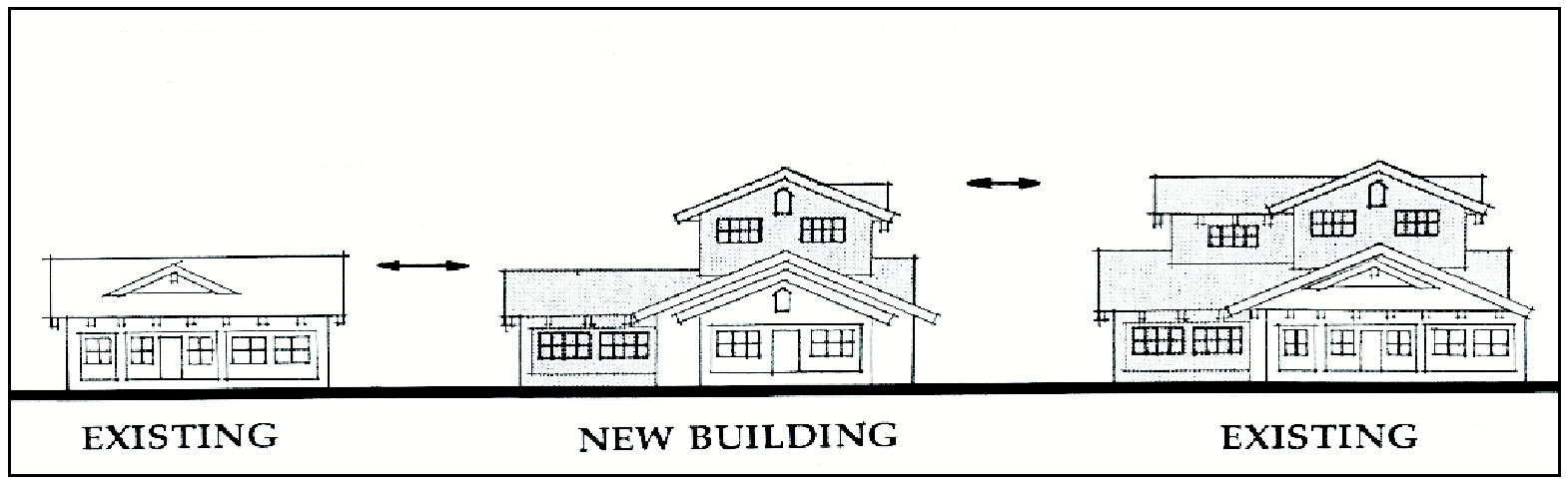
Figure 2-9 - Appropriate Infill Building Massing
4.
Outdoor Living Areas. The use of balconies, verandas, porches, and courtyards within the building form of infill structures is strongly encouraged.
5.
Exterior Finish Materials. The thoughtful selection of building materials can enhance desired neighborhood qualities such as compatibility, continuity, and harmony. The design of infill residential structures should incorporate an appropriate mixture of the predominant materials found in the neighborhood. Common materials in Lodi are smooth, troweled, or sand-finished stucco, wood, horizontal clapboard siding, brick, and stone.
6.
Exterior Colors. Color schemes for infill residential structures should consider the colors of existing houses in the neighborhood, to maintain compatibility.
E.
Single-Family Housing Design (Including Additions/Renovations).
1.
Houses in New Subdivisions. The site planning of lots and the design of houses constructed in new subdivisions should help create neighborhoods that are oriented more toward pedestrians than automobiles. Subdivisions of new homes should comply with the following guidelines:
a.
Subdivisions should provide variety in the architectural detailing, size, and massing of houses on each block.
b.
Houses should be located no further from the street than the minimum setback allowed by the applicable zoning district, except to provide variations in the alignment of houses along a block.
c.
All houses should have their primary entrance facing and clearly visible from the street, with a front porch or verandah encouraged to provide a transition between the public space of the streetscape and the indoor private space of the house.
d.
When viewed from the street, a garage should be visually subordinate to the living space within the house that addresses the street. Ideally, a garage should be detached from the house, located at the rear of the lot, and accessed by an alley, or a shared driveway from the street fronting the lot. Where this arrangement is not appropriate, the front of an attached garage should be set back from the front of the house (at least fifteen feet is recommended where the lot area permits).
2.
Infill Development. New single-family homes proposed on infill lots should comply with the guidelines for infill residential development in Section 17.18.050(D) (Infill Development).
3.
Additions and Alterations in Older Neighborhoods. The following guidelines apply to additions and the rehabilitation, remodeling, or alteration of existing single-family houses in Lodi's older neighborhoods. While these guidelines apply to all houses, those that are designated as cultural resources may be subject to more strict standards.
a.
Additions. Additions to residential structures built before 1950 should respect the architectural style, detailing, scale, and composition of the original building so that they look integrated with the original structure, rather than a tacked-on afterthought. Modifications (e.g., additions, seismic strengthening, replacement of windows or siding material, and new entrances) should not compromise the integrity of historically authentic features, materials, or finishes. Additions should also be designed with consideration for the design and massing of adjacent residences, to promote neighborhood compatibility. See Figure 2-10.
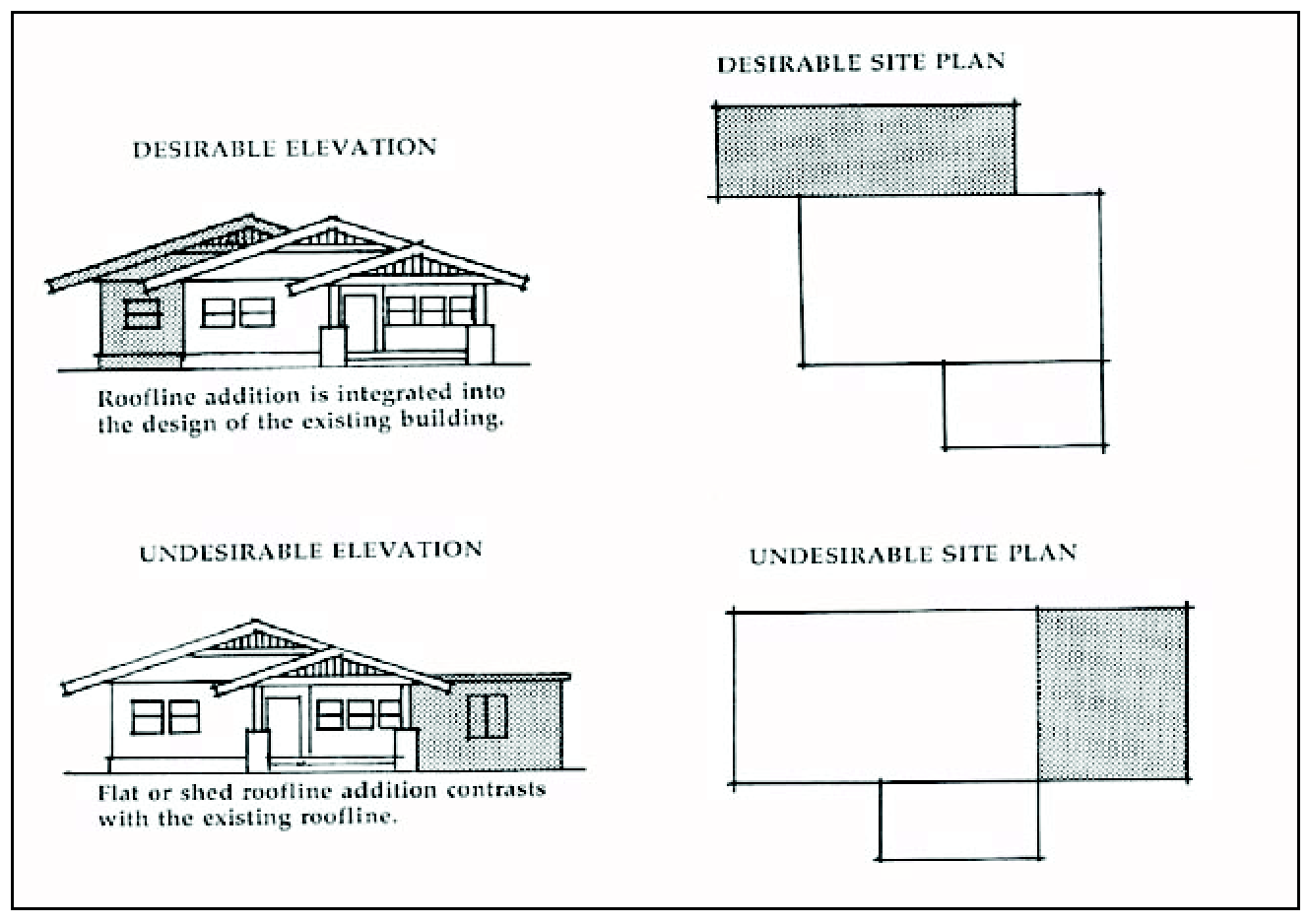
Figure 2-10 - Additions to Existing Homes
i.
Roof Changes. The roof features of a residential structure, especially its style, materials and pitch, are important architectural elements that must be considered when planning an addition. The roof style, pitch and materials on the addition should match the original.
ii.
Additional Floors. Adding a story to an existing house will change the building proportions and should be carefully designed to follow similar multi-story examples of the particular architectural style found in the neighborhood. In some cases, integrating the new story addition may require that it be set back or "stepped" back from the front facade so that it is less noticeable from the street.
b.
Alterations—Restoration and Remodeling. The rehabilitation of older buildings should aim to retain and restore their original elements. If damage or deterioration is too severe, the element should be recreated using original materials to match the design, color, texture and any other important design features. See Figure 2-11.
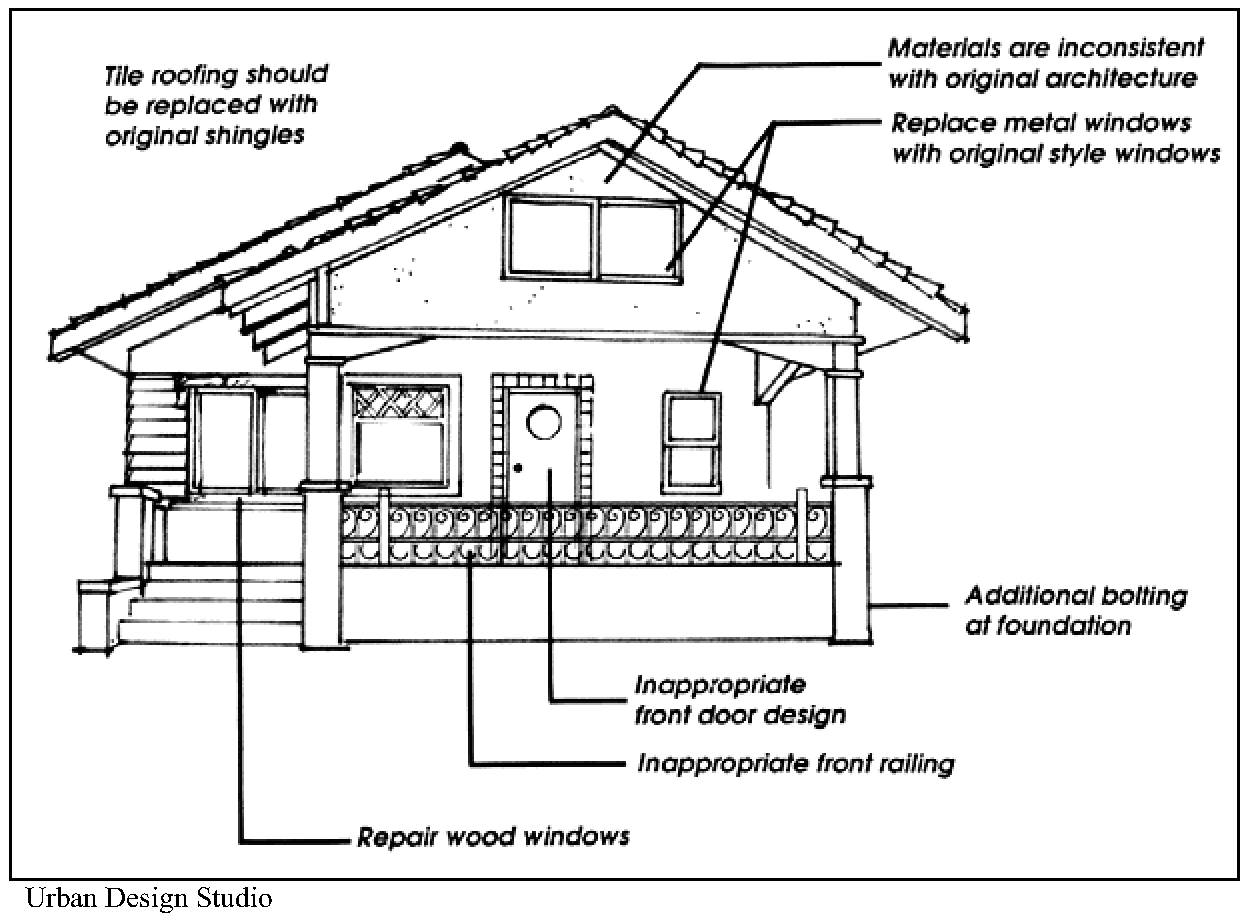
Figure 2-11 - Remodeling Features
When replacement is necessary and materials similar to or consistent with original materials cannot be obtained, substitute materials should incorporate design, colors and textures that convey the traditional appearance of the original material.
c.
Exterior Materials. Original exterior building materials should be retained whenever possible. Mismatched materials of different sizes, shapes, textures, or finishes should be avoided.
i.
Wood Siding. Residential buildings with original wood clapboard siding should not be stuccoed in an attempt to "modernize" their appearance.
ii.
Brick Surfaces. Brick surfaces should not be sandblasted to remove old paint, nor should they be covered with stucco or other siding materials. Sandblasting will damage the natural fired surface of the brick and cause it to lose its water repellent qualities. Paint should be removed by chemical stripping. Brick that was not intended to be painted as part of a building's original design should not be painted over.
d.
Windows. Most older residential structures have wood-framed windows that are either fixed, double hung, or casement. Window replacements or additions should also use the original type of window. It is strongly recommended that aluminum frame windows not be used as replacements in any residential structure unless they were part of the original design. See Figure 2-12.
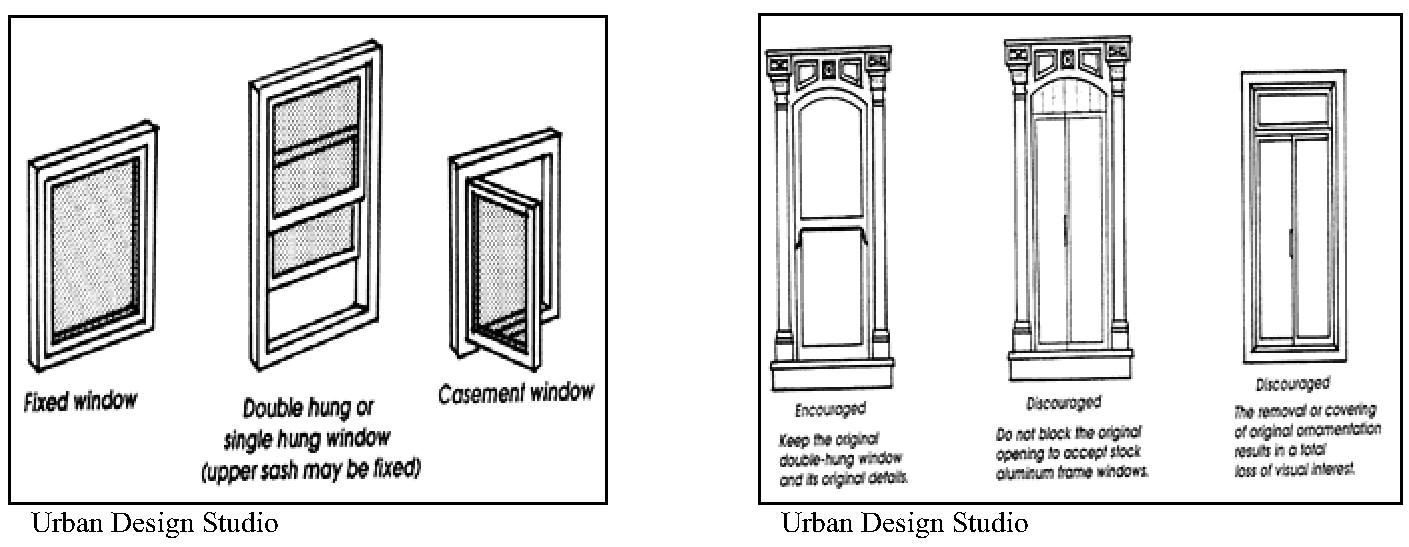
Figure 2-12 - Window Types and Treatments
e.
Doors. Many of Lodi's older homes have solid wood doors consistent with the particular architectural style of the building. The front door is typically the most ornate, with secondary doors usually more utilitarian in appearance. The size, shape and style of doors is an important feature of all historical architectural styles, and the original type and design should continue to be used. See Figure 2-13.
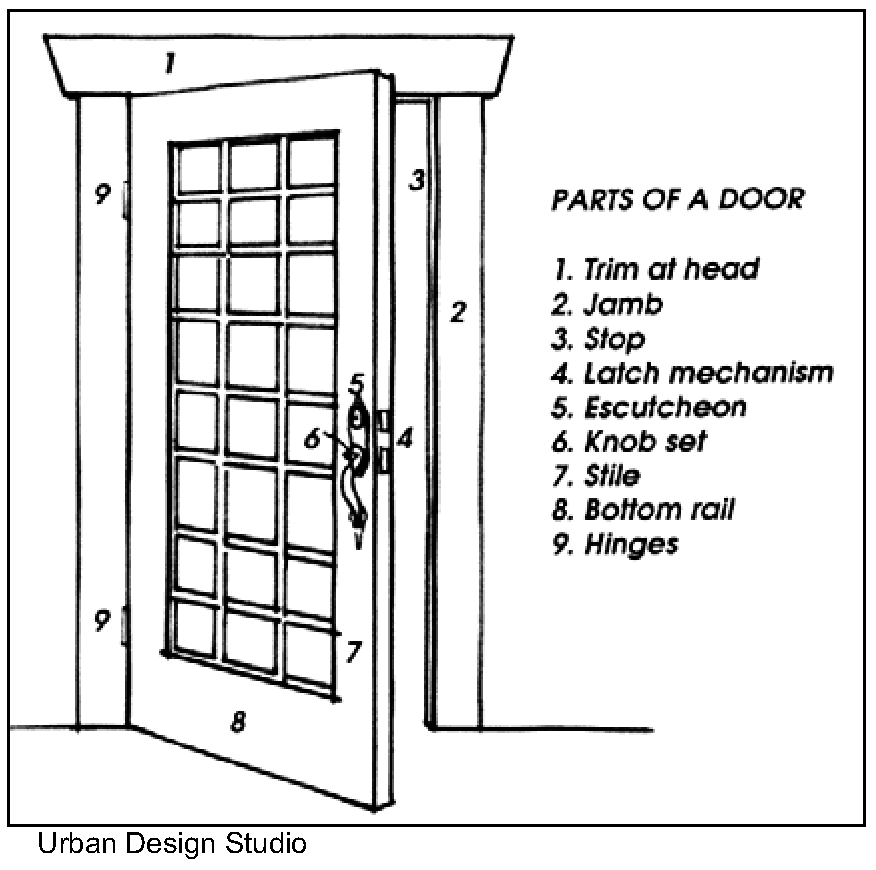
Figure 2-13 - Door Features
If the original door is missing, an appropriate design should be selected through the study of the doors of similar residential structures in the neighborhood, or by consulting books on architectural styles. Some older-style panel doors can be obtained from material suppliers, and may closely match original doors.
f.
Porches and Stairs. During rehabilitation efforts, the design integrity of the front porch should be maintained. The installation of wrought iron or aluminum railings should be avoided, as a change in the structural or decorative elements of the front porch will usually compromise the architectural integrity of the entire building. Restoring an older building's architectural integrity may require "undoing" previous porch alterations. See Figures 2-14 and 2-15.
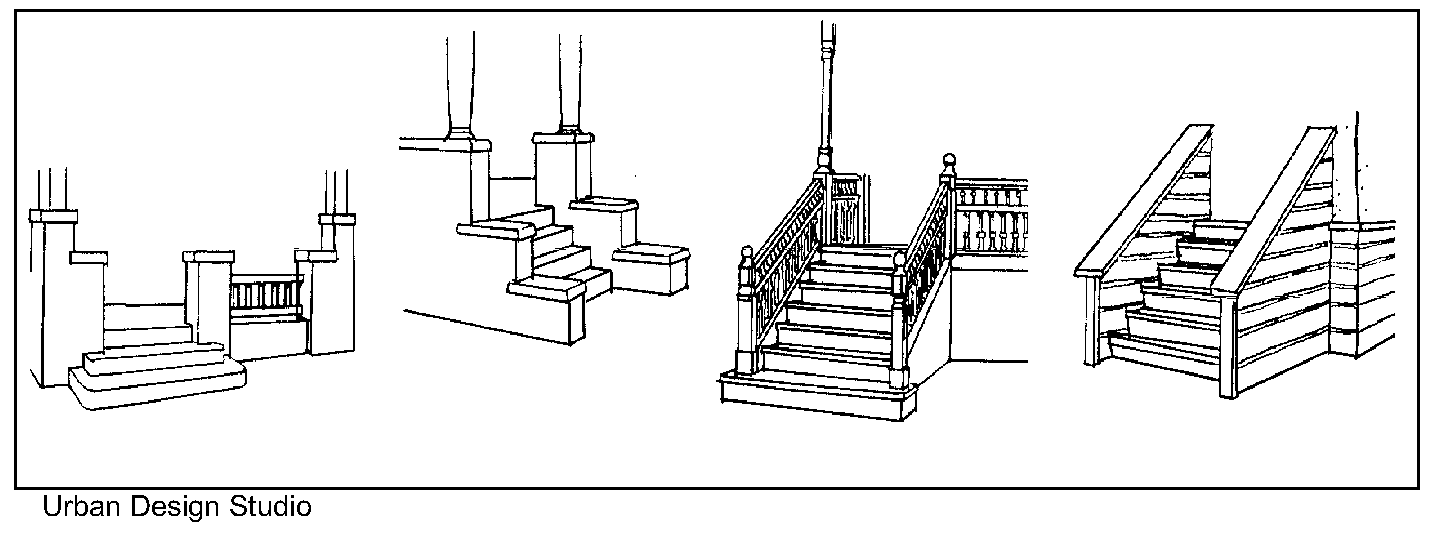
Figure 2-14 - Appropriate Porch Stairway Designs
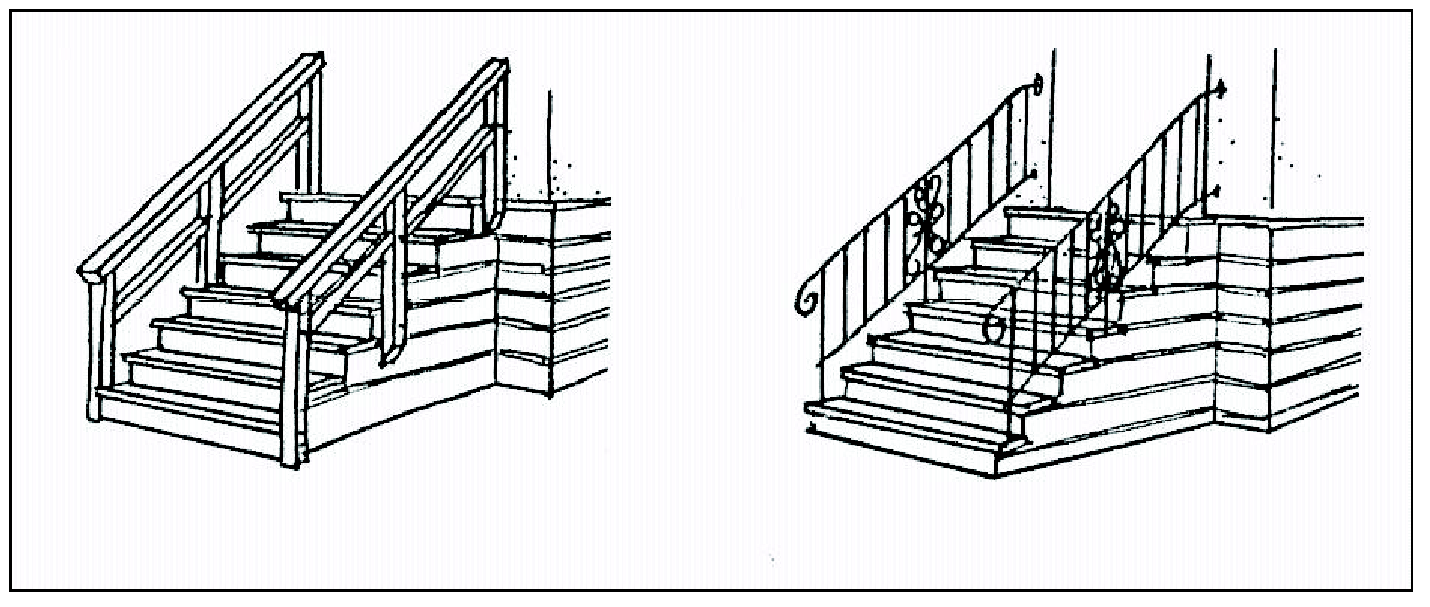
Figure 2-15 - Inappropriate Porch Stairway Designs
g.
Ornamentation and Trim. The authentic decoration and trim of a residential structure lends character and identifies the building with a particular architectural style. Care should be taken in handling these materials during renovation because they are critical components.
h.
Roofs. Care should be taken to ensure that roofing materials are compatible with the original style of the structure.
F.
Multi-Family and Clustered Housing Design. Multi-family and clustered housing projects are generally more dense than single-family developments, and tend to generate larger parking areas and provide less private open space. If not properly designed, parking can dominate a site, and open space may only be provided as "left over" areas, unrelated to other project features, not usable for outdoor activities, and that expose residents to uncomfortable noise levels. Multi-family projects surrounded by high walls, parking lots and/or rows of carports along streets are inappropriate in Lodi and should be avoided. These guidelines address higher density developments through appropriate guidelines for site planning, parking and circulation layout, building design, and landscaping.
1.
Site Planning. Site planning for a multi-family or clustered housing project should create a pleasant, comfortable, safe, and distinct place for residents, without the project "turning its back" on the surrounding neighborhood
a.
The placement of new units should consider the existing character of the surrounding residential area. New development should respect the privacy of adjacent residential uses through appropriate building orientation and structure height, so that windows do not overlook and impair the privacy of the indoor or outdoor living space of adjacent units.
b.
Multi-family units should be clustered. A project of more than ten units outside the Downtown should separate the units into structures of six or fewer units. See Figure 2-16.
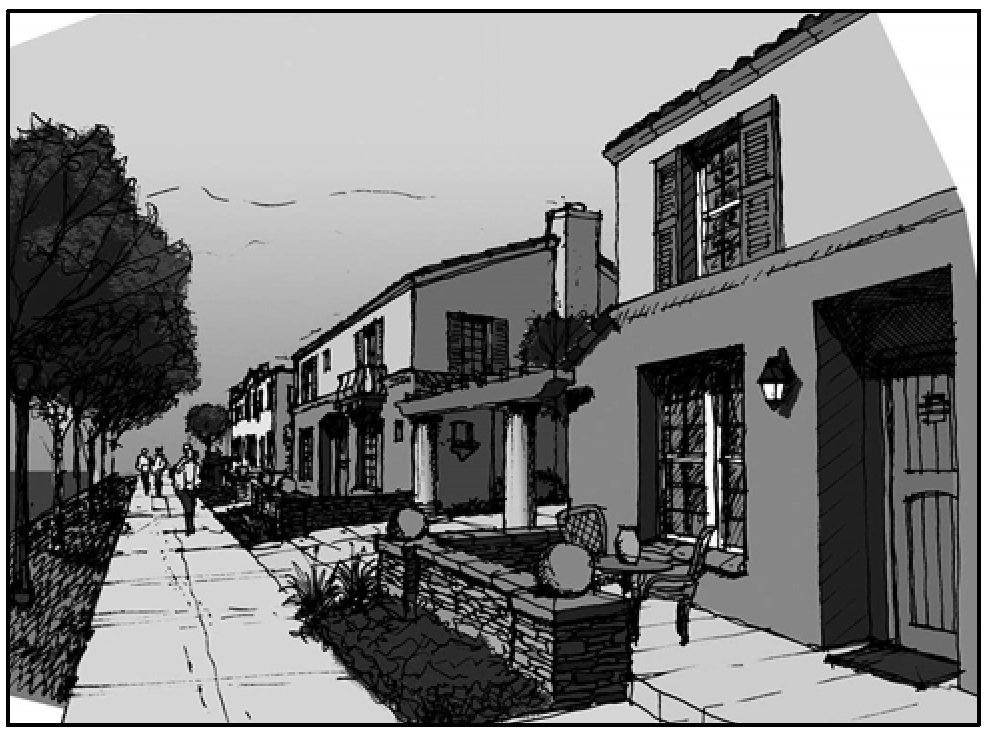
Figure 2-16 - Clustered Multi-Family Units
c.
Multi-family structures should be set back from adjacent public streets consistent with the prevailing setback pattern of the immediate neighborhood.
d.
Multi-family projects with densities less than thirty units per acre should be comprised of "walk-up" rather than "stacked" units, with each unit adjacent to a street having its primary pedestrian entrance from the street sidewalk. Higher density projects should be designed either with ground floor units having individual sidewalk entrances, or as courtyard projects with at least one significant pedestrian entrance from the street sidewalk. Where individual units have access to the street sidewalk, private "front yard" outdoor space may be differentiated from the public right-of-way by a porch, or small yard enclosed by a low fence. See Figures 2-17 and 2-18.
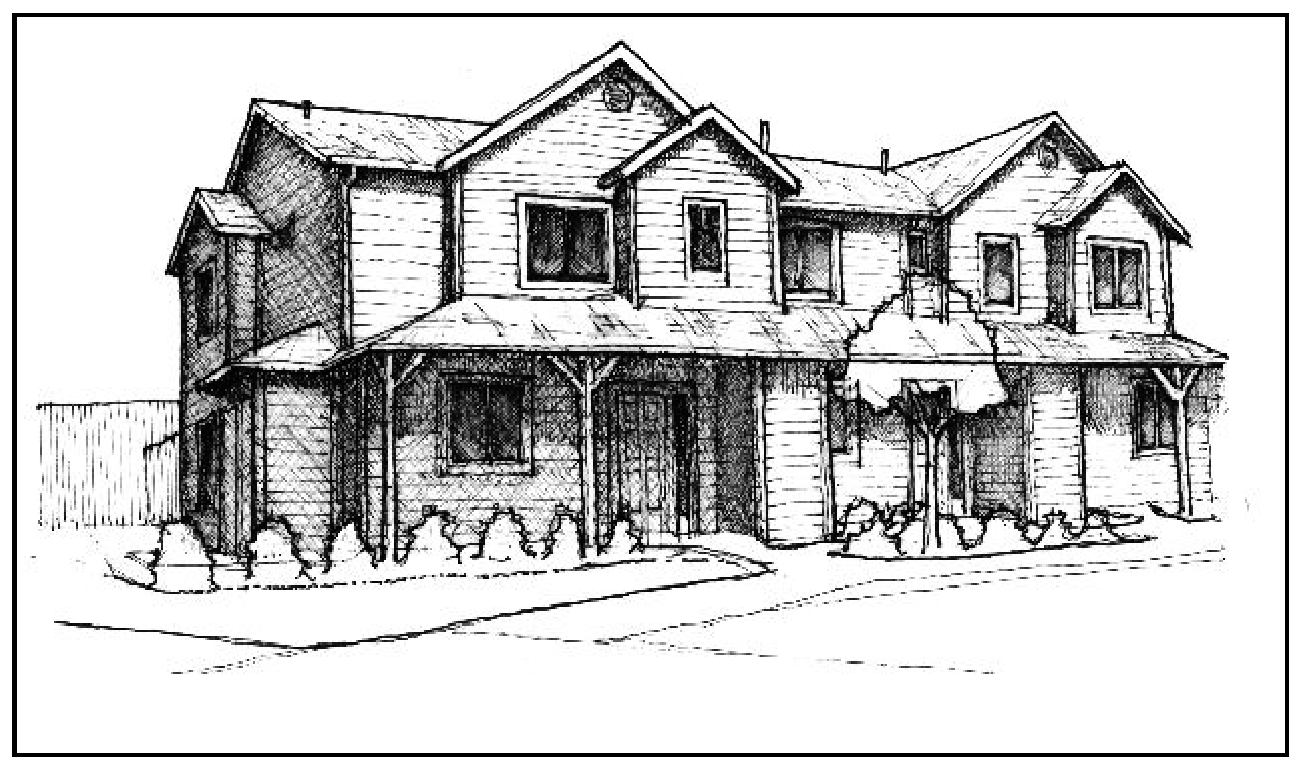
Figure 2-17 - Most Ground Floor Units Should Have Entrances Facing the Street
e.
Residential units and activity areas not adjacent to a street should be accessible via pedestrian walkways and bikeways separate from vehicle parking areas and driveways. See Figure 2-18.
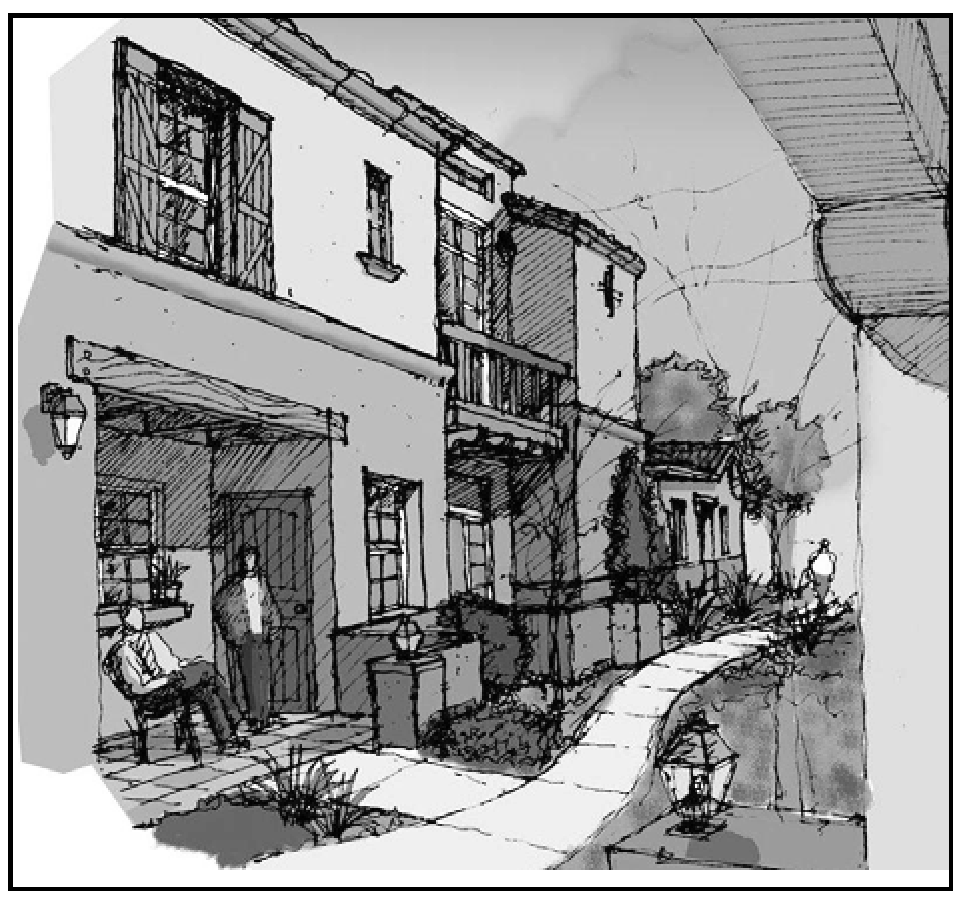
Figure 2-18 - Walkways Separate From Vehicle Access
2.
Parking and Driveways. Individual closeable garages are the preferred method for providing parking for residents in multi-family projects. If garages within the residential structures are not provided, dispersed parking courts are acceptable.
a.
Long, monotonous parking drives and large, undivided parking lots are discouraged.
b.
The main vehicle access into a multi-family site should be through an attractive entry drive. Colored and textured paving treatment is encouraged outside of the public street right-of-way, and within the project.
c.
Parking areas should be visible from the residential units to the extent possible.
d.
Safe and protected bicycle parking should be located convenient to each dwelling unit.
e.
Parking courts, with or without carports, should not consist of more than two double-loaded parking aisles (bays) adjacent to each other. The length of a parking court should not exceed the width of eight adjoining stalls.
f.
Parking courts should be separated from each other by buildings within the project or by landscape or natural open space areas at least thirty feet wide.
g.
Large scale multi-family projects (i.e., more than twenty units) with internal streets should have the streets designed as if they were pleasant public streets, with comprehensive streetscapes including sidewalks, and planting strips between curb and sidewalk with canopy trees.
h.
Private storage cabinets shall be provided in all car ports.
3.
Multi-Family Project Architecture. The exterior design of multi-family projects should be derived from architectural styles in the surrounding neighborhood. Often, these types of projects are adjacent to single family neighborhoods, and care in design should ensure that the height and bulk of the higher density projects do not impact adjacent lower density residential areas.
a.
Facade and Roof Articulation. A structure with three or more attached units should incorporate significant wall and roof articulation to reduce apparent scale. Changes in wall planes and roof heights, and the inclusion of elements such as balconies, porches, arcades, dormers, and cross gables can avoid the barracks-like quality of long flat walls and roofs. Secondary hipped or gabled roofs covering the entire mass of a building are preferable to mansard roofs or segments of pitched roof applied at the structure's edge. Structures (including garages and carports) exceeding one hundred fifty feet in length are discouraged. See Figures 2-17 and 2-19.
b.
Scale. Because multi-family projects are usually taller than one story, their bulk can impose on surrounding uses. The larger scale of these projects should be considered within the context of their surroundings. Structures with greater height may require additional setbacks at the ground floor level and/or upper levels (stepped-down) along the street frontage so they do not shade adjacent properties or visually dominate the neighborhood. Large projects should be broken up into groups of structures, and large single structures should be avoided. See Figure 2-19.
c.
Balconies, Porches, and Patios. The use of balconies, porches, and patios as part of multi-family structures is encouraged for both practical and aesthetic value. These elements should be used to break up large wall masses, offset floor setbacks, and add human scale to structures. Multi-family units with individual access to the street sidewalk should have individual covered porches. See Figure 2-19.
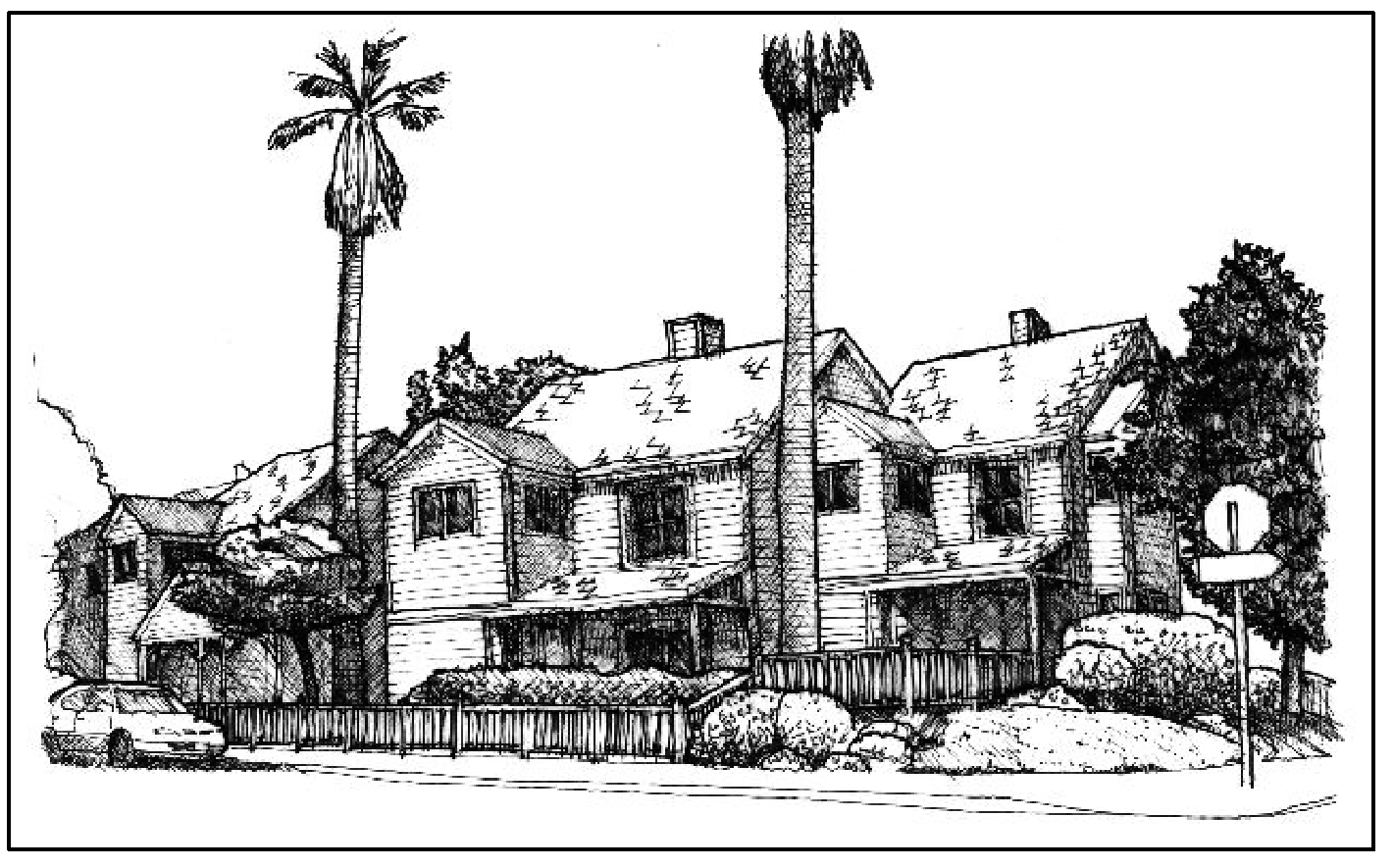
Figure 2-19
d.
Dwelling Unit Access. The use of balconies and corridors to provide access to five or more units should be avoided. Access points to units should instead be clustered in groups of four or less. To the extent possible, main entrances to individual units should be from adjoining streets. Distinctive architectural elements and materials should be used to highlight primary entrances.
e.
Exterior Stairways. Stairways providing access to the upper levels of multi-family structures should be located mostly within the buildings themselves. Where exterior stairways are necessary, they should provide residents and visitors protection from weather, and should be of stucco, plaster or wood, with accent trim to match the main structure. Thin-looking, open metal, prefabricated stairs that are not integrated with the design of the structure are discouraged.
f.
Accessory Structures. Accessory structures should be designed as an integral part of a project. Their materials, color, and details should be the same as the principal structures on the site.
(Ord. No. 1869, § 2, 2-20-2013)
17.20.010 - Purpose of chapter.
This chapter lists the uses of land that may be allowed within the commercial zoning districts established by Section 17.10.020 (Zoning Districts Established), determines the type of land use permit/approval required for each use, and provides basic standards for site development.
(Ord. No. 1869, § 2, 2-20-2013)
17.20.020 - Purposes of commercial zoning districts.
The commercial zoning districts are intended to provide for a range of local-serving and regional-serving commercial uses, emphasizing high quality development, and to encourage revitalization of existing commercial land uses. The purpose of the individual commercial zoning districts and the manner in which they are applied are as follows:
A.
CC (Community Commercial) District. The CC zoning district is applied to areas suitable for a full range of retail, wholesale, and service uses including retail stores, apparel stores, specialty shops, shopping centers and home furnishings. The maximum floor area ratio (FAR) is 0.4. The CC zoning district is consistent with the neighborhood/community commercial land use designation of the general plan.
B.
GC (General Commercial) District. The GC zoning district is applied to areas appropriate for a range of community serving commercial, regional retail, and service land uses. The FAR is 0.6. The GC zoning district is consistent with the general commercial land use designation of the general plan.
C.
O (Office). The O zoning district is applied to areas appropriate for administrative, financial, business, professional, and medical offices. Support commercial uses are also permitted, subject to limitations. The maximum FAR is 0.6. The O zoning district is consistent with the office land use designation of the general plan.
(Ord. No. 1869, § 2, 2-20-2013)
17.20.030 - Commercial zoning district land uses and permit requirements.
Table 2-6 identifies the uses of land allowed by this Development Code in the commercial zoning districts, and the land use permit required to establish each use, in compliance with Section 17.12.030 (Allowable Land Uses and Permit Requirements).
Note: Where the last column in the tables ("specific use regulations") includes a section number, the regulations in the referenced section apply to the use; however, provisions in other sections of this development code may also apply.
(Ord. No. 1869, § 2, 2-20-2013; ord. No. 1977, § 2, 5-20-2020; Ord. No. 2022, § 2, 1-17-2024; Ord. No. 2030, § 2, 3-19-2025)
17.20.040 - Commercial district general development standards.
Subdivisions, new land uses and structures, and alterations to existing land uses and structures, shall be designed, constructed, and/or established in compliance with the requirements in Table 2-7, in addition to the applicable development standards (e.g., landscaping, parking and loading, etc.) in Article 3, (Site Planning and General Development Standards).
Notes:
(1) No setback is required unless adjacent to a residential use or zone where the setback shall be ten feet.
(Ord. No. 1869, § 2, 2-20-2013; Ord. No. 1977, § 3, 5-20-2020)
17.20.050 - Commercial design guidelines.
A.
Purpose. The commercial design guidelines in this chapter are intended to assist in preserving and rehabilitating the commercial areas of Lodi. The guidelines are also intended to provide for infill commercial development of high architectural quality that is compatible with existing architecturally superior development, to promote the conservation and reuse of existing buildings of high quality design. While these guidelines are primarily oriented toward the downtown area, they are also designed to enhance and preserve the small town character of the city's other commercial areas.
B.
Applicability. See Section 17.16.020 (Applicability of Design Guidelines).
C.
Site Planning Outside of the Downtown.
1.
Building and Parking Location.
a.
General Placement Principles. Buildings should generally be oriented parallel to streets and placed as close to the street as required setbacks permit. Buildings may be angled to create interesting juxtapositions if there is a specific design goal to be achieved. However, definition of the street edge is an important role for buildings that should be considered in design. Exceptions may occur for wider setbacks from the street if a compatible use is proposed (for example, outdoor dining or pedestrian rest area) or to maintain continuity with landscaped areas on adjacent properties.
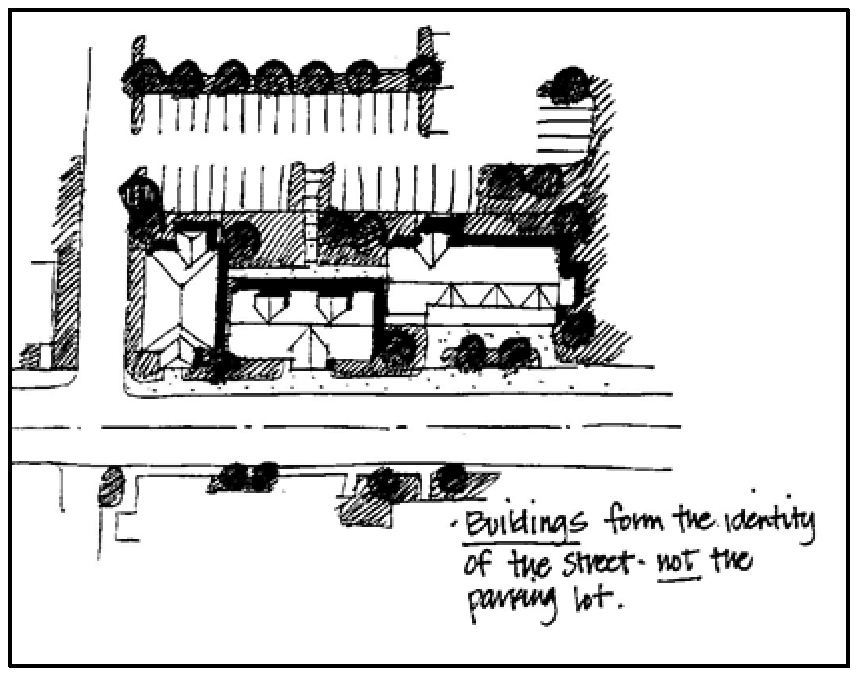
Figure 2-20 - Building Placement of Street
b.
Pedestrian Orientation. The orientation of buildings should establish and maintain pedestrian-oriented street frontages. Buildings with high pedestrian use should face, and be directly accessible from the public sidewalk.
c.
Vehicle-Oriented Areas. Buildings in areas of the city that rely more on the use of the automobile for access should be oriented to major open space and streetscape elements, and as much as possible should not be located behind parking lots located between the building and the street.
d.
Corner Buildings. Corner buildings should have a strong tie to the setback lines of each street. The primary mass of the building should not be placed at an angle to the corner. This does not preclude angled building corners or an open plaza at the corner which are strongly encouraged.
e.
Projects with Multiple Structures. Multiple buildings in a single project should create a positive functional relationship with one another and the street. The first priority for multiple-building projects is to address the street with features that provide pedestrian interest and facilitate access to the project. Second, buildings should be clustered to achieve a "village" scale. This creates opportunities for internal plazas and pedestrian areas. When clustering is impractical, a visual link should be established between buildings. This link can be accomplished through the use of an arcade system, trellis, colonnade, and through enhanced paving.
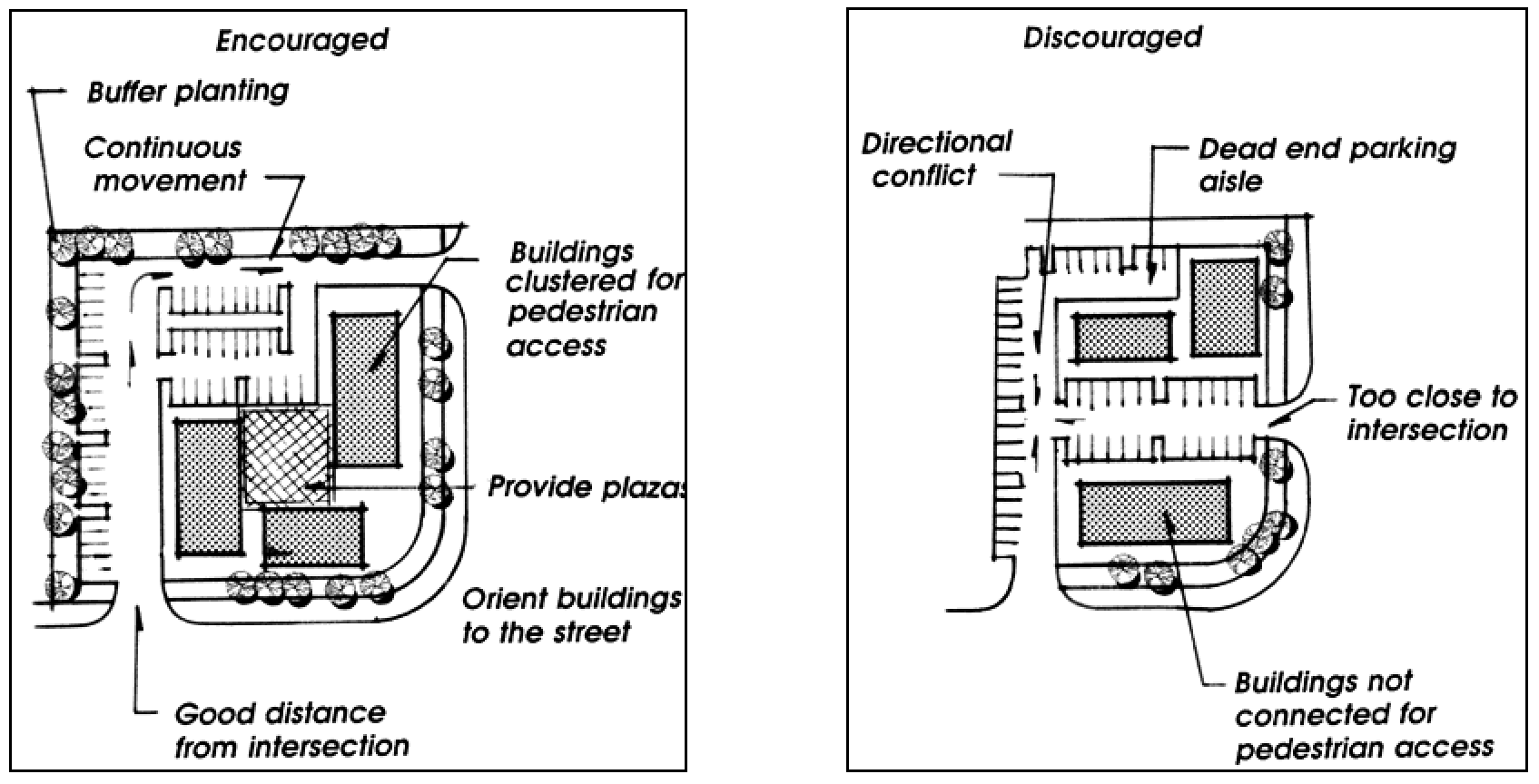
Figure 2-21 - Location of Parking and Buildings
f.
Open Space Areas. Open space areas should be accessible from the majority of structures, and should be oriented to take advantage of sun or shade as appropriate.
g.
Pedestrian Walkways. Projects should connect the on-site pedestrian circulation system to the off-site public sidewalk at intervals of at least one connection for each two hundred linear feet (or fraction thereof). Parking areas should be connected to building entrances by means of enhanced paving (patterned or stamped).
2.
Building Orientation. The organization and orientation of commercial buildings and spaces is crucial in creating streets that are welcoming and friendly to pedestrians. Active public spaces and city streets that are heavily used by pedestrians contribute to the character and economic vitality of the city. High levels of pedestrian activity — shopping, eating, "people watching," exercising, strolling, relaxing, walking from place to place — are valued and encouraged throughout the city's commercial areas. These activities create interest, provide a sense of safety on the street, and add to community image and identity. The following guidelines provide a framework for site organization and orientation of commercial land uses.
a.
Street Orientation.
i.
Building facades, including storefronts, should be designed to orient to the major street frontage, with the primary building entry also oriented toward the major street.
ii.
Buildings on corners should include storefront design features for at least fifty percent of the wall area on the side street elevation.
iii.
Long, blank, unarticulated street wall facades are strongly discouraged unless unavoidable because of specific site circumstances. Monolithic street wall facades should be "broken" by vertical and horizontal articulation, characterized by:
(A)
Sculpted, carved or penetrated wall surfaces defined by recesses and reveals);
(B)
Breaks (reveals, recesses);
(C)
Window and door openings; or
(D)
Balconies, awnings and canopies.
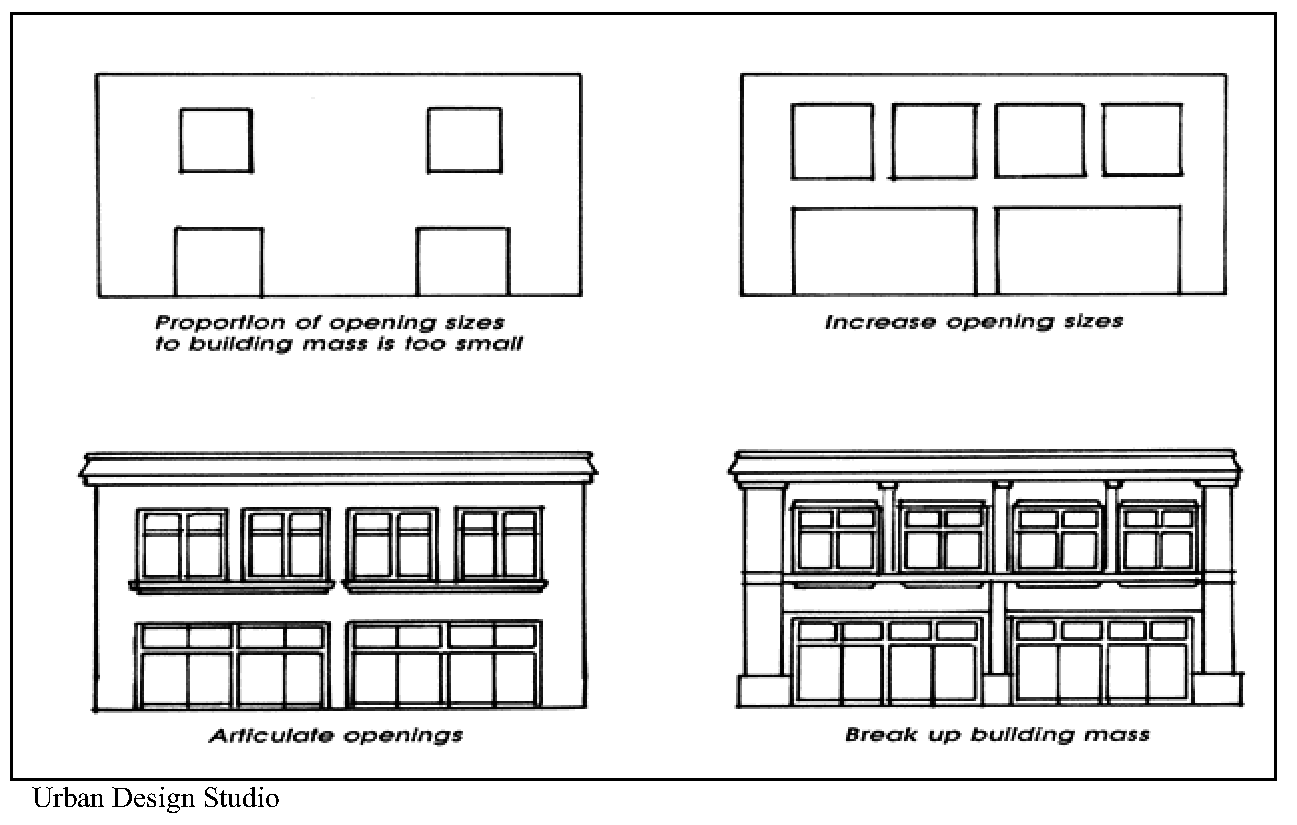
Figure 2-22 - Storefront Proportions
iv.
Large unbroken facade surfaces should be avoided at the storefront level. This can be achieved in a number of ways including:
(A)
Dividing the facade into a series of display windows with smaller panes of glass;
(B)
Constructing the facade with small human scale materials such as brick or decorative tile along bulkheads;
(C)
Providing traditional recessed entries;
(D)
Careful sizing, placement and overall design of signage; and
(E)
Providing consistent door and window reveals.
b.
Street Edge.
i.
The first floor of any infill commercial building should be built directly at the front property line C abutting the sidewalk C unless minor variations are permitted by the city for plazas, public art or other pedestrian-oriented purpose.
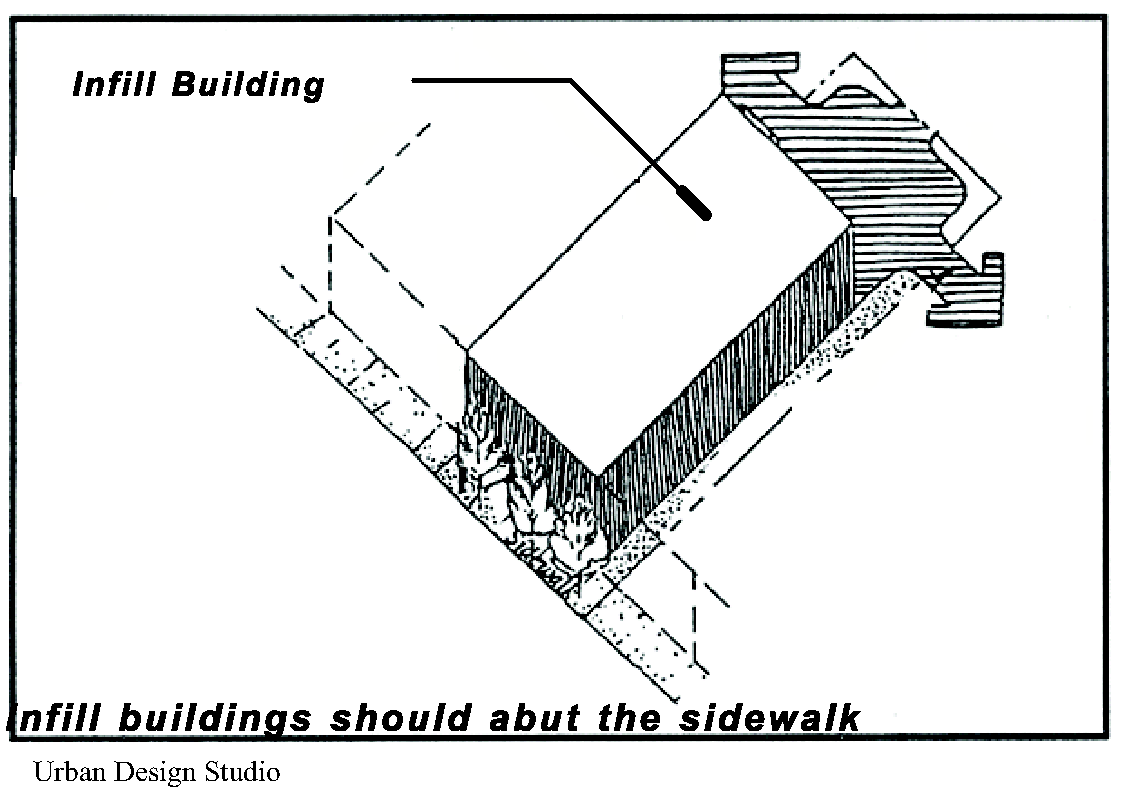
Figure 2-23 - Placement of Infill Buildings
ii.
Awnings, trellises and other accessory structures that are relatively open and do not restrict pedestrian or vehicular movement may project over the right-of-way with city approval.
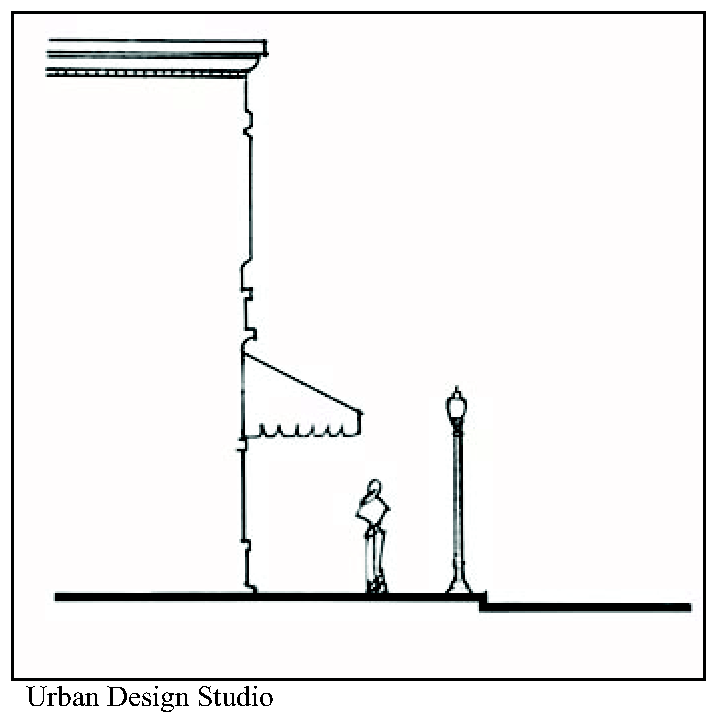
Figure 2-24 - Awnings Provide Pedestrian Scale and Comfort
iii.
Any building located at a corner intersection should incorporate architectural features at the ground floor which emphasize the importance of pedestrian movement. These features may include building cut-offs, walk-through covered arcades, trellis structures and other elements which focus visual interest on the corners.
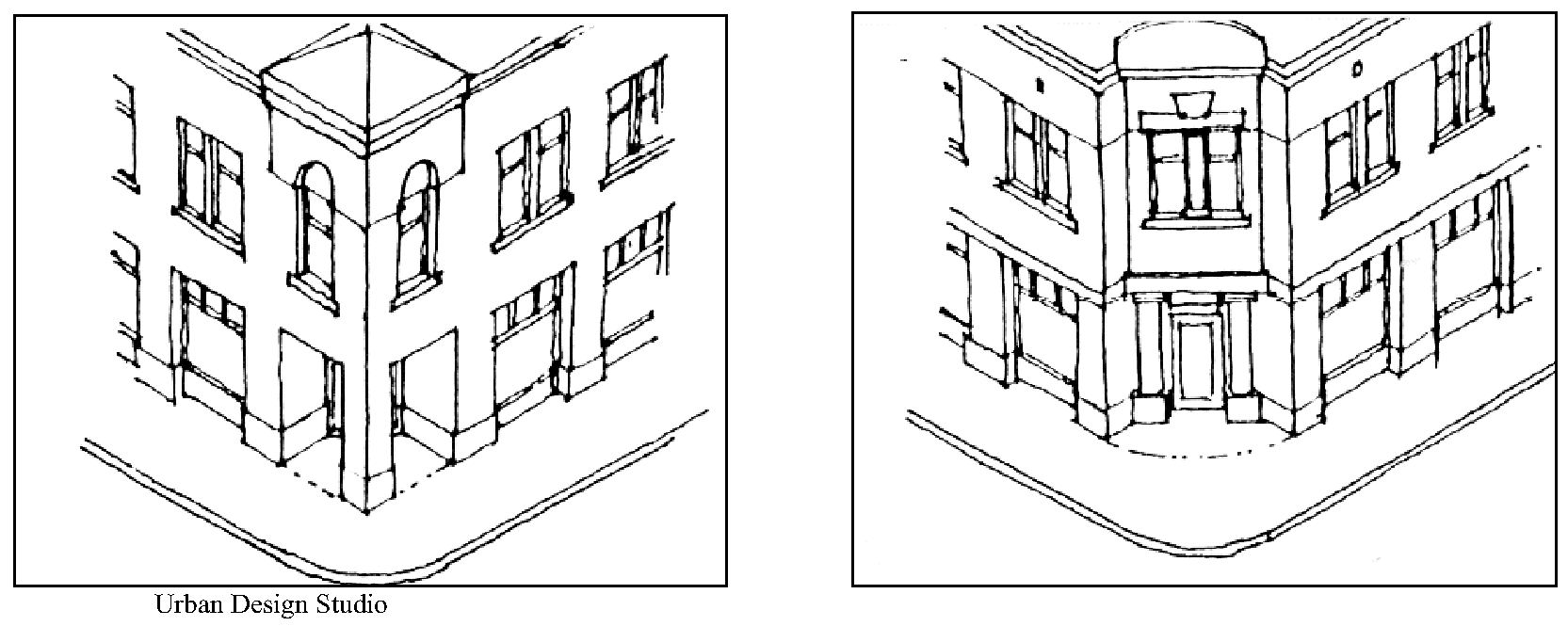
Figure 2-25 - Desirable Design Features for Street Corner Buildings
c.
Public Spaces. Public space associated with commercial buildings should serve as a transition from the outside to the inside of buildings, and should be supportive of pedestrian activity. Public areas should be designed so that all members of the public fee that they may enter, and should be designed as extensions of the public space of the sidewalk (e.g., by providing pedestrian amenities such as benches and fountains, and by continuing the hardscape of the sidewalk).
i.
Plazas.
(A)
Plazas should be designed to supplement, rather than replace on-street activity areas. Paving and furniture used in private plazas should complement streetscape elements used in the public right-of-way.
(B)
Retail shops, restaurants, offices or other activity-generating uses should be located at the edges of plazas; blank walls should be minimized adjacent to pedestrian spaces.
(C)
Plazas should be designed with unimpeded lines-of-sight to and from the public sidewalk. Security fences, walls, and entry gates shall not block the sidewalk edge of the plaza or views into the plaza. At least fifteen feet of building frontage should be transparent or visually penetrable to provide entry to and views into the plaza.
(D)
Entries to a plaza, and storefront entries within the plaza, should be designed and lit so they do not create hiding places.
(E)
Visual features, such as public art or a fountain, should be incorporated in plazas to attract pedestrians.
(F)
Seating should be provided at a ratio of at least one seating area for each one hundred square feet of plaza, in addition to any outdoor dining areas.
(G)
Plazas, including all entrances and exits, should be fully illuminated one-half hour after sunset to one-half hour before sunrise to facilitate natural surveillance opportunities and to discourage illegitimate activities. Lighting should be designed to help define, order and further develop the design concept of the space in a manner that appears welcoming to pedestrians.
(H)
Signs or other mechanisms should identify that the plaza is available for public use during business hours.
(I)
Security gates and security fencing may not be used in plazas, except as may be permitted by the review authority when granting the land use permit for the project, based on a determination that unusual circumstances justify their use.
ii.
Entry courtyards. Where used, courtyards should:
(A)
Include focal elements of sculpture, water, plantings and seating niches.
(B)
Be provided trees that are drought tolerant, and planted in symmetric patterns.
(C)
Be designed to provide both visibility and separation from the street.
D.
Building Design and Architecture. The visual relationships between individual commercial buildings contribute to community identity, levels of pedestrian activity, and economic vitality. When the architectural features (for example, entry spacing, window lines, and signs) of commercial buildings are complementary, the larger district image becomes more positive and unified. Building facades, in particular, influence cohesiveness, legibility and aesthetic pride. Likewise, storefront design can encourage shopping, increase a sense of security, and generate pedestrian activity. Where commercial buildings are neighbors to residential buildings, consideration of scale, detail, and materials are even more important.
1.
Mass and Scale. Building scale and massing contributes to the unique character and pedestrian-orientation of the downtown and some of the other commercial areas of Lodi. Smaller-scale buildings, or buildings perceived to be of small-scale, are most suitable to creating the atmosphere desired in the city. Human-scale buildings are comfortable and create a friendly atmosphere that enhances the marketability of commercial areas. To this end, buildings and their parts should impart a sense of human scale and assume a reinforcing relationship with the sidewalk, street, and pedestrian activity. The relationship of the building elements to the overall building should create a clear set of meaningful relationships between the building and the elements and the elements to each other. The elements of the building should not appear as random or unrelated to each other.
The height and scale of infill development and alterations to existing development within commercial areas should complement existing structures while providing a sense of human scale and proportion. Infill structures should be designed to provide storefront windows, doors, entries, transoms, awnings, cornice treatments and other architectural features designed to complement existing structures without duplicating a particular architectural style. Specific guidelines related to the mass and scale of building architecture are as follows:
a.
General Design Principles.
i.
The characteristic proportion (relationship of height to width) of existing facades should be considered in relation to infill development, alterations and additions.
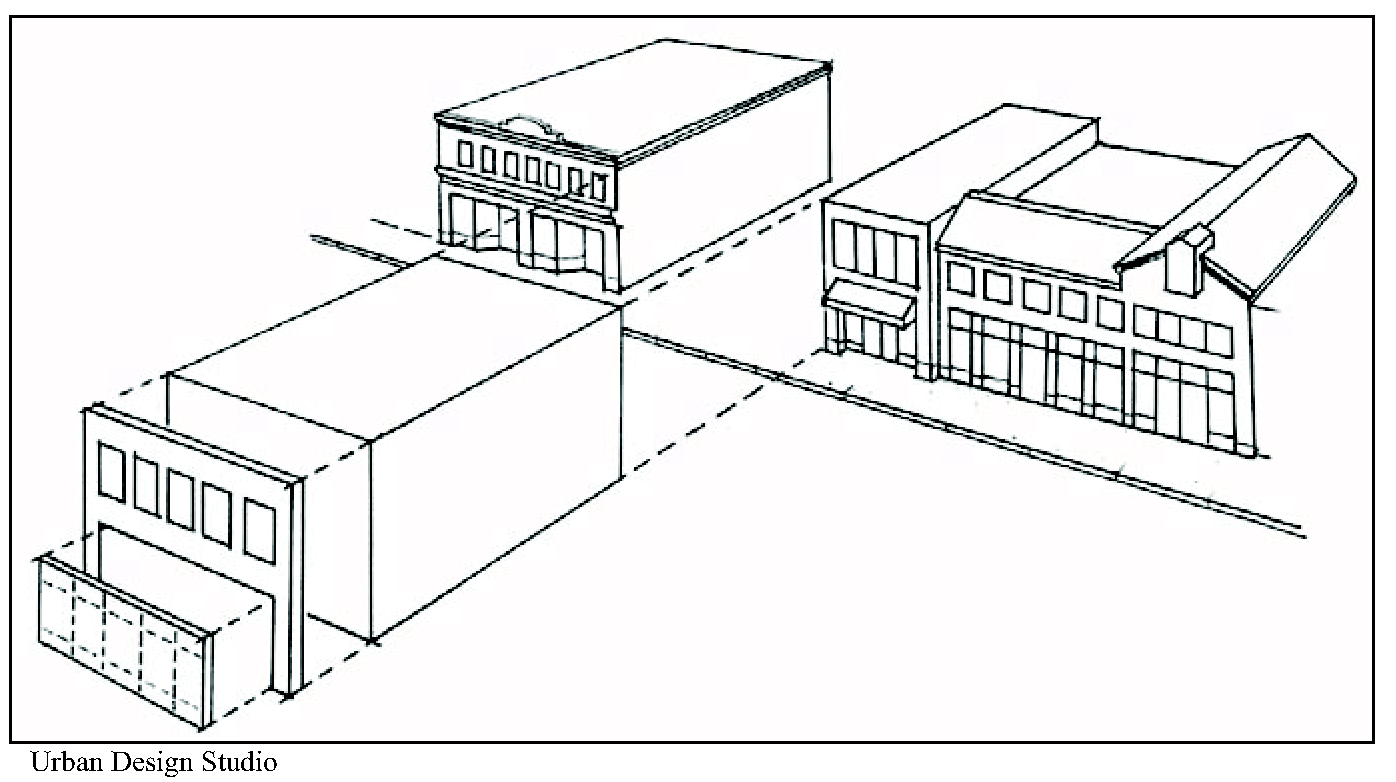
Figure 2-26 - Infill Facade Proportions
ii.
Whenever an infill building is proposed which is much "wider" than the existing characteristic facades on the street, the infill facades should be broken down into a series of appropriately proportioned "structural bays" or components typically segmented by a series of columns or masonry piers which frame window, door and bulkhead components. Creating and reinforcing a facade rhythm helps tie the commercial street together visually and provides the pedestrian with a standard measurement of his or her progress.
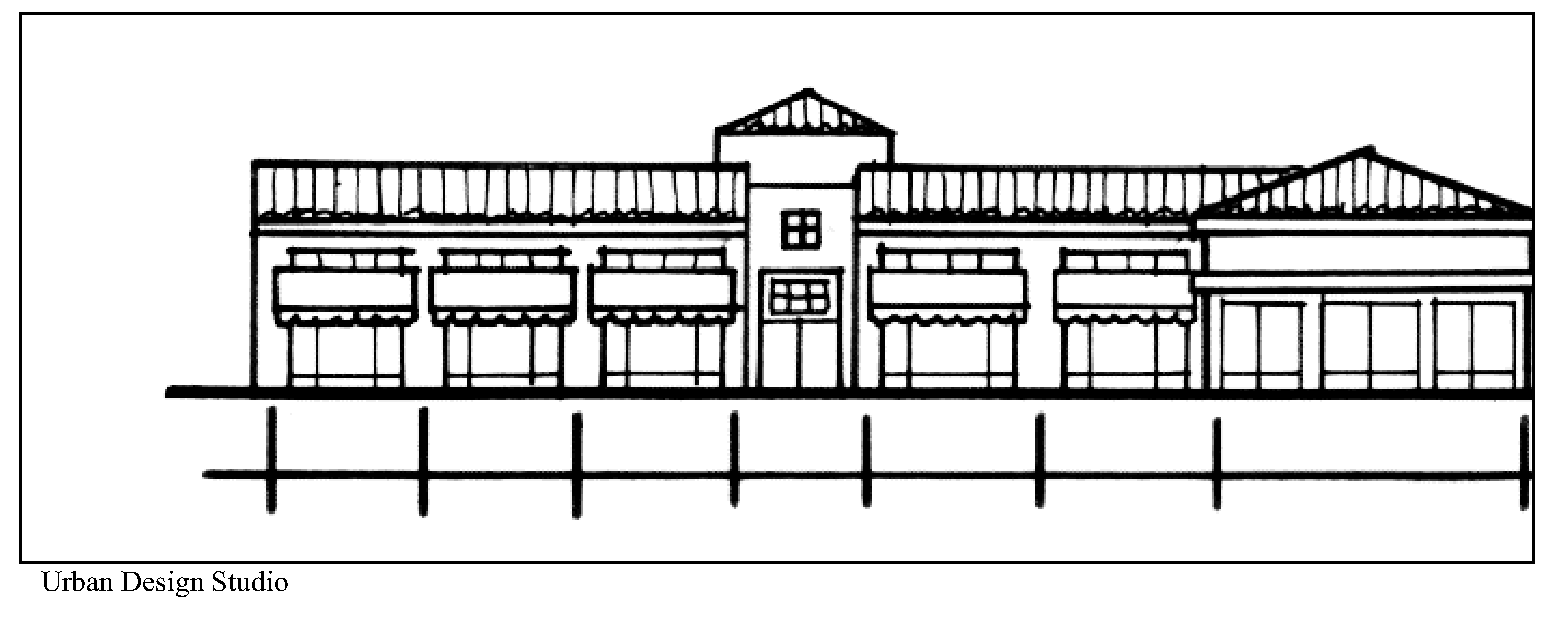
Figure 2-27 - Infill Structure Facade Divided into Bays
iii.
The commercial buildings in Lodi are generally in the one- to three-story range. Infill buildings or upper story additions to existing buildings should not be much higher or lower than the height of surrounding structures.
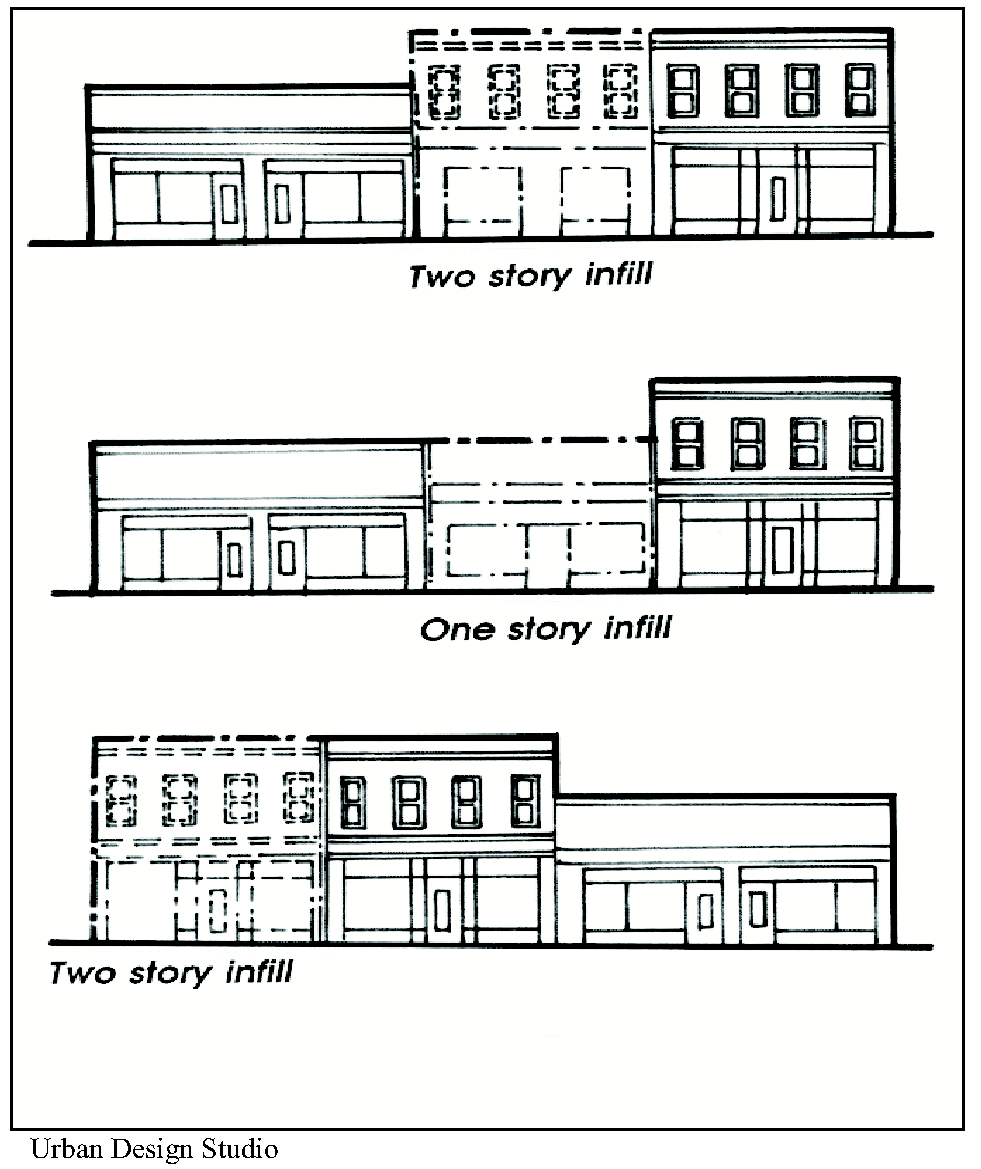
Figure 2-28 - Infill Consistent with Context
b.
Building Proportions.
i.
Maintain a clear visual distinction between upper story openings and street level storefront openings (windows and doors). There should usually be more window area at the storefront level to provide greater interior visibility for pedestrians, as opposed to upper stories with smaller window openings.
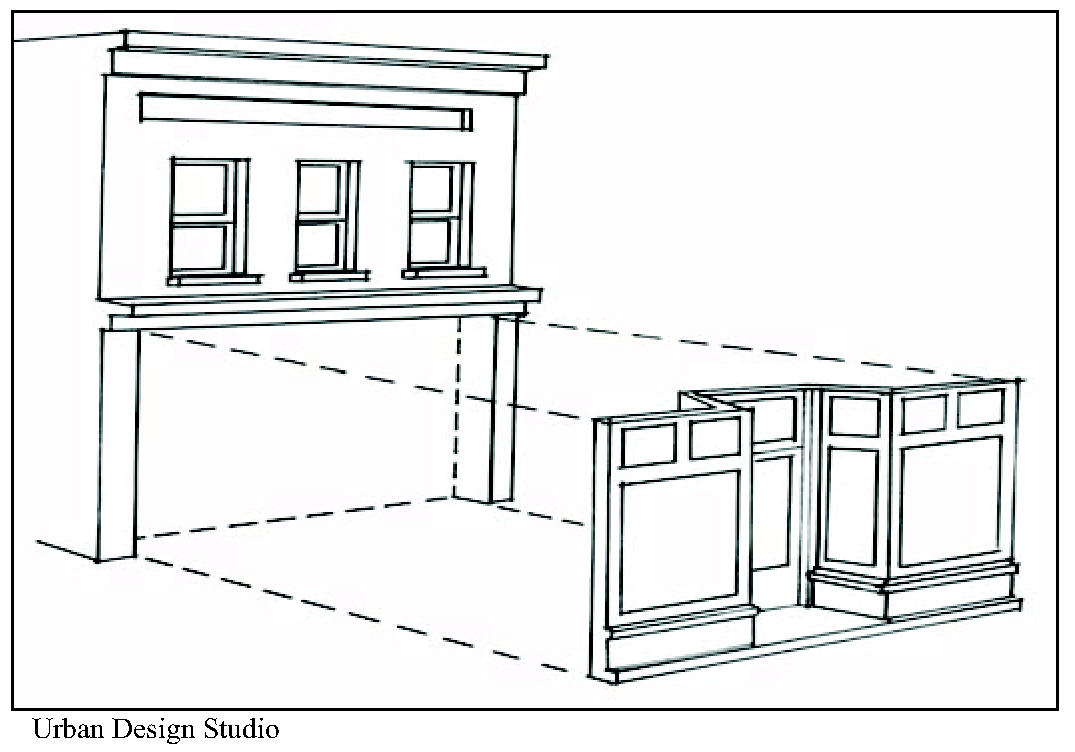
Figure 2-29 - New Storefront Proportions Consistent with Context
ii.
Whenever an infill building is proposed between two adjacent commercial structures, the characteristic rhythm, proportion and spacing of existing door and window openings should be maintained.
c.
Horizontal Rhythms/Alignment of Architectural Elements.
i.
When an infill building is proposed, the common horizontal elements (e.g. cornice line, window height/width and spacing) of neighboring structures should be identified and the infill should have similar rhythm or alignment.
ii.
If maintaining a horizontal rhythm or alignment in an infill building is very difficult or otherwise impossible, the use of fabric canopies or awnings is encouraged to establish a shared horizontal storefront rhythm.
d.
Architectural Features.
i.
Features such as balconies, open and enclosed turrets, finials and bay windows that help give human scale and interest to buildings are encouraged.
ii.
Decorative ornamentation, the decorative use of color and integral color materials, and architectural composition that employs abstract or representational ornament to help order the facade or emphasize the relative importance of different building elements are encouraged.
2.
Architectural Elements/Materials. The types of materials and architectural elements incorporated into commercial buildings contribute to visual interest, community image, business identity and architectural quality. The following guidelines provide a framework for creating a cohesive commercial character while providing flexibility and promoting unique architectural features.
a.
Entries and Doorways.
i.
Main building entries should emphasize the point of arrival in one or more of the following ways:
(A)
Placement of art or decorative detailing;
(B)
A turret or balcony over the entrance;
(C)
Change of material or detailing;
(D)
Greater concentration of ornaments;
(E)
Flanked columns, decorative fixtures or other details;
(F)
Recesses within a larger arched or cased decorative opening;
(G)
A portico (formal porch) projecting from or set into the building face;
(H)
Changes in roofline, a tower, or a break in the surface of the subject wall;
(I)
Architectural features above it.
ii.
Street corner commercial buildings should provide a prominent entrance to street level shops or lobby space at or near the corner.
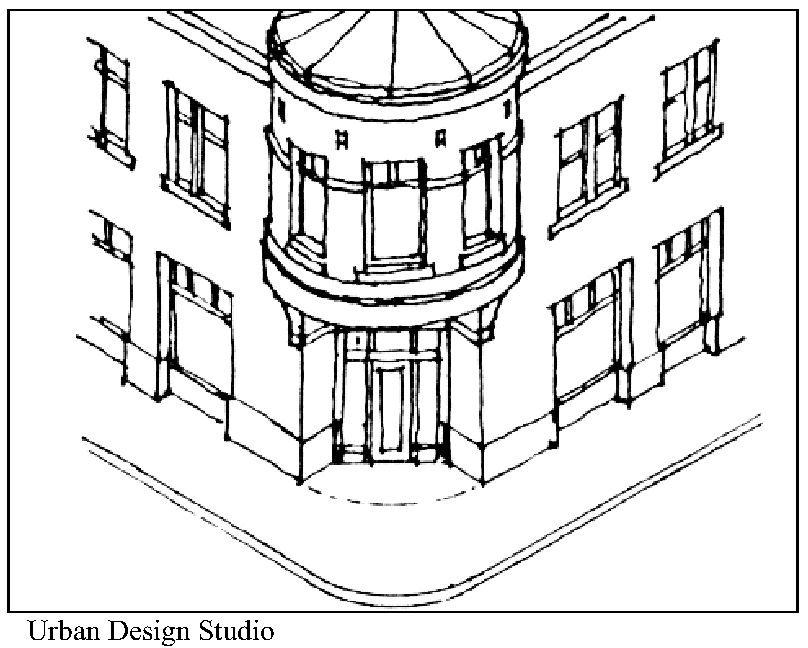
Figure 2-30 - Prominent Corner Entrance
b.
Doors and Windows.
i.
Retail store doorways should contain a high percentage of glass to allow pedestrians to see the retail contents and activities in stores.
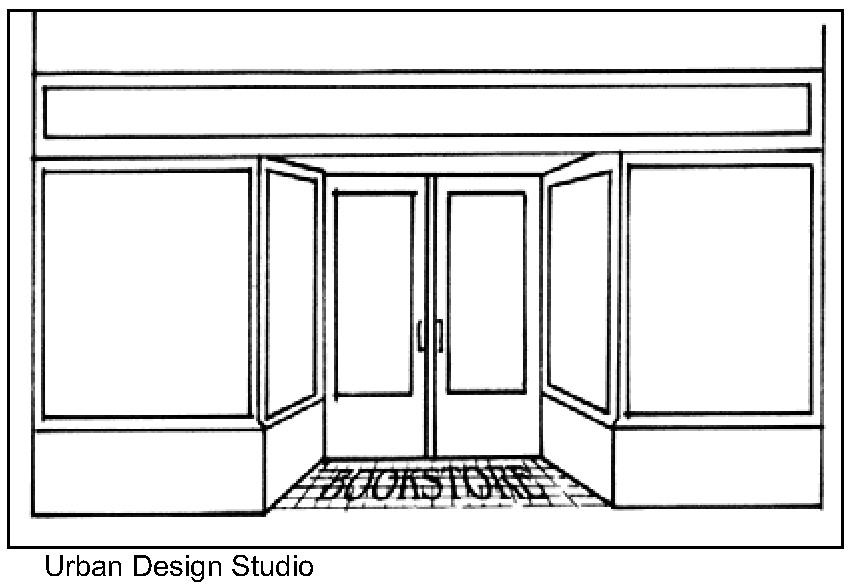
Figure 2-31 - Maintain Extensive Storefront Glass Area
ii.
When windows are added or changed, it is important that the design be compatible with the facade theme of the block (streetscape).
iii.
Use clear glass (at least eighty-eight percent light transmission) in first floor windows.
iv.
Storefront windows should be as large as possible and no closer than eighteen inches from the ground (bulkhead height). By limiting the bulkhead height, the visibility to the storefront displays and retail interior is maximized. Maximum bulkhead heights for infill construction should be seventeen inches.
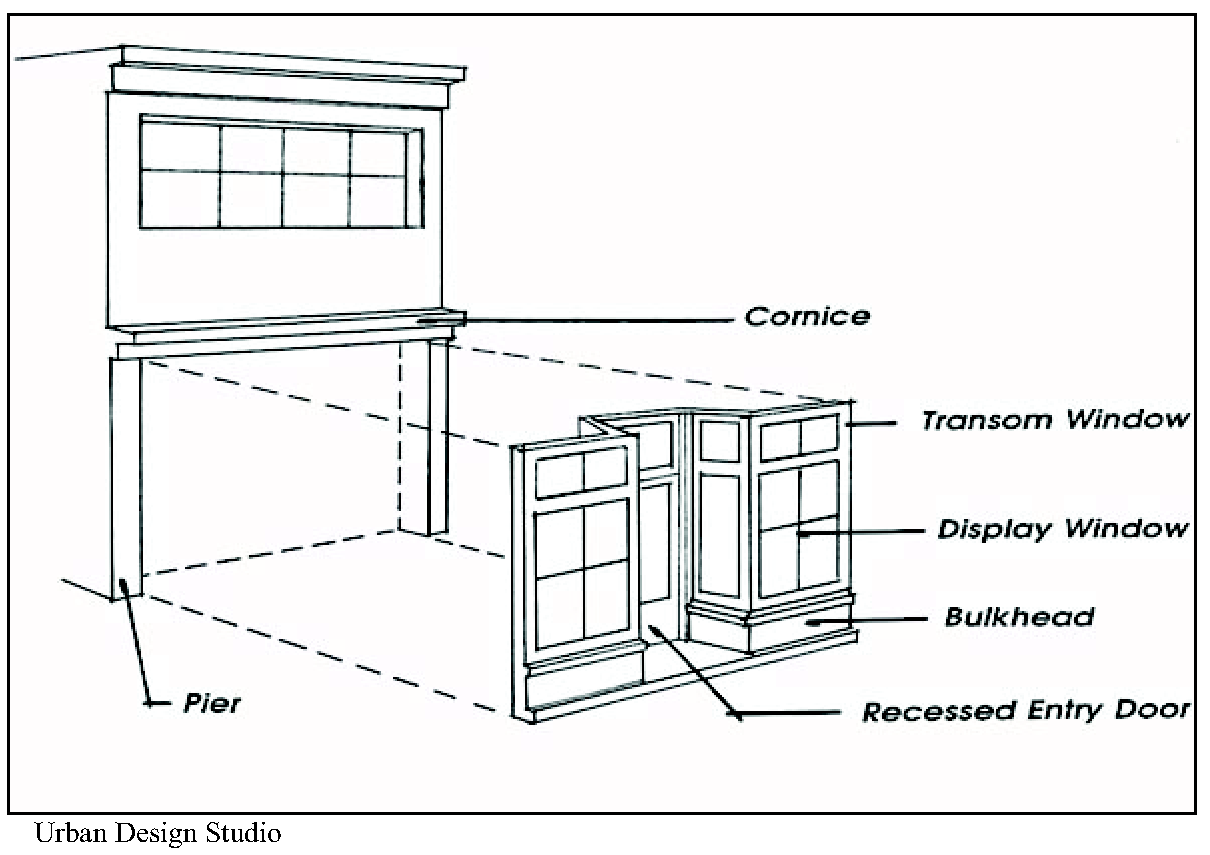
Figure 2-32 - Storefront Components
v.
Introducing or changing the location or size of windows or other openings that alter the architectural rhythm or character of the original building is discouraged.
vi.
Permanent, fixed security grates or grilles in front of windows are not permitted. Any necessary security grilles should be placed inside, behind the window display area.
vii.
Traditional storefront transom windows should be retained whenever feasible. If the ceiling inside the structure has been lowered, the ceiling should be stepped up to meet the transom so that light will penetrate the interior of the building.
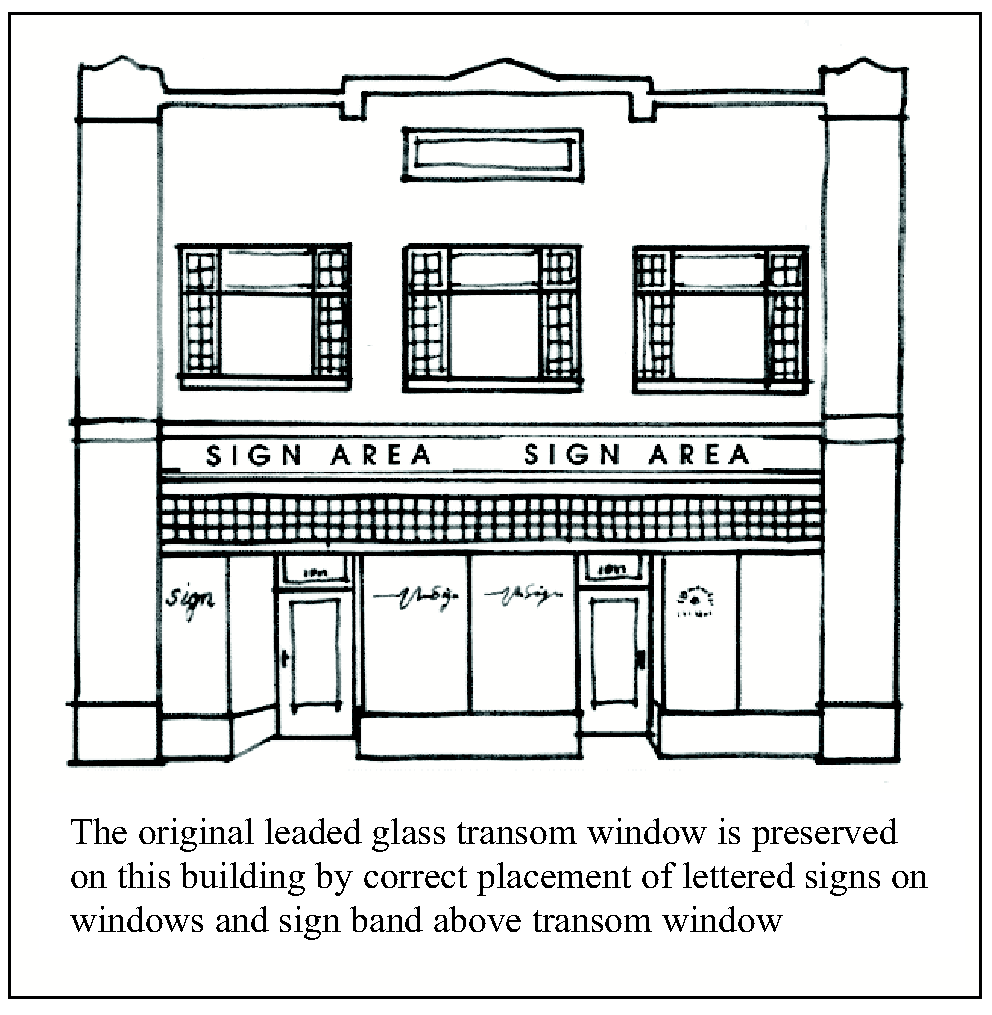
Figure 2-33 - Transom Windows
c.
Awnings and Canopies.
i.
Where the facade of a commercial building is divided into distinct structural bays (sections defined by vertical architectural elements, such as masonry piers), awnings should be placed within the vertical elements rather than overlapping them. The awning design should respond to the scale, proportion and rhythm created by these structural bay elements and nestle into the space created by the structural bay.
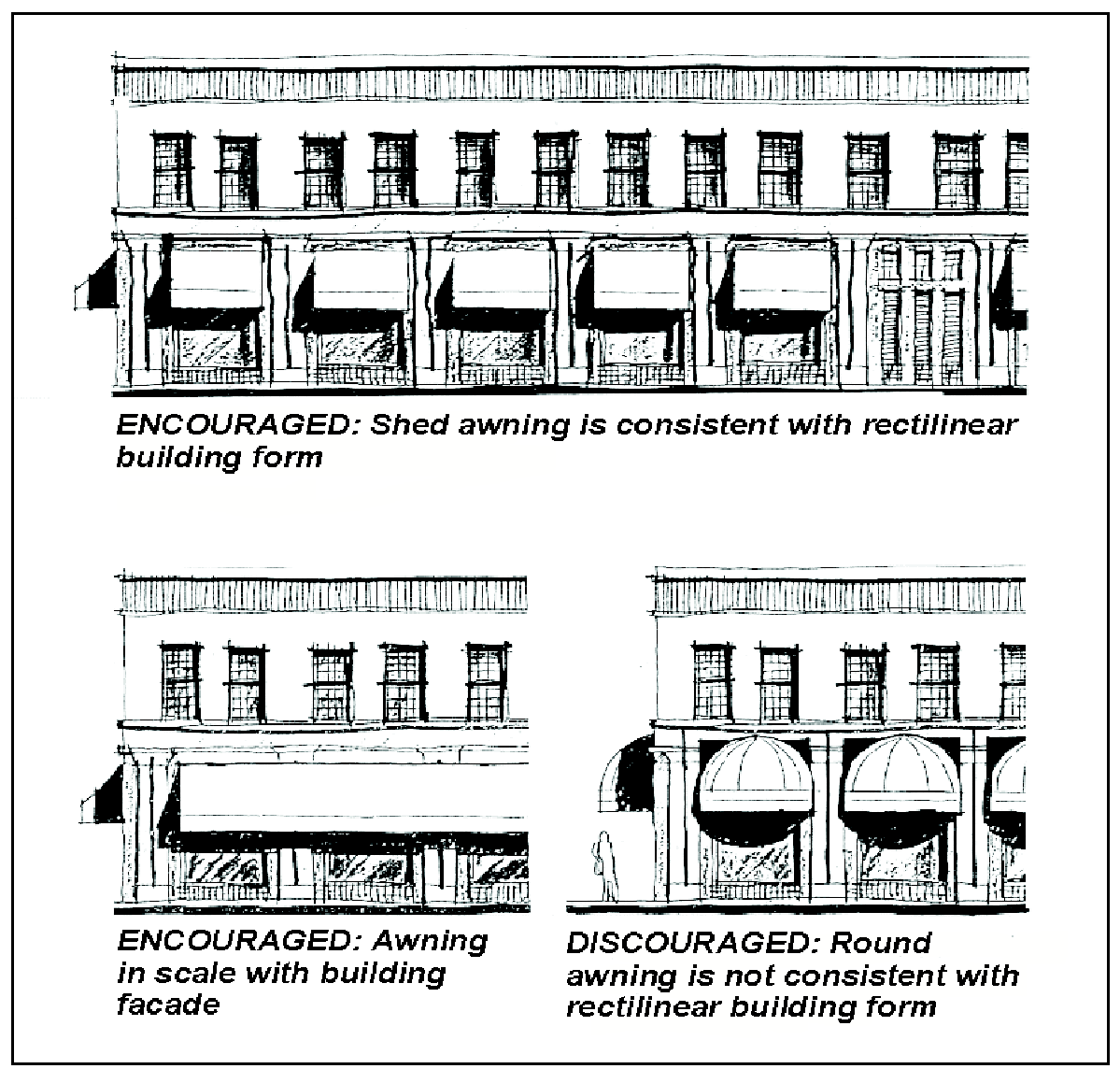
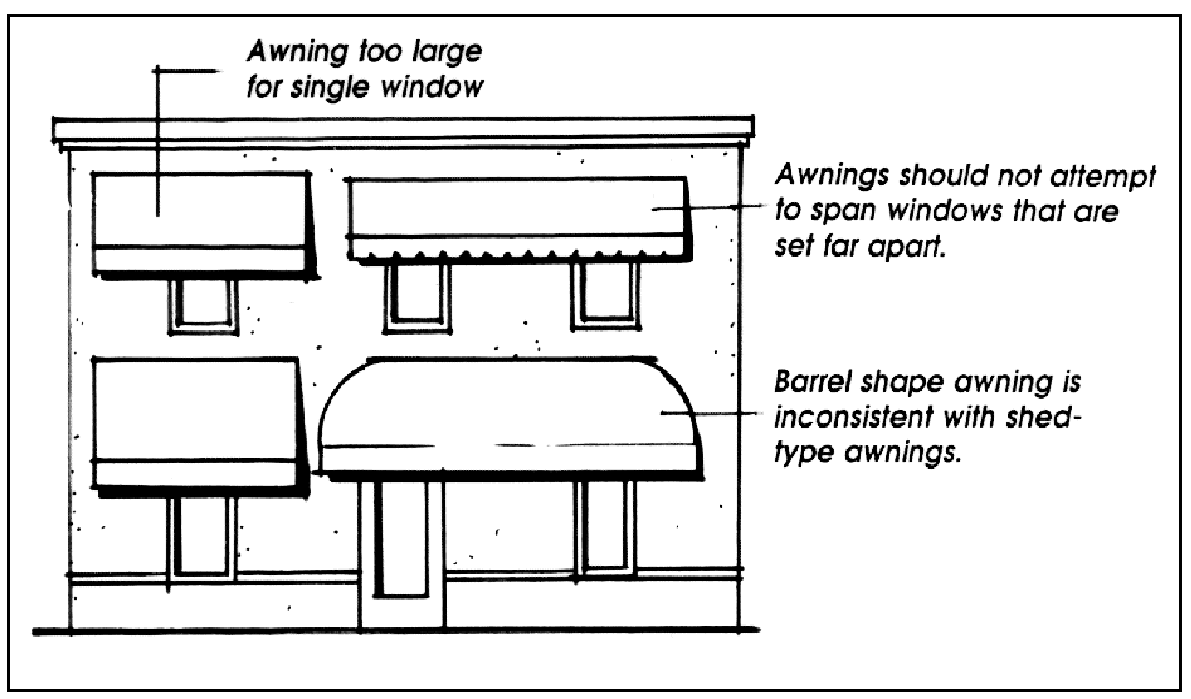
Figure 2-34 - Appropriate and Inappropriate Awning Forms
ii.
Awning shape should relate to the window or door opening. Barrel-shaped awnings should be used to complement arched windows while square awnings should be used on rectangular windows.
iii.
Awnings shall not be internally illuminated.
d.
Grillwork/Metalwork and Other Details. There are a number of details, often thought of as mundane, which may be incorporated into the design to add a degree of visual richness and interest while meeting functional needs. These details include the following:
i.
Light fixtures, wall mounted or hung with decorative metal brackets.
ii.
Metal grillwork, at vent openings or as decorative features at windows, doorways or gates.
iii.
Decorative scuppers, catches and down-spouts, preferably of copper.
iv.
Balconies, rails, finials, corbels, plaques, etc.
v.
Flag or banner pole brackets.
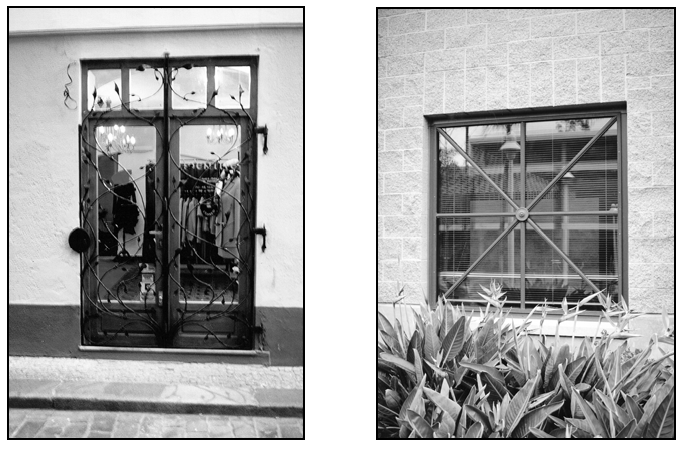
Figure 2-35 - Metalwork Design Elements
e.
Exterior Walls and Materials. The exterior wall design elements of commercial buildings involve two aspects C color and texture. Materials with integral color such as hard smooth troweled plaster, tile and stone is encouraged. If the building's exterior design is complicated, with many design features, the wall texture should be simple and subdued. However, if the building design is simple (perhaps more monolithic), a finely textured material, such as patterned masonry, can greatly enrich the building's overall character.
Storefront materials should complement the materials used on significant adjacent buildings. The following materials are considered appropriate for commercial buildings within Lodi. The number of different wall materials used on any one building should be kept to a minimum, ideally two or less.
•
Clear glass;
•
Glass block (transom);
•
Exterior plaster (smooth trowelled preferred);
•
New or used face-brick;
•
Cut stone, rusticated block (cast stone);
•
Ceramic tiles (bulkhead);
•
Clapboard (where appropriate);
The following exterior building materials are considered inappropriate in Lodi commercial areas and are discouraged:
•
Mirror glass and heavily tinted glass;
•
Windows with false divisions (i.e., a window where the glass continues uninterrupted behind a surface mounted mullion);
•
Vinyl and aluminum siding;
•
Painted or baked enamel metal awnings;
•
Rough "Spanish lace" stucco finish;
•
Unpainted plywood;
•
False stone veneer;
•
Bulky cast stone window and door surrounds;
•
Corrugated sheet metal;
•
Corrugated fiberglass;
•
Split face concrete block;
•
Exposed concrete block without integral color.
f.
Lighting.
i.
Lighting should be designed as an integral part of the overall site and building design. It should contribute to and help define the character and the spaces created by the building and its site development. Lighting design should have a conscious purpose of helping to strengthen the constituent elements of the site through means such as highlighting areas that are more important, or by picking out areas of the site that have a different character from the rest of the site. Lighting should complement architectural elements, changes in material of the ground plane and landscaping. The intensity, color, placement of the light and the placement and design of the light fixtures should be part of this effort.
ii.
Lighting should provide illumination for the security and safety of on-site areas such as entrances, exits, parking, loading, pathways, and working areas.
iii.
Lighting should be provided for the pedestrian to create a sense of welcoming on the public sidewalk, that the pedestrian is literally being accompanied by light. Providing a greater number of softer light sources is strongly encouraged over having only a few very bright lights.
iv.
The design of light fixtures and their structural supports should be architecturally compatible with the main buildings on the site. Fixtures should be integrated within the architectural design for the buildings.
v.
As a security device, lighting should be adequate but not overly bright. Building entrances should be well lighted. The lighting should be designed so that the lighting is an attractive element in its own right, acting as a public amenity.
vi.
All lighting should be shielded to confine light spread within the site boundaries and not spill onto adjacent properties. Lighting should be provided from one-half hour after sunset to one-half hour before sunrise at all exits, entrances, loading areas, parking lots, plazas, and alleys. An average of one foot candle evenly distributed across the site is a suggested minimum; with up to two-foot candles at entrances, exits and loading areas.
vii.
The following lighting fixtures and lamps are considered inappropriate in Lodi commercial areas and are discouraged:
•
Mercury vapor lights (metal halide or high-pressure sodium lamps are preferable for most applications);
•
Fluorescent light tubes that are exposed without filtering lenses;
•
Fluorescent lamps without non-color corrected bulbs (color correction may also be accomplished by a color-correcting lens);
•
The development code prohibits flashing or blinking lights.
viii.
Focus light downward. A good rule of thumb is to make sure that direct light shines a minimum of twenty degrees below a horizontal plane and in no case above the horizontal plane.
ix.
Test installations for glare. After installation, check to make sure that glare will not be a problem for neighbors, pedestrians, or motorists.
x.
Illuminate signs and billboards from above, not below.
xi.
Avoid reflective surfaces beneath down-lit signs.
xii.
All lighting shall be maintained in working order and in appearance.
g.
Rear Entrances. Rear entrance design should consider a number of issues. In general, the rear entrance must respond to the same needs as the storefront, but at a reduced scale. It must also meet the functional service needs of the business, including providing a loading area. Since these two functions are often in conflict, the design of the rear entrance must be carefully planned. A particular concern is the storage and disposal of refuse. All trash cans, dumpsters, and other containers must be hidden and screened from public view as required by the development code. Exterior utilities must be screened. Regular maintenance is of paramount importance.
The design of a rear entrance should be appropriate to its surroundings. The visual character of rear facades, alleys, and parking lots is relatively casual and utilitarian, especially when compared to formal street facades. In this context, a refined or grand design can look out of place. The design should instead be pleasantly inviting, and architecturally compatible with the front, but very simple in detail.
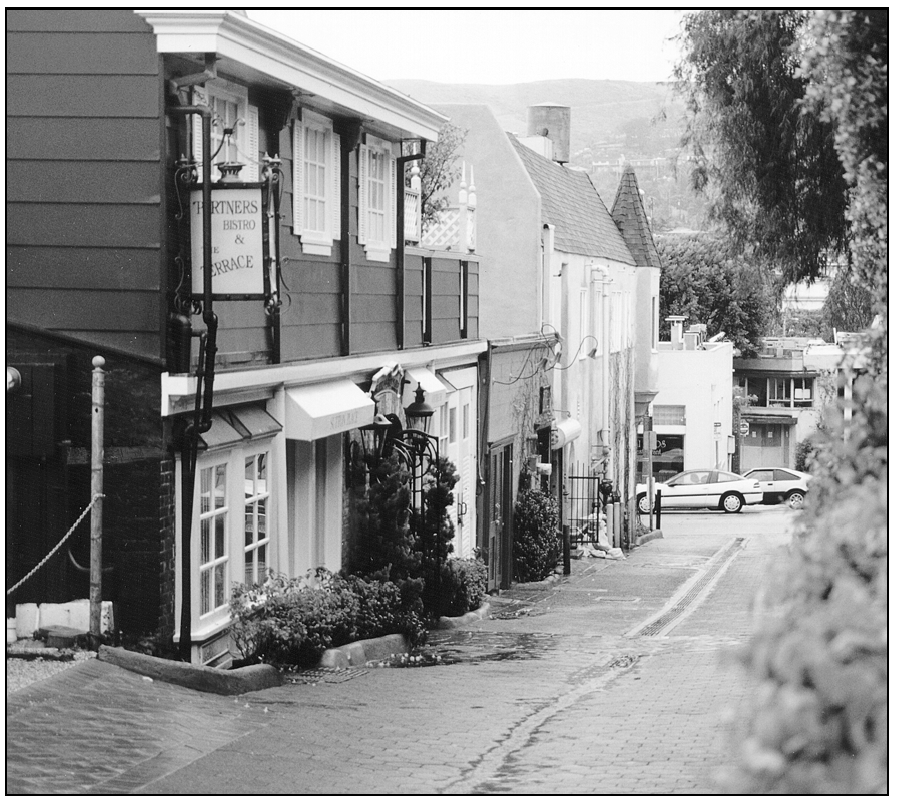
Figure 2-36 - Rear Entrances Should be Aesthetically Simple and Utilitarian
i.
An awning can soften a rear facade and provide a pleasant protected space.
ii.
The rear entry door should be wood and glass similar to the front door. Special security glass (i.e. wire imbedded) is allowed.
iii.
Security lighting should be modest and should focus on the rear entry door.
iv.
Selective use of tree plantings, potted plants and other landscaping can subtly improve a rear facade.
v.
Refuse containers and service facilities must be screened from view by solid walls. The use of landscaping (shrubs and vines) to screen walls can help deter graffiti.
3.
Alterations—Restoration and Remodeling. Renovating or remodeling commercial structures provides an excellent means of maintaining and reinforcing the character and image desired in Lodi. Renovation and expansion not only increases property values in the area but also serves as an inspiration to other property owners and designers to make similar efforts.
When an existing structure is to be renovated or added to, the work should respect the original design character of the structure. The following design guidelines apply where appropriate and whenever a structure is to be renovated or expanded.
a.
Traditional Features and Decoration.
i.
Sensitive response to existing materials, details, proportions, as well as patterns of materials and openings is required when any such work will affect the appearance of an existing building's exterior.
ii.
Storefront remodeling often retains original decorative details only as visual "leftovers" or simply covers them. If a building is to be refurbished, these forgotten details should not be wasted. If enough of them remain, they can be restored as part of the original design. If only a few remain, they can be incorporated as design features in a new storefront. In either case, the design of any improvements should grow out of the remaining traditional details and create a harmonious background which emphasizes them.
b.
Removal of Elements Inconsistent with Original Facade. Existing building elements incompatible with the original facade design should be removed. These include: excessive use of exterior embellishments and "modernized" elements (metal grilles, oversized molding cornices or rusticated materials, etc.). Buildings are often altered over time by owners or shopkeepers to "keep up with changing times" or to "remake a tired image." Unfortunately, such changes are often done in a "tacked-on" manner and result in gradual but severe erosion of original character and cohesion of the commercial area.
c.
Storefront Renovation.
i.
Where the original storefront remains (little or no remodeling has occurred), it should be preserved and repaired with as little alteration as possible.
ii.
Where only part of the original storefront remains (limited remodeling has occurred), the storefront should be repaired, maintaining historic materials where possible, including the replacement of extensively deteriorated or missing parts with new parts based upon surviving examples of transoms, bulkheads, pilasters, signs, etc.
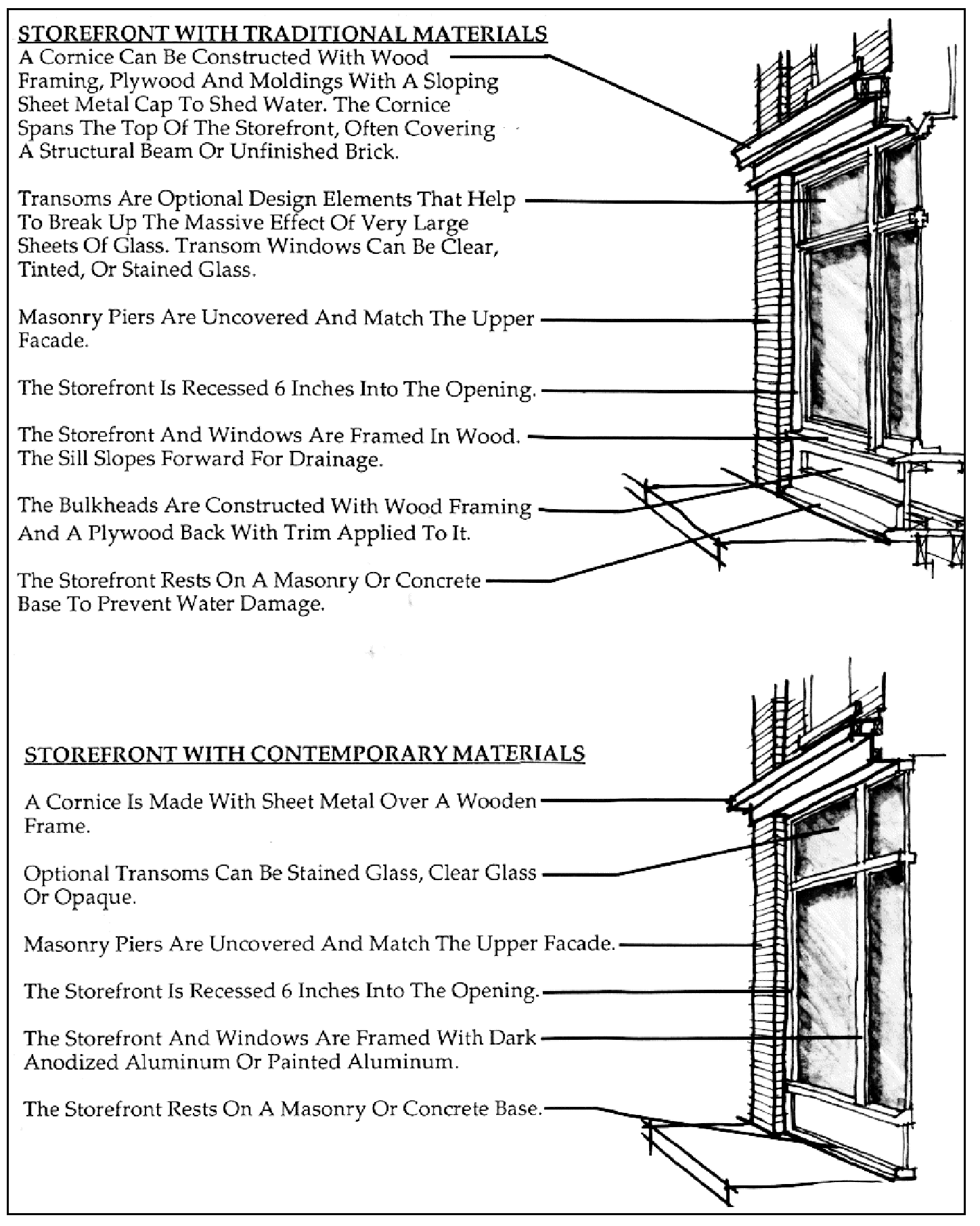
Figure 2-37
iii.
Where the original storefront is completely missing (extensive remodeling has occurred), the first priority is to reconstruct the storefront based upon historical, pictorial and physical documentation. If that is not practical, the design of the new storefront should be compatible with the size, scale, proportion, material and color of the existing structure.
d.
Window Replacement.
i.
The impact of windows on the facade is determined by the size, shape, pattern of openings, spacing and placement within the facade. When altering or reconstructing windows, consideration of these elements is crucial to retaining the structure's original architectural balance and integrity.
ii.
Wherever possible retain original window openings. If the existing ceiling has been lowered, pull the dropped ceiling back from the original window.
iii.
If possible, save and restore original windows and frames. Replace missing, rotting or broken sash, frames, mullions and muntins with similar material.
iv.
If original window openings have been altered, restore the openings to their original configuration and detail. Avoid blocking or filling window openings that contribute to the overall facade design.
v.
When replacing windows, consideration should be given to the original size and shape detailing and framing materials. Replacement windows should be the same operating type as the original window.
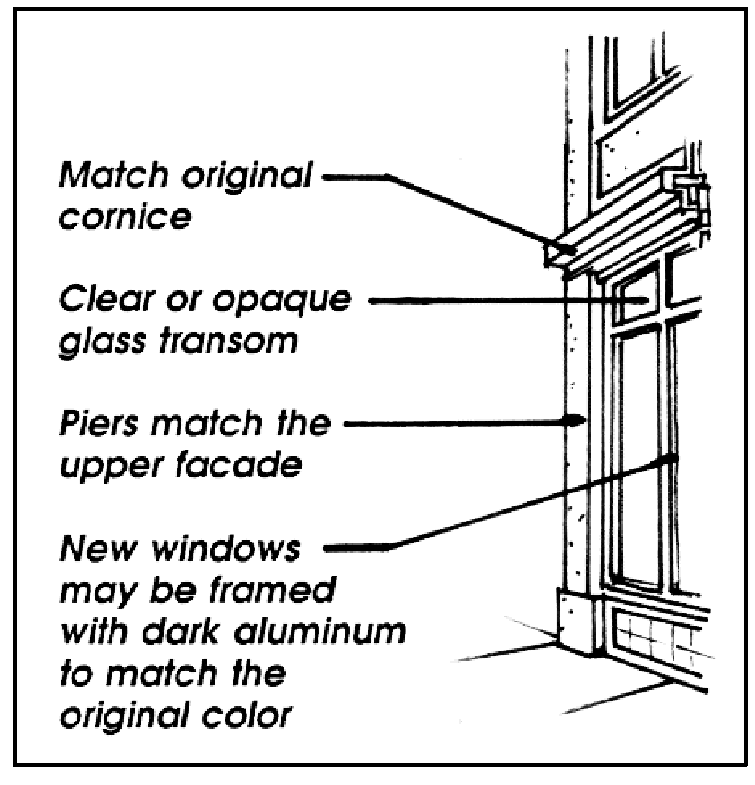
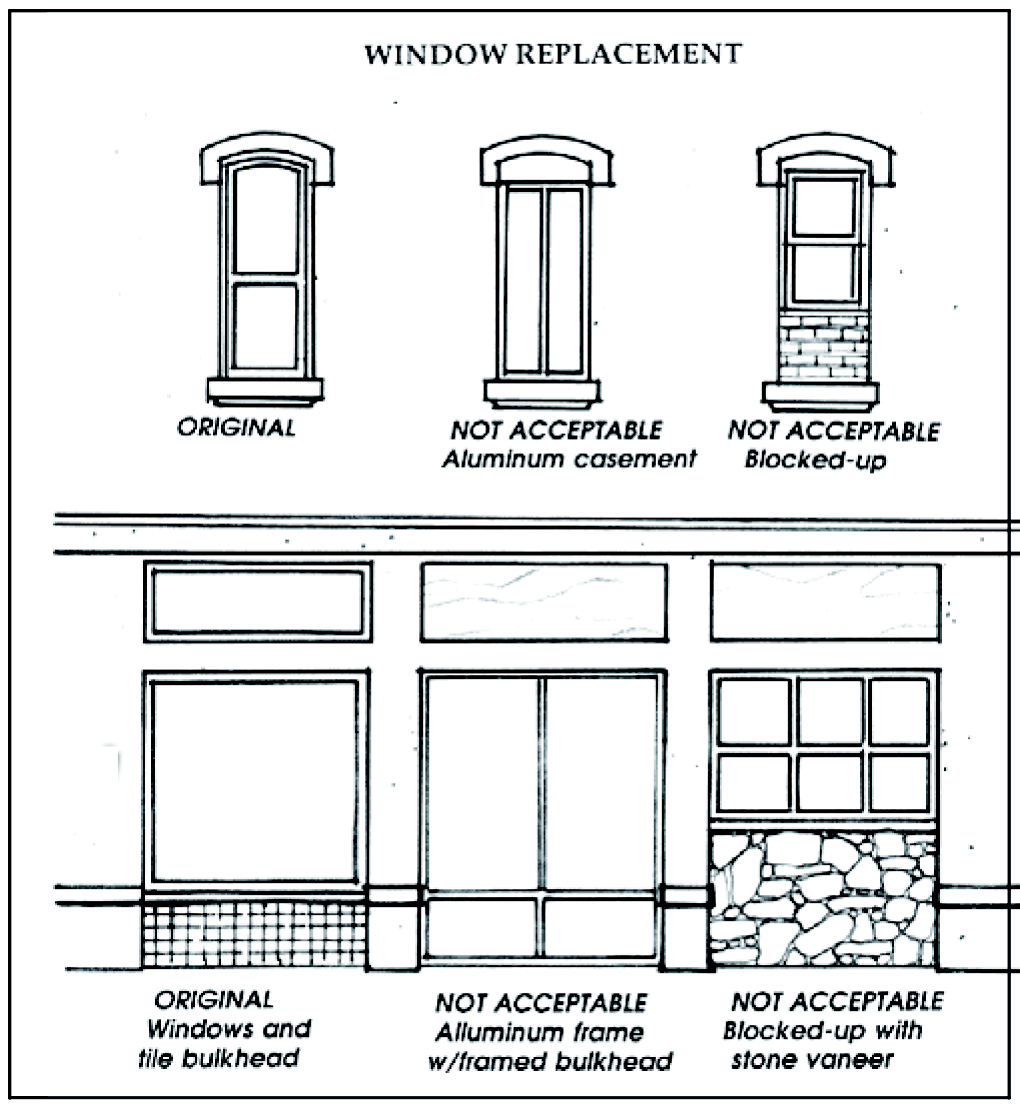
Figure 2-38 - Window Replacement
e.
Door Replacement.
i.
Original doors and door hardware should be retained, repaired and refinished provided they can comply with the requirements of the Americans with Disabilities Act (ADA).
ii.
If replacement doors are necessary, they should be compatible with the historical character and design of the structure.
f.
Additions to Existing Structures.
i.
The design of a proposed addition should follow the general scale, proportion, massing and detailing of the original structure and should result in a harmonious—rather than stark-contrast.
ii.
Additions should be interpretations of the existing buildings, with the main characteristics of the existing structure incorporated using modern construction methods. This may include: the extension of architectural lines from the existing structure to the addition; repetition of window and entrance spacing; use of harmonizing colors and materials; and the inclusion of similar, yet distinct, architectural details (i.e., window and door trim, lighting fixtures, tile or brick decoration, etc.).
iii.
Additions should be designed so that if the addition were to be removed in the future, the essential form and integrity of the original structure would be unimpaired.
g.
Seismic Retrofitting. Where structural improvements for seismic retrofitting affect the building exterior, such improvements should be done with care and consideration for the impact on appearance of the building. Where possible, such work should be concealed. Where this is not possible, the improvements should be planned to carefully integrate into the existing building design.
4.
Equipment and Utilities.
a.
All mechanical or utility equipment, whether on the roof, ground or side of building must be screened from view, above or below. The method of screening should be architecturally integrated with the structure in terms of materials, color, shape and size. The design of the screening should be done in concert with and as a part of the design of the building, rather than as an afterthought.
b.
Roof mounted mechanical or utility equipment must be screened. The method of screening should be architecturally integrated with the structure in terms of materials, color, shape and size. It is preferable to screen equipment with solid building elements (e.g. parapet wall) instead of after-the-fact add-on screening (e.g. wood or metal slats).
c.
Air conditioning units placed in individual windows and window transom areas are strongly discouraged.
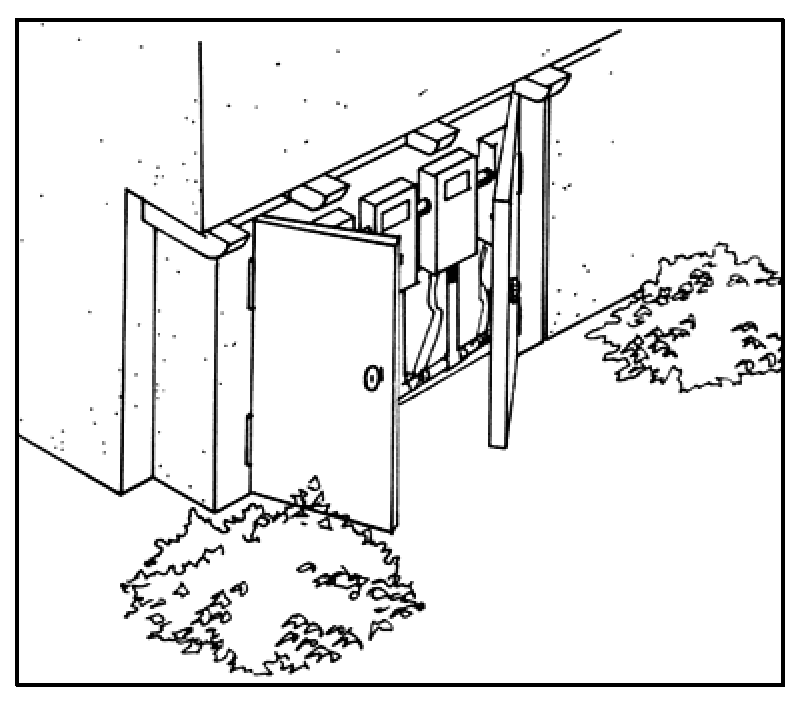
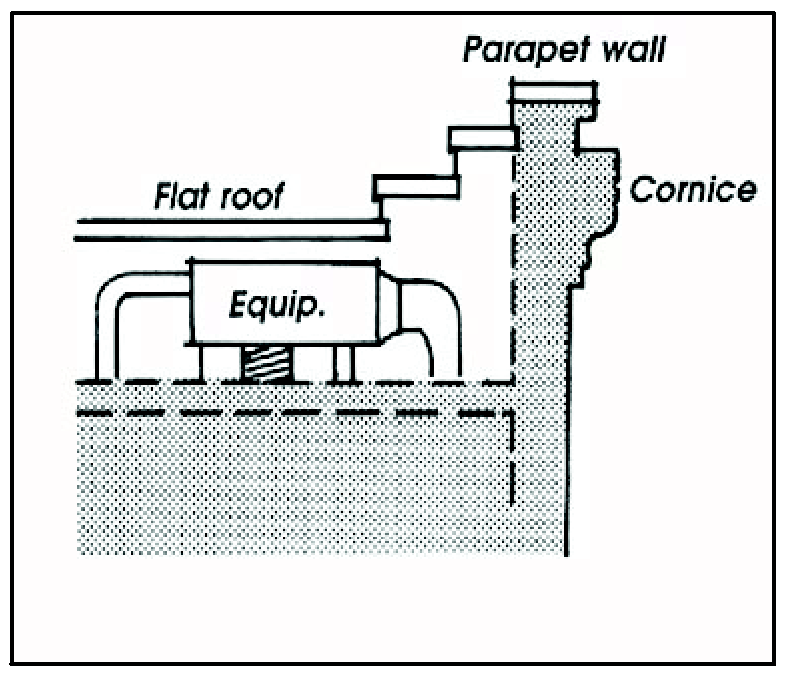
Figure 2-38 - Equipment Screening
E.
Security. Safety in commercial areas is important to business owners, workers and visitors, and to the overall economic well-being of businesses. Design strategies incorporating safety should be based on the practice called Crime Prevention Through Environmental Design or CPTED (pronounced "sep-ted"). CPTED focuses on the proper design and use of the built environment to enhance opportunities for positive, constructive activities while minimizing opportunities for illegitimate or undesirable activities. CPTED is a measure for proactive and retrofit crime prevention planning one that can help reduce the incidence and fear of crime, and improve overall quality of life. By no means is CPTED a panacea in the efforts to rid communities of crime; however, it is one strategy among others that should be considered in commercial development. There are five principles used in the application of CPTED: Natural Surveillance, Natural Access Control, Territorial Reinforcement, and Management and Maintenance.
1.
Natural Surveillance. The organization of physical features, activities and people in such a way as to maximize visibility. That is, a space should be designed so that users feel that they will be seen or observed if they do something illegitimate. The placement of windows, doors, and plazas, the alignment of sidewalks and paths, the minimization of large areas of blank walls, the locations and levels of lighting, and the proper design and size of open spaces can contribute to natural surveillance opportunities.
2.
Natural Access Control. The physical guidance of people coming and going from a space by the judicial placement of entrances, exits, signs, fencing, landscaping and lighting. A space should be designed so that it is conducive to the activities undertaken by legitimate, law-abiding users but discouraging to those carrying out undesirable activities.
3.
Territorial Reinforcement. The use of physical attributes that express ownership, such as fences, pavement treatments, art, signage and landscaping. CPTED stresses the importance of clearly designing a hierarchy of spaces: public (i.e. intended for all to use), semi-private (i.e. intended for specific users or uses), private (i.e. intended for private use by businesses).
4.
Management and Maintenance. The continued use of a space for its intended purpose, which serves as an additional expression of ownership (e.g., complying with landscape maintenance and lighting standards to ensure that visibility is not reduced). Although the physical dimensions of CPTED are important, no effort is sustained unless it is properly maintained and operated.
5.
Design Considerations. The following design considerations, as well as many of the preceding guidelines, incorporate CPTED principles and should be considered for new commercial development in Lodi.
a.
Window Materials. Storefront security may be enhanced with shatter-resistant laminated vigil pane security glass (or glass-clad polycarbonate windows).
b.
Security Screens. The use of exterior scissors-style security screens is strongly discouraged. Any use of interior scissors screens shall be concealed from public view when not in use by retracting the screen into casings which are in proportion and scale with the building architecture. However, although they are allowed, the use of interior scissors screens is strongly discouraged since they communicate a message of high crime and cannot be integrated visually into the overall design of a building or storefront.
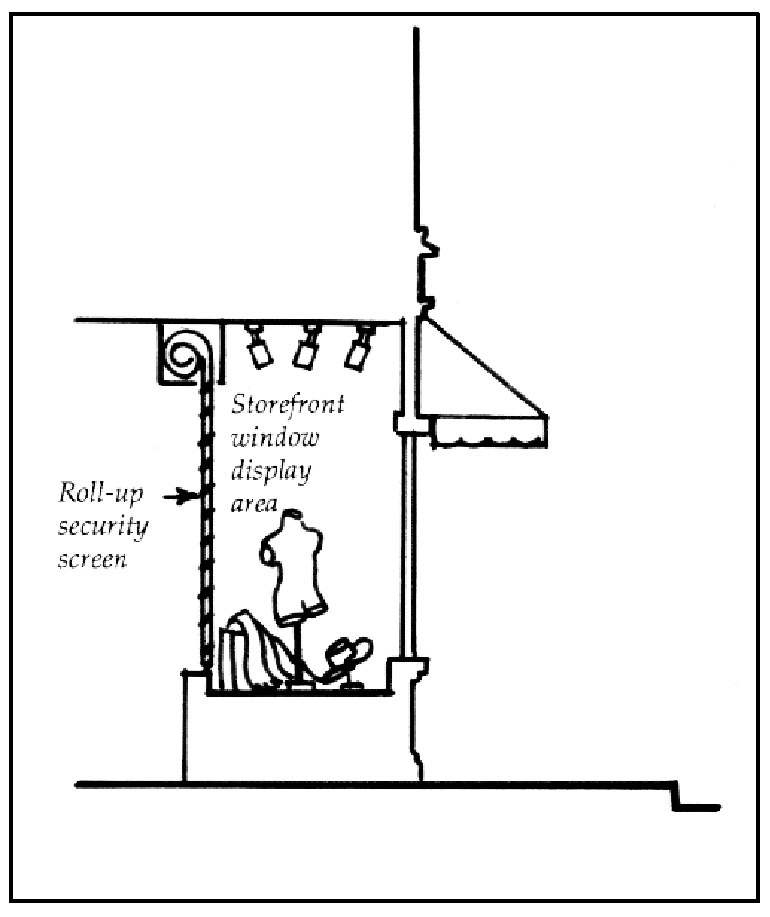
Figure 2-39 - Security Screen Placement
c.
Security Bars. Permanent security bars (those clearly visible and fixed to windows or the facade) and exterior roll-up metal security doors are strongly discouraged.
d.
Lighting Placement. Exterior lights that are a part of streetscape improvements should provide adequate lighting levels. However, in the case of a deep threshold to a building, a light applied to the ceiling of this area is strongly recommended to illuminate building entrances.
e.
Lighting Design. Lighting should be designed to satisfy both functional and decorative needs. Storefront lighting should complement the architectural style of the building while providing illumination of building facades and entrances.
f.
Rear Security Lighting. Rear security lighting should be provided and maintained at twelve-foot candles per square foot. The level of lighting should be measured at ground level. All security lighting should be designed as part of an overall lighting plan rather than as single stand-alone elements.
g.
Window Signs. Any window signs should be placed to provide a clear and unobstructed view of the interior of the business establishment from the sidewalk (and are not permitted by this development code to exceed twenty percent of the window area).
h.
Street Addresses. Street addresses should be identified by posting numbers so they are clearly visible from the public right-of-way wherever possible.
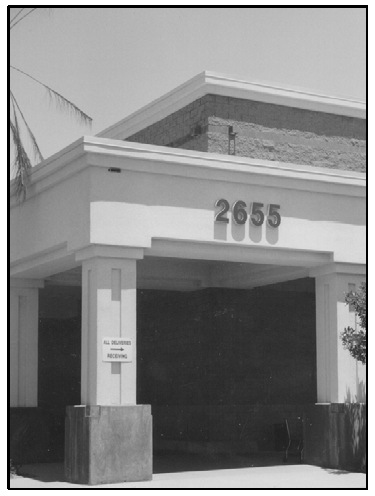
Figure 2-40 - Street Addresses Should Help Easy Identification
i.
Safety Behind Buildings. Safety behind buildings should be ensured through use of:
i.
Adequate security lighting for parking areas and pedestrian ways;
ii.
Limited access (walls, fences, gates, shrubs);
iii.
Signage;
iv.
Introduction of activities (e.g., rear entrances for commercial activities) that increase surveillance;
v.
Surveillance through windows or with cameras; and
vi.
Ongoing maintenance of storage areas and alleys.
F.
Walls and Fences. If walls or fences are not required for a specific screening or security purpose they should not be used. Any necessary walls or fences should be as low as possible while still performing their screening and security functions.
1.
Materials and Colors. Fences and walls should be designed with materials and colors that complement project architecture. When selecting wood as a material, it is important to consider its increased maintenance demands. Landscaping should be used in combination with walls whenever possible.
2.
Design. Long expanses of wall or fence surfaces should be offset and architecturally designed to prevent monotony. Landscape pockets should be provided along the wall.
3.
Security Fencing. When required, security fencing should be a combination of solid pillars, or short solid wall segments, and wrought iron grille work.
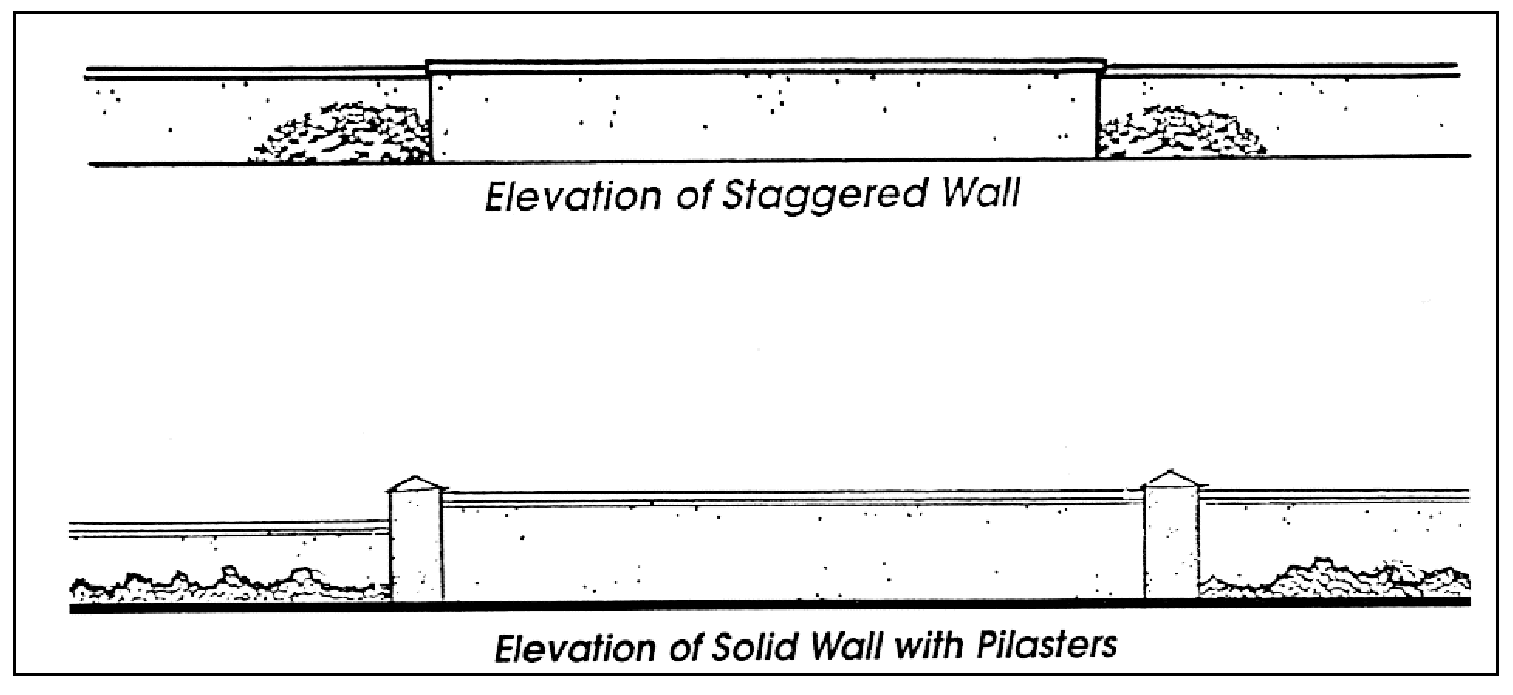
(Ord. No. 1869, § 2, 2-20-2013)
17.22.010 - Purpose of chapter.
This chapter lists the uses of land that may be allowed within the mixed use zoning districts established by Section 17.10.020 (Zoning Districts Established), determines the type of land use permit/approval required for each use, and provides basic standards for site development.
(Ord. No. 1869, § 2, 2-20-2013)
17.22.020 - Purposes of mixed use zoning districts.
The mixed use zoning districts are intended to provide for a range of uses, emphasizing high quality development, and to encourage revitalization of existing land uses. The purpose of the individual mixed use zoning districts and the manner in which they are applied are as follows:
A.
DMU (Downtown Mixed Use) District. The DMU zoning district is applied to the downtown area, and is intended to allow for a broad range of commercial land uses primarily located on the ground floor. Residential uses may also be allowed in this district. The maximum FAR is 3.00. The DMU zoning district is consistent with the downtown mixed use land use designation of the general plan.
B.
MCE (Mixed Use Center) District. The MCE zoning district is applied to the new mixed-use neighborhood centers in the new growth areas of the general plan. This category provides for a variety of residential, office, neighborhood commercial and public uses. The maximum FAR is 1.0. The MCE zoning district is consistent with the mixed use center land use designation of the general plan.
C.
MCO (Mixed Use Corridor) District. The MCO zoning district is applied along the city's major corridors: Kettleman and Cherokee lanes and Lodi Avenue. This category provides for a variety of office and general commercial uses, as well a low-, medium-, and high-density residential. The maximum FAR is 1.2. The MCO zoning district is consistent with the mixed use corridor land use designation of the general plan.
(Ord. No. 1869, § 2, 2-20-2013)
17.22.030 - Mixed use zoning districts land uses and permit requirements.
Table 2-8 identifies the uses of land allowed by this development code in the mixed use zoning districts, and the land use permit required to establish each use, in compliance with Section 17.12.030 (Allowable Land Uses and Permit Requirements).
Note: Where the last column in the tables ("specific use regulations") includes a section number, the regulations in the referenced section apply to the use; however, provisions in other sections of this Development code may also apply.
Notes:
(1) Structures in the MCO district that were permitted as single-family residential dwellings at the time of their construction and that were in existence as of January 1, 2020, are considered legal residential uses. Such structures may be converted to other uses allowed in the MCO zoning district, and converted back to single-family residential uses, after January 1, 2020.
(2) Upper floors only in DMU district fronting School Street (Section 17.22.050).
(Ord. No. 1869, § 2, 2-20-2013; Ord. No. 1914, § 1, 9-2-2015; Ord. No. 1977, § 4, 5-20-2020; Ord. No. 2022, § 3, 1-17-2024; Ord. No. 2030, § 3, 3-19-2025)
17.22.040 - Mixed use zoning districts general development standards.
Subdivisions, new land uses and structures, and alterations to existing land uses and structures, shall be designed, constructed, and/or established in compliance with the requirements in Table 2-9, in addition to the applicable development standards (e.g., landscaping, parking and loading, etc.) in Article 3, (Site Planning and General Development Standards).
Notes:
(1) None required except: When adjacent to a res. zone boundary where a min. of ten feet is required. For buildings over two stories, twenty feet is required.
(Ord. No. 1869, § 2, 2-20-2013)
17.22.050 - Downtown mixed use design guidelines.
A.
Purpose. A vital component to the revitalization strategy adopted for the downtown area was to create and establish land use policies and design guidelines that build on the existing palette of architectural forms and building materials. A primary purpose of the downtown mixed use design guidelines is to ensure that high quality design is maintained for all new construction and rehabilitation projects within the district. The guidelines are intended to encourage individual creativity of project designers while respecting the needs of the individual owner and user. The guidelines are intended to: create a distinctive and cohesive image for downtown Lodi; assure that all new development, rehabilitation and improvements give consideration to quality design in architecture and site planning; protect and enhance property values and investment; and provide consistency and compatibility within the downtown. The development standards and design guidelines promote buildings and renovations that strengthen the existing "Main Street" character of the downtown area and enhance a pedestrian-oriented retail and entertainment niche. Among other things, they require buildings to help shape the street as a pedestrian space.
B.
Applicability.
1.
The downtown mixed use design guidelines shall apply to all of the properties designated as downtown mixed use in the general plan. The design elements of each project (including site design, architecture, landscaping, signs, parking design) will be reviewed on a comprehensive basis.
2.
The downtown mixed use guidelines augment other sections of the development code. When an issue, condition or situation occurs which is not covered or provided for in the design guidelines, the regulations of the development code that are most applicable to the issue, conditions or situation shall apply. In the event that the provisions of the design guidelines are in conflict with other sections of the development codes, the provisions of the design guidelines shall prevail.
C.
Development Standards. Development standards address those aspects that are essential to achieve the goals of the concept plan. They are specifications for building design and site development such as height, setbacks, and permitted uses. Standards are required minimums or benchmarks that all projects must adhere to.
1.
Land Use. Successful downtowns involve uses that generate activity. These uses can populate the streets, create excitement, increase safety and reinforce downtown as an important destination. Among the uses that contribute to this activity are specialty retail shops, eating and drinking establishments, and entertainment facilities.
The importance of the downtown can also be enhanced by emphasizing the mixture and intensity of uses that occur, including housing and office uses. This is particularity true for vertical mixture with residential and offices above the first floor.
a.
Permitted Ground Level Uses—School Street Frontage.
i.
Retail: All uses except drive-up or drive-in services.
ii.
Eating and Drinking Establishments: Including those serving alcoholic beverages, provided this service is clearly ancillary to food service; drive-up or drive-in restaurants not permitted.
iii.
Personal Services: Hair and nail salons, shoe repair, laundromats, dry cleaners, and similar businesses.
iv.
Business Services: Are storefront businesses that generate foot traffic, such as photocopy shops, photo-finishers, video rental and sales, travel agencies, appliance repair, print shops, insurance agencies, or real estate agencies, financial institutions, and public utilities.
v.
Nightclubs: Including establishments providing entertainment or permitting dancing, and establishments serving alcoholic beverages not ancillary to food service. (Above uses may require a conditional use permit as required by the Lodi Municipal Code).
vi.
Other Business or Service Establishments: If determined by the community development department staff to be of the same general character as those uses listed herein and above.
b.
Permitted Uses: All Other street Frontages and Upper Level School Street Frontage.
i.
All permitted uses listed above.
ii.
Drive-through establishments.
iii.
Professional offices.
c.
Upper Level Uses Subject to a Conditional Use Permit.
i.
Clubs and lodges.
ii.
Residences.
iii.
Other service establishments if determined by the city to be of the same general character as listed therein and above.
2.
Building Height and Setbacks.
a.
Height: As measured from sidewalk to top of cornice, parapet, or to eave line of peaked roof shall be as follows:
i.
Maximum Building Height: Six floors and seventy-five feet.
ii.
Minimum Height: Twenty feet top of parapet or eave.
iii.
Accessory Buildings: May be twelve feet in height if set back ten feet or more from side and rear property lines.
b.
Front Setbacks: The first and second floors of all building shall be built-to and parallel with the front property line, with the following exceptions:
i.
Mid-Block Buildings: Between existing adjacent structures shall be no closer to the street than the adjacent building closest to the street, and no farther than the adjacent building farthest back from the street.
ii.
Corner Buildings: Shall be built to both right-of-way lines in order to frame the intersection. Exceptions are:
•
The corner may be "cut back" up to six feet to create a diagonal at the ground level and/or at upper levels.
iii.
Special Architectural Features: Bay windows, turrets, decorative roofs, and miscellaneous entry features excluding awnings or canopies:
(A)
May project no more than three feet over property lines, and must be no less than twelve feet above the highest point in the sidewalk over which they project;
(B)
The maximum width of a recessed entry shall be one-third the length of the building's street frontage.
c.
Side Setbacks: New buildings may be built to both side property lines, and must be built to at least one side property line. Should a side of the building be set back from a side property line:
i.
Minimum: At least four feet shall be provided for an access passage.
ii.
Street Exposure: Side setback areas must be screened from the street and sidewalk by a decorative gateway, fence, wall, or row of piers (see design guidelines).
d.
Rear Setbacks: New commercial buildings may be built to the rear property line, except when:
i.
Adjacent to Single Family Residential Areas.
(A)
First and second floors shall be set back a minimum of ten feet from the rear property line;
(B)
Third floors must be set back a minimum of twenty feet from the rear property line;
3.
Parking, Access and Landscaping.
a.
Parking: Off-street parking shall be provided pursuant to the requirements of the Lodi Municipal Code. In consideration of shared parking, location and demand, parking in the downtown may be reduced or waived at the discretion of the community development director.
b.
Site Access.
i.
Pedestrian access to storefronts shall be provided from the street and/or side street to the main building entrance; i.e. pedestrian access to building entrances shall not be restricted to parking lots.
ii.
Vehicular Access: No new curb cuts shall be installed on School Street. Shared parking arrangements are encouraged to reduce the need for new curb cuts. Where curb cuts are necessary:
(A)
Location shall be on side streets where accessible:
(B)
Maximum width shall be sixteen feet for a one-way driveway and twenty-five feet for a two-way driveway.
iii.
Service access from rear alleys or side streets shall be preserved and enhanced wherever possible. Trash and loading areas shall not be visible from the street and shall be screened from view from side streets and from properties to the rear.
c.
Landscaping and Screening.
i.
Parking areas shall be planted with shade trees at a ratio of one tree for every three spaces. A minimum of five feet of landscaping shall be provided between the parking area and street right-of-way.
ii.
The perimeter of parking areas and driveways adjacent to streets and sidewalks shall be screened with an attractive landscape hedge, berm, low wall, fence, or line of bollards a minimum of thirty inches and a maximum of thirty-six inches in height.
iii.
Adjacent to Designated Residential Areas: Attractive screen fencing or decorative masonry or walls shall be provided along the property line to screen buildings, service areas, and parking areas.
(A)
A six-foot wide planting area shall be established on the commercial side of the fence or wall with shade tree planting at a minimum spacing of twenty feet on center.
(B)
Fences and walls not adjacent to streets or sidewalks shall be a minimum of six feet in height and a maximum of eight feet in height.
iv.
Trash and Service Equipment: Including satellite receiving dishes, shall be located away from streets and enclosed or screened by landscaping, fencing or other architectural means.
D.
Design Guidelines. Design Guidelines are Discretionary. They are intended to illustrate and simplify the appropriate development and renovation concepts in terms of more subjective considerations, such as character or design details. The guidelines are not intended to be an exhaustive list of strict standards, but rather, statements to encourage improvement which is sensitive to the downtown. They also serve as criteria for design review by city staff and the site plan and architectural review committee (SPARC). No particular architectural style is prescribed.
1.
Building Composition: Every building should have a base, a clear pattern of openings and surface features, a recognizable entry, and an interesting roofline.
2.
Storefronts: Are like small buildings with their own base, "roofline", and pattern of window and door openings
a.
Base: Panel of tile or other special material is recommended below display windows. Materials recommended for walls are generally suitable. Base materials should be the same or visually "heavier" materials than walls.
i.
Brick should be used as the main wall surface.
ii.
Ceramic tile is frequently used as a storefront base. Dark tile with light stucco is an effective combination. Different colors and sizes of tile may be used for a decorative effect.
b.
Display Windows. Large pane windows encompassing a minimum of sixty percent of the storefront surface area are recommended. Where privacy is desired for restaurants, professional service, etc., windows should be divided into smaller panes. Tinted windows may be used. (Refer to glazing section).
c.
Transom windows are horizontal panels of glass between the storefront and second floor. They are a traditional element of "main street" buildings, and are recommended for all new or renovated storefronts. Transom windows can be good locations for neon, painted-window, and other relatively non-obtrusive types of signs.
d.
Recessed entries are recommended as another traditional element of the main street storefront. Recommended treatments include:
i.
Special paving materials such as ceramic tile;
ii.
Ornamental ceiling treatments, such as coffering;
iii.
Decorative light fixtures.
e.
Doors should be substantial and well-detailed. They are the one part of the storefront that patrons will invariably touch and feel. They should match the materials, design and character of the display window framing. Door styles six inches or less are not recommended.
f.
Cornices should be provided at the second floor (or roofline for a one-story building) to differentiate the storefront from upper levels of the building to add visual interest, and to allow the storefront to function as the base for the rest of the building.
g.
New or renovated storefronts within existing buildings should emulate or re-create a previous store front (from historic photos or drawings) in order to harmonize with the overall building architecture.
3.
Building increments storefronts and/or building bays should be approximately twenty-five feet in width. Buildings with a longer frontage should have a vertical architectural feature-column, pilaster, etc. every twenty-five feet.
a.
Pattern of features windows, wall, panels, pilaster, building bays, and storefronts should be based on a module derived from the building's structural bay spacing. Features based on this module should be carried across windowless walls to relieve blank, uninteresting surfaces.
b.
Building entrances should be prominent and easy to identify.
i.
Spacing entries to shops or lobbies should be spaced a maximum of fifty feet apart.
ii.
Main building entrance should be easily identifiable and distinguishable from storefronts:
(A)
Marked by a taller mass above, such as a tower, or within a volume that protrudes from the rest of building surface;
(B)
Located in the center of the facade, as part of a symmetrical overall composition;
(C)
Accented by architectural elements, such as columns, overhanging roofs, awnings, ornamental light fixtures.
iii.
Prominent corner entrances for shops or other active uses should be provided by corner buildings.
c.
Roofs and rooflines should provide visual interest and complement the overall facade composition.
i.
Parapet walls are recommended; they should have a distinct shape or profile, e.g. a gable, arc, raised center.
ii.
Accent elements such as flags, cut-out openings, grilles and latticework, ornamental medallions or building numbers are also recommended.
iii.
Mechanical equipment on rooftops should be screened, preferably behind a parapet roof. Latticework, louvered panels, and other treatments that are compatible with the building's architecture may also be appropriate.
4.
Special architectural features such as gables and tower elements, should be used to accent buildings at major street corners and other highly-visible locations. A cut into the building mass, such as a diagonal at a corner building, or a notch for a grand building entry, can also be effective.
5.
Side and rear building facades should have a level of trim and finish compatible with the front facade or an architectural mural, particularly if they are visible from streets, adjacent parking areas or residential buildings.
6.
Wall Treatments: If the building mass and pattern of windows and doors is complex, simple wall surfaces are preferable (e.g. stucco). If the building volume and the pattern of wall openings is simple, additional wall texture and articulation should be employed (e.g. bricks or blocks). In both cases, pilasters, columns, and cornices should be used to add visual interest and pedestrian scale.
The selection and placement of materials on the exterior of a building is important in providing an attractive design. Material change should occur on different planes in order to appear more substantial and integral to the design of the elevation. Change should occur where architectural elements intersect, such as a pilaster or projection. The number of materials on the exterior elevation should be limited to prevent visual overload. Materials should have a traditional or logical application. Heavy materials should appear to hold up lighter materials.
a.
Brick: Full size brick veneer is preferable to brick tile. Brick veneers should be mortared to give the appearance of structural brick. Brick tile applications should use wrap-around corner and bullnose pieces to minimize a veneer appearance.
b.
Brick Veneers: Are appropriate as a special material for wall panels or sills in combination with other materials, such as brick or concrete.
c.
Poured-In-Place Concrete: Options in terms of formwork, pigments, and aggregates should be explored to create rich surfaces. Accents such as ceramic tile are recommended for decorative effect.
d.
Concrete Block: Concrete block is available in various sizes, surface textures, and colors. Decorative treatments, such as alternating, courses of differing heights, should be used. Stack bond, plain gray concrete block is not recommended
e.
Ceramic tile is recommended as an accent material.
f.
Stucco integral coloring should be used for lower maintenance and wear.
g.
Not Recommended:
i.
Simulated finishes such as artificial stone or metal cladding.
ii.
Wood shingles and shakes: Vertical board and batten, shingles, shakes, are not recommended; they have a rural/residential character.
iii.
Plywood siding. (Includes T-111 siding)
7.
Windows are an important element of building composition and an indicator of overall building quality.
a.
Window/Wall Proportion: In general, upper stories should have a window to wall area proportion (typically thirty to fifty percent) that is smaller than that of ground floor storefronts.
b.
Window openings should generally be vertical or square in shape; if square, windows and/or window panes should be vertical in shape.
c.
Window inset glass should be inset a minimum of three inches from the exterior wall surface to add relief to the wall surface; this is especially important for stucco buildings.
d.
Shaped frames, sills and/or lentils should be used to enhance openings and add additional relief. They should be proportional to the glass area framed; e.g. a larger window should have thicker framing members.
e.
Muntins "true divided light" windows or sectional windows are recommend where a divided window design is desired; where "snap-in" muntins are used, they must be both sides of the glass.
f.
Glazing: Clear glazing is strongly recommended. Reflective glazing should not be used. If tinted glazing is used, the tint should be kept as light as possible; green, gray, and blue are recommended.
g.
Replacement/renovation: Wood windows should be replaced with wood windows of the same operating type (e.g. double-hung, casement, etc.). Vinyl covered wood windows are available for lower maintenance. If aluminum replacement windows or doors are used, they should be:
i.
Same operating type and orientation as the original windows (e.g. do not replace a double-hung window with a horizontal sliding window).
ii.
Factory painted or fluorocoated to match the original; color anodized is also acceptable.
iii.
Similar in size and thickness to the original frame and muntins.
8.
Roofs should match the principal building in terms of style, detailing and materials. They should also contribute expressive and interesting forms that add to the overall character of the district. Recommended types are:
a.
Tar and gravel, composition, or elastomeric roofs should be screened by parapets or false-front sections of sloping roofs.
b.
Clay, ceramic or concrete tile: Colorful glazed ceramic tiles are recommended for decorative roof shapes, such as parapets, domes, and turrets.
c.
Metal seam roofing should be anodized, fluorocoated or painted. Copper and lead roofs should be natural or oxidized.
9.
Canopies, Awnings, and Other Building-Mounted Accessories.
a.
Awnings are Recommended. They should be a colorful fabric mounted over a metal structural that is framed and attractive in design. Fabric awnings are generally preferable to permanent canopies. Internally illuminated vinyl awnings are not acceptable.
b.
Trellises and canopies materials, colors, and form should be derived from the building architecture.
c.
Height and projection trellises, canopies and awnings should be a minimum of eight feet above the sidewalk. They should project no more than two feet from the face of curb, depending upon the width of the sidewalk.
d.
Placement of trellises, canopies and awnings should be above the display windows and below the storefront cornice or sign panel. They should not cover pipes, pilasters, clerestory windows or other architectural features. Individual awnings accents and complements the building more effectively than one continuous awning.
e.
Accessories colorful banners should be used to add variety to the street. Ornamental brackets and poles add further interest. Hanging flower or plant baskets suspended from ornamental brackets of metal or wood are recommended for storefronts.
10.
Color: In general, drab earthtones should not be used. Building wall color should contrast trim colors; for example, neutral or light walls with dark colors and saturated hues for accent and ornamental colors; white or light window and door trim on a medium or dark building wall. Colors of adjacent buildings should be taken into consideration.
a.
Secondary color (like a wainscot), pilasters, cornices, capitals, and bands.
b.
Bright colors should be used sparingly. Typical applications are fabric awnings and banners. A restrained use of bright colors also allows display windows and merchandise to catch the eye and stand out in the visual field.
E.
Additions, Renovations and Restorations. Changes to the commercial environment will most likely take place in the form of renovation or restoration. As uses change and remodeling projects are proposed, owners are encouraged to upgrade their property in a manner consistent with the character of the downtown. One of the most effective ways to attract attention and encourage shopping is to create an attractive, well designed storefront and building entry. Many buildings in Downtown Lodi have distinctive architectural qualities that make important contributions to the visual character. These qualities could be improved or emphasized to the benefit of the entire area.
Sensitive alteration or restoration of existing buildings enhances their historic value. To ensure proper work, the services of an architect specializing in restoration and preservation work are highly recommended.
1.
Additions and alterations should be sensitive to the scale and character of storefront areas in general, of adjacent buildings, and of the building itself. Generally, they should reflect one of the following conditions:
a.
Identical to the architecture of the original building, as if the same architect or builder built more of the same building. This is usually most successful and feasible where the addition is smaller than the original building.
b.
Interpretation of the older building (and/or other adjacent buildings). The older building is not imitated exactly, but certain characteristics are copied using contemporary materials and construction practices. This is most successful where the addition is larger than the older building. Some of their "contextual" strategies are:
i.
Architectural lines and rhythms of older buildings are extended to the new building; such as floor and cornice heights, window and bay spacing,
ii.
Colors and materials are selected to coordinate and harmonize between the old and new structures.
iii.
Small elements may be identical on both buildings to link them; window and door trim, paint colors, signs, light fixtures, etc.
2.
Restorations: Restoring the original form and appearance of old buildings is recommended. Many "modernization's" of 19th and early 20th century storefront buildings cover fine facades and other architectural features that can be restored. Paint, covered, or blocked-in clerestory windows are common, as are upper stories that have been plastered over or covered with metal fascia or awnings.
3.
Repair and Cleaning: Care should be taken to avoid damaging the value of historic buildings. In particular:
a.
Masonry materials such as concrete and brick should not be sandblasted, as this damages the surface of the material; low-pressure water cleaning should be used instead. Sealers for waterproofing should be used after cleaning and repair.
4.
Replacement of Unavailable Components: When historic construction materials cannot be replaced or matched, care should be taken to match the original pattern, thickness, color, and texture as closely as possible with available materials. In general, simulated replacement materials (artificial stone, simulated "aged" brick) are discouraged. The restoration architect and various specialty building supply businesses can assist in the selection of proper materials.
F.
Lighting. Building and accent lighting in the downtown is an effective mechanism to attract attention to a structures details and the business as well. Further, lighting shall be used for parking areas, passageways and sidewalks.
1.
Area lighting sources for illuminating sidewalks passageways, parking, and rear and side yard areas:
a.
Shall be shielded from casting light onto adjacent properties. They shall not cast light directly into adjacent residential windows. A translucent or optical lens diffuser globe or shield is recommended.
b.
Maximum mounting height of light sources for ground level illumination shall be sixteen feet, measured from the finished grade of the area to be lit; height must be eighteen feet at minimum if extending over a roadway surface.
2.
Ornamental fixtures not used as primary area lighting and mounted with visible light sources:
a.
With clear or no diffuser individual lamp wattage should not exceed sixty watts incandescent, twenty watts fluorescent, or forty watts high intensity discharge (H.I.D., such as metal halide, high pressure sodium, or mercury vapor lamps).
b.
With frosted or optical (fresnel type) light fixture diffuser individual lamp wattage may not exceed one hundred watts incandescent, forty watts fluorescent, or seventy watts H.I.D.
3.
Commercial Areas. The following recommendations are intended to promote an attractive nighttime pedestrian environment. They apply to lighting installations by either the private or public sector:
a.
Specialized Professional Assistance. A good lighting design can make both tenant businesses and buildings highly recognizable and attractive by night, and contribute to the district's distinctiveness. The services of a lighting designer are highly recommended, as such a specialist can demonstrate and provide the best effect within a specified budget.
b.
Lighting Design.
i.
Use the minimum brightness for illumination of large areas.
ii.
Use brighter light to punctuate and accent important areas such as entries and special architectural features.
c.
Recommended lamp color/types. Color corrected ("white") high pressure sodium (HPS); color corrected (three thousand degrees K); incandescent.
d.
Lamps not recommended. Standard ("peach") high pressure sodium, low.
e.
Metalwork. Portions of lighting should be architecturally related to the building architecture. The color and finish of lighting metalwork should match the building's metalwork, if any.
f.
Recommended globes. Clear borosilicate glass globes; clear acrylic or polycarbonate globes with optical diffusing (fresnel) patterns; translucent clear (frosted) or white acrylic or polycarbonate globes.
(Ord. No. 1869, § 2, 2-20-2013)
17.22.060 - Mixed use center design guidelines.
A.
Purpose. The mixed use center design guidelines are intended to provide clear and useful recommendations for the design, construction, review, and approval of mixed use center development in the city of Lodi. Mixed use center development will play a vital role in creating neighborhoods centers where people can walk between home, work, shopping, and recreation. This chapter will help ensure that new projects will be well designed, uphold the city's vision, and contribute to the quality of the public realm.
B.
Applicability.
1.
The design guidelines in this chapter apply to the three sites designated as mixed use center in the general plan. The design elements of each project (including site design, architecture, landscaping, signs, parking design) will be reviewed on a comprehensive basis.
2.
The review authority may interpret these design guidelines with some flexibility in their application to specific projects, as not all design criteria may be workable or appropriate for each project. In some circumstances, one guideline may be relaxed to facilitate compliance with another guideline determined by the review authority to be more important in the particular case. The overall objective is to ensure that the intent and spirit of the design guidelines are followed.
C.
Site Planning.
1.
Require all development at sites designated mixed use center to provide a mix of commercial uses, while allowing residential uses, to create a "node," typically centered around a plaza, or "a central street," with a minimum of ten percent of the land area devoted to non-residential land uses, to create pedestrian vitality in the core area. Allow a range of other supportive commercial uses, such as medical, dental, and real-estate offices, as well as community facilities.
2.
Require each core (minimum parcel size of fifteen acres) to have at least one plaza or other satisfactory gathering space along the central street that enables gathering and promotes a sense of neighborhood identity.
3.
Block lengths within mixed use center areas shall not exceed four hundred feet.
D.
Building Placement.
1.
Buildings shall be constructed near or along the front property line(s). A "zero setback" from the front property line(s) is encouraged.
2.
Variations in the zero setback from the property line(s) may be appropriate when the resulting setback provides greater accommodation for pedestrian circulation, sidewalk dining areas, enhanced entries, and improves the pedestrian realm.
3.
When a front setback is necessary, a majority of the setback shall be hardscaped with limited landscaping to accommodate uses that keep the public realm active, such as outdoor dining and seating.
4.
Require that any office uses in mixed use center front along the street edge with minimal setbacks.
E.
Building Orientation.
1.
The main pedestrian access point to the building shall be located along the facade that is oriented to the primary street.
2.
Buildings on corner lots shall have the primary entry facing the intersection. Corner entries help create an active public realm and reinforce significant street and sidewalk intersections.
3.
Entries that face the primary street shall be directly connected to the street's sidewalks. Secondary and residential entrances can be connected to interior courtyards and parking lots.
4.
The most active ground floor uses such as storefronts, lobbies, and restaurant dining areas shall front the public sidewalk. Private amenities, such as courtyards, that are not accessible to the public shall be located within the project site or on upper floors and not along the street.
5.
For buildings sited on less significant intersections, such as a major arterial and a collector, at least fifty percent of the side street ground floor elevation shall include storefront design features.
F.
Building Design and Architecture.
1.
Building Organization and Frontage.
a.
In mixed use centers the development of a complex of buildings is preferable to a single large structure because the varied massing provides visual interest and human scale. Additionally, the spaces created between the various buildings provide opportunities for pedestrian plazas, courtyards and other outdoor gathering areas.
b.
Building plans, facades, and architectural details shall create visual interest at the street level (e.g., staggering the frontage of the building, recessing doors and windows, providing awnings and canopies for weather protection and scale, and visually extending interior spaces outside through paving and glazing to create the concept of an indoor/outdoor room, etc.).
c.
Projects located at intersections shall ensure the design treatments are continued around the corner.
d.
Development located at signalized intersections of major streets shall be encouraged to include pedestrian-oriented, community serving commercial uses such as a bookstore, coffee shop, or local market.
2.
Articulation.
a.
Buildings shall be articulated to reflect a small-scale street frontage rhythm, with building bay widths of approximately twenty-five to fifty feet.
b.
Where multiple-tenant spaces are incorporated into a building, individual tenant spaces shall be located within the building bays. This can be achieved by any of the following:
i.
Placing a column, pier or pilaster between facade elements.
ii.
Applying vertical slot or recess between facade elements.
iii.
Providing variation in plane along the building wall.
iv.
Varying the building wall by recessing the storefront entrance or creating a niche for landscaping or pedestrian area.
c.
Primary building entries shall be accented with strong architectural definition.
d.
Mixed use buildings shall be designed with a distinct "base", "middle", and "top" to create a human-scaled public realm. Elements that are recommended to articulate a building's facade include:
i.
Design details for the top of a building, including cornice lines, parapets, eaves, brackets and other detailing.
ii.
Design details for the body, or middle, of the building including windows, awnings, trellises, canopies, alcoves, balconies, pilasters, columns, decorative lighting and window boxes.
iii.
Design details for the base of a building, including recessed entry areas, covered outdoor areas and alcoves.
e.
The proportion and placement of windows on upper floors shall be designed to look different from the windows on the ground floor.
f.
Awnings are encouraged, and if used, should be provided over each storefront of buildings with multiple storefronts. These awnings should be located within the individual structural bays and should not hide architectural detailing.
g.
Awnings on multi-tenant buildings should be the same color and style and should be consistent with the character and design of the building.
h.
In order to promote active, pedestrian-friendly streets, each individual tenant or business establishment and residential lobbies shall be oriented to and accessible from the major street frontage and directly accessible from the public sidewalk.
i.
Rear walls and elevations visible from the public right-of-way shall be designed to maximize visual appeal by using vertical and horizontal wall plane breaks.
3.
Roofs.
a.
Roofs should be compatible with the architectural style of the building.
b.
The roof shape should reflect the configuration of the building's mass and volume, and should be consistent in its character from all vantage points.
c.
Sloping roof forms are encouraged.
d.
The visible portion of sloped roofs shall be sheathed with a roofing material complementary to the architectural style of the building.
e.
All buildings shall provide cornice or parapet detailing in order to delineate a strong roofline along the primary facades.
f.
Cornices and horizontal bands of genuine materials, such as wood trim rather than foam are strongly encouraged.
g.
False fronts, applied mansard forms and other artificial rooflines that are not an integral component of the architectural design should be avoided.
4.
Building Materials.
a.
A well-defined building "base" (i.e., ground floor) provides scale and articulation at the pedestrian level. The "base" shall consist of traditional thicker walls along with high quality, durable, and easy to clean materials and finishes. Special materials (e.g., granite, marble, polished stone, and other metal panels) shall be utilized as accent materials on the building's "base."
b.
Upper floors that are less prone to potential vandalism shall utilize high quality finish materials of traditional mixed-use projects (e.g., brick veneer, smooth troweled stucco, etc.).
c.
Materials and colors shall be selected to unify the building appearance and fit into the pedestrian context. Avoid overly vibrant colors and/or monochromatic color palettes.
d.
Awning materials should be compatible with the overall design and character of the building. The use of fabric awnings is encouraged. The use of vinyl and plastic awnings is discouraged.
5.
Windows.
a.
Windows shall be large glazed panels, possibly with small upper transoms. Window patterns shall have a slight inset and not appear flat. Glass shall be clear (eighty-eight percent light transmission) and not heavily tinted so as to provide views into active spaces or window displays.
b.
A minimum of sixty percent of linear store frontage at the street facade should be used for the display windows and evenly distributed. False fronts or windows should not be included that are not integral components of the building.
c.
Windows on the upper floors shall be smaller in size than storefront windows on the first floor and shall encompass a smaller proportion of facade surface area.
d.
Upper story windows shall be detailed with architectural elements, such as projecting sills, molded surrounds and/or lintels.
e.
Where unique use or occupancy requirements preclude the addition of windows, such as theaters or parking structures, exterior walls shall be designed to provide architectural relief or shall be screened by landscaping and pedestrian amenities, such as trellises, benches or shade structures.
f.
To ensure and protect the privacy of residents in adjacent single-family homes, windows in mixed-use projects facing single family residences within fifteen feet of the property line, shall be carefully arranged. Examples of privacy options include translucent or louvered windows, offset window patterns, and locating windows five-feet above the floor level.
G.
Plazas.
1.
Plazas shall incorporate high quality paving materials, such as stone, concrete or tile. The paving shall complement the adjacent public streetscape elements.
2.
Plazas should be visible from public streets and the pedestrian network and accessible from the building as well as the street and pedestrian network.
3.
Focal elements such as sculptures, art, or water features shall be incorporated into courtyard and plaza design.
4.
Site furniture shall be carefully placed to not create pedestrian/vehicular conflicts. All outdoor seating areas shall leave at least five feet of unobstructed pedestrian space.
5.
Graffiti resistant material and/or coating and skateboard deterrents shall be required to retain the furniture's attractiveness.
6.
All outdoor dining furniture and umbrellas in the public right-of-way shall be removed and stored inside during hours of non-operation.
H.
Parking and Circulation.
1.
Customer and tenant parking shall be provided at the rear of buildings, in facilities, in off-street parking lots, or adjacent parking lots. Whenever possible, parking structures shall be placed behind the mixed use buildings.
2.
Mixed-use projects must provide secure separate parking spaces for the residential units. The secure residential spaces shall be accessed via a gate code or other security mechanism.
3.
Vehicular access shall be provided from side streets, adjacent alleys, and parallel streets whenever possible.
4.
Where possible, rear parking lots shall be designed and located contiguously so vehicles can travel from one private parking lot to another without having to enter the street. This may be achieved with reciprocal access agreements.
5.
The number of curb cuts for vehicular entry into the site shall be minimized so that pedestrian and bicycle areas are safe, secure, and passable.
6.
Where possible, require abutting new developments to share a single access point from the road and allow only one curb cut per parcel.
7.
Pedestrians shall have a clear and direct route from on-site parking to the building entry and public sidewalk system. The circulation path shall be direct, continuous, marked, and free of barriers (e.g., site equipment, signage, utility poles, etc.).
8.
Any paving pattern, color, and material used to articulate pathways and pedestrian areas shall continue when driveways intersect with these areas. Where pedestrian circulation paths cross vehicular circulation paths, a material change, contrasting color, or slightly raised crossing shall be used to clearly delineate the continuing pedestrian path.
9.
Adjacent properties shall be adequately screened from the parking structures and lots.
10.
Secure, covered bicycle parking in residential mixed-use projects shall be provided.
11.
Commercial bicycle racks shall be in public view, close to building entrances, with high visibility and sufficient lighting.
12.
Include corner bulb-outs with gathering spaces and special crosswalks at key intersections. Considerations for gathering space components shall include shelter from sun and rain, seating options, landscaping (including shade trees and planters), trash receptacles, signage and fountains.
I.
Landscaping.
1.
Emphasis shall be placed on California or Mediterranean style landscaping, particularly indigenous plants, ornamental vines, and flowers in either container pots or as part of an arbor/trellis. Landscaping must be well maintained with drip irrigation systems for trees/garden beds and pots that does not drain across the pavement.
2.
All landscaping shall employ features and techniques that reduce the demand for and consumption of water, including appropriate low-water plants, a high degree of paving permeability and water conserving irrigation techniques and systems.
3.
Planting plans for building setbacks should include a hierarchy of plantings in terms of size and types of plant materials that mark the transition between the horizontal ground plane at the sidewalk or parking area and the tall, vertical facades of buildings.
4.
Continuous street trees shall be included along all street frontages of mixed-use development.
5.
Trees in paved areas shall be provided with "deep root" barriers, deep root automatic irrigation, and expandable metal tree grates of adequate size. Root barriers shall be of a material specifically designed for containing tree roots. Irrigation shall be adapted for deep watering.
6.
For plazas, shade trees or other sun-screening elements shall be incorporated in the design to provide well-shaded seating areas. Decorative planters shall be considered for plazas.
7.
Parking lots visible from the street and pedestrian areas shall incorporate landscaping treatments (e.g., trees, shrubs, groundcover, etc.). Larger parking lots shall also incorporate landscaped medians where appropriate.
J.
Lighting.
1.
Lighting fixtures shall be attractively designed to complement the architecture of the project, signify building entry locations, and improve visual identification of residences and businesses.
2.
On each project site, all lighting fixtures shall be architecturally compatible with the buildings and from the same "family" with respect to design, materials, color, style, and color of light.
3.
Wall mounted lights shall be used to the greatest extent possible to minimize the total number of freestanding light fixtures.
4.
The lighting of building elements and garden walls is an effective and attractive lighting technique that should be considered.
5.
In order to use less energy and reduce light pollution, ensure that lighting associated with new development or facilities (including street lighting, recreational facilities, and parking) shall be designed to prevent artificial lighting from illuminating adjacent residential neighborhoods and/or natural areas at a level greater than one foot candle above ambient conditions.
K.
Walls.
1.
Encourage alternatives to soundwalls and permit new soundwalls only where alternatives are not feasible. Along major arterials that coincide with a mixed use center, such as Kettleman Lane, ensure that soundwalls do not disrupt pedestrian-orientated character. Alternative designs could include frontage roads, dense vegetation, and ensuring sufficient insulation in residential units that would potentially be impacted by the noise.
L.
Equipment, Service Area, and Refuse Area Screening.
1.
Roof-mounted utility and communication equipment shall be screened from view by structural features that are an integral part of the building's architectural design.
2.
Loading and service areas shall be concealed from view within the building envelope or shall be located to the rear of the site and designed for minimal visual impact and circulation conflicts.
3.
When trash enclosures, loading docks, utility equipment, and similar uses are visible from a side street or a neighboring property, they shall be screened using materials, colors, and landscaping that are harmonious with the site design and building architecture.
4.
Trash storage areas shall be covered to reduce unsightly views.
5.
Trash enclosures shall provide an area for recycling.
(Ord. No. 1869, § 2, 2-20-2013)
17.22.070 - Mixed use corridor design guidelines.
A.
Purpose. The mixed use corridor design guidelines are intended to provide clear and useful recommendations for the design, construction, review, and approval of mixed use corridor development in the city of Lodi. Mixed Use Corridor development will play a vital role in reactivating key roadway corridors in the city through stimulation of new development along the corridors and interconnection of the corridors with surrounding neighborhoods. This chapter will help ensure that new projects will be well designed, uphold the city's vision, and contribute to the quality of the public realm.
B.
Applicability.
1.
The design guidelines in this chapter apply to the roadways designated as mixed use corridor in the general plan. Key corridors include Kettleman Lane, Cherokee Lane, Lodi Avenue, and Central Avenue. The design elements of each project (including site design, architecture, landscaping, parking design) will be reviewed on a comprehensive basis.
2.
The review authority may interpret these design guidelines with some flexibility in their application to specific projects, as not all design criteria may be workable or appropriate for each project. In some circumstances, one guideline may be relaxed to facilitate compliance with another guideline determined by the review authority to be more important in the particular case. The overall objective is to ensure that the intent and spirit of the design guidelines are followed.
C.
Site Planning.
1.
Special Standards for Lodi Avenue and Central Avenue. At least thirty percent of development site shall include active uses—retail, restaurants, cafes, and personal service establishments fronting the streets at the ground level in order to accommodate pedestrian-oriented, neighborhood serving commercial uses. The minimum interior depth of these commercial spaces shall be twenty-five feet. A range of compatible uses, such as residential or office, may be located at upper levels and in portions not fronting the streets.
2.
Special Standards for Kettleman Lane. Allow any mix of uses as permitted within the mixed use corridor classification. Ensure that residential uses are sited at upper levels or, if at ground level, then not directly facing the highly trafficked Kettleman Lane.
3.
Special Standards for Cherokee Lane. Require any new development of site with mixed use designation south of Tokay Street to devote at least one-quarter of the built-up area to commercial uses, while allowing the full spectrum of single or mixed-uses permitted within the designation.
D.
Building Placement.
1.
Buildings shall be encouraged to locate near or along the front property line(s).
2.
Variations in the zero setback from the property line(s) may be appropriate when the resulting setback provides greater accommodation for pedestrian circulation, sidewalk dining areas, enhanced entries, and improves the pedestrian realm.
3.
When a front setback is necessary, a majority of the setback shall be hardscaped with limited landscaping to accommodate uses that keep the public realm active, such as outdoor dining and seating.
E.
Building Orientation.
1.
The main pedestrian access point to the building shall be located along the facade that is oriented to the primary street.
2.
Buildings on corner lots shall have the primary entry facing the intersection. Corner entries help create an active public realm and reinforce significant street and sidewalk intersections.
3.
Entries that face the primary street shall be directly connected to the street's sidewalks. Secondary and residential entrances can be connected to interior courtyards and parking lots.
4.
The most active ground floor uses such as storefronts, lobbies, and restaurant dining areas shall front the public sidewalk. Private amenities, such as courtyards, that are not accessible to the public shall be located within the project site or on upper floors and not along the street.
F.
Building Design and Architecture.
1.
General Building Organization and Frontage Standards.
a.
In mixed use corridors the development of a complex of buildings is preferable to a single large structure because the varied massing provides visual interest and human scale. Additionally, the spaces created between the various buildings provide opportunities for pedestrian plazas, courtyards and other outdoor gathering areas.
b.
Building plans, facades, and architectural details shall create visual interest at the street level (e.g., staggering the frontage of the building, recessing doors and windows, providing awnings and canopies for weather protection and scale, and visually extending interior spaces outside through paving and glazing to create the concept of an indoor/outdoor room, etc.).
c.
Projects located at intersections shall ensure the design treatments are continued around the corner.
d.
Development located at signalized intersections of major streets shall be encouraged to include pedestrian-oriented, community serving commercial uses such as a bookstore, coffee shop, or local market.
e.
Development located at key intersections, including Lodi Avenue/Central Avenue; Lodi Avenue/School Street; and Lodi Avenue/Sacramento Street, shall contain appropriate design features, including buildings that punctuate the corner with design elements and/or projects that provide additional public or pedestrian amenities, such as plazas.
2.
Specific Building Organization and Frontage Standards for all Mixed Use Corridors except Kettleman Lane and Cherokee Lane. Maintain a consistent building base/street wall along the majority of site frontage along mixed use corridors (with the exception of Kettleman Lane and Cherokee Lane), with a minimum height of fifteen to twenty-five feet.
3.
Articulation.
a.
Where multiple-tenant spaces are incorporated into a building, individual tenant spaces shall be located within the building bays. This can be achieved by any of the following:
i.
Placing a column, pier or pilaster between facade elements.
ii.
Applying vertical slot or recess between facade elements.
iii.
Providing variation in plane along the building wall.
iv.
Varying the building wall by recessing the storefront entrance or creating a niche for landscaping or pedestrian area.
b.
Primary building entries shall be accented with strong architectural definition.
c.
Mixed use buildings shall be designed with a distinct "base", "middle", and "top" to create a human-scaled public realm. Elements that are recommended to articulate a building's facade include:
i.
Design details for the top of a building, including cornice lines, parapets, eaves, brackets and other detailing.
ii.
Design details for the body, or middle, of the building including windows, awnings, trellises, canopies, alcoves, balconies, pilasters, columns, decorative lighting and window boxes.
iii.
Design details for the base of a building, including recessed entry areas, covered outdoor areas and alcoves.
d.
The proportion and placement of windows on upper floors shall be designed to look different from the windows on the ground floor.
e.
Awnings are encouraged, and if used, should be provided over each storefront of buildings with multiple storefronts. These awnings should be located within the individual structural bays and should not hide architectural detailing.
f.
Awnings on multi-tenant buildings should be the same color and style and should be consistent with the character and design of the building.
g.
In order to promote active, pedestrian-friendly streets, each individual tenant or business establishment and residential lobbies shall be oriented to and accessible from the major street frontage and directly accessible from the public sidewalk.
h.
Rear walls and elevations visible from the public right-of-way shall be designed to maximize visual appeal by using vertical and horizontal wall plane breaks.
4.
Roofs.
a.
Roofs should be compatible with the architectural style of the building.
b.
The roof shape should reflect the configuration of the building's mass and volume, and should be consistent in its character from all vantage points.
c.
Sloping roof forms are encouraged.
d.
The visible portion of sloped roofs shall be sheathed with a roofing material complementary to the architectural style of the building.
e.
All buildings shall provide cornice or parapet detailing in order to delineate a strong roofline along the primary facades.
f.
Cornices and horizontal bands of genuine materials, such as wood trim rather than foam are strongly encouraged.
g.
False fronts, applied mansard forms and other artificial rooflines that are not an integral component of the architectural design should be avoided.
5.
Building Materials.
a.
A well-defined building "base" (i.e., ground floor) provides scale and articulation at the pedestrian level. The "base" shall consist of traditional thicker walls along with high quality, durable, and easy to clean materials and finishes. Special materials (e.g., granite, marble, polished stone, and other metal panels) shall be utilized as accent materials on the building's "base."
b.
Upper floors that are less prone to potential vandalism shall utilize high quality finish materials of traditional mixed-use projects (e.g., brick veneer, smooth troweled stucco, etc.).
c.
Materials and colors shall be selected to unify the building appearance and fit into the pedestrian context. Avoid overly vibrant colors and/or monochromatic color palettes.
d.
Awning materials should be compatible with the overall design and character of the building. The use of fabric awnings is encouraged. The use of vinyl and plastic awnings is discouraged.
6.
Windows.
a.
Windows shall be large glazed panels, possibly with small upper transoms. Window patterns shall have a slight inset and not appear flat. Glass shall be clear (eighty-eight percent light transmission) and not heavily tinted so as to provide views into active spaces or window displays.
b.
Thirty to sixty percent of linear store frontage at the street facade should be used for the display windows and evenly distributed. A higher percentage shall be encouraged for Lodi and Central Avenues, where higher pedestrian activity is expected. False fronts or windows should not be included that are not integral components of the building.
c.
Windows on the upper floors shall be smaller in size than storefront windows on the first floor and shall encompass a smaller proportion of facade surface area.
d.
Upper story windows shall be detailed with architectural elements, such as projecting sills, molded surrounds and/or lintels.
e.
Where unique use or occupancy requirements preclude the addition of windows, such as theaters or parking structures, exterior walls shall be designed to provide architectural relief or shall be screened by landscaping and pedestrian amenities, such as trellises, benches or shade structures.
f.
To ensure and protect the privacy of residents in adjacent single-family homes, windows in mixed-use projects facing single family residences within fifteen feet of the property line, shall be carefully arranged. Examples of privacy options include translucent or louvered windows, offset window patterns, and locating windows five-feet above the floor level.
G.
Plazas.
1.
Plazas shall incorporate high quality paving materials, such as stone, concrete or tile. The paving shall complement the adjacent public streetscape elements.
2.
Plazas should be visible from public streets and the pedestrian network and accessible from the building as well as the street and pedestrian network.
3.
Focal elements such as sculptures, art, or water features shall be incorporated into courtyard and plaza design.
4.
Site furniture shall be carefully placed to not create pedestrian/vehicular conflicts. All outdoor seating areas shall leave at least five feet of unobstructed pedestrian space.
5.
Graffiti resistant material and/or coating and skateboard deterrents shall be required to retain the furniture's attractiveness.
6.
All outdoor dining furniture and umbrellas in the public right-of-way shall be removed and stored inside during hours of non-operation.
H.
Parking and Circulation.
1.
Customer and tenant parking shall be encouraged to be located at the rear of buildings, in facilities, in off-street parking lots, or adjacent parking lots. Whenever possible, parking shall be placed behind the mixed use buildings.
2.
Mixed-use projects must provide secure separate parking spaces for the residential units. The secure residential spaces shall be accessed via a gate code or other security mechanism.
3.
Vehicular access shall be provided from side streets, adjacent alleys, and parallel streets whenever possible.
4.
Where possible, rear parking lots shall be designed and located contiguously so vehicles can travel from one private parking lot to another without having to enter the street. This may be achieved with reciprocal access agreements.
5.
The number of curb cuts for vehicular entry into the site shall be minimized so that pedestrian and bicycle areas are safe, secure, and passable.
6.
Where possible, require abutting new developments to share a single access point from the road and allow only one curb cut per parcel.
7.
Pedestrians shall have a clear and direct route from on-site parking to the building entry and public sidewalk system. The circulation path shall be direct, continuous, marked, and free of barriers (e.g., site equipment, signage, utility poles, etc.).
8.
Any paving pattern, color, and material used to articulate pathways and pedestrian areas shall continue when driveways intersect with these areas. Where pedestrian circulation paths cross vehicular circulation paths, a material change, contrasting color, or slightly raised crossing shall be used to clearly delineate the continuing pedestrian path.
9.
Adjacent properties shall be adequately screened from the parking structures and lots.
10.
Secure, covered bicycle parking in residential mixed-use projects shall be provided.
11.
Commercial bicycle racks shall be in public view, close to building entrances, with high visibility and sufficient lighting.
12.
Include bicycle lanes along mixed use corridors per Figure 5-3, general plan bicycle system, of the transportation element of the Lodi general plan.
13.
The following key intersections shall include improved pedestrian crossings, per Figures 4-6 to 4-9 of the community design and livability element of the Lodi general plan. Improvements that shall be considered include but are not limited to corner bulb-outs with gathering spaces and special crosswalks. Gathering space components could include shelter from sun and rain, seating options, landscaping (including shade trees and planters), trash receptacles, signage and fountains:
a.
Kettleman Lane.
i.
Kettleman Lane/South Mills Avenue;
ii.
Kettleman Lane/Woodbridge Irrigation District Canal Trail Crossing;
iii.
Kettleman Lane/South Ham Lane;
iv.
Kettleman Lane/South Fairmont Avenue;
v.
Kettleman Lane/South Hutchins Street.
b.
Lodi Avenue.
i.
Lodi Avenue/South Hutchins Street.
c.
Central Avenue.
i.
Central Avenue/Tokay Street;
ii.
Central Avenue/Eden Avenue;
iii.
Central Avenue/Flora Avenue;
iv.
Central Avenue/Hilborn Avenue;
14.
The following priority streets shall include streetscaping and pedestrian comfort measures within the mixed use corridor boundaries, per Figures 4-6 to 4-9 of the community design and livability element of the Lodi general plan. Streetscape amenities may include: street trees, wide sidewalks, special paving, street lighting, seating, info kiosks, open bus stop shelters, and bicycle racks:
a.
Kettleman Lane.
i.
South Mills Avenue;
ii.
South Ham Lane;
iii.
South Fairmont Avenue;
iv.
South Hutchins Street.
b.
Cherokee Lane.
i.
Pine Street;
ii.
Lodi Avenue;
iii.
Tokay Street;
iv.
Industrial Way;
v.
Vine Street.
c.
Lodi Avenue.
i.
South Ham Lane;
ii.
South Hutchins Street;
iii.
South Pleasant Avenue;
iv.
Stockton Street;
v.
Garfield Avenue.
I.
Landscaping.
1.
Emphasis shall be placed on California or Mediterranean style landscaping, particularly indigenous plants, ornamental vines, and flowers in either container pots or as part of an arbor/trellis. Landscaping must be well maintained with drip irrigation systems for trees/garden beds and pots that does not drain across the pavement.
2.
All landscaping shall employ features and techniques that reduce the demand for and consumption of water, including appropriate low-water plants, a high degree of paving permeability and water conserving irrigation techniques and systems.
3.
Planting plans for building setbacks should include a hierarchy of plantings in terms of size and types of plant materials that mark the transition between the horizontal ground plane at the sidewalk or parking area and the tall, vertical facades of buildings.
4.
Continuous street trees shall be included between the corridor roadway and sidewalk, unless infeasible.
5.
Medians within corridor roadways shall be wide enough to act as refuges and support some landscaping, particularly at crossings.
6.
Trees in paved areas shall be provided with "deep root" barriers, deep root automatic irrigation, and expandable metal tree grates of adequate size. Root barriers shall be of a material specifically designed for containing tree roots. Irrigation shall be adapted for deep watering.
7.
For plazas, shade trees or other sun-screening elements shall be incorporated in the design to provide well-shaded seating areas. Decorative planters shall be considered for plazas.
8.
Parking lots visible from the street and pedestrian areas shall incorporate landscaping treatments (e.g., trees, shrubs, groundcover, etc.). Larger parking lots that are not parking structures shall also incorporate landscaped medians where appropriate.
J.
Lighting.
1.
Lighting fixtures shall be attractively designed to complement the architecture of the project, signify building entry locations, and improve visual identification of residences and businesses.
2.
On each project site, all lighting fixtures shall be architecturally compatible with the buildings and from the same "family" with respect to design, materials, color, style, and color of light.
3.
Wall mounted lights shall be used to the greatest extent possible to minimize the total number of freestanding light fixtures.
4.
The lighting of building elements and garden walls is an effective and attractive lighting technique that should be considered.
5.
In order to use less energy and reduce light pollution, ensure that lighting associated with new development or facilities (including street lighting, recreational facilities, and parking) shall be designed to prevent artificial lighting from illuminating adjacent residential neighborhoods and/or natural areas at a level greater than one foot candle above ambient conditions.
K.
Signage and Gateways. For mixed use corridors, including but not necessarily limited to Kettleman Lane, Cherokee Lane, Lodi Avenue, Central Avenue, Sacramento Street, and Stockton Street, develop a wayfinding and signage scheme along the corridors that utilizes public art and street elements, such as banners and light fixtures. The scheme should reinforce the city's identity and linkages to downtown.
L.
Walls. Encourage alternatives to soundwalls and permit new soundwalls only where alternatives are not feasible. Alternative designs could include frontage roads, dense vegetation, and ensuring sufficient insulation in residential units that would potentially be impacted by the noise.
M.
Equipment, Service Area, and Refuse Area Screening.
1.
Roof-mounted utility and communication equipment shall be screened from view by structural features that are an integral part of the building's architectural design.
2.
Loading and service areas shall be concealed from view within the building envelope or shall be located to the rear of the site and designed for minimal visual impact and circulation conflicts.
3.
When trash enclosures, loading docks, utility equipment, and similar uses are visible from a side street or a neighboring property, they shall be screened using materials, colors, and landscaping that are harmonious with the site design and building architecture.
4.
Trash storage areas shall be covered to reduce unsightly views.
5.
Trash enclosures shall provide an area for recycling.
(Ord. No. 1869, § 2, 2-20-2013)
17.24.010 - Purpose of chapter.
This chapter lists the uses of land that may be allowed within the industrial zoning districts established by Section 17.10.020 (Zoning Districts Established), determines the type of land use permit/approval required for each use, and provides basic standards for site development.
(Ord. No. 1869, § 2, 2-20-2013)
17.24.020 - Purposes of industrial zoning districts.
The industrial zoning districts are intended to provide for a range of industrial uses, emphasizing high quality development, and to encourage revitalization of existing industrial land uses. The purpose of the individual industrial zoning districts and the manner in which they are applied are as follows:
A.
M (Industrial) District. The M zoning district is applied to areas appropriate for a mix of heavy manufacturing, warehousing, general service, storage, and distribution activities. The maximum FAR is 0.6. The M zoning district is consistent with the industrial land use designation of the general plan.
B.
BP (Business Park) District. The BP zoning district is applied to areas appropriate for office activities that generate high employment yield per acre. It accommodates campus-like environments for a corporate headquarters and other office parks. This designation may also provide for light industrial and production facilities. The maximum FAR is 1.0. The BP zoning district is consistent with the business park land use designation of the general plan.
(Ord. No. 1869, § 2, 2-20-2013)
17.24.030 - Industrial zoning district land uses and permit requirements.
Table 2-10 identifies the uses of land allowed by this development code in the industrial zoning districts, and the land use permit required to establish each use, in compliance with Section 17.12.030 (Allowable Land Uses and Permit Requirements).
Note: Where the last column in the tables ("specific use regulations") includes a section number, the regulations in the referenced section apply to the use; however, provisions in other sections of this development code may also apply.
(Ord. No. 1869, § 2, 2-20-2013; Ord. No. 2022, § 4, 1-17-2024; Ord. No. 2030, § 4, 3-19-2025)
17.24.040 - Industrial zoning district general development standards.
Subdivisions, new land uses and structures, and alterations to existing land uses and structures, shall be designed, constructed, and/or established in compliance with the requirements in Table 2-11, in addition to the applicable development standards (e.g., landscaping, parking and loading, etc.) in Article 3, (Site Planning and General Development Standards).
Notes:
(1) None required except: When adjacent to a res. zone boundary where a min. of twenty feet is required.
(2) Additional height is allowed by use permit.
(Ord. No. 1869, § 2, 2-20-2013)
17.24.050 - Industrial design guidelines.
A.
Purpose. The industrial design guidelines are intended to provide clear and useful recommendations for the design, construction, review, and approval of industrial development in the city of Lodi. The city of Lodi recognizes the unique requirements of industrial development and the potential for such development, through careful design, to make a positive contribution to the appearance of the community. Site and building design provisions herein are focused on the view from public rights-of-way and compatibility with surrounding development. This chapter will help ensure that new projects will be well designed, uphold the city's vision, and contribute to the quality of the public realm.
B.
Applicability.
1.
The design guidelines in this chapter apply to the sites designated as industrial in the general plan. The general plan industrial land use designation includes the general mills factory and sites along the railroad and east of State Route 99. The design elements of each project (including site design, architecture, landscaping, parking design) will be reviewed on a comprehensive basis.
2.
The review authority may interpret these design guidelines with some flexibility in their application to specific projects, as not all design criteria may be workable or appropriate for each project. In some circumstances, one guideline may be relaxed to facilitate compliance with another guideline determined by the review authority to be more important in the particular case. The overall objective is to ensure that the intent and spirit of the design guidelines are followed.
C.
Building Orientation.
1.
Design industrial sites to minimize the visual impacts of parking areas, equipment, and outdoor storage from public rights-of-way. Mitigate these undesirable visual impacts through proper placement and design of buildings, screen walls, and landscaping.
2.
New buildings shall be oriented toward the adjoining public streets, so that public entrances are a focal point on the building and site layout.
3.
Industrial buildings shall be oriented so that bays and loading docks do not directly face the primary street frontage. Loading areas shall be located in the rear or side of the building whenever possible; however, they should never face adjacent residential uses.
D.
Building Design and Architecture.
1.
Massing and Scale.
a.
Organize the massing of larger buildings into components that more readily relate to the human scale.
b.
Reduce the mass and scale of large industrial buildings with building facades and wall height variations, and by articulating rooflines and wall planes.
c.
Avoid long, repetitive, monotonous facades particularly those that repeat the same design element several times along the same elevation.
d.
The scale of building(s) on the site edge shall be compatible with the scale of adjoining development. Where surrounding development is of a small scale, large scale buildings shall be located internal to the site and transition down in scale as the outer edge of the site approaches.
2.
Articulation and Detail.
a.
Individual design elements shall be faithful to the overall architecture of the building. Architectural details shall be part of the design and not something applied as an afterthought. A consistent design theme provides continuity and avoids confusion of style.
b.
Front and street-side facades of large buildings visible from a public street or adjacent residential property shall include architectural features such as reveals, windows and openings, trellises, changes in color, texture, and material to add interest to the building elevation and reduce its visual mass.
c.
Consideration shall be given to recessing building floors above the first story and providing vertical or horizontal offsets in the wall surfaces at regular intervals, including columns, projections, and recesses, (e.g. every twenty feet).
d.
All sides of the building visible from the street or residential property shall have the same level of architectural detailing as the main elevation.
e.
Primary building entries shall have pedestrian scale and shall be expressed with windows, awnings, trellises, articulation, arcades, landscape, planters, and material changes or other design elements so that the building entry is easily identified and visible from the street and parking lot.
f.
Architectural detail at the street level shall establish human scale and enhance the building's and the streetscape's appearance.
3.
Roofs.
a.
Roofs shall be compatible with the architectural style and scale of the building.
b.
The roof shape shall reflect the configuration of the building's mass and volume, and shall be consistent in its character where visible from public streets.
c.
Rooflines for large buildings shall be broken up and varied by providing change in the height of a portion of the roof(s), change in form, or other articulations. High pitched "A-frame" type rooflines and partial mansards should be avoided.
4.
Building Materials and Colors.
a.
Innovative use of durable, high quality materials such as brick, stone, tile, stucco, and concrete is encouraged.
b.
Incorporation of energy conservation features is encouraged in industrial buildings to exceed California's 2005 Title 24 regulation standards for building energy efficiency.
c.
Use a color scheme (for example: two analogous colors plus a complementary trim color) to create visual interest and enhance the streetscape appearance of the building.
d.
Use earthtone colors and keep the number of colors used on the building and within the overall streetscape to a minimum.
e.
Use smaller, articulated, varied color and texture wall surfaces rather than larger homogenous ones.
f.
The same exterior colors and finishes shall be used on all sides of the structure.
g.
Building color shall not be used as signage, branding, or business identification.
h.
Awning materials shall be compatible with the overall design and character of the building. The use of fabric awnings is encouraged. The use of vinyl and plastic awnings is discouraged.
E.
Parking and Circulation.
1.
Site access shall allow for easy circulation throughout the project to minimize conflicts between vehicles and pedestrians, between employee/visitor traffic and truck shipping/delivery. Separate walkways shall be provided to the public way from the main entrance. Main pedestrian routes through parking areas to building entrances shall have decorative paving treatment or other demarcation of pedestrian right-of-way.
2.
Enhance primary entry drives for automobiles, especially visitors, with ornamental landscaping, special treatment, and monument type signs to communicate site access locations.
3.
Parking lots shall not be the dominant visual element of the site. It is generally more visually appealing to locate parking lots along the side or the rear of buildings. Small customer-oriented parking lots are appropriate toward the front of the site; however, the majority of employee parking should be located to the rear of the site to the maximum extent feasible. To avoid large expanses of paved areas, large parking lots should be divided into smaller parking areas. Buildings should not be located in a manner that make them appear like "islands" surrounded by paved areas.
4.
The number of site accesses (ingress/egress) shall be controlled in terms of the location and number of driveways to minimize traffic safety conflicts, street congestion, and unnecessarily disrupted street frontage. Where possible, adjoining properties should share access driveways to minimize the number of driveways along public streets. Shared service or secondary access alleys shall also be considered. Use of an existing side street for primary or secondary access is encouraged as opposed to creating one or more new curb cuts on a collector or arterial street.
5.
New streets for industrial projects shall be designed to handle heavier loads associated with truck operations, as necessary. Larger turning movements shall also be included in new streets to facilitate truck movements.
F.
Landscaping.
1.
Emphasis shall be placed on California or Mediterranean style landscaping, particularly indigenous plants, ornamental vines, and flowers in either container pots or as part of an arbor/trellis. Landscaping must be well maintained with drip irrigation systems for trees/garden beds and pots that do not drain across the pavement.
2.
All landscaping shall employ features and techniques that reduce the demand for and consumption of water, including appropriate low-water plants, a high degree of paving permeability and water conserving irrigation techniques and systems. Recycled water should be utilized to the extent possible.
3.
Trees in paved areas shall be provided with "deep root" barriers, deep root automatic irrigation, and expandable metal tree grates of adequate size. Root barriers shall be of a material specifically designed for containing tree roots. Irrigation shall be adapted for deep watering.
4.
Planting plans for building setbacks should include a hierarchy of plantings in terms of size and types of plant materials that mark the transition between the horizontal ground plane at the sidewalk or parking area and the tall, vertical facades of buildings.
5.
The use of vines, trellises, and landscape screen walls is strongly encouraged on larger areas of unadorned building facades to soften the appearance and to deter graffiti.
6.
Increase the amount of landscaping and special landscape features at project entries and pedestrian gathering areas.
7.
Minimize the quantity of impervious paving in parking areas and maximize the use of landscaping or permeable pavement on-site to reduce surface water runoff and the need for water detention basins.
8.
Where it is infeasible to locate all large parking areas to the rear of the building, views of expansive paved areas from public rights-of-way and/or residential areas shall be minimized by landscaping within and along the perimeter of parking lots.
9.
Required parking lot landscaping shall include the use of landscape planters along parking aisles throughout the parking lot.
10.
Streetscapes shall incorporate a mix of trees, shrubbery, and ground cover to establish a landscape corridor presence.
11.
Consideration shall be given to the incorporation of open space areas in the form of courtyards, plazas, shaded arcades and functional landscaped areas. These features should link adjoining buildings and take advantage of outdoor as well as indoor space. These features can be located in areas with recessed facades or setbacks in excess of minimum standards, and may be designed for use by employees and/or customers. Pedestrian features such as benches, tables, fountains, artwork, and landscaping should be incorporated as focal points or relaxation area.
G.
Lighting.
1.
The design and location of outdoor lighting fixtures shall preclude direct glare onto adjoining non-industrial property and streets.
2.
Outdoor lighting shall be designed to foster security. Illumination should be increased at building entries to increase visibility and safety.
3.
Use landscape lighting and exterior lighting to enhance project design features. Lighting fixtures shall have sharp cut off so that no direct lighting falls onto adjacent properties or the public right-of-way.
4.
As applicable, illuminate flags only with very narrow spot type lamps directed no more than fifteen degrees from vertical. Shield fixtures so that the light source is not visible from off-site.
H.
Equipment, Service Area, and Refuse Area Screening.
1.
Roof-mounted utility and communication equipment shall be screened from view by structural features that are an integral part of the building's architectural design.
2.
Loading and service areas shall be concealed from view within the building envelope or shall be located to the rear of the site and designed for minimal visual impact and circulation conflicts.
3.
When trash enclosures, loading docks, utility equipment, and similar uses are visible from a street, they shall be screened using materials, colors, and landscaping that are harmonious with the site design and building architecture.
4.
Trash enclosures shall provide an area for recycling.
I.
Metal Buildings. Metal buildings present their own special set of challenges and opportunities in the community context. If metal buildings are well articulated and surfaces are judiciously mixed with other materials, or textures, and colors, they can make an attractive contribution to industrial park appearance.
1.
Metal buildings should incorporate architectural features such as gable, hip, and other sloping roof forms, prominent main entries, windows, storefront, glazed doors, canopies and window awnings, use of brick or stone at building base, and architectural lighting fixtures to make a positive contribution to the streetscape.
2.
Street frontages of metal buildings shall present sloping or articulated roof forms. Eaves and steeper roof pitches are more attractive than shallow roofs and roofs without eaves.
3.
As with all building design, roofs, particularly metal roofs, contribute significantly to a building's appearance and character. Variety in roof shapes and colors should complement the scale of the building. Darker, non-glare colors help reduce the mass of metal roof designs. Metal roofs can incorporate standing seam, tile and shake materials to create visual interest in design.
4.
Long, stark, and uninterrupted panels used for metal buildings shall be avoided. Use of panels with continuous vertical seams shall also be avoided. Other building materials should be incorporated into structural design to add contrast, variety, and visual interest in building form. Wall systems should use techniques that hide or disguise wall fastening systems and seams. Building features such as columns, curved metal corners, deep reveals at construction joints or other details should be incorporated into building design to add interest into the architectural design.
5.
Window treatments can provide a key design element for metal buildings. Windows shall particularly be incorporated along the street front elevation(s) to help metal buildings incorporate human-scale design elements that address the building to the street. Windows should incorporate changes in building plane by either recessing or projecting them as integral parts of the overall design theme. Detailed window fenestration should be incorporated around windows including change in relief, color, pattern, and/or materials.
6.
Downspouts shall be concealed unless they are part of the design, in which case downspouts shall be coated to match the wall color.
7.
Any freestanding outbuildings shall use forms, shapes and materials that are consistent with the main structure.
8.
Large expanses of light colored metal wall materials shall be avoided. Darker colors help visually reduce the prominence of large metal buildings. Horizontal color bands, and wall projections and recesses, provide shadowing to accentuate differentiation for wall designs. Consider using corrugated or flat fiber-reinforced cement panels, as well as metal.
(Ord. No. 1869, § 2, 2-20-2013)
17.26.010 - Purpose of chapter.
This chapter lists the uses of land that may be allowed within the special purpose zoning districts established by Section 17.10.020 (Zoning Districts Established), determines the type of land use permit/approval required for each use, and provides basic standards for site development.
(Ord. No. 1869, § 2, 2-20-2013)
17.26.020 - Purposes of special purpose zoning districts.
The purposes of the individual special purpose zoning districts and the manner in which they are applied are as follows:
A.
PF (Public and Community Facilities) Zoning District. The PF zoning district is applied to areas suitable for public land uses including government offices, schools, and libraries, and other related public uses. The PF zoning district is consistent with the public/quasi public and the detention basins and parks land use designations of the general plan.
(Ord. No. 1869, § 2, 2-20-2013)
17.26.030 - Special purpose district land uses and permit requirements.
Table 2-12 identifies the uses of land allowed by this development code in the commercial zoning districts, and the land use permit required to establish each use, in compliance with Section 17.12.030 (Allowable Land Uses and Permit Requirements).
Note: Where the last column in the tables ("specific use regulations") includes a section number, the regulations in the referenced section apply to the use; however, provisions in other sections of this development code may also apply.
(Ord. No. 1869, § 2, 2-20-2013)
17.26.040 - Public and community facilities district development standards.
Standards for development within the PF zoning district will be determined by the city through the project review process.
(Ord. No. 1869, § 2, 2-20-2013)
17.28.010 - Purpose of chapter.
This chapter regulates new and existing structures and land uses in the overlay zoning districts established by Section 17.10.020 (Zoning Districts Established). The provisions of this chapter provide guidance for development in addition to the standards and regulations of the primary zoning districts, where important site, environmental, safety, compatibility, or design issues require particular attention in project planning.
(Ord. No. 1869, § 2, 2-20-2013)
17.28.020 - Applicability of overlay zoning districts.
The provisions of this chapter apply to proposed land uses and development in addition to all other applicable requirements of this development code. Any perceived conflict between the provisions of this chapter and any other provision of this development code shall be resolved in compliance with Section 17.02.020(D).
A.
Mapping of Overlay Districts. The applicability of any overlay zoning district to a specific site is shown by the overlay zoning map symbol established by Section 17.10.020 (Zoning Districts Established), being appended as a suffix to the symbol for the primary zoning district on the zoning map. The overlay districts are applied to property through the rezoning process (Chapter 17.72).
B.
Allowed land uses, permit requirements, development standards. Except as may be otherwise provided by this chapter for a specific overlay district:
1.
Any land use normally allowed in the primary zoning district by this article may be allowed within an overlay district, subject to any additional requirements of the overlay district;
2.
Development and new land uses within an overlay district shall obtain the land use permits required by this article for the primary zoning district; and
3.
Development and new land uses within an overlay district shall comply with all applicable development standards of the primary zoning district, except as modified by this chapter.
(Ord. No. 1869, § 2, 2-20-2013)
17.28.030 - Flood hazard (-F100 and -F200) overlay zoning districts.
A.
Purpose. The -F100 and -F200 overlay districts are intended to protect people and property from flood hazard risks by appropriately regulating development and land uses within areas subject to flooding. Special regulation is necessary for the protection of the public health, safety and general welfare, and of property and improvements from hazards and damage resulting from floodwaters and to promote the open space conservation element policies of the general plan.
B.
Applicability, -F100 Overlay District.
1.
Application to Property. The -F100 overlay district is applied to areas within the city prone to flood hazard risks from the 100-year storm event, combined with any primary zoning district as shown on the zoning map and by Section 17.10.020 (Zoning Districts Established).
2.
Floodplain Boundaries. The Mokelumne River floodplain is defined as those areas of special flood hazard identified by the Federal Insurance Administration through a scientific and engineering report entitled, "The Flood Insurance Study for the City of Lodi," dated October 2009, with accompanying flood insurance rate maps and any revision thereto, which are adopted by reference and declared to be a part of this section. Maps and data which reflect this delineation are on file at City Hall.
C.
Applicability, -F200 Overlay District.
1.
Application to Property. The -F200 overlay district is applied to areas within the city prone to flood hazard risks from the two hundred year storm event, combined with any primary zoning district as shown on the zoning map and as established by Section 17.10.020 (Zoning Districts Established).
2.
Floodplain Boundaries. The two hundred year floodplain is identified on Figure 8.2, 200-Year Flood Zones, of the city of Lodi general plan safety element.
D.
Permit Requirements, -F100 Overlay District. No structure or land shall, after the effective date of the ordinance codified in this chapter, be located, extended, converted or altered within the -F100 overlay zoning district without full compliance with the terms of this chapter, and without having first received a development or construction permit in accordance with the provisions of this title and, for developments requiring use permits, with the provisions of Section 17.12.030.
E.
Allowable Land Uses, -F100 Overlay District. Nothing in this subsection is intended to authorize a use not otherwise allowed in the primary zoning district with which the -F overlay district is combined.
1.
Permitted Uses Generally, -F100 Overlay District. Unless otherwise prohibited or subject to a use permit in the primary zoning district, the following uses are permitted without a use permit where modification or removal of native vegetation, including trees, is not required:
a.
Agriculture;
b.
Open space agricultural uses not requiring a closed building such as, orchards, and livestock feeding and grazing;
c.
The storage of farm machinery which is readily removable from the area within the time available after flood warning;
d.
Recreational: Firmly anchored recreational floating docks; and
e.
Modification of Native Vegetation: Where modification or removal of native vegetation is required, such modification or removal may be after obtaining a development permit consisting of written approval from the community development director; provided, that such modifications in the floodplain have been found to be consistent with the general plan.
2.
Permitted Uses, -F100 Overlay District—Use Permit and State Approval. Unless otherwise prohibited in the primary zoning district, the following uses may be permitted after approval of a conditional use permit by the city and after approval by the state department of fish and game and the reclamation board of the state; provided, that as determined by said reclamation board, a combination of such uses within the floodplain does not materially increase the flood height of the intermediate regional floodplain; and provided further, that as determined by the state department of fish and game, full mitigation measures will be used to protect and enhance the trees, native plant materials and wildlife in the floodplain, in accordance with good fish and game practices and in accordance with the following:
a.
Residential dwellings on existing undeveloped lots in subdivisions approved before January 1, 1977;
b.
Outdoor recreational facilities:
i.
Campgrounds;
ii.
Boating facilities;
iii.
Parks;
iv.
Golf courses or driving ranges;
v.
Athletic fields; and
vi.
Shooting ranges;
c.
Fences, fills, walls, excavations or other appurtenances which do not constitute an obstruction or debris-catching obstacle to the passage of floodwaters and which are consistent with the open space-conservation element policies;
d.
Private drives, bridges, and public utility wires and pipelines for transmission and distribution;
e.
Improvements in stream channel alignment, cross-section and capacity, including modification of riverbank and flood protection levees;
f.
Structures that are designed to have a minimum effect upon the flow of water and are firmly anchored to prevent the structure from flotation (excepting floating docks); provided, that no structures for human habitation is permitted;
g.
Other similar uses of a type not appreciably damaged by floodwaters.
3.
Prohibited Uses—Storage or Processing. The storage or processing of materials that are in time of flooding buoyant, flammable or explosive, or could be injurious to human, animal or plant life, is prohibited.
F.
Development Standards, -F100 Overlay District. In all areas zoned in the -F100 overlay district, the provisions set out in subsections 1 through 6 are required.
1.
Elevation of Lowest Floor. The lowest floor of any residential structure, including garages and accessory buildings, shall be elevated eighteen inches or more above the level of the base flood elevation.
2.
Anchorage. All new construction and substantial improvements shall be anchored to prevent flotation, collapse or lateral movement of the structure.
3.
Construction Practices and Materials. All new construction or substantial improvements shall be constructed with materials and utility equipment resistant to flood damage using methods and practices that minimize flood damage.
4.
Water and Sewer Systems. New and replacement water and sanitary sewage systems shall be designed to minimize or eliminate infiltration of floodwaters into the systems and discharges from the systems into floodwaters.
5.
Nonresidential Structures. New nonresidential structures shall be floodproofed or elevated eighteen inches or more above the level of the base flood.
6.
Floodproofing. All structures requiring floodproofing shall be so designed so that below the base flood level the structure is watertight with walls substantially impermeable to the passage of water and with structural components having the capability of resisting hydrostatic and hydrodynamic loads with effects of buoyancy. A registered professional engineer or architect shall certify that the standards of this section are satisfied and a copy of such certification shall be provided to the director of public works and the chief building inspector.
G.
Flood Zone Determination - 200-Year Floodplain.
1.
No development or physical changes requiring a development permit required by this title shall be allowed within the two hundred year floodplain unless it has first met one or more of the findings established under Section 15.60.130.D of this code.
2.
Allowable Land Uses, -F200 Overlay District. Nothing in this subsection is intended to authorize a use not otherwise allowed in the primary zoning district with which the -F200 overlay district is combined.
3.
Exempt Projects, -F200 Overlay District. Site improvements that would not result in the development of a new habitable structure and would not increase risk of damage to neighboring development or alter the conveyance area of a watercourse in the case of a flood are exempt from the restrictions of the -F200 overlay district. Improvements that qualify for this exemption include, but are not limited to, the replacement or repair of a damaged or destroyed habitable structure with substantially the same building footprint area; interior repairs or remodels to existing structures; additions to existing residential dwellings; new non-habitable structures or repairs or remodels to non-habitable structures including, but not limited to landscape features, detached garages, and pools and spas.
H.
Warning—Liability Denied. The degree of flood protection required by this chapter is considered reasonable for regulatory purposes and is based on scientific and engineering considerations. Larger floods can and will occur on rare occasions. Flood heights may be increased by manmade or natural causes. This chapter does not imply that land outside the areas of special flood hazards or uses permitted within such areas will be free from flooding or flood damages. This chapter shall not create liability on the part of the city or by any officer or employee thereof for any flood damages that result from reliance on this chapter or any administrative decision lawfully made under this chapter.
(Ord. No. 1869, § 2, 2-20-2013; Ord. No. 1979, § 3, 10-21-2020)
17.28.040 - Planned development (-PD) overlay zoning district.
A.
Purpose. The -PD overlay district is intended to identify areas where the city has determined that flexibility in the application of development standards will produce development projects of superior quality, including retention of unique site characteristics, creative and efficient project design, etc., then would have been achieved through strict application of the development standards required by the primary zoning district. The -PD zoning district is consistent with all land use designations of the general plan.
B.
Applicability.
1.
Eligible Primary Districts. The -PD overlay district may be combined with any of the residential, commercial, or industrial zoning districts established by Section 17.10.020 (Zoning Districts Established).
C.
General Standards for All Projects. The following development standards shall apply to all developments subject to a planned development permit.
1.
Size. A minimum site of one acre, exclusive of public rights-of-way, shall be required. This requirement may be waived or reduced by the Commission if the approving body finds that the waiver is necessary in order to achieve a superior project given the unique attributes of the site, its setting, or surrounding conditions, and that the project will meet the purpose and intent of this chapter.
2.
Application to Site. A planned development permit may apply to a site that consists of more than one parcel, provided the original parcels are contiguous to one another and not separated by a major collector or minor/major arterial street.
3.
Setback Requirements. Structure setbacks, with the exception of outer perimeter front, side, and rear yard setback provisions for perimeter landscaping, may deviate from the setback standards identified in this Development Code and shall conform to the approved planned development permit. Any nonresidential structure adjacent to a residential zone is set back a distance equal to the height of the nonresidential structure from the property line between the parcels.
4.
Site Coverage. The site coverage for residential or nonresidential zoning districts may deviate from the standards of this Development Code.
5.
Frontage and Area Requirements. The frontage and area per lot requirements for residential and nonresidential zoning districts may deviate from the regulations of this Development Code.
6.
Height Limits. The height of structures may deviate from the height standards of this Development Code, provided that any nonresidential structure adjacent to a residential zone is set back a distance equal to the height of the nonresidential structure from the property line between the parcels.
7.
Open Space Requirements. In addition to the requirements for residential and nonresidential, below, the following open space requirements apply to all planned development permits:
a.
Open space shall be designed as a major element of the project;
b.
Open space shall be located to take advantage of, and to help preserve, existing natural amenities (e.g., trees, topographic features, waterways, and views);
c.
Open space shall generally be clustered to create larger scale open spaces, but shall also be used to buffer incompatible uses and to provide corridors of space around and within developed areas to achieve a spacious character and convenient linkage to all parts of the site;
d.
All landscaped areas shall be designed, installed, and irrigated in compliance with Chapter 17.30 (Landscaping);
e.
Open space areas shall not include streets, whether public or private, off-street parking or landscaping required for the parking lot, access drives, loading areas, or area(s) covered by structures;
f.
The location of all open space, including any off-premises locations, shall be identified on appropriate plans; and
g.
The Commission may modify any open space requirement after considering the general purpose and nature of the project. If the open space requirement is modified, another amenity(ies) shall be provided.
8.
Maintenance of Common Areas. The applicant shall provide for the permanent maintenance of all common area(s), including open space areas, within the development. The applicant shall provide the following:
a.
A plan showing all common areas and areas to be dedicated to/for public and/or private use; and
b.
If the development consists of:
i.
Only one parcel, a plan for maintenance, or
ii.
More than one parcel, a plan for maintenance and a mandatory homeowners' association to provide permanent maintenance of the common area. If the homeowners' association terminates, disbands, or otherwise defaults on its maintenance obligations, the City reserves the right to form a mandatory maintenance district.
9.
Limitations. The Commission shall have the authority to define and limit the requirements for each approved land use within the area covered by the approved planned development permit.
10.
Distinct. All standards apply to each individual planned development permit, and off-site improvements and amenities cannot be used to meet any of the requirements for a specific, individual planned development permit.
11.
Requirements and Standards. Unless clearly stated otherwise in the approved planned development permit, the provisions, regulations, requirements, and standards governing the development and on-going operation of the site covered by the planned development permit shall be in compliance with this Development Code.
12.
Development Phasing. If the project would be phased, the applicant shall submit a schedule indicating the development schedule for the project, including open space and amenities.
a.
Projects developed in phases shall be designed so that each successive phase would contain open space and amenities to independently satisfy applicable open space requirements.
b.
If the proposed project would be developed with a series of planned development permits for smaller areas within the site, a master planned development permit shall be prepared for the site. It shall show the location and type of open space and amenities and the location and type of development to be proposed.
D.
Permit Requirements. Planned Development Permit approval (Section 17.40.060) shall be required for all development and new land uses except the interim land uses allowed by subsection G below. A planned development permit application must be simultaneously submitted with an application for rezoning to apply the -PD overlay zoning district, where rezoning is initiated by a property owner.
E.
Residential Projects. In addition to the general standards listed above, the following standards shall apply to residential projects:
1.
Housing Types and Quantity. The type of housing allowed in a planned development may include a variety of housing types, including single-family dwellings, duplexes, triplexes, townhouses, and multifamily. The number of allowable dwelling units on each parcel may exceed the number allowed within the specific zoning district, provided:
a.
Multiple Parcels. In the case of multiple parcels, that the number of units in the entire project does not exceed the maximum allowable density for the zoning district; or
b.
Two or More Zoning Districts. If the site contains two or more residential zoning districts, that the number of units in the entire project does not exceed the maximum cumulative number of dwelling units permitted for the entire project.
2.
Parking Requirements. Parking shall comply with the required parking standards in Chapter 17.32 (Parking and Loading). Projects consisting of both residential and nonresidential uses may deviate from parking standards.
3.
Landscape and Common Open Space Requirements. At least twenty percent of the gross property area shall be reserved for, and devoted to, landscaped areas and useable common open space area(s), (e.g., greenbelts, lawns, riparian corridors, and pedestrian trails), excluding public parks. The required maintenance entity shall only be required to maintain the landscape and open space areas that are required for the project by this Development Code.
4.
Amenities. One or more amenities shall be provided with each project subject to a planned development permit. Examples of amenities that may be provided include recreation facilities, community meeting halls, parks and play fields, tot lots, swimming pools, enhanced right-of-way treatments, special identity architectural elements, water features, and similar amenities of a permanent nature.
5.
Accessory Uses. Accessory commercial and service uses limited to no more than ten percent of the project's gross property area may be a component of a residential planned development project to provide daily necessities. Uses allowed include beauty/barber shops, postal facilities, quick copy shops, general stores, drug store/pharmacy, or other uses clearly intended for the convenience of residents.
6.
Maintenance. The developer of a residential project shall establish a homeowner's association for the purpose of maintaining common areas and enforcing the CC&Rs.
F.
Nonresidential Projects. In addition to the general standards provided in this section, the following standards shall apply to nonresidential projects.
1.
Parking Requirements. The number and design of off-street parking areas may deviate from the parking standards identified in this Development Code.
2.
Common Open Space Requirements. At least twenty percent of the gross property area in all nonresidential developments shall be reserved for, and devoted to, landscaped and useable pedestrian-oriented open space area(s). Open spaces may include courtyards, landscaped gardens, outdoor dining areas, plazas, and water features; but shall not include parking.
3.
Amenities. One or more amenities shall be provided with each project subject to a planned development permit. Examples of amenities that may be provided include community facilities (e.g., community center, post office), public plazas with enhanced pedestrian amenities, (e.g., water features, seating, landscaping), vehicle and/or pedestrian connections to adjacent uses/neighborhoods, unique architectural features (e.g., clock tower), water fountains, and similar amenities of a permanent nature.
4.
Signs. All nonresidential signs shall be part of a comprehensive sign program in compliance with Chapter 17.34 (Signs).
5.
Accessory Uses. Accessory commercial and service uses limited to no more than a total of twenty percent of the project's gross property area may be a component of an industrial planned development project to provide convenience items and services. Uses allowed include beauty/barber shops, postal facilities, quick copy shops, general stores, drug store/pharmacy, eating establishments, banking facilities, or other uses clearly intended for the convenience of area workers.
G.
Interim Land Uses. Any land use normally allowed by this article in the applicable primary zoning district may be authorized within the -PD overlay district through the planned development permit. Prior to the approval of a planned development permit, allowable uses shall be limited to the following:
1.
Residential Districts. When the -PD overlay is combined with a residential zoning district, a site may be used for any of the agricultural, resource, and open space uses identified as permitted by Table 2-4. With use permit approval, a site may be used for these temporary, short-term activities involving no physical improvements to the site.
2.
Commercial Districts. When the -PD overlay is combined with a commercial zoning district, a site may be used in advance of planned development permit approval only for temporary, short-term activities involving no physical improvements to the site, when authorized by use permit approval.
3.
Industrial Districts. When the -PD overlay is combined with an industrial zoning district, a site may be used in advance of Planned Development Permit approval only for temporary, short-term activities involving no physical improvements to the site, when authorized by use permit approval.
(Ord. No. 1869, § 2, 2-20-2013; Ord. No. 2030, § 5, 3-19-2025)

